Advertisement

OnePlus 6 and OnePlus 6T get January 2021 security patch via latest update

The OnePlus 6 and OnePlus 6T are among the OnePlus devices that will get the Android 11 update. However, while other devices such as the OnePlus 7/7T series have received an Open Beta update, the OnePlus 6/6T are yet to. Nevertheless, there is a new update for both devices that bring January 2021’s security patch.

OnePlus 6 and OnePlus 6T

The update is rolling out to both phones as OxygenOS 10.3.8 but to a limited number of users at first. Along with the security patch, the update also brings the India-exclusive OnePlus Store app. Below is the full changelog:

System updates

  • Updated MemberShip to 1.2.0.2
  • Updated Android Security Patch to 2021.01
  • Updated GMS package to 2020.09

OnePlus Store

  • An intuitive and convenient way to manage your OnePlus account, get easy-to-access support, discover exciting members-only benefits, and shop for OnePlus products. (Please note that it can be uninstalled)

There is still no news yet regarding when the OnePlus 6 and OnePlus 6T will get OxygenOS 11 but we expect the update to arrive after the OnePlus 7/7T series receive their stable update which should arrive in February.

The OnePlus 6 and OnePlus 6T were released in 2018. They are both powered by the Snapdragon 845 processor, have 16MP+20MP dual rear cameras, and 16MP front-facing cameras. Both phones launched with Android

The OnePlus 6 has a 6.28-inch FHD+ screen with a wide notch for the selfie camera. It also has a 3300mAh battery, 20W fast charging, and launched with Android 8.1 Oreo out of the box. Thus, Android 11 will be its last major OS upgrade.

The OnePlus 6T has a larger 6.41-inch screen with a smaller waterdrop notch. It also has a bigger 3700mAh battery and launched with Android 9 Pie out of the box which means Android 11 will be its second OS upgrade.


RELATED:

MIUI 12.5 Global Launch date is February 8

Xiaomi unveiled the intermediate MIUI 12.5 a month ago in China. Today, the company has finally set the date for the Global launch of the UI.

Xiaomi’s Global MIUI ROM official account has announced via a Facebook post that the company will unveil the MIUI 12.5 on February 8, 2021. The event will be streamed on the said social media account. This strongly hints that the Global launch of Xiaomi Mi 11 could be on the same date.

If we recall, the company announced the first Snapdragon 888 smartphone on December 28 in China. The device, despite running old MIUI 12 out of the box, had the new MIUI 12.5 announced alongside the event. Hence, the same could happen globally but let’s wait for official news.

Either way, the launch is here and users can finally enjoy the new visual changes, privacy, and features like MIUI+. Having canceled the MIUI Global Beta Program in July 2019, we can only expect Xiaomi to release a schedule prior to the subsequent stable update rollout.

As for availability, the Chinese models like the Xiaomi Mi 9, Mi 10 series, Redmi K20 and K30 series, Redmi Note 7, 9 series were among the prominent ones to get into the support list. For Global, we can expect more region-specific devices to make the cut.

Xiaomi’s MIUI 12.5 in China uses 35% less background memory and 25% less power consumption. It has up to 9 uninstallable system apps. It also has revamped animations, system sounds & notifications from animals and natural elements, refined haptics( of lock, Tap, Gesture actions).

Other prominent improvements include updated Privacy with clipboard protection, Sandbox Mechanism on File storage, new MIUI Notes, and MIUI+ for connecting with computers. Let’s see how many features make it to the Global version.

RELATED:


Hisense A7 5G E-ink display smartphone gets a color screen edition called A7 CC

Back in December 2020, Hisense, a well-known TV manufacturer launched Hisense A7 5G as the world’s first E-ink display smartphone with 5G connectivity in its home country China. Now, a month later, the company is taking pre-orders for the color screen version of this handset called Hisense A7 CC.

Hisense A7 CC Moonlight Silver Featured

The new Hisense A7 CC is similar to the regular Hisense A7 5G, except that it comes with a colored E-ink display instead of a monochrome panel. Hence, it is priced a bit more at ¥2,399 ($371) instead of ¥1,999 ($309).

Talking about the dissimilarities first, the Hisense A7 CC flaunts a similar-sized 6.7-inch E-ink display but with an RGB pixel arrangement. Also, the PPI (pixels per inch) drops from 300 to 100 on this model.

Apart from the differences in display, the A7 CC is nothing but an A7 5G inside out. In other words, it can be considered as the true successor to the Hisense A5 Pro CC from early 2020.

Under the hood, it features a UNISOC Tiger T7510 chipset with support for 5G connectivity. This silicon is paired with 6GB RAM and 128GB internal storage.

Other features include a 3.5mm headphone jack with AK4377AECB audio DAC for Hi-Res Audio, single front and rear cameras, fingerprint sensor, an additional programmable key on the left side, dynamic and constant refresh rate support, super-linear speaker, different lockscreens, several tweaks related to the E-ink display, and a refined UI based on Android 10.

Last but not least, the Hisense A7 CC is backed by a 4,770mAh with support for 18W fast charging and comes in two colors (Obsidian Black, Moonlight Silver).


RELATED:


Xiaomi teases a ground-breaking technology; could be 67W Wireless Charging

Xiaomi introduced a 50W Wireless Charging with the Mi 10 Ultra. Amidst reports of companies working for higher power output, it surprised everyone with a commercial product back in 2020. Today, the company has teased another technology that could be an upgrade to the older charging tech.

Xiaomi Logo Featured

Xiaomi, in an official post on Weibo, has teased a new technology today. The post and the image say that this tech will be ground-breaking innovation. Accordingly, the image also represents what looks like a charging animation. There is a possibility that Xiaomi will reveal more about a new charging technology tomorrow.

Parallelly, XDAdevelopers have found that Xiaomi is working on two phones with 67W Wireless charging. As per their report, Xiaomi tipster kacskrz has found new string arrays on MIUI 12.5 beta build. It has the title “keyguard_wireless_strong_charge_67w” with a logo and two codenames- “star” and “mars”.

The report says that “star” will have a model number ending in K1 while “mars” will end with K1A. Considering the relation in codenames, it could be the next flagships of Xiaomi- Mi 11 Pro, and Mi 11 Ultra. While the latter is just speculation, according to a  XiaomiUI Telegram Group, Mi 11 Pro’s codename is “star”.

This corroborates with the report and hence, Mi 11 Pro could have upgraded wireless charging than Mi 11’s 50W. Meanwhile, tipster Digital Chat Station hints that Xiaomi’s new tech might be called “Air Charging”. While the possibility of a non-contact charging is very unlikely, the naming could just be for differentiating with older tech.

Earlier this month, we saw reports of Xiaomi introducing 80W wireless charging tech in the first half of 2021. And just like XDA says this tech could have limits up to 67W to manage temperature and battery life.

Either way, with reports of Mi 11 Pro launching on February 12, 2021(mid-Feb), and Xiaomi teasing a new technology right on time, we can’t rule out the possibility of Mi 11 Pro getting it. Let’s wait for official news tomorrow to put an end to these speculations.

RELATED:


WhatsApp Web/Desktop linking gets Biometric authentication feature

WhatsApp has been constantly in the news lately. Recently, it raised a lot of controversy for updating its privacy policy and terms. The backlash was so bad that it literally had to postpone the cut-off date and explain the significance of the update. Today, the company has rolled out a new security feature for WhatsApp Web and Desktop users.

WhatsApp Logo

WhatsApp in a Tweet, announced that it is rolling out Facial recognition and Fingerprint authentication for Web and Desktop users. For the unaware, WhatsApp apart from Android/iOS mobile platforms, offers services in Web(via Internet browser) and Dekstop(via Software) mode on computers.

The Desktop mode is available for Windows, Mac OS and Web works on any internet browser but require linking their accounts from mobile phones. Anyway, WhatsApp says that with the new feature, users will require to authenticate in their phones while linking/logging into their Accounts to the Web/Desktop.

Back in 2019, we saw evidences of fingerprint authentication on Android Beta. After rounds of Beta testing, the feature made it to the final version. Shortly before, the iOS users also got the authentication but it was Face Unlock owing to the absence of fingerprint on newer flagships.

Similarly, WhatsApp is equally focusing on PC as its recently got support for Audio/Video calls. Coming back, the new update for Web/Desktop adds an extra layer of security which was a simple QR code scanning before.

WhatsApp also says that the authentication is taken care of by respective APIs and it doesn’t have access to the biometric data. Nevertheless, the feature, which is currently not available for everyone, will be rolling out to Android(eligible – with fingerprint)/iOS(above 14+) users in the coming days.

After this, by default, you need to authenticate the linking and if you wish to remove it, you have to disable the fingerprint/face unlock on your phone as a whole. That said, the next big update could be the multi-device support.

RELATED:


(via)

Samsung plans to expand the production of CMOS image sensors by 20% in 2021

Apart from being the world’s largest smartphone maker (but not in Q4 2020), Samsung is also one of the largest smartphone component suppliers. One of the popular components supplied by the company is CMOS image sensors. Now, according to a report, the company is planning to expand the production of these sensors by 20% in 2021.

Samsung CMOS Image Sensor Featured

The Elec, a popular and reliable South Korean electronics industry media reports that Samsung Electronics is gearing up to increase the production of CMOS image sensors, which are also known as CIS.

The publication says that Samsung produced about 100,000 wafers per month in 2020. But in 2021, the tech giant has plans to increment the wafers per month count to around 120,000 to 130,000.

In order to achieve this goal, Samsung is said to be considering converting one of its DRAM fabs (11 line and 13 line) at Hwaseong to manufacture CMOS image sensors.

If this happens, it is expected to benefit the four suppliers of Samsung Electronics for CIS, namely Tesna, Nepes Ark, LB Semicon, and Plus Chip.

In anticipation of Samsung’s CIS production expansion, all the above-mentioned suppliers have already been expanding their production capacity. Unsurprisingly, all of them are also expected to make profits from this move.


RELATED:


ZTE Axon 30 Pro moniker confirmed, launching soon with stellar cameras

In December, ZTE confirmed that it will be launching three phones with Snapdragon 888 smartphones such as Axon 30, Nubia Z, and Red Magic 6. While the company is mum on the specs and features of the Nubia Z, it has been gradually revealing features of its other two flagships. Today, the company shared a new poster to reveal that its next flagship phone will be called ZTE Axon 30 Pro.

An outline of the rear camera module can be seen in ZTE Axon 30 Pro’s new poster. Today, ZTE President Ni Fei took to Weibo to reveal that the Axon 30 Pro will be arriving with the industry’s pioneering imaging system. Neither the company nor the company has revealed any information on the cameras of the Axon 30 Pro.

ZTE Axon 30 Pro topnotch cameras

The Axon 30 series is expected to include two models such as ZTE Axon 30 and Axon 30 Pro. Both phones may come equipped with second-generation in-screen cameras. The Axon 30 Pro will be fueled by the Snapdragon 888 mobile platform. It is unclear which processor will be present under the hood of the Axon 30.

ZTE Axon 30 Pro poster

Speculations are rife that ZTE may announce the Axon 30 lineup will break cover after the Chinese New Year (Feb. 12). Hopefully, newer reports will reveal more information on the specs of both smartphones.

The Axon 30 Pro is expected to replace the Axon 10s Pro 5G phone that debuted last year in February. It came with specs like a 6.47-inch AMOLED FHD+ display, Snapdragon 865, 12 GB of LPDDR5 RAM, up to 256 GB of UFS 3.0 storage, 48-megapixel triple cameras, a 20-megapixel front camera, and a 4,000mAh battery with fast charge support.

RELATED:

IKEA to launch new ROG branded product series on January 29

IKEA, the furnishing based company, has recently made an online announcement that it would be launching a new ROG (Republic of Gaming) branded series of product in China, earlier today (28th January 2021).

IKEA

The news arrives after both brands collaborated in the past, with Asus’ ROG gaming brand announcing about 30 kings of affordable furniture accessories back last year. Now, it seems like the Swedish brand is partnering with the Republic of Gaming again to launch a new lineup of products. These new products will also be centered around gaming and will be accessories within the same cateogry, which is being developed in IKEA’s product development center in Shanghai, China.

In a recent design seminar, IKEA announced that it is targeting both gaming enthusiasts as well as professional esports athletes with its new gaming furniture. Notably, this is not the first time a furniture based brand has partnered with a gaming related company, as last year, Logitech had worked with Herman Miller to develop a gaming chair, which was popular with various online gaming personalities and streamers alike.

IKEA

While IKEA is usually known for its simple themed minimalistic aesthetic, the design philosophy for its gaming lineup of products will likely be different. As per the company’s official statements, it is aiming to bring gaming related products that will better suit one’s house and would go seamlessly with the surroundings as well. Unfortunately, that is all the information we have to go on, for now, so stay tuned as we will be providing more updates when additional information is available.

RELATED:


Samsung sales decline due to Apple, but is hopeful with its cheap foldable and 5G Galaxy devices

The mobile division of Samsung didn’t witness a very impressive final quarter last year, which was within expectations. The company faced “intensified competition in the year-end season,” as per its recent earnings report.

During Q4 2020, the company saw a decline of 11 percent year on year when compared to its performance in 2019. The “intense” competition here likely points to Apple and its iPhone 12 series, which stole the show during the fourth quarter of 2020. While the iPhone 12 lineup faced a delay in launch and even faced a staggered release for a couple of its models, the company managed to stretch its early buyer’s phase till the month of December, as per a PhoneArena report.

Samsung

Due to the pent up market demand for new an iPhone upgrade, Apple saw a significant rise in iPhone shipments during this period, with its iPhone sales also surging by 17 percent year on year. This resulted in the company drawing in a revenue of 111 billion US Dollars out of which near 29 billion US Dollars was the operating profit. The lack of any new Galaxy handsets to compete with and a rise in marketing costs during the holiday season led the Samsung mobile division to only see a modest performance during this time.

While the company’s display division managed to see great sales due to it supplying the iPhone OLED screens, its memory and chip sales saw a decline as well, with the company only bringing in about 6 billion US Dollars in net profit. Despite the lackluster performance in the final quarter of 2020, Samsung is optimistic about 2021 and it’s first few months, unlike Apple.

Samsung

The former is expecting better performance thanks to its strong 5G enabled Galaxy handsets portfolio along with its cheap foldable lineup as well. As per official Samsung notes, the company will “strengthen leadership in our flagship lineup by expanding S21 sales and popularizing the foldable category… [and] increase smartphone sales by fully addressing replacement demand for 5G with mass-market 5G models.”

RELATED:

Vivo S7t key specs leaked through Google Play Console listing, launch seems imminent

The upcoming Vivo V2048A phone was recently found listed at China’s 3C certification and Geekbench. The same phone has appeared at Google Play Console (via. TTechnical) to reveal some of its key specs. These listings suggest that the Vivo V2048A will go official soon. Reports surrounding the device have claimed it will be hitting the Chinese markets with the Vivo S7t moniker.

The Google Play Console listing of the purported Vivo S7t 5G phone states it is driven by the MediaTek MT6875 SoC. The 5G-ready chipset is better known as Dimensity 820. The SoC is coupled with 8 GB of RAM and it boots to Android 11 OS. The same specs were seen in its Geekbench listing, which appeared at the beginning of this month.

Vivo S7t 5G Google Play Console
Vivo S7t 5G image at Google Play Console

Previous reports have claimed that the Vivo S7t could be sporting the same kind of a display with a wide notch as the Vivo S7 5G smartphone. The device was speculated to sport a dual selfie camera setup. However, a placeholder image that can be found in the Google Play Console listing of the phone shows that it is equipped with a teardrop notch display. The screen will offer a Full HD+ resolution of 1080 x 2404 pixels and a 480ppi pixel density. It is advisable to wait for further reports to know whether the device is equipped with a single or dual selfie camera setup.

A Chinese tipster had recently that Vivo S7t 5G and the existing Vivo S7 5G have identical specs and they will only differ in the chipset department. Hence, it is likely that the Vivo S7t 5G will be coming with specs like a 6.44-inch AMOLED display, an in-screen fingerprint reader, a 64-megapixel + 8-megapixel + 2-megapixel + 2-megapixel quad-camera system, and a 4,000mAh battery with 33W fast charging support.

RELATED:

Apple to warn users if Non Genuine Camera parts are installed in their iPhones

Apple has just rolled out new updates, which also brings an interesting warning function to iPhones. This new feature will warn users if their iPhone has a non genuine camera part installed.

Apple

According to an UberGizmo report, the Cupertino based giant rolled out a new iOS updates version 14.4. While first party repairs usually guarantee genuine parts for repairs, the same cannot be said for third party servicing. So, for those that might opt for such services, they might just be faced with multiple warnings soon after. Apple will now start pushing these warning notifications after the recent updates that allow an iPhone to detect non genuine camera components.

Keep in mind, this warning doesn’t mean that the camera becomes inoperable, it just means that there is a possibility that the user might face certain performance issues. As per an official Apple support document, these non genuine parts used in the iPhone might cause the camera to not be able to focus properly on a scene or subject. In other words, the end result of photography might have blurry or unfocused shots being produced.

Apple

Furthermore, this might also cause issues with the Portrait mode, while third party camera applications could also freeze up or stop functioning altogether. However, not all third party service centers use fake parts and Apple does have Authorized Service Providers as well. But if one does go for a more affordable repair, then they might just face these new warnings.

RELATED:


India Smartphone Market led by Chinese brands shipped over 150 million units in 2020

Counterpoint Research has released its report on the Indian smartphone market for Q4 2020. According to it, the market only dropped by a mere 4% throughout 2020 despite the global pandemic. As a result, the total shipments exceeded 150 million units. Whereas, the market grew 19% YoY in the fourth quarter as Diwali was almost a month later in November, compared to 2019. Also, in spite of anti-China sentiments, Chinese companies accounted for a 75% market share in 2020.

India Smartphone Market Share 2020 Counterpoint Research

Talking about brands, as per Counterpoint, Samsung was the largest smartphone brand in Q3 2020. But in Q4, Xiaomi managed to recapture the top position with 13% YoY growth. The company’s strong performers were unsurprisingly the Redmi 9 and Redmi Note 9 series.

That’s not all, the POCO brand itself shipped over 5 million units in the last quarter of 2020. Its bestsellers were none other than the POCO C3, POCO M2, and POCO M2 Pro.

Despite coming second in Q4, Samsung’s witnessed a 30% YoY growth. Because it went aggressive on online channels with various Galaxy A and Galaxy M series models at different price segments.


Further, vivo came third and continued to be the top offline brand in 2020. However, its shipments declined by 13%. Then, in the fourth position, realme shipped over 20 million units for the first time in 2020. The brand grew 22% last year and therefore, it was the highest growing brand in 2020.

Lastly, OPPO’s shipments increased 11% YoY in 2020, however, the company’s growth was sort of flat in Q4. The OPPO A12 and OPPO A53 were its best-selling devices.

Talking about other brands, Apple crossed 1.5 million shipments in a single quarter for the first time in India. The American tech giant captured the sixth spot in Q4 with a 171% YoY growth and 93% YoY growth in 2020.

India Smartphone Market Share Q4 2020 Counterpoint Research

As far as OnePlus is concerned, it shipped more than 3 million units for the first time last year, thanks to the OnePlus Nord. Also, it grew a whopping 200% YoY in the fourth quarter.

Finally, Transsion brands (Infinix, itel, TECNO) observed their highest-ever shipments of 9 million units in Q4 2020. TECNO Spark 6 Air, itel Vision 1, and Infinix Smart 4 Plus models were their best-sellers. Also, itel was the largest feature phone brand in 2020 as a whole for the first time, in addition to the last quarter.


RELATED:

AutoX launches its driverless RoboTaxi service in China

Earlier today (28th January 2021), AutoX officially launched its driverless taxi service, RoboTaxi, in China. The service is currently in its pilot program and is available to the public in Shenzhen.

Back in December 2020, AutoX had launched the service in the region for its final phase of testing. Now, the company is now fully open to the general public that can now book a completely autonomous RoboTaxi. The self driving taxis are capable of running on regular public roads in the city and can even take “unprotected left turns at busy intersections, makes side passes on streets, deals with a scooter running traffic lights, and more.”

AutoX

At the moment, people interested in the pilot program can sign up through the AutoX RoboTaxi registration page. Once selected, the pilot users can use the AutoX membership credits as well for the RoboTaxi rides. Those riding in the RoboTaxi are also able to speak to a customer support agent to ask any question that they wish to enquire about. These customer care agents will also be able to check the status of the vehicle in real time to provide any necessary assistance.

For those unaware, AutoX has been conducting various trials and tests regarding its driverless taxi service in China since mid 2020. At the moment, the company advanced operations center that is built in Shanghai and other major cities. These sites are equipped with “ultra reliable Internet connectivity from multiple suppliers, fortified with fiber-optics, and supported by a back-up power system.”

AutoX

Through this system, the company guarantees seemless passenger support and communications. Currently, AutoX is operating over 100 RoboTaxis in the cities of Shanghai, Shenzhen, and Wuhan. This has enabled it to accumulate vast miles of road data in the Asian cities, especially ones with a high population density that suffer from challenging urban traffic conditions as well.

RELATED:


Apple AirPods dominated the TWS Bluetooth earphones market in 2020

The Apple AirPods have dominated the truly wireless Bluetooth headset market last year. As per a new report, the company’s hearables were one the most popular tech accessory in 2020.

Apple Airpods 2019
Apple Airpods 2019

According to a StrategyAnalytics report (Via PhoneArena), the Cupertino based giant’s TWS earbuds saw sales might have further room to grow in the category. Ville-Petteri Ukonaho, Strategy Analytics’ Associate Director added that only one in ten people own a Bluetooth headset. however, as major OEMs are moving away from wired earphones, with Apple and Samsung no longer offering them in the packaging box, the wireless headset market has “huge potential” at the moment.

In other words, we might see another boom for Bluetooth TWS earbuds soon. Ken Hyers, Director at Strategy Analytics stated that “TWS headsets drove global sales volumes in the Bluetooth headset segment. While the pandemic slowed demand briefly during the first half of the year, sales rebounded strongly during the second half. The Work From Home shift benefited the entire Bluetooth headset category in terms of sales volume growth.”

Apple

However, while Apple has seen a great performance so far in the category, its market share is expected to lower due to intense competition from rival brands like Samsung, Huawei, and Xiaomi. Hyers further added that “Apple maintained a commanding lead in the TWS segment in 2020, but its commanding share is shrinking as competition intensifies. Strong competition is expected from Xiaomi, Samsung, and Huawei in 2021. The TWS headset market is already hugely overcrowded and despite a strong sales outlook, there will inevitably be consolidation in the years ahead.”

RELATED:


Infinix Smart 5 likely to launch by mid-February

In August, Infinix announced the Infinix Smart 5 smartphone in Nigeria. Fresh information shared by My Smart Price reveals that the company will be launching the Smart 5 handset in India by mid-February.

If the new information is true, the Chinese firm may soon start teasing the arrival of the Infinix Smart 5 phone through its official channels. There is no word on the pricing of the smartphone for the Indian market. In Nigeria, it was priced at NGN 39,500 (~Rs 7,600; ~$104).

The Smart 4 handset debuted in India in November 2020 with a price tag of Rs 6,999 (~$96). Hence, it is likely that the successor model may arrive with similar pricing.

Infinix Smart 5

Infinix Smart 5 specifications

The Infinix Smart 5 features a 6.6-inch IPS LCD screen with a waterdrop notch. It supports a 20:9 aspect ratio and an HD+ resolution of 720 x 1600 pixels. The modest Helio P22 chipset is present under the hood of the smartphone.

The handset was made available in India in 2 GB and 3 GB RAM variants and storage choices like 32 GB and 64 GB. The device has a microSD card slot for more storage. It runs on Android 10 OS Go Edition. It has a rear-positioned fingerprint scanner.

The Smart 5 has a 5,000mAh battery with 10W charging support. It has a front camera of 8-megapixel and a triple camera setup on its back. The latter includes a 13-megapixel primary camera and a pair of QVGA sensors.

RELATED:

Xiaomi might soon launch a smartphone with 200W fast charging: Report

Just recently, the iQOO 7 was launched and featured 120W fast charging capabilities, which is quite notable considering flagship handsets only supported 30W fast charging till about two or three years ago. Now, a new report suggests that Xiaomi might soon be launching a 200W fast charging flagship smartphone.

Xiaomi

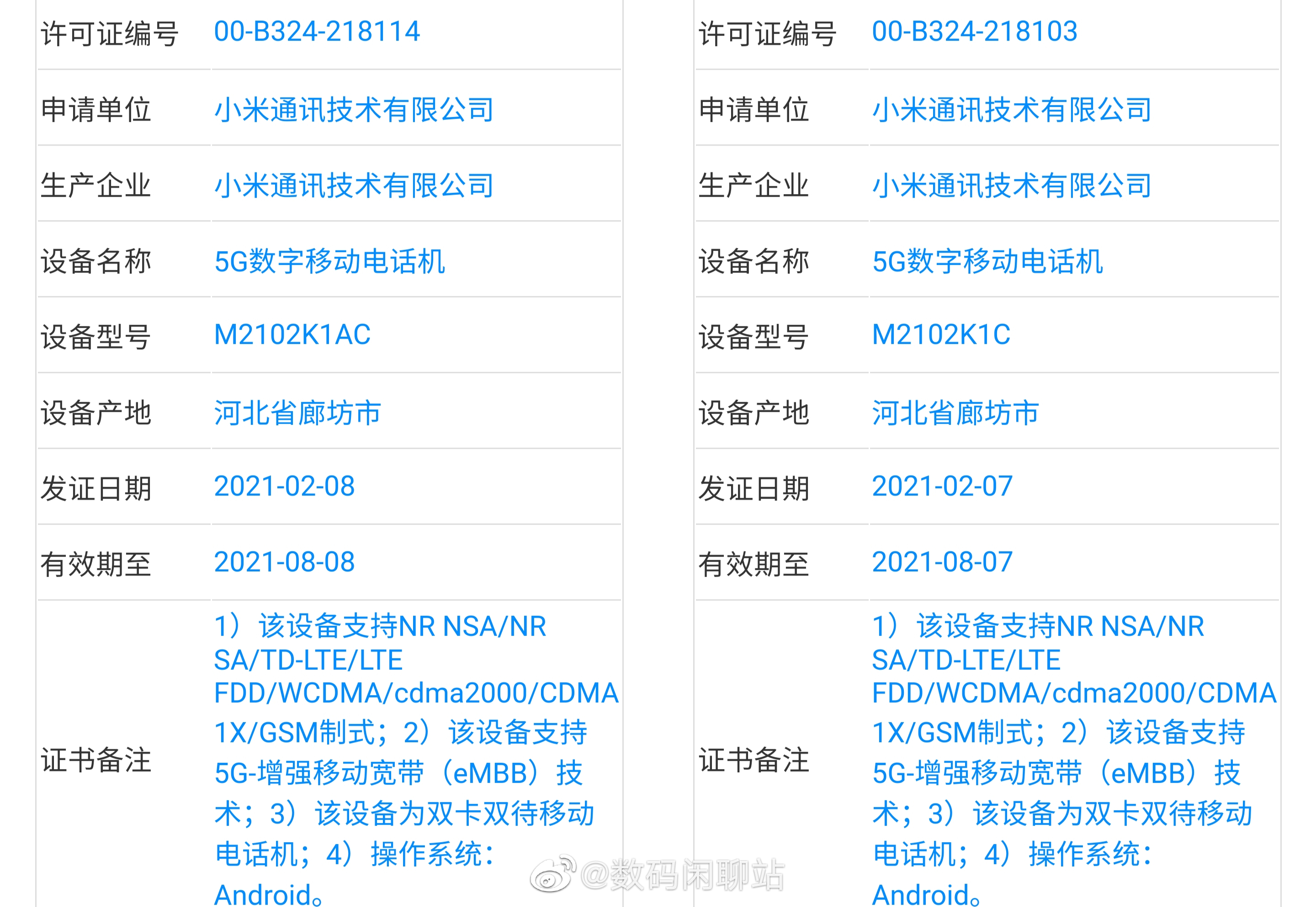
According to a Weibo post, a Chinese microblogging website, from known tipster @数码闲聊站, a 200W flagship device will be launching soon. While the leakster didn’t mention which brand will launch the new device, it is in line with a report we had covered previously. As stated above, just a couple of years prior devices only offered fast charging rate of around 30W and now we have devices that offer even faster wireless charging rates.

Notably, the Weibo post added that the 200W fast charging capabilities included wired, wireless, and even reverse charging altogether. The Chinese tech giant’s Mi 10 Extreme Commemorative Edition offered up to 120W wired charging along with 55W wireless charging and up to 10W reverse charging rates. This adds up to around 185W in total. So, we can expect the company to soon launch a device with a 200W+ charging rates soon.

Xiaomi Mi 11 featured review 15

Our previous reports had covered information of Xiaomi seeking to launch a smartphone with 200W+ charging rates. Unfortunately, this is all the information we have to go on at the moment. Thus, we do not know for sure when this device will actually launch or be announced, but it might be a part of the newly launched Mi 11 series considering it is reportedly a flagship grade handset. So stay tuned as we will be providing more updates when additional information is available.

RELATED:


MediaTek to invest around $3 billion in Research & Development this year

During a recent briefing, Taiwan-based chipset maker MediaTek’s chairman Cai Lixing announced that the company is planning to invest around $3 billion in Research & Development in various fields.

The amount of spend on Research & Development (R&D) allotted for the year 2021 sets a new record for the company. Last year, i.e. in 2020, the company spent about $2.7 billion in research and development related activities.

MediaTek

This new announcement from the company comes on the hills of record revenue figures. MediaTek’s revenue for the previous year exceeded the $10 billion mark as the company reported $10.9 billion. It also noted that the company achieved double-digit growth for each of its product lines.

Further, Cai Lixing also predicts that the 5G smartphone shipments will exceed 500 million units this year, which comes out to be around 2.5 times more than the numbers in 2020. He also adds that among those, around 60 percent will be from the Mainland China region.

Last year, the company’s 5G market share was 40 percent and it is trying everything it can to continue its growth. At a time when the smartphone market witnessed a decline, MediaTek managed to increase its market share.

It became the leading chipset company in China with a 31.7 percent market share. It was followed by Huawei HiSilicon, accounting for a 27.2 percent market while Qualcomm managed to cover a 25.4 percent market share.

While MediaTek’s market share nearly doubled, Huawei HiSilicon and Qualcomm both saw a decline in their market share. The reason behind MediaTek’s growth is said to be the increased demand for budget smartphones.

RELATED: 

Apple becomes the world’s leading smartphone brand, Huawei rapidly loses ground

Apple has become the world’s leading smartphone brand after it achieved record shipments of its iPhones. The company saw a notable jump in shipments in the fourth and final quarter of last year, while Huawei sees a major decline.

Apple iPhone 12 All Colors Featured

According to a Counterpoint Research report, the Cupertino based giant witnessed a sizeable jump of 22 percent in terms of shipments during this quarter. The company’s great sales are most likely carried by its newly launched iPhone 12 series, which is its first 5G enabled lineup. Furthermore, the boost in sales was also helped by pent up market demand, especially for people looking to upgrade from their older Apple iPhone models.

During Q4 2020, Apple iPhone shipments crossed 90 million units, which is a record compared to any other quarter. This also gave the company a global market share of 23.4 percent. Canalys analyst Nicole Peng added that “In China, Apple seized the perfect opportunity to capture Huawei’s market share in the high end, when the latter has essentially not enough supply even though demand for the brand is still there.” As per Apple CEO Tim Cook in an interview with Reuters, “We had two of the top three selling smartphones in urban China.”

The fourth quarter is usually the strongest for the company owing to its launch of new iPhones during the second half of a year. Apple overtook Samsung, despite the South Korean brand also seeing a 6.2 percent rise year on year, reaching 73.9 million units and achieving a market share of 19.1 percent. Meanwhile, Huawei saw a drastic impact on its shipments due to US sanctions, which had its shipments plummet by a record 42.4 percent to 32.3 million units.

RELATED:


OPPO CPH2205 with Helio P95 spotted at Geekbench

Earlier this month, an OPPO phone with model number CPH2205 was spotted at the Federal Communications Commission (FCC) certification platform. The FCC listing revealed the rear design of the phone along with some specifications. Today, the CPH2205 phone appeared on Geekbench (via. Abhishek Yadav) to reveal its processor and RAM capacity.

The OPPO CPH2205’s Geekbench 5 listing shows that it is powered by the MediaTek MT6779/CV chipset which is believed to be the Helio P95 SoC. The listing further reveals that it has 6 GB of RAM and it is preinstalled with Android 11 OS.

OPPO CPH2205 Geekbench

The FCC appearance had revealed that it is a 4G LTE phone backed by a 4,310mAh battery. It is unclear whether it carries support for fast-charging. The handset was found to be equipped with connectivity features like dual-band Wi-Fi and Bluetooth.

The screen of the OPPO CPH2205 measures 159mm diagonally, which suggests that it has a 6.2-inch display. The phone has 160.1 x 73.32mm dimensions. The rear panel of the phone has a rectangle-shaped camera housing that includes a 48-megapixel quad-camera system and an LED flash. It seems to be equipped with an LCD panel as it features a side-mounted fingerprint reader. The device will come preloaded with the latest ColorOS 11.1 UI.

OPPO CPH2205 FCC
A schematic of the OPPO CPH2205 spotted at FCC

Unfortunately, the identity of the CPH2205 is under wraps. Another OPPO phone with model number CPH2203 was approved by Singapore’s IMDA authority recently. The listing revealed the device will be hitting the market with the OPPO A94 moniker. There is a possibility that the CPH2203 could be a country variant of the CPH2205. However, there is no confirmation on it yet. Hence, it is advisable to wait for further reports to know the final product name of the CPH2205.

Realme RMX3121 images and key specs leaked through TENAA; Could be rumored Dimensity 700 phone

Last week, two unknown Realme phones with RMX3121 and RMX3122 model numbers were spotted at the 3C certification platform. Today, the RMX3121 appeared in the database of the TENAA certification platform with some of its key specifications and images.

Realme RMX3121

The listing reveals that the Realme RMX3121 is a 5G-ready phone that measures 163.9 x 75.7 x 8.4mm and it has a 6.52-inch display. The front image of the phone that has appeared in the TENAA listing has revealed that it is equipped with a waterdrop notch screen.

The RMX3121 handset will come preinstalled with Android 11 OS. It is backed by a 4,980mAh rated battery (5,000mAh typical value). The 3C certification of the phone had revealed that it could be arriving with an 18W fast charger. The RMX3122 phone could be a network variant of the RMX3121 smartphone.

Realme RMX3121

The Realme RMX3121 is fitted with a side-mounted fingerprint reader. The rear shell of the device has a square-shaped camera module that includes three cameras and an LED flash unit. Unfortunately, the final product name of the device is yet to be revealed.

A Chinese tipster had recently revealed that Realme is gearing up to launch a Dimensity 700 chipset powered smartphone. The leak had revealed that the phone has an LCD panel with a teardrop notch, a square-shaped camera housing, and a 5,000mAh battery. It is speculated that the device could be a Q-series phone and it may carry a very affordable tag. It is likely that the tipster may have been talking about the Realme RMX3121 smartphone.

Currently, the Realme Q2i priced at 999 Yuan (~$154) is selling as the cheapest 5G-ready Realme phone in China. It is likely that the upcoming D700 SoC powered may arrive with a cheaper price tag.

RELATED: