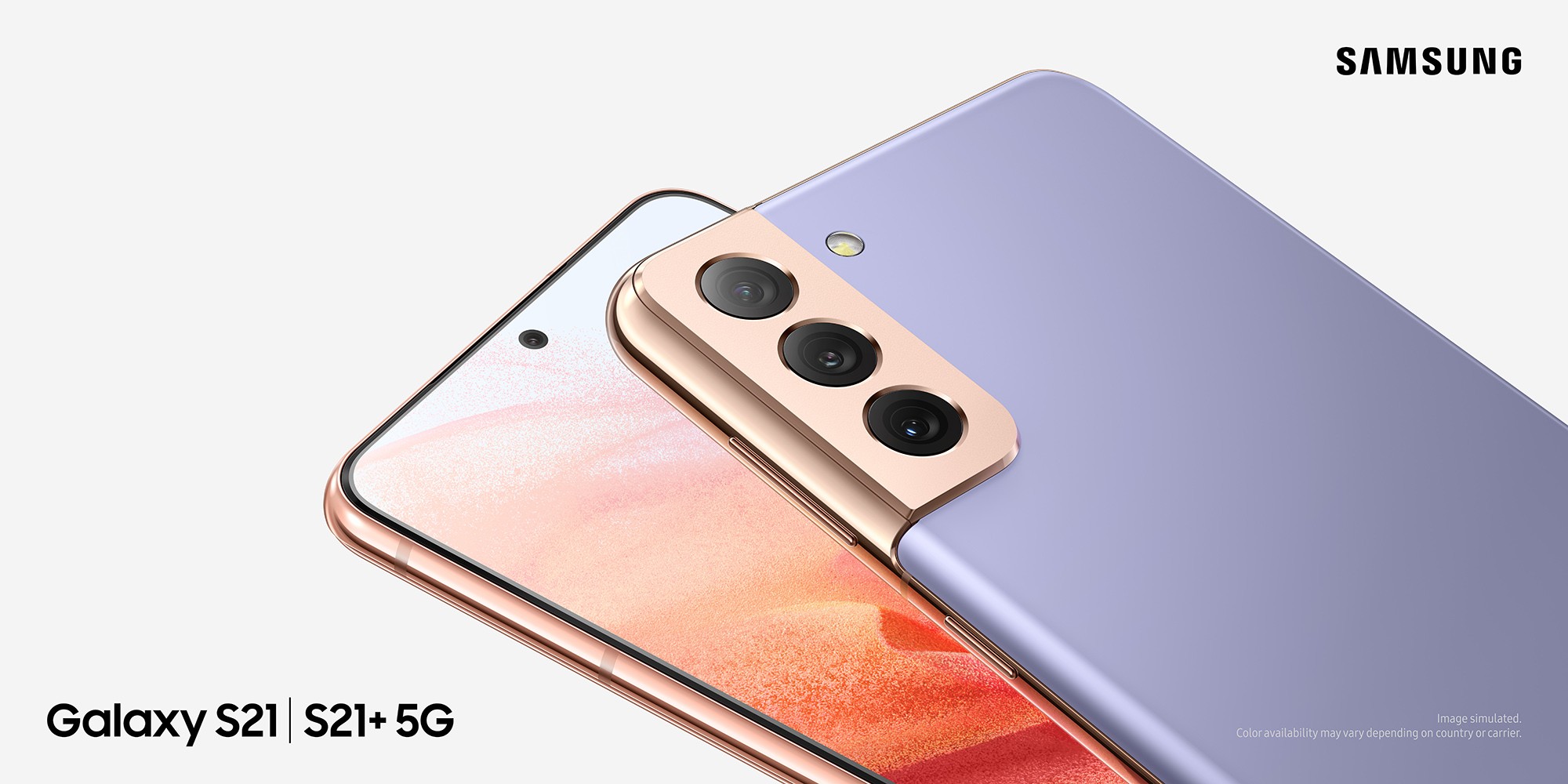
Samsung has finally announced the Galaxy S21 series of smartphones. These new phones – the Galaxy S21 and Galaxy S21 Plus – have been announced much earlier than their predecessors. The two phones have a new design, new chipsets, upgraded cameras, but also lose some features and accessories from the last generation.
Galaxy S21 and Galaxy S21+ Design
The several leaks that surfaced before today have already shown us what the two phones look like but it is still worth talking about.
Both phones have a centered punch hole for the selfie camera. It is an Infinity-O display as Samsung likes to call it. But the more interesting part of the design is the new Contour Cut Camera housing that blends into the phone’s frame. Samsung describes it as a sleek, yet striking aesthetic.
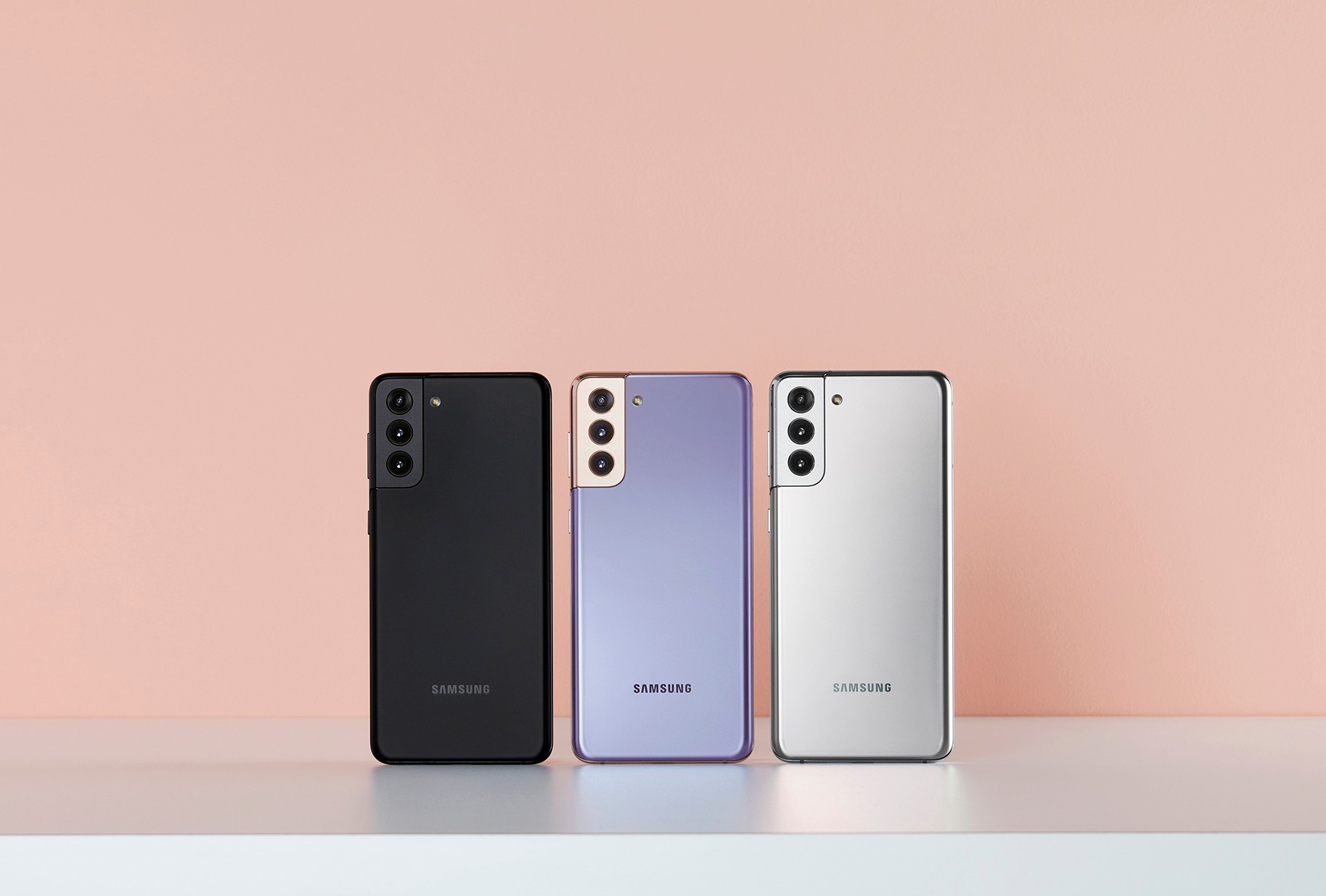
The front of the two phones is covered in Gorilla Glass Victus while the back of the S21 is glasstic and that of the S21 Plus is glass. The phones will be available in Phantom Black, Phantom Pink, Phantom Violet, and Phantom Silver. Color availability varies from market to market.
Galaxy S21 and Galaxy S21 Plus Specifications
The Galaxy S21 has a 6.2-inch screen while the Galaxy S21 Plus has a 6.7-inch screen. Both are flat Dynamic AMOLED 2X displays with a 2400 x 1080 resolution and an adaptive refresh rate (48Hz to 120Hz). The refresh rate is adjusted automatically based on the content you are viewing. Samsung also said there is a new Eye Comfort Shield that automatically adjusts the blue light based on the time of the day.
The Galaxy S21 and Galaxy S21 Plus come with either the Exynos 2100 or the Snapdragon 888 depending on the market. You get 8GB of RAM on both phones and can choose between 128GB or 256GB of storage. There is no longer support for storage expansion, which is disappointing.
The two phones feature the same number of cameras on both sides. The front-facing camera is a 10MP Dual Pixel AF camera with an F 2.2 aperture, a 1.22µm pixel size, and an 80° field of view.
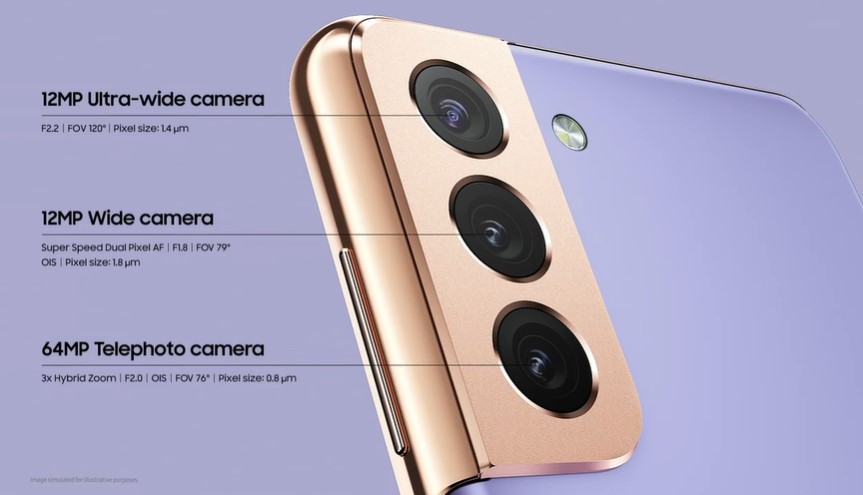
On the back are three cameras – a 12MP f/2.2 ultrawide camera with a 120° field of view, a 12MP f/1.8 Dual Pixel AutoFocus camera with OIS, and a 64MP f/2.0 telephoto camera with OIS, PDAF, and 3x Hybrid Optic Zoom and 30X Space Zoom.
The cameras pack lots of new features. For example, the 64MP camera can record in 8K at 24 FPS. Samsung says you will be able to get high-res 33MP photos from the 8K videos you record. There are also up to 6 different portrait photo features to choose from.
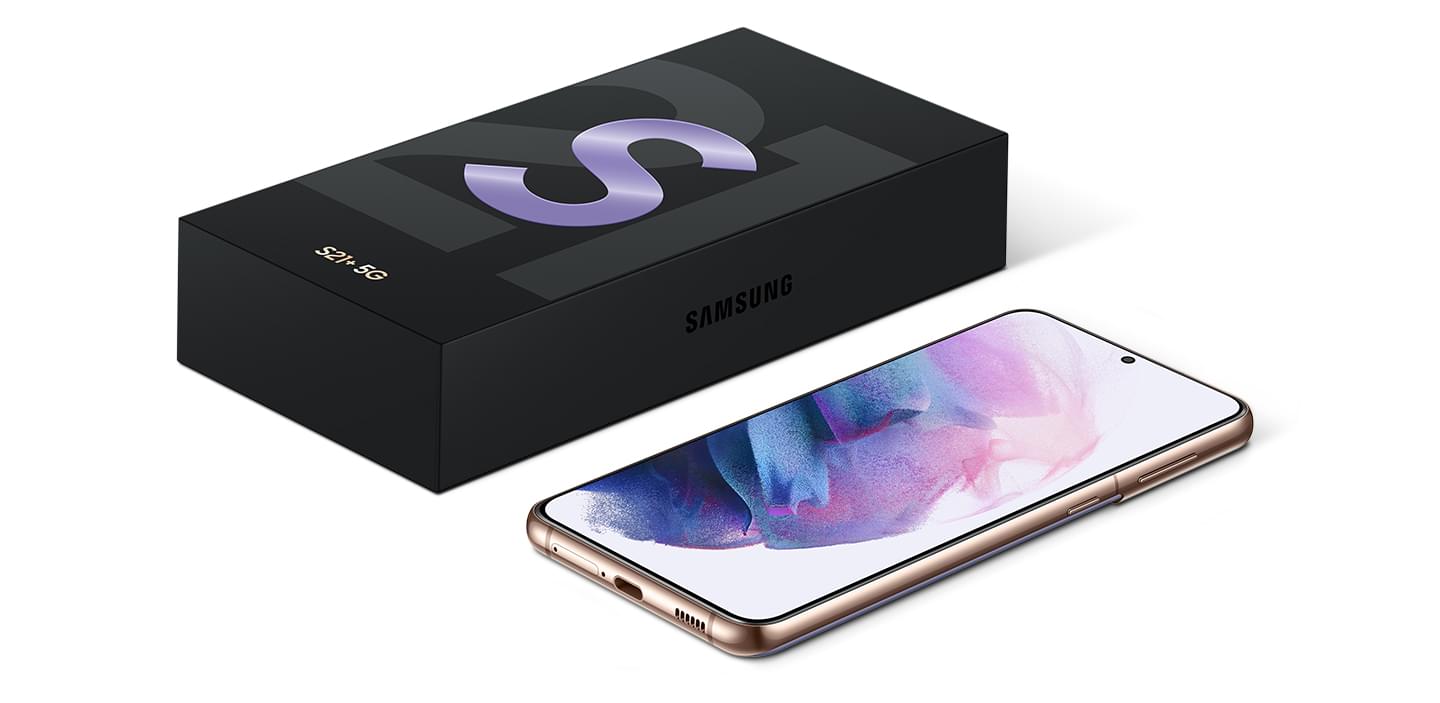
The Galaxy S21 has a 4000mAh battery while the Galaxy S21 Plus has a 4800mAh battery. They both support 25W fast wired charging (charger not included in the box but you get a USB-C cable) and 15W wireless charging. There is also support for 9W reverse wireless charging. You also get an IP68 rating, NFC, UWB, and an in-display ultrasonic fingerprint scanner. They also run Android 11 with One UI 3 out of the box.
Galaxy S21 and Galaxy S21 Plus Price and Availability
The Galaxy S21 starts at $799 while the Galaxy S21+ starts at $999. Both phones will be available for purchase starting on January 29. Pre-order goes live tomorrow and those who pre-order (at least in Europe) get a free pair of Galaxy Buds Live and a Samsung SmartTag for free.
If you find a person wearing Wireless Bluetooth earbuds/headphones, you shouldn’t think it’s because of the crazy 2020 year. As Counterpoint Research points out, the TWS(Truly Wireless) hearables have dominated the 2020 wearable market and 2021 will be the turn of wristwear(Smartwatches).
According to the report, just the Earwear and Wristwear products alone shared 93% of the overall Wearable market shipments as of Q3 2020. The other 7% meager share is occupied by Eyewear, Bodywear(3% each), and Skinwear(1%).
If the report’s data is anything to go by, TWS yearly shipments is expected to settle at 238 million shipments for 2020. This is an 83% growth from last year when the hearables weren’t that popular. Sure, companies like Samsung, Apple had already launched them but they were in the premium category.
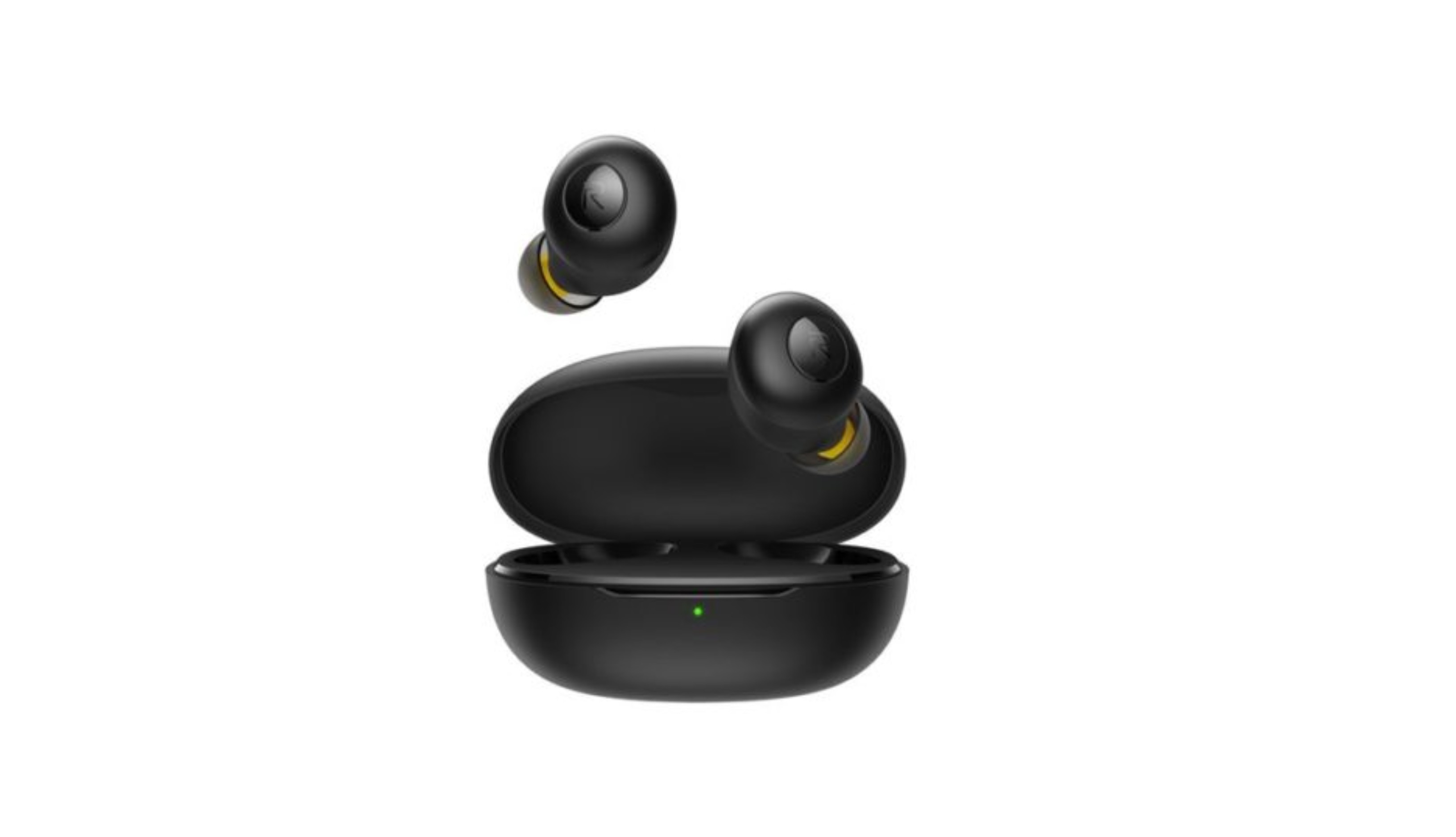
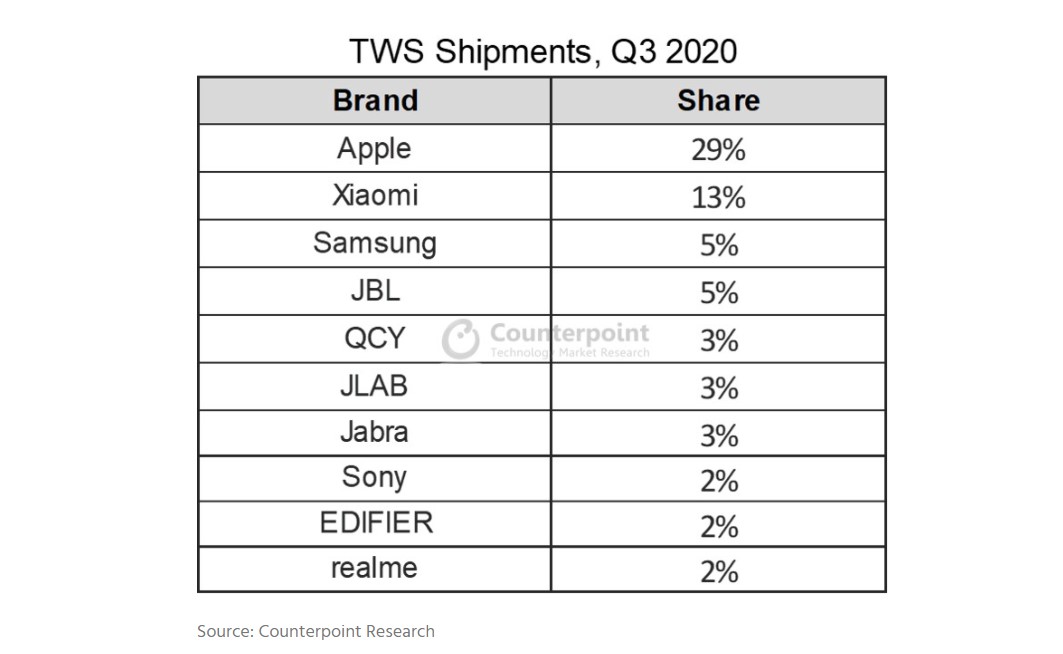
Not all can afford costlier TWS earbuds and enter budget brands like realme, Xiaomi. Speaking of brands, Apple dominates the market with a 29% TWS shipments share(as of Q3). To emphasize this more, the report says that Apple also dominates the Smartwatch space with a 28% share. If you recall, the company began the year 2020 with a whopping 43.4 million shipments in Q4 2019.
Continuing the moment into 2020, Ms. Sujeong Lim, Senior Analyst, says Apple’s iOS ecosystem is one of the catalysts. If you look at rival Samsung, it is nowhere near Apple with just a 5% share. One of the reasons why TWS drove the wearable shipments is due to the omission of 3.5mm jacks in smartphones.
Trickle-down to the budget category and you see Xiaomi is the king with a 13% market share sitting only next to Apple at 2nd.
Although the list is common and not categorized, the report says by the cusp of 2020, the Top-10 list had more than 50% belonging to the budget categories. At the budget of $20-$50 and below, some notable ones were Redmi Earbuds S, realme Buds Q, and more.
realme despite sitting at last already has reached a 2% share in just one year. And countries like India should be a deciding factor in the future just like they did in Q3.
Regarding Smartwatches, the report says that it will reach 100 million shipments this year. However, moving into 2021, you can expect this to dominate more. Increased awareness on health and fitness will drive the smartwatch sales this year. And if brands bring the prices down, we can see double-digit growth for sure.
Chinese tech giant TCL still remains a formidable force in the manufacture of smart displays, including smart TVs, smartphones, and tablets under the Alcatel brand. The company has now launched a trio of rugged tablets designed for kids.
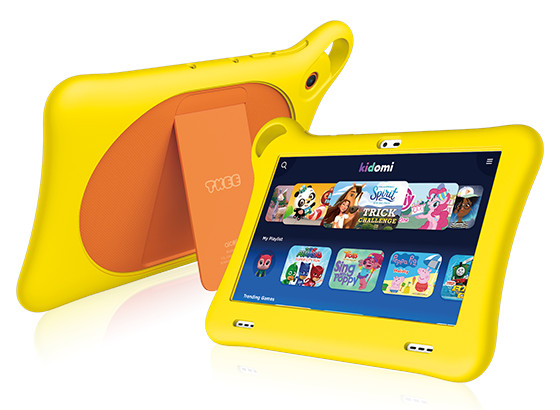
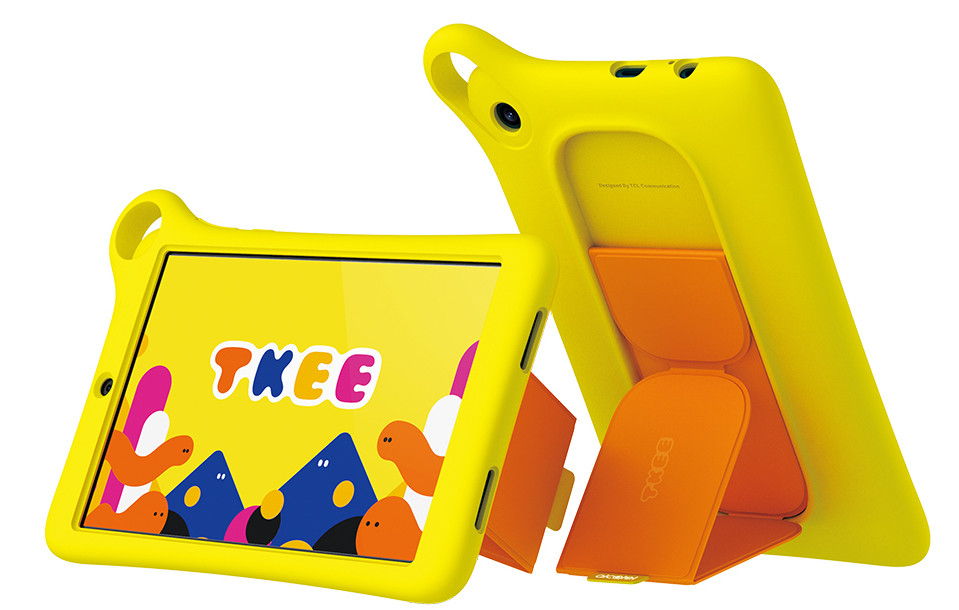
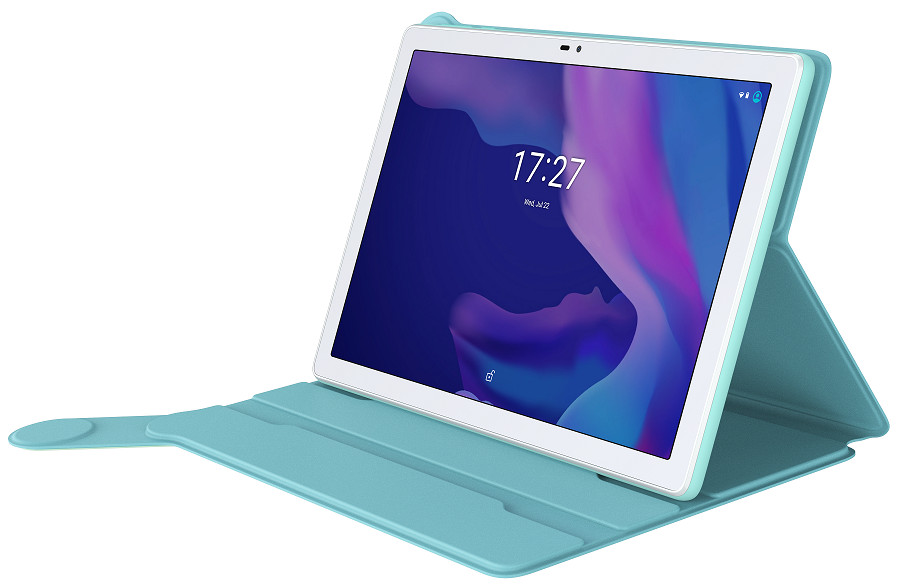
The tablets dubbed Alcatel TKEE tablets for kids that includes TKEE MAX, TKEE MID, and TKEE Mini in India specially designed for kids. The tablets all come with inbuilt award-winning software known as KIDOMI that offers more than 3,000 games and 2,500 videos of child-friendly educational content.
Two of the tablets – the TKEE MAX and TKEE MID are TÜV Rheinland certified with Eye Care eye protection features. The Alcatel TKEE tablets are bundled with a custom mint green bumper case with soft, rounded corners. The bumper cases are durable and child-friendly but can withstand any drop after undergoing more than a thousand drop tests up to 100cm. There is a foldable back stand which makes the tablet suitable for watching educational videos and playing learning games.
In terms of specifications, the Alcatel TKEE MINI features a 6.95-inch screen with a resolution of 1024 x 600 pixels. It is powered by a 1.3 GHz quad-core MediaTek MT8167D processor paired with 1.5GB RAM and 16GB internal memory which is expandable memory up to 128GB with micro SD. The phone runs Android 10 Go edition. The tablet packs a 2MP rear camera with f/2.4 aperture, LED flash, and a 2MP front camera.
On the other hand, the Alcatel TKEE MID sports an 8-inch display with 800 x 1280 pixels resolution. It is powered by a 2GHz quad-core MediaTek MT8766B processor backed by 2GB RAM and 32GB internal memory, expandable memory up to 256 GB with micro SD. The tablet runs on Android 10 and packs a single Nano-SIM with support for 4G LTE. for photography, there is a 5MP rear camera with f/2.4 aperture and a 5MP front-facing camera with f/2.2 aperture.
The tablet comes with support for Wi-Fi 802.11 ac (2.4GH & 5GHz), Bluetooth 5.0, GPS, USB Type-C. Keeping the lights on is a massive 4080mAh battery.
Finally, the Alcatel TKEE MAX packs a 10-inch (800 x 1280 pixels) HD multi-touch display. A
1.26GHz quad-core MediaTek MTK8167B processor powers the device. The processor is paired with 2GB RAM, 32GB internal memory, expandable memory up to 128GB with micro SD. Providing the interface is the Android 10 OS while for photography there is a 2MP camera apiece at the front and back. Other features include Wi-Fi 802.11n, Bluetooth 4.0, GPS, USB Type-C. A decent 4080mAh battery keeps the device fired up.
Pricing & Availability
The Alcatel TKEE MAX (10″) and Alcatel TKEE MID (8″) are priced at Rs. 8699 (~$118) and Rs. 9999 (~$136), respectively and will be available on Amazon.in and select retail outlets. The Alcatel TKEE Mini will be available by January end.
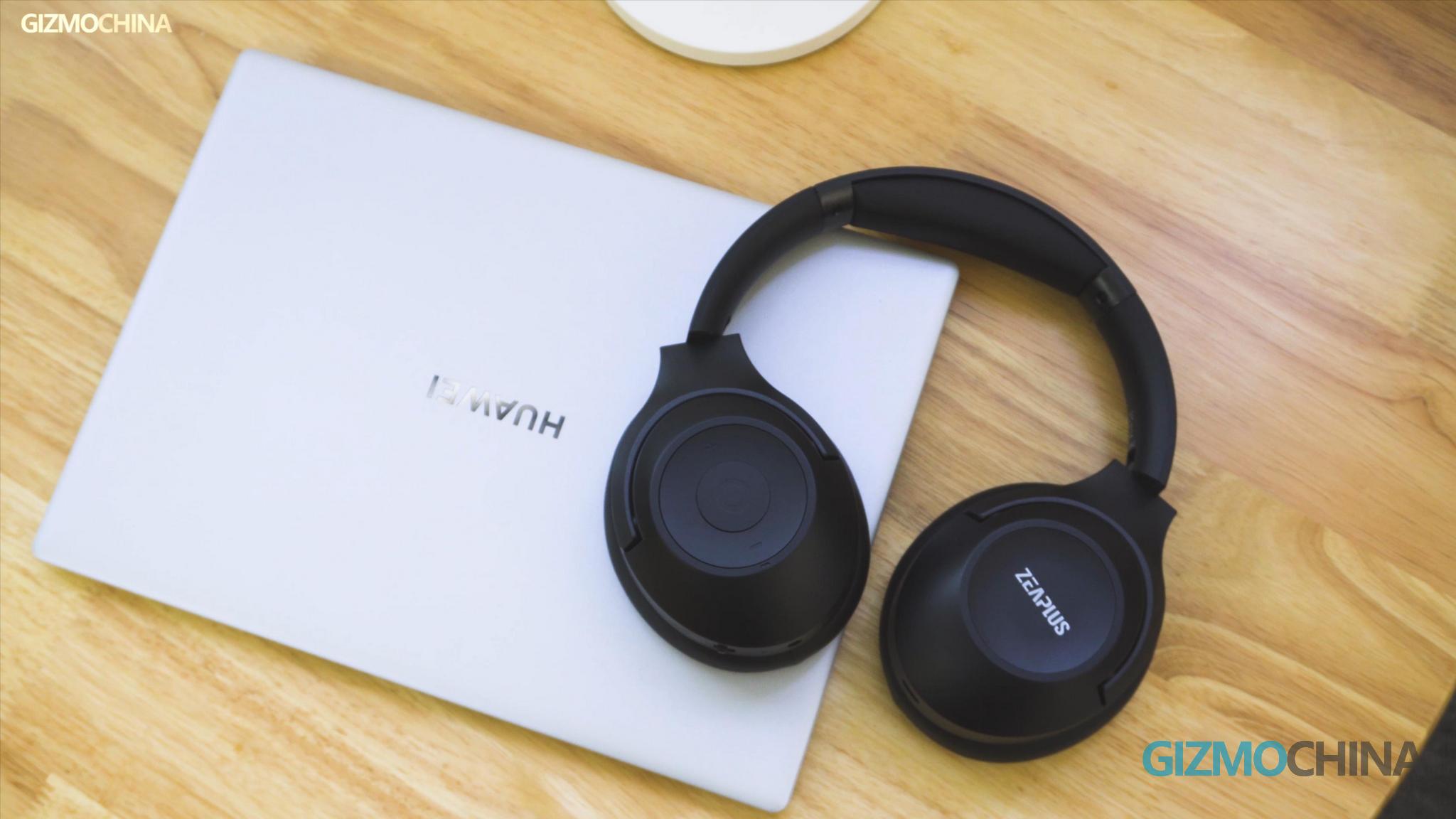
Several months ago, we reviewed the Zeaplus Buds, a pair of budget wireless earbuds with good active noise cancelation. It got good feedback because of its comfortable fit and super cheap price tag. And today we have received a new headset from the same brand Zeaplus – the Wireless Zeaplus Studio headphone with active noise canceling. There’s no doubt this headphone is targeted at the budget market.
So, let’s see if the brand Zeaplus can continue to keep the pricing advantage with good value for money with its new Zeaplus Studio.
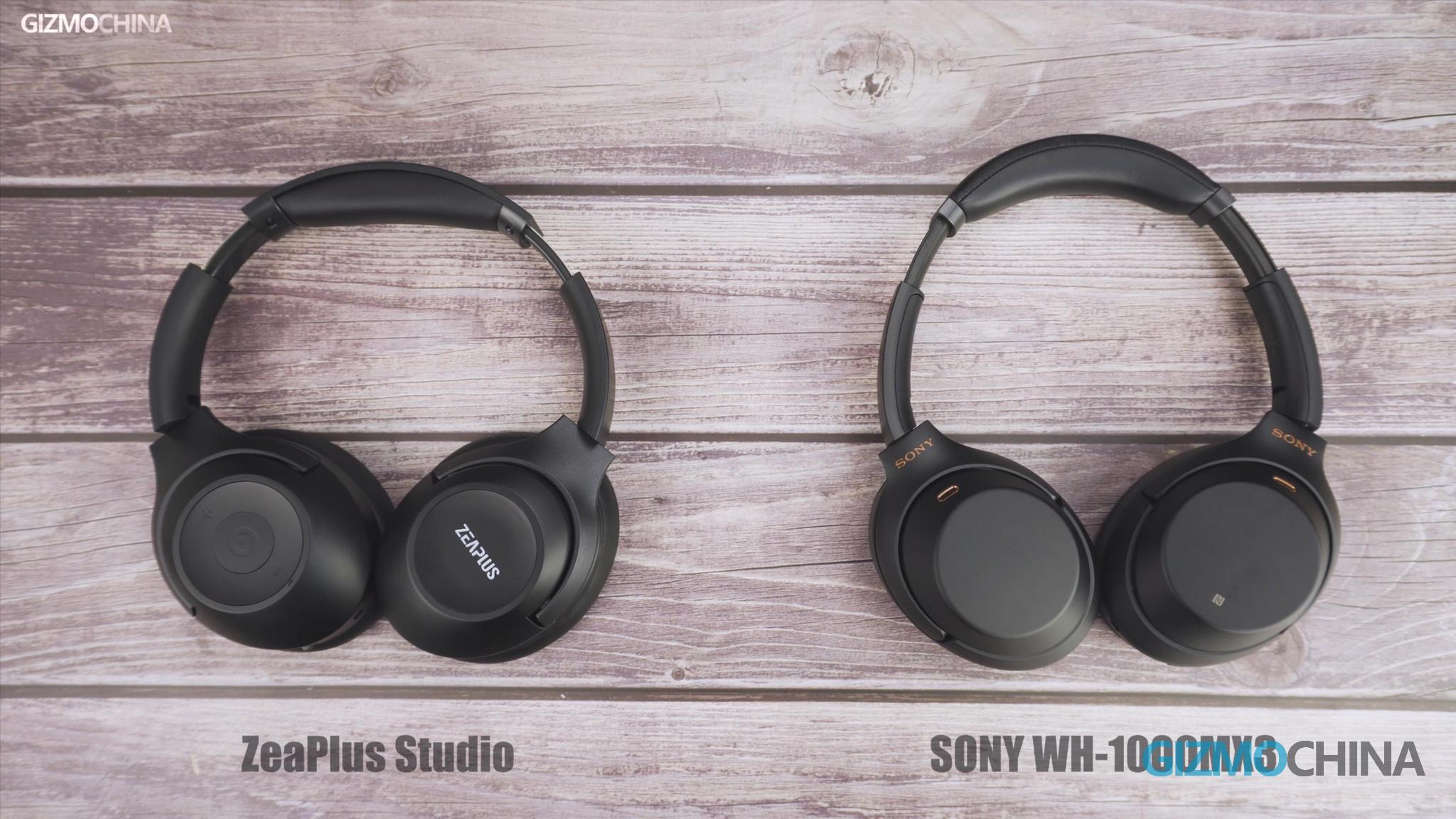
We’ll take Sony WH-1000XM3 as a reference to see what Zeaplus Studio does well and what it doesn’t do well enough. But I want to remind you that the Sony XM3 earphone is one of the best noise-canceling headphones from 2020 and the XM3 on Amazon costs over $200, while the Zeaplus Studio only sells for $39. So please keep this in mind while reading this comparison.
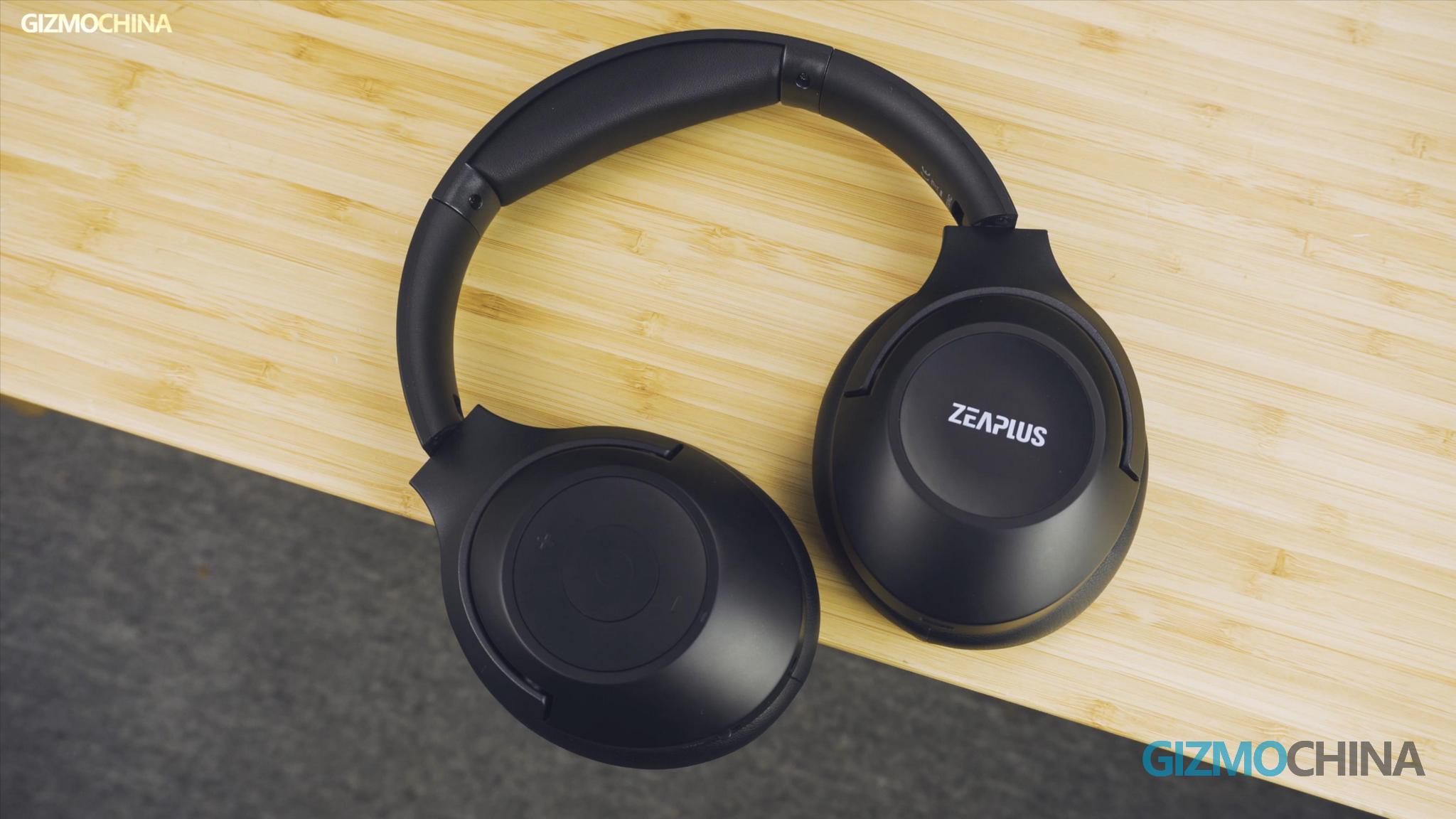
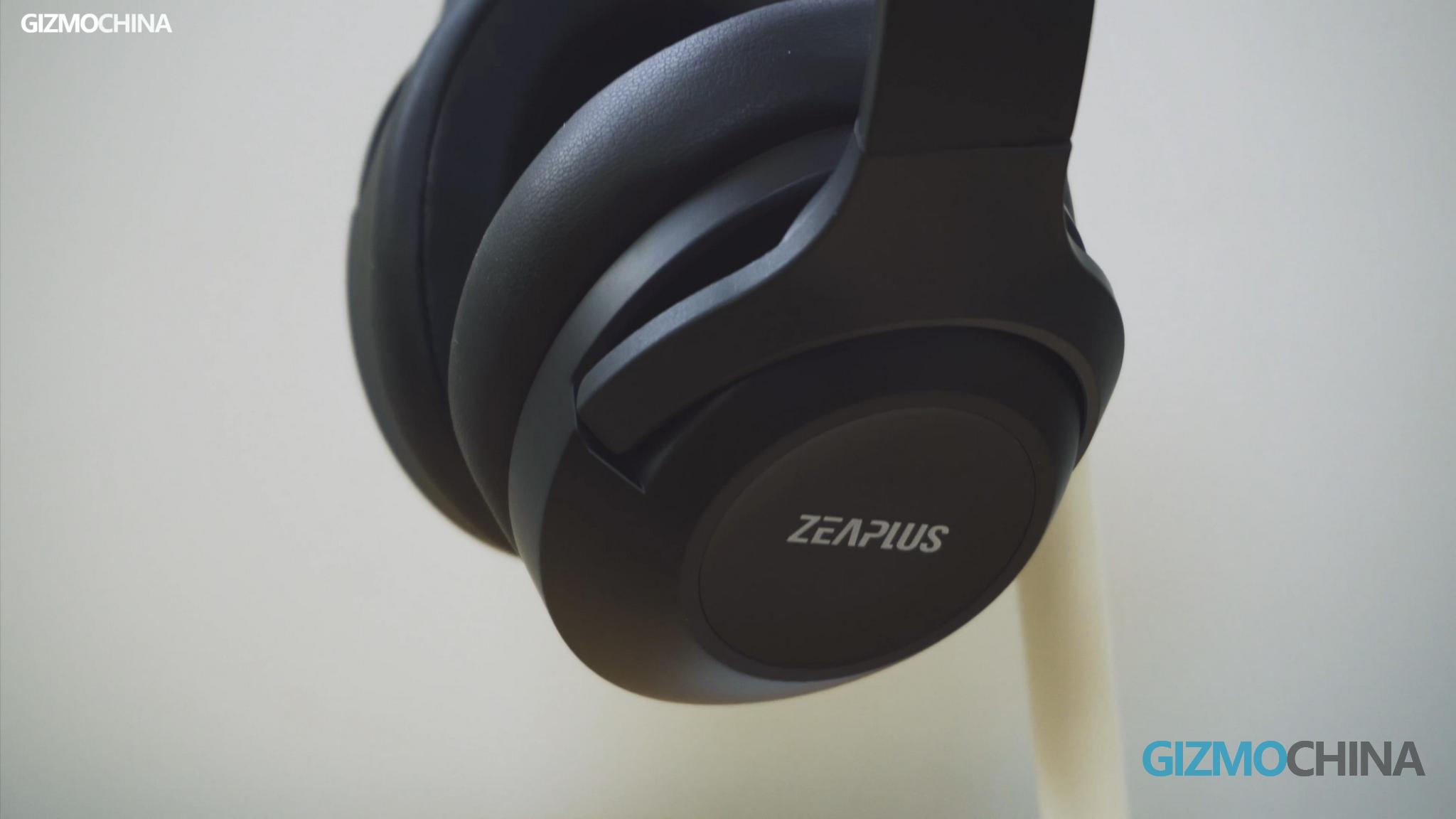
Let’s first talk about its design. The Zeaplus studio has adopted the most popular design for wireless earphones in recent years, which makes it look a bit similar to the Sony XM3 headphones.
The headset’s exterior body is made of black plastic with a matte finish. For a headset product, plastic is still one of the best choices for reducing weight and leads to a good wearing experience for a long time. For good extensibility, the top expansion is made of brushed bright metal.
The weight of 264g is only 10g heavier than the XM3, but the difference is not easily perceived when you wear them on your head.
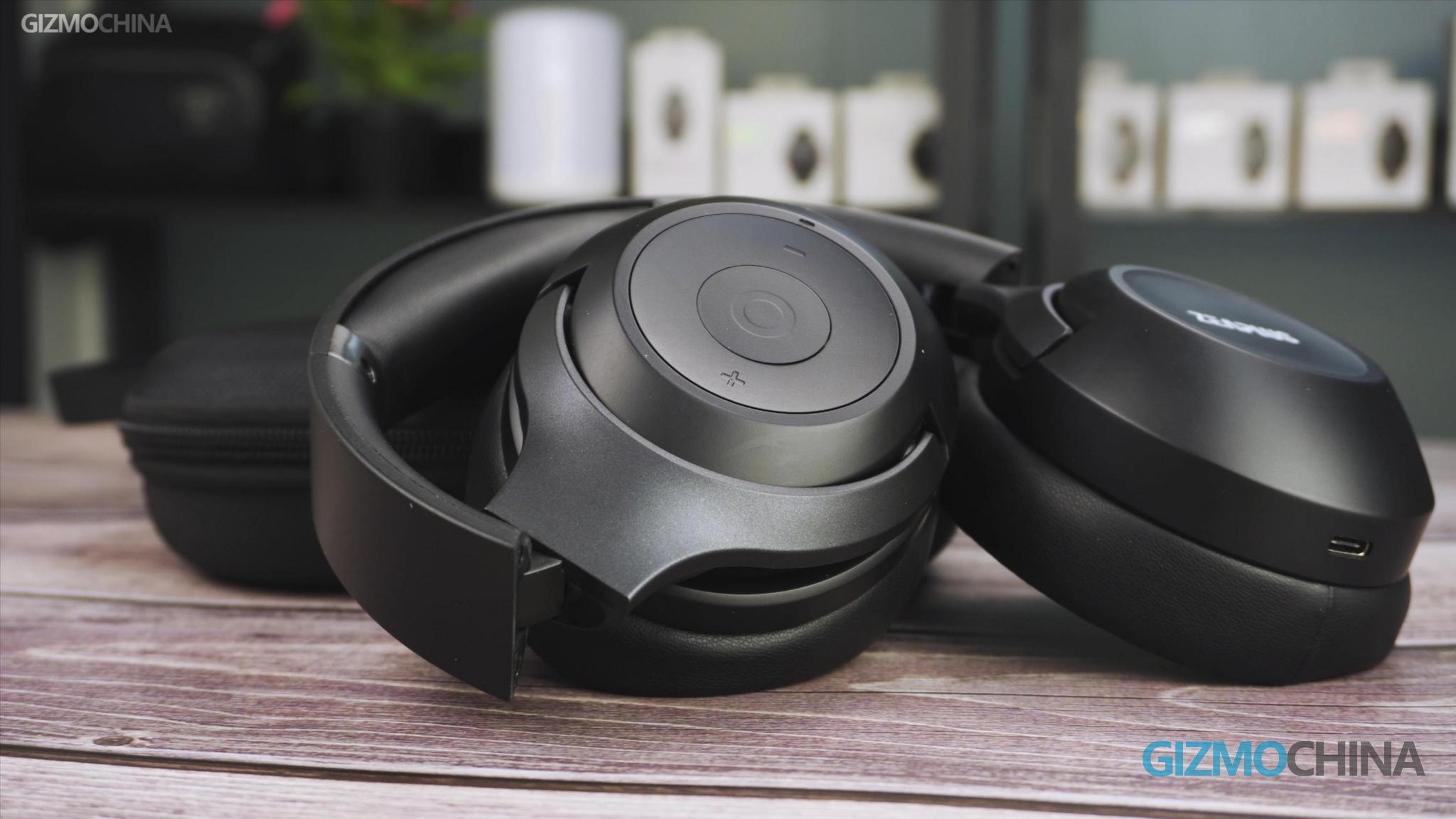
Like the XM3, the ear cups of the Zeaplus Studio also have a wide range of rotation. They can be folded and stably placed on the table or stored in the included carrying case. The Studio headphone’s over-ear sponge is much thicker than the XM3’s. And it feels pretty soft and comfortable to wear. No doubt that the Sony headphone has excellent wearing experience. But what really surprised us was that as a budget wireless headphone, the Zeaplus headphone can also provide a similar fit and comfort to the users. More interestingly, the thicker sponge coverage of the ZeaPlus Studio even offers better warmth for ears in the winter. But after the weather warms up, probably, wearing it for a long time wouldn’t be a good suggestion for most users.
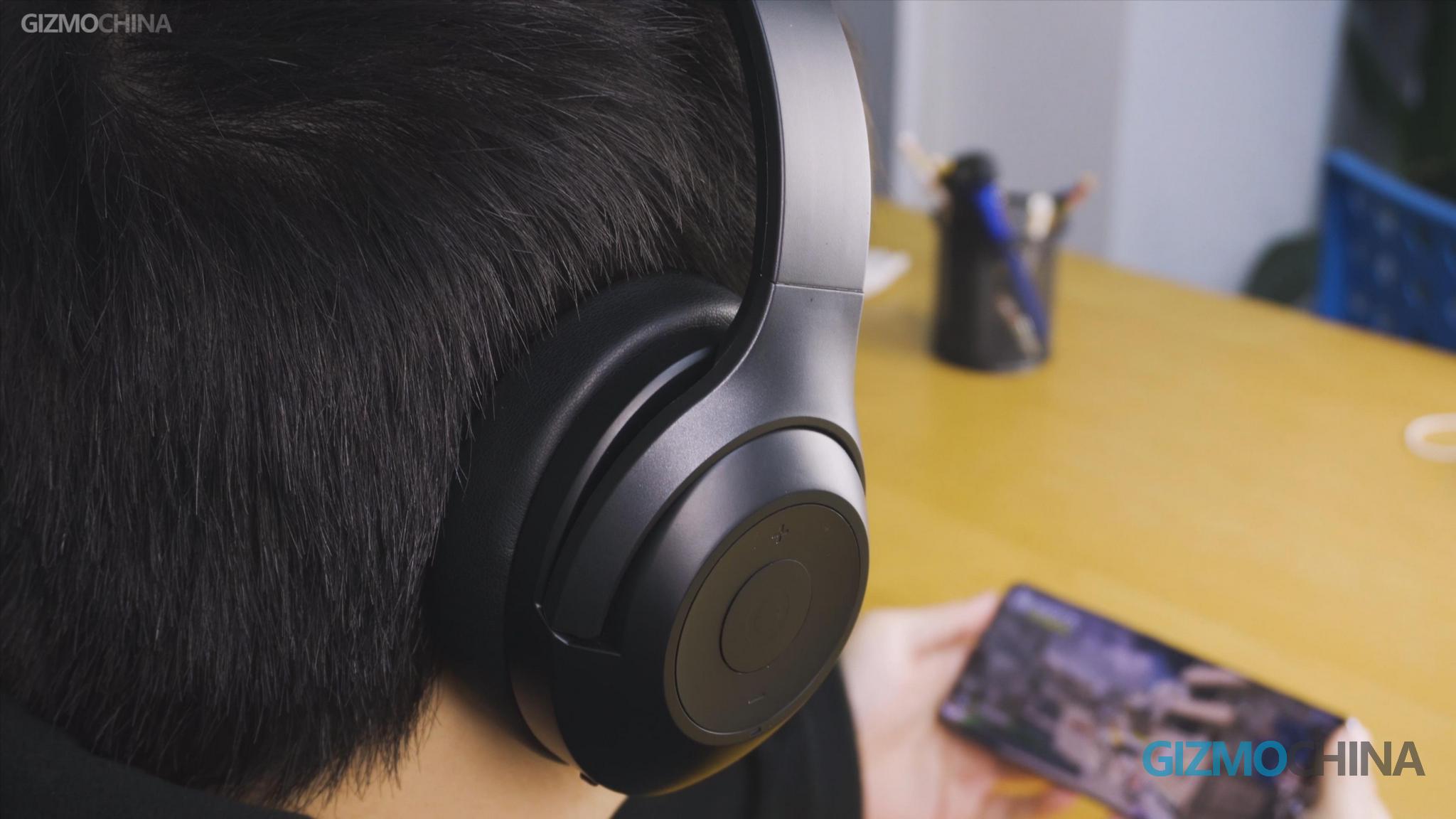
Now let’s look at the exterior finish on the ear cups. On the left side, you’ll find a Zeaplus logo which is smooth, and the other side features the control panel with three function buttons. These three buttons offer primary controls including power on/off, song switch, pausing playback, and making voice calls.
Although the physical buttons don’t look as advanced as the XM3’s touch control panel, it’s more user-friendly in the sense that users are allowed to have a more intuitive operation with specific buttons and reduce accidental actions.
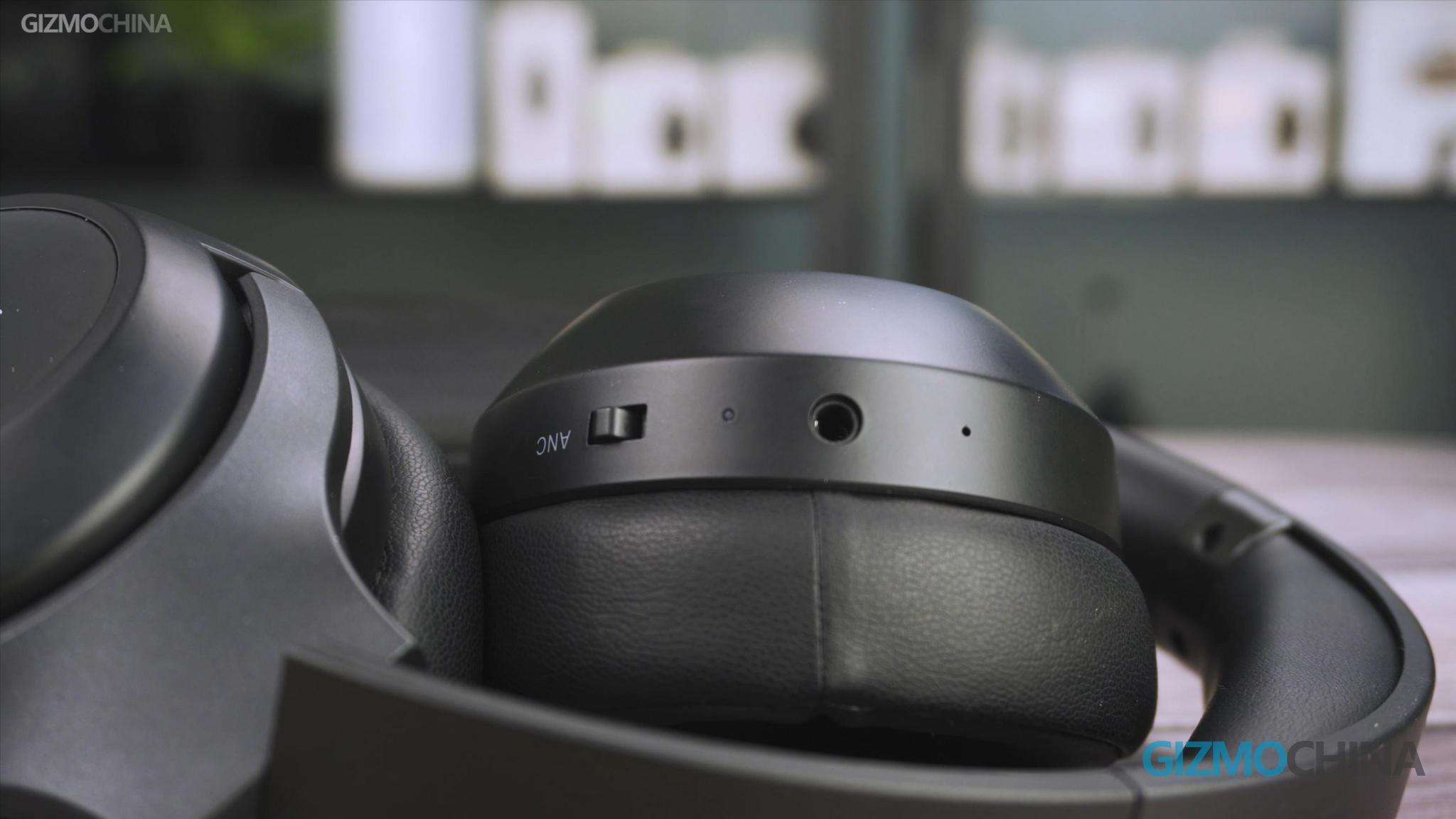
In addition to a wireless connection with Bluetooth, the Studio headphone also offers a wired connection through the 3.5mm headphone jack at the left bottom. And the noise-canceling switch is placed next to the headphone jack. At the right near the bottom, there is a type-C charging port, which allows you to charge the headphone with your phone’s charging cable and charger.
From its appearance alone, it’s doesn’t look like a cheaply-positioned product. However, it does only sell for 39 US dollars, so it has a solid design for its price.
But that doesn’t mean that it’s perfect without any drawbacks. Although it has a softer sponge at the top, we can still feel the pressure when it presses against the head when you wear it. After we pull both the ear cups to the longest width, you’ll clearly notice this. The Zeaplus Studio’s retractable length is a bit shorter than what we can reach on the Sony XM3. So if you have a big smart head, this might be an issue.
And now let’s talk about its performance and let’s start with its noise-canceling performance. The difference in noise cancellation between the Zeaplus and Sony headphones is pretty obvious. The ZeaPlus Studio still needs to work harder on its future models. If we give the sony 1000MX3 a rating of 100, the ZeaPlus Studio could be rated around 70. But considering their price tags, it would be unfair to criticize the ZeaPlus for comparing it with the top models in the market.
Compared to some wireless earbuds with active noise cancellation, the ZeaPlus studio still has better active noise canceling, not to mention it does a pretty good job when compared to other headsets at the same price level. Especially for low-frequency range, it’s good enough to reduce or even block out most annoying consistent sounds in certain scenarios, such as the general hubbub of a busy office, vehicles’ engine, or roaring machines. But when it comes to the high-frequencies including human voices, the reducing effect is less impressive. And there is no adjustable strength level for noise canceling. All you have is an option to turn on or off the function through the ANC switch at the bottom of the left cup. Also, there is no transparent mode that could have come in handy when you are talking to a person or when you need to hear ambient sound.
As for sound quality, the ZeaPlus studio supports the AAC codec, which no doubt is better than headphones with only the SBC codec.
Although it won’t be able to beat Sony’s headset which supports additional LDAC and aptX HD codec, the AAC codec is the best option that you can find on a budget wireless headset. But as a headphone model, the ZeaPlus Studio has a larger space for using a better transducer than most wireless earbuds. Meanwhile, if you want to enjoy relatively high sound quality with the noise-canceling function at lower prices, the ZeaPlus Studio is a safe pick. It delivers an open sound that gives good detail of the instrument and enhanced dynamics. With a good performance over lovely, deep bass, it would be an excellent inexpensive tool for those Rock music lovers. On the contrary, vocals and high-range are not as impressive as its low-range performance especially since we expected it to be a bit more focused. But overall, the gap among frequencies doesn’t lead to an unbalanced listening experience. Instead, the richness of bass reinforces the overall delivery in a pleasant way to make up for its slight drawbacks.
The latency is naturally a concern for many people who require it for watching videos and gaming. But for the Zeaplus Studio, the latency optimization is pretty good. If not listen carefully, it’s hard to perceive the sound delay during our gaming test. The general latency with ACC codec activated is estimated to be about 0.5 seconds, and it will be reduced by about half if the SBC codec is enabled.
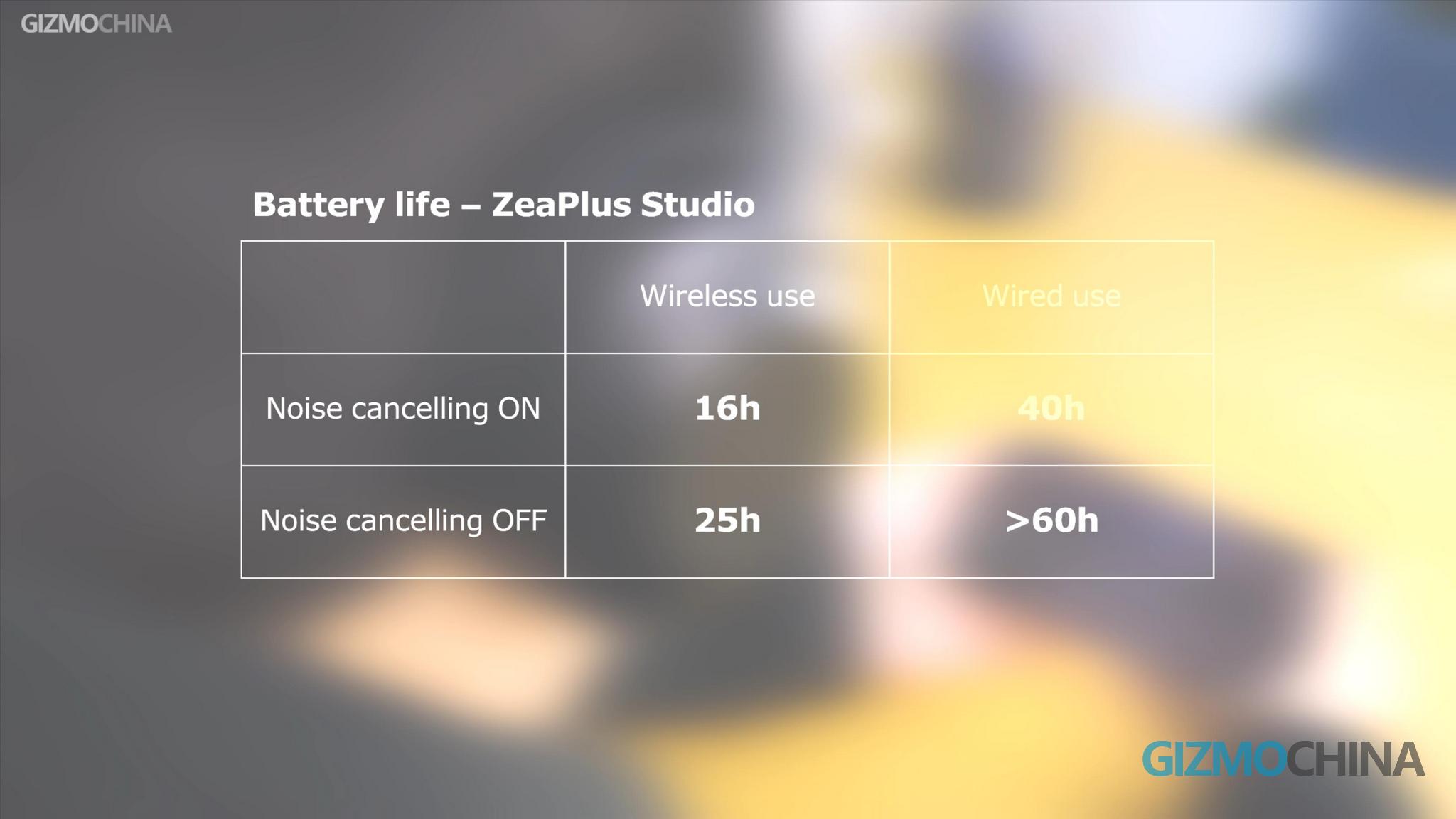
And the battery performance is also not bad on the ZeaPlus studio. For wireless use, the full-charged headset can continuously work for 16 hours with noise canceling on, while it can last 25 hours with noise canceling off. If you prefer wired use with noise cancellation on, the battery life can even reach up to 40 hours.
So this is the ZeaPlus Studio, a reliable basic wireless headphone with noise canceling. It’s probably our most recommended ANC headset model that you can get for under 50 US dollars. It has a pretty good design, effective noise cancellation, decent sounds, and relatively good latency. At the same time, you also have to live with its imperfections, such as the fit which might be a bit tight for some users, and the obvious sound quality drawbacks.
But overall, looking at its price, it’s definitely worth the money. So if you are interested in getting a cheap ANC headset, the Zeaplus Studio could be a good option. You can check out more details about the headphones here.
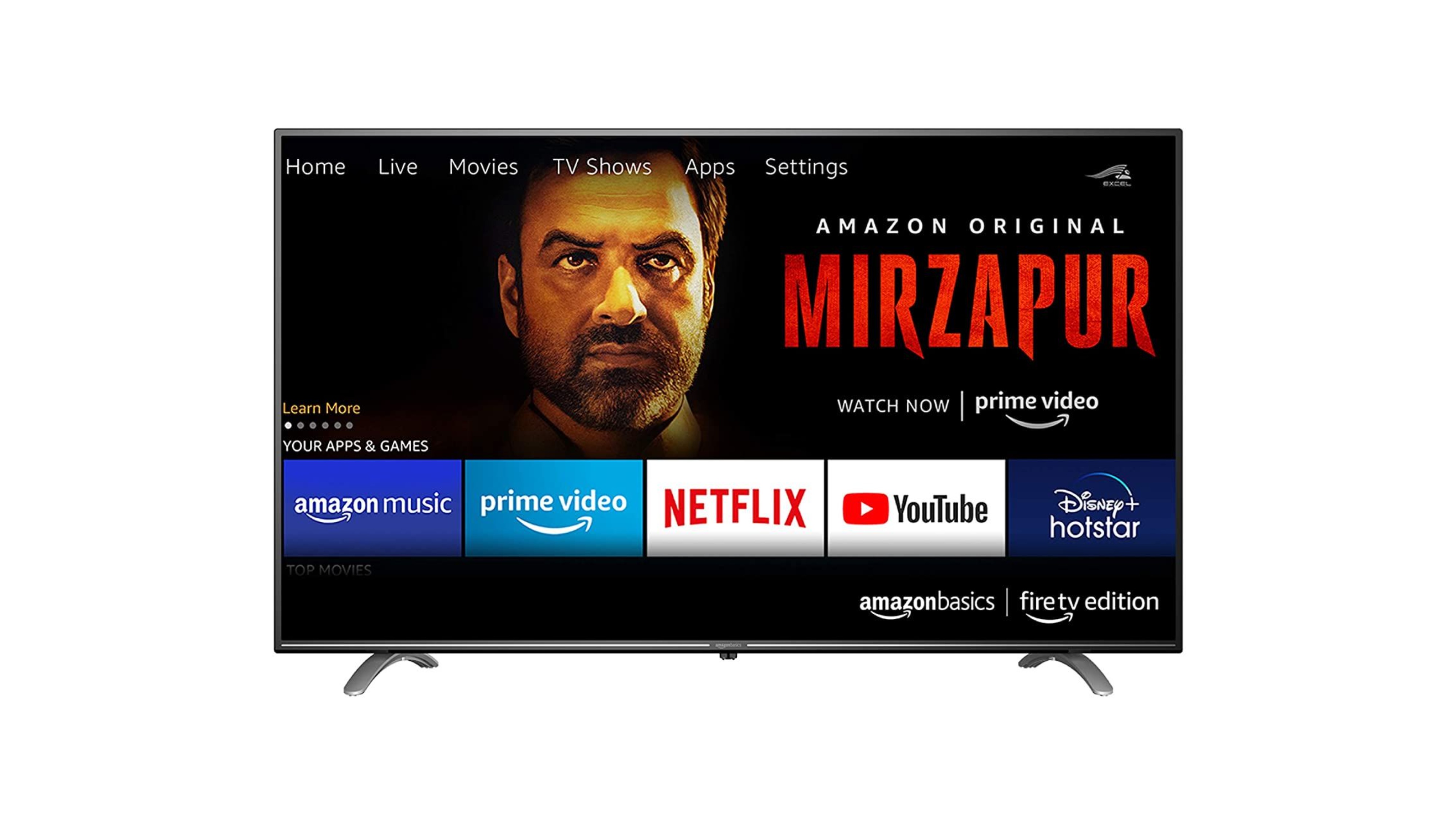
Amazon sells a wide variety of products in India under its in-house AmazonBasics label. A few days back, the American eCommerce giant launched two 4K UHD smart televisions (50-inch, 55-inch) with the aforementioned branding powered by Fire OS. Now, it has expanded its portfolio by releasing three new models that are targeted at first-time smart TV buyers.
For those unaware, televisions running Amazon Fire OS are sold as ‘Fire TV Edition’. Hence, all the new AmazonBasics TVs have this branding in their name, in addition to their size and resolution. Let us take a closer look at the specs, features, price, and availability of these new models in this article.
AmazonBasics 32/43-inch Fire TV Edition HD/FHD/4K Specifications and Features
The newly launched Amazon self-branded televisions come in two sizes – 32-inch and 43-inch. The former sports an HD Ready (1366×768 pixel resolution) panel, whereas the latter is available in both Full HD (1920×1080 pixel resolution) as well as 4K Ultra HD (3840×2160 pixel resolution) versions. The panel on all three models supports 60Hz refresh rate and 178° viewing angle.
Amazon also claims these TVs to flaunt A+ grade panels but only the 43-inch 4K model supports Dolby Vision, HDR10, and HLG HDR formats. Similarly, only this model is powered by a 1.95GHz 9th gen Amlogic quad-core processor paired with 1.5GB RAM. Whereas, the other two models feature a 1.5Ghz 7th gen Amlogic quad-core processor paired with 1GB RAM. However, all three of them come with 8GB of internal storage.
As for I/O, the HD and FHD TVs sport 2 x HDMI ports but the 4K model features 3 x HDMI 2.0 ports. But all of them come with 2 x USB ports (one of them is USB 3.0 on the 4K model), single-band WiFi, Bluetooth 5.0, 20W speakers (Dolby Audio, DTS-HD, Dolby Atmos – only 4K model), and an IR port for soundbars, receivers, and set-top boxes.
Lastly, as far as software is concerned, they run Fire TV OS with support for over 5,000+ apps and all the leading streaming services like Prime Video, Netflix, Disney+ Hotstar, YouTube, and others. Further, they also support Alexa via the voice-enabled remote control and DTH set-top box integration.
AmazonBasics 32/43-inch Fire TV Edition HD/FHD/4K Pricing and Availability
These three televisions are already up for sale on Amazon India for the following price tags.
AmazonBasics 32-inch Fire TV Edition HD Ready (AB32E10SS) – ₹13,999 ($191)
AmazonBasics 43-inch Fire TV Edition Full HD (AB43E10DS) – ₹23,499 ($321)
AmazonBasics 43-inch Fire TV Edition 4K Ultra HD (AB43U20PS) – ₹27,499 ($376)
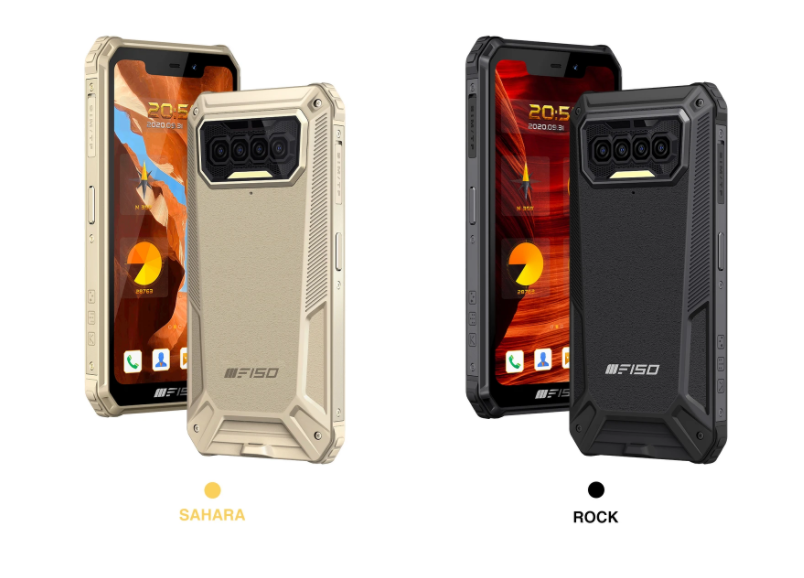
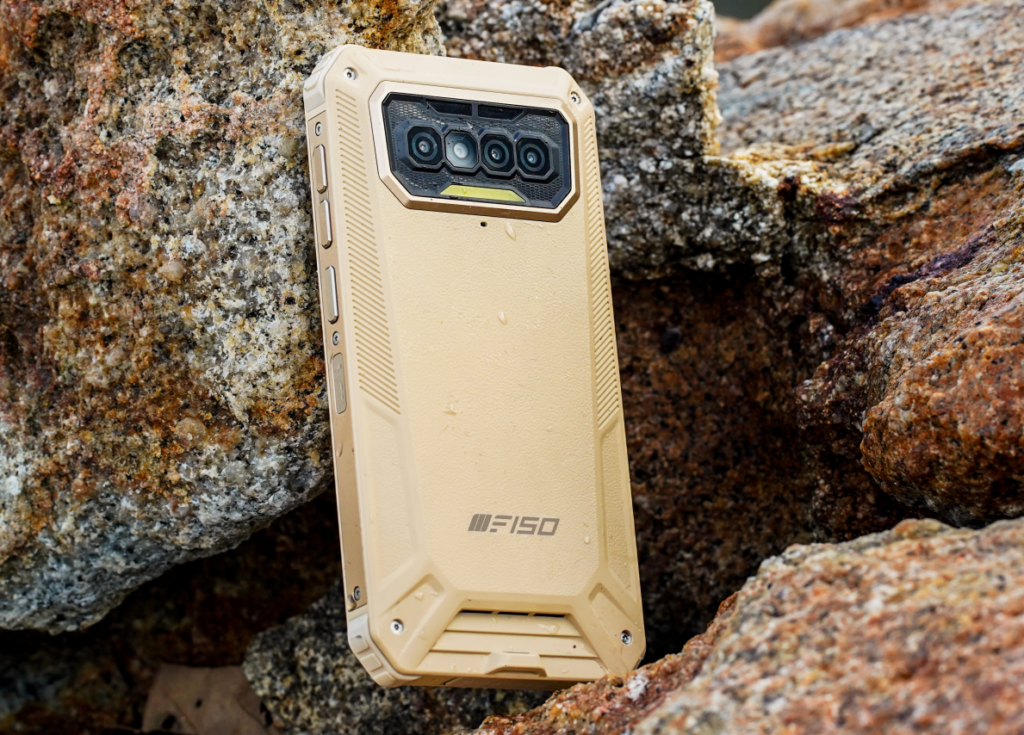
F150 is a new rugged smartphone maker which aims to provide excellent rugged smartphones at affordable prices. The company is using innovative technologies to make its maiden rugged phone – B2021 more attractive and useful. The device design features octagonal shapes and lines to craft the upcoming smartphone which is et to go on sale this month.
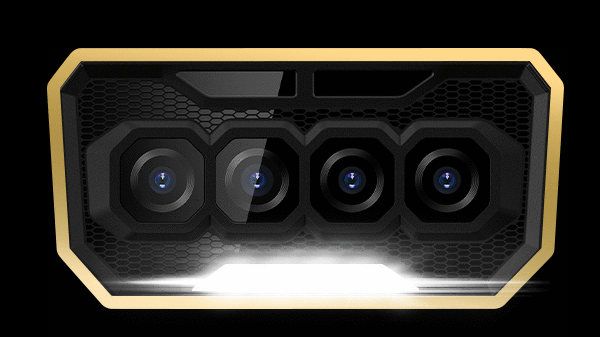
Every element of the device design is fully furnished with excellence. Different colours, astonishing rear cover design, and unique look of the rear-quad camera are some unique design elements of the device. We will discuss these elements below:
Interesting Color Options
F150 B2021 will be available in two colour options of Sahara Yellow and Rock Black. The smartphone company has used exemplary technology to offer a wide variety of colours over plastic build. It is different and lighter than the other rugged smartphone manufacturers who are using rubber, aluminium and other metals to design smartphones.
However, the Sahara yellow colour is inspired by the famous Shara desert in Africa. The outdoor enthusiasts can relate it better to this colour. After the initial launch, more colours will launch in the coming days.
Real Cover Design
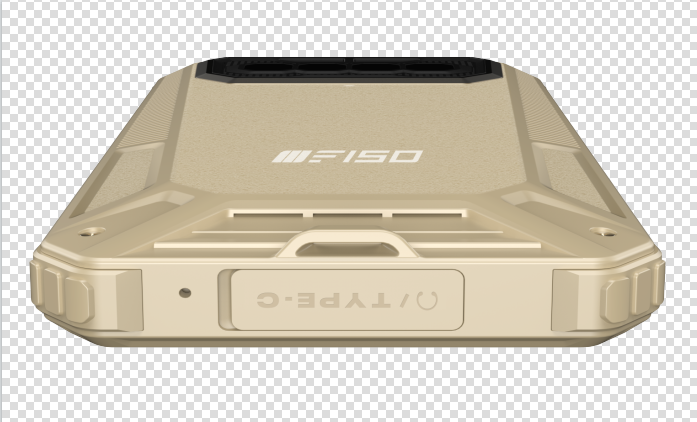
To fit in the quad-rear camera module, the device houses octagonal patterns on the rear side of the device. It portrays wildness through the curves and lines featuring speaker housing. The design enhances the grip and prevents usual slips from the smartphone.
Well-Crafted Rear Camera Module
The smartphone manufacturer has given a unique shape to the rear-camera module. It is inspired with the heavy vehicle headlights featuring quad-cameras and quad flashlights. It makes the smartphone more rugged device and gives a premium look.
Convenient design
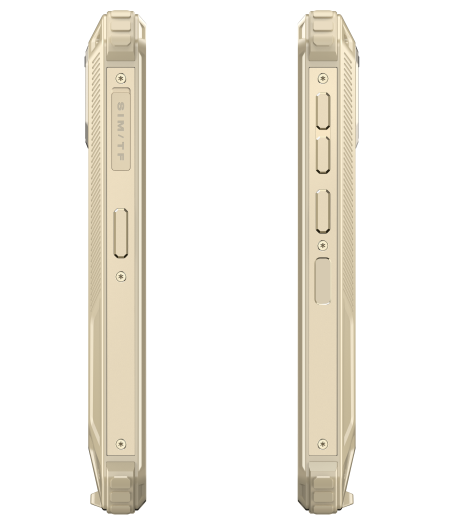
The smartphone features a good length of 158mm, a width of 78mm, and a depth of 18mm. Even the side buttons are designed to provide a top-notch user experience. F150 B2021 measures 158mmx 78mm x 18mm. There are three buttons on the side of the device which provide better convenience and usefulness for the users.
Approach to Rugged device
As said above, the device uses new innovative technologies to achieve ruggedness. The new technology allows us to achieve and reinforce better edges and protect the phone against a crack during any usual fall. Moreover, the device incorporates MIL-STD-810G, IP68 and IP69K certifications to protect again water, dust and drop. It can resist water for up to 20 mins under the depth of 1.5m.
The company is working to change the perception of rugged phones of being bulky and heavy. The developers and designers are injecting innovative ways to improve the overall build quality.
F150 B2021 is already in mass production and will start retailing for $199.99 on AliExpress and Banggood. The device will be on sale from January 18-24th at $109.99 with a 55% discount. The interested users can head over to the official website to opt for the global open sale. Initially, it will be available for the users in Europe, Brazil, the Middle East and Asia Southeast.
The users can win 10 units of B2021 by participating in the giveaway. You can know more details about the giveaway and the trial users experience in the coming days.
Over the past two years, the tech industry has seen a gradual proliferation of foldable phones. Several OEMs have been working on their own models but Samsung, Motorola, and Huawei have been leading the pack. Xiaomi has equally got something in the works but since 2019 when it was first teased, nothing concrete has been revealed. That may change soon as a device said to be a foldable phone has leaked online.
The device was spotted in the hands of a user inside a subway in China and it is similar to what Xiaomi’s VP showcased a few years back but this one has a bigger display. The device which looks like an engineering prototype is sort of masked by a protective casing.
However, from the crease line on the screen, we can tell that the device uses n in-folding design similar to the Galaxy Z Fold. The device is also shown as running MIUI 12 OS.
Going by the size of the device, we suspect the device will be quite bulky even when folded. But then, this could be one of the several foldable phone prototypes Xiaomi is working on.
There was a rumor last year that Xiaomi’s foldable phone is likely to drop this year and will be available in three different foldable designs. The foldable phones are said to adopt three different industrial design forms, namely, external fold, internal fold, and clamshell.
Xiaomi foldable phones are rumoured to use UTG (ultra-thin flexible glass) technology from Samsung. The current engineering machine is said to support a 90Hz refresh rate but is expected to be upgraded to support a 120Hz refresh rate in the future.
According to previous revelations, these three folding screen devices are expected to meet with us this year, let us wait and see.
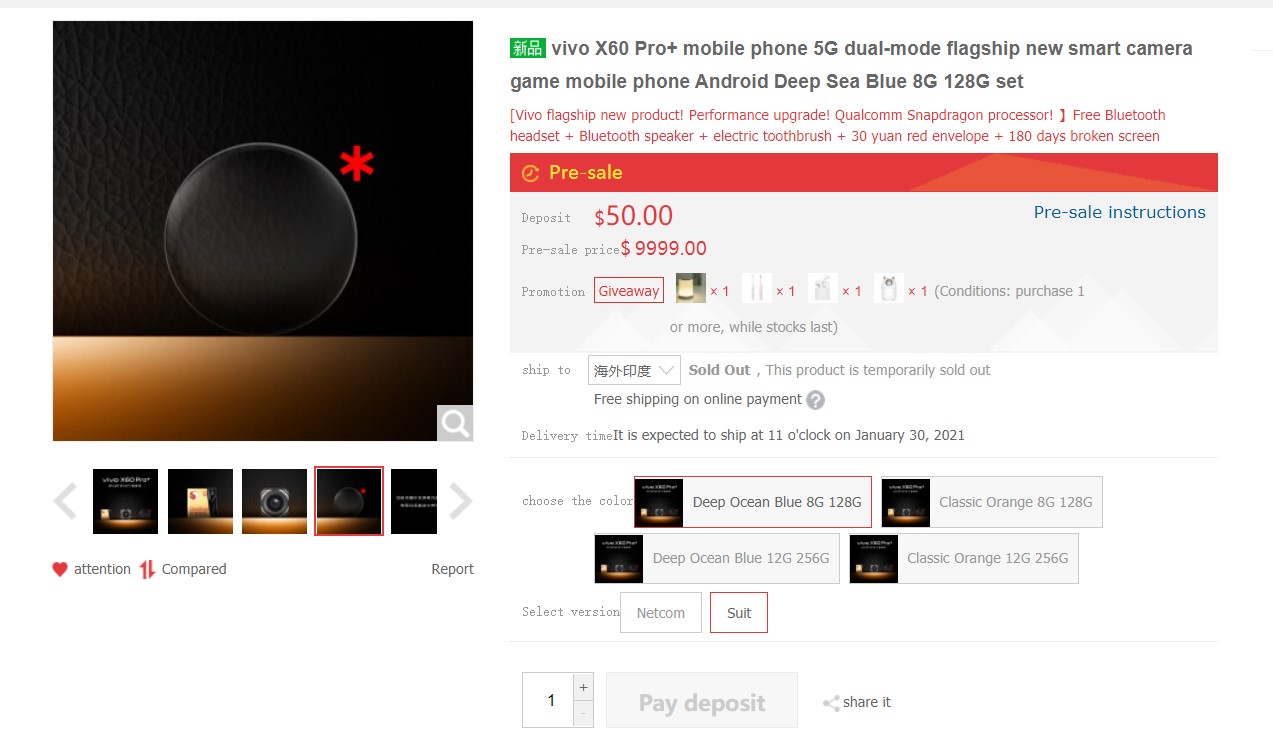
Vivo hasn’t talked much about the upcoming X60 Pro+ smartphone apart from a brief teaser back at the X60 series launch. Recently, the company has been widely promoting the X60, X60 Pro on social media platforms like Weibo. While it is yet to reveal the top-end flagship details, a JD.com listing reveals color names and memory variants.
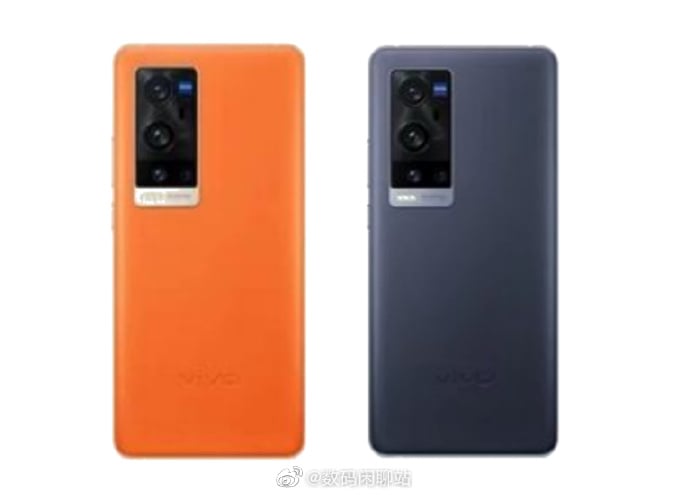
Vivo X60 Pro+ Old Leaked Render (Dec. 2020)
As GSMArena reports, a Vivo X60 Pro+ listing appears on Jingdong(JD.com). Although the listing doesn’t reveal any specs, it says the device is a 5G flagship. Further, the placeholder images are nothing but the Snapdragon 888 SoC, close-up of a probable Periscope lens, and Leather Patterns.
And if you look down the listing, we have information about the color and memory variants. Apparently, the X60 Pro+ will have two color options- Deep Ocean Blue and Classic Orange. If the listing is true, the memory variant of the device is either 8GB RAM, 128GB storage, or 12GB RAM, 256GB storage. Do note that a disclaimer image at last says final information could vary after launch.
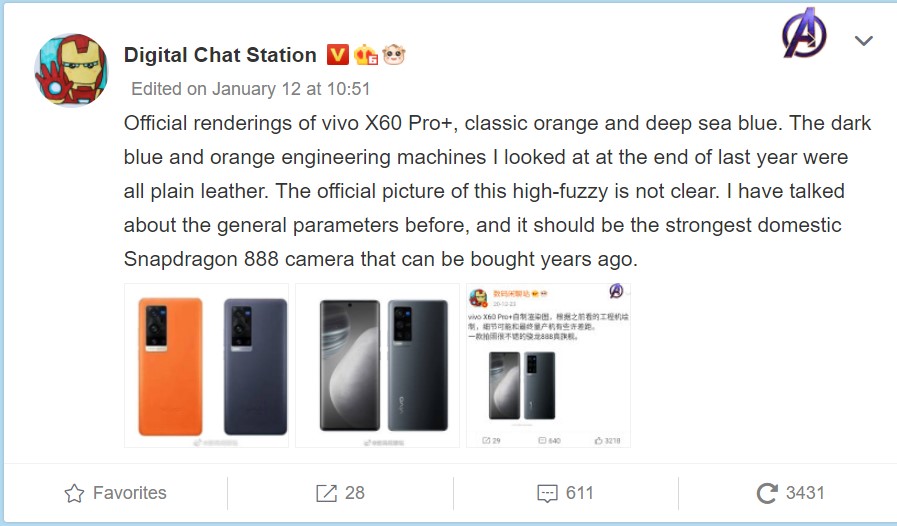
Either way, the names of the colors go in line with the earlier leak by Digital Chat Station a few days ago. He posted two images of the Vivo X60 Pro+ one in Blue and the other in Orange. Looking at the vague images and JD.com listing, it is possible that Vivo would launch X60 Pro+ in Leather editions.
Also, the JD listing points to a shipping date of around January 30, 2021, which means the launch could be in the fourth week of January(23-30). Speaking of which, the listing also has few more images teasing excellent low-light camera features, OS(probably OriginOS), and Fast Charging(maybe 120W).
Anyway, as mentioned above, take all this information with a pinch of salt as Vivo is yet to disclose it officially. The Vivo X60 Pro+ is expected to feature a centered punch-hole curved AMOLED display with a 120Hz refresh rate. Considering the X60 series and recently launched iQOO 7 have a 48MP main camera, we can also expect X60 Pro+ to stand out from the crowd.
Taiwan’s TSMC is already moving towards the next-gen 3nm semiconductor chip production. Apart from Major players like Apple and other Chinese smartphone companies, it is also attracting giants like Intel. After witnessing record-high revenues in multiple instances, it has now posted the Fourth Quarter Positive revenue report.
According to TSMC’s official press release, it has garnered $12.68 billion as the Q4 2020 revenue. This is a whopping 22% YoY(Year-over-Year) jump from 2019. Last year, it posted a revenue of $12.14 billion in Q4 revenue. What is interesting here is that 20% of the 2020’s Q4 revenue is from 5-nm chipsets.
This is 12% up from the 8% contribution last year. Anyway, TSMC says that its other 7nm and 16nm accounts for 29% and 13% of Q4 2020 revenue respectively. From this, it is clear that the company’s 5nm chipsets have yielded more revenue than expected.
Accordingly, TSMC also expects that its Q1 2021(First Quarter) revenue will be between $12.7-$13 billion. Let’s join together in wishing the Taiwanese semiconductor giant a successful 2021 outing.
HTC was once the world’s largest Android OEM. But now, the company barely releases new smartphones. Even if it does, most of them are exclusive to its home country Taiwan like the newly launched HTC Desire 21 Pro 5G. That said, despite unveiling a new device yesterday, the firm may announce another phone soon in the form of HTC Wildfire E3.
HTC’s Wildfire series of smartphones were one of the popular models in the early Android days. But in the past few years, the company has been using this brand for budget smartphones. The latest entry in this series will be the HTC Wildfire E3, as per a Google Play Console listing.
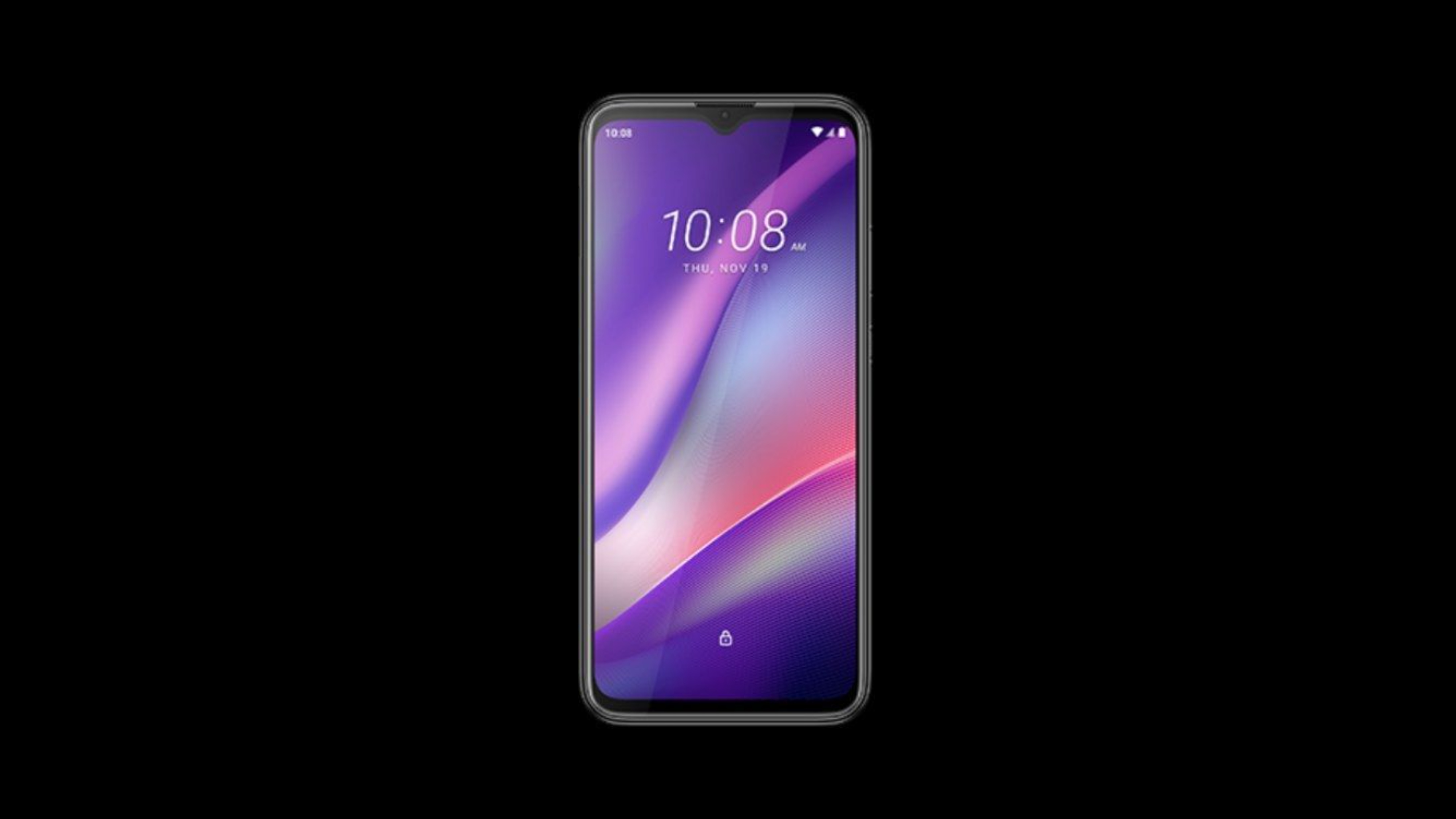
The listing reveals some key specs of this upcoming HTC budget smartphone along with its front design. First and foremost, this handset will come with a dew-drop notch and some visible bezels around the display.
According to the listing, the phone will sport an HD+ (720 x 1600 pixels) panel. Going by the entry-level MediaTek MT6762d (Helio P22) chipset and 3GB RAM underneath it, the screen should be mostly LCD, rather than OLED. Lastly, this handset will run Android 10 out of the box, which is a bummer for a device releasing in 2021.
That said, the exact launch date of HTC Wildfire E3 is a mystery but since the phone has been already listed on Google Play Console, it should go official anytime soon.
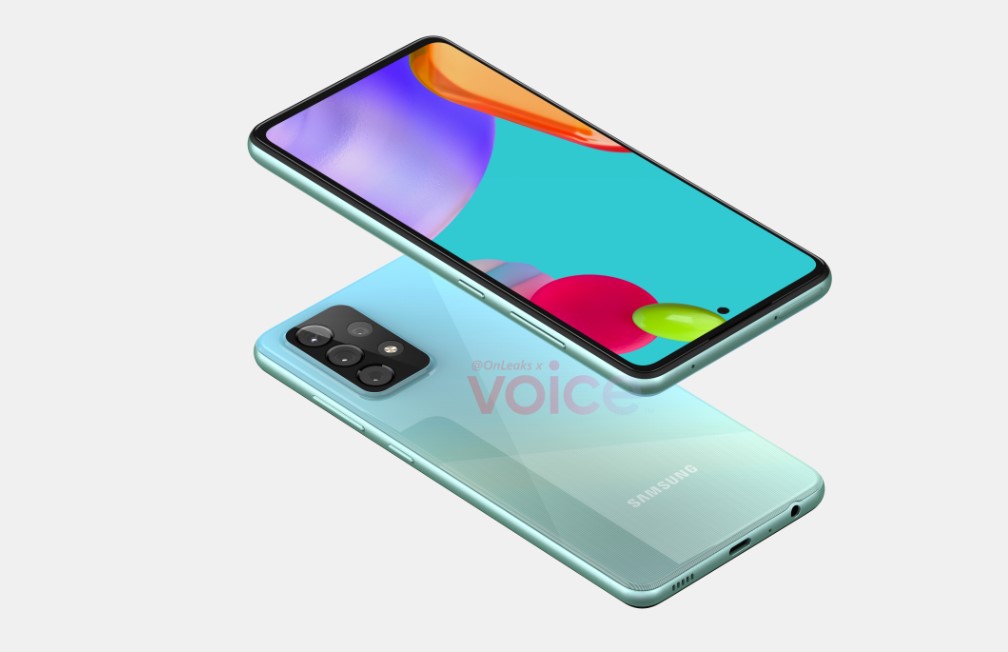
Samsung will be a lot busier today with the Galaxy S21 flagship smartphone launch happening in a few hours. However, the company hasn’t turned its tide on the successors to the last year’s A-series devices. It is already working on multiple devices like Galaxy A32, A52, and A72 at least as per the reports. Among these, the Galaxy A52 is said to come in both 4G and 5G variants and a report now says it’s already under production in India.
According to 91Mobiles’ industry sources, the upcoming Samsung Galaxy A52 has entered mass production at Samsung’s facility in Greater Noida. What’s more interesting is that citing its sources, the report says the Galaxy A52 5G variant will launch in India. While this is in contrast to earlier BIS listings, we just have one question- Why is Samsung opting for 5G?
For this, We can only place the market’s transition as the reason in front of you. The mid-range 5G smartphones are going to boom in India this year starting with launches like the Moto G 5G, Mi 10i, upcoming realme X7. And it will be fair for Samsung to pitch a 5G variant against these rivals to oust the competition.
That said, if the report is true, Galaxy A52 could be the first Galaxy A-series smartphone to carry the 5G support in India i.e, if it launches first ahead of other devices. This is because Samsung only brought the Galaxy A51 4G variant to India and not the 5G. And that was the case for A71, A80 devices.
Anyway, leaks so far say that Galaxy A52 will have a thickness of 8.4mm and feature a 6.5-inch Infinity-O display. It is expected to be powered by the Snapdragon 750G(5G variant)/ Snapdragon 720G (4G variant) paired with 6 / 8 GB RAM. Other probable features include a 64MP quad-camera setup, 15W charging, Android 11, and more.
It is so far rumored to launch before H1 2021 ends and come with a price tag of under $500.
It was learned yesterday that OPPO will be soon announcing the OPPO A93 5G mid-range phone in China. It was found listed on China Telecom’s website with images and specifications. Today, the phone surfaced on the Chinese retailer site Tmall with official images and specifications.
OPPO A93 5G renders
The Tmall listing of the OPPO A93 5G states that its pre-orders will be carried out starting from tomorrow. The handset is expected to go on sale from Jan. 20. It could be priced at 1,999 Yuan (~$309) or 2,199 Yuan (~$340).
The phone will be available in colors like Elegant Silver, Aurora, and Dazzle Black. The handset can be seen sporting a punch-hole display, a side-mounted fingerprint scanner, and a triple camera system.
1 of 3
OPPO A93 5G Silver
China's OPPO A93 5G may launch as the OPPO A74 5G in India
The OPPO A93 5G has a 90Hz refresh rate supporting a display of 6.5 inches. It offers a 1080 x 2400 pixels Full HD+ resolution and a 20:9 aspect ratio. The images that surfaced yesterday showed the device sporting a curved edge display. However, the official images show that it has a flat-screen.
The Snapdragon 480Qh 5G mobile platform will drive the device with 8 GB of RAM. The phone will come with 256 GB of native storage and a microSD card slot. The 5,000mAh battery of the phone will be equipped with 18W rapid charging.
The OPPO A93 5G has a front camera of 8-megapixel and its rear shell has a triple camera system. The latter houses a primary camera of 48-megapixel, a 2-megapixel depth sensor, and a 2-megapixel macro shooter. The Android 11 OS along with ColorOS 11.1 will come preloaded on the smartphone.
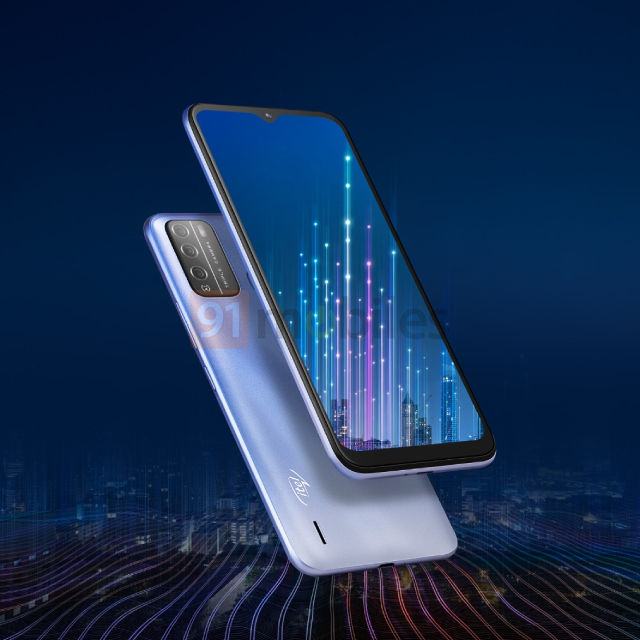
According to a new report by 91mobiles that cites information acquired from industry sources, itel will be launching a new smartphone in India with a price tag of Rs 7,000 (~$96). The name of the device is not known yet. However, the publication has shared a render of the mysterious phone to reveal its appearance.
As can be seen in the render, the upcoming itel smartphone features a waterdrop notch display. It has a thick bottom bezel. The tall aspect ratio screen is expected to deliver an HD+ resolution. It is also said to be equipped with a large-sized battery.
The back panel of the phone seems to be made from polycarbonate material. At the top-left corner of the rear shell, it features an AI-powered triple camera system. It is unclear whether the phone features a fingerprint scanner.
Last week, itel revealed to the media that it has gained over 7,000 crore customers in India in the past five years. As it is known, the China-based Transsion Holdings is the owner of phone brands named Tecno, Infinix, and itel.
Mr. Arijeet Talapatra, CEO, TRANSSION India, said in a statement, “Over the last five years, itel has seen robust growth and has successfully secured its position amongst the top three industry leaders in its segment. With the next billions of Indians entering into the fold of connectivity, itel will catalyze this transition enabling the vast majority to reap the benefits of digitalization providing comfort and convenience catering to their needs across entertainment, education, financial inclusion, and business,”
He further added “Our new brand vision “itel hai. Life Sahi Hai.” emphasizes on our commitment to provide a value-driven offering to our customers for a more convenient and better life. We are excited about strengthening our roots in every Indian household with our value plus, new-age technology products at an affordable price range so that every Indian can experience itel’s magical portfolio and have a better standard of living through its phones, televisions, and smart gadgets.”
Back in December, Huami announced the updated versions of the GTR and GTS 2 lineup in China. Carrying the GTR 2e and GTS 2e moniker, the wearables brought improvements to battery life, featured a new Temperature Sensor. After bringing this to markets like the USA, the company is finally bringing it to India.
Amazfit GTS 2e
In a tweet, Amazfit India has announced that it will be launching the Amazfit GTR 2e and GTS 2e in the country on January 19. A video teaser shared by the company shows the features of GTS 2e like AMOLED display, Heartrate, Blood oxygen Monitoring, and more.
In fact, both the smartwatches feature similar features but a different battery and display i.e, Square-shape on GTS 2e and Round display on GTR 2e. Also, they are identical to the previous versions, GTR 2 and GTS 2 except for the dimensions and above mentioned minor points. Speaking of which, during the China launch, Huami said that GTS 2e will give a 14-day battery life which is also evident in the teaser.
Also, Do more than just living, do more than just fitness; #DoMoreThanExist with the all-new Amazfit GTS2e
Similarly, GTR 2e will have a claimed battery life of 24-days(Normal) and 45-days(Basic Watch Mode). To compare the older GTS 2 and GTR 2 had a Normal Battery life of 7-days and 14-days respectively. Anyway, the GTR 2e and GTS 2e will also have other features like a microphone, a New Temperature sensor but it won’t have enough internal storage and a Speaker.
Also evident from the teaser that Amazfit will bring all the Obsidian Black, Dark Green, and Roland Purple colors of GTS 2e to India.
That said, both the Smartwatches will have an AMOLED screen( GTS 2e- 1.65-inch, 341 PPI, GTR 2e- 1.39-inch, 326 PPI) with 50+ AOD clock styles(GTS 2e), Heartrate(PPG-sensor), Blood oxygen monitoring(SpO2), GPS, 5ATM water resistance, sleep monitoring, 90 sports modes, 50+ watch faces, and more.
We’ll just have to wait for the official pricing for India which am sure will be out in a few days ahead of the reveal.
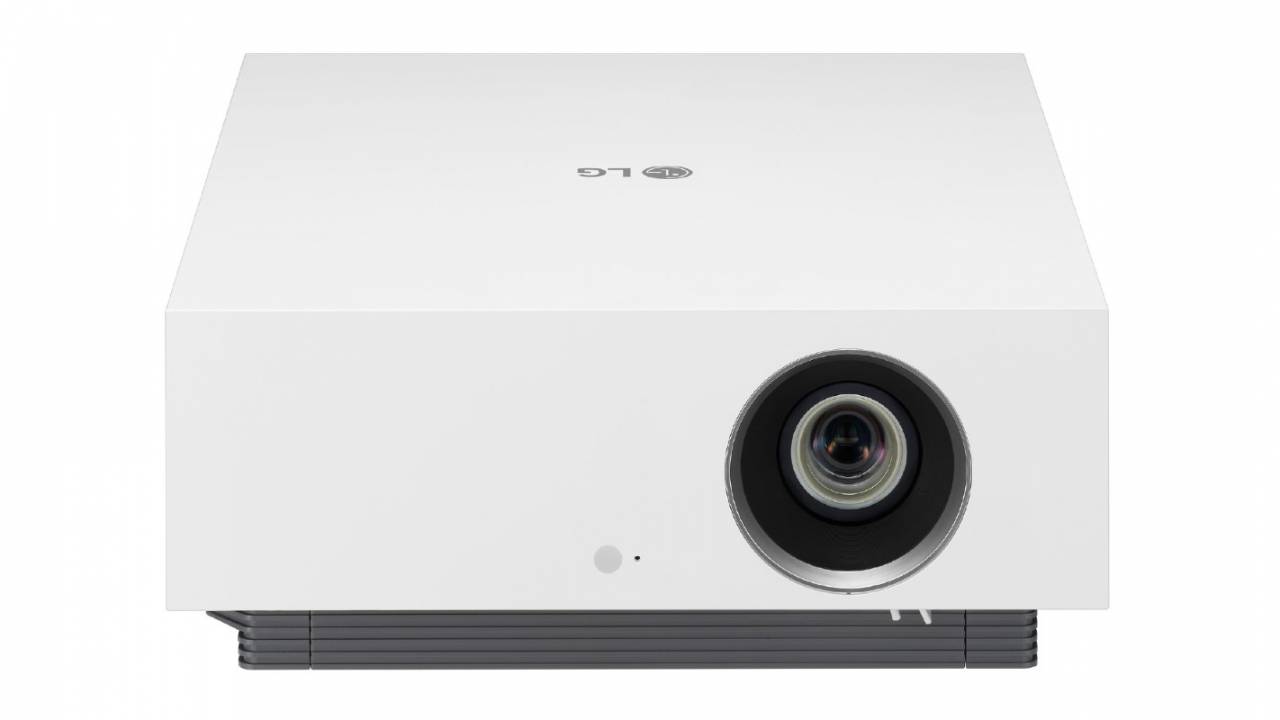
LG has just launched a new high end projector to bring the theatre experience to users’ homes. The new laser projector is the 4K CineBeam HU810P, which aims to provide ‘an authentic movie theater experience.’
The new laser projector arrives amid the Coronavirus pandemic, which still has various theatres and cinema halls remaining closed for an extended and, what appears to be, an indefinite period of time. So, the South Korean tech giant has introduced a new product that acts as a home theatre. This new laser projector can output 2,700 ANSI lumens of light, which can also adjust and adapt to the ambient lighting in its surroundings.
As per the company’s official notes, the LG CineBeam model can also be used in a ‘typically lit’ living room. Notably, the images and videos outputted by the new laser projector offer users a 97 percent DCI-P3 color space and even offer multiple viewing modes that can be chosen. This includes Dark Room Mode and Bright Room Mode. The last mode is the Adaptive Contrast, which also enabled the projector to auto adjust each video frame to ensure a better viewing experience.
LG also adds that the CineBeam supports TruMotion Mode and Real Cinema Mode, which allows users to watch movies the way they were intended to be viewed by tweaking the frame rate to 24Hz. For connectivity, the LG projector supports HDMI 2.1 + eARC and wireless for streaming content from other devices using Bluetooth. It also runs on webOS 5.0 and supports both Screen Share and AirPlay 2. Unfortunately, the company has yet to unveil the pricing and availability of the new projector.
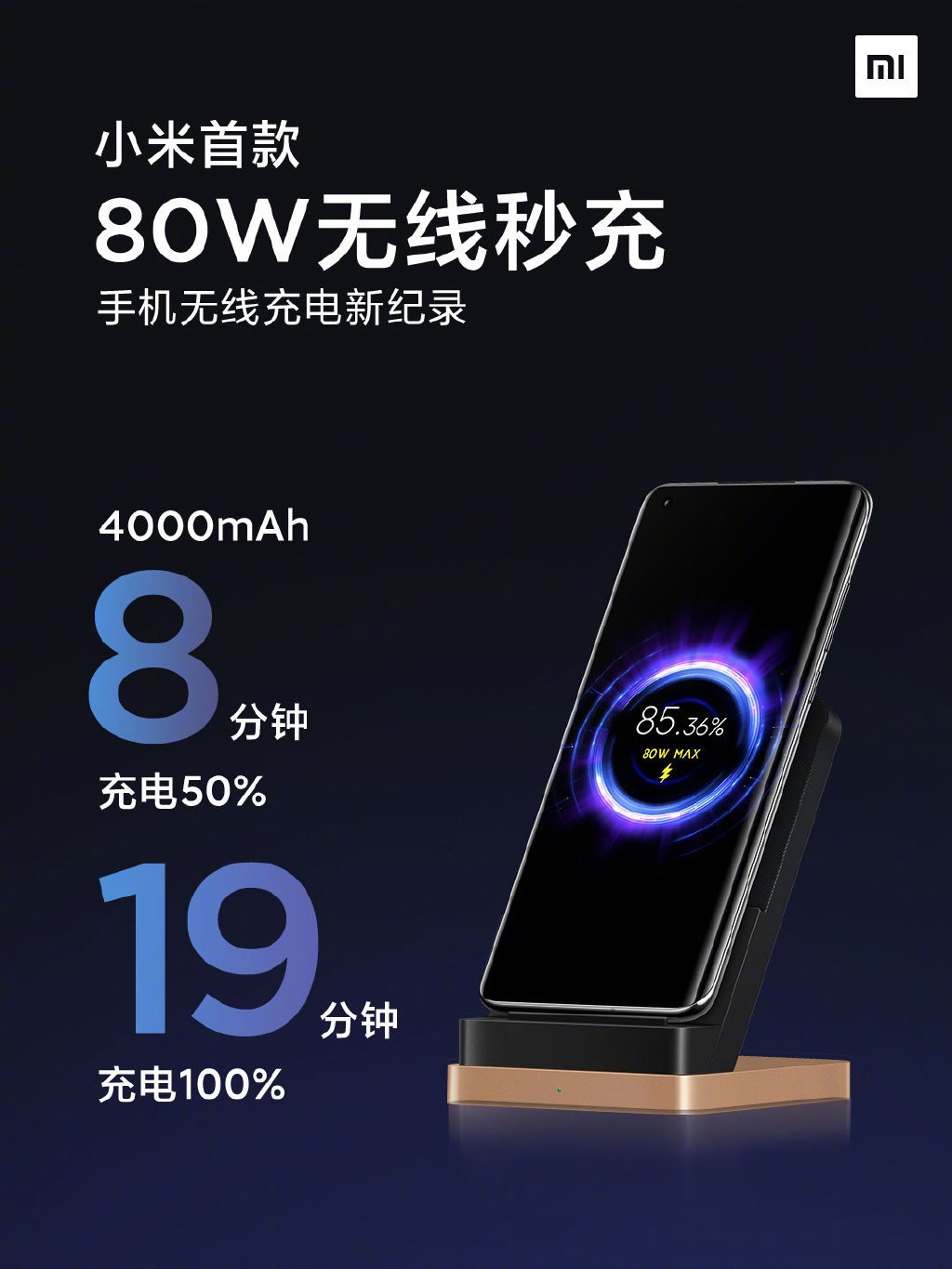
When it comes to wireless charging, Xiaomi is continuously offering faster wireless charging solutions on its flagship models. The Xiaomi Mi 10 Ultra that debuted last year in August and the recently unveiled Xiaomi Mi 11 flagship are both equipped with a 50W wireless charging solution. Fresh information suggests that the company may soon launch a flagship phone with 80W wireless charging technology.
Today, reliable tipsterDigital Chat Station claimed through a Weibo post that Xiaomi is testing a new flagship smartphone with 80W wireless charging technology. The handset with the new charging solution is said to be in the verification process. He added that its mass production is likely to begin in the first half of this year.
It is unclear which upcoming flagship phone will be equipped with the new wireless charging solution. Xiaomi is expected to announce the Xiaomi Mi 11 Pro flagship phone in February. It remains to be seen whether the 80W wireless charging technology will be available on the Mi 11 Pro or some other handset.
The 80W wireless charging technology was showcased by Xiaomi in October last year. A 4,000mAh battery can be fully charged by the 80W wireless charging solution with a dedicated stand in just 18 minutes. It is the world’s fastest wireless charging technology.
To successfully build the 80W wireless charging technology, the specially customized a more efficient wireless charging architecture and chip, and independently designed a composite coil system, using MTW multi-pole fast-charging batteries, dual 6C series batteries, with multi-stage variable current control, and MiFC fast charging.
The popular drone making brand, DJI, is apparently building a new team that will be working on developing self driving or autonomous technologies. The company has put up various job listings and has already begun hiring as well.
According to a BTTransportreport, the Chinese tech giant is hiring engineers from various fields and backgrounds like the auto electronics, autonomous driving, in car software, and automobile industry, as per its recent job posts. People close to the matter added that DJI is planning on selling driver assist technology as well. This includes technology like LiDAR sensors, which is a crucial component of self driving vehicles, and other packaged solutions for autonomous driving functions.
At the moment, the drone maker has yet to publicly announce this move. Although, the company has apparently been working on LiDAR technology and cameras for years now, as per the sources. Notably, the move from DJI arrives as various hardware and software based firms are racing to get a foothold in the automobile industry, especially in regards to autonomous vehicles and their future. Huawei is a great example of this with its HiCar initiatives along with its work in developing Smart Roads in China.
Currently, DJI dominated the global small drone market with a massive share of 69 percent. Research and analytics based firms recently estimated that the market’s overall value is worth about 8.4 billion US Dollars and is even expected to grow further. For those unaware, the company got placed on the US Commerce Department’s Entity List back in December 2020, for allegedly facilitating human rights abuses in China.
Earlier today (14th January 2021), the ZMI officially announced its PurPods true wireless earbuds. The new wireless earphones have been launched in China and will be available for purchase starting tomorrow, January 15.
Back in October 2020, ZMI had launched its PurPods Pro TWS earphones. These earbuds featured dual ANC (active noise cancelation) and were priced at 399 Yuan (roughly 61 US Dollars). Now, the Chinese company has launched the base PurPods, which are more affordable than their high end variant but lack the noise cancelling feature. In other words, we can expect the new wireless earphones to arrive with specifications similar to the premium variant.
For those unaware, the ZMI PurPods Pro sports pressure sensitive buttons that enables different controls. The hearables also support Bluetooth 5.2, alongside wireless charging, has IPX4 waterproof rating, and also arrive with the XiaoAI voice assistant built in for voice controls. The earbuds can also last for up to 10 hours on a full charge and up to 32 hour in total along with its charging case, and even has a low latency mode for mobile gamers
Furthermore, the new earbuds also use EQsmart adaptive technology that adjusts the volume according to the sound levels in the users’ surroundings. So for those looking for affordable new truly wireless earbuds, the PurPods from ZMI could also be worth considering. The earbuds will go on sale on 15th January 2021, and are available for a price of just 199 Yuan (roughly 30 US Dollars).
Last week, AnTuTu published a number of reports for the month of December 2020. Unfortunately, we missed out on the one for the global top 10 best performing flagship and mid-range Android smartphones. Let us take a look at these lists in this article.
Before we begin, we would like to mention that these two lists are based on all the Android smartphones launched u0p until December 2020. But surprisingly, it does not include the Xiaomi Mi 11, which currently tops the AnTuTu chart, as per another report that was published by the firm at around the same time.
Further, the company has only considered the average scores of the highest variant of each device With that being said, let us see which handsets made it to these lists.
Global Top 10 Best Performing Flagship Android Smartphones – AnTuTu December 2020
Global Top 10 Best Performing Mid-range Android Smartphones – AnTuTu December 2020
01) HONOR 30
Chipset: HiSilicon Kirin 985
Memory: 8GB + 128GB
Average Score: 404,970 points
02) HUAWEI nova 7
Chipset: HiSilicon Kirin 985
Memory: 8GB + 256GB
Average Score: 402,080 points
03) Redmi 10X 5G
Chipset: MediaTek Dimensity 820
Memory: 6GB + 128GB
Average Score: 394,545 points
04) Xiaomi Mi 10T Lite 5G
Chipset: Qualcomm Snapdragon 750G
Memory: 6GB + 128GB
Average Score: 331,796 points
05) Redmi K30 5G
Chipset: Qualcomm Snapdragon 765G
Memory: 6GB + 128GB
Average Score: 325,915 points
06) Xiaomi Mi 10 Lite 5G
Chipset: Qualcomm Snapdragon 765G
Memory: 6GB + 128GB
Average Score: 323,260 points
07) HUAWEI nova 7i
Chipset: HiSilicon Kirin 810
Memory: 6GB + 128GB
Average Score: 313,322 points
08) realme 7
Chipset: MediaTek Helio G95
Memory: 8GB + 128GB
Average Score: 297,910 points
09) Redmi Note 8 Pro
Chipset: MediaTek Helio G90T
Memory: 6GB + 128GB
Average Score: 292,901 points
10) realme 6
Chipset: MediaTek Helio G90T
Memory: 4GB + 128GB
Average Score: 291,109 points
Out of all the phones listed above, it is interesting to know that the Redmi Note 8 Pro that was released almost one and a half years ago, is still one of the best-performing smartphones.
What are your thoughts on these lists? Let us know in the comment section below.
Apple is facing another lawsuit. This time, the company is being sued over infringement of wireless communications patents through its iPhones and other products that feature cellular connectivity.
According to an Apple Insider report, the complaint was filed with the U.S. District Court for the Western District of Texas earlier this week. The lawsuit alleges that the Cupertino based giant knowingly infringed on five pieces of intellectual property owned by Delaware-based Neo Wireless, LLC. The patents were for some of the underlying systems that are related to wireless communications, the frequency bands, and other mobile networking technologies.
The lawsuit is technically targetting the way that the iPhones use multiple cellular networks. This includes both 4G LTE and 5G networkings. The complaint states that “To utilize LTE or 4G and NR or 5G networks, the iPhone is manufactured to comply with wireless standards, such as the 3GPP standards, that ensure compatibility of wireless devices and wireless networks.”
While it is not specifically mentioned, the lawsuit is also targetting the Apple Watch and iPad, as these products are presumed to fall under the claims of the infringement as the company’s other cellular enabled gadgets. At the moment, the complaint is asking for a jury trial and demands that the company pay for the damages, cost and other expenses related to the infringement of the patents. This also includes paying their attorney fees and ongoing royalties as well.
We use cookies on our website to give you the most relevant experience by remembering your preferences and repeat visits. By clicking “Accept”, you consent to the use of ALL the cookies.
This website uses cookies to improve your experience while you navigate through the website. Out of these, the cookies that are categorized as necessary are stored on your browser as they are essential for the working of basic functionalities of the website. We also use third-party cookies that help us analyze and understand how you use this website. These cookies will be stored in your browser only with your consent. You also have the option to opt-out of these cookies. But opting out of some of these cookies may affect your browsing experience.
Necessary cookies are absolutely essential for the website to function properly. This category only includes cookies that ensures basic functionalities and security features of the website. These cookies do not store any personal information.
Any cookies that may not be particularly necessary for the website to function and is used specifically to collect user personal data via analytics, ads, other embedded contents are termed as non-necessary cookies. It is mandatory to procure user consent prior to running these cookies on your website.