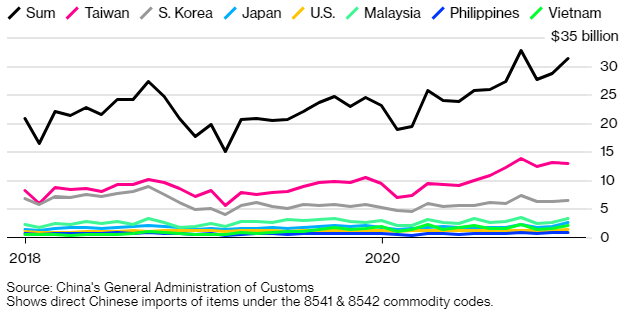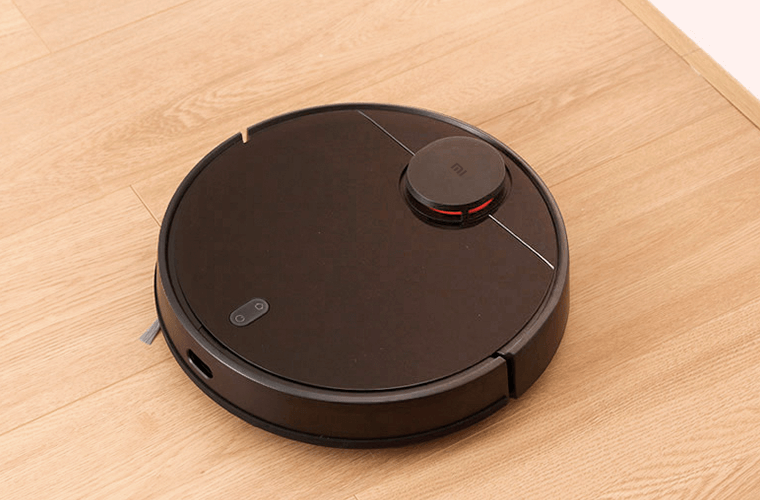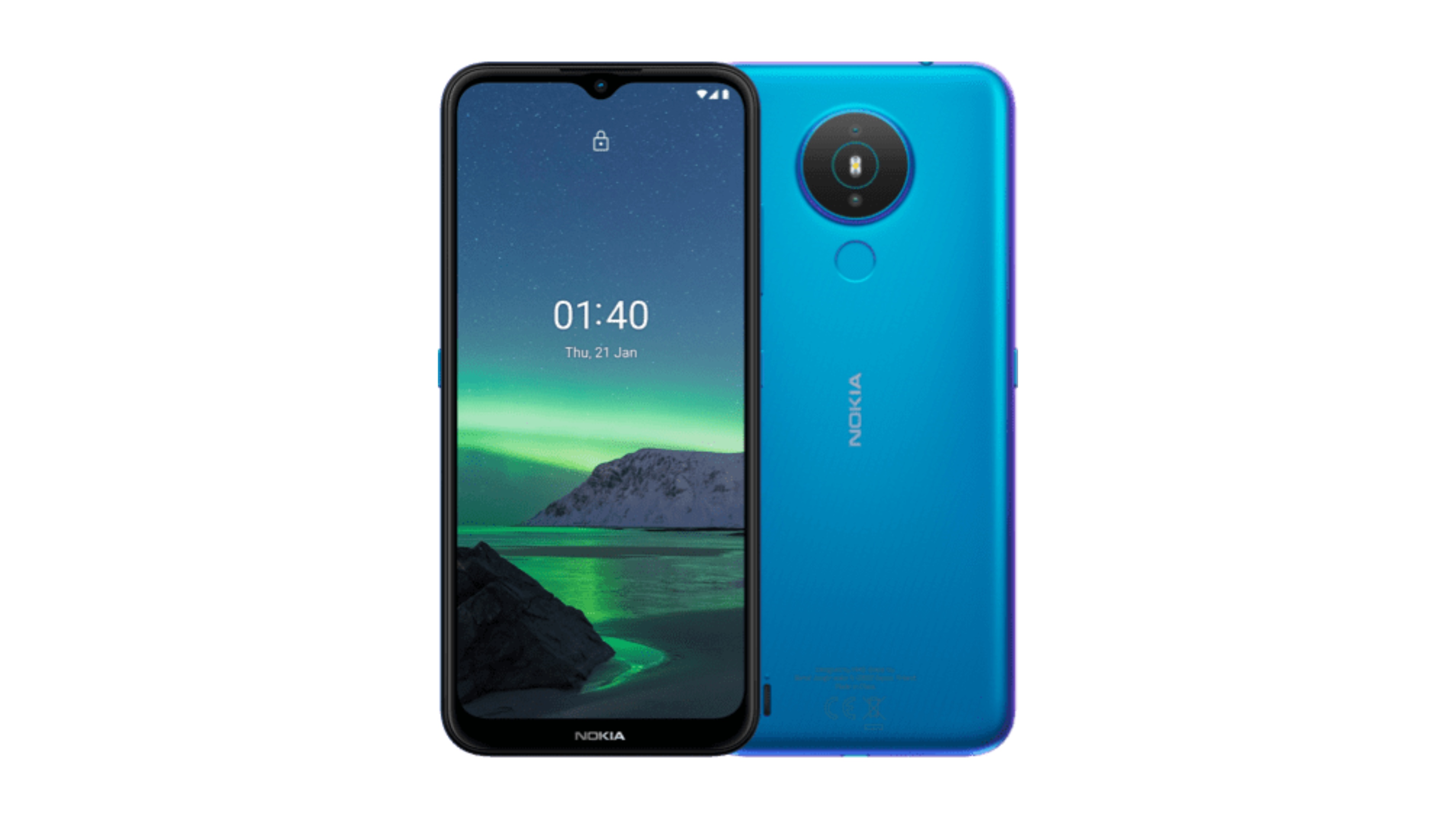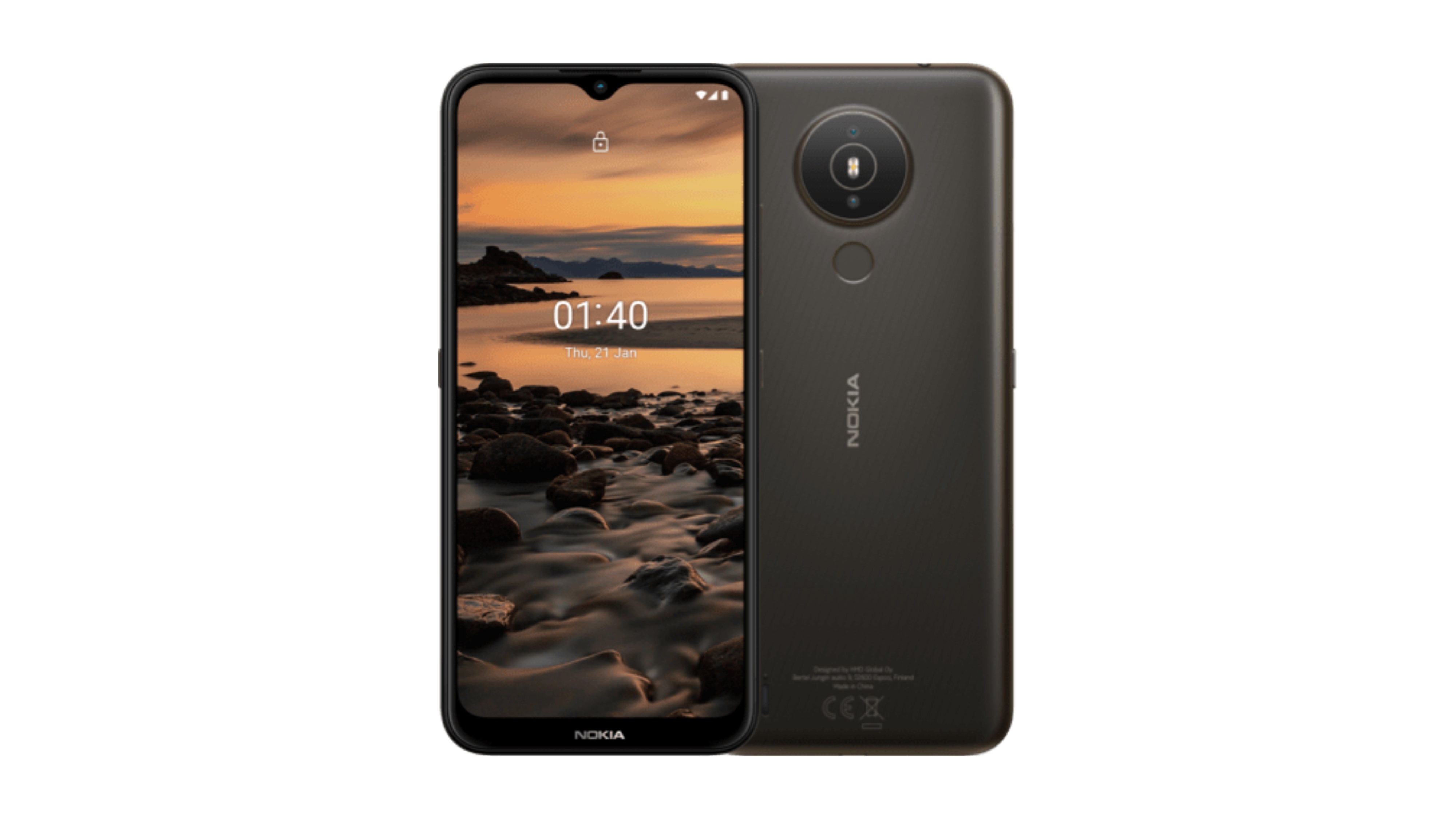
TCL, the known TV maker from China, has denied the allegations of it planting backdoor software, which would allow the Chinese government access to its TVs sold in the US market.
According to DigiTimesreport, the company refuted these claims as media reports about the US Department of Homeland Security investigating TCL for allegedly planting backdoor software into its TVs for its US based partners. TCL has claimed that it has yet to be informed by the government regarding this reported investigation. The company said that the TVs that it ships are only pre installed with operating systems developed by Roku and Google.
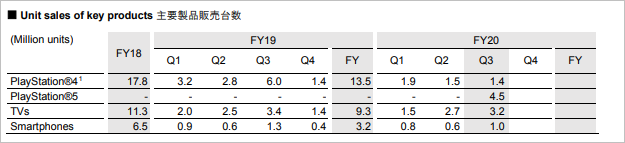
As per the company, its actions have met all the industry guidelines and general rules, technological policies, local laws, and even security standards. Furthermore, during this time of crisis, TV makers have seen a rise in shipments, with TCL’s financial results showcased that the company sold 7.24 million TVs in the third quarter of 2020, which is up by 24.7 percent from the same period last year and 49.7 percent on year with sales for the first three quarters of 2020.
Notably, TCL’s biggest market outside of its home country China is the US. Although, its US shipments had surpassed the Chinese ones in the first half of 2020. At the moment, TCL panels are mainly supplied by CSOT, which is the company’s subsidiary. So stay tuned for more, as we will be providing more updates when more information is available on the matter.
It has become quite difficult to get good quality ANC headphones under $40 budget. In the era of earbuds, there are still a handful of quality headphones available at an affordable price. Zeaplus Studio wireless headphone is among those sound accessories which can offer you a decent sound experience carrying excellent design for $39 $29.99 (coupon: ZS10ANC until Dec. 31). We have got the Zeaplus Studio and here’s our first impression and hands-on experience of the product.
The beautifully designed Bluetooth headphones offer an immersive sound experience using 40mm audio driver. It resembles Sony WH-1000XM4 in design and features too. Zeaplus Studio offers 26 hours of battery backup while the Sony WH-1000XM4 gives 30 hours of standby. Both the headphones offer Bluetooth 5.0 support for better connectivity and efficiency. The presence of Active Noise Cancellation also sets it apart from the similar priced non-ANC offerings. Zeaplus Studio ANC headphones works up to a range of 10m.
Design
The ergonomic design of Zeaplus Studio makes it easy to wear comfortably. It also carries an extended headband for better usability as the user can adjust the size accordingly. Zeaplus Studio headphones carry memory foam cushions around the speakers to enhance the audio experience and aids in better noise cancellation.
It comes with a headphone cover to keep it safe and sound from sudden impacts and dust. The joints are 90-degree rotatable both horizontally and vertically making it best-fit for varying sizes. Moreover, the dedicated cushioning on the top side enhances its overall experience as it acts as support on the head. The quality cushioning material present on all the sides gives it a more premium look.
The device features four different buttons for better device control. Its Multi-function button allows the user to pause/play, call/redial/reject, and power on/off the device. The volume buttons allow to change the track along with the usual volume control. However, the pairing is also controlled using the MFC button. There’s a dedicated ANC button at the side of the speaker to toggle the Active Noise Cancellation feature.
Features
Zeaplus Studio is a 2-in-1 headphone as it can be used both via a wire and even wirelessly. Its 5000 mAh battery provides a battery backup of up to 16 hours if the ANC feature is turned on, and 25 hours if it is disabled. Meanwhile, the wired connection using 3.5mm AUX can give you a battery backup of up to 40 hours.
On the right side of the device, you will get all the physical buttons to control the Zeaplus headphones. The ANC toggle, AUX port or 3.5mm jack, volume rockers, and MFB buttons are present on the right side. Meanwhile, the USB-Type C charging port resides on the left-side speaker.
Price
The Sony WH-1000XM4 lookalike, Zeaplus Studio is available for the affordable price of $39 $29.99 (coupon: ZS10ANC until Dec. 31). The new Zeaplus Studio can be a really attractive over-ear headphone in its price segment, especially because of its features, audio quality, and comfortable design. You can grab it for $39 $29.99 (early bird discount) from its official website in Black color.
Smartphone manufacturers have been trying to launch a smartphone with a full display body on the front for years now. Various methods have been adopted so far like the punch hole selfie camera or the pop up mechanism. Now, a new patent has revealed that Samsung might have found another new method of hiding the selfie camera in the display.
Back in June 2020, Samsung Electronics filed a patent with the WIPO (World Intellectual Property Office) for an ‘Electronic device including sub display and method of operating same.’ This document was approved and published on 24th December 2020. The patent describes a device that has its selfie shooter to be completely hidden when not in use. For this, the South Korean tech giant detailed a complicated method.
Looking into this unique mechanism, the company aims at having the screen be transparent at a particular area where the camera is housed. Although, a secondary display is placed directly under this transparent area to cover the camera when not in use. At the moment, the next expected technology to hit the market will most likely be the under display selfie shooter. But this unique method takes away the issue of quality that affects devices with under display selfie cameras.
According to a LetsGoDigitalreport, this new technology might be seen in a future Samsung flagship handset. Unfortunately, it will likely not be seen in the Galaxy S21 series but could be featured in the Galaxy S22 lineup, which would launch in 2022. However, that is just speculation and we have no way of knowing if the company is actively working on this technology for a smartphone lineup. So stay tuned for more updates.
Display maker from China has apparently not slowed down the pace of capacity expansion of their AMOLED panel production sites despite the smartphone industry being largely affected by the Coronavirus pandemic.
Visionox Rollable AMOLED display
According to a DigiTimesreport, display makers in the country have ramped up capacity expansion and even technological upgrades for AMOLED panel production. The companies have set up new fabs or expansion projects that are currently being carried out, which will also include a 6G line. This includes Visionox in Hefei, BOE Technology in Chongqing, and Tianma Microelectronics in Xiamen.
Furthermore, China Star Optoelectronics Technology (CSOT) is expected to include a new 6G flexible AMOLED line as well. This will be apparently be called the T5 line, and will co exist with the company’s T4 line in Wuhan. Similarly, two comparatively smaller display makers Everdisplay Optronics and Royole are also planning on issuing IPOs to raise additional funds to finance their own expansion plans.
Notably, the news arrives as Samsung Display has adopted an aggressive pricing strategy for its rigid AMOLED panels for smartphones. Now, Chinese panel makers have switched their AMOLED to roll out products for wearable platforms. These companies would also be targeting both domestic and foreign sales for their panels.
realme has already proven itself to be the fastest-growing smartphone brand this year. However, the company is yet to do that in the IoT(Internet of Things) segment. And if the list of products launched in 2020 weren’t enough, a report says it’s aiming for more.
Vice President, realme, and realme India CEO, Madhav Sheth has told to IANS(via Zee Business) that the company is looking to bring more than 100 AIoT and lifestyle products in 2021. These include the already explored TWS, Smart TVs, Smart Sockets in addition to newer ones like Smart Bulb, Trimmers.
Madhav adds that the TWS will extend to new generations of realme Buds Air, realme Buds Q, and newer editions of Smart TVs. If we recall, the company recently launched a Master Edition of the Buds Air Pro and a second-gen Buds(Buds Q2) is already on the radar of leaks. Looking at the market perspective, a recent counterpoint report shows realme has beaten popular JBL to occupy the Top-3 position(as of Q3 2020) in India.
Coming back, Madhav says the company is finishing 2020 on a successful note with over 190,000 units of smart TVs and 2 million AIoT products sales during the Festive season. Besides, the company is no slouch in the smartwatch category either. From a nowhere to be seen brand towards the beginning to emerging as the No.1 Watch Brand in India, the company has seen it all.
That said, we are going to witness a multifaceted realme next year as per Madhav’s statement. In the runup to top the charts in every category, he says the company is planning to expand hybrid offline channels(eg. to Pharmacies) for products like Toothbrush, Suitcase.
Upon heavier demand, it is also considering to include Smart Speakers, Air Purifiers, Electric Juice Jar, ACs to the portfolio. Anyway, let’s wish the company good luck for a successful 2021 outing.
Oppo had recently released three new Reno5 smartphone models at two different events. A fourth one has also been rumored to launch for the global market and now, a new report has revealed that a fifth might also be in the works.
According to a GSMArenareport, the Chinese tech giant is working on a new Reno5 mode reportedly dubbed the Oppo Reno5 Lite 5G. This model apparently supports 30W fast charging and was recently found listed on the Chinese website 3C (China Compulsory Certification). The device is codenamed PELM00, with the official branding having yet to be confirmed. Although, the original report from MyFixGuide seems confident of this branding as it covers all price categories through the Reno5 lineup.
Arriving at the charging listing, the Oppo Reno5 Lite 5G will arrive with VOOC 4.0, as the adapter is listed as VC56HACH, which is the same power brick as all of the other mid range devices from the company. Notably, with the launch of all five models, the smartphone maker would’ve successfully covered all categories with one lineup alone and have even launched a global variant as well.
Unfortunately, the device’s other specifications are unknown at the moment. Although, a few educated speculations can be made right now, like the inclusion of a 5G Dimensity chipset from MediaTek, and a multi camera setup on the rear including a primary camera, ultra wide angle lens, depth sensor, and even a macro shooter. The mid range segment faces one of the stiffest competition in the industry, so the company might also surprise us with other features as well, so stay tuned for more updates.
Realme announced the Realme Q2 smartphone along with two other phones such as Realme Q2i and Realme Q2 Pro in China in October. A smartphone with RMX2117 model number has appeared in the database of the Bureau of Indian Standards (BIS). Since the RMX2117 model number belongs to the Realme Q2, the BIS certification suggests that it may soon debut in India.
As can be seen in the screenshot shared by tipster Mukul Sharma, a listing of the RMX2117 has appeared at BIS. As usual, the BIS listing has no information on its specs. Realme’s Q-series is exclusively available in China so far. Hence, it is likely that the Realme Q2 could be arriving with a different moniker in India.
Good news for those waiting. The Realme Q2 also appears to be coming soon to India, as it has now received the Indian BIS certification.#Realme#RealmeQ2pic.twitter.com/fBUeahiPx5
Recent reports have revealed that apart from the Realme X7 series, the company could be also announcing the Realme 8 and Narzo 30 series of smartphones in January. It remains to be seen with what moniker the Realme Q2 lands in the country.
The Realme Q2 has a 120Hz IPS LCD screen of 6.5 inches that offers an FHD+ resolution and a 20:9 aspect ratio. The Dimensity 800U chipset powers the device with up to 6 GB of RAM. It comes with up to 128 GB of native storage and a microSD card slot. The phone is loaded with Realme UI based Android 10 OS.
The Realme Q2 has a 5,000mAh battery with 30W fast charging support. It has a 16-megapixel selfie camera and a triple camera system comprising of a 48-megapixel main shooter, an 8-megapixel ultrawide lens, and a 2-megapixel macro lens. It has a side-facing fingerprint reader.
Today we are not going to talk about any new devices. Instead, we will go through the history of Xiaomi Mi series smartphones, so that you can get a better idea of what kind of brand Xiaomi exactly is. And how they have evolved over the past few years.
The year 2020 marks the tenth year of Xiaomi, a company that is undoubtedly an industry legend. In this decade, Xiaomi has not only been ranked among the top five in the world in terms of smartphone sales year after year but has also made it to the top 500 companies in the world. And in its tenth year, the Xiaomi Mi 10 marked the beginning of a move away from being extremely cost-effective flagships and into the ranks of high-end and premium phones.
But we can’t talk about Xiaomi’s success without talking about its flagship phones. So let’s go back in time and see how the youngest ever Fortune 500 company went from zero to tens of billions of dollars in market capitalization.
Xiaomi Mi Flagships
What you may not know is that in the first year of Xiaomi, its first product launched was not a mobile phone, but a customized operating system based on Android called MIUI, whose smooth, user-friendly experience built up a good reputation for Xiaomi.
1Xiaomi Mi 1
Xiaomi Mi 1
And in the second year, i.e. in August 2011, the first Xiaomi phone, the Xiaomi Mi 1 with MIUI was launched. In the first online sale of the phone, 300 thousand units were sold out in just 5 minutes. The popularity was not only due to the fluid experience of MIUI but also because of its unbelievable pricing strategy. While having a similar configuration to the Samsung Galaxy S2, it was only half the price of the S2. Coming with a Snapdragon S3 1.5GHz dual-core chipset, a 4-inch display with 245ppi, and 1GB RAM, all of which were top configurations back then, the Mi 1 was priced at 1999RMB, which converted to around 300USD. At that time, no one could do that, except for Xiaomi.
Xiaomi 1999 yuan pricing
Since then, the number 1999, has become Xiaomi’s lucky number, and it’s like a Magic spell.
But to be honest, the design of the first Mi phone was not outstanding at all, which also became one of the most criticized points of the Xiaomi flagships in the latter years.
2Xiaomi Mi 2
Xiaomi mi 2
In the summer of 2012, Xiaomi released the Mi 2, which not only had an upgraded SoC but also had a bigger screen with a 342ppi resolution, which was even better than the Apple iPhone 4s. And it was equipped with 2GB of RAM, which was not common at that time. The Mi 2 continued Mi 1’s trend of offering superb value for money and also continued to gain strong support from Mi fans at the same price of 1999RMB. Hundreds of thousands Mi 2 in stock were sold out within minutes each time.
Xiaomi Mi 2
3Xiaomi Mi 2S
Xiaomi Mi 2s
However, the most famous model of Mi 2 series is not the Mi 2. Instead, it’s the Mi 2s released in 2013. In that year, Xiaomi released 3 phones: the Mi 2S, the Redmi 1,
and the Mi 3. The Mi 2S was an improved version of the Mi 2, with an updated MIUI, a new snapdragon 600 SoC, and, as usual, the same price at 1999RMB.
While the Android phones of the same period were relatively less powerful, the Mi 2s had a clear advantage at the time with excellent performance and powerful software support. And thanks to the long official support from MIUI 4 to MIUI 9, the Mi 2s has become one of the longest-lived models among all the Mi phones.
Because of its strong performance, it is still able to run some of the mainstream apps of today. Even now there are some users who haven’t given up on this model. That’s why the 2s was also known as a classic magic model by Mi fans in China, just like the iPhone 4 for Apple.
Xiaomi flagship family
Although Mi phones have had great sales success from the Mi 1 to the Mi 2s, too many consumers complained about the lack of stock all the time, many of them started questioning Xiaomi as a ‘monkey tricking’ company that uses thirsty marketing strategies to consume users’ patience and enthusiasm. But the partial reason might be that as a startup lacking production capacity, Xiaomi didn’t have the ability to quickly respond to the huge market demand.
4Redmi 1
redmi 1
By the way, the first Redmi phone was released in the same year. As Xiaomi’s first sub-brand, Redmi took on the role of Xiaomi’s foothold in the budget market. For only around 120 USD, you could get a branded quality phone that was good value for money, which was a rarity in the global phone market at that time. More than 9 million pre-sales orders also proved the Redmi brand was on the right path. And the Xiaomi brand continued to build up its strength to make a real high-end flagship.
5Xiaomi Mi 3
Xiaomi Mi 3
Now coming back to the Mi 3 flagship released later the year. Xiaomi abandoned the mediocre design of the predecessors and changed it into a totally new design with a more angular appearance. It came with the global debut of the snapdragon 800 soc and an upgraded 1080P display with a 441PPI resolution. And the M3 was the first Xiaomi phone that had a non-removable rear cover. Thanks to the more integrated body, its battery capacity was improved to 3050mAh. Even with all these significant upgrades, again, Xiaomi continued the pricing strategy of starting from 1999RMB, not disappointing fans who believed they could get the phone at the amazing 1999RMB price tag.
Xiaomi Mi 3
Clearly, it must have taken Xiaomi a lot of courage and efforts to bring such an important product at such an affordable price tag. However, the Mi 3 became a unique model in the history of Mi Phones with people’s polarized reviews. In addition to the praises about the upgrades we mentioned, some accused it of copying the industrial design of the Nokia Lumia series and complained about its poor build quality.
6Xiaomi Mi 4
Xiaomi Mi 4 featured
In the summer of 2014, after the controversial design of Mi 3, the Mi 4 was released. For the Mi 4, Xiaomi put its focus on the phone’s design upgrades. With the slogan of ‘a steel plate’s artistic journey’, it was the first time a Mi phone used a metal stainless steel frame. And shifting from the angular style of the Mi 3, the Mi 4 returned to the design of the Mi 1 and Mi 2 series. The back cover had a special pattern design, and the whole machine got a huge boost in build quality. Unsurprisingly, 2014 was another year of big sales for Xiaomi.
In 2015, there were no updates of the Mi series. Instead, a new series was launched – the Xiaomi Note 1. As Xiaomi’s first attempt to hit the high-end market, the new Note 1 was not successful. The lack of a fingerprint reader and the four-month delay in the launch of the snapdragon 810 SoC due to overheating issues, left the Note 1 behind most competitors as soon as it went on sale. The lack of a widely praised flagship model in 2015 hinted at the oncoming darkness for Xiaomi.
7Xiaomi Mi 5
Xiaomi Mi 5
In early 2016, the Mi 5 eventually came out. With its first attempt at a ceramic back cover, a white front face, a home button with a fingerprint sensor, and the latest Snapdragon 820, it was supposed to sell very well for a starting price of just 1999RMB. but the sales of the Mi 5 again was delayed by nearly eight months and it was out of stock for a long time after it went on sale. The delay affected its sales significantly, and it was the time when the brand was called out most by fans for its ‘hunger marketing’ Basically fans were frustrated that Xiaomi’s best products were not easily available for sale.
8Mi Mix 1
Xiaomi Mi Mix 1
But fortunately, there was another heavyweight that took to the stage in 2016, the Mi Mix 1. For the first time in its history, users saw and admired Xiaomi’s industrial design capabilities on the Mix 1. It came with a full-screen design with three super-narrow bezels and a selfie camera on the chin below., which made it pretty stunning at that time.
Xiaomi Mi Mix 1
Even today, it still looks pretty impressive. The ceramic back cover is as gentle as jade, and the camera and fingerprint reader are placed in the upper center, in line with the symmetrical aesthetic. It’s no exaggeration to say that it has to a certain extent inspired future smartphone screen design. However, the Mix 1 was stuck in the stage of being a concept phone due to the difficulties in production. It wasn’t mass-produced, so there was no way to salvage the decline in sales in 2016. In these two years, Xiaomi suffered its first setback.
9Xiaomi Mi 6
Xiaomi Mi 6
Then came April of 2017, when the phone with the best reputation ever in Xiaomi history, the Mi 6 debuted. It came with a new home button integrated with a fingerprint reader without opening a hole, and also added a telephoto camera. Besides the commendable design and the excellent build quality, the debut of Snapdragon 835 SoC also made it almost impeccable at that time.
Xiaomi Mi 6 featured
The Snapdragon 835 was the best Android chipset in recent years with its excellent power and cooling performance. With almost no shortcomings, it was no longer priced at that familiar 1999RMB, and became the first model in the Mi series to start at more than 1999RMB. However, the 2299RMB starting price didn’t stop fans from purchasing the device. The success of the Mi 6 finally broke the price barrier of its flagships and further verified the importance of the product quality and performance. And so far, the Mi 6 is still the only Xiaomi phone that has never dropped in price from launch to exit.
10Xiaomi Mi 8
Xiaomi Mi 8
In 2018, Xiaomi skipped the Mi 7 and released the Mi 8. The Mi 8 has been controversial since its release. It did look like the iPhone. And the Xiaomi Mi 8 became the least distinctive model of the whole series. Even the infrared emitter, a standard feature that Mi series pride themselves on, was removed. Despite this, sales of the Mi 8 continued to rise because of its excellent value for money. At that time, you only needed to pay 2699RMB to get a flagship having a snapdragon 845 Soc, dual-band GPS, and infrared facial recognition for unlocking even in the dark. And more importantly, this was also the first time that Xiaomi started paying attention to the phone’s camera. Meanwhile, the camera department started to run independently to serve all the Xiaomi phones.
11Xiaomi Mi 9
Xiaomi Mi 9
In 2019, the Xiaomi Mi 9, codenamed ‘battle angel’, was launched. It featured three rear cameras, a Primary camera, a wide-angle camera and another telephoto camera, first time achieving three stages of focal length coverage. The Mi 9 scored 107 in the DXOMark test at that time, placing itself in third place. It’s also the first time that we really saw Xiaomi being praised for its camera system. Another selling point of the Mi9 was the thinness of 7.61mm and the lightweight body of 173g. With a curved glass cover, the phone did feel pretty impressive when holding in hands.
Xiaomi Mi 9
But the compromise of the Mi 9 was that the battery capacity had to be cut down to 3300mAh. The limited battery life also became the main complaint for the Mi 9, which, to some extent, affected the overall sales of the model.
At the same time, the Xiaomi founder, Lei Jun said at the launch that the Mi 9 selling for 2999RMB was the last phone to be priced at under 3000RMB.
Over the years, Xiaomi prepared well for the transition to the high-end market.
12Xiaomi Mi 10
Xiaomi Mi 10
As expected, the Mi 10 powered by Snapdragon 865, which started at 3999RMB, was released this spring. The Mi 10 comes with a 100MP main camera, a 90Hz curved hole-punch display, LPDDR5 RAM plus UFS 3 ROM, and, most importantly, 5G network support. However, although the price was almost twice the initial price of 1999RMB, there were fewer complaints about the Mi 10’s pricing strategy. Compared to other brand flagships, Mi 10 is still one of the most competitive models in the market in its price segment. And besides the Mi 10 itself, Xiaomi offered several models of the Mi 10 series which were developed for different market segments and regions, such as Mi 10 Pro, 10 Lite, 10T, and so on. No doubt the most famous model is the Mi 10 Ultra specially made to commemorate Xiaomi’s 10TH Anniversary. It’s almost the first Mi flagship that took an all-around lead among Android phones and had such high pricing.
Xiaomi flagship family
Xiaomi has been recognized as a special brand to make phones with great value for money. Although the flagship Mi series will no longer come with a mid-range price tag, the sub-brand Redmi has taken up the market of budget cost-effective phones. For the past ten years, Xiaomi’s pattern has been imitated by a number of phone brands. However, most of them failed and didn’t survive in this highly competitive industry.
On the other hand, we do have to add that Xiaomi is not perfect. At least it’s still facing the dilemma between pursuing higher brand value and maintaining its existing user base. And no doubt the success of the Mi 10 Ultra has encouraged Xiaomi to break the dilemma.
The Mi 11 is about to be released. And we’re really looking forward to Xiaomi bringing us a surprise.
Despite 5G networking being an advancement in mobile networking, which would be beneficial to all, there has been an onset of paranoia regarding the newer and faster bandwidth. Earlier this year, violent incidents and vandalism regarding 5G towers erupted in countries like China and the UK. Now, the FBI is also investigating whether 5G paranoia played a part in the RV bombing in Nashville, US.
According to a PhoneArenareport, the Federal Bureau of Investigation is currently looking into whether 5G spying leads a man to create an explosion on Christmas Day in Nashville. The agency is considering a wide range of possibilities, with 5G also being a part of it. It is investigating whether the person of interest, Anthony Quinn Warner, who was said to be a local tech expert in the city, became paranoid about 5G networking.
The 63 year old Warner was apparently fearful of 5G, as per new reports. This news also arrives as the US government has blocked 5G equipment from Chinese companies over concerns of espionage and spying through their systems. Both Huawei and ZTE had denied the allegations and no evidence to support these accusations have ever been found so far.
At the moment, the FBI is still working on discerning a cause for the events and have even considered the bombing, which led to 3 injured, as a suicide attempt. Unfortunately, media reports are only based on speculations and rumors and we still have no concrete evidence behind the violent event. This is all we have to go on, for now, so stay tuned for more updates.
In December, OPPO launched the Reno5 series of smartphones in China. The lineup included three models such as the Reno5 5G, Reno5 Pro 5G, and Reno5 Pro+ 5G. Fresh information reveals that the company will be announcing the Reno5 4G as the fourth member of the Reno5 family on Dec. 30 in Vietnam. The same phone is now scheduled to break cover in Indonesia on Jan. 12.
Rumors have it that the OPPO Reno5 4G will have a 6.43-inch AMOLED display that will produce a Full HD+ resolution and a refresh rate of 90Hz. It will be sporting a punch-hole display that will come integrated with an in-screen fingerprint reader. As far its construction is concerned, it will have a glass back and its rear and mid-frame will be made up of plastic.
The handset will have a 4,310mAh battery. It will be equipped with 1st generation 50W SuperVOOC fast charging technology. When it comes to photography, it will have a 44-megapixel selfie camera and a 64-megapixel quad camera. The latter will include other lenses such as an 8-megapixel superwide lens and a pair of 2-megpaixel auxiliary lenses. There is no word on the pricing of the Rneo5 4G.
In related news, OPPO is also expected to release the Reno5 5G and Reno5 Pro 5G in global markets soon. Both phones are speculated to arrive with Snapdragon 765G chip onboard. In China, the Reno5 Pro 5G is available with Dimensity 1000+ SoC.
The upcoming Microsoft Surface Pro 8, which has already surfaced in numerous reports, is expected to launch sometime early next year. While it is known that it’ll physically look similar to the Surface Pro 7, the company might be bumping the specs of its base model.
We have already heard reports of the Surface Pro 8 featuring 11th Gen Intel Core processors with Iris Xe graphics or even with the AMD Renoir platform. Although, the upgrade that Microsoft is finally addressing with the upcoming notebook is the issue of the base model arriving with a Core i3 processor and only 4GB of RAM, which is less than what most smartphones arrive with. But as per a new WindowsLatest (via MSPowerUser) report, the company will be offering the Surface Pro 8 with at least 8GB of RAM.
At the moment, the Surface Pro 7 only arrived with just 4GB of RAM in the base model and the 8GB RAM variant only arrived with Core i5 and Core i7 processors. Although, the report also suggests that the 4GB model might still be available. In other words, the 8GB variant for the Core i3 might just be a paid upgrade on the lowe variant. This would mean that the Surface Pro 8 could arrive in:
Core i7, 16 GB RAM and 256 GB SSD, 512 GB SSD or 1TB SSD storage.
Unfortunately, this is still an unconfirmed report, so take this news with a pinch of salt for now. Currently, it is also unknown if Surface Laptop 4 and Surface Pro 8 are expected to launch in January 2021. So we might find out more details soon. Stay tuned for more, as we will be providing more updates when additional information is available.
Earlier this month, Samsung unveiled its 2021 lineup of laptops. The company had announced four new Windows 10 laptops, which included the Galaxy Book Flex 2, Galaxy Book Flex 2 5G, Galaxy Book Ion 2, and Notebook Plus 2. And now, the brand has released a new video of the Galaxy Book Flex 2 5G, offering us a first look at the new laptop.
On its official YouTube channel, the South Korean tech giant uploaded an official unboxing of the Galaxy Book Flex 2 5G. Apart from this, the company even uploaded another video, which explained how to use the new features on the laptop. Looking at the unboxing video first, the laptop arrives with a USB Type C charger, a SIM card ejector pin, and a quick start guide.
Furthermore, the Galaxy Book Flex 2 5G features a 13.3 inch Full HD touchscreen enabled display. Under the hood, an 11th Gen Intel Core processor runs the device paired with up to 16GB of RAM and up to 512GB of SSD internal storage. The notebook is a 2 in 1 laptop which also supports the S Pen, with a full sized keyboard, a 13 megapixel rear camera, a 720p webcam on the front, and even a trackpad. A 69.7WHr battery powers the laptops.
A notable feature of the Galaxy Book Flex 2 5G is its document mode in the camera app. This feature allows users to capture documents easily, offering additional productivity options. It also arrives with the Samsung Note app pre loaded, which lets users quickly note things down, draw, or even edit images or create PDFs and sign documents digitally as well.
OPPO has recently launched the OPPO Reno5 Pro+ 5G flagship phone. Some of its major highlights include the Snapdragon 888 chipset, electrochromic rear, and the 50-megapixel Sony IMX766 lens built in partnership with Sony. A fresh leak by a reliable tipster from China states that OPPO and Sony are also working on another custom chip named Sony IMX789.
OPPO is expected to launch the Find X3 in the series in Q1 this year. The tipster mentioned that the Find X3 may not feature the Sony IMX789. The machine-translated text suggests that the al the flagship models from OPPO may use a customized sensor. The lens could remain exclusive to OPPO for certain a period.
It is unclear which upcoming OPPO smartphone will be arriving with the new IMX789 lens. It remains to be seen whether it arrives on the Reno6 series that may debut by mid-2021.
The recently introduced Sony IMX766 promises a top-notch photography experience in low-light conditions as its sensor size is 1/1.56-inch and it offers a unit pixel area of 1.0μm. As compared to the 48-megapixel Sony IMX586 lens, the IMX766 can intake 63.8 precent more light. While no technical information is available on the IMX789, it is likely to offer a superior experience than the IMX766 when it comes to low-light photography.
Leaked information shared by popular tipster Evan Blass earlier this month revealed that the forthcoming Find X3 Pro will have a 120Hz adaptive refresh display with curved edges. The 6.7-inch display will offer 1440 x 3216 pixels resolution and it will be capable to display images in 10-bit colors.
The rear-facing camera setup of the phone may feature the Sony IMX766 50-megapixel lens as the primary shooter, another Sony IMX766 lens for capturing ultrawide shots, a 14-megapixel telephoto lens with 2x optical zoom, and a 3-megapixel macro lens with 25x zoom support. The Snapdragon 888 powered phone will come with an improved version of the company’s 65W fast charging technology.
Microsoft has been working on a new version of Windows 10, which is called Windows 10X, for many months now. The operating system was supposed to launch this year but the company postponed it and made few changes to its initial plans.
Now, Windows 10X, which is built on top of the Windows 10 core operating system, is expected to officially release in the second quarter of next year. With just a few months to the launch, details are surfacing online.
A new report reveals that the Windows 10X from Microsoft will come with a ‘Modern Standby’ feature to offer an instant-on and always-connected experience.
Currently, most Windows-powered laptops take some time to wake up from sleep mode. With instant-on, as the name indicates, the company aims to offer an experience where the system resumes as soon as the lid is open.
Another addition is the always-connected feature that will enable the apps to work in the background even during sleep mode. This will be helpful for apps like emails, allowing it to fetch email messages in the background. Most Windows Store Apps are said to be compatible with this feature.
Apart from the Modern Standby feature, the upcoming Windows 10X is expected to come with several other features and improvements, including a new File Explorer. To know what’s up the company’s sleeves, we will have to wait for a few more months.
For those who are unaware, the Windows 10X project started out with a focus on dual-screen and foldable devices, but a few months ago, the company delayed the launch and revealed that it’s changing focus to single-screen devices for the initial release.
The iQOO 7 will be one of the first Snapdragon 888 powered smartphones to be in China. Recent reports have suggested that it is likely to go official before the Spring Festival of China, which falls on Feb. 12. On Friday, a Weibo user spotted a pre-sale poster of the upcoming iQOO 7 at a retail outlet in China. It seems that the smartphone may launch at some point in the coming month.
The Weibo user claimed that he spoke to the clerk at the store to ask about the iQOO 7. The clerk revealed that the stock of the next iQOO flagship will be available in about half a month. It appears that this in line with a recent leak that the iQOO 7 may break cover by mid-January.
While iQOO has already shared a rear render of the iQOO 7 to reveals its design, it is yet to reveal its front design and specifications. Like it did for the iQOO 5 Pro, the company will be selling a special BMW edition for the iQOO 7. The poster image by the Weibo user reveals that the smartphone will be accompanied by a 120W charger. Hence, it could be arriving as the first Snapdragon 888 powered smartphone with a 120W charger.
It is speculated that the iQOO V2049A phone that was recently approved by the 3C authority could be the iQOO 7 smartphone. The smartphone may carry a slightly bigger battery than the iQOO 5 Pro.
Apple has been working on a Smart Car system for a few years now under Project Titan, reports about which started surfacing online again this month related to the new battery technology and the mass production.
Recently, it was reported that the Apple Car could enter the mass production phase by the end of 2024. However, it seems that the timeline has been changed. Apple analyst Ming-Chi Kuo has now stated (via 9to5Mac) that the most realistic timeline is 2028 or later and added that the market is too bullish about Apple Car.
For his claim about the delayed launch, Kuo gives three reasons — uncertainty about the timing, uncertainty about the supplier and vehicle’s specifications, and uncertainty about the competitiveness in the EV market.
For those who are unaware, the autonomous car project of Apple has been in the works since 2014 when the company started the design of its own electric car from the scratch. However, the project struggled to proceed smoothly and at one point Apple decided to just focus on the software part of the technology.
But, after the return of Doug Field returned to Apple from Tesla a couple of years back, he started overseeing the project and revamped the team. And now, it seems that the company is making significant development in this field.
Kuo also notes that while Apple has several strengths, it doesn’t always work out for the company the way they expect. To highlight this point, he gives an example of Apple HomePod, which has struggled to get market share in the smart speaker space.
It’s also noteworthy that Apple is currently catching-up with the Electric Vehicle or Smart Car field and there are several companies that are in advanced stages of technology development or have started working on the commercial car.
China-based display maker BOE has been trying to become a supplier of OLED panels to Apple for the iPhone 12 models for many months now but wasn’t able to secure orders from the Cupertino-based giant.
However, it seems that the company has finally managed to supply OLED screens for the iPhone 12 series to Apple. As per the reports, the Chinese company supplied the first batch of screens to Apple last week.
The development comes just days after it was revealed that BOE had finally passed Apple’s certification for supplying screens. It is not yet confirmed how many panels will be supplied by BOE to Apple for the iPhone 12 lineup but in the first batch, it reportedly sent 10,000 units of the 6.1-inch screen.
A recent report had stated that Samsung still remains the top choice for Apple when it comes to iPhone 12 screen. As a result, the South Korean company is expected to ship around 140 million OLED panels for iPhone in 2021, followed by LG Display which is expected to ship 30 million panels. Lastly, BOE is expected to ship 10 million OLED panels.
Earlier, it was reported that the BOE, which is already a display supplier for MacBook and iPad, will be supplying OLED screens for the new iPhones as Apple tries to reduce its dependence on Samsung. But the Chinese firm wasn’t able to meet Apple’s standard but after working on it for a few more months, it seems that the issues have been resolved and BOE is now a supplier for Apple iPhone 12 display panels.
Last Friday, Chen Jin who is Lenovo China’s General Manager mobile phone business department shared a retail package of an unknown Motorola phone through Weibo. The Weibo post suggests that a couple of Motorola phones could be landing soon in China.
Lenovo sold only two Motorola phones such as Moto G7 Plus and Motorola P50 in China last year. However, the home market was treated with several Lenovo phones. This year, except for selling the Motorola Razr (2019) and Razr 5G phones, it did not launch any other Motorola branded phones in the home market. Also, very few Lenovo phones including the Lenovo Legion Pro were released in China.
In an interview last month, Jin said that the company adopted a new strategy for selling Lenovo and Motorola branded phones in China. Lenovo’s Lemon-named phones will be used to sell low budget phones. The company has already launched a couple of Lemon K12 series smartphones in China earlier this month.
The Legion brand will have performance-driven phones like the Legion Pro (aka Legion Duel in global markets). As far as Motorola branding is concerned, it will include mid-to-high smartphones. Hence, the teaser shared by Jin suggests that the company could be gearing up to launch a new mid-range or a high-end Motorola smartphone in China. Probably, the mysterious phone may go official as early as next month.
Motorola has launched a couple of 5G-ready phones such as Moto G 5G, Moto G 5G Plus, and so on in global markets recently. Probably, some of these phones could be landing in China soon. Motorola is expected to announce a Snapdragon 800-series Moto G phone soon. Also, it plans to launch a flagship phone powered by the Snapdragon 888 in 2021. The final product names of these high-end phones are under wraps.
Earlier this year, Xiaomi announced its first Wi-Fi 6 router, dubbed Xiaomi AIoT AX3600, along with the Mi 10 series flagship smartphones. Soon after the announcement, the device went on sale in China for 599 yuan, which is about $92.
Now, keeping up with the launch schedule, the company is gearing up to launch a new router along with the upcoming Mi 11 lineup, which is expected to be an Enhanced Version of the current AX3600. Ahead of the launch of this new router, the current device has received a price cut in China.
It has been confirmed through a listing on JD.com that the Xiaomi AIoT AX3600 will be available for purchase in China for 499 yuan (approximately $76) from 1st January.
As for the upcoming Enhanced Version, the company’s executive has revealed that it will have twice the bandwidth support and transmission information density has been increased by 20 percent, along with offering 2.1 times faster network speed.
To remind you of the details of the Mi AIoT Router AX3600, it is a flagship product in this category from Xiaomi. It is powered by Qualcomm’s IPQ8071A chipset that has four Cortex-A53 cores and is clocked at 1.0GHz. The chipset on the device is paired with 512MB of RAM and 256MB of internal storage.
Xiaomi says that up to 248 devices can be connected to the router. The router comes with 7 high-gain antennas where one of the antennas is an IoT device antenna, two are 2.4GHz antennas and the remaining five are 5GHz antennas. It supports OFDMA technology (Orthogonal Frequency-Division Multiple Access) which allows it to send data to multiple terminal devices using only one transmission.
The Mi AIoT Router AX3600 works with the Mijia app and it automatically detects IoT devices from the surroundings, allowing users to set up via one-click configuration. It can also be controlled through a dedicated WiFi App which has been updated with new features such as real-time notification when a device connects or disconnects from the network.
Xiaomi will be launching the Xiaomi Mi 11 later today at 7:30 PM (local time) in China. The same event will be also used to announce the MIUI 12.5. It will be announced as an updated version of the MIUI 12 that went official in China back in April. Starting from today, the company has commenced the MIUI 12.5 closed beta registrations.
The MIUI 12.5 closed beta is now available for 21 models through the “Early Access” registration process. Users in China who wish to try the MIUI 12.5 need to follow MIUI’s WeChat official account and hit “Early Access” to participate in the registration. After submitting the application, it will be reviewed and the closed beta MIUI 12.5 will be available for installation.
Reports have revealed that MIUI 12.5 will bring several improvements such as better privacy protection, cleaner UI, new animations, and more. Last week, the Xiaomi MIUI Turkey had confirmed that it will be releasing the final and stable version of the MIUI 12.5 in late February in the home market.
We use cookies on our website to give you the most relevant experience by remembering your preferences and repeat visits. By clicking “Accept”, you consent to the use of ALL the cookies.
This website uses cookies to improve your experience while you navigate through the website. Out of these, the cookies that are categorized as necessary are stored on your browser as they are essential for the working of basic functionalities of the website. We also use third-party cookies that help us analyze and understand how you use this website. These cookies will be stored in your browser only with your consent. You also have the option to opt-out of these cookies. But opting out of some of these cookies may affect your browsing experience.
Necessary cookies are absolutely essential for the website to function properly. This category only includes cookies that ensures basic functionalities and security features of the website. These cookies do not store any personal information.
Any cookies that may not be particularly necessary for the website to function and is used specifically to collect user personal data via analytics, ads, other embedded contents are termed as non-necessary cookies. It is mandatory to procure user consent prior to running these cookies on your website.