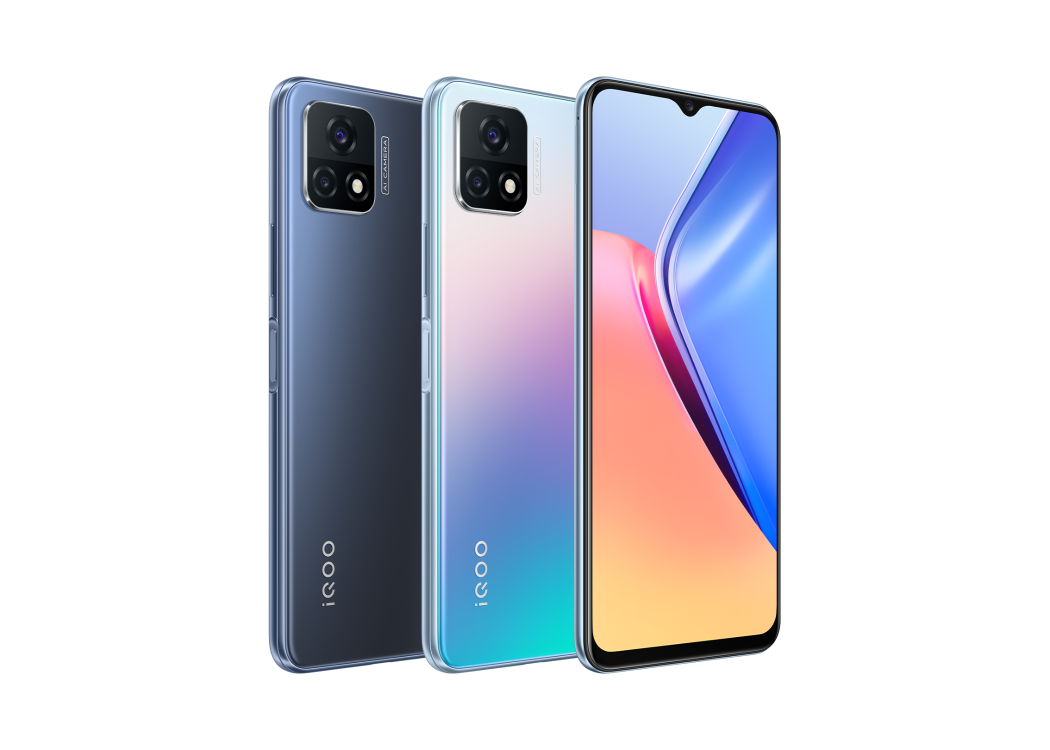
Vivo’s sub-brand iQOO has announced a new smartphone called the iQOO U3. The iQOO U3 is a budget-friendly 5G smartphone that features a high refresh rate display, a large-sized battery, and 48-megapixel dual rear cameras.
iQOO U3 specifications and features
The iQOO U3 has 164.15 x 75.35 x 8.4mm dimensions and it weighs 185.5 grams. The device is fitted with a 6.58-inch IPS LCD screen that has a waterdrop notch for an 8-megapixel selfie camera. The screen supports a 20.07:9 aspect ratio, a Full HD+ resolution of 1080 x 2408 pixels, a 401ppi pixel density, HDR10, and a refresh rate of 90Hz. The iQOO U3 offers a screen-to-body ratio of 90.61 percent.
The rear side of the phone features a uniquely designed dual camera setup housed inside a rectangle camera module. It includes a 48-megapixel main shooter with an f/1.79 aperture and a 2-megapixel depth sensor. The phone comes with support for photography features such as night scene mode, panorama, time-lapse photography, EIS, and 4K video recording.
The iQOO UI 1.5 based Android 10 OS comes preinstalled on the iQOO U3. The Dimensity 800U chipset along with up to 8 GB of LPDDR4x RAM fuels the device. It has UFS 2.2 storage of 128 GB and it lacks support for external storage.
The iQOO U3 is backed by a 5000mAh battery that supports 18W dual-engine fast charging. The other features that are available on the device include liquid cooling technology, dual SIM support, Wi-Fi 802.11ac, Bluetooth 5.1, GPS, USB-C, face unlock, a side-facing fingerprint reader, and a 3.5mm audio jack.
iQOO U3 pricing and availability
The iQOO U3 has landed in China in two options such as 6 GB RAM + 128 GB storage and 8 GB RAM + 128 GB storage. It has a starting price of 1,498 Yuan (~$229) and 1,698 Yuan (~$259) and it comes in two colors like Black and Glow Blue. The handset is now up for pre-orders in the home market with a 50 Yuan discount and it is expected to hit the Chinese markets by Dec. 17.
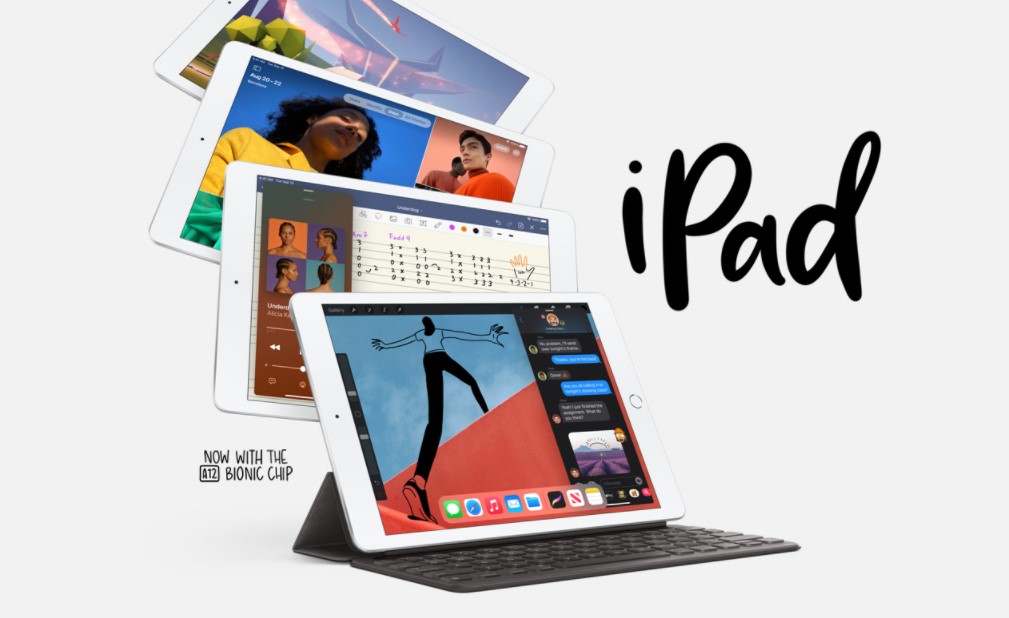
Apple launched a number of new iPads this year but the cheapest of them is the 8th gen iPad (2020) which launched alongside the 2020 iPad Air a few months ago. A new leak says we will be getting a successor early next year, and one with a cheaper price tag.
The 8th-gen iPad has a starting price of $329, a 10.2-inch screen, and an Apple A12 Bionic chipset but its successor will pack a larger display, a more powerful chipset, and a lower starting price. Awesome, right?
According to the leaker that goes by Tron (@cozyplanes), the 2021 iPad will have a 10.5-inch Retina display with a home button that has Touch ID. This means with respect to design, it should have thick bezels just like the current model. However, he does say that the new tablet will be thinner and lighter.
10.5" iPad with A13 chip coming early 2021
– 10.5" Retina display – A13 Bionic chip – 4GB RAM – thinner, lighter design – Home button w/ Touch ID – Starting at $299
Under the hood, the 10.5-inch iPad will have the A13 Bionic chipset, the same chipset found in the iPhone 11 series. The processor will be paired with 4GB of RAM but there is no info on the storage variants. The 2020 model comes with 3GB of RAM and can be purchased in two variants – 32GB and 128GB.
The new iPad has been reported to have a starting price of $299, even cheaper than the $329 starting price of this year’s model. However, the low price tag may be a hint that the base model will have 32GB of storage. Yeah, we know the available storage will be barely enough but since the new model will cost less and be more powerful, we can’t complain too much.
Although not stated, the new iPad should support the Apple Pencil (hopefully 2nd gen), Apple Smart Keyboard, and Xbox, PS4 and or PS5 controllers. It should also have an LTE variant.
Apple is expected to launch this new iPad in early 2021 which is less than six months since the launch of this year’s model. Regardless, we will advise you to take the info above with a grain of salt until more details surface.
In late November, we reported that NEON, the artificial human product that was announced at CES 2020 by Samsung Technology and Advanced Research (STAR) Labs will be coming to phones this December. Now, the CEO of STAR Labs, Pranav Mistry, has said that will not be the case.
Apparently, a few days after we reported that the AI product will be coming to smartphones, Mr. Mistry had posted a tweet saying that NEON View, the version made for mobile devices, “will not be coming for general availability in the near future”.
In the tweet, he said that NEON is “first targeted for Business-to-Business, as an API” that makes use of its “real-time conversation capability to mobile apps and web services”.
Also, NEON is an independent service, in making. Its not coming with S21 or any other Galaxy devices. Available in 2021, as of now only for B2B via View API integration, and NEON Frame.
Today, there was a tweet from the leaker that goes by Tron (@cozyplanes) that NEON would be available only on the Galaxy S21 Ultra 5G. Another leaker, Chun (@chunvn8888) also said that there would be a press release. Turns out both were wrong.
NEON is your AI friend. It has a face and you can name it. It doesn't make calls for your boss or tell you today's weather. There is Bixby for that, your smart assistant. You get all of these in your pocket. Only on Samsung Galaxy S21 Ultra 5G.
In a now-deleted tweet, Pranav Mistry clarified that there will be no press release and that NEON will not be coming with the (Galaxy) S21. The head of the research lab then posted another tweet saying that NEON is an independent service and it will not be coming with the Galaxy S21 or any other Galaxy devices.
So if you were excited about NEON coming to phones, sorry to burst your bubble, but that will not be happening soon. The NEON website does say that “My NEON”, an artificial human friend, will be coming in 2022 but we don’t know if it will come with phones or in a different consumer device.
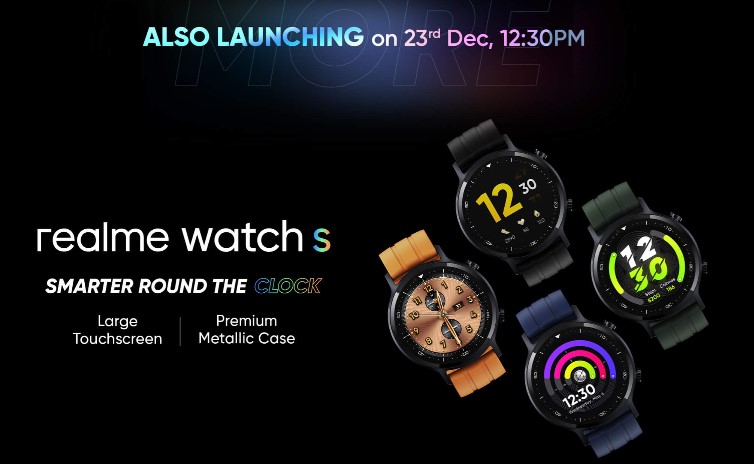
realme has announced that it has a launch event on December 23 in India. The launch is for the realme Buds Air Pro Master Edition TWS earbuds and the realme Watch S Pro smartwatch.
I had promised you guys that #realme will be much more than a smartphone brand for you. It will be an integral part of your Tech-Lifestyle & here I am presenting to you our latest offerings – #MeetTheProTrendsetters#realmeWatchSseries.
The main difference between this and the standard version is the color. As seen in the image above, the realme Buds Air Pro Master Edition will come in silver with a glossy finish. The standard models come in Rock Black and Soul White.
realme Watch S Pro
The realme Watch S was announced last month in Pakistan and Europe and now, it is set to get a pro model. The realme Watch S Pro packs a bigger display at 1.39-inches and swaps the LCD panel of the standard model for an AMOLED one with a higher 454 x 454 resolution.
The display is housed in a stainless steel case, unlike the realme Watch S that has an aluminum case. You also get two buttons on the right side. Surprisingly, the pro model supports 15 sports modes, 1 less than that of the standard version. However, it has GPS, a feature not available on the realme Watch S.
Other features of the watch are blood oxygen and heart rate monitoring and 14-day battery life. The promotional images show that the realme Watch S Pro will be available with a brown leather strap. The video above also shows the watch with black, orange, and blue silicone straps.
realme will also announce the standard realme Watch S, which is yet to launch in India, on December 23.
We exclusively brought you a report that the Mi 11 series may be launched in China on December 29. Before now, there have been several leaks concerning the Mi 11 flagship including leaked renders of the device showing the from and fear designs.
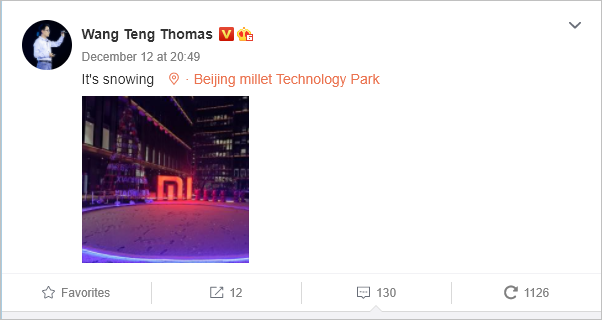
We have come across the first camera sample shot by the Mi 11. Xiaomi’s Redmi Product Director Wang Teng Thomas today published a Weibo post that contained a picture of the snowy night scene of Xiaomi Technology Park. Some internet users discovered that Wang Teng’s Weibo post did not reveal the model used to publish the post. Now, Mr Thomas’ previous Weibo posts were posted using the Redmi Note 9. Based on this, it is speculated that the Redmi product director may have already started using the Mi 11 flagship series.
Also, the product director responded with a grinning face emoji when a netizen made a comment about the missing phone model. This is seen as an indication that he is actually using an unannounced Xiaomi model and that should the Mi 11. The night screen camera sample is also pretty impressive but it is far from certain that the Mi 11 captured the scenery.
At present, Xiaomi Mi 11 has been approved by the Ministry of Industry and Information Technology. It uses a curved punch-hole screen while the front camera is located in the upper left corner. This is consistent with the hole-punch position of the Mi 10‘s display.
In terms of core configuration, the Mi 11 is expected to be the first flagship powered by Qualcomm’s latest Snapdragon 888 processor and it will have support for 55W fast charging. In addition, the leaked render shows that the Mi 11 will feature a rear camera housed in a square-shaped module. The rear camera is a triple camera setup and the main camera is expected to support OIS (optical image stabilization).
It is worth noting that the Mi 11 series is expected to have a Pro version with a resolution of 2K+, AMOLED screen, and a high refresh rate of at least 120Hz. Digital Chat Station had earlier hinted that the Mi 11 screen quality is topnotch.
The Mi 11 flagship models are expected to be announced on December 29 but we expect the device to be released in January 2021.
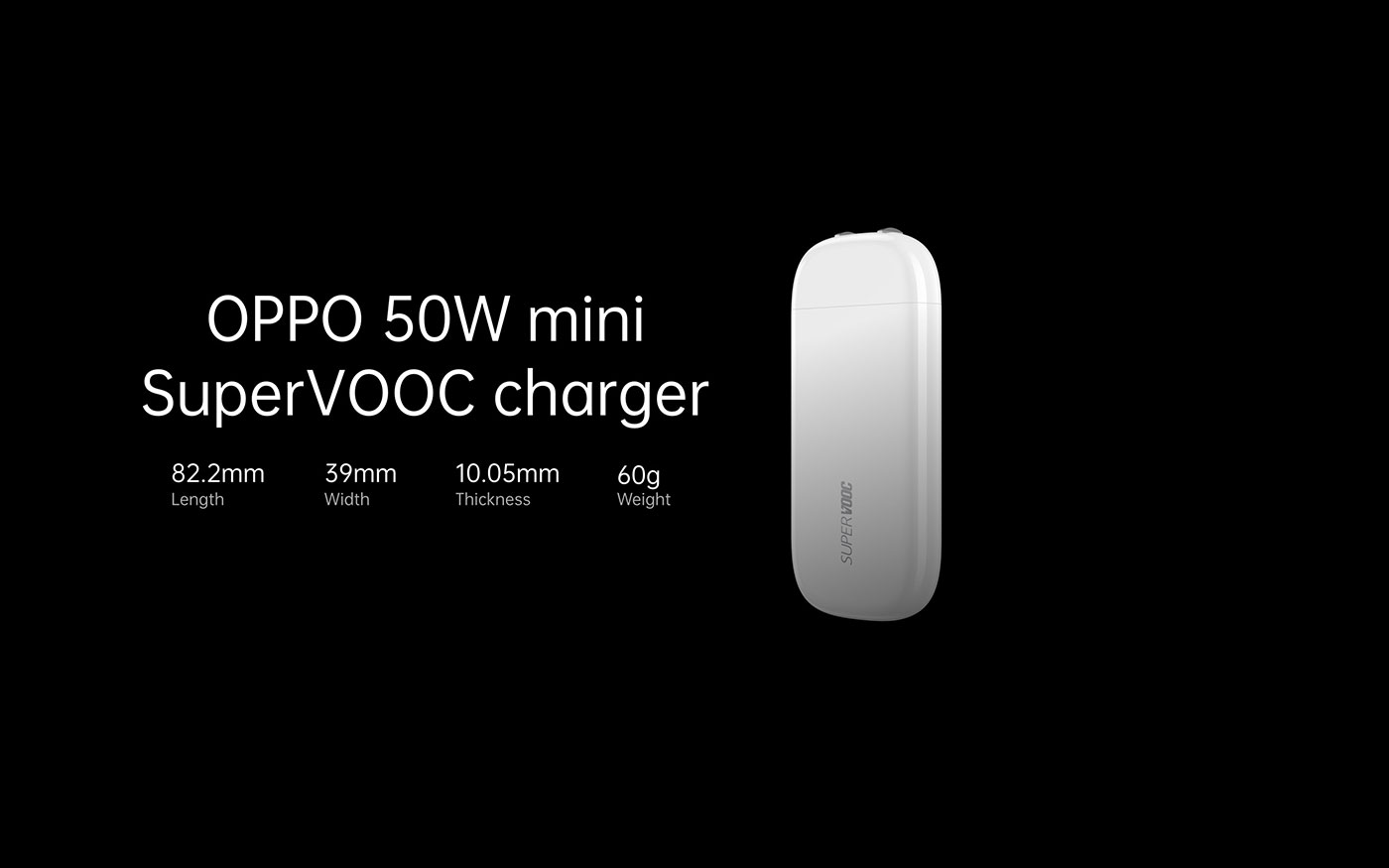
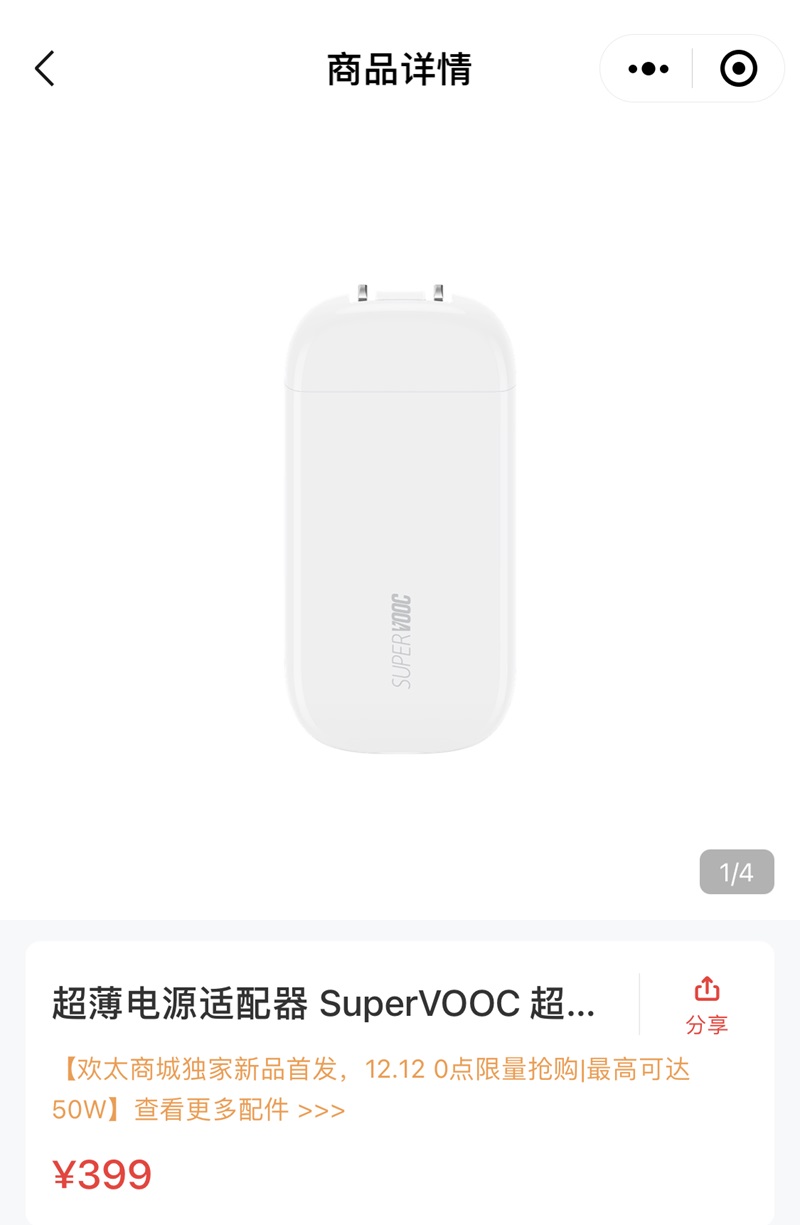
In July this year, OPPO first announced the 50W mini Super VOOC charger known as biscuit charger due to its size. Since then, the product has been elusive as the company was yet to release it in the market. OPPO has now started selling the portable 50W mini Super VOOC n china via Huantai mall (a collaboration of Oppo, Realme, and OnePlus).
The OPPO 50W mini Super VOOC charger adopts a track-style ultra-thin shape, a large area application of multi-curve design, and a folding pin design. The 50W super flash biscuit charger adopts a new charging technology-pulse charging. The official said that compared with the traditional charging method, pulse charging has a very short charging gap, the polarization reaction of the battery will be eliminated, the loss of the battery is smaller, and the temperature change is also smaller.
The 50W ultra-flash biscuit charger introduces a gallium nitride high-frequency switch, which reduces the single energy storage requirement of the transformer, thereby reducing the size of the transformer. OPPO’s self-developed ACF (Active Clamp Flyback) control architecture realizes zero voltage (ZVS) and zero current (ZCS) switching, and the switching loss is infinitely close to zero.
The 50W mini SuprVOOC charger is slimmer than other similar models in the market measuring at only 1.05cm in thickness. This charger supports popular fast-charging protocols like Oppo’s own SuperVOOC, 27W PD (Power Delivery), 50W PPS (Programmable Power Supply), and others.
Oppo advertises this charger to be as small as a biscuit. It can be carried in all sorts of pockets include those of pants, shirts, and coats, thanks to a foldable/retractable pin as well as its size.
Thanks to Nokia’s licensing agreements, the Nokia brand name is not only found on phones but also on TVs, streaming boxes, and now, laptops. Technically, Nokia laptops are not new as there was a netbook called the Nokia Booklet 3G that was announced back in 2009. This new computer coming out soon is the Nokia PureBook X14 and it has been spotted on Flipkart ahead of its launch.
The listing has now been deleted but Tushar Mehta of XDA-Developers was able to get screenshots. Details provided by the listing reveal the Nokia PureBook X14 will have a 14-inch FHD LED display with side bezels that measure 4.8mm in thickness. It is powered by an Intel 10th Gen Core-i5 processor paired with 8GB of RAM and 512GB NVMe SSD storage.
Nokia's upcoming notebook is already listed on Flipkart with a price of Rs 90k.
It comes with: • 10th Gen Intel i5 • 512GB NVMe SSD • 8GB RAM • 14" Full HD LED display pic.twitter.com/LBVN8lhsGO
For connectivity, there are two USB 3 ports, one USB 2.0 port, one USB-C port, an ethernet port, an HDMI port, a microphone+audio jack combo port, and a barrel-type charging port. The notebook supports 2.4GHz and 5GHz Wi-Fi and also has Bluetooth 5.1, Dolby Vision, and Dolby Atmos. The PureBook X14 will be available in Matte Black and will run Windows 10 Home out of the box.
The listing also states that one of the selling points of the laptop is its weight. With its magnesium-aluminum alloy body, the Nokia PureBook X14’s weight is just 1.1 kilograms.
Coming to the price, the Nokia PureBook X14 will cost a pretty penny. The Flipkart listing shows that the price tag is INR 90,000 (~$1,220). That is nearly double the INR 54,999 (~$745) price of the Mi Notebook 14 Horizon which has an Intel 10th Gen Core i7 processor, NVIDIA MX350 graphics card, 8GB RAM, and 512GB NVMe SSD storage.
There is still no official release date but we won’t be surprised if it launches this week. We also expect to see more models, hopefully, more affordable ones, in the near future.
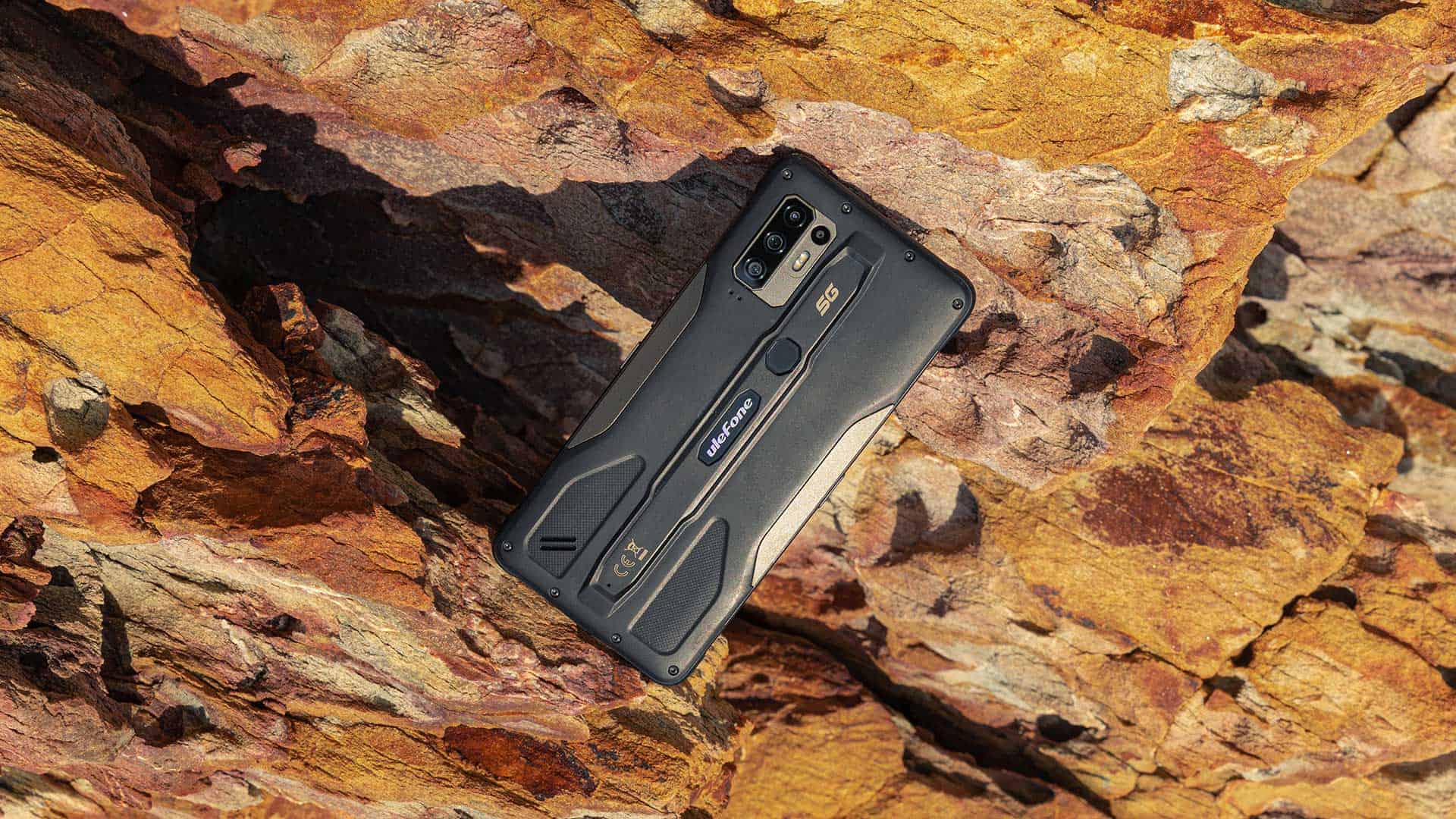
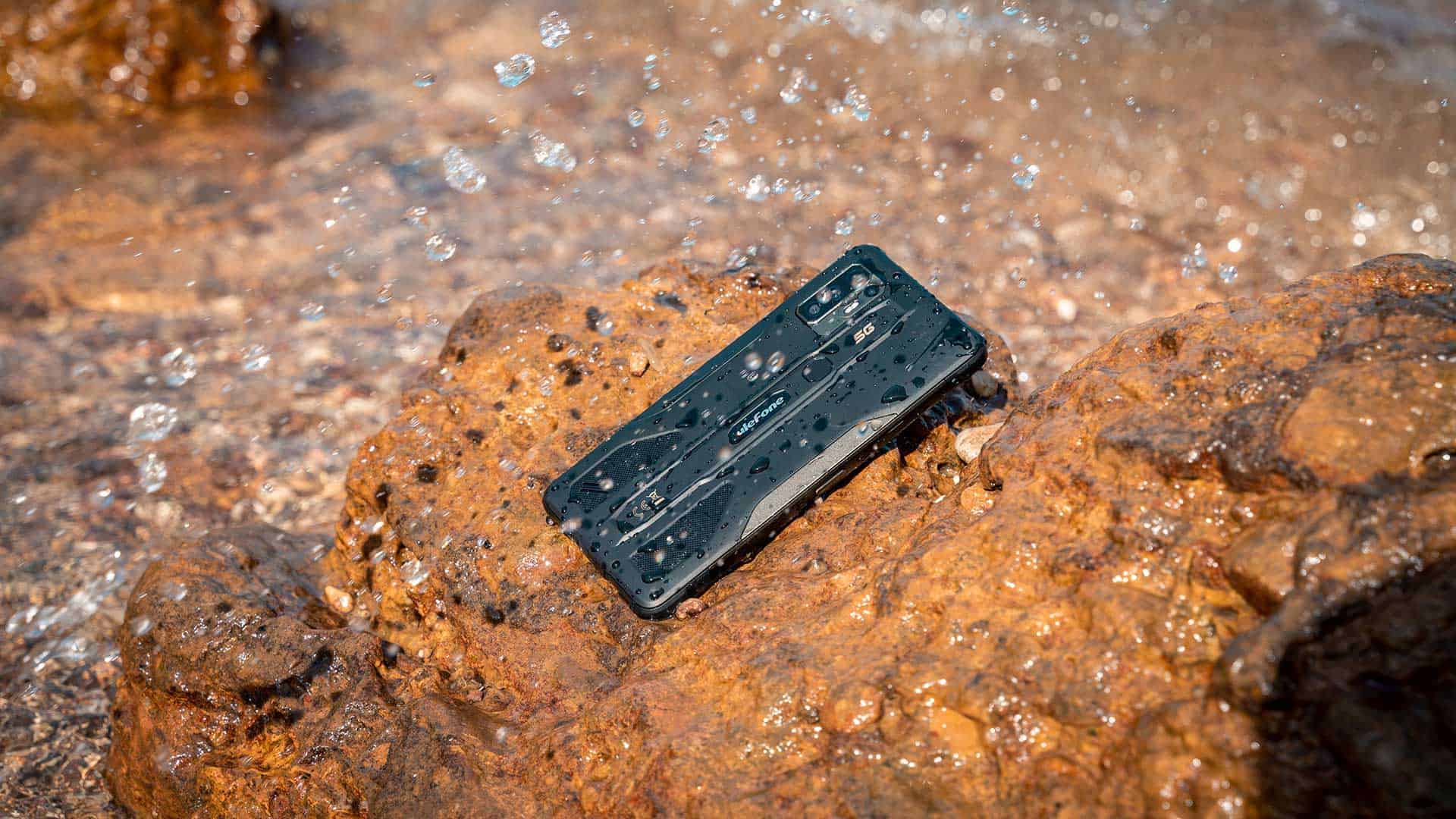
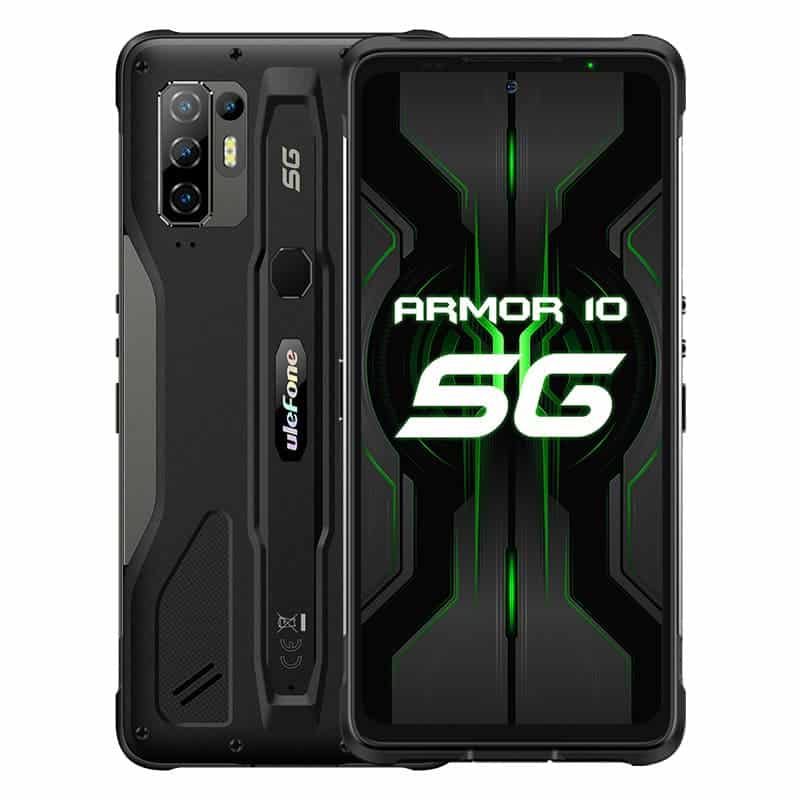
Ulefone recently launched its flagship Armor 10 5G, and it has already been on hot sale for quite some time. If you are one of the people who love rugged smartphones and are following this hot new device, there’s good news for you. According to the recently released render, if you place the order for this device now, you can expect fast and immediate delivery. Furthermore, the company has also launched a new video on YouTube about the production process of the factory so that users are relieved.
From the above video, it is pretty clear that Ulefone Armor 10 5G has already started its manufacturing process and it seems pretty organized and efficient with a tidy and clean environment that is very important as it contributes to the device’s quality. And after being assembled, each rugged smartphone undergoes through the necessary quality check along with rigorous tests to verify its durability. This video gives hope that immediate delivery is more than just words.
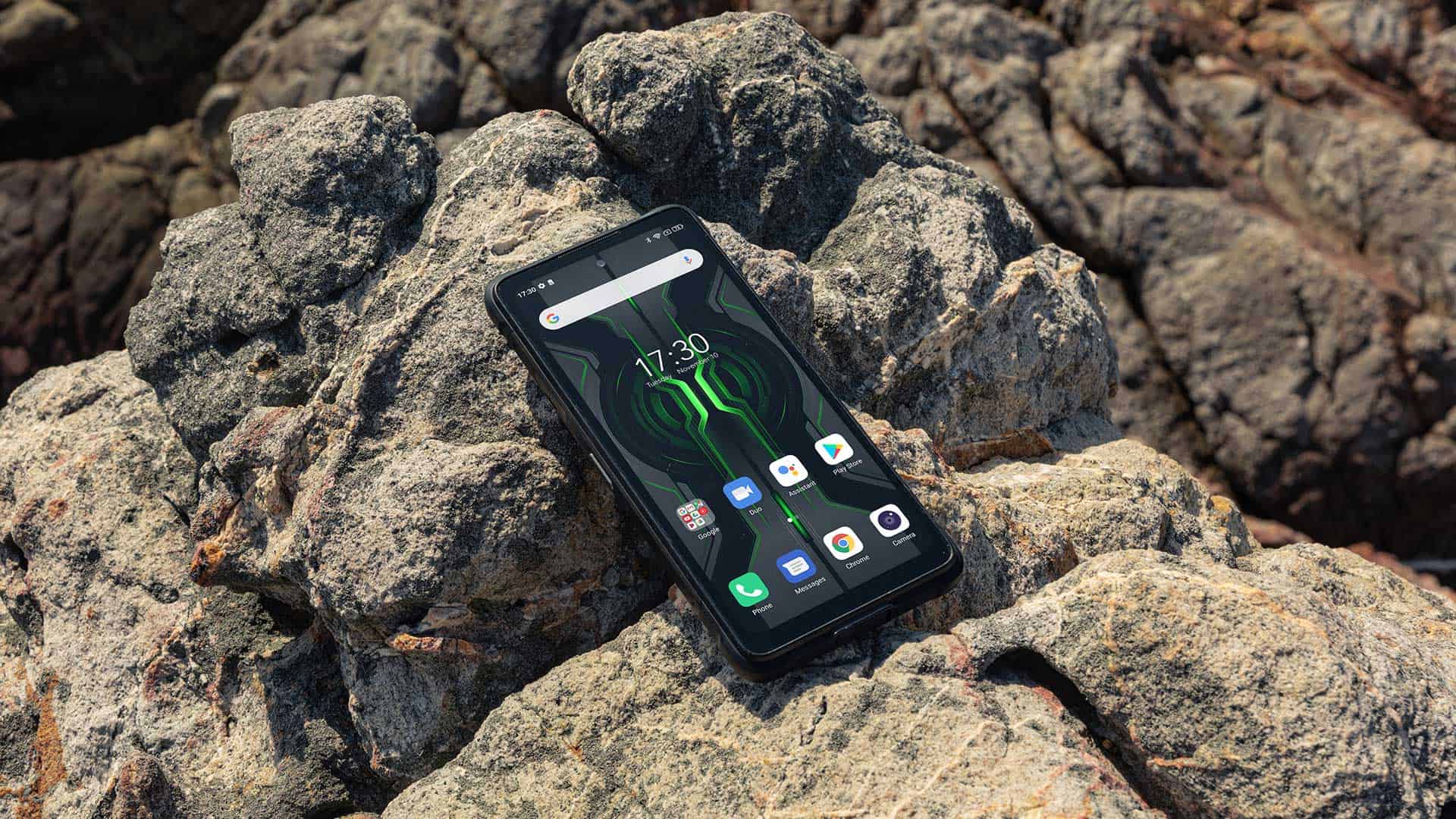
Ulefone Armor 10 5G has an IP68/IP69K rating meaning it is waterproof, dustproof and drop-proof. It features Dimensity 800 5G SoC with 8GB RAM and 128GB ROM, 64MP quad-rear camera, ultra-large 6.67-inch FHD+ punch-hole display, a massive 5800mAh battery with 15W wireless charging. Furthermore, its operating system can be upgraded to Android 11 via OTA in the early next year.
To know more about its ruggedness, check out its durability by clicking in the link below.
Currently, Ulefone Armor 10 5G is up for sale on Banggood and can be purchased for just $399.99. It is a pretty reasonable price as compared to other 5g rugged smartphones in the market. As if this wasn’t enough, the first 700 buyers also stand a chance to win an additional $40 smartwatch- Ulefone Watch for free. This deal is up only for a limited period, so hurry and make the most of it.
As we all know, after high-anticipation and wait, Ulefone finally put the Ulefone Armor 10 5G up for sale. It the hot new rugged phone by the company that combines both software and hardware exceptions. With durability being the company’s MO, Ulefone decided to show people how this smartphone is fully tested before it leaves the factory. Being a rugged phone, the testing measures are much more rigorous than usual; hence the company decided to release a video of the final factory test that the product goes through.
As seen from the video, it is proven that Ulefone Armor 10 5G has to pass through over 200,000 tests before it is delivered. This includes tests like 1.5m directional dropping, button pressing, ball impact of different weights, screen touches, USB endurance, soft pressing, high and low-temperature resistance, sand and dust resistance, airtightness, and more. The tester verified all of these tests, and despite all of them, the smartphone was still in good working condition, proving its ability to endure extreme conditions and situations.
Apart from featuring certifications like IP68, IP69K, MIL-STD-810G grade protection, and high-speed 5G connectivity, Ulefone Armor 10 5G is also packed with 8GB RAM and 128GB ROM for seamless multi-tasking. 64MP quad-rear camera helps one take decent pictures while 6.67-inch full view display offers an immersive experience. Other highlights that offer added user-convenience include a 5800mAh battery with 15W wireless charging, NFC and Google Pay support, and much more.
Ulefone Armor 10 5G is up for sale on Banggood at a pretty reasonable price of just $399.99. As if the budgeted range wasn’t enough, the website is also offering a free Ulefone smartwatch to the first 700 buyers. The offer is valid only till 13th December, so hurry and get your smartphone now.
Bonus: The products have already been in mass production, meaning the product will be shipped immediately after the order is placed, cutting down the delivery time significantly.
To know more about this rugged phone, click on the link below.
The source of the info is the same one who informed us of the launch date of the Mi Watch Lite and that checked out. According to him, Xiaomi has set December 29 as the date it plans to unveil the Mi 11. Unfortunately, we are not sure if this will be a global launch event or for China.
Xiaomi Mi 11 render by Ben Geskin
An earlier report said that the phone will also go on sale this month. Seeing as there are only two days left before the end of the month if the December 29 launch date turns out to be true, then it is safe to assume that the phone will go on sale the same day it is announced.
While this tipster has not given us a reason to doubt him, there is a possibility that Xiaomi may decide to change its plans with respect to the launch of the device. Regardless, the Mi 11 will be the first smartphone in the world with the new chipset whenever it decides to launch.
Leaked renders, shows the flagship will have a curved display with a punch hole at the top left corner of the screen. The rear design has undergone a change from that of its predecessor. There are also fewer sensors – three down from the quad-camera setup of the Mi 10 5G. A leak revealed the primary camera is a 108MP sensor and it brings along with it a 13MP ultrawide camera and a 5MP macro camera.
Other reported specifications are a 120Hz refresh rate, a 4780mAh battery capacity with support for 55W fast wired charging, and a new version of MIUI called MIUI 12.5 based on Android 11.
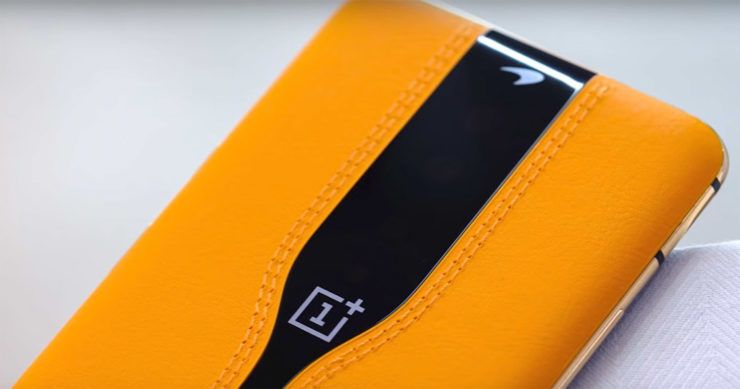
In January this year at the CES 2020, OnePlus announced the Concept One smartphone which is equipped with a rear glass panel that has electrochromic technology in order to hide the rear cameras. The Reno 5 Pro+ 5G that was launched recently also has electrochromic technology on the rear panel.
OnePlus Concept One
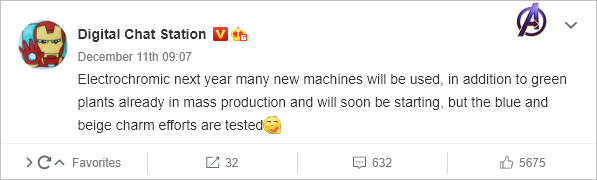
There are indications that the technology may become a new trend in the mobile phone circle next year. According to noted tipster Digital Chat Station, the electrochromic technology which premiered on the Concept One and is going commercial on the Reno 5 Pro + will be utilized on many phones next year. The source tips mobile phone manufacturers such as Vivo, Xiaomi, Meizu, and Nubia as working on smartphones that will use electrochromic technology. Testing of this technology has reportedly started.
Electrochromic technology uses an invisible alloy called tungsten oxide. When tungsten oxide is applied to glass, the surface can conduct electricity, and the passed charge can change the composition of glass molecules, thereby generating a variety of gorgeous colors.
This technology allows users to customize the color of the back cover of the mobile phone and can prompt the user accordingly by changing the color of the back cover according to different application scenarios for functions such as incoming calls, message notifications, or health.
It is worth mentioning that, although the principle of electrochromic technology is complicated, it has minimal impact on the battery power of mobile phones. On the OnePlus Concept One, the electrochromic rear panel is monitored to consume only 2-3mAh of battery power in one hour.
At present, electrochromic technology has been widely used in buildings, airplanes, and automotive glass. It is believed that this technology will become one of the selling points of various mobile phone manufacturers in the near future.
It is a well-known fact that handheld vacuum cleaners are way more convenient and efficient than traditional ones. The only drawback that comes with this convenience is its high-price tag. Taking this into consideration, Xiaomi introduced Dreame T20 at a pocket-friendly price rate of $359.99. And as if that wasn’t enough, Amazon has decided to offer a huge $72 discount on it that users can redeem using a coupon code. Additionally, they can also get a treat of an added $10 off using code- WERAIGMF.
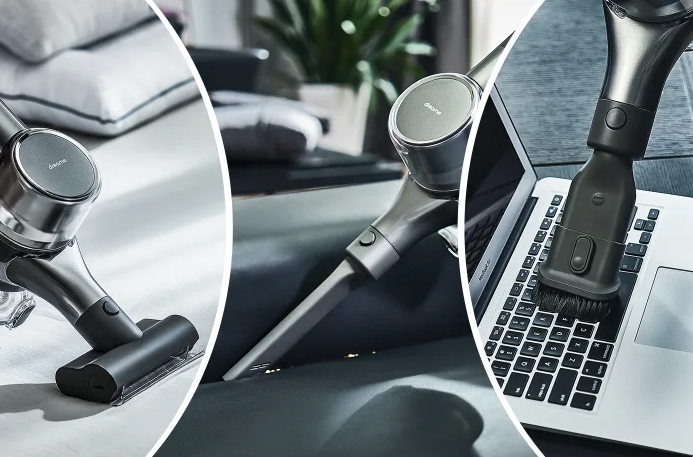
Xiaomi Dreame T20 features a strong suction power that allows it to clean thoroughly. With over 26 patents, its SPACE 4.0 Motor can operate at 125,000 RPM for added efficiency. This vacuum cleaner boasts a hair tangle-free design, built to conveniently peel off the hair wrapped around the roller to prevent disruptions. This especially comes in handy when people have furry pets.
Dreame T20 works on 4 modes that help clean the house swiftly by meeting various cleaning needs. The user can keep changing the suction level to fit any surface or area. It comes with a crevice nozzle, 2-in-1 brush, all-surface brush, and mite removal brush to help clean every surface ranging from marble floors to car seats and hard-to-reach areas. Furthermore, T20 also features an intelligent auto mode that can adjust the suction power across various floor types. It helps the user get a deep clean throughout their home while also preserving battery run-time and working life time.
Dreame T20 is light in weight and has an 8-stage noise reduction to offer seamless use. The finger-free form, detachable dust cap, and wall-mount storage are other such attributes that make this unit ultra-versatile.
Designed to offer end-to-end convenience, Xiaomi’s Dreame T20 makes cleaning look fun and easy. Currently, this unit is being sold at a discounted rate at Amazon where the page offers $72 off, using a coupon code. An additional $10 discount can also be redeemed by adding the “WERAIGMF” code, bringing its final price down to just $259 from the original- $359.99 price tag. This deal is valid only till December 12th, so hurry and buy yours now.
A number of exciting products launched last week and if you missed them, this recap is the best place to bring yourself up to speed.
AirPods go max!
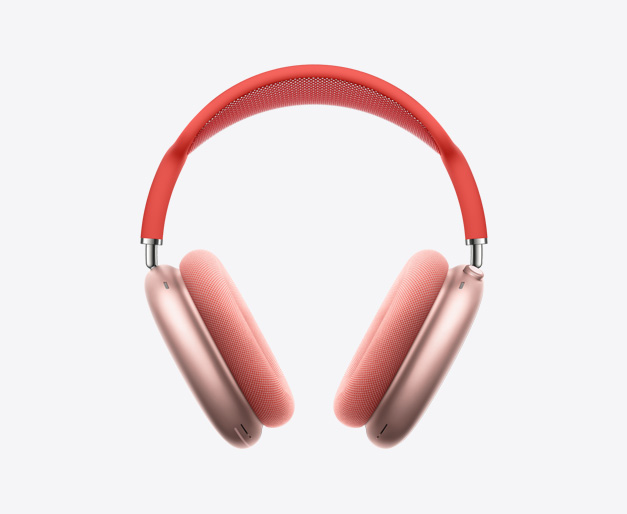
Apple launched its first pair of premium over-the-ear headphones under the AirPods line. The AirPods Max, as it is called, has an interesting design that makes it stand out from the plethora of headphones in the market. It has noise cancellation, spatial audio, support for Siri, a 20-hour battery life, and isn’t cheap with its $549 price tag.
OPPO’s Reno series enters 5th gen in under 2 years
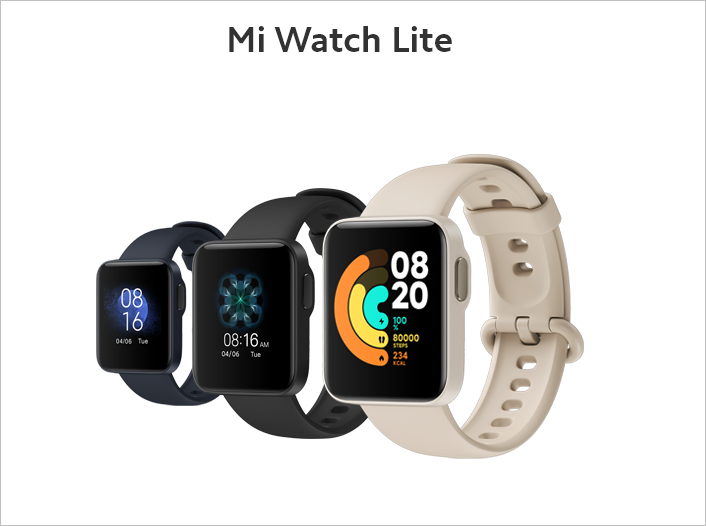
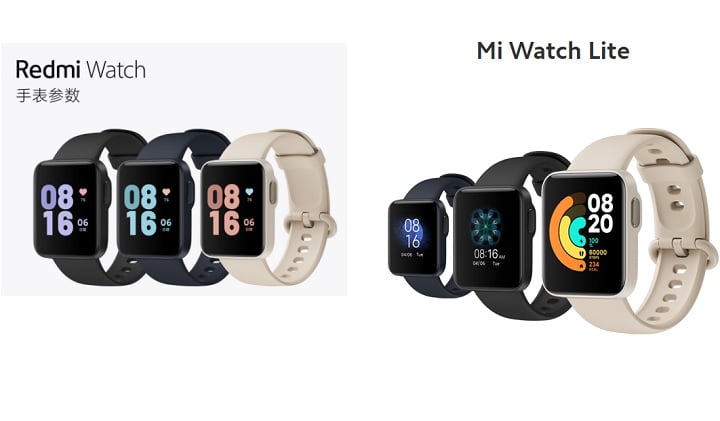
Two new smartwatches were announced last week. The Mi Watch Lite arrived first with a striking resemblance to the Redmi Watch but with more sports modes, GPS, and longer battery life. boAt, the Indian company which climbed to the 5th spot on IDC’s list of largest wearable brands in Q3 2020, also announced its latest offering, the Enigma. It supports fewer sports modes than the Mi Watch Lite but has a SpO2 sensor and a cheaper price tag.
Huawei enters the desktop PC business
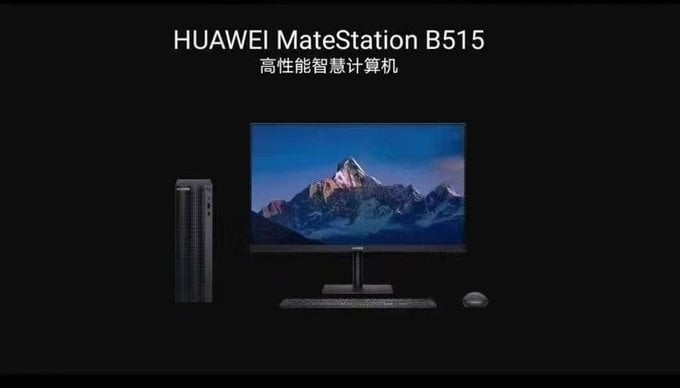
Huawei announced its first desktop computer, the MateStation B515, last week. The computer is powered by an AMD processor and comes with a 23.8-inch monitor, a mouse, and a keyboard with a built-in fingerprint scanner.
OnePlus released two affordable flagships this year: OnePlus 8 and OnePlus 8T. After realizing top-tier flagships are not as popular as before, the company chose not to release a Pro variant of the 8T and came up just with the vanilla version. There is an older OnePlus device that is still in the market and you can find it in the same price range as the 8 and the 8T. We are talking about the OnePlus 7T Pro. If you want to know which is the best OnePlus flagship excluding the top-tier OP8 Pro, you are in the right place: this is a comparison between the main specifications of the OnePlus 7T Pro, 8, and 8T.
OnePlus 7T Pro vs OnePlus 8 vs OnePlus 8T
Vivo X51 5G
OnePlus 8
OnePlus 8T
DIMENSIONS AND WEIGHT
162.6 x 75.9 x 8.8 mm, 206 g
160.2 x 72.9 x 8 mm, 180 g
160.7 x 74.1 x 8.4 mm, 188 g
DISPLAY
6.67 inches, 1400 x 3120p (Full HD+), Fluid AMOLED
6.55 inches, 1080 x 2400p (Full HD+), Fluid AMOLED
6.55 inches, 1080 x 2400p (Full HD+), Fluid AMOLED
PROCESSOR
Qualcomm Snapdragon 855+, octa-core 2.96 GHz
Qualcomm Snapdragon 865, octa-core 2.84 GHz
Qualcomm Snapdragon 865, octa-core 2.84 GHz
MEMORY
8 GB RAM, 256 GB – 12 GB RAM, 256 GB
8 GB RAM, 128 GB – 12 GB RAM, 256 GB
8 GB RAM, 128 GB – 12 GB RAM, 256 GB
SOFTWARE
Android 10, Oxygen OS
Android 10, Oxygen OS
Android 10, Oxygen OS
CONNECTIVITY
Wi-Fi 802.11 a/b/g/n/ac, Bluetooth 5, GPS
Wi-Fi 802.11 a/b/g/n/ac/ax, Bluetooth 5.1, GPS
Wi-Fi 802.11 a/b/g/n/ac/ax, Bluetooth 5.1, GPS
CAMERA
Triple 48 + 8 + 16 MP, f/1.6 + f/2.4 + f/2.2
16 MP f/2.0 front camera
Triple 48 + 16 + 2 MP, f/1.8 + f/2.2 + f/2.4
16 MP f/2.4 front camera
If we talk about the design, it is just a matter of taste. The OnePlus 8T has a more modern design with its rectangle-shaped camera module, but its flat display would not let me go for it. The OnePlus 8 is definitely the most attractive: it is thinner than its siblings, it is lighter and it has a curved screen with a punch-hole design. But some may like the OnePlus 7T Pro due to its full-screen display: it does not have any hole on the screen because it spots a motorized pop-up selfie camera. But this makes the handset thicker.
Display
Despite it is an older device, the OnePlus 7T Pro has a better display. It actually offers a higher resolution: Quad HD+, with 1440 x 3120 pixels and even a wider 6.67-inch diagonal. The OnePlus 7T Pro also offers a 90 Hz refresh rate and the HDR10+ certification. The OnePlus 8T has a higher 120 Hz refresh rate, but the resolution is lower. The OnePlus 8 is the most disappointing with its 90 Hz Full HD+ display, but it still offers a great panel. In each case, you get the OLED technology and an in-display fingerprint scanner.
Hardware/Software
The OnePlus 7T Pro loses this comparison because it packs an older chipset and it lacks 5G connectivity. It is fueled by the Snapdragon 855+ mobile platform from 2019, while you get the 2020 Snapdragon 865 with the OnePlus 8 and the 8T. Between the OnePlus 8 and the 8T, the latter is more convincing because it runs Android 11 out of the box, while OP8 is based on Android 10. However, it will be upgraded to Android 11, just like the 7T Pro. When it comes to the hardware department, each of these devices is a flagship providing blazing speeds and great stability.
Camera
The OnePlus 7T Pro is the best camera phone in this comparison. The main sensor of its triple rear camera has a brighter focal aperture allowing for better image quality, even in low light conditions. Further, it includes a telephoto sensor with 3x optical zoom which is actually absent on the OnePlus 8 and 8T. Last but not least, it has a brighter focal aperture for the front camera which can shoot better selfies.
Battery
The OnePlus 8T packs the biggest battery with a 4500 mAh capacity. In most of the scenarios, it is able to provide a longer battery life. If you use 5G and the 120 Hz refresh rate, you will get shorter battery life. But if you do not, it always wins. Further, the OnePlus 8T supports a faster charging technology with 65W power. Its battery is able to charge from 0 to 100 percent in less than 40 minutes thanks to 65W Warp Charge.
Price
The street prices of these three devices vary depending on the market. You can find the OnePlus 8 for less than €450/$550 with a bit of luck, while the OnePlus 8T Pro is priced less than €600/$725. Even the OnePlus 7T Pro is available for less than €450 in some cases. There is not a definitive winner of this comparison: the OnePlus 7T Pro lacks 5G and it has inferior hardware, but it is a better camera phone and it has a better display. OnePlus 8T has better hardware, a bigger battery, and a higher refresh rate. OnePlus 8 is an 8T with inferior specifications but it can let you save a lot of money.
The Mi Watch Lite may look like the Redmi Watch which was announced a few weeks before it but both wearables are different. Apart from their names and of course, the regions where they are sold, they also have different features. This post highlights the differences and should also help you decide which of the two you should purchase.
The table below shows a spec by spec comparison of the two watches.
Redmi Watch (REDMIWT01)
Mi Watch Lite (REDMIWT02)
Display
1.4-inch with 2.5D glass
320 x 320 resolution
323 PPI
1.4-inch with 2.5D glass
320 x 320 resolution
323 PPI
Straps: Elegant Black, Ivory, Ink Blue, Cherry Blossom, and Pine Needle Green
Ivory, Black, Navy Blue
Straps: Ivory, Black, Navy Blue, Pink, and Olive
The key differences between the two watches are sports modes, GPS, AI Assistant, NFC, battery life, and price.
Sports Modes
This is a key difference between both watches. The Redmi Watch supports just 7 sports modes whereas the Xiaomi Mi Watch Lite supports all seven of the Redmi Watch’s sports modes and adds four more – open water swimming, trekking, trail running, and cricket. Xiaomi did say that cricket mode will be added through an OTA upgrade, so out of the box, the Mi Watch Lite supports just 10 sports modes.
GPS
This is another major difference between the two watches. The Redmi Watch doesn’t have built-in GPS which means if you go for an outdoor run or cycle, you have to connect it to your phone to use GPS. The Mi Watch Lite, on the other hand, has GPS+GLONASS for positioning, so you don’t have to connect it to your phone to track your trajectory.
The Redmi Watch has both an AI Assistant and NFC. The assistant is Xiaomi’s XiaoAI and with the built-in microphone, users can ask it questions, set alarms, and use it to control compatible smart home appliances. It also has NFC for payments.
The Mi Watch Lite doesn’t have a built-in assistant which is why there is no microphone. It also does not have NFC, so there is no support for contactless payment.
Battery Life
Both watches have the same 230mAh battery capacity but the Redmi Watch has a lesser battery life – 7 days compared to the Mi Watch Lite whose battery life goes up to 9 days on a single charge.
Price
The Redmi Watch is officially sold for ¥299 (~$45) but third-party resellers sell it for a bit more. While Xiaomi is yet to reveal the price tag of the Mi Watch Lite, it is already on sale by retailers and can be gotten for even $58.90 on Giztop.
Conclusion
The Mi Watch Lite definitely has more to offer, at least for international buyers who won’t find a use for the Redmi Watch’s XiaoAI assistant and NFC payment support. The Mi Watch Lite has more sports modes, GPS, a slightly better battery life, and supports more languages but all of these come with a more expensive price tag. Nevertheless, it is the logical choice for any international buyer.
On a side note, we believe the Mi Watch Lite may launch in China as a sort of Redmi Watch Pro that has GPS and more sports modes. The reason is the model number which shows it is clearly a Redmi product that has been rebadged as a Mi product for international markets, so a local release is definitely possible. However, it should come with certain additional features such as NFC and the XiaoAI assistant, and a higher price tag than the standard model.
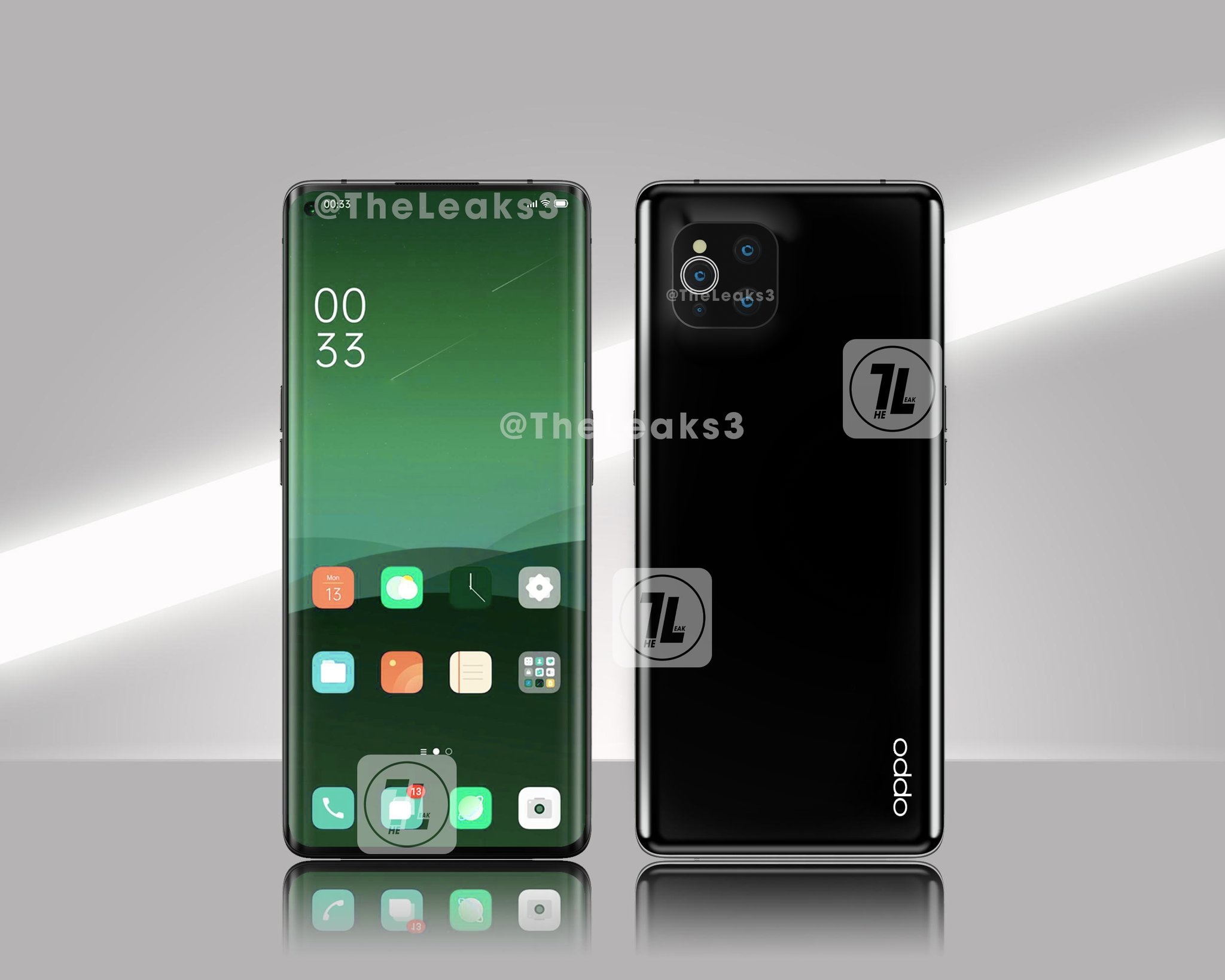
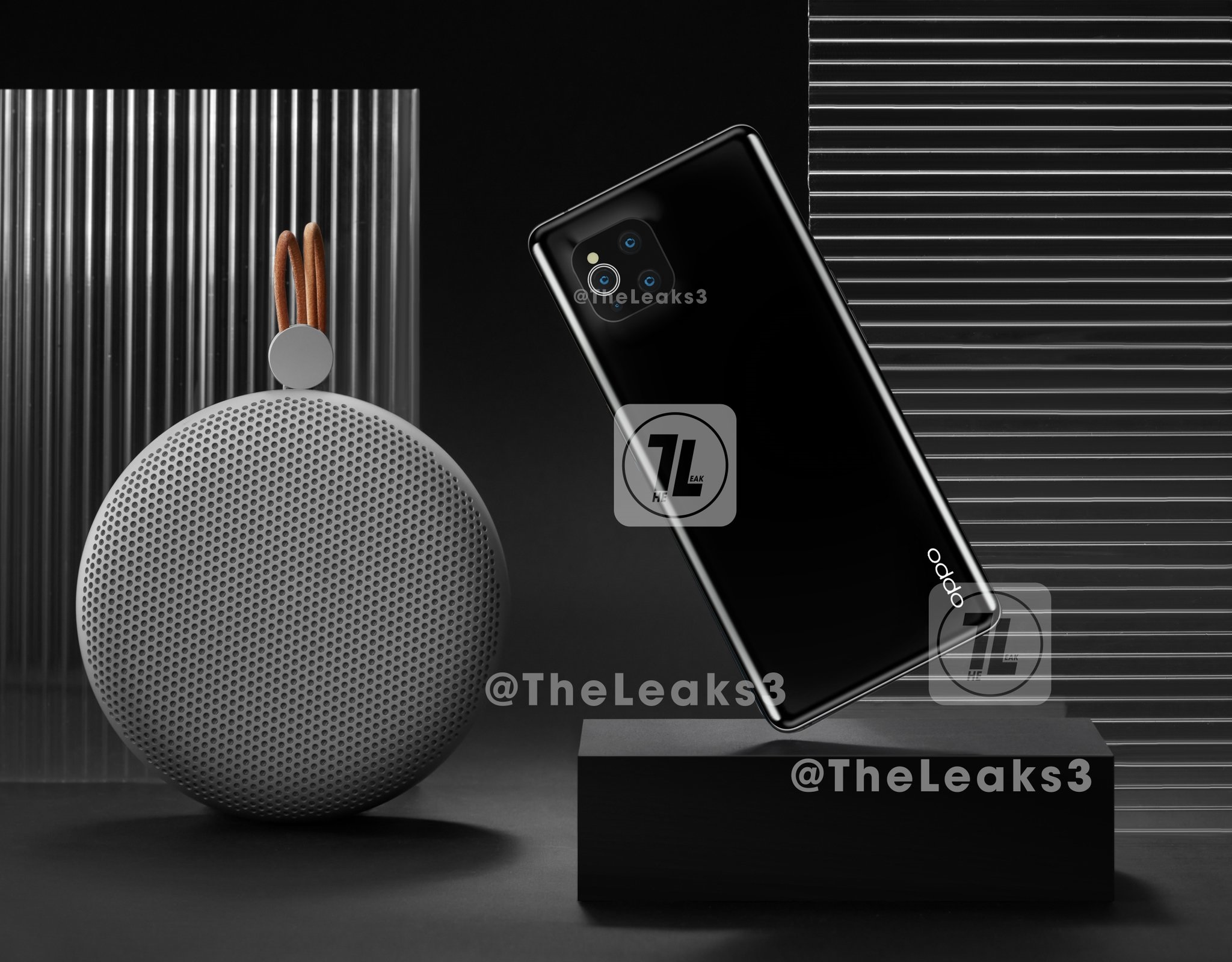
The Find X3 Pro renders, which were posted on Twitter by TheLeaks (@TheLeaks3) show that OPPO is sticking to the same front design as that of the Find X2 Pro. This means you are getting a curved display, which some may not like, and a punch hole at the top left corner of the screen for the selfie camera.
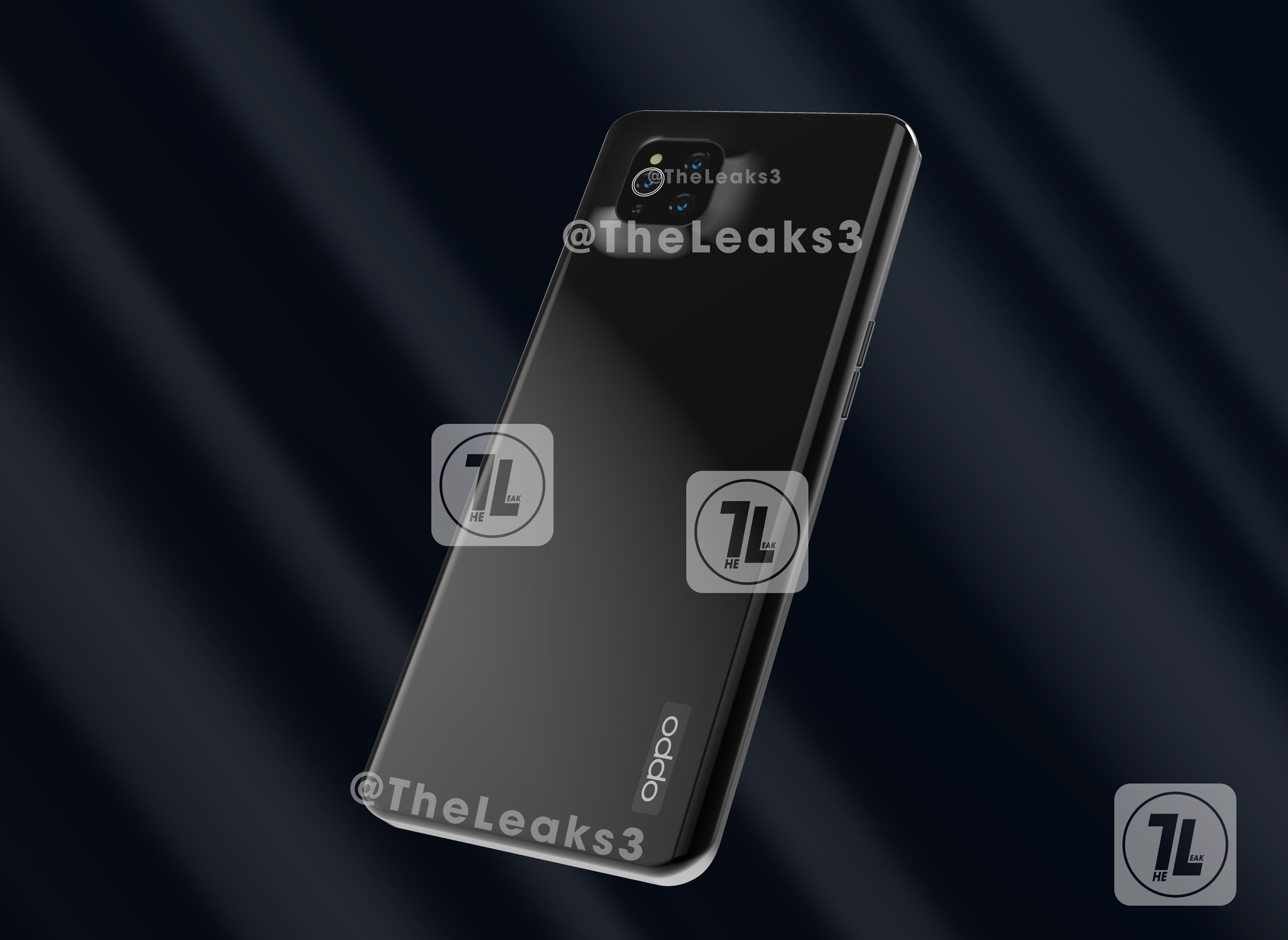
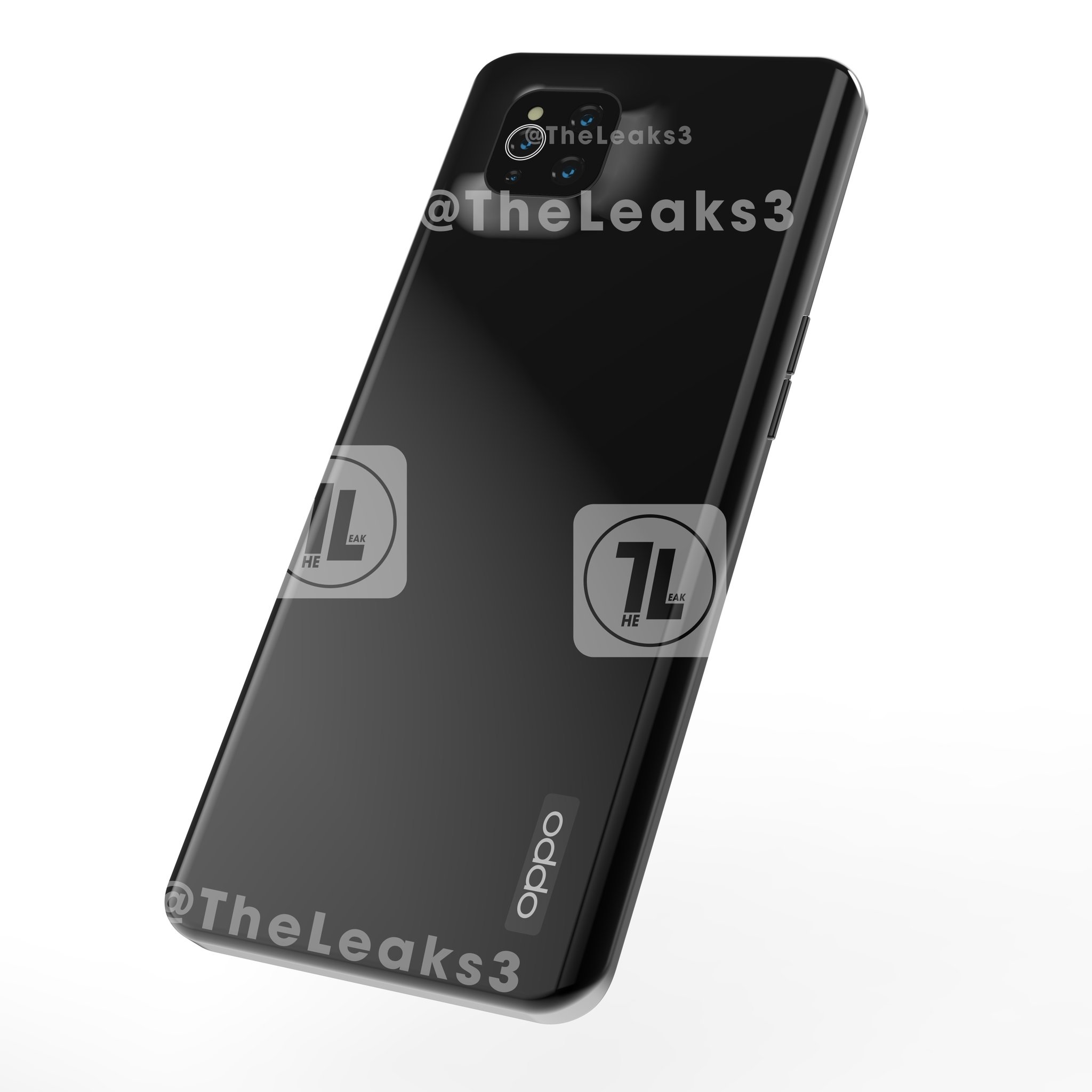
The rear is where the change has occurred. Gone is the vertical camera arrangement of the Find X2 Pro and in its place is a square-shaped camera housing with rounded corners.
There are four rear cameras and an LED flash on the back of the phone. One of the cameras has two silver rings around it and below it is a much smaller sensor which should be the macro camera that was reported in the specifications leak.
The OPPO Find X3 Pro has a curved glass back but we expect there will be other variants too, including a Lamborghini Edition.
1 of 3
Information revealed so far says the Find X3 flagship will have a 6.7-inch curved OLED display with a 1440p resolution and a 120Hz adaptive refresh rate. It will be powered by the new Snapdragon 888 processor which will be the chipset of choice for most flagship phones launching in 2021.
The rear cameras are said to include two 50MP Sony IMX766 cameras, one of which is the primary camera and the other is the ultrawide angle camera. It will also have a 13MP telephoto camera and a 3MP macro camera.
The Find X3 Pro will have a 4500mAh under the hood and will support both 65W fast charging and 30W wireless fast charging. It has been reported that OPPO has tweaked the algorithm of the 65W fast charging technology so that the device charges faster than its predecessor. The phone will also run ColorOS 11 based on Android 11 out of the box.
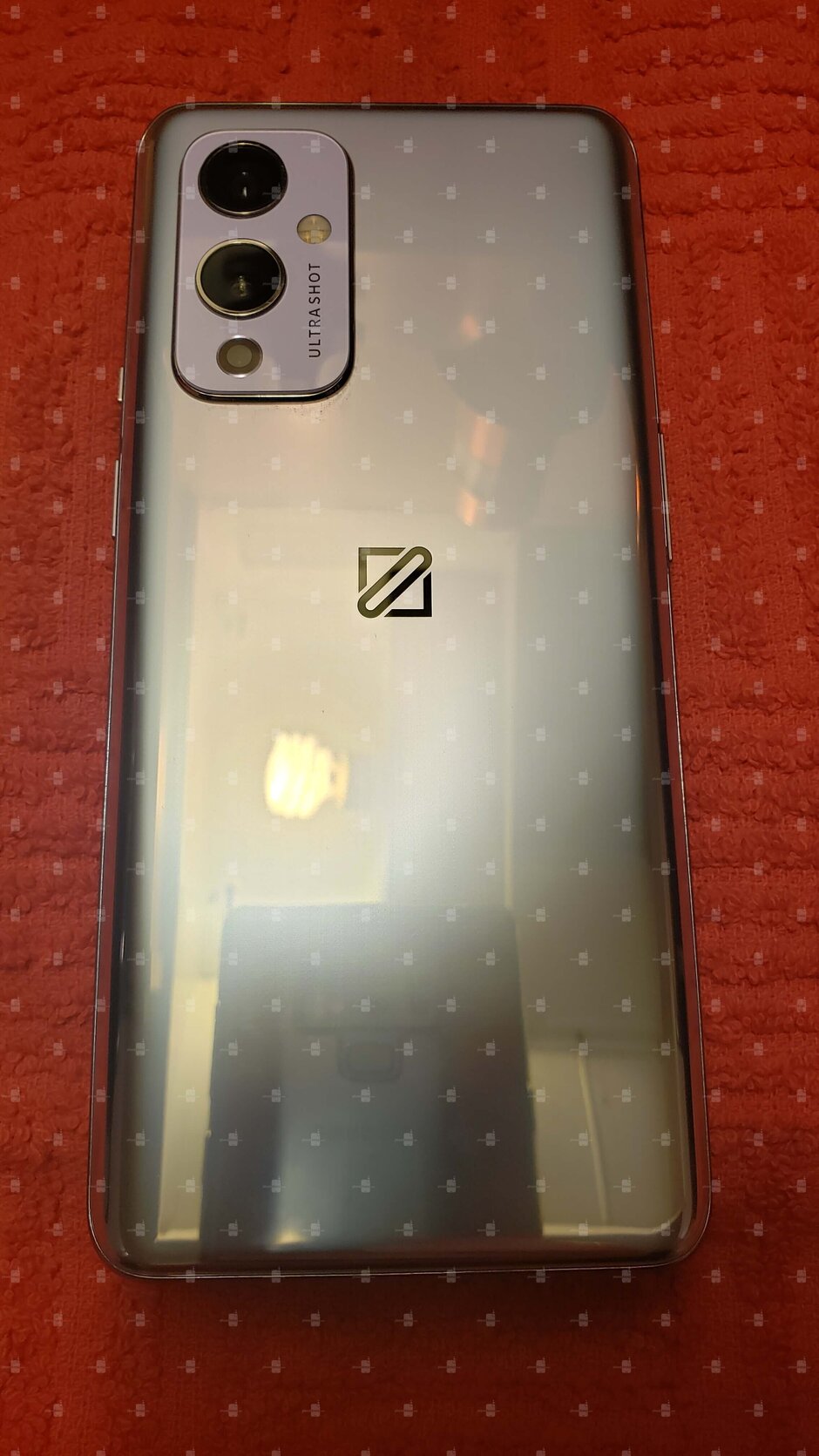
It’s not uncommon for OnePlus’ flagships to be on the radar of leaks before the launch. Recently, the company made the next flagship for 2021 official at the Qualcomm event. Although it didn’t reveal the names, going by the numbers, it probably will be the OnePlus 9 series along with a new 9E. Today, Phonearena brings us the first-ever hands-on real-life image of the non-Pro variant.
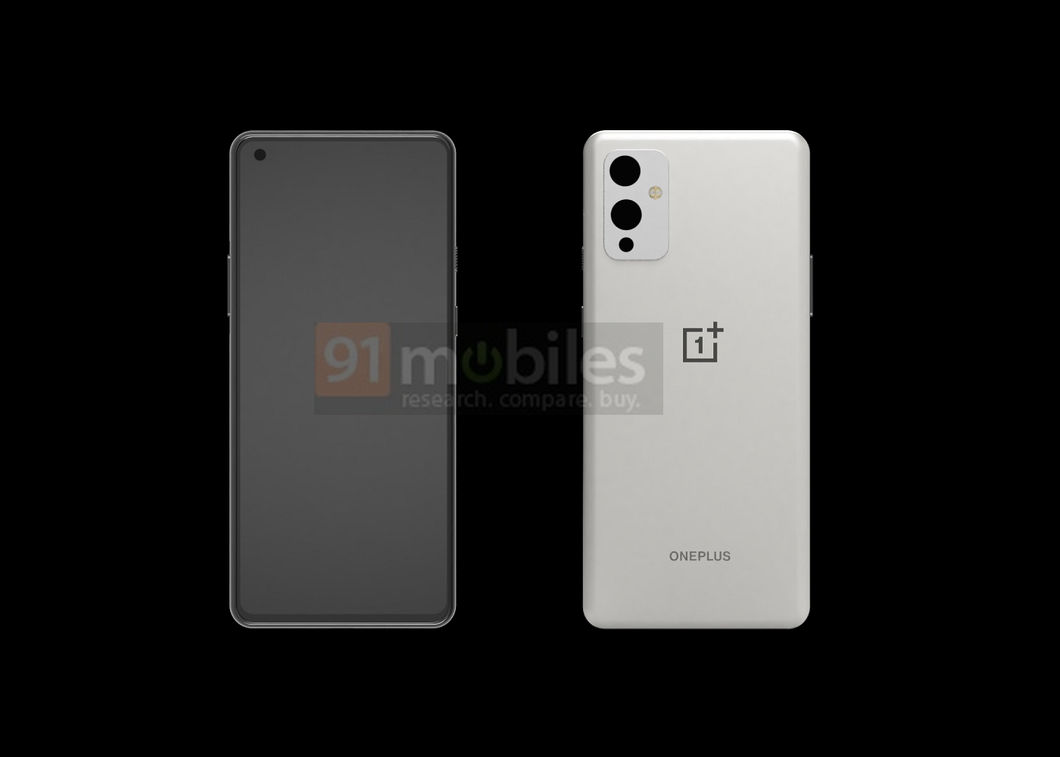
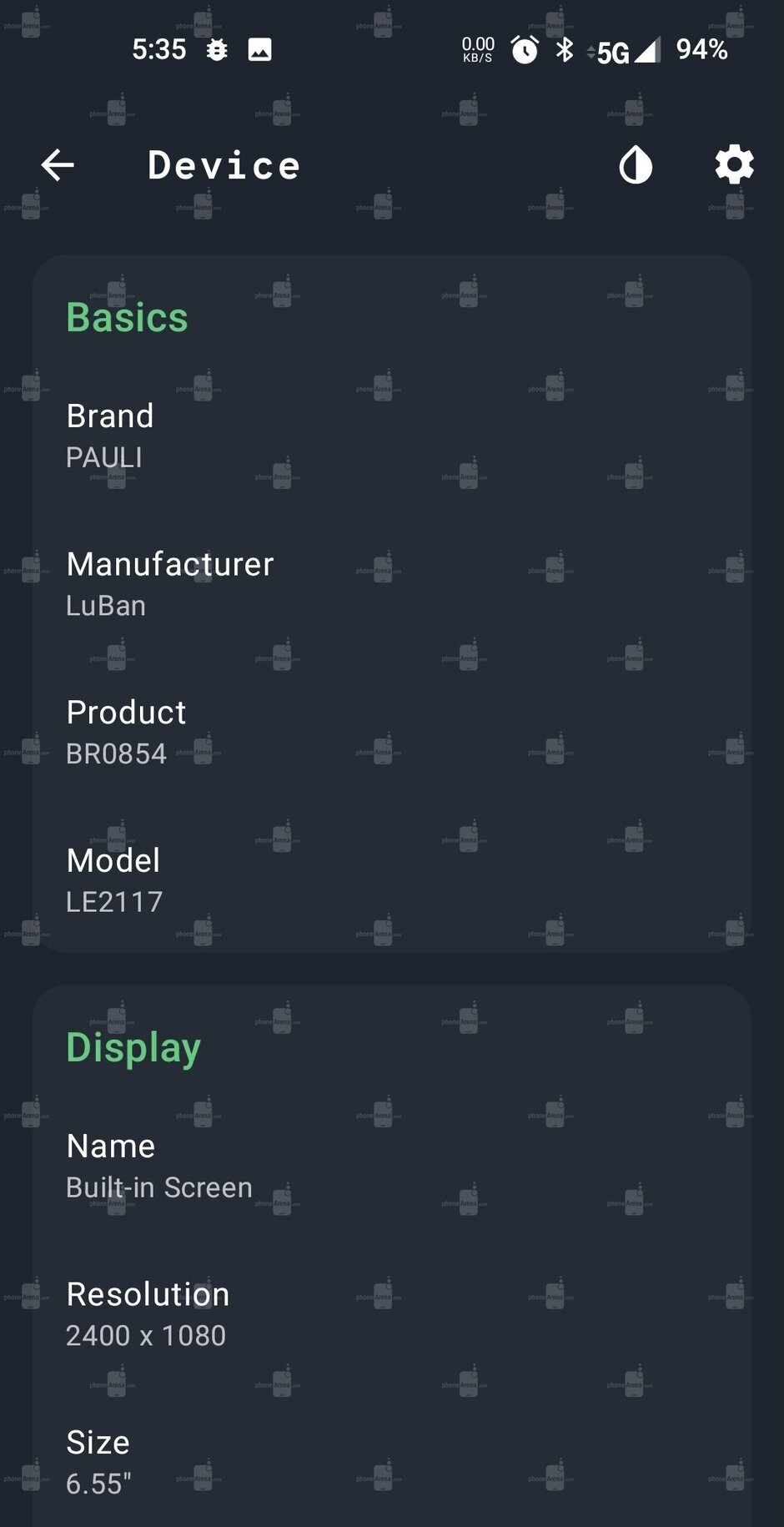
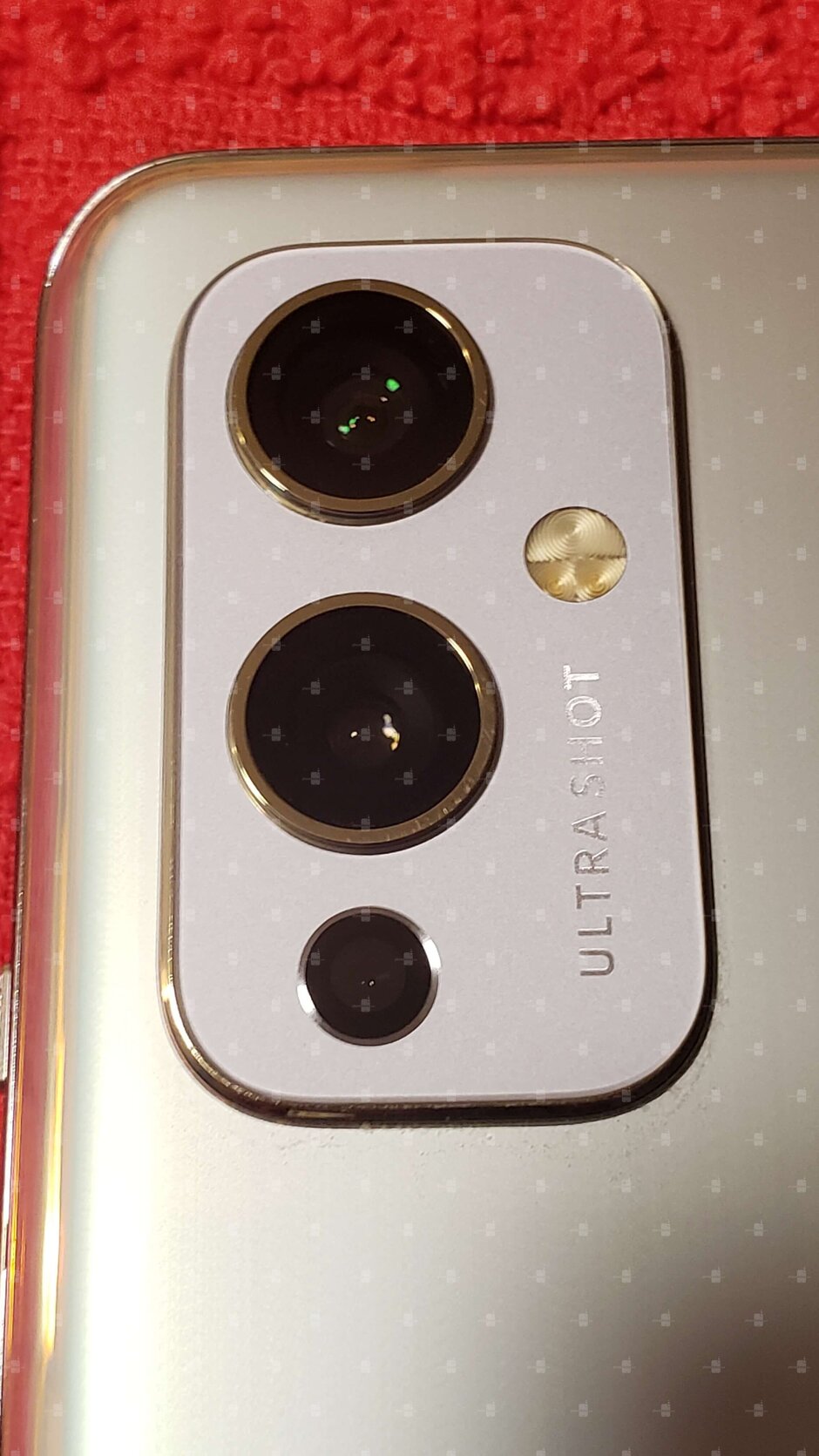
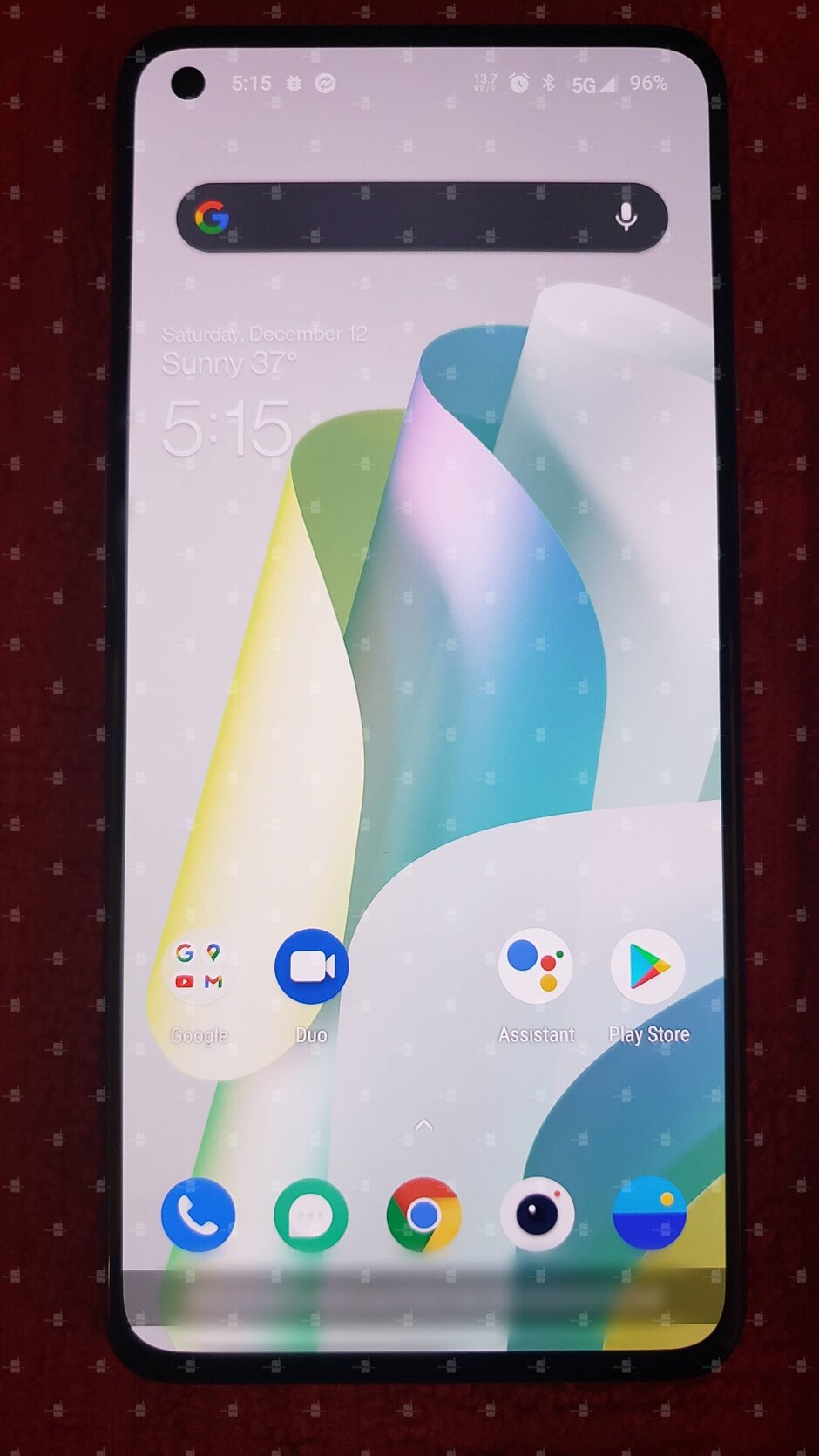
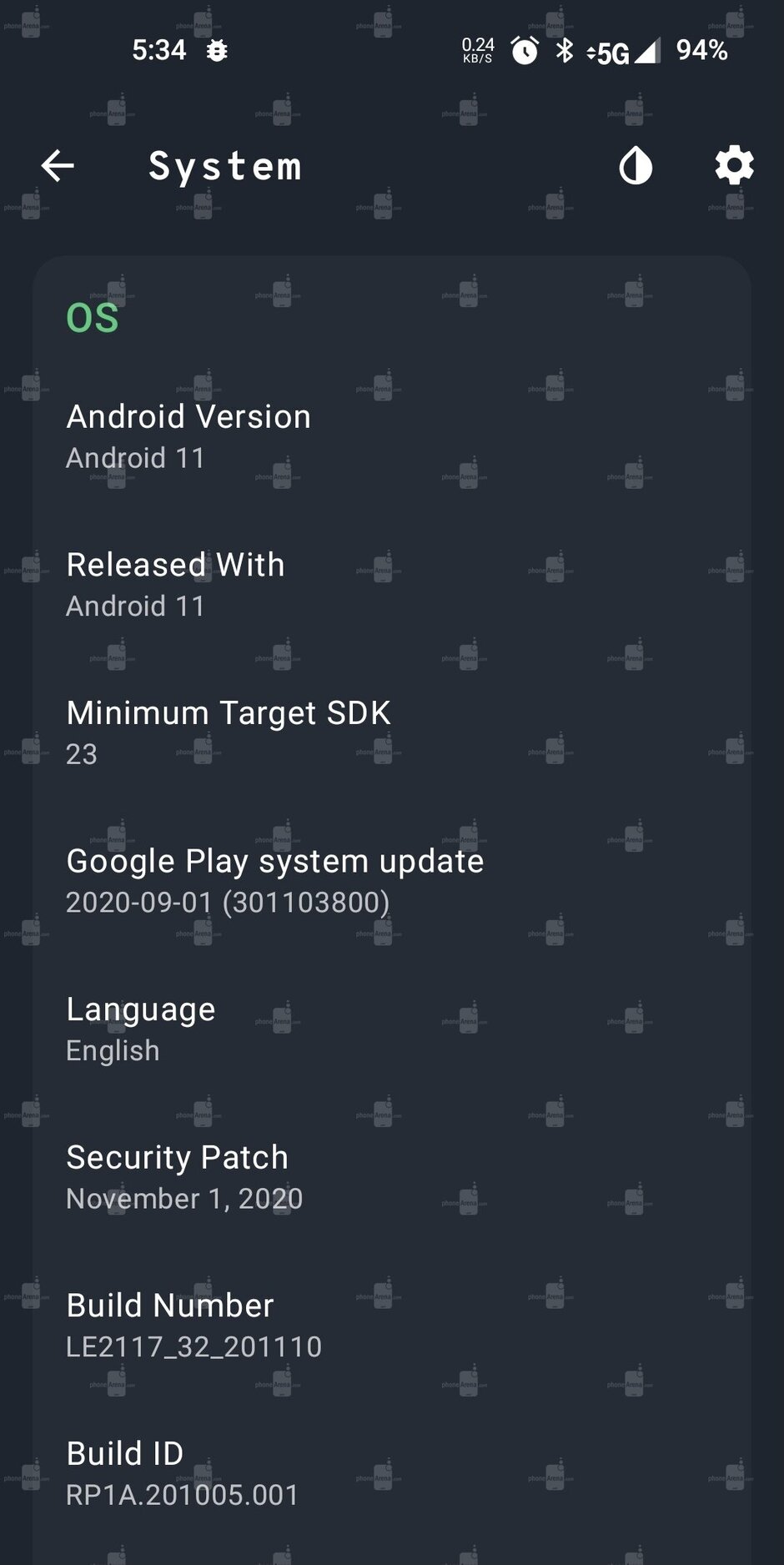
Citing anonymous sources, the report shows various images of what is reportedly a pre-production unit. Claimed to be the OnePlus 9 5G, the report has been supported by tipsters like Max Jambor as well. First off, the model number of the device is LE2117 which is contradictory to the earlier leaks that said it could be of the OnePlus 9 Pro. Next, the images show a device who’s rear panel has silver color.
Besides, the camera module on the device is similar to the earlier CAD renders having triple-cameras two large sensors, and a smaller one. There’s an LED flash beside the strip of cameras similar to OPPO’s Reno series of devices(Eg. Reno4 Pro). The rounded-rectangular layout also has a ‘ULTRASHOT’ written on it and the rear-panel logo isn’t of OnePlus.
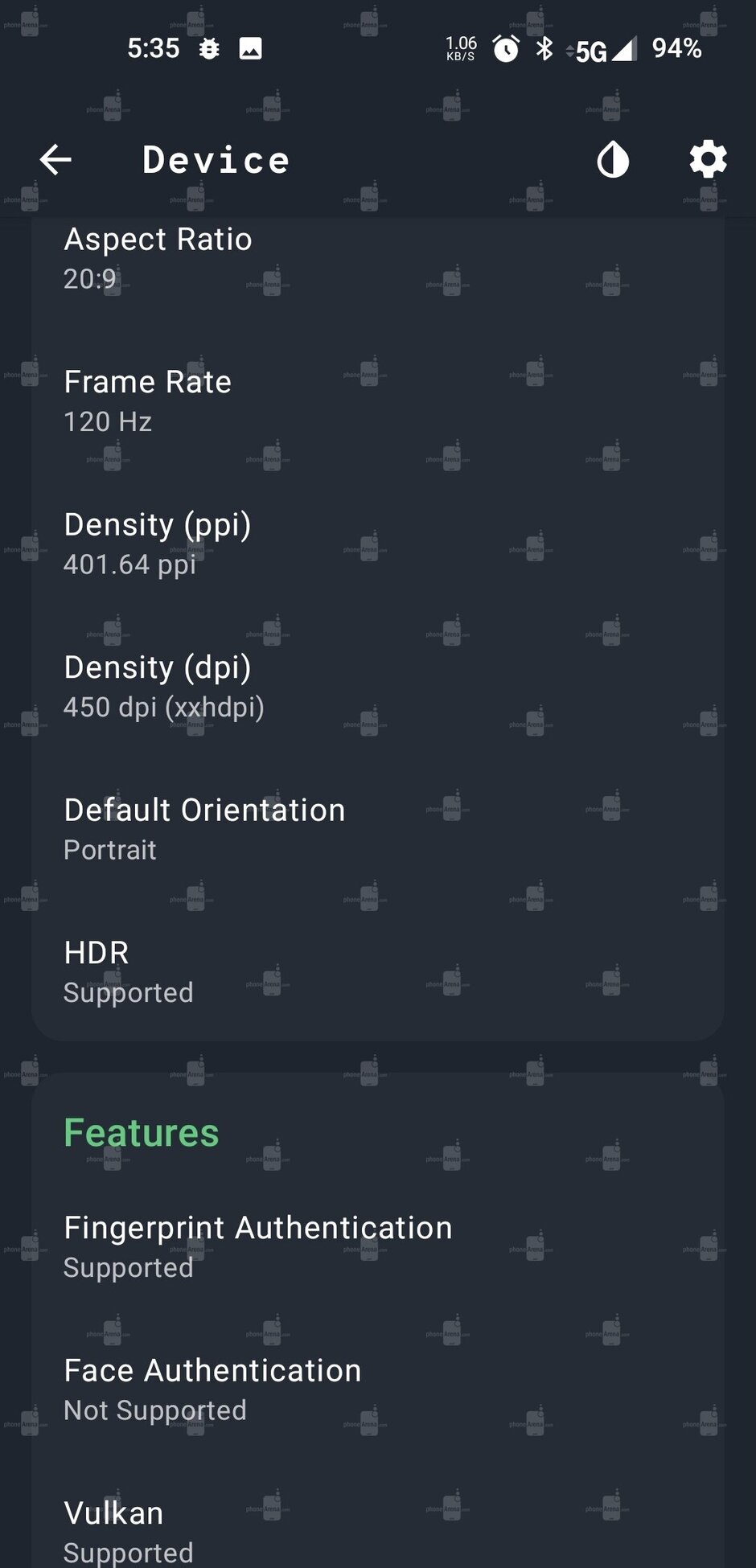
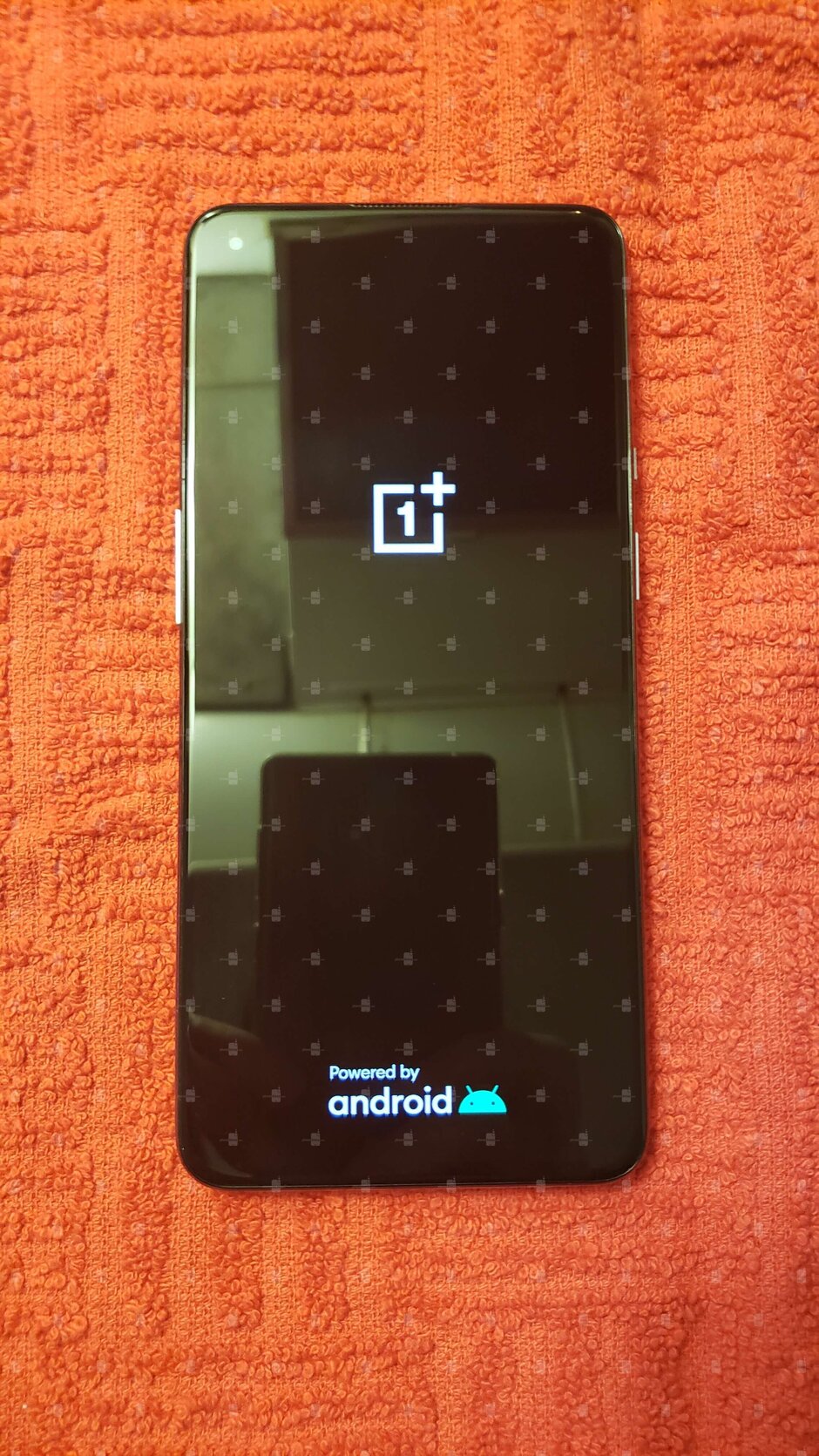
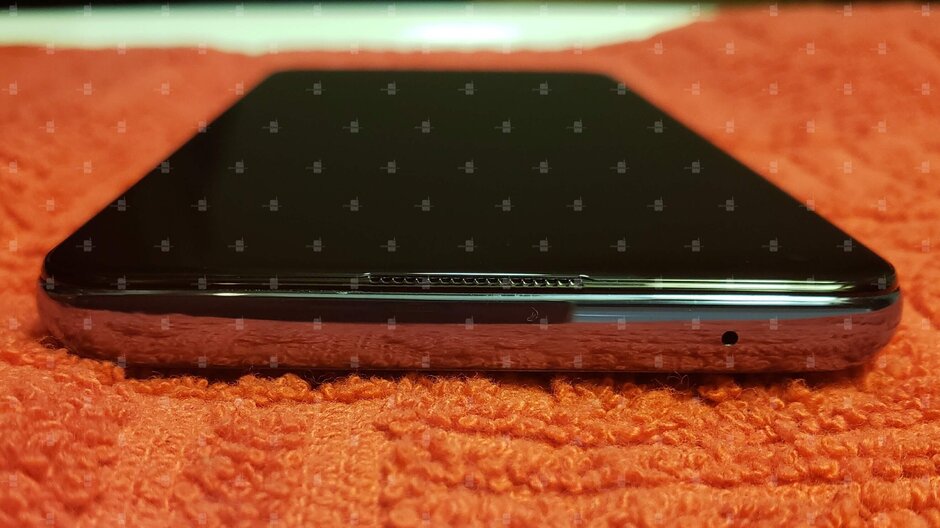
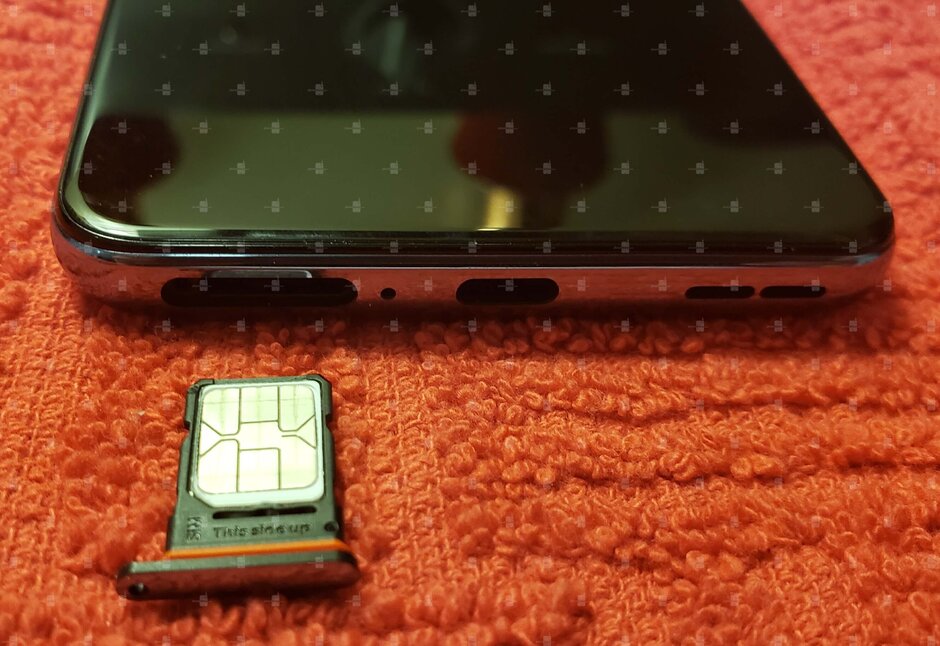
Upfront, as you can see above, the device has a top-left punch-hole display. In addition to claiming it similar to the OnePlus 8T, the report says that it’s a 6.55-inch FHD+ flat display. It supports HDR, has a refresh rate of 120Hz, a resolution of 2400×1080, and 20:9 aspect ratio. What follows is a series of images to reveal the microphones(Top, bottom), SIM card tray, Type-C port, and Speaker( at bottom), along with the boot logo.
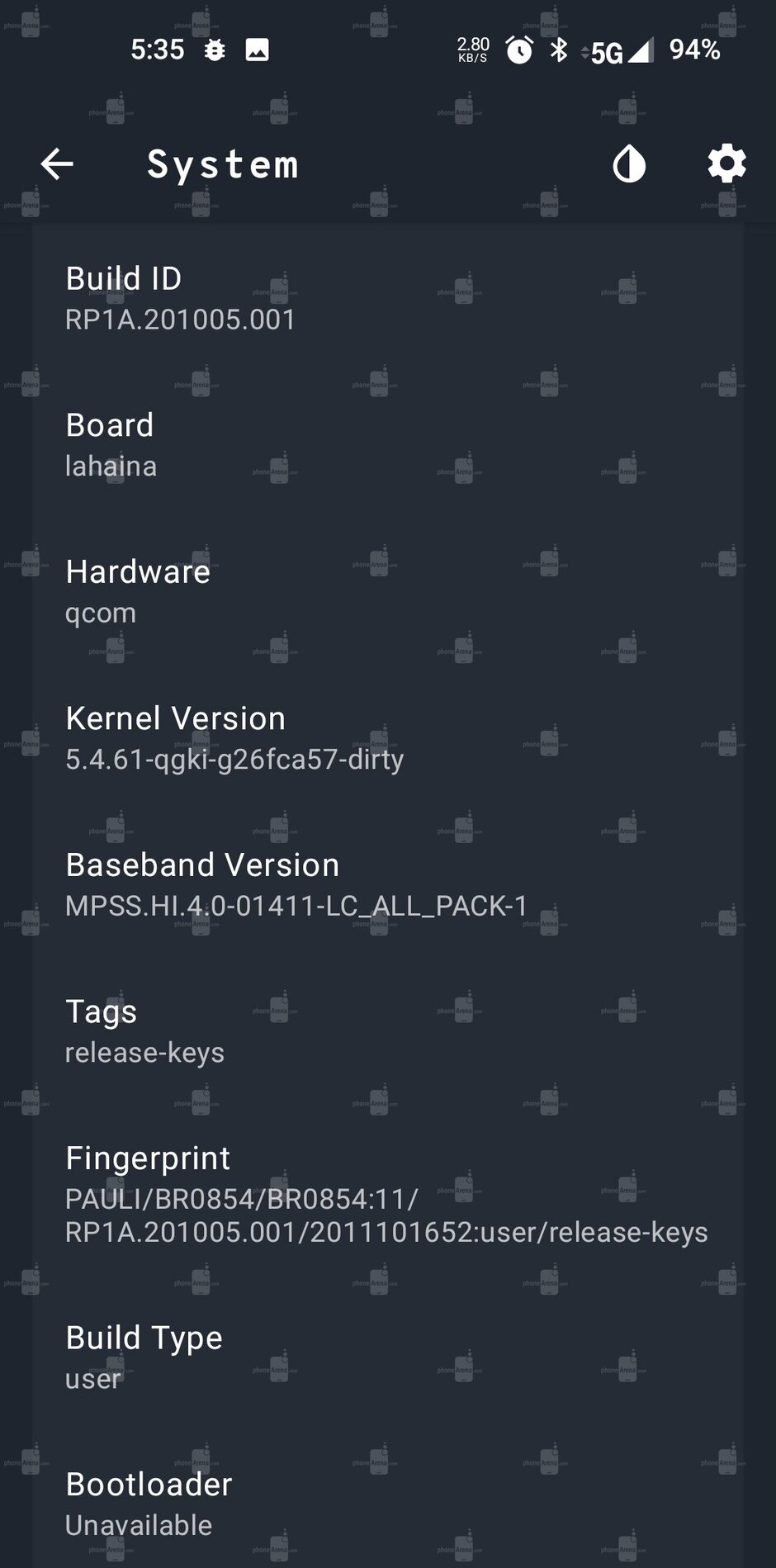
If the images along with the report turns is true, the device will have a metal frame made of Aluminum and have the ports and buttons at usual placements. Anyway, apart from looks, the report also shows some screenshots of its internals. Apparently, the LE2117 device has a board Lahaina (which hints at Snapdragon 888), has 8GB RAM, 128GB storage, and runs Android 11.
1 of 8
OnePlus Boot Logo
LE2117 Top
LE2117 Bottom portion
LE2117 Left
LE2117 Right
Lahaina (Snapdragon 888)
Android 11
8GB RAM, 128GB storage
The screenshots also include details like the 12MP f/1.88 rear camera and 4MP f/2.4 front camera. However, it could either be an error listing or indicate the actual output of the quad-Bayer 48MP, 16MP sensors respectively. Apart from this, earlier leaks say that the OnePlus 9 mostly won’t have an IP rating, unlike the Pro variant.
Following the announcement of Android 11 a few months ago, some manufacturers have begun rolling out the Android 11 update for their smartphones while others are yet to begin. Nubia belongs to the former as it has announced that the new version of Android is now available for its 2019 flagship phones – the Nubia Z20, Red Magic 3, and Red Magic 3s.
All three phones launched last year with Android 9 Pie pre-installed. However, only the Red Magic 3 (Chinese version) got updated to Android 10. Now that Android 11 is rolling out to the devices, we hope Nubia makes it available for global users soon.
The Nubia Z20 is a dual-screen phone. It has a 6.42-inch FHD+ curved display on one side and a smaller 5.1inch HD+ display on the other side. Both screens are AMOLED panels and the smaller one sits below a triple camera system.
The dual design allows the rear cameras to double as front-facing cameras as all you have to do when you want to make a video call or take a selfie is to switch to the smaller display on the back. This means you can take a wide-angle selfie with the 16MP ultra-wide angle camera; a sharper and more detailed selfie with the 48MP primary camera, or even better portraits with the 8MP telephoto camera.
Other features of the Nubia Z20 are a Snapdragon 855+ processor, up to 8GB of RAM and 512GB of storage, support for 8K video recording, dual side-mounted fingerprint scanners, a 4000mAh battery, and support for 27W wired fast charging.
The Red Magic 3S and Red Magic 3 are gaming phones. Both come with a 6.65-inch FHD+ display, 48MP triple rear cameras with 8K video recording, stereo speakers, 5000mAh batteries with 18W fast charging, and audio jacks. The difference is that the Red Magic 3S has a Snapdragon 855 processor while its older sibling comes with the Snapdragon 855.
Honor V40 series was earlier rumored to launch in December. However, leaks recently said the series has been cut down to one device(Honor V40) after failing to feature a Kirin 9000 SoC. Currently, the device is currently expected to debut in January. Now, a tipster says it has got MIIT certification.
Representative image: Honor V30 Pro
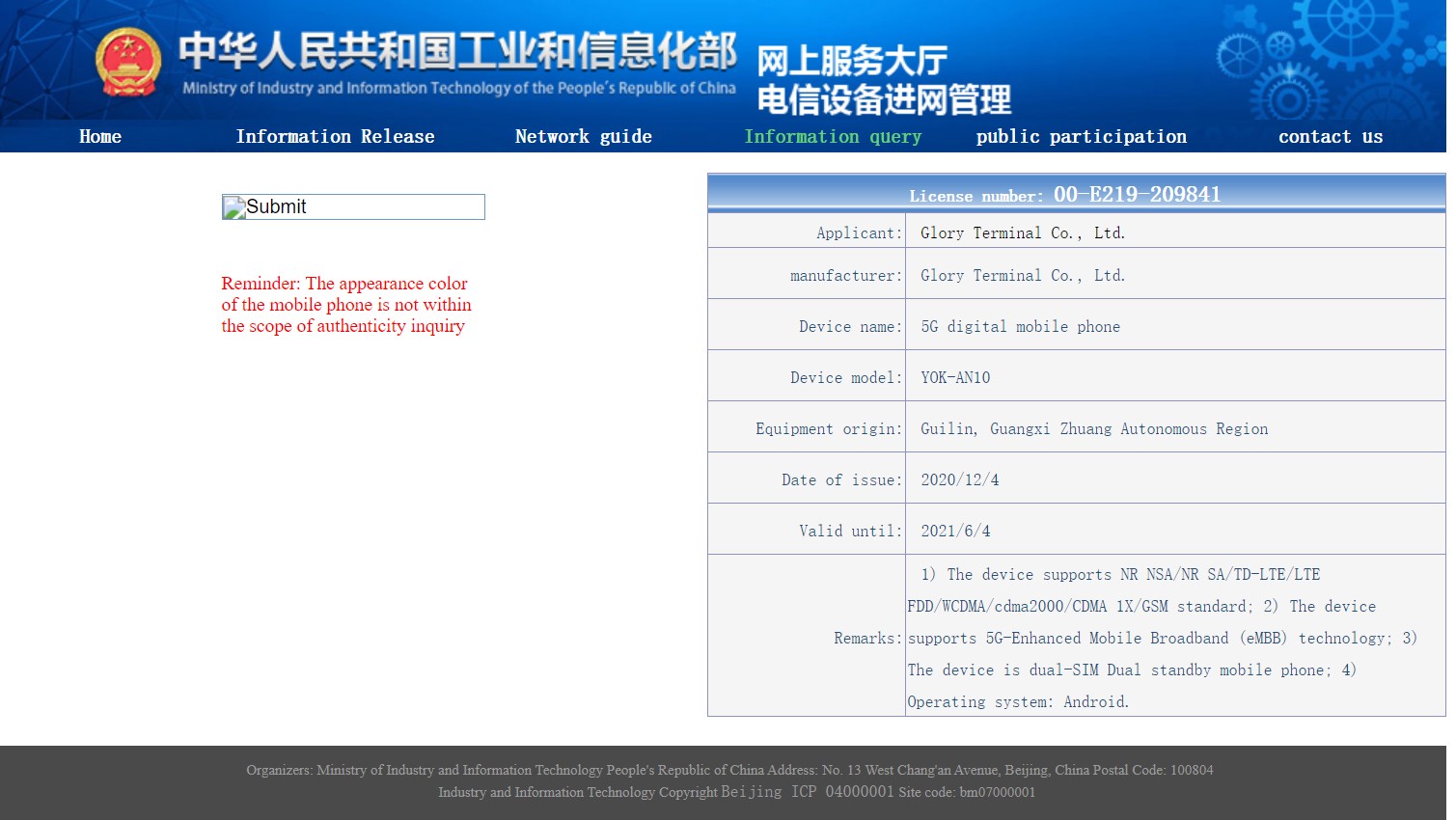
As Digital Chat Station reports(via ITHome), a device with a model number YOK-AN10 appears on China’s MIIT certification website. The listing shows the applicant as Glory Terminal Co Ltd.,(Translated) which refers to Honor. Further, the listing also confirms that the device will be a 5G device.
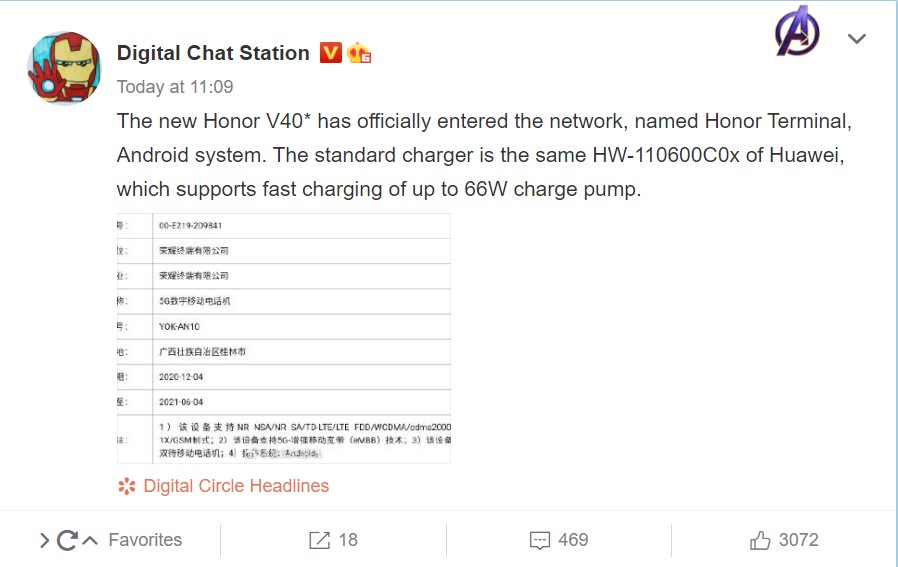
Now, if we recall, the tipster revealed the codename of the upcoming Honor smartphone last week. According to him, Honor V40 will have the codename YORK and model number YOK-AN10. Hence, the above listing and tipster’s info suggests that the device is most likely the V40 from Honor. Further, he also says that the Honor V40 will support 66W fast charging.
Precisely, he says that the standard charger of Honor is reportedly the same( HW-110600C0x) as Huawei. Previously, a Huawei 66W charger got China’s 3C certification back in July. It had the model number HW-110600C00 and rated as 11V/6A. This charging tech later debuted in the company’s latest flagship Mate 40 series.
While Honor is now effectively independent from Huawei, it seems like the company wants to use some of the latter’s technology even after parting ways. Anyway, the Honor V40 is likely to sport the MediaTek Dimensity 1000+ SoC. Earlier rumors said that the device will feature an AMOLED 120Hz display, 50MP Sony IMX700 RYYB camera sensor. Let’s wait for more leaks in the coming days.
A couple of days back, we saw the alleged real-life image of the upcoming Xiaomi Mi 11. However, the image had a device with a black rear making us wonder if it’s real. Today, the device has leaked completely in the Blue Gradient color that surfaced in renders a while ago.
Xiaomi Mi 11 render by Benjamin Geskin
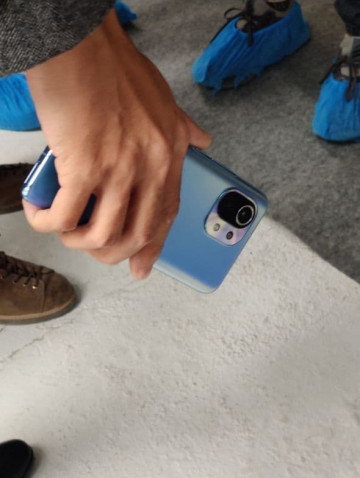
A series of images claimed to be Mi 11 appears on slashleaks(via mobiltelefon.ru). As you can see below, the images show a person holding a device that is in Blue Gradient color. If you look closely, it has a squircle rear camera layout with two large sensors and a small one above the LED flashlight. These almost resemble the earlier leaked image of the Xiaomi Mi 11.
Further, the first larger sensor also has a white ring around it just like the concept renders that surfaced online. This could be the 108MP main sensor of the rear setup. To add to the merry, tipster Ice Universe claims that these are 100% legit images of the Xiaomi Mi 11. In any case, the launch should be very near, and hence, let’s wait for official images and pricing.
Various reports say that the other two sensors would be a 13MP ultra-wide, and 5MP macro sensors. That said, the Xiaomi Mi 11 will be the first to use Qualcomm Snapdragon 888 SoC according to Xiaomi. The series is likely to include two models- Mi 11,Mi 11 Pro.
Among the two, the Mi 11 is likely to feature an AMOLED display with a 120Hz refresh rate, 4,780mAh battery with 55W charging. The Xiaomi Mi 11 is also strongly rumored to go on sale this month with sufficient stocks. Early rumors also say that Mi 11 will come at least in 8GB RAM, 128GB storage, and start around 3,999 Yuan (~$610).
We use cookies on our website to give you the most relevant experience by remembering your preferences and repeat visits. By clicking “Accept”, you consent to the use of ALL the cookies.
This website uses cookies to improve your experience while you navigate through the website. Out of these, the cookies that are categorized as necessary are stored on your browser as they are essential for the working of basic functionalities of the website. We also use third-party cookies that help us analyze and understand how you use this website. These cookies will be stored in your browser only with your consent. You also have the option to opt-out of these cookies. But opting out of some of these cookies may affect your browsing experience.
Necessary cookies are absolutely essential for the website to function properly. This category only includes cookies that ensures basic functionalities and security features of the website. These cookies do not store any personal information.
Any cookies that may not be particularly necessary for the website to function and is used specifically to collect user personal data via analytics, ads, other embedded contents are termed as non-necessary cookies. It is mandatory to procure user consent prior to running these cookies on your website.