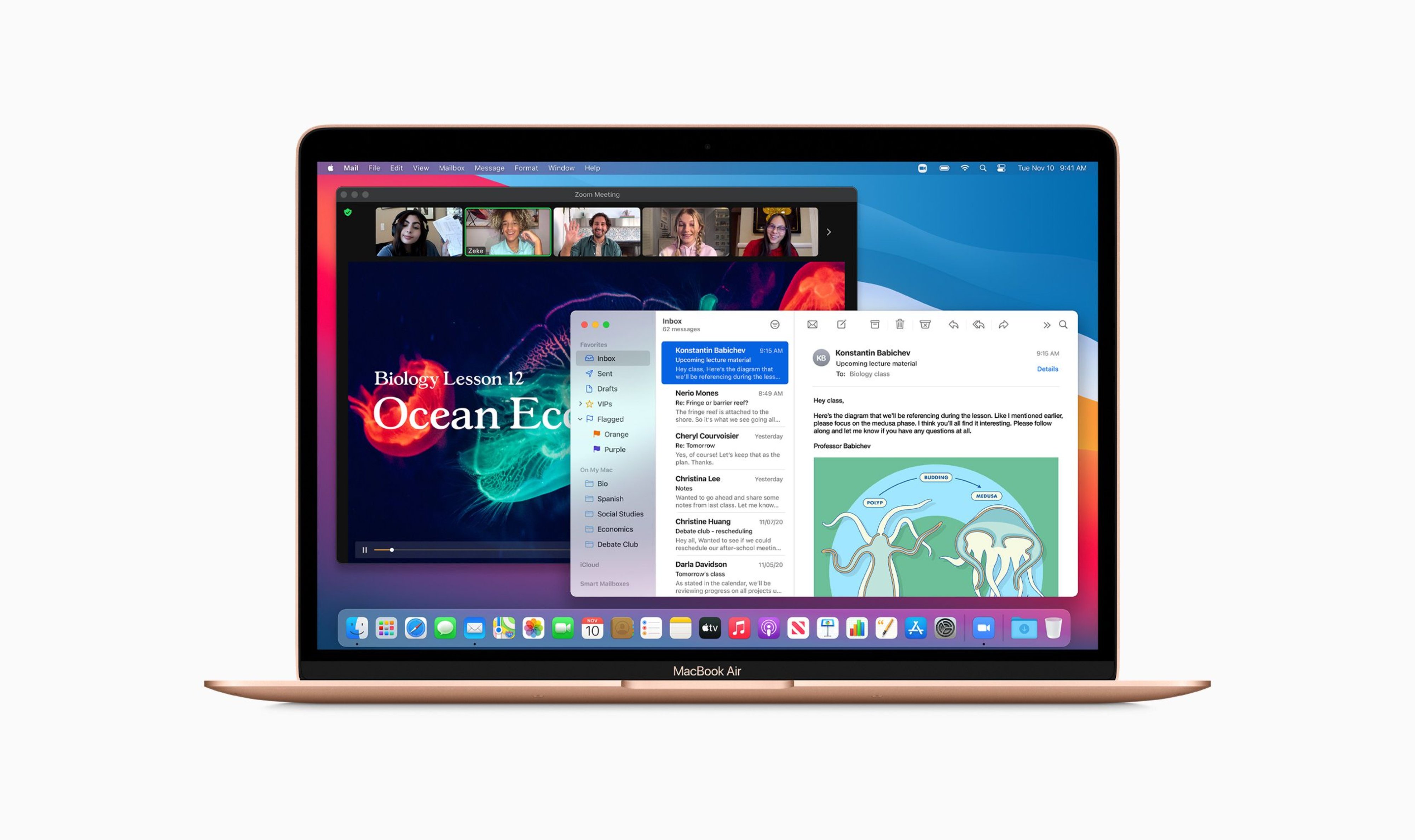
Apple’s newly launched Mac devices powered by the company’s new ARM-based M1 chipset have been well received. Everyone, including Apple fanboys and skeptics, are surprised by the performance improvements offered by this new Apple Silicon-powered devices.
However, one of the drawbacks of the new devices is the ability to run the Windows operating system and even Apple’s official method to do so, using Bootcamp, isn’t possible at this time. This is because the Windows OS is built for x86 chipsets while the new Apple M1 is based on ARM.
But surprisingly, a developer named Alexander Graf has managed to successfully run virtualized Windows 10 on ARM on the new M1-powered MacBook. He used a modified version of QEMU, open-source virtualization and machine emulation software, to run an Insider Preview of Windows 10 ARM. He also utilized Apple’s own Hypervisor framework which is designed for virtualization purposes.
Alexander Graf is claiming snappy and smooth performance of the Windows operating system on his MacBook but other users who tried to replicate the same have reported some issues. There were issues related to connectivity, which now seems to have been fixed.
This is a really interesting development and we expect more such work to keep surfacing online until we get an official solution, either from Apple or Microsoft.
Another interesting outcome is performance. The benchmark result of the Windows 10 ARM running on the Apple M1-powered MacBooks indicates that it is performing better than Microsoft’s own Surface Pro X. Based on the scores, it seems that the M1 is about 60% to 85% faster than the fastest Windows on ARM devices available right now.
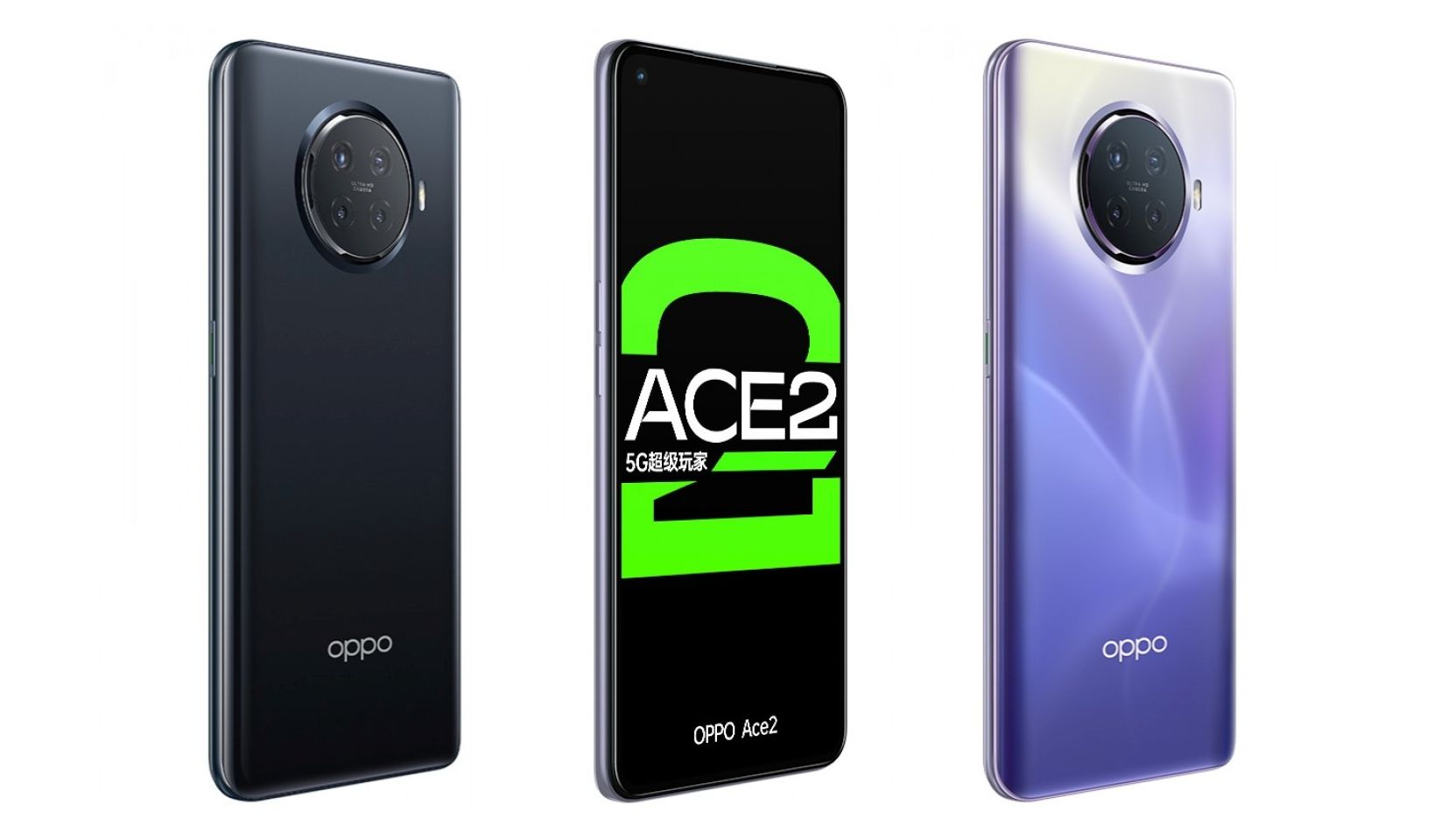
OPPO announced the Ace2 flagship phone in April this year. Its successor with the OPPO Ace3 moniker was expected to arrive in the second half of the year. It did not come true as the Ace-lineup was reported transferred to Realme. Probably, it appears that OPPO may have replaced the Ace3 with the upcoming Snapdragon 865 powered Reno5 Pro+ smartphone. A reliable tipster has claimed that the Realme is working on a flagship phone under the Ace branding.
According to the tipster, the Realme Ace flagship will be driven by the Snapdragon 875 chipset and it will have a thin chassis. The handset will carry support for superfast charging. Currently available mid-range and flagship phones are equipped with 65W fast charging technology.
At present, there is no information on the other specs of the device. In July, Realme announced its 125W UltraDart fast charging technology that can charge a 4,000mAh battery up to 33 percent in just 3 minutes. It remains to be seen whether the Realme Ace arrives with 125W UltraDart charging tech.
At the beginning of this year, Realme launched the Realme X50 5G and Realme X50 Pro 5G flagship phones. Hence, the Chinese manufacturer is expected to announce the Realme X60 series in Q1 2021. It remains to be seen whether the company launches the Realme Ace or Realme X60 Pro as its next flagship phone. The rumor mill is yet to be spill any details on the specs of the X60 Pro.
In related news, two Realme phones with model numbers RMX3061 and RMX3063 have been spotted at certification platforms. The FCC certification revealed that the device has a 5,000mAh battery and a square-shaped camera module housing a triple camera system. It is speculated that it could be the next C-series phone from the brand.
The Xiaomi Mi 10 and Mi 10 Pro flagship phones went official in February this year. Rumors are rife that the Chinese brand may announce the Xiaomi Mi 11 and Mi 11 Pro in January 2021. Today, a reliable tipster from China also claimed that the Mi 11 lineup will be announced in January next year.
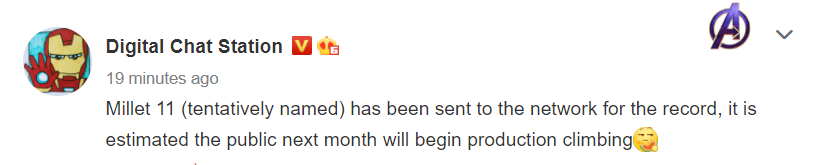
It is yet to be confirmed whether the successor to the Mi 10 series will be called Mi 11 or Mi 20. By launching the next Mi series flagship in early 2021, Xiaomi is expected to launch the first brand in China to launch Snapdragon 875 mobile platform powered smartphones. Tomorrow, Qualcomm is likely to announce the SD875 SoC. The machine-translation of the tipster’s latest Weibo post suggests that Xiaomi has sent the Mi 11 for network certification, which indicates that it may go official in January.
A recent report had revealed that the SD875 powered Xiaomi Mi 11 is equipped with a curved display and triple rear cameras. The triple shooters will have a 108-megapixel main camera and it will come with support for up to 30x zoom. The ultrawide lens of the phone will be able to capture macro shots.
There is no clear evidence on whether the Mi 11 Pro will have a quad camera setup. It was reported earlier this month that the 4-in-1 pixel binning technology will let its main camera capture 50-megapixel shots. A telephoto lens of 48-megapixel or 12-megpaixel is also expected to be available on the Mi 11 Pro.
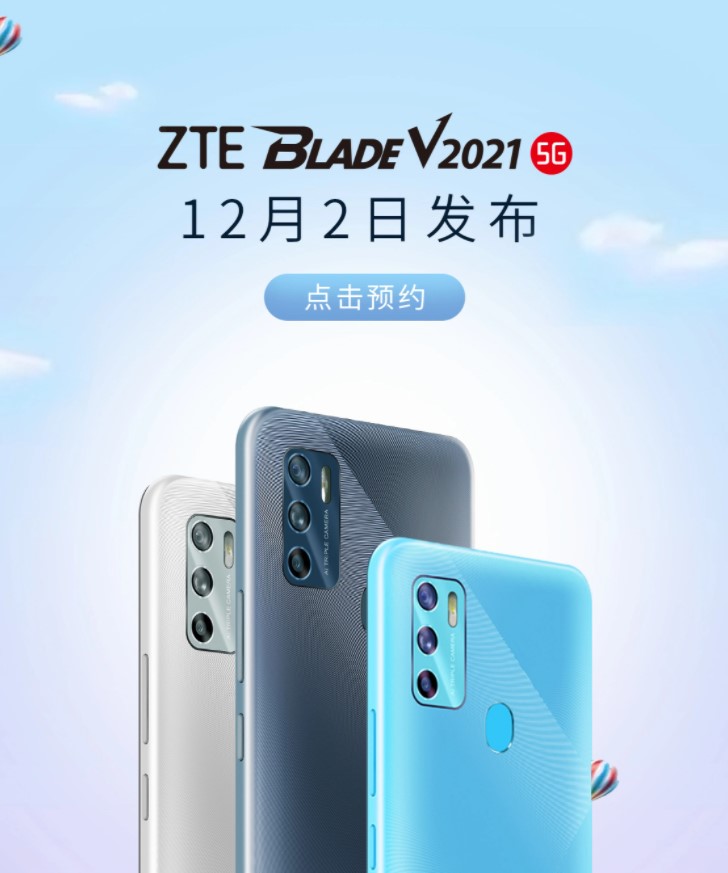
ZTE has a new smartphone coming later this week. The phone will arrive as the ZTE Blade V2021 5G, and ahead of its release, registrations are already open on the Chinese retail store, Jingdong.
The ZTE Blade V2021 5G will be announced on Wednesday, December 2. A poster put up by the manufacturer as well as a Jingdong listing gives us an early look at the design of the phone.
The Blade V2021 has a display with a waterdrop notch. While the side bezels are slim, the chin and forehead are thicker. On the rear of the phone is a triple camera setup along with an LED flash in a rectangular housing. There is also a fingerprint scanner in the middle. The rear panel has a patterned finish and the JD listing says the back is made of plastic.
The listing includes the configuration of the rear cameras. The primary camera is a 48MP f/1.79 sensor while the sensor below it is an 8MP ultrawide angle camera with a 120° field of view. It also has a 2MP depth sensor.
The listing says the phone has an FM radio that works without the need to connect earphones. It also mentions DTS surround sound, and support for face unlock. When it launches, the phone will be available in Fantasy Blue, Space Gray, and Space Silver.
We are surprised the Blade V2021 5G is launching on Wednesday for two reasons. First is that ZTE announced the Blade V2020 5G just last month, on October 22 to be precise. This means there are practically just six weeks between both phones.
Second, is why it is having a launch on Wednesday since it has an event today for another phone, the Blade 20 Pro 5G. It also plans to announce an Extreme Edition of the Axon 20 5G which comes in gold later today.
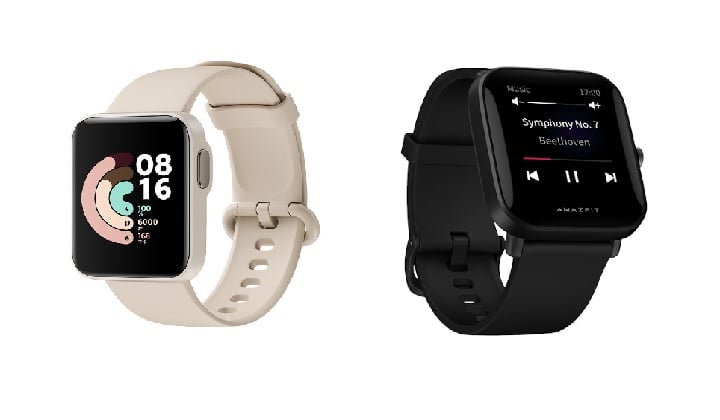
Huami’s Amazfit Bip line of smartwatches is known to offer value for money for those looking for a smartwatch or fitness tracker that doesn’t break the bank. The series which boasts more than five models including its latest model, the Amazfit Bip U, is now getting worthy challengers and one of them is the new Redmi Watch.
Redmi Watch (l) and Amazfit Bip U (r)
The Redmi Watch is the first smartwatch from the Xiaomi subsidiary and its price and features put it as a direct competitor to the Amazfit Bip series, most especially the Bip U. If you are wondering which of these two watches you should purchase, this post should help you decide.
Amazfit Bip U
Redmi Watch
Display
1.43-inch screen with 2.5D glass and anti-fingerprint coating
Strap Colors: Elegant Black, Ivory, Ink Blue, Cherry Blossom, and Pine Needle Green
Design
The Amazfit Bip U and Redmi Watch can pass for similar watches. They both have a square face dial and a single button. Their dimensions and weight are also very similar. However, they are not identical. Not only are their buttons of different shapes and are placed in different positions, but the Bip U’s case has lugs while the Redmi Watch doesn’t.
Even though the Redmi Watch has the advantage with respect to the number of colors you can choose from, we are sure both watches will enjoy a plethora of third-party watch straps that owners can purchase to give their watch a unique look.
Display and Watch Faces
The Bip U and Redmi Watch have nearly the same screen size but the former is slightly bigger at 1.43-inches. The Redmi Watch does have higher pixels per inch value due to its higher resolution and smaller screen size.
Both screens are surrounded by thick bezels, which is not unexpected at this price point. They also each have a 2.5D glass covering their display. Huami says the Bip U has an anti-fingerprint coating but Redmi doesn’t say if its watch has.
When it comes to the number of watch faces you can choose from, the Redmi Watch wins with up to 120 in total. This means you can choose a different watch face every day for four months.
Sports Modes
The Bip U is the clear winner here as it can track up to 60 different sports and physical activities, leaving the Redmi Watch in the dust with its measly seven. Sure, you probably won’t use all of them but it should cover the basics. Sadly, we couldn’t get our hands on the complete list of supported sports modes for the Amazfit Bip U.
Blood Oxygen Level Detection
Blood oxygen level detection is a feature that has appeared on more watches announced this year. The sensor detects the level of oxygen in the blood which is a vital sign of how healthy an individual is. It is also one of the vitals that are checked for those that may have COVID-19. Being able to easily check it whenever and wherever you are is an advantage and one you have with the Amazfit Bip U. Do note that it is not a screening test for COVID-19.
NFC and AI Assistant
The Redmi Watch has NFC and allows users to use it to make payments. It also has a microphone and Xiaomi’s XiaoAI assistant, so users can use their watch to control compatible smart home devices.
The Amazfit Bip U doesn’t have NFC neither does it have an AI assistant. However, Huami is working on a Pro model that will have an AI assistant (most probably Amazon’s Alexa) and a microphone.
Both watches do not have a built-in GPS module which means if you want a watch that will track your position and outline your route when you go for an outdoor walk/run/cycling, then neither of these two are for you. However, if you have your phone with you and have your watch connected to it, the Amazfit Bip U will be able to use the GPS on your phone.
Redmi didn’t say if its smartwatch has connected GPS but unlike the Amazfit Bip U, it has a geomagnetic sensor which means it has an electronic compass that can come in handy when hiking and you need to find your way back.
The Amazfit Bip U has a women’s health feature that allows female users to track their cycle. The watch will record your menstrual and ovulation periods and also alert you before they arrive so you can plan ahead. Unfortunately, the Redmi Watch doesn’t have this feature.
Battery life
The two watches have the same battery capacity but the Amazfit Bip U has a longer battery life by two days. It is not a significant difference, so it won’t be a dealbreaker when it comes to choosing either of the two smartwatches.
Price
The Amazfit Bip U is the more expensive model no doubt. However, the Redmi Watch is expected to launch outside China as the Mi Watch Lite and when it does, there is a chance it will be more expensive. If Xiaomi keeps the price tag the same, then it most likely will drop some features such as NFC and the Chinese AI assistant.
Conclusion
The Amazfit Bip U is the logical choice here as it offers more features albeit at a higher price tag. However, it is not without its shortcomings, but if you can live with them, then you should pick it up.
The Redmi Watch is an excellent first attempt from Redmi but I won’t recommend it for buyers outside China as you won’t be able to use the XiaoAI assistant and the NFC features outside China. Nevertheless, you may want to wait for the launch of the global version but bear in mind that it may cost more.
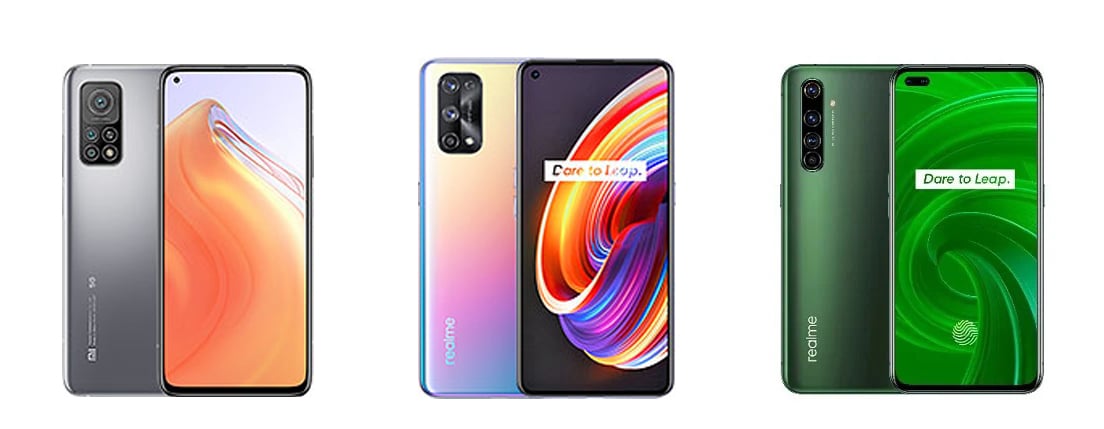
Several affordable flagships debuted in the second half of 2020. One of the most interesting is the Redmi K30S packing flagship-class hardware and offered at an incredibly low price in China. But is it the flagship with the highest value for money? We think there is no better way to establish it than comparing it with the other cheap flagships. Realme is the main Xiaomi rival in this segment and this year it released two affordable flagships in the Chinese market: the Realme X7 Pro and the Realme X50 Pro 5G. Here is a comparison between their specifications and features.
Xiaomi Redmi K30S vs Realme X50 Pro vs Realme X7 Pro
Xiaomi Redmi K30S
Realme X50 Pro
Realme X7 Pro
DIMENSIONS AND WEIGHT
165.1 x 76.4 x 9.3 mm, 216 g
159 x 74.2 x 8.9 mm, 209 g
160.8 x 75.1 x 8.5 mm, 184 g
DISPLAY
6.67 inches, 1080 x 2400p (Full HD+), IPS LCD
6.44 inches, 1080 x 2400p (Full HD+), Super AMOLED
6.55 inches, 1080 x 2400p (Full HD+), Super AMOLED
Triple 64 + 13 + 5 MP, f/1.9 + f/2.4 + f/2.4
20 MP f/2.2 front camera
Quad 64 + 12 + 8 + 2 MP, f/1.8 + f/2.5 + f/2.3 + f/2.4
Dual 32 + 8 MP f/2.5 and f/2.2 front camera
Quad 64 + 8 + 2 + 2 MP f/1.8, f/2.3, f/2.4 and f/2.4
32 MP f/2.5 front camera
BATTERY
5000 mAh, fast charging 33W
4200 mAh, fast charging 65W
4500 mAh, fast charging 65W
ADDITIONAL FEATURES
Dual SIM slot, 5G
Dual SIM slot, 5G
Dual SIM slot, 5G
Design
The design I love the most belongs to the Realme X50 Pro 5G. Just like the top-tier flagships, it is made with premium materials including a glass back and an aluminum frame. It has a non-invasive camera module and a punch-hole display with narrow bezels and a high screen-to-body ratio. But the Redmi K30S is at the same level, with a glass sandwich and its aluminum frame, as well as a high screen-to-body ratio. I would go for the Realme X50 Pro just because it is thinner, lighter, and more compact.
Display
If you need the most impressive display, just discard the Redmi K30S. Instead, you should definitely go for the Realme X7 Pro. It features an AMOLED panel with a 120 Hz refresh rate, and it is one of the most affordable phones with this kind of display. Unfortunately, Redmi K30S lacks an OLED panel, but it has a high 144 Hz refresh rate. Realme X50 Pro remains a device with a great panel: it sports an AMOLED display with a 90 Hz refresh rate and HDR10+ certification. Realme X7 Pro and Realme X50 Pro feature an in-display fingerprint reader, while Redmi K30S has a side-mounted biometric sensor.
Hardware/Software
Realme X50 Pro 5G has the best hardware department as it is fueled by the Snapdragon 865 mobile platform paired with up to 12 GB of RAM and UFS 3.0 native storage. Redmi K30S is powered by the Snapdragon 865 as well, but it packs just 8 GB of RAM. The RAM is paired with fast UFS 3.1 internal storage. Realme X7 Pro is powered by the Dimensity 1000+ chipset which is slightly inferior to the Snapdragon 865 (let’s say it is between the Snapdragon 855+ and the Snapdragon 865). Redmi K30S runs MIUI 12 out of the box, while Realme X7 Pro and X50 Pro 5G run Realme UI.
Camera
With the Realme X50 Pro, you can get the best camera experience. It features a 64 MP quad camera on the rear side including a 12 MP telephoto sensor, an 8 MP ultrawide camera, and a 2 MP depth sensor. Further, it sports a dual ultrawide front camera with 32 and 8 MP resolutions. The rear camera setup of the Redmi K30S is slightly more interesting than the Realme X7 Pro, but the X7 Pro has a better front camera.
Battery
With its huge 5000 mAh, Redmi K30S is the battery champion. But the 4500 mAh battery of the Realme X7 Pro is still great and it features 65W fast charging. The Realme X50 Pro 5G loses as its battery is even smaller.
Price
The Realme X50 Pro price is set at $516/€431, Realme X7 Pro starts at $380/€318, and Redmi K30S costs about $275/€330. Realme X50 Pro is the best device in this comparison, but it is more expensive. If you want to save money while still getting an OLED display and great performance, go for the Realme X7 Pro which also offers very fast charging. Otherwise, if you want a bigger battery and the Snapdragon 865, choose the Redmi K30S.
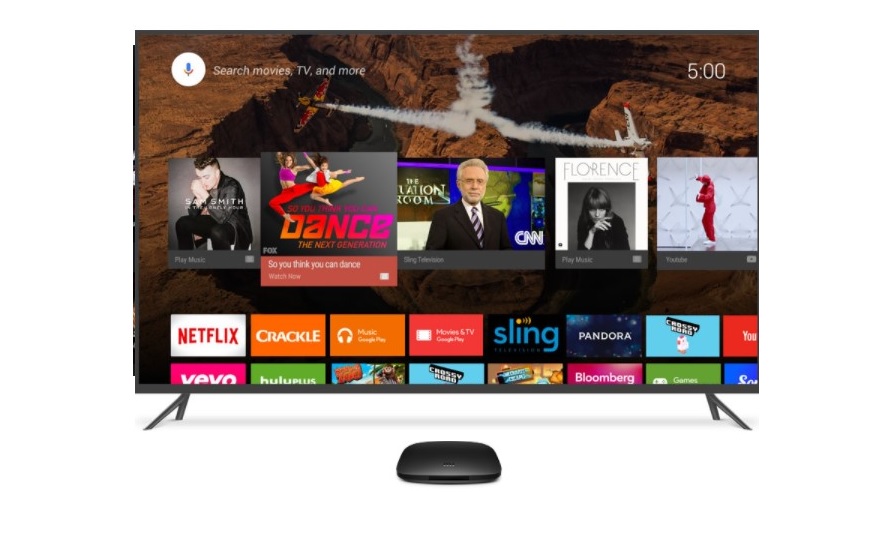
Smart TVs have become very popular and chances are that if you are purchasing a TV now, you are picking up a smart one that allows you to stream content from the internet. However, even with the popularity of smart TVs, there is another growing market – the streaming device market which includes streaming boxes/sticks/dongles.
In some households, you will find a smart TV, while in others, they have a regular TV connected to a streaming device. There are also people who own a smart TV but have it connected to a streaming device.
For this week’s poll, we want to know which category you belong to. Do you have your smart TV connected to a streaming device, use it on its own, or have a regular TV connected to a streaming device? Let us know in the comment box below and also share the reason behind your setup.
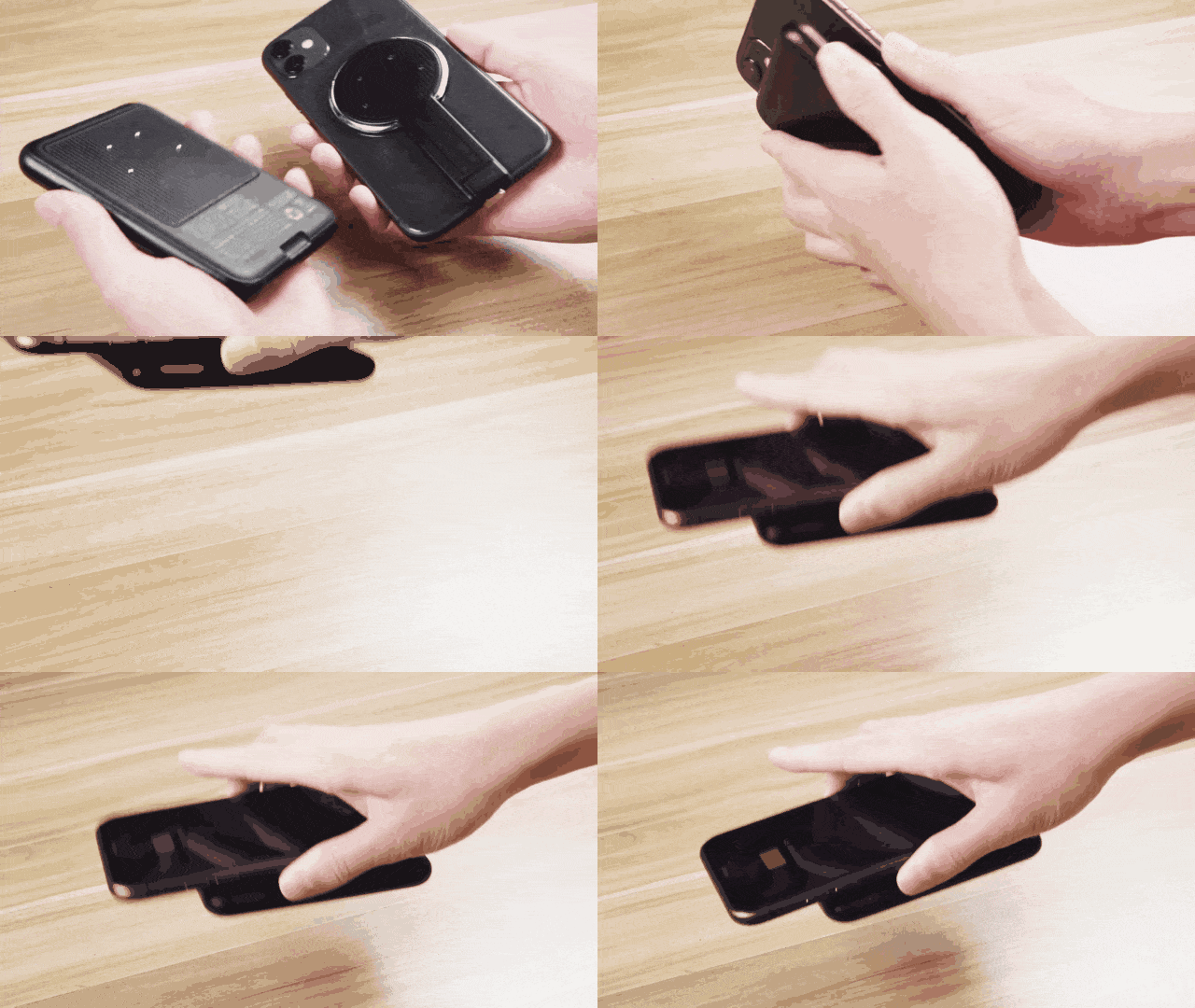
Often, using the phone while charging becomes a bit difficult due to the USB cable restriction. To resolve this issue and offer added convenience, the Fobase introduced Magfaster Magnetic charger through Kickstarter. It is designed to charge all smartphones wirelessly in a quick and secure manner. This charger has successfully managed to raise more than 200% of its goal within 24 hours.
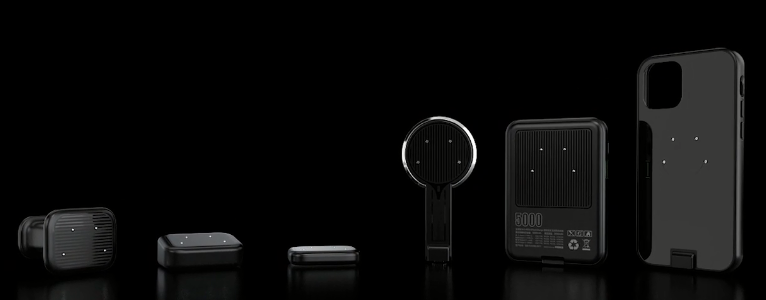
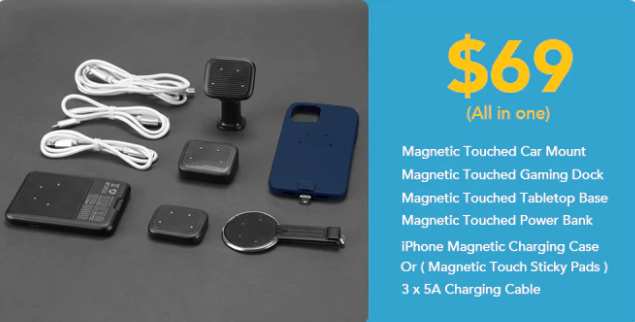
The Magfaster Magnetic touch fast charging kit comes with a magnetic pad and four magnetic docks. Each dock is uniquely designed with a magnetic plate that offers a secure and strong connection to suit specific needs. The company claims that the unit offers 2 times the performance of the Magsafe wireless charger. Furthermore, its enhanced 4th generation wireless technology can quickly and conveniently power-up the devices in no time. This unit supports a capacity of 120W, meaning, it is compatible with fast charging adapters for authenticated smartphones.
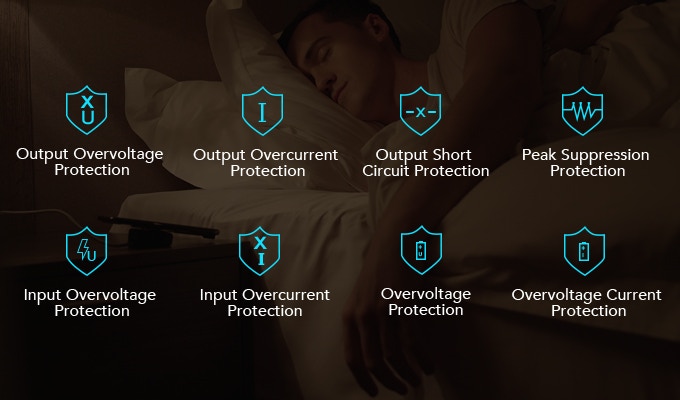
Magfaster Magnetic touchpad also comes with built-in heat, circuit, and power leakage protection. These chipsets shut down when excessive heat is detected to protect the devices. Additionally, this unit is easy to use, and one simply needs to place the charger at the back of their phone for efficient charging. It works with almost every smartphone, including the ones that don’t support wireless charging.
The charging system includes 5 components:
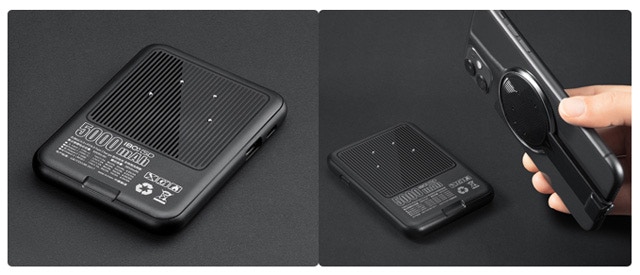
Magnetic Touch Power Bank
This unit has two variants designed with 5000mAh and 10000mAh capacity to charges the smartphone without the need for outlets or cables.
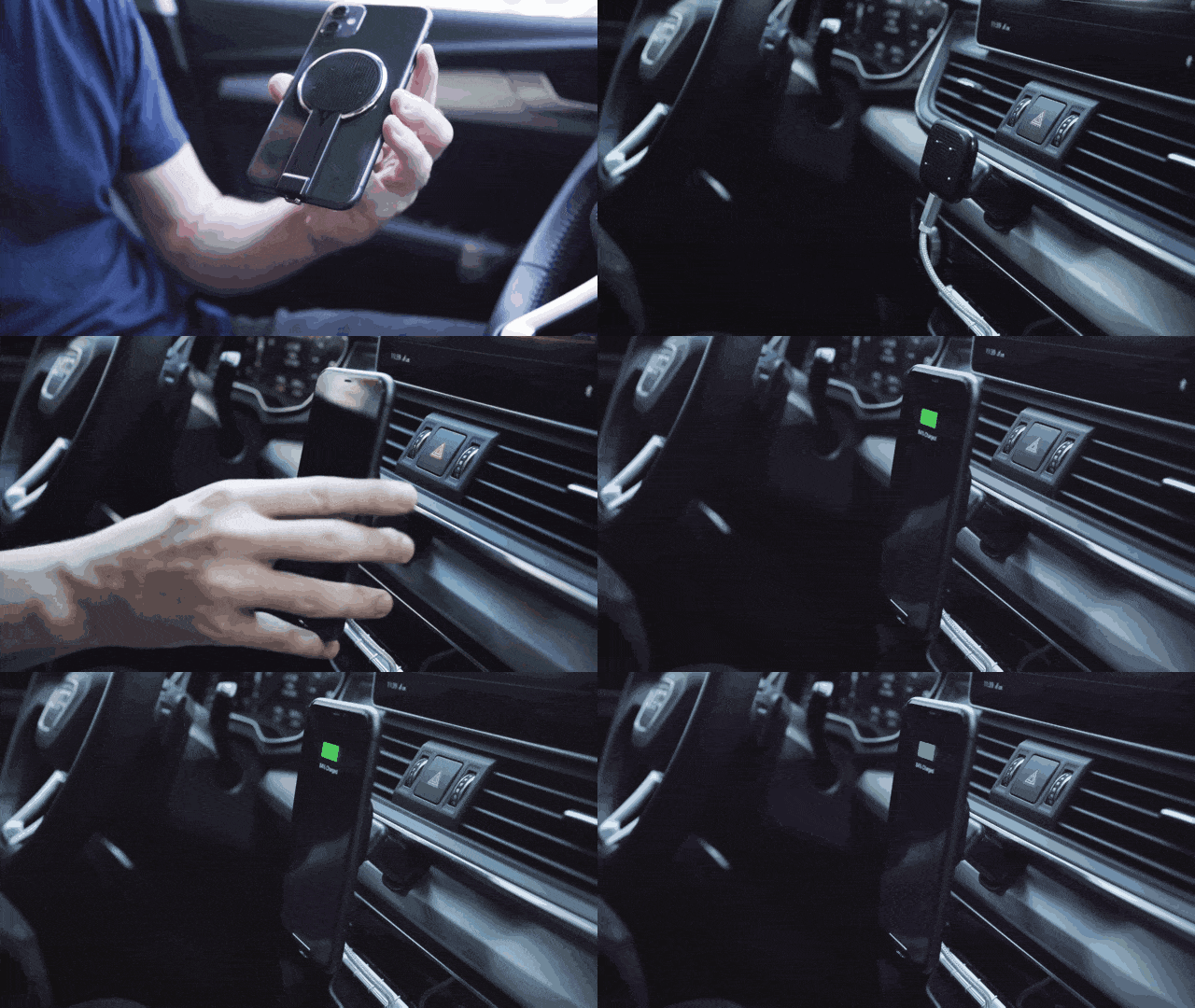
Magnetic Touch Car Mount
It can be attached to the car mount where the strong magnetic grip ensures the phone stays put no matter how bumpy the drive may be.
Magnetic Touch Gaming Dock
This unit offers hands-on control and ensures the smartphone always stays fully charged. It prevents the cable from restricting the movement while playing games.
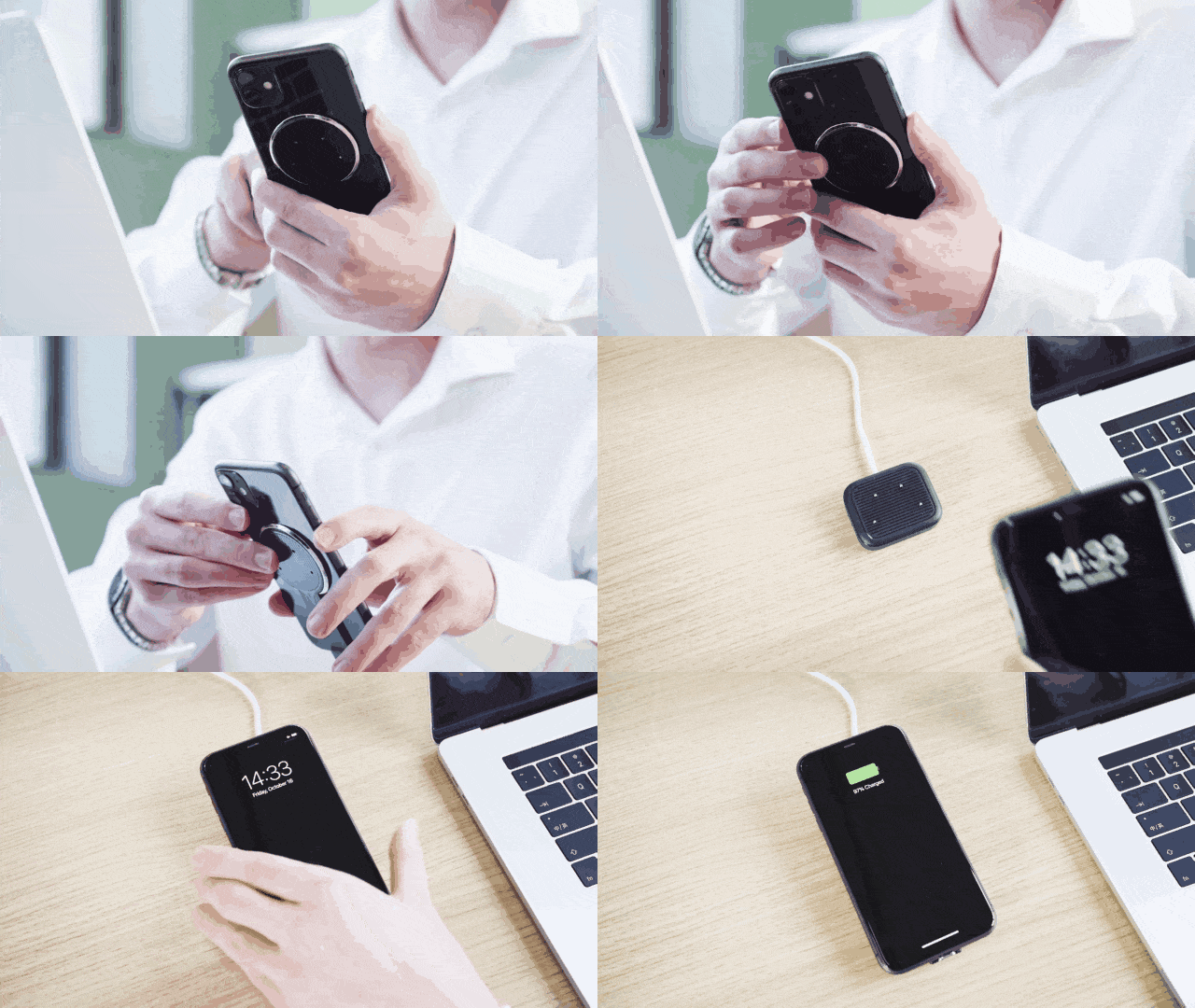
Magnetic Touch Desk Dock
This unit allows the work desk to be clutter-free as the smartphone can simply be placed on the dock to charge. It also prevents the need to plug in and unplug a charging cable.
Magnetic Touch Sticky Pads
This unit is supposed to be fixed on the back of a smartphone for efficient use. It is compatible with both iOS and Android smartphones and comes with a USB connector along with a TYPE-C port to enable direct charging. These sticky pads have a buckle at the back that functions as a phone stand and offers a firm grip while using.
Firm Magnetic Grip
This unit ensures the phone is always attached securely to the power source as each dock is designed to fit different charging areas. It has a magnetic strength of 4200 Gauss.
The Magfaster Magnetic charger is sleek and offers practical use. To know more about this product, interested readers can visit Kickstarter by clicking here.
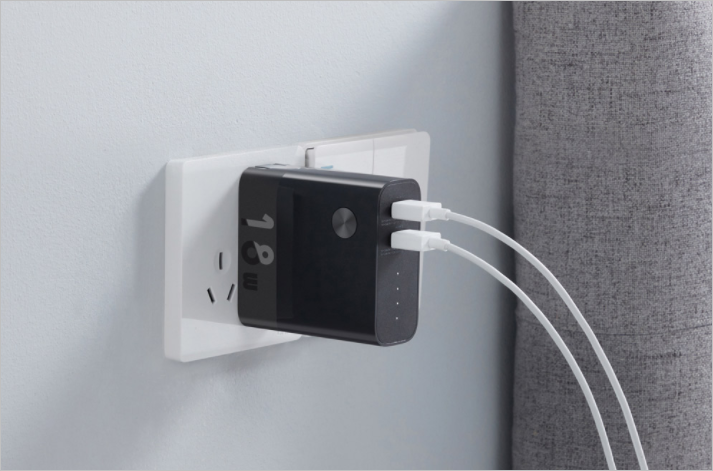
ZMI, a Xiaomi ecological chain company is gaining popularity for its wide range of charging solutions. The company’s products include superfast power banks, wired chargers, wireless chargers, as well as car chargers. The brand even launched its first TWS noise-canceling headphones in China. Right now, ZMI has launched yet another innovative charging solution – the ZMI Purple Rice Dual-mode Charger Power bank.
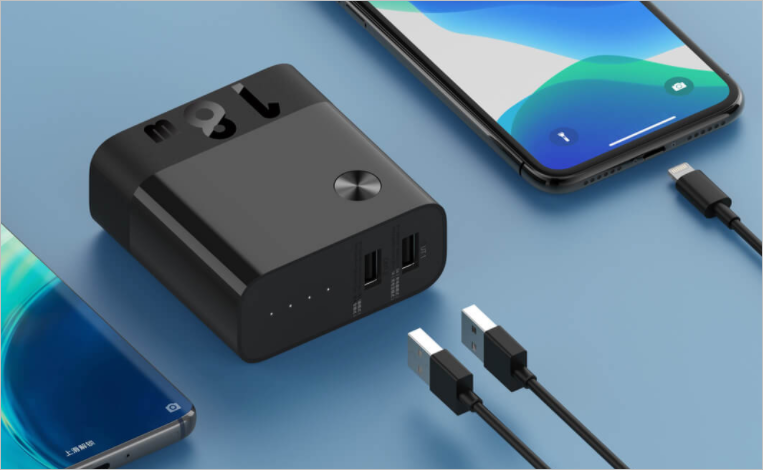
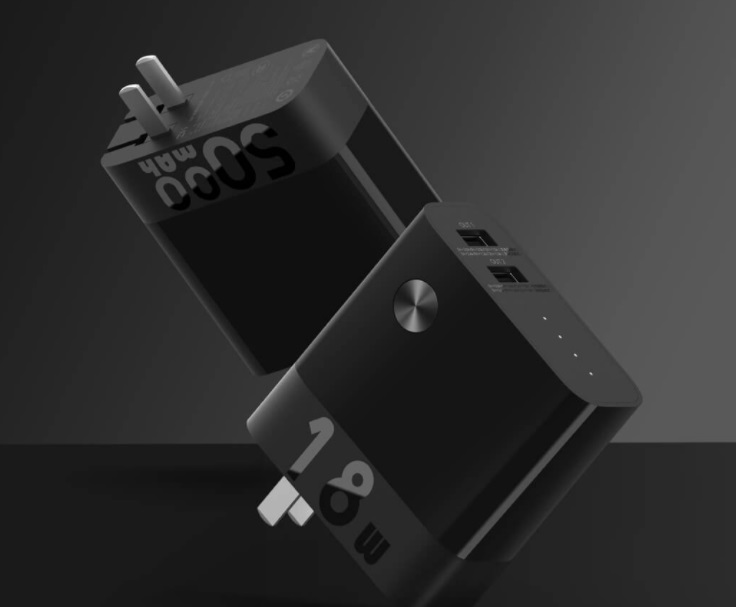
As the name suggests, the product is both a charging adapter and power bank and is equipped with both an 18W charger and a dual-port power bank. As a power bank, the ZMI Dual-purpose adapter packs a decent 5000mAh battery while the dpater adopts foldable pins.
Further, ZMI’s new dual-mode charger is equipped with two USB-A ports, both of which support multi-protocol 18W fast charging and can charge 2 smart devices at the same time. When used as a power bank, built-in 5000mAh power bank comes with a fast charging cable that can provide 12W fast charging. In addition, this product can also directly charge small current for Bluetooth headsets, wrist bands, smartwatches and other products.
In terms of design, ZMI’s new dual-mode charger adopts the classic design ZMI is known for. The casing is designed with highlight and matte stitching, and it is equipped with foldable pins.
The product is presently available on Xiaomi Youpin and is priced at 129 yuan (~$19).
There are multiple ways to unlock your phone these days. There is the fingerprint scanner, face unlock, PIN, password, and the good old pattern unlock. One other way albeit uncommon is voice unlock and the Galaxy S21 series may be bringing it back.
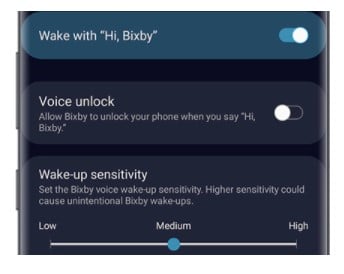
Yes, bringing it back because Samsung used to offer the feature for some of its phones with Bixby but the feature was later removed. It has now been reported that the Galaxy S21 series will bring back the feature when it arrives next year.
According to SamMobile, the feature will be added back to One UI 3.1 which will debut on the Galaxy S21 series. The previous version allows users to unlock their device by saying “Hi Bixby”, so there is a chance when it makes its return next year, users will be able to unlock their phone the same way.
While the official Samsung support page for when the feature was still supported says that it is perfectly safe to unlock your phone with the “Hi Bixby” voice command, there are still reservations about the feature considering more advanced biometric features such as Face ID and fingerprint unlock can be fooled. Nevertheless, the option to be able to unlock your phone with your voice can come in handy in situations where you can’t operate your phone with your hand or can’t unlock it with your face.
The Zepp Z premium smartwatch was announced a few weeks ago at an event that was live-streamed. The smartwatch is the most expensive model from the Huami-owned brand.
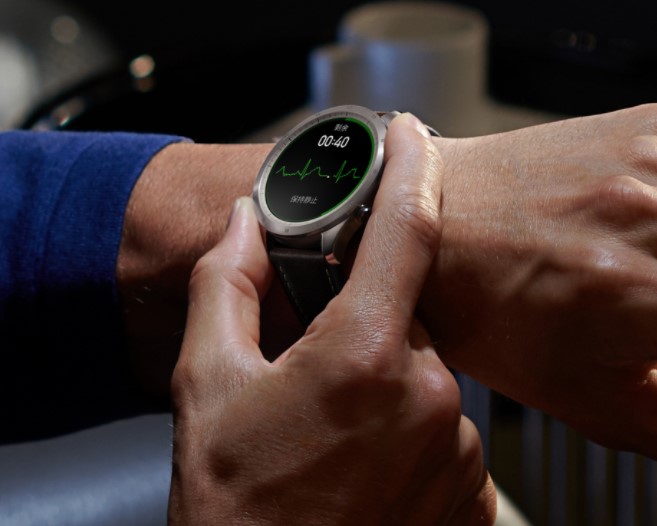
At the event, Huami announced that the Zepp Z will get an ECG version in the future, following approval from the regulatory bodies. The watch also got announced in China, but unlike the global variant which doesn’t have ECG, the one sold in China comes with an ECG sensor out of the box.
The Zepp Z with ECG is available for purchase on the official Zepp store on JD.com for ¥2699 (~$410) but a limited-time sale has it going for ¥2649 (~$403). The price tag is higher than that of the non-ECG version which sells for $349, nevertheless, the price gives us an idea of how much the ECG version will sell for when it is available in markets such as the US and Europe.
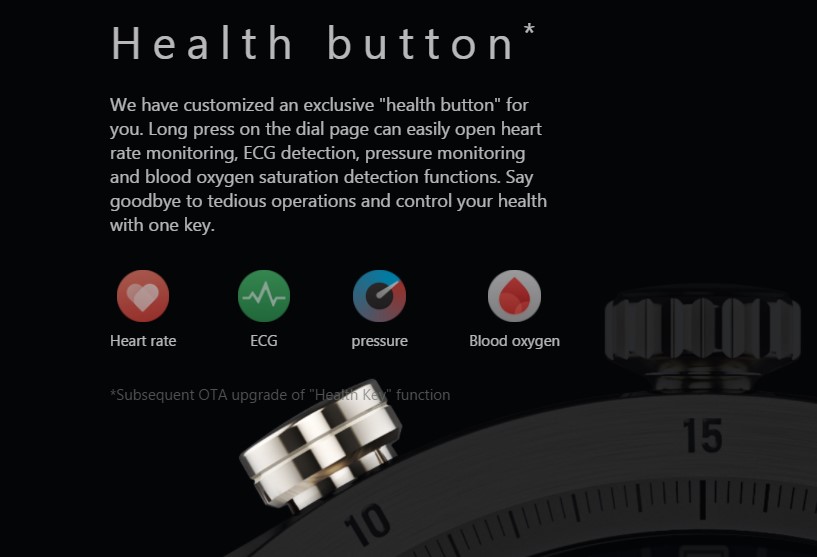
The product page for the smartwatch also confirms that China indeed has the ECG version. In the image below, it says users will be able to get quick access to the ECG function via the health button which can also be customized to quickly access the heart rate monitor, blood oxygen level detection, or stress level.
An ECG monitor is not the only difference between the Chinese version and the global version. Huami has also added NFC for payment support. The dimensions are also different as the Chinese (ECG version) measures 46.6 x 46.3 x 10.75 mm while the global version measures 45.9 x 45.9 x 10.75 mm. Save for these differences, the rest of the specs are the same.
The Zepp Z has a 1.39-inch AMOLED display with a 454 x 454 resolution. It supports 12 different sports modes, has GPS and GLONASS, is water-resistant up to 50 meters, packs a 340mAh battery, and works with both Android and iOS devices.
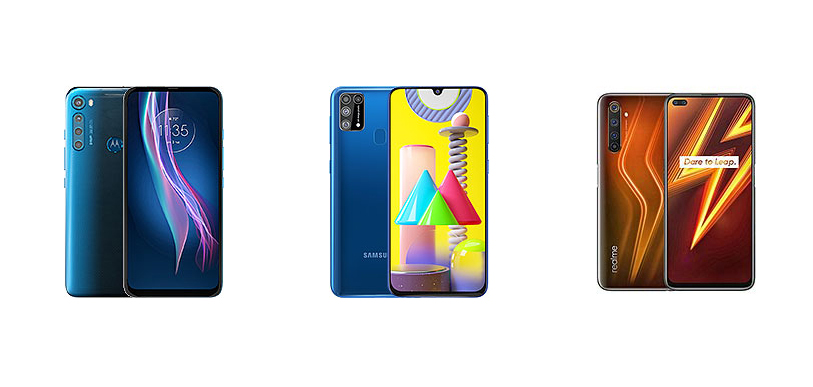
Samsung recently launched the new Galaxy M31 Prime in India. With its affordable price tag and its well-balanced specifications, it is one of the most interesting options you can actually choose in the Android world. Will this handset cannibalize the sales of the Chinese concurrence? Is it a better option than other devices sold at similar prices? In order to let you make the best choice and know everything about the new Samsung affordable phone, we decided to write a comparison and we included two of the best handsets in the 4G midrange segment. We are talking about the Motorola One Fusion+ and the Realme 6 Pro, two of the best-selling devices of this year.
Motorola One Fusion+ vs Samsung Galaxy M31 Prime vs Realme 6 Pro
Quad 64 + 8 + 5 + 2 MP f/1.8, f/2.2, f/2.2 and f/2.2
16 MP f/2.0 front camera
Quad 64 + 8 + 5 + 5 MP f/1.8, f/2.2, f/2.4 and f/2.2
32 MP f/2.0 front camera
Quad 64 + 12 + 8 + 2 MP f/1.8, f/2.5, f/2.3 and f/2.4
Dual 16 + 8 MP f/2.1 and f/2.2 front camera
BATTERY
5000 mAh, fast charging 15W
6000 mAh, fast charging 15W
4300 mAh, fast charging 30W
ADDITIONAL FEATURES
Hybrid Dual SIM slot, splash resistant
Dual SIM slot
Dual SIM slot, splash resistant
Design
If we only consider this trio, the Motorola One Fusion+ has the most interesting design because it sports a full-screen display. There is no notch and there are no holes in the display, because the phone features a motorized pop-up front camera. But I personally prefer the Realme 6 Pro for two reasons: first, it comes with a glass back, so more premium materials. Further, it has a more attractive galass back with its gradient colors. Its fingerprint reader is placed on the side, embedded in the power key, while on the Motorola One Fusion+ and the Samsung Galaxy M31 Prime you get a rear-mounted fingerprint scanner.
Display
Samsung has a big advantage on its side: it produces OLED panels. This means that it can use them for its devices with low costs. That is why you can find several OLED displays on Samsung affordable phones, including the Galaxy M31 Prime. The M31 Prime wins the display comparison because it is the only one with an AMOLED panel in this comparison, and it provides more brilliant colors. Further, it has an in-display fingerprint reader. The Realme 6 Pro has an IPS display, but it features a 90 Hz refresh rate. Unfortunately, the Motorola One Fusion+ has a standard refresh rate for its IPS panel, but it supports the HDR10 certification.
Specs & Software
If you need the best hardware department, then you should opt for the Realme 6 Pro. It packs a strong Snapdragon 720G chipset paired with up to 8 GB of RAM and up to 128 GB of internal storage depending on the configuration. The Motorola One Fusion+ is fueled either by a Snapdragon 730 or 730G depending on the version, so the chipset is more or less at the same level, but it packs just 6 GB of RAM. The SoC found on the Samsung Galaxy M31 is inferior to Snapdragon 720G and 730, so it loses the hardware comparison. On all of these phones, you can find Android 10 out of the box with a customized UI.
Camera
Realme 6 Pro is the winner even when it comes to the camera department. While it features the same 64 MP main camera as its rivals, it offers an additional telephoto sensor with 2x optical zoom, unlike Motorola One Fusion+ and Samsung Galaxy M31 Prime. Even the front camera setup is great: it is one of the few phones to feature a dual ultrawide front camera: it includes a main 16 MP selfie snapper and an 8 MP ultrawide sensor like the one included on the rear side. The silver medal goes to the Samsung Galaxy M31 Prime featuring a better 5 MP depth sensor and an awesome 32 MP front camera.
Battery
Samsung Galaxy M31 Prime is equipped with a bigger 6000 mAh and together with its efficient AMOLED display it lasts a lot more on a single charge. The Motorola One Fusion+ takes the second place with its 5000 mAh unit, while Realme 6 Pro has the smallest battery and the shortest battery life, but on the other hand it features a faster charging technology with a 30W power.
Price
Samsung Galaxy M31 Prime is priced Rs. 16,499 ($223) in India, Realme 6 Pro costs Rs. 19,999 ($270), and Motorola One Fusion+ is priced about Rs. 17,499 ($237). If it was not for the AMOLED display, my choice would definitely be the Realme 6 Pro due to its great hardware, cameras, fast charging and 90 Hz. But the Samsung Galaxy M31 Prime has a better display and bigger battery, so it is as interesting as the Realme option. The Motorola One Fusion+ sits in the middle with a bigger battery than Realme 6 Pro, but a 60 Hz IPS display and inferior cameras. Which one would you pick?
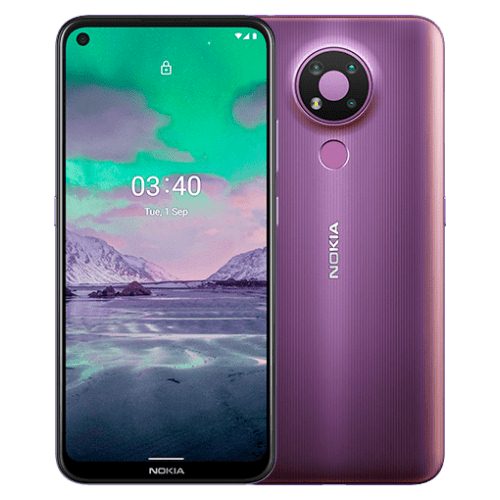
Just like a number of manufacturers, HMD Global’s product release schedule doesn’t have a clear cut pattern. The Nokia 5 series which launched in early 2017 got two successors the following year – the Nokia 5.1 and Nokia 5.1 Plus. In 2019, the series didn’t get a new model, and then in March of this year, the Nokia 5.3 was announced. A new report says that the Nokia 5.4 may be announced this year too.
The Nokia 5.4 is rumored to launch next month alongside the Nokia 7.3 5G if that launch doesn’t get postponed just like that of the Nokia 9.3 PureView. The blog, Nokia Power User, says they have gotten exclusive info regarding the design, configuration, and colors of the Nokia 5.4.
The Nokia 5.4 has been reported to have a screen similar to that of the Nokia 3.4 pictured above
According to the source, the Nokia 5.4 will adopt the hole-punch design, dropping the waterdrop notch of its predecessor. The screen size is said to be the same 6.39-inch size as that of the Nokia 3.4 but the resolution is not stated. Considering the Nokia 5.3 has an HD+ screen, we believe this will be the case for its successor.
There is no specific info on the processor but it is reported to be more powerful than the Snapdragon 665 chipset inside the Nokia 5.3. The chip will be paired with 4GB of RAM and will be available in 64GB and 128GB variants. It is also expected to have four rear cameras. Buyers will be able to choose from two color options – Blue and Green.
There is no mention of the battery capacity, but we hope the phone supports at least 18W fast charging as HMD Global’s insistence to stick to 10W charging for a lot of its mid-range phones including the Nokia 5 and Nokia 6 series is bordering on ridiculous.
While it does come as a surprise that the Nokia 5.4 may be launching this year, we presume fans of the Nokia brand will rather see HMD Global launch new models for the series that are yet to get refreshed this year.
Microsoft is having a second attempt at bringing Android apps to Windows 10. The first attempt was in 2015 and was called Project Astoria which would bring support for Android apps to Windows 10 Mobile but was eventually canceled in 2018. This second attempt has been dubbed “Project Latte” and its goal is to bring Android apps to Windows 10 as early as next year.
Microsoft Store
A report by Windows Central says that the new project will most likely be powered by Windows Subsystem for Linux (WSL). When it goes live, developers will be able to bring their apps to Windows 10 easily “with little to no code changes”. The apps will be packaged as MSIX, Windows app package format before they are submitted to the Microsoft Store.
If Microsoft succeeds, the Windows app store should get several thousand more apps. However, the question of how the apps will look on Windows considering that the screen size of the average computer is way bigger than that of the average phone.
The source also mentions that Project Latte may also not support Play Services as Google doesn’t allow Play Services to be installed on devices that are not powered by Android or Chrome OS. So for apps that require Play Services may have to remove that requirement for their Windows version.
If Microsoft succeeds with Project Latte, it will make Windows a platform with support for several types of app packages including PWA, UWP, Win32, and Linux. It should also make devices powered by Windows 10 on Arm more alluring to consumers.
Microsoft is expected to announce the project next year and release it as part of the fall 2021 Windows 10 update.
It’s a no-brainer that Samsung Display has made a lot of in-roads in the field of Display Tech. Recently, the company advanced the QNED tech a step closer to the production stage. Today, another report by TheElec says that the company will begin trials for QD-OLED display panels.
According to the report, Samsung Display will run trials for the production line of the QD-OLED displays next month(December). And the production line for QD-OLED panels is reportedly called Q1 at it’s Asan Factory, South Korea. This plant and its ex-Guami plant had already been focusing on OLED displays. The Q1 is an 8.5th generation line measuring(2,200×2,500mm). It will likely produce 15,000 substrates per month initially before swinging to the full 30,000 capacity.
For the unware, A Quantum dot(QD) display uses quantum dots( semiconductor nanocrystals) to produce pure monochromatic red, green, and blue light. When a light wave strikes them, they emit color. Thus, a QD-OLED(Quantum Dot-Organic Light Emitting Diode) is a hybrid tech that aims to bring the best of both worlds(OLED, QD). As a result, you can get the perfect blacks, contrast like OLED, and brightness levels with colors like a typical QLED(Quantum LED).
To quickly brush you on the difference between QLED vs OLED, QLED has an LED backlight, a layer of Quantum Dot film, an LCD matrix, and a color filter. However, OLED doesn’t have an LCD Matrix and uses an OLED light source(individual pixels light up/shut down) and a color filter to produce the images. Thus, by combining the goodies of QD from a QLED and combining it with OLED, it will result in the above-mentioned perks.
Coming back, Samsung has reportedly set up all the equipment back in July and with the latest development, it’s just hitting one more checklist. Further, if the report is true, it will take about three months to set up the flow and six months to get the proper yield rates. And if it fails, it might move over to the QNED tech to attract buyers like Samsung Electronics, Sony. If we recall, the company invested about $11 billion in the QD display tech which was a run-up to the QNED and QD-OLED tech.
Although the company is a pioneer in QLED tech, it just lacks the momentum when it comes to large OLED panels. Especially, when you have a rival like the LG Display, which is way more experienced, you start to feel the heat. Hence, it’s planning to ship a whopping 2 million mini-LED TVs in 2021 to compete with LG.
And if it reaps benefits, the report says it might just switch over to QNED rather than risking it with QD-OLED. Either way, let’s play the waiting game to see if Samsung hits this one out of the ballpark.
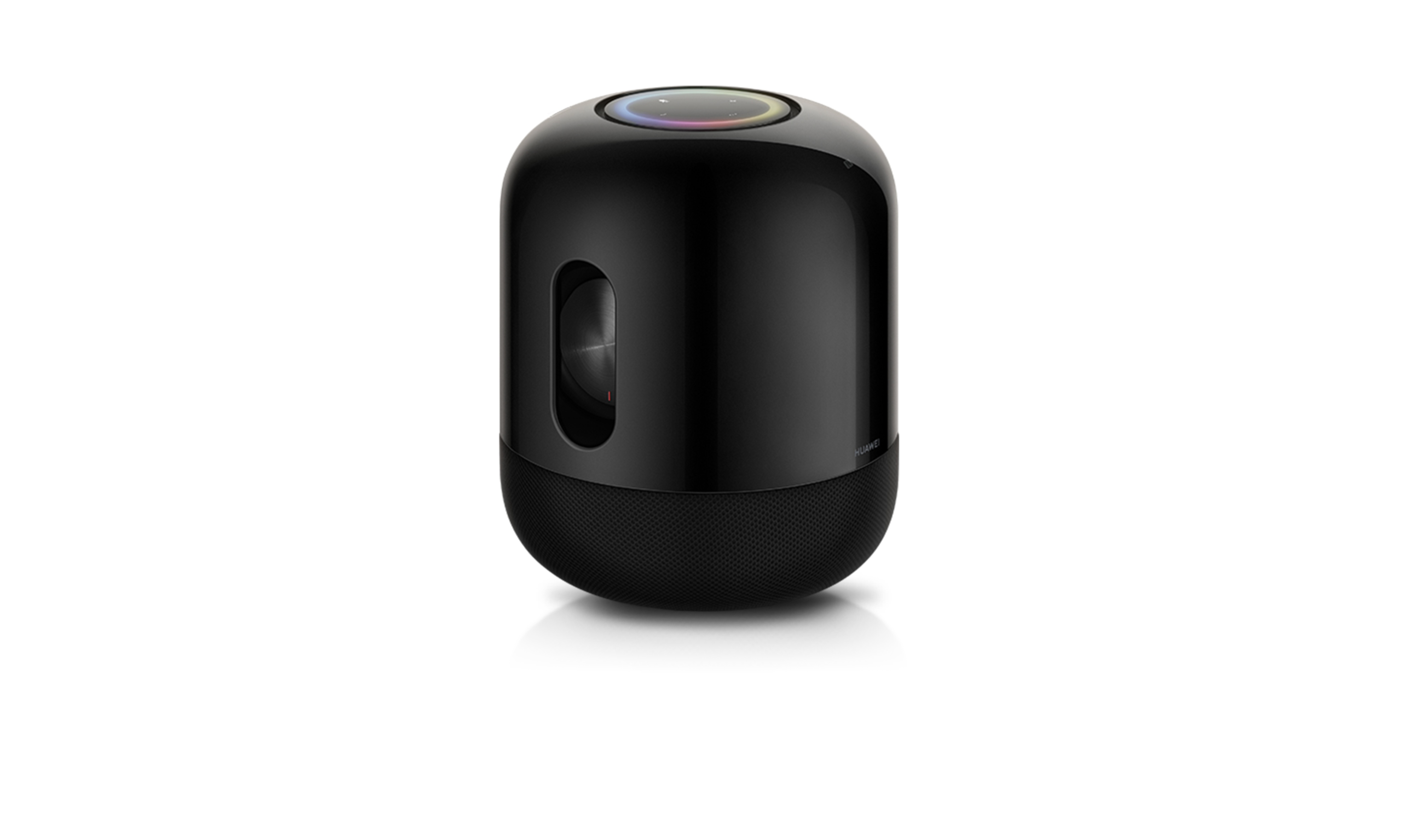
HUAWEI Sound series of speakers are the company’s flagship smart speakers. The first model called HUAWEI Sound X was announced back in November 2019 at the MatePad Pro launch event. The firm showcased it once again at the P40 series launch event earlier this year and even introduced a Platinum edition shortly. Last month, at the Mate40 series launch event, the Chinese telecom giant unveiled the second model simply called HUAWEI Sound. Now, according to a tipster, the firm will be also launching a ‘Pro’ model.
HUAWEI Sound X
The HUAWEI Sound X and HUAWEI Sound smart speakers are co-developed with Devialet, a French audio technology. Huawei Xiaoyi AI voice assistant powers these Hi-Res certified speakers, and they also offer a stereo experience when two units are paired together. The design of these speakers is inspired by Apple Homepod and the only difference between the two models is their size.
Therefore, we expect the Pro model to have similar features but with some bonus features and better sound quality. Anyway, the leakster @看山的叔叔 who confirmed the existence of this product did not say anything about its features and branding. Hence, we are not sure what it will be called. But we think it could either end up as HUAWEI Sound Pro or HUAWEI Sound X Pro.
Having said that, since the company unveiled the last two speakers at its biggest launch events of the year, the Pro model may debut at the P50 series event or maybe even earlier if the firm has plans to launch Mate X2, nova8 series, or new MatePad tablets before the end of the year.
A month ago, Huawei expanded the AppGallery with Moovit, yet another vital inclusion to the community. In fact, the company is trying its best to widen the universe and the latest attempt is by announcing a special funding program in partnership with Unity. This includes perks like revenue share, VIP support, prizes, and more.
As reported by cnTechPost, Huawei‘s new program is for Indie Game developers. For the unware, games from the indie community are independent and either from an Individual/Small group. Mostly, these teams don’t have a lot of technical/financial support when compared to the big names in the industry.
Hence, Huawei’s commitment to this funding program will help the developers gain the limelight and in turn popularize the AppGallery more. Accordingly, a special incentive will be provided for Games published on AppGallery between November 19 and December 14 through the Unity Distribution Portal(UDP). In case you don’t know, UDP helps developers by distributing games to multiple app stores(incl. AppGallery) through a single hub.
That said, the new funding program for indie games comes with many benefits. The highest of them is a whopping €30,000 prize pool for the 30 chosen games. You can take a look at the benefits of the special program below:
85% IAP(In-App-Purchases) revenue share for game developers for the first 2 years. Usually, it is 70% for AppGallery Developers
VIP technical support and store spotlight.
Top indie games will also be featured on a special ‘Indie Game’ slot on the AppGallery store.
30 indie games chosen will receive Huawei Ad Platform credit worth €1,000. And an account manager to set up the acquisition campaign.
Besides, the advantage of using the UDP is it just requires a single build & metadata profile as you don’t have to create multiple builds of your games w.r.t each App store. Some advantages of using alternative App stores and UDP is it reaches more than 1 billion players, revenue up to $5 billion outside of China.
That said, this is just one of the initiatives to expand the AppGallery ecosystem of Huawei. Introduced way back in 2018 globally, the app store has gained steam after the US ban. As a result, it is currently the third-largest store after Apple and Google counterparts. As per the UDP portal, AppGallery expands to 170+ countries, has 700 million users, and 400 million MAU(monthly active users).
Living to its earlier promise, the company has already brought biggies like Telegram, Hungama, Bolt, HERE Maps to the store. For regions like India, it pre-installs MapmyIndia to distract Google Maps addiction. That said, the Recently added list of Apps also includes Moovit, Booking.com, eSky, Omio, Skyscanner/Turkish Airlines.
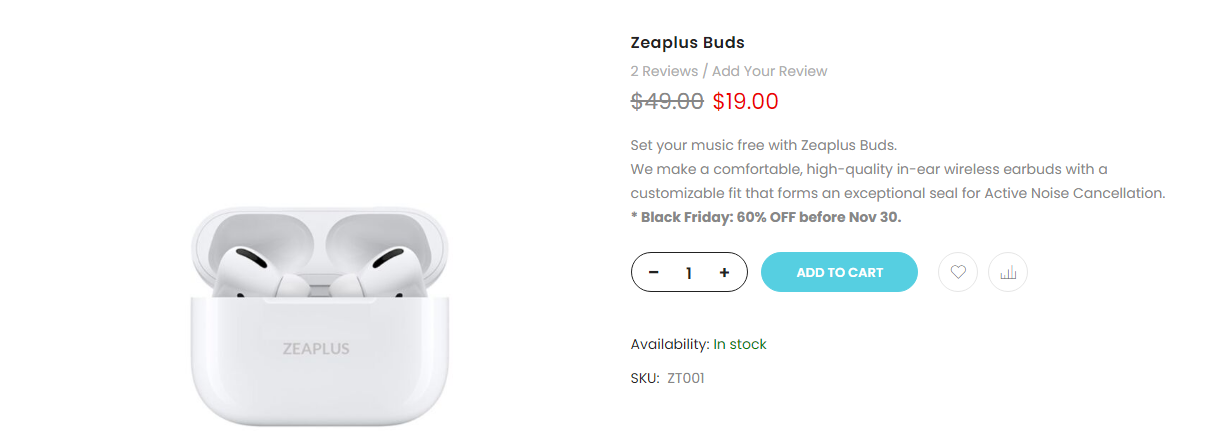
To make the most of the Black Friday festivities, Zeaplus has also boarded the “deal” ship and is offering a huge discount on Zeaplus Earbuds. This pair can currently be purchased at 60% off for just $19.00. Featuring a crisp audio quality and stable connection, this pair makes for a versatile addition to everyone’s accessories. Add the budgeted price range and a massive discount to it, and you are in for a double treat.
The most prominent feature Zeaplus Earbuds boast is the active noise cancellation (ANC) mode that offers an immersive listening experience. It features a transparent mode that keeps the user aware of their surroundings, enabling them to listen to horns, sirens, and more. This pair supports Bluetooth 5.0 to help maintain a strong and stable connection. Its stereo sound quality simply offers an enriching experience to the user.
As for the battery, Zeaplus Earbuds offer up to 4 hours of playback and 3 hours of talk time in a single charge. And with a wireless charging case, it can provide more than 20 hours of listening time and 15 hours of talk time. One can conveniently control the media functions and answer calls through the earbuds for hands-free usage.
Packed with a host of top-notch features at a budgeted price, this pair makes for an ideal addition to one’s accessories. Zeaplus Earbuds are up for Black Friday sale and are currently being sold with 60% off for just $19.00. This offer stands only till November 30th, so hurry and buy one now.
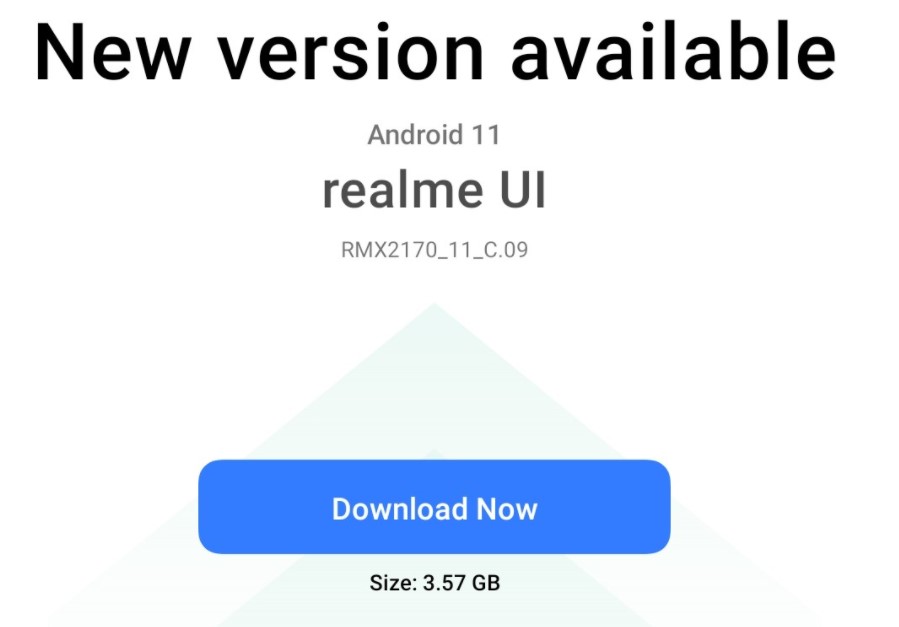
A select number of Realme 7 Pro owners in India have begun receiving the new realme UI 2.0 update which is based on Android 11. The Early Access update is available to just 300 users but a wider roll-out is definitely in the works.
The update is 3.57GB in size and packs several new features that include customizations and optimizations. Below is the full changelog for the update from the realme community website:
Personalizations
You can now create your own wallpaper by picking colors from your photos.
Third-party icons for apps on the homescreen are now supported
Three Dark mode styles are now available: Enhances, Medium, and Gentle. Wallpapers and icons can be adjusted to Dark mode. Display contrast can be automatically adjusted to ambient light.
High Efficiency
You can now drag text, images, or files out of a floating window or from one app to another app in Split-screen mode.
Optimized the editing page of SMart Sidebar: Two tabs are displayed and the order of items can be customized.
Improved Performance
Added “Optimized night charging”: An AI algorithm is used to control the charging speed at night to extend battery life.
System
Added Tone Tunes: Consecutive notification tones will be linked to form a single melody.
You can now determine a time period when Do Not Disturb is on.
Optimized the user interfaces of Notes: New visuals are provided on the list and editing pages.
Added weather animations to provide you with a more interesting experience
Optimized vibration effects for text input and gameplay
You can now remove a folder or combine it with another one.
Added filters for “Drawer mode”: You can now filter apps by letters, install time, or usage frequency to quickly find an app.
Security and Privacy
Added System Cloner: You can create a system clone from your main system and use different fingerprints to enter different systems.
You can now turn “App lock” on or off in Quick Settings
Added “Low Battery message”: When your battery level is lower than 15%, you can quickly send a message to share your location with specified people
Emergency info: You can quickly display your personal emergency info to first responders. The information can be displayed even when your screen is locked.
Optimized “Permission manager”: You can now choose “Allow only once” for sensitive permissions to better protect your privacy.
Communications
You can share your personal hotspot with others via a QR code.
Photos
Added the cloud sync for Private Safe feature which allows you to sync the photos in your Private Safe to the cloud.
Optimized the photo editing feature with upgraded algorithms and more markup effects and filters
HeyTap Cloud
You can back up your photos, documents, system settings, WeChat data, and more, and easily migrate to a new phone.
You can select the types of data to be backed up or restored.
Camera
Added shortcuts to instantly share and edit photos or videos you just took.
Added the inertial zoom feature which makes zooming smoother during video shooting
Added the lens stain detection feature
Added the level and grid feature to help you compose videos
Realme Lab
Added Sleep Capsule to help you schedule downtime and secure your sleep time.
Added “Sound Amplifier”: You can amplify faint sounds in the environment and soften loud sounds when wearing headphones.
The Chinese tech giant Xiaomi has recently unveiled three new phones in the Redmi Note 9 series, with one of them being, Redmi Note 9 Pro 5G. Despite its recent launch, this device is already up for pre-orders at Giztop for just $269. The phone boasts upgraded specs and supports ultra-fast 5G connectivity. It comes in 3 color variants- pink, black, and blue that the consumers can choose from.
Xiaomi Redmi Note 9 Pro 5G is powered by Qualcomm Snapdragon 750G, an octa-core CPU and Adreno 619 GPU. It runs on Android 10 based MIUI 12 and has up to 8GB RAM and 256GB storage options to choose from. Featuring 6.67-inch Full HD+ punch-hole screen with 2400 x 1080p resolution, this device offers an immersive viewing experience. Furthermore, it has a 120Hz refresh rate and is certified for HDR10 playback. The Gorilla Glass 5 layer on the top offers added protection against drops.
This Xiaomi flagship packs a 108MP+8MP+2MP+2MP quad-camera setup with a 16MP selfie camera housed within the notch cutout. The rear cameras can record 4K UHD videos at 30FPS with support for EIS. Redmi Note 9 Pro 5G also has stereo speakers, a side-mounted fingerprint sensor, and a Type-C port for charging. Its 4,820mAh battery supports 33W fast charging out-of-the-box, which the company claims can take the phone from 0-100% in 58 minutes tops.Versatile, fast, and well-budgeted are some of the adjectives that best describe the Xiaomi Redmi Note 9 Pro 5G. This smartphone is already up for pre-ordering at Giztop for just $269.
We use cookies on our website to give you the most relevant experience by remembering your preferences and repeat visits. By clicking “Accept”, you consent to the use of ALL the cookies.
This website uses cookies to improve your experience while you navigate through the website. Out of these, the cookies that are categorized as necessary are stored on your browser as they are essential for the working of basic functionalities of the website. We also use third-party cookies that help us analyze and understand how you use this website. These cookies will be stored in your browser only with your consent. You also have the option to opt-out of these cookies. But opting out of some of these cookies may affect your browsing experience.
Necessary cookies are absolutely essential for the website to function properly. This category only includes cookies that ensures basic functionalities and security features of the website. These cookies do not store any personal information.
Any cookies that may not be particularly necessary for the website to function and is used specifically to collect user personal data via analytics, ads, other embedded contents are termed as non-necessary cookies. It is mandatory to procure user consent prior to running these cookies on your website.