The press release was posted on Twitter via the official POCO Global account and it mentions some of its accomplishments as well as its popular models and “brand promises”.
According to POCO, it has made its entry into more than 35 global markets in the span of three years. Some of these markets include India, the UK, Spain, and Italy. POCO also mentions its very first phone, the POCO F1, which reached over 2.2 million shipments according to data from its internal sales team and Canalys.
POCO has revealed it has sold over 6 million POCO phones globally. This figure represents the total number of POCO-branded phones sold since 2018. While POCO didn’t launch its second smartphone until early this year following the release of the POCO F1 in 2018, 6 million does sound small. It is a really competitive market.
The Chinese manufacturer says it will be staying firm with the three brand promises below:
Technology that matters
Feedback-based product design
Ever evolving
Now that POCO has revealed that it is going to become an independent brand, we expect that future phones will not be rebadged Redmi phones but originally designed products. We also expect POCO to branch out into other products such as portable battery packs and wearables. Maybe the POCO Pop Buds can finally launch and come along with other audio products.
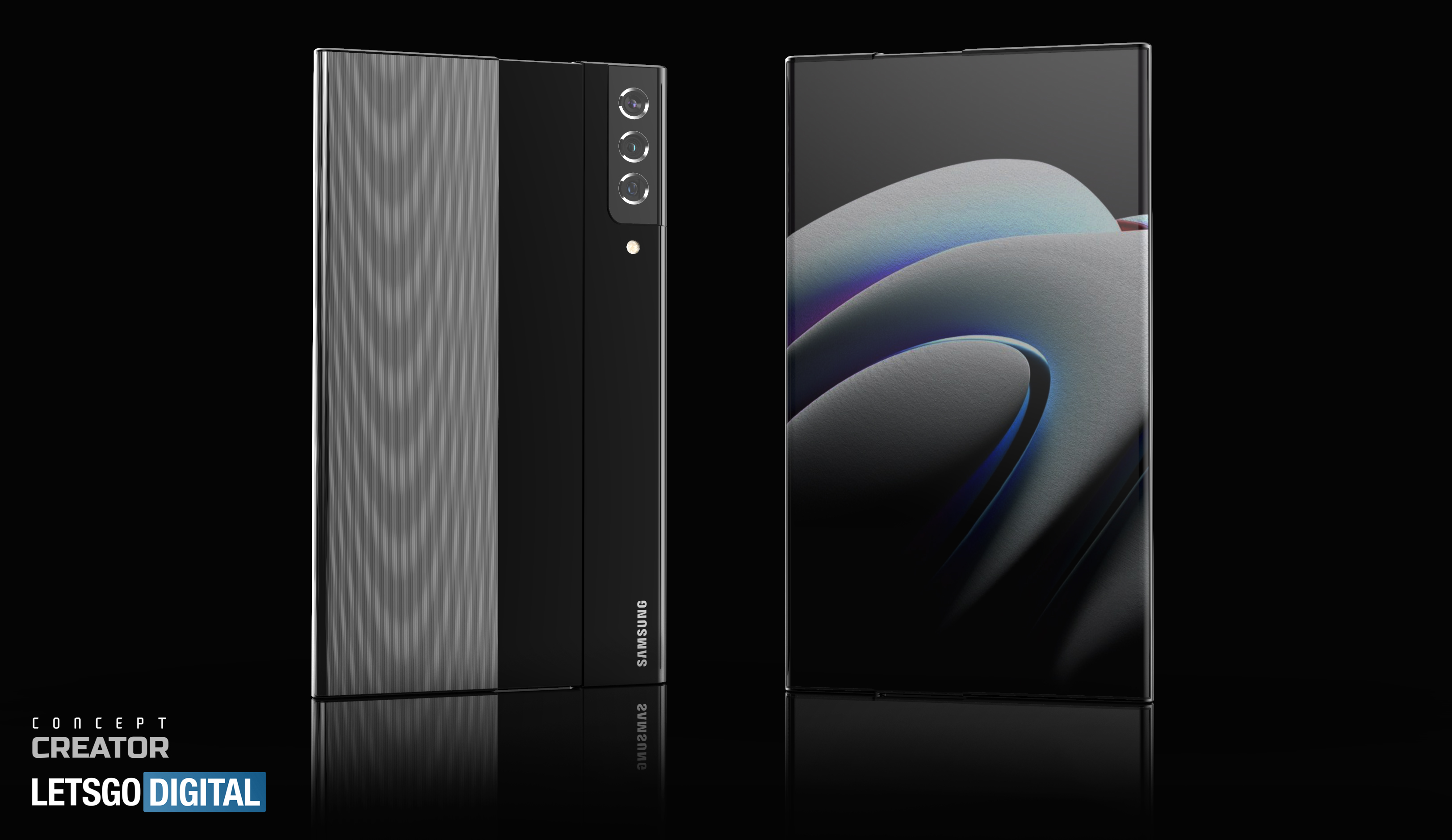
Samsung is the market leader in both regular smartphones as well as foldables. But now, all eyes are on rollables, thanks to OPPO X 2021 concept smartphone. However, there’s no solid report on Samsung launching a such smartphone in near future. Nevertheless, a concept video has been released by a well-known patent-related publication in collaboration with a popular concept designer.
According to a report, the launch of Galaxy Z Fold3 with S Pen stylus in June 2021 will mark the end of the Galaxy Note series. And it totally makes sense as the upcoming Galaxy S21 Ultra is said to have support for S Pen but will not have a silo to accommodate it. In other words, interested customers can pick up the stylus as an additional accessory if required. Above all, the Galaxy Z Fold series has always been looked at as the successor to the popular Galaxy Note series.
Ahead of this report, LetsGoDigitaland Concept Creator (Jermaine Smit) started working on a concept design for Galaxy Note as a rollable smartphone. Coincidentally, their video was released earlier today, a day after the report on the discontinuation of Galaxy Note.
That said, one might be wondering why not imagine a Galaxy Note as a Galaxy Z Fold foldable smartphones as it is intended to. We think the publication and the designer went with the rollable form factor because it simply feels refreshing and there have been already plenty of Galaxy Z Fold2 concepts with an S Pen stylus.
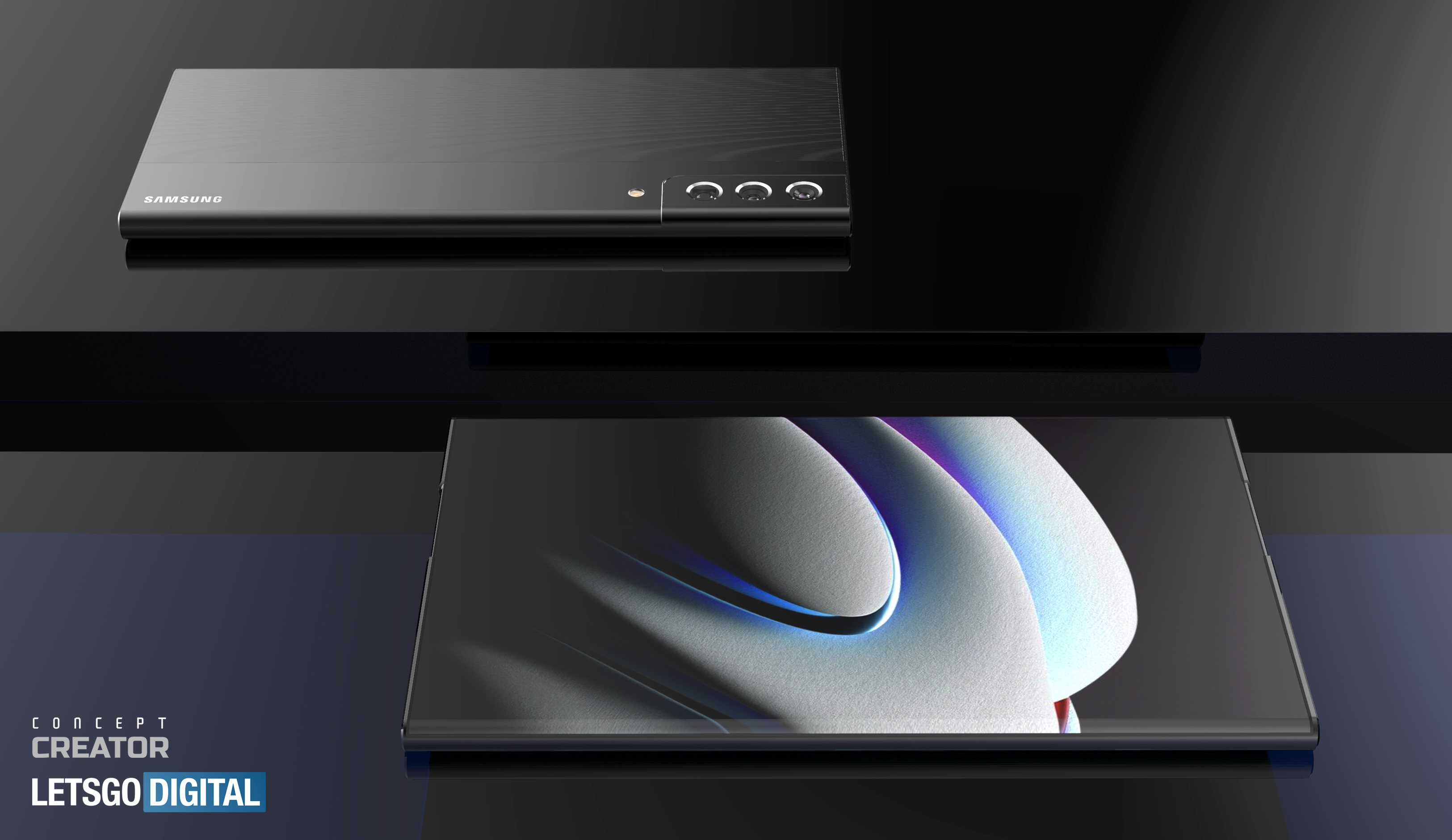
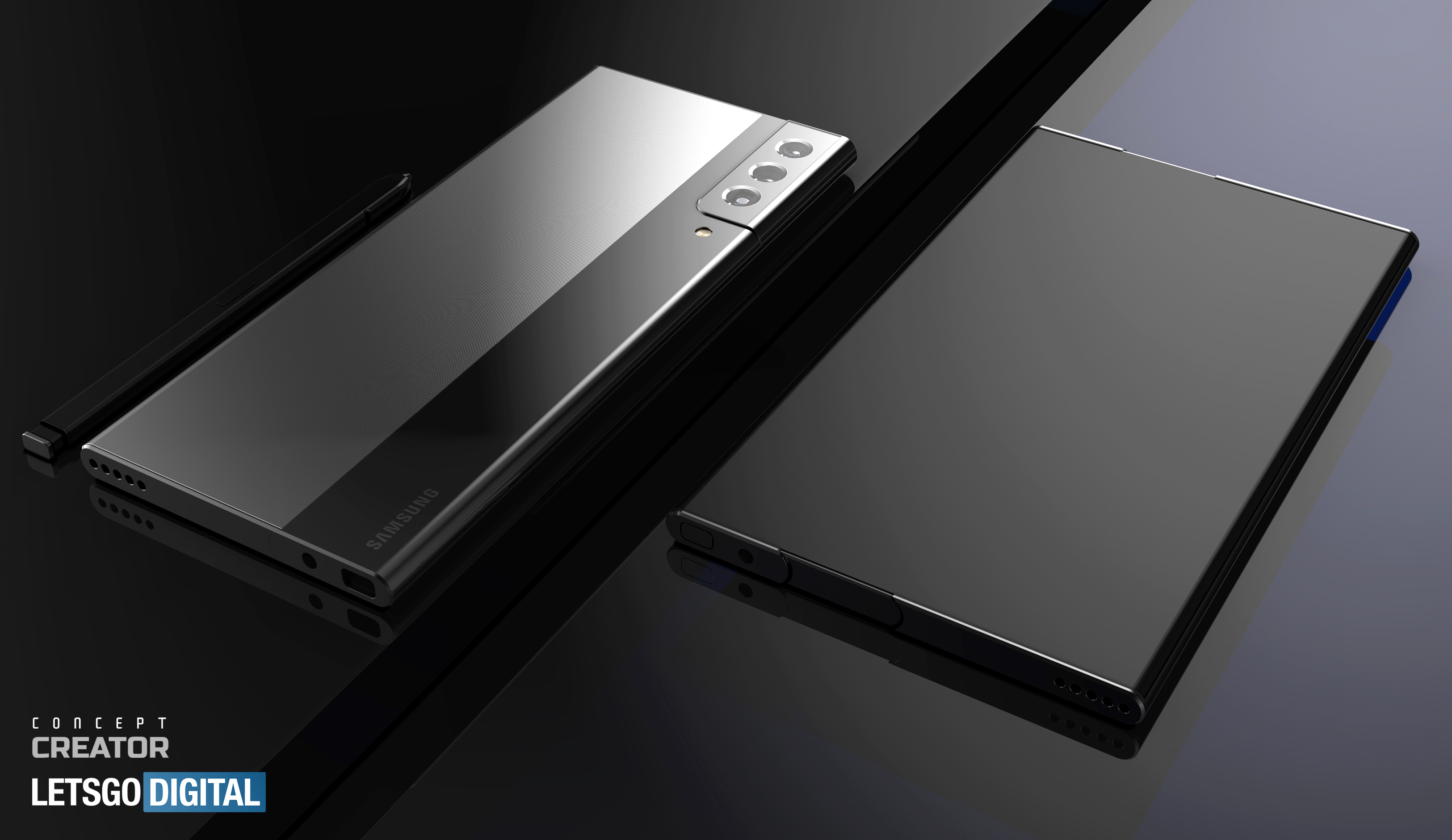
With that out of the way, let us discuss this concept design. First and foremost, this design is inspired by the forthcoming Galaxy S21 series, however, it also includes design cues from the current-gen Galaxy Note20 series.
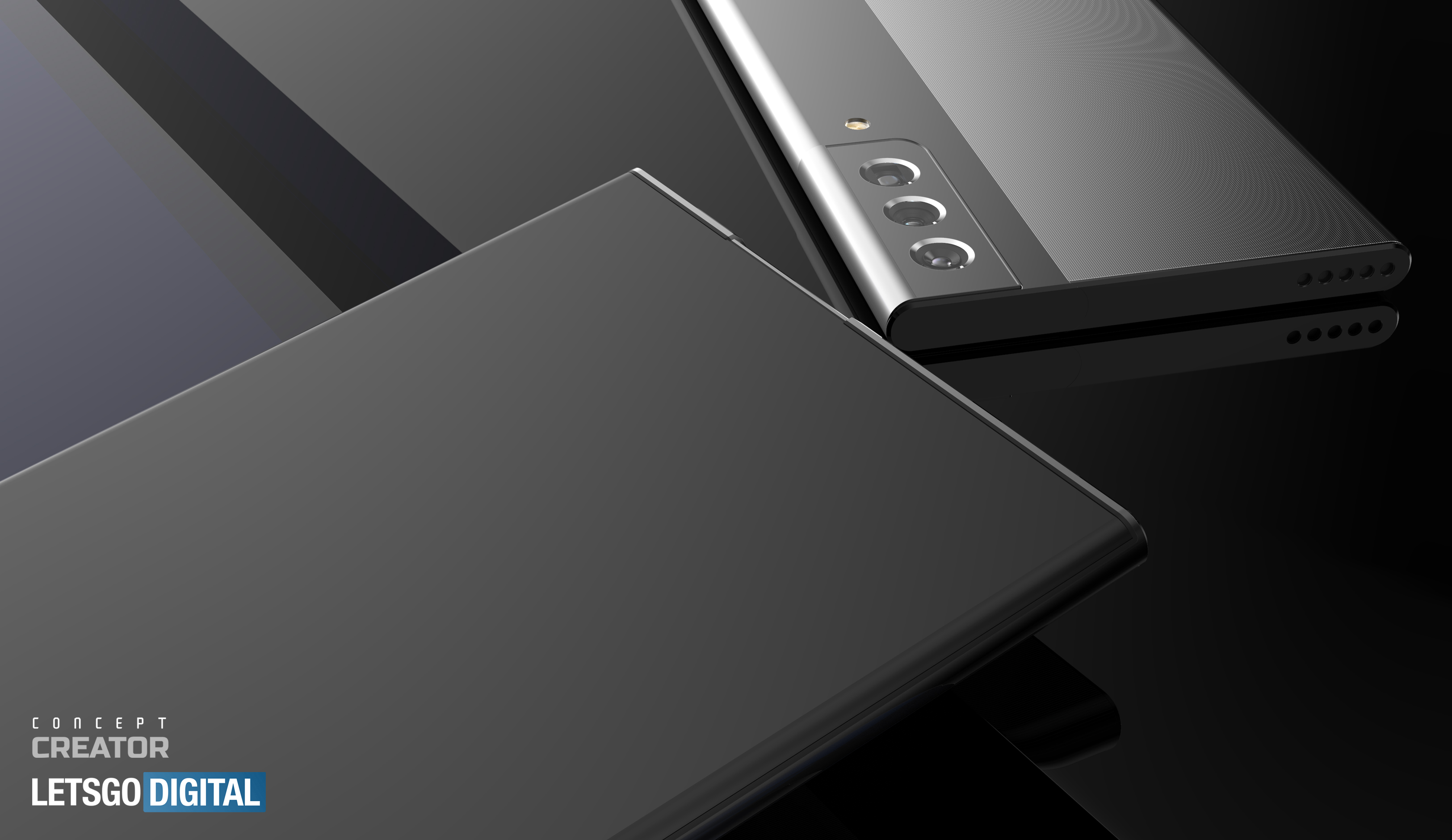
For instance, the triple camera module looks straight out of the Galaxy S21 smartphones. Whereas, the boxy footprint along with S Pen silo a the bottom right corner tells us that it is indeed a Galaxy Note. As an added bonus, Jermaine, the designer has also included stereo speakers and the fan-favorite 3.5mm headphone jack.
1 of 3
Lastly and most importantly, the display with an in-screen camera can be unrolled by pulling the left side of the phone. The separation part remains hidden in normal mode as a result of a dual-tone finish that runs along the camera array with Samsung branding at the bottom.
Having said that, what are your thoughts on this design? Should Samsung release a similarly designed smartphone in the future? Do let us know in the comment section below.
Xiaomi‘s ecological chain company has launched the ZMI Hand Warmer/Power bank. The device is both a hand warmer and a power bank. It carries a price tag of 89 yuan (~$13) and is currently on sale at ZMI’s Tmall, JD flagship store, Xiaomi Youpin, and Suning Tesco.
The hand warmer is equipped with a PTC self-limiting temperature heating technology, which is a patented design that is safe and reliable. The technology consists of the PID constant temperature control for precise control of the heating temperature, safe and stable. In the safe temperature range, it will heat up to the comfortable temperature of the human body, and the surface temperature can reach up to about 52℃.
The ZMI Hand Warmer/Power bank packs a huge 5000mAh battery capacity and when it is fully charged, the device can switch between low temperature and high temperature and can also be used continuously for 2~4 hours.
Apart from coming in handy during the winter the gadget will also prove useful during emergency situations to help you charge other gadgets. The power bank is capable of charging the iPhone12 and with ZMI’s USB cable, the charging time is touted to be 54 minutes shorter than using a 5W charger.
It is also intelligently compatible with smart devices such as mobile phones of different brands. It can also charge low-current devices such as Bluetooth headsets and fitness bands. Further, the device is equipped with an LED light which can be used a torchlight.
The device uses high-quality lithium-ion batteries to provide multiple circuit protection but it should be noted that the hand warmer and the mobile power bank functions cannot be turned on at the same time for safety purpose.
Xiaomi backed Haylou is generally famous for its Smartwatches. Accordingly, the company has a wide variety of models. In fact, some of the brand’s interesting portfolio includes LS05 Solar,Smartwatch 2, and more. However, the company also launches Truly Wireless Earbuds(TWS) every now and then. It recently announced the Haylou T16 TWS with ANC for just 279 yuan($42). Now, a Haylou Wireless earbuds has appeared on FCC suggesting an imminent launch.
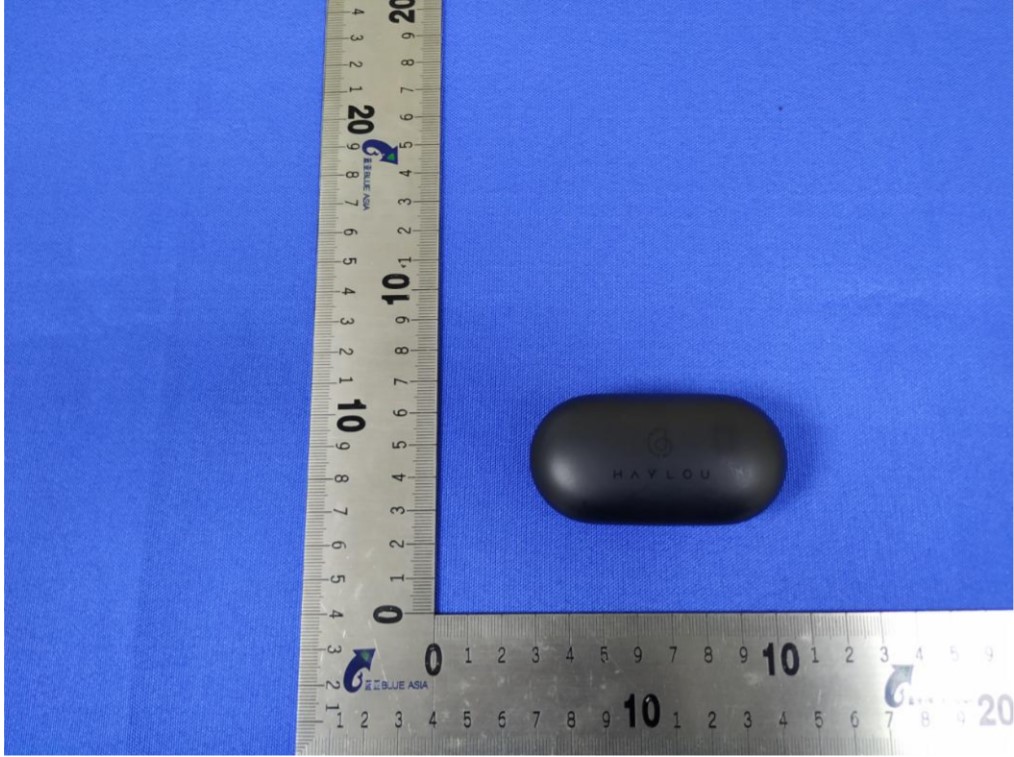
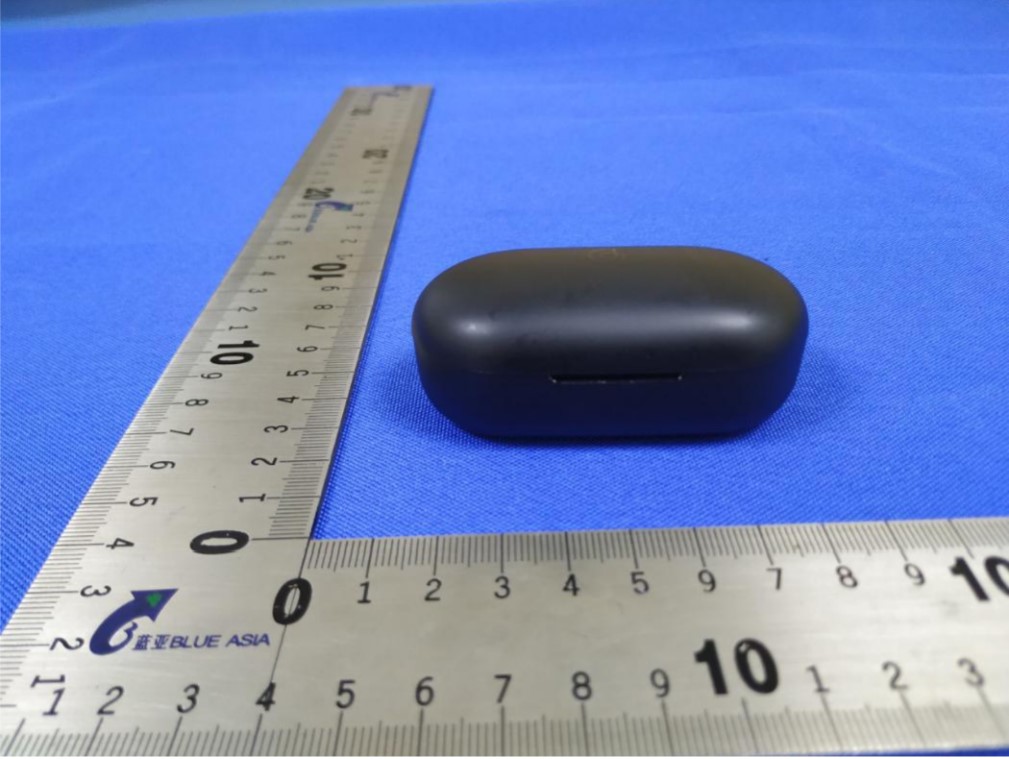
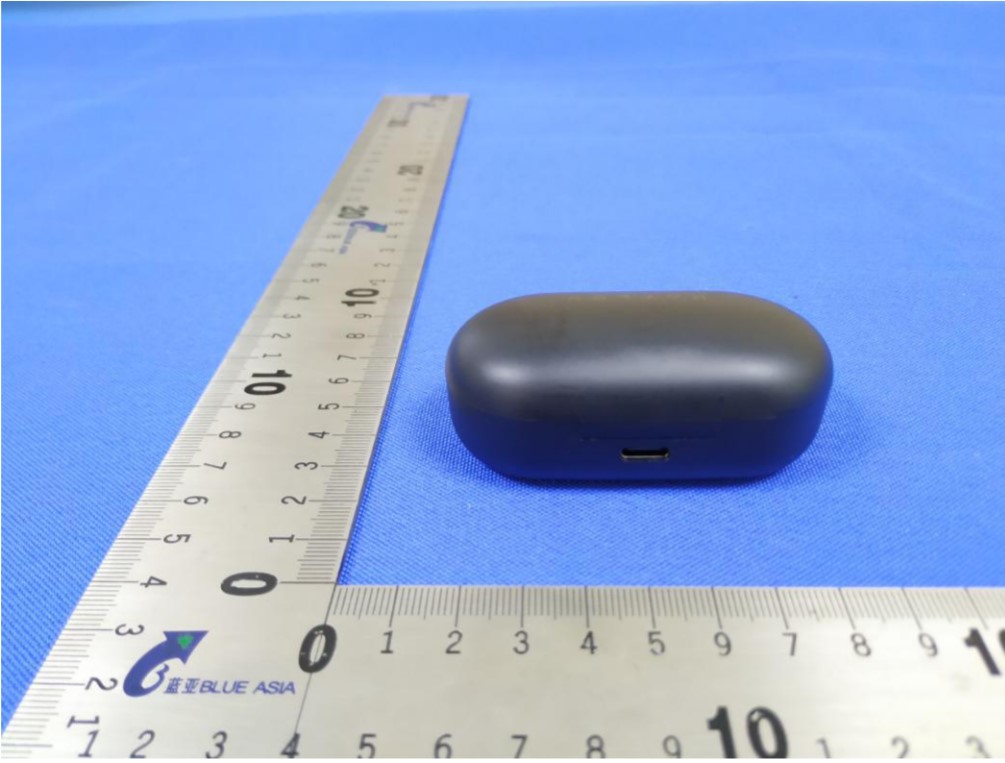
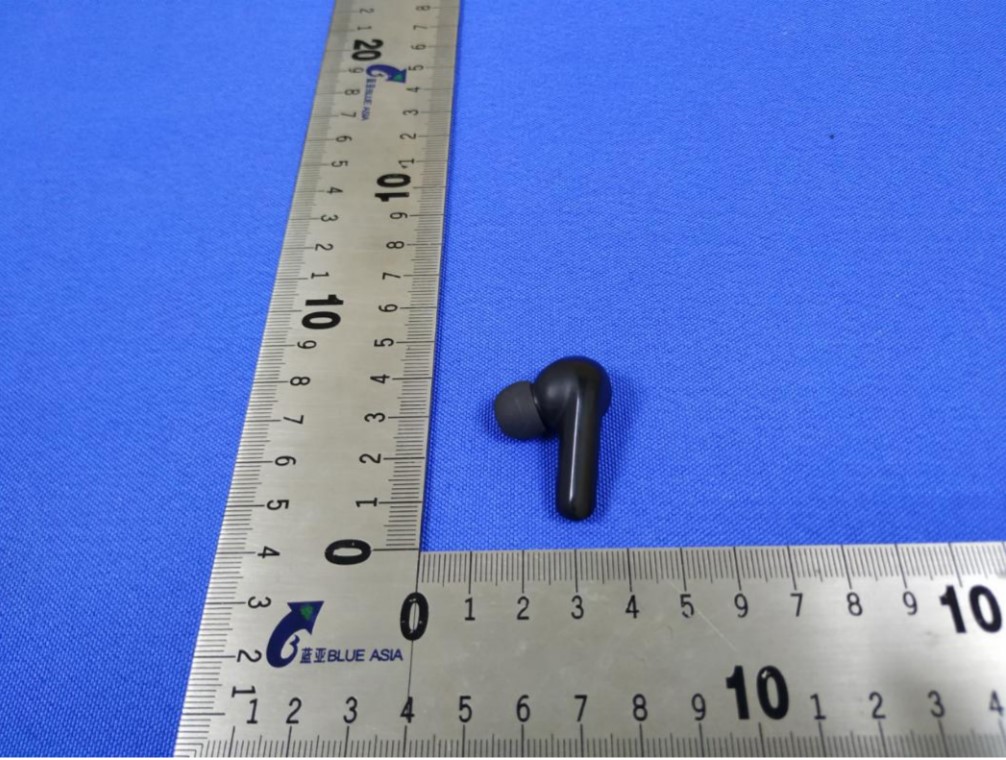
Haylou TWS Credit: FCC
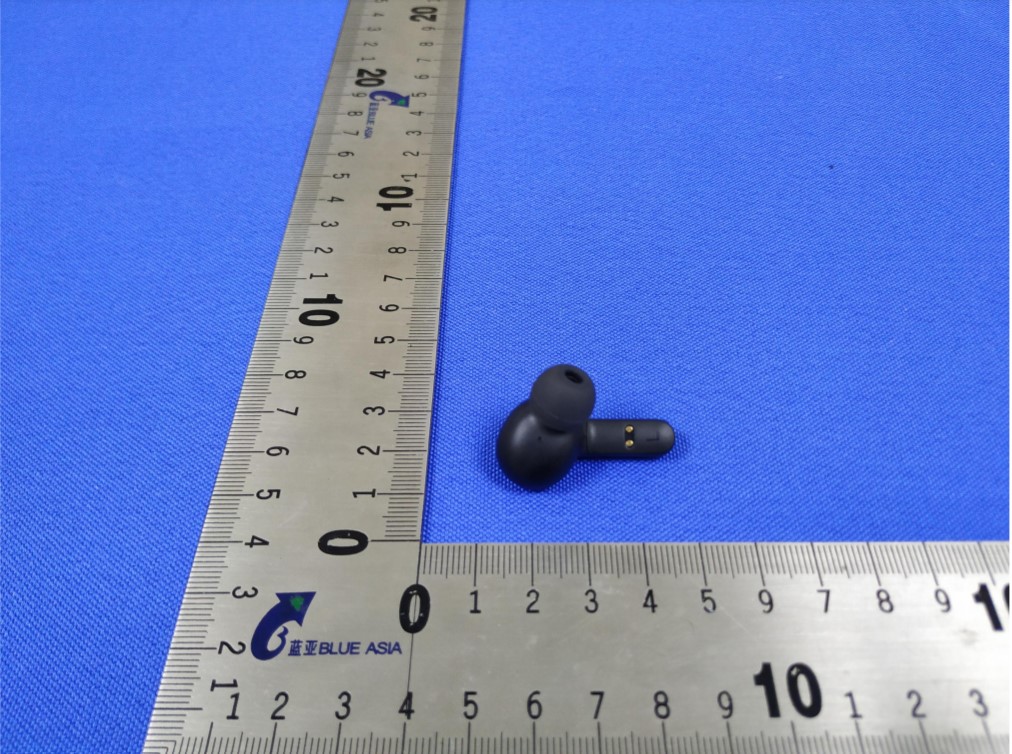
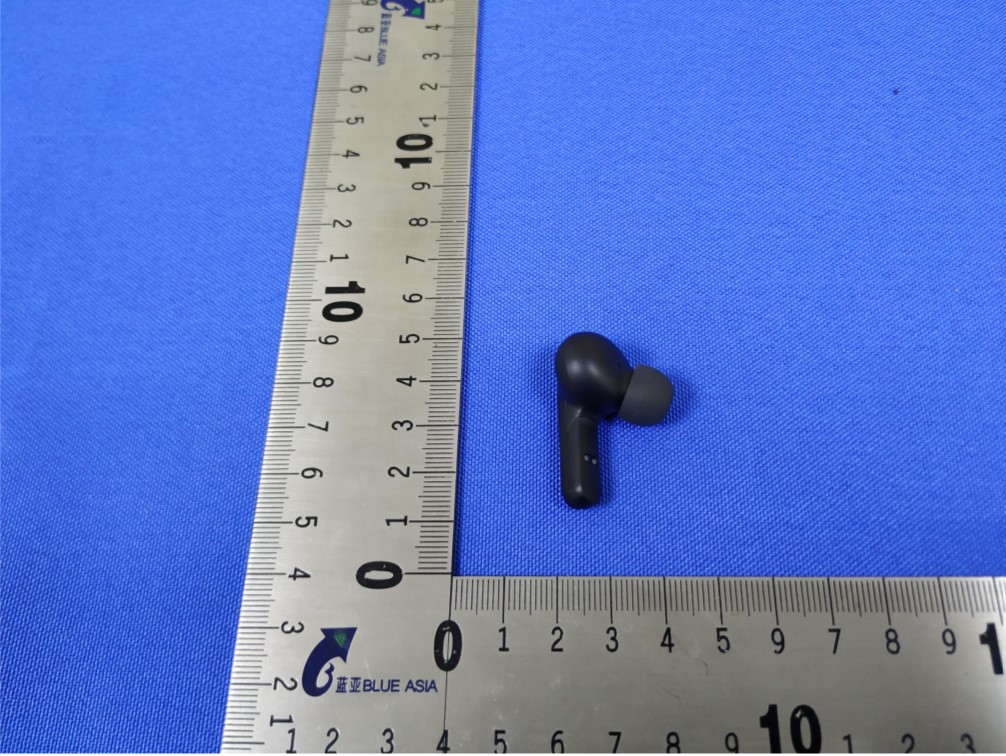
Dongguan Xingji Electronics Co., Ltd has applied for equipment in America’s FCC(Federal Communications Commission). Accordingly, the product code BC-T05. It is classified as a Digital Transmission System and is noted as Haylou Wireless Earbuds. Further, the description on FCC says the operating frequency range is 2402MHz-2480MHz.
All this confirms that the product is indeed a Truly Wireless Earbud from the company. Talking about the design, the images uploaded on the FCC website shows that the charging case design shows similarities with Haylou T16 TWS. As you can see below, the case is a rounded rectangle. It has the Haylou Logo, along with the brand name on top. At the rear, you get a Type-C charging port.
Although the images don’t show how the case looks from the inside, the earbuds are shown to have a unique design. Precisely, the stems of the earbuds are shorter than the ones on its Haylou T19. And they also have the charging contact points halfway through the stem and not at the bottom top. If you ask me, it looks like it has got cues from Apple’s AirPods Pro but with certain tweaks.
That said the case is slightly different from the ubiquitous design found on many TWS of Apple, Xiaomi, and more. In any case, the earbud looks refreshing compared to the bulkier ones on the T16, and even the earlier models like the Haylou GT1 Pro. However, we aren’t sure if this will carry over features like ANC, big battery from T16 considering its size and the mic placement. At least from the images, it seems to have only one microphone on the inside.
Anyway, the listing doesn’t reveal anything apart from the design. Also, we aren’t sure if this would debut under the T lineup or the GT lineup. Hence, let’s wait for a bit to know more about them.
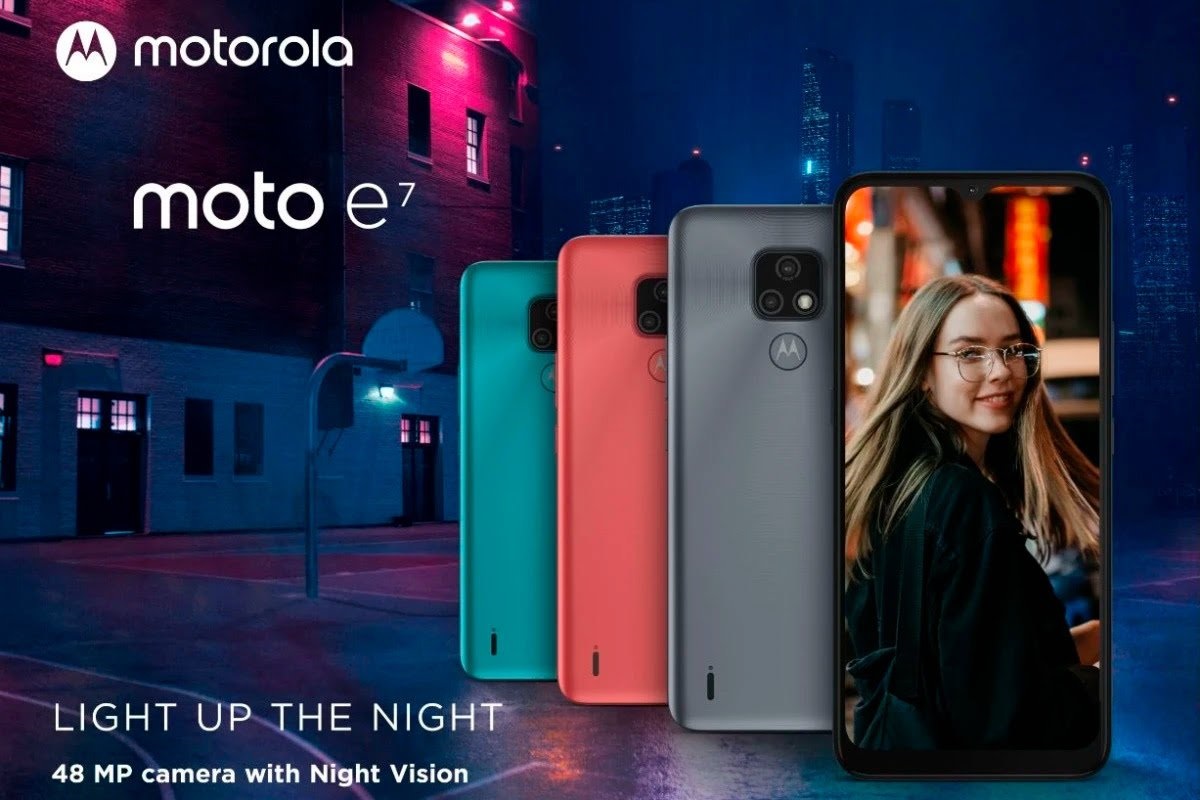
Motorola has finally taken the wraps off its budget smartphone, the Moto E7. The phone shares a similar design and some of its specs with its sibling, the Moto E7 Plus, but there are tradeoffs that explain why it has a lower price tag.
The Moto E7 has a polycarbonate body which should be able to take a beating. The dual rear cameras and LED flash are housed in a squircle that is positioned in the middle of the phone. There is a fingerprint scanner right under the sensors and at the bottom left corner is a slit for the loudspeaker. Motorola has released the phone in three colors – Aqua Blue, Satin Coral, and Mineral Grey – and all three have a textured finish.
Coming to the specs, the phone has a 6.5-inch 1600 x 720 IPS LCD display. The screen which has a 20:9 aspect ratio also has a waterdrop notch that is home to a 5MP selfie camera. Considering that this is a budget smartphone, the thick bezels around the screen are expected.
For the Moto E7, Motorola has gone with MediaTek’s Helio G25 processor, the same chipset inside the Redmi 9A. But unlike the Redmi 9A which comes with up to 6GB of RAM and 128GB of storage, this new Moto E phone has just 2GB of RAM and 32GB of storage. However, you get a MicroSD card slot (hybrid) that allows you to add up to an additional 512GB of storage space.
The primary rear camera is a 48MP f/1.7 sensor which is quite interesting for an entry-level smartphone. It is paired with a 2MP camera for taking macro shots. Under the hood is a smaller 4000mAh battery than the 5000mAh one inside the Plus variant. You still get 10W charging but in what can be termed a pleasant surprise, it gets a USB-C charging port instead of the MicroUSB port found on the Moto E7 Plus. Other features include a dedicated Google Assistant button, an audio jack, a water repellent design, 2.4GHz Wi-Fi, FM radio, Bluetooth, 5.0, and Android 10.
The phone will sell for €119 in Europe and £99 in the UK. It will also be announced in the coming weeks in Asia, Latin America, and the Middle East.
POCO’s super-cost-effective strategy has always been the reason for its immense popularity. Not long ago, the brand launched the POCO M2, and 130,000 units were sold in India in just a few minutes. And today the company is bringing its next generation model in the M series – the POCO M3. Will it continue to sell exceedingly well like the Poco M2? There’s still time to find that out but let’s see what the new model has to offer in this Poco M3 hands-on.
By the way, our full review about the M3 is in progress and will be uploaded soon.
POCO M3 Box Contents
First let’s take a look at the box. The exterior of the box still comes with POCO’s iconic yellow design. Open the box and take out the accessory set. There is a SIM card pin, protective case and manual, so your usual stuff. Then you can see the Poco M3. The packaging film gives you a glimpse of its main selling points: a triple-camera setup led by a 48mp camera, an ultra-large 6000 mAh battery, a 6.53-inch teardrop screen and a Snapdragon 662 chipset. We’ll talk about them in detail, later. Underneath the phone there is an USB A to C charging cable and an 18w fast charger. And that sums up what’s inside the box.
POCO M3 Hands-on: A Youth-Centric Design
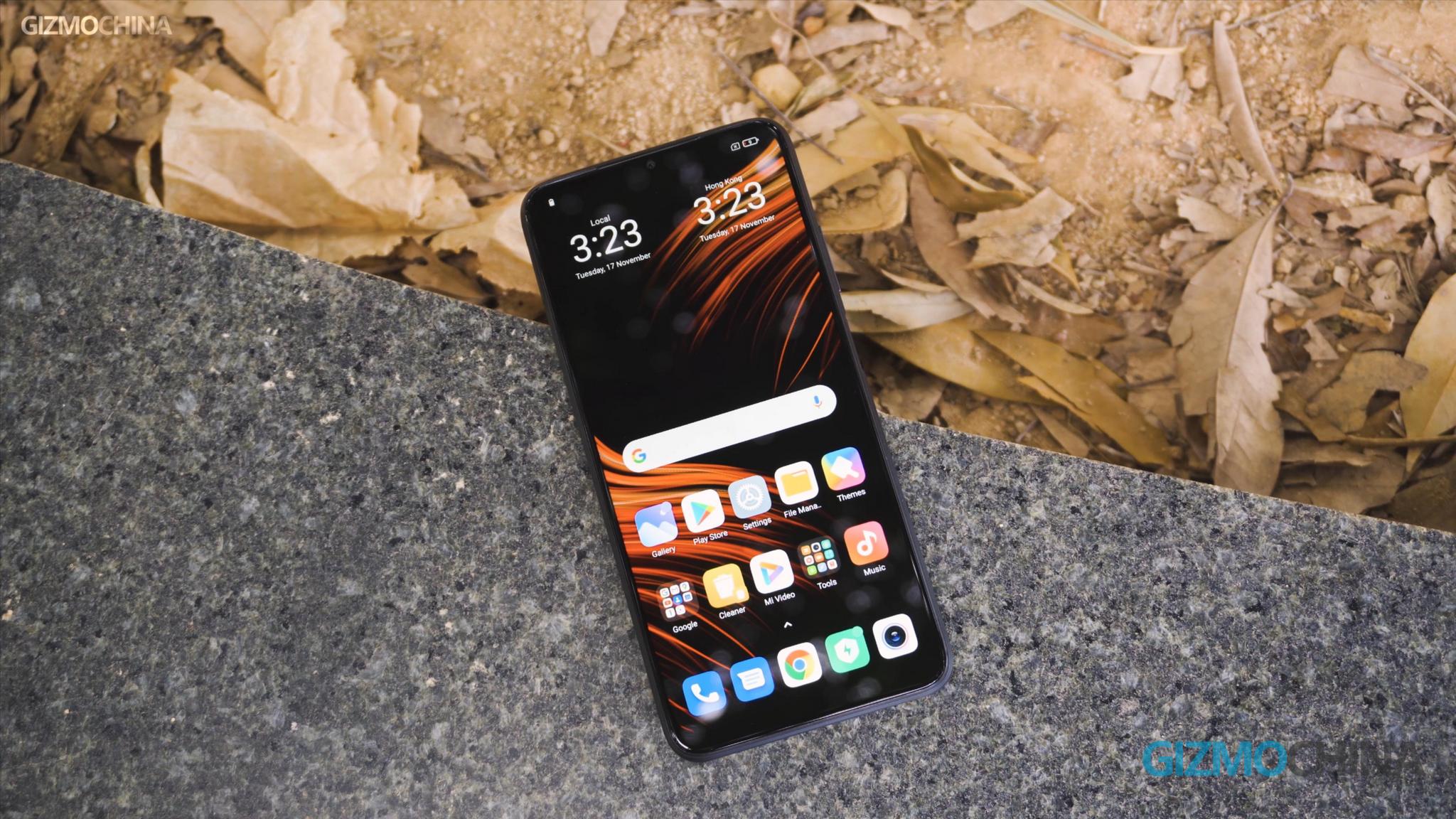
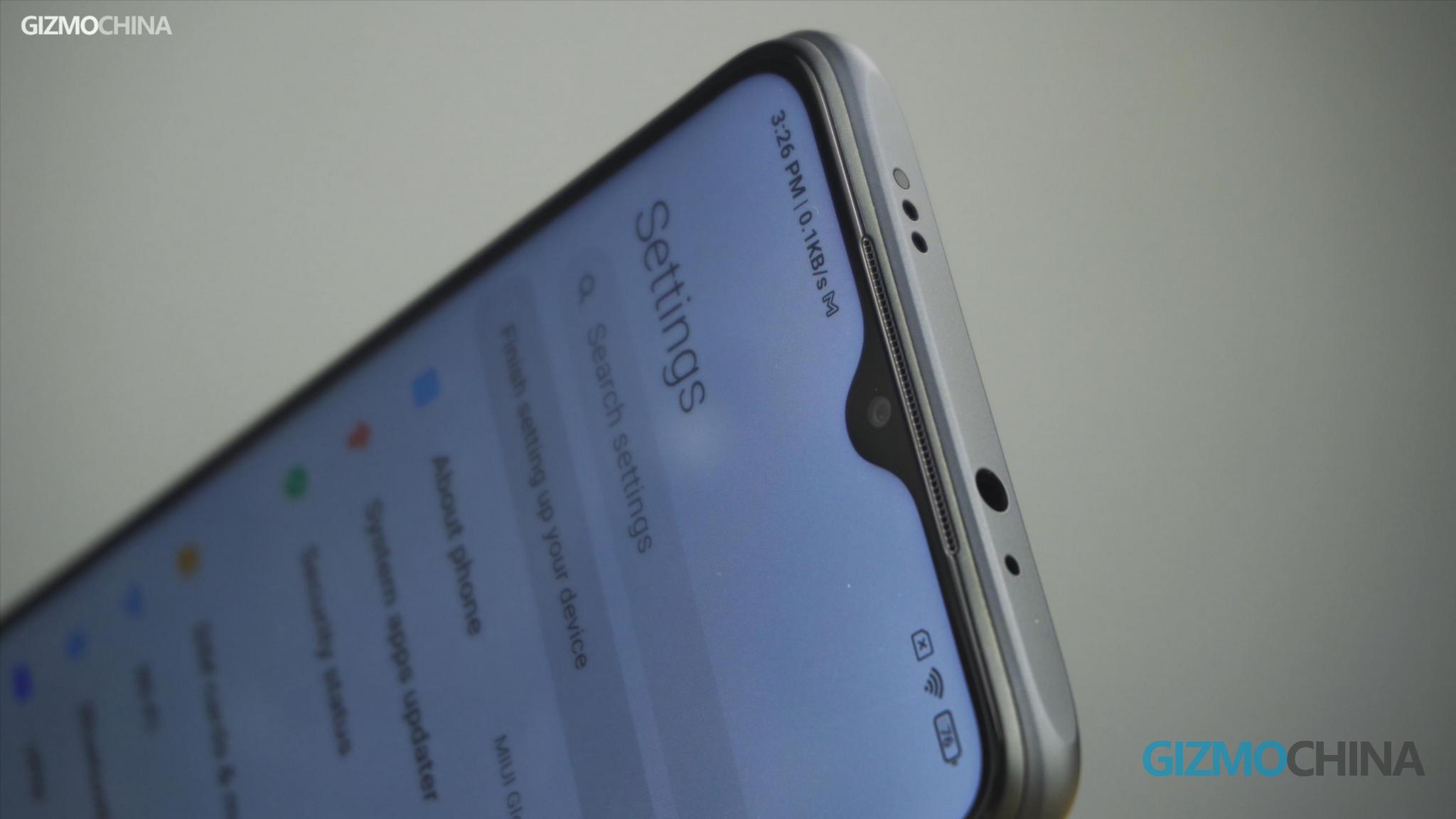
As a super affordable model, it’s not surprising that the phone features a 6.53-inch waterdrop screen, which is also the same size as what we usually have on a mainstream phone. It’s one of the few phones to come with a dot-drop display in 2020, especially after seeing a hoard of hole-punch display models this year.
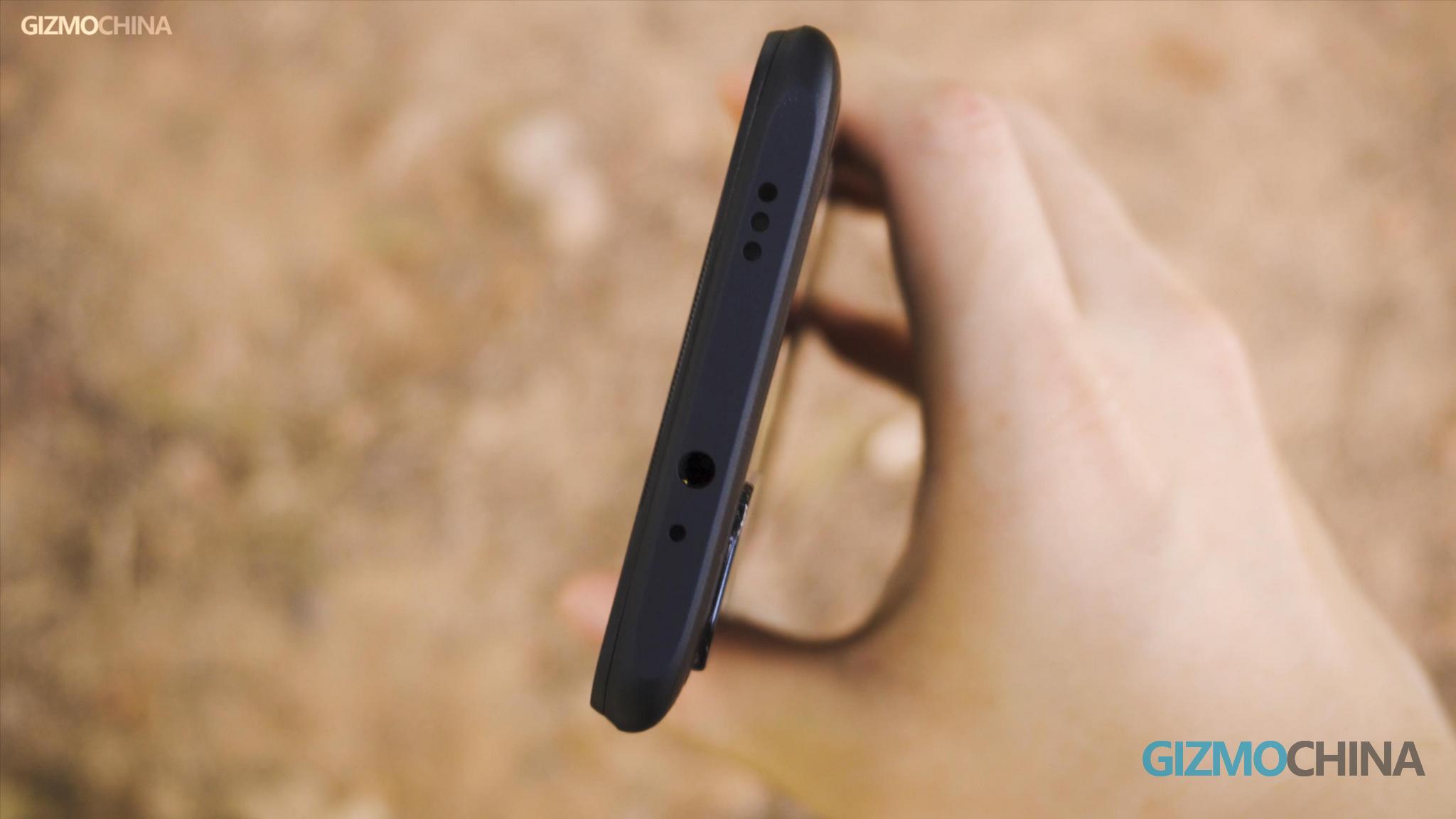
Although it features the standard 60Hz refresh rate, we have to say that its color representation is still impressive at first glance. The fingerprint recognition is on the side. An IR transmitter, dual speakers and a 3.5mm headphone jack are also available.
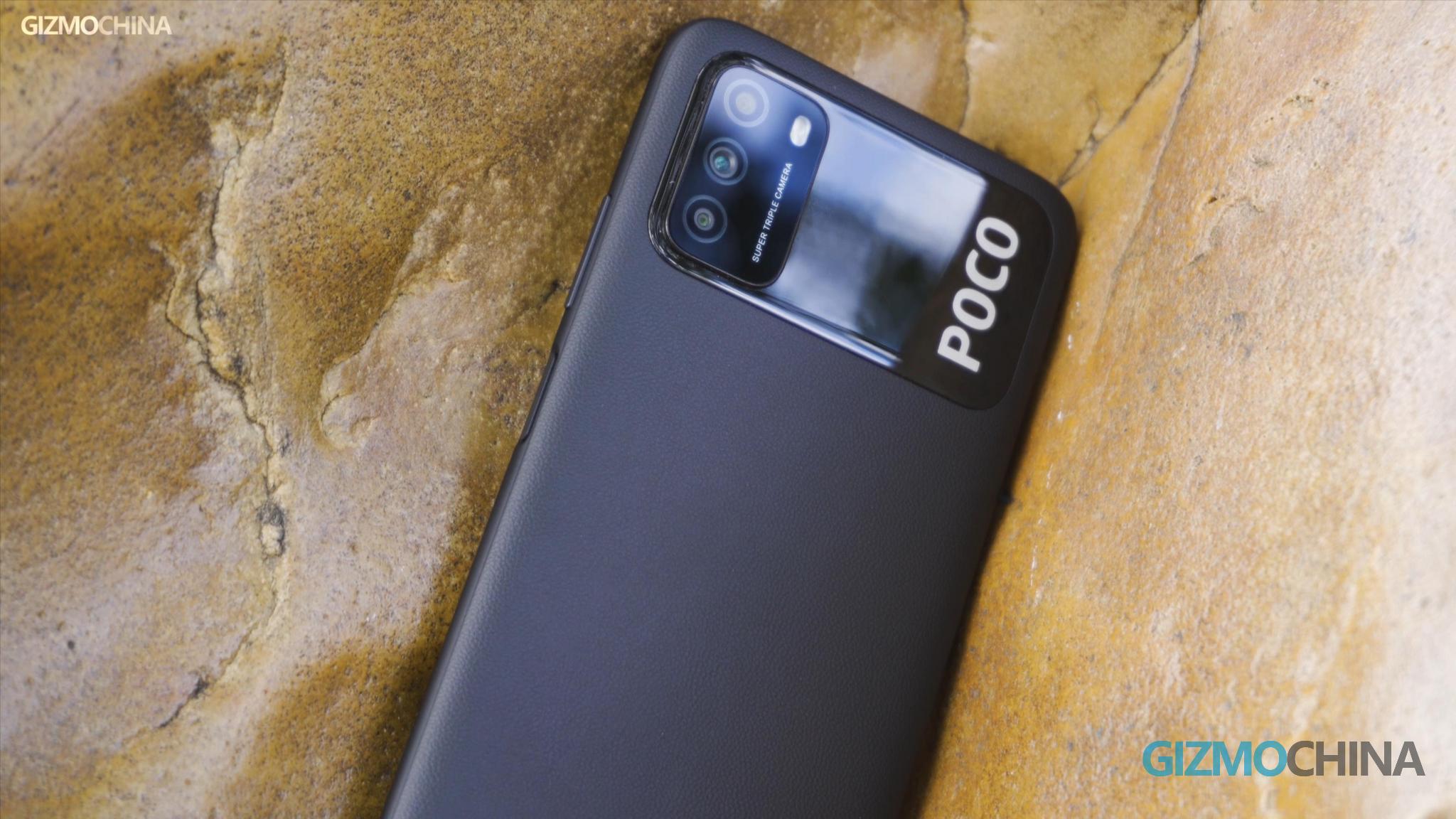
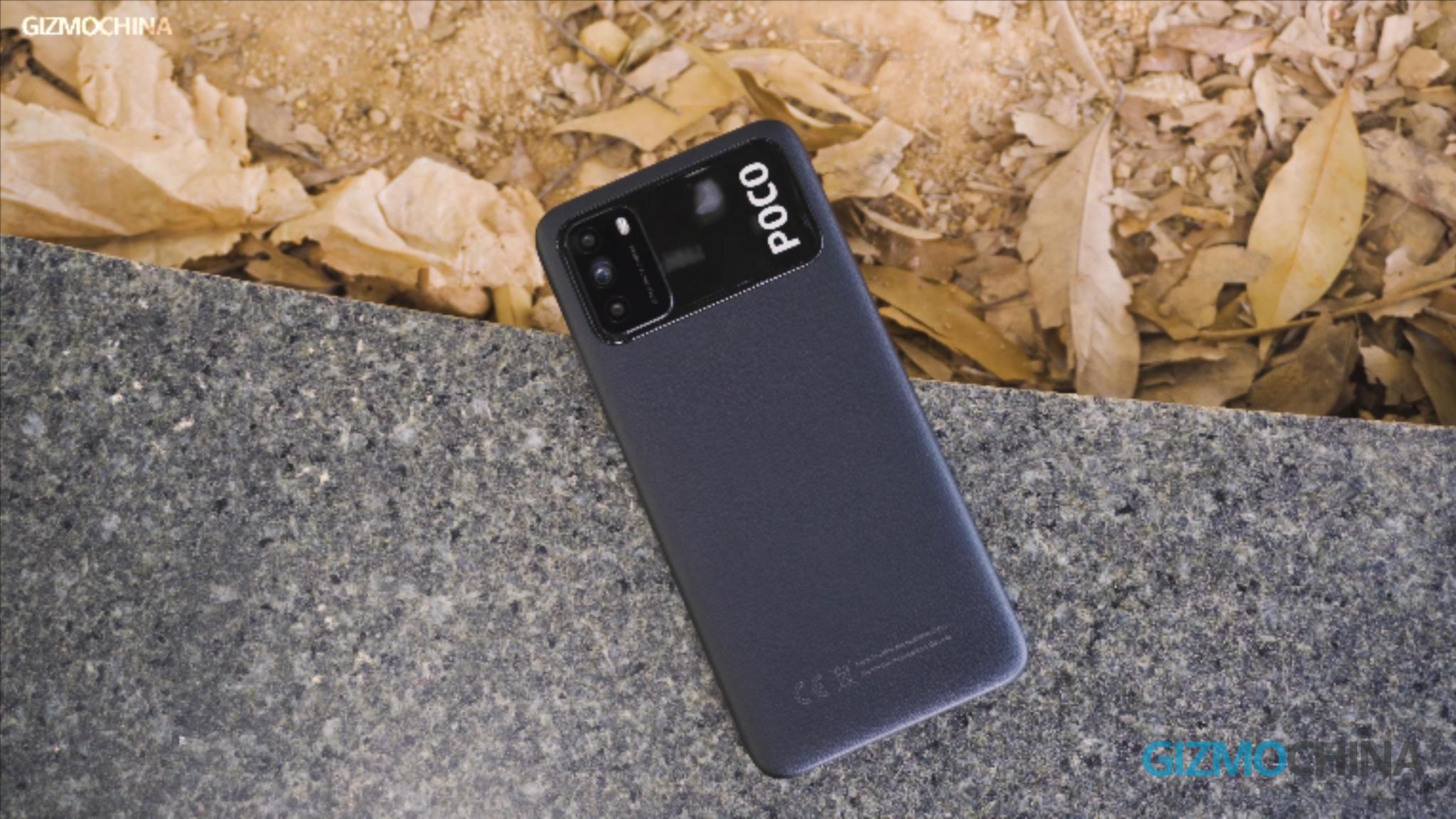
Coming to the back, its design is much more recognizable, which should be one of the most unique designs for a phone in 2020. This design is indeed refreshing on such an inexpensive model.
The cover and the frame are made of one-piece plastic. We’ve seen a lot of phones in the same price range using the similar plastic cover. But unlike those phones, the plastic cover is textured to a fine leather finish. And the creative design does make the cover look more elegant than most smartphones. In addition, the leather-like plastic design should be more resistant to slip, fingerprint and scratches than glossy finish, while still keeping costs under control.
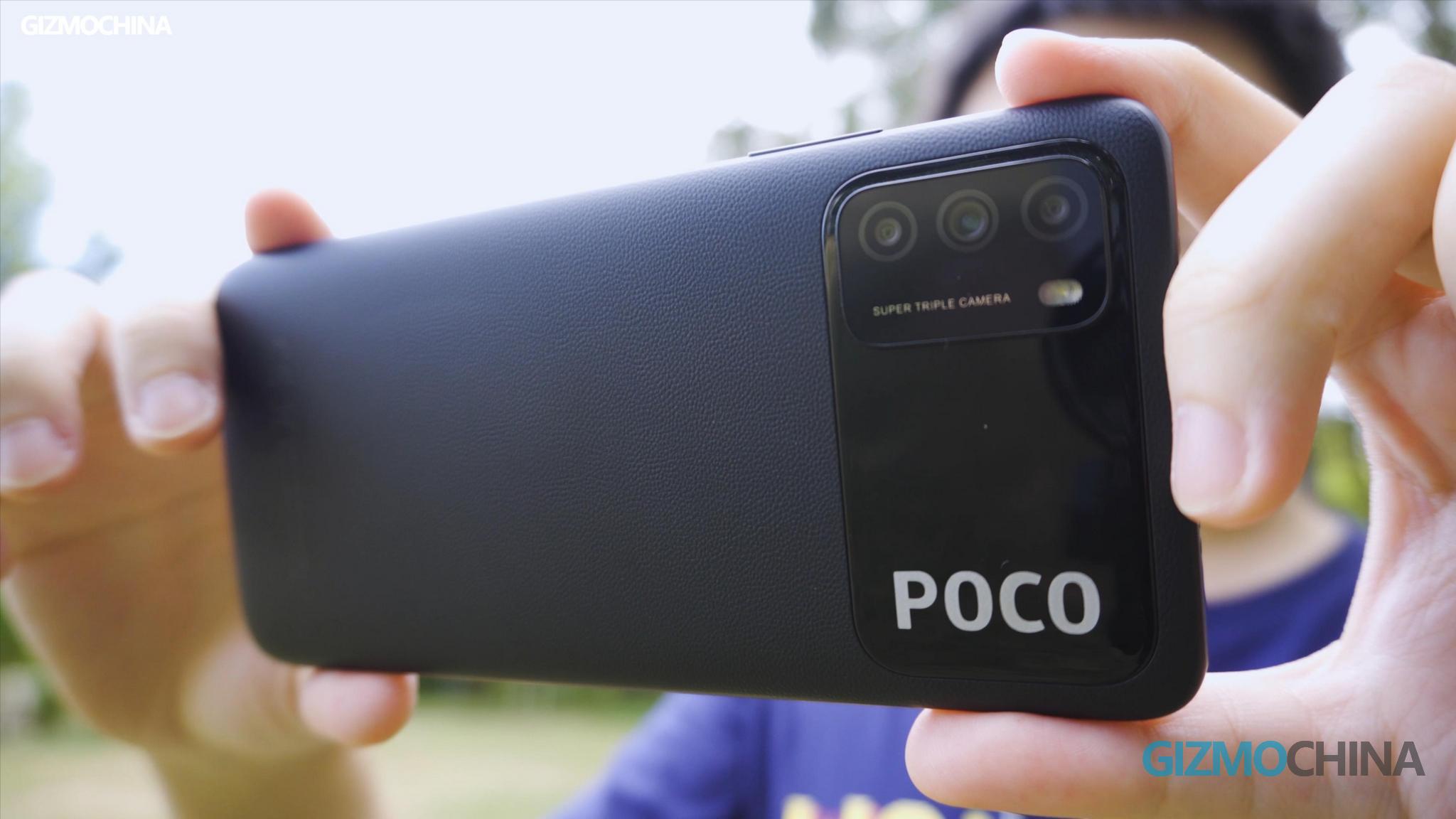
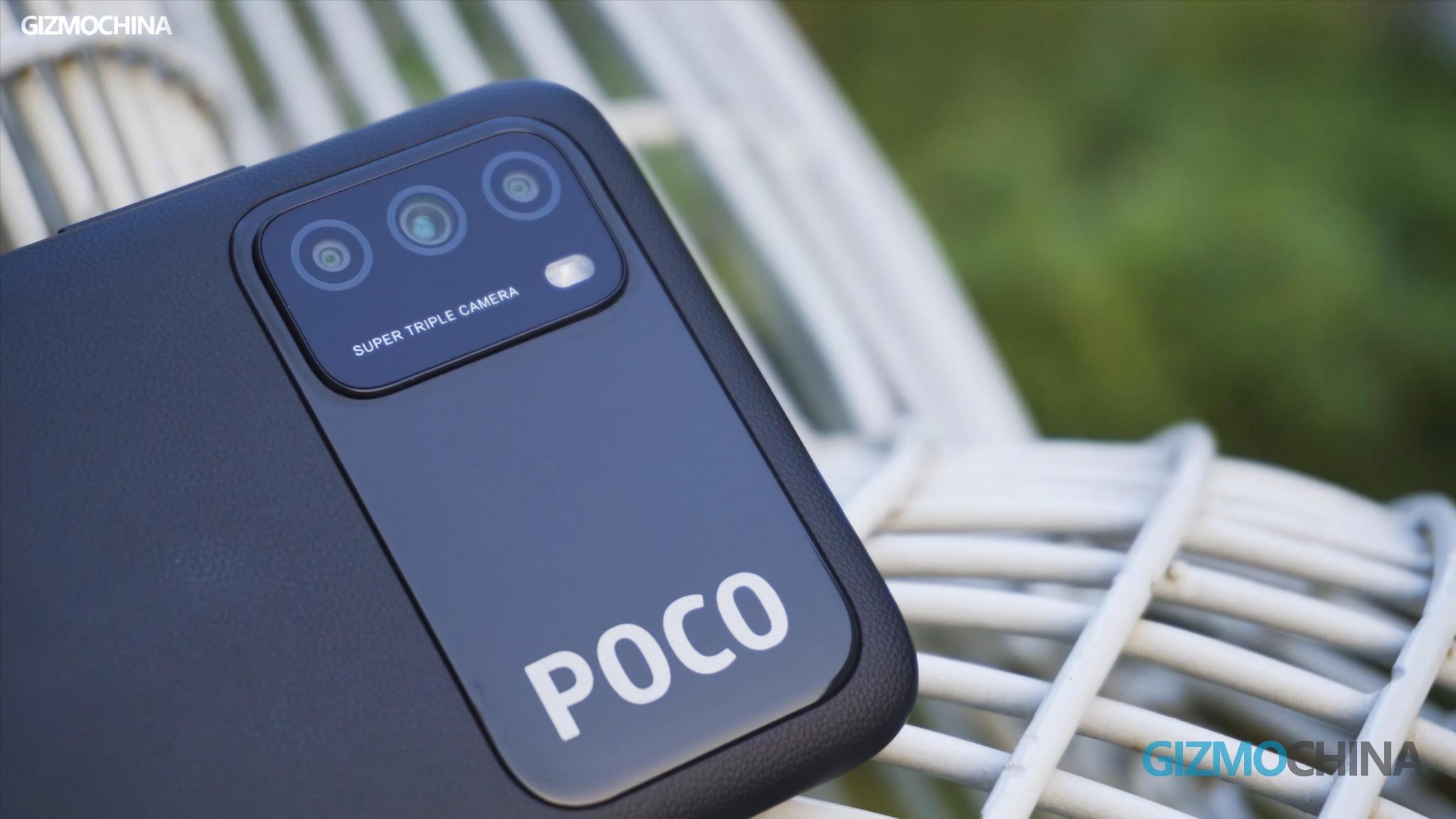
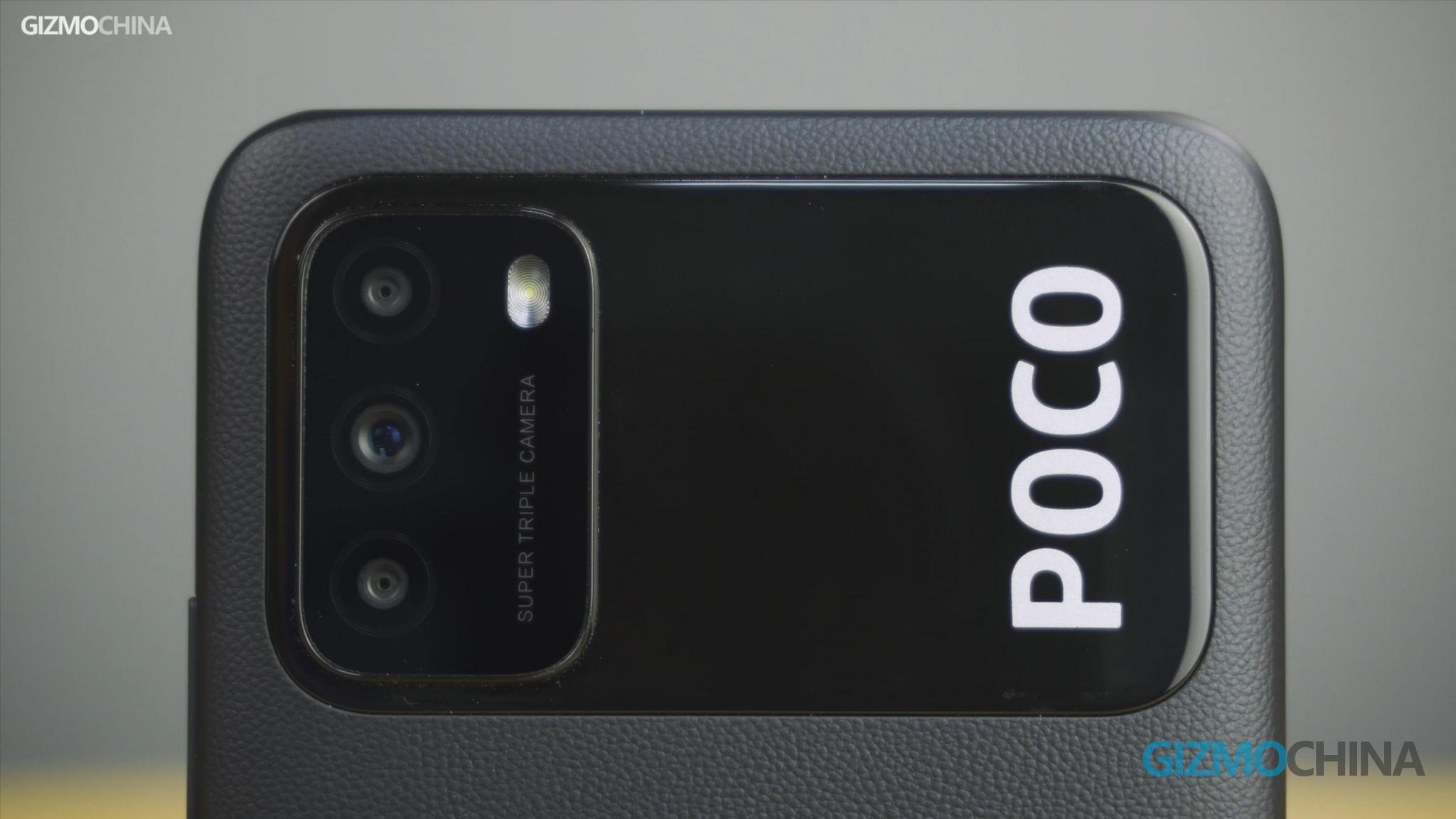
The camera module is also unique. A large piece of glossy plastic is used for aesthetics. The triple camera module is arranged on the upper left and the POCO logo is on the right, which is still recognizable even among most models in the market. Compared to the plain front, the rear design of the M3 is much more impressive.
POCO M3 Hands-on: Camera & Hardware
When compared to the Poco M2, the camera module has gone from a quad-cam setup to a triple camera combination. However, it doesn’t mean that the whole camera performance is downgraded.
Likely to keep the cost down, the ultra-wide-angle lens was sacrificed for a better-quality primary lens. Actually, from a practical perspective, we were impressed with the 48MP main lens and it did perform very well under most conditions. The lack of wide-angle camera could be a drawback in case of wide-open scenarios, such as landscape photography, but the fact is that most wide-angle lenses equipped on such inexpensive models are useless because of their poor quality.
The other two lenses are the macro lens and the portrait depth of field lens. It can help you shoot close objects and portraits better.
The POCO M3’s processor uses Snapdragon 662, which is about the same as the M2’s MTK Helio G80 in performance, but Qualcomm’s processor will be better optimized for camera performance. So that should be also the reason why the M3 uses the 662 chipset.
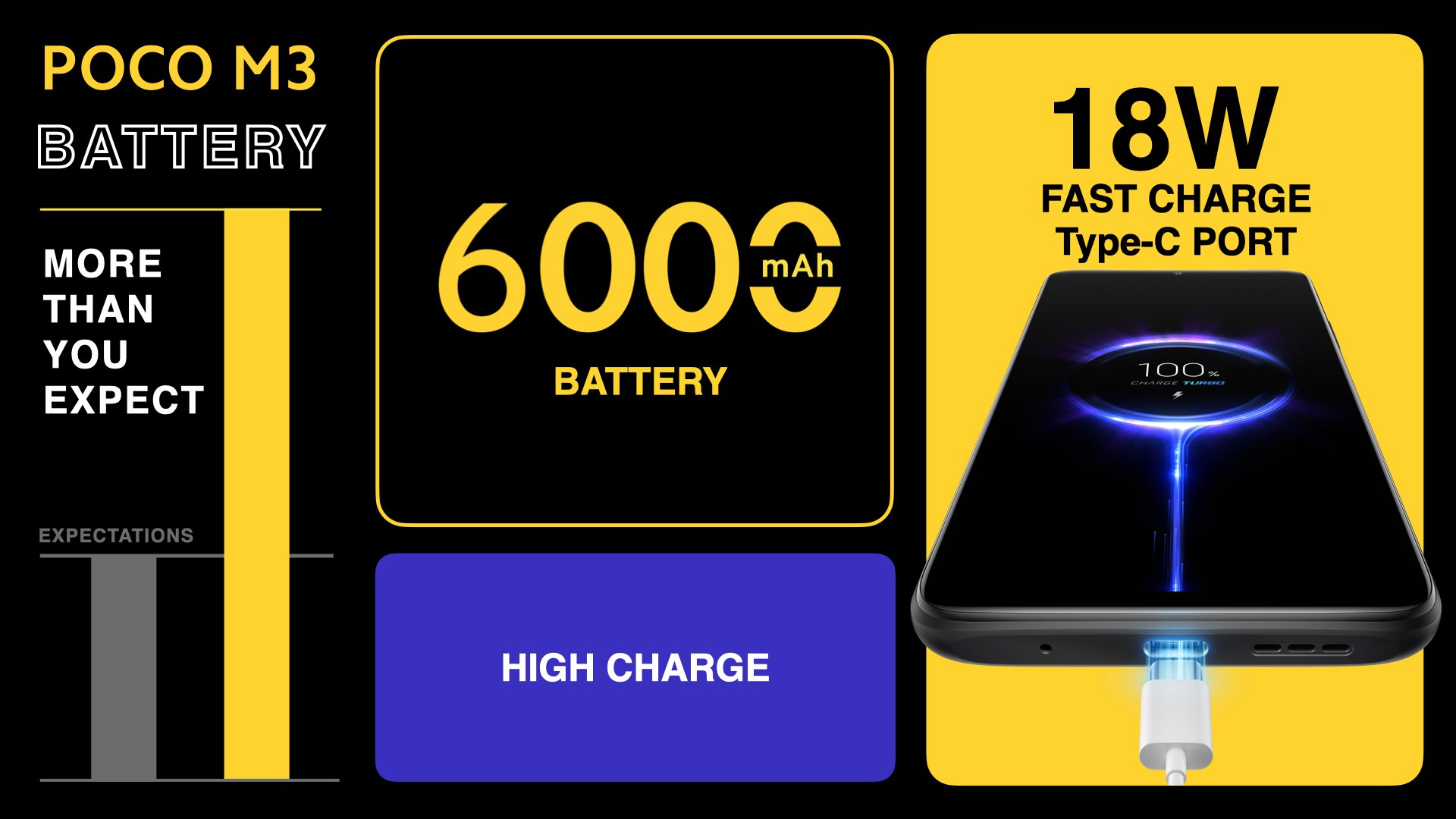
Meanwhile, the M3 comes with a super-large 6000mAh battery, which, when working with the low power consumption design of the Snapdragon 662, guarantees a really long battery life. No matter how you use it, the M3 would support sufficient power for at least a whole-day use. But you may need a little patience to get to full charge, as it only comes with 18W charger.
We’ll put detailed camera reviews and performance tests in our full-review video, which will be updated in a couple days. If you’re curious about its camera quality and gaming performance, keep an eye out for our follow-up review.
Like the M2, the POCO M3 is also worth its price, and there are some fine upgrades on the M3 that makes it an interesting option, such as its rear design and the large battery. Considering POCO’s previous track record we feel this one should sell well too as it ticks most of the features that you want in its price segment.
After just focusing on one smartphone for nearly two years, POCO has been busy adding multiple smartphones to its existing and new lineups in 2020. The company’s latest smartphone is the POCO M3, succeeding the relatively recent Poco M2 with a redesigned rear design and a Snapdragon chipset instead of MediaTek.
Poco M3 full review: All you need to know.
POCO M3 Design
The biggest change in the POCO M3 as compared to its predecessor is the rear design. The brand completely revamped the back design on the new model, making it more recognizable and youth-centric. In fact, this kind of design is unseen in such cheap models, making the POCO M3 a refreshing option among its cheaper looking rivals. The rectangular camera housing is placed on the top left corner like other budget models, however, the camera unit is further placed inside a larger, all black housing with the POCO logo on its right. This back design cleverly hides its budget identity, which is only revealed when you come to the front.
The POCO M3 features the same 6.53-inch IPS LCD waterdrop / dot-drop display as its predecessor with FHD+ resolution and Gorilla Glass 3 protection. The phone also comes certified with TUV Rheinland’s Low Blue Light Certification.
The fingerprint sensor is on the side. You also get an IR transmitter, dual speakers and a 3.5mm headphone jack on the device.
The POCO M3 comes in three color options: Poco Yellow, Cool Blue, and Power Black.
POCO M3 Camera & Hardware
The Poco M3 gets a Snapdragon 662 processor underneath clocked at 2.0GHz with 4GB RAM and 64GB (UFS 2.1) / 128GB (UFS 2.2) storage options. Note that the predecessor, the POCO M2 featured a MediaTek chip, specifically, the Helio G80.
One of the biggest highlights of the hardware is the super large battery inside. The POCO M3 features a massive 6000mAh battery inside that should keep you going for more than a day. This is a significant upgrade from the 5000mAh battery found on the POCO M2. And what’s surprising is that the company has managed to keep the weight the same as the M2. So the POCO M3 weighs 198 grams, which is exactly the same as the M2. But the thickness gets slightly increased to 9.6mm. Note that the phone still supports only 18W charging, so it should be painfully slow to fully charger this device.
POCO has made a surprising tweak to its new model in the camera department. The brand decided to take off the ultra-wide angle sensor from the POCO M3, leaving you with a triple camera setup instead of a quad-camera setup found on its predecessor.
But to compensate for the loss of an important camera sensor, POCO M3 comes with a large 48MP f/1.79 primary camera. There are two other sensors, a 2MP Macro camera and another 2MP depth sensor. On the front, you get an 8MP f/2.0 selfie shooter.
As for software, the POCO M3 is running MIUI 12 for POCO, based on Android 10.
POCO M3 Pricing, Variants, & Availability
The POCO M3 pricing is as follows.
4GB RAM + 64GB (UFS 2.1) – $129
4GB RAM + 128GB (UFS 2.2) – $149
Note that these prices include the $20 special discount for Black Friday sale.
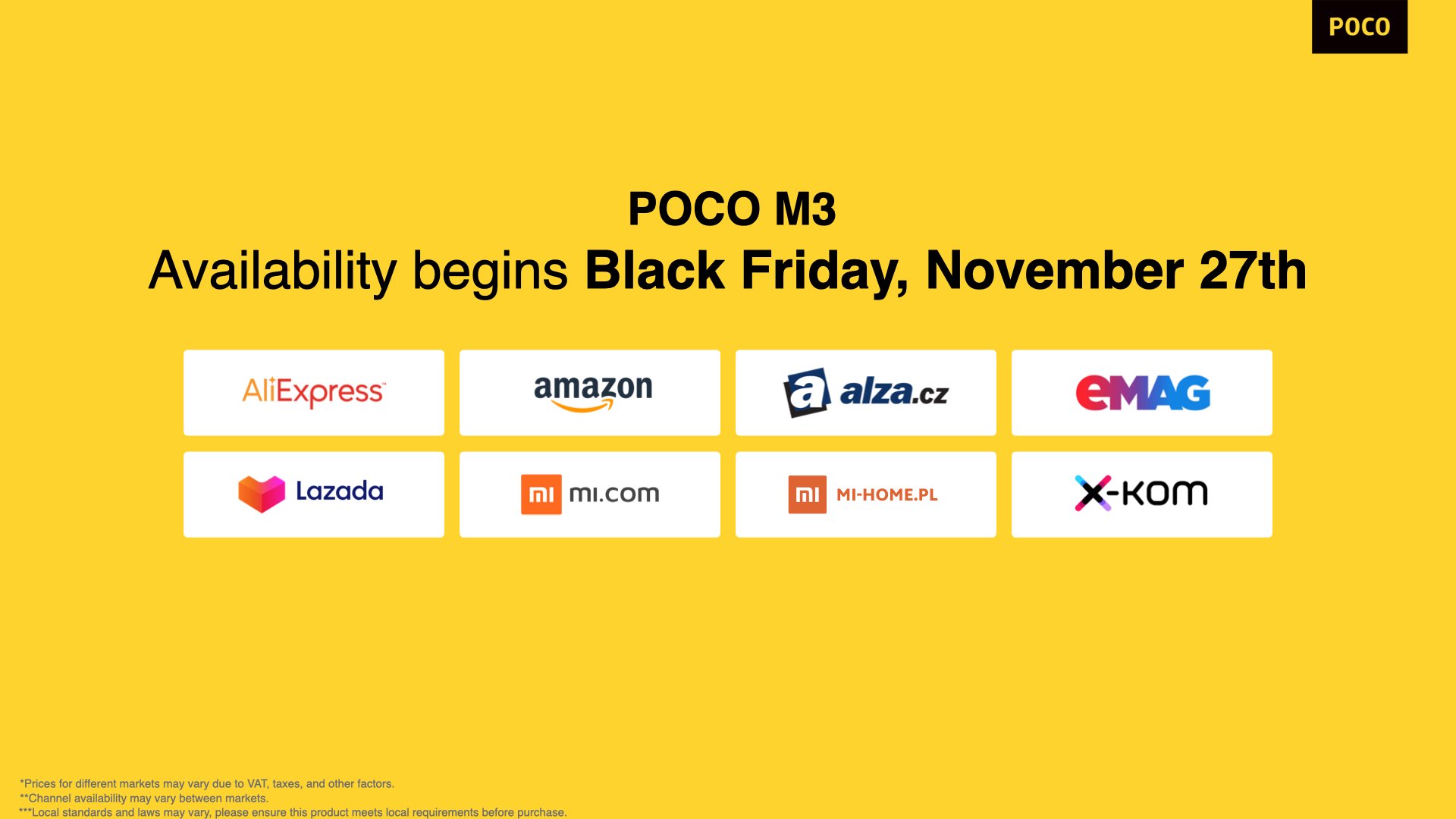
The phone will go on sale from November 27 via Aliexpress Amazon, Mi.com and other retailers.
Xiaomi is expected to be the first Chinese company to launch the Mi 11, 11 Pro(Tentative) flagships with Snapdragon 875. In fact, it’s one of the companies rumored to bring the flagship SoC to the masses very quickly. As usual, the device has been on the radar of leaks frequently. Adding to the tally, the latest find by XDA member shows that the device could have a QHD+ display.
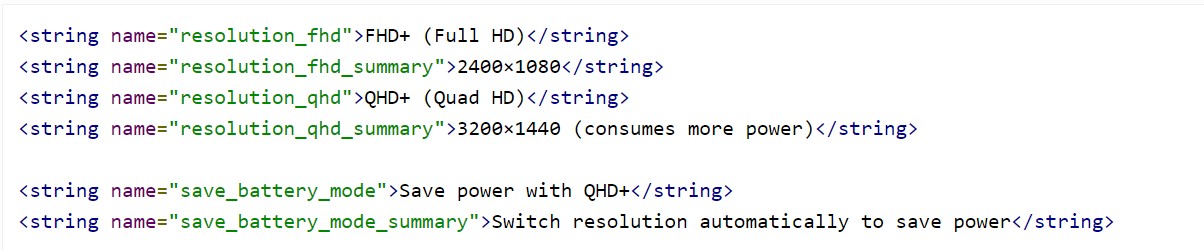
As per the XDA report, kacskrz, an XDA member and tipster, has spotted new strings on the latest MIUI 12 build. Accordingly, the said build based on Android 11 shows that the UI extends support to FHD+ and QHD+ resolution display. In fact, the resolution appears as 2400×1080 for the former, and 3200×1400 pixels for the latter.
Now, if we recall, a week ago, tipster Digital Chat Station hinted that a high version of the flagship(Possibly the Mi 11 Pro) will support 120Hz refresh rate QHD+ resolution. Coming back, the string with QHD+ resolution also has a message that the setting “consumes more power”. This is a no-brainer as displays with higher resolutions tend to draw more energy and hence companies post a warning.
That said, do note that none of the strings have any indication that Xiaomi Mi 11 Pro has the QHD+ display. The string appears on one of the latest MIUI 12 build. Generally, Xiaomi adds new codes to its MIUI when it plans to introduce something in the future. Hence, this resolution could be on the upcoming Xiaomi flagship. Plus, as per early reports, it could also have other display features like SDR-to-HDR unmapping, AI enhancements, MEMC, and more.
Moving on, the string also has options for battery saving modes which suggests that Xiaomi might switch the resolutions(QHD+ to FHD+) automatically to extend battery life. This is similar to what companies do today for the high-refresh-rate screens to save battery. Anyway, let’s wait and see how things pan out.
Xiaomi Mi 11, 11 Pro Specifications(Expected)
Xiaomi Mi 11 Pro from what we know, is expected to feature a QHD+ display with a 120Hz refresh rate, curved punch-hole screen, Qualcomm Snapdragon 875 SoC. While the ‘Pro’ variant is tipped to support 50MP rear camera output, an MIUI 12 code suggests that the Mi 11, with codename “venus” likely has a 108MP sensor-equipped triple-camera.
Having said that, features like CPU, storage, might be shared by the two. Also, both could have the 100W fast charging that Xiaomi revealed this year.
Earlier this month, Lenovo confirmed to revive its Lemon-branded budget smartphones for China. Followed by that, late last week, the company teased the arrival of three new handsets. Now, a device with model number Lenovo XT2081-4 has popped up on TENAA.
Lenovo XT2081-4 TENAA
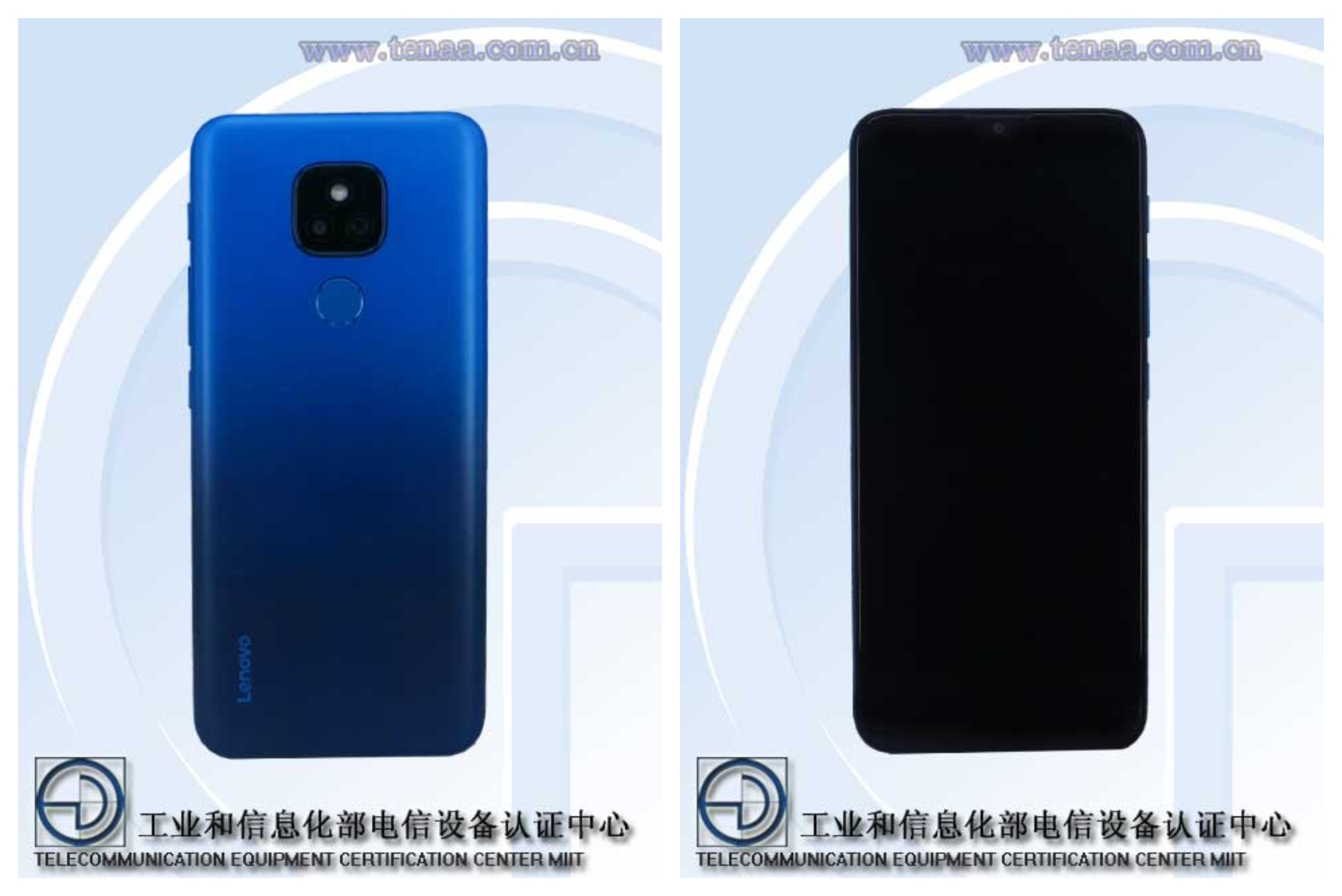
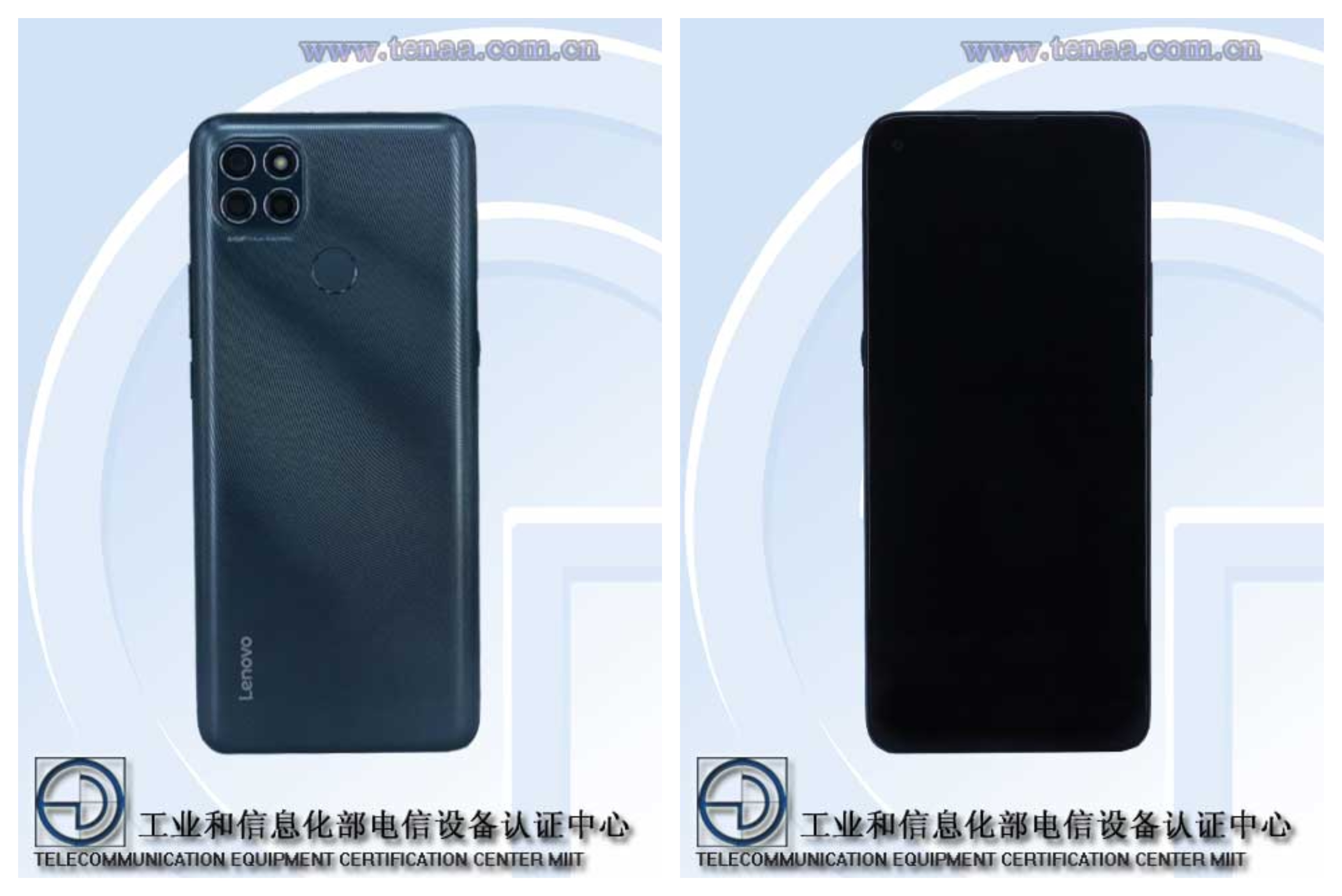
The unreleased Lenovo smartphone was first spotted by Simranpal Singh, one of our staff writers. Going by its model number (XT2081-4) and pictures, we can confirm it to be a rebranded Moto E7 Plus, which also has similar model numbers – XT2081-1 and XT2081-2.
That means the phone will flaunt a 6.5-inch IPS LCD panel with a resolution of 720 x 1600 pixels (HD+) and a 20:9 aspect ratio. Further, the front-facing 8MP camera will be nested in a dewdrop notch a the top center.
Whereas, on the back, the device will house a 48MP + 2MP dual-camera setup, a capacitive fingerprint sensor, and a vertically aligned Lenovo branding on the bottom left side. As for internals, it will be powered by Qualcomm Snapdragon 460 chipset paired with 4GB RAM and 64GB internal storage with support for microSD card. However, there could be other memory configurations as well.
Other specs of this phone will include single-band WiFi 5, Bluetooth 5.0, GPS, 3.5mm headphone jack, 5,000mAh battery with support for 10W charging, MicroUSB port, and Android 10 operating system.
Motorola Moto E7 Plus
Talking about the launch, we think it could be one of the three Lemon-branded smartphones that Lenovo teased last week with the text ‘6 Coming’. The other two being the Lenovo K12 Note and the upcoming Lenovo K12 Pro, this one may also launch as a Lenovo K series phone.
Anyway, all three are nothing but a rebadged Motorola Moto G and Moto E series handsets.
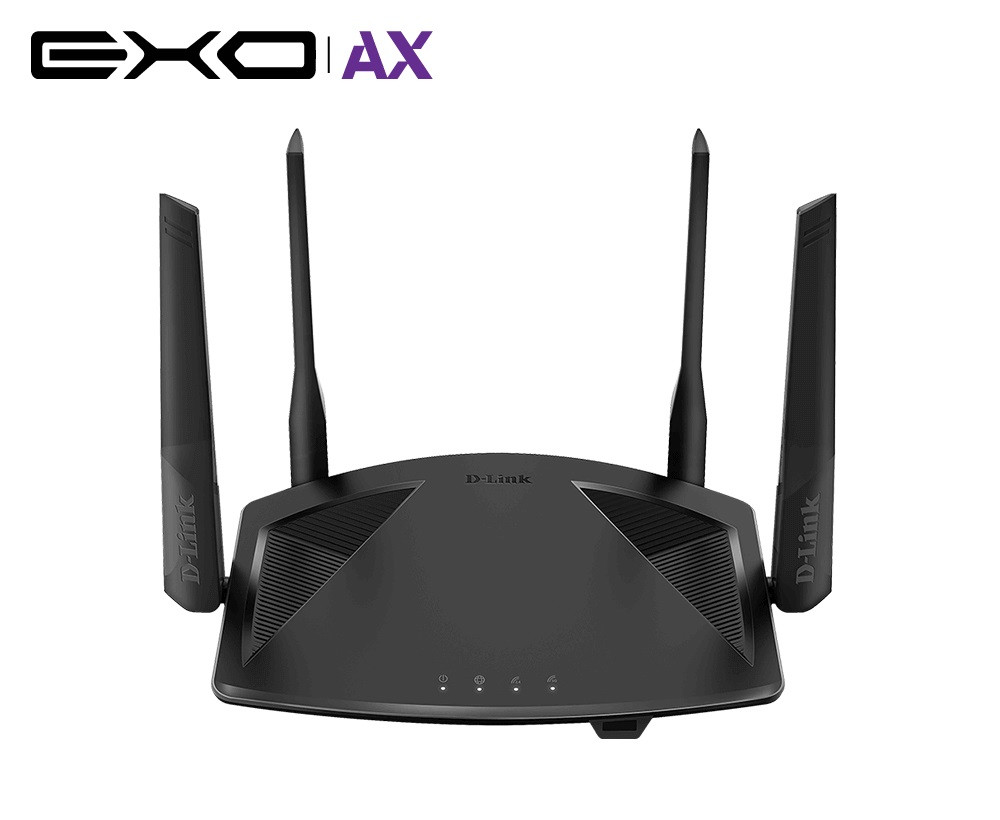
D-Link is apparently considering outsourcing production of its network products to India. The company is looking into plans to start production in the region for products that are sold within the country.
The move arrives to also take advantage of the nation’s PLO (Production-Linked Incentives) scheme that will benefit the company and the local OEMs as well. Notably, this arrives amid the rising tensions between India and China. Although, D-Link president Mark Chen believes that localized production is a primary alternative for companies that are planning on dispersing their global supply chains, as per a DigiTimesreport.
At the moment, D-Link already has a subsidiary in India and will shift production to that unit. Most of the company’s production is still takes place within China, out of which, 10 percent of its total sales is accounted by the shipments to North Amerca. The senior official further added that the company is also intending on boosting its sales in that region, especially in the US.
Thus, it is now looking for an alternative region to start production outside of China, to avoid issues amid the ongoing trade tensions amid the US and China. D-Link also recently reported on its net profits reaching 10.62 million US Dollars, with its earnings per share also reaching the highest in its past 27 quarters. Unfortunately, finer details regarding these plans or possible production sites are currently unknown, so stay tuned for more updates.
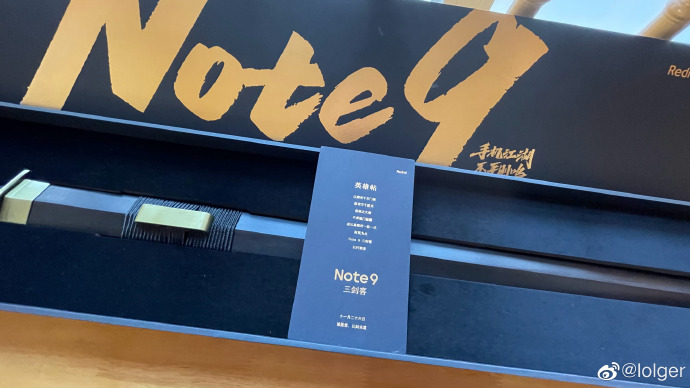
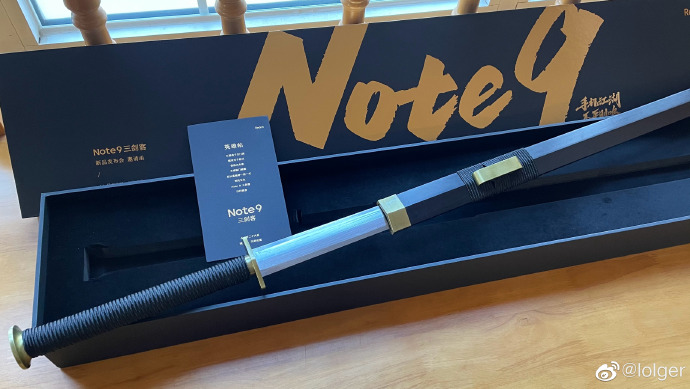
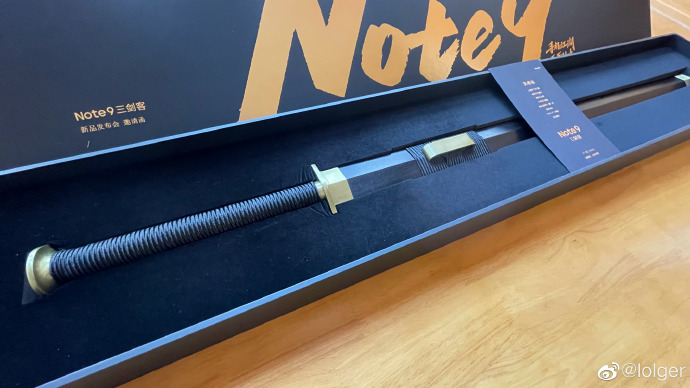
It’s a no-brainer that Redmi Note 9 Series will break cover on November 26 in China. Ahead of this, the company has been teasing the device frequently. Today, the VP of Xiaomi, Lu Weibing has shared a post on Weibo that shows invitations sent out to media. And the letter is accompanied by an actual “sword”.
The official post(via Sina Technology) on Weibo shared by Lu Weibing shows a series of images with an invitation letter and a big box. The invitation letter has the Redmi Note 9 logo, and the “Three Musketeers” slogan confirming the three models. Further, it reads, “There are thousands of schools in the arena, and there are thousands of moves. But the great heroes do not ask for unique secrets. They should carefully practice one move and one move to benefit the people”(Google translated).
As for the sword, bloggers who received it have shared a slogan on Weibo. It says “the brave will win if you meet on a narrow road”(Google Translated). That said, reports say that the sword is basically an eight-sided Han Sword. Apparently, it is and is long, narrow, and thicker than the four-sided ones. This suggests that the sword might be a collectors’ edition resembling the ones from the Han Dynasty of China. You can take at the sword and invites below:
The top of the line Redmi Note9 Pro 5G will likely be a tweaked version of the Xiaomi Mi 10T-Lite. Additionally, we know that the Redmi Note 9 Pro 5G has a 6.67-inch IPS LCD FHD+ 120Hz display, Snapdragon 750G chipset, a 4,820mAh battery with 33W fast charging. Further, the device is likely to have a 108MP rear camera, stereo speakers, 3.5mm audio jack, NFC, IR blaster, and Z-axis linear motor.
Talking about the sibling, Redmi Note 9 5G’s TENAA renders showed that the device will have a similar rear panel as Redmi Note 9 Pro 5G but a top-left punch display. It is likely to feature a 6.53-inch IPS LCD FHD+ display, MediaTek Dimensity 800U, 4GB/6GB/8GB RAM, 64GB/128GB/256GB internal storage, 48MP triple camera setup, 13MP punch-hole selfie camera, MIUI 12 based on Android 10, NFC, 5,000mAh battery, and 22.5W fast charging.
As for the 4G variant of the Redmi Note 9, from the TENAA listing, looks a lot similar to the upcoming POCO M3. It will likely feature a 6.5-inch FHD+ display, Snapdragon 662 SoC, 48MP camera, 6,000mAh battery with 18W fast charging.
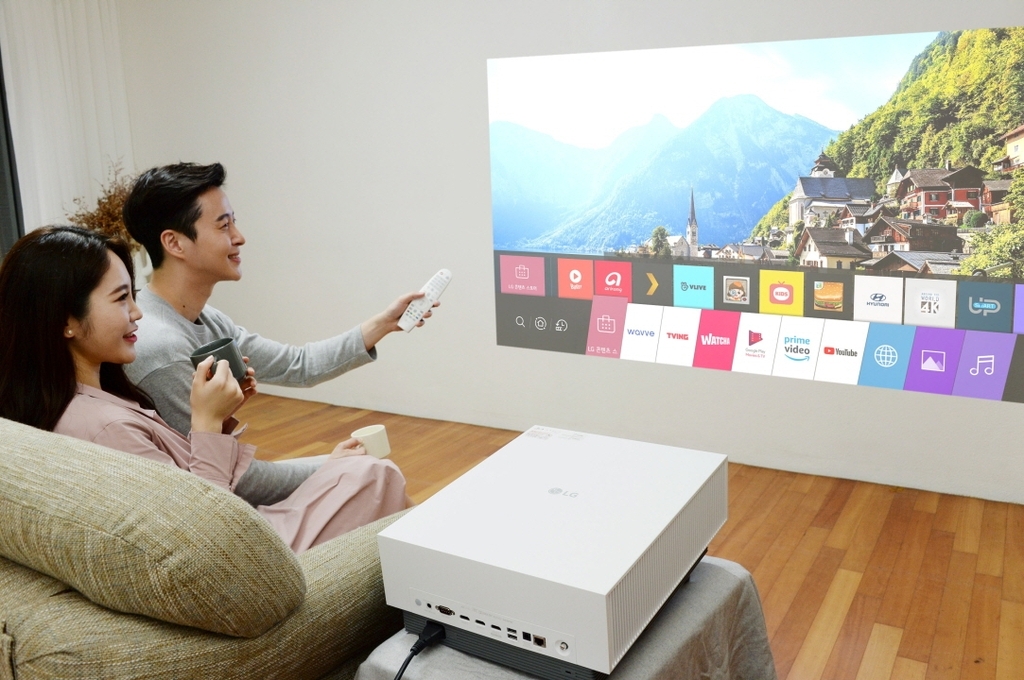
LG Electronics have just launched a new cinema projector earlier this week. The South new projector from the South Korean tech giant arrives to bring the cinema experience home amid a global pandemic, which has caused people to stay indoors.
The latest model is within the LG CineBeam Laser 4K series and is called the HU810PW. It is equipped with a triple image adjustment feature that offers users multiple installation options, as per official notes. The price of the new device is 3.79 million won (or roughly 3,400 US Dollars). Through its lens, the projector can create a rectangular screen regardless of its position in the room, be it at a corner or at an oblique angle.
The horizontal and vertical lens can shift and the screen can also be enlarged to a maximum zoom ratio of 1.6 times, which allows for easier alignment of the image being displayed. As the name suggests, the projector supports 4K resolution to up to 300 inches with a maximum brightness of 2,700 ANSI lumens. The gadget also sports an Iris mode that can detect the amount of light in the room and adjust the brightness accordingly to deliver optimal contrast with each frame.
The LG CineBeam Laser 4K HU810PW runs on the LG webOS platform and is also compatible with popular streaming services. This includes Netflix, YouTube and other online portals as long as an internet connection is available to the user. So for those missing the cinema theaters, this device might offer you such an experience without leaving the comfort of your homes.
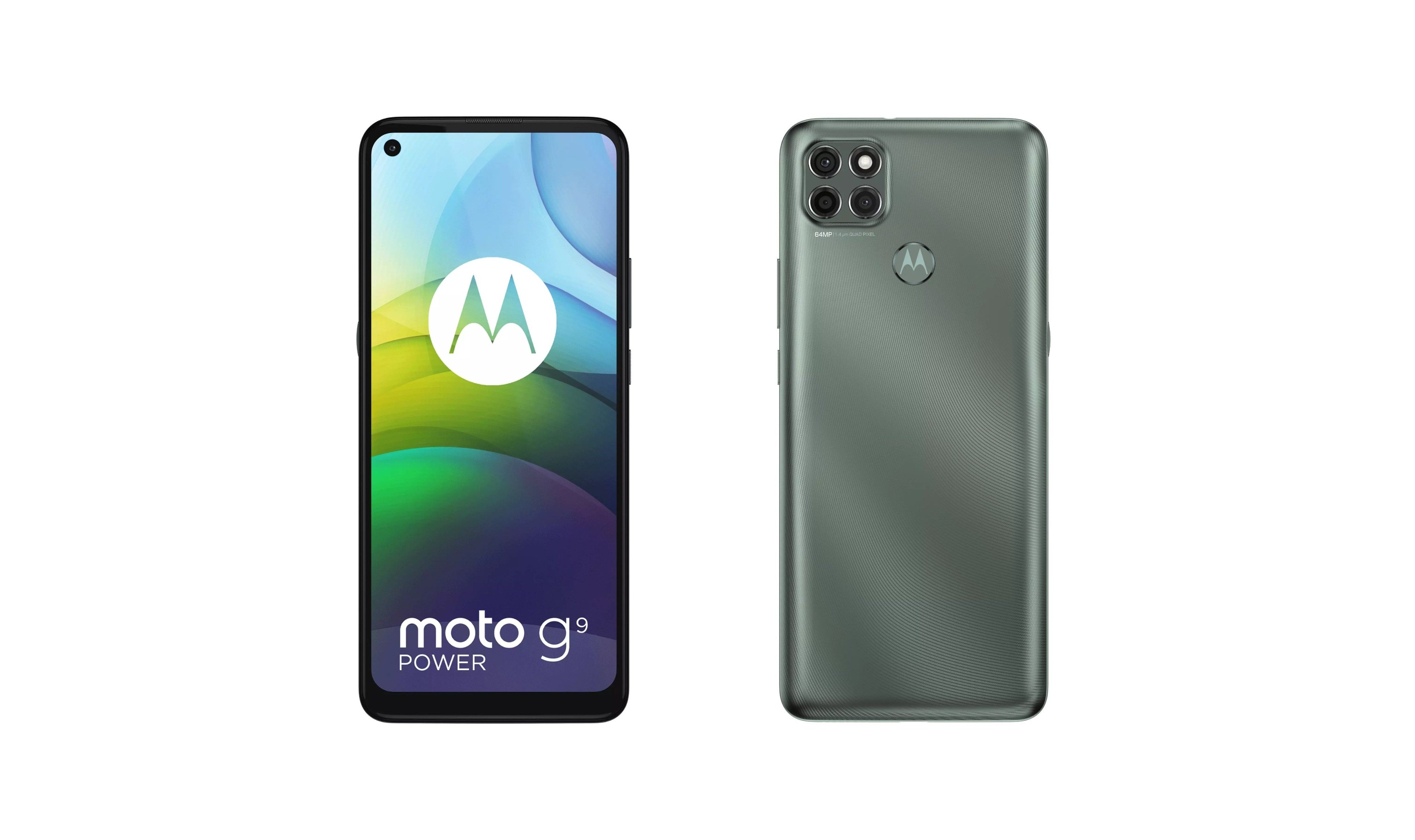
Lately, Lenovo, the parent company of Motorola has been rebranding its subsidiary’s smartphones as its own for certain markets. The latest such model is the upcoming Lenovo K12 Pro, which has been now spotted on FCC and TENAA confirming it to be a rebadged Moto G9 Power, which went official earlier this month.
Lenovo XT2091-7 (TENAA)
91Mobiles found the Lenovo K12 Pro on FCC and TENAA with model numbers XT2091-8 and XT2091-7 respectively. The publication’s findings also confirm this handset to be a rebranded Moto G9 Power whose model number is XT2091-3.
That means this device should be powered by Qualcomm Snapdragon 662 chipset paired with 4GB RAM and 128GB internal storage. There could be other storage configurations as well but we cannot tell for sure as the TENAA listing only has images as of now.
The phone will sport a 6.8-inch IPS LCD panel on the front with a resolution of 1640 x 720 pixels (HD+). This screen will feature a punch-hole cutout housing a 16MP selfie camera at the top left corner.
Further, the handset will house a triple camera setup consisting of a 64MP primary sensor, 2MP macro snapper, and 2MP depth sensor along with an LED flash in a matrix design. The rear panel of the device will also include a circular capacitive fingerprint sensor and a vertical Lenovo branding in the bottom left corner.
Motorola Moto G9 Power
The main highlight of this phone will be its 6,000mAh battery with support for 20W fast charging via USB Type-C. Other specs of this smartphone will include dual-band WiFi 5, Bluetooth 5.0, GPS, NFC, 3.5mm headphone jack, microSD card support, and Android 10 operating system.
Recently, Lenovo confirmed that it will be reviving the Lemon-branded budget smartphones. Followed by that, the company teased the arrival of new phones late last week. Hence, we think that this device could be one of those Lemon handsets (XT2091-7 via TENAA).
Whereas, the same device with Lenovo K12 Pro branding (XT2091-8 via FCC) could launch in the Middle East just like the Lenovo K12 Note, which is a rebranded Moto G9 Play / Moto G9 (India).
Samsung Electronics has witnessed an all time high share in the global TV market. The South Korean tech giant leads in terms of revenue during the third quarter of this year, as per a new report.
According to TheKoreaHerald, a market report from the known research based organization, Omdia, has revealed that the company held a sizeable 33.1 percent market share on terms of revenue in the total market. This is a a record high firgure from Samsung. As per the report, the company noted a revenue from TV sales in the third quarter of 2020, reaching 9.3 billion US Dollars, marking an impressive growth of 22 percent year on year.
Furthermore, Samsung sold 14.85 million TV units during the month of July to September, which is also up by 39 percent. In terms of number of units sold, the company now accounts for 23.6 percent of total across the globe. The global TV market had brought in a total 28.1 billion US Dollars in the third quarter, which is up by 11.8 percent year on year.
Similarly, Global TV sales have also grown by 14.7 percent year on year, reaching 62.87 million units in sales. Sources from within the industry have stated that healthy sales of QLED and other large TVs have contributed to the company’s increased market share, despite the impacts of the Coronavirus pandemic. In just a year, Samsung doubled its QLED TV sales from 1.16 million to 2.33 million units.
Another South Korean brand, LG Electronics arrived second in the category during the same period. It saw a 16.6 percent market share in the third quarter, which was followed by Sony with 10.1 percent. Samsung and LG’s combined sales alone account for 49.7 percent of the total global market.
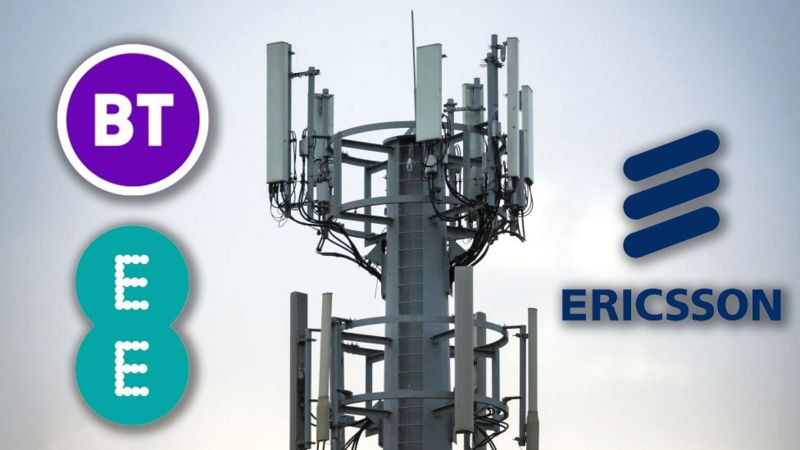
Huawei faces further troubles in the UK, which is now considering a ban on the installation of its 5G equipment in the region as early as next year, as per sources close to the matter.
A new report has revealed that the UK might take quicker actions and tighten regulations around the Chinese tech giant to appease lawmakers. According to a Bloombergreport, Prime Minister Boris Johnson’s Conservative Party are demanding stricter rules on companies that are using 5G equipment from Huawei as part of the price for backing telecommunications security legislation, which are due in parliament next week.
Prior to this, it had been initially planned to allow firms to use Huawei equipment till 2027, a ban is enforced. At the moment, telecom operators had been stocking up on parts made by the Chinese company and sourcing alternatives as well. But the earlier ban might increase the cost at companies like BT Group and Vodafone that might now have accelerate the process of overhauling components from their networking infrastructure.
If the new proposal goes through, a ban would take effect as soon as September 2021. Notably, the UK has previously set a limit on network carriers on the purchase of Huawei equipment, which is set to take effect after December. Initially, Huawei had been granted a limited role in the 5G building within the country, but opposition led to the decision being reversed.
The US has also been pressuring the UK to take stricter actions against the telecom equipment provider on grounds of national security risk and espionage by the Chinese government. With Huawei out of the 5G race in the UK, operators would have to turn towards its rivals Nokia and Ericsson. We will have to wait to see what decision the parliament makes on the matter, so stay tuned for more updates.
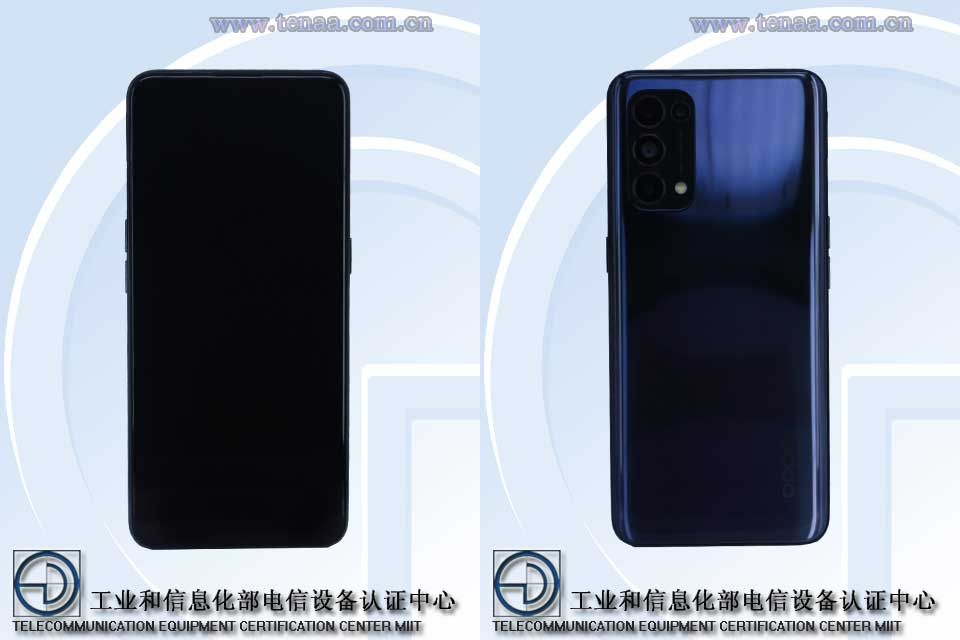
OPPO is soon expected to launch the Reno5 series of smartphones in China. According to previous reports, there could be three models featuring different chipsets from Qualcomm and MediaTek. Now, two of them have been spotted on Geeekbench.
The Geekbench listings of the upcoming OPPO Reno5 series of phones were first reported by MySmartPrice. According to the listings, the device with the model number OPPO PEGM00 is powered by Qualcomm Snapdragon 765G chipset. Whereas, the second handset with model number OPPO PDST00 features MediaTek Dimensity 1000+ chipset just like OPPO PDSM00.
Despite sporting different chips, both of them have 8GB RAM and run Android 11 (ColorOS 11) operating system. Talking about scores, the former bags 616 points and 1817 points in single-core and multi-core tests respectively. On the other hand, the latter scores 725 points and 3000 points respectively.
The above two models are part of the OPPO Reno5 5G series. There’s also a third phone with model number OPPO PDRM00, which is said to be powered by Snapdragon 865. Anyway, though all three devices feature different chipsets, they are expected to come with 65W fast charging (OPPO SuperVOOC 2.0) support and a curved display with a single punch-hole as well as a high refresh rate.
As of now, we only know the specs of the model (OPPO PEGM00 / OPPO PEGT00) powered by Snapdragon 765G, courtesy of TENAA. This variant will sport a 6.43-inch FHD+ (1080 x 2400 pixels) OLED display with a 20:9 aspect ratio and a single punch-hole for a 32MP front-facing camera.
Other specifications include a 64MP + 8MP + 2MP + 2MP quad-camera setup and a 4,300mAh battery. Last but not leas, it will measure 159.1 x 73.4 x 7.9mm in dimensions and weigh 172g.
OPPO Reno5 4G Series
Just like OPPO Reno3 4G and OPPO Reno4 4G series of smartphones, there will be OPPO Reno5 4G series as well. As of now, only one device called OPPO Reno5 4G with model number OPPO CPH2159 has been spotted on certification bureaus like NBTC, EEC, and TKDN. The specs of this handset is still a mystery.
NODWIN Gaming, a known esports brand from South Asia, has just announced its first ever Call of Duty Mobile tournament. The contest is called the Call of Duty Mobile India Challenge 2020, which has a prize pool of over 6 lakhs INR (700,000 INR or roughly 8,105 US Dollars).
The registration for the the tournament is currently open and the matches will be broadcasted live via online streams on NODWIN Gaming’s official YouTube and Facebook handles. For those unaware, Call of Duty Mobile is a popular battle royale title from known studio, Activision. With the esports industry growing rapidly within the Indian subcontinent and mobile gaming at its forefront, the new tournament aims to build “a robust ecosystem for the game and its community in the country.”
According to Akshat rathee, Co Founder of NODWIN Gaming, ““Call of Duty mobile had its takers from day 1 and the number grew at a substantial pace in India. Our mobile-first esports market grew diverse with its arrival. A full-blown CODM tournament was long overdue, we heard the community and it eventually happened. We are glad to have made this move and I’m sure this will be a wonderful platform for the gamers to make a name for themselves.”
The Challenge 2020 series will include invitational tournaments and open cups. These are open for everyone to register and participate, with a total of 4 cups for a 5v5 mode and a battle royale mode. A single cup has a 72,000 INR prize pool (roughly 972 US Dollars) and a total prize pool of 648,000 INR (roughly 8,756 US Dollars). Furthermore, the winners of the cups for both the modes will move on to the grand finals, which are set to take place on 28th December 2020. To register for the tournament, you can click on the link here.
It’s raining discount this Black Friday week, and the Dreame T20 handheld Vacuum Cleaner is available at the best price of $251. It is a high-quality and powerful Vacuum cleaner that offers strong suction, an intelligent brush, a smart OLED display, and a swappable battery. The company is offering a big discount via its official store on Amazon and AliExpress.
Dreame T20 high-quality Vacuum Cleaner provides an optimal and comprehensive solution for deep cleaning your house. Its premium aerospace device allows the motor to spin at a maximum of 125,000rpm while producing 25000Pa Vacuum suction. The HD Full-color display eases the operation.
The cordless Vacuum cleaner can withstand for 70 minutes upon a single full charge. However, the 9-stage noise reduction mechanism enhances its productivity. The user can even use it at odd hours or during the night without worrying about the neighbors.
Dreame T20 Vacuum Cleaner feature highlights
Strong Suction Power – The Vacuum cleaner features an upgraded motor of 125,000rpm while producing 50% more power (150AW suction power).
Intelligent Brish – It is smart enough to automatically adjust the suction power on the basis of floor type.
OLED display – It eases the overall operation as it shows all the important metrics. The user can easily switch between 4 different modes – Eco / Med / Auto / Turbo.
Swappable Battery – It enhances productivity as the device comes with an extra battery.
Technical Specifications
450W Rate Power Consumption
3000 mAh battery capacity with 4 hours charging time.
150AW suction power
12-cone Cyclone self-cleaning system
600ML Dustbin
Offer Details
For Amazon users – Dreame T20 Cordless Vacuum Cleaner usually retails for $359, but you can grab it for $251.99 from Amazon. When you make orders, don’t forget to click the coupon on the product page to get 10% OFF. If you are an Amazon prime member, you will have an EXTRA 20% OFF, in total, you will have 30% OFF.
Valid time: 26th November to 1st December.
Use promo code ’DreameT2031‘ when making an order, you will get $15 OFF
While ordering, you will automatically get an extra $16 OFF
Total Discount: $31 OFF Original Price:$322.99 Final Price: $291.99
Valid time: 24th November to 30th November
With the holiday season being right around the corner, a new report regarding the state of the global smartphone market has revealed some interesting details. Despite the initial impact of the Coronavirus pandemic, Xiaomi has seen impressive growth year on year in Q3 2020, while Huawei has faced a sizeable decline during the same period.
According to a Gartnerreport, the overall smartphone market saw a decline of 5.7 percent year on year from back in 2019. This brought total smartphone shipments down to 366 million units, although, it is still a recovery from the first half of this year. The primary reason for the initial slump was the COVID-19 outbreak, but its impacts can still be left in the third quarter. The report revealed that Samsung still lead the market followed by Huawei, but Apple was overtaken by Xiaomi for the third spot.
The South Korean tech giant saw a negligible growth of 2.2 percent in this quarter over 2019 but the most notable jump in numbers was from Xiaomi, with a 34.9 percent increase in handset shipments. Xiaomi shipped over 44 million units in this quarter over 32 million from back in 2019. Another Chinese OEM, Oppo, rounded the top 5 smartphone manufacturers also a minimal decline of 2.3 percent.
The decline in Huawei was rather expected considering its current situation with the US government. The company faced reinforced sanctions a couple of months prior, which caused a disrupt in its supply chain. As per Anshul Gupta, senior research director at Gartner, “For the first time this year, smartphone sales to end users in three of the top five markets i.e., India, Indonesia and Brazil increased, growing 9.3%, 8.5% and 3.3%, respectively.” He further added that “Consumers are limiting their discretionary spend even as some lockdown conditions have started to improve.”
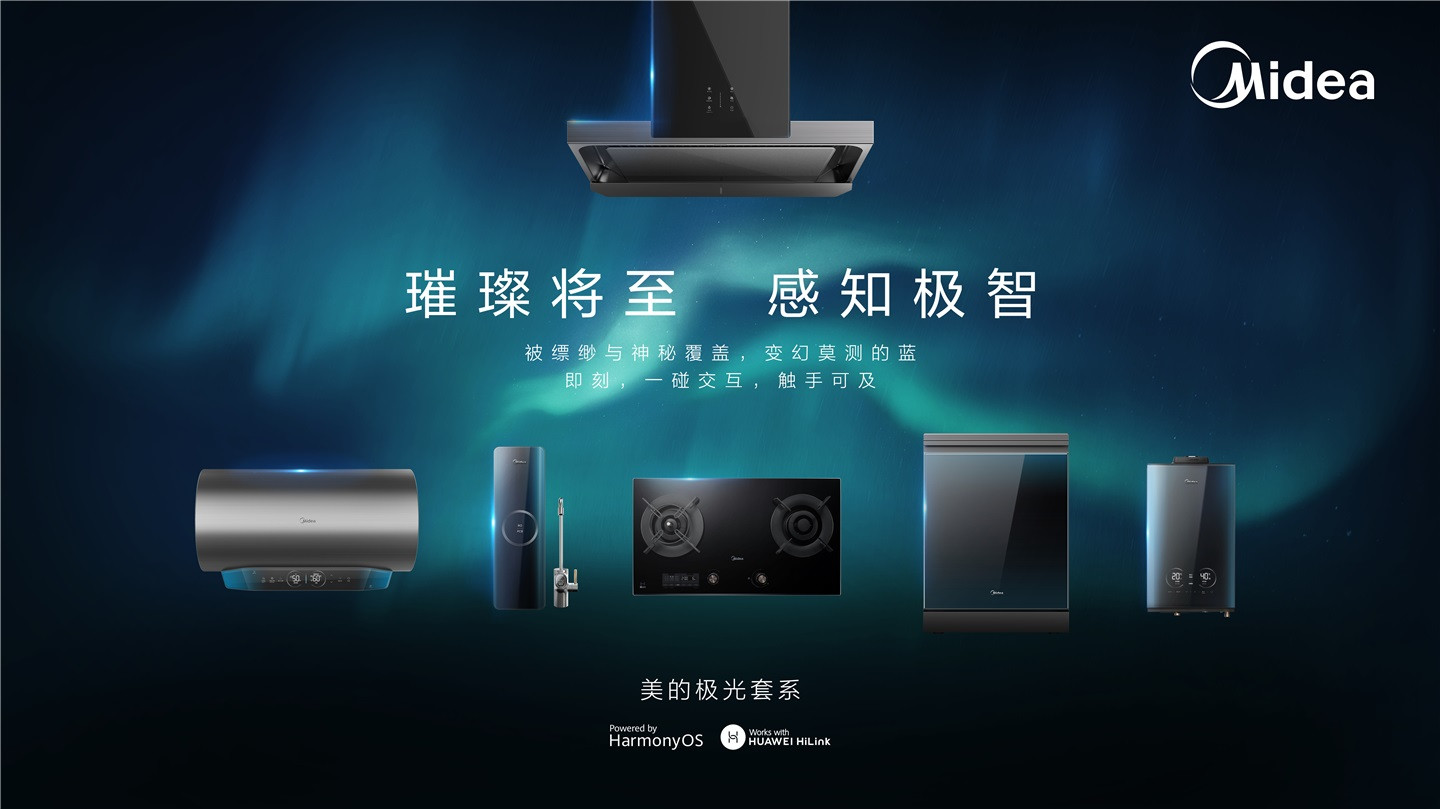
Update: Earlier today we had reported on the date of the coming HarmonyOS update but the company has clarified that HOS will be available on Dec 16th for developers to use, as confirmed at the HDC event. So, it won’t be rolling out to specific models in December.
HarmonyOS, the proprietary operating system from Huawei, is finally arriving on smartphones. Its beta version will be available from 16th December 2020 and the Mate 40 series will be the first to receive the upgrade.
The news arrived after Mai Yumin, Vice President of Huawei’s software department, made the announcement that the beta for HarmonyOS (or HongMeng OS in China) will be arriving on smartphones on December 16, as per a MyDrivers report. The executive also added that the flagship Mate 40 series will be the first priority for the update. For those unaware, the company is also planning on gradually replacing the Android platform with HarmonyOS.
Although, support for Android applications is also possible, but would depend on the new OS. Another official had also previously stated that more than 90 percent of Huawei handset models that are currently available on the market will be updated to HarmonyOS, but it remains to be seen if that would actually be the case in the near future.
At the moment, the new OS from the Chinese tech giant has seen in many other products apart from smartphones. This includes certain iterations in automobiles and IoT (internet of things) products. Huawei had built the new system with seamless cross platform connectivity in mind. There is not a lot of information to go on currently, so stay tuned for more updates regarding the coming update.
We use cookies on our website to give you the most relevant experience by remembering your preferences and repeat visits. By clicking “Accept”, you consent to the use of ALL the cookies.
This website uses cookies to improve your experience while you navigate through the website. Out of these, the cookies that are categorized as necessary are stored on your browser as they are essential for the working of basic functionalities of the website. We also use third-party cookies that help us analyze and understand how you use this website. These cookies will be stored in your browser only with your consent. You also have the option to opt-out of these cookies. But opting out of some of these cookies may affect your browsing experience.
Necessary cookies are absolutely essential for the website to function properly. This category only includes cookies that ensures basic functionalities and security features of the website. These cookies do not store any personal information.
Any cookies that may not be particularly necessary for the website to function and is used specifically to collect user personal data via analytics, ads, other embedded contents are termed as non-necessary cookies. It is mandatory to procure user consent prior to running these cookies on your website.