Advertisement

This $45 ZMI power bank features HDMI & can act as a USB hub

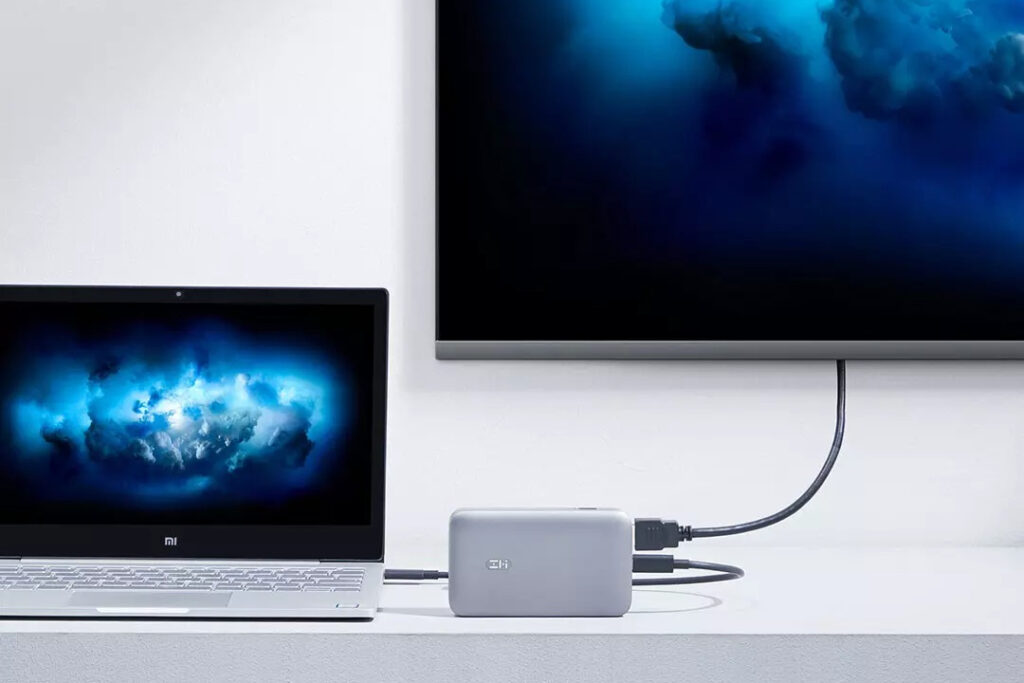
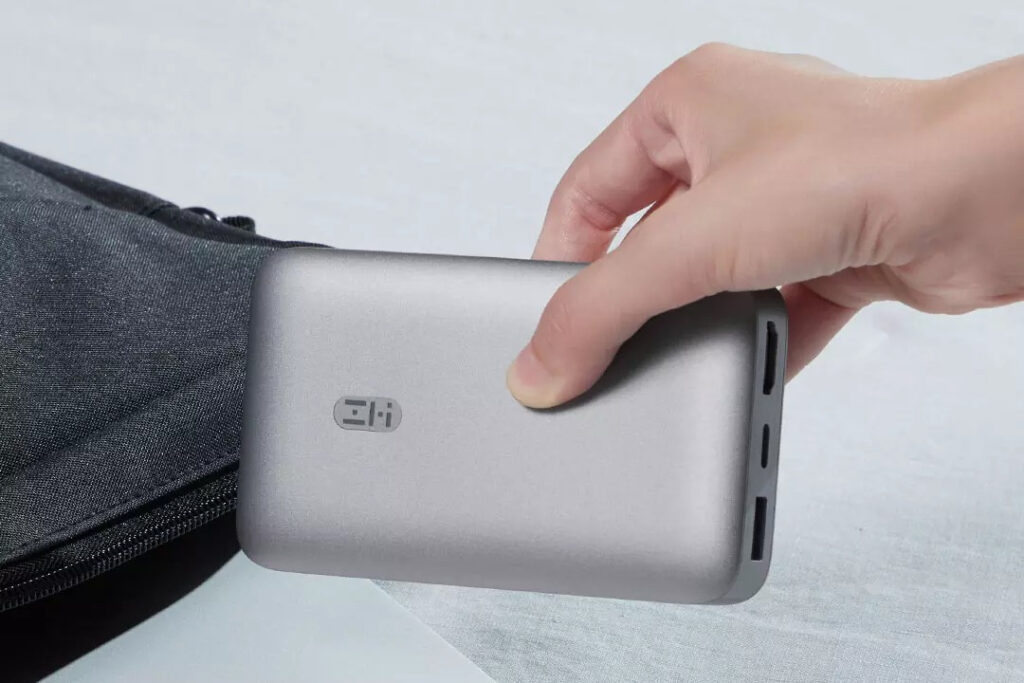
ZMI is a well-known brand of power accessories.  Recently, the company launched ZMI Multifunctional Power Bank in its home country China. Unlike other power banks in the market, this one can act as a USB hub and also features an HDMI port.
ZMI Multifunctional Power Bank Featured

ZMI Multifunctional Power Bank Specifications & Features

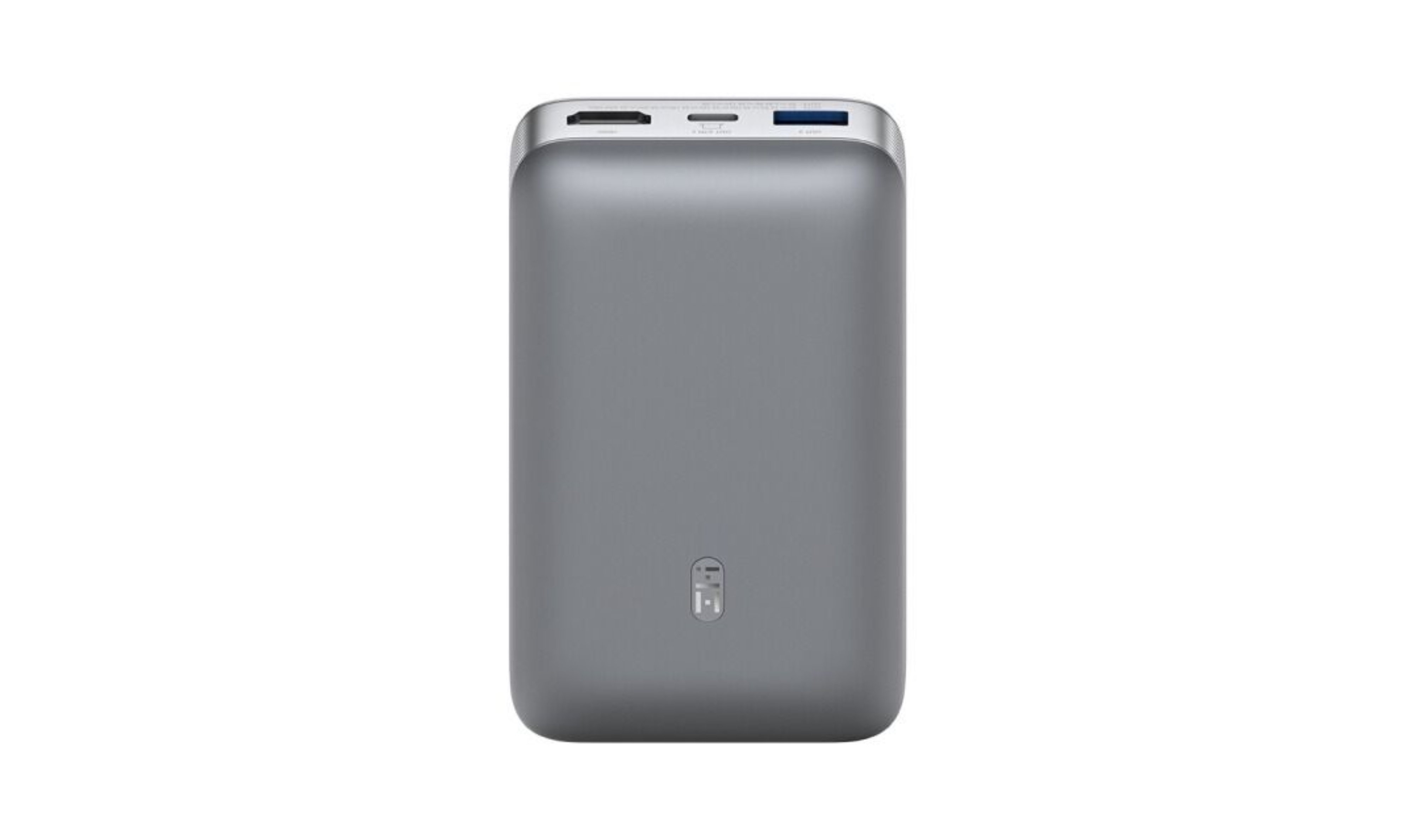
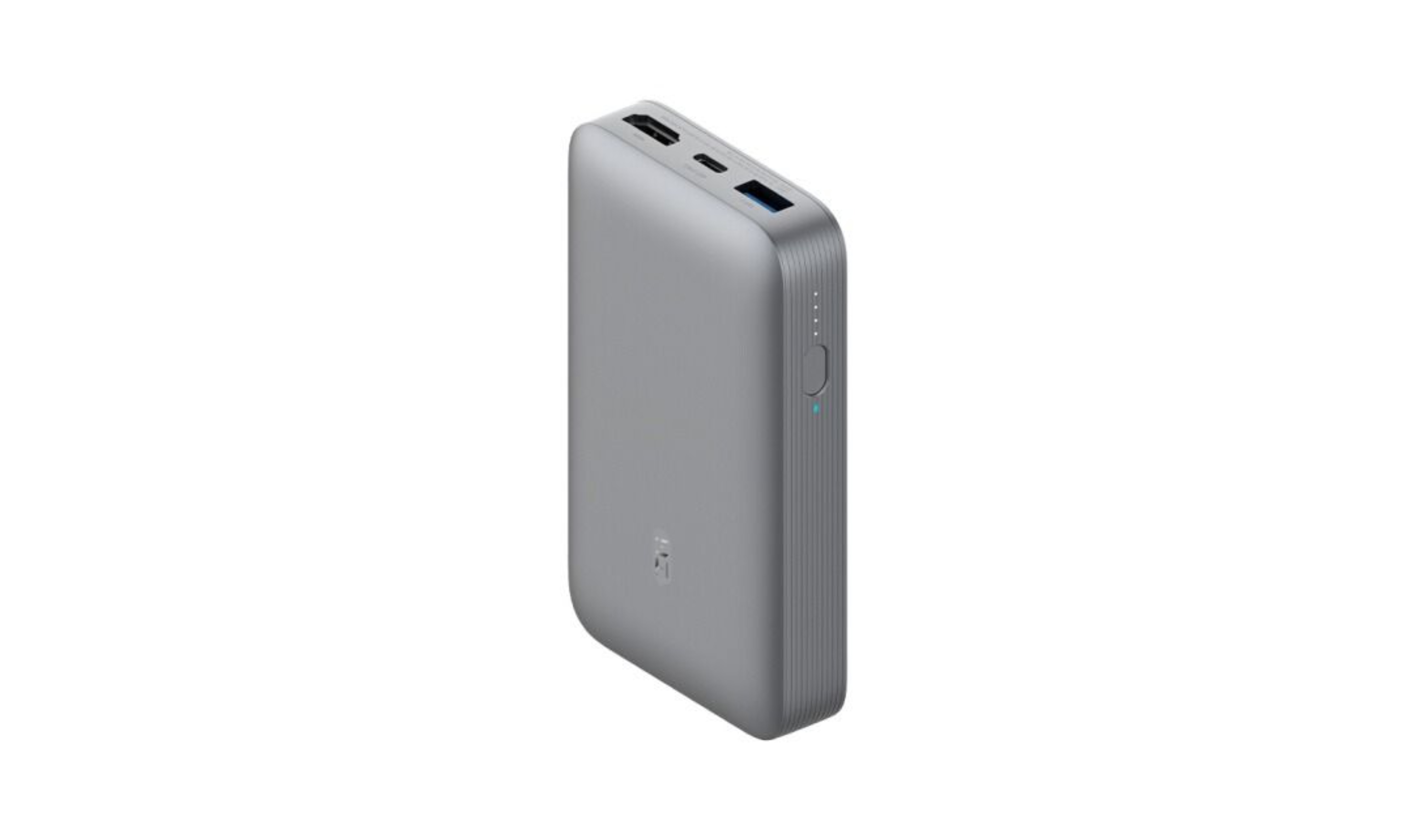
The newly launched ZMI Multifunctional Power Bank comes with a 10,000mAh capacity and is only available in gray color option. It measures 117.2 x 68.5 x 23.6mm in dimensions and weighs 243.5g. Further, it bears the model number QB816 and ships with a USB Type-C to Type-C cable (USB 3.2 Gen 1×1).

The product sports the following ports.

  • 2 x USB Type-C (Input/Output)
  • 1 x USB Type-A (Output)
  • 1 x HDMI (Output)

ZMI Multifunctional Power Bank Featured 02

The USB Type-C ports support USB 3.2 Gen 1×1 standard so that the power bank can be used as a USB hub to transfer data at the maximum rate of 5Gbps. Whereas, the HDMI port supports HDMI 1.4, HDCP 1.4, and HDCP 2.2. Hence, it can be used to output content at 4K (30Hz) or 1080p (60Hz).

As far as charging speeds (output) are concerned, the first Type-C can support up to 30W, whereas the second Type-C port can output current at a maximum rate of 50W. However, the Type-A port is limited to 18W.

Since the power bank uses the Power Delivery protocol, it can be used to charge a plethora of devices out there, including smartphones, laptops, wearables, etc. It can even charge the new iPhone 12 series at the maximum speed of 20W.
Last but not least, the product can charge at the rate of 22.5W within 3 hours, whereas it can fill within 3.5 hours using an 18W charger.

ZMI Multifunctional Power Bank Pricing & Availability

The ZMI Multifunctional Power Bank is priced at 299 yuan ($45) and is already up for sale in China at a discounted price of 269 yuan ($40) for a limited time. There’s no word on international availability from the brand yet. Hence, interested customers will have to import it from China.


SoftBank and other Japanese carriers to invest $38 billion in 5G

A new report has suggested that Japanese network operators, SoftBank and KDDI are planning on investing a total of 38 billion US Dollars for 5G networking in the country over the course of the next 10 years.

SoftBank

According to an ITHome report, the move from the Japanese carriers arrives as they plan on catching up to other developed nations that are currently racing to adopt the newer and faster generation of networking. 5G network requires a large sum of capital investment and it is expected that its applications will be spread across various industries, and not simply limited to mobile networking. This would also effectively boost the country’s economy as well.

SoftBank recently planned on investing 2 trillion yen (roughly 19 billion US Dollars) to build 5G networking in the region. This would have the company build over 350,000 base stations within the next 10 years. At the moment, SoftBank is the first Japanese telecommunications company to announce its long term network development strategy but others are expected to soon unveil their own plans as well.

SoftBank

The company will be placing a focus on the commercial aspect of 5G, or in other words, push towards the consumer market. Its 5G network will support low latency and large data transmission. Furthermore, it is also hoping that its 5G base stations will promote further development of data intensive applications within other fields like IoT (Internet of Things), medicine, and even autonomous vehicles.
 

Samsung Galaxy M12/F12 live shots reveal rear design, 7,000mAh battery and 6.7-inch display expected

Samsung announced the Galaxy F41 as its first F-series phone last month. A recent report revealed the existence of another F-series that has a model number of SM-F127G. This handset is expected to debut as the Galaxy F12. 91mobiles has shared live images of the back panel of the Galaxy F12. The report has also revealed the key specifications of the device. The SM-M127F model number mentioned along with SM-F127G in the live shots suggests it could be also rebadged as an M-series with Galaxy M12 or Galaxy M05 moniker.

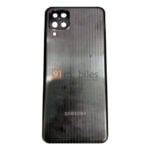
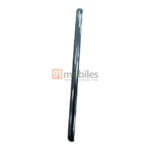
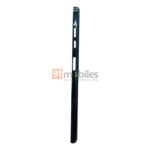
The live shots have revealed that the Galaxy F12/M12’s back panel has a textured finish with a Samsung branding towards the bottom. There is a square-shaped camera module for its quad cameras. Below the camera housing, there is a cutout for LED flash.

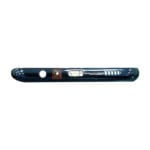
The device does not feature a rear-positioned fingerprint sensor. The biometric recognition feature seems to be embedded under the power button on the right edge. The volume buttons are also available on the right spine. The bottom edge of the back panel has cutouts for a 3.5mm audio jack, a microphone, a USB-C port, and a speaker grille. A microphone hole is also available on the top edge. A cutout for the SIM tray seems to be placed on the left edge.

The front design of the Galaxy F12/M12 is still a mystery. The publication claims that it has learned through its source that it has a 6.7-inch punch-hole screen with a tall aspect ratio. It has also revealed that the phone is backed by a gargantuan battery with a 7,000mAh capacity. The other details of the phone are under wraps.


Samsung and LG to launch TVs with miniLED displays in 2021

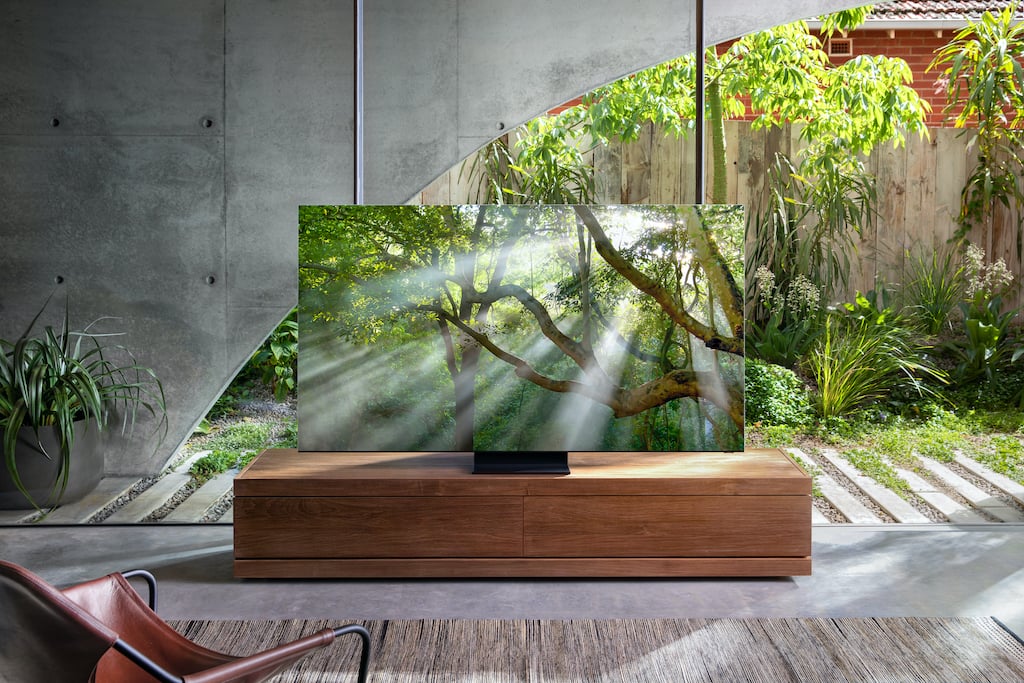
Samsung, LG, and other major TV brands are planning on launching TVs with the new miniLED display technology in 2021. The miniLED TV lineup will likely arrive in high end premium segments in the market.

Samsung

For those unaware, miniLED is a relatively new breed of displays that are being touted as the next generation of displays. These displays are made up of LED chips in the 100 to 200 micrometers range that make up the backlight unit of LCD TVs. This, in turn, helps raise the contrast ratio in comparison to traditional LCD panels, which use LED chips that are sized around 300 micrometers.

Furthermore, the use of miniLED can also effectively increase the efficiency of local dimming, which basically means that some chips are simply turned off to display deeper blacks. Other benefits of this type of display include advantages in terms of overall brightness and price over organic light emitting diode (OLED) TVs. At the moment, Samsung is the largest TV maker by sales and is pushing to launch its own offerings among its QLED TV series, which sport LCD displays.

Samsung

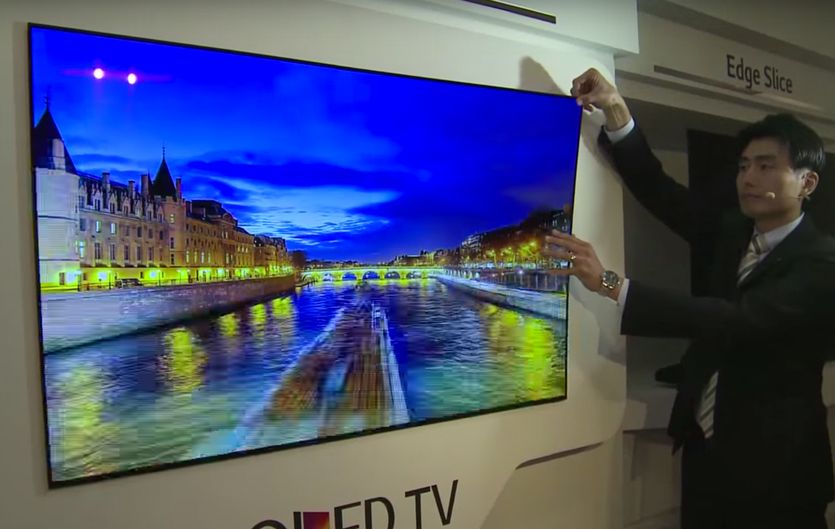
Similarly, another South Korean tech giant, LG, is also gearing up for the launch of its 4K and 8K resolution 70 inch miniLED TVs, as per TheElec report. These will be within the Nanocell brand of LCD TVs. Although, the company would likely not mush its miniLED TVs are aggressively in comparison to Samsung as its primary focus is still its OLED TVs. Notably, Apple is also planning on launching a new iPad Pro that sports miniLED technology sometime next year.


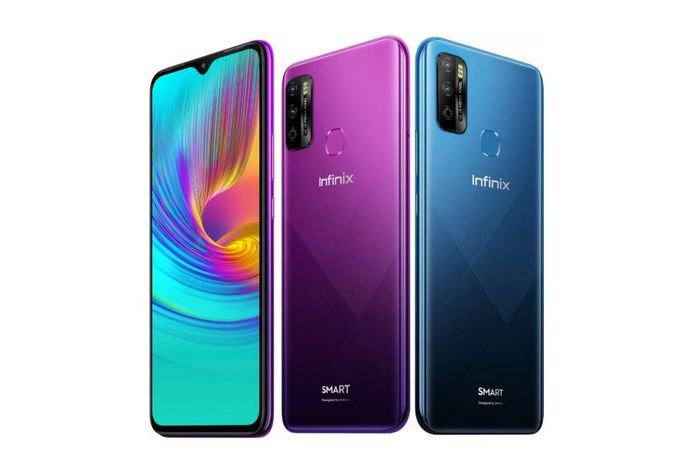
Infinix Smart 4 with 6.82-inch display, Helio A22, 6,000mAh battery and 13MP dual cameras launched for Rs 6,999 (~$94)

In July, Infinix announced the Smart 4 Plus smartphone with a pricing of Rs. 7,999 (~$107). The Helio A25 SoC powered phone brought along features like a 6.82-inch HD+ display, 6,000mAh battery, and 13-megapixel dual rear cameras. Today, the Chinese brand unveiled the Infinix Smart 4 phone as its weaker sibling.

Infinix Smart 4 specifications and features

The Infinix Smart 4 also features a 6.82-inch HD+ display with a waterdrop notch. It delivers an HD+ resolution of 720 x 1600 pixels and a 20.5:9 aspect ratio. The phone is loaded with Android 10 Go edition OS along with XOS 6.2 Dolphin UI.

Infinix Smart 4
Infinix Smart 4

The modest Helio A22 chipset along with 2 GB of RAM powers the Infinix Smart 4. The phone has an onboard storage of 32 GB and it has a microSD card slot for more storage. The phone s backed by a massive 6,000mAh battery that supports 10W charging.

For capturing selfies, the Smart 4 has a front-facing camera of 8-megapixel. The backside of the phone features an f/1.8 aperture 13-megapixel main camera and a depth sensor. A fingerprint sensor is available on the backside of the device. It has other features like dual 4G VoLTE, Wi-Fi 802.11 b/g/n, Bluetooth 4.2, GPS, microUSB, and a 3.5mm audio jack.

Infinix Smart 4 price in India

The Infinix Smart 4 has landed in India for Rs 6,999 (~$94). Midnight Black, Ocean Wave, Quetzal Cyan, and Violet are the color variants of the smartphone. It will go on sale at 12 PM on Nov. 8 through Flipkart.


$99 Selpic 3D Printer- Star A will be Launched Soon via Kickstarter

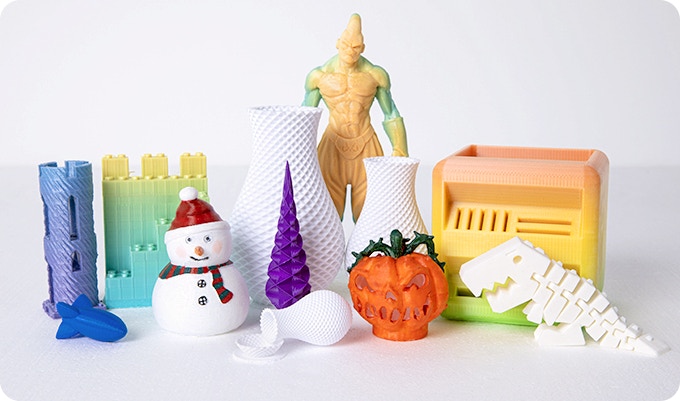
Selpic focuses on introducing digital printing solutions and has been developing innovative technologies ever since its foundation. Following the successful debut of Selpic P1, the company has gone one step ahead and come up with the world’s most cost-effective 3D printer- Selpic Star A and is crowdfunded by Kickstarter. This unit is created to bring the user’s imagination to life.

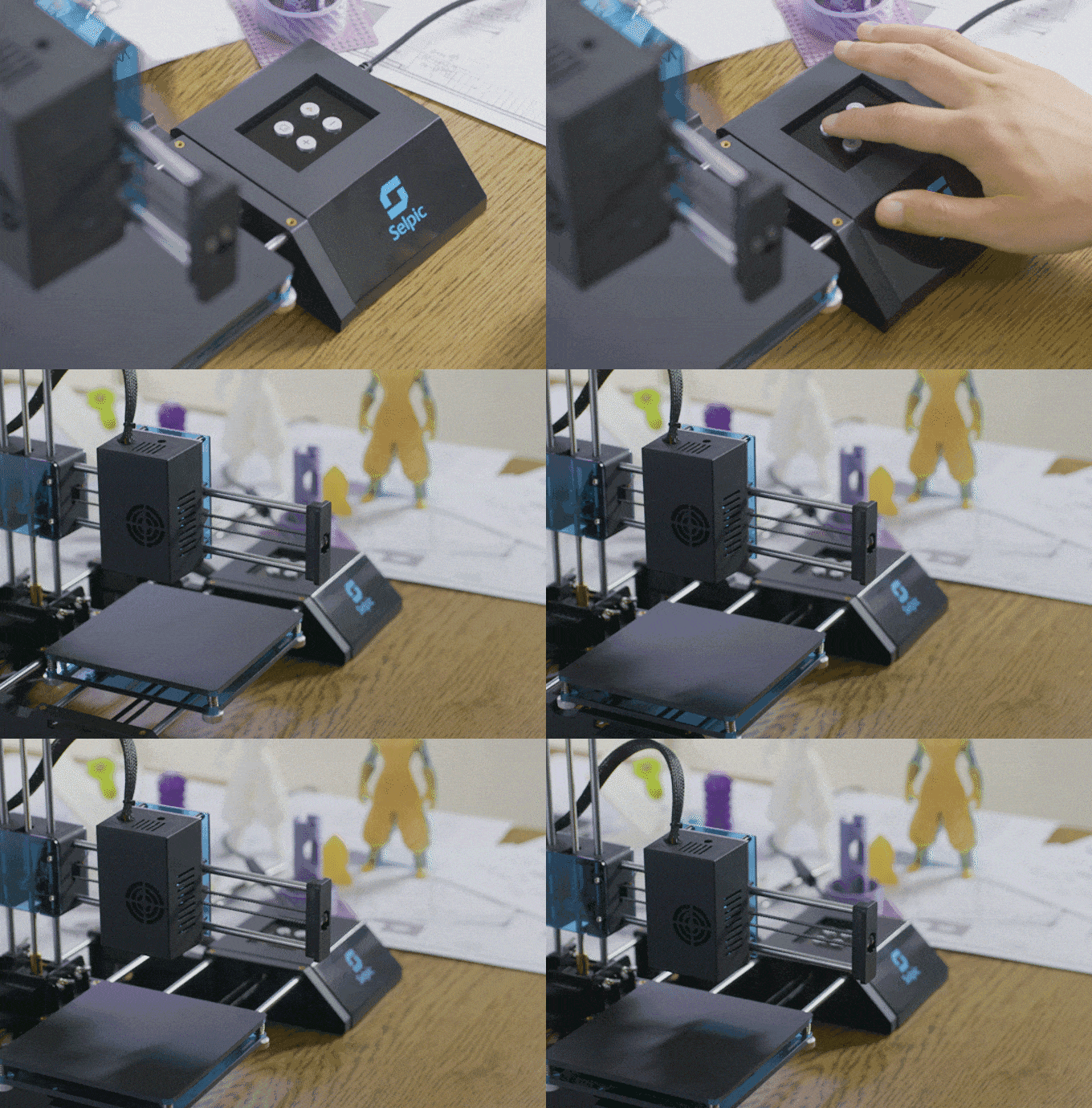
Given the MO of Selpic, Star A naturally boasts an ultra-compact design, weighing just 4.4 lbs. and measuring 10.2 x 9.4 x 9.8-inches. It is an easy-to-use multifunctional 3D printer that allows open-source customization. This 3D printer features an intuitive 4-button operation that enables one to reset, print (start, pause or cancel), feed filament, or release filament. Furthermore, its-step assembly offers added convenience.

Having an X-axis and Y-axis accuracy of 100 μm and the Z-axis accuracy of 50 μm, Star A offers a printing resolution of ±0.1 mm with the layer thickness of 0.1~0.2mm. This unit helps capture and define the fine detailing of the design accurately. It adopts direct extrusion technology that prevents filament stringing and oozing to achieve enhanced extrusion and quick retraction. This 3D printer comes with a brass nozzle that keeps the extrusion smooth and stable.

In case of a power outage or filament exhaustion, Star A automatically stops and resumes printing from where it left off after the problem is resolved, saving filament and effort. Its low-noise motor keeps the noise below 60dB to improve the users’ experience.

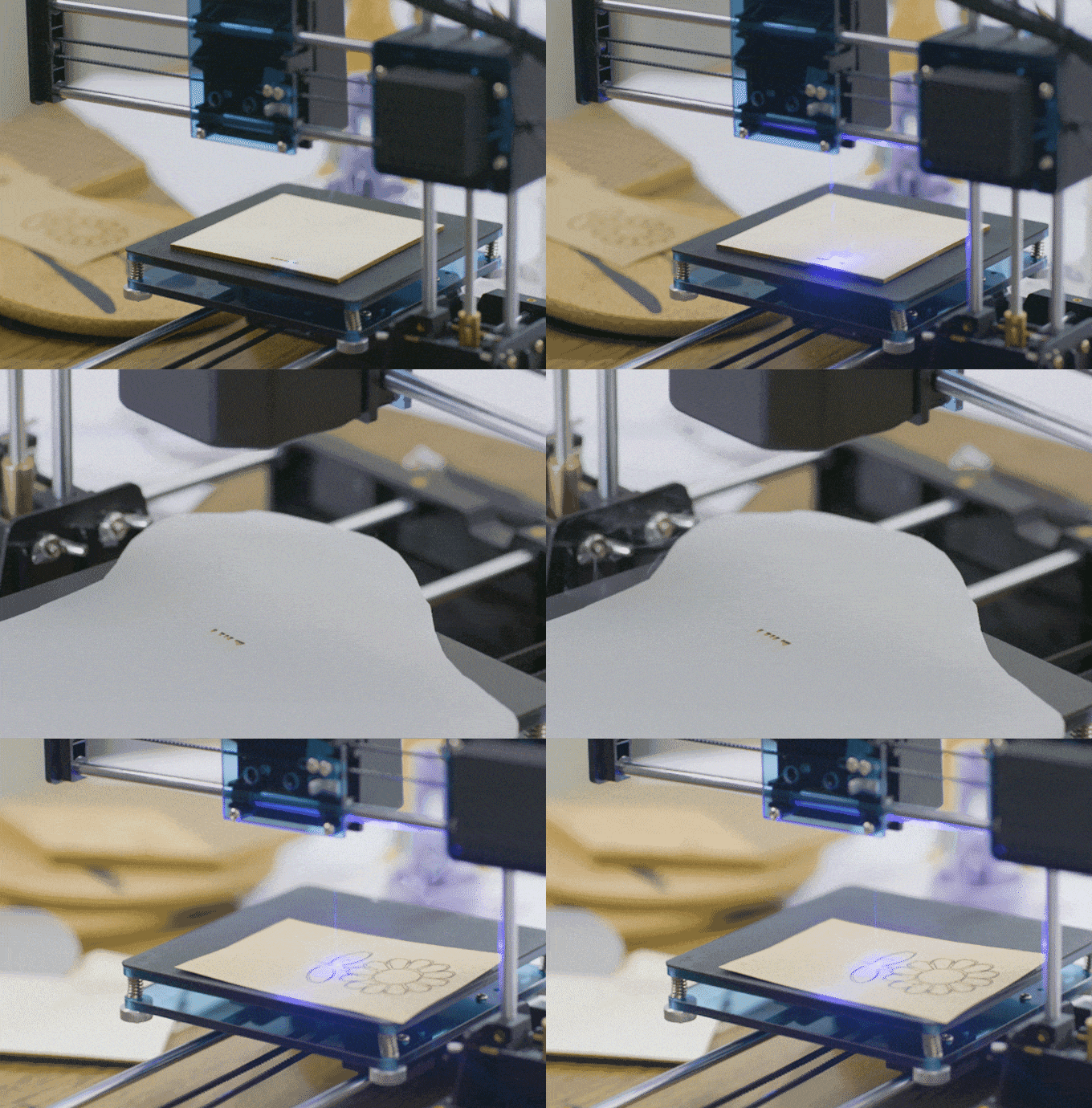
By upgrading Star A’s parts with add-ons, the user can transform or enhance it for various functions. With a hotbed, one can raise the temperature to 100℃ for an improved printing effect, while the 2.4-inch full-color touchscreen can completely replace its buttons. Adding a laser head to this unit enables it to function as a laser engraver and can easily etch surfaces like wood, plastic, or card. This unit has open-source customization that allows one to modify and adjust its parameters according to their requirements.

With its versatile and flexible functionality, Star A creates more room for creativity and is perfect for DIY projects, among other things. Its compact and easy-to-use form paves the way for a large audience. Star A line of 3D printers will be launched soon via Kickstarter and are currently sold for a discounted early bird price, starting from just $99.

To know more about the specifications and discounts, click here.

AnTuTu: Android mobile phone cost-effective rankings list for October released

AnTuTu’s list of top 10 flagship phones for the month of October is led by the Huawei Mate 40 Pro, iQOO 5 Pro, and iQOO 5. The benchmarking platform has also released October’s list of the best performing Android smartphones across different price points for the Chinese market.

0 – 1,499 Yuan (~$223) price range

AnTuTu October cost-effective phones list 1

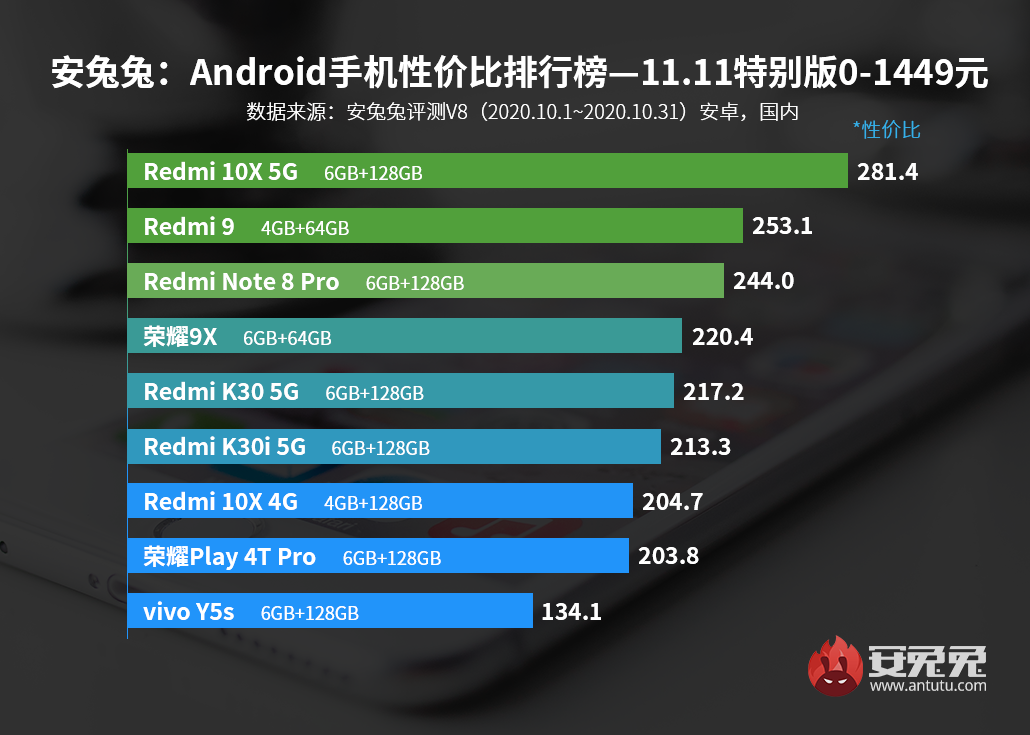
The Redmi 10X 5G (6GB+128GB) is seen leading the list of phones that are priced between 0 and 1,499 Yuan (~$223). The second and third spots are occupied by the Redmi 9 (4GB+64GB) and Redmi Note 8 Pro (6GB+128GB). The other phones that are included in the list include Honor 9X, Redmi K30 5G, Redmi K30i 5G, Redmi 10X 4G, Honor Play 4T Pro, and Vivo Y5s.

1,500 Yuan (~$223) to 1,999 Yuan (~$298) price range

AnTuTu October cost-effective phones list 2

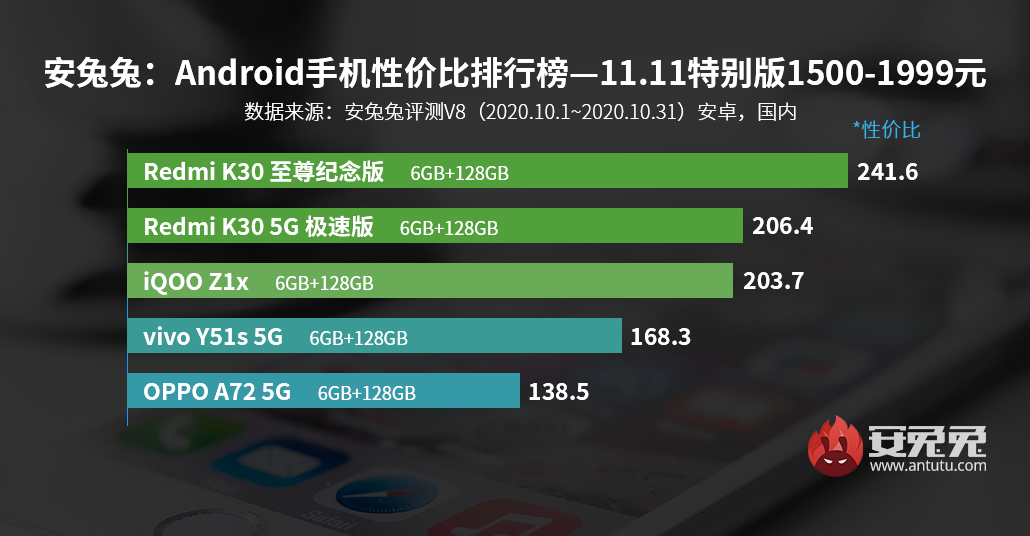
The 1,500 Yuan (~$223) to 1,999 Yuan (~$298) price range is led by the Redmi K30 Ultra. It is followed by the Redmi K30 5G Racing Edition (6GB+128GB) and iQOO Z1x (6GB+128GB) are placed second and third, respectively. The Vivo Y51s 5G and OPPO 725G are also included in the list.

2,000 Yuan (~$298) to 2,999 Yuan (~$447) price range

AnTuTu October cost-effective phones list 3

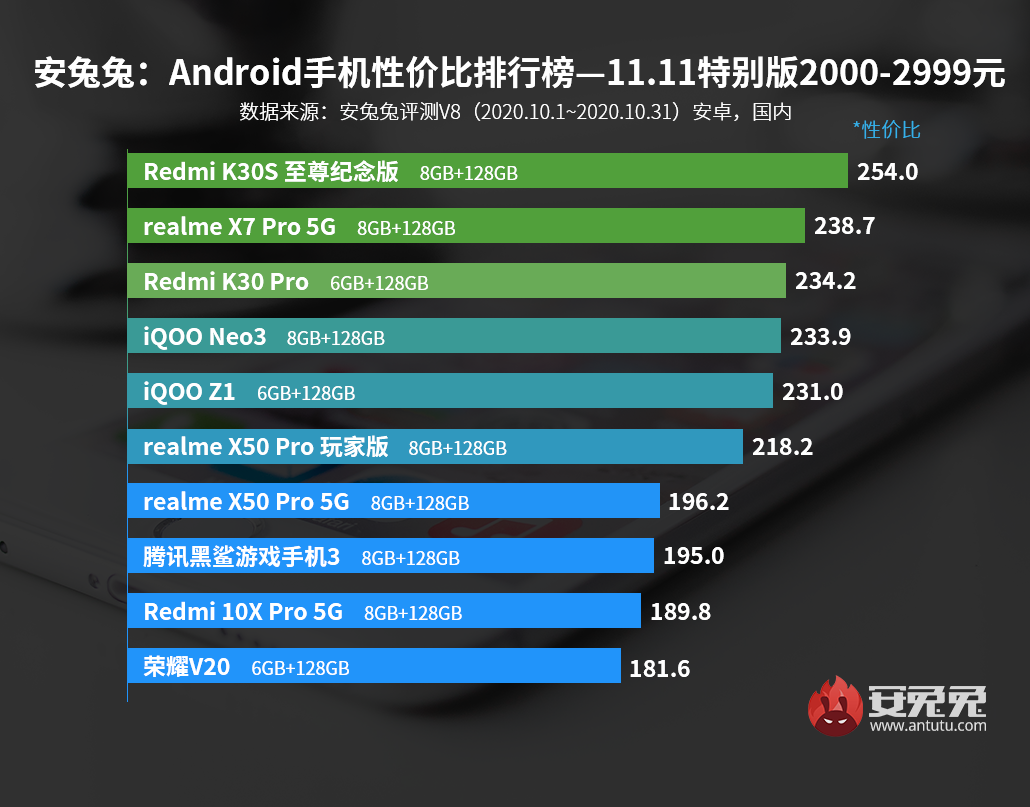
The Redmi K30S Ultra (8GB+128GB) is at the number uno spot in the 2,000 Yuan (~$298) to 2,999 Yuan (~$447) price range. In the second place is the Realme X7 Pro 5G (8GB+128GB) and Redmi K30 Pro (6GB+128GB). The other phones are included in the list are iQOO Neo3, iQOO Z1, Realme X50 Pro Player Edition, Realme X50 Pro 5G, Black Shark 3, Redmi 10X Pro 5G, and Honor V20.

3,000 (~$447) Yuan and 3,999 Yuan (~$596) price range

AnTuTu October cost-effective phones list 4

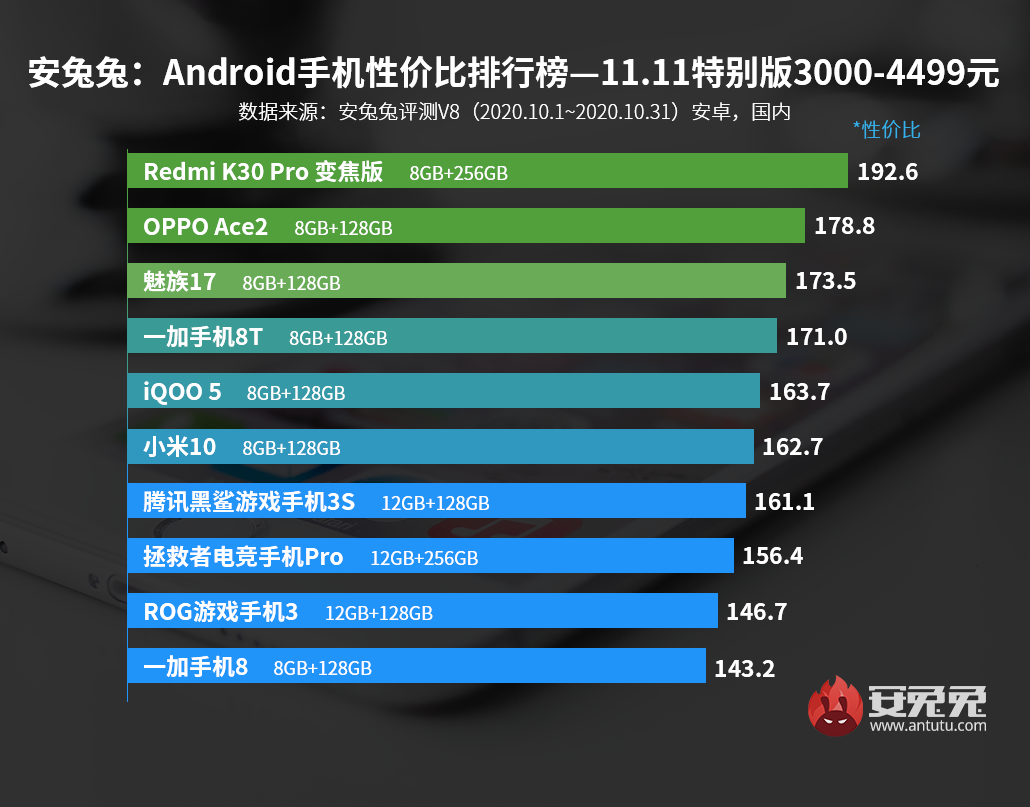
The Redmi K30 Pro Zoom Version (8GB+256GB), OPPO Ace2 (8GB+128GB), and Meizu 17 (8GB+128GB) are ranked first, second, and third, respectively, in the 3,000 (~$447) Yuan and 3,999 Yuan (~$596) price range. The OnePlus 8T, iQOO 5, Xiaomi Mi 10T, Black Shark 3S, Lenovo Legion Pro, ROG Phone 3, and OnePlus 8 are mentioned in the list.

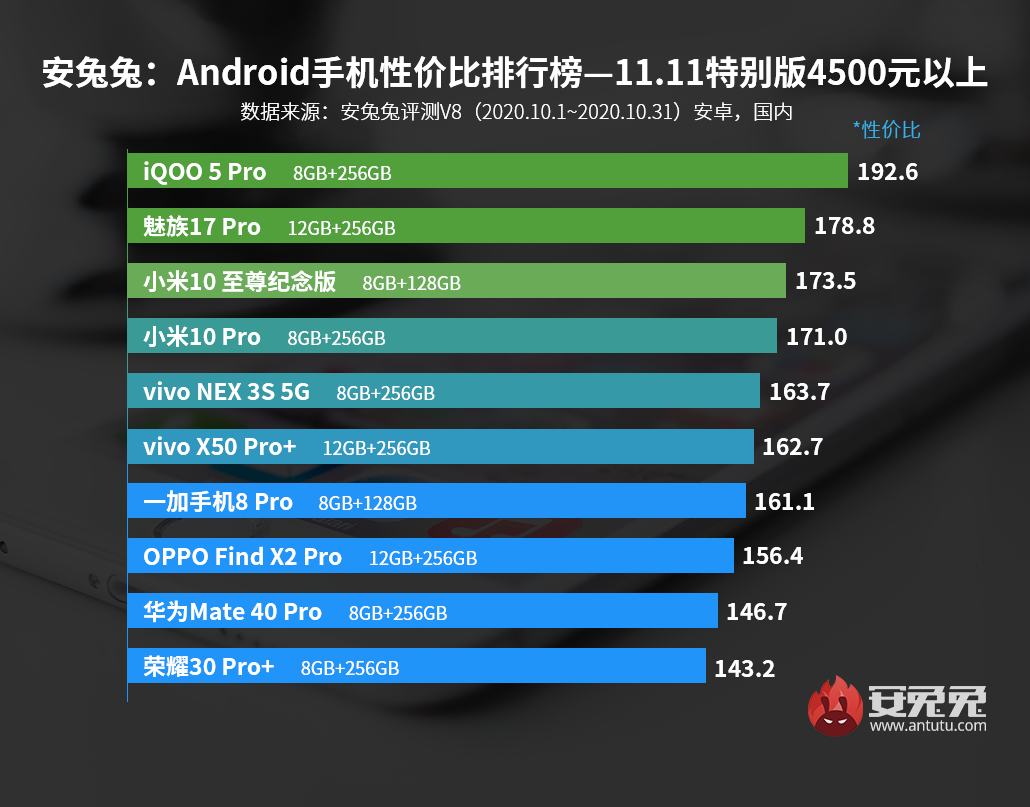
Above 4,500 Yuan (~$670)

AnTuTu October cost-effective phones list 5

The iQOO 5 Pro, Meizu 17 Pro, and Xiaomi Mi 10 Ultra are the top 3 phones in the above 4,500 Yuan (~$670) segment. These phones are followed by the Xiaomi Mi 10 Pro, Vivo NEX 3S 5G, Vivo X50 Pro+, OnePlus 8 Pro, OPPO Find X2 Pro, Huawei Mate 40 Pro, and Honor 30 Pro+.


Xiaomi India emerges as the top brand for smartphone quality

Xiaomi, the Chinese smartphone manufacturer, has been extremely successful in the Indian market. Since its first entry into the region, it has become the most popular brand in the region and has now also received the title for the top brand in terms of smartphone quality.

Xiaomi

The company received the title after RedQuanta, a customer intelligence firm, reported on its findings of a study that was conducted in over 25 cities with over a thousand respondents. The primary goal of the study was to find the top smartphone brand in the market, in terms of the perceived quality of its handsets. In the study, multiple factors were taken into consideration, which includes the camera, battery life, durability, and value for money.

The report found that Mi India led the rank in two of these aspects, namely camera, and long battery life. Furthermore, the company also arrived on top of its known affordability. The study found that most respondents placed an emphasis on a “good quality” smartphone. While the recommended score is 83 percent as per the firm, Xiaomi managed to achieve a score of 86 percent on post purchase satisfaction.

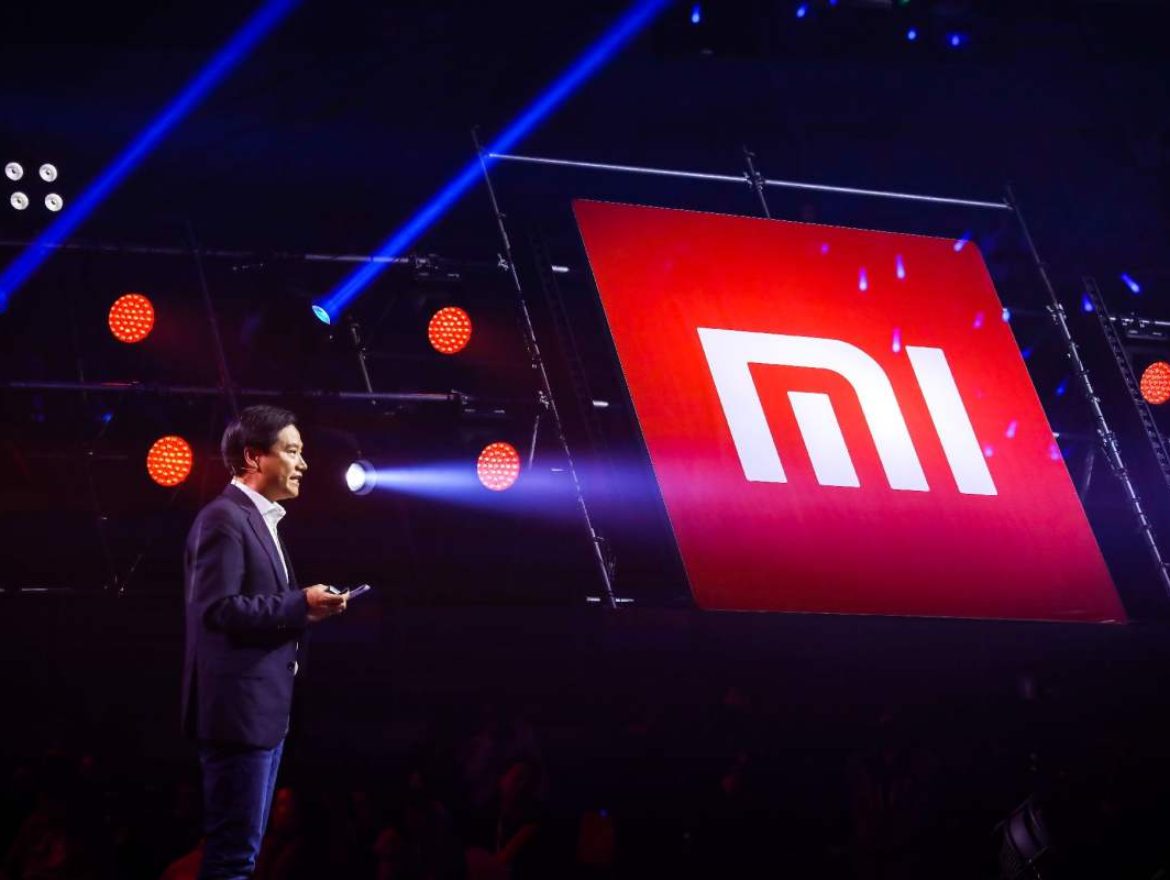
Xiaomi Logo Co-founder Lei Jun

Muralikrishnan B, Chief Operating Officer, Mi India stated that “we are committed to continuous innovation with an unwavering focus on quality and customer experience. Towards this, we are deeply invested in ensuring that our Smartphones are designed for India and are able to weather the tough environmental and usage conditions that phones are subject to in the real world. While we are excited about topping the Quality charts again, our aim is to provide the best quality at an honest price and well rounded experience to our consumers. Recognition like this gives us more confidence about our decisions and pushes us to ensure that the user receives only the best.”


AnTuTu lists the best iOS devices in October 2020, excludes iPhone 12

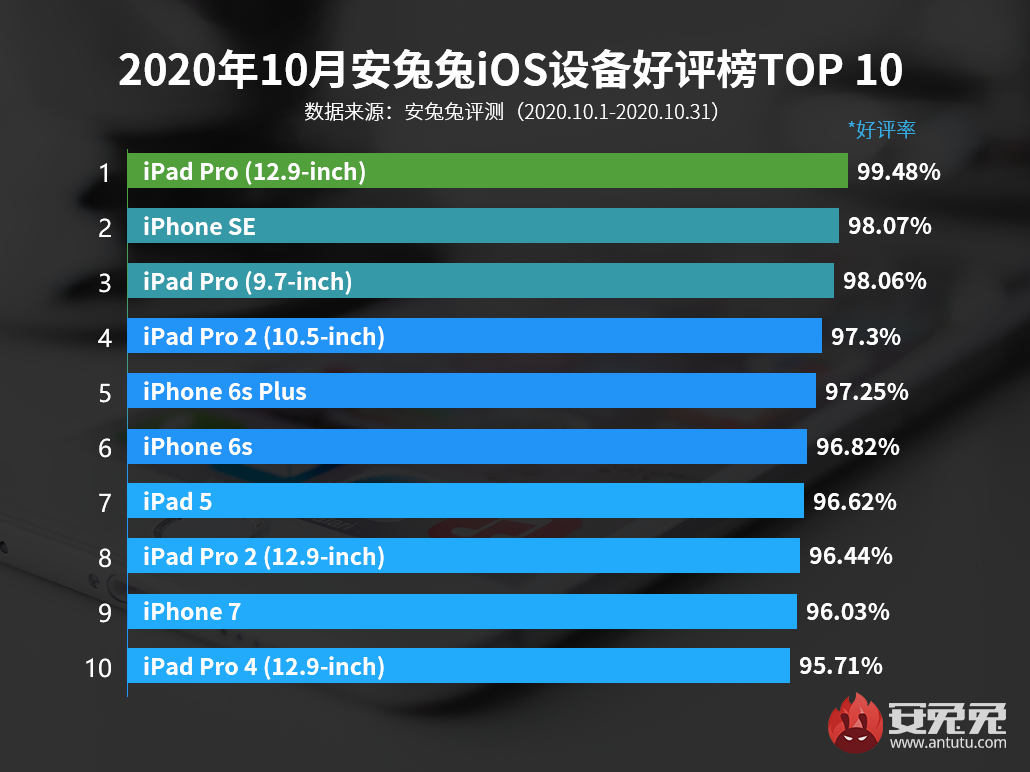
AnTuTu has just released its list for the best Apple iOS devices for the month of October 2020. This list excludes the newly launched iPhone 12 series and has the iPad Pro top the ranking.

AnTuTu

The reason for the exclusion of the iPhone 12 series is apparently its launch. The 2020 flagship lineup was finally unveiled on October 13, however, it was only received by a relatively small number of users. Thus, AnTuTu decided to exclude it from its list. The iOS devices ranked in their October list is based on the user reviews and its overall reception that have been received last month.

Looking at the list, the iPad Pro (12.9 inch model) took the top spot with 99.48 percent 5 star ratings from users. The iPhone SE came in second with 98.07 percent while the iPad Pro (9.7 inch) and iPad Pro 2 (10.5 inch) came in third and fourth with 98.06 and 97.3 percent respectively. The only other iPhone that made it to the top 5 in the list is the 5 year old iPhone 6S Plus with a 97.25 percent 5 star ratings.

AnTuTu

This list is indicative of how popular Apple devices remain despite their age. Other notable older models the iPhone 7 (96.03 percent), the base iPhone 6S (96.82 percent, and a couple of other iPad models as well. We might see the iPhone 12 lineup make an appearance in the November 2020 list. So stay tuned for more updates.


ZTE Blade 20 5G with Dimensity 720, 16MP triple cameras, and 4,000mAh battery launched for 1,499 Yuan (~$223)

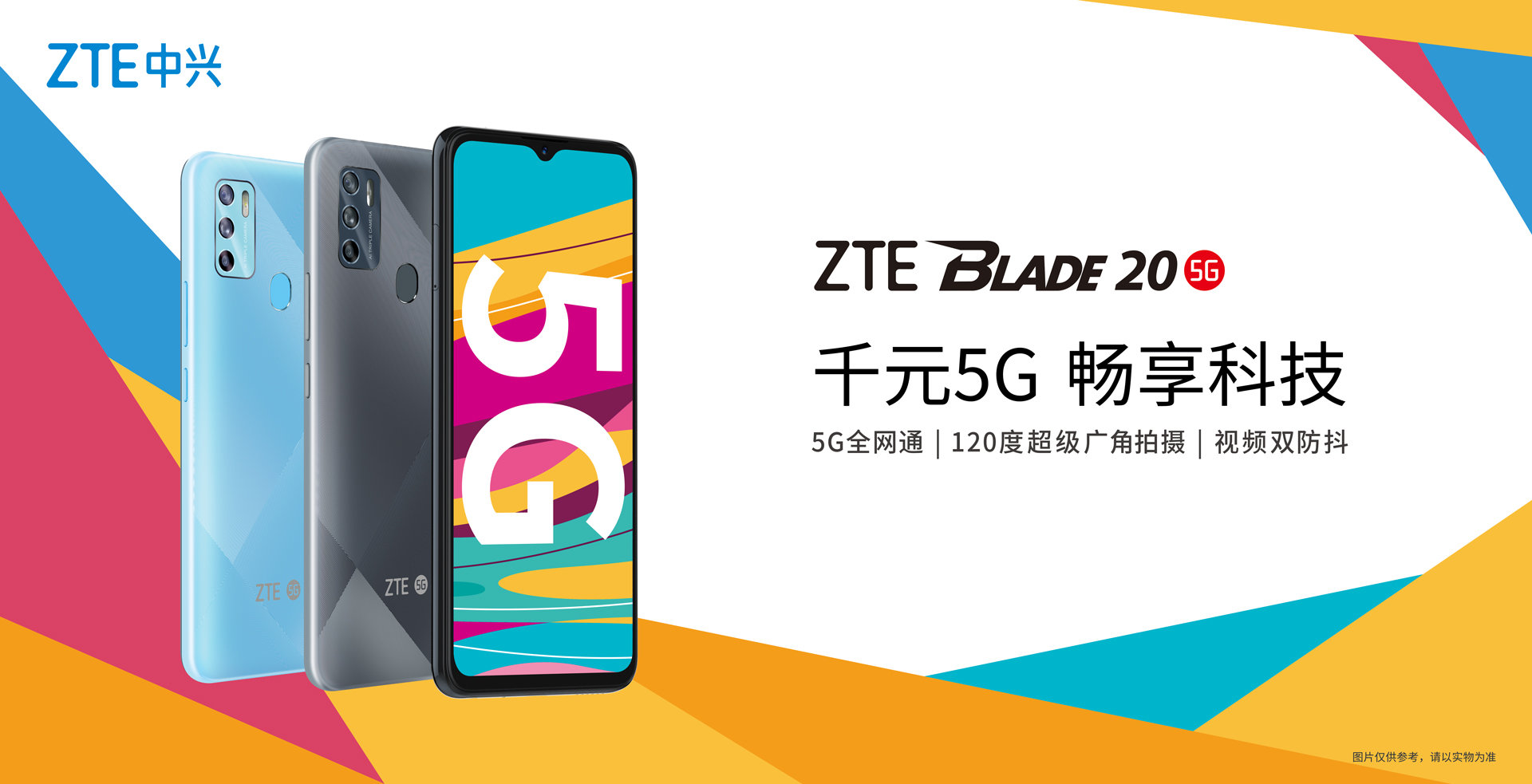
Various smartphone makers in China are launching new phones to make the most of the upcoming Double Eleven (Nov. 11) shopping festival. Today, OPPO announced the OPPO K7x 5G smartphone, Vivo unveiled the Vivo S7e 5G phone, and now ZTE has unveiled the Blade 20 5G. The phone bears resemblance to the ZTE Blade A7s 2020 4G phone in terms of design. The Blade 20 5G appears like a 5G variant of the A7s.

ZTE Blade 20 5G specifications and features

The ZTE Blade 20 5G is fitted with a 6.52-inch IPS LCD screen with a waterdrop notch. The 20:9 screen produces an HD+ resolution of 720 x 1600 pixels. The handset comes loaded with Android 10 OS.

It has a front-facing camera of 8-megapixel. The backside of the device features a triple camera unit that includes a 16-megapixel main camera, an 8-megapixel ultrawide lens with a 120-degree field of view, and a 2-megapixel depth sensor. It carries support for 4K video recording.
ZTE Blade 20 5G
ZTE Blade 20 5G

The Blade 20 5G draws power from Dimensity 720 chipset and 6 GB of RAM. The phone comes with a native storage of 128 GB and it has a microSD card slot for more storage. The phone is backed by a 4,000mAh battery, which lacks support for fast charging. The Blade 20 5G comes with other features like a built-in FM radio antenna and a rear-facing fingerprint sensor.

ZTE Blade 20 5G pricing and availability

The ZTE Blade 20 5G is aimed towards the offline markets of China with a pricing of 1,499 Yuan ($223). The phone comes in two colors such as Light Blue Mint and Jazzy Gray.


Smartwatches may soon be powered by wearers, researchers aim to use energy from human movements

Researchers in the CUHK (Chinese University of Hong Kong) are studying a new method to harvest energy from human movements. The results of the study could bring about a shift in the technology used in wearable technology like smartwatches in the near future.

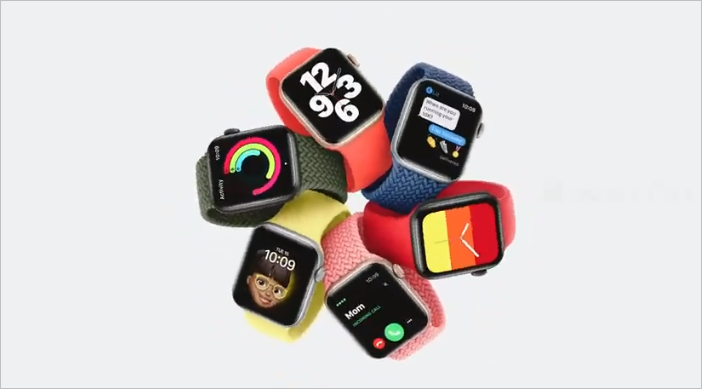
Apple Watch SE

According to an SCMP report, the researchers are studying a swinging metal pole that is designed to mimic the movements of the human arms. The device that is built to harvest energy from this movement utilizes a highly compact generator, which contains under 10 components. This includes a motion capture unit and a power generation unit. The primary aim of this study is to harvest energy created by human motion to power smartwatches and wristbands.

The research began earlier this year after a boom in wearable devices was observed across the globe. In recent times, the industry for smartwatches and other wearables has grown and is expected to rise even further once the market recovers from the Coronavirus pandemic. In 2019, the wearable industry had become a 20.65 billion US Dollar market, which is projected to reach 96.31 billion US Dollars by 2027.

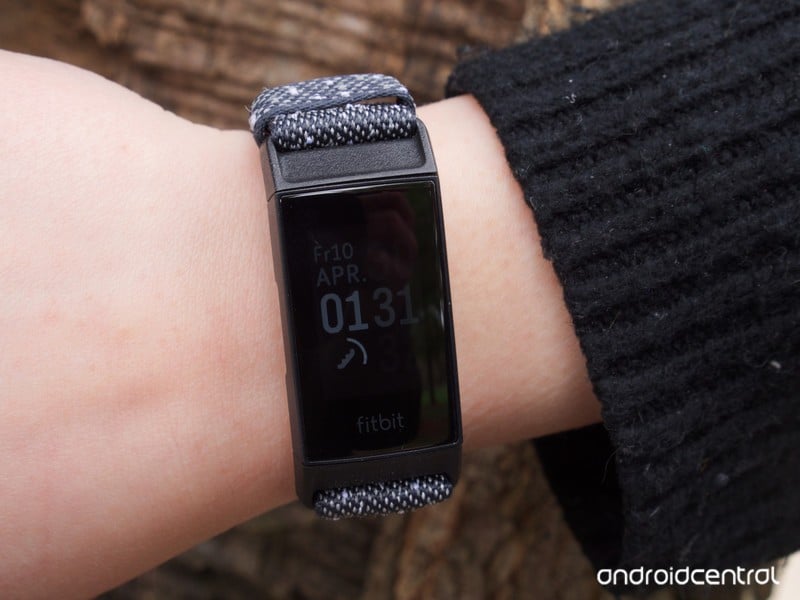
Fitbit

Furthermore, this category has also become increasingly health centric, with OEMs offering features that help users map their blood oxygen levels, heart rate, sleep patterns, and more. With the growth of health enthusiasts, this technology will also benefit the entire consumer market as well. At the moment, the primary concern with such devices is always the battery life, but the technology might be a stepping stone to a device that can sustain itself through just human motion. Since wearables have already saved lives in the recent past, not having to remove them for charging is another positive outcome.


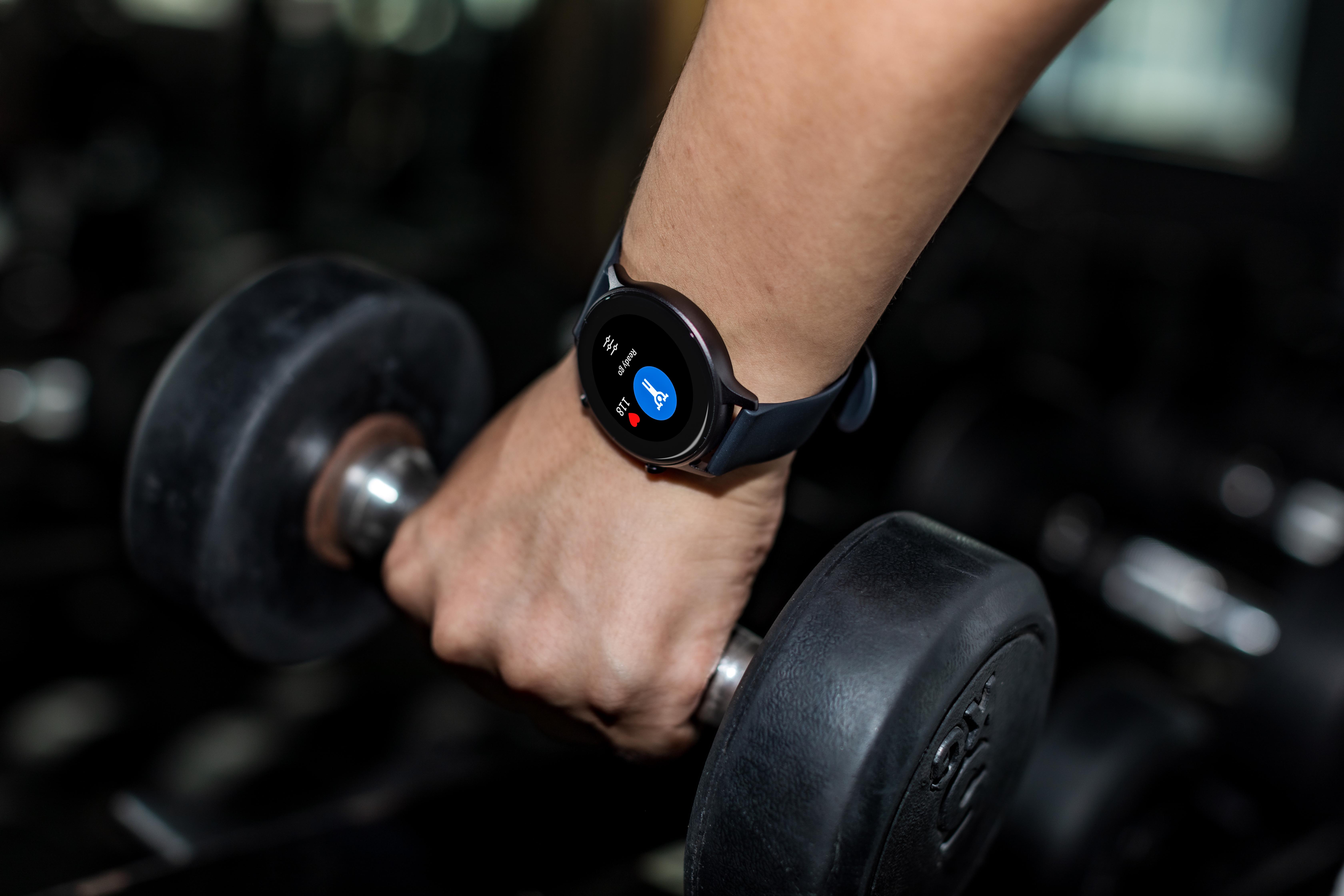
UMIDIGI Urun- GPS Sports Smartwatch Launched for Just $40

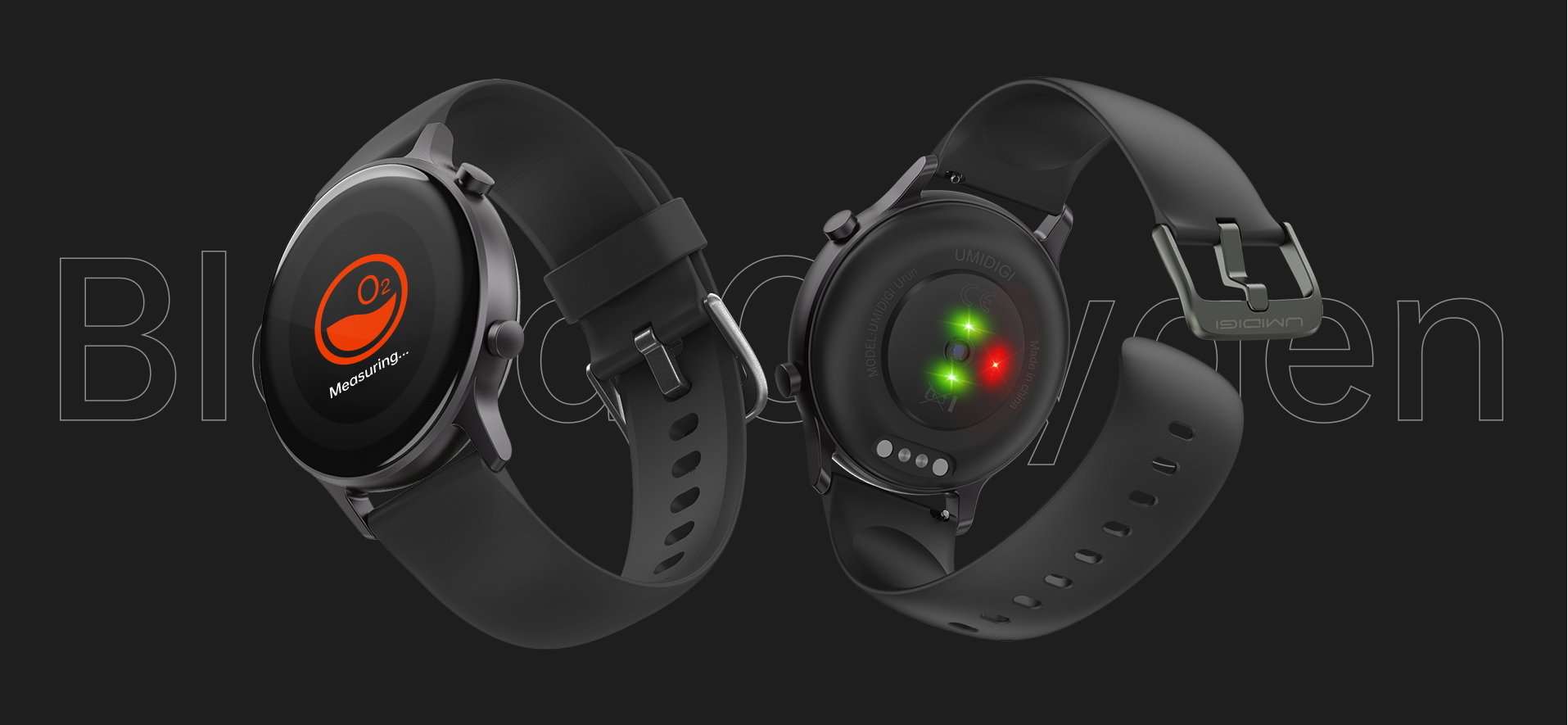
Apart from smartphones, the new segment of smart-sports accessories has taken the market by storm. Contributing to this sector, UMIDIGI recently launched a new GPS Sports smartwatch- Urun that packs features like built-in GPS, multiple sport modes, 5ATM water resistance, and blood oxygen monitoring. This smartwatch will be available for just $39.99 at the upcoming 11.11 Global Shopping Festival on AliExress.UMIDIGI Urun GPS Sports Smartwatch (2)Precise GPS

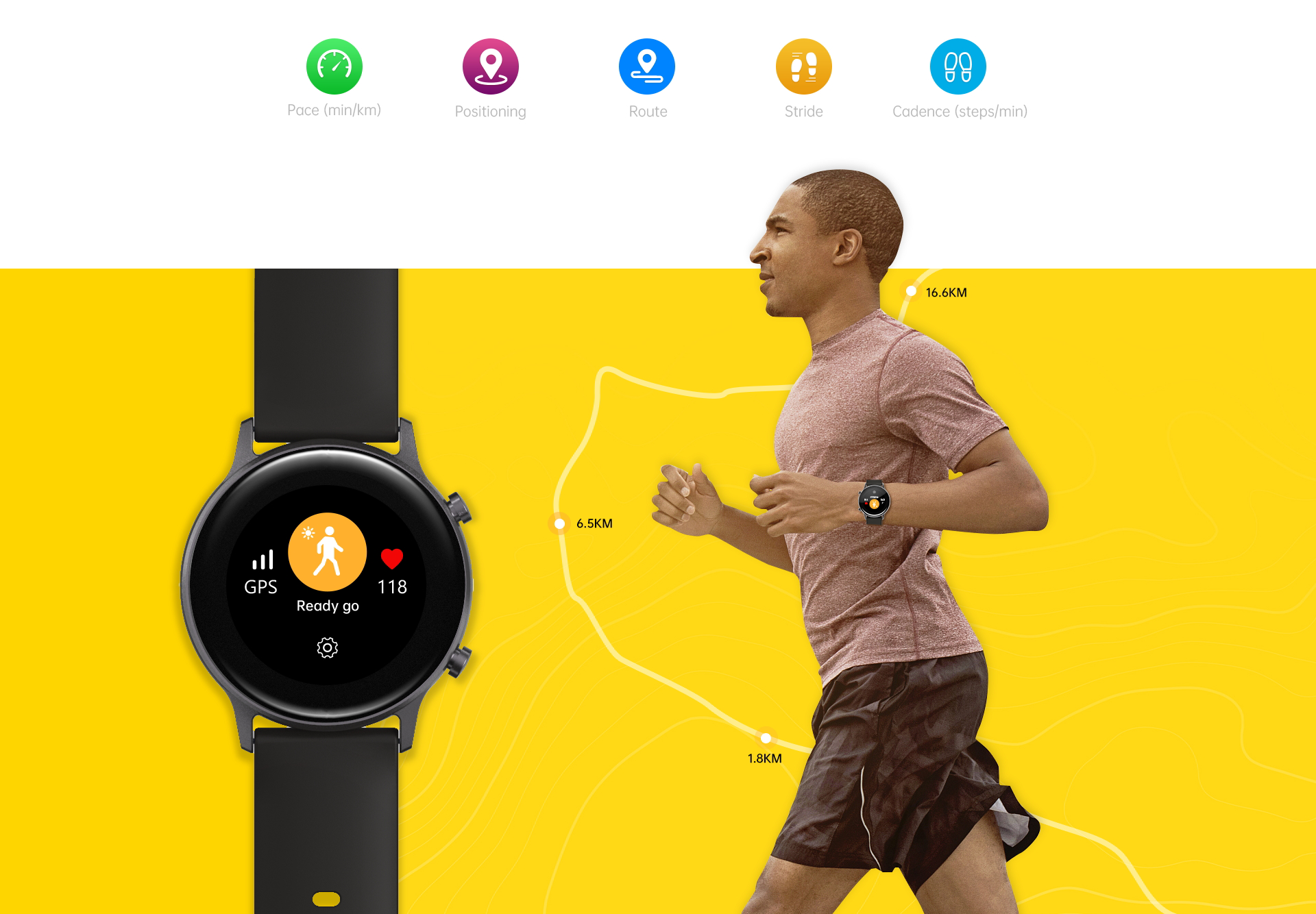
As its name suggests, Urun allows the user to identify the exact coordinates of their location with the help of 3 different positioning systems- GPS, GLONASS, and BeiDou. This sports smartwatch combines these functions to enhance the calculation speed and tracking accuracy when the user is running, for added efficiency. One can also carry out a detailed analysis of their workout with real-time pace, route, stride, and cadence to know more about their performance.UMIDIGI Urun GPS Sports Smartwatch (3)Sports Mode

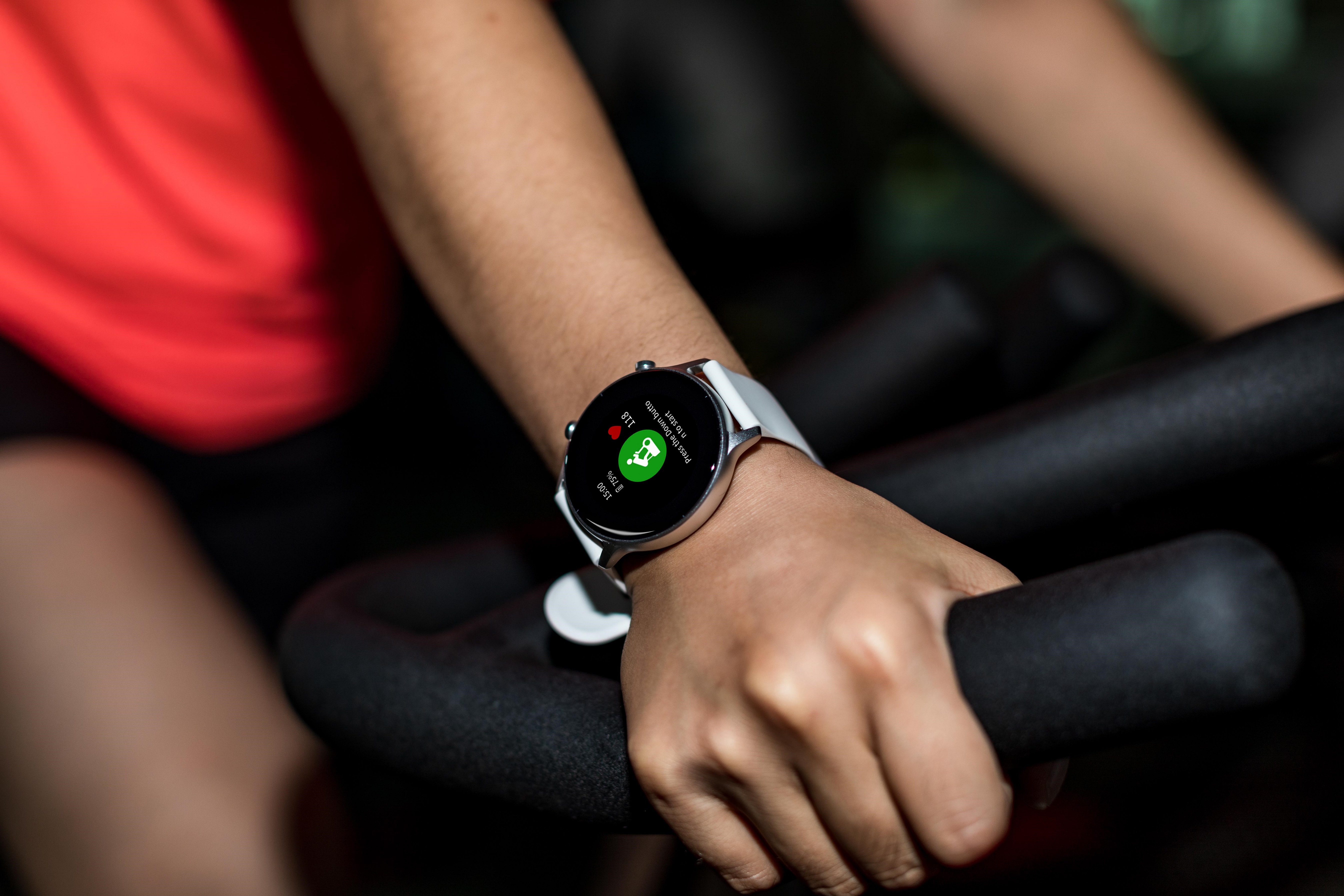
Urun GPS smartwatch features 17 sports modes ranging from indoor to outdoor. It can calculate the calorie-count of activities like yoga, walking, running (indoor and outdoor), and dancing, to name a few. This smartwatch is water-resistant up to 5ATM (50m), allowing the user to go swimming and rowing with ease. The versatile form makes this unit an ideal companion for workout and outdoor adventures.

Blood Oxygen Level

Apart from the sports mode benefits, UMIDIGI Urun enables the user to know more about their health. It is a well-known fact that blood oxygen can reflect many health problems, so this sports watch effectively monitors the blood oxygen to alert the user in case of any irregularities. This unit automatically detects the oxygen level at a specific time during sleeping. Urun also features an advanced PixArt sensor that can track the user’s heartbeat throughout the day.

UMIDIGI Urun GPS Sports Smartwatch (4)Design

Urun has a full-color circular display and dual crown design with well-spaced icons for convenient usage. It features a circular silhouette for an elegant appeal, while the silicone straps offer wearability comfort. Furthermore, this smartwatch allows the user to control music playback for hassle-free use.

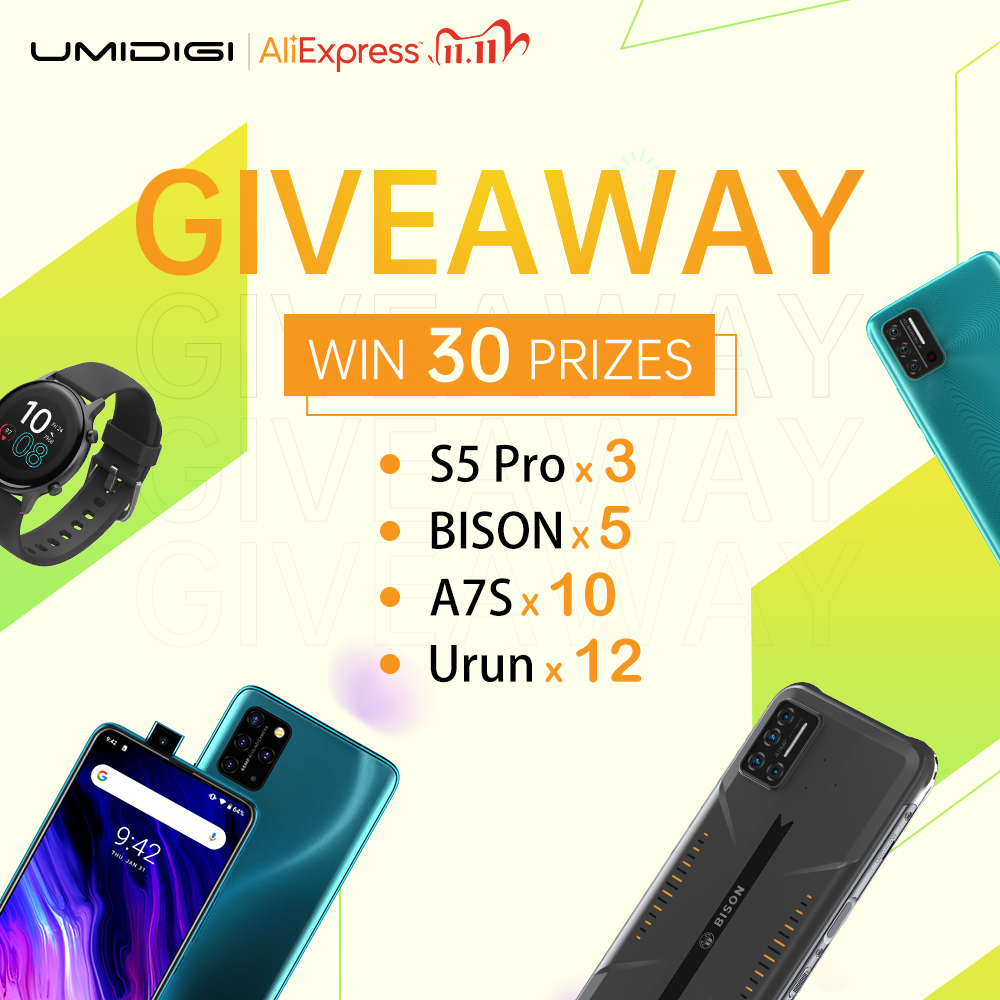
UMIDIGI Urun comes in 5 colors- Space Grey, Icy White, Titanium Grey, Rose Gold, and Ocean Green. The watch will be up for sale at 11.11 Global Shopping Festival on AliExress for just $39.99. Apart from this smartwatch, UMIDIGI’s various new smartphones will be up for sale at discounted prices. And if that’s not all, UMIDIGI is also running a huge giveaway, of which 30 winners can get a chance to win a UMIDIGI smartphone or smartwatch for free. To know more about this deal, interested users can visit UMIDIGI’s official website.

UMIDIGI’s Best Deals on 11.11 Global Shopping Festival (November 11-12 PST, 2020)

Apple patents next gen Touch ID, uses Infrared technology housed under the display

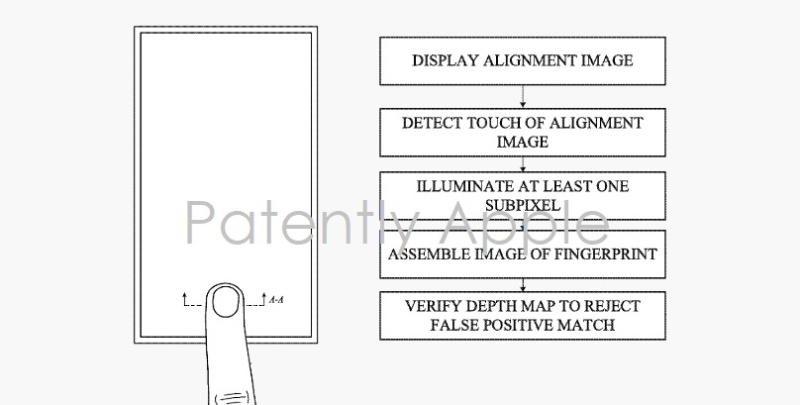
Apple has just recently been granted a patent for the next generation of Touch ID. The company had filed a patent application back in 2019, which was for an infrared light technology that is housed under the display.

Apple

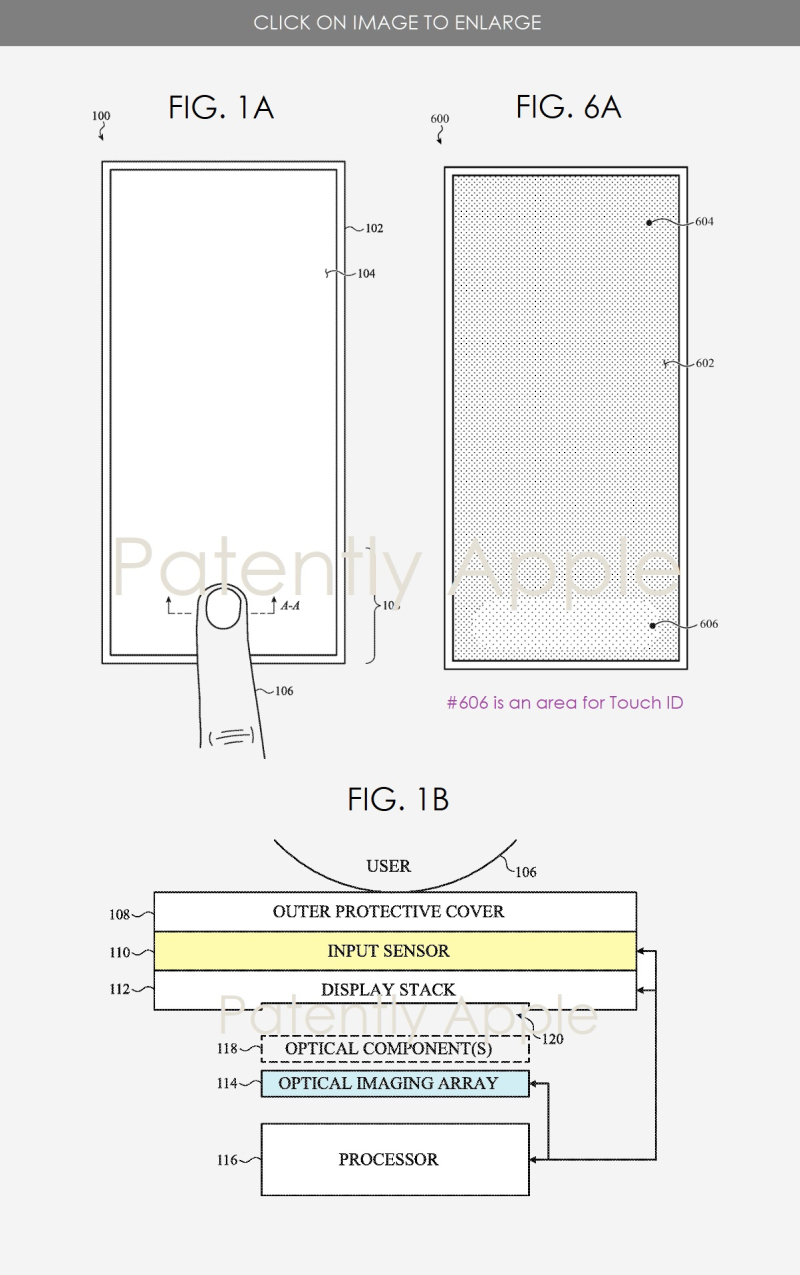
The patent was granted by the US Patent and Trademark Office, which involved a new image sensor that is housed under the device’s screen. Looking at the patent, the primary element is the new optical imaging system that will emit a shortwave infrared light through the display, while a photosensitive element will be configured to receive a reflection from the interface surface to map the image of the users’ fingers.

In other words, it is what appears to be an in display fingerprint scanner from the Cupertino based giant. The Apple patent also places a heavy emphasis on this “Shortwave Infrared light,” which is a crucial component of what appears to be next generation Touch ID.

Apple

Unfortunately, this is just a patent, and have no way of actually knowing if the company is developing or actively working with the technology at the moment. Furthermore, Apple has also been mainly focusing on Face ID for its flagship iPhones. Although, we might see this technology implemented on iPads or even a few budget iPhones in the near future.


AnTuTu October 2020: HUAWEI Mate40 Pro tops the list but not by a high margin

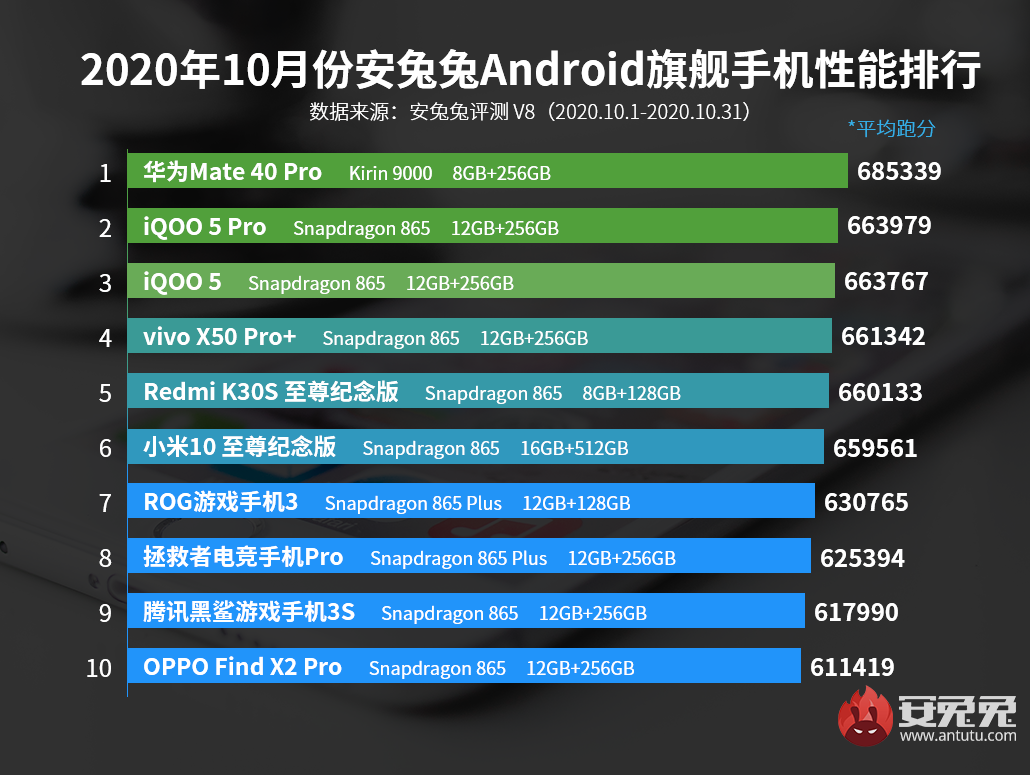
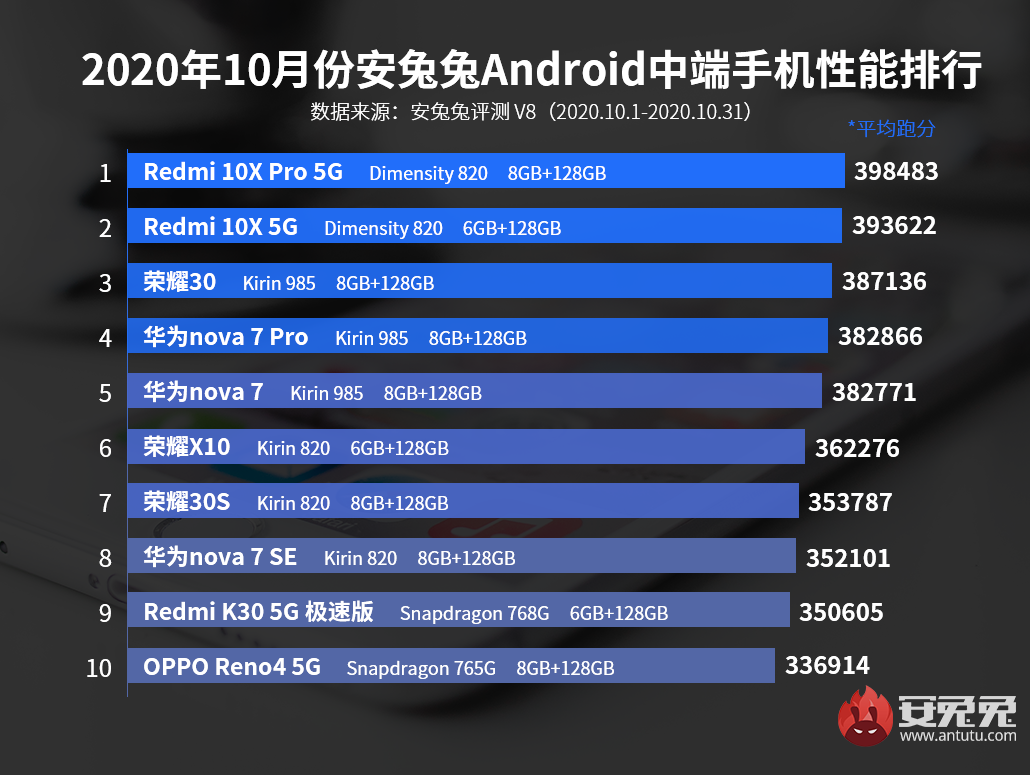
AnTuTu Benchmark has released the report for the month of October. The HUAWEI Mate40 Pro now leads the list of flagship smartphones. OPPO Find X2 and Mi 10 Pro are no longer in the top 10 list.  On the other hand, the mid-range smartphone list is virtually unchanged with only one minor difference, compared to last month’s report

AnTuTu Benchmark October 2020 Featured

In case you are not aware, AnTuTu, a popular Chinese benchmarking platform publishes reports every month with lists of top-performing Android smartphones. The scores considered by the firm are average points garnered by the devices and not their highest score.

Right now, the HUAWEI Mate40 Pro is the only Android smartphone in the world powered by a 5nm chipset, HiSilicon Kirin 9000 to be exact. Hence, it makes sense for it to top the list for October with 685,359 points.


But despite being based on a 7nm process, the Qualcomm Snapdragon 865-equipped iQOO 5 Pro at second place scores 663,979 points. That’s because the amount of RAM and refresh rate affects scores. Both of which are higher in the iQOO device (12GB, 120Hz) compared to the Mate40 Pro (8GB, 90Hz).

Then, surprisingly, vivo X50 Pro+ (661, 342 points) overtakes the Xiaomi Mi 10 Ultra (659,561 points). That’s not all, the newly launched Redmi K30S Ultra (660,133 points) aka Mi 10T also scores than Xiaomi’s 10th-anniversary flagship.

Further, the ASUS ROG Phone 3 with 630,765 points overshadows Lenovo Legion Pro, which scored 625,394 points. Whereas, as mentioned in the beginning, the Mi 10 Pro, which has been now discontinued and OPPO Find X2 don’t make it to the list.

On the other hand, the list for mid-range smartphones has only one change and that is the HUAWEI nova7 Pro (382,866 points) is now ahead of the vanilla nova7 (382,771 points).


Apple iPhone 12 Mini has slower MagSafe wireless charging speed than other models

Apple recently launched its new iPhone 12 series smartphones in the market and two of the models are already available for purchase — iPhone 12 and 12 Pro. The other two models — 12 Mini and 12 Pro Max will go on sale in a couple of days.

Now, ahead of the Apple iPhone 12 Mini goes on sale, it has been revealed by the company’s new support documents that the phone will have slower MagSafe wireless charging speed compared to other models in this lineup.
Apple iPhone 12 Mini

EDITOR’S PICK: No Mi MIX 4 in 2020 says tipster, but foldable and 200W+ charging phones likely to launch in 2021

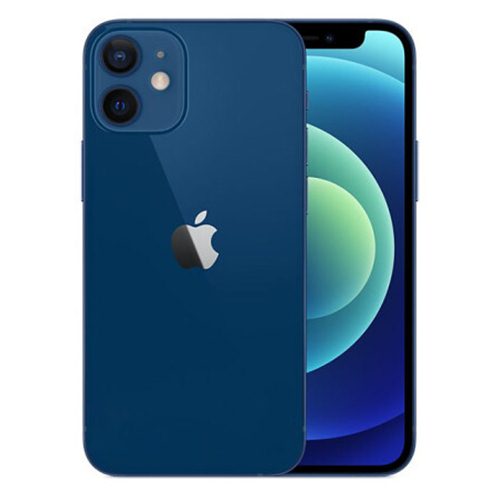
The iPhone 12 Mini 12 supports 12W wireless charging over MagSafe while all the other three models in the series support 15W. While the slower speed is surely disappointing, it is still faster than the 7.5W support over standard Qi wireless charger.
This is the first time Apple is offering a Mini model in the iPhone lineup, something that the company did years ago for the iPad lineup. Apart from a smaller 5.4-inch display, almost every specification of the phone is similar to the standard iPhone 12.
The phone is powered by the company’s new A14 Bionic chipset and comes with support for 5G connectivity for the first time on iPhone. Also, the device has a dual-camera system that is aimed at offering better photography results.

Apple iPhone 12 Mini starts at $699 for the base model with 64GB internal storage but the company is also offering 128GB and 256GB storage models. The device will be available for pre-order in several regions from 6th November.


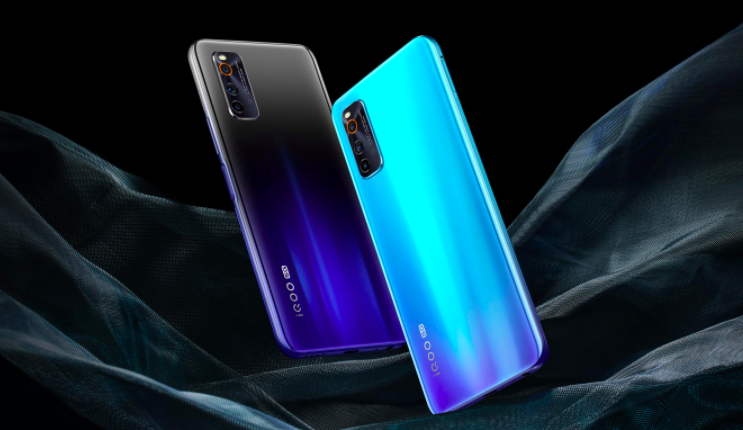
iQOO Neo3 gets 300 yuan discount; 6GB + 128GB model available for 2,398 yuan ($358)

Vivo-backed iQOO had launched a new smartphone as a part of its Neo series a few months back — iQOO Neo3, which went on sale in China in late April. Now, as a part of the Double Eleven promotion, the company is offering a discount on the device.

The iQOO Neo3 smartphone’s 6GB RAM and 128GB internal storage model which is priced at 2,698 yuan (approximately $403), is being offered for a price of 2,398 yuan (~$358), a discount of 300 yuan (~$45).

iQOO Neo3

The smartphone features a 6.57-inch FHD+ LCD display panel with 98% sRGB color gamut, DCI-P3, and HDR10. It offers a 144Hz refresh rate, an aspect ratio of 20:9 with a screen-to-body ratio of more than 90 percent.

Under the hood, the device is powered by the Qualcomm Snapdragon 865 SoC clocked at 2.84GHz, along with Adreno 650 GPU. The company has also upgraded the storage standard to UFS 3.1 which promises sequential reading speeds of up to 1733MB/s and write speeds of 731 MB/s.

EDITOR’S PICK: Xiaomi signs contract with Tell Labs to build a laboratory for IoTs

The device comes with an 11-tier cooling system which the company claims can cool the internal temperature by up to 10 degrees. For connectivity, the phone supports dual-mode 5G SA/NSA, NFC, and Wi-Fi 6+.

As for the camera department, it comes with an AI triple-camera setup that includes a 48MP primary sensor, an 8MP 112-degree ultra-wide-angle lens, and a 2MP macro lens. On the front, it has a 16MP snapper housed inside the punch-hole cutout.

The phone runs the latest Android 10 operating system with the company’s own iQOO UI on top. As for the battery, the iQOO Neo3 is powered by a 4,500mAh battery and comes with support for 44W fast charging.


Huawei Nova 8 SE’s new leak reveals Dimensity 800U and Dimensity 720 CPU variants

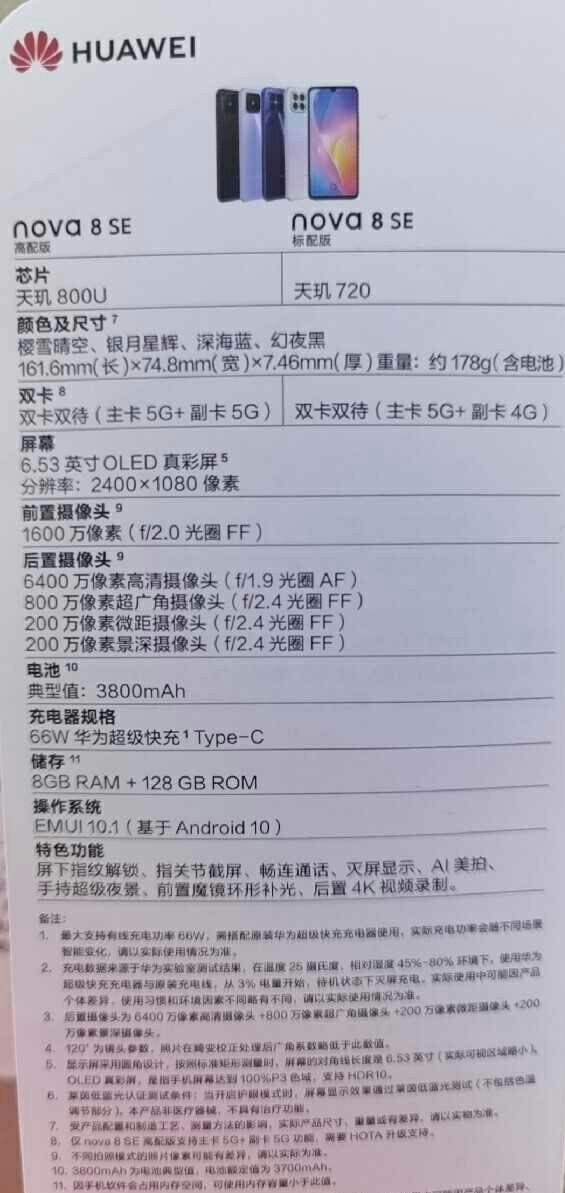
Huawei is all set to launch the Nova 8 SE smartphone tomorrow in China. At the end of the previous month, a tipster from China claimed that there will be two CPU variants of the smartphone. Another leak (via) has surfaced ahead of launch to corroborate that the Nova 8 SE will come in Dimensity 720 and Dimensity 800U chipset editions.

The leaked specs sheet that has appeared on Weibo states that the Huawei Nova 8 SE will come in a Standard Version powered by the Dimensity 720 chipset and a High Version featuring driven by the Dimensity 800U chipset. The D800U edition has support for 5G + 4G dual SIM connectivity, whereas the D720 model has support dual 5G connectivity. Apart from these differences, both variants are equipped with the same specs.

Huawei Nova 8 SE specs leak

Huawei Nova 8 SE specifications

The Nova 8 SE measures 161.6 x 74.8 x 7.46mm and it weighs 178 grams. The device is equipped with a 6.53-inch OLED screen that offers a Full HD+ resolution of 1080 x 2400 pixels. It has a front-facing camera of 16-megapixel with f/2.0 aperture.

Huawei Nova 8 SE poster

The Nova 8 SE’s rear-mounted quad-camera setup has a 64-megapixel with f/1.9 aperture, an 8-megapixel superwide lens, a 2-megapixel macro lens, and a 2-megapixel depth sensor. The phone is preinstalled with EMUI 10.1 based Android 10 OS.

The Nova 8 SE houses a 3,800mAh battery that supports 66W fast charging through USB-C. The SoC is coupled with 8 GB of RAM. The device includes an internal storage of 128 GB. Other features available on the device include an under-display fingerprint scanner, handheld super night scene, and 4K video recording. The leak has no information on the pricing of the Nova 8 SE.


Xiaomi signs contract with Tell Labs to build a joint laboratory for IoT

Xiaomi has entered into a mutually beneficial contract with China’s Tell Labs that’ll help bolster its Internet of Things (IoT). The contract was signed on November 3 at Xiaomi’s Mobile Internet Industrial Park in Beijing.

Fan Dian, general manager of Xiaomi IoT Platform Department and Wei Ran, director of China Institute of Information and Communications Technology’s Tell Terminal Laboratory, respectively signed the cooperation agreement on the joint AIoT laboratory on behalf of the two parties.

The outfit will be known as Xiaomi & Tell Intelligent Internet of Things (AIoT) Joint Laboratory and will focus on the typical application scenarios of the intelligent Internet of Things, such as smart homes, to carry out user experience research, plan formulation, test evaluation, and exploration of new technologies and new scenarios. The joint laboratory will be built in Xiaomi Yizhuang Industrial Park and Taiercui Lake Base. It will create a one-stop service platform to provide technical guidance, standard interpretation, test plan customization, test verification, and technical consultation and training services for Xiaomi and Xiaomi’s IoT ecosystem partners.

Further, the joint lab will help Xiaomi and its IoT ecosystem partners to continuously improve product quality and user experience. The laboratory will also work with other partners in the industry to jointly create industry standards and evaluation programs to promote the healthy and orderly development of the industry.

As the world’s leading AIoT smart home brand, Xiaomi’s IoT platform has more than 271 million connected devices, serving 55.99 million households around the world, with Xiaomi’s virtual smart assistant XiaoAI having more than 78.4 million monthly active users.

UP NEXT: Xiaomi XiaoAI Speaker Art Battery Edition launched for 399 yuan ($59)


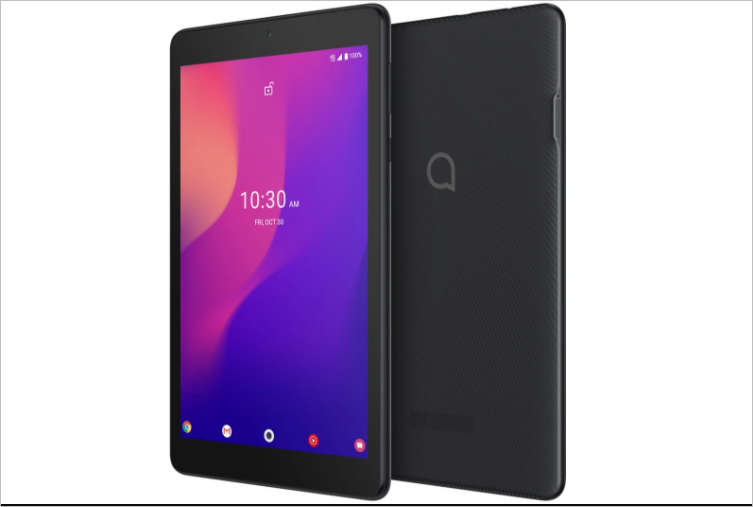
Alcatel Joy TAB 2 with an 8″ HD display, Android 10 launched for $60

TCL’s Alcatel tablets have come to become a fitting alternative to Amazon Fire tablet which costs less than $100. They provide a decent tablet experience at pretty affordable prices. Moreso, they arrive without the usual bloatware that comes pre-installed on the Amazon Fire tablets.

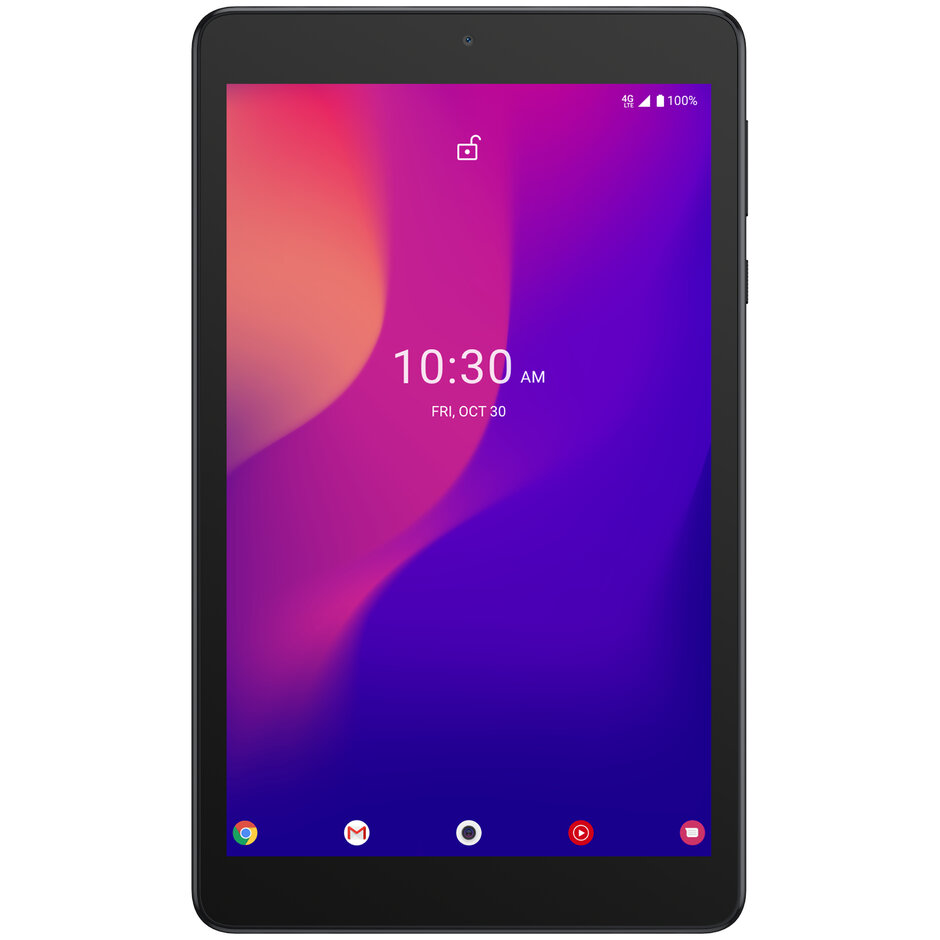
Alcatel Joy TAB 2
Alcatel Joy TAB 2

The Alcatel Joy Tab 2 has now been launched in the US on Metro by T-Mobile. The carrier has the tablet for an affordable offer despite getting 4G LTE connectivity. Originally, the Joy Joy Tab 2 carries a retail price of $120 but Metro is launching it with a 50% off promotion bringing down the price of the tablet to $60.

The Alcatel Joy Tab 2 is a medium-size tablet that features an 8-inch IPS HD display with a resolution of 1280 x 800 pixels. The display is protected by a layer of Asahi Glass. Under the hood, the Alcatel tablet crams a generous 4,080 mAh battery that the company claims can deliver up to 9 hours of video playback time and the standby time in 4G mode can even go up to 25 days.

The Joy Tab 2 is powered by a 2GHz quad-core MediaTek processor paired with a 3GB RAM while there is a 32GB expandable storage. The tablet even packs a camera apiece at the front and the rear aspect. A 5-megapixel sensor sits at both the front and the rear aspects. Furthermore, the device runs Android 10 OS out of the box and has a single micro-SIM slot for calls.

UP NEXT: Xiaomi XiaoAI Speaker Art Battery Edition launched for 399 yuan ($59)

OPPO K7x officially announced; now up for pre-order in China costing 1,399 yuan ($209)

OPPO K7x has been in the news for the past few weeks and now the company has finally made the smartphone available for purchase in China. This is the company’s second device in the K-series after the launch of OPPO K7 a couple of months ago.

OPPO K7x

The smartphone features a 6.5-inch Full HD+ LCD display that offers a 90Hz refresh rate and 180Hz touch sampling rate. Under the hood, it is powered by the MediaTek Dimensity 720 chipset which supports 5G connectivity.

As of now, there’s just one variant of the phone in terms of memory configuration — 6GB RAM and 128GB internal storage. It also comes with a side-mounted fingerprint sensor for added security on the device.

EDITOR’S PICK: Qualcomm Snapdragon 875 flagship chipset details leak online weeks ahead of launch

In the camera department, the smartphone features a triple-camera setup on the back that includes a 48-megapixel primary sensor, an 8-megapixel sensor, and two 2-megapixel camera sensors. On the front side, there’s a 16-megapixel snapper for taking selfies.

The device is running the Android 10 operating system out-of-the-box with the company’s own ColorOS 7.2 on top. It is powered by a 5,000mAh battery that supports 30W VOOC fast charging technology.

The OPPO K7x smartphone comes in two color options — Mirror Black and Shadow Blue. The phone is priced at 1,399 yuan which roughly converts to $209. It is currently up for pre-order in China for 100 yuan (~$15) and will start shipping from 11th November.