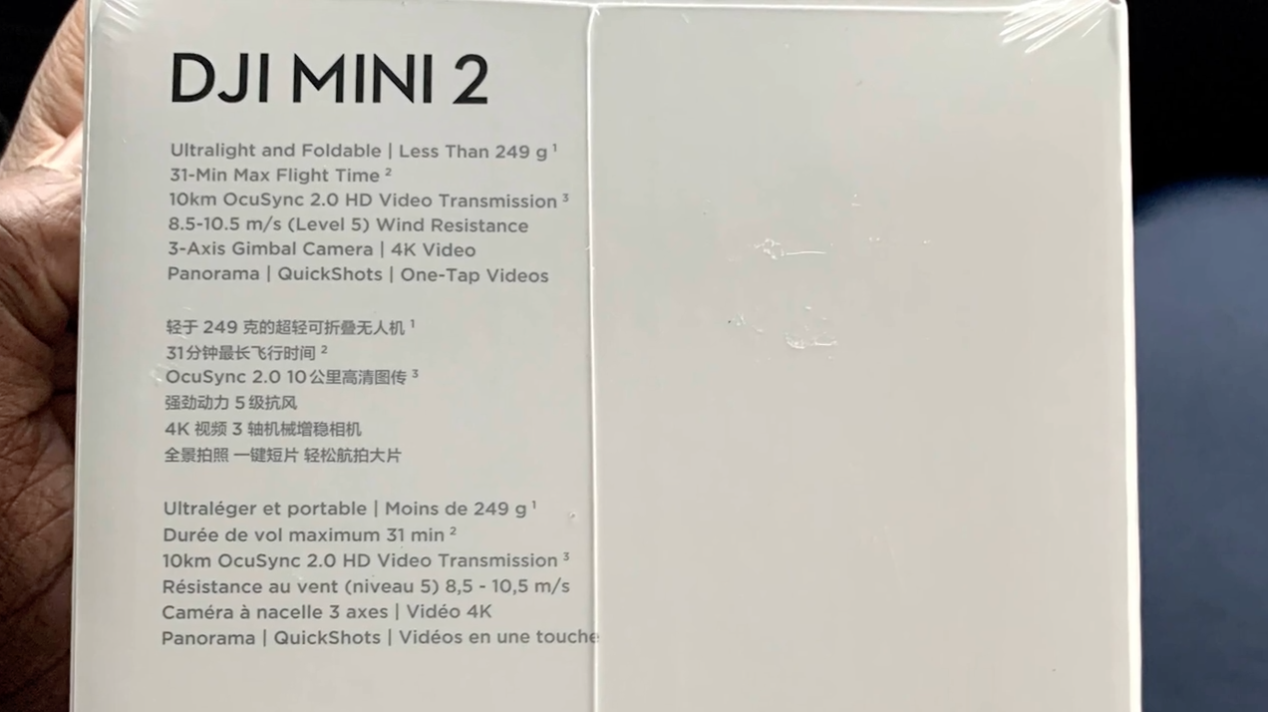
Popular drone maker DJI has been in the news lately as a result of plans to launch a new mini-drone that would be called Mavic Mini 2. The unannounced product was recently listed by popular US electronics retailer Adorama and the product page shows it will be the Mavic Mini 2 moniker. However, that may not be the case, as the mini drone has appeared in real skin, thanks to an unboxing video posted by a Youtuber.
The YouTube video shows the retail box and the drone as well as the accessories inside the retail box. What is most spectacular is that the device will be called DJI Mini 2 as against Mavic Mini 2. We can guess what prompted this change in the naming sequence but it may be to distinguish this from the more expensive Mavic series.
The DJI Mini 2 is said to weigh just 249g makes it not to require registration in many countries where drones weighing up to 250g are required to be registered. The drone is also shown to come with the capacity to shoot 4k videos but there is no ActiveTrak feature.
The YouTube video also shows that the drone is capable of flying up to a range of 10km and can stay up in the air for up to 31 minutes.
DJI is yet to officially announce the Mini 2 (Mavic Mini 2 if you like) but with the frequency of leaks, we should expect the launch to happen any moment from now.
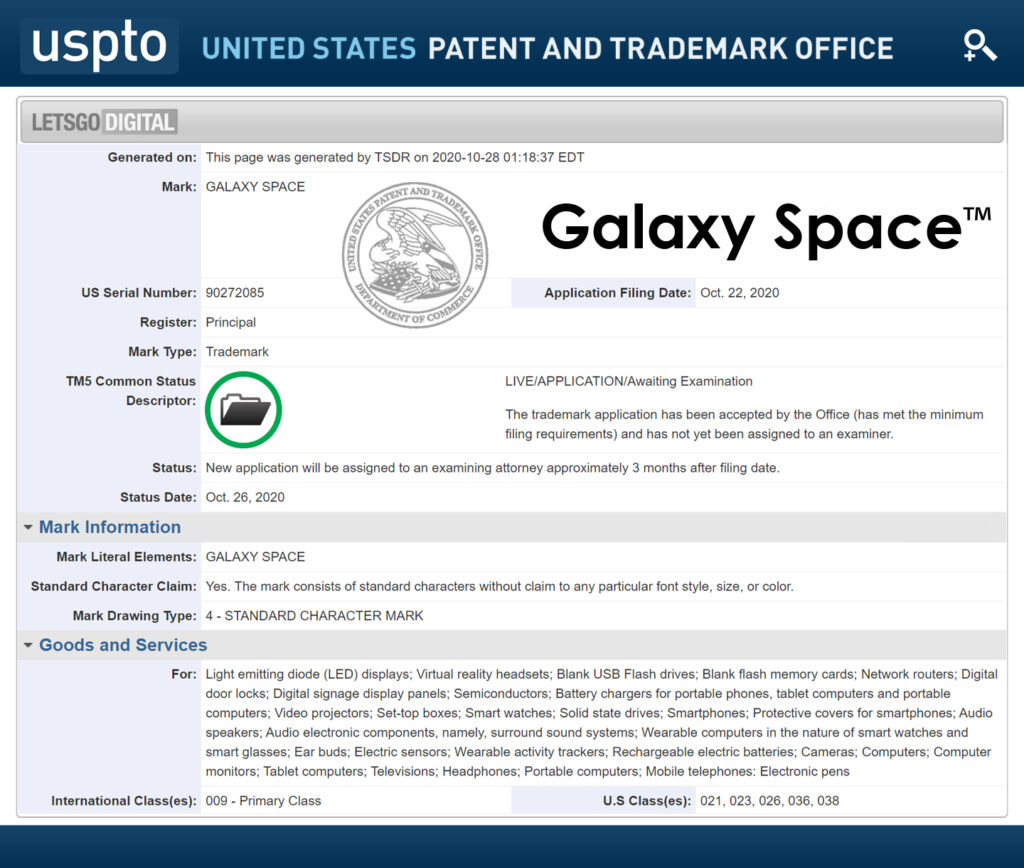
Samsung is reported to launch the Galaxy S21 series earlier than in previous years. The three smartphones in the series are expected to debut in January. Ahead of it, these devices have begun to receive certifications from multiple bureaus. Also, the South Korean tech giant filed a trademark called ‘Samsung Blade’ recently, which it could use for the Galaxy S21 series. Now, the company’s another newly filed trademark called ‘Galaxy Space’ has emerged.
Samsung Electronics filed the ‘Galaxy Space’ trademark with the USPTO (United States Patent and Trademark Office) on October 22. But it got approved and published on October 26.
This new Samsung trademark categorized as Class 9 is applicable to the following things.
Virtual reality headsets
LED displays
Routers
Digital door locks
Battery chargers for portable phones
Tablet PCs
Portable computers
Video projectors
Smartwatches
Smartphones
Audio speakers
According to LetsGoDigital, Samsung could use this trademark for a virtual reality headset. That’s because a VR going by this name running 32-bit Windows 10 Home operating system with 8GB RAM visited Geekbech in July 2019.
Further, there’s also a chance that the company could use it for monitors as it already sells monitors with ‘Samsung Space’ branding. Whatever it is, we will know about it in the coming days if Samsung really intends to use it.
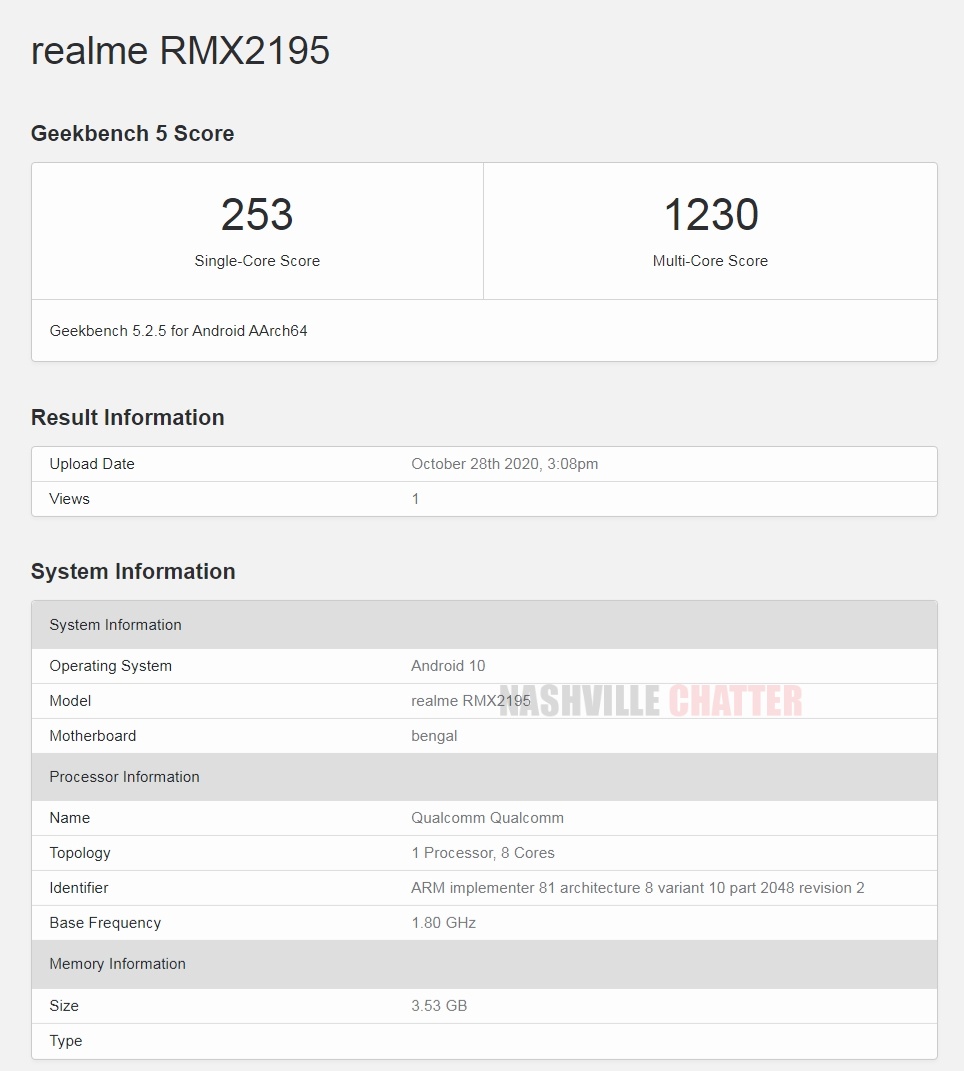
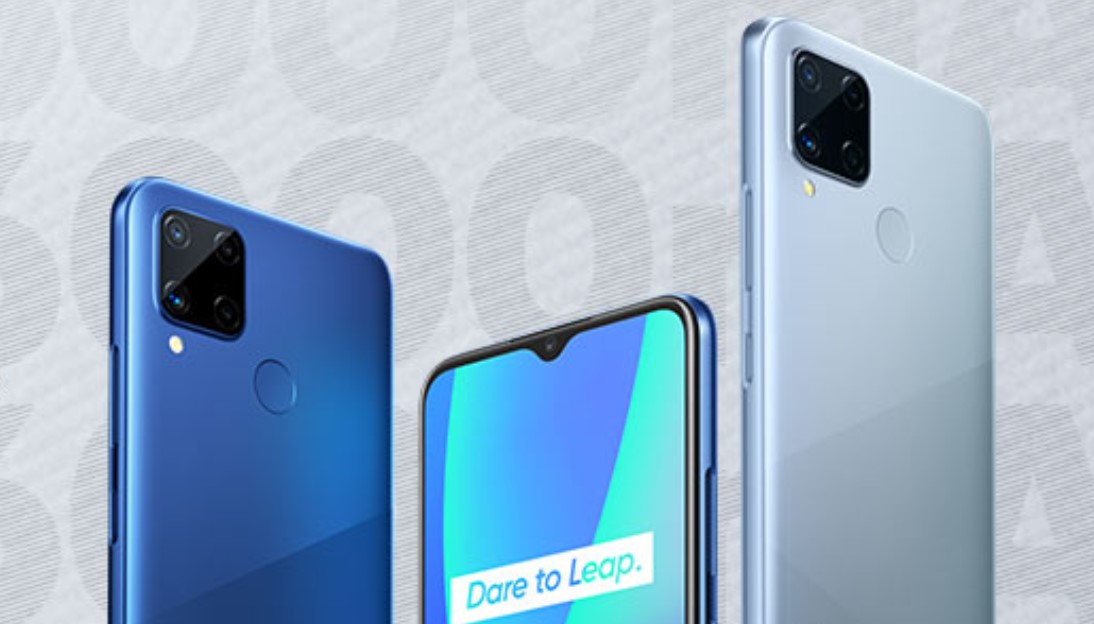
Realme is reportedly going to launch the Realme C15s in the next two or three days. It was previously being referred to as the Realme C15 Qualcomm edition. It is speculated that the RMX2195 that was recently approved by different certification platforms could be the Realme C15s phone. The alleged Realme C15s has emerged on Geekbench today with some of its key details.
The RMX2195’s Geekbench 5 listing (via NashvilleChatterClass) shows that it’s powered by a Qualcomm processor that has a 1.80GHz base frequency. The SoC is mentioned with “bengal” codename, which is associated with the Snapdragon 460 SoC. Even tipster Mukul Sharma had claimed earlier today that the Realme C15s has SD460. Hence, it seems that RMX2195 is the Realme C15s phone.
The Geekbench listing further states specs like 4 GB of RAM and Android 10 OS. It has scored 253 in the single-core test and 1230 in the multi-core test of Geekbench.
The RMX2195 phone was approved by China’s CQC authority recently. It revealed that the phone supports 18W fast charging for its battery that has a rated capacity of 5,860mAh. The typical capacity of RMX2195’s battery seems to be 6,000mAh.
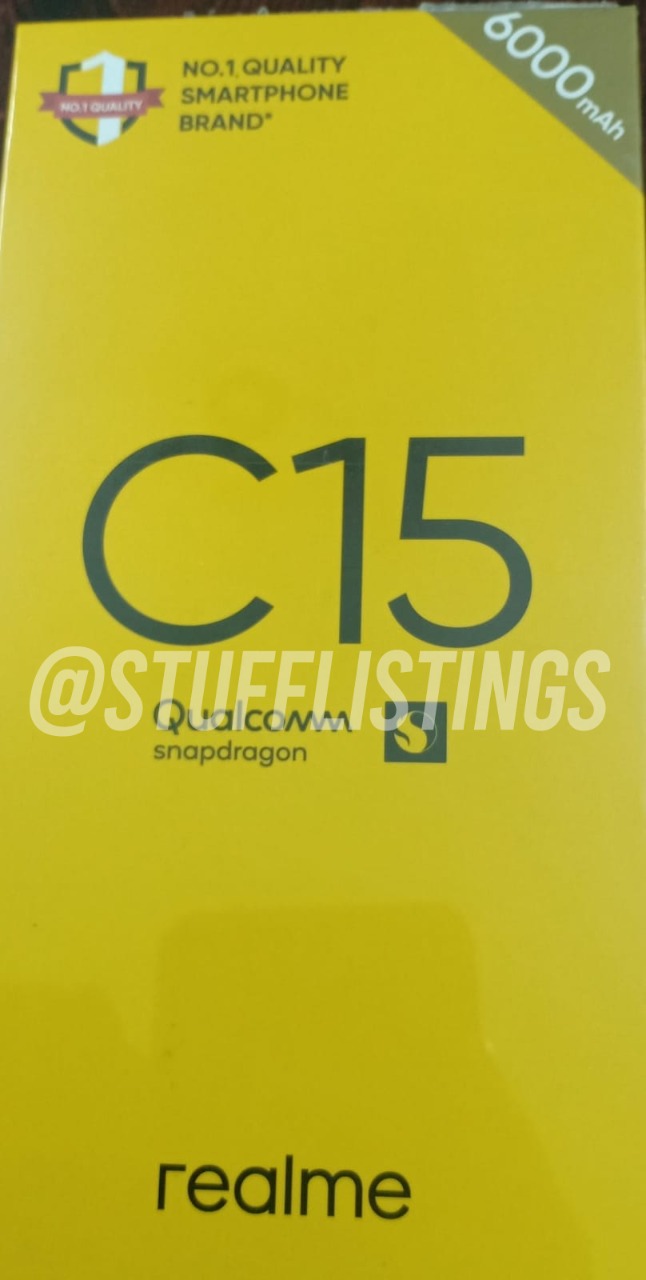
Tipster Sharma shared the above shown leaked image of the retail package of the Realme C15s earlier today. The image shows that the phone has a 6,000mAh battery. This also indicates that the RMX2195 model number could belong to the Realme C15s phone.
Apart from the new SoC, the Realme C15s is expected to borrow all its specs from the Realme C15. It is likely to arrive in 3 GB RAM + 32 GB storage and 4 GB RAM + 64 GB storage versions. It is expected to arrive in Power Blue and Power Silver colors.
The same variants of the Realme C15 are priced at Rs 9,499 (~$128) and Rs 10,499 (~$142), respectively. It is speculated that the two variants of the Realme C15s could be priced at Rs 9,999 (~$135) and Rs 10,999 (~$149). Realme is yet to tease the arrival of the Realme C15s phone in India.
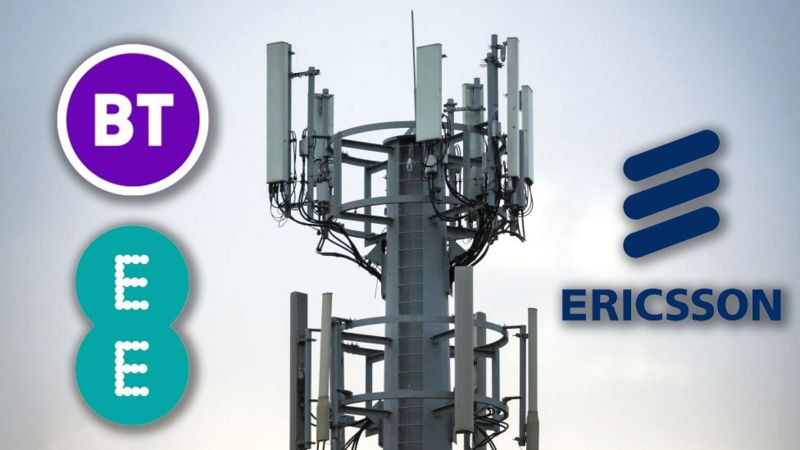
BT has just signed a new deal with Ericsson, which will have the former use the latter’s 5G radio antennas, base stations, and other equipment to upgrade its mobile network.
The move from the company will have it replace Huawei and not be solely reliant on Nokia for its other radio access network (Ran) equipment. This also arrives after the government imposed a ban on Chinese companies from the country’s 5G infrastructure, as per a BBCreport. For those unaware, UK telecom operators are required to replace any core equipment from Huawei, or in other words, any Chinese component used in the most sensitive parts of its network.
This includes the route data and voice calls take through multiple devices across computer servers. All such 5G equipment from Huawei will also be phased out within the country by 2027. The Chinese tech giant has stated that this ban would could the UK government thousands of jobs and billions of pounds in economic benefit and would even delay the roll out 5G networking.
Thus, the latest announcement from BT was still within expectations as carriers generally employ two Ran equipment makers, which lets them maintain service if a problem is developed in other provider’s systems. This also lets the telecom operators save on efficiency from not having to install and maintain a wide range of products as well.
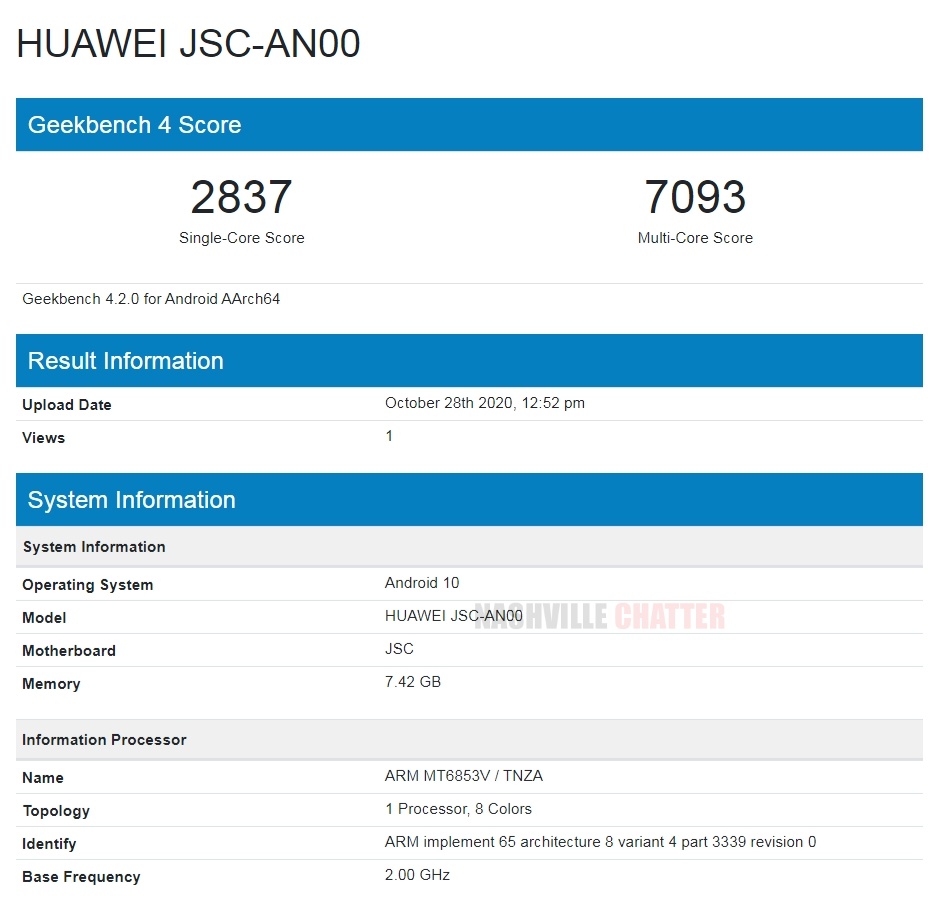
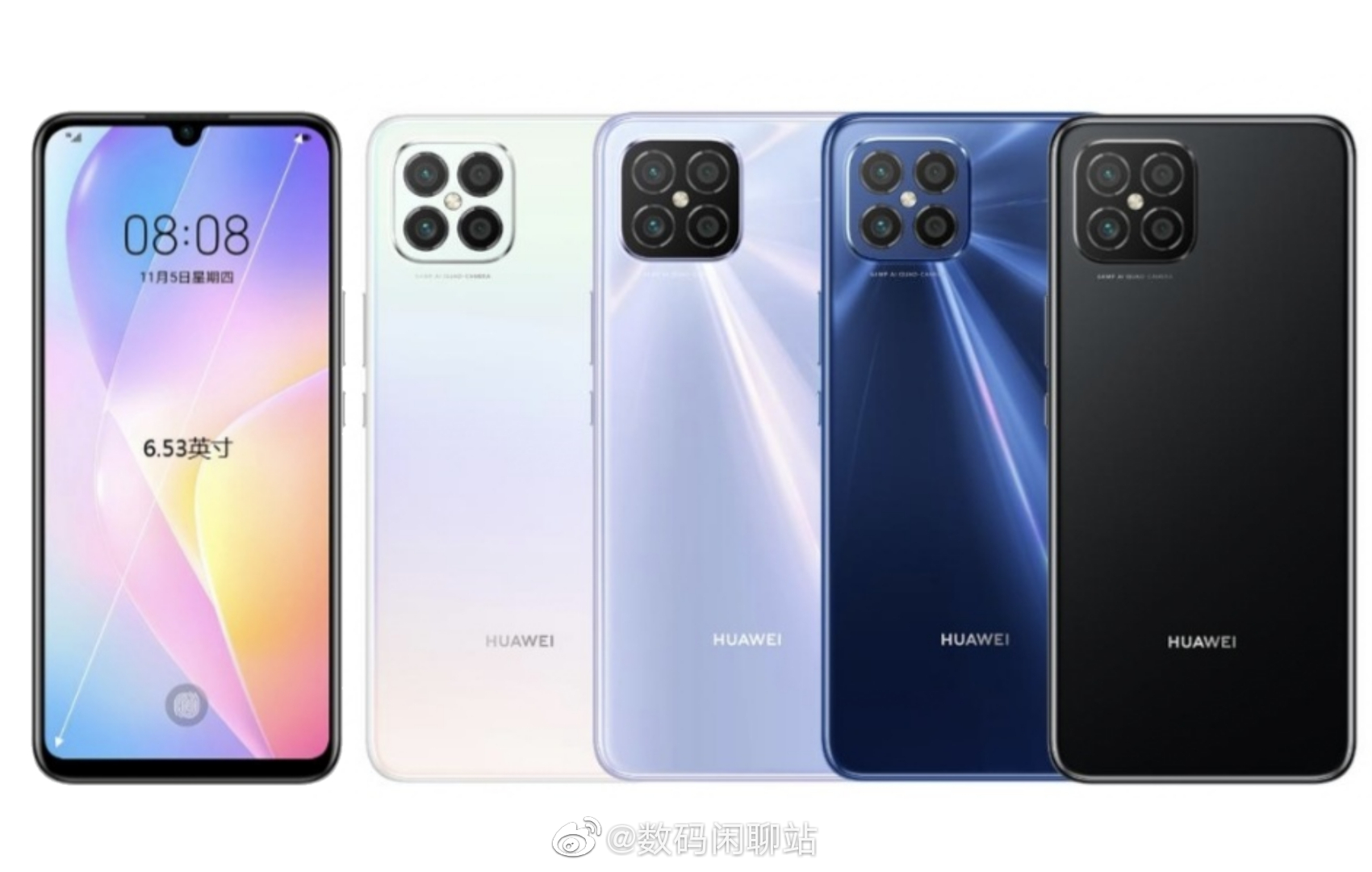
The JSC-AN00 / JSC-TN00 and HJC-AN00 / HJC-TN00 Huawei phones were certified by China’s TENAA telecom authority. Both phones are believed to the Nova 8 series smartphones. At present, the listings showing the full specs of both phones have not appeared at TENAA yet. The JSC-AN00 has today emerged on Geekbench benchmarking platform. The listing suggests that it could be the Huawei Nova 8 SE phone.
The JSC-AN00’s Geekbench appearance (via NashvilleChatterClass) reveals that it is powered by MediaTek MT6853V (Dimensity 720) chipset that has a base frequency of 2GHz. The SoC is coupled with 8 GB of RAM and it is loaded with Android 10 OS. The handset scored 2837 and 7093 in Geekbench’s single-core and multi-core tests, respectively.
A recent leak had revealed that the upcoming Huawei Nova 8 SE will debut in China in Dimensity 720 and Dimensity 800U CPU variants. Among other specs, the leak mentioned that the phone supports 66W fast charging. Recently, the JSC-AN00 phone was spotted at the 3C certification platform with a 66W charger. Hence, it appears that the base model of the Nova 8 SE that has Dimensity 720 chipset has emerged on Geekbench today.
The Nova 8 SE has an OLED display of 6.53 inches, and it supports a Full HD+ resolution. A fingerprint sensor could be embedded under the display of the phone. The waterdrop notch is the home for its 16-megapixel selfie camera. The backside of the phone has a square-shaped camera module that has a primary camera of 64-megapixel, a secondary lens of 8-megapixel, and a pair of 2-megapixel lenses. It has a 3,800mAh battery.
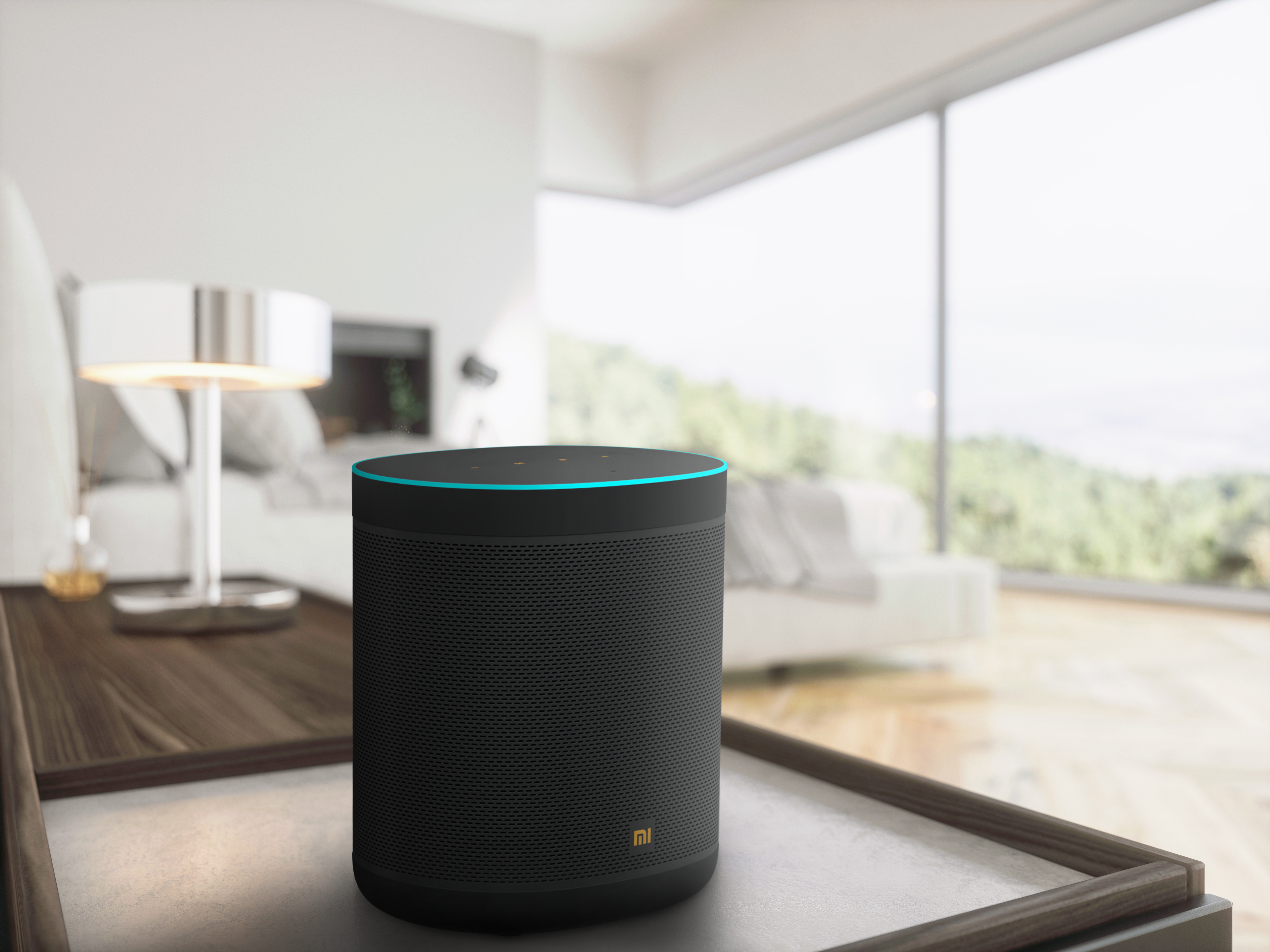
Xiaomi, the Chinese smartphone manufacturer, has recently invested in Dongyi Risheng, one of China’s leading home decoration companies. The consumer electronics maker has become one of the major shareholders in the company, which is a move to boost its own smart home business.
According to a KrAsiareport, Xiaomi has invested 139 million Yuan (roughly 20.7 million US Dollars) into the Dongyi Risheng. This will have the former buy 21 million shares from Dongyi Tianzheng Investment Co, at a price of 6.62 US Dollars per share. At the moment, Dongyi Tianzheng Investment holds 256.4 million shares before the completion of the deal.
According to Dongyi Risheng’s official filing, “The company will leverage on Xiaomi’s wide presence in the Internet of things (IoT) sector, as well as its own accumulation in the home decoration sector and its own digitization capabilities, to explore how AI and IoT technologies can integrate with home appliances to provide a smart living for consumers.” In other words, the home decorations maker is also gaining from the transfer of shares and will branch out to IoT products as well.
The move from Xiaomi will also allow it to grow its own smart home products business. The two companies have been cooperating since July 2020, and after the signing of the strategic partnership, Dongyi will bring the smartphone maker and its partners’ products into its current sales channel. Meaning, this would help the Xiaomi IoT product penetration rate as well.
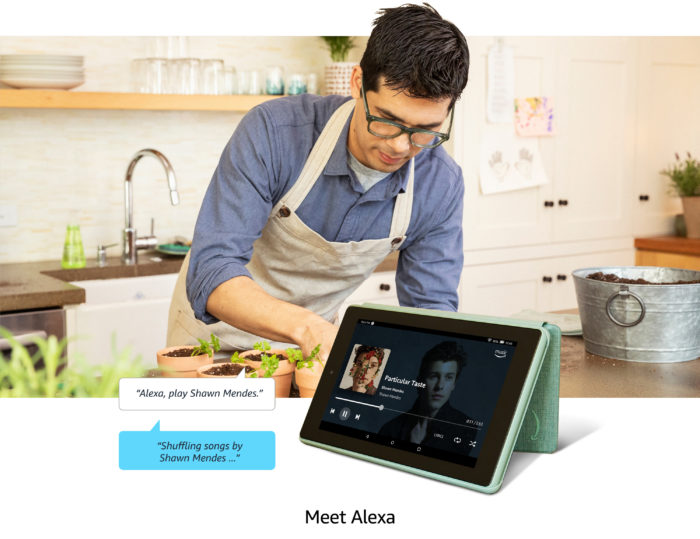
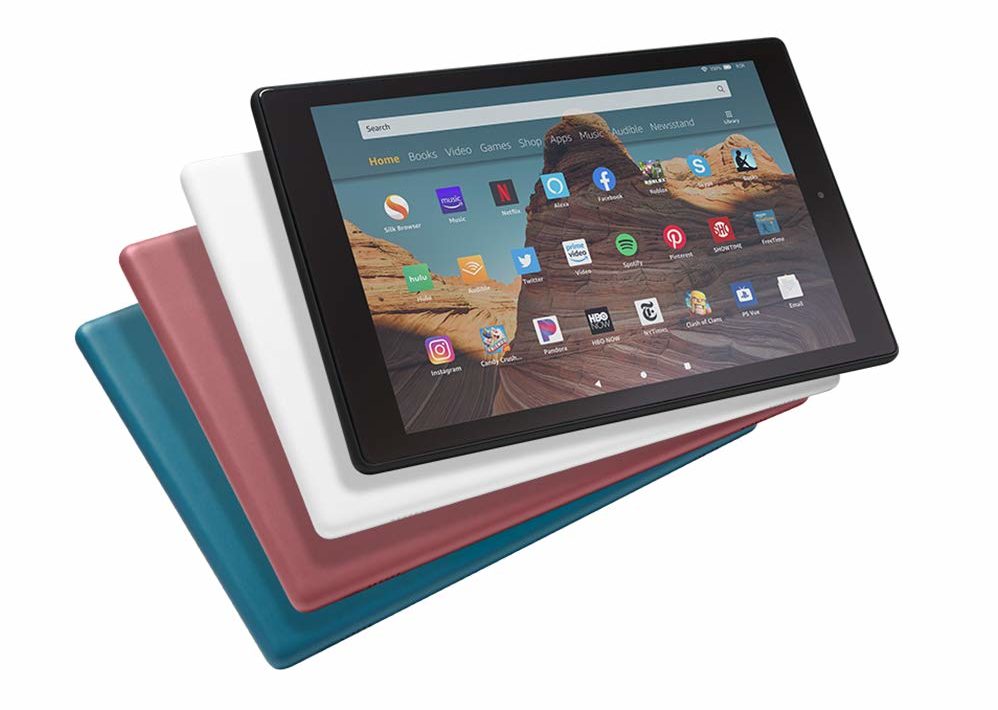
The Amazon Fire series has just received an interesting new update. The new software release will have the affordable Android tablet be functional as a smart home hub for users, allowing them to control other smart home devices.
Amazon Fire 7
Earlier this week, the company started the roll out of the new update to a handful of Fire tablets. This update brings a Smart Home button to Device Dashboard, as per a PhoneArenareport. At the moment, only a small number of Fire tablets have received the update, but that is only due to the staggered release from the company. The update will be available in four models, which include Amazon Fire 7 (2019), Amazon Fire HD 8 (2018), Amazon Fire HD 8 (2020), or Amazon Fire HD 10 (2019).
After the new update, Fire tablet users will notice a new Smart Home button on the left corner of the navigation bar. This button will be accessible to users through any screen, meaning, users are just a tap away from controlling any compatible Alexa enabled smart home device from their tablets. In other words, users would be able to control any smart speaker, lights, cameras, thermostats, switches, and more.
Amazon Fire HD10 (2019)
While this isn’t a particularly large update, it does add a major utility and functionality to the existing Android tablets from Amazon. It would also things a bit more convenient for to Alexa enabled smart home devices’ owners. The update should soon reach out to a broader userbase, so keep on the lookout for the new software.
Recently, Counterpoint Research released a report on trust rankings for smartphone brands. The research firm’s trust rankings are based on certain four pillars. Like last year, HMD Global’s Nokia-branded Android smartphones rank first in all these four categories. Thus, Nokia has become the most-trusted brand for the second year in a row.
Counterpoint Research is one of the most popular research firms known for tracking tech industry trends. The company’s latest report on smartphone brand trust rankings reveals Nokia to be leading in all the analyzed four factors.
These four pillars are:
Timely Software Updates
Timely Security Updates
Build Quality
Enterprise/Business Recommended Smartphones
As per the report, from Q3 2019 to Q2 2020, Nokia-branded Android smartphones were the only handsets to receive monthly security patches (100%), followed closely by OnePlus with 90%. Similarly, Nokia and OnePlus were the only brands to update their eligible devices to Android 10 in the same period, followed by Samsung and realme at 89% and 73% respectively.
Interestingly, the report says that Nokia smartphones go through rigorous durability tests than the industry average. Lastly, 53% of Nokia-branded phones are Android Enterprise Recommended, followed by LenovoMotorola with 44%.
According to the report, the smartphone replacement cycle has reached 30 months, however, only Nokia and OnePlus devices are receiving regular security updates. On the other hand, Samsung’s efforts are dwarfed by its huge portfolio but the company still manages to deliver updates to eligible devices, albeit at a slower rate than HMD Global.
Having said that, the gap between Nokia and other brands in terms of regular software updates has narrowed than last year. In other words, HMD Global is slowly losing its only stronghold.
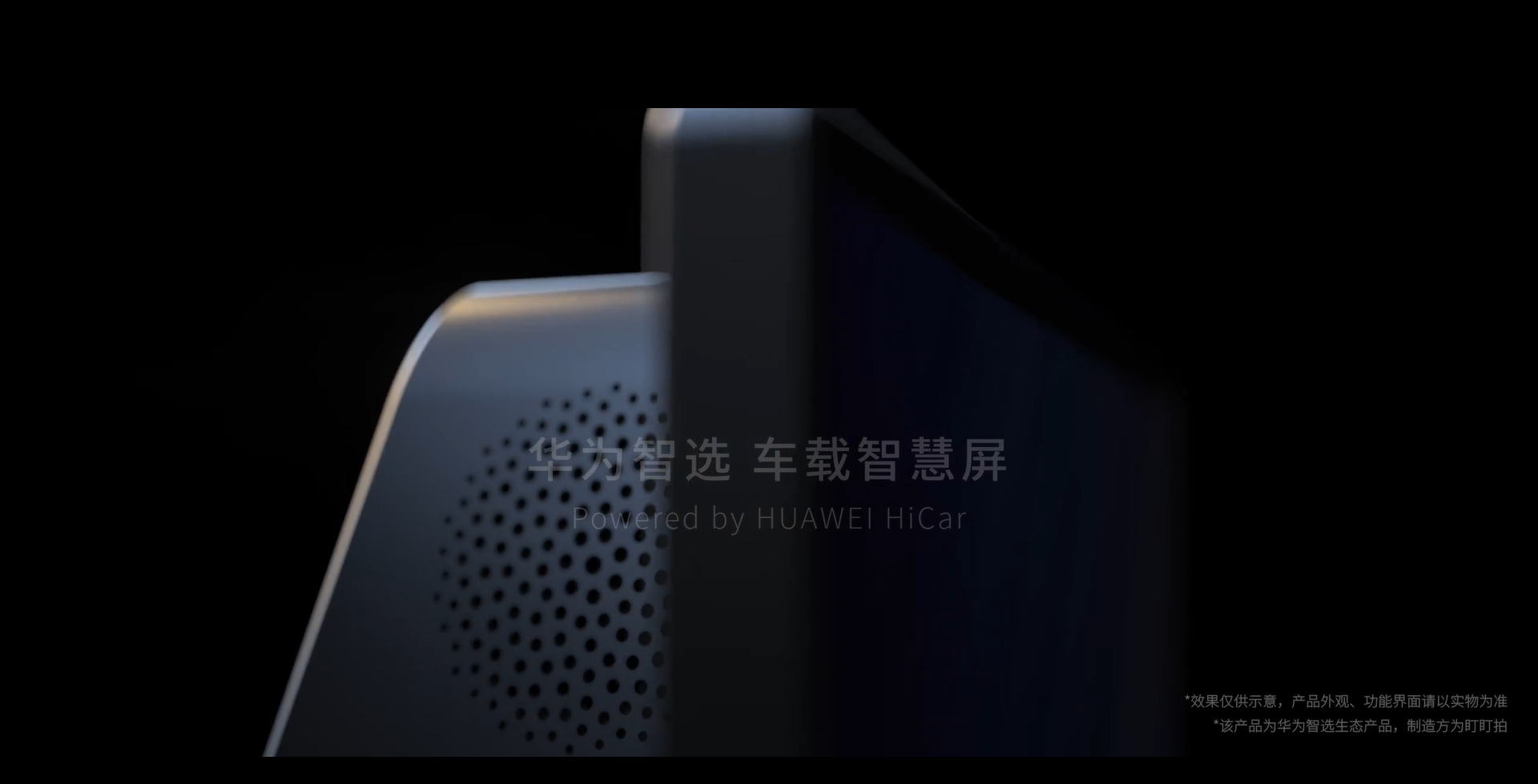
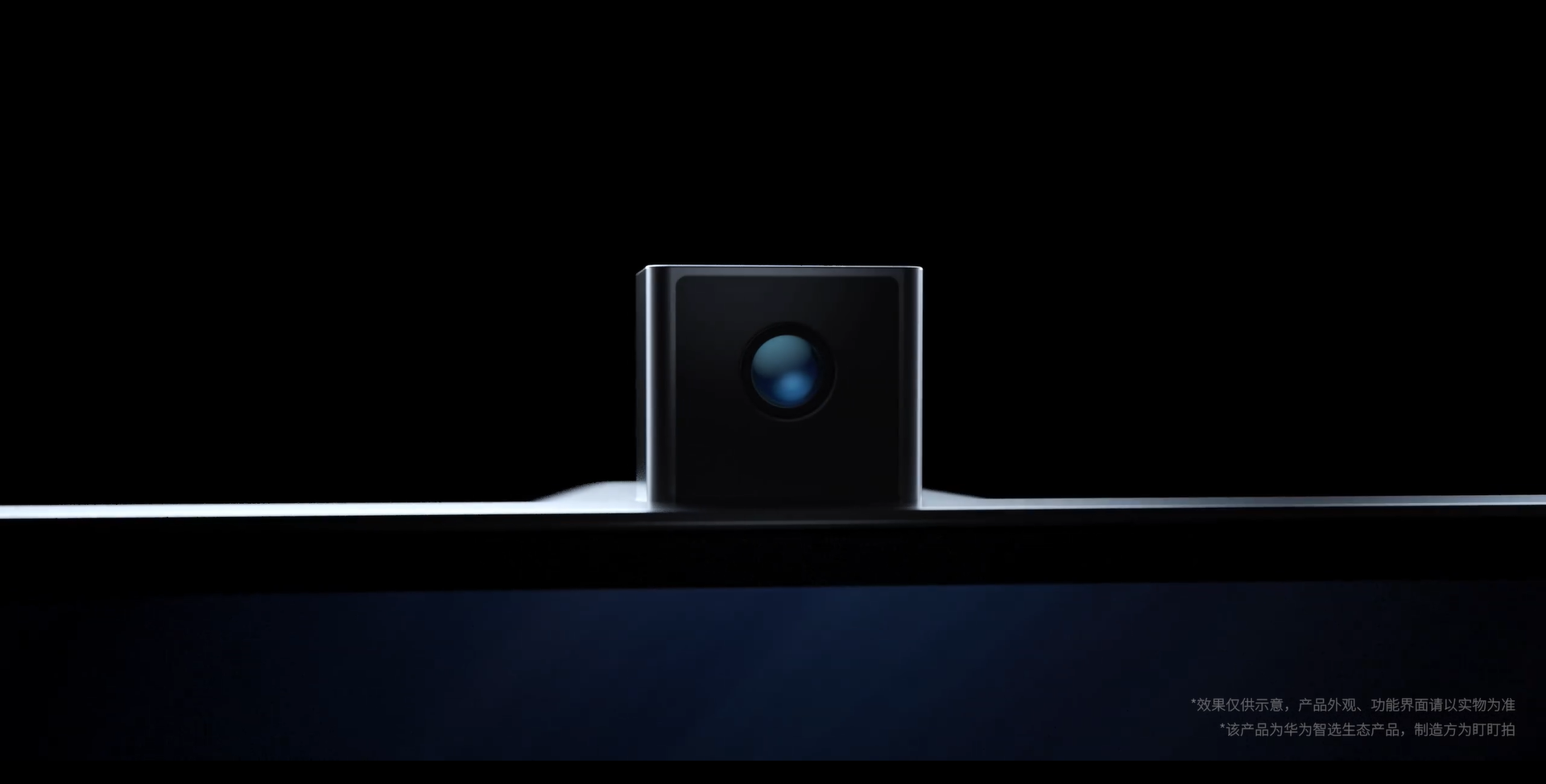
Earlier today (28th October 2020), Huawei officially announced a new smart product for vehicles. In a video teaser, the company unveiled a smart screen that will be housed within automobiles.
At the moment, not a lot of details regarding the product are known, although, it has been officially confirmed to be launched on 30th October 2020. The smart screen is “Powered by HUAWEI HiCar,” which is a part of the company’s initiative to enter the automobile peripherals market. As per the video, the in vehicle smart screen will sport a front facing camera that appears to be housed in a pop up mechanism.
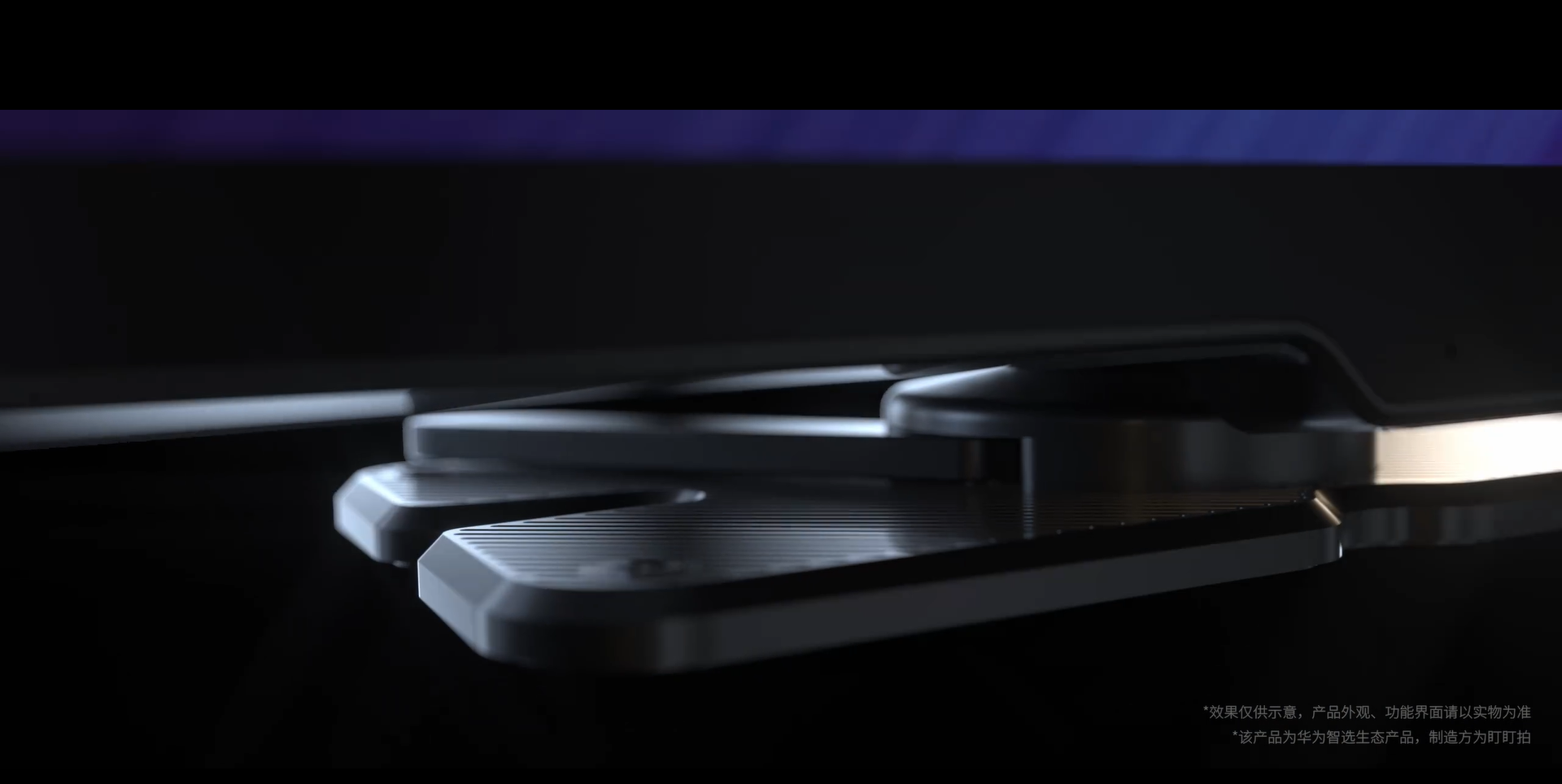
We can also observe that the front will primarily be covered by the device’s display, which is flat, while the rear houses all the necessary components alongside the speaker grills. A short clip of the bottom also revealed that the company will offer a stand with the smart screen to properly secure it in the car. Furthermore, the new smart screen will be powered by HarmonyOS 2.0 (or HongMengOS in China) and will likely be capable of taking calls, listening to music, or even watching videos and movies.
Unfortunately, finer details are still unknown like the size of the display, but it is likely to be the size of a tablet and would also act as a control panel. Huawei is set to branch out towards the automobile industry and the new product might be the first of many for the company. So stay tuned for the launch event that is just around the corner and more updates as well.
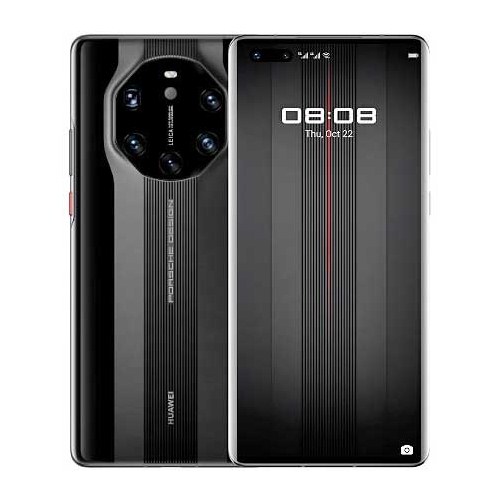
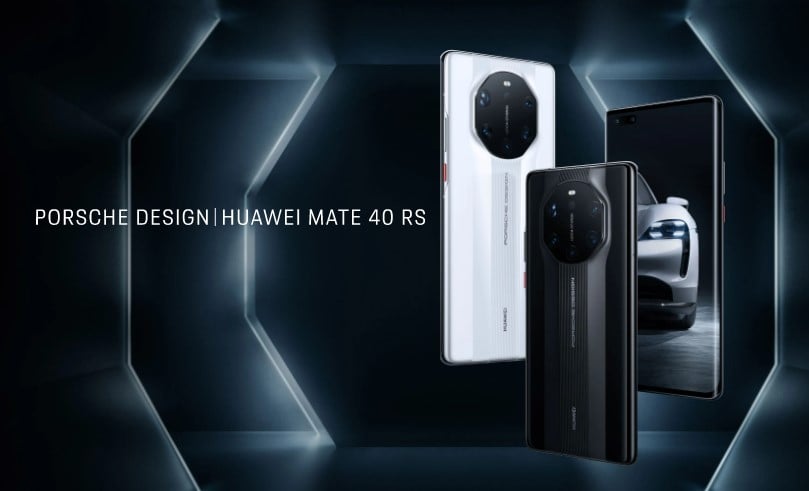
The Huawei Mate 40 series was just recently announced and is set for a launch date of 30th October 2020 in China. Just prior to the launch, the company has already opened reservations for a few models within the flagship lineup, with the Mate 40 RS Porsche Design already receiving over 210,000 reservations.
As of today (28th October 2020), the number of reservations for the Huawei Mate 40 RS Porsche Design has crossed the 210,000 marks on JD.com, a popular e-retailer in China. The device in question is the ultra high end flagship from the Chinese tech giant and, as the name suggests, carries the signature branding of the luxury supercar maker, Porsche.
The Mate 40 RS Porsche Design features a unique aesthetic that resembles the aerodynamic design of the popular sports car brand. Its rear panel is built from nano-microcrystalline ceramic body that is made to offer a better grip thanks to its texture. Apart from the external design, the device is similar to the flagship Mate 40 and features the 5nm Kirin 9000 processor and a penta camera setup on the rear as well.
The handset was launched for 2,295 EUR (roughly 18,150 Yuan or 2,700 US Dollars). In other words, it is quite expensive, which makes it even more impressive than it has already managed to garner the large number of reservations. Notably, the pre orders for the Mate 40 series was also previously listed on JD.com and were sold out in just 28 seconds flat.
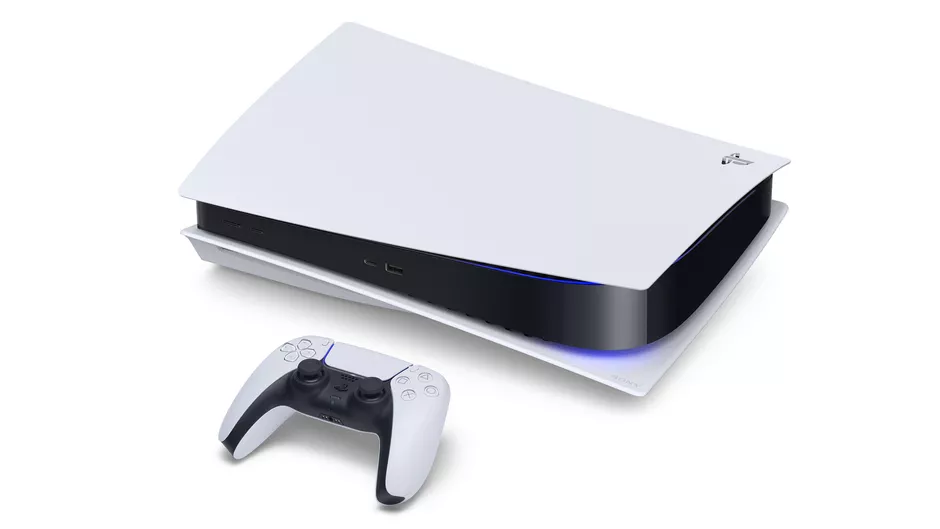
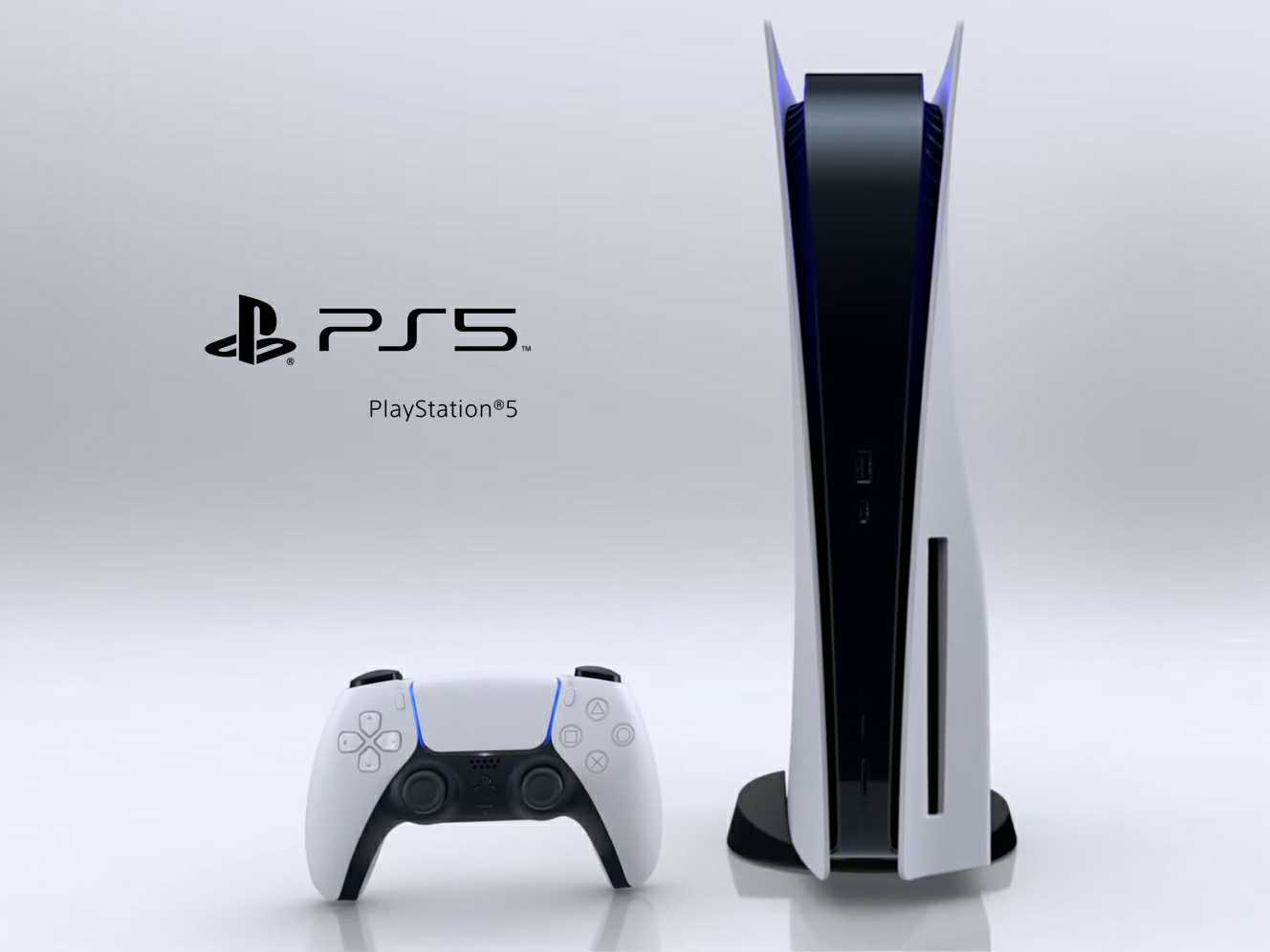
The launch of the next gen gaming console from Sony is just around the around and the company is already seeing “very considerable” demand for the new PlayStation 5 through its pre orders, as per its gaming chief.
According to a Reutersreport, Sony has already pre sold a large number of PS5 in just 12 hours. This figure is apparently equal to the entire 12 week sale of its predecessor, the PlayStation 4, as stated by Jim Ryan, CEO of Sony Interactive Entertainment. He further added that “The demand as expressed by the level of pre-order has been very, very considerable.”
At the moment, the company has already sold over 100 million PS4 units across the globe and is seeking to convince its userbase to upgrade to the newer generation of hardware to play popular new titles like “Marvel’s Spider-Man: Miles Morales.” The new console also enables enhanced next gen graphics, with improvements on sound, and feedback as well through its new controller.
The PS5 launch arrives amid the Coronavirus pandemic that has boosted the gaming industry as a whole but has also disrupted retail networks, game development, and manufacturing supply chains worldwide. According to Ryan, “It may well be that not everybody who wants to buy a PS5 on launch day will be able to find one,” and that the company is “working as hard as we ever can” to ensure supply that lasts the year end shopping season.
Qualcomm is expected to announce the Snapdragon 875 mobile platform as its next flagship chipset on Dec. 1. The SoC will be replacing the Snapdragon 865 SoC that fueled most of the flagship phones running on Android OS this year. A Chinese tipster has claimed that sooner or later a custom-made flagship chipset possibly dubbed as Snapdragon 870 could be seen powering an OPPO smartphone.
The Snapdragon 870 is not an official name, but it appears that the SoC will be less powerful than the upcoming SD875 chip. According to the tipster, the SD870 that can clock around 3.2GHz will be more powerful than the SD865 theoretically.
As mentioned above, it will be a custom-made chip that will fuel a forthcoming flagship. There is no word on when Qualcomm or OPPO will be revealing more details on the chip. Also, the name of the OPPO phone that will feature the SD870 chip is under wraps.
Meanwhile, an OPPO phone that has a model number of PERM00 is waiting to go official in China. The handset had recently appeared at TENAA with full specifications. It has a 6.5-inch FHD+ display and it measures 162.2 x 75.1 x 9.1mm. With a battery of 4,900mAh capacity, it weighs 194 grams. The phone is expected to land in China in colors like green, gray, and blue.
The OPPO PERM00 is likely to arrive in 6 GB and 8 GB RAM options and storage options like 64 GB, 128 GB, and 256 GB in China. It has a side-mounted fingerprint sensor. For selfies, it has a 16-megapixel camera and its rear has a 48-megapixel + 8-megapixel + 2-megapixel +2-megapixel quad-camera system.
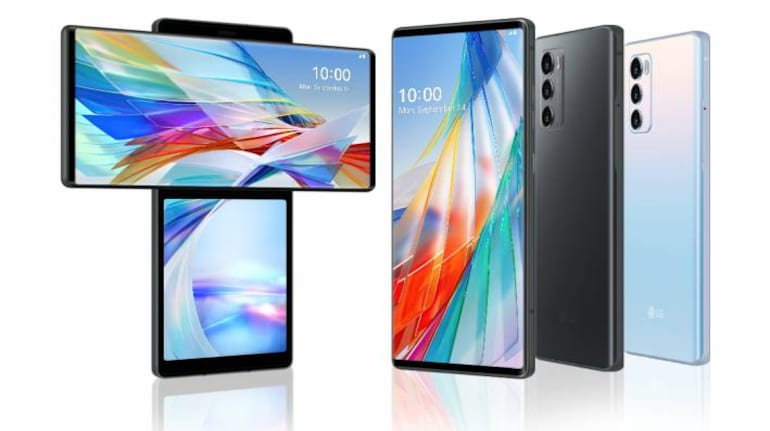
The LG Wing 5G was made official in September for the global markets. The dual display phone is one of the most ambitious products from the brand since its main screen can be rotated clockwise in 90 degrees over its second screen. Today, the South Korean company announced the LG Wing 5G and LG VELVET 5G in India.
LG Wing 5G and LG VELVET price and availability
The LG Wing 5G has arrived in India with a price tag of Rs 69,990 (~$948). The phone comes in two colors such as Illusion Sky and Aurora Grey. The dual-screen phone will be up for purchase from Nov. 9.
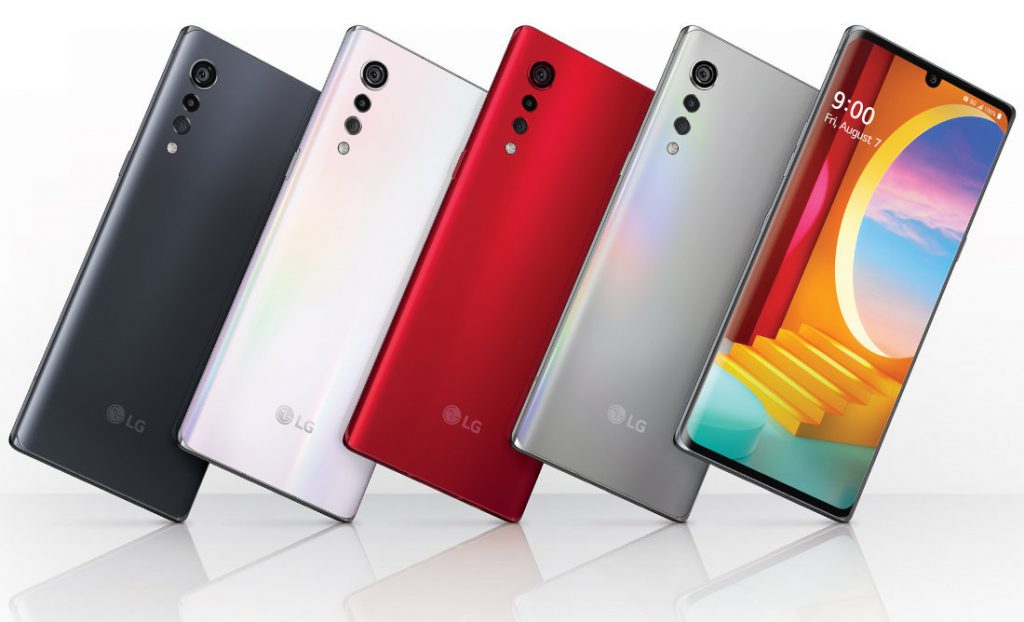
The LG VELVET has landed in India with a price tag of Rs 36,990 ($504). With the Dual Screen accessory, the device carries a price tag of Rs 49,990 (~$677). Its sale will begin on Oct. 30 in India in colors like Aurora Silver and New Black.
LG Wing 5G sand LG VELVET specifications and features
In its T-form factor, the LG Wing 5G offers a new level of multi-tasking where the main screen can display an app and its other features can be accessed on the second screen. For instance, users can watch a movie on the main display and adjust its playback settings on the second display. Also, it can be used as a gimbal motion camera since it comes with features like Gimbal Mode and dual-screen recording.
LG Wing 5G
Coming to the specs, the LG Wing 5G has a 6.8-inch P-OLED display that offers a Full HD+ resolution and a 20.5:9 aspect ratio The device is fitted with a 3.9-inch G-OLED secondary display that offers an FHD+ resolution and a 1:1.15 aspect ratio. The main screen is integrated with a fingerprint sensor.
The device is fitted with a pop-up camera of 32-megapixel for capturing selfie shots. The rear side of the LG Wing 5G features a triple camera system that comprises of an OIS assisted 64-megapixel main camera, a 13-megapixel ultrawide lens with a 117-degree field-of-view, and a 12-megapixel gimbal camera with a 120-degree FOV.
The Snapdragon 765G upper mid-range chip fuels the LG Wing 5G with 8 GB of LPDDR4x RAM. The phone offers 128 GB of native storage and it has a shared SIM slot for using a microSD card. It is fueled by a 4,000mAh battery that comes with 25W fast charging support and 10W wireless charging. It comes with other features like dual SIM support, Wi-Fi 802.11ac, Bluetooth 5.1, GPS, NFC, and USB-C. The phone runs on Android 10 OS. Lastly, the device comes with an IP54 rated and MIL-STD-810G rated chassis.
LG VELVET specifications and features
The LG VELVET that has arrived in India is its 4G version that features the Snapdragon 845 chipset. It has a 6.8-inch P-OLED FHD+ display with a 20.5:9 aspect ratio and an in-screen fingerprint reader. It has 6 GB of RAM, 128 GB of storage, and a microSD card slot for additional storage.
LG VELVET
The LG VELVET has a front-facing camera of 16-megapixel. The rear side of the phone has a triple camera setup that includes a 48-megapixel main camera, an 8-megapixel ultrawide lens with 120-degree FOV, and a 5-megapixel depth sensor. The phone houses a 4,300mAh battery that supports 18W fast charging through USB-C. It comes with other features such as Wi-Fi 802.11ac, VoLTE Bluetooth 5.0, NFC, and a 3.5mm audio jack.
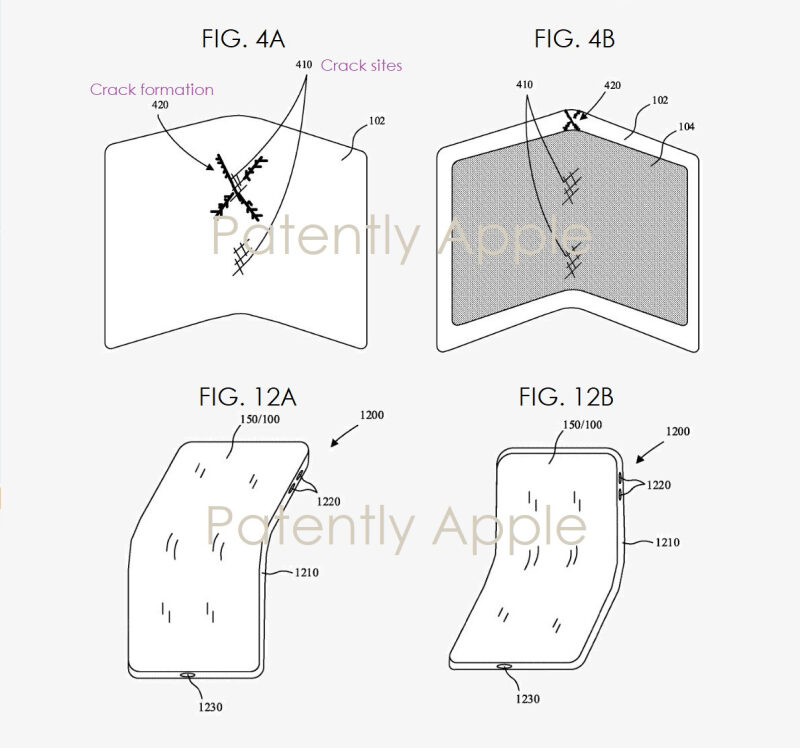
A new patent filing has revealed that Apple is working on creating a new protective layer that will be crack resistant on foldable displays. These screens would be scratch resistant as well and will also be more durable overall.
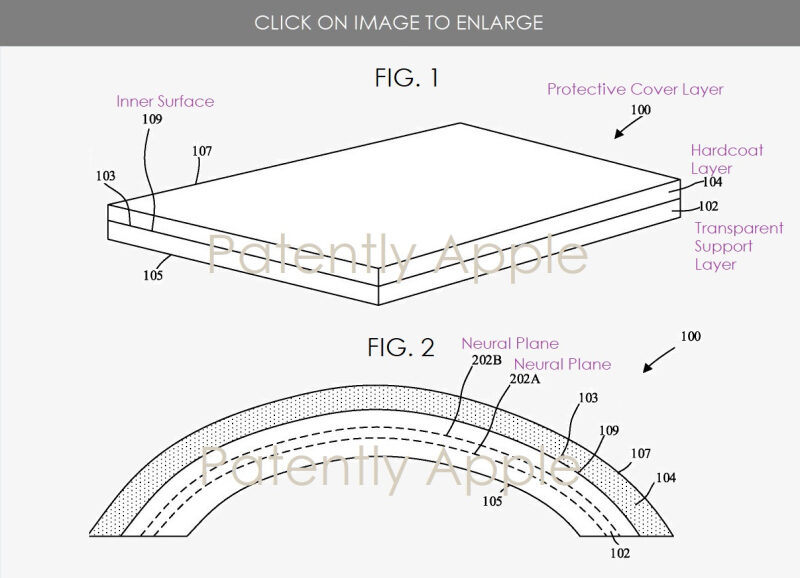
According to a MacRumorsreport, a filing in the US Patent and Trademark Office titled “Hybrid coverlay/window structure for flexible display applications,” describes how a curved, flexible, or foldable display modules could use a protective hardcoat layer to prevent cracking. This suggests that Apple might be working on solving the cracking issue that has been affecting some foldable devices from Samsung.
As stated in the patent, “typically, glass fracture initiates from the presence of micro-cracks.” But, Apple’s hardcoat layer would fill pre existing micro cracks, which should make it harder for the display to suffer from a severe crack. This additional protective layer would be placed directly on top of the display and would be “engineered to have a sufficiently high hardness and tensile strength to function as an exterior protective coating for the electronic device… Thus, the hardcoat layer is sufficiently durable for high puncture and scratch resistance.”
Although, there currently is no news regarding Apple’s first foldable device or even a rumor of an upcoming launch. Regardless, the company has patented many supplementing technology and has researched on the topic as well. Back in September, there was a report that suggested that the Cupertino based giant had placed a large order for foldable display samples with Samsung.
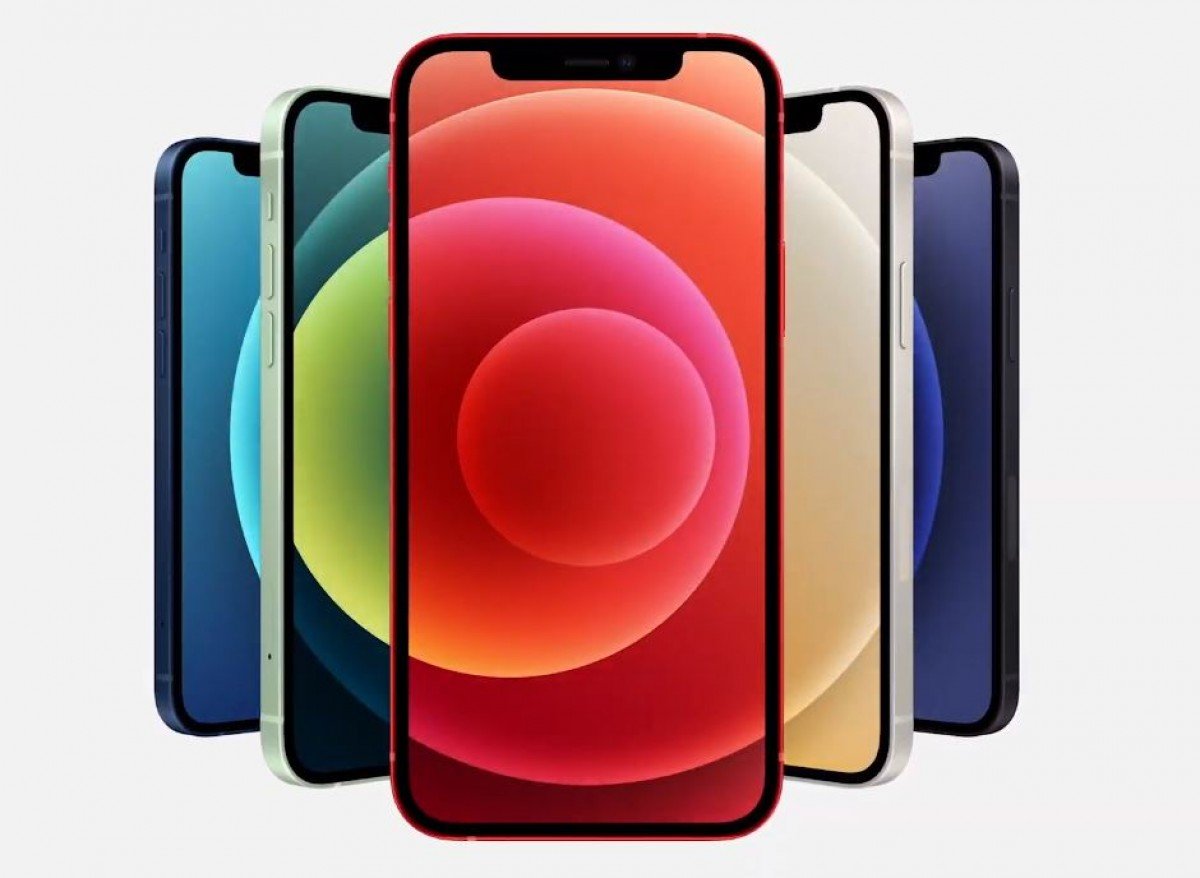
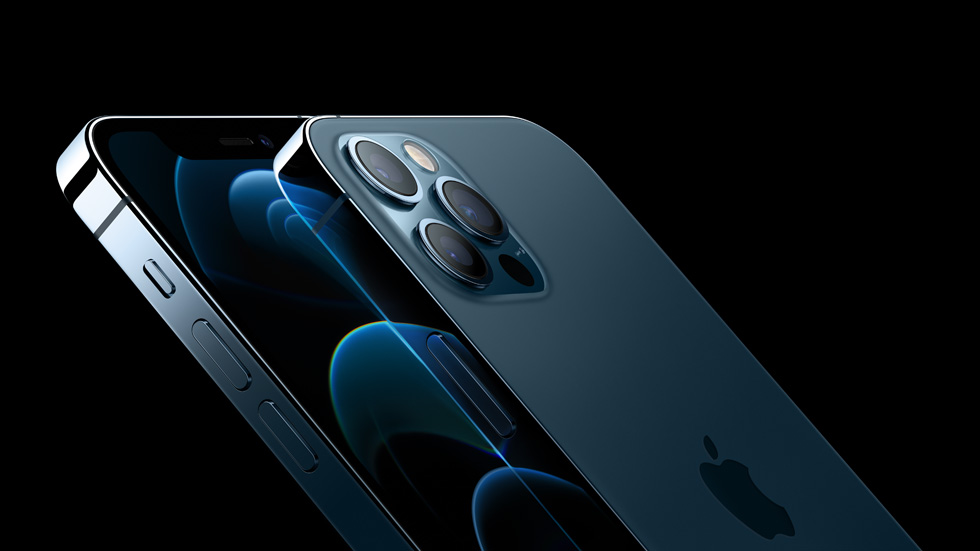
Last year, it was reported that Apple will be introducing reverse wireless charging on iPhone 11 but the feature was allegedly removed in the final version. Now, it seems that the company has added support for such a feature in the iPhone 12 models.
The FCC filings for the Apple iPhone 12 shows that this year’s devices have support for bilateral wireless charging, reveals Jeremy Horwitz in a tweet. It says that the new Apple smartphone works with regular Qi chargers and also with a new “charging function at 360 kHz” that can recharge accessories.
So far, Apple has not officially announced anything related to this and the feature has also been disabled on the iPhone 12. Some reports indicate that the company might be holding on to the feature for the rumored AirPods 3 and AirPods Pro 2 TWS earphones.
This discovery suggests that Apple has continued its work on the charging feature and has integrated the functionality into its MagSafe protocol. While reverse wireless charging could be activated through a software update, it remains to be seen if Apple intends to do so.
Recently, it was reported that the Cupertino giant is working on two new models — the third-generation entry-level AirPods and the second version of the AirPods Pro earbuds, joining the list of upcoming audio products like HomePod mini and over-ear headphone.
Apple iPhone XS launched in 2018 was the first smartphone from the company to come with 512GB of internal storage. Even with the newly launched iPhone 12 models, 512GB storage remains the highest internal storage variant being offered by the company.
However, it seems that this could change from next year. Jon Prosser, who has been mostly right when it comes to Apple-related leaks, has hinted that the iPhone 13 models launching next year could have the option of 1TB internal storage.
The 512GB storage is also more than enough for regular users and most of the users won’t even come next to fill it up. However, with the advancement in camera technology, the images and videos capture take up more storage and those users who record videos a lot could find the 1TB storage option as a welcome addition.
So far, Apple has limited users of iPhone to recording video at 4K 60FPS but for next-generation smartphones, the company could introduce support for 8K video recording, similar to what Samsung is offering on the Galaxy S20 series.
Recently, it was reported that the upcoming iPhone 13 models will come powered by the Apple A15 Bionic which will be manufactured by TSMC using its NP5 5nm node. Prior to that, it was said that the phone will continue to have a wide notch on top of the display for housing front-facing sensors but it will likely be thinner. The launch of the Apple iPhone 13 is almost a year away, so we will be getting more details in the coming months.
As per the latest report published by the CINNO Research, shipments of smartphones in the Chinese market have fallen in the third quarter of this year, i.e. Q3 2020. This is likely because of the COVID-19 pandemic.
The report reveals that the market witnessed shipments of around 80 million in the third quarter, which represents a decline of 15 percent on a month-to-month basis and 19 percent year-on-year.
It also sheds light on the leading smartphone brand for the specified duration, and without any surprise, Huawei still holds the lead in its home market. Huawei, including its sub-brand Honor, shipped 28.8 million units, which shows a decline of 29 percent YoY but the company holds 36.3 percent market share.
The second spot has been grabbed by Vivo (which also includes its sub-brand iQOO) with a market share of 17.5 percent. Ranked in the third position is OPPO with a market share of 16 percent. Both the companies shipped 13.9 million and 12.7 million units, respectively.
In line with the market, both the companies witnessed a decline in shipments by 21 percent and 20 percent, respectively when seen on a year-on-year basis. Fourth and Fifth positions are held by Xiaomi and Apple with 11.8 million and 8.1 million shipments.
While Xiaomi has a market share of 14.8 percent, Apple occupied 10.2 percent of the market share. Interestingly, both these companies managed to increase their shipments by 26 percent and 9 percent compared to the same period last year.
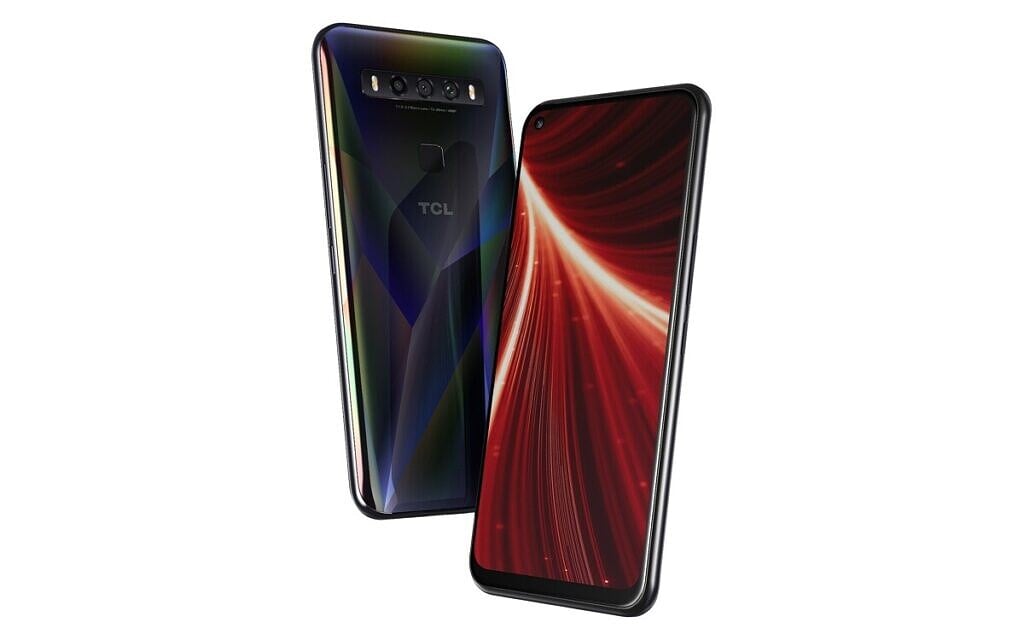
TCL 10 5G smartphone is now available exclusively for Verizon customers in the United States, for a price of $399, making it the cheapest 5G device offered by the network carrier so far. It can also be availed for a monthly price of $16.67 for 24 months.
The device was originally announced by the company earlier this year during the Consumer Electronics Show in January. With the new announcement, the pricing and carrier details have also been revealed.
The TCL 10 5G will support the carrier’s 5G Ultrawide Band (mmWave) and 5G Nationwide (sub-6GHz) networks. Prior to this, Samsung Galaxy A71 5G UW was the cheapest smartphone on Verizon with a price tag of $649.
The phone features a 6.53-inch Full HD+ LCD display and is powered by Qualcomm Snapdragon 765G chipset, which is coupled with 6GB of RAM and 128GB of internal storage. There’s also a microSD card slot, allowing users to expand the storage capacity.
Interestingly, unlike the European variant which features a quad-camera setup, this variant comes with a triple-camera setup on the back. It has a 48-megapixel primary sensor, an 8-megapixel ultra-wide-angle sensor, and a 5-megapixel macro sensor.
On the front side, there’s a 16-megapixel snapper for taking selfies and video calling which is housed inside the punch-hole cutout. It also comes with a rear-mounted fingerprint sensor for added protection.
The smartphone is running the Android 10 operating system out-of-the-box with TCL UI on top and is powered by a 4,500mAh battery that supports 18W Quick Charge 3.0 fast charging technology.
A few months ago, Realme announced the Realme C15 smartphone in several markets. Tipster Mukul Sharma had recently claimed that the company is gearing up to launch a new variant of the phone called the Realme C15 Qualcomm Edition. Today, the tipster revealed that the device will go official in the next two or three days. He also revealed that the device will be called Realme C15s.
Sharma did not reveal any new information on the specs of the Realme C15s. It is still unclear which Snapdragon processor will be present under its hood. Last week, he had revealed that the phone will be available in two variants such as 4 GB RAM + 64 GB storage and 3 GB RAM + 32 GB storage. The phone is expected to arrive in two color variants like Power Blue and Power Silver.
It is speculated that the RMX2195 phone that has been spotted at different certification platforms could be the Realme C15s. Its China Quality Certification (CQC) certification revealed that it could be equipped with a 6,000mAh battery with 18W fast charging, which is the same as the Realme C15 phone. The handset has also received certification from Wi-Fi Alliance, Singapore’s IMDA, Indonesia’s TKDN, and Malaysia’s SIRIM.
The first C-series phone from the brand i.e. the Realme C1 featured the Snapdragon 450. All the C-series phones that came later were driven by MediaTek chipsets. The Realme C17 that went official in September is the only other Snapdragon-powered phone. It is driven by the Snapdragon 460 chipset.
Probably, the Snapdragon 662 or Snapdragon 665 SoC could be present under the hood of the Realme C15s. It is advisable to wait for further reports to know more about it
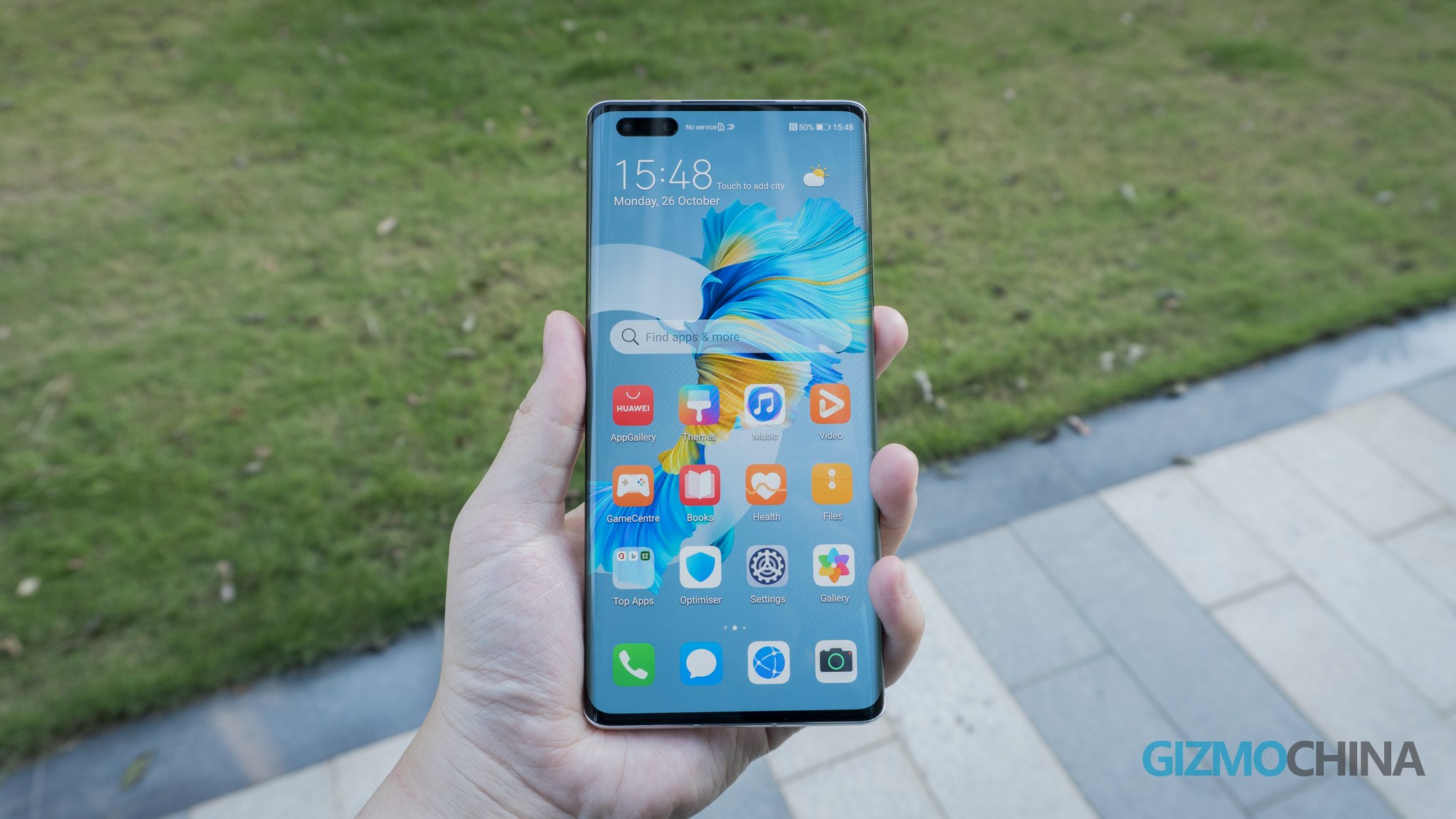
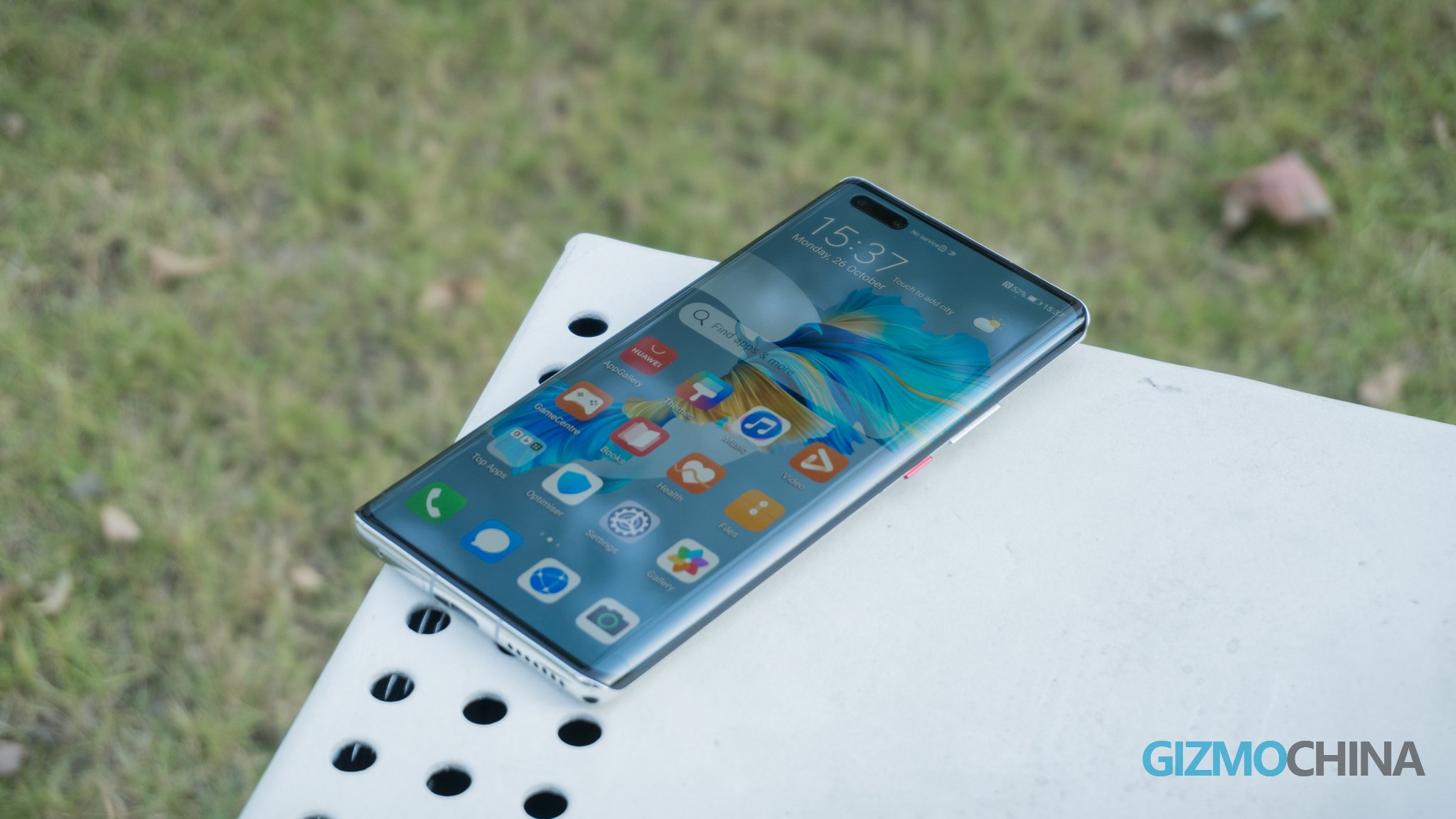
A few days ago, Huawei launched its much-awaited next-generation Mate lineup flagship smartphones — the Huawei Mate 40 series which includes three models — Mate 40, Mate 40 Pro, and Mate 40 Pro+.
Now, the company is all set to launch these smartphones in its home country China on 30th October. Ahead of the launch, Richard Yu, CEO of Huawei’s Consumer Business unit has revealed that the Chinese variants will come with a special feature that will be unveiled along with the smartphones.
Shedding more light on the journey of these newly launched Huawei Mate 40 series smartphones, he says that it took around three years for the company to make these Mate 40 series phones, which offers an impressive set of features.
This information was revealed in a video shared by the company on its official Weibo account, which shows Richard Yu answering some of the frequently asked questions by the users. He also talked about how much pressure the company is feeling because of the worsening business relations in the world, especially with the United States.
Recently, the devices were up for pre-order in China through JD.com and the e-commerce platform has officially announced that the Huawei Mate 40 series was sold out on the platform in just 28 seconds. It’s noteworthy that only the Mate 40 and Mate 40 Pro were up for pre-order in China.
Both the smartphones come with a 6.76-inch Flex OLED display with a 2722 x 1344 pixels screen resolution, DCI-P3 HDR, a 90Hz refresh rate, and a 240Hz touch sampling rate. The panels are curved (88°) but the company still offers physical volume rocker keys.
Under the hood, the devices are powered by the company’s own Huawei HiSilicon Kirin 9000, which is a 5nm chipset with a built-in 5G modem. The Chinese giant claims it to be the most powerful 5G processor in the world.
As for the camera, the Mate 40 Pro has a 50MP f/1.9 1/1.28” main camera along with a 20MP f/1.8 Cine Camera (ultrawide angle), and a 12MP f/3.4 telephoto camera. On the other hand, the Pro+ model has the same 50MP main camera and 20MP ultrawide Cine Camera but includes an 8MP f/4.4 periscope lens and a 12MP f/2.4 telephoto camera along with a ToF sensor for depth sensing.
The smartphones are running the Android 10 operating system with the company’s own EMUI 11 on top. The Mate 40 is powered by a 4200mAh battery with 40W fast charging while the Mate 40 Pro+ is powered b a 4400mAh battery having support for 66W wired SuperCharge and 50W wireless SuperCharge.
We use cookies on our website to give you the most relevant experience by remembering your preferences and repeat visits. By clicking “Accept”, you consent to the use of ALL the cookies.
This website uses cookies to improve your experience while you navigate through the website. Out of these, the cookies that are categorized as necessary are stored on your browser as they are essential for the working of basic functionalities of the website. We also use third-party cookies that help us analyze and understand how you use this website. These cookies will be stored in your browser only with your consent. You also have the option to opt-out of these cookies. But opting out of some of these cookies may affect your browsing experience.
Necessary cookies are absolutely essential for the website to function properly. This category only includes cookies that ensures basic functionalities and security features of the website. These cookies do not store any personal information.
Any cookies that may not be particularly necessary for the website to function and is used specifically to collect user personal data via analytics, ads, other embedded contents are termed as non-necessary cookies. It is mandatory to procure user consent prior to running these cookies on your website.