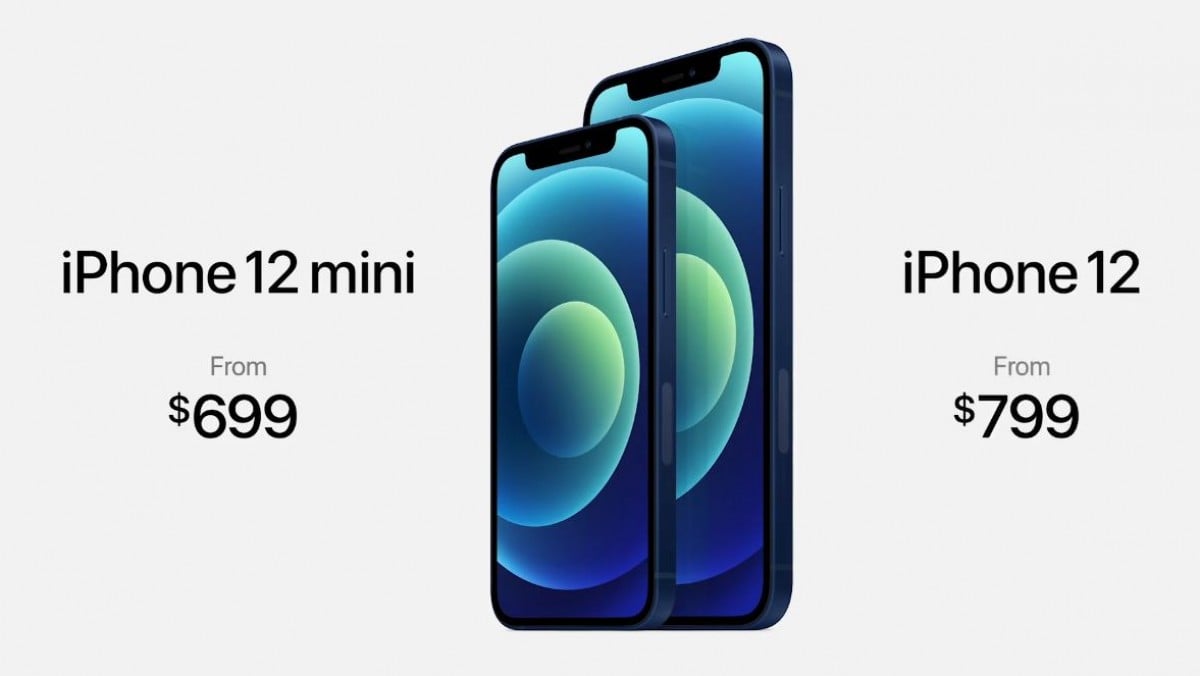
Android OEMs have been launching 5G smartphones for a while now. But Apple introduced its first 5G handsets in the form of the iPhone 12 series only a few days back. Even though the standard iPhone 12 is expected to become the world’s best-selling 5G smartphone in terms of revenue in the second half (H2) of 2020 beating the Galaxy S20+ 5G.
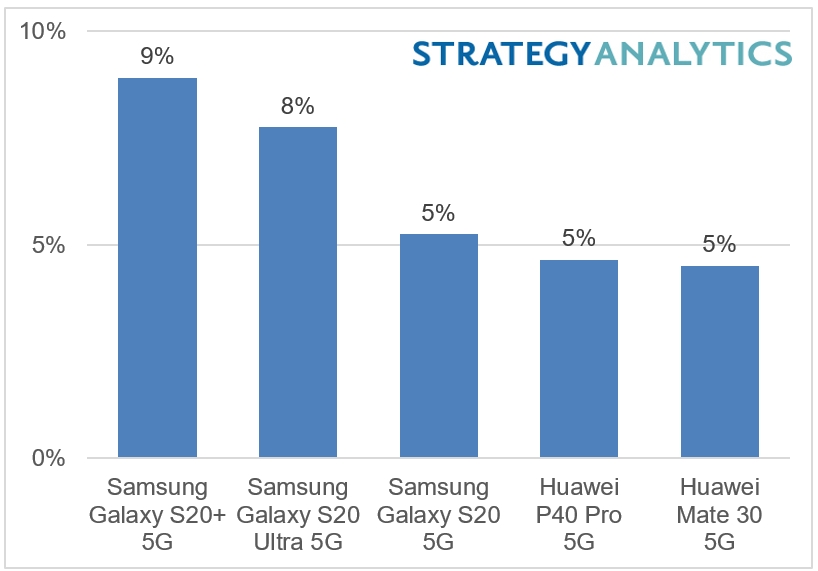
Strategy Analytics, one of the leading analytical firms has released a report on top-selling 5G smartphones in terms of revenue for the first half (H1) of 2020. Unsurprisingly, Samsung leads the chart with three devices, followed by Huawei.
According to the report, the Galaxy S20+ 5G was popular in Western Europe, South Korea, North America, other regions. On the other hand, the two Huawei smartphones were widely popular in the company’s home country China.
Though the list does not include a single iPhone right now since the iPhone 11 series sold in H1 2020 is limited to 4G, the chart for H2 2020 is expected to be led by the regular iPhone 12. And possibly, other iPhone 12 models could also make it to the list.
Samsung recently revealed its financial report for the third quarter of this year (Q3 2020). The company announced that for the duration of July-September, it’s profit grew by 59 percent to 12.35 trillion won or $11 billion.
It’s noteworthy that this is the South Korean giant’s highest quarterly smartphone profit in years. But the company has also added that it is expecting a decline in its profit in the next quarter, i.e. in Q4 2020.
The reason started by Samsung for expecting a decline in profit next quarter is the weak demand for server chips and increasing competition in the smartphone market. Although the market amid the COVID-19 pandemic, the South Korea-based company is still wary of the disruption caused and rising tensions because of the US-China trade war.
Reuters reports that in an earnings call, Ben Suh, Samsung’s executive vice president of investor relations, said that “Global demand is forecast to increase year on year, but uncertainties are unlikely to ease given the possibility of additional waves of the pandemic.”
However, Samsung is expecting a rise in demand for mobile chips as China-based customers have increased their orders after the United States government imposed more restrictions on Huawei.
Samsung has announced that the company’s profit in the chipset business rose 82 percent to 5.54 trillion won compared to last year. The company’s revenue increased by 8 percent to 66.96 trillion won while the net profit rose 49 percent to 9.36 trillion won.
Micromax will make a comeback on Nov. 3 in India to rival Chinese brands like Xiaomi, Vivo, and Realme. The brand is expected to announce two phones named Micromax In 1 and In 1A at 12PM on the said date. Ahead of the launch, Micromax released a tweet to showcase the rear design of its upcoming In-series phones.
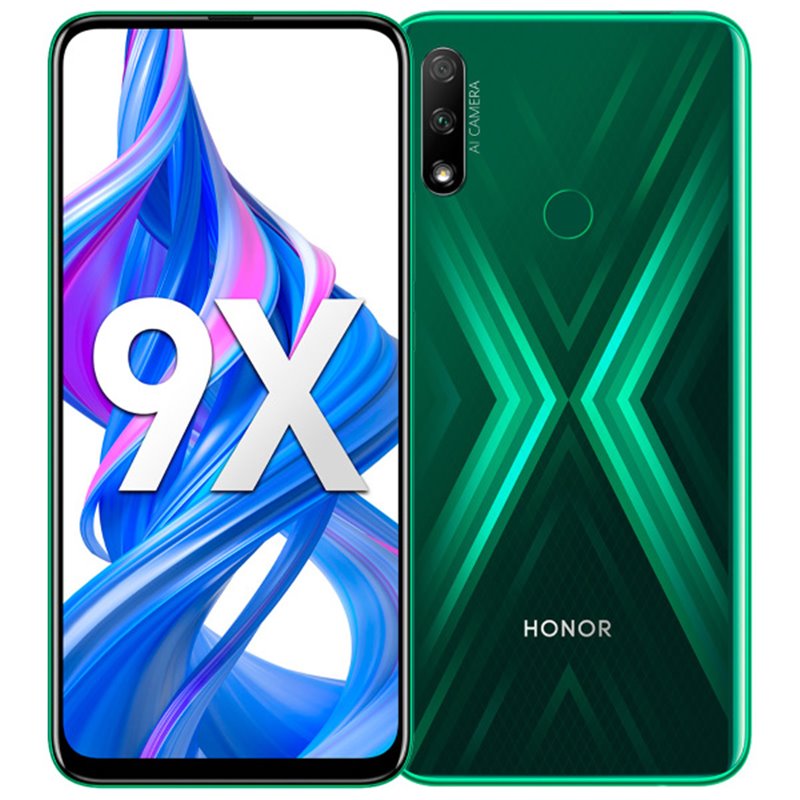
As can be seen in the tweet, the upcoming Micromax phones will be sporting an attractive “X” shaped pattern on the rear. The glossy back panel can be seen flaunting a gradient finish. The rear appearance of the phone bears an uncanny resemblance to the Honor 9X from last year.
The “In” branding can be seen towards the bottom of the upcoming In-series phones. Take a look at the Honor 9X’s Emerald Green edition to see how closely the new In-series smartphones resemble it.
Micromax revealed that the new phones are designed in-house. It also confirmed that it has partnered with MediaTek to design and develop its smartphones at the R&D center placed in Bangalore, India. It is known that Micromax’s upcoming phones will be driven by the Helio G35 and Helio G85 chipsets. These phones will be running on stock Android OS and they are going to be priced between Rs 7,000 (~$95) and Rs 15,000 (~$203).
There is no information on the specs of the Helio G85 powered Micromax phones. The Helio G35 powered phone will be sporting a 6.5-inch HD+ display and a 5,000mAh battery. The base edition of the phone has 2 GB of RAM, 32 GB of built-in storage, and a 13-megapixel + 2-megapixel dual-camera system. The higher version of the phone will have 3 GB of RAM, 32 GB of internal storage, and a 13-megapixel + 5-megapixel + 2-megapixel triple camera setup.
A plant owned by Unimicron Technology, which makes printed circuit boards (PCBs) caught fire on Wednesday in which one person has suffered minor injuries while two others have been rescued by the firefights.
As per the report coming from Taiwanese media, after an emergency call, Taoyuan City Fire Department sent 67 firefighters, 19 fire engines, and three ambulances to the site to battle the fire and support rescue efforts.
While the cause for the fire is being investigated by the fire department, firefighter squad chief Lai Chih-Chung has said that the preliminary findings indicate that the fire might have started in the central air-conditioner room which is located on the first floor of the building.
The company has said that it is still evaluating its losses from the incident. While Unimicron has not revealed many details yet, it is being said in the market that the fire could disrupt the company’s supply chain.
Unimicron Technology is also a supplier for Apple and is reportedly one of the major suppliers for the substrate-like PCB for iPhone 12 models. Currently, it is not known how if this fire will affect supply for the iPhone, for which Apple is reportedly increasing production because of market demand.
In a major relief to the Chinese tech giant Huawei, the United States is now allowing more and more chipset makers to supply components to the China-based company as long as they are not used for the 5G business.
A new report coming from Financial Times indicates that this could offer a potential lifeline to Huawei as the sanctions imposed against the companies were more and less threatening the survival of the giant.
The smartphone business of Huawei, which is the most hit area for the company, now has a chance to make recovery. The report indicates that the application for a license to supply components to Huawei gets approved if the company demonstrates that the technology does not support 5G.
One of the executives of an Asian semiconductor company has said to FT that chips for mobile devices are not a problem and added that the company is optimistic to get a license to continue doing business with Huawei.
In an apparent US-China trade war, the United States put Huawei on Entity List in May last year, effectively banning the company from doing business with US-based companies or companies dealing with American technology, without a special license from the U.S.
However, in recent times, more and more companies are getting a license to deal with the Chinese giant. Samsung Display recently got a green signal to provide OLED panels to Huawei and prior to that, Intel had confirmed that it received approval to supply chips.
It is being said that Japan-based Sony and China-owned OmniVision, which has its headquarters in California, have also received approval to supply CMOS image sensors that are used in smartphone cameras.
As per the report, more than 300 companies, including the likes of Samsung Electronics, Qualcomm, MediaTek, among others have applied for a license to do business with Huawei and they are expected to get approval in the coming weeks or months.
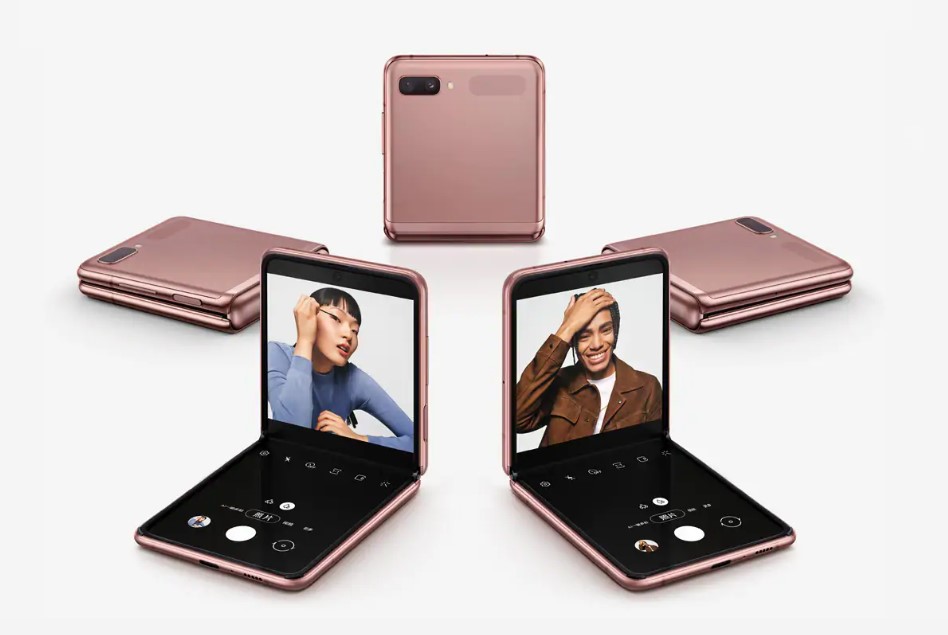
Samsung has already launched a couple of foldable smartphones in the market, a new category that the company entered last year with Samsung Galaxy Fold. Now, the company is reportedly gearing up for a new foldable device — Galaxy Z Flip 2.
The smartphone in question was recently reported to have been delayed by the company until late 2021. However, the latest report indicates the company could launch the phone sometime during Spring in 2021 but no specific timeline is known.
The Z Flip 2 will not be launched with the S21, but it will be launched in the spring. I am impressed with the upgrades it will get.
This confirms that the device won’t be launched along with the next-generation S-series flagship lineup — Samsung Galaxy S21, which is now expected to launch in January 2021, earlier than its usual release in February or March.
For those who are unaware, the original Galaxy Flip was launched in February earlier this year and then in the month of August, the South Korean giant introduced a 5G compatible variant of the same.
As of now, not much is known about this upcoming Samsung Galaxy Z Flip 2 smartphone but we expect the device to have 4G and 5G connectivity support given that 5G is now become mainstream, at least for the devices if not for the network carriers.
The report also indicates that the smartphone will come with several interesting upgrades compared to the original model but there’s no information about what these upgrades are. However, we expect to get more information about the device in the coming months.
A few days ago, it was reported that the Samsung Galaxy Z Flip 2 will feature a larger outer display, a new UTG display, upgraded hinges, and a bigger capacity battery. But do note that these are just rumors and leaks so take the information with a pinch of salt.
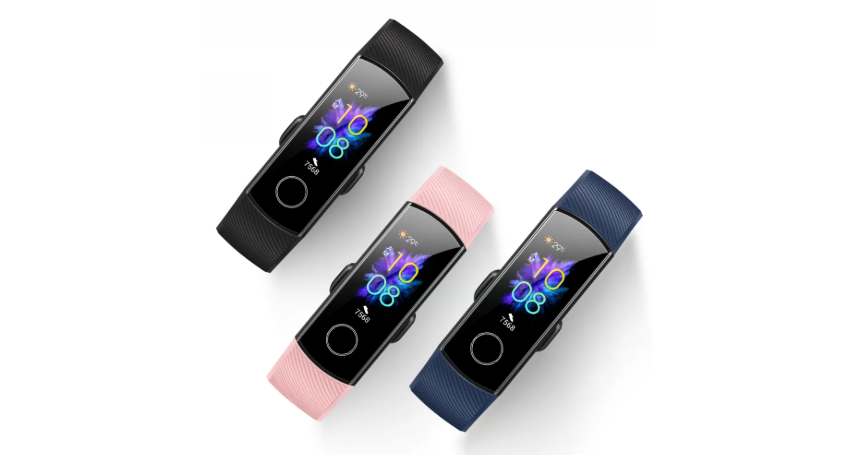
In July 2019, Honor announced the Honor Band 5. The company was expected to launch its successor i.e. the Honor Band 6 by mid-2020, but its arrival was delayed for reasons best known to itself. Today, Honor took to Weibo to confirm that the Honor Band 6 will be debuting in China on Nov. 3. A tipster had recently claimed the device will be arriving with a full-screen display. The teaser released by Honor today reveals that its upcoming fitness tracker will indeed offer a full-screen experience.
The machine translation of the Chinese text placed below the silhouette of the Honor Band 6 reads, “open the era of full-screen bracelets.” There is no information available on the specifications of the Band 6. With the launch date drawing near, the company is expected to reveal some of its key features in the next few days.
Last year, the Honor Band 5 was made official alongside the Honor 9X series of smartphones. It is unclear whether the Huawei sub-brand has plans to announce any other device alongside the Band 6 on Nov. 3. There is a possibility that the device could be rebranded as the Huawei Band 6 in some markets.
The Honor Band 5 came with a 0.95-inch touchscreen AMOLED display with 2.5D curved glass. It featured a 50ATM water-resistant chassis and it houses a 100mAh battery. The fitness tracker came with a heart rate sensor, 6-axis accelerometer, and a gyro sensor. For connectivity, it came with support for Bluetooth 4.2.
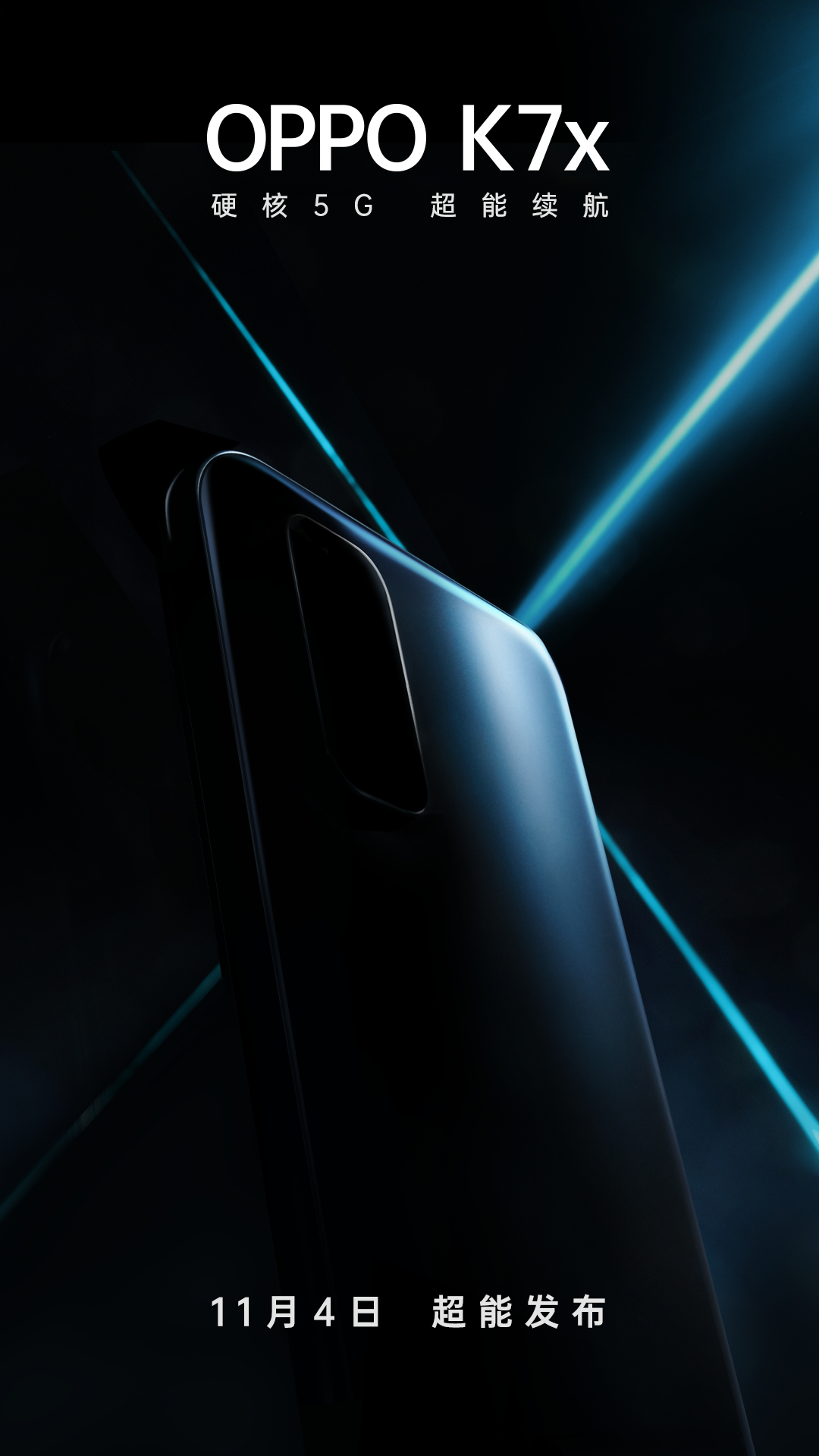
The Double Eleven (Nov. 11) shopping festival of China is fast approaching. As usual, smartphone brands are expected to announce new phones for the upcoming sale. Today, OPPO confirmed that it will be announcing the OPPO K7x on Nov. 4 and it will be timed for the Double Eleven sale.
Apart from confirming the OPPO K7x launch date, the company also shared a teaser image to give a glimpse of its design. The silhouette shows that the OPPO K7x has a rectangle camera housing. Also, the Weibo post that carries the teaser images suggests that the phone will be housing a large-sized battery.
The K7x is now listed for reservations across popular retailer sites of China. The handset could be positioned lower than the OPPO K7 that went official in August.
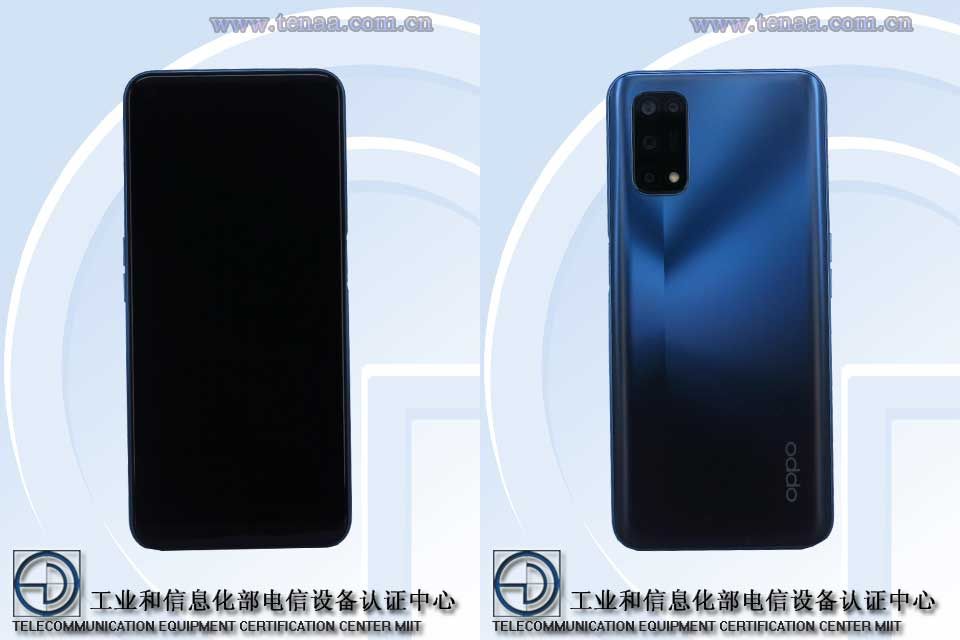
There is an unannounced OPPO PERM00 smartphone listed in the database of China’s TENAA authority. The rear design of the phone seems to match with the teased image of the OPPO K7x.
The PERM00 has a 6.5-inch punch-hole screen with support for a 1080 x 2400 pixels Full HD+ resolution. It has a rated battery of 4,900mAh capacity. The phone is loaded with Android 10 OS and it has a side-positioned fingerprint reader. The volume buttons can be found on the left side of the device.
The OPPO PERM00 is driven by an unknown 2GHz octa-core processor and up to 8 GB of RAM. The device will come with up to 256 GB of storage. There is a microSD card slot for more storage. It has a front camera of 16-megapixel and a 48-megapixel + 8-megapixel + 2-megapixel + 2-megapixel quad camera setup. It measures 162.2 x 75.1 x 9.1mm and it weighs 194 grams. It is likely to arrive in colors like green, gray, and blue.
When Microsoft gave us a first look at the Xbox Series X, there were numerous comments on how the new console looks like a refrigerator. This joke became a meme, one that Microsoft took seriously and made into a real product. Yesterday, Microsoft officially announced the Xbox Series X Fridge and one lucky winner can get to own it.
The Xbox Series X Fridge is a replica of the Xbox Series X console. There is an Xbox logo at the top left corner of the door that lights up and when you open the fridge, the console’s boot-up sound can be heard. It even has the grille at the top of the console. Unlike most fridges that have a yellow light or white light when you open them, the Xbox Series X Fridge emits a one-of-a-kind green light.
The one.
The only.
Xbox Series X Fridge giveaway.
Follow and retweet with #XSXFridgeSweeps for a chance to win the Xbox Series X Fridge.
Microsoft says the fridge costs $499 but you can’t buy one, however, if you are lucky, you can win one.
Microsoft seems to have made just three units of this limited edition refrigerator, one of which was sent to Snoop Dogg while the other was sent to the popular YouTuber, iJustine.
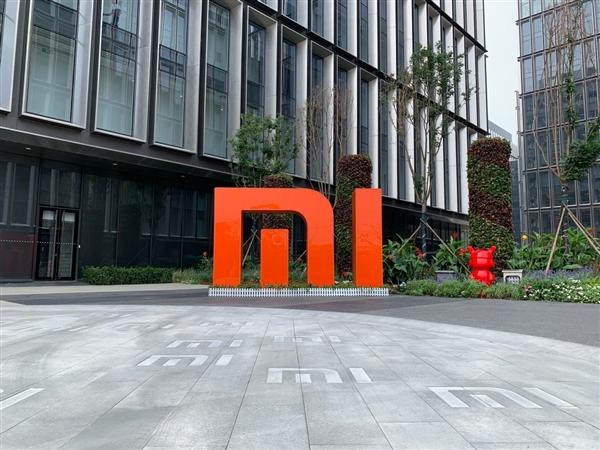
A report from China says Xiaomi is planning to construct a new global headquarters and just acquired a site in Shenzhen for it. The plot of land is reported to have cost ¥531 million.
A couple of months ago, Xiaomi signed an agreement with the government of Shenzhen for the construction of its global headquarters. The Xiaomi Group will invest ¥7.76 billion for the construction of the new headquarters which is expected to realize a combined operating revenue of ¥51 billion between 2020 and 2024.
The headquarters will include a smartphone and artificial intelligence center, a business development center, and an internet service center.
Xiaomi is not the only Chinese company building a new headquarters in the city of Shenzhen. Just about the same period Xiaomi announced its plans for its headquarters, Vivo also acquired a site in Shenzhen that cost its $182 million. This is more than double the amount Xiaomi paid for its own headquarters.
Apple’s new iPhone 12 series does not ship with a power adapter and a pair of wired earphones. The decision was made to reduce e-waste and protect the environment. However, it appears that while Apple is trying to save the environment in one way, it is negatively impacting it in another.
According to a report by Morgan Stanley, air quality data in some key cities in China show a decline in air quality that is linked to the production of the iPhone 12 series.
A report released by analysts of the financial institution revealed that there has been a sharp increase in industrial production in some cities such as Zhengzhou, and this increase has led to a corresponding decrease in air quality. The city of Zhengzhou is also known as “iPhone City” and is a key site in the production of iPhones. The factory in the city is run by Foxconn and has been in the news in recent years for poor working conditions.
The report says that air-quality data was gotten from a non-profit platform that collects and publishes air-quality data in China. They then tracked nitrogen dioxide levels, which is a “first-level indicator of industrial activity” according to the European Space Agency, in four cities.
Nitrogen dioxide (NO2) is one of the gaseous pollutants that contribute to the formation of other air pollutants such as ozone and particulate matter. It is also harmful to the lungs and can increase asthma attacks.
Other cities where the air-quality has tanked are Shenzhen and Chengdu. Production increased in the former in early September while Chengdu’s industrial activity has increased in recent days.
The iPhone 12 and iPhone 12 Pro are already on sale while the iPhone 12 Mini and iPhone 12 Pro Max are scheduled to follow suit in November. There are projections that Apple will ship between 230 – 240 million units of the new phones in 2021 which may earn it the title of the best-selling iPhone series ever.
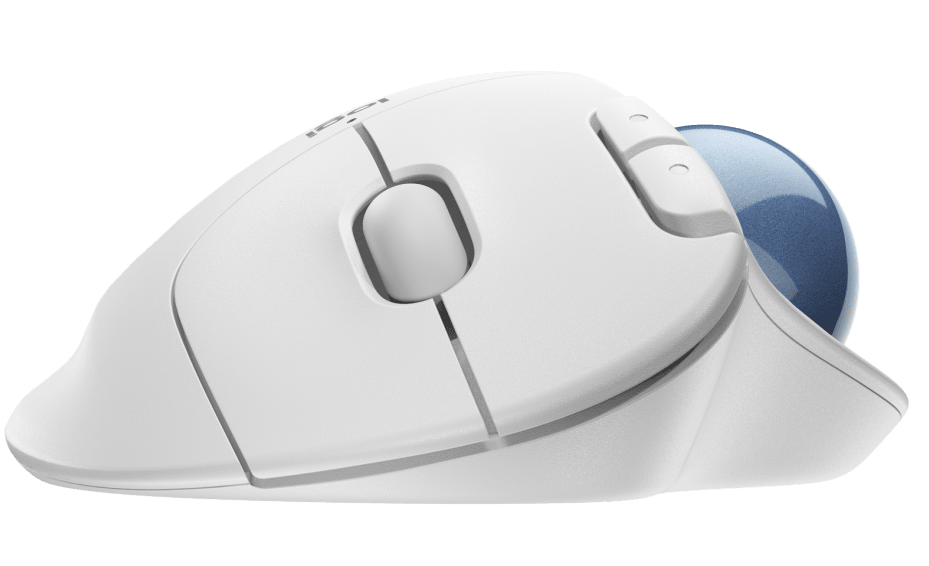
A regular mouse needs to be moved around on a mouse pad or whatever surface you place it on for the cursor to move on your display. However, if you are working in a cramped space or on a desk that’s mostly packed full of items, your mouse has limited space to move around. If you fall into this category, the Logitech Ergo M575 Trackball Mouse is the mouse for you.
The new mouse, which was announced today, is the successor to the Ergo M570. Unlike a regular mouse that requires you to move your arm around to move the cursor, the Ergo M575 Trackball Mouse sits in one spot. To move the cursor around, all you have to do is move the trackball on the side using your thumb.
The mouse is designed to fit the shape of your hand and should be more comfortable than a regular mouse. It has three programmable buttons, two of which are on the left. The trackball is also removable and can be easily cleaned.
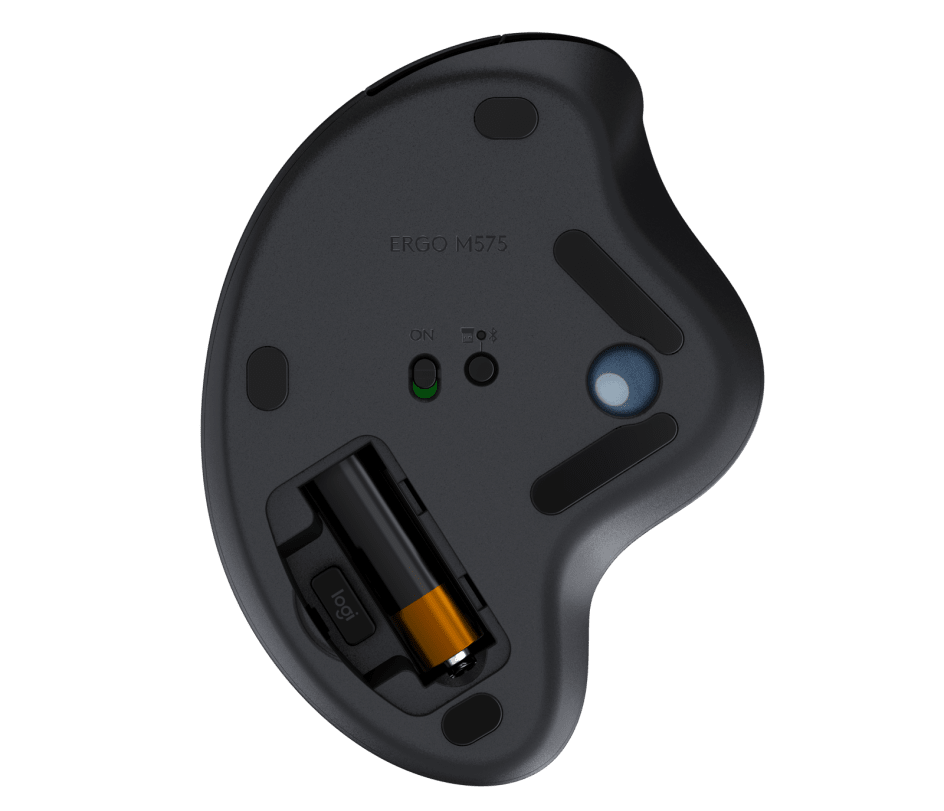
The Logitech Ergo M575 connects via Bluetooth Low Energy or through a unifying USB receiver and supports both Windows, macOS, and iPadOS. Powered by a single AA battery, Logitech says battery life is up to 24 months if you connect via the USB receiver and up to 20 months if you connect via Bluetooth.
The mouse which comes in two colors – Graphite and Off-White – is partly made from post-consumer recycled plastic (PCR)while the material for the packaging is sourced from FSC-certified forests.
Logitech is selling the mouse for $49.99 and it can be purchased on its official website.
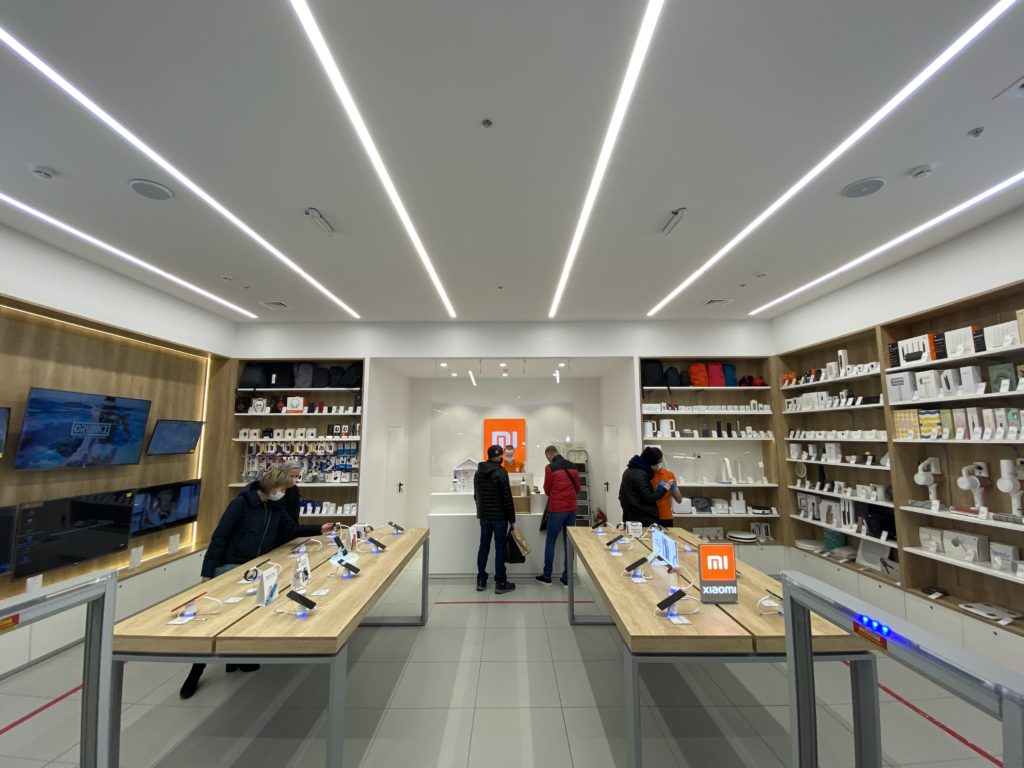
Tech giant Xiaomi has opened its first Mi Store in the Arctic Circle. The company officially announced this over the weekend. The store is located in the Russian city of Murmansk which is located within the Arctic Circle.
The announcement is symbolic in that it is the first and only Mi store in the northernmost point of the world. Speaking concerning the store’s opening, Yu Man, Head of Xiaomi Russia and CIS, stated: “We are so excited and thankful to our partner for an amazing opportunity to make this dramatic northbound move. Xiaomi’s chain of offline stores in Russia now covers 10 timezones, and my heart fills with happiness when I see more and more Mi Fans and consumers get closer to innovations we provide.”
The new Mi Store is located within the Murmansk Malland reports show that it has rapidly become one of the most loved shopping venues among local residents. It is about 80 square-meters in size, big enough to accommodate a wide range of Xiaomi-branded and ecosystem products. The products range from smartphones to ecosystem smart hardware.
Although located in the Arctic Circle, Murmansk’s proximity to the Barents Sea and the warm air masses delivered by the ocean currents help create a mild climate and shape up the world’s northernmost seaport. The population of Murmansk is approximately 230,000 as of 2020.
The new store joins a range of 151 official stores in Russia where Xiaomi products are sold. The company launched a Preferred Partner Program which has help to see to the proliferation of more stores across the country. The Chinese tech giant also recently sighned a partnership with Inventive Retail which will see up to 60 new Xiaomi Stores opening with the next few years.
Xiaomi has increasingly pursued an online/offline strategy which not only sees its products listed on the company’s online channel but also on the offline channels. Offline stores on Xiaomi’s overseas market is said to stand at over 700 as of the end of September. This figure excludes the brand’s presence in India which is quite massive.
Oneplus Nord was the brand’s cheapest smartphone of 2020 up until OnPlus Nord N10 5G and OnePlus Nord N100 showed up a few days back. This handset has received 8 system updates so far. Now, the company is seeding out its ninth update in the form of OxygenOS 10.5.9.
The latest system update for OnePlus Nord not only brings the October 2020 security patch but also new Game Space features and Bluetooth as well as Network improvements. For those unaware, the company has been tweaking Bluetooth on this phone ever since certain users reported issues regarding the same.
That said, here are the build numbers of the new update for the three different regions.
IN: 10.5.9.AC01DA
EU: 10.5.9.AC01BA
GLO: 10.5.9.AC01AA
OnePlus Nord OxygenOS 10.5.9 Official Changelog
System
Updated Android security patch to 2020.10
Improved system stability and general bug fixes
Game Space
Newly added gaming tools box for convenient switches of Fnatic mode. You can now choose three ways of notifications: text-only heads up and block just for your immersive gaming experience
Newly added quick reply feature in a small window for Whatsapp and INS (Enable it by swiping down from upper right/left corners of the screen in gaming mode)
Newly added mis-touch prevention feature. Enable it, swipe down from the top of the screen, click and the notification bar will pop out
Bluetooth
Improved Bluetooth connection stability
Network
Improved network stability
The latest system update for the OnePlus Nord is being pushed in batches and should reach your device very soon. Having said that, OnePlus is yet to release Android 11 beta builds for this smartphone.
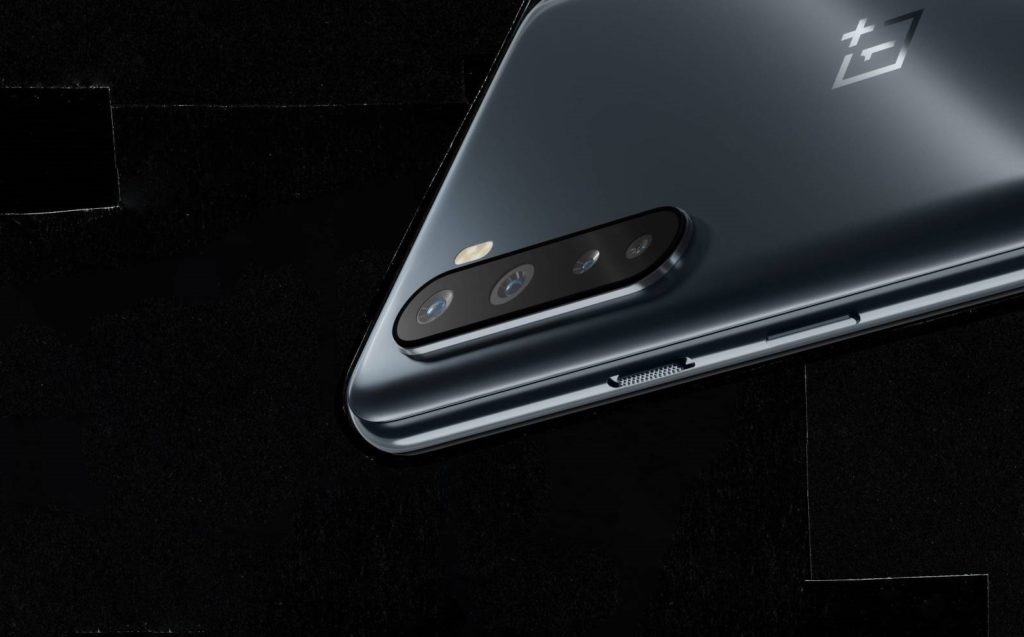
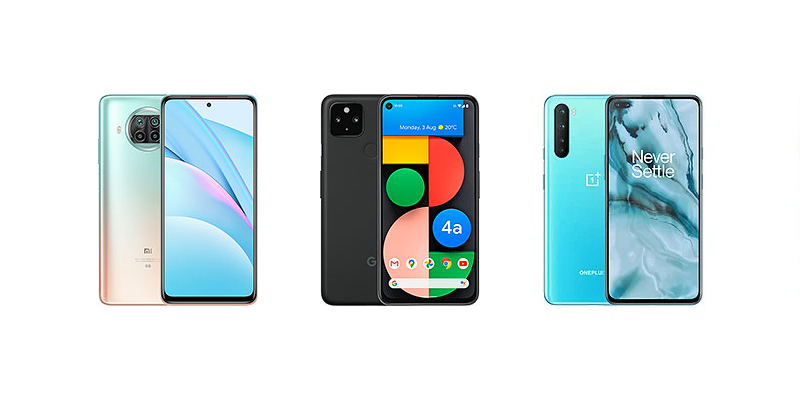
This year, for the first time ever, all the phones released by Google are mid-rangers. But despite that, two of them support 5G networks. The affordable Pixel with 5G support is the Google Pixel 4a 5G, which is essentially a 5G variant of the Pixel 4a with a different processor. But is its value for money high enough to make it the best choice for everyone or you can get better phones at a similar price? Discover it by checking this comparison between Google Pixel 4a 5G, Xiaomi Mi 10T Lite, and OnePlus Nord, all mid-rangers, all with 5G and upper-midrange chipsets.
Xiaomi Mi 10T Lite vs Google Pixel 4a 5G vs OnePlus Nord
Quad 48 + 8 MP + 5 + 2 MP f/1.8, f/2.3, f/2.4 and f/2.4
Dual 32 + 8 MP f/2.5 and f/2.5 front camera
Dual 12.2 + 16 MP f/1.7 and f/2.2
8 MP f/2.0 front camera
BATTERY
4820 mAh, fast charging 33W
4115 mAh
Fast charging 30W
3885 mAh, Fast charging 18W
ADDITIONAL FEATURES
Dual SIM slot, 5G
Dual SIM slot, 5G
Dual SIM slot, 5G
Design
Xiaomi Mi 10T Lite and OnePlus Nord look more elegant than Google Pixel 4a 5G because they come with a glass back, while Google Pixel 4a 5G is the most compact thanks to its smaller display. Between Xiaomi Mi 10T Lite and OnePlus Nord, my choice would be the latter because it has a sleeker back cover, it is thinner and lighter than its rival. The huge and rectangle-shaped camera module of the Xiaomi Mi 10T Lite does not make it so beautiful. The glasses on Xiaomi Mi 10T Lite and OnePlus Nord are protected by Gorilla Glass 5. With the Mi 10T Lite you get a single punch hole placed in the middle, OnePlus Nord has a dual punch hole on the upper left corner, and Google Pixel 4a 5G has a single punch hole on the upper left corner too.
Display
The most convincing display belongs to the OnePlus Nord. First of all, it is an AMOLED panel; further, it has a 90 Hz refresh rate and the HDR10+ certification for a smooth viewing experience and a great image quality. The Xiaomi Mi 10T Lite has a higher 120 Hz refresh rate, but it comes with an inferior IPS panel. The Google Pixel 4a 5G is OLED and HDR but it lacks a 90 Hz refresh rate. All the phones feature a Full HD+ resolution (1080p), but the Google Pixel 4a 5G has a smaller panel with just 6.2 inches. With Mi 10T Lite and Google Pixel 4a 5G, you get stereo speakers too.
Hardware/Software
Despite the Xiaomi Mi 10T Lite has a different chipset from OnePlus Nord and Google Pixel 4a 5G, it provides similar performance because the Snapdragon 750G and the Snapdragon 765G are more or less at the same level. What really makes the difference in this hardware comparison is the memory configuration: OnePlus Nord offers up to 12 GB of RAM and up to 256 GB of internal storage, while Mi 10T Lite and Google Pixel 4a 5G have just 6 GB of RAM and up to 128 GB of native storage. So, OnePlus Nord wins the hardware comparison. If we talk about the software, Google Pixel 4a 5G is actually superior not only because it runs Android 11 out of the box, but also because it will be constantly updated for a longer time.
Camera
OnePlus Nord and Google Pixel 4a 5G are equipped with superior camera departments to the Xiaomi Mi 10T Lite, including the main sensor with OIS. My favorite camera phone is the OnePlus Nord not only for its rear camera department but also because of its dual front camera including an ultrawide sensor. On the other hand, the rear cameras of the Google Pixel 4a 5G and its camera algorithm are more interesting.
Battery
Xiaomi Mi 10T Lite is able to provide a way longer battery life than OnePlus Nord and Google Pixel 4a 5G thanks to its bigger 4820 mAh battery. But this does not mean that OnePlus Nord and Google Pixel 4a 5G are not good battery phones.
Price
Xiaomi Mi 10T Lite has a €280/$330 starting price globally, OnePlus Nord costs €399/$470 in its base variant, and Google Pixel 4a 5G is priced at €499/$499. On paper, OnePlus Nord is the best. Mi 10T Lite has the highest value for money. But the software differences would let a lot of people go for the Google Pixel 4a 5G.
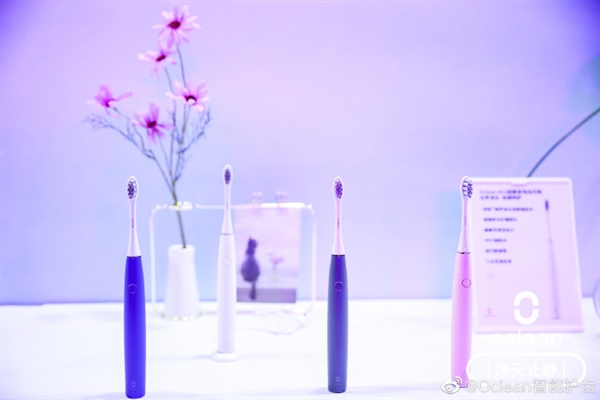
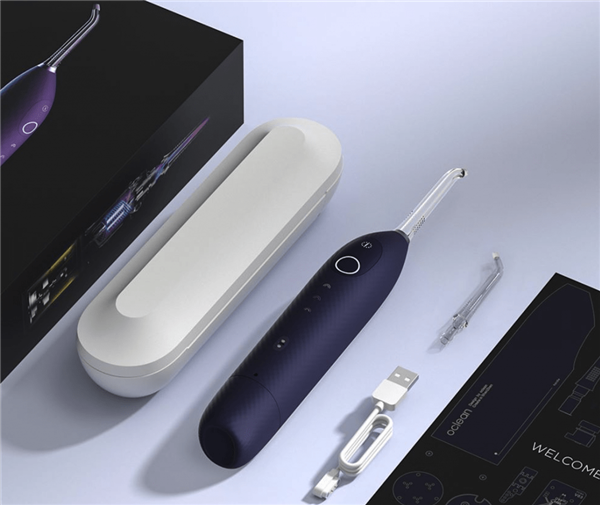
Xiaomi‘s ecological chain company Oclean has launched two new products in its niche market. The Oclean Air toothbrush has gotten a successor and it is dubbed Oclean Air2 Sonic Electric Toothbrush. The toothbrush was unveiled alongside the Oclean W1 water flosser.
The Oclean Air2 comes with improved design and a reduction in the operational noise. It is said to have been certified by the China National Accreditation Service for Conformity Assessment (CNAS) and has an operating noise of less than 45dB which is lower than the national standard of 72dB. Most electric toothbrushes have their working noises around 60dB so, brace up for a more silent toothbrush which won’t disturb you with its buzzing sound.
The motor is driven by a high-frequency signal above 20000Hz, and the noise suppression algorithm is used to suppress the sound wave harmonics generated by the motor, so as to achieve the “super quiet” effect when the electric toothbrush is working.
The Oclean Air2 comes in four cool colors of white, pink, purple and green which are suitable for both sexes. You also get the usual IPX7 waterproof rating which means you can wash it directly under running water.
The brush head has double-tip silky soft bristles with a diameter of less than 0.01mm, which can clean the teeth deeply, and care for the gums while providing high cleaning power.
The Oclean Air2 sonic electric toothbrush will retail for just 199 yuan (~$29) but during the 11.11 shopping festival, the device will be sold for 179 yuan (~$26).
Oclean W1 Portable Water Flosser
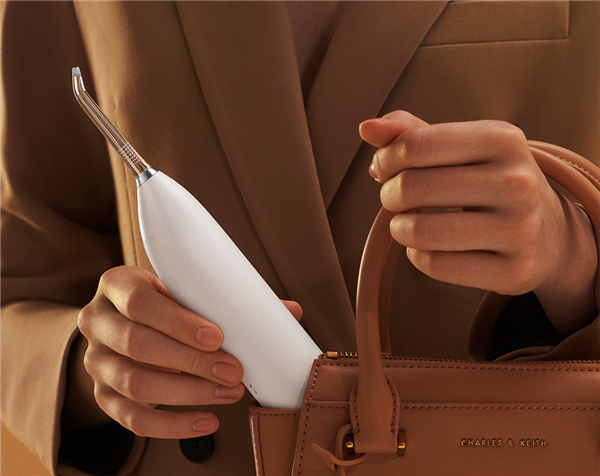
The Oclean W1 portable water flosser is more expensive, priced at 799 yuan (~$118). It is available on Tmall. The device uses a new dynamic technology that can intermittently spray water jet to dislodge any food debris from the teeth and interproximal spaces. It also helps in massaging the gum, stimulating the flow of blood and keeping it healthy. The action of the water jet also removes debris from the periodontal pockets that may lead to periodontal diseases.
The Oclean W1 Water Flosser has nine (9) water pressure levels to choose from. It has been tested and found to be suitable for persons with sensitive gums as well as pregnant women who are prone to periodontal diseases during pregnancy.
Furthermore, the gingival protection nozzle used by the water flosser can be rotated 360°, and the 45° arc is closer to the gap between the teeth . The more intimate design is that there is a silicone on the top, which is safer when it is close to the gums. Despite the small water tank design, a single refill can be used for 160 times.
In terms of battery life, the device has a 30-day battery life and can be fully charged in 3 hours. It supports magnetic charging.
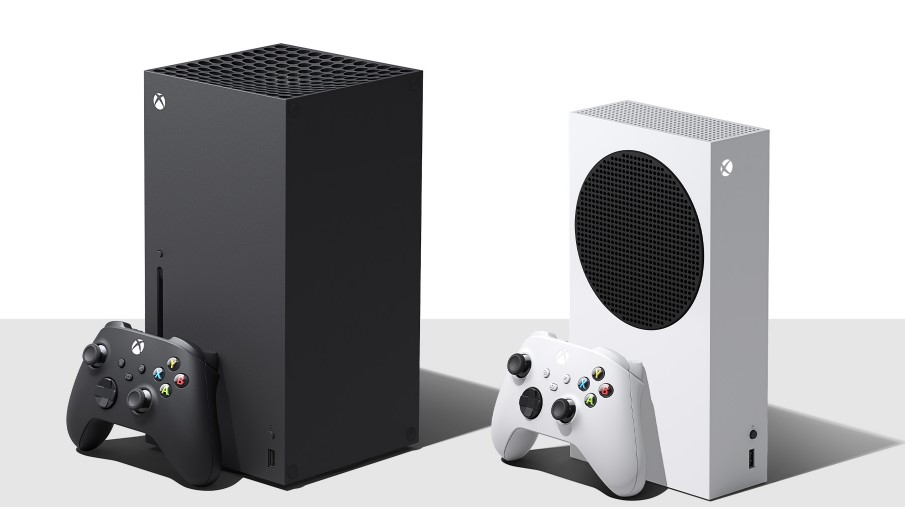
A tweet by Jason Ronald (@jronald) who is the Director of Product Management at Xbox, the Xbox Series X, and Series S will be compatible with all Xbox, Xbox 360, and Xbox One games that currently work on the Xbox One today except for those that require Xbox Kinect.
After 500K+ hours of testing, we’re are excited to share that all Xbox, Xbox 360 and Xbox One games playable on Xbox One today, except for the handful that require Kinect, will be available – and look and play better – on Xbox Series X|S at launch.
He adds that these games will be available at launch and will “look and play better” on the two new generation consoles. That sure is a very expansive game library.
There are multiple ways to get access to this huge library of games. You can buy the game disc released for the aforementioned consoles and pop it into your Xbox Series X. If you are picking up the Xbox Series S which doesn’t have a disc drive, digital is the way to go. You can make a purchase of the digital game online or access them for free if you have a Game Pass subscription.
This is great news for Xbox fans and those who plan to pick up their very first Xbox console in form of the Series S or Series X. For the latter group, it means you can play those Xbox titles you never had the chance to play on the best Xbox hardware and with better graphics too.
The Xbox Series S and Series X next-gen consoles will go on sale on November 10.
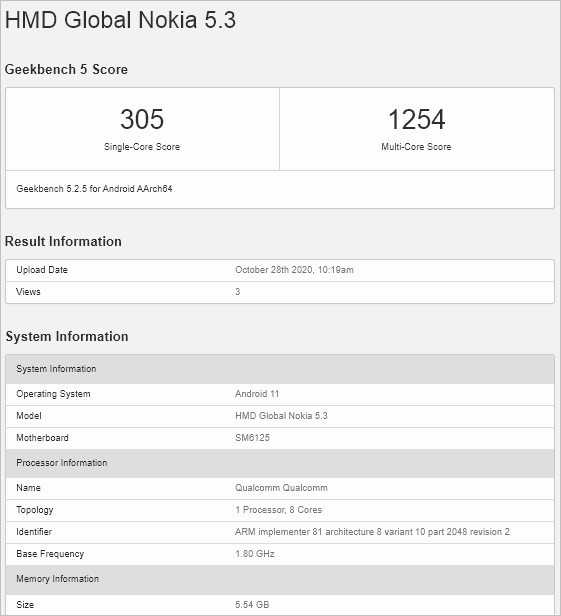
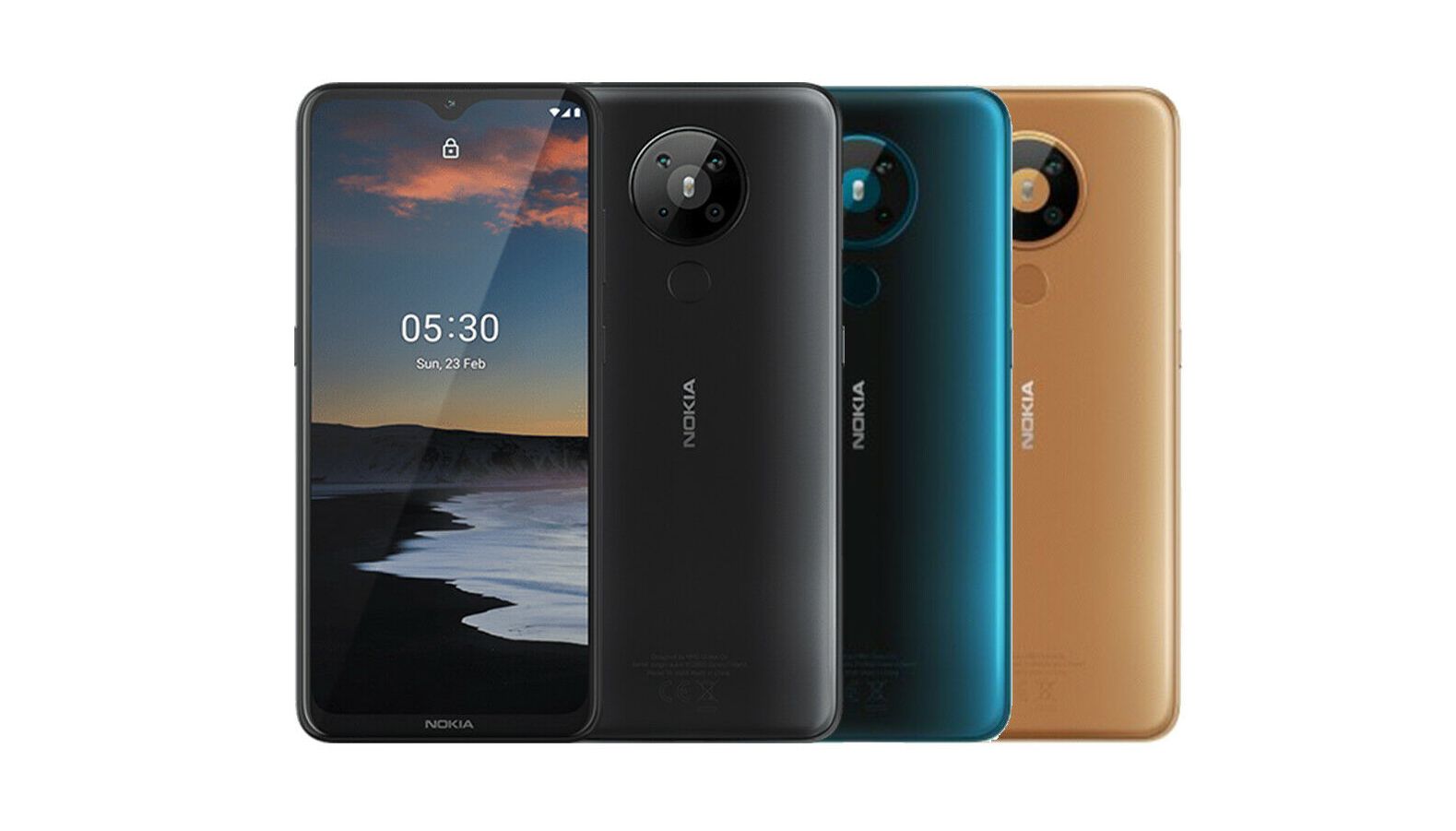
HMD Global’s Nokia was recently ranked as the most trusted smartphone brand by Counterpoint in terms of security, build quality and software updates. The well-deserved ranking is a reflection of the brand’s policy of pushing regular updates to supported models promptly. To put in perspective Nokia’s swift Android update policy, a Nokia 5.3 model running on the latest Android 11 operating system has been spotted on the Geekbench database.
The model explicitly listed as HMD Global Nokia 5.3 is the first Nokia model to be spotted on GeekBench with Android 11 onboard. It also is the second model that we are seeing aside from the Nokia 8.3 5G running on Android 11.
The Nokia 5.3 was first launched in March this year as a budget device running on Android 10 OS. Nokia did reveal during the launch that the €183 device will get updates to Android 11 and even Android 12 as well as 3 years of security updates.
To recall, the Nokia 5.3 packs a 6.55-inch display with an HD+ resolution of 720p. The phone is powered by a Qualcomm Snapdragon 665 chipset paired with 4GB of RAM and 64GB of expandable storage.
Nokia 5.3
On the back are four cameras – a 13MP f/1.8 primary sensor, a 2MP depth sensor, a 5MP ultrawide angle camera, and a 2MP macro camera. The selfie camera is an 8MP sensor. Further, the Nokia 5.3 packs a 4000mAh battery capacity with support for 10W charging. The phone comes with an audio jack, FM radio, Bluetooth 4.2 and a dedicated Google Assistant button on the side.
According to the brand’s Android 11 update schedule released earlier this month, Nokia smartphones will start receiving Android 11 update from Q4 2020 while the last set of models would have gotten the update by Q2 2021. The Nokia 5.3 may not likely be among the first set of models to get the update but we expect its own update to start rolling out in no distant time.
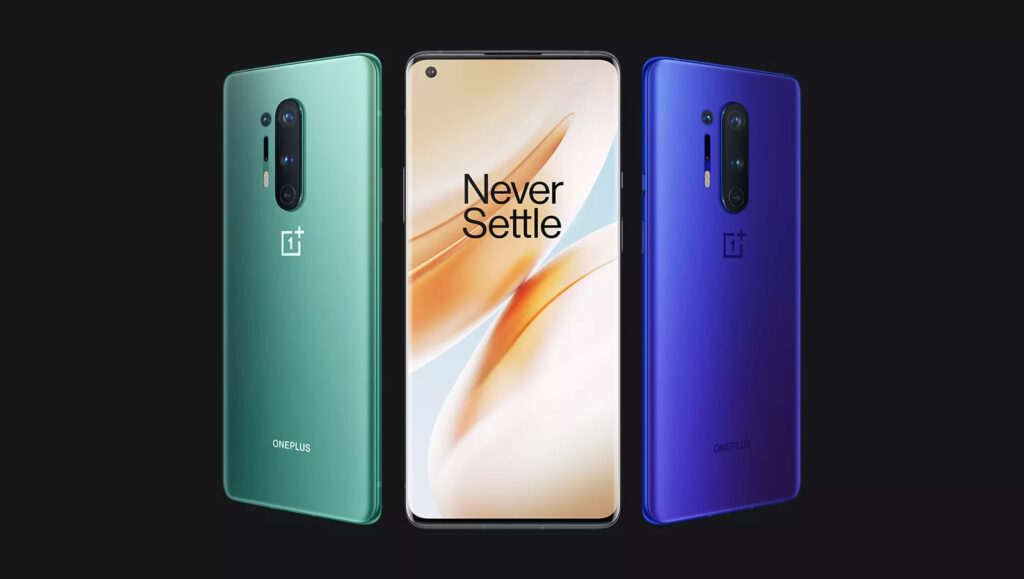
Earlier this month, OnePlus became the first Android OEM other than Google to roll out Android 11 stable update to its devices – Oneplus 8 and OnePlus 8 Pro in the form of OxygenOS 11. The company was part of Android 11 Beta program and began to seed OxygenOS Open Beta in early September for the OnePlus 8 series. Now, Oneplus is rolling out the 3rd build in this channel.
OnePlus is known for delivering updates in three channels namely Stable, Open Beta, and Closed Beta. Other than these three, the company also releases Developer Beta builds to select devices when Google unveils the latest version of Android.
The OnePlus 8 series has been part of all the four channels. Ever since the company halted the Android 11 Developer Beta program for OnePlus 8 and Oneplus 8 Pro, these two smartphones have been receiving OxygenOS 11 Open Beta builds.
That said, OnePlus is currently seeding OxygenOS 11 Open Beta 3 to OnePlus 8/8 Pro worldwide with the following changelog.
System
Optimized the UI smoothness of Call
Optimized background process management mechanism to improve sandy-by performance
Fixed the issue that text was blocked in some games
Optimized the issue that input text was blocked in some games
Improved system stability and fixed general issues
Updated Android Security Patch to 2020.10
Ambient Display
Optimized the animation effect with Canvas, making the unlock experience smoother
Fixed the low probability issue that system settings interface stopped running when Zen Mode turned on
The above-mentioned changelog clearly says that OxygenOS 11 Open Beta 3 for the OnePlus 8 series comes with a number of fixes, improvements, optimizations as well as Always-on support for the Canvas feature.
Hence, if you are running the previous build (OxygenOS 11 Open Beta 2), then make sure to download and install the latest version as soon as possible.
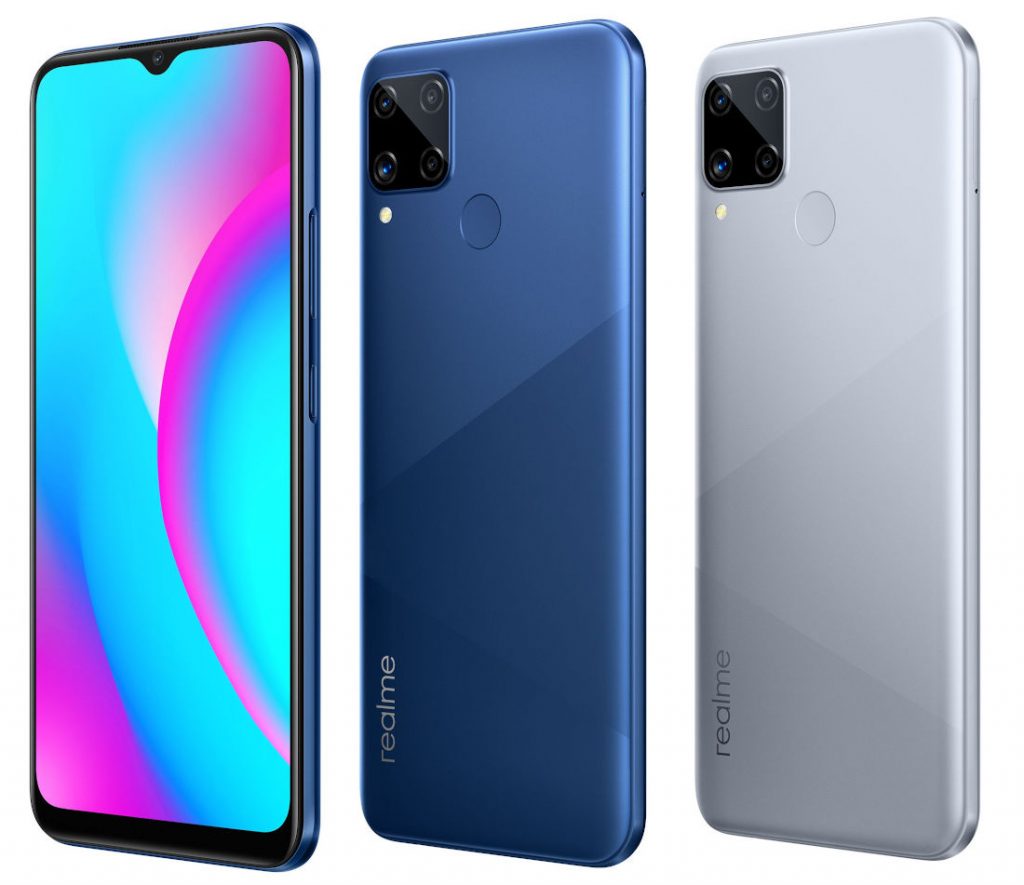
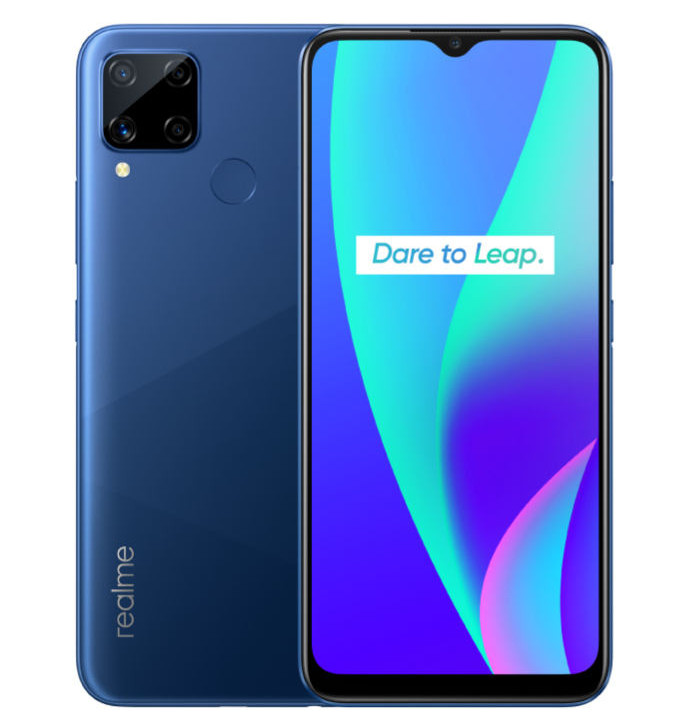
Realme has officially taken the wraps off the Realme C15 Qualcomm edition in India. The new version is an upgraded version of the C15 which was first launched in March this year. The model was only launched in India in August this year.
The major difference between the two versions is that this model is powered by a Qualcomm Snapdragon 460 processor as against a MediaTek Helio G35 chip on the earlier model. Other than that, the C15 Qualcomm Edition is the same as the MediaTek edition, specs-wise. We can’t say the same thing about the processor, though. We expect the Qualcomm chipset top offer a better processing power.
As a reminder, the Realme C15 features a 6.5-inch HD+ display with a waterdrop notch. The screen produces HD+ resolution and a 20:9 aspect ratio. The Helio G35 chipset fuels the phone with LPDRR4x RAM. Apart from internal storage, the phone comes with a microSD card slot for more storage.
The C15 packs an 8-megapixel front camera for selfies and its rear has a Quad camera setup made up of a 13-megapixel + 8-megapixel (ultrawide) + 2-megapixel (B&W) + 2-megapixel (retro) combo. Keeping the lights on is a 6,000mAh battery which supports 18W fast charging through microUSB. It has a rear-facing fingerprint reader.
As for the price, the Realme C15 Qualcomm edition comes in Power Blue and Power Silver colours and is priced at Rs. 9,999 (~$134) for the 3GB RAM with 32GB storage version and the 4GB RAM with 64GB storage version costs Rs. 10,999 (~$148). The price is similar to that of the MediaTek version. However, Realme will sell the model at a reduced price of Rs. 9499 (~$128) for the 3GB+32GB variant and Rs. 10499 (~$141) 4GB+64GB variant, starting from 29th October onwards as an introductory festive offer. The sale will commence tomorrow (October 29) from 12 PM via realme.com, Flipkart and offline stores.
We use cookies on our website to give you the most relevant experience by remembering your preferences and repeat visits. By clicking “Accept”, you consent to the use of ALL the cookies.
This website uses cookies to improve your experience while you navigate through the website. Out of these, the cookies that are categorized as necessary are stored on your browser as they are essential for the working of basic functionalities of the website. We also use third-party cookies that help us analyze and understand how you use this website. These cookies will be stored in your browser only with your consent. You also have the option to opt-out of these cookies. But opting out of some of these cookies may affect your browsing experience.
Necessary cookies are absolutely essential for the website to function properly. This category only includes cookies that ensures basic functionalities and security features of the website. These cookies do not store any personal information.
Any cookies that may not be particularly necessary for the website to function and is used specifically to collect user personal data via analytics, ads, other embedded contents are termed as non-necessary cookies. It is mandatory to procure user consent prior to running these cookies on your website.