A new report has revealed that Qualcomm is looking into an alternative to shift its orders from SMIC. The move might be taken considering that China’s Semiconductor Manufacturing International may soon face restrictions from the US Government.
According to a DigiTimes report, Qualcomm executives have paid a visit to Taiwan based foundries to secure capacity support. These are to act as a cushion in case the orders from SMIC falls short due to further US pressures. At the moment, Qualcomm is one of the top 3 customers of SMIC and accounts for about 13 percent of the foundry’s total wafer revenue.
The American based chip designer has also contracted the Chinese semiconductor based firm to fabricate power management chips using its 0.18-micron process technology along with mobile application processors and SoCs using the 28nm and 14nm processes. Among the Taiwan based foundries, TSMC, United Microelectronics (UMC), and Vanguard International Semiconductor (VIS) have been approached by the Qualcomm executives for the potential orders shift, according to industry sources.
Notably, SMIC had also recently issued a statement regarding the situation and accusations from the US. The company stated that “any assumptions of the company’s ties with the Chinese military are untrue statements and false accusations.” This arrives after the Trump Administration considered adding SMIC into the “Entity List” blacklist as well.
Huawei, the known Chinese consumer electronics maker, is apparently planning on launching a curved gaming monitor soon. The company and its subsidiary, Honor, have launched smart TVs in the past, and now, it seems like they plan on entering the gaming market as well.
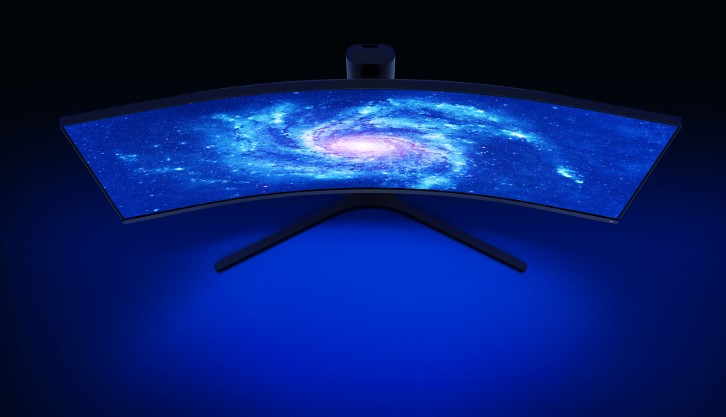
Xiaomi’s Curved Gaming Monitor
According to a DigiTimesreport, Huawei is reportedly gearing up to launch its own brand of monitors, specifically, curved gaming monitors. This move will have it compete with another known Chinese smartphone maker, Xiaomi that recently entered into the gaming monitor market as well. Industry sources close to the matter revealed this information and even stated that it will outsource the production of standardized monitor products to BOE Vison-Electronic Technology (BOEVT), which will be for 2 to 3 different models.
Huawei will also be subcontracting the manufacture of its curved gaming monitors to TPV Technology for its initial orders for over one million units in the current mainstream sizes of 27 inch and 34 inch. This move also marks another area through which the Chinese tech giant is stepping into the desktop PC market. It had recently unveiled its Kunpeng 920 powered desktop, while Honor also launched its Hunter series of gaming laptops.
Notably, we had also previously reported on a leak that revealed gaming monitors from Huawei back in August 2020. These monitors feature a high refresh rate of 240Hz. This might be the same model as the upcoming curved gaming monitors that have been reported by sources. This report also mentioned different sizes at varying price points with a 32 inch model with mini LED also being hinted at. Unfortunately, this is still an unconfirmed report and we will have to wait for an official Huawei announcement to know for sure. So stay tuned.
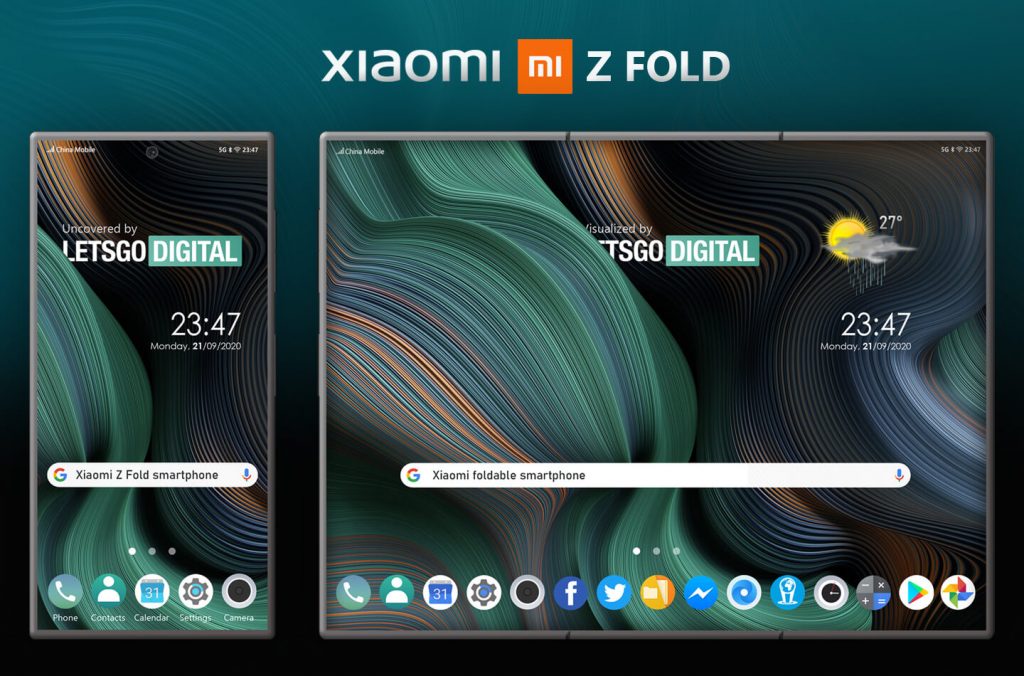
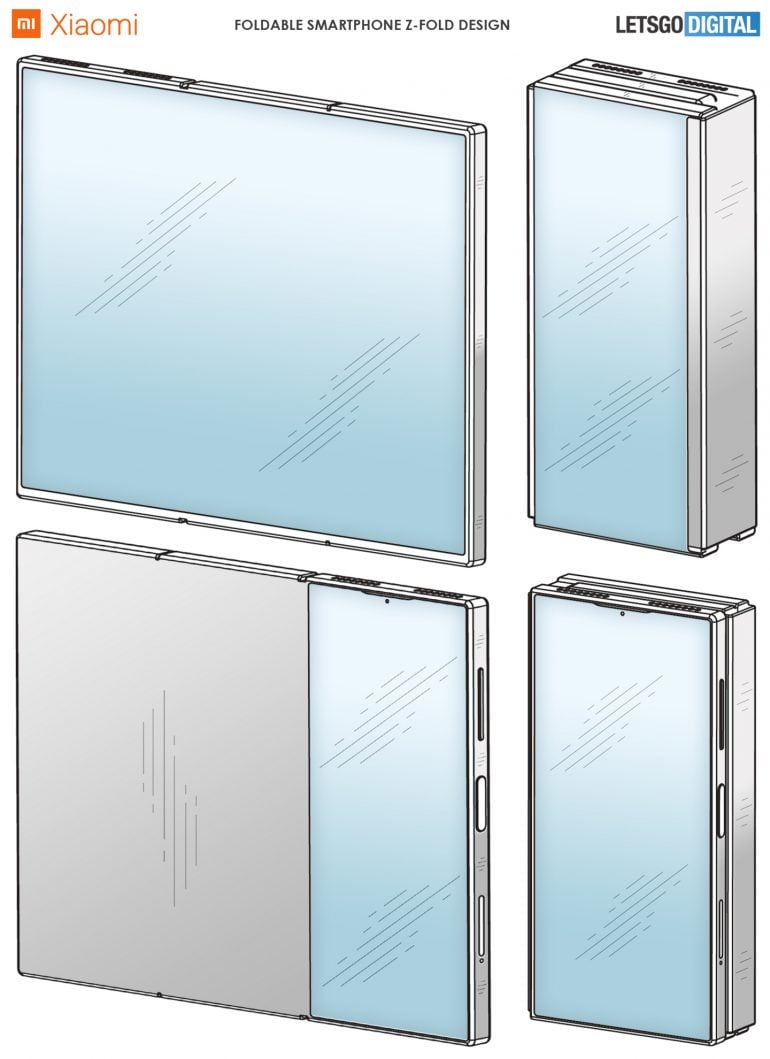
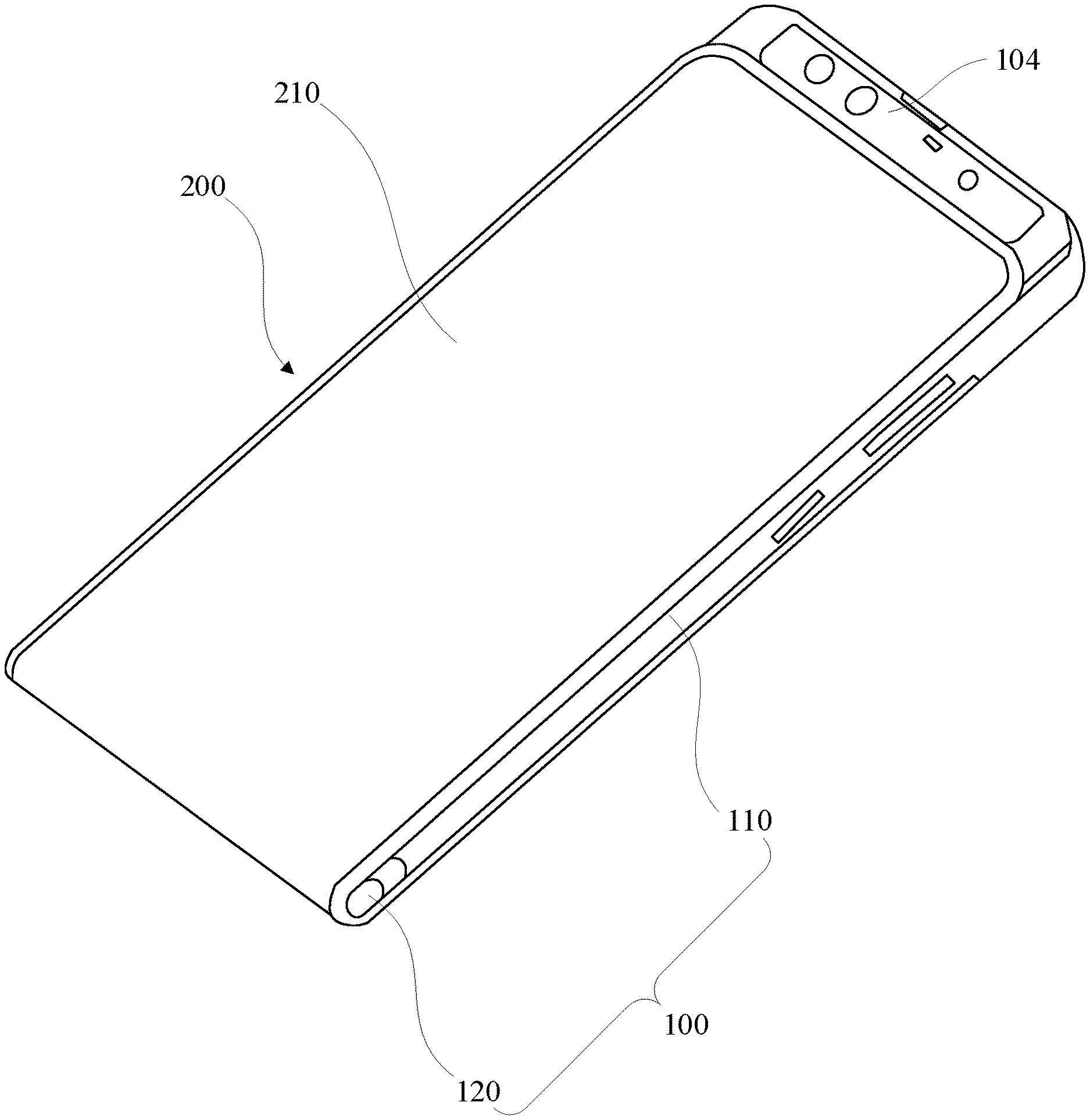
While Xiaomi had unveiled its prototype of a double folding smartphone back in 2019, the device had never been released commercially. Now, the Chinese tech giant has filed a design patent for another foldable smartphone with two bending screens, which have a Z shaped design.
According to a LetsGoDigitalreport, the company filed the patent with WIPO (World Intellectual Property Office). This patent was approved last week and contains 16 sketches of the device as well. Looking at these images, the smartphone looks like any other device from the front when it is folded. A punch hole display can be observed on the front, however, the interesting aspect of the device is tucked behind it.
When unfolded, the device unveils a large display on the other side of the external display that was seen from the front. This large display has a two hinge mechanism, which means that it technically has three screen areas, with the first being on the opposite of the external display, while the other two are an extension of the same that fold inward from the back. Since the rear panel is completely comprised of the large display, the only camera is the selfie shooter which can only be used as the rear camera when the device is unfolded.
Underneath the primary/external display is where most of the crucial components of the device are housed, with the SIM card and volume rockers being found on the right side. This side also features an additional large button, which is likely built for the unfolding mechanism. On the bottom, a USB Type C port can be found, flanked by speakers grills on either side that can also be found on the top.
Unfortunately, this might just be the company’s attempt to cover all bases. So, it is unknown if Xiaomi actually plans on developing such a device. Although, the device quite futuristic and might be seen sometime in the next few years as technology advances further. This is by far not impossible to build, but might be quite unwieldy due to its size and, weight.
At the narzo 20 series launch event in India, realme also officially unveiled realme UI 2.0 based on Android 11. As expected, it is nothing but a slightly tweaked version of ColorOS 11. Unfortunately, unlike OPPO, realme neither revealed the list of eligible devices nor announced update timeline (except for realme X50 Pro).
OPPO held a dedicated event last week to launch ColorOS 11. On the other hand, realme announced realme UI 2.0 alongside realme narzo 20 series in India. The whole event meant for three smartphones and an operating system ended within 30 minutes.
One might wonder how is that even possible. That’s because as we mentioned in the beginning realme 2.0 is similar to ColorOS 11 in every way possible except for some minor changes here and there. Hence, the brand kept the presentation simply by only mentioning some key features.
To put it in simpler words, the relationship between realme UI and ColorOS is similar to that of Magic UI and EMUI.
In case you have forgotten, up until last year, realme phones ran ColorOS out of the box. But with the release of Android 10, the brand adopted Huawei’s strategy for its operating system.
That said, at today’s event, the company only revealed the rollout schedule for its flagship smartphone realme X50 Pro. According to the brand, “Early Access” (closed beta) for this handset will be available starting September 24, followed by “Open Beta” in October-end and “Stable Release” by the end of November.
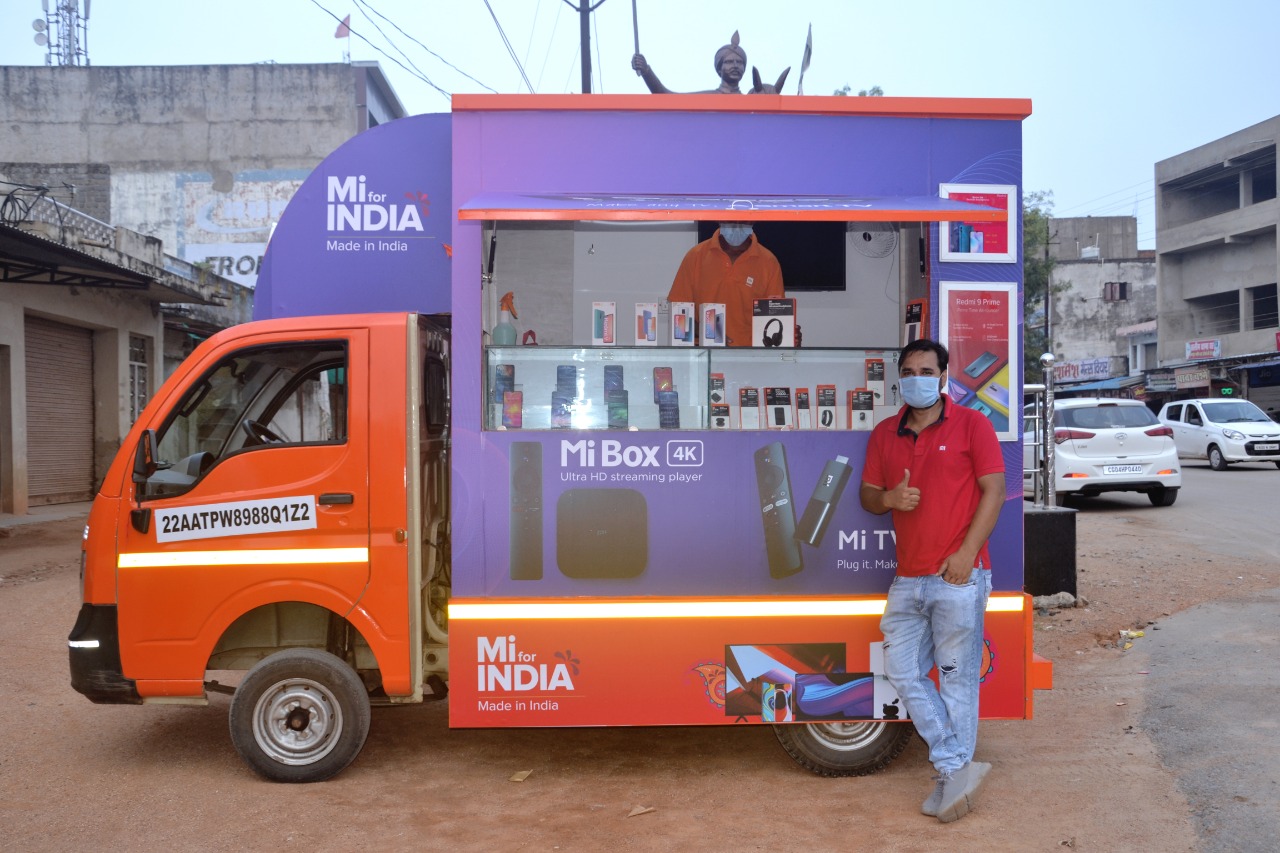
Xiaomi India has just announced the new Mi Store on Wheels. It is a mobile retail platform that aims to bring store like experience to customers’ doorsteps. The service was announced earlier today (21st September 2020) and aims at bringing availability in the “far corners of our nation.”
According to Muralikrishnan B, COO, Mi India, the Mi Store on Wheels is aimed to bring the Mi Store showroom experience in areas that have limited access. The senior official also stated that the service “will be a disruptor in changing the dynamics of the retail business in our rural markets,” and that it follows “all the necessary
hygiene and safety practices, while regulating crowds and maintaining social distance, MSoW outlets will be fully safe for consumers to visit.”
This move from the company arrives to innovate on its existing retail network. The Mi Store on Wheels is also a method of boosting sales in areas that are less accessible by its retail stores or e-commerce portals during the ongoing Coronavirus pandemic. The new channel of distribution is also a part of the company’s Mi Commerce initiative, which intends to “blur the lines between online and offline boundaries.”
After teasing new products a month ago, Huawei announced that it will launch Amazfit GTR 2 and GTS 2 on September 22. Before the launch tomorrow, let’s look at all the features that are coming with the two smartwatches.
Amazfit GTR 2 and GTS 2 will be direct successors of the earlier launched GTR and GTS. Last year, both the GTR and GTS launched with AMOLED display and similar sensors. That is likely to continue this year as well. However, they are likely to differ in a few other specifications like battery and prices.
Amazfit GTR 2 and GTS 2 Design
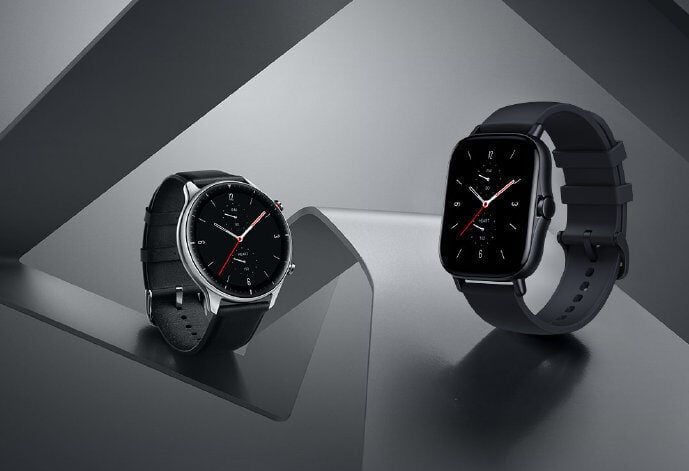
Design-wise, both the GTR 2 and GTS 2 will follow their predecessors’ style. The GTR 2 will have a round dial while the GTS 2 will follow the sort of a squircle design. Both the smartwatches will have a premium build with metal casing and retain the AMOLED displays with slight curves towards the edges. The GTS 2, however, has a revamped side where the crown protrudes from the inside on the right. So far, only the black strap is visible in teasers but we can expect more on Tuesday.
Amazfit GTR 2(Left) GTS 2(Right)
Specifications and Features
Anyways, the main highlight of the GTR 2 and GTS 2 will be the blood-oxygen monitoring solution. In fact, Huami’s CEO confirmed this in a post on Weibo and also teased that the devices will have better blood-oxygen and sleep monitoring than rivals like Apple. To recall, the company launched the OxygenBeats engine back in June which eliminates signal noise and improves accuracy by around 50%.
Teasers also show that the watches will use a cluster of LEDs(Green, Red, Infrared) like the Apple Watch Series 6 for accurate measurements. Further, we can expect other sensors like ambient light, Biotracking, air pressure, geomagnetic sensors from predecessors.
Apart from these, Huami has confirmed standalone music playback and said that smartwatches will come with NetEase Cloud music, improved health and fitness features by partnering with Prudential, and an integrated Xiao AI assistant that works online and offline. Huami, through a video, showed that the Xiao AI will work seamlessly and better than Apple’s Siri.
Amazfit GTR 2 and GTS 2: Expected Price
We can expect other features like Wi-Fi, bigger battery, Bluetooth 5.0, NFC, GPS, GLONASS, water-resistance, and more. As for the price, Huami is known for aggressive pricing and hence, we can expect both the smartwatches to slot somewhere between the $100-150 segment. Let’s wait until Tuesday to confirm the same.
Apple is expected to launch its next-generation iPhone models — the iPhone 12 series in the coming weeks. While the company is yet to officially reveal the launch date, it has confirmed that the launch will be delayed by a few weeks.
With the official launch just around the corner, more and more information about the devices keeps surfacing online. In the latest development, Win Semiconductor has now started mass-production and shipment of ToF sensors and LiDAR scanners to Apple.
For those who are unaware, Apple iPhone 12 models are reportedly coming with LiDAR scanner, which stands for “light detection and ranging” and measures distances by illuminating the target with laser light and by measuring the reflection with a sensor.
This won’t be the first time Apple opts for the LiDAR sensor on its devices. The company has already started using the LiDAR technology on this year’s iPad Pro with the ToF sensor. As per the reports, not all models will come with this tech but the Pro model will have it.
If the iPhone sales are better than expected, then the company could get more orders from Apple for the fourth quarter of the year. It currently has a monthly production capacity of 41,000 pieces. The company is expected to invest and accelerate production in Nanke Park, which is estimated to create approximately 4,000 job opportunities.
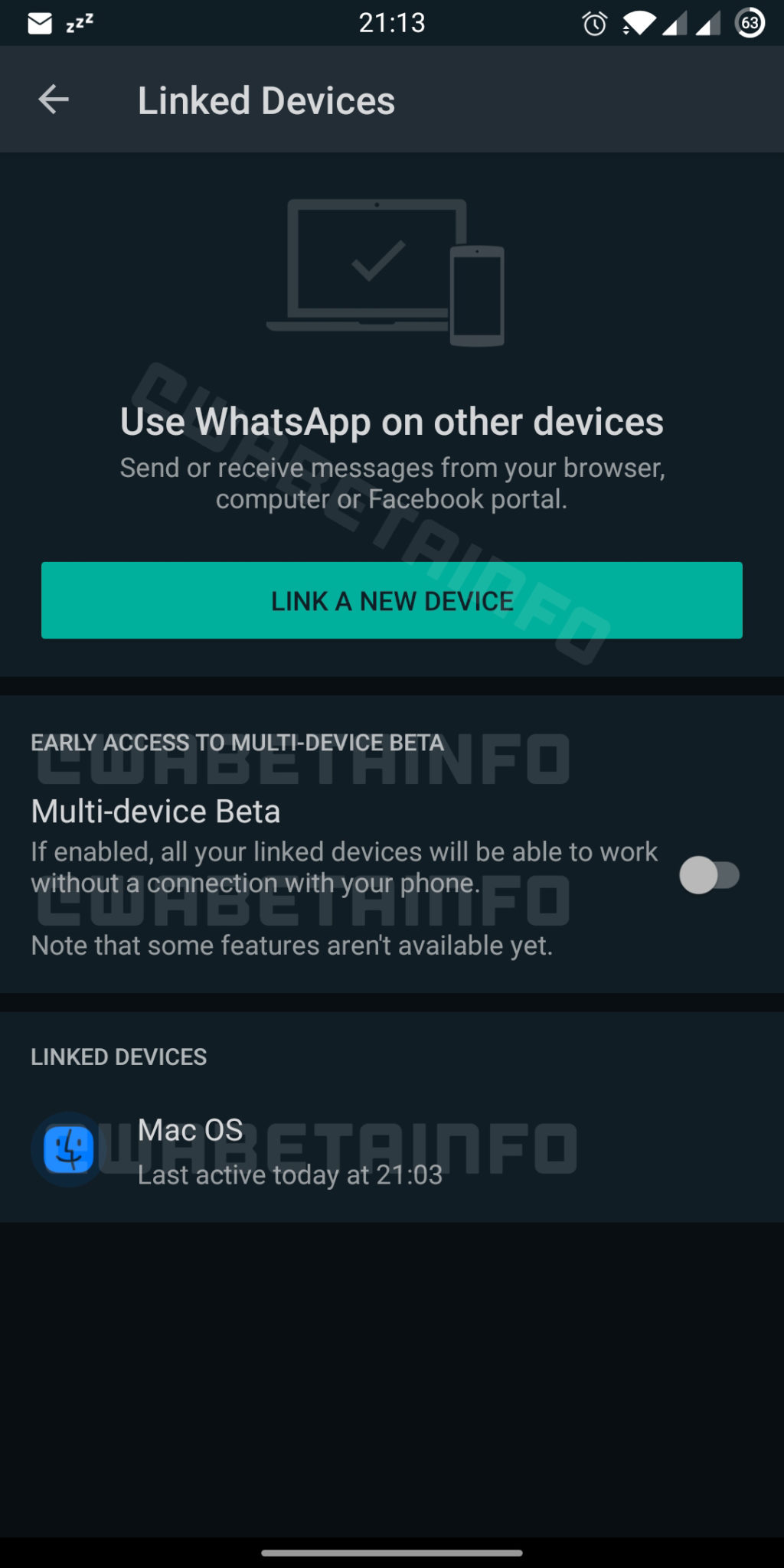
Previously, we had reported on WhatsApp, the popular messaging platform, working on a multiple device support feature for the same account. Now, a new report suggests that the company has reached the final stage in testing for the new feature.
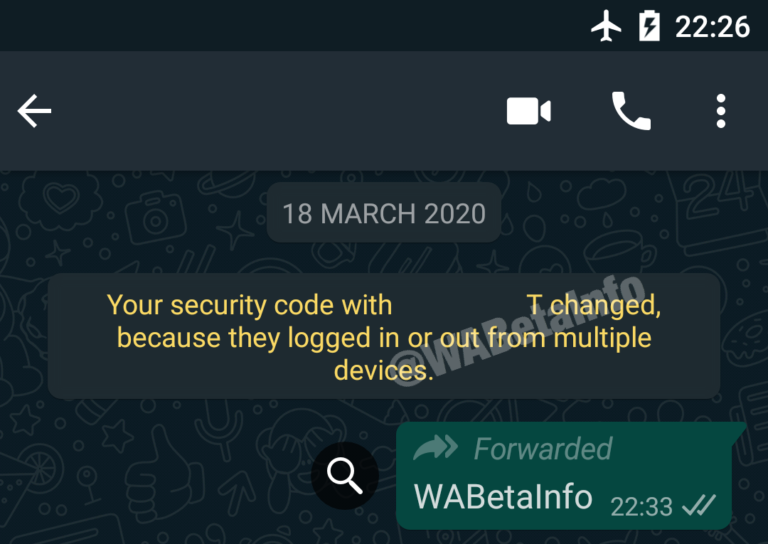
Images Via WaBetaInfo
According to a WaBetaInforeport, WhatsApp is in the final stages of a new feature that might be very useful to many users. The social media giant is working to bring support for up to 4 different devices that can run from a single WhatsApp account. This is something extremely useful, which might also benefit WhatsApp Web users, who would not have to rely on their primary phones to have an internet connection.
Furthermore, WhatsApp is also planning on building a new UI for the desktop client, which will showcase how the chat history is migrated and that the process is end to end encrypted. Apparently, a few features of the new update are still not ready, but the company has rolled out the more important ones like syncing various aspects chat history across multiple devices, muted chats, and even syncing starred/delivering messages.
However, this feature is currently in beta testing but users can opt in to try out this feature a bit early. The new feature is called “Linked Devices,” which enables all other linked devices of your account to work without an internet connection on your primary smartphone or main driver. This is still under development and users can also choose to opt out of the beta testing. Keep in mind, that entering into the beta testing will have all previous linked sessions be terminated since they are built on the old/current stable system.
Donald Trump recently said that he has approved the deal between TikTok, Oracle, and Walmart, clearing the path for ByteDance-backed TikTok to continue its business in the United States without the fear of getting banned.
Oracle will be owning about a 12.5 percent stake in the company while Walmart CEO Doug McMillon will join the company’s board. ByteDance founder Zhang Yiming and the Chinese company’s current directors — Sequoia China’s Neil Shen and General Atlantic’s William Ford — will reprise their roles.
In a statement released by the company, it confirmed that ByteDance will retain full control of its social media algorithms but will allow Oracle limited access to view source code for “safety” purposes.
The company has contested Trump’s assertions that the U.S. government will get $5 billion as part of the deal. ByteDance said that the figure was just an estimate of the amount of taxes TikTok Global would pay over several years if the business proved successful.
Earlier, in a joint statement released by Oracle and Walmart, it was said that TikTok will pay more than $5 billion in “new tax dollars to the U.S. Treasury” and develop an AI-driven online video curriculum.
As a part of the agreement, a new entity named TikTok Global will be created in which Oracle and Walmart will hold a minority stake. ByteDance has confirmed that it will continue to remain in control of the business, contradicting Trump’s claim of American companies being in control of TikTok.
The Chinese giant is expected to hold about 80 percent stake in TikTok Global, which could be valued at around $60 billion. It is not yet clear if the deal needs approval from the Chinese government or not.
Meanwhile, the Trump administration had banned WeChat downloads and transactions on the platform, effective 20th September. However, a judge has blocked the ban on WeChat and allowed the app to continue operation.
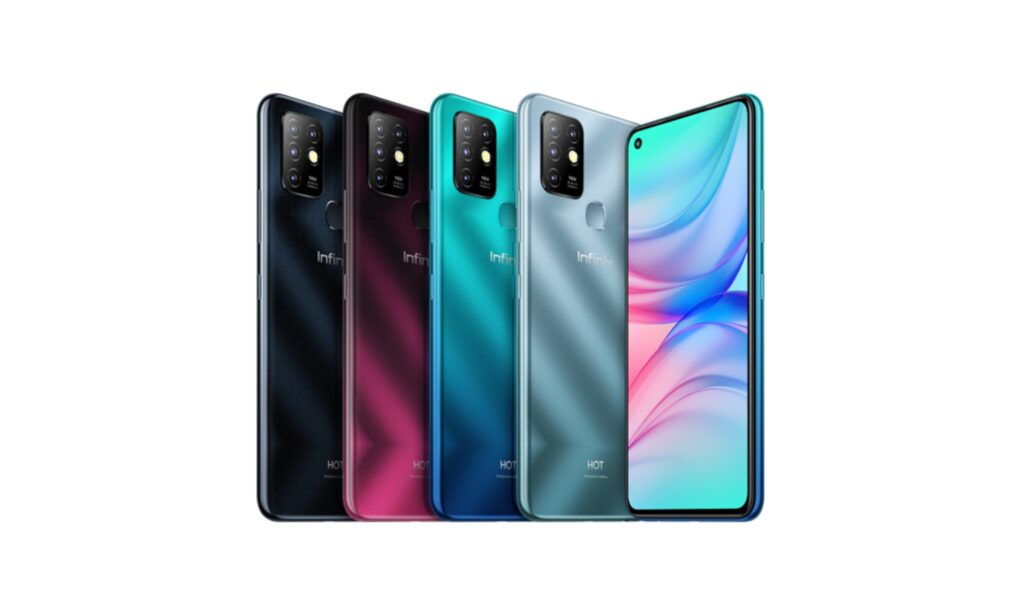
Infinix Hot 10 launches in Pakistan as the new entrant in the brand’s popular Hot series of smartphones. The handset comes in three storage configurations – 4GB + 64GB, 4GB + 128GB & 6GB + 128GB priced at PKR 20,999 ($127), PKR 23,999 ($145), and PKR 25,999 ($157) respectively. However, it will be available at PKR 1,000 ($6) discount up until October 31.
Additionally, customers who pre-order the device starting today till September 28 will be eligible for a free pair of Infinix Earbuds XE08 on the 4GB/6GB + 128GB variants and Infinix Smart Band 4 with the 4GB + 64GB version.
That said, the new Infinix smartphone will be available for purchase starting September 28 in the country in Obsidian Black, Amber Red, Moonlight Jade, and Ocean Wave color options.
Infinix Hot 10 Specifications
The newly launched Infinix Hot 10 is the successor to Infinix Hot 9 from May. This phone leaked earlier last month revealing most of its specs.
The Hot 10 is powered by MediaTek helio G70, a great leap from helio A25 present in its predecessor. However, it sports a similar HD+ (720 x 1640 pixels) punch-hole (top left) TFT LCD panel which is slightly larger at 6.78-inches compared to 6.6-inch on its forerunner.
On the back, the device houses a quad-camera setup that includes a 16MP primary sensor, 2MP macro shooter with AF, 2MP depth sensor, and an AI lens (¯\_(ツ)_/¯). The rear of the handset also features a capacitive fingerprint sensor. Whereas, the front camera is of 8 megapixels.
The smartphone comes with all the necessary sensors such as gravity sensor, gyroscope, light sensor, and proximity sensor but it misses out the compass, which is essential for navigation. On the plus side, it supports microSD cards up to 512GB, dual-band WiFi 5, Bluetooth 5.0, 3.5mm headphone jack, and DTS Audio.
Another highlight of this phone is its massive 5,200mAh but sadly, it can only charge at the rate of 10W via MicroUSB port. Last but not least, the Infinix Hot 10 runs XOS 7.0 operating system based on Android 10.
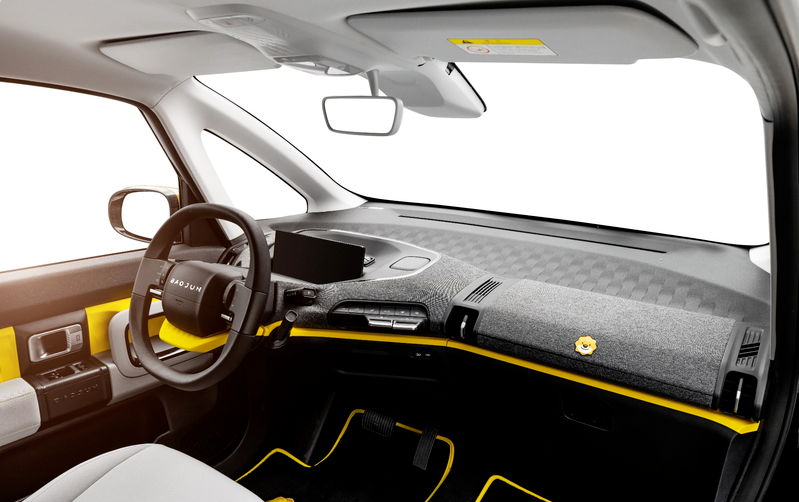
The Baojun E300 electric car is all set to be unveiled at the Beijing Auto Show on 26th September. The car, which will have support for Xiaomi‘s ecosystem, is built by Chinese carmaker Baojun along with Suning.
The E300 series electric car includes six months and the company claims that it is the world’s first smart electric vehicle that comes integrated with the Xiaomi ecosystem and XiaoAI smart voice assistant.
The car will come with support for features like remote car control, humanized interactive experience, car home interconnection, and several other functions. The company is focused on offering a full ecological link of travel with a strategy of “people + car + home.”
The E300 car has 39 horsepower and body shape of fewer than 3 meters, which is very similar to the Hongguang MINI EV aka Chinese version of K-Car. It is equipped with a permanent magnet synchronous motor, a 30kWh lithium iron phosphate battery pack, and an NEDC battery life of 305 kilometers.
It also has a model that integrates the Huawei 5G ecosystem and is touted to be the industry’s first smart car to implement voice-controlled ADAS systems. The pricing for this Baojun E300 Electric car ranges from 65,800 yuan (~$9,721) to 85,800 yuan ($12,676), depending on the model.
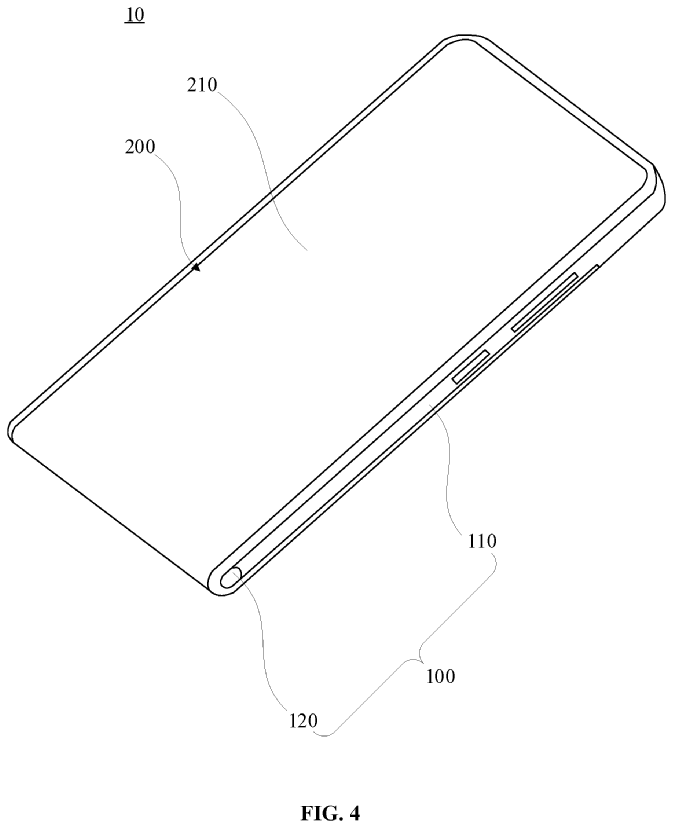
Xiaomi has recently patented a new smartphone with a very unique design. The device features a sliding mechanism that is built into its flexible display, which wraps around the body of the handset.
Traditional slider phones generally have two bodies that are joined together, with one sliding up to reveal a camera or another mechanism. However, in this case, the Chinese tech giant has built a sliding device with just a single body but built the sliding mechanism into the flexible display itself. Looking at the image provided, the display of the patented smartphone covers the front and only 3/4th of the rear portion that wraps around the device from the bottom. This was first reported by WindowsUnited, with the patent being found in the incoPat Global Patent Database.
Thus, when the flexible display slides downward to unveil the front facing cameras and other sensors, the display on the back also rises upward. To put things simply, the display is the only portion that moves due to a sliding mechanism, which is possible due to the screen itself being flexible and covers both the front and back portions. This makes it stand out from any other slider phones that are available in the market at the moment.
Unfortunately, finer details regarding this very unique device are currently unknown. It is also unclear whether Xiaomi is actually working on such a device or if it is just covering all bases. However, this is a never before seen use of a flexible display and sliding mechanism, which shows that innovation is still what drives the company.
The Trump administration recently confirmed that the Tencent-backed WeChat and ByteDance’s TikTok will be banned in the United States from 20th September. It also blocked all the transactions to WeChat from the same day while broader restrictions for TikTok were related till November because of the on-going negotiations.
Now, in a major relief, a judge has blocked the ban on WeChat just as the restrictions were about to go into effect. U.S. Magistrate Judge Laurel Beeler said in an order that WeChat users, who filed a lawsuit, “have shown serious questions going to the merits of the First Amendment claim, the balance of hardships tips in the plaintiffs’ favor.”
The ruling also temporarily halts the ban on transactions for the application in the United States. This is a major setup for President Donald Trump who has labeled the service as a national security threat, just as election date nears.
In her order, Judge Laurel Beeler said that she had chosen to grant the motion because of some serious questions raised by the plaintiffs about the harm of First Amendment rights. The plaintiffs had also argued that the ban would shut down the primary means of communication for the Chinese community.
The lawsuit was filed by the U.S. WeChat Users Alliance, which says that it has no connection with Tencent or its affiliates. The group argues that the ban violates several constitutional provisions, including the right to free speech, due process, and equal protection against arbitrary discrimination.
Meanwhile, Donald Trump has approved the deal of TikTok with Oracle and Walmart where both the American companies will take up a minority stake in TikTok Global while the Chinese group will continue to hold the majority stake.
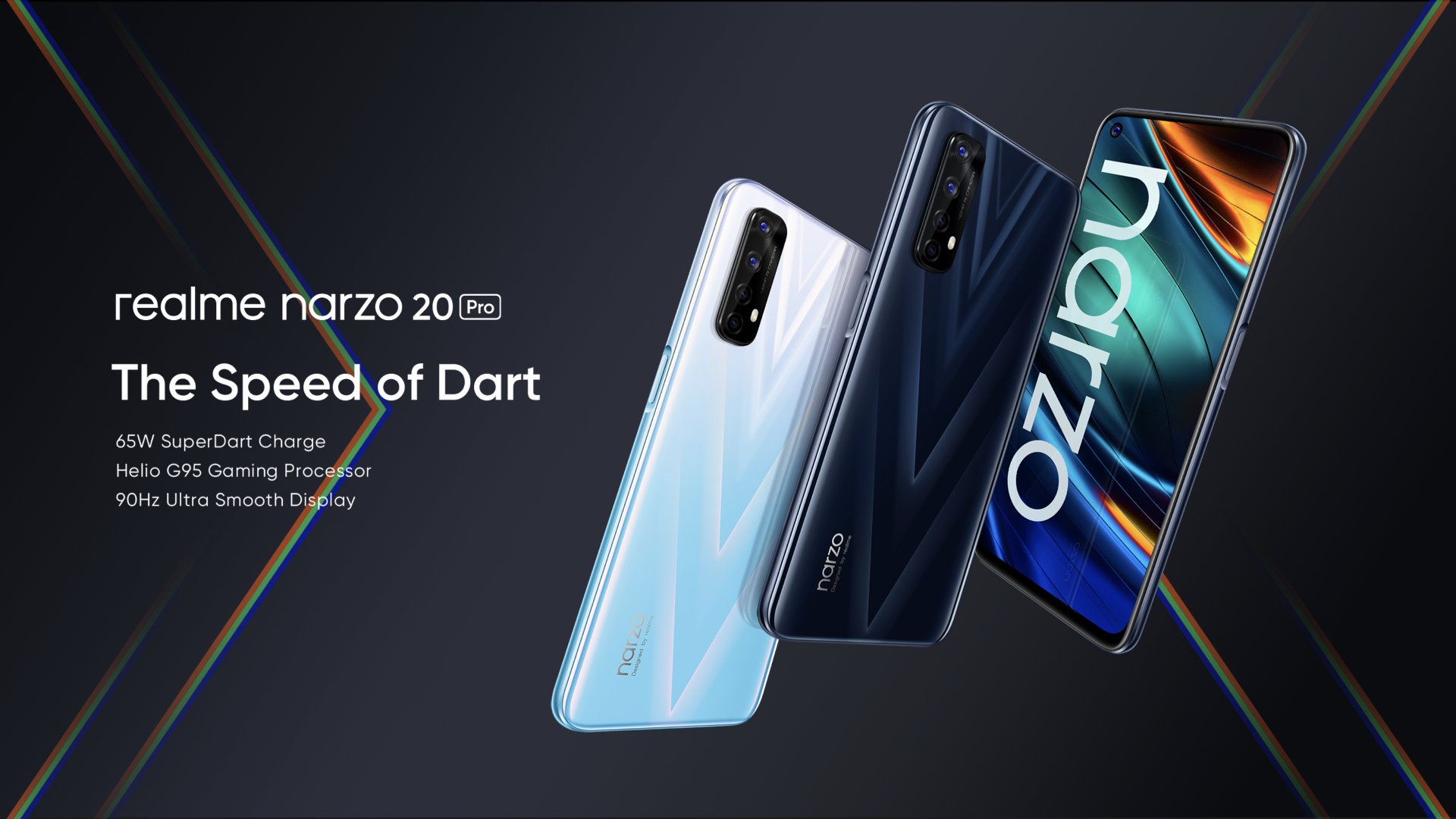
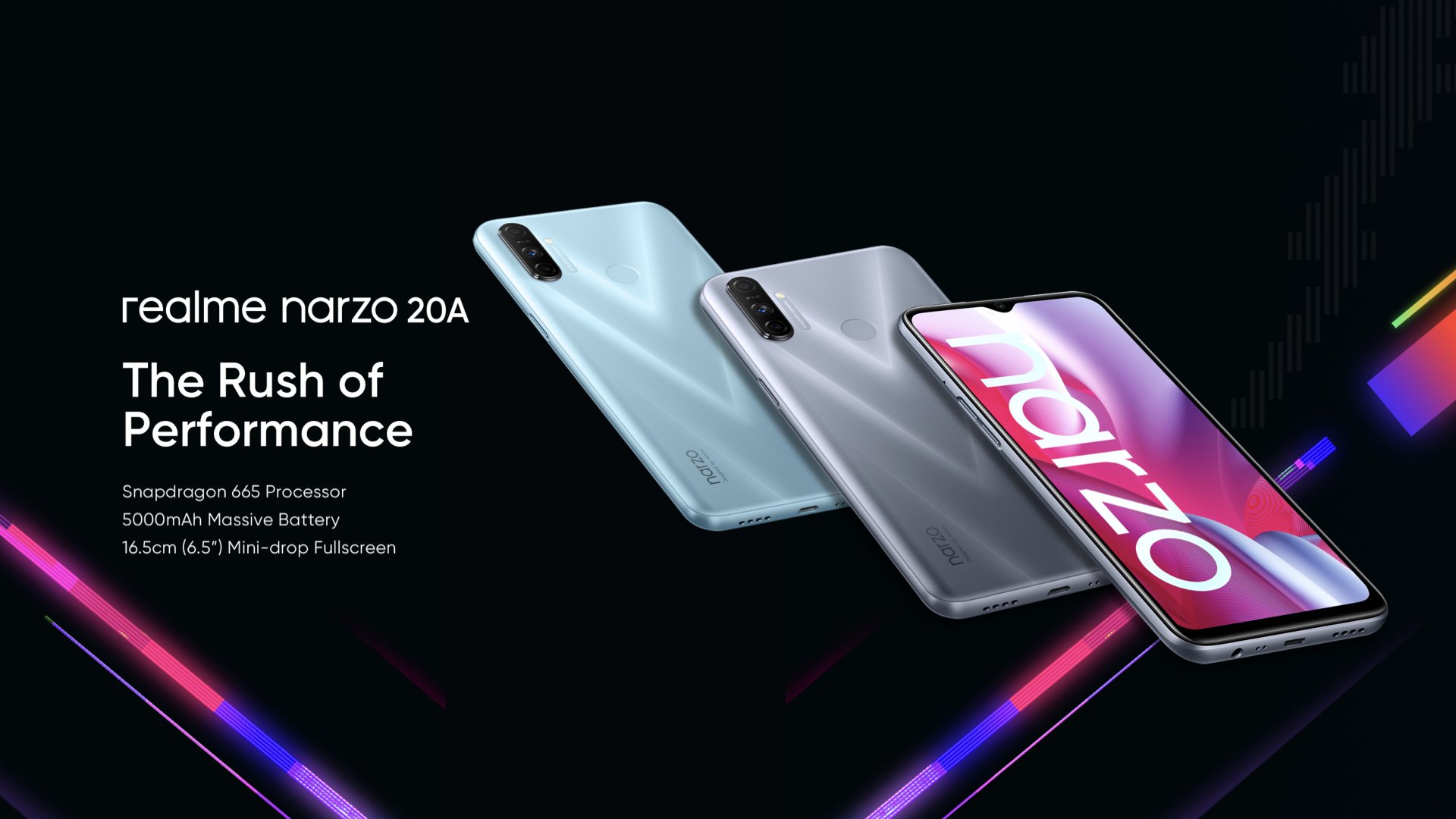
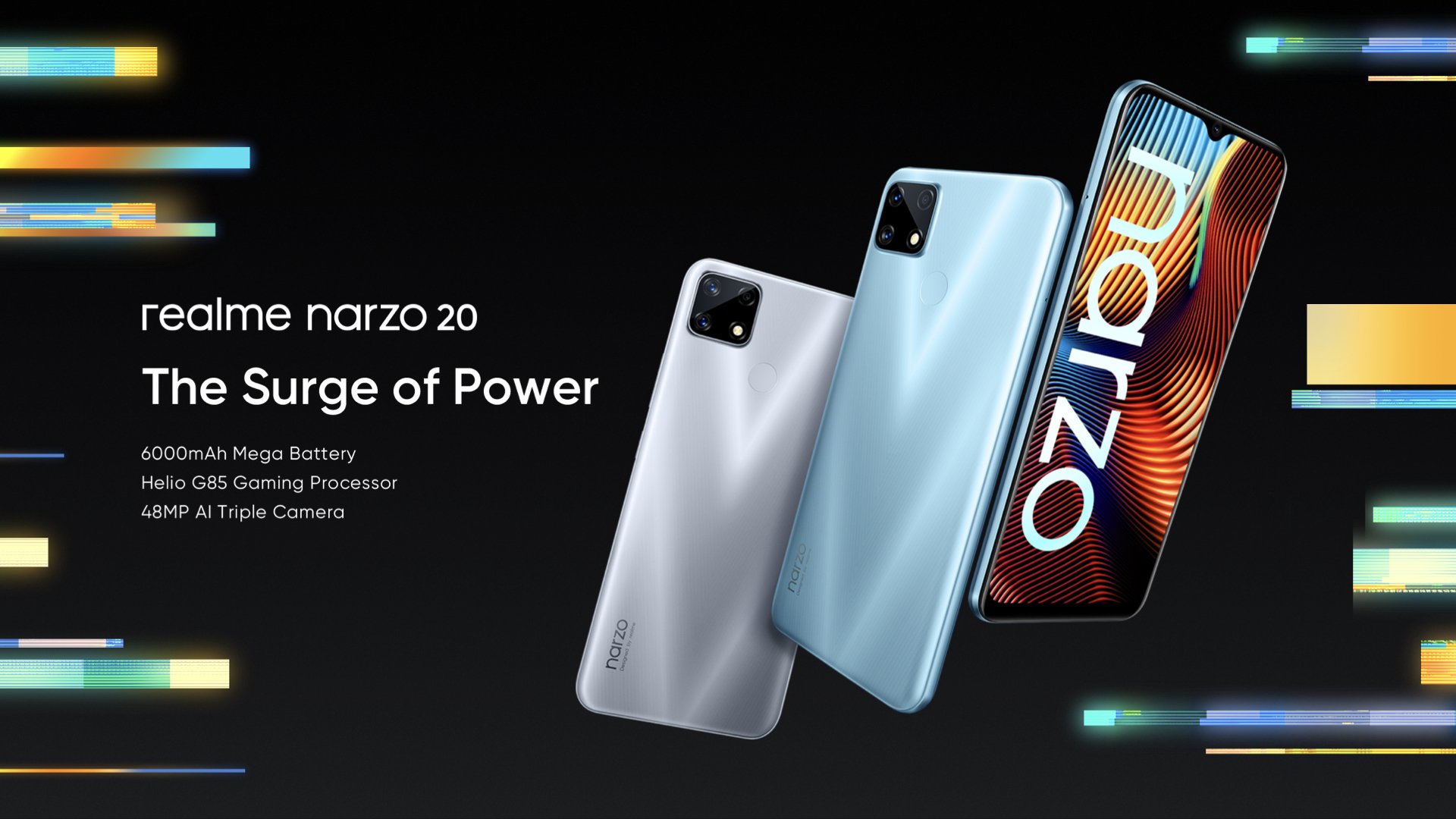
Earlier this year, Realme introduced the Narzo smartphone brand by announcing Narzo 10A and Narzo 10v in India. Today, the Chinese firm held an online-only launch event in India to announce the successor models. The company took off covers from Narzo 20A, Narzo 20A as well as Narzo 20 Pro. These new phones offer users with up to 90Hz display, up to 5,000mAh batteries, up to 65W fast charging, and up to 48-megapixel quad cameras.
Realme Narzo 20 Pro specifications and features
The Realme Narzo 20 Pro has a 6.5-inch IPS LCD punch-hole screen that produces a 1080 x 2400 pixels Full HD+ resolution, a 20:9 aspect ratio, and a 90Hz refresh rate. The device delivers a screen space of 90.5 percent. The Helio G95 which fuels the recently announced Realme 7 is present under the hood of the Narzo 20 Pro. The smartphone comes with up to 8 GB of LPDDR4x RAM. The Narzo 20 Pro has up to 128 GB of UFS 2.1 storage.
The Narzo 20 Pro has an f/2.1 aperture 16-megapixel selfie camera. The rear-facing quad-camera system of the smartphone includes an f/1.8 aperture 48-megapixel main lens, a 119-degree 8-megapixel ultrawide snapper with f/2.3 aperture, a 2-megapixel macro lens with f/2.4 aperture, and a 2-megapixel B&W portrait sensor with f/2.4 aperture. It has a side-facing fingerprint reader. The 4,500mAh battery of the Narzo 20 Pro is blessed with support for 65W fast charging, which will come packed in the retail package. Its dimensions are 162.3 x 75.4 x 9.4mm and it weighs 191 grams.
Realme Narzo 20A and Narzo 20 specifications and features
The Realme Narzo 20A and Narzo 20 are fitted with 6.5-inch IPS LCD panels with a waterdrop notch. They offer HD+ resolution of 720 x 1600 pixels, a 20:9 aspect ratio, and a 60Hz refresh rate. The Narzo 20A offers an 89.8 percent screen-to-body ratio, whereas the Narzo 20 delivers a screen space of 88.7 percent.
The Snapdragon 665 chipset fuels the Narzo 20A with 3 GB / 4 GB of RAM. It comes with 32 GB / 64 GB of storage. The device is backed by a 5,000mAh battery that supports 10W charging. On the other side, the Helio G85 powered Narzo 20 comes with 4 GB of RAM. It offers 64 GB / 128 GB of storage. The smartphone features a 6,000mAh battery with 18W rapid charging technology.
The Narzo 20A and Narzo 20 phones are equipped with an 8-megapixel front-facing camera. The Narzo 20A has a triple camera system that comprises of a 12-megapixel main lens with an f/1.8 aperture, a 2-megapixel B&W lens with f/2.4 aperture, and a 2-megapixel retro sensor.
The Realme Narzo 20 has a 48-megapixel main snapper with f/1.8 aperture, a 119-degree 8-megapixel ultrawide sensor, and a 2-megapixel macro lens. Both phones are equipped with rear-facing fingerprint scanners.
The Realme Narzo 20 Pro, Narzo 20, and Narzo 20A are preinstalled with the new Realme UI flavored Android 10 OS. These phones are equipped with other features like face unlock, microSD card slot, dual 4G VoLTE, Wi-Fi 802.11ac, Bluetooth 5.0, GPS, microUSB, USB-C (on Pro model), and a 3.5mm audio jack.
Realme Narzo 20A, 20, and 20 Pro prices in India and release date
Here is the pricing of the different variants of the Narzo 20 series smartphones:
Realme Narzo 20A
3 GB RAM + 32 GB storage – Rs 8,499 (~$116)
4 GB RAM + 64 GB storage – Rs 9,499 (~$129)
Color variants: Glory Silver and Victory Blue
First sale date: Sept. 30 (12 PM IST) through Realme.com, Flipkart.com
Realme Narzo 20
4 GB RAM + 128 GB storage – Rs 10,499 (~$143)
6 GB RAM + 64 GB storage – Rs 11,499 (~$156)
Color variants: Glory Silver and Victory Blue
First sale date: Sept. 28 (12 PM IST) through Realme.com, Flipkart.com
Realme Narzo 20 Pro
6 GB RAM + 128 GB storage – Rs 14,999 (~$204)
8 GB RAM + 128 GB storage – Rs 16,999 (~$232)
Color variants: Black Ninja and White Knight
First sale date: Sept. 25 (12 PM IST) through Realme.com, Flipkart.com
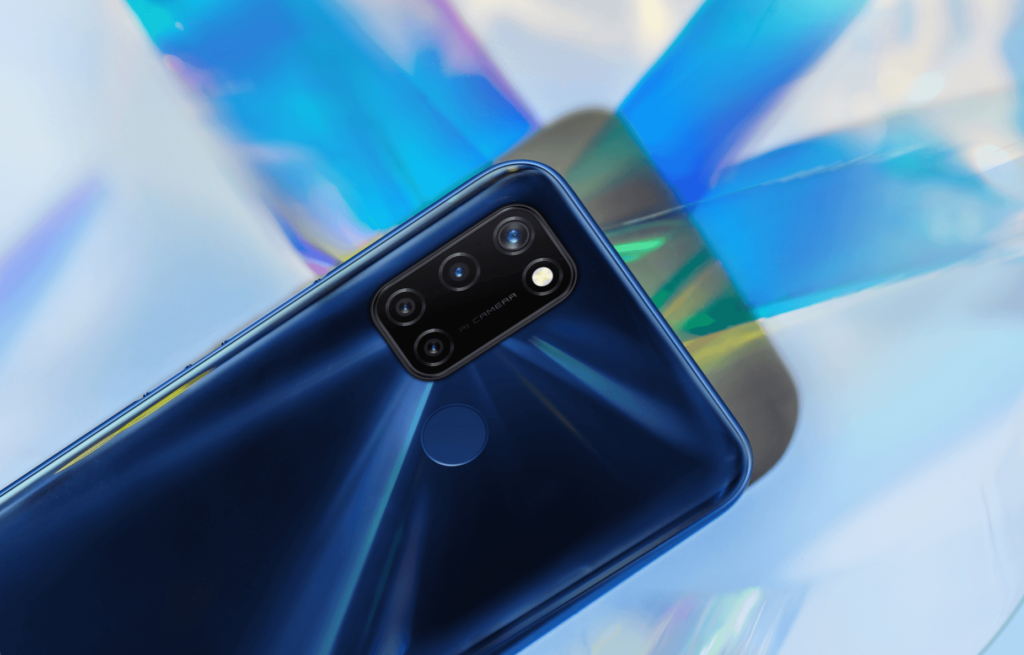
Chinese smartphone maker realme launches realme C17 as the newest member of realme C series of phones. In other words, it is a lite version of realme 7i with Snapdragon 460 and lower megapixel cameras. That said, the handset debuts first in Bangladesh in a single 6GB + 128GB storage configuration priced at BDT 15,990 ($189). Customers can buy it in either Navy Blue and Lake Green color option.
realme C17 Lake Green
As leaked last week, the all-new realme C17 sports a 6.5-inch HD+ (720 x 1600 pixels) IPS LCD panel on the front with a single-punch hole at the top right corner nesting an 8MP selfie camera, 90Hz refresh rate, 90% screen-to-body ratio, and a peak brightness of 600 nits. This display is also protected by an unspecified version of Corning Gorilla Glass.
Under the hood, the device features a Qualcomm Snapdragon 460 chipset paired with 6GB LPDDR4X RAM and 128GB UFS 2.1 internal storage. It also includes all the necessary sensors such as light sensor, proximity sensor, compass, and accelerometer.
On the connectivity front, the realme C17 supports 4G LTE, dual-band WiFi, Bluetooth 5.0, 3.5mm headphone jack, and USB Type-C. The handset comes with a triple card slot so that users can use dual SIM and a microSD card at the same time.
realme C17 Navy Blue
The back and the frame of the body is made of polycarbonate just like any other realme budget smartphones. This rear panel houses a quad-camera setup consisting of 13MP primary sensor, a secondary 8MP sensor with a 119° ultra-wide-angle lens, a 2MP tertiary sensor with a macro lens, and a 2MP quaternary monochrome sensor. The back of the device also includes a fingerprint sensor.
As for software, the realme C17 runs realme UI based on Android 10 and should get realme UI 2.0 based on Android 11 as it is a new product. Last but not least, it is backed by a 5,000mAh battery with support for 18W fast charging and reverse charging.
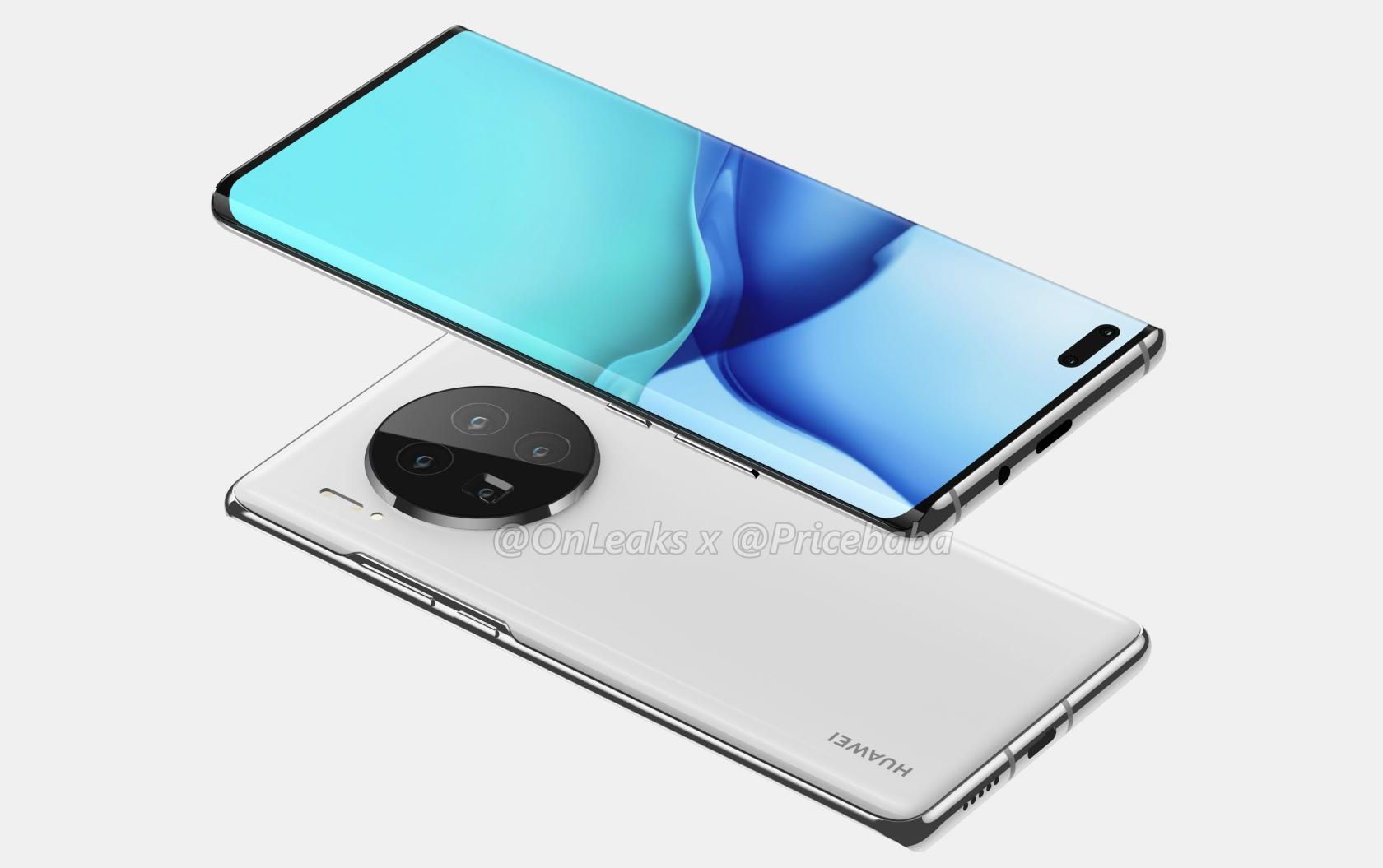
After months of reports and leaks, it seems that we now have an idea of when Huawei‘s upcoming flagship smartphone will get launched. As per the latest information coming from China, the Mate 40 series could go official in October this year.
Even though the flagship smartphone lineup will be launched in mid-October, it is believed that the phones will be available for purchase in the month of November. This upcoming series is expected to four models — Mate 40, Mate 40 Pro, Mate 40 Pro+, and Mate 40 RS Porsche Edition.
It has been confirmed by the company that the Mate 40 series will come powered by the HiSilicon Kirin 9000 SoC, which could be the brand’s last flagship chipset because of the new sanctions imposed by the United States.
As per reports, the Mate 40 could be powered by the Kirin 9000E SoC based on the 7nm process while the other models in the lineup will pack Huawei Kirin 9000 SoC, which is likely made using 5nm chipset.
The devices are expected to come with EMUI 11 based on the Android 10 operating system with support for some advanced features. If the recent reports are to be believed, then Huawei has around 8.8 million units of Kirin 9000 SoC, thus, it seems that the company won’t be able to make more units of the Mate 40 series.
Ahead of the official launch of the upcoming flagship lineup, it has already been confirmed that the series will be launched in the United Kingdom. However, the company has not yet revealed information about the launch date.
Samsung might just be working on a new series of Galaxy smartphones. This new lineup could be under the Galaxy F branding, as the company has recently teased the new series in India.
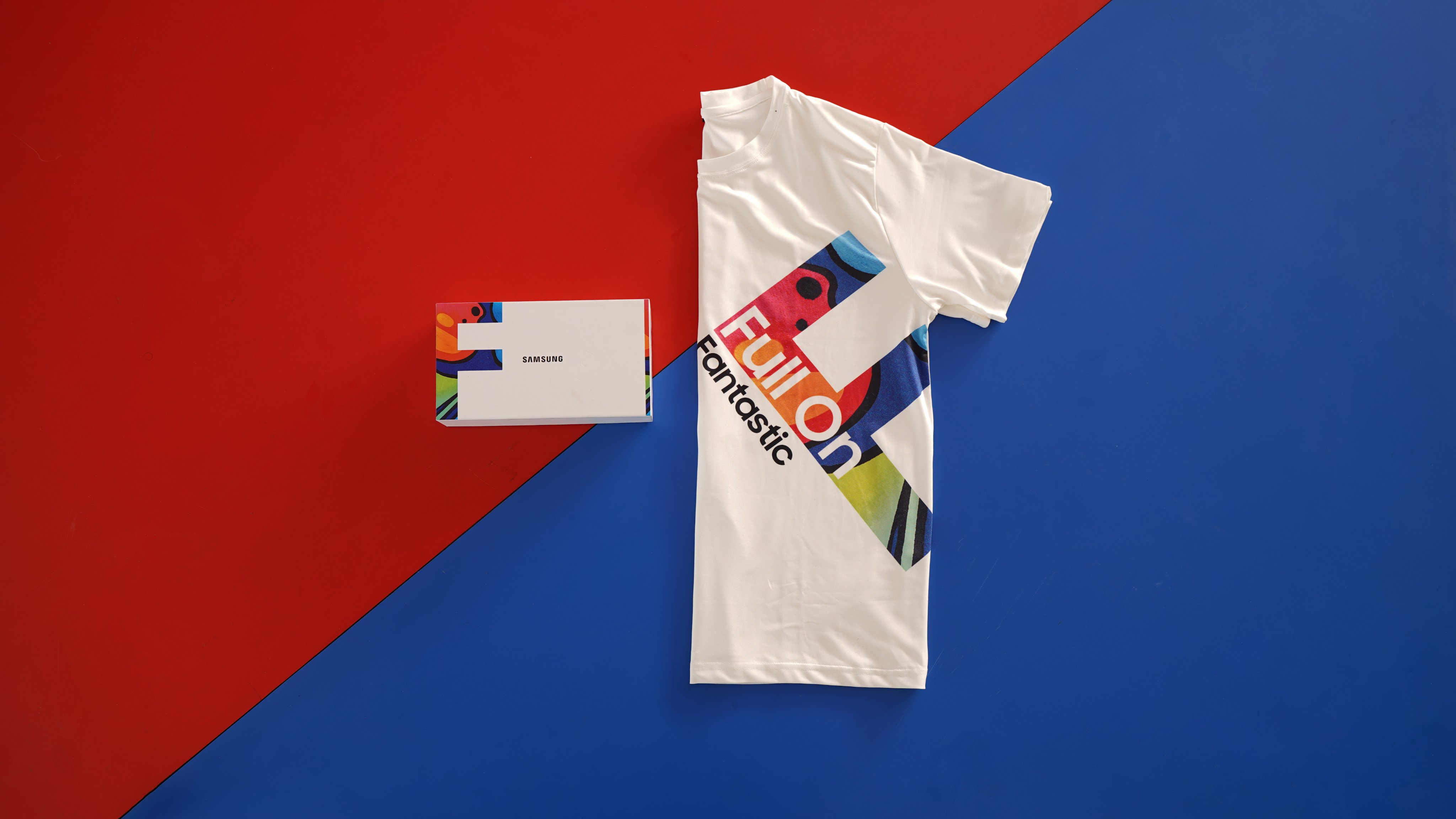
According to a SamMobilereport, the South Korean tech giant has sent special T-shirts and boxes to various tech related publications and YouTube content creators in the country. Previously, a device with the model number SM-F415 was spotted, which was found to be a budget handset. The T-shirt sent by the company also carried the slogan ‘Full On,’ which was also tweeter by Samsung’s official Twitter handle.
Reportedly, the new Galaxy F series might be a rebranding/replacement of the Galaxy On series of devices. These could be positioned similar to its Galaxy M series and might arrive at even more affordable prices, with new colors and storage variants as well. The SM-F415 is said to similar to the Galaxy M31 in specs and pricing, but will feature only three cameras on the rear instead of four. The Google Play Console listing revealed that it also features the Exynos 9611 processor and 6GB of RAM.
A few reports have claimed that the Galaxy F series will also be an exclusive lineup, which will only be available in Flipkart, a major local e-commerce based Indian website. This would make sense considering the Samsung Galaxy M series is an Amazon India exclusive in the country. Unfortunately, apart from these rumors we still don’t have much to go on regarding the launch, so stay tuned for more updates that should arrive soon.
Xiaomi is expected to announce the Xiaomi Mi 10T Pro and Mi 10T smartphones by the end of this month. Rumors have it that the lineup also includes the Xiaomi Mi 10 Lite smartphone. A Xiaomi phone with model number M2007J17G has been certified by the Federal Communications Commission (FCC) in the U.S. According to tipster Mukul Sharma, this device could be heading to markets with the Xiaomi Mi 10T Lite moniker.
The FCC listing of the M2007J17G has revealed that it is preloaded with MIUI 12 and it has a rated battery of 4,720mAh capacity. The handset is equipped with support for 5G, Wi-Fi 802.11ac, Bluetooth, and NFC.
The model number of the M2007J17G’s battery is BM4W. The leakster has also shared a screengrab that reveals that the BM4W battery has been certified by the Bureau of Indian Standards (BIS). It indicates that the Mi 10T Lite could be also releasing in India. At present, there is no word on the other specifications of the Mi 10T Lite.
Xiaomi M2007J17G (Mi 10T Lite) appears on the FCC certification with MIUI 12 and a 4,720mAh battery The device could very well launch in India, as it's battery model (BM4W) has already received the BIS certification and the IMEI number is also CEIR IMEI compliant.#Xiaomi#Mi10Tpic.twitter.com/2FE3UDjbsE
Xiaomi Mi 10T Pro and Mi 10T specifications (Rumored)
The Xiaomi Mi 10T Pro will come with a 6.67-inch IPS LCD screen with a punch-hole design. The screen carries support for Full HD+ resolution and a 144Hz refresh rate. The Snapdragon 865 mobile platform fuels the device with 8 GB of RAM. The phone may arrive in 128 GB and 256 GB of storage. It has a 5,000mAh battery that supports rapid charging technology. The Mi 10T Pro has a triple camera system that includes a 108-megapixel main lens, a 20-megapixel ultrawide lens, and an 8-megapixel lens. It could be priced at 699 euros.
The Xiaomi Mi 10T is rumored to be priced around 550 euros. The phone may feature a new Snapdragon 7-series 5G-enabled chipset. The phone may feature 6 GB of RAM and 64-megapixel triple rear cameras. It is unclear the alleged Mi 10 Lite smartphone will debut alongside the Mi 10T and Mi 10T Pro smartphones.
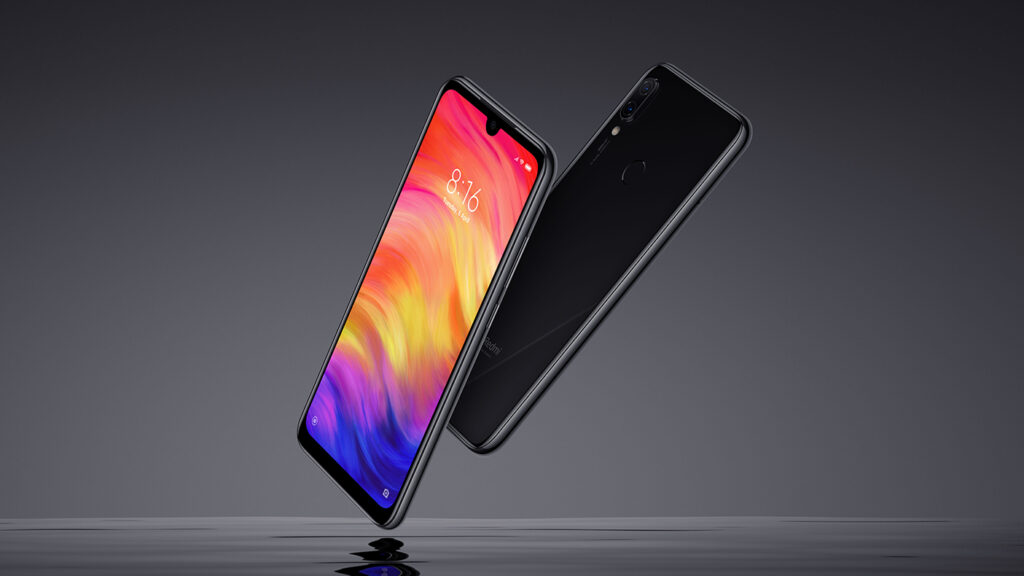
Redmi Note series is Xiaomi’s second-best selling smartphone series after Redmi A series of entry-level handsets. Despite that, the Redmi Note phones are usually not the first devices to get latest software updates. For instance, the Redmi Note 7 Pro released in the first quarter of 2019 in India, got its Android 10 update only in August 2020. Similarly, it has now started receiving MIUI 12 update in the country months after other devices have got it.
The Redmi Note 7 Pro only launched in India and China. Like any other Xiaomi smartphone it received MIUI 12 first in its home’s country earlier last month. Now, a month later, the Indian variant of this phone is also being blessed with the same update.
That said, MIUI 12 for Redmi Note 7 Pro in India comes with build number V12.0.1.0.QFHINXM (via @miu12_officialTelegram channel). It is currently being rolled out to select users across the country in a typical Xiaomi manner.
If early adopters don’t face any issues, the update will be made available for users in the coming days, followed by complete rollout. Until then, all you can do is wait as this so-called Stable Beta build cannot be sideloaded.
Having said that, Redmi Note 7 Pro is not eligible for Android 11 update but it may receive MIUI 13 as its last major update next year.
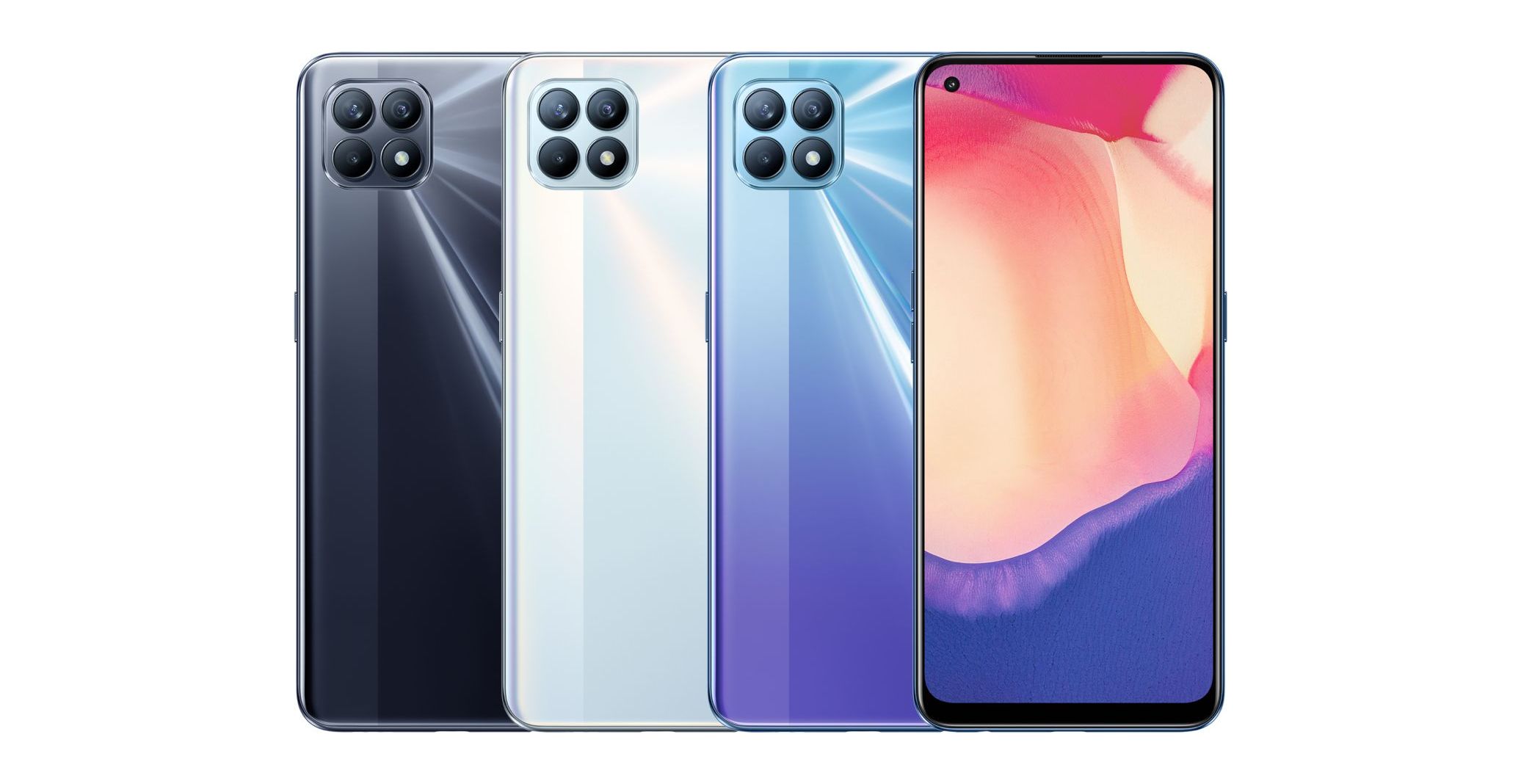
The OPPO Reno4 SE 5G smartphone has gone official in China. It is the fourth Reno4 series phone to go official in the home market after the Reno4, Reno4 Pro and Reno4 Pro Artist Limited Edition phones that debuted in the recent past. The major highlights of the Reno4 SE include a large AMOLED display, triple rear cameras, 65W fast charging, and support for 5G connectivity.
OPPO Reno4 SE 5G specifications and features
The OPPO Reno4 SE 5G has 160.5 x 73.5 x 7.85mm dimensions and it weighs 169 grams. It has a 6.43-inch AMOLED display with a punch-hole design. The 60Hz screen supports 1080 x 2400 pixels Full HD+ resolution, 20:9 aspect ratio, 91.97 percent DCI-P3 color gamut, 100 percent sRGB, and up to 180Hz of the touch sampling rate. The screen of the Reno4 SE is integrated with a fingerprint scanner. The phone offers users with a 90.8 percent screen-to-body ratio.
The Reno4 SE has a 32-megapixel front-facing camera with f/2.4 aperture with support for EIS, AI smart beauty, portrait mode, night scene mode, and 30fps 1080p video recording. The back panel of the phone features a square-shaped camera housing. It comprises of a 48-megapixel main camera with f/1.7 aperture with support for autofocus, an 8-megapixel ultrawide shooter with f/2.2 aperture and 119-degree field-of-view, and a 2-megapixel macro lens with f/2.4 aperture and an LED flash unit. The rear cameras support features like professional mode, portrait mode, panorama, night scene mode, EIS, 120fps 1080p slow-motion video shooting, and 30fps 1080p video recording.
The MediaTek Dimensity 720 chipset that clocks at 2.4GHz is present under the hoof of the OPPO Reno4 SE. The phone features 8 GB of LPPDR4x RAM and up to 256 GB of UFS 2.0 storage. The device lacks support for external storage.
The OPPO Reno4 SE boots to ColorOS 7.2 based Android 10 OS. It has a 4,300mAh dual-cell battery that supports 65W SuperVOOC 2.0 Flash Charge technology. According to OPPO, it takes around 37 minutes to fully charge the Reno4 SE. The other features that are packed inside the smartphone are dual SIM support, 5G, Wi-Fi 802.11ac, Bluetooth 5.1, USB-C, and a 3.5mm headphone slot.
OPPO Reno4 SE 5G pricing and availability
The OPPO Reno4 SE 5G variant such as 8 GB RAM + 128 GB storage and 8 GB RAM + 256 GB storage are priced at 2,499 Yuan (~$369) and 2,799 Yuan (~$413). Its color variants are Super Flash Black, Super Flash White, and Super Flash Blue. It will be available for purchase from Sept. 25. There is no word on the availability of the Reno4 SE outside of China.
We use cookies on our website to give you the most relevant experience by remembering your preferences and repeat visits. By clicking “Accept”, you consent to the use of ALL the cookies.
This website uses cookies to improve your experience while you navigate through the website. Out of these, the cookies that are categorized as necessary are stored on your browser as they are essential for the working of basic functionalities of the website. We also use third-party cookies that help us analyze and understand how you use this website. These cookies will be stored in your browser only with your consent. You also have the option to opt-out of these cookies. But opting out of some of these cookies may affect your browsing experience.
Necessary cookies are absolutely essential for the website to function properly. This category only includes cookies that ensures basic functionalities and security features of the website. These cookies do not store any personal information.
Any cookies that may not be particularly necessary for the website to function and is used specifically to collect user personal data via analytics, ads, other embedded contents are termed as non-necessary cookies. It is mandatory to procure user consent prior to running these cookies on your website.