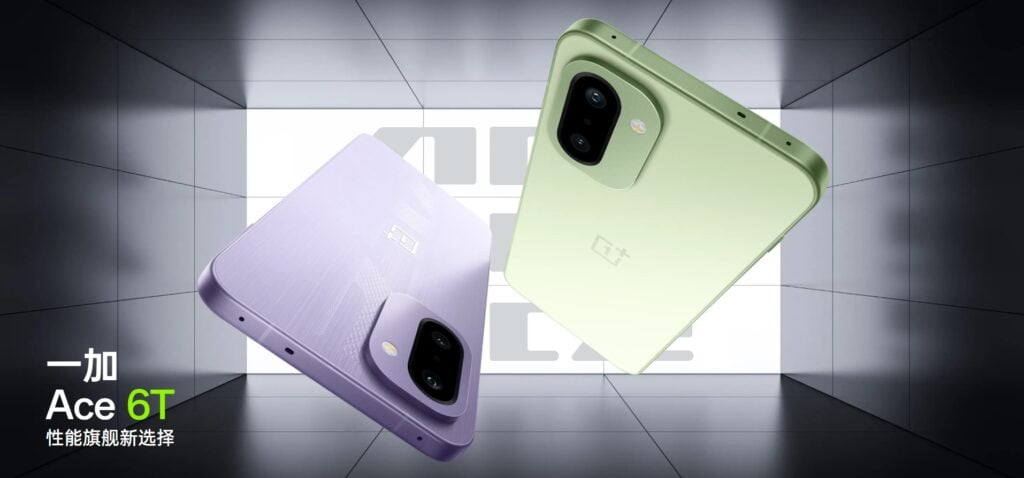
Realme is expected to unveil the Realme GT 8 and GT 8 Pro flagship phones in October in China. Tipster Digital Chat Station recently shared the key specifications of the GT 8 Pro. In the comments section of the same Weibo post, the tipster shared key details about the standard GT 8.
Realme GT 8 key details tipped
According to DCS, the standard version of the Realme GT 8 will focus primarily on the display, battery, and overall performance. He added that its imaging capabilities will be relatively average compared to the Pro variant. As per other reports, the GT 8 could be equipped with the Snapdragon 8 Elite Gen 5, which is also expected to power the GT 8 Pro.
He added that in the second half of the year, Realme has adjusted its strategy by dropping the idea of bringing periscope cameras to the regular GT 8 model. Instead, the company is concentrating on equipping the GT 8 Pro with high-end camera hardware and advanced imaging features.
Previous reports have revealed that the Realme GT 8 may feature a 6.6-inch flat display and is likely to be powered by a battery of around 7,000mAh capacity.
The Realme GT 8 Pro reports have revealed that it will feature a 200-megapixel periscope telephoto camera, a 50-megapixel ultra-wide lens, and a 50-megapixel primary camera. Under the hood, the device will have the Snapdragon 8 Elite Gen 5 chip and a huge battery. Furthermore, it is expected to feature a flat 6.78-inch BOE-supplied 2K display with an ultrasonic fingerprint sensor.
For more daily updates, please visit our News Section.
Realme is all set to launch the Realme 15 series on Sept. 15 in China. After that, the company is expected to shift its focus to the Realme GT 8 series. As per reports, the lineup will comprise the GT 8 and GT 8 Pro, both reportedly powered by the Snapdragon 8 Elite Gen 5 chip. New leaks from tipsters Digital Chat Station and Smart Pikachu have revealed key details about the GT 8 Pro’s cameras.
Realme GT 8 Pro camera details tipped
Realme GT 8 Pro camera module design hint
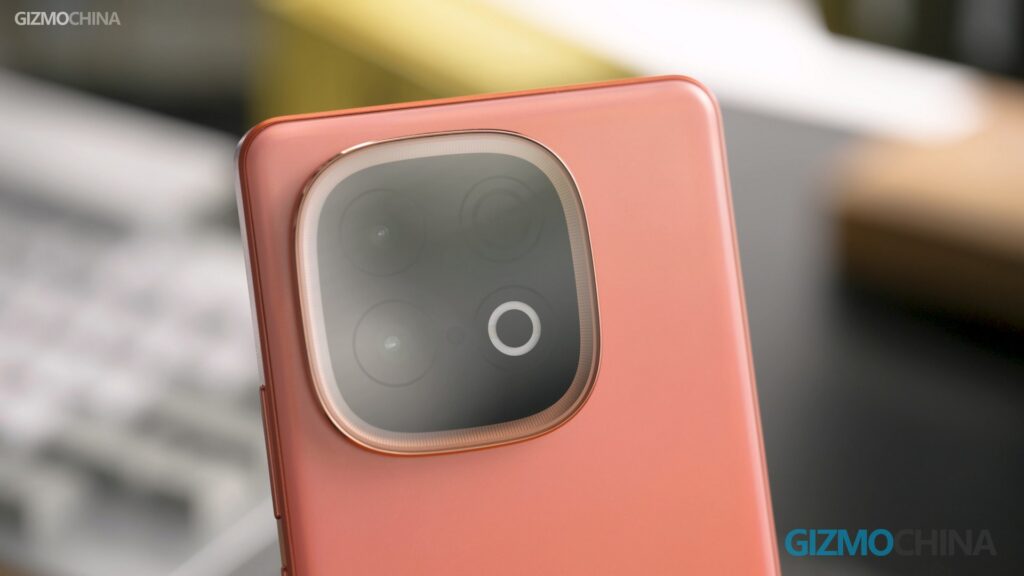
Starting with the camera module design, DCS’ leak reveals that the Realme GT 8 Pro will feature a square camera island placed at the top-left corner. The following image gives a hint about the GT 8 Pro’s camera module.
DCS revealed that the Realme GT 8 Pro’s camera setup will comprise a 50-megapixel main camera and a 200-megapixel periscope telephoto camera. While he did not specify the details about the third camera sensor, it could be a 50-megapixel ultra-wide snapper.
Realme Ricoh collab tipped
Tipster Smart Pikachu hints that Realme will collaborate with Ricoh for the upcoming GT 8 Pro. The collaboration will allow GT 8 Pro users to access Ricoh’s signature “Negative Film” colour style and humanistic photography approach.
Realme GT 8 Pro specifications (rumored)
As far as other specs are concerned, the Realme GT 8 Pro is tipped to feature a BOE-supplied 6.78-inch flat AMOLED display offering slim bezels on all four sides, 2K resolution, and an ultrasonic in-screen fingerprint sensor. Under the hood, it will feature the Snapdragon 8 Elite Gen 5 and a battery with a capacity just under 8,000mAh. Other rumoured features include an x-axis linear motor, dual speakers, and Realme UI 6-based Android 16. It is expected to debut in October in China.
For more daily updates, please visit our News Section.
Nikon has released a new silver version of its full-frame FX-format mirrorless camera, the Nikon Z f. The launch follows requests from users who wanted a model that matched the look of Nikon’s classic film cameras while keeping the performance of a modern full-frame system.
The silver finish is designed to resemble the chrome plating used on film-era cameras like the Nikon F. The texture gives the camera a metal-like appearance, highlighting its heritage design. Nikon has also expanded customization options with three new Premium Exterior colors: Cognac Brown with an embossed texture, Teal Blue, and Mauve Pink. These additions give users more ways to personalize the look of their camera.
Alongside the new design, Nikon will add a Film Grain feature through a future firmware update. This feature lets users apply grain to photos and videos with three grain size options and six strength levels. It can also be combined with Imaging Recipes, which are downloadable presets created by Nikon and collaborating photographers, as well as with existing Picture Controls. This allows for a film-like style that can be adjusted to match different creative needs.
The Z f has been popular since its release for blending a vintage-inspired design with full-frame performance. The silver version and expanded exterior colors aim to add more visual variety while keeping the same imaging capabilities.
Nikon says it will continue to focus on advancing optical performance while adding features that respond to user demand. The company sees the Z f as a camera that not only delivers technical quality but also supports creative expression in both photography and video.
The Nikon Z f silver edition is available for pre-order on the Nikon website for $2,199.95.
For more daily updates, please visit our News Section.
Xiaomi is expected to unveil the Xiaomi 16 series of smartphones later this month in China. A new leak reveals that the Xiaomi 16 Pro will feature a SmartSens-manufactured primary camera. Likely, it could be the same camera that’s expected to be available on the Huawei Mate 80 RS Ultimate, which is expected to debut later this year.
Xiaomi 16 Pro primary camera (rumored)
Xiaomi 16 Pro primary camera leak
According to tipster Fixed Focus Digital, the Xiaomi 16 Pro will feature the 50-megapixel SmartSens SC590X. As per reports, the SC590XS is said to be built on a 22nm process and features a large 1/1.28-inch sensor with 1.2μm pixels. It supports QPD full-pixel autofocus, allowing every pixel to contribute to precise phase detection focusing.
The SC590XS is believed to support native 4K video recording at up to 120 frames per second, alongside a wide dynamic range that would give it an edge in handling complex lighting. The sensor may also be paired with a physical variable aperture, enabling a significantly higher intake of light than conventional setups.
Another detail being circulated is that the SC590XS could adopt Huawei’s RYYB pixel arrangement, which replaces one of the green sub-pixels in the traditional RGB matrix with yellow. Since yellow combines the brightness information of both red and green, this shift is theoretically capable of improving light capture by around 30 to 40 percent.
On the focusing front, the SC590XS reportedly incorporates Quad Phase Detection across all pixels. Combined with AI motion-tracking algorithms, this system is said to lock onto moving subjects quickly and reliably, even when the device is handheld or operating in low-light conditions.
Reports have revealed that the Xiaomi 16 Pro will debut along with the Xiaomi 16 and a new model Xiaomi 16 Pro Max or Mini, which will feature a 6.3-inch display. These devices are expected to debut as the world’s first phones powered by the Snapdragon 8 Elite Gen 5.
For more daily updates, please visit our News Section.
While the stable One UI 8 is already available on several Galaxy devices, including the Galaxy Z Fold 7, Galaxy Flip 7, Galaxy S25 FE, and Galaxy Tab S11 series, the stable rollout has yet to begin. The brand, however, has already confirmed that the stable update will begin rolling out in September, starting with the Galaxy S25 series.
However, the One UI 8 rollout dates for other Galaxy devices were unclear until recently, when a leaked timeline revealed the complete update roadmap along with the release dates.
According to a leak shared by Alfatürk on X, Samsung plans to release the stable One UI 8 update for the Galaxy S25 series on September 18. A week later, the Galaxy S25 FE and Galaxy S24 series could join the party. The rollout will gradually expand to the remaining Galaxy S-series models, Z-series models, and other Galaxy devices in the coming weeks. Check out the complete rollout schedule below.
One UI 8 stable rollout timeline (leaked)
Galaxy S series
Galaxy S25 Ultra – September 18
Galaxy S25+ – September 18
Galaxy S25 – September 18
Galaxy S25 Edge – September 25
Galaxy S24 Ultra – September 25
Galaxy S24+ – September 25
Galaxy S24 FE – September 25
Galaxy S24 – September 25
Galaxy S23 Ultra – October 2
Galaxy S23+ – October 2
Galaxy S23 FE – October 2
Galaxy S23 – October 2
Galaxy S22 Ultra – October 6
Galaxy S22+ – October 6
Galaxy S22 – October 6
Galaxy S21 FE 5G – October 2
Galaxy Z series
Galaxy Z Fold 6 – October 2
Galaxy Z Flip 6 – October 2
Galaxy Z Fold 5 – October 13
Galaxy Z Flip 5 – October 13
Galaxy Z Fold 4 – October 6
Galaxy Z Flip 4 – October 6
Galaxy A series
Galaxy A56 5G – September 25
Galaxy A36 5G – September 25
Galaxy A55 5G – October 6
Galaxy A54 5G – October 13
Galaxy A53 5G – October 30
Galaxy A52s 5G – October 13
Galaxy A35 5G – October 30
Galaxy A34 5G – October 30
Galaxy A33 5G – October 30
Galaxy A26 5G – October 2
Galaxy A25 5G – October 16
Galaxy A23 5G – October 16
Galaxy A17 5G – October 2
Galaxy A16 5G – October 2
Galaxy A15 5G – October 20
Galaxy A06 – October 23
Galaxy M series
Galaxy M34 5G – October 20
Galaxy M33 5G – October 27
Galaxy M15 5G – October 27
Galaxy Xcover series
Galaxy XCover 7 Pro – November 10
Galaxy XCover 7 – October 23
Galaxy XCover 6 Pro – October 23
Galaxy Tab series
Galaxy Tab S10 Ultra 5G – October 1
Galaxy Tab S10 Ultra – October 1
Galaxy Tab S10+ 5G – October 1
Galaxy Tab S10+ – October 1
Galaxy Tab S10 FE+ 5G – October 9
Galaxy Tab S10 FE+ – October 9
Galaxy Tab S10 FE 5G – October 9
Galaxy Tab S10 FE – October 9
Galaxy Tab S9 Ultra – October 23
Galaxy Tab S9+ – October 23
Galaxy Tab S9 – October 23
Galaxy Tab S9 FE+ – October 13
Galaxy Tab S9 FE – October 13
Galaxy Tab S8 Ultra – October 23
Galaxy Tab S8+ – October 23
Galaxy Tab S8 – October 23
Galaxy Tab S8 Lite – October 9
Galaxy Tab S6 Lite – October 23
Galaxy Tab Active 5 Pro 5G – November 7
Galaxy Tab Active 5 5G – October 16
Galaxy Tab Active 5 – October 16
Galaxy Tab A9 – November 5
The leaked roadmap also gives us an idea about the stable One UI 8 rollout for Galaxy watches, as follows:
Galaxy Watch 7 – October 1
Galaxy Watch 6 Classic – October 1
Galaxy Watch 6 – October 1
Galaxy Watch FE – October 1
Galaxy Watch 5 Pro – November 3
Galaxy Watch 5 – November 3
Galaxy Watch 4 Classic – November 3
Galaxy Watch 4 – November 3
This leaked schedule is mostly focused on Asia. So, the dates will likely vary for other regions.
Do not forget to visit our One UI 8 section to know when the official roadmap is announced. You can also join our Telegram channel to stay up-to-date with the latest happenings in tech.
Just days before Apple is set to announce the iPhone 17 lineup, a new report has highlighted alleged details about the battery capacities of the upcoming models. The information comes from the Chinese 3C certification database and was shared by tipster ShrimpApplePro on X. While the listings have not been independently verified, they provide an early look at how Apple may have configured the batteries for its 2025 iPhones.
iPhone 17 series battery capacities
iPhone 17 series mock render
The 3C certification database reveals that the iPhone 17 Air, iPhone 17 Pro, and iPhone 17 Pro Max will each have variants with and without a physical SIM card slot, depending on regional availability. Interestingly, only one battery entry was discovered for the standard iPhone 17, which does not clarify whether it belongs to the SIM-enabled or eSIM-only version.
According to the leaked figures, the iPhone 17 Air will have a smaller cell, listed as 3,036mAh for the SIM slot version and 3,149mAh for the eSIM-only variant. The iPhone 17 Pro is tipped to feature 3,988mAh and 4,252mAh options, while the iPhone 17 Pro Max could offer 4,823mAh or 5,088mAh, depending on the configuration. The standard iPhone 17 is shown with a 3,692mAh capacity.
If accurate, the iPhone 17 Pro Max will become the first iPhone to cross the 5,000 mAh mark, representing almost an 8 percent increase over the iPhone 16 Pro Max. On the other hand, the iPhone 17 Air will have the smallest capacity in the lineup, which aligns with its slim design.
Reports suggest this model will rely on Apple’s new C1 modem for improved efficiency and may even arrive with a dedicated battery case to offset its lower capacity. Readers can visit this post to learn about the display, chipset, RAM, and storage capacities of the entire iPhone 17 series.
For more daily updates, please visit our News Section.
Han Boxiao, Product Manager at Vivo, recently shared details about the upcoming Vivo X300’s display. He confirmed that the device will feature a 6.3-inch flat display. Today, Boxiao released the following image to reveal the details about the Vivo X300 Pro’s screen.
Vivo X300 Pro display details confirmed
Vivo X300 Pro display teaser
According to Boxiao, the Vivo X300 Pro will be the first Pro variant in the X-series to feature a large flat display. The device will come with a 6.78-inch screen designed to maximize visual comfort. Boxiao stated that the rounded R corners have been carefully polished, and the frame edges subtly narrowed with micro-arc detailing to improve ergonomics. He even shared a comparison image showing the chin area of both devices, highlighting the thoughtful design touches that make the Pro’s large screen appear user-friendly.
By comparing it to the iPhone 16 Pro Max, Boxiao described the Vivo X300 Pro as lighter, slimmer, more compact, and naturally comfortable to hold. He also acknowledged the growing interest around the camera module design of the X300 series, teasing that this year’s investment and progress in Deco craftsmanship are significant, with more details on the rear design to be revealed later.
For selfies, the X300 Pro will have a 50-megapixel front camera with autofocus support. Its rear camera setup is expected to include a 50-megapixel Sony LYT-828 main camera with OIS, a 50-megapixel Samsung JN5 ultra-wide lens, and a 200-megapixel Samsung HPB periscope telephoto camera with OIS support. The device is expected to come with other features like OriginOS 6-based Android 16, an ultrasonic in-screen fingerprint sensor, and V3 and VS1 image processing chips.
For more daily updates, please visit our News Section.
According to a recent leak by reliable tipster Digital Chat Station, the Vivo X300 Ultra will feature a 200-megapixel (main) + 50-megapixel (ultra-wide) + 200-megapixel (periscope telephoto) triple camera setup. Today, the tipster released new Weibo posts to share details about the X300 Ultra’s cameras.
Vivo X300 Ultra camera specifications (rumored)
Vivo X300 Ultra camera details
As can be seen above, the tipster said a major smartphone manufacturer’s Ultra-branded phone powered by the Snapdragon 8 Elite Gen 5 chip is currently in the engineering prototype phase. He claimed that this device has a triple camera setup, which comprises the Sony IMX09E primary camera, an IMX09A (Sony LYT-828), and a third periscope telephoto camera. It can be said based on recent leaks that he could be talking about the Vivo X300 Ultra, which is expected to launch in the first half of 2026.
Vivo X300 Ultra primary camera info
The tipster revealed in another Weibo post that the Sony IMX09E is a 22nm sensor measuring 1/1.12 inches with 0.7μm pixels. It supports Hybrid Frame-HDR (DCG+VS), improved full-well capacity, and achieves over 100dB ultra-high dynamic range with better low-light performance. The sensor allows 2x and 4x lossless zoom using full-pixel fusion and integrates a 16-channel 2×2 OCL system for precise focusing and sharp imaging.
Vivo X300 Ultra Sony LYT-828 ultra-wide lens
The Sony LYT-828 is likely to be available as the ultra-wide camera on the X300 Ultra. For those who don’t know, the same camera will serve as the primary camera on the Vivo X300 Pro. As seen above, even a Weibo post by another tipster, Smart Pikachu, supports the claim that the Sony LYT-828 will be the ultra-wide camera on the X300 Ultra.
The X300 Ultra’s camera setup will have a 200-megapixel periscope telephoto camera. This could be equipped with the Samsung HPB camera sensor, which will also be available on the X300 Pro.
As far as selfie shots are concerned, the entire X300 lineup, including the X300 Ultra, is said to feature a 50-megapixel front-facing camera. Apart from autofocus, it will have a 92-degree FOV.
For more daily updates, please visit our News Section.
Meizu has officially revealed that its next-generation flagship smartphone, the Meizu 22, will debut in China on September 15. The launch event will take place at the company’s headquarters in Zhuhai, where the brand is also expected to introduce new ecosystem products. After months of speculation, the company has now disclosed the design and several key features of the device. Read on to know more about the upcoming flagship.
Meizu 22 key specifications
The Meizu 22 will arrive with a 6.32-inch display, a size the brand describes as a golden balance between compact form factor and immersive viewing. It is powered by the Snapdragon 8s Gen 4 platform, with special tuning for gaming stability.
Meizu highlights its AI-driven One Mind optimization engines, TÜV Rheinland 72-month fluency certification, and game smoothness S-grade recognition, all promising reliable performance for long-term usage. In addition, the phone carries a 4,500mm² vapour chamber cooling system, which is one of the largest for its size category, ensuring consistent efficiency during demanding tasks.
The Meizu 22 is equipped with a 50-megapixel OmniVision OV50D camera on the front. On the rear, it houses a triple-lens configuration made up of an OIS-enabled 50-megapixel OmniVision OV50H main sensor, a 50-megapixel Sony IMX882 periscope telephoto camera with OIS support, and a 50-megapixel OmniVision OV50D ultra-wide lens/ On the software side, AI imaging tools such as one-click filter extraction allow users to generate distinctive visual effects instantly.
Meizu has paid particular attention to the physical design of the Meizu 22. It weighs 190 grams and has a slim 8.15mm profile, with a width of 71mm that is intended to provide comfortable handling. The front features a 2.5D slightly curved display, while the rear has a 3D curved back for a balanced in-hand feel. The device also introduces an innovative floating back cover and an entirely symmetrical layout with 0.8mm uniform bezels. Notably, it is the only flagship to sport a white bezel panel, giving it a distinct appearance compared to its rivals.
For more daily updates, please visit our News Section.
Embodied intelligence refers to the ability of robots to combine physical actions with advanced reasoning, perception, and decision-making. Unlike traditional machines that follow fixed commands, embodied robots can interpret complex instructions, adapt to new situations, and perform tasks with human-like flexibility. This appears set to become a reality in the not-too-distant future, as an increasing number of players and nations are entering this competitive arena. Currently, the race for embodied intelligence is intensifying.
The Embodied Intelligence Race
Tesla is placing huge weight on its humanoid robot project, Optimus. The company expects it to become a major part of its future, representing up to 80% of Tesla’s overall value. Elon Musk has set an ambitious target: producing one million humanoid robots per year by 2030. Optimus is designed primarily for factory use but is also being developed for consumer applications, ranging from household assistance to personal support.
Boston Dynamics, long known for its groundbreaking robotic designs, has turned its Atlas model into a fully electric humanoid platform. Atlas is capable of performing complex multi-task demonstrations, such as handling tools or navigating obstacle courses. With Toyota’s large Behavior Model supporting its development, Atlas is being positioned as an advanced industrial solution. However, like Tesla’s Optimus, Atlas still faces the challenge of moving beyond staged demonstrations toward everyday usability.
NVIDIA is entering the robotics race with a software-first approach. Its Isaac platform and GR00T foundation models provide robotics developers with tools for simulation, reasoning, and adaptability. NVIDIA describes GR00T as “the next wave of AI,” aiming to make robots more capable of decision-making in real-world settings. This positions NVIDIA as a key enabler of robotics rather than a hardware maker, offering the “brains” for embodied intelligence.
The Challenge: Demos vs. Dependability
Despite impressive demonstrations of robots running, jumping, or manipulating tools, most humanoid robots struggle with real-life tasks. Simple activities like folding laundry, serving food, or caregiving remain much harder than advertised. The gap between marketing demos and practical dependability is still wide, slowing adoption in homes and industries.
China’s Disruptive Entry: X Square Robot and Wall-OSS
A new player from China, X Square Robot, is taking a bold step with its open-source model, Wall-OSS. This is China’s first foundational model for embodied intelligence and is designed to make robots adaptable in unpredictable real-world environments. Unlike proprietary approaches from Tesla or Boston Dynamics, Wall-OSS will be freely available on platforms like GitHub and Hugging Face.
How Wall-OSS Works
Wall-OSS uses a Shared Attention Mechanism to focus only on relevant cues, improving reaction time and reducing errors. It’s also paired with a Task-Routed Feed-Forward Network (FFN). In most legacy systems, all sensory streams, such as camera vision, spoken instructions, or motor commands, are funneled through a single processing layer, forcing the model to juggle unrelated inputs in one space. The result was bottlenecks, slow adaptation, and a tendency to misprioritize commands.
Wall-OSS addresses this differently. Shared attention allows the model to selectively focus on the most relevant cues in a scene, while the task-routed FFN processes different types of input, vision, language, and motor actions through specialized pathways. For example, visual data is processed along one optimised pathway for object recognition and spatial mapping; linguistic commands are parsed and processed through a separate pathway. Concurrently, motion processing operates independently, accounting for physical constraints and real-time feedback.
This enables robots to understand and act in context, such as following the instruction “Pick up the apple on the table and place it in the bowl” instead of treating “see apple” and “pick” as separate tasks. Routing multimodal inputs effectively mirrors human cognition, where vision/sign, hearing, and motor planning seamlessly integrate. For robots, this translates to faster response times, fewer errors, and better performance in unfamiliar environments.
Another key feature is Chain-of-Thought (CoT) reasoning integrated into its architecture, where the robot plans out multi-step actions before execution. For example, a command like “clean the table” is often treated as a one-off trigger by robots in traditional models. They may forget to wipe it down after picking up tableware. While CoT reasoning gives the ability to simulate multiple steps before moving. It generates an internal plan instead of reacting in isolation. Responding to the command ‘clean the table’ involves recognizing clutter, sorting items, removing dishes, and wiping the surface, all done logically rather than through trial and error.
This, of course, extends beyond simple housekeeping. In industrial or service settings, multi-step planning allows robots to adapt without explicit programming. A warehouse bot could deduce how to stack differently-sized packages without knocking them over, while a healthcare assistant could prepare instruments by following procedural sequences.
Training for Real-World Adaptability
Unlike older systems trained on narrow datasets, Wall-OSS has been trained on billions of Vision-Language-Action samples. These come from real-world robotic logs, generative videos, and synthetic environments with different lighting, textures, and clutter. This broad training gives model resilience beyond controlled labs, and also means that WALL-OSS-powered robots are less likely to falter when faced with unusual household layouts, different object shapes, or sudden changes in context.
The Quanta X2 Robot
To showcase Wall-OSS, X Square Robot has developed the Quanta X2. This robot uses a wheeled base, a 7-degree-of-freedom arm, and a dexterous hand with lifelike gestures. It can handle up to 62 degrees of freedom for natural movements and features rotating clamps for 360° cleaning. The Quanta X2 is designed for use in service industries, households, and industrial settings.
Open-Source vs. Proprietary Futures
While other robotics companies maintain proprietary stacks, X Square Robot is set to release Wall-OSS openly on GitHub and Hugging Face. And if adoption spreads, Wall-OSS may position open frameworks as a credible counterpoint to closed systems.
With roughly US $100 million in funding, X Square Robot is betting that open-source collaboration can solve what proprietary efforts have not: dependable performance in unpredictable environments. For startups, Wall-OSS provides a ready-made brain; for hardware makers, it offers a generalizable intelligence layer. The race is no longer about choreographed performances but about bridging the gap between shallow demos and real-world needs.
Huawei could be about to stir interest in the foldable phone market again. A new leak points to a mid-range version of its Pura X foldable, a device that made headlines earlier this year for being the first to use a widescreen 16:10 aspect ratio.
The original Pura X launched in March 2025 in China for around $1,250 and quickly caught attention for offering more of a tablet-like feel in a foldable format. Reports claim it’s already found more than 700,000 users. Now, according to tipster Digital Chat Station, Huawei is working on a follow-up that trims the price down to 5,999 yuan (about $840).
To get there, Huawei may have to dial back some of the performance specs. But the leak suggests the new model will keep the key attraction: a 6.3-inch widescreen display in that unusual 16:10 format. That could make it one of the first “affordable” foldables to offer a truly different take on design.
The timing looks right for Huawei. Its experimental Mate XTs tri-fold is tipped to cross the one-million user mark thanks to iterative improvements and a lower entry price. And with rumors swirling that Apple is preparing its iPhone Fold in a similar widescreen aspect ratio, Huawei’s decision to double down on the Pura X series suggests it sees the format as a solid bet.
If the reports hold up, Huawei’s mid-range Pura X could open the door for more buyers to try foldables without spending flagship money. It would also reinforce Huawei’s lead in China’s growing foldable market at a time when rivals like Samsung are trying to hold their ground.
That said, availability remains unclear. The Pura X never launched outside China, so it’s uncertain whether Huawei will bring the mid-range follow-up to a global audience.
Google’s upcoming plan to tighten app sideloading on Android has raised eyebrows among users who value the platform’s flexibility. Starting in late 2026, the company will require developers to verify their identity with Google before apps can be installed on certified Android devices. Unverified apps, even when downloaded outside the Play Store, will simply be blocked.
What’s different this time is how Google plans to enforce it. Instead of relying on Play Protect, the new policy will be handled by a system app called Android Developer Verifier. Google hasn’t explained why it’s using a separate tool, but the change signals a more direct effort to cut down on malware-heavy APKs that often target less technical users. While that makes sense from a security angle, it also chips away at Android’s long-standing reputation for openness compared to iOS.
Still, sideloading isn’t going away entirely. As Android expert Mishaal Rahman pointed out, Google’s own FAQ quietly mentions a loophole: Android Debug Bridge (ADB). This command-line tool, already popular with power users, lets anyone install apps with a quick command from their computer. It’s not as easy as tapping an APK file, but it ensures that enthusiasts and developers will still have a way to load apps without Google’s sign-off.
The catch, of course, is accessibility. For casual users, plugging into a PC and typing out commands may feel like a barrier, which could lead to fewer people sideloading altogether. For others, ADB acts as a safety net—keeping Android’s open spirit alive, even as Google leans harder on control. With the rollout still more than a year away, there’s time for debate, and likely more clarity on how strict these rules will be in practice.
Google finally packs its Pixel devices with a TSMC-made chip, the Tensor G5, and the power efficiency improvements are expected to be one of the biggest jumps in the Pixel lineup. YouTube creator Lover Of Tech put the Pixel 10 Pro through an extreme battery drain test alongside two rivals—the iPhone 16 Pro and the Galaxy S25—to find out just that.
For starters, all three phones pack similarly sized displays calibrated at 200 nits with auto brightness turned off. The Pixel’s resolution was set to 1080p to keep things fair. The Galaxy S25 runs on the Snapdragon 8 Elite, the iPhone 16 Pro on Apple’s A18 Pro, and the Pixel 10 Pro on the Tensor G5—all fabricated on TSMC’s 3nm process. The big difference here lies in the batteries:
Galaxy S25: 4000 mAh
Pixel 10 Pro: 4870 mAh
iPhone 16 Pro: 3582 mAh
Of course, the total runtime is what matters, and this test gives a good sense of how much this year’s Pixel has improved in terms of endurance.
Starting off with one hour of 4K 60fps recording, the Snapdragon 8 Elite-powered Galaxy S25 surprisingly showed the biggest percentage drop and the highest temperature rise. It lost 22% while both the Pixel and the iPhone lost only 15%. The Galaxy also heated up to 44.9°C, compared to 41.7°C on the Pixel—exactly the improvement many creators had hoped Google would deliver. The iPhone stayed a little cooler still at 40.8°C, thanks to Apple’s efficient chip and tight hardware-software integration.
Although the Pixel performed worse than the others in temperature control during the social media test, it pulled ahead on YouTube playback and eventually took first place overall—defeating a Pro iPhone, which is no small achievement for a Pixel. That said, using the Galaxy S25 Plus instead of the base S25 (4900 mAh vs. 4000 mAh) would likely have swapped the top two spots.
Still, Pixels have always been designed to be among the smartest smartphones rather than the outright best performers—and with the Pixel 10 series, it finally looks like you won’t have to worry about a dead battery or an overheating warning.
Eve Energy, one of China’s biggest battery makers and a competitor to Tesla suppliers like CATL and Panasonic, has started mass production of solid-state batteries — and drones might be the first in line to take advantage. The new cells promise better efficiency, higher energy density, and improved stability, all crucial for applications where every gram counts.
Image: DJI
The company’s new Chengdu plant has already begun producing 10 Ah cells built with sulfide-based solid electrolytes. These can be combined into 60 Ah packs, aimed at powering unmanned aerial vehicles, humanoid robots such as Tesla’s Optimus, and even certain AI-driven IoT devices. Energy density sits at around 300 Wh/kg, a notable jump over the 200 Wh/kg or so in current lithium-ion batteries. For context, batteries can make up nearly 40 – 50% of a drone’s total weight, so every improvement helps extend flight times.
Solid-state designs also sidestep some of the issues of liquid electrolyte cells, performing better in extreme temperatures and offering stronger thermal stability. That makes them a strong fit for drones or robots expected to operate in tough environments. While companies like CATL and Panasonic argue solid-state tech is still too expensive for electric cars until the end of the decade, Eve Energy is moving ahead by targeting smaller-scale markets first. The Chengdu site is expected to reach 100 MWh annual capacity in 2026, with a roadmap toward even denser 400 Wh/kg cells.
For those wondering, the 800–850 Wh/L figures often cited for silicon-carbon batteries in recent Chinese phones (805 Wh/L in the OnePlus 13, for example) aren’t directly comparable here. That’s a volumetric energy density number, while Eve’s spec is given in Wh/kg — and since weight-to-volume ratios may differ between the two different types of batteries, they can’t be stacked side by side.
Eve isn’t the only player eyeing this space. Earlier this year, Canadian company Avidrone showed off a cargo drone powered by a Factorial solid-state pack. But with mass production underway, Eve Energy looks set to push the technology from lab to real-world use faster than most.
The launch of DJI’s Mini 5 Pro looks closer than ever, with fresh leaks giving us a clear look at the Fly More Combo bundles. Shared by leaker Igor Bogdanov, the images show what DJI has in store for buyers ahead of the drone’s rumored debut on September 16.
According to the images, two main Fly More Combos will be offered. The first pairs the Mini 5 Pro with DJI’s RC-N3 controller — the standard option without a built-in display. Inside the box are three 2,785mAh Intelligent Flight Batteries, each rated for up to 36 minutes of flight, keeping the drone under the key 250g weight limit for recreational flyers. Buyers will also find a gimbal protector, six sets of spare propellers, a filter kit, a charger, a carrying case, and the usual cables.
The second combo swaps in the pricier DJI RC2 controller, which comes with its own display. Beyond that, the package mirrors the RC-N3 bundle. DJI also appears to be preparing optional “Plus” versions in some regions, featuring larger 3,350mAh batteries that push flight time to around 52 minutes — though these packs will nudge the drone past the 250g threshold.
Leaks suggest the Mini 5 Pro will carry a 1-inch camera sensor and LiDAR, setting it up as a serious upgrade over the Mini 4 Pro.
The Fly More Combo options underline DJI’s strategy of covering both casual hobbyists and those who want a more premium setup out of the box. With the official reveal just around the corner, anticipation for the Mini 5 Pro is already taking off. Leaked images have also revealed the retail box, adding to the growing buzz ahead of launch.
Apple’s upcoming “Awe Inspiring” keynote on September 9 might not just be about new iPhones and watches — the company could also introduce the AirPods Pro 3.
According to supply chain analyst Ming-Chi Kuo, the AirPods Pro 3 are scheduled for release in the second half of 2025. So, it’s natural to expect them at tomorrow’s event. Supporting this speculation is the fact that references to the upcoming AirPods also surfaced in the iOS 26 code back in June, suggesting the product is ready for launch.
However, Kuo notes that a major upgrade for the AirPods is planned for 2026. He claims Apple is preparing a radical hardware shift with the next generation, including infrared-capable cameras built into the earbuds. The 2026 wearable will ship with new features that will also be compatible with Apple Vision Pro and its iterations.
As for the AirPods Pro 3, reports suggest they will feature a slightly refined design and improved Active Noise Cancellation, likely powered by a new custom H3 chip.
Apple is also said to be expanding the health-tracking features of its wearables with additions like heart rate monitoring, temperature sensing, and upgraded Hearing Assistance.
For more daily updates, please visit our News Section.
Dreame has officially entered the washing machine segment with the launch of the P5 washer-dryer. The new appliance is now listed on JD.com and will be available for pre-order starting September 9. It is priced at 5,499 yuan ($770).
Dreame P5 Specifications
The Dreame P5 is a front-loading washer-dryer designed with a slim 540mm body that fits into standard 600mm cabinets. It features a 520mm wide starry-glass door, which provides visibility into the drum while complementing modern interior designs.
The machine uses Dreame’s Cloud Disc fast-condensation drying system. This system includes a large metal condenser plate that increases the condensation area by 200% compared to standard systems.
Dreame claims the setup improves drying speed by 25% and reaches a dehumidification rate of 13g per minute. The drying module supports automatic self-cleaning with high-speed water flow that rinses the condenser and fan blades to remove lint and residue.
The Dreame P5 features a 4D hand-wash simulation system with a 530mm tilted drum that generates multidirectional motion to mimic real hand-washing. According to Dreame, this design improves the cleaning ratio by 13% compared to conventional 505mm drums.
The washer also supports segmented heating tailored to stain types, with 30°C for sweat, 40°C for wine, and 60°C for oil. For delicate fabrics such as silk, a cold-water mode is available to ensure gentle washing.
The internal drum features a waterdrop-shaped surface that forms a cushion of water to reduce fabric wear. The inner tub uses laser welding to prevent snagging and improve durability. Dreame equips the washer with an AI-powered direct drive inverter motor that adjusts the drum’s movement with 1-degree precision. Noise levels during spin cycles are rated as low as 45 decibels.
The P5 supports 10kg wash and 6kg dry capacities, allowing it to handle around 40 pieces of clothing or two sets of bedding per cycle. It includes a pasteurization wash at 60°C that kills 99.99% of bacteria and removes mites. To maintain hygiene, the machine also includes a 95°C self-cleaning cycle that sanitizes the inner tub.
The washing machine adds AI-based program selection to optimize wash cycles automatically. It includes a soft drum light for better visibility inside the tub and a child lock for safety. The control interface uses a Knob Screen that integrates a rotating knob with a digital display. Dreame backs the product with a 3-year full-unit warranty and a 10-year motor warranty.
AOC has introduced a new 27-inch gaming monitor, the Q27G51F, in the Chinese market. The monitor is priced at 749 yuan ($105) and is now available on JD.com. Let’s check out its key specs.
AOC Q27G51F Monitor Specifications
The Q27G51F features a 2560 x 1440 resolution Fast IPS panel with a native 144Hz refresh rate and is designed for smooth, high-speed gameplay. It also comes with a 0.5ms MPRT response time and a GtG response time of 4ms. This allows the display to reduce motion blur and ghosting in fast-paced gaming scenarios.
AOC has equipped the monitor with its proprietary MBR Sync system. This technology inserts black frames between actual frames and synchronizes with the refresh rate to improve motion clarity while maintaining consistent brightness levels.
In terms of color performance, the monitor covers 99% of the sRGB and 90% of the DCI-P3 color space. It supports 8-bit color depth and offers factory color calibration with a Delta E value below 2 for sRGB, providing accurate and natural color output. The panel includes HDR10 support, a typical brightness of 300 nits, and a 1500:1 static contrast ratio.
The Q27G51F also prioritizes eye comfort. AOC includes hardware-based low blue light filtering, DC dimming for flicker-free visuals, and four preset low blue light modes for different use cases such as reading, office work, or watching videos. The monitor also includes support for G-Sync and FreeSync technologies, ensuring tear-free visuals when paired with compatible GPUs.
In terms of connectivity, it includes HDMI 2.0, DisplayPort 1.4, and a 3.5mm audio output. The monitor’s stand supports tilt adjustment from -5° to 23° and is compatible with 100 x 100mm VESA wall mounts. The unit weighs 3.23 kg with the stand and ships in eco-friendly cardboard packaging.
For gamers, it includes GameColor tuning, low input lag optimization, and customizable profiles through the AOC G-Menu software. AOC says the Q27G51F has been factory-calibrated for each unit and is designed in partnership with eSports teams to meet competitive standards.
In related news, Lenovo has recently introduced the ThinkVision P40WD-40 monitor with an IPS Black display, Thunderbolt 4, and 140W power delivery, while Xiaomi’s A27Ui 4K monitor is now available in Europe for €270.
For more daily updates, please visit ourNews Section.

Samsung‘s Fan Edition series smartphones aim to offer top notch specs and features at an affordable price, and the new Galaxy S25 FE is no different. But is it too late to the party? Arriving months after the rest of the flagship Galaxy S25 models, the Galaxy S25 FE’s starting price is nearly the same as the base Galaxy S25. So which one is the smarter buy in 2025? Read on to find out.
Compact flagship smartphones are all the rage in 2025, and Samsung’s Galaxy S25 usually makes every list for the best in this segment. It is a thin and light device, measuring just 7.2mm thin and weighing 162 grams. What makes it compact is its relatively tiny 6.2-inch LTPO Dynamic AMOLED 2X display that has an FHD+ resolution, a 120Hz refresh rate, and 2600 nits of peak brightness. This model is also a true flagship model that uses Gorilla Glass Victus 2 on the front and back, with a metallic frame on the sides.
In comparison, the Galaxy S25 FE is more similar to the larger Galaxy S25+ with a taller 6.7-inch Dynamic AMOLED 2X display with a 120Hz refresh rate, FHD+ resolution, and 1900 nits of peak brightness. The glass and metal design returns, but with a downgraded Gorilla Glass Victus+ protection. Owing to its larger footprint, it measures 7.4mm thin and weighs 190 grams. So the Galaxy S25 has a brighter and more advanced display and more durable construction, while the Galaxy S25 FE is the better choice if you prefer a bigger screen.
Please Note: When you buy something using the links in our articles, we may earn a small commission at no cost to you.
2. Performance
In terms of performance, there is no comparison between the Galaxy S25 FE and Galaxy S25. Samsung equips the latter with the Snapdragon 8 Elite for Galaxy, which is arguably the fastest processor on Android. This chip is even more power efficient than the Galaxy S25 FE’s older Exynos 2400. To recall, the Exynos 2400 is an older flagship chip that powered the older Galaxy S24 and Galaxy S24+. In other words, intense workloads or gaming experience is definitely better on the standard S25.
3. Battery & Charging
One of the biggest upgrades on the Galaxy S25 FE is the battery and charging speeds. The latest Fan Edition is now powered by a 4,900mAh battery pack with the Galaxy S25 Ultra level 45W wired fast charging and 15W wireless charging support. Meanwhile, the Galaxy S25 has a lacklustre 4,000mAh cell that has a slow 25W wired fast charging and 15W wireless charging. So the Galaxy S25 FE takes the win here.
4. Cameras
While both models offer a triple camera setup with a main, telephoto, and ultra wide angle lens, the Galaxy S25 is easily superior in photography. You get a better ISP along with a larger primary camera, improved telephoto shooter, and a bigger ultra wide angle sensor. The Galaxy S25 FE is only identical to the Galaxy S25 with the 12MP selfie camera.
5. Pricing
Taking all of this into account, the last big comparison is with the price tag. Samsung just announced the Galaxy S25 FE with a 649 US Dollar starting price tag. This, technically, makes it the most affordable model in the Galaxy S25 series based on launch price. However, the Galaxy S25 launched a while back and sells for much less than before. As of right now, the Galaxy S25’s base configuration can sell as low as 680 US Dollars. With the Galaxy S25, you get a compact flagship, faster performance, better cameras, and a more polished flagship experience. But for those looking for a bigger display (and a larger bigger with fast charging) on a Samsung flagship that doesn’t break the bank, the Galaxy S25 FE might better fit your needs.
For more daily updates, please visit our News Section.
At IFA 2025, Lenovo introduced a new range of ThinkPad Smart Docks aimed at improving connectivity and simplifying workspace management. The lineup includes the ThinkPad Thunderbolt 5 Smart Dock 7500, the ThinkPad Thunderbolt 4 Smart Dock Gen 2 7500, and the ThinkPad USB4 Smart Dock 5500. Each model uses the latest high-speed standards to meet different performance and budget needs.
The Thunderbolt 5 Smart Dock 7500 is the flagship model. It delivers up to 120 Gbps bandwidth and supports three 8K displays at 60Hz plus one 4K at 60Hz, or two 4K displays at 240Hz with an additional two 4K at 120Hz. It also provides PD 3.1 charging up to 180W, making it suitable for demanding multi-monitor setups. For enterprise users, it includes cloud-based management that allows IT teams to remotely monitor and update docks with full visibility into connected devices.
The Thunderbolt 4 Smart Dock Gen 2 7500 is designed as a mid-range option. It supports one 8K display at 60Hz or two 4K displays at 144Hz. It offers PD 3.1 charging up to 100W and comes with four always-on front USB ports for quick charging and peripheral connections. The dock balances strong display support with reliable charging performance.
The USB4 Smart Dock 5500 is the most cost-effective model in the lineup. It delivers up to four times the bandwidth of traditional USB-C 3.2 Gen 2 docks. It supports one 8K display at 60Hz or two 4K displays at 144Hz, with PD 3.1 fast charging up to 100W. This dock is built to offer future-proof compatibility for users who need strong performance without higher enterprise costs.
All three docks are supported by Lenovo’s Accessories Fleet Manager. This system allows IT administrators to track, manage, and update docks across large deployments in real-time, helping enterprises reduce downtime and improve device oversight.
Pricing & availability
The docks will be available starting October 2025. Pricing is set at 399€ for the Thunderbolt 5 Smart Dock 7500, 299€ for the Thunderbolt 4 Smart Dock Gen 2 7500, and 229€ for the USB4 Smart Dock 5500.
We use cookies on our website to give you the most relevant experience by remembering your preferences and repeat visits. By clicking “Accept”, you consent to the use of ALL the cookies.
This website uses cookies to improve your experience while you navigate through the website. Out of these, the cookies that are categorized as necessary are stored on your browser as they are essential for the working of basic functionalities of the website. We also use third-party cookies that help us analyze and understand how you use this website. These cookies will be stored in your browser only with your consent. You also have the option to opt-out of these cookies. But opting out of some of these cookies may affect your browsing experience.
Necessary cookies are absolutely essential for the website to function properly. This category only includes cookies that ensures basic functionalities and security features of the website. These cookies do not store any personal information.
Any cookies that may not be particularly necessary for the website to function and is used specifically to collect user personal data via analytics, ads, other embedded contents are termed as non-necessary cookies. It is mandatory to procure user consent prior to running these cookies on your website.