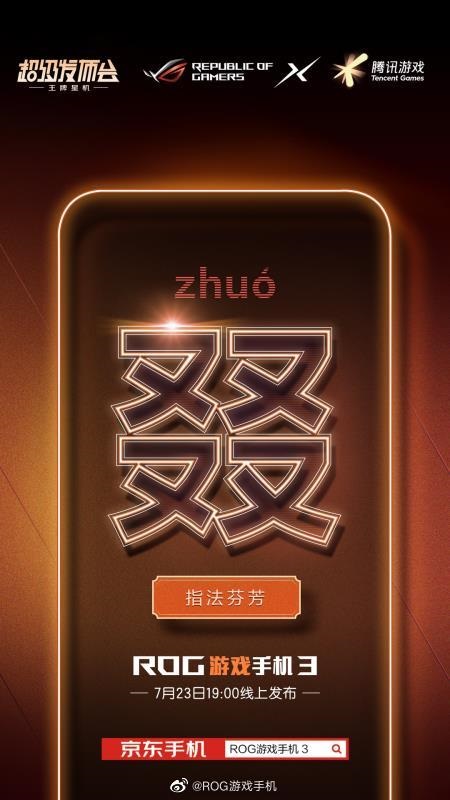
ASUS will officially unveil the ROG Gaming Phone 3 on July 23rd. Ahead of the launch, the Taiwanese company has been teasing several features that the powerful gaming machine will bring with it. The latest teaser borders on the innovative AirTriggers ultrasonic buttons.
ASUS ROG Phone II
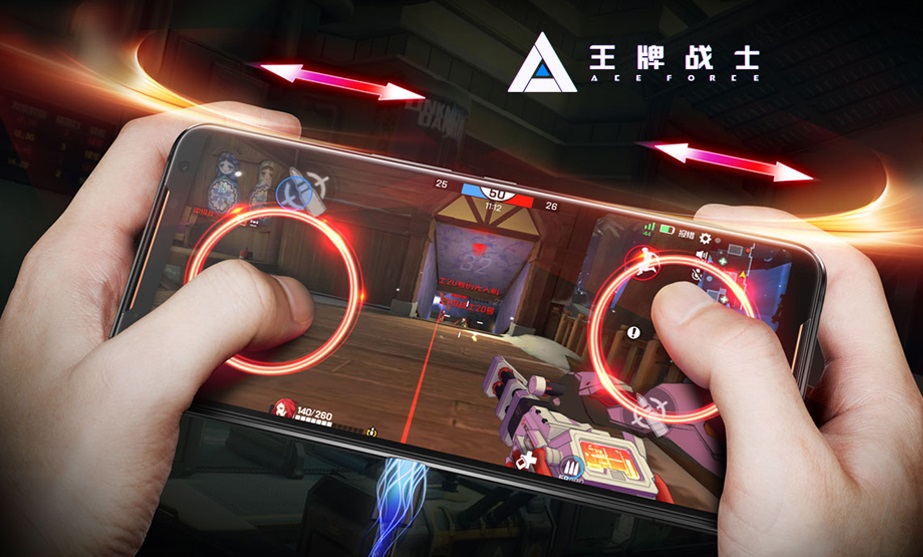
ASUS has hinted that the ROG 3 will have four different gestures control built into the AirTrigger. Those familiar with the ROG Phone II will recall that the phone features what ASUS called AirTriggers on the right edge. These triggers aren’t exactly buttons, but ultrasonic pressure-sensitive regions in the device’s frame and they can be mapped to emulate a tap on the screen.
Later on, the company pushed an update to the phone which added a second function which essentially allows you to map a horizontal slide function on the screen to one of the AirTriggers. This new feature could come in handy in a variety of games that require you to swipe horizontally on the screen to perform a specific function. For example, in Asphalt 9 Legends, the horizontal slide to change lanes can be mapped to the AirTriggers.
There is no mention of what the added AirTrigger features will be but it sure will be features that will afford users easy gaming.
The ROG Phone 3 is expected to arrive with a 6.59-inch AMOLED display that will offer Full HD+ resolution, 19.5:9 aspect ratio, and a refresh rate of up to 144Hz. It will be powered by a Snapdragon 865 Plus SoC paired with up to 16 GB of LPDDR5 RAM.
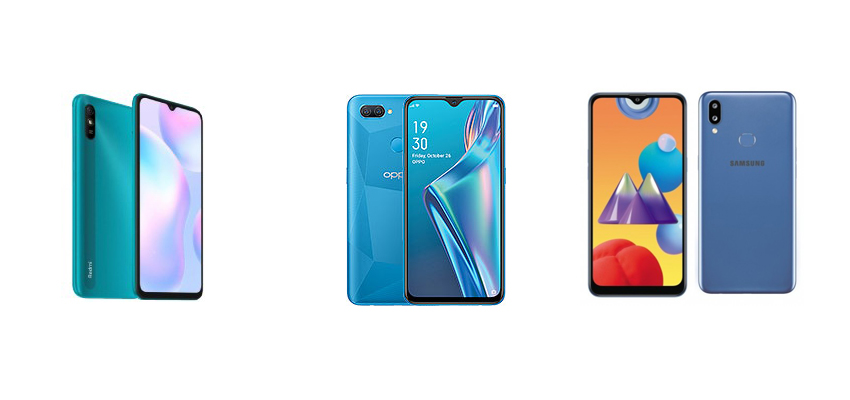
Samsung launched a new entry-level phone in the Indian market: the Galaxy M01s. Usually, when people all around the world look for a very affordable device, they do not choose Samsung. But we think this device offers something more than other Samsung entry-level handsets sold at the same price during the last years. But is it enough to beat the concurrence? You can find it out by reading this comparison between Samsung Galaxy M01s and the entry-level offerings by Xiaomi and Oppo: we are talking about Redmi 9A and Oppo A12, both available in the most affordable price segment.
Xiaomi Redmi 9A vs OPPO A12 vs Samsung Galaxy M01s
Oppo A12
Xiaomi Redmi 9A
Samsung Galaxy M01
DIMENSIONS AND WEIGHT
155.9 x 75.5 x 8.3 mm, 165 grams
164.9 x 77 x 9 mm, 194 grams
156.9 x 75.8 x 7.8 mm , 168 grams
DISPLAY
6.22 inches, 720 x 1520p (HD+), 270 ppi, IPS LCD
6.53 inches, 720 x 1600p (HD+), 270 ppi, IPS LCD
6.2 inches, 720 x 1520p (HD+), 270 ppi, TFT LCD
PROCESSOR
Mediatek Helio P22, octa-core 2 GHz
Mediatek Helio G25, octa-core 2.0 GHz
Mediatek Helio P22, octa-core 2 GHz
MEMORY
3 GB RAM, 32 GB – 4 GB RAM, 64 GB – micro SD slot
2 GB RAM, 32 GB – micro SD dedicated slot
3 GB RAM, 32 GB – micro SD dedicated slot
SOFTWARE
Android 10, Color OS
Android 10, MIUI
Android 9 Pie, One UI Core
CONNECTIVITY
Wi-Fi 802.11 a/b/g/n/ac, Bluetooth 5.0, GPS
Wi-Fi 802.11 b/g/n, Bluetooth 5.0, GPS
Wi-Fi 802.11 b/g/n, Bluetooth 4.2, GPS
CAMERA
Dual 13 + 2 MP f/2.2 and f/2.4
5 MP f/2.0 front camera
Single 13 MP
5 MP front camera
Dual 13 + 2 MP f/1.8 and f/2.4
8 MP f/2.0 front camera
BATTERY
4230 mAh
5000 mAh, 10W charging
4000 mAh
ADDITIONAL FEATURES
Dual SIM slot
Dual SIM slot
Dual SIM slot
Design
Redmi 9A, Oppo A12, and Samsung Galaxy M01s are made of cheap materials: they are entirely made of polycarbonate (except the display, naturally), and they are not so sturdy. The Redmi 9A has a cleaner look with its smaller camera module and fewer elements on the rear side, but unlike Oppo A12 and Samsung Galaxy M01s, it lacks a fingerprint scanner and it relies on 2D face unlock. Also, note that Oppo A12 and Samsung Galaxy M01s are much more compact than Redmi 9A due to their smaller displays. The Oppo A12 is even more compact than Galaxy M01s thanks to narrower bezels around the display.
Display
The display providing the highest quality belongs to the Oppo A12 which boasts an IPS panel with high brightness. But despite that, it is still a below-average panel since it comes with an HD+ resolution and not a so high level of detail. You get even less detail with the Redmi 9A because it has a lower pixel density due to its wider panel. But it is actually better for productivity users and gamers due to its wider diagonal. The Samsung Galaxy M01s has a cheaper TFT panel which does not even come with the IPS technology, so it loses the comparison.
Specs & Software
You get just 2 GB of RAM with the Redmi 9A, but it has a way better chipset than Oppo A12 and Samsung Galaxy M01s. It is the new Helio G25 which is even pretty nice in advanced scenarios such as gaming, thanks to its high GPU performance. But the low amount of RAM will not let you open a lot of apps at the same time. Oppo A12 has an inferior chipset, but it offers up to 4 GB of RAM and even doubles the internal storage (up to 64 GB). Samsung Galaxy M01s loses again since it comes with the weakest chipset (Helio P22) and 3 GB of RAM paired with 32 GB of native storage.
Camera
Samsung Galaxy M01s is the best camera phone of this trio. It has a main sensor with a brighter focal aperture for the main camera, so it clicks better photos, especially in low light conditions. Further, it has a better 8 MP selfie camera. The silver medal goes to the Oppo A12 sporting a dual camera with a 13 MP main sensor and a depth sensor. The Redmi 9A lacks the depth sensor and it has just a single 13 MP sensor on the rear side. It is not recommended if you need the greatest photos, especially for portraits.
Battery
The Redmi 9A has a much bigger battery than Oppo A12 and Samsung Galaxy M01s, it lasts a lot more on a single charge. You can reach three days of battery life even with intensive usage. But this does not mean that its rivals are weak: Oppo A12 still provides an amazing battery life, and even the Galaxy M01s lasts a lot. In each case, you do not get fast charging.
Price
If only the Redmi 9A had more RAM, we would choose it as the winner of this comparison. But it is not so, that is why I personally prefer the Oppo A12, at least in its most expensive configuration. The Samsung Galaxy M01s is the best camera phone, but it is inferior when it comes to the rest of the specifications. The base variants of Samsung Galaxy M01s, Redmi 9A, and Oppo A12 cost Rs. 9999, Rs. 11,790 (expected, it is still not on the shelves), and Rs. 9,999, respectively. After reading this comparison, what would your choice be?
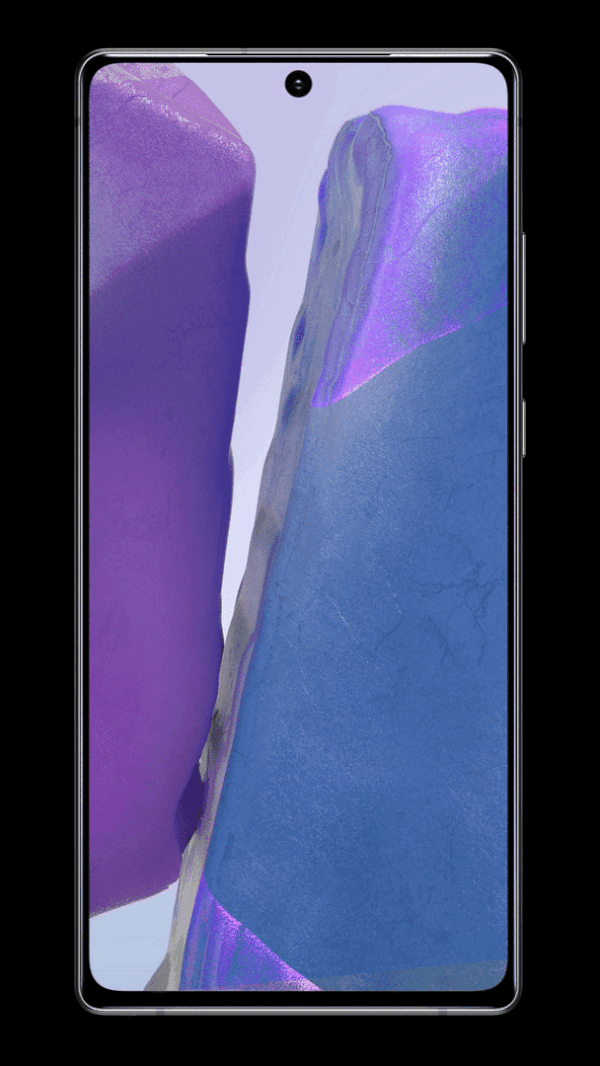
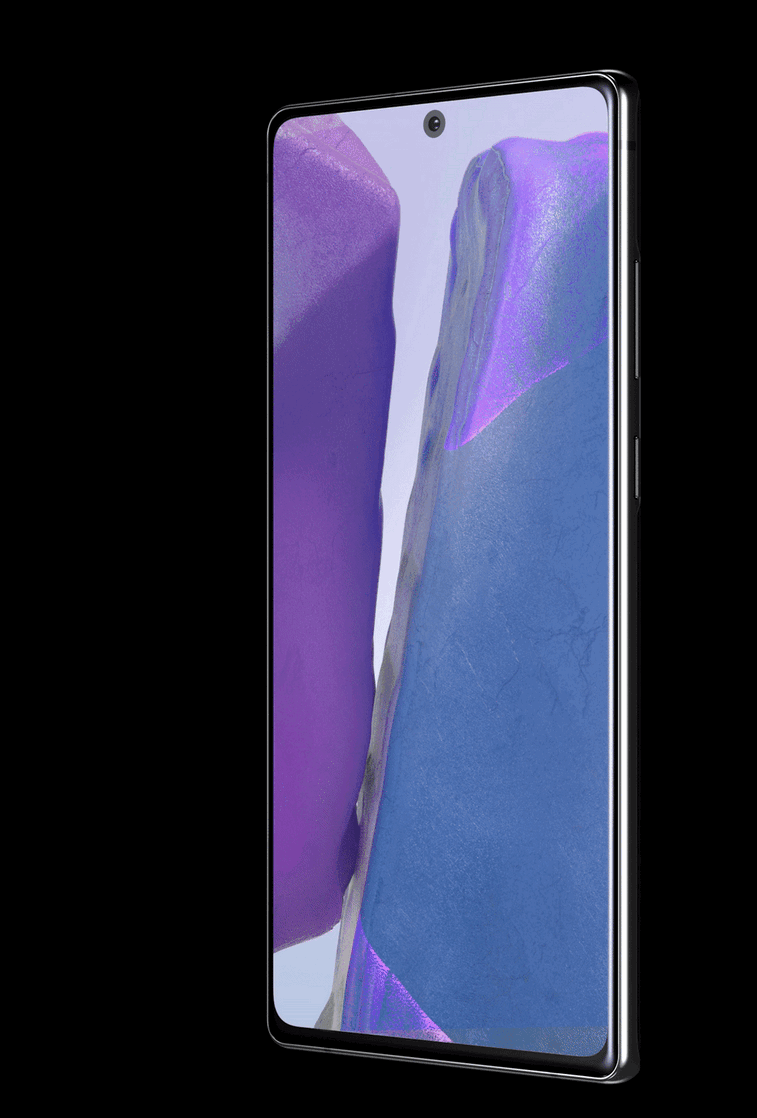
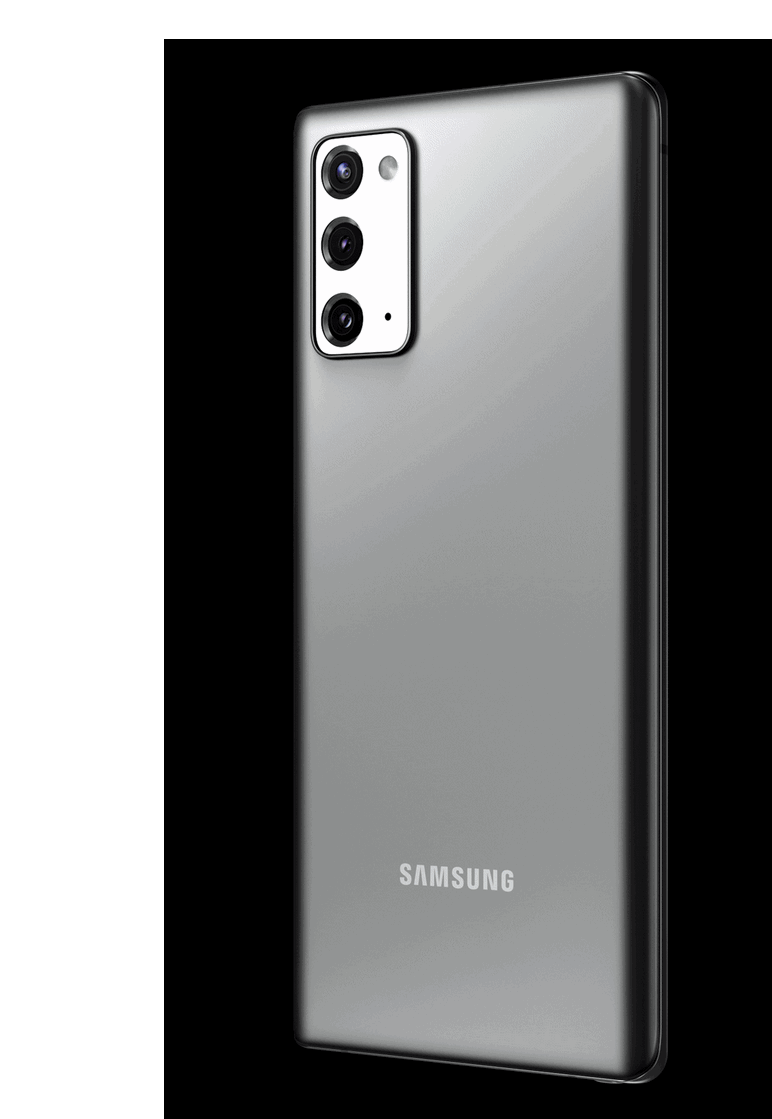
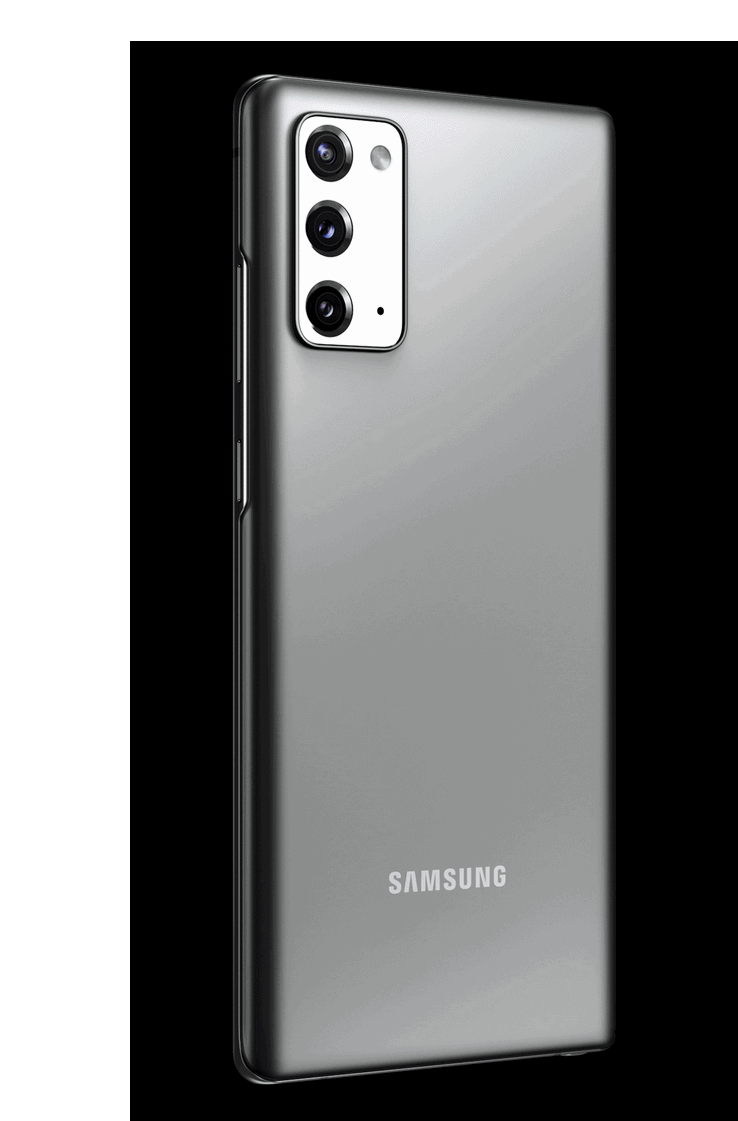
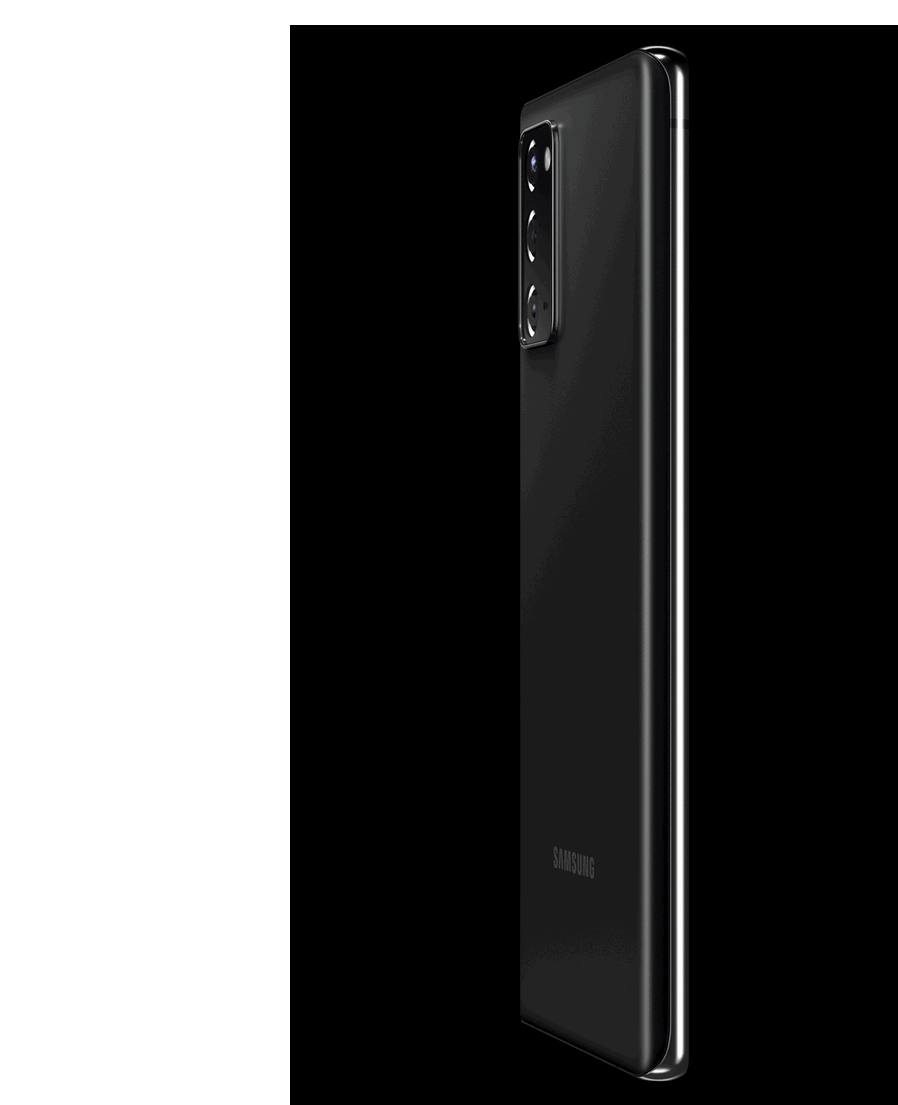
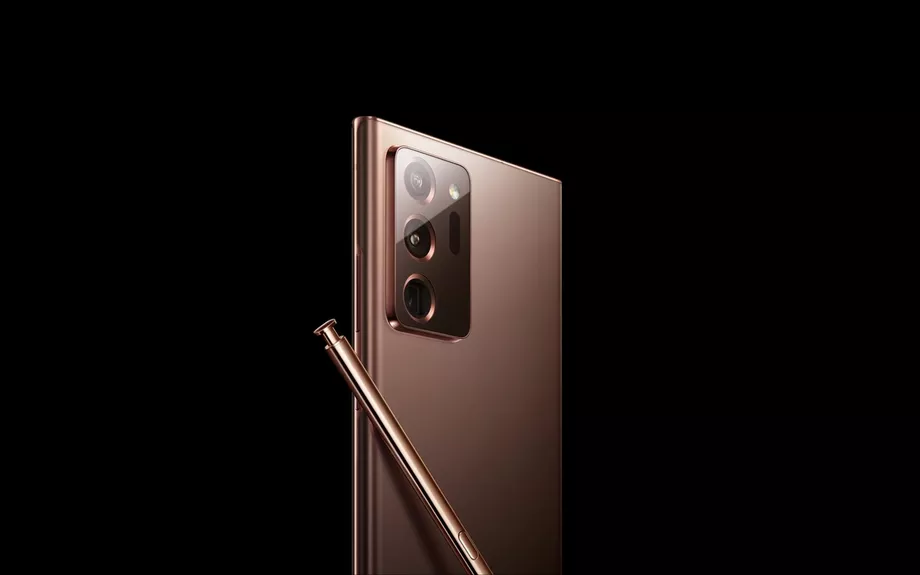
Samsung has been relatively generous with details of the upcoming Galaxy Note 20 model. We have seen several leaks of the Galaxy Note 20 and even the Note 20 Ultra but here comes one that is explicit. Thanks to tipster Evan Blass, we get to see all the details of the Galaxy Note 20 well ahead of the launch.
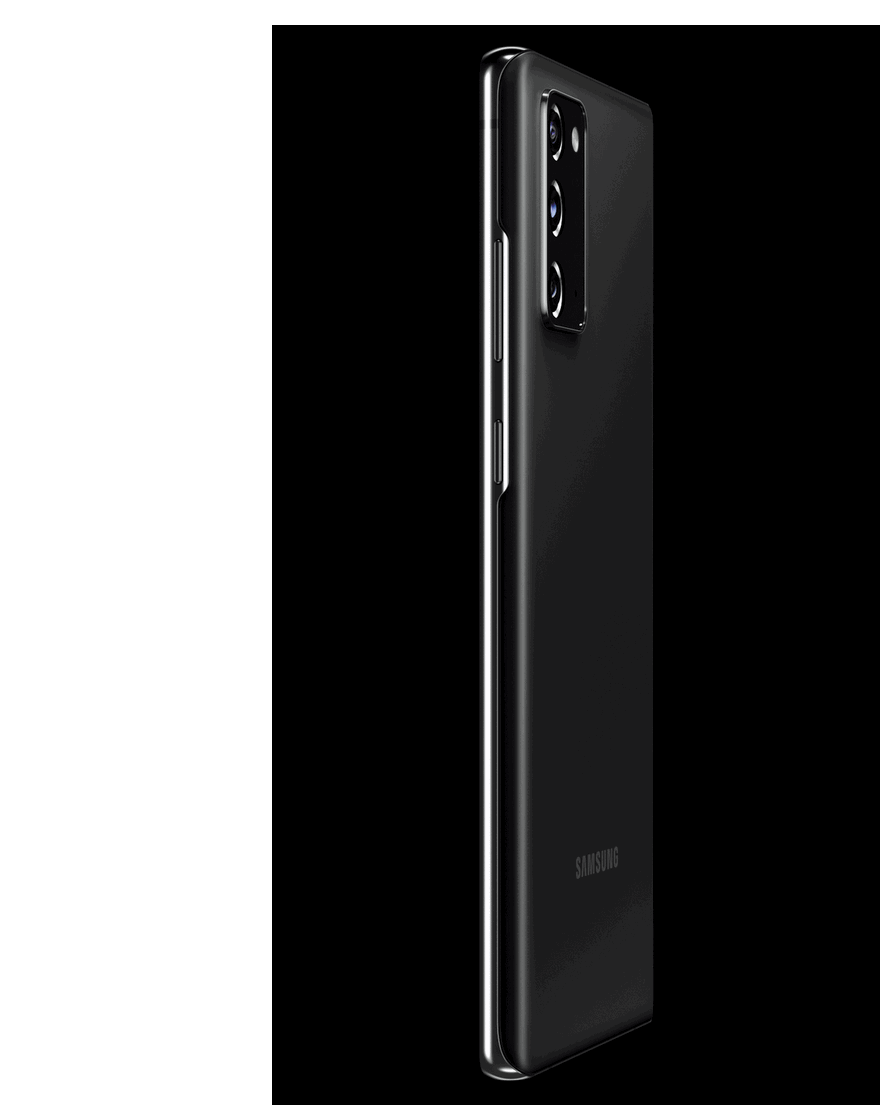
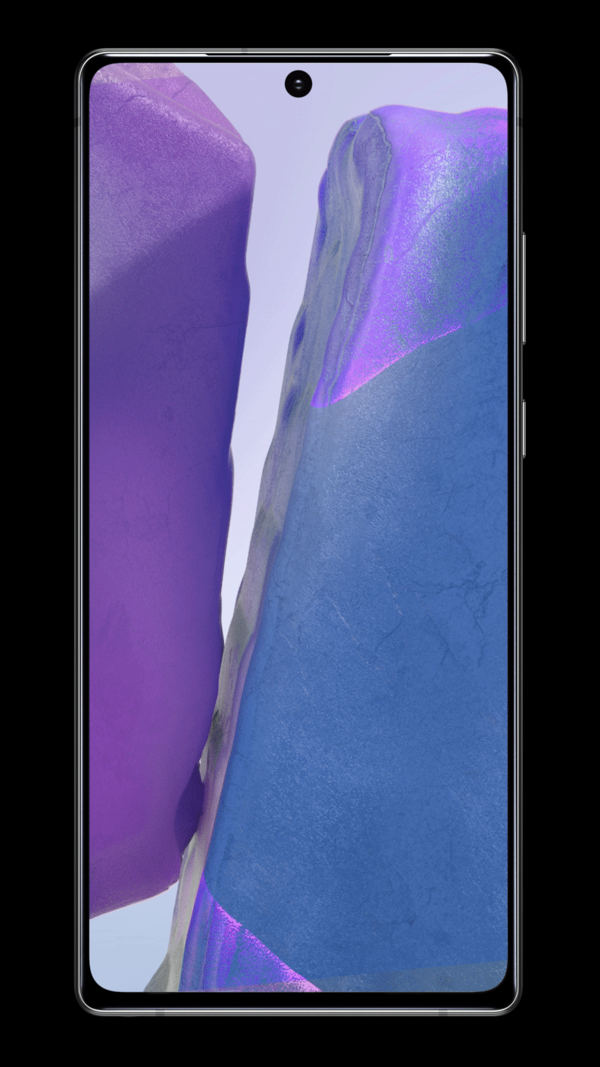
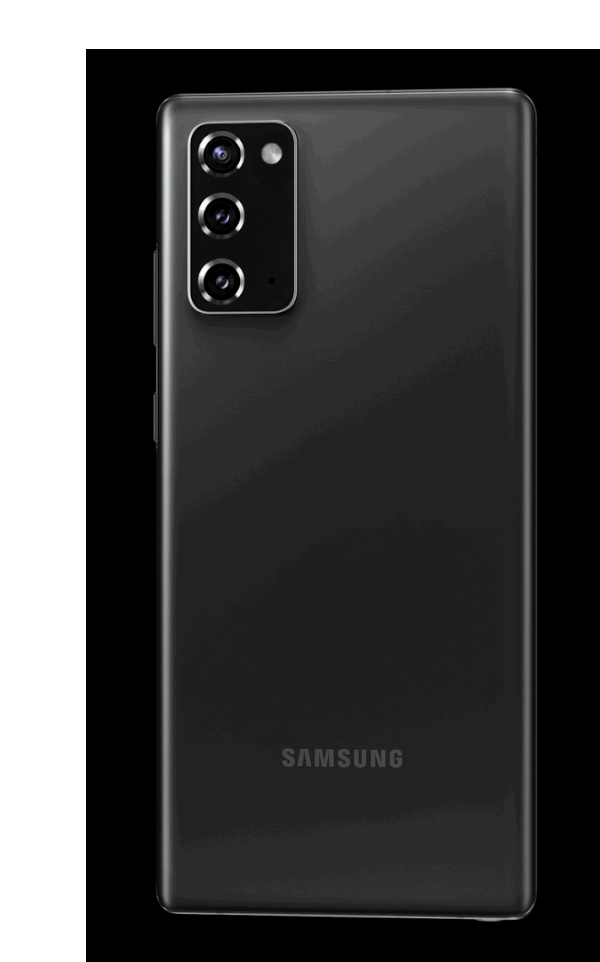
This isn’t just a couple of photos but several gif images which give us a 360-degree look at the upcoming Galaxy Note flagship. The renders show the Note 20 won’t have a curved display design like its predecessors but will utilise an entirely flat display.
The display will hold a punch-hole design which has become a regular feature of Samsung’s recent flagship models. The single hole-punch is located at the upper mid-region of the screen.
At the rear, the device features a rectangular camera module located at the top left corner of the rear panel. The module houses a triple camera setup as well as an LED flash.
1 of 6
The Galaxy Note 20 series is expected to be announced during the Galaxy Unpacked event scheduled for August. The models will be powered by either the Snapdragon 865+ or the Exynos 992 and will have a base storage of 128GB and up to 16GB of RAM.
In mid-May, the US government extended the ban on Huawei for another year. Additionally, it also announced new rules, which require chipmakers using US technology to apply for a license to ship chips to Huawei and other banned entities. At around the same time, a report revealed that TSMC had stopped taking new orders from the Chinese telecom giant. Now, after two months, the same has been officially confirmed by TSMC.
TSMC (Taiwan Semiconductor Manufacturing Company) is the world’s largest chipmaker. It is known for manufacturing chipsets for major firms like Apple, Qualcomm, Huawei, MediaTek, NVIDIA, Broadcom, ADI, NXP, and others.
Huawei accounted for 23% of the revenue generated by TSMC in 2019. However, still, Mark Liu, the chairman of the company confirmed in an investors conference held on July 16 that they did not take any new orders from Huawei since May 15 in compliance with the new US regulations.
Though TSMC could apply for the required license to ship chips to Huawei, it’s very unlikely to happen. Anyway, the Taiwanese company is allowed to ship the older orders prior to the new rule before Septemeber 14 when the grace period of three months will end.
Interestingly, TSMC still forecasts $11.2 billion to $11.5 billion for Q3 (July-September), which is 20.7% more than last year. Additionally, the company increased its revenue growth target to over 20% for 2020 and even increased its capital expenditure to up to $17 billion, from the previously planned $15 billion to $16 billion
The ongoing rollout of 5G products and high-performance computers have helped TSMC to remain unaffected despite losing one of its biggest clients whose void is already being filled by other companies.
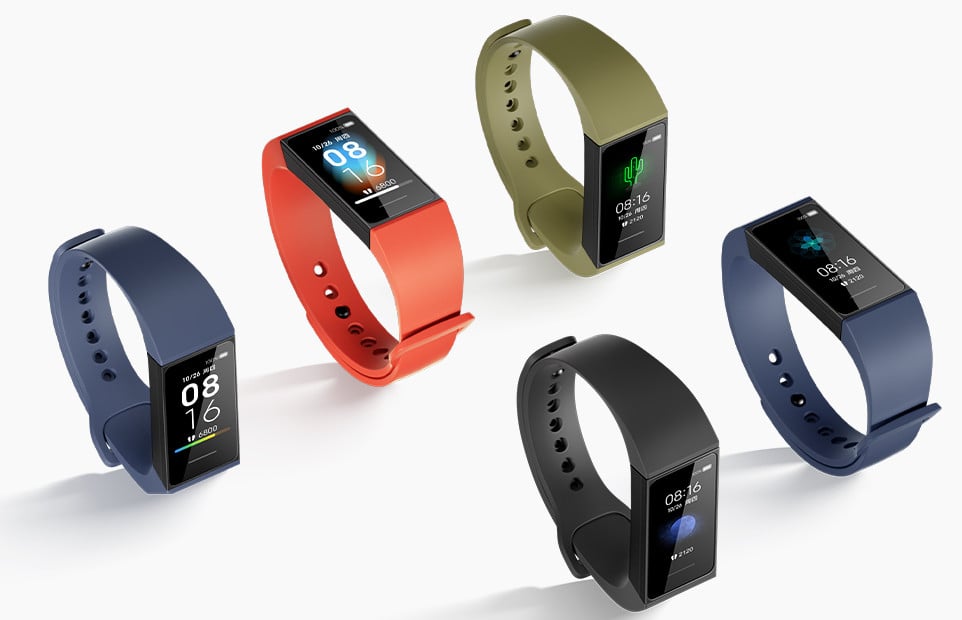
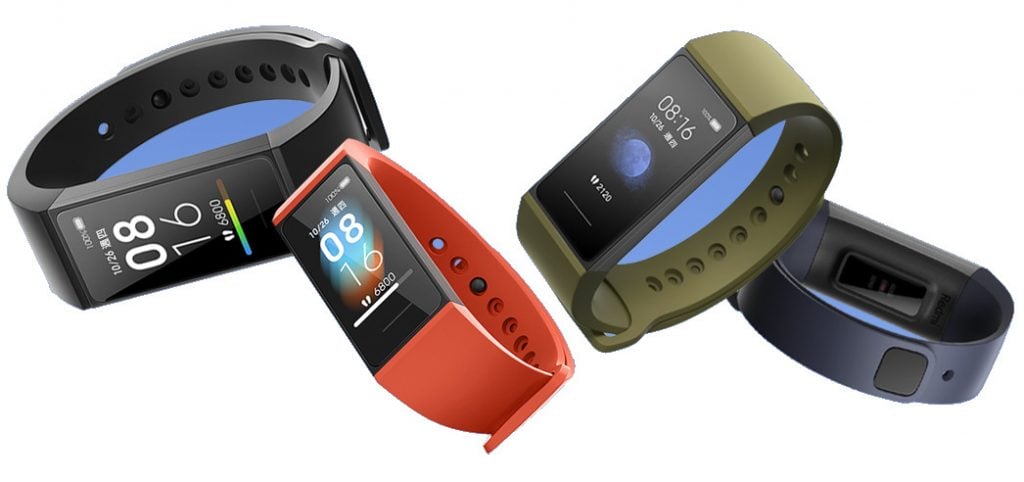
The Mi Band 5 was launched by Xiaomi on Wednesday for the International market bearing the moniker Mi Smart Band 5. Just a few days after, the Chinese tech giant has now launched the Mi Band 4C in Taiwan. This is coming after the smart band was listed in Indonesia earlier this month.
The Mi Band 4C is the global variant of the Redmi Band which was launched in China in April. It was listed by e-tailer Shopee in Malaysia earlier this month but this is the first official listing by Xiaomi. The Band 4C features a 1.08-inch square-shaped 16-bit colour touch screen display with up to 200 nits brightness and 2D tempered glass. It also packs a decent 130mAh battery that promises up to 14 days of battery life. There is a built-in charging port that plugs into a USB-A port on the charger, laptop or PC so that you don’t have to search for the charging cable. The smart band charges fully in 2 hours.
In addition, the Mi Band 4C comes with the usual heart rate sensor, activity tracker, sleep monitor, sedentary reminder, ap notifications, calls, music playback control and more. It also offers five sports modes: outdoor running, exercise, cycling, treadmill, fast walking. You also get a 5ATM (50 meters) water resistance, similar to the Mi Band 4.
As for the price, the Mi Band 4C is priced at NT$ 495 (~$16). It is available in black colour with four straps colour options of Black, Orange, Green and Blue. The smart band is available to buy on Mi.com in Taiwan and Hong Kong.
At WWDC (Worldwide Developer Conference) 2020, Apple announced that it is migrating from Intel (x86) processors to its own in-house silicon based on ARM. The company also revealed that first ARM Macs will debut by the end of the year. The same has been now confirmed again by a new report, which also talks about the earlier reported 10.8-inch budget iPad.
According to a report by DigiTimes (via MacRumors), Apple will be launching new ARM-powered 13-inch MacBook Pro and MacBook Air by the end of this year. The total shipments of MacBook lineup are expected to hit 16-17 million units in 2020 compared to 14.5-15.5 million units in 2019.
The company will be also debuting a new 10.8-inch budget iPad at around the same time. This tablet is expected to feature Apple A12 chipset, however, it is not sure if it will be the successor to iPad Air 2019 or iPad 7th Generation 2019. Also, it is not known whether it will have slimmer bezels like the Pro lineup or continue to use the same old design.
Taiwan’s Radiant Opto-Electronics is all set to ship BLUs (Backlit Units) for both the upcoming MacBook and iPads. Whereas, LG Display, BOE Technology and Sharp will supply panels for the new iPad.
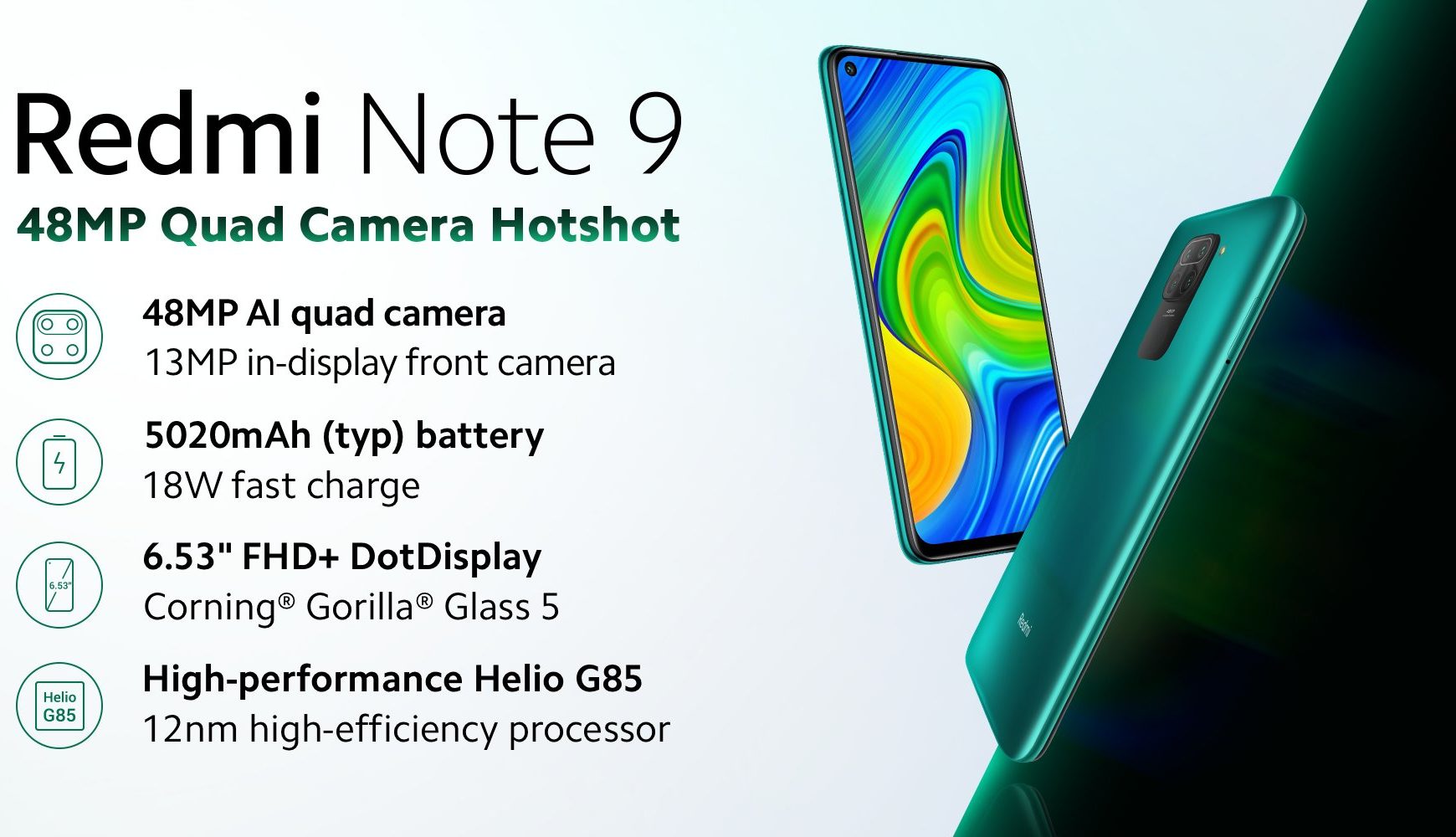
Xiaomi will be launching its latest premium mid-range Redmi Note 9 in India on July 20. The Note 9 will join a lineup already made up of the Redmi Note 9 Pro and Redmi Note 9 Pro Max in India. The two models were launched in India a few months back and during the launch, Xiaomi confirmed it will launch the Note 9.
A reliable source has now disclosed to Gizmochina that the model won’t be hitting India in a 3GB RAM variant which is supposed to be the base variant. The Redmi Note 9 was recently launched on the global turf with an affordable $190 price tag for the 3GB + 64GB variant. The source also hinted that Xiaomi will be intro a new 6GB RAM variant for the Redmi Note 9 in India. It also noteworthy that the global variant of the Redmi Note 9 didn’t feature a more than 4GB RAM.
The Redmi Note 9 features a 6.53-inch FHD+ DotDisplay with Gorilla Glass 5 and splash-proof nano-coating. The display houses a punch hole at the top left corner of the screen for the selfie camera. It is powered by a MediaTek Helio G85 chipset and packs a quad-camera setup consisting of a 48MP main sensor. At the front, the phone houses a 13MP sensor with support for Face Unlock. Keeping the lights on is a 5020mAh battery with support for 18W fast charging. The phone also comes with a 3.5mm audio jack, NFC, IR blaster, and a rear-mounted fingerprint scanner.
Today, July 17 is considered as World Emjoi Day. On the occasion of this, Google’s first-party keyboard app known as GBoard adds a new quick-access emoji bar. This feature is currently limited to the beta version of the Android app.
Gboard is one of the best keyboard apps for smartphones. It is available for both Android and iOS devices. Google regularly updates this app with new features and functionalities every now and then like its other apps.
Now, according to a report by Engadget, Gboard gets a new emoji row at the top above the keys. This row will include the most emojis by users. Since conversations are incomplete without emojis these days, the new feature is a welcome addition.
Normally, to access emojis on Gboard, users have to tap on emoji icon and then select the emoji they need to use. But with the new quick-access emoji bar (that’s what Google is calling it), users can insert emojis in their chats with a single tap.
Apart from most used and suggested emojis, the quick-access bar at the top also includes an option to access all the emojis. And for those who seldomly use emojis, they can disable this row in the app settings.
Having said that, as we mentioned in the beginning, this feature is currently only available on Gboard Beta for Android. To use it, either enrol yourself in the beta program from the app listing on Google Play Store or download the latest beta APK from APKMirror.
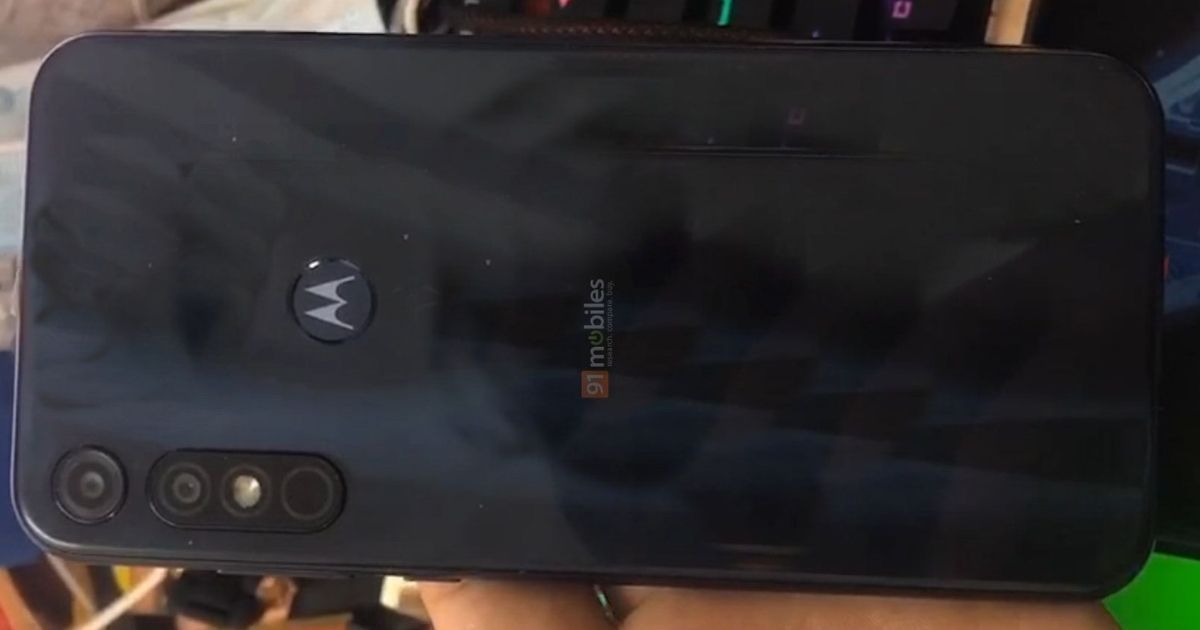
Motorola is still making good budget smartphones, however, it still lags behind Chinese competitors in markets like India. Hence, South America, especially Brazil has been its strong withhold for a few years now. That said, a couple of days back, live pictures of Moto E7 leaked revealing its design. Today, similar images of Moto E7 Plus emerge.
1 of 4
The live pictures of Moto E7 Plus were shared by 91Mobiles, the same publication which also published images of Moto E7. The pictures are of low quality for obvious reasons but we can make out the design.
The back of the handset looks like glass but we think it to be glossy plastic like the recently launched Motorola One Fusion Plus, which is also known as Moto G8 Plus in the Middle East. Further, the rear of the phone also features a dual-camera setup assisted with laser auto-focus as well as LED flash and a fingerprint sensor with the iconic “Motorola Batwing” embedded on it.
As for the front, the device sports a dew-drop notch display similar to any budget smartphones these days. At the bottom, there’s a USB Type-C port, single speaker grille, and the primary microphone. Although none of the images shows us the top of the phone, we expect it to feature a 3.5mm headphone jack and secondary microphone at that location.
Having said that, the specifications of Moto E7 Plus is a mystery. Since the regular Moto E7 is said to feature Qualcomm Snapdragon 632, we can expect the Plus version to be powered by the same chipset or something slightly powerful than this.
Samsung will be launching the Galaxy Note20 and Note20 Ultra smartphones alongside the Galaxy Z Fold 2 and Galaxy Z Flip 5G on July 22. Ahead of the launch, the Galaxy Note20 series is busy bagging necessary certifications. The Note20 duo have now bagged approval from the Federal Communications Commission (FCC) in the U.S. and Thailand’s National Broadcasting Telecommunications Commission (NBTC).
The screenshots shared by leakster Sudhanshu reveal that the NBTC authority has approved the Samsung SM-N980F phone as Galaxy Note20 and SM-N985F as Galaxy Note20 Ultra. These are 4G LTE editions of the Note20 series. The SM-N985F has also been approved by the FCC authority.
The SM-N981B / SM-N981B/DS model has been approved by the FCC is the 5G edition of the Galaxy Note20. The listing confirms connectivity features like Bluetooth 5.0 LE, Wi-Fi 6, GPS, NFC, and MST. The documents also reveal further details like 161 x 7.52m dimensions. The FCC also confirms other details such as an 18W power adapter (EP-TA800), data cable (EP-DG90BBE), S Pen (EJ-PN980). It was also found the Note20 supports wireless charging, 9W reverse wireless charging, and the stylus can be charged inside the device wirelessly.
Lastly, the TUV certification platform has approved the 4G edition (SM-N98F / SM-N985/DS) and 5G version (SM-N986 / SM-N986/DS) of the Galaxy Note20 Ultra. The listing shows that the Note20 Ultra supports 25W fast charging.
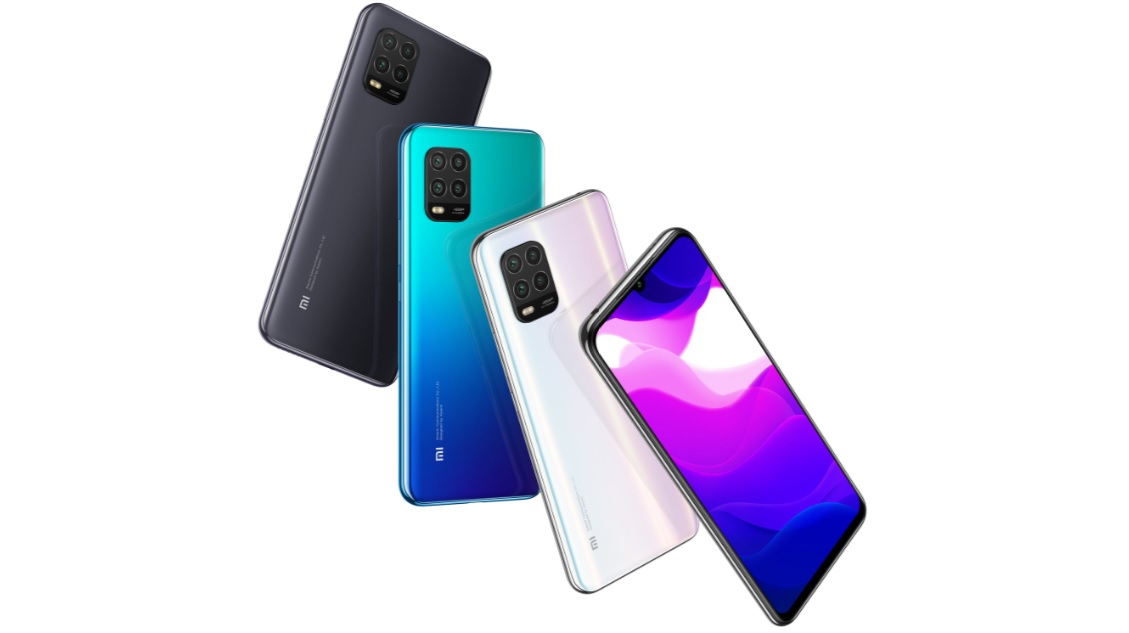
Xiaomi is planning on taking on South Korean tech giants like Samsung and LG in their home country. The 5G market is robust in South Korea with Samsung and LG dominating the region. However, the Chinese brands aim at disrupting this market with 5G handsets that cost half in comparison to its rivals’ offerings.
Xiaomi Mi 10 Lite 5G
The Chinese company expects the South Korean market to be a tough challenge and that products from China might face issues in being welcomed in the region. Thus, to tackle this situation, Xiaomi has recently launched its own 5G device offering at half the price of its competition. At the moment, the LG Velvet costs around 900,000 Won (roughly 747 US Dollars) while the Xiaomi Mi 10 Lite costs only 451,000 Won (roughly 374 US Dollars).
According to a Xiaomi executive, the pricing ” will be attractive to Korean consumers, who have high expectations for this product, but are also looking for a price-performance ratio.” The company is selling its smartphones through multiple online sellers and major e-retailers, including 11th Street, Naver Smart Store, Coupang, and even SK Telecom’s online channels. Unfortunately, it will not be available through offline physical stores.
LG Velvet
Interestingly, it seems that LG seems unphased by the massive price disparity between two similar smartphones. This might stem from the fact that Chinese smartphones have a lack of or poor after sales service infrastructure, which is a big reason why customers to avoid it. In other words, any Chinese vendor will face such challenges when entering the South Korean market.
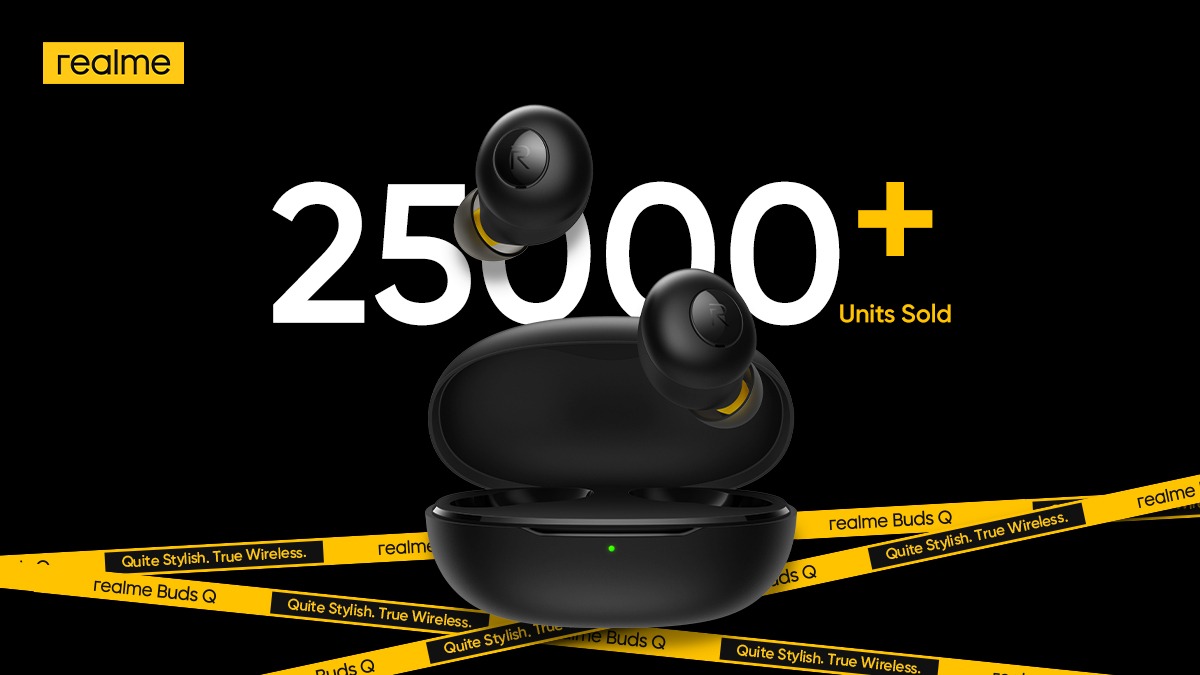
Realme has reached the third spot in India’s hearables market after a mere three months of entering the market. The company had recently launched a series of truly wireless earbuds in the country, which have been well received.
Realme Buds Q, which sold Over 25000 Units on the First Day in India
According to a report from Canalys, Realme holds the third position in the category with a 10 percent market share. This is quite a notable achievement considering the Chinese company is a new entry entrant into the market, especially during a time of a global pandemic. In the rankings, Boat holds the top spot with a market share of 20 percent, while Samsung trails close behind at 19 percent. Sony and Xiaomi round up the fourth and fifth positions in the market respectively at 6 percent each.
The market analysis from Canalys reported on smart personal audio devices in the Asia Pacific, which saw a huge growth of 61 percent year on year, reaching 16 million units in shipments in Q1 of 2020. This makes the region one of the largest and also one of the fastest growing hearables markets in the world. Meaning, Realme made a very strategic entry into India despite the ongoing crisis and capitalized on the opportunity.
The Chinese brand has always targetted the younger demographic and its primary customer base includes young individuals and professionals that value both design and performance. “This means we have to deliver on both fronts to meet our customer needs,” said Realme’s Global Marketing President, Xu Qi.
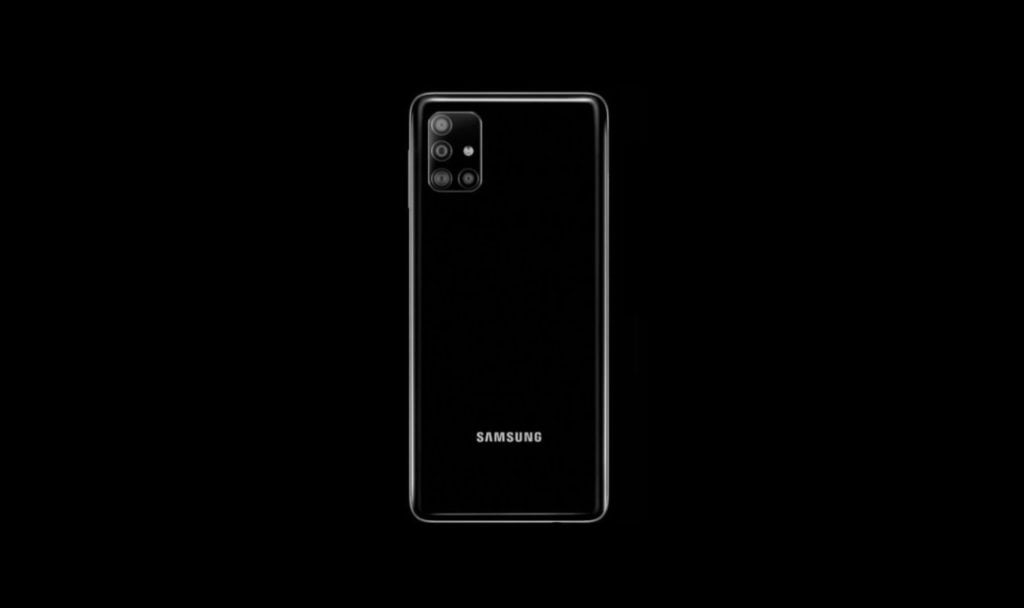
A recent report revealed Samsung to announce Galaxy M31s, the successor to Galaxy M31 from earlier this year by the end of this month. The handset is said to go on sale starting next month. Just a couple of days from that report, the phone’s renders have now leaked along with the sale date.
An exclusive leak by 91Mobilesgives us the first glimpse of Galaxy M31s in the form of two renders. Apart from renders, the leak also exposes the handset’s first sale date – August 5. The device will be available to purchase from Samsung online store as well as Amazon India.
Talking about renders, the first one shows the back of the device, which looks identical to its predecessor Galax M31. However, it isn’t as the camera layout is L-shaped compared to inverted L-shape on the former. Also, most importantly, there’s no sign of fingerprint sensor on the rear panel.
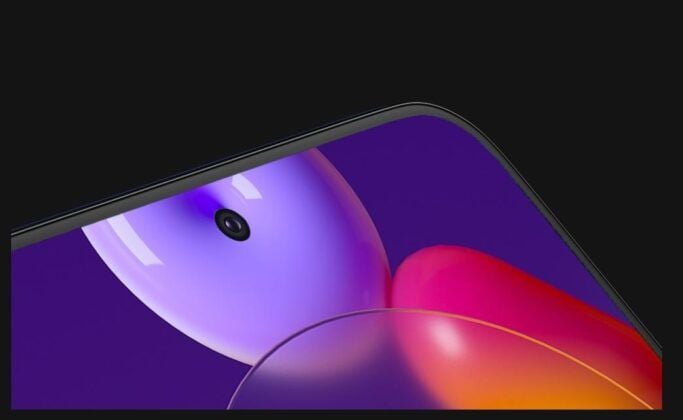
Since the device is tipped to arrive with Infinity-O AMOLED display, which the second render reveals, we can expect it to feature an in-display fingerprint sensor as well. That means the Galaxy M31s could be the first phone in the Galaxy M series to come with this feature.
Further, according to previous leaks, the handset will be powered by the same old Exynos 9611 chipset. Also, it is said to retain 6,000 mAh battery and 64MP (primary) + 8MP (ultra-wide) + 5MP (macro) + 5MP (depth) quad-camera setup. Last but not least, the phone is expected to start around ₹20,000 ($267).
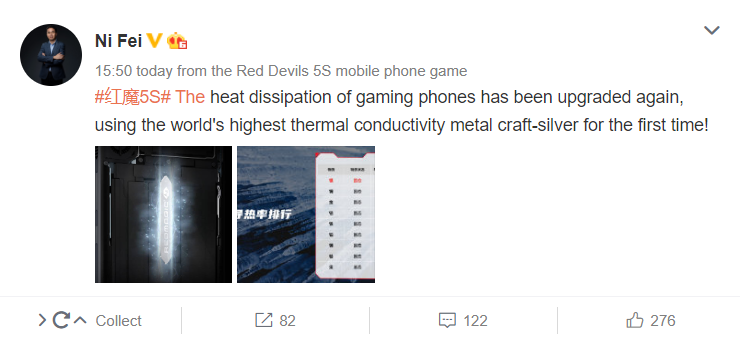
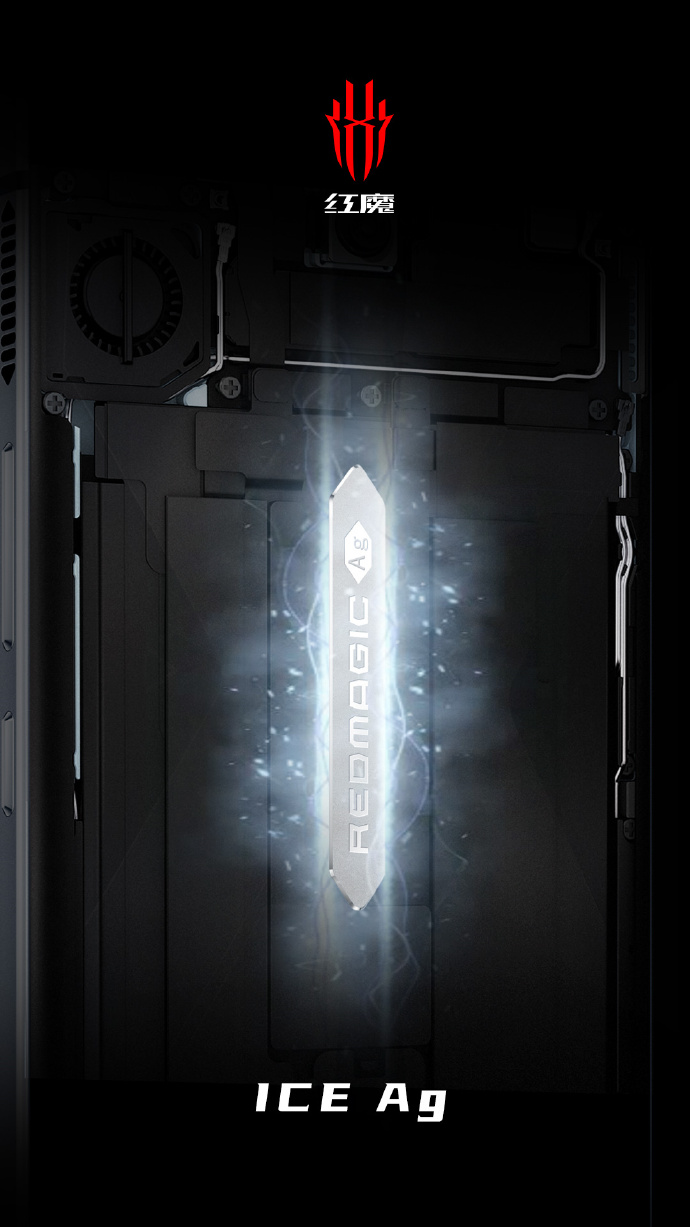
The President of Nubia, Ni Fei, revealed that the upcoming Red Magic 5S will feature a cooling system with silver in it earlier today (17th July 2020). Silver has the highest thermal conductivity in the world and we can expect to see great temperatures on the device.
The senior executive shared a post on Weibo, a Chinese microblogging website, which revealed the Red Magic 5S’ cooling solution. Alongside this, the President also shared two images, one depicting the upcoming smartphone’s cooling system while the other listed a ranking for material and their thermal conductivity. Silver topped the charts with a thermal conductivity of 420, which is higher than copper and even gold.
Unfortunately, this was just a slight promotional material that the company official shared and finer details regarding the smartphone are still unknown. However, previous reports have pointed at Qualcomm’s Snapdragon 865+ being equipped in the gaming phone that will launch soon. We will be providing more updates regarding the device, so stay tuned.
LG Display is one of the well-known OLED suppliers apart from Samsung Display. The company excels in large-sized OLED panels, however, it is expected to ship only 3.6 million units of those this year as a result of COVID-19 pandemic. The new forecast is about 1.3 million units lesser than the initial estimation of 4.9 million units.
Yesterday, at a conference (via The Elec), Choong Hoon Yi, the CEO of UBI Research broke out the news that LG Display will be shipping a lower number of large-sized OLED panels compared to the initial forecast.
Even the current number is only based on the assumption that the global TV market will recover. If the company could not operate its facility located in Guangzhou, China normally, the shipments may further decrease to 3.2 million units.
For comparison, last year, the company shipped 3.3 million large-sized OLED panels. Before the global pandemic, the South Korean analysts forecasted as high as 6 million units of shipments for 2020.
A total of 19 companies, excluding Samsung and TCL are expected to launch OLED TVs. However, the demand for OLED panels has remained small so far. LG accounted for 60% of the demand, followed by Sony at 20% and the remaining 17 companies.
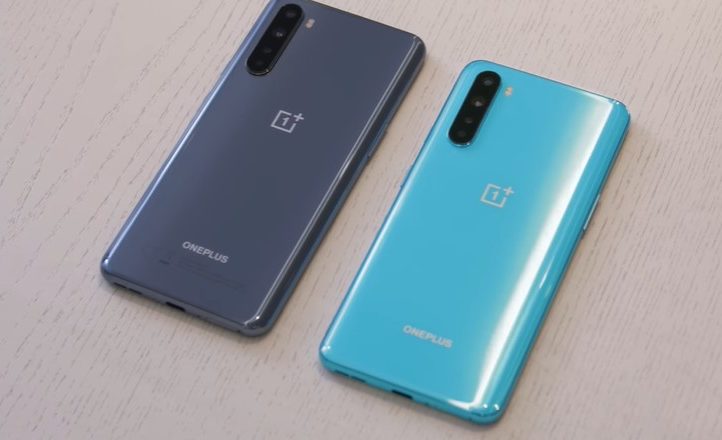
Earlier today (17th July 2020), the OnePlus forum had a new post published by a staff member, which revealed the specifications of the camera module of the highly anticipated OnePlus Nord.
According to the official forum post from the company’s Imaging Director, the OnePlus Nord will feature a quad camera setup on the rear. The official said that “After months of product planning, internal discussions, and testing, we decided that Nord should have six cameras – four on the rear, and two on the front.” Apparently, the company added the additional sensors as a response to the feedback it had received from its fan and participants in the Open Ears Forum.
The primary sensor is a 48 megapixel Sony IMX586 sensor along with, an 8 megapixel ultra wide angle lens, a 5 megapixel depth sensor, and a Macro lens. The main lens has a large f/1.75 aperture and will feature optical image stabilization (OIS). Furthermore, the company promised various fine tuning through software that will enhance the overall experience and results during photography.
OnePlus Nord in Gray and Cyan
Moving to the front, the primary selfie shooter in the dual front facing camera setup includes a 32 megapixel sensor alongside an additional ultra wide angle lens. The wide angle lens on the front has a 105 degree field of view and will help in those wider shots that include a large number of people. OnePlus also claims that the new selfie cameras will have algorithms that will “automatically leverage the power of AI and long exposure technology to brighten up selfies and reduce noise in low light.”
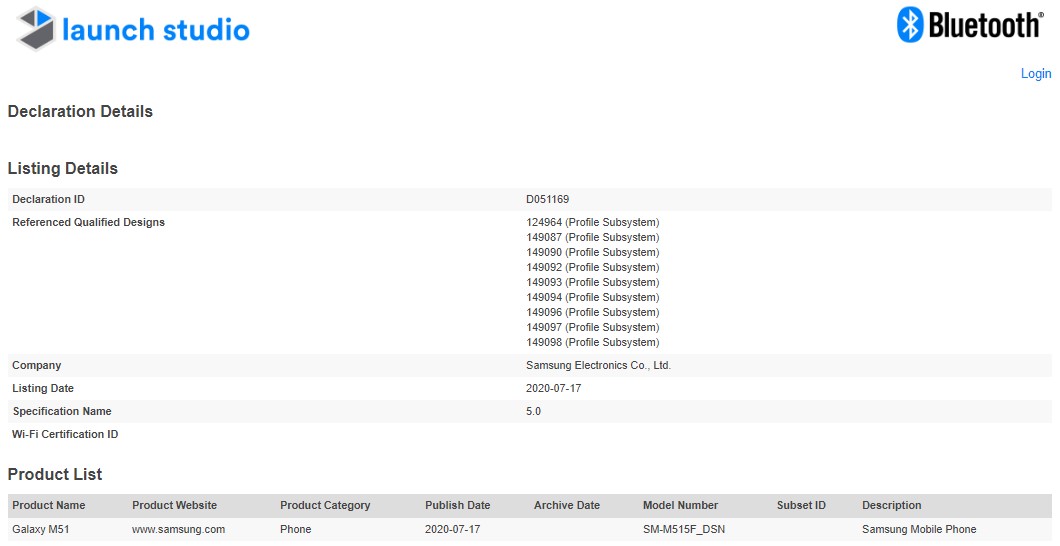
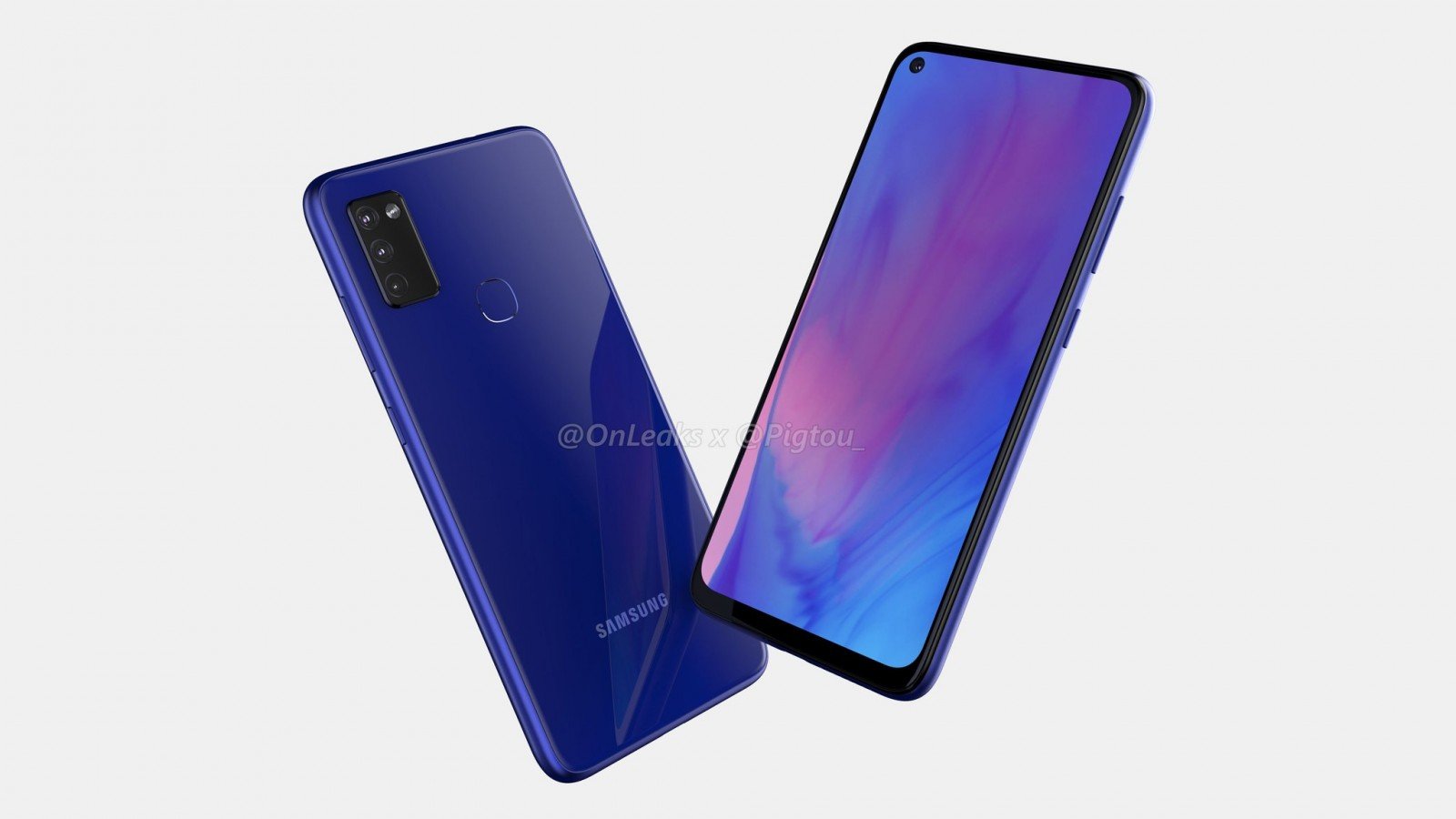
Recent reports have revealed that Samsung is planning to launch the Galaxy M31s phone in India this month. The Galaxy M51 is the other M-series smartphone heading to India. Earlier today, the smartphone appeared in the database of Bluetooth SIG authority. Hence, it appears that the Galaxy M51’s launch may not be far away.
The Bluetooth SIG certification has confirmed the Galaxy M51 moniker for the Samsung phone that has a model number SM-M515F_DSN. The certification only confirms that the handset supports Bluetooth 5.0 connectivity. Devices are known to go official around a month after receiving certification from the Bluetooth SIG. Hence, it is likely that the phone may go official in August or in September as the rumor mill had speculated.
The Galaxy M51 recently appeared on Geekbench with some key details. It revealed that the phone runs on Android 10 OS and it is fueled by Snapdragon 675 chipset and 8 GB of RAM. The rumor mill has claimed that the phone may not feature SD675, but it may arrive with Snapdragon 730 SoC.
Rumors surrounding the Galaxy M51 has revealed that it has a 64-megapixel main camera in its rear-mounted quad-camera system. The handset may come with an internal storage of 128 GB. The handset may sport an AMOLED display with punch-hole design. The display of the M51 could be integrated with a fingerprint reader.
There are mixed reports about the existence of the Galaxy M41 phone. A South Korean publication had claimed last month Samsung will be skipping Galaxy M41 to directly launch the Galaxy M51 since the M41 has been canceled. However, a 6,800mAh battery that belongs to the alleged Galaxy M41 phone was spotted earlier this month. Hence, it remains to be seen whether the Galaxy M41 will arrive eventually or the battery will be power the M51 phone.
Earlier this week, Apple just had a ruling in its favor that was regarding unpaid taxes worth 13.9 billion US Dollars in Ireland. However, it seems the company didn’t have time to celebrate as another possible investigation into its voice assistant may have it shell out a 26 billion US Dollars fine.
For those unaware, the European Union Competition Commissioner, Margrethe Vestager, was behind the tax evasion lawsuit in Ireland. And now, the official is looking into information from 400 companies to see if there is any possible misconduct with voice assistants such as Siri, Google Assistant, and Amazon’s Alexa. If any foul play is found, the companies behind these voice assistants may face an antitrust charge.
In the past, such inquiries have led to multi billion dollar fines being imposed against various industries related to energy, finances, and even pharmaceutics. In other words, the EU is trying to acquire information from 400 companies, to send a message to industry giants like Apple, Amazon, and Google. A message that is meant to keep them in check.
The companies that break the voice assistant rules regarding competition, a fine of 10 percent of its global revenue can be imposed. Meaning, Apple’s 260 billion US Dollar global revenue from last year could have it fined for 26 billion US Dollars. This move arrives due to the inherent amount of consumer data IoT products and recent smart products work with. Unfortunately, it is still too early in the investigation to say anything right now and we will keep you posted regarding any major updates in the matter.
Late last month, the Indian government banned a total of 59 Chinese apps citing security concerns. Three of these apps namely UC Browser, UC News, and VidMate are owned by UCWeb, a subsidiary of Alibaba. Now, after weeks, this company lays off its employees in India as it couldn’t provide services in the country. Similarly, Club Factory, another banned app has halted payments to its Indian sellers.
In retaliation to a clash between Indian and Chinese soldiers at the Himalayan border, the Indian government announced the ban of 59 Chinese apps on June 29. On the very next day, all of these apps were removed from Google Play Store and Apple App Store. Internet Service Providers (ISP) in the country even blocked access to these apps and their websites.
Some companies like TikTok and Xiaomi (Mi Community) came forward themselves issuing an official statement about halting their services.
Whereas, UCWeb sent out a letter (July 15) to its employees informing that they are being laid off according to a report by Reuters. The letter read, “This termination is on account of the ban imposed by the government of India on UCWeb and Vmate, hampering the company’s ability to continue providing services in India”.
UCWeb also issued a statement saying that it had stopped its services in India abiding the government order. However, it did not mention if it had shut operations entirely.
UC Browser had 130 million monthly active users in India. The company employed less than 100 direct individuals and hundreds of third-party workers.
On the other hand, Club Factory, an eCommerce company, informed its sellers in India that it is “invoking a force majeure clause – freeing it from contractual obligations”.
The company’s letter to its some 30,000 Indian sellers said, “We hereby wish to inform that all settlements with sellers on the CF app and website are hereby being put on hold until the ban of the CF app and website is lifted”.
Club Factory’s official statement says that it has temporarily halted its business activities in India and is working with the government to submit clarifications from its end.
With the US cracking down hard on Huawei and pressurizing the company on multiple fronts, it seems that the smartphone vendor has started to fight back and is targetting multiple brands like HP, Verizon, and even Cisco with patent infringement.
A few recent changes in the US Government’s FRAND agreements (fair, reasonable, and non-discriminatory) have enabled Huawei to sue the aforementioned companies. In other words, the amendments have made it easier for Huawei to target these companies. The Chinese tech giant’s response to the US sanctions against starts from patent infringement claims Verizon for its own technology and products that it had acquired from Cisco and Hewlett-Packard.
At the moment, Huawei is demanding royalty payments for hundreds of patents. Notably, sources claimed that this event might also be leveraged by the Chinese company to compel court discovery on Verizon’s and its suppliers’ confidential information. In simplers terms, Huawei would be able to gain in-depth access to its competitor’s products and technology.
The turn of events was unexpected, to say the least, as the US Government, in particular, did not consider that Huwaei would turn the US patent law against American companies. Additionally, this could also lead to further harm to local companies in the near future as well. So stay tuned as we will be providing more updates on the matter.
We use cookies on our website to give you the most relevant experience by remembering your preferences and repeat visits. By clicking “Accept”, you consent to the use of ALL the cookies.
This website uses cookies to improve your experience while you navigate through the website. Out of these, the cookies that are categorized as necessary are stored on your browser as they are essential for the working of basic functionalities of the website. We also use third-party cookies that help us analyze and understand how you use this website. These cookies will be stored in your browser only with your consent. You also have the option to opt-out of these cookies. But opting out of some of these cookies may affect your browsing experience.
Necessary cookies are absolutely essential for the website to function properly. This category only includes cookies that ensures basic functionalities and security features of the website. These cookies do not store any personal information.
Any cookies that may not be particularly necessary for the website to function and is used specifically to collect user personal data via analytics, ads, other embedded contents are termed as non-necessary cookies. It is mandatory to procure user consent prior to running these cookies on your website.