Huawei Technologies have apparently filed for a large number of trademark applications. These new trademarks are all related to its proprietary HarmonyOS (also known as HongMeng OS in China).
The list of trademark applications includes HarmonyOS, HarmonyOS Connected, HarmonyOS Linked, and more. This news arrives after rumors were surfacing of Huawei smartwatches that will soon be launched along with the company’s own operating system. For those unaware, HarmonyOS is a proprietary operating system that the Chinese tech giant has been working on ever since it lost Google support on Android.
While it had been rumored to launch on multiple occasions it has yet to make a commercial appearance. Furthermore, a new recent trademark application also revealed that a Huawei Mate Watch is also in the works and will launch alongside the flagship Mate 40 series. In response to the trademark application surfacing, Huawei reached out to one Chinese reporting agency to verify the news. The company stated that the application for HarmonyOS is just a part of the normal business process.
With the world moving towards the adoption of 5G networking, India had also planned 5G trials with various operators partnering with either Huawei or ZTE. However, the planned 5G trials are on uncertain grounds since strict new conditions from the Government might have the Chinese vendors pull out.
The 5G trials were to take place with a very limited spectrum and a few base stations that would fix any glitches. But, the recent friction of the geopolitical relations between India and China has brought about strict rules. Reportedly, the Intelligence Bureau (IB) is against remote access from a foreign land and data storage overseas. This would make operations in the region difficult for both Huawei and ZTE.
In other words, if the Government doesn’t ease its stance on the matter, the 5G trials might not follow through. For those unaware, foreign telecom firms have their hubs located overseas, through which they oversee the network and fix any issues in the system. According to experts, no vendor would want to relocate hubs to a remote location, especially for 5G trials since India has yet to auction the 5G spectrum at the moment.
Additionally, 5G enabled handsets aren’t available in India either, so bringing local data storage or relocating remote access servers doesn’t seem like a possible outcome. Notably, the Indian government has yet to give the final verdict on whether Huawei or ZTE would be allowed to participate in the 5G trials in the first place. So stay tuned as we will be providing more updates.
Back in June, George Zhao, the president of Honor brand revealed that they will be soon launching gaming laptops. A few days back, a report also confirmed the same, which also added that Huawei will be joining the bandwagon as well. Now, new teasers on Weibo confirm the silicon that will be used in these notebooks.
1 of 2
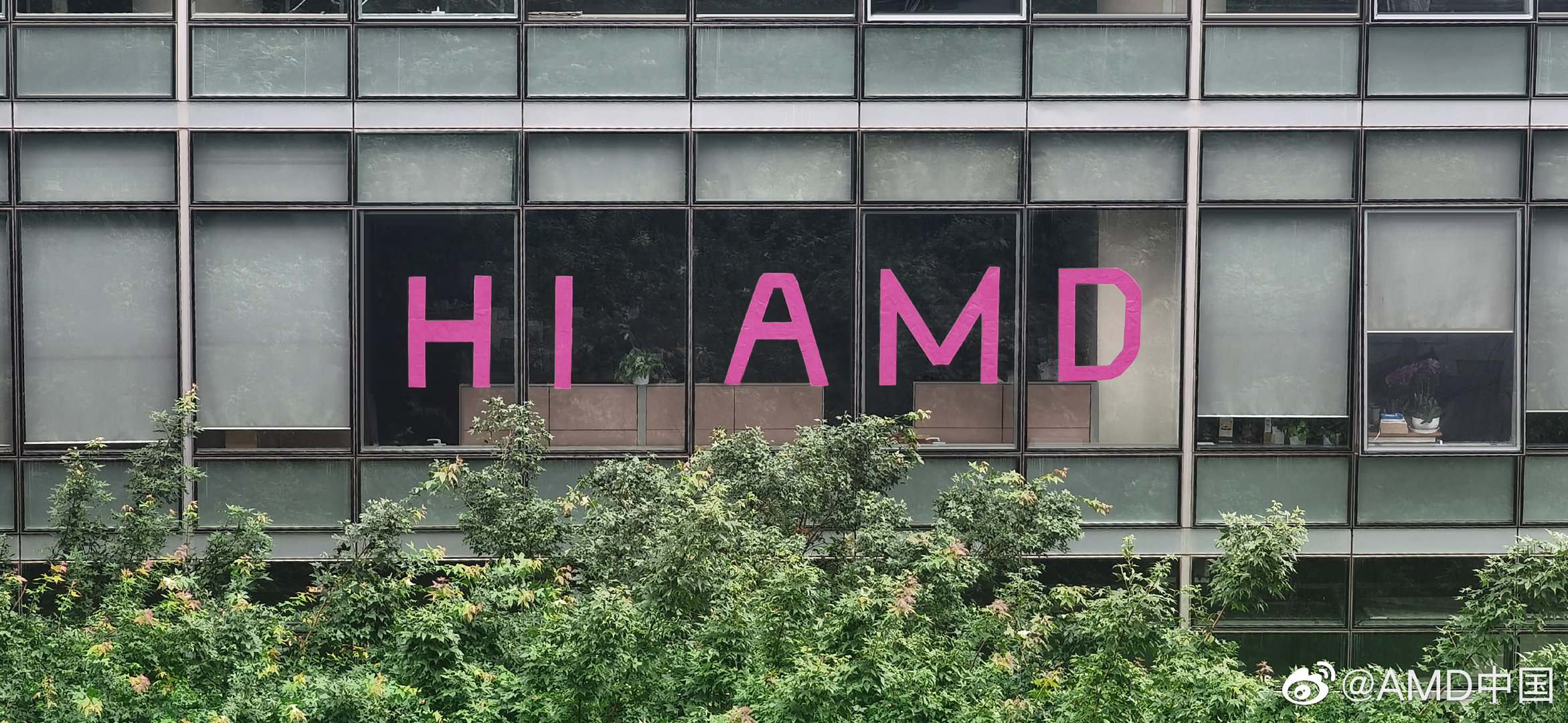
Earlier today, AMD China’s official Weibo account posted a picture of a building with “HI AMD”. Similarly, an hour later, Honor’s Weibo account shared an image of another building with “HI Honor” marking.
We believe these two buildings are nothing but offices of Honor and AMD greeting each other. Above all, it teases a collaboration between the two companies.
This could mean only one thing and that is none other than Honor using AMD chips in its upcoming gaming laptops. As per recently, these gaming laptops will launch as early as this month.
Since the teasers have begun, we can expect Honor to soon drop features of its forthcoming notebooks in the coming days. If they do, the brand’s first gaming laptops will be indeed launching by the end of July or maybe in August.
Honor will not be the first smartphone maker to launch gaming laptops as Xiaomi has already introduced its own lineup last year.
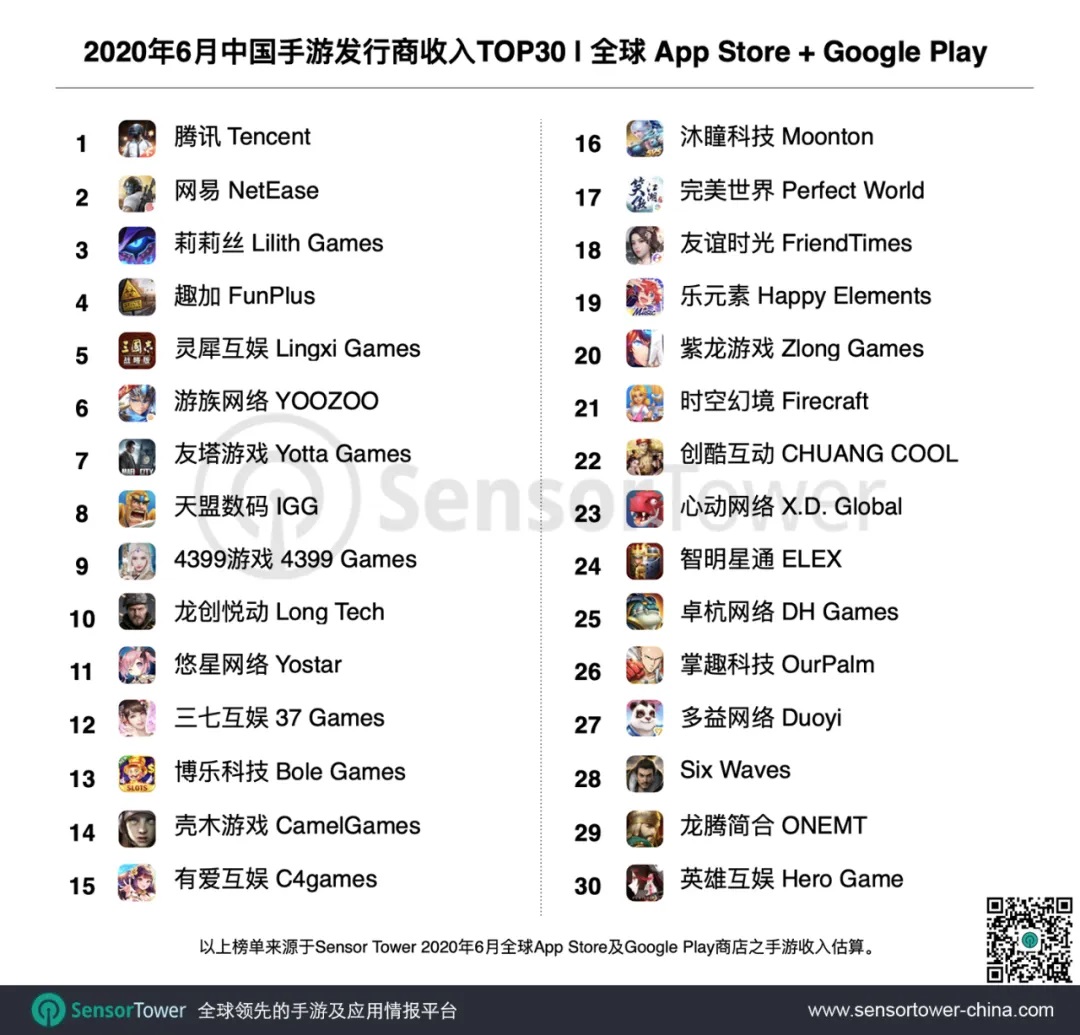
Earlier today (8th July 2020), SensorTower China announced the ranking for the top Chinese mobile game publishers for both AppStore and Google Play by revenue. In the report, it was revealed that the top 30 video game publishers in China roped in more than 1.65 Billion US Dollars in revenue in June alone.
According to SensorTower listing, the top 30 Chinese game publishers accounted for 26 percent of the global mobile gaming revenue for June 2020. Popular brands like Tencent and NetEase topped the charts while other familiar names include Lilith Games, FunPlus, Lingxi Games, and more. Despite bringing in such large figures in revenue, the analyst noted that the mobile gaming market revenue was declining overall in China, Europe, and even the US. Only the Japanese market saw a rise in revenue.
However, it is expected that the following months could possibly bring in record breaking figures. Furthermore, the latest mobile game title from Tencent, “The Outcast Mobile,” is also seeing a great success at the moment. The new IP, which is based on a popular comic series, is already bringing in a sizeable amount of revenue that is second to only industry giants like PUBG Mobile and King of Glory. But these are two well established games, and we can expect to see more from the new release.
For those unaware, the mobile gaming market has overtaken the PC gaming and console gaming market combined in terms of sheer revenue that is being brought in. With the Chinese market being one of the largest for mobile gaming, it comes as no surprise that developers from that region are roping in such impressive figures. Notably, this success is also the reason why various AAA game publishers from consoles and PCs are also now taking the mobile gaming market more seriously and have been launching their own mobile ports of their respective popular titles.
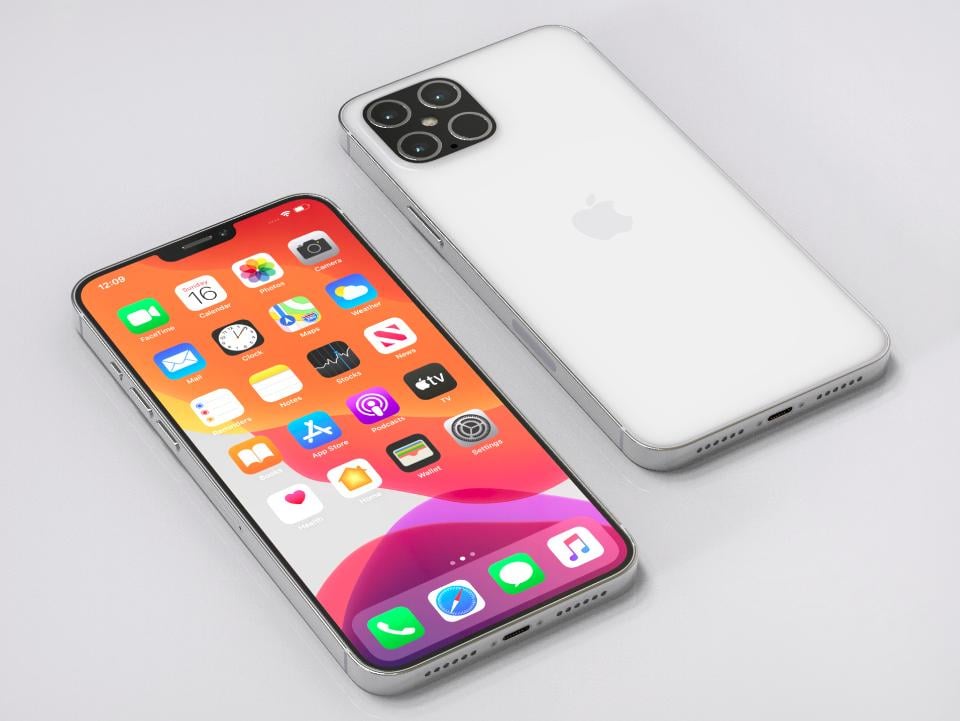
Earlier, there were reports claiming that Apple could be using OLED displays for the upcoming iPhone 12 series. Now, a new report has surfaced online which reaffirms that the 5G iPhone series getting launched this year will indeed have OLED screens.
Although Apple has used the OLED display on its iPhone X which was launched back in 2017. However, this will be the first time that Apple will be using the OLED screen for all the models in the new iPhone lineup.
Apple iPhone 12 Render
All the major smartphone makers, including Samsung, Huawei, OPPO, and Vivo are already using OLED display on their premium smartphones. Even for Apple, the iPhone 11 Pro and 11 Pro Max feature OLED screen.
The report further adds that Apple iPhone will continue to have a notch on top of the display for housing the Face ID sensors. This is because Apple was not able to integrate the module into the display itself.
The company is expected to launch four variants this time, which include iPhone 12, iPhone 12 Max, iPhone 12 Pro, and iPhone 12 Pro Max. The standard iPhone 12 will have a 5.4-inch display while the Max and Pro models will have a 6.1-inch screen. The top-end model in the form of the iPhone 12 Pro Max will reportedly have a 6.7-inch display.
BOE, the China-based display maker, which already is a display supplier for MacBook and iPad, could be supplying OLED screens for the upcoming iPhones as Apple tries to reduce dependence on Samsung. Some report claims that the Chinese firm has not yet met Apple’s standard but could enter the supply chain later.
Apple shifting from LCD panels of OLED could be a major blow to Japan Display, the company’s long-terms display supplier as almost 60 percent of its revenue was generated through LCD panel sales to Apple. The company has been making losses for a few years and is much behind others in manufacturing OLED panels but that has not stopped Apple from investing $200 million in the company.
However, Samsung is expected to dominate the OLED display market with around 74 percent market share while BOE should get around 9 percent market share in 2020. Almost half of all smartphones getting launched by 2022 are expected to have OLED screens.
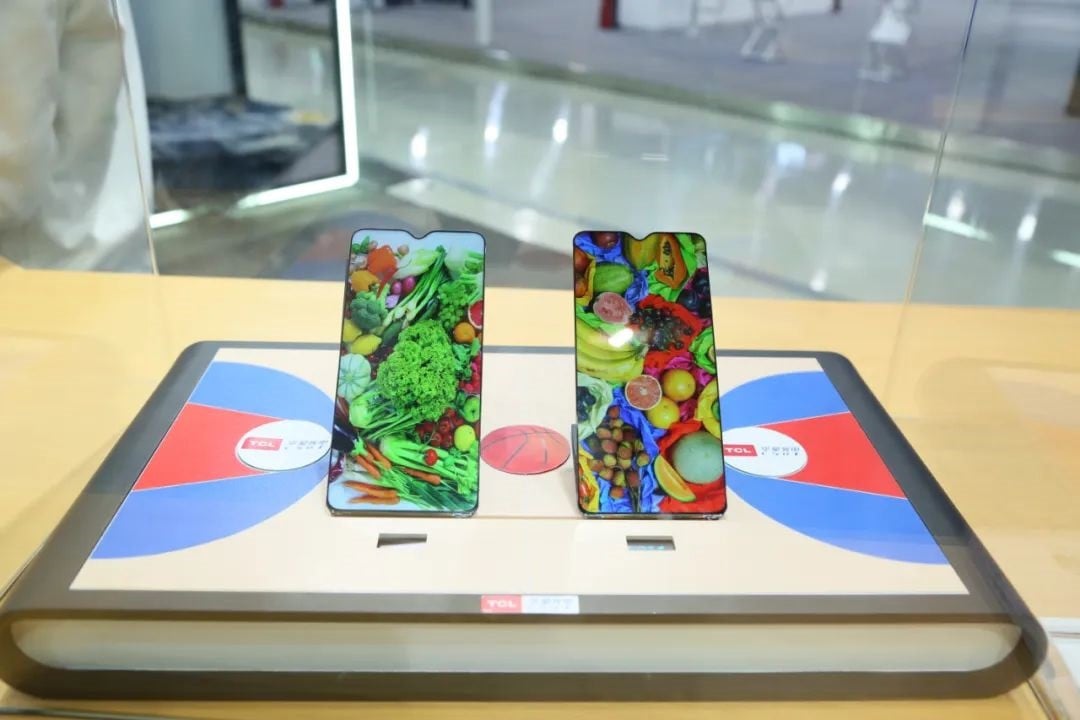
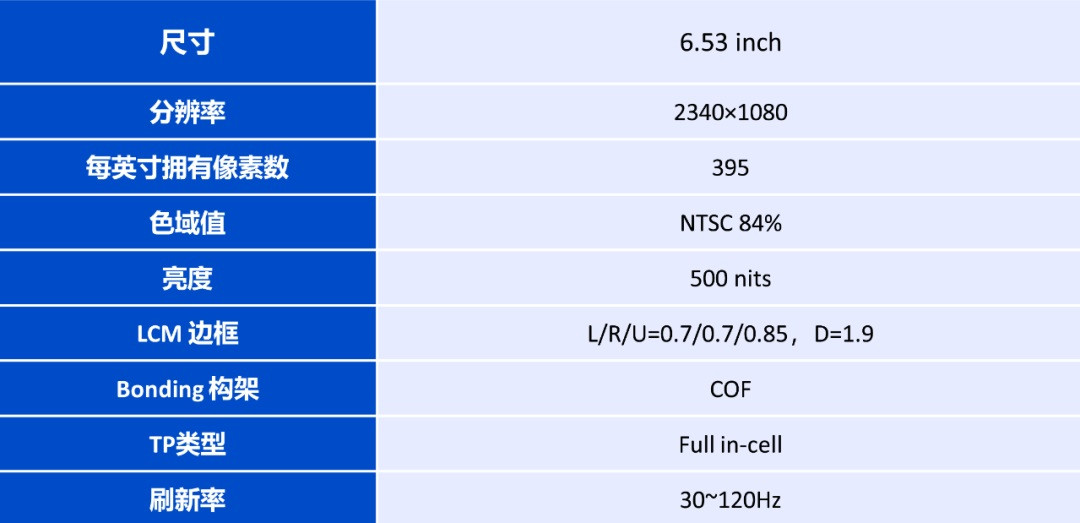
TCL subsidiary CSOT (China Star Optoelectronics Technology, AKA Huaxing Optoelectronics) has just developed a new display technology that will be capable of dynamic frame rate switching. The new display technology can switch between the traditional 60Hz refresh rate to 30Hz or even 120Hz.
The new display panels have already entered into mass production and the product will be launched soon. Similarly, the 144Hz technology has also entered mass production and will also be available by the second half of this year. According to China Star Optoelectronics Technology, the display uses a 30Hz refresh rate when in reading more or viewing static images, which can save up to 18 percent of battery.
This ensures that the device will have a more durable standby time, while the 120Hz refresh rate mode will be used for gaming, watching videos or movies, and more. The higher refresh rate will also have a 240Hz touch sampling rate that should solve the issues regarding motion blur or high speed trailing. The display has a resolution of 2340 x 1090px and a maximum brightness of 500 nits.
ASUS will be launching the ROG Phone 3 gaming smartphone in multiple markets on July 22. Various reports have revealed that it could be the first phone fueled by the Snapdragon 865 Plus mobile platform, an improved version of the SD865 that powered most of the Android flagships this year. Earlier today, an AnTuTu listing of the upcoming Lenovo Legion gaming smartphone had surfaced to confirm that it is equipped with Snapdragon 865+. However, the Chinese firm is still mum on its launch date. A few hours ago, ASUS seemingly shared a teaser of the ROG Phone 3 that almost revealed the presence of Snapdragon 865+. While the tweet has been taken down, the Tech Elucidations Facebook page seems to have shared the same teaser.
The 10-second clip states that the ASUS ROG Phone 3 will be the most powerful gaming phone. A closer look at the chip’s image reveals ‘865+’ mentioned on it.
The Snapdragon 865+ is expected to higher CPU and GPU clocking speeds than the SD865 chip. It is known through Legion gaming phone’s AnTuTu listing that it has one 3.09GHz Kryo 585 Prime CPU, three 2.42GHz Kryo 585 Gold, and four 1.8GHz Kryo 585 Silver CPU. The SoC also includes Adreno 650 graphics. There is a possibility that the ROG Phone 3 launch event may feature a soft unveiling of the SD865+ SoC.
Recent reports have revealed that the ROG Phone 3 has a Full HD+ 6.59-inch AMOLED display with support for 19.5:9 aspect ratio. The screen may support up to 144Hz refresh rate and it could be embedded with a fingerprint reader. It may arrive with up to 16 GB of RAM and up to 512 GB of native storage. The Android 10 OS along with ROG UI will run on the device. It has a front camera of 13-megapixel and a 64-megapixel triple camera system on its back. It could be coming with 30W rapid charging support for its 6,000mAh battery.
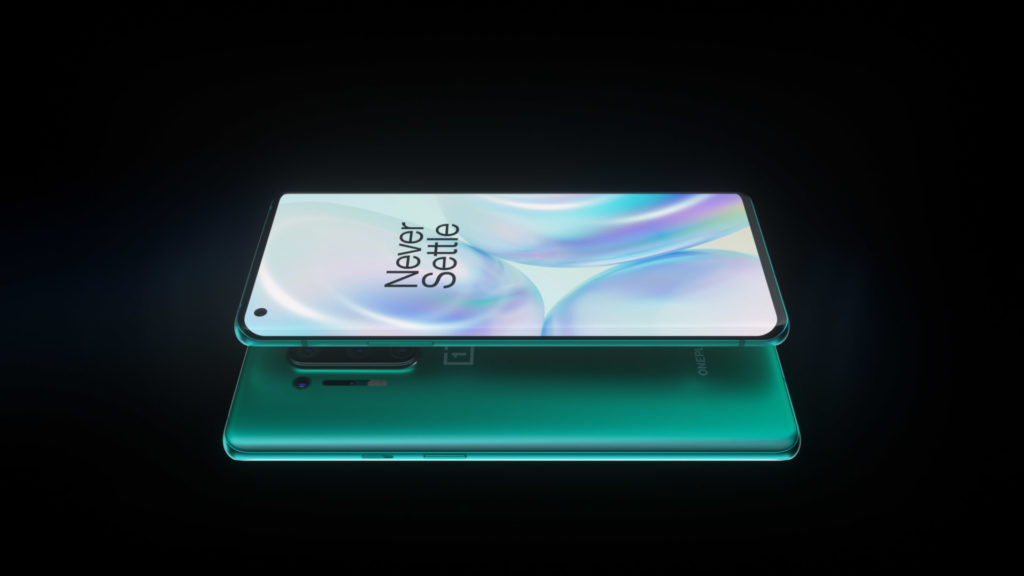
OnePlus is currently rolling out OxygenOS 10.5.8/10.5.9/10.5.10 to OnePlus 8/8 Pro users worldwide. Despite being different build versions for various regions, they come with a common changelog. This new system update is all about fixes and optimizations for a number of things including the infamous “photochrom filter”.
Though the “photochrom filter” was added back in June as promised, now, with the latest update, it no longer uses the color filter sensor. Because the company has now implemented this filter on the ultra-wide camera. Hence, users cannot see through thin plastics and clothes anymore.
But now, a big question arises as noted by XDA Developers. If this feature is possible without the color filter sensor, then why include it in the first place?
That said, here’s the official changelog for OnePlus 8/8 Pro OxygenOS 10.5.8/10.5.9/10.5.10
System
Optimized the touch and interaction experience
Optimized the power consumption performance of the system, battery life extended to be longer than ever
Optimized the high temperature warning to improve user experience
Fixed the failure to full-charge when battery was charged to 90% and above in a few circumstances
Fixed the issue with Netflix and Amazon Prime Video unable to play HD video on some machines
Fixed known issues and improved system stability
Updated Android Security Patch to 2020.06
Camera
Adjusted Photochrom filter (OnePlus 8 Pro only)
Improved the shooting experience with camera and improved stability
Cloud service
Added the file disk section in file manager: now conveniently upload and store all your files on OnePlus Cloud seamlessly (India only)
Network
Band 46 CA combo enabled for India Network (India only)
Improved the stability of communication
Improved the performance and stability of Wi-Fi transfers
Optimized network latency for online games and improved the smoothness
Arm has just announced that it is planning to spin off two of its IoT businesses. Earlier today, the known chip designer said that it would be transferring these divisions to SoftBank Group, who had also acquired Arm back in 2016.
With the announcement, Arm also mentioned that it would be focusing on its core business, which is its semiconductor IP business. The firm is a known chip designer and its architecture has been used by various different companies. Furthermore, the transfer of these two businesses is currently pending additional review from the company’s board, although, this process is expected to be completed before the end of September.
The move from Arm will have it see its way out of the IoT Platform and Treasure Data businesses, but, the company said that it would continue to cooperate with the ISG (IoT Services Group) businesses. In other words, Arm will retain its business on the compute IP aspect of the IoT, while the data software and services aspects will be handled by the two divisions individually.
According to ARM CEO, Simon Segars, “Arm believes there are great opportunities in the symbiotic growth of data and compute. SoftBank’s experience in managing fast-growing, early-stage businesses would enable ISG to maximize its value in capturing the data opportunity. Arm would be in a stronger position to innovate in our core IP roadmap and provide our partners with greater support to capture the expanding opportunities for compute solutions across a range of markets.”
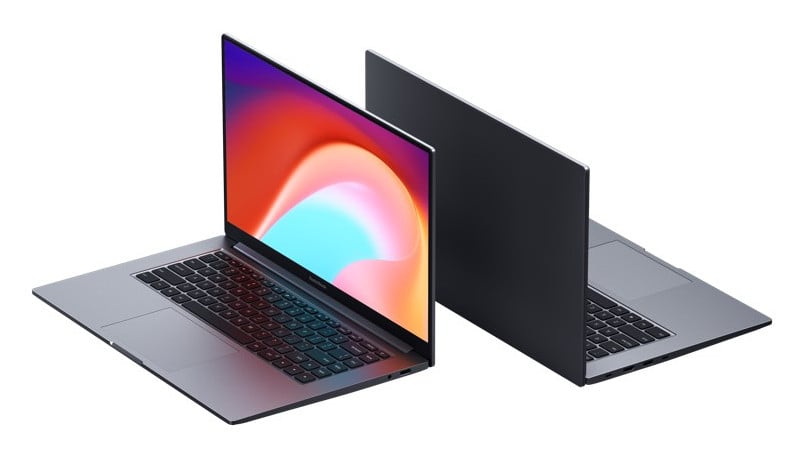
A couple of days ago, Redmi had revealed that it will be launching RedmiBook 16 powered by the latest Intel Core i7 processor and keeping its promise, the company has today officially launched the new device in its home market China.
The company already has a RedmiBook 16 laptop which was launched a few months ago, powered by the AMD Ryzen 4000-series processor. But this new version comes powered by the latest 10th generation Intel Core i5 and Core i7 processors.
The new RedmiBook 16 comes with a 16.1-inch FHD display and offers around 90 percent screen-to-body ratio. As said, it packs either Intel Core i5-1035G1 or Core i7-1065G7 chipsets, along with Intel Iris Plus graphics and 2GB DDR5 NVIDIA GeForce MX350.
The laptop comes with up to 16GB of DDR4 3200MHz RAM and 512GB SSD. Connectivity options on the device include Wi-Fi 802.11ax 2×2 MIMO (2.4GHz and 5GHz), Bluetooth 5.1, 1 x USB 3.1 Gen1 port, 1x USB 2.0, 2 x USB-C, and 1 x HDMI 1.4.
It also has two 2W speakers and supports DTS audio. The laptop also has a 6mm heat pipe for maximum heat transfer and a 30% large fan for cooling. It has a full-sized keyboard with 1.5mm key travel and 0.3mm custom keycap.
The device is powered by a 46Wh battery and comes with support for 65W USB-C fast charging technology which is claimed to charge the laptop by 50 percent in just 30 minutes. It can offer up to 12 hours of local video playback, up to 9 hours of online video playback, and up to 8.5 hours of web browsing.
The RedmiBook 16 powered by the Intel Core i5 chipset is priced at 4,999 yuan while the Intel Core i7-powered model is priced at 5,699 yuan. Both the models will be available for purchase in China in Gray color from 15th July.
Global smartphone sales have declined in the second quarter of this year and Samsung seems to be hit the most and thus, Huawei is expected to overtake Samsung as the leading smartphone brand in Q2 2020.
As per the report, shipments of Samsung devices are expected to have seen a decline of 30 percent. On the other hand, shipments of Huawei smartphones are said to have just slightly declined. Thus, it seems that the Chinese giant will be overtaking Samsung as the world’s largest smartphone maker in Q2 2020.
Huawei has already led the market in terms of smartphone shipments for the month of April and May and now it will be taking over for the entire quarter. This is impressive given that the company has been banned by the United States and is facing issues in other countries as well.
In the month of May, which saw 81.97 million shipments, Huawei had a market share of 19.7 percent while Samsung was just behind it with a market share of 19.6 percent. In comparison, back in April, the Chinese brand had a market share of 21.4 percent while Samsung had a 19.1 percent market share.
Although Huawei has managed to overtake Samsung to be the leading smartphone brand, it remains to be seen if the Chinese company can hold onto its position given the pressure it is facing from the western countries. Also, the appeal for Huawei and Honor smartphones could decline because of the lack of support for Google apps and services.
Huawei has been trying to reduce its reliance on third-party and is trying to manufacture devices through local resources. Instead of Google apps and services, it is offering its own Huawei Mobile Services with AppGallery. Recently, the U.S. added another sanction on Huawei, barring it from using American-technology for chipset making, and thus, TSMC has stopped taking new orders from the Chinese giant.
Update: A new leak reveals that the handset will be arriving in China as Maimang 9 and it will be also known as Huawei Enjoy 20. The new leak has a live shot of the phone’s notch-less display. it is likely to launch on July 26 in the homeland.
Original story continues…
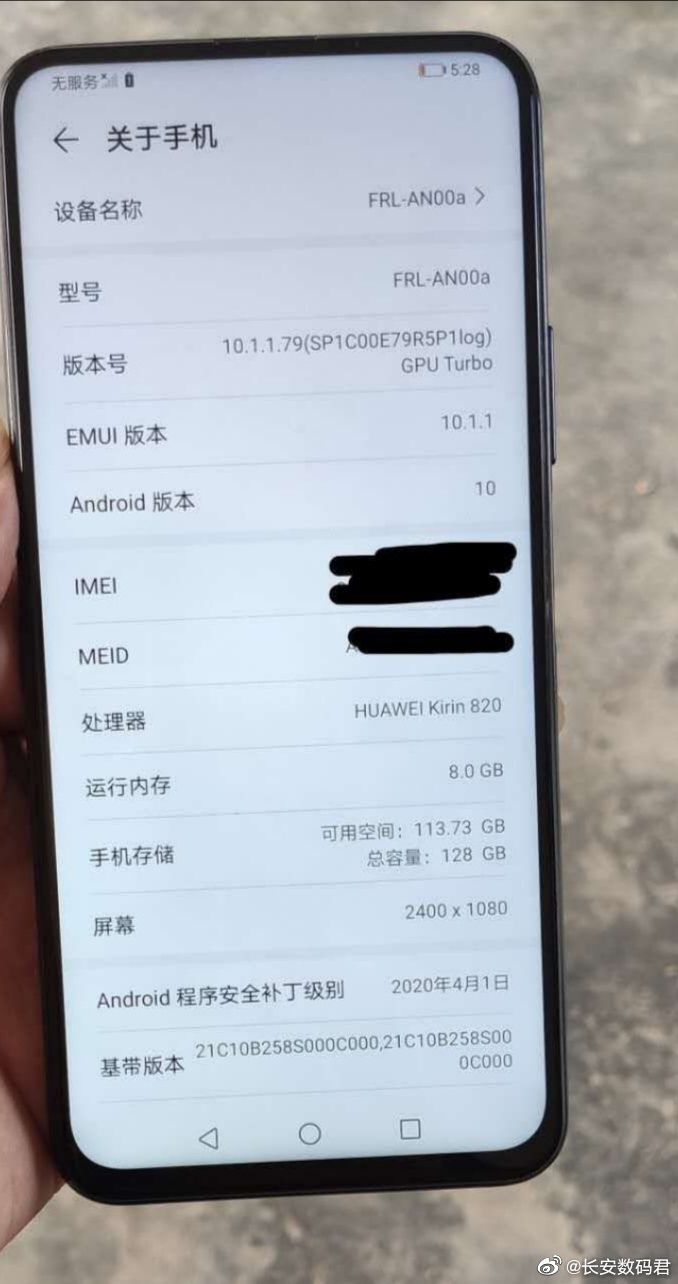
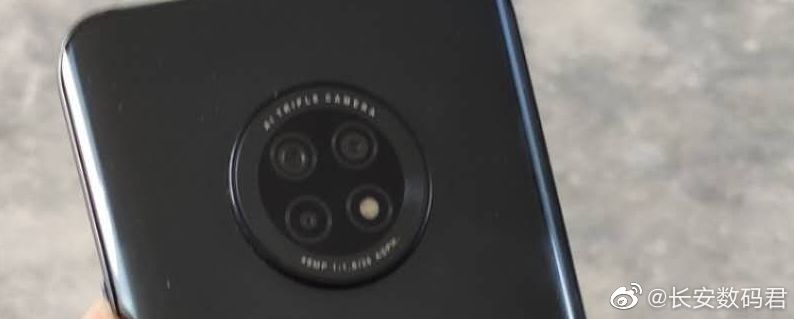
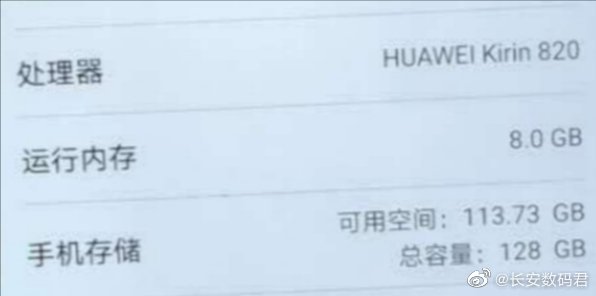
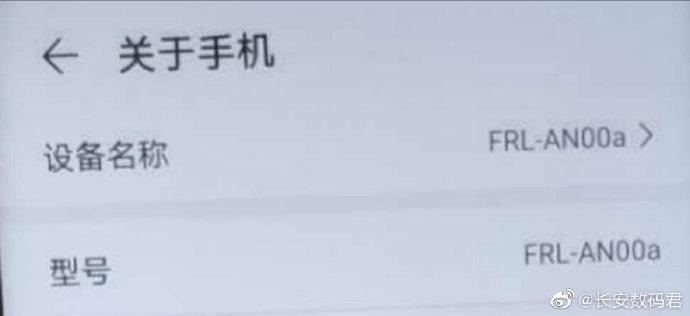
Earlier this week, a leak revealed that a forthcoming Huawei or Honor phone will arrive with a rectangle-shaped camera housing with a 48-megapixel quad-camera setup inside it. While the identity of the phone remains a mystery, a new leak has revealed key details of a Huawei smartphone that has a model number of FRL-AN00a. Unfortunately, the final product name of the device is not known yet.
Two tipsters from China with a decent track record on revealing information on upcoming smartphones have shared key details of the Huawei FRL-AN00a smartphone. The FRL-AN00 and FRL-TN00 are the network variants of the phone for the Chinese markets.
The Huawei FRL-AN00a smartphone features a notch-less display of 6.6 inches. Its an LCD panel that offers Full HD+ resolution. The device is equipped with a pop-up selfie camera and a side-facing fingerprint reader.
The Kirin 820 5G chipset is present under the hood of the mysterious Huawei phone. The SoC is coupled with 8 GB of RAM. It receives power to perform from a 4,300mAh battery. The device is expected to come with 22.5W fast charging support.
The handset is equipped with an internal storage of 128 GB. It is most likely to run on Android 10 OS and the latest EMUI edition. The rear shell of the phone has a round-shaped camera setup that includes a 48-megapixel triple camera system. Hopefully, the identity of the device will be revealed in forthcoming reports.
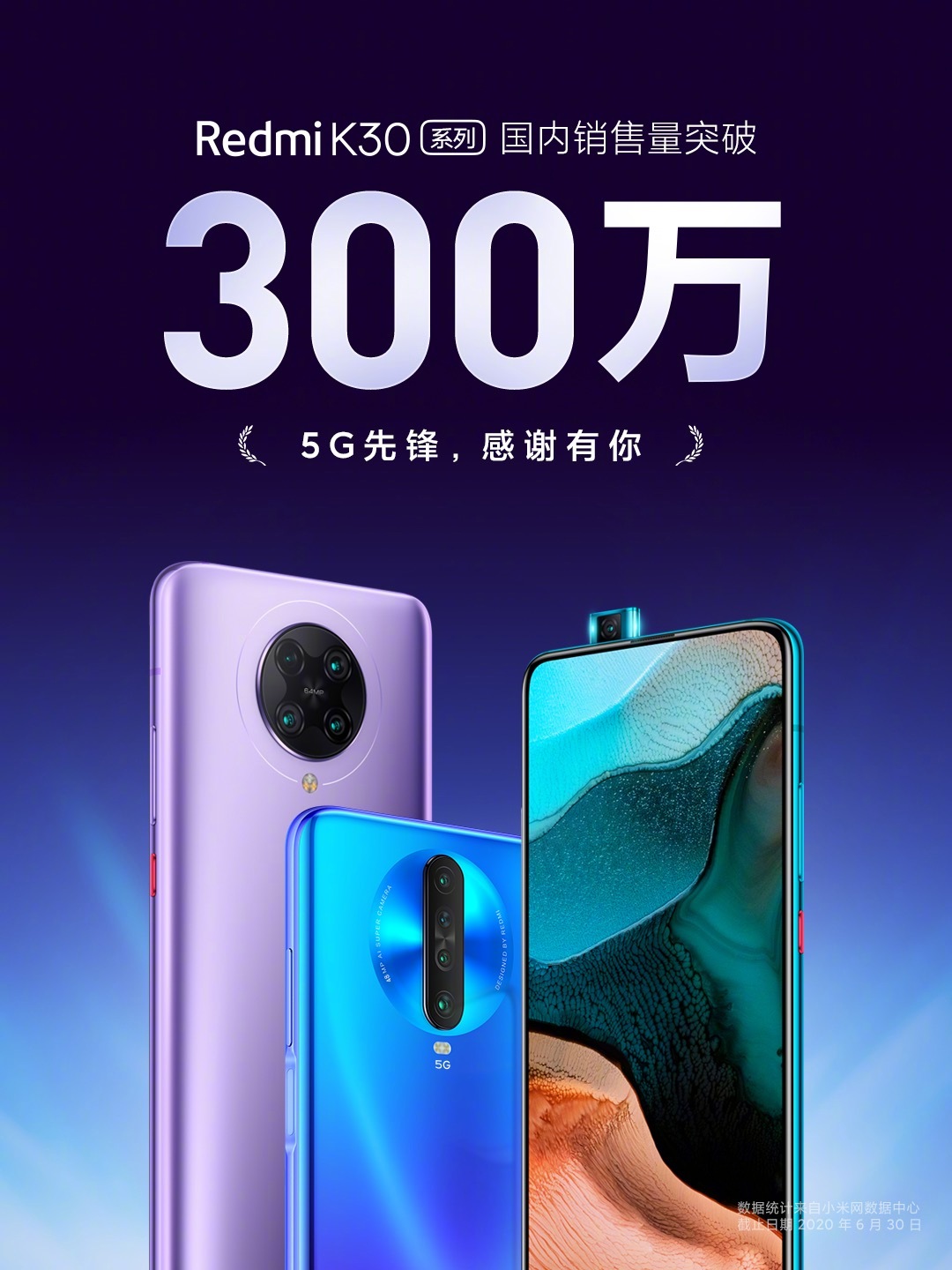
Redmi took to Weibo today to confirm that the sales of the Redmi K30 series have surpassed 3 million units in China. It took around seven months for the company to achieve this milestone.
Redmi unveiled the Redmi K30 4G and Redmi K30 5G in December 2019. The Redmi K30 4G went on sale in December while the company’s first 5G-ready phone. i.e. the Redmi K30 5G debuted in January with an irresistible price tag of 1,999 Yuan (~$285). It is the world’s first smartphone to feature the Snapdragon 765G mobile platform and the Sony IMX686 64-megapixel camera.
In March, Redmi revealed that it sold 1 million units of the Redmi K30 models and then announced the Redmi K30 Pro 5G and Redmi K30 Pro 5G Zoom Edition by the end of the same month. Both models are the first Snapdragon 865 powered flagship phones from the brand. They are currently priced between 2,699 Yuan (~$385) and 4,299 Yuan (~$612).
The Redmi K30 5G Racing Edition smartphone was introduced in May. It debuted as the first Snapdragon 768G powered handset. By the end of the same month came the Redmi K30i 5G as the cheapest 5G phone with a current starting price of 1,499 Yuan (~$213).
Redmi K30i 5G
Rumors are rife that the Redmi K40 series will go official by the end of this year. The Redmi K40 5G may debut with Snapdragon 775G whereas the Snapdragon 875 powered Redmi K40 Pro 5G may launch by the first quarter of next year. As far as the K30 series, the Chinese firm is not done with it yet. Recent reports revealed that it is planning to launch the Dimensity 1000+ SoC powered Redmi K30 Ultra phone soon.
It is speculated that the Redmi K30 Ultra 5G features a 120Hz refresh rate display. It could be sporting a notch-less AMOLED display with an in-screen fingerprint sensor. It could be braced with a Sony IMX686 64-megapixel camera on its rear. The other rumored features of the device include a pop-up selfie snapper, and a 4,500mAh battery with 33W fast charging technology.
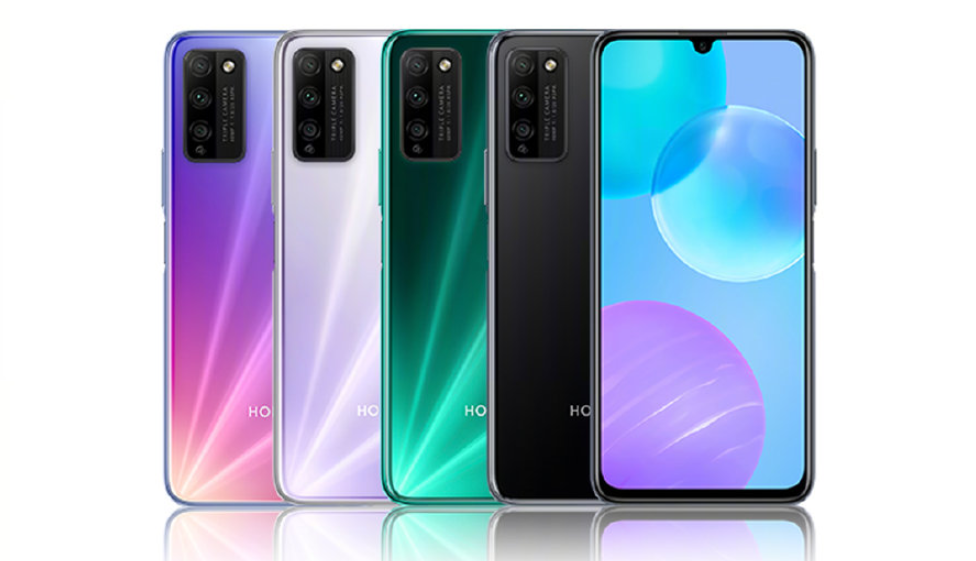
On July 2, Honor unveiled the Honor 30 Lite (Youth Edition) 5G smartphone in China. As scheduled, the first sale of the handset was carried in the homeland today. With a pricing of 1,699 Yuan (~$242), it is the cheapest 5G-ready Honor branded phone available in the market.
Honor 30 Lite (Youth Edition) 5G pricing
The Honor 30 Lite (Youth Edition) 5G comes in three variants in China such as 6 GB RAM + 64 GB storage, 6 GB RAM + 128 GB storage and 8 GB RAM + 128 GB storage. They are priced at 1,699 Yuan (~$242), 1,899 Yuan (~$270), and 2,199 Yuan (~$313). The phone comes in four colors such as Magic Night Black, Wizard of Oz (Green), Summer Rainbow, and Phantom Silver.
The Honor 30 Lite 5G is a Dimensity 800 powered handset that comes with LPDDR4x RAM and UFS 2.1 storage. The phone boots to Magic UI 3.1.1 based Android 10 OS. There is a hybrid SIM slot onboard for expanding the storage. Honor has included support for 22.5W rapid charging for the phone’s 4,000mAh battery.
The IPS LCD panel of 6.5 inches available on the smartphone has a waterdrop notch. The screen not only supports Full HD+ resolution of 1080 x 2400 pixels, but also offers up to 90Hz refresh rate.
For shooting selfies, the Honor 30 Youth Edition 5G offers users with a front-facing camera of 16-megapixel. The rear-facing rectangle camera module comprises of an f/1.8 aperture 48-megapixel main shooter, an ultrawide lens of 8-megapixel, and a depth assist lens of 2-megapixel. The phone supports 4K video shooting, EIS, and Super Night Mode. The Honor 30 Lite 5G also features a side-mounted fingerprint scanner.
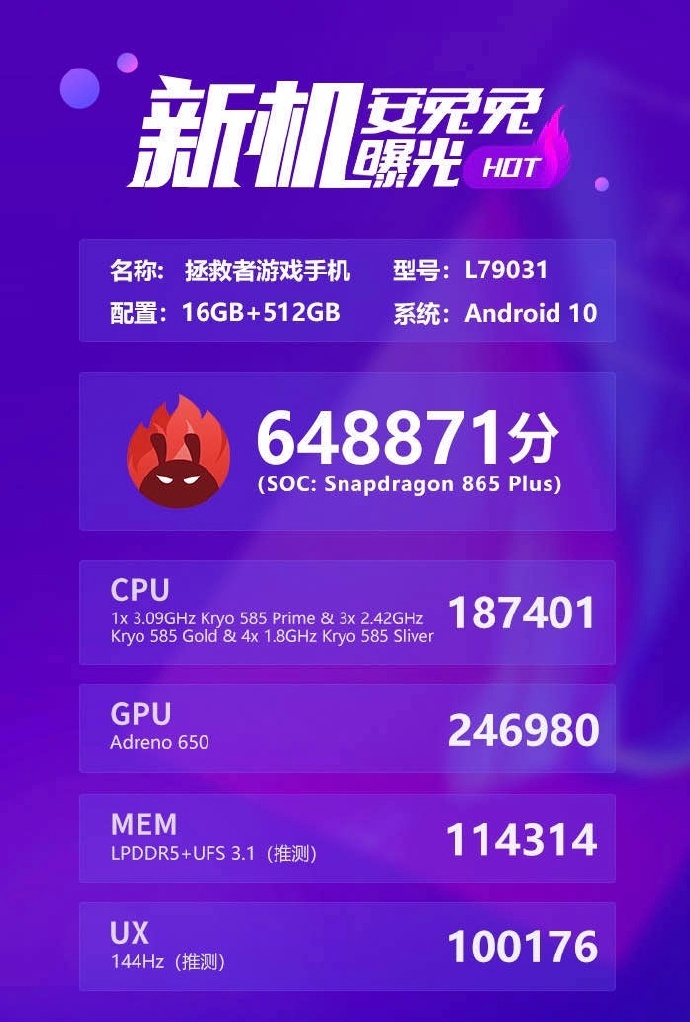
Recently, Lenovo confirmed that it will be launching the highly anticipated Lenovo Legion gaming smartphone in July. However, the launch date of the device is still a mystery. Ahead of its official announcement, the Lenovo Legion gaming smartphone that has a model number of L79031 has surfaced on AnTuTu benchmarks with an impressive score of 648K+.
The AnTuTu listing confirms that the Lenovo Legion gaming phone is powered by the unannounced Snapdragon 865 Plus mobile platform. The same chipset is expected to power the rival phone ASUS ROG Phone 3 that is scheduled to go official on July 22. The listing reveals that the SD865+ comprises of 1 x 3.09GHz Kryo 585 Prime CPU, 3 x 2.42GHz Kryo 585 Gold and 4 x 1.8GHz Kryo 585 Silver CPU. The SoC also includes Adreno 650 graphics.
The SD865+ will be arriving as an enhanced edition of the SD865 SoC that fueled most of the Android flagship phones in the first half of 2020. In the CPU and GPU tests, the Lenovo gaming phone scored 187,401 and 246,980 benchmarking scores, respectively.
The Lenovo L79031 variant that appeared on AnTuTu has 16 GB of LPDDR5 RAM and 512 GB of UFS 3.1 storage. It recorded 114,314 scores in the memory test of the benchmarking platform.
The Lenovo Legion gaming phone runs on Android 10. Rumors have it that it will be overlaid with gaming-grade Legion UI. It has a 1080 x 2340 pixels Full HD+ resolution supporting screen. The UX test of the handset suggests that the phone may support a 144Hz refresh rate. The Lenovo gaming phone scored 100,176 in the UX test. The average benchmarking score acquired by the Lenovo Legion gaming phone is 648,871 which is negligibly higher than ROG Phone 3’s 646,310 AnTuTu score.
Past reports have revealed that the Lenovo Legion gaming smartphone will come with a pair of USB-C ports, a side-facing 20-megapixel pop-up selfie camera, a 64-megapixel + 16-megapixel (ultrawide) dual-camera setup, in-display fingerprint reader, x-axis linear motor and dual speakers. The exact size of its battery is not known. Some speculations suggest that it could be equipped with a 4,000mAh battery. One of the most hyped features of the Lenovo Legion gaming phone is that it will arrive with support for 90W rapid charging.
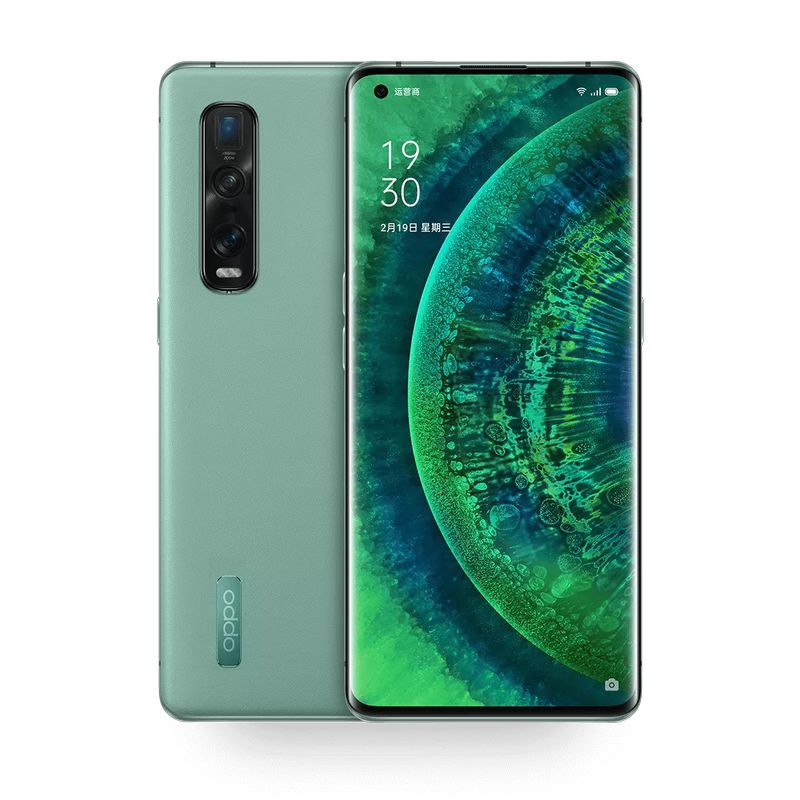
OPPO launched its new Find-series flagship smartphones — OPPO Find X2 and Find X2 Pro in China a few months ago. The top-end model — Find X2 Pro, was launched at a price of 6,999 yuan (~$998) for the 12GB RAM And 256GB storage variant.
Now, for a limited time, the company is selling the OPPO Find X2 Pro in China at a discount of 1,000 yuan. Thus, the effective price of the 12GB RAM + 256GB storage variant is 5,999 yuan (~$855) from today on OPPO‘s official website as well as the company-operated JD.com store. It is also offering customers to pay via interest-free 12 installments.
The OPPO Find X2 Pro features a 6.7-inch OLED HDR10+ display with QHD+ screen resolution of 3168 x 1080 pixels and 120Hz refresh rate. The IP68 rated device is powered by the Qualcomm Snapdragon 865 octa-core processor, coupled with Adreno 650 GPU.
In the camera department, the phone has a triple-camera setup on the back which includes a 48-megapixel primary sensor, coupled with a 12-megapixel sensor and a 13-megapixel sensor. On the front, there’s a 32-megapixel snapper for taking selfies and video calling.
The phone, which comes with Dual Mode 5G, is running the company’s own ColorOS 7.1 which is based on the Android 10 operating system. Powering the device is a 4,260mAh battery that has support for the super-fast 65W SuperVOOC 2.0 Flash Charge technology.
In related news, Shen Yiren, Vice President of OPPO, has revealed in a new post on Weibo that the company won’t be refreshing the Find X-series with new devices in the second half of this year which totally makes sense given that the Find X-series has a product life cycle of more than a year.
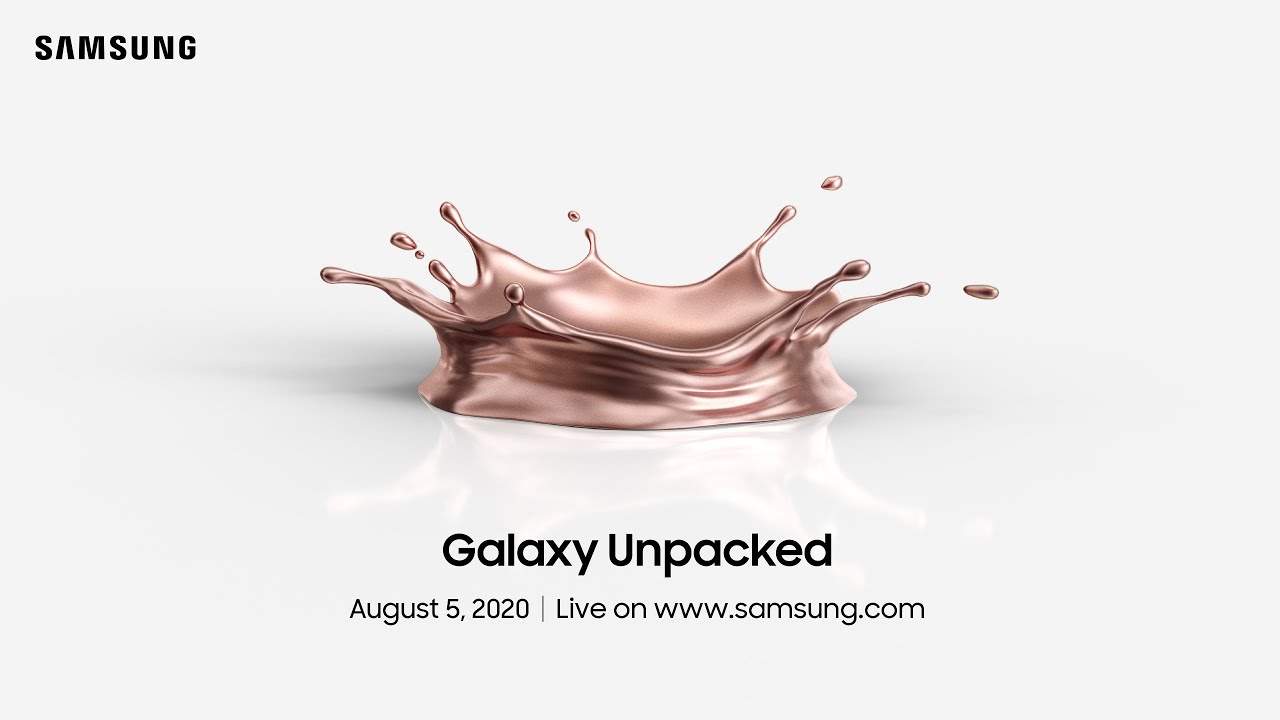
Samsung has confirmed that the company will be holding its Galaxy Unpacked event on 5th August and unlike the previous events, this one will be a virtual one because of the on-going COVID-19 pandemic.
The event will start at 10:00 AM ET and will be live-streamed on the company’s official website. While not yet confirmed, Samsung is expected to live-stream the event on its social media profiles as well.
The company has not yet confirmed what devices are getting launched at the upcoming Galaxy Unpacked event. Samsung has said that it will be launching its “latest ecosystem of Galaxy devices designed to empower your life.”
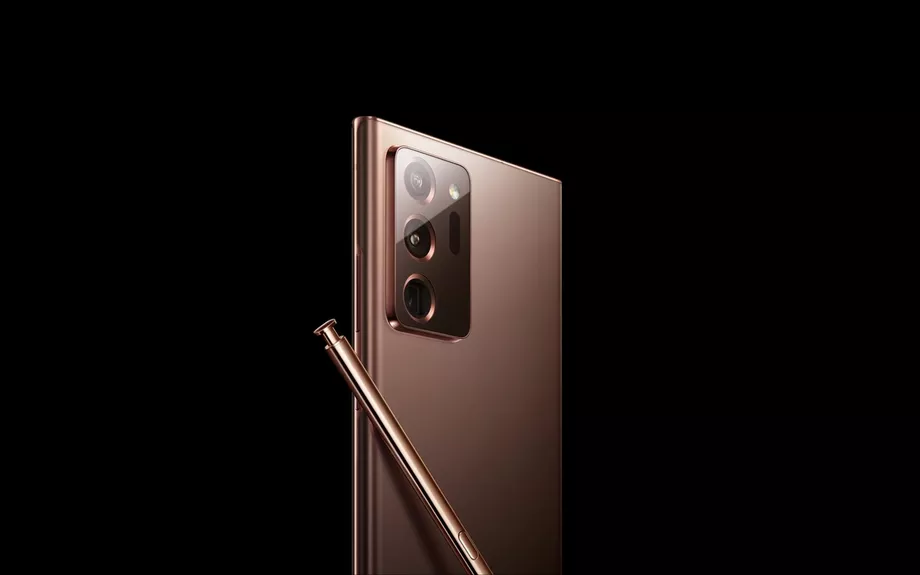
However, it’s also certain that Samsung will be taking wraps off the Galaxy Note20 series. We are also expecting the South Korean giant to launch the next-generation Galaxy Z Fold 2 foldable smartphone as well as its smartwatch named Galaxy Watch 3 at the same event.
As per the reports, there will be at least two models in the next-generation Galaxy Note series — Samsung Galaxy Note20, Note20 Ultra. Recently, renders of the Ultra variant were leaked online, giving us a clear look at what to expect in terms of design.
The devices could be powered by the Qualcomm Snapdragon 865 Plus chipset, with all the models supporting 5G connectivity, similar to the Galaxy S20 lineup. We are also expecting a better display and camera setup along with an improved S-Pen experience.
The Samsung Galaxy Z Fold 2 will be a follow-up foldable smartphone from the company with which its two different foldable smartphone lineups will be combined into one. It is expected to have a 7.7-inch display with a punch-hole cutout on top. This one too is rumored to come powered by SD865 Plus SoC.
There are still lots of things that we don’t know about the products that Samsung has planned to launch at the upcoming Galaxy Unpacked event. However, since the event in just a month from now, we expect to get more information as the launch date nears.
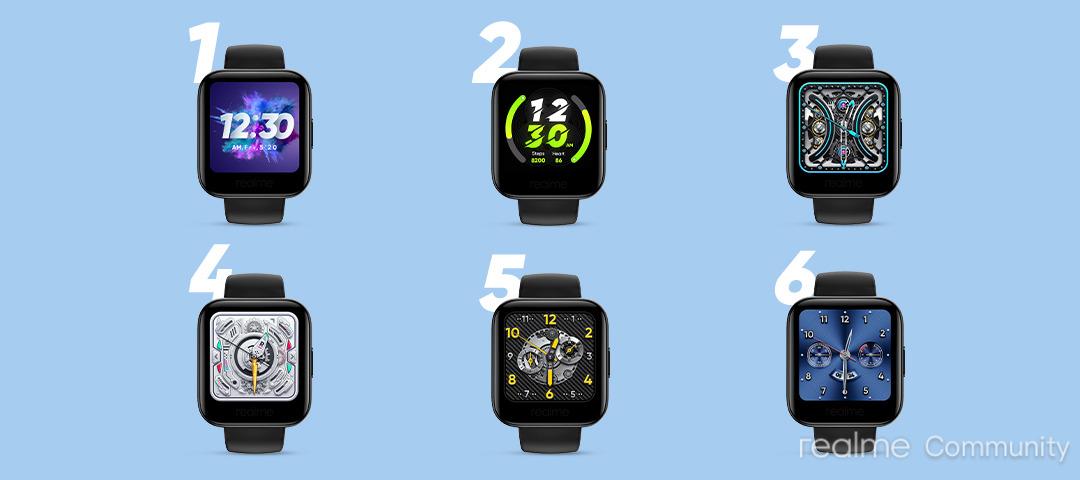
The square-faced watch launched with 12 watch faces with the promise of more via OTA updates. Realme’s CEO, Madhav Sheth has now revealed that the smartwatch will be getting new watch faces soon.
In a tweet posted yesterday, the company’s top executive asked fans to name six of the new watch faces and get a chance to win a pair of its best-selling TWS earbuds, the realme Buds Q. An official post on the realme Community page says there will be twenty new watch faces in total.
The image attached to the tweet shows the six watch faces to be named include two digital ones and four mechanical watch faces.
List of watch faces that are to be named
To enter the competition, submit your name(s) for the watch faces here between now and 9th July. Realme will select some of the names for a voting process that runs from July 10 to July 14. Those whose entries are selected for the voting process will win a realme Buds Q. If your entry gets the highest vote, you also win a realme Watch. You can read the rules for the competition in the second source link below.
Realme didn’t say when the OTA update that brings the new watch faces will begin to roll out, nevertheless, we expect it to be available after the competition is over.
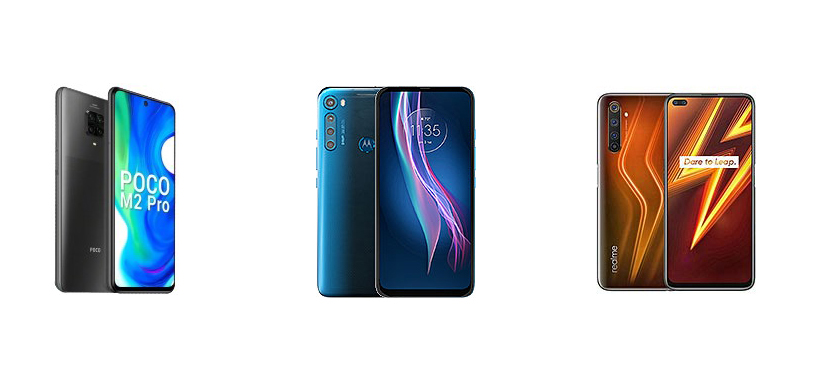
Xiaomi launched another mid-ranger in the Indian market. It came under the POCO brand and its name is POCO M2 Pro. It is the first POCO mid-ranger after the POCO X2. The handset comes with very similar specifications to the Indian version of the Redmi Note 9 Pro, but it is not exactly the same device and it has slight differences compared to its older sibling. Are its specifications enough to make it a best-selling device of 2020 or there is something better in the market? In order to establish this, we decided to compare it with two of the best value for money released recently: Motorola One Fusion+ and Realme 6 Pro.
Xiaomi POCO M2 Pro vs Motorola One Fusion+ vs Realme 6 Pro
Quad 64 + 8 + 5 + 2 MP f/1.8, f/2.2, f/2.2 and f/2.2
16 MP f/2.0 front camera
Quad 48 + 8 + 5 + 2 MP f/1.8, f/2.2, f/2.4 and f/2.4
16 MP f/2.5 front camera
Quad 64 + 12 + 8 + 2 MP f/1.8, f/2.5, f/2.3 and f/2.4
Dual 16 + 8 MP f/2.1 and f/2.2 front camera
BATTERY
5000 mAh, fast charging 15W
5000 mAh, fast charging 33W
4300 mAh, fast charging 30W
ADDITIONAL FEATURES
Hybrid Dual SIM slot, splash resistant
Dual SIM slot, splash resistant
Dual SIM slot, splash resistant
Design
Before talking about the look of these handsets, I think it is worth talking about their materials. While POCO M2 Pro and Realme 6 Pro are equipped with a glass back, the Motorola One Fusion+ has a full plastic design. That is why we would not recommend the Motorola One Fusion+ if we had to choose the most beautiful handset. The Realme 6 Pro has a dual punch-hole instead of a single punch-hole like the POCO M2 Pro, but we recommend it because it has a very attractive design and it is more compact than the POCO M2 Pro. On the other hand, POCO M2 Pro has the P2i certification against water (unlike the Realme 6 Pro).
Display
With the POCO M2 Pro and the Motorola One Fusion+ you get an HDR10 display with great image quality, but still an average IPS panel. With the Realme 6 Pro, you do not get HDR, but it sports a 90 Hz refresh rate. And we believe having 90 Hz on an IPS display of an affordable phone is way more advantageous than having just HDR. I would personally go for the Realme 6 Pro in order to have a smoother viewing experience with my phone.
Specs & Software
If you grab a unit of the POCO M2 Pro or the Realme 6 Pro, you get an octa-core Snapdragon 720G, while if you go for the Motorola One Fusion+, you can get a Snapdragon 730G. Despite the Snapdragon 720G is a newer chipset, the Snapdragon 730G is actually slightly more powerful. However, we still think it is the case to give the award to the Realme 6 Pro because it has a configuration with more RAM than Motorola One Fusion+ (8 GB vs 6 GB), as well as a dedicated micro SD slot. In each case, you get Android 10 out of the box, but Motorola One Fusion+ offers a nearly-stock Android experience, while Realme 6 Pro and POCO M2 Pro are highly customized.
Camera
On the camera side, Realme 6 Pro takes the crown, at least on the paper. The Realme 6 Pro is the only one with a telephoto lens and a 2x optical zoom. The main sensor of its quad camera is the same as the Motorola One Fusion+, but the latter lacks a telephoto sensor: instead of it, it packs a classic depth sensor. Realme 6 Pro also packs a more interesting front camera department composed of an ultrawide dual front camera. Motorola One Fusion+ comes right after the Realme 6 Pro, while POCO M2 Pro is the loser here.
Battery
When it comes to battery life, it is a hard fight between POCO M2 Pro and Motorola One Fusion+. They have the same battery capacity and similar components; it is still too early to give a verdict as the POCO M2 Pro has just been announced and only thorough tests will give us the answer.
Price
POCO M2 Pro has an Rs. 13,999 starting price in India, the Motorola One Fusion+ is priced Rs. 16,999, and Realme 6 Pro costs Rs. 18,999. The winner of this comparison is the Realme 6 Pro with its 90 Hz display and better cameras, but only if you do not care about having the longest battery life. Otherwise, Motorola One Fusion+ looks better.
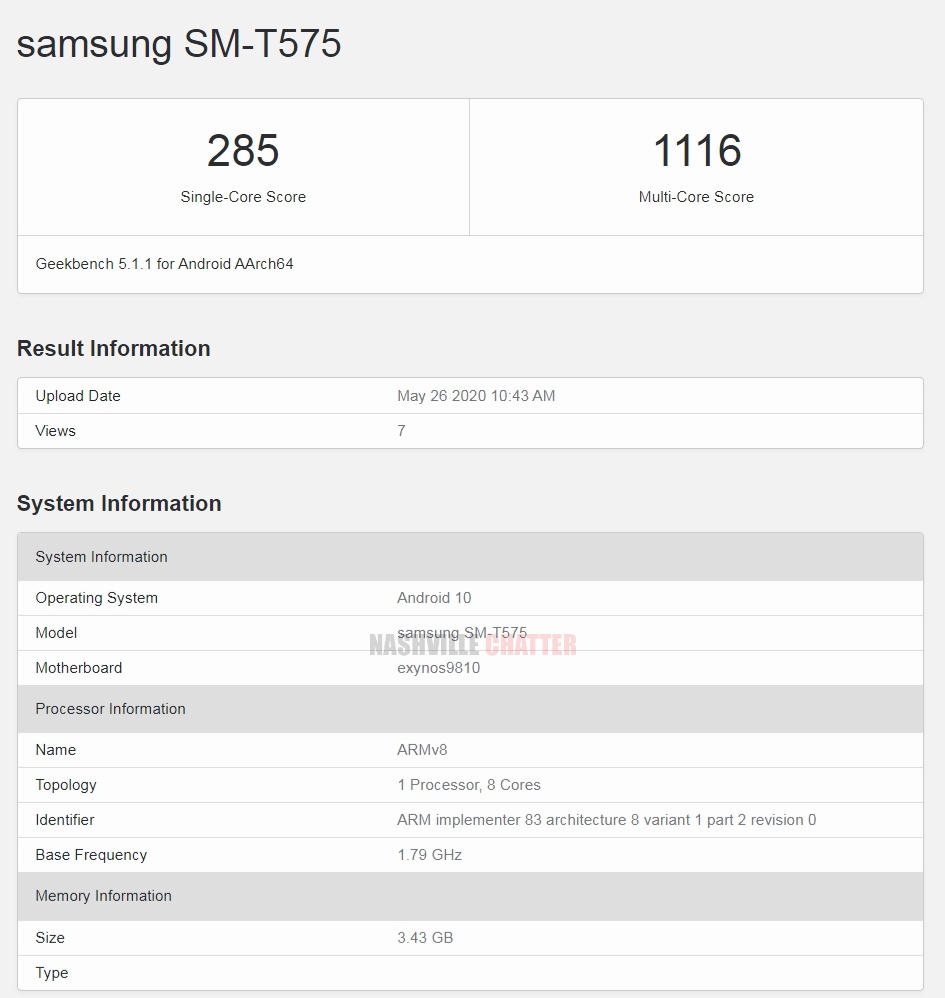
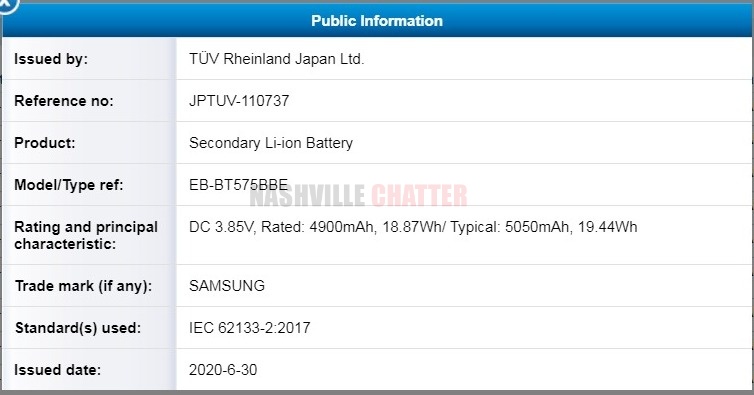
Samsung seems to be working on a new tablet called Galaxy Tab SM-T575. According to a Geekbench listing from May, it will be powered by Exynos 9810 SoC. Recently, the device’s battery also got certified by TÜV Rheinland Japan Ltd.
It did not stop there as the chipset made a comeback with the Galaxy Note 10 Lite that launched earlier this year. Now, with this upcoming Galaxy Tab SM-T575, Samsung would be using the same chip for a total of 6 devices.
Further, according to the Geekbench listing, this forthcoming Samsung tablet will feature 4GB RAM and run Android 10. The device scored 285 and 1116 points in single-core and multi-core tests respectively.
On the other hand, as per certification by TÜV Rheinland Japan Ltd., the device’s battery is rated at 4,900mAh, however, its typical value is mentioned as 5,050mAh.
That being said, going by the company’s model numbering, this particular version could be the LTE variant, whereas the WiFi-only model may have model number SM-T570.
We use cookies on our website to give you the most relevant experience by remembering your preferences and repeat visits. By clicking “Accept”, you consent to the use of ALL the cookies.
This website uses cookies to improve your experience while you navigate through the website. Out of these, the cookies that are categorized as necessary are stored on your browser as they are essential for the working of basic functionalities of the website. We also use third-party cookies that help us analyze and understand how you use this website. These cookies will be stored in your browser only with your consent. You also have the option to opt-out of these cookies. But opting out of some of these cookies may affect your browsing experience.
Necessary cookies are absolutely essential for the website to function properly. This category only includes cookies that ensures basic functionalities and security features of the website. These cookies do not store any personal information.
Any cookies that may not be particularly necessary for the website to function and is used specifically to collect user personal data via analytics, ads, other embedded contents are termed as non-necessary cookies. It is mandatory to procure user consent prior to running these cookies on your website.