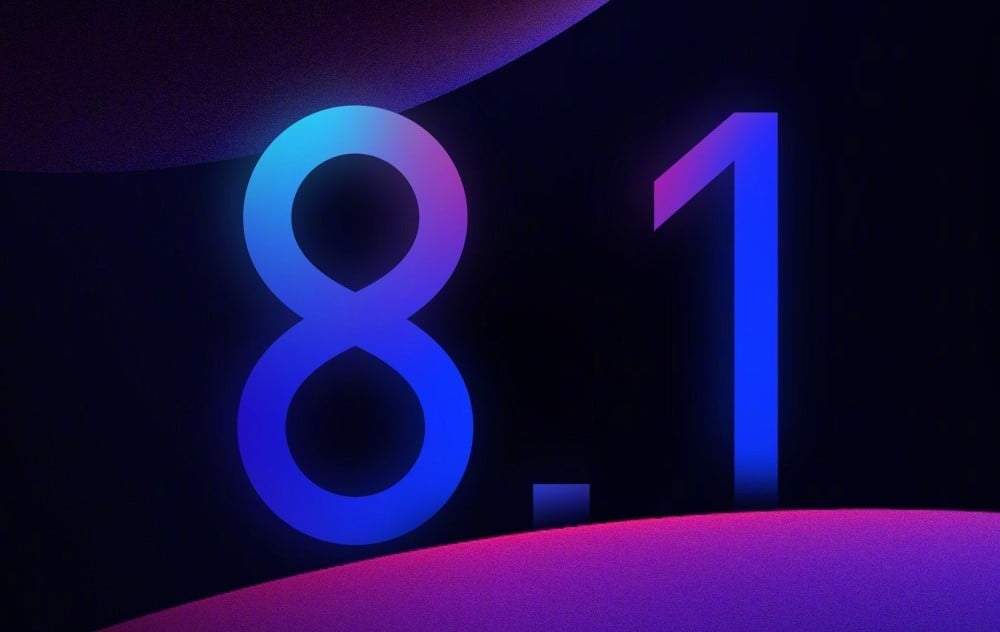
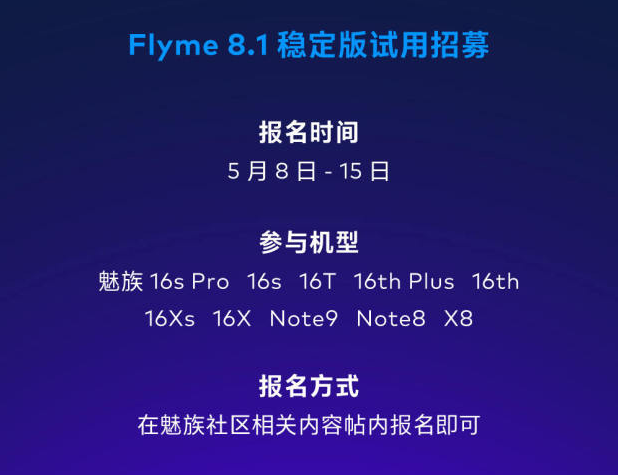
Meizu officially launched the Meizu 17 series and a number of accessories in China. At the same event, the brand also unveiled Flyme 8.1 based on Android 10. The updated OS comes pre-installed on the newly announced handsets. Additionally, it will be available for 10 of the company’s older devices.
The new Flyme 8.1 is an incremental update to Flyme 8 released last year. The underlying system is now updated to Android 10 from Android 9.0 Pie.
The new version integrates over 300 deep Android customization improvements and optimizations according to the company. It also brings enhanced Aicy voice assistant as well as better AI and gaming performance.
Flyme 8.1 brings a new OneMind 4.0 AI Engine, which is 30% better than its predecessor OneMind 3.5. The new software also adds small window mode 2.1 with improvements. As teased earlier by the company, the latest version of its mobile software also adopts native Android 10 Dark Mode.
As far as support is concerned, Meizu’s new flagships smartphones, Meizu 17 and Meizu 17 Pro will ship with Flyme 8.1 out of the box. Further, it will be available as an OTA update for the following 10 devices.
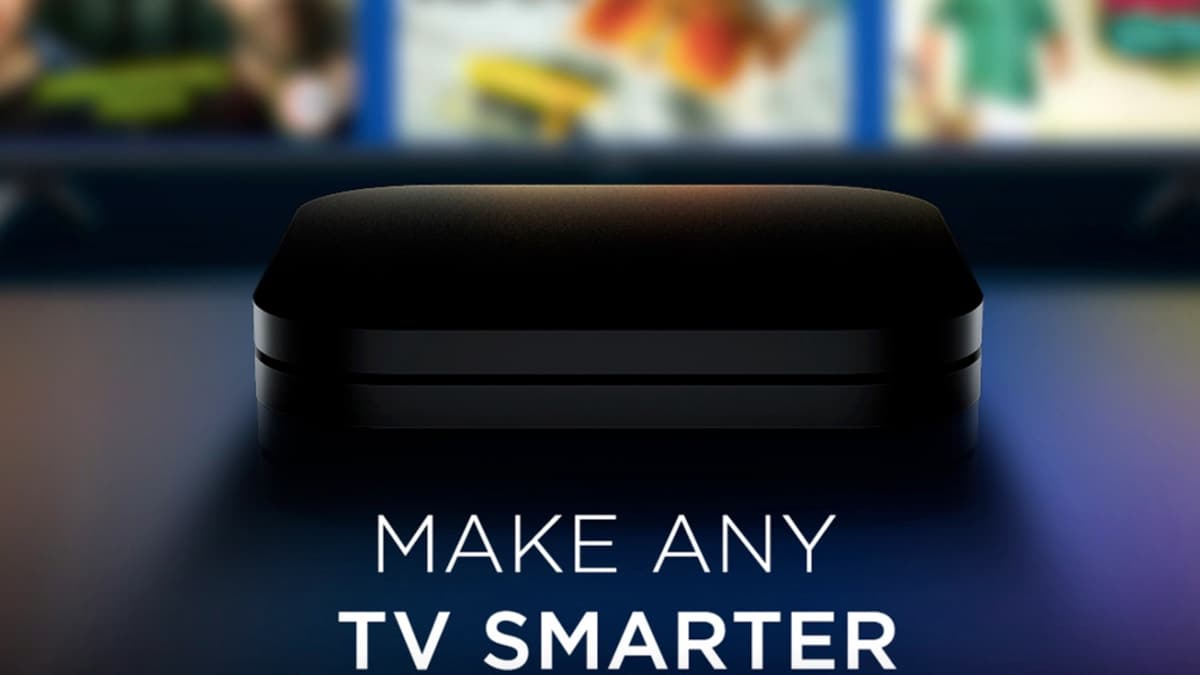
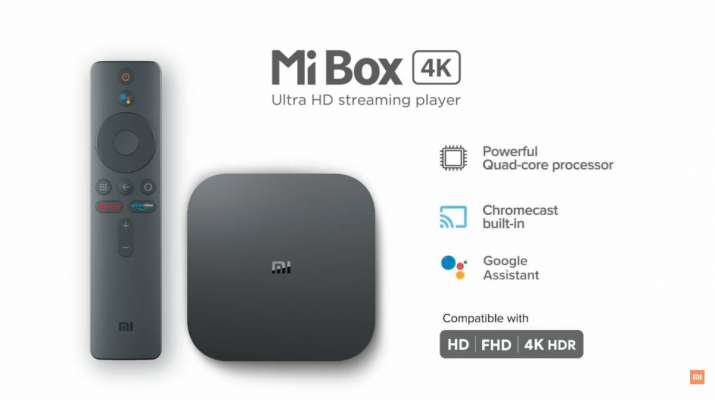
Xiaomi has just announced the Mi Box 4K for the Indian market. The streaming device was announced in the online launch event for the Mi 10 and is priced at 3,499 INR (roughly 46 US Dollars).
The Mi Box 4K runs the Android TV 9 Pie OS and plugs directly into televisions through the HDMI port. It supports Wi-Fi for connectivity, which grants users access to a large variety of apps and services online. This includes popular video streaming platforms like Netflix, Amazon Prime Video, Disney+ Hotstar, and more. Xiaomi has partnered with various brands like Docubay, Epic, HoiChoi, and Shemaroo to offer exciting deals to Mi Box 4K buyers.
Similar to set-top boxes, the Mi Box 4K is designed to placed on table-tops and connects to the TV via the HDMI cable. The device is powered by a quad core Amlogic processor and features 2GB of RAM and 8GB of internal storage. It even supports up to 4K resolution for various streaming services and also supports HDR enabled content from Netflix, Amazon Prime Video, and others.
The Mi Box 4K runs the Android TV interface, unlike most of its smart TV offerings that run the PatchWall interface. In terms of additional connectivity, the device also supports USB port and 3.5mm audio jack. The former acts as a local media player allowing pen drives to play various audio and video formats. There is also a built in Chromecast Ultra that helps users to cast content in up to 4K resolution.
The Mi Box 4K will go on sale starting from 11th May 2020 at 12pm (noon IST) and will be available through popular e-retailers like Flipkart, and also the company’s official website, Mi Home stores, and Mi Studio stores as well. The streaming device is also expected to soon arrive in affiliated stores.
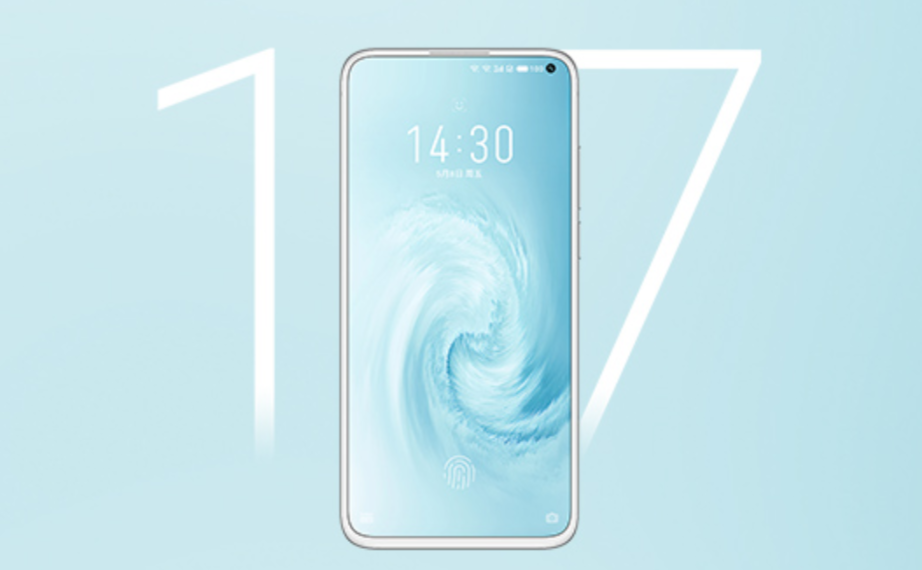
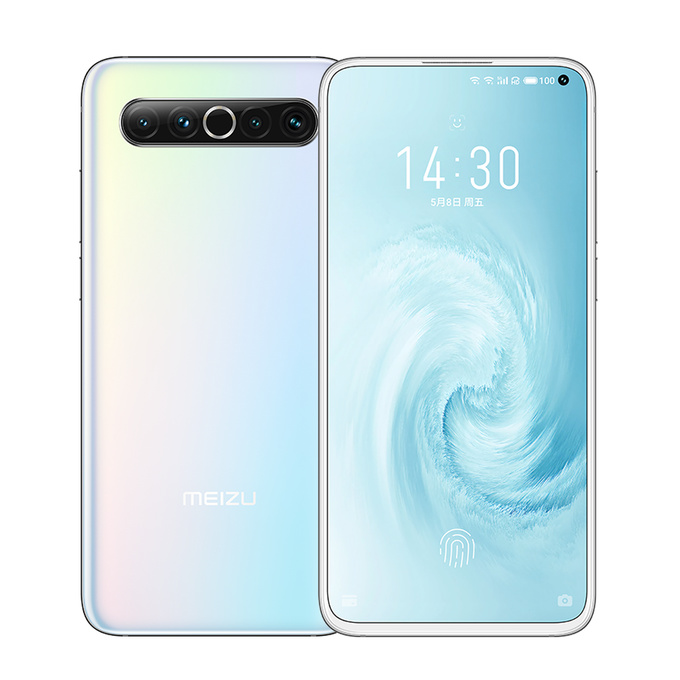
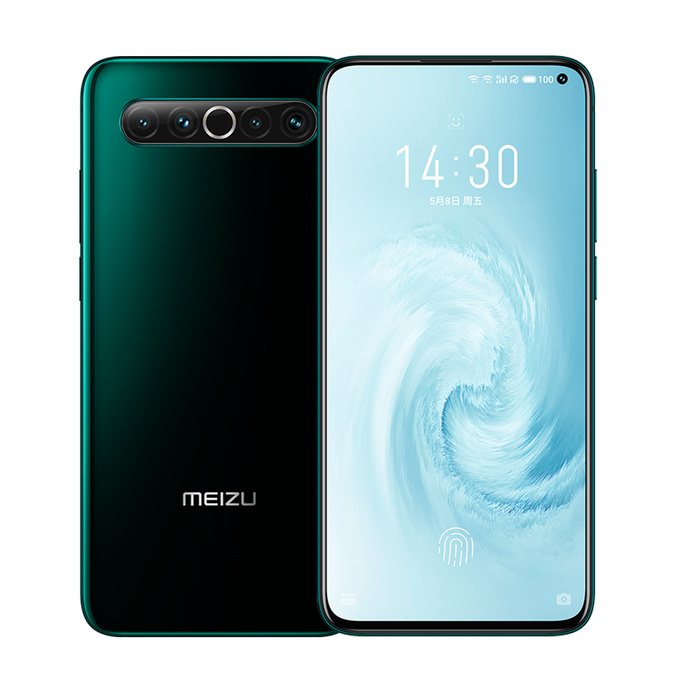
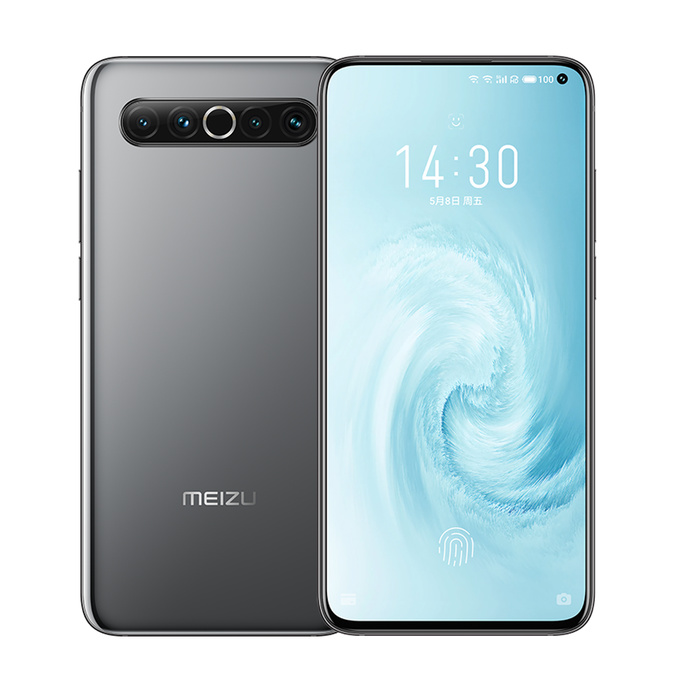
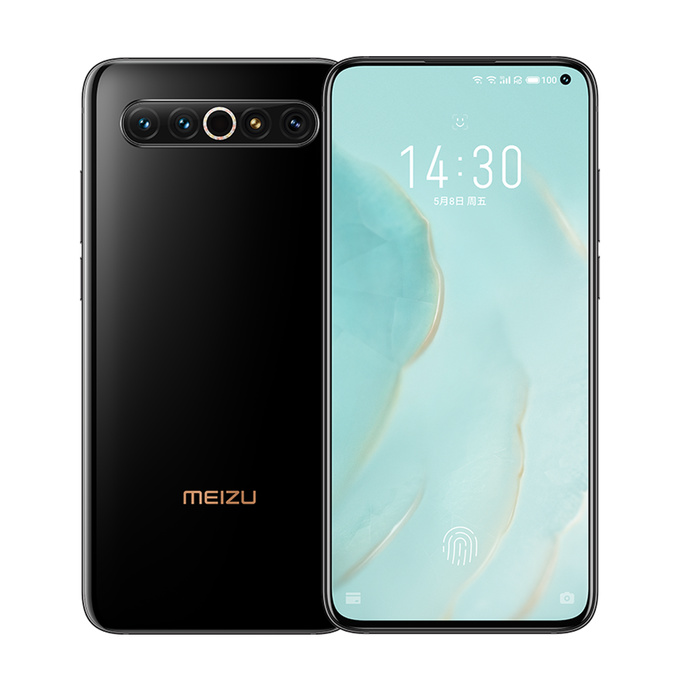
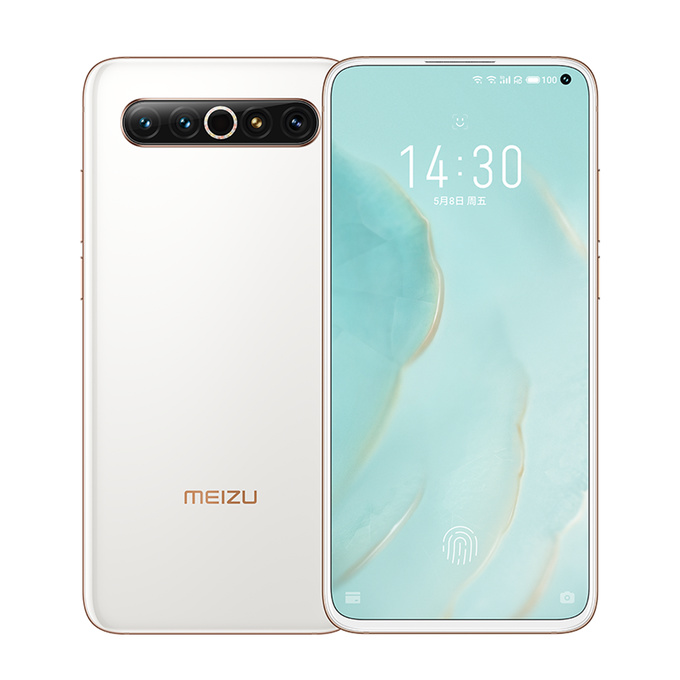
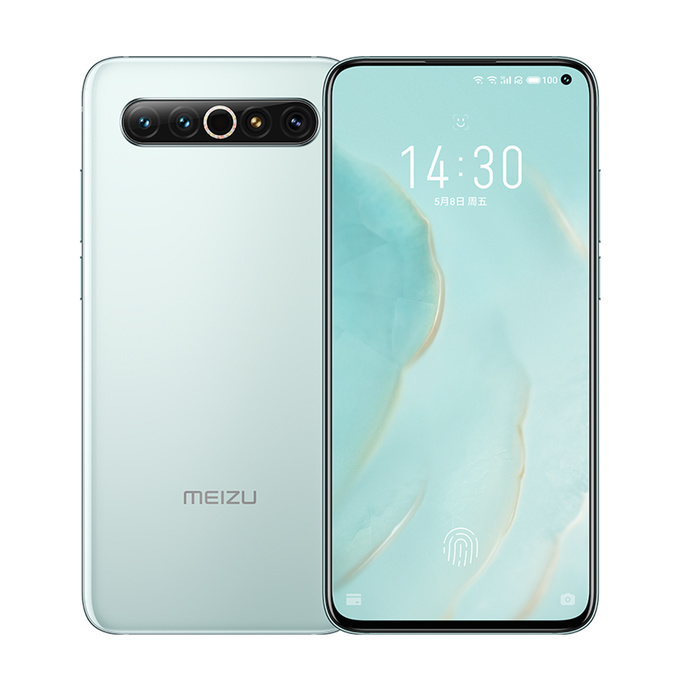
Meizu’s biggest smartphone launch of 2020 is here and the company has announced not one, but two new flagship-grade smartphones for China. Staying true to its minimalistic design, the phone slims down the bezels on the side and adds a horizontal camera housing at the back featuring four cameras in total. The Meizu 17 Pro is the company’s most powerful flagship for the first half of 2020 while Meizu 17 comes as a slightly cheaper alternative.
Meizu 17 & Meizu 17 Pro Design
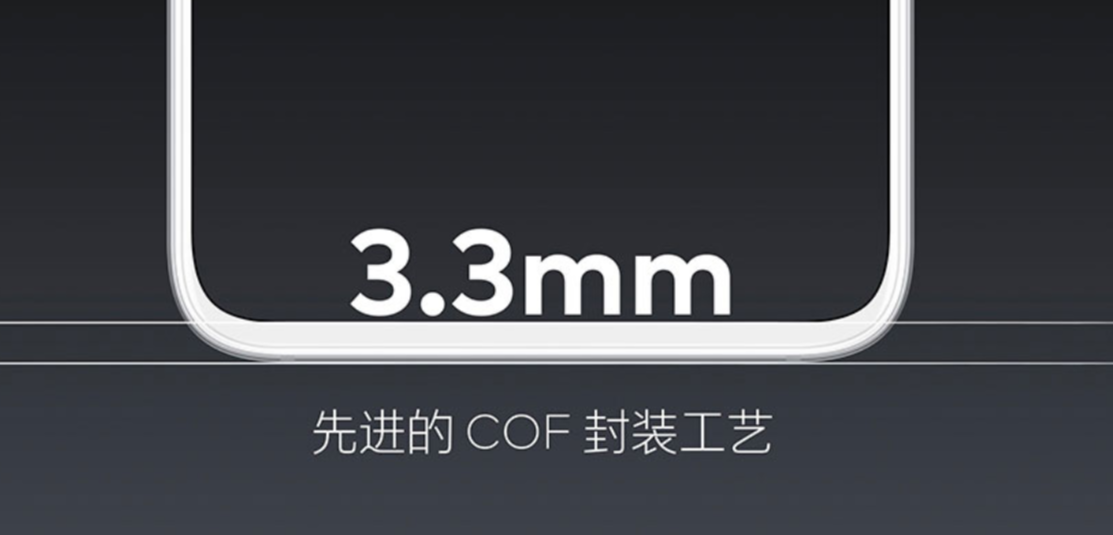
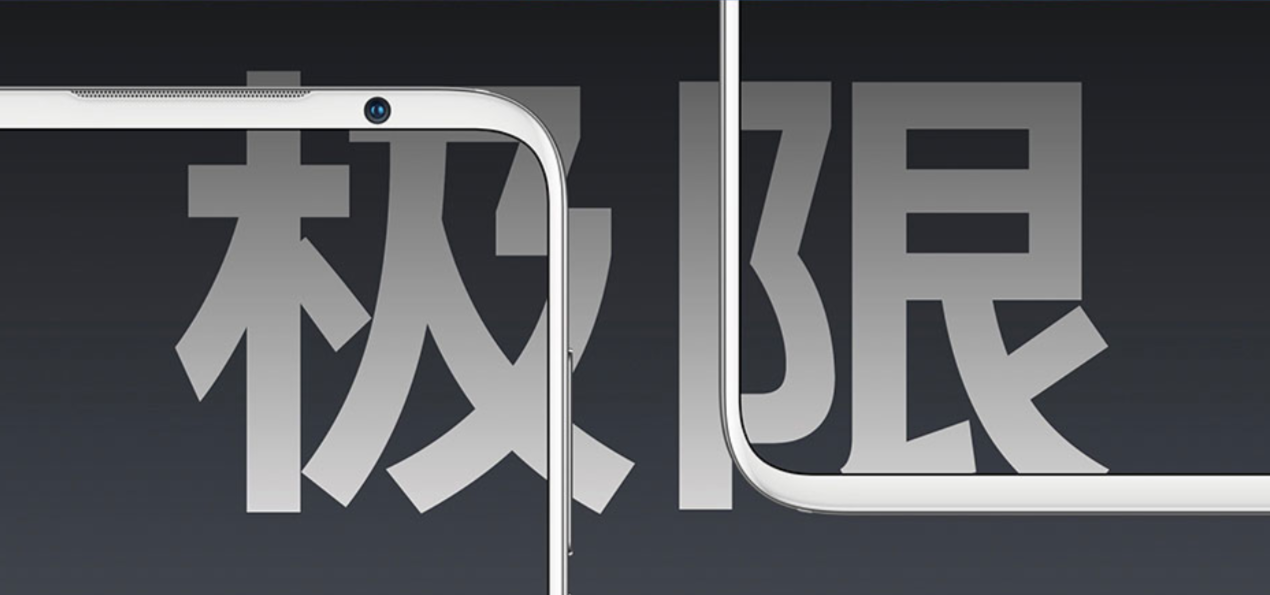
The Meizu 17 and Meizu 17 Pro come with a simple punch-hole design upfront. The two phones feature an advanced CoF packaging technology which increases the screen to body ratio by limiting the lower bezel to just 3.3mm. The Meizu 17 duo come with a 6.6-inch custom Samsung AMOLED display with a 19.5:9 aspect ratio and 92.2% screen to body ratio. The AMOLED panel supports 100% DCI-P3 color gamut with a 90Hz high refresh rate and 180Hz touch sampling rate. The display panel has a peak brightness of 1100 nits with a pixel density of 390 ppi. You get a 0.15-sec fast screen fingerprint sensor on the front as well.
1 of 3
Meizu has always given due importance its flagship designs. The new Meizu 17 weights 199 grams and is just 8.5mm thick. The phone isn’t top or bottom-heavy as Meizu has used a balanced design to make it comfortable to hold. The standard Meizu 17 comes in three colors at launch: Black, Dark Green, and White.
1 of 3
Note that the biggest difference between the Meizu 17 and the 17 Pro is in the material of the body. The Meizu 17 Pro comes in a premium ceramic body in white, black, and light green colors.
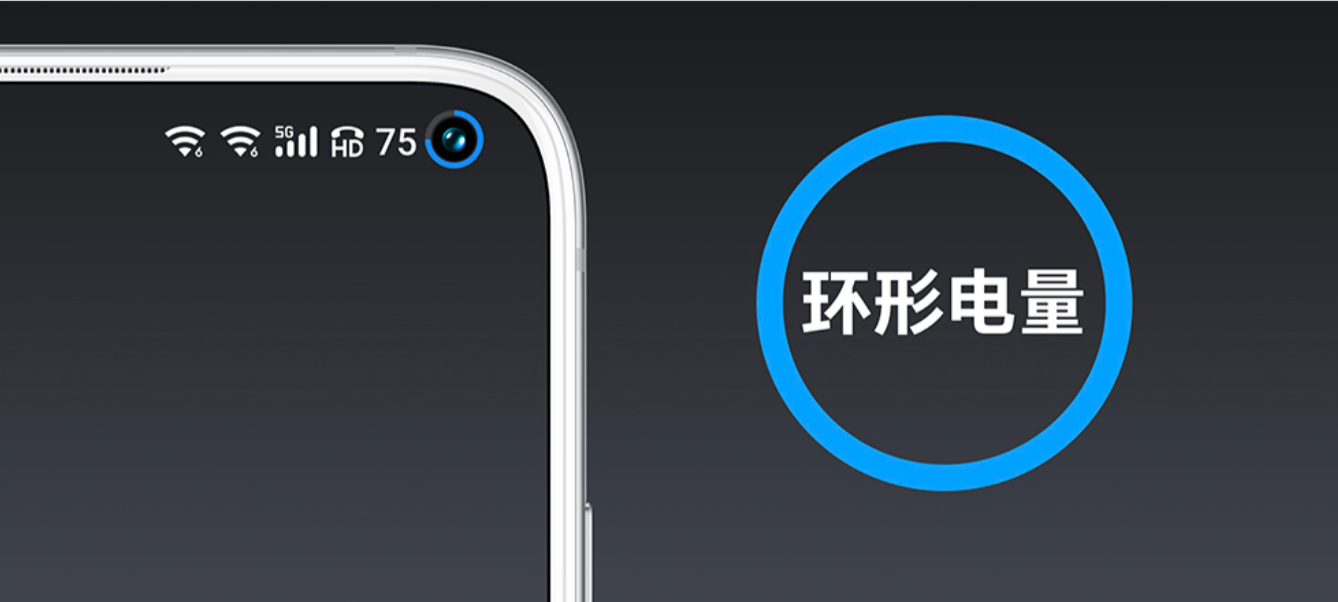
The company also justified its decision to add a 2.9mm diameter camera on the top right corner because it believes this position creates the least amount of visual interference. Meizu explained at the event that we are used to reading from left to right and having the selfie camera on the right won’t hinder our reading experience. Furthermore, the company is making full use of the punch-hole camera by using it as a battery indicator. The phone also boasts of stereo speakers and Meizu claims that the sound output has increased by 30% as compared to its predecessor.
Meizu 17 & Meizu 17 Pro Specs
Both the models come with the flagship 2.84GHz Snapdragon 865 5G chipset under its hood with support for SA /NSA 5G. The company employs a new mSmart 5G technology inside its new flagships which reportedly improves its battery life when using the new-age cellular network. Meizu claims that mSmart 5G is fast and stable, so the Meizu 17 can last up to 4 hours and 25 minutes longer after turning on this special mode as compared to the regular 5G mode. The phone’s battery efficiency is also attributed to the 360-degree surround antenna design that will ensure a stable network connection.
The Meizu 17 has 8GB RAM onboard with up to 256GB of UFS 3.1 storage. The biggest difference between the standard and the Pro model is the presence of LPDDR5. The Meizu 17 Pro comes with the new-age LPDDR5 standard and UFS 3.1 as standard across its variants. Meizu claims that the Pro version’s AnTuTu score goes up to 600K.
Meizu 17 battery life comparison
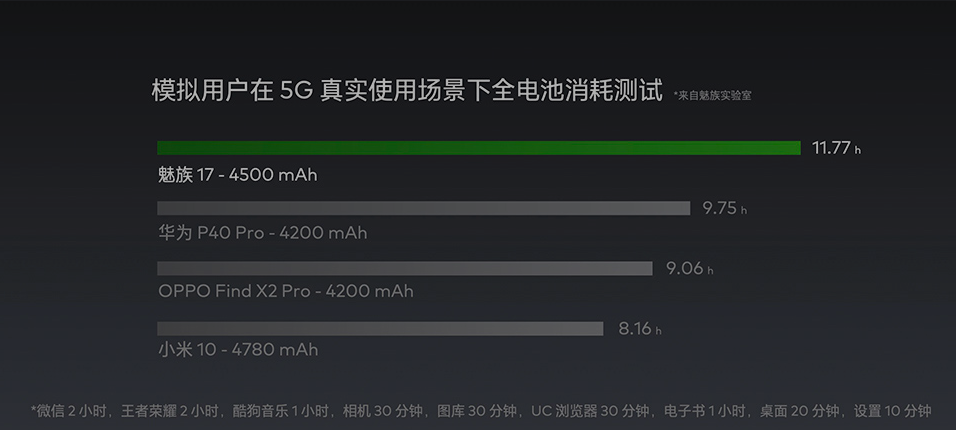
The Meizu 17 and the 17 Pro feature a 4500mAh battery inside with 30W Super mCharge fast charging technology that promises 56% in half an hour. Meizu claims that the Meizu 17 can easily outlast other flagships like Huawei P40 Pro, Xiaomi Mi 10, and OPPO Find X2 Pro in a typical battery test – all thanks to its mSmart 5G technology. Note that only the Pro model comes with the Super Wireless mCharge 27W charging solution that can charge up to 47% in 30 minutes. The Pro model also supports reverse wireless charging.
The new Meizu flagship comes with mEngine 3.0 that improves the gaming performance of the device. It also features the new One Mind AI 4.0 that significantly improves the fluency of the UI (35% improvement over One Mind 3.0). The phone supports NFC, Wi-Fi 6 as well as eID.
Meizu 17 & Meizu 17 Pro Cameras
Meizu 17 cameras
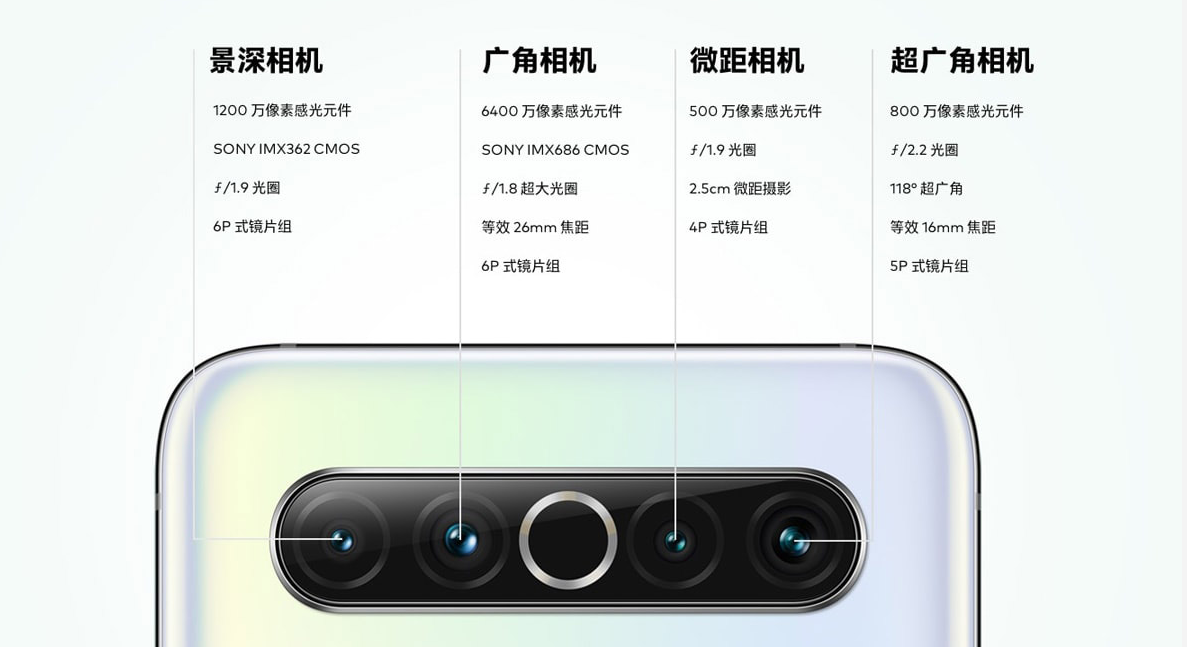
The Meizu 17 series come with a quad-camera setup in a horizontal camera housing. The standard 17 model features a 64MP Sony IMX686 f/1.8 primary camera with a 12MP f/1.9 portrait camera, a 5MP dedicated f/1.9 macro camera that can take shots as close as 2.5cm, and finally, a 118° 8MP f/2.2 ultra-wide-angle lens.
Meizu 17 pro cameras
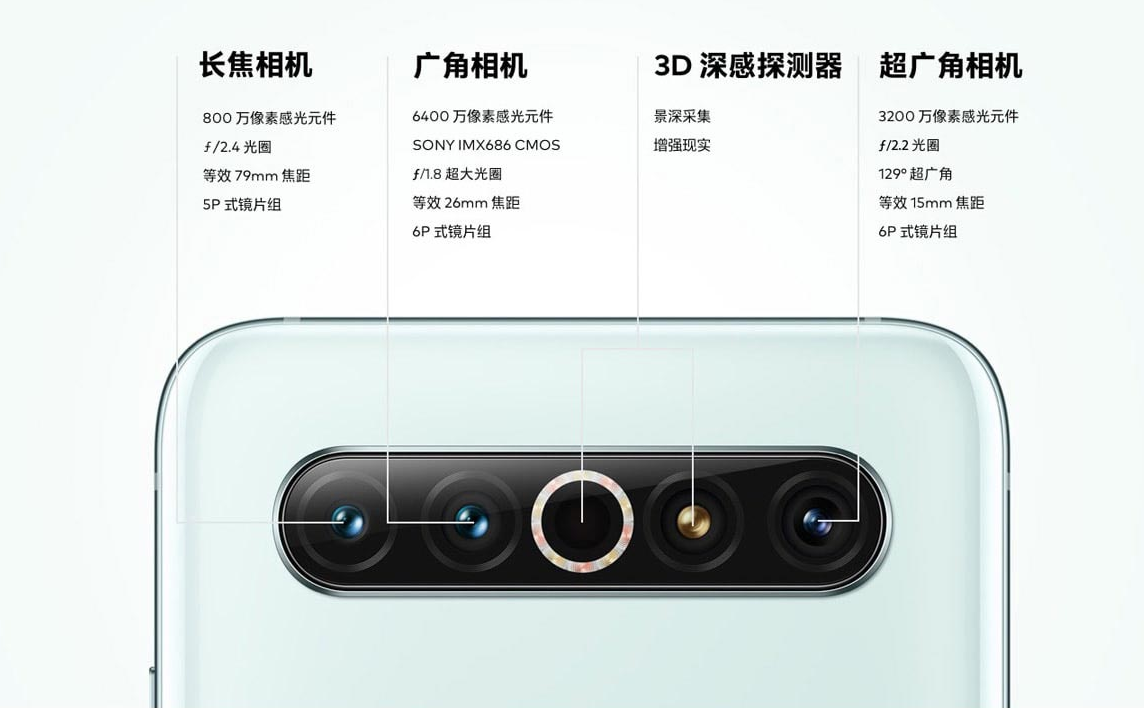
The Meizu 17 Pro features a much more powerful camera setup. It consists of the same 64MP IMX686 f/1.8 primary camera but features an 8MP f/2.4 79mm telephoto camera too. With the help of these two sensors, the phone can capture up to 8x lossless zoom samples with a focal length range of 26mm-210mm.
Another big highlight of the Pro’s camera setup is the brand new Sony IMX616 32MP ultra-wide-angle camera lens. This f/2.2 aperture lens can capture extremely wide 129° camera samples. The Meizu 17 Pro is also the world’s first smartphone to use the Samsung S5K33D 3D depth-sensing camera that brings hardware-level portrait blur to photos and even videos and adds unique features to the device like 3D wallpapers and AR tools. Meizu has said that it will add more AR features to its Flyme 8.1 OS in the future to take advantage of this hardware.
Upfront you have a powerful 20MP camera taking care of your selfies. The company claims that the front camera now features the third generation night mode algorithms (Super Night Mode 3.0) which ensure clear and bright selfies even in low light situations.
Meizu 17 & Meizu 17 Pro Pricing & Availability
The Meizu 17 is priced as follows.
8GB RAM + 128GB ROM – 3699 yuan ($523)
8GB RAM + 256GB ROM – 3999 yuan ($565)
The Meizu 17 Pro is priced as follows.
8GB RAM + 128GB ROM – 4299 yuan ($607)
12GB RAM + 256GB ROM – 4699 yuan ($664)
Both models will go on sale via online and offline sales channels in China from May 11.
Meizu 17 collectors edition kiln
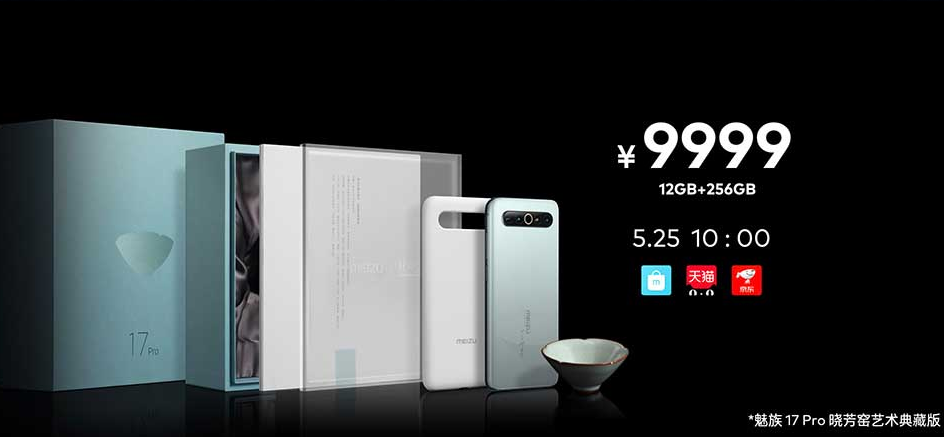
The Meizu 17 Pro Collectors edition will be priced at 9999 yuan ($) and will go on sale on May 25.
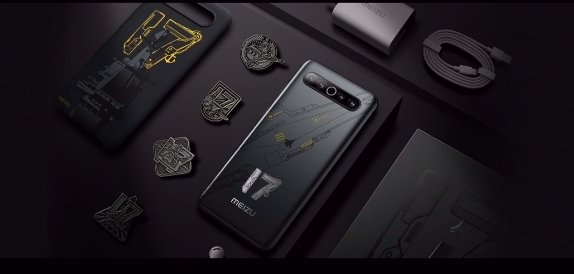
There’s a special Meizu 17 Aircraft Carrier Limited Edition which will feature cool graphics at the back and customized themes for hardcore fans. This limited edition will also feature customized accessories such as a unique charger, customized case, badge, and even a SIM card ejector pin. This special limited edition is priced at 4299 yuan ($607) and goes on sale on May 27.
Meizu will also offer a bunch of PANDAER 17 series funky cases for the Meizu 17 series starting at 49 yuan (~$7). The cases go on sale from May 20. You can also get special silicone protective cases starting at 89 yuan (~$13).
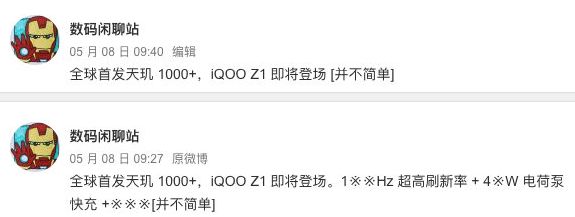
Its official that the next iQOO phone will be coming with newly announced Dimensity 1000+ chipset. iQOO has not shared information on its Dimensity 1000+ powered smartphone. However, a trustworthy leakster from China has claimed that the device will be debuting as iQOO Z1.
The Weibo posts by the tipster hints that the iQOO Z1’s display may support 120Hz or 144Hz refresh rate and it could be coming with a 44W fast charger. The tipster has removed the Weibo post that hints about the refresh rate and charging capabilities of the iQOO Z1. The presence of the new MediaTek will possibly allow the phone to support 5G + 5G dual SIM / dual standby.
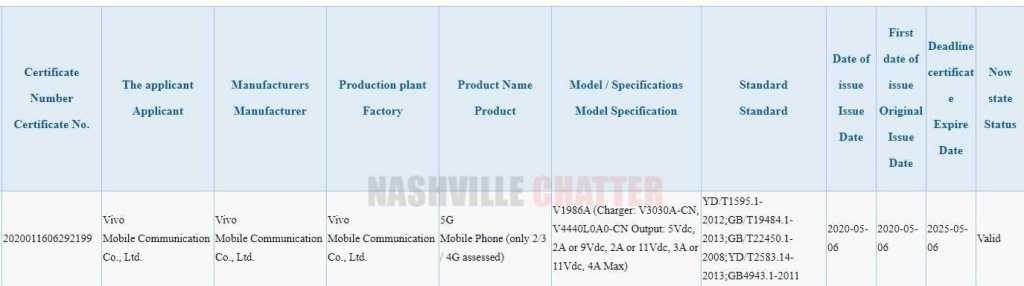
In related news, Nashville Chatter Class reported that a Vivo smartphone with model number V1986A has received certification from the 3C regulatory body of China. The listing confirms that it is a 5G handset. Also, it reveals that the retail package of the device will include a 44W rapid charger. It is unclear whether the phone will be debuting as a Vivo or iQOO branded device in China.
iQOO smartphones such as iQOO, iQOO Pro, iQOO Pro 5G, and iQOO Neo3 are all equipped with a 44W fast charger. Hence, there is a possibility that the V1986A could be an iQOO Z1 phone with 44W fast charge support. Since it is just an assumption, readers are advised to wait for further reports to know the identity of V1986A.
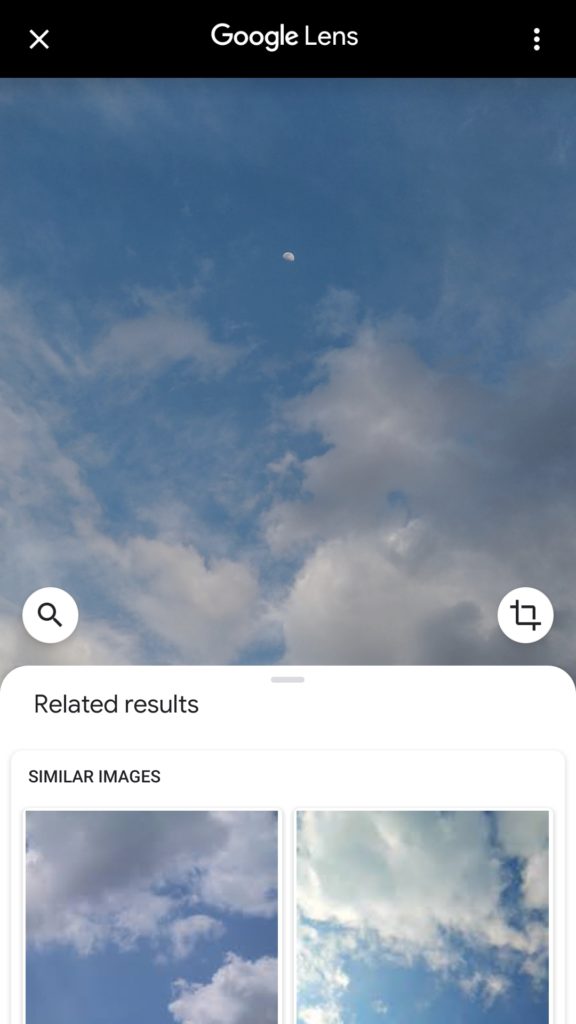
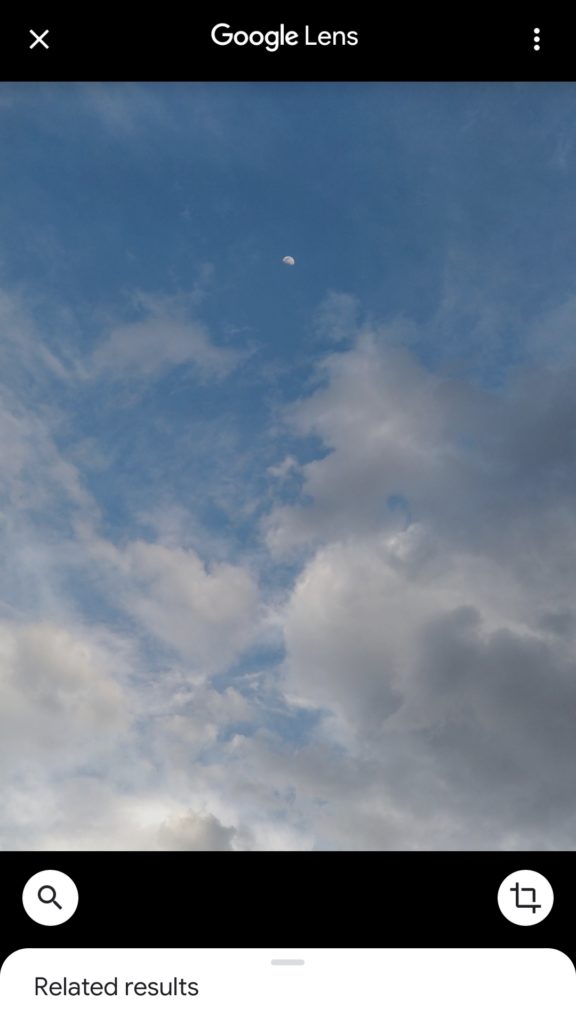
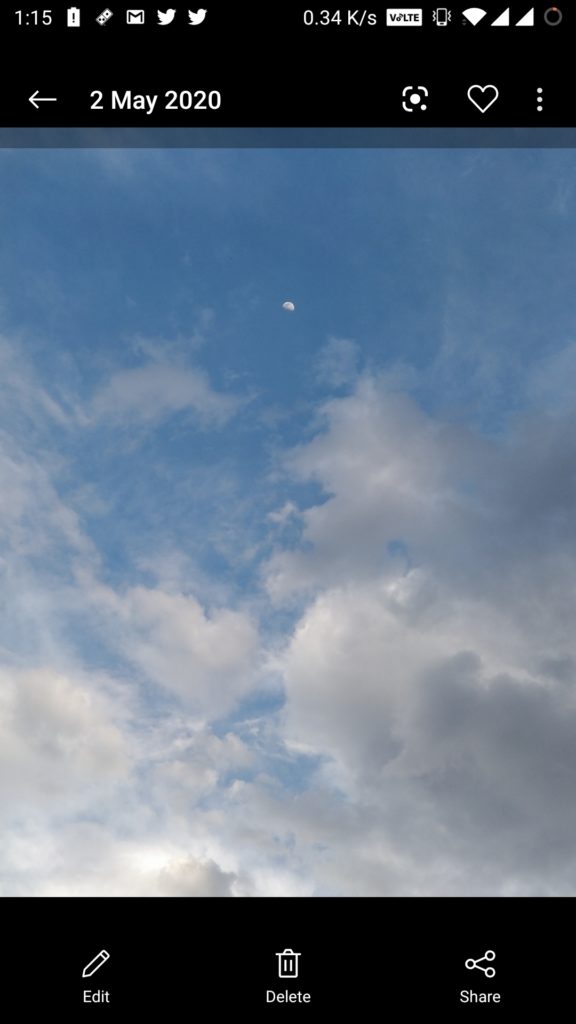
It’s been over years since the OnePlus camera app received the Google Lens integration. In a similar move, Oneplus is rolling out a new update for its Gallery app bringing the support for Google Lens. OnePlus users can now easily search images or gather more information about a pictured object by calling Google Lens from within the Gallery app.
OnePlus Gallery App Version 3.11.2 is now widely rolling out on compatible OnePlus smartphones offering new features. The new Google Lens icon is now visible while an image is opened in the gallery app. The user just needs to press the icon present next to the heart button in order to get information about the elements in the picture.
OnePlus Gallery App V3.11.2 changelog
The upgrade version includes
1. Integrate the identification function of Google Lens
2. Fixed some issues
3. Optimize the performance
Google Lens is a powerful tool available in the camera app and now a gallery app to get useful information on tips. It can easily identify addresses, scan barcodes, translate language, and can link shopping items. The presence of such a tool in the gallery app improves accessibility and productivity.
Download OnePlus Gallery App
The new Gallery app is available in the Play Store, but if not then you can sideload it from the APK Mirror.
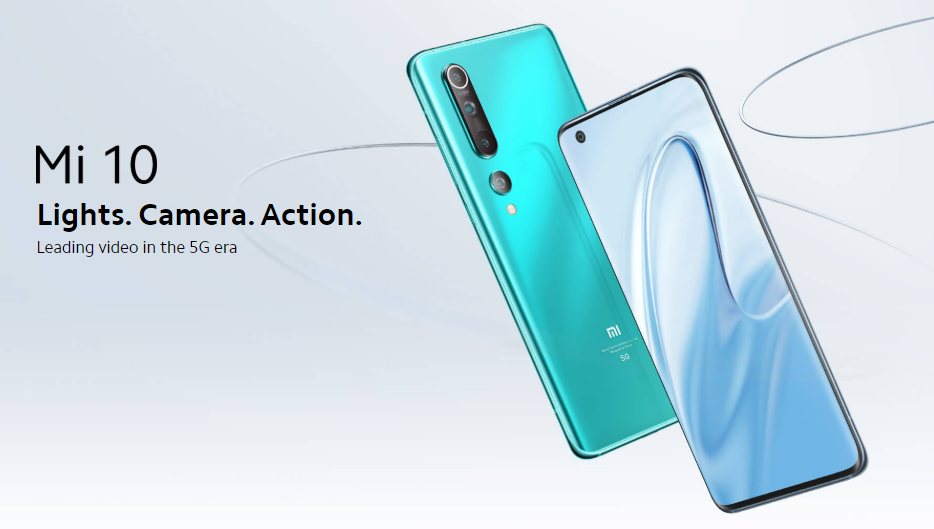
Xiaomi had previously planned to announce the Xiaomi Mi 10 smartphone in India at the end of March. However, it had to cancel the launch due to the COVID-19 outbreak in the country. Today, the Chinese firm live-streamed the launch event of the Xiaomi Mi 10 smartphone. In February, the company had launched the Xiaomi Mi 10 Pro alongside the Mi 10 handset. The company did not unveil the Pro model in the country. One of the major highlights of the Mi 10 is that it features a 108-megapixel quad camera setup. The other attractive features of the smartphone include support for 90Hz refresh rate, Snapdragon 865 mobile platform, and fast wireless charging.
Xiaomi Mi 10 price in India
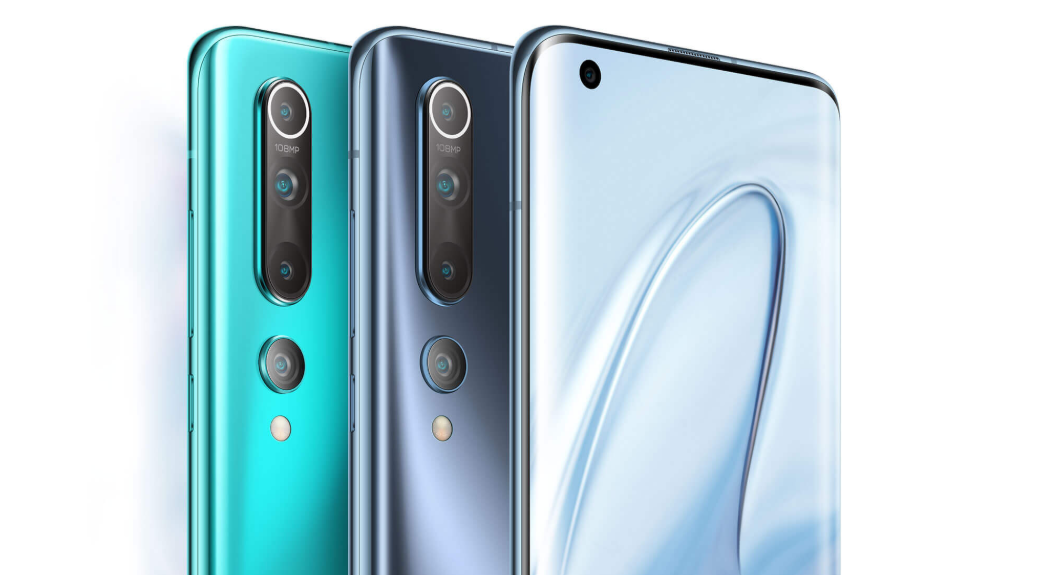
The Xiaomi Mi 10 has arrived in two variants in India such as 8 GB RAM + 128 GB storage and 8 GB RAM + 256 GB storage. These variants are priced at Rs. 49,999 (~$661) and Rs. 54,999 (~$727), respectively in the country. Coral Green and Twilight Grey are the two color editions of the Mi 10. The first sales of the smartphone will begin on May 13 through Amazon India and Mi.com. Customers who pre-book the Mi 10 can take advantage of offers like Mi Wireless Powerbank worth Rs. 2,500 for free, no-cost EMI plans at online and offline platforms, and up to Rs. 3,000 cashback with HDFC bank cards.
Xiaomi Mi 10 specifications
The Xiaomi Mi 10 smartphone that features a glass rear and an aluminum frame has 162.5 x 74.8 x 9mm and it weighs 208 grams. The S-AMOLED 3D curved screen on the front is shielded by Gorilla Glass 5. The size of the full HD+ resolution supporting display is 6.67 inches. The handset supports an aspect ratio of 19.5:9. The display supports a refresh rate of 90Hz and has a punch-hole at the top-left corner for the front-facing camera. The screen is integrated with a fingerprint sensor. Other features of the Mi 10’s display include HDR 10+ support, 5000000:1 high contrast ratio, 180Hz touch sampling rate, P3 wide color gamut, peak brightness of 1200nits, and TUV Rheinland certification for blue light filter.
The 7nm Snapdragon 865 mobile platform with maximum clocking speeds of 2.84GHz powers the Xiaomi Mi 10. The phone ships with LPDDR5 RAM and UFS 3.0 storage. The device lacks support for microSD card slot. There is a single nano-SIM slot on the device for adding a 5G or 4G SIM. While the Mi 10 is 5G-ready, but since 5G connectivity is yet to begin in India, it will only support 4G SIM in the country.
The Mi 10 has a 4,780mAh battery at its helm. It supports Quick Charge 4+ and USB-PD 3.0 charging protocols. The retail package of the phone ships with a 30W fast charger. The smartphone also supports 30W wireless charging and 5W reverse wireless charging. For regulating the internal temperature of the device, it features a vapor chamber liquid cooling technology. The MIUI 11 based Android 10 SO runs on the device.
Upfront, the Xiaomi Mi 10 has a 20-megapixel ultra-clear selfie snapper that comes with features like palm shutter, HDR, screen flash, AI beautify, AI portrait mode, AI scene detection, 30fps video recording, and more. The AI quad camera on the backside of the Mi 10 is led by an OIS assisted 108-megapixel ultra-clear primary sensor by Samsung. The setup also includes a 123-degree 13-megapixel superwide lens, a 2-megapixel depth assist lens, and a 2-megapixel macro lens. The rear camera supports plenty of features such as dual-LED flash, HDR, AI scene detection, AI beautify, AI portrait mode, AI smart slimming, Pro mode, movie frame, up to 8K video recording, and 720p / 1080p slow-motion video recording at 120fps.
The Xiaomi Mi 10 is fitted with dual 1216 super-linear speakers for stereo output. The Multi Link feature on the device lets Mi 10 users to connect to Wi-Fi and 5G/4G networks simultaneously for stronger connectivity. The other features of the Mi 10 are Bluetooth 5.1, NFC, dual-frequency GPS, and USB-C. It lacks support for 3.5mm audio jack.
What’s your opinion on the Xiaomi Mi 10? Share your thoughts by posting your comments below.
With the rising popular and decreasing pricing of the wireless earphones, as well as the fact that smartphone manufactures have ditched the 3.5mm headphone jack, the wired earphones are not widely used as before in smartphones.
However, there is a set of users who are still hooked to wired earphones and thus there exists a market for products like USB-C to 3.5mm converter and lightning to 3.5mm converter. Those who rely on wired earphones are now reporting issues with OnePlus smartphone in this department.
OnePlus users are reporting a strange issues where the audio gets swapped on the smartphone. This means that the audio meant for the left channel is heard on the right channel and vice-versa.
While this may not seem like a big issue to many, it is absolutely annoying, especially while playing certain type of games or videos. The issue is only for the wired headphone users and the users with wireless earphones are immune to this.
Users of OnePlus 7 series as well as those with devices dating back to OnePlus 5 are complaining about this weird issue. The audio swap issue occurs when using official accessories, dongles or even USB Type-C headphones.
OnePlus is apparently looking into this matter, but as of now, there’s no true fix available. There’s also no timeline available from the company regarding the fix. So, if you are facing this issue, you’ll just have to wait for the Chinese company to release the fix, hopefully it happens sooner than later.
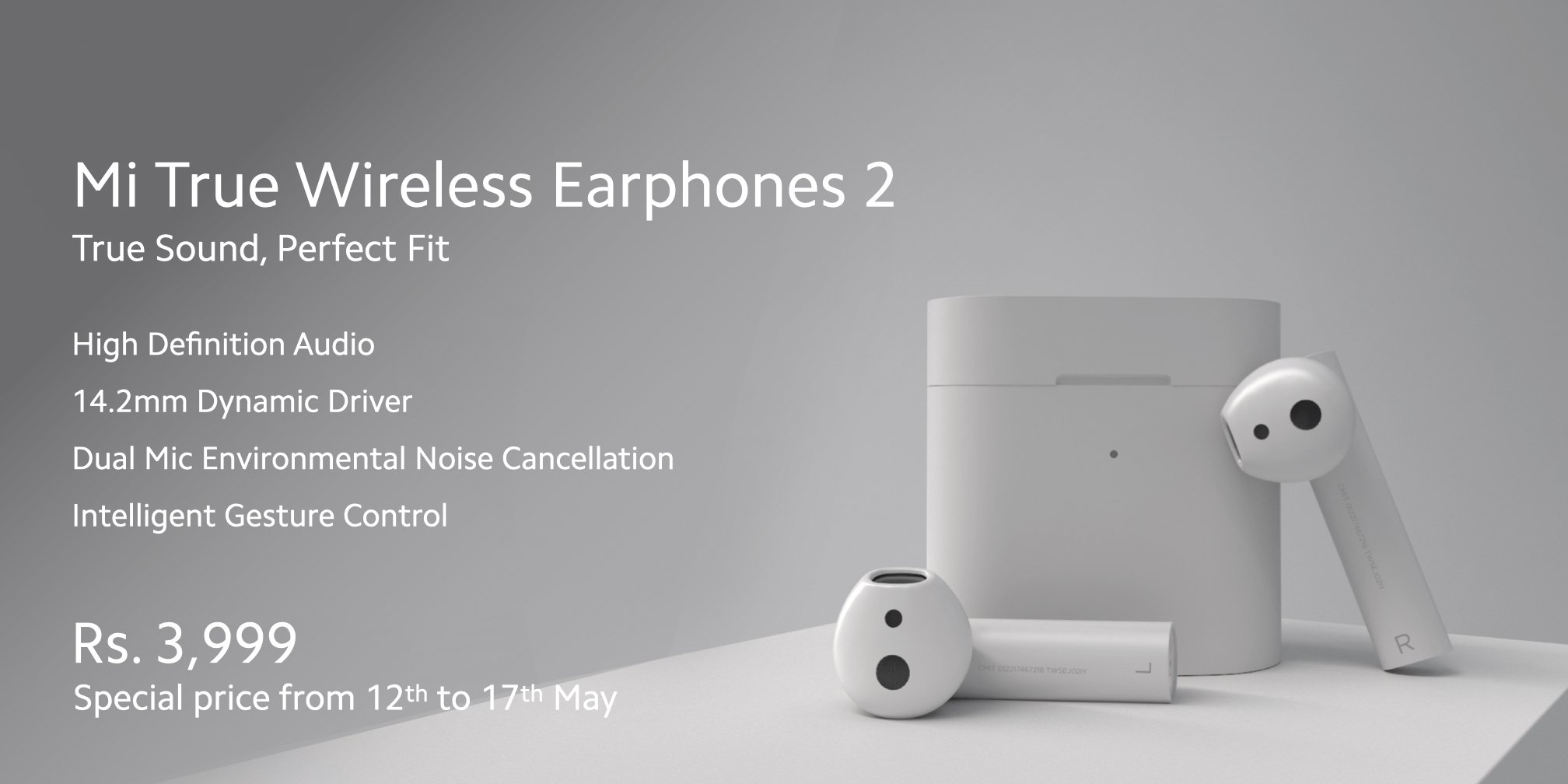
In September 2019, Xiaomi launched Mi AirDots 2 earbuds in China. In March, the same earbuds debuted as Mi True Wireless Earphones 2 in the global markets. Today, the Chinese firm live-streamed an unveil event to announce new the Xiaomi Mi 10 smartphone in India. Through the same event, the company unleashed the Mi True Wireless Earphones in India.
Xiaomi Mi True Wireless Earphones 2 price
The Mi True Wireless Earphones 2 has landed in India with a price of Rs. 3,999 (~$53). This pricing is only applicable between May 12 and May 17. The sales of the earbuds will begin on Mi.com, Amazon.in, and Mi Home at 12 PM on May 12.
Xiaomi Mi True Wireless Earphones 2 specifications
The Xiaomi Mi True Wireless Earphones 2 comes with a massive 14.2mm dynamic driver coupled with a large composite dynamic coil. It allows the earbuds to deliver superior sound with full bass. The support for LHDC Bluetooth codec better sound quality with low latency. It can transfer more than thrice the volume of data packets compared to any other audio codec for delivering distortion-free sound output.
The Mi True Wireless Earphones 2 comes with Bluetooth 5.0. It is compatible with Android and iOS devices. It is equipped with smart dual noise canceling microphones that ensure clarity during phone calls. On a single charge, the earbuds promise a listening time of up to 4 hours. The earphones can charge automatically through the charging case that features a USB-C port. When used with a charging case, the earbuds can last for up to 14 days.
The optical sensors placed inside the earbuds enables in-ear detection. The device can automatically pause the audio when earbuds are removed from the ears and it starts playing when the earphones are placed inside the ears. Right earphones can be tapped twice for play/pause. To access voice assistants like Google Assistant, Alexa or Siri, one can tap the left earbud twice. To receive a call, one can tap on either side twice.
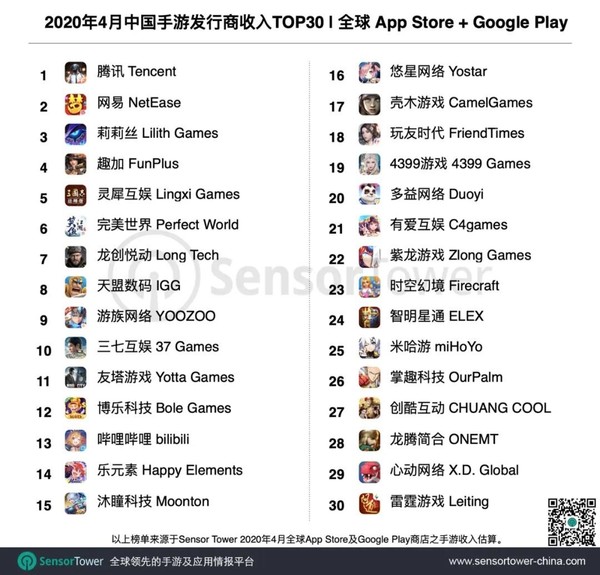
Earlier today (8th May 2020), Sensor Tower, a known analytics firm, published a new report, which detailed the rankings of the top Chinese mobile game publishers. The rankings also analyzed both Apple App Store and Google Play Store revenue for the month of April 2020.
Data via Sensor Tower
In the report, the global App Store and Google Play’s mobile game revenue ranked 30 of the top Chinese game publishers. According to the data, these publishers raked in more than 1.74 billion US Dollars just in the month of April. This marks a record high increase of 14 percent over March 2020 and accounts for 27.5 percent of the total current global mobile game market’s revenue.
Looking at the list, Tencent Games leads the Chinese mobile gaming publisher rankings. This arrives as no surprise as the video game publisher is behind many massively popular games and has also been successful in many countries apart from China through games like PUBG Mobile (which is a great hit in the global market). Other notable names in the lists include NetEase that comes in second followed by Lilith Games and FunPlus at third and fourth spots respectively.
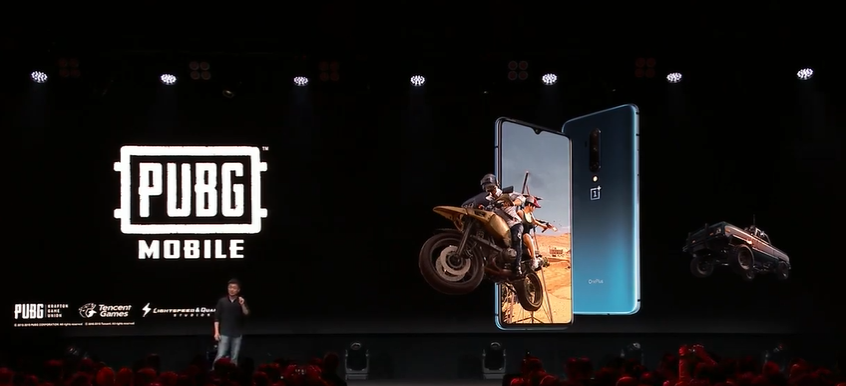
PUBG Mobile, a massively popular mobile port of the original PC game that was brought by Tencent Games and PUBG Corp.
The mobile gaming market has been seeing a rise in recent years and is currently booming, thanks in part due to the ongoing Coronavirus pandemic. The viral outbreak has led many people to be confined in their homes playing video games, especially on their smartphones to pass the time. Thus, the period has helped various Chinese mobile game publishers, 36 of which can even be found in the top 100 mobile game publishers that brought in the highest revenue.
In a recent interview, Steve Mollenkopf, the CEO of Qualcomm, talked about the company’s current relationship with the Cupertino based giant, Apple. The two companies had fought a legal battle but the senior Qualcomm official feels that the relations are “much more natural now.”
For those unaware, Apple had accused Qualcomm of ‘double dipping’ (basically making Apple pay for the sale of chips and its patent license, which is illegal in some cases) and the iPhone maker then proceeded to withhold any payments to the known chipmaker. However, while the accusations had landed both sides to the court, the two sides announced a massive settlement at the very last minute right before the trial actually began. This deal as Mollenkopf puts it, made the relationship between the two companies much more natural.
The Qualcomm CEO further added that “the discussion is really about products and how do we launch products as fast as possible. It’s much more natural.” Notably, Apple is expected to bring 5G networking to the iPhone 12 lineup through Qualcomm modems, so this might be a step towards better cooperation between both sides in the future. The interview was taken by Bloomberg and had Steve Mollenkopf also discuss the effects of the Coronavirus pandemic.
According to the CEO, Qualcomm “saw a pretty substantial drop in the China market. In the month of February, it really dropped pretty significantly. But what was surprising, it actually rebounded pretty quickly as well. It took about five weeks for it to correct itself and get back to a level of sell-in that’s not too different from what it was a year ago. In the process of doing that, it actually transitioned more of the phones as a percentage to 5G.”
Samsung has announced its plan to launch a Samsung Pay debit card this summer. The company says that the card will be backed by a cash management account and will be launched in partnership with personal finance company SoFi.
According to Sang Ahn, Vice President and General Manager of Samsung Pay in North America, the company is developing a “mobile-first money management platform” but has not revealed what features that platform or the upcoming debit card may offer. However, the company said that it will reveal more information about this in the coming weeks.
The development comes after Apple launched its own credit card named Apple Card last year in partnership with Goldman Sachs. There are reports claiming that Google is also working on a debit card of its own and is said to offer spending-tracking tools.
Samsung Pay was launched in 2015 as a way to allow select Galaxy devices to pay at virtually any terminal through Magnetic Secure Transmission (MST). This is different than NFC technology which is what Google Pay and Apple Pay uses.
Following the footsteps of Apple, Chinese giant Huawei has also launched its own Huawei Card in China last month. It is available in both physical and virtual form and the company says that it will wave-off annual fee for the early adopters for the first year.
Huawei’s sub-brand Honor is all set to launch its new Honor X10 5G smartphone in China on 20th May. Ahead of the launch, key specifications and features of the upcoming device have been surfacing online. In the latest development, the camera samples of the smartphone from Everest expedition have been released by the company.
Honor says that Li Pau and Cai Qing from 2020 Everest Survey Mountaineering Team took some stunning images using the Honor 30 Pro Plus and the upcoming Honor X10 5G. Here are the images captured using the new Honor X10 5G smartphone.
The smartphone is expected to come with a triple-camera setup on the back consisting of a 40-megapixel primary sensor, an 8-megapixel secondary lens, and a 2-megapixel tertiary sensor. For the main lens, the company is expected to use Sony IMX600y custom sensor.
On the front side, the device is said to be equipped with a 16-megapixel snapper housed inside a pop-up camera module. The smartphone will reportedly come with a 6.63-inch Full HD+ IPS LCD display with 20:9 aspect ratio and without any notches.
Under the hood, it will be powered by the company’s own Kirin 820 5G chipset, along with 4/6/8 GB of RAM and 64/128/256 GB internal storage. The phone houses a 4,200mAh battery that supports 22.5W fast charging through USB Type-C port.
The Honor X10 5G is expected to be the cheapest 5G-compatible smartphone from the company and is likely to be priced around 2,000 yuan which roughly converts to $282. To know for sure, we’ll have to wait for the official launch on 20th May.
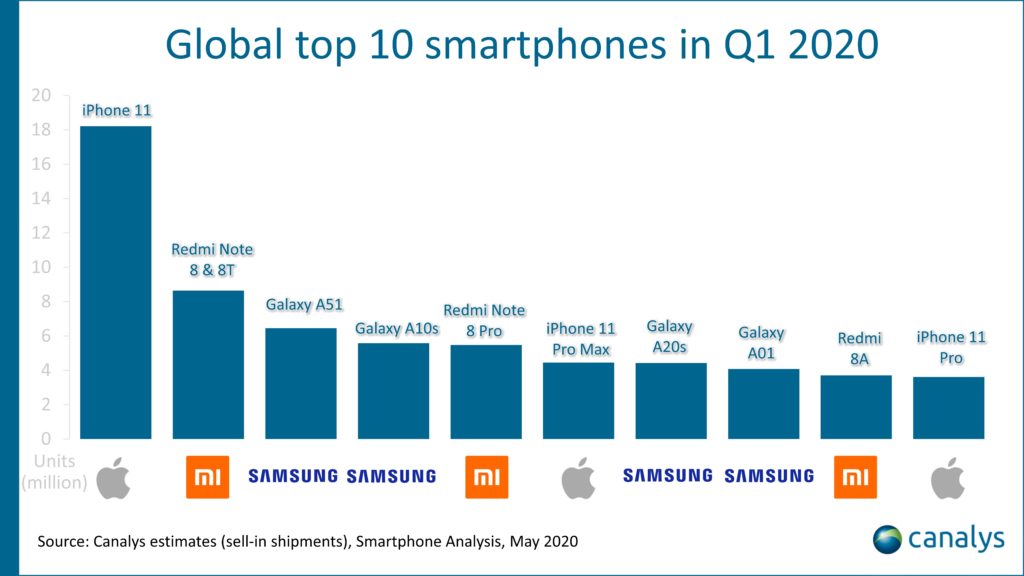
Despite pandemic, some smartphones sold more than others in Q1 2020. Canalys has tweeted an image disclosing the top 10 global smartphone models shipments in that period. Interestingly, only three OEMs make up the whole list namely Apple, Xiaomi, and Samsung.
According to Canalys, Apple was the leading company with its iPhone 11 shipping over 18 million units. The second place was held by Xiaomi’s Redmi Note 8 and Redmi Note 8T with over 8 million units.
Whereas, Samsung Galaxy A51 and Galaxy A10s occupied the third and fourth positions respectively with shipments over 6 and 5 million units.
The fifth place was conquered by another Xiaomi device, Redmi Note 8 Pro with over 5 million units. Then, iPhone 11 Pro Max with over 4 million held the sixth position, followed by two more Samsung handsets, Galaxy A20s and Galaxy A01 at seventh and eighth places with over 4 and 3 million units respectively.
The last two positions were occupied by Redmi 8A and iPhone 11 Pro with over 3 million units each. That said, we don’t have the exact number of shipments as Canalys is yet to reveal it.
Looking at the picture, we can clearly see there’s a huge gap between the first and the second places. Pricing the iPhone 11 aggressively has helped Apple sell a ton of this model. Also, it is interesting to note that more people bought iPhone Pro Max than the standard iPhone 11 Pro.
Further, Xiaomi’s Redmi A series sell more than other models usually but in the last quarter, the Redmi Note 8 series shipped higher than the Redmi 8A. As for Samsung, like always, its budget smartphones, the Galaxy A series to be exact, were the bestsellers occupying four places.
Xiaomi’s Mijia brand has revealed through a new post on Weibo that the company is all set to launch a new home water purifier in China on 11th May.
The company is also promoting the upcoming product with slogans like “good soup, good meal, and good skin.” It also added that this new product is “delicious”. All these claims from Xiaomi hints that the purifier will have a soft water feature.
The water quality in most part of China is hard water containing more mineral content and largely includes more soluble calcium and magnesium compounds. On the other hand, soft water contains low concentrations of ions and is low in ions of calcium and magnesium.
However, the company has not yet announced anything related to this water purifier. It remains to be seen what Xiaomi is planning to offer in terms of features for this upcoming product. To know for sure, we’ll have to wait a couple of days more.
The upcoming product won’t be the first water purifier coming from Xiaomi. The company has launched several such products in India. Last year, in September, the Xiaomi Water Purifier C1 was launched which comes with three faucet outlets and 4-level RO filtration. Recenly, Xiaomi-backed Viomi launched Yunmi S2 600G water purifier.
India went under lockdown on 17th March and since then only essential services related businesses are allowed to operate. However, after extending the lockdown again on 3rd May, the Indian government is loosening up restrictions.
Samsung, which has been severely hit because of the coronavirus pandemic, has now come up with a new solution. As e-commerce deliveries still remain unavailable in various parts of the country because of lockdown, the South Korean giant is bringing the retail stores online for selling phones.
The company has partnered with Benow to bring retailers online and connect them with local customers. Samsung claims that more than 20,000 retailers have already signed up to the platform and says that it’s a win-win for retailers and customers.
For getting registered, Samsung shares dealer’s information with Benow which then shares a registration link and its app. The retailer can then list all the smartphones up for sale and share the store link with others. Customers in the locality of the store can select the smartphone, make the payment and then the retailer will deliver the product to customer.
The move from the South Korean company comes at a time when it needs to boost its own smartphone sales in the Indian market. Samsung, which was once dominating the Indian market in terms of smartphone sales, lost the crown to Xiaomi a few quarters ago. Now, for the first time, Vivo has overtaken Samsung for the second position in the Indian market during the first quarter of this year.
Samsung comes in at the third position with shipment of 6.3 million units and 18.9 percent market share, followed by Realme and OPPO. Vivo nearly doubled its shipments in India year-on-year to 6.7 million units, capturing almost 19.9 percent of the market. Xiaomi remains the leading smartphone brand in the country with 10.3 million units and 30.6 percent market share.
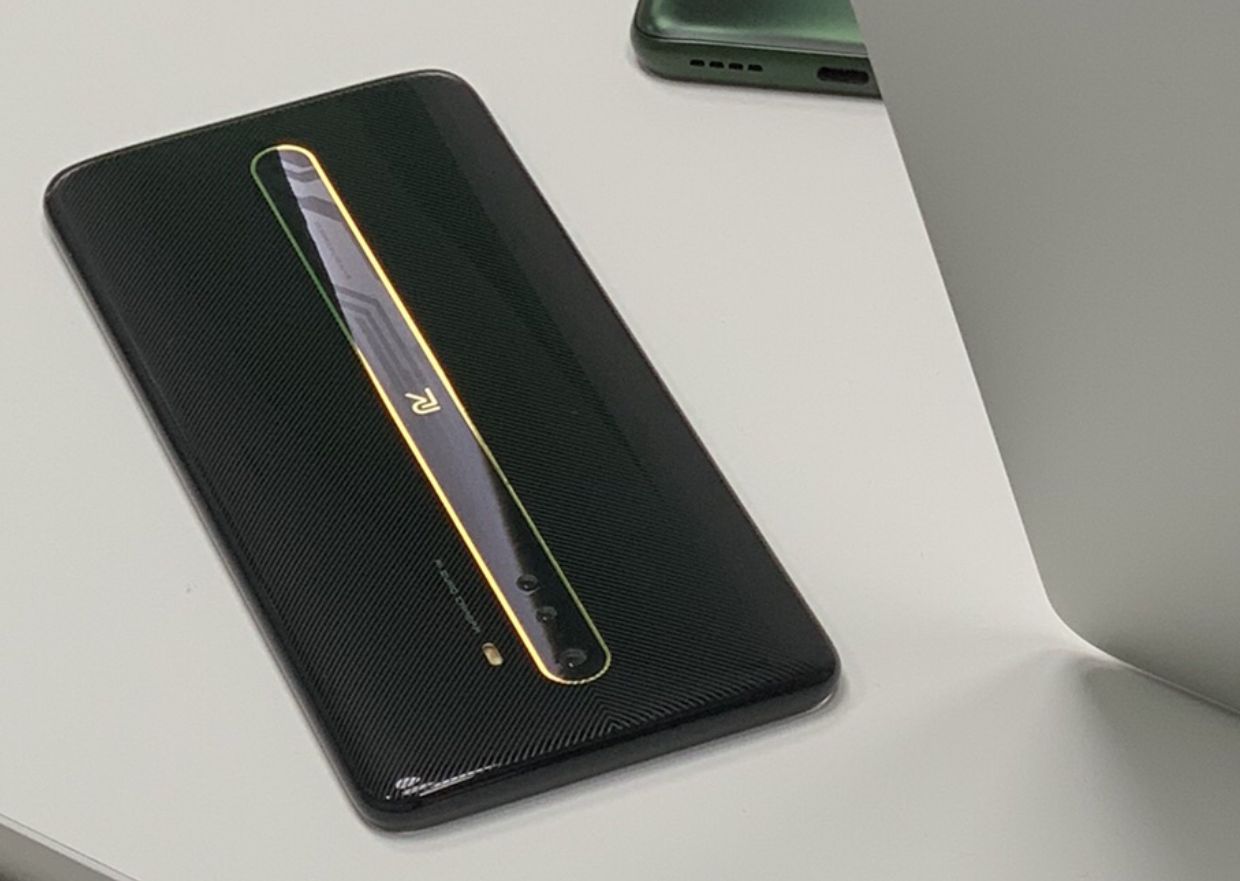
Realme is rumored to be working on the launch of the Realme X3 series. Multiple reports have revealed the existence of a phone called Realme X3 SuperZoom. The moniker suggests that the phone could be equipped with a periscope zoom lens that will bring support for higher zooming capabilities. A tipster has revealed that the Realme X3 SuperZoom will support 60x zoom.
According to the tipster, the 60x zoom feature on the Realme X3 SuperZoom will be called “Starry Mode.” This mode will allow users to capture shots of the Milky Way. At present, there is no word on the camera configurations of the Realme X3 SuperZoom.
In April, the Realme X3 SuperZoom bagged certification from the NBTC certification body of Thailand and it also appeared on Geekbench. The listing at the benchmarking platform revealed that the X3 SuperZoom has 12 GB of RAM, Snapdragon 855 or 855+ and it runs on Android 10 OS. In the same month, the smartphone also received approval from the Bluetooth SIG authority.
This mysterious Realme phone could be Realme X3 series phone
The same tipster who revealed the inclusion of Starry Mode on the Realme X3 SuperZoom recently claimed that it will be arriving with a 4,200mAh battery. He also claimed that the phone will carry support for 30W fast charging. The other specs of the Realme X3 SuperZoom are currently under the wraps.
Rumors surrounding the Realme X3 series that it may include three devices. There could be a vanilla model, the Realme X3 SuperZoom phone, and the Realme X3 Pro. The Pro had reportedly appeared on AnTuTu with model number RMX2072 and benchmarking scores of 600,806. The X3 Pro is speculated as the last Snapdragon 865 powered phone for the first half of 2020. Hopefully, more details on the Realme X3 lineup will appear in the coming weeks.
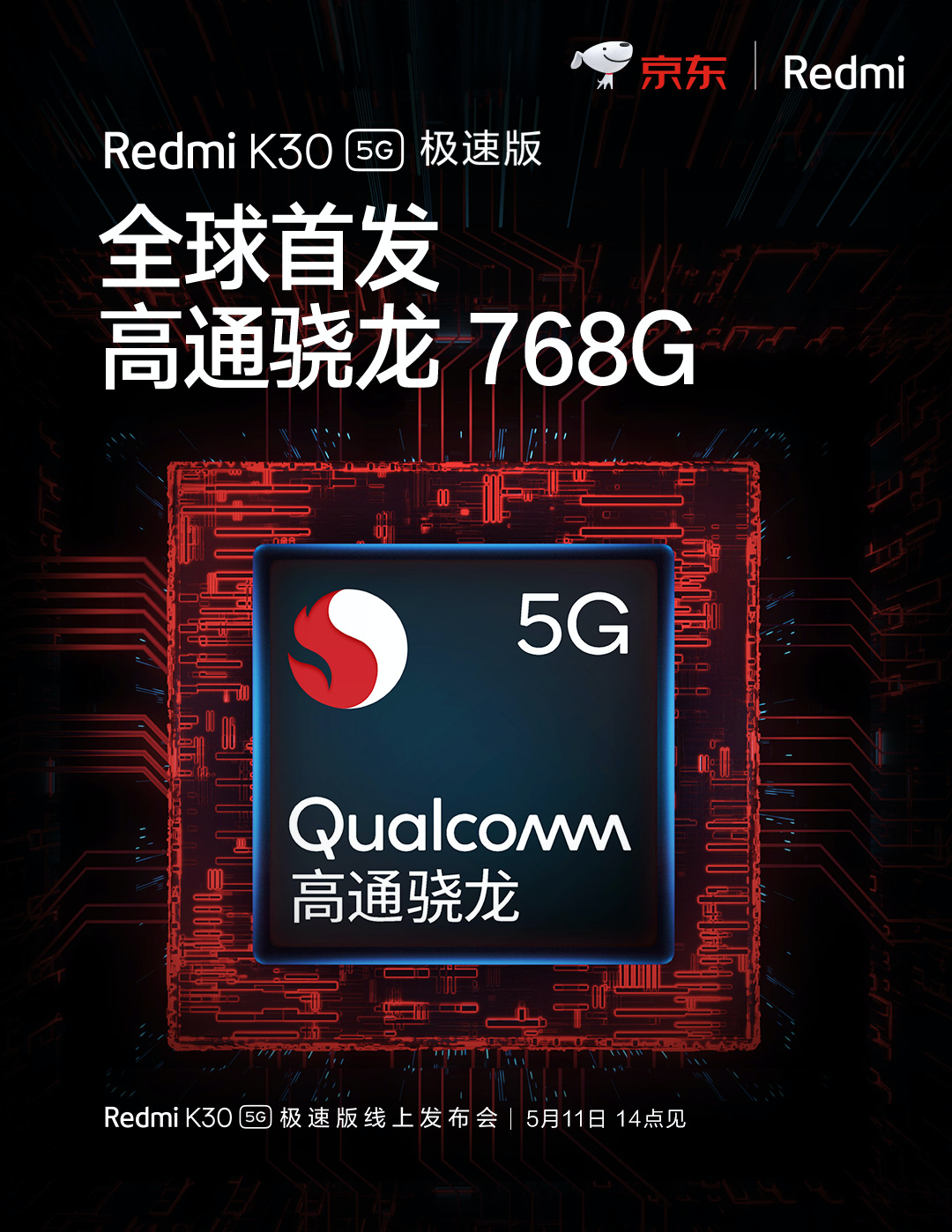
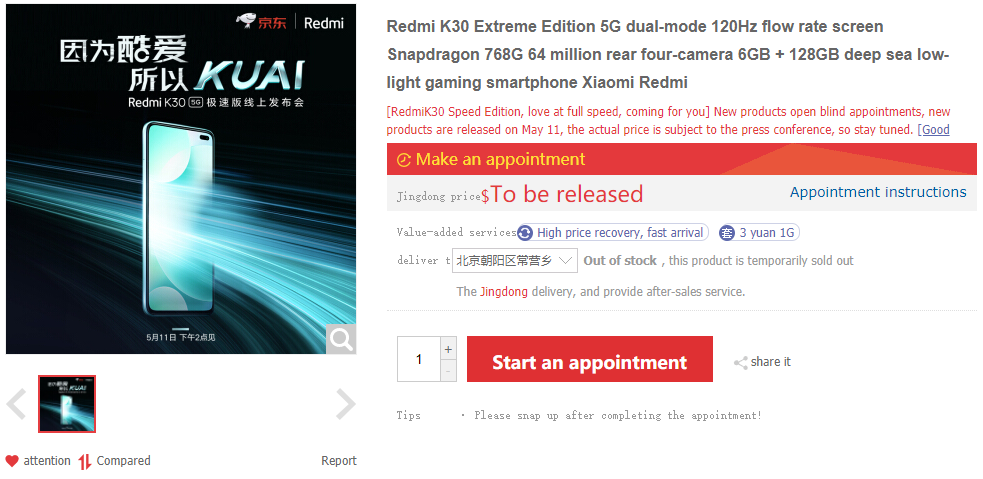
Update: Redmi has released an official confirmation that the Redmi K30 5G Extreme Edition features the all-new Snapdragon 768.
Original story…
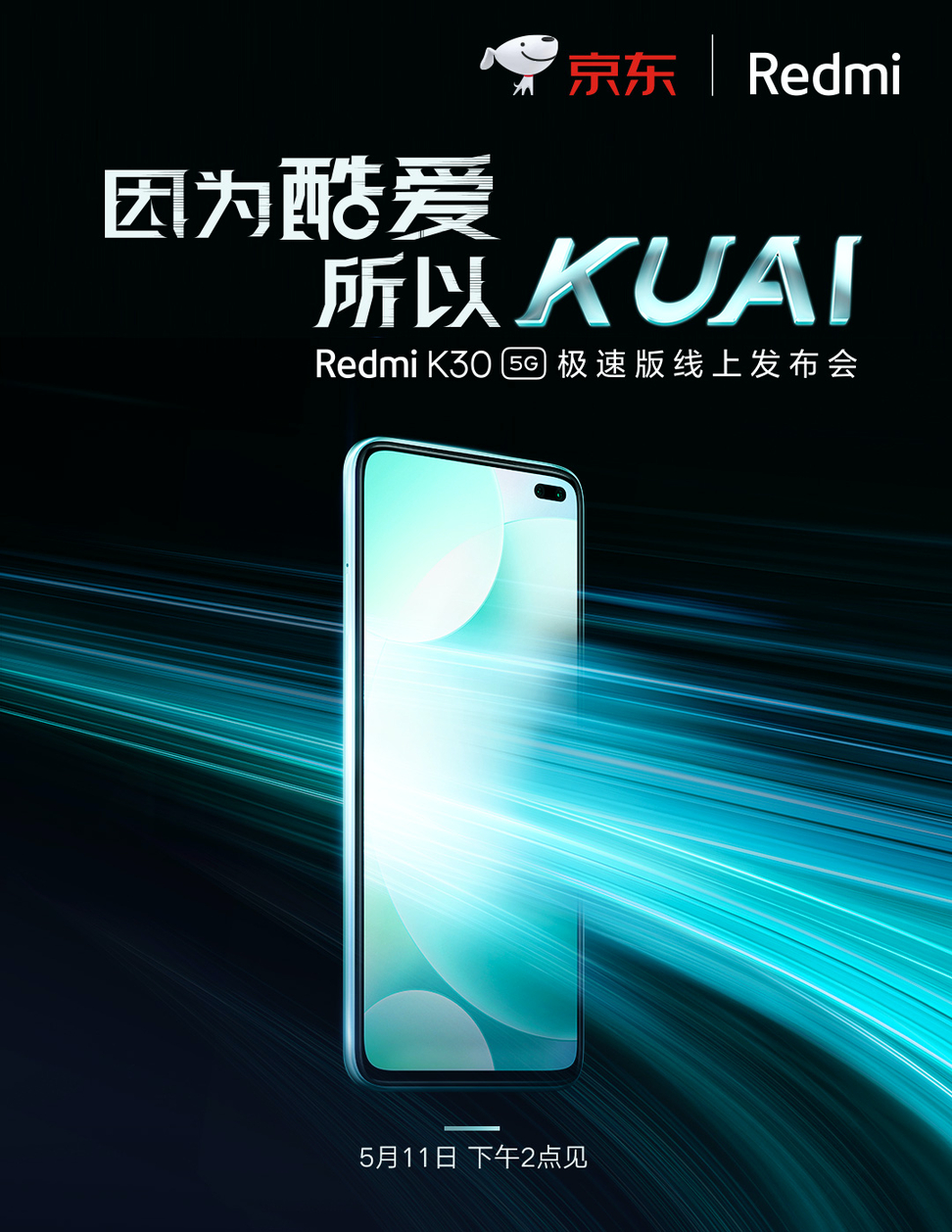
In December 2019, Redmi announced the Redmi K30 5G smartphone. It arrived as the company’s first smartphone with 5G capabilities. It carried a starting price of 1,999 Yuan. Recent reports had revealed that the Chinese brand is working on a slightly weaker version of the phone. The rumor mill even speculated that the device may go official as Redmi K30i. Today, Redmi confirmed through Weibo that it will be unveiling the Redmi K30 5G Extreme Edition on May 11. Probably, it could be the actual name of the rumored Redmi K30i.
First of all, the Redmi K30 5G Extreme Edition moniker itself is a good hint that it is a variant of the Redmi K30 5G phone. The poster reveals that the brand has teamed up with Chinese retailer JD.com for the launch of Redmi K30 5G Extreme Edition. The poster also reveals the handset will be equipped with a dual punch-hole screen like the Redmi K30 5G. Redmi has not revealed any other information about the smartphone. The unveil event of the Redmi K30 5G Extreme Edition will start at 2 PM (local time) in China.
The Redmi K30 5G Extreme Edition is now listed for reservations on JD.com. The listing has revealed some of the key features of the phone. It states that the Redmi K30 5G Extreme Edition’s display supports 120Hz refresh rate and it is fueled by the unannounced Snapdragon 768. The SD768 SoC appears to be an enhanced version of the Snapdragon 765G mobile platform that is present under the hood of the Redmi K30 5G.
The listing further states that the Redmi K30 5G Extreme Edition has 6 GB of RAM. The phone has a native storage of 128 GB. On its rear, it features a 64-megapixel quad-camera system.
It is still unclear whether the Redmi K30 5G Extreme Edition is the rumored Redmi K30i. The reason behind this is that it the K30i was speculated to arrive with a 48-megapixel primary lens on its rear-facing camera system.
Mount Everest has long been closed to expedition both on the Chinese and Nepal side due to the Corovirus pandemic. However, China recently opened its side located in Tibet to a Chinese expedition team. The 30-member team of Chinese surveyors recently set out from the base camp at an altitude of 5,200 metres to a higher altitude in an attempt to reach the summit and re-evaluate the summit’s measurement. Mount Everest’s peak has a height of 8,848 metres from the base. If successful, it is said to go into the record as the first time professional surveyors in China would scale to the summit of Mount Everest.
The team is deploying an unusual tool to help in the measurement – the Mi 10 Pro. Yes, after its exploit in capturing shots from outer space, the camera is again being put to use for the Mount Everest elevation re-testing project.
The Xiaomi Mi 10 Pro comes with an advanced quad-camera setup that includes a 108MP primary camera with a 10X hybrid/50x digital optical zoom lens, a dedicated portrait lens, and a wide-angle lens. Some of the photos captured during the expedition from the base camp as shared by Xiaomi are posted below.
Last week, some variants of the upcoming Samsung Galaxy A21s smartphone received certification from the Bluetooth SIG authority. The smartphone is expected to arrive as an enhanced version of the Galaxy A21 handset that debuted in April. 91mobiles has come across a promo video of the phone through which its key features have been revealed.
The promo video showcases the Live Camera feature that will be available on the Galaxy A21s. It will let users to make use of the default camera app to broadcast live videos on platforms like YouTube, Facebook and Instagram. The phone will also come with AR Doodle feature. The promo video also reveals that the Galaxy A21s will come in color editions like black, white and blue colors.
Samsung is yet to tease the arrival of the Galaxy A21s phone. The rumor mill has already leaked the key specifications of the smartphone. The handset is rumored to house a 6.5-inch IPS LCD that produces HD+ resolution of 720 x 1600 pixels.
It may feature a new chipset called Exynos 850. The phone may come with 3 GB of RAM. It may offer users native storage of 64 GB and carry support for the microSD card slot. The One UI 2.0 based Android 10 OS is most likely to arrive preinstalled on the smartphone.
The Galaxy A21s is likely to feature a 5,000mAh battery. It may possess a front camera of 13-megapixel. The back panel of the phone could be fitted with a 48-megapixel + 8-megapixel + 2-megapixel triple camera system. The phone will come with some other features such as dual-SIM slot, dual 4G VoLTE, Wi-Fi 802.11ac, micro USB, NFC, 3.5mm audio jack, and rear-facing fingerprint reader.
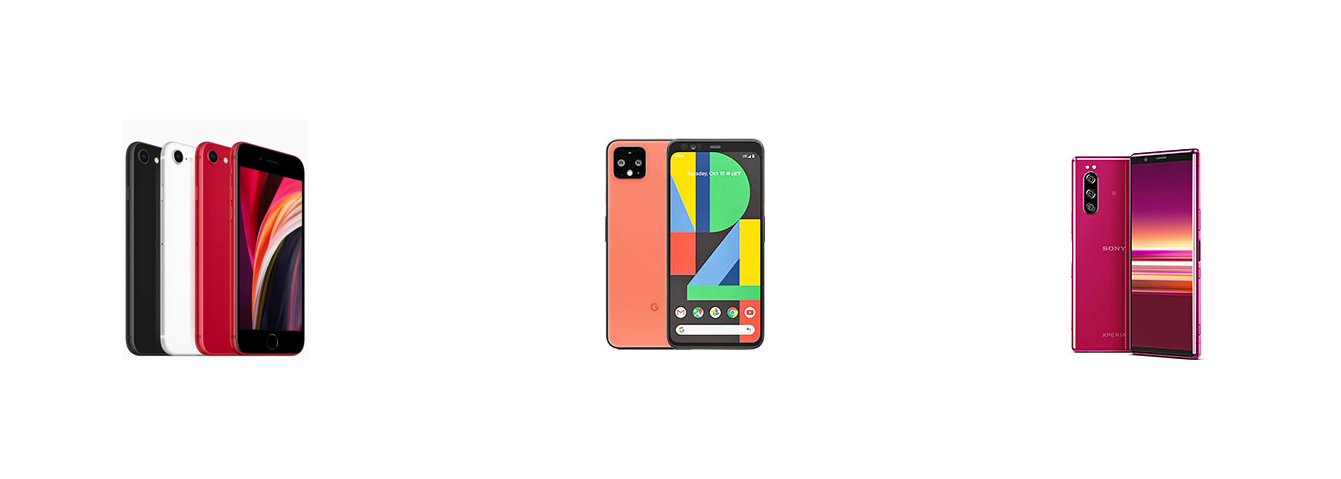
Compact flagships are rare in the actual smartphone market. That is why when one of them gets released there is always an important hype. The latest compact flagship released is the new iPhone SE 2020 by Apple. It promises the same performance as the iPhone 11 series in a compact body and at an affordable price compared to other Apple phones. But is it really the best compact smartphone out there? In order to establish it, we decided to compare it with other recent compact flagships in the Android world: the vanilla Google Pixel 4 and the Sony Xperia 5 which replaced the Xperia Compact series.
Apple iPhone SE 2020 vs Google Pixel 4 vs Sony Xperia 5
Google Pixel 4
Apple iPhone SE 2020
Sony Xperia 5
DIMENSIONS AND WEIGHT
147.1 x 68.8 x 8.2 mm, 162 g
138.4 x 67.3 x 7.3 mm, 148 grams
158 x 68 x 8.2 mm, 164 g
DISPLAY
5.7 inches, 1080 x 2280p (Full HD+), P-OLED
4.7 inches, 750 x 1334p (Retina HD), Retina IPS LCD
Dual 12.2 + 16 MP, f/1.7 and f/2.4
8 MP f/2.0 front camera
Single 12 MP f/1.8
7 MP f/2.2 front camera
Triple 12 + 12 + 12 MP, f/1.6, f/2.4 and f/2.4
8 MP f/2.0 front camera
BATTERY
2800 mAh, fast charging 18W and Qi wireless charging
1821 mAh, fast charging 18W, wireless charging Qi
3140 mAh, fast charging 18W
ADDITIONAL FEATURES
Dual SIM slot, IP68 waterproof, eSIM
IP67 water resistant, eSIM
Hybrid Dual SIM slot
Design
iPhone SE 2020, Google Pixel 4, and Sony Xperia 5 all come with a premium design including a glass back and an aluminum frame. But I define the Sony Xperia 5 as a much more attractive device due to its narrower bezels around the display and its CinemaWide 21:9 aspect ratio. On the other hand, it is the device with the biggest dimensions in this trio. The most compact, lightweight, and thinnest one is the Apple iPhone SE which measures 138.4 x 67.3 x 7.3 mm and weighs just 148 grams. However, it has an outdated design: the same as the iPhone 8 released back in 2017.
Display
Each of these devices offers a pretty nice display panel. But my favorite one belongs to Google Pixel 4. It is the only to offer a 90 Hz refresh rate and, besides providing the OLED technology and a Full HD+ resolution, it is HDR-compliant. Sony Xperia 5 lacks a high refresh rate just like the iPhone SE, but it still offers an amazing OLED display with HDR and advanced technologies borrowed from Sony Bravia TVs. Unfortunately, iPhone SE has an IPS panel with a lower resolution, but it comes with a wider color gamut and the True Tone technology. Further, the handset is the most compact with a diagonal of just 4.7 inches. iPhone SE and Sony Xperia 5 rely on a fingerprint scanner for authentication, while Google Pixel 4 supports 3D facial recognition.
Hardware/Software
The most performing handset here is the iPhone SE: it is equipped with the same Apple A13 Bionic SoC found on the iPhone 11 lineup and the iOS operating system offers a more advanced level of optimization. You should not notice big differences between Google Pixel 4 and Sony Xperia 5 since they pack the same Snapdragon 855 chipset paired with 6 GB of RAM and UFS 2.1 internal storage. Sony Xperia 5 is the only with a micro SD slot to expand the internal storage, but unlike the Google Pixel 4 running Android 10, it runs Android 9 Pie out of the box.
Camera
It is very hard to pick a winner in this trio: all of these devices are amazing camera phones, each with its pros and cons. In my opinion, Google Pixel 4 provides the most amazing image quality in a lot of scenarios, but Sony Xperia 5 is more or less at the same level and, unlike the Google Pixel 4 and the iPhone SE, it packs an ultrawide sensor. iPhone SE shines when it comes to video recording with an awesome stabilization and sharpness. Google Pixel 4 shoots amazing selfies and it is the only with a dual front camera including a TOF 3D sensor.
Battery
The longest battery life is provided by the Sony Xperia 5 which also packs a bigger 3140 mAh battery. But the Sony Xperia 5 does not support wireless charging, unlike Google Pixel 4 and iPhone SE. The silver medal goes to the Google Pixel 4 with its 2800 mAh battery.
Price
iPhone SE starts from €499/$399, Google Pixel 4 begins at $799/€749, and Sony Xperia 5 has an €800/$800 starting price. Thanks to actual street prices, you can get Google Pixel 4 and Sony Xperia 5 at way lower prices. There is not a definitive winner of this comparison. Sony Xperia 5 wins when it comes to battery life, Google Pixel 4 offers a 90 Hz display, iPhone SE has the highest performance. When it comes to cameras, they are all pretty nice. Call me unpopular, but my choice would be Sony Xperia 5 due to its battery. Which one would you pick?
We use cookies on our website to give you the most relevant experience by remembering your preferences and repeat visits. By clicking “Accept”, you consent to the use of ALL the cookies.
This website uses cookies to improve your experience while you navigate through the website. Out of these, the cookies that are categorized as necessary are stored on your browser as they are essential for the working of basic functionalities of the website. We also use third-party cookies that help us analyze and understand how you use this website. These cookies will be stored in your browser only with your consent. You also have the option to opt-out of these cookies. But opting out of some of these cookies may affect your browsing experience.
Necessary cookies are absolutely essential for the website to function properly. This category only includes cookies that ensures basic functionalities and security features of the website. These cookies do not store any personal information.
Any cookies that may not be particularly necessary for the website to function and is used specifically to collect user personal data via analytics, ads, other embedded contents are termed as non-necessary cookies. It is mandatory to procure user consent prior to running these cookies on your website.