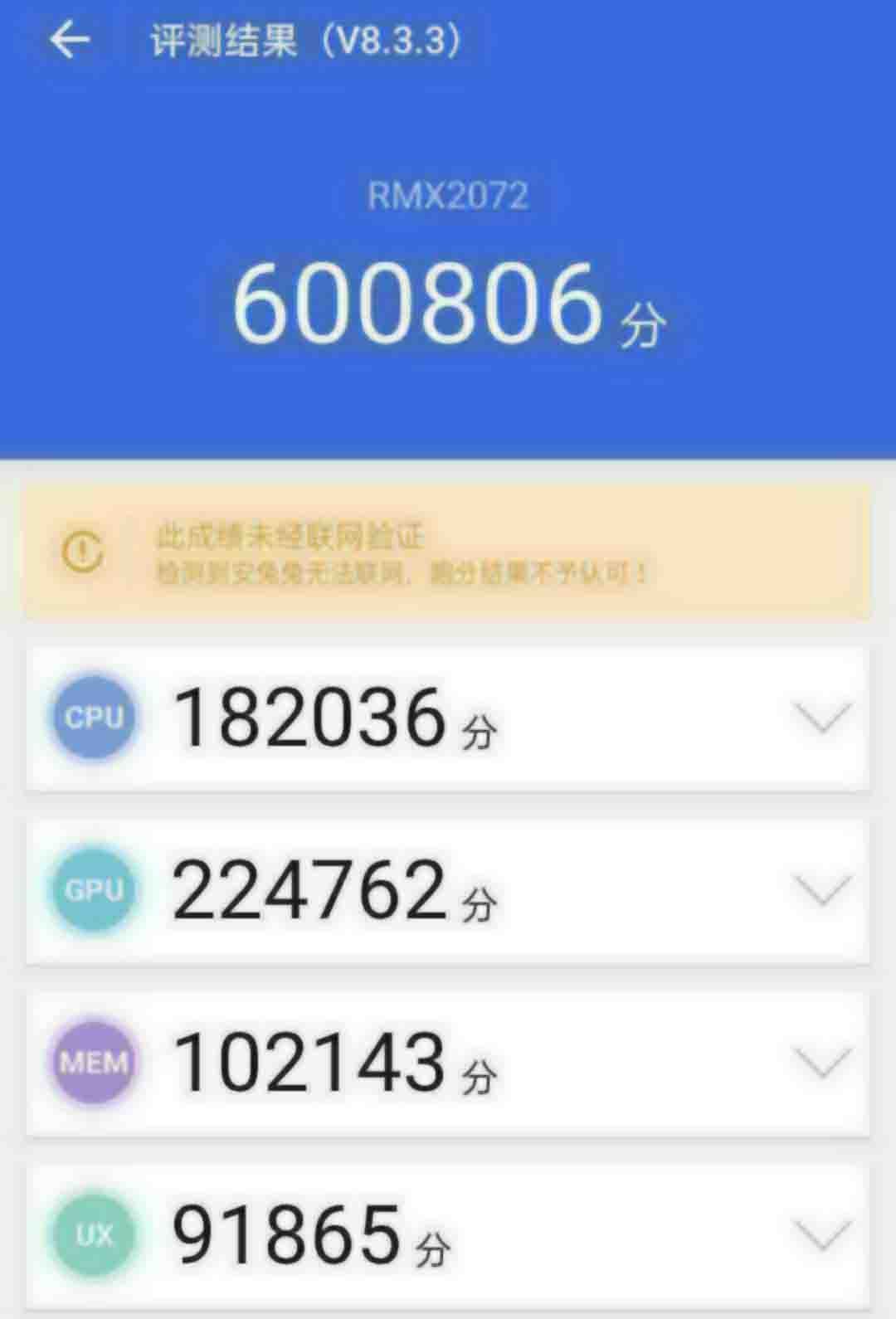
There are indications that Chinese phone maker Realme is presently working on a second smartphone powered by Qualcomm’s latest flagship Snapdragon 865 chipset. A screenshot of the AnTuTu benchmark page for the device bearing the codename RMX2072 has now been spotted online.
The device posted a score of over 600,000 on AnTuTu which is an indication that it is powered by a Snapdragon 865 chipset. The model number is similar to that of the Realme X3 (RMX2141) which was certified by TENAA a few weeks ago. Realme X3 SuperZoom (RMX2086)also leaked recently packing the older Snapdragon 855+ chipset used on the X2 Pro.
This model is speculated to be the Reame X3 Pro. Based on the AnTuTu benchmark memory score, the device will come with UFS 3.1 storage as against the UFS 3.0 flash storage on the X2 Pro. The popular leakster @IceUniverse tips this model to be a gaming phone.
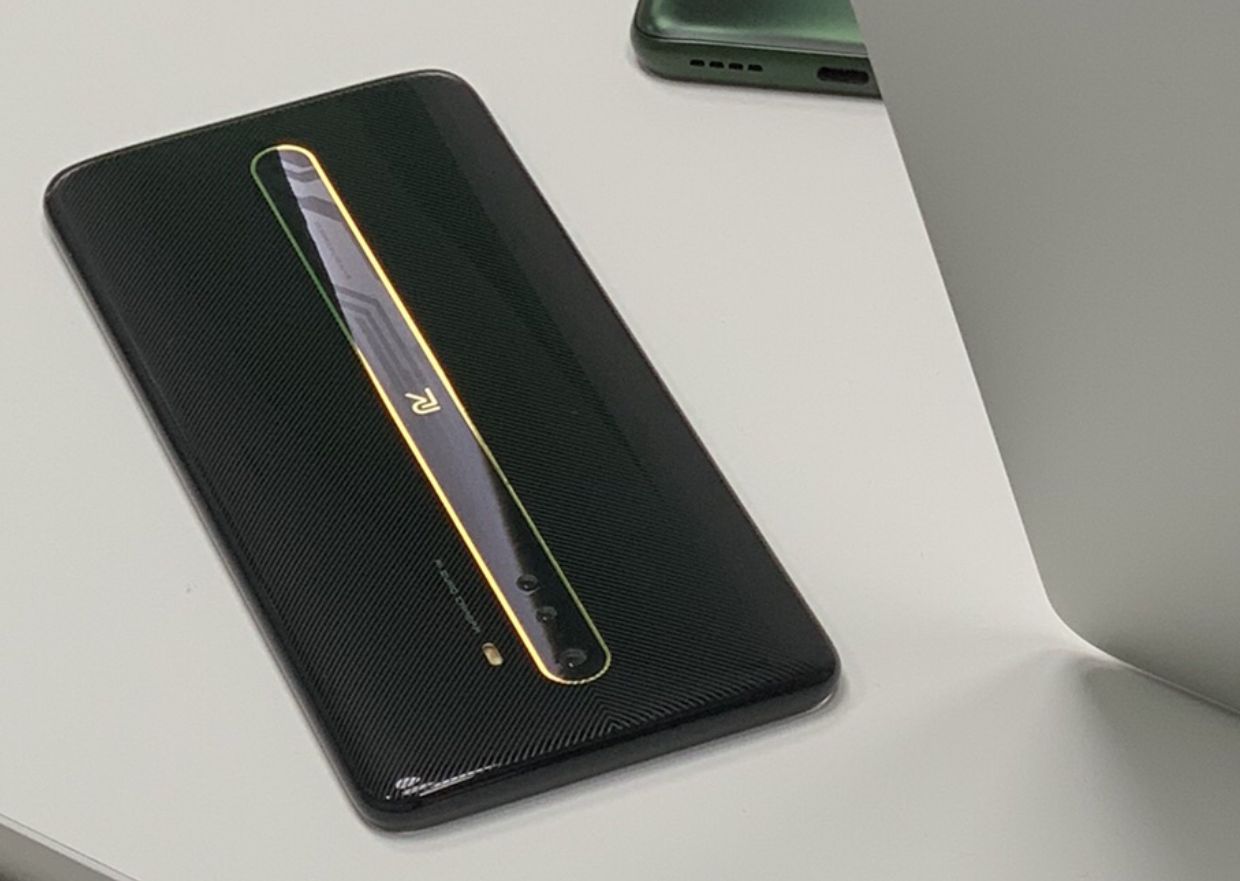
If this is the mysterious Realme phone that leaked back in April, then we expect it to have a distinctive vertical stripe running down the middle of its back. The stripe will hold a triple rear camera and the Realme logo.
Today, MediaTek announced the Dimensity 1000+, a processor that improves upon the Dimensity 1000. The launch of the new processor is weird seeing as the Dimensity 1000 itself is yet to appear in a phone. If you are curious as to what is different between the two processors, this post should help you with that.
The Dimensity 1000+ actually doesn’t differ from the Dimensity 1000 in areas such as CPU and GPU configuration and their respective clockspeeds. The differences are actually in additional features baked into already existing technologies. The table below is a comparison of the two processors:
Dimensity 1000 versus Dimensity 1000+
Dimensity
1000
Dimensity
1000+
CPU
4x Cortex-A77 cores clocked at 2.6GHz
4x Cortex-A55 cores clocked at 2.0GHz
4x Cortex-A77 cores clocked at 2.6GHz
4x Cortex-A55 cores clocked at 2.0GHz
GPU
Mali-G77 MC9
Mali-G77 MC9
Process
7nm
7nm
Display Refresh Rate
120Hz FHD+
90Hz QHD+
144Hz FHD+
120Hz FHD+
90Hz QHD+
MiraVision Engine
Yes
Yes, with the following new features:
AI-PQ - Real time dynamic adjustment of contrast, color, sharpness and color levels of 4K videos.
MiraVision Enhanced HDR10+ (better than HDR10+) Video
Playback
SDR to HDR conversion
HyperEngine 2.0
Yes
Yes, with the following new features:
Resource Management Engine for better game performance with minimal power consumption.
Rapid Response Engine creates lag-free gaming experience with multi-peripheral co-existence and avoidance of interference.
Updated Network Engine allows data connection remains live when a call is received.
AV1 Hardware Decoding
Yes
Yes
AI Processing Unit
APU 3.0
APU 3.0
5G Modem
2 carrier aggregation
SA and NSA network support
Sub-6GHz network support
5G UltraSave Technology
2 carrier aggregation
SA and NSA network support
Sub-6GHz network support
As you can see above, the Dimensity 1000+ brings additional benefits in areas such as the modem with its new UltraSave feature that helps with battery conservation. MediaTek’s MiraVision Engine also brings some improved benefits such as better HDR and SDR to HDR conversion.
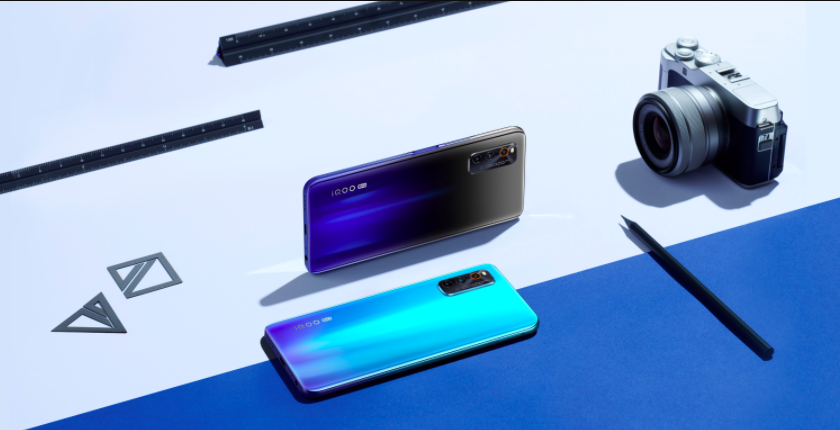
Another key addition is the support for displays with a 144Hz refresh rate. iQOO already announced that it will launch a phone powered by the new Dimensity 1000+ chipset. The manufacturer’s latest device is the iQOO Neo 3 which has a 144Hz refresh rate but is powered by a Snapdragon 865 processor. We presume this upcoming device will also have a 144Hz refresh rate since the Dimensity 1000 supports it.
With the Dimennisty 1000+, there is no need for the Dimensity 1000 anymore
One question that the launch of the Dimensity 1000+ brings up is if it is necessary for the Dimensity 1000 to continue to exist. To be honest, we think not.
There is yet to be a single commercially-available phone powered by the Dimensity 1000 which was announced back in November 2019 and scheduled to appear in devices in Q1 2020. Now that the Dimensity 1000+ brings some key improvements over it, it may be wise for MediaTek to forget about the Dimensity 1000.
We do not know how much MediaTek is charging manufacturers for the new chipset but if the margin is pretty small, keeping both processors may cannibalize sales. For example, manufacturers may decide to choose the Dimensity 1000 over the Dimensity 1000+ because they do not plan to launch a device with a 144Hz refresh rate, so while pay extra for a feature they do not need?
However, if it is just the Dimensity 1000+ available, manufacturers don’t have to weigh options and pick the one available which of course is the better chipset.
All of the above is just speculations. However, time will tell which chipset will be chosen by manufacturers. Nevertheless, we think the Dimensity 1000 may just be a repeat of the Helio X30.
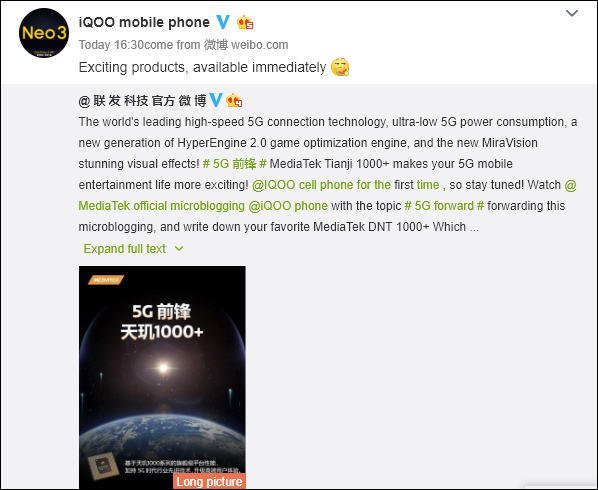
Taiwanese fabless chipmaker MediaTek earlier today announced the Dimensity 1000+ flagship chipset at an online event in China. The company announced via a Weibo post that iQOO mobile phone will be the first to spot the Dimensity 1000+. iQOO has now confirmed via Weibo that it will indeed release a smartphone with MediaTek’s latest chipset and it will be launched soon.
The Dimensity lineup by MediaTek has proven to be a reliable and solid lineup, at least going by benchmark ranking. Unfortunately, most OEMs have continued to boycott the lineup with just a few phones using them, like the OPPO Reno3 which is powered by the Dimensity 1000L. The new Dimensity 1000+ flagship SoC brings several improvements over the Dimensity 1000, one of which is a higher 144Hz refresh rate.
iQOO already has a smartphone that supports 144Hz refresh rate and that is the iQOO Neo3 5G. The new MediaTek Soc also has a new HyperEngine 2.0 which improves the gaming performance in the new chip. The chipset also supports SA and NSA dual-mode 5G networking and is the only chip in the industry that supports 5G + 5G dual SIM/dual standby and is equipped with 5G dual-carrier aggregation technology. Thus, users will always remain online when they get incoming calls.
The phone maker is yet to reveal the name of the phone that would bear the new processor. There are speculations that it will be the iQOO Neo3 Racing Edition or Neo3 Dimensity Edition. Recall that the first-gen iQOO Neo got a Snapdragon 855+ version dubbed iQOO Neo Racing Edition.
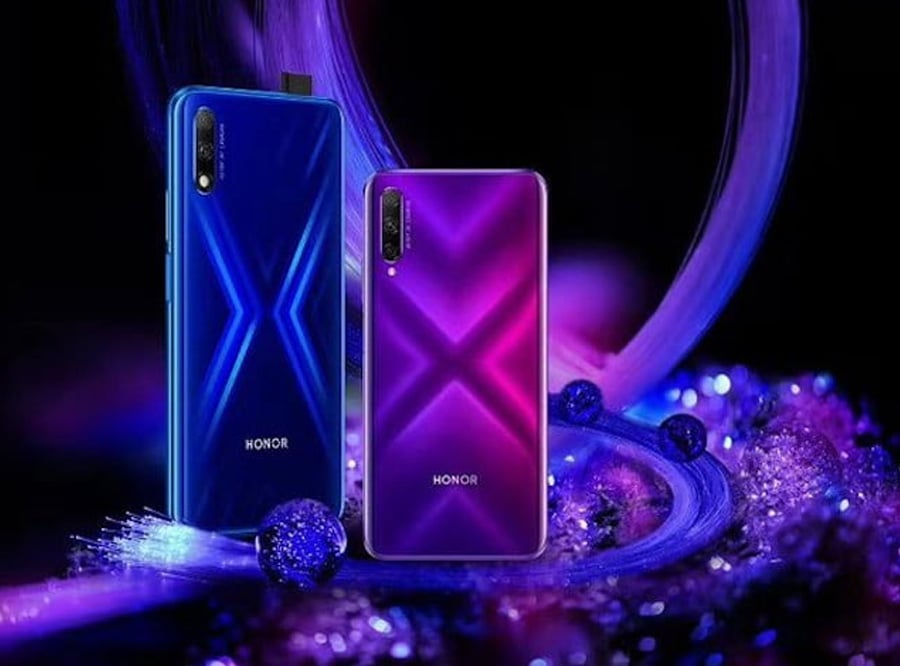
Huawei’s Honor brand took the wraps off the Honor 9X Pro smartphone for the global market in February this year. The company is now likely ready to unveil the smartphone in India three months after.
A tweet by Honor India had teased the impending launch of a product powered by a Kirin 810 chipset. However, the company is reported to have accidentally posted the name in a tweet that has since been deleted. The company is yet to announce the launch date but a report by IANS points to a May 12 launch and sales on Flipkart.
The Honor 9X Pro features a 6.59-inch IPS LCD display, along with 19.5:9 aspect ratio and Full HD+ screen resolution. Under the hood, the smartphone is powered by the company’s own Kirin 810 octa-core chipset. It equally comes with up to 8GB RAM and maximum storage of 256GB (UFS 2.1). The smartphone packs an impressive 4,000mAh battery.
The Honor 9X Pro starts at 249 Euros for the 6GB RAM + 256GB storage model. The model is said to be priced between Rs. 15,000 to Rs. 20,000 in India and will come pre-loaded with Huawei AppGallery instead of Google Play Services and Play Store.
According to multiple reports, Google could be soon launching a streaming device by rebranding Android TV to either Nest or Google. It is expected to be a successor to the current-gen Chromecasts with remote control.
Google Chromecast was popular during its early days. But its demand has now faded away with a rise of better competitor products from Amazon and Roku. However, Google’s Android TV platform is doing fine with a partnership with multiple TV manufacturers and cable companies.
But it does not have a flagship streaming device under its own branding. This is what Google is expected to change with a new mystery device.
As per the sources, this upcoming streaming device from the internet search giant will focus more on content than apps. But it will do come with Play Store for apps. Additionally, it is also expected to support Google Stadia, the company’s cloud gaming platform.
Whatever it is, it could have gone official at Google I/O 2020. Unfortunately, that is not happening due to global pandemic. Instead, Google will only live stream Android 11 Beta launch on June 3.
Even if it goes official sometime later this year, it can get delayed due to supply chain issues.
Bolt surged into the ride-sharing scene in 2013 and grabbed some market share from rival Uber especially in major African countries and Eastern Europe. The firm presently has more than 30 million users in over 35 countries. Ride-hailing services have definitely taken a hit by the COVID-19 lockdown and social distancing practices. Thus, Bolt has shifted its attention to yet another transportation service – electric scooter service.
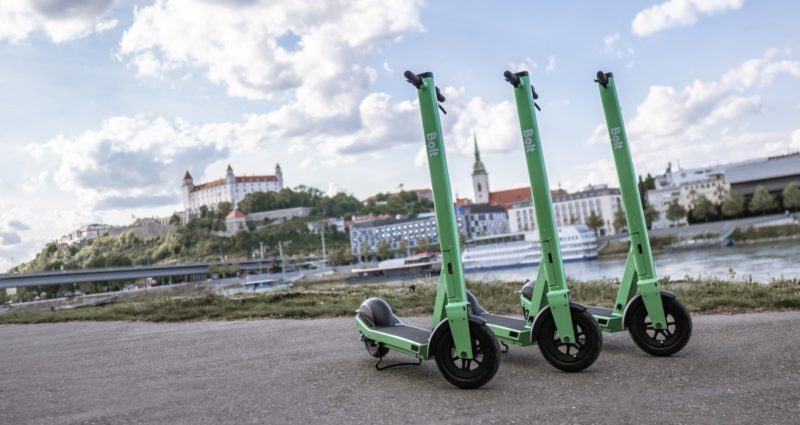
Bold officially unveiled its own electric scooter model on Wednesday. The company also disclosed that it aims to launch the scooter service in more than 45 cities this summer.
“A lean mindset and efficient operations have helped Bolt to bring quick, affordable and reliable urban transport services to millions of people in Europe and in Africa,” Dmitri Pivovarov, head of scooter business at Bolt, said in a statement.
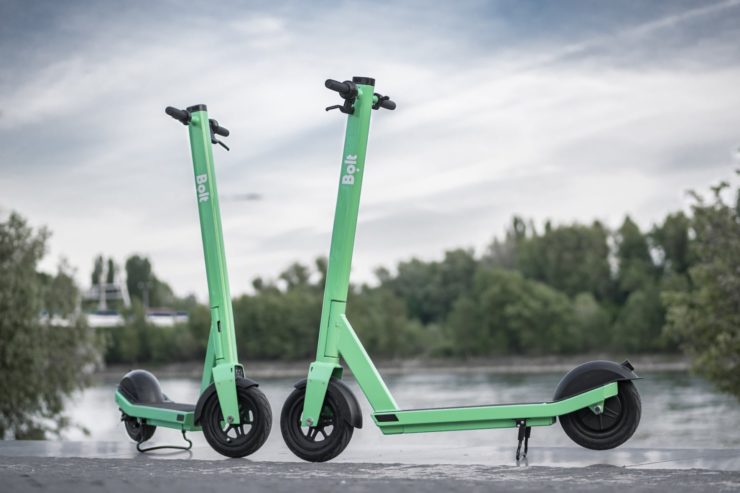
Bolt said its model’s design and engineering are focused around modularity, which makes it easily repairable and lowers the cost of maintenance for the ride-sharing service.
The new scooter weighs 17kg, which makes it the lightest model used in scooter sharing. This reduced weight is achieved through the scooter being made of 90% aluminium.
The scooter features inflatable tires that help ensure better grip and smoother, safer rides. It can go for more than 40km on a single charge. Its maximum speed is 25km/h. But this is obviously limited according to local regulations.
The scooter also features front and rear lights, as well as front and side reflectors to help maintain riders’ safety during dark hours. Scooters come with built-in GPS trackers which provides data about where they are parked and whether they are ready for use.
Bolt had earlier last month launched the scooter service in Bratislava, Slovakia. The scooter app is similar to the taxi service app. It costs €0.50 to unlock a scooter and 15 cents per minute they are used up to €15, which would be the price for a whole day.
The app also has information about the maximum range of the scooters, so as to remove the risk of renting one with a discharged battery.
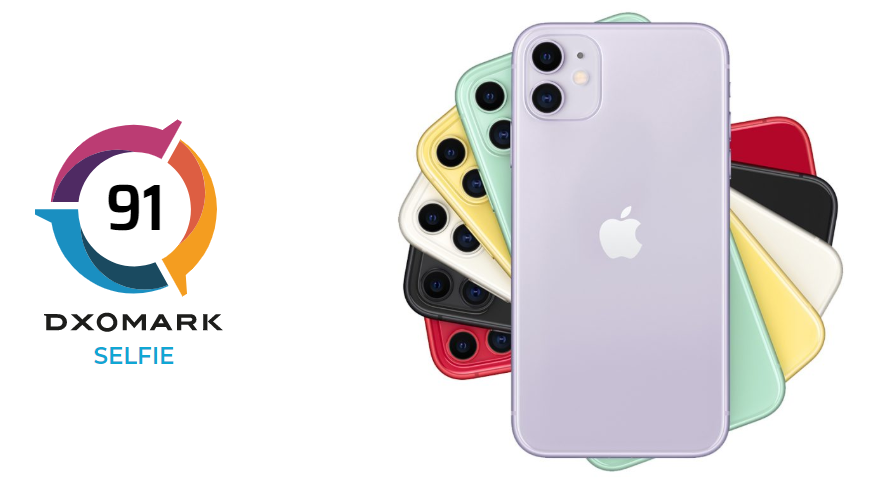
The Apple iPhone 11 is the latest smartphone to be reviewed by DxOMark Selfie team. The handset scores an overall 91 points. Unfortunately, it still does not make it to the top 10. It currently ranks 13th in the list just above Huawei P30 Pro and below Samsung Galaxy Note 9.
According to the testers, the iPhone 11 performs decently with similar outputs like its bigger sibling iPhone 11 Pro series but there are some differences as well.
The selfies from the handset have very good target exposure on faces in almost all conditions. However, it does lack some dynamic range and highlight clippings are visible in images shot under high-contrast conditions.
The phone produces vivid colors with a slightly warm white balance. On the other, skin tones are yellowish on both iPhone 11 and iPhone 11 Pro. Whereas, the pictures from Galaxy S10 Plus have more natural-looking skin tone.
The cheapest iPhone from last year also has a problem with focus. Only the subjects close to the phone have good focus as the phone does not have an autofocus system. The images from the handset have a good amount of details in better lighting. Noise picks up indoors as well as in low-light scenarios.
Flash in the form of screen brightness does work as advertised but there are noise and vignetting effect with lower details. Artifacts in the images are well-controlled but there are visible corner softening, ringing, and anamorphosis.
The bokeh or portrait shots have strong blur even on the things that are in the same focus plane as the subject creating an artificial look. Also, there are visible blurs across the edges of the subject.
As for videos, the Apple iPhone 11 can shoot 4K 30fps clips with good details and lower noise than the iPhone 11 Pro. But the focus issue from pictures is present in videos too.
Also, colors are pleasant with accurate exposure and good white balance. The videos also have smooth transitions in changing lights with well-controlled artifacts. The stabilization is effective as well but it fixates more on the subject than the background.
As a whole, the iPhone 11’s selfie camera performs reasonably well with the focus being its nemesis.
Huawei‘s in-house chip design company Hisilicon has reportedly become the first semiconductor company in mainland China to enter the top 10 in terms of global sales. US semiconductor market research company IC Insights reports that HiSilicon’s sales surged 54 per cent year on year to about US$2.67 billion in the first quarter, placing it in the 10th position for the first time.
The report disclosed that Hisilicon’s surge in sales is attributed to its parent company Huawei. The Chinese smartphone giant has been stockpiling chips designed in-house in case the US government implements new measures to prevent TSMC from providing chip-making services to Huawei. “HiSilicon jumped up five spots in the ranking to 10th place, making it the first [mainland] China-based semiconductor supplier to be ranked in the worldwide top 10 listing,” IC Insights said in its report.
Hisilicon is a fabless chipmaker meaning te fabrication of the chip os outsourced to foundries like Taiwan Semiconductor Manufacturing Company (TSMC). The US is reportedly considering a proposal that would require TSMC to apply for a license if it wants to use US chip-making technology to produce chips for Huawei. Hence, the decision to stockpile chips before that decision becomes implementable.
TSMC’s first-quarter sales jump 45 per cent to US$10.3 billion and the surge in demand by Hisilicon is partly responsible for that.
Huawei is also reportedly moving some of its lower-end chip orders away from TSMC to the Shanghai-based Semiconductor Manufacturing International Corp (SMIC), which currently does not have the capability to fabricate 7nm chips in commercial volumes.
Huawei’s Hisilicon also recently surpassed Qualcomm to become the number one smartphone processor supplier in China for the first time, according to an earlier report by Chinese research firm CINNO.
The other new entrant on IC Insights’ top 10 list was Nvidia, which took ninth spot after posting 37 per cent year-on-year growth in the first quarter. Overall, US chip giant Intel leads the industry with US$19.5 billion in quarterly sales, while South Korea’s Samsung Electronics was second with US$13.9 billion. As a whole, sales of the top 10 semiconductor companies surged by 16 per cent year on year compared with industry-wide growth of 7 per cent year on year.
Smartphone companies in India had shuttered their manufacturing facilities more than a month ago abiding the coronavirus lockdown rules issued by the government. Now, as the MHA (Ministry of Home Affairs) has announced certain relaxation, Oppo has finally managed to get permission in order to begin production from May 8.
Chinese smartphone maker Oppo will be resuming production at its Noida facility from tomorrow. However, only 30% (3,000) employees will work at a time out of its total 10,000 staffs. Additionally, the company will follow all the necessary hygiene and social distancing measures.
Further, the brand has also begun the sales of its products across both offline and online. As of now, 22% of its retail stores are already operational in the green and the orange zones across the country.
Interestingly, Oppo has also announced services to let customers order products through WhatsApp as well via SMS similar to its sister brand Vivo. These services will start in a phased manner from May 8 and May 10 respectively.
Whereas, customers interested in buying phones online can already shop on Flipkart and Amazon India. They will have to check delivery availability to their location by entering their pin codes.
Additionally, Oppo has also introduced special offers like extended warranties for up to ₹2,599 and other perks like cashback and EMI. This offers will be valid until 31st May 2020.
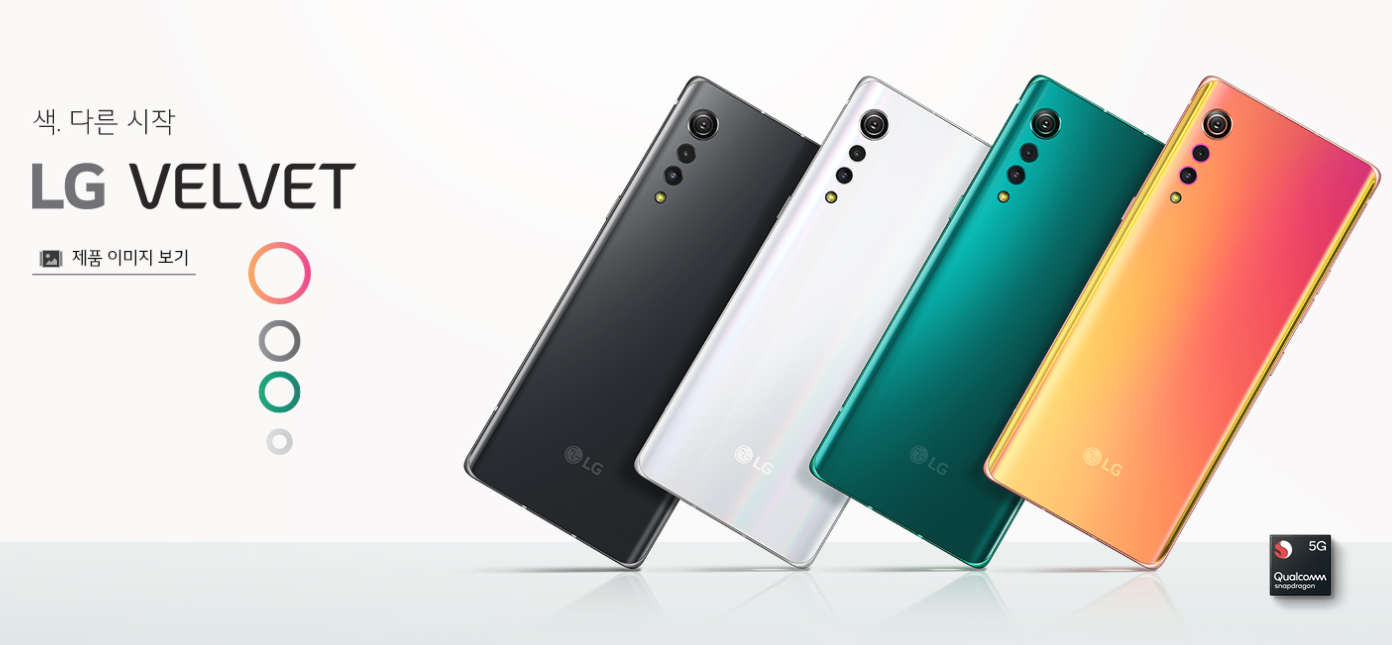
The LG Velvet has been officially announced in Europe. The phone is a premium mid-range device that packs several features that are mostly exclusive to flagships, and its price tag reflects that.
LG Velvet Design
The LG Velvet is the first LG phone to feature a new design language. It is curved on both sides, comes in pretty cool colors, and keeps the weight under 200 grams (180 grams to be precise). However, we wish LG ditched the waterdrop notch which it has overused already.
LG Velvet Specifications
The LG Velvet has an OLED display that measures 6.8-inches. It has a 2460 x 1080 resolution, a 20.5:9 aspect ratio, and a waterdrop notch that is home to a 16MP camera.
Powering the phone is the Snapdragon 765 (not Snapdragon 765G) mobile platform which brings 5G support with its built-in modem. There is 8GB of RAM and 128GB of UFS 2.1 storage that can be expanded to up to an extra 2TB via the MicroSD card slot.
The LG Velvet has a pretty nice rear camera design that mimics a falling raindrop. The triple camera setup includes a 48MP primary camera, an 8MP ultra-wide-angle camera, and a 5MP depth sensor.
LG has loaded the phone with tons of camera features such as time-lapse with automatic and manual speed change; a steady cam feature for shake-free videos; ASMR recording to capture those extra sounds such as the crackle of a fire or the crunch of a cracker; voice out-of-focus which reduces background noise in videos and focuses on the voice of the user; and 3D AR stickers with 3D mesh technology so the AR sticker blends with the face of the subject. These are features you will be hard-pressed to find on a mid-range device.
The LG Velvet has an IP68 rating and MIL-STD 810G specifications. It also has an in-display fingerprint scanner, an audio jack, NFC, and Bluetooth 5.0.
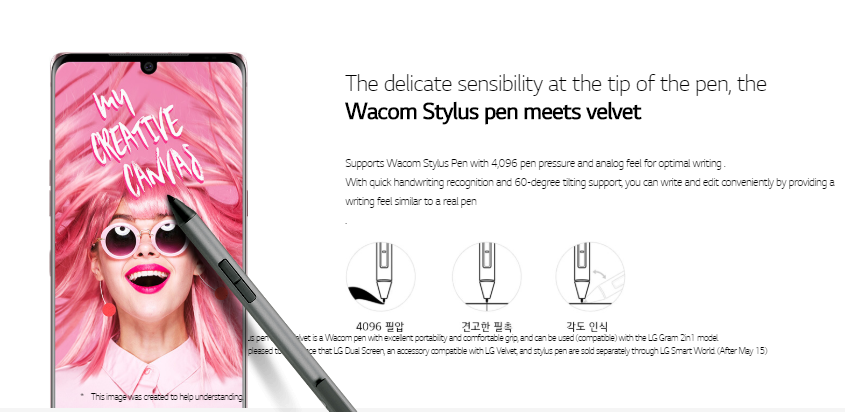
Another premium feature the device has is stylus support. This is not the type of stylus that ships with LG’s Stylo series but a Wacom Stylus with 4096 pressure levels for note-taking, drawing, and more. Unfortunately, you have to purchase it separately along with the LG Dual Screen accessory which it also works with. However, LG includes an app called Nebo that converts your handwritten notes into typed texts including formulas and charts.
There is a 4300mAh battery inside with support for wireless charging. The phone has fast charging support via USB-C but there is no mention of the power rating. It ships with Android 10 out of the box.
LG Velvet Price and Availability
The phone comes in Aurora White, Aurora Gray, Illusion Sunset, and Aurora Green. It is priced at KRW 899,800 (~$735/₹55,745) and will be available for purchase via local operators. There is no info on a global release.
Poco F2 is one of the most awaited smartphones in recent years. The original Poco F1 was a massive hit that it is very hard to recreate the same magic again. According to recent leaks, the so-called Poco F2 could be nothing more than a rebranded Redmi K30 Pro. A new leak from earlier today further concretes the possibility.
The Poco F2 was first spotted in an IMEI database with model number M2004J11G. The same device has been once again identified on TÜV SÜD PSB certification portal. This time it confirms the handset’s maximum charging speed to be 33W. In case you have forgotten or do not know, the Redmi K30 Pro sold in China also has the same specification.
The official Poco Global Twitter account became active late last week. Since then, it has been teasing the launch of the new product. Today, it even officially announced the new product launch to take place on May 12. However, the date has been already leaked earlier.
But the brand is yet to reveal which phone it is going to launch. Anyway, leaks from past few days have been exposing the new handset to be the long-awaited Poco F2 as well as Poco F2 Pro.
Additionally, the leaks so far have been pointing out these devices to be rebadged Redmi K30 Pro and Redmi K30 Pro Zoom. This clearly goes against the statement given by the GM of Poco.
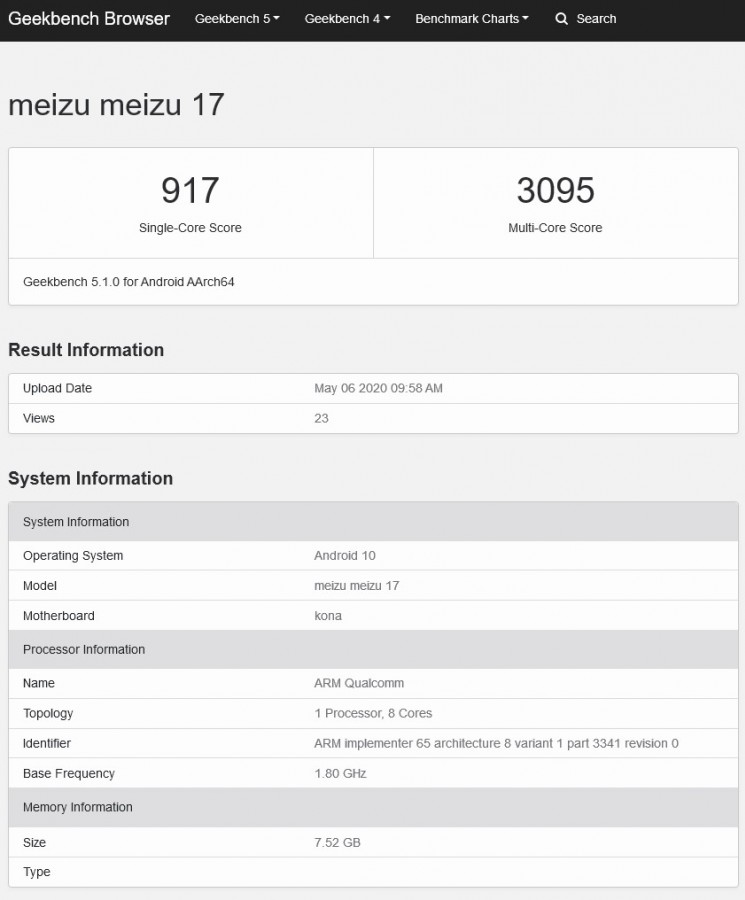
Meizu will be announcing the Meizu 17 and Meizu 17 Pro flagship smartphones on May 8. Ahead of tomorrow’s launch, both smartphones have appeared on the Geekbench benchmarking platform. Probably, the Chinese firm could be internally testing the performance of the Meizu 17 series before unveiling them.
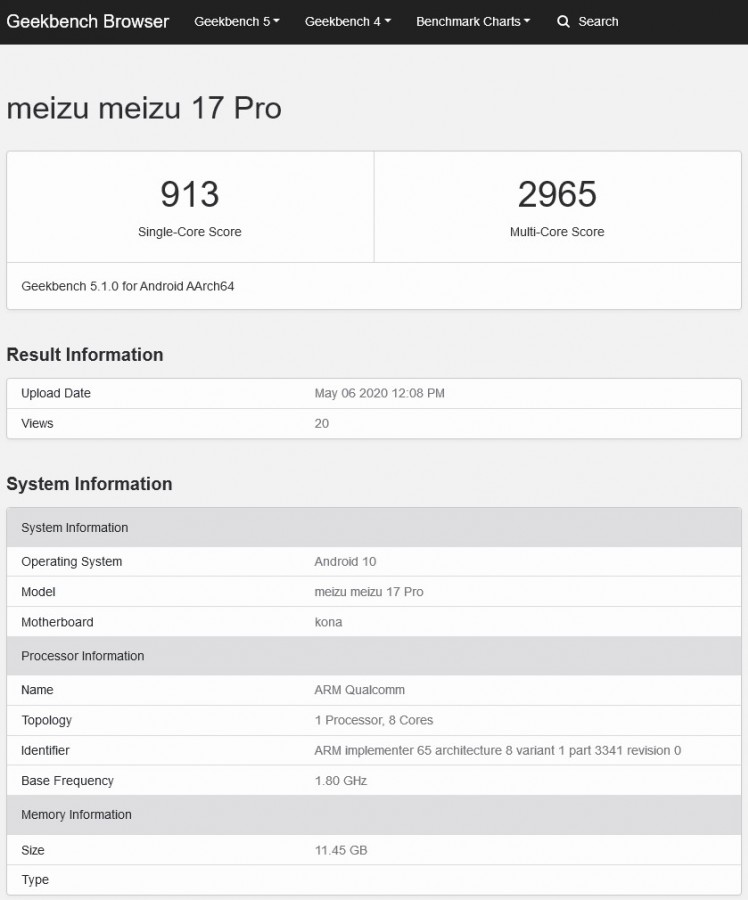
As can be seen in the Geekbench 5 screenshots of Meizu 17 and Meizu 17 Pro, both phones are driven by Snapdragon 865 mobile platform. The vanilla model has 8 GB of RAM whereas the Pro is equipped with 12 GB of RAM. Both phones are preinstalled with Android 10 OS. As Meizu confirmed, the Android OS on both phones will be overlaid with Flyme OS 8.1 custom skin.
In the single-core tests, both phones have scored similar scores. In the multi-core test, the Meizu 17 recorded 3095 points whereas the Pro achieved 2965 points. Hence, there is no significant difference between the multi-core performance of both devices.
The pricing of the Meizu 17 and 17 Pro appeared on a third-party retailer site in China. It revealed that the Meizu 17 will have a starting price of 3,999 Yuan (~$563) whereas the Meizu 17 Pro will cost 4,999 Yuan (~$704) for its base model. The official pricing of both devices will be confirmed through tomorrow’s event.
Meizu 17 and Meizu 17 Pro specifications
The Meizu 17 Pro will have a 6.5-inch S-AMOLED punch-hole display with a 32-megapixel front camera. The display will support a 90Hz refresh rate and it will be integrated with a fingerprint reader. The Snapdragon 865 SoC will power the device LPDDR4X RAM and UFS 3.1 storage. It will house a 4,500mAh battery with 30W fast charging support. The handset will have a Sony IMX686 64-megapixel quad camera on its back.
The Meizu 17 Pro will be arriving with a ceramic chassis. It will support 27W Super wireless mCharge technology and it will be equipped with LPDDR5 RAM. The rest of its specs could be the same as the vanilla model.
Last year, Honor announced the FlyPods 3 TWS earbuds in its home country. They have now been launched in Europe but under the name Honor Magic Earbuds.
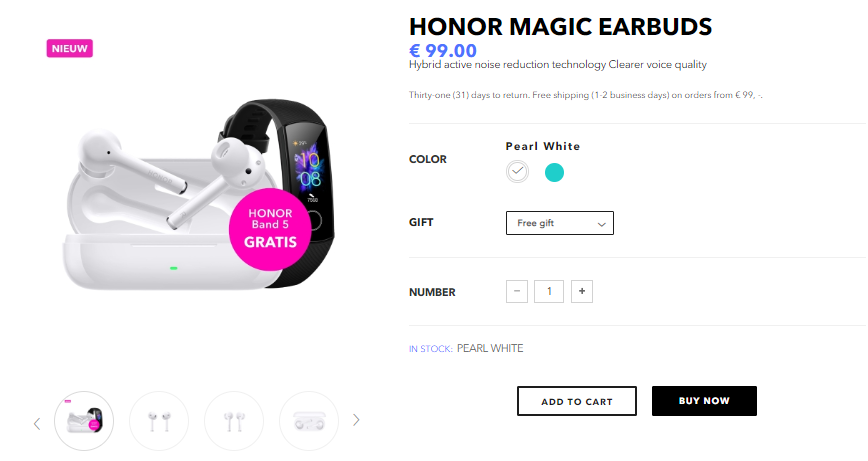
The Honor Magic Earbuds have long stems, silicone tips, and come in two colors – Pearl White and Robin Egg White. Oh! And they do look a lot like the recently announced Huawei FreeBuds 3i.
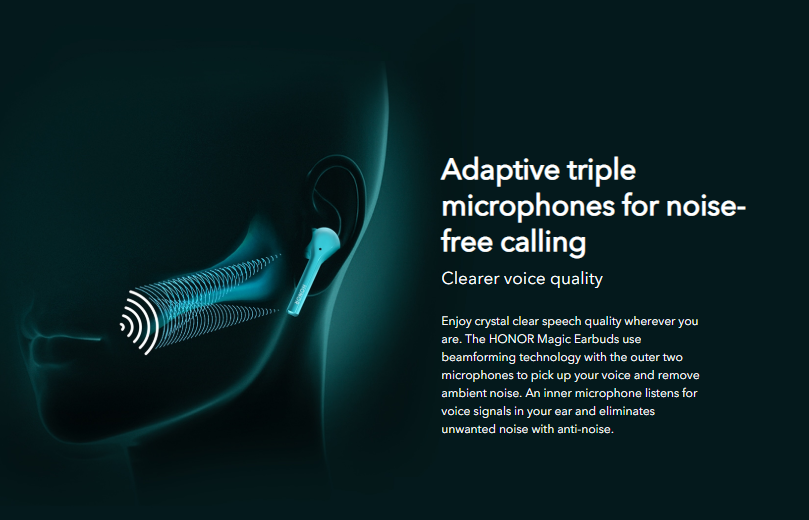
Honor says the Magic Earbuds use what is called Hybrid Active Noise Reduction Technology to filter out unwanted ambient noise. It is able to do this with its outer dual microphones that work with an inner microphone. Honor claims the technology reduces as much as 32db of unwanted noise so you can enjoy crystal clear calls or audio playback.
The Honor Magic Earbuds support touch controls for calls and playback. You can also activate active noise cancellation using the touch controls.
Inside the earbuds are 10mm driver units with highly sensitive diaphragms for deep bass and crystal clear vocals. The Magic Earbuds support one step pairing with compatible Honor devices running EMUI 10.
With respect to battery life, the Honor Magic Earbuds will provide 3 hours of playback time with ANC on and 3.5 hours with ANC off. Talk time is lower at 2 hours with ANC on and 2.5 hours with ANC off. The case will provide up to an additional 12 hours and has a USB Type-C port for charging. The earbuds connect via Bluetooth 5.0 and support A2DP, HFP, and AVRCP.
Honor has put a price tag of €99 on the Magic Earbuds and is adding a free Honor Band 5 with all purchases. Do check your local HiHonor online store to order yours.
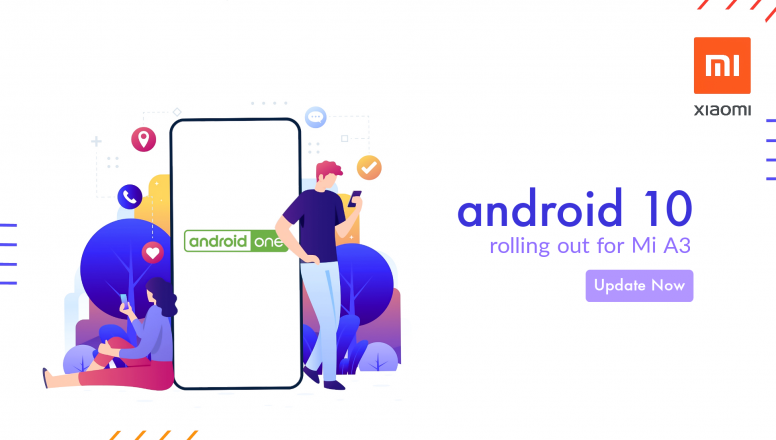
Mi A3 is probably the worst-hit smartphone with update issues in recent times. The Android 10 update for this device has been rolled back multiple times because of various bugs. But now, once again Xiaomi has released the update but this time for Europe or rather EEA variant of Mi A3.
The latest Android 10 update for Mi A3 in Europe comes with build number V11.0.1.0.QFQEUXM and April 2020 security patch. The OTA update weighs 1.33GB in size and Xiaomi officially announced the rollout on Mi Community.
It is worth noting that previous builds seeded out in different regions like India had various issues. However, this one seems to be stable enough going by the comments made by users on Twitter and Reddit.
Nevertheless, Xiaomi is being more cautious this time around. It strictly askes user to not share link for the OTA update. Also, it says the download link will be made available for public after positive feedback from limited users to whom the update is being seeded out in batches.
We hope the new build does not make a fuss like the previous builds from the last few months. Anyway, it is always better to be careful. If you don’t have a spare phone, then we highly recommend you to not update until no huge complaints from other users.
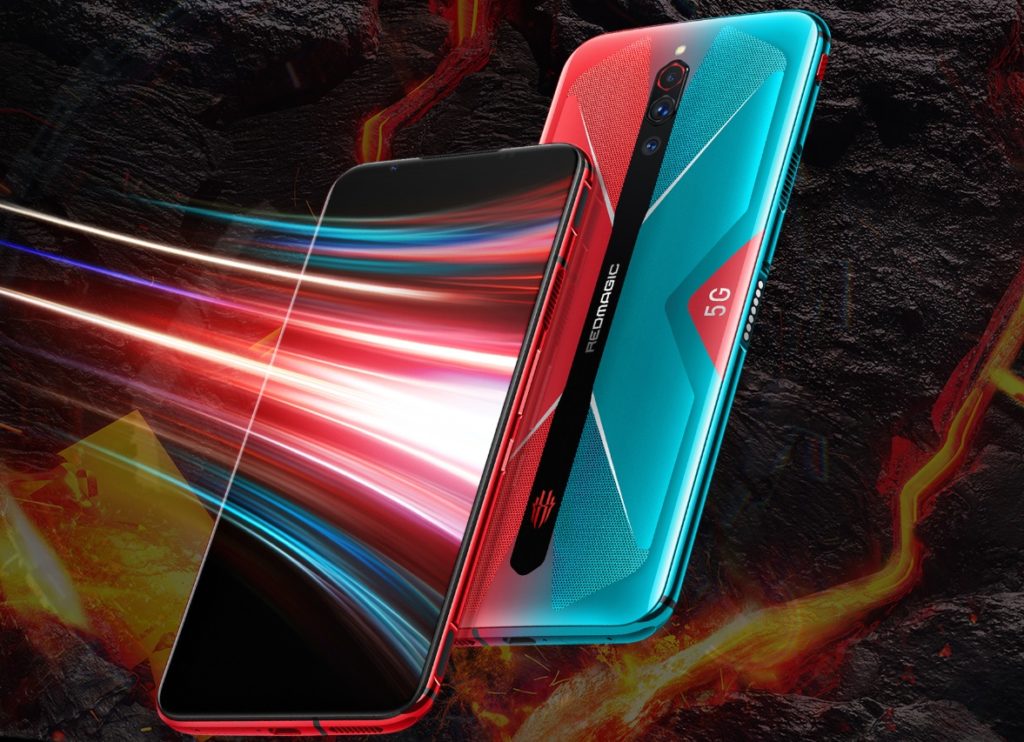
Earlier this year, Nubia took the covers off its long-awaited gaming smartphone dubbed the Red Magic 5G in its home market of China. Much to the delight of the brand’s huge fan base across the world, the Chinese smartphone maker has confirmed it will be launched globally.
On the downside, the overseas market will be able to choose between only two memory configurations, while four different variants of the phone have been made available in China. Whether you have already purchased or are planning to get your hands on this feature-laden gaming smartphone, you might want to check out our list of top 5 must-have accessories for the Red Magic 5G.
Magic Adapter for RedMagic 5G
Designed to help users unleash the phone’s true gaming potential, the Magic Adapter for RedMagic 5G is currently up for grabs for $46.90 on Amazon. It is touted as one of the world’s most advanced smartphone adapters that allows you to listen with wired 3.5mm headphones, connect to high-speed internet via ethernet, and charge with a Type-C cable at the same time.
Designed to work with Red Magic Mars, Red Magic 3/3s, Red Magic 5G, this Nubia Red Magic Bluetooth Gamepad usually retails for $39.99. Those who aren’t willing to spend that kind of money on a Bluetooth Gamepad can head straight to Giztop and place their orders for a lowered price of just $35.99.
This extremely compact gamepad connects effortlessly and quite easy to control. It can be used for aiming and shooting at the same time. Featuring four buttons and joystick controls, it delivers a superior gaming experience. Moreover, it supports OTA updating as well.
Ultra Thin Frosted Soft Silicone Back Cover Case For Nubia Red Magic 5G
Made using high-quality silicone material, this Ultra Thin Frosted Soft Silicone Back Cover Case always retains its shape despite been extremely soft and flexible. It is currently available for $10.99 on Nubia Mart.
Furthermore, it uses a simple and quick installation process with any phone disassembling required. The case efficiently protects your Nubia Red Magic 5G phone from accidental scratches, common bumps, thumbprints, and dust without blocking access to ports and controls.
If you are in the market for an inexpensive Red Magic 5G alternative, you might want to give the Nubia Red Magic 5G Charger, BoxWave a test drive. The BoxWave’s USB Type-C Wall Charger Direct is a low-cost Power Adapter that can charge your Red Magic 5G safely and quickly using 15W of power.
The Wall Charger Direct is designed to work as well as the original charger and it performs better than most steeply-priced chargers available on the market. In other words, it can replace the original charger without burning a hole in your pocket. You can purchase it for $19.95 from Amazon.
Official Glass Screen Protector for Nubia Red Magic 5G
A high-quality tempered glass integrated with reliable defensive performance, the Official Glass Screen Protector is compatible with your Nubia Red Magic 5G. This black-tinted protective film is available for $10.99 on Giztop, but if you buy two pieces, you can avail of a 10 percent discount, meaning, you’d pay only $9.99 for each piece.
Likewise, if you purchase 10 pieces, you’d qualify for a noteworthy 19 percent discount. As a result, you end up paying just $8.99 for each piece. Aside from protecting your phone’s screen from scratches and dust, this protective film keeps your phone safe from fingerprints, oil rub stains, while filtering ultraviolet rays.
On top of that, it supports anti-glare coating to restrict glare derivative. It is made using tempered glass with up to 9H hardness and 2.5D edging craft, which allows the film to perfectly fit your phone screen.
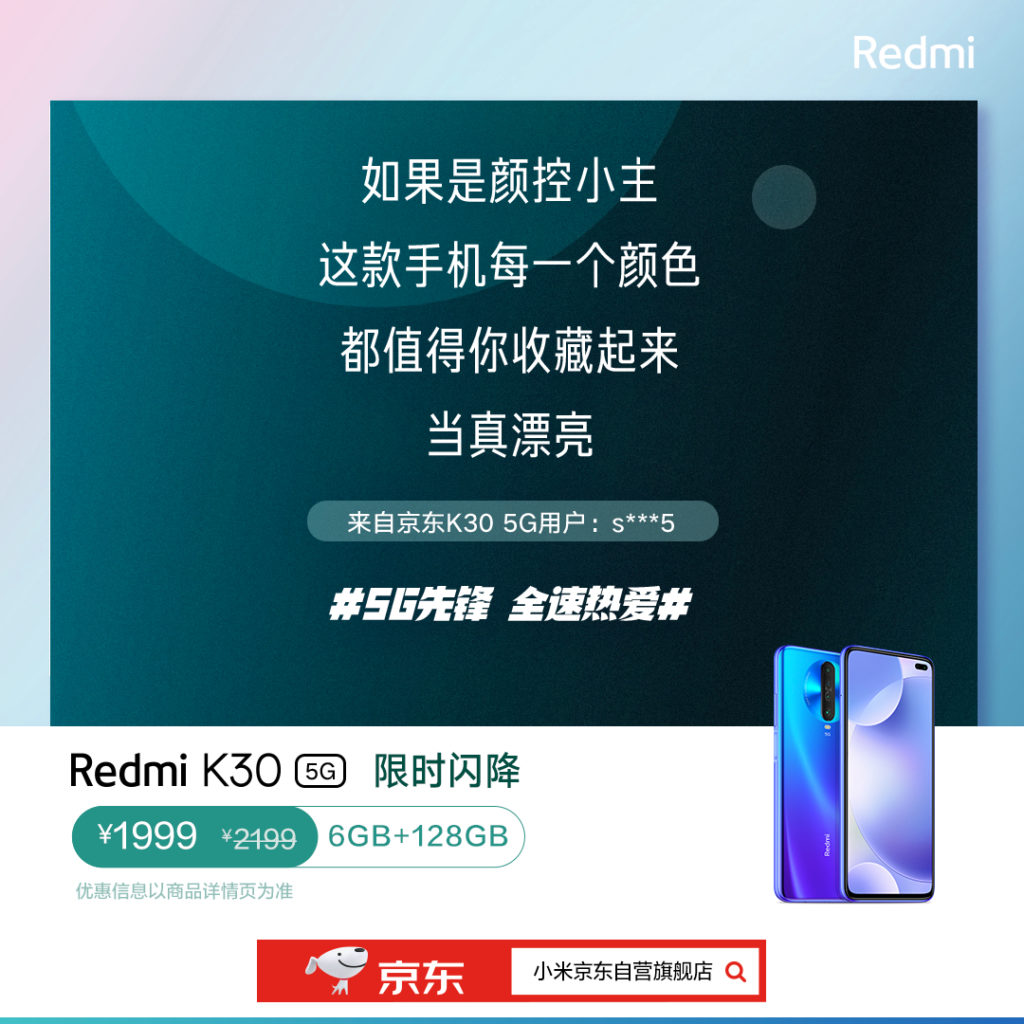
Late March, Redmi announced a first-ever price cut for Redmi K30 5G. Now, the brand has slashed the price for the second time. However, it is only limited to 6GB + 128GB variant, which can be now purchased for 1999 Yuan ($282).
The Redmi K30 5G 6GB + 128GB variant launched initially for 2,299 Yuan ($324). Then, it got a price cut of 100 Yuan ($14) over a month ago. From then till up until yesterday, it was selling for 2,199 Yuan ($310).
But, earlier today, out of the blue, the brand announced another price cut of 200 Yuan ($28) on this specific variant. Hence, it can be now bought for only 1,999 Yuan ($282).
Weirdly enough, the base 6GB + 64GB is still retailing for the same 1,999 Yuan ($282) since its launch. Maybe, it will be soon discontinued as Redmi K30i with a 48MP primary camera is on the horizon.
Anyway, here’s the current price of all the Redmi K30 5G variants in China.
Redmi K30 5G Variant
Current Price
6GB + 64GB
1,999 Yuan ($282)
6GB + 128GB
1,999 Yuan ($282)
8GB + 128GB
2,399 Yuan ($338)
8GB + 1256GB
2,699 Yuan ($380)
The Redmi K30 5G is the first phone to launch with Qualcomm Snapdragon 765G. It was announced in December 2019, followed by sale in January 2020. It is only available in China and it is uncertain if it will ever make its way to other markets like its sibling Redmi K30 4G (aka POCO X2).
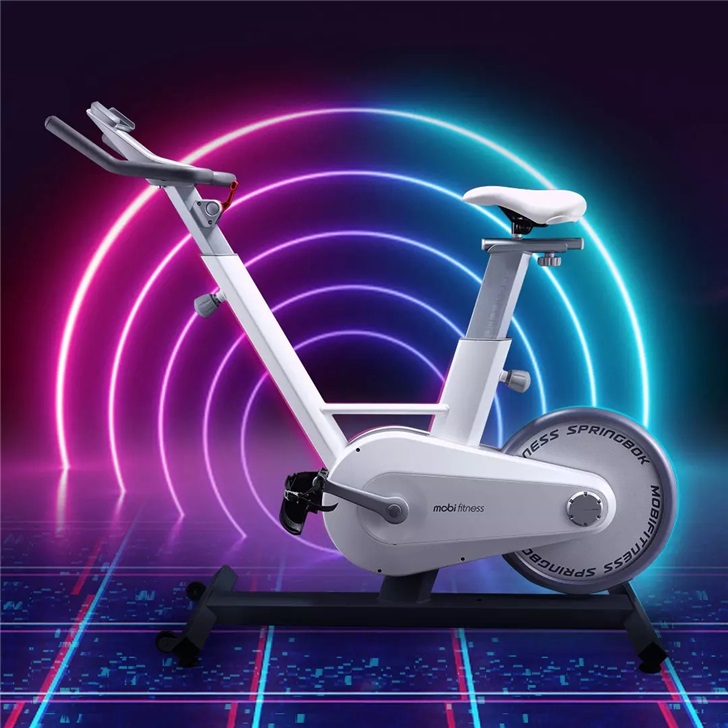
The Xiaomi Youpin platform has just started crowdfunding for a new product. It is the new Mobi Fitness Springbok stationary bicycle, which will retail for 3,499 Yuan (roughly 493 US Dollars) and is currently in crowdfunding for 2,499 Yuan (roughly 352 US Dollars).
The Mobi Smart fitness bicycle was announced earlier today (7th May 2020) on the Xiaomi Youpin platform and features aluminum allow rear wheels. These wheels have a low starting pressure, which should help in reducing injuries in certain cases. Furthermore, it has a 75mm adjustable position, namely 5 different ones for the front handle while the seat itself can be adjusted to 5 different heights as well.
The Mobi fitness stationary bicycle also features a magnetic control resistance that has bet transmission, which only lets out 30 decibels during its operations. In other words, it is relatively more quiet than conventional stationary bicycles. This is done so as the product is aimed at homes, where they wish to prevent noise from disturbing anyone else. The entire bike only covers an area of 0.5 square meters and has a weight of just 35 kilograms.
It has a maximum weight load of 120 kilograms and even has support from online courses, online competitions like leaderboards, and points than you can redeem. The healthy and physical fitness device can be found on Xiaomi’s Youping platform, so check it out if you’re interested in working out from home.
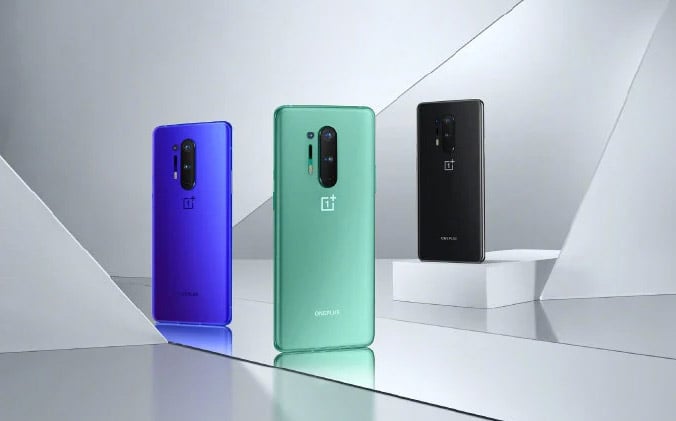
OnePlus, the Chinese smartphone maker, recently launched its OnePlus 8 series. However, soon after the launch, many OnePlus 8 Pro users started reporting on certain issues of “Black Crushes” on their smartphone’s display. While initially this problem had been claimed to be caused by the hardware, the company has now officially confirmed that it is a software issue and that it is actively working on providing a fix soon.
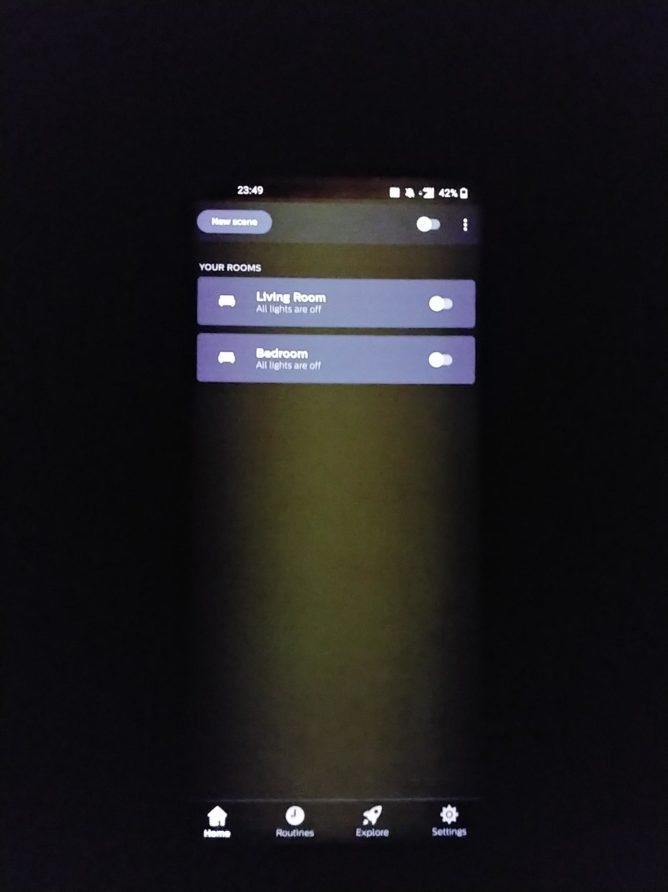
OnePlus 8 Pro’s green tint issue on low brightness
The official statement provided by the company read, “We are looking into the ‘black crush’ issue which we aim to address in the upcoming OxygenOS update. Please stay tuned for more information.” In other words, OnePlus is actively working on solving the issue and will offer a fix soon through an OTA update. Unfortunately, the company has refrained from providing any concrete deadline or other dates, but considering the severity of the problem, it should arrive soon.
For those unaware, OnePlus 8 Pro faced various issues for a number of users. This included black crushes on its AMOLED panel alongside other issues like a green tint on low brightness and more. Since then, the company has offered various updates that have fixed the issues for many users but the problem is apparently still affecting a few of the OnePlus 8 Pro owners.
The company rolled out a couple of updates last month and has also recently released the OxeygenOS 10.5.5 and OxygenOS 10.5.6 updates to address the problem. These have fixed the issue for a fair number of users but OnePlus states that the complete fix will arrive soon. So stay tuned as we will be informing readers of when the eventual update actually follows through.
The US Department of Commerce has nearly signed off on a new rule that will allow Huawei Technologies to work with American based companies on setting standards for 5G networking, according to sources.
This is big news considering the US Commerce Department had previously placed Huawei in the “Entity List” back in 2019. This blacklisting had banned the Chinese tech giant to buy or trade with US based companies and even had it lose Google’s support. The ban also placed various restrictions on Huawei, as it was also working on providing 5G equipment to various companies in the region. For those unaware, Huawei is a pioneering figure in 5G networking and a known telecommunications equipment provider.
But now, it seems that the US government is backtracking on the decision from 2019, as it plans on bringing Huawei’s influence back into the market. Industry and Government officials stated that the move to ban Huawei had only served to put the US at a disadvantage. This is interesting as the US was also to put pressure on certain European regions to ban Huawei as well.
According to sources, standard setting meetings where different protocols and specifications are discussed to allow equipment from different companies to function together had failed after US engineers sat back in silence after the Huawei ban. But after nearly a year of scrutiny, the Commerce Department is now close to drafting a new rule that will address the current situation. The rule is still subject to change but essentially allows US companies to participate in standard bodies with Huawei also being a member.
The draft is currently undergoing final review and will be cleared if other agencies also offer their approval on the matter. The process is long and it is uncertain if other agencies have any objections on the subject. This could be a move from the US to gain a better footing over China in the ongoing 5G race. Recently, we had reported on the topic with China seeming to edge past the western nation in this regard. Thus, the US easing restriction on Huawei could be a sign of friction lowering for the electronics vendor.
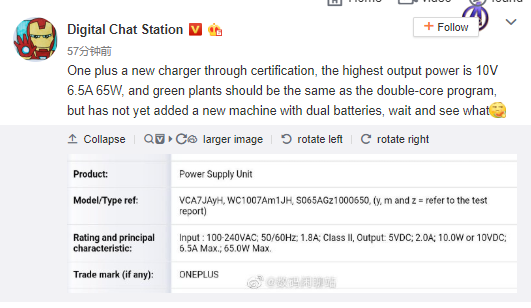
Last month, OnePlus announced the OnePlus 8 and OnePlus 8 Pro smartphones. The Pro model came with some major improvements like 120Hz display, IP68 certified chassis and wireless charging support. Judging from the previous release patterns, the Chinese firm is expected to announce the OnePlus 8T series in the second half of the year with more enhanced features. As of now, OnePlus 8T is a tentative moniker for the company’s next flagship phone. Fresh information suggests that the OnePlus 8T phones may arrive with support for 65W fast charging.
OnePlus belongs to China’s BBK Electronics company which also includes other smartphone brands like OPPO and Realme. The latter two are already selling flagship phones with support for 65W charging in different markets. OnePlus too may join the bandwagon as its 65W fast charger has received approved from the TUV Rheinland certification platform.
The charger has model numbers such as VCA7JAH, WC10007A1JH and S065AG. It supports a maximum charging out of 10VDC and 6.5A Max. Realme and OPPO phones with support for 65W fast charging have dual-part batteries. Hence, it is likely that forthcoming OnePlus smartphone with 65W fast charging may also arrive with a dual-part battery.
The OnePlus 8 and OnePlus 8 Pro smartphones come with support for 30W wired charging. The speed is comparatively slower than 50W charger that comes with Xiaomi Mi 10 Pro and 40W charger available with Huawei P40 series and Honor 30 series. In a bid to offer better charging experience than competitor brands, OnePlus may offer 65W fast charging on its next flagship phones arriving later this year.
We use cookies on our website to give you the most relevant experience by remembering your preferences and repeat visits. By clicking “Accept”, you consent to the use of ALL the cookies.
This website uses cookies to improve your experience while you navigate through the website. Out of these, the cookies that are categorized as necessary are stored on your browser as they are essential for the working of basic functionalities of the website. We also use third-party cookies that help us analyze and understand how you use this website. These cookies will be stored in your browser only with your consent. You also have the option to opt-out of these cookies. But opting out of some of these cookies may affect your browsing experience.
Necessary cookies are absolutely essential for the website to function properly. This category only includes cookies that ensures basic functionalities and security features of the website. These cookies do not store any personal information.
Any cookies that may not be particularly necessary for the website to function and is used specifically to collect user personal data via analytics, ads, other embedded contents are termed as non-necessary cookies. It is mandatory to procure user consent prior to running these cookies on your website.










 Designed to work with Red Magic Mars, Red Magic 3/3s, Red Magic 5G, this Nubia Red Magic Bluetooth Gamepad usually retails for $39.99. Those who aren’t willing to spend that kind of money on a Bluetooth Gamepad can head straight to Giztop and place their orders for a lowered price of just $35.99.
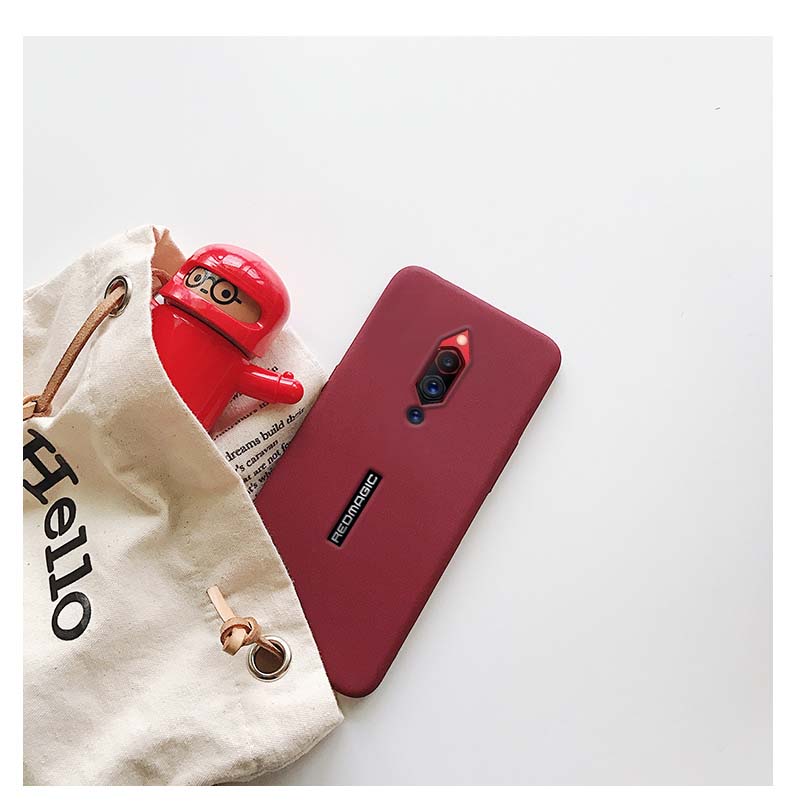 Made using high-quality silicone material, this Ultra Thin Frosted Soft Silicone Back Cover Case always retains its shape despite been extremely soft and flexible. It is currently available for $10.99 on Nubia Mart.
 If you are in the market for an inexpensive Red Magic 5G alternative, you might want to give the Nubia Red Magic 5G Charger, BoxWave a test drive. The BoxWave’s USB Type-C Wall Charger Direct is a low-cost Power Adapter that can charge your Red Magic 5G safely and quickly using 15W of power.
 A high-quality tempered glass integrated with reliable defensive performance, the Official Glass Screen Protector is compatible with your Nubia Red Magic 5G. This black-tinted protective film is available for $10.99 on Giztop, but if you buy two pieces, you can avail of a 10 percent discount, meaning, you’d pay only $9.99 for each piece.