Xiaomi has an event tomorrow for the launch of a number of new products and one of the devices that will be announced is the Redmi Note 9. Ahead of the launch, a leak has revealed the press renders and the specifications of the device.
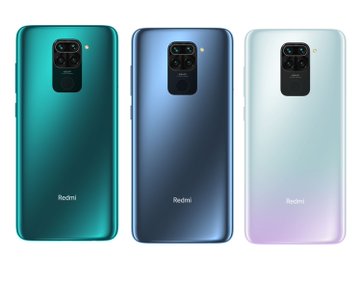
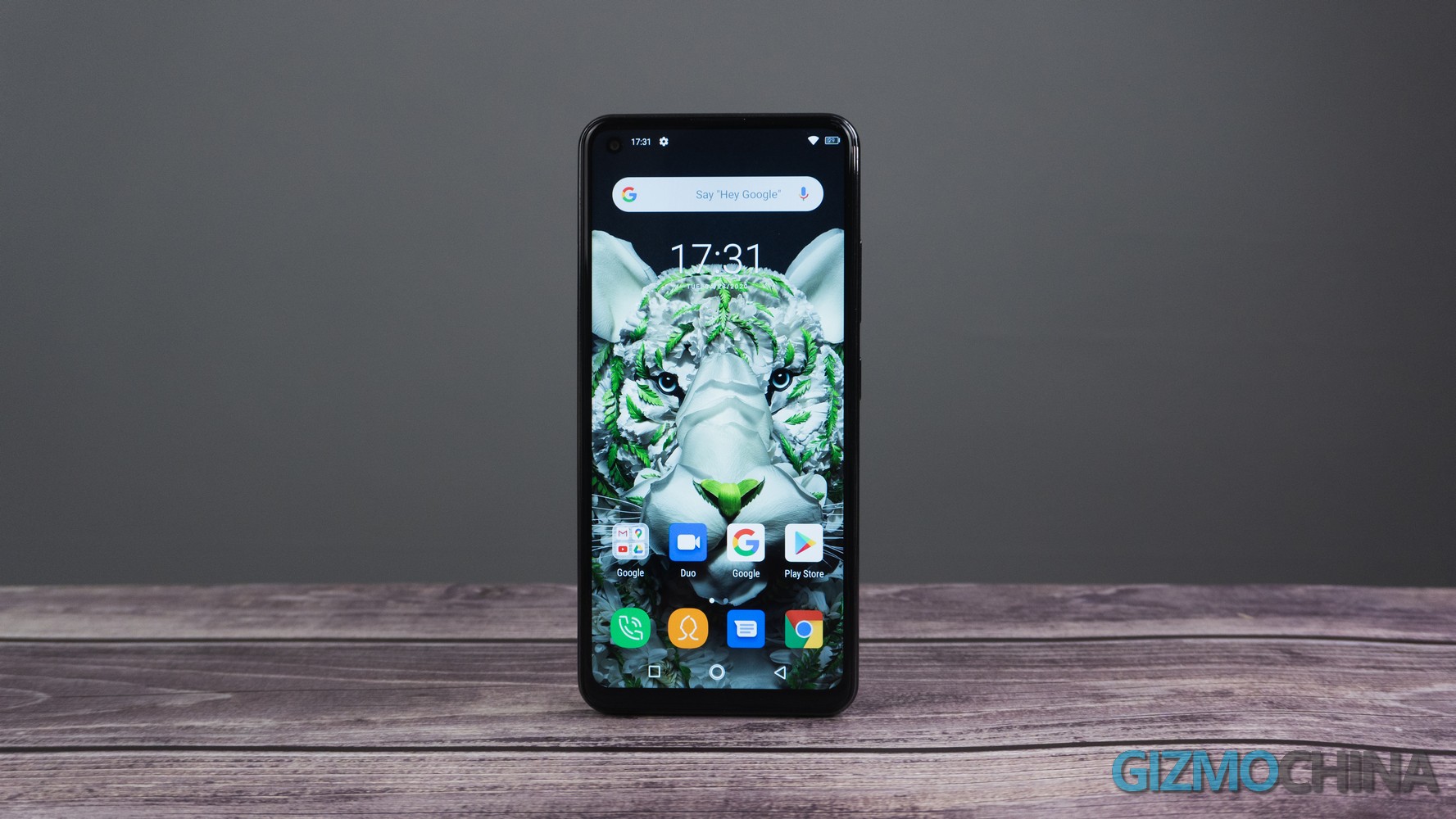
The source of the leak is Sudhanshu Ambhore, and based on the images he posted, the Redmi Note 9 will come in three color variants – green, blue, and gradient white. As you can see in the photo above, there is a punch-hole in the display but at the top left corner, unlike the Redmi Note 9S, Redmi Note 9 Pro, and Redmi Note 9 Pro Max that have a centered punch-hole.
The position of the punch hole is not the only physical difference between the Redmi Note 9 and its siblings. It is reported that the back of the phone is made of plastic and not glass. This is a downgrade considering the Redmi Note 8 has Gorilla Glass 5 on both sides.
Another difference is the presence of a fingerprint scanner on the back of the device which is side-mounted on its siblings. The sensor is shown to be in the same black housing as the cameras. Flanking the setup is an LED flash on the right.
With respect to specs, the Redmi Note 9 has a 6.53-inch FHD+ (2340 x 1080) display. There is a MediaTek Helio G85 chipset inside which is making its world debut in the Redmi Note 9.
The Redmi Note 9 will have a 48MP primary rear camera with an f/1.79 aperture, an 8MP ultrawide angle camera with an f/2.2 aperture, a 2MP f/2.4 macro camera, and a 2MP Depth Sensor.
There is a large 5020mAh battery inside the phone, a big boost when compared to the 4000mAh battery inside its predecessor. Fast charging is still capped at 18W but Xiaomi/Redmi is being generous by including a 22.5W charger in the box.
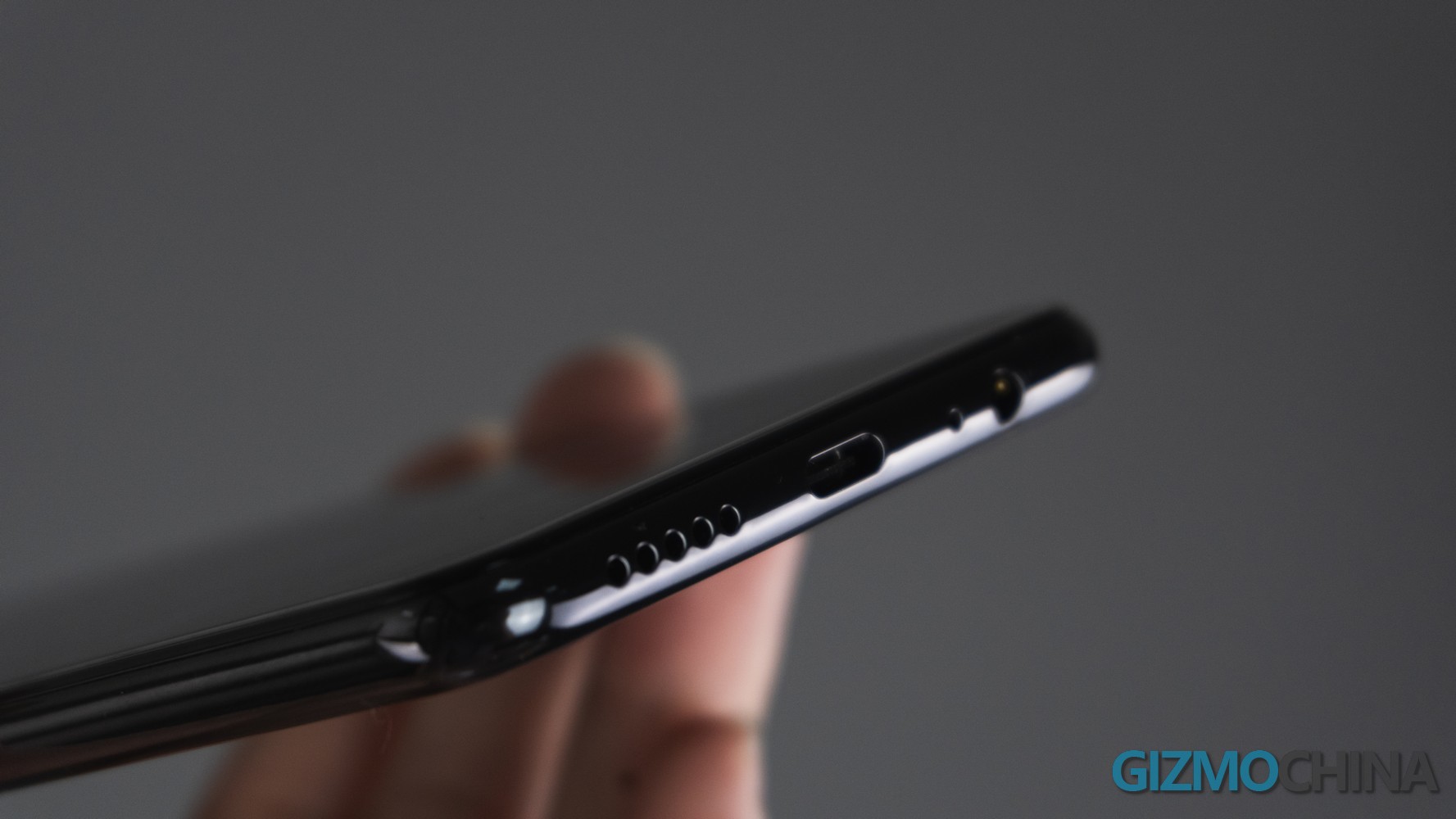
The Redmi Note 9 will have a USB Type-C port, an audio jack, an IR blaster, support for Dual SIM, and a MicroSD card slot for additional storage.
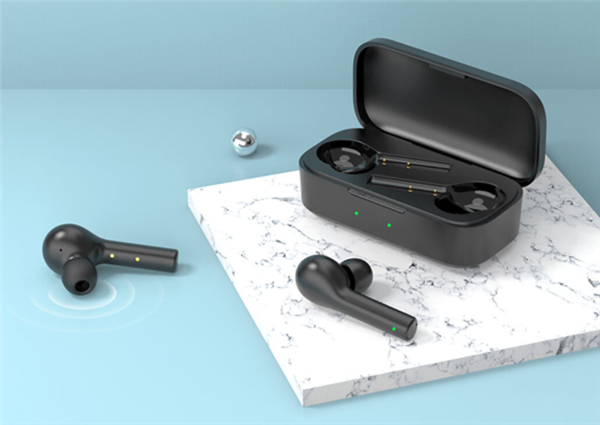
Xiaomi Youpin has launched the QCY T5 Pro TWS Earphones for sale on the platform. The product carries an affordable price tag of 149.9 yuan ($21).
The QCY T5 Pro is an upgraded version of the QCY T5 TWS earphones which has been on sale on Gearbest for $21.59. This new Pro version adopts high-precision full-frequency moving iron unit, which has a richer sense of layering and lower distortion than a moving coil unit. The unit is especially excellent in mid-high frequency outputting a full and bright tone.
The earphone features support for Bluetooth 5.0 and has a game mode. In this mode, the non-inductive delay is as low as 65ms. The two earphones each have a built-in custom chip and thus function independently. Each unit can thus be used singly and come with a built-in smart detection sensor. Thus, when the earphone is removed from the ear while listening to music, the music player pauses automatically and resumes when it is slipped on again. This is a convenient and power-saving feature.
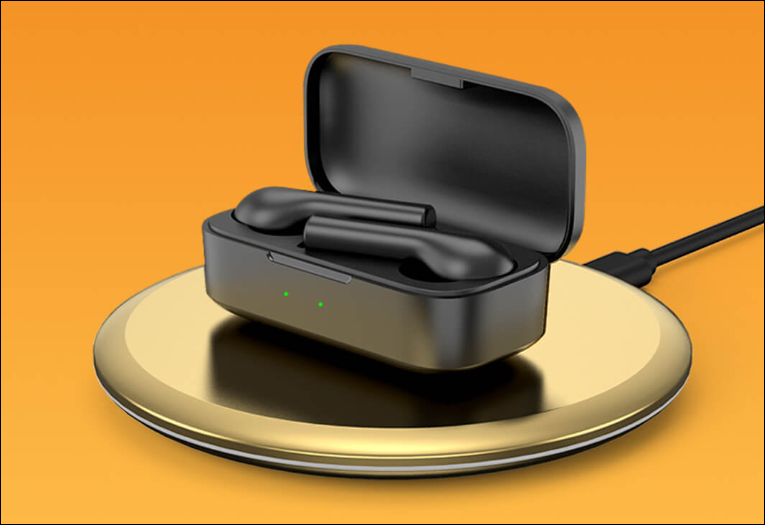
In terms of battery life, the headset can be used for 4-5 hours when fully charged. There is a charging box which has a 600mAh battery. The box can be charged via a micro USB port. In addition to the Micro USB port which supports wired charging, it can also be wirelessly charged. This eliminates the cumbersome process of plugging and unplugging from a USB chord. It also supports wireless reverse charging of mobile phones in case of extreme emergency situations.
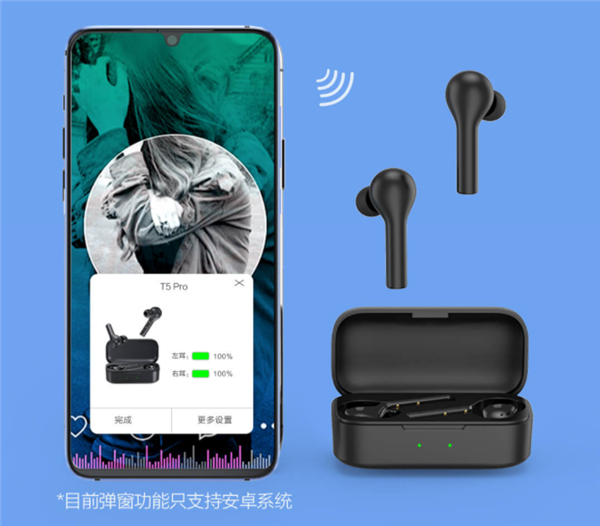
There is a companion app which can be used to pair the device in addition to doing that manually. The app can also be used to change key settings and also keep a tab on the battery usage. The earphones are also said to support Amazon Alexa, Apple Siri and Google Assistant voice assistants.
We expect this product to be available out China soon via third-party retailers like GearBest.
Roborock has just launched a new product, expanding its smart cleaning product range. The Roborock S6 MaxV is a new robotic vacuum cleaner and is the premium addition to the company’s existing S-series. The new robotic vacuum cleaner boasts a longe operation life and advanced obstacle recognition and avoidance.
For those unaware, Roborock is a known robotic vacuum cleaner manufacturer and has even launched products under its own brand and designed certain ones for electronic giants like Xiaomi.
The Roborock S6 MaxV is the company’s first product to be powered by a Qualcomm processor (the Qualcomm APQ8053 chip), which enables the gadget to have “cutting edge AI and connectivity.” The robotic vacuum cleaner features what the company calls a ReactiveAI that allows it to recognize obstacles and avoid them. This includes various hindrances in its path, like people, pets, children, and more. So, parents and pet owners can have fewer worries regarding accidents.
According to Richard Chang, CEO of Roborock, “The seamless integration of ReactiveAI with our advanced laser technology allows the Roborock S6 MaxV to estimate the size and location of common obstacles and the best way to clean around them, setting the standard for our smartest navigational robot vacuum yet.”
In other words, the company has worked closely with Qualcomm to develop a custom chip that suits the robots advanced sensing technology.
Under the hood, the Roborock S6 MaxV is powered by a 5,200mAh battery that can run for up to 3 hours in a single full charge. It is available in black and weighs about 3.7kgs. Furthermore, it has a maximum suction of 2500Pa and its navigation system is laser-guided. Its maximum power output is around 66W and houses a 460ml dustbin, electronic water tank, and more.
For cleaning, the Roborock S6 MaxV utilizes its powerful suction tool, which is 25 percent higher than the previously released S6. It can even pick finer dirt and dust particles from different surfaces, including hard floors, carpets, etc. Thanks to its software optimizations, the robotic vacuum cleaner is also capable of multi-level mapping technology and can have its own No-Go zones or No-Mop zones. As the name implies, its certain areas where the robot wouldn’t go or mop in.
The Roborock S6 MaxV will be available in the US, with sales starting at the end of Q2 in 2020 and will go for a price of 749 US Dollars. The device features different modes as well, which can be used as per the situation or users’ needs.
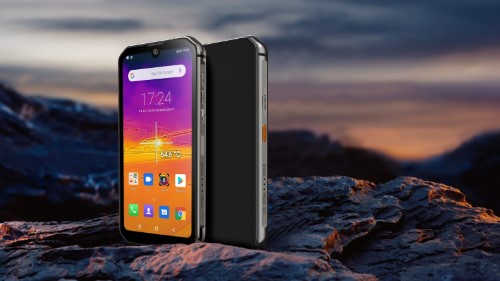
The quality of rugged smartphones is the primary USP of Blackview. The company already has plenty of rugged smartphones in the market which acts as a companion in the rough and tough environment. Similarly, Blackview BV9900 Pro rugged smartphone is made to resist extreme climates. It can help the user to eliminate any underlying problems at home, work, or at a big industry using its thermal imaging sensor.
The Blackview BV9900 Pro carries a FLIR Lepton thermal sensor and FLIR MSK for measuring temperature up to 450℃. The smartphone is capable enough to let you know the source of any underlying problem quickly and easily. The smartphone takes photos and quickly figures out the source of the problem.
Ease of Use
It is quite easy to detect any problem like pipe leak, electrical short, and even the ventilation insufficiency. The user can simply click a photo and then see the anomaly depicted by its FLIR sensors. It is of great worth for the facility inspector, who can effectively inspect such issues in no time and can provide fix instantly. The heat sensors quickly notify the issue by changing color.
Contactless and Safer Inspection Tool
Blackview BV9900 Pro can rapidly inspect the equipment from a distance and without any physical contact considering safety and security. It is an ideal tool to find failure and let the user know from a safer distance.
Effective for commercial use
Blackview BV9900 Pro can create professional PDF inspection reports with FLIR Tools app which can be easily sent to import, edit, and analyze images. Moreover, the ability to send mail to decision makers makes itmore productive. FLIR Tools app supports various features that increasing effectiveness.
Blackview BV9900 Pro specs
Blackview BV9900 Pro is an effective troubleshooting tool for home, office, and industries. The smartphone carries MediaTek Helio P90 Octa-Core AI processor coupled with 8GB RAM and 128GB internal storage. The smartphone hosts a 5.84-inch FHD+ waterdrop display with 2280 x 1080 pixels resolution.
In-camera department, the user will get a Quad camera module featuring a 48-megapixel primary sensor, a 16-megapixel ultra-wide sensor, a 5-megapixel depth camera, and a 2 -megapixel macro lens. A 16-megapixel camera is present on the front for selfies and video shooting.
It can sustain -30 degrees cold temperature without any lags. It is IP68, IP69K, and MIL-STD-810G certified smartphone.
Blackview is hosting a customer appreciation flash sale on Aliexpress, and you can grab the BV9900 Pro at a discounted price of $439 till May 2 (3 PM UTC +8). Moreover, the company offering another rugged phone – BV9800 Pro at a discount price of $399 on Aliexpress. If you’re interested to know more, then head over to the official website.
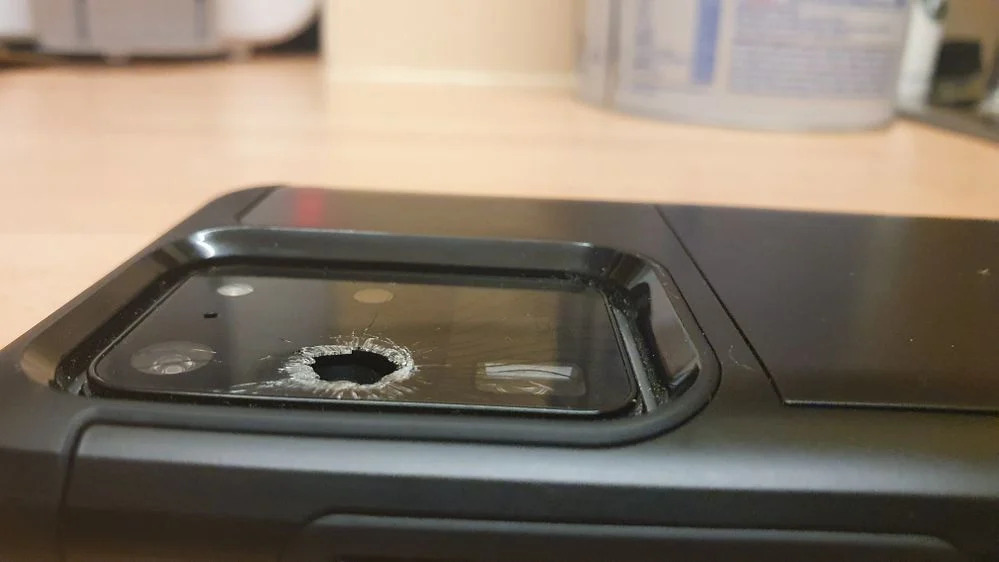
It looks like there is no full stop for Galaxy S20 Ultra problems. The users of the Exynos version are facing several issues with performance, heating, and battery. On the other hand, several other users experienced green tints on their phone’s display, which the company recently fixed via an update. Now, dozens of users are flocking on Samsung US Community reporting shattering of camera glass.
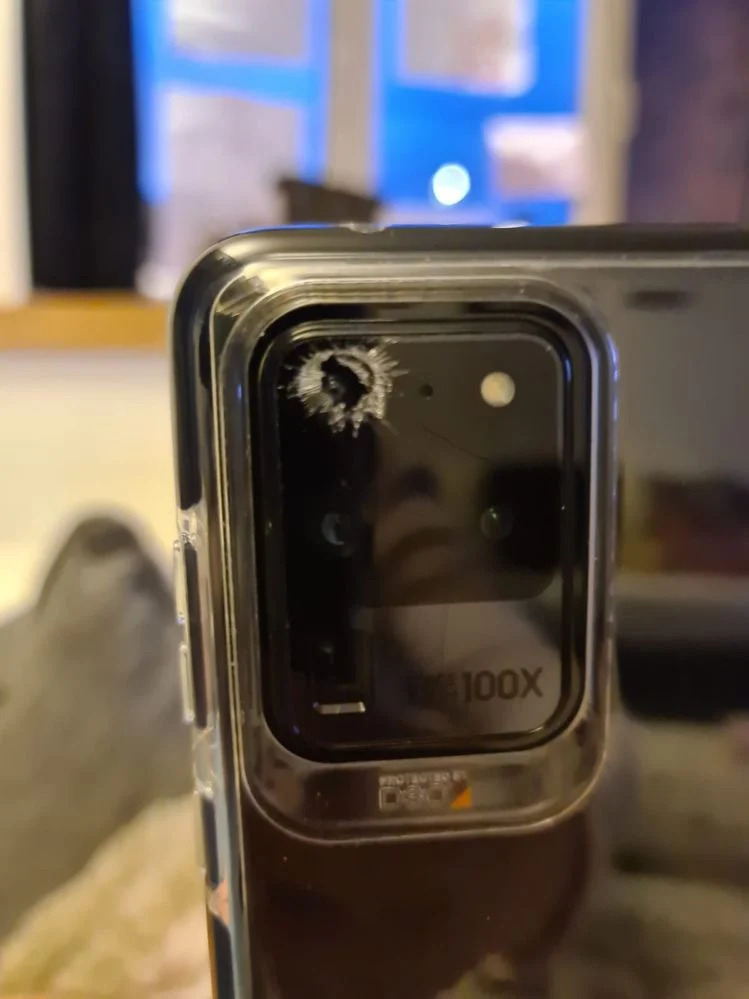
The breaking of camera glass on Galaxy S20 Ultra is occurring for no apparent reason. Users have been reporting it ever since the phone started shipping. Most of the users with shattered camera glass claim to be using a good quality case as well as have never dropped their device once.
Some users mention the issue starts as a hairline crack on the glass deteriorating the camera’s ability to zoom. Whereas, others allege the glass to break just like that leaving a hole. Since Samsung has not yet responded to the problem as it does not seem to be widespread enough yet, customers will have to shell out their money to fix the glass.
As far as fares are concerned, users with Samsung Premium Care will be charged $100 when compared to $400 for those without it. That is a hefty amount to pay for the damage that happened by itself after buying the phone for $1400 or above.
Additionally, most service centres around the world are closed due to lockdown issued by the governments to fight the coronavirus outbreak. Hence, a few set of users are left with a broken premium smartphone.
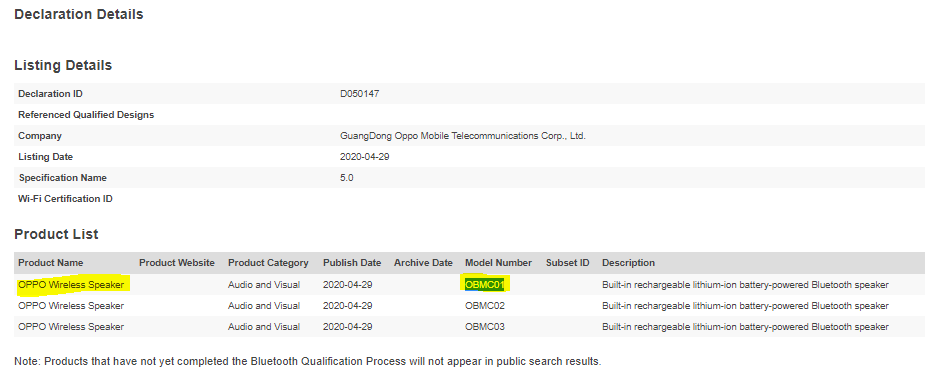
When it comes to audio products, OPPO is mainly known for its wired and wireless earphones that come in different designs. However, the manufacturer isn’t known for its Bluetooth speakers even though it actually has a handful. The Bluetooth SIG has revealed that OPPO has a handful of new speakers on the way.
The three speakers were certified today under the same name “OPPO Wireless Speaker” and have model numbers OBMC01, OBMC02, and OBMC03. They will connect via Bluetooth 5.0 and have a built-in rechargeable battery. We have a feeling they will also connect over Wi-Fi just like its OPPO Sonica Wi-Fi Speaker.
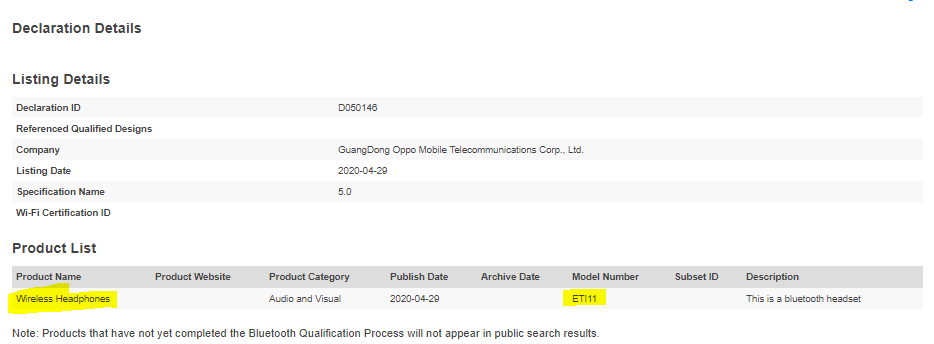
Alongside the wireless speakers, the Bluetooth SIG also certified a pair of OPPO wireless headphones with model number “ETI11”. The headphones were also certified today and support Bluetooth 5.0.
We can’t say when OPPO will announce these new audio products but when they do we will let you know.
Chuwi always keeps surprising the fans with innovative and useful products. After getting a hold on the laptop and tablet devices, the company is slowly and steadily moving towards Mini PCs. In its maiden attempt, Chuwi exposed the world’s smallest 4K Mini PC LarkBox a few days ago. The huge appreciation from fans has led the company to list it on the Indiegogo crowdfunding platform from mid-May.
Chuwi Larkbox will be priced for $199 on the crowdfunding platform, but the actual price will follow after the crowdfunding phase.
Chuwi Larkbox Features
Mesures smaller than apple
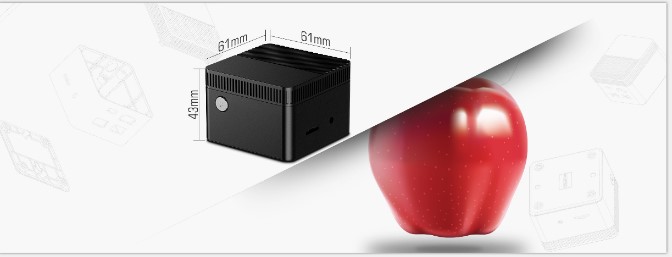
Chuwi LarkBox measures smaller than the size of an Apple with the dimensions of 61*61*43mm. It is portable and useful for users as it can be used as a 4K TV Box, Office PC, advertising display boards, etc. The small button serves all the purpose to switch it on/off.
4K HTPC
These days it is quite difficult to find a powerful Mini PC that can be used with 4K ready display, but LArkbox can smoothly play 4K videos. The users can watch Netflix, Hulu, and any other content streaming app after connecting to the WiFi or wired network. The Graphics 600 card can easily decode 4K resolution videos for smooth rendering.
Optimal Performance for Work and Study
Larbok 4K Mini PC offers adequate performance for all day-to-day tasks at work and at home. It is powered with the Intel N4100 Gemini Lake processor featuring Turbo Boost up to 2.4GHz and built-in UHD Graphics 600 cards. The whole box can remain standby by drawing just 5W power. The cooling system is efficient enough to effortlessly reduce heat under high load. The Mini PC comes with 128GB Internal Storage and 6GB LPDDR4 RAM. Its physical ports open the way for enhanced specifications.
Smallest 4K Mini PC
LarkBox costs just $199 including all the decent specifications listed above. It is going live on Indiegogo in late May. However, the actual price will be revealed after its official launch.
Chuwi is organizing a giveaway activity for the consumers, and the interested users can enter by heading to the official website.
Huami has now launched the Amazfit X smartwatch with a curved design that wraps around the wrist like a bracelet. The Xiaomi ecological chain partner unveiled the Amazfit X as a concept smartwatch in August 2019. The tech giant later announced in December last year that the product was ready for mass production. In January 2020, a product page for the sleek watch went live on Indiegogo indicating that the launch would take place soon.
Indeed, the page went live on Tuesday (April 28) with the smartwatch starting at $149 for the Super early birds deal. The IGG Special offer comes in at $179 while you can pick up two at a little lower price of $298. All offers come with free shipping and the products ships worldwide. However, shipping will commence in August which means you’ll still have to wait for a few months before you can lay your hands on the smartwatch. Notwithstanding, as at the time of reporting, the crowdfunding has recorded over $350,000 USD from 2,228 backers.
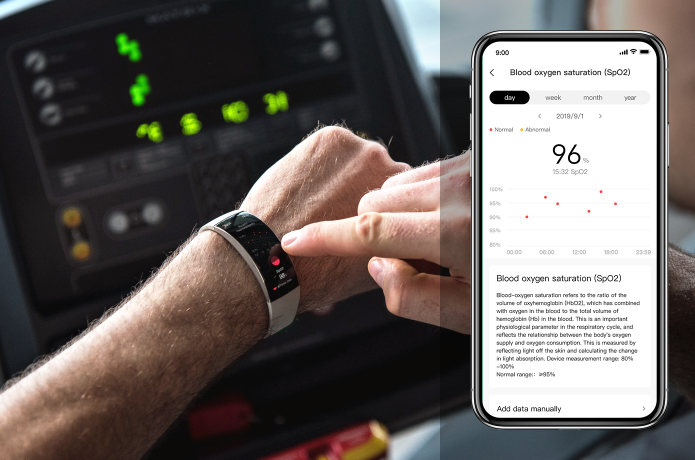
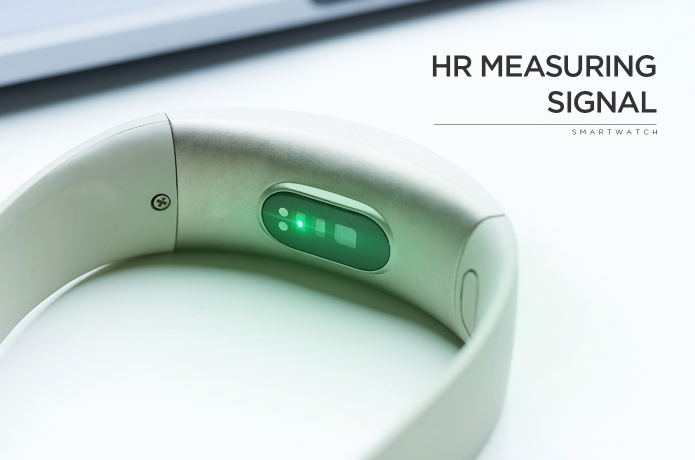
As a reminder, the Amazfit X adopts an all-metal integrated design with hidden electronic buttons that replace the traditional buttons. The watch features a proprietary 2.07-inch flexible curved screen with a super-arc curvature of 92°. The curvature is said to have been achieved by heating the metal body through an ultra-high temperature of 700°C with a 6-bend bending process.
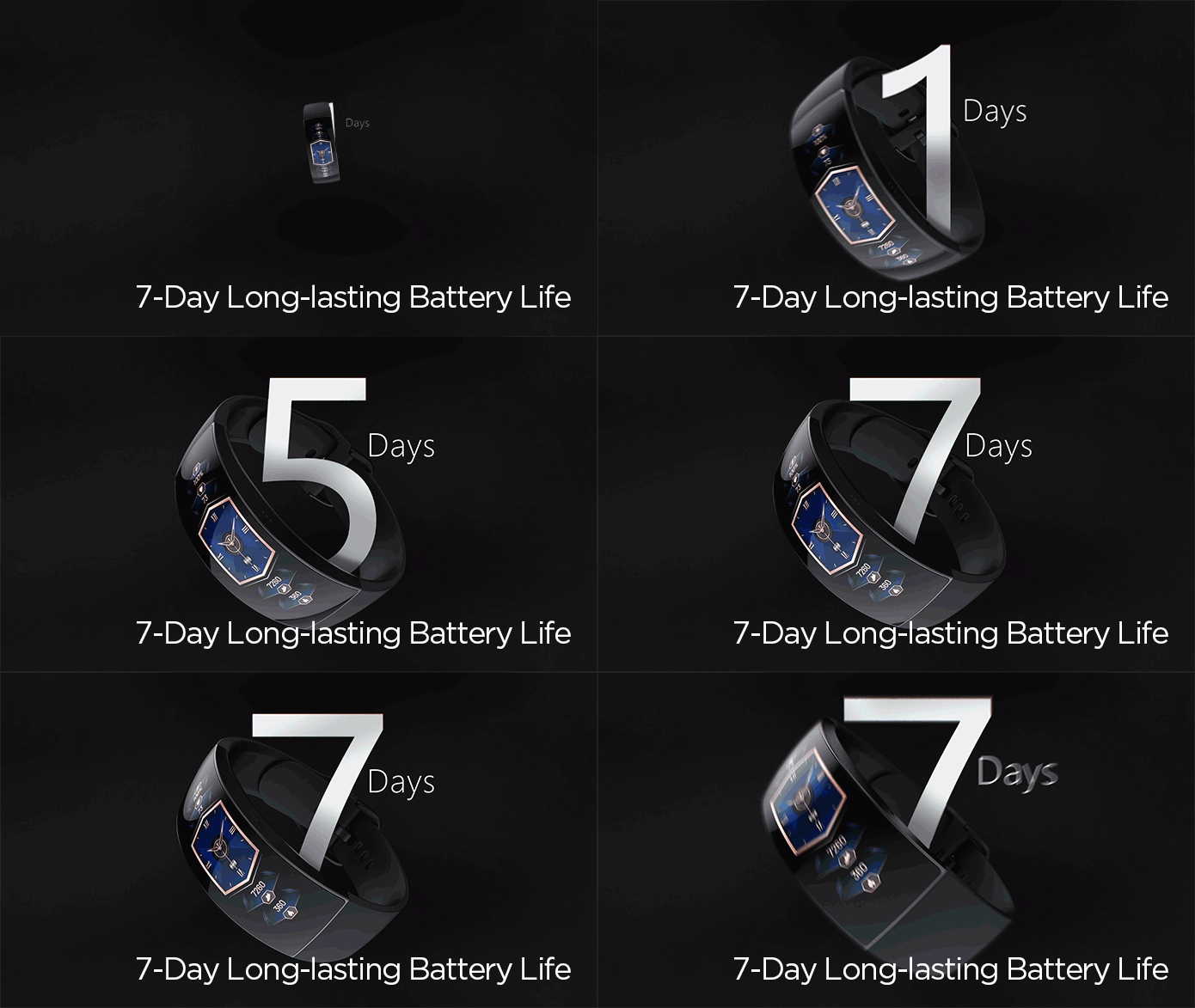
The Amazfit X is shaped like a new moon and has a larger display area of up to 244% compared to the display area of wearable devices with similar size. The screen also has 326ppi, 100% NTSC high color saturation and up to 430nits screen brightness. The watch uses a 220mAh curved lithium battery which is said to have support for up to 7 days battery life. Since the motherboard can’t be curved, the Amazfit X uses a 3-segment motherboard in order to adapt to the curvature.
Since last year, there has been a steady flow of products by Xiaomi’s eco-chain partners launching on the Indiegogo crowdfunding platform. The HIMO H1 launch preceded this one and has received impressive support. Before then, the WalkingPad R1 Pro and Oclean X smart toothbrush were put up for backing with superb results. We expect to see more of such products as time goes on.
Google started releasing monthly security patches from 2015. Since then, OEMs have been incorporating the patches to their device’s firmware and have been providing it to their users via OTA. However, a report by SRLabs (Security Research Labs) in 2018 revealed the companies to not merge all the changes, which led the search giant to investigate the so-called ‘patch gap’. Now, after two years, the firm has released a new report with compelling positive changes.
SRLabs has been monitoring security patches delivered by OEMs to their devices for the last two years. They made a report with the help of crowdsourced data from its SnoopSnitch application as well as its own collection of firmware builds. The firm identified a total of 10,000 and 7,000 unique firmware builds with different security levels in 2018 and 2019 respectively.
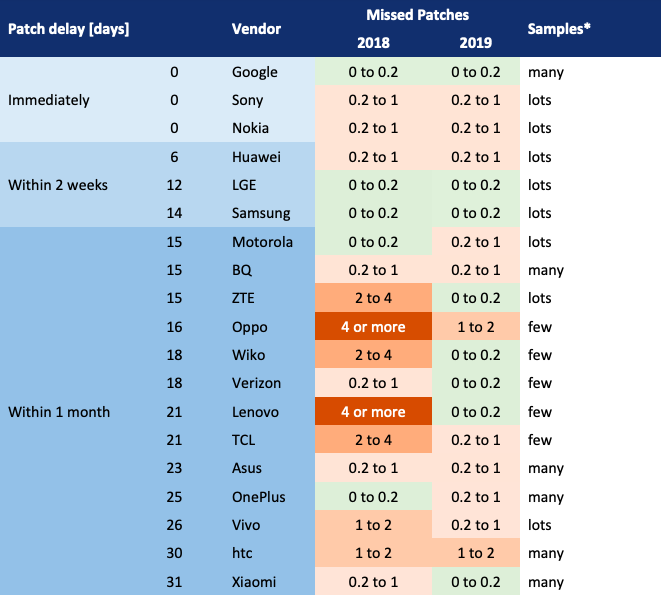
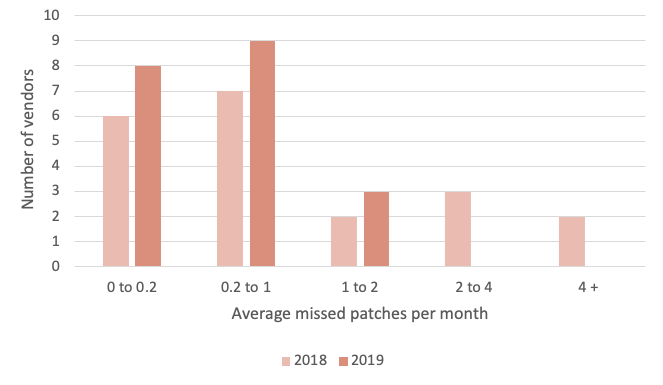
As per their analysis, in 2019, OEMs missed only about half of the patches compared to 2018. Also, the delivery speed was faster by 15%, decreasing the average number of days taken to incorporate a patch from 44 days to 38 days. That means the rate of missed patches fell to 0.3 from 0.7 in the previous year.
Another interesting find was companies tend to patch devices with the most widely deployed Android version. For instance, Samsung and Xiaomi patched their devices with Android 7.1.1 first in most cases. This led to the delaying of updates for the handset running the recent versions of Android.
As far as overall performance is concerned, Google, Sony, and Nokia topped the chart as their devices run near-stock Android and hence it is easy to implement patches. Whereas, Huawei, LG, and Samsung took an average of 2 weeks. Lastly, all other major OEMs including Oppo, Xiaomi, Vivo, OnePlus, Motorola, ASUS, and others patched their devices within a month on average.
The famous rugged-phone manufacturer Oukitel, specializing in high cost-performance segments, is back with its latest affordable cutting-edge phone, the Oukitel C18 Pro. However, it’s not meant to be a rugged or flagship smartphone. It is targeted at the budget users, offering good specs at an affordable price tag.
Since the price tag is under $150 (even providing a discount price at $99 now), it deserves the word ‘Value For Money’ at first sight. Especially when touching the phone, its build quality and design definitely would make it stand out from those equally boring budget models.
Oukitel C18 Pro Review: Design & Appearance
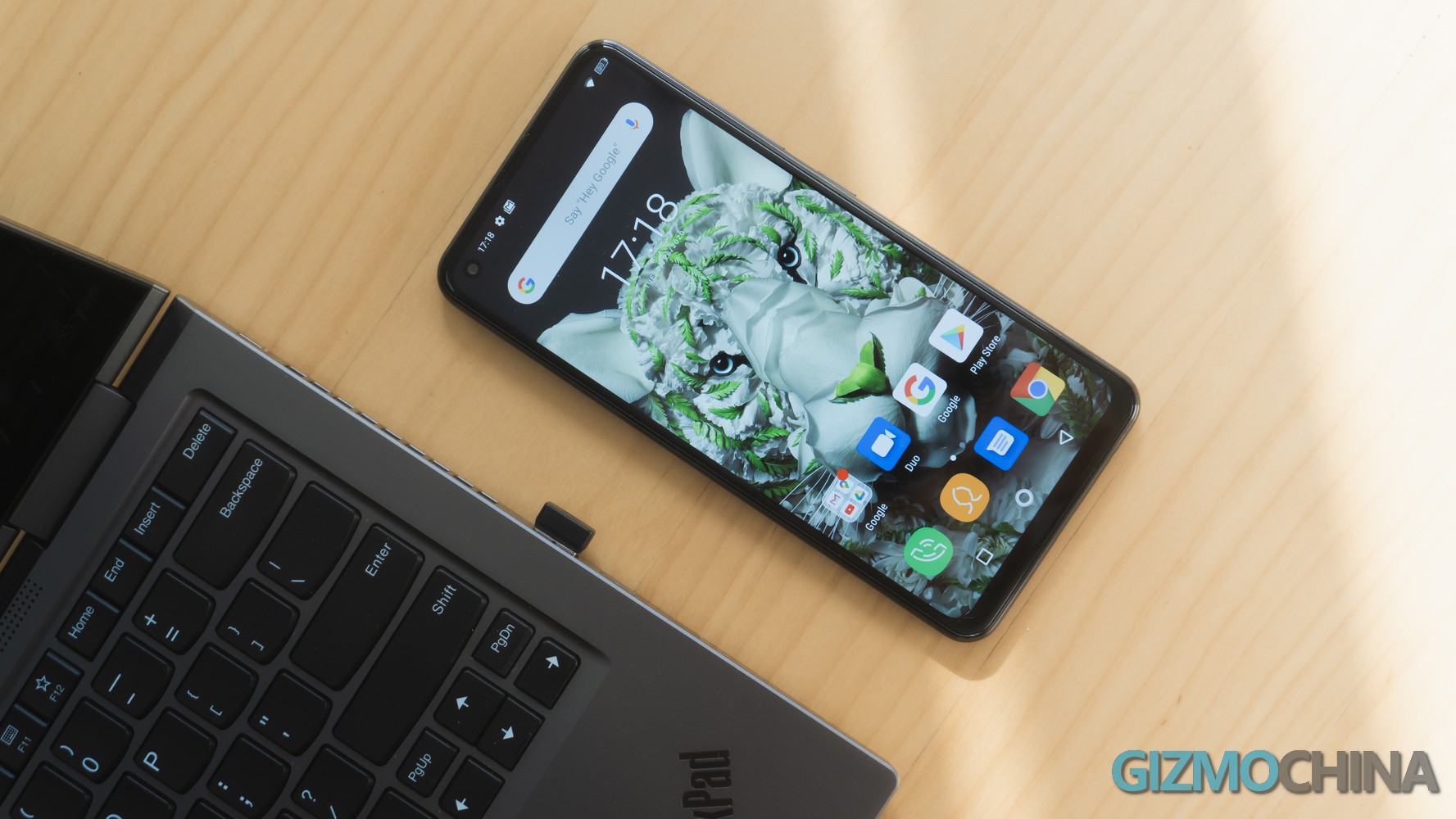
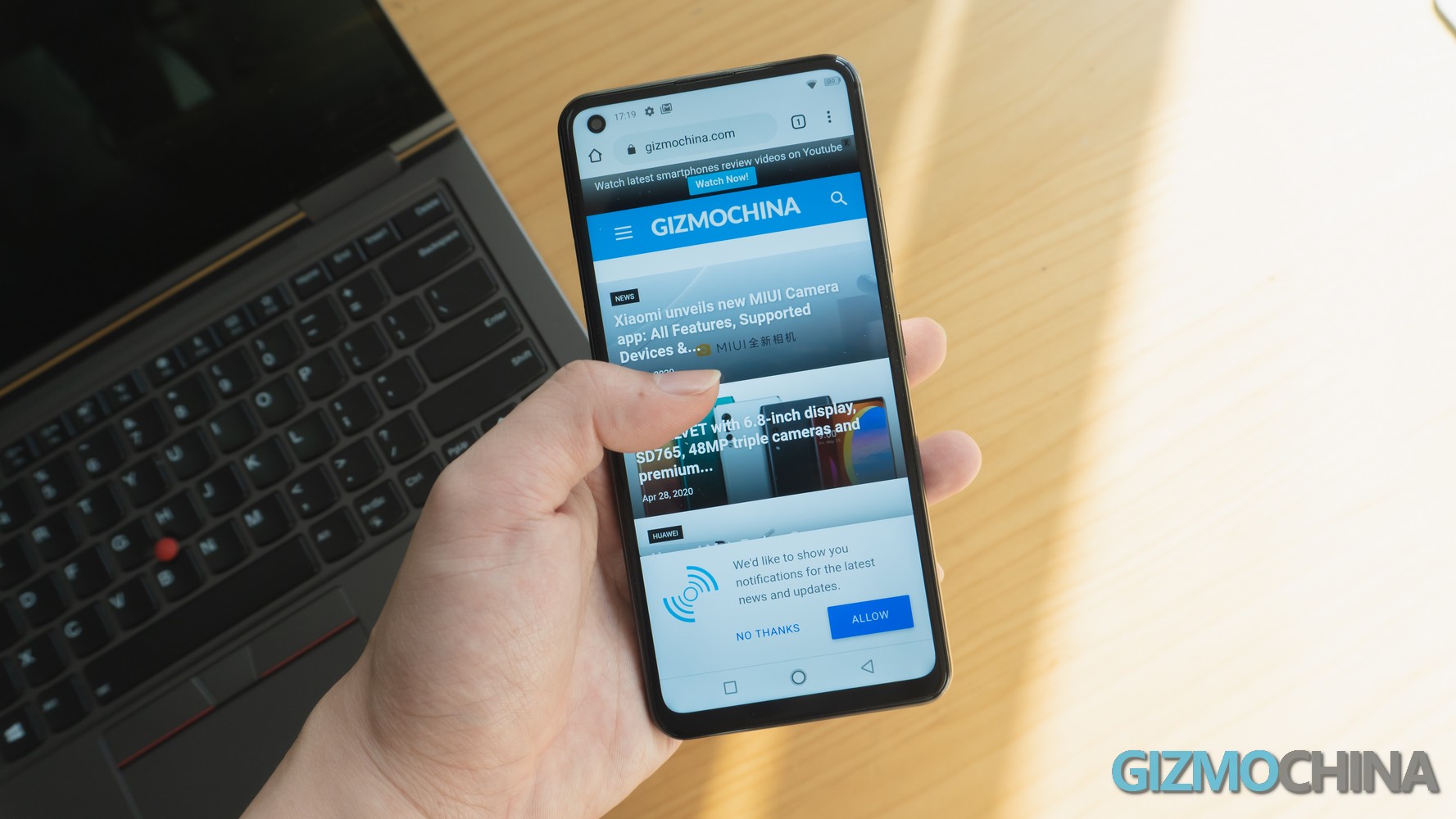
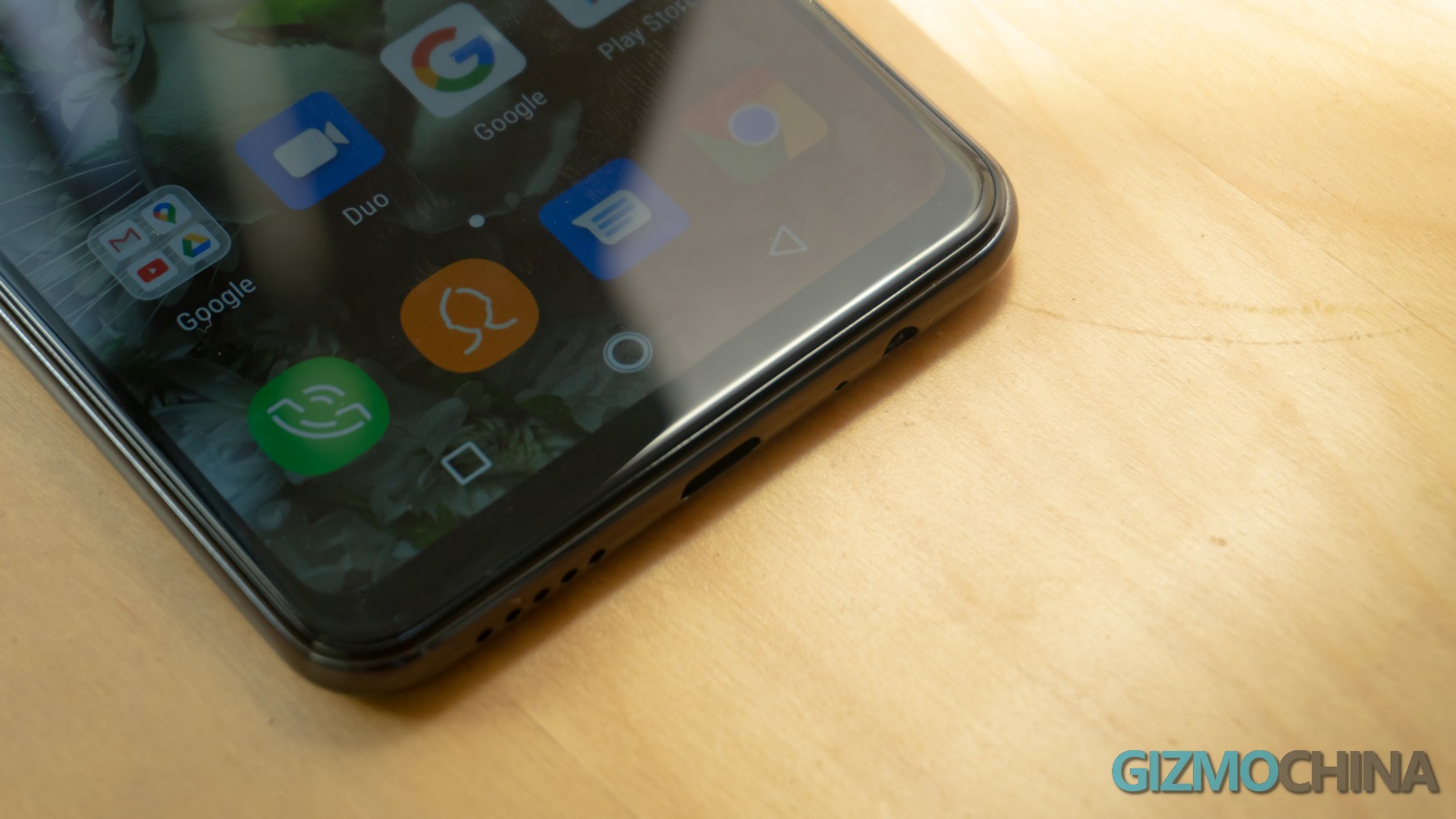
It’s extremely hard to find a budget model like the Oukitel C18 Pro having the glass sandwich frame design with a 2.5D covering. The front design is the biggest surprise. The 6.55-inch OGS display fills the front without leaving an unpleasant chin. More importantly, this $100 model features the popular hole-punch selfie camera just like most 2020 flagships. And the area of the camera hole is well controlled.
I have to say that its design is really unique and looks way more premium than other devices with such a price tag. On the other hand, the resolution of 1600 x 720 pixels is a bit disappointing for a 2020 device. But considering the price and rest of the specs, the decision to go with a 720p display to achieve a balance between better perfromance and longer battery life is somehow reasonable.
The display isn’t really crisp but for a $100 phone, we are not complaining.
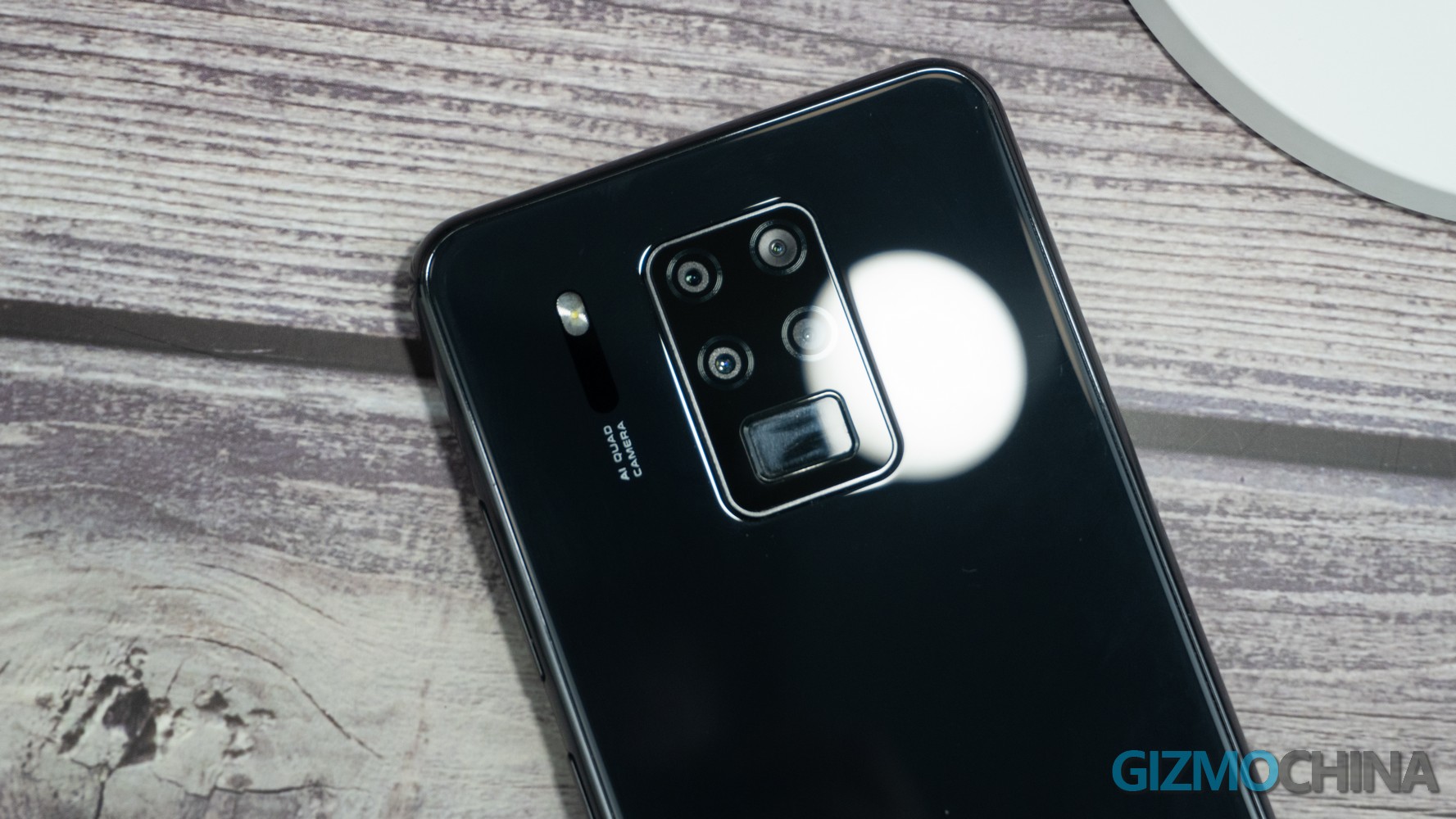
The rear design can be equally praised. The symmetrical design of four cameras and a fingerprint sensor is impressive as first seen in 2020. The industrial design including the sandwich structure and the 2.5D glass covering is usually reserved for the higher segment product.
Oukitel C18 Pro Review: Software & Dual-Sim Card support
Within this price segment, the hardware compromises were common due to cost reduction. Although the MTK HelioP25 processor with 4GB RAM and 64Gb ROM running inside the C18 Pro is not an attractive performance choice, users can have complete functions of Android 9 (e.g. Google Assistant, Apps and basic games installation, music, video, etc.) without obvious lags. Meanwhile, the Oukitel team informed us that the C18 Pro will be able to update to the Android 10 version in the near future, which is a comparative advantage against most budget phones. In addition to the primary SIM slot, the Oukitel C18 Pro provides one more card slot for an extended microSD or a second SIM card.
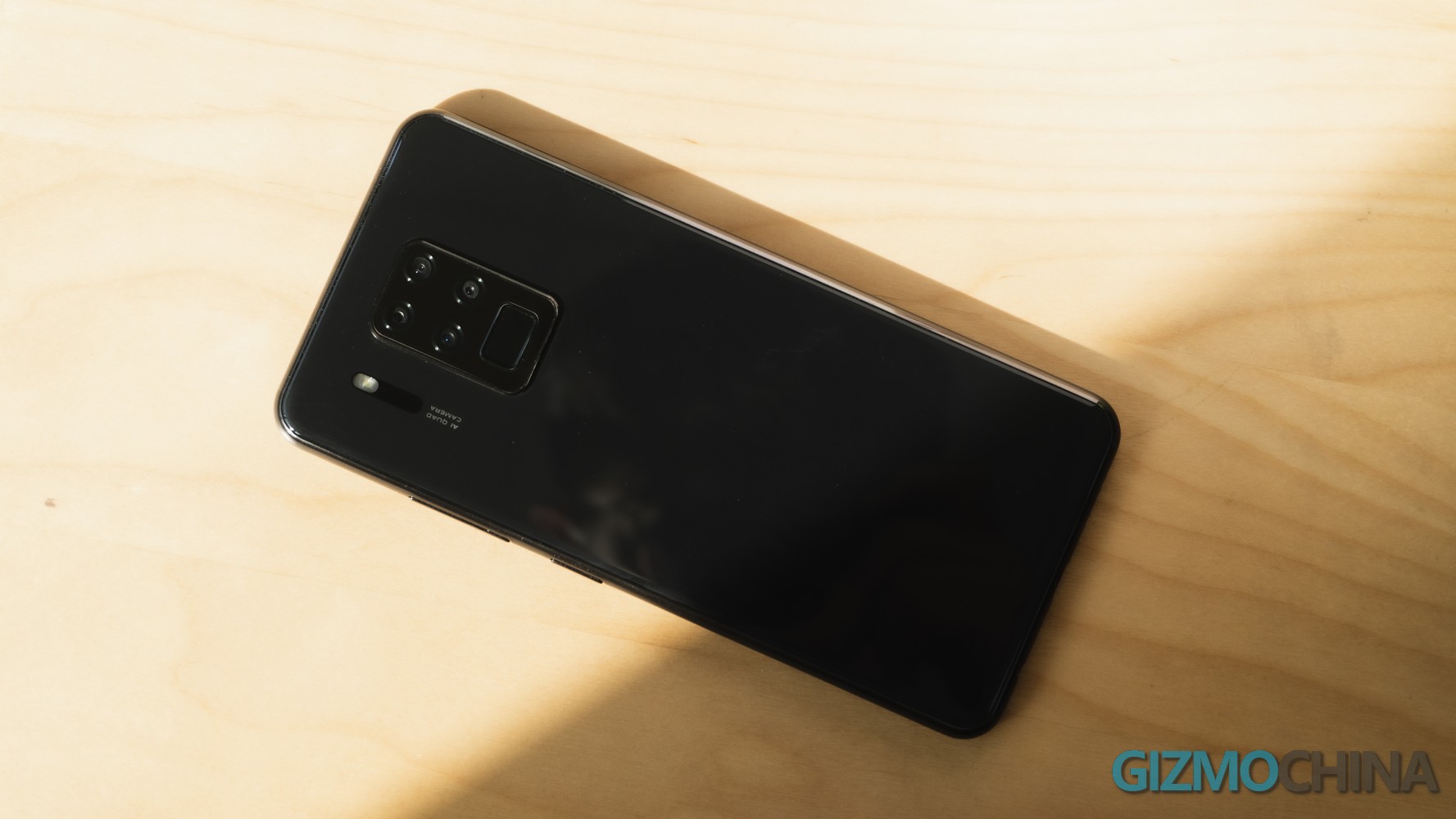
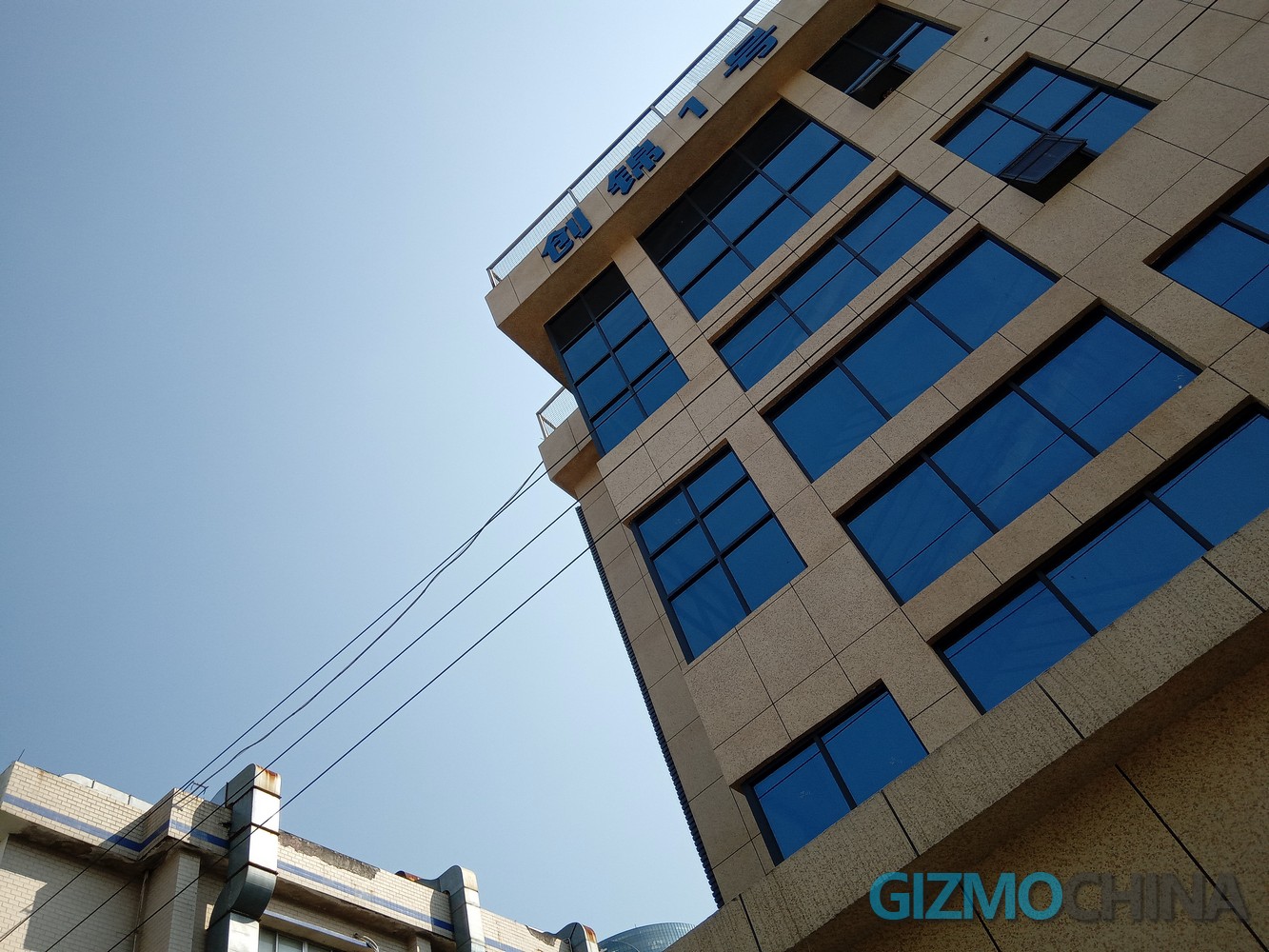
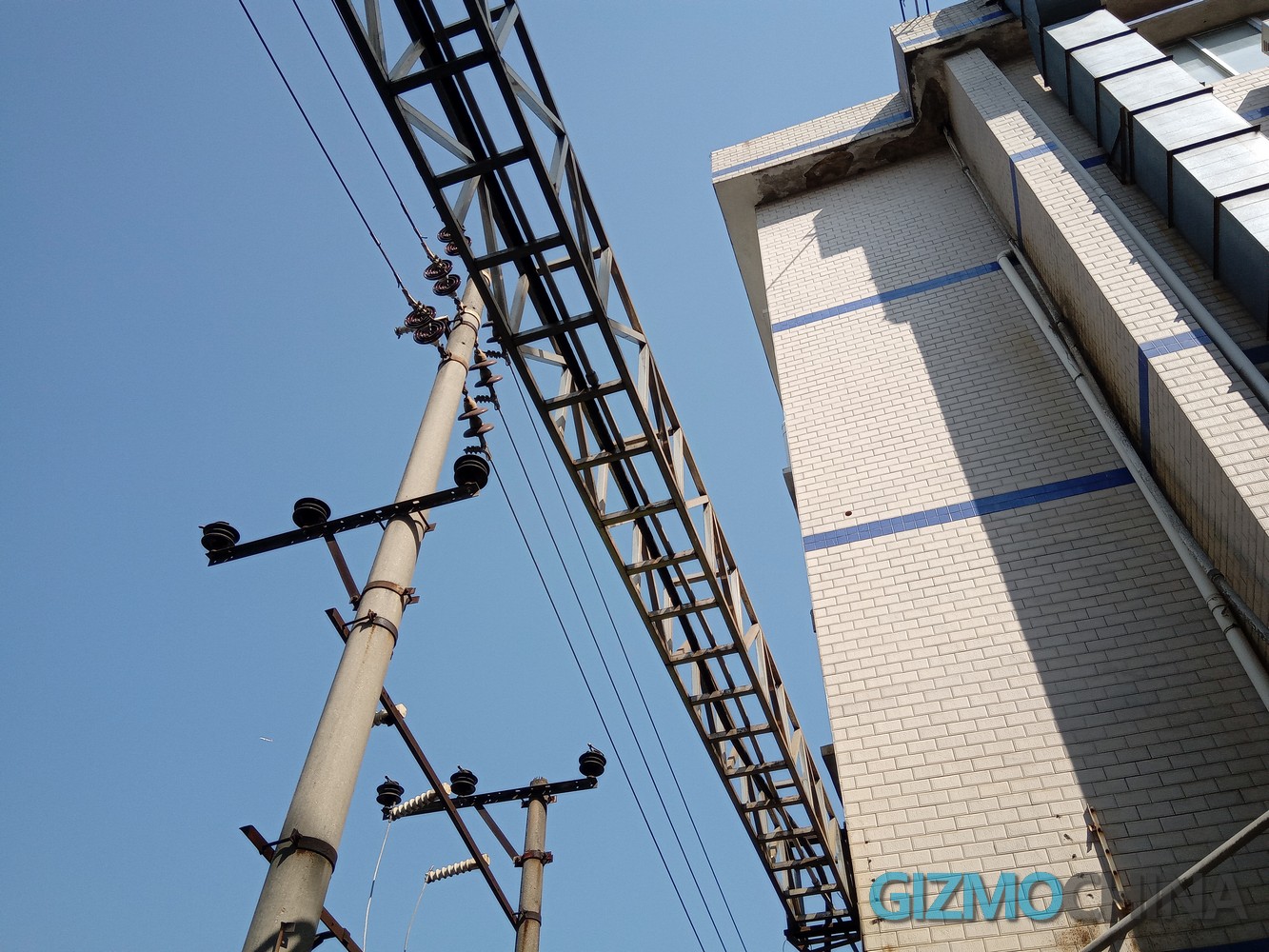
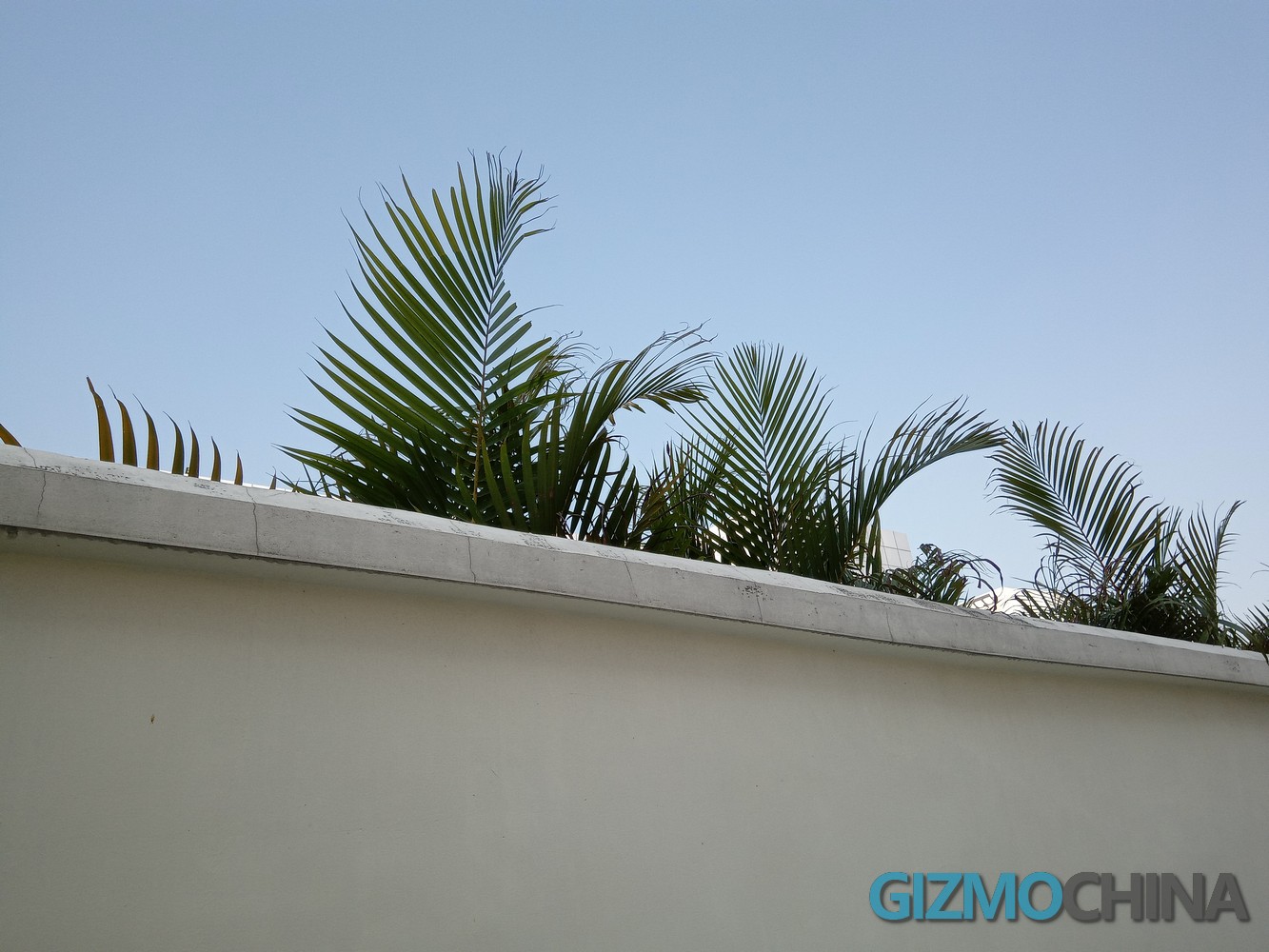
Another attractive dimension is the camera combination including the modules of 16MP (primary), 8MP (wide-angle), 5MP (macro), and 2MP (portrait bokeh sensor). Compared to the useless multi-camera modules on same-priced phones or even more expensive opponents, the secondary cameras of the cost-effective C18 Pro are able to produce decent images. No more words – just check the samples below.
The samples shot by the C18 Pro far exceeded our expectations for a cheap device. After all, it doesn’t look like a sample from a $100 phone. Although colors on the primary camera might be over-saturated when turning on the auto-scene-mode, the images presented decent clarity and good range, not just for the primary camera but also those secondary cameras. And have to mention its macro camera, it is even better than some mid-rangers’ macro performance.
1 of 10
Primary camera
Primary camera - night
Primary camera
Primary camera
Primary camera
Primary camera
Primary camera
Primary camera
Primary camera
Primary camera
1 of 3
Primary camera
Wide-angle
Wide-angle
1 of 3
Primary camera
Macro
Macro
Oukitel C18 Pro Review: Battery
The battery equipped in the Oukitel C18 Pro reaches a big capacity of 4000mAh. In daily use, it was able to guarantee around 8-hour active display time. The phone supports plenty of language options to cover most consumers.
Conclusion
Oukitel has just updated our expectations from a real budget phone. Although the phone could not be praised for its performance and display resolution, some features like industrial design, build quality, cameras and battery, just made it outstanding from the boring budget crowds.
It also makes the competition of budget phones become more interesting as budget phones still are dominant models in a lot of developing countries. And that’s also the reason why we wanted to review the Oukitel C18 Pro.
You can learn more about the device from the official website here.
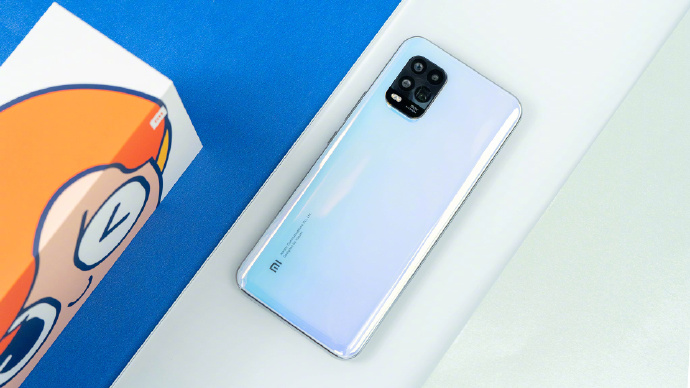
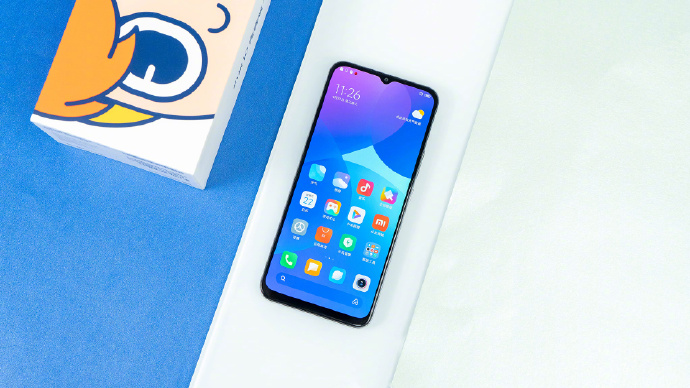
Xiaomi went official with the Mi 10 Youth 5G in China earlier this week. There have been speculations and rumours that the Mi 10 Youth will launch outside China as Mi 10 Lite Zoom Edition. Xiaomi has officially confirmed the moniker by referring to the Mi 10 Youth as Mi 10 Lite Zoom Edition in a blog post.
The Mi 10 Youth is obviously the star product and there are several reasons why. The device comes with affordable pricing which makes it the brand’s cheapest 5G phone. Perhaps, the main highlight is the 50X zoom camera which it features.
The Mi 10 Lite Zoom moniker didn’t emerge straight out of the blue. Apart from rumours, Qualcomm recently confirmed the name when it listed the Mi 10 Lite Zoom among the new models that would feature the newly announced Quick Charge 3+.
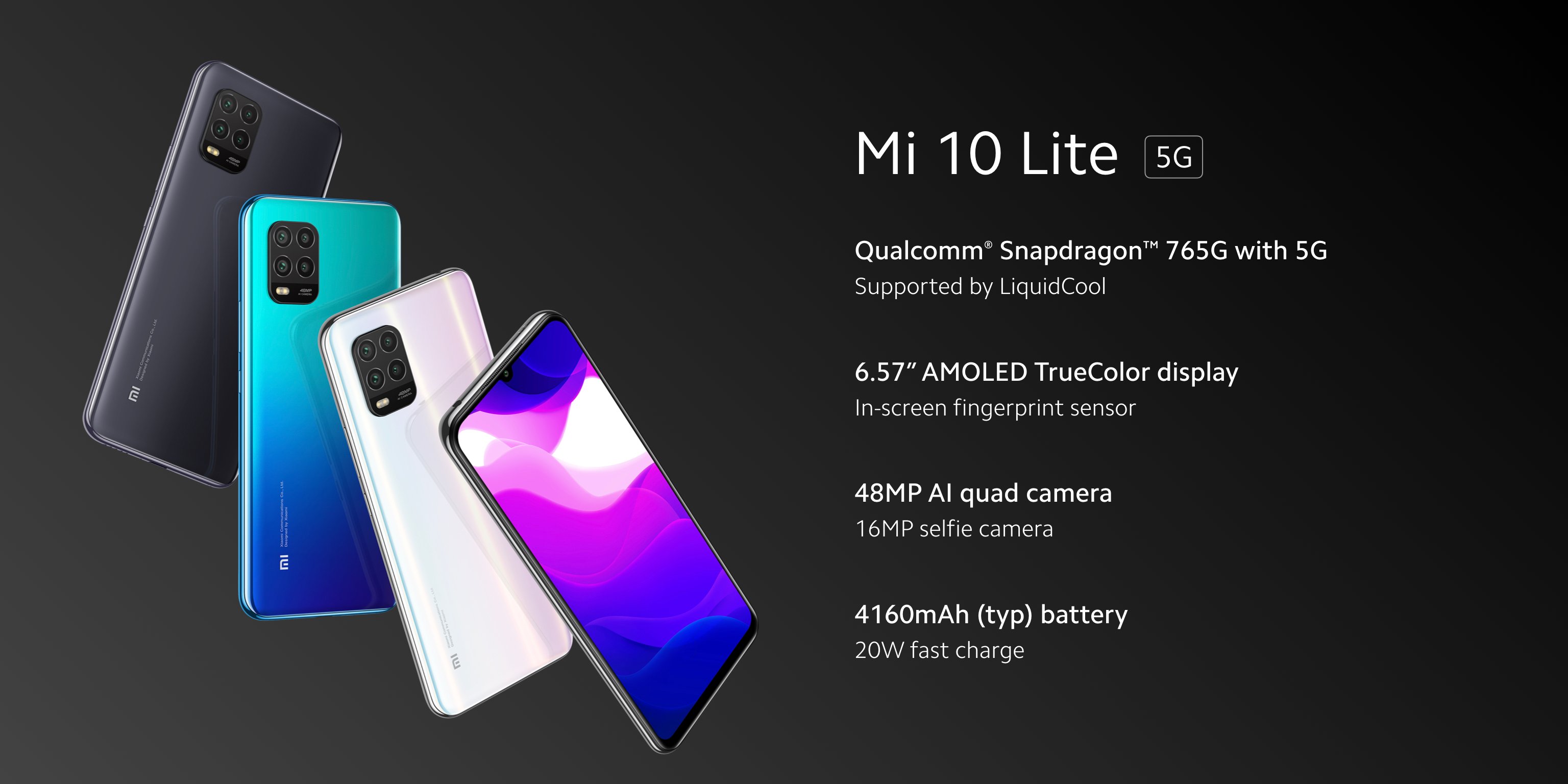
In addition, it could be recalled that during the Mi 10 and Mi 10 Pro global launch in Europe, Xiaomi took the wraps off the Mi 10 Lite 5G powered by a Snapdragon 765G processor. The Mi 10 Lite and this new Mi 10 Lite Zoom feature similar designs and configurations. They two models have a waterdrop notch design, same display size and 16MP selfie sensor. The main sensor at the rear is also a 48MP sensor on both models.
The major difference is the telephoto camera which the Zoom Edition has. The 8MP telephoto lens with 50x zoom support is bigger than the other sensors. Aside from that, the Quad-cameras and LED flash are arranged in a similar pattern with the Mi 10 Lite. Thus, it is safe to refer to this edition as a Mi 10 Lite with an upgraded camera (for those who fancy a zoom lens).
There is no word yet on when this model will be available outside China. We expect Xiaomi to launch this model soon as it attempts to ramp up sales amidst the Coronavirus pandemic.
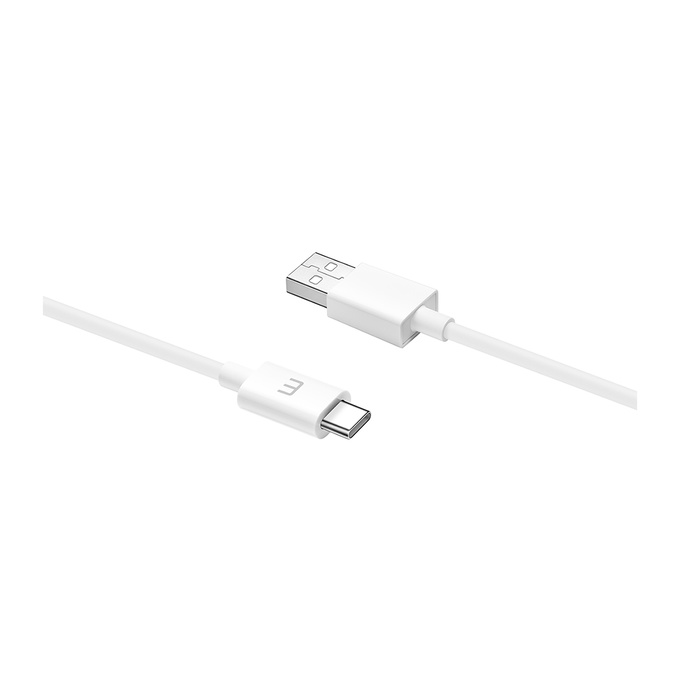
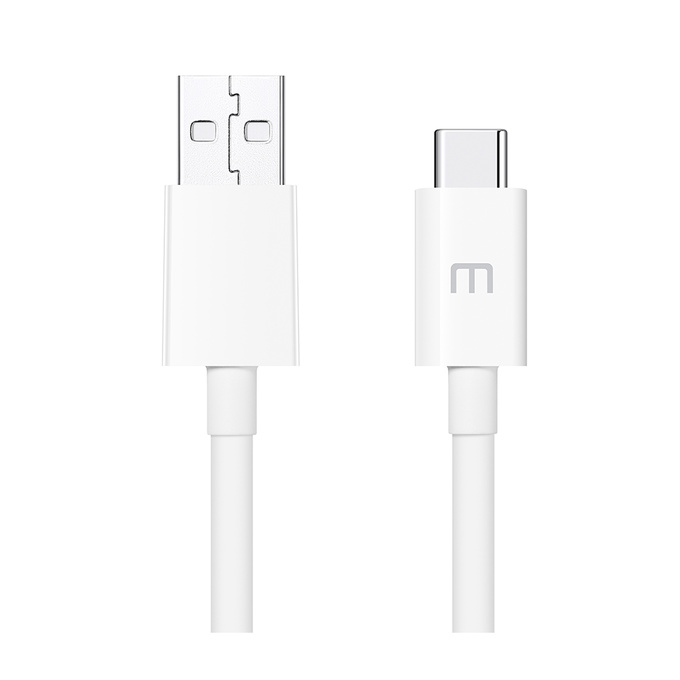
Last month, Meizu released a red-colored Type-C gaming cable with L-shaped connector. Today, the brand launches a new standard USB Type-C cable in white colour. It will be sold for 49 Yuan ($7) starting tomorrow through all official channels.
The new Meizu USB Type-C cable is made of TPE (Thermoplastic elastomers) to offer soft and tangle-free experience, in addition to toughness for durability. The cable supports up to 5A current and hence, it can be used with most fast charging adaptors without any problem.
The cable is also resistant to short-circuit as per the company. If a foreign object enters, the cable will cut-off the power supply automatically to avoid damaging the phone’s port as well as burning up of the wire.
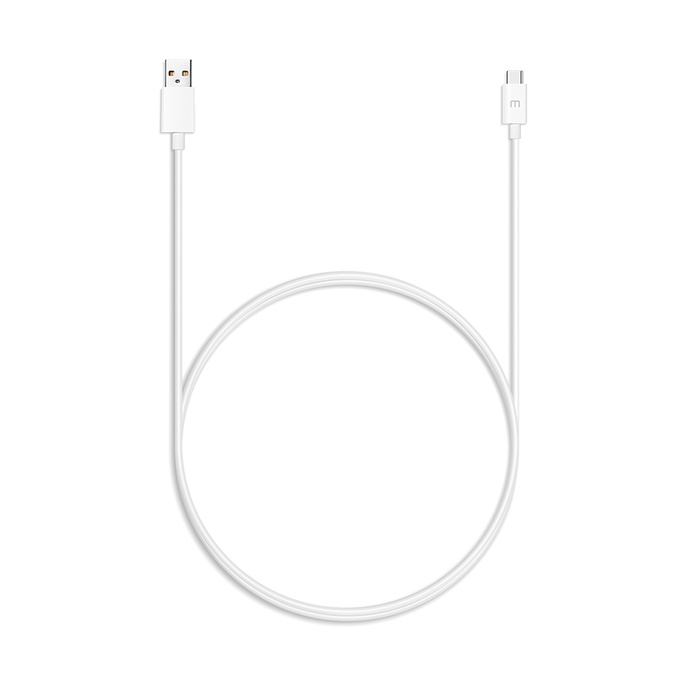
As far as design is concerned, it comes in classic white color with Meizu logo on the Type-C part with nothing on the USB Type-A side. Also, the connector is vertical and not L-shaped like gaming accessories. Lastly but not least, the cable measures 1m in size.
The new Meizu USB Type-C cable is inferior to the company’s own Type-C gaming cable. Because the latter is 1.2m in size, features braided wire / L-shaped connector, and is even water-resistant to some extent. Above all, both the products cost the same 49 Yuan ($7).
Android 10 is finally here for the Black Shark and Black Shark 2 gaming phones. The announcement was made by the official Black Shark Twitter account. The update arrives as JOYUI 11 and brings with it lots of new features alongside the latest version of Android.
According to the tweet, the update is rolling out to a few Black Shark 2 devices already and will begin rolling out to a few Black Shark phones starting tomorrow. This first wave is a test rollout before the OTA is pushed to all devices beginning May 6.
Finally😅😅😅what everyone have been asking for months is here, JOYUI11. Today we will push the 1st wave to certain Black Shark 2 devices and from 30th April, the Black Shark pro. This will be the initial test pushing. From 6th May we will start to push the OTA for everyone. pic.twitter.com/OKOqsEh0J2
The Black Shark was launched in 2018 and ran Android 8 Oreo out of the box while the Black Shark 2 launched in 2019 with Android 9 Pie. There is a chance this is the last major upgrade for the former while the latter may still get updated to Android 11.
Do let us know if you have gotten the update and what new features you like.
WhatsApp has begun implementing sweeping changes to the popular app one of which will see ads showing on the app. Earlier on, the Facebook-owned company rolled out a new feature to limit forwarded messages to only one contact at a time. This move was aimed at reducing the spread of misinformation on the app especially in the wake of the coronavirus crisis.
Interesting, WhatsApp has now announced that this new feature has already achieved tremendous impact in just two weeks. An official statement revealed that there was a 70% reduction in the number of highly forwarded messages. The statement reads;
“WhatsApp is committed to doing our part to tackle viral messages. We recently introduced a limit to sharing “highly forwarded messages” to just one chat. Since putting into place this new limit, globally there has been a 70% reduction in the number of highly forwarded messages sent on WhatsApp. This change is helping keep WhatsApp a place for personal and private conversations”.
The policy considers any message forwarded more than five times as a “highly forwarded” message.
It may be difficult to track how this new measure will help in mitigating the read of fake news and misinformation globally through the app due to the app’s end-to-end encryption on cheats. However, the reduction in the number of recipients might discourage some from attempting to make false information or fake news go viral since they can send to more than one person at a time.
Samsung is announcing new colorways for its products. The Galaxy S20 Ultra is now available in Cosmic White in China and should also make its way to other countries. It has now been reported that the Galaxy Buds+ will soon get a new color variant.
The earbuds were originally announced in Cloud Blue, Cosmic Black, White, Red, and a special Thom Browne edition. Findings in version 1.7.47-22 of the Samsung SmartThings app, have revealed animations of a Deep Blue color variant.
First reported by XDA-Developers, there is no doubt to the news as this is not the first time info related to the Galaxy Buds+ has been found in the SmartThings app. Back in December 2019, animations of the earbuds were found in the app months before its official release.
Samsung is sticking to the glossy finish as the other color variants. If you skipped the Galaxy Buds+ because of its lack of a matte finish, then you should hope Samsung announces its other earbuds – the AKG N400 – outside South Korea.
When the new color variant will be announced remains unknown, so also are the markets it will be available for purchase.
The Samsung Galaxy Buds+ has a battery life of 11 hours that goes up to 22 hours with the charging case. It supports wireless charging, multi-device connection, and has an IPX2 rating. It has a price tag of $149.
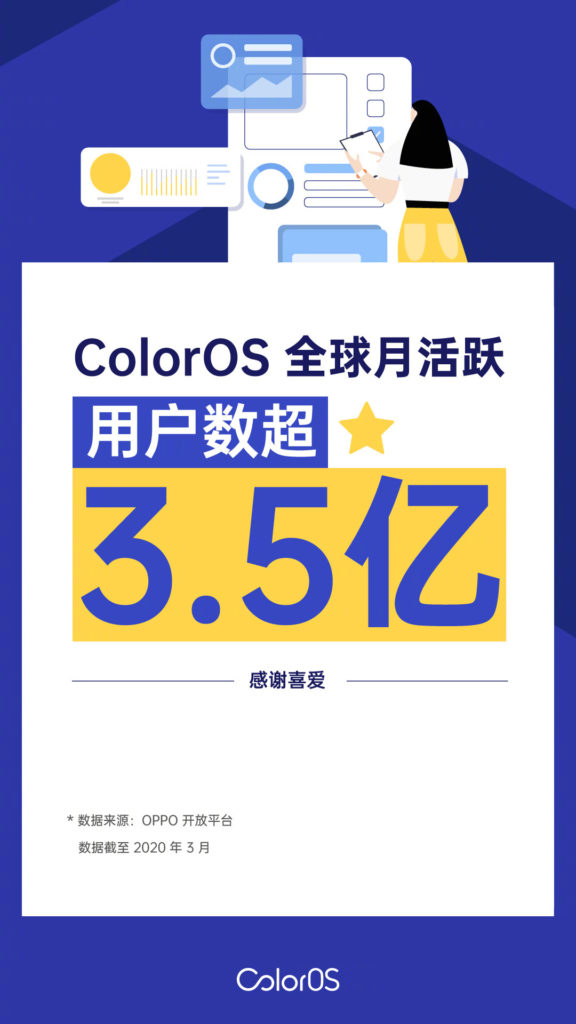
ColorOS has more than 350 million monthly active users as of March 2020. The information was shared by the official Weibo account of ColorOS. The statistics were analysed by Oppo’s own data research division.
Almost all Android smartphone OEMs have a skin of their own to differentiate themselves. Devices by Chinese brand run the most heavily skinned Android operating system. Because Google is banned in that region and the brands have to provide necessary alternatives to Google services.
ColorOS by Oppo is one of the oldest Android skins, which is currently in its 7th generation called ColorOS 7. Smartphones launched by Oppo have been running this software since the earlier days of brand’s entry into the Android smartphone market. Even handsets from its sub-brand Realme (now an independent brand) ran this up until last year.
Oppo is currently rolling out the delayed ColorOS 7 stable update to its devices. Amidst this, the company boasted the userbase of its mobile operating system to be over 350 million (monthly active) as of March 2020. It also mentioned its mobile software to be available in 140 countries and regions supporting 72 languages. For comparison, the userbase is 40 million more than MIUI (310 million), which is one of the most popular Android skins.
It is interesting to see more ColorOS users than MIUI although the latter is older than the former. This makes us to Oppo users hold on to their phones longer than Xiaomi or Redmi users. Additionally, almost all Xiaomi / Redmi smartphones are popular in the custom ROM community and therefore, this could be one of the causes for the lower count.
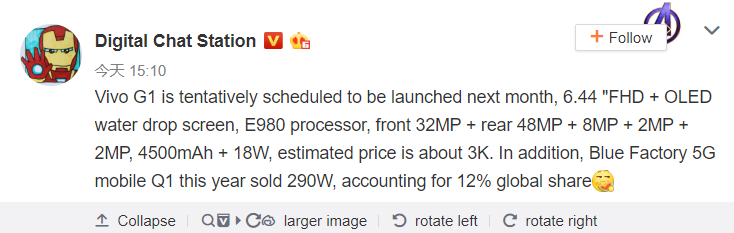
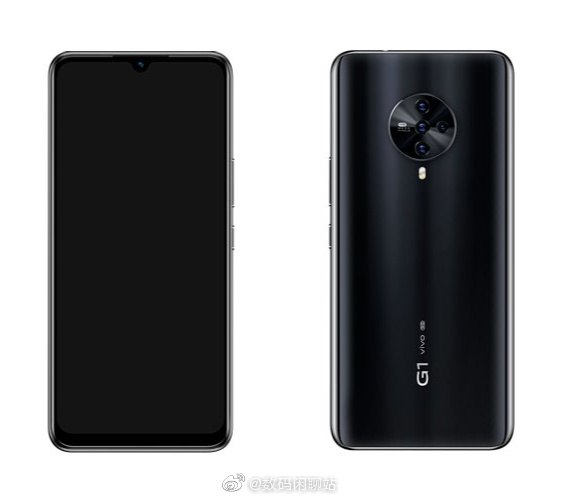
An upcoming Vivo smartphone has had its specifications revealed online. The Vivo G1 has been spotted on China’s Ministry of Industry and Information Technology’s official website.
The news was first reported on by Digital Chat Station (@数码 闲聊 站) on Weibo, a Chinese microblogging website. The smartphone is the first model from the Chinese smartphone manufacturer under the G series. We had previously reported on the Vivo G1 back in March when it was first spotted in TENNA. The device is basically the Vivo S6 rebranded for the Chinese market and will feature a 6.55 inch AMOLED display, with a waterdrop notch.
The display in question sports a 2400 x 1080px resolution and its processor will have a maximum frequency of 2.2GHz. In terms of memory, the Vivo G1 will feature 8GB of RAM and 256GB of internal storage. The smartphone will be powered by a 4,390mAh battery which will support some form of fast charging (reportedly 18W). Apart from just the overall design, even the camera module is apparently a similar setup.
The Vivo G1 will sport a quad camera setup, including a 48 megapixel camera, 8 megapixel sensor, and two 2 megapixel lenses. On the front, a 32 megapixel selfie camera will be found on the waterdrop notch display. Unfortunately, other details like pricing and release date are currently unknown but it is said to be around 3,000 Yuan (roughly 423 US Dollars) and may launch next launch.
Lenovo has recently launched a new electric scooter. The M2 is currently available for purchase, priced at 1,999 Yuan (roughly 282 US Dollars), and can run for up to 30 kilometers in a single full charge.
The Lenovo M2 electric scooter features a triple brake system alongside a triple shock absorption system as well. The battery outputs about 350W of power and is the driving force behind the endurance centric scooter. The frame/body of the Lenovo M2 is built from an aluminum alloy structure that is also rated for IP54 protection. The body of the electric scooter can support weights of about 120 kilograms.
Being made from a light alloy, the weight of the Lenovo M2 electric scooter is less than 15 kilograms. Furthermore, it is equipped with an LED control panel, which displays the current speed, power, gear, and other statuses as well. The scooter is equipped with lithium batteries and one can even check the status of the battery through the WeChat app companion.
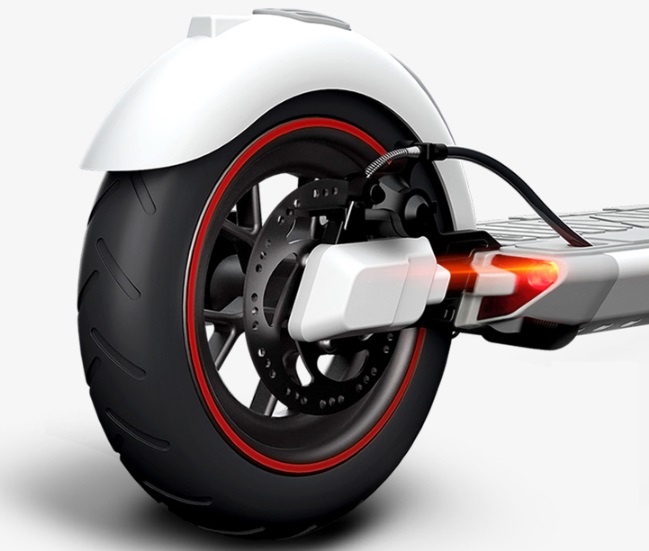
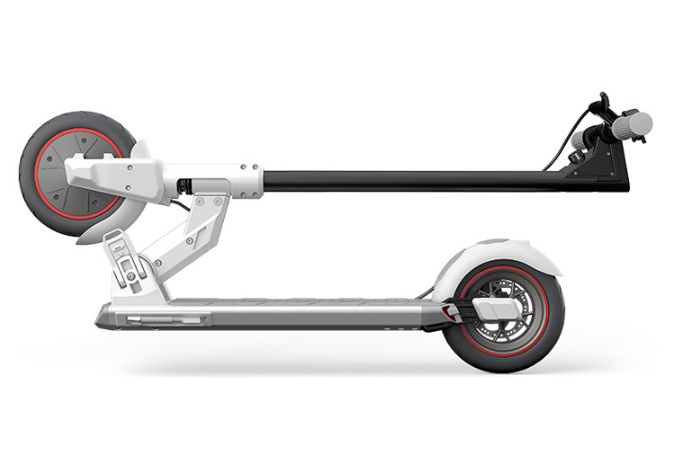
Looking at the official images, the Lenovo M2 follows a minimalistic design with gray themes and a red lining on the insides of the wheel. It sports a standard electric scooter look and is even built with portability n mind, thanks to it being able to fold inward from the front wheel.
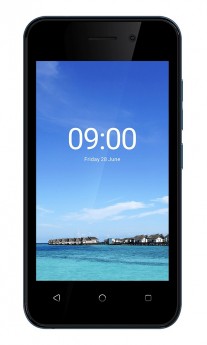
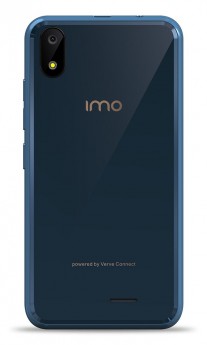
If you’re into a simple, compact, and affordable smartphone, the IMO Q2 Plus might just be the one for you. The true Blue version of the smartphone costs just £30 (roughly 37 US Dollars), features a 4 inch display, and also supports 4G LTE.
The IMO Q2 Plus is undoubtedly an extreme budget device, which becomes more apparent with its Android 9 Go operating system. For those unaware, the Go variant of the Android OS is like a Lite or cutdown version of the regular version. Thus, it is still fairly impressive that such an affordable device manages to have both 4G networking and Android Go over the popular KaiOS, which is found in many feature phones.
The IMO is arriving on the British carrier EE and will be available for purchase later this week. Being a 4G enabled device, users can expect decent wireless speeds, but tethering you can also consider tethering. The display is a 4 inch 480 x 854px screen with a quad core CPU and just one gigabyte of RAM. The device is powered by a 1,500mAh battery pack, which may last you a day on moderate use, but it isn’t exactly built for hardcore multitasking.
For storage, you get 8GB of storage, although this is expandable up to 32GB via a microSD card slot. In terms of optics, the primary sensor is a 2 megapixel shooter while the front features a 0.3 megapixel camera. Interestingly, the front is somehow capable of face unlock.
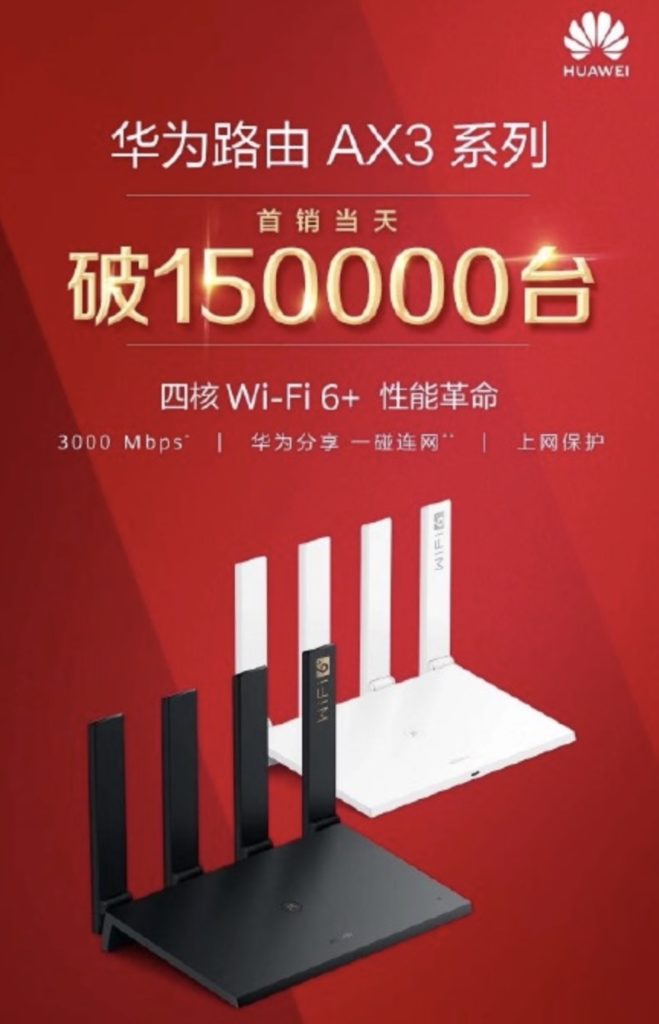
Recently, Huawei announced AX3 series of routers as the word’s first routers with WiFi 6+ support. The duo went on sale for the first time on April 27. According to the company, it sold over 150,000 units of these two network devices on the first day of the sale itself.
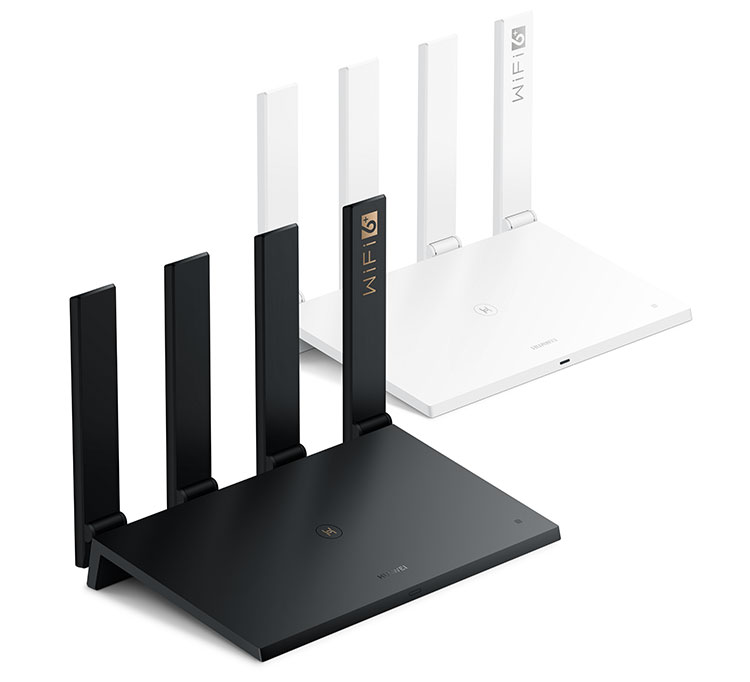
Huawei AX3 router series includes two devices – Huawei AX3 and Huawei AX3 Pro. They are priced at 229 Yuan ($32) and 329 Yuan ($46) respectively.
Both the Huawei AX3 WiFi 6+ routers features similar specifications and features except for the processor and RAM. The standard version is powered by in-house Lingxiao dual-core processor clocked at 1.2GHz paired with RAM and ROM of 128MB each. On the other hand, the Pro variant features a 1.4GHz Lingxiao quad-core processor coupled with 256MB RAM and 128MB ROM.
Also, though they are similar in size with dimensions of 225 mm x 159.2 mm x 39.7 mm, the standard version weighs lighter at 387g compared to 403g of the Pro version. Further, the power consumption differs on the two because of different CPUs – 12W and 24W respectively. Lastly, the standard version only comes in white color, whereas the Pro can be purchased in white as well as black color options
Apart from the above-mentioned differences, the Huawei AX3 and Huawei AX3 Pro WiFi 6+ routers are similar in all ways possible. They are capable of providing max speed of 2976 Mbps operating simultaneously in both 2.4GHz (574Mbps) and 5GHz ( 2402Mbps) ranges. They feature 4 high-performance antennas, two each for 2.4Hz and 5GHz respectively.
They have all the useful and security features such as one-key pairing, mobile app support, speed limit, bandwidth limit, parental controls, gaming acceleration, WiFi relay, guest network, MAC address filtering, VPN, WPA3, firewall, DMZ, DoS attack protection, and more.
Interested people can buy these new Huawei WiFi 6+ routers from GizTop with international shipping.
We use cookies on our website to give you the most relevant experience by remembering your preferences and repeat visits. By clicking “Accept”, you consent to the use of ALL the cookies.
This website uses cookies to improve your experience while you navigate through the website. Out of these, the cookies that are categorized as necessary are stored on your browser as they are essential for the working of basic functionalities of the website. We also use third-party cookies that help us analyze and understand how you use this website. These cookies will be stored in your browser only with your consent. You also have the option to opt-out of these cookies. But opting out of some of these cookies may affect your browsing experience.
Necessary cookies are absolutely essential for the website to function properly. This category only includes cookies that ensures basic functionalities and security features of the website. These cookies do not store any personal information.
Any cookies that may not be particularly necessary for the website to function and is used specifically to collect user personal data via analytics, ads, other embedded contents are termed as non-necessary cookies. It is mandatory to procure user consent prior to running these cookies on your website.