Advertisement

Realme’s new 5G phone to be announced tomorrow

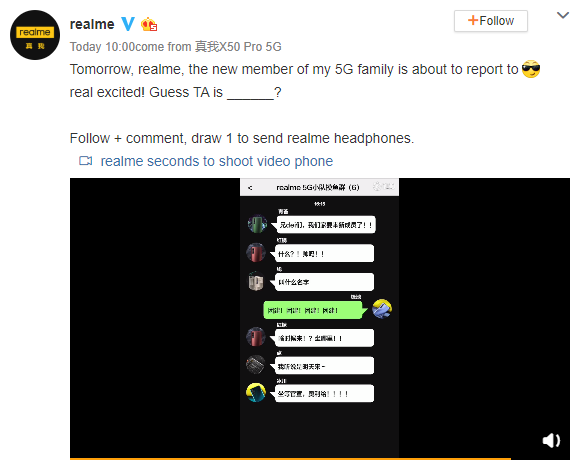
At the beginning of this year, Realme unveiled the Realme X50 5G smartphone in China as its first 5G-ready device. In February, the Realme X50 Pro 5G was made official. Since two new Realme devices have received approval from the 3C authority of China in the recent past, the rumor mill has been speculating that a new Realme phone may soon debut in the home market. Today, the Chinese firm took to Weibo to reveal that a new member will be added in its 5G family soon. Hence, it appears that the company is gearing up to launch its third 5G phone.

Tomorrow, it will be confirming on the launch date of the new device. It is likely that the name of the device will be also confirmed tomorrow. The device will be endorsed by Chinese actress named Yang Zi.
Realme to launch new 5G phone

Some netizens have been speculating that Realme’s upcoming 5G phone could be Realme X50 Youth Edition 5G whereas others have claimed that it could be Realme X3 phone. A Realme phone that has a model number of RMX2142 was approved by TENAA certification body of China. The phone has also received 3C certification. The RMX2052 Realme phone has also received 3C approval, but it is yet to appear on TENAA. The 3C listings of both 5G phones suggest that they may arrive with 30W fast charging.

A recent leak had revealed that the Realme X50 Youth Edition would be coming with a main lens of 48-megapixel that will be coupled with an 8-megapixel sensor and a pair of 2-megapixel lenses in its quad camera setup. At front, it will have an 8-megapixel (ultrawide) + 2-megapixel (depth) dual camera setup.

Realme RMX2142’s TENAA certification revealed that it has a full HD+ 6.57-inch dual punch-hole display with 16-megapixel + 2-megapixel dual camera setup. He phone is powered by 2.4GHz octa-core processor and up to 12 GB of RAM. It has up to 256 GB of native storage. It houses a 4,200mAh battery and has 48-megapixel + 8-mgeapixel + 2-megapixel + 2-megapixel quad camera setup on its back.


Bootloader Unlocking does not Void Warranty of Xiaomi and Redmi Devices

Xiaomi smartphones are popular in the developer community, thanks to the company’s policy regarding warranty against unlocking of bootloader. But the brand has now updated its policy. Thankfully, bootloader unlocks still does not void warranty of Xiaomi and Redmi devices but with some caveats.

Recently, a tweet from Redmi India Support account mentioned that bootloader unlock will void the warranty confusing a whole lot of users. It all started when a YouTube video described the customer support team to make a similar statement.

Xiaomi

As always, XDA Developers came to the rescue by contacting the company directly on this matter. To this, a Xiaomi India spokesperson gave the below statement.

“Unlocking of the bootloader is made available to make sure that MIUI developer ROMs can be tested by users and will be covered under warranty. Bootloader unlocking does not inherently void your hardware warranty. But a case where the unlocking results in a brick which cannot be fixed via software, the warranty will be void.”

According to the statement, bootloader unlock is made available for users to try MIUI developer ROMs. And thus, it will not void the warranty of any Xiaomi or Redmi smartphone. But if the device bricks after unlocking and could not be fixed via software, then the warranty will be void.

That means if a user installs some custom ROM or mod, which results in hard bricking of their smartphone which could be only fixed either via EDL pin-shorting or motherboard replacement, then they can bid adieu to their device’s warranty.

In such a case, the user will have to pay the whole amount required for any hardware replacement or EDL flashing service. Whereas, under warranty, the user has to just pay a nominal fee of ₹150 + taxes to fix their device in India.

Lastly, it is worth noting that this new policy is only applicable for Xiaomi and Redmi smartphones since POCO operates independently.


(Source)

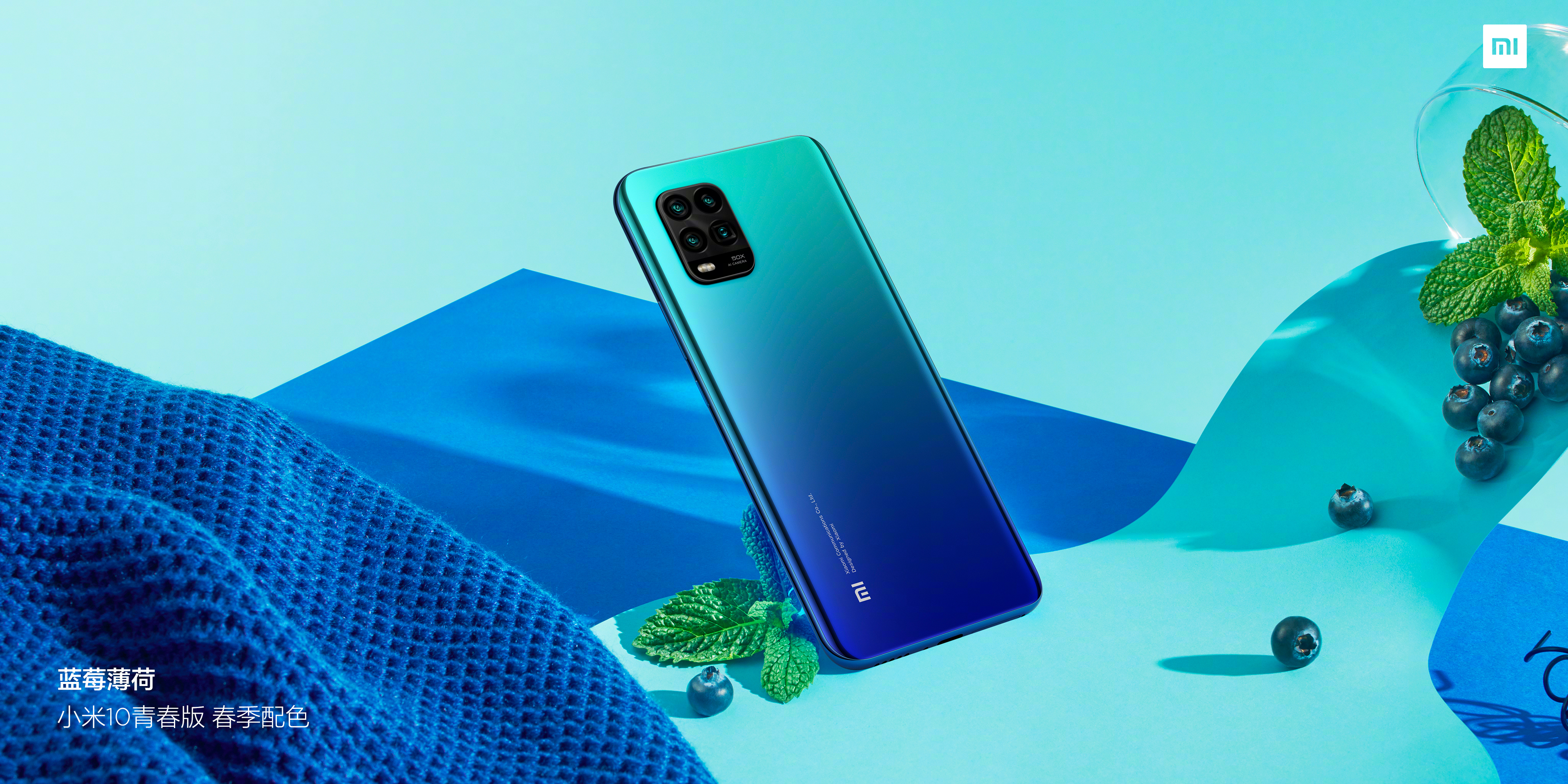
Xiaomi Mi 10 Youth Edition new posters released to reveal four marvelous color variants

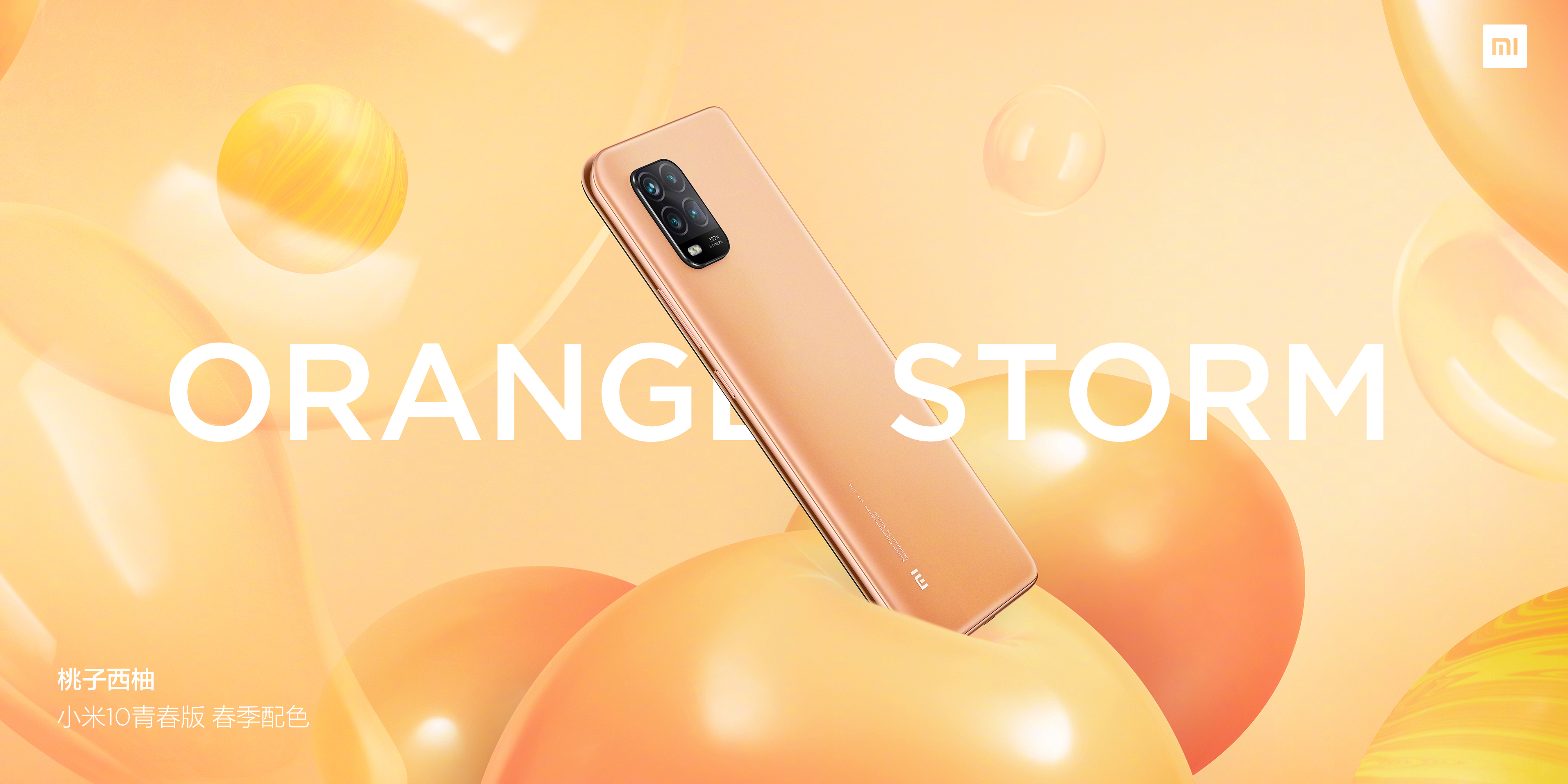
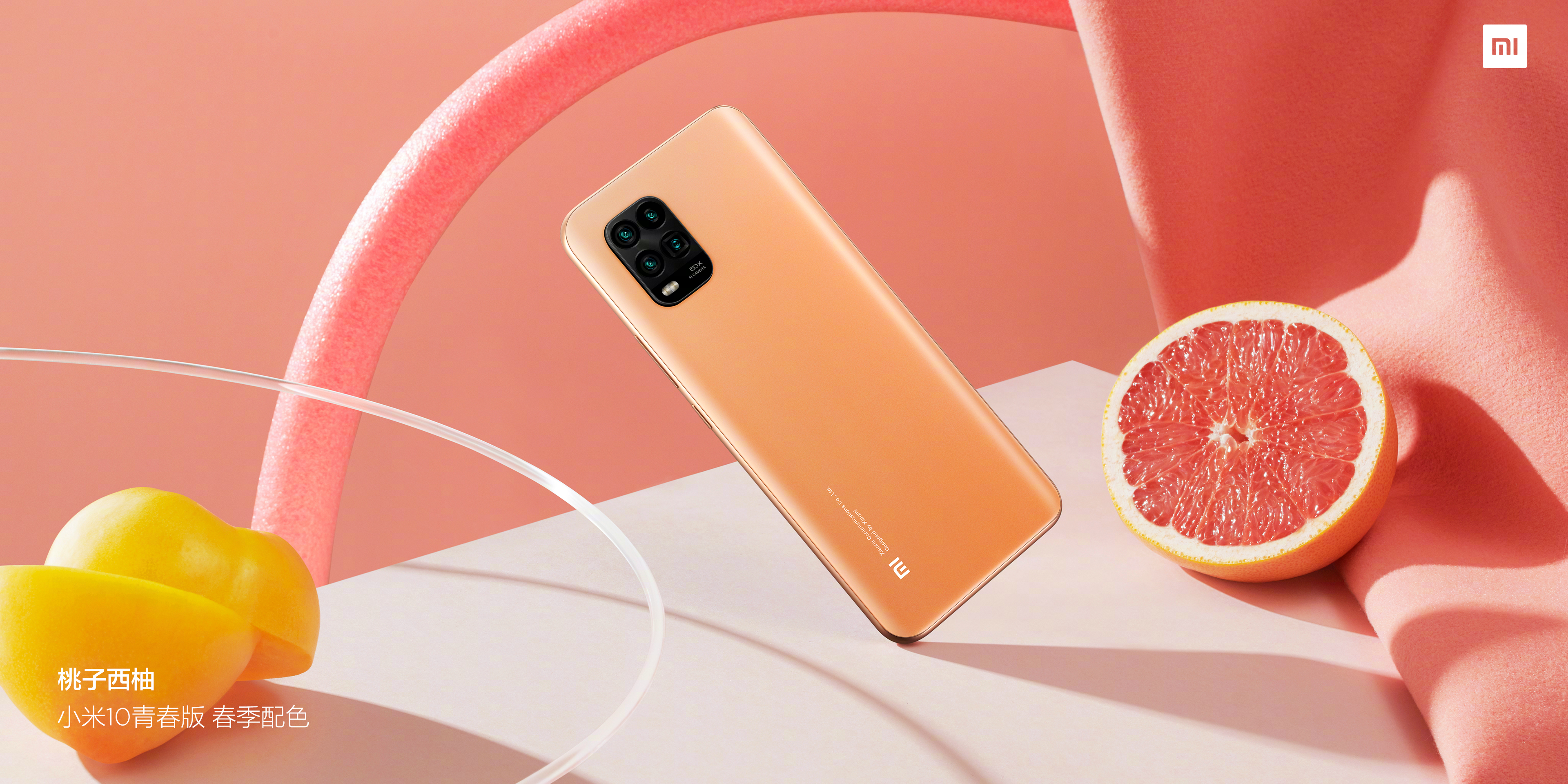
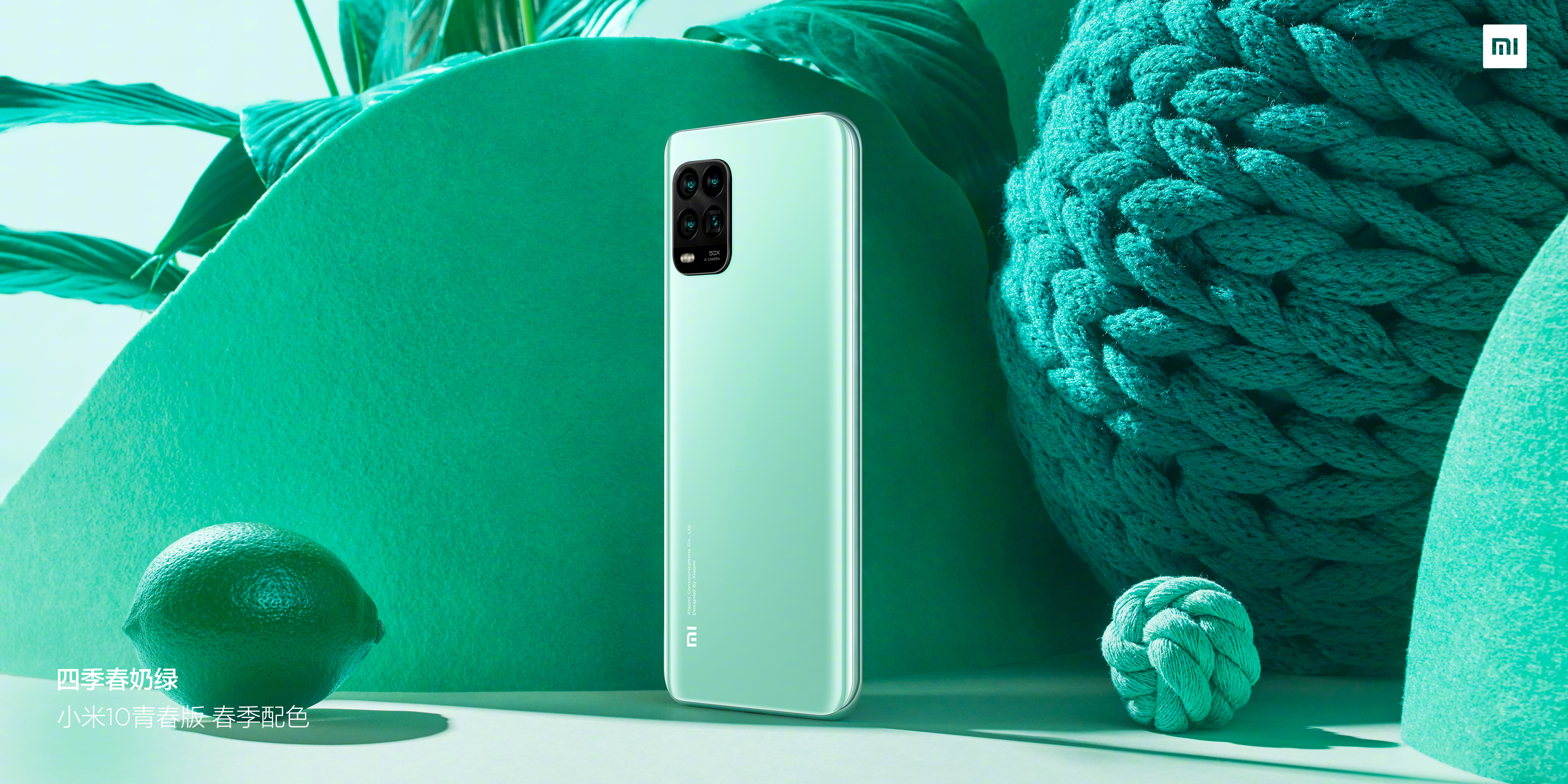
Xiaomi will be launching the Xiaomi Mi 10 Youth Edition 5G smartphone on April 27 in China. Initial speculations suggested that it could be the very same Mi 10 Lite 5G phone that at March end in Europe. However, the poster of the Xiaomi Mi 10 Youth Edition 5Gthat confirmed its launch date also revealed that it is equipped with a periscope 50x zoom lens which is not available on the European model. Hence, the Mi 10 Youth Edition for China is expected to arrive with some differing features. With few days remaining for the launch, the Chinese firm share new posters of the phone to reveal the beauty of the phone’s four color variants.

As it can be seen in the fresh images, the Xiaomi Mi 10 Youth Edition 5G will arrive in color schemes such as Pink Peach, Orange Storm, Green Tea and Blue Berry. The company confirmed that it is a very slim device with a thickness of 8mm. Also, the device weighs 200 grams.

The exact specifications of the Mi 10 Youth Edition are currently under the wraps. The smartphone is now up for reservations in China ahead of the April 27 launch. The Chinese firm will be also introducing the refreshed MIUI 12 custom skin at the same event.

The European Xiaomi Mi 10 Lite 5G smartphone carries a starting price of 349 euros. The Mi 10 Youth Edition 5G for China is expected to break cover as the most affordable Mi branded 5G smartphone. It will join the Mi 10 family that includes Xiaomi Mi 10 5G and Mi 10 Pro 5G phones that were announced in February. It is believed that a 5G-capable Xiaomi phone with model number M2002J9E that was recently approved by China’s 3C authority could be the upcoming Mi 10 Youth Edition 5G smartphone. The 3C approval suggested that the phone may ship with a 22.5W rapid charger.


Huawei sees low Revenue Growth in first quarter, Coronavirus and US Sanctions hit hard

It seems that Huawei is still unable to get a hold of stable footings. Since 2019, the Chinese tech giant has been facing various complications including a US trade ban and accusations from other governments as well. Now, the company reported on its low revenue growth, which points at the toll the ongoing Coronavirus and US sanctions have had on its operations.

Earlier today (22nd April 2020), the company revealed its revenue for the first quarter of 2020. Huawei saw revenue of 182.2 billion Yuan or roughly 25.7 billion US Dollars. In other words, a meager growth of just 1.4 percent over the same quarter in 2019. Last year the company saw a sizeable growth of 39 percent, which is clearly indicative of the hindrances it has faced in recent times.

Huawei logo Mate featured 07

According to Huawei, the results were “in line with expectations.” The company had refrained from revealing its bottom line/profits, the revenue in Q1 2020 has reportedly brought in a net profit margin income of just 13.4 billion Yuan (roughly 1.9 billion US dollars). Similarly, Huawei also didn’t reveal the number of handsets it shipped in the three month period either, but one can assume that the figures do not bump the numbers much higher than last year.

For those unaware, Huawei was blacklisted by the US Commerce Department in early 2019, which banned the company from buying or selling with US based companies. This saw the electronics brand to lose out on Google services for its popular Android smartphones. Recently, the US government under Trump’s administration has been planning on dealing with a decisive blow again by limiting its chip supply from TSMC, the world’s largest contract chipmaker.

Huawei

In response to this, Huawei has already started moving some of its chip designs to a China based chipmaker named SMIC. Although, SMIC is currently several nodes behind TSMC, which is already readying 5nm processes and is developing and on track with its future 3nm process. The ongoing pandemic is another matter that has greatly affected production and operations. So at the moment, it seems the figures being reflected might carry over to the second quarter as well.


(Via)

Huawei’s Cheapest 5G Smartphone could be the upcoming Honor 10X

OEMs started launching 5G smartphones from early 2019. Huawei (including Honor) itself will have released 17 5G-enabled handsets by the end of this month. The current cheapest 5G phone from the company is Honor 30S retailing at 2399 Yuan ($339). However, the firm has plans to launch an even cheaper 5G device in the 1000 Yuan ($141) segment, which is believed to be the forthcoming Honor 10X series.

Huawei store logo official

Huawei and Honor together have launched 14 5G smartphones so far and they are as listed below.
Huawei 5G Smartphones

  • Huawei P40
  • Huawei P40 Pro
  • Huawei P40 Pro Plus
  • Huawei Mate 30 5G
  • Huawei Mate 30 Pro 5G
  • Huawei Mate 30 Porsche Design
  • Huawei Nova 6 5G
  • Hauwei Mate Xs

Honor 5G Smartphones

  • Honor 30S
  • Honor 30
  • Honor 30 Pro
  • Honor 30 Pro Plus
  • Honor V30
  • Honor V30 Pro

In addition to the above-mentioned devices, Huawei will be soon launching Nova 7 series on April 23 consisting of Huawei Nova 7, Huawei Nova 7 Pro, and Nova 7 SE increasing the total count to 17.

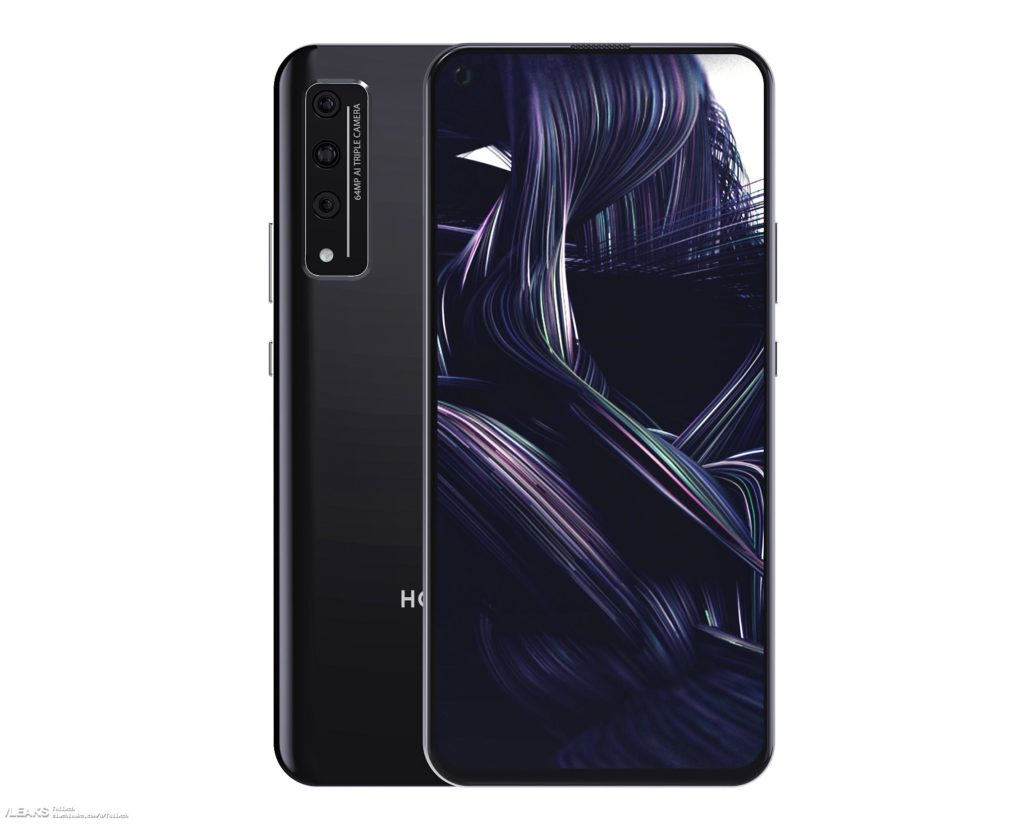
But that’s not all, as the sub-brand Honor is expected to launch Honor 10 X series sometime later this year whose alleged render leaked a few day days back. Like any other Honor X series phones before, the new generation will likely debut in the 1000 Yuan ($141) range.

Honor 10X Pro

It is rumoured to feature Kirin 820 SoC with 5G connectivity in order to bring the technology to the masses as this price bracket is the hottest in China. Thus, it is assumed to be the cheapest 5G smartphone from the house of Huawei for the year 2020.

Unfortunately, it may not beat the pricing of 999 Yuan 5G smartphone that Xiaomi has planned to release in November. For comparison, the Honor 9X series which currently has sold over 10 million units in China debuted for 1,399 Yuan ($197). Hence, we expect the Honor 10X series to start at a similar price.


(Via)

Redmi Pad 5G leaked poster emerge to reveal key details

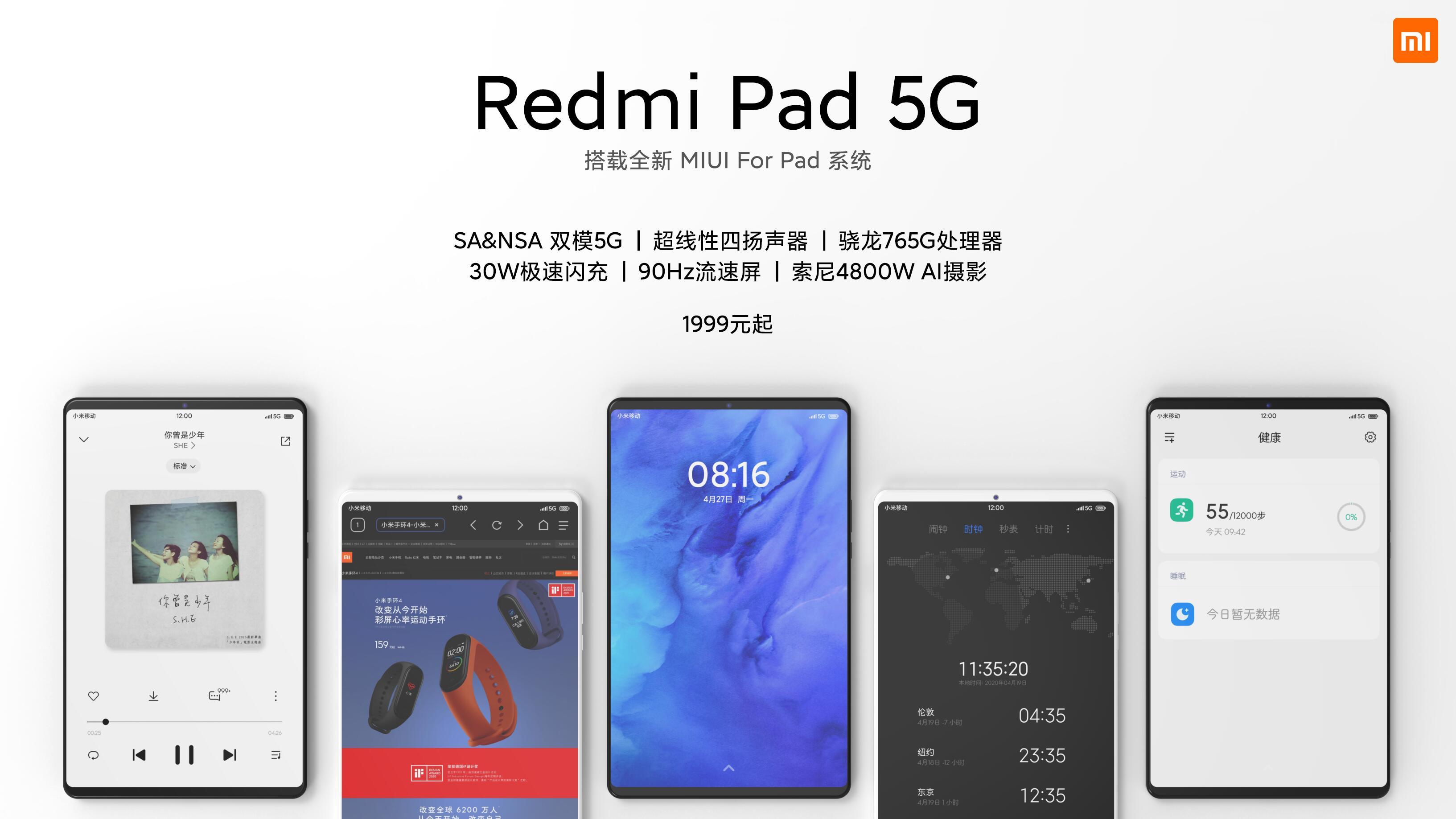
Xiaomi’s Redmi sub-brand not only sells Redmi phones in China, but also other products like Redmi TV, Redmi Band and RedmiBook notebooks. A leaked poster that has surfaced on Weibo reveals that a Redmi branded tablet called Redmi Pad 5G may arrive as a new addition to the company’s product portfolio. While the authenticity of the poster and the existence of the Redmi Pad 5G could not be confirmed, it has revealed its key features along with the pricing. The leaked poster could be a fan-made render. Hence, it is advisable to digest the report with a grain of salt.

The Redmi Pad 5G leaked poster reveals that it will be powered by Snapdragon 765 chipset. The inclusion of the SoC will bring support for dual-mode 5G connectivity. The size of the battery is not mentioned in the poster. However, it states that device supports 30W fast charging.

The Redmi Pad 5G tablet is equipped with super linear quad speakers. The screen size of the Redmi slate is not known. The poster states its display supports a refresh rate of 90Hz. For photography, the device is equipped with a 48-megapixel Sony camera on its rear. The device will boot to a customized version of MIUI for tablets.

Redmi Pad 5G specifications

The rear design of the Redmi Pad 5G is not shown in the image. The front of the tablet is flanked with slim bezels on left and right. The upper bezel has a selfie shooter. The image reveals that the Redmi Pad 5G will come in white and black color editions. The poster also states that the device will be priced at 1,999 Yuan (~$282) in China.

Xiaomi will be holding a launch event for announcing MIUI 12 and Xiaomi Mi 10 Lite 5G smartphone on April 27. It is speculated that the Redmi Pad 5G may also go official at the same event.


(source|via)

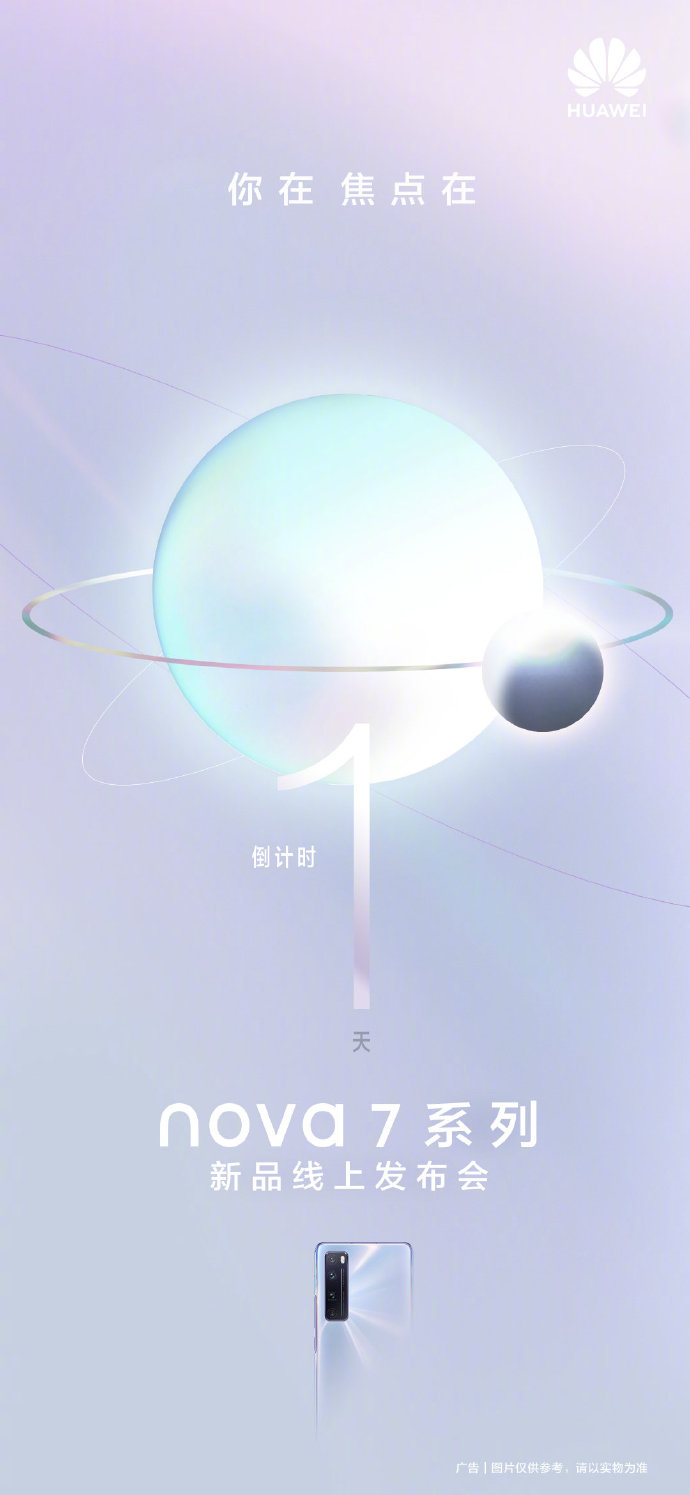
Huawei Nova 7 Pro dual front focusing cameras confirmed in a new teaser

Huawei is scheduled to launch its next-generation Nova series smartphones — Huawei Nova 7, Nova 7 Pro, and Nova SE in China tomorrow. Now, just a day before the official announcement, the company has shared that the Nova 7 Pro will come with dual front-focusing cameras.

From the teasers being shared by the company on social media platform, its pretty evident that Huawei is focusing on the camera technology for the upcoming phones. While the phone is getting launched tomorrow, most of its specifications have already leaked.
Huawei Nova 7 Pro Front Camera Specs

The Huawei Nova 7 Pro will come with a quad-camera setup on the back, consisting of a 64-megapixel primary camera, an 8-megapixel ultra wide-angle lens, an 8-megapixel periscope lens, and 2-megapixel depth sensor. On the front side, it features a 32-megapixel primary snapper and an 8-megapixel secondary camera.

The phone features a 6.57-inch Full HD+ display with 2340 x 1080 pixels screen resolution and dual punch-hole cutout for front-facing cameras. The device is powered by Kirin 985 5G chipset with 8GB RAM and either 128GB or 256GB internal storage.

The company will also be launching Nova 7 and Nova 7 SE, which will be powered by the Kirin 820 and Kirin 985 chipsets, respectively. While Nova 7 features a quad-camera setup on the back, the SE variant will have a triple-camera setup.

All three smartphones run Android 10 operating system with the company’s own EMUI 10.1 custom user interface and will have Huawei Mobile Services (HMS) instead of Google’s apps and services. The devices will be powered by a 4,000mAh battery with support for 40W fast charging technology.

To know more about these smartphones, along with their full specifications, memory variants, color options as well as pricing and availability details, we’ll have to wait for a few more hours for the official launch event to take place.


Huawei and Chinese telecom operators bring 5G network to Mount Everest

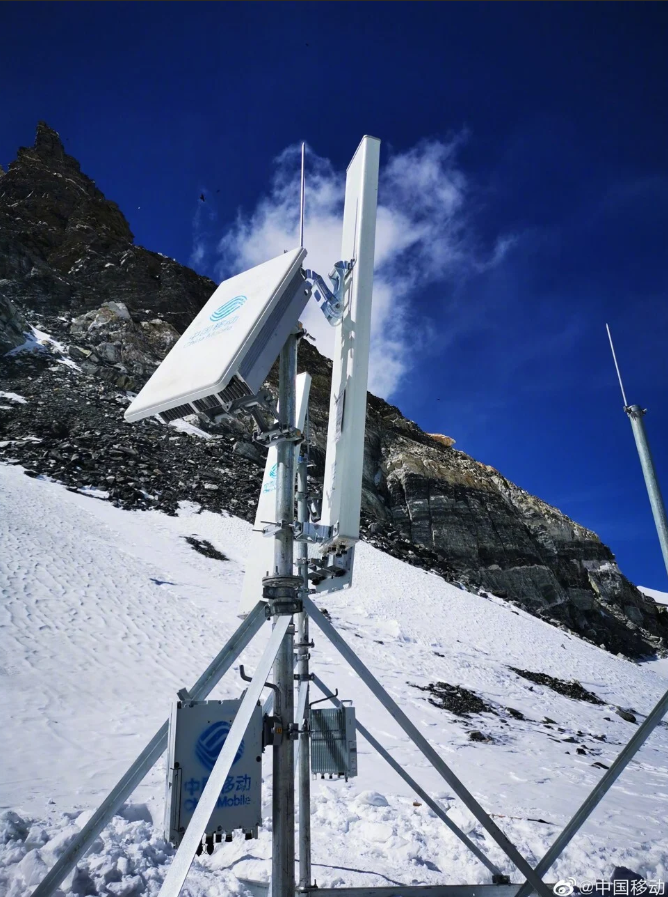
Huawei Telecommunications, the electronics giant, has partnered up with telecom operators from China, to brings the newer and faster bandwidth, 5G network, to Mount Everest.

The Chinese tech giant is working with China Mobile, China Unicom, and China Telecom to roll out the advanced 5G infrastructure on the world’s tallest mountain above sea level. Bringing 5G networking on an elevation of 8,848 meters is an achievement of its own and is a hallmark advancement in networking fields. The news was announced by Huawei earlier this week and was later confirmed by a spokesperson as well.

Huawei

For those unaware, Huawei is a pioneering figure in 5G infrastructure, tools, and even equipment. Thus, it collaboration with telecom experts from its home country ensures that the next generation of networking sees a broader reach. As it stands right now, 5G communications act as the “connective tissue” that links IoT (internet of things), autonomous cars, smart homes, and various other smart products.

According to China Mobile, the world’s largest wireless network operator, the new 5G project undertaken by the group marks “not only another extreme challenge in a human life exclusion zone but also laid a solid foundation for the later development of 5G smart tourism and 5G communications for scientific research.” In other words, it’s not just an impressive feat but lays the base for the future in the tourism industry as well.

Earlier this month, three 5G base stations, which connect smartphones to the broader telecommunications network, were set up in two camps sits. These were on different altitudes including 5,300 meters and 5,800 meters, while also providing an online download speed of about 1 gigabit per second. This is quite impressive considering that the area was previously considered as an extremely harsh environment.

Huawei

Future plans will have two more base stations being setup later on by China Mobile before 25th April 2020. These will be set up in altitudes which are even higher, coming in at 6,500 meters. Notably, this particular base station would even alow 5G networking to reach the summit of Mount Everest, which is also the border between China and Nepal.


(Via)

Facebook invests $5.7 billion in Reliance Jio for around 10% stake

Social media giant Facebook is investing $5.7 billion in India’s telecom operator Reliance Jio to get 9.99 percent stake in the company. The deal underlines the commitment of Facebook to expand its business to promising markets. It is also the biggest deal from Facebook after the company’s acquisition of WhatsApp in the year 2014.

The development comes just weeks after it was reported that both the companies were in advanced talks about the investment but the announcement was delayed because of the coronavirus outbreak in India.

With this investment and around 10 percent stake, Facebook will become the largest minority stakeholder in Mukesh Ambani-led Reliance Jio. The deal values Jio Platforms at a pre-money enterprise value of about $66 billion, said the company in a statement.

Reliance Jio

Jio Platforms is a wholly owned unit of Reliance Industries which brings together Jio’s digital apps, ecosystems and the wireless platform offered by telecommunications carrier, Reliance Jio, under one umbrella.

Facebook has said that the deal would bring together JioMart, a newly announced e-commerce venture from Reliance Jio and the company’s WhatsApp messaging platform to enable people to connect with businesses.

This also marks Facebook’s entry into the Indian internet market. The company had tried doing so earlier in India with its Free Basics program but was later banned for violating net neutrality norms.

It seems that the companies are planning to use their technologies to create a “super app” in the market with WhatsApp. Reliance Jio, which has become the largest telecom operator in India in just four years of its launch, reportedly has more than 388 million users. On the other hand, WhatsApp from Facebook has about 400 million users in India.

WhatsApp is reportedly set to rollout a peer-to-peer payments service but has not yet received approvals from the government and thus, the service is limited to beta mode as of now.  With JioMart, which connects local shops to customers, the upcoming payment service from WhatsApp has found a new use case.

This deal will also help Reliance cut debt that has piled up because of its aggressive expansion tactics, especially when the company has promised to bring down the net debt to zero by March 20201. As of September 2019, the company’s debt is around $40 billion.


Motorola Edge+, Edge leaked promo videos appear with key specifications

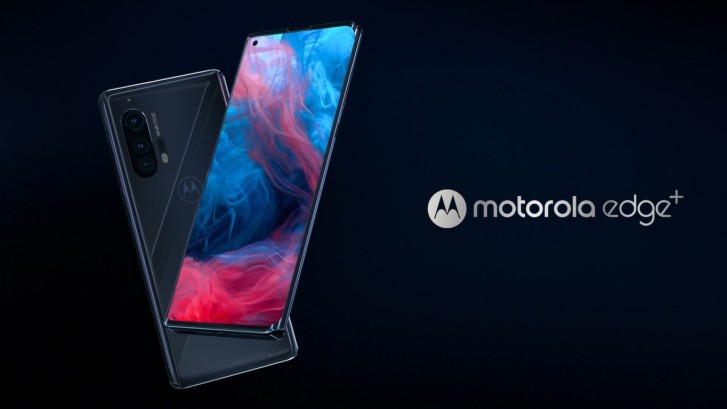
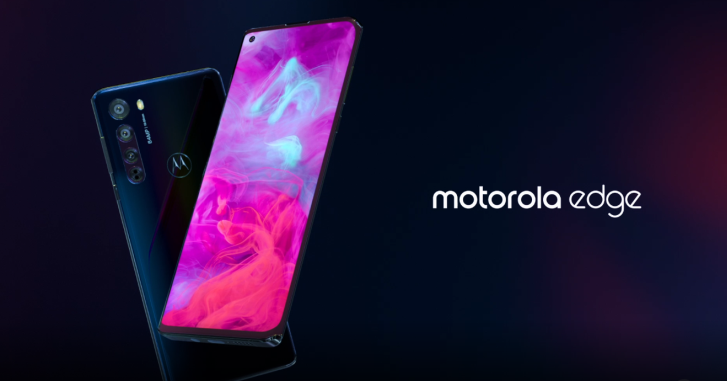
Motorola will be announcing the Motorola Edge+ flagship phone and the Motorola Edge upper mid-ranger phone with 5G capabilities at 11 AM CDT today. While the rumors surrounding the Motorola Edge series have revealed plenty of information on both devices, the company has remained mum on their specifications. However, hours ahead of the launch event, popular tipster Evan Blass released two promo videos for the Edge and Edge+ smartphones to reveal their key specs and features. Readers can visit the “via” link at the bottom for viewing the commercials. Also, a report on Droid Life has carried the entire specs of the Motorola Edge+ phone along with its pricing for Verizon users in the U.S.

Motorola Edge+ specifications

Here is all information on the Motorola Edge+ based on the commercial and Droid Life’s report. It has a 6.7-inch OLED screen with punch-hole and extremely curved edges. It has an in-screen fingerprint reader.  It supports full HD+ resolution and 90Hz refresh rate. The Snapdragon 865 mobile platform powers the device. The phone comes with a massive 5,000mAh battery that supports 18W wired charging, 15W wireless charging and 5W reverse wireless charging. Once charge, the device can last for up to 2 days.

Motorola Edge+

The triple camera setup of the Motorola Edge+ has a 108-megapixel main lens, a 16-megapixel ultrawide shooter and an 8-megapixel telephoto lens. It comes with photography features like high-res optical zoom and macro vision. It has a front camera of 25-megapixel and the device is flanked with stereo speakers. The 5G support on the Edge+ promises over 4Gbps of download speeds.

The other features of the Edge+ are 12 GB of LPDDR5 RAM, UFS 3.0 storage, 6K video shooting capabilities, Android 10 OS and Bluetooth 5.1. In the U.S., it will be exclusively available through Verizon for $1,000.

Motorola Edge specifications

The Motorola Edge has the same sized curved edge 90Hz display available on the Edge+ device. Reports have revealed that it is fueled by Snapdragon 765G which brings support for 5G on the device. The battery of the phone promises up to two day of endurance, but its exact size is not mentioned.

Motorola Edge poster

The primary lens of Motorola Edge’s triple camera setup has a 64-megapixel main lens and offers same photography features like the Edge+. It has a 25-megapixel front camera. Other features of the phone include stereo speakers and in-screen fingerprint reader.


(source 1, 2, 3|via)

Huawei rumored to launch a high-end Mate series phone next month

Huawei has two premium flagship smartphone lineups — P-series and Mate-series. While we have already seen P40 series smartphone getting launched recently, the next-generation Mate series phones will be launched in the second half of the year.

But with the advancement going on a rapid pace, Huawei is reportedly considering to make a strategic change and “resurrect” the Mate S product line. As per the report, the Chinese company is planning to launch a new Mate-series premium smartphone next month which will be different from the Mate 40 lineup.


huawei

While nothing much is known about the smartphone in question, it is said that the phone will be the successor of the Huawei Mate S. As said, the device is expected to get launched in China as soon as next month.
For the uninitiated, the Huawei Mate S flagship smartphone was launched in September 2015, featuring an all-metal body and top-of-the-line specifications at the time. As for its successor, the phone will reportedly come with several of the company’s own technology, but details about the same remains unknown.
Similar to other premium devices from the company, we expect the upcoming smartphone to be powered by Huawei’s own Kirin chipset. It could be powered by a new chipset which falls somewhere between Kirin 990 5G and upcoming Kirin 1020. However, this is just a speculation and there’s no information available at this point in time.

Given that the Chinese company has Huawei Mate40 series flagship smartphone in the pipeline to launch later this year, it remains to be seen how the company positions the upcoming Mate device. As per the reports, the Mate 40 will be powered by Kirin 1020 SoC and FreeFrom Lens technology.

Although there are two major flagship lineups of Huawei with P-series and Mate-series, the company recently launched foldable smartphone lineup under the Mate branding, dubbed as Huawei Mate X and Mate Xs. Apart from the Mate40 series, the company is also set to launch another foldable smartphone this year which will be the successor of the Mate X, likely to be called Huawei Mate X2.
(Source)

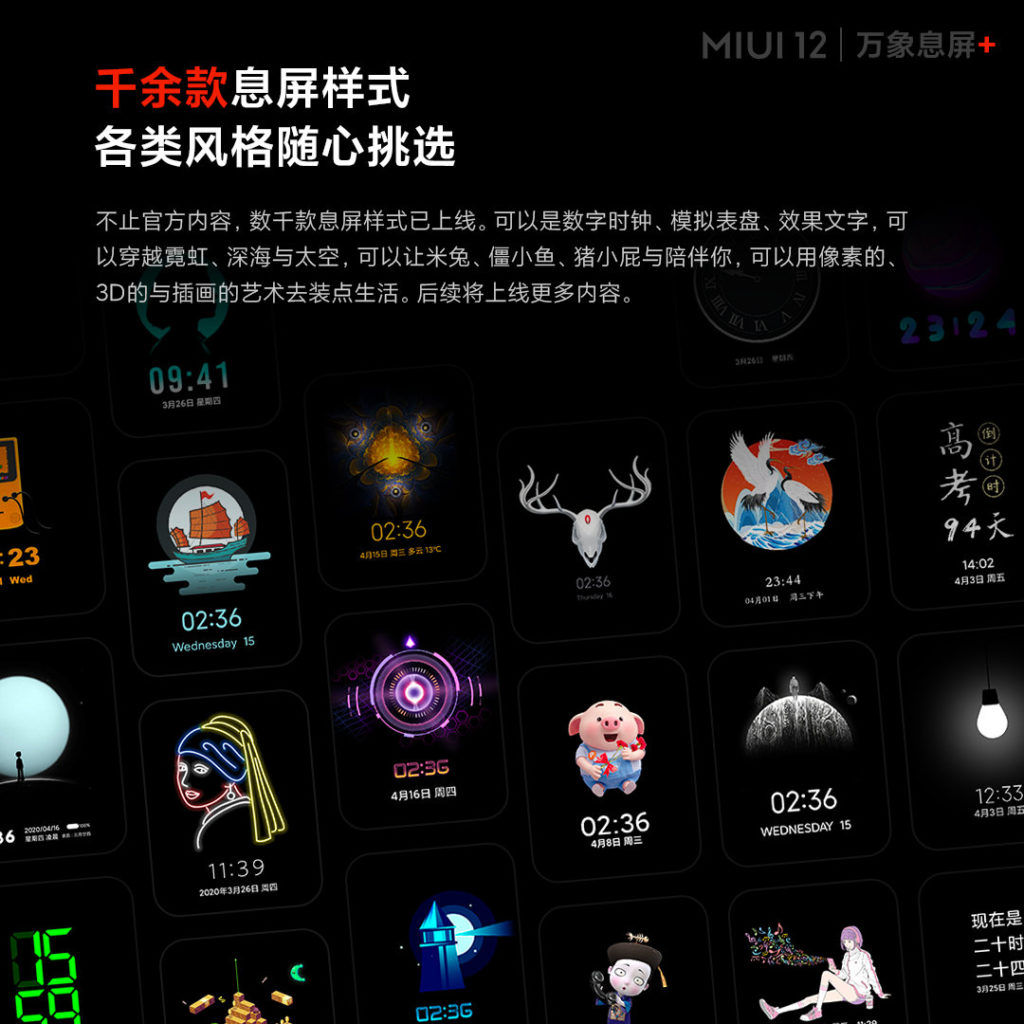
MIUI 12 will have 1000+ custom animated AOD styles

Xiaomi is all set to announce MIUI 12 alongside Mi 10 Youth Edition on April 27. Ahead of it, the company has already begun to tease the new features. Yesterday, the brand revealed ‘Dark Mode 2.0’, a revamped system-wide dark mode with major changes. Today, the official MIUI Weibo account details the new improved AOD (Always-on Display) functionality.

MIUI 12 AOD 03

The Chinese smartphone maker introduced AOD on its devices with OLED displays via an incremental update to MIUI 10. The feature was later baked into MIUI 11 late last year. Now, the company is taking it to the next level with MIUI 12.

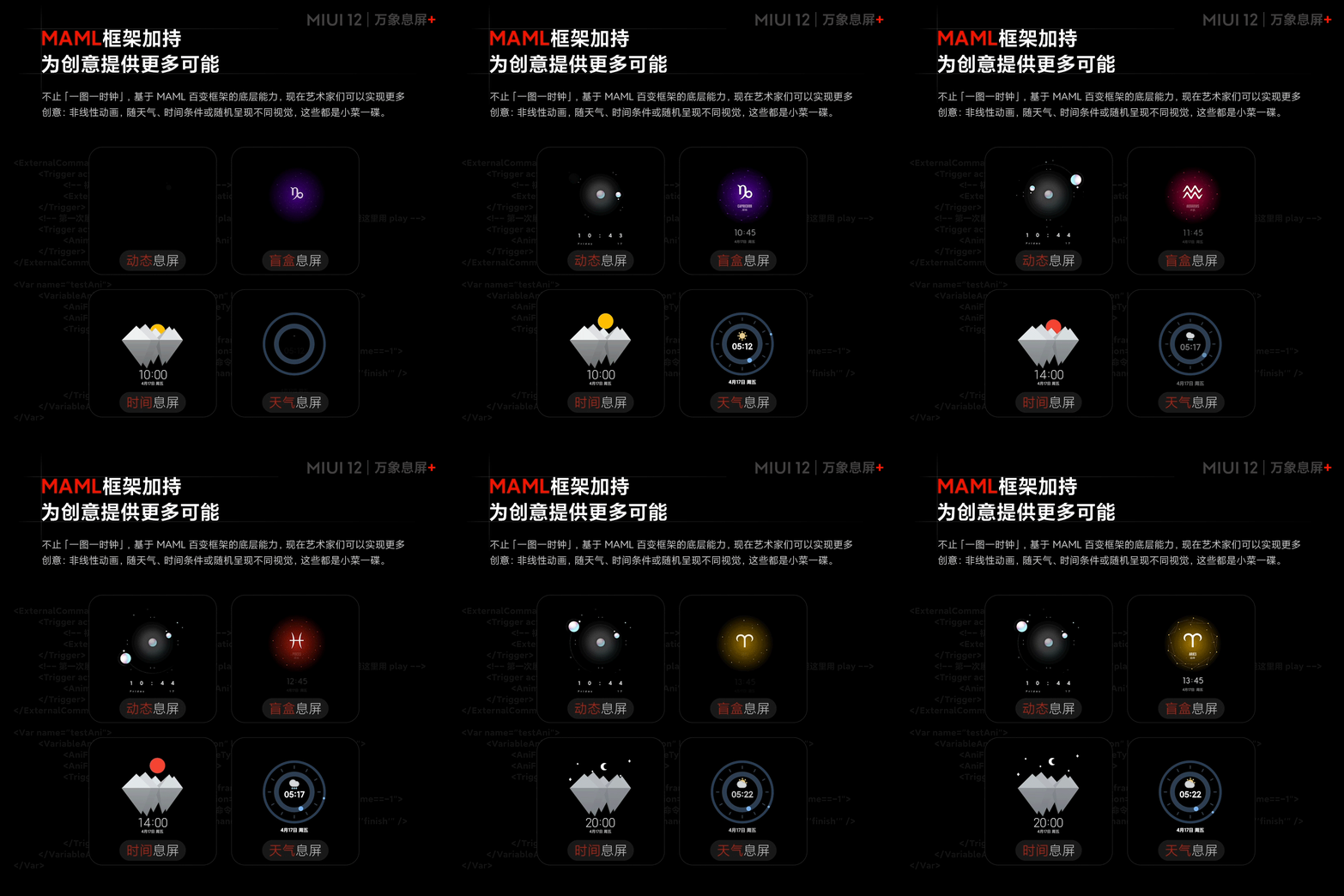
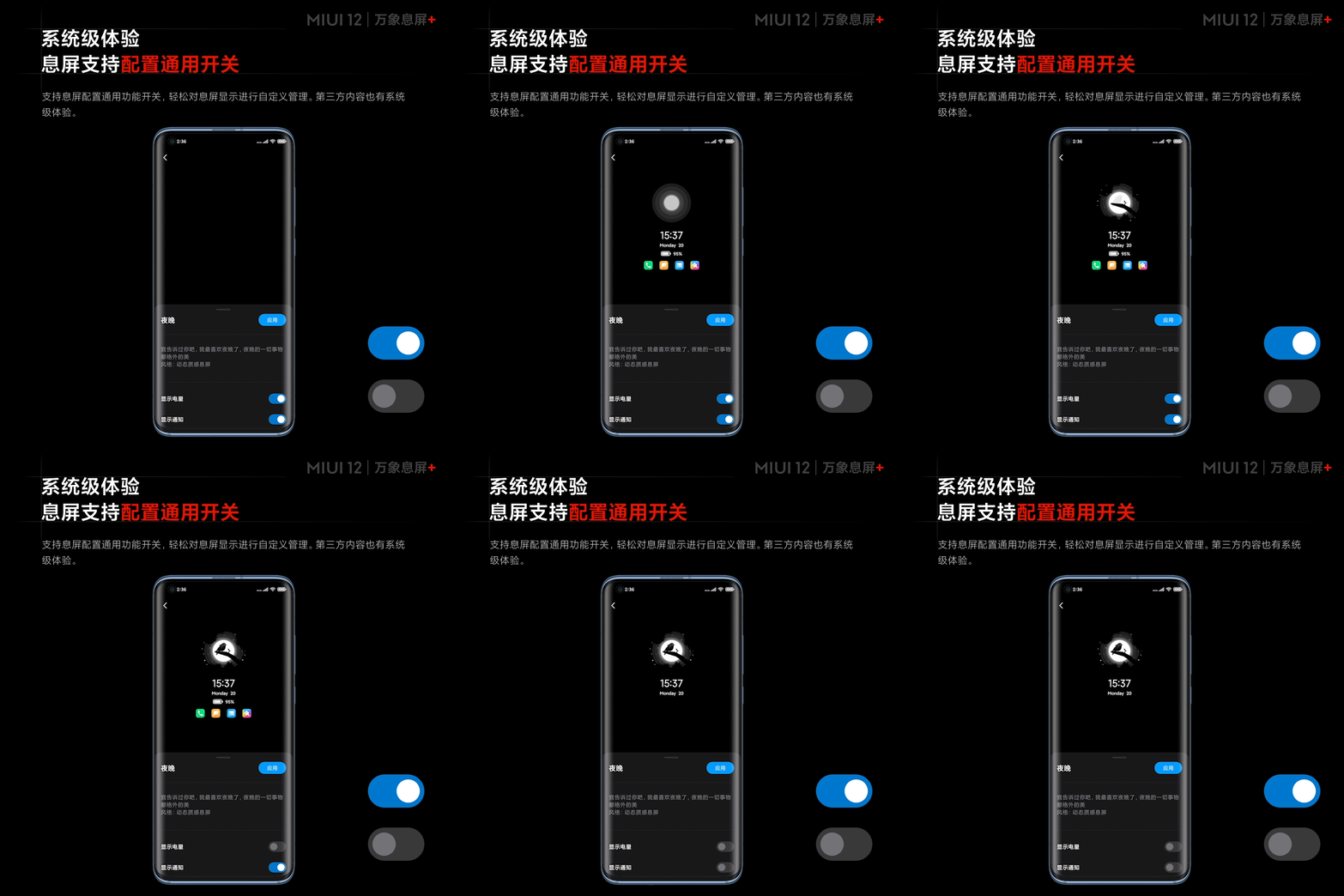
AOD on MIUI 12 will support MAML format, which means designers can implement non-linear animations with time and weather. In addition to that, third-party styles will also have support for universal system switches to enable or disable battery indicator, app shortcuts, and more.

The current version of AOD on Xiaomi and Redmi smartphones is static for third-party styles and they neither support time nor weather. Instead, these parameters are provided by the system itself. But with the next iteration, as mentioned above, designers can fiddle with almost everything to offer better styles. The brand promises over 1000+ third-party animated AOD styles on launch.

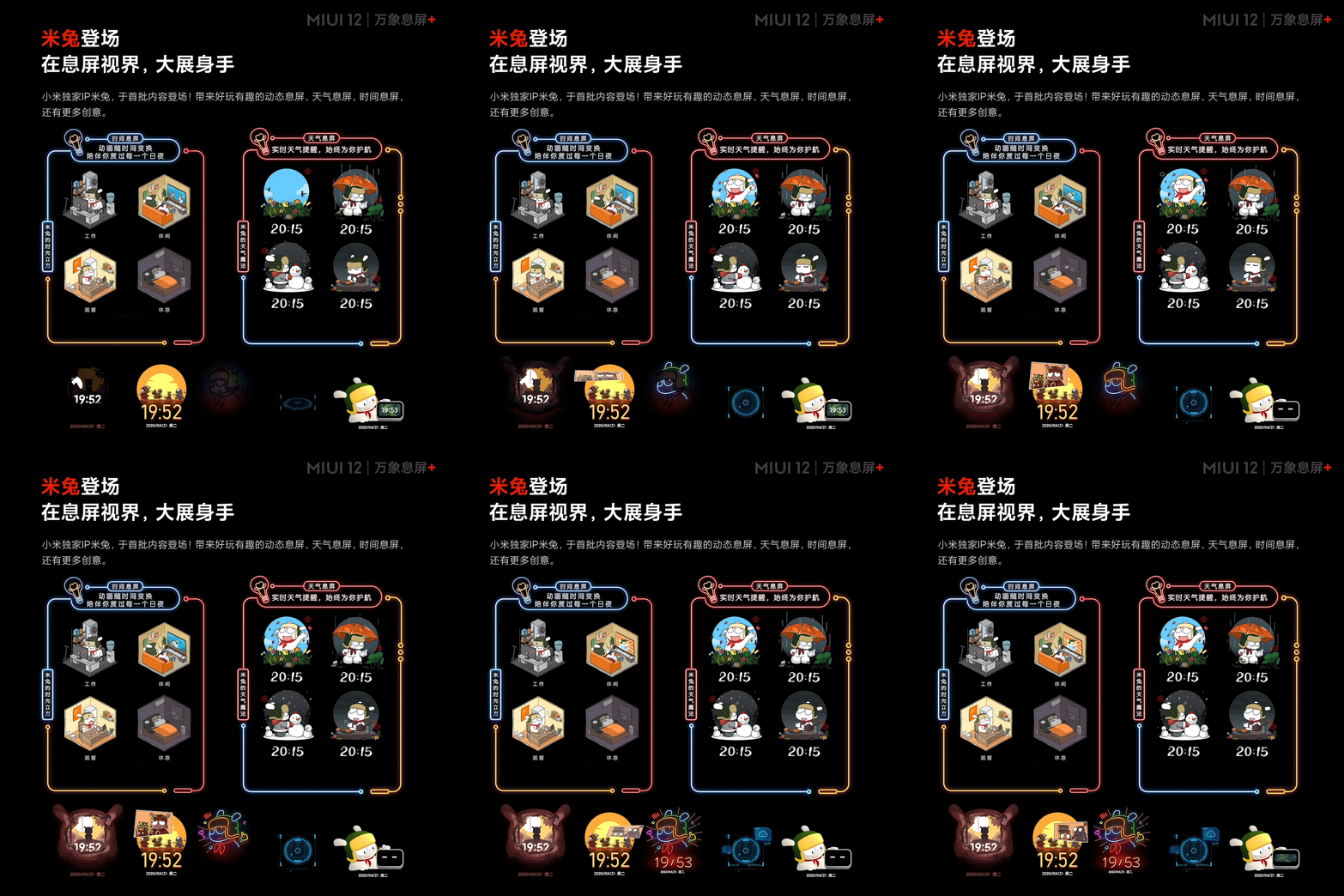
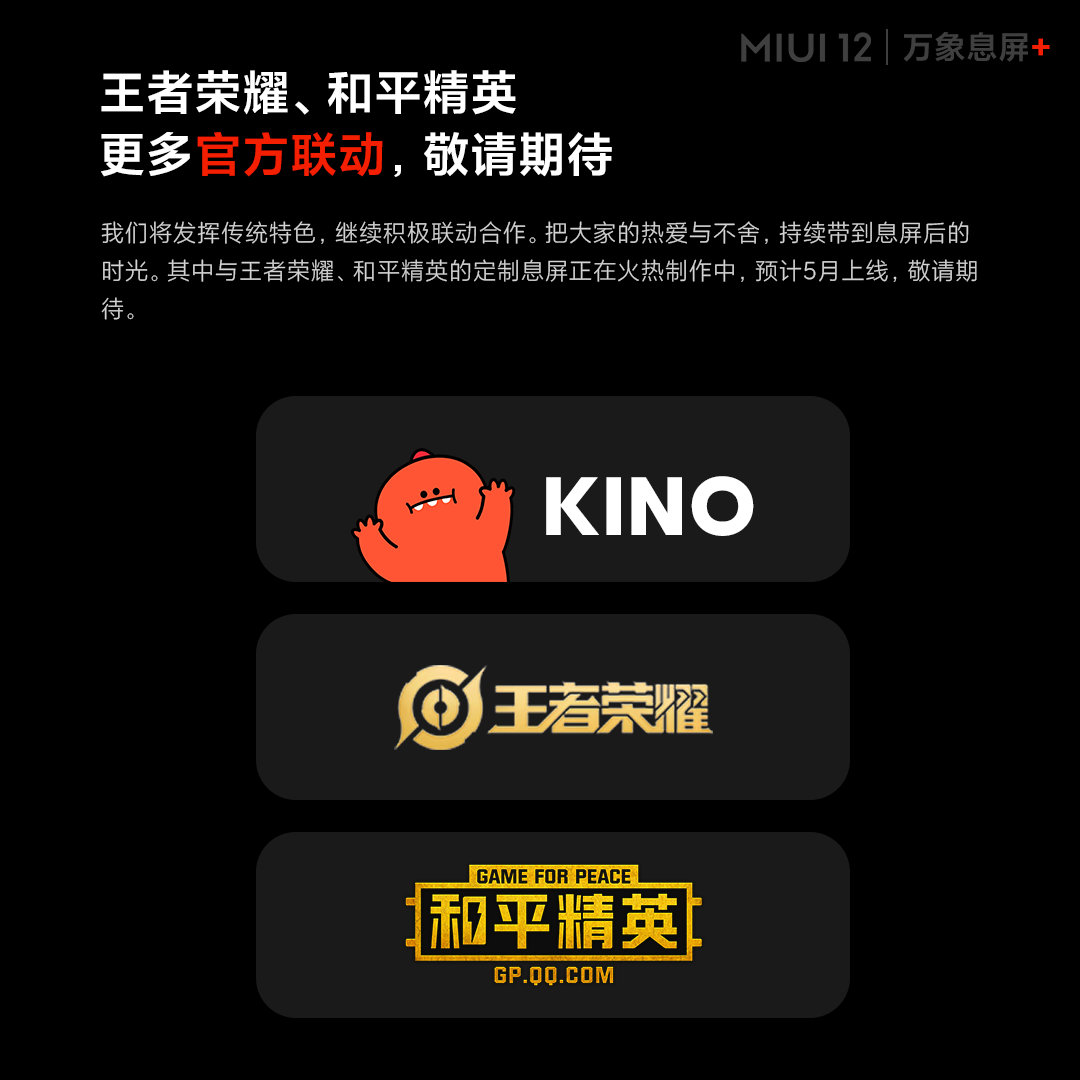
Additionally, Xiaomi will be also releasing new animated first-party official AOD styles, which will feature the company’s official mascot Mi Bunny doing various things. Also, the company will be bringing AOD styles for Kino (Redmi K30 series mascot), Kings of Glory, PUBG Mobile, and more.

A few days back, MIUI Themes beta added a new section for AOD styles. We thought it will be available for users after MIUI 12 update. Surprisingly, Xiaomi announced today that all users can already experience them on their smartphones.

With the release of MIUI 11, the company made all the themes on the store free to download. Continuing the tradition, the brand announced AOD styles will also be free for all.


Meizu 17 series to launch on May 8

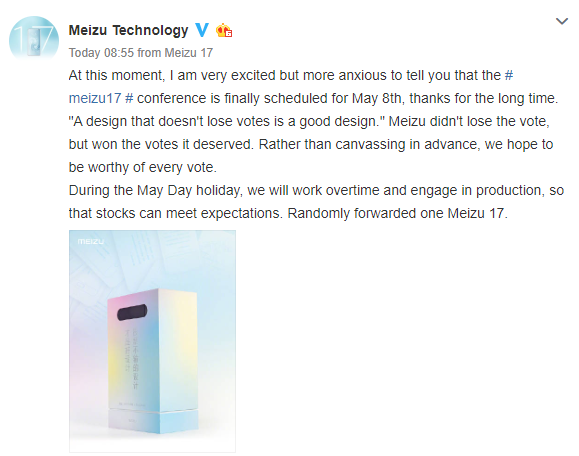
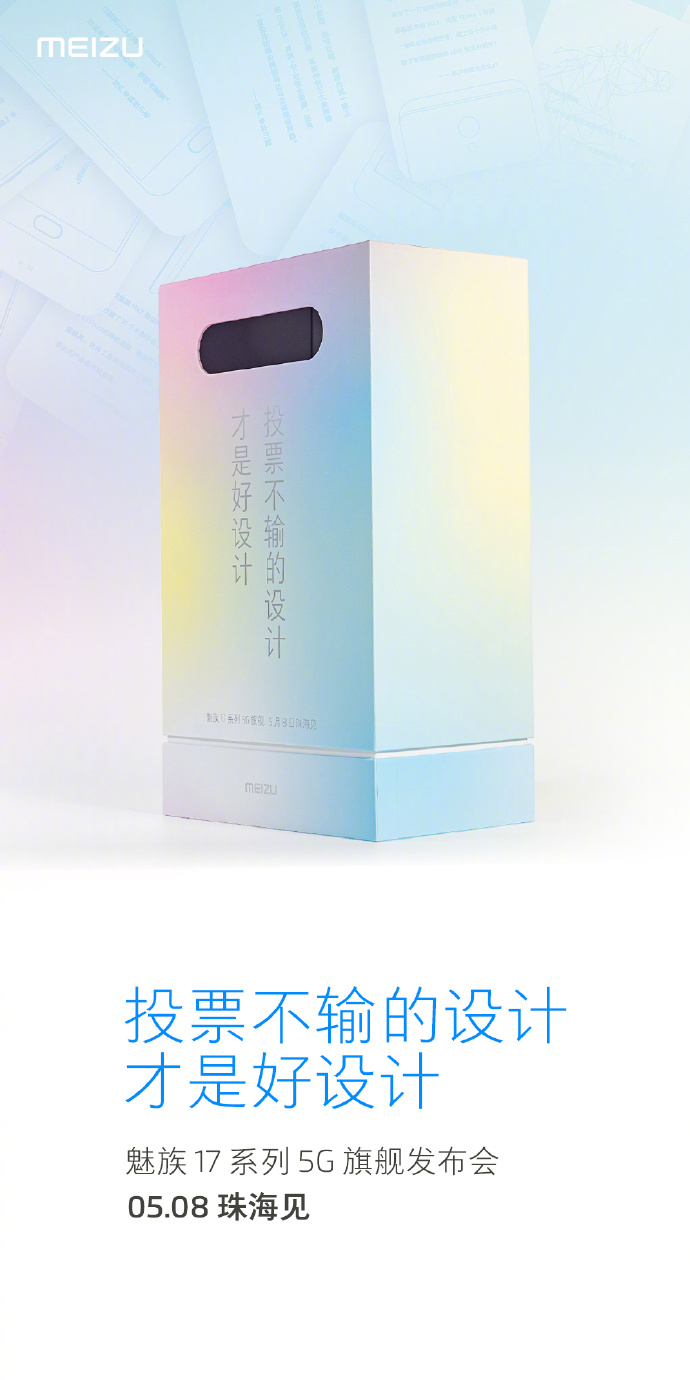
Meizu has been teasing on the arrival of the Meizu 17 smartphone since the past few days. Yesterday, the company hinted on Weibo that it will be revealing the Meizu 17 launch date today. The official confirmation has finally arrived as the company revealed that the Meizu 17 series will be announced on May 8.

The poster released by the company shows a box with a horizontal cutout which is reminiscent with the horizontal camera setup that is expected to arrive on the Meizu 17. The other thing that can be noticed in the poster is that the company has mentioned “Meizu 17 series” which indicates that it may announce Meizu 17 Pro smartphone along with a vanilla model. The company stated on Weibo that it will work overtime prepare sufficient stocks to meet the expectations.

At present, there are no concrete information on the differing features that will be available on the Meizu 17 and Meizu 17 Pro phones. It is speculated that the Meizu 17 has a model number is M081Q whereas the Pro model has a model number of M091Q. Both phones have appeared on the database of 3C certification platform of China. Their 3C certifications have revealed that both are 5G-ready smartphones. The M081Q phone may ship with a 30W fast charger whereas the M091Q may arrive with a 40W rapid charger.

A recent teaser released by the company revealed that the Meizu 17 could be the only 5G-ready flagship phone with thin-sized white borders around the display. The AMOLED screen of the phone has a tiny round-shaped cutout for the front-facing camera at the top-left corner.

Reports have revealed that the Meizu 17 may arrive in China with a starting price of 3,999 Yuan. It may house a 6.5-inch full HD+ display with in-screen fingerprint reader. The Flyme 8 UI based Android 10 OS will run on the device. The phone will be equipped with Snapdragon 865 mobile platform, LPDDR5 RAM, and UFS 3.0 storage. The 4,500mAh battery of the phone will be accompanied with mSmart charging technology. It is also rumored to arrive with support for NFC, Wi-Fi 6 and stereo speakers. It remains to be seen whether the Chinese firm will also launch the rumored Meizu 17 Audi Special Edition on May 8.


Xiaomi Mi Band 4C to soon launch in Europe as a rebranded Redmi Band

After the launch of Mi Band 4 fitness tracker from Xiaomi, people are expecting the Mi Band 5 to be the next fitness band from the company. However, it seems that we’ll see the Mi Band 4C before we get the Mi Band 5.

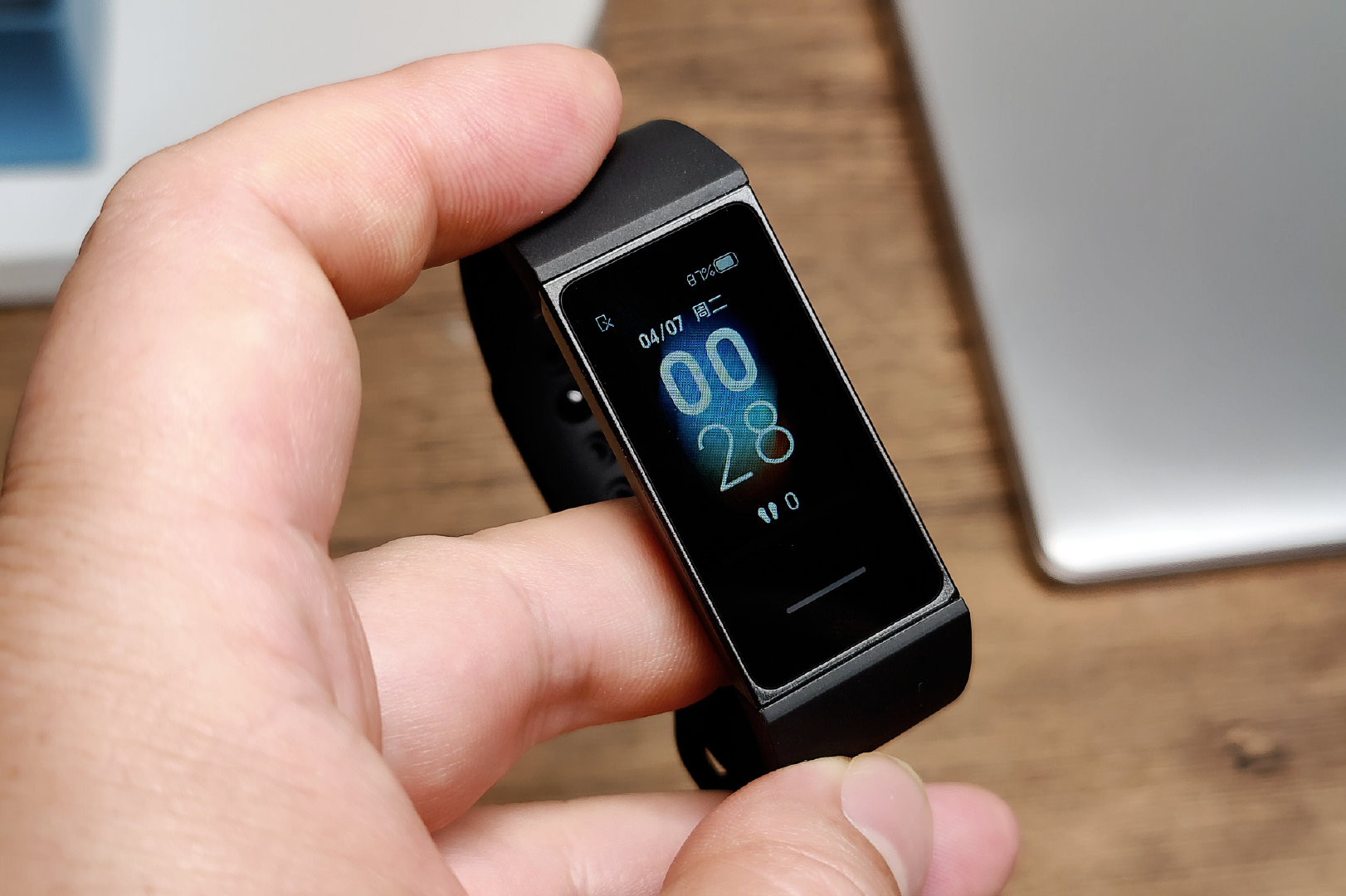
Xiaomi’s sub-brand Redmi recently launched its first fitness tracker in the market, dubbed as Redmi Band. Now, the same product is reportedly set to launch in the Europen market, but under a new name and branding.


Redmi Band aka Mi Band 4C
Redmi Band Fitness Tracker

As per the reports, the Redmi Band will be launched in Europe as Xiaomi Mi Band 4C which carries model number HMSH01GE. While it is expected to soon go on sale in Europe, there’s no exact date or timing known because of the COVID-19 issues.

To remind you, the Redmi Band comes with a square-shaped 1.08-inch AMOLED Color Touch Screen with 2.5D scratch-resistant tempered glass on the top for added protection. It also comes with support for Bluetooth 5.0 BLE to connect with smartphones.

The fitness tracker can efficiently monitor wearer’s heart rate and delivers accurate pedometer algorithm and daily heart rate changes. It also vibrates every time someone calls or sends a message to ensure you do not end up missing an important call or SMS.

It comes with 5 professional sports modes and supports an intelligent alarm function that wakes you up every morning, and also offers idle alert. It is powered by a battery that offers a 14-day battery life.

In China, the Redmi Band is priced at 99 yuan which is approximately $14 but because of the taxes and market differences, the pricing for the European market is expected to be higher than this. Nonetheless, we expect the price to be aggressive, keeping up with Xiaomi‘s strategy.

(Source)

Huawei India gets new CEO as Jay Chen moves up to leadership role in Asia Pacific region

Huawei India chief executive officer Jay Chen has now been promoted to a leadership role in the Asia Pacific region. He has been replaced by David Li in India, who was the deputy chief executive officer of the company.

Jay Chen worked in several roles in the Indian market for Huawei, before he was promoted to become the CEO of the company’s India operations in the year 2015. On the other hand, David Li joined the Chinese giant in 2002 and has experience working in the India market.

Jay Chen, Huawei
Jay Chen, Former CEO of Huawei India

He has worked in roles like vice president sales and vice president HR during different phases of his career. He was serving as CEO of Huawei Cambodia before returning to India to take on his new role. He was also responsible for leading the Network Solutions Sales team as a Director for the South-east Asia Region.

In his new role, David will be responsible for overseeing all aspects of Huawei Telecommunications India’s strategy, directions and operations in the country. He will also ensure the company’s commitment as a strategic and reliable ICT partner in accelerating the digital visions of India.

The leadership change for Huawei India comes shortly after India tightened rules around foreign direct investment (FDI) from some border countries, which experts believe are aimed at restricting Chinese investments in the country.

However, Huawei has been granted permission to participate in the commercial 5G deployment in India. The company has also partnered with Indian telecom operators Airtel and Vodafone Idea for the same.

This is a major relief for Huawei given that it is facing several issues in the western market, especially in the USA where the company has been effective banned over cyber-snooping allegations which Huawei and China have repeatedly denied.


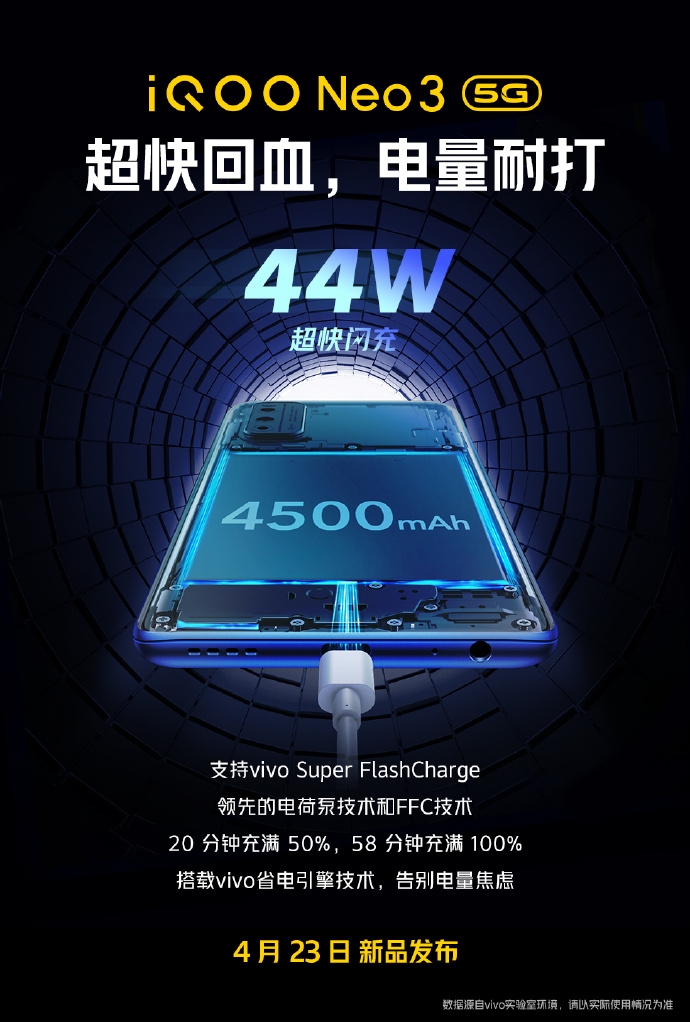
iQOO Neo3 with 44W fast charging can fully charge in 58 minutes

iQOO Neo3 5G will go official tomorrow as the second Snapdragon 865 mobile platform powered phone from the brand after the iQOO 3 phone that debuted in February. The Chinese firm has been teasing on its features since the past few days. Today, it confirmed the battery capacity and fast charging capabilities of the iQOO Neo3.

As it can be seen in the new poster, the iQOO Neo3 5G is equipped with a 4,500mAh battery. The poster also states that the iQOO Neo3 is equipped with Vivo’s Super FlashCharge technology. The 44W rapid charging technology will allow the 4,500mAh battery of the iQOO Neo3 to reach 50 percent capacity in just 20 minutes. The phone can be fully charged in 58 minutes.

IQOO Neo3 fast charging

In comparison, the iQOO 3 came with a slightly smaller battery of 4,400mAh capacity. The iQOO 3 came with 55W fast charging support that made it possible to charge the phone to 50 percent capacity in 15 minutes.

iQOO Neo3 specifications

The iQOO Neo3 5G will come with an IPS LCD panel with punch-hole design. It will support full HD+ resolution and up to 144Hz refresh rate. The phone is expected to arrive in 6 GB and 8 GB RAM versions and storage choices like 128 GB and 256 GB.

The back panel of the iQOO Neo3 has a triple camera setup. The phone features a side-facing fingerprint reader. The Android 10 OS will come preloaded on the device. It is equipped with stereo speakers. The handset is expected to land in China with a starting price of 2,998 Yuan (~$423).


Fortnite finally lands on the Google Play Store

Fortnite, the popular online multiplayer game is finally available for download on the Google Play Store.

After a long battle with Google, Epic Games finally gave in and has listed its game on the Play Store, thus making it easier for folks to download rather than from its own app store or third-party platforms.

In an official statement released by Epic Games, the developer explained why it finally decided to list its app on the Play Store: “Google puts software downloadable outside of Google Play at a disadvantage, through technical and business measures such as scary, repetitive security pop-ups for downloaded and updated software, restrictive manufacturer and carrier agreements and dealings, Google public relations characterizing third-party software sources as malware, and new efforts such as Google Play Protect to outright block software obtained outside the Google Play store.”.

Fortnite Play Store

Based on the above statement, Epic Games had no other choice than to succumb to Google and list the game on the Play Store for better user experience. This also means Epic Games will have to pay Google the standard 30% cut on in-app purchases which was actually the reason why it didn’t list the app on the Play Store in the first place.

Epic Games CEO, Tim Sweeney, said he hopes Google revises the 30% tax it collects from developers which he still believes is unfair.


(Sources: 1, 2)

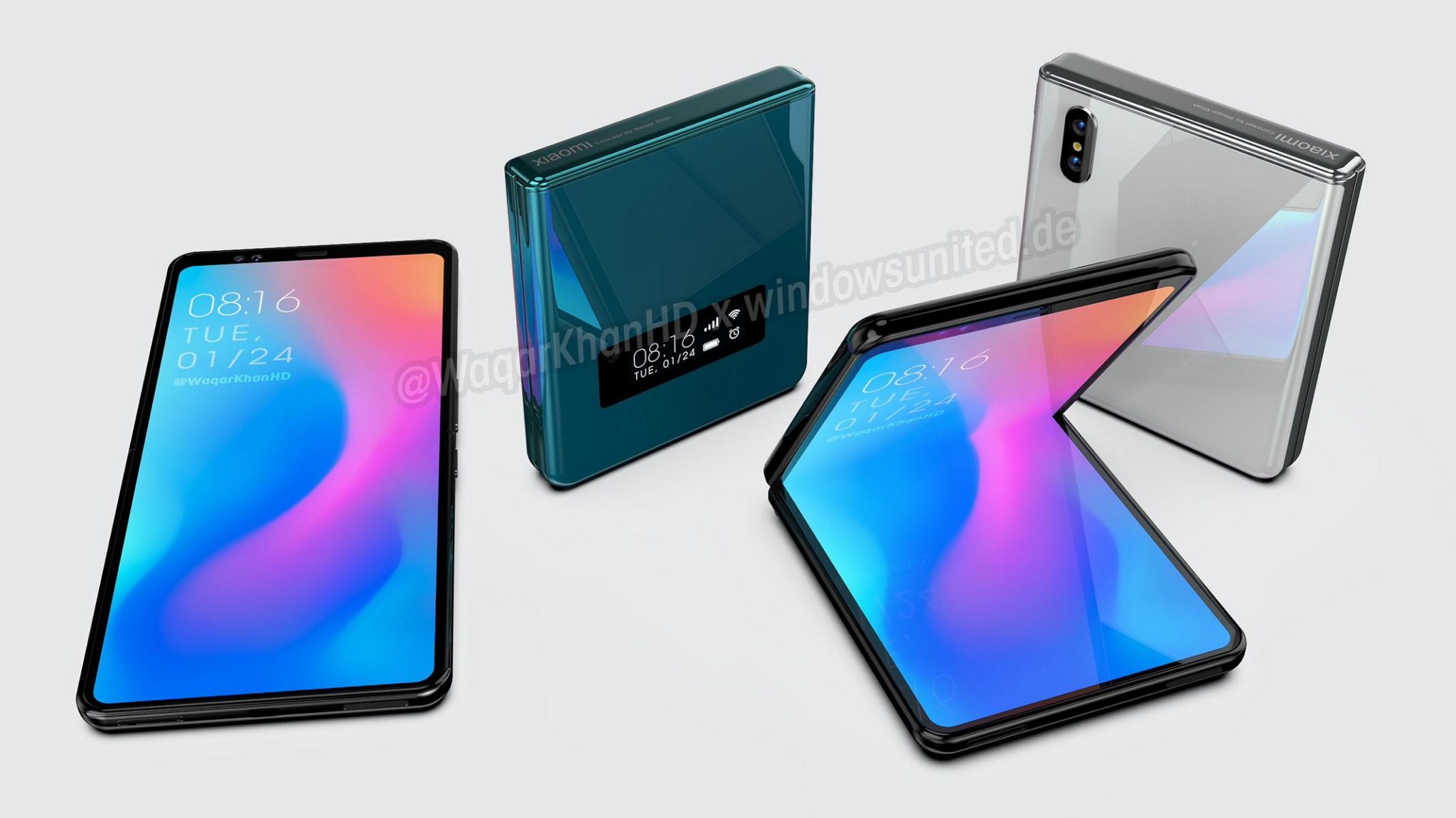
This is what Xiaomi’s clamshell foldable phone may look like

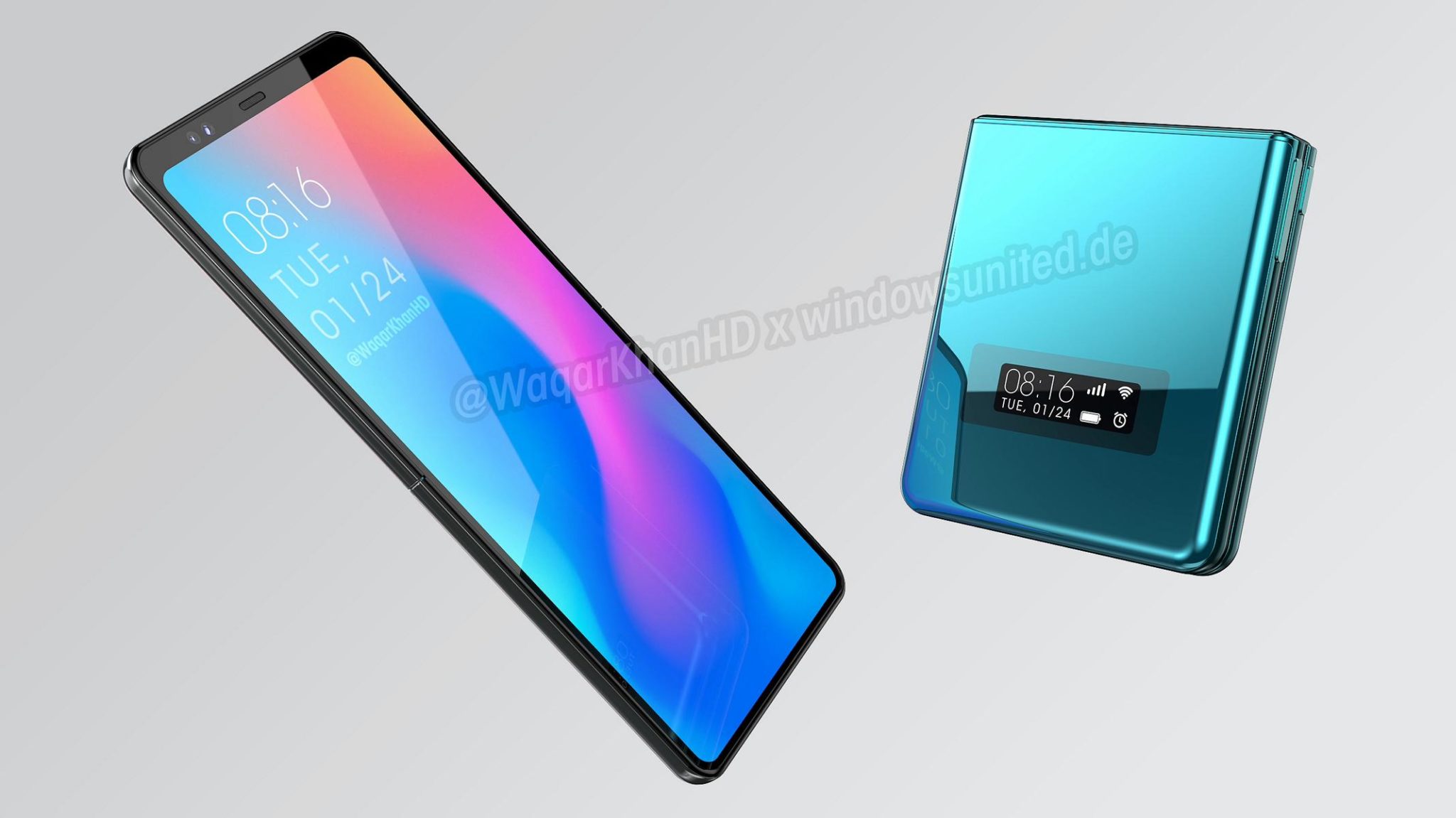
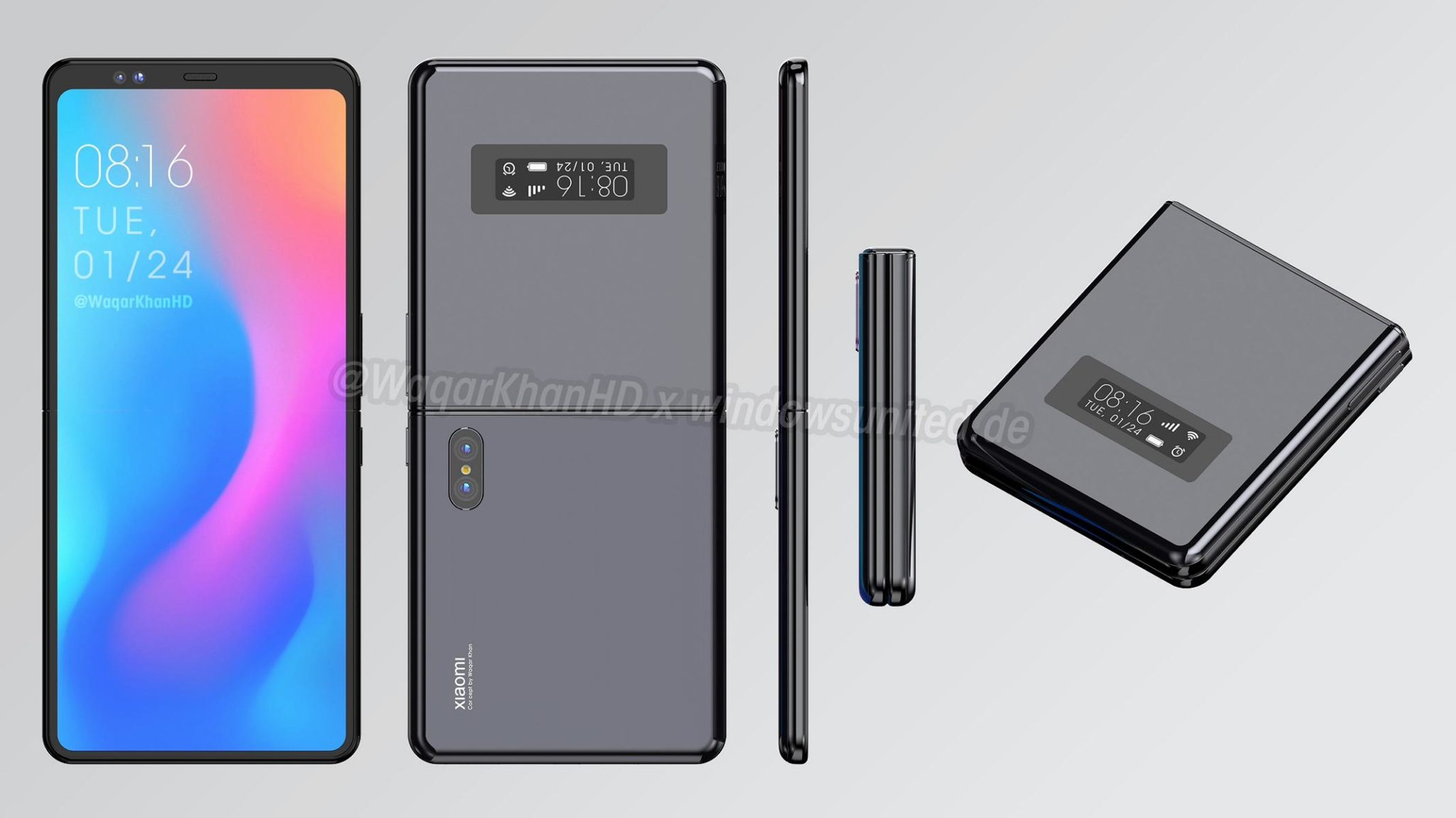
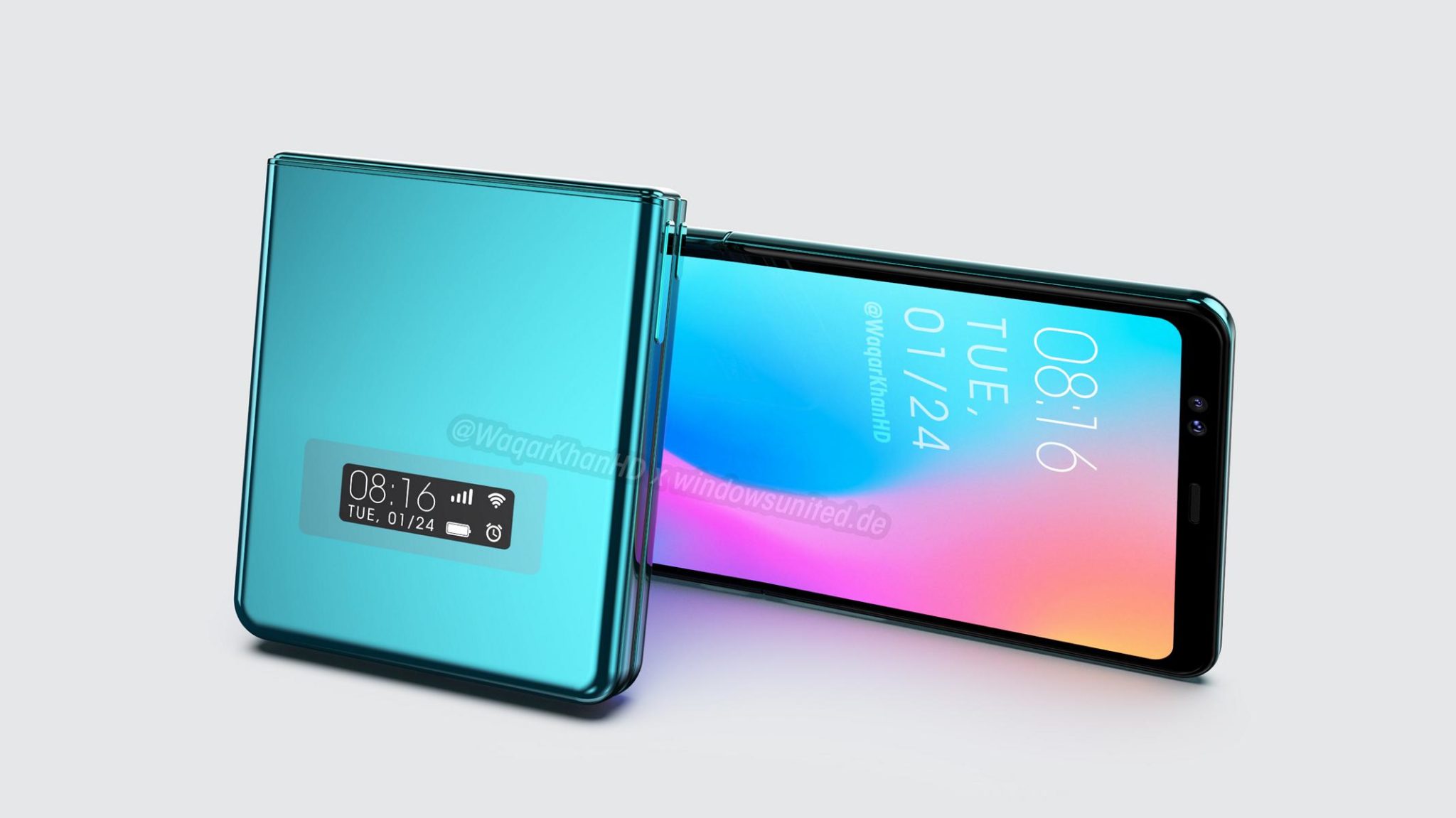
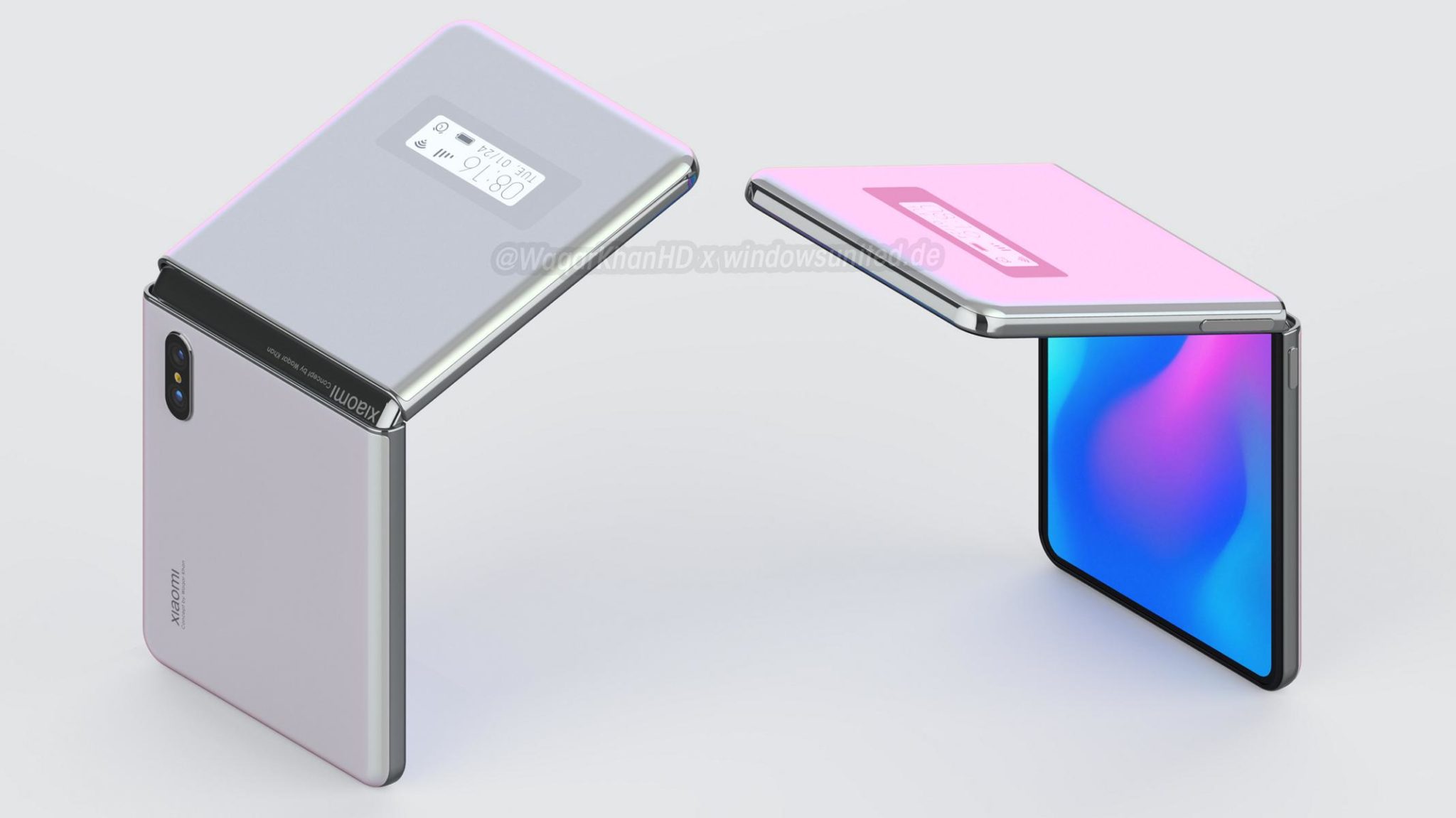
Xiaomi had showcased a foldable smartphone right after the Galaxy Fold was launched but since then, there have been no words about a foldable phone. Several patent filings have suggested that the company has got different foldable designs in the works. A couple of such filings even point to the existence of a Motorola Razr-like foldable design. Smartphone concept designer Waqar Khan has now teamed up with tech blog WindowsUnited to create a render of what Xiaomi’s clamshell foldable smartphone may look like.

As can be seen in the images, the render seems to be based on the patented design Xiaomi secured in November 2019. The device adopts a small display on the outside which will likely display time and a perhaps notifications. The inner display works like a regular smartphone when opened but the difference is that you can fold it to assume a smaller form factor when not in us. This makes it easy to carry and protects the flexible OLED screen.

There is a high degree of certainty that Xiaomi will indeed launch device utilising this clamshell design. ZDNet Korea had earlier reported, citing electronics component industry insiders, that Xiaomi has placed orders for a clamshell-type flexible OLED display from Samsung. The report also disclosed that a similar order has been placed with LG Display. Xiaomi is said to have gone for the display manufactured by Samsung due to the fact that the foldable panels currently produced by BOE and CSOT are of a lower quality than those produced by Samsung Display.

Xiaomi is expected to commence mass production of its clamshell foldable phone in the second half of 2020. Specs details are still sketchy as of this moment.


(source)


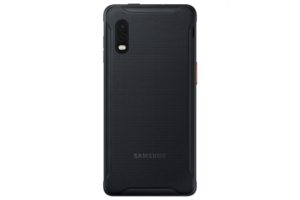
Samsung Galaxy Xcover Pro rugged phone with barcode scanner launches in the US

Samsung first unveiled the Galaxy Xcover Pro in Finland way back in January this year. The tech giant has now launched the rugged Galaxy smartphone in the US. It hits the market with a price tag of $500.

The Galaxy Xcover Pro is officially introduced as a rugged smartphone for frontline workers. The ruggedness of the build makes it suitable for use by field workers who work in terrain that is not friendly to the regular high-end smartphones. The device is also crammed with features that make it a business-oriented model.Samsung Galaxy Xcover Pro

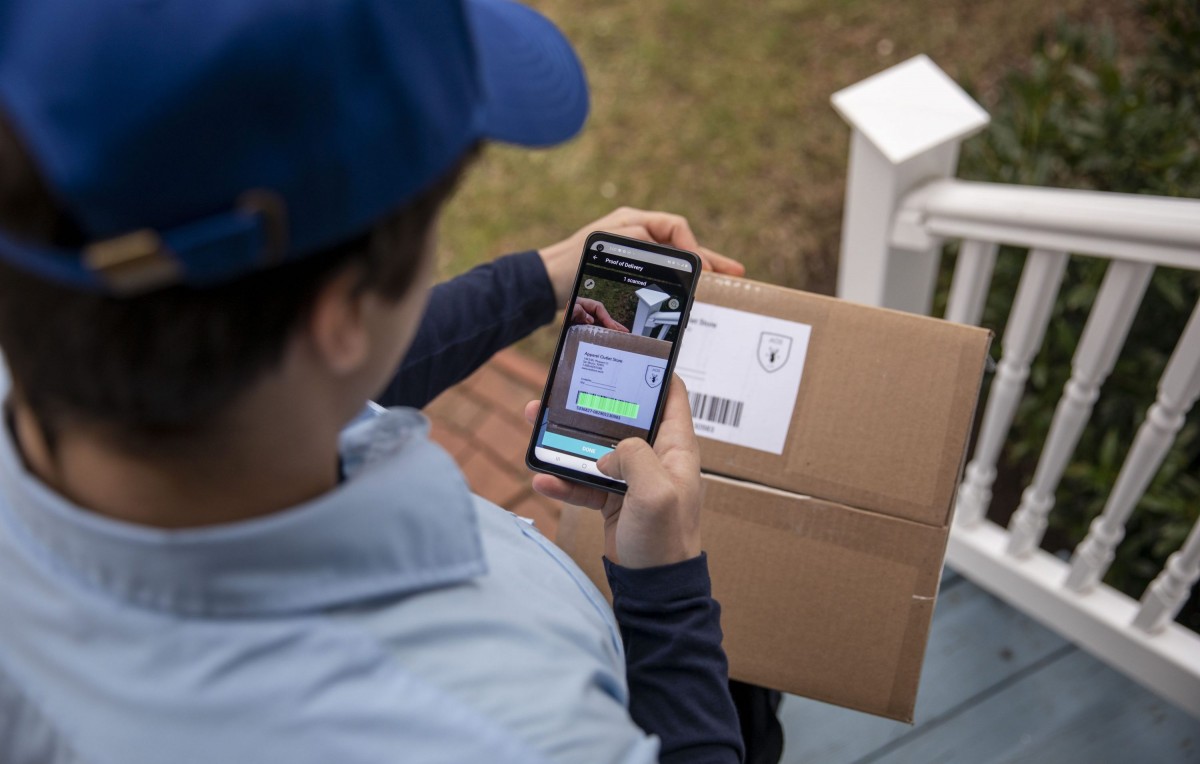
One of such features is the barcode scanner which is built into the rear camera. The camera is compatible with several laser-based scanner accessories that can turn this into a mobile point of sale system. The device also comes with NFC as well as several enhanced security and reliability features, including support for Europay, Mastercard and Visa. You also get a walkie-talkie (push-to-talk) feature onboard.

In terms of the hardware, the Samsung Galaxy Xcover Pro features a IP68 rugged build meaning it can survive 1.5m underwater for 30 minutes. It is also MIL-STD-810 certified and can withstand drops from 1.5m heights. The device packs a huge 6.3-inch AMOLED display with an FHD+ resolution of 2340 x 1080pixels. The device has a Glove mode and can detect touches from wet fingers. There are also two programmable keys, which can act as shortcuts for the most commonly used functions. It crams a 4,050mAh battery under the hood with support for 18W fast charge. The device has a set of Pogo pins for wireless charging on a dock. Samsung Galaxy Xcover Pro

The Galaxy Xcover Pro is available online through Samsung, Verizon and Microsoft as well as other distributors in the US. The phone will also be available unlocked and will be sold on Brick and mortar stores soon.


(source)


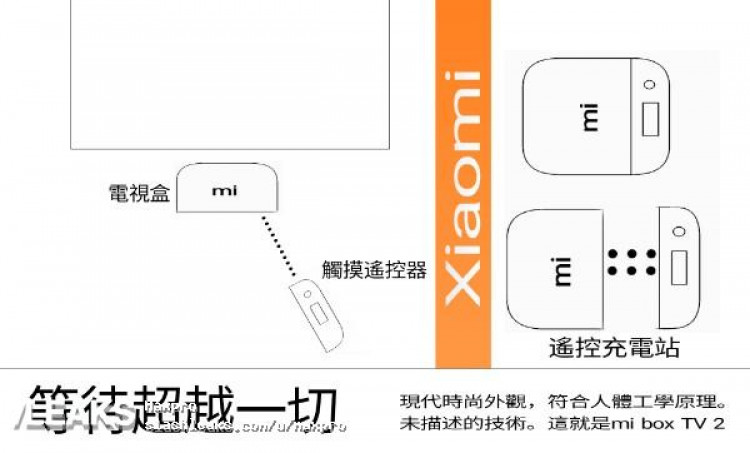
Purported Xiaomi Mi TV Box 2 sketch reveals a detachable design

Xiaomi first launched the Mi Box set-top box in 2016 and since then several versions have been revealed in China. These models include the Mi Box 3, Mi Box 3C, Mi Box 4 and Mi Box 4C among others. Outside China, the Mi Box and Mi Box S are the only models that have been launched. There are rumours that the tech giant has got the Mi TV Box 2 in the works.Mi Box 2

A sketch of the set-top box has now leaked on Slashleaks website. The device was listed with the moniker Mi Box TV 2 and features a detachable design. The design is such that the TV box will serve as a charging dock for the remote control. When in use, the remote can be removed and after use, attached back to the TV box.

This is also an innovative one as there is no such design in the market. It will also save you the hassle of looking for the remote control any time it is needed. However, considering the size of the Mi Set-top box, it is left to be seen if such design will be practicable and won’t affect the aesthetics of the device. The remote may likely adopt a smaller size.

There is no other clue to suggest Xiaomi is working on a set-to box except the Mi TV Stick that was recently leaked to launch in Europe this year. It has been a while since a set-top box is released under the brand. Thus, Xiaomi may be working on refreshing its set-top box lineup.


(source)