Huawei is rumored to be working on the launch of Huawei Nova 7 series. A recent report had revealed that the Chinese firm may announce it on April 23. However, the company is still mum on the existence of the arrival of Nova 7 lineup. A popular leakster from China has shared a blurry poster of the Nova 7 series. The blurry image manages to reveal the front and rear design of the smartphone.
Past reports have revealed that the Huawei Nova 7 lineup comprises of three devices, namely Nova 7, Nova 7 SE and Nova 7 Pro. All these phones are expected to arrive with 5G support. It is unclear whether the handset shown in the leaked poster is the vanilla Nova 7 or SE or the Pro model.
The poster reveals that the Nova 7 series handset has a rectangle-shaped camera housing on the back. The handset seems to be equipped with an impressive curved screen. There is a pill-shaped dual camera cutout at the top-left corner of the display. It appears that the smartphone will be available in blue and gradient white colors. Lastly, the poster reveals that popular Chinese singer Yi Yangqiaxi (also known as Jackson Yee) endorsing the Nova 7 series.
The Nova 7 lineup is expected to be equipped with Kirin 820, Kirin 985 and Kirin 990 5G chipsets. The three phones are expected to be priced between 2,000 Yuan (~$284) and 4,000 Yuan (~$568). A past report had carried the specs of the Nova 7 SE phone. The specs of the Nova 7 and Nova 7 Pro are under the wraps.
The Nova 7 SE is likely to feature a 6.5-inch punch-hole display and it could be powered by a mid-range Kirin 5G chipset. It may feature a 64-megapixel primary shooter on its back. The phone may arrive with 22.5W fast charging support.
Honor is all set to launch its new flagship Honor 30 series smartphones in China tomorrow. Now just a few hours before the official launch, the company has shared a new teaser video online showcasing the telephoto zoom stability of the Honor 30 Pro+ smartphone.
Zhao Ming, President of Huawei Honor Business Unit, has also shared the camera samples online which confirms that the device will come with support for 30x zoom. Check out the images as well as zoom capability below.
In the video teaser shared by the company, it shows a young couple close together but the camera zooms out to showcase that there’s actually a long table between the boy and girl. It shows that even though they are far apart, the stable telephoto lens of the Honor 30 series allows can closely capture them.
Recently, a camera sample of the flagship smartphone was shared online showcasing its low-light or Night Mode photography. The Honor 30 and Honor 30 Pro are expected to come with 6.57-inch AMOLED displays that deliver Full HD+ screen resolution.
The upcoming smartphones are likely to arrive with 4,000mAh batteries that will have support for 40W fast charging technology. It was recently confirmed that the Honor 30 and 30 Pro will come packed with Kirin 985 and Kirin 990 SoC, respectively.
As per the reports, the Honor 30 Pro will have a primary Sony IMX700 lens whereas the vanilla model will flaunt a 40-megapixel lens. Both the phones will have 32-megapixel frontal shooters for taking selfies and video calling.
The Honor 30 is expected to arrive with 8GB of RAM while the Pro model could be available in 8GB as well as 12GB RAM versions, both offering 128GB and 256GB of internal storage options. The rest of the specs are believed to be identical on both phones.
On the other hand, the Honor 30 Pro+ is expected to come with an OLED display with 90Hz refresh rate and in-display fingerprint sensor. It will be powered by the Kirin 990 5G SoC and will feature quad-camera setup along with a 50MP sensor. It will run Android 10 OS out-of-the-box with Magic UI 3.1 on top.
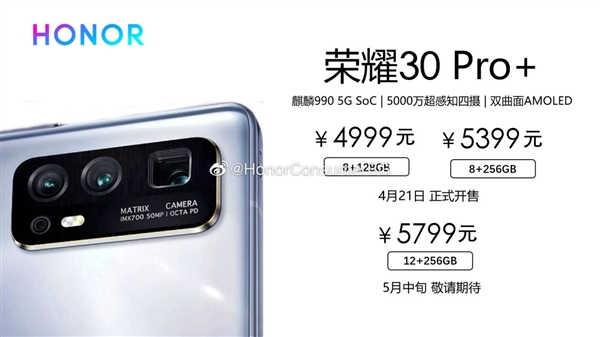
A recent leak reveals that the Honor 30 Pro+ will come in three variants — 8GB RAM + 128GB storage, 8GB RAM + 256GB storage, and 12GB RAM + 256GB storage, costing ¥4999 (~$709), ¥5399 (~$766), and ¥5799 (~$822) respectively.
A few days ago, Huawei’s sub-brand Honor launched its new budget smartphones — Honor Play 4T and Honor Play 4T Pro. Now, the Honor Play 4T Pro smartphone is finally available for purchase in its home country, China.
The base model of the device with 6GB RAM + 128GB storage is priced at 1,499 yuan which is approximately $213 while the model with 8GB RAM + 128GB storage costs 1,699 yuan, which is roughly $241. The Honor Play 4T is also available for purchase.
The smartphone comes packed with a 6.3-inch OLED display that offers screen resolution of 2400 × 1080 pixels and 20:9 aspect ratio. The display uses a waterdrop notch design which still remains my favourite notch design.
It also comes with an in-display fingerprint sensor for added security. The device is powered by the company’s own Kirin 810 chipset, with 6/8GB of RAM And 128GB internal storage.
Coming to the photography, the Honor Play 4T Pro comes with a triple camera setup that includes a 48-megapixel primary sensor, an 8-megapixel ultra-wide angle lens, and a 2-megapixels depth of field sensor.
The phone runs Android operating system with Magic UI on top with support for GPU Turbo 3.0. The device is powered by a 4,000mAh battery which supports 22.5W super fast charging, which the company claims can charge up to 58% in 30 minutes.
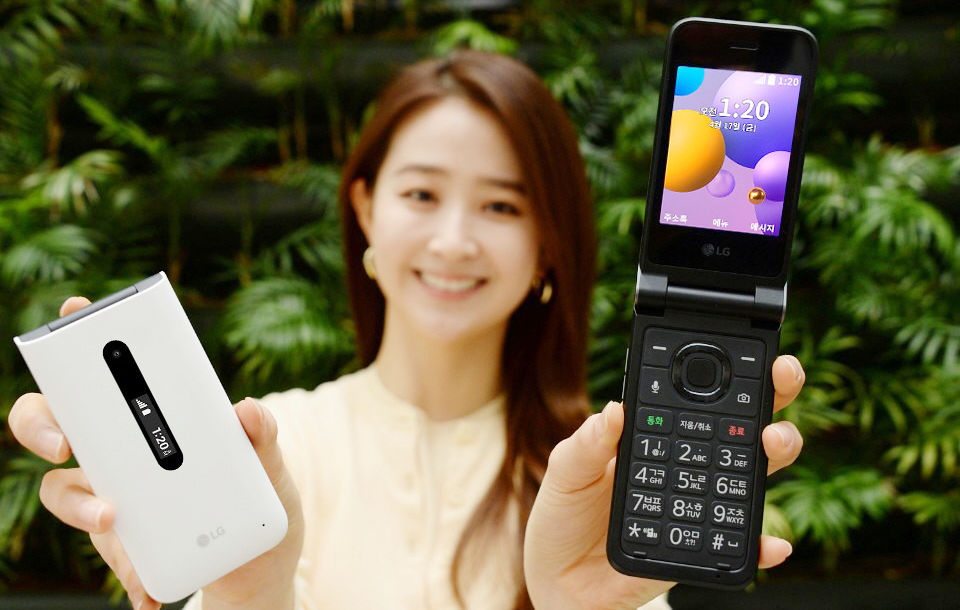
LG has unveiled a new entry-level flip phone called LG Folder 2 in South Korea. It has arrived as the successor for the original LG Folder phone that went official in February 2018. Apart from the internal screen, the LG Folder 2 has a small-sized outer display. Also, it comes with a dedicated SOS key.
LG Folder 2 specifications
The LG Folder 2 has 107.9 x 55 x 18mm dimensions when closed and it weighs 127 grams. The device is fitted with an internal LCD screen of 2.8 inches. It supports 240 x 320 pixels resolution. On the outside, the LG Folder 2 has a 0.9-inch mono screen that can be used for view notifications like text messages, calls, time and so on.
The backside of the LG Folder 2 has a 2-megapixel rear camera. Alongside it, there is an SOS key which when pressed three times in 1.5 seconds can dial a pre-registered phone number and send an emergency SMS with location information.
The device is equipped with T9 keypad with a hot key for accessing AI voice service or recording function. For avoiding unintentional data charge, it comes with data security feature.
The Snapdragon 210 chipset powers the device with 1 GB of RAM. It has an internal storage of 8 GB and comes with a microSD card slot. It is loaded with Android OS and comes with a 1,470mAh battery
LG Folder 2 price and availability
The LG Folder 2 can be bought in color options like Platinum Grey and White. It costs 198,000 won (~$162) and it will be available for purchase in South Korea from April 17.
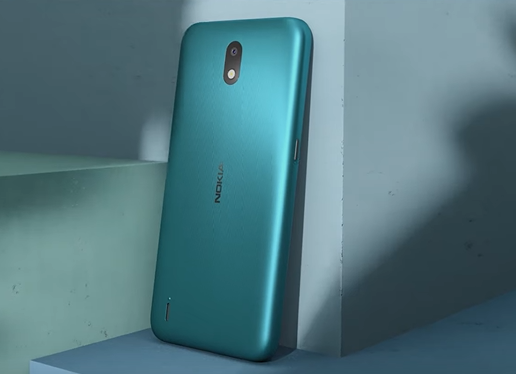
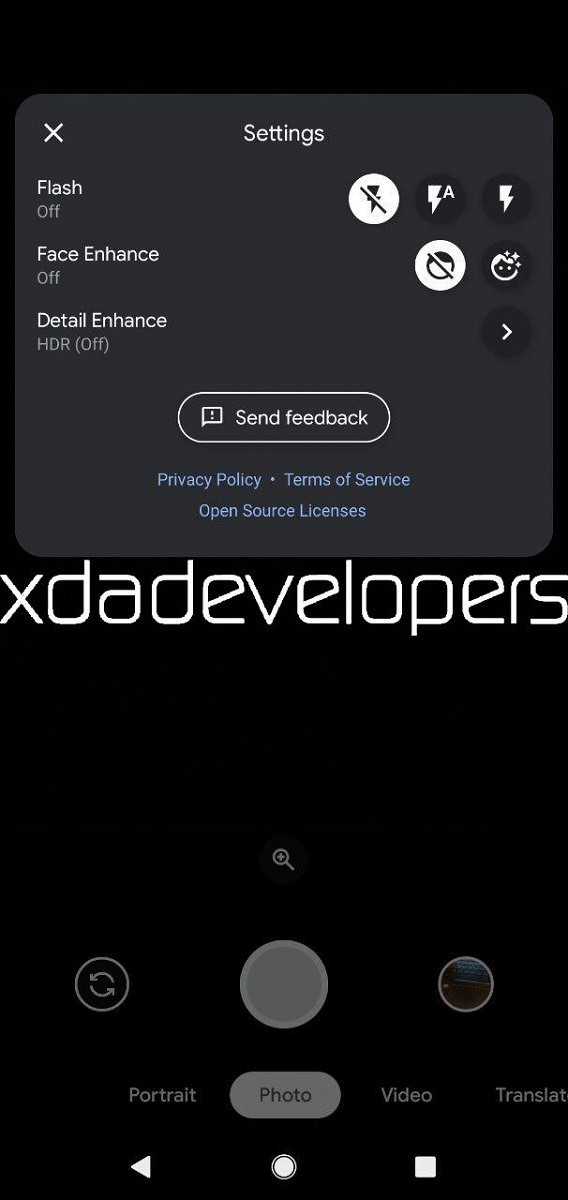
Google Camera Go debuted on Nokia 1.3 Android Go smartphone announced in March 2020. As of now, it is the only phone to come with this app and above all, the device is yet to go on sale. Despite this, GCam modders have managed to find out that the internet search giant is testing HDR feature for this toned-downed Google camera app for entry-level smartphones.
The folks at XDA retrieved the Google Camera Go APK from the firmware of Nokia 1.3. Unfortunately, they are yet to share the APK to the public, however, Google Camera (GCam) modders have got their hands on it to dig deeper for (maybe) possible ports.
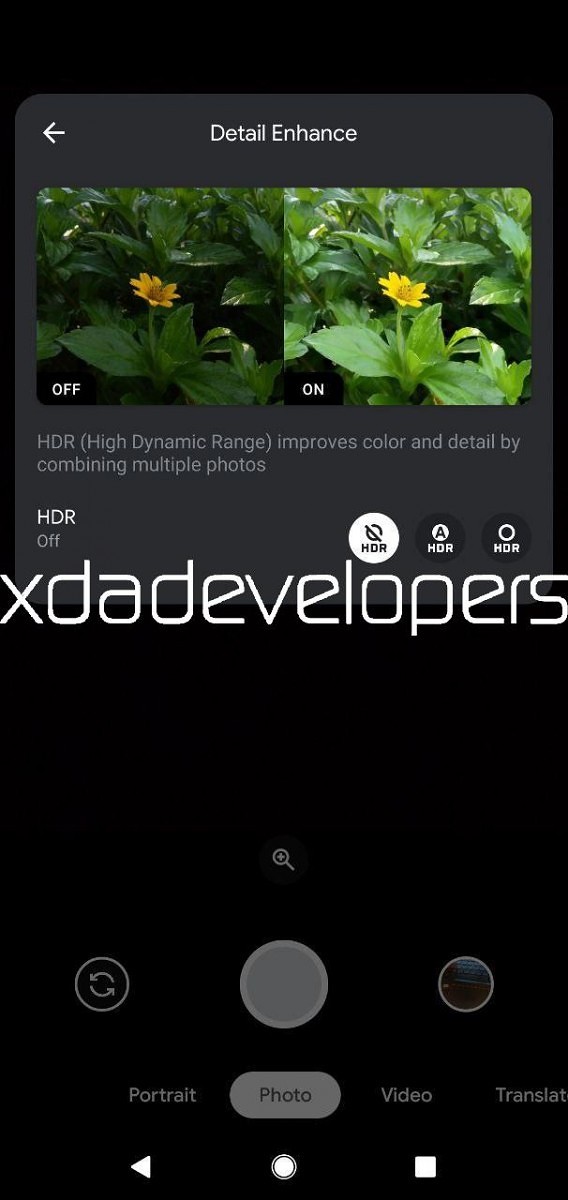
While doing so, they discovered Google to be working on HDR mode, which is currently missing on the app. As of now, it is not working even after turning on the toggle. Maybe, it will debut as a first major update for the app.
HDR photography on Android Go phones, usually priced around $100 can improve the overall quality of the pictures shot on them. This is a dream come true for people buying phones at budget prices as these handsets don’t support regular GCam mods yet.
Hopefully, modders port the Google Camera Go app for other devices just like they do with regular Google Camera app from Pixels. If that happens, people buying low-priced phones will not have to worry about potato quality pictures anymore.
Anyway, Google Camera Go mods are only applicable for enthusiasts, who mostly don’t come under the category of buying low-priced entry-level smartphones. Nevertheless, the regular app on the Android Go device with HDR capability can still make a difference.
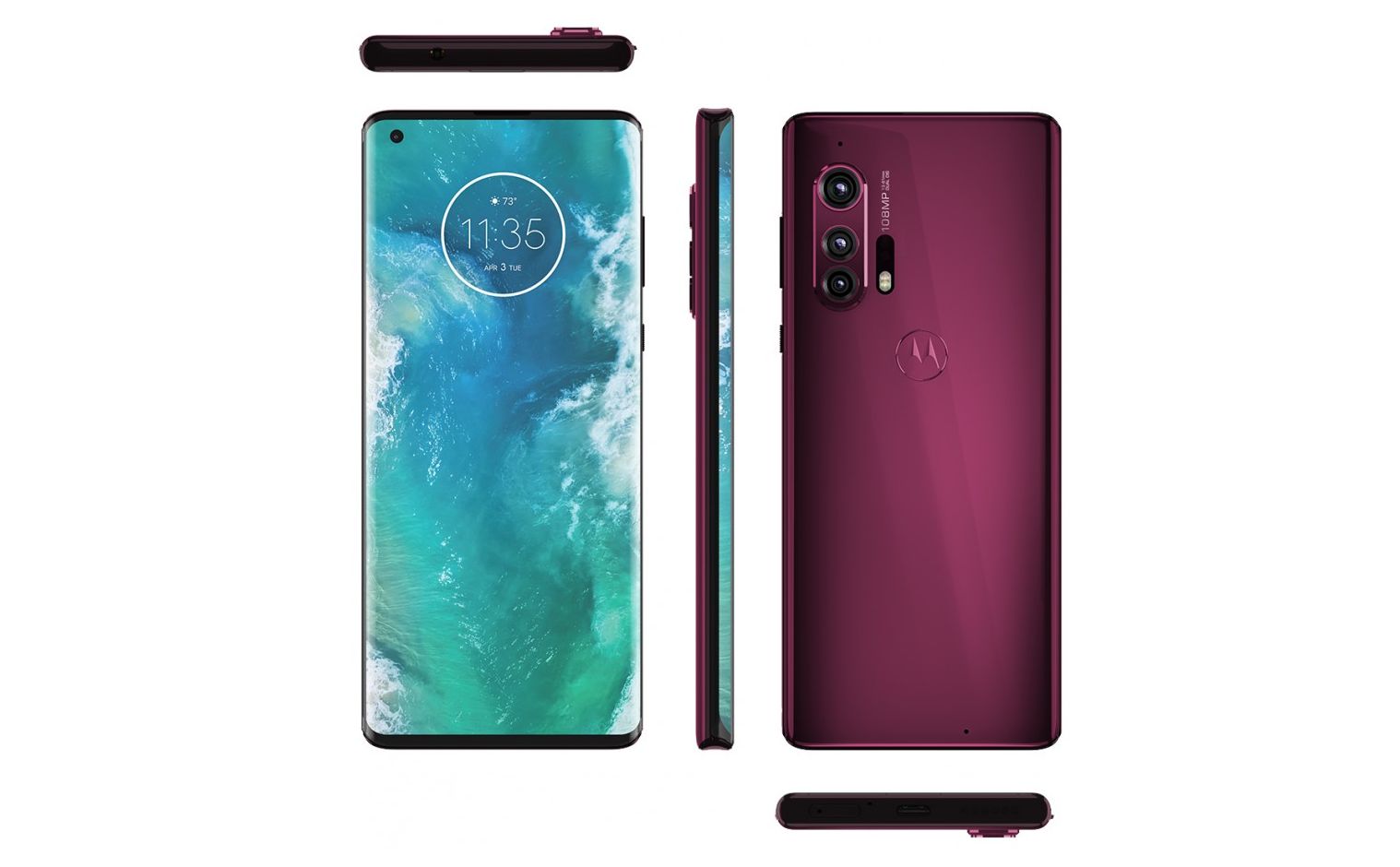
At the end of 2019, Motorola confirmed that it will return to launching flagship phones in 2020. It had also confirmed that it will be announcing Snapdragon 865 and Snapdragon 765G powered 5G-ready phones. Recent reports have revealed that these phones will debut as Motorola Edge+ and Motorola Edge. After months of leaks, the Lenovo-owned firm confirmed through a tweet that it will be holding a launch event on April 22 to announce its flagship phone.
The below tweet reveals that Motorola’s upcoming unveil event will be held at 11 AM CDT on April 22. The first teaser showcases the marvelous waterfall displays that are expected to be available on the Motorola Edge+ and Edge phones.
Editor’s Pick: Samsung’s deepfake AI can Create your Video from a Single Photo
It’s arriving. Join us for the Motorola Flagship Launch E-vent, April 22nd, 11AM CDT. pic.twitter.com/FNqbOskRxg
The Motorola Edge+ duo is expected to come with 6.67-inch punch-hole OLED panels with 1080p+ resolution support. The prominently curved screens will support 90Hz refresh rate and will come integrated with fingerprint scanner. The Edge+ will be powered by Snapdragon 865 whereas the Snapdragon 765G will be fueling the Edge phone. Both phones are expected to support mmWave 5G bands.
The rear side of the Edge+ will have a 108-megapixel + 16-megapixel (ultrawide) + 8-megapixel (telephoto) triple camera setup. On the other side, the Edge will have a 64-megapixel + 16-megapixel (ultrawide) + 8-megapixel (telephoto) triple camera system.
Both phones will have 25-megapixel frontal shooters. The Android 10 OS in near stock version will run on the Motorola Edge duo. A 5,000mAh battery powers the Edge+, while a 4,500mAh battery fuels the Edge smartphone. Both phones will carry support for rapid charging.
The Edge branding could be exclusively available through Verizon in the U.S. Other countries may receive the two phones with Moto One brand names.
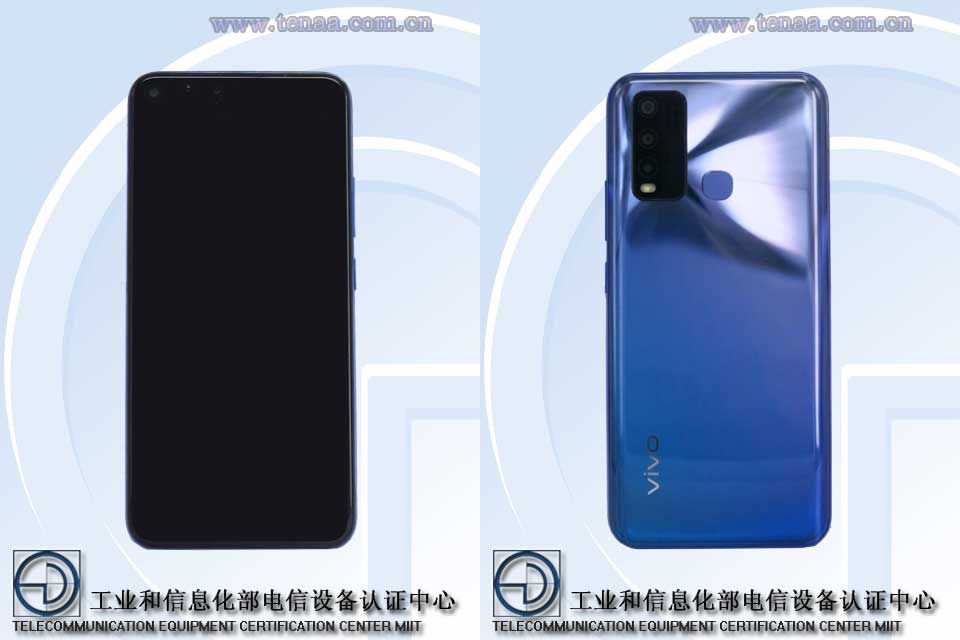
The Vivo Y50 smartphone was made official in Cambodia earlier this month with a price tag of $249. Recently, a Vivo phone with model number V1965A was recently spotted at TENAA with minimum specs. The V1965A phone was also found listed with an 18W charger at the 3C database of China. The TENAA listing of the smartphone is now updated with its entire specs and images.
Vivo V1965A specifications
The Vivo V1965A has 162.04 x 76.46 x 9.11mm dimensions and it weighs 197 grams. The phone can be seen in purple color in the TENAA images. The TENAA listing states that it will also arrive in golden color in China.
The Vivo V1965A has a punch-hole display that measures 6.53 inches. It supports full HD+ resolution of 1080 x 2340 pixels and 19.5:9 aspect ratio. The phone house a 4,880mAh battery. The 3C appearance of the phone has already revealed that it may ship with an 18W rapid charger.
The Android 10 OS is loaded on the Vivo V1965A phone. The rear side of the phone has a 13-megapixel + 8-megapixel + 2-megapixel + 2-megapixel quad cameras housed inside a rectangle-shaped module. It has a front-facing camera of 16-megapixel.
The Vivo V1965A is powered by a 2.0GHz processor, which could be the Snapdragon 665 chipset. The handset may arrive in Chin in 6 GB and 8 GB RAM versions. Both variants may carry 128 GB built-in storage. Other features of the phone include rear-positioned fingerprint scanner and a microSD card slot.
The aforementioned specs of the Vivo V1965A are exact match with the recently announced Vivo Y50. It remains to be seen whether the V1965A debuts as Y50 or with some other name.
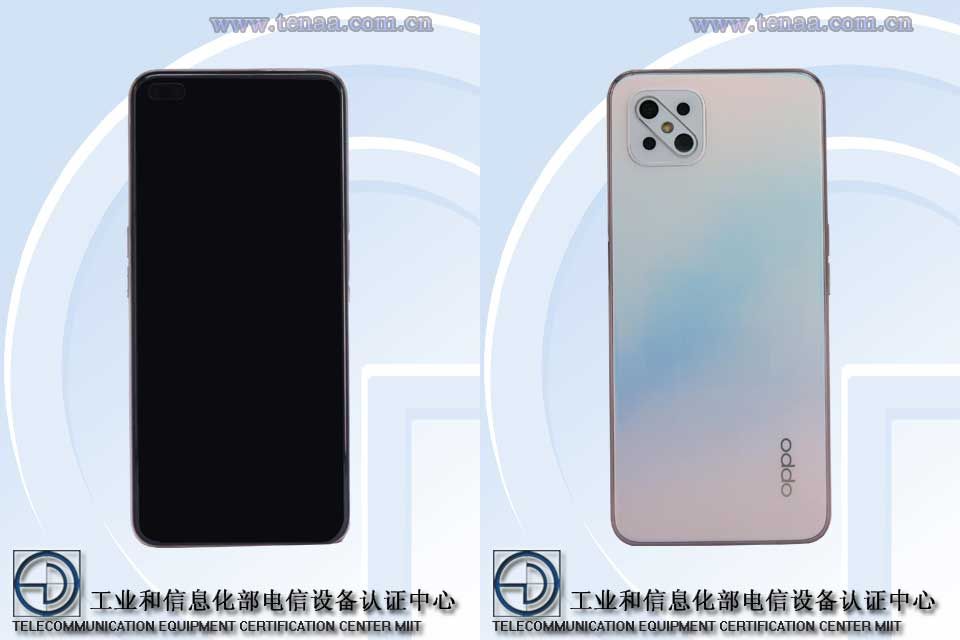
Yesterday, OPPO announced the OPPO Ace2 5G smartphone in China. The Chinese firm is also expected to announce a mid-range phone called OPPO A92s smartphone in the coming weeks. The key specs of the phone along with its pricing have already appeared in recent reports. Today, the PDKM00 and PCRT10 OPPO phones appeared with entire specifications on the database of China’s TENAA telecom authority. It is known that the PDKM00 model number belongs to the upcoming OPPO A92s handset whereas the PCRT10 model number is associated with OPPO Reno3 Vitality Edition phone that was announced in February in China.
OPPO A92s specifications
The OPPO A92s TENAA listing reveals that it will be coming to Chinese markets in three colorways such as black, white and pink. The device weighs 184 grams and its dimensions are 163.8 x 75.5 x 8.1mm.
The TENAA images have revealed that the OPPO A92s is equipped with a dual punch-hole screen. The listing reveals that the display measures 6.57 inches. It is an IPS LCD panel that offers a full HD+ resolution of 1080 x 2400 pixels along with an elongated aspect ratio of 20:9. Recent reports have revealed that the OPPO A92s will be the first A-series OPPO phone to arrive with a screen that supports a refresh rate of 120Hz.
There is a square-shaped camera setup at the top-left corner of the phone’s rear shell. It includes a 48-megapixel main lens, an 8-megapixel superwide lens and a pair of 2-megapixel sensors. The pill-shaped cutout on the screen is the home for its 16-megapixel + 2-megapixel dual front-facing cameras.
A 2.0GHz octa-core processor powers the OPPO A92s smartphone. The Geekbench appearance of the phone revealed that it could be debuting as the world’s first Dimensity 800 5G chipset powered smartphone. TENAA further reveals that it will land in China in 6 GB, 8 GB and 12 GB RAM editions and storage models like 128 GB and 256 GB.
The OPPO A92s has a minimum rated battery of 4,880mAh battery. It appears that the phone may not come with fast charging support. Its other features include side-mounted fingerprint reader, a microSD card slot and Android 10 OS. A recent report revealed that the OPPO A92s’s 8 GB RAM + 128 GB storage edition may carry 2,499 Yuan (~$354).
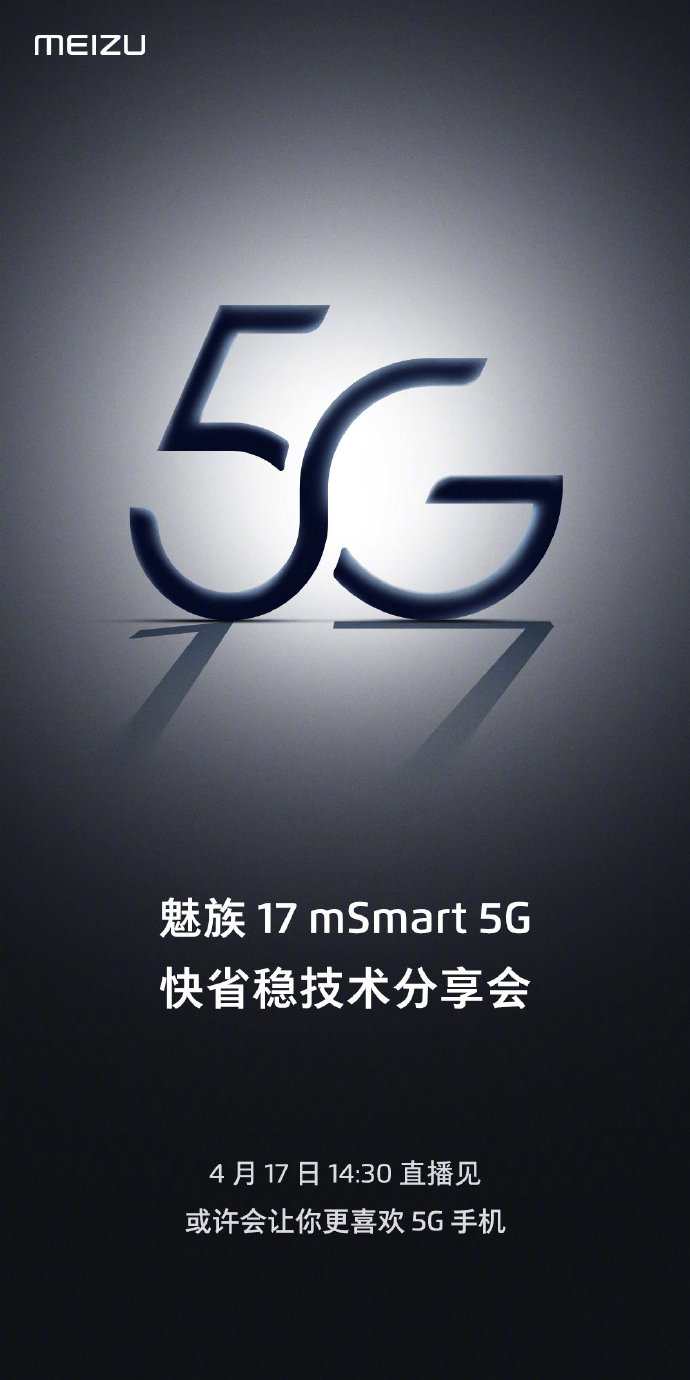
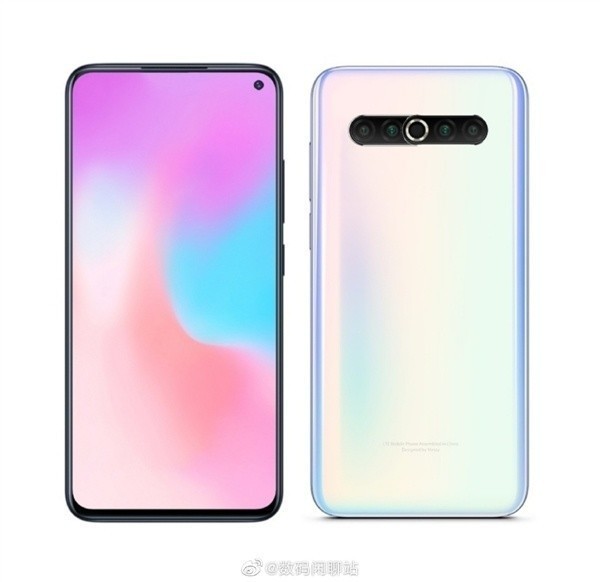
The rumor mill has been speculating on the April launch of the Meizu 17 5G flagship phone since the past few weeks. A recent leak had claimed that the phone may go official on April 26. The company took to Weibo today to confirm that it will be announcing something about the Meizu 17 on April 17.
The Meizu event that will be held on coming Friday will take place at 2:30PM (local time). Hopefully, the Meizu 17 will go official at the event. It will be going official as the first 5G-ready smartphone from the company. The company is yet to spill official information on the specs of the Meizu 17.
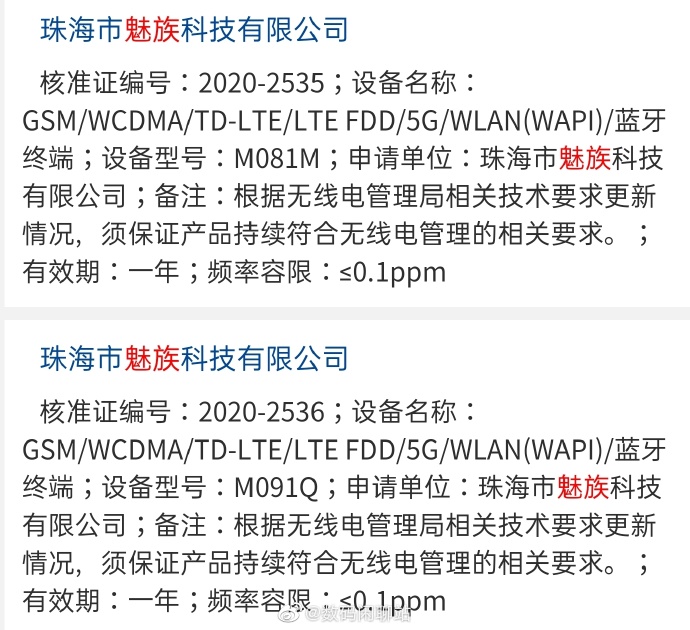
Some reports have claimed that the Meizu 17 5G phone could be accompanied by a more advanced device called Meizu 17 Pro. While the rumor mill has revealed the alleged specs of the Meizu 17 phone, it is unclear what differing features will be available on the Pro model. A well-known tipster from China shared a screengrab which reveals that the M081Q and M091Q model numbers, that belongs to the two phones from the Meizu 17 series, have received MIIT radio certification in China.
The Meizu 17 has a 6.5-inch AMOLED display screen with a punch-hole positioned at the top-right corner. The AMOLED display supports full HD+ resolution and is integrated with a fingerprint reader. The Snapdragon 865 mobile platform powers the device along with LPDDR5 RAM. It is equipped with UFS 3.0 storage. The rear side of the phone has a 64-megapixel horizontal camera setup that includes a ring flash LED unit.
Meizu 17 Render
The Meizu 17 has a 4,500mAh battery. Various leaks and 3C certification have revealed that the Meizu 17 will support 30W mCharge fast charging technology. The other features that will be available on the device are dual stereo speakers, horizontal linear motors, NFC and Wi-Fi 6. It may arrive in China with a starting price of 3,999 Yuan (~$567). A recent report revealed that that the Chinese firm may announce Meizu 17 Audi Special Edition alongside the Meizu 17 duo.
Smartwatches have become an increasingly popular accessory amongst several people. They not only tell the time but also perform multiple other functions such as tracking physical activities, alerting you of notifications from your phone, tracking your sleep, measuring your heart rate and more.
If you are on the search for a smartwatch and have a hard time deciding which to buy, we have put together a list that should help you make a decision.
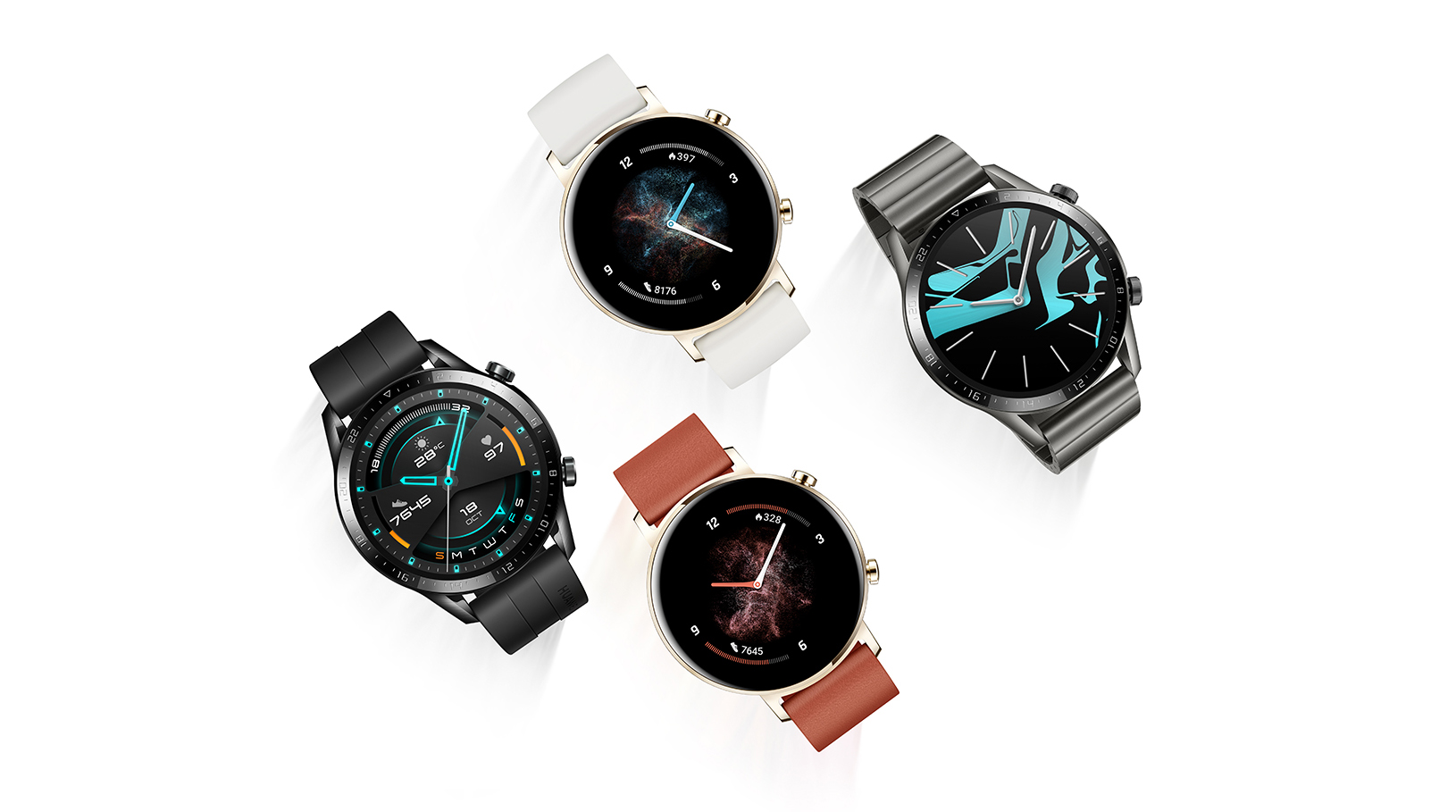
Huawei Watch GT 2 – For the sports enthusiast
The Huawei Watch GT 2 is Huawei’s latest smartwatch and a successor to the Watch GT released back in 2018. Available in two sizes – 42mm and 47mm – the selling point of this watch is its battery life which is up to 14 days on the larger model.
The watch can track up to 15 different activities including elliptical workout, rowing, and free training. It also has automatic workout detection for six activities and a professional sports trainer. There is support for GPS and GLONASS for accurate positional tracking.
Unlike a lot of other watches on this list, the Watch GT 2 can store up to 500 audio files, so you have something to listen to while working out (only supported on Huawei and Honor phones). It also supports voice calls over Bluetooth (46mm version only). Other features include stress-monitoring, sleep monitoring, oxygen saturation detection (SpO2), and menstrual cycle tracking.
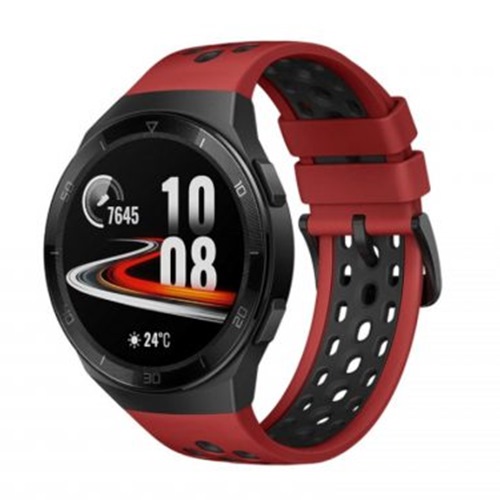
Huawei Watch GT 2e
Honorable Mention Watch GT 2e – this is a more sports-oriented version of the Watch GT 2. It boasts the same 2-week battery life and can also track several physical activities with the addition of personalized training modes for activities such as skateboarding, surfing, parkour, and rock climbing. The price is €199.
Amazfit GTR – Best Battery Life
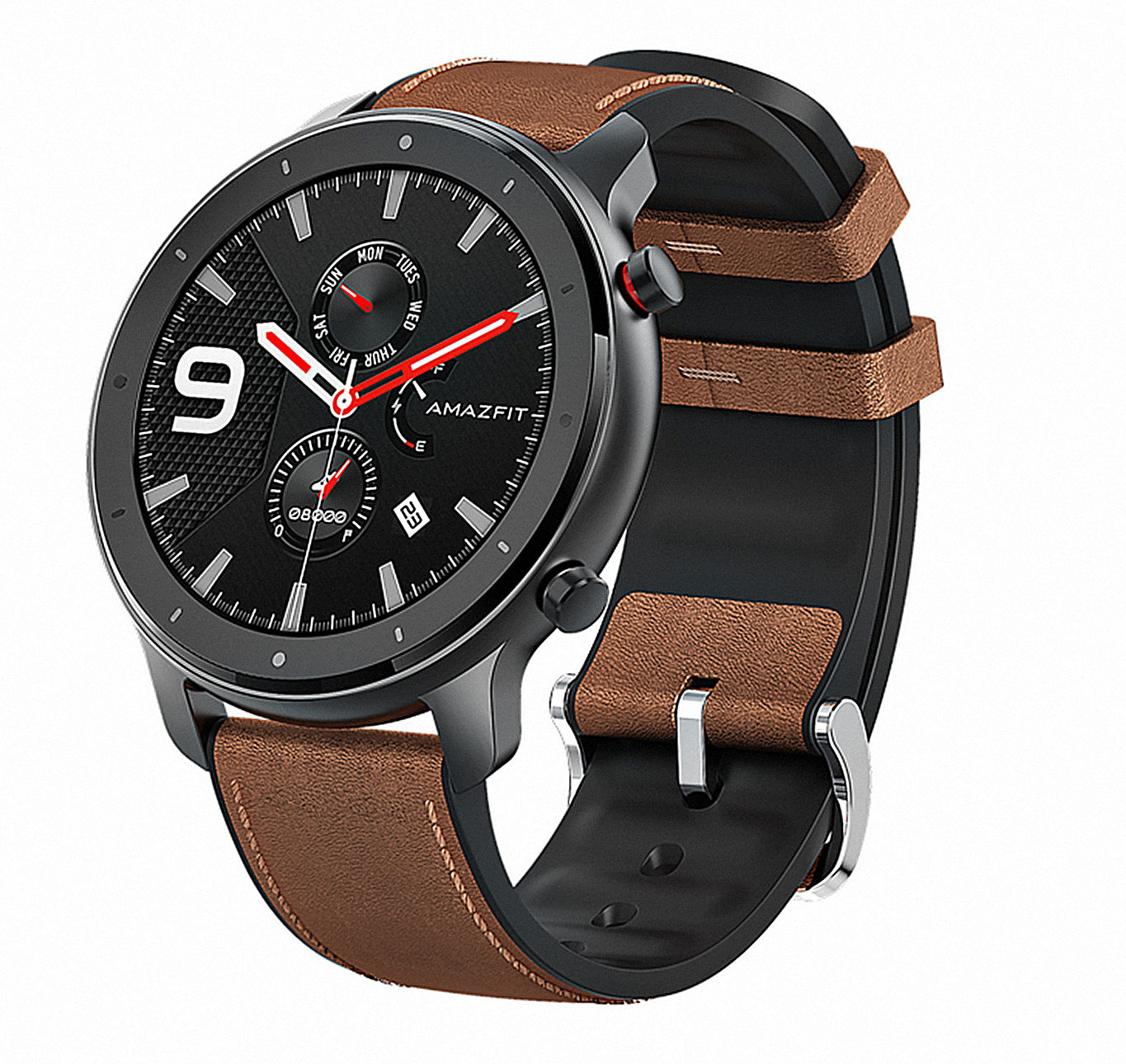
When it comes to smartwatches and fitness trackers, Amazfit has become a sort of household name. The manufacturer (Huami) is not only known for its Amazfit-branded products which also includes earbuds and running shoes but is also known as the contractor for Xiaomi’s Mi Band fitness trackers.
The Amazfit GTR is the first of a new series of smartwatches from the manufacturer. It has a lot going for it from its Gorilla Glass protected AMOLED display to its aluminum/stainless steel/titanium bezel to its support for 12 different activities including elliptical, swimming, and free training. However, top of it all is its 24-day battery life (up to 74 days in basic watch mode) which puts that of the Huawei Watch GT 2 to shame.
The GTR is available in two sizes – 47mm and 42mm – and also comes in several color variants. It is also pretty affordable with a price tag that starts at ¥799 (~$113). However, it sells for a bit higher from third-party retailers.
Amazfit GTS – An Amazfit GTR in a different body
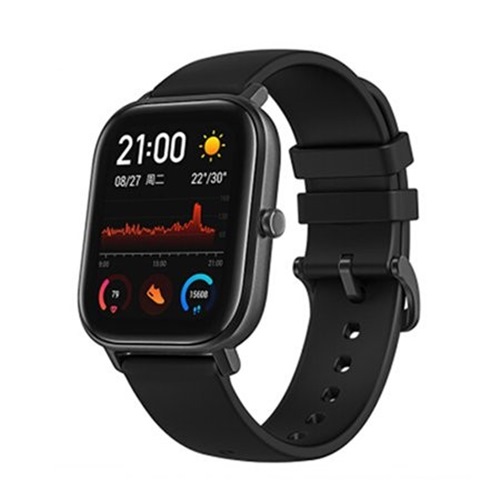
Don’t like round watches, the Amazfit GTS has got you covered with its Super-Retina-grade square AMOLED display. Even with its minimalist design, the GTS is a stylish watch and packs several of the same features as the GTR. It has GPS, NFC, up to 12 activity tracking, music playback control, a heart rate sensor, and is waterproof up to 50 meters. It also has an amazing battery life – up to 46 days in basic watch mode and 14 days of regular use (NFC, notifications, GPS on for 30 minutes each day, sleep monitoring, and heart rate monitoring on).
The Amazfit GTS launched with a more expensive price tag than the GTR and can be purchased for $160 on Giztop.
OPPO Watch – Premium but familiar design
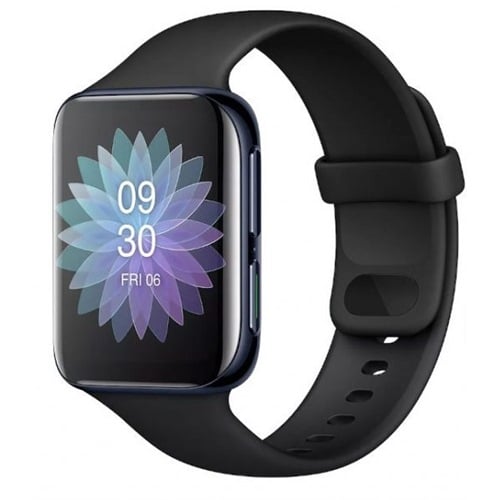
OPPO joined the smartwatch-makers league this year with the OPPO Watch. The smartwatch’s design is greatly-inspired by Apple’s own watch which might make it unpopular among folks who do not want people calling their smartwatch a clone. Design aside, the OPPO Watch is actually a pretty capable smartwatch.
The 46mm version of the watch has a 1.91-inch flexible hyperboloid AMOLED display. Unlike several of the watches on this list, you can download apps onto the OPPO Watch, thanks to its Android-based ColorOS Watch system.
Alongside all the tracking and measuring you will expect of a smartwatch, the OPPO Watch can also make and receive calls even without being paired to a phone and that is because it has an eSIM and cellular connectivity. You can choose to have a different phone number for the watch or have it share one with your phone.
With respect to battery life, the OPPO Watch can last up to 21 days in power saver mode (or basic watch mode). Smart Mode which is when you use all the features including as a phone and connected to the internet, its battery life is 40 hours. Thankfully, the watch supports Watch VOOC fast charge, allowing you to charge it from empty to 50% in just 17 minutes.
The OPPO Watch starts at ¥1499 (~$212) for the 41mm aluminum version and goes up to ¥2499 (~$354) for the Stainless Steel 46mm version.
Mi Watch – A 4G Smartwatch with a familiar design
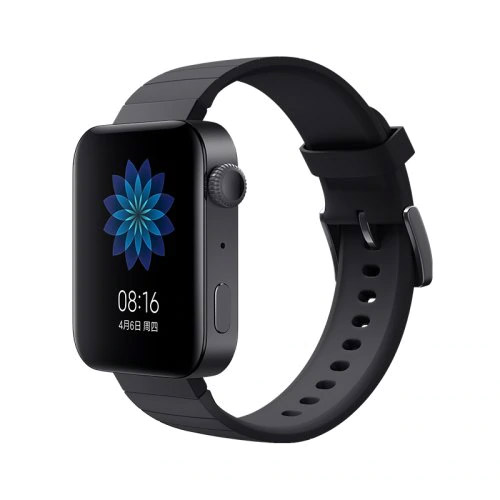
The Mi Watch launched before the OPPO Watch above and got its own fair share of “Apple Watch-clone” remarks. We’ll leave it to you to decide which one is more of a clone. When you finally accept the design, you will realize it actually packs some really interesting features.
This watch has an eSIM, 4G, a Snapdragon Wear 3100 processor, and a custom-version of Wear OS called MIUI for Watch. There is support for app downloads, NFC payments, and a built-in smart assistant (XiaoAI). The Mi Watch also boasts a 2-day battery life.
The Mi Watch has a starting price of ¥1299 (~$185).
Xiaomi Watch Color – A less-expensive Amazfit GTR (47mm) but without the battery life
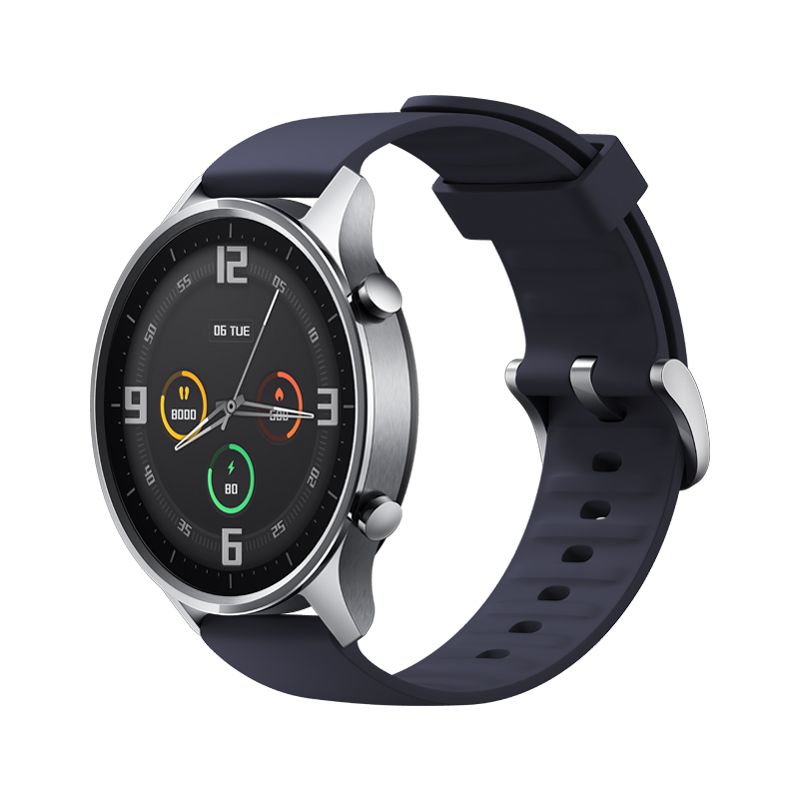
The Xiaomi Watch Color can be termed as a less-expensive alternative to the Amazfit GTR. It has a similar design and even shares some of its specs but skips on some features such as battery life (2-weeks for normal use and 22 days in basic watch mode ) and the number of activities it can track (down to 10). However, you do get NFC, GPS+GLONASS, heart-rate monitoring, and sleep tracking. One feature it has that the Amazfit GTR doesn’t is a built-in smart assistant (XiaoAI) though one that users outside China will find useless.
The Xiaomi Watch Color has an MSRP of ¥799 (~$113) but sells up north of $130 from 3rd-party retailers.
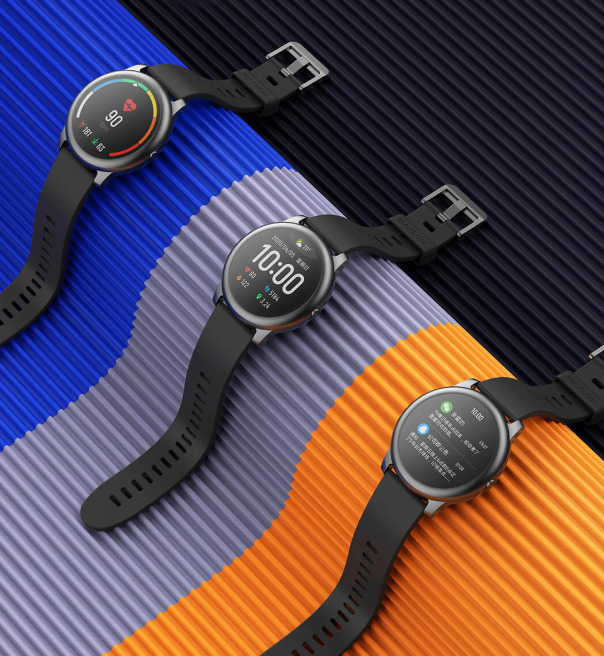
Haylou Watch Solar – Budget with a big B
You are probably wondering why a watch that is yet to go on sale is on this list. Yes, that is because we have faith in the Haylou Watch Solar based on what its sibling, the Haylou LS01, offers.
The Halou Solar is the cheapest watch on this list with a price tag that is a third of the second-cheapest watch on the list. A low-price tag isn’t the only thing this watch has got to offer. The watch has a 1.28-inch display (TFT not AMOLED) that Haylou claims is bright even under direct sunlight. While they have skipped on the type of display, the rest of the features are great.
You get a metal frame (surprisingly not plastic) and 22mm silicone rubber straps (not sure about the quality of the straps, you can purchase replacement bands made from various other materials).
The Haylou Solar can track a total of 12 physical activities including gymnastics, basketball, soccer, yoga, and rowing. It also has 24-hour heart-rate monitoring, sleep tracking, music playback control, and support for notification alerts. Haylou tops it off with a 30-day battery life in basic watch mode (2 weeks with 24-hour heart rate tracking).
The Haylou Solar has an MSRP of ¥149 (~$21) but expect it to sell for between $30 – $35 when it goes on sale. Even at that, it sure is still one of the cheapest smartwatches you can buy.
Samsung Galaxy S20 Ultra has a fair share of issues since its launch. Most of them are applicable to the Exynos 990 model, which the company sells in major parts of the world. Now, once again, users have started reporting problems with autofocus, heating and even battery performance on their units.
The users of Galaxy S20 Ultra took to Samsung Community as well as Twitter to share the problems they are facing on their device. The most common issue among them is autofocus on the primary camera. This particular issue has been persisting ever since the phone first released. Autofocus is slower and sometimes the camera even fails to lock focus though the company has rolled out an update a few weeks ago to fix it.
Seriously the Exynos variant has disappointed me soo much Poor battery life poor performance heats like hell. This is really a sh*t of a phone with that crappy $1400 price tag. Never Samsung again. pic.twitter.com/tmVpfOJdEg
The second major complaint is the overheating of the phone. Interestingly, most users with the heating problem are those with a 4G variant of the S20 Ultra, the ones sold in non-5G markets like India. Another common issue with users of Exynos 990 variant is of battery performance. Some users have reported they are merely getting 3.5 – 4 hours of SOT (Screen on Time), which is too less for a phone with 5,000 mAh battery.
Additionally, the Exynos 990-equipped S20 Ultra users are continuously reporting about poor performance while Samsung claims it to be as powerful as Qualcomm Snapdragon 865.
Hopefully, we expect the company to fix the above-mentioned issues soon with a software update. A smartphone costing $1400 should not have these many problems in the first place.
Xiaomi officially entered the South Korea market, Samsung‘s home market, in 2018 with the launch of the Redmi Note 5. Although the local market is dominated by Samsung, locals who are familiar with Chinese products make Xiaomi heir first choice due to the cost-effectiveness of its smartphones. Xiaomi is reinforcing this slender edge it has in the market by releasing a cheap smartphone in Korea – the Redmi Note 9S.
According to media reports, the Redmi Note 9S will be released in South Korea in May. The reports tip the Chinese company of planning to team up with Korea Technology to release the device in the Asian country next month. however, no specific date was given for the launch. The price is yet to be disclosed but it is expected to be in the region of 200,000 to 300,000 won. The mobile phone starts at $249 on the global scene.
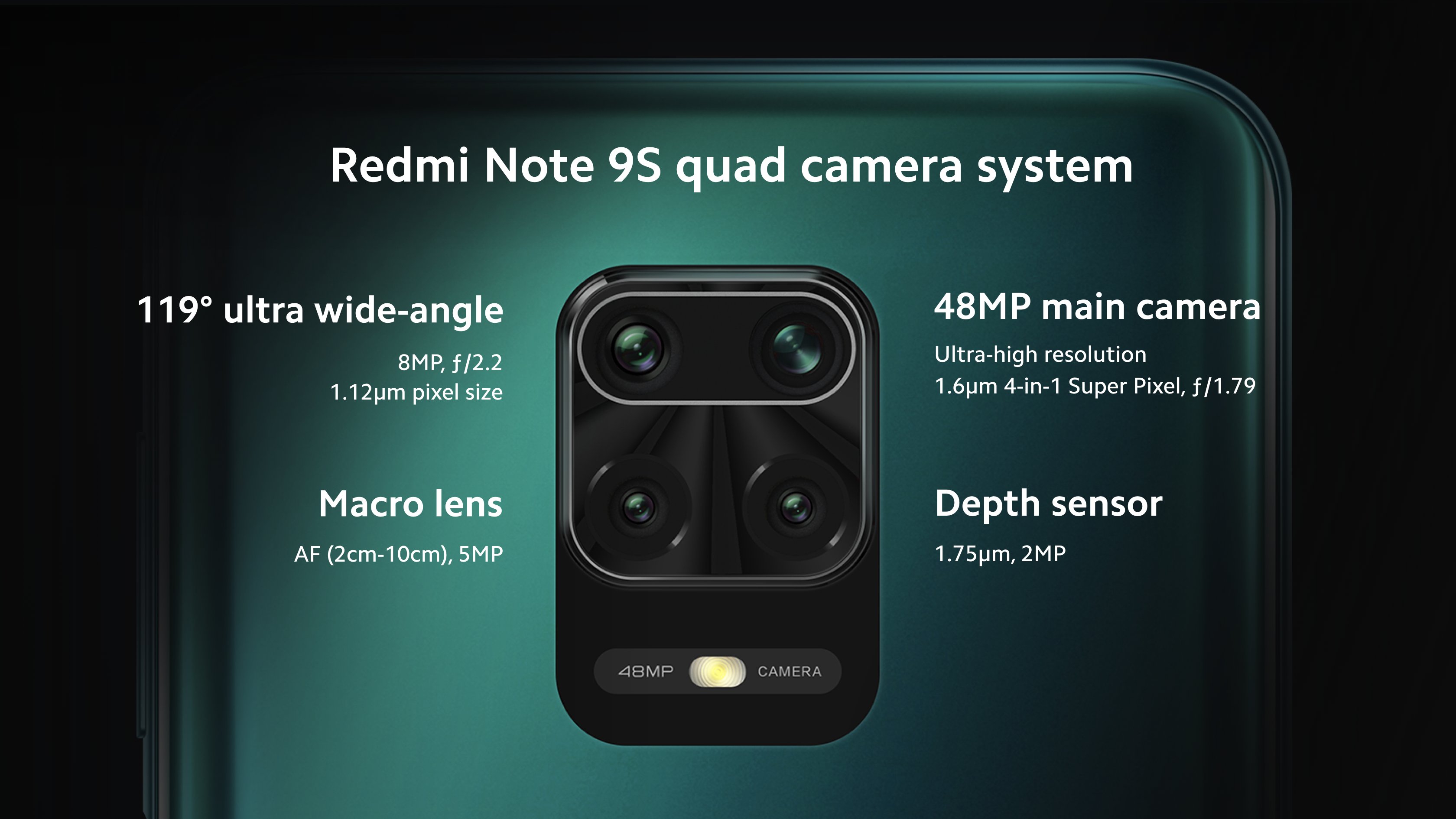
Xiaomi officially launched the Redmi Note 9S for the global market on March 23. The device is the global version of the Redmi Note 9 Pro with some minor differences. The smartphone features a 6.67-inch FHD+ display with a punch-hole design and 91% screen-to-body ratio. It is equipped with a Qualcomm Snapdragon 720G processor as well as a 16MP selfie shooter. The device equally packs a 5020mAh battery and supports 18W fast charging. For photography, there is a quad-camera setup piloted by a 48MP sensor.
The Redmi Note 9S is available on AliExpress and Giztop.
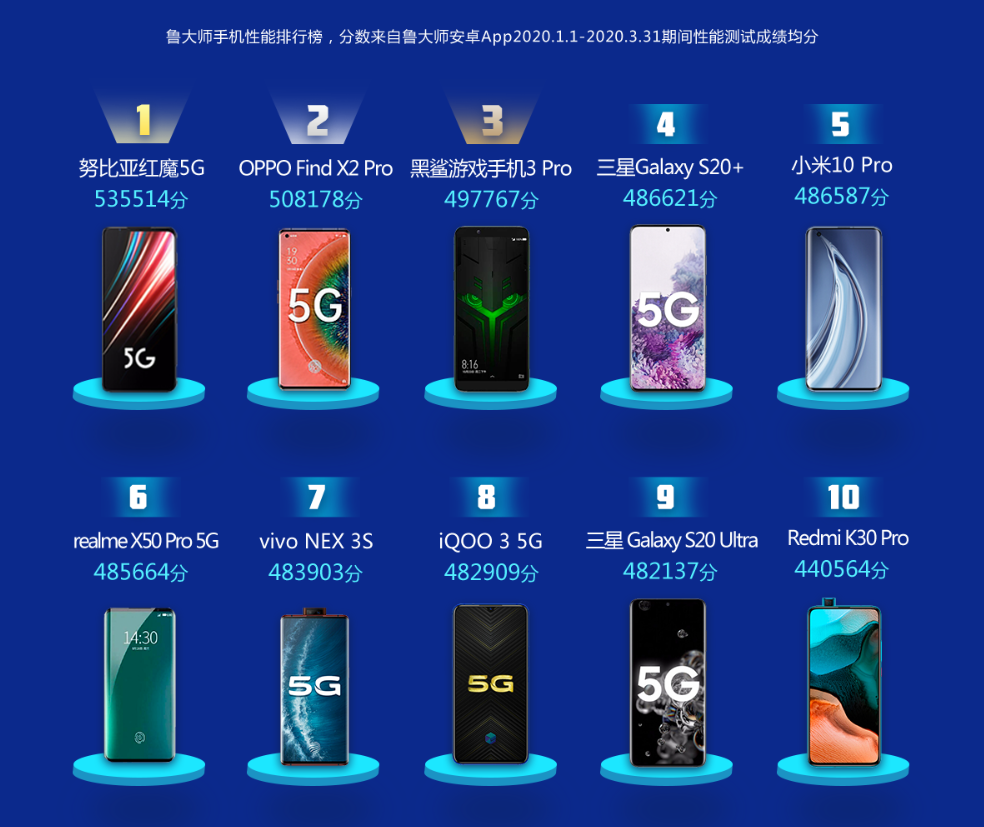
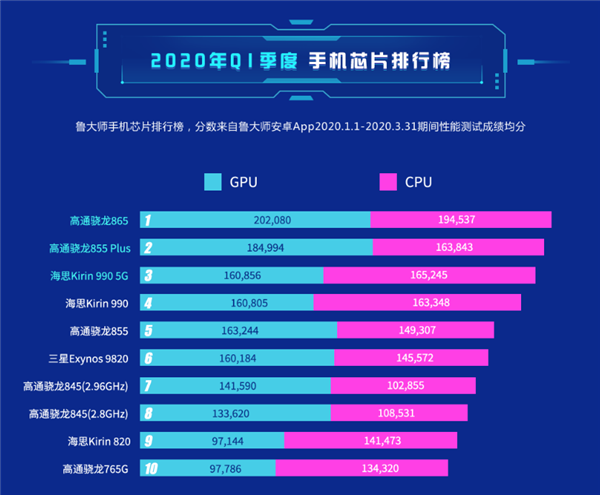
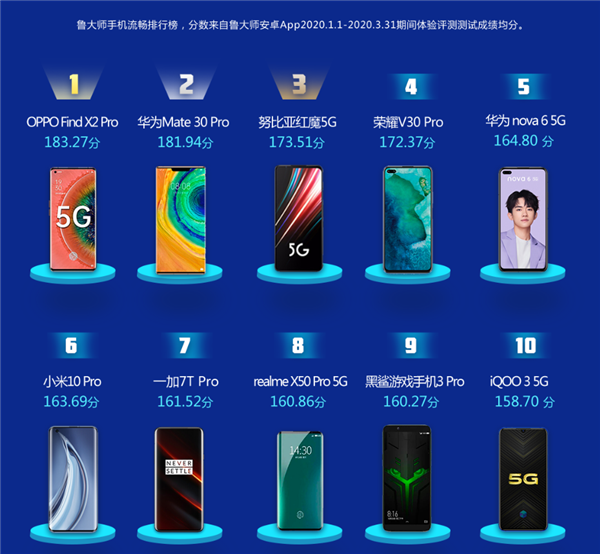
Master Lu may be relatively unknown outside China but the benchmark app is popular in China. Just like AnTuTu, they release month, quarterly and yearly data based on smartphones that pass through the app. Master Lu has now released the mobile phones and processor performance ranking for the first quarter of 2020.
The list is in three categories; one for mobile processors, a second for smartphones based on processor power and a third based on fluency. For the processor, the Snapdragon 865 ranked at the top both on CPU and GPU score and with a wide margin at that.
Master Lu Q1 2020 Smartphone Processors ranking
For flagship phones with the best processors, the Nubia Red Magic 5G ranked first with a score of 535,514 points, followed by OPPO Find X2 Pro with 508,178 points. Both phones are the only models to cross the 500,000 points bar on Master Lu. The Black Shark 3 Pro was the third with 497767 points.
Other models which make the top ten mobile phones include: Samsung Galaxy S20+ (486621 points), Xiaomi Mi 10 Pro (486587 points), Realme X50 Pro 5G (485664 points), vivo NEX 3S (483903 points), iQOO 3 5G (482909 points), Samsung Galaxy S20 Ultra (482137 points), and Redmi K30 Pro (440564 points).
Master Master Lu Q1 2020 Smartphone fluency ranking
In terms of software fluency, the OPPO Find X2 Pro is ranked first with a score of 183.27 points. Huawei Mate 30 Pro comes in at second with 181.94 points, and Nubia Red Magic 5G is third with 173.51 points. The full ranking in on the image above.
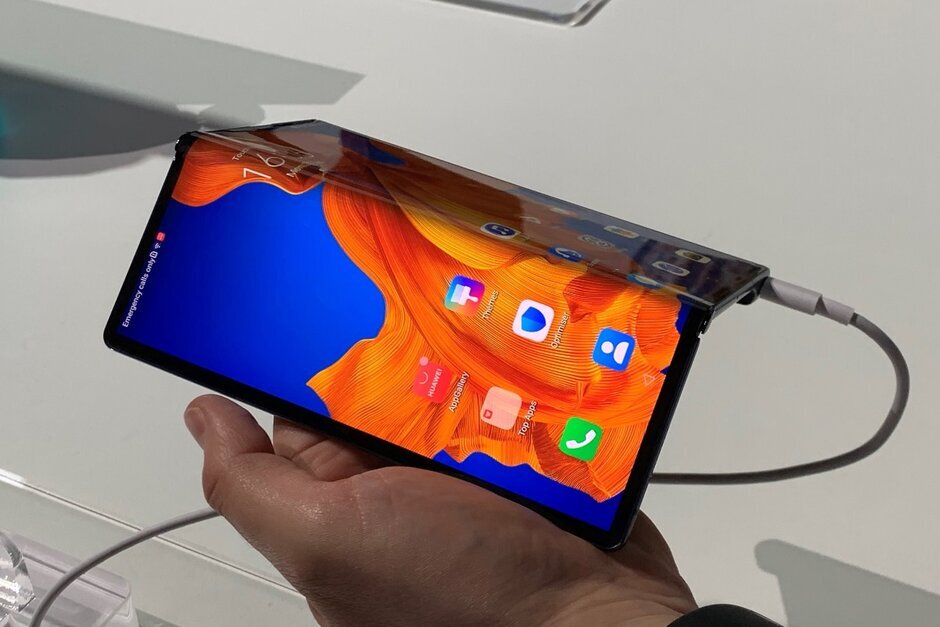
The number of foldable smartphones has continued to rise since last year when te first commercial models were released. At present, there is the Galaxy Fold, Galaxy Z Flip, Huawei Mate X and Mate Xs, and of then the Motorola RAZR. We won’t forget the Royole Flexpai and Flexpai 2.
One may concern about the foldable phones is their durability. iFixit has now released a teardown video of the latest Huawei Mate Xs showing not just the internals but also rate the phone’s repairability on a scale of 10. Interestingly, the Mate Xs was given a dismal 2 of 10 repairability score which means it is difficult to repair. That may not be because of poor quality but as a result of the extra-strong adhesive which held the flexible panel and some other components in place. The iFixit reviewer had to deploy extra force in order to remove the rear panel and batteries.
The flexible display was also pretty difficult to access as it requires going through the hinge and dealing with strong metal clips. The cumbersome process may even lead to damaging the OLED.
However, despite the horrible 2 of 10 repairability score, the Mate Xs has a new hinge design which doesn’t allow dust and dirt to enter into the display. The extra-strong adhesive could even add to the durability of the phone but that’ll be as long as you don’t need to take it apart and fix something.
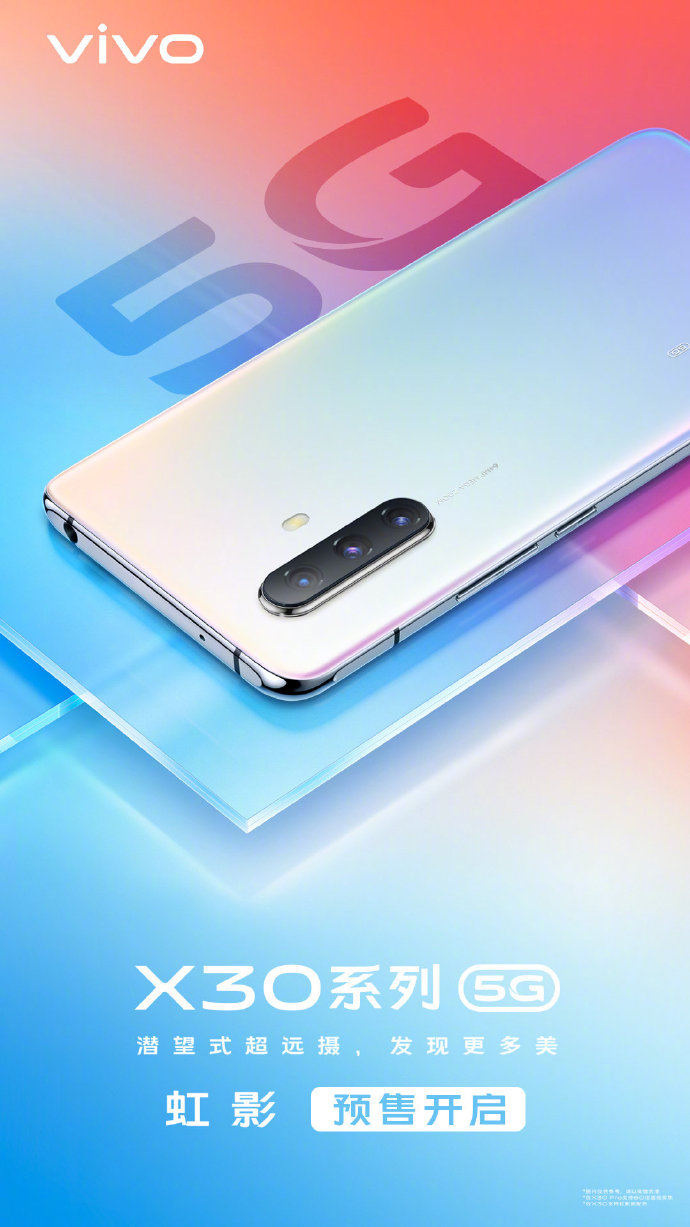
Vivo has launched a new Rainbow gradient variant of the flagship Vivo X30 5G. The new variant is only on the X30 5G and is not available for the X30 Pro. The new variant features a rear panel that is inspired by the multiple colours that a rainbow has.
The rear panel uses a gradient design which seems to show the seven different colours found on a rainbow. The back panel adopts the AG frosting process to make the color change with the change of angle, and at the same time add the visual experience of light smoke and soft mist. The panel also has a soft and delicate tactile feel.
Vivo X30 5G – All color options
The new Rainbow gradient color variant is now on pre-sale on Vivo’s official store. The model will go on sale at 10 AM on April 17. As for the pricing, the 8GB + 128GB version is priced at 3298 yuan ($467) while the 8GB + 256GB version is listed for 3598 yuan (~$510).
The Vivo X30 Pro has a 6.44-inch S-AMOLED display with punch-hole design. It offers 1080 x 2400 pixels full HD+ resolution and is integrated with a fingerprint sensor. The Exynos 980 chipset is present under the hood of the device along with 8 GB of RAM. It offers users with up to 256 GB of UFS 2.1 native storage. The latest FunTouchOS 10 based Android 9 Pie OS comes preloaded on the device. The device lacks support for external storage slot. It packs a 4350mAh battery with support for 33W flash charge.
Apart from this new colour option, the Vivo X30 5G is available in orange, blue and black colors
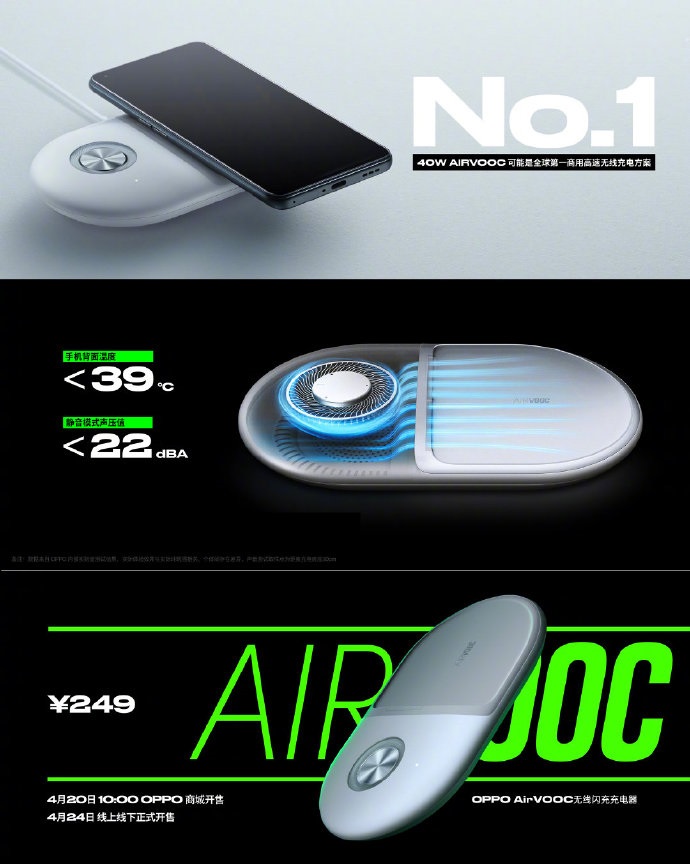
The OPPO Ace2 was unveiled earlier today in China. The phone has support for 65W SuperVOOC 2.0 wired fast charge and 40W wireless fast charge. While OPPO does include a number of accessories in the box such as a TPU case, a pair of earphones, and a 65W SuperVOOC 2.0 charger; buyers will have to purchase the 40W AirVOOC wireless charger separately.
OPPO has put a price tag of ¥249 (~$35) on the AirVOOC wireless charger which is a bit cheaper than Huawei’s own 40W wireless charger priced at ¥289 (~$41).
The 40W AirVOOC charger has a mat-design which means the phone has to lay horizontally on it to charge. There is a fan to the right that provides cooling via a hidden side vent. The fan, which has a noise level of less than 22dBA, helps to bring down the temperature to under 39°C when charging the device.
OPPO claims the charger can fully charge the OPPO Ace from empty to full in just 56 minutes. The charger also supports Qi wireless charging and can be used to charge Qi-compatible phones at up to 10W.
The 40W AirVOOCwireless charger will go on sale on April 20. If you purchase it alongside the Ace2 between April 20 to April 30, you get ¥30 off the selling price.
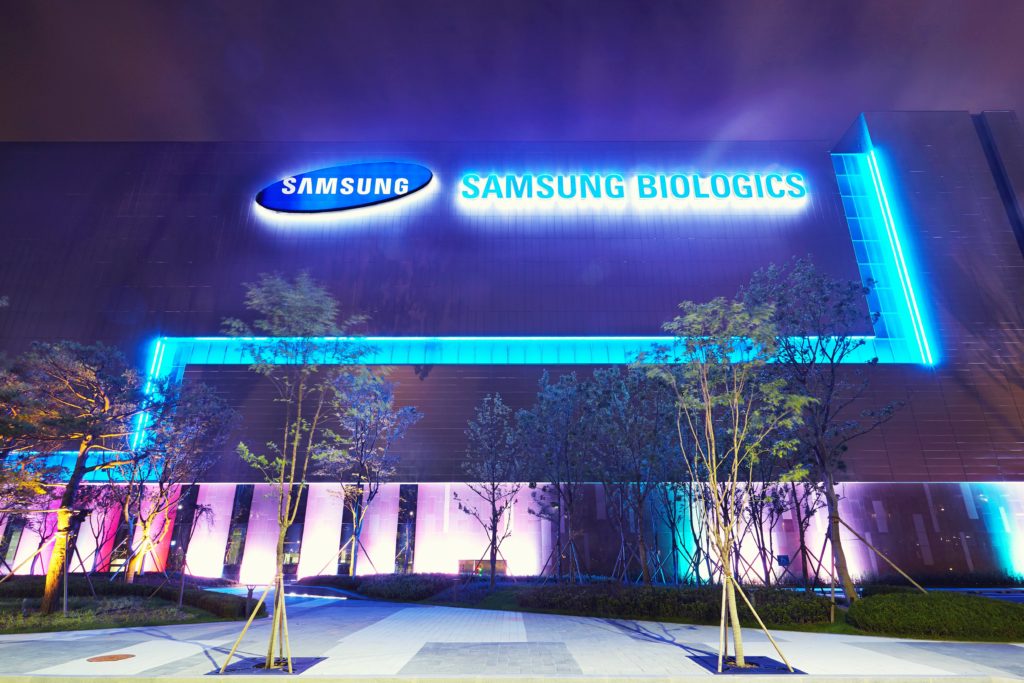
Samsung Biologics will be producing COVID-19 drugs for a contract worth $360 million from a San Francisco-based company called Vir Biotechnology. The manufacturing of drugs is expected to begin from October at the earliest.
Vir Biotechnology, a Nasdaq-listed company has been working on possible treatments for COVID-19. It is yet to conduct experimental tests for treatments as well as vaccines on humans, which might take three to five months. The company’s drugs are based on monoclonal antibodies (mAb) and they are calling it ‘SARS-CoV-2 monoclonal antibody’.
For large-scale production of the company’s finalized drug, Samsung Biologics has successfully won the contract worth $360 million for now. The agreement for the same is expected to be finalized by May. It is worth noting that this is the largest contract for the firm ever since it has gone public and it accounts for 63% of the total revenue reported by the company last year.
The manufacturing of drugs could start from October, however, the commercial batches will be possibly produced from early 2021 at Samsung Biologics’ plant in Songdo, located 30 kilometers southwest of Seoul in South Korea.
According to officials and drug experts, antibody drugs like this could be initially used to help people at the frontline such as health workers from getting infected by treating people with COVID-19.
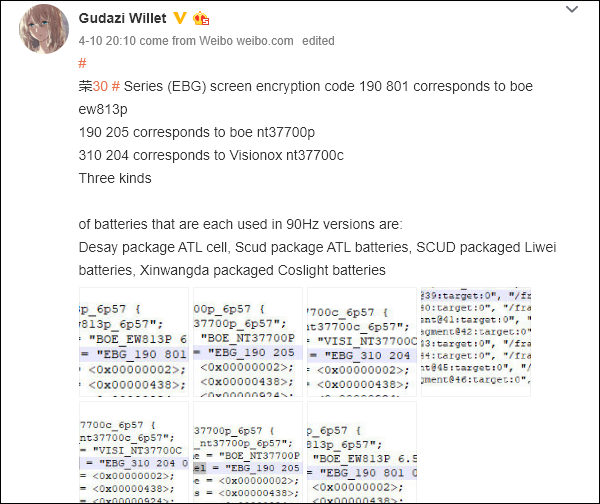
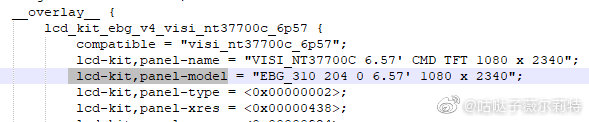
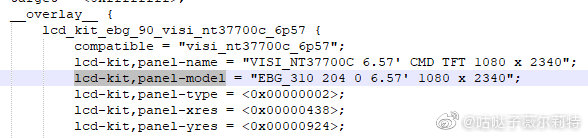
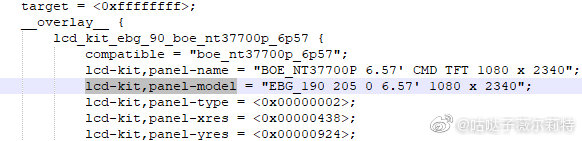
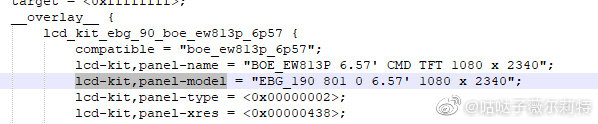
Honor is expected to officially launch the Honor 30 series on April 15 in China. Ahead of the launch, a well-known digital blogger who is also a former Foxconn employee has discovered the encryption code of the Honor 30 series which contains details of the display and battery.
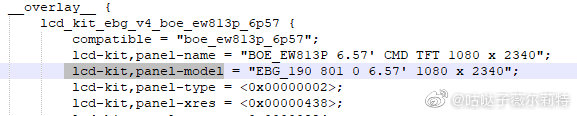
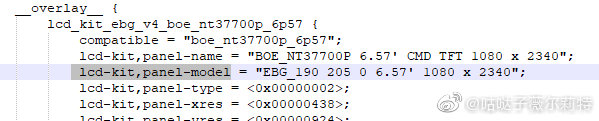
According to the screenshots shared, the Honor 30 series display and battery will be supplied by multiple OEMs. The encryption codes show that the Honor 30 series (EBG) screen with the code 190 801 corresponds to BOE ew813p. The code 190 205 corresponds to BOE nt37700p while the code 310 204 corresponds to Visionox nt37700c. One notable feature of all the OLED panels is that they support 90Hz refresh rates.
In addition, the batteries used in the three models of the Honor 30 series discovered on the encryption code are Desai encapsulated ATL cells, SCUD encapsulated ATL cells, SCUD encapsulated Liwei cells, and Xinwangda encapsulated Coslight cells.
Thus, while the display panel will likely be supplied by China’s BOE and Visionox, the battery cells will come from Huizhou Desai Battery technology, SCUD Battery Co. Ltd and Xinwangda Huizhou Electric Car Battery Co., Ltd, all Chinese manufacturers.
The Honor 30 is also expected to feature a new Kirin 985 chipset with 5G support and will have support for 40W super-fast charging. The device will adopt a full-band high-amplitude dual-speaker configuration, support Histen smart sound effects and game listening sound recognition. It is also expected to feature support for 4K ultra-dark video and 1920fps Super slow motion.
Just like Huawei, Honor is launching a Pro+ model of its upcoming Honor 30 phone. This means we are getting three flagships – the Honor 30, Honor 30 Pro, and the Honor 30 Pro+. Ahead of the launch event on Wednesday, April 15, the prices for the different variants of the Honor 30 Pro+ have been leaked.
Based on the image, the Honor 30 Pro+ will come in three variants:
8GB RAM + 128GB
8GB RAM + 256GB
12GB RAM + 256GB
The base model will sell for ¥4999 (~$709) but if you want double the storage, Honor is asking for ¥5399 (~$766). For those who want the high-end version that packs 12GB of RAM, the price tag is ¥5799 (~$822). We advise you to take the above prices with a grain of salt as they have not been verified.
Based on the pricing, Honor is sticking to the tradition of offering more-affordable versions of Huawei’s own phones. For example, the Huawei P40 Pro+ with 8GB of RAM and 256GB of storage is priced at ¥7988 (~$1133).
The Honor 30 Pro+ will come with a 90Hz curved OLED display with an in-display fingerprint scanner. Inside it will be the Kirin 990 5G processor. The phone will pack four rear cameras including a 50MP sensor. Other features include an IR blaster, support for wireless charging, and Magic UI 3.1 based on Android 10 out of the box.
As the rollout of 5G is progressing every quarter, so are the sales of 5G-enabled smartphones. According to a report by Counterpoint Research, 5G smartphone sales are expected to reach 8.4 million units in South Korea this year. OEMs like Samsung and LG are thriving to release more affordable 5G devices in the country.
Last year, 5G smartphones only made up 28% of the total sales in South Korea. However, this year, it is expected to reach 48% as per market analyst Counterpoint Research.
5G services were commercialized by carriers in the country last April. Since then, they have managed to garner 5.77 million subscribers as of last week, according to the Science Ministry of South Korea.
According to Counterpoint, 13 new 5G smartphones will be released in the country in 2020, which is almost double than 7 5G devices launched in 2019.
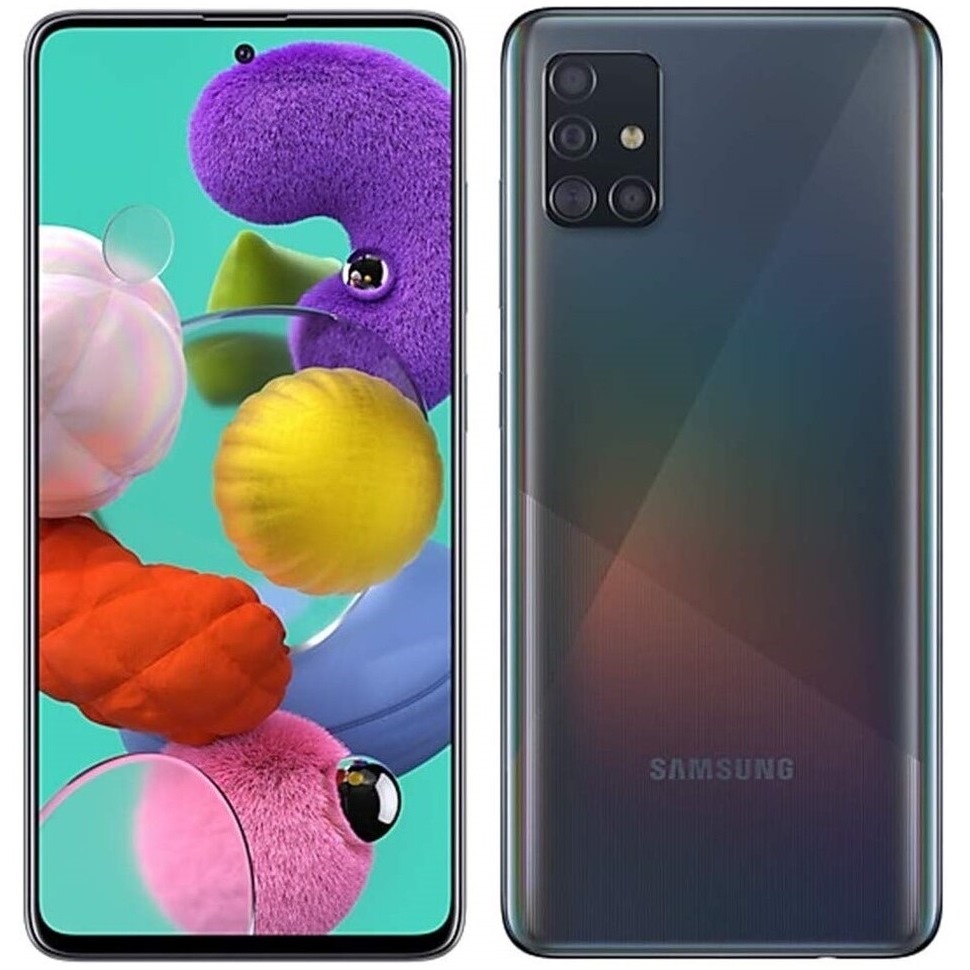
Samsung has already launched its first set of commercial 5G smartphones in the country in the form of the Galaxy S20 series. The next devices to hit the market will be more affordable like the recently announced Galaxy A51 5G and Galaxy A71 5G. The company also plans to release Galaxy A91 5G in the second half of the year.
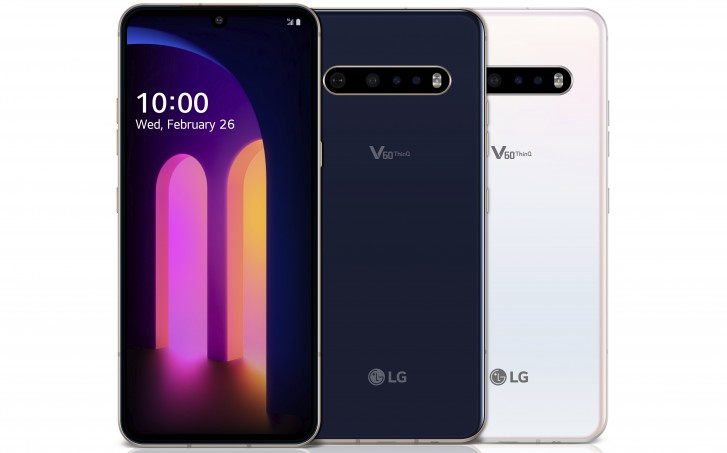
On the other hand, LG has so far launched only one 5G smartphone (V60 ThinQ) in the country this year. But the list will grow soon as the company is expected to launch new mid-range 5G smartphones under the newly announced ‘Velvet’ series. It may also launch 5G-enabled Q series smartphones in the second half of the year.
Lastly, even Apple is expected to debut its first 5G smartphone in the second half of 2020. Anyway, the projected South Korean 5G smartphones sales figure may vary based on the market’s recovery from the COVID-19 pandemic.
We use cookies on our website to give you the most relevant experience by remembering your preferences and repeat visits. By clicking “Accept”, you consent to the use of ALL the cookies.
This website uses cookies to improve your experience while you navigate through the website. Out of these, the cookies that are categorized as necessary are stored on your browser as they are essential for the working of basic functionalities of the website. We also use third-party cookies that help us analyze and understand how you use this website. These cookies will be stored in your browser only with your consent. You also have the option to opt-out of these cookies. But opting out of some of these cookies may affect your browsing experience.
Necessary cookies are absolutely essential for the website to function properly. This category only includes cookies that ensures basic functionalities and security features of the website. These cookies do not store any personal information.
Any cookies that may not be particularly necessary for the website to function and is used specifically to collect user personal data via analytics, ads, other embedded contents are termed as non-necessary cookies. It is mandatory to procure user consent prior to running these cookies on your website.









 Mi Watch – A 4G Smartwatch with a familiar design
 Xiaomi Watch Color – A less-expensive Amazfit GTR (47mm) but without the battery life