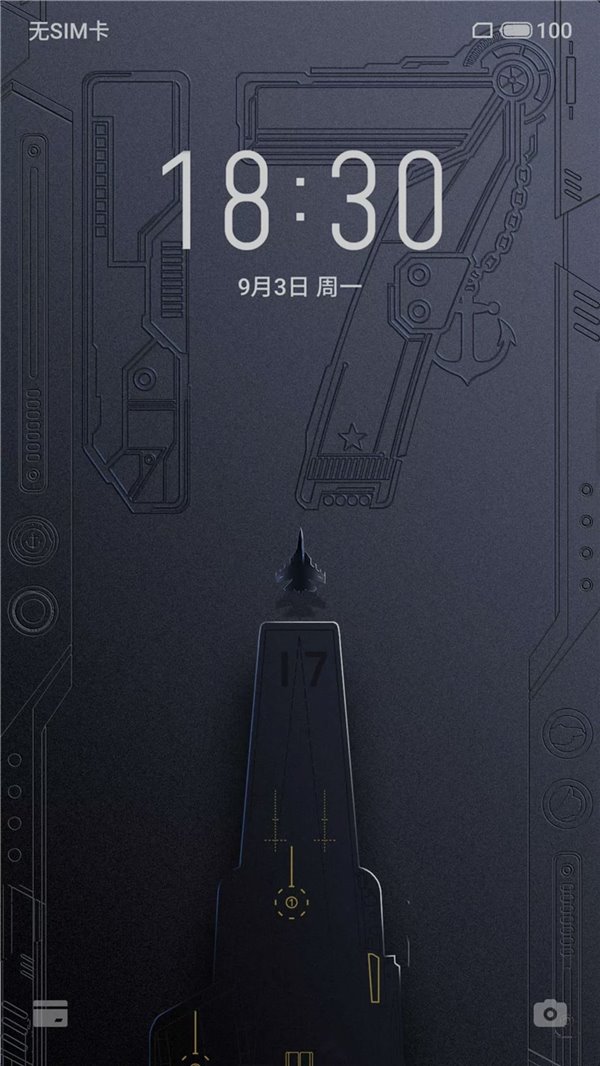
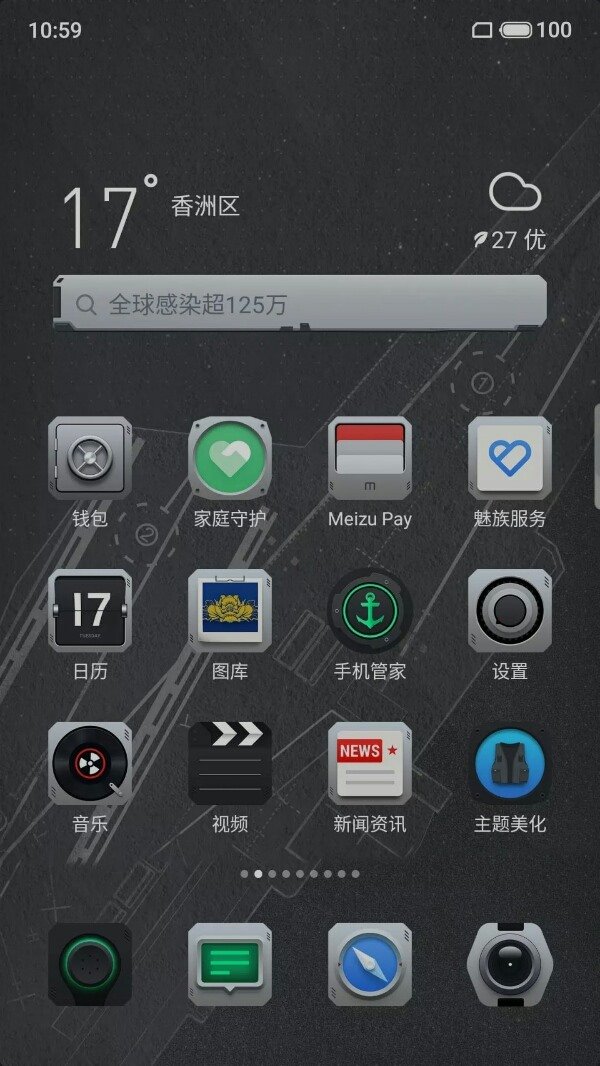
Meizu is expected to launch Meizu 17 in a few days from now. But according to the new Meizu 17 official theme (now removed), the phone could be unveiled on April 26.
Meizu 17 will be the brand’s first 5G smartphone. Being a high-end device, it will be powered by Qualcomm Snapdragon 865 SoC paired with 8GB LPDDR4X RAM and 12GB LPDDR5 RAM as per the leaks. As for storage, the device is expected to come in 128GB and 256GB UFS 3.0 storage options.
Meizu 17 Official Theme
1 of 4
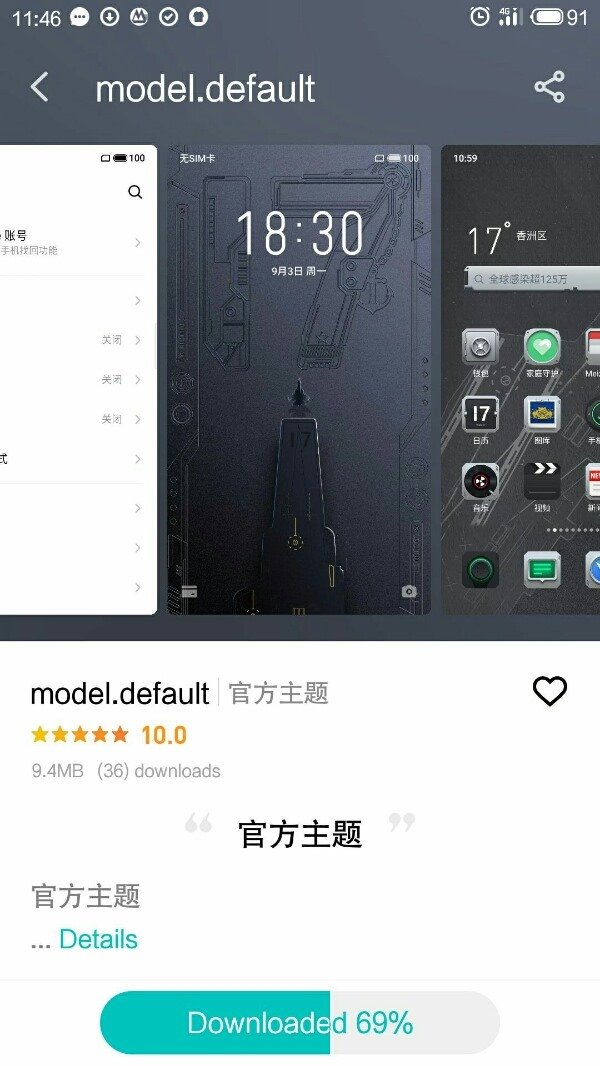
The device has leaked multiple times over the past few days but none of them revealed when it will be launched. But now, the Meizu 17 official theme on Flyme OS theme store, which has been now removed hints us the launch date of the handset.
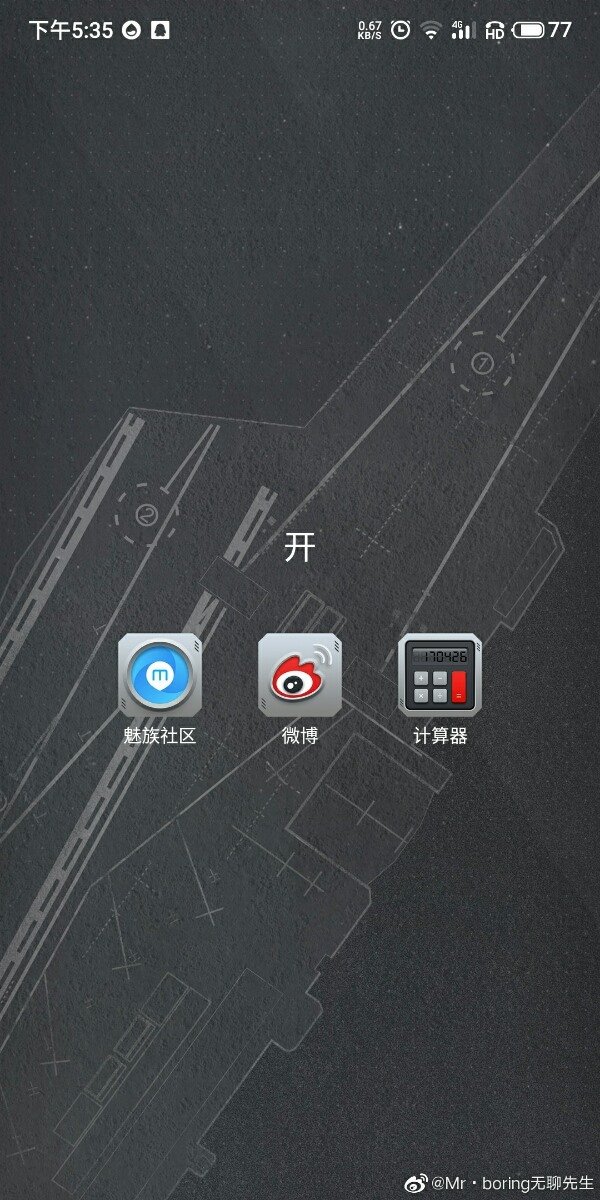
The calculator app icon in the new theme displays ‘170426’, which could mean Meizu 17, April 26. Anyway, this is just speculation by the person who spotted it first. Hence, take this information with a pinch of salt.
The upcoming Meizu 17 has been rumored to sport 6.5-inch Super AMOLED punch-hole display with 90Hz refresh rate and fingerprint sensor underneath it. It should feature a quad-camera setup consisting of 64MP Samsung GW1 primary sensor paired with an 8MP ultra-wide unit, a 5MP telephoto shooter, and a 2MP depth sensor. Whereas, the front camera is still a mystery.
Further, the handset is expected to come with stereo speakers powered by Dolby Atmos, a linear vibration motor, and a 4,500 mAh battery with support for Meizu’s proprietary 30W mCharge technology. Finally, the base variant of Meizu 17 could be priced at 3000 Yuan (~$568).
Retentiva Distribution Company, commonly known as RDC is the reseller of Xiaomi products in Russia. According to the latest report, this company has a debt of $9.5 million (700 million rubles) to the Otkritie Bank and is currently on the verge of going bankrupt.
RDC is not only the official Russian distributor of Xiaomi products but is also responsible for Yi cameras, Jinga smartphones, Fossil wearables, and Skagen wristwatches. If it goes bankrupt, the above-mentioned companies have to find other resellers for their products in Russia.
The court already saved the company from a bankruptcy petition filed by another company called GPB Factoring for an amount of 714 million rubles. Because GPB mishandled the case for its own benefit of seizing properties of RDC before the deadline of April 21.
Also, in November 2019, RDC had to pay 201.7 million rubles of an outstanding principal amount under a loan agreement in addition to penalties to a company named Mobilidi.
The current hearing of Otkritie Bank against the Retentiva Distribution Company (RDC) is set for May 15.
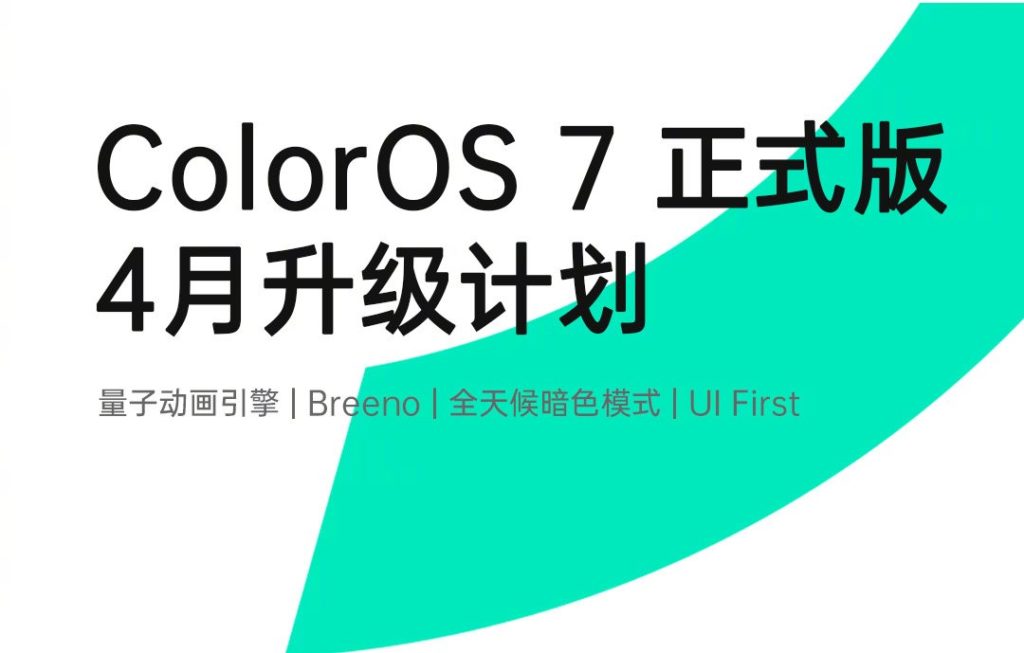
Oppo announced ColorOS 7 in November last year but sadly, most users have not received the update for the same yet. There have been multiple beta releases over the past few months, but the company has just started seeding out a stable update to the first batch of devices. Now today, ColorOS official account on Weibo has shared the ColorOS 7 stable update timeline for the second batch of eligible devices in China
Here is the latest ColorOS 7 stable update timeline for the second batch of Oppo smartphones.
If you own any of the above-listed devices, then head over to Settings -> Software Update on the day of release to update your phone’s ColorOS 6.1 system based on Android Pie to the latest ColorOS 7 software based on Android 10.
In case you are not aware of, Oppo has already announced ColorOS 7.1 and it is currently only available on the company’s latest Find X2 and Find X2 Pro. The upcoming Oppo Ace 2 is also expected to rock the newest edition.
China’s most famous rugged smartphone maker – Doogee is offering huge discounts on most of its smartphones at an ongoing Spring Clearance sale. The interested users can grab a discount of up to 50% on a bunch of popular lineups in Doogee Mall. However, the company has partnered with DHL to deliver orders through the globe.
Doogee is offering a 50% discount on the newly launched Doogee X90 and Doogee BL5500Lite. However, the company is also offering massive off on Doogee N20, Doogee N10 and a few other old smartphones. The company has not limited the discount for smartphones only, they are also offering Doogee Earbuds and Doogee Wireless charging at reduced prices. Below are some devices which are on discount:
Doogee X90
Actual Price: $99.99
Discount Price: $59.99
Doogee recently announced a new smartphone named Doogee X90 last year. The smartphone comes powered with MediaTek MT6580A coupled with Quad-Core ARM Cortex-A7 processor. It houses a 6.1-inch display with the 600 x 1280 pixels resolution and 223 PPI supporting multi-touch. It comes with a 1 GB RAM + 16 GB internal storage configuration and runs on Android 9.0 Pie. It is available in Pearl Black, Venetian Blue and Champagne Gold.
It’s a mid-range smartphone featuring a quad-core CPU coupled with 2GB RAM + 16GB storage. There’s a 6.52-inch Full HD display having an aspect ratio of 19.5:9 and screen-to-body ratio of 92.7%. The display offers 600 nits of maximum brightness with stylish glare gradient. The smartphone embeds a triple rear camera featuring 13-megapixel primary and 2-megapixel portrait camera and a 2MP zoom lens. A 5500 mAh large battery is present onboard. It is also available in Pearl Black, Champagne Gold and Venetian Blue.
It is another mid-range device featuring MT6763V/V4X Cortex-A53 up to 2.0GHz4X Cortex-A53 up to 1.5GHz processor. The smartphone houses a 6.3-inch waterdrop display having 1080 x 2280 pixels resolution and comes protected with Corning Gorilla Glass 5. There’s a triple rear camera featuring 16 MP + 8 MP + 8 MP lens. A 4350 mAh built-in polymer battery and runs on Android 9.0 Pie. The smartphone comes in different colors like black, Purple and Blue.
Doogee N10
Actual Price: $149.99
Discount Price: $79.99
Doogee N10 with a 5.85-inch display with the resolution of 2280 x 1080 pixels and 293 PPI. The smartphone is powered with Quad-Core 1.5GHz ARM Cortex-A53 processor enclosed inside MediaTek MT6739 chipset. It is available with 3GB RAM and 32 GB internal storage. A dual rear camera with 16-MP + 2-MP and an 8-MP front camera.
You can grab massive discounts on the occasion of Spring Clearance Sale from Doogee store.
OnePlus 8 will officially be launched in an online event on April 14. Just ahead of the launch, OnePlus has given us a few teasers of the device. CEO Carl Pei recently shared some samples shot by the OP8’s camera. A promo video for the OnePlus 8 has also been shared online. While OnePlus may not have revealed the design of the model officially, the video gives us a glimpse of the OnePlus 8!
The video is a follow up to a post by the company’s CEO on the OnePlus forum where he revealed some design features of the upcoming OnePlus 8. He took readers down memory lane on how the brand’s phones have radically changed over the years up to this point.
One particular aspect is the revelation that the OnePlus 8 will have the ‘Fifth-Generation Matte-Frosted Glass’ which is the same type of material used on the OnePlus 7 Pro but this is an improved version.
The sketch also shows that the smartphone will come with a thinner and lighter build making it easier to hold. The back will also have a better haze effect than what was obtained on previous models.
The video shows some sketches and then a render of the device revealing the top and bottom edges. The video doesn’t reveal much anyway as the camera aspect was skipped out. The antenna band, bottom speaker grills and USB-C port can be seen on the render which happens to be the first official render to be released. Check out the video from below.
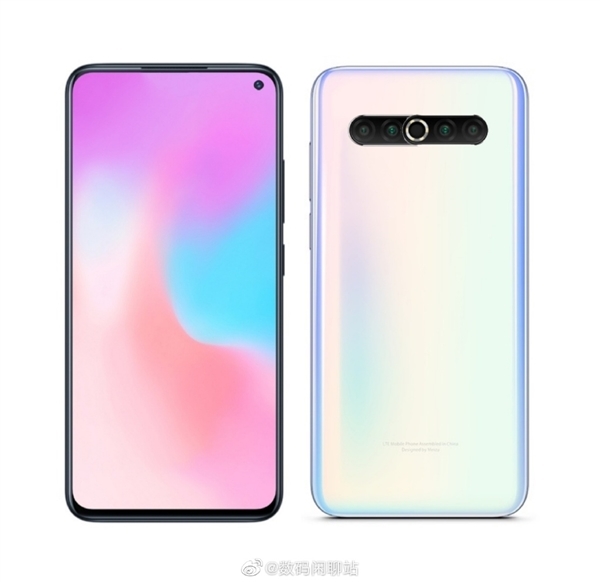
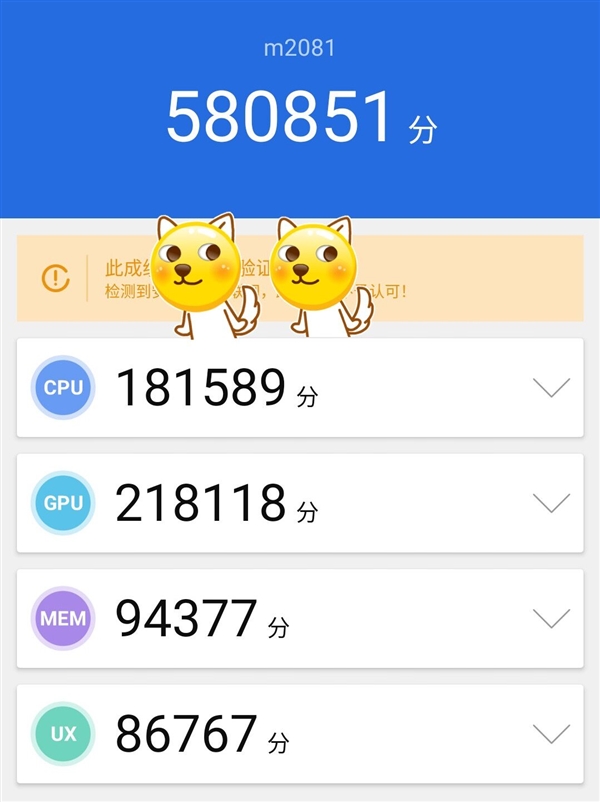
Meizu‘s next flagship model, Meizu 17 is expected to be unveiled later this month. In recent times, leaks surrounding the device has been on the increase. The AnTuTu benchmark score just joined the list of leaked features of the device. A leaked screenshot of the AnTuTu score of a Meizu model suspected to be the Meizu 17 was shared on Weibo recently.
The screenshot reveals the model to go by the codename M2081 with a total AnTuTu score of 580851 points. Previously, two models of the Meizu 17 had been certified by China’s 3C with model names M081Q and M081M. The M081M is said to be codenamed M2081. Thus, we can conclude that the screenshot is for the Meizu 17. Besides, the AnTuTu score confirms this is a flagship model of which the 17 is the only Meizu flagship expected.
The Meizu 17 is expected to be powered by a Snapdragon 865 chipset. The AnTuTu flagship ranking for March shows the top 8 models had running scores were above 586,000 points with the highest even reaching 606,000 points. However, this seems to be the prototype since the Meizu 17 is yet to go official. Thus, there is still room for improvement.
The Meizu 17 is expected to come with a design that signals a deviation to Meizu’s symmetrical display philosophy. The device will utilise a punch-hole camera which at the rear, there will be a horizontally aligned quad-camera setup, a rare one at that. The display will have support for 90Hz refresh rate and will be a 6.5-inch AMOLED screen. It will also get support for SA, NSA dual-mode 5G.
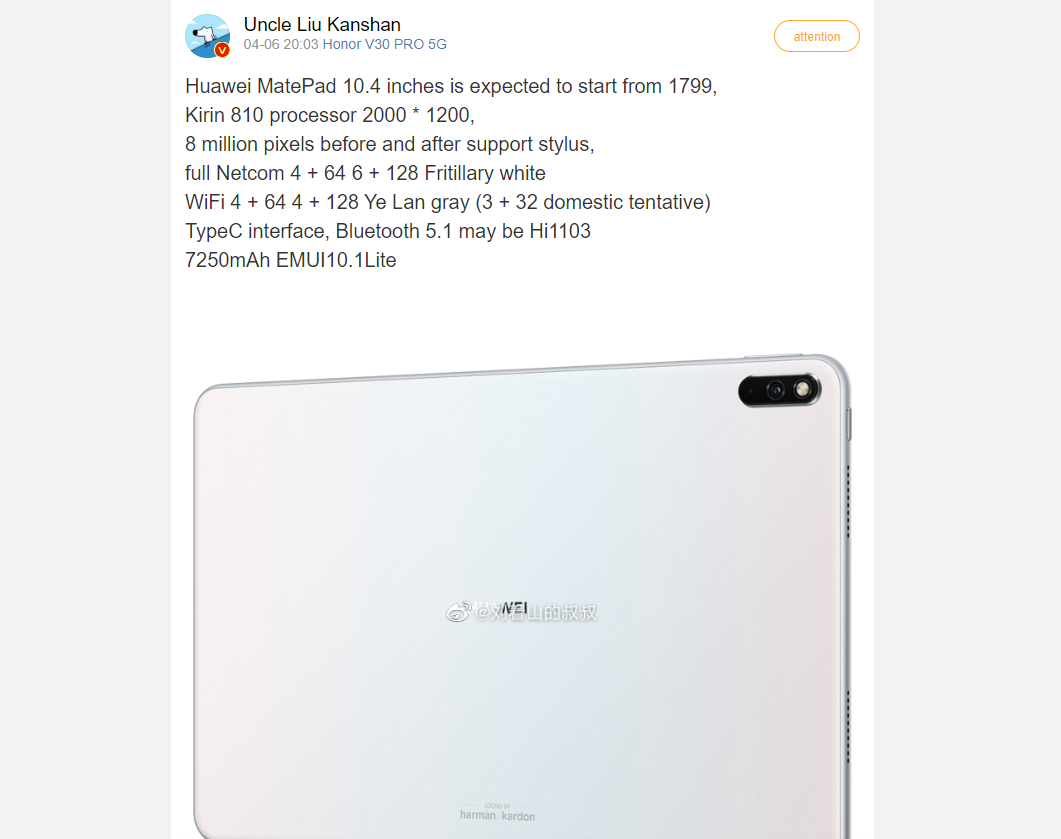
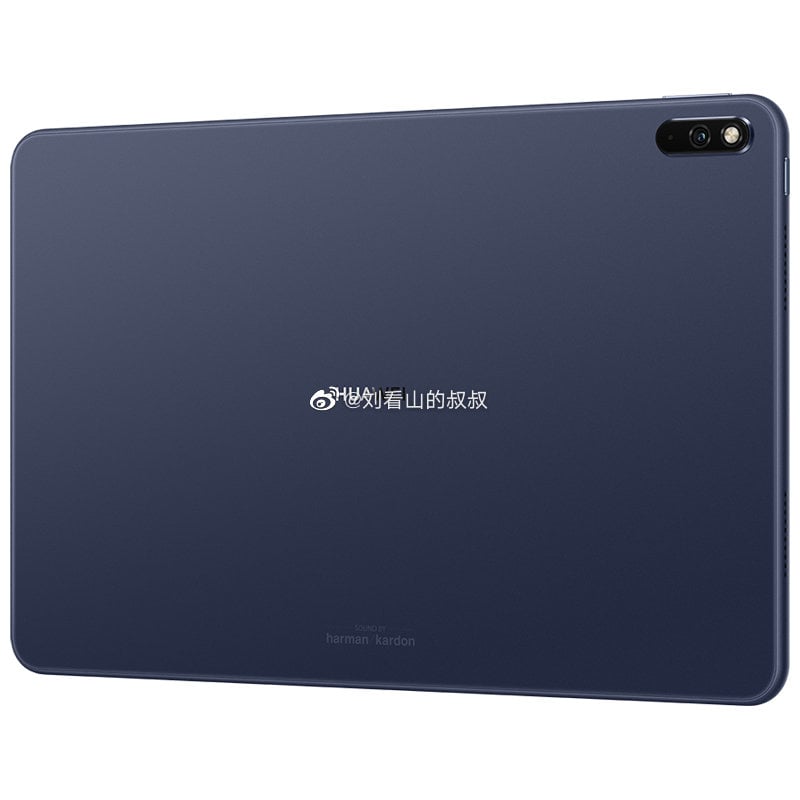
Huawei recently had one of its upcoming tablets leaked online. A Weibo user @刘看山的叔叔 leaked the device through his account, and also shared certain specs as well. The tablet in question is the new Huawei MatePad 10.4 which is said to house the HiSilicon Kirin 810 SoC.
According to the post on the Chinese microblogging website, the Huawei MatePad 10.4 will feature a resolution of 2000 x 1200px. It’s front and rear cameras are both an 8 megapixel sensor and the tablet will support a stylus. The MatePad 10.4 will arrive in multiple configurations, which include 4GB + 64GB or 6GB + 128GB for the cellular model that supports a SIM Card, while the WiFi only model will come in a 4GB + 64GB or 4GB + 128GB variant.
For connectivity, the Huawei MatePad 10.4 is said to be charged via a USB Type C port, supports Bluetooth 5.1, and is powered by a large 7,250mAh battery pack. It will run EMUI 10.1 Lite OS out of the box and is said to be designed for extended multimedia use, like audio and video watching or even streaming.
The MatePad 10.4 is reportedly be sold for 1,799 Yuan, which roughly translates to about 255 US Dollars. It is also claimed to be available in two different color models, including White and Night Gray. Unfortunately, this is still an unconfirmed leak and we will have to wait for an official announcement to provide any concrete statements. So take this with a grain of salt for now.
Samsung has recently launched the Galaxy S20 series in multiple markets across the world. The rumor mill is already started speculating on the specs and features of the Galaxy Note 20. A tweet from a reliable tipster Ice Universe has revealed a vital information on a new feature that could be introduced on the next year’s Galaxy S21 phone.
The tipster claims that the Samsung is considering on adding the under-screen camera technology on the Galaxy S21 smartphone. He added that the South Korean company is evaluating on the feasibility of the tech. It is yet to be ascertained whether the successor of the Galaxy S20 will be debuting as Galaxy S21 or Galaxy S30.
Samsung is known for introducing new camera features on its Galaxy S series. The same features with some enhancements are brought to the Note lineup. Hence, there is a possibility that the Galaxy S21 could be the company’s first phone to arrive with under-display selfie camera technology. The usage of this feature will allow the S21 / S30 to sport a truly bezeless design without any kind of cutout on the screen.
There are some other companies like OPPO, Xiaomi and Huawei that are working on in-display selfie camera technology. Initial works on the technology have shown that due to insufficient light reaching the under screen camera, it is unable to capture good quality images. The other hurdle with the technology is matching the pixel density of the under screen selfie camera area with rest of the display.
The Chinese brands had already shown working prototypes of the technology last year. Samsung is yet to showcase its tech. All these companies are reportedly working on refining the photography experience through the screen embedded front camera.
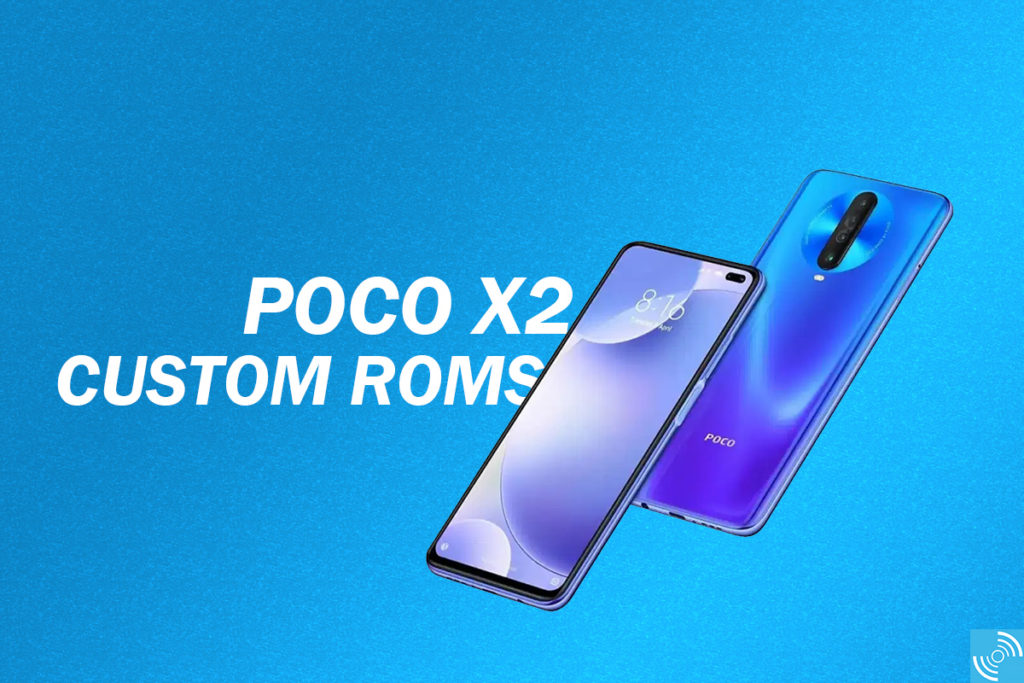
After waiting for over a few years, Poco finally launched Poco X2 featuring mid-range specifications. It competes against the Realme X2, Realme 6 Pro, and few other devices. The device has made its position in a highly competitive price segment with its spectacular specifications. Apart from the official software support, the device appears to be receiving love from third-party developers also. A lot of developers have developed custom ROMs for Poco X2.
There are several benefits of using custom ROMs as they tend to provide more customization options, efficient and performance-based tweaks. Moreover, the users can enjoy the bloatware-free experience on their respective smartphones. The developers have already revealed four custom ROMs, two custom kernels, unofficial TWRP, Google Camera port, and much more.
What is Custom ROM?
It is a non-official firmware for Android devices featuring some additional features and varied customization options. The user can extend the functionality of their phones.
Benefits of Custom ROMs
Improved Performance
Efficient Battery Life
Updates based on latest Android version
Seamless customization
Root access
Removal of Unnecessary bloatware
Poco X2 Specifications
Xiaomi made Poco a separate brand to address Poco fans with an affordable price smartphone. However, the company launched Poco X2 with Qualcomm Snapdragon 730G chipset coupled with an octa-core processor and Adreno 618 GPU. The smartphone houses a beautiful 6.67-inch IPS LCD with a resolution of 1080 x 2400 pixels. It is covered with Corning Gorilla Glass 5 and supports 129Hz refresh rate, 500nits brightness, and HDR10.
Poco X3 is available in three different storage variants of 64 GB +6 GB RAM, 128 GB + 6GB RAM and 256 GB + 8 GB RAM.
There’s a quad rear camera module with 64-megapixel primary sensor, an-8megapixel ultrawide sensor, a 2-megapixel macro, and another 2-megapixel depth sensor. There’s a 20-megapixel + 2-megapixel dual selfie camera on the front side.
Moreover, the user will get connectivity support such as WiFi, Bluetooth 5.0, GPS, IR port, Radio, and USN 2.0. Poco X2 houses a side-mounted fingerprint sensor, accelerometer, gyro, proximity, compass, and other sensors. A 4500 mAh battery with 27W fast charging is present on the device. It is available in Atlantis Blue, Matrix Purple, and Phoenix Red colors.
Best Custom ROMs for Poco X2
We have compiled a list of best custom ROMs for Poco X2. A total of seven custom ROMs are now available for the Poco X2. Let’s go through each one of them:
CarbonROM
It’s the unofficial build of Carbon ROM that is made available for the Poco X2. The users can enjoy Android 10 based custom ROM filled with various features along with stability. The users need not flash the external Gapps separately as it carries in-built Google Apps. The ROM developers are frequently bringing updates for compatibility, stability, and fixes.
If you’re interested in testing the ROM, we suggest you head over the Download link below for proper instructions. However, the CarbonROM appears to be in the beta stage, but there’s no issue reported by users in recent times over its thread at XDA.
It is another Android 10 based custom ROM available for Poco X2. It features various customization options with enhanced security measures and much more. The developers are working to improve the stability of the ROM for Poco X2. The interested users must have MIUI stock Official V11.0.6.0 ROM before opting for the Bliss ORM on Poco X2. The developers promptly address all the issues.
Make sure to have an unlocked bootloader before installing any custom ROMs.
It an AOSP based custom ROM available with tons of customization features, including hidden notification LED. There might be some bugs as currently, it is in the alpha build. A few users are reporting bugs with Bluetooth audio playback, slow fingerprint unlocks, and ghost touches. However, if you are still looking forward to use the AOSiP ROM and want to enjoy stock features, then you can download the ROM from the link below. Follow the instruction carefully and backup your data before installing.
It is another Android 10 based custom ROM available in alpha for the Poxo X2. The users need not to externally flash Magisk, GApps, as it is already preinstalled. Paranoid Android comes with various customization features. The ROM is based on Code Aurora Forum Android base purely optimized for Qualcomm platforms. It also improves the performance, battery life, and functionality in comparison with AOSP code.
Currently, there are specific bugs such as SELinux is permissive, Lawnchair is present by default, Fingerprint sensor only works by tapping on it. Moreover, call audio, VoLTE, and VoWifi is currently not working. Furthermore, custom kernels are not yet supported.
Being the most popular custom ROM, the users always go after the LineageOS for their smartphones. The users of Poco X2 can install the Android 10 based LineageOS 17.1. Apart from all the significant features which are working correctly, the ROM has minor issues. Precisely, SELinux is permissive in the ROM. It is compatible with all the Poco X2 variants. The users need to flash the GApps zip to get Google apps. There are many customization features that are part of the package. It works on stock kernel only. The ROm is currently in the beta version.
Are you a Pixel device lover? Then you would love to head that Pixel Experience ROM is now available for Poco X3. It packs all the Pixel wallpapers, apps, launchers, icons, fonts, and boot animation. It is based on Android 10 and brings stock-Android like experience for all the users. The users need not flash any external GApps zip as it is inbuilt in the ROM. The users who love to enjoy the build can head over to the link below.
If you’re missing some customization features on MIUI 11, then you can opt for Xiaomi.eu ROM. The ROM purely carries all the MIUI features and is localized for European markets. It is free from all the Xiaomi bloatware and advertisements. It is a useful facelift for Xiaomi’s MIUI ROM.
These are 7 custom ROMs available for Poco X2 as of now. We will update the list as soon more ROMs arrive. If we missed any ROM, then let us know via the comments below.
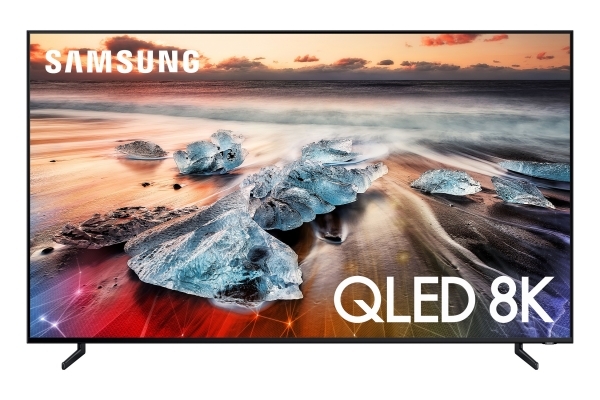
With the current standards of TVs, the 8K resolution is the premium/highest grade product one can go for. However, it seems that vendors may not ramp up their production until 2021. The reason for this is the ongoing Coronavirus pandemic, which has affected the global supply chain.
Samsung 8K QLED TV
According to a new report, the global market crossing 1 million units in production for 8K TVs might not be achieved until after 2020 passes. As it stands right now, the world is gripped by the viral outbreak which has affected various economies and industries as well. The lower production numbers arrive despite various OEMs launching their 8K offerings.
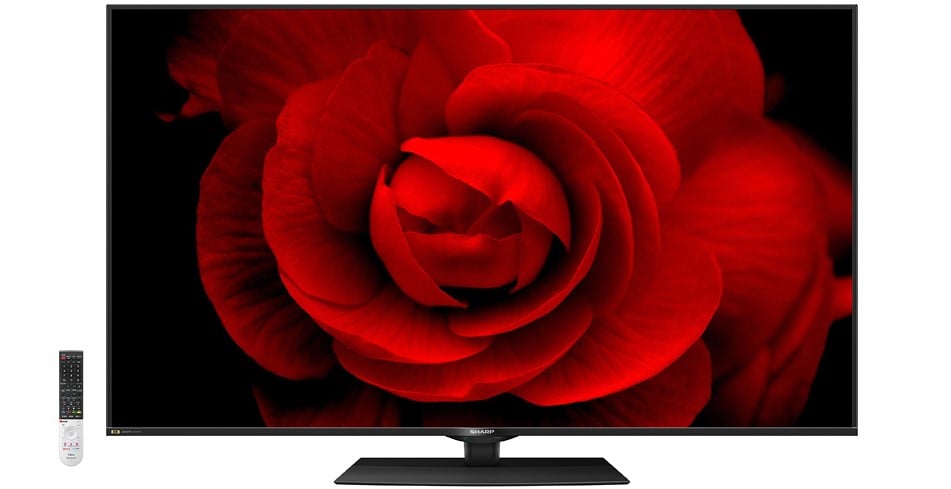
This includes Samsung‘s 65, 75, 82 and 96-inch QLED 8K TVs, LG‘s 65, 75, 77 and 88-inch OLED models and even Sharp’s two new Aquos 8K Smart TVs, which were launched in Japan. Currently, Sharp has been trying to bump its 8K TV shipments in the Taiwan market. The brand has already discounted its 60 inch 8K models recently and is already planning to market its 120 inch 8K TV in Q2 of 2020.
Sharp Aquos 8T-C70CX1 8K Smart TV
Many vendors are unable to promote their 8K TV offerings in strategic markets like China, Europe, and the US. These regions generally have a high demand for such high resolution TVs. However, the recent pandemic has made it much harder for companies to follow through. The postponement of the Tokyo Olympics has also hampered many vendors’ plans for promotion.
Just recently, a rocket launch service was sold in China for $6 million. Chinese people are known to buy products through live streaming, but this takes it to a whole new level. The service was sold earlier this week on the popular streaming platform Taobao for 40 million Yuan.
Wei Ya, the popular host with over seven million followers on Weibo
The rocket service arrives from ExPace, which is a subsidiary of the China Aerospace Science and Industry Corporation. This service being offered was to place ads on the Kuaizhou-1A rocket and was purchased by Chang Guang Satellite Technology. The transaction was made on Taobao with Wei Ya (a popular host who is touted to be the sales queen in China) hosting the stream.
Notably, Wei Ya has more than 18 million followers on Taobao and the stream attracted over 19 million concurrent viewers, which is another feat that the streaming industry has achieved. The rocket in question is “a small launch vehicle” in the city of Wuhan, Hubei Province, and has already seen 8 successful commercial launches so far. The ads being sold allowed buyers to paint the body of the rocket and the launch platform as well. They could even visit the launch site and control the launch.
On Weibo, the Chinese microblogging website, the #WeiYaSellsARocket had over 620,000 tags, with more than two million online viewers tuning in to watch the impressive sale. Local media has also looked at the event to re-promote Wuhan after the devastating impacts of the Coronavirus pandemic.
Last month, iQOO had revealed the existence of the iQOO Neo3 smartphone. Since then, the rumor mill revealed plenty of information on the specs of the Neo3 phone. Some of the tech bloggers were reportedly invited to a game which revealed the April 23 launch date for the iQOO Neo3. iQOO is yet to share this unveil date through its Weibo account.
Recent reports have revealed the iQOO Neo3 will be arriving with an IPS LCD panel with punch-hole design. It is expected to break cover as the first iQOO phone that carries support for up to 120Hz refresh rate. A leaked screenshot that surfaced earlier this week revealed that the phone will let users to choose from 60Hz, 90Hz and 120Hz refresh rate options.
The iQOO 3 5G that went official in February was fueled by the Snapdragon 865 mobile platform. The SoC processor will be powering the iQOO Neo3 which suggests that it will also arrive with 5G capabilities. The SoC will be coupled with 6 GB of RAM and 128 GB of built-in storage. The FunTouch OS 10 based Android 10 OS will come preloaded on the iQOO Neo3 smartphone. The handset is expected to arrive with 48-megapixel quad rear cameras.
A Chinese tipster had revealed that the iQOO Neo3 could be competing with the Redmi K30 Pro in the home market. With a pricing of 2,999 Yuan (~$426), the K30 Pro is selling as the most affordable SD865 phone. Hence, it is speculated that the iQOO Neo3 may sell in China with a similar price tag.
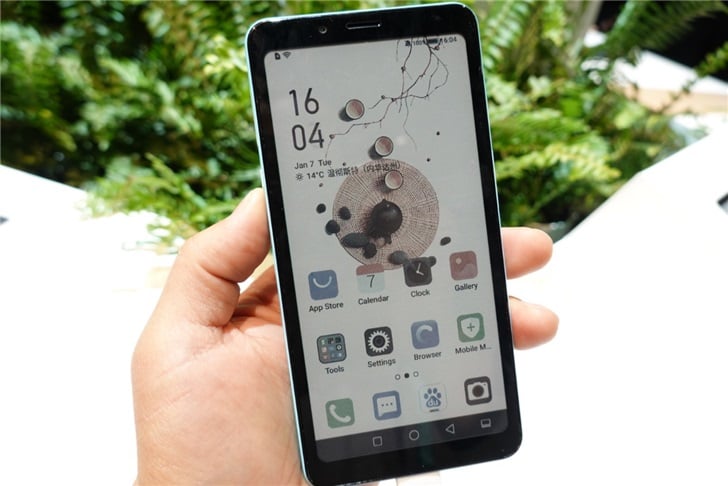
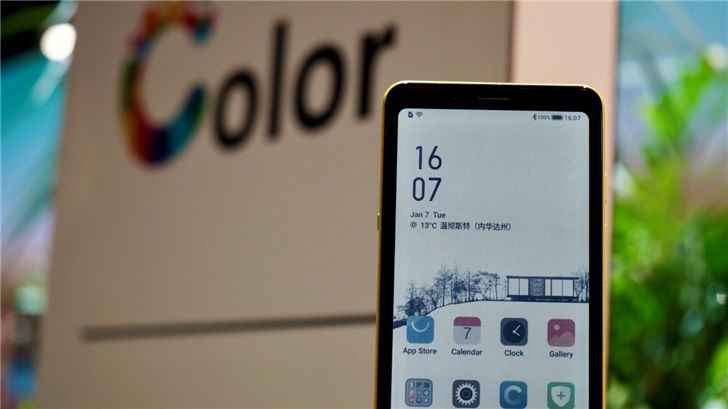
Earlier this year, Hisense had showcased new technologies in the CES 2020 (Consumer Electronics Show). One of the notable devices that stood out was the world’s first color e-ink screen mobile phone. This device attracted a lot of attention in the event and is now confirmed to launch on 23rd April 2020.
The primary highlighting feature of the device is undoubtedly its display. The Hisense device features the world’s first color e-ink display. The company has achieved this by combining the e-ink technology with the latest color printing technology to display 4096 colors. The characteristics of this enable softer colors being displayed, which does not hurt users’ eyes and is more comfortable for longer use.
This type of display also has certain advantages as well. Including, ultra low power consumption and continuous display, even when the power is off. Through this, users can enjoy reading anytime and are quite similar to the Amazon Kindle reader. The e-ink technology makes the image or text being display seem more like on paper than conventional LCD or OLED panels.
Interestingly, the screen does not emit light on its own but relies on natural light imaging. This means that there is no blue light being given out, which is generally considered as harmful for the eyes. During the night, the device will use built in warm front lights as a source of illumination that relies on the reflection being defused on the display.
The Hisense Color Ink Reader will arrive with many different apps for content. It will partner with major publications from China and more to deliver an optimized reading experience. It will be launched on the 23rd of April and will be seen in the company’s launch conference on that day.
At the Huawei P40 series launch event, the company also released a new version of its mobile software called EMUI 10.1. It comes pre-installed on the new devices, however, several old devices are also guaranteed to receive them. The first batch of handsets has already received a closed beta build. Now, the second batch of devices such as Huawei Nova 5 series and Honor 20S are getting a similar treatment.
The second batch of devices that are currently receiving EMUI 10.1 closed beta is as listed below.
Since EMUI on Honor devices is known as MagicUI, the Honor 20S is actually receiving MagicUI 3.1, which is nothing but a rebranded EMUI 10.1.
Huawei released EMUI 10 based on Android 10 soon after Google officially released the latter. The Huawei Mate 30 and Mate 30 Pro were the first devices to come with this software out of the box late last year.
Then in late March 2020, Huawei unveiled the P40, P40 Pro, and P40 Pro Plus with EMUI 10.1 on board. The new iteration of EMUI brings Huawei’s own AI voice assistant called Celia, new multi-window functionality, MeeTime video calling app, new AODs, and more.
Earlier today (10th April 2020), a senior executive of Nubia announced that the company will be revealing its new brand logo soon. The announcement was made on Weibo, the Chinese microblogging website, on the official account of Nubia’s President and Co Founder, Ni Fei.
In the Weibo post, Ni Fei shared an image poster. This picture showcased Nubia’s current brand logo, which was being peeled off. This offers just a slight view of the upcoming new brand logo underneath, like a sticker being removed. The brand logo we see today is etched in white on a red background, while the yet to be announced one features the inverse, with red branding on a white background.
Unfortunately, the image shared doesn’t reveal even a single letter of the new logo. So, it is unclear if the change will be drastic, or whether the company would go for a more sober look; something that brands tend to lean on after a certain period of time. What we do know so far is that the new branding will be unveiled on 13th April 2020, which is on a Monday next week. So stay tuned for more.
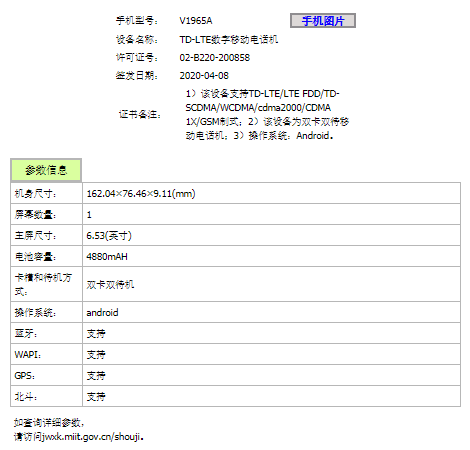
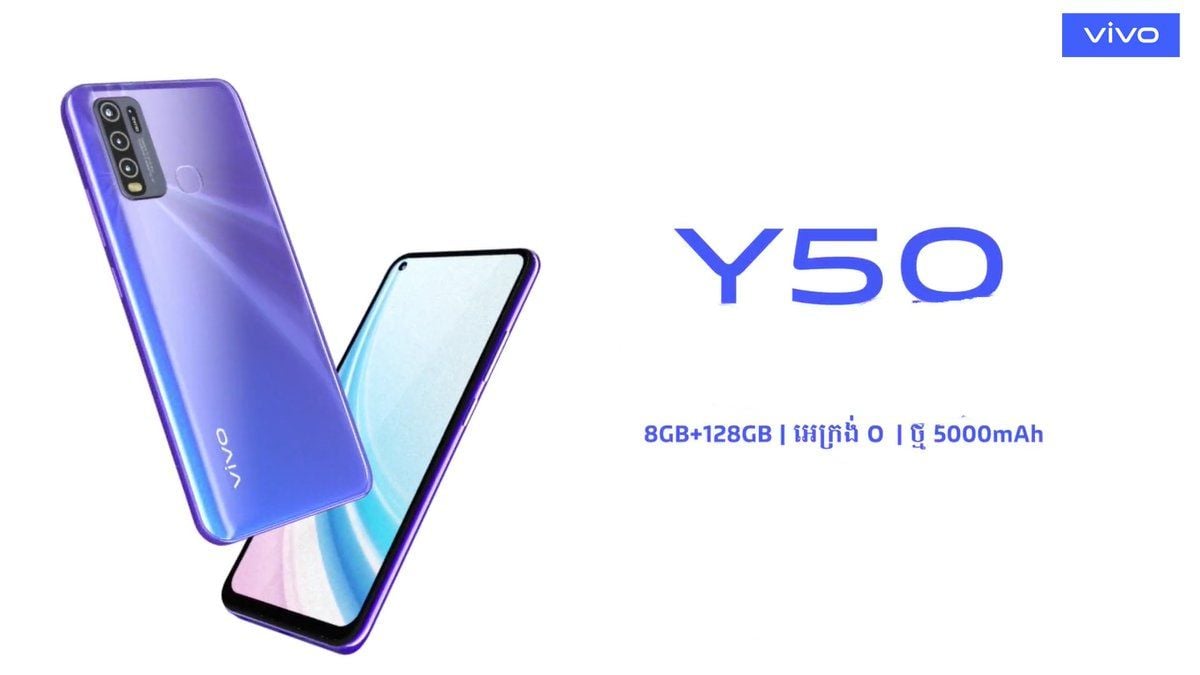
A new Vivo phone that has a model number of Vivo V1965A has been spotted on TENAA and 3C authorities of China. The exact identity of the phone is not known yet. However, it seems to bear resemblance with the Vivo Y50 phone that went official in Cambodia recently
The Vivo V1965A TENAA listing has only minimum information on its specifications. The listing currently reveals only the dimensions, display size and minimum rated capacity of the smartphone. The phone measures 162.06 x 76.5 x 9.11mm.
It has been found that the Vivo V1965A has a 6.53-inch display. The exact resolution and display design of the phone is not known yet. The size of its battery is 4,880mAh capacity. The 3C appearance of the smartphone has revealed that it carries support for 18W fast charging.
The above specs of the Vivo V1965A resembles with the Vivo Y50 smartphone. There is a possibility that the Vivo V1965A could be the Chinese edition of the Vivo Y50 phone. It remains to be seen whether the Vivo V1965A phone will debut in China as Vivo Y50 or with some other moniker.
The Vivo Y50 has a 6.53-inch IPS LCD full HD+ display with punch-hole design. It has a front camera of 16-megapixel. The rear side of the phone features a quad camera system that has a main lens of 13-megapixel, an 8-megapixel ultrawide lens, a 2-megapixel depth sensor and a 2-megapixel macro lens.
The Snapdragon 665 chipset powers the phone with 8 GB of RAM. It has an internal storage of 128 GB. The phone houses a 5,000mAh battery that carries support for 18W fast charging. The phone is available in Cambodia with a price tag of $249. Starry Black and Iris Blue are its two color variants.
Earlier this month, Xiaomi held its Mi Fan Festival in China. This marked the company launching various new products whilst also offering discounts to its pre existing products as well. Now, the Chinese tech giant has shared the stats of the Mi Fan Festival, with Xiaomi making over 2.89 billion Yuan in sales (roughly 410 million US Dollars).
According to the official data shared by Xiaomi, the popular electronics brand sold over 1.826 million smart AIoT products during this period. This marks a year on year increase of a whopping 160 percent. Similarly, its TV sales have exceeded a significant 231,000 units as well. Lu Weibing, the President of Xiaomi, stated that the first sale sold nearly 65 million products in just a single hour.
In the Mi Fan Festival, it has been reported that total number of people participating had reached 98.06 million. These stats were showcased online via an image poster from Xiaomi. It depicted the large transaction and notable sales numbers. So, it is clearly evident that the festival period was a massive success, despite the ongoing crisis due to the Coronavirus pandemic.
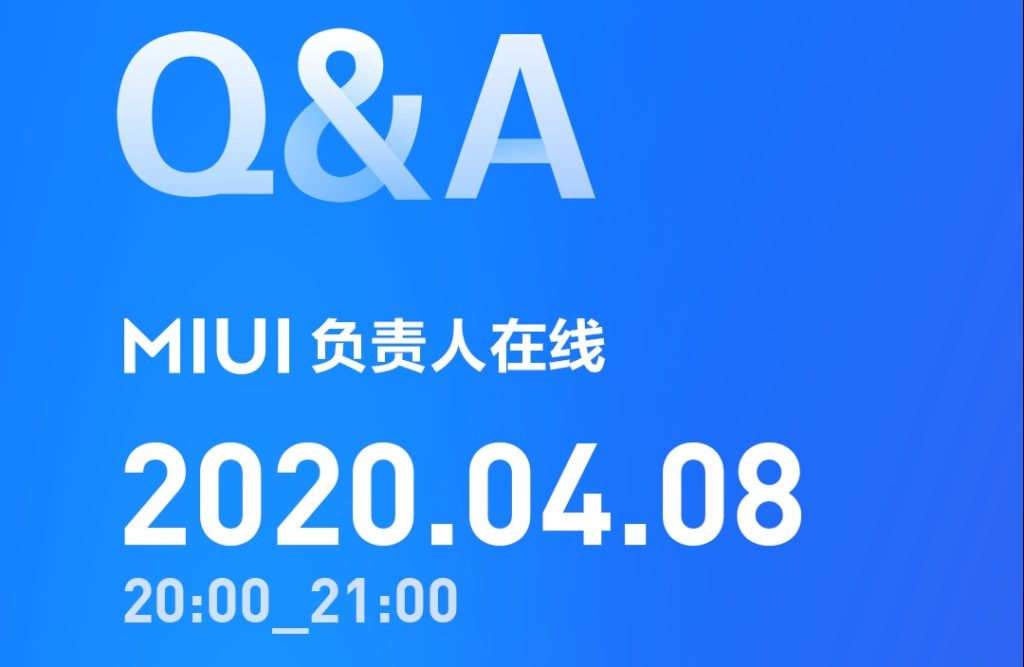
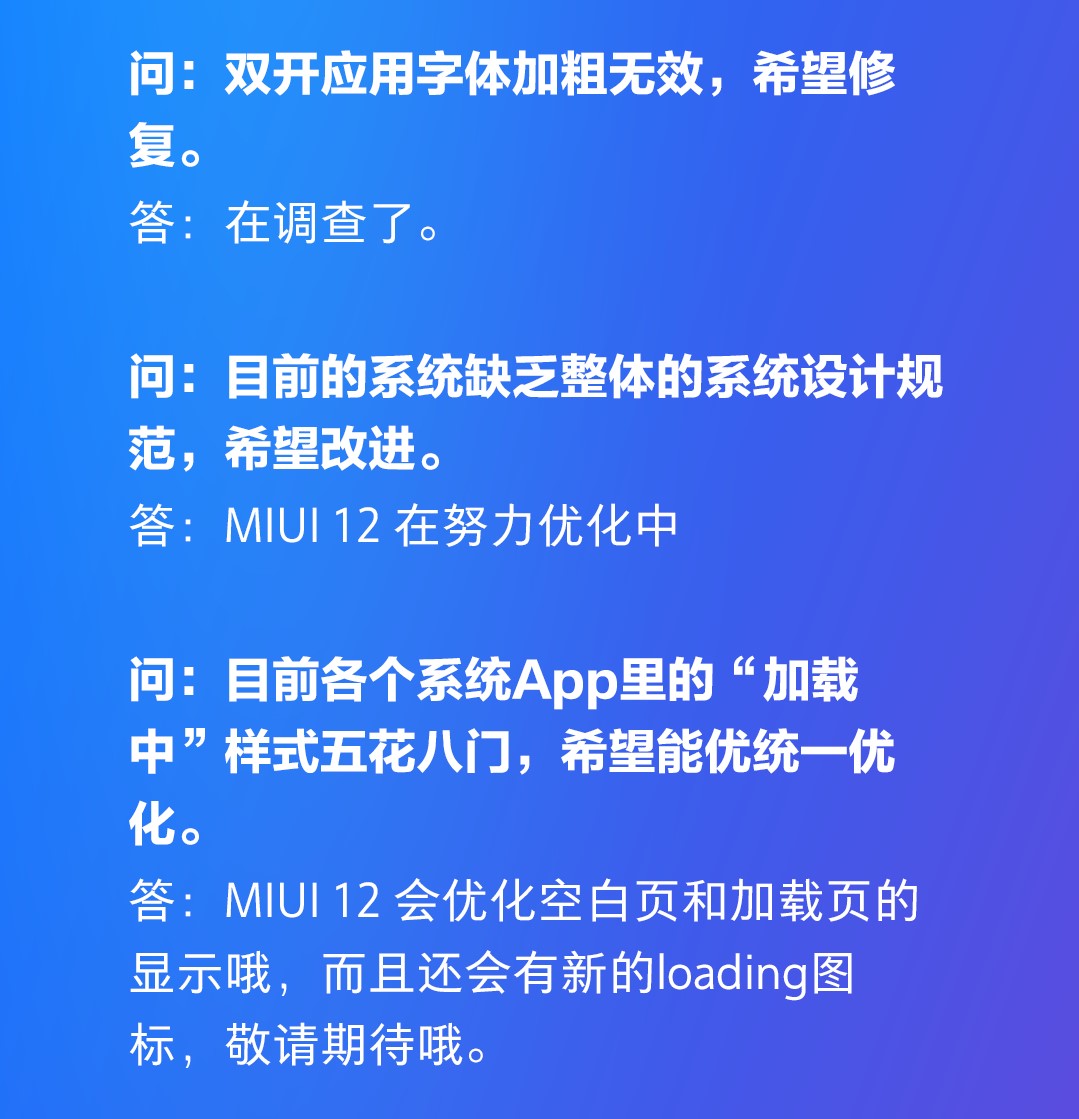
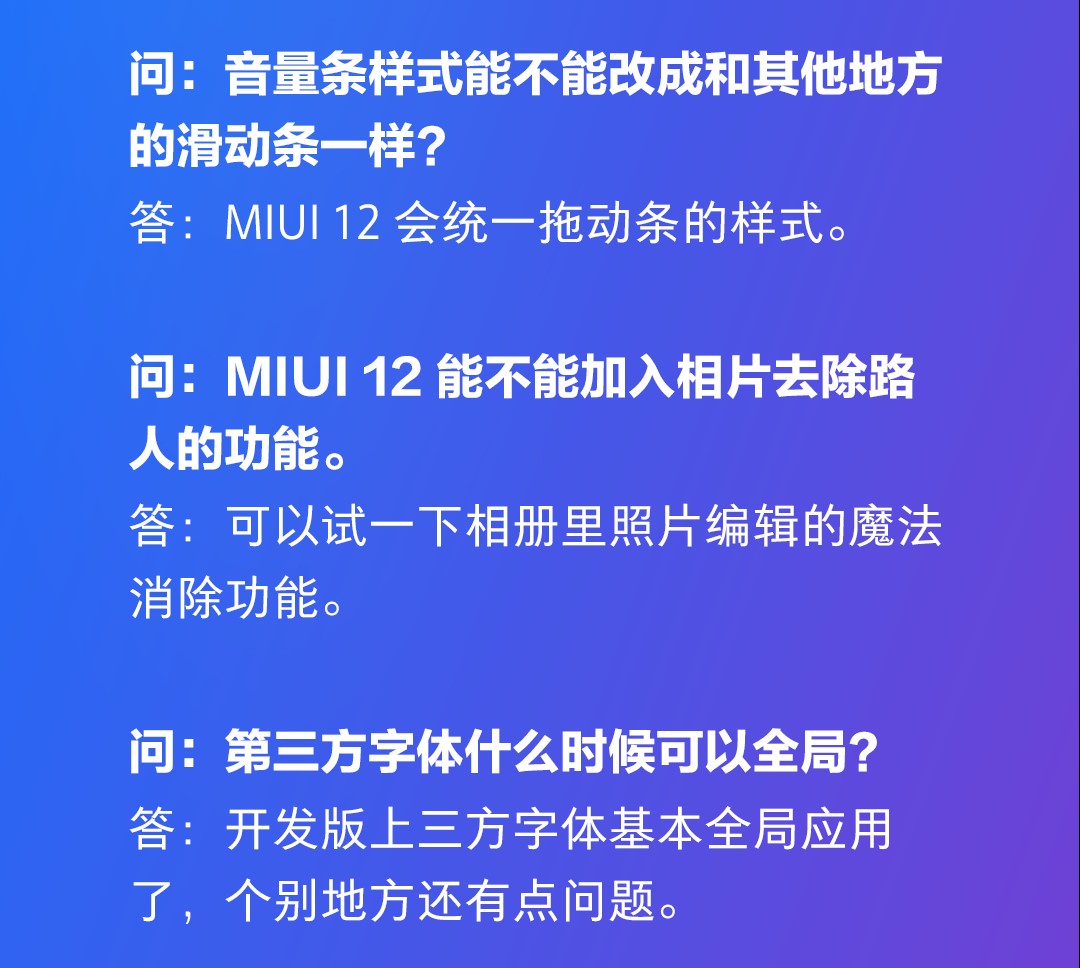
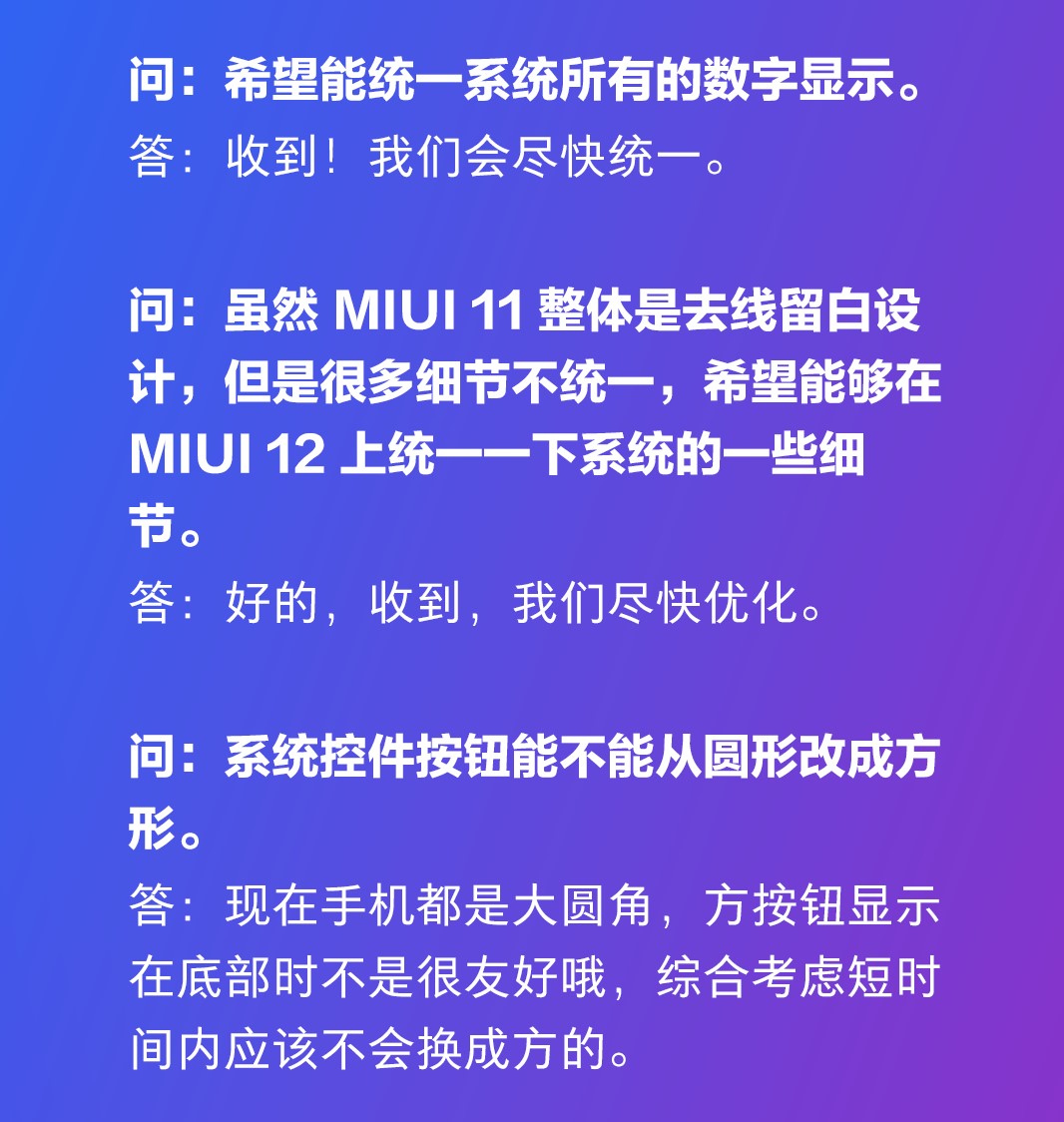
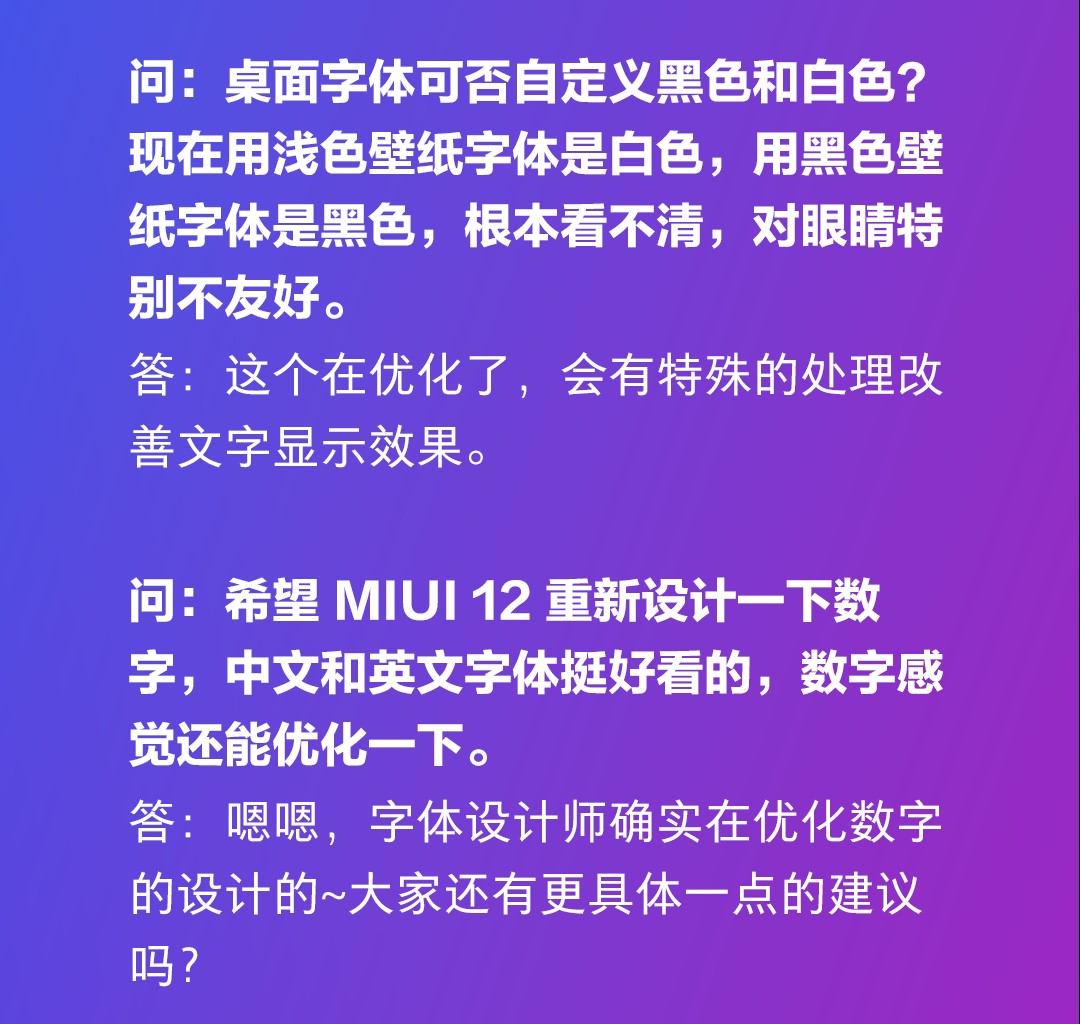
A couple of days back, MIUI head designer conducted an AMA (Ask Me Anything) on Mi Community in China to discuss new features in MIUI. Now, the official Weibo account of MIUI has shared some of the questions discussed hinting us a number of changes that are headed to MIUI 12.
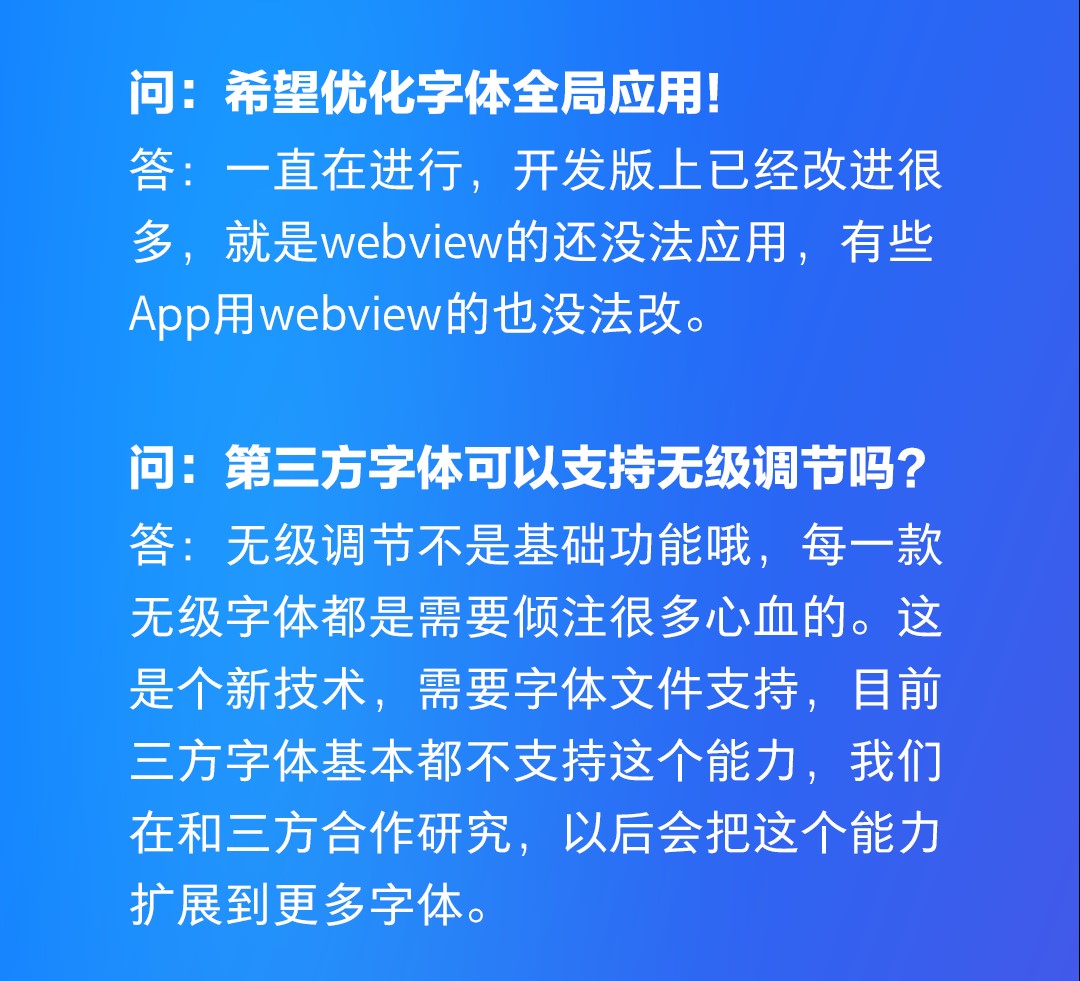
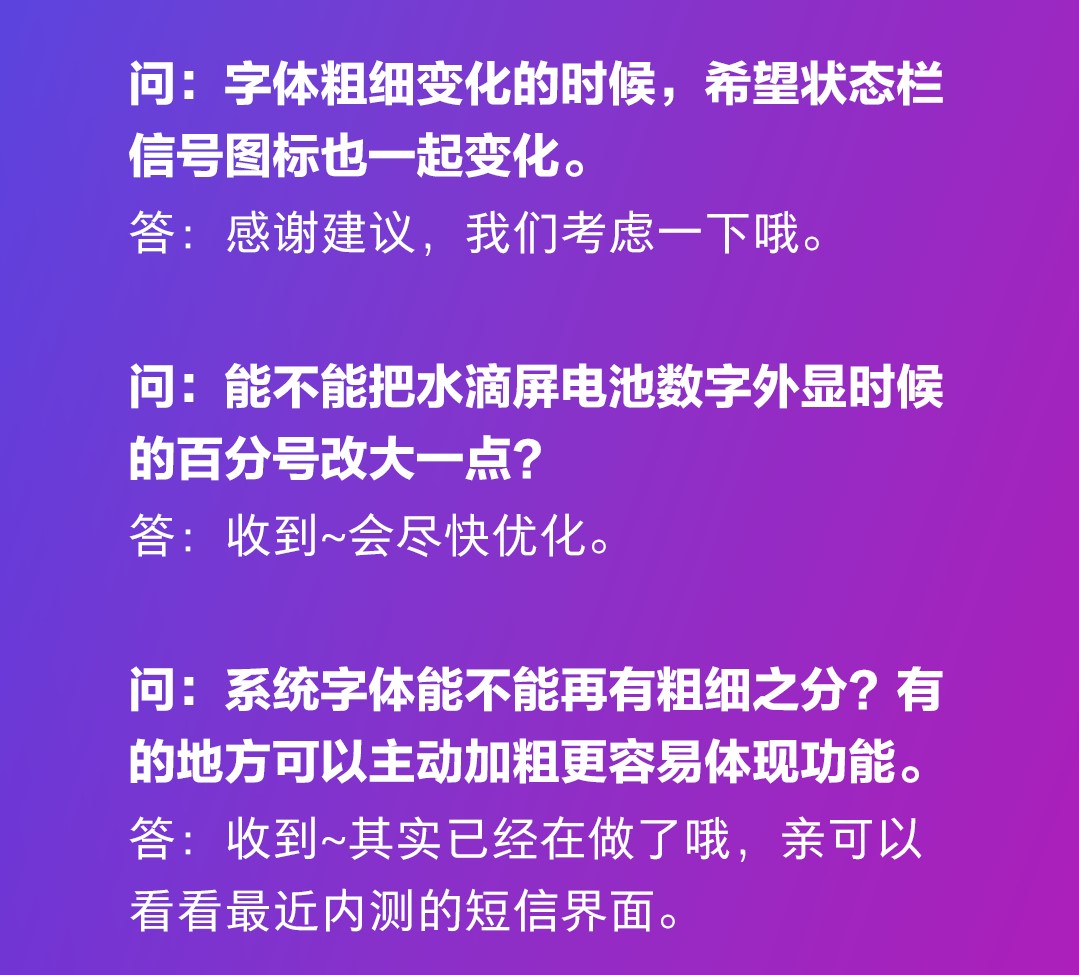
Most of the questions from Chinese MIUI users were regarding fonts, which is interesting for us global MIUI users. The first question suggested adding support for fonts globally. For this, the MIUI personnel replied that they have been working on it for a while now, however, font change will still not have an effect in webview.
Another person asked regarding dynamic third-part fonts. For that, the designer said that third-party apps do not support dynamic functionality like the system fonts introduced in MIUI 11. But he assured they will work with third-party developers to bring this feature to users.
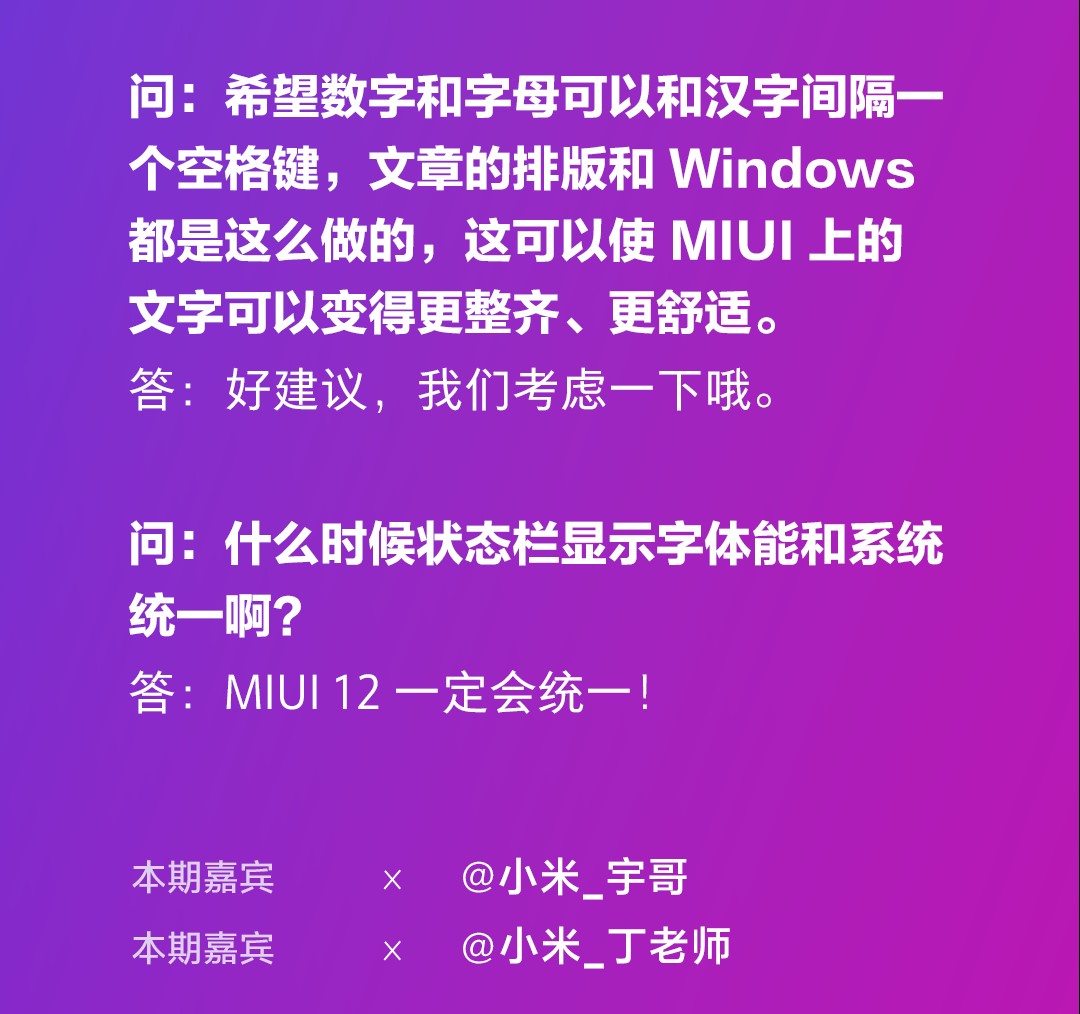
One user criticized the current UI elements to be ununiform and the reply to that was ‘MIUI 12 will optimize it’. That means we can expect an overall refined UI with uniformity in MIUI 12.
1 of 4
Further, another user said that currently all system apps have different loading screen and thus suggested to make them uniform. To this, the MIUI designer confirmed MIUI 12 to bring unified blank pages, loading pages and loading icons to all the system apps.
A user even suggested optimizing volume sliders and the reply for that was it will be unified with other sliders in MIUI 12. Another UI suggestion was to make quick toggles square. But for that, the head of MIUI explained it will look bad with modern phones with curved edges. So, it will continue to remain circular even in MIUI 12.
As mentioned in the beginning, most of the suggestions and questions were related to fonts such as improvement in dark and light scenarios, bold in certain places to highlight headings, optimization of numerical fonts, bigger battery percentage in phone with a dew-drop notch, and more.
1 of 3
In a nutshell, the MIUI head has assured that all the possible features and changes to MIUI 12 as suggested by users who attended the virtual AMA on Mi Community in China will be implemented in the upcoming MIUI version. The latest iteration of Xiaomi mobile software is expected to debut in the second half of 2020.
On Mar. 30, Huawei explained WiFi 6+ technology during an online communication conference. During the conference, the Chinese tech giant also unveiled two routers that support the aforesaid technology.
The WiFi 6+ technology was launched in Feb. this year at Huawei’s terminal product conference. It is worth mentioning here that the company’s P40 series of smartphones support the WiFi 6 Plus technology.
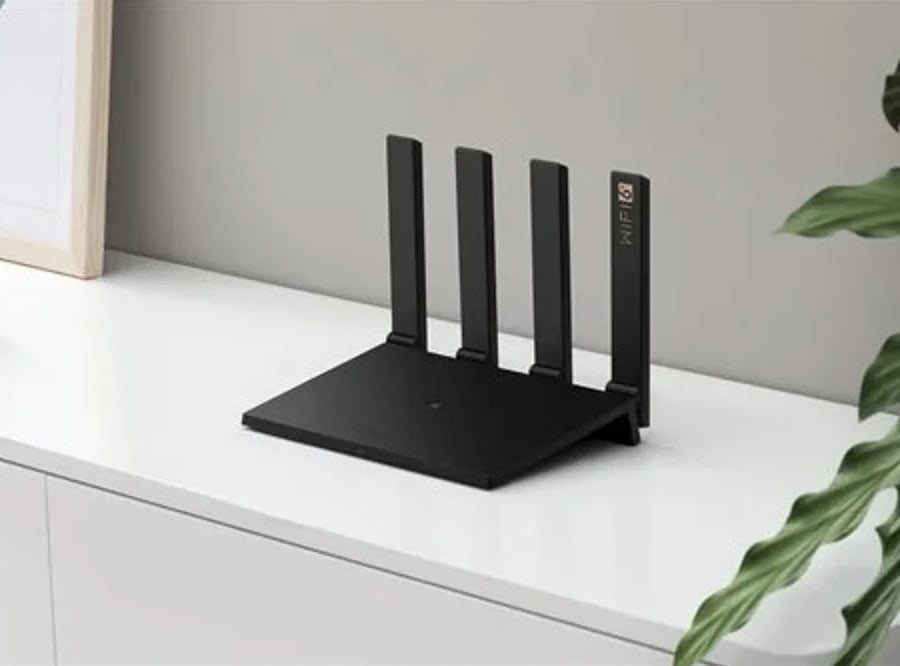
Dubbed as the Huawei AX3, and the AX3 Pro, the recently unveiled Wi-Fi 6+ smart routers have gone up for sale bearing unbeatable prices through Giztop. So without further ado, let’s dive straight into the details.
Huawei WiFi AX3
With a Kirin 650 chip under the hood, the Huawei WiFi AX3 supports 160 MHz frequency bandwidth. It reaches an impressive Theoretical speed of 3000 Mbps and features two amplifiers for 2.4 GHz and two amplifiers for 5 GHz.
Furthermore, the Huawei WiFi AX3 supports the company’s one-touch networking and a slew of other features including child online protection, remote office acceleration, online lesson acceleration, and mobile acceleration. Available in white color option, this Wi-Fi 6+ smart router will set you back $45.99.
You can follow this link to check out more details about the Huawei WiFi AX3 and place your pre-order via Giztop.
The Pro variant of the Huawei WiFi AX3 is powered by a Kirin 650 (Quad-core) chip that supports a frequency bandwidth of 160 MHz. As far as Theoretical speed is concerned, the Pro model is capable of reaching up to 3000 Mbps. Moreover, it features two amplifiers for 2.4 GHz and two amplifiers for 5 GHz, just like the standard model. It comes with Huawei’s one-touch networking supports boasts a slew of highly advantageous features including mobile acceleration, online lesson acceleration, remote office acceleration, and child online protection.
You can head straight to this link to pre-order the Huawei WiFi AX3 Pro Wi-Fi 6+ smart router from Giztop. Note that the product is estimated to start shipping from Apr. 30.
The Gizmochina Coupons is a community that finds, reports and evaluates deals and coupons of Chinese products from online shops. Please visit it here to find more coupons to save money on mobiles and smart gadgets.
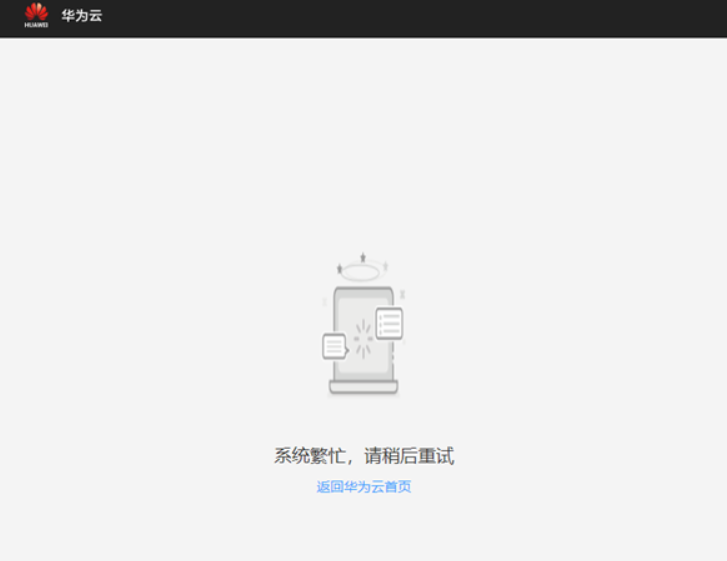
Huawei has been facing large scale failure of its Cloud services in China. Reports from many users started flooding in earlier today (10th April 2020), and the issue seems to largely affect China, with its website and service being unavailable.
Many Weibo users, a Chinese microblogging website, shared posts online regarding the Huawei Cloud services being unavailable. They shared issues like being unable to login and more. A few people even shared screenshots online that showed them using the Chinese tech giant’s service, but being greeted by the messages saying that the service was down.
These included messages like, “The server is temporarily overloaded or under maintenance. Please try again later,” or “An error occurred while establishing a database connection.” Certain individuals online even claimed that the loss of the service had grave impacts on their enterprises or businesses. Furthermore, a few even reported on Huawei smartphones exploding, which seems highly unlikely.
One of the many screenshots shared online that showcase the unavailability of Huawei services
Since the Cloud service was down, people in China couldn’t access a few applications or play games either. Unfortunately, Huawei has yet to make an official statement regarding this outage. Thus, it is currently unknown what caused the failure and many are asking Huawei when the issue will be resolved. So stay tuned for more news which should arrive soon
We use cookies on our website to give you the most relevant experience by remembering your preferences and repeat visits. By clicking “Accept”, you consent to the use of ALL the cookies.
This website uses cookies to improve your experience while you navigate through the website. Out of these, the cookies that are categorized as necessary are stored on your browser as they are essential for the working of basic functionalities of the website. We also use third-party cookies that help us analyze and understand how you use this website. These cookies will be stored in your browser only with your consent. You also have the option to opt-out of these cookies. But opting out of some of these cookies may affect your browsing experience.
Necessary cookies are absolutely essential for the website to function properly. This category only includes cookies that ensures basic functionalities and security features of the website. These cookies do not store any personal information.
Any cookies that may not be particularly necessary for the website to function and is used specifically to collect user personal data via analytics, ads, other embedded contents are termed as non-necessary cookies. It is mandatory to procure user consent prior to running these cookies on your website.


















 Moreover, it features two amplifiers for 2.4 GHz and two amplifiers for 5 GHz, just like the standard model. It comes with Huawei’s one-touch networking supports boasts a slew of highly advantageous features including mobile acceleration, online lesson acceleration, remote office acceleration, and child online protection.