Advertisement

Oppo Reno 14F 5G vs Vivo Y100t 5G: Performance, Camera, Battery & Price Compared

Oppo Reno 14F 5G and Vivo Y100t 5G cater to very different audiences despite both being mid-range 5G phones. The Reno 14F emphasizes durability, display quality, and battery life, while the Vivo Y100t pushes aggressive pricing with faster charging and a more gaming-focused chipset. This comparison highlights where each device excels, helping buyers decide between premium refinement and value-driven performance.

1. Design and Display

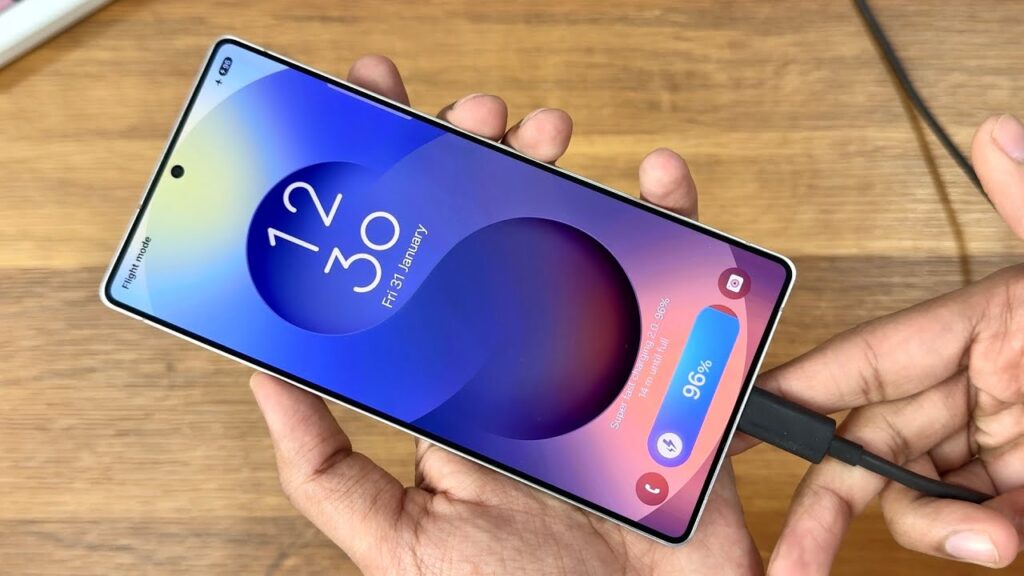
OPPO Reno 14F
OPPO Reno 14F

Build and Feel:

The Oppo Reno 14F stands out with an IP68/IP69 water and dust resistance rating, making it much more durable for everyday accidents compared to the Vivo Y100t, which has no formal water protection. The Reno also feels more refined with a slimmer profile and stronger protective glass, while the Vivo uses a plastic frame. For users who prioritize a rugged yet premium feel, the Oppo offers a stronger upgrade.

Verdict: The Oppo Reno 14F is superior in build due to its durability and water resistance.

Display Quality:

Oppo equips the Reno 14F with a 6.57-inch AMOLED panel, supporting 1B colors, 120Hz refresh rate, and higher peak brightness (1400 nits HBM). In contrast, the Vivo Y100t has a larger 6.64-inch IPS LCD, also with 120Hz but lacking the same color depth, contrast, and brightness. The Reno’s AMOLED delivers richer visuals, deeper blacks, and better outdoor readability, while the Vivo’s LCD keeps costs lower.

Verdict: The Reno 14F has a superior display, making it more suited for media consumption and vibrant visuals.

Please Note: When you buy something using the links in our articles, we may earn a small commission at no cost to you.

2. Specifications

Vivo Y100t
Vivo Y100t

Performance:

The Vivo Y100t uses the Dimensity 8200, a stronger chipset with higher clock speeds and better GPU performance compared to the Snapdragon 6 Gen 1 inside the Reno 14F. This makes the Y100t more suitable for gaming and intensive multitasking, whereas the Reno is better optimized for balanced performance with efficiency.

Verdict: Vivo Y100t offers more raw performance power, especially for gaming.

Battery and Charging:

Oppo takes the lead in endurance with a massive 6000mAh battery, ensuring longer usage per charge compared to Vivo’s 5000mAh cell. However, Vivo counters with lightning-fast 120W charging, refueling the phone in minutes, while Oppo’s 45W charging is considerably slower despite reverse charging support. Users prioritizing longevity will benefit from Oppo, while those needing instant top-ups will prefer Vivo.

Verdict: Oppo wins in endurance, while Vivo leads in charging speed, making it a trade-off depending on usage needs.

3. Camera

OPPO Reno 14F
OPPO Reno 14F

Main and Secondary Lenses:

The Reno 14F features a triple-camera setup with a 50MP OIS primary, 8MP ultrawide, and 2MP macro. In comparison, the Vivo Y100t only offers a dual system with a 64MP OIS primary and 2MP depth sensor. While the Vivo’s main camera is sharper in resolution, the Reno’s versatility with ultrawide and macro gives more flexibility. OIS support on both ensures stability, but Reno edges ahead with more shooting options.

Verdict: Oppo Reno 14F is better for photography variety, while Vivo emphasizes resolution quality.

Selfie Camera:

The Reno 14F again dominates here with a 32MP autofocus front camera capable of sharper selfies and more reliable focus. Vivo settles for a 16MP fixed-focus lens, which is good enough for casual use but not as detailed. For social media creators or video calls, Reno clearly provides the upgrade.

Verdict: Oppo Reno 14F offers a superior selfie experience.

4. Pricing

Vivo Y100t
Vivo Y100t

The Oppo Reno 14F is priced around $500, positioning itself as a premium mid-ranger. The Vivo Y100t comes in much cheaper at approximately $210, making it less than half the cost. While Oppo offers durability, AMOLED visuals, and stronger cameras, Vivo is far more budget-friendly while still packing a powerful chipset and ultra-fast charging.

Verdict: Vivo Y100t provides unbeatable value for money, while the Reno 14F justifies its higher price with premium upgrades.

Disclaimer:
Prices are approximate and may vary based on country, region, and applicable taxes.

5. Conclusion

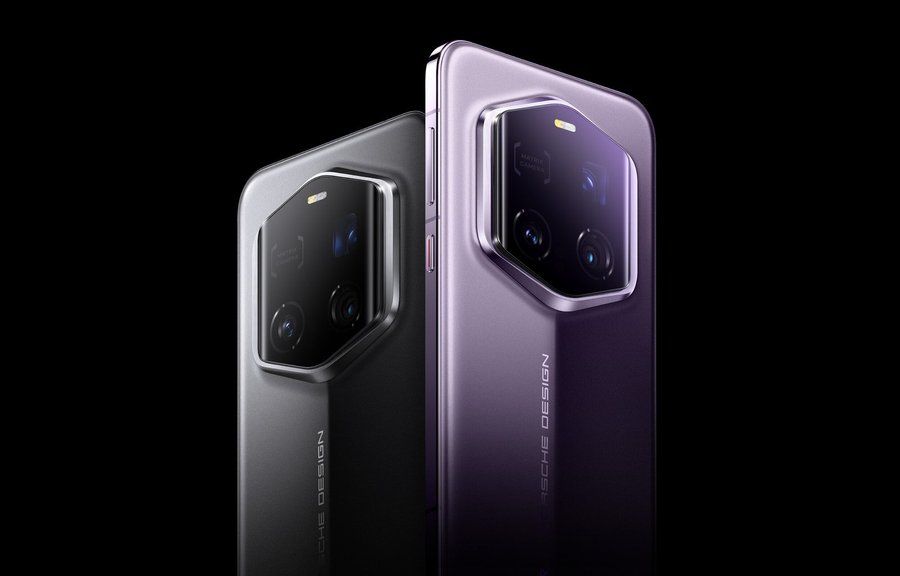
Oppo Reno 14F 5G
Oppo Reno 14F 5G

The Reno 14F’s standout features are its IP68/IP69 rugged protection, AMOLED display with higher brightness, and a larger 6000mAh battery, all rare at this price point. Meanwhile, the Vivo Y100t shines with its Dimensity 8200 processor and 120W charging, catering to performance-oriented and budget-conscious users.

Verdict: Choose the Oppo Reno 14F if durability, battery life, and superior camera flexibility matter most. Pick the Vivo Y100t if you want flagship-like performance and ultra-fast charging at less than half the cost. Both phones excel in different areas, making the choice dependent on whether a premium build or affordability takes priority.

Read More;

Exynos 2400 vs Snapdragon 8 Elite: Benchmark and specs

Samsung Exynos 2400 vs Snapdragon 8 Elite

The Exynos 2400 is a powerful chipset, featuring a high-performance 10-core CPU and Xclipse 940 GPU for advanced visual rendering. Announced last year, this Samsung-made chipset already powers many Galaxy phones, including the Galaxy S24 series, Galaxy S24 FE, and Galaxy Z Flip 7 FE.

The Snapdragon 8 Elite, on the other hand, is Qualcomm’s flagship powerhouse, rocking a robust 8-core Oryon CPU and a powerful Adreno 830 GPU. It’s the most popular choice for premium smartphones. So, how do these two high-performance chips stack up against each other? Let’s break down the benchmark scores and look at real-world differences to find out.

Let’s begin with the spec sheet:

Exynos 2400Snapdragon 8 Elite
AnnouncedJanuary 2024October 2024
ManufacturingSamsung (4nm)TSMC (3nm)
CPU1x 3.21 GHz — Cortex-X4
2x 2.9 GHz — Cortex-A720
3x 2.6 GHz — Cortex-A720
4x 1.95 GHz — Cortex-A520
2 x 4.32GHz — Oryon
6 x 3.53GHz — Oryon
GPUSamsung Xclipse 940
Ray tracing support
Adreno 830
Ray tacing support
Snapdragon Elite Gaming features
NPUYesQualcomm Hexagon NPU
MemoryLPDDR5X, up to 4.2GHz LPDDR5x, up to 5.3GHz
StorageUFS 4.0UFS 4.0
CameraUp to 320MP single camera
Real-time semantic segmentation
Up to 8K video recording
Up to 320MP single camera
Limitless real-time semantic segmentation
Up to 8K video recording
ConnectivityDownload speed: 12.1Gbps (peak)
Upload speed: 3.67Gbps (peak)
Wi-Fi 6
Bluetooth 5.3
Download speed: 10Gbps (peak)
Upload speed: 3.5Gbps (peak)
Wi-Fi 7 (peak speed: 5.8Gbps)
Bluetooth 6.0

Exynos 2400 vs Snapdragon 8 Elite: Benchmark score

Note: The tests were conducted on the Galaxy S24+ (Exynos 2400) and Galaxy S25 Ultra (Snapdragon 8 Elite).

AnTuTu benchmark

Exynos 2400 vs Snapdragon 8 Elite AnTuTu score

The Snapdragon 8 Elite shows a clear advantage over the Exynos 2400 in AnTuTu, posting a total score of 2,209,476 compared to 1,712,489 — a gap of about 29% overall performance.

Looking deeper, Qualcomm’s chip leads in every category. The CPU score is about 42% higher (574,518 vs 405,345), meaning faster performance in demanding workloads and multitasking. The GPU score tells an even bigger story, with the Snapdragon at 842,351 versus the Exynos’s 662,563 — a 27% boost that translates directly into smoother gaming and stronger graphical rendering.

Memory (437,621 vs 350,139) and UX (354,986 vs 294,442) also favor the Snapdragon 8 Elite, reflecting quicker app loads, better responsiveness, and a more fluid user experience. Overall, while the Exynos 2400 shows big improvements over its predecessors, the Snapdragon 8 Elite sits firmly ahead in raw benchmark performance.

Exynos 2400Snapdragon 8 Elite
AnTuTu score1,712,4892,209,476
CPU405,345574,518
GPU662,563842,351
Memory350,139437,621
UX294,442354,986

Geekbench benchmark

Exynos 2400 vs Snapdragon 8 Elite Geekbench score

On Geekbench, the performance gap between the two chips becomes even more apparent. The Snapdragon 8 Elite scores 3,179 in single-core and 10,114 in multi-core, while the Exynos 2400 reaches 2,016 and 6,683, respectively.

That gives Qualcomm a huge 57% advantage in single-core performance, which directly impacts everyday responsiveness, app launch, and UI fluidity. In multi-core performance, the gap is slightly smaller but still significant, with the Snapdragon leading by about 51%. This means it handles multitasking, heavy workloads, and demanding apps much more efficiently.

Exynos 2400Snapdragon 8 Elite
Single core2,0163,179
Multi core6,68310,114

While the benchmarks clearly show the Snapdragon 8 Elite leading in performance, they don’t tell the whole story. Other important factors like camera features, connectivity, and more matter too (more on that below).

Exynos 2400 vs Snapdragon 8 Elite: Key differences

Performance

Manufacturing:

The Exynos 2400 is built using Samsung’s 4nm process, while the Snapdragon 8 Elite uses TSMC’s advanced 3nm process. The latter is more power-efficient and offers better performance.

CPU:

The Exynos 2400 features a 10-core CPU that we don’t see often in smartphone chips. It includes one Cortex-X4 prime core, five Cortex-A720 performance cores, and four Cortex-A520 power efficiency cores.

On the other hand, the Snapdragon 8 Elite features two fewer CPU cores, but the eight Oryon cores easily outperform the Exynos 2400 chip. The higher CPU speed provides an additional performance boost to the Snapdragon chip.

GPU:

The Exynos 2400 features an Xclipse 940 GPU built on the AMD RDNA 3 architecture, promising significantly better performance. It supports second-generation ray tracing for a more realistic and immersive gaming experience.

The Snapdragon 8 Elite is equipped with an Adreno 830 GPU, which is 40% faster and 40% more efficient than its predecessor. It also supports hardware-accelerated ray tracing and comes with a full suite of Snapdragon Elite Gaming Features, which includes Snapdragon Game Super Resolution 2.0, Adreno Frame Motion Engine 2.0, and Qualcomm Adaptive Performance Engine 4.0.

On the plus side, the Exynos 2400 features more pipelines and higher floating-point operations per second (FLOPS). The Snapdragon chip benefits from higher peak speed and shading units.

NPU:

Both chipsets feature powerful NPUs that are a major upgrade over previous generations. These NPUs enable advanced on-device AI features, which enhance the camera, boost gaming performance, improve voice processing, and allow for the creation of personalized content, among other benefits.

Camera

Both chips support up to 320MP camera and 8K recording, but they bring notable differences. The Exynos 2400 can shoot with up to four cameras at the same time and leverages noise reduction to improve low-light scenes. Additionally, it supports real-time semantic segmentation, which is also available on the Snapdragon chip.

The Snapdragon 8 Elite has an AI ISP that closely works with the NPU to improve how images and videos are captured and processed in real-time. The AI also works with auto-focus, auto-exposure, and noise reduction. The chip enables simultaneous recording from three cameras (up to 48MP) at 30 FPS or a single 108MP camera at 30 FPS, with noise reduction and zero shutter lag.

Besides great hardware, the Snapdragon chip also offers many useful camera features, including Truepic photo capture, Video super resolution, Computational HDR with staggered imaged sensors, and the Bokeh Engine (version 2).

Connectivity

The Exynos 2400 chipset delivers higher peak download speeds (12.1Gbps vs. 10Gbps) and upload speeds (3.67Gbps vs. 3.5Gbps) on a 5G network. Over a Wi-Fi 7 connection, the Snapdragon chip achieves a peak speed of 5.8Gbps.

On the plus side, the Snapdragon 8 Elite supports the newer Wi-Fi 7 standard (vs. Wi-Fi 6 on the Exynos 2400) and advanced Bluetooth connectivity (v6.0 vs v5.3). Additionally, the Snapdragon chip offers a range of features to enhance connection stability, performance, and power efficiency.

Exynos 2400 vs Snapdragon 8 Elite: Conclusion

The Exynos 2400 is undoubtedly a major step forward for Samsung, with solid performance gains, impressive AI and camera capabilities, and excellent 5G speeds. It’s a competitive Exynos chip from Samsung, and a worthy choice for many flagship devices.

But when it comes to overall performance, the Snapdragon 8 Elite still holds the upper hand. Whether it’s benchmark scores, CPU architecture, GPU muscle, or real-world responsiveness, Qualcomm’s flagship chip consistently pulls ahead. Add to that its cutting-edge 3nm process, faster and more efficient GPU, advanced AI ISP, and superior connectivity options, and the gap becomes even more apparent.

So, while the Exynos 2400 delivers respectable power and solid features across the board, the Snapdragon 8 Elite remains the top-tier choice for users who demand the absolute best performance and innovation from their smartphones.

HP OMEN 16 (2025) with 240Hz QHD Display and RTX 5070 Ti Starts at ₹1,29,999 ($1,490)

HP has launched the 2025 OMEN 16 gaming laptop in India, adding a new option for gamers and creators. The laptop comes with either Intel Core Ultra or AMD Ryzen AI processors and can be configured with an NVIDIA GeForce RTX 5070 Ti GPU.

The OMEN 16 has a 16-inch QHD display with a 240Hz refresh rate, 3ms response time, and 500 nits brightness. It supports 100 percent sRGB colour coverage and is Eyesafe certified to reduce strain during long gaming sessions. On performance, it delivers up to 170W processor power and 115W GPU support. Unleashed Mode adjusts CPU and GPU output dynamically, while OMEN Tempest Cooling with a vapour chamber and larger fan gaps helps keep the system stable at around 46 dBA.

HP OMEN 16 (2025)

The laptop includes an RGB backlit keyboard with per-key customisation through OMEN Light Studio, along with system tuning using the OMEN Gaming Hub. It has an FHD webcam with noise reduction and an 83Wh six-cell battery that supports HP Fast Charge, charging up to 50 percent in 30 minutes. Windows 11 comes pre-installed.

HP has used ocean-bound plastics in the speaker enclosures and bezels, and post-consumer recycled plastics in the keyboard. The device is ENERGY STAR certified and EPEAT registered.

The key specifications include Intel Core Ultra or AMD Ryzen AI processors, NVIDIA GeForce RTX 5070 Ti graphics with 12GB dedicated memory, a 16-inch QHD screen with 240Hz refresh rate, 3ms response time and 500 nits brightness, up to 170W CPU and 115W GPU performance, OMEN Tempest Cooling with vapour chamber, an RGB keyboard with per-key customisation, FHD webcam with noise reduction, an 83Wh six-cell battery with HP Fast Charge, and Windows 11.

Please Note: When you buy something using the links in our articles, we may earn a small commission at no cost to you.

Pricing & availability

The HP OMEN 16 (2025) is available in Shadow Black starting at ₹1,29,999 ($1,490). It can be purchased from the HP Online Store, HP World outlets, Amazon.in, Croma, Reliance Digital, and other major retailers.

For more daily updates, please visit our News Section.

Stay ahead in tech! Join our Telegram community and sign up for our daily newsletter of top stories.

Honor MagicPad 3 launches globally with £100 discount voucher, and freebies

Honor has brought its latest tablet, the MagicPad 3, to global markets after debuting it in China last month. The device is now available in the UK, where buyers are being offered early launch deals and bundled accessories.

Honor MagicPad 3

The MagicPad 3 is priced at £599 in the UK, but early customers can claim a £100 discount voucher, bringing it down to £499. Honor is also including a Magic-Pencil 3 stylus (£85.99) and a Smart Touch Keyboard (£99) at no extra cost, giving buyers nearly £300 worth of freebies.

Key specs and features

The global version comes with a Snapdragon 8 Gen 3 chipset, 16GB RAM, and 512GB storage (compared to the 1TB option in China). It has a 13.3-inch LCD panel with a 3200 x 2136 resolution and a 165Hz refresh rate—though some users may miss the OLED screen from last year’s MagicPad 2.

A 12,450mAh silicon-carbon battery powers the tablet, with support for 66W fast charging (though no charger is included in the box). The body measures just 5.79mm thick, weighs 595g, and uses a 13-layer cooling system for heat management.

The tablet runs MagicOS 9 on top of Android 15 and includes several AI tools such as a writing assistant, summary generator, and real-time speech-to-text. It also works with Honor Share for quick file transfers between Android and iOS devices. Other features include a 9MP front camera, 13MP rear camera with macro support, an eight-speaker setup, Wi-Fi 7, and Bluetooth 5.4.

The Honor MagicPad 3 is available now in the UK in a gray finish.

Don’t miss a thing! Join our Telegram community for instant updates and grab our free daily newsletter for the best tech stories!

For more daily updates, please visit our News Section.
Redmi Note 15 Pro & Pro+ launched with 7000mAh battery, 90W charging & IP69K durability

Xiaomi has officially launched the Redmi Note 15 Pro and Note 15 Pro+ in China, positioning the new lineup as its most durable and long-lasting Note series yet. Both devices share a strong focus on drop resistance, waterproofing, and battery endurance, while catering to slightly different performance and imaging needs.

Redmi Note 15 Pro
Redmi Note 15 Pro

Redmi Note 15 Pro and Pro+ Specifications

The Redmi Note 15 Pro and Pro+ feature a 6.83-inch 1.5K AMOLED display with a resolution of 2772 × 1280 pixels. The panel delivers up to 3200 nits peak brightness and supports a 120Hz refresh rate, ensuring smooth visuals. It also offers a 480Hz touch sampling rate and can reach 2560Hz instantaneous sampling in select games, making it ideal for fast-paced interaction.

Xiaomi includes 3840Hz PWM dimming, HDR10+, HDR Vivid, and Dolby Vision, along with 12-bit color depth and DCI-P3 coverage for accurate and vibrant reproduction.

The Redmi Note 15 Pro is powered by MediaTek’s Dimensity 7400 Ultra processor, built on a 4nm process with an octa-core CPU clocked up to 2.6GHz and Mali-G615 MC2 GPU. The Pro+ takes a different approach, debuting the Snapdragon 7s Gen 4 chipset paired with an Adreno 810 GPU.

This makes it the first Note-series phone to use Snapdragon’s latest mid-tier platform. The Pro+ also integrates an advanced Ice-Sealed Circulating Cooling Pump with a large graphite area for improved thermal management during intensive workloads.

Both phones come with HyperOS 2, which is built on Android 15. The software enhances AI-driven photography, multitasking, and system-level performance. It also includes Wet Touch 2.0, allowing users to operate the phones even when the screen is wet, complementing their waterproof design.

Redmi Note 15 Pro

The Note 15 Pro uses a 50MP Sony LYT-600 sensor with f/1.5 aperture and OIS, paired with an 8MP ultra-wide lens and a 2MP macro camera. On the front, it includes a 20MP portrait camera.

The Note 15 Pro+ steps up with a triple-camera setup consisting of a 50MP Light Fusion 800 primary sensor with OIS, a 50MP telephoto lens offering 2.5x zoom, and an 8MP ultra-wide camera. The front camera is upgraded to 32MP. Both models support 4K video recording, AI-powered features such as Magic Eraser and AI Portrait, and multiple creative shooting modes.

In terms of battery life, each houses a massive 7000mAh Xiaomi Jinsajiang cell, the largest ever in the Note series. The Pro supports 45W fast charging, while the Pro+ goes further with 90W wired charging. Both devices also support 22.5W wired reverse charging, allowing them to power other gadgets. Xiaomi claims the phones can easily last a full day regardless of usage intensity.

Now coming to the durability, both phones are equipped with Xiaomi Dragon Crystal Glass on the front and an ultra-tough fiberglass back panel. They have passed 2-meter granite drop tests and received dual five-star protection certifications.

Redmi Note 15 Pro

For waterproofing, they hold IP66, IP68, IP69, and IP69K ratings, with TÜV SÜD five-star long-term quality certification. The audio system uses symmetrical dual stereo speakers that deliver 400% volume, supported by Dolby Atmos and Hi-Res audio.

Connectivity covers 5G SA/NSA, Wi-Fi 6, Bluetooth 5.4, NFC, and improved GPS. The Pro+ model adds the Pascal T1S chip, boosting Wi-Fi and Bluetooth speeds by up to 26% and enhancing GPS precision. Xiaomi also offers a Note 15 Pro+ Satellite Messaging Edition that supports Beidou satellite messaging for two-way texts and one-click emergency SMS without network access.

Pricing and Availability

Redmi Note 15 Pro

  • 8GB + 256GB: 1499 yuan ($210), first sale 1399 yuan ($196)
  • 12GB + 256GB: 1699 yuan ($238), first sale 1599 yuan ($224)
  • 12GB + 512GB: 1899 yuan ($266), first sale 1799 yuan ($252)

Redmi Note 15 Pro+

  • 12GB + 256GB: 1999 yuan ($280), first sale 1899 yuan ($266)
  • 12GB + 512GB: 2199 yuan ($308), first sale 2099 yuan ($294)
  • 16GB + 512GB: 2399 yuan ($336), first sale 2299 yuan ($322)
  • Satellite Messaging Edition (with Beidou support): 2499 yuan ($350), first sale 2399 yuan ($336)

Both Redmi phones are available in multiple colors, including Midnight Black, Purple, White, and Blue, and are now up for sale in China.

For more daily updates, please visit our News Section.

Stay ahead in tech! Join our Telegram community and sign up for our daily newsletter of top stories! 💡

Xiaomi launches Mouse 2 Comfort Edition with ergonomic design, silent buttons & 1200 DPI

Xiaomi just dropped their new Wireless Bluetooth Dual-Mode Mouse 2 Comfort Edition on Xiaomi Youpin. If you’re interested, crowdfunding kicks off August 27th at 10 AM for 79 yuan ($11), that’s down from the normal 89 yuan ($12.40) retail price.

Xiaomi Mouse 2 Comfort Edition

Xiaomi Mouse 2 Comfort Edition Specs

This mouse is clearly built with comfort in mind for those long work sessions. At just 63 grams without batteries, it won’t weigh down your hand. The asymmetric design actually cradles your thumb and spreads the weight across your palm instead of creating pressure points.

They’ve given it a nice matte finish, and you can grab it in either black or white, perfect whether you’re going for a sleek office look or a clean minimalist setup.

What’s handy is the dual connectivity; you get both 2.4GHz wireless and Bluetooth, with a simple switch to jump between two different devices. The 1200 DPI sensor should give you solid precision without being overly sensitive.

Xiaomi threw in some thoughtful touches too. They used TTC silent switches, so you’re not annoying coworkers with constant clicking, but you still get that satisfying tactile feel.

The scroll wheel is wider than usual with a silicone coating and finger-friendly curve that makes scrolling feel effortless. Plus, there are two side buttons right where your thumb naturally rests for quick back/forward navigation.

The practical stuff is covered too; the USB receiver tucks away in the battery compartment so you won’t lose it, there’s a status light for pairing and battery warnings, and PTFE feet on the bottom help it glide smoothly on whatever surface you’re using.

In related news, Xiaomi has recently introduced the Mijia Thermostatic Electric Kettle 3 Pro with a 2.0L capacity and 316L steel liner, alongside a new mini washer-dryer designed for delicate clothing.

For more daily updates, please visit our News Section.

Stay ahead in tech! Join our Telegram community and sign up for our daily newsletter of top stories! 💡

(Xiaomi Youpin)

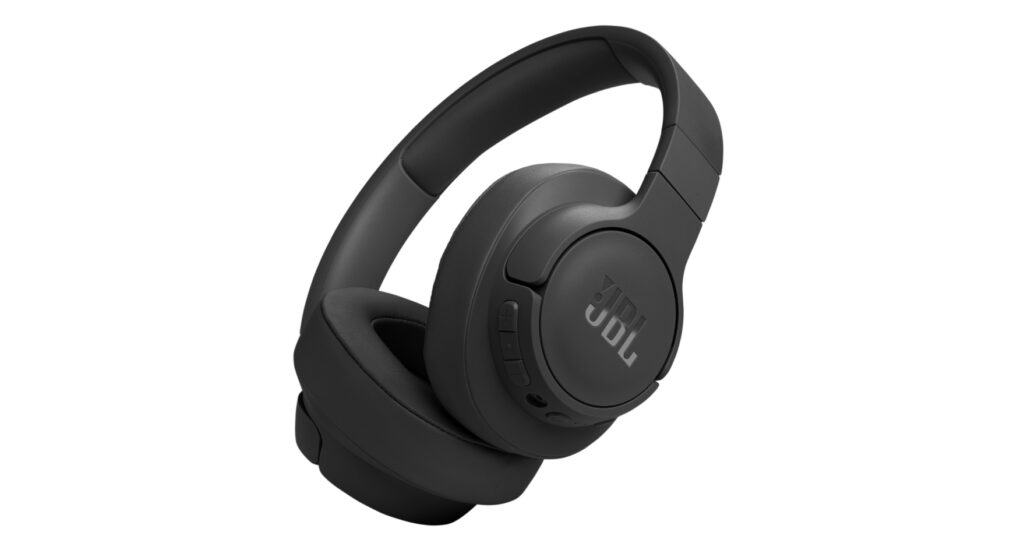
New JBL Quantum 950, 650, & 250 Gaming Headsets Bring Big Drivers, Spatial Audio for Better Immersion

JBL is expanding its gaming audio lineup with the latest Quantum series of gaming headsets. The company just unveiled the Quantum 950, Quantum 650, and Quantum 250, which join the existing Quantum models like the Quantum 350, 200, and others. These feature large carbon drivers, spatial audio, and a bunch of other useful features. So let’s check it out.

What’s Special About these JBL Gaming Headsets?

The known audio brand has just announced the three Quantum gaming headphones with 50mm carbon dynamic drivers with support for spatial audio. These carry a Zoom certification as well. Notably, the high end Quantum 950 also supports 3D head tracking as well. This expensive model can be used wirelessly thanks to a 2.4GHz low-latency dongle and Bluetooth 5.3. It arrives with a wireless base station along with RGB lighting. The Quantum 950 brings adaptive noise cancellation along with a 6mm boom mic.

JBL Quantum 950, Quantum 650, Quantum 250 Gaming Headsets

On a single full charge, it can last for up to 25 hours per cell. Users also get two batteries, which can easily be replaced for longer battery life. Similarly, the Quantum 650 is another pair of wireless headsets with the same 2.4Ghz and Bluetooth 5.3 dongle. You skip the 3D head tracking on these, but you still get the spatial audio, 6mm boom mic, and up to 45 hours of battery life. Apart from the battery being replaceable, one can even swap out the mic, cushions, cable, earcup, and more.

The third and last gaming headset is the JBL Quantum 250. Once again, the spatial audio and 50mm carbon drivers make a return. However, you miss out on the noise cancelling and RGB lighting. This is a wired headphones that connect via the 3.5mm audio jack. JBL has Zoom certified all three models, including this one.

Pricing and Availability

JBL launched the Quantum 950 in just two color options, namely black and white. Meanwhile, the Quantum 650 and Quantum 250 gaming headsets can be purchased in black, white, purple, and teal. Talking about the pricing, the Quantum 950 just debuted with a hefty 349.99 Euros price tag. This makes it more expensive than some premium headphones. On the other hand, the Quantum 650 costs 149.99 Euros, and the Quantum 250 can set you back 59.99 Euros.

For more daily updates, please visit our News Section.

Don’t miss a thing! Join our Telegram community for instant updates and grab our free daily newsletter for the best tech stories!

Vivo Vision MR headset unveiled with 8K dual displays and world’s lightest 398g design

Vivo just unveiled its first mixed reality headset, the Vision Explorer Edition, at their recent launch event. This marks the company’s debut in the MR space, and they’re taking an interesting approach by starting with hands-on demo experiences before putting it on sale.

Vivo Vision Explorer Edition
Photo Credit: Mydrivers

Vivo Vision Explorer Edition Specifications

What really stands out is how light this thing is – just 398 grams. To put that in perspective, Apple‘s Vision Pro weighs over 600 grams, so Vivo has managed to shave off quite a bit of weight. They pulled this off using a split design with magnesium alloy components, which keeps it both sturdy and lightweight.

The headset itself is pretty compact too, measuring 83mm tall and 40mm thick. Vivo has thought about comfort with adjustable face masks, different foam padding options, and a dual-ring strap that releases quickly for easy adjustments.

Under the hood, you’re getting dual 8K Micro-OLED displays with 3840 × 3552 resolution per eye. The color reproduction looks solid with 94% DCI-P3 coverage and impressive color accuracy. Each headset is calibrated at the factory to make sure both eyes see consistent brightness and colors. If you wear glasses, magnetic optical lenses can handle prescriptions from 100 to 1000 degrees without compromising the visual experience.

The headset runs on Qualcomm‘s latest Snapdragon XR2+ chip, which Vivo says delivers 2.5 times better performance than the previous generation. They’ve built their own OriginOS Vision interface on top, enabling things like immersive movie watching, spatial sports replays, and multi-window productivity setups.

The passthrough feature is particularly impressive with just 13ms latency for full-color video, making the transition between real and virtual worlds feel seamless. For interaction, it tracks your eyes with 1.5-degree precision and recognizes hand gestures across 26 degrees of freedom within a 175-degree vertical range, basically letting you control things naturally with your eyes and hands.

Content-wise, Vivo has some exclusive experiences ready like “Drum Master” and “Little V’s Journey.” They’ve partnered with companies like Migu for sports content and made it compatible with PCs and smartphones for wireless streaming. There’s even a spatial photo feature that works with Vivo and iQOO phones.

Pricing and Availability

Here’s the catch though – you can’t buy one yet. Starting August 22nd, Vivo is setting up demo stations in 12 authorized stores across major Chinese cities like Beijing and Shenzhen, with more locations coming later. They want people to try it first.

As for pricing, nothing’s official, but Vivo executives hinted it could be around 10,000 yuan (about $1,395) or less. Their COO mentioned that smartphones really took off in China when prices got within 20-30% of basic phones, so they’re clearly trying to hit that sweet spot for MR adoption.

It’s an interesting strategy, focus on making it lighter and more affordable rather than cramming in every possible feature. We’ll have to see if it pays off when people start getting their hands on it.

For more daily updates, please visit our News Section.

Stay ahead in tech! Join our Telegram community and sign up for our daily newsletter of top stories! 💡

Redmi Note 15 Pro+ full specs out just hours before launch

Xiaomi is launching the Redmi Note 15 Pro series today in China. Just hours before the event, tipster Digital Chat Station revealed the complete specs of the phones.

According to the leak, the Note 15 Pro+ will feature a 6.83-inch 1.5K quad-curved display with large rounded corners, which the tipster says is an “equal depth” design.

The screen reportedly uses the same luminous material found on Xiaomi’s flagship devices and is protected by Dragon Crystal glass, marketed as a tougher alternative to traditional Gorilla Glass. That makes the Pro+ visually closer to premium models than most mid-range handsets.

On the camera side, the Note 15 Pro+ is expected to ship with a 50-megapixel OV50E main sensor measuring 1/1.55 inches, complete with optical image stabilization. The setup also includes a 50-megapixel telephoto lens with 2.5x zoom.

Powered by a new Snapdragon processor

Under the hood, the phone is said to run on Qualcomm’s Snapdragon 7s Gen 4 chip, paired with a massive 7,000mAh battery and 90W fast charging. The handset managed to score 1,228 points in the single-core test and 3,230 points in the multi-core test in the Geekbench run.

As for durability, the device will carry IP66, IP68, IP69, and IP69K ratings. Despite that, the materials are more modest, with a plastic middle frame and a fiberglass back cover.

Audio isn’t left behind either. The Note 15 Pro+ reportedly features dual symmetrical 1115 speakers, a trait typically reserved for pricier models.

The leak also mentions the standard Redmi Note 15 Pro variant, which swaps the curved screen for a flat one but keeps the 7,000mAh battery and the same waterproofing standards.

The only detail left is the price, and we’re just hours away from finding out.

For more daily updates, please visit our News Section.

Stay ahead in tech! Join our Telegram community and sign up for our daily newsletter of top stories.

(Source)

New Galaxy S25 FE Leak Reveals High-End Specs: Exynos 2400, 45W Charging, 50MP Triple Cameras, & More

Samsung‘s next Fan Edition smartphone has just surfaced in yet another leak, confirming nearly all of its key specs. The Galaxy S25 FE is set to debut as the brand’s latest affordable flagship model, so here’s what we know.

Galaxy S25 FE Leak: Exynos 2400, 120Hz Display, 50MP Triple Cameras & More

The details arrive from a tipster Ahmed Qwaider’s recent tweet. He claimed that the Galaxy S25 FE will launch in multiple color options, namely Dark Blue, Navy, Light Blue, Black, and White. This is in line with our recent report that covered leaked renders. On the front, the Galaxy S25 FE could sport a tall 6.7-inch Dynamic AMOLED display with a 120Hz refresh rate, 1900 nits of peak brightness, and FHD+ resolution. Both the front and back panels will reportedly have Gorilla Glass Victus protection, similar to its predecessor.

Under the hood, the Galaxy S25 FE upgrades to the Exynos 2400 (over the Exynos 2400e on the S24 FE). Keeping this model cool is a new thermal dissipation system that reportedly offers 13% better cooling. A sizeable 4,900mAh battery pack powers this model, which supports 45W wired fast charging. For photography, the rear has a 50MP (Main) + 8MP (Telephoto) + 12MP (Ultra Wide) camera setup, while the front houses a 12MP selfie shooter.

Samsung’s next Fan Edition will likely run on the Android 16 OS based One UI 8 custom skin out of the box. Other notable features include an IP68 rating for water and dust resistance, WiFi 6E support, and Galaxy AI tools. This is all the information we have at the moment, so stick around for more.

For more daily updates, please visit our News Section.

Tech enthusiast? Get the latest news first! Follow our Telegram channel and subscribe to our free newsletter for your daily tech fix! ⚡

Qualcomm introduces Snapdragon W5+, W5 Gen 2 with satellite support for wearables

Qualcomm has revealed its latest advancements in wearable technology with the Snapdragon W5+ Gen 2 and W5 Gen 2 platforms. The announcement was made during the Made by Google event, where the new Pixel Watch 4 was also introduced. According to the company, the updated platforms bring significant improvements in connectivity, efficiency, and safety features for smartwatches and other wearables.

Satellite connectivity reaches wearables

Qualcomm Snapdragon W5+ Gen 2 / W5 Gen 2

The Snapdragon W5+ Gen 2 and W5 Gen 2 are the first wearable platforms to integrate support for satellite communication through Skylo’s Narrowband Non-Terrestrial Network. This feature allows users to send and receive emergency messages in locations with no mobile network or Wi-Fi access, which could be a vital addition for outdoor enthusiasts and travellers.

Unlike traditional wearables, the technology ensures communication even in remote regions. The W5+ version includes a low-power co-processor, while the W5 Gen 2 does not, giving manufacturers flexibility in design and battery optimization.

In addition, the platforms are built on a 4nm system-on-chip design. They come with the new Location Machine Learning 3.0 system, which can improve GPS accuracy by up to 50 percent compared to earlier generations. Qualcomm has also introduced an optimized RF Front End that reduces component size and power requirements by around 20 percent, enabling slimmer designs and longer-lasting batteries.

Pixel Watch 4 features Snapdragon W5 Gen 2

Google Pixel Watch 4

The first smartwatch to feature the Snapdragon W5 Gen 2 is the Pixel Watch 4, running Wear OS 6. Qualcomm says the platform is designed to enhance multi-device experiences while maintaining high levels of performance and power efficiency. The collaboration with Google and Skylo highlights the growing push to expand satellite connectivity beyond smartphones and into wearables, potentially transforming how safety and communication features are delivered to users worldwide.

For more daily updates, please visit our News Section.

Stay ahead in tech! Join our Telegram community and sign up for our daily newsletter of top stories.

Vivo T4 Pro launch date revealed, read officially confirmed details

Vivo is all set to launch its next T4-series phone in India. Dubbed the Vivo T4 Pro, the new phone is scheduled to go official on Aug. 26. Here’s a look at the details that the brand has confirmed so far about the device.

Vivo T4 Pro design

Vivo T4 Pro launch date

Starting with design, the Vivo T4 Pro features a quad-curved display on the front, and its back panel has a camera island similar to the Vivo V60 and X200 FE. A major difference, however, is the absence of the Zeiss logo, suggesting that this phone is more performance-focused than photography-centric.

Nevertheless, the phone comes with a periscope telephoto camera, the only one to offer this feature in its price segment.

Vivo T4 Pro key specifications

The Vivo T4 Pro has an FHD+ AMOLED panel on the front and has a slim profile of 7.53mm. For clearer zoomed shots, the device is equipped with a Sony IM882 50-megapixel periscope telephoto camera with 3x optical zoom.

Like the Vivo V60, the T4 Pro will feature the Snapdragon 7 Gen 4 SoC, which is a noteworthy upgrade considering the T3 Pro debuted with the Snapdragon 7 Gen 3 last year. It will be joined by a massive 6,500mAh battery. Rumors surrounding the device claim that it may support 90W fast charging.

Vivo T4 Pro price in India

The Vivo T4 Pro will be positioned lower than the Vivo T4 Ultra in the country. It will be priced between Rs 25,000 and Rs 30,000. When it comes to color options, it will be sold in two shades such as blue and gold. This phone is expected to rival the Snapdragon 7 Gen 4-powered Realme P4 Pro, which recently debuted in India.

For more daily updates, please visit our News Section.

Stay ahead in tech! Join our Telegram community and sign up for our daily newsletter of top stories.

Honor’s mysterious 10,000mAh phone to pack 6.79-inch screen, Dimensity 8500

Honor is working on a couple of new phones for the Chinese market. After the Honor Magic 8 and Magic 8 Pro, which are expected to launch in October this year, the brand may launch the Honor GT 2 series powered by the Snapdragon 8-series chip before the end of this year. It is also working on a mysterious phone that will pack a 10,000mAh battery. Tipster Digital Chat Station has been gradually revealing key details about this phone. Today, he rolled out the following Weibo post to confirm the display size and launch timeframe of the device.

Honor 10,000mAh display size, launch timeframe (rumored)

According to the tipster, the mysterious Honor phone with a 10,000mAh battery onboard will be powered by the upcoming Dimensity 8500 SoC. He revealed that its current engineering prototype is equipped with a 6.79-inch LTPS OLED panel that supports a 1.5K resolution.

He added that despite carrying such a huge battery aimed at extreme endurance, the thickness of the device is still fairly reasonable. As far as the launch is concerned, it is expected to debut in the first half of 2026. At present, there is no clarity about the final moniker of this device.

Honor X70 launch date-
Honor X70

Currently, the Honor X70 is the largest battery phone from Honor. The Snapdragon 6 Gen 4-powered mid-range phone packs a huge 8,300mAh battery. It weighs 199 grams and measures only 8.0mm. Therefore, the mysterious 10,000mAh Honor phone could measure under 9mm in thickness and weigh 210-220 grams, which is reasonable considering its mammoth battery size.

For more daily updates, please visit our News Section.

Stay ahead in tech! Join our Telegram community and sign up for our daily newsletter of top stories.

Google Pixel 10 Pro Fold launches with Tensor G5, bigger battery, IP68 rating, and Titan M2 security chip

Google announced the Pixel 10, Pixel 10 Pro, Pixel 10 Pro XL, and Pixel 10 Pro Fold alongside the Pixel Watch 4 series at its Made by Google event in Brooklyn on August 20.

Google unveiled the Pixel 10, Pixel 10 Pro, Pixel 10 Pro XL, and the Pixel 10 Pro Fold, alongside the Pixel Watch 4 series, at its Made by Google event in Brooklyn on August 20. The foldable device is aimed directly at Samsung’s Galaxy Z Fold 7 with upgrades in durability, display tech, and AI features.

The phone uses a new gearless hinge that Google says is twice as durable as before, and it’s the first foldable with an IP68 rating for water and dust resistance. The body is made of aerospace-grade aluminum and comes in Moonstone and Jade.

It has a 6.4-inch cover screen and an 8-inch Super Actua Flex OLED inner display, both hitting 3,000 nits of brightness. The glass has been reinforced with extra layers to improve durability.

Inside, the Pixel 10 Pro Fold runs on the Tensor G5 chip with support for AI features like Gemini Live, Magic Cue, and Daily Hub. It packs a 5,015mAh battery (up from Pixel 9 Pro Fold’s 4,650 mAh) rated for 30+ hours, supports 30W charging, and adds Qi2 wireless charging with Google’s new Pixelsnap accessories.

The triple rear camera system is led by a 48MP main sensor with Macro Focus, joined by a 10.8MP 5x telephoto with support for 20x “Super Res Zoom,” and a 10.5MP ultrawide. Google has also included two 10MP selfie cameras, one in the inner display’s punch-hole and another on the cover screen. On paper, this setup feels like one of the less ambitious parts of the device compared to its other upgrades.

Price and availability

The Pixel 10 Pro Fold runs on Android 16 with seven years of software support. Pre-orders are live now, with sales starting October 9. The 256GB model is priced at ₹1,72,999, while 512GB and 1TB options are expected but pricing for those hasn’t been confirmed yet.

Don’t miss a thing! Join our Telegram community for instant updates and grab our free daily newsletter for the best tech stories!

For more daily updates, please visit our News Section.

Snapdragon 8 Gen 5 tipped as true flagship, could debut alongside Snapdragon 8 Elite 2

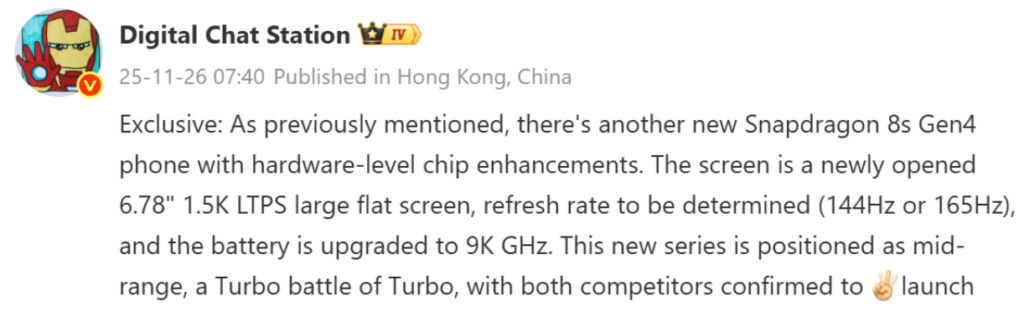
Qualcomm is expected to unveil the Snapdragon 8 Elite 2 at its upcoming 2025 Snapdragon Summit. This chipset is said to have the SM8850 model number. Rumors suggest that the brand may also unveil the Snapdragon 8 Gen 5, bearing the model number SM8845, alongside the 8 Elite 2. Today, tipster Digital Chat Station shared a Weibo post revealing what to expect from the Snapdragon 8 Gen 5.

Snapdragon 8 Gen 5: What to expect?

According to the tipster, the upcoming Snapdragon 8 Gen 5 is neither an iteration of the Snapdragon 8s Gen 4 (SM8735) nor a rebranded version of any existing Snapdragon 8s series chipset. Since its inception, its positioning has been that of a true Snapdragon 8-series flagship chip.

He explained that the Snapdragon 8 Gen 5 uses the same TSMC N3P process as the Snapdragon 8 Elite 2v and features Qualcomm’s custom Oryon CPU architecture, with support for the SME (Scalable Matrix Extension) instruction set for on-device AI acceleration. This means its specifications and architecture are highly promising and worth anticipating.

Snapdragon 8 Gen 5 mock render
Snapdragon 8 Gen 5 – AI-generated mock render

He also mentioned that many leading smartphone manufacturers are already betting on this chip, showing its importance in the upcoming flagship landscape. Finally, he added that there is no SM8835 in this generation of the Snapdragon 8 series. The lineup only includes the SM8850, SM8850s (which may debut later as the Leading Version), and the SM8845.

Recent reports have revealed that the Redmi K90 could be the first phone to feature the Snapdragon 8 Gen 5. The tipster has previously claimed that this chip will have a 2+6 architecture and will borrow some features from the Snapdragon 8 Elite 2. However, it is said to be slightly weaker than the Snapdragon 8 Elite from last year. Apart from the Redmi K90, the Honor GT 2 and the Realme Neo 8 are also speculated to feature the Snapdragon 8 Gen 5.

For more daily updates, please visit our News Section.
Stay ahead in tech! Join our Telegram community and sign up for our daily newsletter of top stories.

AI Chatbot Subscriptions in 2025: Everything You Need to Know

AI chatbots have become subscription services much like music and video streaming platforms. Each company now has different pricing tiers designed to attract casual users, professionals, and enterprises. Here is a detailed look at the major players and what they offer.

AI Chatbots

1. ChatGPT (by OpenAI)

OpenAI continues to lead the market with ChatGPT. The free plan gives users access to GPT-5 with usage limits, enough for simple queries and casual use.

The ChatGPT Plus plan costs $20 per month globally or ₹1,999 in India. It unlocks unlimited use of GPT-5 and GPT-4o, advanced tools such as web browsing, data analysis, and image generation, as well as custom GPT creation. Plus subscribers also receive early access to new features.

The ChatGPT Pro tier, priced at about $200 per month or ₹19,900 in India, is aimed at heavier workloads. It increases usage capacity, adds customization, and provides enterprise-grade security.

OpenAI also introduced ChatGPT Go in select regions like India at ₹399 per month. It delivers GPT-5 access with higher limits than the free tier but does not include advanced features such as Sora video generation.

At the enterprise level, ChatGPT Enterprise offers unlimited GPT-5 and GPT-4o access with no usage caps, extended context windows, SOC 2-compliant security, and admin tools. Pricing is custom-based on business needs.

2. Gemini (by Google)

Google’s Gemini is closely tied to its ecosystem. The free tier allows access to Gemini 2.5 Flash and Gemini 2.5 Pro for basic conversations.

The main paid plan is Gemini Advanced, part of the Google One AI Premium subscription priced at $19.99 per month. This plan includes 2TB of cloud storage and unlocks Gemini 2.5 Pro with higher limits, a 1 million–token context window, file analysis features, and video generation powered by Veo 3.

Gemini Ultra is available at $249.99 per month for users who want the most powerful access, including experimental features and video generation with sound.

For enterprises, Google provides Gemini access through Google Cloud with custom pricing and token-based API billing.

3. Microsoft Copilot

Microsoft integrates Copilot across Windows, Office, and mobile apps. The free version provides basic assistance.

Copilot Pro, priced at $20 per month, adds priority access to OpenAI’s latest models, faster image creation with Microsoft Designer, and direct integration with Word, Excel, and PowerPoint. A Microsoft 365 subscription is required for Office features.

Copilot for Microsoft 365 costs $30 per user per month and extends Copilot into the full Microsoft suite with enterprise-grade security.

4. Perplexity

Perplexity positions itself as an AI-powered search engine. The free tier gives limited Pro Searches each day.

Perplexity Pro costs $20 per month or $200 annually. Subscribers receive over 300 Pro Searches daily, access to GPT-5 and Claude, unlimited file uploads, and image generation.

The Enterprise Pro plan costs $40 per user per month and adds private knowledge hubs, administrative controls, and strict privacy protections.

5. Claude (by Anthropic)

Claude is popular for long-form writing and research tasks. The free plan offers basic access to the AI.

Claude Pro costs $20 per month and expands usage limits, giving access to Claude Sonnet 4 and extended conversations.

Claude Max starts at $100 per month and provides much higher usage, larger output capacity, and early access to new features.

API pricing ranges from $0.25 per 1M tokens for Claude Haiku to $75 per 1M output tokens for Claude Opus.

6. Grok (by xAI)

Grok, developed by Elon Musk’s xAI, is integrated into the X platform. There is no free version. Access is bundled with X Premium+ at $16 per month.

The chatbot delivers real-time answers based on X’s live feed and uses a witty, sarcastic style. It is less about productivity and more about social interaction.

7. Jasper

Jasper is built for content marketing rather than general conversation. There is no free plan.

The Creator plan costs $49 per month, while the Pro plan is priced at $69 per month. Enterprise users can negotiate custom pricing under the Business plan.

Jasper includes more than 50 templates for content creation, SEO optimization, and integrations with marketing platforms.

8. Poe (by Quora)

Poe acts as a central hub for AI chatbots from multiple providers. The free plan provides limited access to bots like GPT-5, Claude Opus 4.1, and DeepSeek-R1.

Poe Pro, at $19.99 per month, removes most restrictions and allows unlimited use of premium models such as GPT-5 and Claude Sonnet.

9. DeepSeek

DeepSeek has gained recognition for its reasoning and coding performance. The chatbot is free for consumers.

Developers can use its API with extremely low pricing. The deepseek-chat model costs $0.27 per 1M input tokens and $1.10 per 1M output tokens, making it one of the most affordable large-scale AI solutions.

For more daily updates, please visit our News Section.
Stay ahead in tech! Join our Telegram community and sign up for our daily newsletter of top stories! 💡

Here are the best GaN chargers for Apple devices

If you use a MacBook Pro and an iPhone, you already know Apple’s chargers don’t always keep up with real life. The official adapters are either too big, too expensive, or limited to a single port. 

Enter GaN (gallium nitride) chargers. They’re smaller, cooler, and more powerful than traditional silicon chargers, and many of them come with multiple ports so you can power your MacBook, iPhone, and AirPods at the same time.

We looked through a long list of options and narrowed it down to five chargers that balance portability, power, and versatility. These work well for Apple’s top-end MacBooks and iPhones.

1. Anker 140W 4-Port PD 3.1 Charger

  • Dimensions: 6.9 × 6.9 × 3.6 cm
  • Weight: 275 g
  • Connections: 3× USB-C (2× 140W PD 3.1, 1× 40W), 1× USB-A (33W)
  • Color: Silver or Gray
  • Price: $99.99

If you own a 16-inch MacBook Pro, this charger is probably the best replacement for Apple’s bulky adapter. It supports PD 3.1, meaning it can fast-charge the biggest MacBook using Apple’s MagSafe 3 cable. Unlike Apple’s official brick, it has four ports, so you can keep your iPhone and AirPods powered while topping up your laptop.

The design is also a little more practical: all the ports are on the bottom, so cables don’t stick out awkwardly from the wall. It even has a small display to show charging status and temperature, which is rare for wall chargers. At 275 grams, it’s heavier than a simple single-port adapter, but it’s compact for the amount of power it offers.

Please Note: When you buy something using the links in our articles, we may earn a small commission at no cost to you.

2. Ugreen Nexode Pro 160W 4-Port GaN Fast Charger

Ugreen-Nexode-Pro-160W-4-Port-GaN-Fast-Charger
  • Dimensions: 7.1 × 4.3 × 3.3 cm
  • Weight: 304 g
  • Connections: 1× USB-C (140W PD 3.1), 1× USB-C (100W PD 3.0), 1× USB-C (30W), 1× USB-A (22.5W)
  • Color: Gray
  • Price: $94.99

Ugreen’s Nexode Pro 160W strikes a good balance between power and portability. It’s slightly heavier than Anker’s 140W model, but still much smaller than Apple’s original 140W charger. The top USB-C port can fast-charge the 16-inch MacBook Pro, while the second one can handle a 14-inch MacBook Pro at 100W.

If you’re charging multiple devices, you can split power across two laptops (65W each) and still have room to charge a phone or iPad. For people who juggle multiple Apple devices at once, this versatility makes it one of the best picks.

Please Note: When you buy something using the links in our articles, we may earn a small commission at no cost to you.

3. Anker Prime Charger 100W (3 Ports)

  • Dimensions: 4.4 × 2.9 × 6.8 cm
  • Weight: 170 g
  • Connections: 2× USB-C (100W PD 3.0), 1× USB-A (22.5W)
  • Color: Gray
  • Price: $84.99

If you don’t need the full 140W, the Anker Prime 100W is a sweet spot. It’s smaller and lighter than most high-wattage chargers, making it easier to carry around. At 100W, it can easily charge a 14-inch MacBook Pro or keep a 16-inch model going at standard speed, though not full fast charge.

With three ports, it’s enough for a laptop, iPhone, and AirPods. The design has been tweaked recently to prevent it from slipping out of sockets, which was an issue in earlier Anker models. For commuters and frequent travelers, this one balances power and portability really well.

Please Note: When you buy something using the links in our articles, we may earn a small commission at no cost to you.

4. Belkin BoostCharge Pro 140W 4-Port GaN Wall Charger

  • Dimensions: 3.1 × 7.6 × 9.6 cm
  • Weight: ~ (comparable to 140W wall chargers)
  • Connections: 1× USB-C (140W PD 3.1), 2× USB-C (65W), 1× USB-A (12W)
  • Color: White
  • Price: $129.99

Belkin’s BoostCharge Pro is a strong rival to Anker’s high-wattage chargers. It has a single 140W USB-C port that can fast-charge the MacBook Pro 16-inch, plus two more USB-C ports for mid-powered devices, and a USB-A port for legacy cables.

The big advantage here is flexibility: you can run two MacBook Airs at once, or a MacBook Pro, iPhone, and Apple Watch together. Belkin’s chargers also tend to feel sturdier than budget alternatives, though this comes at a slightly higher price. If you’re an Apple household with multiple devices in rotation, this charger cuts down the number of bricks you need.

Please Note: When you buy something using the links in our articles, we may earn a small commission at no cost to you.

5. Ugreen Nexode 200W 6-Port Desktop Charger

  • Dimensions: 10.1 × 10.1 × 3.23 cm
  • Weight: 517 g
  • Connections: 2× USB-C (100W), 2× USB-C (65W), 2× USB-A (22.5W)
  • Color: Gray
  • Price: $119.99

Not all chargers are meant for wall sockets. Ugreen’s Nexode 200W is more like a mini charging station for your desk. With six ports, you can charge up to four MacBooks and two smaller devices at once. Each USB-C port goes up to 100W, so you won’t run into power limits unless you’re trying to fast-charge multiple large laptops at the same time.

It comes with a 1-meter cable that plugs into the wall, so the brick can sit on your desk for easier access. At over 500 grams, it’s not something you’ll toss in a backpack for daily travel, but if you want a single charger for your home office setup, it’s one of the best.

Please Note: When you buy something using the links in our articles, we may earn a small commission at no cost to you.

Why GaN chargers matter for Apple users

Apple’s own chargers are good, but they’re often one-port solutions. If you’re using a MacBook Pro, an iPhone, and maybe an iPad, you’ll quickly find yourself running out of outlets or carrying around multiple adapters. GaN chargers solve this problem by offering multiple high-power ports in a smaller footprint.

They’re also more efficient, generating less heat compared to older silicon chargers. That means you can get 100W or even 200W in a block that’s smaller than Apple’s single-port charger. For people who travel or work in shared spaces, these compact, high-power GaN chargers can make life a lot simpler.

For more daily updates, please visit our News Section.

Stay ahead in tech! Join our Telegram community and sign up for our daily newsletter of top stories! 💡

Pre-Order Deals on Pixel 10, Pixel 10 Pro, and Pixel 10 Pro XL Live Now

Google announced the new bandwagon of Pixel devices, including the Pixel 10, Pixel 10 Pro, and Pixel 10 Pro XL. Additionally, there’s a new Pixel Watch 4 with all-new features and improvements. Some exciting Pre-Order deals are now live on the Pixel 10, Pixel 10 Pro, and Pixel 10 Pro XL smartphones from the carriers in the US.

Google Pixel 10

The preorder deals are already looking incredible. Whether you’re eyeing the base Pixel 10, the more powerful Pixel 10 Pro, or the supersized Pixel 10 Pro XL, you can save big (or even get one free) if you preorder from the right retailer or carrier. There are several new advancements for the Pixel 10, the Pixel 10 Pro, and the Pixel 10 Pro XL.

Pre-Order Pixel 10 Series

Google Pixel 10 Preorder Deals

  • T-Mobile: Get the Pixel 10 free with an eligible data plan. – Buy Now
  • Verizon: Free Pixel 10 with an Unlimited Plus or Ultimate plan (credits applied over 36 months).
  • AT&T: Pixel 10 for $7.99/month, no trade-in required.
  • Amazon: Free $100 gift card with purchase – Buy Now
  • Best Buy: Free $100 gift card plus trade-in credits and $100 off with activation.
  • Xfinity Mobile: Pixel 10 free with trade-in and eligible plan (or up to $400 off without).

Google Pixel 10 Pro Preorder Deals

  • T-Mobile: Free Pixel 10 Pro with eligible trade-in + new line. – Buy Now
  • Verizon: Up to $1,000 off with trade-in on the Unlimited Ultimate plan.
  • AT&T: Free Pixel 10 Pro with eligible trade-in + line.
  • Amazon: Free $200 gift card with preorder. – Buy Now
  • Best Buy: Free $200 gift card, plus an extra $100 off with carrier activation.
  • Xfinity Mobile: Free Pixel 10 Pro with trade-in + new line.

Google Pixel 10 Pro XL Preorder Deals

  • T-Mobile: Up to $1,000 off with trade-in + new line. – Buy Now
  • Verizon: Up to $1,000 off with trade-in on the Unlimited Ultimate plan.
  • AT&T: Free Pixel 10 Pro XL with eligible trade-in + line.
  • Amazon: Free $200 gift card with preorder. – Buy Now
  • Best Buy: Free $200 gift card, plus $100 off with activation.
  • Xfinity Mobile: Up to $1,000 off with trade-in on eligible plan.

Make sure to grab these pre-order deals to save maximum on the newly launched Pixel 10, Pixel 10 Pro, or Pixel 10 Pro XL smartphones.

Google Pixel Buds 2a launched with ANC, 7h battery & recycled design

Google just dropped the Pixel Buds 2a, and they’re looking pretty solid for the price. At $129 in the US (₹12,999 in India), they’re sitting right between Samsung’s pricier Galaxy Buds 3 FE at $150 and Google’s own premium Pixel Buds Pro 2 at $229. You can grab them starting October 9th.

Pixel Buds 2a

Google Pixel Buds 2a Specifications

What’s interesting is that Google managed to squeeze the design DNA from their flagship Pro 2 model into something smaller and lighter. Each bud weighs just 4.7 grams, which is nice if you’re wearing them for hours. They’ve got these stabilizing wings with a twist-to-fit mechanism, and Google says they based the fit on data from over 45 million ear scans; that’s a lot of ears. You can get them in Iris (a purple shade) or Hazel (grey), and they’re IP54 rated, so sweat and splashes won’t kill them.

The big news here is that active noise cancellation finally made it to Google’s budget A-Series. They’re calling it Silent Seal 1.5, plus there’s a transparency mode when you need to hear what’s going on around you. The 11mm drivers have been redesigned and are powered by Google’s Tensor A1 chip, and you get a five-band EQ to tweak the sound how you like it. There’s also spatial audio for that surround sound feel.

For calls, each bud packs two mics with wind-blocking mesh and AI noise reduction. They run Bluetooth 5.4 with Super Wideband, can connect to multiple devices, and if you’ve got a Pixel phone, the pairing process is supposedly seamless. Lost an earbud? The Find Hub feature should help track it down. Everything’s controlled through touch gestures, including quick access to Google Gemini.

Pixel Buds 2a

Battery life is solid, with 7 hours of use with ANC on, and it can be extended to a total of 20 hours with the case. A 5-minute quick charge gets you another hour, which is clutch when you’re rushing out the door. The case is lighter than before and has a replaceable battery, which is actually pretty cool.

Google’s also playing up the eco-friendly angle here. The buds use 41% recycled materials, with the magnets, solder, and batteries being 100% recycled. Even the packaging ditched plastic entirely.

In related news, Google has also launched the Pixel 10 and Pixel 10 Pro flagships with AI-driven features and premium pricing, alongside the Pixel Watch 4 with a domed display, satellite SOS, Snapdragon W5 Gen 2, and over 50 workout modes.

For more daily updates, please visit our News Section.
Stay ahead in tech! Join our Telegram community and sign up for our daily newsletter of top stories! 💡

Pixel 10 Pro & Pixel 10 Pro XL Are Here: Google’s AI-Loaded Flagships with Premium Price Tags

Google has officially launched its latest flagships, the Pixel 10 Pro and Pixel 10 Pro XL. Powered by the new Tensor G5 chip and bundled with advanced AI features, these premium phones also impress with their vibrant LTPO displays, sleek satin metal frames, and reinforced durability. So here’s everything you need to know.

Google Pixel 10 Pro Series: New Hardware

The new Pixel 10 Pro series with a series of upgrades over its predecessors. First and foremost, we have the new Google Tensor G5 SoC, which comes with a Titan M2 security chip. This new processor promises around 34 percent faster CPU performance, while also upgrading on-device AI performance by 60 percent. Keeping the more powerful chip cool is an improved vapor chamber cooling system.

Google Pixel 10 Pro & Pixel 10 Pro XL

Google built the Pixel 10 Pro as a compact flagship, which sports a 6.3-inch LTPO AMOLED display with a 1.5K resolution, up to 120Hz refresh rate, 3300 nits of peak brightness, and Corning’s Gorilla Glass Victus 2 for protection. However, this smaller form factor comes at the cost of battery size and charging since the base Pixel 10 Pro houses a 4,870mAh cell with 29W wired fast charigng and 15W wireless Qi2 compatible charging.

Meanwhile, the Pixel 10 Pro XL sports a taller 6.8-inch LTPO AMOLED panel with a higher QHD+ resolution, up to 120Hz refresh rate, 3300 nits of peak brightness, and Gorilla Glass Victus 2. You also get a larger 5,200mAh battery pack with 39W wired fast charging and 25W Qi2 wireless charging support. Google is calling its own version of “MagSafe” Pixelsnap as an all-new magnetic charging tech.

New Software

Google has never always been more inclined towards the software experience, and the new AI features show that. Among the new features we have Magic Cue, which brings personalised intelligence thanks to the new Tensor G5 on the Pixel 10 series. There is also the Camera Coach that helps improve your photography game and Auto Best Take that can automatically find and combine similar phones to get the best result. Out of the box, the Pixel 10 Pro and Pixel 10 Pro XL run on Android 16 OS as well.

Camera

Both models feature an identical camera system on the front and back. The rear has a 50MP main Samsung GNV sensor (replacing Sony’s camera on the Pixel 9 Pros), which has a large 1.3-inch size and an f/1.7 aperture. This is paired with the same 48MP ultra wide angle and 48MP 5x telephoto shooter from last year. Similarly, the front also brings back the 32MP selfie camera that supports autofocus as well.

Pricing and Availability

Google unveiled the Pixel 10 Pro series in multiple color options, namely Obsidian, Porcelain (10 Pro only), Moonstone, and Jade. These were announced in multiple storage configurations, so here are their pricing details:

Google Pixel 10 Pro

  • 16GB + 128GB – 999 US Dollars
  • 16GB + 256GB – 1,099 US Dollars/109,999 INR
  • 16GB + 512GB – 1,219 US Dollars
  • 16GB + 1TB – 1,449 US Dollars

Google Pixel 10 Pro XL

  • 16GB + 256GB – 1,199 US Dollars/124,999 INR
  • 16GB + 512GB – 1,319 US Dollars/139,999 INR
  • 16GB + 1TB – 1,549 US Dollars

Notably, the Indian market only gets the 256GB variant of the Pixel 10 Pro, and the 256GB and 512GB variant of the Pixel 10 Pro XL. There is also a 10,000 INR instant bank discount along with no cost EMI options and 5,000 INR exchange bonus on these phones.

For more daily updates, please visit our News Section.
Tech enthusiast? Get the latest news first! Follow our Telegram channel and subscribe to our free newsletter for your daily tech fix! ⚡