If you are in the market for a premium Bluetooth 5.0 earphone that doesn’t cost a bomb, you might want to give the i2000 TWS HighTechX-Edition a test drive.
Available in highly-appealing color options including pink rose, black, cornflower blue, light green and white, the i2000 TWS HighTechX-Edition has gone up for sale carrying lowered price through Gearbest. As part of its latest flash sale, the Chinese e-tailer is giving you a chance to get your hands on the black, as well as white color options for unbeatable prices.
The black-tinted i2000 TWS HighTechX-Edition would normally set you back $35.40, but you can now purchase it for a lowered price of just $28.99 from Gearbest. This is an 18 percent reduction in the earphone’s original asking price.
Alternatively, you can avail of a 15 percent off on the white color option that usually retails for $34.14. Thanks to the aforesaid discount, the original selling price of this variant has dropped to just $28.99, which means, you can save $5.15 during the Gearbest flash sale.
The i2000 TWS HighTechX-Edition are true wireless earbuds that enable you to perform tasks such as listening to music, answering calls, driving or working out without using your hands. It comes with an i2000 built-in sensor that offers a 60 percent faster reaction and a 90 percent success rate, delivering an exceptional HD sound quality.
Furthermore, the i2000 TWS HighTechX-Edition is integrated with a voice assistant that allows you to play your favorite soundtrack, call TOMKAS, turn up the volume, send messages, etc. You can use the touch control to answer/reject incoming calls, switch to the next song, return to the previous song, and activate voice assistant.
It adopts the latest CSR Bluetooth 5.0 design that delivers relatively faster and more stable transmission. It supports wireless charging function, allowing you to charge your earphone dock without cable, even when there is a power failure.
Housed in a compact body, the i2000 TWS HighTechX-Edition is easy to carry wherever you go. On top of that, it offers universal compatibility and works with smartphones, PC, tablets and Windows OS, Android, as well as iOS systems.
You can follow this link to check out more details about the i2000 TWS HighTechX-Edition Newest Bluetooth 5.0 Earphone and place your order. With over a thousand pieces sold at the time of writing, the flash sale is slated to end in just 6 days.
The Gizmochina Coupons is a community that finds, reports and evaluates deals and coupons of Chinese products from online shops. Please visit it here to find more coupons to save money on mobiles and smart gadgets.
ZTE recently confirmed that the company will be launching its next-generation Axon series smartphone named ZTE Axon 11 5G in China on 23rd March. Now, ahead of its launch next week, the phone has passed through 3C certification process.
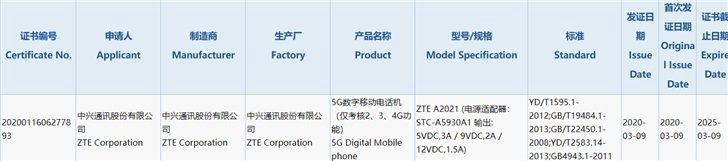
The smartphone, which carries model ZTE A2021 has passed through the 3C certification of the Ministry of Industry and Information Technology. It reveals that the phone will come with support for 18W fast charging.
Given that the phone has 18W fast charging support, it seems that the device won’t be a flagship one and could be a mid-range of upper mid-range offering. The device is also confirmed to have dual-mode SA and NSA 5G support.
The poster announcing the phone’s launch date is touting the upcoming device as “5G Video Phone”, hinting that the company will be focusing on two aspects for the flagship smartphone — 5G connectivity and camera for video.
Meanwhile, the company is also reportedly gearing up to launch ZTE Axon 10s Pro smartphone which features a 6.47-inch AMOLED display with full HD+ resolution of 1080 x 2340 pixels and a tall aspect ratio of 19.5:9. The waterdrop notch display promises a screen space of 92 percent and the screen is further integrated with a fingerprint reader.
As for the camera, it is said that the phone could feature a 20-megapixel front-facing camera while the back panel houses a triple-camera setup. It consists of a 48-megapixel main lens with f/1.7 aperture, a 20-megapixel ultrawide lens with 125-degree field-of-view and f/2.2 aperture and an 8-megapixel telephoto lens with f/2.4 aperture.
The 7nm Snapdragon 865 mobile platform fuels the device, coupled with 12GB of LPDDR5 RAM and 256GB of UFS 3.0 storage. It is said that MiFavor 10 OS overlaid on the Android 9 Pie OS runs on the smartphone, which is powered by a 4,000mAh battery and carries support for Quick Charge 4+ fast charging technology.
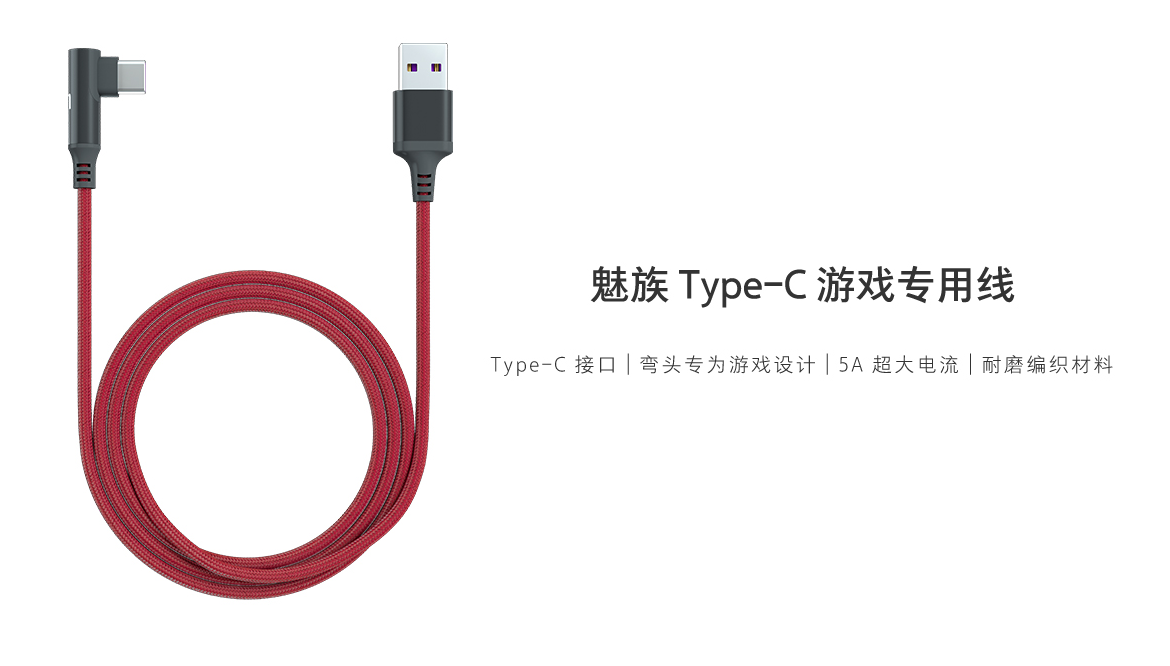
Smartphone manufacturer Meizu has today officially launched a new type of product in its home market China. The company has launched Meizu Type-C Gaming Cable for the gaming enthusiasts.
It is now available for purchase through Meizu Official Mall, Meizu Tmall Flagship Store, and Meizu App, for a price of 49 yuan which roughly converts to $7.
The company says that the new Meizu Type-C Game Dedicated Cable comes with an L-shaped plug which reduces the operational obstacles and the phone can be charged without any issues even when the user is playing a game.
The cable comes with support for 5A charging, enabling fast-charging for the smartphone. Coming to the material, the company says that it uses a special high-strength polypropylene yarn braid, which is skin-friendly and wear-resistant . It is also claimed to have extremely good tensile resistance and insulation.
Further, Meizu says that this new Type-C cable from the company has passed through several tests, including 5,000 times bending test without any issues. The company says that the cable is faster, stable and more durable.
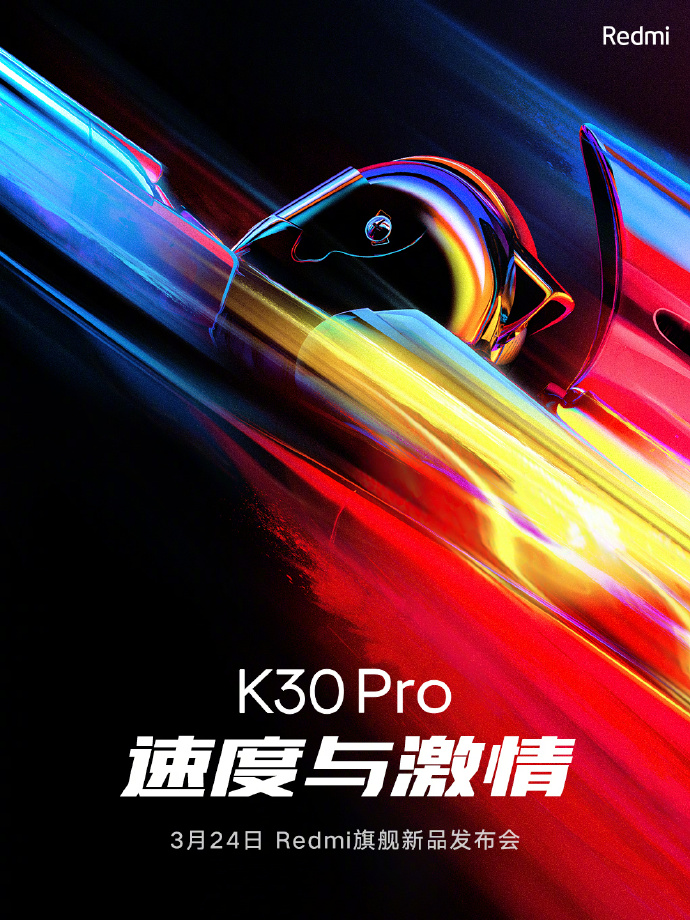
Xiaomi had launched the Redmi K30 smartphone in December last year and now, after teasing it for several weeks, Lu Weibing, General Manager of Redmi brand has confirmed that the Redmi K30 Pro will be officially launched in China on 24th March.
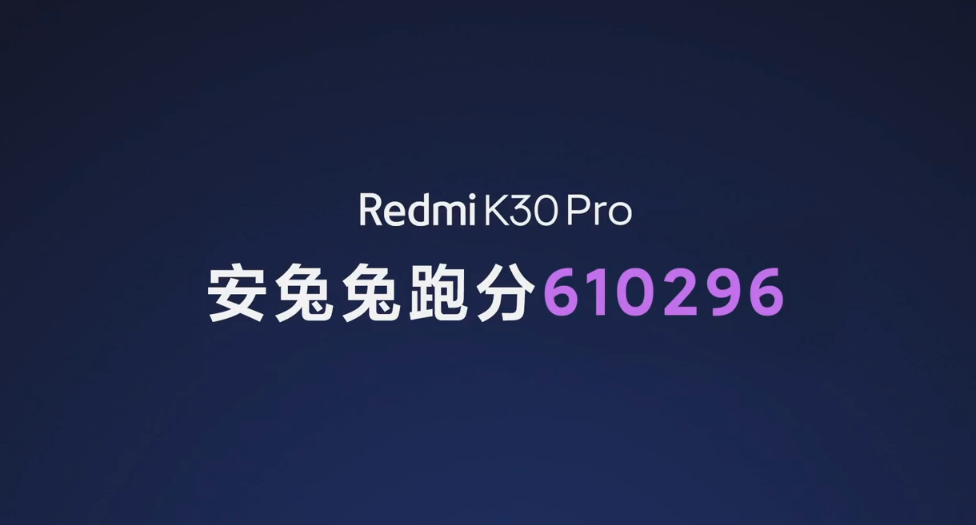
Along with confirming the launch date, the company has also revealed the AnTuTu benchmark score of the Redmi K30 Pro smartphone, which has surpassed the 610,000 mark as it scores 610,296 points.
Lu Weibing also says that the upcoming Redmi K30 Pro will succeed the Redmi K20 Pro launched last year as the “true flagship” smartphone. He also added that the K20 Pro has received great reviews and is now being used by over five million users.
At the launch event on 24th March, the company is expected to announce two smartphones — Redmi K30 Pro and K30 Pro Zoom Edition. The Zoom Edition variant is expected to come with support for high magnification zoom but nothing is known at this point.
The company has already confirmed that the upcoming Redmi K30 Pro 5G will come with a notch-less OLED display, just like its predecessor. The 6.67-inch Full HD+ 120Hz refresh rate screen is also expected to have an in-display fingerprint scanner.
The device will come packed with LPDDR5 RAM and UFS 3.0 storage. It will come powered by the Qualcomm Snapdragon 865 SoC and could be the cheapest SD865-powered phone in the market, and the company says that it is well-prepared to meet the demand.
The 5G compatible smartphone will draw power from its 4,700mAh battery that will come with support for 33W fast charging support. As per the report, the phone could be priced around 3,000 yuan, which is roughly $428.
As per the reports, at the same launch event, along with the two Redmi K30 series smartphones, the company could also unveil a new RedmiBook laptop and a fitness band. To know for sure, we’ll have to wait till next week.
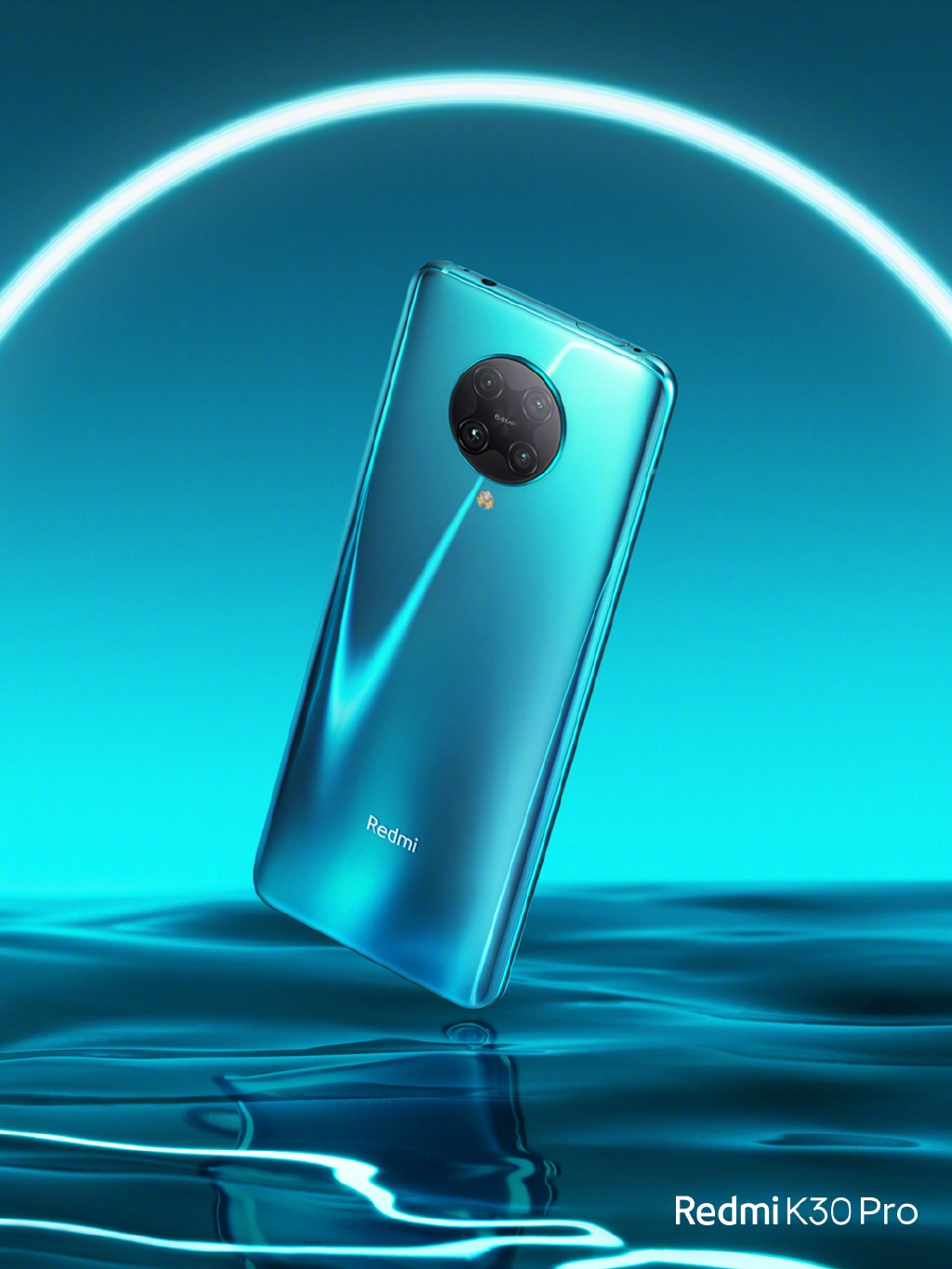
The Redmi K30 Pro 5G flagship phone is confirmed to break cover in China on March 24. Apart from revealing its launch date, the Chinese firm also shared a render that showcases its rear design. The appearance of the phone is in line with the recently seen leaked photos and renders.
The Redmi K30 Pro 5G render shows that it features a gradient colored glass rear. The rear shell curves towards the edges. The top edge of the phone has a 3.5mm audio jack, a pop-up camera module and what appears to be an IR sensor.
There is a round-shaped camera module on the glass rear of the Redmi K30 Pro 5G. Below it is an LED flash. Inside the module, there are four cameras arranged in a square-shaped pattern. The vanilla Redmi K30 5G had a vertically arranged quad camera setup.
Redmi K30 Pro 5G official render
The “64MP” text can be seen at the center of the camera module. It is very likely to feature the same 64-megapixel Sony IMX686 primary shooter that was made available on the Redmi K30 5G. The Redmi K30 Pro is expected to arrive in standard and Zoom Edition. The latter is rumored to come with OIS support for main lens and telephoto sensor.
The entire frontside of the phone is yet to be revealed by the company. A poster that the Chinese firm had rolled out last month revealed that it will be sporting a notch-less display. It will be an OLED panel of around 6.67 inches that will be equipped with an in-screen fingerprint reader.
The Redmi K30 Pro 5G is expected to debut as the cheapest Snapdragon 865 mobile platform driven smartphone. The phone will come with LPDDR5 RAM and UFS 3.0 storage. It could be featuring a 4,700mAh battery with 33W fast charging support.
Vivo India is gearing up to launch the Vivo V19 as the successor for the Vivo V17 that was announced in the country in December 2019. The Vivo V19 will be the company’s first smartphone to sport a dual punch-hole display. While the rumor mill had been speculating on the arrival of the Vivo V19 since February, the company did not reveal any information on it. Now that the launch is imminent, Vivo India has started teasing on its arrival. A new poster released by the company showcases its front and rear design along with color variants. The Chinese firm has also confirmed that the Vivo V19 will be announced in India on March 26.
Vivo had recently launched Vivo V19 phone in Indonesia. The Snapdragon 675 powered phone was a rebranded version of India’s Vivo V17. The Chinese firm will be launching the Vivo V19 in India on March 26 with better specs.
The official poster reveals the presence of a pill-shaped punch-hole at the top-right corner of the Vivo V19’s display. It is an AMOLED screen that is integrated with a fingerprint reader. The rectangle-shaped camera setup can be seen at the upper-left corner of its glass rear. The camera module houses four cameras and LED flash. The two color variants of the phone such as Piano Black and Mystic Silver can be seen in the image.
The poster reveals that the Vivo V19 will deliver stellar photography experience. The front and rear cameras of the phone are expected to capture better quality night shots.
Rumors surrounding the phone has revealed that it will come with a 6.44-inch full HD+ 20:9 aspect ratio display, Snapdragon 712 chipset, 8 GB of RAM, 128 GB / 256 GB storage choices, 32-megapixel + 8-megapixel dual front-facing cameras and 48-megapixel + 8-megapixel + 2-megapixel + 2-megapixel quad camera setup and 4,500mAh battery with 33W fast charging. It may arrive with a starting price of Rs. 25,000 (~$337) in India.
The launch date poster does not reveal any information on the specifications of the device. The handset will be debuting as the advanced version of the Redmi K30 5G phone that was made available for purchase in the Chinese markets at the beginning of this year.
The Redmi K30 Pro 5G is expected to arrive in two variants. The first one will be a standard model while the other one will be called Redmi K30 Pro 5G Zoom Edition. The latter may come with a telephoto lens and OIS support. Both phones will have a quad camera setup led by the Sony IMX686 64-megapixel primary shooter.
The teaser image that the company had released last month showed that the Redmi K30 Pro 5G will be sporting a notch-less OLED screen like the predecessor Redmi K20 Pro. It could be coming with a 6.67-inch full HD+ display that it is integrated with a fingerprint reader. Since the Redmi K30 5G supports 120Hz refresh rate, the upcoming Pro model may offer the same refresh rate. The pop-up camera module of the phone may feature as many as two cameras.
The Redmi K30 Pro 5G will come with LPDDR5 RAM and UFS 3.0 storage. The phone is expected to draw power from a 4,700mAh battery that supports 33W fast charging. It may come with a starting price of around 3,000 Yuan (~$428). The cheapest SD865 is expected to be met with huge demand. The company said that it is well prepared for it.
Redmi General Manager Lu Weibing recently said that the company will be announcing other products alongside the Redmi K30 Pro 5G at the upcoming Redmi launch event. Recent reports have suggested that it may unveil a new RedmiBook and a fitness band at the same unveil event.
Powerbeats 4 is now official and it promises the same audio performance as the Powerbeats Pro that carries a price tag of $250. The Pro model are truly wireless earbuds whereas the Powerbeats 4 has a cable attached to the two earbuds. The Powerbeats 4 has arrived with a price tag of $149.
Powerbeats 4 features
While the Powerbeats 4 carries “Beats by Dre” brand name, it is an Apple product. It relies on the Apple H1 chip for establishing Bluetooth connection. The Powerbeats lets users to access Siri through voice commands. The connecting cable between the two earbuds moves down from the ear loop which prevents the Powerbeats 4 from coming in the way during activities like running. Since Powerbeats 4 features the same 12mm pistonic drivers that are present inside the Powerbeats Pro, it promises an audio output.
There is a Lightning port on the device for charging. The retail box of the earbuds includes a USB-A to Lightning cable). The Audio Sharing feature can be used two Powerbeats 4 to the same iPhone. The said feature also lets users to connect AirPods and Powerbeats 4 to the same iPhone.
The Powerbeats 3 offered 12 hours of battery life. Its successor promises a battery life of up to 15 hours per charge. There is IPX4 rating that makes is sweat and splash resistant.
The Powerbeats 3 had an in-line remote. This feature is no longer available on the Powerbeats 4 as its earbuds are equipped with physical buttons. The right earbud has a volume rocker and there is a multi-function button placed behind the Beats logo. The left earbud has a power button.
Powerbeats 4 pricing
The Powerbeats 4 will go on sale in the U.S. through Apple, Best Buy and other retailers from March 18. It can be bought in colors like White, Black and Red.
In February, Lenovo had launched the Lenovo Xiaoxin 14 2020 laptop that was powered by Intel Core i7 processor. The Chinese firm has now unveiled Xiaoxin Pro 13 2020 notebook. Except for the inclusion of NVIDIA GeForce MX350 graphics, the Xiaoxin Pro 13 2020 has almost the same configuration as the Xiaoxin Air 13 notebook that was made official in August last year.
Lenovo Xiaoxin Pro 13 2020 specifications
The Lenovo Xiaoxin Pro 13 2020 has a 13.3-inch display that offers an aspect ratio of 16:10. It produces quad HD resolution of 1600 x 2560 pixels. With slim bezels surrounding the screen, the Xiaoxin Pro 13 2020 offers a screen-to-body ratio of 90 percent. The screen supports 100 percent sRGB color gamut, DC dimming and 300nits brightness. It has a metal body and features a battery that can last for up to 9.7 hours. The device weighs 1.29kg.
The Intel Core i5 10th generation processor powers the Lenovo Xiaoxin Pro 13 2020. It comes in Core i5-10210U and Core i7-10710U processor variants. It comes with up to 16 GB of DDR4 (2666MHz) RAM and up to 512 GB of SSD storage.
The 56Wh battery of the Lenovo Xiaoxin Pro 13 2020 supports rapid charging. By charging it for an hour, it can gain 80 percent battery juice. On the connectivity front, the Xiaoxin Pro 13 2020 has a pair of USB-C ports, a USB Type-A port and it also carries support for the latest Wi-Fi 6 technology. The device also supports face recognition. There is an HD web camera for video calling.
Lenovo Xiaoxin Pro 13 2020 pricing
The Lenovo Xiaoxin Pro 13 2020 pre-sales will be carried out between March 18 and March 24 in China. The base model of the device carries a price tag of 5,899 Yuan (~$844).
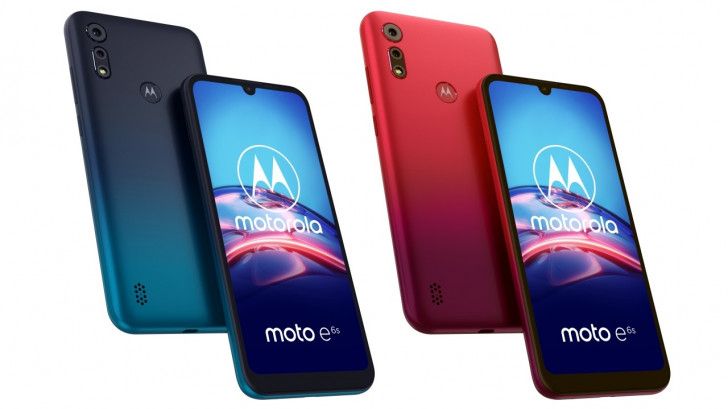
Lenovo-owned Motorola has introduced a new E-series smartphone called Moto E6s. It joins other E-series phones such as Moto E6, Moto E6 Play and Moto E6 Plus that were announced last year. The newly announced Moto E6s has waterdrop notch screen that delivers a tall aspect ratio. The rear side of the device features a dual camera. Being a low-budget series smartphone, the Moto E6s is packed with modest specifications.
Moto E6s specifications
The Moto E6s has a 6.1-inch IPS LCD Max Vision display that produces HD+ resolution of 720 x 1560 pixels. It offers 19.5:9 aspect ratio and a pixel density of 282ppi. The u-shaped placed on the screen is the home for its f/2.2 aperture 5-megapixel front-facing camera.
The rear side of the device has a dual camera system assisted by an LED flash. It includes an f/2.2 aperture 13-megapixel main lens and an f/2.4 aperture 2-megapixel depth sensor. The polycarbonate back also features a logo of the company that is integrated with a fingerprint sensor.
The MediaTek Helio P22 chipset that includes a 2GHz octa-core processor powers the Moto E6s. The SoC is coupled with 2 GB of RAM. The native storage of the phone is 32 GB. There is a storage expansion slot onboard.
The Android 9 Pie OS comes preloaded on the Moto E6s. The phone is backed by a 3,000mAh battery that supports only 5W charging. Its other features include single / dual-SIM variants, 4G LTE, Wi-Fi 802.11n, Bluetooth 4.2, microUSB and 3.5mm headphone jack. The handset measures 155.6 x 73 x 8.5mm and has a water-repellant construction. It weighs 160 grams.
The Moto E6s is eerily similar to the Moto E6 Plus. The only noticeable differences on the E6 Plus is that it features an 8-megapixel selfie camera and supports 10W charging.
Moto E6s price and availability
Motorola is yet to reveal the pricing of the Moto e6s. It has only confirmed that the phone will be made available in Latin America, Europe and Asia in the coming weeks. Peacock Blue and Sunrise Red are the two color editions of the smartphone.
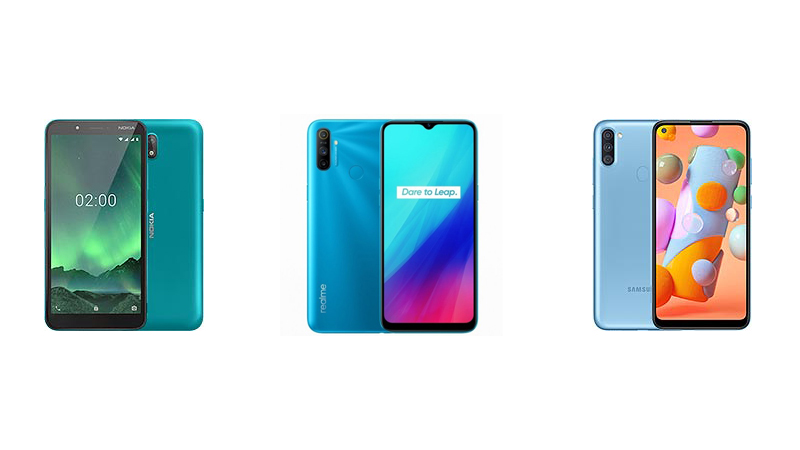
You can get a great phone even after spending a very low amount of money. Even if you spend less than $100/150. If you do not believe it, you have never seen devices such as the new Realme C3. And how not to talk about smartphones running Android Go like the newly-announced Nokia C2? They offer a “lite” version of Android so that they can run smoothly even on low-end or outdated hardware. Even Samsung launched its entry-level smartphone for 2020: the Samsung Galaxy A11. Here, you will find an in-depth specs comparison between three of the most recent and amazing entry-level devices meant for people with a minimum budget: Nokia C2, Realme C3, and Samsung Galaxy A11.
Triple 12 + 2 + 2 MP f/1.8 and f/2.4
5 MP f/2.4 front camera
Triple 13 + 5 + 2 MP f/1.8, f/2.2 and f/2.4
8 MP f/2.0 front camera
BATTERY
2800 mAh
5000 mAh, battery charging 10W
4000 mAh, fast charging 15W
ADDITIONAL FEATURES
Dual SIM slot
Dual SIM slot, reverse charging, splash resistant
Dual SIM slot
Design
Nokia C2 is actually one of the smartphones with the most compact bodies out there and this is a big added value, despite it is not the most beautiful device. Realme C3 and Samsung Galaxy A11 are definitely more elegant: the former due to its elegant glass back and the latter because of its punch-hole display. The Realme C3 has bigger dimensions, but it is the only offering protection against water: it is splash resistant. Further, it has a front panel protected by Gorilla Glass 3. So it is undoubtedly the most interesting when it comes to build quality.
Display
In each case, you have to deal with a below-average, but still sufficient, display. Nokia C2 and Realme C3 feature an IPS panel with an HD+ resolution, while Samsung Galaxy A11 has a TFT panel that is a technology inferior to IPS, but it still offers an HD+ resolution. While Nokia C2 has a very smaller display (a lot easier for one-handed use, which makes the phone very compact), Realme C3 has a wide 6.5-inch panel for the joy of productive users. But a so wide panel decreases the pixel density, so you may notice a big difference in the level of definition despite the Realme C3 has the same resolution as its two opponents. On the other hand, Realme C3 offers high brightness and wide viewing angles, so it is definitely worth a chance.
Specs & Software
The Realme C3 has a very powerful chipset, one of the best ones ever seen on an entry-level smartphone. We are talking about the Helio G70 by MediaTek, an SoC meant not only for general performance but also for gamers thanks to its high GPU performance. The processor is paired with up to 4 GB of RAM and 64 GB of internal storage: the highest-end memory configuration of this comparison. Despite it runs Android Go that is a light version of Android, Nokia C2 has no way to reach the Realme C3. And the same is for the Samsung Galaxy A11 fueled by a Unisoc chipset. Samsung Galaxy A11 has more advanced memory configurations than Nokia C2 and it runs Android 10 out of the box just like the Realme C3, while Nokia C2 still runs Android 9 Pie (but note that it is the Go Edition).
Camera
Realme C3 comes with two or three cameras on the rear side, depending on the market. But on the paper, both the versions are inferior to the Samsung Galaxy A11. The Galaxy A11 boasts a triple camera including a 13 MP main sensor with a bright f/1.8 aperture, a 5 MP ultrawide sensor and a 2 MP depth sensor. It even has a pretty nice (for an entry-level device) 8 MP front camera. Right after, we obviously got the Realme C3 in both its variants. The version with a dual camera lacks the ultrawide lens, but if we compare it to the Nokia C2 it does not matter since it only comes with a single (and pretty bad) 5 MP camera. But the Nokia C2 is the only with a front-facing LED flash allowing to shoot selfies in the dark.
Battery
With its mammoth 5000 mAh battery and a very efficient display, Realme C3 is one of the smartphones delivering the longest battery life and it wins this comparison. Right after, we got the Samsung Galaxy A11 with a still nice 4000 mAh battery, while Nokia C2 loses again with its 2800 mAh battery.
Price
Realme C3 has a starting price inferior to €115/$130, while the pricing details of Nokia C2 and Samsung Galaxy A11 are still unknown. But we are pretty sure that Nokia C2 will have a way more affordable price. If we only consider the specifications, Realme C3 is the absolute winner of the comparison due to its stronger chipset and a bigger battery. But do not forget that Samsung Galaxy A11 offers a very nice camera.
The Redmi Note 9 Pro Max is one of two phones that were launched in India last week. It packs pretty great specs for its price but its closest competitor is another phone from the “Xiaomi family” – the POCO X2. Both phones share similar specs in some areas and also have their individual strengths. If you are having a hard time deciding which you should go for, then you should read this post written to help you in making a decision.
While this post is supposed to help you decide which phone you should purchase, it will also be a comparison between the two devices, which of course shouldn’t be surprising. We will compare the Redmi Note 9 Pro Max and the POCO X2 based on the following – Design, Display, Performance, Cameras, Battery Capacity, Fast Charging, and of course, Price.
Design
Design is based on personal preference. Some might like the centered punch hole of the Redmi Note 9 Pro Max and others might prefer the pill-shaped punch hole of the POCO X2. The two phones also have very different rear designs.
In terms of quality, both phones are similar. Their displays are protected by Gorilla Glass 5 and there is also Gorilla Glass on the back.
With respect to weight and dimensions, the two phones are also nearly identical. The POCO X2 weighs 208 grams and measures 165.3 x 76.6 x 8.8 millimeters while the Redmi Note 9 Pro Max weighs 209 grams and measures 165.5 x 76.7 x 8.8 millimeters.
Display
The POCO X2 has a punch-hole in the top right corner for dual selfie cameras. The LCD display is 6.67-inches with a 2400 x 1080 resolution and a 120Hz refresh rate.
The Redmi Note 9 Pro Max, on the other hand, has a centered punch-hole display but it is the same screen size and resolution as that of the POCO X2. However, it skips on the high refresh rate of the POCO X2. The spec sheet also says the POCO X2 has a brighter display (500 nits) against the Redmi Note 9 Pro Max’s 450 nits.
The POCO X2 does win in this category thanks to its 120HZ refresh rate and higher brightness level.
Performance
The Snapdragon 730G is the processor inside the POCO X2. It is a pretty powerful chipset with gaming features. However, benchmark results have shown that the newer Snapdragon 720G processor, which first appeared in the Realme 6 Pro and powers the Redmi Note 9 Pro Max too, is a more powerful chipset than the Snapdragon 730G.
Do read our special post on the two chips for more details.
The two phones each have a 64MP primary rear camera but the POCO X2 comes with the Sony IMX686 sensor while the Redmi Note 9 Pro has the Samsung GW1 sensor. The aperture size and pixel size for the two sensors are the same. We are yet to see real-life camera samples of the Redmi Note 9 Pro but below are those of the POCO X2. Until a camera comparison, we won’t say outright which is better.
Now I see what all the fuss is about!#POCOX2 camera is really impressive.
These are all one shot takes – I took out the phone, clicked a photo, kept it back in. No edits, no adjustments. And the photos have come out focused and well saturated. pic.twitter.com/RiQeZzKNH3
However, we have not yet seen reviews of the Redmi Note 9 Pro Max but the POCO X2 does take some really great shots. So expect even brighter shots from the Redmi Note 9 Pro Max.
Both phones also have the same 8MP ultrawide angle camera with the same sensor size and aperture. They also have the same 2MP depth sensor. However, the Redmi has a higher resolution 5MP macro camera compared to the POCO X2’s macro camera.
Coming to the selfie cameras, the Redmi Note 9 Pro Max has a single 32MP camera. This is not the first Xiaomi phone with a 32MP camera. The Mi A3 has a 32MP camera too but it has a smaller sensor size than that of the Redmi Note 9 Pro Max which means the latter should take brighter selfies.
The POCO X2 has a 20MP selfie camera paired with a 2MP secondary depth camera for better portrait images. For regular selfies, the Redmi Note 9 Pro Max should churn out better photos but the POCO X2 should be better at portrait because it has a dedicated depth sensor and isn’t just using software to blue the background.
Battery capacity and Fast Charging
It is best to compare these two features of both phones. On paper, the Redmi Note 9 Pro Max is the better device with its 5020mAh battery capacity and 33W fast charger compared to the POCO X2’s 4500mAh battery capacity and 27W fast charging technology.
Not only does it have a bigger battery and a faster charging technology, but the Redmi Note 9 Pro Max should also have better battery life. It has the same screen as the POCO X2 but skips the high refresh rate which actually reduces battery life.
Others
The Redmi Note 9 Pro Max has some other advantages over the POCO X2 such as having a dedicated MicroSD card slot. This means you don’t have to sacrifice a SIM slot for a MicroSD card as in the case of the POCO X2.
Another merit is the support for NavIC, India’s navigation and positioning system. Sadly, the Snapdragon 730G chip in the POCO X2 doesn’t support it.
Price
The Redmi Note 9 Pro costs INR 14,999 (~$202) for the 6GB RAM + 64GB version while the POCO X2 is INR 15,999 (~$215) for the same configuration.
The 6GB RAM + 128GB version of the Redmi Note 9 Pro Max is INR 16,999 (~$229) which is the same price for the same configuration for the POCO X2.
The Redmi Note 9 Pro also comes in an 8GB RAM + 128GB version that is priced at INR 18,999 (~$255). The POCO X2 also has an 8GB RAM version but with 256GB of storage for INR 19,999 (~$269).
Conclusion
If you don’t care about a high refresh rate but want a phone that will take great pictures and also last you well more than a day alongside being able to recharge it faster, the Redmi Note 9 Pro Max is the one to buy. You also save money which can be used to purchase a MicroSD card for more storage.
However, if having a 120Hz refresh rate, a more than decent camera including great portrait selfies, then the POCO X2 is the device to choose.
Correction: The primary sensor for the Redmi Note 9 Pro Max has been corrected. The original article said it is a Sony IMX686 sensor but it is actually the Samsung GW1.
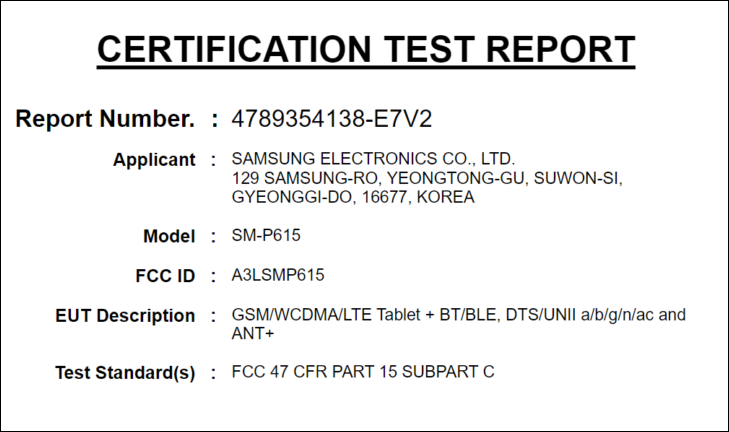
Samsung‘s upcoming Galaxy Tab S6 Lite has been certified by the US FCC. The product is listed with the model number SM-P615. The tablet had earlier received Bluetooth SIG certification with the same model number. We won’t also fail to add that the Galaxy Tab S6 Lite was also benchmarked on GeekBench bearing a similar model number.
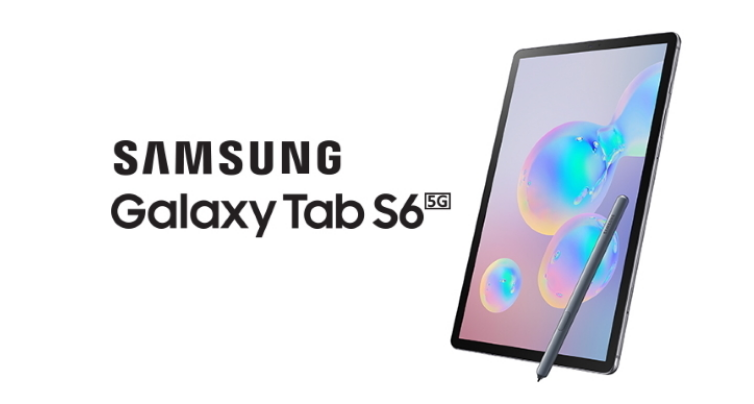
The Galaxy Tab S6 Lite looks like a trimmed-down version of the Galaxy Tab S6, Samsung’s most powerful tablet. The Tab S6 boasts of an AMOLED display as well as a Snapdragon 855 chipset onboard. Samsung even announced a 5G version of the Galaxy Tab S6 last month.
The Galaxy Tab S6 Lite isn’t a flagship model but a mid-range one. The GeekBench listing revealed the tablet will be powered by an Exynos 9611 SoC instead of the Snapdragon 855. The device will also come with 4GB of RAM as against 6GB RAM on the Galaxy tab S6. For connectivity, the FCC listing confirms the presence of 4G/LTE connectivity. The earlier Bluetooth SIG certification had confirmed the presence of Bluetooth 5.0 on the device. The tab S6 Lite is also tipped to come with wireless charging support.
Samung Galaxy Tab S6 5g
However, there are no details on the screen size and type as well as if it will retain the S Pen stylus used on the flagship version.
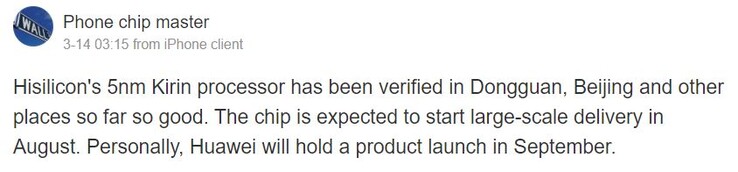
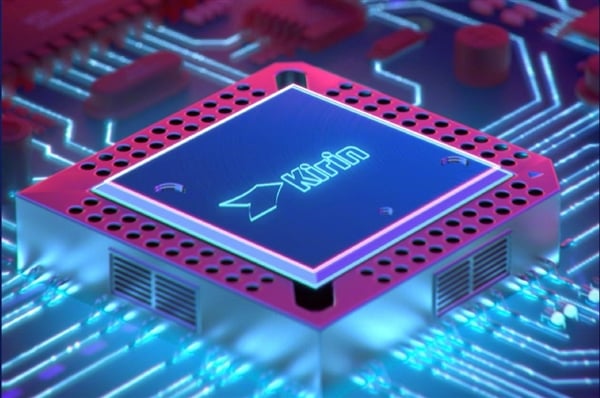
Huawei has already been tipped to name the next-generation flagship Kirin SoC as Kirin 1020. The chipset will take over fro the Kirin 990 presently holding sway. While the Mate 40 series which the SoC will feature onboard will hit the market in September, several leaks featuring the Kirin 1020 have emerged. The latest is that the chipset will receive massive supply in August ahead of the expected September announcement of the Mate 40 series.
This detail was shared by a blogger on Weibo who equally stayed that the 5nm chipset has been tested in several Chinese cities and that Huawei will hold a product launch in September where we expect the Mate 40 series to be the main product.
The Kirin 1020 chipset has been confirmed to utilise TSMC’s 5nm process. Mass production of the chip is said to commence in the first half of 2020 while shipment is expected to start in the third quarter of the year as the company starts supplying chips for the iPhone 12 series and Mate 40 series. Both series are expected to be the first mobile phones with 5nm chips.
Kirin 1020 is said to bring more than 50% improvement in performance than Kirin 990. The CPU architecture is upgraded from A76 to the unreleased ARM Cortex-A78, surpassing the Cortex-A77 feature on the Snapdragon 865. Kirin 1020 will also integrate 5G baseband.
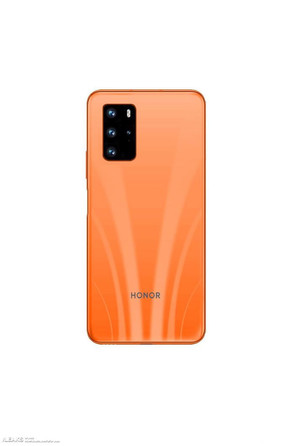
Honor is expected to launch its first phone of 2020 and the device is said to be the Honor 30S. There is no word yet as to when the Honor 30S will be launched but a render of the device recently appeared online showing a rectangular cut-out at the rear for the cameras. A new set of high-definition renders of the Honor 30S have again appeared online showing the camera sensors.
The HD renders show the Honor 30S will utilise a rectangular camera design bearing four sensors. The renders also suggest te Honor 30 with stick with the smooth and shiny texture design of the previous generation. This is consistent with the information previously exposed.
However, this is the first time we are seeing the orange color which we are quite familiar with, as the V9 has this color variant. Although the orange color of the Honor 30S is lighter, it also looks very good.
As for the spec, the Honor 30S is expected to be the first device to launch with a Kirin 820 chipset. The processor brings support for dual-mode 5G connectivity as well as 40W fast charging.
Even though the Honor 30S is by no means a flagship model, it is expected to have a huge impact on other 5G mobile phones such as Xiaomi Mi 10 series, Vivo X30 series, Vivo NEX 3 series, OPPO Find X2 series, etc.
There are rumours that the Honor 30S will be released before the Huawei P40 series but we can’t say if that is true or not.
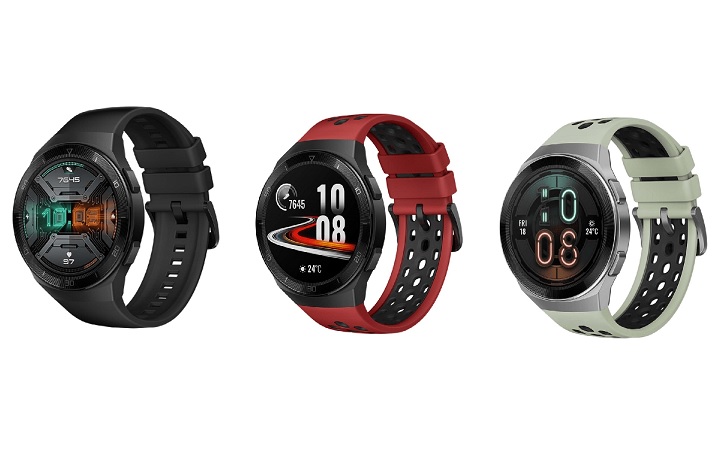
March 26 is a big day for Huawei as the phone giant will announce its new flagship series, the P40, on that day. A new leak has revealed that the online-only event will not be only for the new phones but also for a new smartwatch that will arrive as the Huawei Watch GT 2e. Renders and specs of the upcoming watch have surfaced on the web thanks to Winfuture.de.
The Huawei Watch GT 2e looks nothing like the Watch GT 2 that was announced last year, and we are talking about both the 47mm and 42mm versions of the Watch GT 2. The upcoming watch keeps the circular dial but has a new tachymeter design. Gone are the round push buttons on the right side of the frame and in their place are two rectangular buttons.
The straps are of a different design and will not work with any of the previous watches but they will be replaceable since they are quick-release straps. There are two charge connectors on the back in addition to the sensors for measuring the heart rate. The Huawei Watch GT 2e will come in Graphite, Volcano, and Mint.
With respect to specs, the Huawei Watch GT 2e is not too different from the Watch GT 2. It has a 1.39-inch AMOLED display with a 454 x 454 resolution. There is a HiSilicon Hi1132 processor inside along with 16MB of RAM and 4GB of storage.
[envira-gallery id=”310661″]
The leaked spec sheet says it has a 455mAh battery capacity and boasts the same 14-day battery life as the standard variant. It connects via Bluetooth 5.1 and works with both Android and iOS devices. There is GPS, barometer, compass, pedometer, and a gyroscope. The watch also has voice control and thus a microphone which seems to be the new features it has compared to last year’s model.
The Huawei Watch GT 2e is lighter at 25 grams (without the strap) and also has different dimensions – 53 x 10.8 x 46.8 mm. There is no official info with respect to the price but there are reports it will go for about €200.
Apple is getting ready to launch its next-generation iPhone in the coming months and as usual, the devices are expected to be powered by the improved and new A-series processor from the company.
Since the current-generation iPhone 11 lineup are powered by the Apple A13 chipset, the upcoming devices will come packed with the A14 chipset. The upcoming iPhone 12 is said to come with improved performance with huge gains in the chipset.
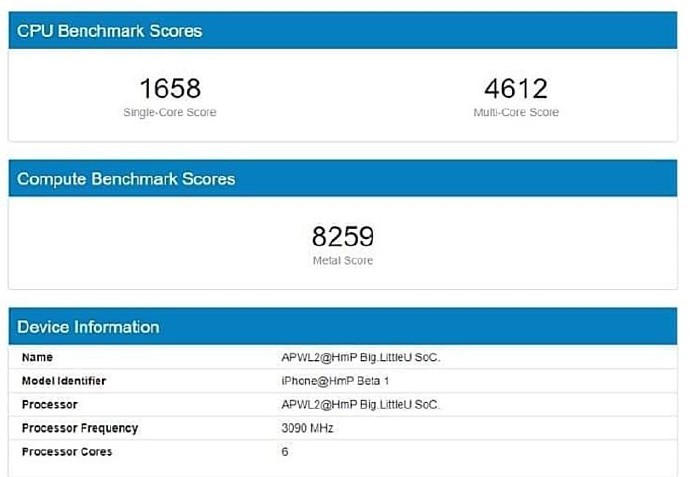
Ahead of the launch, a Geekbench result of the upcoming A14 processor has surfaced online, making it the first A-series processor from the company to have crossed 3.0GHz mark in terms of clock speed.
The Apple A14 chipset is said be even powerful than the iPad Pro 12.9-inch model which comes packed with A12X chipset with eight cores and scores 1,110 on a single-core test and 4,568 point in the multi-core test.
The Geekbench listing shows that that A14 chipset scores 1,658 on single-core test and 4,612 in multi-core test. The chipset should come with overall performance improvement along with better multi-tasking and smoother navigation between apps. The current Geekbench chat for iOS devices shows that the iPhone 11 Pro Max is leading the list with A13 Bionic chipset and single-core test of 1,330 points.
As for the manufacturing processor, the A12 was built using 7nm process, A13 with enhanced 7nm process with fast clock speeds and lower power consumption and now the upcoming A14 is said to be manufactured using TSMC‘s new 5nm process. Apple is also expected to pack LPDDR5 RAM, which many flagship phones are already offering.
Most of the cases of exploding smartphones have been traced to defective batteries. The most prominent of such was the ill-fated Galaxy Note 7 but in recent times, we only get pockets of such explosions. One of such pockets have opened up, this time around, a Redmi Note 7 Pro model is said to have exploded in India.
As per a report carried by TechRadar, the Redmi Note 7 Pro belonged to Vikesh Kumar and was reportedly procured in December 2019. That makes the device just about three months old. Since the phone was bought, the owner claims to have been using it daily without any issue until this incident. Happened that he felt the phone has become unusually hot in his pocket and took it out. Surprisingly, he saw the device was already bringing out smoke and as a reflex, he threw the phone away. That is where the story got even more interesting as the device is said to have landed on his bag and immediately exploded setting the bag on fire.
Then comes Xiaomi’s shitty customer service whenever a damaged device is concerned. Kumar expressed disappointment at the reception he got from Xiaomi. He claimed the company suspected he had done something to the phone before the explosion. But the dude insists that the phone was in perfect condition and was charged with the original charger since purchase. As at the time of the explosion, there was up to 90% battery power left.
Xiaomi’s response to the incident is similar to this, as the company stated that the explosion was caused by previous damage to the device, which might have tampered with the integrity of the lithium polymer battery. As usual, no specifics were mention as what could have made the battery explode.
We recall a somewhat similar case in India involving a month-old Redmi Note 7S that went up in flame and how Xiaomi was unwilling to accept liability for the damaged phone. In October 2019, a Redmi Note 7 Pro model purchased in July equally went up in flame and Xiaomi abdicated responsibility, claiming the incident wasn’t caused by a problem with the phone’s quality. However, the incidents are becoming too many for comfort.
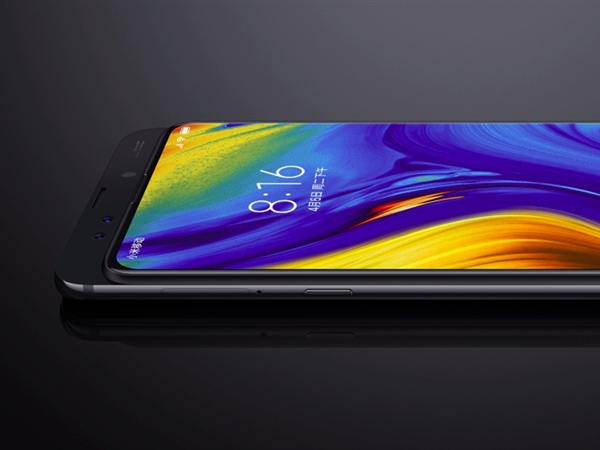
Xiaomi seems to have discontinued the Mi Mix 3 that was launched back in 2018. It was the last commercially available Mi Mix series phone by the company in China. Notably, the Mi Mix 3 5G model was never released in the Chinese market. Also, the current-gen Mi Mix Alpha surround screen phone is merely a prototype and is not yet available for sale.
The Chinese smartphone maker has removed the listing of Mi Mix 3 on its official website suggesting it to be discontinued. It does make sense since the device is now over one and a half years old and Xiaomi itself offers better products for less than the asking price of the Mix 3. Nevertheless, if you are interested in this device, you can still buy the Forbidden City limited edition priced at 4,999 Yuan (~$712).
The Mi Mix 3 by Xiaomi was launched back in October of 2019 powered by the flagship Qualcomm Snapdragon 845 processor. The device was available in up to 10GB RAM and 256GB UFS 2.1 storage. It featured a full-screen display design, courtesy of a manual slider mechanism. The AMOLED panel of the phone measured 6.39-inches with a resolution of 1080 x 2340 pixels (FHD+), 403 PPI, 19:5:9 aspect ratio, and Corning Gorilla Glass 5 Protection.
The handset featured a 12MP primary + 12MP telephoto dual-camera setup at the back and a 24MP + 2MP dual-camera setup at the front for selfies and video calls. It was launched with MIUI 10 based on Android Pie and was later updated to Android 10-based MIUI 11. The phone was backed by a small 3,200 mAh battery with support for 18W wired fast charging and 10W wireless charging.
COVID-19, that originated from the Wuhan province of China has now spread across the world affecting over 150K individuals. Many organizations have come forward since the pandemic initially escalated to offer help by donating necessary supplies. Recently, Chinese tech giants like Alibaba, Xiaomi, and Oppo donated masks and other medical equipment to the severely affected countries.
Earlier this month, Xiaomi donated FFP3 surgical masks to the Italian Civil Protection Department as it is the most affected country by coronavirus after China. A few days back, Chinese billionaire Jack Ma, the co-founder of Alibaba announced he will donate 2 million masks to European countries starting with Belgium, which will be the first to receive the shipments. Further, after joining Twitter, he used his first tweet to announce donations of 500,000 testing kits and 1 million masks to the United States.
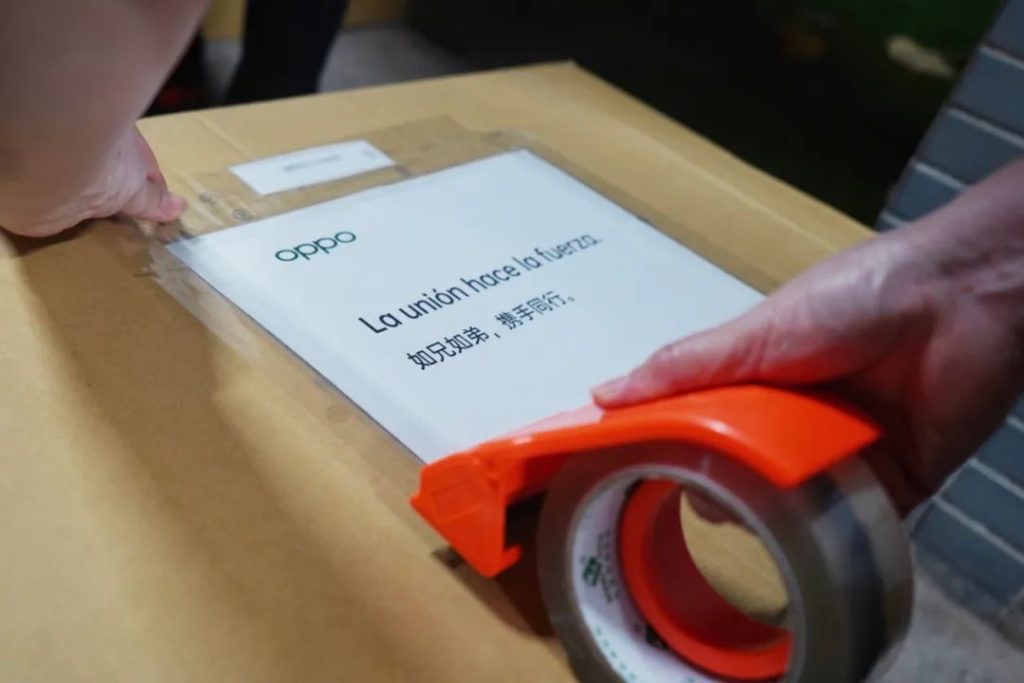
And today, Oppo announces that it has donated 300,000 masks to five severely affected countries other than China. The smartphone maker has donated FFP3 as well as N95 masks to Italy, Spain, Germany, France, and Japan. The company also said that its local teams are working with government departments, non-governmental organizations, and hospitals to donate masks to people who are in need such as medical professionals. Oppo also added that one-third of the total masks will be donated to Milan, Italy alone, which is currently the most affected city outside China.
Chinese tech companies so far, have not only donated masks but other requirements like logistics, robots, software, and drones to the coronavirus-struck regions.
We use cookies on our website to give you the most relevant experience by remembering your preferences and repeat visits. By clicking “Accept”, you consent to the use of ALL the cookies.
This website uses cookies to improve your experience while you navigate through the website. Out of these, the cookies that are categorized as necessary are stored on your browser as they are essential for the working of basic functionalities of the website. We also use third-party cookies that help us analyze and understand how you use this website. These cookies will be stored in your browser only with your consent. You also have the option to opt-out of these cookies. But opting out of some of these cookies may affect your browsing experience.
Necessary cookies are absolutely essential for the website to function properly. This category only includes cookies that ensures basic functionalities and security features of the website. These cookies do not store any personal information.
Any cookies that may not be particularly necessary for the website to function and is used specifically to collect user personal data via analytics, ads, other embedded contents are termed as non-necessary cookies. It is mandatory to procure user consent prior to running these cookies on your website.