Advertisement

Huawei P40, P40 Pro and P40 Pro PE pricing leaked

The Huawei P40 series is scheduled to get announced on March 26. The company has already launched the Huawei P40 Lite E and Huawei P40 Lite smartphones. On March 26, it will be announcing the more powerful and Kirin 990 5G driven Huawei P40, Huawei P40 Pro and Huawei P40 Pro PE flagship phones. Multiple reports on the pricing of the P40 series are now doing rounds on social platforms.

According to reliable tipster Teme, the Huawei P40 will be costing between 799 euros and 899 euros in Europe. The P40 Pro will be costing between 999 euros and 1,099 euros. The more advanced P40 Pro PE is said to be priced between 1,199 euros and 1,299 euros.

Greek’s Tech Blog has also shared the leaked pricing of the Huawei P40 series. It reported that the 128 GB Huawei P40 and 256 GB Huawei P40 Pro will be priced at 849 euros and 1,139 euros, respectively. Greece is also expected to receive recently unveiled devices like the Huawei Mate Xs, Huawei P40 Lite and P40 Lite E.
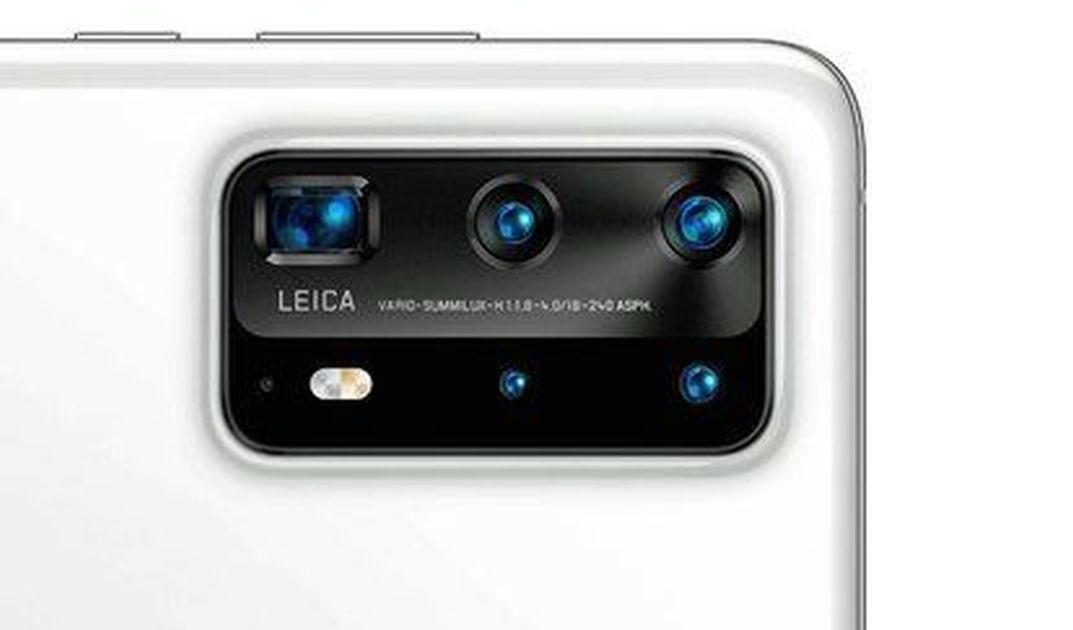
Huawei P40 Pro PE camera arrangement
Huawei P40 Pro PE cameras

A recent report had revealed that the Huawei P40 with 8 GB of RAM and 128 GB of storage will cost 999 euros. The higher models such as 8 GB RAM + 256 GB storage and 8 GB RAM + 512 GB storage will be costing 1,099 euros and 1,249 euros, respectively. The company is also expected sell the P40 series in new special edition versions like Dragon Edition, Gundam Edition, Aerospace Edition and more.

The upcoming Huawei P40 series will offer topnotch photography experience. The company revealed in a closed meeting that the Huawei P40 and P40 Prow ill be equipped with second generation periscope zoom camera that will most likely offer increased optical zoom capabilities. The Google Mobile Services (GMS) will be absent on the Huawei P40 series. In its absence, the company will be pushing its own AppGallery app store.


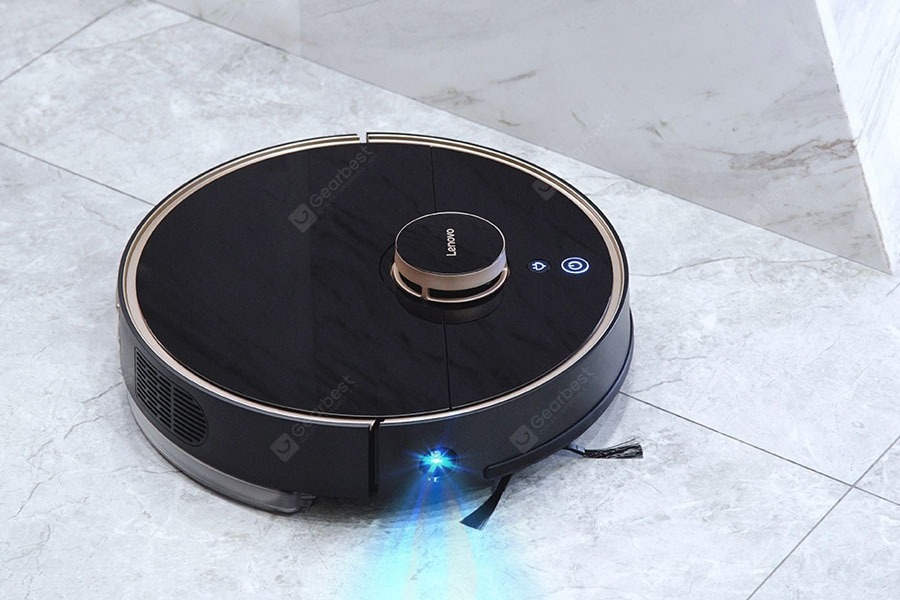
Buy Lenovo X1 LDS Lidar Robot Vacuum Cleaner for Just $421.99 from Gearbest

While you must keep your surrounding clean and tidy all the time, cleaning your room is probably the last thing that comes into your mind after a long tiring day at work.

Lenovo X1 LDS Lidar Laser Navigation Wet and Dry Robot Vacuum Cleaner

If you are a working man or woman, who fancies staying in an unsullied environment, you might want to consider buying a robot vacuum cleaner that efficiently cleans your bedroom, kitchen, balcony, and other hard-to-reach areas without requiring a lot of your effort. Regrettably, these highly useful household appliance products don’t come cheap.

Those who go inexpensive alternatives, end up buying a vacuum cleaner that delivers an unexceptional performance. If you have been waiting with bated breath to get your hands on a feature-laden robot vacuum cleaner that doesn’t burn a hole in your pocket, the Lenovo X1 LDS Lidar Robot Vacuum Cleaner might just fill the bill.

Just like other top-end robot vacuum cleaners available on the market today, the Lenovo X1 LDS Lidar isn’t easy on the pocketbook as it usually retails for $648.06. If you purchase it from Gearbest during the ongoing promo, you can get an incredible 35 percent discount on the Lenovo X1, which means, you can purchase this amazing robot vacuum cleaner for just $421.99.

Lenovo X1 LDS Lidar Laser Navigation Robot Vacuum Cleaner 55dB Low Noise 2200Pa Suction 585ml Dust Box Auto Recharge Resumption- Black EU PlugThe LDS Lidar helps the X1 to figure out the best cleaning route, while its advanced disentangling ability prevents it from getting trapped. Made using ABS and various other high-quality materials, the Lenovo X1 LDS Lidar is designed to perform different functions including mopping, suction, sweeping, sweeping suction, vacuuming, and more.

The feature-laden robot vacuum cleaner comes with three useful modes i.e. sweeping & mopping mode, sweeping-only mode, mopping-only mode. When the robot gets stuck under the sofa, bed or any other piece of furniture, it can get out without requiring any sort of help.

Moreover, if the Lenovo X1 gets stuck in the same area more than once, it will inform the user to set up the specific area as a restricted zone. The robot packs a powerful Japan NIDEC brushless motor that delivers the strongest suction up to 2200Pa, coupled with a 20 percent higher cleaning efficiency.
Lenovo X1 LDS Lidar Laser Navigation Wet and Dry Robot Vacuum Cleaner

If you have a dog, cat or other pets at home, the Lenovo X1 can clear up their hair too. The power-packed robot is surprisingly quiet (55dB adjustable) and has seven major noise reduction optimization for a quieter and cleaner environment.

It works with Amazon Alexa voice assistant, allowing you to talk to it rather than setting up the controls manually. You can follow this link to check out more details about the Lenovo X1 LDS Lidar Robot Vacuum Cleaner and place your order.

With more than 70 pieces sold at the time of writing, this promo is slated to end soon. The Gizmochina Coupons is a community that finds, reports and evaluates deals and coupons of Chinese products from online shops. Please visit it here to find more coupons to save money on mobiles and smart gadgets.

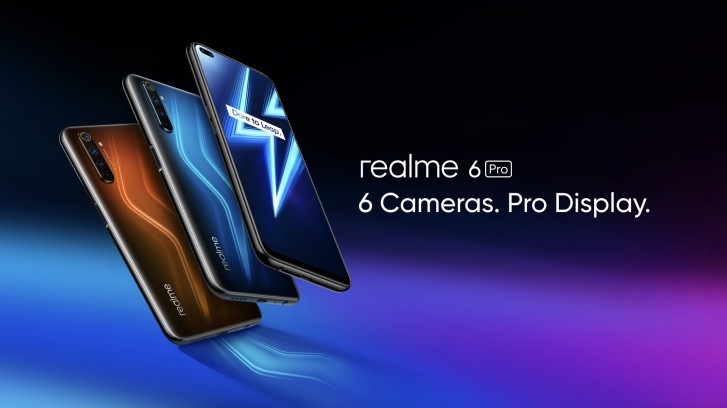
Realme 6 Pro first sale in India at 12PM today; Price and offers

Last week, Realme had announced the Realme 6 Pro smartphone alongside the Realme 6 phone. Yesterday, Flipkart and Realme.com had carried out the first sale of the Realme 6. Today, the Chinese manufacturer will be selling the Realme 6 Pro for the first time in India starting at 12PM (local time). Here is all the information on its pricing and offers.

Realme 6 Pro price in India and offers

There are three variants of the Realme 6 Pro in India. The 6 GB RAM + 64 GB storage variant costs Rs. 16,999 (~$228). The second model with 6 GB of RAM and 128 GB of storage is price at Rs. 17,999 (~$241). The 8 GB RAM variant that comes with 128 GB of native storage costs Rs. 18,999 (~$255). The phone comes in Lightning Blue and Lightning Orange color editions.

Realme 6 Pro
Realme 6 Pro

Customers with Axis Bank credit and debit car can avail a flat discount of Rs 1,000 on the purchase of Realme 6 Pro on Flipkart. The retailer is also offering no cost EMI plans. On Realme.com, MobiKwik users can get 5 percent SuperCash worth Rs. 500. Cashify exchange offer and no cost EMI plans from Bajaj Finserv are also available on Realme.com.

Realme 6 Pro specifications

The Realme 6 Pro has a 6.6-inch full HD+ display with 90Hz refresh rate support. The dual in-display selfie camera setup has a Sony IMX471 16-megapixel wide-angle and a 105-megapixel ultrawide angle. The quad camera setup includes a 64-megapixel main lens, 8-megapixel ultrawide lens, a 12-megapixel telephoto and 2-megapixel depth sensor.

The Snapdragon 720G processor is present under the hood of the Realme 6 Pro. The smartphone comes with LPDDR4x and UFS 2.1 storage. The device is equipped with a 4,300mAh that supports 30W fast charging through USB-C. The handset comes with other features like dual frequency GPS with NavIC support, dual 4G VoLTE, Bluetooth 5.1, Wi-Fi 802.11ac and 3.5mm audio jack.


Xiaomi Mi 10 Pro 108MP samples shot from space now available to download

Xiaomi Mi 10 Pro briefly held DXOMark’s record right after launch for having the best smartphone camera. That was before the current holder of that crown – OPPO Find X2 Pro was launched. The Mi 10 Pro packs an amazing camera spearheaded by a 108MP main camera sensor. I order to put into perspective the prowess of the 108MP camera, Xiaomi says it launched a satellite equipped with the company’s latest imaging technology and captured images of the earth from outer space using just the Mi 10 Pro’s 108MP camera. The camera samples are now available to download just in case you’ll like to use them as wallpapers on your phone. You can download from here.

The camera samples were said to have been shot from 500km above the earth but other technical details were not disclosed. The samples are yet another batch considering that Lei Jun had released a batch earlier this month.

As for the technical angle, the Mi 10 Pro comes with a powerful quad-camera setup at the back. The setup includes a 108MP primary camera with a 10X hybrid optical zoom lens. The 108MP camera sensor is said to be a high-resolution custom camera sensor with 8P lens. The device also has a dedicated 12MP portrait lens as well as a dedicated telephoto lens for 10x hybrid optical zoom, and 50x digital zoom. Finally, there is a20MP ultra-wide-angle lens. The Mi 10 Pro equally come with several features such as dual OIS, laser focus, AI scene recognition for improved photography.

Check out more of the amazing pictures shot on the Mi10 Pro camera in space.


(source)


Redmi Note 9 Pro Max vs Realme 6 Pro vs Poco X2: Specs Comparison

Are you looking for the smartphone with the highest value for money and you do not need the most expensive flagship? Then you should learn everything about three amazing devices launched in the last period. All of them bring high performance and a well-balanced specs sheet to the market at a killer price. We are talking about Realme 6 Pro, Redmi Note 9 Pro Max and Poco X2: all of them launched in the Indian market and their prices are in a similar range. We believe they are absolutely among the best choice in their price ranges, and we decided to compare them in order to highlight their strong and weak points.


Xiaomi Redmi Note 9 Pro Max vs Oppo Realme 6 Pro vs Xiaomi Poco X2

Xiaomi Redmi Note 9 Pro Max Realme 6 Pro Xiaomi Poco X2
DIMENSIONS AND WEIGHT 165.5 x 76.7 x 8.8 mm, 209 grams 163.8 x 75.8 x 8.9 mm, 202 grams 165.3 x 76.6 x 8.8 mm, 208 grams
DISPLAY 6.67 inches, 1080 x 2400p (Full HD+), 395 ppi, IPS LCD 6.6 inches, 1080 x 2400p (Full HD+), 399 ppi, IPS LCD 6.67 inches, 1080 x 2400p (Full HD+), 395 ppi, IPS LCD
PROCESSOR Qualcomm Snapdragon 720G, octa-core 2.3 GHz Qualcomm Snapdragon 720G, octa-core 2.3 GHz Qualcomm Snapdragon 730G, octa-core 2.2 GHz
MEMORY 6 GB RAM, 64 GB – 6 GB RAM, 128 GB – 8 GB RAM, 128 GB – micro SD dedicated slot 6 GB RAM, 64 GB – 6 GB RAM, 128 GB – 8 GB RAM, 128 GB – micro SD dedicated slot 6 GB RAM, 64 GB – 6 GB RAM, 128 GB – 8 GB RAM, 256 GB – micro SD slot
SOFTWARE Android 10, MIUI Android 10, Realme UI Android 10, MIUI
CONNECTIVITY Wi-Fi 802.11 a/b/g/n/ac, Bluetooth 5.0, GPS Wi-Fi 802.11 a/b/g/n/ac, Bluetooth 5.1, GPS  Wi-Fi 802.11 a/b/g/n/ac, Bluetooth 5.0, GPS
CAMERA Quad 64 + 8 + 2 + 2 MP f/1.9, f/2.2, f/2.4 and f/2.4
32 MP front camera
Quad 64 + 12 + 8 + 2 MP f/1.8, f/2.5, f/2.3 and f/2.4
Dual 16 + 8 MP f/2.1 + f/2.2 front camera
Quad 64 + 8 + 2 + 2 MP f/1.9, f/2.2, f/2.4 and f/2.4
Dual 20 + 2 MP f/2.2 and f/2.4 front camera
BATTERY 5020 mAh, fast charging 33W 4300 mAh, fast charging 30W 4500 mAh, fast charging 27W
ADDITIONAL FEATURES Dual SIM slot Dual SIM slot, splash resistant Hybrid Dual SIM slot, splash resistant

Design

The most premium design is offered by the Poco X2, which comes with both a glass back and an aluminum frame. And the glass parts of the phone are protected by Gorilla Glass 5. Both Realme 6 Pro and Redmi Note 9 Pro Max are equipped with a glass back and a plastic frame. If we only consider the front panel, Redmi Note 9 Pro Max looks more elegant since it has a single punch-hole on the display, while Realme 6 Pro has a more minimalistic back thanks to a less invasive camera module. Each of these phones is splash resistant and comes with a side-mounted fingerprint reader. These are my opinions and the main info about the designs. Do you prefer a better look or a better build quality?


Display

If you need the most satisfying display, you should go for the Poco X2 for a simple reason: it has a higher refresh rate. Its display goes up to 120 Hz and it even supports the HDR10 standard, unlike Realme 6 Pro and Redmi Note 9 Pro Max. At the second place of the ranking, we got the Realme 6 Pro with a 90 Hz refresh rate and a 120 Hz touch sampling rate. Redmi Note 9 Pro Max has a standard refresh rate, so nothing special. The rest of the specs of these displays are similar, including display sizes and resolution that are exactly the same for each device.


Specs & Software

On the hardware side, Poco X2 wins again. It is fueled by a more powerful processor, despite it is an older chipset. We are talking about the Snapdragon 730G, an octa-core chipset with high graphics performance running at a 2.2 GHz max frequency. And the most expensive configuration of the Poco X2 has more internal storage: up to 256 GB. Realme 6 Pro and Redmi Note 9 Pro Max are powered by an inferior Snapdragon 720G, but still great in terms of performance and gaming. The memory configurations of Realme 6 Pro and Redmi Noe 9 Pro Max are exactly the same and Android 10 is installed out of the box.


Camera

On the paper, Realme 6 Pro has a better camera setup than Redmi Note 9 Pro Max and Poco X2. Unlike its rivals, it includes a 12 MP telephoto lens with a 2x optical zoom. Further, it has an amazing ultrawide front camera with dual 16 + 8 MP sensors. We are not saying Realme 6 Pro is a high-end camera phone, but it looks superior to is opponents. After testing it, we will be able to give you our definitive opinion about its photo quality.


Battery

The battery award goes to Redmi Note 9 Pro equipped with a 5020 mAh battery. We believe it will last a lot more on a single charge in many scenarios. And it even comes with a faster charging technology; however, it will not charge faster until 100 percent since Realme 6 Pro has a smaller battery.


Price

Redmi Note 9 Pro Max prices begin at INR 14,999 / €180 / $202, Realme 6 Pro is available starting from INR 16,999 / $232 / €220, and Poco X2 starts from INR 16,999 as well. Poco X2 wins the comparison when it comes to build quality and performance. Redmi Note 9 Pro Max wins the battery comparison only, so we do not recommend it as the first choice for Indian buyers unless you want to save some money. Realme 6 Pro wins when it comes to camera specs.


Xiaomi Redmi Note 9 Pro Max vs Oppo Realme 6 Pro vs Xiaomi Poco X2: PROs and CONS

Xiaomi Redmi Note 9 Pro Max

PROs

  • Biggest battery
  • Fastest charging
  • Splash resisant
  • Infrared port

CONS

  • Inferior display


Realme 6 Pro

PROs

  • Splash resistant
  • Great rear cameras
  • Ultrawide front camera
  • Nice display

CONS

  • Smaller battery


Xiaomi Poco X2

PROs

  • Good 120 Hz display
  • Infrared port
  • Premium design
  • Splash resistant
  • Better hardware

CONS

  • More expensive


Samsung funbelievable smart TV series official in India, starts at Rs.12990 (~$174)

Until recently, Samsung was the leader of India’s smart TV market but presently Xiaomi leads the market. Samsung has expanded its product offering in India with the launch of a new #funbelievable Series of smart TVs. The new series comes with several localized features and affordable pricing starting at 12990 rupees (~$174). The affordable pricing is definitely a bid to take on Xiaomi’s affordable smart TV lineup in a bid to reclaim lost ground.

The new Samsung #funbelievable Series is available in two different display sizes and resolutions – a 32-inch HD model and a 43-inch FHD model. According to Samsung, both models are equipped with several features such as Personal Computer Mode, Content Guide, Music System, Internet browsing capabilities and several others.

The Personal Computer Mode allows users to transform their Smart TV into a personal computer. Thus, the smart TV can be used for much more than just browsing. Consumers can create documents or use the TV for office presentations. Users can also mirror their laptop on the Smart TV screen wirelessly without an internet connection for a big screen or extended screen experience. Through the remote access feature, users can access their laptop or personal computer from any location over the internet.

The 32-inch Samsung funbelievable Series will have a 32-inch non-smart TV variant. The funbelievable Series will start from a price of Rs. 12,990. The models all have a two-year warranty. The models will be available at all Samsung Smart Plazas, leading consumer electronic stores in India. It will also be available across online platforms, including Samsung’s official online store Samsung Shop.


(source)


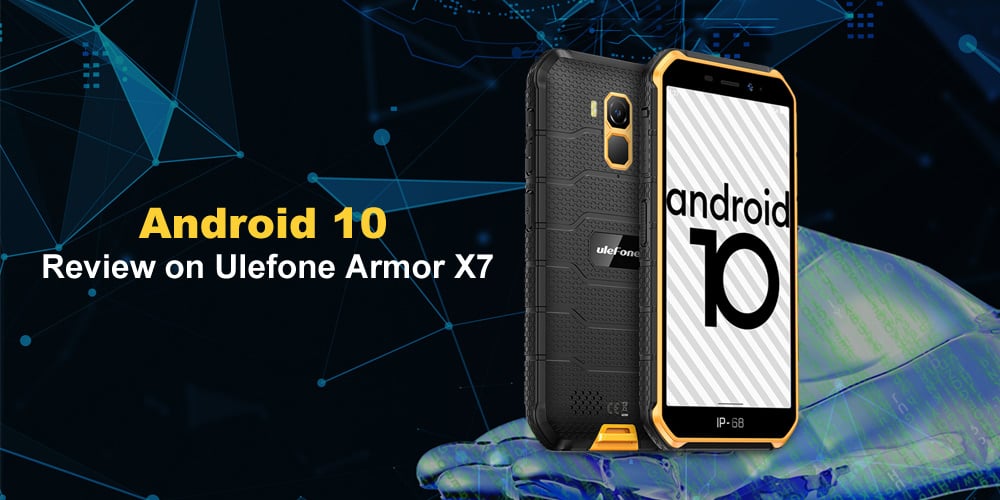
Ulefone Armor X7 rugged smartphone surfaces with Android 10

Recently launched Ulefone rugged phone – Ulefone Armor X7 runs the latest Android 10 OS. The recently announced new Android 10 operating system comes with various new advancements and features. It includes improved privacy controls, new gesture navigation, native desktop mode, system-wide dark theme and support for new displays and evolving technologies. Android 10 brings a better and simpler user experience on Ulefone Armor X7.

Must See: Performance test video shows Ulefone Armor 7 going against CAT S61

Ulefone Armor X7’s powerful hardware is purely suitable for Android 10 features. The smartphone comes powered with a 12nm quad-core processor packed with a 2GB RAM and 16GB of internal storage. The smartphone hosts a 5.5-inch multi-touch display. There’s a 13-megapixel rear camera and a 5-megapixel selfie camera present on the device. A 4000mAh battery is enough for a full day of regressive use. The device comes with fingerprint ID and face unlocking on your phone, NFC with Google Play. It also supports dual SIM dual standby.

Ulefone Armor X7 is a fully rugged smartphone with IP68/IP69K ratings. You can watch whole review of Ulefone Armor X7 below:

It is the best-rugged smartphone running Android 10. Affordable pricing and competitive specifications re some major merits of Armor X7. The interested users can participate in giveaway by commenting and sharing the link to various online communities to get the device for free. Enter the giveaway by heading to the event page. You can know more about the device by heading to their official website.

Related: Ulefone Armor X7: The World’s 1st Android 10 rugged smartphone

Check out the sleek Huawei MatePad Pro 5G in pictures

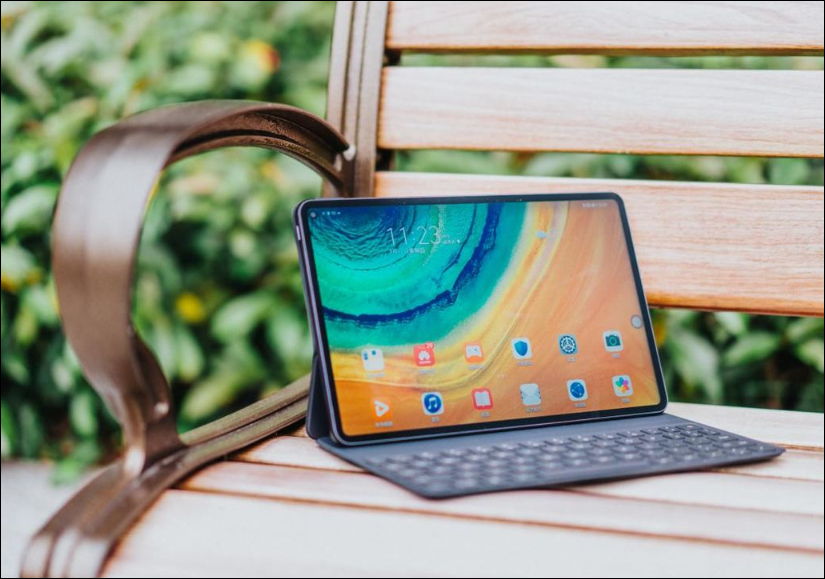
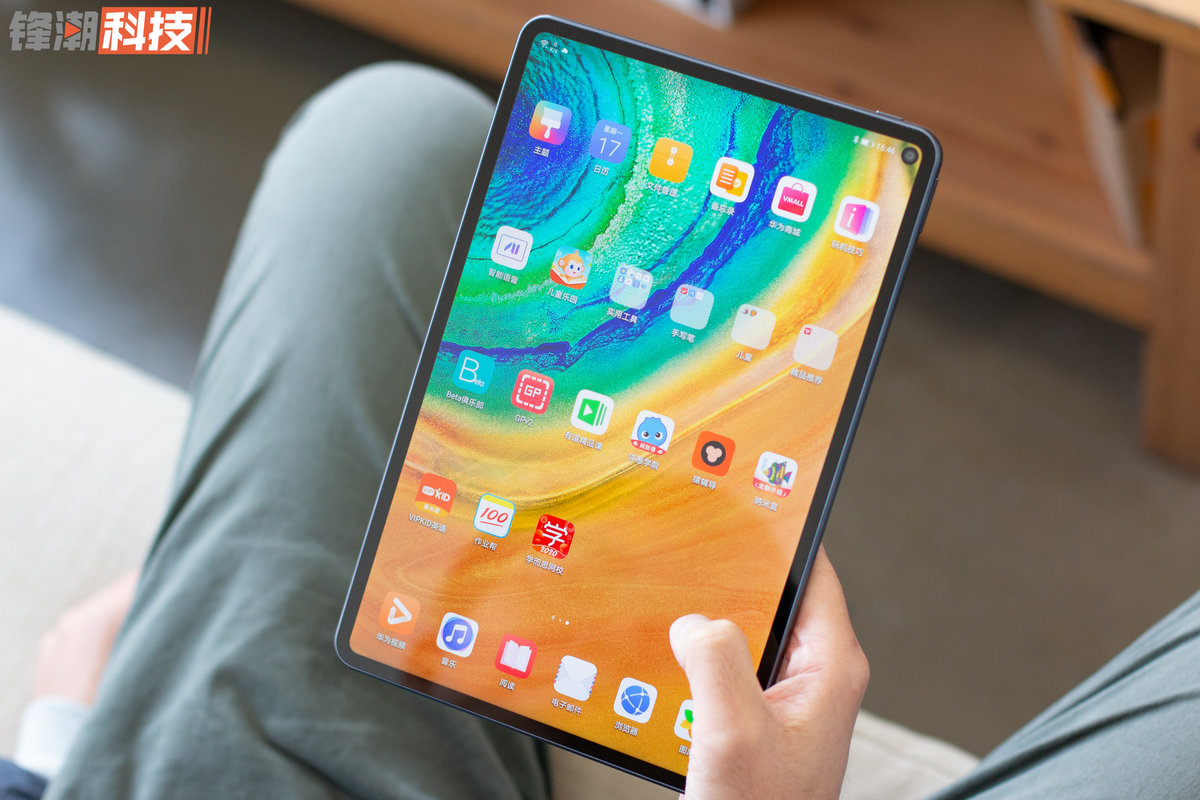
Huawei launched the MatePad Pro 5G, its first 5G-enabled tablet for the global market on February 24. The premium tablet was first launched in China in November 2019. The MatePad Pro 5G is well-positioned to take on Apple’s iPad Pro, even beating the Apple tablet with the 5G modem it features, something still absent on Apple’s product line. We bring you a quick picture review of the MatePad Pro 5G.Huawei MatePad Pro 5G

The tablet adopts a stylish design and even has a stylus as well as a keyboard folio. It packs a flat LCD display panel that is 10.8-inch in size. The tablet is well-chamfered at the edges. There is a hole-punch selfie camera at the top right corner of the display. One notable thing about the MatePad Pro is the thin build. The device weighs just 460 grams. he display also comes with slim bezels that are just 4.9mm thick on all sides. This gives the device a screen-to-body ratio of 90 percent.

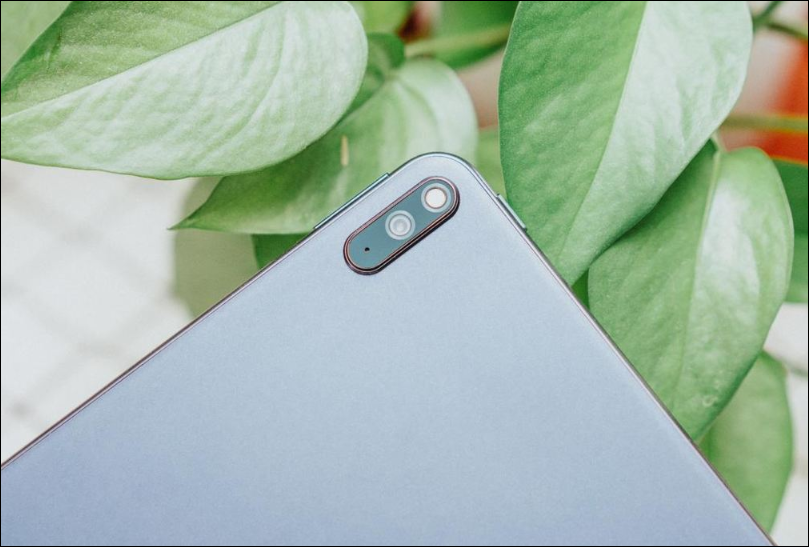
The MatePad Pro 5G packs a metal body with a single camera housed in a vertical module with the LED flash and located on the right side of the display panel. The volume rockers are also on the right edge but the power button is on the top, just above the camera. Huawei’s logo is also on the back panel. Huawei MatePad Pro 5G

The device comes with support for M-Pencil stylus that 4096-level pressure sensitivity nib. The stylus can be charged wirelessly by simply attaching to the device.

As a reminder, Huawei MatePad Pro 5G is powered by a Kirin 990 chipset paired with 8GB of RAM and up to 512GB storage. The tablet packs a nanoSD card slot that can be used to expand the storage when needed.Huawei MatePad Pro 5G

The tablet is equipped with a huge 7,250mAh battery that supports 40W rapid charging. However, the device ships with 20W fast charger. There is also support for 15W wireless charging and 7.5W reverse wireless charging on the onboard. For interface, the Huawei MatePad Pro runs EMUI 10-flavoured Android 10 OS. By connecting the optional keyboard, the tablet’s interface will switch to computer mode to offers users with a friendly desktop PC experience. The Smart Keyboard costs €129 (around $140).

Other features include Histen 6.0 audio support, quad speakers, Wi-Fi 802.11ac, Bluetooth 5.1, GPS (only on LTE edition) and USB-C. Lastly, there is no fingerprint scanner on the MatePad Pro and it also lacks a 3.5mm audio jack.

The MatePad Pro 5G pricing starts at €549 (around $594) for the WiFi version with 6GB RAM and 128GB of storage.


(source)


Nubia announces 65W GaN charger, 20000mAh power bank and several more phone accessories

Alongside the Red Magic 5G gaming smartphone announced today, Nubia also announced a bunch of phone accessories today. The lineup of accessories includes a GaN charger, two power banks, a dock for the phone, a USB cable, an official Red Magic 5G phone case and tempered glass.


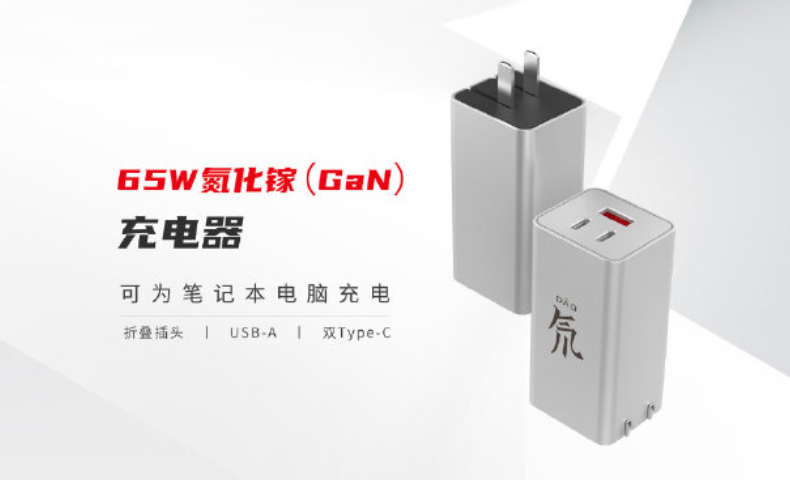
Red Magic 65W GaN Charger

Red Magic 65W GaN Charger

Nubia has unveiled a 65W GaN charger that is priced at ¥169 (~$24). The charger has a foldable plug (American plug) design. There are two USB Type-C ports at the top of the charger along with a USB Type-A port. The charger goes on sale on March 19.


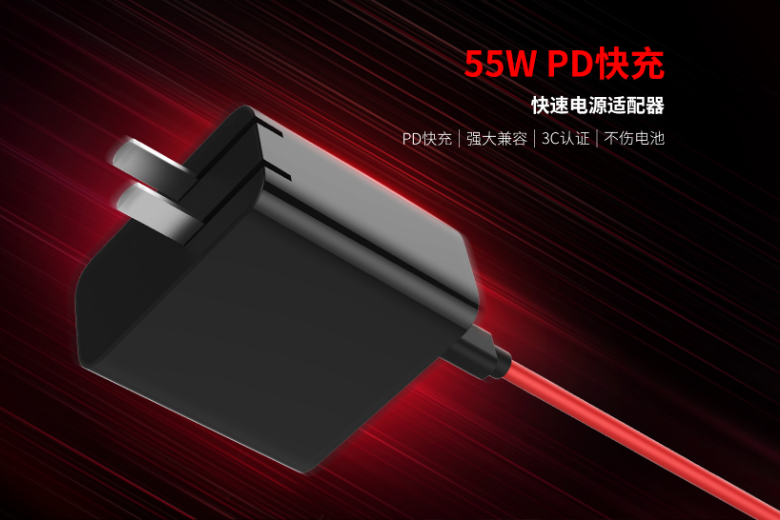
Red Magic 55W PD Charger

Red Magic 55W PD Charger

If you don’t need a GaN charger or you need a replacement or spare for the charger that comes with the phone, you can purchase the Red Magic 55W PD Charger. It has a foldable plug design and is available in black.

Nubia has put a price tag of ¥109 on it and will begin selling it on March 19.


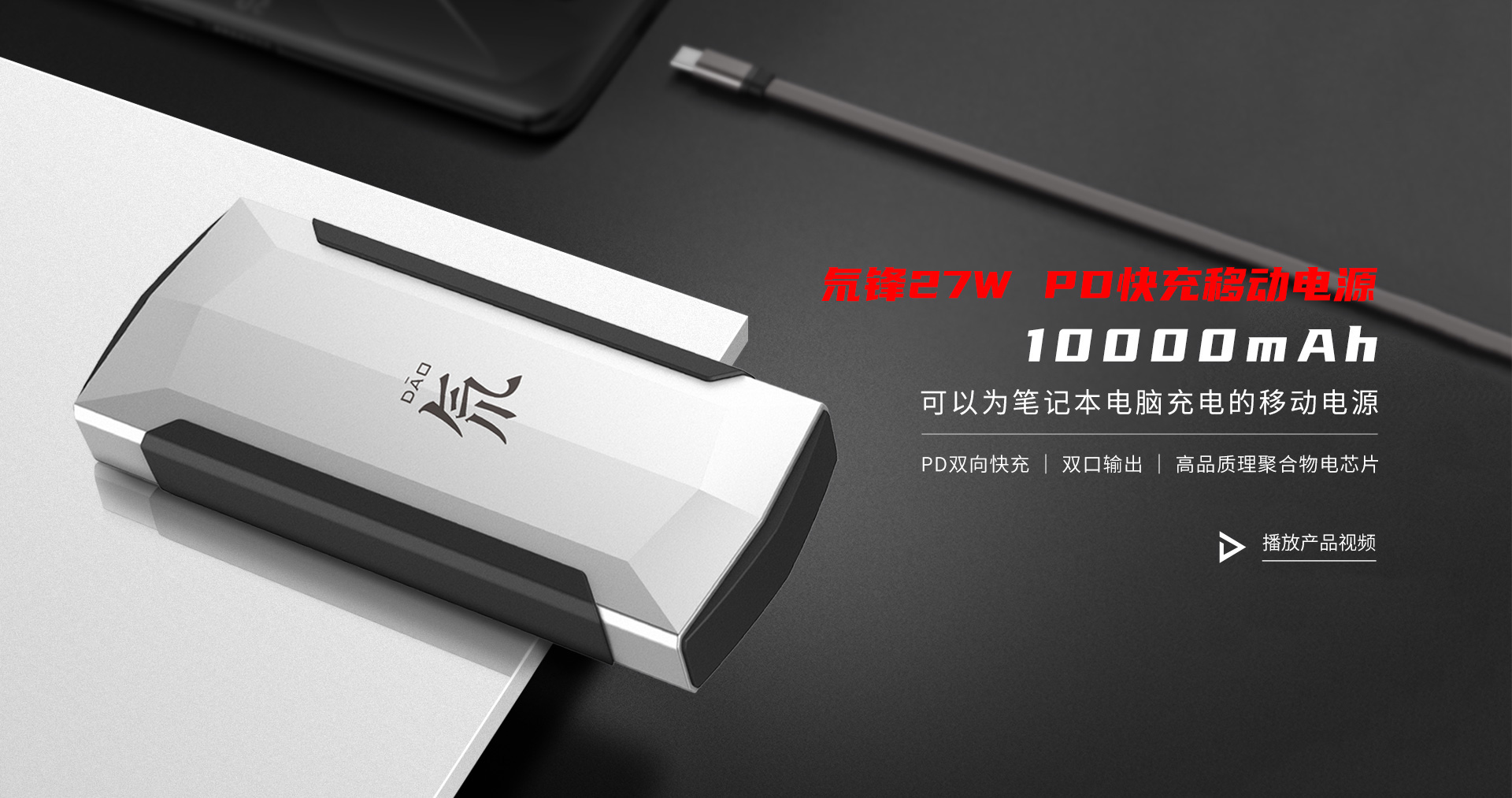
Nubia Red Magic 10000mAh Power Bank

Red Magic 27W PD 10000mAh Power Bank

Nubia announced two new power banks today. The first is the Red Magic 27W PD 10000mAh Fast Charge Power Bank. The power bank which is priced at ¥149 (~$21) has an interesting design that makes it stand out from all the other power banks in the market.

It has a 10000mAh capacity but a rated capacity of 6600mAh. In front are a full-sized USB output port, a USB Type-C port that serves as both input and output, a power button, and four LEDs. It supports 27W Power Delivery 3.0 and also supports Quick Charge 2.0, Quick Charge 3.0, FCP, AFC, and DCP fast charging protocols. Nubia says it is also capable of charging the Nintendo Switch and the Apple MacBook but they didn’t specify which models. The power bank itself supports 18W input fast charging.

The Red Magic 10000mAh 27W PD Power Bank comes in silver. It will go on sale on March 19th at 10 AM.


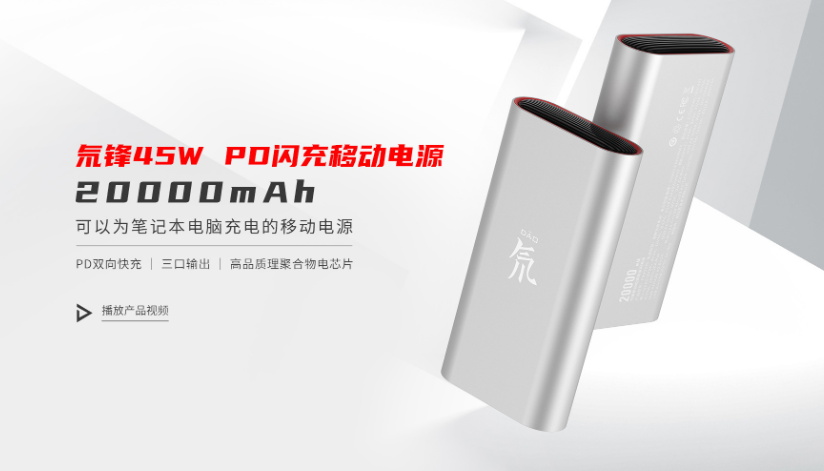
Red Magic 45W PD 20000mAh Power Bank

Red Magic 45W PD 20000mAh Power Bank

If the 10000mAh power bank is too small for you, there is the Red Magic 20000mAh power bank. It not only has a bigger battery capacity, but it also supports 45W PD and has more ports. The rated capacity is 12700mAh.

There are two USB-A ports with support for 18W (9V 2A and 12V 1.5A) fast charge. There is a USB Type-C port that supports 45W max output for supported devices including a MacBook and a Nintendo Switch. The USB Type-C port also supports 5V 3A, 9V 3A, 11V AA, 12V 3A, 15V 3A, and 20V 2.2.5A output ratings while for input it supports 5V 3A, 9V 3A, 12V 3A, 15V 3A, and 20V 2.25A.

Just like the 10000mAh model, there is multiple protection measures built-in. It also has a reset button and can charge low voltage devices such as earphones, smartwatches, and fitness trackers.

The power bank goes on sale on March 19 for ¥299 (~$43).


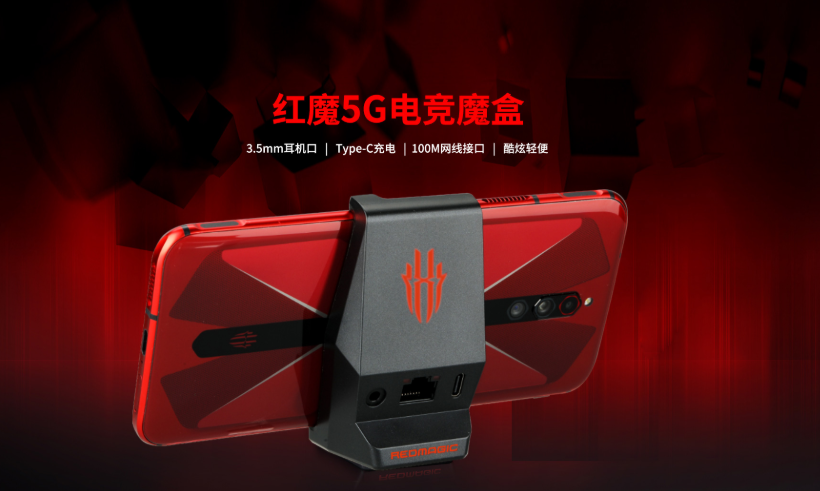
Red Magic 5G Gaming Dock

Red Magic 5G Gaming Dock

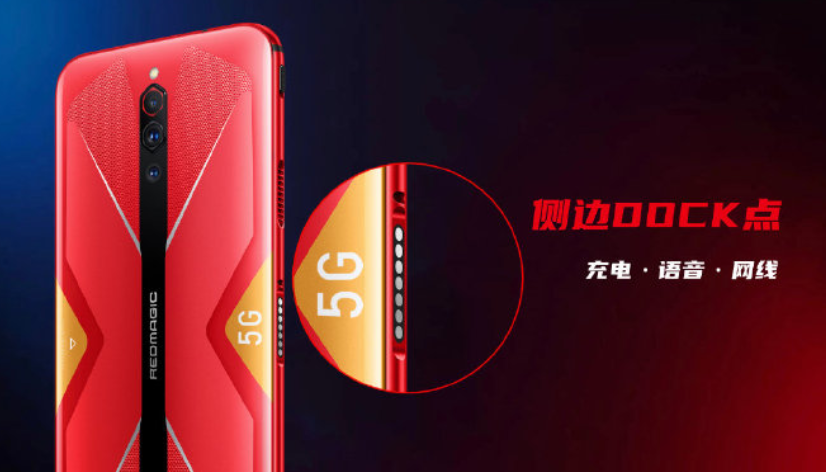
The Red Magic 5G has a set of connector pins on the side. These pins allow you to connect the Red Magic 5G Gaming Dock to the phone.

The dock has an audio jack, an ethernet port, and a USB Type-C port, so you can use your earphones/headphones, connect to the internet using a LAN cable, and charge all at the same time. The ports are on the back, so they are not in your way while playing a game or maybe even streaming a video.

The dock is priced at ¥199 and will go on sale on March 19 at 10 AM.


Red Magic Case, Tempered Glass, and USB-C Cable

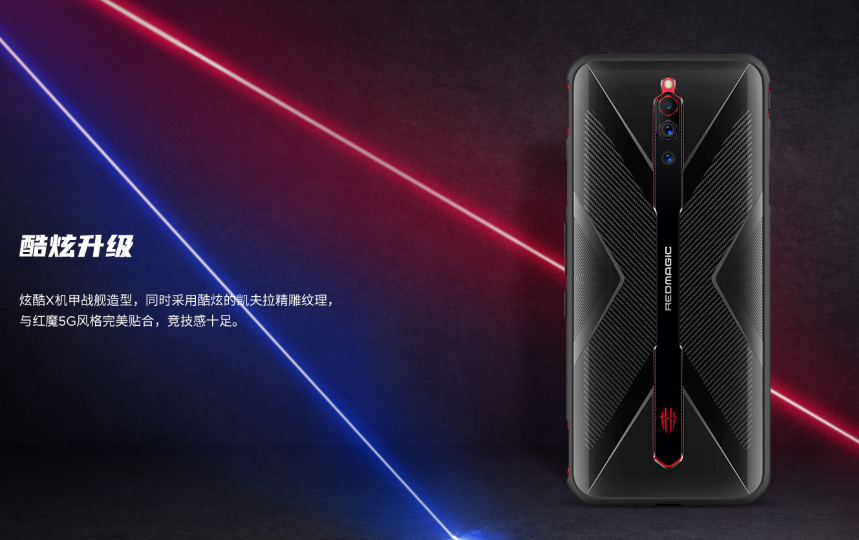
Nubia also announced an official case, tempered glass, and USB Type-C cable for the Red Magic 5G phone. The case is priced at ¥49 (~$7) and offers all-round protection. It is available in only one color.

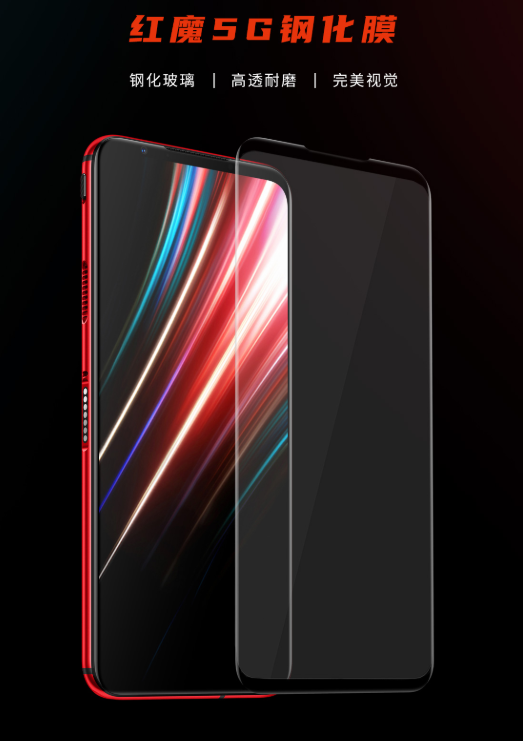
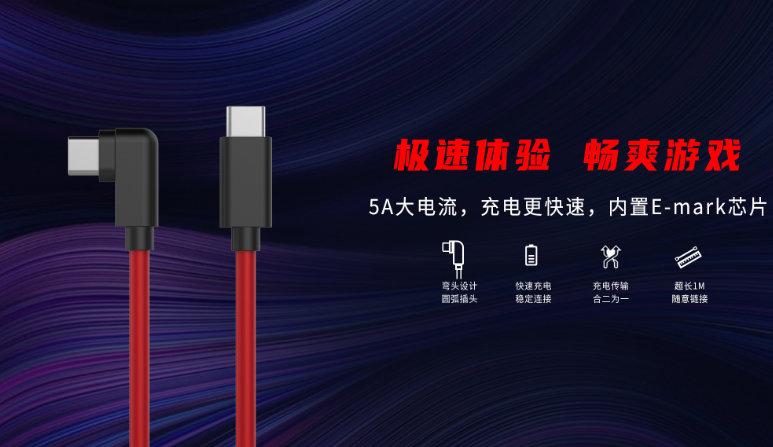
The tempered glass is ¥39 (~$6) and is designed to not affect the in-display fingerprint scanner. If you need an extra cable, you can pick up a spare for ¥59 (~$8.5). This is the same 5A USB-C to USB-C elbow cable that comes with the phone.

You will be able to buy the case, tempered glass, and cable on March 19 on the official website.


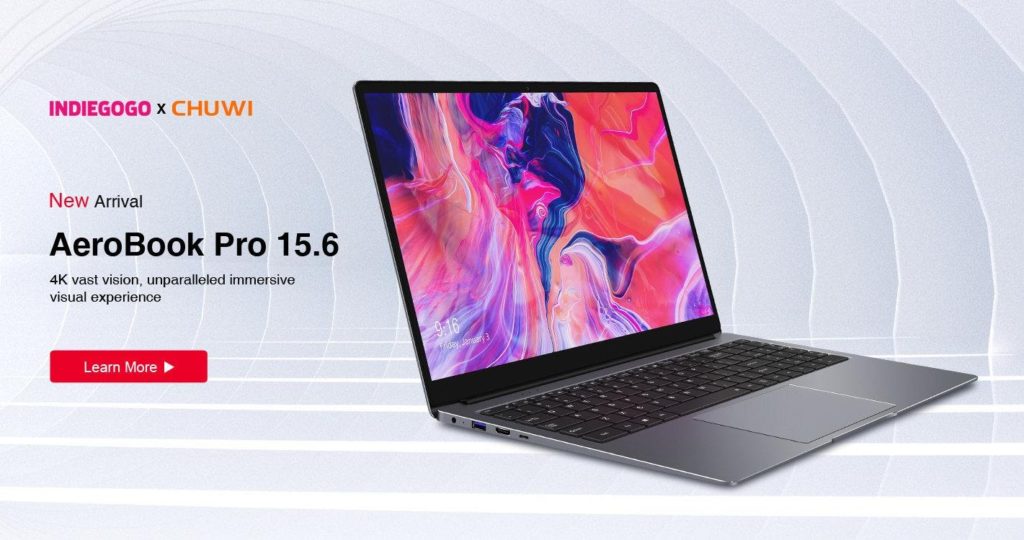
Chuwi AeroBook Pro 15.6 emerges as the best Hackintosh laptop

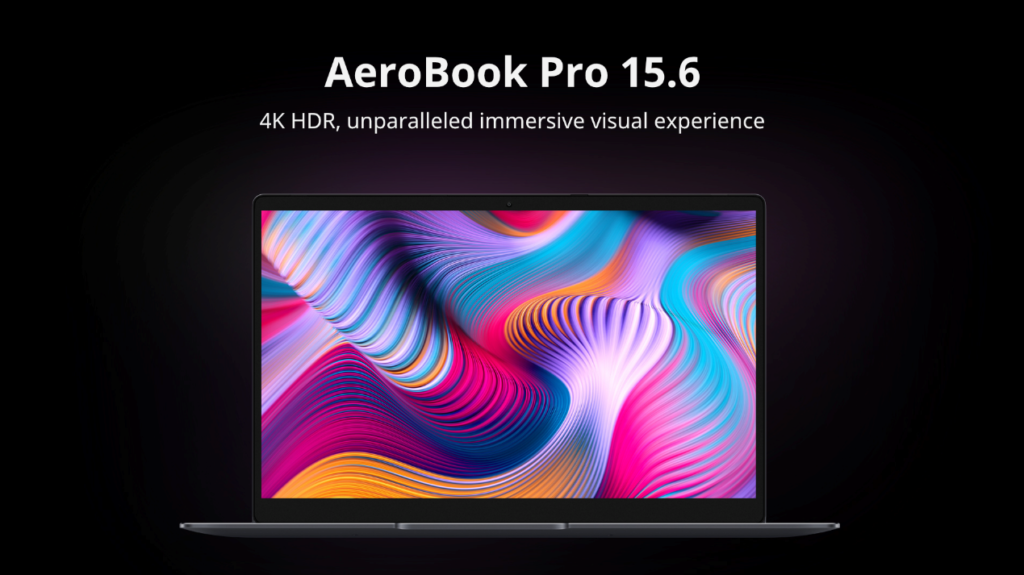
Chuwi’s premium Ultrabook lineup – AeroBook is soon getting a new premium ultrabook model. The Chinese laptop maker is coming with Chuwi AeroBook Pro featuring improved specifications along with enhanced performance. In spec comparison with MacBook Pro’s competitors, the AeroBook Pro emerges as the best Hackintosh laptop. The new Chuwi Ultrabook packs a 15.6-inch 4K HDR screen, Intel i5 Processor, 8GB RAM, and 256GB SSD and a lot more.

Performance

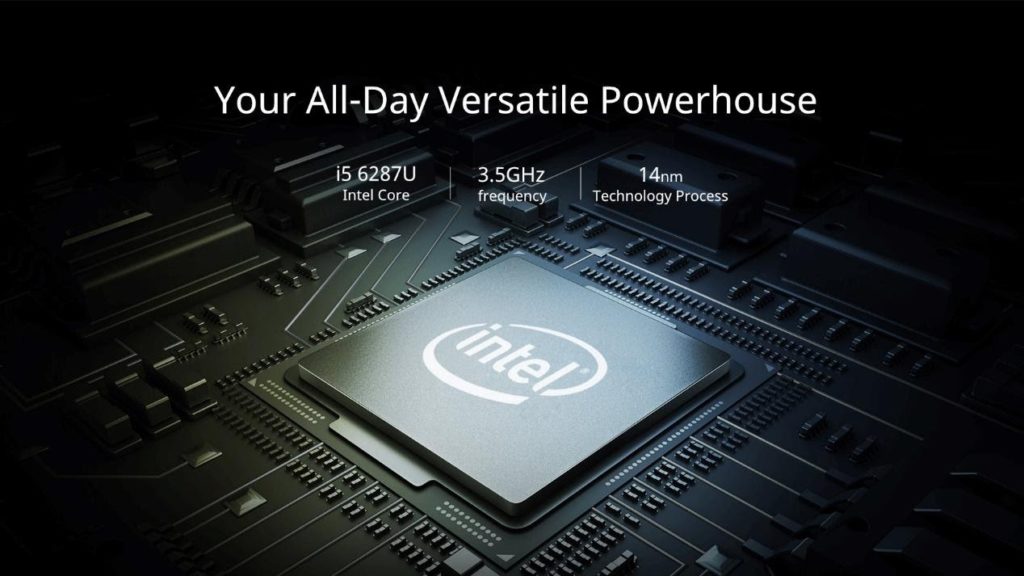
It is powered with the Intel i5 6287U processor. However, if the users are bored with Windows operating system, then they can also opt for Hackintosh on the Chuwi Aerobook Pro as it is designed to offer better MAC OS experience than any other competitor. The Intel i5 6287U performs better than the 8-generation core CPU in the base frequency.

In-house powerful Iris Graphics 550 graphics card will help the users to utilize the 4K display prowess. It operates up to the 1.1GHz frequency and can easily handle 3D graphics designs, video clips, and other graphics-intensive works.

Display

In the display department, the AeroBook Pro has received a decent upgrade with a 15.6-inch 4K HDR screen over the AeroBook old model. The display features the 3840 X 2160 pixels resolution, 10-bit color depth, comfortable visual experience, 100% sRGB color gamut and much more. The user can enjoy the immersive experience on its 4K display instead of over 2880 x 1800 resolution display on 15-inch MacBook Pro.

Other Hardware

It is the most cost-effective Hackintosh laptop with 8GB RAM and 256GB SSD. THere’s a M.2PCIe slot to expand the storage capacity. It can run Windows 10, 7 and macOS efficiently. However, here’s the full comparison between AeroBook Pro 15.6-inch bs MacBook Pro:

AeroBook Pro 15.6-inch MacBook Pro 15.6-inch) 2016
Display 15.6-inch 15.4-inch
Resolution 3840 x 2160 2880 x 1800
Weight 1.53 1.82
CPU i5-6287U i7-6700HQ
Base Frequency 3.1GHz 2.6GHz
GPU Iris Graphics 550 HO Graphics 530
Memory 8GB RAM 16GB LPDDR3
Storage 256GB SSD 256GB SSD
External Storage Support No Support
System Windows 7 MacOS
Price $599 $2399


AeroBoook Pro 15.6-inch is an affordable yet powerful laptop. The interested users can grab the CHuwi AeroBook for $599. You can know more about the device by heading to the official website.

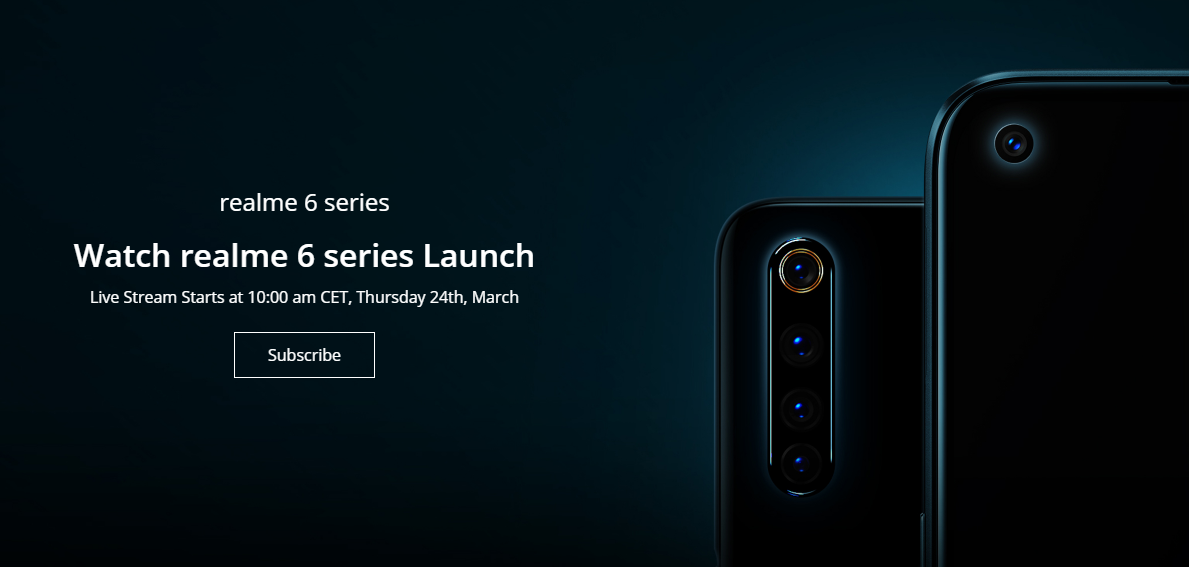
Realme 6 series is launching in Europe on March 24

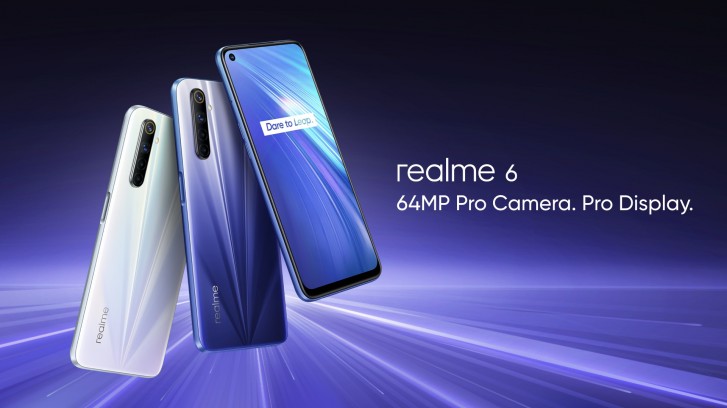
Realme recently took the wraps off its premium mid-range models – Realme 6 and Realme 6 Pro. The models only went on sale for the first time in India yesterday (March 11). Today, Realme has revealed that the Realme 6 series will be launched in Europe on March 24.Realme 6

Realme has built a formidable market base for itself in India since it opened shop in 2018. The company has equally extended its dragnet to Europe with tremendous success as a result of its impressive price offering compared to rival companies. The Realme 6 series keeps up with this marketing strategy as the base Realme 6 model has a starting price tag of Rs. 12,999 (~$175). Even though the prices in Europe will be slightly higher than India’s, the models are expected to offer amazing value for money.

As a reminder, the Realme 6 is equipped with a 6.5-inch full HD+ display with a single punch-hole that houses a 16-megapixel selfie snapper. The rear side of the phone features a quad camera setup that includes a Samsung GW1 64-megapixel main lens, an ultrawide lens of 8-megapixel, a macro lens of 2-megapixel and a portrait lens of 2-megapixel.Realme 6 and Realme 6 Pro

The MediaTek Helio G90Tv drives the Realme 6 handset. It is equipped with LPDDR4x RAM and UFS 2.1 storage. The handset has a 4,300mAh battery that supports 30W VOOC 4.0 Flash Charge technology. It has a side-facing fingerprint reader. The Realme UI based Android 10 OS comes preloaded on the Realme 6.

You can watch the launch event which will likely be an online event via Realme Europe’s website. The Livestream will commence at 10.00 AM CET on March 24. You can also subscribe on the website to get notified when the even is drawing closer.


Realme 6i coming soon; to launch as world’s first Helio G80 phone

Realme is on a roll this year. After announcing the Realme C3 as the first phone in the world with an Helio G70 processor. It followed it with the Realme 6 Pro which is the world’s first phone powered by the Snapdragon 720G processor. Realme is now set to announce the Realme 6i which will be the first phone powered by MediaTek’s Helio G80 chipset.

The Realme 6i first appeared in the news back in the second week of January 2020 when it was certified by Singapore’s IMDA. More than a month later, it was spotted on the FCC’s database which gave us our very first look at the phone. The images revealed the phone will have four rear cameras, a rear-mounted fingerprint scanner, and what appears to be a notch in the display.

Realme 6i

Now, a poster has revealed that the chipset inside the phone is the Helio G80. This processor was announced early last month and it should sit in between the Helio G70 inside the Realme C3 and the Helio G90T inside the Realme 6.

We already know the Helio G70 is a better processor than the Snapdragon 665 thanks to this comparison video made by MediaTek. However, the Helio G80 will not be a better chipset overall than the Helio G70 and this is because it has fewer performance cores. Below is the CPU configuration of the two chipsets:

  • Helio G80 = 2x Cortex-A75 at 2.0GHz + 6x Cortex-A55 at 1.8GHz
  • Helio G70 = 4x Cortex-A75 at 2.0GHz + 4x Cortex-A55 at 1.7GHz

As we have seen in the case of the Snapdragon 720G versus Snapdragon 730G, just because a processor has a higher model number does not mean it will offer better performance. The Helio G70 has the upper hand because it has more performance cores which means it will score higher on benchmarks.

However, the Helio G80 does win in one area and that is the GPU. It has the same GPU as the Helio G70 which is the Mali-G52 but it is clocked higher at 950MHz as against the G70’s 820MHz. Other than these two differences, the rest of the specs of the two chipsets are the same.

The Realme 6i will come with a 5000mAh battery with support for 18W fast charging via a USB Type-C port. A Geekbench listing that surfaced today revealed the phone will run Android 10 out of the box and have 4GB of RAM.

There is no info yet regarding the launch of the Realme 6i but it should be soon.


(Source)

Huawei filed the most patents at the European Patent Office in 2019
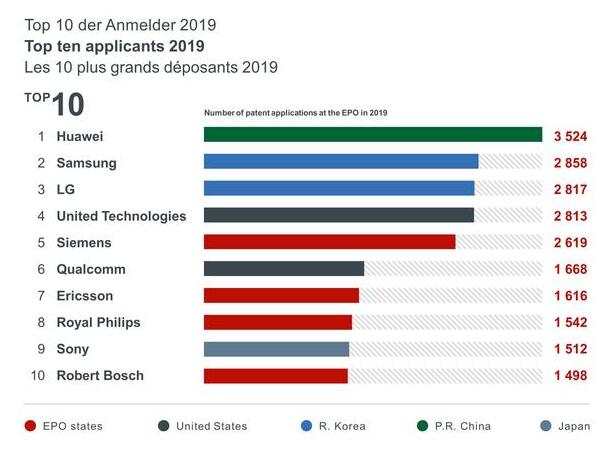
The European Patent Office (EPO) has released a patent ranking for 2019. The data released show that the officed received a total of over 181,000 patent applications in 2019. The figure represented an increase of 4% over 2018. Among them, Chinese patent applications increased by 29.2% to 12,247, ranking fourth. The United States, Germany, and Japan make up the top three.Huawei

In terms of individual brands, Huawei ranked first among all brands with a total of 3524 patent applications. Samsung and LG ranked second and third with 2,858 and 2817 patents respectively.

In January this year, the State Intellectual Property Office released data saying that in 2019, the number of Chinese invention patent applications was 14.01 million. Out of that massive figure, only 453,000 invention patents were approved. The data also showed that the number of invention patents granted in China in 2019 increased by 4.8% year-on-year, and the number of registered trademarks increased by 27.9% year-on-year.

Also in 2019, the top three domestic companies (excluding Hong Kong, Macao, and Taiwan) in terms of patent approvals were: Huawei Technologies Co., Ltd. (4510 patents), China Petroleum & Chemical Corporation (2883 patents), OPPO Guangdong Mobile Communications Co., Ltd. (2614 patents).

Huawei’s rise to the top is hinged on the company’s huge investment in R&D which is reflected in the number of patent applications. The company was reported to have spent $15.3 billion on R&D in 2018. That may have increased by last year but we can’t say if the Chinese giant will whittle down its investments this year in the face of political pressure from the US and the raging Coronavirus epidemic that


(via)


Nubia Red Magic 5G brings style, a cooling fan, 16GB RAM and more to gaming phones

The Nubia Red Magic 5G has just been announced in China. The new smartphone might as well be the most stylish gaming phone released this year. However, it does more than just look good. It also packs some really impressive specs under the hood including a cooling fan.

Red Magic 5G
Red Magic 5G Design

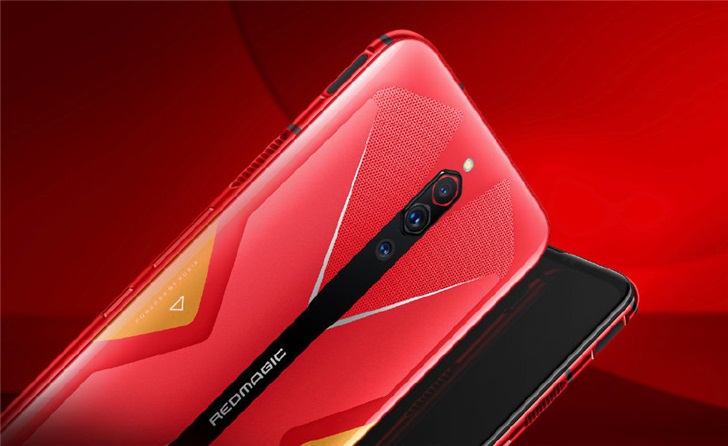
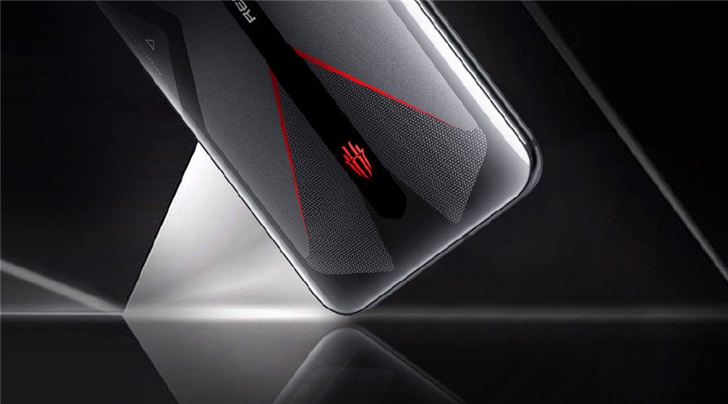
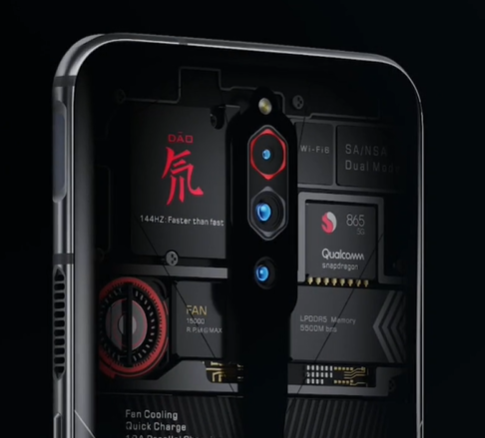
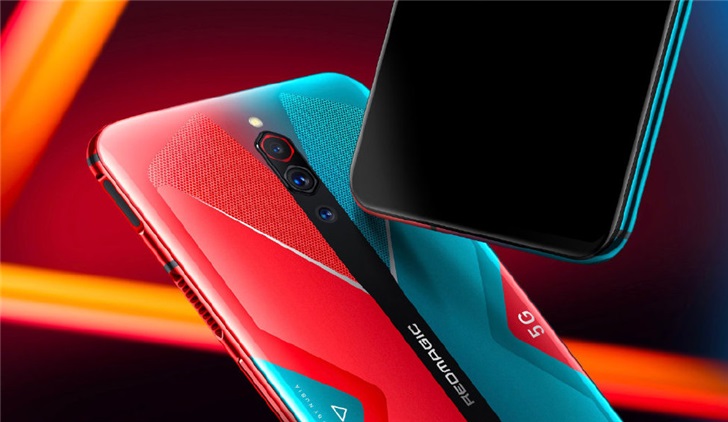
Gaming smartphones have never been designed to look simple and the Red Magic 5G sticks to that tradition. There are lots of lines as well as colors. It doesn’t matter if you choose the Cyber Neon color variant, the Iron Man-inspired Mars Red, or the classic Hacker Black; this phone will definitely turn heads. Just don’t put it in a case. There is also a transparent edition that is literally cooler as you get to see the built-in cooling fan do its job.

Red Magic 5G Specifications

The Red Magic 5G is the first phone in the world with a 144Hz refresh rate. It is an AMOLED panel that measures 6.65-inches and has a resolution of 2340 x 1080. There is no notch or punch hole in the screen. However, there is a pretty slim bezel at the top and bottom of the screen. Nubia has also gone with an in-display fingerprint scanner this time around. The display also has a TUV Rheinland certification for blue-light protection.

The Snapdragon 865 processor and its Adreno 650 GPU takes works with the high-refresh-rate display and 340Hz touch sampling rate to provide the best gaming experience on a mobile phone. Nubia says the high refresh rate experience is not limited to just gaming phones but also tens of other apps including browsers, chat apps, and social media apps. The phone comes with up to 16GB LPDDR5 RAM and up to 256GB UFS 3.0 storage.

Red Magic 5G cameras

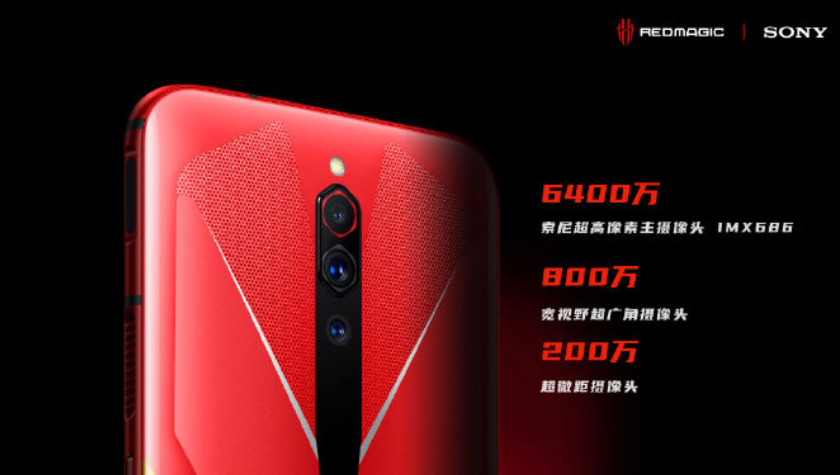
The Red Magic 5G has three rear cameras. The primary sensor is a 64MP Sony IMX686 camera and the other two sensors are an 8MP ultrawide angle camera and a 2MP macro camera. In front is an 8MP camera for selfies.

This a gaming phone after all, so it is no surprise that the phone has two touch control shoulder buttons. Nubia says these buttons have a 300Hz pressure sensitivity.

Red Magic 5G shoulder buttons

Nubia has added a set of 7 contact pins on the left side of the phone. These pins are for a dock which when connected allows you to charge, connect earphones and also connect a network cable all at the same time.

Nubia Red Magic 5G dock pins

The phone has dual cooling technology that is termed ICE 3.0 and it is a combination of air cooling and liquid cooling. There is a cooling fan with a maximum speed of 15000 RPM that can reduce the CPU’s temperature by up to 18°C (along with liquid cooling). Nubia says the air duct area for the cooling fan has been increased by up to 56% compared to that of the previous generation. There is also a liquid cooling system with an L-shaped cooling pipe, thermal gel, multi-layer graphite, and a high-conductivity copper foil.


The phone supports SA and NSA bands n41, n78, and n79. While it has dual SIM support, you can only use 5G on the primary SIM slot only. There is also Wi-Fi 6 and dual-frequency GPS.

The Red Magic 5G has stereo speakers with DTS X Ultra and an audio jack at the top. There is 4D game shock and it is now improved thanks to the linear motor inside the phone.

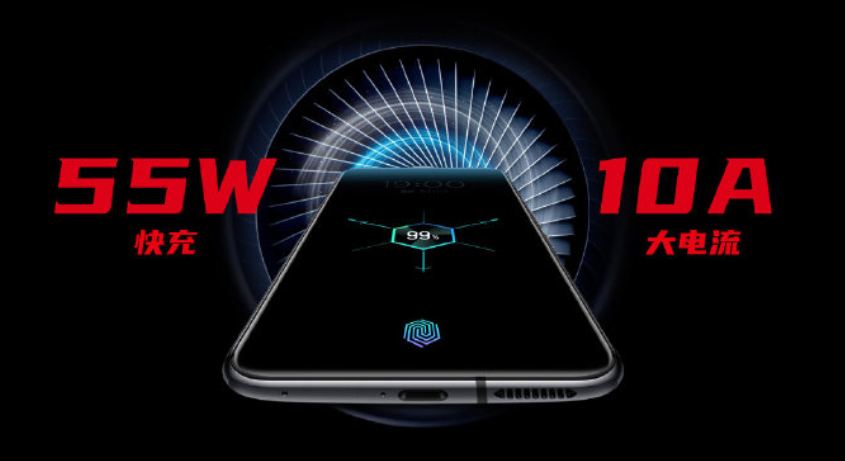
The phone packs a 4500mAh battery with support for 55W (10A high-current) air-cooled turbo fast charging. The Red Magic 5G’s charger also supports PPS fast charging as well as Quick Charge 4.0 and Power Delivery 3.0. The phone ships with an elbow-shaped fast charging cable that allows you to play games while charging without it getting in the way.

Red Magic 5G fast charging

The phone is preinstalled with Red Magic OS Cyber Edition based on Android 10. It has more features and has been designed to appeal to the younger generation. There are also lots of customization options including sound effects and game performance.

Red Magic 5G Price and Availability

The Red Magic 5G is priced at ¥3799 (~$541) for the 8GB RAM + 128G version; ¥4099 (~$584) for the 12GB RAM + 128GB version; ¥4399 (~$627) for the 12GB RAM + 256GB version; and ¥4999 (~$712) for the variant with 16GB RAM and 256GB of storage. You will be able to purchase any of the above configurations in Cyber Neon, Mars Red, and Hacker Black.

The Transparent Editon comes in 12GB RAM +256GB and 16GB RAM + 256GB and is priced at ¥4599 (~$655) and ¥5199 (~$740) respectively.

Pre-orders begin today and the first sale is scheduled for March 19.


OnePlus 8 & OnePlus 8 Pro certified by China’s TENAA

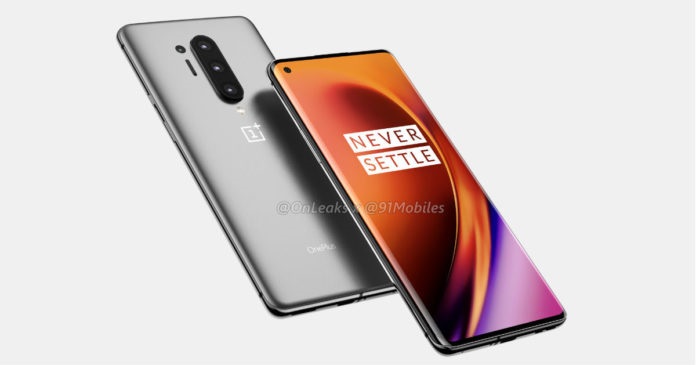
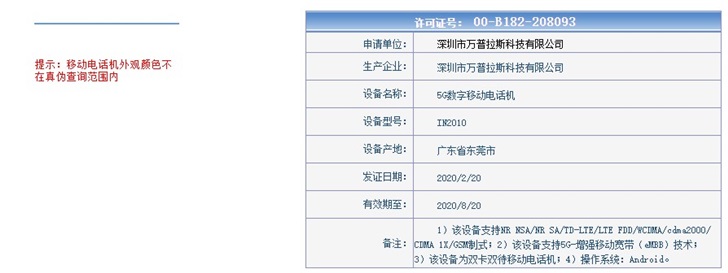
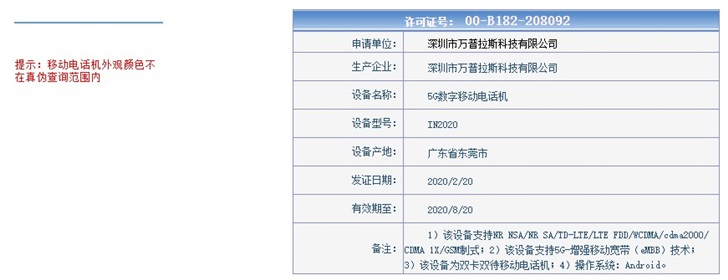
OnePlus is expected to launch the OnePlus 8 series this year. A report tipped the device to go official in April. As the month of March rolls by, details of the OnePlus 8 continue to appear. The OnePlus 8 and OnePlus 8 Pro have now been certified by the Chinese telecoms regulatory agency (TENAA).

Both devices are listed with the model number OnePlus IN2010 for the OnePus 8 and OnePlus IN2020 for the 8 Pro with both models expected to feature 5G compatibility. Recall that the OnePlus 8 had earlier this year appeared on GeekBench database with a similar codename GALILEI IN2023.

The present TENAA listing doesn’t reveal details of the device but is an indication that the flagship series will be launched soon. We expect a more elaborate listing as well as the images of the OnePlus 8 series to be listed soon. However, the OnePlus 8 series is expected to feature a Snapdragon 865 octa-core chipset with up to 12GB RAM. There will likely be other RAM options.

In other aspects, the OnePlus 8 is said to feature a 6.5-inch AMOLED display which will likely have support for 120Hz refresh rate. The device will equally pack a 4,500mAh battery with up to 55W fast charging. We expect more details of the flagship models to emerge as we draw closer to the expected launch period.


(source)


Nubia Red Magic 5G scores over 640,000 points in AnTuTu, Calls out Refrigerator tests as Unfair

Generally, during a smartphone launch conference, especially the premium flagships, the OEM will try and boast of the smartphone’s capabilities. This works especially well with mobile benchmarking platforms. Now, the Nubia Red Magic 5G has just been announced and score over 640,000 points in AnTuTu testing.

According to Nubia, the Red Magic 5G scored within the brackets of 620,000 to 640,000 in the tests in AnTuTu benchmarking software. It achieved such a high score through the Qualcomm Snapdragon 865 SoC that powers the device. The chipset is the latest in line from the chipmaking giant’s flagship entries and offers top notch performance.

Nubia Red Magic 5G Transparent Edition

As of right now, the smartphone’s featuring the Snapdragon 865 SoC have generally scored around or a bit higher than the 600,000 mark. So, Nubia Red Magic 5G holds the bragging rights in regards to being one of the highest scoring device ever on AnTuTu. Nubia stated that the high score is in part due to powerful hardware but mostly thanks to its software optimizations and fine tuning.

Notably, the company stated that its exclusive technology Magic Write, which allows for faster read and write speeds, is also transparent to developers. In other words, software developers and other third party developers do not need to modify their applications. Thus, providing the Nubia Red Magic 5G with such an impressive score.

Another positive aspect that goes along with the performance of the smartphone is the new heat dissipation system in place. Nubia claims this technology is the industry’s best with ICE 3.0 three dimensional heat dissipation system. In simpler terms, the technology utilizes air cooling, liquid cooling and thermally conductive materials like gels, graphite, copper foil, and other materials as well.

Nubia
Nubia Red Magic 5G’s AnTuTu scores

In the launch event, Nubia even called out the industry practice of portraying synthetic benchmark tests using refrigerators. For those unaware, testing platforms like AnTuTu draw a lot of power from the processor leading to an increase in temperatures within the device. In longer tests, this leads to thermal throttling that reduces performance and scores. Thus, various OEMs put their smartphones in fridges to demonstrate the full potential. However, Nubia Red Magic 5G didn’t require any such external cooling method and calls the industry’s practice as cheating or unfair.


OPPO may soon commercially launch the 30W Wireless VOOC charging

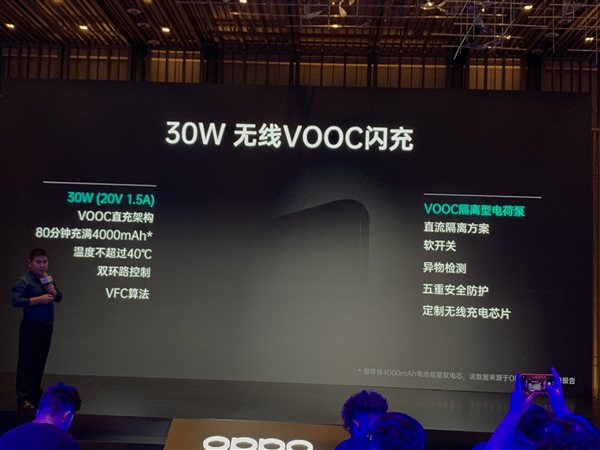
Oppo is planning on commercially launching its 30W VOOC wireless fast charging technology soon. The company has been working on this for a while now and we may see premium smartphones feature this technology in the near future.

Oppo had initially teased the technology back in 2019 but hadn’t released any smartphone featuring the 30W VOOC wireless charging. The company claimed that many real time adjustments had to be made to make the wireless charging efficient and safe. Various measures were taken to ensure the avoidance of overheating while sensory functions had to also be implemented, so the wireless charger stopped immediately if a foreign metallic object is detected.

OPPO 30W wireless VOOC Flash Charge
Image from the conference where Oppo revealed the 30W wireless VOOC Flash Charge technology

Through al this hurdle, it was expected that the Oppo Find X2 series might sport the technology, but alas, that was not the case either. However, Edward Tian, the Charging Engineer at OPPO, has revealed that the wireless VOOC charger is now technically ready for a commercial launch. Furthermore, he even stated that it can also be paired alongside the existing 65W SuperVOOC wires charging technology as well, which can be found in the Find X2 series.

So, it is unknown why the company opted to skip out on the feature for the Find X2, but cost cutting could be a reason. Although, even if Oppo hasn’t included the technology in any of its own smartphones, the OnePlus 8 series might just sport the technology. Oppo and OnePlus are both owned by a company called BBK Electronics, and regularly share technology like the Dash/Warp fast charging.

OPPO 30W wireless VOOC Flash Charge

OnePlus has yet to launch a smartphone with wireless charging, so this year could mark the shift towards it. Previously, senior executives had stated that the technology was skipped in the last few generations due to it still being in its nascent stages. However, wireless charging has improved immensely ever since, and OnePlus might just include it in its upcoming flagship series. Although this is just speculation, so take it with a grain of salt.


(Source)

[Updated: New Winner] Chip Battle: Snapdragon 730G vs Snapdragon 720G

Update: Added the new Redmi Note 9 series to the post as well as new details of the Snapdragon 720G (benchmark results) that actually change the conclusion.

Mobile games have become demanding when it comes to CPU and GPU requirements. Games such as PUBG, Call of Duty Mobile, and Fortnite all require much more compared to games such as Candy Crush. Chipmakers seeing this need for extra processing power have made specially-designed chipsets to handle these games.

For Qualcomm, its gaming chipsets have a “G” at the end of their names which denotes the chipset has select Snapdragon Elite Gaming features and graphical boost compared to the standard processors. Two of its chipsets that fall into this category are the Snapdragon 730G announced in April 2019 and the more recent Snapdragon 720G.

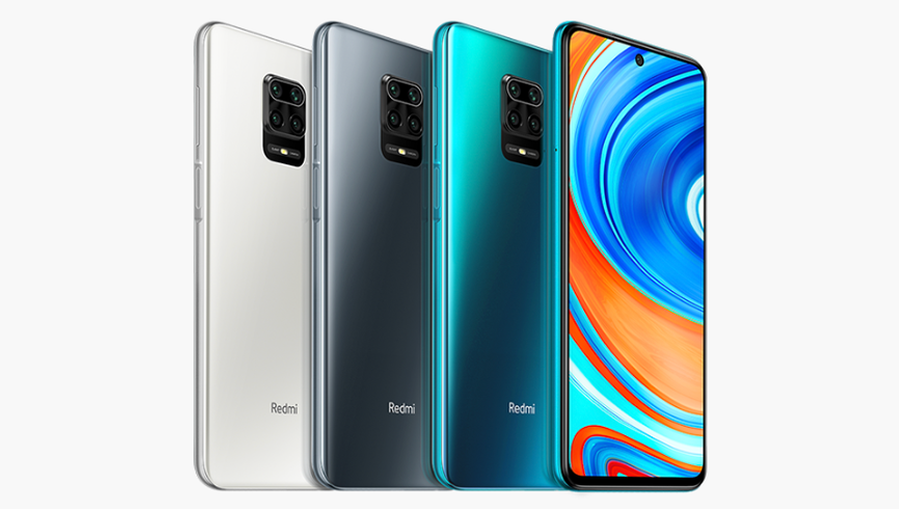
The Snapdragon 730G powers quite a number of phones already such as the Samsung Galaxy A80 and the POCO X2. The Snapdragon 720G, on the other hand, is the chipset inside the Realme 6 Pro, the Redmi Note 9 Pro, and the Redmi Note 9 Pro Max (yes, that is a mouthful). So how do these two chipsets compare to one another? Let’s find out below.

Snapdragon 730G versus Snapdragon 720G


Snapdragon 730G
(SM7150-AB)
Snapdragon 720G
(SM7125)
Node size 8nm 8nm
No. of cores 8 8
CPU 2.2GHz 2x Kryo 470 Gold (based on Cortex-A76)
+
1.8GHz 6x Kryo 470 Silver (based on Cortex-A55) 
2.3GHz 2x Kryo 465 Gold (based on the Cortex-A76)
1.8GHz 6x Kryo 470 Silver (based on Cortex-A55) 
GPU Adreno 618 (15% graphics boost) with support for 4K HDR10 and physically based rendering Adreno 618

with support for HDR10

DSP Hexagon 688 Hexagon 692
Maximum Display Support QHD+ FHD+
Modem Snapdragon X15 LTE (800Mbps downlink and 150Mbps uplink) Snapdragon X15 LTE (800Mbps downlink and 150Mbps uplink)
Bluetooth and WiFi 5.0 and W-iFi 6 5.1 and W-iFi 6
Location GPS, Glonass, BeiDou, Galileo, QZSS, and SBAS GPS, Glonass, BeiDou, Galileo, QZSS, SBAS, and NavIC support
Quick Charge  4+ 4.0


The above is a table comparing the key specs of the two processors. However, there is more to it.

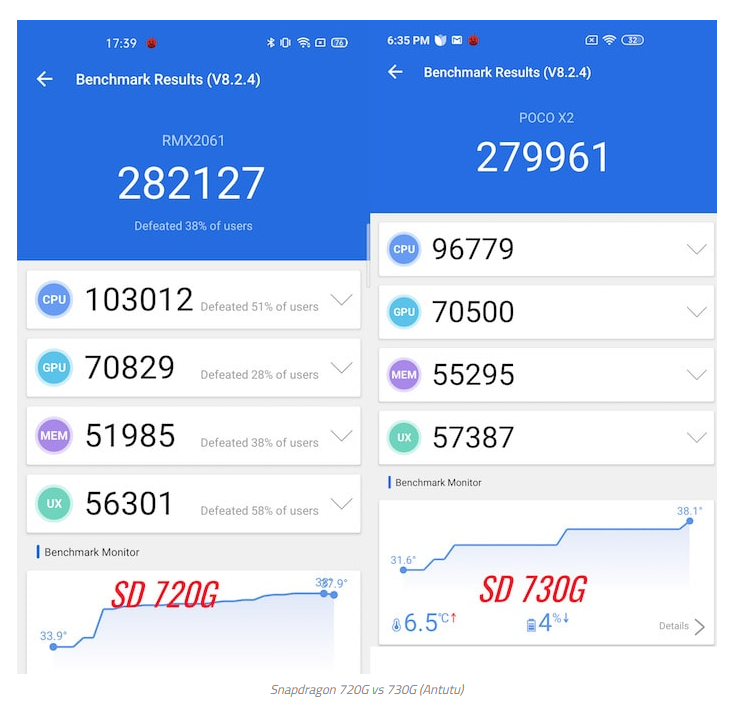
CPU: Both chipsets are built on the same node and feature the same processor cores. The Snapdragon 720G has a higher clockspeed but from the name of its performance core, it should not be as powerful as the Kryo 470 in the Snapdragon 730G, right? Wrong. An AnTuTu benchmark result shows the Snapdragon 720G is actually better in terms of performance than the Snapdragon 730G.

Snapdragon 720G vs Snapdragon 730G AnTuTu
Image source: TechPP.com

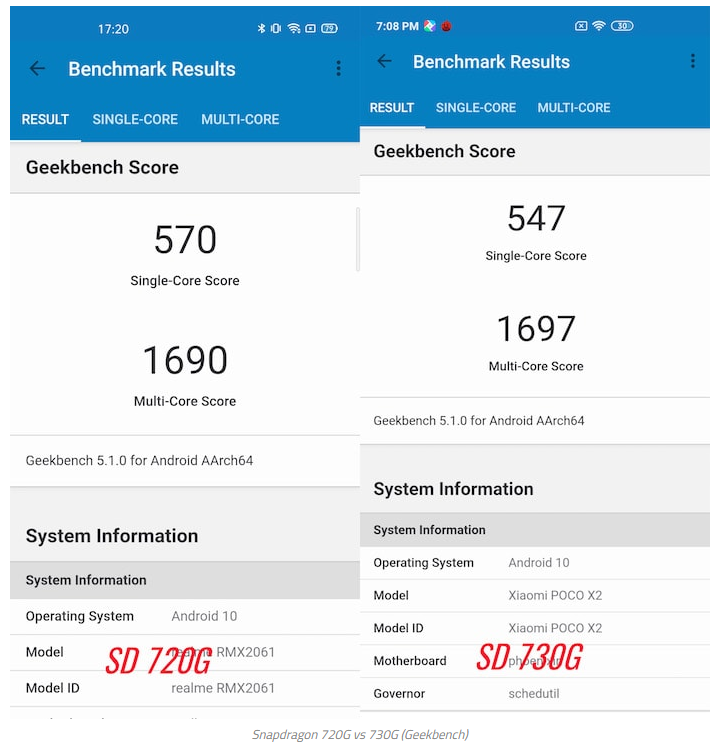
In the image above, the Snapdragon 720G scores a total of 103012 points compared to the Snapdragon 730G’s 96,779 points with respect to CPU performance. For Geekbench, the Snapdragon 720G scores higher in the single-core performance but scores just a tiny bit lower than the Snapdragon 730G in multi-core performance.

Snapdragon 720G vs Snapdragon 730G Geekbench
Image source: TechPP.com

GPU: The two processors have the same GPU but the Snapdragon 730G should be better because Qualcomm says it has a 15% boost compared to the Snapdragon 730’s own GPU which is also the Adreno 618. Wrong again. While Qualcomm has refused to mention the clock speed of the GPU in all three SoCs, the AnTuTu benchmark result above shows that the Snapdragon 720G’s GPU actually scores slightly higher than that of the Snapdragon 730G. Does this mean it is clocked higher? That is very likely.

DSP: The DSP for the Snapdragon 720G is higher and it comes with the new Qualcomm Sensing Hub that is present in the Snapdragon 865. This is an improvement over the Always-Aware Hub of the Snapdragon 730G.

The Snapdragon 730G supports displays with a maximum resolution of QHD+ compared to the Snapdragon 720G that maxes out at FHD+. However, that is not a big deal as a phone with a QHD+ screen will surely not have a Snapdragon 700 series processor.

Also, the Snapdragon 730G also supports 4K HDR10, unlike the Snapdragon 720G that supports just HDR10.

Others: The Snapdragon 720G wins in other areas too. It has Bluetooth 5.1, unlike the Snapdragon 730G that has Bluetooth 5.0. It also has NavIC support which is India’s own satellite location system. Slightly surprising is that it only supports Quick Charge 4.0 while the Snapdragon 730G supports Quick Charge 4+.


Conclusion

The Snapdragon 720G is definitely the more powerful chipset with its better CPU and GPU. However, the Snapdragon 730G is close on its heels. In everyday usage, most people will not notice the difference between the two processors.

When it comes to choosing a phone powered by either of these chipsets, what will actually determine what you buy will be other parameters such as price, cameras, software support, battery capacity, and even design. However, performance will not be a huge difference.


Redmi Note 9 series could be skipped in China

The Redmi Note 9 Pro and Redmi Note 9 Pro Max models have gone official in India. The Note 9 series phones with some exciting features like big-sized displays, large-sized batteries, 64-megapixel quad cameras and more. While the Redmi Note 9 Pro duo went official in India as 4G phones, there have been speculations that the Redmi Note 9 series for China will include 5G-ready handsets. However, a fresh Weibo post from Redmi General Manager Lu Weibing suggests that the company may skip the Redmi Note 9 series in China.
Weibing has claimed that the company is currently focused on bringing 5G products in China. While the Redmi Note 9 Pro and Note 9 Pro Max are feature-rich budget-friendly phones with 4G support, they are only aimed towards overseas market. In other words, these phones are not planned for the Chinese markets.

Redmi is currently focused on the launch of the upcoming Redmi K30 Pro 5G phone. The exact launch date of the phone is currently under the wraps. However, it is expected to go official by the end of this month.

Redmi’s focus on 5G products for the home market suggests that the company may want to launch the Note series phones with 5G support. Hence, it appears that the Redmi Note 9 series will be skipped and there could be plans to launch Redmi Note 10 series 5G support. The Note 10 lineup will be arriving as the 10th anniversary Redmi phones from the company.

Weibing has also said in another Weibo post that the company will be not only announcing the Redmi K30 Pro at the upcoming launch conference, but also it will debut something else. Last year, the Chinese firm had launched RedmiBook 14 at the Redmi K20 Pro. It remains to be seen whether the company announces new Redmi laptops or some other devices at the K30 Pro unveil event.


Xiaomi announces custom Black Shark gamepad for the Mi 10 in China

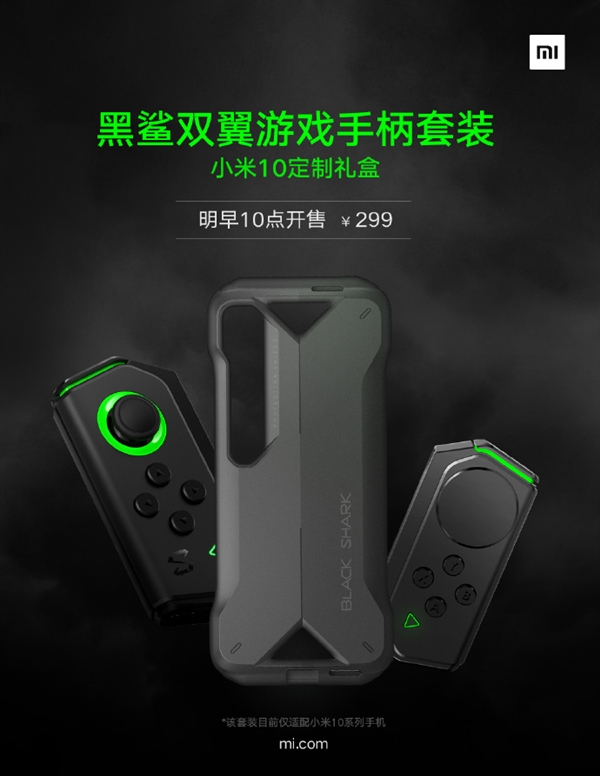
Xiaomi has just announced that the Black Shark gamepad, basically a mobile gaming controller, will be available for sale at Xiaomi Mall in China and is compatible with the Mi 10 series.

Xiaomi Mi 10 Black Shark Gamepad

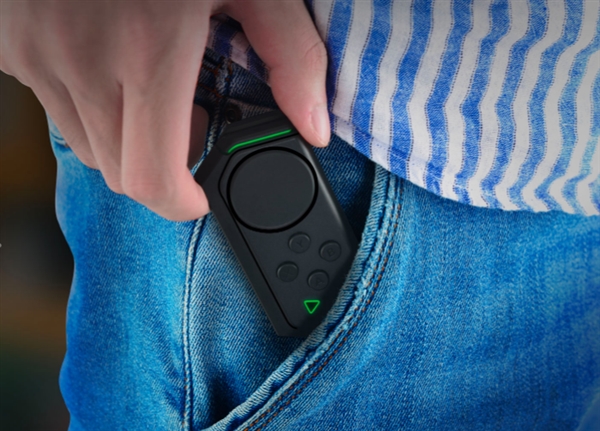
The Black Shark gamepad features two separate pieces that attach to the top and bottom of a smartphone. Thus, it is small and compact, making it easier to carry around even in the pockets. The weight of the gadget is just 40 grams and supports Bluetooth technology which exclusively connects via the supplementing application. It features a twin winged like design which is optimized to improve grip during intense gameplay.

The Black Shark controller can cover to the Mi 10 through a mechanical slide rail, while the sides that attach are covered with rubber. This essentially makes the smartphone a portable and handheld gaming console. According to official notes, the gamepad supports about 40+ hours of battery life in a single full charge and is currently only supported by Xiaomi Mi 10 series.

Xiaomi Mi 10 Black Shark Gamepad

For those unaware, the Mi 10 series is the latest flagship device from the Chinese tech giant and features stop notch specs. This makes the handset suitable for every game with high graphics requirements. In other words, the Black Shark gamepad will noticeably improve gameplay for the gaming fans in China. The controller will be sold from 13th March 2020 and is priced at 299 Yuan or roughly 42 US dollars.