Advertisement

[Updated: New Winner] Chip Battle: Snapdragon 730G vs Snapdragon 720G

Update: Added the new Redmi Note 9 series to the post as well as new details of the Snapdragon 720G (benchmark results) that actually change the conclusion.

Mobile games have become demanding when it comes to CPU and GPU requirements. Games such as PUBG, Call of Duty Mobile, and Fortnite all require much more compared to games such as Candy Crush. Chipmakers seeing this need for extra processing power have made specially-designed chipsets to handle these games.

For Qualcomm, its gaming chipsets have a “G” at the end of their names which denotes the chipset has select Snapdragon Elite Gaming features and graphical boost compared to the standard processors. Two of its chipsets that fall into this category are the Snapdragon 730G announced in April 2019 and the more recent Snapdragon 720G.

The Snapdragon 730G powers quite a number of phones already such as the Samsung Galaxy A80 and the POCO X2. The Snapdragon 720G, on the other hand, is the chipset inside the Realme 6 Pro, the Redmi Note 9 Pro, and the Redmi Note 9 Pro Max (yes, that is a mouthful). So how do these two chipsets compare to one another? Let’s find out below.
Snapdragon 730G versus Snapdragon 720G


Snapdragon 730G
(SM7150-AB)
Snapdragon 720G
(SM7125)
Node size 8nm 8nm
No. of cores 8 8
CPU 2.2GHz 2x Kryo 470 Gold (based on Cortex-A76)
+
1.8GHz 6x Kryo 470 Silver (based on Cortex-A55) 
2.3GHz 2x Kryo 465 Gold (based on the Cortex-A76)
1.8GHz 6x Kryo 470 Silver (based on Cortex-A55) 
GPU Adreno 618 (15% graphics boost) with support for 4K HDR10 and physically based rendering Adreno 618

with support for HDR10

DSP Hexagon 688 Hexagon 692
Maximum Display Support QHD+ FHD+
Modem Snapdragon X15 LTE (800Mbps downlink and 150Mbps uplink) Snapdragon X15 LTE (800Mbps downlink and 150Mbps uplink)
Bluetooth and WiFi 5.0 and W-iFi 6 5.1 and W-iFi 6
Location GPS, Glonass, BeiDou, Galileo, QZSS, and SBAS GPS, Glonass, BeiDou, Galileo, QZSS, SBAS, and NavIC support
Quick Charge  4+ 4.0


The above is a table comparing the key specs of the two processors. However, there is more to it.

CPU: Both chipsets are built on the same node and feature the same processor cores. The Snapdragon 720G has a higher clockspeed but from the name of its performance core, it should not be as powerful as the Kryo 470 in the Snapdragon 730G, right? Wrong. An AnTuTu benchmark result shows the Snapdragon 720G is actually better in terms of performance than the Snapdragon 730G.
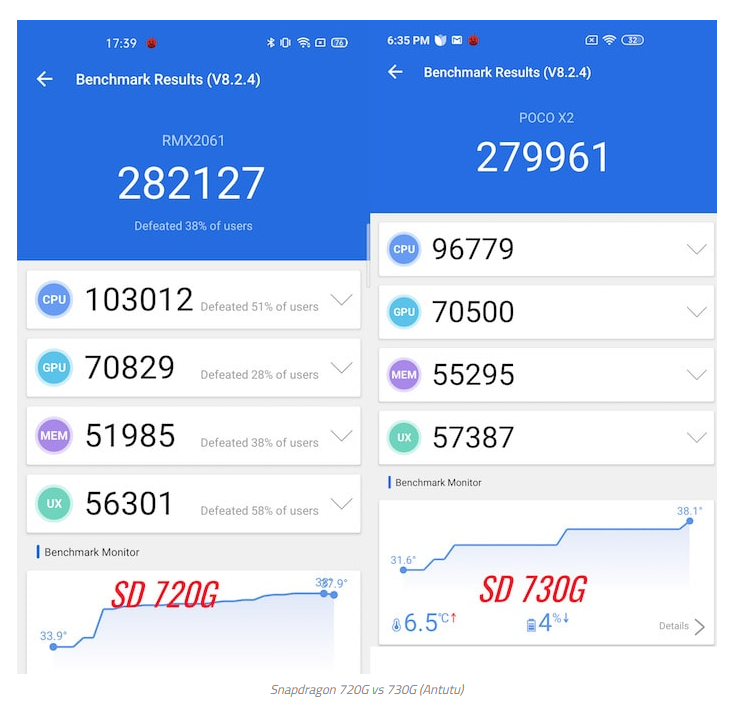
Snapdragon 720G vs Snapdragon 730G AnTuTu
Image source: TechPP.com

In the image above, the Snapdragon 720G scores a total of 103012 points compared to the Snapdragon 730G’s 96,779 points with respect to CPU performance. For Geekbench, the Snapdragon 720G scores higher in the single-core performance but scores just a tiny bit lower than the Snapdragon 730G in multi-core performance.
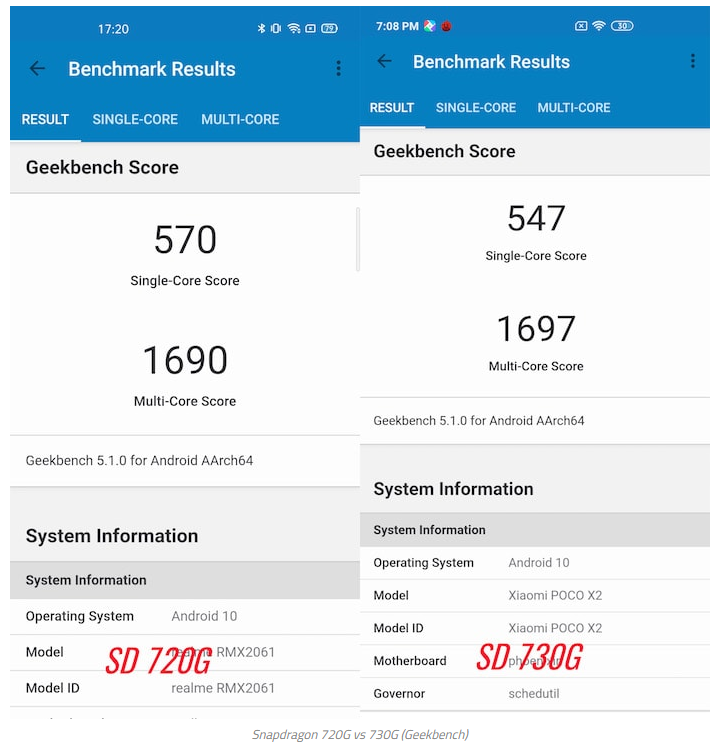
Snapdragon 720G vs Snapdragon 730G Geekbench
Image source: TechPP.com

GPU: The two processors have the same GPU but the Snapdragon 730G should be better because Qualcomm says it has a 15% boost compared to the Snapdragon 730’s own GPU which is also the Adreno 618. Wrong again. While Qualcomm has refused to mention the clock speed of the GPU in all three SoCs, the AnTuTu benchmark result above shows that the Snapdragon 720G’s GPU actually scores slightly higher than that of the Snapdragon 730G. Does this mean it is clocked higher? That is very likely.

DSP: The DSP for the Snapdragon 720G is higher and it comes with the new Qualcomm Sensing Hub that is present in the Snapdragon 865. This is an improvement over the Always-Aware Hub of the Snapdragon 730G.

The Snapdragon 730G supports displays with a maximum resolution of QHD+ compared to the Snapdragon 720G that maxes out at FHD+. However, that is not a big deal as a phone with a QHD+ screen will surely not have a Snapdragon 700 series processor.

Also, the Snapdragon 730G also supports 4K HDR10, unlike the Snapdragon 720G that supports just HDR10.

Others: The Snapdragon 720G wins in other areas too. It has Bluetooth 5.1, unlike the Snapdragon 730G that has Bluetooth 5.0. It also has NavIC support which is India’s own satellite location system. Slightly surprising is that it only supports Quick Charge 4.0 while the Snapdragon 730G supports Quick Charge 4+.


Conclusion

The Snapdragon 720G is definitely the more powerful chipset with its better CPU and GPU. However, the Snapdragon 730G is close on its heels. In everyday usage, most people will not notice the difference between the two processors.

When it comes to choosing a phone powered by either of these chipsets, what will actually determine what you buy will be other parameters such as price, cameras, software support, battery capacity, and even design. However, performance will not be a huge difference.


Redmi Note 9 series could be skipped in China

The Redmi Note 9 Pro and Redmi Note 9 Pro Max models have gone official in India. The Note 9 series phones with some exciting features like big-sized displays, large-sized batteries, 64-megapixel quad cameras and more. While the Redmi Note 9 Pro duo went official in India as 4G phones, there have been speculations that the Redmi Note 9 series for China will include 5G-ready handsets. However, a fresh Weibo post from Redmi General Manager Lu Weibing suggests that the company may skip the Redmi Note 9 series in China.

Weibing has claimed that the company is currently focused on bringing 5G products in China. While the Redmi Note 9 Pro and Note 9 Pro Max are feature-rich budget-friendly phones with 4G support, they are only aimed towards overseas market. In other words, these phones are not planned for the Chinese markets.

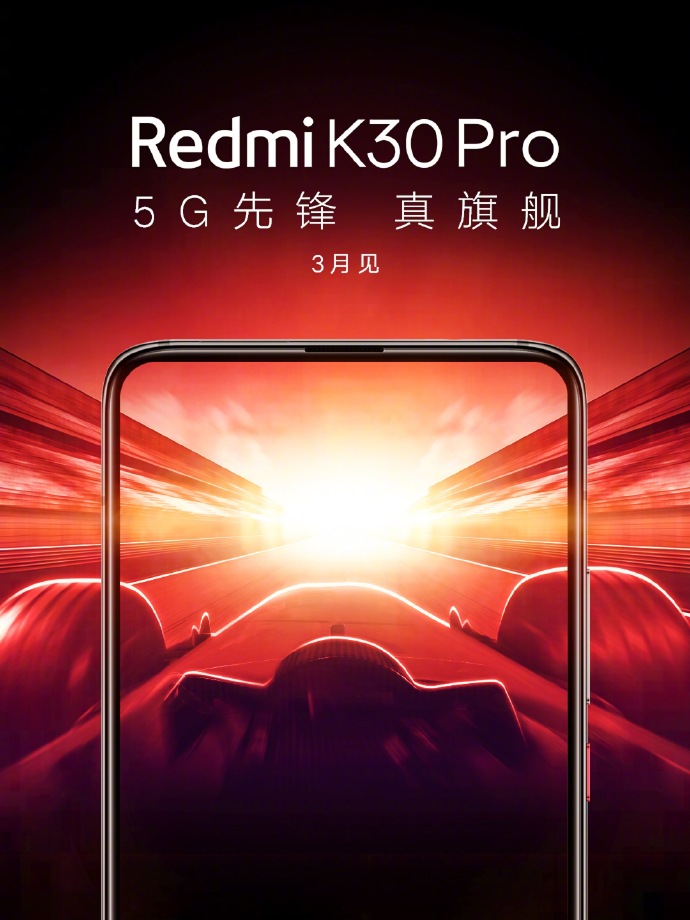
Redmi is currently focused on the launch of the upcoming Redmi K30 Pro 5G phone. The exact launch date of the phone is currently under the wraps. However, it is expected to go official by the end of this month.

Redmi’s focus on 5G products for the home market suggests that the company may want to launch the Note series phones with 5G support. Hence, it appears that the Redmi Note 9 series will be skipped and there could be plans to launch Redmi Note 10 series 5G support. The Note 10 lineup will be arriving as the 10th anniversary Redmi phones from the company.

Weibing has also said in another Weibo post that the company will be not only announcing the Redmi K30 Pro at the upcoming launch conference, but also it will debut something else. Last year, the Chinese firm had launched RedmiBook 14 at the Redmi K20 Pro. It remains to be seen whether the company announces new Redmi laptops or some other devices at the K30 Pro unveil event.


Xiaomi announces custom Black Shark gamepad for the Mi 10 in China

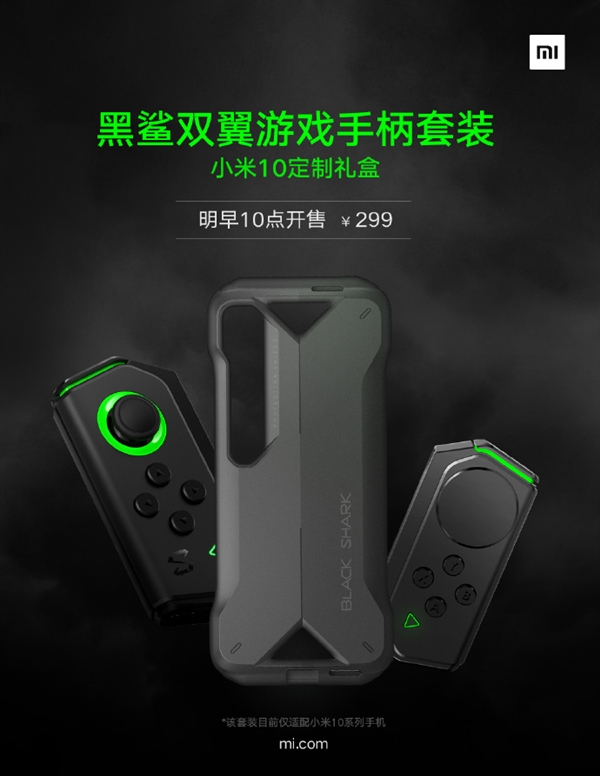
Xiaomi has just announced that the Black Shark gamepad, basically a mobile gaming controller, will be available for sale at Xiaomi Mall in China and is compatible with the Mi 10 series.

Xiaomi Mi 10 Black Shark Gamepad

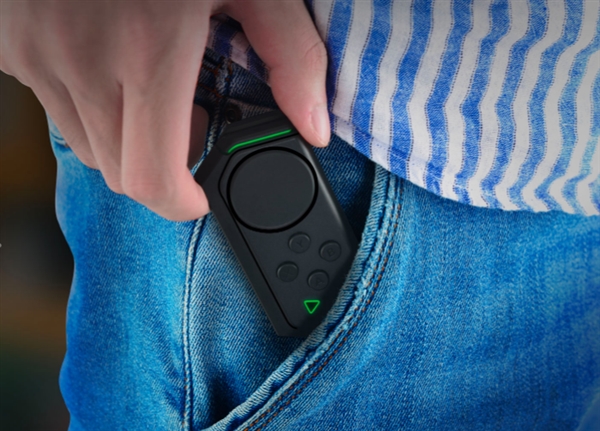
The Black Shark gamepad features two separate pieces that attach to the top and bottom of a smartphone. Thus, it is small and compact, making it easier to carry around even in the pockets. The weight of the gadget is just 40 grams and supports Bluetooth technology which exclusively connects via the supplementing application. It features a twin winged like design which is optimized to improve grip during intense gameplay.

The Black Shark controller can cover to the Mi 10 through a mechanical slide rail, while the sides that attach are covered with rubber. This essentially makes the smartphone a portable and handheld gaming console. According to official notes, the gamepad supports about 40+ hours of battery life in a single full charge and is currently only supported by Xiaomi Mi 10 series.

Xiaomi Mi 10 Black Shark Gamepad

For those unaware, the Mi 10 series is the latest flagship device from the Chinese tech giant and features stop notch specs. This makes the handset suitable for every game with high graphics requirements. In other words, the Black Shark gamepad will noticeably improve gameplay for the gaming fans in China. The controller will be sold from 13th March 2020 and is priced at 299 Yuan or roughly 42 US dollars.


Redmi K30 Pro Launch event will have more than just smartphones: Lu Weibing

Earlier today (12th March 2020), Lu Weibing, the Vice President and General Manager of Xiaomi Group, revealed that the Redmi K30 Pro launch event will include more than just smartphones at the conference.

For those unaware, the Redmi K30 series is the latest flagship from the Xiaomi subsidiary. As of right now, only its 4G and 5G variant of the base Redmi K30 is currently available. And now, the K30 Pro will arrive with improved internal specifications. It will also feature 5G network with SA and NSA dual mode 5G and is expected to also feature a mechanized pop up camera as well. Other flagship features will likely be WiFi 6 support, LPPDR5 memory, and UFS 3.0 storage.

Unfortunately, it is unknown what exactly is planned and what the Chinese tech giant has in store for us. Although, it may take the stage to grow its IoT (internet of things)  portfolio. So alongside the Redmi K30 Pro, new WiFi 6 routers, Redmi Tablet and Redmi bands are also expected. The announcement was made by Lu Weibing on Weibo, the Chinese microblogging website. So stay tuned for more updates, which may arrive in the next few days.


Honor 30S accidentally revealed in a marketing campaign

Huawei was expected to launch the Honor 30 series sometime in April 2020. However, before any official announcement or teaser, it seems like the Honor 30S was accidentally revealed in a marketing campaign from the company.

Honor
Honor 30S accidentally leaked in a marketing campaign.

From the leaked images, it can be observed that the Honor 30S will feature the same texture design as the previous generation, Honor 20S. Furthermore, the latest installment in the series will also apparently support 5G networking, a first for the series. Notably, certain other details include the code name, “Cindy”, and that the it will launch before the Honor 30 series and will support up to 40W fast charging as well.

The leak was first revealed on Weibo, the Chinese microblogging website, by the account @长安数码君. It featured a couple of images that are indicative of the upcoming launch. One screenshot carried the certification of the smartphone, while a screenshot of the company’s president’s Weibo post from an Honor Android phone was also seen as an example.

Honor

Unfortunately, finer details regarding the Honor 30S is still unknown. However, certain speculations can be made. Recently, the Kirin 820 SoC was making rounds online in the form of rumors and possible inclusions in upcoming smartphones. So, the leaked device could also feature the new processor, which might be announced around the same time. Although, this is unconfirmed, so take this with a grain of salt and stay tuned for more leaks.


Redmi Note 9 Pro Max debuts with SD720G, 64MP quad cameras, 32MP front camera, 5,020mAh battery with 33W fast charging and more

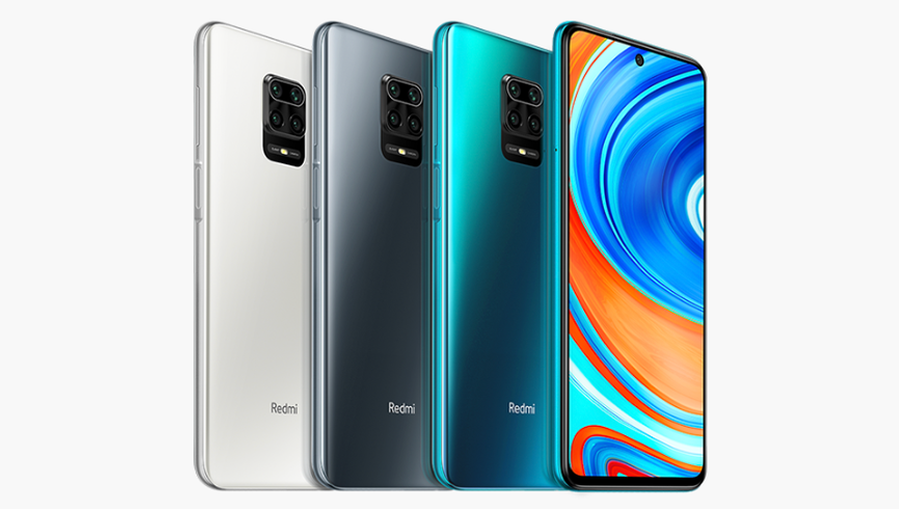
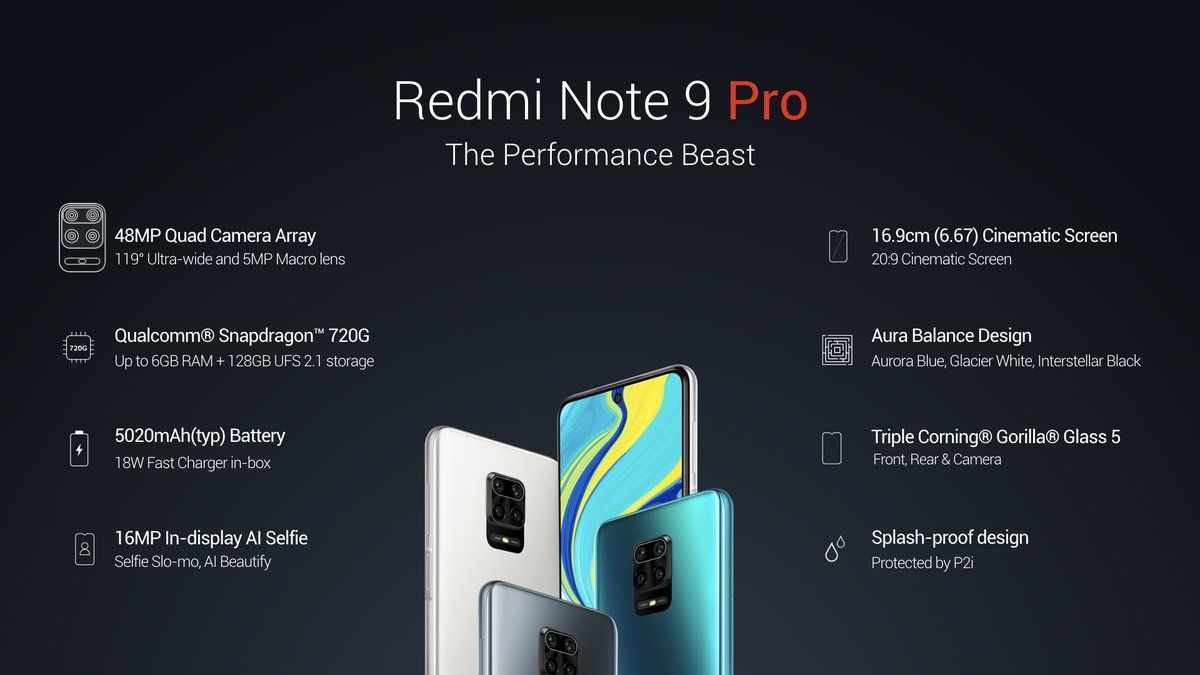
Xiaomi India held a launch event today to announce the Redmi Note 9 Pro and Redmi Note 9 Pro Max smartphones. The Note 9 Pro Max is the biggest Redmi phone ever from the company. In fact, the new “Max” phone is the spiritual successor of the discontinued Xiaomi Mi Max series from the past that featured large-sized mid-range phones with big displays and huge batteries. The impressively designed Redmi Note 9 Pro Max is built to deliver maximum performance and topnotch photography experience in the mid-range price segment. Hence, it comes with some exciting features such as 64-megapixel quad cameras, Snapdragon 720G and 5,020mAh battery with fast charging support.

Redmi Note 9 Pro Max featured
Redmi Note 9 Pro Max

Redmi Note 9 Pro Max and Note 9 Pro specifications

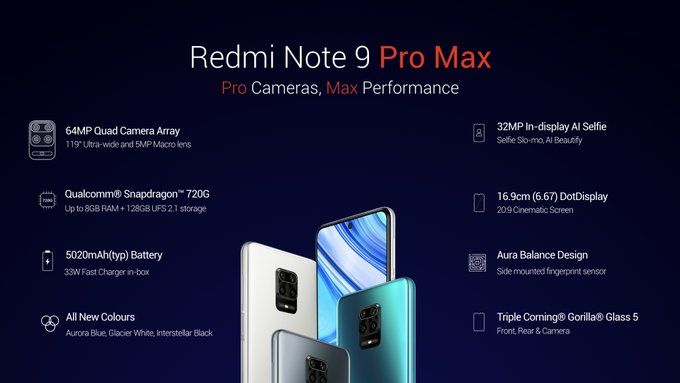
The Redmi Note 9 Pro Max sports an Aura Balance Design that features a 3D curved glass rear. The symmetrically built front and rear sides including the quad cameras of the phone are protected by Gorilla Glass 5. The smartphone is equipped with a massive 6.67-inch IPS LCD panel that features a top-center positioned punch-hole like the recently announced Galaxy S20 series. The display design of the Redmi Note 9 Pro is dubbed as Dot Display. The full HD+ resolution supporting screen of the Redmi Note 9 Pro Max offers 20:9 aspect ratio. There is Z-axis vibration motor available on the device for precise haptic feedback that offers different kinds of vibrations while typing, scrolling and more.

The flagship-level quad cameras of the Redmi Note 9 Pro Max are housed inside in a new square-shaped module. It features a 64-megapixel main camera, a 119-degree 8-megapixel ultrawide angle lens, a 5-megapixel macro lens with a focal distance range of 2cm to 10cm, and 2-megapixel depth assist sensor. For snapping selfies, the Redmi Note 9 Pro Max comes equipped with AI-powered 32-megapixel selfie snapper. The Pro Max supports multi-frame noise reduction which combines eight 64-megapixel shots into one high resolution image, RAW photography, 21:9 wide-angle video shooting, 4K video shooting and 120fps 1080p slo-mo videos.

The 8nm Snapdragon 720G is present under the hood of the Redmi Note 9 Pro Max. It is coupled with up to 8 GB of LPDDR4x RAM. It comes with 128 GB of UFS 2.1 storage. The 5,020mAh battery of the Redmi Note 9 Pro Max offers 20.5 days of standby time, 26 hours of video playback and 11 hours of PUBG gaming. The retail package of the phone includes a 33W fast charger that fills half the battery capacity in just 30 minutes.

Redmi Note 9 Pro
Redmi Note 9 Pro

The Redmi Note 9 Pro borrows many of its specs from the Note 9 Pro Max. The Pro model is equipped with the same-sized 6.67-inch full HD+ Dot Display with 20:9 aspect ratio. The glass-bodied phone comes with a splash-resistant p2i nano-coating. It is also fueled by Snapdragon 720G processor.  It has a front camera of 16-megapixel. The square-shaped rear camera setup includes a Samsung GM2 48-megapixel main lens. The other cameras are the same lenses that are found on the Note 9 Pro Max. The phone ships with a 5,020mAh battery and an 18W fast charger.

The other features that are available on the Redmi Note 9 Pro and Pro Max include side-mounted fingerprint reader, dedicated microSD card slot, dual 4G VoLTE, Wi-Fi 802.11ac with 2×2 MIMO, Bluetooth 5.0, IR blaster, USB-C and 3.5mm audio jack. The Redmi Note 9 Pro Max is equipped with India’s own NavIC navigation system. Xiaomi has prioritized the phone to connect first with the 7 satellites of NavIC before using other satellite navigation systems like GPS, GLONASS, and BeiDuo. These phones are loaded with MIUI 11 based Android 10 OS.

Redmi Note 9 Pro Max and Redmi Note 9 Pro price and availability

Here are the pricing of the different variants of the Redmi Note 9 Pro Max and Redmi Note 9 Pro:

Redmi Note 9 Pro Max

  • 6 GB RAM + 64 GB storage – Rs. 14,999
  • 6 GB RAM + 128 GB storage – Rs. 16,999
  • 8 GB RAM + 128 GB storage – Rs. 18,999
  • Color variants: Aurora Blue, Glacier White and Interstellar Black
  • Availability – March 25 through Amazon India, mi.com, Mi Home and Mi Studio

Redmi Note 9 Pro

  • 4 GB RAM + 64 GB storage – Rs. 12,999
  • 6 GB RAM + 128 GB Storage – Rs. 15,999
  • Color variants: Same as Note 9 Pro Max
  • Availability – March 17 through Amazon India, mi.com, Mi Home and Mi Studio

Xiaomi Mi 8 starts receiving the MIUI 11 v11.0.6.0 Update

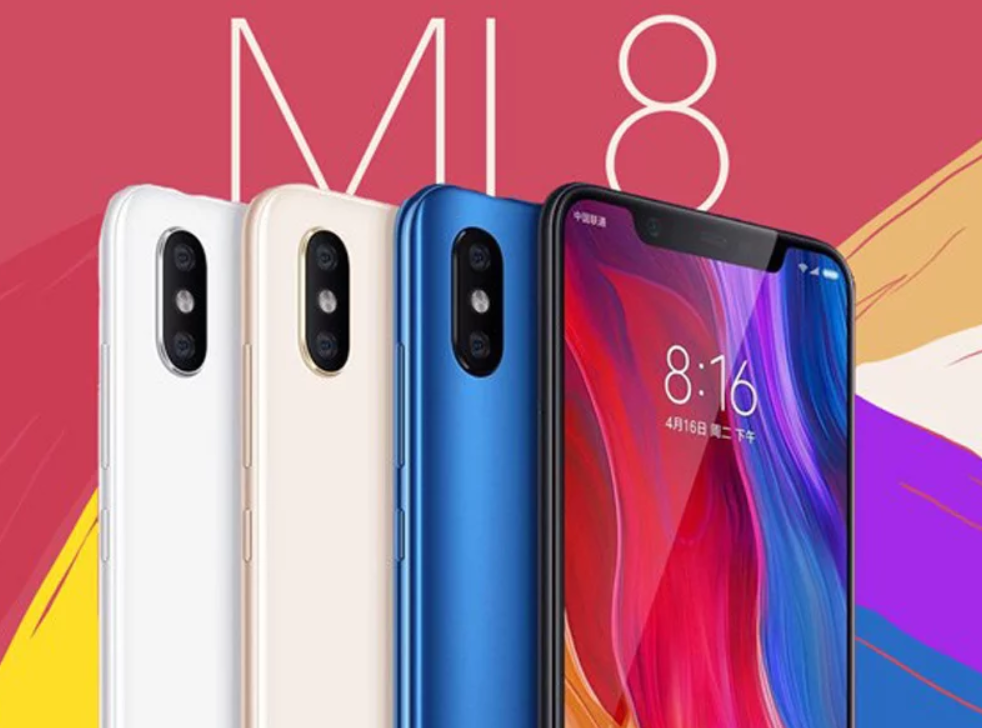
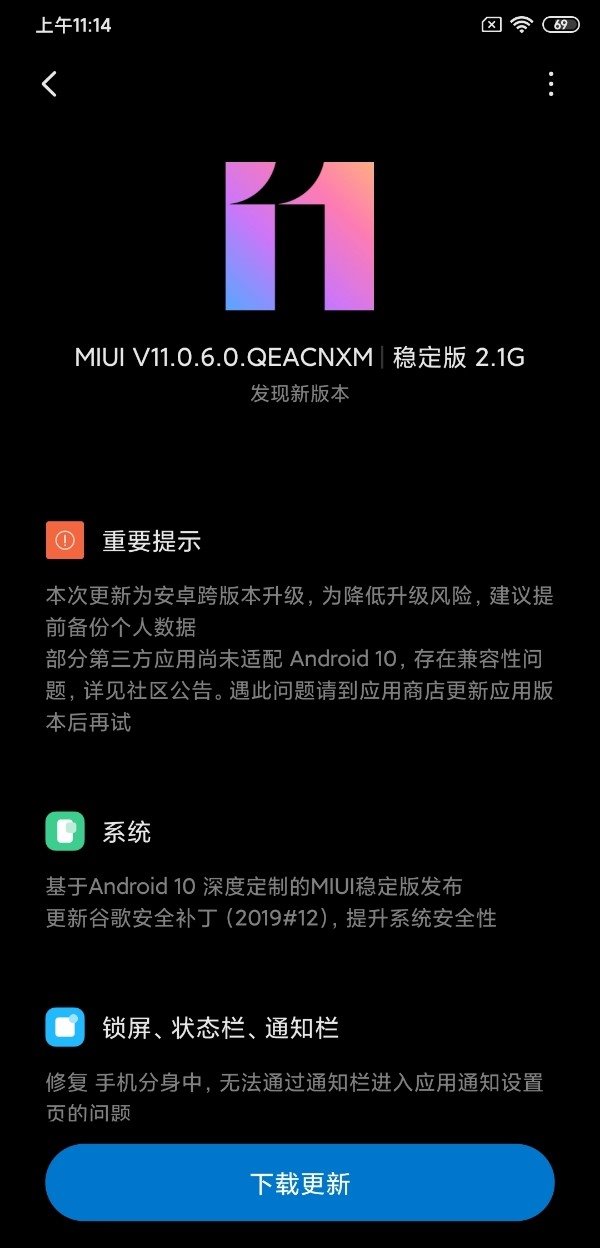
Xiaomi has started the rollout for another update of the MIUI 11 for the Mi 8. The smartphone was the Chinese company’s flagship from 2018 and is receiving the stable version of MIUI v11.0.6.0.

Xiaomi MI 8
Xiaomi MI 8

For those unaware, the MIUI custom skin is a heavily modified interface based on the Android operating system. So by its extension, the MIUI 11 is based on the latest Android 10. However, officials have stated that users should back up their data on the Xiaomi Mi 8 before starting the update. The reason for this is that certain apps have yet to optimize or be compatible with Android 10.

The Mi 8 first received the MIUI 11 update back in December 2019, which also brought Android 10 to the smartphone. This major update brings various improvements across the board alongside various bug fixes and better stability. One of the notable fixes includes the bug regarding the Xiaomi Mi 8 model’s avatar function. In the new update although the download size can be rather large for some users. Reports suggesting a download size close to or over 2GB in size.

Xiaomi

The update is being rolled out in a staggered manner. This means certain Xiaomi Mi 8 users will receive the update before most others. Through this, day one bugs and issues can be avoided if found. So if you haven’t received the update, just wait a bit longer and stay tuned for more Xiaomi updates.


(Via)

Realme X50 Pro 5G launched in China; pricing starts at 3,599 yuan ($516)

A couple of weeks ago, Realme had announced its flagship smartphone, dubbed as Realme X50 Pro 5G — an upgraded variant of the Realme X50 5G. Now, as promised, the company has today launched the same in China.

The Realme X50 Pro 5G features a 6.44-inch Super AMOLED display offering Full HD+ resolution and a refresh rate of 90Hz. The HDR10 complaint screen of the phone is also integrated with an in-display fingerprint reader.

The display on the device comes with a pill-shaped cutout for housing dual camera sensors, which includes a Sony IMX616 32-megapixel primary camera sensor with f/2.5 aperture and an 8-megapixel ultra-wide lens with 105-degree field-of-view and f/2.2 aperture.

Under the hood, the device is powered by Qualcomm Snapdragon 865 SoC and comes packed with 8/12 GB of LPDDR5 RAM and 128/256 GB of internal storage. There’s also a microSD card slot for expanding the phone’s storage capacity and VC Liquid Cooling to ensure smooth usage using heavy gaming.

On the back side, the device comes with a quad-camera setup where the camera sensors are stacked vertically. It comprises of a 64-megapixel main lens with f/1.8 aperture and 30fps 4K video shooting support, a 12-megapixel telephoto lens with 20x hybrid zoom support and f/2.5 aperture, an 8-megapixel ultrawide lens with 119-degee field-of-view and f/2.3 aperture and lastly a 2-megapixel portrait lens with f/2.4 aperture.

Connectivity options on the device include 5G SA/NSA, 4G VoLTE, Dual SIM support, Wi-Fi 6, Bluetooth 5.0, dual frequency GPS, NFC and USB Type-C port. It runs Android 10 operating system with the company’s own Realme UI and is powered by a 4,200mAh battery that supports 65W SuperDart fast charging technology.

The Realme X50 Pro 5G comes in Rust Red and Moss Green color options. The base model with 8GB RAM and 128GB storage costs 3,599 yuan (~$516) while the 8GB RAM + 256GB storage model costs 3,899 yuan (~$558). The top-end variant with 12GB RAM and 256GB storage is priced at 4,199 yuan, which is roughly $601. The smartphone is now up for pre-order and will go on sale in China from 19th March.


Redmi K30 Pro to start above 3000 yuan ($430), hints company’s executive

Xiaomi-backed Redmi is confirmed to launch its flagship smartphone — Redmi K30 Pro in China later this month. As the launch date is nearing, more information about the device keeps surfacing online.

Ahead of the launch, most of the specifications of the upcoming Redmi K30 Pro has been leaked online. Probably the only thing left is the pricing and availability information. Well, the company’s executive has now hinted at the phone’s pricing.

Redmi Product Director Wang Teng has hinted through his Weibo account in response to a user’s question that the upcoming Redmi K30 Pro will be priced higher than 3,000 yuan, which is roughly $430.

This pricing information is in line with the previous report which speculated that the phone could have a starting price of 3000-3500 yuan, based on the statements of Redmi General Manager Lu Weibing. However, to know for sure, we’ll have to wait for a couple of weeks more for the official launch.

The Redmi K30 Pro is expected to come with 6.67-inch OLED Full HD+ display with in-screen fingerprint. It will feature a pop-up selfie camera and a 64-megapixel Sony IMX686 quad camera system on the back.

Under the hood, the device will come powered by the Qualcomm Snapdragon 865 SoC and may pack 4,700mAh battery with 33W fast charging support. It is speculated that there could be a variant of the phone called K30 Pro Zoom Edition.

While the launch of K30 Pro smartphone in China is confirmed to take place this month, the company has not yet revealed an exact launch date. It also remains to be seen if the company opts for an offline press conference for launching its flagship smartphone. Meanwhile, Xiaomi has scheduled a global launch event for Mi 10 series on 27th March, which will be live streamed.

(Via)

Huawei P40 series LEAKED teaser poster hints at triple front-facing camera setup

Huawei recently confirmed that it’s going forward with the plan of launching its upcoming flagship smartphone lineup, Huawei P40 series, on 26th March. However, instead of hosting a launch event in Paris, the company has decided to make it a virtual press conference because of the coronavirus outbreak.

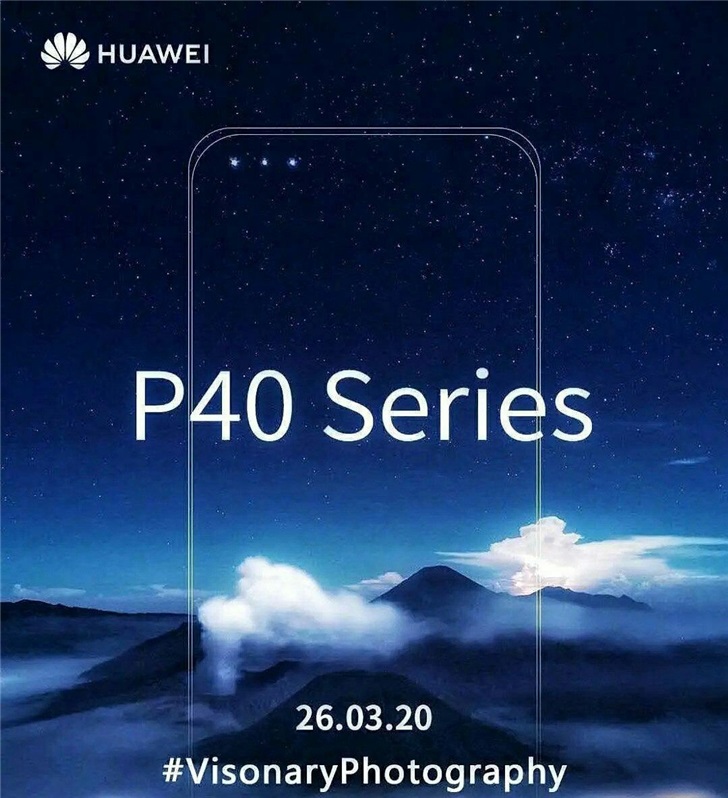
Now, with just a few days remaining for the official launch, a leaked teaser poster for the Huawei P40 series has popped up with the launch date as well as hinting about the powerful camera features with the hashtag #VisionaryPhotography.

Huawei P40 Series

Along with that, the teaser poster also confirms that the smartphone will come with a triple-camera setup on the front side. Since the cameras are inside the display area, the device will have a punch-hole cutout for the same.

It also shows an outline for the upcoming smartphone which reveals a very thin bezel around the display, including the top bezel. The bezels on the left and right side almost seems non-existent.

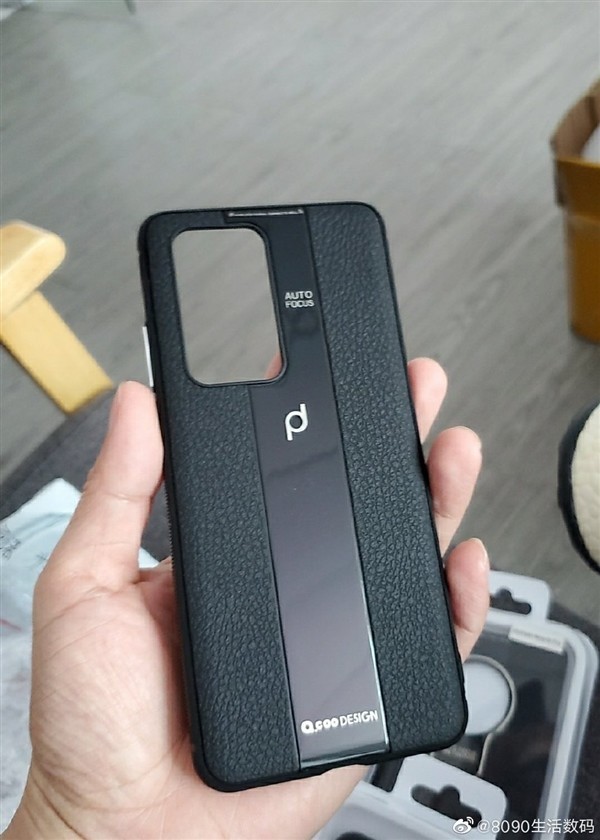
Huawei P40 Series Protective Case Leak

An attractive protective case of P40 Pro with a Porsche logo has also surfaced on Weibo. The case, which seems like a third-party product, is made up of glass and leather, aimed to offer premium in-hand experience.

Recently, it was leaked that the Huawei P40 Pro will come with five camera sensors on the back. The setup includes a 1/1.28” Sony IMX700 52-megapixel Hexadeca Bayer RYYB lens, a 1/1.5” Sony IMX650 40-megapixel ultrawide Cine RGGB lens, a telephoto lens with 3x optical zoom, a dual prism periscope zoom lens with 10x optical zoom as well as a ToF (Time of Flight) sensor.

The company is expected to launch three devices in the series — Huawei P40, P40 Pro, and P40 Pro PE. The Huawei P40 Pro PE is said to come with a ceramic body and should feature camera support for 10x optical zoom. The devices, powered by the company’s own Kirin 990 5G chipset, will go official on 26th March.


(Via – 1, 2)

Realme 6i, RMX2063 Geekbench listings appear to reveal key specs

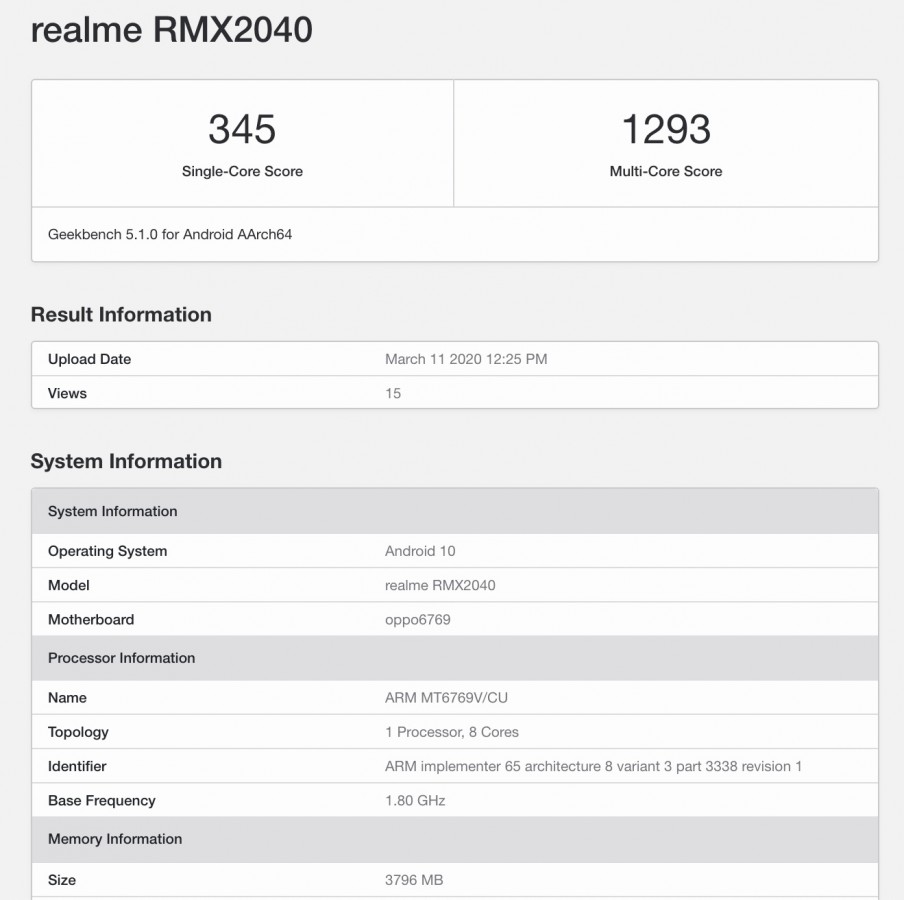
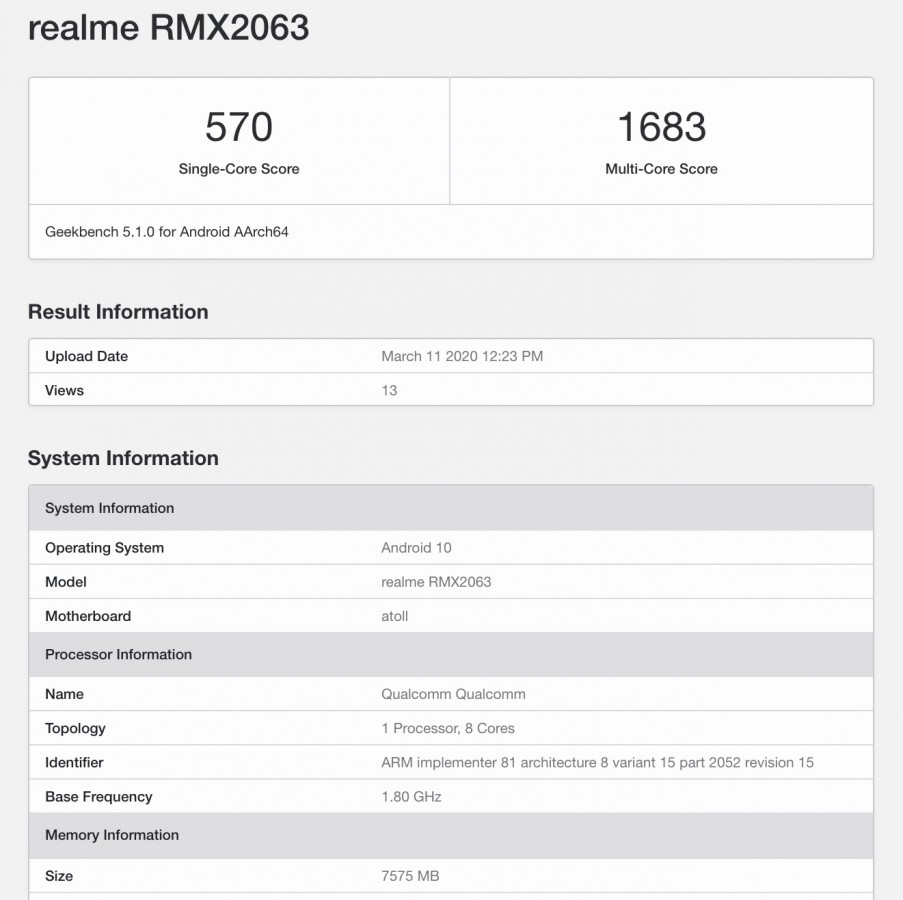
Realme has recently launched the Realme 6 and Realme 6 Pro smartphones in India. The series also includes the unannounced Realme 6i that is yet to go official. The smartphone that has a model number of RMX2040 has been previously spotted at certification platforms like Federal Communications Commission (FCC) and Singapore’s IMDA. The Realme 6i has now appeared on Geekbench with some key specs. The benchmarking platform also has a new listing for the RMX2063 Realme phone. The RMX2063 was spotted at FCC dataset in January. Since the Realme 6 Pro has a model number of RMX2061, the RMX2063 handset could be a country variant of the same phone.

Realme 6i Geekbench

The RMX2040 Realme 6i has appeared with Helio G70 chipset and 4 GB of RAM on Geekbench 5. The handset is loaded with Android 10 OS. It scored 345 and 1293 points in the single-core and multi-core tests of Geekbench 5.

The Realme 6i’s FFC appearance had revealed that it features a waterdrop notch display. A quad camera setup that is present on its back has a 48-megapixel main unit. It has a 5,000mAh battery. The phone is likely to support 18W fast charging through USB-C.

The launch date of the Realme 6i smartphone is yet to be confirmed. The Geekbench listing of the unannounced smartphone suggests that the Chinese firm could be checking its performance before making it official. The recently unveiled Realme 6 had arrived as the successor for the Realme 5 Pro and not Realme 5. Hence, there is a possibility that the Realme 6i could coming as the Realme 5.

Realme RMX2063 Geekbench

The RMX2063 phone scored 570 in the single-core test and 1683 in the multi-core test of Geekbench. The Snapdragon 720G processor which is mentioned as “atoll” in Geekbench powers the smartphone. The SoC is coupled with 8 GB of RAM and it is loaded with Android 10 OS.
 

(source 1, 2|via)

Redmi Note 9 Pro Max moniker spotted on Amazon before launch

Xiaomi India will be announcing the Redmi Note 9 series today at 12PM (local time). Initial speculations suggested that the series will include Redmi Note 9 and Redmi Note 9 Pro as successors for Redmi Note 8 and Redmi Note 8 Pro phones. There have been speculations that the series will also include a third phone called Redmi Note 9 Pro Max. Tipster Mukul Sharma shared two screenshots of product listings on Amazon India today on Twitter. One of them confirms on the Redmi Note 9 Pro Max moniker.

As it can be seen in the images, not only the Redmi Note 9 Pro is found mentioned on Amazon India but also the Redmi Note 9 Pro Max moniker can also be seen. At present, there is no concrete evidence on the specs of the Max model. However, the moniker suggests that it could be coming with some enhanced features compared to the Note 9 Pro.

The Redmi Note 9 Pro is rumored to be arriving with a 6.67-inch IPS LCD display with a top-center positioned punch-hole. The Snapdragon 720G mobile platform could be coming with up to 6 GB of RAM. The handset may offer users with up to 128 GB of native storage.

The MIUI 11 based Android 10 OS will come preloaded on the Redmi Note 9 Pro smartphone. The phone is speculated to be equipped with a 5,020mAh battery that supports 18W fast charging. The handset has a front-facing camera of 16-megapixel. The rear shell of the Note 9 Pro has a quad camera setup that may include a 48-megapixel Samsung GM2 sensor, an 8-megapixel ultrawide lens, a 5-megapixel lens for capturing macro shots and a 2-mgeapixel sensor for adding depth effects.

The Redmi Note 9 Pro Max will be priced higher than the Note 9 Pro. It could be coming a 64-megapixel main lens and a faster charger. The handset could be driven by a different chipset. Some rumors have claimed it could be fueled by Dimensity 800 SoC.


OPPO Reno3 global edition to debut on March 16

In December, OPPO had launched the OPPO Reno3 and Reno3 Pro 5G phones. The global edition of the Reno3 Pro with 4G support only was announced recently in India. Yesterday, tipster Ishan Agarwal had revealed that OPPO is gearing up to launch Reno3 global variant. Now the Chinese firm manufacturer has officially confirmed through its Facebook profile that the Reno3 will be made official on March 16.

Just as the Reno3 global version arrived as a 4G device, the Reno3 is also expected to carry support for 4G connectivity. The teaser video released by the company shows that the Reno3 will be made available in Aurora Blue. The teaser video shows the phone sporting a waterdrop notch screen and four cameras on its back.

OPPO Reno3 specifications (Rumored)

The Reno3 global variant is rumored to be equipped with a 6.4-inch AMOLED display that supports full HD+ resolution. The waterdrop notch is expected to house a front-facing camera of 44-megapixel. The display of the Reno3 could be also equipped with an in-screen fingerprint reader.

The Helio P90 chipset is expected to fuel the Reno3 global version with 8 GB of RAM and 4,025mAh battery. The phone may carry fast charging capabilities. The smartphone could be coming with an internal storage of 128 GB.

The ColorOS7 based Android 10 OS will come preloaded on the Reno3 global version. The rear-positioned quad camera setup is speculated to feature a 64-megapixel main lens, a 13-megapixel telephoto sensor, an 8-megapixel ultrawide lens and a 2-megapixel monochrome lens.

The OPPO Reno3 global version may sell in other colors like Midnight Black and Sky White. The pricing of the phone is not known yet.


(source)

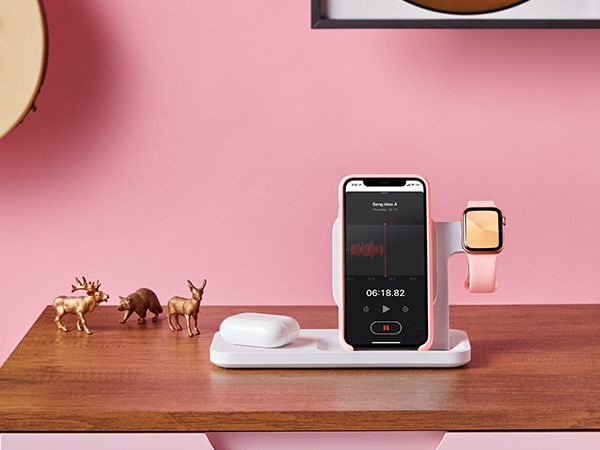
Logitech Powered 3-in-1 Dock is a cool wireless charger for your phone & gadgets

Logitech is fast gaining a formidable reputation for its amazing products, usually computers and smartphones peripherals and accessories. The company has now launched a new wireless charger for the US market. The wireless charger is dubbed Powered 3-in-1 Dock and is described as a fitting replacement for the discontinued Apple AirPower wireless charger.Logitech Powered 3-in-1 dock

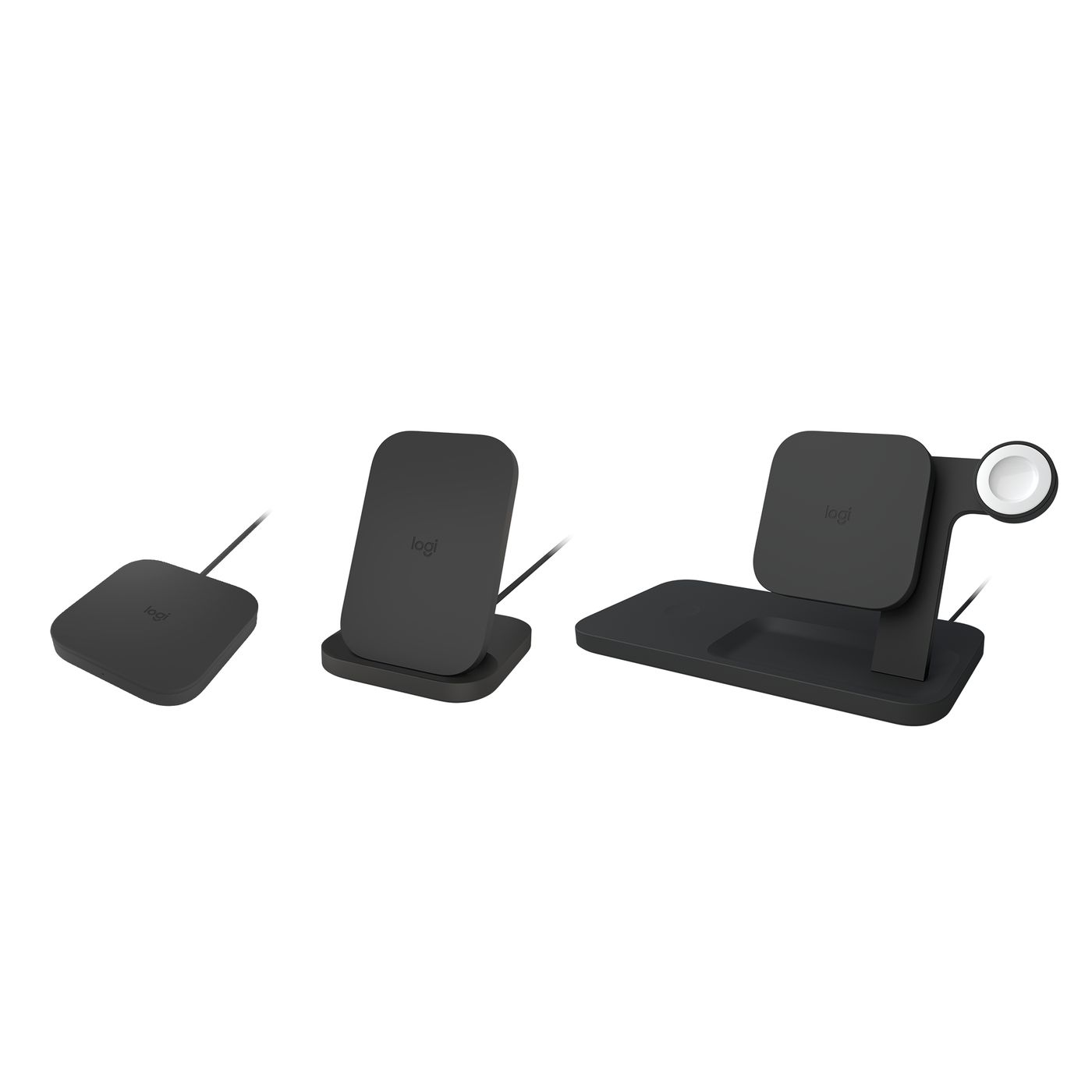
The Logitech Powered 3-in-1 Dock comes in at $129.99 and the capability to wirelessly fuel an iPhone, Apple Watch, and a pair of AirPods all at once. The design includes two wireless charging zones: one stand-style pad meant for a phone and a flat pad for a pair of headphones. There is equally an extension to the right of the phone charging pad which houses a watch charger, also wireless.

Further, the wireless charging pads utilise the Qi charging standards and are compatible with any product that supports the Qi wireless charging standard. This includes the Galaxy S20, galaxy Buds Plus earbuds. However, the watch stand can only be used to charge an Apple Watch since Apple deployed a proprietary charging technique for the Apple Watch.

Logitech Powered 3-in-1 Dock

Apart from the Powered 3-in-1 Dock, Logitech also released two other single device wireless charging pads. One of them is the Logitech Powered Wireless Charging Stand which is a stand-style wireless charging pad and is priced at $59.99. The last product is a flat pad dubbed Logitech Powered Wireless Charging Pad and priced at $39.99.Logitech Powered 3-in-1 Dock

All three chargers support the basic fast-charging specs for Apple (7.5W) and Samsung (9W) phones. However, it doesn’t get the 15W speeds that newer Samsung devices like the Galaxy S20 and Note 10 are capable of hitting. One drawback, though, is the use of Logitech’s proprietary Logitech barrel connector instead of a USB-C or Micro USB connector as power source like other wireless chargers.


(source)


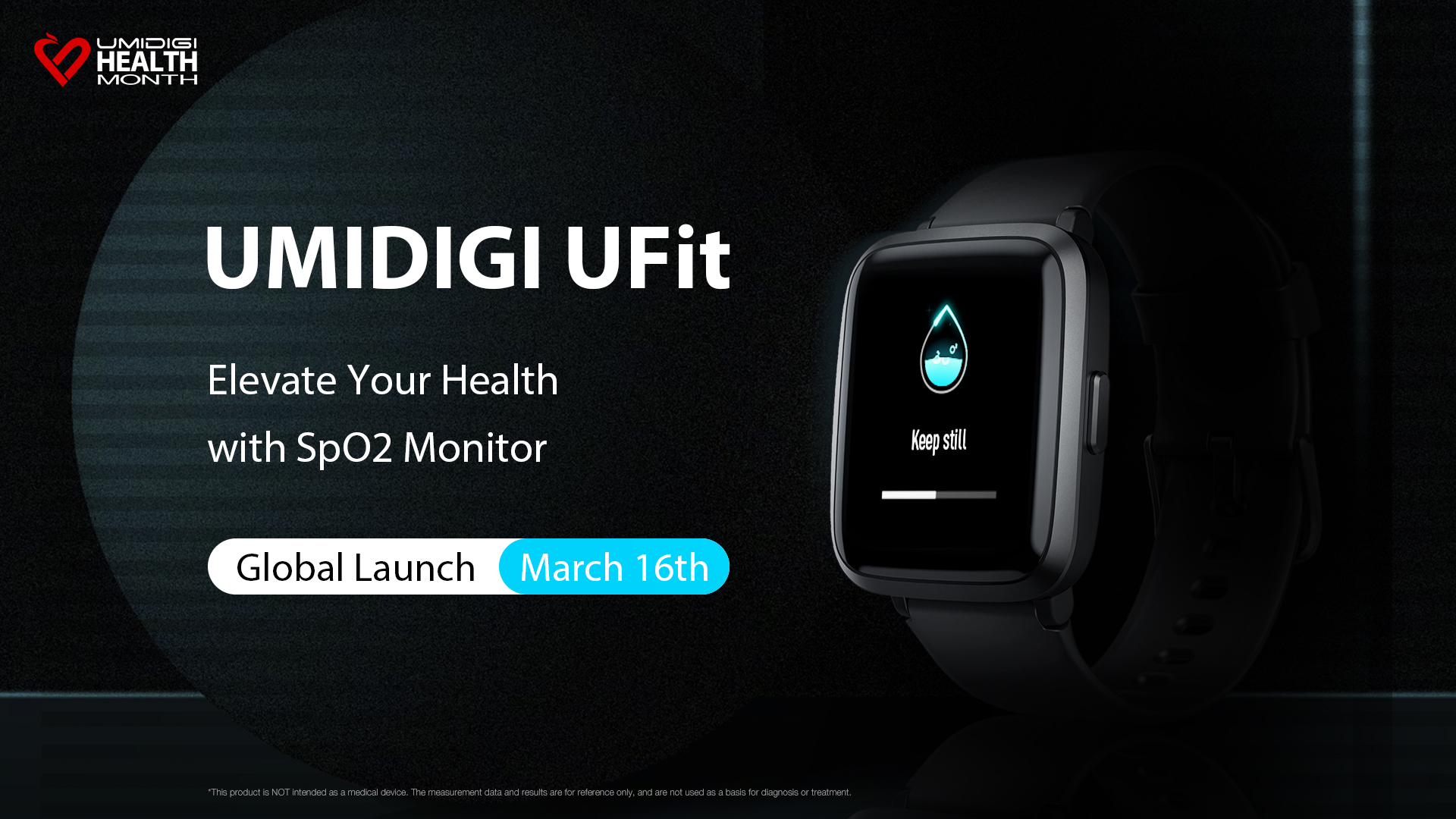
UMIDIGI UFit smartwatch with SpO2 monitor will be unveiled on March 16

Chinese tech company UMIDIGI has revealed via a tweet posted recently that it will launch a new smartwatch which has as its biggest feature a SpO2 monitor. The smartwatch will be called UMIDIGI UFit and isn’t just a smartwatch but a fitness and health tracker. The product will be launched on March 16.UMIDIGI UFit

In the face of the Coronavirus outbreak, the focus on health and fitness has increased. The blood oxygen saturation (SpO2) level is a vital indicator of a person’s health. This tracking the SpO2 level is also a new wearable tech metric getting adopted by more manufacturers. It might sound complicated but SpO2 can reveal conditions. For example, coronavirus and sleep apnea may cause low blood oxygen saturation.

The SpO2 monitor is already in some big-name wearables: Fitbit and Garmin already have an SpO2 sensor on most of their devices, and Huawei has jumped in too. UMIDIGI UFit is expected to also have a SpO2 sensor but it would be much more affordable, in line with UMIDIGI’s market strategy.

There’s still a lot we don’t know about the device, but there are a few things we can speculate from the teaser image. Besides the SpO2 monitoring function, it apparently has a curved screen and 2.5D glass. And there’s a side button to control the watch. We won’t have to wait long to learn more about the smartwatch since it goes official on March 16.

UMIDIGI is also running a giveaway with five units of the UMIDIGI F2 smartphone and fifteen units of the UFit up for takes. You can join the giveaway on their official website. You can also pre-order the UFit on AliExpress.


Realme 6 vs Redmi Note 8 Pro vs Poco X2: Specs Comparison

Realme 6 and 6 Pro finally hitten the Indian market with amazing specifications offered at very affordable prices. Realme 6 is the most affordable variant but it still brings to the market awesome performance and a display with a high refresh rate at a killer price. But is it really the device with the highest value for money in its price range or there is something more worthwhile among the handsets actually available to purchase? For this high value for money comparison, we chose to bring Redmi Note 8 Pro and Poco X2 to the table. We think these are the most interesting rivals of Realme 6 and in this comparison, we will highlight the differences between their specifications.


Oppo Realme 6 vs Xiaomi Redmi Note 8 Pro vs Xiaomi Poco X2

Xiaomi Redmi Note 8 Pro Realme 6 Xiaomi Poco X2
DIMENSIONS AND WEIGHT 161.3 x 76.4 x 8.8 mm, 199 grams 162.1 x 74.8 x 8.9 mm, 191 grams 165.3 x 76.6 x 8.8 mm, 208 grams
DISPLAY 6.53 inches, 1080 x 2340p (Full HD+), 395 ppi, LTPS IPS LCD 6.5 inches, 1080 x 2400p (Full HD+), 405 ppi, IPS LCD 6.67 inches, 1080 x 2400p (Full HD+), 395 ppi, IPS LCD
PROCESSOR Mediatek Helio G90T, octa-core 2.05 GHz Mediatek Helio G90T, octa-core 2.05 GHz Qualcomm Snapdragon 730G, octa-core 2.2 GHz
MEMORY  6 GB RAM, 128 GB – 8 GB RAM, 128 GB – micro SD slot 4 GB RAM, 64 GB – 6 GB RAM, 128 GB – 8 GB RAM, 128 GB – micro SD dedicated slot 6 GB RAM, 64 GB – 6 GB RAM, 128 GB – 8 GB RAM, 256 GB – micro SD slot
SOFTWARE Android 9 Pie, MIUI Android 10, Realme UI Android 10, MIUI
CONNECTIVITY Wi-Fi 802.11 a/b/g/n/ac, Bluetooth 5.0, GPS Wi-Fi 802.11 a/b/g/n/ac, Bluetooth 5.0, GPS  Wi-Fi 802.11 a/b/g/n/ac, Bluetooth 5.0, GPS
CAMERA Quad 64 + 8 + 2 + 2 MP f/1.8, f/2.2, f/2.4 and f/2.4
20 MP front camera
Quad 64 + 8 + 2 + 2 MP f/1.8, f/2.3, f/2.4 and f/2.4
16 MP f/2.0 front camera
Quad 64 + 8 + 2 + 2 MP f/1.9, f/2.2, f/2.4 and f/2.4
Dual 20 + 2 MP f/2.2 and f/2.4 front camera
BATTERY 4500 mAh, fast charging 18W with Quick Charge 4+ 4300 mAh, fast charging 30W 4500 mAh, fast charging 27W
ADDITIONAL FEATURES Hybrid Dual SIM slot Dual SIM slot, splash resistant Hybrid Dual SIM slot, splash resistant

Design

The Poco X2 is a device built with more premium materials: while Realme 6 has a plastic body and Redmi Note 8 Pro has a plastic frame with a glass back, the Poco X2 is the only to sport a glass back and an aluminum frame just like flagship smartphones. And just like the Realme 6, it splash resistant. And thanks to its punch-hole display, the bezels are very narrow even though the panel is notch-less. In terms of look, I like the Realme 6 a bit more since it sports a single punch-hole display and a more minimalistic design, but Poco X2 is more convincing due to its more premium materials.


Display

Unfortunately, none of these devices comes with an AMOLED display. But the Poco X2 is one of the most affordable smartphones to offer a high 120 Hz refresh rate, while Realme 6 has a 90 Hz refresh rate and a 120 Hz touch-sampling rate. While AMOLED displays often deliver more brilliant colors, displays with a high refresh rate offer a smoother viewing experience, so they are still very nice. Poco X2 wins the display comparison since it comes not only with the highest refresh rate, but it is also HDR10-compliant, and it has a wider display diagonal. Redmi Note 8 Pro has a standard refresh rate and a rear-mounted fingerprint reader, while the fingerprint scanners of Realme 6 and Poco X2 are side-mounted.


Specs & Software

Both Redmi Note 8 Pro and Realme 6 are fueled by the Helio G90T chipset and they offer UFS 2.1 internal storage. While Redmi Note 8 Pro goes up to 256 GB, Realme 6 stops at 128 GB. Poco X2 is powered by the Snapdragon 730G which is slightly less powerful, but it is built with a better production process and it provides a lower energy consumption. These devices run Android 10 out of the box with a custom user interface. Realme 6 has a dedicated micro SD slot, which means you can use both dual SIM and micro SD at the same time. Redmi Note 8 Pro and Poco X2 have a hybrid micro SD slot, but on the other hand, they sport an IR sensor, unlike Realme 6.


Camera

Camera departments are more or less at the same level: in each case, you get a main 64 MP sensor: the Samsung ISOCELL Bright GW1, which is a midrange-class sensor. The sensor is paired with an 8 MP ultrawide lens, a dedicated macro camera and a depth sensor. You can find this setup on a lot of midrange phones. The main difference regards the front cameras: Poco X2 is the only with a dual front snapper including a depth sensor.


Battery

Poco X2 and Redmi Note 8 Pro have a slightly bigger battery than Realme 6: 4500 mAh vs 4300 mAh. Theoretically, Poco X2 should be able to offer a longer battery life in a lot of scenarios, since it has a more efficient chipset built at 8 nm. But according to the first tests of the Poco X2, Redmi Note 8 Pro often provides a longer battery life, probably due to its lower refresh rate.


Price

Realme 6 is priced Rs. 12,999 / €155 / $175 in India, Redmi Note 8 Pro starts from Rs. 14,299 / €171 / $192, and Poco X2 costs Rs. 17,999 / €215 / $242 in its base variant. The specifications offered by these devices are very close and it is very hard to pick a winner for everyone. I would personally go for the Poco X2 due to its more premium design, more efficient chipset, and a higher refresh rate. But Realme 6 offers a higher value for money and the few differences highlighted would not convince me to spend more for the Poco X2. What would your choice be?


Oppo Realme 6 vs Xiaomi Redmi Note 8 Pro vs Xiaomi Poco X2: PROs and CONS

Xiaomi Redmi Note 8 Pro

PROs

  • High performance
  • Affordable
  • Big battery
  • Liquid cooling

CONS

  • Inferior display


Realme 6

PROs

  • Great design
  • Micro SD dedicated slot
  • Splash resistant
  • High refresh rate and touch sampling rate
  • Good performance
  • Faster charging

CONS

  • Smaller battery


Xiaomi Poco X2

PROs

  • 120 Hz display
  • Dual front camera
  • Big battery
  • Premium design
  • Splash resistant

CONS

  • Nothing particular


How good is the Dimensity 800 and which Snapdragon chipset matches it in performance?

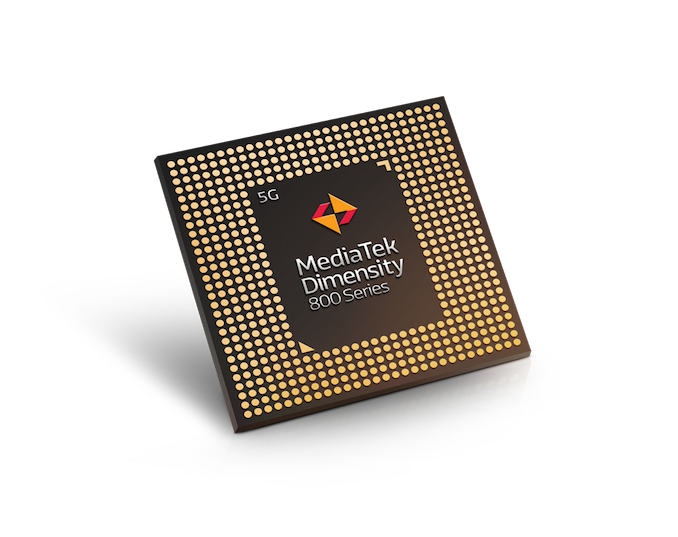
The Dimensity 800 is one of the three chipsets with an integrated 5G modem MediaTek announced in the past few months, the other two being the Dimensity 1000L and the Dimensity 1000. The processor is designed for affordable 5G phones that don’t put a hole in the pocket. However, it is yet to appear in a phone though there are unconfirmed reports that it will surface in a Redmi phone first which may be the Redmi Note 9 Pro for China. So how powerful is the Dimensity 800 and is there a Snapdragon processor that matches it in performance?

MediaTek Dimensity 800

Dimensity 800 specs

The Dimensity 800 is a 7nm processor just like the Dimensity 1000 and Dimensity 1000L. It has eight CPU cores arranged in the big.LITTLE configuration. So you get four Cortex A76 cores clocked at 2.0GHz and four Cortex-A55 cores clocked at 2.0GHz too.

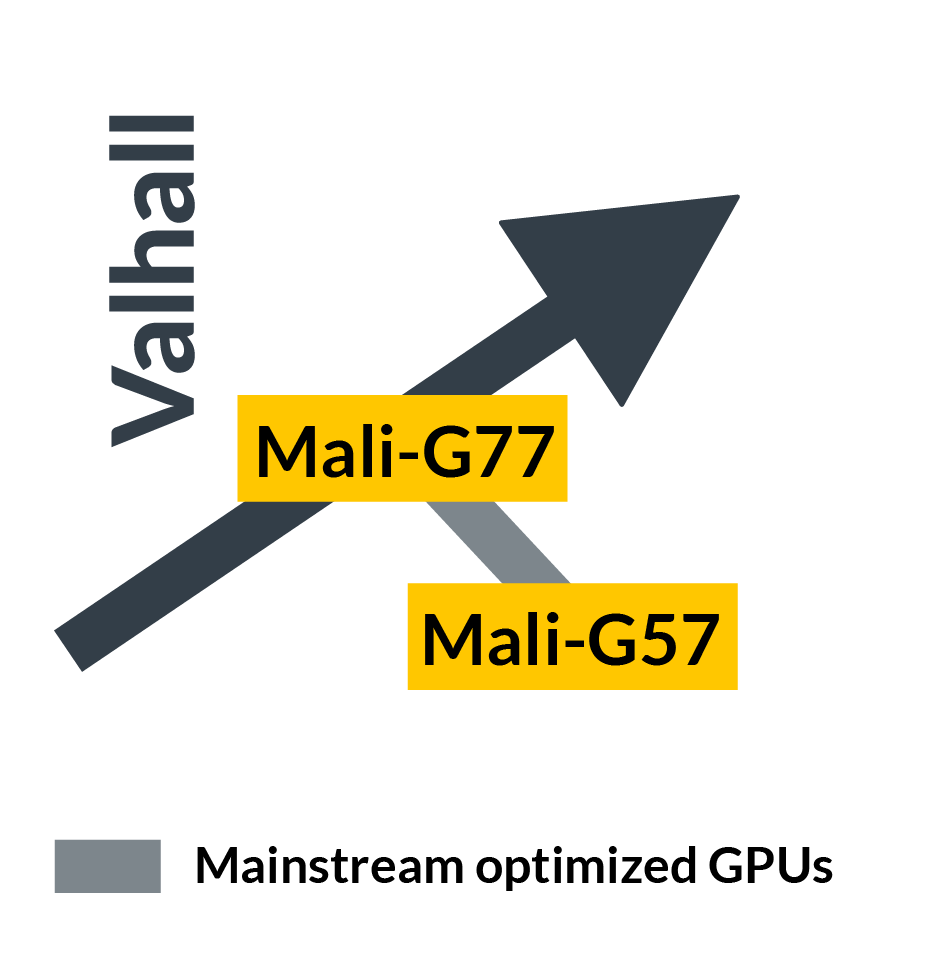
Mali-G57

For the GPU, it comes with Arm’s Mali-G57 MP4, but MediaTek has failed to disclose the clock speed. However, it is based on the Valhall architecture as the Mali-G77 used in premium chipsets.


Dimensity 800 vs Snapdragon 720G, Snapdragon 730, and Snapdragon 730G

Based on the CPU configuration of the Dimensity 800, we are looking at a chipset that beats the Snapdragon 720G, Snapdragon 730, and Snapdragon 730G in performance and efficiency.

All three Qualcomm chipsets are 8nm processors, unlike the Dimensity 800 which is a 7nm chip. MediaTek’s chipset also has the upper hand in terms of raw performance as it features four Cortex-A76 performance-based cores as against the aforementioned Qualcomm processors which have just two performance cores.


Dimensity 800 vs Snapdragon 765 and Snapdragon 765G

The Snapdragon chipsets that seem to match the Dimensity 800 in terms of performance are the Snapdragon 765 and Snapdragon 765G.

Just like the Dimensity 800, these two processors are 7nm chipsets and also have integrated 5G modems. However, their CPU configuration is a bit different. Rather than a 4+4 CPU core arrangement, the Snapdragon 765 and Snapdragon 765G use a 1+1+6 core arrangement. Technically, it is a 2+6 core arrangement as there are two Kryo 475 (based on Cortex-A76) cores and six Kryo 475 silver (based on Cortex-A55) cores. However, one of the Kryo 475 cores is clocked higher than the other.

  • Snapdragon 765 – 1x 2.3GHz Kryo 475 Prime + 1x 2.2GHz Kryo 475 Gold + 6x 1.8GHz Kryo 475 Silver
  • Snapdragon 765G – 1x 2.4GHz Kryo 475 Prime + 1x 2.2GHz Kryo 475 Gold + 6x 1.8GHz Kryo 475 Silver

The Snapdragon 765 duo both have higher clocked performance cores compared to those of the Dimensity 800 but let us not forget that the MediaTek chipset still has more performance cores and its efficiency cores are also clocked higher. It will be difficult to say which chipset is better overall until the are benchmark results comparing them together.

With respect to GPU, we might see the Dimensity 800 offer a close performance to the Snapdragon 765 and Snapdragon 765G Adreno 620’s GPU but we don’t expect it to be better. The Mali-G57 is built on the same architecture as the Mali-G77 inside the Dimensity 1000L and we already know the Mali-G77 is a more powerful GPU than the Adreno 620 thanks to this Master Lu comparison of the OPPO Reno3 5G and the Reno3 Pro 5G.


Conclusion

The Dimensity 800 is a pretty impressive chipset on paper and we look forward to seeing it in a commercially-available smartphone soon so we can experience its real-world performance. The chipset should be a game-changer as it is expected to bring 5G to devices priced under $300 which is the budget for a significant percentage of phone buyers.

It is also important to commend MediaTek’s new mid-range offerings but there are still several folks who have reservations about their processors. Hopefully, that changes as time goes on.


Redmi Note 9 to come with brand new Helio P75 processor

The Redmi Note 9 is getting more interesting as more details keep popping up. One info practically everyone is curious about is the processor powering the phone.

In our What To Expect post, we speculated that the phone may come with the Snapdragon 720G processor. However, a Geekbench listing, believed to be of the phone, revealed it has a MediaTek processor (MT6769V/CZ). The chipset was originally reported to be the Helio G70 but a new leak says it is an entirely brand new chipset called the Helio P75.

The info is from Xiaomishka (@xiaomishka), an account known for posting Xiaomi and Redmi-related information including leaks.

This might be the first time we all have heard about the Helio P75 but yesterday was not the first time it surfaced on Geekbench. Apparently, the processor was seen on Geekbench as far back as September last year.

Helio P75
Helio P75 first sighting on Geekbench

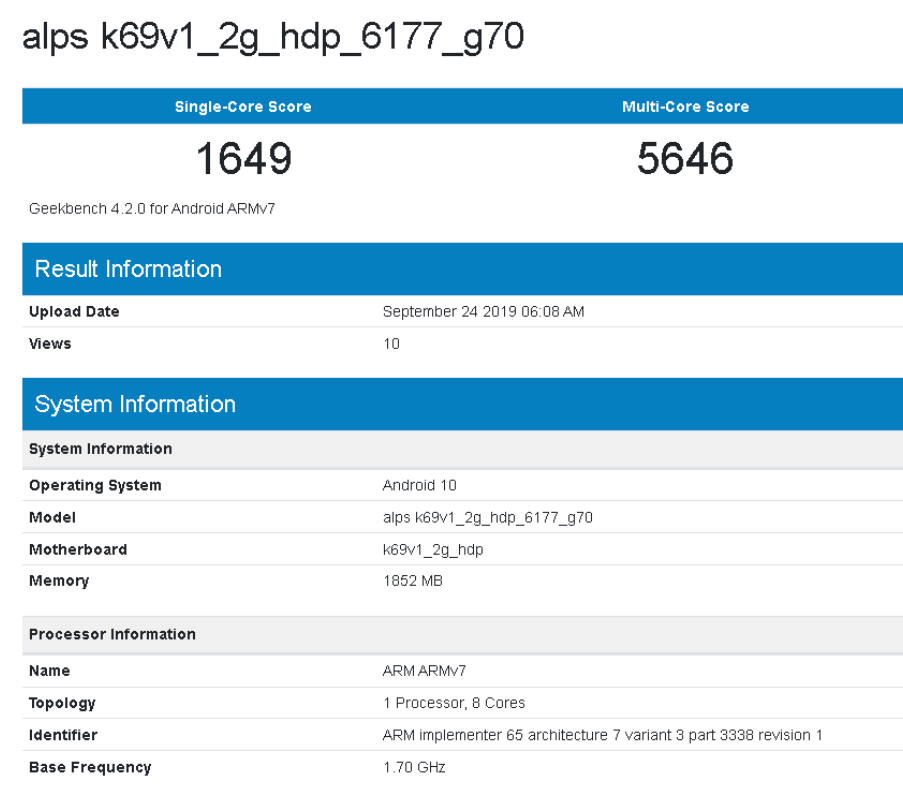
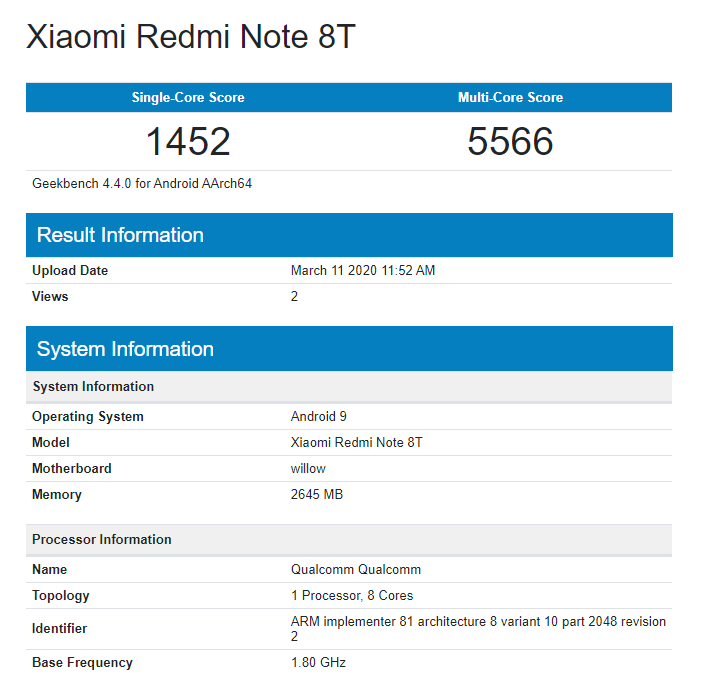
The test device ran Android 10, had 2GB of RAM and scored 1649 and 5646 points in the single-core and multi-core tests respectively. When compared to the benchmark result of the Redmi Note 8T which is powered by the Snapdragon 665, the Helio P75 has higher single-core and multi-core scores. So this is definitely a more powerful chipset than the one in its predecessor.

Redmi Note 8T Geekbench

You might be wondering that why is it not the Helio G70 since the benchmark result above even says “g70”. Actually, both chipsets seem to be closely related. The Helio G70-powered Realme C3’s Geekbench result shows the processor’s name as MT6769V/CB and the base frequency as 1.70GHz. However, for the Redmi Note 9, the processor’s name according to Geekbench is MT6769V/CZ and the base frequency is 1.80GHz.

The relationship between the two chipsets will probably be like that of the Snapdragon 625 and Snapdragon 626 where one chipset has a higher clockspeed than the other.

The Redmi Note 9 launches tomorrow in India and will be the first phone in the world with the new processor on board. It is expected to arrive alongside a Redmi Note 9 Pro and a third model called the Redmi Note 9 Pro Max.


(Sources: 1, 2)

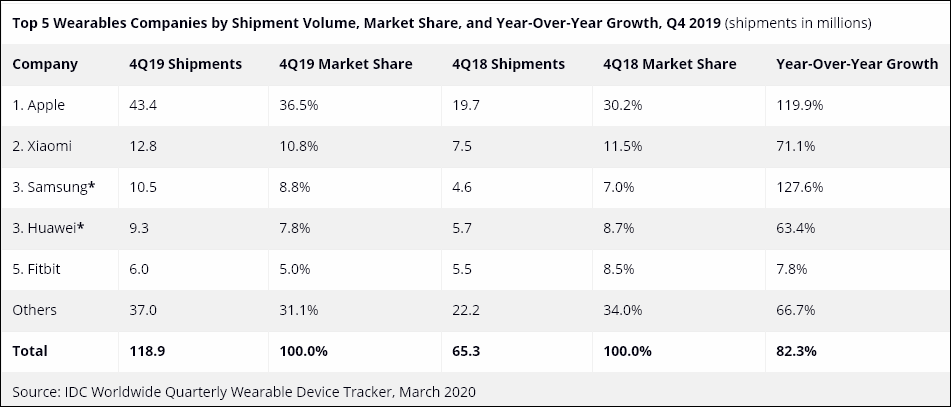
Apple still leads the Global wearable market, Xiaomi & Samsung make top 3

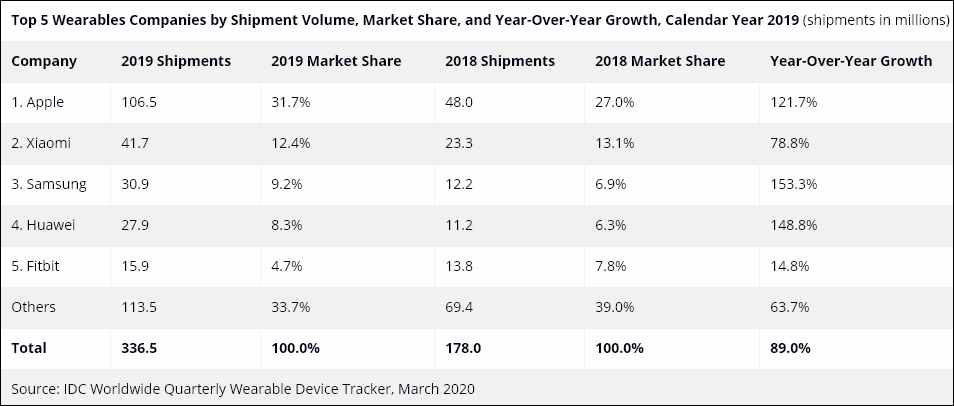
Leading market research firm IDC has released its market tracker for the wearable market for the fourth quarter of 2019 as well as the entire 2019. The data shows that Apple maintained its leadership of the market with 43.4 million wearables shipped in Q4 2019. Apple owes this impressive quarterly shipment to its refreshed AirPods, AirPods Pro, and Apple Watch as well as its Beats products spanning multiple price points. However, as the company’s products did well overall during the quarter, Apple Watch shipments declined 5.2% year over year but this was due to Apple’s inability to meet up the demand for the product.

Q4 2019 market stats

Xiaomi ranked second shipping 12.8 million wearables in Q4 2019. 73.3% (9.4 million) of the entire shipments were wristbands. Compared to its Q4 2018 shipments, the wristbands shipment fell but overall, hearables came to the rescue. This is an indication that the market forces are shifting to hearables.

Korean tech giant Samsung emerged in the third place thanks to a strong portfolio of products as well as multiple brands under its belt, including JBL and Infinity. The Galaxy Active and Active 2 smartwatches contributed to Samsung’s ranking. Another key to Samsung’s surge is its strategy to bundle wearables with its smartphones, which further developed its distribution with carriers.

Huawei was able to ship 63.4% of its wearables despite the challenges occasioned by the US sanctions. Wristbands accounted for the vast majority of Huawei’s shipment volume but growing the most were its watches with several kids’ watches and the GT2. Huawei also added several new hearables to its portfolio, keeping its selection aligned with the other market leaders.Entire 2019 market stats

Fitbit completed the top five as its shipments rebound for the first time following two consecutive years of declining volume. The company still relied on its fitness trackers to drive volume but shipped a record six million units of its smartwatch in 2019 thanks to the release of its Versa 2 and discounted Versa Lite and Ionic.


(source)


Magic UI 3.0 (Android 10 stable) global update arrives for Honor View 20, Honor 9X next week

Back in November 2019, Honor released a list of devices that would get the Magic UI 3.0 update which is based on Android 10. The list had devices such as the Honor 20, Honor V20, and Honor 9X amongst others. After months of beta testing, Honor has now revealed that a stable update will be rolled out next week for the global versions of the aforementioned phones.

The info comes from a press release shared by Honor and it stated that Magic UI 3.0 based on Android 10 will roll-out to the Honor 20, Honor 20 Pro, Honor View 20, and the Honor 9X as from 15th of March.

Honor says it is working on the update for the Honor 10, Honor 10 Lite, Honor 20 Lite, Honor 8X, Honor 9X Pro and Honor View 10 but there is no news of when the update will arrive for these devices.

Magic UI 3.0 brings a redesigned UI, system-wide dark mode, new navigation gestures, new camera features, and more.


(Source)