Advertisement

Samsung patents speaker designs, showcases a rollable display

Samsung is apparently working on a new speaker that also features a unique rollable display. The South Korean tech giant has patented designs for the unique speaker in the Korean Intellectual Property office.

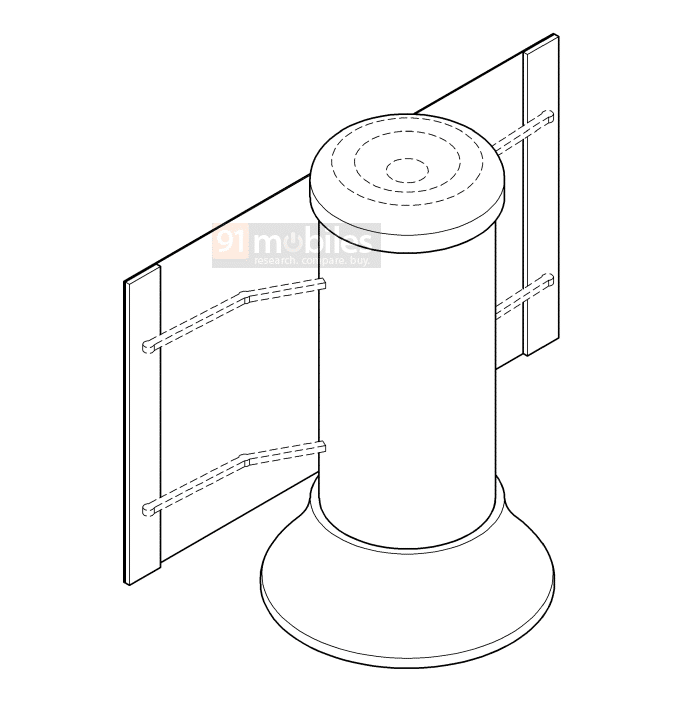
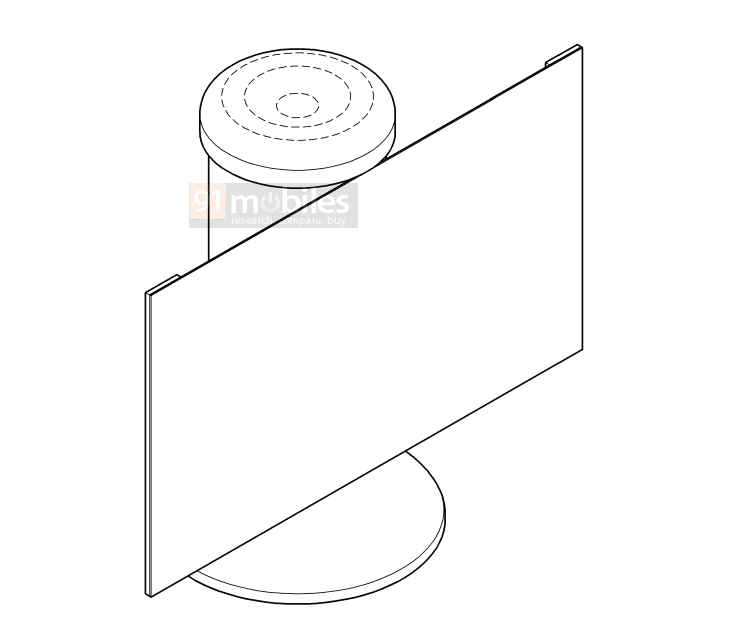
According to the patent, the Samsung speaker’s schematics can be observed. The gadget features a flexible display unit that can cover the cylindrical shaped speaker’s entire surface except for the woofer at the top. The display can also be unfurled and be used at a 180 degree angle. In other words, it can be unrolled and straightened, probably to provide a better viewing experience.
Samsung

The rollable display is supported from the back through a hinge mechanism although it is unclear if the unfolding method is mechanized and automated or require user input. Unfortunately, finer details regarding the speaker like its specifications and display resolution have not been detailed in the patent. But, it might be a smart speaker and arrive with Samsung’s Bixby voice assistant.

Smart speakers, on some occasions, arrive with displays for added touch input or viewing visual content. Hence, this could be Samsung’s idea of providing a better viewing experience coupled with a more portable and compact form factor. Meaning, users will have an easier time carrying it around and could also serve as a great mobile entertainment unit with greater visual and audio output.
Samsung

As of right now, Samsung has yet to have any commercially available smart speakers. Its Galaxy Home has already been delayed for about two years but the Galaxy Home Mini is expected to arrive after the Unpacked event, on 12th February 2020. While the patent might imply that Samsung could look into launching a product with this particular design, the company has yet to confirm its development or possibly a future launch.


(Via)

Xiaomi Mi 10 launch event could be held on February 13

Earlier today, a tipster from China claimed that Xiaomi Mi 10 series will not be announced through a traditional offline event. Considering the epidemic situation caused due to Coronavirus, Xiaomi may hold an online-only unveil event for the Mi 10 series. A fresh leak reveals that the launch event will be held on Feb. 13. The leak also states the market release date of these devices.

According to the leak, the model number of the Xiaomi Mi 10 Pro is J1J2 whereas the Mi 10 has a model number of J1J1. It states that the company will be make an official announcement on the launch event for the Mi 10 series on Feb. 7 and the online-only unveiling of the Mi 10 and Mi 10 Pro on Feb. 13.

On Feb. 10, the company may begin with its online reservations. At the Feb. 13 unveiling, the company will confirm the respectively market release date for the Mi 10 and Mi 10 Pro phones. After the event, the Xiaomi Mi 10 Pro will be available for pre-sale with 100 Yuan deposit.

Xiaomi MI 10 render
Xiaomi MI 10 leaked render

The Xiaomi Mi 10 will go on sale on Feb. 14. It will be directly made available for purchase without any pre-sale period. The first sale of the Xiaomi Mi 10 Pro will be held on Feb. 18.

By this, the Xiaomi Mi 10 series will possibly become the first Snapdragon 865 powered devices to hit the market. As far as the pricing is concerned, the Xiaomi Mi 10 and Mi 10 Pro phones are expected to cost between 3,500 Yuan and 5,000 Yuan. Hopefully, Xiaomi will soon confirm on the launch date for the Mi 10 series.

The first sale of the Xiaomi Mi 10 will be probably held on Feb. 13. It may go on sale directly and there may not be a pre-sale period for it. The Xiaomi Mi 10 Pro could be available for pre-orders on the same day after the Feb. 13 unveil event. Interested buyers could be able to pre-order it by paying 100 Yuan deposit amount. It is expected to the Chinese markets on Feb. 18.

It appears that Xiaomi could become the first company to release Snapdragon 865 mobile platform driven phones in the market as the Mi 10 and Mi 10 Pro are now rumored to be available for purchase within this month. It has been hinted by the company that the Mi 10 and Mi 10 Pro smartphones will be priced between 3,500 Yuan and 5,000 Yuan.


(via)

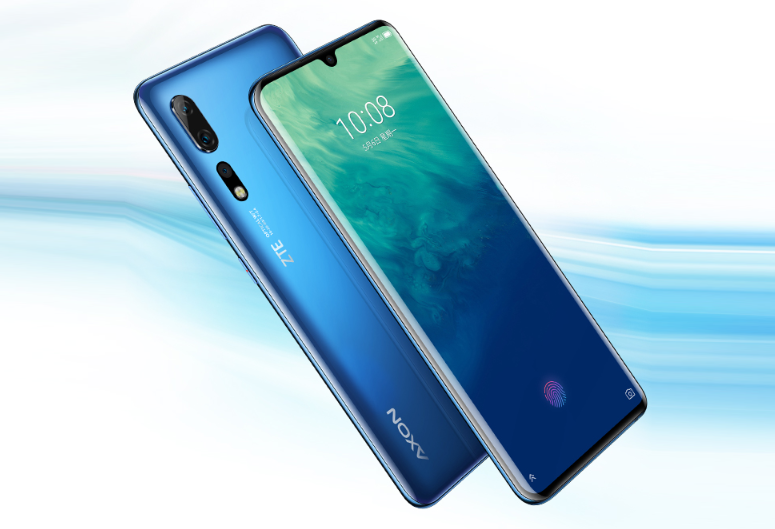
ZTE Axon 10 Pro users are now receiving Android 10 OS update

Chinese multinational tech conglomerate ZTE is yet to leave an impression on the highly-competitive global smartphone market. Even though the ZTE Axon 7 came quite close to being a hit in select areas, it never quite made it to the list of notable smartphones sold in the US. Last year, the company unveiled the ZTE Axon 10 Pro with impressive specs and pricing after the US trade ban that was imposed on it was canceled. The phone had arrived in February 2019 with Android 9 Pie OS and now its users in Europe and the U.S. are being treated with the latest Android 10 OS.

The Axon 10 Pro runs on ZTE’s proprietary MiFavor Android skin. The company surprised many by announcing the Android 10 OTA for the smartphone back in December 2019 before a lot of prominent smartphone manufacturers. Now a confirmation has come from the company that it has started rolling out Android 10 OTA updates for users. The size of the update is 1.6GB. 

ZTE started rolling out the Android 10 update for European customers a few days back. However, US customers are in for a treat as the company has added a download link to the software at the bottom of the device’s online brochure in the US for installing the update through sideloading. As mentioned, the Android 10 OS can be installed on Axon 10 Pro through OTA.

ZTE Axon 10 Pro

ZTE Axon 10 Pro Specifications and Features

The ZTE Axon 10 Pro was every bit a flagship smartphone of 2019. Flaunting a 6.47-inch FHD+ OLED display with the Snapdragon 855 flagship chipset and up to 12 GB of RAM, the device was at par with most flagship smartphones from last year. Although it did have its fair share of flaws like lower megapixel count and failure to work as advertised, the extremely competitive $550 price tag meant users did not have a ton of room for complaints.

The Axon 10 Pro smartphone flaunts a triple-camera setup at the rear, consisting of a 48-megapixel primary sensor, an 8-megapixel telephoto lens, and a 20-megapixel ultrawide sensor. The setup comprises of a dual-LED flash module. While the smartphone flaunts a 20-megapixel lens on the front. The Axon 10 Pro draws power from a 4,000 mAh battery with 18W fast charging support. Connectivity options include Wi-Fi 802.11 a/b/g/n/ac, USB 2.0, GPS, A-GPS, GLONASS, dual SIM 4G LTE, and wireless charging.


(source|via)

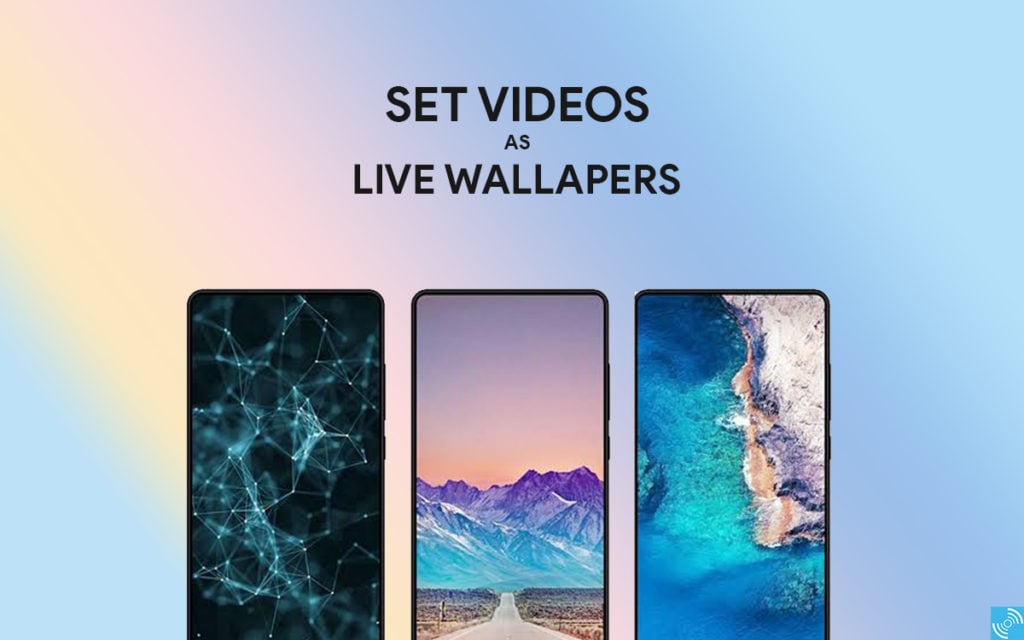
How to set videos as Live Wallpapers on Android?

Android Operating System is known for its ability to personalize and tailor-made experience. The user can set custom wallpapers, custom ringtones, custom live wallpapers, custom launchers, custom boot animations and can tweak different settings. Android has evolved a lot since its maiden version, it has received the ability to connect with smart devices, customizability has improved, and support for AI, IoT, and other new technologies. Among all, setting a live video as a live wallpaper is another addition to the feature set.

Must See: Download Gcam 7.3 APK mod for all Android devices

The users can either use GIF files or Video files to set the Live Wallpaper on Android devices. There are many pros and cons of using Live Wallpapers on your smartphone.

Advantages

  • Enhances the device look
  • Helps to personalize the smartphone
  • It even helps to make memories.
  • Makes devices look alive and beautiful.

Disadvantages

  • Live Wallpapers drains a lot of battery
  • Most of the Live Wallpaper apps are poorly coded
  • These uses smartphone sensors
  • Increase CPU and RAM usage.

So, if you really want to use the video as a live wallpaper, then follow our guide to set your favorite video of GIF as the smartphone wallpaper.

There are different apps to set live wallpapers, but it won’t let you create your own wallpaper from your personal video. So, we have crafted a tutorial to guide you step-by-step.

Set Video as a Live Wallpaper

There are multiple ways to assign any video or GIF as wallpaper, but using a specific app for the purpose is the easiest way.

Prerequisites:

Steps to use Video Live Wallpaper

  1. Download and Install Video Live Wallpaper.
  2. Select Choose Video, and then tap Allow to give Storage permission.
  3. Select a video, then adjust the start and end times. Drag the slider along the video’s timeline.
  4. Before settings, users can preview the video by tapping the Play button.
  5. Tweak other settings by heading to the gear icon present in the upper-right corner.
  6. Now, choose the set Wallpaper option, and select to set it as Home Screen or Home Screen and local screen.
  7. Enjoy!!

You can now enjoy your favorite video as wallpaper. If you get any problem then do let us know by commenting below.

Related: Download Samsung Galaxy S20 Wallpapers in HD Quality


Samsung and LG are selling major share of their LCD operations worth $33 Billion: Report

A new report has suggested that both Samsung and LG are planning on selling a major part of their respective production line that make LCD panels. The LCD business has an overall value of $106 billion which makes this recent news quite significant. Smaller stakeholders in the industry would seek to gain a higher standing by buying out the leading roles that are owned by Samsung and LG.

The news of selling major portions of the LCD business arrives after both South Korean tech giants move towards Quantum Dot and OLED displays. Notably, it has been speculated that this transition would seek to drive up prices for LCD panels in the first half of this year; since a shortage of supply is expected to arrive within the industry.

In the large $106 billion LCD industry, Samsung and LG represent a stake worth about $33 billion. This large sum represents a major share and both known electronics brands are reportedly planning on selling their respective stakes in the market. The OEMs are said to focus more on the booming OLED display and will also boost production large size displays for products like television using this technology.

According to reports, Samsung Display has sold its LCD manufacturing equipment at its Gen-8 LCD production line to a display manufacturer from China, named Efonlong. The equipment will be shipped to China next month and Samsung will use the capacity freed up to produce quantum dot displays. The Gen-8 line will now produce 65 inch or larger displays using the new and emerging display technology.

On the other hand, LG is looking to close a deal with another Chinese LCD display manufacturer. The South Korean brand also wishes to sell its LCD manufacturing equipment which is from its P8 manufacturing line. Unlike Samsung, LG will use the opened production capacity to boost OLED production in its manufacturing plants.

This marks a major shift in the market as previous key players are leaving the LCD industry for a popular technology which is seeing considerable growth recently. Even in smartphone markets, OLED displays have become a flagship standard while TV’s with the same technology is also witnessing increasing sales. Fortunately, the price hike that will accompany this notable transition will only last in the first half of 2020 and should recover later in the second half of this year.


(Via)

MediaTek Helio G80 chipset with HyperEngine technology announced

After MediaTek announced Helio G90 and G70 series of chipsets, the company has today announced yet another chipset — MediaTek Helio G80. As the name indicate, this new processor sits between G90 series and G70.

Compared to the previously launched Helio G70, this new Helio G80 comes with a slightly higher CPU and GPU frequency and nothing else seems to have changed. Thus, in short, the new Helio G80 is just a slightly bumped up version of the Helio G70.

mediatek nokia 5g

The MediaTek Helio G80 is manufactured using a 12nm process, similar to the other entry-level and mid-range chipsets. It comes with two Cortex-A75 cores clocked at 2.0GHz and six Cortex-A55 cores clocked at 1.8GHz.

As for the graphics, the chipset packs Mali-G52 MC2 GPU clocked at 950MHz. It also supports up to 8GB of LPDDR4X RAM clocked at 1800MHz and a bit slower eMMC 5.1 technology instead of UFS.

In terms of optics, this processor is capable of handling a single 48MP camera at 17fps or two 16MP cameras at 30 frames per second. As for the display, it supports Full HD+ resolution at 60fps.

Connectivity options include dual-SIM, dual-4G LTE, dual-VoLTE, VoWiFi, single-band Wi-Fi ac (Wi-Fi 5), Bluetooth v5.0, FM Radio, and GPS with GLONASS, Beidou, and Galileo. For charging, it supports Pump Express technology but the company has not yet revealed the charging wattage.

Compared to the G90 series, the Helio G80 lacks dedicated AI accelerators but the company says that the chip’s ISP is capable of features such as object recognition in Google Lens, Smart Photo Album, scene detection, scene segmentation with background removal, portrait-mode enhancements, and facial recognition.

It also comes with support for features like include Voice on Wakeup (VoW) support, EIS, Rolling Shutter Compensation, and an inertial navigation engine. Further, the MediaTek Helio G80 also comes with support for the company’s own HyperEngine Game Technology.


Huawei MateBook 13 2020 and MateBook 14 2020 gets listed on company’s online store

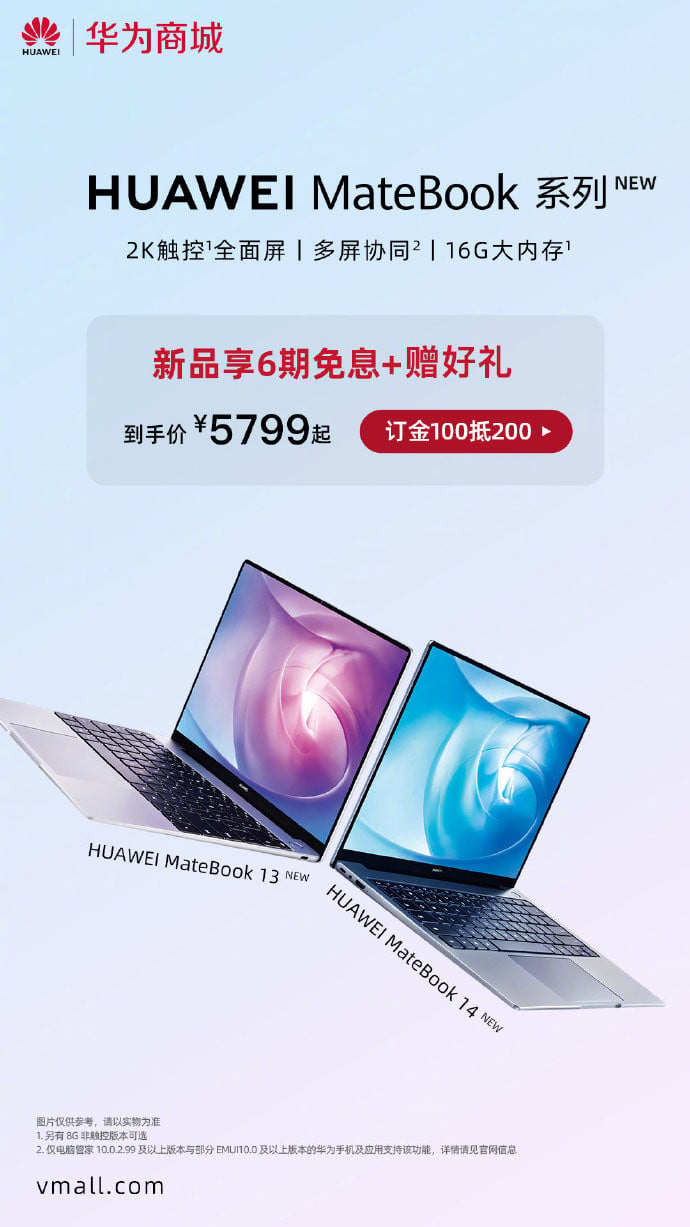
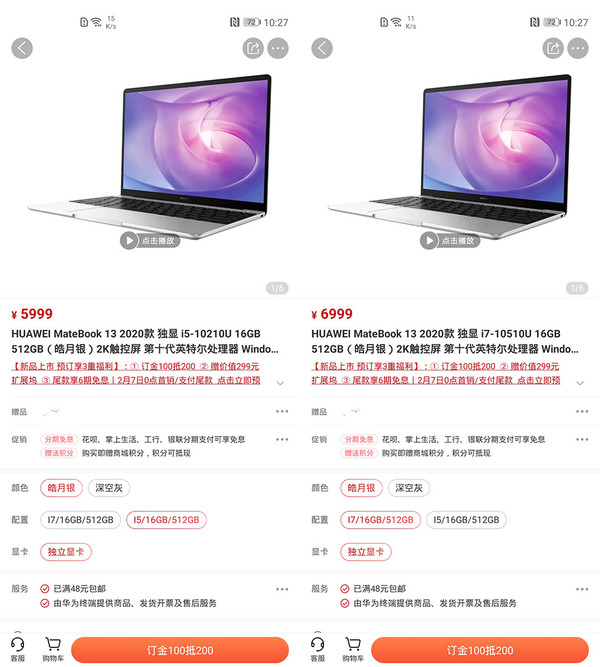
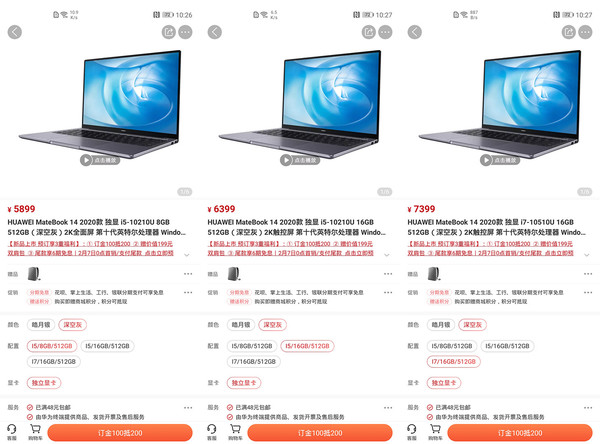
Ahead of the launch, Huawei Mall has listed the company’s two new upcoming laptops — MateBook 13 2020 and MateBook 14 2020. Both these devices can be pre-booked with a deposit of 100 yuan and 200 yuan.

Huawei MateBook 13, 14 2020 Edition

Coming to the features, both the devices, MateBook 13 2020 and MateBook 14 2020 comes equipped with 2K resolution touchscreen display with the only difference being the screen size for both the devices.

Under the hood, the devices come powered by Intel‘s 10th generation Core processors, offering the latest in terms of chipsets. As for the camera, the MateBook 13 comes with the usual camera sensor on the bezel while the MateBook 14 has it hidden under a key. Yesterday, we reported about the leaked specifications of both the devices.

MateBook 13 2020

Huawei MateBook 13 2020

The MateBook 13 has a 13-inch 2160 x 1440 (2K) IPS display with a 3:2 aspect ratio and an 88% screen-to-body ratio. The spec sheet says the screen has bezels that measure just 4.4mm.

It will be available in two CPU variants – a Core i5-10210U model and a Core i7-10510U model. Both variants will have NVIDIA’s MX250 GPU. It will also come in 8GB and 16GB RAM variants with 512GB PCIe SSD.

The MateBook 13 will have a fingerprint scanner that doubles as the power button. It will also have 2 x USB Type-C ports and an audio jack. The spec sheet also mentions Shark-Fin dual cooling fans and 65W superfast charging. The notebook has a 41.7Wh battery, is 14.9 millimeters thick and weighs 1.32 kilograms.

MateBook 14 2020

Huawei MateBook 14 2020

The MateBook 14 will also have a 2160 x 1440 2K display with a 3:2 aspect ratio but a 90% screen-to-body ratio. It has the same CPU variants as the 13-inch model and will also be available in 8GB RAM and 16G RAM configurations with 512GB of PCIe SSD storage.

It also has a one-touch fingerprint scanner but its cooling fan is just one but bigger. For connectivity, Huawei has included 1 x USB 3.0 port, 1 x USB 2.0 port, 1 x HDMI port, 1 x “full function” USB Type-C port, and 1 x audio port. It is powered by a 56Wh battery and also supports 65W superfast charge over USB-C. It is 15.9mm thick and weighs 1.53kg.

Pricing Details

As for the pricing, the device is offered in two variants. The MateBook 13 2020 that packs Core i5 SoC, 16GB RAM and 512GB storage costs 5,999 yuan while the one with Core i7 SoC, 16GB RAM, and 512GB storage is priced at 6,999 yuan.

Huawei MateBook 14 2020, on the other hand, starts at 5,899 yuan for the Core i5, 8GB RAM, and 512GB internal storage while the one that packs Core i5, 16GB RAM, and 512GB storage costs 6,399 yuan. The top-end model which packs Core i7 SoC, 16GB RAM and 512GB storage costs 7,399 yuan.


Chinese Smartphone Shipments to decline by 30% in Q1 2020 due to Coronavirus: Strategy Analytics

The 2019-nCoV aka Chinese coronavirus outbreak has severely affected the business of Chinese companies as well as those abroad. 361 people have died so far and over 17,000 people have been infected in China. While the Chinese government is actively trying to combat the spread of the virus in the country, stores, restaurants, and other businesses are either closed or operating in limited capacity over the past few days. Unsurprisingly this will affect the smartphone shipments in the first couple of quarters of 2020. And according to a recent report from Strategy Analytics, the Chinese smartphone shipments in Q1 2020 could decline by a staggering 30%.

huawei

The Strategy Analytics report points out that the coronavirus will slow down the GDP growth and consumer spending in China. This, in turn, will affect the smartphone market in the country in the first half of 2020. The report highlights that global smartphone shipments will likely drop by 2% due to the coronavirus epidemic. The Chinese smartphone shipments in 2020 are expected to drop by 5%. However, the biggest impact will be in the first quarter where the shipments are expected to drop by 30%.

The report further notes that China manufactures nearly 70% of the world’s smartphones. Therefore, delay in the factory operations due to the extended New Year holidays and travel restrictions and quarantine will adversely affect the global supply and manufacturing. We are already seeing the first signs of a supply shortage due to this epidemic – Asus ROG 2 is in short supply in India right now.

The report further adds that the impact of coronavirus on smartphone shipments in China could be worse if it’s not controlled in the next couple of months.

Xiaomi Mi 10 is said to launch via an online event

The coronavirus epidemic in China has also affected smartphone launch events. We still haven’t heard anything about the Xiaomi Mi 10 launch, which was earlier expected before February 11 in China. In fact, new reports claim that the Mi 10 flagship and the new Black Shark gaming smartphone could get an online release in the country. This makes sense given how the Chinese government is discouraging companies from organizing events during this period. Even Huawei postponed its developer conference in China last week from February 11 to March 27. Accessories for the Galaxy S20 lineup are also expected to be delayed.


(Source, Via)

Samsung Galaxy Home Mini to launch after Unpacked event on 12th February 2020

In recent years, smart speakers with built in voice assistants have become increasingly more popular. These gadgets are now synonymous with smart homes and even function as a command hub that links other smart products. Since its booming period, the market for such gadgets has settled down with a few key players holding the major market share. Now, Samsung aims to disrupt the standings by offerings its own smart speaker, which will be the second one the South Korean tech giant has developed.

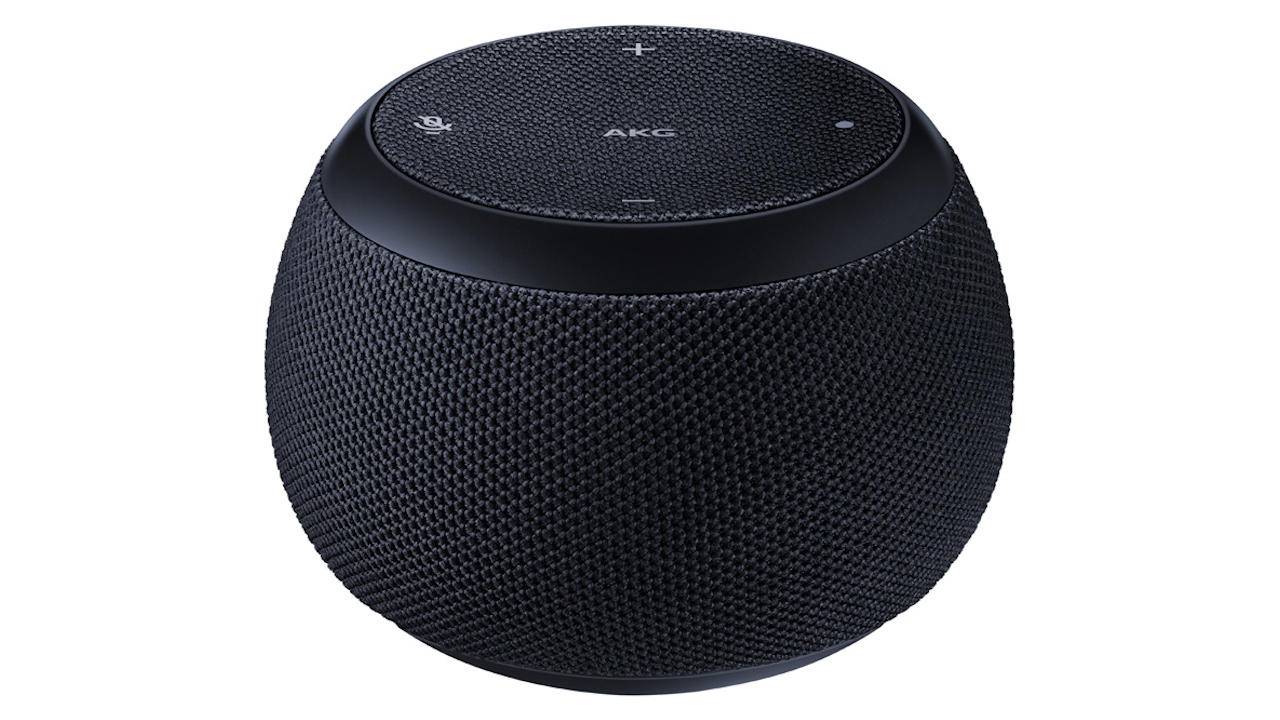
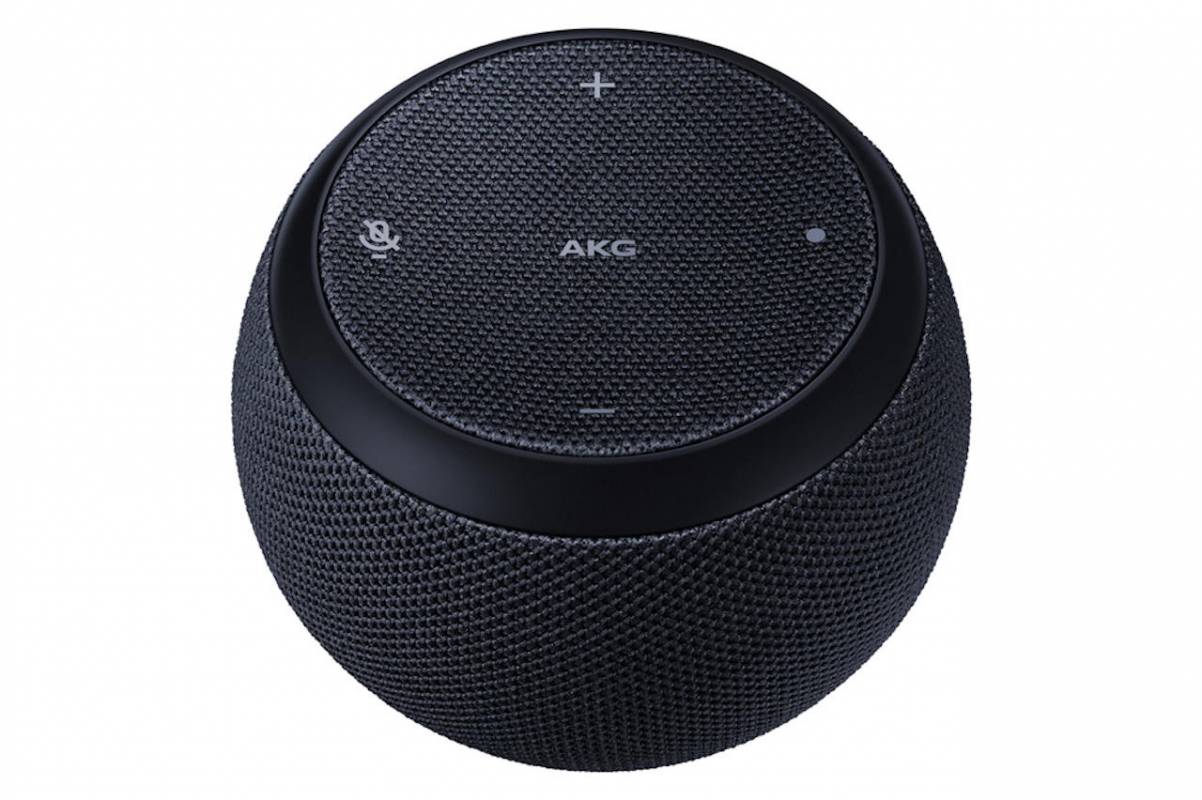
Samsung Galaxy Mini, as the name suggests, is a miniature variant of the Galaxy Home smart speaker that was originally announced back in August of 2018. However, the Galaxy Home was never launched commercially and was set back numerous times. Thus, it can be said that Samsung has arrived two years late but is finally launching its very own smart speakers.

One of the unique functions that the Galaxy Home Mini offers is an IR function, through which one can control old appliances that can’t be connected to the internet via WiFi. In other words, users can access these old TV’s or other entertainment systems through Samsung’s smart speaker if it’s within the line of sight.

Furthermore, Samsung Galaxy Home Mini also boasts other features like an AKG speaker, smart home connectivity, and will arrive with Bixby voice assistant. Notably, all of these technologies are owned by Samsung through previous acquisitions, so the company is sourcing its products internally through its subsidiary’s. Although, it remains to be seen whether people would prefer the Samsung smart speaker over the popular Amazon Alexa and Google Nest Home series.

Samsung is set to launch the Galaxy Home Mini on 12th February 2020 and will be initially released in South Korea. The device carries a price tag of 99,000KRW which roughly translates to 83 US Dollars. Unfortunately, it is unknown if the company has future plans on releasing the smart speaker in other markets, but if the gadget succeeds it will most likely see its way overseas soon after.


(Via)

OPPO Find and Find X2 Pro approved in Malaysia

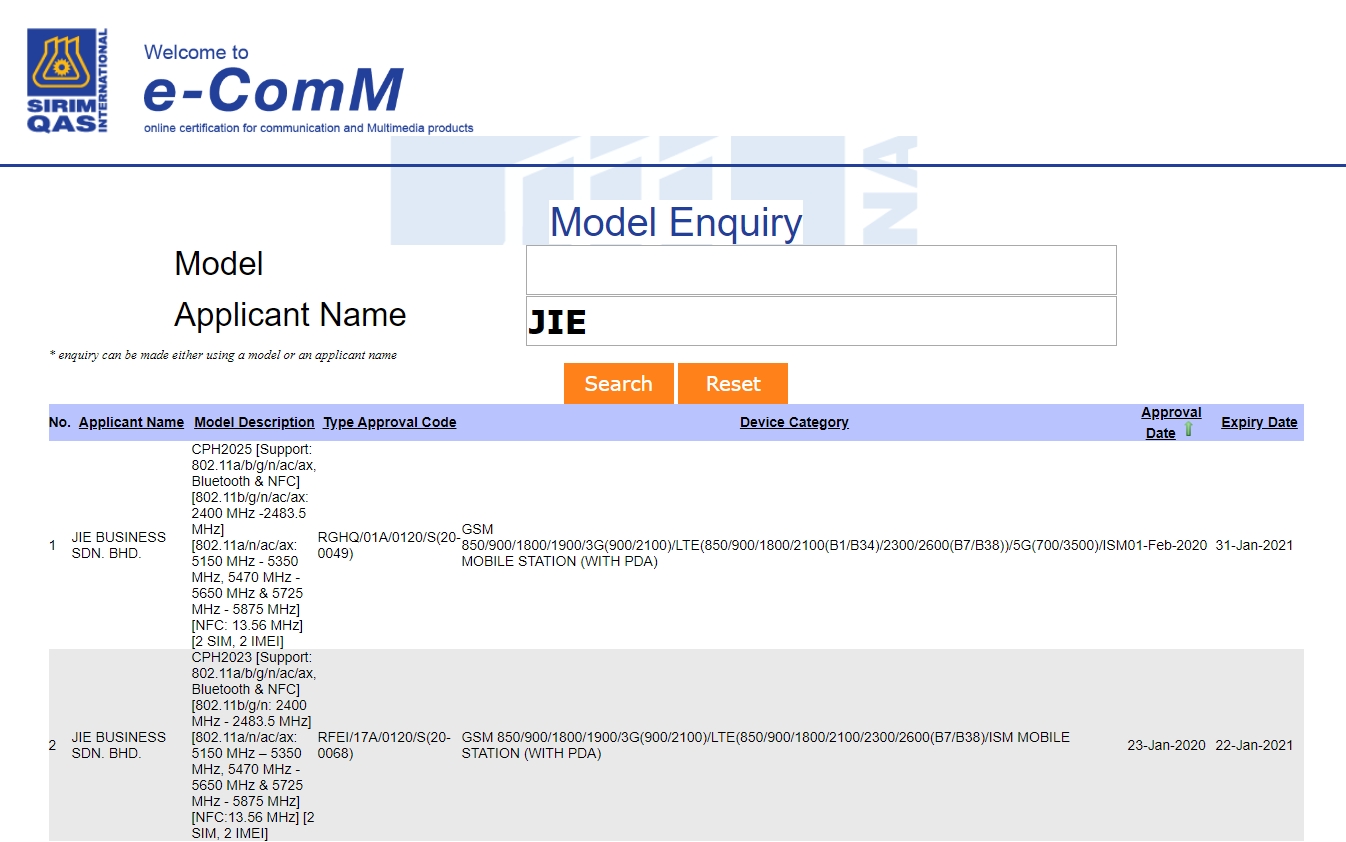
Recently, OPPO Find X2 and Find X2 Pro were approved by Thailand’s National Broadcasting Telecommunications Commission (NBTC) authority. The Find X2 has a model number of CPH2023 and the Find X2 Pro’s model number is CPH2025. The same two model numbers have appeared on the database of the SIRIM authority of Malaysia. With the OPPO Find X2 series bagging approval in multiple countries, it appears that its launch is not far away.

The SIRM listing reveals that the CPH2025 is a 5G device. The CPH2023 supports only 4G LTE connectivity. Both devices are equipped with support for NFC and dual SIM. They also support the latest Wi-Fi 802.11ax (Wi-Fi 6) that promises faster wireless connectivity. Recently, the CPH2023 and CPH2025 models were spotted with Wi-Fi 6 on the database of Wi-Fi Alliance.

A recent leak had revealed plenty of information on the OPPO Find X2 series. It is speculated that the Find X2 will be equipped with Sony IMX689 and Sony IMX708 sensors in its triple camera setup. The IMX689 could be a 48-megapixel developed by collaboration between OPPO and Sony. The Sony IMX708 that is believed to arrive as the strongest superwide lens may break cover for the first time on the Find X2. The third lens in the setup could be a 13-megapixel telephoto lens with support for up to 5x optical zoom. The Find X2 may sport a 32-megapixel Sony IMX616.

Oppo-Find-X-featured
OPPO Find X

The Find X2 cold be sporting a 6.5-inch quad HD+ resolution supporting screen. The OLED panel may offer 120Hz refresh rate and it sport a curvature of 80 degrees towards the edges. For enhanced viewing experience, the displays of the Find X2 series will be equipped with a MEMC chip that are usually used on smart TVs. The Snapdragon 865 mobile platform will be fueling the Find X2 Pro. The SoC is expected to be coupled with an OPPO M1 co-processor. The other features that are expected to arrive on the Find X2 series are support for LPDDR5 and UFS 3.0 storage. Also, it is believed that the Find X2 phone may come with support for enhanced 65W VOOC fast charging.

OPPO is yet to confirm on the launch date of the Find X2 series. All that is known about its launch is that it will break cover in Q1 2020.


(source)

Xiaomi Mi 10, Black Shark 3 launch events could be held online due to Coronavirus outbreak

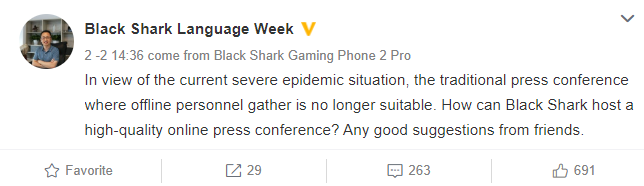
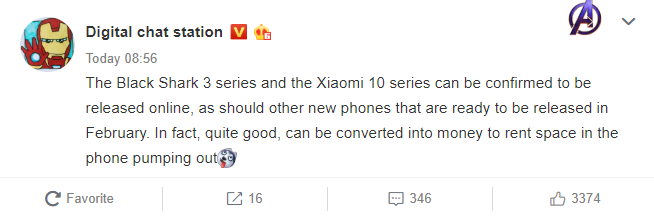
Multiple reports have claimed in the recent past that Xiaomi will be announcing the Mi 10 series in early February. Even the Black Shark 3 gaming phone is expected to go official soon after the unveiling of the Xiaomi Mi 10 and Mi 10 Pro smartphones. It is speculated that Xiaomi may hold the launch event of the Mi 10 series before Samsung unveils the Galaxy S20 series through a global unveil event on Feb. 11. With the current issue of Coronavirus becoming even more serious, companies in China are considering holding online-only launch event for their products that are scheduled to go this month. Black Shark CEO Lou Yuzhou has hinted that the Black Shark 3 may go official through an online launch event. Also, a popular tipster from China has claimed that the Mi 10 series and Black Shark 3 series will be made official online.

Yuzhou claims that it is no longer suitable to hold a traditional press conference where people can gather offline due to the server epidemic situation caused due to Coronavirus outbreak in China. Instead of an offline event, he has hinted on hosting a high-quality online press event. However, the exact launch date for the Black Shark 3 is yet to be confirmed.

On the other side, a leakster known for his good track record claims that launch event for the Xiaomi Mi 10 series and Black Shark 3 series will be held online. This can allow the company to save on the money that goes into renting a place for an offline event. Hopefully, Xiaomi will confirm on a launch date for the Mi 10 series later this week.

The Xiaomi Mi 10 series that includes the Xiaomi Mi 10 and Xiaomi Mi 10 Pro 5G could be the first phones to arrive with Snapdragon 865 mobile platform onboard. The highest edition of the Mi 10 Pro could be packed with monstrous specs like 16 GB of RAM and 512 GB of storage. The Mi 10 series is expected to arrive with OLED panels with a top-left positioned punch-hole. The Mi 10 Pro may support 66W fast charging.

The Black Shark 3 5G will be a gaming-centric device fueled by the Snapdragon 865 mobile platform. It is also rumored to be equipped with 16 GB of RAM. The handset will feature a quad HD+ resolution supporting display that offers 120Hz refresh rate.


OnePlus 8 and 8 Pro flagship phones appear on Amazon affiliate page

OnePlus is gearing up to launch its next-generation flagship smartphones — OnePlus 8 and 8 Pro. While there are few reports making rounds about the phone’s design and renders as well as specifications and features, we now have an official confirmation about the phones.

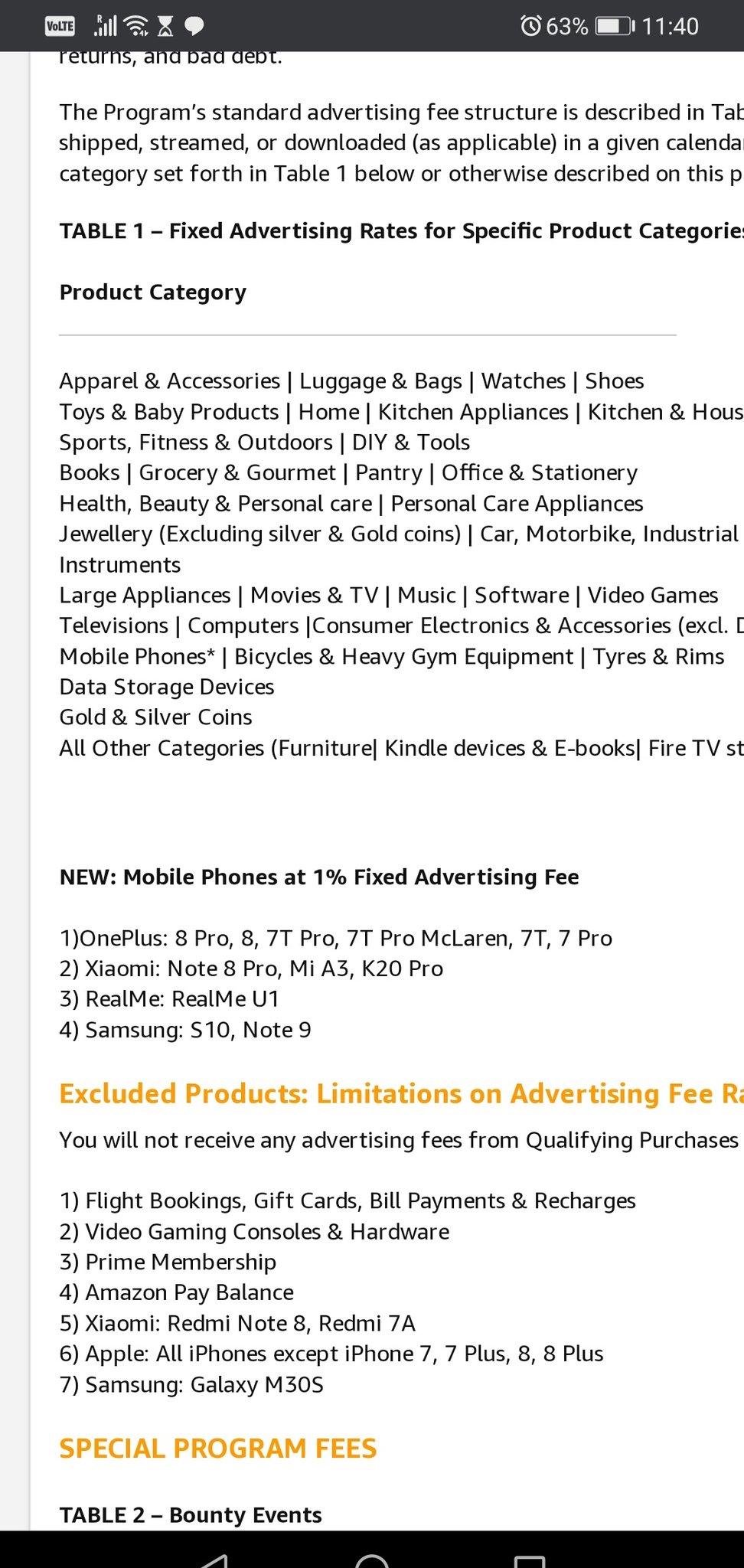
Amazon India, which has been a partner of OnePlus since its debut in the Indian market, has listed two upcoming flagship smartphones on its Amazon Affiliate page — OnePlus 8 and OnePlus 8 Pro, confirming these two as the company’s next-gen flagships.

OnePlus 8, 8 Pro Amazon Affiliate

The listing of the phones in the Amazon India Affiliate page hints that the official launch of the smartphones isn’t far away. There are reports claiming that the devices could be officially announced at MWC 2020 or soon after that. Unfortunately, we couldn’t find the phones mentioned on the Amazon affiliate page anymore. So, it’s possible that Amazon removed the two model names soon after it was spotted.

The upcoming OnePlus smartphones are expected to go on sale soon after the official unveiling. As per the reports, there will be three devices in the lineup this time — OnePlus 8, 8 Pro, and 8 Lite. The devices are also expected to come with 5G connectivity support.

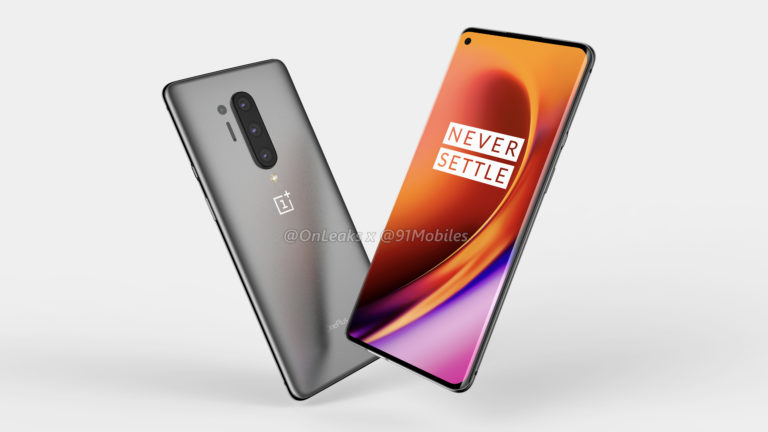
OnePlus 8 Pro Renders

While there are several reports regarding this upcoming smartphones, OnePlus is yet to officially confirm the phones as well as the launch date and hasn’t even shared a teaser yet. However, the company recently announced its 120Hz AMOLED display, which is expected to make its way to the upcoming series of phones.

The Chinese company recently joined Wireless Power Consortium, boosting rumors about the upcoming OnePlus 8-series smartphones having support for wireless charing — the feature which has been among the most-requested one.

As per the reports, the smartphone will come with a 6.7-inch Super AMOLED display with 120Hz refresh rate. Under the hood, the device will come powered by Qualcomm Snapdragon 865 SoC with 5G support and will feature a quad-camera setup on the back.


(Source)

Vivo iQOO officially teases 5G smartphone launch in India

Earlier it was reported that Vivo‘s sub-brand for premium gaming smartphones iQOO is all set to start operations in India and soon after that, the company itself confirmed this development, announcing that it’s first phone will go official in India in February.

Now, iQOO has teased the launch of a new 5G smartphone for the Indian market. The company is promoting the device with #MonsterInside, hinting at the smartphone being a powerhouse. Further, the company has also launched India-specific website – iqoo.com/in/.

The iQOO phone will be India’s first smartphone powered by Snapdragon 865 Mobile Platform and will also feature 5G support. The company has already revealed that the device will be be offering robust performance capabilities in the charging, gaming, and design department, and providing phone phonetics uninterrupted content consumption.

It has also been confirmed that the company will be selling the smartphones through online platforms, at least initially. Later, it plans to sell devices through offline stores as well and more details related to this is expected to be revealed in the coming weeks.

For those who are unaware, Vivo launched iQOO sub-brand for premium gaming smartphones in China last year. It said that iQOO stands for ‘I Quest On and On’, and has launched several smartphones in its home country.

As for the Indian market, apart from the 5G smartphone, the company is also planning to launch 4G smartphones in the country with high-end specifications. Gagan Arora, Director of Marketing at iQOO, says that the company sees extreme potential in the premium segment smartphone market in India.


Huawei MateBook 13 and MateBook 14 2020 spec sheet leaked

The MateBook 13 and MateBook 14 will be getting new models this year. The new computers should launch at Mobile World Congress 2020 later this month. However, we do not have to wait until then to know their features as the full specifications sheet for both notebooks has been posted on the web.


MateBook 13 2020

The MateBook 13 will have a 13-inch 2160 x 1440 (2K) IPS display with a 3:2 aspect ratio and an 88% screen-to-body ratio. The spec sheet says the screen has bezels that measure just 4.4 millimeters.

It will be available in two CPU variants – a Core i5-10210U model and a Core i7-10510U model. Both variants will have NVIDIA’s MX250 GPU. The PC will also come in 8GB and 16GB RAM variants with 512GB PCIe SSD.

The MateBook 13 will have a fingerprint scanner that doubles as the power button. It will also have 2 x USB Type-C ports and an audio jack. The spec sheet also mentions Shark-Fin dual cooling fans and 65W superfast charging. The notebook has a 41.7Wh battery, is 14.9 millimeters thick and weighs 1.32 kilograms.

MateBook 14 2020

The MateBook 14 will also have a 2160 x 1440 2K display with a 3:2 aspect ratio but a 90% screen-to-body ratio. It has the same CPU variants as the 13-inch model and will also be available in 8GB RAM and 16G RAM configurations with 512GB of PCIe SSD storage.

It also has a one-touch fingerprint scanner but its cooling fan is just one but bigger. For connectivity, Huawei has included 1 x USB 3.0 port, 1 x USB 2.0 port, 1 x HDMI port, 1 x “full function” USB Type-C port, and 1 x audio port.

The Huawei MateBook 14 hs a 56Wh battery and also supports 65W superfast charge over USB-C. It is 15.9 millimeters thick and weighs 1.53 kilograms.

The price tags for both Huawei notebooks are still unknown so also is their design.


(Source)

Samsung Galaxy Z Flip hands-on video posted on the web; to cost €1599 in Europe

Asides the Galaxy S20, Galaxy S20 Plus, and the Galaxy S20 Ultra, Samsung will also announce the Galaxy Z Flip. This is its second phone with a foldable display, but unlike the Galaxy Fold, this folds across the horizontal axis (vertically) like a clamshell phone. Ahead of the February 11 launch event, a hands-on video of the phone has been posted on the web.

The video was shared on Twitter by a user that goes by “yunis ali (@sliverarow)”. The 20-second video shows the purple variant of the phone in use.

From the video, one can see the device has a reflective body that can pass for a mirror. It has dual rear cameras, arranged horizontally, on the right side (when folded) while a pretty small display flanks it on the other side. The display shows the date and time.

When unfolded, the Galaxy Z Flip reveals its pretty long and flexible Infinity-O display with a centered punch hole for the selfie camera. It has been reported that it is an AMOLED screen with 2636 x 1080 resolution and a 22:9 aspect ratio.

The phone appears to have a button at the top. We are not sure if that is the power button or if Samsung has buried it under the fingerprint scanner which you can see at the 10-second mark, when he closes the device.

The Galaxy Z Flip will launch with a 6.7-inch FHD+ flexible screen and a 1.06-inch secondary display. There will be a Snapdragon 855+ processor inside the device along with 8GB of RAM and 256GB of UFS 3.0 storage. The dual rear cameras are a 13MP f/1.8 primary sensor and a 12MP f/2.2 123° ultrawide-angle camera. The selfie camera is a 10MP f/2.4 sensor.

The phone has a 3300mAh battery that is split into two (900mAh + 2400mAh) and supports 15W wired charging and also supports wireless and reverse wireless charging. Samsung will ship it with Android 10 with One UI 2 on top.

Roland Quandt said in a tweet today that the device will sell for €1599 in Europe according to the info he got from retailers. While its US price is put at $1400. It will be sold via carriers as well as unlocked.


(Sources: 1, 2)

Alleged Nokia 5.2 live photos, specs, and price leaks; to launch in March

HMD Global has confirmed it will have a launch event in Barcelona on February 23. It is expected to announce a couple of midrange phones including the Nokia 8.2 5G, an entry-level phone, and a feature phone. There have been reports of a Nokia 5.2 being in development but it is unconfirmed if it will launch at MWC 2020. Yesterday, an unknown Nokia smartphone presumed to be the Nokia 5.2 surfaced online. The leak includes photos, specs, and the price of the device.

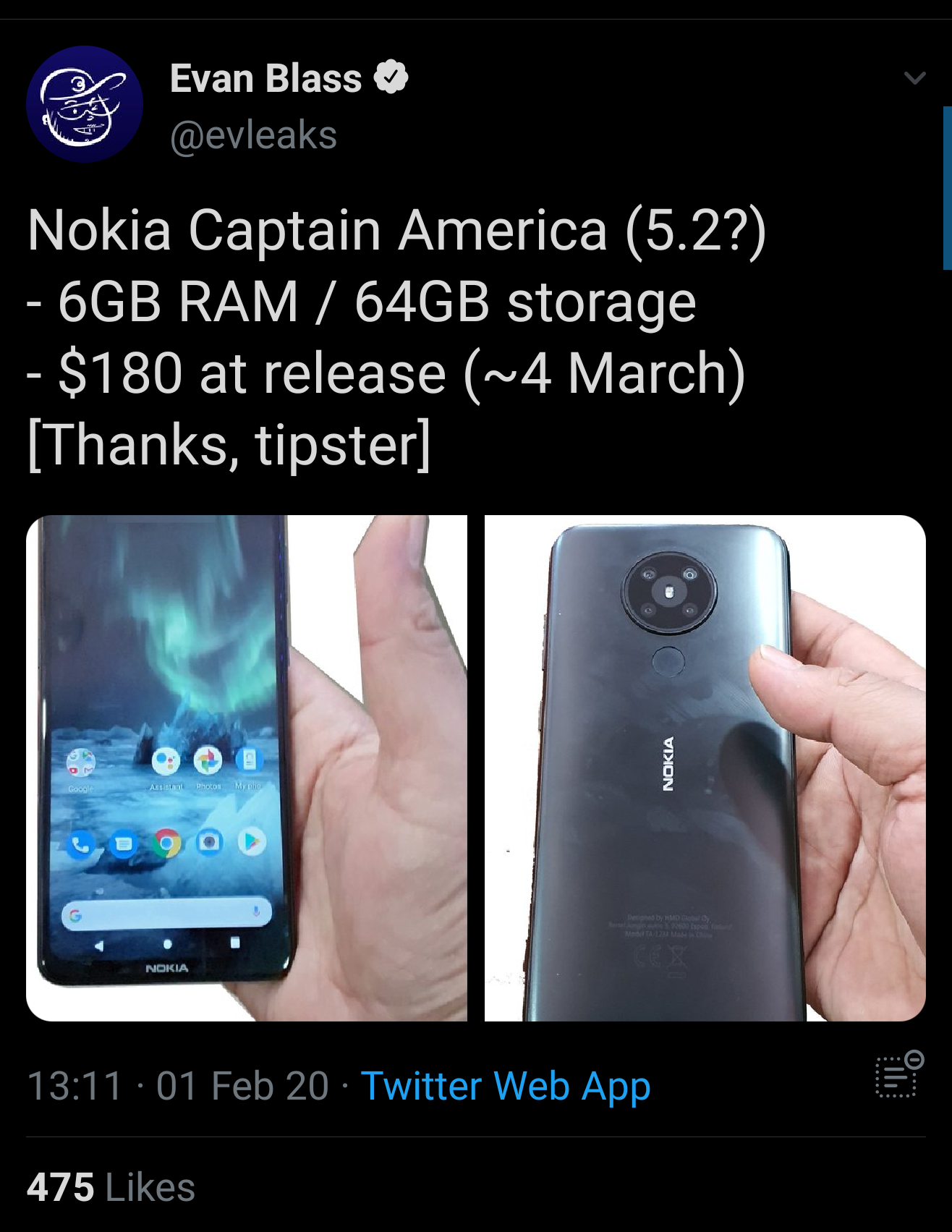
The source of the leak is Evan Blass (@evleaks) and in his tweet, he revealed the phone’s codename as Captain America. The device has 6GB of RAM and 64GB of storage. Unfortunately, the screen size, battery capacity, and processor were not revealed. The tweet also mentioned the phone will cost $180 at launch and might be announced on the 4th of March.

Nokia Captain America (Nokia 5.2)

Coming to the design, the Nokia phone has a waterdrop notch and a moderately thick lower bezel with Nokia inscribed on it. The device is probably running Android 9 Pie but has three-button navigation turned on.

[envira-gallery id=”303382″]

The back of the device is more interesting. The Nokia phone has four cameras arranged in a circular housing with a pill-shaped LED flash in the middle. The camera housing protrudes a bit and right below it is a fingerprint scanner. The back of the phone appears to be covered in frosted glass or plastic with curved sides and it sure is a fingerprint magnet.

Since the identity of the phone is unconfirmed, we advise you to take the info about it being the Nokia 5.2 with a grain of salt.

(Source)

Download Gapps for Android 10 (Google Apps)

Google Apps or GApps are primarily used to flash Google services on custom ROMs. Usually, most of the custom ROMs come without any support for Google services. It is also an advantage of third-party ROMs that they don’t carry any inbuilt support for any assistance. However, the GApps zip package was compatible with Android 9.0 Pie or earlier versions, but now it has been extended to support Android 10. The interested users can now download GApps for Android 10 from the respective link below.

android 10 gapps

It’s been a few months since Google posted the AOSP source code for the latest Android. The same AOSP code is being used by the major OEMs to develop their ROMs based on different skins. They often add or remove the Android’s base functionalities to make it compatible the smart devices, including Smart Watch, Smart TVs, Smart Box, Smartphone, and more.

On the other hand, third-party custom ROM developers like Pixel Experience, LineageOS, Nitrogen OS make the AOSP source code available with extensive features. Now, it depends upon the developers to either include Google Apps or not. Then the role of flashable GApps comes into play.

Until recently, it was impossible to get Google Apps on Android 10 based custom ROMs. It means the users were unable to install apps from Play Store. They are unable to use the Google-powered backup features and some other essential services.

Types of GApps

There are different GApps packages based on multiple apps available in the zip. Here’s the differentiation

  • Pico – The Pico GApps package consists of only the minimal and essential Google services base.
  • Nano – The Nano features Offline speech and Google search app.
  • Micro – Along with the Nano package, there are few more apps like and services support. It brings FaceUnlock, Google Calendar, Google Text-to-Speech service framework.
  • Mini – In addition to Micro Apps, the Google features Hangouts, Maps, YouTube apps in Mini package.
  • Full – The GApps package features a full lot brochure of Google services except Google Mail, Camera, and Keyboard. It even overlaps the AOSP Calendar app with Google.
  • Stock – Like the Full, The Stock package brings all the features and services of Google.

Download GApps for Android 10

After over a few months, the Open GApps community has come up with the Android 10 compatible GApps. However, the GApps are currently available in pico and nano packages. The team is pouring in extra efforts to bring in support for other packages on Android 10.

The interested users can grab the GApps by heading to the SourceForge powered Open GApps repository.

Download Open GApps

ASUS Zenfone Max Pro M1 and Zenfone Max Pro M2 get Android 10 beta

ASUS has rolled out Android 10 stable updates to the Zenfone 6 and Zenfone 5Z. Now it is rolling out a beta update to the Zenfone Max Pro M1 and the Zenfone Max Pro M2, its popular mid-range phones from 2018.

ASUS ZenFone Max Pro (M2) (ZB631KL) phablet

ASUS promised the Zenfone Max Pro M1 would get two Android upgrades and it already got one last April when it was updated to Android 9 Pie. Since the Max Pro M1 will be getting Android 10, it only makes sense that its successor, the Max Pro M2 also gets updated. Both devices launched with Android 8.1 Oreo out of the box.

The beta update for the Zenfone Max Pro M1 comes as version 17.2017.1911.407 and weighs in at 1.6GB in size. The update for the Max Pro M2 arrives as version 17.2018.1912.409 and is 1.5GB in size. If you are interested in trying it out, you can download it for your device from the source links below and sideload it on to your device. This is a beta update, so it is expected to experience issues. It is therefore advised that you backup your data before updating.

Android 10 brings changes in the user interface, Dark Mode, Smart Reply for messaging apps, and a new navigation system.

The stable update is expected to also arrive this month according to a tweet from an ASUS staff. So if you are not up for the issues a beta update may bring, you can wait for the stable update.


(Sources: 1, 2)

UFS 3.1 unveiled; brings improvements to speed and power efficiency

Phones come with either eMMC storage or UFS (Universal Flash Storage) and it is no news that the latter is the faster type of storage. UFS used to be found mostly on flagship phones but in recent times, they have been put into mid-range devices too while eMMC storage has been relegated to entry-level devices.

UFS

The JEDEC Solid State Technology Association has now unveiled the latest version of UFS called UFS 3.1 (JESD220E). It succeeds UFS 3.0 which appeared in Samsung’s 2019 flagships and even OnePlus’s own phones too.

According to the press release by JEDEC, UFS 3.1 is designed for mobile applications and computing systems that require high-performance with low power consumption. The new storage technology brings three major improvements over the last generation. They are:

  • Write Booster: an SLC non-volatile cache that amplifies write speed.
  • DeepSleep: a new UFS device low power state targeting lower-cost systems that share UFS voltage regulators with other functions.
  • Performance Throttling Notification: allows the UFS device to notify the host when storage performance is throttled due to high temperature.

JEDEC also announced a companion standard called UFS Host Performance Booster (HPB) Extension which provides the option to cache the UFS device logical-to-physical address map in the system’s DRAM.

There is no information regarding when we will begin to see the new storage standard in devices but we will not be surprised if it shows up first in a Samsung device.


(Source, Via)

Apple to close its stores and offices in Mainland China through February 9

As the Coronavirus continues to spread, more offices and factories are closing down until things are under control. Just a few days ago, Xiaomi announced all its offline stores across China will be closed. Now, it has been reported that Apple will be closing its stores and offices across Mainland China too.

The tech giant released a statement announcing that it will be shutting down work and business at its offices and stores through February 9. Apple has a total of 42 stores across China but its online store will be up and running, so buyers can purchase from there.

“Out of an abundance of caution and based on the latest advice from leading health experts, we’re closing all our corporate offices, stores and contact centers in mainland China through February 9”

– Apple’s statement to CNN BUsiness

Apple says it has been conducting checks on its store employees and carrying out deep cleaning too.

The impact of the virus outbreak on the mobile industry is still considered small but that may change if the outbreak continues for longer. Managing Director of equity research at Wedbush Securities, Daniel Ives, is quoted to have said: “…..if the lockdown in China [and] outbreak spills into later February or March, then we have darker storm clouds on the horizon for the tech space and global markets, with China consumer demand doldrums.”.

It was reported a few days ago that the outbreak will affect the production of the iPhone 9, however, Foxconn released a press statement saying the current health situation will not affect the production of iPhones.

“We do not comment on our specific production practices, but we can confirm that we have measures in place to ensure that we can continue to meet all global manufacturing obligations,”
– Foxconn

The manufacturing contractor has a large factory in Wuhan but it has been closed down since the holidays which have been extended to today.


(Sources: 1, 2 | Via)