Earlier this month, the European Union announced that it wished to create a new law that could force smartphone manufacturers to adopt a single common smartphone charging standard. The EU believes it will benefit the consumers and environment but Apple has taken a stance against it.
According to the Cupertino based giant, the move to standardize smartphone chargers will stunt innovation in the industry and could leave to force conformity and also create a lot of e-waste and ultimately harm consumers. Notably, this move from Apple is clearly to protect its best interest as the company stands to suffer the most losses if the law is passed.
Apple’s lightning cable
A large part of Apple’s revenue is generated from its accessories that the company sells from various online and offline assets. These accessories, especially chargers, arrive with the proprietary lightning port, which means that it belongs to Apple. This means that the company can even charge third party manufacturers that make accessories for Apple products.
One of the main arguments Apple stated was the “forced conformity” which could affect industry innovation. The tech giant also claimed that the move could also potentially harm the European economy. A study showed results in Apple’s favor as the law would cost consumers 1.5 billion Euros over a mere 13 million Euros in the form of environmental benefits.
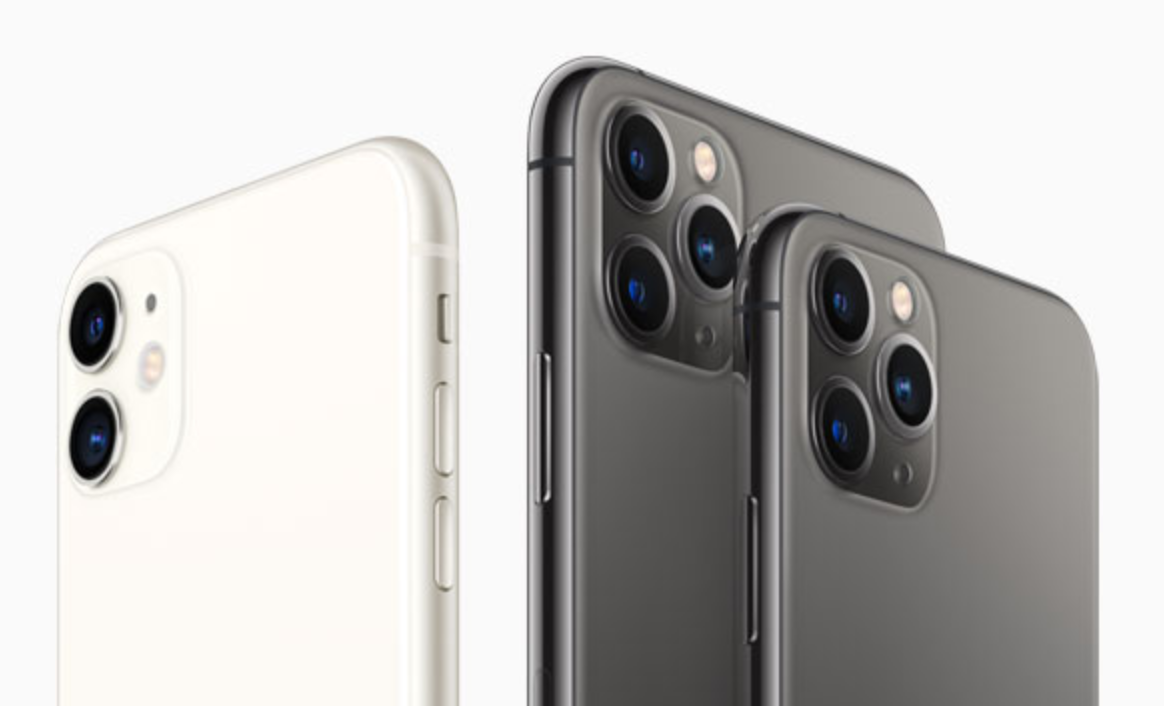
Apple iPhone 11 Pro
The study also claims that nearly 49 percent of EU households utilize different types of chargers out of which only 0.4 percent ever face any significant issues. Apple stated that the law is obsolete as the industry is already shifting towards USB Type C ports via chargers or cable connectors. For example, the iPhone 11 Pro uses USB C but still requires a lightning cable adapter.
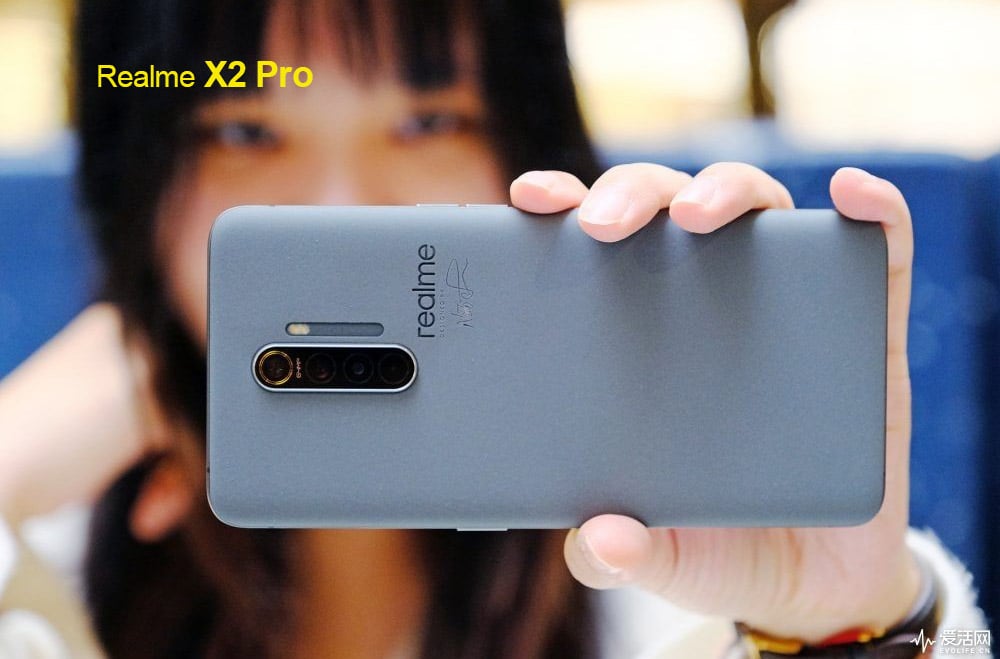
Madhav Sheth, CEO of Realme, revealed the roadmap for the highly anticipated new update which will bring the Wi-Fi calling feature for Realme smartphones starting with Realme X2 Pro. The information was revealed on YouTube under the AskMadhav’s latest episode on Realme India’s official channel.
According to the senior executive, Realme X2 Pro will be the first smartphone to receive the new VoWiFi feature and will receive it later this month. The video talks about the feature and also reveals about the roadmap for the inclusion of the feature in other smartphones as well. A few old phones like the Realme U1 and Realme 1 will also be receiving the new update before the end of the first quarter of 2020.
For those unaware, the VoWiFi feature lets users make calls over Wi-Fi, these are not internet data calls but regular ones. Notably, this feature does not require a separate app and can be used by any compatible smartphone; although it depends on whether the users’ telecom operator provides this service.
Airtel was the first to introduce this feature in December 2019 but was only available in the Delhi NCR region in India. However, the feature is now more widely available and includes numerous South Indian regions as well. Additionally, Jio is also launching the VoWiFi service nationwide and will support about 150 different smartphone models.
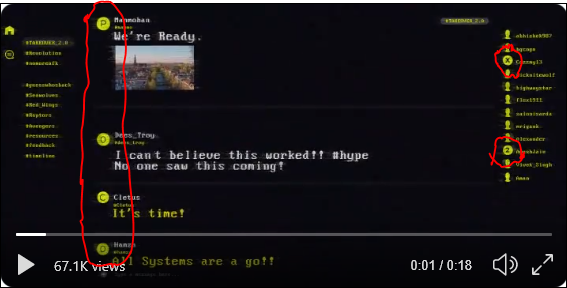
POCO India released its first tweet of the year 2020 on January 21. The tweet comes at the same time Xiaomi announced POCO is now an independent brand. The tweet contained a teaser video which offers us a look into “Season 2”. There wasn’t any clear cut definition of what Season 2 entails but the video has been discovered to hold a clue as to the first smartphone which would likely be launched under the independent brand.
The opening frame contains the name POCO X2 among the binary-like text. You’ll have to look closely to be able to make that out because the characters of the name are scattered about. You can check out the tweet below and a screenshot above.
There were rumours recently that the brand will launch the Pocophone F2 and F2 Lite alongside a third unnamed device. The F2 is expected to be a successor of last year’s Poco F1. On its part, the Poco X2 has appeared on Geekbench revealing it will come with 8GB of RAM and ANdroid 10 OS. The device equally comes with a Qualcomm processor that has a base frequency of 1.80GHz. The GeekBenchlist also contains a clue that suggests the PocoX2 will be a rebadged Redmi K30.
#POCOIsHere#POCOX2#PocoF2 Guys, many of you watched the official video of the second season of #POCO. But, did you pay attention to this easter egg?? 😉
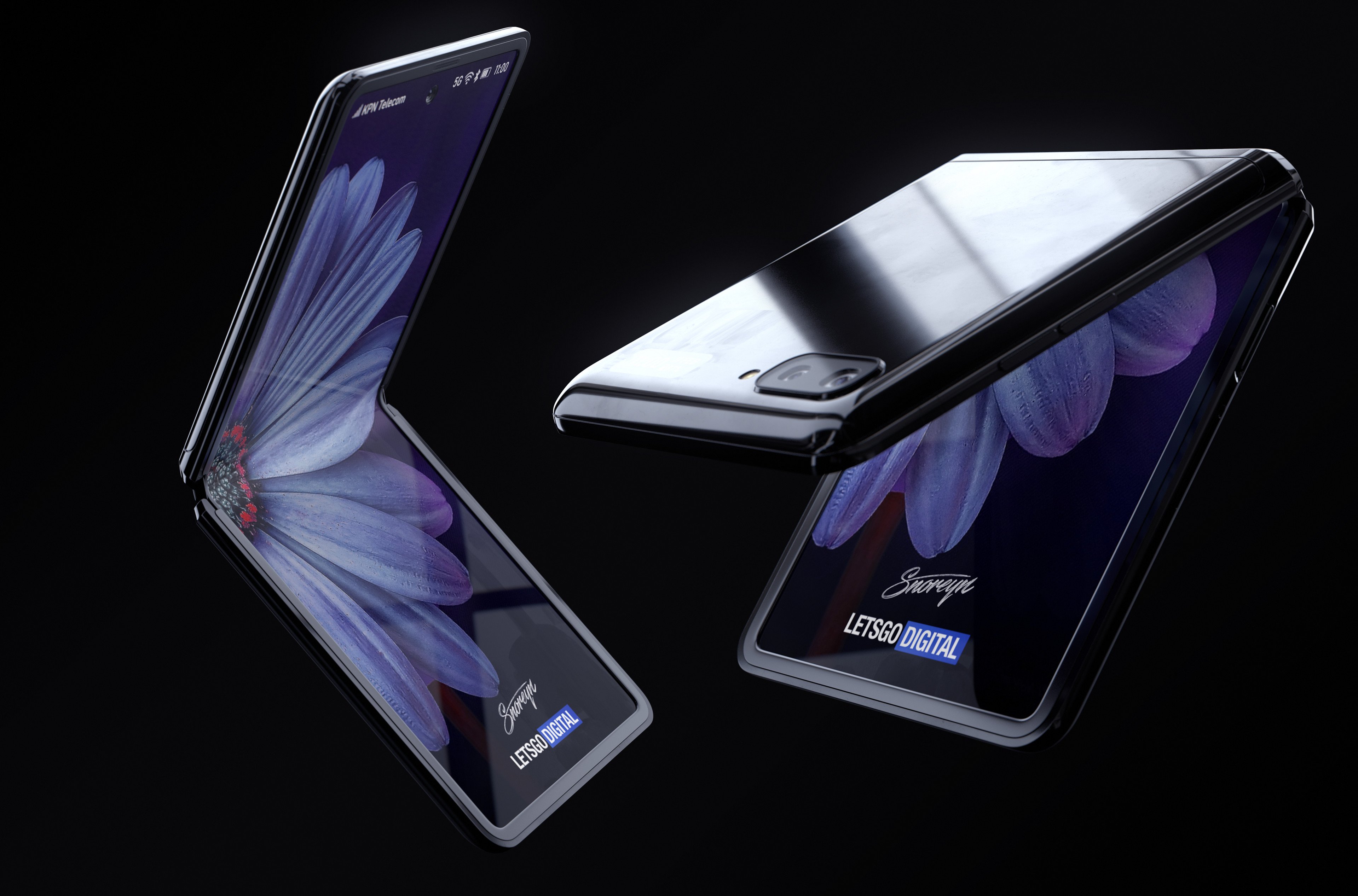
Leaked information on the Galaxy Z Flip foldable phone are surfacing in installments. It is expected debut as the first clamshell phone from Samsung with foldable display on Feb. 11. Max Weinbach from XDA Developers had recently shared the key specifications of the device and its pricing. Earlier today, he shared some more information on the specs of the Z Flip.
According to Wienbach, the Galaxy Z Flip will be equipped with a Dynamic AMOLED display with an ultra-thin glass cover. He added that the latter can develop crease in the middle which was seen in its leaked images that had appeared in December.
The rear shell of the device has a horizontal dual camera setup. The tipster has revealed that it has a wide-angle lens of 12-megapixel and an ultrawide sensor of 12-megapixel. Apart from the rumored 15W wired charging, the device is also expected to come with support for wireless charging and reverse wireless charging.
The secondary display that is placed alongside the dual camera setup can be used for checking charging speeds and battery information. The small screen can also serve as a viewfinder for using rear cameras for capturing better selfie shots. The size of the secondary screen could 1 inch. Lastly, the side of the device is fitted with a capacitive fingerprint reader.
Previous reports have revealed that the Galaxy Z Flip will have a 6.7-inch display with Infinity-O design. It will support full HD+ resolution and it may offer an aspect ratio of 21:9. It could be coming with a 10-megapixel front camera which is available on the Galaxy S10 series and Galaxy Note 10 lineup. Unlike previous leaks that claimed that the Galaxy Z Flip has a SD855 chip, fresh information reveals that Snapdragon 855+ mobile platform could be powering the device.
The Galaxy Z Flip may come with a battery of around 3,300mAh capacity. The One UI 2.0 based Android 10 OS will be preinstalled on the device. It could be coming with a native storage of 256 GB. A recent report from South Korea had claimed that it could be priced between $860 and $1300. In Europe, it could be costing around 1,400 euros.
Huawei, the smartphone manufacturer, has been facing complications with the US Government. It first started out as data security accusations that affected the Chinese tech giant’s operations in the western nation and soon even saw it being banned from accessing various US based technological components and software as well. The restrictions had seemed to ease up by a bit at the end of 2019 but are now expected to become even more strict in 2020
Ren Zhengfei, Founder of Huawei
Ren Zhenfei, Co-Founder of Huawei group has previously stated that he expects US to take severe actions against the Chinese OEM in 2020, which has now turned out to be true. Since, US Commerce department’s Secretary, Wilbur Ross, revealed that plans are underway to step up the trade ban against Huawei. This will further prevent trade relations with more firms that are based in the US.
Reportedly, companies from the US can export products and components to Huawei only if 75 percent of the end product is sourced and made in foreign lands. However, the US Commerce Department is hinting that it would raise this number to 90 percent, which means Huawei can only source 10 percent of its product from US based corporations. The restrictions do not end there since more actions are expected to soon follow as reports suggest that the US Government is considering a separate regulation for the Chinese OEM altogether.
US-China Trade Disputes
The founder of Huwaei has stated that the company is better equipped than last year to survive further attacks from the US Government. But we will have to wait and see how the situation pans out for the company and what impacts the US-China trade deals bring to the deteriorating trade relations between the East and West.
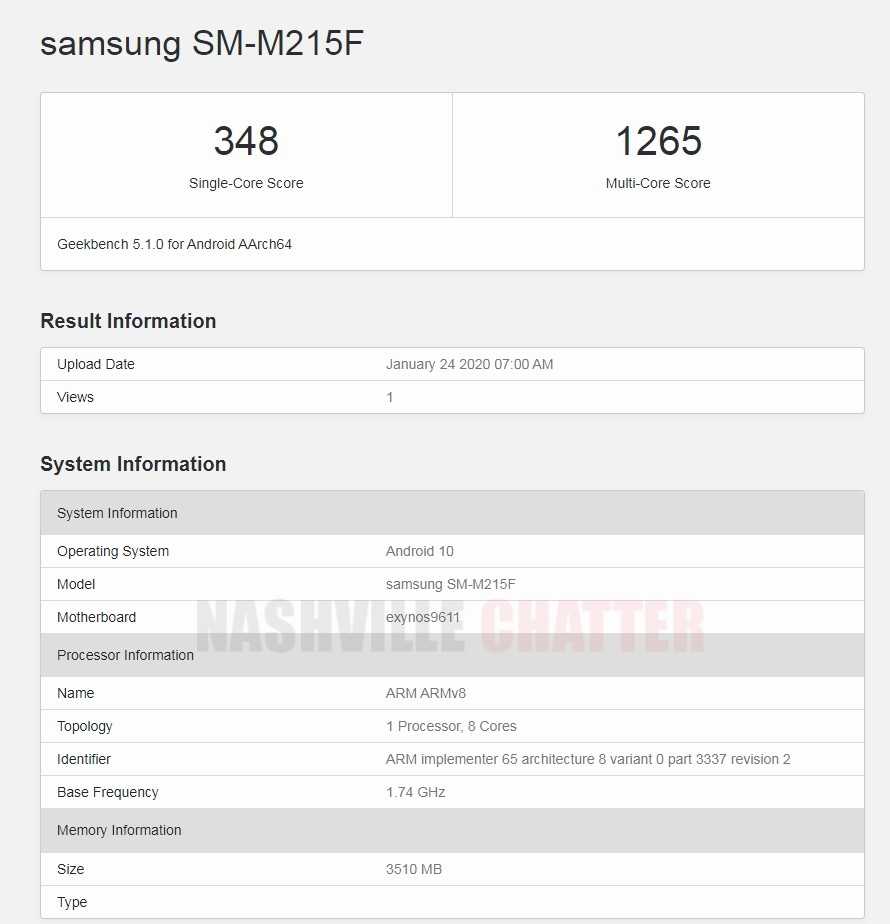
The forthcoming Samsung Galaxy M21 has been spotted on Geekbench. It reveals that the device is powered by a more potent processor than the SoC that drove the Galaxy M20 back in January 2019. It appears that the phone may go official soon in India.
The Samsung Galaxy M21 scored a total of 348 points at the Geekbench single-core test. The device recorded 1265 points in the multi-core test. The M21 is powered by a 1.74Ghz Exynos 9611 SoC along with 4GB of RAM. Samsung currently uses the same chipset in the Galaxy M30s from last year and reportedly plans to use it to power the upcoming Galaxy M31. The predecessor Galaxy M20 was fueled by the Exynos 7904 chipset.
Judging by the Geekbench listing, it is possible that Samsung might be testing the M21’s performance internally. Since the M20 was launched around this time of the year back in 2019, it is quite possible that Samsung might try to unveil the M21 within a similar timeframe this year.
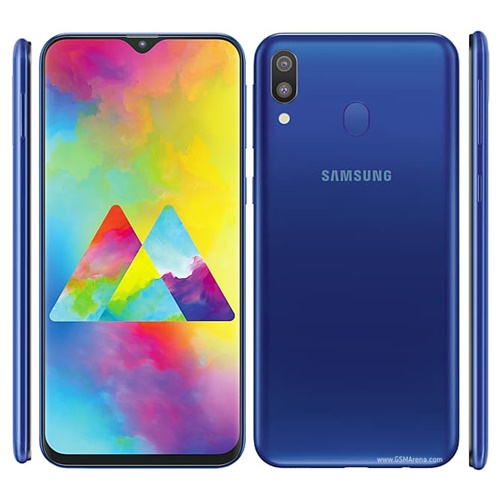
There is limited information on the Galaxy M21 as of this moment. Some of the basic specifications include a dual-camera setup, complete with a 24-megapixel primary sensor and a 5-megapixel depth sensor. This is a vast improvement over the Galaxy M20’s dual-camera setup featuring a 13-megapixel lens along with a 5-megapixel sensor.
Samsung Galaxy M20
According to an earlier report on Sammobile, the Galaxy M21 is likely to sport 64GB and 128GB of native storage, a major improvement over the 32GB and 64GB storage option on the M20. The device reportedly runs on Android 10 out-of-the-box. The Samsung Galaxy M21 might be available in a bunch of color options, including blue, green, and black.
Xiaomi’s affordability and competitive specifications are the prime reasons behind its accent in global markets. The Chinese giant has launched multiple variants of the same smartphone in different countries to match the local taste. The diversification of smartphones is making Xiaomi grab more sales. Similarly, Xiaomi launched the Mi CC9 as the Mi 9 Lite in the countries outside China. We have prepared a guide to install TWRP and root Xiaomi Mi 9 Lite and Mi CC9.
Android’s ability to customize the features is due to its open-source nature. The third-party developers often love to play with devices that often get huge sales and the OEM supports the development by timely releasing Kernel source code.
Rooting Xiaomi Mi 9 Lite or installing TWRP is just the beginning to get additional features. There are a lot of other advantages of rooting a smartphone. The users can easily install the custom ROMs based on the latest Android version. There are different MODs, frameworks, and zips that can easily customize your smartphone.
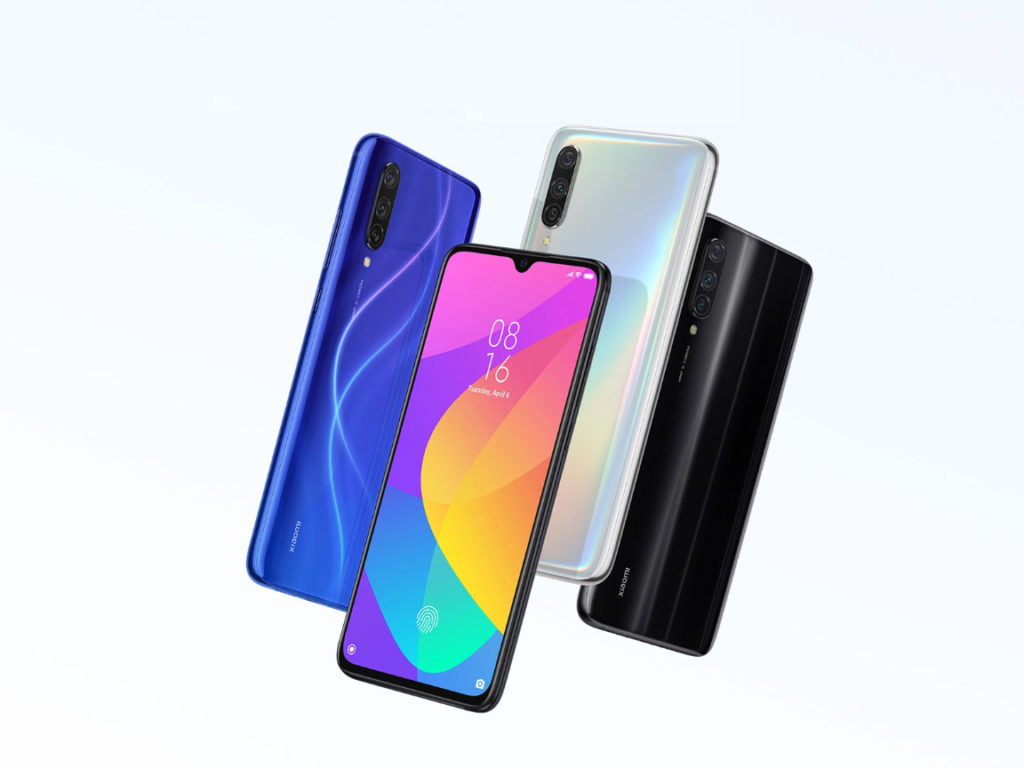
Xiaomi Mi 9 Lite Specifications
The Xiaomi Mi 9 smartphone features a 6.39-inch Super AMOLED display featuring 1080 x 2340 pixels and 19.5:9 aspect ratio. The display presents 403 PPI of pixel density, 600 nits max brightness and envelops a Corning Gorilla Glass 5. The smartphone is powered with Qualcomm Snapdragon 710 chipset packing an octa-core processor and Adreno 616 GPU.
Xiaomi Mi 9 Lite comes packed in two different versions of 6 GB + 64 GB and 128 GB + 6 GB. In optics, the smartphone embeds a triple rear camera module consisting of a 48-megapixel primary camera, an 8-megapixel ultrawide sensor, and a 2-megapixel depth sensor. A single 32-megapixel shooter is present on the front for selfies and video calling.
Xiaomi Mi 9 Lite aka Mi CC9 features a Wifi, Bluetooth 5.0, GPS, NFC, Radio, USB 2.0, and Infrared Port. An under-display fingerprint is packed along with the device. There’s a 4030 mAh battery with 18W fast charging technology. Xiaomi Mi 9 Lite is available in Pearl White, Aurora Blue, and Onyx Grey. The pricing starts at $233.
Note: GizmoChina.com is not responsible for any damage to data or devices. The users are proceeding on their own will.
We will move forward step-by-step:
Unlock Bootloader
Install TWRP
Root Xiaomi Mi 9 Lite
Unlock Mi 9 Lite Bootloader
It is a very simple and straightforward process to unlock the bootloader of the Xiaomi Mi 9 Lite. It is quite an easy process, the user needs to take care of these prerequisites before proceeding for the steps below.
Enable Developer Option by heading to Settings > About Phone > and tap MIUI Version 7 times.
Enable USB Debugging and OEM Unlock by Heading to Settings > Developer Option > and Enable OEM Unlock and USB Debugging.
Now again go to Settings> Mi account > Mi Cloud and Enable Sync and Find Device.
Install and Open Mi Unlock Tool after downloading and extracting it.
Press ‘Agree’ on the disclaimer page that will appear.
Login in with the same Mi Account that you have used on your smartphones. Otherwise, you can sign up for a new account and use it on a smartphone and for the next steps here.
Connect your smartphone with a PC via a USB cable.
Open CMD or Power Shell in the extracted ADB and Fastboot Folder by pressing Shift+ Right Click.
Now, type the below command to boot into the bootloader mode:
adb reboot bootloader
The device will show Connected in Mi Unlock Tool.
Now, click on ‘Unlock’, and the process to unlock will start automatically. Once the process gets completed, the device will be rebooted.
Xiaomi Mi 9 Lite is unlocked!
You have successfully rooted your smartphone.
Install TWRP on Mi 9 Lite
TWRP – Team Win Recovery Project is a GUI based custom recovery used to root, and install custom MODs, ROMs, and Kernels.
Prerequisites:
Download TWRP Recovery for Xiaomi Mi CC9/Mi 9 Lite.
+
Additional Downloads like ADB and Fastboot, Xiaomi USB Drivers as listed above.
Steps to install TWRP on Mi 9 Lite
Upon successfully unlocking the bootloader of Xiaomi Mi 9 Lite, follow the steps below to install TWRP on Mi 9 Lite.
Make sure to set-up ADB and Fastboot tools after downloading from the links above on your PC.
Enable Developer Settings, USB Debugging and OEM Unlock (Follow Step 1 & 2 for enabling this in the above guide.)
Open CMD or ADB Terminal by pressing Shift + Right Click on ADB and Fastboot extracted folder.
adb reboot bootloader
Optional: Execute the following command to flash stock vbmeta.
Place the download TWRP recovery into the same ADB and Fastboot Folder. Then, execute the following command to flash TWRP on Xiaomi Mi 9 Lite:
fastboot flash recovery twrp.img
After a successful flash, type the command to reboot the device:
fastboot reboot
Note: The device might not automatically replace the custom recovery during the first boot. The user needs to press the proper key combination to enter the TWRP Mode. After successfully executing ‘fastboot reboot’ command, press and hold the proper key combination to enter the TWRP Mode.
This way, you have successfully installed TWRP on Xiaomi Mi 9 Lite and Mi CC9. The users can now root the Xiaomi Mi 9 Lite by installing Magisk and SuperSU.
Root Xiaomi Mi 9 Lite
For most of the users, the ultimate goal is to root Xiaomi Mi 9 Lite. The users can download SuperSU or Magisk Manager to root the device. We are going with the Magisk manager to get root access.
Earlier this week, Broadcom, a known chip manufacturer, announced that it has entered into a contract with Apple. The deal is to supply its wireless components in the smartphone giant’s products.
The new deal (2020 SOW) is an extension to previous agreements of supplying radio frequency components and modules to Apple and carries an estimated value of about 15 billion US Dollars. The two corporations have entered into a two multi-year agreement for the wireless components.
Broadcom chipsets
Notably, shares of the chipmaker have already risen by 2 percent in extended trading following this news which arrived this Thursday (23rd January 2020). On the other hand, Apple has reportedly asked Wistron to ramp up the iPhone production in its facilities in India. The Cupertino based giant’s iPhone 11 series was exceptionally well received and has also become popular in China, which has historically been a large but uneven market for Apple.
Apple’s iPhone 2020 lineup will arrive in the latter half of this year and is expected to arrive with 5G networking capabilities. Thus, the new deal with Broadcom can also be looked at as Apple preparing for its upcoming lineup and even secure a deal in advance for its 2021 iPhone series.
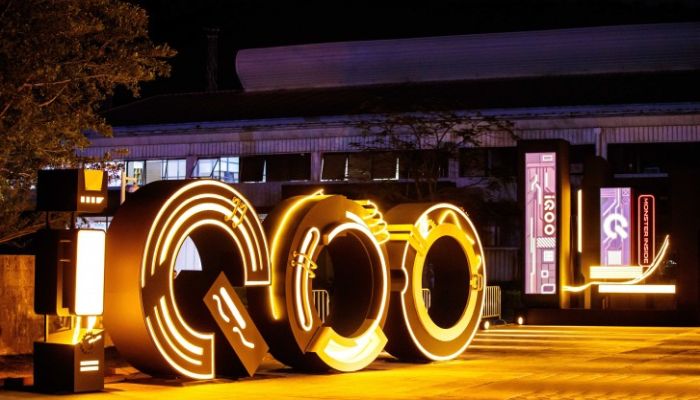
Vivo’s new brand iQOO is finally headed to India and it is going to function as a separate brand. The company recently confirmed that it will be launching an iQOO phone powered by the all new Snapdragon 865 mobile platform in India in February. According to the latest statement by iQOO’s Director of Marketing, Gagan Arora to The Mobile Indian, the company plans to launch two smartphones in the country in next month.
According to Mr. Arora, iQOO is gearing up for launch by the second week of February 2020. There is confirmation that one phone will support 5G connectivity while the other one will be a 4G phone. The two smartphones will feature similar hardware and design language but will be separated by a wide price margin. iQOO plans to take the Indian market by storm by pricing its products competitively, and the 4G variant will play a major role in meeting sales targets.
As revealed before, iQOO first phone will be fueled by Snapdragon 865 SoC. Initial reports claim that the device will be an India exclusive and sport numerous industry-first quirks and features. Mr. Arora further added that the smartphone will be an all-rounder with subtle inclinations towards the gaming community. Aiding the endeavor will be a large battery promising numerous hours of unhindered gaming experience.
Mr. Arora further claimed that iQOO will be a separate entity in India, and operate independently of Vivo. He said that the company’s headquarters is already setup in Bangalore, and smartphones will be manufactured here in India. Speaking on the sales network, he added that the upcoming phones will be available through every channel. Although it is relying heavily on online platforms for meeting its initial sales targets. It also plans to sell its smartphones offline.
iQOO currently has 80 members on its payroll in India, and claim to be future-ready for all possibilities that might arise in India. iQOO might try to replicate Xiaomi’s strategy in the country. Last year Xiaomi announced that sub-brands Redmi and POCO were separate entities from parent brand Mi. Other notable Chinese smartphone manufacturers to follow in the footstep include Oppo, whose sub-brand Realme was recently given a free hand in marketing and operations.
Both Redmi and Realme started as budget-friendly smartphone manufacturers but quickly moved on to offering flagship devices under their belt. iQOO was conceived as an exclusive gaming smartphone manufacturer to counter Xiaomi’s Black Shark platform. However, recent reports suggest that iQOO phones will be performance-centric phones with some gaming capabilities and affordable pricing. Vivo had recently trademarked monikers like iQOO Pro, iQOO Neo and iQOO Lite in India. Probably, upcoming iQOO phones in India may carry these monikers.
The officials of the United Nations do not consider WhatsApp a secure communications platform ever since Amazon CEO and Washington Post owner Jeff Bezos’ phone was hacked. UN experts accused Saudi Arabia of hacking into the billionaire’s smartphone. In an official statement on Thursday, a spokesperson said, “The UN does not consider WhatsApp a secure mechanism”.
The official further pointed at the possible involvement of the Saudi Arabian crown prince Mohammed bin Salman in the cyberattack on Bezos back in 2018. Based on forensic evidence provided by Washington-based FTI Consulting, the officials called for a joint investigation by the US and other law enforcement agencies. The report claims Bezos’ iPhone was hacked with a malicious video file sent from one of the crown prince’s WhatsApp accounts.
When Reuters asked whether the UN Secretary-General Antonio Guterres had communicated with the Saudi Crown Prince or other heads of states over WhatsApp, Farhan Haq, a UN spokesperson said, “Every senior UN official has been instructed to refrain from using WhatsApp for official communication, since it is not a secure medium. So, I do not think the Secretary-General uses it”. Haq added that the official instruction not to use WhatsApp was given back in June 2019.
When WhatsApp officials were questioned, the company said it provides industry-leading security to its 1.5 billion strong user-base. “Every private message is secured via end-to-end encryption to prevent WhatsApp or unwanted third-party sources from viewing messages. Our encryption technology, developed together with Signal remains the best to date and is highly regarded by security experts,” revealed Carl Woog, WhatsApp’s Director of Communications.
Hence, a ban specifically targeting WhatsApp, a subsidiary of Facebook, has left security experts in disbelief. “WhatsApp takes security seriously compared to the other social media messaging platforms.,” said Oded Vanunu, Researcher at Tel Aviv-based security consultancy Checkpoint that regularly points out security flaws in popular messaging apps. “Every application has vulnerabilities that can be exploited in some way” Oded added, before mentioning that WhatsApp offers security patches regularly to fix the loopholes. “Most run-off-the-mill messaging platforms can only dream of the kind of security measures taken by WhatsApp”.
Ever since the dawn of fingerprint sensing technology, the world had quickly evolved into a new era for law enforcement. Now, hard evidence and proof of one’s presence at a place can easily be determined with the new technology. However, it also posed a certain flaw, as a simple fingerprint could have potentially been left behind hours or days ago. But now, new technology makes it possible to determine the time when the fingerprint was initially made.
Although fingerprints can be hard proof, criminals often argue that it was left behind before the crime incident took place. This means that there always room to dodge evidence as well with false counter arguments. To combat this, a group of scientists from Iowa State University worked on a pre-existing theory which suggests that as a fingerprint age, ozone in the surrounding air reacts with unsaturated triacylglycerols deposited by the fingertip.
In simpler terms, measure the effects that the atmosphere had on the fingerprint. The team achieves this by studying multiple prints from three volunteers. The fingerprints were left on various surfaces over a period of seven days and used mass spectrometry imaging to measure when each of the fingerprints was left. The study was concluded based on the rate at which the triacylglycerols had degraded.
Notably, tests on fingerprints could also potentially damage the fingerprint in the past, destroying precious evidence; however, this technique preserves it so they can still be used to identify criminals. Furthermore, the technique could also date the prints even after it had been dusted by forensic powder.
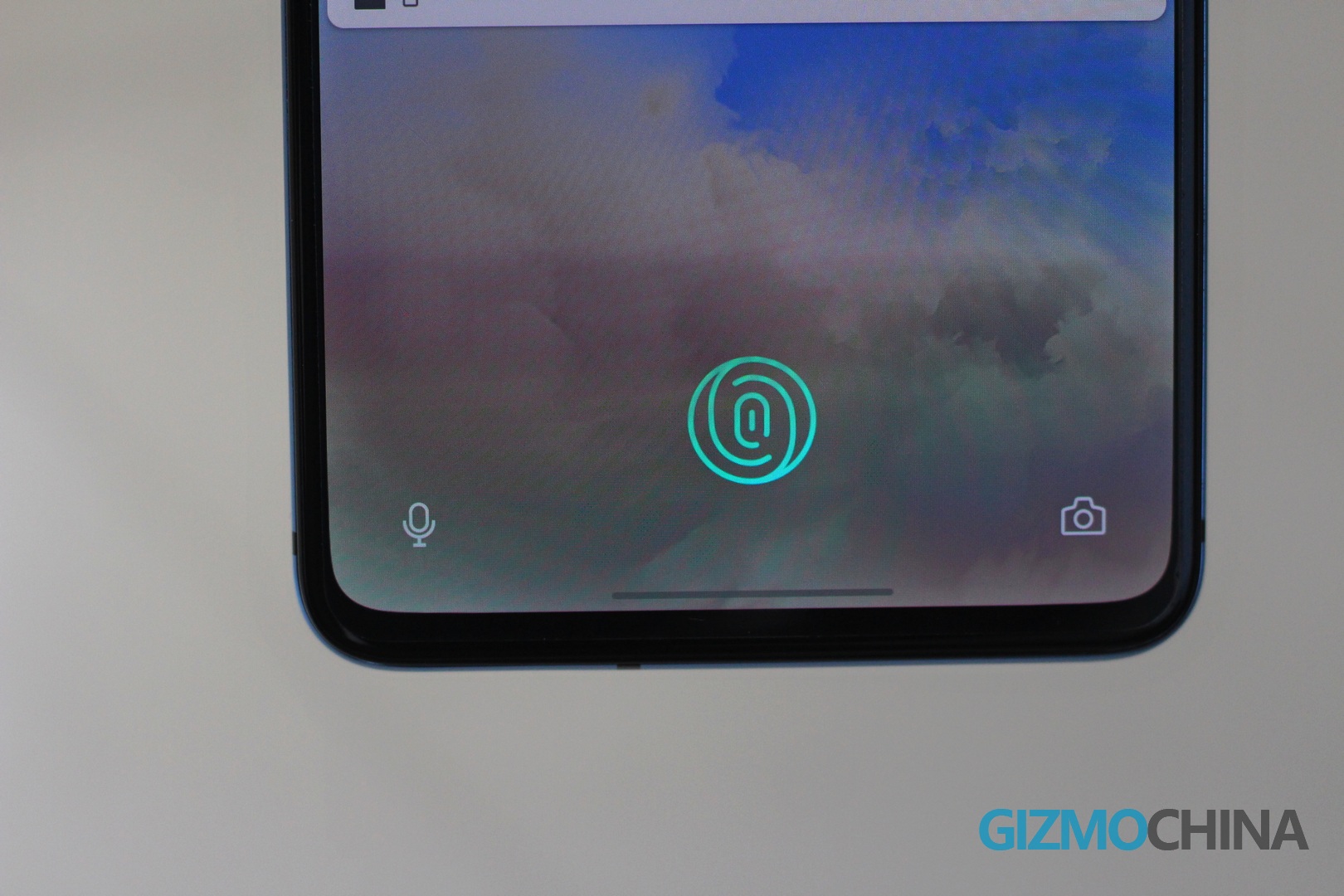
A fingerprint scanner on the OnePlus 7T
An interesting phenomenon discovered by the tests was that the rate of degradation varied considerably from person to person. This is probably due to the different physical anatomical aspects of each individual and their fingerprints. Thus, it also leads to the new techniques one crucial flaw that it needed to first identify the person first and measure their unique triacylglycerol profile before the dating process began.
POCO fans are eagerly waiting for the arrival of the POCO F2 – the successor of the POCO F1. However, recent reports have revealed that the company has plans to launch a minimum of three smartphones this year. The names of the other rumored devise are POCO X2 and POCO F2 Lite. Recent reports have revealed a lot about the POCO X2 smartphone and it is expected to arrive in India as a rebadged version of the Redmi K30 4G. The arrival of the first POCO phone is drawing near as the company has took to Twitter to confirm that it will be launching its next phone in February.
POCO is yet to reveal the name of the POCO phone that will be coming to India in the coming month. However, now that the rumor mill is actively spilling information on the POCO X2, it is likely to be the first phone of 2020 from the POCO brand.
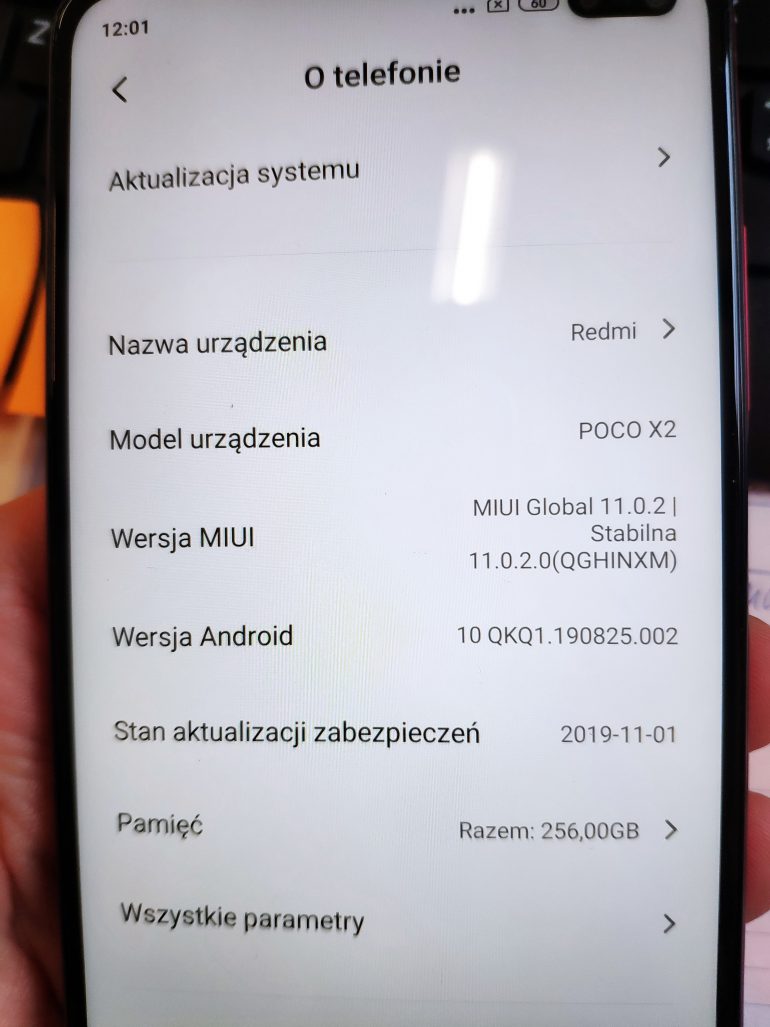
On the basis of recent leaks, it can be said that the POCO X2 could be a rebranded Redmi K30 4G that had gone official in China in December 2019. A leaked photo of the phone that appeared on a Polish site revealed that it has a dual punch-hole display.
The smartphone is said to be fueled by Snapdragon 730G processor and 8 GB of RAM. The device could be coming with an internal storage of 256 GB. The Android 10 OS will come onboard with a modified version of MIUI for POCO.
The Polish site had reported that it could not confirm whether the POCO X2 has NFC support. The Redmi K30 4G has a 120Hz refresh rate display. The publication claimed that it could not find a toggle to change the refresh rate of the screen 120Hz. Hence, there is possibility that the POCO X2 may not support 120Hz refresh rate. However, it is advisable to know more on it since the phone was not running on the final build of OS. The other details of the phone are currently under the wraps. At present, there is no information on the pricing of the POCO X2. However, it should be costing well below the Rs. 20,9999 which was the starting price of POCO F1.
For those who are waiting for POCO F2, the company has confirmed that it won’t be the first phone of the year. Considering that competitor iQOO brand is soon launching an iQOO phone driven by Snapdragon 865, it is likely that the POCO F2 could be equipped with the same SoC.
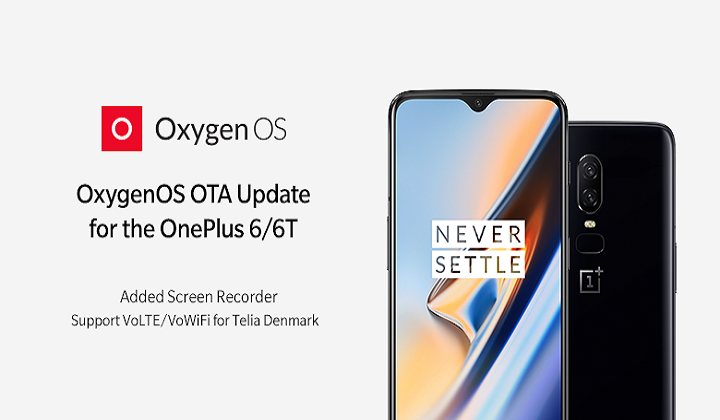
OnePlus is rolling out the latest update for its 2018 flagship series, the OnePlus 6 series. It includes the OnePlus 6 and 6T which are receiving the OxygenOS 10.3.1 update which brings minor fixes and Android security patch updates.
OnePlus has always been one of the first to update its smartphone offerings when a major Android OS version launches. Its quick adoption has been one of its strong suits that its userbase greatly appreciates. However, looking back at the OnePlus 6 series, the updates are prompt but have been rolled back multiple times now.
OnePlus 6T
Previously, the company had attempted to bring Android 10 OS to its 2018 flagship lineup on three separate occasions. Multiple issues had led to the initial OTA updates being rolled back, so a quick update isn’t necessarily a stable one. Now, the company has rolled out another update that brings the December 2019 Android security patch alongside a few minor fixes as listed below.
Fixed the issue with a black screen appearing after unlocking the device using a fingerprint
Fixed the issue with the animation logo while rebooting device
Fixed the issue with device heating up while charging
Fixed the random disconnection issue with 5Ghz hotspot
Improved system stability and fixed general bugs
Updated security patch to 2019.12
Camera
Optimized the image preview time in the Pro mode Fixed the camera crash issue
Gallery
Fixed the issue with videos and images not displaying in the gallery
OxygenOS update for OnePlus 6
The latest update is being released in a staggered manner and will be received by a limited number of users first and then be available to a wider userbase. For those that wish to check if they have received the update. Go to Settings>System>System Updates.
After the city of Wuhan entered a state of lockdown yesterday, tech companies in China are coming forward to help medical professionals as well as residents who are fighting the spread of the virus in the city. After JD.com and Douyin (TikTok’s Chinese version) came forward to help, Xiaomi has also announced emergency assistance worth 300,000 yuan (~$43.2K) to the city of Wuhan.
Xiaomi’s emergency assistance to Wuhan Source: Xiaomi Weibo
Xiaomi revealed via its official Weibo account that the Group has sent out the first batch of medical supplies to Wuhan which includes N95 masks, medical masks, and thermometers. The first batch shipped out to the affected city from various centers last night. The equipment is expected to arrive at Wuhan’s epidemic prevention and control headquarters tonight. The company added that they are monitoring the epidemic’s status and will continue to allocate supplies to help out the city.
The Coronavirus, known to cause a special case of lethal pneumonia, is said to have originated from the city of Wuhan in China. The city went into a state of lockdown yesterday with major flights and long-distance transport systems suspended for the foreseeable future. Wuhan is the seventh most populous city in China with a population of over 11 million. Given how most of these residents are not allowed to leave the city until the epidemic is controlled, help is pouring in from different parts of the country.
The Beijing based JD.com (Jingdong), one of the biggest online retailers in China announced today that it would donate 1 million medical masks and 60,000 medical supplies to Wuhan, in batches. The Chinese version of the TikTok app called Douyin has a dedicated #FightPneumonia page in their app (spotted by Businessinsider) that provides updates on the spread of the app as well as relevant information on its prevention. The app also added a ‘Jiayou video effect’ (as spotted by analyst Daniel Ahmad) to support the medical staff, doctors, and patients in the city.
Tech giant Google had revealed a “Collaboration of the Cosmos” puzzle earlier today. As soon as the collaborative online game to restore a fictional satellite network was completed, the constellation of satellites spelled out the dates for the upcoming Google I/O.
With this, the search engine giant has now confirmed that its next developer conference — Google I/O 2020, will kick-off on 12th May. The conference will be held for three days — 12th May, 13th May and 14th May.
Along with the dates, the company has also confirmed that it will be held at Shoreline Amphitheatre in Mountain View, California which is situated right next to the Googleplex. This marks the fifth year that the company is hosting its annual developer conference at the Shoreline Amphitheater.
With the dates for Google I/O 2020 revealed, the company will now reveal more details related to ticketing and pricing. While it has not yet revealed anything related to this, we expect that the application window to attend the conference will open next month.
Last year, at the developer conference, Google had made several announcements, including the launch of Google Pixel 3a and Pixel 3a XL, Next Hub Max, among others.
This time also, we expect Google to launch the budget-friendly Google Pixel 4a smartphone, a lighter variant to the company’s newly launched flagship smartphones Pixel 4 and Pixel 4 XL. More details about this is expected to surface online in coming weeks.
Along with the budget Pixel smartphones, we also expect the company to announce new Nest hardware products at I/O 2020. Further, Google will also be showcasing its new features and services, as well as updates for its mobile operating system Android.
At the CES 2020 in Las Vegas earlier this month, OnePlus showcased its OnePlus Concept One smartphone with a unique technology that hides the camera module on the smartphone. While the phone may never get commercial launch, there’s a possibility that the technology could make its way to other phones from the company.
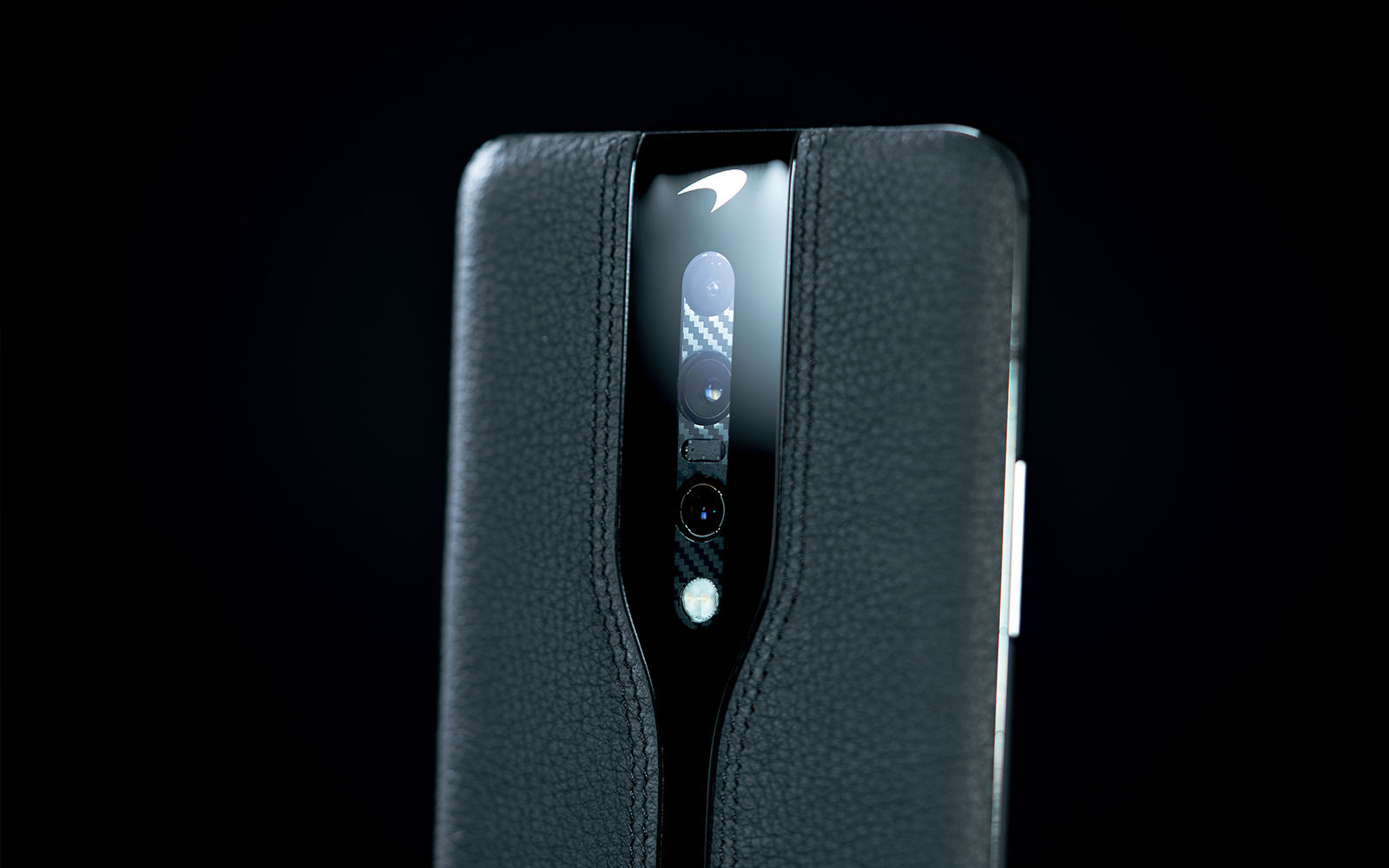
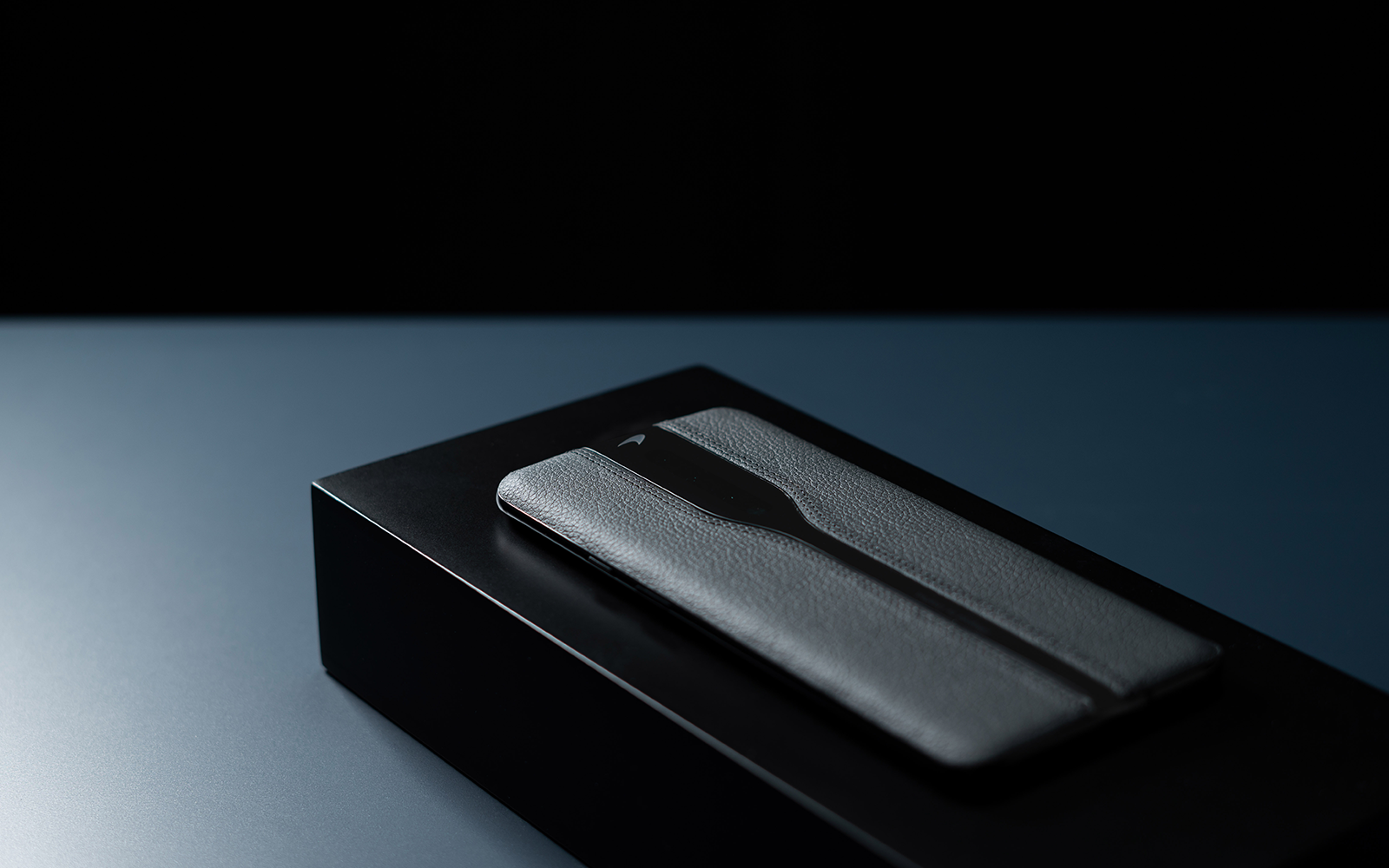
The OnePlus Concept One smartphone that was showcased at CES has Papaya Orange color. Now, the company has shared an early all-black prototype of the OnePlus Concept One smartphone that the company made during early development and it looks stunning.
The design of this prototype smartphone is almost same as the one showcased earlier this month. The only difference is the choice of color. While the showcased model features Papaya Orange color, this one is in the classic Black color.
The company has also said it is looking to use the leather backplate cover design for its future flagship phones. Kevin Tao from OnePlus Design Team has also said that usage of leather on any upcoming device will be done utilizing “environmentally friendly” materials.
Coming to the OnePlus Concept One, the phone has a vertical triple camera system that is neatly tucked under an electrochromic glass. When a current is applied to glass, it can swiftly change from opaque to transparent. This special type of glass is used for sunroofs of some luxury cars, airplane windows and also for buildings.
The triple-camera setup remains invisible under the electrochromic glass. However, when the camera is turned on, the sensors become instantly visible. When the camera app is closed, the triple cameras again become invisible. The company says that it takes only 0.7 seconds for the glass to transition from transparent to opaque or vice versa.
Further, the glass can also become semi-transparent and can act as a neutral density filter that can assist in capturing better shots in very bright sunlight. It comprises of two 0.1mm glass panels between which is the organic material. The combined thickness of both glass is only 0.35mm and it uses negligible power to function.
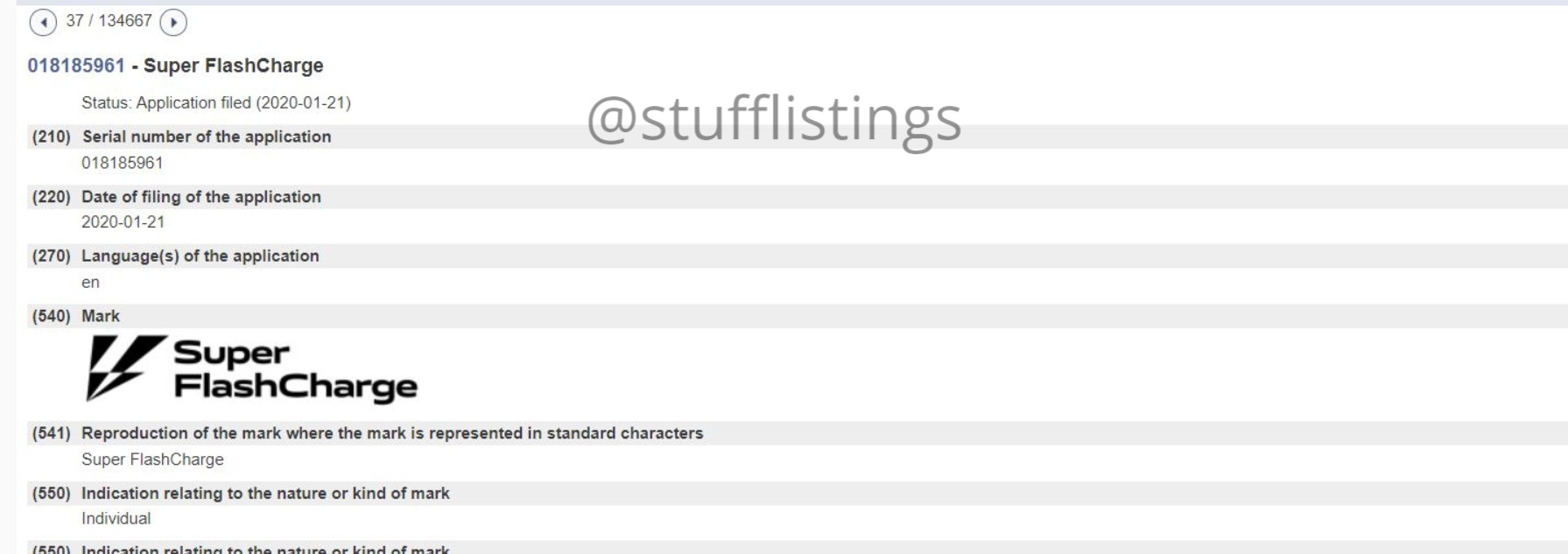
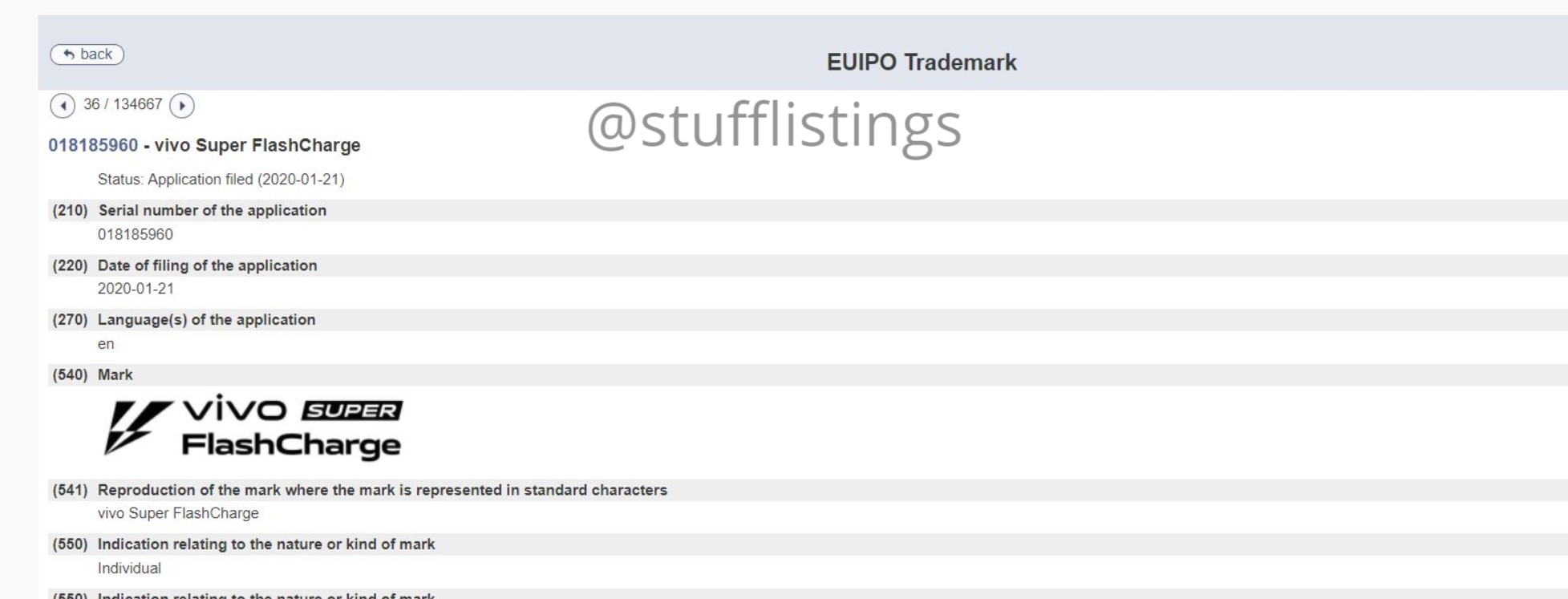
Smartphone maker Vivo has applied for a new trademark application which indicates that the company is working on a new fast charging technology under the name “Super FlashCharge”.
While the trademark application doesn’t reveal any information about the technology the company is working on, it seems that this new Super FlashCharge technology could be the previously rumored 55W fast charging tech.
Although the company has not announced anything related to this, we expect Vivo to use this new charging technology on its upcoming high-end smartphone. Currently, the fastest charging speed offered on a smartphone is 65W, present on Oppo Reno Ace.
Last year, Vivo took everyone by surprise as it introduced 120W Super FlashCharge technology. The company claims that its 120W charging technology can completely power a 4,000mAh battery phone in just 13 minutes.
Along with Vivo, Xiaomi has also teased its 100W Super Charge Turbo technology that was able to charge a 4,000mAh battery in 17 minutes. However, both these charging technology have been introduced but not yet available commercially.
Vivo has not yet revealed the technology behind its sophisticated 120W Super FlashCharge. The company has also not confirmed when it will begin the mass production of the technology. There’s a possibility that the trademark application is for this technology or the new 55W charging tech.
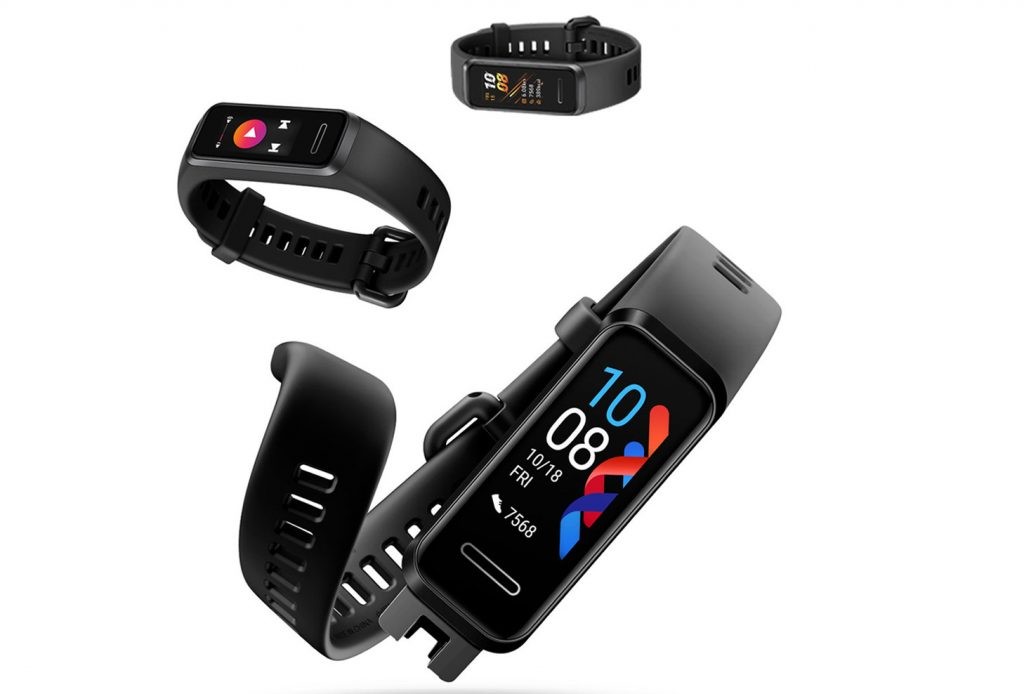
A few months ago, Huawei had launched the Huawei Band 4 fitness tracker in its home market China. Now, the company had launched the same device in the Indian market, carrying a price tag of ₹1,999 that is roughly $28.
The Huawei Band 4 comes with a 0.96-inch color display with 80 x 160 pixels screen resolution. Under the hood, it is powered by a processor called the Apollo 3. Unlike the Honor Band 5i which has a circular capacitive home button, the Huawei Band 4 has a pill-shaped button.
The company is also offering an option for customising clock faces with Huawei offering 8 built-in options. Further, Huawei has said that users can also download about 66 watch faces from Huawei Watch face store.
When it comes to features the Huawei Band 4 has sleep tracking with TruSleep 2.0 which also tracks your heart rate while you sleep. It can identify up to 6 types of sleep problems and will provide suggestions to help you sleep better. The device can also measure blood oxygen level and comes with support for 24/7 heart-rate monitoring feature, along with the company’s Trueseen 3.5 technology.
The fitness tracker can track indoor and outdoor run, indoor and outdoor walk, and indoor and outdoor cycling along with tracking activities on the elliptical bike and rower. The device will provide details such as heart rate, heart rate zone, steps, distance, and calories.
Other features on the wearable device include Remote Shutter, Find My Phone, and notification for messages, calls, and goals. The Huawei Band 4 is powered by a 91mAh battery which the company claims can provide 9 days of usage on a single charge. Further, Huawei also claims that it takes just 1.5 hours to fully charge this 5ATM waterproof device.
The Huawei Band 4, which is priced at ₹1,999 in India, is available for purchase in just one color option — Graphite Black, through online marketplace Flipkart.
The leaks keep pouring in for the Galaxy S20 series, and at this rate, the unpacked event may as well be watched just for the fun of it and other new products Samsung may be planning to announce. The latest leak is official press renders of the Galaxy S20, Galaxy S20+, and the Galaxy S20 Ultra. It also includes the price the devices will sell for.
The source of the leak is Ishan Agarwal and he has partnered with 91Mobiles.
Galaxy S20 and Galaxy S20+
The Galaxy S20 is shown in a powder blue color variant. The color variant has a rainbow-like color shift at the bottom and the sides of the phone are curved. Both the front and rear of the phone are covered in glass. It has been reported that the glass covering the screen is actually 2.5D and should make it easier to use tempered glass on the screen protector.
[envira-gallery id=”302090″]
The Galaxy S20, like its other siblings, has a punch-hole in the middle of the Infinity-O display for the selfie camera. On the back, it has the same rectangular camera housing which holds three sensors and the LED flash. A side view shows us the buttons are on the right-hand side of the phone and there is no Bixby button on the left-hand side. The S20 will come in Cosmic Gray, Cloud Blue, and Cloud Pink.
[envira-gallery id=”302098″]
The Galaxy S20+ also has a near-identical design. However, there are four cameras rather than three on the back. The device is shown in Cosmic Black but will be available in Cosmic Blue and Cloud Blue.
Price
With respect to price, the GalaxyS20 will start at €899 for the 4G version and jump to €999 for the 5G version. The Galaxy S20+ 5G, on the other hand, will be priced at €1099.
Galaxy S20 Ultra 5G
The Galaxy S20 Ultra 5G also comes in Cosmic Black and Cosmic Gray. It too will have a 2.5D display rather than a 3D curved screen. The buttons are placed in the same place as that of its siblings and it too doesn’t have a Bixby button.
On the rear, the Galaxy S20 Ultra 5G looks different from its siblings. It also has a rectangular camera housing, however, the camera housing is wider and has a two-color design. The dark part houses three sensors while the gray part is home to a single camera that has a periscope lens which will have up to 100x digital zoom.
[envira-gallery id=”302104″]
The source says the phone will have a starting price of €1,349 for the base model. Buyers will get a bigger screen with QHD+ resolution and a 120Hz refresh rate.
Samsung Galaxy S10 Lite just made its official debut in the Indian market, right after its sibling Samsung Galaxy Note 10 Lite. After comparing the latter with a few amazing devices sold in the same price range, now it is time for the Galaxy S10 Lite to be compared. Among the most interesting affordable flagships in India, there are definitely the king of gaming phones Asus ROG Phone II and the OnePlus 7T. We chose these handsets as the main opponents of the Galaxy S10 Lite due to their sales and their amazing specs sheets. Here we will try to let you find out which one offers the highest value for money under every point of view.
Samsung Galaxy S10 Lite vs Asus ROG Phone II vs OnePlus 7T
Triple 48 + 12 MP + 16 MP f/1.6 and f/2.2 and f/2.2
16 MP f/2.0 front camera
Dual 48 + 13 MP f/1.8 and f/2.4
24 MP f/2.2 front camera
Triple 48 + 12 + 5 MP, f/2.0, f/2.2 and f/2.4
32 MP f/2.2 front camera
BATTERY
3800 mAh
Fast charging 30W with Warp Charge 30T
6000 mAh, Fast Charging 30W with Quick Charge 4.0
4500 mAh, fast charging
ADDITIONAL FEATURES
Dual SIM slot
Dual SIM slot, support to external accessories, RGB light
Hybrid Dual SIM slot
Design
If you need the most elegant and futuristic handset, then you should opt for the Samsung Galaxy S10 Lite. It is the only with a punch-hole display allowing the presence of very narrow bezels without the need for a notch. OnePlus 7T is slightly more compact, but despite that, I personally prefer the Samsung Galaxy S10 Lite for its punch-hole display. Asus ROG Phone II has an aggressive, gaming centric design, so it is the best only for gaming-addicted users and it is not among the most elegant devices. It even supports several external accessories to enhance the gaming experience.
Display
If you want the best-performing display for games, then there is nothing better than Asus ROG Phone II. With a high 120 Hz refresh ratio, full DCI-P3 coverage and a 1240 Hz touch sampling rate, it offers one of the most interesting displays out there. And how not to mention those powerful stereo speakers with DTS audio placed on the front? On the other hand, OnePlus 7T and Samsung Galaxy S10 Lite are all but disappointing when it comes to displays. The former offers the HDR10+ certification (unlike the ROG Phone 2) as well as a high 90 Hz refresh rate. The latter employs a new Super AMOLED Plus panel with improved image quality. But I define Asus ROG Phone II more advanced.
Hardware/Software
Asus ROG Phone II and OnePlus 7T are equipped with the most powerful chipset: the Snapdragon 855+. But we are going to give the gold medal to the Asus ROG Phone II only since it has a more powerful memory configuration: it offers up to 12 GB of RAM and up to 1 TB of UFS 3.0 native storage. You can get only 8 GB of RAM on the OnePlus 7T. Asus ROG Phone II is the only one still based on Android Pie out of the box, but it has already been updated to Android 10 and it lets you switch between a custom and a stock Android user interface.
Camera
Samsung Galaxy S10 Lite offers the most advanced camera department. It consists of a triple 48 MP rear camera with a brand new optical stabilization technology (Super Steady OS) reaching awesome results in terms of photo quality. The second place goes to the OnePlus 7T with its 48 MP triple camera supporting OIS and including a telephoto sensor (unlike the Galaxy S10 Lite).
Battery
With its mammoth 6000 mAh battery, Asus ROG Phone II is the longest-lasting flagship on a single charge. And it can even be used as a power bank thanks to reverse charging. Right after, we got the Samsung Galaxy S10 Lite with a 4500 mAh battery.
Price
Samsung Galaxy S10 Lite has an Rs. 39,999 listing price in India, while it costs €649/$717 globally. OnePlus 7T costs Rs. 37,999 in India and you can find it for about €450/$497 thanks to global street prices. Asus ROG Phone II is available for about €500/$552 globally and it costs Rs. 37,999 in India. Overall, Asus ROG Phone II is a better smartphone, if you do not mind about the camera and elegant designs. But if you need the best camera and a more sober design while keeping a big battery, go for the Samsung Galaxy S10 Lite. OnePlus 7T offers better performance than Galaxy S10 Lite and better cameras than Asus ROG Phone II, but it has a battery below 4000 mAh and that is the reason why it would not be my choice.
We use cookies on our website to give you the most relevant experience by remembering your preferences and repeat visits. By clicking “Accept”, you consent to the use of ALL the cookies.
This website uses cookies to improve your experience while you navigate through the website. Out of these, the cookies that are categorized as necessary are stored on your browser as they are essential for the working of basic functionalities of the website. We also use third-party cookies that help us analyze and understand how you use this website. These cookies will be stored in your browser only with your consent. You also have the option to opt-out of these cookies. But opting out of some of these cookies may affect your browsing experience.
Necessary cookies are absolutely essential for the website to function properly. This category only includes cookies that ensures basic functionalities and security features of the website. These cookies do not store any personal information.
Any cookies that may not be particularly necessary for the website to function and is used specifically to collect user personal data via analytics, ads, other embedded contents are termed as non-necessary cookies. It is mandatory to procure user consent prior to running these cookies on your website.