Most of you may have already bought your new smartphone during the Xmas period but if you are among those who didn’t, Ulefone partnered with Aliexpress to offer some great deals at jaw-dropping prices. The promotion is ongoing and will end on January 10th.
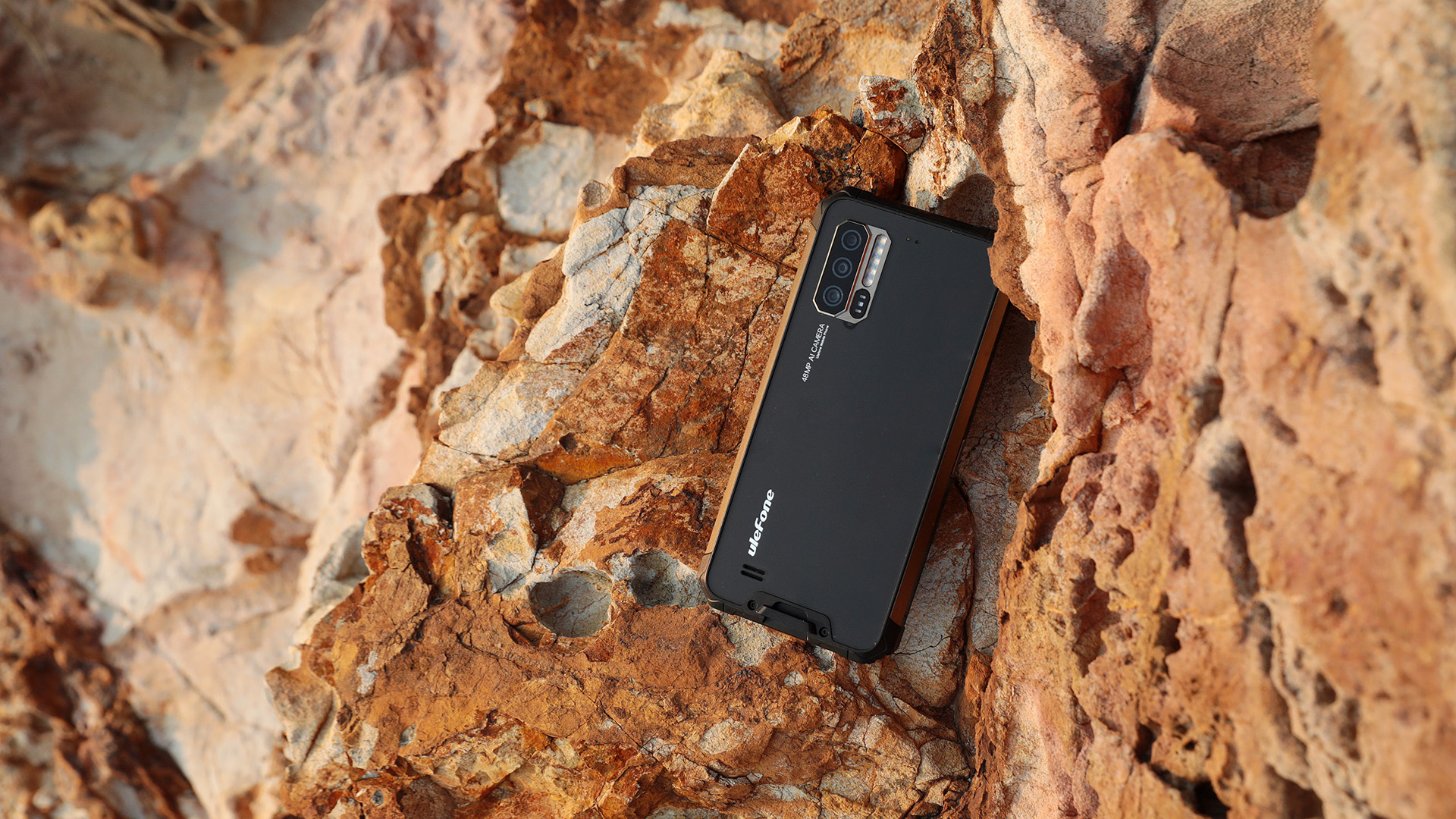
Of course, the star of this sale is Ulefone Armor 7 which sports a 48MP triple rear camera and Helio P90 octa-core SoC backed by 8GB of RAM. It’s last year’s flagship and the top phone of the company to date. Besides the powerful SoC and triple camera, it also sports a 16MP selfie shooter, 128GB of internal storage, and a 6.3″ FHD+ display with a waterdrop notch. What’s more, there is a big, 5500mAh battery supporting Qi 10W wireless charging, Face and Fingerprint unlock, NFC with Google Pay, and Android 9.0 Pie. It costs just $359.99 during the promotion using coupon 15LNMTWAUBTB during checkout.
Ulefone Armor 7
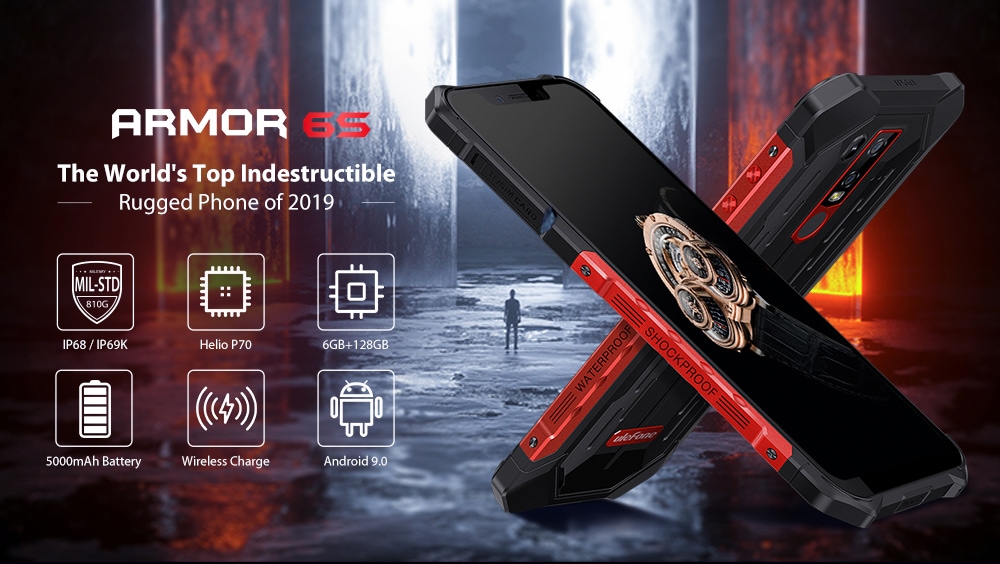
If you’re looking for something cheaper, you could take a look at the Armor 6S with Helio P70 SoC at the discounted price of $209.99. It comes with a 6.2″ FHD+ notch screen and 6GB/128GB memory configuration. Also, there is a 16MP/8MP dual camera on the back, an 8MP selfie camera, 5000mAh battery with Qi 10W wireless charging, face/fingerprint unlock, and Android 9.0 Pie. You can find it here.
Ulefone Armor 6S
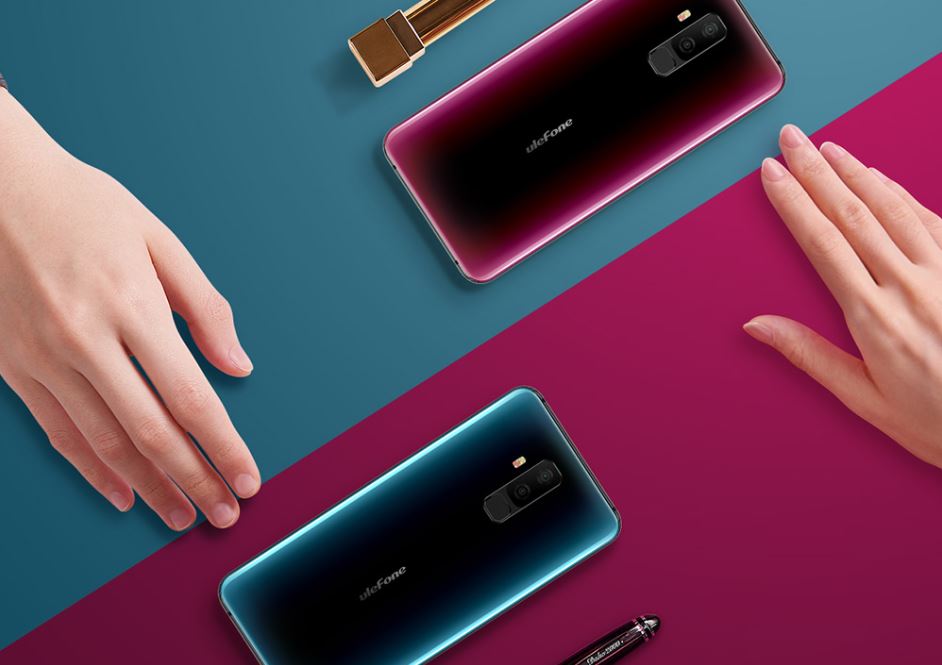
On the other hand, if rugged phones aren’t your favorite, you can check out the Ulefone T2 big-screen phone that costs just $198.74 during the promotion. The T2 comes with a big, 6.7″ display while it is powered by the Helio P70 AI SoC backed by 6GB of RAM and 128GB of storage. There is also a 16MP/8MP dual rear camera, 4200mAh battery, Face and Fingerprint unlock, Android 9 Pie, etc. In addition, its quite fashionable and catches passersby attention. You can get it here.
Ulefone T2
Lastly, there are other devices available too like the rugged entry-level Ulefone Armor X5 for just $89.99, and fashionable Ulefone Armor 5S with 13MP dual rear camera for only $139.99.
Ulefone Note 7
Or you can get the super-budget entry-level Ulefone Note 7 at just $49.67, and you will get a free protective case for it too. For more details about the products and promotions, you can visit Ulefone’s Aliexpress store.
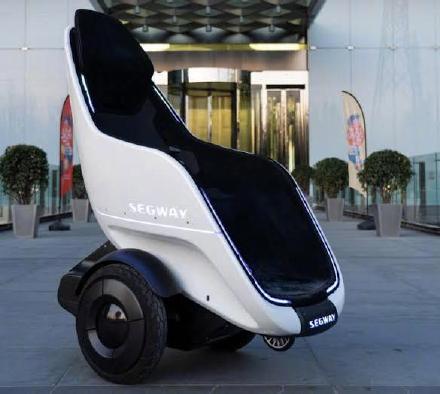
Xiaomi‘s ecological chain company Segway-Ninebot recently announced it would hold an unveiling event at CES 2020. The Chinese mobility giant is expected to launch its latest range of electric motor scooters and mopeds for the global market. The company has now taken the wraps off the Segway S-Pod, an egg-shaped two-wheeler meant to let people sit while they effortlessly cruise around campuses, theme parks, airports, and maybe even cities.
Segway also says the S-Pod was inspired by the gyrosphere from Jurassic World. The device is fired up by the same gyroscopic self-balancing technology used on the traditional Segway. But in this case, you won’t have to lead forward clutching a handlebar to drive it. Instead, it comes with a little joystick on the right side of the seat.
Segway says its self-balancing technology will ensure the chair stays level despite having just two wheels. The two-wheel setup will allow for quick changes in the direction even it is not moving. The self-balancing vehicle also comes with a third small wheel on the underside of the chair which is likely to move it around when it is switched off.
One interesting part is that the S-Pod can hit a freaking 24 miles per hour top speed which looks unrealistic to use in its present form. The S-Pod is expected to debut in the third quarter of 2020 while it will go on sale in 2021. The company is yet to reveal the sale price.
According to a new report, Huawei will seek to continue developing and diversifying its supply chains. Bloomberg brought on Timothy Danks, the Vice President of risk management at Huawei Technologies, for an interview in which they discussed the future prospects of the company.
2020 for Huawei
2020 is going to be a challenge for the company, according to Danks who stated that the company has always had risk management in place for years that helped them cope with unforeseen complications. He even accredited the companies survival of 2019 to its smart future planning; a year which had seen the company face many complications in western regions like the US and a few European countries.
Political Obstacles
One of the main focus of 2020 for the company will be to address and mitigate the challenges it had faced in 2019. In other words, it plans to reduce and turn over the loses incurred due to political issues and move forward with the innovative development of its products.
Danks mentioned that the company hopes the situation doesn’t worsen for Huawei. However, the senior risk management executive also stated that the Chinese tech giant has prepared “Plan B” for events against the best interests of the company or its operations. These back-up strategies are claimed to cover various scenarios.
Licensing in the US
According to Danks, Huawei wishes to continue working with its western partners, namely Google and it’s Android OS support. Furthermore, Huawei has even planned contingencies if licensing agreements in the US fall short since the company is not informed regarding the entire licensing process.
Leaders of the US and the Chinese Governments are expected to sign the first phase of a trade agreement to dilute rising tensions
For those unaware, US-based companies that wished to partner with blacklisted firms like Huawei have to gain official licenses issued by the US Government. Reportedly, over 290 companies from the US have applied for such licenses, which is indicative of the $12 billion the company buys from these companies in the form of products, services and more.
Huawei Android Smartphone Lineup
Notably, the risk management VP was also questioned about the viability of its Android smartphones outside of China without Google support. To answer this, Danks stated that Huawei Mate 30 Pro, a vanilla Android smartphone released without Google support, sold over 7 million units. The large figure apparently surpassed even its predecessor, the Mate 20 Pro. Thus, it can be surmised that the company will release otehr vanilla Android devices in the future if they need to.
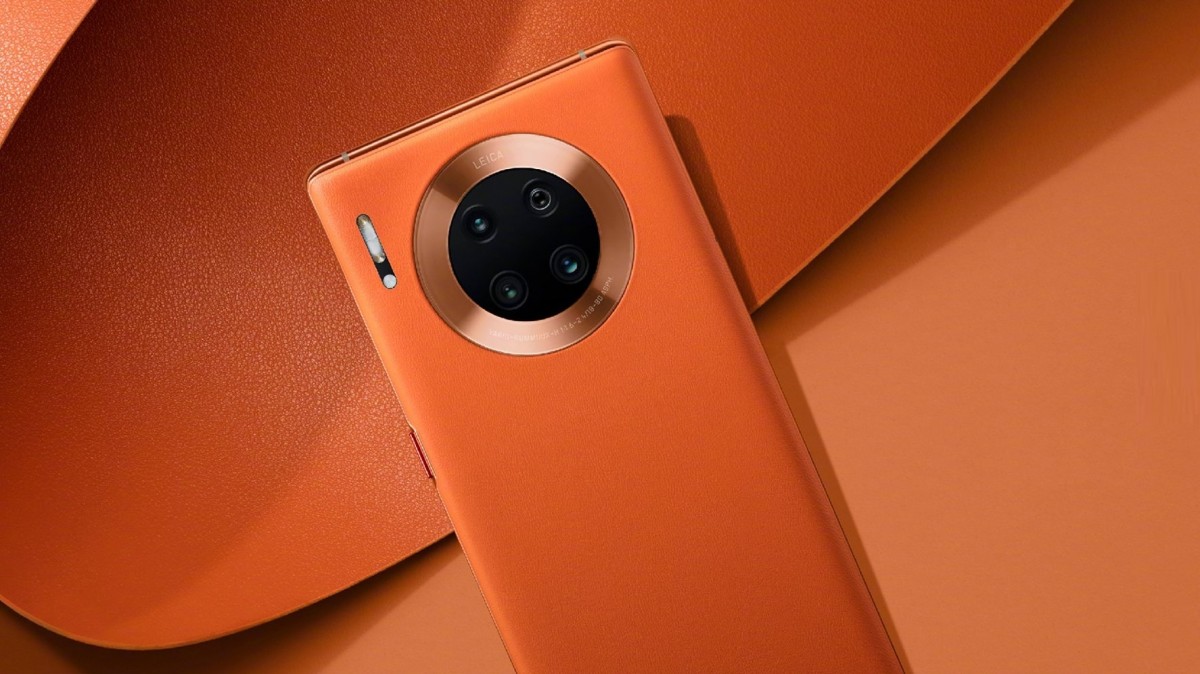
Huawei Mate 30 Pro 5G Vegan Leather Orange
Phase One Deal: The US and China Trade War
The senior executive also commented on the ongoing US-China trade disputes and the position of the company within the crossfires. Danks said its an unfortunate position for Huawei but is hopeful that the Phase One deal being signed between the two superpowers on 15th January 2020 would ease rising tensions.
The resolution between the two nations could also prove to be a boon for the company. It may even revitalize its position to a more healthier stance in the US markets as well.
Reducing reliance on the West
Huawei has been seeking to reduce its reliance on western-based corporations for a while now. The best example of it would be the development of its HiSilicon processing chips that its smartphones are equipped with. Previously, these were manufactured by ARM which has its roots based in the US. Now, the chipsets are manufactured without any US-based partnerships or technologies and are developed by non-US based suppliers.
Huawei’s HiSilicon Chipset
Investment in AI
Artificial Intelligence (AI) is an emerging field in the IT sectors. Reports have claimed it to soon have a $15 trillion impact on various GDPs’ of nations all over the world. Huawei is not specifically developing AI but on how it can be applied for its vast variety of products including smartphones and other IoT devices, according to Danks.
Lastly, the Vice President of risk management also disclosed that Huawei had invested about $18 billion in AI in 2019 alone; and is planning to increase the investment in the arriving years. The company also plans on dedicating a large portion of the investment to AI development.
Huami has released a new software update for the Amazfit GTR smartwatch. The update now allows users to set a timeout on the Always-On Display. The feature is expected to help conserve battery.
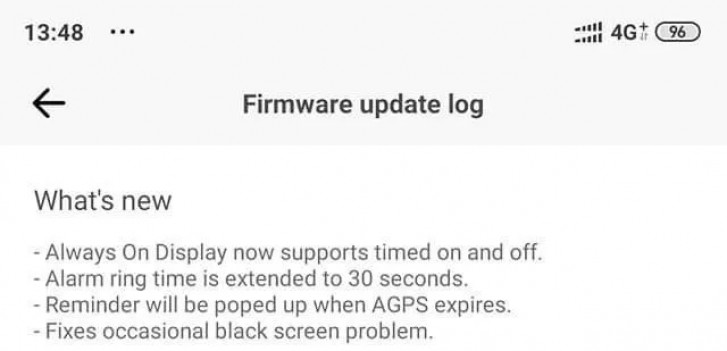
The new firmware comes with the version number V1.3.5.32. It also brings a fix to the black screen problem and extends the alarm ring time to 30 seconds. The new update also activates a pop-up reminder when AGPS expires. With such a feature, you won’t be caught in a situation where you’ll discover AGPS has expired when you need to use a feature that requires AGPS.
Amazfit GTR users in Malaysia are already getting the update and so, we expect it to hit other regions pretty soon. You can as well head over to Settings > Check for update menu in the Amazfit app to see if it is available for your device.
The Amazfit GTR smartwatch was released on July 16 and comes in 47/42mm sizes, both adorned with three high-grade metals: titanium, stainless steel and aluminium. The 42mm version is smaller and more compact. The body is only 9.2mm thick and weighs 25.5g.
For the watch face, the Amazfit GTR 42mm series is equipped with a 1.20-inch AMOLED colorful screen with a resolution of 390×390. The screen is covered by the Corning Gorilla 3 with anti-fingerprint (AF) coating. In terms of functions, it supports mobile phone calls, text messages, emails, calendars, social applications and other information reminders, and can also find mobile phones and control mobile phones to play music. The watch also supports contactless payment as it is equipped with a built-in NFC chip. It can also be used to unlock the smart door lock and other contactless services such as bus card.
In terms of battery life, the Amazfit GTR 42mm daily use mode lasts for 12 days, the basic watch mode is 34 days, and the GPS continues to work for 22 hours. The 47mm version sports a bigger 1.39-inch screen with a resolution of 454 x 454 pixels.
Nokia 6.1, more secure and pure! These phone’s are now running on the latest Android 10 update. Get the latest pure Android experience and access the latest features today. What feature do you think will be your most used? Let us know in the comments below!👇 pic.twitter.com/nhROEHGbNK
The update is already rolling out to and thanks to a screenshot from one user, we know what the changelog and file size. The update comes in at 1.4GB in size and includes December 2019’s security patch. Full changelog below:
Dark mode – Take it easy on your eyes
Smart reply – Save more time with recommended actions
Gesture navigation – Get around with a swipe and a pull
Additional controls for privacy and location
Google Security Patch (2019-12)
The Nokia 6.1 launched in January 2018 first in China before a global release later. It ran Android 8.1 Oreo out of the box and later got updated to Android 9 Pie. The phone has a 5.5-inch FHD display with a 16:9 aspect ratio. It is powered by the Snapdragon 630 with up to 4GB of RAM and 64GB of expandable storage.
There is a single 16MP camera on the back of the phone along with a fingerprint scanner. It also has an 8MP selfie camera, NFC, and packs a 3000mAh battery with support for 18W Quick Charge 3.0.
According to the Android 10 update roadmap, the next devices to get the update are the Nokia 2.2, Nokia 3.1 Plus, Nokia 3.2, and Nokia 4.2. Do note that the update may not arrive in that particular order.
These days shopping has become quite easy due to the advent of smart devices and internet penetration across wider areas. The online e-commerce has become the business of billions and is playing a vital role in the economy building of each country. The ease of shopping has paved the way for a better shopping experience, new marketing ideas, and affiliate services. The consumer is on the receiving end for all the benefits propped out of increased competition among online and offline retailers.
Many new services, including coupons, affiliates, and money-saving programs, are allowing the consumer to save a few bucks while shopping. The e-commerce giants also commence big sales on the eve of festivals to garner more sales by offering groundbreaking deals to consumers. The Black Friday Deals, Festival Season Sale, and Diwali offers are some prime occasions for these kinds of deals. The big giants, including Amazon, Best Buy, Flipkart, Myntra, and others, offer deals to garner more sales and churn out better profits. Surprisingly, there are some tools and services that allow users to save money while shopping.
We have listed some of the best services to reduce your shopping bills. These apps will directly bring offers and discounts or will guide you to save money in other ways.
List of best apps to save money while shopping
PriceGrabber
The Price Grabber is an aggregator service that helps the consumer to compare the price across all the major online retailers. It even carries the capability to notify the user of any particular product via ‘Price Alerts.’ The Barcode Scanner, including bottom-line price with taxes, is another useful feature of the PriceGrabber.
Unfortunately, both the Android and iOS apps have been dismantled now, and the users need to visit the Price Grabber website to get discounts. The users can add the website addresses to screen on Android and can bookmark on iOS devices.
It is a useful browser extension that helps to find the best coupons. It eases a lot of shoppers who often search for coupons. It helps you to save time and money at the same time. It helps to find the best discount coupons.
The user needs to tap or click the extension to get the best discount on the item automatically. Most of the online e-commerce platforms, including the food retailers, are compatible with the Honey app. The feature of Droplist allows users to keep track of price drops on specific items. It even notifies if there’s a considerable price drop.
It is a popular coupon service with users 147k users, 30K+ merchants, and 17.9% average discount. You can add the Honey Chrome extension by clicking the link below.
It is the best service to track offers, discounts, and coupons. The users can also participate by offering discounts and coupons for users. It is divided into five different sections, including deals, coupons, discussions, groups, and MyZone.
The user has to select the desired deal, and the website will either redirect to the host or will give you a coupon code. DesiDime offers a forum-like experience that provides users with the ability to participate in the discussion. It allows us to verify whether the deal or coupon is legible.
However, the user interface is not up to the mark. It can be accessed over the web or via the Android App.
Coupons.com is home to a lot of manufacturer and retailer based coupons. It offers coupons in digital form with one click Coupon clippers. The user can quickly get a discount on almost every retailer with just a few taps. Apart from the website, the users can download the iOS or Android app for respective smartphones.
Coupons.com host deals for every type of service, product including groceries, clothing, and household items. Several advanced features such as sharing, web clippers help users to get the discount quite quickly. The inbuilt search and navigation also make it more useful.
Ebates is a popular cashback, coupons, and promo code service that offers impressive rewards on shopping from popular stores such as Walmart, Groupon, KOHL’s, Lyft, Sephora, and others. It even gives $10 Welcome Bonus for the users who shop via Ebates.
Ebates awards cash backs, rewards, and coupons to save money across 2500+ brand stores and retailers. It’s even a favorite choice while dining with cashback on 10K+ restaurants. The app helps to shop smart and save money with over 40% cashback. There are certain Cashback stores and rewards on brands like Nike, Samsung, Sephora, and others.
It is a sole companion for the users who often go on shopping, eat food at restaurants, travel a lot, and watch movies. The user can also earn a $25 referral commission for every friend who signs up and shops on Rautken.
The app becomes handy while shopping online and offline. It allows users to scan barcode and compare the price of the item in different stores. It even brings navigation to the nearest stores offering the best price.
The users can save a lot if used accurately, and the user has some spare time. ShopSavvy also carries the ability to keep the deals that are found online for purchase later. The user can also manually enter the UPC or keyword to find any product. The app is claiming to host the largest database of retailers, products, and prices, including Amazon, Best Buy, Target, and Walmart.
It is a one shop stop before purchasing anything online. The Cashback Monitor tracks cashback rates and miles for all the major programs. It helps the users to choose the best retailer to maximize savings and rewards.
It is a single-window to check the cashback, miles, and credit card points for every retailer present.
It’s a nifty browser extension, aka shopping tool from Amazon. It helps the users to save products from any website, compare them, and discover new products across the web. It even supports a 30-day price tracker to compare the pricing.
Amazon Assitant also keeps a tab on Orders and shipments from Amazon. It also helps to access shortcuts such as order history, exclusive offers, and more. Amazon’s exclusive Today’s Deals are also visible via the Amazon Assistant.
These are specific tools and services that will help the shoppers to save some money. Some of the apps might be useful for a particular region. There are many services and apps, and if we missed an essential app or service, then let us know via the comments below.
According to the CEO of a major Canadian telecommunications, the equipment that Huawei provides is “Top Notch.” The statement addresses the telecommunications equipment the popular smartphone manufacturer provides in the region which is helping in bringing 5G networking.
Mirko Bibic, the CEO of Montreal based BCE, stated that the company has been a “great partner” in an interview earlier this week. Notably, the opinions of the senior executive arrive as the Canadian Government is debating the decision that revolves around whether or not the Chinese company is allowed in being a major partner for the development plans.
Bell Canada Enterprises (BCE) Logo
Since Meng Wanzhou, the CFO of Huawei, was arrested back in December 2018 in Canada, the tensions between the two regions have been on the rise. At one point, the Chinese authorities had even terminated Canadian agricultural imports of a sizable amount of 5 billion CAD (roughly 3.8 billion US Dollars). Furthermore, the current Prime Minister of Canada has stated that the decision of allowing Huawei to operate in the country should be a non-political one.
Many western regions including certain countries in Europe are also facing a similar dilemma of allowing Huawei to operate in their home countries. The fear of each Government is data being accessed by the Chinese Government which has faced increasing scrutiny across the globe. Nations like Australia have already banned the Chinese firm while the US blacklisted Huawei in early 2019.
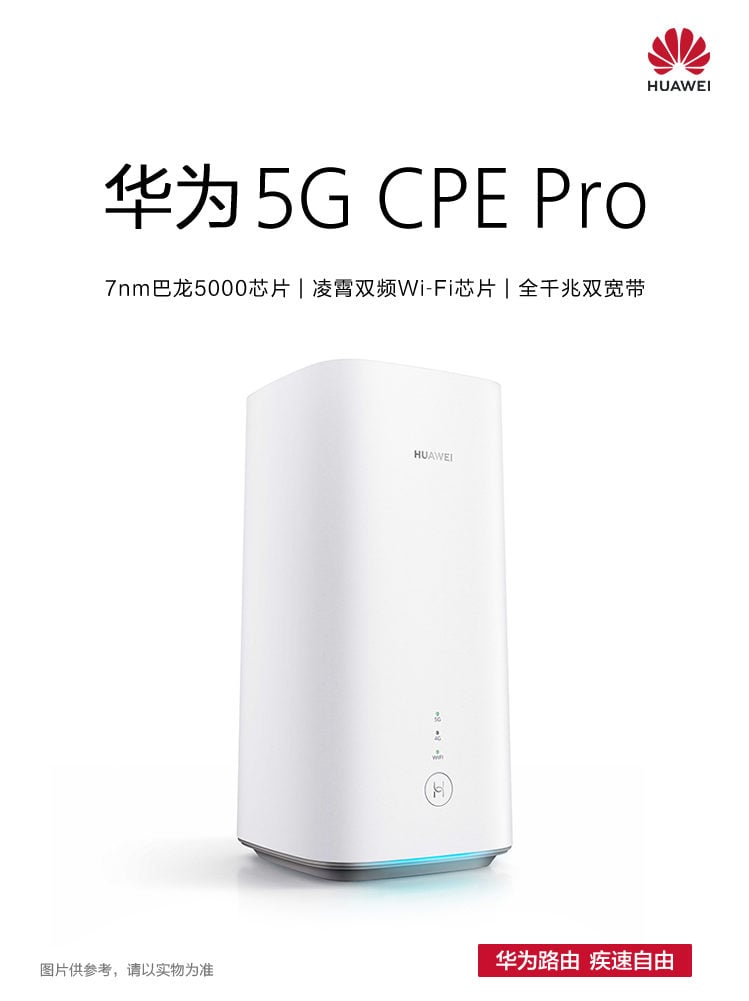
Huawei 5G CPE Pro
BCE is the largest telecommunications firm in Canada. Thus, 5G networking is the most obvious advancement in the field to further its own growth. However, Huawei is one of the leading providers of 5G related infrastructure and supplementing technology, but the company on numerous counts has been alleged to have ties with the Chinese Government.
According to the new financial report, Samsung Electronics‘ saw the fall of its operating profits by 33 percent (or one-third) in the fourth quarter of 2019. The South Korean tech giant is the world’s largest smartphone and memory chips manufacturer and faced declining profits in both categories.
In contrast to 2018, Samsung suffered from a number of obstacles once the chip market declined in 2019 after the initial surge. Furthermore, the premium segment of smartphones has increasingly become an intensely competitive segment. However, the numbers aren’t all that bleak as the company has exceeded expectations, according to analysts.
Samsung logo at Samsung Customer Service Center in Krakow, Poland on 11 January, 2019. (Photo by Beata Zawrzel/NurPhoto via Getty Images)
The financial figures apparently beat expectations as chip demand saw improvement, with healthy smartphone sales. This could also lead up to the new year, 2020, and the fresh upcoming lineup. In 2019, the other three quarters of the year also saw a sizeable net loss of profits; about half of what had been accrued in the same respective quarters in 2018.
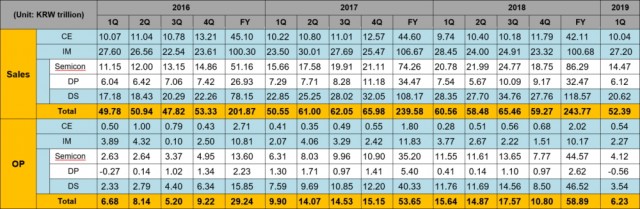
As seen on the financial statement, Samsung Electronics projected operating profits in the period between October to December 2019 at 7.1 trillion won (or roughly 6.1 billion). The numbers amount to a 34.2 percent fall in profits in comparison to the previous year.
For 2020, analysts speculate that Samsung will perform noticeably better than the previous year. This will be supplemented by the fact that DRAM and NAND memory markets are predicted to rise in demand and in price this year. Additionally, Samsung is also hoping for 5G network availability to pick up globally, allowing for higher sales of its 5G handset offerings.
Samsung’s financial report of Q1 2019
Notably, Samsung Electronics as a brand is integral to the economic health of the South Korean economy. It is a subsidiary and flagship department of the Samsung Group which also generates a major chunk of the multinational corporation’s total revenue.
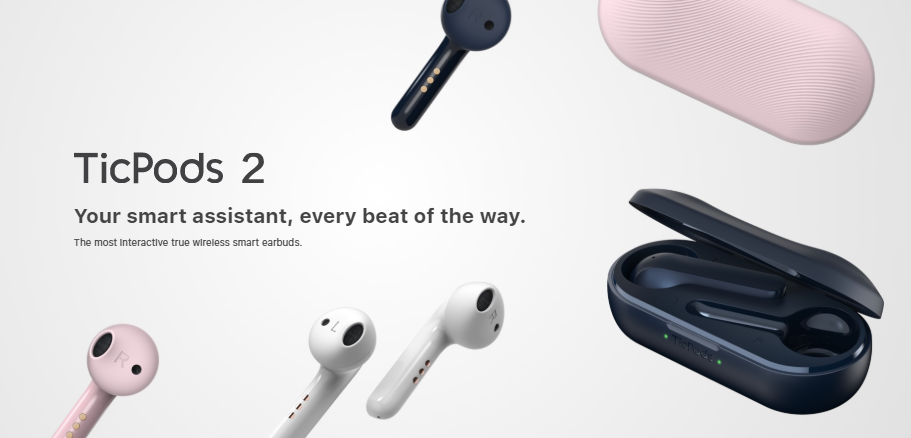
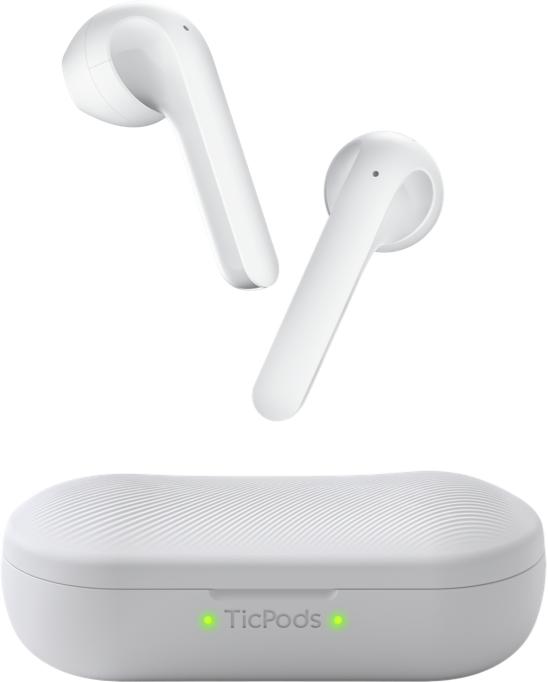
Mobvoi, the maker of the TicWatch line of smartwatches and TicPods Free, has announced two new wireless earbuds – the TicPods 2 and TicPods 2 Pro – at CES 2020. The wireless earbuds come more than a year after the launch of the Ticpods Free.
The TicPods 2 and Ticpods 2 Pro have been redesigned and you notice that first with the case. It is now 42% smaller than that of the original. Another addition is the support for USB-C charging but only with a USB-A to USB-C cable as Type-C to Type-C will not work. There is no wireless charging support.
The earbuds have ditched the silicone tips for an open-fit design. This may be good news for some and bad news for others. They are also lighter, have an IPX4 rating, support AAC codec for iPhones and APTX, AAC, and SBC for Android devices.
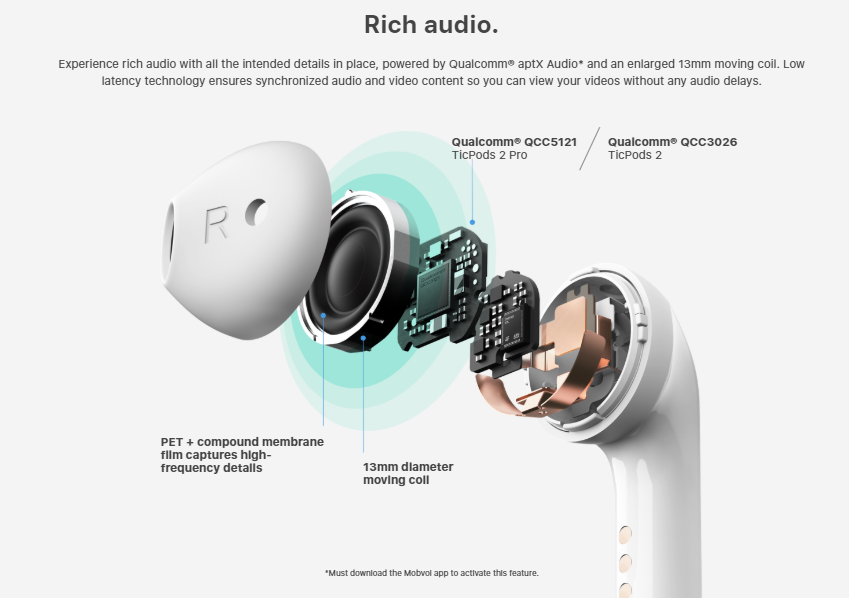
The TicPods 2 and TicPods 2 Pro have a 13mm diameter moving coil and use a combination of PET and compound membrane film to capture high-frequency details.
So what are the differences between the standard and the Pro version?
TicPods 2 Pro
Mobvoi has added two new main features that distinguish the Pro from the standard version and they are TicHear and TicMotion.
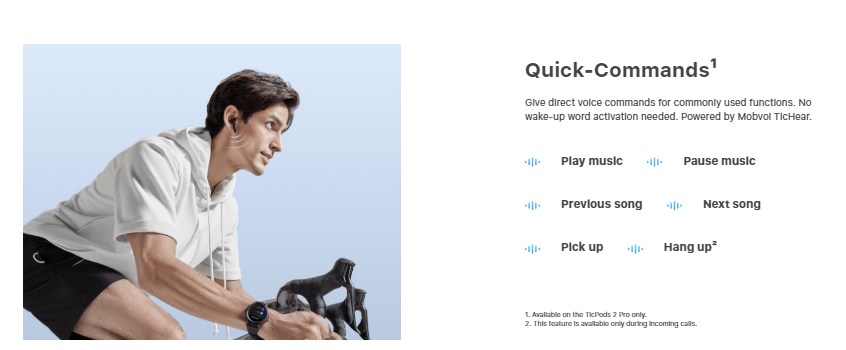
TicHear allows you to control the earbuds with just your voice without the need for a wake-up word. The earbuds support the following Quick Commands as Mobvoi calls them – Play music, Pause music, Previous song, Next song, Pick up, and Hang up. You also get the option to say Hey Google, Hey Siri, or Hey Tico. Tico is Mobvoi’s own native smart assistant.
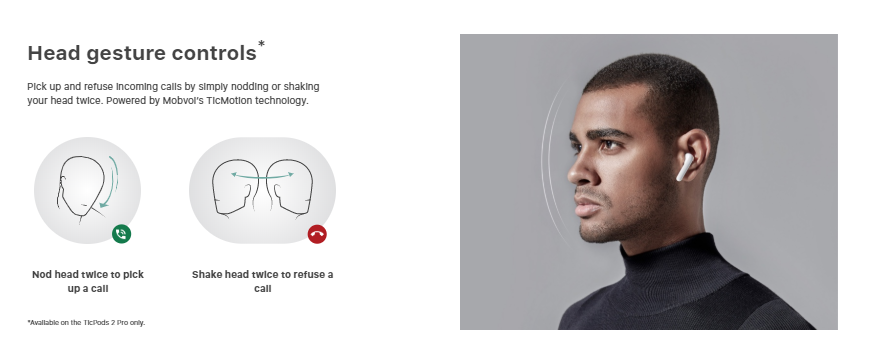
TicMotion allows you to use head gestures to control the Ticpods 2 Pro earbuds. You can nod twice to pick up a call or shake your head twice to refuse a call thanks to its built-in accelerometer and gyroscope.
The TicPods 2 Pro weighs 4.4 grams, has dual-mic noise cancelation, 4-hour battery life (20 hours with the charging case), fast charging, Qualcomm aptX audio, touch controls, in-ear detection, and Bluetooth 5.0. It also features Qualcomm’s QCC5121 audio chip which provides 4x improvement in performance over the previous generation and also provides a smoother connection.
1 of 3
The earbuds are available in Navy, Ice, and Blossom. Mobvoi has put a price tag of $139 on them and can be pre-ordered on Mobvoi’s official website and on Amazon. You are also eligible for a 10% discount if you pre-order before the January 15 release date.
TicPods 2
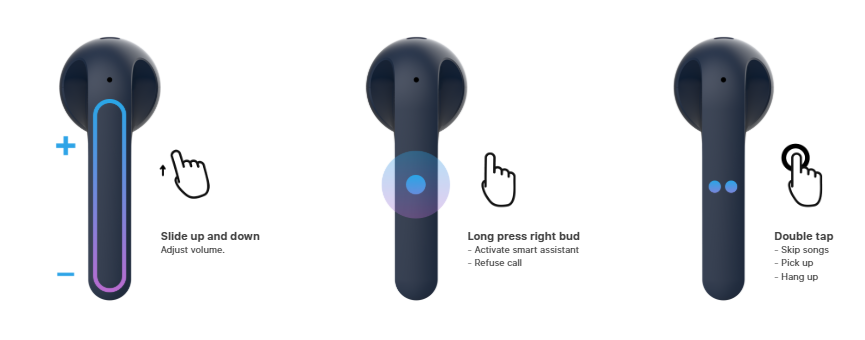
The TicPods 2 doesn’t have TicHear and TicMotion but you still get touch controls and you have to long-press to activate Hey Google or Hey Siri. It doesn’t have support for “Hey Tico”.
It weighs lesser than the pro version at 4.2 grams, has single-mic noise cancellation and in-ear detection. It also has a 4-hour battery life which goes up to 23 hours with the charging case. Just like the Ticpods 2 Pro, a 5-minute charge will result in 1 hour of playtime. The TicPods 2 has a Qualcomm QCC3026 chip inside and connects via Bluetooth 5.0 too.
The TicPods 2 will sell for $99 and will be available in Navy, Ice, and Blossom. Availability is the same as that of the Pro version stated above.
The world of networking is vast and has a place in a wide variety of fields. Thus, it comes as no surprise that BWM, the automobile manufacturer, has turned to a leading firm in the industry. At CES 2020, BMW announced that it will be collaborating with Samsung to bring 5G connectivity to an electric SUV, a first of its kind.
Historically, when a renowned automobile manufacturer partners with a smartphone OEM, it is for a special variant of the handset (Eg: OnePlus 6T McLaren Edition). But, BMW was not seeking such a collaboration, rather a technological enhancement to its own future vehicles. Hence, the South Korean tech giant, being one of the pioneers in 5G networking, is exactly what the automobile manufacturer was looking for.
Samsung and BMW to partner up for 5G incorporation in an electric SUV
The electric SUV which is expected to be ready for mass production by 2021 is expected to be BMW’s first 5G capable vehicle model. Furthermore, Klaus Fröhlich (engineering head of BMW) has stated that the advancement in networking capabilities will soon be featured in the entire lineup that the company offers in early 2020. Although, its integration depends on the model and the region in which the vehicles will be shipped.
There 5G compatible BMW automobiles will work via a built-in SIM card, eliminating the need or hassle of acquiring a 5G handset. According to the official announcement, Samsung and BMW will jointly develop 5G components for automobiles which will directly be integrated into the car’s electrical systems. Reportedly, the process is going to be expensive but the company seeks to recover expenses by offering paid digital services to its customers.
BMW iNext Prototype
Since 5G allows for delay-free streaming to be possible, the viability of multimedia and entertainment services are going to open new doors for the automobile industry. People can soon expect to see gaming in cars, virtual reality experiences, music and movie streaming in 4K and much more; all of which are also likely to be based around a subscription plan.
For more coverage on CES 2020 events and launches, click here.
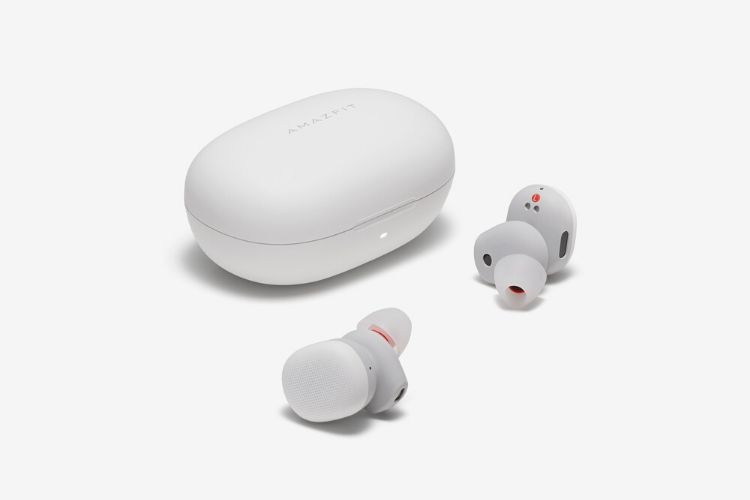
Huami’s Amazfit today introduced T-Rex smartwatch and Amazfit HomeStudio treadmill paired with a smart mirror. Along with that, the company has also launched a couple of true-wireless earbuds are promised earlier.
The company has today launched Amazfit PowerBuds and Amazfit ZenBuds. The company says that PowerBuds comes with a built-in heart rate sensor to monitor your heart rate during workout while ZenBuds will help you to get a good sleep.
Amazfit PowerBuds
This earbuds weighs just 6 grams and comes with a magnetic ear hooks (weigh 1 gram) to provide a more sporty look and stop them from falling out during workouts. As mentioned, the highlight is that it can monitor your heart rate in real-time with a built-in Huami PPG heart rate sensor.
They are equipped with an advanced composite diaphragm that offers a high-fidelity audio experience. The in-ear design and Motion Beat mode will offer enhanced beat and tempo. Each earbud supports touch controls for controlling playback, answer calls, and call upon Google Assistant or Siri.
It also comes with support for ENC dual-microphone noise reduction technology and Thru Mode for ambient sound enhancement. As per the company, the Amazfit PowerBuds iffers an 8-hour battery life on a single charge, which can be extended to up to 24 hours using the charging case. They are priced at $99.99 and will become available in February 2020.
Amazfit ZenBuds are designed to help you de-stress and have a good night’s sleep. It comes with a noise-blocking design (still fit snugly in your ears) and are backed by Knowles Balanced Armature.
It features Smart Interference to create the “right environment and generate sleep-inducing, soothing sounds” to help you sleep better. It also wakes you up with a gradually-rising personal alarm.
The device automatically detects when you are asleep to turn off the sounds, along with heart rate tracking, body position, and movement data collection. As for the battery life, the company claims that ZenBuds offer 12-hours of battery backup on a single charge but you can extend it to 8 nights with the charging case. This includes 12 hours every night – with three hours of music playback, followed by sleep tracking.
Amazit has not yet announced pricing and availability details for the ZenBuds. However, we expect them to be available in the market sometime later this year.
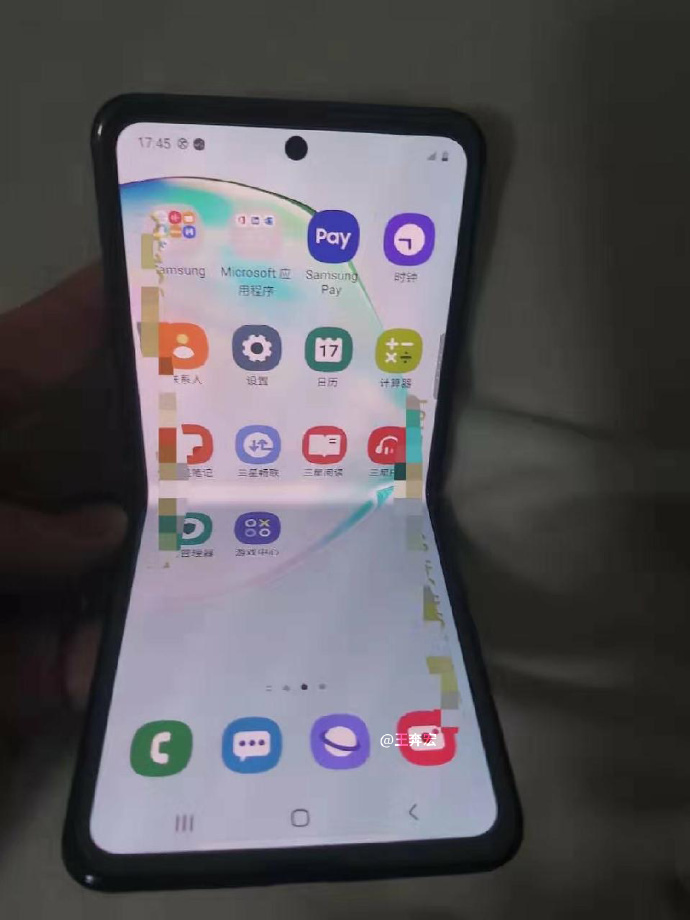
With Samsung’s announcement official, it’s expected that the Korean giant will unveil both the Galaxy Fold 2 and the Galaxy S20/S11 lineup on February 11. What’s not official are the Galaxy Fold 2 specs, and according to a new report, the SoC powering the new foldable handset may disappoint a lot of people who want the very best and capable hardware.
A few months ago, a report said that Samsung wants to make the Galaxy Fold 2 more affordable than its predecessor. The device would be priced at around $1,000, the rumor said, or half of what the Fold costs. Apparently to achieve this, Samsung’s new Galaxy Fold 2 will feature last generation’s Snapdragon 855 SoC instead of this generation’s 865.
This leak comes from Ishan Agarwal, whose leaks have often turned out to be accurate over the last few years. Now, this isn’t exactly a bad thing. The Snapdragon 855 is still a fantastic processor, and it’s much better than most current mid-range processors. On top of that, there’s the obvious reason of producing a more affordable folding phone.
Other specifications include a 10MP front camera, which isn’t the most ambitious, but will get the job done. We’ve also heard rumors it’ll feature dual rear cameras, as opposed to the original Galaxy Fold’s triple camera setup. Once again, this move could be done to reduce the overall cost, so let us keep our fingers crossed for February 11.
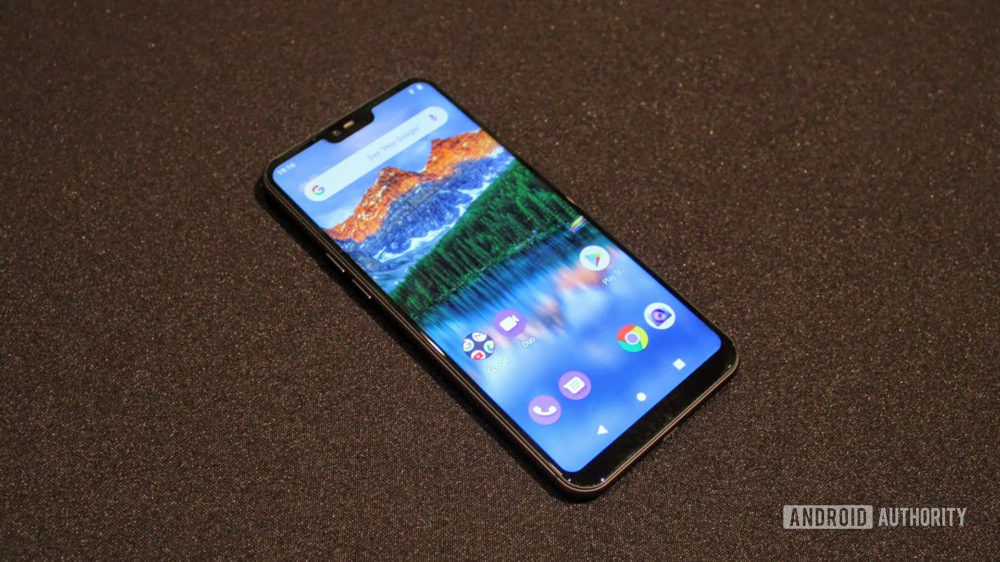
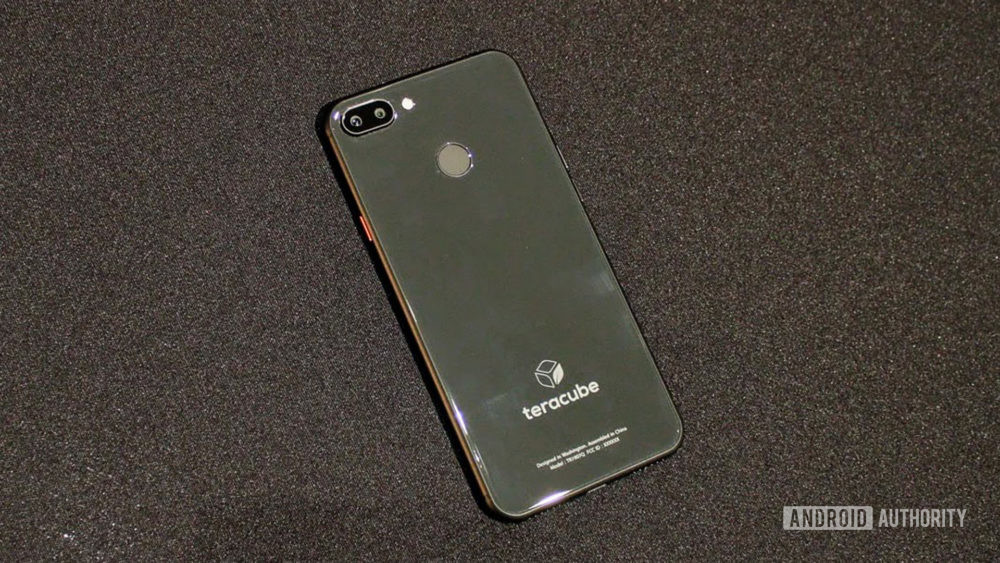
Historically, smartphones have always arrived with a warranty and by its extension even repair services. So what sets this particular handset apart from the rest in the after-sales regard. Well, this crowdfunded device arrives with a lengthy 4 years of warranty on top of which, repair services rates are relatively affordable as well.
The smartphone in question is the Teracube One which is set to start shipping later this month (January 2020). The smartphone is being crowdfunded and has surpassed its initial Kickstarted program goal of $25,000. According to the disclosed figure, the company raised a large sum of $125,000, which is five times the original goal. Keep in mind, the figure may not seem large in an industry dominated by multi-billion dollar corporations, but makes a large difference for a brand new company sourcing investment through crowdfunding.
Terecube One
The Teracube One with its 4-year warranty (granted one must cover the shipping costs if they live outside of the US) is also being well received for its repair rates. The team behind the smartphone offers a flat $39 repairs for accidental damages. The meager sum allows one to repair their screens and water related damages.
Notably, Teracube has stated that it will even offer free battery replacements throughout the four year warranty period (if reasonable degradation is found in the battery). Even after your device is out of warranty period, it will only cost $39 for a new battery. Furthermore, the Terecube team is also planning to update its Android smartphone with up to 3 years of major OS updates in addition to security updates.
For those interested, the Terecube One is a budget smartphone features a MediaTek Helio P60 SoC. It is powered by a 3,300mAh battery and is equipped with 6GB of RAM and 128GB of internal storage. In terms of photography, the Terecube One sports a 12MP+5MP dual camera setup with an 8MP selfie shooter at the front. The smartphone also supports NFC and houses a 3.5mm headphone jack. The phone starts shipping later this month and carries a $349 price tag.
For more coverage on CES 2020 events and launches, click here.
Honor, a sub-brand of Chinese electronics behemoth Huawei, has just sent out invites for the official launch of a range of smart accessories which includes MagicWatch 2 and Band 5i in India. Honor has teamed up with notable eCommerce platform Amazon to sell its products. Although the Jan. 14 launch date has been confirmed, there is no word on when the devices will be sold to the public. The Honor 9X smartphone is also launching on the same day in the country. The same platform could be used by Honor to announce its new smart accessories for the country.
Honor is all set to unveil the Honor MagicWatch 2 and Honor Band 5i at an event in New Delhi. Both the MagicWatch 2 and the Band 5i are listed on Amazon India revealing a few key features, along with the ‘Notify Me’ button. Honor officially launched the Watch Magic 2 back in November 2019 in China, replacing the 1st-generation Watch Magic.
Honor MagicWatch 2 Specifications and Features
Honor MagicWatch 2
The Honor MagicWatch 2 flaunts 42mm and 46mm dials with a 316L stainless steel chassis. The 42mm variant features a 1.2-inch circular display, while the 46mm unit comes with a 1.39-inch screen. Both smartwatches sport an always-on AMOLED panel with a ton of customization features. The device is powered by a HiSIlicon Kirin A1 SoC and features 15 different goal-based fitness modes. Honor claims the MagicWatch 2 has an effective battery life of 14 days and comes with a dual satellite positioning system that accurately records user data like speed and direction while cycling or running.
The MagicWatch 2 has 13 different courses especially for running. It comes with real-time voice-over guidance and supports an array of additional features including heart rate monitoring, Huawei TruSleep sleep monitoring and Huawei TruRelax. The smartwatch features 4GB of native storage, is water-resistant, and is equipped with a built-in speaker and microphone.
The Honor Band 5i sports a 0.96-inch display with a resolution of 160 x 80 pixels. The fitness band features a 24-hour heart-rate monitor with sleep tracking, flaunts built-in USB connectors and is water-resistant up to 50 meters. The device is also capable of tracking fitness and offering personalized recommendations based on previously recorded data.
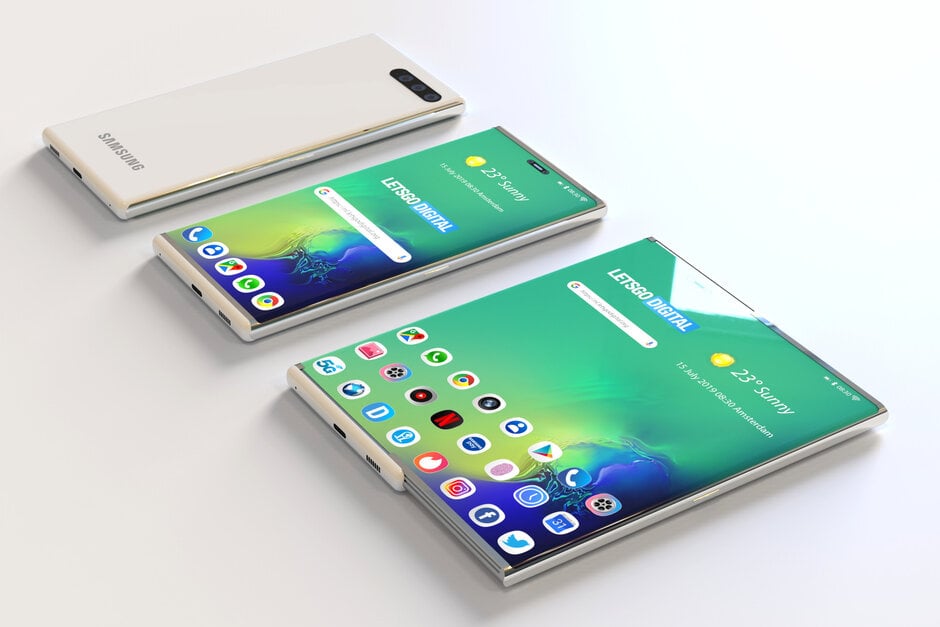
Samsung‘s been using their flexible displays for many different devices lately. They’ve had the infamous Samsung Galaxy Fold, and the sequel to that device is coming soon as well, So, what’s next on the list for Samsung? Apparently it’s sliding phones according to reports.
We’ve heard Korean media report that Samsung has set up a private booth over at CES 2020 to showcase its concept slideable display phone to potential customers. If this is true, it’s fully possible the company might showcase a device like this at said booth. It’s not a stretch, and it would be an impressive showcase of the company’s engineering prowess. The question is, what exactly would these devices look like?
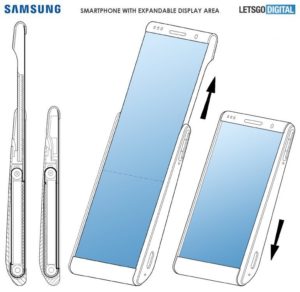
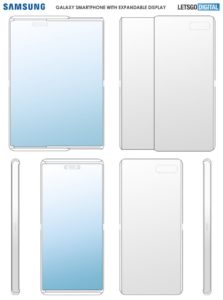
These sliding phone patents (courtesy of LetsGoDigital) show us a few Samsung sliding phone concepts for two devices, one extremely long, and another that’s wider. They’re fairly unconventional, but it’s possible the company can find some practical use for it. What’s interesting about these however is that we might be able to see them very soon.
Samsung has done this before with foldable phones the last few CES expos to gauge acceptance, and those actually materialized, so the slide-out handset may be commercialized at some point, too. It’d be interesting to see if Samsung can push out their first sliding device before competitors like Xiaomi and LG come out with theirs.
Taiwanese electronics giant Foxconn will not set up manufacturing units in Maharashtra, India. The development closely follows the heels of Foxconn failing to strike a feasible deal with the state’s government. Although Indian consumers are unlikely to be directly impacted by the decision, Foxconn’s exit will leave a scar on other gadget manufacturers.
According to Subhash Desai, Minister of Industries, Maharashtra government, Foxconn had been on the lookout for a feasible piece of land to set up manufacturing facilities for the last five years. Despite being interested in a few pieces of land, the company failed to finalize a deal at par with its interests.
“Foxconn is in no position to move ahead with its decision to invest in the state due to some internal conflicts. The decision will not affect the end users, although, other gadget manufacturers might feel the heat. This is a one-off issue since other manufacturers have invested in Maharashtra and are doing quite well” Desai said.
In the light of Apple wanting to set up assembly units in India, Foxconn had shown interest in setting up manufacturing plants in Maharashtra back in 2015. According to the company’s Memorandum of Understanding (MoU) it agreed to invest $5 billion in the state over the course of five years. However, the plan could never be executed despite both sides meeting on several occasions, and the government offering numerous land parcels.
Foxconn was originally eyeing a piece of land in the Chakan-Talegaon area near Pune city of Maharashtra, but the state government offered a land parcel at another location called Khopoli instead. It was also offered a piece of land spanning over 500 acres at Palghar but failed to show interest. Foxconn later planned to set up its manufacturing facility at the Jawaharlal Nehru Port Trust (JNPT) in Navi Mumbai (New Mumbai) and had submitted its bid for the 44 acres of land. However, that too ended up with global terminal operator DP World, the highest bidder. The Maharashtra government is now planning to offer incentives to corporations based on the employment opportunities that they create.
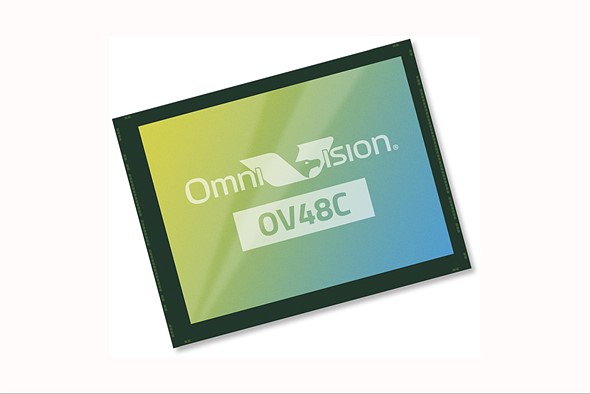
OmniVision, a known brand that manufactures image sensors for smartphone cameras, has just unveiled its latest sensor that rivals South Korean giant, Samsung. At CES 2020, the company showcased the OV48C, which is a unique 48 megapixel camera sensor.
The OV48C from OmniVision technically has the same size as Samsung’s 108 megapixel sensor; however, it differs by keeping the resolution at 48 megapixel. This is done to accommodate its larger 1.2um pixels against Samsung’s 0.8um pixels.
OmniVision OV48C with Pixel Binning technology
Furthermore, the OmniVision sensor has a 4 cell color filter (Quad Bayer) that outputs full resolution images at either 48 megapixels or use pixel binning for 12 megapixel images. The latter effectively makes the pixel size twice as large, about 2.4um pixels.
In terms of videography, the OV48C image sensor can output 8K videos without binning and 4K videos at 60fps (Frame per Second). It also supports slow motion videos at 240fps on 1080p resolution or 360fps on 720p resolution. Notably, the new OmniVision sensor features PureCel Pus technology as well, or in other words, an OmniVision version of Samsung’s ISOCELL technology.
OmniVision’s new OV48C 48 megapixel image sensor
The OV48C is also capable of staggered HDR (i.e, multi-shot high dynamic range) and thanks to its on-chip dual conversion, it can further reduce noise in captured shots. Earlier today, the samples shots from the sensor were made available and it begs the question of when will we see the sensor on a smartphone? And, which smartphone manufacturer is going to adopt it first?
For more coverage on CES 2020 events and launches, click here.
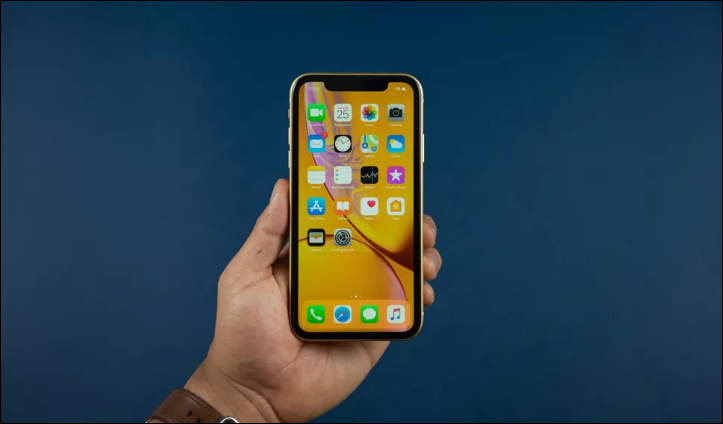
Apple iPhone XR has been a success for the company, however, some users of the handset on UK’s second-largest carrier, O2, have been experiencing issues that affects calls, texts, and data usage.
Now, both the companies — Apple and O2, have publicly acknowledged the issue and Apple has even promised a fix for the same. The problems affect calls, texts and data usage with users reporting loss of signal on multiple occasions throughout the day.
O2’s comment was that it’s working closely with its partners to resolve the issue affecting its iPhone XR users. It says that IT fix 101 — turning the phone off and on again — provides a temporary fix, but it’s unclear how long that lasts before the iPhone XR connectivity problems reoccur.
Apple’s statement also confirmed the connectivity issues and promised a software fix with the upcoming iOS release. It said: “We are aware of an issue causing intermittent network connectivity affecting some O2 customers, and we will have a fix in an upcoming software release.”
Although iPhone 11 series has superseded iPhone XR and data from Counterpoint suggests that it was the best-selling smartphone in the first three quarters of 2019.
The Redmi 8 and Redmi 8A smartphones were made official in October in China. The Redmi 8 has been available in colors like Fairy Green, Sapphire Blue and Carbon Ash. From tomorrow, the Xiaomi sub-brand will be also selling a new color variant called Phantom Red for Redmi 8 buyers in China.
The Redmi 8 Phantom Red color edition will be available only for its 4 GB RAM + 64 GB storage edition starting at 10 AM (local time) in China tomorrow. This model is priced at 799 Yuan (~$115). The Phantom Red shown in the above poster resembles with the Ruby Red color variant of the smartphone that is available in India.
The lower 3 GB RAM + 32 GB storage edition of the Redmi 8 is currently selling for 699 Yuan (~$100). It is currently available in other three colors. In related news, Redmi will be also carrying out the first sales of the Twilight Orange version of the Redmi Note 8 Pro tomorrow at 10 AM in China.
The Redmi 8 is equipped with a 6.22-inch IPS LCD display that produces 720 x 1520 pixels HD+ resolution. It delivers an aspect ratio of 19:9. The modest Snapdragon 439 chipset drives the smartphone with up to 4 GB of RAM. It comes in 32 GB and 64 GB storage models and it features a microSD card slot for more storage. The MIUI 11 based Android 9 Pie OS comes preloaded on the device.
The Redmi 8 has a dual camera system on its back. It has a Sony IMX363 12-megapixel primary shooter that is accompanied by a depth sensor of 2-megapixel. Upfront is an 8-mgeapixel selfie camera. The phone houses a gargantuan battery of 5,000mAh capacity that supports 18W rapid charging through USB-C. A fingerprint reader is also available on the device.
Redmi had announced the Redmi Note 8 series of smartphones in August in China. The Redmi Note 8 Pro is the world’s first smartphone to arrive with a 64-megapixel camera. The handset was introduced in three colors like Fritillaria White, Ice Emerald (Green) and Light Gray. Today, the Chinese firm confirmed through a Weibo post that it will begin with the sales of the Redmi Note 8 Pro Twilight Orange color variant tomorrow in China.
The Redmi Note 8 Pro Twilight Orange edition will be available for purchase at 10 AM (local time) tomorrow. While the smartphone sells in four RAM and storage combinations, the Twilight Orange model will be available in two choices such as 6 GB RAM + 128 GB storage and 8 GB RAM + 128 GB storage. These variants are respectively priced at 1,399 Yuan (~$201) and 1,599 Yuan (~$230).
There are two other variants of the phone such as 6 GB RAM + 64 GB storage and 8 GB RAM + 256 GB storage. They are currently selling with respective price tags of 1,199 Yuan (~$172) and 1,799 Yuan (~$258) in China. These two models are currently unavailable in the new Twilight Orange color.
The Redmi Note 8 Pro flaunts a waterdrop notch enabled display that delivers 19.5:9 aspect ratio and 1080 x 2340 pixels full HD+ resolution. A selfie camera of 20-megapixel is fitted inside the display notch. The quad camera system available on the backside of the Redmi Note 8 Pro has a 64-megapixel Samsung GW1 primary shooter, an ultrawide 8-megapixel lens, a 2-megapixel depth sensor and a macro lens of 2-megapixel. A fingerprint reader is present below the rear camera system.
The Helio G90T gaming-focused processor from MediaTek fuels the Redmi Note 8 Pro. The smartphone can be availed in China in 6 GB and 8 RAM variants and storage options like 64 GB, 128 GB and 256 GB. There is a hybrid SIM slot on the device for expanding its storage.
The Redmi Note 8 Pro is equipped with a 4,500mAh battery. It supports 18W fast charging through USB-C. The phone offers connectivity options such as dual SIM support, 4G VoLTE, Wi-Fi 802.11ac, Bluetooth 5.0, GPS, NFC and 3.5mm audio jack. The MIUI 11 based Android 9 Pie OS comes preloaded on the smartphone.
We use cookies on our website to give you the most relevant experience by remembering your preferences and repeat visits. By clicking “Accept”, you consent to the use of ALL the cookies.
This website uses cookies to improve your experience while you navigate through the website. Out of these, the cookies that are categorized as necessary are stored on your browser as they are essential for the working of basic functionalities of the website. We also use third-party cookies that help us analyze and understand how you use this website. These cookies will be stored in your browser only with your consent. You also have the option to opt-out of these cookies. But opting out of some of these cookies may affect your browsing experience.
Necessary cookies are absolutely essential for the website to function properly. This category only includes cookies that ensures basic functionalities and security features of the website. These cookies do not store any personal information.
Any cookies that may not be particularly necessary for the website to function and is used specifically to collect user personal data via analytics, ads, other embedded contents are termed as non-necessary cookies. It is mandatory to procure user consent prior to running these cookies on your website.