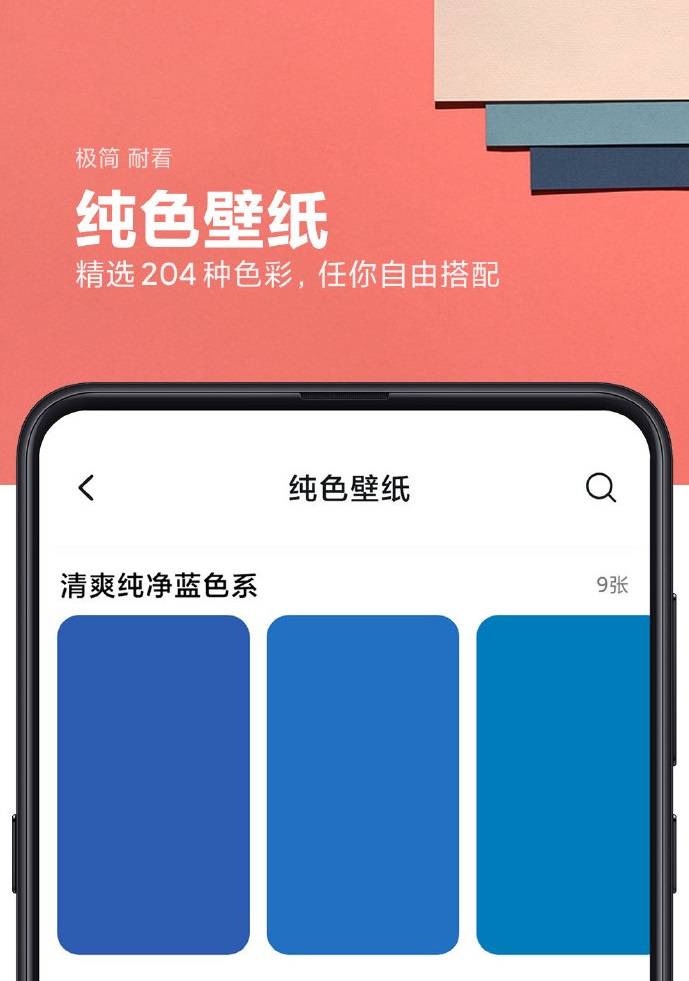
Apart from providing regular upgrades and security patches to its devices, Xiaomi also brings new wallpapers, themes, fonts, and ringtones for its users. Xiaomi keeps conducting photography contests to improve interaction among the users. The company’s skin – MIUI is a window to customization as it supports custom themes, fonts, ringtones, and wallpapers. In addition, Xiaomi recently introduced 204 new solid color wallpapers to bring minimalist and more beautiful backgrounds.
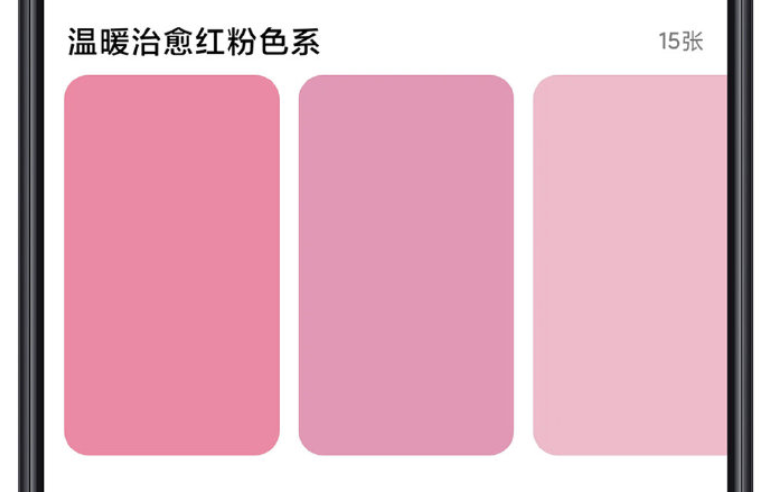
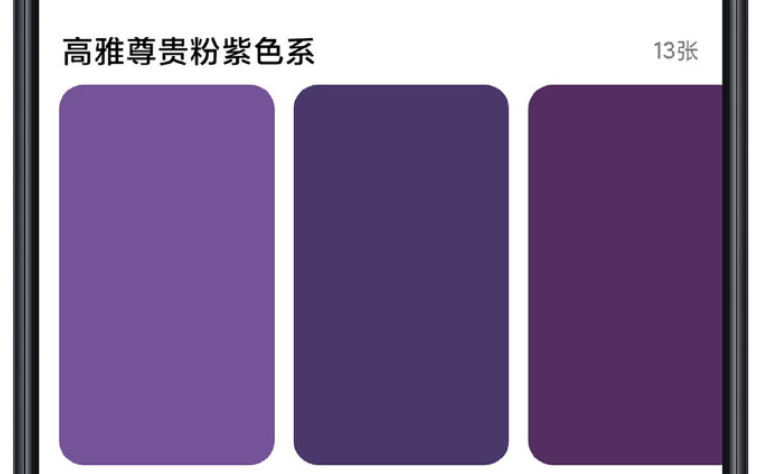
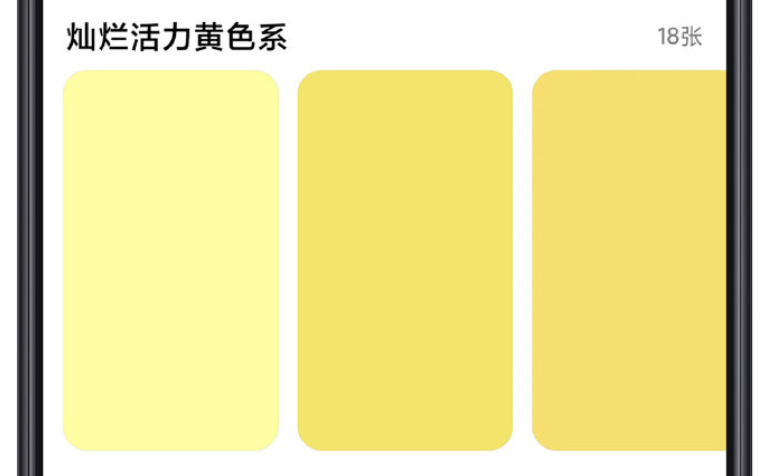
Xiaomi has added a series of solid colors, including colors such as pure blue, moist blue, green, elegant blue-green, and various others. There’s a whole lot of variations for each natural color. It also includes traditional Chinese colors, including green, pink, red, and blue palette colors.
The new wallpapers can be used along with the widgets to get a minimalist look. The clean and clear look on the home screen will further boost users’ productivity. These different solid color wallpapers give a bigger room for the customizations. These wallpapers will soon become available for download from the Xiaomi theme store.
1 of 3
Do you feel these wallpapers will find enough downloads?
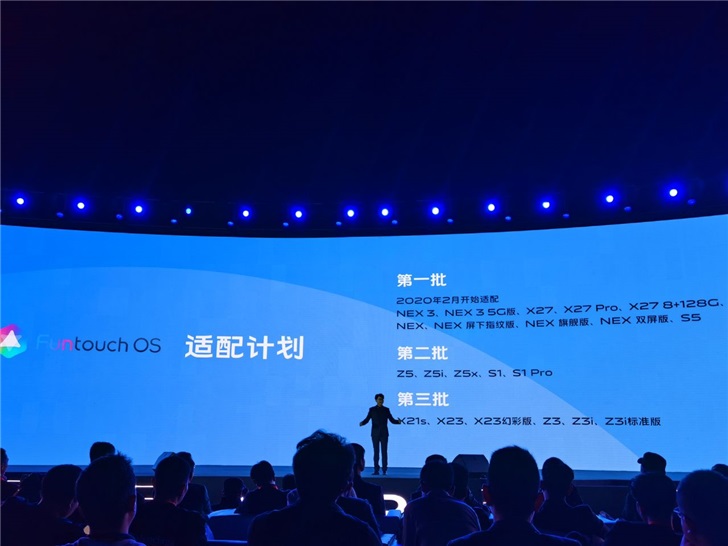
A few weeks ago, the product manager for Funtouch OS shared a font design image with the words “Jovi OS”. Originally believed to be a teaser for a new OS, it turned out to be a rebranding for FunTouch OS. Then it got canceled, and today we saw Vivo launch the latest version of FunTouch OS, that being FunTouch OS 10, at the Vivo X30 launch conference.
Now, while the Vivo X30 will come with FunTouch OS 10 by default, users of other devices will need to wait for an update. Thankfully, Vivo have also announced an update roadmap, with three batches of updates coming. Updates begin in February 2020 which isn’t too long from now, and they cover a decent amount of devices. You can check it out below.
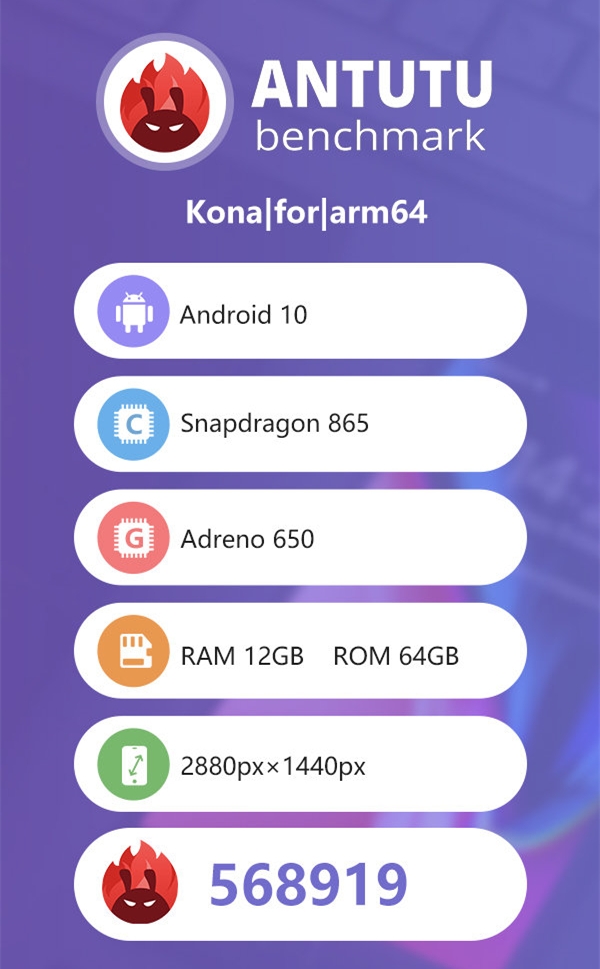
With the advent of the 2020 Android flagships approaching, Qualcomm have been hyping up their new Snapdragon 865 SoC. They’ve been touting the chip’s performance, claiming it’ll be the best chip on the market, but now we’ve got actual benchmarks to look at. Someone ran Qualcomm’s Snapdragon 865 reference device (codenamed ‘Kona’) through AnTuTu, and the results are just as excellent as expected.
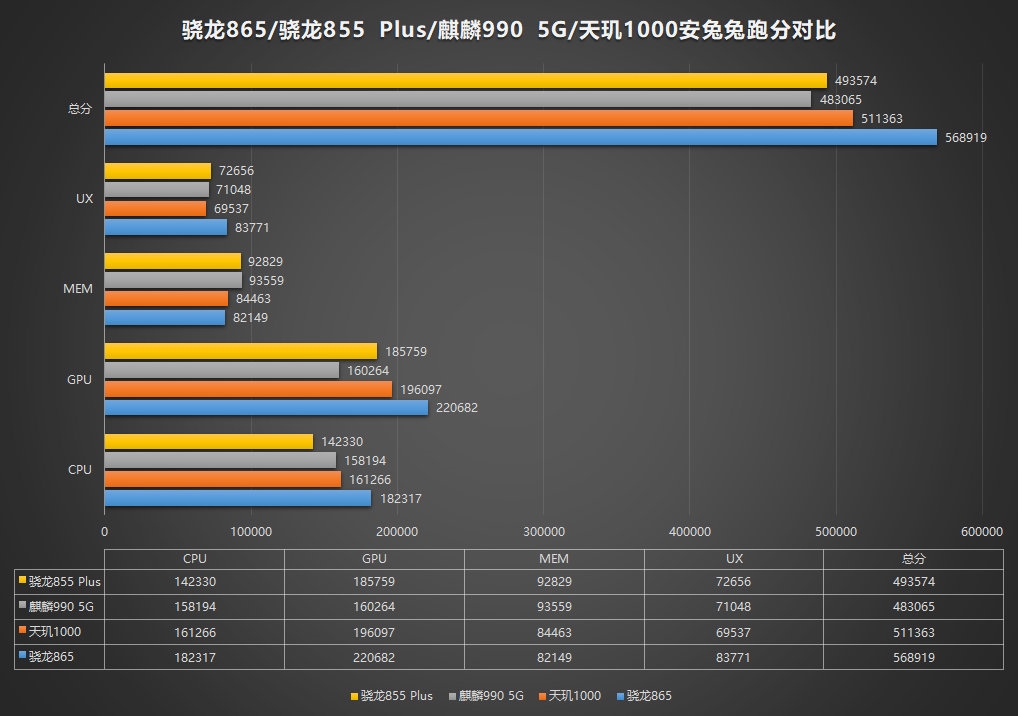
In AnTuTu, the chipset manages to score of 568,919 points, which puts it above every commercial smartphone currently available on the market. It’s a marked improvement over the Snapdragon 855 which averaged around 450,000 points, and even manages to nudge the iPhone 11 Pro Max and its Apple A13 Bionic chip aside.
Compared with the Snapdragon 855+, Kirin 990 5G and MediaTek Dimensity 1000, the Snapdragon 865 still retains its clean lead, leaving it as the king of the pack. Granted, this is a reference device, it’s fully possible that final devices from manufacturers will score higher or lower than this, but it sets a very good standard for other chip makers to aim for.
The Snapdragon 865 was announced at their recent summit in Maui, Hawaii and will be probably be seen in all major flagship Android smartphones in 2020. With the Snapdragon 865, Qualcomm is promising up to a 25 percent increase in CPU and GPU performance, twice the performance increase in AI tasks and lower power consumption across the board. We can’t wait to get our hands on a Snapdragon 865 powered device and test it ourselves.
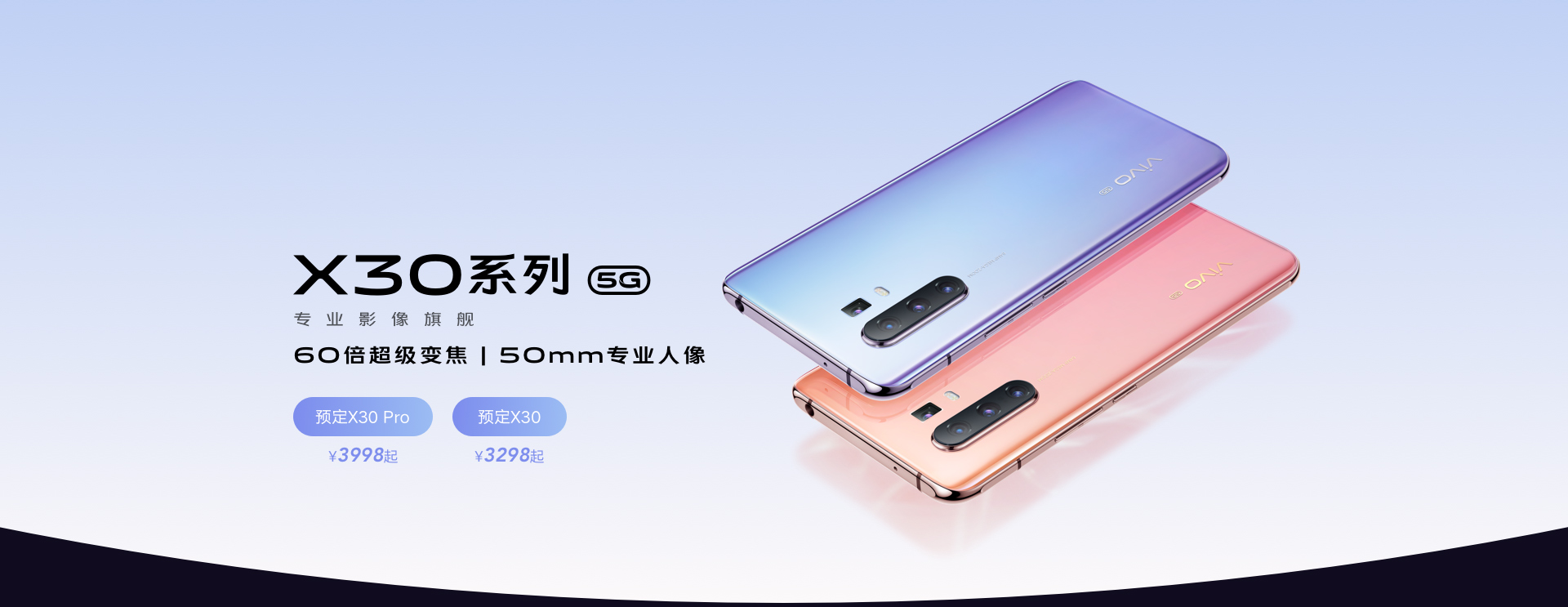
Vivo has announced two new phones for its X-series line of smartphones. The Vivo X30 and Vivo X30 Pro are both 5G phones and they are the first smartphones to be powered by the Exynos 980 processor.
Design
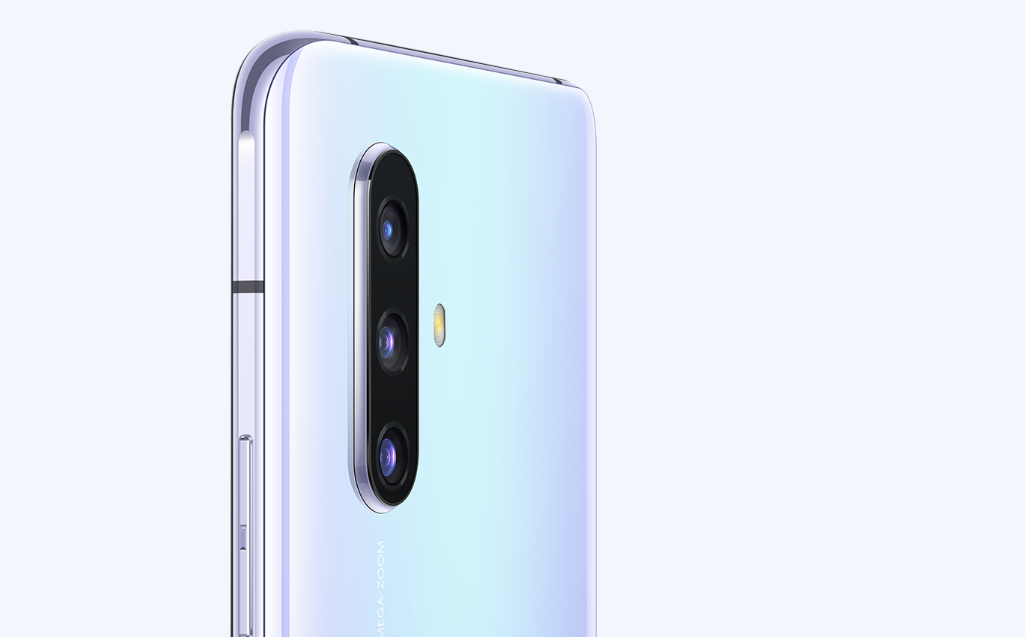
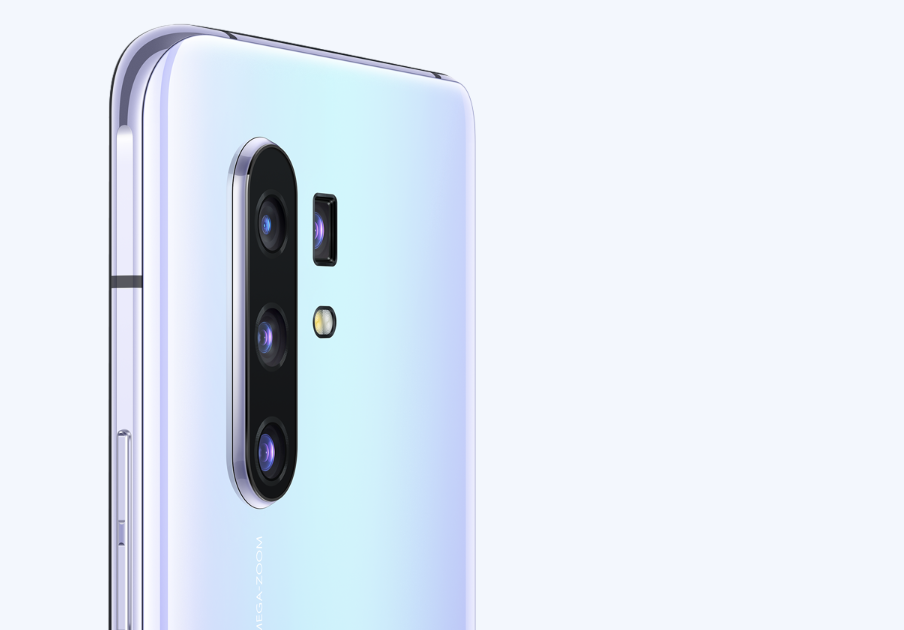
The Vivo X30 and Vivo X30 Pro largely share a similar design. Both have a punch-hole display with the hole, which measures 2.98mm in diameter, at the top right corner. The phones are covered in glass on both sides and come in the same color variants.
[envira-gallery id=”295472″]
Specifications
The Vivo X30 and Vivo X30 Pro both have a 6.44-inch Super AMOLED display with a 2400 x 1080 resolution. Under the screen is a fingerprint scanner and there is also support for face unlock.
The two phones are the first to be powered by the Exynos 980, Samsung’s first processor with an integrated 5G modem and which was co-developed with Vivo. The octa-core processor which features Cortex-A77 cores is paired with 8GB of RAM on both phones with the option of 128GB or 256GB of storage.
The Exynos 980 modem brings support for SA and NSA networks (n41 and n78 bands) and boasts up to 2.55Gbps in download speeds. There is 2.4GHz, 5GHz, and 5.8GHz WiFi; Bluetooth 5.0, NFC, and an audio jack.
Vivo ships both phones with a 4350mAh battery with support for 33W Flash Charge via USB Type-C. Both phones have liquid-cooling to keep the device’s temperature low when performing CPU-intensive tasks. They also run the new FunTouchOS 10 which is disappointingly based on Android 9 Pie and not Android 10. It brings Multi-Turbo 2.5, a revamped UI, dynamic wallpapers, and software optimizations.
The camera specs are what differentiates the Vivo X30 from the Vivo X30 Pro.
Vivo X30 Cameras
The standard version has triple rear cameras – a 64MP f/1.8 camera with a 26.4mm focal length; an 8MP ultrawide angle camera with an f/2.2 aperture, 16mm focal length and a 112° field of view; and a whopping 32MP f/2.0 professional portrait camera with a 50mm focal length.
The phone has Super Night Scene Mode 2.0 which brings multi-frame noise reduction and allows for brighter and more detailed night shots. There is also Backlight-HDR which helps you take better photos irrespective of where the source of light is from.
The X30 has up to 20x zoom and is able to achieve this with the help of an algorithm. Vivo says you can combine the main camera and portrait camera to shoot photos of the moon with rich details. Vivo advises owners to use a combination of the full-moon mode and night mode to achieve this.
Vivo X30 Pro Cameras
The X30 Pro also has a 64MP primary rear camera with the same f/1.8 aperture and 26.4mm focal length. It pairs it with an 8MP f/2.2 ultrawide angle camera with a 122° FOV, and also has a 32MP professional f/2.0 portrait camera with a 50mm focal length. Vivo then rounds it off with a 13MP periscope lens with a 5x optical zoom.
The periscope lens allows the Vivo X30 to offer up to 60x zoom, thrice that of the standard variant. It also has all the other features of the standard variant mentioned above.
Both the Vivo X30 and X30 Pro have a 32MP selfie camera with an f/2.45 aperture.
Price and Availability
The Vivo X30 is priced at ¥3298 (~$472) for the 128GB version and ¥3598 (~$515) for the 256GB version. However, only the 128GB version is available for pre-order on the Vivo online shop. The first sale is scheduled for December 28 at 10 AM and pre-orders will ship with a free pair of W7 Bluetooth headphones.
The Vivo X30 Pro starts at ¥3998 (~$573) for the 128GB version and goes up to ¥4298 (~$616) for the 256GB version. The X30 Pro goes on sale a few days earlier than the standard version on December 24 at 10 AM and will include the W7 headphones with pre-orders.
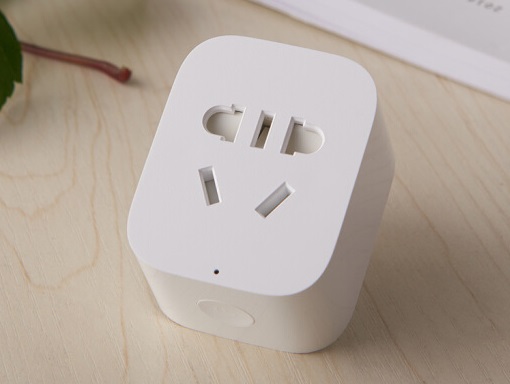
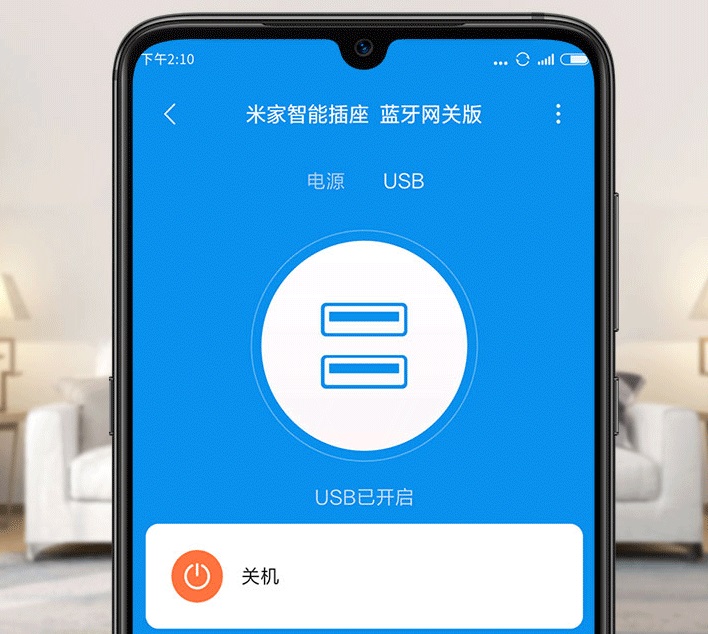
Xiaomi has added a new MIJIA Smart Socket Bluetooth Gateway Edition to its growing list of smart products. The MIJIA Smart Socket Bluetooth Gateway Edition is now listed on Xiaomi’s official flagship store on Jingdong (JD.com) with a price tag of 79 Yuan (~$11). However, you only get the option of “Arrival Notice” so, we can’t say when it will go on sale.
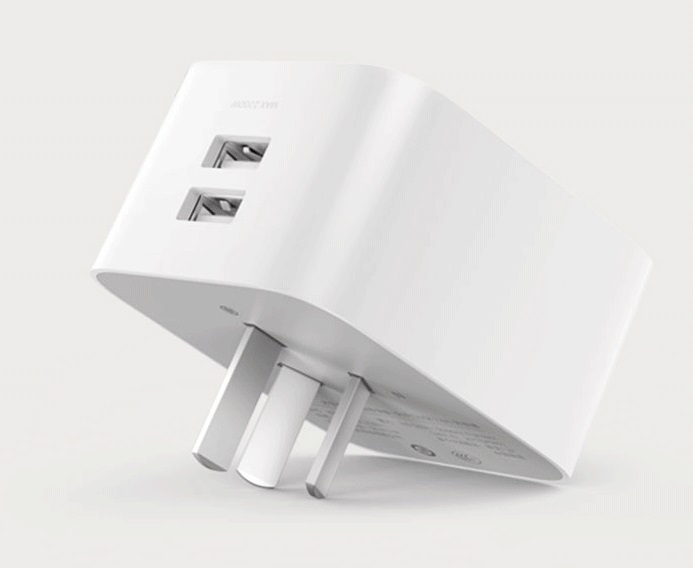
Xiaomi first launched a smart socket as far back as 2014. Thereafter, the company has launched a basic edition, a Zigbee version and a MIJIA Smart Socket Enhanced Edition which had as its biggest feature dual USB-A interface which can be used to charge devices that use the USB interface. This new version still maintains the same compact design of its predecessor but can serve as a Bluetooth gateway.
The Bluetooth network can collect the signals of Bluetooth sub-devices (such as temperature and humidity sensors, Smart door locks, etc.), and upload the collected content to MIJIA server via Wi-Fi. Users can use the Mijia app to remotely view the data of Bluetooth sub-devices and configure them to intelligently interact with other devices.
In addition, users can remotely monitor household appliances plugged into the Mijia Smart Socket Bluetooth Gateway Edition through the Mijia app. You can also switch appliances on and off remotely, which is convenient and removes potential safety hazards. At the same time, the Mijia Smart Socket Bluetooth Gateway Edition can be used with smart voice devices equipped with XiaoAI voice assistant to implement voice-controlled appliances switching.
Apart from this new feature, the Mi Smart Socket allows you toenable or disablethe socket,puttimerusingyour phone via the MIJIA app. You can also control the device from anywhere you are as long as there is an internet connection. Thus, those who stay in low temperate regions can set the device to switch on with the heater connected so as to come home to a warm house. The socket has support forBC1.2 protocol, remote control, timer switch, power statistics and other functions. The body is manufactured using a high-temperature resistant material. There is also a built-in temperature sensor which alerts users if the socket becomes too hot as a result of heavy load. Apart from the alert, if the temperature becomes too high, the smart socket will automatically cut off the power to reduce the risk.
After rolling out OxygenOS 10.0.7 for OnePlus 7T, the Chinese smartphone manufacturer starts rolling out OxygenOS 10.0.5 for OnePlus 7T Pro. The new update packs several performance tweaks and general bug fixes, improving the overall stability of the smartphone.
The new update will also enhance the app opening speed along with the optimized RAM management. The update also fixes the black and white screen issues which were prominent with some apps. Another black and white lines problem while charging is also fixed in the recent update.
The November security patch is also a part of the update addressing several security loopholes. The photo quality while using the native camera app is improved.
It is an incremental update and will send first sent and evaluated for any bugs. Later, the broader rollout will take place to reach each unit. OnePlus is asking its users to report the bugs via the new Feedback Tool. The company even initiated programs like bug hunters to refine the OxygenOS.
We suggest users switch to a WiFi network to save additional carrier costs. The users can manually check the update by heading to the Settings > System > System Updates > tap Check for Updates.
OnePlus 7T Pro was launched recently with Snapdragon 855 Plus chipset coupled with 8GB RAM. It features a triple camera module featuring a 48-megapixel primary camera, an 8-megapixel telephotos lens, and a 16-megapixel ultrawide lens. A 4085-Mah battery with 30W Warp charge technology is present in the device.
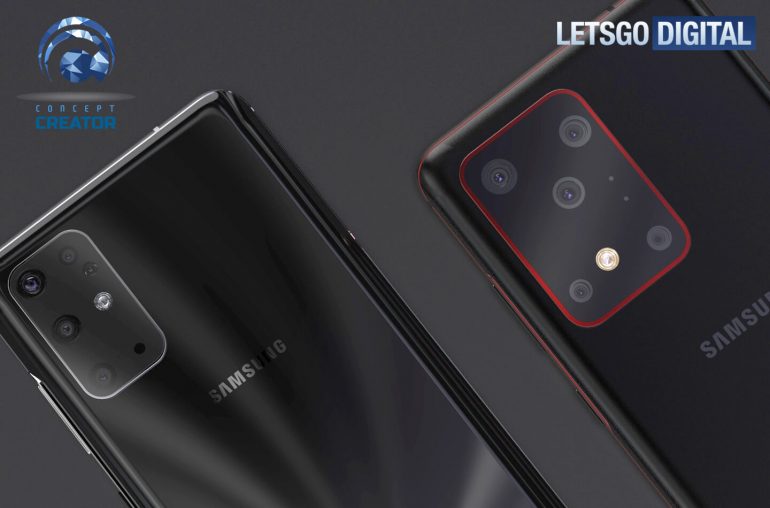
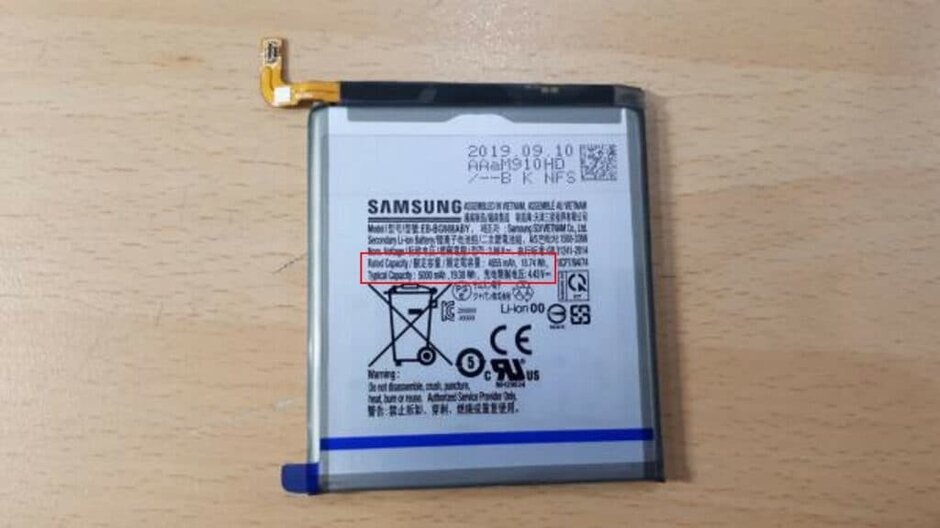
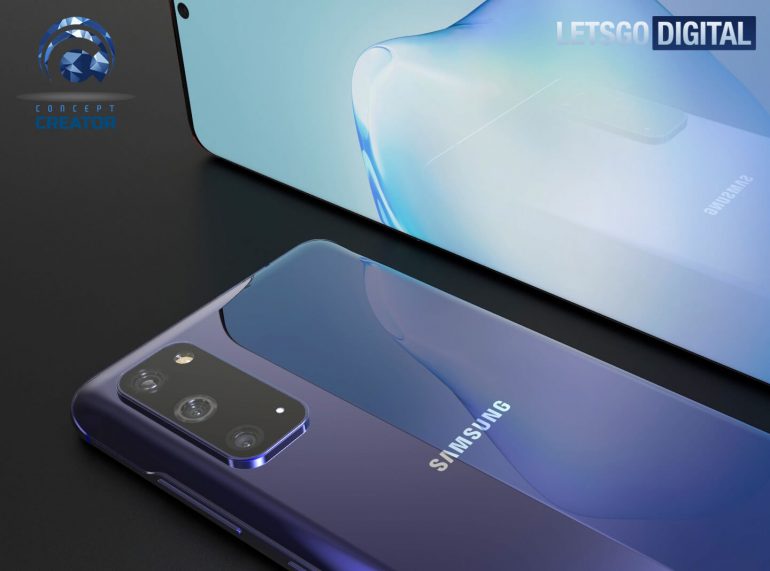
Earlier today (16th December 2019), Samsung‘s upcoming flagship smartphone, the Galaxy S11 series, had its camera setup and design revealed through renders. Now, it is reported that the Galaxy S11+, the larger variant in the series, will be powered by a large 5,000mAh battery made by LG.
The Galaxy S11 series is likely to feature improvements across the board in comparison to its predecessor, the Galaxy S10 series. This holds true in performance with new processors, photography with new sensors and even battery life with better power optimizations and battery capacity.
Samsung Galaxy S11 Design Renders
According to a new report, the South Korean tech giant’s upcoming flagship series will not just offer better battery life with the use of its new generation AMOLED technology but offer bigger battery capacity as well. The Galaxy S11 is said to be equipped with either the Note 10+ battery of 4,300mAh or Galaxy A71‘s 4,500mAh battery; a notable increase over the Galaxy S10.
Reported Samsung Galaxy S11+ 5,100mAh Battery
On the other hand, Samsung’s Galaxy S11e is expected to arrive with a 3.730mAh battery over the 3,100mAh battery featured on the Galaxy S10e. And for the Galaxy S11+, the device may arrive with a battery capacity close to 5,000mAh, similar to the Galaxy M30. The reasons for such power boosts points towards a few demanding upgrades on the series.
The upcoming S11 lineup is likely to feature a higher refresh rate like 120Hz and arrive in 5G versions. Both features draw a considerable amount of power on their own and might drag the device behind in battery backup. According to industry sources, the large 5,000mAh battery is reported to be supplied by LG, a fellow South Korean electronics company. Notably, LG is also the world’s largest lithium-ion battery producer by capacity, so it is likely to be Samsung’s supplier.
Samsung Galaxy S11e
Samsung has achieved this new significant surge in battery capacities by using a custom PMP packaging method. This method allows for the cells to have drastically reduced wrapping sizes allowing for either smaller packs with the same capacity or more power in the same battery size as older generations. Additionally, the supplier that is providing Samsung with the PMP module will also be supplying Apple. Thus, we can also expect the Cupertino-based giant to offer high resolution displays and more with 2020 iPhones.
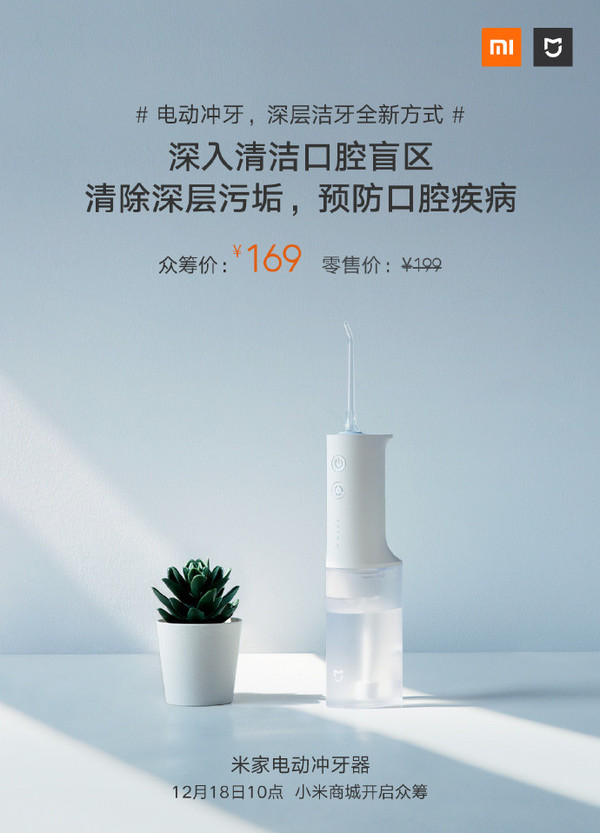
Xiaomi has unveiled the MIJIA Electric Teeth Water Flosser. The device will be available under the Youpin crowdfunding platform from December 18 – 25 with a price tag of 169 yuan ($24) but reservation opens today. The price will go up to 199 yuan ($28) after the crowdfunding exercise. Let’s take a quick look at the features of the water flosser/oral irrigator.
Until recently, oral irrigators are mostly used by Dentists in dental clinics during dental procedures. However, it seems to have gained popularity as an oral hygiene measure that can be employed within the comfort of our homes. There are different designs in the market but MIJIA Electric Oral Irrigator/Water Flosser adopts a portable design style. The device has a powerful high-frequency pulsed water flow which can clean stubborn stains in the teeth in all directions.
Usually, our regular toothbrushing isn’t enough to dislodge every debris attached to the teeth as the toothbrush can’t penetrate deep into the interdental spaces. This is a major cause of tooth decay and gingiva disease but with the water flosser, all surfaces can be reached. It deploys high-jet water spray to remove stubborn stains and food debris.
The device is equipped with a new carbon brush intelligent permanent magnet motor, equipped with a voltage stabilization system, which can produce a super-fast water flow of 1400 times/minute and water pressure of up to 140PSI. The device also comes with a 200mL large-capacity water tank and the nozzle has a diameter of 0.6mm which can accurately clean the stains between the teeth and the dead corners of the mouth.
The device is designed in such a way that users can achieve firm grip during use.
After four months of launch, the Xiaomi Redmi K20 series is finally available from Amazon India. Initially, the Redmi K20 and Redmi K20 Pro were available for purchase via Mi Official Store an Flipkart. Surprisingly, the Redmi has partnered with Amazon India to retail “India’s most loved #RedmiK20 series.”
It is the best selling smartphone in the above $300 segment cites Canalys’s Q3 report. It is also the most affordable smartphone housing Snapdragon 855 chipset. Both the Redmi K20 devices are available in Carbon Black color only on Amazon. Generally, the device is being offered in four different colors of Flame red, Glacier Blue, Pearl White, and Carbon Black.
The interested users can grab the Redmi K20 Pro at Rs 27,999 for 6GB + 128GB variant. Whereas, the 8GB RAM + 256 GB is available for Rs 30,999. The younger sibling – Redmi K20 with 6GB RAM + 64GB storage is available for Rs 21,999 and 6GB RAM + 128GB is available for Rs 23,999.
The Redmi K20 and Redmi K20 Pro can be bought from Amazon India.
Redmi K20 and Redmi K20 Pro Specs
The Redmi K20 and Redmi K20 Pro both are powered by Qualcomm Snapdragon 855 chipset coupled with an octa-core processor. Both the devices feature a 6.39-inch AMOLED FHD+ display, but the Redmi K20 Pro only has a Corning Gorilla Glass 5. There’s a triple camera unit on the rear featuring a 48-megapixel primary camera + 13-megapixel telephoto lens and an 8-megapixel sensor on both the device. There’s also a 20-megapixel selfie Pop-up camera.
Other similar specs on both devices include a 7th-generation In-display fingerprint sensor, 4000 mAh battery, and a 3.5mm audio jack. Meanwhile, the redmi K20 comes with 18W fast charging, and redmi K20 Pro supports 27W SonicCharge.
Redmi has recently announced the Redmi K30 series in China. However, there’s no information about its India launch.
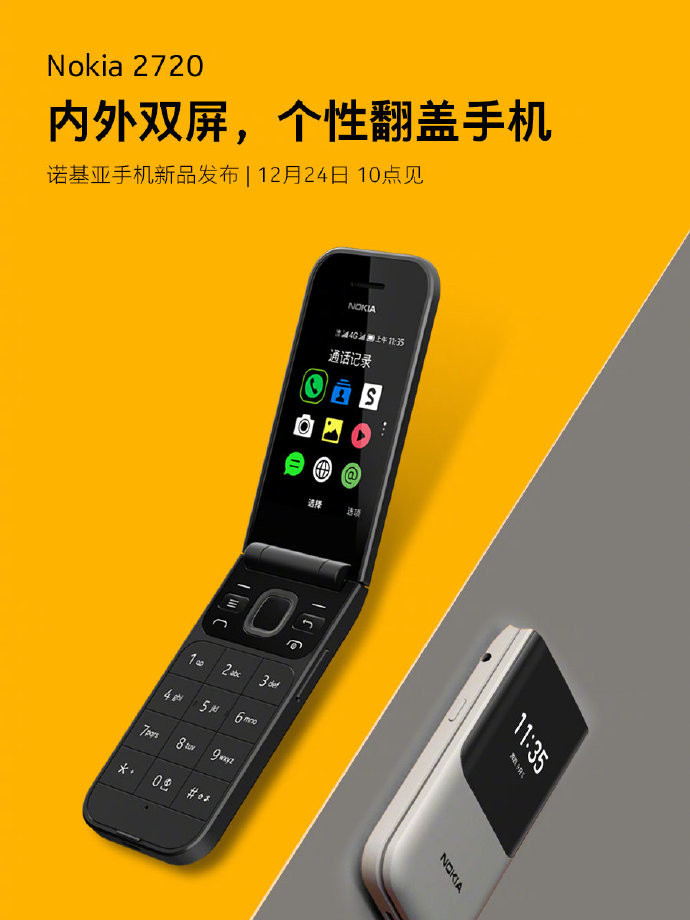
Nokia has confirmed that the company is all set to launch a clamshell phone at a launch event in China on 24th December. However, before you get any idea, let us clarify that the company is not going to launch a foldable smartphone.
Since companies are now launching foldable smartphones with clamshell design, some of you might think that Nokia is doing the same. However, that’s not the case. The company is set to launch a traditional clamshell phone.
Although, the company has confirmed that the upcoming clamshell phone — Nokia 2720 will come with two displays — one on the inside and other on the outside and both will be able to display different information.
While the company has not revealed the phone’s features and specifications, thanks to China’s Ministry of Industry and Information Technology, we know what to expect from Nokia’s upcoming device.
It reveals that the Nokia 2720 has an internal screen of 2.8 inches and an external screen of 1.3 inches for display of caller ID, date and time. Further, the phone comes with the T9 physical keyboard for input method.
As for the software, the device runs KaiOS 2.5.2 and is equipped with a 2-megapixel camera sensor for taking images. Under the hood, the device is powered by a 1,500mAh battery and it remains to be seen how the battery performs with two displays.
Since the phone runs KaiOS, it will come pre-installed with some applications. Further, the device also supports 4G connectivity. The phone also has a emergency button that can be used to send emergency text messages, including the current location and can also make calls to five emergency contacts preset in the address book.
To know more about the device, including its pricing and availability, we’ll have to wait for a few more days as the launch will happen on 24th December.
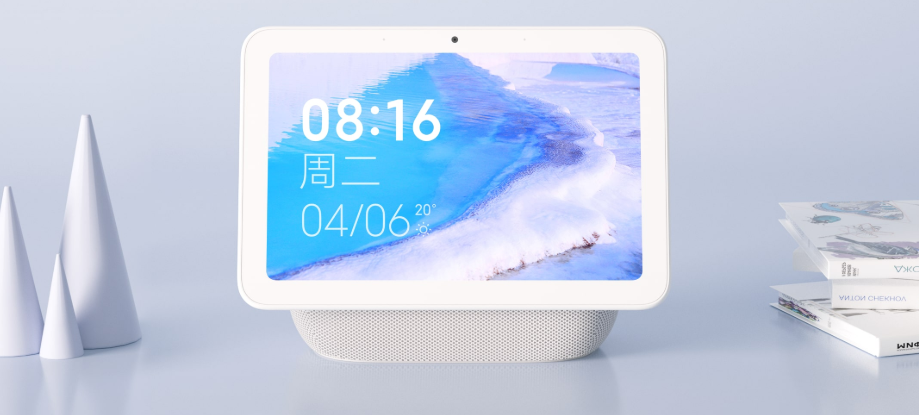
A few days ago, we reported that Xiaomi has a smart display coming soon. Today, the Mi AI Touchscreen Speaker Pro 8 (yeah, that’s a mouthful) has been announced in China.
Design
It is obvious where the inspiration for the Mi AI Touchscreen Speaker Pro 8′ design comes from. For those who do not know, it is the Google Nest Hub/Nest Hub Max. However, Xiaomi’s own smart display is not a total copy of Google’s product.
First, the Mi AI Touchscreen Pro 8 has an 8-inch display, so it sits between the Nest Hub’s 7-inch screen and the Max’s 10-inch screen. Its base which is where the speakers are is curved, and in my own opinion, better-looking than Google’s own. The power and volume control buttons are behind the right side of the display while a camera sits above the screen.
Xiaomi’s smart display is only available in one color variant and that is Chalk, unlike the Nest Hub which comes in four colors (two colorways for the Nest Hub Max).
Mi AI Touchscreen Speaker Pro 8 Specifications and Features
Xiaomi says the 8-inch screen offers 36% more screen estate compared to a 7-inch display. The resolution is unknown but the screen is said to have a high-image quality and has an oleophobic coating, so you won’t see fingerprints on it. Xaiomi also says the display is fully-laminated to reduce reflections.
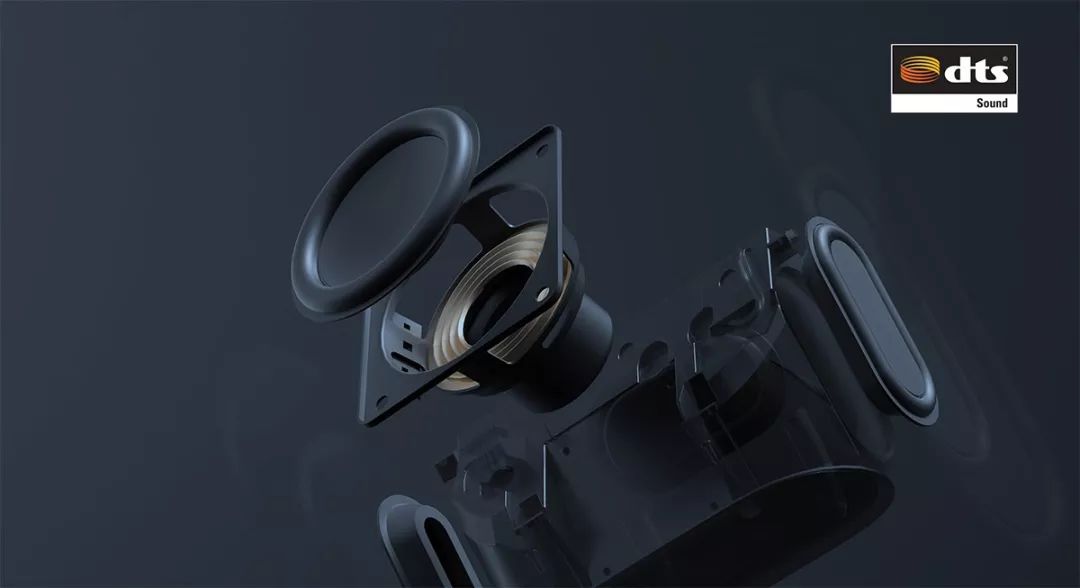
The Mi AI Touchscreen Speaker Pro 8 has three subwoofers – each of them measuring 50.8 millimeters in size and featuring Neodymium Iron Boron magnets. Xaiomi says the speakers are professionally tuned by DTS.
The smart display has a camera at the top for video calls. Xiaomi says it can be used to make video calls with supported models of its smart TVs such as the Mi TV Pro 55”, Mi TV Pro 65”, Mi TV 5 Pro 55” and Mi TV 5 Pro 65”. However, this feature will be rolled out as an OTA before February 28, 2020.
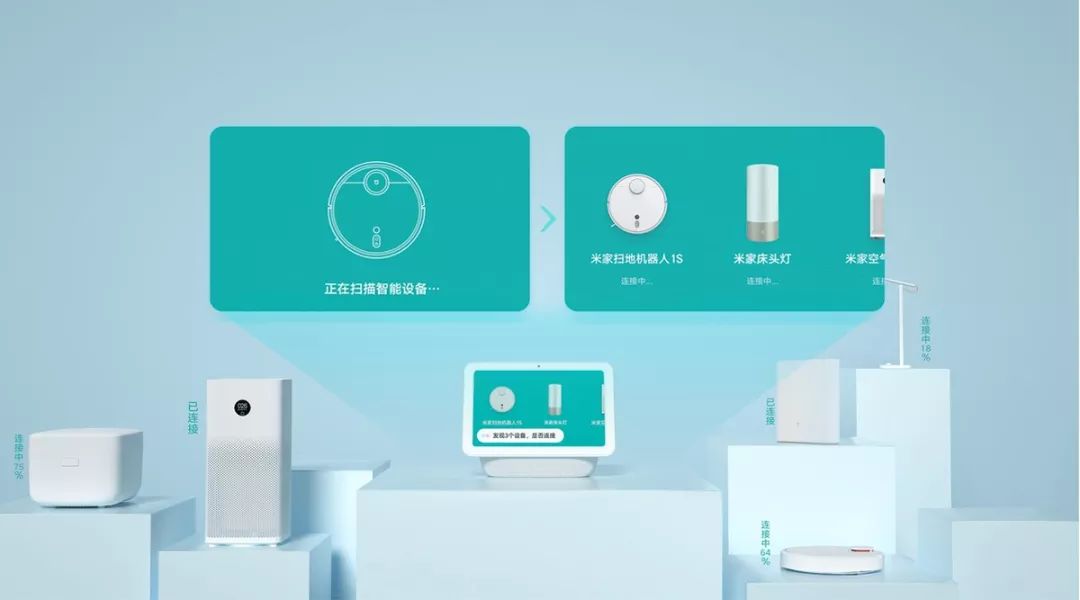
The Mi AI Touchscreen Pro 8 works with a plethora of smart home products covering 28 different categories and from up to 54 different IoT platforms including Philips, Viomi, Yellight, Smartmi, Konke, and Roborock. Connecting a device is easy thanks to its advanced Bluetooth Mesh Gateway. Xiaomi says it will roll out a feature by March 31, that allows you to connect new smart home devices to the smart display just by voice. All you have to do is ask it to find the device and it will do so and connect to it. However, the feature will be limited to Mijia devices and exclude smart security cameras, door locks, and doorbells.
1 of 4
Xiaomi has partnered with QQ Music for music streaming while iQIYI, Youku, Bilibili, and TikTok handle video streaming. There are also other audio streaming platforms they have partnered with for podcasts, storytelling, and audiobooks. Kids also get custom content and there are security protections in place to keep your child safe.
The Mi AI Touchscreen Speaker Pro 8 also doubles as an alarm clock, a digital photo frame, and a Bluetooth speaker in case you want to play something from your phone or other devices.
[envira-gallery id=”295422″]
Mi AI Touchscreen Speaker Pro 8 Price
The smart display has a price tag of ¥599 (~$86). If you register now, you can pick it up for ¥499 (~$71). It will go on sale on December 18 at 10 AM.
According to a tweet from a renowned leakster, Samsung is reportedly planning on making a 144 megapixel camera sensor using the 14nm FinFET process.
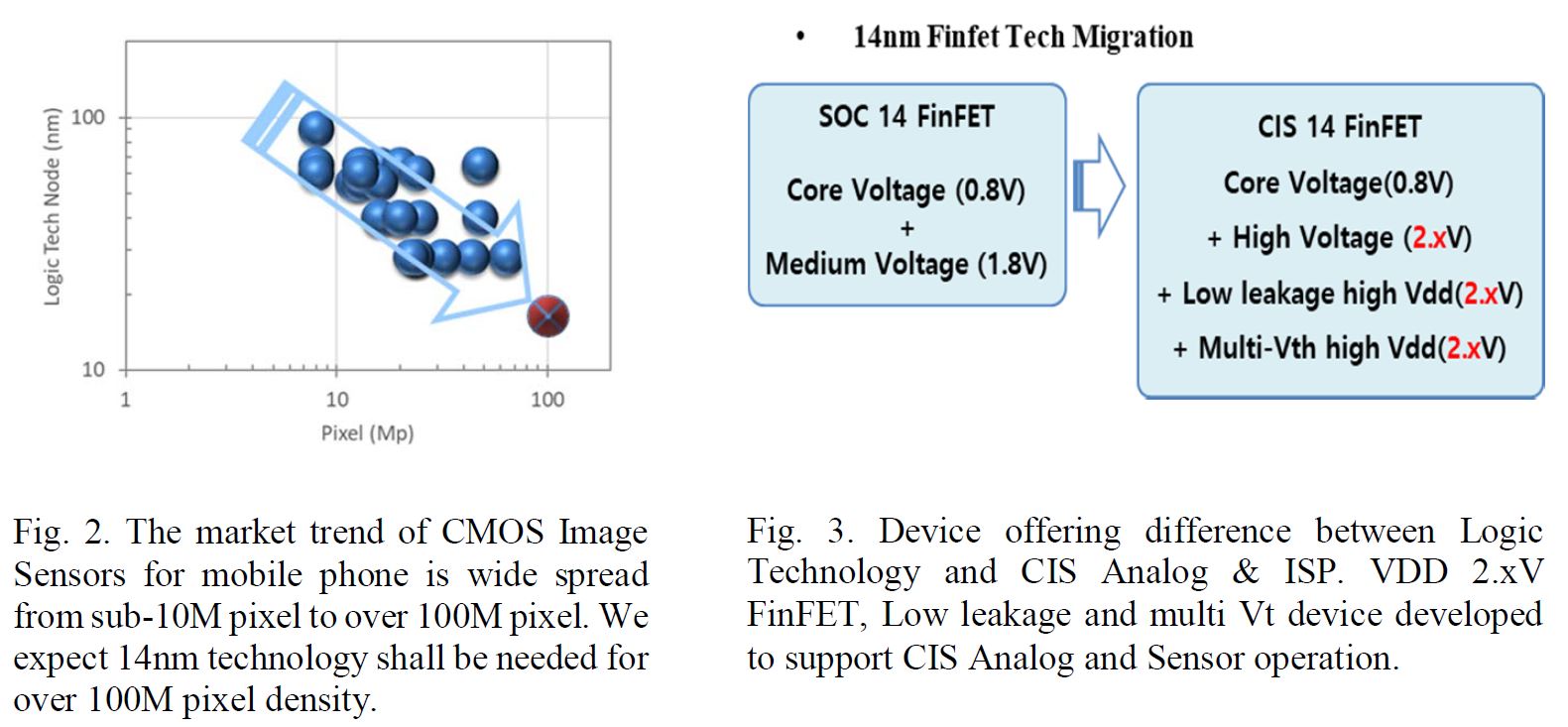
Ice Universe, the famous leakster which is known for his Samsung related news went on Twitter to share the news of Samsung’s new camera sensor. The tweet also arrived with a few infographic images that talked about the current trend of CMOS image sensors increasing. Nowadays, sensor pixels can vary from less than 10 million to more than 100 million pixels.
The South Korean tech giant is reportedly going to use the 14nm processing technology to develop a sensor with a density greater than 100 million pixels. The process will be supplemented by FinFET technology that will also help reduce the power consumption of the sensor as well.
Unfortunately, finer details regarding the upcoming sensor are still uncertain and Samsung has yet to make any official announcement of the same. Although, the smartphone manufacturer was the one that presented the 14nm FinFET process which is optimized for imaging applications at IEDM (International Electron Devices Meeting) last week.
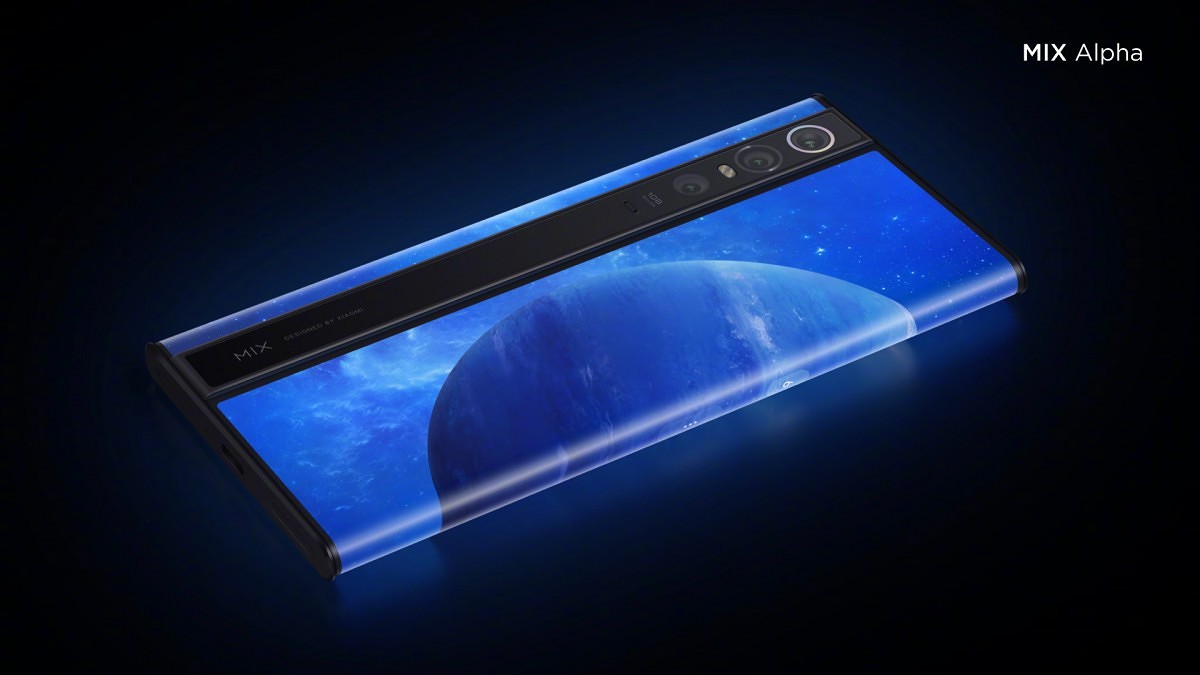
Xiaomi Mi Mix Alpha Concept Smartphone with 108MP Samsung Camera Sensor
The new sensor from Samsung could be a game-changer in the smartphone industry if it releases in the near future. It would also be one of the first to cross the 100 megapixel threshold that has not been broken yet, at least not mainstream commercially. Notably, Xiaomi with the Mi Mix Alpha which is a concept smartphone with 108 megapixels (Samsung’s ISOCELL Bright HMX Sensor) is close to official launch and is expected to see limited release this December 2019.
The OPPO Reno3 and Reno3 Pro 5G phones are scheduled to go official in the coming week. Both phones are now listed in China for reservations. A fresh leak has revealed the pricing of both smartphones. Also, the Reno3 Pro 5G has appeared on Geekbench to reveal its performance prowess.
The reservations page of the OPPO Reno3 5G revealed that it will be arriving in variants such as 8 GB RAM + 128 GB storage and 12 GB RAM + 128 GB storage. Leaked information reveals that these models will be respectively priced at 3,199 Yuan ($458) and 3,599 Yuan ($515).
The Reno3 Pro 5G is officially confirmed to land in China in two models such as 8 GB RAM + 128 GB storage and 12 GB RAM + 256 GB storage. The new leak reveals that the base model of the Reno3 Pro 5G will be priced at 3,699 Yuan (~$529) and its higher model will cost 4,199 Yuan (~$601). Readers are advised to digest the pricing leak with a grain of salt as there is no concrete evidence to prove its authenticity.
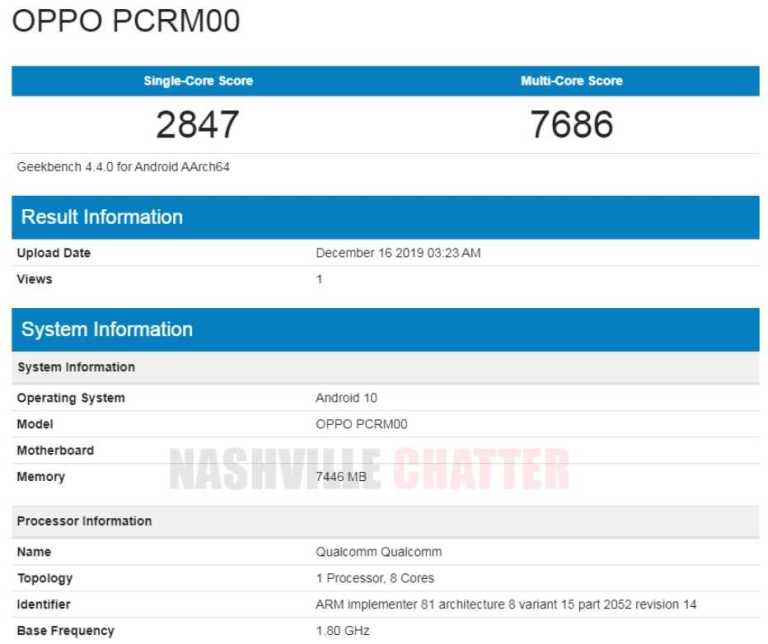
In related news, the OPPO Reno3 Pro 5G phone that has a model number of PCRM00 has been spotted on Geekbench benchmarking platform with specs like 8 GB of RAM and Android 10 OS. While the Geekbench listing does not mention the name of the octa-core processor that powers it, OPPO has officially revealed that it is fueled by the Snapdragon 765G mobile platform. In single-core and multi-core tests of Geekbench, the Reno3 Pro 5G has respectively scored 2847 and 7686 points.
The Reno3 5G has a full HD+ 6.4-inch AMOLED display with waterdrop notch. On the other side, the Reno3 Pro 5G has a full HD+ curved AMOLED punch-hole display with 90Hz refresh rate support. Both phones feature in-display fingerprint scanner. The Dimensity 1000L powers the Reno3 5G and the SD765G fuels the Reno3 Pro 5G. Both phones have 4,025mAh battery and they carry support for the enhanced version of 30W VOOC 4.0 Flash Charge technology.
The Android 10 OS with ColorOS 7 UI will come loaded on the Reno3 series. Both devices have 32-megapixel selfie cameras. The Reno3 5G is fitted with a 48-megapixel + 8-megapixel + 2-megapixel + 2-megapixel quad camera setup whereas the Reno3 Pro 5G features a 64-megapixel + 8-megapixel + 2-megapixel + 2-megapixel quad camera system. There is no support for microSD card slot on both devices.
Xiaomi launched the latest fitness tracker – Mi Band 3i in India last month. Since its launch, the device was available only via flash sales via Mi.com and Flipkart. The latest smart health band aka Mi Smart Band 3i is now available on open sale via Mi official store and Flipkart. The users can directly grab the health band without any additional waiting.
Xiaomi took to the official community to announce the latest development. It is retailing at Rs 1,299 featuring an AMOLED touch display, 5ATM rated water-resistance, notification alerts, calorie tracker, and huge 20 days battery life. This is the first fitness band developed by Xiaomi India under Made-for-India label.
The Mi Smart Band 3i features a large 0.78-inch AMOLED display with 300 nits brightness support, 128×80 pixels resolution, anti-fingerprint coating and support for custom themes. The display is large enough to display 48-characters without any issue. It can withstand 20 days on standby without any additional charging.
In software, Mi Smart Band 3i supports notifications from WhatsApp, Instagram, receive incoming calls, idle alerts, event reminders and more. It can effectively track activities such as cycling, walking and running among a few others.
It comes with a 110 mAh Li-polymer battery and heart rate sensor. The Mi band 3i is carved out of thermoplastic polyurethane (TPU) coupled with a rubber band. The device measures 4.68 x 1.81 x 1.1 centimetres and comes in black. It is compatible with devices running Android 4.4 or later, and iOS 9.0. The device requires Mi Fit app to work correctly on Android as well as the iOS devices.
The interested users can gran the Mi Smart band 3i either from Mi.com or Flipkart for Rs 1299.
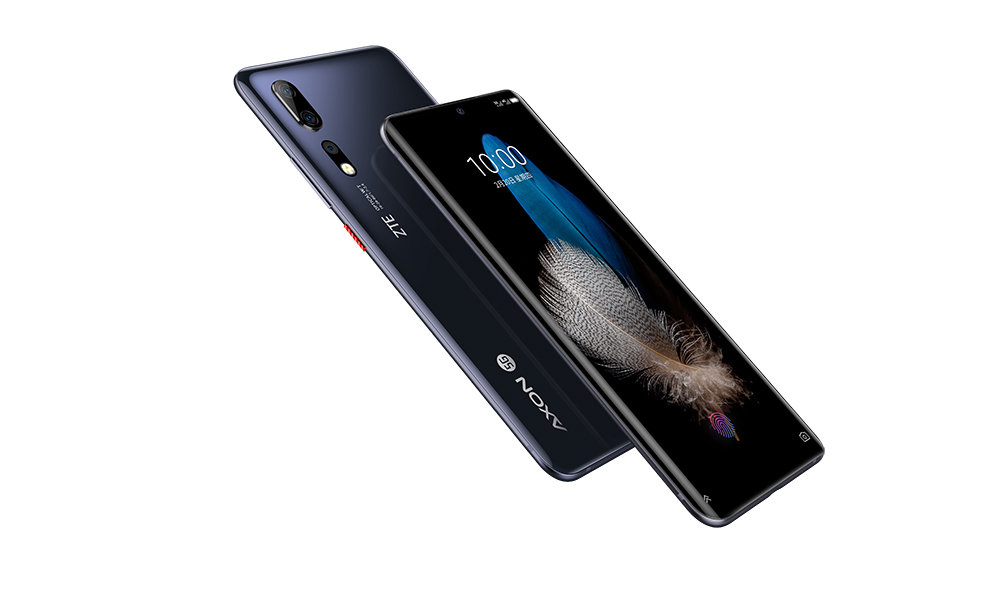
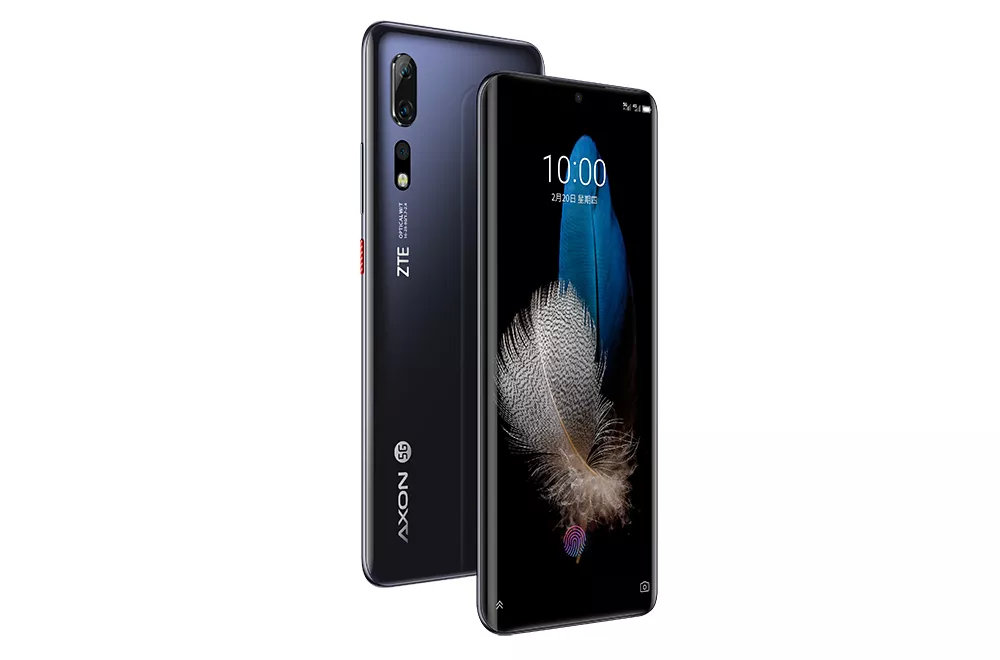
Through a recent interview, ZTE Senior VP and Head of Global Business Xu Feng confirmed the existence of ZTE Axon 10s Pro as its next flagship phone. Arriving as the successor of the Axon 10 Pro 5G from last year, the Axon 10s Pro 5G will be fueled by Snapdragon 865 that will bring support for dual-mode 5G through X55 5G modem. The phone will be showcased at the Mobile World Congress (MWC) 2020 tech trade show. An article that has been shared by ZTE on its official Weibo account has confirmed some more information on the specs of the phone.
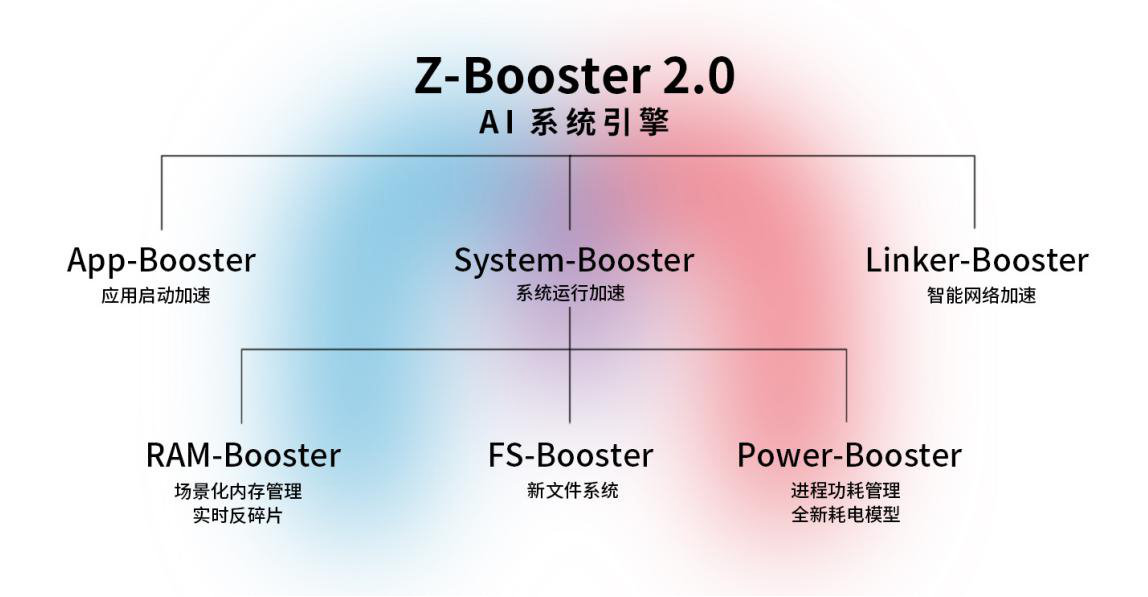
The ZTE Axon 10s Pro 5G will come equipped with features like the latest LPDDR5 RAM, UFS 3.0 internal storage and Wi-Fi 6 connectivity. The phone will also feature company’s Z-Booster 2.0 AI engine that can intelligently allocate system resources for optimized gaming experience, fast startup and smoother multi-tasking. Link Booster will bring support for multiple concurrent network connections of Wi-Fi 6 and 5G. The peak connectivity speeds offer through Link Booster will be twice the speed of 5G connectivity. Link Booster can automatically switch between Wi-Fi and 5G depending on the signal strength. System Booster will assist the system to run faster and increase app startup time by 120 percent.
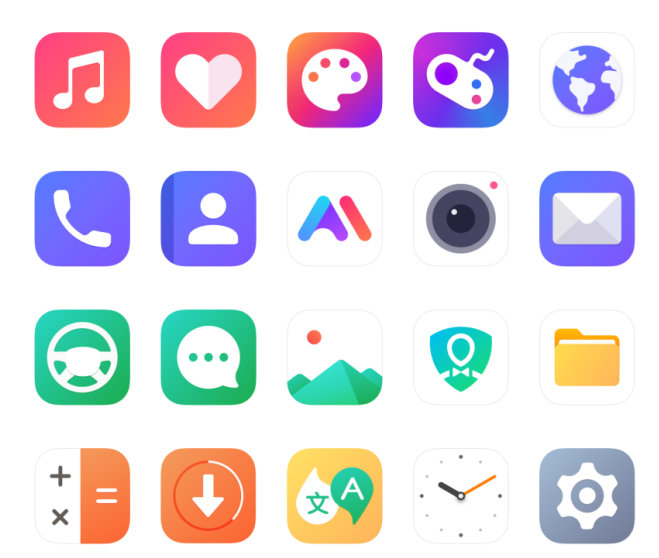
The MiFavor 10 based Android 10 will come preloaded on the Axon 10s Pro 5G. The new version of MiFavor that is equipped with AI intelligence comes with enhanced UI design. It has also been optimized to improve battery performance. The images of the Axon 10s Pro 5G will be coming in Black color and it will be also available in another ‘Qiang’ color. The Chinese word translates to metallic luster. It is a glass-bodied smartphone with a thickness of 7.9mm and it weighs 175 grams. The company claims it will be debuting as the thinnest 5G flagship phone.
The ZTE Axon 10s Pro images show that the phone is equipped with a curved display. It seems to feature a waterdrop notch. The display seems to be integrated with a fingerprint reader. The rear shell of the phone has two camera sensors placed at the top-left corner followed by a separated placed third camera that is accompanied by an LED flash. The Chinese firm is yet to confirm on the configurations of the rear cameras and other specs of the Axon 10s Pro 5G.
What’s your opinion on the Axon 10s Pro 5G design and initial specs? Share us your thoughts by posting your comments below.
Huang Wang, CEO of Huami, has recently stated that the brand competes with Huawei and not Xiaomi. The company is known for its Amazfit lineup of smart wearables and has worked with Xiaomi multiple times in the past.
Huami is an independent brand that has its survival tied with its main business model which is smart wearable products. With Xiaomi developing its own products in the same category, there is bound to be competition. However, the senior executive claims that Huami does not see the Chinese smartphone maker as a competitor.
According to Huang Wang, the direction both companies take for their smart wearables is very different. From his and Huami’s perspective, the wearables industry has a huge potential for growth. Other companies like Huawei, Oppo, and Vivo are already diversifying to this market as well. Wang considers it natural for such brands to also enter the market and states that it sees Huawei as a competitor and not Xiaomi.
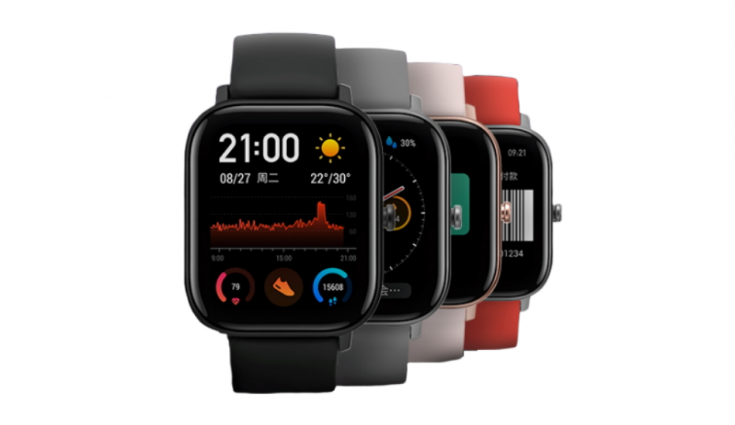
Huami Amazfit GTS
Huami CEO stated that the industry is driven by technological advancements with each company striving to break through to provide better features at lower power consumption due to better algorithms. He also mentioned that Xiaomi and Huami don’t focus on similar features and at this stage, its direct competition would be Huawei; since the company can’t rule out that the OEM may quickly catch up to it.
The Realme X2 will be unveiled in India tomorrow alongside the Realme Buds Air. While we already know the price of the wireless earbuds, the price of the Snapdragon 730G-powered phone has been unknown until now.
Ishan Agarwal, the teenage leakster shared a photo that shows the pricing details of the phone on his twitter timeline. He said the photo was taken at the launch rehearsal.
I have an amazing leak for you all, thanks to someone at the #realme launch rehearsal 😉. #realmeX2 will be priced at ₹19,999 for 6+128GB variant and ₹20,999 for 8+128GB! First smartphone to launch with Snapdragon 730G under 20k and first sale on 20th! What do you guys think? pic.twitter.com/TzIvw4Ha2w
Based on the image, the Realme X2 will be available in two configurations – a 6GB RAM + 128GB version and an 8GB + 128GB version. The photo also shows the phone will be available in Pearl Green, Pearl Blue, and Pearl White.
The 6GB RAM version will be sold for INR 19,999 (~$282) while the 8GB RAM version is shown to have a INR 20,999 (~$296) price tag. The first sale is scheduled for 12 noon on Friday, 20th of December.
Realme is also expected to launch a Star Wars Edition of the phone but the price isn’t shown in the image. This special edition will most likely cost more and may not be available on the same day as the standard version.
The Realme X2 has a 6.4-inch FHD+ display with a waterdrop notch for a 32MP selfie camera. With the Snapdragon 730G processor inside it, it should be able to handle any game thrown at it. While both variants will come with the same storage capacity, it can be expanded via a dedicated MicroSD card slot.
The phone has quad rear cameras that include a 64MP primary sensor, an 8MP ultrawide angle camera, a 2MP macro camera, and a 2MP depth sensor. The Realme X2 has an in-display fingerprint scanner, NFC, Bluetooth 5.0, and an audio jack. It packs a 4000mAh battery with support for VOOC 4.0 (30W) flash fast charge. Realme will ship it with Android Pie out of the box but it will get updated to Android 10.
Realme reportedly sold over 15 million smartphones in the first year of operations. CEO Madhav Sheth has plans to double that figure in 2020. Realme launched in May 2018, and swiftly became a favorite with the Indian youngsters. Realme’s portfolio has emerged as a strong contender against seasoned players like Xiaomi and Samsung.
According to Sheth’s statement to PTI, “We conclude our business for 2019 by selling 15 million smartphones. We plan to double the figure in 2020”. Realme currently enjoys a 14.3 percent market share. Xiaomi is the undisputed winner with 27.1 percent, followed by Samsung with 18.9 percent and Vivo with a 15.2 percent share of the market in the third quarter.
Unlike other Chinese manufacturers like Oppo and Vivo, Realme adapted Xiaomi’s online-first strategy closely, helping it reach the fourth spot within one year of commencing business. Both Vivo and Oppo were busy focusing on channel marketing during its initial years. According to CEO Sheth, who co-founded Realme with BBK Electronics, Realme is the world’s seventh fastest-growing smartphone manufacturer.
Starting its business from India, Realme currently operates in 20 global markets including China, Southeast Asia, Europe, and Russia. Realme sold 5.2 million smartphones in Diwali alone. Its best-selling models include the Realme 5, Realme 3i and Realme C2. According to Counterpoint Research, Realme exported over 10 million smartphones in Q3 2019, an 808 percent YoY growth in shipping since 2018.
Sheth confirmed Realme’s plans to launch exclusive models for offline stores in India, and the lineup will be revealed before the end of 2019. Designed for the mid-range, the new series will be an all-rounder with better aesthetics, battery, and performance. “Our focus is on designing trendy products with enhanced performance and a range of smart yet affordable accessories. Realme plans to emerge as a trendy lifestyle electronics brand for 2020” Sheth added.
Realme is hoping to garner 30% sales from the offline market and accumulate the remaining 70% from online stores. “We would like to clarify that Realme Mobile Telecommunications Private Limited is an independent brand and legal enterprise set up by Sky Li and me on May 4, 2018” Sheth added.
Dark Mode is an essential feature for the Android 10. After many demands from the user regarding the Dark Mode, Google has finally added the Dark Mode compatibility in Android 10. However, the search giant has missed the dark mode scheduling feature for some reason. Even, some users have complained about it on the official bug tracker for Android.
While answering such a question, a Googler has confirmed that the Dark Mode scheduling will be a part of the future Android builds. There were no other details given by the Googler while giving a reply on the Android bug tracker.
Additionally, dark Mode scheduling was initially present in the Android 10 beta builds. But due to some issues which were negatively impacting overall user experience led to exclusion from the beta builds. While talking about the same feature at AMA this year, Chris Bares from the Android Developer Relations team explained the depreciation of feature because it requires location data for all applications and the switching can be buggy on several devices. In actual words, he explained that it “requires apps to request location permissions to be accurate, and even with a valid location the sunrise/sunset time calculations can be buggy.” He further explained that it is quite difficult for the system to calculate the sunrise/sunsets globally, including the north and south poles.
Now, after complaints from several users, it appears Google is finally adding the scheduling feature for Dark Mode in the upcoming Android version. Alternatively, users can use any third-party app to schedule the dark mode on the device.
Dark Mode is quite useful for heavy smartphone users and even helps in increasing battery life.
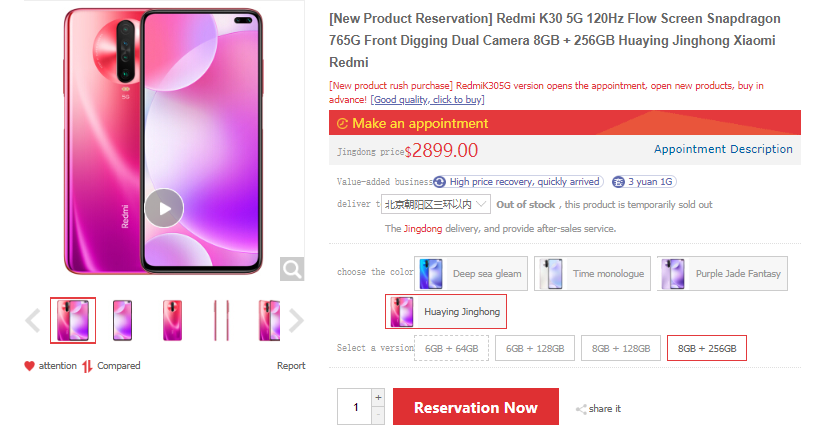
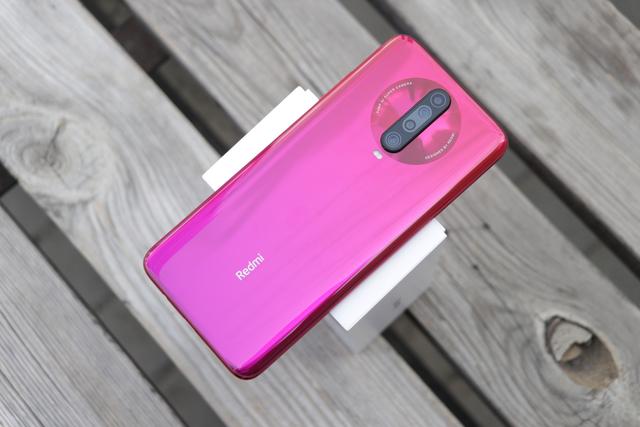
In the previous week, Redmi had held an unveil event in China to announce the 4G and 5G flavors of the Redmi K30 smartphone. The Chinese manufacturer has started with the sales of the Redmi K30 4G. At the unveil event, the company announced that the Redmi K30 5G will be releasing in China in January 2020, but it did not confirm the specific release date. The reservations of the smartphone have started on Jingdong Mall. The shipping date mentioned on the Redmi K30 5G JD listing is Jan. 15.
The Redmi K30 5G listing shows that it will be made available in color variants such as Time Monologue, Purple Jade Fantasy, Deep Sea Glow and Flower Shadow (Chinese names translated using Google Translator). The phone will be arriving in four edition such as 6 GB RAM + 64 GB storage, 6 GB RAM + 128 GB storage, 8 GB RAM + 128 GB storage and 8 GB RAM + 256 GB storage. These models are respectively priced at 1,999 Yuan (~$286), 2,299 Yuan (~$329), 2,599 Yuan (~$373) and 2,899 Yuan (~$415).
The Redmi K30 5G smartphone has an IPS LCD panel of 6.67 inches. It offers full HD+ resolution of 1080 x 2400 pixels. There is a pill-shaped punch-hole on the screen of the Redmi K30 5G. It houses 20-megapixel + 2-megapixel dual front-facing cameras.
The Snapdragon 765G mobile platform that supports dual-mode 5G fuels the Redmi K30 5G. The phone is backed by a 4,500mAh battery that is equipped with support for 30W fast charging. The Android 10 OS customized with MIUI 11 runs on the device. The backside of the device features a 64-megapixel + 8-megapixe (ultrawide) + 5-megapixel (macro) + 2-megapixel (depth) quad camera system. The phone is equipped with a side-facing fingerprint reader. There is a shared SIM slot on the device for expanding its storage.
In related news, the Redmi K30 5G had appeared on the database of TENAA over the weekend. The listing revealed that the company may announce a higher variant of the Redmi K30 5G with 12 GB of RAM and 512 GB of storage in the near future. The listing had also revealed some new color variants of the smartphone. Hopefully, the higher variant of the Redmi K30 5G may go official at some time in early January.
We use cookies on our website to give you the most relevant experience by remembering your preferences and repeat visits. By clicking “Accept”, you consent to the use of ALL the cookies.
This website uses cookies to improve your experience while you navigate through the website. Out of these, the cookies that are categorized as necessary are stored on your browser as they are essential for the working of basic functionalities of the website. We also use third-party cookies that help us analyze and understand how you use this website. These cookies will be stored in your browser only with your consent. You also have the option to opt-out of these cookies. But opting out of some of these cookies may affect your browsing experience.
Necessary cookies are absolutely essential for the website to function properly. This category only includes cookies that ensures basic functionalities and security features of the website. These cookies do not store any personal information.
Any cookies that may not be particularly necessary for the website to function and is used specifically to collect user personal data via analytics, ads, other embedded contents are termed as non-necessary cookies. It is mandatory to procure user consent prior to running these cookies on your website.









 Must See: