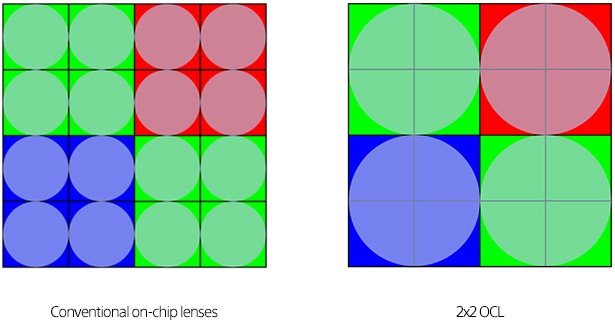
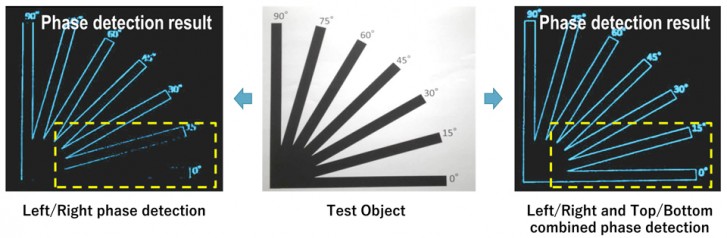
Image sensors, especially ones with small pixels like in smartphones, feature an on-chip micro lens array to help guide all the arriving light to the sensor’s photo diode. Right now, each pixel gets its own lens, but Sony has developed a way for four adjacent pixels to share a lens. Compared to past tech, cameras will be twice as accurate when seeking focus. This system is enabled with the just-revealed Sony 2×2 On-Chip Lens Solution (OCL) for future mobile image sensors.
Sony first revealed their 2×2 OCL mobile camera tech two days ago and was described as follows: “The 2×2 On-Chip Lens (OCL) solution is a new image sensor technology for achieving high-speed focus, high-resolution, high-sensitivity, and high dynamic range.” Where the best Sony Quad Bayer sensors had an on-chip lens for each individual pixel, this new solution uses one on-chip lens for each four adjacent pixel set.
The main advantage of this design setup will be improved autofocus performance, especially in the dark. PDAF (Phase detection autofocus) relies on focus pixels whose output is not part of the final image – which means they have to be spaced out, reducing the coverage. With 2×2 OCL, all pixels can be used as part of the focus detection system. This also solves a related issue where low horizontal detail negatively affects the AF system’s performance.
As for when it’s coming to consumers, don’t expect it too soon. The 2×2 On-Chip Lens Solution (OCL) was only revealed days ago. Sony did not specify where this newly-revealed tech would be released first. It’s not likely we’ll see this in early 2020 – but it wouldn’t be a bad bet to see it in smartphones in the latter half of the year.
Oppo has already confirmed that it will be hosting a launch event on 26th December in China where the company will officially launched the upcoming Oppo Reno3 series smartphones with 5G connectivity support.
The company has already revealed some of the key features and specifications of the smartphone. It is already known that both the Reno3 and Reno3 Pro will be the first devices from Oppo to have dual-mode SA/NSA 5G support.
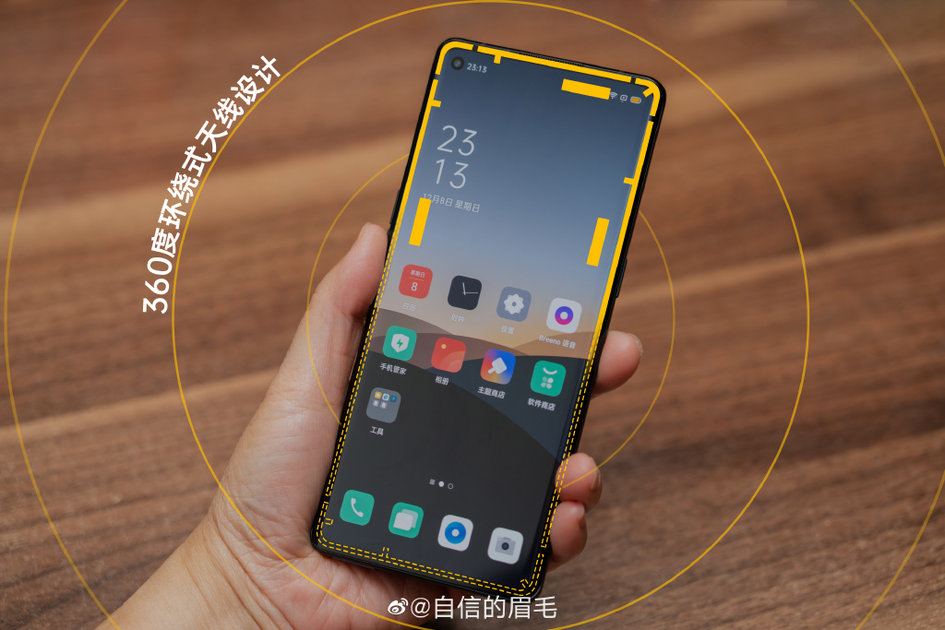
Now, Oppo’s Vice President Shen Yiren has shed light on the phone’s antenna design. He has revealed that the smartphones will come with a 360-degree surround antenna design which will help keep the signal stable even when playing games or doing other things.
With the use-case of the smartphones changing, mobile manufacturers are coming up with new designs for antenna to make sure that the phone-holding pattern of the user doesn’t mess with the signal reception, a phenomenon known as “death grip”. And this offering from Oppo is in line with that.
It is also said that the phone will intelligently switch between 4G and 5G connections, depending on what you’re doing, the internal temperature and battery consumption. For example, launching a video will put the modem in 5G mode so that it can pre-load the video and start playback as quickly as possible.
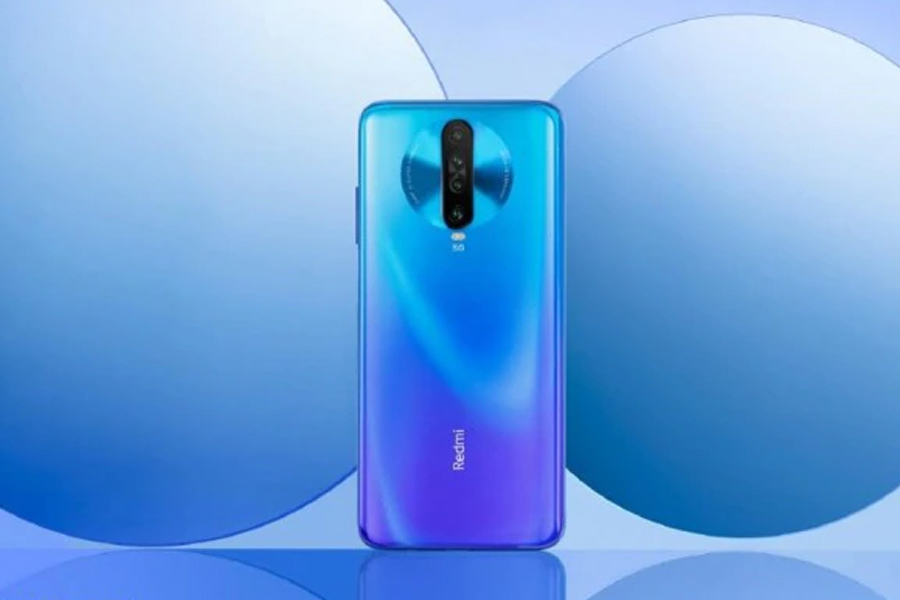
Recently launched Redmi K30 smartphone also comes with an unusual 12 antennas, which is about 2.4 times the number that is found in 4G smartphones. The company also mentioned that it is now using a new structural design and complex RF solution to make 5G signals stronger and much more stable.
Since the company has revealed almost every major feature for the upcoming smartphones, only the variants and pricing details remain to be seen, which will be revealed during the launch event in the coming days. Oppo will also launch its Enco Free TWS earbuds at the same event.
Counterpoint has released the report for the online smartphones sales in the third quarter of 2019 in China. The list is led by Huawei and its sub-brand Honor. The combined sales of Huawei and Honor have exceeded the total market share of Apple, Xiaomi, OPPO and Vivo.
According to Counterpoint’s survey, Huawei held a market share of 26 percent in Q3 and Honor had a market share 20 percent. The dual brand strategy allowed Huawei to account for 46 percent of the online market share. Xiaomi, Vivo, Apple and OPPO held 14 percent, 10 percent, 9 percent and 5 percent market shares respectively in Q3 2019. These four brands together constitute for 38 percent online market share.
Counterpoint claimed that Huawei has continuously aimed the high-end smartphone market with its P and Mate series of smartphones. The sales of its high-end phones have been consistently increasing year after year. The Huawei P30 and P30 Pro was found to be the only hot-selling Android phones in the high-end smartphone in Q3 2019 in China. Apart from its flagship products, the Nova 5 series, Enjoy 9 and Enjoy 9 Plus have also met with good reception in the online market.
Honor has been mainly targeting the youth and online market. The Honor 9X is one of the bestselling phones in the online market. The Honor 20 and Honor 20i phones are also selling well in China.
At the beginning of the year, Xiaomi had an online market share of 20 percent. Hence, its current standing of 13 percent is a significant decline. Vivo ranked with fourth with 10 percent market share. In Q1 2019, Apple had held 9 percent online market share. In Q3, it has ranked fifth with the same market share. OPPO’s market share of 5 percent in online sales is quite low compared to the major brands.
Counterpoint is of the view that Huawei, Honor and Apple will be the main winners in the online market share of China in Q4 2019. The Huawei-Honor dual brand strategy may allow them to account for half of China’s online market. The arrival of 5G phones in the Chinese market at the end of 2019 will certainly help in driving more smartphone sales in the Chinese market.
Xiaomi not only brings new smartphones in the Indian market but also keeps pushing new models of its smart TV as well. The company is using the same strategy for TVs in India as of smartphones, offering new technology at cheaper prices.
These efforts from the Chinese company have proved fruitful and this time again, Xiaomi is leading the Indian Smart TV market. As per the report from IDC, Xiaomi’s Mi TV holds about 33 percent of the market share when it comes to Smart TVs in India.
Following Mi TV range in India in the second spot is Samsung India with a market share of 14 percent. LG sits at third with a share of 13 percent whereas Sony gets a share of 10 percent in the smart TV space. TCL sat last in the top five with a share of 9 percent.
The report also reveals that the Xiaomi Mi TV range has seen Quarter-on-Quarter growth of 46 percent and a Year-on-Year growth of 69 percent. In addition, the report shows that the Mi TV market share is 19 percent greater than Samsung, 20 percent higher than LG and Sony, and 24 percent higher than TCL.
Xiaomi is offering a massive range of Mi TV models in the Indian market, pretty much at every price point. The base models of the Mi TV 32-inches start from as low as ₹13,000 (approx. $184) and the entry-level 4K smart TVs starts from ₹24,999 (~$354). The most premium model, which is the 65-inch Mi TV 4X, is currently selling for ₹65,999 (~$934) in India, which is also the cheapest 65-inch smart TV you can buy in India.
Apart from the pricing, another major selling point for the Mi TVs in India is that all the models run on Google Certified Android TV operating system. It comes pre-installed with the company’s own Patchwall 2.0 custom user interface, which is a modified interface bringing content from various OTT platforms.
Recently, the Mi TV models have also gained support from Netflix and Amazon Prime Video. The latest launch in the Mi TV series is the Mi TV 4X 55-inch 2020 edition that comes with a 4K HDR display and native support for Netflix as well as Amazon Prime Video. The company has said that Mi TVs are available for purchase across 70+ Mi Homes, 20+ Mi Studios, 2,500+ Mi Stores, and several Mi Preferred Partner outlets in India.
The ever increasing competition is making it difficult for users to choose between the different laptops based on features. Like the smartphone market, laptops from the Chinese companies are excelling in the industry due to their cost-effectiveness and powerful hardware. XIDU is also coming with a new XIDU Tour Pro laptop featuring high-end specifications at low-cost. We have got a detailed spec sheet for the new laptop, and it is as follows.
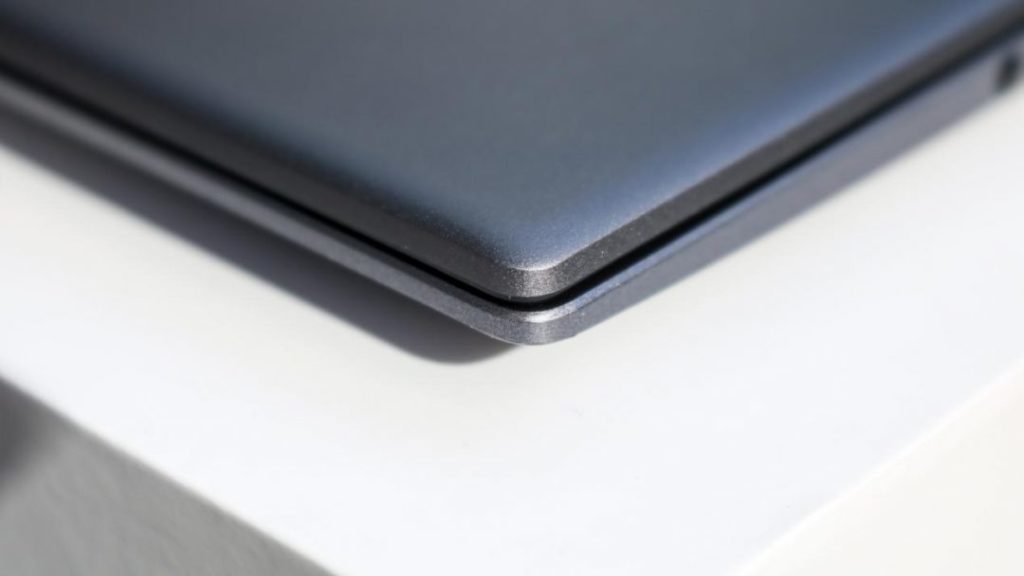
First things first, the Xidu Tour Pro features a Magnalium body giving a metallic texture and well-proportioned color coating. It brings out the best look matching the premium Apple laptops. The well-defined chassis of the Xidu Tour Pro is carved using micro-arc cutting technology. The laptop’s well-proportioned design best fit for the businessmen and other users who found it fascinating.
The sublime surface provides exquisite and extravagant experience without any extra cost. The excellent process behind the polishing is making it compete against Apple’s laptop segment.
The lightweight Xidu laptop resembles the proper feeling of carrying Mackbook Pro. It envelopes the quality of attracting consumers.
The body size measured at 290 x 210 x 15.2 mm that corresponds to A4 page size. The company has made significant attempts to make room for hardware in such a small-sized laptop. The ethos and the craftmanship spirit of the company enable the company to accomplish an intricate design.
The XIDU Tour Pro stands out against the laptops priced under $500.
Keyboard
The beautifully crafted keyboard carries quite soft keys for comfortable typing. The full keyboard design enhances the exquisite surface control while maximizing the spacious feeling. The backlit keyboard will help you type quickly in the dark environment.
Rear
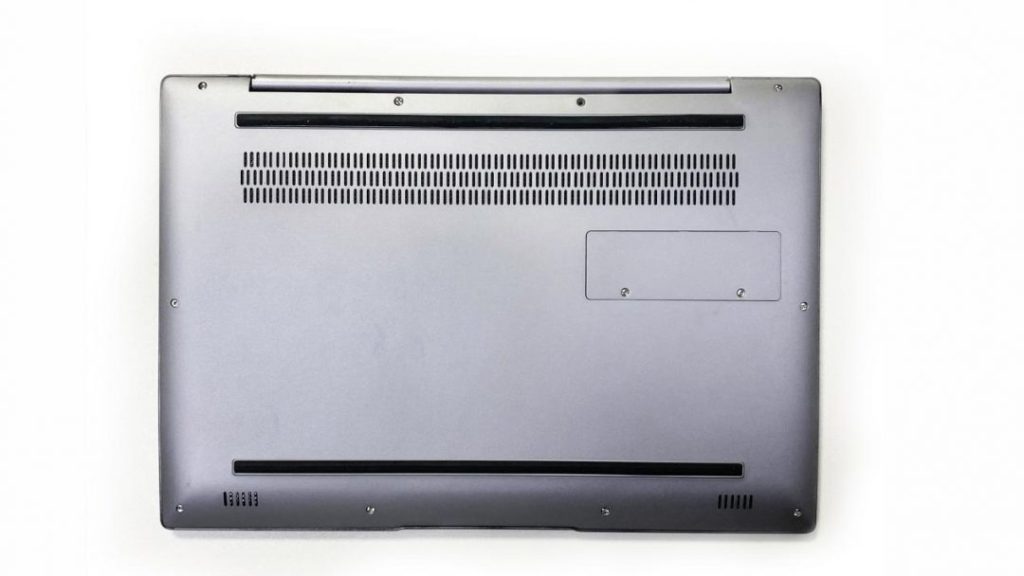
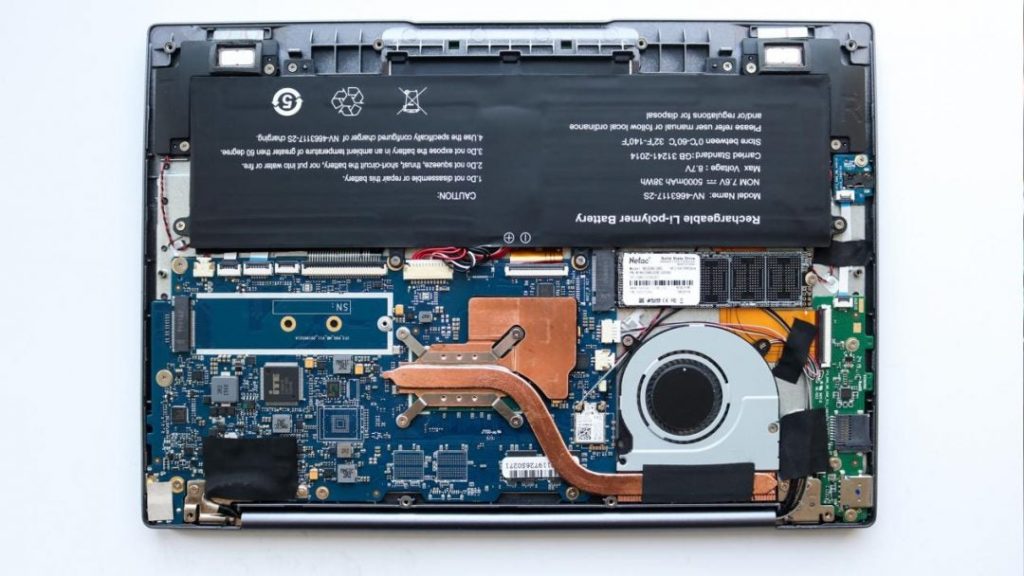
The rear tray is efficiently designed to disperse the accumulated heat without any additional accessory requirement. It is recommended to keep the processor and other hardware cool. Otherwise, it may lead to performance degradation or can sometimes even damage the hardware components. The XIDU Tour Pro laptop hosts adhesive tapes to dissipate heat generated from CPU.
The speaker engraving are perfectly placed for a beautiful and ecstatic sound. Moreover, the user can easily upgrade RAM, SSD, and spindle all the hardware equipment by just opening the base tray from the rear. The SSD SATAM.2 2280 can be expanded upto 1TB.
Ports
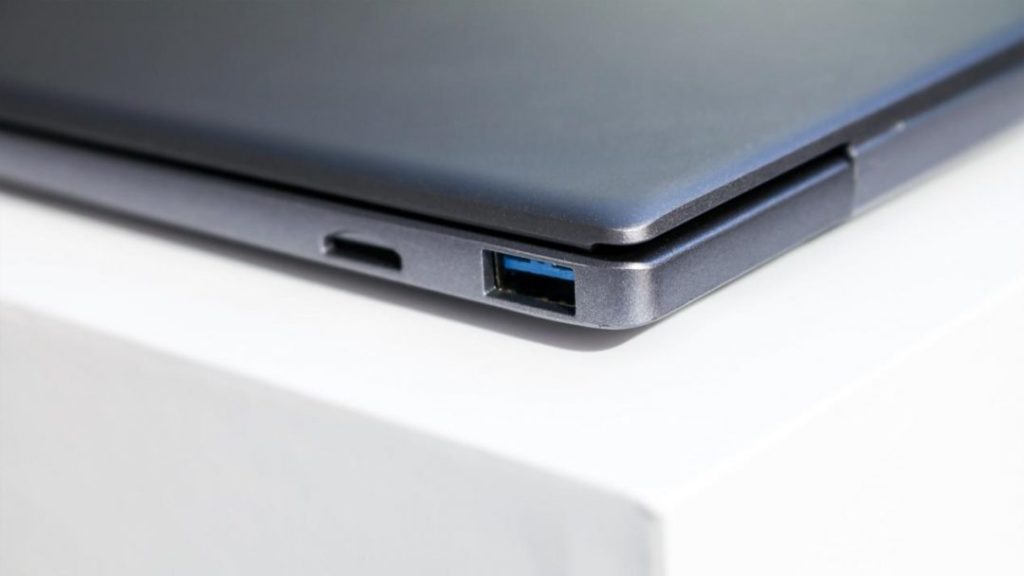
It supports all the necessary Input devices, and the new laptop has an abundance of ports. The laptop features all the essential input/output ports for convenient usage.
Connect the RJ-45 to the local broadband line and extended USB or Type-C.
Display
The XIDU Tour Pro laptop features a 12.5-inch finger touch display supporting 16:9 aspect ratio with the display resolution of 2560×1440 pixels. It offers a 280-degree viewing angle for vivid and broader viewing experience.
The minimal bezels of 4.2mm give it a better look and at the same time, protects the touch display from edges. It even enhances the overall design with a sturdy look.
XIDU Tour Pro Specifications
CPU
The 8th-gene 3867 Kaby Lake R Dual Core Dual Thread 15W 14nm 1.8GHz
Sensor
3-axis G-sensor
GPU
Graphics 610 300-900MHZ
Battery
5000mAh 7.6V 4-6h duration
RAM
8GB LPDDR3
Input Power
DC3.5 port 19V/2.1A
ROM
128G M.2 SATA 2280
TF Card Interface
1*micro SD card up to 128G
Expandable SSD
1T SSD M.2 SATA 2280
Camera
1M
Flip Angle
180°
Speaker
Dual Speaker: 8R/1W*2
Microphone
Built-in microphone
WIFI
WIFI 802.11 a/b/g/n/ac
2.4G/5G
Port
DC3.5 TYPE-C*1,USB3.0*1,audio 3.5mm
Bluetooth BT
4.2
Heat
1 fan + 1 copper pipe
Ethernet
No ports, support USB to Ethernet
Power Consumption TDP
15W
Screen Size
12.5-inch 16:9
Keyboard
Backlit Keyboard
Screen Resolution Ratio
2560*1440
Fingerprint Identification
Yes
Screen Touch Technology
GFF, 10-finger Touch
The Overall Laptop Size
290mm*210mm*15mm
XIDU Tour Pro Vs. the Rest
Name
XIDU Tour Pro
ASUS C302CA-DHM4 Chromebook Flip
Google Pixelbook 12.3
Lenovo Yoga 720 12.5"
HP 2-in-1 12.3"
Samsung XE510C25-K01US 12.3
Apple MacBook 12"
Price
$427.27
$ 420
$ 949
$ 599
$ 460
$439
$ 1,199.00
Dimensions
290mm*210mm*15.2mm
304.8*210.8*13.7mm
289.56*220*11.2mm
292*203*15.2mm
292*210*7.62mm
280.5*196.5*(3.5-13.1)mm
Keyboard
Backlit Keyboard
No Backlit Keyboard
No Backlit Keyboard
No Backlit Keyboard
No Backlit Keyboard
Backlit Keyboard
Backlit Keyboard
Design
Narrow Border
Thick border causes that the length exceeds 14mm
Thick Border
Thick Screen Border
Thick Border
Display/RAM + Storage
2560*1440 8+128
1920*1080 4+64
2400*1600 8+128
1920*1080 4+128
2400*1600 4+32emmc
2400x1600 4+32emmc
2304*1440 8+512
XIDU Tour Pro is a perfect fit as a laptop under $500. It can be purchased from Amazon US, UK, FR, IT, ES stores at nail-biting prices. Lastly, it’s also available on Aliexpress while you can get coupons for more XIDU devices here. You can also cross-check the official Xidu Store for the best prices on XIDU laptops and other services.
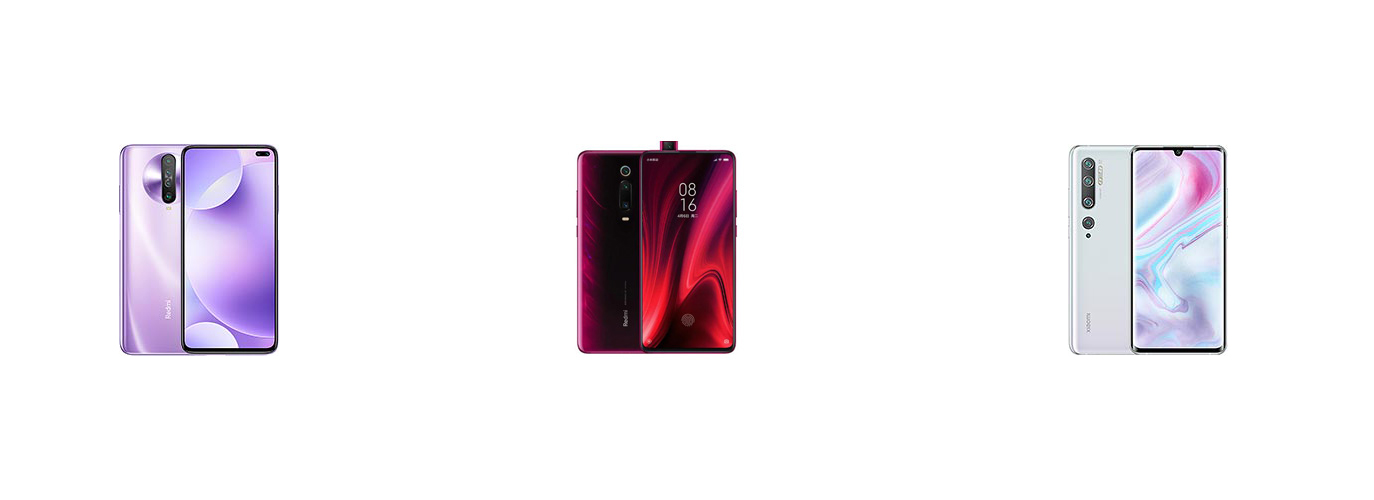
Xiaomi just came up with the Redmi K30 series: the first smartphones line-up from its sub-brand to include a 5G device. We are talking about the Redmi K30 5G, which is also the world’s first smartphone with Snapdragon 765G. Unlike other 5G devices, it is not a flagship. Just like the Xiaomi Mi CC9 Pro, which does not come with 5G but features the most impressive camera department. For this new comparison, we chose the Redmi K30 5G, the Mi CC9 Pro, and the latest flagship from Redmi since now it carries a very affordable price: Redmi K20 Pro, also known in the global market as the Mi 9T Pro.
Xiaomi Redmi K30 5G vs Xiaomi Redmi K20 Pro vs Xiaomi Mi CC9 Pro
Xiaomi Redmi K20 Pro
Xiaomi Redmi K30 5G
Xiaomi Mi CC9 Pro
DIMENSIONS AND WEIGHT
156.7 x 74.3 x 8.8 mm, 191 g
165.3 x 76.6 x 8.8 mm, 208 grams
157.8 x 74.2 x 9.7 mm, 208 g
DISPLAY
6.39 inches, 1080 x 2340p (Full HD+), Super AMOLED
Quad 64 + 8 + 2 + 2 MP, f/1.9, f/2.2, f/2.4 and f/2.4
Dual 20 + 2 MP f/2.2 and f/2.4 front camera
Penta 108 + 12 + 5 + 20 + 2 MP, f/1.7, f/2.0, f/2.0, f/2.2 and f/2.4
32 MP f/2.0 front camera
BATTERY
4000 mAh, fast charging 27W with Quick Charge 4.0
4500 mAh, fast charging 30W
5260 mAh, fast charging 30W
ADDITIONAL FEATURES
Dual SIM slot
Hybrid Dual SIM slot
Dual SIM slot
Design
Each of these devices adopts an innovative design solution and comes with at least one distinctive aesthetical feature. Redmi K30 5G is the first Redmi device with a punch-hole display, which minimizes the bezels without the need for a notch. Redmi K20 Pro sports a pop-up front camera, so it has a full borderless display with no notch nor holes. Xiaomi Mi CC9 Pro comes with a notch, but it has an elegantly curved display. In each case, you get a high build quality, so it is all a question of tastes. Which one would you pick?
Display
While these smartphones differ for the size and the form factor of their displays, they all feature very nice panels. If you desire the best color reproduction, then you would better go for the Redmi K20 Pro since it offers full DCI P3 coverage and HDR10. Even Xiaomi Mi CC9 Pro has an amazing display with high DCI-P3 coverage and HDR10, but Redmi K20 Pro looks slightly better. On the other hand, Redmi K30 5G offers a 120 Hz refresh rate for smoother user experience, but it packs a classic IPS display that may not satisfy everyone (the fingerprint reader is side-mounted).
Hardware/Software
Redmi K20 Pro is the most valid smartphone since it is the only one with a flagship-class hardware side. Indeed, it packs a Snapdragon 855 chipset paired with up to 8 GB of RAM and UFS 2.1 internal storage for faster performance. Both Redmi K30 5G and Xiaomi Mi CC9 Pro feature upper-midrange processors, but they are still very performing for multi-tasking, heavy apps, and even gaming. Note that Redmi K30 5G is the only to support the 5G connectivity and it packs a Snapdragon 765G SoC which is better than the Snapdragon 730G found on the Xiaomi Mi CC9 Pro. Redmi K30 5G is also the only one to run Android 10 out of the box.
Camera
Xiaomi Mi CC9 Pro offers the best camera quality thanks to its penta-camera including a 108 MP main sensor, 5x optical zoom, and OIS. It is not only the winner of this comparison, but it is also one of the best camera phones in the market. It is one of the best devices to shoot photos in low light conditions, for zoom, and more. It even comes with an excellent front camera. Redmi K30 5G takes second place with its 64 MP quad camera and a dual front camera including a depth sensor.
Battery
Xiaomi Mi CC9 Pro packs a bigger 5260 mAh and it offers a longer battery life. Despite its huge capacity, it charges very quickly thanks to its 30W fast charging technology. The silver medal goes to Redmi K30 5G packing a 4500 mAh battery and still the same 30W fast charging technology. Redmi K20 Pro has a smaller 4000 mAh battery, but it still lasts long on a single charge.
Price
The Redmi K30 5G just debuted in China with a €260/$289 starting price. Xiaomi Mi CC9 Pro starts from €370/$410, while Redmi K20 Pro has a €320/$355 starting price. There is not a definitive winner here: if you want the 5G connectivity you should obviously choose the Redmi K30 5G which is the only affordable Android phone with a 120 Hz refresh ratio. Redmi K20 Pro wins only when it comes to performance, while Xiaomi Mi CC9 Pro is the best at camera quality and battery life.
The Huawei Mate 30 Pro is set to go on sale in Spain on Friday, December 13. Pre-orders are already live on the major retail sites and there is a pretty nice free gift for those who pre-order.
The Mate 30 Pro sold in Spain is the 8GB RAM + 256GB version and it is priced at €1099. The MediaPad M6 10.8-inch shipping with the phone is the Titanium Gray 64GB version with 4GB of RAM. PCComponentes says if you order today, you can get your order tomorrow while MediaMarkt says the available stock is limited. So we advise you to hurry if you don’t want to miss out on this deal.
Do note that both devices do not ship with Google Mobile Services but there are ways to get it installed. If you do not use GMS, the better for you. The Mate 30 Pro and MediaPad M6 ship with the Huawei App Gallery where you can download some of the apps you need. You can also download apps from other trusted sources.
The MediaPad M6 actually sells for €349, which means you are practically paying €750 for the Mate 30 Pro.
The MediaPad M6 has a 10.8-inch 2560 x 1600 display. It is powered by the Kirin 980 processor and comes with 4GB of RAM and 64GB or 128GB of expandable storage. It also has a 13MP rear camera, an 8MP selfie camera, quad speakers tuned by Harman Kardon, and packs a 7500mAh battery.
The Mate 30 Pro, on the other hand, has a 6.53-inch 1176 x 2400 display with a notch at the top. It is powered by the Kirin 990 processor with 8GB of RAM and 128GB or 256GB of expandable storage. The flagship phone has 40MP + 40MP +8MP + 3D ToF quad rear cameras, 32MP + ToF dual front-facing cameras, face ID, NFC, and an in-display fingerprint scanner. Its battery capacity is 4500mAh and it has support for 40W fast charging, 27W wireless fast charging, and reverse wireless charging.
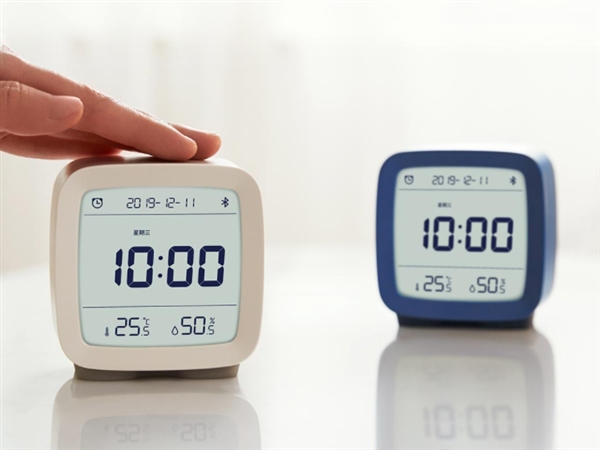
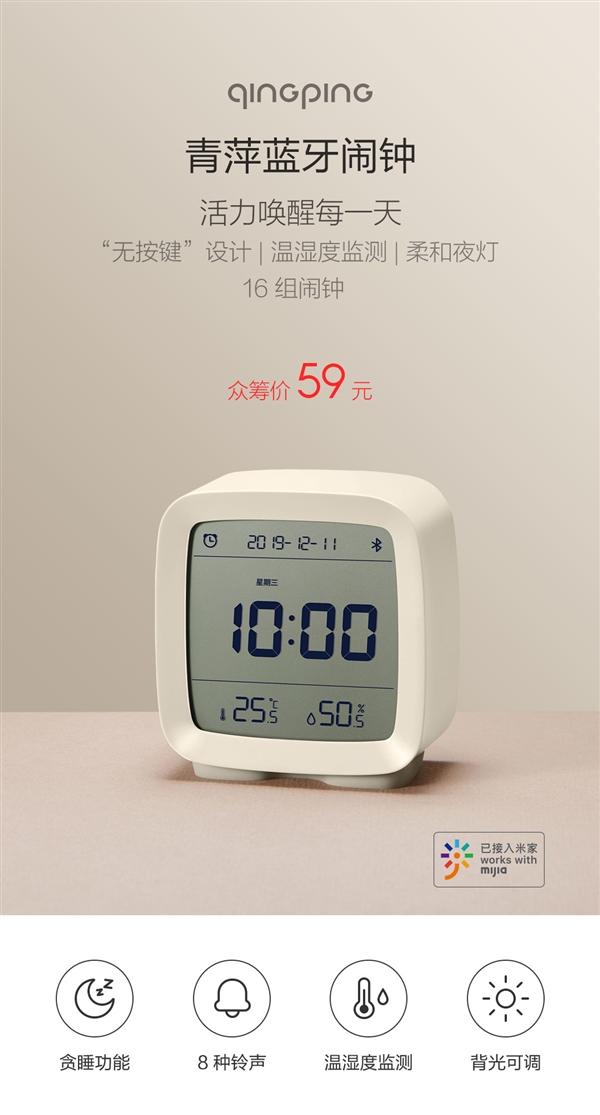
Xiaomi‘s Youpin crowdfunding platform has played host to a new product. The product is the Qingping Bluetooth alarm clock and it hits with an amazing 59 yuan ($8) price tag. The gadget is expected to start shipping in China starting from January 14, 2020.
The Qingping Bluetooth alarm clock adopts a simple, yet elegant design with no physical button on sight. Instead, when the body is pressed, the part around the soft rubber base goes inside. The Snooze function can be activated in this way and it lasts for 10 minutes. Pressing the body twice turns off the alarm.
The alarm clock is equipped with Bluetooth connectivity with which it can be paired with a smartphone. When it is paired, the alarm clock automatically synchronises the time with that of the clock. As an alarm clock, it gives users the leverage to set up to 16 different alarms. There are 8 different ringtones and the volume of the alarm speaker is adjustable.
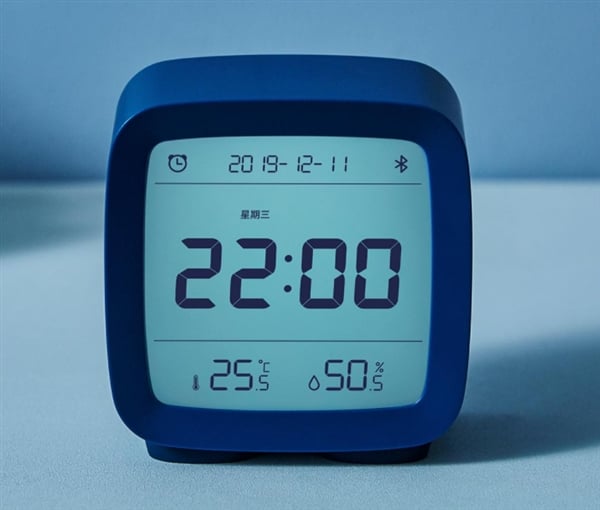
Apart from the alarm function, the clock also features temperature and humidity detection. For the temperature, there is a Swiss Sensirion sensor with a measuring accuracy of ± 0.2 ℃. The humidity measurement accuracy is ± 2% RH. At these levels, the gadget can detect temperature and humidity changes efficiently.
The Alarm clock also comes with a back-lit display with adjustable intensity. The brightness is adjusted automatically. For instance, the brightness is automatically reduced to 50% from 10 pm to 7 am. The backlight time is also adjustable from completely off to 30 seconds. With this option, it is not dazzling at night and can be seen clearly during the day.
Further, the Qingping Bluetooth alarm clock can be paired with other MIJIA smart home gadgets via the MIJIA app. With such interconnectivity, the electric heater can be automatically turned on when the temperature is lower than 20 ℃ for instance. This will help maintain the indoor temperature and humidity.
Huawei is known to launch its phones under different names in different markets. There are multiple examples we have mentioned in the past, so we won’t list them again. A new leak from a source known for Huawei-related news has revealed the upcoming Huawei P40 Lite is a familiar device that has already launched.
The leakster who goes by @RODENT950 on Twitter posted a tweet today that said the Nova 6 SE which launched last week, is the same device as the Huawei P40 Lite.
He also includes a press render of the phone which shows the phone in black. This one of the color variants the Nova 6 SE is available in.
Huawei will most definitely announce the phone in other colors but we hope that the other colorways are different from that of the Nova 6 SE.
The Nova 6 SE has a 6.4-inch FHD+ LCD display with a punch hole at the top left corner. It is powered by the Kirin 810 processor and is paired with 8GB of RAM and 128GB of storage.
The primary rear camera is a 48MP sensor and it is paired with an 8MP ultrawide angle camera, a 2M macro camera and a 2MP depth sensor. There is a 16MP sensor inside the hole in the display.
The Nova 6 SE also packs a 4200mAh battery with support for 40W fast charging. It has a side-mounted fingerprint scanner, an audio jack, a USB Type-C port, and Dual-SIM support. Huawei ships the phone with EMUI 10 based on Android 10.
The above should be the same specs of the Huawei P40 Lite but there is a chance we may get more RAM and storage variants.
The Huawei P40 Lite is expected to launch before its siblings. However, the phone may ship without Google Services in markets outside China if Huawei is still banned by the time it launches.
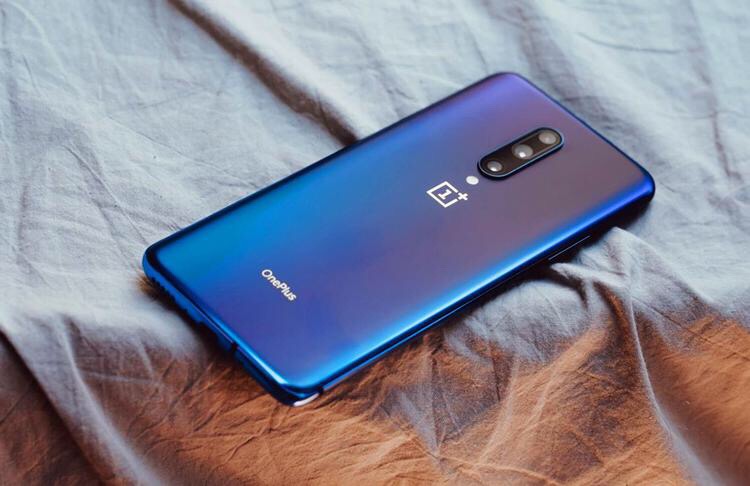
OnePlus is rolling out a new update to the OnePlus 7 and OnePlus 7 Pro. The changelog for the new update says it brings November 2019’s security patch.
The new update which arrives as OxygenOS 10.0.3 also improves system stability and fixes some bugs. OnePlus says it is a staged roll-out, so not everyone gets it at the same time. It is also stated that using a VPN may not work since the roll-out is not based on regions but is random.
Oneplus 7 pro
A staged roll-out is done so that the manufacturer can confirm if there are no critical bugs. Once that has been done, then a wider roll-out is carried out. However, quite a number of folks do not like to wait which prompts them to find ways to get the update immediately.
The OnePlus 7 and OnePlus 7 Pro were announced in May 2019. Both phones are powered by the Snapdragon 855 processor. However, their similarities do not go beyond that.
The OnePlus 7 Pro has a larger and sharper display with a 90Hz refresh rate and also has a pop-up selfie camera which means there is no notch or punch-hole. It also has triple rear cameras, a bigger battery, and a faster fast charge technology.
The OnePlus 7 has a display with a notch and a standard 60Hz refresh rate, dual rear cameras, a 3700mAh battery and support for 20W fast charge.
Xiaomi‘s ecological chain company Aqara has finally reveal when it would make its maiden entrance into the lucrative US market. The company has shared a couple of teasers on its official Twitter handle which shows the US launch is scheduled to hold on December 17. There won’t be any special event but the product will get an official listing on Amazon US on that day.
The teaser poster shows that the Aqara Smart Home Starter Kit will be among the first batch of gadgets to hit Amazon’s online store shelves. The starter kit is a bundle made up of the Aqara Hub, Aqara Smart Plug, Door and Window Sensor, Motion Sensor and Wireless Mini Switch. The company will also sell the Aqara Vibration Sensor, Flood/ Water leak sensor and Aqara Temperature and Humidity Sensor.
One interesting part of these products is that they are compatible with Apple HomeKit, while the Smart Plug and Aqara Hub are compatible with Google Assistant. In addition, the Aqara Hub, Motion Sensor, Humidity and Temperature Sensor, Door and Windows Sensor and Smart Plug are compatible with Alexa.
Aqara has got a whole lot of smart home gadgets as well as IoT kits and gateway hub. The products are mostly very popular as a result of their build quality, vital functionality and extremely affordable pricing.
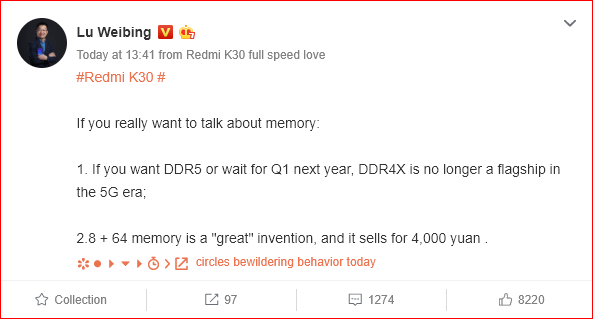
Since the launch of the Redmi K30 yesterday, Redmi‘s GM Lu Weibing has been responding to inquiries by fans on some of the features they expected to be onboard the Redmi flagship. One of such inquiry seems to be on the lack of an LPDDR5 RAM on the flagship.
Responding, Lu Weibing stated that we’ll have to wait until the first quarter of 2020 to get a DDR5 RAM. He further stated that using the present generation of LPDDR4X memory in the 5G era was no longer feasible. This statement seems to suggest the K30 5G version will come with an LPDDR5 memory since it is billed to be released in Q1 2019. However, the Redmi K30 was announced with 6GB/8GB LPDDR4X1866MHz dual-channel memory. It also packs UFS 2.1 64GB/128GB/256GB flash memory.
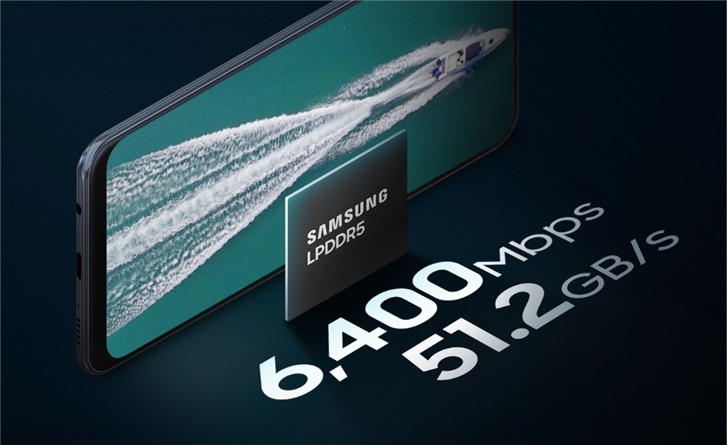
Samsung Electronics announced the mass production of the industry’s first 12Gb (Gigabit) LPDDR5 mobile DRAM targeted at 5G and AI-powered flagships in July this year. The new 12Gb LPDDR5 DRAMs have an increased data rate of 5,500 megabits per second (Mb/s), which is 1.3 times LPDDR4X’s 4266 Mb/s data rate. This also means that a 12GB RAM package is able to transfer 44GB of data in a second. Samsung adds that the new chip consumes up to 30 percent less power than its predecessor, thanks to new circuit design.
The Galaxy Note 10 was expected to be the first model to feature the LPDDR5 DRAM but that did not happen. The Galaxy S11 may take that honour. n the same vein, we expect the Mi 10 flagship to be Xiaomi’s first LPDDR5 model if the Redmi K30 5G misses out on the technology.
Apple has started a wave of update rollouts for its iOS, iPadOS, tvOS, and watchOS software platforms. These updates bring a lot of new updates and fixes across the Cupertino-based company’s product ecosystem. For the iPhone, iOS 13.3 has been rolled out while the iPad receives iPadOS 13.3. Alongside this, even the watchOS for Apple Watch and tvOS for its Apple TV received an update as well.
The New iOS 13.3 & iPadOS 13.3
Apple has rolled out updates for two of its most popular platforms, namely the iPhone and iPad, in just under a month. Previously, the company had freshly introduced iOS 13.2.3 and iPadOS 13.2.3. The new update also brings many bug fixes and performance optimizations but also adds new features to the devices as well.
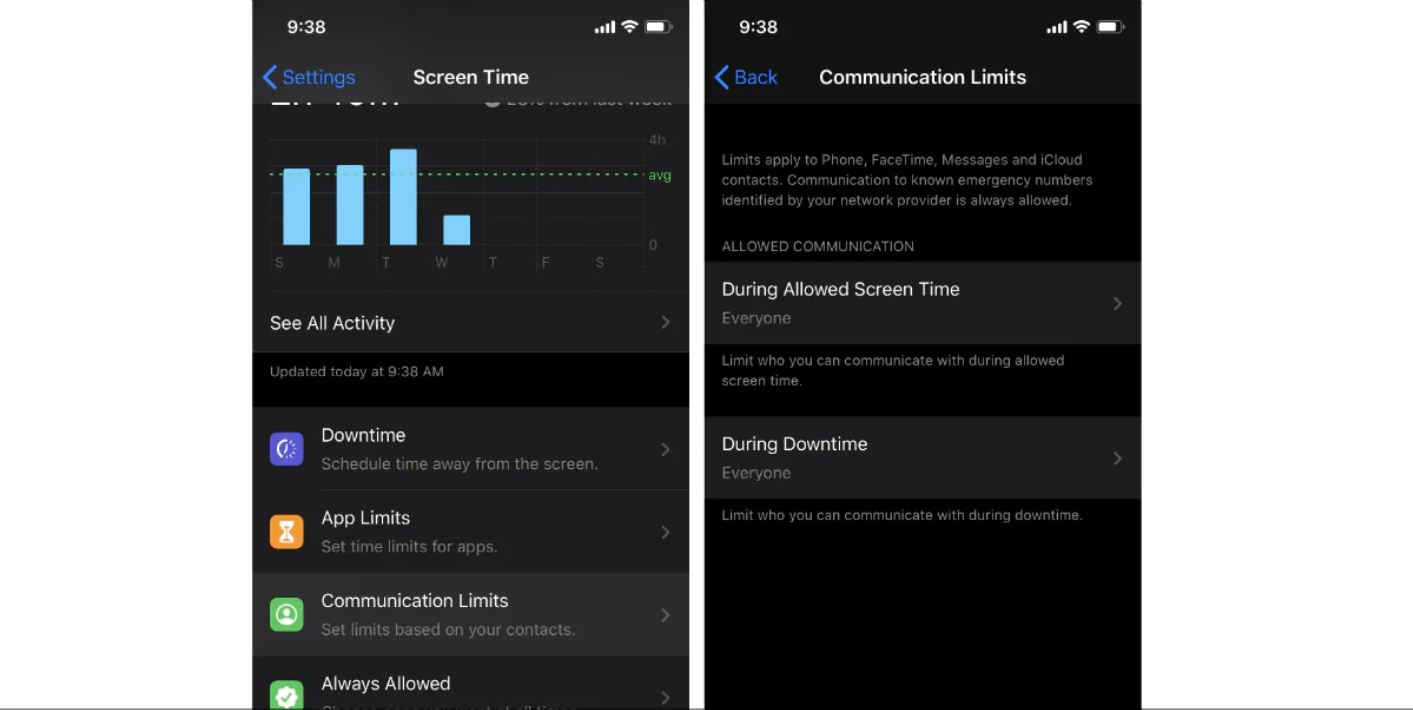
iOS 13.3 & iPadOS 13.3 Screen Time feature for the iPhone and iPad
One of these is the new Parental control which provides additional communication limits to parents. This lets parents choose who their children can call, message or FaceTime. The new additions are an extension of the Screen Time feature which was introduced back in iOS 12 last year and lets parents directly manage contacts from their children’s devices. For those looking for this feature, it can be found through the Communication Limits section from the Screen Time settings.
Additionally, iOS 13.3 and iPadOS 13.3 brings support for NFC, USB, and Lightning FIDO2-compliant security keys. This can be used for securely browsing websites on Safari and other platforms like Dropbox, Facebook, Gmail, and Twitter. In other words, the update adds a physical security key to your iPhone and iPad which allows for better account privacy and protection across social media and emails.
Those seeking to update their iPhones and iPads can check if their devices have any pending updates by going to Settings>General>Software Update. Note: Make sure to have your device connected to a Wi-Fi and that it has an ample supply of battery life remaining.
iOS 13.3 Changelog for the iPhone
The New tvOS 13.3 and watchOS 6.1.1
Alongside the iPhone and iPad update, Apple also rolled out software upgrades for its Apple TVs and its Apple Watches. tvOS 13.3 brings new settings that allow users to bring back the “Up Next” queue to your Apple TV home screen which was removed in tvOS 13. Now, users can switch between showing “What to Watch” and “Up Next” section.
Lastly, Apple launched watchOS 6.1.1 for every compatible Apple Watch models. The new update claims to provide “important security updates” but apart from this, it doesn’t bring any notable changes.
To download tvOS 13.3, users have to open Settings>System>Software Updates. For watchOS 6.1.1, users must look for My Watch Tab on the Watch app which is available in the iPhone and then visit General>Software Updates. Note: Your Apple Watch should have at least 50 percent battery life remaining or charge it when updating.
LG announced its latest Gram series laptops today that are touted to set a new standard for portable computing. According to the South Korean tech giants, these laptops adhere to the company’s winning formula of combining portability and performance with extended battery life. LG announced four variants of the device, including the Gram 14, Gram 15, Gram 17, and Gram 2-in-1. Powering the Gram series is a 10th generation Intel Core processor.
2020 LG Gram Specifications and Features
The LG Gram 14 (model number 14Z90N) and the Gram 2-in-1 (14T90N) flaunt 15-inch full-HD+ displays. With the only difference being the Corning Gorilla Glass 6 certified touch-sensitive screen on the 2-in-1. The Gram 15 (15Z90N) flaunts a 15.6-inch display with a resolution of 1920 x 1080 pixels. While the Gram 17 (17Z90N) features a quad-HD display with a resolution of 2560 x 1600 pixels. The Gram 17’s display is the only one in the lineup to flaunt an aspect ratio of 16:10. The other three displays feature an aspect ratio of 16:9.
At the heart of the Gram series is a 10th Generation Intel Core processor with up to 16GB of DDR4 RAM, and dual SSD M.2 slots. While the users can choose between UHD and Intel Iris Plus graphics on the Gram 14, 15 and 17. The Gram 2-in-1 is only available with Intel UHD graphics. The Iris Plus graphics promise a smoother gaming experience. LG claims users will be able to edit 4K videos on-the-go with the new Gram series laptops.
While the Gram 14 and Gram 2-in-1 feature 72Wh batteries, the other twolaptops draw power from an 80Wh unit. LG has fitted the 2020 Gram series with a Mega Cooling System that helps maintain core temperature even under heavy load. The 2020 LG Gram series sports a backlit keyboard, while connectivity options include USB Type-C, a couple of USB Type 3.1 ports, Wi-Fi 6, microSD and UFS slots, HDMI port, and 3.5mm headphone/mic combo port. Additional features include DTS X Ultra audio enhancement and a fingerprint scanner. LG Gram laptops are MIL-STD-810G compliant, making them highly resistant to harsh climatic conditions.
LG plans to launch the Gram series alongside its other products at CES 2020, which is scheduled between Jan. 7 and 10. Additional information including pricing is expected to be confirmed at the event.
Realme has confirmed that it will be launching the Realme X2 smartphone in India on Dec. 17 at 12:30PM IST. Ahead of the launch, the Chinese manufacturer has started a Booster sale for buyers of the Realme X2. Customers who participate in the Booster sale offer will be provided with a Rs. 500 discount on the pricing of Realme X2.
The Booster sale for Realme X2 will run until Dec. 16. Buyers can visit the official landing page of the Realme X2 and hit the Pay Deposit Now button to pay Rs. 1,000 deposit amount. It requires to users to login with Relme account and then enter the complete address for delivering the handset.
Participating in the Booster sale will ensure 100 percent chance to purchase the Realme X2 phone in advance. The remaining amount of the handset can be paid between Dec. 17 and 24. While paying the remaining amount, users will be provided with Rs. 500 discount.
Realme X2
As of this writing, there is no information available on the pricing of the Realme X2. In China, the Realme X2 was introduced with a starting price of 1,599 Yuan (~$227; Rs. 15,999).
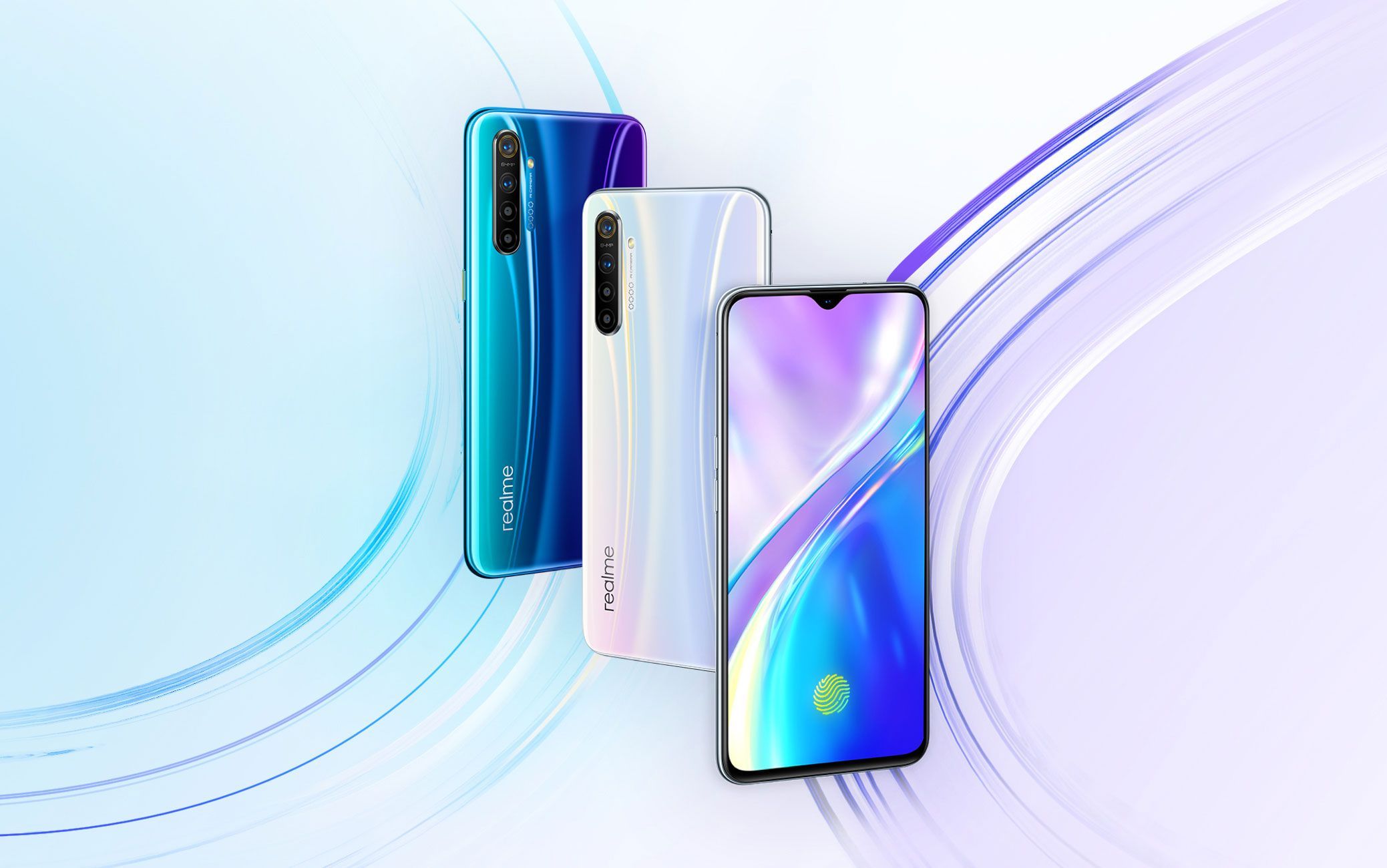
The Realme X2 has a 6.4-inch S-AMOLED display with waterdrop notch that produces 1080 x 2340 pixels full HD+ resolution and 19.5:9 aspect ratio. Shielded by Gorilla Glass 5, the Realme X2’s display is integrated with an in-display fingerprint scanner.
The 8nm Snapdragon 730G mobile platform powers the Realme X2 with up to 8 GB of RAM. It is expected to arrive with up to 256 GB of native storage and carry support for additional storage through a microSD card slot. It would be good to see the phone arrive preinstalled with ColorOS 7 flavored Android 10.
The back panel of the phone features a 64-megapixel + 8-megapixel (ultrawide) + 2-megapixel (macro) + 2-megapixel (depth lens) quad camera system. On its front is a 32-megapixel selfie camera. The handset houses a 4,000mAh battery that supports 30W VOOC 4.0 Flash Charge technology that can full charge the device in 67 minutes.
Realme will be announcing the Realme Air Buds alongside the Realme X2 smartphone on Dec. 17. Rumors have it that it could be priced at Rs. 4,999 and it will arrive with support for wireless charging. Customers who are interested in purchasing the Realme Buds Air can take advantage of Rs. 400 discount coupon. To avail, one needs to purchase any of the following phones such as Realme X2 Pro, Realme XT, Realme 5 Pro, Realme X or Realme X Master Edition. Once purchased, the Rs. 400 discount will be send to the account automatically on Dec. 17 at 10 AM IST.
According to Jones Chen, Chairman of GSEO (Genius Electronic Optical), the supply for mid range and high end smartphone’s camera lens module falls short of its increasing demand. The optical lens maker pointed towards increased complexity and variety in lenses and their trends as a factor in the shortcoming.
Smartphones and their components have become increasingly more complex and difficult to manufacture. Each individual component, especially the lens, requires advanced hardware with precise software to manufacture. Furthermore, it is estimated that the demands from smartphone OEMs for camera lenses will increase even further by 2020. This is due to various companies adopting the new triple or quad camera modules on their smartphones, Chen explained.
OnePlus 7T Pro McLaren Edition With a triple camera setup
Chen further stated that smartphone makers are expected to consistently upgrade lens module specifications; and GSEO hopes this can lead to a hike of its overall gross profit margin. Currently, GSEO specializes in mid range and high end smartphone’s camera lens modules and declines orders with low gross margins. Kuo Ying-Li, President of GSEO, also added that the company has been developing lens modules like waterdrop notch, black-coated, under-screen, OIS (optical image stabilization), periscope and ToF models that offer high gross margins.
Notably, the company also reported on developing automotive cameras, but certification for such products is time-consuming and shipments might not begin until the second half of 2021 or 2022. In other words, we might also be seeing a new breed of smartphone cameras in the near future.
Redmi K30 with a quad camera setup
Kuo also stated that the popularity of camera modules with 10MP or higher sensors have been increasing and now account for almost 47 percent of its entire business operations comprising of NT $8.265 billion for the first three quarters of 2019 (or roughly 271 million USD).
The Nokia C series was pretty popular back in the days when Nokia was still the smartphone king. The series had both smartphones and feature phones, thus making it available for different pockets. Now HMD Global is bringing the series back with the new Nokia C1. The new phone was announced in Kenya today.
The Nokia C1 is an entry-level smartphone targeted at Africa, the Middle East, and Asia-Pacific. With respect to its design, it looks like the Nokia 1 Plus which is also an Android Go entry-level phone. However, there are some design differences.
The Nokia C1 has a hole for the speaker on the back just like the Nokia 1 Plus but the hole is on the left side rather than on the right. The Nokia C1 also has an LED in front alongside the selfie camera. Other than these two differences and of course the slightly different shade of red, you will not be wrong to call this a rebranded Nokia 1 Plus.
With respect to specs, the Nokia C1 has a 5.45-inch FWVGA+ IPS display just like the Nokia 1 Plus. The spec sheet says it is a “toughened glass display”. It has a 5MP f/2.4 rear camera with an LED flash and another 5MP camera with LED too up in front. There is 1GB of RAM and 16GB of expandable storage along with an unnamed 1.3GHz quad-core processor.
Millions of consumers across markets in Africa, Middle East and APAC will upgrade from a feature phone to their first smartphone. Nokia C1 is a smartphone they can trust – bringing quality experiences at an affordable price with 3G connectivity #nokiamobilepic.twitter.com/QibUYWxRTn
There is a dedicated Google Assistant button on the left side of the phone, a MicroUSB port, Dual SIM support (nano only), an audio jack, FM radio, Bluetooth 4.2, and a MicroSD card slot (64GB max). It also has GPS and 2.4GHz WiFi.
HMD Global has cut corners with connectivity by not including support for 4G, so you are limited to just 3G. That is not an issue as the phone is targeted at those who are switching from a feature phone to their very first smartphone.
[envira-gallery id=”294590″]
HMD Global ships the Nokia C1 with Android 9 Pie Go Edition and includes apps such as YouTube Go and Gallery Go. The phone is priced at KES 5,999 (~$60) in Kenya but there is no info on the price and availability in other markets.
Oppo is one of the top 10 most popular smartphone manufacturers in the world. Its success is accredited to the company’s popularity in its primary targets being India and China, which are also the biggest smartphone markets in the world. Now, it is reported that the company is looking to further cementing its base in the former nation by opening a second R&D Centre in the country.
The news arrives after Oppo announced its plans on investing $7 billion in research and development globally in the next three years. The company already has one R&D in Hyderabad, India (largest R&D Center outside of China) and may now also establish a new center, but this time in another city, Bengaluru, according to a senior executive.
Alen Wu, Oppo’s Vice President and President of Global Sales, stated that the company has 6 global institutes and 4 research centers including the one in Hyderabad which the OEM is planning on expanding. Furthermore, the top executive went on to also state that the company is planning on investing more in R&D owing to Oppo’s success in the Indian subcontinent.
OPPO Reno2 Z (left) and Reno2 F (right) for India
Oppo’s plans for a new R&D center in Bengaluru are directly related to the success of the company which saw a growth of 60 percent in India alone. Reportedly, these numbers are also expected to go up more by year-end. Wu also added that India will always be an important market for the company which currently has an 11.8 percent smartphone market share in the country in Q3 2019.
On INNO DAY 2019, the Oppo Founder and CEO, Tony Chen, announced the $7 billion investment in R&D over the next 3 years. The large sum is being invested to develop core technologies in hardware, software and system in addition to 5G, artificial intelligence (AI), augmented reality and other emerging fields.
"OPPO is more than just a smartphone company", said Tony (Founder,CEO), @oppo also announced investment plans of US$ 7 billion over the next three years into R&D to drive innovations in hardware as well as software. #CreateBeyondBoundariespic.twitter.com/ro7Rdgt9SU
Notably, Chen also mentioned that Oppo and the entire industry won’t solely be focusing on just smartphones as the company has three key strategies of seizing 5G opportunities and other important fields. These important steps include:
Firstly, the company will remain committed to core technology R&D centers.
Secondly, Oppo plans on building a multi-portal ecosystem of intelligent devices with smartphones being the key gateway (Similar to Apple’s ecosystem).
And lastly, to rethink user service and optimize content and service offerings.
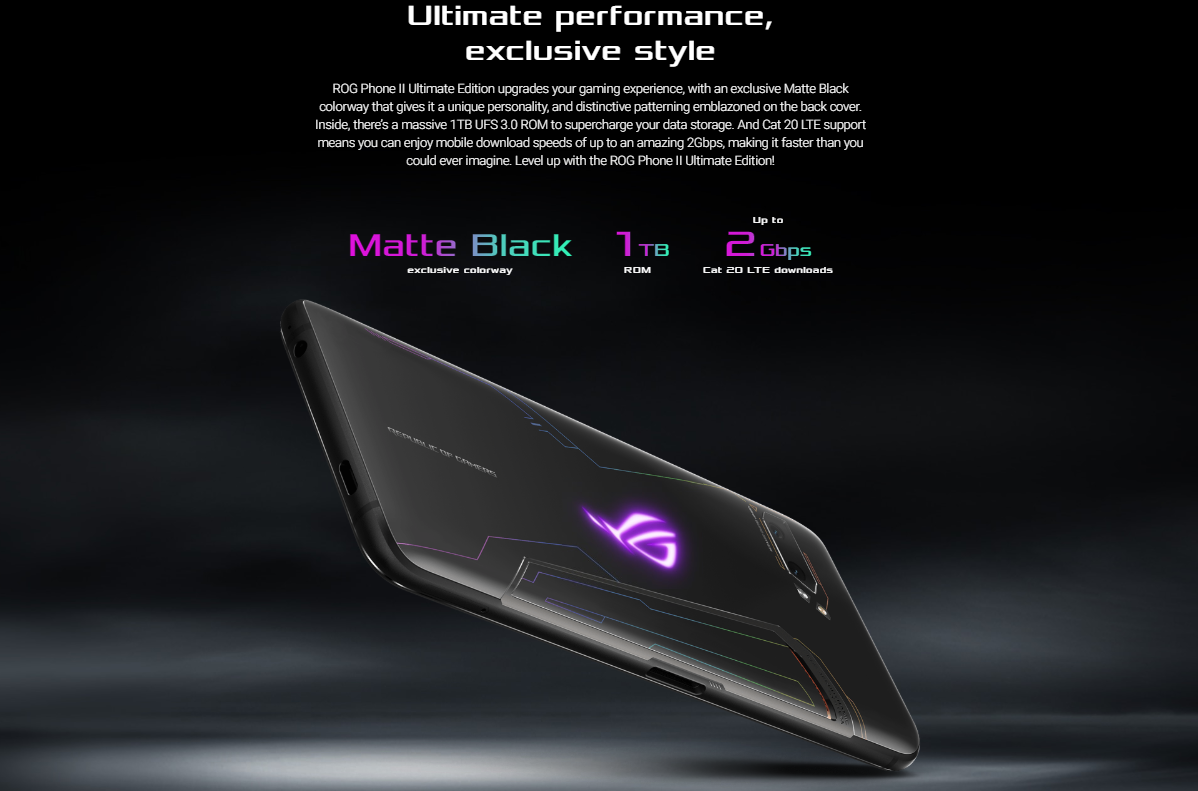
When the ASUS ROG Phone II launched in China back in June, the manufacturer said there will be an Ultimate Edition that will be released in the fourth quarter of the year. This version is now available in Europe with a more expensive price tag but tries to justify it with its additional features.
The ROG Phone II Ultimate Edition has an exclusive Matte Black colorway, unlike the other variants that have a Glossy Black finish. It also has 1TB of UFS 3.0 storage, Cat. 20 LTE support up to 2Gbps download speeds, and 802.11ad 60GHz WiFi. The other variants have Cat. 16 LTE (1Gbps download speeds) and 802.11ac WiFi.
The Ultimate Edition is priced at £899.99 in the UK and €999 in the rest of Europe. The Ultimate Edition is ¥7999 in China and that converts to about €1025.
ASUS has also brought the 8GB + 128GB version to Europe and is calling it the Strix Edition. Strix is also an ASUS gaming brand that was launched back in 2014. It is targeted at the performance-to-premium segment and includes products such as headphones, GPUs, mice, and keyboards.
The ASUS ROG Phone II Strix is £599 in the UK and €699 in other markets. ASUS UK has a special offer of 30% off the ROG Cetra In-Ear Gaming Headphones if you add it to your purchase of the ROG Phone II (any variant).
The ROG Phone 2 has a 6.59-inch 1080 x 2340 AMOLED display with a 120Hz refresh rate, HDR10, and Gorilla Glass 6 protection. It is the first phone in the world to be powered by the Snapdragon 855+ processor. There is a 6000mAh battery under the hood with support for Quick Charge 4.0 and 30W fast charge. It also supports reverse charging at 10W.
The phone has a 48MP + 13MP ultrawide dual rear camera setup and a 24MP selfie camera. It also has an in-display fingerprint scanner, NFC, Dual SIM support, Bluetooth 5.0, an audio jack, and stereo speakers. The ROG Phone II launched with Android 9 Pie out of the box but is set to get an Android 10 update soon.
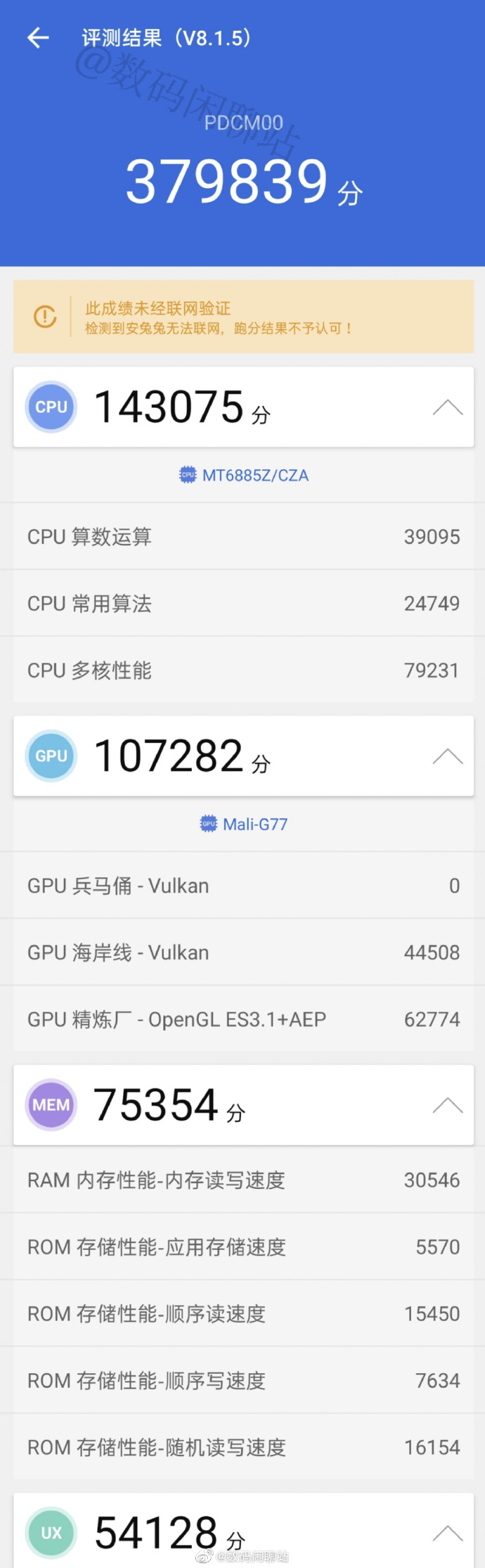
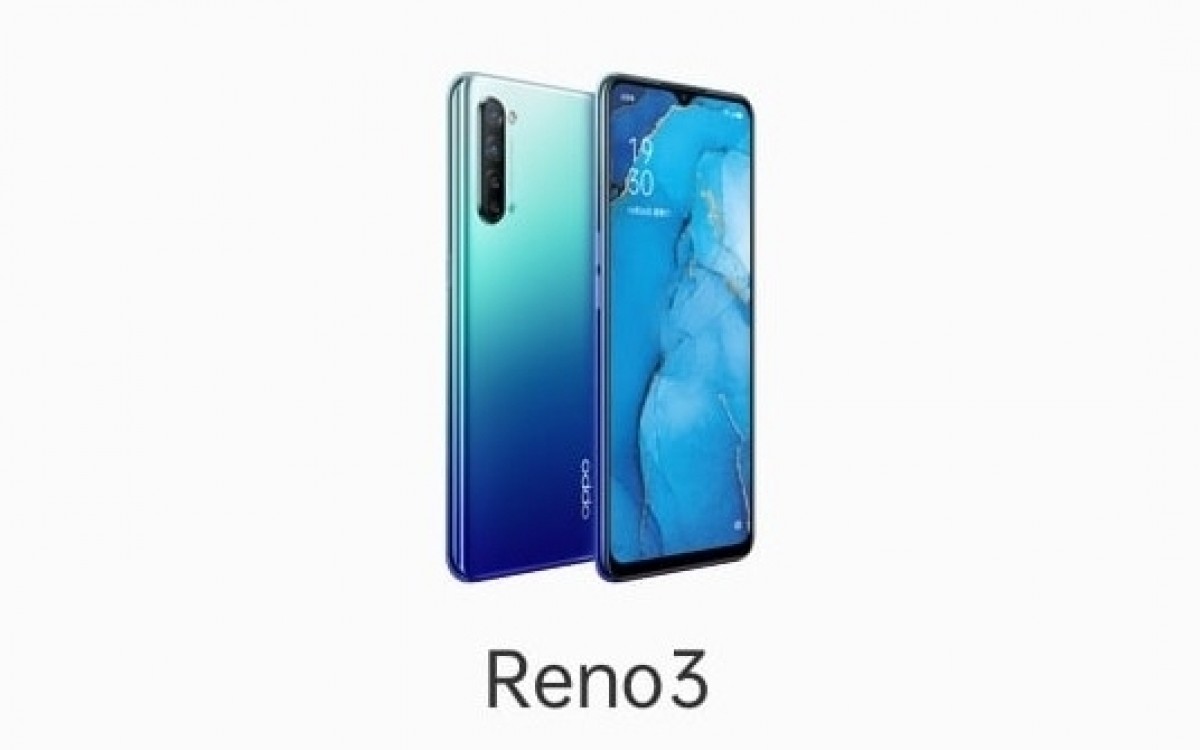
OPPO will be launching the Reno3 series of smartphones on Dec. 26. The company has already confirmed that the Reno3 Pro will be equipped with Snapdragon 765G mobile platform whereas the Reno3 will be coming with a MediaTek SoC. Newer reports have revealed that the Reno3 will be driven by MediaTek MT6885 chipset. A new OPPO phone with model number PDCM00 driven by the MT6885 has appeared on AnTuTu benchmarks. It appears to be Reno3 5G phone. Another leak has revealed that the Reno3 5G will be arriving with 64-megapixel quad cameras.
The PDCM00 OPPO Reno3 phone has scored 143,075 points in the CPU test and 107,282 points in the graphics test. The handset has scored 75,354 and 54,128 points in the memory and UX tests of AnTuTu. The average benchmarking score recorded by the smartphone is 379,839. This score is higher than the Exynos 980 powered Vivo X30 Pro that recorded 326,029 points and the Snapdragon 765G driven Redmi K30 that recorded 302,847 points. MediaTek is yet to announce the MT6885 chipset. The Chinese tipster who shared the above screenshot claims that the SoC will debut as Dimensity 1000L. Its a lower variant of 7nm MediaTek Dimensity 1000 5G chipset that was announced last month.
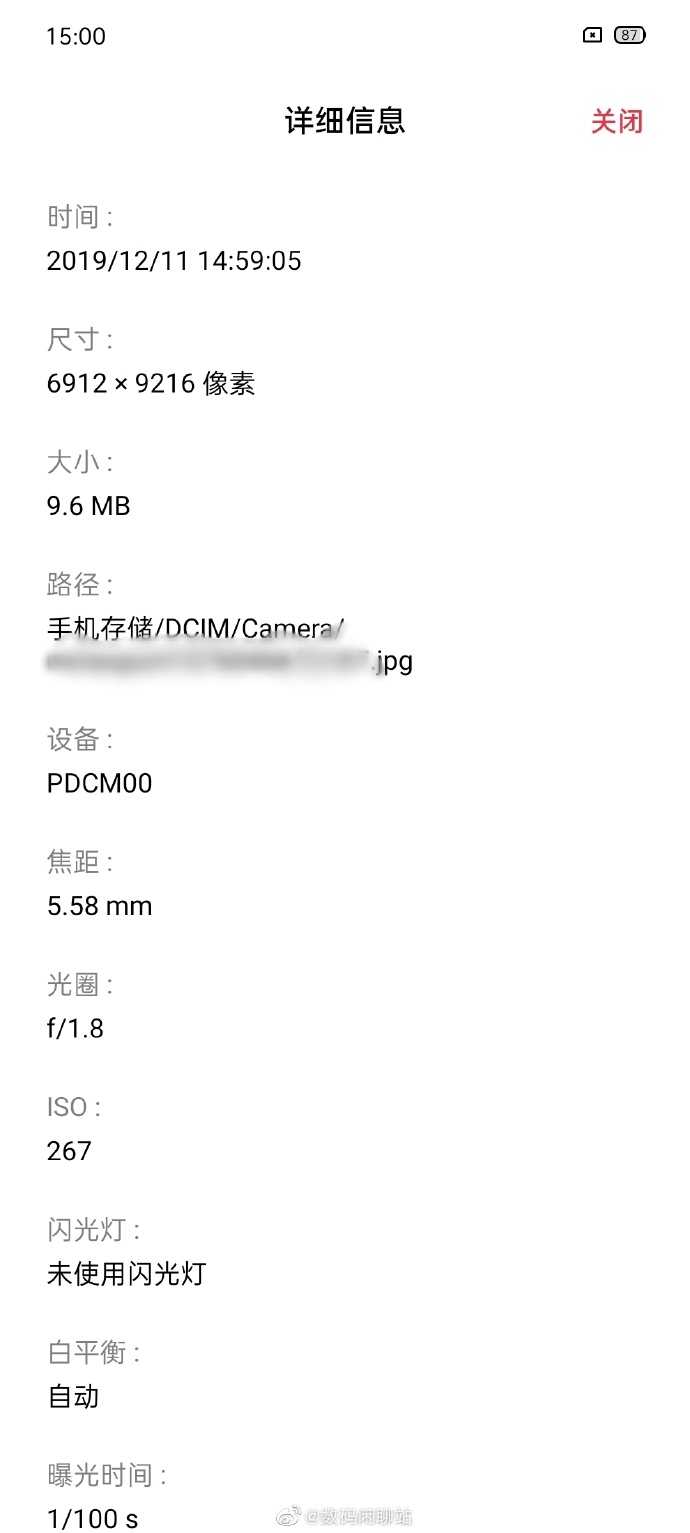
The tipster also shared another screengrab of the Reno3 5G. The image reveals that the Reno3 PDCM00 phone has an f/1.8 aperture camera that can shoot images of 6912 x 9216 resolution. This indicates that the phone is fitted with a 64-megapixel main lens. Probably, it could be featuring a Samsung GW1 64-megapixel lens that is available on the OPPO K5 phone.
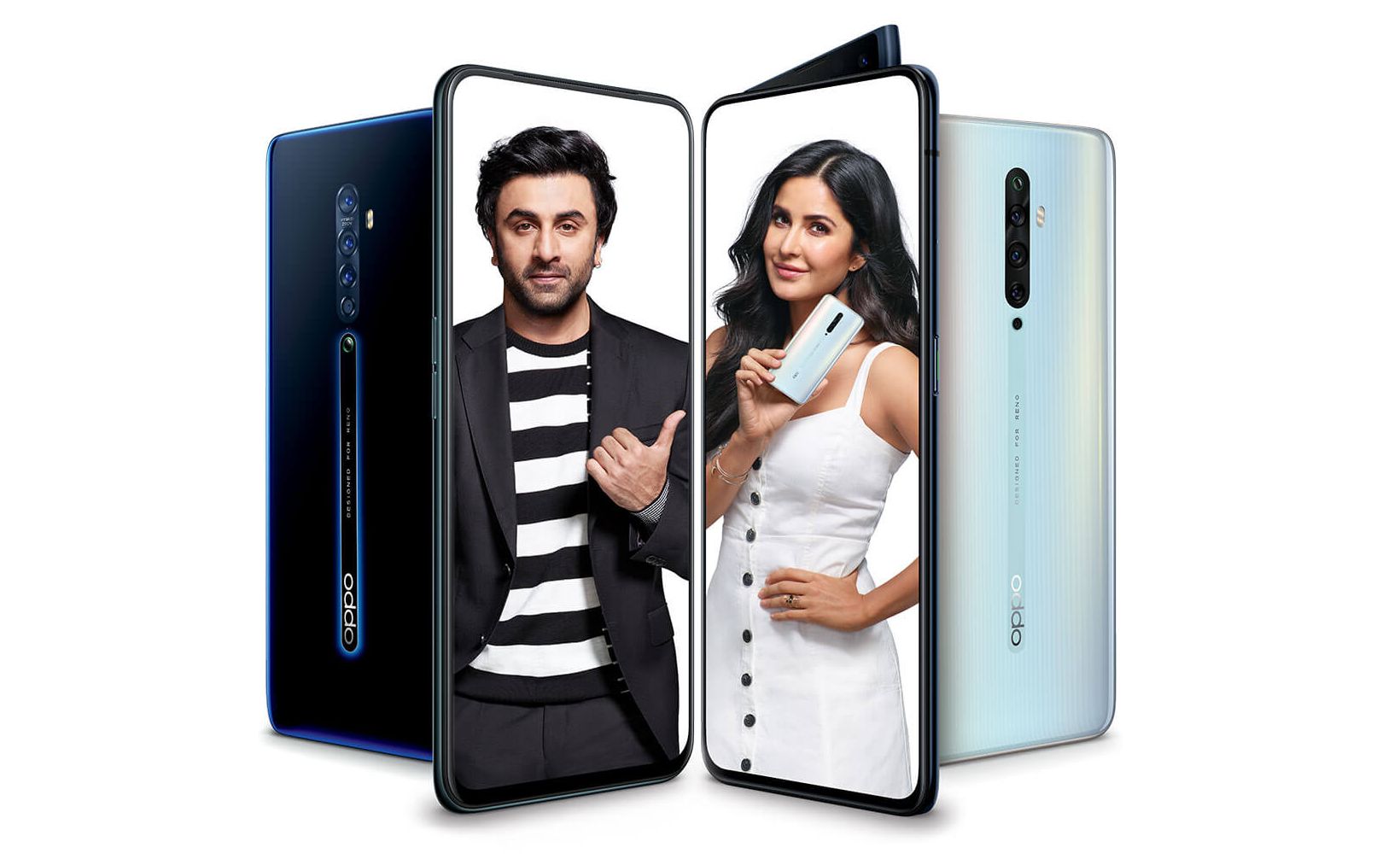
The official renders have revealed that the OPPO Reno3 Pro will be arriving with a punch-hole display. On the other side, the Reno3 has a waterdrop notch on its screen. Both phones are fitted with a vertical camera setup with four cameras on their rear.
OPPO Reno3
At the beginning of this month, the OPPO PCPM00 / PCPT00 smartphone was spotted with full specs on TENAA. At that time, the handset was speculated to debut as Reno3. Apparently, the PCPM00 / PCTM00 phone lacks support for 5G connectivity which suggests that it could be a different phone or a 4G only version of the Reno3.
We use cookies on our website to give you the most relevant experience by remembering your preferences and repeat visits. By clicking “Accept”, you consent to the use of ALL the cookies.
This website uses cookies to improve your experience while you navigate through the website. Out of these, the cookies that are categorized as necessary are stored on your browser as they are essential for the working of basic functionalities of the website. We also use third-party cookies that help us analyze and understand how you use this website. These cookies will be stored in your browser only with your consent. You also have the option to opt-out of these cookies. But opting out of some of these cookies may affect your browsing experience.
Necessary cookies are absolutely essential for the website to function properly. This category only includes cookies that ensures basic functionalities and security features of the website. These cookies do not store any personal information.
Any cookies that may not be particularly necessary for the website to function and is used specifically to collect user personal data via analytics, ads, other embedded contents are termed as non-necessary cookies. It is mandatory to procure user consent prior to running these cookies on your website.