Earlier today (11th December 2019), Xiaomi referred to themselves as a “grocery store” owing to its multiple product lines that span across many consumer-related products. It was well-meaning humor from the Chinese tech giant but one that also holds some truth. According to a new report, Xiaomi has patented designs for what appears to be a mineral water bottle.
Patent for Xiaomi’s Mineral Water Bottle
The patent for the design was reportedly submitted on 30th April 2019 and got published on 10th December 2019. The application for the patent is held by Beijing Xiaomi Mobile Software Co. Ltd., which also credits the name of its two inventors. From the patent, we can observe that the design and name of the product are made out to be a mineral water bottle.
As seen in the images, the patent seems to be in very early stages of conceptualizing and designing. It is yet to be revealed what unique aspect of this product the company has in store for its potential buyers.
Xiaomi Mineral Water Bottle (Image Via ITHome)
Unfortunately, more information regarding the product is currently unavailable. Since it just had its patent recently publicized, it’s doubtful if Xiaomi even has even been begun working on it so far. It seems highly unlikely for a smartphone manufacturing company to sell water bottles. However, considering the company’s track record with a vast horizon of experimentation and crowdfunding on unique products, Xiaomi seems the most likely to pull off something like this.
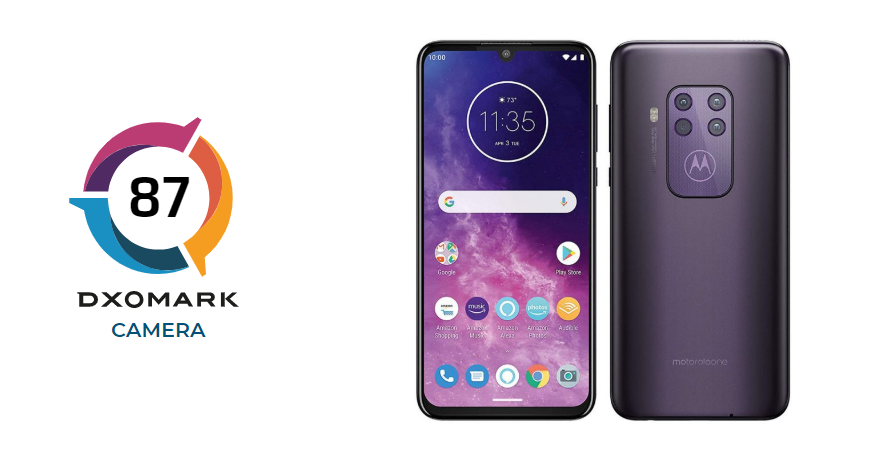
The Motorola One Zoom is a mid-range smartphone with the camera specifications of a flagship. Apart from an OIS enabled 48-megapixel lens, a 16-megapixel ultrawide sensor and a 5-megapixel depth sensor, the One Zoom flaunts an OIS assisted 8-megapixel telephoto lens with 3x optical zoom. The smartphone records videos at 4K resolution, which can be viewed on the large 6.39-inch AMOLED display. The waterdrop notch on the display of the One Zoom features a 25-megapixel selfie camera. The Snapdragon 675 chipset powered One Zoom’s camera was recently tested by the good folks at DxOMark, following a strict protocol, and the results were not that impressive.
Motorola One Zoom DxOMark Score
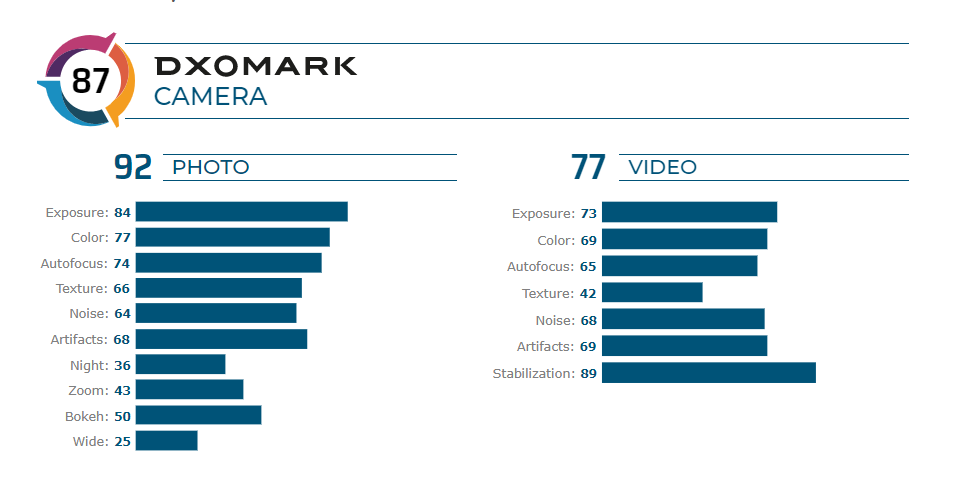
With an average DxOMark camera score of 87, the Motorola One Zoom fares better than most other smartphones from the company, including the Moto G7 Plus and the Moto Z2 Force which have average scores of 80 and 82 respectively. Despite the seemingly high scores, all three smartphones are yet to catch up with the market leaders.
However, the One Zoom performs inherently better and is comparable to older Apple and Samsung devices like the iPhone 7 Plus and the Galaxy A50, which have average scores of 88 and 86 respectively. In terms of still photography, the Motorola One Zoom manages to score 92 points. Although it is not close to the benchmark, it offers significant improvement over the Moto G7 Plus.
With the addition of the telephoto lens, the quad-camera setup inherits better optical zoom, slightly better wide-angle shots, exposure, and bokeh. When shooting in well-lit conditions, the exposure seems balanced, while the details are acceptable in both indoor and outdoor locations. However, the images suffer from a significant amount of overshaping on the edges, especially when cropped. Noise levels are also on the higher side compared to other devices in the budget.
The story quickly takes a turn for the worse as we venture into low-light imaging. Exposure immediately takes a hit with limited dynamic range, resulting in an increase of shadow clipping. Backlit wide-angle shots also tend to be underexposed. There is significant scope for improvement in the color department. While white balance is generally not an issue, a slight yellow overshadow is prominent. Motorola has done a great job of color control, although color rendering could have been better. As a result, skin tones often look unnatural in low light images.
Autofocus is inconsistent, and this is evident from the photographs. While the camera is capable of capturing sharp images, a 500ms delay between focus and the final shot is a bit disappointing. Wide-angle shots are acceptable but suffer from underexposure, low detail and color quantization. While the exposure is decent in optimal lighting conditions, the lack of dynamic range with the flash turned off is a serious issue plaguing low-light imaging. The story is consistent with zoom shots. While details are higher in bright conditions, autofocus inconsistencies crop up as the light fades.
Background blur adds a nice touch in portrait mode, although, errors are prominent in the more complex areas. Depth estimation is decent, while artifacts are well-controlled with the primary issue being reduced sharpness and ringing towards the corners. Motorola worked on improving the video quality in terms of autofocus, exposure, and stabilization. While improvements are noticeable in handheld videos when the camera is stable, frameshifts begin to creep up when walking. Noise levels are well-contained when filming indoors, but the details suffer from over-sharpening.
The quad-camera setup with a telephoto lens works in favor of the Motorola One Zoom, as the smartphone offers an attractive proposition for the budget-conscious audience. Well-balanced exposure, decent autofocus, and background blur in portrait mode work in favor of the device. However, serious improvements are required in dynamic range, ultra-wide shots, and color rendering if Motorola plans to take on the leaders with its future lineup.
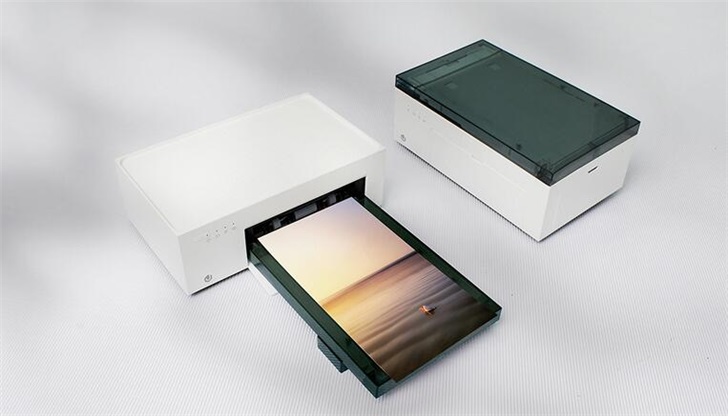
Xiaomi Youpin has launched a brand new mobile printer on their crowdfunding platform called the Jiyin Gramophone Photo Printer. The bug draw of this product is that it can print AR photos, features direct wireless network connection, and the crowdfunding price is 699 yuan, which translates to about $100.
According to the official introduction, the Jiyin Gramophone Photo Printer adopts AR recognition tracking technology. When printing photos, it can realize up to 60 second of audio and save data to the cloud. Scanned photos can play audio, and you can apparently send these sound photos to friends via apps like WeChat, which is an interesting prospect.
The printer prints 6-inch photos at a resolution of 300dpi, and it takes about one minute to print these. In addition to this, the printed photos are automatically coated to prevent fading, oxidation, water splashes and fingerprints. The photo printer also supports a variety of connectivity options and printing methods.
The Jiyin Gramophone Photo Printer measures in at about 205 × 124.6 × 85.4mm and it weighs a fairly decent 1.4kg so it definitely lives up to the idea of being a mobile printer. Honestly with this set of features, it’s a pretty interesting device. In terms of battery life, you can print about 40 photos when fully charged, which isn’t really all too bad.
On 11th December 2019, Xiaomi unveiled its new Mijia light sensor. The new product starts crowdfunding and will be available from the 12th of December 2019 for a price of 49 Yuan or roughly about 7 US Dollars.
According to the official sources, Mijia’s new light sensor is a new intelligent device for one’s home. It can accurately detect the changes in ambient light intensity in its surroundings and automatically activate multiple smart gadgets at regular intervals for better indoor lighting.
Xiaomi Mijia Light Sensor (on the wall)
In other words, no human input is required for achieving the best possible lighting conditions with the device. However, users are also given the option to customize the range of lighting intervals via the Mijia application for smartphones. Furthermore, the new product also connects and works in conjunction with other smart home products.
The best example of this would be during the day when there is an ample amount of light coming through the windows. Mijia’s light sensor can activate the curtains to extend after detecting the intensity of the light; similarly, when the ambient light is low during evenings, the sensor can automatically switch on more lights in users home.
Xiaomi Mijia Light Sensor
The shell of Mijia’s new light sensor is made for UV-resistant material which means its color will not fade easily in the long term use. It has even passed waterproof tests and withstood high temperatures to protect the Texas instruments’ precision sensor components on the inside. The device itself is small and compact and can be installed in 3 different methods that are, laying flat, pasted or even magnetically adhered to a surface.
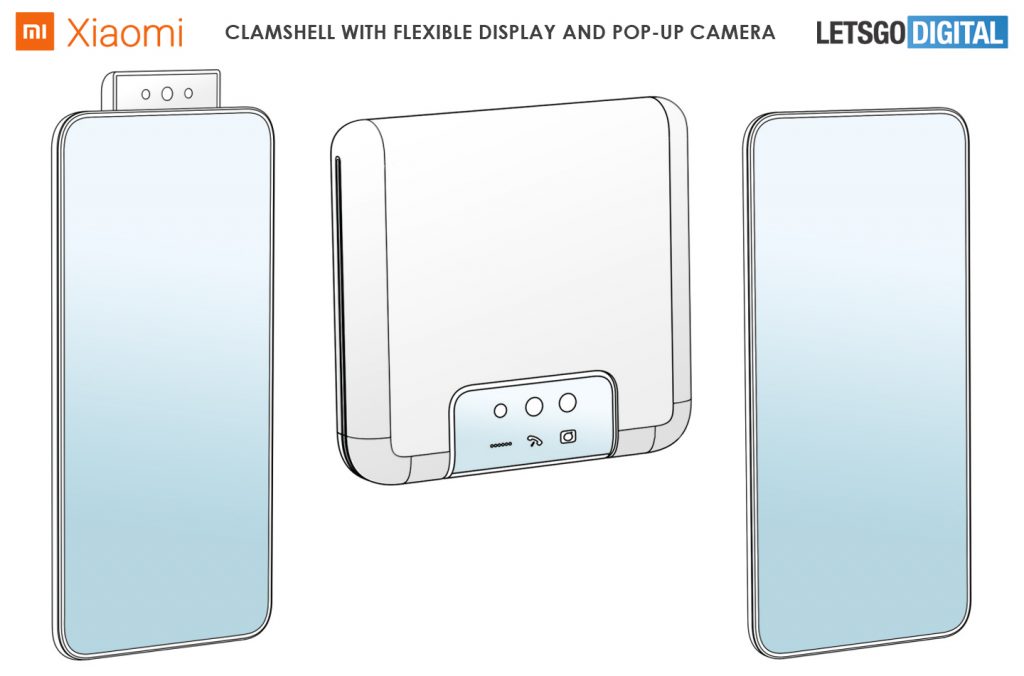
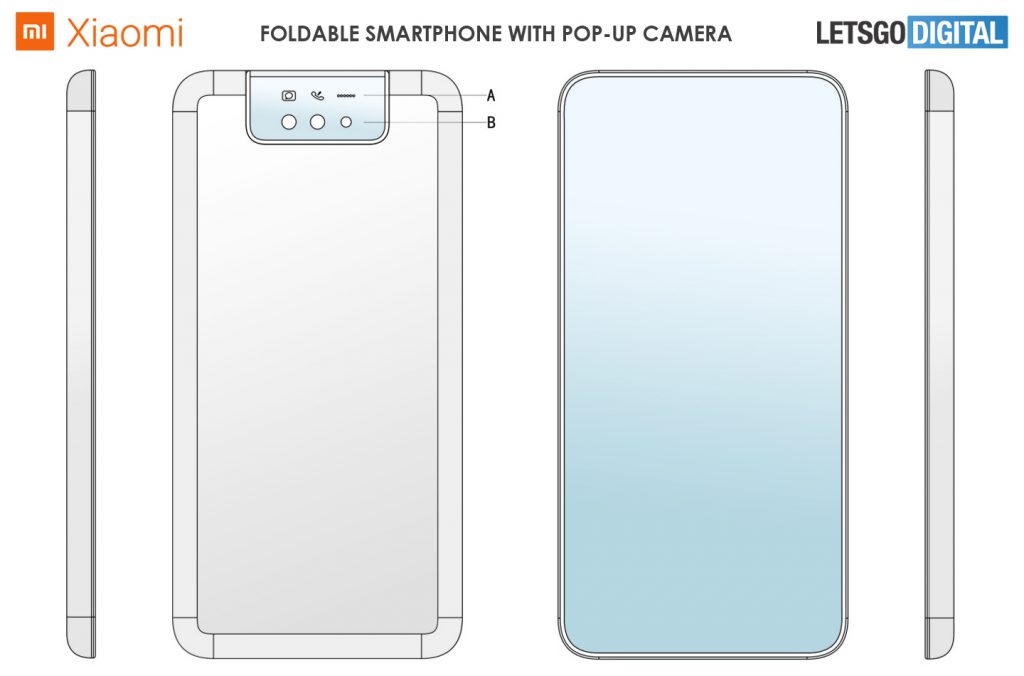
Xiaomi has been granted a patent for another foldable phone with a folding design similar to that of the Motorola Razr 2019. This is the second patent Xiaomi has received for such a design in the span of a month. The first patent was granted in November while this was granted on December 6, 2019, following filing back in mid-2018.
The new patent shows a device that folds vertically but there are some major differences when compared to the first patent. Unlike the first patent that has a bezel at the top of the display for the selfie camera and sensors, the diagrams for the new patent show the phone will have no bezels. This should translate into a higher screen-to-body ratio. But that’s not all.
The diagram shows the phone has a pop-up selfie camera. The camera is flanked by a sensor and an LED flash. So when the user needs to take a photo or record a video, the motorized selfie camera pops up.
On the back of the phone are dual cameras and an LED flash but these are unique. The sensors and flash are actually housed inside a smaller display whose function is to display notifications when the phone is folded. So, yes, we have three punch holes inside this much smaller secondary display.
Xiaomi has been accumulating patents for foldable phones but it is yet to launch one yet. It did show us a working prototype of a phone with a flexible screen that can be folded twice earlier this year but there has been no news of a launch.
Samsung and Huawei should launch successors to their foldable devices next year. Samsung has even shared a teaser video of the upcoming phone, and it too has a vertically folding design like the Motorola Razr.
Vivo X30 and Vivo X30 Pro phones that are scheduled to go official on Dec. 16 will be fueled by the Exynos 980 chipset that bring support dual-mode 5G. The Vivo X30 Pro that is believed to have the model number of V1938T was recently seen on the database of 3C certification site. The same model number had appeared on Geekbench benchmarking platform. Yesterday, some leaked shots of the Vivo V1938T phone had appeared to reveal some of its key specs. Today, an AnTuTu listing of the Vivo V1938T phone has appeared to reveal its performance.
The AnTuTu listing has not revealed the specifications of the Vivo X30 Pro smartphone. However, it has revealed that the X30 Pro has recorded an average benchmarking score of 326,029. It can be seen that the Exynos 980 powered smartphone is equipped with Mali-G77 graphics and Android 9 Pie OS.
The aforementioned score is an average of CPU, GPU, memory and UX scores of Vivo V1938T phone. In the CPU and GPU tests, the V1938T phone has scored 116,836 and 88,459, respectively. In the memory and UX tests, the handset has recorded 57,598 and 63,136 scores, respectively. In comparison, the Snapdragon 765 5G chipset powered Redmi K30 had recorded a slightly lower score of 302,847.
The Vivo X30 Pro could be coming with a display of around 6.5 inches. The punch-hole display of the phonev will be embedded with a fingerprint sensor. The Exynos 980 chipset on the device could be coupled with 8 GB of RAM. The native storage of the phone is 128 GB. The Android 9 Pie OS on the device will be flavored with a new edition of the FunTouch OS.
The X30 Pro has a quad camera setup that is powered with features like LED flash, OIS and EIS. It is rumored to include a main lens of 64-megapixel, a portrait sensor of 32-megapixel, a superwide lens of 8-megapixel and a periscope lens of 13-megapixel. The smartphone is expected to offer users with up to 60x digital zoom experience.
The Vivo X30 Pro could be housing a 4,500mAh battery. The 3C certification of the Vivo V1938T phone has suggested that the phone may arrive with support for 33W fast charging. There is no information on the pricing of the X30 Pro. Considering the fact that the Exynos 980 powered Vivo X30 Pro is non-flagship 5G smartphone, it could be costing less than 3,000 Yuan (~$426).
Instagram is the most popular video and photo sharing platform with over a billion registered users. In recent times, it has gained massive popularity due to simple and intuitive features. The facebook-owned social platform always offers the best offers by taking care of the users’ privacy and security. Since the inception of the Status feature, Instagram has witnessed a massive growth of active users. However, certain restrictions often trouble users while using Instagram. The new Instapref Xposed Module can quickly eliminate such woes for the regular users of Instagram.
Instagram has become home to several businesses promoting the brand values and the success stories. Similarly, the influencers are often seen sharing pictures, stories and promoting the brands. Due to the mobile and 4G revolution, such promotions and success stories are now regular.
On the other hand, it is now more challenging to compete and establish their own brand without spending capital. Instagram has tweaked and limited access to the users’ data. The user can save photos, stories, DM, post notifications for specific users can be accessed via Instaprefs. There are many advantages to using the Instaprefs Xposed Module.
Features of Instaprefs
Saving of high-quality Posts, Stories, DMs, Live Videos, Profile Pictures
Story saving
DM saving
Profile picture saving
Stealth Story/DM viewing
Unlimited Story/DM viewing
Post Notification saving (full-sized: image, video, carousel)
Unlimited DM viewing for self-destroying images
Zoom for Posts, Stories, DMs, Live videos, Profile Pictures
Typing, camera opened and replay notification removal
Media controls for videos
Private indicator on Posts and Profiles
Follow indicator on Posts and Profiles
Suggested users, shops are blocked
Story and Feed ads are blocked
Copy comments
Increased quality for sent images
Instaprefs allows choosing the folder for saving the photos and videos. The user can’t select the photo quality. It will be saved only in the highest quality possible. The module queue the download if any excessive network activity is going on. Undoubtedly, the user needs to give it storage permission to save photos and videos.
Prerequisites:
The Phone should be Rooted.
Xposed/EdXposed/VirtualXposed should be installed on your Android smartphone. (Note: Follow Out guide to install Xposed Module on Android 9)
Install Instagram Offical Android App from the Play Store.
Steps to install Instaprefs Module on Android device
Now, Activate the module and reboot the device or Instagram App.
Open Instagram and enjoy the features!!
Instaprefs can be fully used on Android 9 and older Android versions. However, for Android 10, the users need to install EdXposed via Ruiru Core Magisk Module.
We hope the Instaprefs would gradually increase the productivity of the users. If you have any issues while installing the Instaprefs module, then do comment below to let us know about the problem.
Meizu has been rather quiet these past few days, which is odd considering the huge announcements from their competitors. Turns out they were just waiting for the storm to pass, as the company has now announced that they have a major event on December 13th. The company made the announcement on Weibo earlier today.
The teaser poster released shows us what appears to be some sort of silhouette against a mountainous background. The Weibo post also asks “What is OMA? On December 13th, a click into a poem.” The post and remarks under the post seem to refer to cameras, but we’ve got very little information to go off of so it’s all just conjecture.
It remains a mystery what the three letters “OMA” means. Given that the last poster we got showcases a crowded place in the background, some are claiming that the device will have something to do with active noise cancellation. However, now that we’ve got another teaser image that has nothing to do with noise cancellation, the mystery remains.
To know for sure what’s up the company’s sleeves this time, we’ll have to wait for the official launch event to take place in China on 13th December. Since there are still few days left for that, we expect the company to share more details about this in the coming days.
Redmi, a subsidiary of Xiaomi, has just launched its latest smartphone in its flagship series, the Redmi K30. It arrived in two variants, namely a 5G and 4G versions, which were officially unveiled yesterday (10th December 2019).
On 11th December 2019, Redmi’s General Manager said in a statement that, this time, the company has prepared sufficient stock for the Redmi K30 smartphones. Lu Weibing went on Weibo, the Chinese microblogging site, to share this statement to disprove any rumors or false information spreading which would discourage any potential buyer.
Redmi K30 4G Launch
This arrives after the Redmi K30’s stocks came in to question which the Senior Executive dispelled as being untrue. Additionally, the smartphone’s camera module, which is Sony’s IMX686, was also rumored to be facing technical difficulties in its mass production. However, since the General Manager of the company himself has assured everyone of no such issues, then we can expect this to not be an actual worry anymore for would-be buyers.
Lu Weibing also went on to reveal the date for Redmi K30 4G variants sale alongside a few of its key specs. He mentioned the smartphone’s 120Hz screen refresh rate, its 64MP Sony IMX686 camera (first 64MP camera from the company), the large 4,500mAh battery that supports 27W fast charging and Qualcomm’s Snapdragon 730G processor that powers the device.
Redmi K30 4G
Notably, during the launch of the Redmi K30 no specific date was given regarding both variants’ actual availability for sale. But now, it is confirmed that the 4G variant will be available from 10 pm on the 12th of December 2019 in China (12.12.19). On the other hand, the 5G variant will release next year sometime in January 2020.
Oppo has today taken to Weibo to announce the company’s first true wireless earbuds — Oppo Enco Free. The company has also confirmed that the new TWS earphones will get launched on 26th December, along with the Oppo Reno 3 series smartphones.
The company has also shared renders of the product, confirming that it will be available in three color options — White, Pink, and Black. Looking at the design, the Oppo Enco Free seem very similar to the Apple AirPods.
The Enco Free from Oppo uses a half-in-ear design which can also be changed to shallow in-ear through the ear cap. This will be the second wireless audio product from Oppo under its Enco lineup.
Earlier this year, a couple of months ago, the company had launched Oppo Enco Q1 Wireless noise-cancelling headphones. It uses a 3D neckband design that’s thick at the end and thin at the center.
The Q1 headphones feature dual Active Noise Cancellation with four mics. It is using a hybrid noise cancellation technology on its new model, featuring both a feedforward and feedback ANC. The feedforward active noise cancellation uses the external microphone to measure ambient noise before it enters the ear, processing that signal to ensure an exact and opposite signal leaves the system’s speaker to effectively cancel the ambient noise.
It remains to be seen if the upcoming Oppo Enco Free will offer active noise-cancellation. However, expect the company to share more details about the product through teaser posters on social media as the launch event nears.
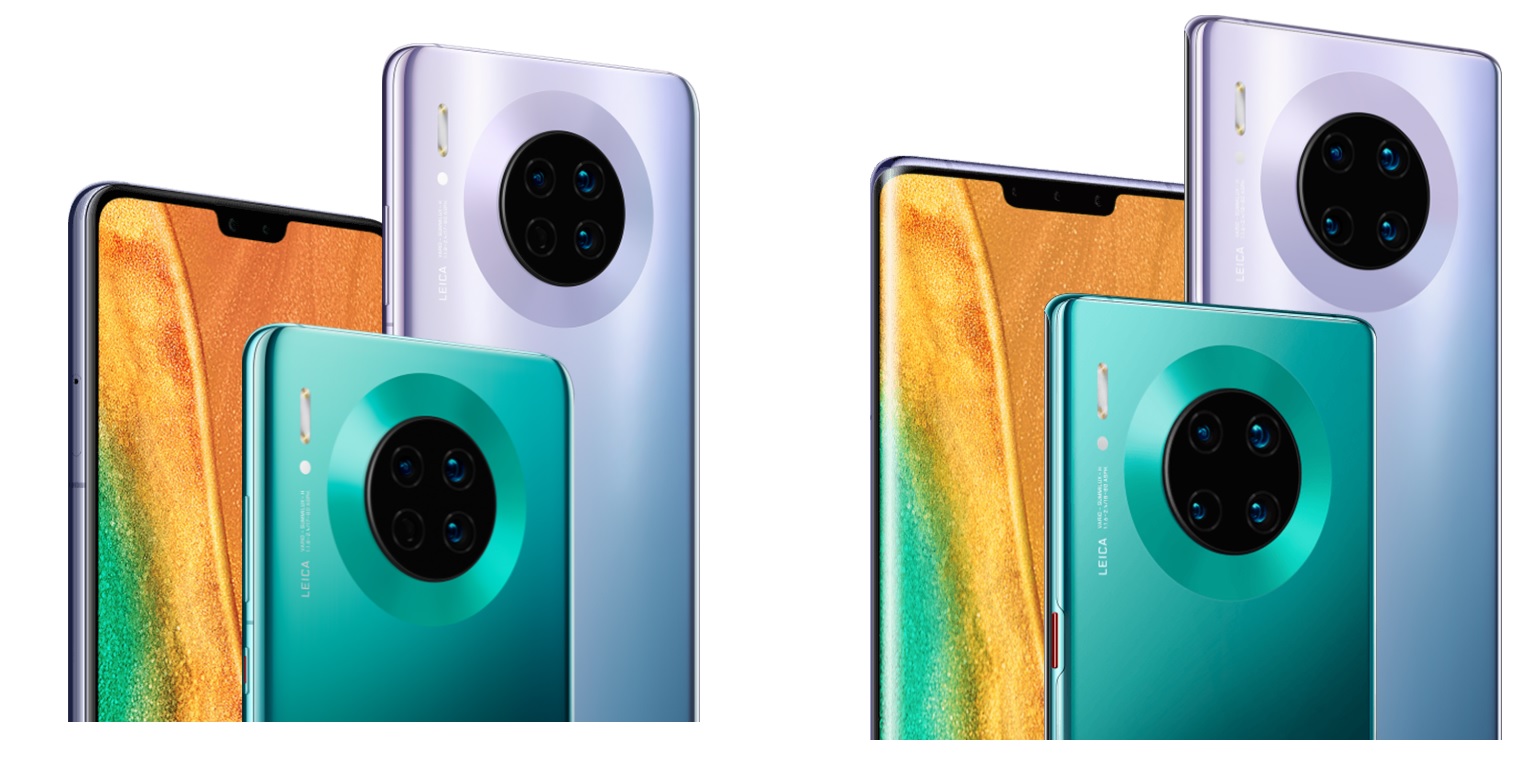
Huawei has today announced that the company’s flagship smartphone — Huawei Mate 30 Pro 5G will now be available in Green color variant for the 8GB RAM and 128GB internal storage model from 12th December.
The Huawei Mate 30 Pro 5G 8GB + 128GB model is priced at 6,399 yuan which roughly converts to $909. When launched, the company had announced two color variants for the device — Vegan Leather Orange and Vegan Leather Forest Green.
The smartphone is powered by Kirin 990 5G, a 7nm + EUV processor. It not only has a built-in 5G modem but its NPU chip has two big cores and one small core which are overclocked while the regular Kirin 990 has one big core and one small core.
The Mate 30 5G and Mate 30 Pro 5G each have a total of 21 antennas, 14 which are for 5G, more than double the 6-antenna design of other 5G phones. Both 5G phones come with support for both SA and NSA 5G dual-mode, adapting 5G / 4G / 3G / 2G frequency bands of the three major domestic operators.
This flagship smartphone series is apparently doing extremely well in its home country. The company recently reported that it has already sold over a million units of the Mate 30 and Mate 30 Pro since the phones went on sale in China on September 26. This is pretty impressive considering they achieved it in less than a week.
Apparently, Huawei managed to reach this goal in the span of a three hours, as Richard Yu made the announcement during the opening of a Huawei flagship store in Shenzhen. Including the online orders, Huawei was bringing in CNY 500 million a minute, implying a rate of 100,000 sales per minute. Now those are some pretty big numbers.
It’s noteworthy that the Mate 30 series comes without support for Google apps and services. While it may be a big deal in other markets, it isn’t so in China where most Android phones don’t come pre-installed with Google Play Services.
With the rising craze of smart television among the Indian audience, major manufacturers are looking for a piece of the pie. Android-based smart TV platforms are quite popular in the subcontinent, and Amazon has finally entered the game. The first product in Amazon’s Smart TV lineup is the Fire TV Edition smart TV, which the company launched in association with Indian manufacturer Onida Electronics.
Onida Fire TV Edition Specifications and Features
The Onida Fire TV Edition will be available in two sizes, 32-inch and 43-inch. The device flaunts a Full-HD display with a contrast ratio of 1200:1 and 300nits brightness. The device supports DTS TruSurround sound with Dolby Digital Plus audio enhancements and is powered by a quad-core processor.
Connectivity options include three HDMI ports, a single USB port, an AUX Port, and dual-band Wi-Fi. The Onida Fire TV Edition comes pre-loaded with Prime Video, Netflix, Hotstar, YouTube, Zee5, Sun Nxt, Sony Liv, and Alexa. The Fire TV Remote also supports dual-band Wi-Fi for a seamless connection.
Onida Fire TV Edition Price and Availability
The 32-inch variant of the Onida Fire TV Edition is priced at Rs. 12,999 (~$184). While the 43-inch variant sports a price tag of Rs. 21,999 (~$311). Both variants will be available on Amazon India starting December 20.
Speaking at the launch event, Parag Gupta, the Head of Amazon Devices in India said, “We are excited to introduce the complete Fire TV experience to the Indian audience via Onida televisions. With the Fire TV’s vast content database and immersive audio-visual experience, the audience can enjoy their favorite shows in one place. Whether you prefer browsing content on streaming apps or want to switch over to DTH for live TV, the Fire TV Edition is ever ready. We have sold over a million units of the Fire TV Stick and cannot wait to hear what the patrons have to say about their Fire TV Edition experience”.
Realme will be holding a launch event in India on Dec. 17. The event will be used to announce the Realme X2 phone in India. The Chinese manufacturer will be also announcing the Realme Buds Air true wireless earbuds at the same event. It will be rivaling with the likes of AirPods from Apple, Galaxy Buds from Samsung and FreeBuds from Huawei. Compared to its competitors, the Realme Buds Air is expected to arrive with a cheaper price tag. GSMArena has learnt from a very reliable source that the Buds Air will carry support for wireless charging.
The publication has claimed that the Realme Buds Air will come with wireless charging out of the box. In other words, users will not to invest in a separate case like AirPods. In the image shared by the publication, the Buds Air can be seen in Black color. The Chinese firm will be also selling the Buds Air in other color option such as White and Yellow.
As far as the pricing is concerned, a premature listing of Realme Buds Air on Flipkart retailer site had revealed a pricing of Rs. 4,999. The listing has been taken down. The publication has claimed that the Buds Air will be indeed will be priced under Rs. 5,000, but the exact pricing is under the wraps. It will be made available for purchase on the launch date.
Recent reports have revealed that the retail package of the Realme Buds Air will come with items like earbuds, USB-C charging cable and a user manual. The Buds Air is expected to arrive with a warranty of six months. In terms of design, the Buds Air will be almost identical to the Apple AirPods. Its technical specifications are not known yet. What’s known is that it will be equipped with support for built-in voice assistant and touch controls. The Buds Air will also arrive with 12mm Bass boost driver and it will arrive with support for Bluetooth 5.0 connectivity.
Customers who are interested in purchasing the Realme Buds Air can take advantage of Rs. 400 discount coupon. To avail, one needs to purchase any of the following phones such as Realme X2 Pro, Realme XT, Realme 5 Pro, Realme X or Realme X Master Edition. Once purchased, the Rs. 400 discount will be send to the account automatically on Dec. 17 at 10 AM IST.
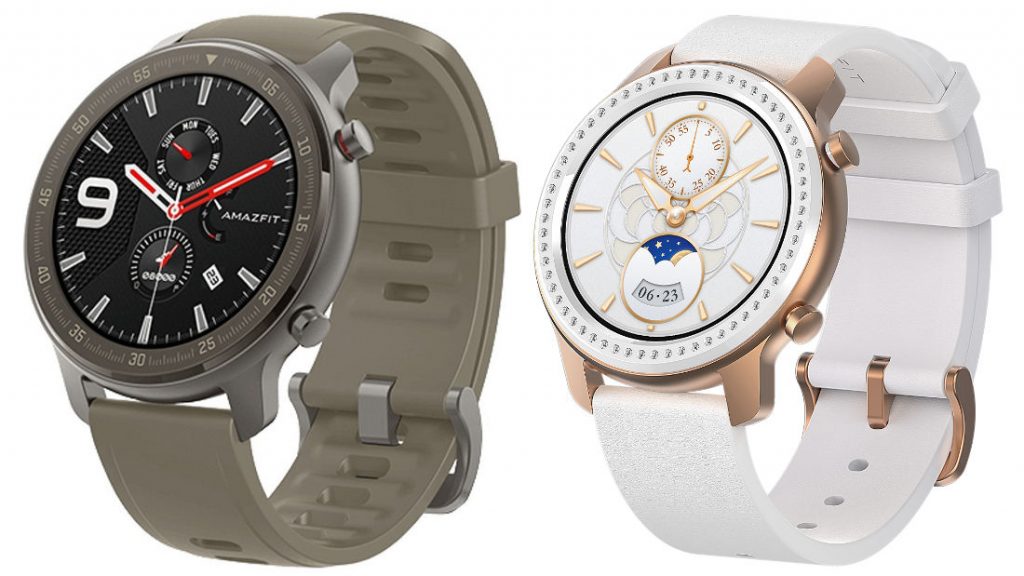
Amazfit GTR smartwatch was launched in India a couple of months ago and now the company has launched two new variants of the same — Titanium Edition (47.2mm) and Glitter Edition (42.6mm) in the Indian market.
The Amazfit GTR 47 Titanium variant comes with a sturdy look having light and durable build. It has a comfortable fluorubber strap and is comparable to a high-end mechanical watch, making it perfect for sports and business occasions.
On the other hand, Amazfit GTR 42 Special Glitter Edition is embellished with 60 dazzling Swarovski Zirconia and comes with an elegant white leather strap that encapsulates a glamorous and chic look.
Coming to the specifications, the GTR 47 version is equipped with 24 days battery life and comes with 1.39-inch AMOLED display while the 42 Glitter Edition supports 12 days battery life with its 1.2-inch AMOLED display.
Both smartwatches have Corning Gorilla 3 tempered glass with anti-fingerprint coating. The devices also come with BioTracker PPG for 24-hour uninterrupted, accurate heart rate monitoring along with features like sedentary reminders, sleep analysis, exercise tracking and many more.
The display on the device also shows notifications, reminders, texts, and incoming calls. Users can also use the watch for weather information on the go, music, and a built-in compass. Both the variation comes with 12 different sports modes including several variations of running, cycling, swimming, mountaineering, trail running and workout.
As for the pricing, the Amazfit GTR 47.2mm Titanium and 42.6mm Glitter Edition are priced at ₹14,999 (~$212) and ₹12,999 (~$184) respectively. Both of them are now available for purchase in India through online marketplace Flipkart.
Vivo will be launching the Vivo X30 and Vivo X30 Pro 5G smartphones on Dec. 16. Recent reports have revealed that the X30 or X30 Pro has a model number of V1938T. This model number has been spotted on the database of 3C certification site and on Geekbench, but it hasn’t appeared on TENAA yet. The X30 series is expected to deliver topnotch camera experience. Today, a popular leakster from China has shared the camera configurations of the Vivo X30 Pro 5G smartphone.
The tipster has revealed that the Vivo X30 Pro will be equipped with a quad camera setup that will include a primary lens of 64-megapixel. It will be coupled with a 32-megapixel portrait lens, an 8-megapixel superwide lens and a 13-megapixel periscope lens. The quad camera system will come equipped with Optical Image Stabilization (OIS) and Electronic Image Stabilization (EIS). As Vivo has confirmed before, the X30 Pro will arrive with support for 60x digital zoom.
Assuming that the Vivo X30 Pro 5G has the model number of V1938T, it can be said that it will be powered by the Exynos 980 chipset that will bring support for dual-mode 5G connectivity. There is a possibility that the Vivo X30 could be powered by the same chipset.
The V1938T phone has 8 GB of RAM and 128 GB of native storage. It is loaded with Android 9 Pie OS. According to the 3C certification of Vivo V1938T phone, the device may arrive with support for 33W fast charging. The Vivo X30 Pro will be flaunting a punch-hole display that will offer full HD+ resolution. Like the predecessor models in the X-series, the X30 duo are expected to arrive with in-display fingerprint reader.
In related news, Vivo has recently launched the Vivo V17 smartphone in India. This phone comes with a 6.44-inch S-AMOLED display that offers full HD+ resolution. The V17 is powered by Snapdragon 675 mobile platform, 8 GB of RAM and 4,500mAh battery with 18W fast charging support. It features a front camera of 32-megapixel. On its rear is a 48-megapixel + 8-megapixel + 2-megapixel + 2-megapixel quad camera setup. It has launched with a price tag of Rs. 22,990 (~$325).
Oppo has been teasing its upcoming lineup of 5G smartphones — Oppo Reno 3 series. Today, the company has officially confirmed that the devices will go official in its home country on 26th December and the event will take place in Hangzhou.
The company is expected to launch two smartphones at its December 26th launch event — Oppo Reno 3 and Oppo Reno 3 Pro. Both the devices will come with support for dual-mode SA/NSA 5G connectivity.
It is said that while the Oppo Reno 3 will come with MediaTek 5G chipset, the Pro variant of the lineup will be powered by the Qualcomm 5G chipset — Snapdragon 765G. This is the same chipset that is powering the newly launched Redmi K30.
Oppo has already confirmed that the body thickness of the Pro model is 7.7mm while the body thickness of the Oppo Reno 3 is 7.96mm. Rumors have it that the Reno 3 has a 6.4-inch OLED display that will offer 1080 x 2400 pixels full HD+ resolution. The phone could be coming with 64-megapixel quad rear cameras.
The device may arrive with support for 30W rapid charging. It could be coming in colors like Blue, Red, Black and White. On the other hand, the Reno 3 Pro could be coming with a 6.5-inch full HD+ display with 90Hz refresh rate support and 180Hz touch sampling rate.
Packed with up to 12GB of RAM, the rear shell of the phone could be featuring an OIS enabled 48-megapixel + 8-megapixel + 13-megapixel + 2-megapixel quad rear cameras. It may also arrive with support for 30W fast charging.
Renders and leaked images of the phone reveal that the company has opted for a punch-hole display that curves towards the edges. Both the smartphones will have an in-display fingerprint sensor for added security. To know for sure about the phone’s specifications, as well as pricing and availability details, we’ll have to wait for the official launch in the coming weeks.
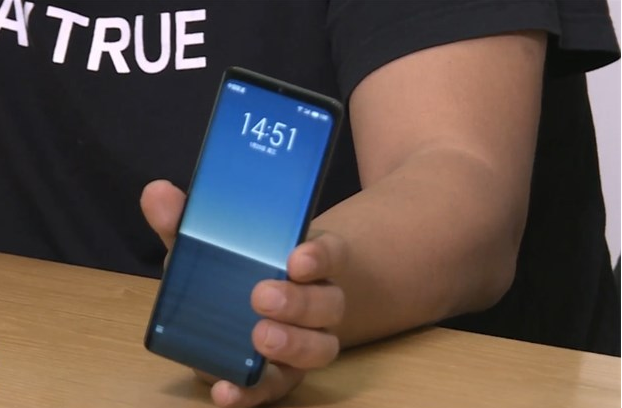
When Meizu first unveiled the Meizu Zero Holeless smartphone in January this year, we had though the company was on a path to resurgence going by the spectacular design that the phone utilised. The crowdfunding exercise on Indiegogo proved us wrong with the phone getting a disappointing 29 backers who raised a paltry $45,998. At the same time, Vivo also announced the holeless Vivo APEX 2019.
While enthusiasm isn’t too high on the prospect of the design style, some phone enthusiasts in China have been asking questions as to when the design style will become commercial. China Mobile has perhaps received several questions as to the when hole-less phones will meet with consumers. China Mobile Terminal Lab gave several reasons from the technical perspective, why hole-less phones are ready to hit the market sooner than later.
Buttons: Most phone already makes use of virtual buttons and even on some curved screen phones, the volume buttons are almost completely invisible on some curved screen phones. Since phones utilise touchscreens, a transformation to entirely virtual button design is now more realistic.
Four holes for sound: Smartphones rely heavily on four major openings for sound input and output – 3.5mm audio jack opening, noise reduction hole, earpiece and speaker. The emergence of Bluetooth headset has taken care of the need for a 3.5mm audio jack opening on phones and most new models don’t have one even though some audiophiles prefer the good old audio jack. The other three openings are still frequent residents of mobile phones but in recent times, bone conduction technology and under-screen sound technology and others in the works have brought the prospects of eliminating these openings.
Card slot: Virtual cards such as eSIM are now in use. Even though they are yet to be deployed very well in smartphones, they are fitting replacement for the physical SIM slot opening
China Mobile notes that charging distance is still the only thing yet to be overcome. It noted that even though there is wireless fast charging technology, there is still no solution to increasing the charging distance such that you don’t need to put the phone in contact with the charging pad or cradle to charge it. Some find the inability to use their mobile phones while charging inconveniencing. We expect Over-the-air wireless charging that can deliver small amounts of power at a distance from inches to 3 feet to become available in smartphones soon.
After showing you a selection of the best value for money smartphones of the month, it is time to show you the best flagship smartphones of December 2019. In this article, you will find all the most interesting Chinese flagships released recently with top-class hardware specifications. These are phones you should opt for if you need the maximum performance and a real high-end specs sheet. If you need a flagship but you have a limited budget, you’d better check our value for money smartphones selection since it includes flagships as well, but only flagship smartphones available at affordable prices.
Best flagship smartphones of the month
Huawei Nova 6 5G
Huawei Nova 6 5G
Last month Huawei announced the Nova 6 5G: one of its first 5G smartphones with a 5G integrated modem. It rocks a Kirin 990 chipset and it even provides a pretty nice camera experience thanks to a 40 MP triple camera including OIS and 3x optical zoom. You get even an amazing dual front camera considered the best selfie setup ever by DxOMark. The handset even sports a big 4200 mAh battery with a very fast charging technology reaching a 40W power. Android 10 is preinstalled and there is even a punch-hole display with very narrow bezels.
Honor V30 Pro is a very similar device to the Huawei Nova 6 5G, but there are a few differences besides the fact that it is a smartphone from Huawei’s sub-brand. The rear camera setup is slightly better than the one found on the Huawei Nova 6 5G, while the dual front cameras are the same. The battery is slightly smaller, but unlike the Nova 6 5G, it supports fast wireless charging and reverse wireless charging. You get the same Kirin 990 chipset with an integrated 5G modem and 8 GB of RAM. All with a starting price of just €500 in the Chinese market.
If you have no limits of budget and you need the highest performance, then you should give a chance to OnePlus 7T Pro. It is one of the fastest smartphones out there thanks to its Snapdragon 855+ chipset, up to 12 GB of RAM, a UFS 3.0 native storage and even an amazing software optimization. It is perfect for gamers and all the power users. You even get one of the highest-quality displays in the market with a high Quad HD+ resolution (hard to find on Chinese flagship smartphones), a wide 6.67-inch AMOLED panel and a 90 Hz refresh rate. On the OnePlus 7T Pro you can also find more than 4000 mAh battery and a pretty nice 48 MP triple camera with OIS.
While OnePlus 7T Pro is the best alternative for performance lovers, Huawei Mate 30 Pro is definitely the best smartphone for you if you need the best photo quality. Thanks to its rear quad camera including two 40 MP sensors, OIS and 3x optical zoom, there is no flagship smartphone that can actually win the competition with the Mate 30 Pro. And how not to talk about the battery? It is a huge 4500 mAh unit providing a very long battery life and supporting both fast wireless charging and reverse wireless charging. Huawei Mate 30 Pro even comes in a 5G variant featuring a Kirin 990 chipset with an integrated modem. The handset sports the new Horizon display with extremely curved borders and the side touch technology. Unlike most of the Chinese handsets, it is waterproof.
We just showed you two expensive flagship smartphones… Now it is time for an affordable flagship: Oppo Reno Ace. Despite carrying a killer price under €500, this device still provides amazing performance thanks to the awesome Snapdragon 855+ chipset paired with up to 12 GB of RAM and UFS 3.0 internal storage. Another advantage is the presence of a 90 Hz display with HDR support and a 4000 mAh battery with the most amazing fast charging technology: SuperVOOC Flash Charge reaching power of up to 65W and charging the phone in just 30 minutes. Oppo Reno Ace even comes with a great camera department supporting OIS and a high-end 48 MP sensor.
Realme X2 Pro is a flagship killer just like the Oppo Reno Ace, but with a few differences. It retains the powerful Snapdragon 855+ chipset and the UFS 3.0 storage, but it loses the OIS for the rear camera and it uses a Samsung 64 MP sensor instead of a Sony 48 MP sensor as the main shooter. On the other hand, it offers an HDR10+ display with higher brightness. It packs a 4000 mAh battery and Dolby Atmos stereo speakers and it is even sold in the global market with a price tag starting from just €399.
If you can not afford Huawei Mate 30 Pro 5G but you still want a 5G flagship smartphone, the Xiaomi Mi 9 Pro 5G is the handset that will satisfy you. With the Snapdragon 855+ chipset and a 5G modem, it will deliver amazing performance and connectivity, supporting the latest 5th generation standards. For the rest, it seems like the vanilla Mi 9, but with a bigger 4000 mAh battery supporting 40W fast charging, 30W wireless charging and 10W reverse wireless charging.
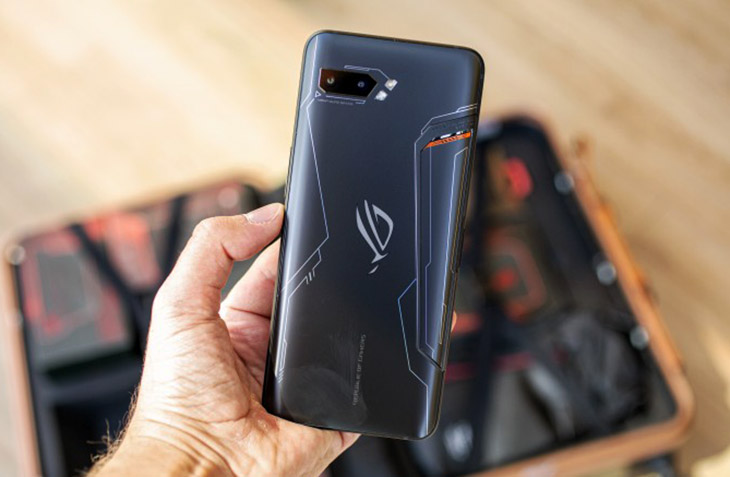
Last but not least, the king of gaming phones: Asus ROG Phone 2, with its RGB LEDs, the support to external accessories and, obviously, a top-class hardware department. It is fueled by the Snapdragon 855+ chipset and it has one of the most amazing displays out there with more than 100% DCI P3 coverage, a 120 Hz refresh rate, and 240 Hz touch sensing. You even get a mammoth 6000 mAh battery with the support of reverse charging.
Quite a number of folks hated math in high school and now that they are older, they dread having to teach their kids. If you are a parent or a student struggling with math, Microsoft has a new Android app called Math Solver to help you with your math problems.
The Math Solver App uses advanced AI to solve questions. You can input your questions in three ways: type the question, scan (take a picture) of the problem, or draw (read, write) the question. The app then solves the question and provides a step-by-step solution on how it solved it so you can learn. It will also provide graphs and online video lectures related to the problem as well as similar questions for you to solve as practice.
Microsoft says the Math Solver app can provide solutions to various problems arithmetic, algebra, trigonometry, calculus, statistics, and even word problems.
[envira-gallery id=”294460″]
The Math Solver app is based on the math assistant available on OneNote used in schools according to Microsoft. The app is free to download on the Play Store with no in-app purchases. It is just 25MB in size and works with Android devices running Lollipop and up.
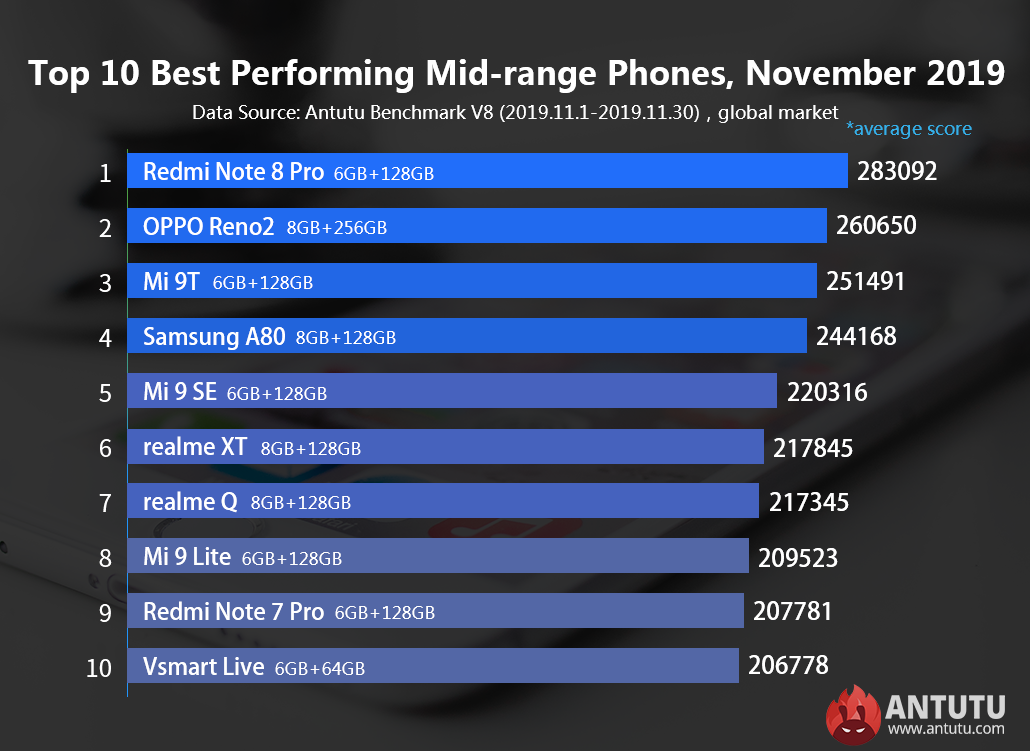
Not only did AnTuTu release the global top 10 best-performing smartphones, but the outfit also released a list of the top 10 best performing mid-range models globally for the month of November.
At the top of the list is Xiaomi’s Redmi Note 8 Pro 6GB RAM +128GB storage variant with an average Antutu score of 283,092 points. The Redmi Note 8 Pro is powered by MediaTek’s Helio G90T chipset and is actually the first smartphone to ship with the premium chipset specifically designed for gaming phones.
The second spot is occupied by OPPO Reno2 8GB RAM+256GB storage variant, which achieves an average Antutu score of 260,650 points. Xiaomi continued its dominance of the mid-range segment with the Mi 9T 6GB RAM +128GB storage variant ranked third and having an average AnTuTu score of 251,491 points. Both the Reno 2 and Mi 9T are powered by the Snapdragon 730 SoC, but the Reno2 uses the Snapdragon 730 G which is said to provide 15% faster GPU rendering than Snapdragon 730 as it integrates an enhanced Adreno 618 GPU. In addition, the optimized graphics card and Wi-Fi latency manager can bring smooth and faster gaming experience. The chip also supports some Snapdragon Elite Gaming features. The Mi 9T uses Snapdragon 730.
Other devices that have made it to the list of the Top 10 best performing mid-range phones are Samsung A80 8GB RAM +128GB storage variant with an average score of 244,168 points, Mi 9 SE 6GB RAM +128GB storage variant with a 220,316 points average score. The Realme XT 8GB RAM +128GB storage variant follows with an average score of 217845 points. Realme Q 8GB RAM +128GB storage variant is ranked seventh with an average score of 217,345 points. The Mi 9 Lite 6GB RAM +128GB storage variant (average score: 209,523) and Redmi Note 7 Pro 6GB RAM +128GB storage variant with an average score of 207,781 points makes it a total of five Xiaomi models onboard the list.
However, the surprise inclusion on the list is the Vsmart Live 6GB RAM +64GB storage variant which had an average score of 206,778 points to complete the top 10 rankings. Vsmart Live is a smartphone manufactured by a Vietnam company-VinSmart, which belongs to Vingroup. The phone is powered by Snapdragon 675 SoC. It features a 6.2-inch FHD+ AMOLED screen, a 4000 mAh battery and supports dual SIM cards.
On the whole, AnTuTu notes that for mid-range phones, a powerful SoC and UFS storage is a mandatory feature to make the cut as regards the top 10. Larger storage configuration or dual-channel UFS storage are pluses.
We use cookies on our website to give you the most relevant experience by remembering your preferences and repeat visits. By clicking “Accept”, you consent to the use of ALL the cookies.
This website uses cookies to improve your experience while you navigate through the website. Out of these, the cookies that are categorized as necessary are stored on your browser as they are essential for the working of basic functionalities of the website. We also use third-party cookies that help us analyze and understand how you use this website. These cookies will be stored in your browser only with your consent. You also have the option to opt-out of these cookies. But opting out of some of these cookies may affect your browsing experience.
Necessary cookies are absolutely essential for the website to function properly. This category only includes cookies that ensures basic functionalities and security features of the website. These cookies do not store any personal information.
Any cookies that may not be particularly necessary for the website to function and is used specifically to collect user personal data via analytics, ads, other embedded contents are termed as non-necessary cookies. It is mandatory to procure user consent prior to running these cookies on your website.