According to data released by TrendForce, global TV shipments reached 54.97 million units in the third quarter of 2019. Samsung once again leads the pack when it comes to shipments. The rest of the list reads more or less as you’d expect it to, but surprisingly Xiaomi only manages to make the list at 5th this time, with a 8.3% drop in sales.
Statistics show that Samsung TV’s total sales reached 10.41 million units in the third quarter, beating out fellow Korean company LG shipments, and 7.24 million units in shipments. In third we have TCL with 4.8 million units, and very close behind we have Hisense with 4.62 million units. All these saw a growth in sales, especially Hisense with a large 48.6% increase from last quarter, which is why Xiaomi’s situation is surprising.
Xiaomi trails much further behind the competition with 2.75 million units. It’s still a respectable number and nothing to scoff at, but it’s still a surprising drop from Q2’s 3 million units. On top of that, Xiaomi is the only company on the list that saw a decline in growth, which isn’t very good for them.
TrendForce estimates that TV shipments in the fourth quarter of 2019 will reach 65.42 million units. Xiaomi had launched a slew of new TVs in Q4 2019, so it’s fully possible we’ll see Xiaomi make a resurgence in sales. For now however, it seems like everyone’s a long ways away from dethroning Samsung’s spot as the number one TV company in sales.
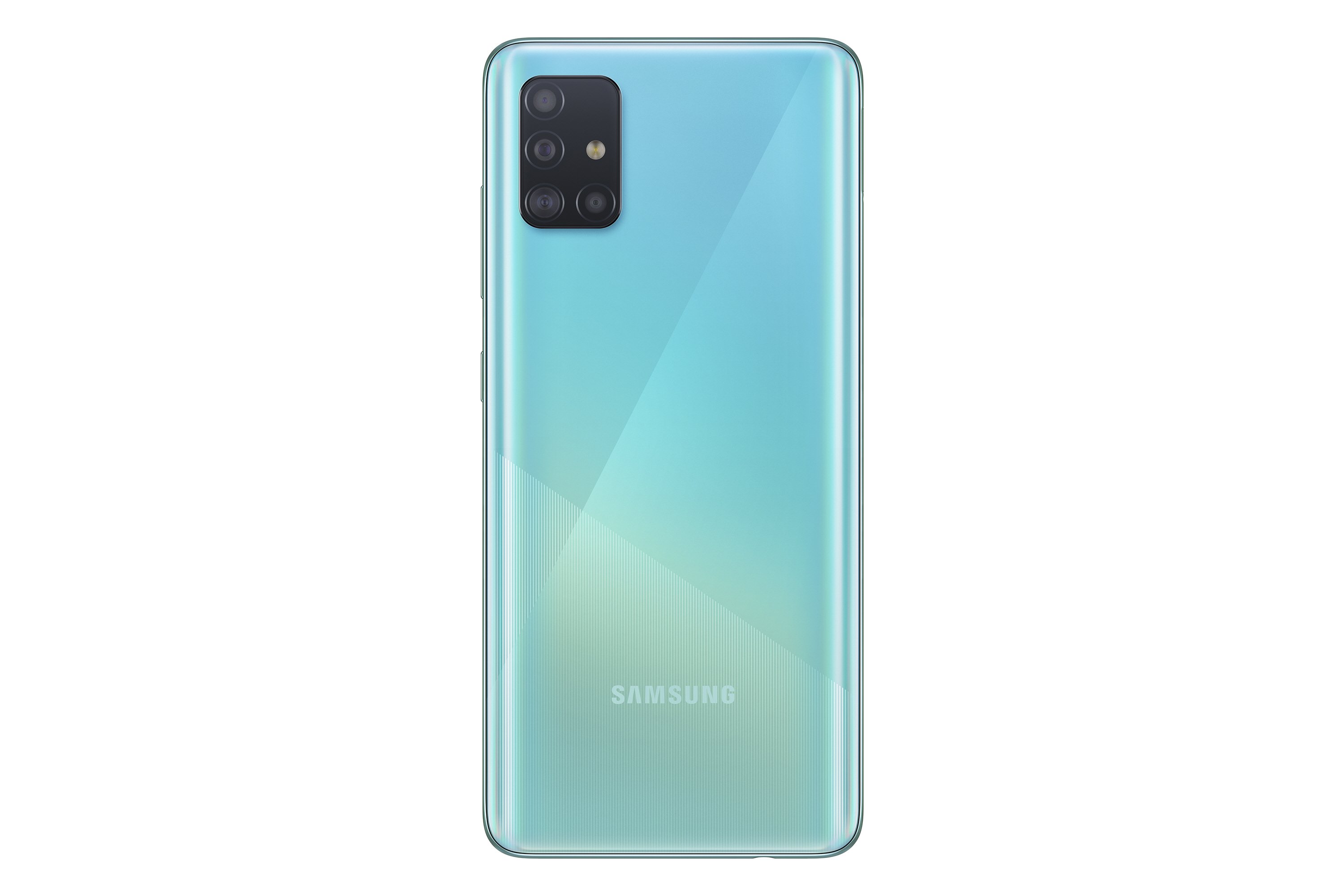
Recently, Samsung Vietnam released a brand new teaser video announcing new Galaxy A-series devices will be coming on December 12. While no specific details were given, reports claim that the devices being launched will be the Galaxy A51 and A71, the flag bearers for most of the Galaxy A-series devices.
At the end of the teaser video, we get to see the new design for the Galaxy A-devices, with a hole-punch camera cutout similar to the Galaxy Note 10. It seems like the Note 10 design will probably be carried over to the lower-end models as well. That’s not too bad considering that the Galaxy Note 10 has fairly excellent design.
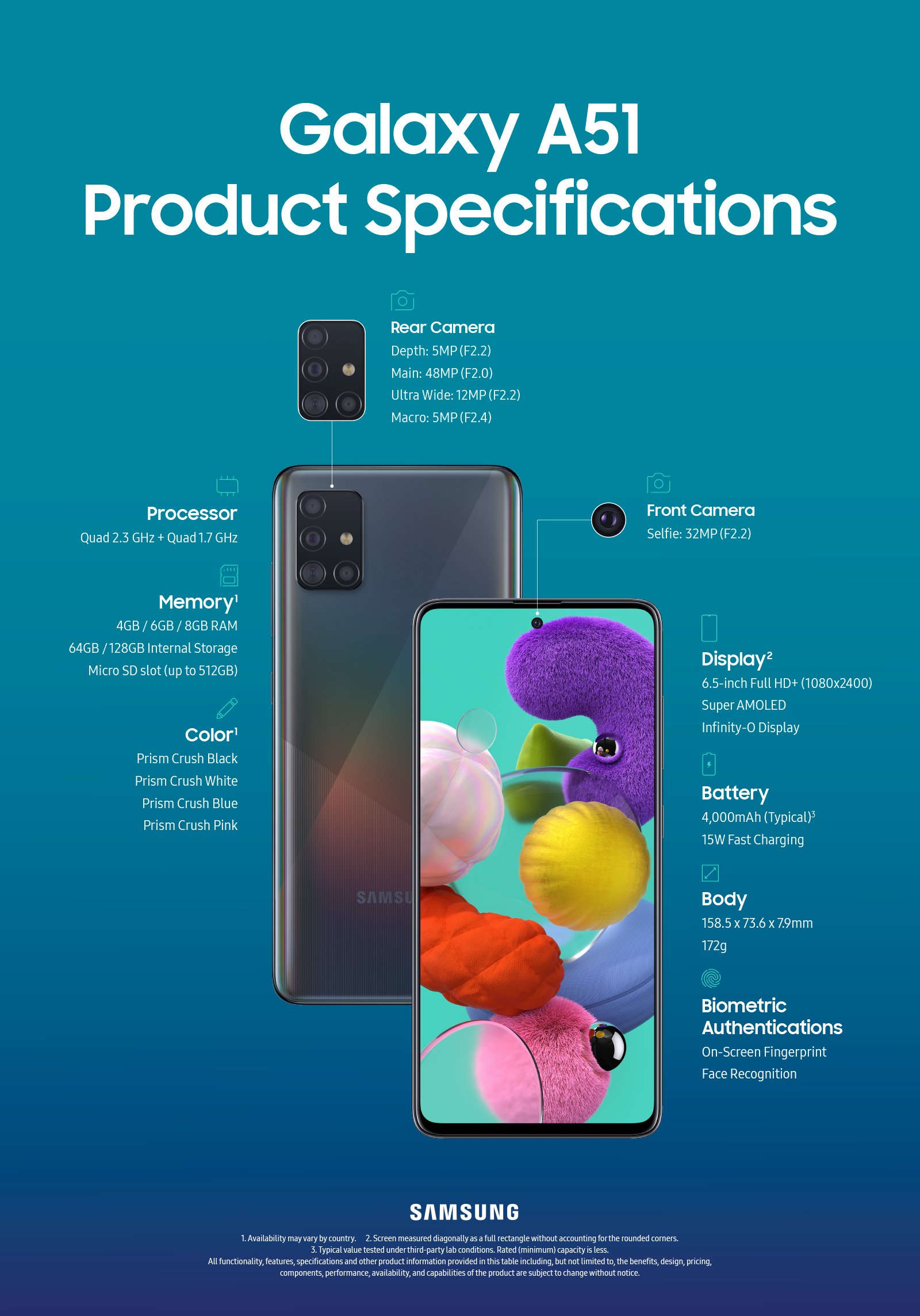
It was previously reported that the Galaxy A51 is equipped with a 6.2-inch screen, a 4000mAh battery, and an Exynos 9611 octa-core processor, which is made up of four 2.3GHz A73 cores and four 1.7GHz A53 cores. There’s a Mali-G72 MP3 GPU and an integrated modem that supports 3CA downlink supports up to 600Mbps bandwidth. RAM options starts at 4GB, and storage is available in 64GB and 128GB.
The Galaxy A71 on the other hand will allegedly come with the Snapdragon 675 chipset instead of the A51’s Exynos 9611. This will be paired up with 8GB of RAM, a 6.7-inch screen, a decently slim chassis that measures in at 163.5 x 76 x 7.9mm, a 4500mAh battery (25W fast charge), and a price of about 400 euros, which is roughly 3113 yuan.
Vivo V17 is set to debut in India on Dec. 9. Previous reports had claimed that it could be the same Vivo V17 phone that was made official in Russia in November. However, a recent report had revealed that it will be sporting a different front and rear design. 91mobiles has shared a leaked hands-on video of the Vivo V17 phone that will be coming to India to reveal its design in real.
The rear appearance of the Vivo V17 for India can be seen few seconds into the video. There is a rectangular camera module at the upper-left corner of its back. It includes four cameras arranged in a L-shaped design along with an LED flash. The Vivo V17 that had debuted in Russia last month featured a diamond-shaped camera module for its 48-megapixel quad cameras.
The Vivo V17 for India has a punch-hole placed for the front camera at the top-right corner of its display. In comparison, the Vivo V17 for Russia features a waterdrop notch. The smartphone is equipped with an in-display fingerprint sensor.
Rumors have that the Vivo V17 for India will be featuring a 6.44-inch S-AMOLED display that offers full HD+ resolution. The marvelous display of the phone will be advertised as “iView Display” by Vivo. A 32-megapixel camera could be present on the front for shooting selfies. The quad camera system on its back may feature a 48-megapixel main lens, an 8-megapixel ultrawide lens, a 2-megapixel macro lens and a 2-megapixel portrait lens along with an LED flash.
The Snapdragon 675 mobile platform will be present under the hood of the Vivo V17 phone. The device may come with 8 GB of RAM. The internal storage of the V17 could be 128 GB of native storage. It may come with a 4,500mAh battery that supports 18W fast charging through USB-C. The FunTouch OS 9 flavored Android 9 Pie will come preinstalled on the device.
The Vivo V17 is expected to land in India with a price tag of around Rs. 20,000. The Chinese manufacturer may sell the phone in offline and online markets across the country. Midnight Ocean and Glacier could be the two color editions of the Vivo V17.
In the Q1 of 2019, Samsung launched its first foldable smartphone, the Galaxy Fold. Even though its commercial availability was delayed a couple of times due to display issues, it is still a remarkable device. Samsung must have taken note of this, as insiders are reporting that the Korean giant plan to reveal two new foldable smartphones next year.
On top of this, other variants of foldable smartphones are expected to hit the market next year, expanding the foldable segment to meet the demand for larger screens in compact form factors. At least two new foldable models are likely to be launched by Samsung next year, while there are rumors that LG Electronics will debut its first foldable phone.
One of these next-generation Galaxy Folds will reportedly come with a clamshell design. As per the report, the cover display will primarily be used by the company just to show notifications along with some other basic information such as battery info while charging. A couple of charging animations seemingly designed for the device have also been found in the OneUI 2.0 beta.
The retail price of the clamshell phone is estimated to be around 1 million won ($845), a price strategy to ramp up sales and make it a mass-market model. It’s expected to launch sometime in February 2020, possibly alongside the Galaxy S11. That is unless the Galaxy S11 itself is the new clamshell device, though it seems rather unlikely.
“Samsung’s plan to expand the foldable product lineup depends on the market response to the clamshell model slated for launch in 2020, but it is clear the firm will increase the lineup,” said Choi Bo-young, an analyst at Kyobo Securities. He also mentions that the proper successor to the Galaxy Fold will likely be announced around August 2020.
Let’sGo Digital, an online IT outlet based in the Netherlands, revealed that the Korean company filed a design patent with the Hague International Design System in May, though it was not officially announced until Nov. 29. The patent sketch shows that the outward-folding foldable design looks like Huawei’s Mate X.
So far, there have been no significant reports about the launch of the device. This is mainly because the company has seen some major restructuring of its smartphone business. “We do have the foldable technology that has been developed, but our official stance is that it’s too early yet,” said a company official.
Vivo is all set to launch the Vivo X30 smartphone in the coming days which will come powered by the Samsung Exynos 980 5G chipset. Although the company has revealed several features of the phone, some still remains under the wrap.
Now, the company has now shared three promotional videos of the Vivo X30 lineup on Chinese microblogging platform Vivo X30 which has revealed more details about the camera configuration of the phone.
The teaser from the company has revealed that the smartphone will come with a dedicated portrait camera along with its 5x periscope zoom camera. Further, the company has also claimed that it will match professional camera shots with a 50mm lens.
Another teaser video posted by the company reminds of the periscope super-telephoto lens. The clip showcases a party in which a girl is spotted and observed from a distance by an unknown male. The company claims that you can clearly say any object, even if it is far from you. There is even a demonstration how the live focus would work and the slogan reads “everything is always in focus with the vivo X30”.
In the third teaser video, Vivo is showcasing something that is already known — 60x Zoom which will allow users to see even farther. The video shows a person going on top of a cliff at the sea and just about when he is going to jump with his clothes, the speedy zoom from 1x to 60x is done by the camera software.
As said earlier, the smartphone will come powered by Samsung Exynos 980 chipset which will enable dual-mode 5G on the device. The phone will come in two variants and both of them will be pre-loaded with JoviOS, replacing the FunTouch user interface.
Recently, the Vivo V1938A/T smartphone was spotted on the database of 3C regulatory body which is believed to be the Vivo X30 or X30 Pro handset. The 3C listing reveled that the phone may ship with a charger that supports 33W fast charging.
Before Realme launched the Realme X2 Pro premium flagship smartphone in the Indian market last month, the company had launched the Realme X2 mid-range device in China and Europe back in September.
When launched, the smartphone was introduced in two color options — Pearl White and Pearl Blue. Now, the company has launched a new color variant for the Realme X2 smartphone in China — Avacado Green.
As for the pricing, the 6GB RAM and 64GB storage models cost 1,599 yuan (~$224) while the 8GB RAM + 128GB internal storage variant is priced at 1,899 yuan (~$266).
To remind you of the specifications, the Realme X2 features a 6.4-inch S-AMOLED display with dewdrop notch and offers 19.5:9 aspect ratio, Full HD+ screen resolution of 1080 x 2340 pixels, and a screen-to-body ratio of 91.9 percent.
Under the hood, the device is powered by Qualcomm Snapdragon 730G octa-core processor which is clocked at 2.2GHz, coupled with 6GB or 8GB of RAM and offers three internal storage options — 64GB, 128GB, and 256GB. It also comes with a microSD card slot allowing users to further expand its storage capacity.
The smartphone comes with a quad-camera setup on the back which consists of a 64-megapixel Samsung GW1 sensor with f/1.8 aperture, an 8-megapixel super-wide lens with 119-degree field-of-view and f/2.25 aperture, a 2-megapixel macro lens with 4cm focal length and a 2-megapixel portrait lens for adding depth effects to images.
On the front side, the device is equipped with a 32-megapixel camera sensor with f/2.0 aperture for taking selfies and video calling. Connectivity features available on the device are dual-SIM support, 4G VoLTE, Wi-Fi 802.11ac, Bluetooth 5.0, GPS, NFC, USB-C and 3.5mm audio jack.
The device is running Android 9 Pie operating system out-of-the-box with the company’s own ColorOS 6.1 custom user interface on top. It also comes with Frame Boost 2.0 and Touch Boost 2.0. For gamers, it comes with Game Space for enhancing the gaming experience, along with features like Game Assistant that offers handy features like screen recording and do not disturb mode.
It also comes with Dolby Atmos support for panoramic sound effects and Hi-Res audio support. The device is packed with 4,000mAh battery which also comes with support for OPPO’s 30W VOOC 4.0 Flash Charge technology.
As part of the recently launched Cyber Monday Sale, Gearbest is offering the top hundred items at best prices.
The Chinese online store continues to live up to its reputation for offering the best products at unbeatable prices, and the Cyber Monday Flash Sale is no different. You can get your hands on these amazing hundred products that are currently gracing the promotion page without spending a lot of money.
We would be talking about the noteworthy discount Gearbest is currently offering on Xiaomi’s well-received fitness gadget, the Mi Band 4. Aside from shedding light on the discount, we will show how you can save more money at the time of checking out.
The Chinese version of the Mi Band 4 would normally set you back $46.30, but you can buy it for a considerably reduced price of just $26.99 during the activity period. In addition to getting this 42 percent off, consumers who make the payment using PayPal will qualify for EXTRA PayPal Discount, wherein they get $3 off on orders valued at $50.
This PayPal discount will be limited to the first 1500 orders daily. The rest of the consumers can apply coupon code GBXMSH01 for an extra $5 off. In other words, you can bring the already lowered asking price of the smart bracelet further down to just $21.99 even before you place your order.
The long-awaited Mi Band 3 successor was unveiled in China on June 11th this year. Xiaomi’s latest smart bracelet comes with top-end features and superior hardware.
Compared to its predecessor, the Mi Band 4 features a 39.9% bigger display and uses AMOLED color screen and has 2.5D scratch-resistant tempered glass on top, which offers added protection. Furthermore, it features several easy-to-respond custom dials that help you express your mood.
The Mi Band 4 uses Bluetooth 5.0 BLE technology for stable and faster connectivity speed, as well as enhanced efficiency. The device sports a 0.95 inch AMOLED color display with 120 x 240 pixels resolution and is rated 5ATM water-resistant (up to 50 meters).
It is backed by a robust 135mAh battery, which offers a battery life of over twenty days on a single charge. It is compatible with Android4.4, iOS9.0 or above and also supports Alipay offline payment.
To know more about the feature-laden Mi Band 4 smartwatch and to place your order, simply follow this link. With more than 2000 pieces sold at the time of writing, the promo will come to an end in 17 days.
Unlike other sales that require you to wake up in the wee hours of the morning and go shopping, Cyber Monday is an online-only sale. In other words, you can avail of the biggest discounts on top branded products without leaving the comfort of your home.
To make sure you can put your feet up and shop without waiting in line, or fighting for parking, Banggood has launched the Cyber Monday Best Sellers List from Black Friday promotion. As the name suggests, the promo features the most popular products during the recently concluded Black Friday Sale.
To simplify and expedite the search process, the products have carefully been added to specific categories, starting with the Best Seller in Black Friday section. You can find everything from a smartwatch to a heating jacket racing coat under this section, but more importantly, you can get them for considerably lowered prices.
For example, the 6GB RAM+128GB ROM Xiaomi Redmi Note 8 Pro variant would normally set you back $364.78, but you can reduce its retail price by applying coupon code BGCBN8P128 at checkout. Similarly, you can avail of a 19 percent off on the Bakeey I5 smartwatch which usually sells for $29.99 but is currently available for only $24.31.
Whether you are a drone expert or a beginner, the next category dubbed Top 8 in RC Toys is likely to cheer you up. You can grab noteworthy discounts on remote-controlled toys and drones during this activity period.
If you have restlessly been waiting to get your hands on your favorite smart device without spending a lot of money, you might want to check out the Top 8 in Smart Device section which features a wide range of products ranging from smart watches, music accessories, notebook and lots more.
Likewise, during the promotion period, Banggood will be offering great discounts on top 8 products across various other categories including electronics, tools, sports and outdoors, home and lifestyle and fashion trends.
All products featured in the Banggood Cyber Monday Collection will bear a starting price of only $0.01. If you make a purchase using PayPal, you would be able to use site-wide coupons that help you save more money.
For example, you can get $3 off on orders exceeding $32, get $5 off on orders over $50 and save $10 off if your cart value exceeds $95. To make the most out of Banggood’s Cyber Monday Sale, simply visit this link without wasting time.
Unlike a slew of other sales that are available on products sold online, as well as in offline stores, Cyber Monday is an online-only sale. It’s a perfect opportunity for ardent online shoppers to get their hands on their favorite gadgets without emptying their pockets.
As part of the GeekBuying’s Cyber Monday Sale, pretty much everything from laptops, phones, music accessories, computer accessories, laser projectors, RC drones are on sale. The popular Chinese e-tailer is offering up to a whopping 70 percent off, giving its loyal users a chance to save thousands of dollars on top-end products.
GeekBuying’s Cyber Monday Sale promo page is teeming with all sorts of products across multiple categories. Finding exactly what you are looking for among so many items can prove to be difficult so to make sure you do not spend a lot of time searching for a particular product, the promo page has been split into specific categories.
In addition to other amazing products that will grab your attention, Geekbuying’s Cyber Monday Sale features the Xiaomi FIMI X8 SE Voyage Version RC drone. Today, we would be checking out the noteworthy discount GeekBuying is currently offering on the RC drone and also show how you can save a considerable amount of more money at checkout.
Drone enthusiasts that have restlessly been waiting to get their hands on the FIMI X8 SE without spending a lot of money can now get their hands on this amazing RC drone for just $499 as part of GeekBuying’s Cyber Monday Sale. This is a noteworthy 8 percent reduction in the drone’s original asking price of $539.99.
On top of that, if this is your first order with GeekBuying you can grab an extra discount by applying the 2% OFF New User Coupon at the time of checking out. Moreover, you get one battery and a bag so that you can carry the FIMI X8 SE wherever you go.
The FIMI X8 SE uses the latest encoder and decoder to deliver superior video quality i.e. 4K 100Mbs videos with low latency. It features a 3-axis mechanical gimbal equipped with advanced professional control algorithms for seamless, jello-free videos even in high-speed conditions.
It adopts the adaptive streaming bitrate technology for an improved transmission distance of up to 5KM. Aside from that, the FIMI X8 SE offers an impressive flight time of 33 minutes, For faster position and precise hovering, the drone uses GPS+glonass dual-satellites positioning system.
You can visit this link to check out more details about this highly portable RC drone which comes with a free carrying bag. Note that the promo was on the verge of wrapping up at the time of writing.
In just a few days Xiaomi’s sub-brand will unveil its new flagship line-up Redmi K30. The new series will include two variants: Redmi K30 and K30 5G (someone also refers to the latter as the Redmi K30 Pro), and it is a very important line-up because it will include the first Redmi phones with 5G support. Here we collected all the info we got about their specifications and launch in order to give you a complete glimpse of what these smartphones will be ahead of the official announcement. The information is not only based on official declarations but also on leaks and rumors, but all of it comes from reliable sources.
Xiaomi Redmi K30 and K30 5G rumor roundup
Design
Various official images revealed the design of the Redmi K30 in all its splendor. The front side will house a punch-hole display with a dual front camera inside so that the bezels will be very narrow even though there will not be a notch. Another official teaser shows us the rear side of the phone with a circular module including four rear cameras arranged vertically. Under the camera module, we can clearly see a dual-LED flash and the word 5G, while the Redmi logo is placed on the inferior part, vertically. On the phone, you will also find NFC, an IR blaster, and a 3.5 mm audio jack (yay).
UPDATE: The Chinese regulatory agency TENAA updated its listing of the Redmi K30 by adding photos of the device: you can take a look here. TENAA revealed that the 4G version will measure 165.3 x 76.6 x 8.81 mm and it will weigh about 208 grams. There will be a 6.67-inch display with a Full HD+ resolution of 2400 x 1080 pixels and three memory configuration with 6, 8 and 12 GB of RAM and 64, 128 and 256 GB of native storage respectively. Thanks to official images we know that Redmi K30 will also launch in a White variant. And a new render showed the Blue-Purple gradient color variant. Last but not least, unboxing and hands-on photos and videos appeared online, we published all the details here.
According to reports, Redmi K30 will sport a 6.6-inch display: it will be an IPS LCD panel with a high 120 Hz refresh rate (the same as the latest iPhones) and two in-display cameras thanks to a dual punch-hole design. Note that the 120 Hz refresh rate may be an exclusive for the Redmi K30 Pro, while the Redmi K30 might come with a standard 60 Hz display. While the rear cameras are placed vertically, the two front cameras are placed horizontally. The resolution of the display should be Full HD+ with 1080 x 2400 pixels and a 29:9 aspect ratio, while the fingerprint reader will be side-mounted since the display will be LCD. There will also be the Gorilla Glass 5 protection, not the latest Corning’s standard but still sturdy.
UPDATE: according to a recent official teaser, Redmi K30 5G sports a 6.67-inch display with a 2nd-generation punch hole that has a 4.38 mm size, placed on the right side. On the rear side, there will be AG frosted glass. Even though the display will be bigger, users will still have a solid grip on the phone.
Hardware & Software
As mentioned above, at least one device from the Redmi K30 will carry the support to 5G connectivity, but unlike all the other 5G phones launched until now, the 5G variant will not be powered by a Qualcomm SoC. It will pack the first MediaTek’s 5G chipset with flagship-class specifications. We are talking about the Dimensity 1000 which includes a 5G modem. The phone will support dual 5G, which means it is compatible with both SA and NSA modes (unlike the Snapdragon X50 modem usually paired with the Snapdragon 855+ that is a single mode 5G modem). So it does not have to rely necessarily on 4G and it can rely on LTE infrastructure if 5G is not completely ready in a certain zone. MediaTek Dimensity 1000 was already tested on AnTuTu benchmarks where it scored an even better result than Qualcomm Snapdragon 855+ and Apple A13 Bionic. You can learn more about the Dimensity 1000 5G-enabled chipset by MediaTek and its amazing benchmark scores by clicking here. According to rumors, the Redmi K30 will also come in a version with 4G connectivity only packing a less powerful Snapdragon 730G chipset: an advanced version of the SoC found on the predecessor Redmi K20. But according to leaked benchmarks, there will still be a Snapdragon 730 SoC since the GPU appearing in the benchmarks is the Adreno 618. The base variant of the Redmi K30 will offer 64 GB of internal storage, but there will obviously be higher-end memory configurations. Users will find Android 10 out of the box, customized by MIUI 11.
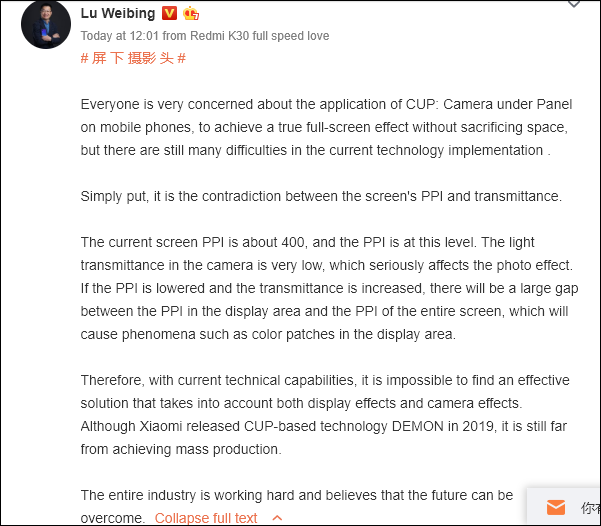
UPDATE: Lu Weibing confirmed that Redmi K30 5G won’t come with a MediaTek chipset. Instead, it has a Qualcomm SoC with 5G connectivity and the support to SA and NSA networks. The chipset will be from the Snapdragon 700 family: it will be the Snapdragon 765G with amazing graphics performance (but upper-midrange specifications). Redmi also teased a 12 antenna design on the Redmi K30 (2.4 times the number of antennas found in 4G smartphones). The reason for this is making 5G signal stronger and more stable: indeed, the company also opted for a new RF solution.
UPDATE #2: Redmi K30 appeared on AnTuTu benchmarks with Snapdragon 765G and a total score of 302,847 points. You can check all the scores here. The company also confirmed that there will be two variants of the handsets: one with 4G connectivity only and another with 5G support.
Camera
Besides offering great performance at a probably interesting price, Redmi K30 will also come with a pretty nice camera department. On the rear side, there will be a quad camera including a main Sony IMX686 sensor with a 64 MP resolution, a 13 MP ultrawide sensor, an 8 MP telephoto lens with optical zoom and a 2 MP sensor. In the display, you will find a dual camera including a 32 MP main sensor for selfies and an additional ToF sensor for 3D facial recognition. But not everyone has the same opinion: according to some rumors, there will be a secondary ultrawide sensor in a similar configuration to the Honor V30 Pro, which makes definitely more sense.
UPDATE: according to the latest leak, Redmi K30 will boast the Sony IMX686 sensor with a 64 MP resolution, with an f/1.89 aperture and a 1/1.73″ sensor size, as well as an 8 MP sensor, a 5 MP lens and a 2 MP sensor.
UPDATE #2: camera samples and macro shot samples shared online by the company, you can check them at the following links.
Redmi K30 is expected to house a battery with a capacity ranging from 4500 mAh to 5000 mAh. It will be a very long-lasting battery, similar to the Xiaomi Mi CC9 Pro which recently debuted in the global market under the Xiaomi Mi Note 10 moniker. The battery will support a 27W fast charging technology, not the fastest one but still satisfying. Note that Redmi K20 supports 18W fast charging which is even slower.
UPDATE: Redmi K30 packs a 4500 mAh battery with the 30W Fast Flash Charge technology allowing to fully charge it in 1 hour. The technology allows the duration of charging at a high current to extend up to 80 percent and it includes an independent charging pump with a 97 percent efficiency. Learn more here.
Redmi K30 and K30 5G – Launch, price and availability
Redmi K30 alongside its 5G variant will be officially announced on December 10: the company already confirmed the launch date through an official teaser. The handsets should debut in the Chinese market only since the K series is only meant for Chinese customers. The handset may hit the global market under a different moniker just like happened with the K20 series which debuted globally with the Xiaomi Mi 9T and 9T Pro (the international version of Redmi K20 and K20 Pro). The starting price of the Redmi K30 is rumored to be ¥1999 which roughly translates into $285. Note that a lot of info contained in this article comes from rumors, including the price, that is why it is a rumor roundup. So, take everything with a pinch of salt and wait for the official launch in order to know everything for sure about this device.
UPDATE: according to reports, the Pro variant of the Redmi K30 will go official in March 2020 with Snapdragon 865 and a Snapdragon X55 integrated 5G modem. So on December 10, you will only see Redmi K30 and K30 5G with midrange-class specifications. You can learn more about the K30 Pro here.
Samsung’s Galaxy Tab S6 is one of two top-end Android tablets you can purchase. The other is the Huawei MatePad Pro. The tablet is available in WiFi-only and LTE-only variants. It has been reported that a 5G version of the tablet has received certification in Samsung’s own home country, which means it should launch soon.
The Galaxy Tab S6 5G which has model number SM-T866N {SM-T860 (WiFi) and SM-T865 (LTE)} was certified today by South Korea’s National Radio Research Agency (NRRA). The certificate also reveals the device is manufactured in Vietnam.
The model number shows the device is for Korea and there are no reports it will be available in other markets yet. However, China does seem like one market that will get the 5G model.
The Galaxy Tab S6 5G should have mostly the same specs as the WiFi and LTE versions but there is a chance it may get a bigger battery capacity.
The Tab S6 has a 10.5-inch 1600 x 2560 HDR10+ Super AMOLED display. It is powered by a Snapdragon 855+ processor with 6GB or 8GB of RAM and 128GB or 256GB of expandable storage.
There is a 13MP camera on the back along with a 5MP ultrawide angle camera. The front bezel, albeit smaller than that of previous models, is home to an 8MP camera. The Galaxy Tab S6 has Dolby Atmos quad speakers tuned by AKG, an in-display fingerprint scanner, a USB Type-C port, and a 7040mAh battery with support for 15W fast charging. It also has a redesigned stylus with Bluetooth support.
Xiaomi’s Redmi GM Lu Weibing has disclosed that the Mi Max series has been discontinued. But it is difficult taking such news seriously considering Xiaomi’s past antecedence in this regard. We recall Xiaomi’s CEO Lei Jun had hinted that the company had no plans of launching a Mi Max or Mi Note series model this year. A few months after, the Mi Note 10 was announced.
But this case may be different. The Mi Max series consists of large display phones with big batteries that are pocket-friendly in terms of price but not in size. The series consists of the Mi Max, Mi Max 2 and the Max 3 launched last year. The models come with a 6.9-inch display size which tilts towards a tablet size. After all, there are 7-inch tablets in the market.
Another reason why the Max series may indeed have been discontinued is that large screen, phablet-sized phones are not trendy anymore. The industry seems to be tilting towards the use of foldable design for large-screen models and tall aspect ratio phones with up to 6.7-inch display. The Galaxy Fold and Huawei Mate X both have up to 7-inch display when unfolded.
In addition, Xiaomi’s CEO recently disclosed that the company’s smartphone lines are now the Xiaomi and Redmi lines. He equally hinted that the Xiaomi brand is devoted to new technology, high-end phones, with a focus on new retail markets. He then reeled out the phones under the product line for this year. Among them are the Xiaomi digital series, Mi 9, Mi 9SE, Xiaomi Mix series and the new Xiaomi CC series. No mention was made of the Mi Max series but Lei Jun only hinted that it won’t be launched this year.
We’ll have to keep our fingers crossed as the brand may release the model in a refreshed form just like the Mi Note 10 had a largely redesigned body and powerful specs.
The Huawei Enjoy 10S was announced back on October 25 in China. However, it appears Huawei wants to launch the phone again on December 5.
The mobile phone giant shared a poster on Weibo announcing the launch of the Enjoy 10S on December 5. The poster shows the phone in the three color variants the phone is available in.
We do not know why the phone is getting another launch but there is a possibility Huawei wants to announce a new RAM + storage variant seeing as the phone is only available in one variant – 6GB RAM + 64GB expandable storage. So, the launch may probably be for a 128GB version.
The Enjoy 10S has a 6.3-inch OLED FHD+ (2400 x 1080) display with a waterdrop notch for a 16MP selfie camera. There is also an in-display fingerprint scanner. On the rear of the phone are a 48MP f/1.8 camera, an 8MP f/2.4 ultrawide angle camera, and a 2MP depth sensor.
The phone is powered by the Kirin 710F which seems like a letdown considering there is a more powerful Kirin 810 processor. The phone also packs a 4000mAh battery with support for 10W charging via a USB Type-C port.
The Enjoy 10S has an NM memory card slot (256GB max), Bluetooth 5.0, dual-SIM support, and dual-band WiFi. Huawei has included a one-month free subscription of Huawei Music that is valid for purchases between November 1, 2019, to November 1, 2020. There is also Huawei Books with a one-month free subscription. Huawei ships the phone with EMUI 9.1 out of the box.
Xiaomi unveiled the Mi Watch last month with a design that resembles the Apple Watch series. Soon after the launch, the tech giant hinted that the smartwatch will get its first OTA update from December 3. Xiaomi has now shared some details on how to get the update and some of the features and fixes the update brings.
The update is an OTA update and will roll out between December 3 and December 5. To get the update, open the watch settings → system → about → click system update and wait for the watch to check if the update has been pushed to your unit. If it has, the update will be downloaded automatically.
The update brings the latest version with number XM037. It is recommended that for you to get faster download speeds, updates should be done over Wi-Fi connectivity. You should also turn off the Bluetooth and put the watch in the charging stand if the battery is low.
The specific upgrades which the update brings include the following;
iOS App goes live
Launched Xiaomi Wear App for iOS to improve iOS user experience.
Optimize the pairing experience
Optimized the issue of watch freeze in the first few minutes after pairing the watch for the first time.
Starting about 3 years ago, Elephone adopted an expansion plan that would help the company expand beyond the Chinese domestic market. Sticking to the plan that seems to be working well, Elephone will be officially launched in the Pakistani market on December 8th. During the same day, the Chinese manufacturer will be holding a conference in Islamabad. The press conference will be attended by Pakistan area media reporters, business partners, as well as government officials.
Elephone will introduce all its latest flagship models to the new market including its pop-up camera series that includes the latest Elephone PX. Also, its waterdrop display phones, as well as 3D screen phones, will be available.
According to the company officials, the Pakistani market is very important part of Elephone’s future plans in the Mid-East market and it comes together with the beginning of the new year that is expected to be very promising for the company.
Blackview’s hotly-anticipated quad-camera budget king A80 Pro finally kicked off its global sale on black Friday and it is available exclusively on AliExpress at $79.99 until December 4th. But the A80 Pro isn’t the only bargain on the market. So, let’s see a comparison between the A80 Pro and the Redmi 8A.
Design
On the front, the two models are almost identical and both come with slim bezels and waterdrop notch where a front camera is located (Redmi 8A has a smaller one). The big difference is on the back. The A80 Pro adopts an asymmetric design with the quad-camera being located on the top left whereas the Redmi 8 comes with a rear camera and logo arranged up vertically in the middle.
Display
The winner here is the A80 Pro since it comes with a bigger display and slightly higher resolution. So, the Blackview model boasts a 6.49″ 1560 x 720 display while the Redmi 8A sports a 6.22″ display with 1520 x 720 resolution. Also, the A80 Pro has an LED notification light. Both screens adopt in-cell technology for a better visual experience.
Hardware/Software
Performance-wise, the battle is tight although the phones come with SoCs from different manufacturers. The A80 Pro comes with the Helio P25 8-core SoC coupled with 4GB of RAM and 64GB of storage and the Redmi 8A comes with Snapdragon 439 also coupled with 4GB of RAM and 64GB of storage. The Antutu benchmark seen in the video reveals that the A80 Pro scores 96K+ while the Redmi 8A scores 91K+. As for the OS used, Blackview went with the clean Android 9 whereas Xiaomi chooses its own MIUI 11 bases on Android 9. Don’t forget that the A80 Pro supports global LTE bands while Redmi 8A doesn’t, which makes the former even more friendly for global travelers.
Camera
Judging by the official specs, the A80 Pro’s rear camera is far superior to its opponent as it sports a quad-camera setup with Sony® 13MP main sensor assisted by a triple sub-camera setup while the Redmi 8A’s rear main lens is 12MP. But a good camera means much more than that (i.e. software optimization) so we can’t really judge until we get samples from both of them. The selfie shooter is 8MP on both phones.
Battery
When it comes to battery, the Redmi 8A is definitely better with a 5,000mAh battery while the Blackview A80 Pro features a 4,680mAh one. In addition, the Blackview A80 Pro supports 10W charging while the Redmi 8A supports 18W fast charging but it’s a pity that Redmi 8A comes with a standard a 5V/2A charger. This means that if you want to take advantage of the 18W charging, you’d have to buy an extra charger.
Price
As we said before, the A80 Pro sells at just $79.99 during the global sale. The Redmi 8A is currently priced at $149.99, almost 2 times more expensive. And by no means is it 2 times better than the A80 Pro. As a matter of fact, the overall value-for-money ratio is much higher for the A80 Pro. That was a brief comparison and you should choose what suits you best. In the meantime, you can take a look at the Blackview BF promotion on Amazon where they’re offering 10 models with up to 20% discount.
Vivo U20, the latest U-series phone from the company is now up for purchase in India. The device is available in 4 GB and 6 GB RAM variants in the country. A fresh report on 91mobiles have revealed that the Chinese manufacturer will soon launching a higher variant for the smartphone featuring 8 GB of RAM. The publication has also shared the pricing of the new variant.
According to the publication, the 8 GB RAM version of the Vivo U20 will be available for purchase through offline stores from Dec. 12. It is expected to come with 128 GB of native storage, and it could be priced at Rs. 18,990 (~$265) in the country. The currently available 4 GB and 6 GB RAM editions of the Vivo U20 are respectively priced at Rs. 10,990 (~$153) and Rs. 11,990 (~$167). The handset is available for purchase in color editions like Racing Black and Blaze Blue. The 4 GB and 6 GB RAM variants are both available for purchase through online channels like Amazon India and Vivo India’s online store.
The Vivo U20 has a 6.53-inch IPS LCD display with waterdrop notch. It offers full HD+ resolution of 1080 x 2340 pixels and 19.5:9 aspect ratio. The FunTouch OS 9.2 based Android 9 Pie OS. The 11nm Snapdragon 675 mobile platform is present under the hood of the device. The device is equipped with a microSD card slot for more storage.
For shooting selfies, it is fitted with a 16-megapixel selfie camera. The triple camera setup of the phone includes a 16-megapixel main lens, an 8-megapixel ultrawide lens and a 2-megapixel depth sensor. A 5,000mAh battery present inside the device with 18W dual-engine fast charging. A fingerprint reader is available on the backside of the phone. Face unlock is other biometric recognition available on the device. The device is equipped with a dual SIM slot, 4G LTE, Bluetooth 5.0, Wi-Fi 802.11ac, GPS and 3.5mm audio jack.
LG is yet to announce its first foldable device but over the past few months, we have seen a couple of patents for foldable phones filed by the Korean giant. In September, we reported LG patented a phone with a rollable display and last month, we also covered its patent for a smartphone with a display that extends, thereby transforming it into a tablet.
The most recent one is for another foldable device with an outward-folding design similar to Huawei’s Mate X. First, reported by LetsGoDigital, the patent diagrams show the device has three cameras on the left side of the screen. When unfolded, the cameras can be used for taking selfies and for video recording while they serve as rear cameras when folded.
1 of 2
LG Foldable Device Patent
It has been reported that the patent was filed back in May 2019 before it was published on November 29, 2019.
There are reports LG is working on a foldable device but we do not know which of the designs we have seen in recent months it will adopt. Nevertheless, we don’t expect the device to launch until next year and when it does, it most probably will be a 5G device.
Doogee is yet another smartphone manufacturer that hosts an extended Black Friday promotion on its official store on Aliexpress and boy they nailed it this year! It’s almost as they are holding a clearance activity but for all of their smartphones and accessories. Let’s take a look at what they are offering.
For starters, there’s their whole rugged S-Series including their flagship Doogee S95 Pro that comes with the Helio P90 SoC and 8GB/128GB or 8GB/256GB of memory configuration. Of course, all S-Series phones are waterproof, dustproof, and drop-resistant and the same goes for the S95 Pro that is available sells for just $369.99 right now on Aliexpress. There is also a package offered that includes the battery and HiFi Speaker modules at just $462.49.
To continue, the second in line rugged phone is the S68 Pro which also comes with IP68/IP69K certifications as well as Helio P70 SoC backed by 6GB of RAM and 128GB of storage. It comes with Android 9 Pie pre-installed and can withstand temperatures ranging from -40° C to 60° C! It’s $100 off its original price so you can get it for just $199.9 here.
1 of 5
To close the list of rugged phones, we should mention the S40 with dual rear camera and rugged body costing just $89.99, the S40 Lite that is the most affordable rugged phone out there at just $69.70, and the A-powered tri-proof sub-flagships S90 Series with 6GB/128GB memory, that comes in two versions: One that you get the S90at $242.94 and one that you get all 7 accessories and modules together with the S90 Pro for just $432.16. Add to these the S90C at $349.99, the S70 at $259.99, and S80 at $289.99 too.
In addition to all the above, Doogee is also offering its entry-level flagship killer with triple rear camera and 6.3″ FHD+ display, Doogee N20, for just $79.99! What’s more, there’s also the 10000mAh battery beast Doogee N100 that also sports a rear dual camera with 21MP Sony main sensor and 8MP secondary sensor. It costs just $139.99 during the promotion!
1 of 4
Lastly, Doogee is also offering 4 of its best accessories. The GamePad G1 at just $39.99, the Dooyee Night Vision Cameraat just $39.99, the Doogee Dopods TWS Bluetooth earphones at just $24.99, and the Doogee C2 10W wireless charger at just $19.99.
Following the US-China trade disputes, the US Government has started to ease off on Chinese based companies. The issuing of licenses to firms to perform business partnerships with banned companies like Huawei is one such example. This has allowed American companies to resume their relations with the Chinese tech giant but it might be too late as Huawei is now building its smartphones without US-based parts.
US-China Trade Disputes (Leaders of Respective Nations)
Earlier this year, Huawei was placed on the ‘Entity List.’ After this, the Chinese company was forced to end ties with many of its American based partners after being issued a ban by the US Commerce Department. Initially, the move proved to cripple the company that relied on western companies like Google for Android OS support, ARM for its chipsets and other companies like Intel and Qualcomm as well. However, a new report suggests that the company no longer requires US-based chipsets anymore.
Huawei’s Mate 30 smartphone is a symbol of this new breed of smartphones which doesn’t feature any US parts. This was proven once the device was taken apart by analysts from UBS and Fomalhaut Techno Solutions which is a Japanese technology lab. The Chinese company has made great strides in distancing themselves and their reliance on the US.
Note: Huawei still uses US-based company’s chipsets but they are manufactured and synthesized in foreign countries.
Huawei Mate 30 5G and Mate 30 Pro 5G
According to analysts, Huawei made a big statement with the release of the aforementioned flagship smartphone that shipped with no US-made internals. Furthermore, even with Huawei previously announcing its move to do away with American parts, the company is currently in a great position owing to how quickly the shift actually came about.
We use cookies on our website to give you the most relevant experience by remembering your preferences and repeat visits. By clicking “Accept”, you consent to the use of ALL the cookies.
This website uses cookies to improve your experience while you navigate through the website. Out of these, the cookies that are categorized as necessary are stored on your browser as they are essential for the working of basic functionalities of the website. We also use third-party cookies that help us analyze and understand how you use this website. These cookies will be stored in your browser only with your consent. You also have the option to opt-out of these cookies. But opting out of some of these cookies may affect your browsing experience.
Necessary cookies are absolutely essential for the website to function properly. This category only includes cookies that ensures basic functionalities and security features of the website. These cookies do not store any personal information.
Any cookies that may not be particularly necessary for the website to function and is used specifically to collect user personal data via analytics, ads, other embedded contents are termed as non-necessary cookies. It is mandatory to procure user consent prior to running these cookies on your website.