Advertisement

One UI 8 beta is now available for more Samsung phones

Samsung One UI 8 beta update list

After a frustratingly slow rollout of One UI 7, Samsung is making a quick turnaround with One UI 8. It was the first brand to release Android 16 beta with its custom skin (One UI 8 beta) in May, but that remained exclusive to the Galaxy S25 series for a long time.

After more than two months, Samsung is expanding the One UI 8 beta to more Galaxy phones, and it has already announced its plans for further expansion in September (more on that later). Here’s a list of Samsung devices that are currently getting the One UI 8 beta update.

These Samsung phones are getting One UI 8 beta

  • Galaxy S25
  • Galaxy S25+
  • Galaxy S25 Ultra
  • Galaxy S24
  • Galaxy S24+
  • Galaxy S24 Ultra
  • Galaxy Z Fold 6
  • Galaxy Z Flip 6

Please note that updates are released in batches. Therefore, it may take some time to appear on your device. Also, the slots are limited. So, you must be quick to grab your access to the beta software before the slots fill up.

Only having one of these Samsung phones isn’t enough to get you enrolled for the One UI 8 beta program; you must also live in an eligible country. For the Galaxy S25 series, the beta was initially released in the US, the UK, Germany, and South Korea, and later expanded to Poland and India.

As for the other devices on the list, including the Galaxy S24 series, Galaxy Z Fold 6, and Galaxy Z Flip 6, the One UI 8 beta is available in four regions: Korea, the U.S., the U.K., and India.

Related:
1. Prepare your Samsung device for the One UI 8 beta upgrade
2. Here’s when Samsung will push the stable One UI 8 update

How to join the One UI 8 beta program?

Assuming you have an eligible Samsung device and that you live in a country where the One UI 8 beta is released, here are the easy steps to get the beta update:

  1. Open the Samsung Members app on your phone. (You can install it via the Galaxy Store if you haven’t already.
  2. Look for the One UI 8 beta banner and tap on it.
  3. Follow the simple steps on your screen to join the beta program.
  4. Now, go to Settings > Software updates > Download and install to get the beta update.
  5. Download the update and then install it.

Ensure your device has sufficient free storage and at least 30% battery for a smoother installation. Also, keep in mind that it’s beta software, so there may be bugs and unfinished features.

Samsung’s One UI 8 beta rollout plan

Starting with the Galaxy S25 series in May, the One UI 8 beta is now available to more Galaxy devices starting this week, including the Galaxy S24 series, Galaxy Z Fold 6, and Galaxy Z Flip 6. The update is released in four planned countries: Korea, the U.S., the U.K., and India, with no official announcement on expansion to more regions.

Samsung, however, has already announced its beta expansion plans for the next month. According to the official announcement, the company will release the One UI 8 beta to the Galaxy S23 series, Galaxy Z Fold 5, Galaxy Z Flip 5, Galaxy A55 5G, Galaxy A54, Galaxy A36 5G, Galaxy A35 5G, and Galaxy A54 in September. The eligible countries remain the same, which are Korea, the U.S., the U.K., and India.

Remember to visit our One UI 8 section regularly for the latest updates. You can also follow our Telegram channel and subscribe to our free newsletter for your daily dose of tech!

Also Read:
1. One UI 8 will be the last big upgrade for these Samsung devices
2. Samsung makes significant changes to One UI rollout strategy
3. Every Samsung device that’s eligible for One UI 8 upgrade

Infinix GT 30 5G goes on sale in India with Rs 19,499 starting price

The Infinix GT 30 5G+, launched just last week, is now officially available for purchase in India through Flipkart, Infinix’s own website, and offline retail outlets. Aimed at gamers, the device features dedicated shoulder triggers and a striking design, while also promising strong performance and high-refresh visuals. Full pricing details, launch offers, and the complete specifications are as follows.

Infinix GT 30 5G price in India

Infinix GT 30 5G
Infinix GT 30 5G

The Infinix GT 30 5G comes in two variants. The 8GB RAM + 128GB storage version is priced at Rs 19,499, while the 8GB RAM + 256GB model costs Rs 20,999. As part of the first sale, buyers can get an instant Rs 1,500 discount when paying with ICICI Bank credit or debit cards, or through an eligible exchange bonus, bringing the effective prices down to Rs 17,999 and Rs 19,499 respectively.

Purchases made via Infinix’s official website also include a free GT Gaming Kit worth Rs 1,999. Colour choices for the device are Cyber Blue, Pulse Green, and Blade White. Sales started at noon on August 14.

Infinix GT 30 5G specifications

Infinix GT 30 5G
Infinix GT 30 5G

The Infinix GT 30 5G features a 6.78-inch AMOLED display with 1.5K resolution, a 144Hz refresh rate, and a 2160Hz touch sampling rate. Peak brightness reaches up to 4,500 nits, and the screen is protected by Gorilla Glass 7i. TÜV Rheinland certification is included for reduced eye strain.

Powering the phone is the MediaTek Dimensity 7400 chipset paired with 8GB of LPDDR5X RAM and 128GB / 256GB of UFS 2.2 storage. For gaming, the Infinix GT 30 is equipped with gaming shoulder buttons. It has a 6-layer 3D vapour chamber cooling system for heat dissipation and an x-axis linear motor. It runs XOS 15 based on Android 15, with two promised major OS updates and three years of security patches.

For photography, it has a 64-megapixel Sony main camera, an 8-megapixel ultra-wide lens, and a 13-megapixel front-facing camera. The 5,500mAh battery supports 45W fast charging, bypass charging for uninterrupted gaming, and wired reverse charging. It comes with other features, such as an in-display fingerprint scanner, IP64 protection, and dual stereo speakers.

For more daily updates, please visit our News Section.

Stay ahead in tech! Join our Telegram community and sign up for our daily newsletter of top stories.

Tecno Spark Go 5G for Rs 9,999 features 120Hz display, Dimensity 6400, and 6000mAh battery

Tecno has officially introduced the Spark Go 5G in the Indian market, marking its latest budget-friendly 5G smartphone offering. The device is equipped with key features, such as a large 120Hz display, a huge 6000mAh battery, and AI-powered features through its Ella AI suite. Here’s a closer look at its specifications, features, and pricing details.

Tecno Spark Go 5G specifications and features

Tecno Spark Go 5G
Tecno Spark Go 5G

The Spark Go 5G measures 167.74 x 77.7 x 7.99mm and weighs 194 grams. It is equipped with a 6.74-inch HD+ LCD waterdrop notch screen with a resolution of 1600 x 720 pixels, offering a refresh rate of 120Hz and peak brightness of up to 670 nits. On the software side, it ships with Android 15 layered with HiOS 15. Tecno promises up to five years of smooth performance.

Under the hood, the device runs on the MediaTek Dimensity 6400 chipset, paired with 4GB of LPDDR4X RAM and 128GB of onboard storage. An additional 4GB of virtual RAM can be enabled for better multitasking. The large 6,000mAh battery supports 18W fast charging, aiming to deliver extended usage on a single charge.

Tecno Spark Go 5G
Tecno Spark Go 5G

For photography, there’s a 50-megapixel primary rear camera accompanied by an LED flash, capable of recording 2K videos at 30fps. On the front, it features a 5-megapixel camera for selfies and video calls. It is equipped with other features, such as a side-mounted fingerprint scanner, calling via Bluetooth, IP64-rated dust and splash resistance, and AI-based utilities like multilingual support, call assistant, and voiceprint noise suppression.

Tecno Spark Go 5G price and availability

The Spark Go 5G is available in a single 4GB RAM + 128GB storage variant, priced at Rs 9,999 (~$115). Colour choices include Turquoise Green, Sky Blue, and Ink Black. Sales will commence on Flipkart starting Aug. 21.

For more daily updates, please visit our News Section.

Stay ahead in tech! Join our Telegram community and sign up for our daily newsletter of top stories.

Purported Realme Neo 8 leak reveals Dimensity 9500e / Snapdragon 8 Gen 5 chip, 8000mAh battery

In December 2024, Realme announced the Realme Neo 7 equipped with the Dimensity 9300 Plus chipset and a 7,000mAh battery. Therefore, it is likely that its successor, the Realme Neo 8, may debut in December this year. Today, well-known tipster Digital Chat Station published a Weibo post to share what seems to be the leaked specifications of the Realme Neo 8.

Realme Neo 8 specifications (rumored)

Realme Noe 8 leak by DCS

As per the leak, the Realme Neo 8 will feature an LTPS OLED panel that supports a 1.5K resolution and an ultrasonic in-screen fingerprint sensor. To recall, the predecessor model’s screen supported LTPO technology but was equipped with an optical-type fingerprint sensor.

Moving on to the chipset of the phone, the leak suggests that the device is currently being tested with upcoming chipsets such as the Dimensity 9500e and Snapdragon 8 Gen 5. It is only after successful testing that the final chipset will be decided.

Rumors suggest that the Snapdragon 8 Gen 5, which has the SM8845 model number, will debut alongside the Snapdragon 8 Elite 2 chip in September this year. Speculations are rife that the Redmi K90 will also feature the Snapdragon 8 Gen 5. As far as the Dimensity 9500e is concerned, it is said to be an enhanced version of the Dimensity 9400 Plus.

realme-Neo7-submarine
Realme Neo 7

Coming back to the Realme Neo 8, the leak also gives an idea about its battery capacity. It appears that the device will pack a huge battery of around 8,000mAh capacity.

According to other reports, Realme is also working on the Realme Neo 8 SE. This phone is said to be equipped with the upcoming Dimensity 8500 SoC. In all likelihood, it may debut in January 2026.

For more daily updates, please visit our News Section.

Stay ahead in tech! Join our Telegram community and sign up for our daily newsletter of top stories.

Poco C85 full design and specs revealed through leak

The Poco C85 has been gradually clearing certifications across different regions, including the UAE, Thailand, Indonesia, and the US. Now, a new report by XpertPick has emerged to reveal the official renders and complete specification sheet of this upcoming entry-level device.

Poco C85 specifications and images leaked

Poco C85 render
Poco C85 render

On the front, the Poco C85 features a 6.9-inch HD+ LCD panel with 1600 x 720 resolution, a 120Hz refresh rate, and 810nits peak brightness. It has a 50-megapixel main camera accompanied by an auxiliary lens on the back, and an 8-megapixel selfie snapper.

The Poco C85 is powered by the MediaTek Helio G81 Ultra and a 6,000mAh battery with 33W fast charging. The SoC is coupled with LPDDR4x RAM and eMMC 5.1 storage. It runs on Android 15 with a layer of HyperOS 2.0 on top.

POCO C85 4G
POCO C85 4G

A 6,000mAh battery with 33W fast charging keeps the phone going. The device is IP64 rated for dust and splash resistance and supports dual nano SIM cards. Connectivity features include 5GHz Wi-Fi and USB-C. The phone measures 173.16 x 81.07 x 8.2mm and weighs 211 grams.

The leaked renders show that the Poco C85 has a waterdrop notch display, while the rear has a dual-tone design with a black camera island. The bottom edge holds a 3.5mm audio jack, microphone, USB-C port, and speaker grille, while the top is clean. The left side carries the SIM tray, and the right side features volume buttons and a power key with an integrated fingerprint sensor. The C85 will be offered in black, mint, and purple shades. Readers can visit the source link to see more renders of the device.

Sibling brand Redmi is said to be working on the Redmi 15C (4G). In all likelihood, this will be a rebadged version of the Poco C85.

For more daily updates, please visit our News Section.

Stay ahead in tech! Join our Telegram community and sign up for our daily newsletter of top stories.

(source)

Vivo T4 Pro promotional image leak reveals design, color options, key specifications

Vivo appears to be adding another model to its expanding T4 series in India, which already includes the T4x, T4 Lite, T4, T4 Ultra, and T4R. A new report from SmartPrix claims that the upcoming Vivo T4 Pro could debut later this month, with the promotional poster carrying the tagline “flagship-level zoom”, hinting at the presence of a telephoto camera.

Vivo T4 Pro design, key specifications (rumored)

Vivo T4 Pro leaked image by SmartPrix

The above poster shared by the publication shows that the Vivo T4 Pro is “Coming Soon,” which suggests that it may launch later this month. The advertising tagline states that it will offer “flagship-level zoom, “which hints that it could be equipped with a telephoto camera.

According to the leak, the Vivo T4 Pro will be available in Nitro Blue and Blaze Gold color options. Its design is said to resemble the Vivo V60 and Vivo X200 FE, and it will feature a slim profile with a thickness of 7.53mm. It is said to pack a massive battery, but the exact capacity is not known yet.

Powering the device could be the Snapdragon 7 Gen 4 chipset, the same processor used in phones like the Realme 15 Pro, Vivo V60, and Realme P4 Pro. Photography highlights may include a Sony IMX882 periscope telephoto camera with 3x optical zoom, positioning it as a capable zoom-focused device in its price range.

It is speculated that a Vivo handset with the model number V2510, recently spotted on India’s BIS certification website, could be the T4 Pro. Other reports indicate that it may feature a 6.78-inch AMOLED display with a 1.5K resolution and 120Hz refresh rate. The phone is also rumoured to support 4K video recording on both the front and rear cameras. In terms of pricing, the Vivo T4 Pro is expected to arrive under Rs 30,000, making it a potential contender in the upper mid-range segment when it launches.

For more daily updates, please visit our News Section.

Stay ahead in tech! Join our Telegram community and sign up for our daily newsletter of top stories.

(source)

Alleged iPad Mini 8 leak reveals A19 Pro upgrade and possible OLED display

Apple’s next iPad mini could be in for a significant performance jump, according to details uncovered in internal Apple code. The information, reportedly found in an accidental code release, hints at a major chipset upgrade along with possible future display enhancements. While the company has yet to confirm any plans, the leak offers early insight into what could be coming to the smallest member of Apple’s tablet lineup.

A19 Pro power for the next iPad mini

iPad Mini 7
iPad Mini 7

The code refers to an iPad mini under the codenames J510 and J511, which is expected to feature the A19 Pro processor. This chip is set to debut in the iPhone 17 Pro series later this year and will offer more GPU cores than the standard A19. The same code also mentions a binned A19 Pro variant with one fewer GPU core, which is likely headed to the iPhone 17 Air, but not the iPad mini.

The current iPad Mini, released in 2024, uses the A17 Pro from the iPhone 15 Pro. Moving to the A19 Pro could deliver a notable boost in graphics and processing capabilities, making the compact tablet better equipped for demanding apps and future iPadOS features.

Rumors suggest Apple is developing an iPad mini with an OLED display, potentially arriving in 2026 or later. Whether this will coincide with the A19 Pro upgrade is still unclear. OLED would provide improved contrast, deeper blacks, and better energy efficiency compared to the current LCD panel.

The leaked code also reveals plans for a refreshed entry-level iPad, codenamed J581 and J582, which could ship with the A18 chip as early as next spring. This would give Apple an updated tablet range covering both affordable and high-performance segments.

For more daily updates, please visit our News Section.

Stay ahead in tech! Join our Telegram community and sign up for our daily newsletter of top stories.

(via)

Beijing is hosting the world’s first humanoid robot games with 280 teams in action

AI and LLMs have been at the forefront of nearly every piece of tech hardware in 2025. While they’ve mostly been helping out inside devices we already know, like phones and laptops, humanoid robots are where AI truly flexes its muscles.  

AI and language models are what give a humanoid robot its brain and personality. And believe it or not, the tech has come far enough that we’re about to see it compete on a global stage. 

Starting August 15th, China is hosting the world’s first World Humanoid Robot Games in Beijing, which is a three-day athletic and intellectual contest that will bring together 280 teams from 16 countries. 

The competition will be held at the National Speed Skating Oval, better known as “The Ice Ribbon.” It is the same venue that hosted speed skating competitions at the 2022 Winter Olympics. 

The stadium has now been transformed into a high-tech robot arena with all the facilities required for maintenance and charging of the droids.

The games are co-organized by the Beijing Municipal People’s Government, China Media Group, the World Robot Cooperation Organization, and the Asia-Pacific RoboCup International Council. 

The event includes 487 competitions across 26 categories, ranging from traditional athletic events like track and field to scenario-based challenges that mimic real-world jobs.

Also Read:

Games across different genres

Inside the Ice Ribbon stadium, there are now four major competition areas. There’s a widened 2.1-meter running track for sprinting robots, a 5v5 robot soccer field, a boxing ring, and even hotel- and hospital-themed setups for scenario contests. The venue has also been outfitted with a remote control zone along the track, letting human operators guide robots in real time while avoiding collisions.

Outside the arena, organizers have built two dedicated support hubs. Both facilities are equipped with signal support, custom charging cabinets, and even “laboratory-grade” air control for precise competition environments.

As you might guess from the name, the games are designed to test how helpful or skillful a humanoid can be in real-life scenarios. Like in the hospital challenge, the robots will need to sort medicines and package them according to prescriptions. 

In the hotel cleaning event, robots will enter a room, find trash scattered across furniture, and dispose of it properly. Other tasks include warehouse sorting and factory material handling, all situations that could translate directly to commercial use.

Teams can choose between fully autonomous operation and teleoperation (human-controlled). Autonomous robots rely heavily on visual recognition and decision-making algorithms, while teleoperated ones depend on stable, low-latency network links, something the venue’s 5G-A network has been optimized for.

A global mix of players

The lineup includes leading Chinese companies like Yushu Technology, Xinghaitu, Tiangong, and Fourier, alongside top universities such as Tsinghua, Peking, and Shanghai Jiao Tong. 

Reportedly, international teams from countries including the US and Germany are also competing in the event. Some companies, like Meituan-backed Xinghaitu, are also supplying robots to multiple teams, including its universal humanoid models R1Pro and R1Lite.

For more daily updates, please visit our News Section or check out our AI section for more AI and robotic news.

Want to stay ahead in what’s happening in tech! 

Join our Telegram community and sign up for our daily newsletter of top stories.

(Source 1, 2)

Poco M7 4G full specifications, images appear before launch

Apart from the recently announced Poco M7 Plus 5G, the M7 lineup includes multiple models. While the Poco M7 Pro 5G, featuring the Dimensity 7025-Ultra, was announced in December 2024, the brand unveiled the Poco M7 5G with the Snapdragon 4 Gen 2 SoC earlier this year. Now, the company is preparing to launch a new variant of the M7. Unlike the existing models, this upcoming device will support only 4G LTE connectivity.

Poco M7 4G specifications (rumoured)

Poco M7 4G
Poco M7 4G

According to a report by GSMArena, the Poco M7 4G will feature the Snapdragon 685 chipset. Like the M7 Plus, it will have a 6.9-inch LCD panel and a massive 7,000mAh battery. The display will support FHD+ resolution, a 144Hz refresh rate, and a peak brightness of 850 nits. The battery will support 33W charging, but the retail box will reportedly omit the charger, at least in the European market.

The Poco M7 4G is expected to be available in two configurations: 6GB RAM with 128GB storage and 8GB RAM with 256GB storage. It will also include a microSD card slot for expandable storage and come preloaded with HyperOS 2 based on Android 15.

For photography, the device will feature an 8-megapixel front camera and a 50-megapixel rear camera. Both will support 1080p video recording. The device will have an IP64-rated body, measuring 171.08 x 82.05 x 8.55 mm and weighing 224 grams.

The Poco M7 Plus 5G is essentially a rebranded Redmi 15 5G. Similarly, the Poco M7 4G is expected to be a rebadged version of the Redmi 15 4G. With almost all details now known, the Poco M7 4G is likely to debut this month in select markets.

For more daily updates, please visit our News Section.

Stay ahead in tech! Join our Telegram community and sign up for our daily newsletter of top stories.

(via)

BYD’s DiPad150 in-car tablet’s specifications leaked via AnTuTu benchmarks

BYD has been developing a new in-car tablet designed to integrate seamlessly with its latest vehicles. The company recently showcased this self-developed device for its sub-brand Fang Cheng Bao’s upcoming Tai 7 SUV. While the design has been revealed, the official specifications remain unconfirmed. Recently, however, AnTuTu shared a screenshot of the benchmark scores for a device listed as “DiPad150,” offering a glimpse at its hardware details.

BYD DiPad150 AnTuTu listing

BYD DiPad150 tablet AnTuTu listing

The DiPad150 is powered by MediaTek’s MT8626 SoC and features a CPU configuration of four Cortex-A715 cores and four Cortex-A510 cores, with a maximum clock speed of 2.9GHz. Graphics processing is handled by the Mali-G615 MC6 GPU. The tablet is equipped with 12GB of LPDDR5x RAM, 256GB of UFS 4.0 storage, runs on Android 15, and supports a 120Hz refresh rate.

On AnTuTu, the tablet achieved a total score of 983,839, broken down into 187,086 for CPU, 412,939 for GPU, 180,815 for memory, and 202,999 for UX. This performance places it squarely in the mainstream mid-range category.

BYD DiPad150 tablet
BYD DiPad150 tablet

The Fang Cheng Bao 7 will be the first vehicle to feature the tablet. The SUV will come equipped with BYD’s advanced “God’s Eye” (also known as DiPilot) driver assistance system across all trims, with both lidar-equipped and lidar-free versions available. In terms of range, the long-range all-wheel-drive variant offers up to 180km CLTC range, while the standard two-wheel-drive version delivers up to 135km CLTC. With a full fuel tank and a fully charged battery, the combined range exceeds 1,300km.

The Fang Cheng Bao 7 is set to launch in the fourth quarter of this year, and BYD is expected to officially confirm the tablet’s full specifications in the coming days.

For more daily updates, please visit our News Section.

Stay ahead in tech! Join our Telegram community and sign up for our daily newsletter of top stories.

Honor Magic 8 series: First Snapdragon 8 Elite 2 flagship bags 3C certification, launching soon

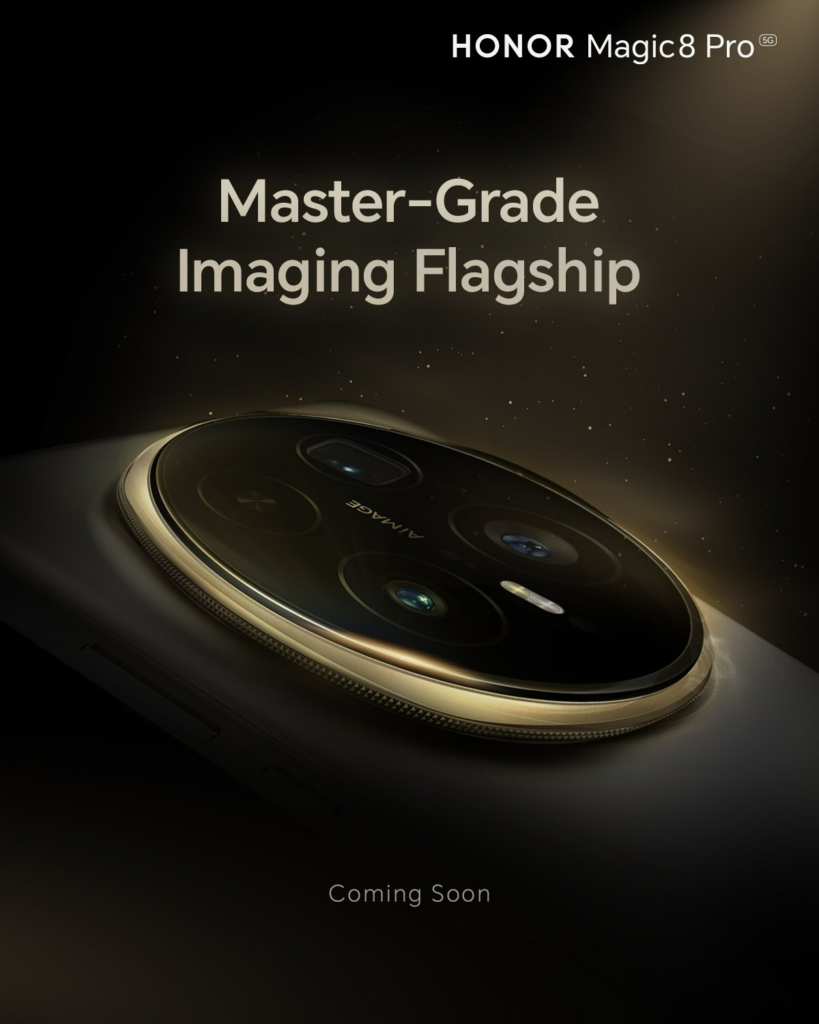
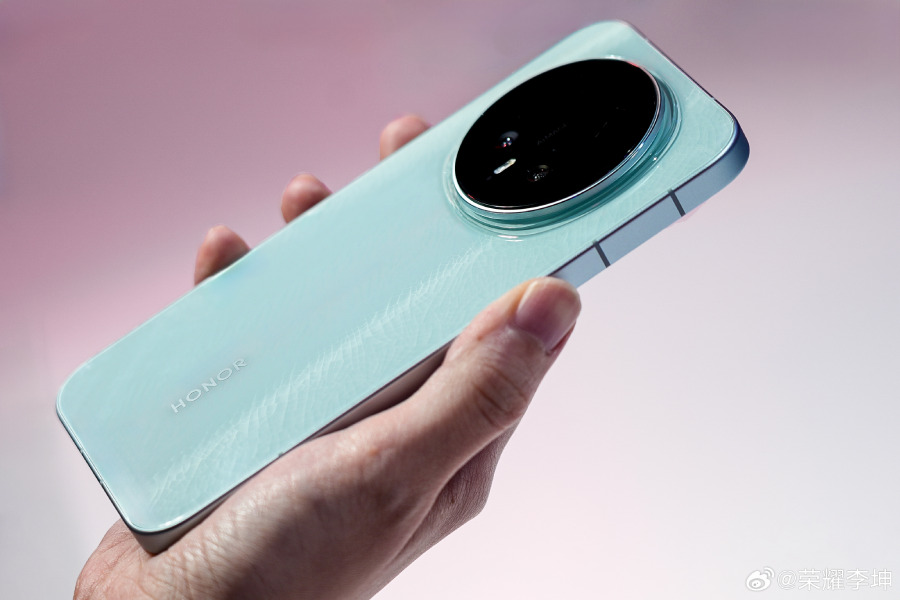
Honor launched the Honor Magic 7 series as one of the first Snapdragon 8 Elite phones last year. The same is expected this year, as reports have claimed that the Magic 8 lineup featuring the Snapdragon 8 Elite 2 will be unveiled in October. Ahead of the expected launch, new Honor phones believed to be part of the Magic 8 lineup have received 3C certification in China.

Honor Magic 8 series phones bag 3C certification

Honor Magic 8 series 3C certified

As can be seen above, two Honor smartphones bearing the model numbers BKQ-AN00 and BKQ-AN80 have received 3C certification in China. These devices have been spotted with a 90W fast charger. Notably, the BKQ-AN80 version is listed with only BeiDou positioning support, meaning it may not include other satellite navigation systems such as GPS, GLONASS, Galileo, QZSS, NavIC, or A-GNSS.

Honor Magic 8 series rumors

According to reports, the Honor Magic 8 lineup will comprise multiple models, such as the Magic 8, Magic 8 Pro, Magic 8 Mini, and Magic 8 Ultra. The standard and Pro models are expected to feature 6.58-inch and 6.7-inch OLED displays, respectively, and the Snapdragon 8 Elite 2 chipset. While these devices are expected to launch this year, the Mini and Ultra editions may debut next year.

The Magic 8 Mini is reportedly equipped with a 6.3-inch display and a Dimensity 9500 SoC. The Ultra variant may offer an ultimate photography experience, as it is said to be the world’s first phone equipped with dual 200-megapixel lens setup for the primary and periscope telephoto cameras. A few weeks ago, Luo Wei, head of Honor Imaging, clarified that the Magic 8 series will not feature a 1-inch main camera or a dual-periscope telephoto lens. He explained that the brand prefers to focus on balanced performance rather than adding hardware for marketing appeal.

 For more daily updates, please visit our News Section.

Stay ahead in tech! Join our Telegram community and sign up for our daily newsletter of top stories.

Full Honor Magic V Flip 2 specs leak, and there’s no Snapdragon 8 Elite inside

Honor is set to unveil its latest compact foldable, the Magic V Flip 2, on August 21 in China. Ahead of the launch, a detailed leak from tipster Digital Chat Station has laid out nearly every major spec. So let’s get to it. 

Like its predecessor, the Magic V Flip 2 keeps a large outer display, but this time it’s paired with a more symmetrical dual-camera layout. 

The main display is a 6.82-inch LTPO OLED panel with a 2868 x 1232 resolution, 120Hz refresh rate, and UTG (ultra-thin glass) protection. It also supports 4,320Hz PWM dimming, which should help reduce flicker.

On the outside, there is a sizable 4-inch LTPO OLED cover display with a 1200 x 1092 resolution, 120Hz refresh rate, and 3,840Hz PWM dimming.

The camera setup reportedly includes a 50-megapixel front camera inside the foldable display, while the rear houses a 200-megapixel main sensor with an f/1.9 aperture and a 50-megapixel ultra-wide lens offering a 120-degree field of view at f/2.0.

The Magic V Flip 2 uses last-gen SoC

Powering the device is Qualcomm’s Snapdragon 8 Gen 3 chipset, paired with Honor’s in-house C1 and E2 chips for connectivity and power management. 

The silicon is an upgrade from the Snapdragon 8+ Gen 1 on the original Flip, but it’s not the latest Snapdragon 8 Elite, as we’ve seen on the Samsung Galaxy Z Flip 7 and Moto Razr 60 Ultra.

The Magic V Flip 2 is also tipped to pack the largest battery yet in a flip phone, rated at 5,500mAh, with support for 80W wired and 50W wireless charging.

In terms of size, the phone reportedly measures 167.1 × 75.6 × 6.9mm when unfolded, 15.5mm thick when folded, and weighs 204g. The phone also has a side-mounted fingerprint scanner for biometrics.

Honor has already shown off the phone’s color options, which include a jewel-patterned blue gradient, purple, white, and grey/silver. Now, the only detail left for us to know is the price, which will be revealed in just a few days. So stay tuned.

For more daily updates, please visit our News Section.

Stay ahead in tech! Join our Telegram community and sign up for our daily newsletter of top stories.

New iQOO Z10 Lite appears with Snapdragon 685 and AMOLED display

iQOO has rolled out a refreshed Z10 Lite in Russia, bringing a new chipset, better display, and a few other upgrades over the model launched in India earlier this year.

The screen now uses a 6.67-inch Full HD+ AMOLED panel with a 120Hz refresh rate and 1,200 nits peak brightness. That’s a solid jump from the 90Hz HD+ LCD on the Indian variant. The slightly smaller size — down from 6.74 inches — also means a higher pixel density.

Battery capacity stays at 6,000mAh, but charging speed climbs from 15W to 44W. iQOO claims a 1% to 50% top-up in just 34 minutes. The phone is also thinner at 7.99mm (from 8.2mm) and swaps the side-mounted fingerprint reader for an in-display one. Water and dust protection also improves from IP64 to IP68/IP69, with support for underwater photography.

The cameras see a modest upgrade too: an 8MP front shooter (up from 5MP) joins a 50MP Sony IMX582 main sensor and a 2MP depth camera on the back.

The trade-off is in performance. This model runs on the Snapdragon 685 instead of the Dimensity 6300. It’s a step down in CPU and GPU power and lacks 5G support — a notable omission in 2025. You still get Android 15 with Funtouch OS 15, up to 8GB RAM, and 256GB storage, but there’s no microSD slot.

Essentially a rebranded vivo Y400 4G, the phone comes in Taiga (green) and Glacier (white). It’s priced at RUB 16,999 (~$185) for the 8GB/128GB model, with sales starting in August.

Don’t miss a thing! Join our Telegram community for instant updates and grab our free daily newsletter for the best tech stories!

For more daily updates, please visit our News Section

(Source: 1, 2)

DeepSeek-R2 August launch hype dismissed by insider as pressure mounts on AI ambitions

Earlier today, we reported that DeepSeek’s next-generation large language model, R2, was rumored to launch later this month, based on speculation circulating in Chinese tech circles and even hinted at by DeepSeek’s own AI.

The model, in response to user queries, suggested a release window between August 15 and 30. But just hours after this surfaced, a source close to DeepSeek has categorically denied the claim, confirming that there are no plans to launch DeepSeek-R2 in August.

Deepseek
Image Credit: Reuters

What’s Slowing Down DeepSeek-R2?

This isn’t the first time DeepSeek’s roadmap has stirred confusion. Similar rumors made the rounds earlier this year with an alleged March 17 release, which also turned out to be false. Despite the public anticipation, the company has yet to officially confirm a release date or even disclose key technical specifications of the R2 model.

That hasn’t stopped speculation. DeepSeek-R2 is widely expected to be a major leap forward, improving multilingual reasoning and code generation, and rivaling top-tier models like GPT-4/5. But progress has reportedly hit a wall. According to insiders cited by The Information in June, DeepSeek CEO Liang Wenfeng remains dissatisfied with the model’s performance, even after months of intense development.

The delay isn’t just a matter of refinement; it may also reflect infrastructure concerns. DeepSeek has been operating under limited compute availability, especially after Nvidia’s H20 chips were banned from export to China. Sources suggest the company fears launching R2 too soon could backfire if usage spikes overwhelm its systems. It’s a real concern in the AI race, where performance alone isn’t enough; scalability matters too.

To address the shortfall, DeepSeek is believed to be training R2 on Huawei’s Ascend 910B chips. Huawei’s compute cluster reportedly delivers 512 PFLOPS of FP16 performance at 82% utilization, equivalent to about 91% of the performance of Nvidia’s A100 cluster. While this shows promise, it’s unclear whether the setup can meet the scale required for a major model rollout.

Meanwhile, the chip supply picture may be improving. Just days ago, Nvidia and AMD agreed to a revenue-sharing deal with the US government, allowing them to continue selling AI chips in China in exchange for handing over 15% of their China revenue. The agreement may eventually ease supply constraints for companies like DeepSeek. However, any immediate benefit remains uncertain, as Chinese authorities have reportedly discouraged domestic firms from using Nvidia’s H20 chips.

So while DeepSeek’s own model might have teased an imminent release, the company’s actual position appears far more cautious. R2 is real. It’s under active testing. But it’s not ready for prime time. And in a hyper-competitive AI landscape, DeepSeek needs more than a good model; it needs one that’s stable, scalable, and market-ready.

Until then, the spotlight stays on DeepSeek, as the world waits to see if R2 can live up to the growing expectations.

For more daily updates, please visit our News Section.

Stay ahead in tech! Join our Telegram community and sign up for our daily newsletter of top stories! 💡

(Via)

Huawei Pura 80 Ultra Steals DXOMARK’s Top Camera Phone Title From Oppo’s Find X8 Ultra

Huawei‘s latest flagship smartphone has proven itself again. Despite the various restrictions faced by the brand, its Pura 80 Ultra model has been crowned as the best camera smartphone by DxOMark, dethroning Oppo’s best with a highest ever score of 175 points.

Huawei Pura 80 Ultra Outshines Oppo Find X8 Ultra in DxOMark

To recall, the Oppo Find X8 Ultra achieved the top spot in the DxOMark rankings back in June with an impressive score of 169 points. This model received praise in almost every aspect of the testing. But just a short while after, Huawei dethroned it with the Pura 80 Ultra. DxOMark’s test had the company’s newest flagship achieve the best scores for main camera performance, bokeh shots, and telephoto images.

Huawei Pura 80 Ultra

Even the video department got an excellent rating of 166 points (180 points in photos). DxOMark stated that the Pura 80 Ultra offers great detail in both photos and videos in nearly every condition. Despite facing some inconsistencies in color and slight overexposure, Huawei’s premium model featured great autofocus, good skin tones, wide dynamic range, lower noise levels, and the best phone for portraits.

For those unaware, the Chinese tech giant announced the Pura 80 Ultra with its proprietary XMAGE tech. The main camera is a 50MP 1-inch sensor with a f/1.6-4 variable aperture. This is paired with a 40MP ultra wide angle lens, a 1.5MP spectrum sensor, and a 50MP + 12.5MP dual periscope telephoto lens setup, which offers 3.7x and 9.4x optical zoom (83mm and 212mm focal length, respectively).

For more daily updates, please visit our News Section.

Tech enthusiast? Get the latest news first! Follow our Telegram channel and subscribe to our free newsletter for your daily tech fix! ⚡

List of Samsung devices eligible for 7 major Android updates

Samsung 7 major Android updates device list

Samsung is one of the best brands when it comes to software updates. Not only does it provide quicker updates, but it also offers extended software support that most Android brands can’t match. Most of them are limited to a maximum of four or five Android upgrades, but Samsung offers up to seven major upgrades — the best software support on any Android device.

The Galaxy S24 was the company’s first phone to come with a promise of seven years of Android updates. The same treatment has been extended to newer high-end Galaxy phones and tablets. Although it’s not official, Samsung is likely to offer seven major updates to all the upcoming phones and tablets in the flagship segment.

We’ve prepared a list of Samsung phones and tablets that promise seven years of Android updates. Whether you already have a high-end phone or are considering getting one, this list can be helpful.

Samsung devices eligible for seven major Android updates

  • Galaxy S25
  • Galaxy S25+
  • Galaxy S25 Ultra
  • Galaxy S25 Edge
  • Galaxy S24
  • Galaxy S24+
  • Galaxy S24 Ultra
  • Galaxy S24 FE
  • Galaxy Z Fold 7
  • Galaxy Z Flip 7
  • Galaxy Z Flip 7 FE
  • Galaxy Z Fold Special Edition
  • Galaxy Z Fold 6
  • Galaxy Z Flip 6
  • Galaxy Tab S10
  • Galaxy Tab S10+
  • Galaxy Tab S10 FE
  • Galaxy Tab S10 FE+
  • Galaxy XCover 7 Pro

We will regularly update the list as Samsung launches new Galaxy devices with seven years of software support.

Samsung is not the only brand that offers seven years of Android upgrades. Google also does it. In fact, Google was the first to introduce it, and it was quickly followed by Samsung. However, Samsung users will likely benefit more, as the company releases more flagship phones than Google does.

Also Read:
1. Every Samsung phone eligible for six major Android updates
2. Every Samsung phone eligible for four major Android updates
3. One UI 8 update: here’s everything you need to know

Remember to visit our Samsung section once in a while to get the latest updates on One UI updates. You can also follow our Telegram channel and subscribe to our free newsletter for your daily dose of tech!

Lenovo Xiaoxin Pad Pro GT Review: The Pad with the best value is back?

The Lenovo tablet lineup is really something we can’t miss out on. There is the Xiaoxin Pad line, and another Legion line for gaming. Depending on the region you are in, the naming and spec may vary. And right now, we have this new Xiaoxin Pad Pro GT, with a new design, a powerful 8 Gen 3 chip, 11.1 inches in size, and some new system features. Overall, this one should suit most people’s needs, and can be used for a long time to come. So if you are interested in it already, you can head to GeekWills for your purchase, there is a promotion going on.

Where to buy

Buy Xiaoxin Pad Pro GT on Geekwills

Unboxing

Let’s do a quick unboxing first. Here is the box, white, with a little bit of style. In the box, there is the pad. Then the 68W charger, and a 1m long C to C cable. Unfortunately, we didn’t get the case and keyboard, but I always think the official accessories are always well-made, you can consider getting them with the tablet.

Design

Honestly, I was not quite a fan of the previous Xiaoxin Pad, the design is rather mediocre, and too boxy which is not quite comfortable to hold, but not for the new Xiaoxin Pad Pro GT. As you can see, it is very thin and light, and the edges are rounded. To help you visualize how thin it is, here is the Type-C port, the tablet itself is just a bit thicker than it, right? The size is just like the iPad Air 11 inches, and the weight is also the same.

Now let’s look at the back. At a glance, does it remind you of any other product? Oh right, the Samsung S25 edge. I mean, I don’t care if it copies the design, as long as it looks good, we get the benefit anyway. Then the edges have been softened, very friendly to the hand. At the front, thin and equal bezels all around. Now on a scale from 1 to 10, what score would you give to the design of this Pad? Let us know in the comments section.

Performance

Since it uses the Snapdragon 8 Gen 3, BUT! It is a six-core version, meaning it is a downgraded 8 Gen 3, and the performance is just slightly better than 8s Gen 3. The Benchmark test shows it is still a powerful tablet, so we ran a gaming test with Genshin Impact.

Here is the graph, what do you think about the performance? Oh btw, there isn’t a dedicated gaming center for it, that’s how you know the focus is not gaming.

Daily Experience

You probably won’t be gaming too much on an 11-inch tablet, that’s the task for the Legion tablet. So this one is more for the balance of everything, like for daily use, and work stuff.

Then let’s take a look at the screen first. It is:

  • 11.1-inch LCD screen on top
  • aspect ratio 16:10
  • resolution 3200 x 2000
  • refresh rate up to 144Hz.

When watching some videos, the colors are vibrant, details are also very good. The highest brightness is about 700nits, and 900nits under harsh light. The screen is also eye-friendly, with TUV certification.

And there are two eye protection modes. In the color mode, all the colors are still there, but much toned down; Then in the black and white mode, it is just pure black and white. You can choose either mode the entire time, or assign the mode to certain Apps, like black and white for the reading App, so you will feel more comfortable reading for a long time.

There are two parts that make the whole user experience complete, the PC mode and the case. Let’s start with the accessories. As you can see, this half of the case is made of PU leather, very finely made, and it snaps on the pad with a magnet, although it does not protect the edge of the pad. There are multiple angles this piece can form, so it is great for watching movies, drawing and writing, or doing some work stuff, which is very useful for many people. Then the keyboard also snaps onto the pad, and it connects by the pins. The keyboard has all the keys you want, including the arrow keys. Best of all, there is a Trackpad.

Then the PC mode, it is a different UI other than the ZUXOS as the basic skin. Look at that, it is just like Windows OS. Paired up with the keyboard and the pen, the usability is even better than a PC, because you can always touch control the screen. Now for some regular Apps, they are not that different from the tablet OS, but only two things are better. One is that, the Apps can stack up however you want, and you can adjust the size of the App however you want, more freely than the tablet OS. Then there is the bar at the bottom, thinner but still holds the Apps open, for you to use it within reach. The only complaint I have is that there isn’t any shortcut to go from the Tablet OS to the PC mode.

The AI feature also comes in handy. There is an official AI agent called Tianxi inside, alongside DeepSeek, you can choose and interact with it like all those AIs out there, but it is still in Chinese. Then the generative AI, when you are editing something, and you can ask the AI to draw some info from the internet, but be careful it is not the newest AI, because when I asked it to summarize the features of itself, it just made something up, which totally not true. Now in the browser, you can ask AI to explain, translate or summarize an article for you. And of course, the AI can also be used on docs and files.

The battery size is 8660mAh, to its size, it is very big. And with a 68W charger, it can last for a day of use without any problem.  

Verdict

So I think the Xiaoxin Pad Pro GT is a great tablet option, the size is perfect, and the design is much better, at least I think so. Although the UI is not to my taste, it still has a very good PC mode. Plus, with the powerful 8 Gen 3 chip, a whole pack of accessories, it can be a work and entertainment device all in one. If you are interested, you can head to Geekwills for it. There is a promotion going on, grab the discount while you still can.    

Samsung launches world’s first 500Hz OLED gaming monitor in the US

Samsung Electronics America has launched the Odyssey OLED G6 G60SF, the world’s first OLED gaming monitor with a 500Hz refresh rate. The 27-inch QHD monitor is now available for purchase in the US, alongside two new curved displays in the Odyssey G7 series, a 37-inch and a 40-inch model. Samsung initially showcased the OLED G6 at CES 2025 and later released it in select Asian markets, including Singapore, Thailand, Vietnam, and Malaysia.

Samsung Odyssey OLED G6

Samsung Odyssey OLED G6 Specifications

The Odyssey OLED G6 features a 500Hz refresh rate, a 0.03ms response time, and a QHD (2560 x 1440) resolution powered by QD-OLED technology. Samsung has equipped the monitor with support for both Nvidia G-Sync and AMD FreeSync Premium Pro to deliver smooth, tear-free visuals. It holds VESA DisplayHDR True Black 500 certification and can reach a peak brightness of 1,000 nits.

Samsung has focused on long-session gaming performance by including OLED Safeguard+ technology. The system uses a dynamic cooling setup with a Pulsating Heat Pipe, brightness modulation algorithms, screen savers, and logo detection to minimize the risk of burn-in. The company also offers a three-year warranty that covers burn-in from normal usage.

Samsung Odyssey OLED G6

The display includes Pantone Validation and covers 99% of the DCI-P3 color gamut. It supports over 2,100 Pantone-certified colors and more than 110 SkinTone shades. Samsung has added Glare Free technology to reduce reflections, making the screen usable in various lighting conditions.

The Odyssey OLED G6 features a slim metal design with an adjustable stand that supports tilt, height, pivot, and swivel adjustments. The monitor also includes CoreSync and CoreLighting+ technology to extend ambient lighting effects beyond the display.

For connectivity, it includes two HDMI 2.1 ports, one DisplayPort 1.4, USB Type-A ports, and a headphone jack. The monitor does not feature built-in speakers or a USB-C port.

The new Odyssey OLED G6 is available through Samsung.com and joins the brand’s broader push in the high-end gaming monitor market.

In related updates, LG has launched the UltraGear 27G810A gaming monitor with dual-mode support for 4K 180Hz and FHD 360Hz, while AOC has introduced a massive 4K HDR monitor priced lower than many midrange smartphones.

Please Note: When you buy something using the links in our articles, we may earn a small commission at no cost to you.

For more daily updates, please visit our News Section.

Stay ahead in tech! Join our Telegram community and sign up for our daily newsletter of top stories! 💡

DeepSeek-R2 may launch late August as China pushes for AI independence

DeepSeek is preparing to launch its next-generation large language model, DeepSeek-R2, sometime between August 15 and August 30, 2025. The launch window came to light during an interaction with DeepSeek’s own AI model, hinting at an imminent rollout just days after the release of ChatGPT-5.

Photo Credit: Reuters

DeepSeek-R2 is expected to make a significant leap in architecture by adopting a more advanced Mixture of Experts (MoE) setup. It will also integrate a smarter gating network to better handle inference-heavy workloads. According to sources familiar with its development, the model could scale up to 1.2 trillion parameters, nearly double that of DeepSeek-R1, which had 671 billion. This will still be lower than ChatGPT-4/5, which has over 1.8 trillion parameters.

China looking for domestic AI self-sufficiency

In a strategic move toward domestic AI self-sufficiency, the model has been entirely trained on Huawei’s Ascend 910B chips. Huawei’s compute cluster, delivering 512 PFLOPS of FP16 performance at 82% utilization, reportedly achieves 91% of the performance of Nvidia’s A100 cluster. Analysts see this as a critical step in reducing China’s reliance on US-made AI hardware.

DeepSeek-R2’s training reportedly cost 97% less than GPT-4, thanks to local hardware and optimization techniques. Analysts expect DeepSeek to offer API access at lower prices, which could shake up current pricing models dominated by OpenAI and Anthropic.

The anticipation around DeepSeek-R2 has already sparked movement in Chinese tech stocks. AI chipmaker Cambricon saw a 20% surge in its share price, pushing its market cap past 355 billion yuan (around $49.7 billion).

In related news, Huawei has rolled out a new AI inference framework called Unified Cache Manager (UCM). Designed to accelerate model inference, UCM optimizes how KV Cache data is handled across memory tiers like HBM, DRAM, and SSDs. In tests with China UnionPay, Huawei reported up to a 90% reduction in latency and a 22x boost in throughput. The company plans to open-source UCM in September.

Together, the launch of DeepSeek-R2 and the introduction of Huawei’s UCM framework signal a major shift in China’s AI ambitions. These developments point to a future where China builds and runs high-performance AI systems without relying on Western chips or software tools.

For more daily updates, please visit our News Section.

Stay ahead in tech! Join our Telegram community and sign up for our daily newsletter of top stories! 💡

(Via)

Sony Launches ULT Series Speakers for Party-Ready Bass and Big Sound

Sony is cranking up the volume with its all-new ULT series party speakers. These models expand on the existing ULT lineup by adding new portable speakers alongside large tower speakers, which bring big sound and powerful bass. The lineup includes the compact ULT Field 3 and ULT Field 5 for on-the-go jams, alongside the towering ULT Tower 9 and ULT Tower 9AC for full-blown parties. So let’s check them out.

Sony ULT Field 3 & ULT Field 5

Sony ULT Field 3
Sony ULT Field 3

Talking about the portable speakers first, we have the ULT Field 3 and ULT Field 5. The company announced the larger ULT Field 7 alongside the ULT Wear and ULT Field 1 last year, and these new models earlier this year in China. Now, these have just debuted in India. The ULT Field 3 features an 83mm x 46mm X-Balanced mid-bass driver and a 20mm dome tweeter, supported by a passive radiator. It features Sony’s ULT mode, accessible via a dedicated button, which boosts low-end frequencies and expands the sound stage to simulate the feel of a full-sized speaker.

Sony ULT Field 5
Sony ULT Field 5

You also get an IP67 rating and MIL-STD-810H-certified drop protection. The speakers support up to 24 hours of battery life on a single full charge. On the other hand, the ULT Field 5 has a larger 107mm × 79mm woofer, dual 46mm tweeters, and side passive radiators that can output 91dB SPL and offer a non-plugged maximum output of 110W. Just like the other model, it also supports the ULT mode. Other notable features include Bluetooth 5.3, a 3.5mm headphone jack, 25 hours of battery life, RGB lighting, and much more.

Sony ULT Field 3 and ULT Field 5

ULT Tower 9 & Tower 9AC

With the new ULT Tower 9 and ULT Tower 9AC, Sony is growing its party speaker lineup as well. The former arrives with a portable design with built in wheels and a handle, along with a water resistant top panel. Thanks to its large battery, it can even double as a power bank for charging devices. Meanwhile, the ULT Tower 9AC needs to be plugged. Both models offer 360° Party Sound and RGB Party Light. The ULT Tower 9 offers up to 25 hours of audio playback and supports fast charging. These house 7 drives in total, consisting of one woofer, two mid, two tweeters, and two rear firing tweeters.

Sony ULT Tower 9
Sony ULT Tower 9

Pricing

Sony announced the new ULT Towers and Field series speakers with the ULT Mic 1, which is sold for 14,990 INR. The Ultra Tower 9 costs 84,990 INR, while the Tower 9AC is listed for 69,990 INR. There are also the ULT Field 3 and ULT Field 5, which cost 17,990 INR and 24,990 INR respectively. The Field 5 is available in Off White and Black, and the Field 3 adds another Forest Gray option as well.

Please Note: When you buy something using the links in our articles, we may earn a small commission at no cost to you.

For more daily updates, please visit our News Section.

Tech enthusiast? Get the latest news first! Follow our Telegram channel and subscribe to our free newsletter for your daily tech fix! ⚡