Google recently launched its flagship smartphones in the Pixel 4 series which offers 90Hz refresh rate for the display. However, an issue has been detected with that feature and its competitor OnePlus decided to troll the company for that.
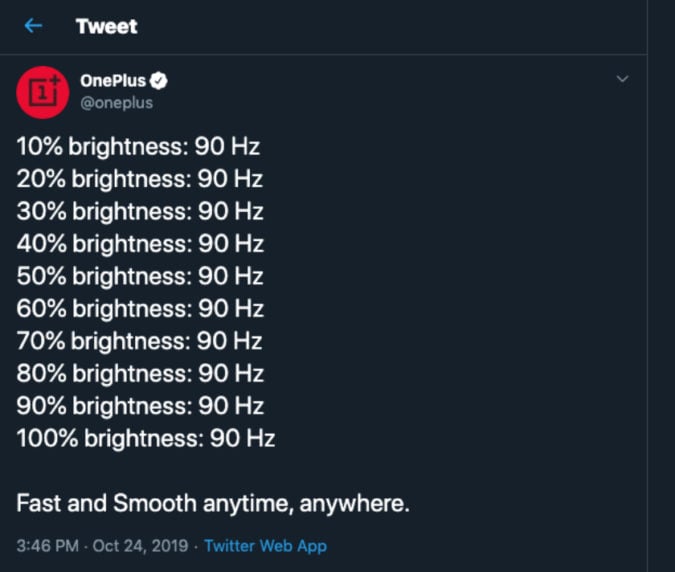
OnePlus UK posted a tweet shown below which is mocking the company related to the issue with the 90Hz refresh rate. In the newly launched Pixel 4 series, the 90Hz refresh rate works only if the phone’s brightness is 75 percent or more. If the brightness drops below that, the refresh rate also drops to 60Hz.
The company further added that its 90Hz display phones are “fast and smooth anytime, anywhere.” The tweet shows that even at various brightness levels, OnePlus phone maintain a consistent 90Hz refresh rate.
However, the company deleted the tweet soon after posting it but many have grabbed a screenshot of the same. While its not known why OnePlus UK deleted the tweet, there are some theories.
Yes, it’s true that the refresh rate on the OnePlus smartphones doesn’t drop based on the screen brightness level. But not all apps support 90Hz refresh rates and hence there are things the user may be seeing in 60Hz on the OnePlus 7 Pro, 7T, or 7T Pro.
Also, the smartphone doesn’t technically run at 90Hz “anytime, anywhere”, as claimed. The company had earlier suggested that it doesn’t recommend forcing 90Hz refresh rate given that it could drain the battery faster.
So, the tweet could have been taken down to keep itself away from the controversies with the 90Hz refresh rate or there’s also a possibility that the company realised that it’s not cool to throw shade at another company.
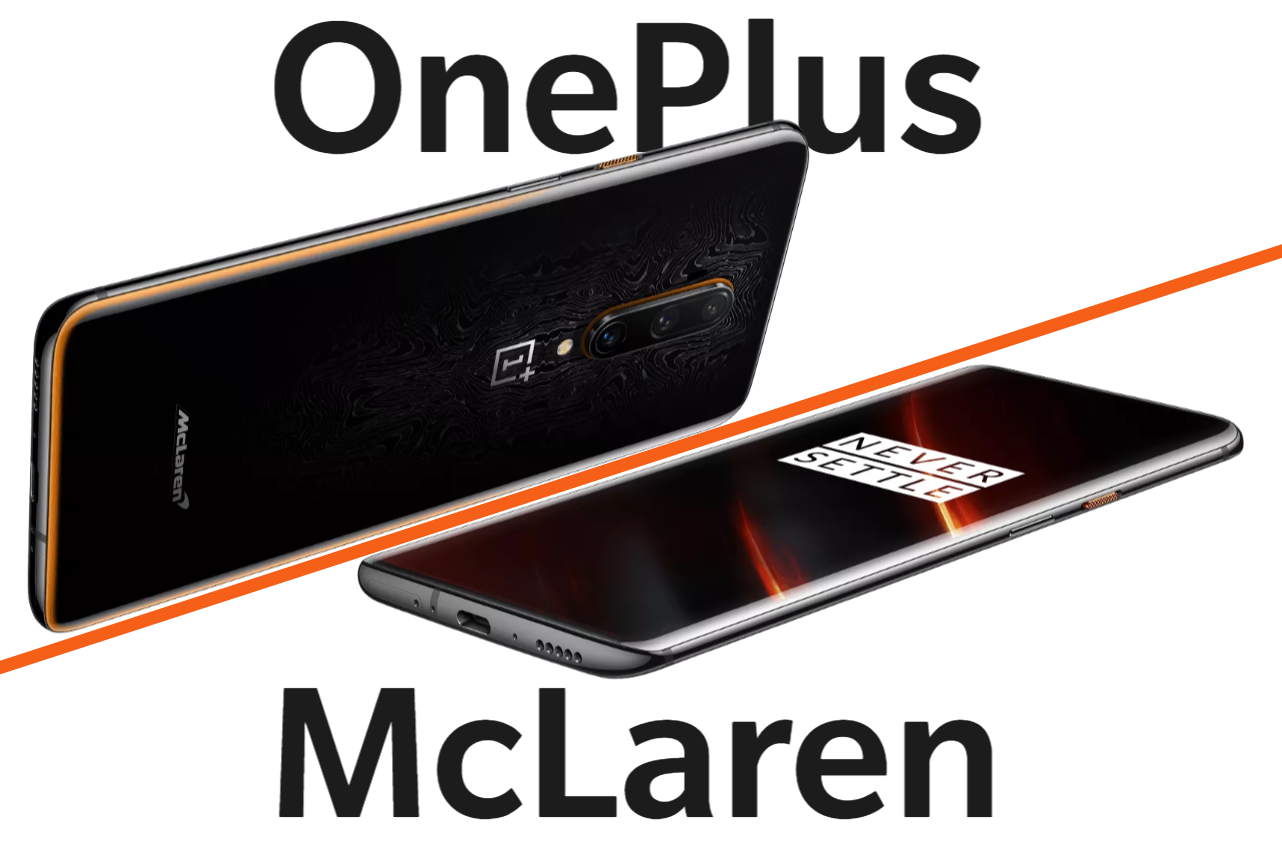
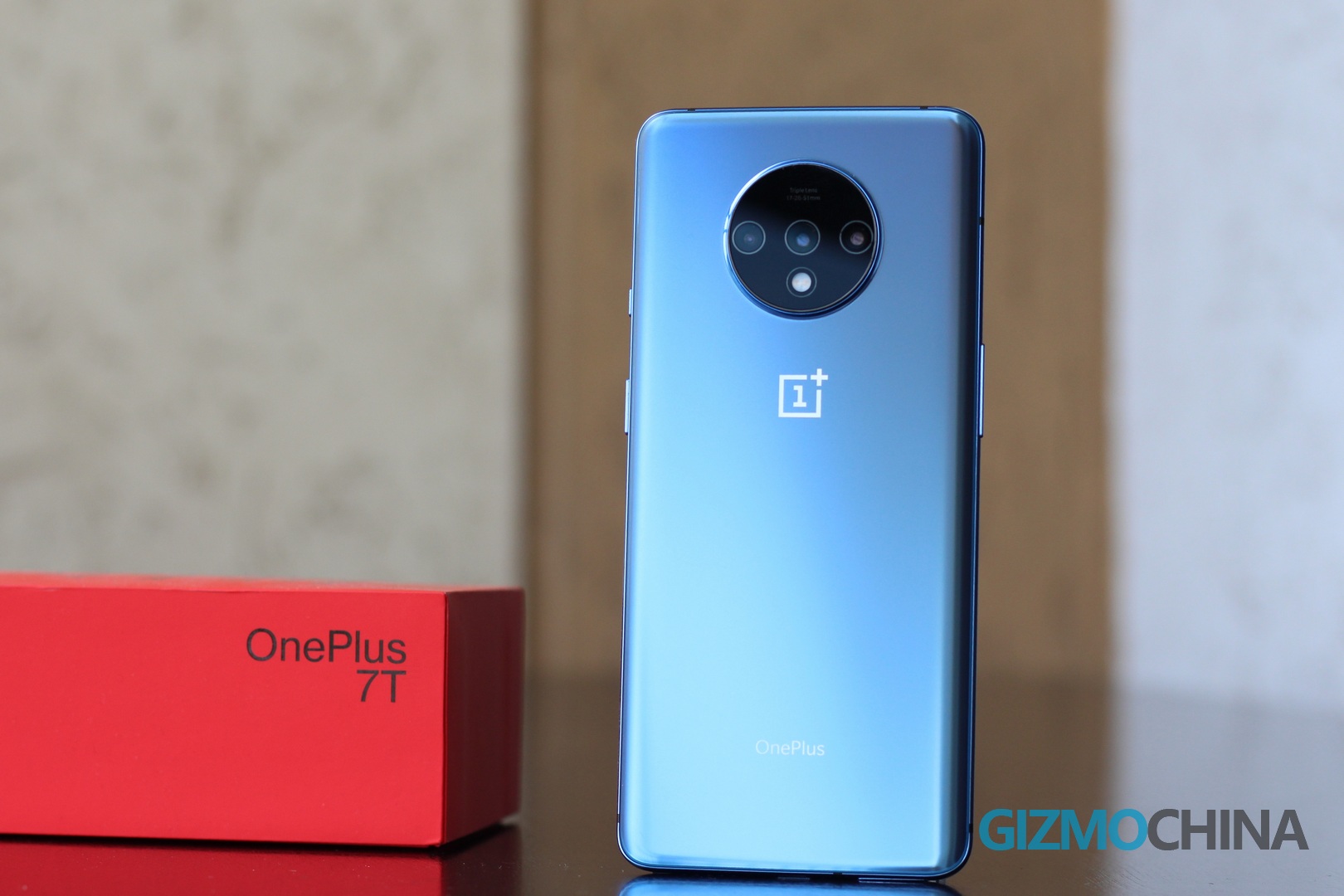
At 12:00 PM in India, OnePlus 7T Pro McLaren Edition will be made available for purchase for the first time. The McLaren Edition will be coming to Europe and China on Nov. 5. Hence, India will be the first country to receive the special edition OnePlus 7T Pro smartphone. Today, the Chinese firm will be carrying out the flash sale of the deice by making it available for purchase only for 70 minutes.
The OnePlus 7T Pro McLaren Edition will be available through Amazon India and OnePlus.in online store today. The handset is priced at Rs. 58,999 (~$831), making it the most expensive OnePlus smartphone. Buyers with Axis Bank and Citibank cards can take advantage of 10 percent discount and EMI transactions. Customers can avail it through no cost EMI plans for up to 12 months. All Rupay banking card folders can avail a 10 percent instant discount of up to Rs. 400. The open sale of the OnePlus 7T Pro McLaren Edition will be held in India on Nov. 5.
The OnePlus 7T Pro McLaren Edition does not appear very different from the OnePlus 7T Pro, but comes with a unique finishing. The rear side of the phone bears a papaya orange accent around its edges. The orange accent can be seen on the Alert Slider and the camera housing on the rear. The area around the rear cameras of the phone is inspired from Carbon TPT material found in McLaren’s Speedtail. An additional McLaren logo can be also found on the rear side of the device.
The OnePlus 7T Pro McLaren Edition comes with a special protective case made from carbon fiber material. The device ships with McLaren UI theme that tags along custom-made wallpapers, animations, AOD clock, a new animation for fingerprint unlocking and a horizontal light effect for notifications.
The OnePlus 7T Pro McLaren Edition has a 6.67-inch notch-less AMOLED display with quad HD+ resolution an in-screen fingerprint reader. The Snapdragon 855+ fuels the phone with 12 GB of RAM. It comes with UFS 3.0 256 GB of internal storage. The rear shell of the device features 48-megapixel (Sony IMX586) + 16-mgeapixel (ultrawide) + 8-megapixel (telephoto) triple camera system. It has a pop-up selfie snapper of 16-megapixel. The device is equipped with 4,085mAh battery with 30W Warp Charge 30T fast charging technology. The Android 10 OS runs on device along with OxygenOS 10.0.1.
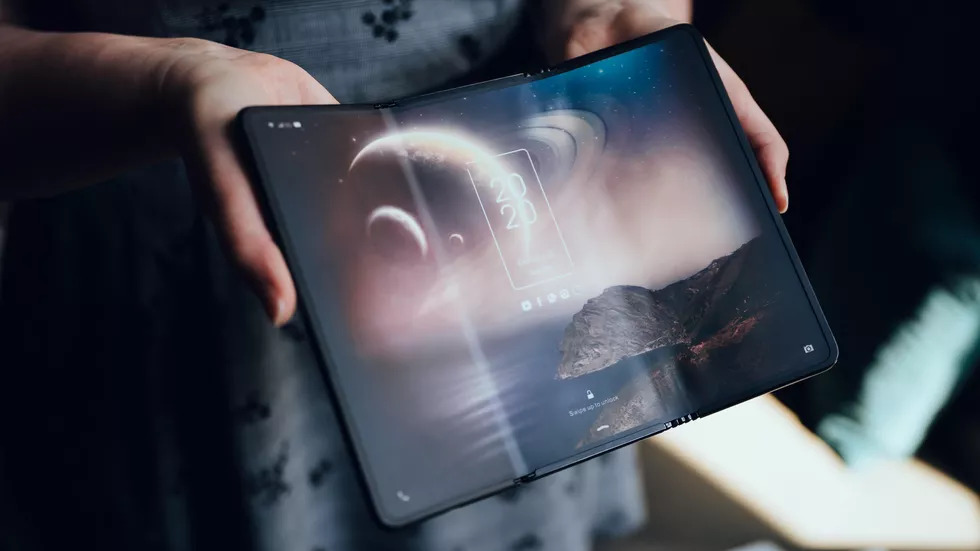
China-based TCL has showcased a design for a new foldable smartphone. Samsung’s Galaxy Fold and Huawei’s Mate X foldable phones are designed with single hinge to fold in half. However, the foldable phone prototype from TCL has two hinges. The first hinge of the device folds in while the other one folds out to provide users with a tablet-like 10-inch display area.
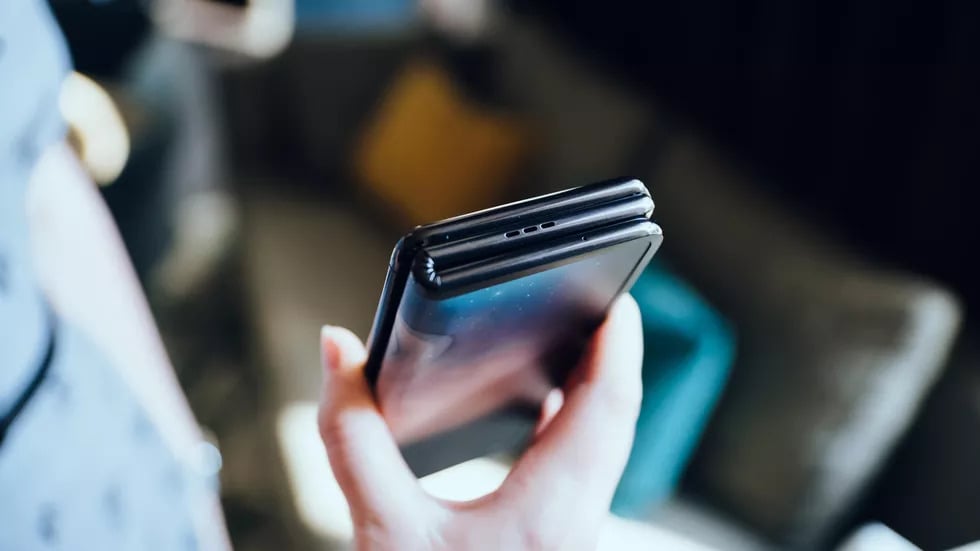
The two hinges of the TCL prototype fold in opposite direction. Hence, it is dubbed as a tri-folding device. It is different foldable phone from the prototype with DragonHinge system that TCL had showcased at the Mobile World Congress (MWC) 2019 tech trade show in February. It could only fold in direction like a book.
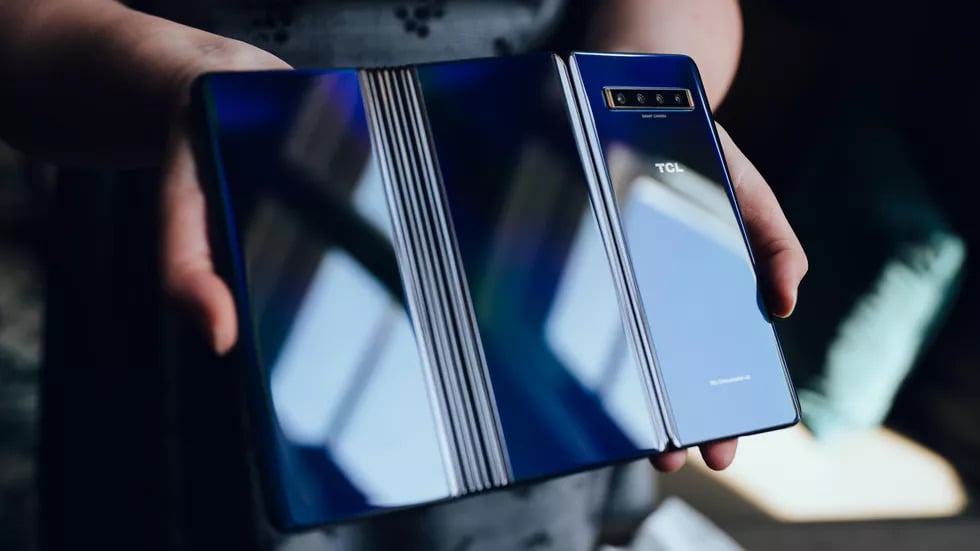
The TCL tri-folding device has a DragonHinge system that allows to fold like the Galaxy Fold (fold like a book). The device also features a Butterfly Hinge for folding in opposite direction. While opening or closing, the two hinges lets the phone fold in a zigzag manner.
When completely folded, it appears like a regular but incredible thick smartphone. When unfurled, it provides a massive screen space of 10 inches. The tri-folding prototype has a horizontal quad camera setup on its rear.
The prototype does not have a working display yet which indicates that the company is still working on the concept. It does show that the Chinese firm is exploring different types of form factor for foldable devices. At the MWC 2019 event, TCL had showcased as many as five foldable devices.
Since the triple foldable phone is not a working device yet, nothing is known on the specs of the device. Speaking of the design, the triple foldable phone from TCL appears like fragile like currently available foldable smartphones. Think about it, folding the hinges in wrong direction on the TCL device can cause serious harm to its display.
Star Optoelectronics Technology is the sister company of TCL. It is one of the world’s major manufacturers of OLED panel. Probably, the tri-folding foldable phone from TCL could be equipped with flexible OLED panels form its sister firm. TCL will be launching its first foldable phone in 2020. It is now experimenting on different form factors for its foldable phone and it could be also waiting for the market’s reaction towards the Galaxy Fold, Mate X and the upcoming Motorola RAZR foldable phone that will be go official on Nov. 13.
Banggood continues to sweep its users off their feet by launching amazing promotions that offer products across multiple categories for lowered prices. Keeping in line with that, the Chinese online retailer has come up with yet another promotion dubbed Weekly Unbeatable Deals.
Through its latest promotion, Banggood is giving its loyal users a chance to get their hands on a wide selection of products without emptying their pockets. As usual, these products have been carefully added to specific categories so that consumers do not waste a lot of time finding the product they are looking for.
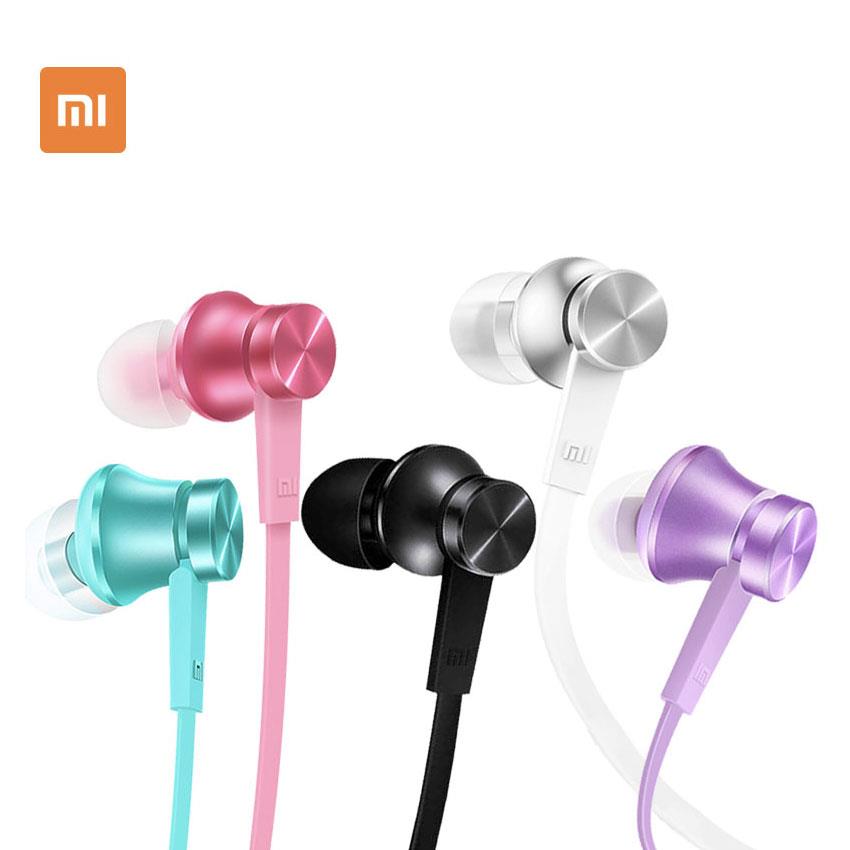
The first category on the promotion page is called Recommendation, and there are no prizes for guessing that it is crammed with amazing products that you can buy for lowered prices. For the sake of an instance, the Xiaomi Piston Basic Edition In-ear Headset Earphone which normally sells for $12.99 is available for just $10.97.
Aside from offering this 16 percent off on the well-received headset, Banggood is giving you a chance to get free shipping if your cart value is $19.99. Note that the discount will be available for a limited period.
A must-checkout for children of all ages, the Toys & Hobbies section features racing RC cars, FPV goggles, etc. More importantly, some of these products are up for grabs for heavily discounted prices.
Electronics lovers might want to check out the following category called Electronics, wherein a slew of electronic devices have been added for you to purchase without worrying about spending a lot of money. Likewise, the Tool section is teeming with useful gadgets that usually sell for a steep price, but have now gone up for sale bearing reduced price tags.
Those who fancy transforming their regular homes into smart ones can head straight to the next category called Home & Garden. This section offers noteworthy discounts on a slew of products that come in handy in day to day life.
For example, the Xiaomi Mijia BT4.0 Bluetooth Wireless Smart Electric Digital Indoor&Outdoor Hygrometer Thermometer, which would normally set you back $25.99 can be yours for just $22.89. In addition to getting this 12 percent off, Banggood users who spend over $19.99 will be eligible for free shipping.
If you are sports enthusiasts, you can check out the Sports & Outdoor section of the activity page. Those who have restlessly been waiting to get their tech greedy hands on smart devices, on the other hand, can take a gander at the Smart Device category, which brimming with smart gadgets that simplify arduous tasks.
There’s an Automobiles & Motorcycles category as well for those who prefer outfitting their vehicles with useful appliances such as the Wireless 5 Inch 170 Degree Car Rear View LCD Monitor Kit. Banggood will be offering some of these highly useful gadgets for unbeatable prices during the activity period.
The concluding category is dedicated to fashion-conscious buyers who usually spend tens and thousands of dollars on trendy accessories. Among a myriad of other amazing products, the section features the Bakeey S18 smartwatch, which usually retails for $39.99.
While the promotion is going on, you can purchase this feature-laden smartwatch for just $25.59, thanks to a 36 percent discount. As if that weren’t enough, you get free shipping on orders over $19.99.
To take full advantage of the promotion and get up to a whopping 70 percent off on these products, all you need to do is to visit the promotion page by following this link.
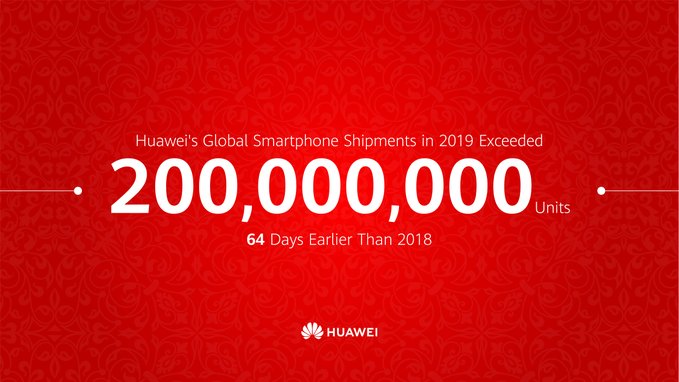
Who would have thought Huawei‘s shipment will still be going strong despite the US trade embargo? That is the reality as the tech giant has announced a record-high 200 million smartphone shipments so far this year.
The company made this known via a tweet posted on Wednesday. The tweet equally revealed that the feat was achieved 64 days earlier than the period it took to hit the same milestone last year.
The US has never being a stronghold of the Chinese top phone maker but the absence of Google services means the public interest in Huawei phones will begin to dwindle outside China. most of Huawei phone sales were shipments within China where Google services were already not allowed. Huawei also had some success in Europe but that could dwindle fast except a fix is found for the absence of Google services. Already, there have been several hacks which show users how to install Google series on their Huawei models. This can only be a temporary fix as the company is expected to find a permanent solution. Only a few will agree to buy a phone and then get to instal Google services themselves.
We must not fail to recognise how much Huawei has grown in the last couple of years. In 2017, Huawei was celebrating 100 million smartphone shipments by the end of September. It achieved the same feat in October 2016 and in 2015, it was only able to hit the 100 million mark in December. But last year and this year, the company has consistently doubled its shipments despite several distractions and push by key rivals like Samsung.
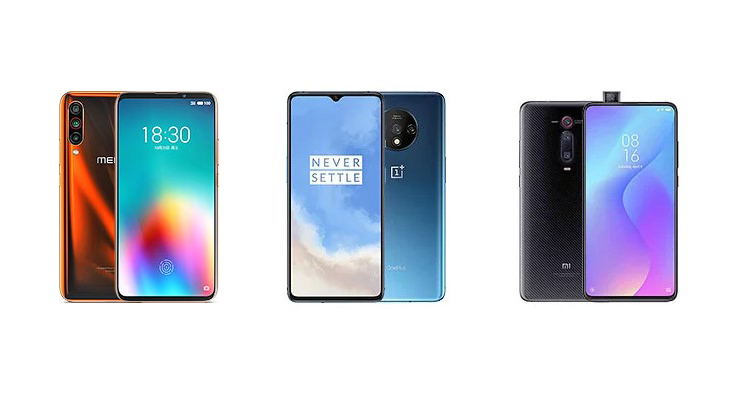
After OnePlus, even other Chinese smartphone manufacturers started using the letter “T” for their flagships. We saw the Xiaomi Mi 9T Pro launched in China under the Redmi K20 Pro moniker, and yesterday Meizu launched the Meizu 16T. Even OnePlus updated its T line-up with the OnePlus 7T and the 7T Pro. All of these T devices are among the best affordable flagships of 2019, so we decided to write a “T comparison” against these smartphones. Here you will learn which one is the best T device among these three handsets and which one is worth buying with the actual price.
Meizu 16T vs OnePlus 7T vs Xiaomi Mi 9T Pro (Redmi K20 Pro)
OnePlus 7T
Xiaomi Mi 9T Pro (Redmi K20 Pro)
Meizu 16T
DIMENSIONS AND WEIGHT
160.9 x 74.4 x 8.1 mm, 190 g
156.7 x 74.3 x 8.8 mm, 191 g
159.6 x 78.2 x 8.3 mm, 183 g
DISPLAY
6.55 inches, 1080 x 2400p (Full HD+), Fluid AMOLED
6.39 inches, 1080 x 2340p (Full HD+), Super AMOLED
Triple 48 + 8 + 13 MP, f/1.8, f/2.4 and f/2.4
20 MP f/2.2 front camera
Triple 12 + 8 + 5 MP, f/1.9, f/2.2 and f/1.9
16 MP f/2.2 front camera
BATTERY
3800 mAh, fast charging 30W with Warp Charge 30T
4000 mAh, fast charging 27W with Quick Charge 4+
4500 mAh, fast charging 18W with mCharge
ADDITIONAL FEATURES
Dual SIM slot
Dual SIM slot
Dual SIM slot
Design
We appreciate that, while other manufacturers are opting for notches or pop-up mechanisms, Meizu is still trying to make symmetric flagships with very narrow bezels and no sliders or motorized parts. Meizu 16T does not have any notch, neither a pop-up camera, yet it comes with a very high screen-to-body ratio. But thanks to its pop-up camera, the Xiaomi Mi 9T Pro has an even higher ratio, as well as a more impressive design in my opinion. But which ones you should go for mostly depends on your tastes. OnePlus 7T has a classic flat display with a waterdrop notch, nothing so surprising.
Display
OnePlus 7T is not only the smartphone with the best display in this comparison, but it has one of the most impressive Full HD+ panels out there. It comes with full DCI-P3 coverage, the support to the HDR10+ standard and even a 90 Hz refresh rate providing a smoothing viewing experience as well as a better gaming experience. So you get better colors, more smoothness, and better overall quality. The silver medal goes to the Xiaomi Mi 9T Pro which still comes with an HDR display, but it does not support the HDR10+ standard and it has a standard refresh rate. Note that OnePlus 7T and Meizu 16T have stereo speakers, while Xiaomi Mi 9T Pro has a mono speaker.
Hardware/Software
OnePlus 7T dominates the hardware scene thanks to its Snapdragon 855+ chipset and an amazing software optimization. It is faster than both its rivals and it even boasts higher graphics performances. Unlike the Xiaomi Mi 9T Pro, it has a UFS 3.0 storage, and unlike both Xiaomi Mi 9T Pro and Meizu 16T it runs Android 10 out of the box, customized by the OxygenOS 10 user interface. Meizu 16T comes right after since it has a UFS 3.0 storage, but just a vanilla Snapdragon 855 chipset. Each of the phones lacks a micro SD slot.
Camera
The camera department is another aspect for which OnePlus 7T is superior. It is the only in this comparison to support OIS and it even has a brighter focal aperture, so it is able to capture more light for better shots in low light conditions. Right after we find the Xiaomi Mi 9T Pro with a 48 MP triple camera boasting laser autofocus and 2x optical zoom. Meizu 16T loses this comparison and it does not even have a telephoto lens. Even the front camera is inferior.
Battery
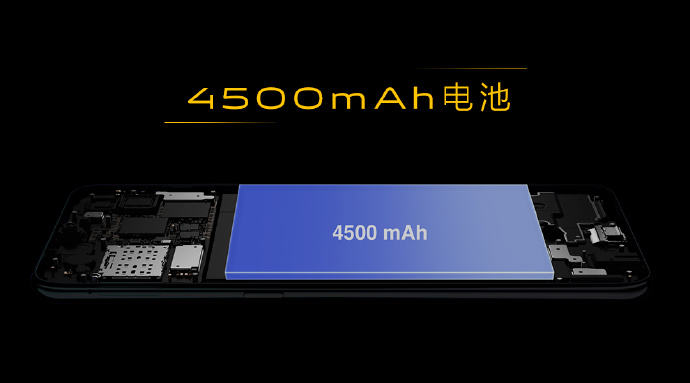
With a capacity of 4500 mAh, Meizu 16T provides the biggest battery and it will likely last more on a single charge. On the other hand, it has the slowest charging technology with a power of just 18W, so it will take more to fully charge it and that is not only for its battery capacity.
Price
OnePlus 7T carries a €385/$430 starting price in China, Meizu 16T costs just €250/$278, and Xiaomi Mi 9T Pro starts at €320/$355. OnePlus 7T wins the comparison without any doubt, but the value for money of the Meizu 16T is incredibly high and spending just €250 for a device equipped with a Snapdragon 855 chipset is flawless.
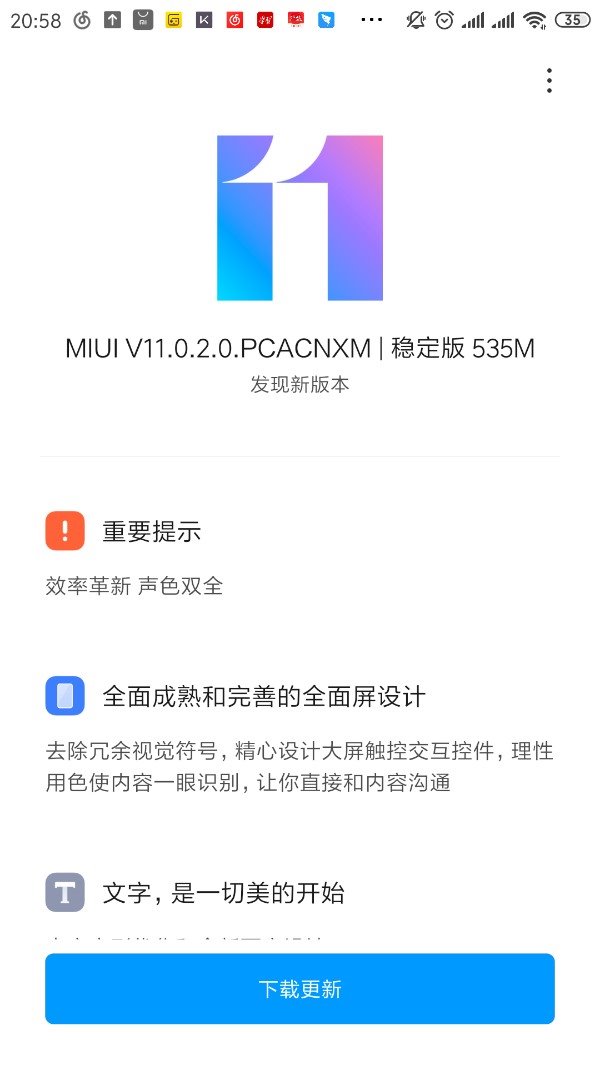
The Xiaomi Mi 6 is finally getting a stable MIUI 11 update, but it’s different from the MIUI 11 that the other Xiaomi devices are getting. While all the other devices getting the beta update are being updated to Android 10, the Mi 6 will unfortunately be stuck with stable MIUI 11.0.2.0 based on Android 9 Pie, though it still retains all the features of the new UI.
The phone got an update to Android Oreo last year and also got Xiaomi’s own MIUI 10 update but there were no plans to update it to Android Pie when Xiaomi released the list of devices getting Pie back in October 2018. It eventually got Android Pie beta in April (global version in June), but that was confirmed to be the last major OS update for the device.
While it is a bit disheartening, it’s still great to see the Mi 6 getting MIUI 11. It’s a big update that changes up a lot of things for the popular Android skin. Starting with the visual aspects, you get slightly softer icons, a system-wide dark mode, new Mi Lan Pro system font and improved always-on display functionality. There are also new animations, themes, wallpapers and improved notification system.
If you want to know everything about the MIUI — its features and tools that the company is offering in this newer version, click here.
The Mi 6 has a 5.15-inch FHD display protected by Gorilla Glass 4. It has a Snapdragon 835 processor, up to 6GB of RAM and 128GB of storage. There are dual 12MP cameras on the back of the phone and an 8MP front-facing camera. It also has a front-mounted fingerprint scanner, stereo speakers, and a 3350mAh battery with support for Quick Charge 3.0. To get the new update, simply check the OTA page and accept the 535MB download.
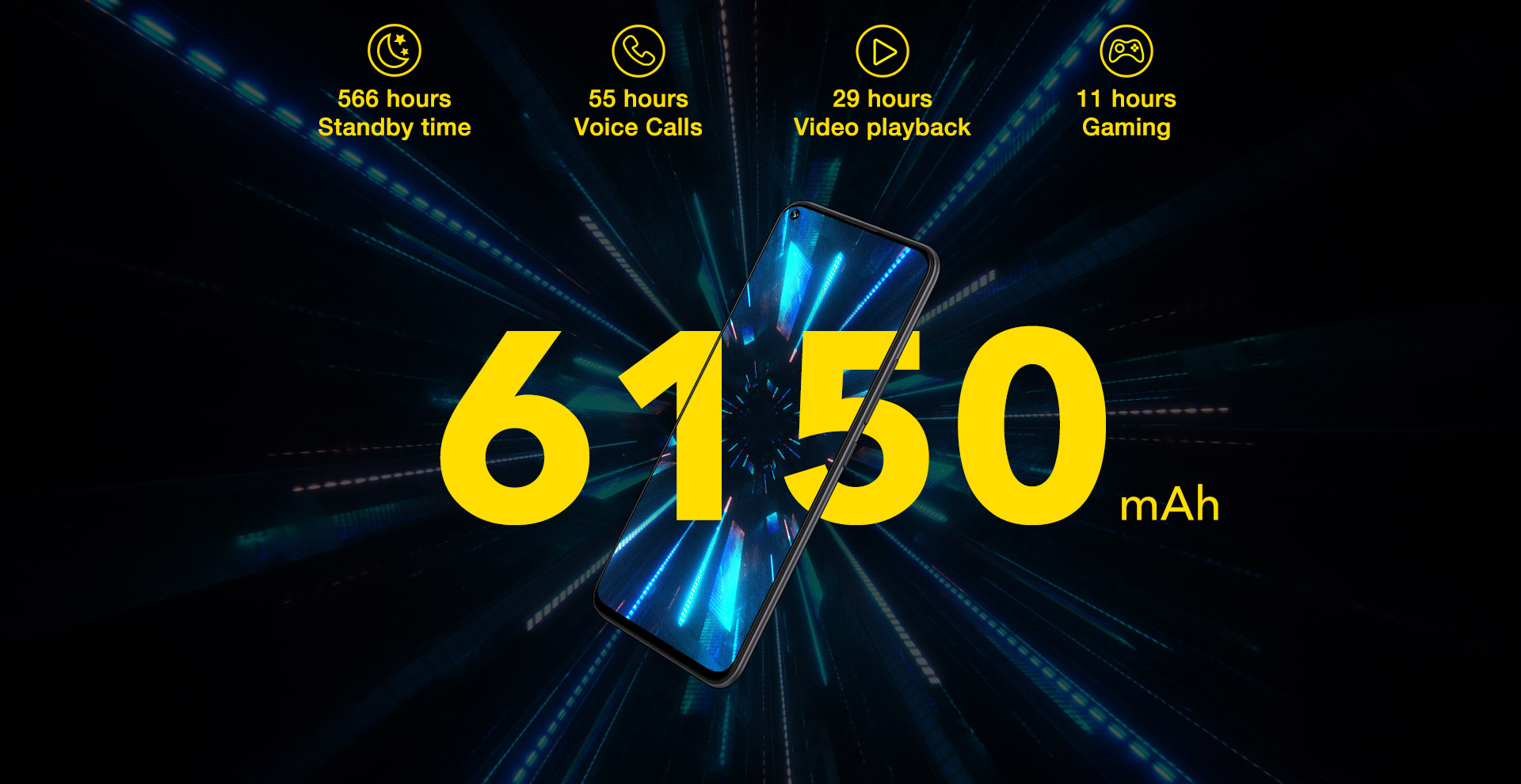
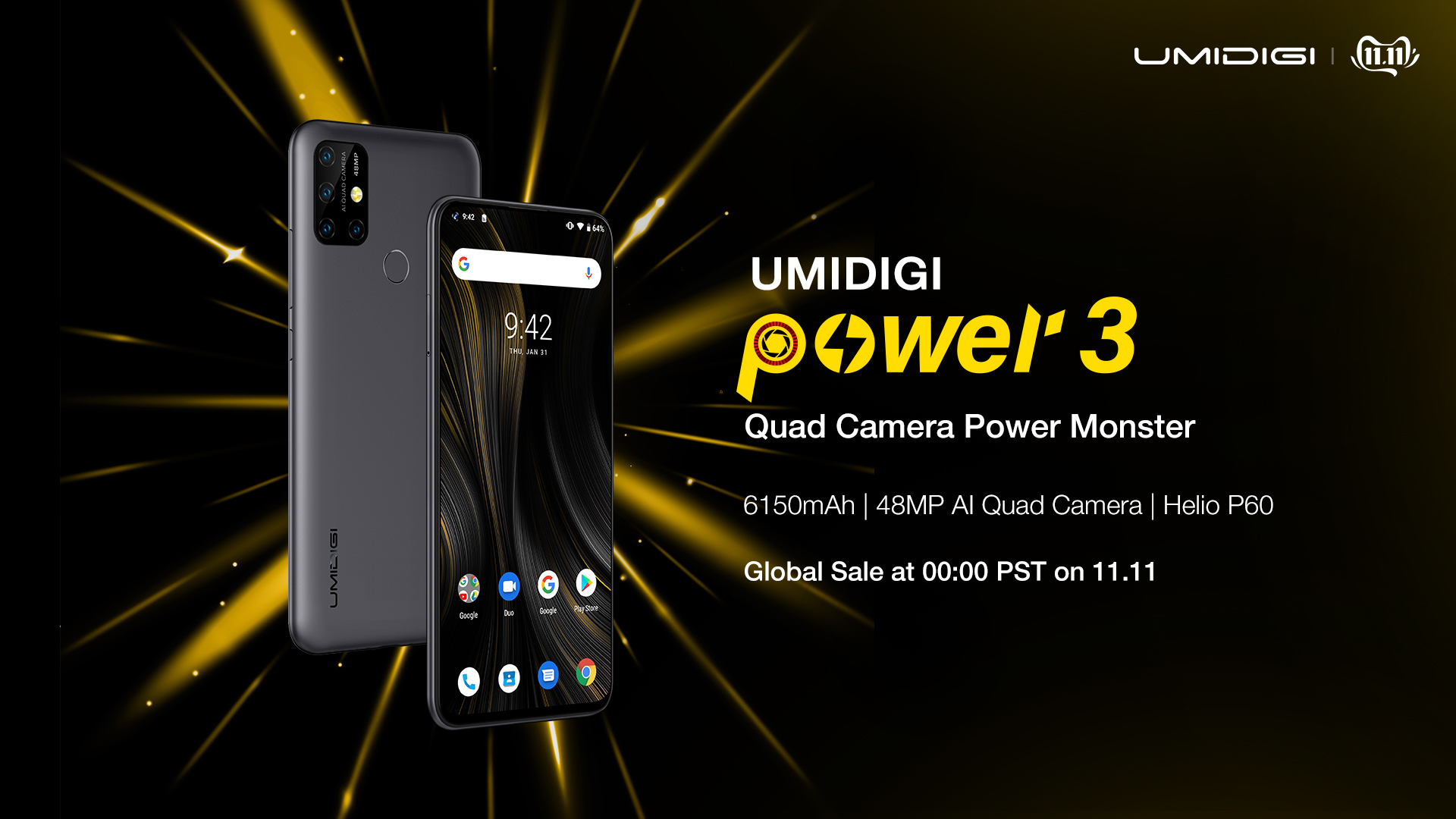
On Monday, we talked about the UMIDIGI Power 3 that would be launching soon and today, the company announced the global launch of the new Power Series member. With the Power 3, UMIDIGI is offering a 6,150mAh battery, which is the biggest yet for the company. In addition, the Power 3 also features a quad-camera setup with a 48MP main sensor, a hole-punch display on the front, and Helio P60 SoC. The phone will start global sale on November 11th on Aliexpress.
Biggest Battery Yet
The Power Series is known for the big battery found inside the phones and Power 3 is no different. It packs the biggest battery to date with a 6150mAh battery and USB Type-C 18W fast charger.
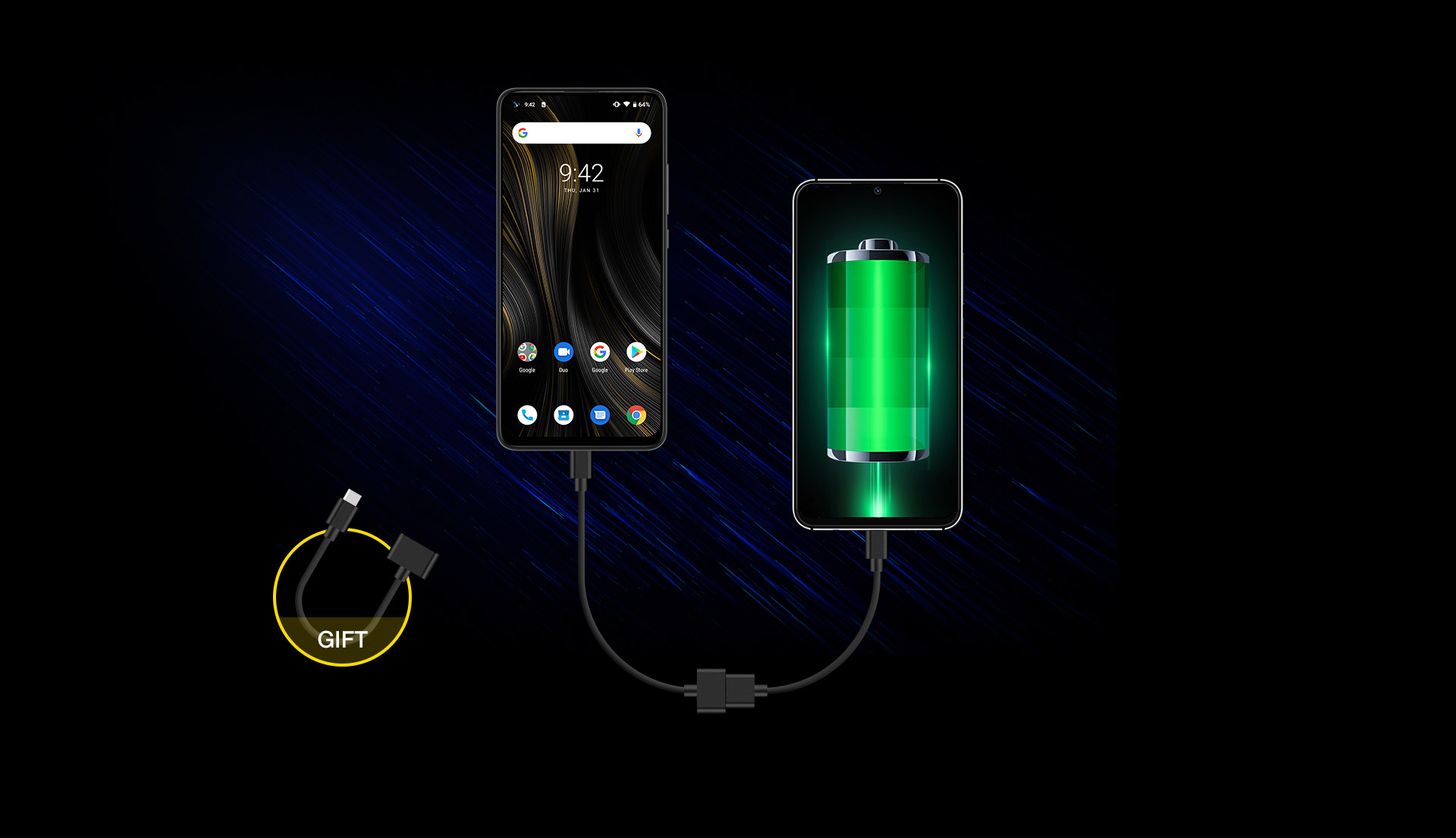
What’s more, it features 10W fast OTG reverse charging that can charge other devices while other phones only support about 2.5W OTG reverse charging. You don’t even have to buy an OTG cable as is comes as a gift.
Multi-function Quad Cameras
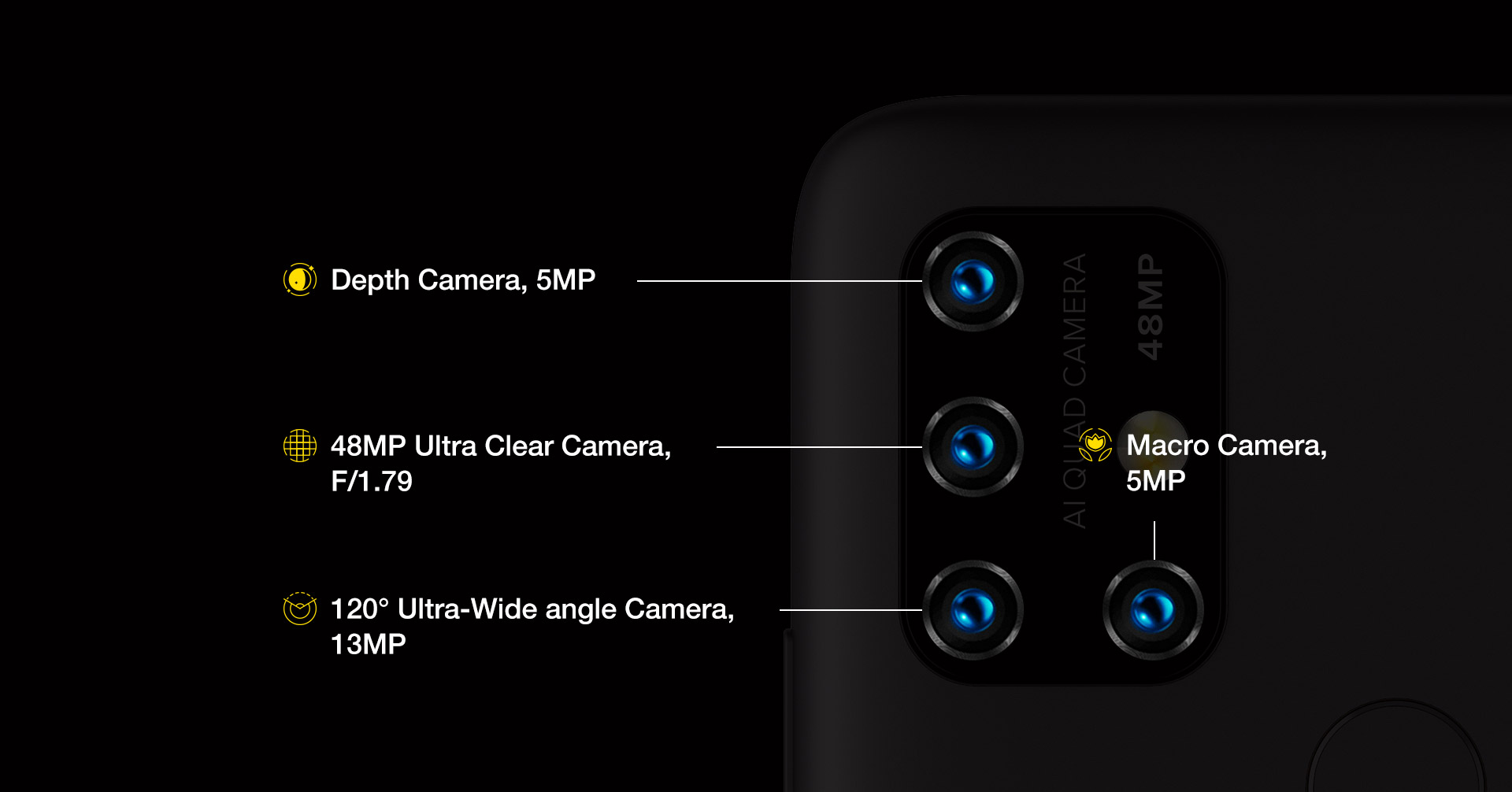
Another new feature in Power 3 is the quad rear camera setup that consists of a 48MP main camera, a 13MP ultra-wide-angle camera, a 5MP macro camera, and a 5MP depth-sensing camera. In addition, there is a new Night Mode to help you capture better photos in low light conditions while the ultra-wide mode snaps more in a single shot and the macro mode captures close-ups.
Bigger Notchless Display
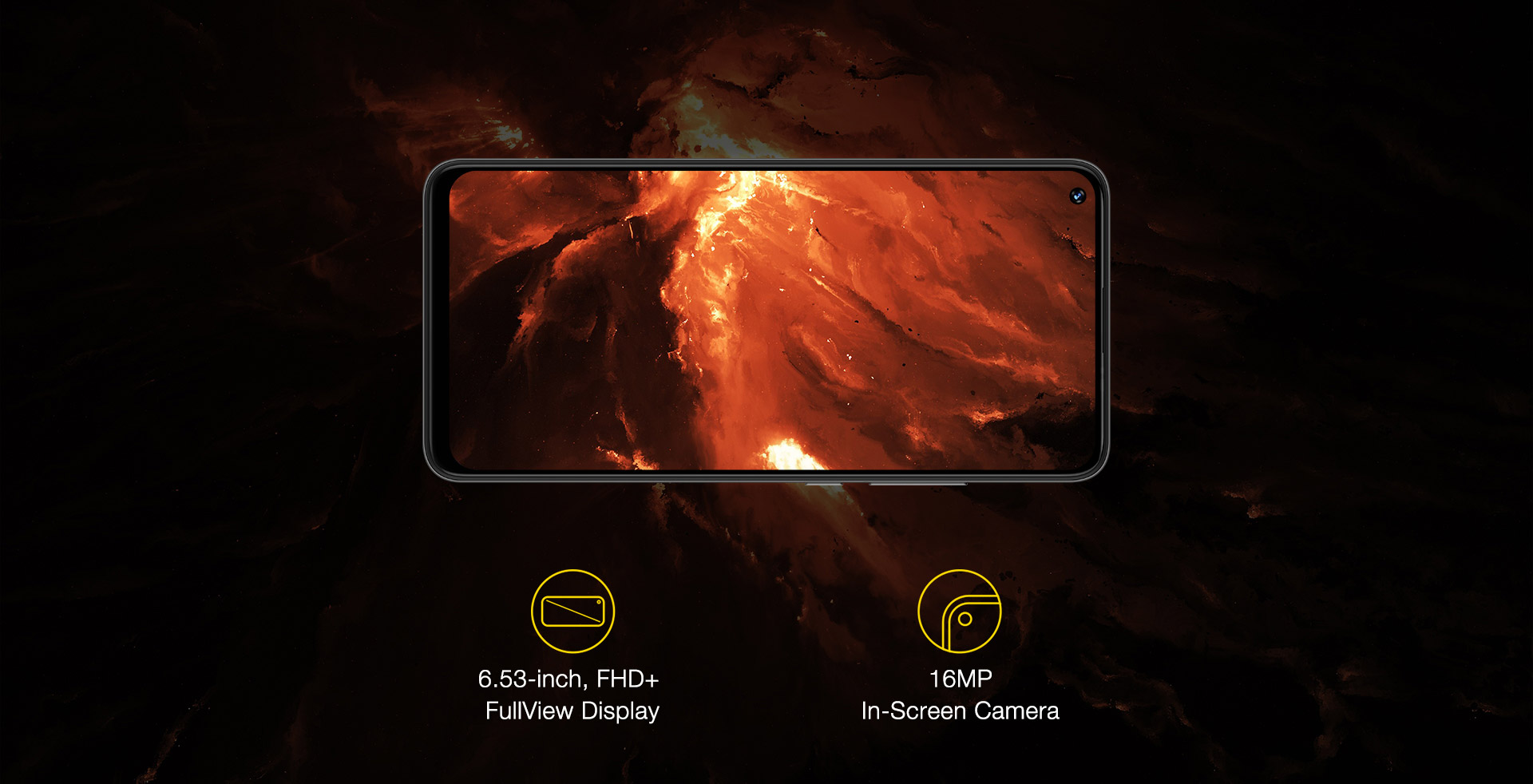
Since the notch is starting to become outdated, the Chinese manufacturer adopts a 6.53″ FHD+ display with a hole-punch that hosts the front 16MP camera. The hole is just 4.5mm wide in order not to distract the user while using the phone. The result is an immersive viewing experience when combined with the thin bezels.
Powerful Performance
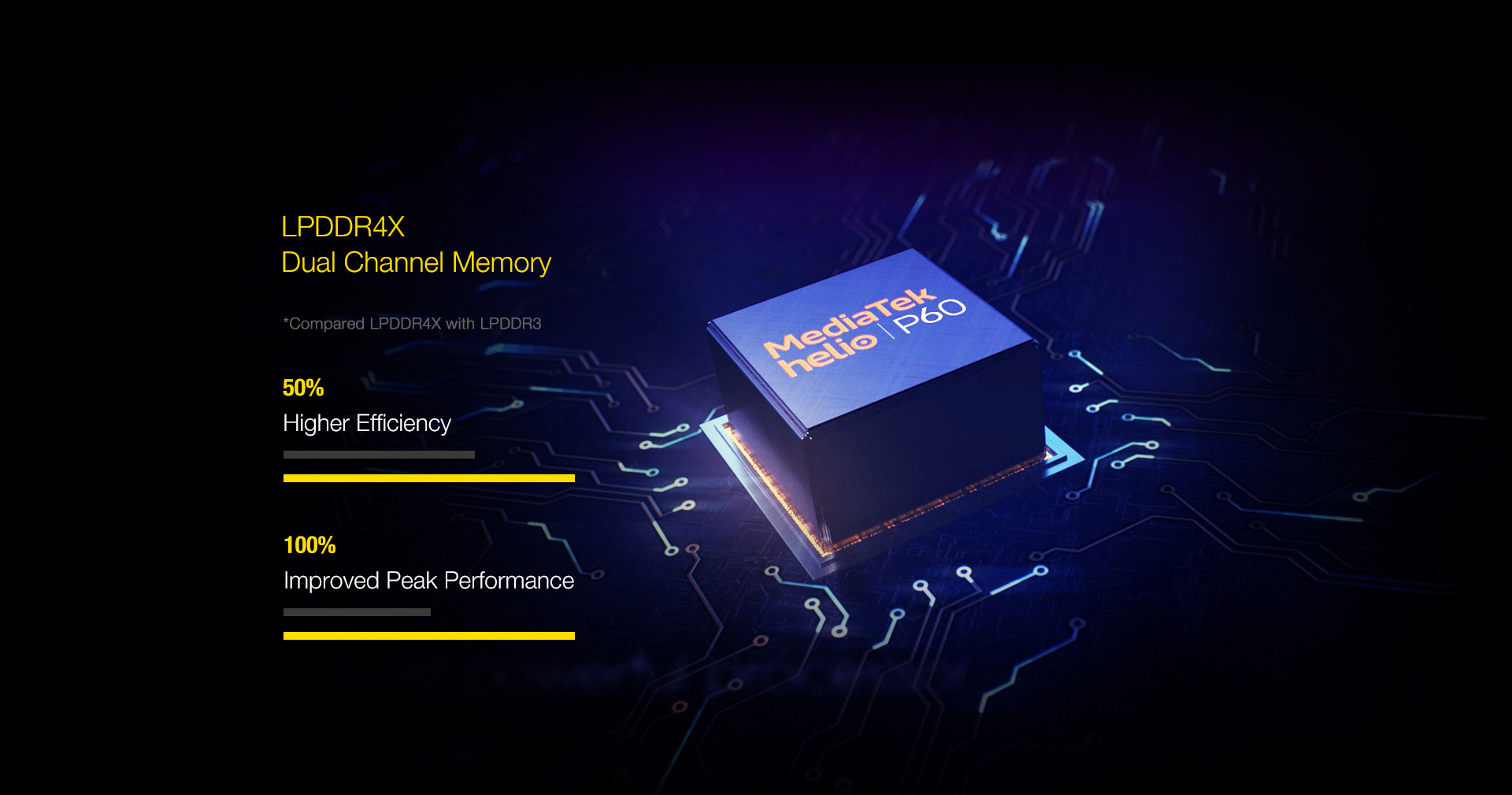
To power the Power 3, UMIDIGI chose to go with the MediaTek Helio P60 SoC backed by 4GB of LPDDR4X RAM and 64GB of internal storage. The LPDDR4X dual-channel memory has 50% higher efficiency and 100% improved peak performance compared with the older LPDDR3. Also, thanks to the triple card slots design, the phone has a dedicated microSD card slot to store up to 256GB more.
Stock Android 10 and Other Features
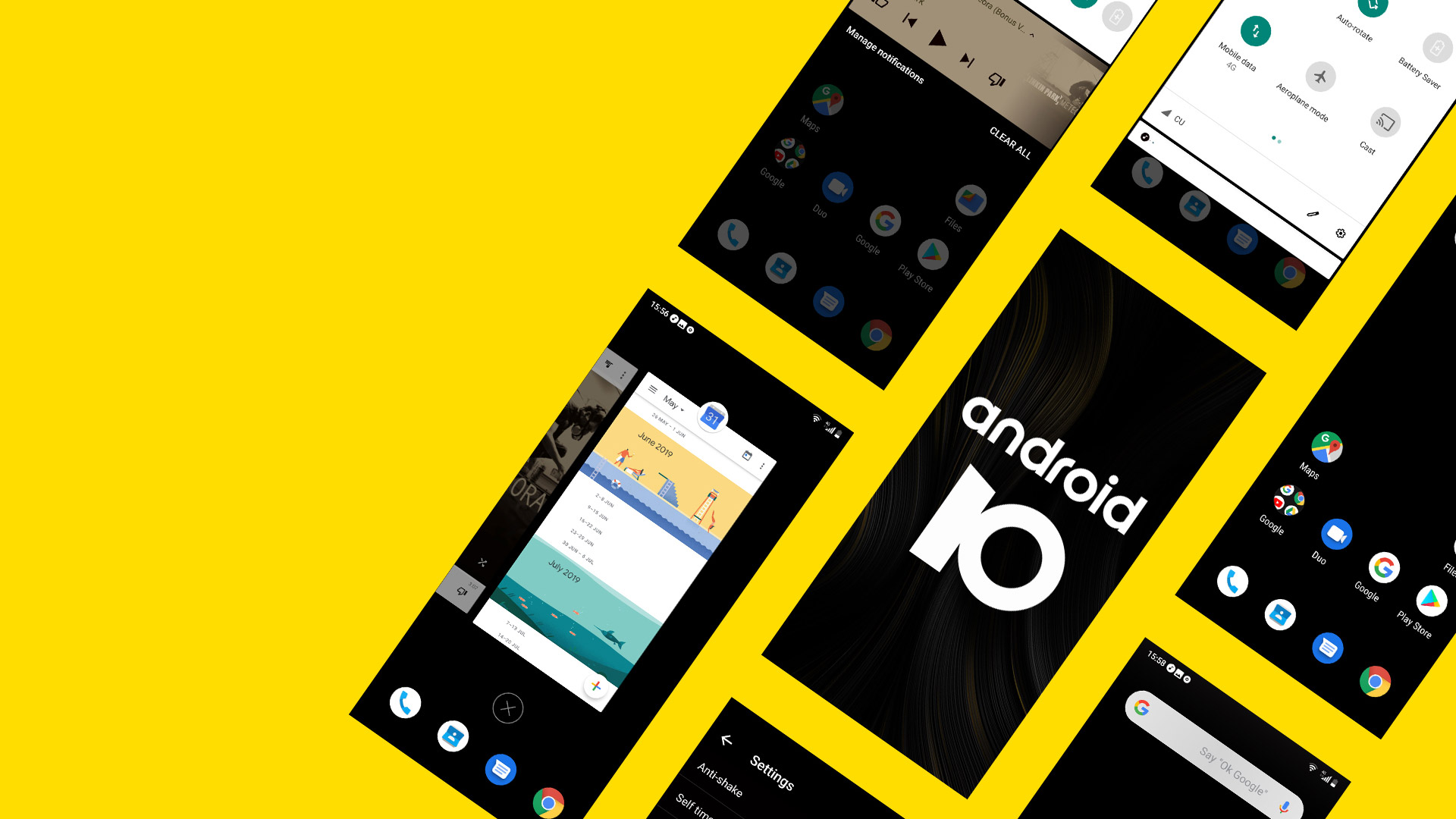
Coming with Android 10, UMIDIGI Power 3 is one of the first smartphones that feature Google’s latest OS. The phone comes in three trendy colors for you to choose: Space Grey, Midnight Green, and Red. Additionally, Power 3 supports “OK Google” on lock screen so that you can activate the Google Assistant without even touching your phone. Lastly, it supports multi-function NFC and global network bands as well as dual-4G/LTE.
Price, Global Sale Date, and Giveaway
The global sale will start at 00:00 PST on November 11th over at Aliexpress. The price is yet to be known but the price tag is expected to be under $200 since the previous version’s cost was around $150. You can add the Power 3 to your cart now in case you miss the discounted open sale price when it becomes available in 2 weeks.
Lastly, in order to improve the user experience, UMIDIGI is running a Giveaway to recruit 10 trial users for the device. Check out all the details about the Power 3 and join the giveaway on their official website.
Over the past few years, OnePlus has slowly sneaked its way into the premium segment. OnePlus smartphones are no longer flagship killers – they are premium devices that offer a refined Android experience. Earlier this year, OnePlus released two models to cater to the two different segments of the market. The OnePlus 7 took care of customers who were looking for an affordable flagship while the OnePlus 7 Pro took on the ultra-premium segment of the market.
There was a significant difference between the OnePlus 7 and the 7 Pro, especially in the camera and display department. The cheaper device missed on a 90Hz screen and premium camera features. And despite its affordable pricing, without camera features such as an ultra-wide-angle or a telephoto shooter, you couldn’t call the OnePlus 7 as a true flagship in 2019. After all, even upper mid-range devices had started to feature these special lenses.
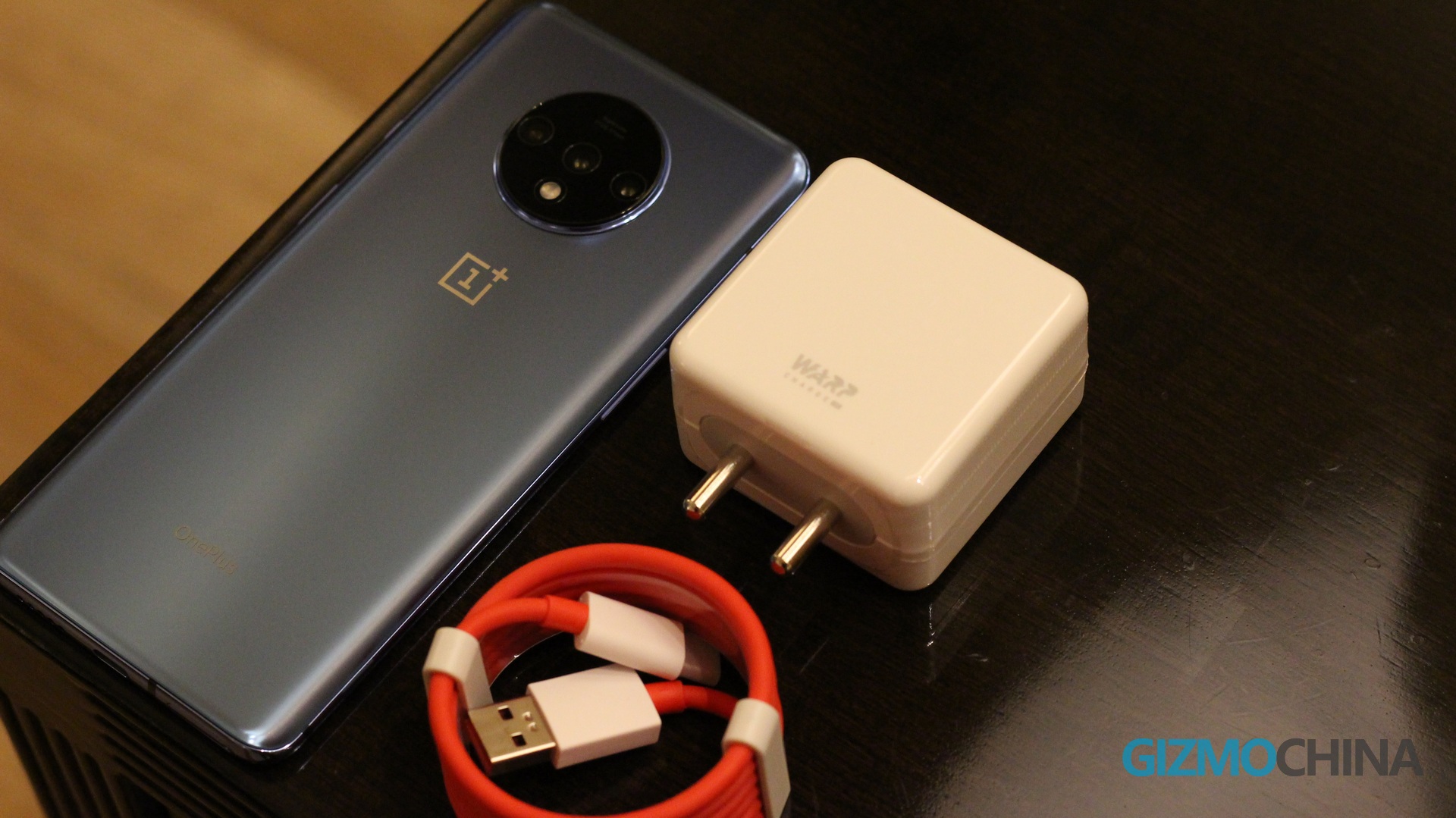
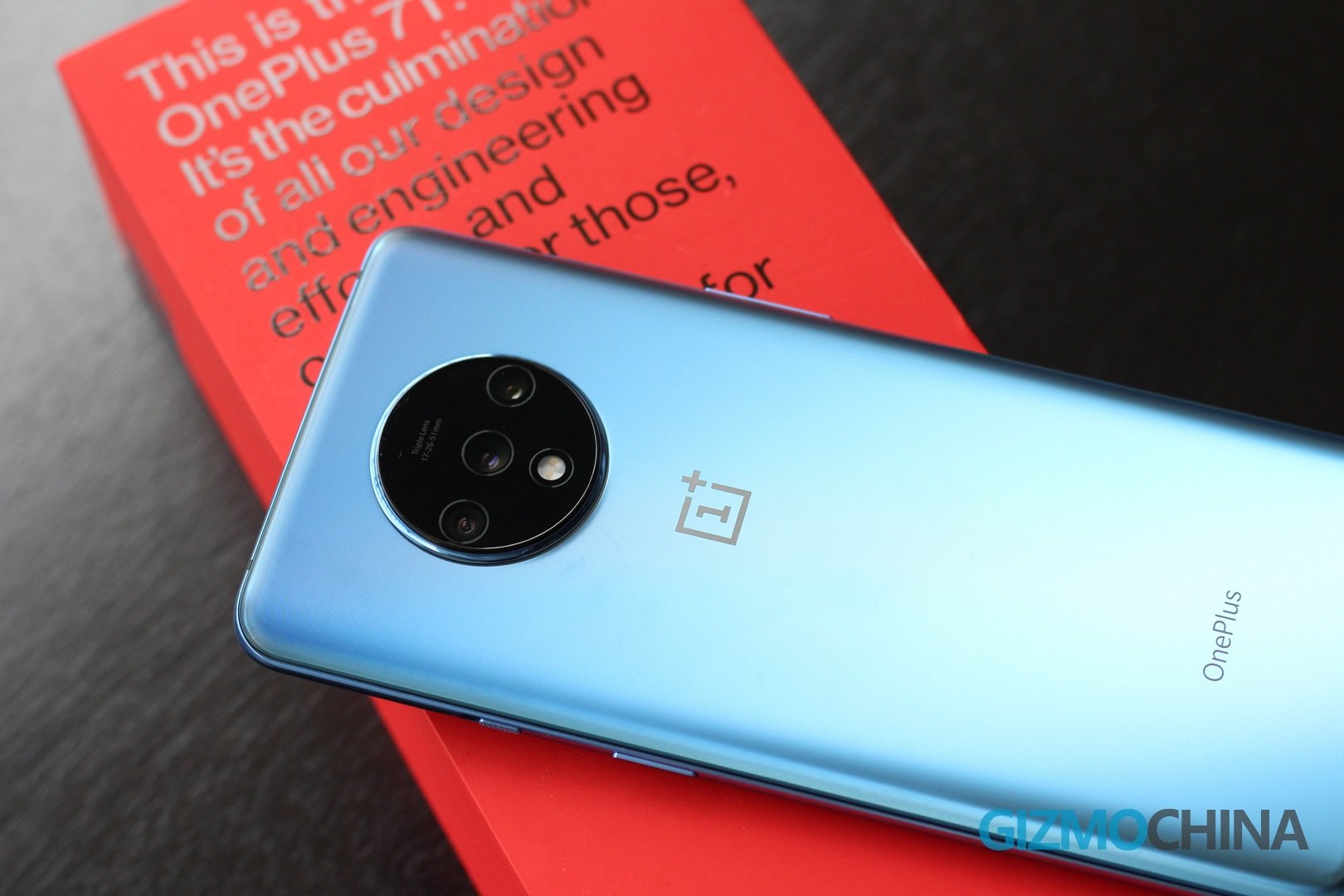
OnePlus fixed this void with the OnePlus 7T. It borrows some of the best features of the premium OnePlus 7 Pro and brings it in a cheaper and more compact form factor. With its camera and screen upgrades, OnePlus 7T is the perfect flagship that the original OnePlus 7 tried to be.
Except for a few features such as Wireless Charging and IP rating, the OnePlus 7T comes with all the bells and whistles you would expect from a 2019 flagship. And at its price point, it’s very hard to go wrong with the device.
So let’s take a closer look at why OnePlus 7T has the potential to be one of the best flagships of 2019, even more than the OnePlus 7T Pro!
OnePlus 7T Design: A Headturner
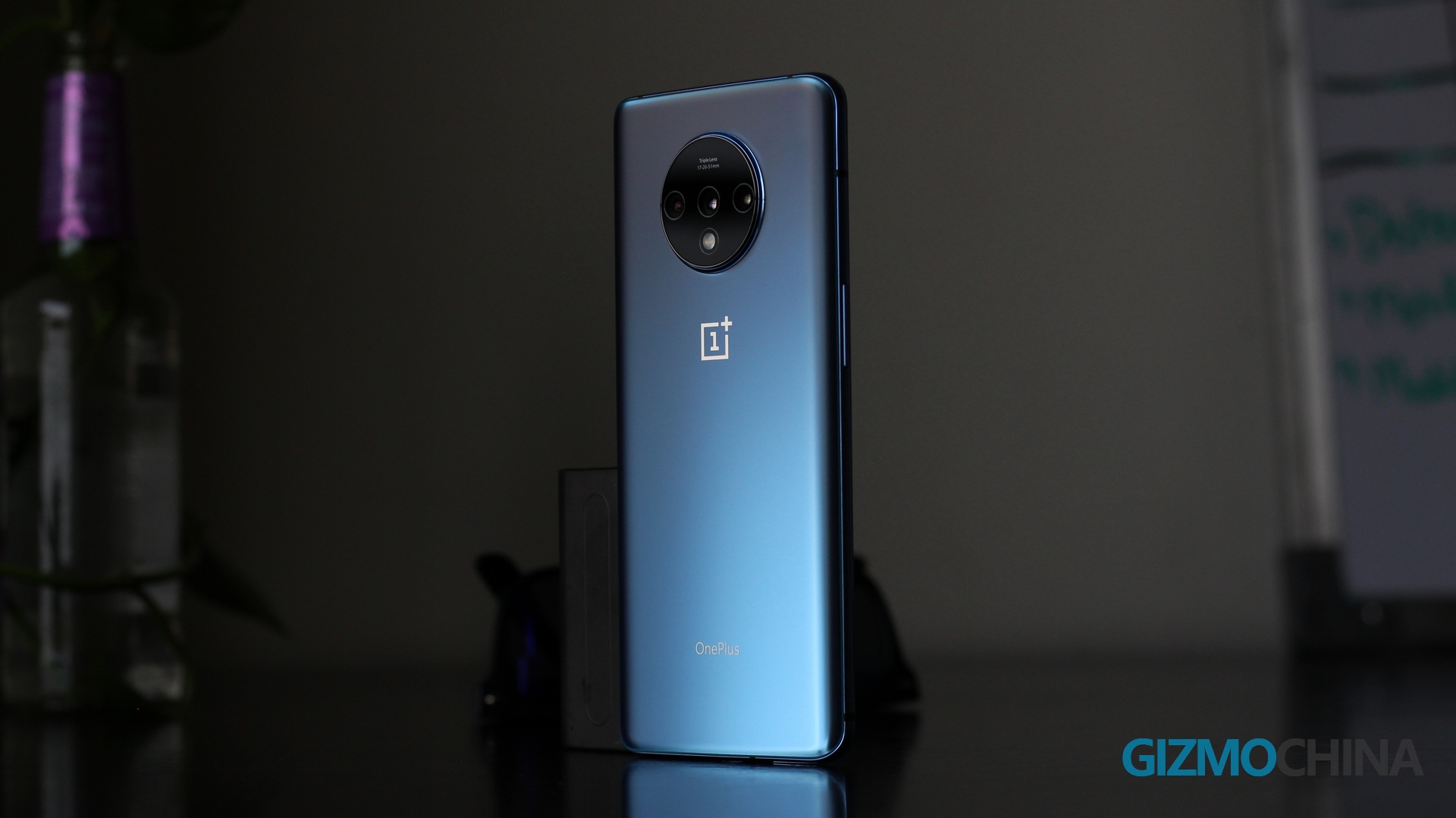
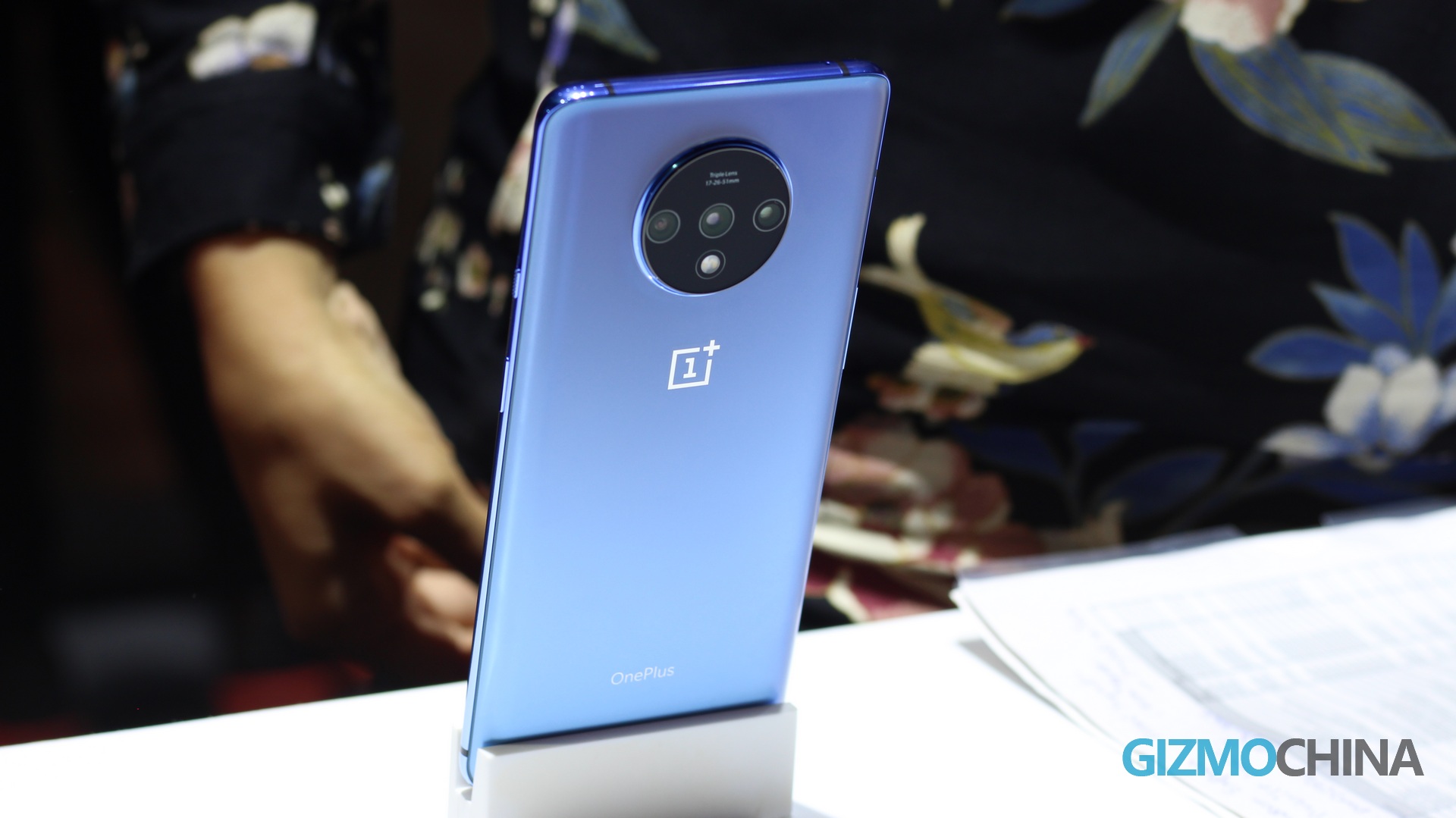
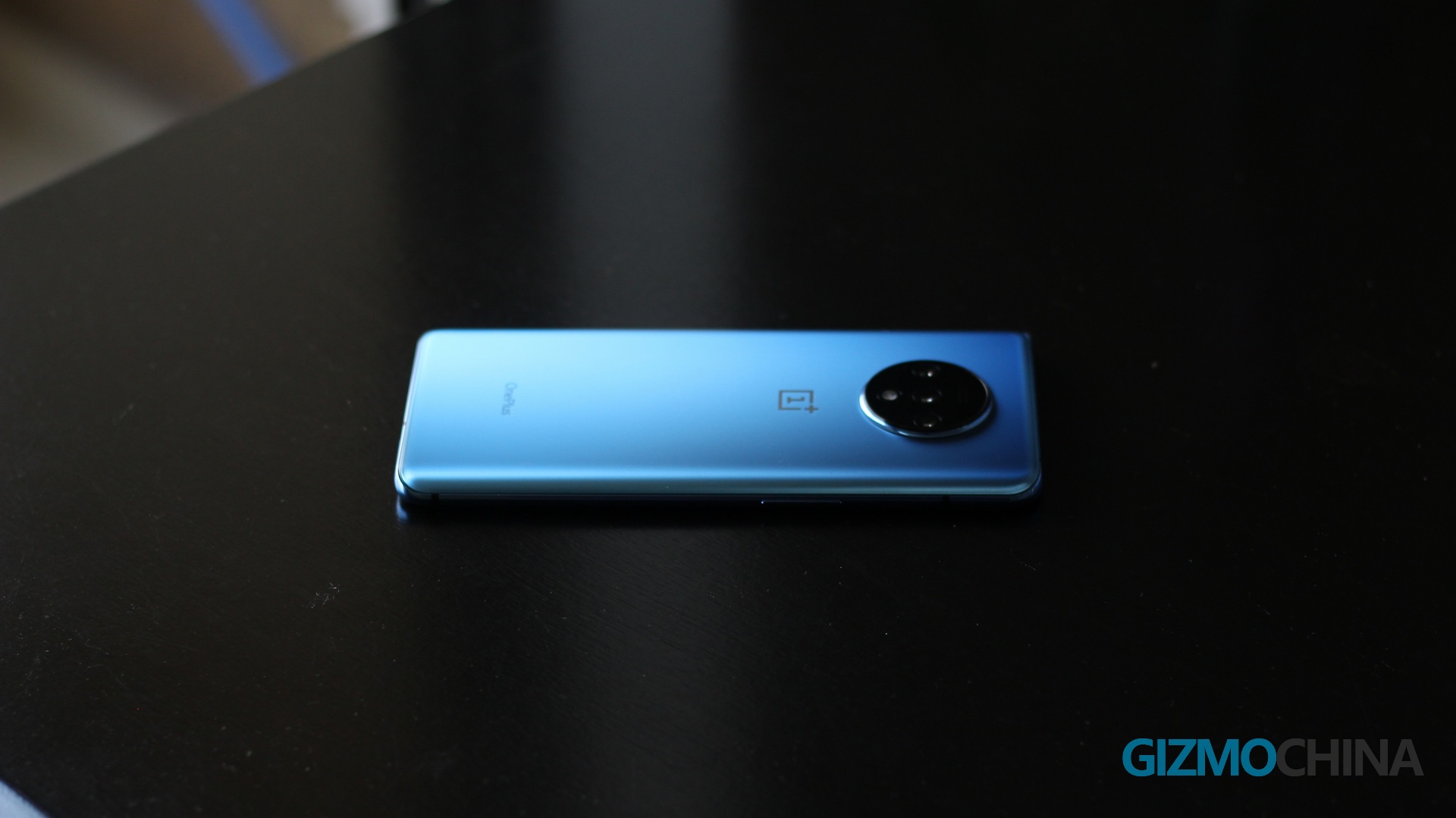
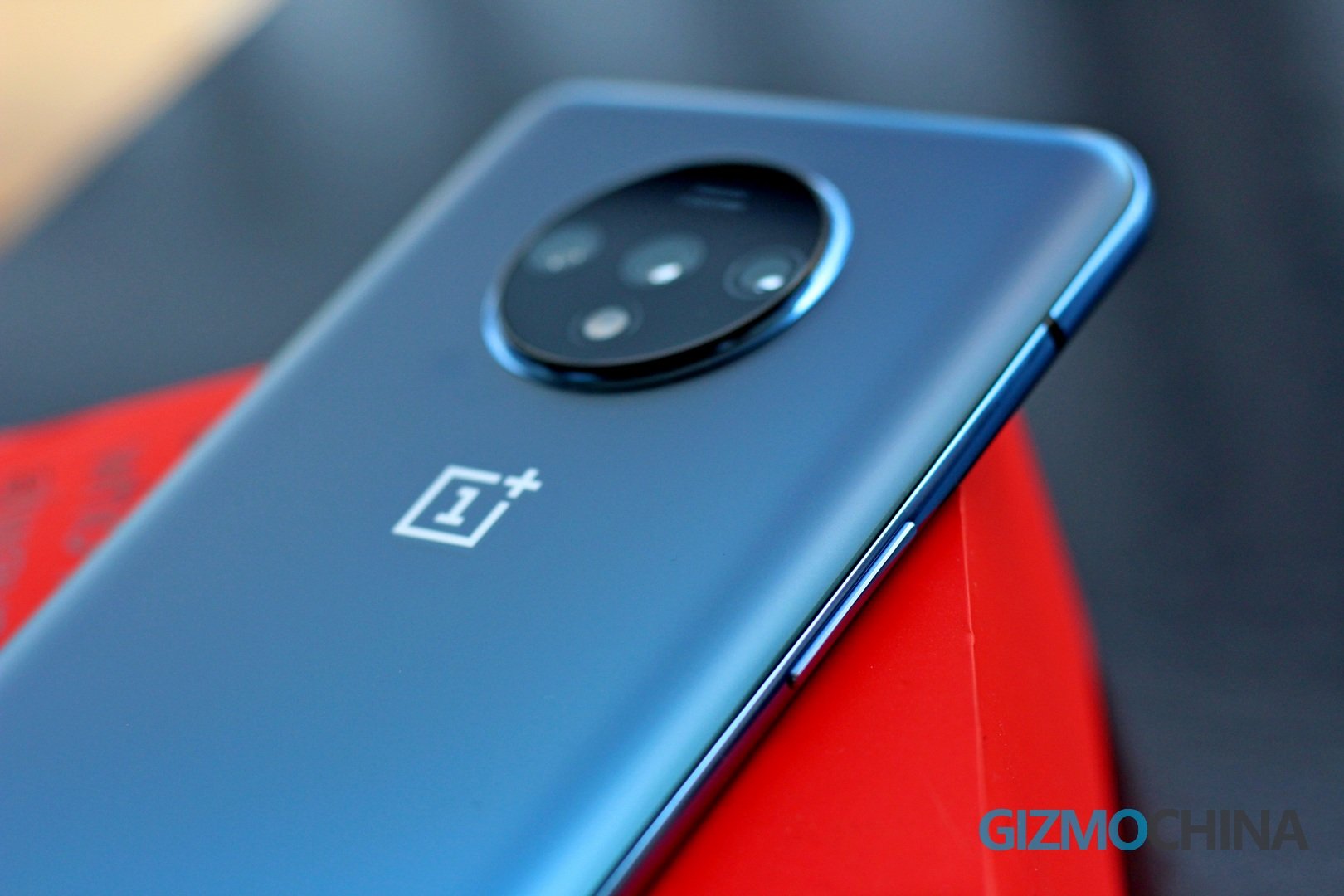
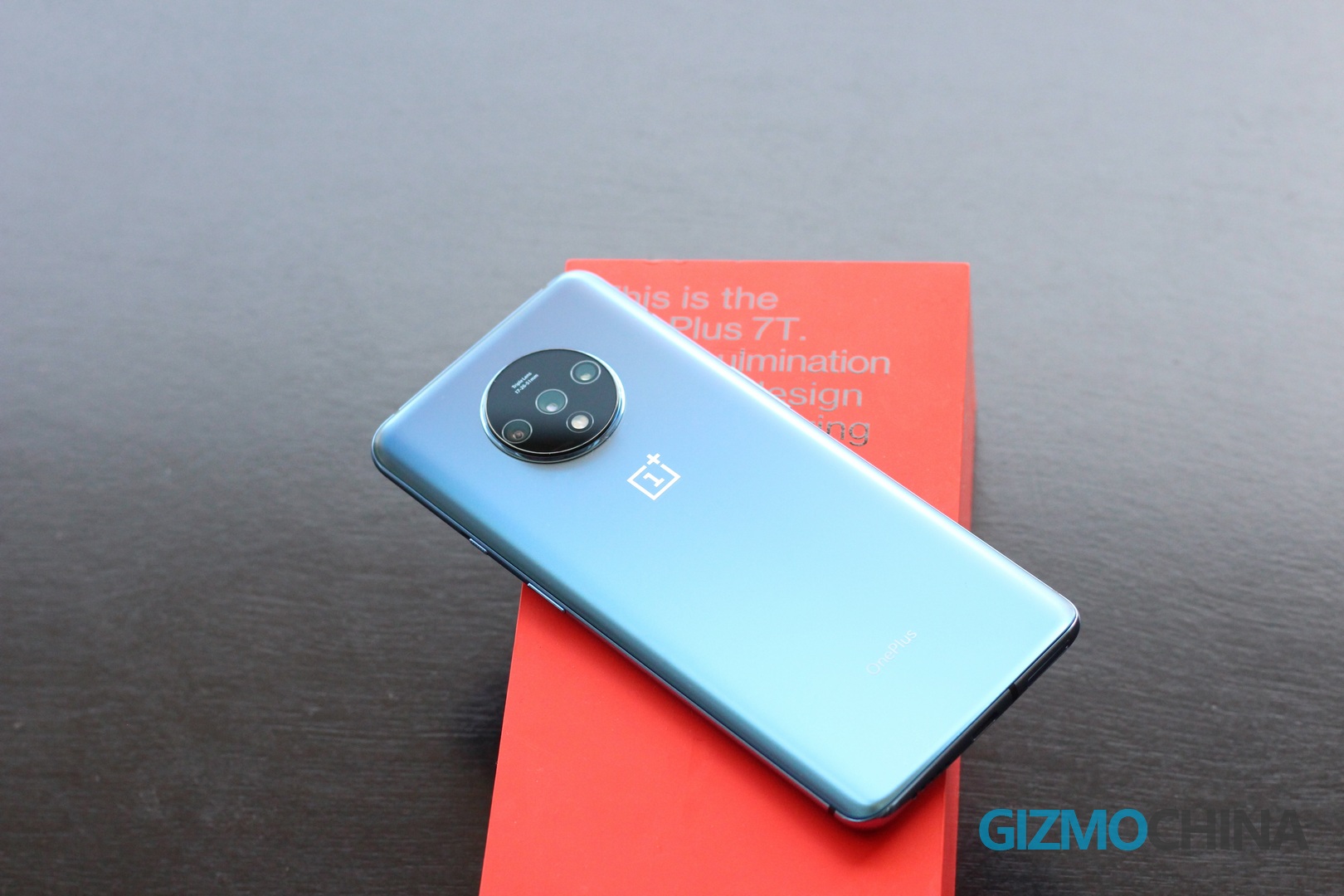
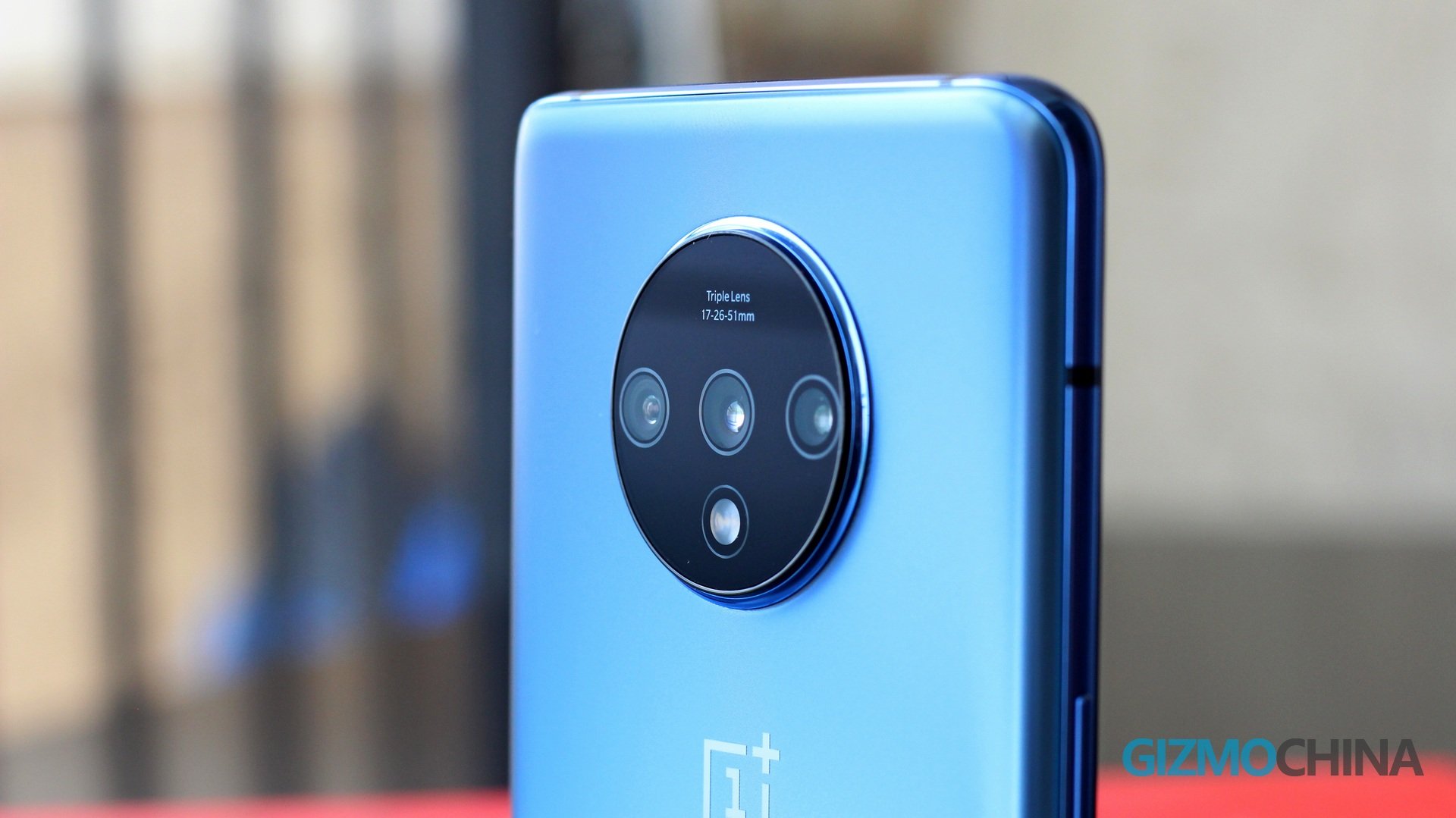
Flash the OnePlus 7T in a crowd, and I guarantee that many will stop to notice the device. No, it won’t be because of its stunning 90Hz display. It would rather be because of its manhole-esque camera housing at the back which sticks out. It’s all black and protrudes quite significantly from the back and is definitely one of the differentiating design aspects of the 7T.
Am I a fan of this black manhole-esque camera housing?
Not really. I have seen a lot of better designs.
But given that almost every phone out there were featuring a pill-shaped camera housing, this is kind of refreshing. And the fact that the phone doesn’t wobble and stays centered when you place it on a table is an added bonus. And did I mention that the glass protecting the camera is made of sapphire glass? So you don’t really have to worry about scratches!
Same Phone but different colors.
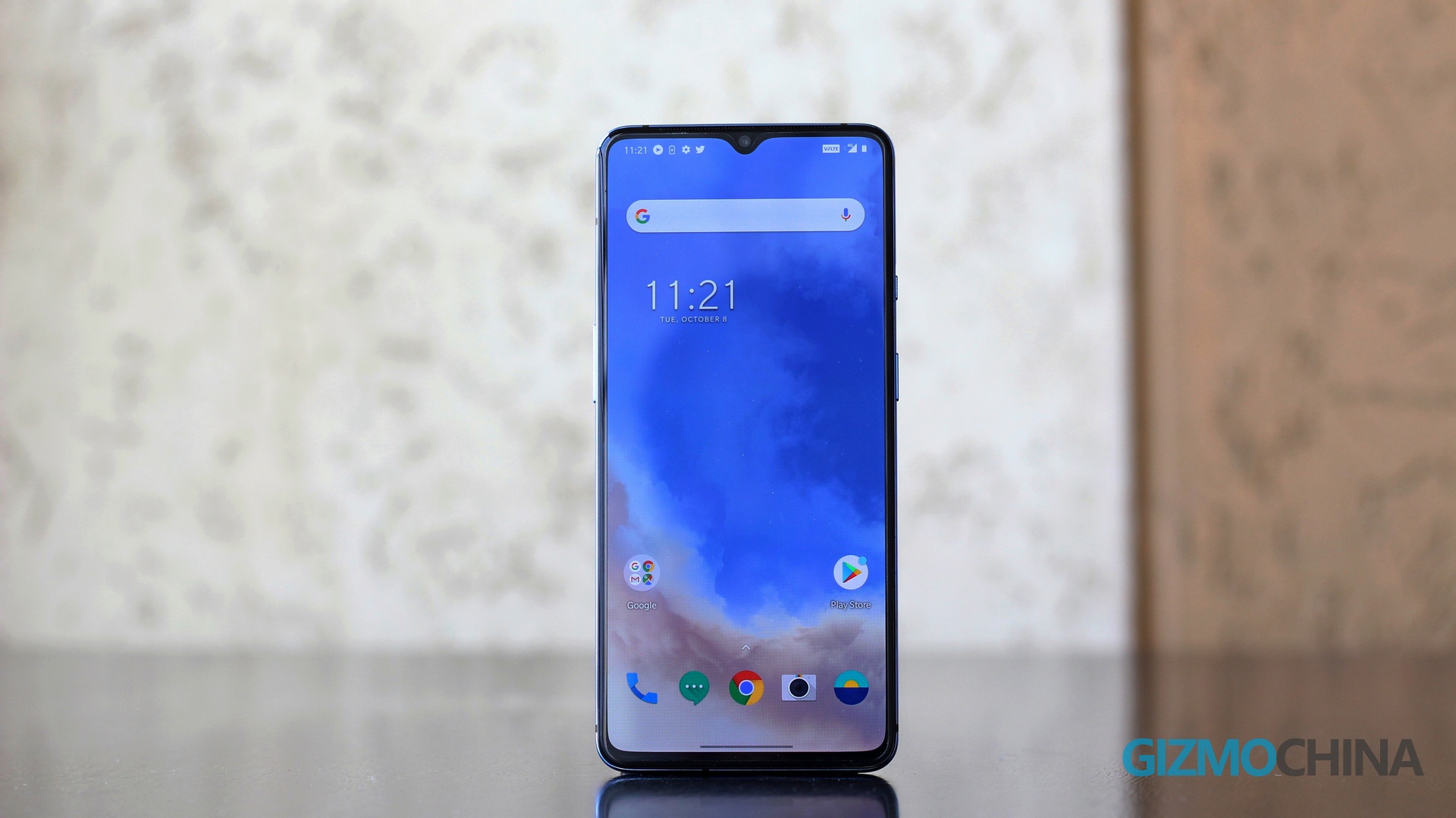
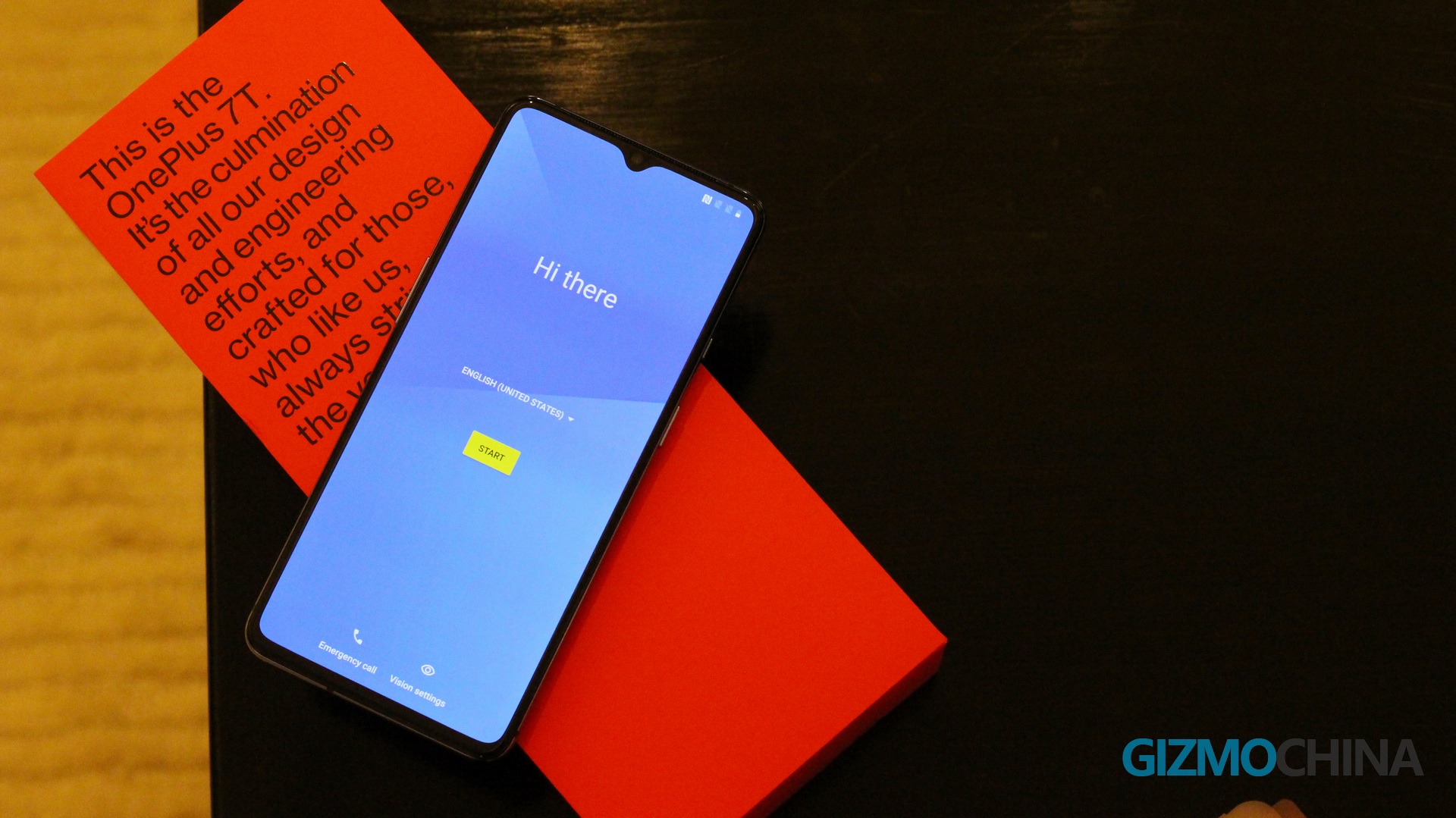
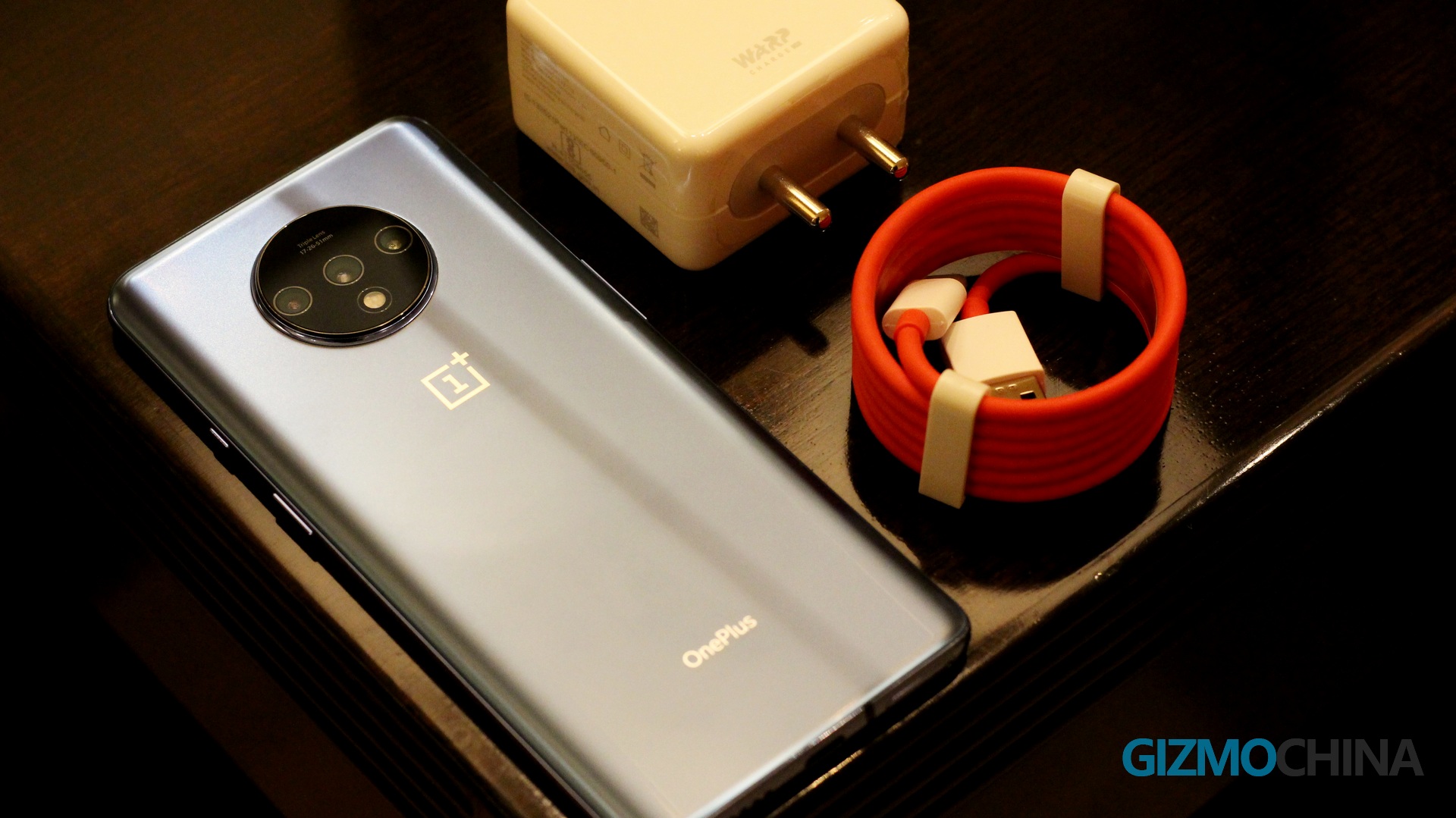
As you can see I have got the Glacier Blue OnePlus 7T with me for review. As I mentioned in my hands-on, the colors on the phone change quite significantly under different lighting conditions. For example, under a dull yellow light or under most indoor lighting conditions, the phone will have a very dark gradient-like hue. Outdoors, the 7T shifts to a more pleasant light blue shade. It’s like having two different variants, indoors and outdoors.
The OnePlus 7T is taller and heavier than the OnePlus 7. While that might sound bad, it’s actually a good thing because you are getting a narrower form factor (20:9 vs 19.5:9) and a slightly larger battery on the new model (3800mAh vs 3700mAh).
Volume buttons are placed o the right
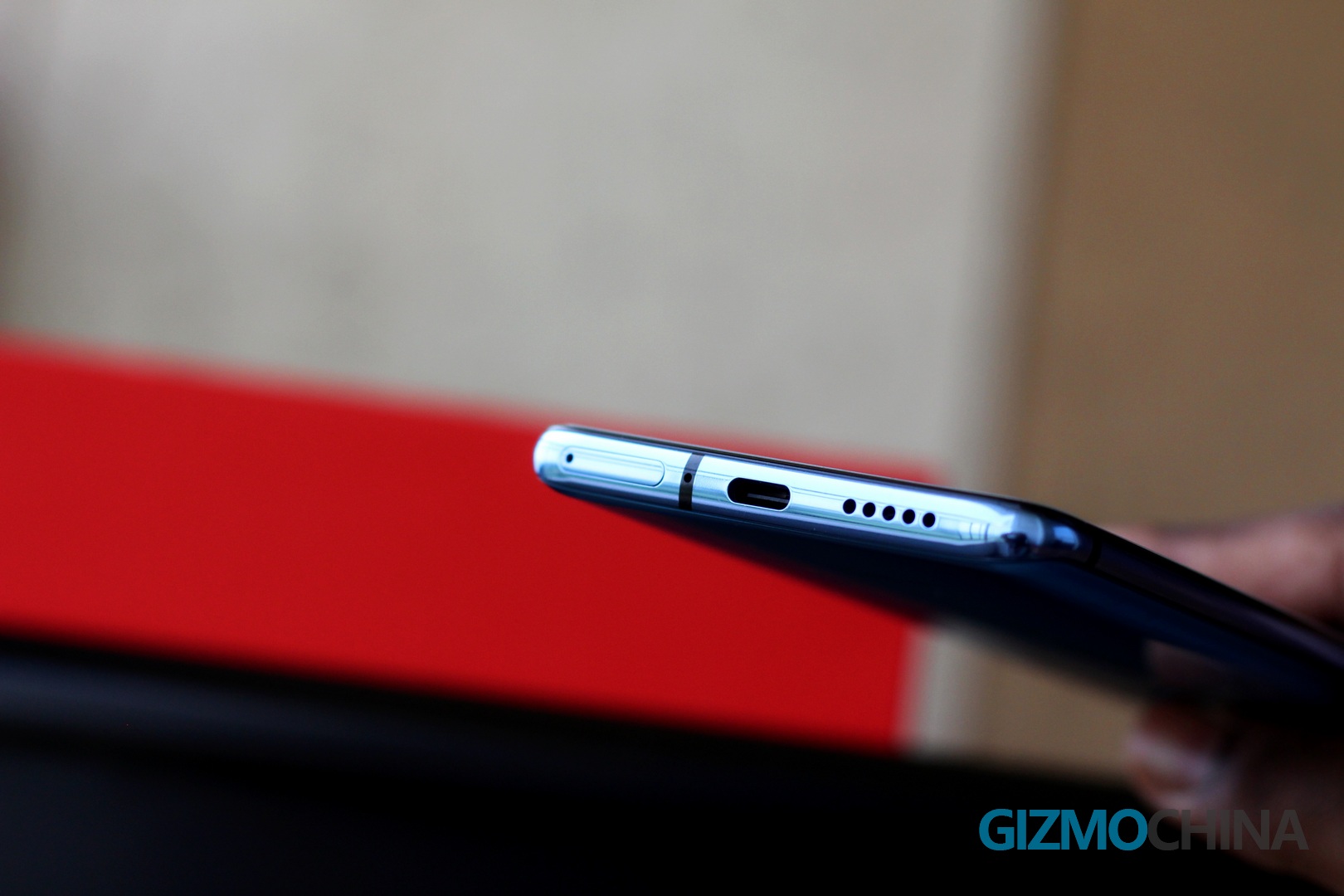
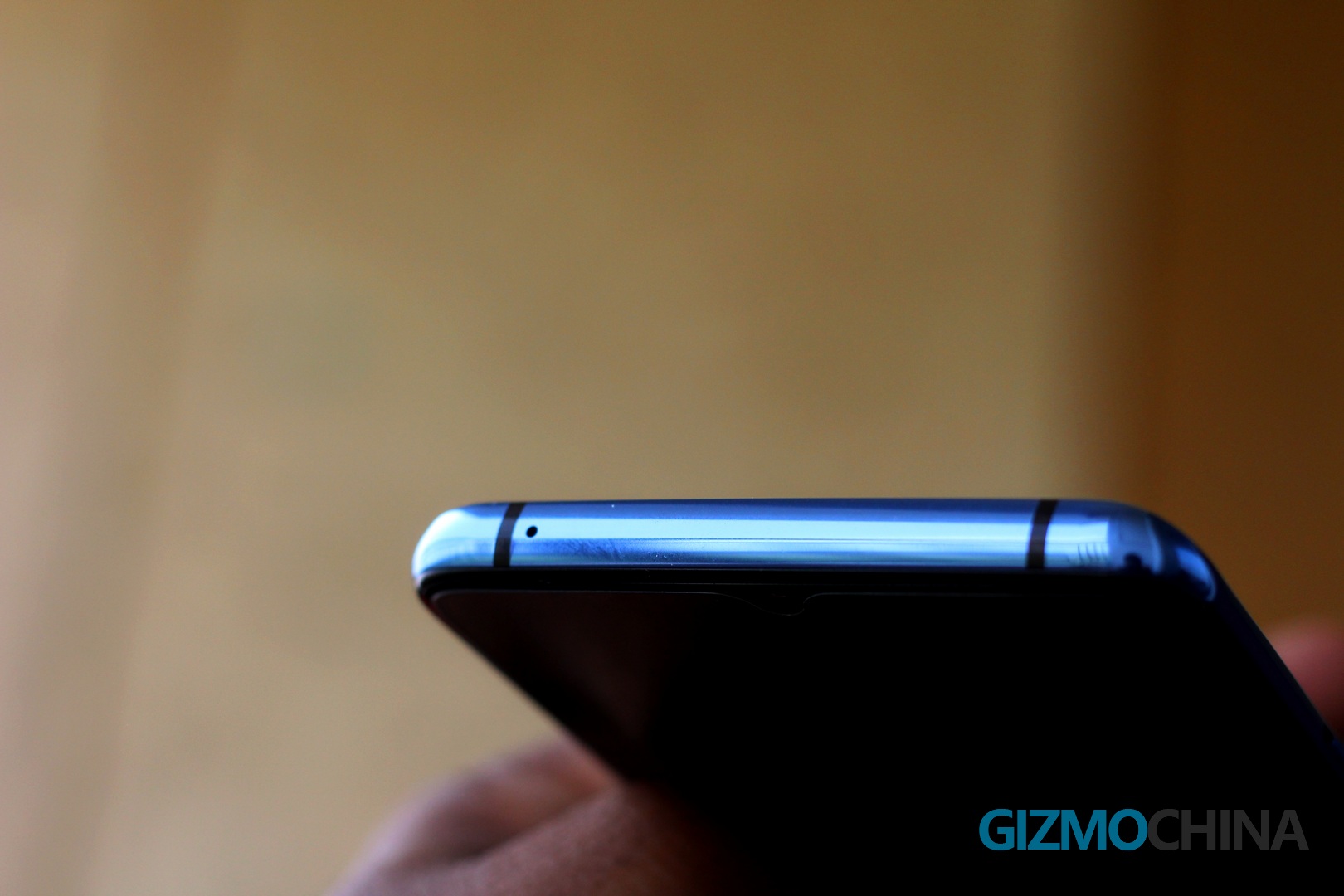
On the left side of the phone, you have volume buttons while the power and alert slider are placed on the right. The bottom gets a bit crowded with the USB-C port, speaker, as well as the dual SIM card slot. On top, you have a single microphone.
1 of 10
OnePlus 7T uses optical in-screen fingerprint
OnePlus 7T is its most recent flagship
OnePlus 7T Hands on volume button featured
Bottom portion of the OP7T is pretty crowded
OnePlus 7T is not IP certified. So officially, there’s no water or dust proofing, but the company says that it can take a few splashes. But I wouldn’t recommend taking that chance. Better keep it away from water and dust.
OnePlus 7T Display
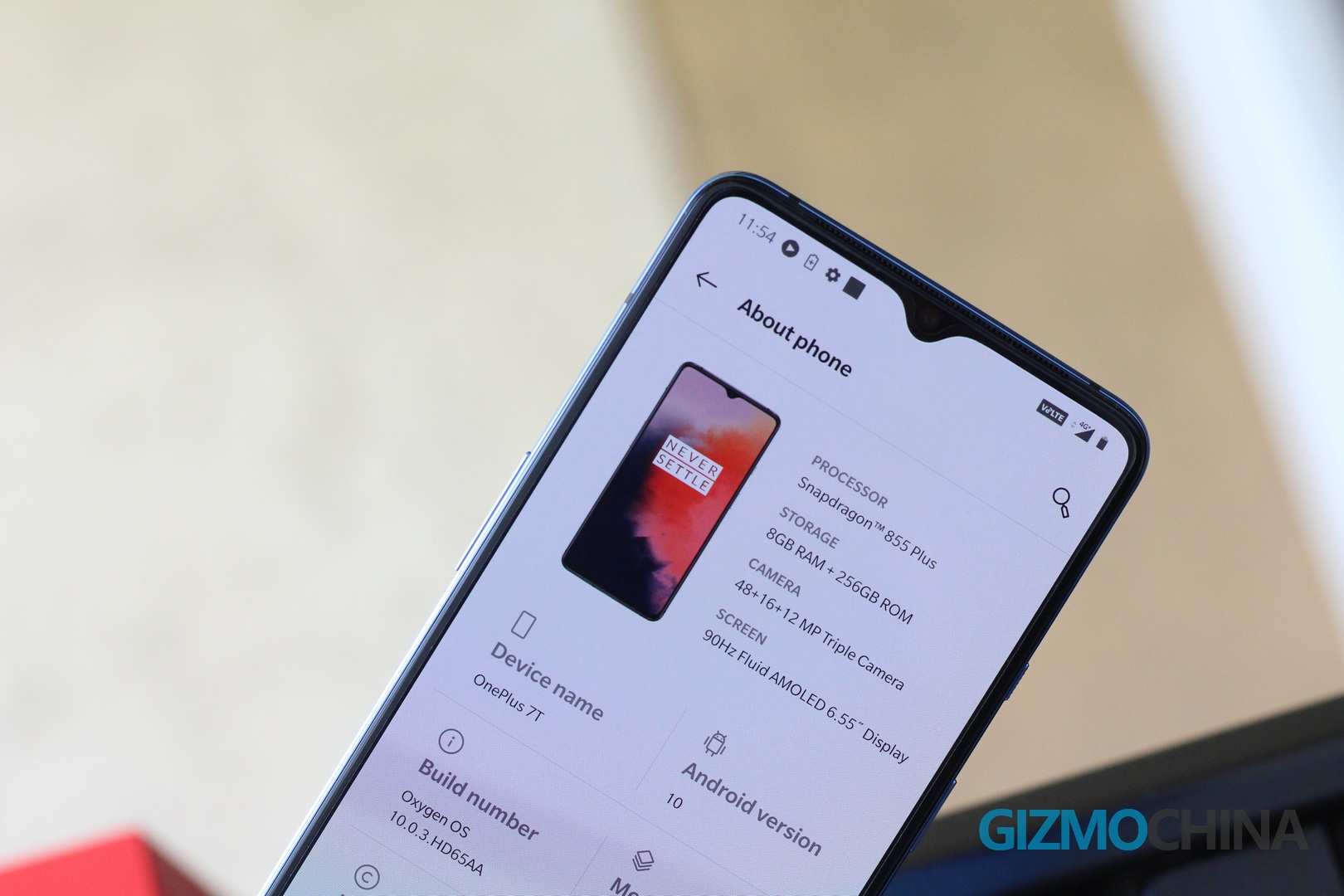
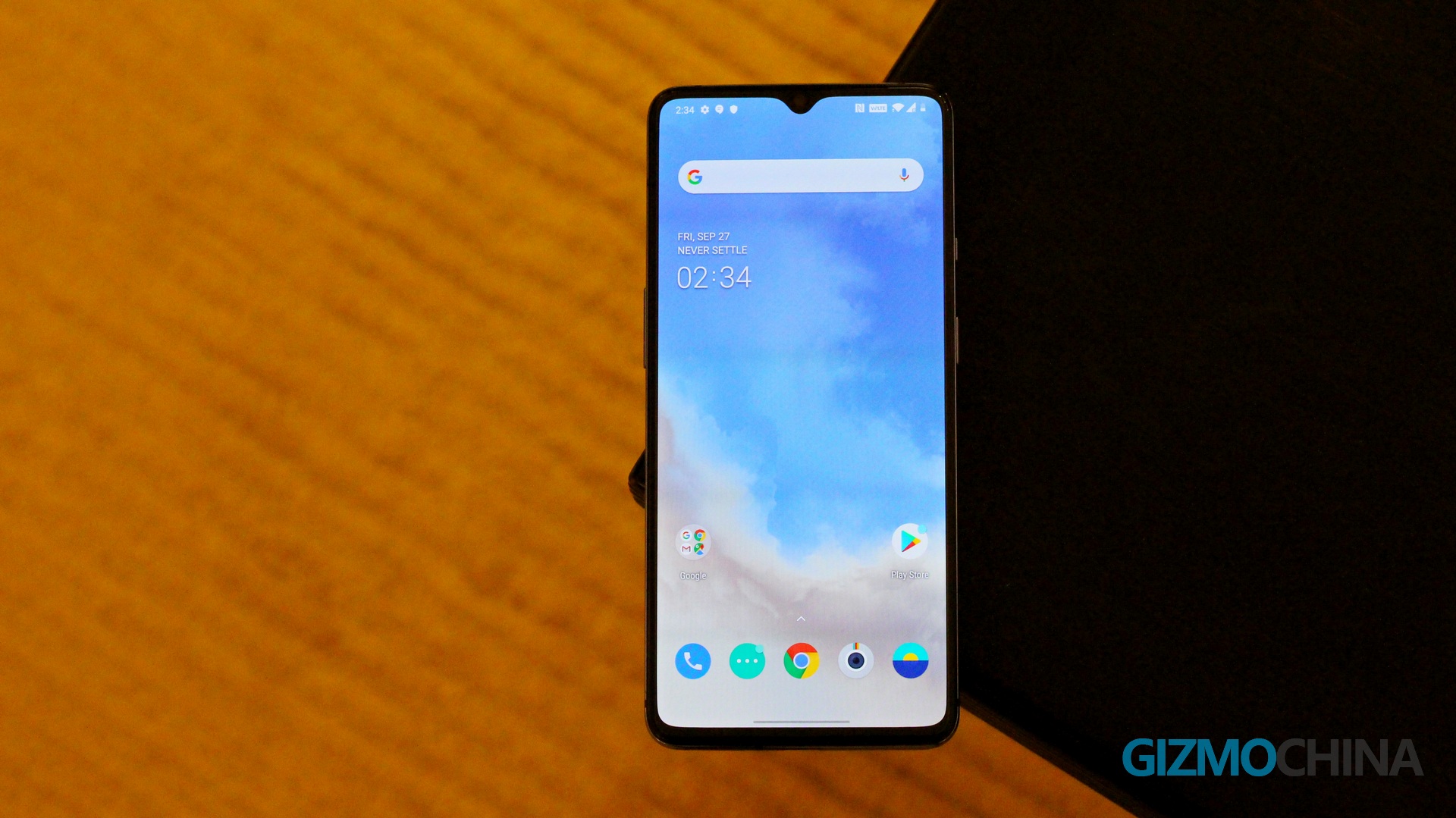
You simply can’t go wrong with OnePlus 7T’s display at this price. You’ve got a beautiful 6.55-inch Fluid AMOLED 1080 x 2400 pixel display with corning gorilla glass protection. The display supports HDR10+ and DCI-P3 color space to ensure you’ve got an excellent viewing experience.
But the best part of the display is the high 90Hz refresh rate! After the OnePlus 7 Pro received rave reviews for its beautiful 90Hz screen, OnePlus decided to use a similar panel with a 90Hz refresh rate for its cheaper OnePlus 7T model as well. In fact, all upcoming OnePlus flagships will feature a 90Hz display. So the display on the 7T is a treat to watch movies, play games, or even browse.
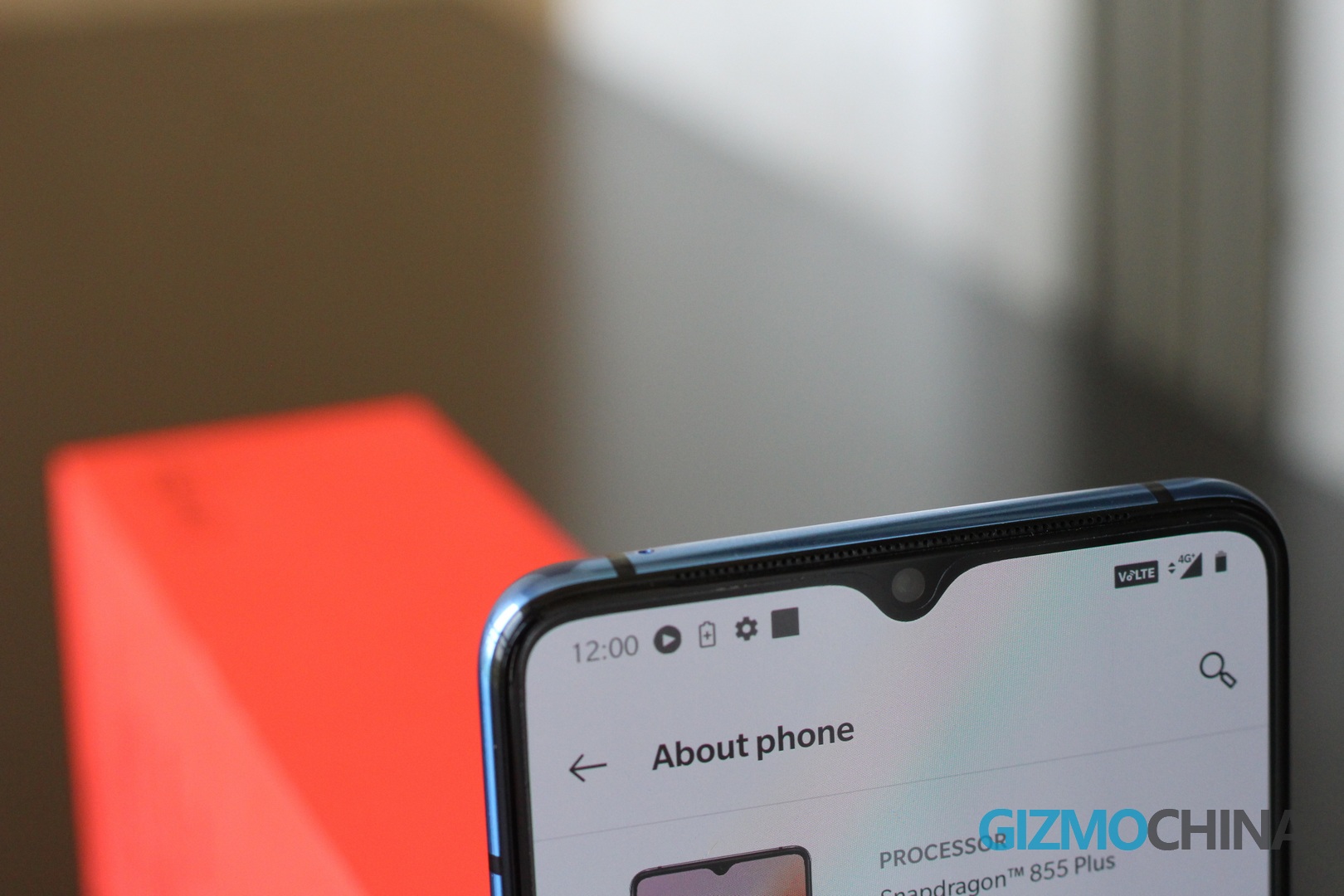
Note that unlike the Pro variant, the OnePlus 7T comes with a notch up front. It’s smaller than the OnePlus 7, but you definitely notice it if you are coming from a non-notch smartphone. However, soon your eyes will adjust to it and won’t bother your viewing experience.
You’ll also notice that you no longer have an option to hide the NOTCH in the settings. And I’m not sure whether it’s coming back in a future update. I am currently waiting for an official reply from OnePlus in this regard. I will update the article once the company gets back to me.
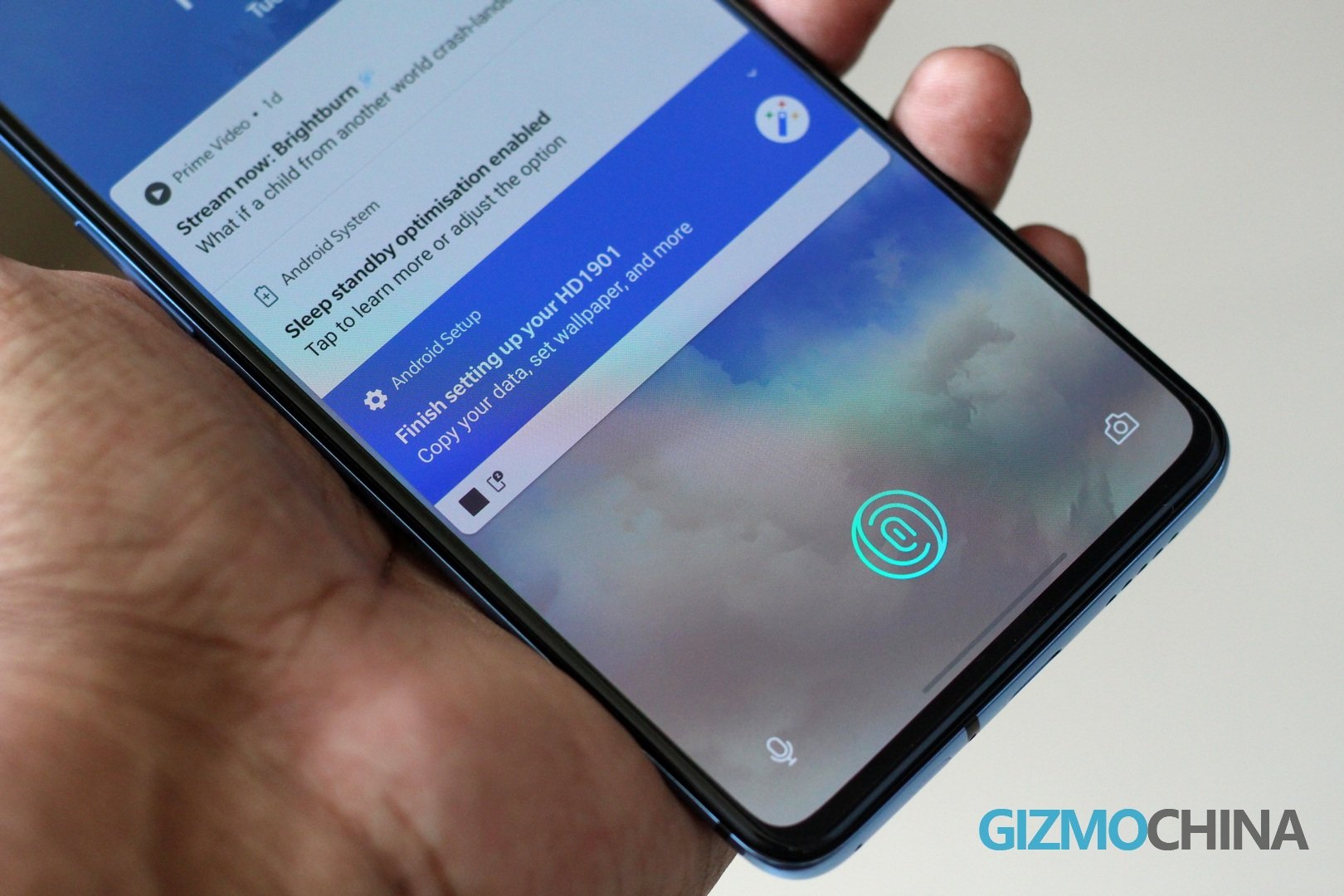
The visibility under sunlight is pretty decent as well, all thanks to the 1000 nits bright panel. As for face unlock, it works flawlessly. While it may not be secure, it’s much faster than unlocking with the in-screen fingerprint sensor. And unlike the Pixel 4, you need at least one eye to be open in order for it to work.
As for the in-screen fingerprint sensor, it’s good enough for your daily usage. It is still far from perfect though as sometimes it takes a couple of attempts to get your fingerprint right. This is where face unlock comes to your rescue as it works flawlessly.
OnePlus 7T Performance
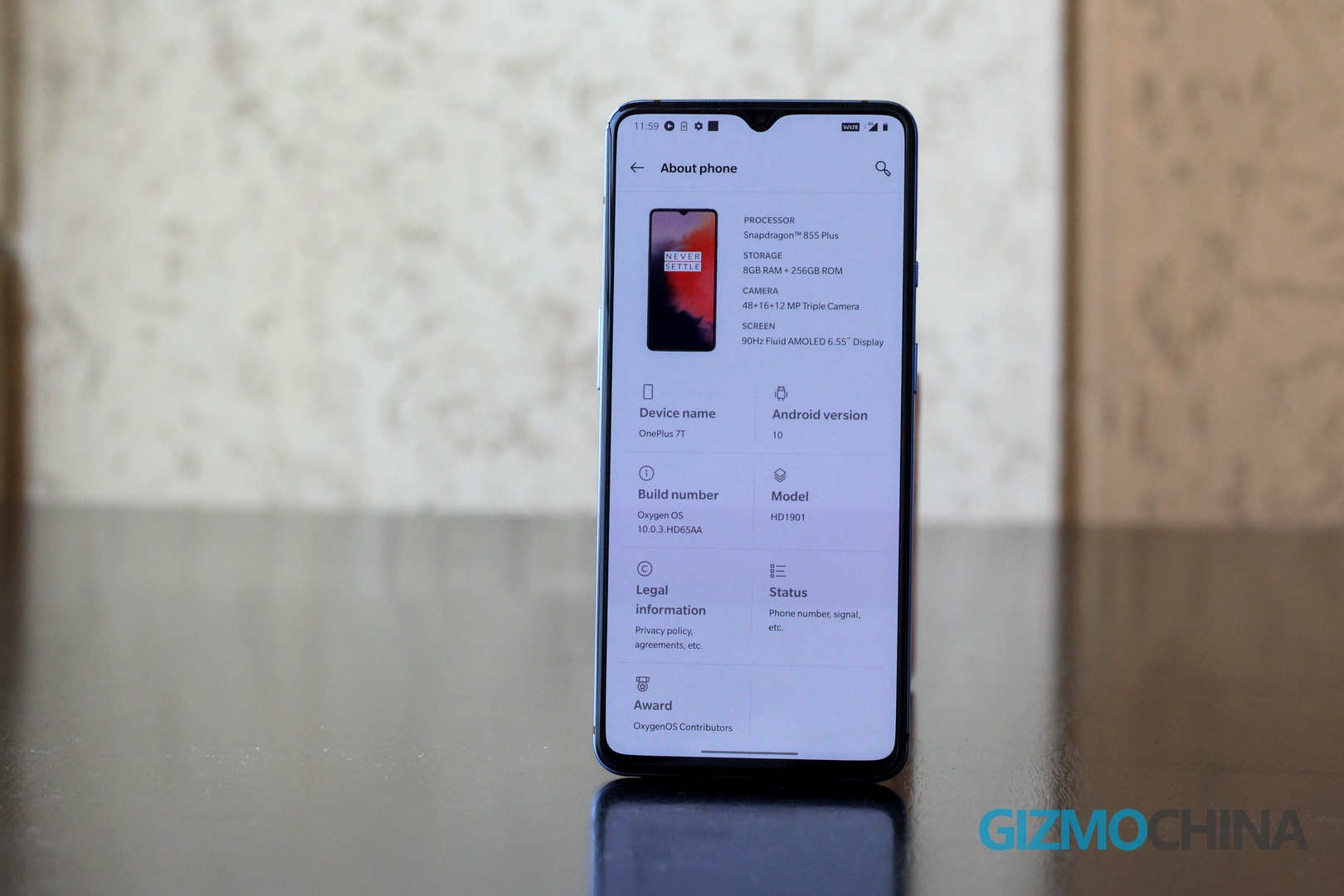
The OnePlus 7T comes with top of the line specifications featuring Snapdragon 855 Plus flagship processor, 8GB of RAM, and 128GB / 256GB of UFS 3.0 storage. This is the best hardware you can get in 2019, and in real-life, it translates into a very smooth Android experience. Apps open up quickly, even graphic intensive games run without any hiccups. The OxygenOS 10 on top of Android 10 is great for every day use. The UI is fluid and quick. Even the OxygenOS gestures are better designed than stock Android gestures.
In short, the OnePlus 7T can handle everything thrown at it with ease.
Note that, like most flagship smartphones of 2019, the OnePlus 7T doesn’t have a dedicated MicroSD card slot.
OnePlus 7T Benchmarks
Benchmarks give you a fair idea of a smartphone’s hardware performance as compared to its competition. So, we make it a habit to mention some of the popular benchmark scores in our review.
1 of 6
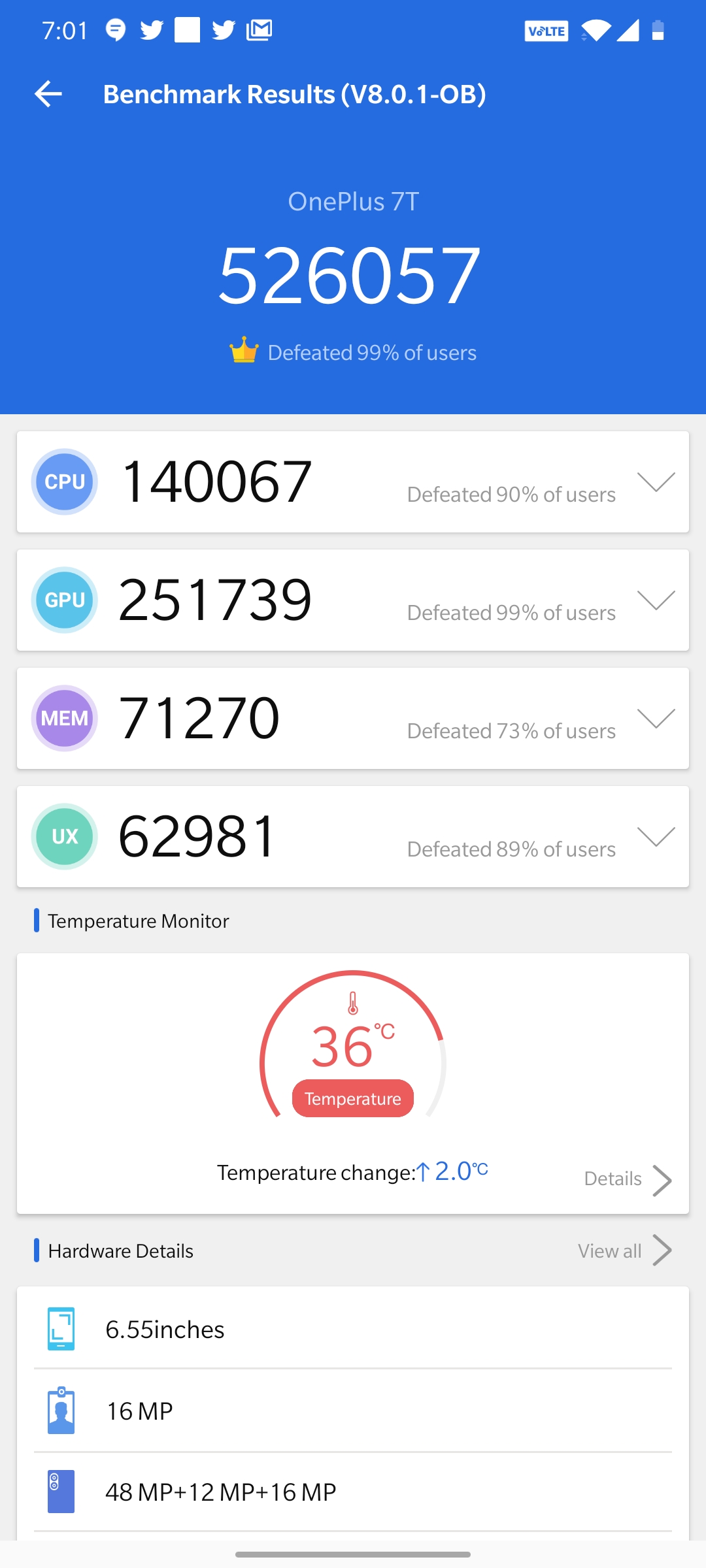
OnePlus 7T AnTuTu: 526,057 on v8.0
3D Mark
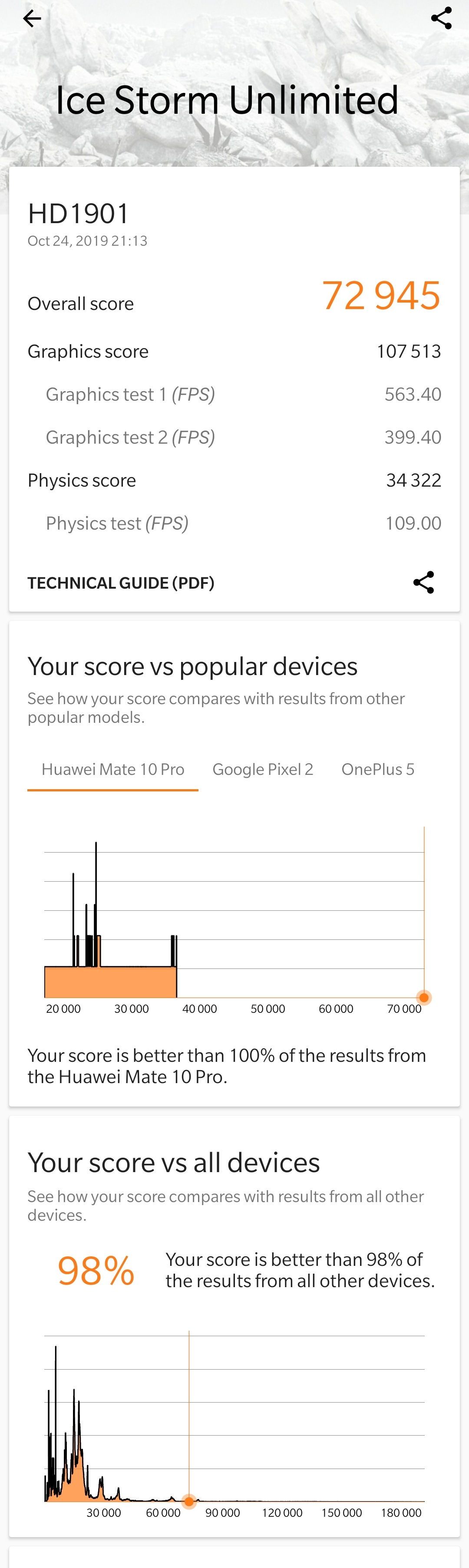
Ice Storm Unlimited: 72945
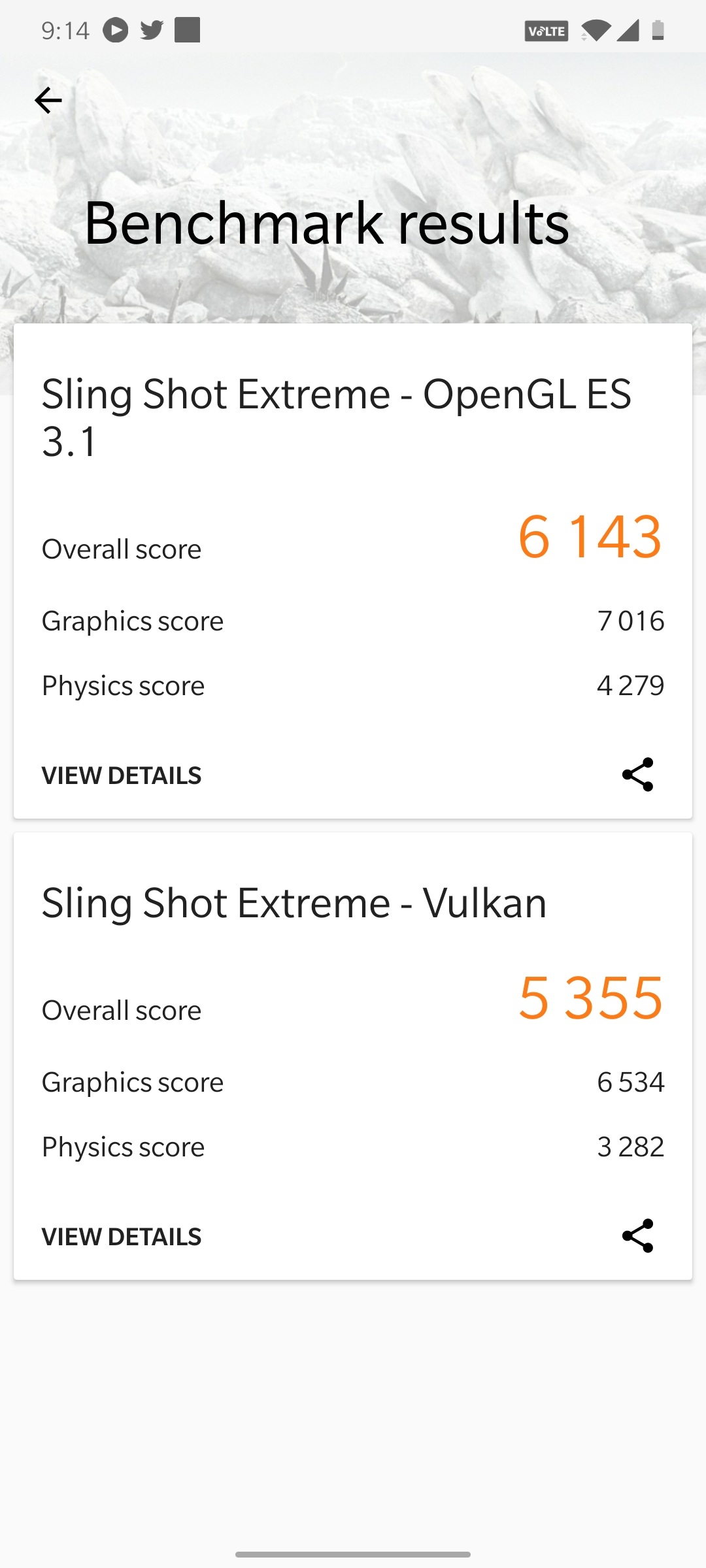
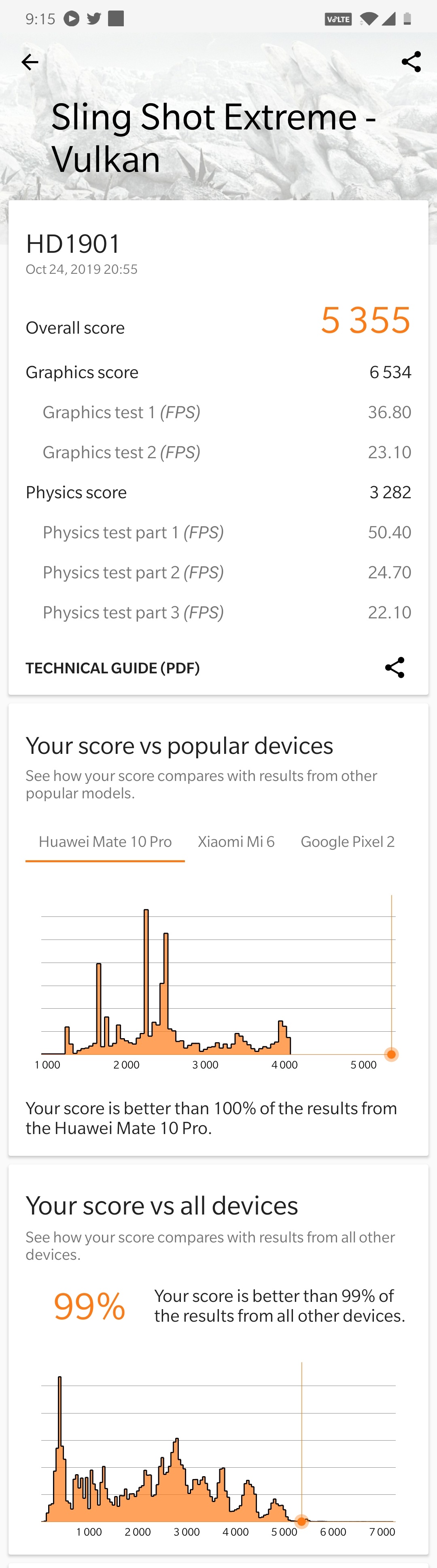
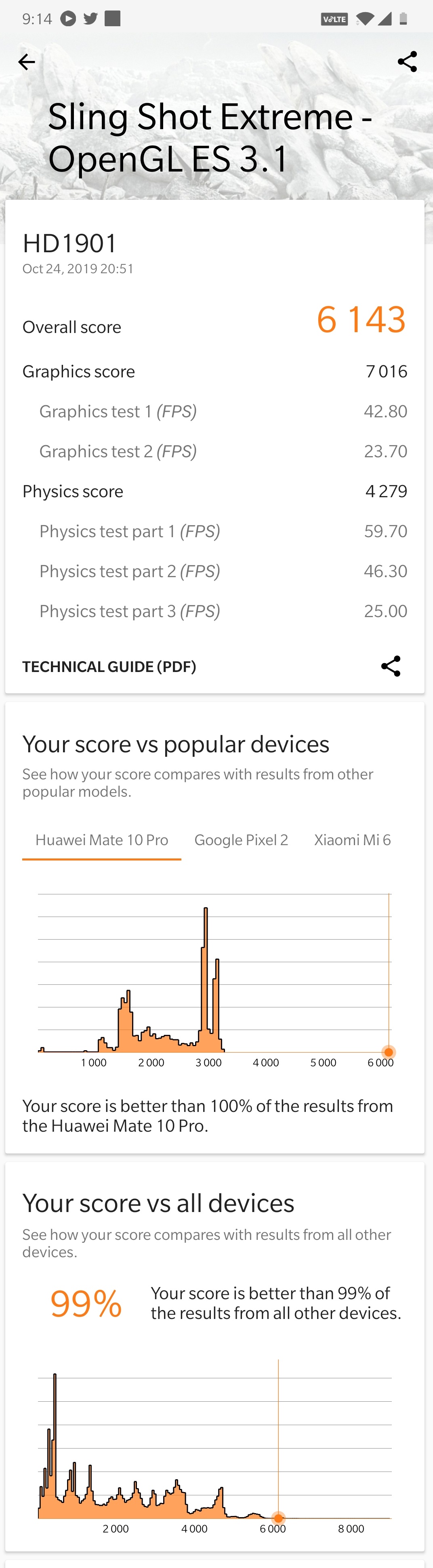
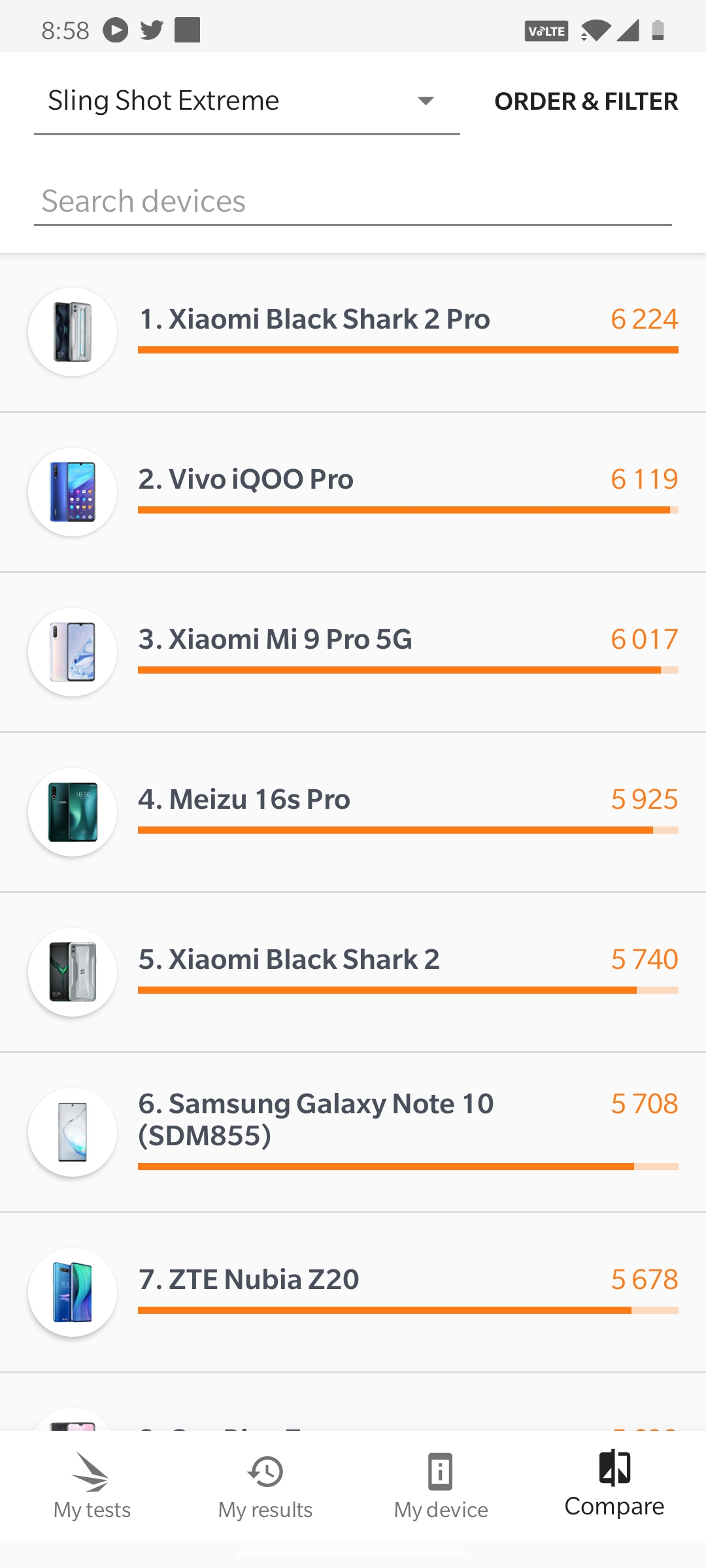
Slingshot Extreme: 6143 (Open GL ES 3.1) | 5355 (Vulkan)
OnePlus 7T Gaming
With these specs, gaming on the OnePlus 7T is a treat. Adreno 640 inside the Snapdragon 855+ is one of the best mobile GPUs in the market in 2019.
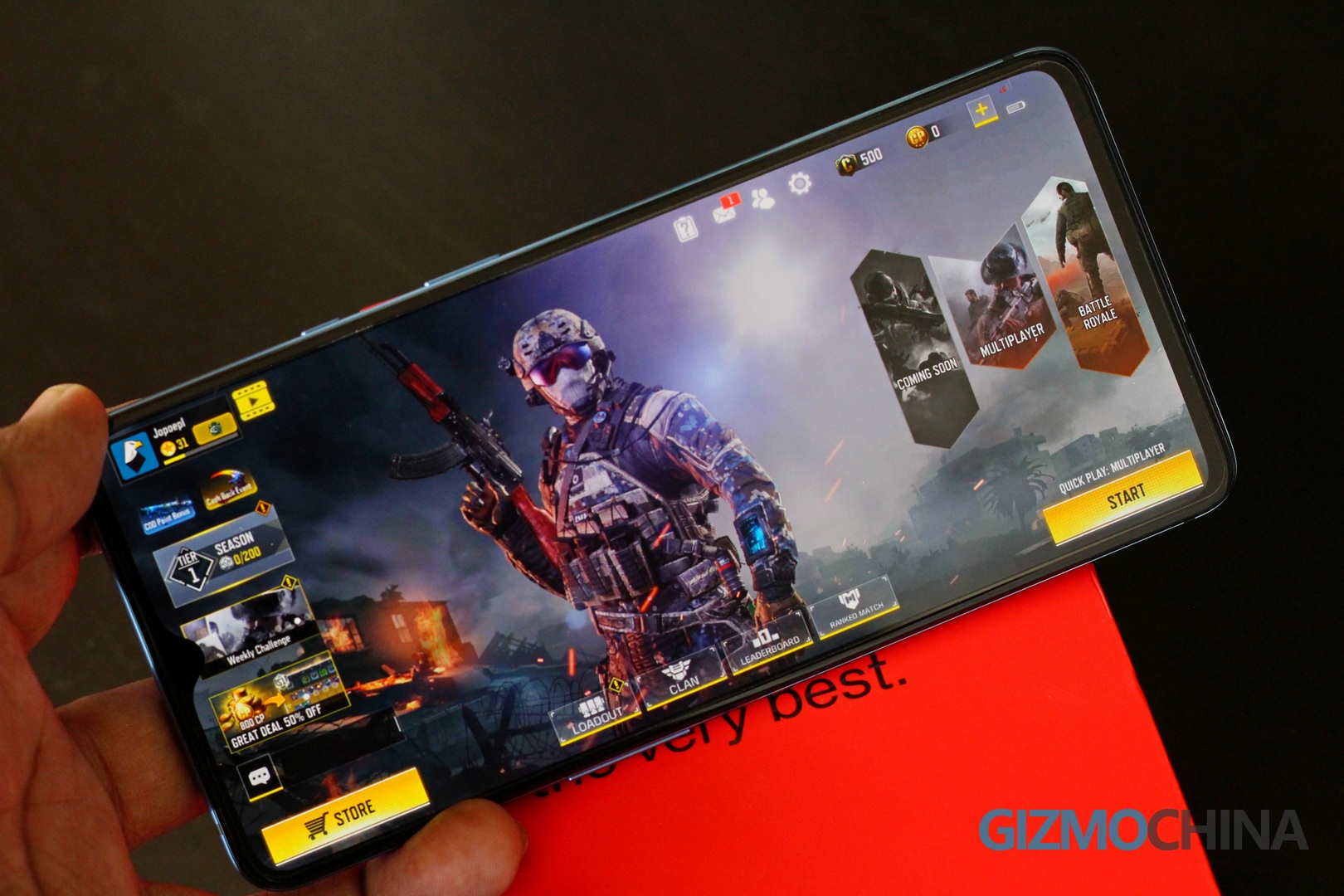
Heavy graphics-intensive games like COD runs flawlessly, and graphics are rendered very well. Given that the 7T had one of the best hardware on a smartphone, I maxed out all the graphics settings on Call Of Duty Mobile, and the phone had no issues handling them. I’ll post a dedicated gaming review article of the OnePlus 7T later but know that it can handle all Android games, graphics-intensive or not, with incredible fluidity.
OnePlus 7T Battery
The OnePlus 7T comes with a 3800mAh battery which is slightly larger than the 3700mAh one inside its predecessor. In terms of battery life, you can expect pretty similar results.
On most occasions, the OnePlus 7T will give you one-day battery life. I got an average of 4-5 hours of screen-on-time which was pretty good. This means you can watch a couple of hours of Netflix / Prime, an hour of gaming, and maybe half an hour to one hour of photography/video shooting on the phone in a day. This would still leave you with around 20% battery by nightfall.
For example, the following will give you a basic idea of how the 7T discharges under different scenarios.
1-hour Video streaming on Wi-Fi: 10-12% (5% more on data)
1-hour heavy-duty Gaming on Wi-Fi: 20% (25-30% on data)
40 minutes of camera use on data: 15%
Overnight standby (10 hours): 5%
For some, the OnePlus 7T’s battery life might fall short. Here I’m talking about heavy duty users who want hours of gaming and hours on of streaming on a single charge. But even these users are taken care of, all thanks to the extremely quick Warp Charge 30T.
You can go from 0-75% in just over 30 minutes! I was amazed by how quickly the 7T charged every single time.
If you want to know exactly how fast the Warp Charge 30T is, look below.
0-15% in 5 minutes
0 – 50% in 20 minutes
0- 75% in 35 minutes
100% in 45 minutes.
With such charging speeds, a simple 10-minute charge during the break can give you a boost of at least an hour or two of gaming or video streaming on the phone. That’s legit fast.
OnePlus 7T Camera
Over the past few years, OnePlus has made significant strides in the camera department, bringing it quite close to some of the best camera smartphones in the market today. The OnePlus 7 Pro had a pretty good camera setup, and the new OnePlus 7T builds on that excellent camera and brings it at a cheaper price point.
OnePlus 7T’s camera setup comprises of the following:
48 MP, f/1.6, 26mm (wide), 1/2″, 0.8µm with PDAF and OIS
12 MP, f/2.2, 51mm (telephoto), 1.0µm with PDAF and 2x optical zoom
16 MP, f/2.2, 17mm (ultrawide) with AF (117-degree)
OnePlus 7T Regular Mode (Daylight)
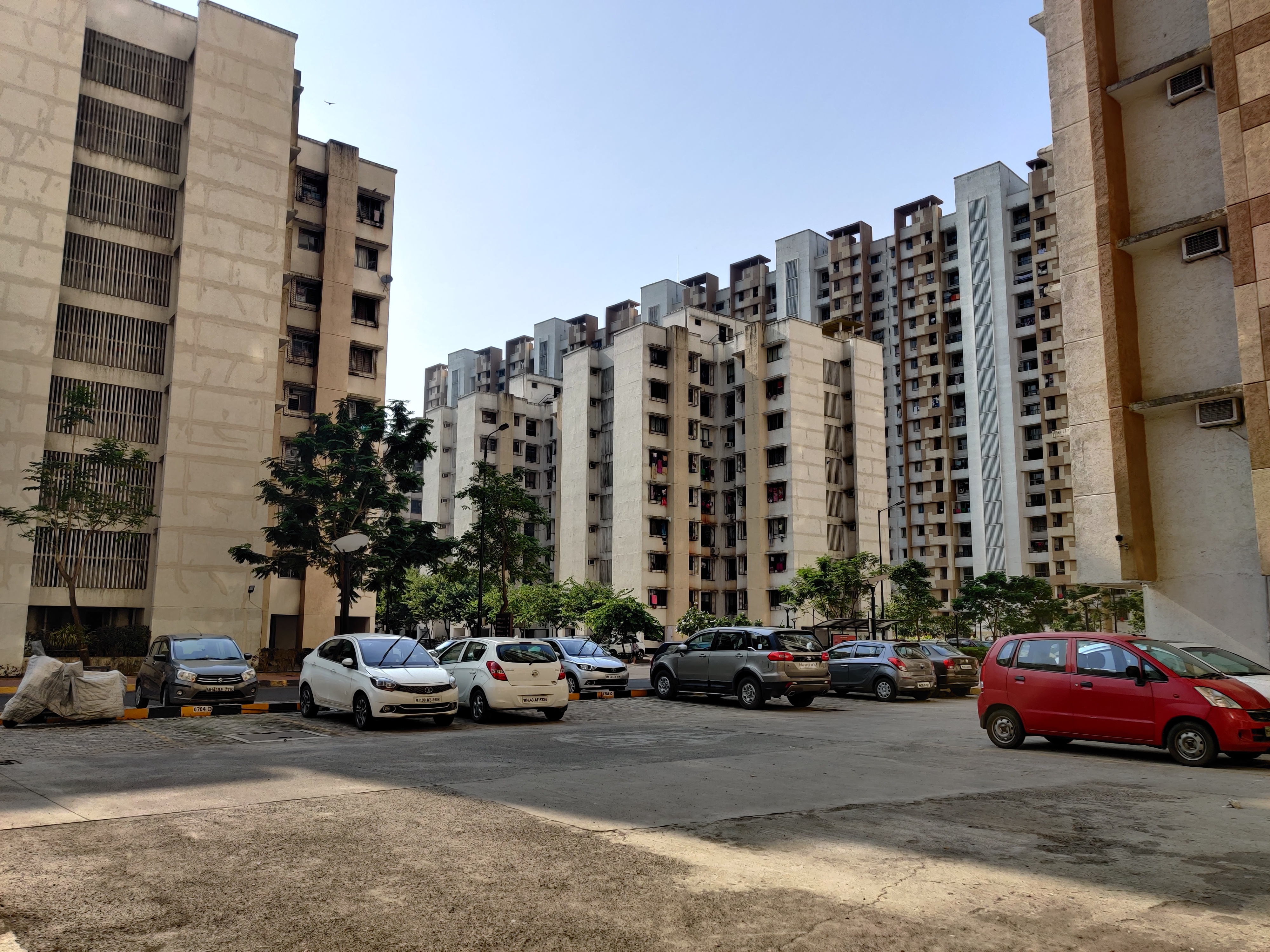
Like most flagships smartphones today (or rather mid-range and upwards), the OnePlus 7T takes excellent photos in daylight. One of the highlights of its camera is its color reproduction. The photos tend to be more saturated than real life but it looks amazing right out of the gallery. So, you don’t have to edit them before you post them to your social media profile.
In case you were wondering, the white balance is on-point and these flowers were indeed blue.
Another highlight of its camera is the excellent dynamic range. Dark and bright areas in the image are well balanced giving you an overall high-quality image. So you won’t lose out detail in the dark areas which helps create a well-balanced photo.
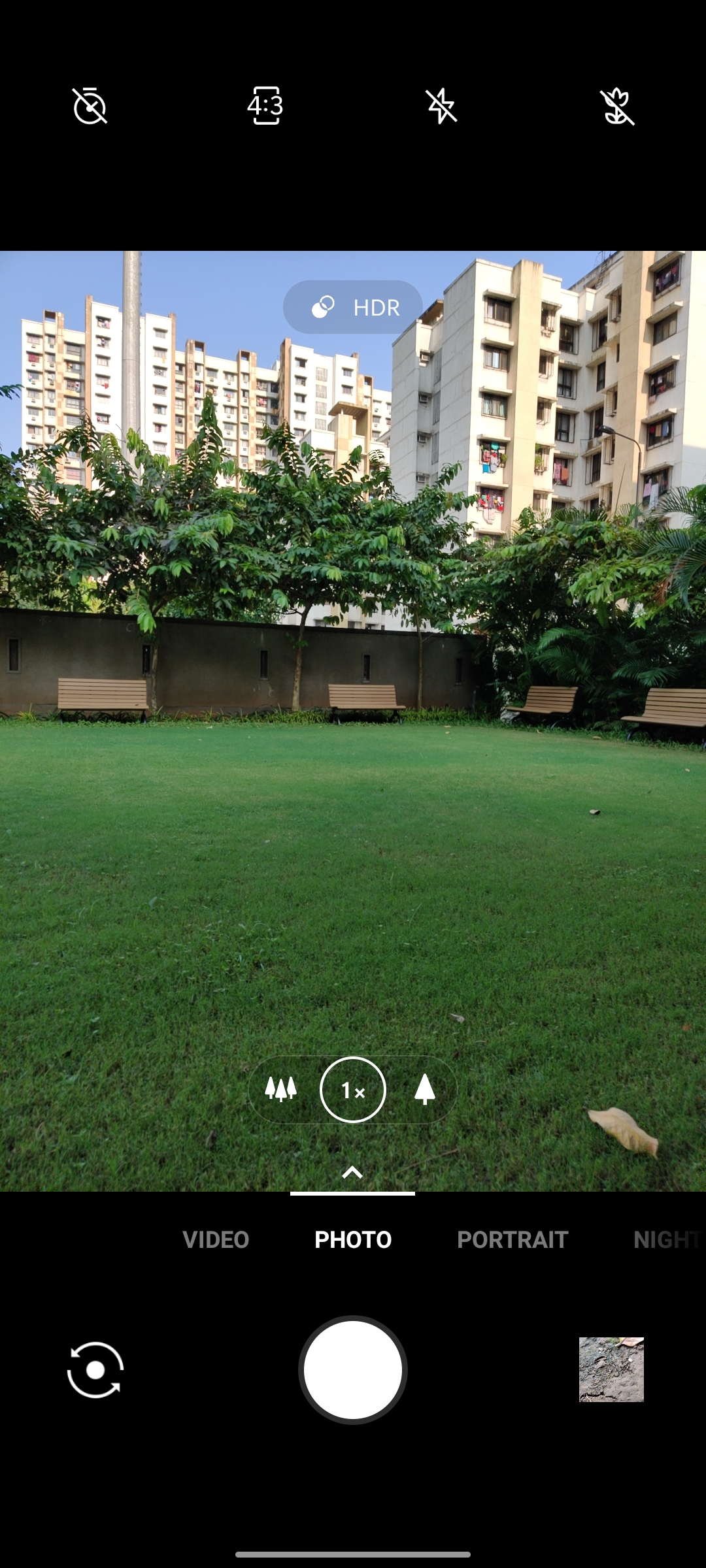
The 48MP primary camera is perfect for everyday photography. As mentioned above, images are colorful, detailed, and white balance is optimized on most occasions. There’s a slight difference in white balance when shifting between the two different camera modes (like between regular photo mode and portrait), but it’s nowhere as aggressive as the Huawei Mate 30 Pro (we have reviewed its camera in detail here).
1 of 6
OnePlus 7T Ultra Wide-Angle Lens
Overall, the regular photo mode will be the perfect companion for your everyday shooting experience. But I have a feeling you will like the ultra-wide-angle lens even more than the regular mode on the Oneplus 7T’s camera. The OnePlus 7 lacked this additional lens, so it’s a significant upgrade from its predecessor.
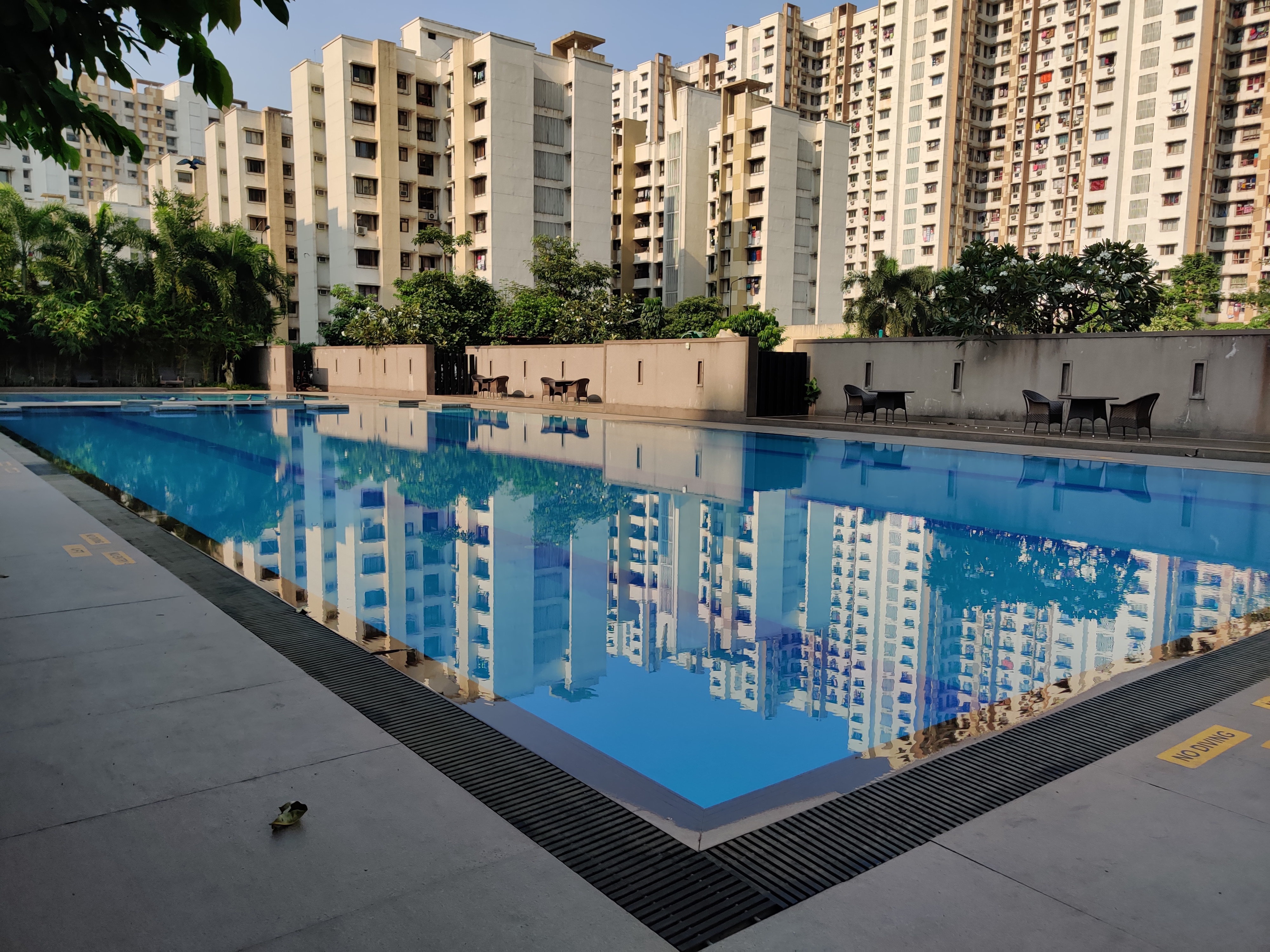
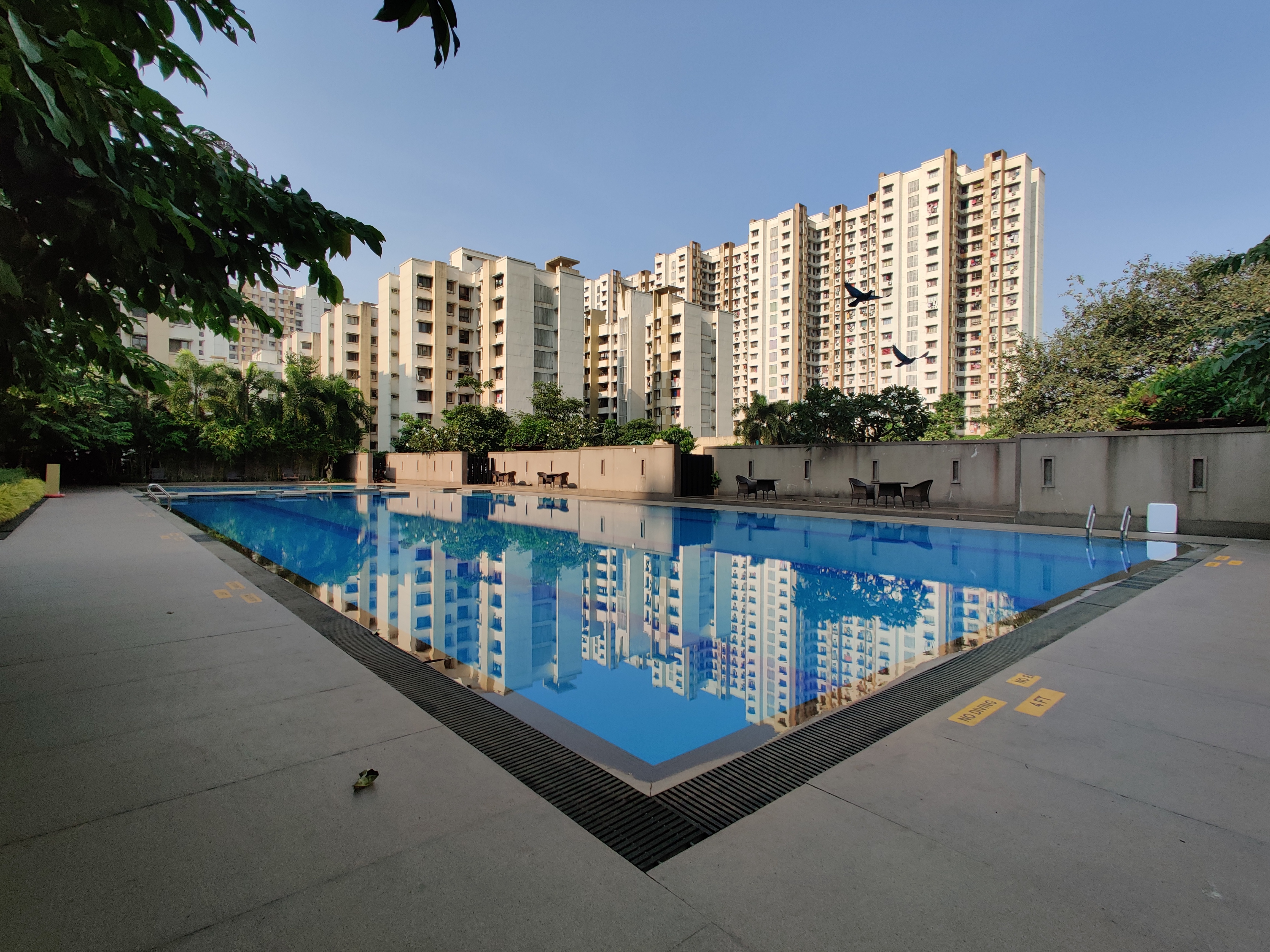
Ultra wide-angle is always a fun lens to shoot with. You get a lot more coverage than the regular sensor and resulting images have an overall better impact. For example, take a look at this image of the pool.
1 of 2
Regular mode
Ultra-wide angle
The first image looks pretty good in terms of color and details. But the second one is a gem, with a much better view of the shot. Imagine, I was just as close to the pool and the scene as the first image, but my field of view expanded significantly to cover the entire circumference of the pool as well as the buildings in front.
So what’s the downside? You lose some details.
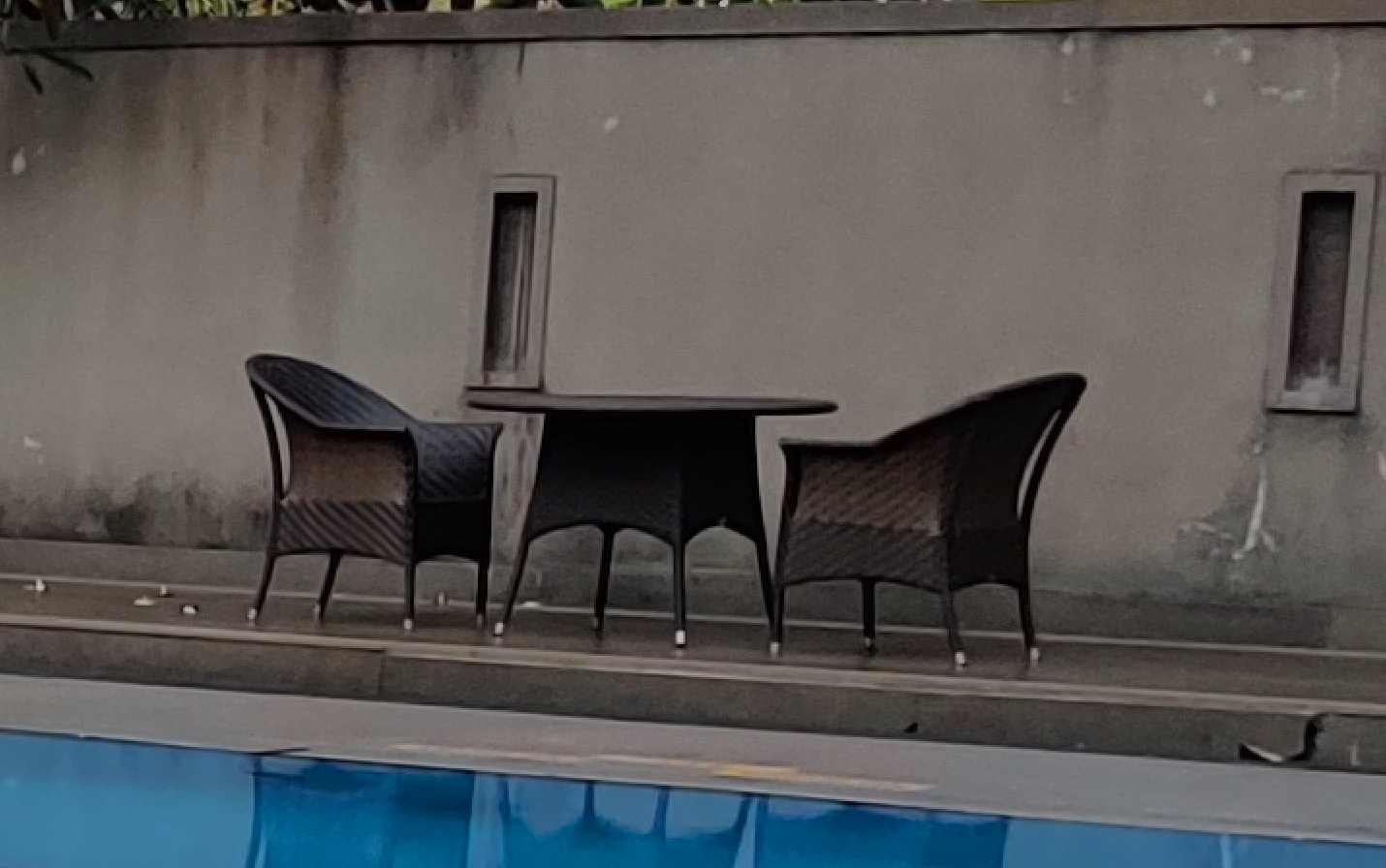
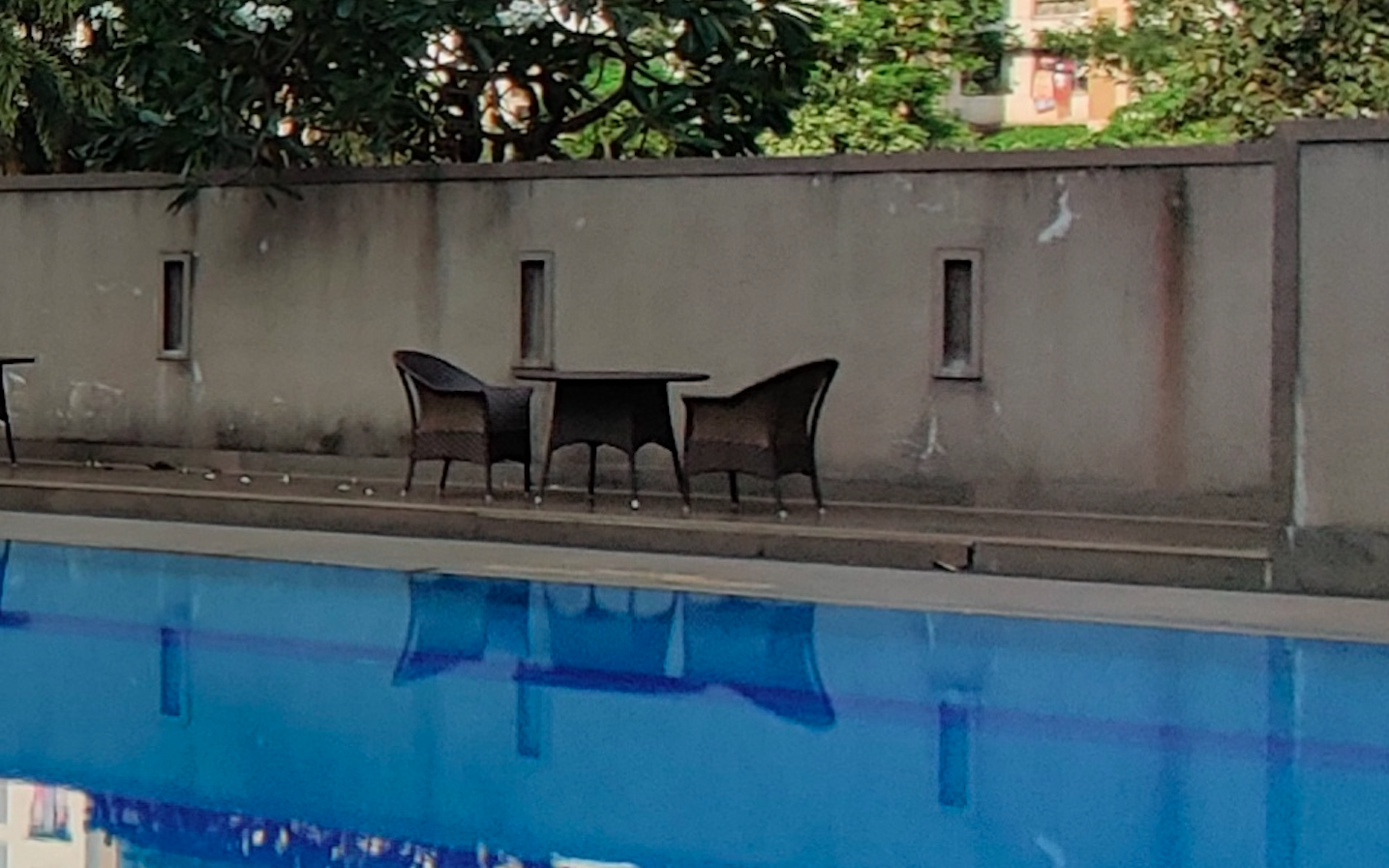
The photos are not as sharp as the regular mode, but the difference is visible only when you zoom into the shot. Let’s take a closer look at both these images.
1 of 2
Regular Photo Zoomed
Ultra Wide-Angle Photo Zoomed
The first image is sharper than the ultra-wide-angle shot, but the difference isn’t significant enough to avoid using the wider lens. I had a fun time playing around with both wide-angle and regular shots and I’m sure most of you would love both these lenses..
Another slight downside to the ultra-wide-angle lens is the distortion around the sides. Here’s what I mean.
1 of 2
Regular mode image
Notice the image distortion at the sides?
If the camera is close to the subject, the wide-angle lens will have a fish eye-lens effect. The phone is unable to correct the distortion at such a close range, so it’s better to stick with the regular mode in such instances.
Another issue with the OnePlus 7T’s camera is the focus. Sometimes the phone struggles to lock into an image that’s right in front. Tap to focus doesn’t help in such instances and you might end up with a blurred shot. It only happens sometimes but I thought it’s worth pointing out here. Restarting the camera helps at times but it shouldn’t struggle with focus in the first place. Hopefully, a camera update should fix this issue.
Overall, you’ll be impressed with the Oneplus 7T’s wide-angle camera on most occasions.
OnePlus 7T Macro mode
Let’s talk about the new and exciting macro mode, shall we?
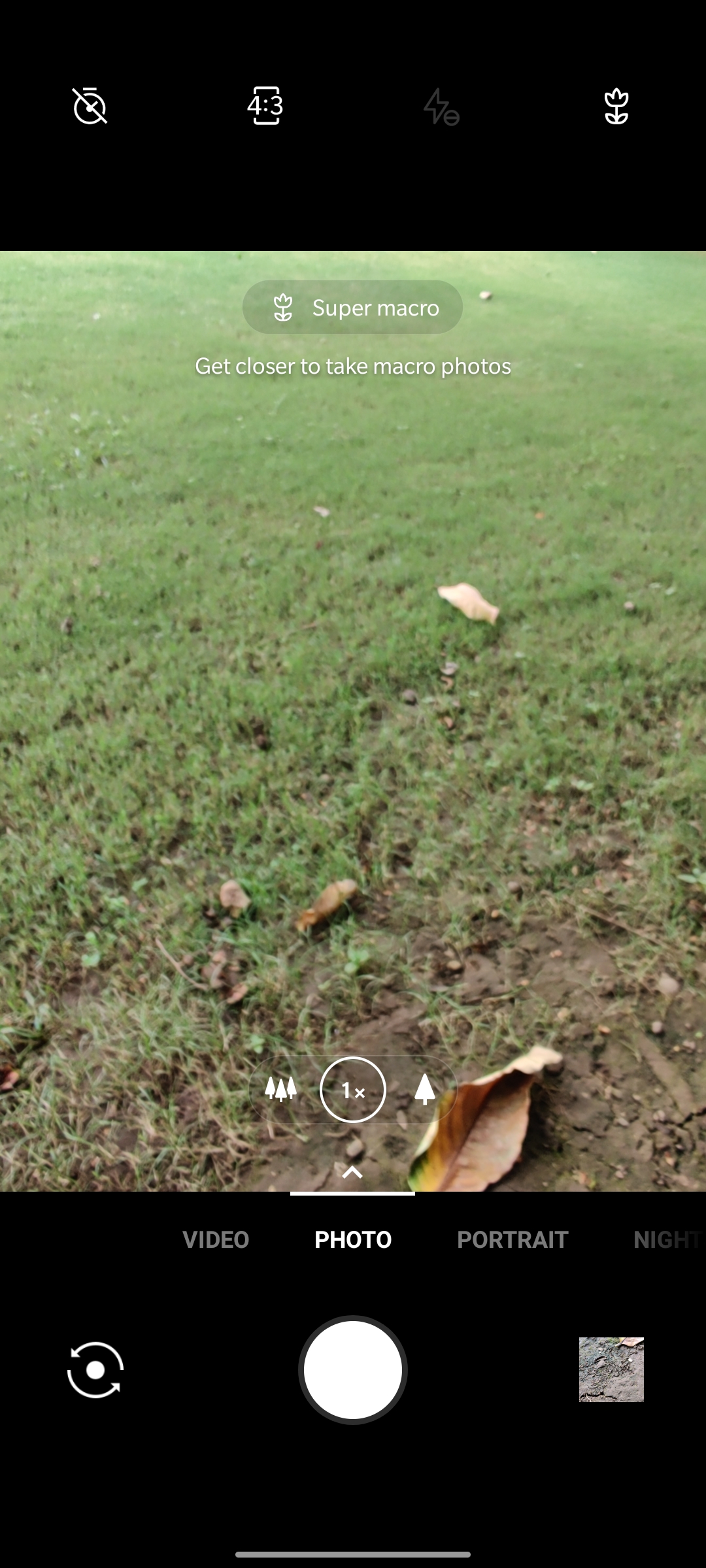
OnePlus 7T’s macro mode brings in new possibilities in photography. It allows you to take extremely close up shots of objects and sometimes the results are stunning. This is especially true when you are indoors and you can take your time to relax and find a good position to capture the shot. For example, here’s one an excellent macro photo from the OnePlus 7T, shot indoors.
1 of 3
Test subject (indoors)
Macro Shot 1
Macro Shot 2
However, things change when you are trying to get a shot outdoors. Your bare hands are not steady enough to take those extremely close up shots. I’m not sure whether others had trouble shooting macro outdoors, but more often than not, the extreme close up shots came unfocused. Here are some of my trials below. Some of the shots could have been better, right? What’s your take?
1 of 10
OnePlus 7T Portrait Mode
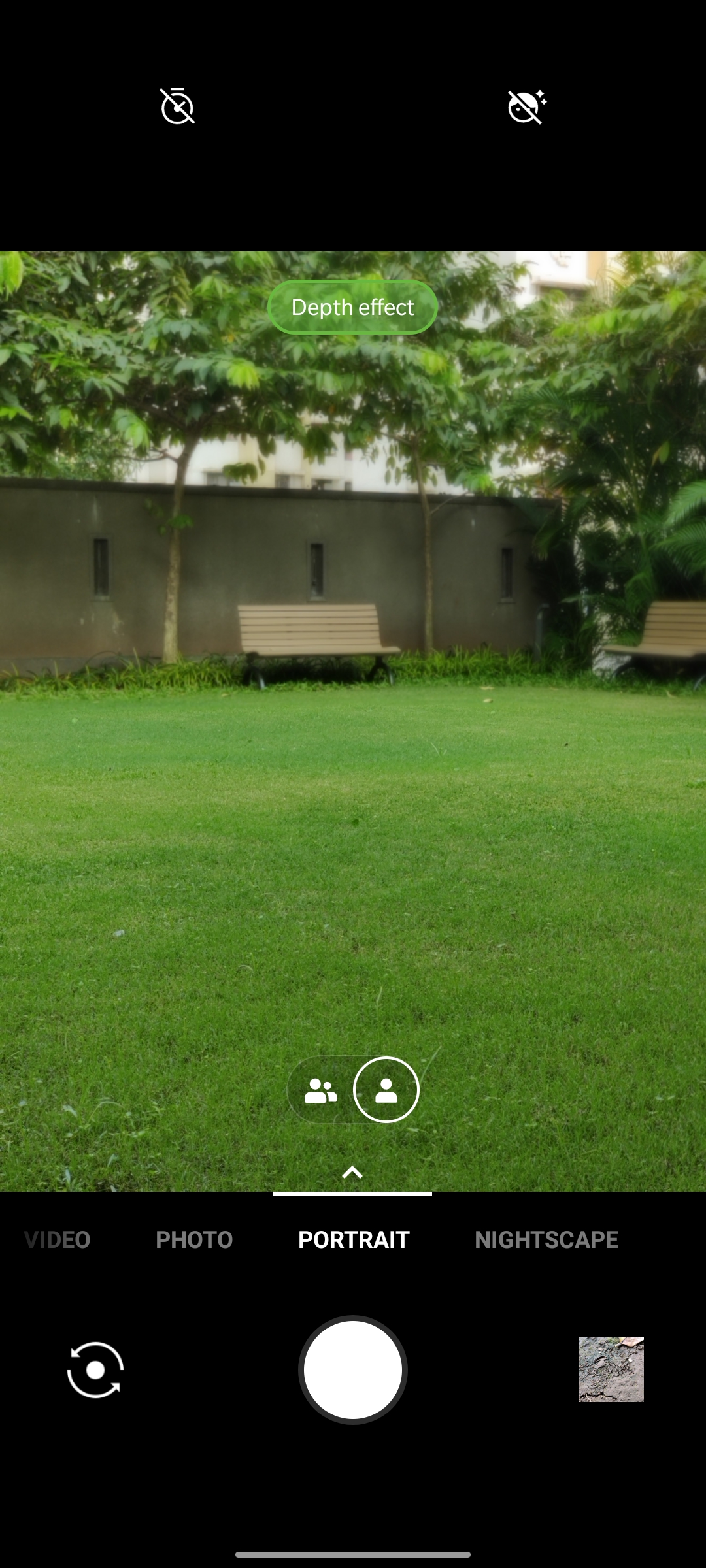
OnePlus’ portrait mode was never its best camera feature. But in the OnePlus 7T, the level of background blur is sufficient enough for the image to pop out. Edge detection is also good, at least better than what it was before. Most of the time, you’ll get pretty satisfactory results in its portrait mode. However, I have to add, again, that if you are trying to take portrait photos of an object that’s close, it sometimes struggles to focus.
1 of 4
This is a good portrait example. The Foreground blur could have been more to help it pop out better.
Probably not the best portrait example, but look how the phone managed to separate the leaf from the background in this case
The focus could have been better here.
OnePlus 7T Nightscape
Coming to low-light photography, the 7T is well-equipped to handle even extreme low-light situations. On most occasions, you won’t need the nightscape mode. This means you can get quick shots of the surrounding, even at night.
The regular mode does a fine job of controlling the exposures and churning out colorful shots at night. I was also impressed by its ability to limit the noise in the images.
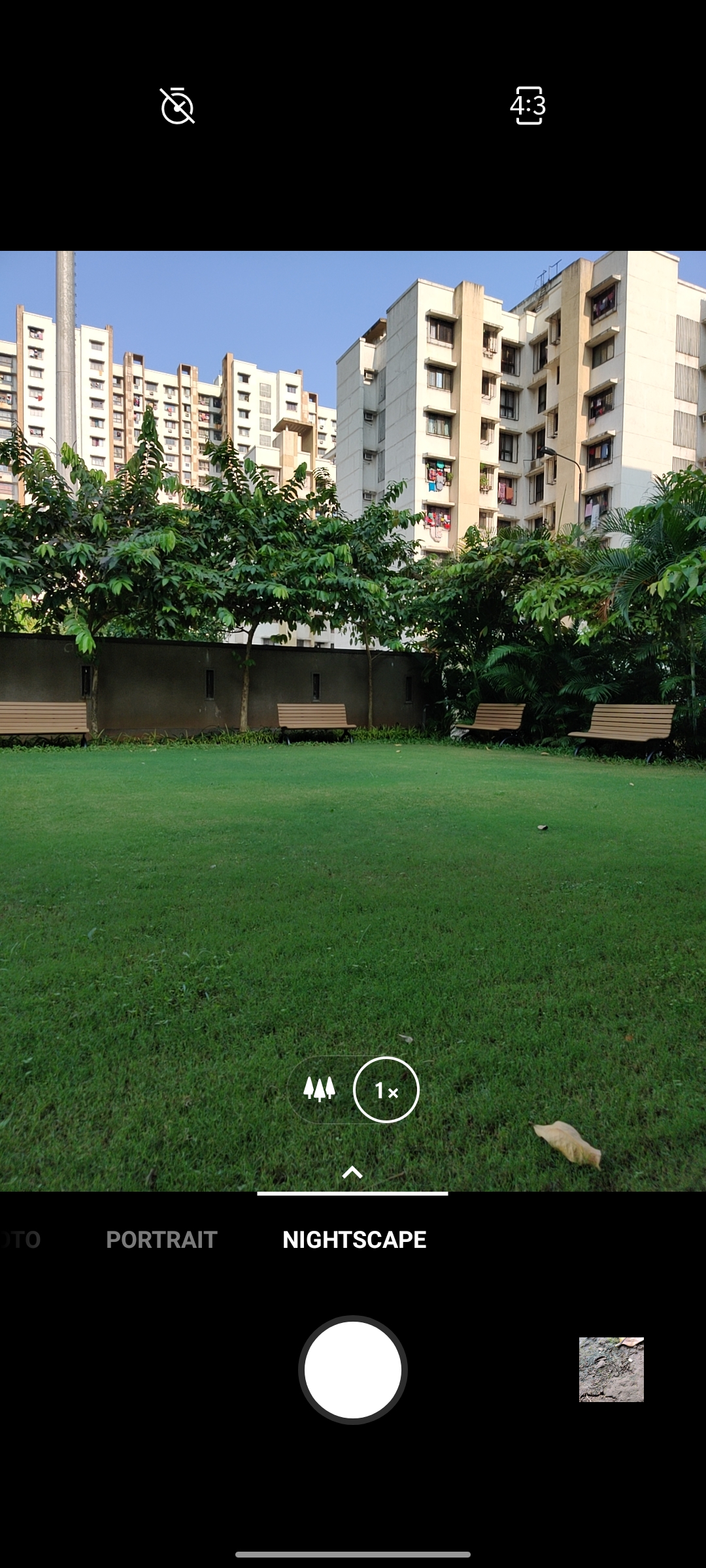
But if you see that the phone is struggling to control exposure or if the surrounding is extremely dim-lit, then switch to nightscape. OnePlus’s night mode is faster that my Pixel 2 XL’s night mode and the results are somewhat similar too. So, it’s definitely a good quality night mode. The nightscape mode does well in capturing blur-free shots too, so you don’t have to worry about camera shake ruining your shots. Take a look at the nightscape mode sample below and you’ll know what I’m talking about.
1 of 7
Regular mode
Nightscape
Regular
Nightscape
Regular mode
Nightscape
ultra wide-angle Nightscape
Note that nightscape is available in both regular and wide-angle lenses. However, you can’t zoom into an image in the night mode.
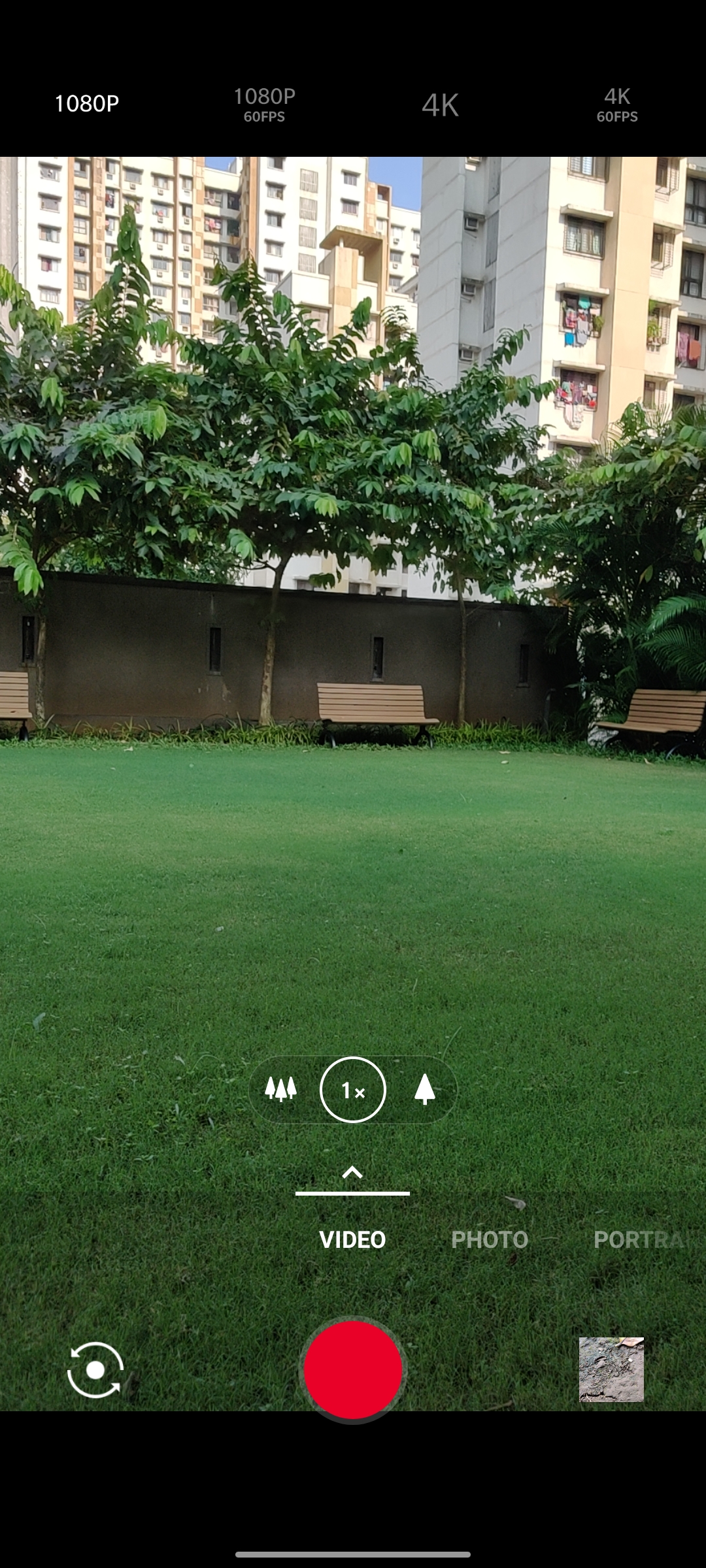
OnePlus 7T offers multiple modes in video shooting: 720p, 1080p, 4K videos at 30fps and 60fps and then there’s the special Super Steady mode (only at 1080p 30fps) that offers pretty good stabilization for your usually shaky videos. The videos come out a saturated and the details are pretty good as well. However, for the super steady mode to work well, the lighting condition should be good or else the camera might struggle with the exposure in the video.
1 of 20
Macro mode
Nightscape
Regular
Nightscape
Nightscape
OnePlus 7T Verdict
The OnePlus 7T is a significant upgrade from the original OnePlus 7. With 90Hz display and feature-packed camera setup, the OnePlus 7T is a true all-rounder in this crowded smartphone market.
The camera is excellent on most occasions, even at night but the software could get a few tweaks to improve the experience. Given OnePlus’ track record with updates, I wouldn’t worry much about the minor issues I mentioned in the camera department. You can expect the camera to be much more refined after a couple of updates.
The phone offers an excellent display, powerful performance, a refined OS, and a good battery life with a super-fast charger. The camera is above average and with additional lenses like ultra-wide-angle, macro, and telephoto, you’ve got all the tools to take care of your photography requirements in 2019.
When you get so much for a starting price of just Rs. 37,999 (€599 in Europe | $599 in the U.S.), you can’t go wrong with your purchase. It’s a smartphone that I can recommend to anyone who wants a refined Android flagship experience, whether its a first-time user or an Android veteran.
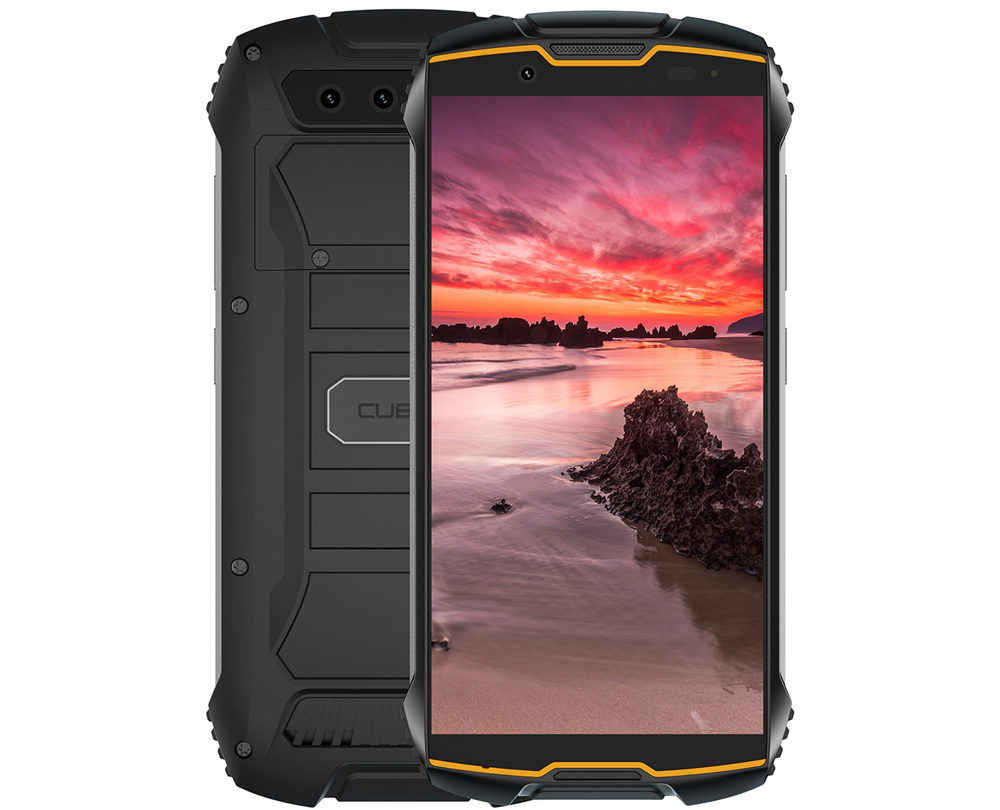
It is a fact that large-screen smartphones have conquered the market and that isn’t going to change anytime soon. Still, there is a quite large portion of userbase that wants a compact device with decent specs. Surprisingly enough, Cubot is going to release such a device soon that sports a 4″ display, called KingKong Mini (see the irony there?). The small size will allow for one-hand operation since your thumb would reach any part of the display.
1 of 3
Specs-wise, Cubot KingKong Mini has a 4″ qHD+ display with 1080*540 resolution and 302 ppi, enough to be crisp. Helio P22 4-core SoC will be the heart of the device backed by 3GB of RAM and 32GB of internal storage (upgradeable up to 128GB more via microSD).
In the camera department, there is a 13MP rear camera with an LED flash as well as an 8MP selfie shooter with face unlock support. The device will come with Android 9 Pie preinstalled and it will also sport a magnetic compass and gyroscopes, greatly helpful for people who are often outdoors.
The KingKong Mini is a perfect spare phone for people who like travel and outdoor activities, and thanks to its triple protection from water, dust, and drops, it can also be a perfect gift for kids. According to the company, it will hit the market in early November. Until then, you can see all the details on the official product page.
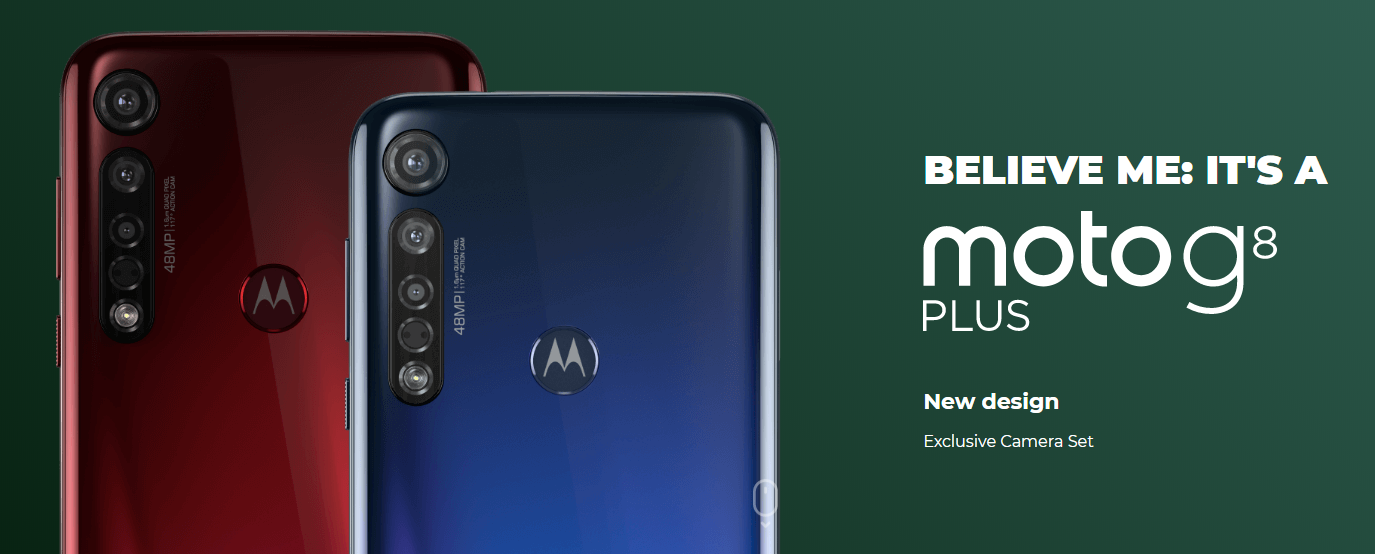
The Moto G8 Plus and Moto G8 were also announced in Brazil today alongside the Moto E6 Play. Sadly, the standard Moto G8 was a no-show.
Moto G8 Plus
The Moto G8 Plus hs a 6.3-inch Max Vision FHD+ screen with a notch for the selfie camera. The G8 Plus joins the Mi A3 and the OPPO A9 2020 on the list of Snapdragon 665-powered phones. It has 4GB of RAM and 64GB of storage with support for storage expansion.
The highlight of the phone is its triple rear cameras, two of which are housed together. The top sensor which is separated from the rest is the ultra-wide action camera. It is a 16MP sensor and it has a 117° FOV. Motorola says users will be able to fit more into their photos with the new camera.
The primary camera is the first of the two sensors housed together and it is a 48MP f/2.0 Quad Pixel sensor with Night Vision for better low-light photos. Next is the 5MP depth sensor which assists when taking portrait photos and it is followed by the laser autofocus which is fast and accurate and helps in taking sharp photos. Last is the LED flash. The selfie camera is a 25MP Quad Pixel sensor that boasts better light sensitivity when taking selfies in low light. The phone has EIS and supports slow-motion recording up to 240 fps.
The Moto G8 Plus has a camera bump but Motorola doesn’t say if the glass covering the sensors is scratch-resistant, so you may want to invest in a case that prevents the camera from touching whatever surface you place your phone on.
Other features of the phone are stereo speakers with Dolby Audio, a rear-mounted fingerprint scanner, a 4000mAh battery with support for TurboPower charging via USB-C, and Moto Actions such as three-finger screenshot, pick up to silence, swipe to resize the screen, and shake twice to turn on the flashlight, etc. The phone runs Android 9 Pie out of the box.
The Moto G8 Plus is available in Sapphire Blue and Cherry. It is priced at R$ 1495 (~$373) and is already available for purchase on the official Motorola Brazil site. It will be available in the UK starting October 28 for €239 and at the end of October in India for INR 13,999 (~$197).
Moto G8 Play
The Moto G8 Play comes with lots of upgrades when compared to the Moto G7 Play. It has a 6.2-inch Max Vision HD+ Display with a waterdrop notch. The phone is powered by MediaTek’s Helio P70M processor which is 30% faster than the Snapdragon 632 in the G7 Play.
Moto G8 Play in Magenta Red
The phone comes in a single configuration – 2GB of RAM and 32GB of storage. There is support for storage expansion via a MicroSD card slot but it isn’t a dedicated slot like that of the Moto E6 Play.
Another major upgrade the G8 Play brings is more cameras. It has triple rear cameras made up of an 8MP f/2.2 117° ultrawide camera that is separated from the other sensors. The main camera is a 13MP f/2.0 camera and it is paired with a 2MP depth sensor. The selfie camera is an 8MP sensor.
The Moto G8 Play also gets a battery boost. With a 4000mAh battery, you should be able to get more screen time on it than its predecessor. The phone also has Bluetooth 4.2 and a USB Type-C port but there is no NFC. There is also a fingerprint scanner on the back.
Motorola ships the phone with Android 9 Pie and includes a protective case and stereo earphones in the box. The Moto G8 Play is priced at R$ 1099 which converts to about $274. You should not be surprised at the price since this is Brazil we are talking about. You will be able to purchase the phone in Black Onyx or Magenta Red.
An Indian tech publication, 91Mobiles, has published a report claiming that Oppo will launch their upcoming Reno S smartphone in the Indian market in the first week of December. This is the first we’re really hearing about this device, and it seems like it’s all set to be a brand new flagship for the company unlike the previous Oppo Reno devices.
According to the sources, the device will come with a price tag of above INR 40,000 ($564), putting comfortably above the price tag of the Reno 2 which sat as INR 29,990 ($423). On top of that, the new Reno S will be available through online and offline stores. The rear will feature a 64MP primary camera, and there’s 65W Super VOOC 2.0 fast charging on board.
Outside of that, we can probably also expect to see some flagship specs, though we assume nothing too crazy. Considering that Realme are also planning to release their own flagship, the Realme X2 Pro, in India later this month, it seems like a risky move to have their dates so close by. It’s possible the Reno S is just another mid-ranger though.
The big thing that will set the Oppo Reno S apart from the crowd (and Realme X2 Pro) will probably be some sort of interesting camera gimmick, ala the previous Reno devices. Unfortunately there’s currently a lack of anything substantial regarding the new device. Stay tuned on Gizmochina.com for any updates regarding the new device.
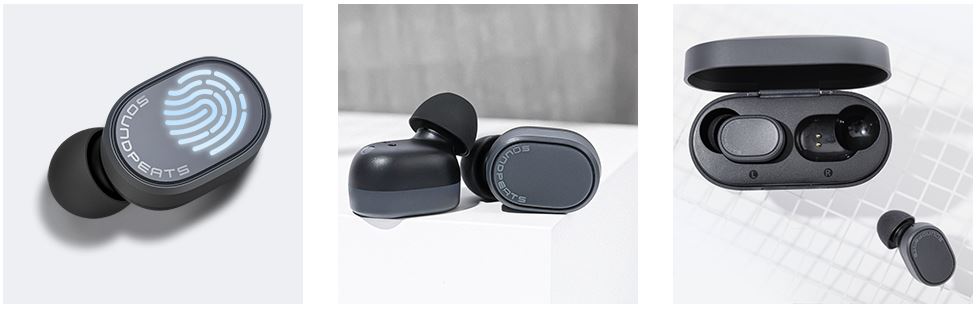
TWS stands for True Wireless Earbuds and it is the trending headset choice of most people. The best selling model out there is Apple’s AirPods but it costs as much as $199 and many think that it’s too much for what the product offers. Thankfully, there are other manufacturers out there that make similar products and although the performance or quality might not be the same, they get the job done perfectly. That goes for the SounPeats TrueDot TWS too that is now available on Amazon at just $25.5 using coupon 7IR7KDZO during checkout.
As for the features of the TrueDot TWS, their main characteristic is that they are ultra-lightweight weighing just 0.12oz per earbud. Also, connectivity is taken care of by Bluetooth 5.0 that offers stable connection and reduced battery consumption. One charge offers 4 hours of working time and with the help of the charging case, you can get 14 hours total playtime.
In addition, TruDot is equipped with sensitive touch control on both earbuds that allows for easy operation control during music playback, phone calls, and using the Voice Assistant of the phone. As for sound quality, there is a built-in 7.2mm dynamic driver that offers relatively crisp and clear sound. The offer is valid until October 31st, so there’s 1 week in front of you to catch the deal.
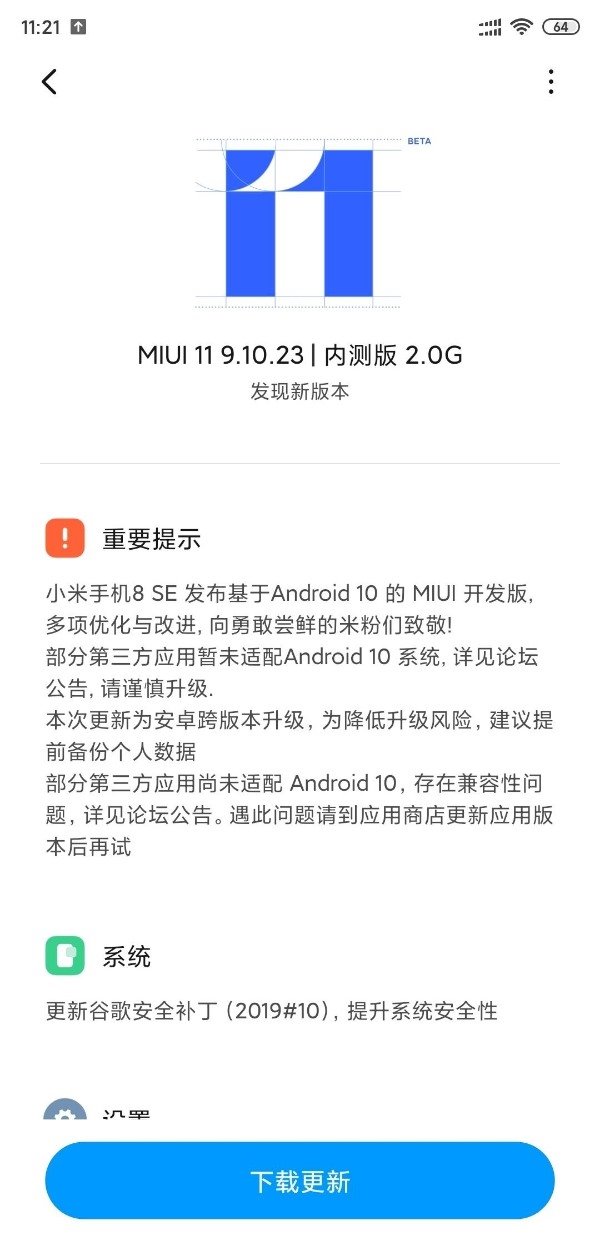
Xiaomi are making good on their promise to bring MIUI 11 to all their devices, with the latest device being the Mi 8 SE. The new 2GB MIUI 11 9.10.23 beta update brings Android 10 to the popular mid-ranger, as well as Google’s October Security Patch. It’s not stable yet, and some apps don’t work well with Android 10, but it’s definitely progress.
Xiaomi’s MIUI 11 is a big update that changes up a lot of things for the popular Android skin. Starting with the visual aspects, you get slightly softer icons, a system-wide dark mode, new Mi Lan Pro system font and improved always-on display functionality. There are also new animations, themes, wallpapers and improved notification system.
Another big new addition in MIUI 11 is the enhanced audio experience with all-new dynamic natural sound effects and alarms. Xiaomi also announced the new Mi Go Travel suite which will help you with booking tickets for a broad range of transport ranging from airplane to rail and bus alongside currency conversion and an extreme power-saving mode.
If you’re already using the development version of MIUI, you can directly upgrade via OTA. If the you’re on the stable ROM however, you’ll need to head over to the MIUI website to get a the flashable 2GB file. Xiaomi also recommends backing up all your files before attempting to install the beta, as it’s still really unstable.
If you want to know everything about the MIUI — its features and tools that the company is offering in this newer version, click here.
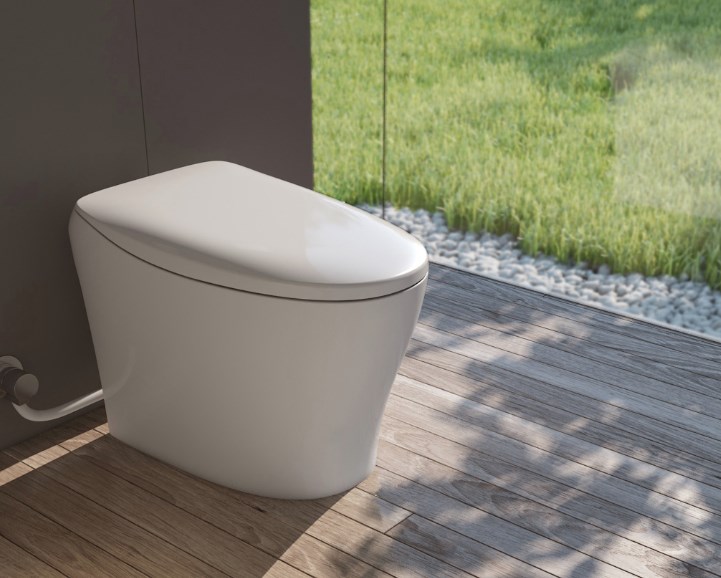
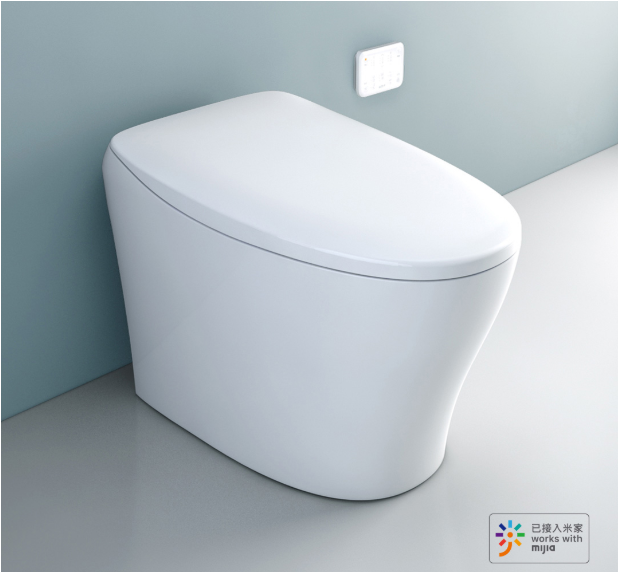
The major aim of Xiaomi‘s smart home brand is to create a connected home where all the gadgets interact and can be controlled from a central hub. The company’s product catalogue already includes several smart home gadgets and each day, more gets added, some under the crowdfunding platform. The latest is the Small Whale Wash-integrated Smart Toilet Zero. Xiaomi has launched several smart toilet seat covers in the past but this is the complete package, not just the seat cover.
The Small Whale Wash-integrated Smart Toilet Zero uses an integrated ultra-thin design which includes a multi-mode hot flush system and access to MIJIA App. The toilet bowl is made from Dongpeng ceramic with a cylindrical shape. The toilet seat supports three-speed temperature adjustment and can be controlled via the Mijia App.
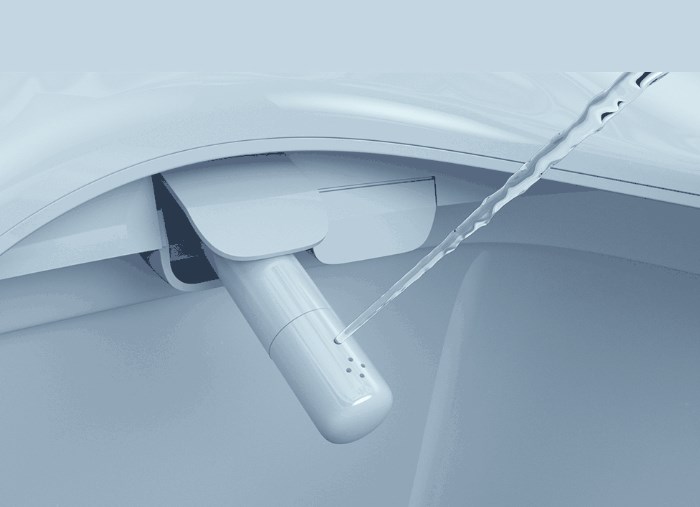
Apart from self-cleaning with water spray, the water sprays at a wide-angle after which it is air-dried to remove water drops. The spray bar is made of antibacterial ABS+PC material. The water nozzles spray water in all directions. In addition, the women’s wash uses a wide array of pore design with a shower-type water flow which the company sais is mild and doesn’t tingle.
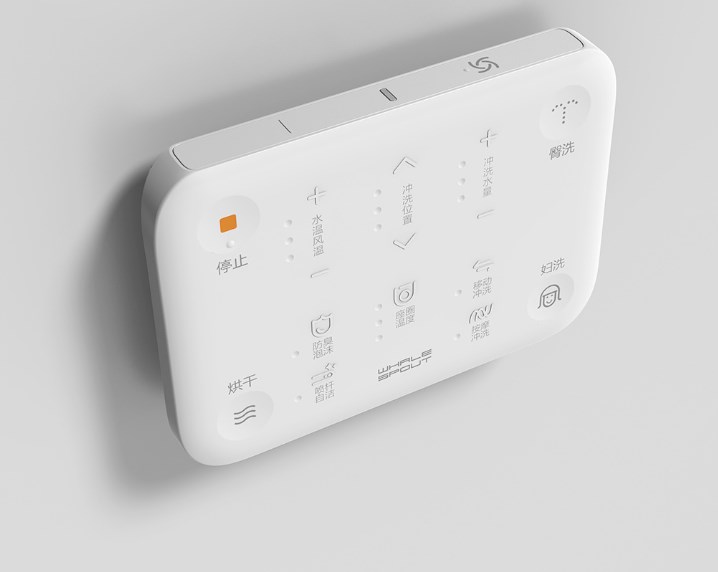
The smart toilet is also equipped with a wireless full-touch remote control, and the flush button placed conveniently at the top.
The Small Whale Wash-integrated Smart Toilet Zero comes with a crowdfunding price of 2899 yuan (~$409). It is expected to start shipping on December 5.
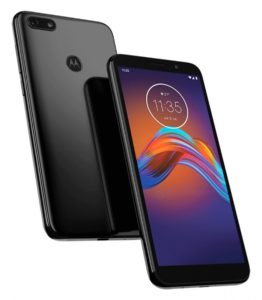
Motorola had an event in Brazil today where it announced a couple of new phones. First on the list is the Moto E6 Play, a new entry-level phone.
The Moto E6 Play has a 5.5-inch HD+ Max Vision 18:9 display. There is no notch but you get a thick slab of bezel at the bottom of the screen and a less-thick one at the top. However, Motorola says the phone has been designed to be comfortable in the hand.
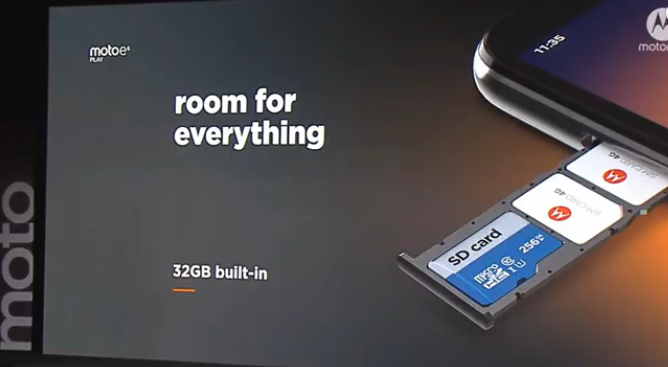
There is a MediaTek MT6739 processor paired with 2GB of RAM and 32GB of storage. The phone has a triple card tray which allows you to use 2 SIM cards and a MicroSD card (256GB max. ) at the same time.
The phone has a single 13MP camera on the back with a beauty mode. There is a 5MP camera in front for selfies. The Moto E6 Play has a rear-mounted fingerprint scanner as well as face unlock.
There is a 3000mAh battery inside the phone but no support for fast charging. The phone also gets a MicroUSB port for charging and data transfer. There is no mention of the version of Android it is running.
Motorola Brazil didn’t reveal a price but the phone will be available in the UK in January 2020 for £99. The phone comes in blue and black color variants.
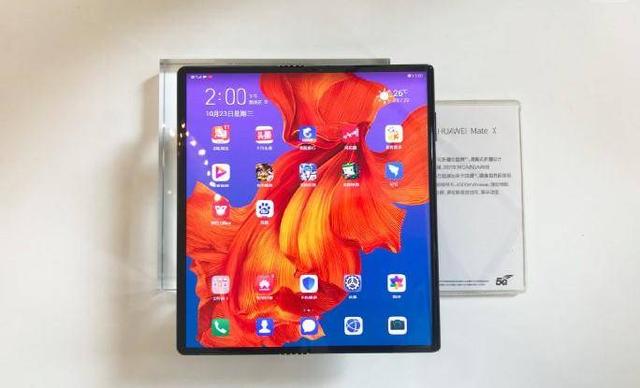
At the launch event for the Mate X 5G foldable smartphone yesterday, Huawei disclosed that the device will go on limited sales in China on November 15 with a staggering 16,999 yuan ($2,403) price tag. The company did not divulge any information regarding the global launch during the event. However, a statement credited to a Huawei’s spokesperson reveals that the company is still considering if the Mate X should be launched outside China, according to CNBC.
The Mate X was first unveiled at the MWC 2019 earlier in February in Barcelona and was originally scheduled to launch this summer. The Galaxy Fold debacle forced Huawei to postpone the launch scheduled for June in order to ensure the device doesn’t experience such issues.
The company’s position has now changed with the disclosure that the Mate X global launch remains “under review.” The spokesperson stated specifically that; “Our strategy is based on carriers’ 5G roll out in different regions. So far, Huawei is making the Huawei Mate X available in the China market from November 15th. A global launch plan is under review.”
While the delay is hinged on 5G rollout, the US trade embargo which has made it difficult to instal Google Play services on its latest phones may have also played a role. However, we expect the company to release the 5G foldable phone is selected markets soon.
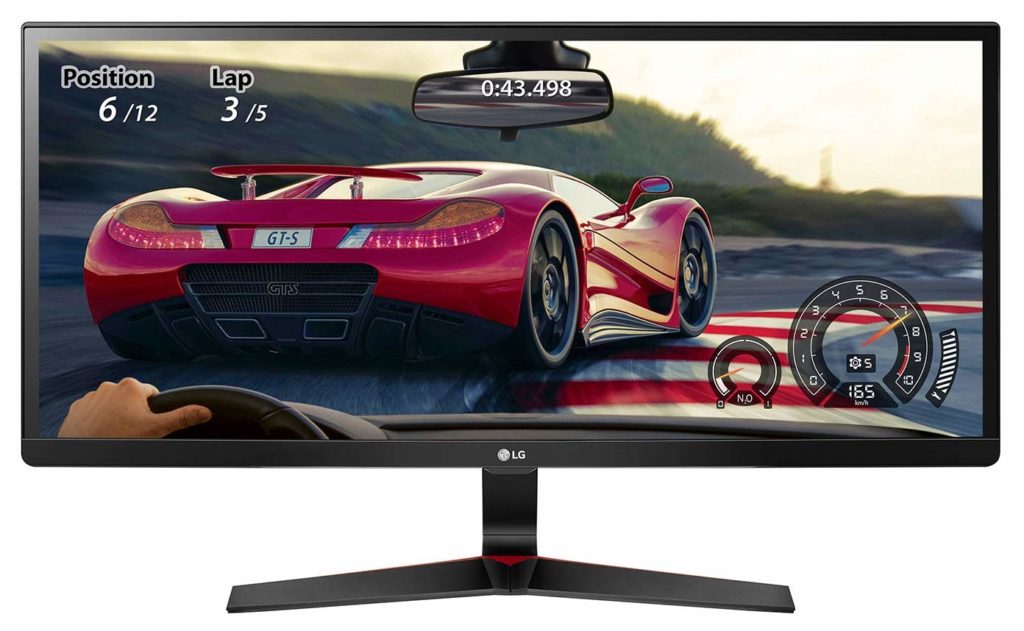
Due to cheaper LCD panels originating from China, LG which is currently the world’s largest manufacturer of this type of display panels has reported a loss in the third quarter of 2019. On the 23rd of October, LG announced an operating loss of 437 billion won ($372 million) for the July-September period. Besides, overall sales dipped by 4.6 % in comparison to the Q3 of 2018.
Noteworthy, this is LG’s first operating loss in Q3 in the last eight years. This quarter has usually been a silver lining for the company as it coincides with increased panel supplies to Apple ahead of the release of new iPhones. To paint a picture of how bad things could be, the new CEO Jeong Ho-young warned in his first message to employees that the “company’s survival is at risk.”
Due to oversupply from China, the average price per TV panel has fallen 20 to 30% in the last year alone, which has driven Japanese and Taiwanese suppliers out of the race and they do not want to scale production. An industry source said “This is the worst supply glut in history,” and “Nobody will be able to secure a profit.”.
Prominent Chinese suppliers which include BOE and China Star Optoelectronics Technology, with government backing have built new factories in the last four years that have surpassed South Korean, Taiwanese and Japanese companies which were previously the heavyweights in this industry.
Reports suggest that it typically takes investments worth $ 4 billion to set up a display plant and companies like LG and the previously mentioned heavyweights, who already are struggling to survive, cannot expend this much money. Therefore, it is hard for them to match the production capacities these Chinese suppliers are capable of delivering.
A single display plant typically requires over $4 billion in investments. Japan Display, the world’s largest smartphone LCD maker that is struggling to secure a bailout, and Taiwan’s AU Optronics, a major supplier of TV panels, have already bowed out of the race to increase production.
The only other company who is capable of taking on the newly shroomed Chinese suppliers of LCD displays is, Samsung. The world’s number one smartphone manufacturer reported an operating profit of $ 44 billion last year. Out of which, it is investing $ 11 billion in premium-grade quantum-dot displays, which is based on OLED technology.
While LG also manufactures OLED displays that are still profitable, the combined sale of this type of display last year was just 2.5 million which is insignificant in comparison to LCD panels that accounted to 200 million units.
Due to its massive investment which was previously mentioned, Samsung is presumed to soon commence of mass production of OLED TV panels. Besides, Chinese suppliers are also reportedly gearing to enter this race as well. Following which, LG’s survival in this division seems short-lived. Conclusively, only time will tell, what the future holds for the company.
In the first quarter of this year, Vivo announced a new smartphone line called iQOO. The first phone under the new line launched as the iQOO, and three more phones have been released afterwards in the span of seven months. Today, the iQOO line is getting a new member called the iQOO Neo 855.
The iQOO Neo 855 in simple terms is a Snapdragon 855 version of the iQOO Neo which launched with a Snapdragon 845 processor. The iQOO Neo launched for ¥1798 (~$254) and is available in four variants with the highest configuration having a ¥2298 (~$325) price tag.
iQOO Neo 855 Design
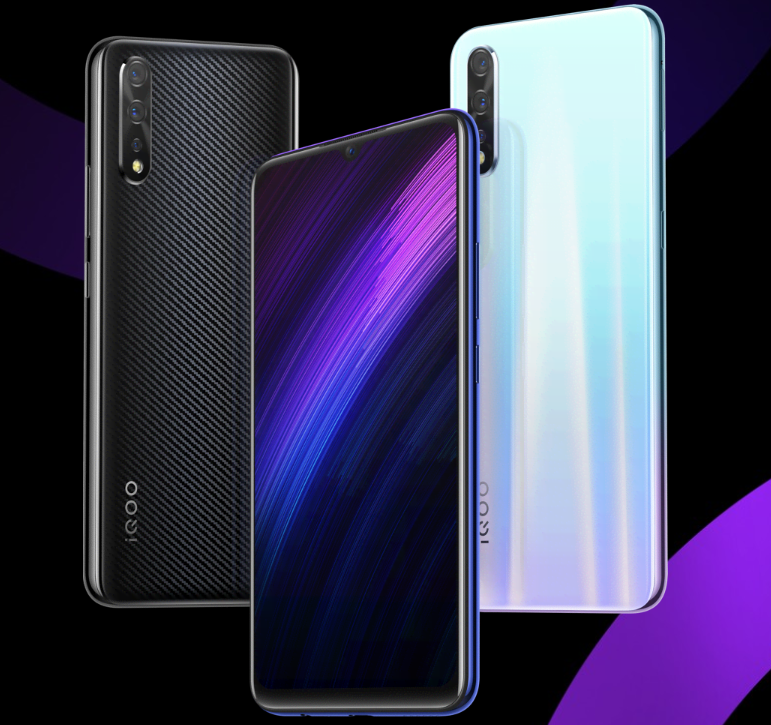
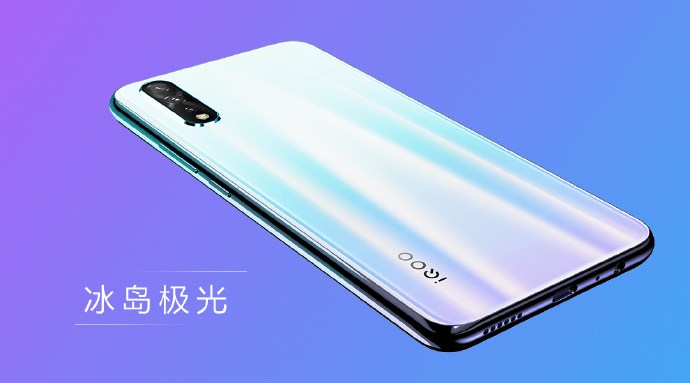
The new phone doesn’t look different in terms of design when compared to its Snapdragon 845 version. You get the same AMOLED screen with a waterdrop notch and the same rear camera design. However, the iQOO Neo 855 comes in a new Icelandic Aurora color with a color gradient frame. It is also available in Neon Purple and Carbon Black.
iQOO Neo 855 Features and Specs
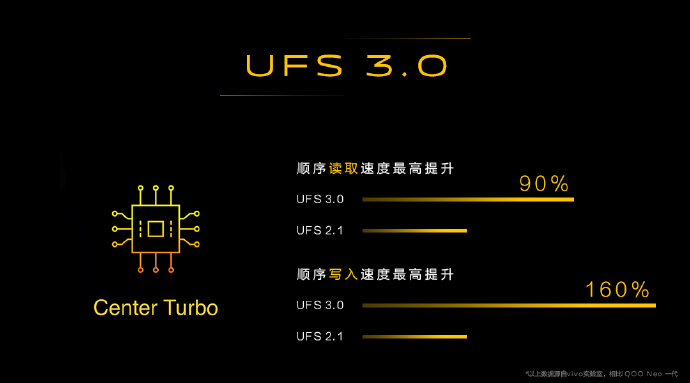
With the more powerful Snapdragon 855 processor and faster UFS 3.0 storage replacing the SD845 and UFS 2.1 storage of the standard version, there is a significant improvement in the performance of the iQOO Neo 855. iQOO even brags about the device’s 477,016 AnTuTu score.
The iQOO Neo 855 is focused on speed and it is not just limited to the processor and storage. The phone comes with a dual-WiFi acceleration technology that enhances connection and ensures that online gameplay is stable and webpages load faster. iQOO says lab tests reveal latency reduces by up to 90% with the feature active.
1 of 6
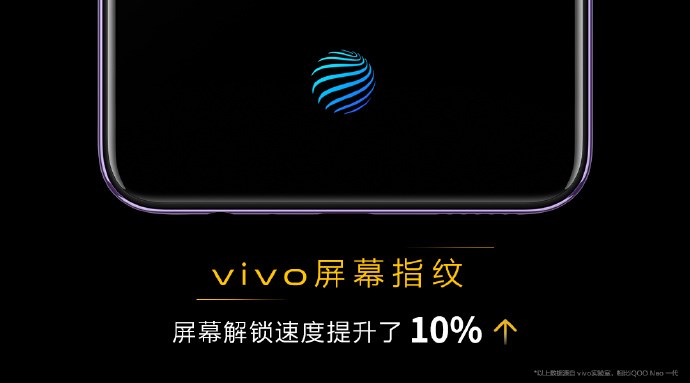
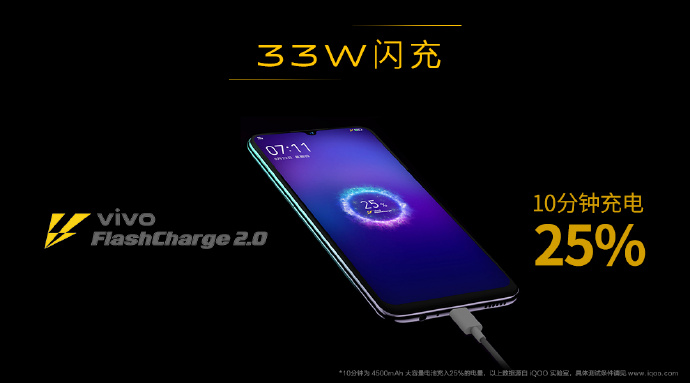
The phone also comes with faster fast-charging technology than its predecessor. Rather than 22.5W fast charge, the iQOO Neo 855 comes with Vivo’s 33W FlashCharge 2.0 which charges the phone up to 25% in just 10 minutes. The iQOO Neo 855 keeps the in-display fingerprint scanner of the standard version but it is now 10% faster.
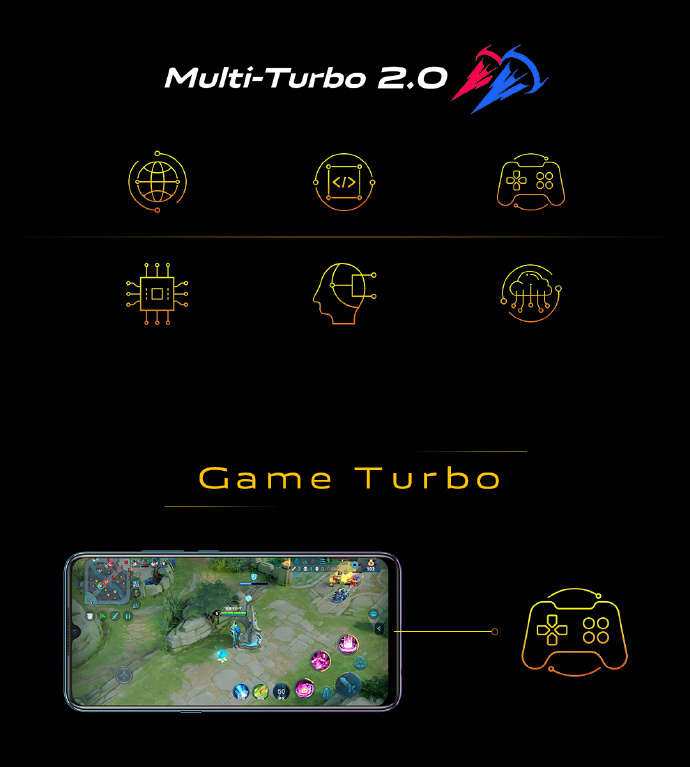
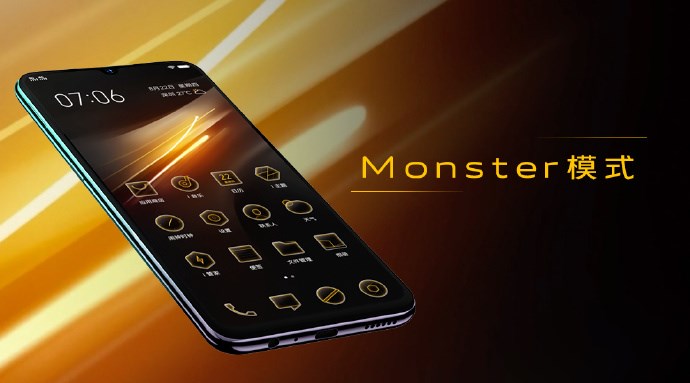
The phone also comes with Monster Mode UI based on FunTouchOS 9 with features such as MultiTurbo 2.0. iQOO says lab tests show response time has increased by 30% with MultiTurbo 2.0 compared to the Snapdragon 845 version. There is also super-liquid cooling which can reduce the CPU’s temperature by up to 10 degrees and the surface temperature by up to 3 degrees.
Below are the full specs of the phone:
6.38-inch 1080 x 2340 AMOLED display with DC Dimming and HDR10
Snapdragon 855
6GB/8GB RAM
64GB/128GB/256GB
12MP f/1.79 Sony IMX363 primary rear camera + 8MP f/2.2 120° ultrawide-angle camera + 2MP f/2.4 depth sensor
16+MP f/2.0 S5K3P9 selfie camera
4500mAh battery
Audio Jack
USB Type-C port
In-display fingerprint scanner
[envira-gallery id=”285187″]
Price and Availability
The price tags for all four variants of the iQOO Neo 855 are:
6GB RAM + 64GB (UFS 2.1) = ¥1998 (~$283)
6GB RAM + 128GB = ¥2298 (~$325)
8GB RAM + 128GB = ¥2498 (~$353)
8GB RAM + 256GB = ¥2698 (~$382)
The phone will be available for pre-order starting today up until October 31 when it will be available for purchase. For a limited time, all variants, save for the 64GB base model, will be sold for ¥100 less. Buyers will also be able to get up to ¥200 coupons to further reduce the price.
Sharp which was once pushed to the brink of bankruptcy in the year 2016, after investments from Foxconn has been reviving gradually. The company is already indulged in manufacturing of TVs and OLED display panels, it may soon dip its toes in the gaming hardware industry suggests two patents that the company has recently filed with JPO (Japan Patent Office).
1 of 3
While mobile gaming has advanced to a level where it could compete with gaming consoles, users still tend to complain about the lack of physical controls that conventional game controllers offer. This is exactly what Sharp is aiming to solve with the devices whose patents have recently been filed.
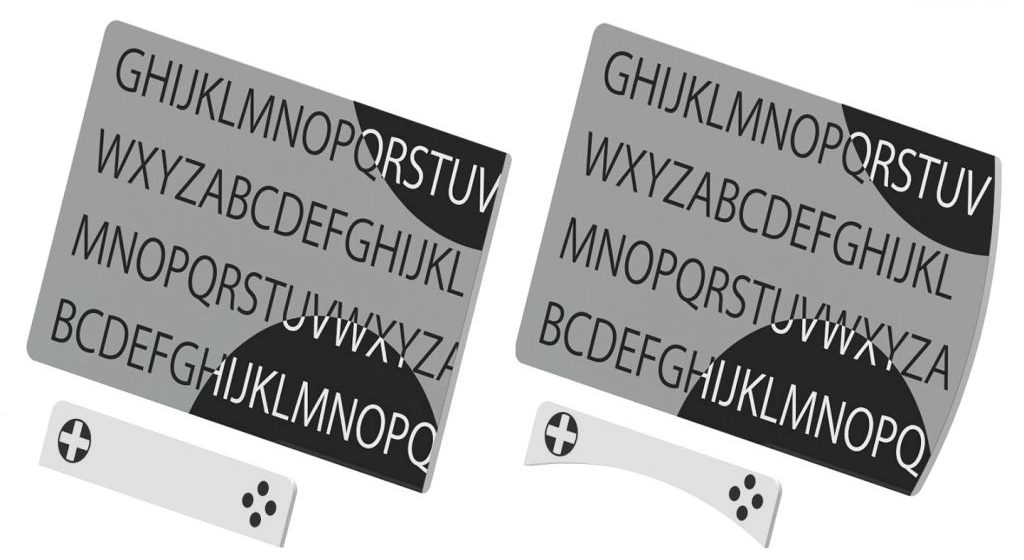
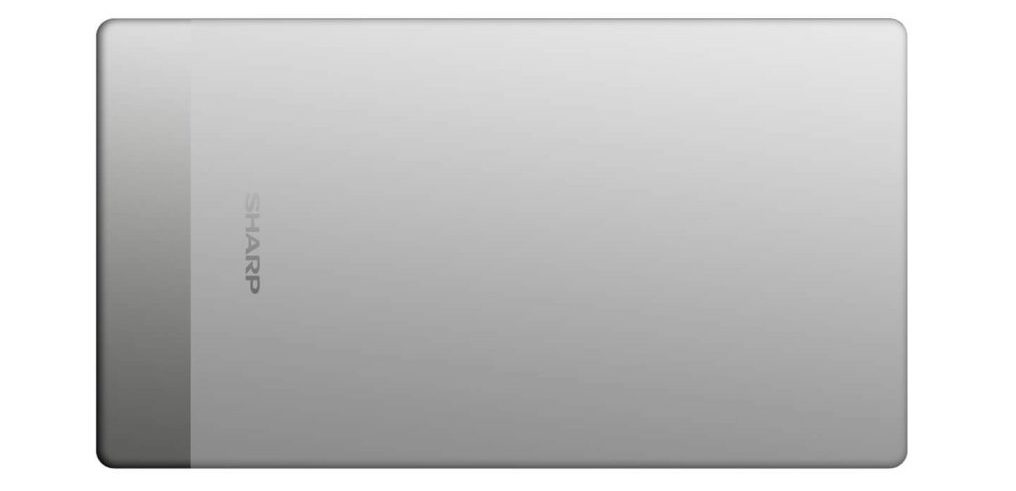
Going by the illustration, Sharp is conceptualising a tablet-like handheld game console that features an edge-to-edge display. Besides, it supports modular physical controls like a d-pad which can be attached via magnet. The patents show two different design that the company could possibly implement, out of which, the first one has a rectangular game controller while the second design has a curved game controlled.
The benefit of having a curved edge cannot be divulged from the patent itself, however, it might have something to do with improved position retention when attached to the main body of the gaming console. Unlike the Nintendo Switch, Sharp’s console lacks any slots for installing a game cartridge. Therefore, it is possible that the device runs on Android allowing users to choose from a wide library of apps the platform offers. Or it could be the company’s take on cloud gaming which is rapidly gaining popularity.
Whether or not Sharp plans to launch a real-life device based on these patents, it is hard to tell. Therefore, we would recommend taking this concept with a grain of salt until more details are revealed either via official or unofficial channels.
Readers interested in check the official patent filing can do so by clicking here (1, 2).
We use cookies on our website to give you the most relevant experience by remembering your preferences and repeat visits. By clicking “Accept”, you consent to the use of ALL the cookies.
This website uses cookies to improve your experience while you navigate through the website. Out of these, the cookies that are categorized as necessary are stored on your browser as they are essential for the working of basic functionalities of the website. We also use third-party cookies that help us analyze and understand how you use this website. These cookies will be stored in your browser only with your consent. You also have the option to opt-out of these cookies. But opting out of some of these cookies may affect your browsing experience.
Necessary cookies are absolutely essential for the website to function properly. This category only includes cookies that ensures basic functionalities and security features of the website. These cookies do not store any personal information.
Any cookies that may not be particularly necessary for the website to function and is used specifically to collect user personal data via analytics, ads, other embedded contents are termed as non-necessary cookies. It is mandatory to procure user consent prior to running these cookies on your website.



































 Outside of that, we can probably also expect to see some flagship specs, though we assume nothing too crazy. Considering that Realme are also planning to release their own flagship, the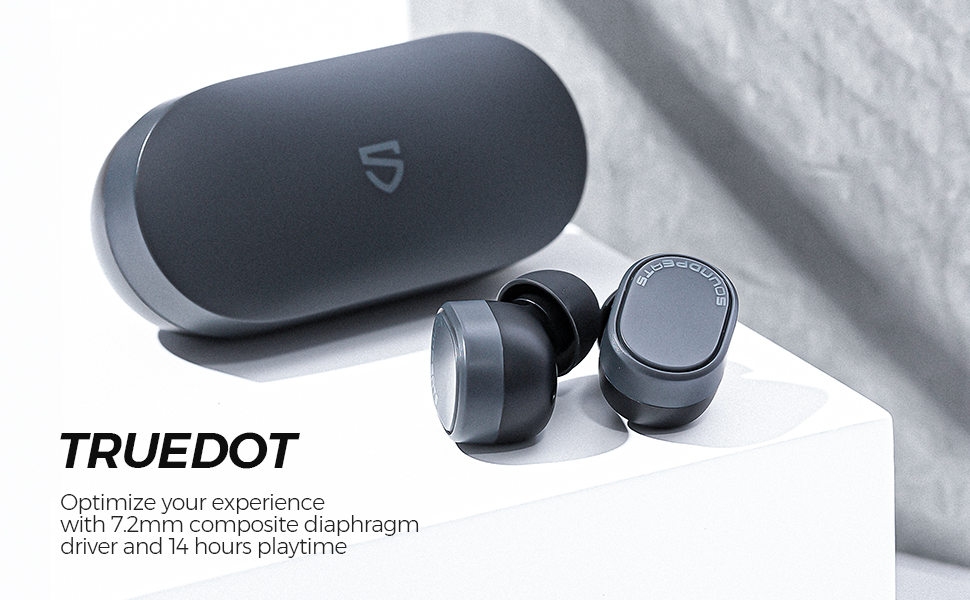

 Due to oversupply from China, the average price per TV panel has fallen 20 to 30% in the last year alone, which has driven Japanese and Taiwanese suppliers out of the race and they do not want to scale production. An industry source said “This is the worst supply glut in history,” and “Nobody will be able to secure a profit.”.