Xiaomi unveiled the Mix Flip 2, a flip-style foldable phone, and the Civi 5 Pro earlier this year in China. Early reports suggested that both devices, with the latter getting rebranded as the Xiaomi 15 Civi, might hit the global market. While the brand has recently launched the Xiaomi 15T series flagship phone for the global market, there has been no official update about the Mix Flip 2 and 15 Civi’s global arrival, suggesting that these devices might have been cancelled for wider release. Now, a new leak suggests that the Xiaomi Mix Flip 3 and Civi 6, expected to launch next year, may have already been cancelled.
Xiaomi Mix 3, Civi 6 may not launch in 2026
Xiaomi Mix 3, Civi 6 may not launch in 2026
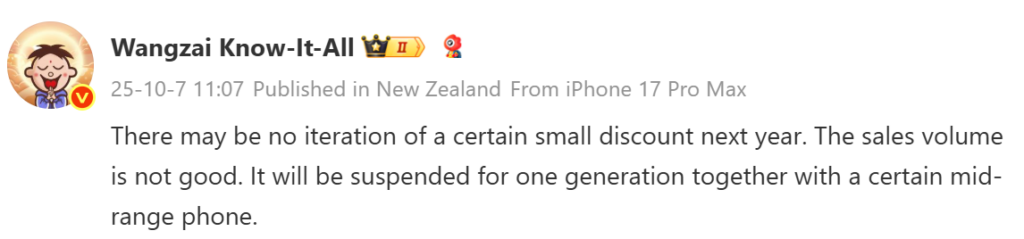
A well-known Chinese tipster has hinted that one of the smartphone brands’ small foldable phones and a mid-range model may not see a new generation in 2026. According to the post, the sales performance of the current versions has not been satisfactory, leading Xiaomi to pause its development for one generation.
This tipster is mainly known for sharing updates about upcoming Honor phones. However, the discussion in the comments section of the Weibo post suggests that he could be referring to Xiaomi.
While the tipster didn’t mention specific model names, it is being speculated that the devices in question could be the Xiaomi Mix Flip 3 and the Xiaomi Civi 6, both of which were originally expected to debut in 2026. The Mix Flip 2, Xiaomi’s first vertical foldable, reportedly did not achieve strong sales despite its premium design and competitive pricing, while the Civi 5 also struggled to gain significant market share in the mid-range segment.
This development is surprising as the alleged Xiaomi Mix Flip 3, with model numbers 2603APX0AC / 2603EPX2DC, was spotted in the IMEI database in July this year. Readers are advised to wait for further information regarding the fate of the Mix Flip 3 and Civi 6.
To recall, Xiaomi unveiled the book-style foldable, the Mix Fold 4 last year in China but skipped the Mix Fold 5 this year. A recent IMEI database sighting revealed that Xiaomi may launch a book-style foldable in 2026, possibly under the Xiaomi 17 Fold name instead of Mix Fold 6.
For more daily updates, please visit our News Section.
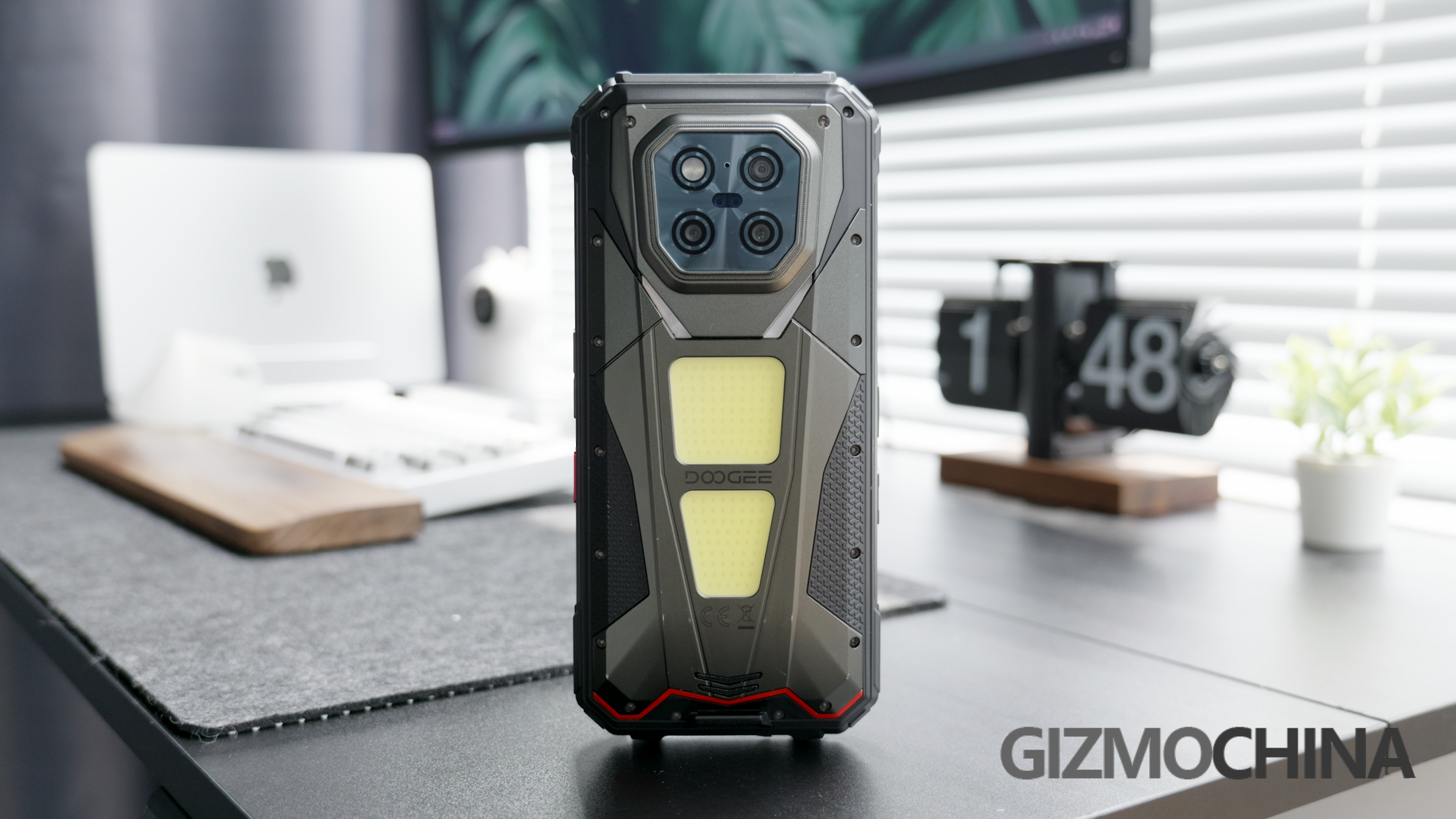
In this review, we have a very interesting rugged phone here. It is the DOOGEE V Max Play, that comes with a projector. It has been so long since I dreamed about watching a movie with a phone, maybe at a camping site or somewhere out there. In this review, we will mostly focus on the projector part, then other things. And if you are interested in this one, you can check it out here with DOOGEE’s exclusive offer – $100 off with a complimentary Bluetooth Speaker gift, end on Nov.11. Or just visit the brand’s Amazon store and remember to use the 20% off code! – HVWC4VU2
Projector
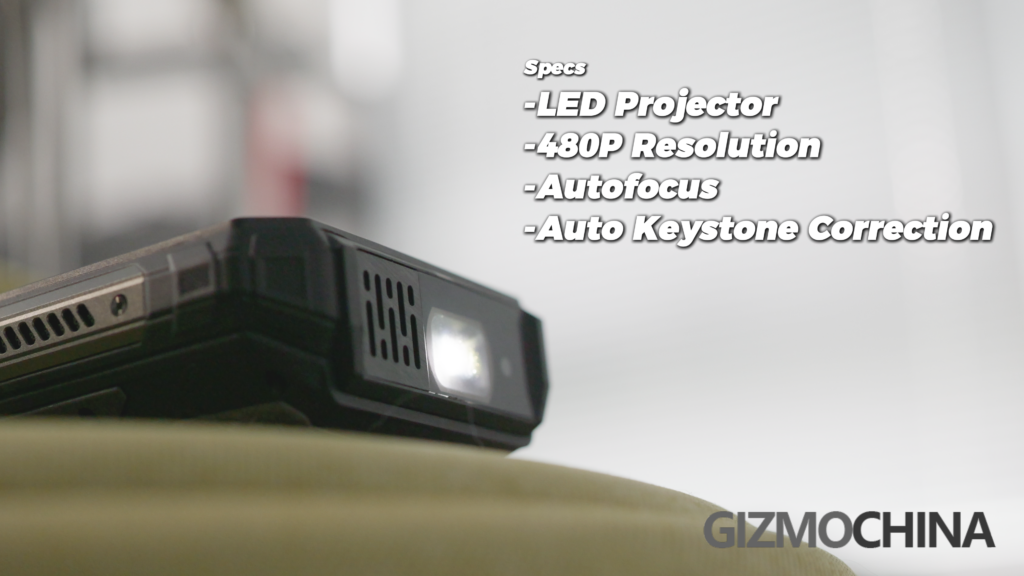
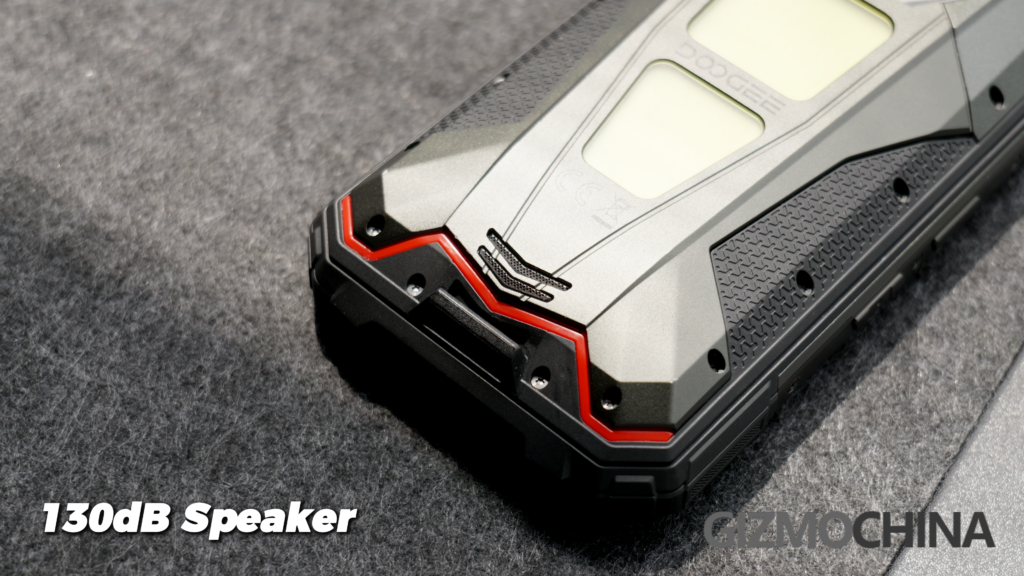
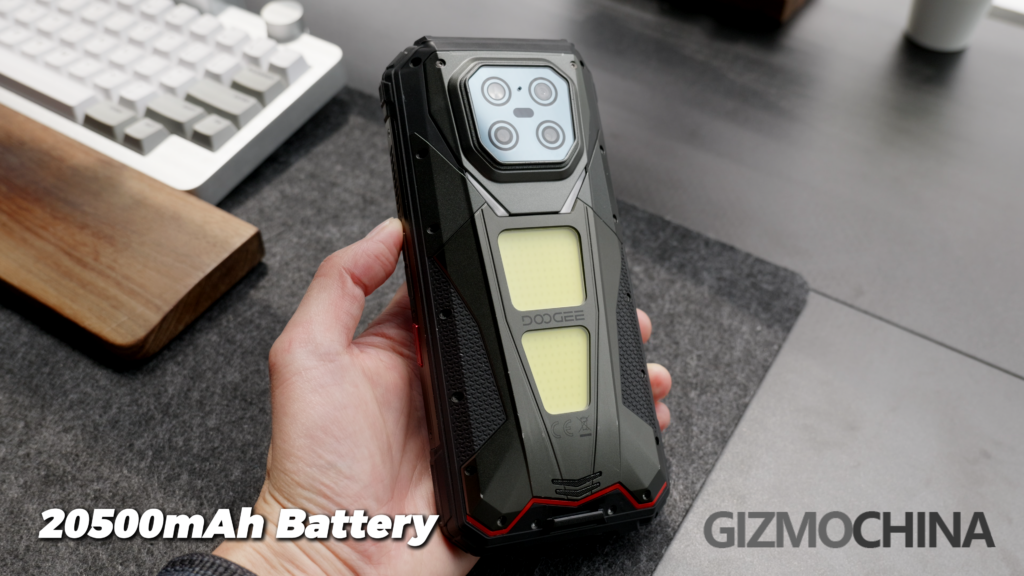
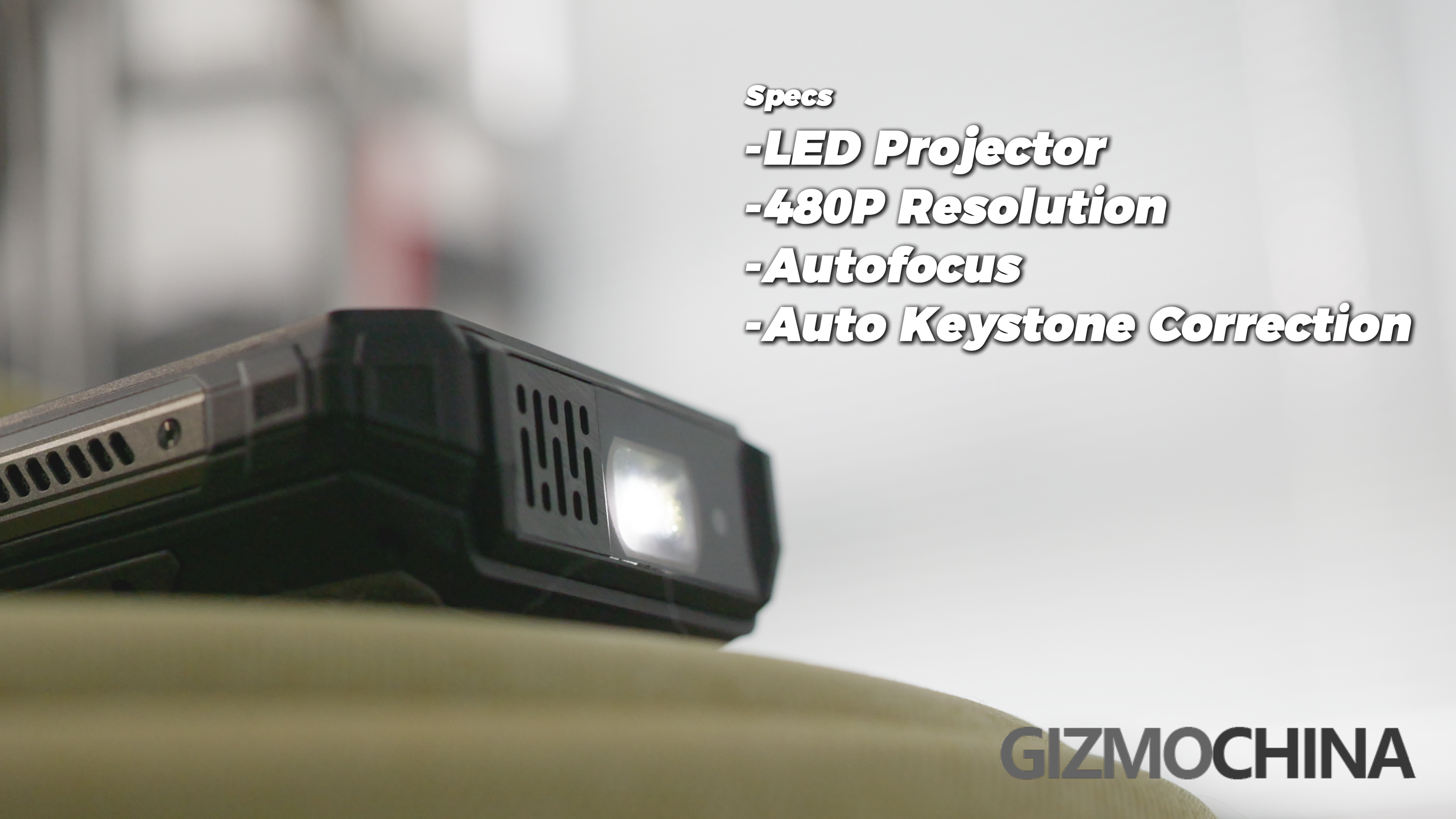
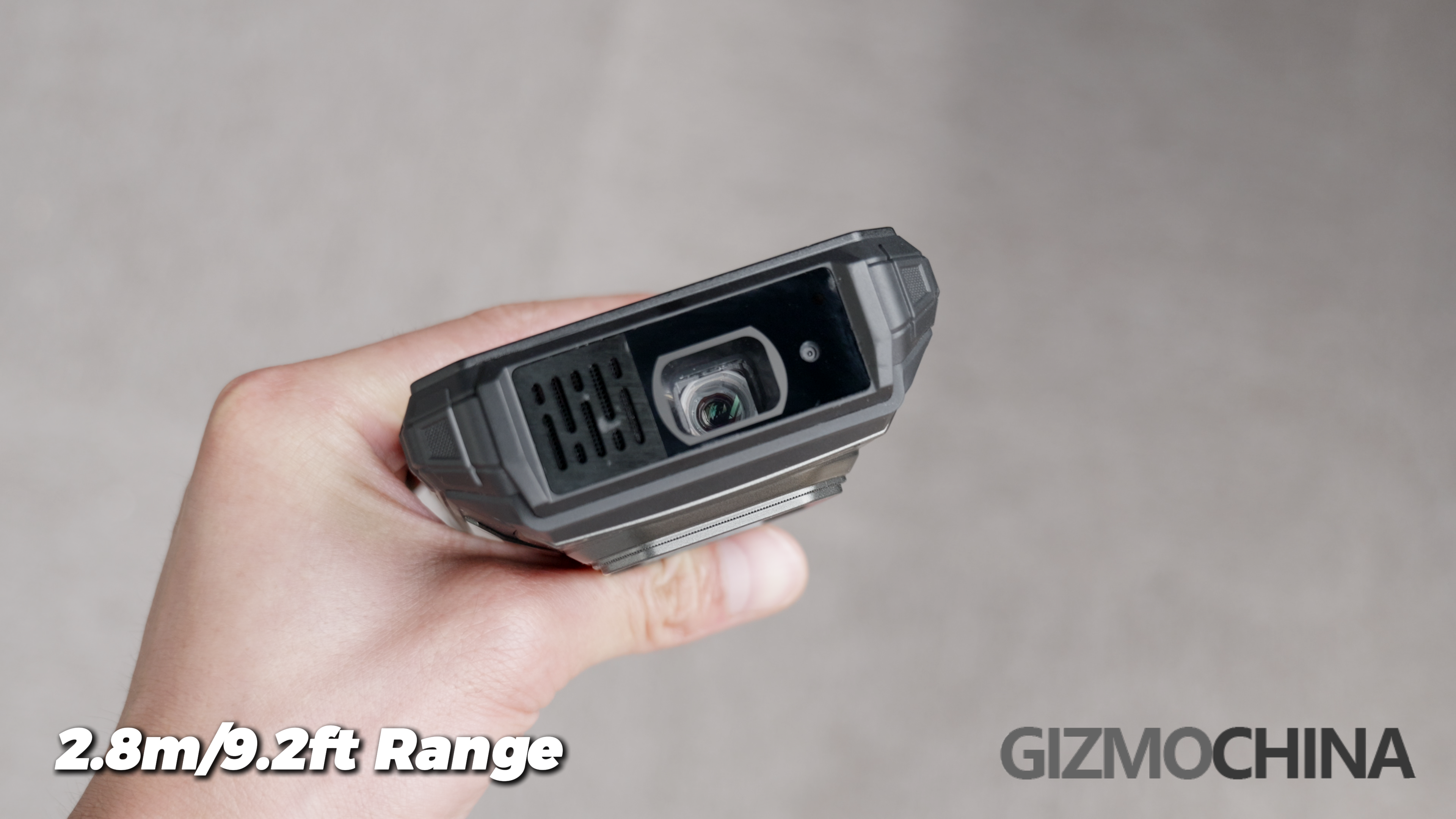
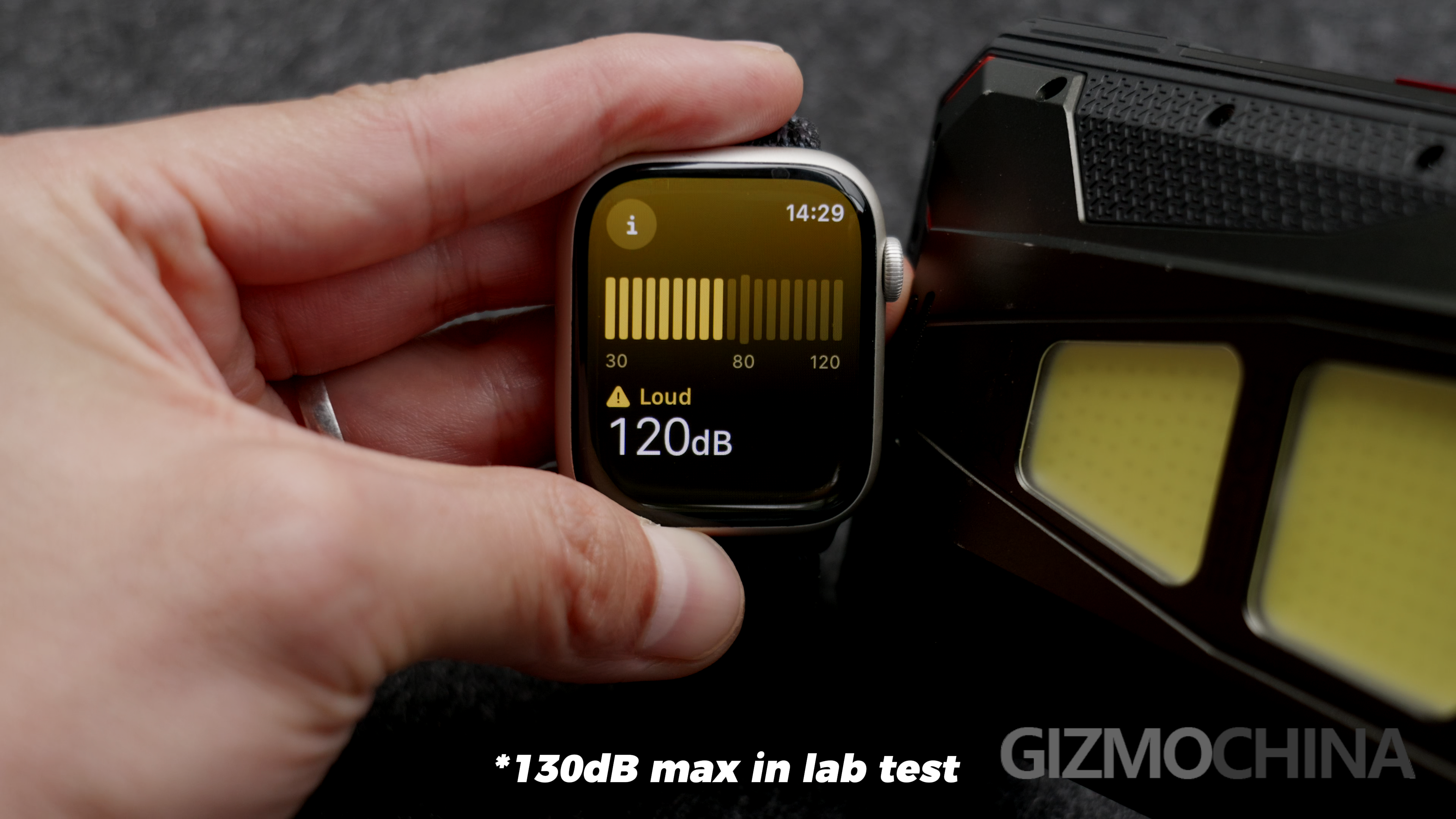
First, let’s talk specs. The projector LED type, it can offer a 480P resolution, with autofocus. And there is a 130dB super loud speaker, for the sound source. To support such a power eater, it has a 20500mAh battery. And there are heat vents next to the beam and the frame of the phone. That’s it, a pocket-size projector/rugged phone.
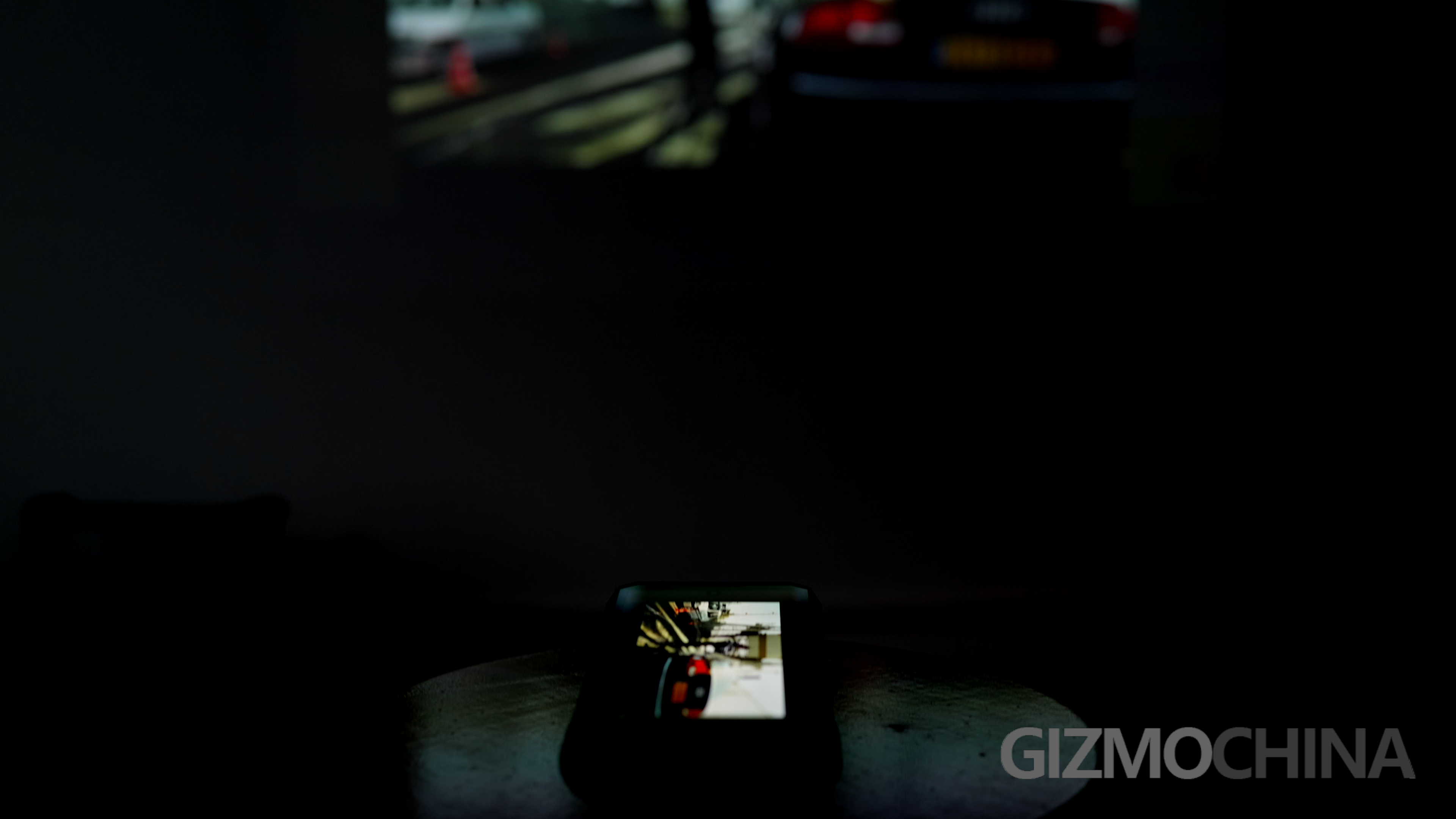
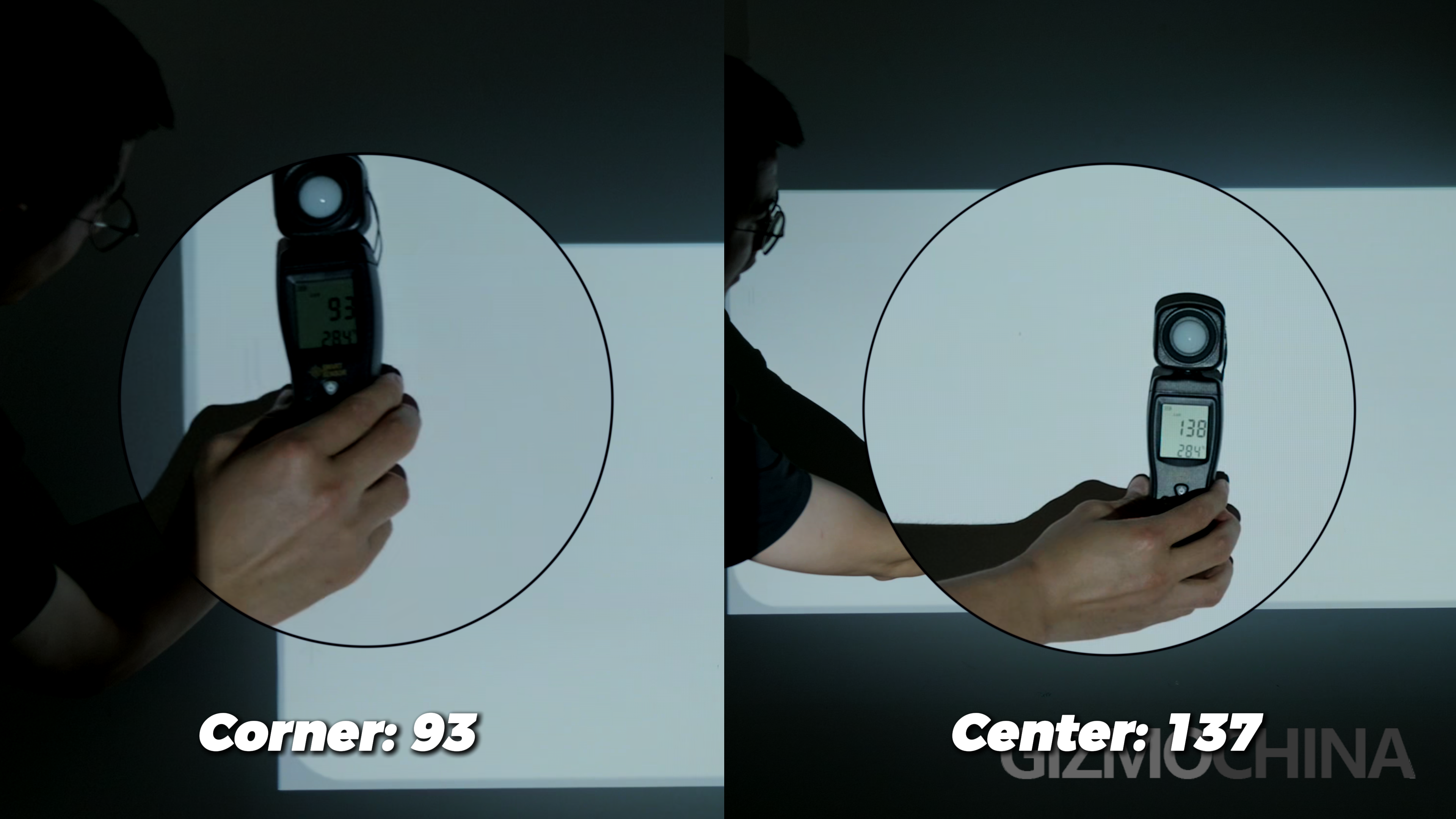
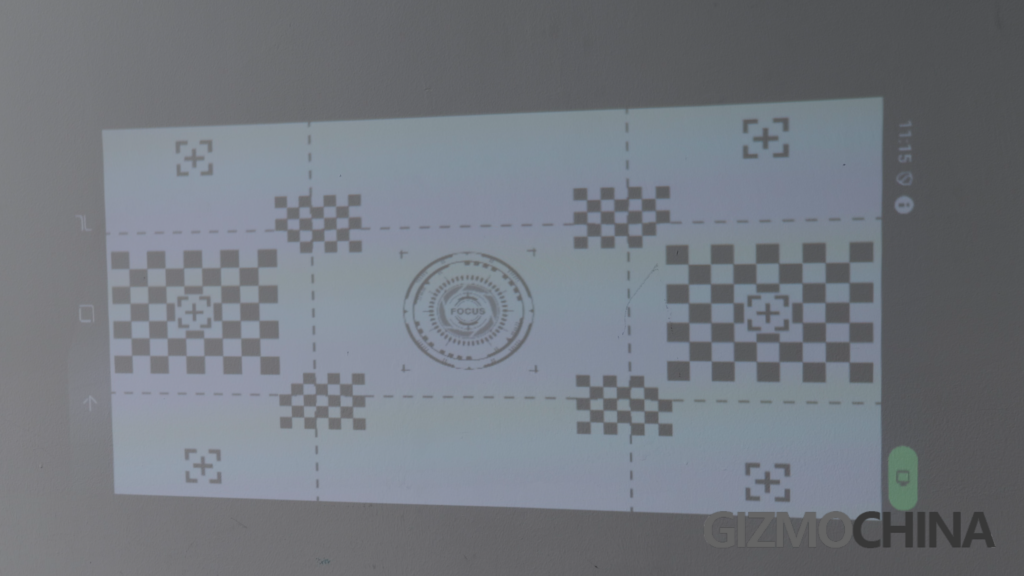
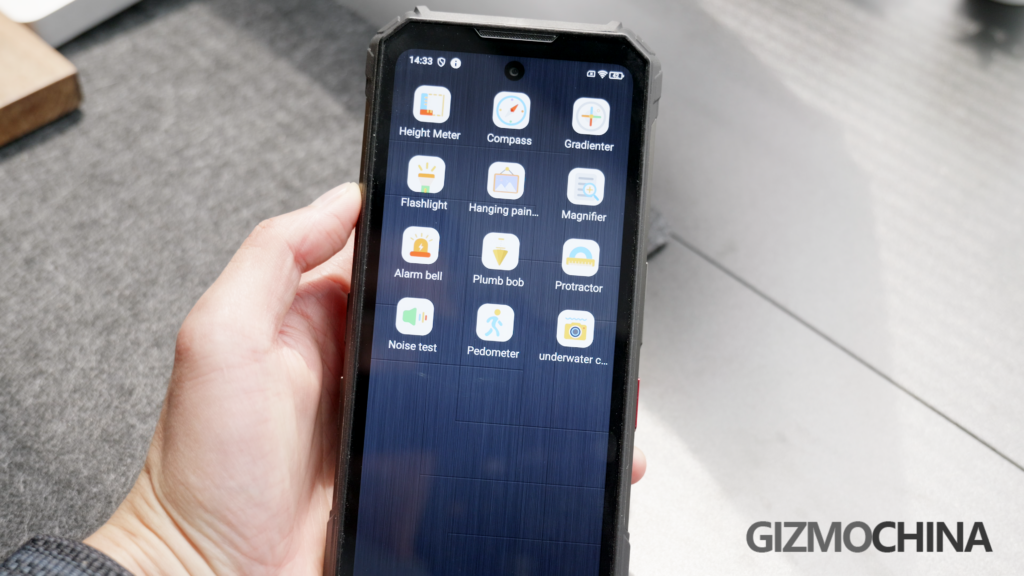
I know you might say 480P is not that high compare to big projectors, but I must say it is already a genius idea to have it on a phone. Based on multiple tests, within about 2.8-meters range, the projection works fine, the brightness is ranging from 93-137 lumen as we tested, the image quality is fine. I am surprised to find that there is autofocus and auto keystone correction, meaning whenever you move the phone, the image will be corrected fairly fast.
The speaker is at the bottom of the back, when I first got the phone, I thought the vents are the speakers. So as we measured it, it can produce about 120db of sound, definitely much bigger than regular smartphones. Paired with the projector, it can deliver very good experience.
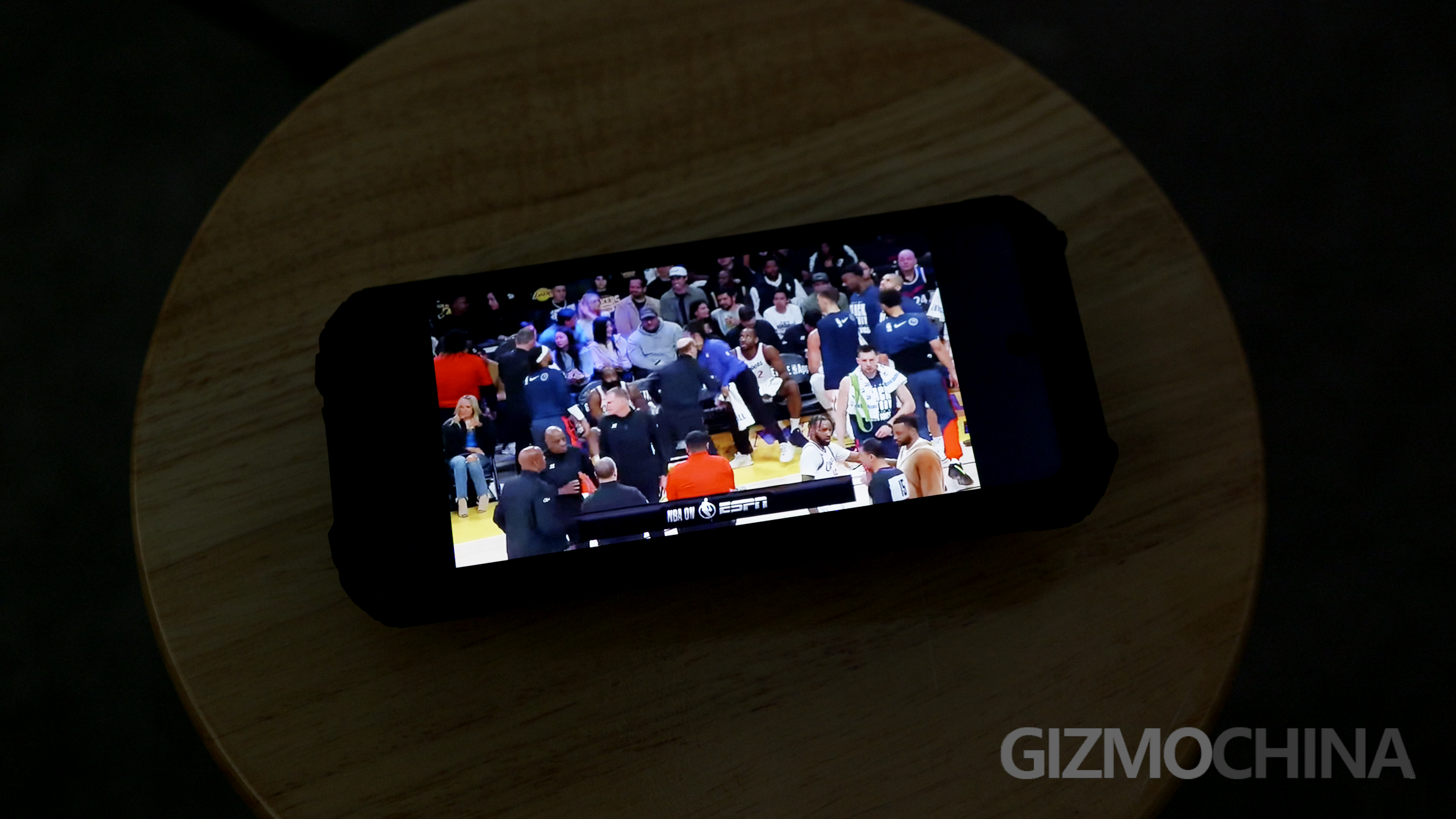
When it comes to the content source, it can project the whatever content on the screen. If you have good network, then any video from the social media can be used. Or you can have pre-downloaded content in the phone, then use those.
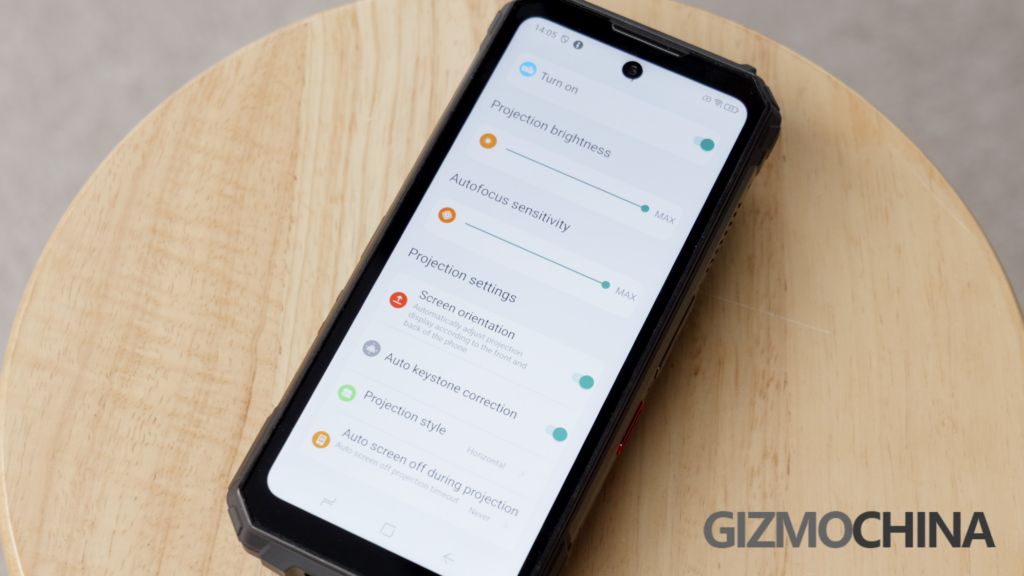
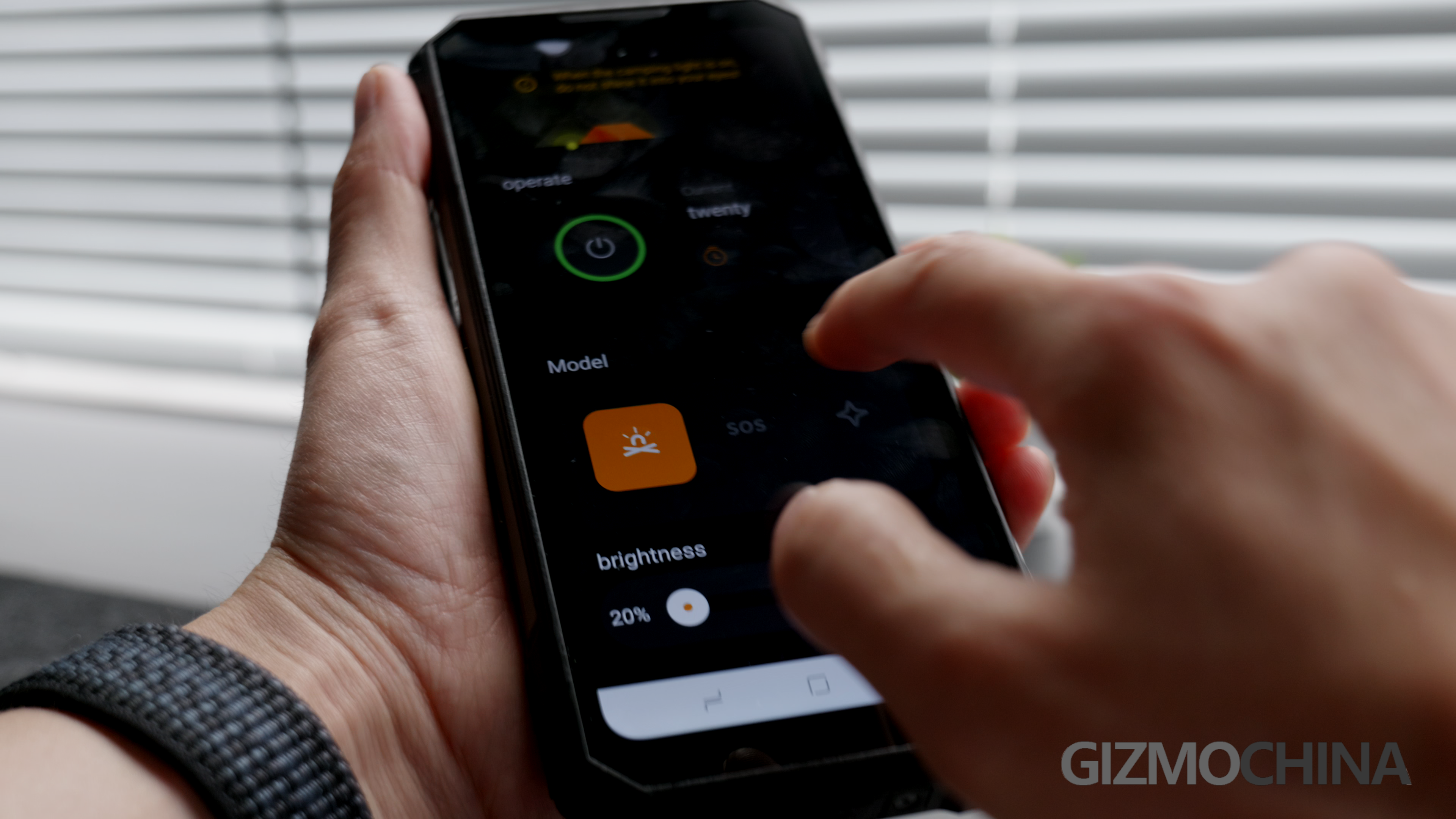
There is an App for it, you can turn the projector on or off, and change the brightness and autofocus sensitivity. Along with some other settings. I would recommend setting the autofocus sensitivity lower if you are at home, and high if you are outdoors, as the table might not be quite even out there. And then the screen off in a few mins, to save battery.
StartEnd
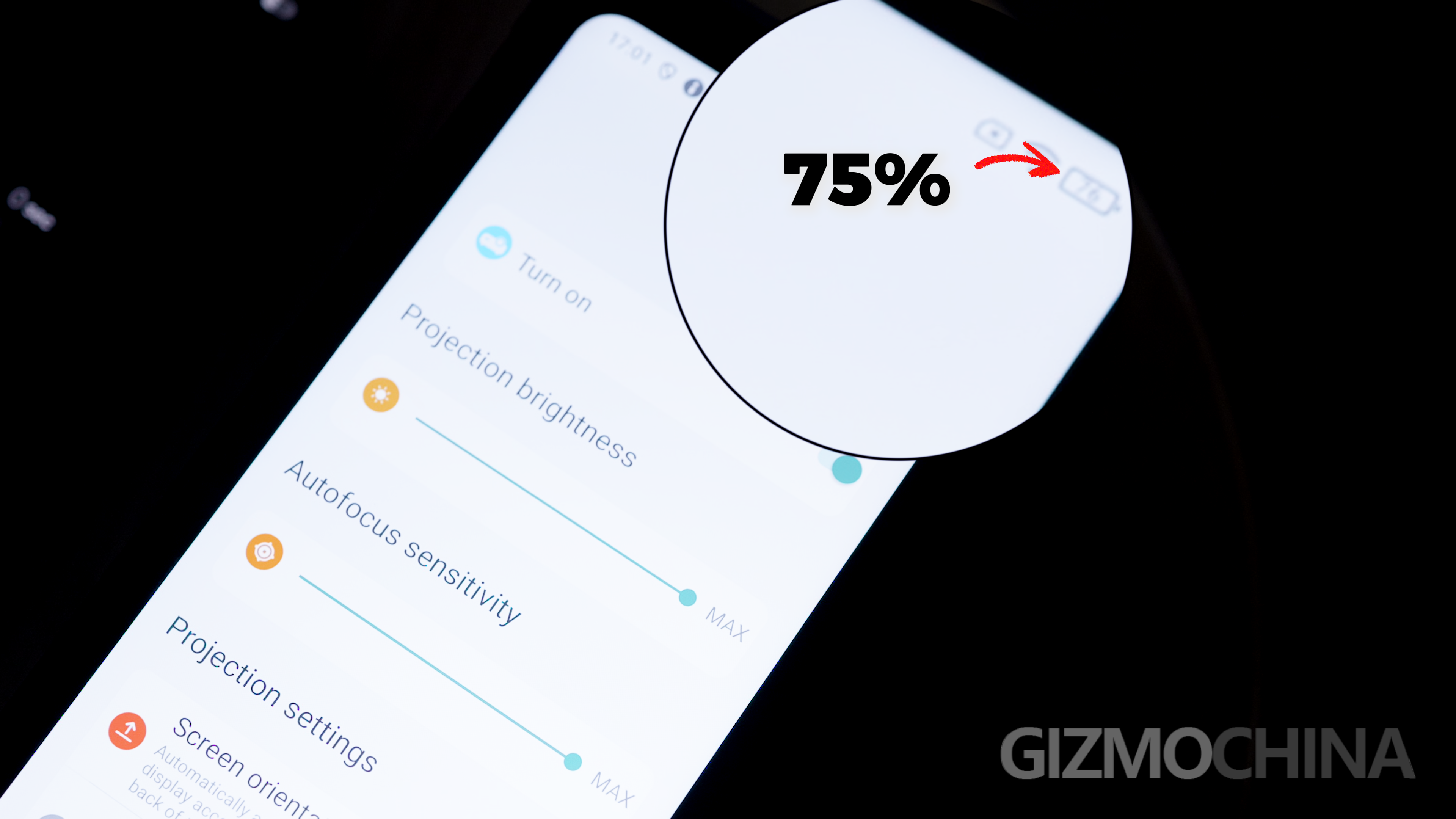
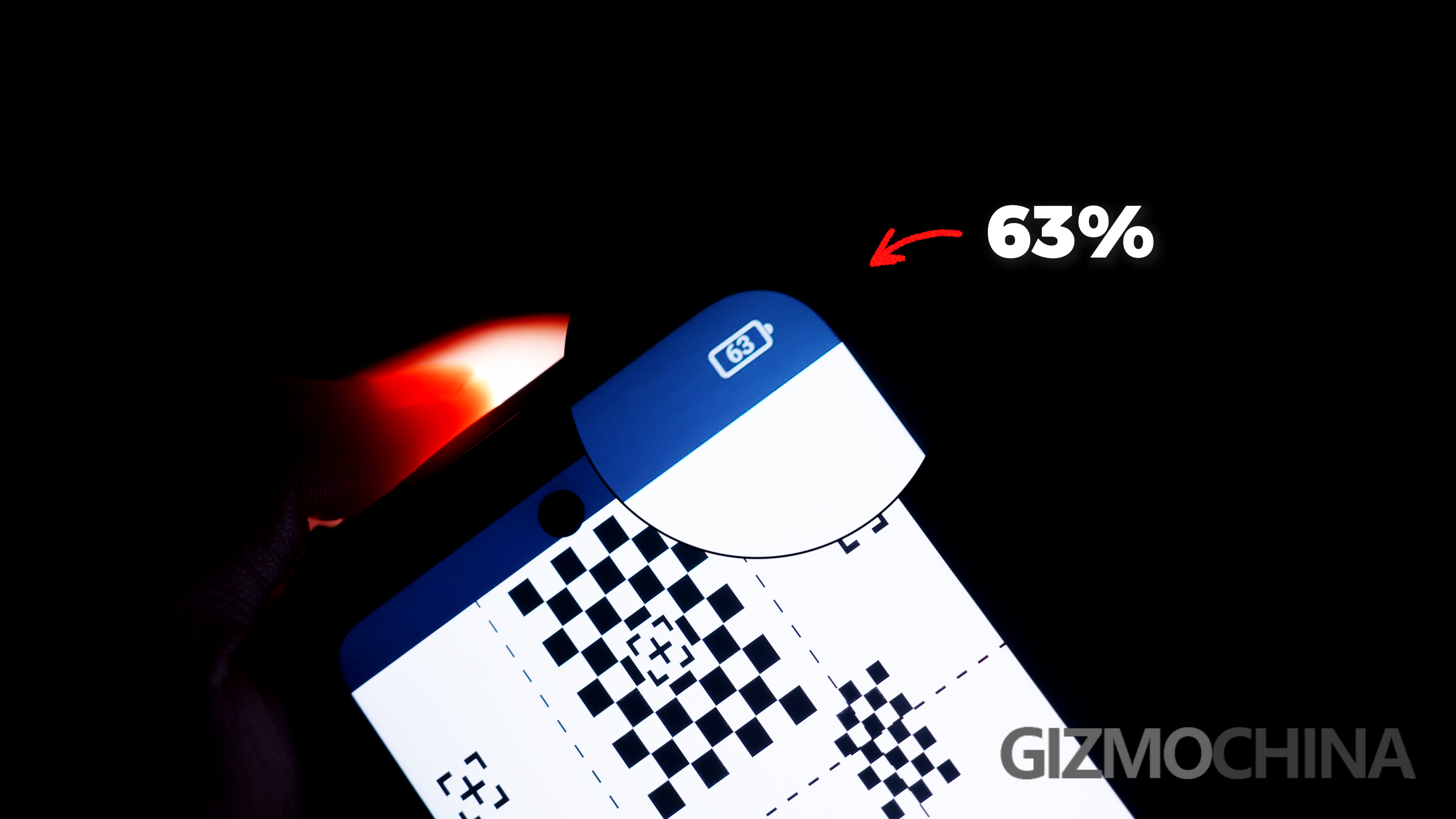
We also tested the power consumption and temperature, with the max brightness and max volume, it turns out that it takes about 12% of battery for a 30mins of play. Which means, you can pretty much watch a 2hrs of film for 2 times. And the max temp is of course from the projector, it is 54 degree Celsius maximum, a good temp control.
There will be a lot of accessories to go with this phone, such as PU pouch, phone case, or magnetic tripod, speaker, etc.
Other Highlights
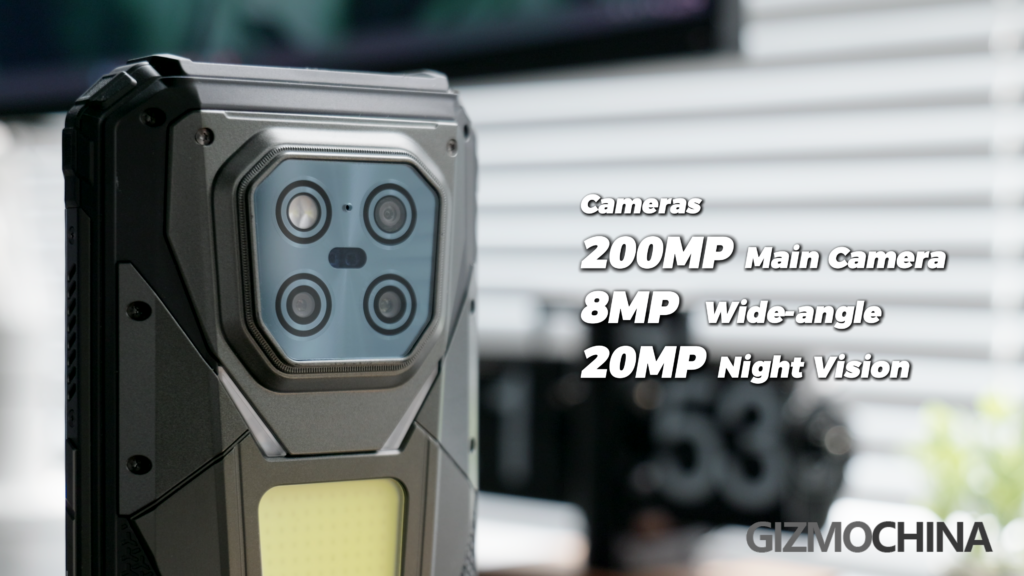
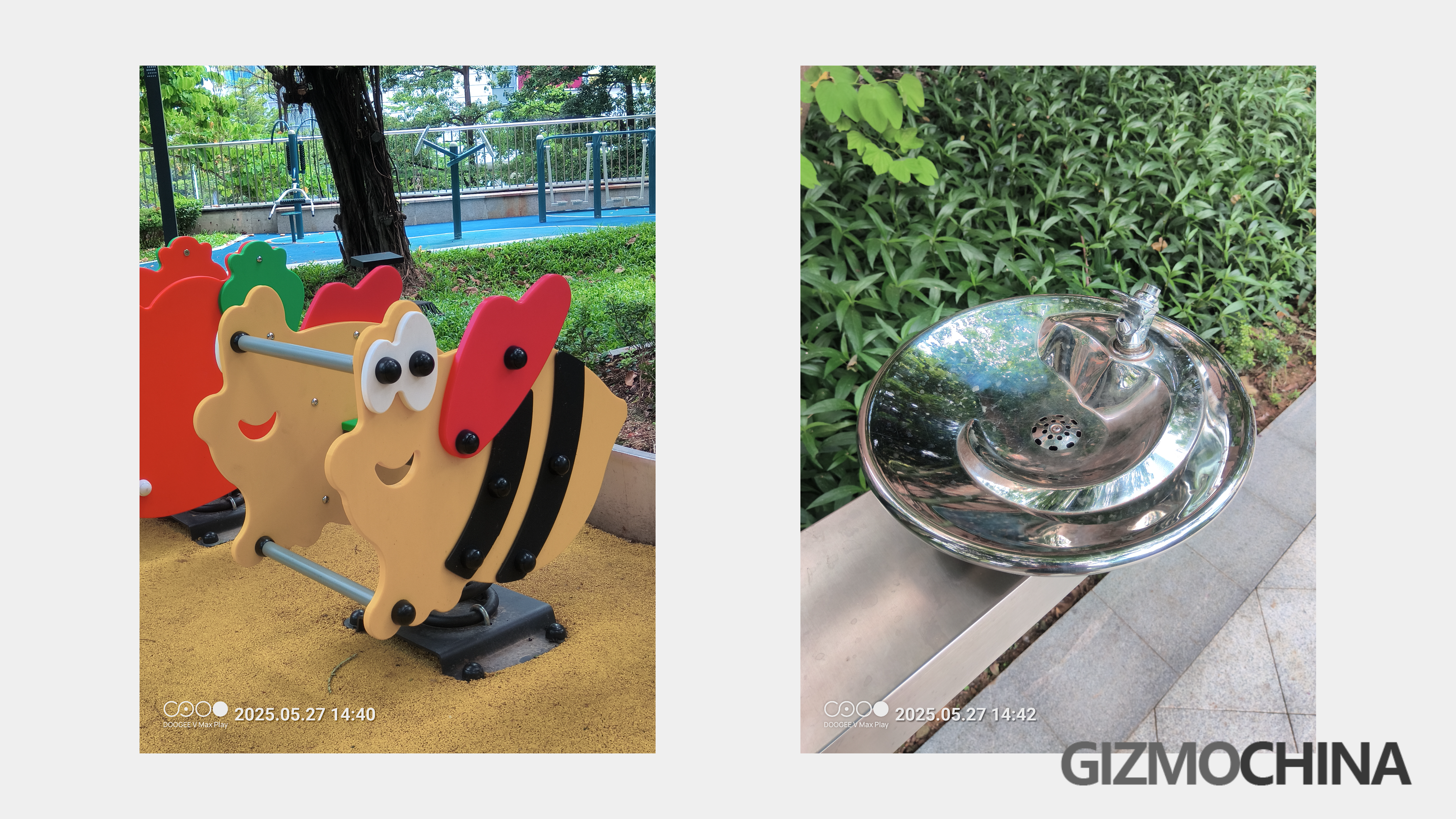
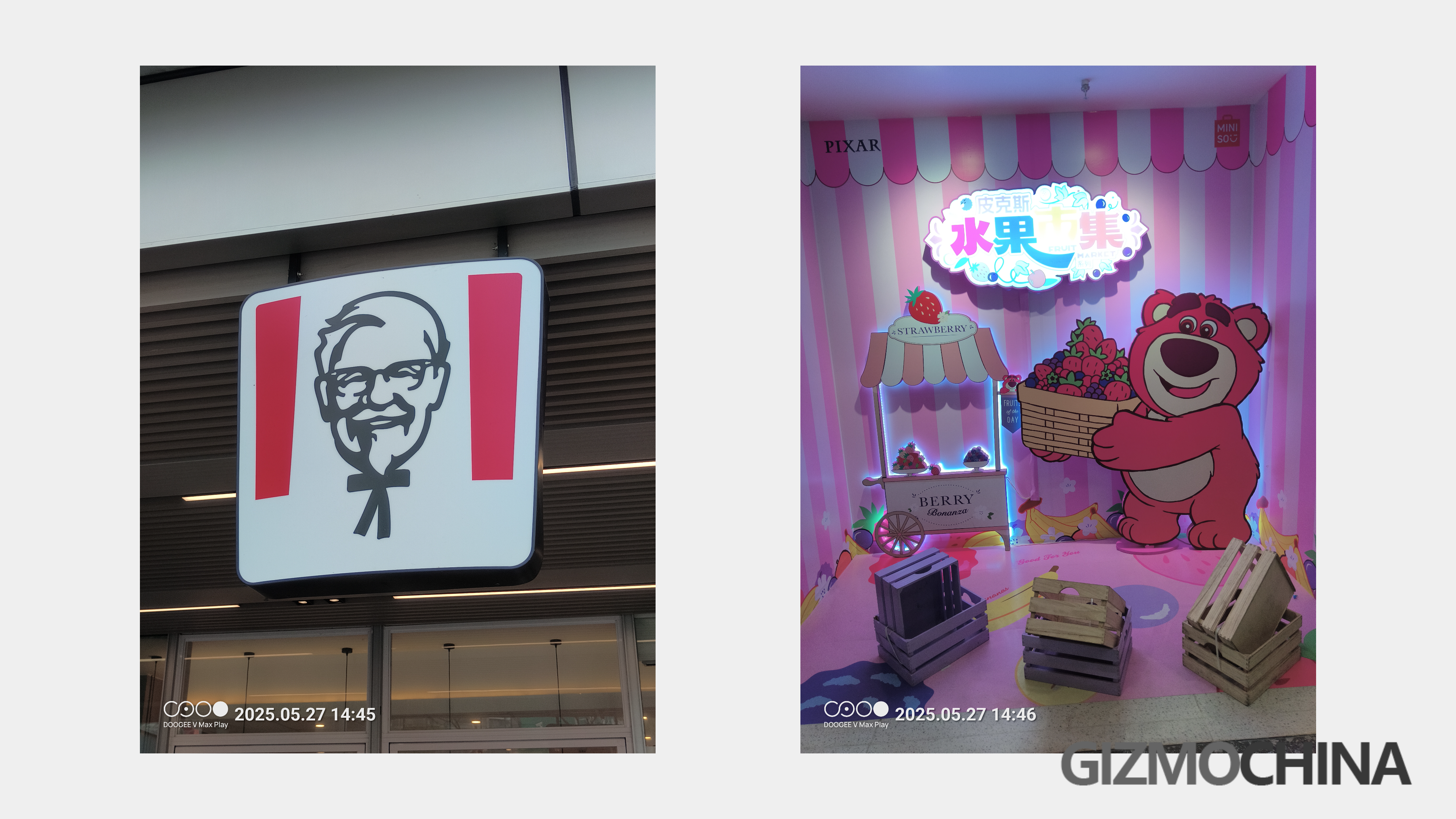
For the cameras, there are triple camera setup at the back, and one camera at the front. It has a 200MP Main Camera, 8MP wide-angle and macro lens, and a 20MP night vision camera at the back. For the real camera capability, here are some photos I took.
The front camera is 32MP, it can also take some good photos.
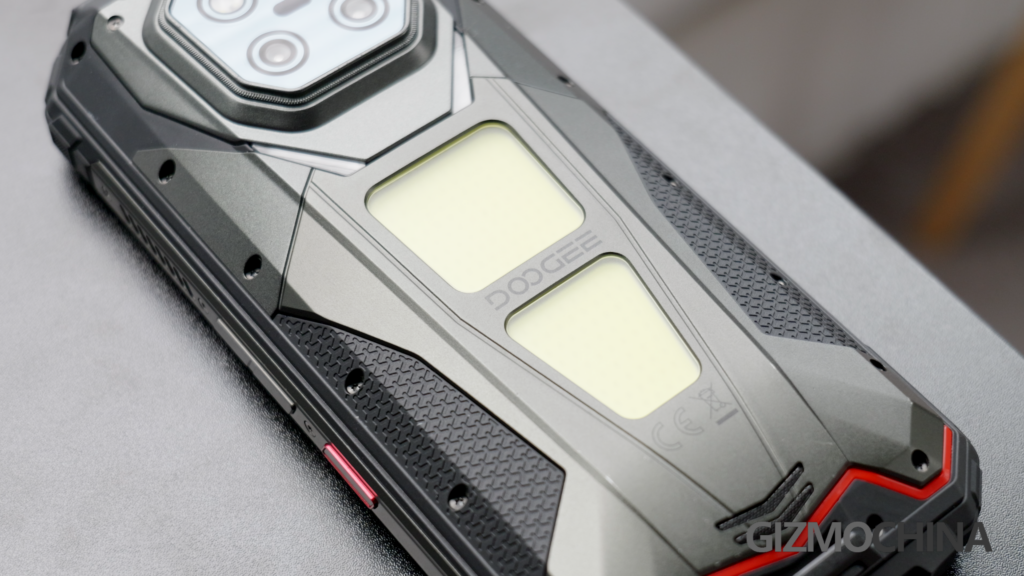
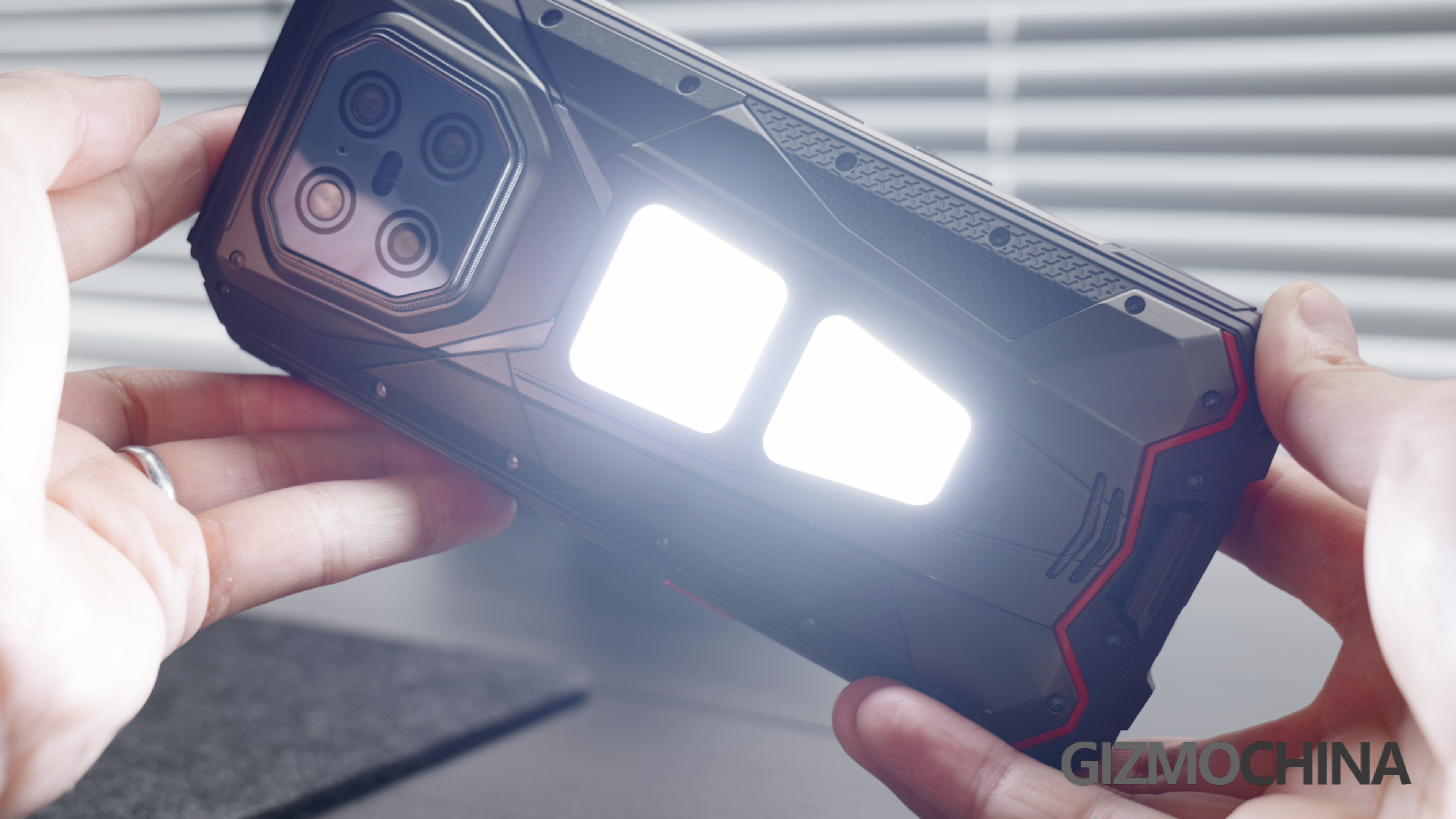
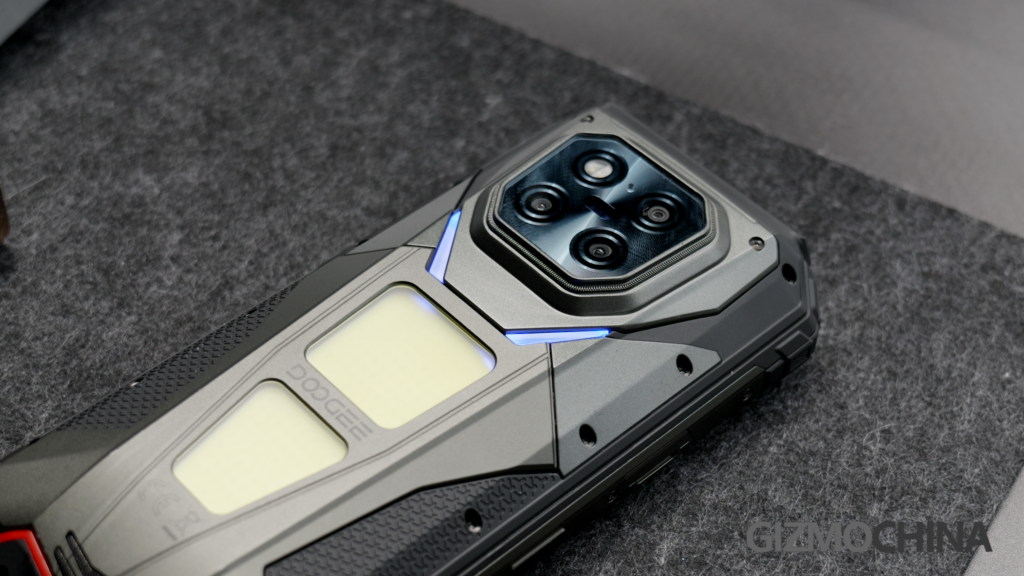
The next highlight is the camping lights on this phone. There are two LED light panels at the back, they can produce maximum 1200Luman of light. You can tweak the level in the setting, ranging from 20% to 100%. And there are three modes to choose from, to be used in different situations. This could be very useful when you camp outdoors.
There are also two light strips besides the LED panels. These are for notifications, like calls, messages, or music play.
Specs
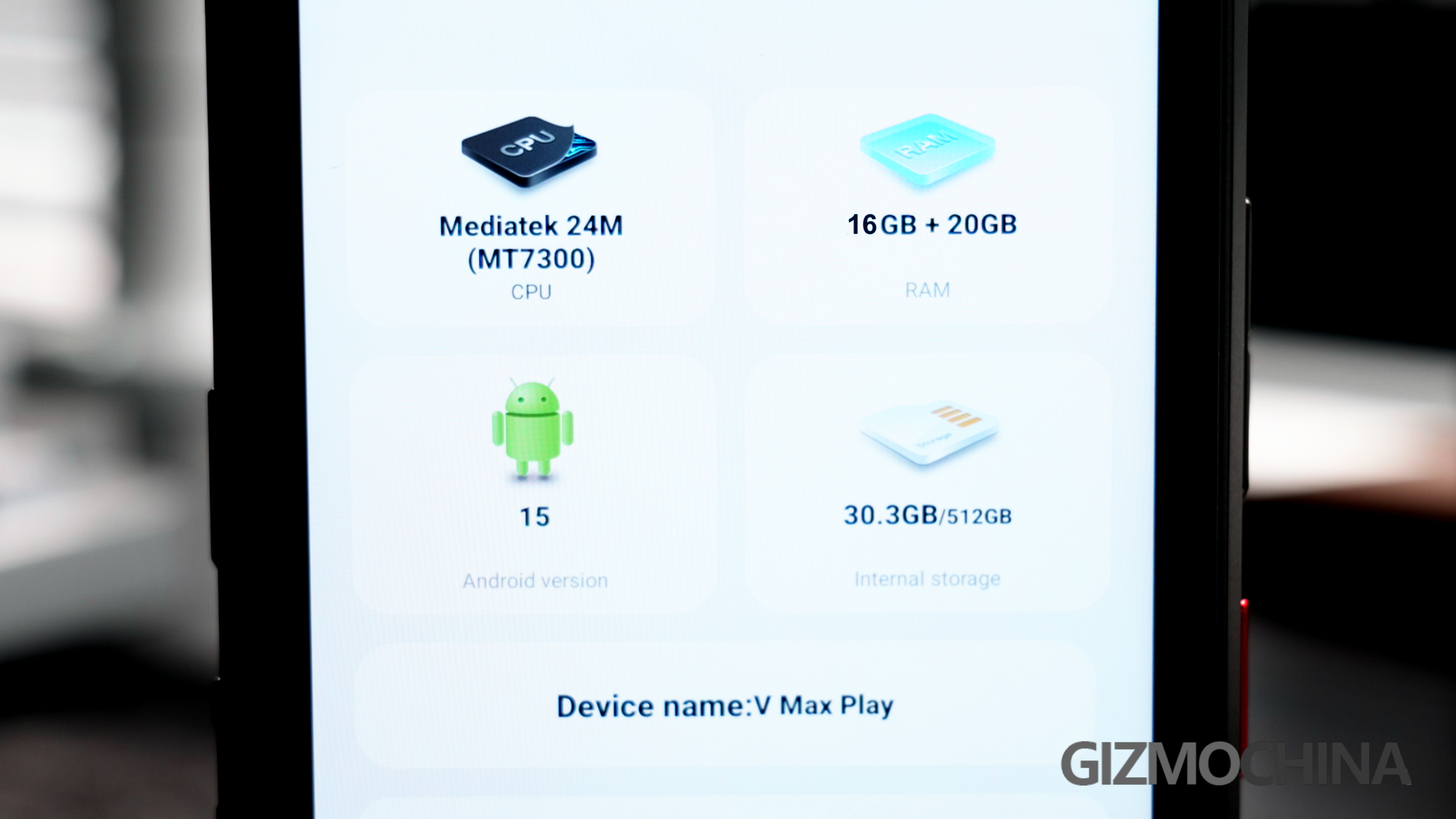
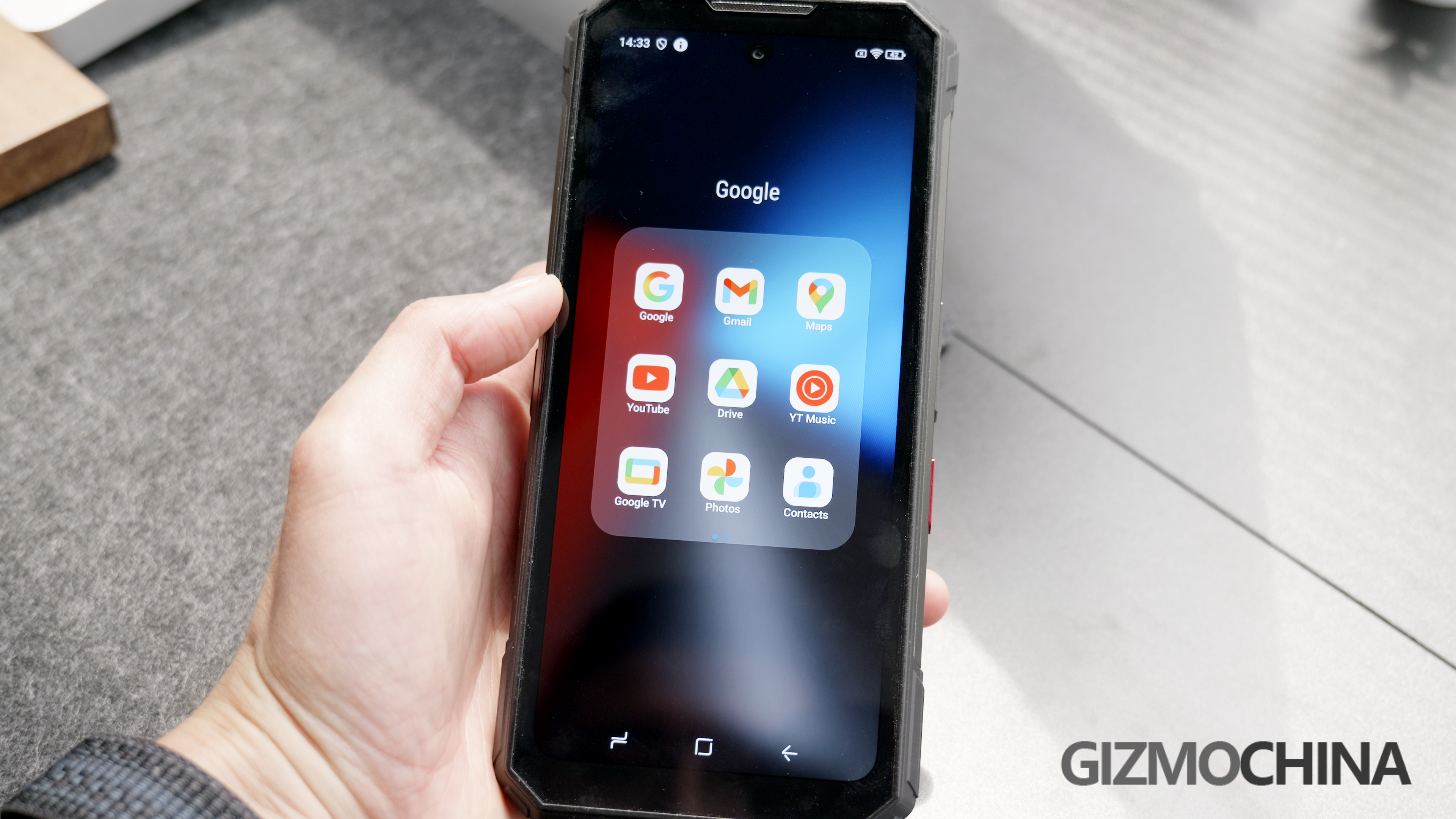
For other hardware, it comes with Dimensity 7300, a 4nm octa-core processor. With the Android 15 on board, it can basically run day-to-day Apps very well. And since it is a stock Android, some original features are here, like Gemini AI, and facial correction in group photos, Dynamic window. Along with some classic rugged phone features, like the outdoor toolbox, and hotkeys at the side.
The battery is 20500mAh, which is massive, but it might be consumed faster than other rugged phones, as there are two big consumers here, the projector and the LED light panels.
Lastly, I want to get a touch on the design, DOOGEE calls it fighter jet inspired, I can see that, and it is good looking. One other detail is the curve of the back, it is very comfortable.
Summary
This is the DOOGEE V Max Play, a rugged phone with an LED projector built in. I can understand why, because a rugged phone can be bulky, so a projector module can fit in there. And the battery is massive, it can support such power consumption. So why not? Then there are also some other notable features like the LED light panels, and the massive speaker. All these make it a well-rounded and innovative rugged phone, and I am sure some of you will want it.
For those who are interested in learning more about the projector phone, here is the info page and also for official purchase.
Xiaomi has recently launched the Xiaomi 17 series of flagship phones in China. Later this month, the brand will unveil the Redmi K90 and K90 Pro sub-flagship models. Meanwhile, new evidence suggests that Redmi is also preparing to introduce the Redmi Turbo 5, as the alleged device has now received radio certification in China, hinting that its launch could be imminent.
Redmi Turbo 5 radio certified
Redmi Turbo 5 radio certified
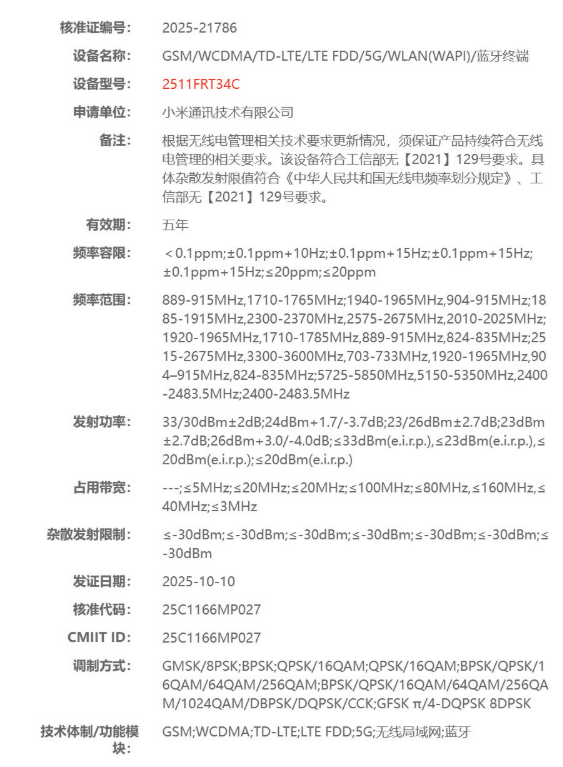
According to the latest certification listing, a new Xiaomi / Redmi device carrying the model number 2511FRT34C has been approved by Chinese authorities. Based on previous leaks, this device is believed to be the upcoming Redmi Turbo 5. As usual, the radio certification does not reveal key hardware details, but it confirms that the device is nearing official release.
Redmi Turbo 5 specifications (rumored)
Redmi Turbo 4
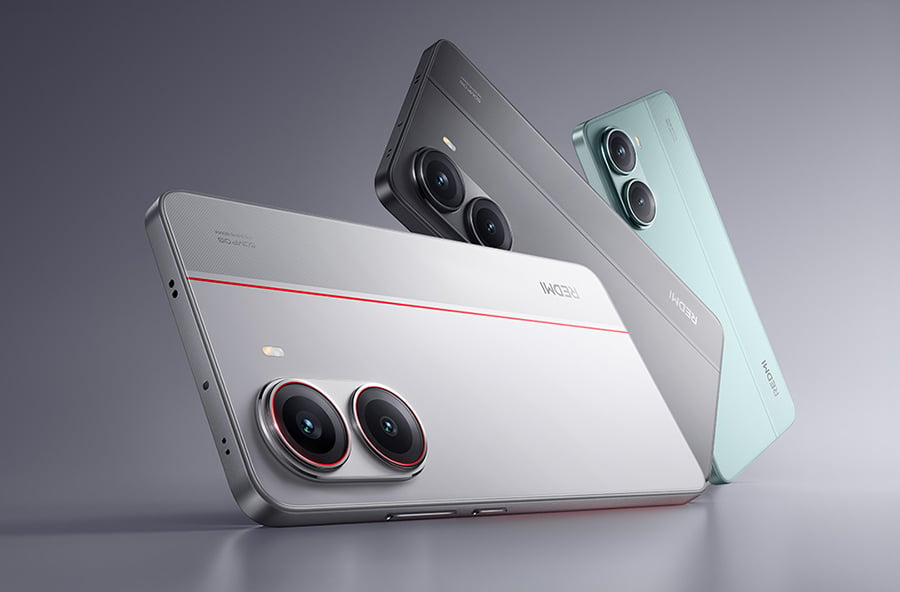
Accroding to previous reports, the Redmi Turbo 5 As per earlier reports, the Redmi Turbo 5 could feature a 6.67-inch flat OLED LTPS panel offering a 1.5K resolution. It is said to be powered by the Dimensity 8500-Ultra chipset, delivering performance in line with upper mid-range standards. The device is also expected to come equipped with a 7,000mAh+ battery, ensuring long-lasting endurance, and will run HyperOS 3-based Android 16 out of the box.
Speculations indicate that the Redmi Turbo 5 may debut globally as the Poco X8 Pro, with India likely to be among its key markets. The Poco X8 Pro has already received approval from Europe’s EE certification platform, suggesting a simultaneous global rollout. Both models are expected to debut by the end of this year.
Nubia is among the brands preparing to launch new Snapdragon 8 Elite Gen 5-powered smartphones. These include the Red Magic 11 Pro series and the Nubia Z80 Ultra. One of the main highlights of Nubia’s flagship lineup is its notch-less design that delivers a truly full-screen experience, made possible by the inclusion of an under-display camera. In addition to this, both upcoming flagships are expected to feature large batteries.
Nubia Z80 Ultra’s battery size revealed
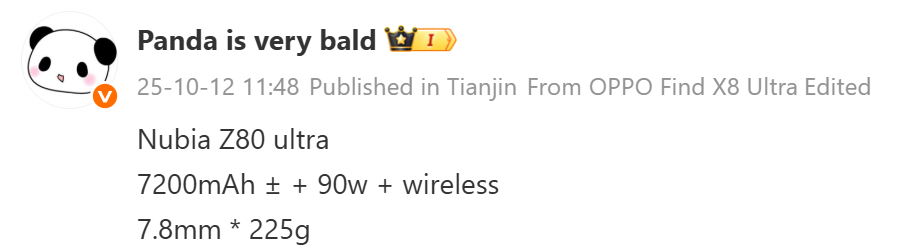
According to recent reports, the Red Magic 11 Pro series will be the only Snapdragon 8 Elite Gen 5 phone to feature an enormous 8,000mAh battery. Now, a new leak from Weibo has revealed that the Nubia Z80 Ultra will pack a sizeable 7,200mAh battery.
Despite housing such a large battery, the Nubia Z80 Ultra will maintain an impressive design profile, measuring just 7.8mm in thickness and weighing around 225 grams. The phone will support 90W wired fast charging along with wireless charging capabilities.
Nubia Z80 Ultra specifications (rumored)
Nubua Z80 Ultra launch date-
Reports indicate that the Nubia Z80 Ultra will come with up to 16GB of RAM and run on Nebula AIOS-based Android 16. It is said to feature a 144Hz flat AMOLED display with a 1.5K resolution, delivering a smooth and immersive viewing experience.
For photography, the device is expected to include a 50-megapixel main camera with a 35mm focal length, a 1/1.55-inch 50-megapixel ultra-wide camera, and an OmniVision OV64B periscope telephoto lens. On the front, it may house a 16-megapixel under-display selfie camera, preserving the full-screen aesthetic.
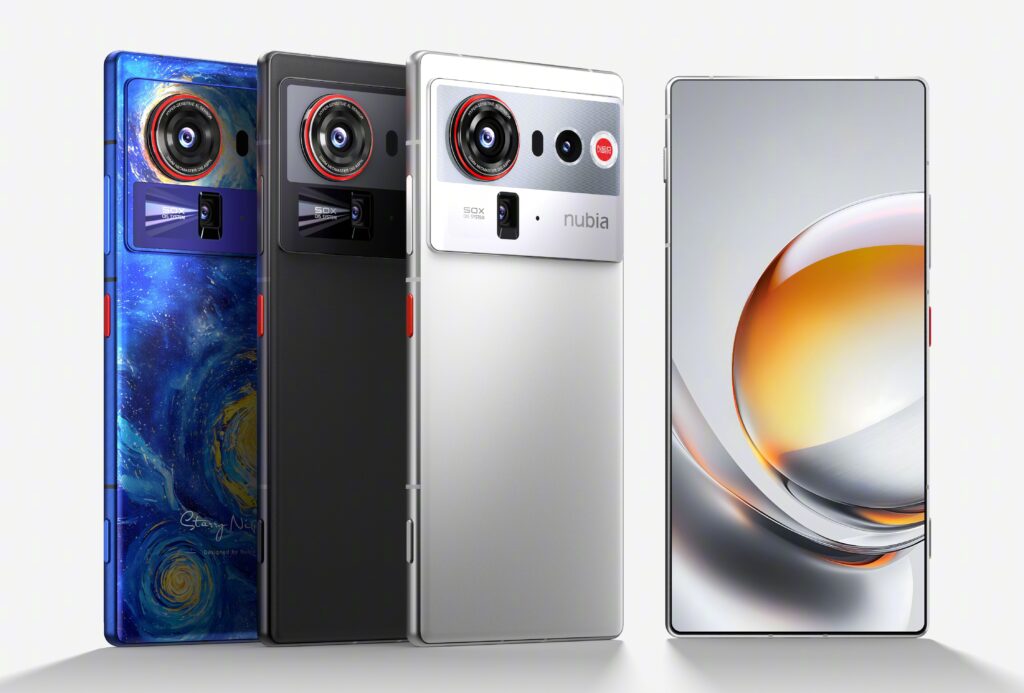
The Red Magic 11 Pro series is scheduled to debut on Oct. 17 in China, while the Nubia Z80 Ultra is expected to go official on Oct. 22. The Z80 Ultra will be available in shades, such as Phantom Black, Glacial White, and a Starry Collector’s Edition variant.
For more daily updates, please visit our News Section.
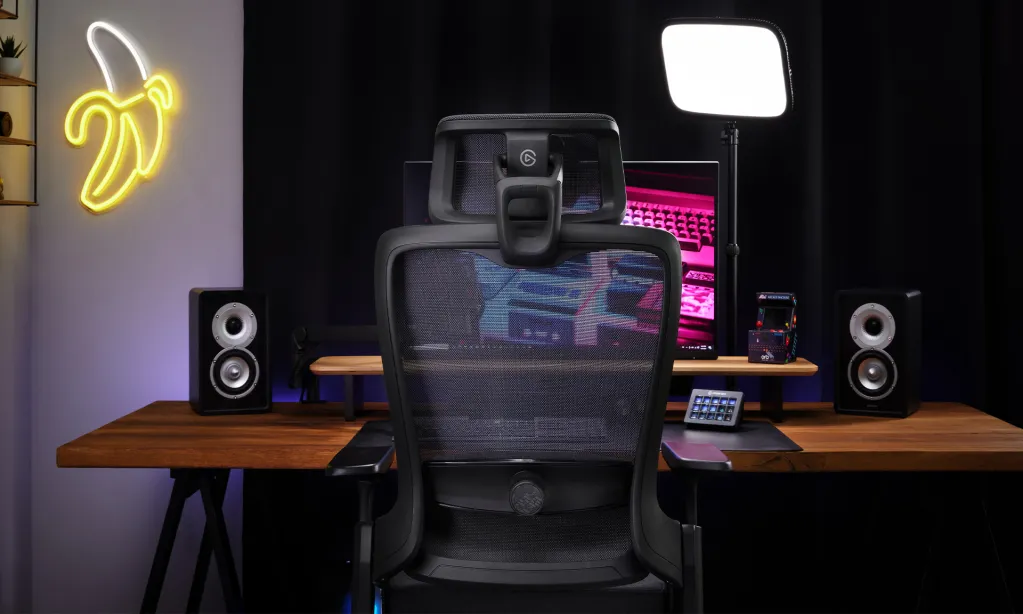
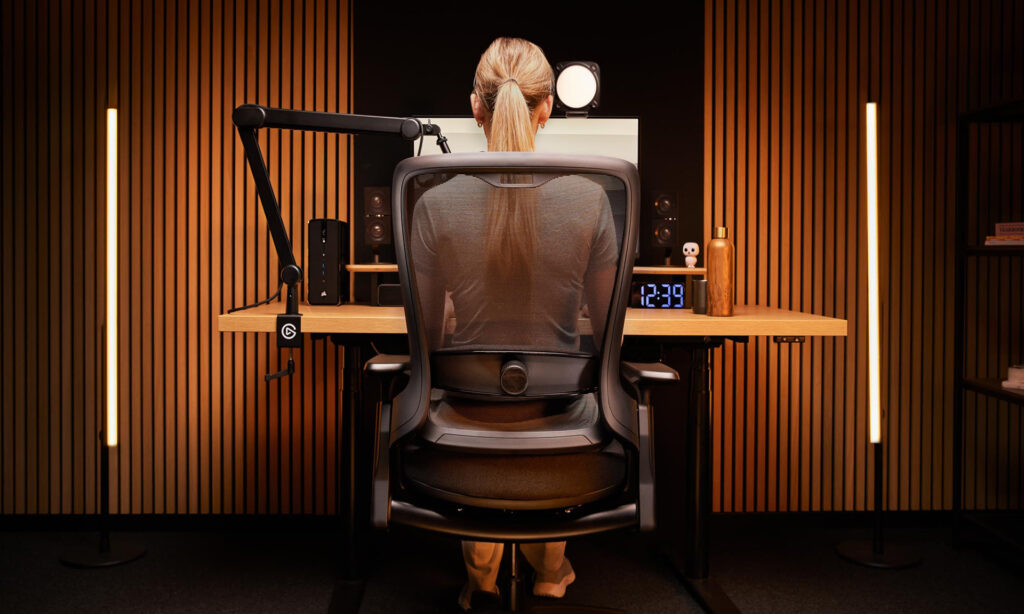
Elgato, a brand under Corsair, has announced its first studio chair, the Embrace. The company designed the chair specifically for creators, professionals, and anyone who spends long hours at a desk. The chair features a clean, modern look and includes several ergonomic adjustments.
Elgato Embrace Specifications
The Embrace supports a five-step recline system with a tilt limiter and adjustable resistance. It includes a molded foam seat with a waterfall-edge design that improves circulation. The high-strength mesh backrest is breathable and flexible to help keep users cool during extended sessions. The chair also supports a maximum load of 125 kg.
Elgato has added 4D armrests that allow adjustments in height, width, depth, and pivot. The seat depth slider adapts to different leg lengths, and the lumbar support system adjusts to match spinal curvature. It comes with a detachable headrest that is also available to support the neck at various angles.
The chair avoids loud colors and visible branding. Elgato placed a single logo on the back, and the design follows clean lines that suit both work and streaming environments. The Embrace uses self-braking casters to offer stability when stationary and smooth movement when needed.
Assembly requires only four screws and one Allen key. Most users can complete the setup within minutes. Elgato built the chair for durability, using materials that resist wear over time. The molded foam maintains its shape, and the mesh backrest resists sagging. All adjustable components, including the pneumatic lift and recline mechanisms, are designed for long-term use.
Pricing and Availability
The Elgato Embrace is priced at €499.99 and will go on sale later this holiday season. It’s already listed on Elgato’s official website.
In related gaming chair news, DXRacer has recently introduced the Martian-Pro gaming chair, while Lenovo has unveiled the Legion C7 Pro featuring pneumatic lumbar support and a Class-4 gas lift.
For more daily updates, please visit our News Section.
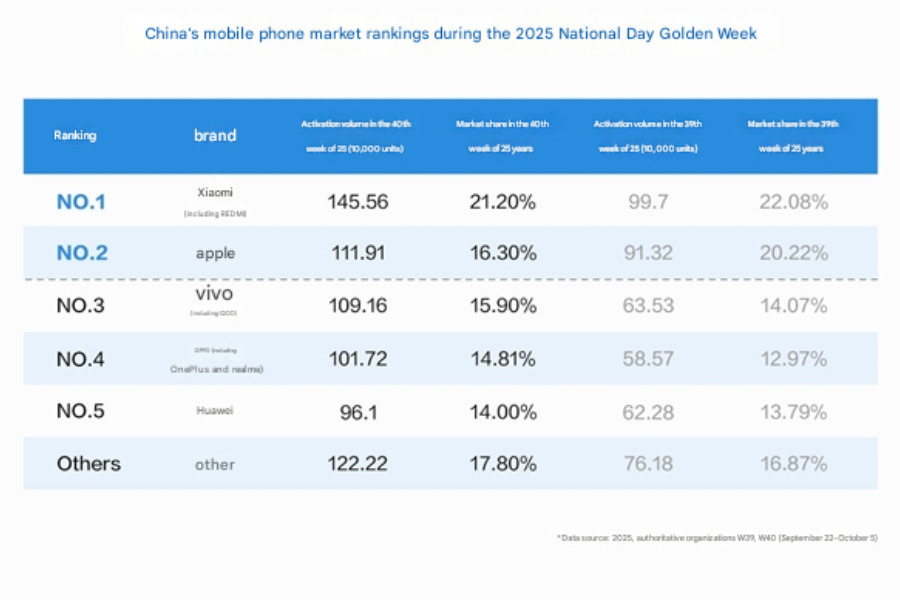
Xiaomi just had one of its best weeks in China. During China’s National Day Golden Week, from September 29 to October 5, the company surpassed Apple to become the top-selling smartphone brand in China, taking a 21.2% market share.
According to local sales data, the top five smartphone brands during the holiday period were Xiaomi, Apple, Vivo, Oppo, and Huawei. Apple came in second with a 16.30% share, while Vivo captured 15.90%.
Xiaomi President Lu Weibing recently said cumulative sales of the Xiaomi 17 series have crossed 1 million units within days of launch. That’s 20% higher than the previous generation during the same timeframe.
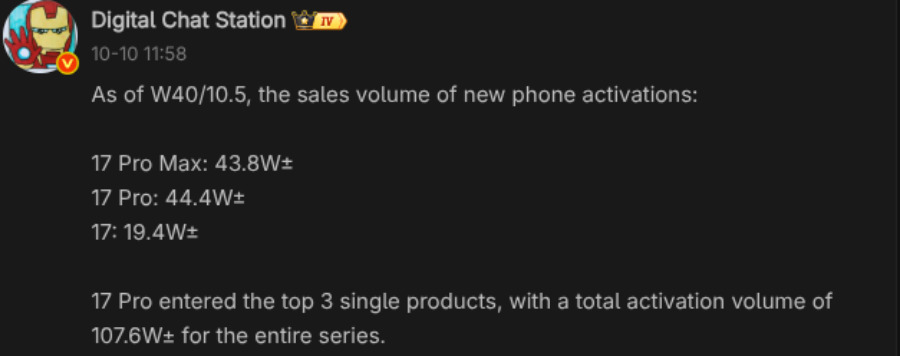
Much of the credit for this success goes to the Pro models. Well-known industry blogger Digital Chat Station reported that combined sales of the Xiaomi 17 Pro Max and 17 Pro have already topped 800,000 units.
Meanwhile, the standard Xiaomi 17 hasn’t matched the popularity of its higher-tier siblings. Sales reportedly reached around 194,000 units for it.
One standout feature driving sales of the Pro models is undoubtedly the back screen. Lu Weibing mentioned that Xiaomi invested heavily in this dual-screen setup, saying the cost of development alone was roughly 1 billion yuan. He also hinted that while competitors might try to replicate the idea, few would be willing to spend that much.
While the devices are enjoying strong success in China, they won’t make their way to the global market until next year. Even then, the Xiaomi 17 Pro is expected to remain exclusive to China.
For more daily updates, please visit our News Section.
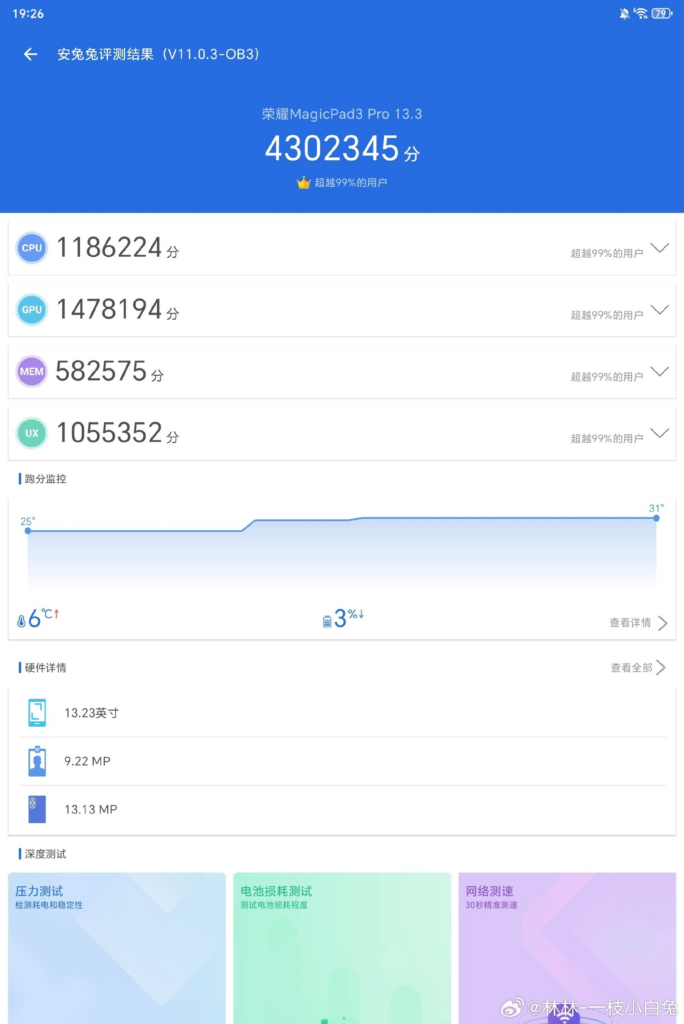
Honor will be the first brand to launch a Snapdragon 8 Elite Gen 5-powered tablet. Dubbed MagicPad 3 Pro, the device is set to go official alongside the Magic 8 series of flagship phones on Oct. 17 in China. There have been reports that the Snapdragon 8 Elite Gen 5 can achieve a score of 4.2 to 4.4 million on AnTuTu benchmarks. Now, a Chinese tech blogger has shared the AnTuTu listing of the MagicPad 3 Pro, shattering records with a 4.3+ million score.
Honor MagicPad 3 Pro AnTuTu listing
Honor MagicPad 3 Pro AnTuTu score
As can be seen above, the Honor MagicPad 3 Pro has scored 4,302,345 points on AnTuTu benchmarks. It recorded 1,186,224, 1,478,194, 582,575, and 1,055,352 points in the CPU, GPU, memory, and UX tests, respectively.
Honor MagicPad 3 Pro specifications (rumored)
Honor MagicPad 3 Pro
As per reports, the Honor MagicPad 3 Pro will feature a 13.3-inch LCD screen with support for a 3.2K resolution of 3200 x 2136 pixels and a 165Hz refresh rate. The device will run on MagicOS 10-based Android 16.
The MagicPad 3 Pro is powered by the Snapdragon 8 Elite Gen 5 and a 12,450mAh battery with 66W fast charging support. For photography, it may feature a 9-megapixel camera on the front and a 13-megapixel primary sensor on the back.
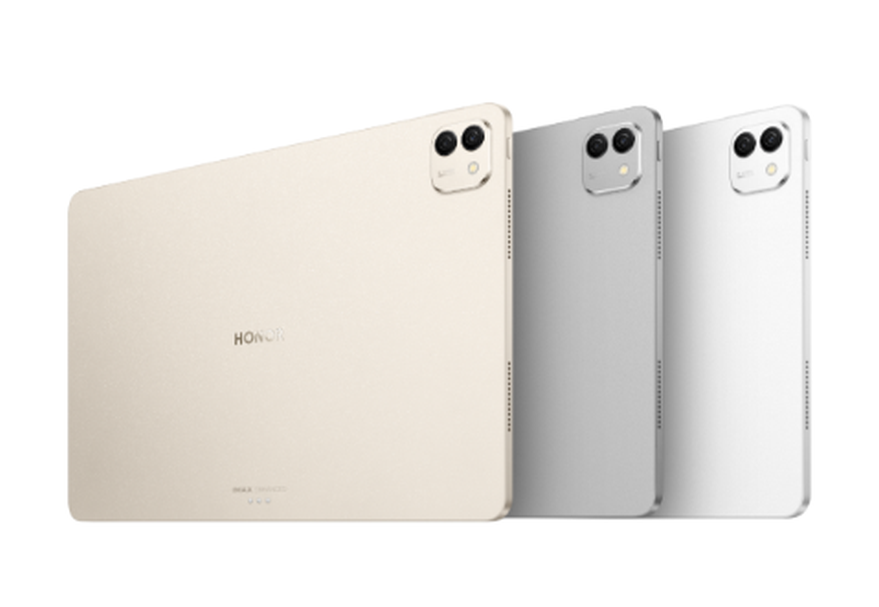
The MagicPad 3 Pro may ship with up to 16GB of RAM and up to 1TB of internal storage. It is also expected to come with eight speakers and a USB-C 3.2 port. It may come in shades such as Starry Gray, Floating Light Gold, and Moon Shadow White.
For more daily updates, please visit our News Section.
iQOO is gearing up for a major launch event on Oct. 20, where it will unveil the iQOO 15 alongside other products, including the iQOO Pad 5e, iQOO Watch GT 2, and iQOO TWS 5. There are reports suggesting that the iQOO Neo 11 could also make its debut at the same event. Ahead of the expected launch, a reliable tipster has shared a real-life image of the Neo 11, offering a first look at its design while also reiterating its key specifications.
iQOO Neo 11 live shot
iQOO Neo 11 live shot
According to the tipster, the iQOO Neo 11 features a metal mid-frame with flat edges. The color scheme shown in the leaked image reflects a vibrant, comic-inspired design, hinting that this particular model could be a limited-edition or themed variant.
iQOO Neo 11 specifications (rumored)
As per reports, the iQOO Neo 11 will sport a flat AMOLED display with a 2K resolution and an ultrasonic in-screen fingerprint sensor. The device will run on OriginOS 6 based on Android 16.
Under the hood, it is said to be powered by the Snapdragon 8 Elite chipset, paired with a large 7,500mAh battery that supports 100W wired fast charging. However, the phone is not expected to feature wireless charging support.
On the camera front, the Neo 11 is tipped to include a 50-megapixel main sensor with OIS, paired with either an 8-megapixel or 50-megapixel ultra-wide lens. Other camera and configuration details are yet to be confirmed.
The iQOO Neo 11 is likely to compete with other Snapdragon 8 Elite-powered smartphones launching around the same time in China, such as the OnePlus Ace 6, Realme GT 8, and Redmi K90.
For more daily updates, please visit our News Section.
OnePlus is preparing to unveil the OnePlus 15 later this month in China. The company has been actively highlighting its upcoming display technology and will reveal more details on Oct. 14 during BOE’s flexible OLED flagship launch event in Shenzhen. Ahead of the event, OnePlus President Li Jie Louis shared important information about the screen that will power the brand’s next flagship.
OnePlus 15: Third-generation Oriental Screen with 165Hz refresh rate
ONePlus 15 to feature 165Hz OLED screen
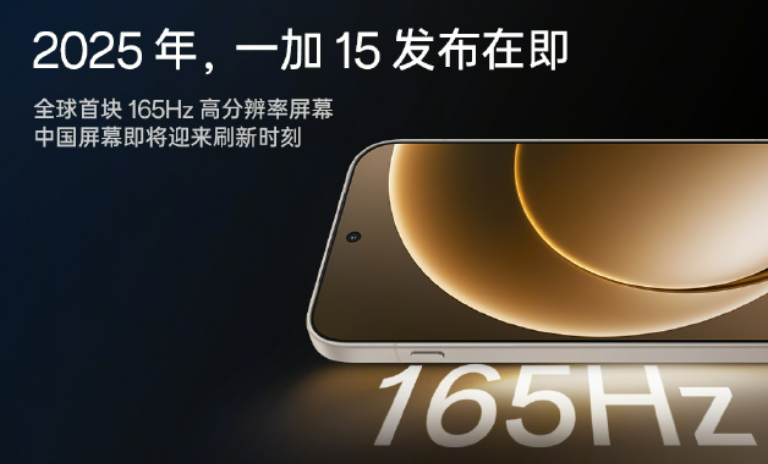
According to Li Jie Louis, OnePlus and BOE have co-developed the “third-generation Oriental Screen,” described as the world’s most advanced smartphone display. This new panel will mark the beginning of the “165Hz ultra-refresh era
The display, expected to be a 6.78-inch BOE X3 OLED panel, will offer a 1.5K resolution and a 165Hz refresh rate, making it the first of its kind globally.
The new display will achieve eight major technological breakthroughs and set nine world records in screen performance. It promises four key areas of leadership: smoothness, display quality, dark viewing, and eye protection. It will also be the first Android display to achieve true hardware-level 1-nit brightness for dark environments and will be certified with TÜV Rheinland Smart Eye Protection 5.0 Gold.
Since the launch of the OnePlus 7 Pro in 2019, OnePlus has led the industry into the high-refresh era, introducing 90Hz, 120Hz, and later the Oriental Display series. With the OnePlus 15 and BOE’s third-generation screen, the company now aims to redefine flagship smartphone display standards once again.
For more daily updates, please visit our News Section.
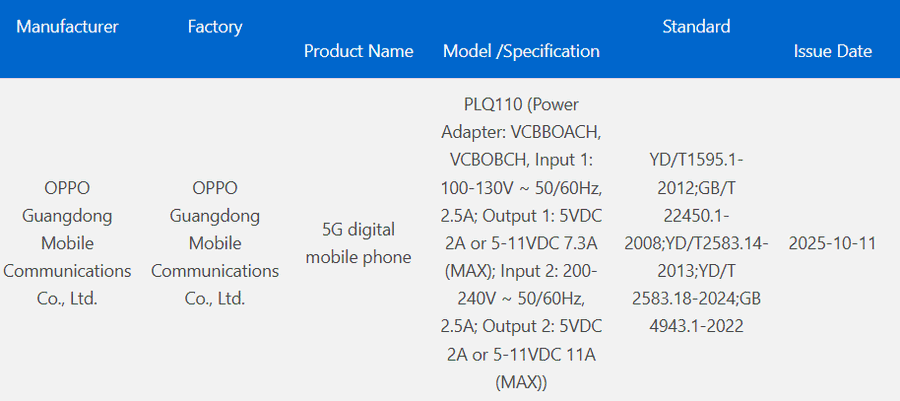
OnePlus is expected to unveil the OnePlus 15 later this month in China. There are speculations that the brand may also announce the OnePlus Ace 6 alongside the OP15. Ahead of the expected launch, the Ace 6 has received 3C certification in China.
OnePlus Ace 6 3C certified
OnePlus Ace 6 3C certified
As can be seen above, a new OnePlus device bearing the model number PQL110 has been approved by the 3C authority in China. The listing reveals that the device may ship with a 120W fast charger. According to Chinese tech bloggers, this device is the upcoming OnePlus Ace 6.
In terms of specifications, rumours about the OnePlus Ace 6 have revealed that it will have a BOE OLED screen supporting a 1.5K resolution, a 120Hz refresh rate, and an ultrasonic in-screen fingerprint sensor. Under the hood, the device will feature the Snapdragon 8 Elite chipset and a 7,800mAh battery with 120W fast charging.
The Ace 6 will be equipped with a metal middle frame and may have an IP68 rating. It is expected to run on ColorOS 16-based Android 16.
OnePlus 15R in the works
Earlier this year, OnePlus unveiled the OnePlus 13 and OnePlus 13R in India and some other markets. The 13R was a modified version of the Ace 5, equipped with a better camera setup and a slightly smaller battery. Therefore, the upcoming OnePlus 15R is said to be a tweaked version of the OnePlus Ace 6. While the OnePlus 15 is expected to launch on Nov. 13 in India, there’s no clarity on whether the 15R will also debut alongside.
For those wondering about the Ace 6 Pro for China, recent reports have revealed that the company has reportedly decided to cancel it.
For more daily updates, please visit our News Section.
Oppo is all set to announce the Oppo Find X9 series of smartphones on Oct. 16 in China. Apart from the Find X9 and X9 Pro, the brand will also unveil the Oppo Pad 5 tablet and Oppo Watch S smartwatch. At the same time, the brand is also said to be gearing up for its global launch. It is also being said that Oppo may hold a separate launch event in India. As per a report by GSMArena, the company has already confirmed the India launch timeframe at the Indian Mobile Congress, which was recently held in India.
Oppo Find X9 India launch timeframe
Oppo Find X9 series
The Oppo Find X9 and Find X9 Pro will arrive as India’s first phones powered by the Dimensity 9500 chipset. As far as the launch is concerned, it will be held in November.
The Find X9 series is not the only one planned to launch in India next month. Recent reports have claimed that the Realme GT 8 Pro may break cover on Nov. 11, whereas the OnePlus 15 may launch on Nov. 13.
While the Find X9 and X9 Pro are photography-focused smartphones powered by the Dimensity 9500, the GT 8 Pro and OP15 are performance-driven phones powered by the Snapdragon 8 Elite Gen 5. The iQOO 15, featuring the Snapdragon 8 Elite Gen 5, is also expected to go official in November in India.
Vivo is also said to be working on the Vivo X300 series for India. Speculations are rife that the X300 and X300 Pro may debut in December in the country. Like the Find X9 series, the X300 duo will arrive with the Dimensity 9500 chip onboard.
For more daily updates, please visit our News Section.
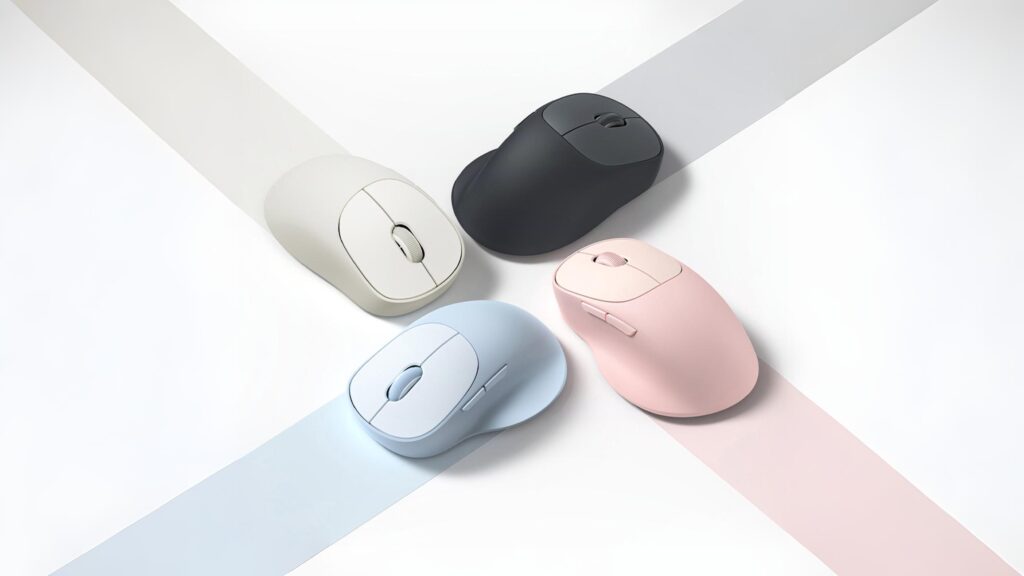
Xiaomi has released the Wireless Mouse 3 Comfort Edition in China after a short crowdfunding period. It has the same hardware as the regular Wireless Mouse 3 but comes with a wider body, a contoured shape, and a thumb rest for better grip and comfort during long use.
Xiaomi Wireless Mouse 3 Comfort Edition features
Xiaomi Wireless Mouse 3 Comfort Edition
The mouse has an asymmetrical ergonomic design that supports the natural curve of the hand. Xiaomi has used a 172-nanometer quasi-molecular UV matte coating that gives it a smooth, skin-friendly finish and prevents stickiness. The design focuses on reducing hand strain during extended use.
The Wireless Mouse 3 Comfort Edition connects through both 2.4GHz wireless and Bluetooth 5.0. It can pair with up to three devices at once, and users can switch between them using a button on the bottom of the mouse.
Xiaomi worked with TTC to create a new low-noise switch structure. The custom switches have a soft click feel and longer key travel, making them quieter and more comfortable to use. There are also two side buttons for quick forward and backward navigation.
The mouse uses a 1200 DPI low-power PixArt sensor for accurate tracking while saving energy. Inside, there is a slot to store the 2.4GHz receiver so it does not get misplaced. The scroll wheel is covered with silicone and has a textured surface for better grip and smoother control.
The mouse weighs about 65 grams without the battery and measures 118.9 mm in length, 75.5 mm in width, and 41.5 mm in height. It comes in four colors: Black, White, Pink, and Blue.
Pricing & availability
The Xiaomi Wireless Mouse 3 Comfort Edition is priced at CNY 109 (around $15) in China. Xiaomi has not announced global availability yet.
For more daily updates, please visit our News Section.
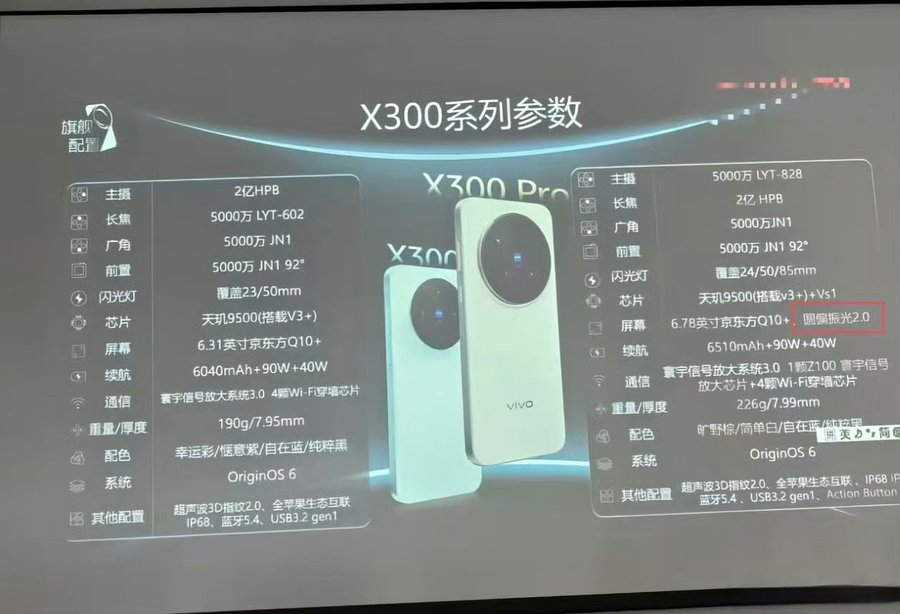
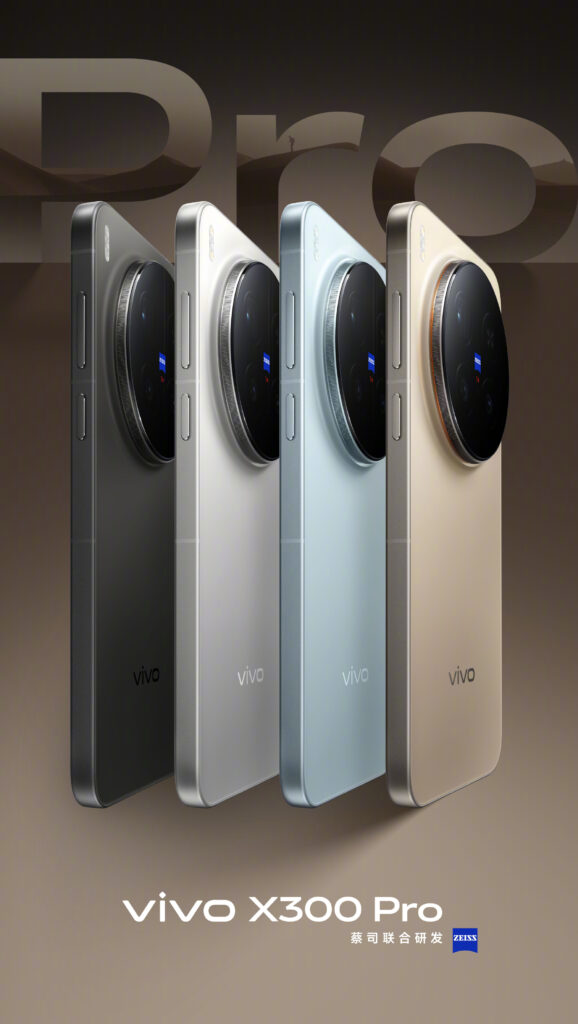
The entire specifications of the Vivo X300 series have emerged through the China Telecom listing and a leaked presentation slide before its Oct. 13 China launch. Readers can visit this page to know the leaked specifications of the Vivo X300 Pro, and to learn more about the X300, continue reading this post.
Vivo X300 specifications (rumored)
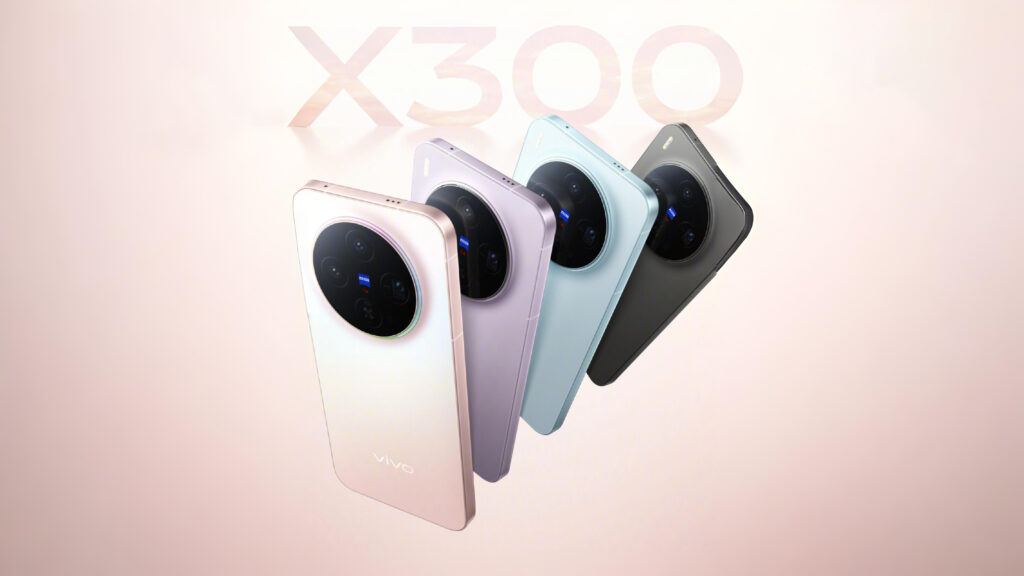
Vivo X300
The Vivo X300 (model number V2509A) is a compact phone measuring 150.57 x 71.92 x 7.95mm and weighing 190 grams. It will be available in shades like Freedom Blue, Leisure Purple, Lucky Colour, and Pure Black.
The device will house a 6.31-inch BOE Q10+ OLED panel offering a 1.5K resolution (2640 x 1216 pixels) and a 120Hz refresh rate. It will be powered by the Dimensity 9500 chipset and a 6,040mAh battery. Like the Pro model, it will support 90W wired and 40W wireless charging.
For selfies, the Vivo X300 will have a Samsung JN1 50-megapixel front camera with a 92-degree FOV. Its rear camera setup will comprise a 200-megapixel Samsung HPB main camera with OIS, a 50-megapixel Samsung JN1 ultra-wide lens, and a 50-megapixel Sony LYT-602 periscope telephoto camera with OIS. The X300 will support 23/50mm focal lengths and will come with the V3+ chip for post-processing.
Vivo X300 series specs leak
The X300 Pro come preloaded with Android 16 with a layer of OriginOS 6 on top. It will also have other features, such as universal signal amplifier 3.0, 4 Wi-Fi wall-penetrating chips, dual speakers, an x-axis linear motor, ultrasonic in-screen fingerprint scanner, Bluetooth 5.4, NFC, USB 3.2 Gen 1, and an IP68 rating.
Starting Oct. 17, the Vivo X300 will be available in multiple options like 12GB+256GB, 12GB+512GB, 16GB+256GB, 16GB+512GB, and 16GB+1TB. Vivo has already confirmed that it will support a Zeiss 2.35× telephoto teleconverter as an optional accessory.
As usual, readers are advised to digest the leak with a pinch of salt as some of the above-mentioned details may not be accurate.
The Vivo X300 series of smartphones are all set to launch on the coming Monday, Oct. 13, in China. The lineup has two models, namely the Vivo X300 and X300 Pro. Ahead of the launch, both smartphones have surfaced in China Telecom’s product library, revealing key details about their specifications and variants. At the same time, a leaked presentation slide has also emerged to reveal details that are not available in the China Telecom listings. Continue reading ahead to know all the information about the Vivo X300 series’ specifications.
Vivo X300 Pro specifications (rumored)
Vivo X300 Pro color options
The Vivo X300 Pro (model number V2502A) will measure 161.98 x 75.48 x 7.99mm and weigh 226 grams. It will be available in shades like Freedom Blue, Simple White, Pure Black, and Wilderness Brown.
It will feature a 6.78-inch BOE Q10+ OLED panel that offers a 1.5K resolution (2800 x 1260 pixels), a 120Hz refresh rate, and circular polarization. It will be powered by the Dimensity 9500 chipset and pack a 6510mAh battery, which will have support for 90W wired and 40W wireless charging.
On the photography side, the Vivo X300 Pro will have a 50-megapixel Samsung JN1 front camera with a 92-degree FOV. Its rear camera setup, covering focal lengths such as 24 / 50 / 85mm, will feature a 200-megapixel Sony LYT-828 primary camera with OIS, a 50-megapixel Samsung JN1 ultra-wide lens, and an OIS-enabled 200-megapixel Samsung HPB periscope telephoto camera.
Vivo X300 series specs leak
The X300 Pro will feature Vivo’s VS1 (pre-processing) and V3+ (post-processing) imaging chips. The device will offer other features such as OriginOS 6-based Android 16, universal signal amplifier 3.0, digital signal amplifier chip, 4 Wi-Fi wall-penetrating chips, dual speakers, an x-axis linear motor, an ultrasonic in-screen fingerprint scanner, Bluetooth 5.4, NFC, USB 3.2 Gen 1, Action Button, and an IP68 rating. It is also confirmed to support a Zeiss 2.35× telephoto teleconverter as an optional accessory.
Starting Oct. 17, the Vivo X300 Pro will be available in variants such as 12GB+256GB, 16GB+512GB, and 16GB+1TB. There will be another variant with model number V250D2A, which will be advertised as the Vivo X300 Pro Beidou Satellite Communication Edition. It will come in a single 16GB+1TB version.
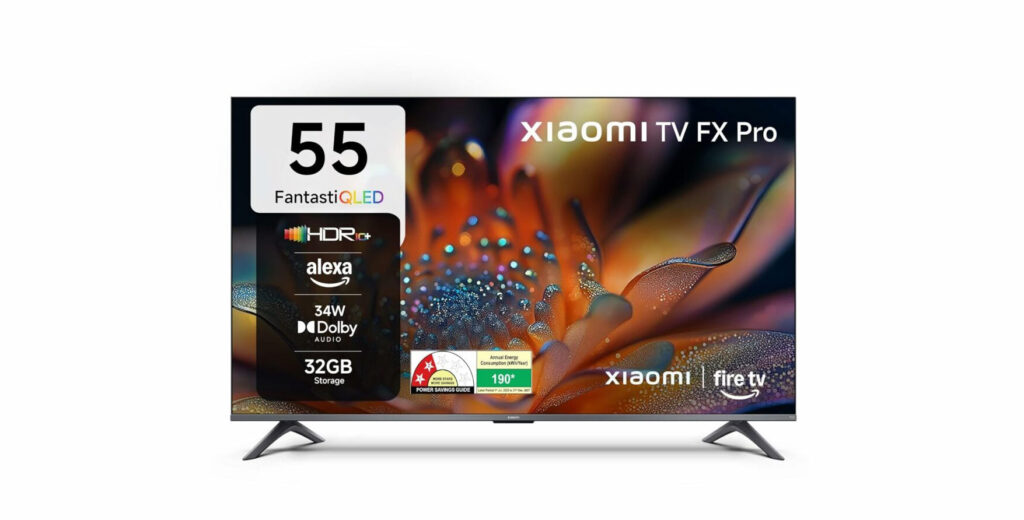
The smart TV segment is crowded, where premium features often come with exorbitant price tags. However, Xiaomi has been a long-term disruptor by offering flagship features at a reasonable price. Here enters the Xiaomi 55-inch FX Pro QLED Ultra HD 4K Smart Fire TV, currently stealing the show on Amazon for an effective ₹27,999.
With an excellent 48% off its MRP of ₹62,999, which makes the list price of Xiaomi’s FX Pro QLED 55-inch 4K TV just ₹ 32,999. Moreover, the Smart TV comes with additional perks, including a ₹1,500 coupon and a ₹3,500 HDFC credit card discount. That makes the effective price to buy this TV is just ₹27,999. This is indeed a great deal for a smart TV of this specification.
Please Note: When you buy something using the links in our articles, we may earn a small commission at no cost to you.
Xiaomi FX Pro QLED 55-inch 4K TV Specs and Features
The Xiaomi FX Pro shines with QLED technology, promising vibrant colors and deep blacks across its 55-inch bezel-less display. The 4K Ultra HD resolution (3840 x 2160) pairs with HDR10+, HLG, and Dolby Vision support for cinematic clarity. At the same time, the Vivid Picture Engine 2 and Reality Flow MEMC cater to smooth motion in everything from fast-paced sports to series. It also provides robust connectivity features: three HDMI ports, two USBs, Ethernet, Bluetooth, and dual-band WiFi.
One of the notable capabilities of the TV is that it comes with Fire TV built in, powering access to over 12,000 apps like Netflix, Prime Video, and Disney+ Hotstar.
At this price, with no-cost EMI options and free brand-managed installation, it seems to be the right time for upgrading your TV if looking for one. Since the deal is a part of Amazon’s ongoing crazy Diwali Sale, the price can fluctuate at any time, so grab the TV with this best offer before the stocks go out or the price increases.
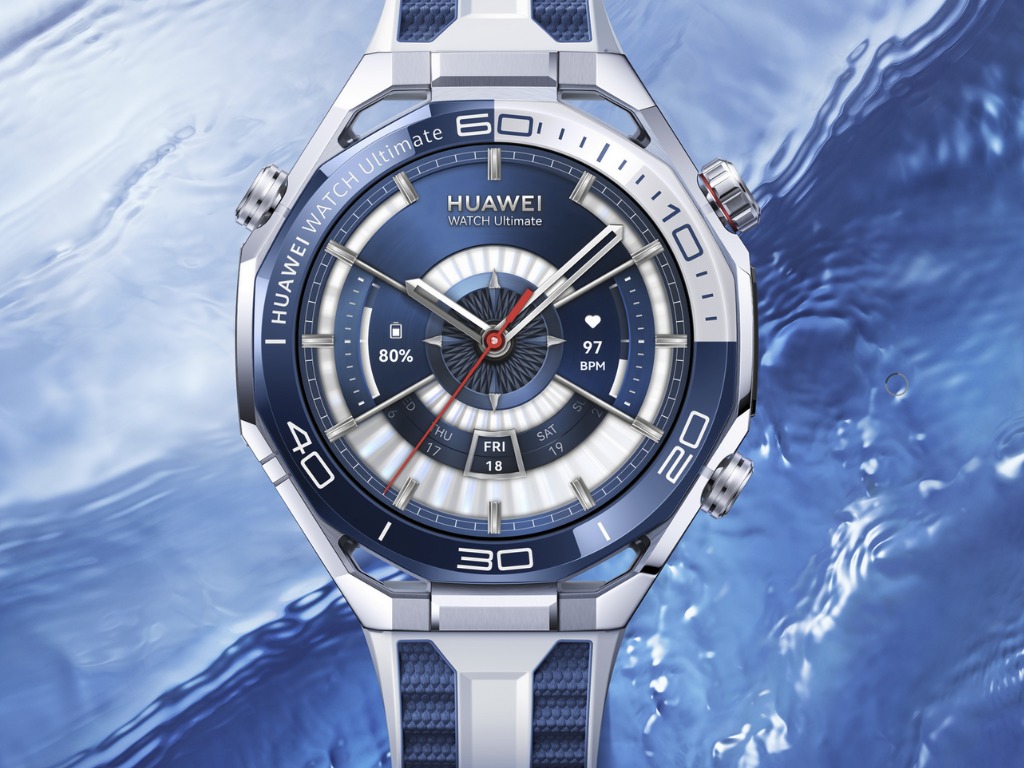
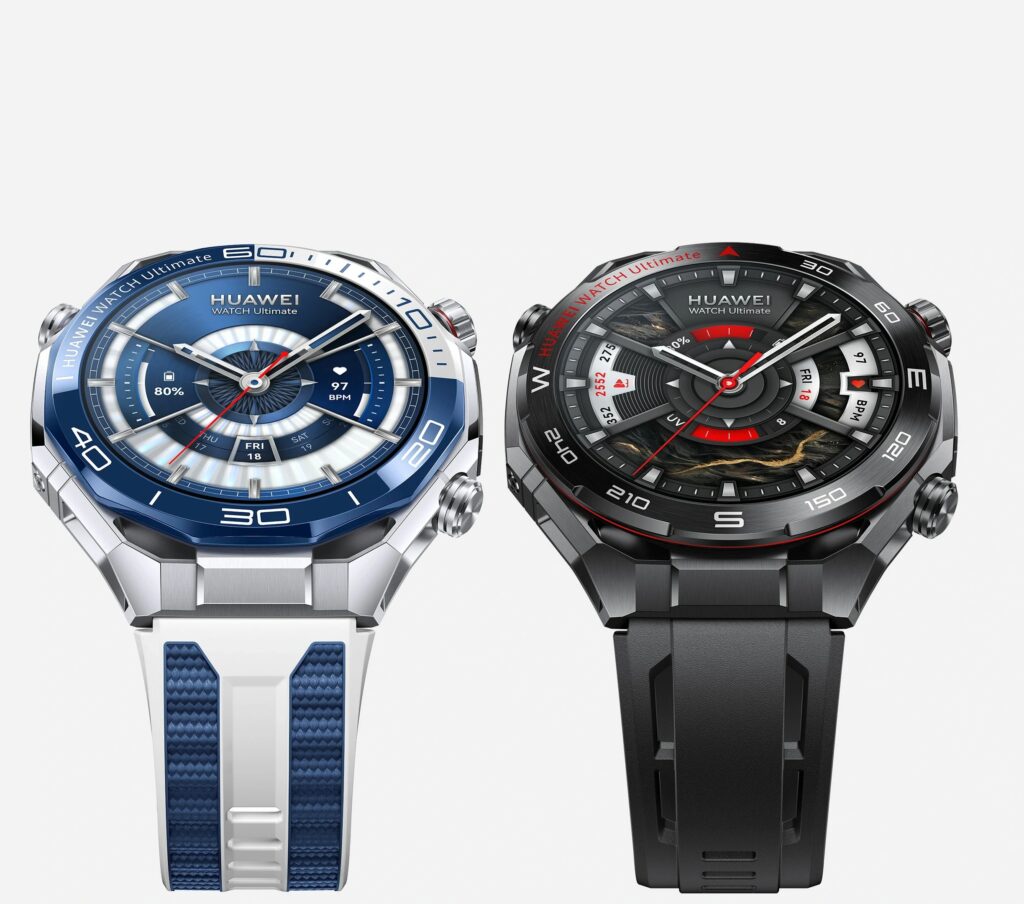
Huawei introduced the Watch Ultimate 2 (Review) last month in the European market. The watch has a premium built, and is tailormade for for divers and outdoor users. It also introduces sonar-based underwater communication, a first for any Huawei smartwatch. The watch is now available to buy in multiple regions across Europe.
Huawei Watch Ultimate 2 features
The Watch Ultimate 2’s case is made from a zirconium-based liquid metal alloy for durability. The display is a 1.5-inch LTPO 2.0 AMOLED panel with a 466 x 466 resolution and 3,500 nits of peak brightness, protected by sapphire glass.
The Watch Ultimate 2 is the first Huawei smartwatch rated for diving up to 150 meters. It has a waterproof structure that allows for audio features and sonar-based messaging up to 30 meters underwater. Users can add up to 50 diving partners, test messages above water, and choose from dive modes like recreational, technical, scuba, and free dive. It displays key dive data such as depth, time, speed, NDL, and PO2, with all information saved in the Huawei Health app.
The watch features the X-Tap multi-sensing control between two crowns for quick access to heartbeat, ECG, and other health data. It supports eSIM calling with AI noise cancellation and stable signals. Expedition Mode lets users import routes and download offline maps, supported by the Sunflower Positioning System.
Battery life lasts up to 11 days with light use, 6 days in typical use, and 4 days with Always-On Display. In standard mode, it runs for 4.5 days on Android and 3.5 days on iOS. Other functions include fall detection, action camera control, golf tracking, zoomable course maps, ball trajectory sharing, payments, smart gestures, and AppGallery support.
Pricing & availability
The Watch Ultimate 2 is available to buy through Huawei’s online store, the Berlin flagship, and major retail partners. Prices start at €899 (about $1,043). Buyers who purchase before November 4 will receive FreeBuds Pro 4 earbuds and a three-year warranty extension at no extra cost.
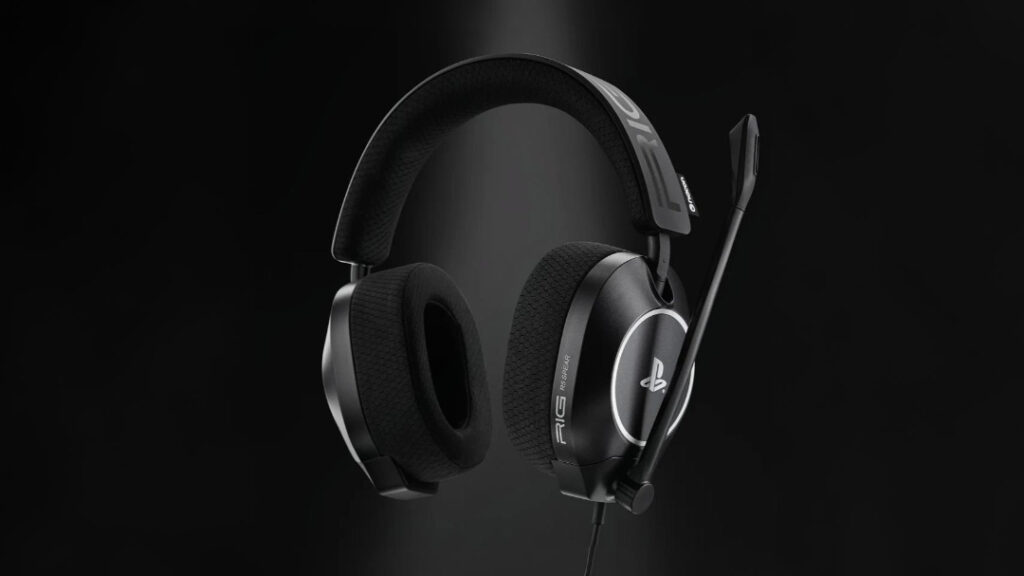
Nacon has launched its new PS5-licensed wired gaming headset, the Rig R5 Spear Pro HS. The headset comes in Black and is now available for purchase at €79.90 in Europe. In the US, the headset carries a retail price of $69.99.
Nacon Rig R5 Spear Pro HS Specs
The Rig R5 Spear Pro HS is designed to deliver precise and immersive in-game sound. It features 40mm drivers with laminated graphene diaphragms, which help minimize harmonic distortion to less than 0.5%.
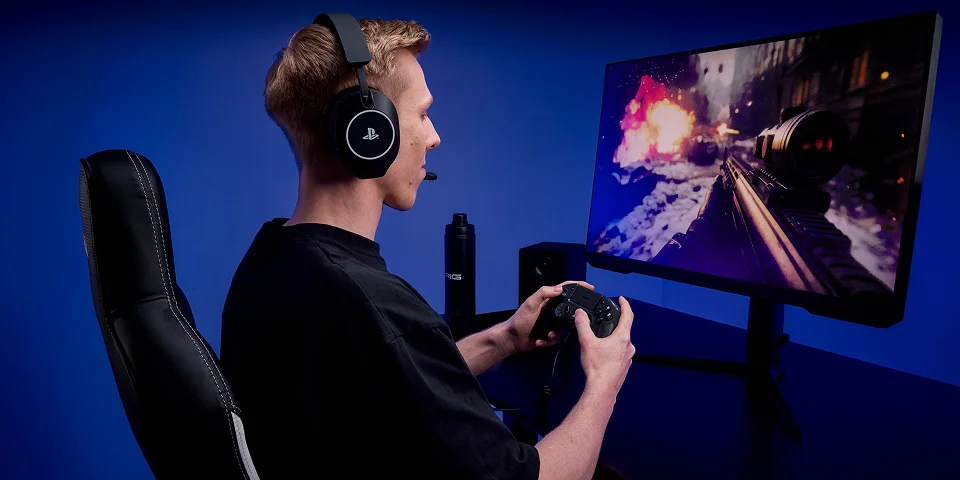
The headset supports Sony’s Tempest 3D AudioTech and is optimized for spatial audio on PlayStation 5 consoles. Nacon claims the headset can reproduce subtle audio details like footsteps and distant gunfire with high accuracy, enhancing player awareness during gameplay.
The headset uses a wired connection with a 1.5-meter cable and a standard 3.5mm jack. It supports a wide frequency response of 20Hz to 40kHz and has an impedance of 32 ohms. Inline volume control is available for easy adjustments during gaming sessions. The headset is compatible with PS5, PS4, PC, and mobile devices.
Nacon has included a flexible boom microphone with a cardioid pickup pattern, a metal mesh pop filter, and flip-to-mute functionality. The microphone delivers a frequency response of 50Hz to 15kHz and maintains a signal-to-noise ratio above 42dB.
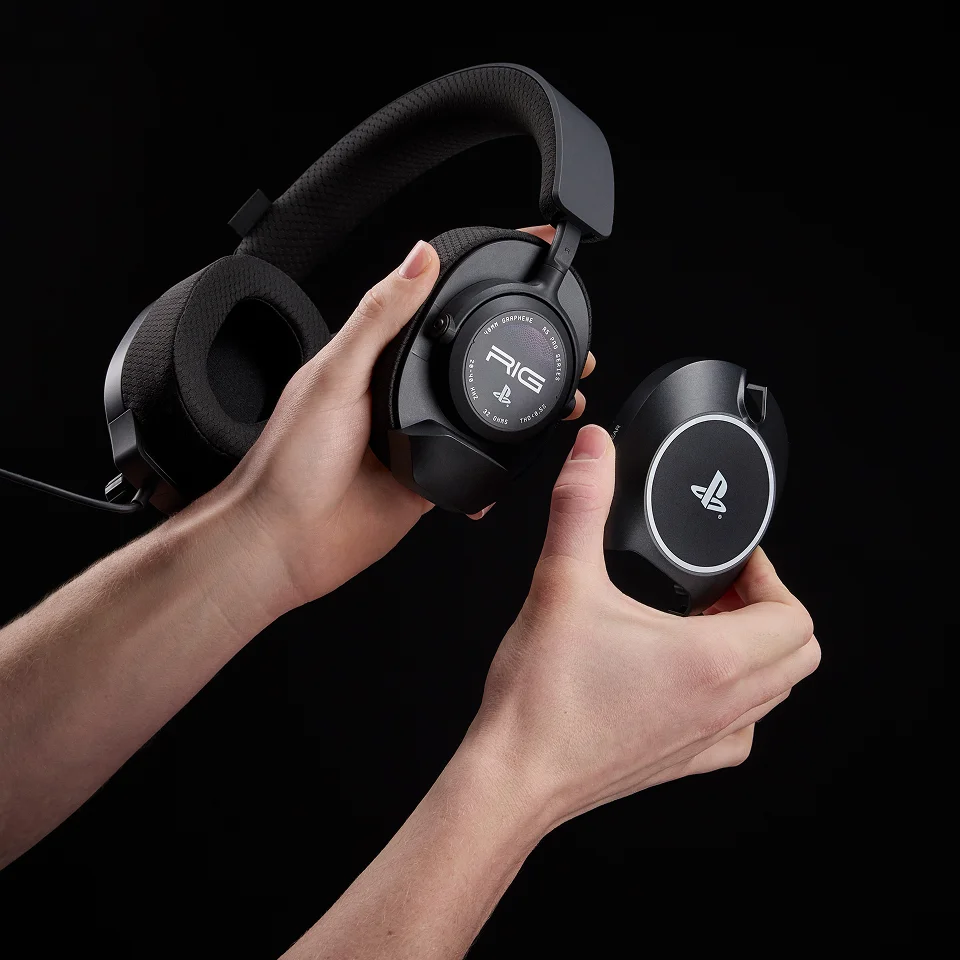
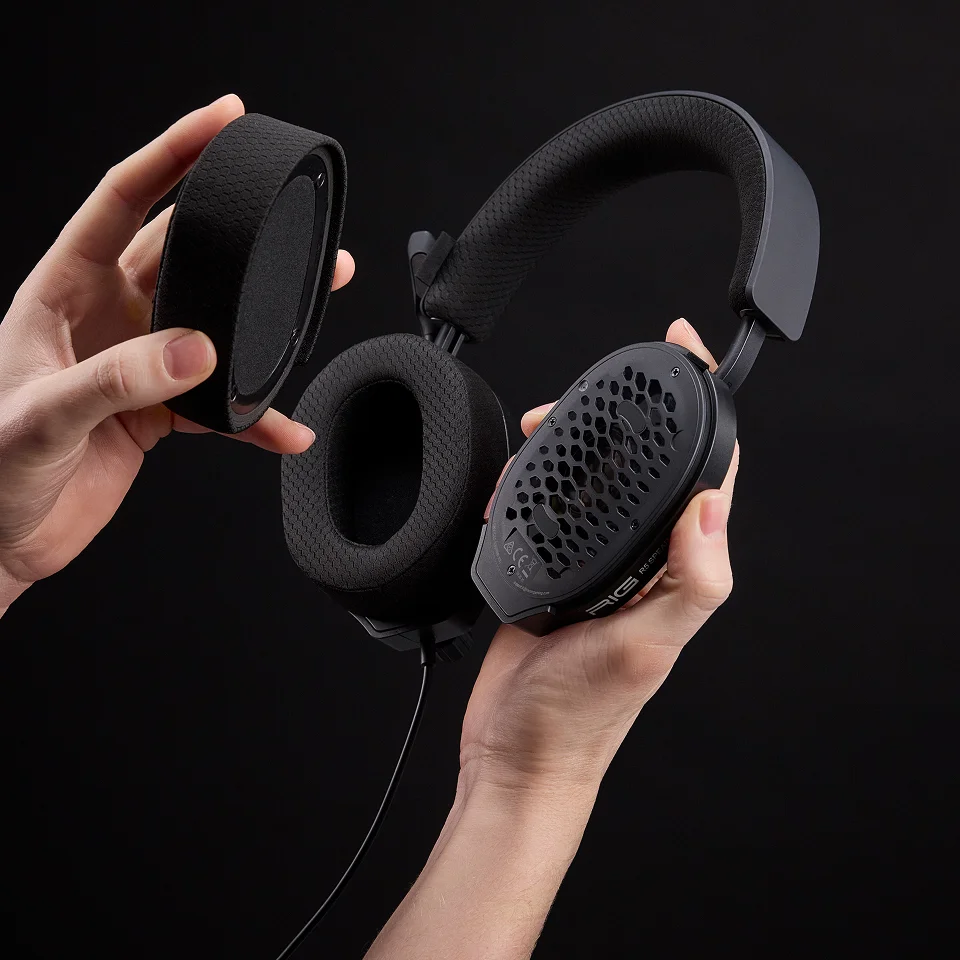
The Rig R5 Spear Pro HS focuses on both comfort and customization. It uses Nacon’s proprietary Snap+Lock magnetic system, allowing users to swap side plates and replace ear cushions. The headband and earcups are lined with memory foam padding. The headset also features adjustable arms and flat-folding earcups for better portability and storage.
In related news, Logitech recently introduced the Zone Wireless 2 ES and Wired 2 headsets, both equipped with AI-powered noise cancellation for clearer voice performance.
For more daily updates, please visit our News Section.
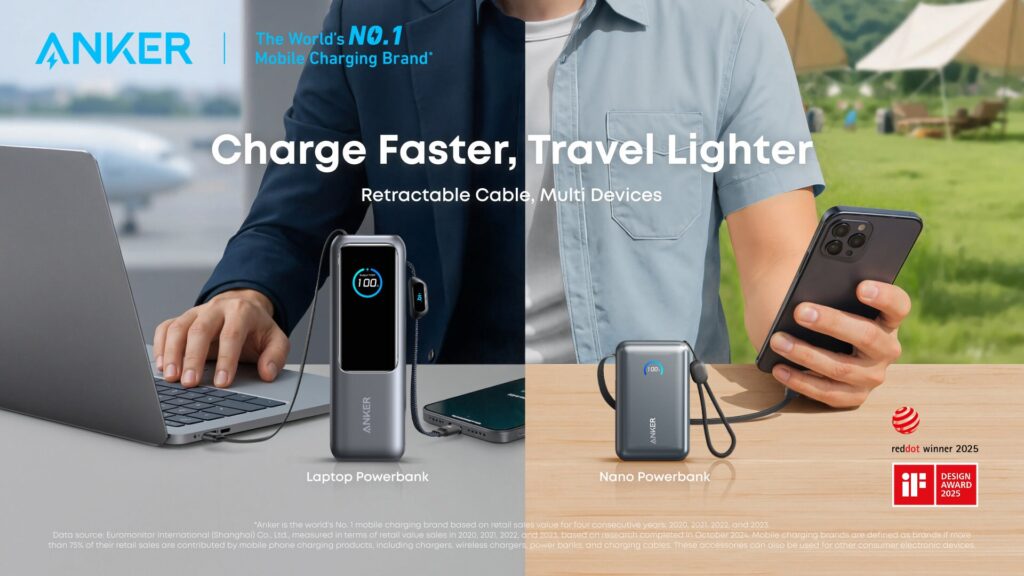
Anker has launched a new range of Nano series chargers and powerbanks in Singapore. The lineup includes the Anker Laptop Powerbank, Nano Retractable Powerbank, Nano Wireless Powerbank, and new Nano chargers for cars and home use.
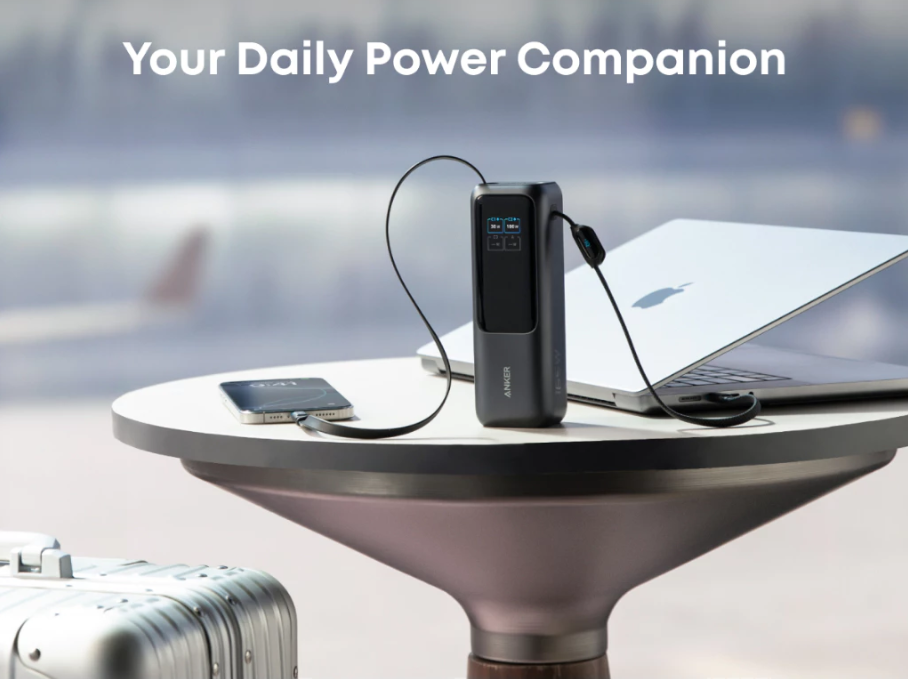
The Anker Laptop Powerbank (A1695) features a 25,000mAh battery with 165W total output across four ports, allowing users to charge up to four devices simultaneously. It includes two built-in USB-C cables: one 30cm for quick charging and one 70cm retractable cable that adjusts to the required length. Each port supports up to 100W output and can charge a MacBook Air (M3) to 50% in 21 minutes.
Anker Laptop Powerbank (A1695)
The powerbank includes a TFT color screen showing output, temperature, and estimated charging time, while pulling the retractable cable triggers animated icons on the display. With enough capacity to charge an iPhone 16 up to 4.5 times or a MacBook Air (M3) 1.3 times, it is flight-approved and built for both work and travel.
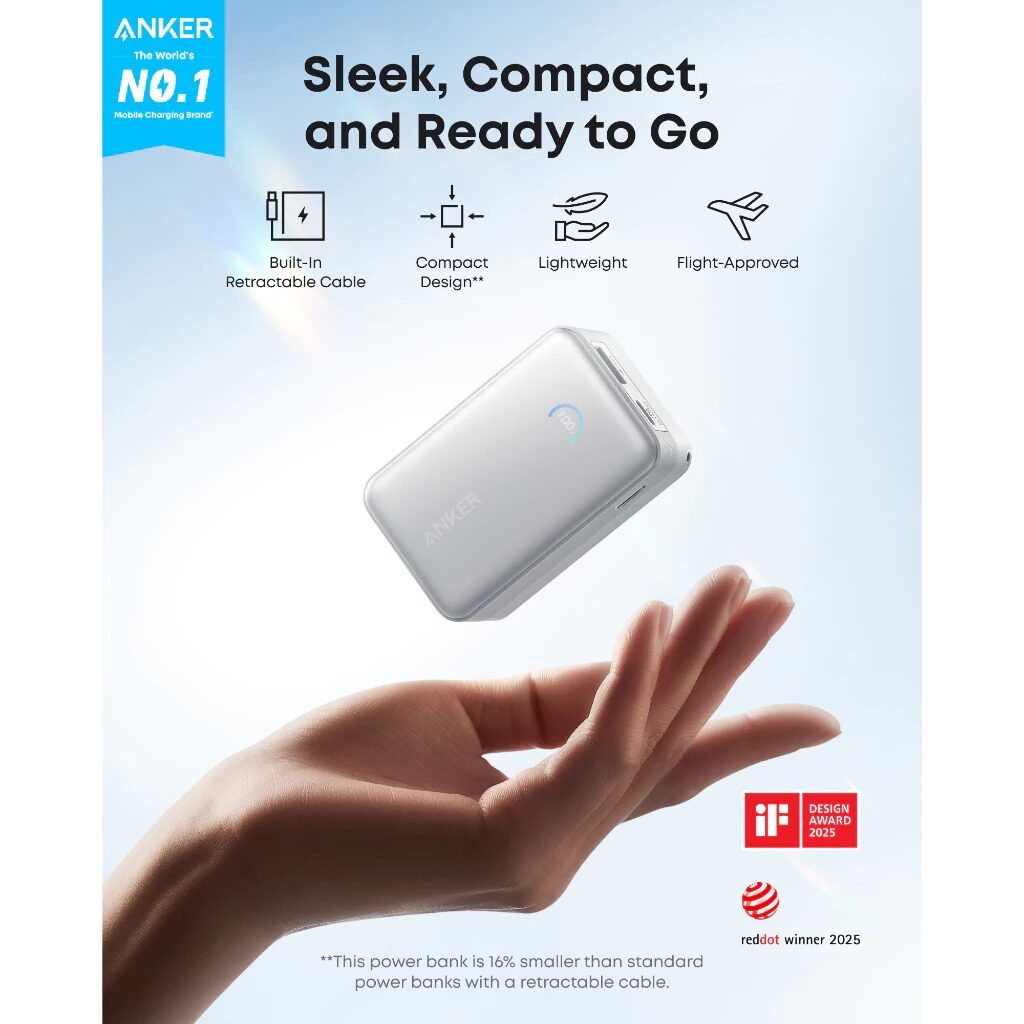
The Anker Nano Retractable Powerbank (A1638) offers 45W fast charging with PPS 2.0 support in a 10,000mAh compact body. Its 70cm retractable cable stretches for use and retracts fully for neat storage. It can charge an iPhone 16 Pro to 50% in 27 minutes and has three ports: two USB-C and one USB-A, allowing up to three devices to charge at once. A TFT display provides real-time charging and power status updates.
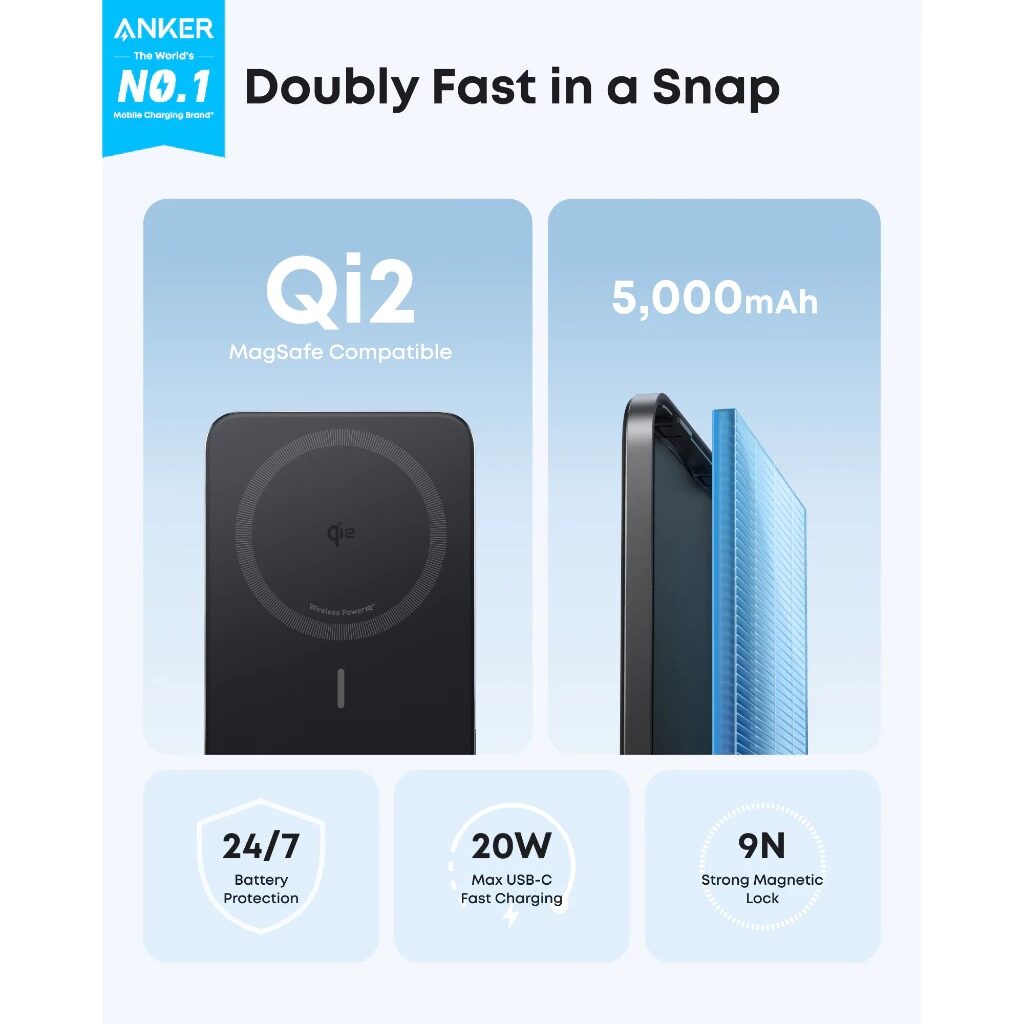
Anker Nano Wireless Powerbank (A1665)
The Anker Nano Wireless Powerbank (A1665) delivers 15W Qi2 wireless charging for iPhone 12 to 16 models and supports 20W wired input and output. Measuring 102 × 70.6 × 8.6 mm, about the size of a credit card, it features temperature control that keeps the shell below 40°C during use.
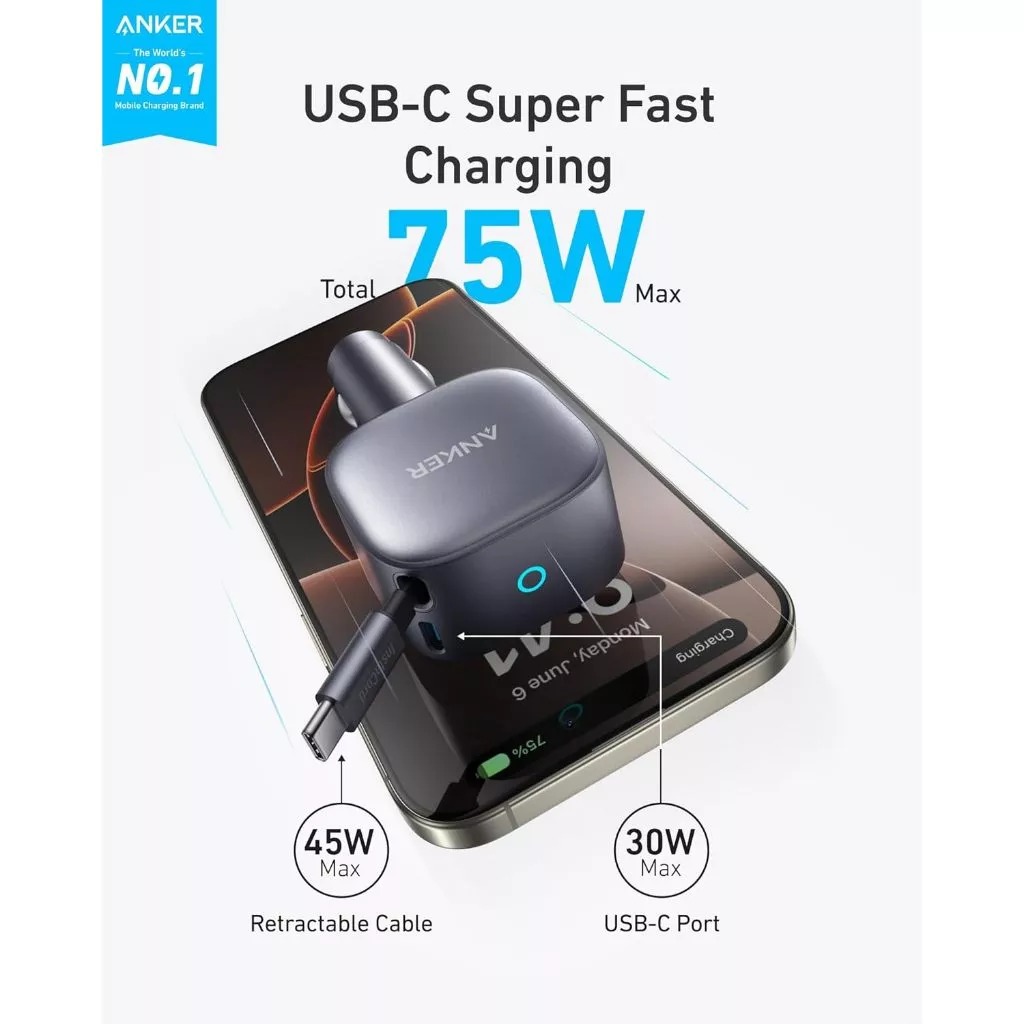
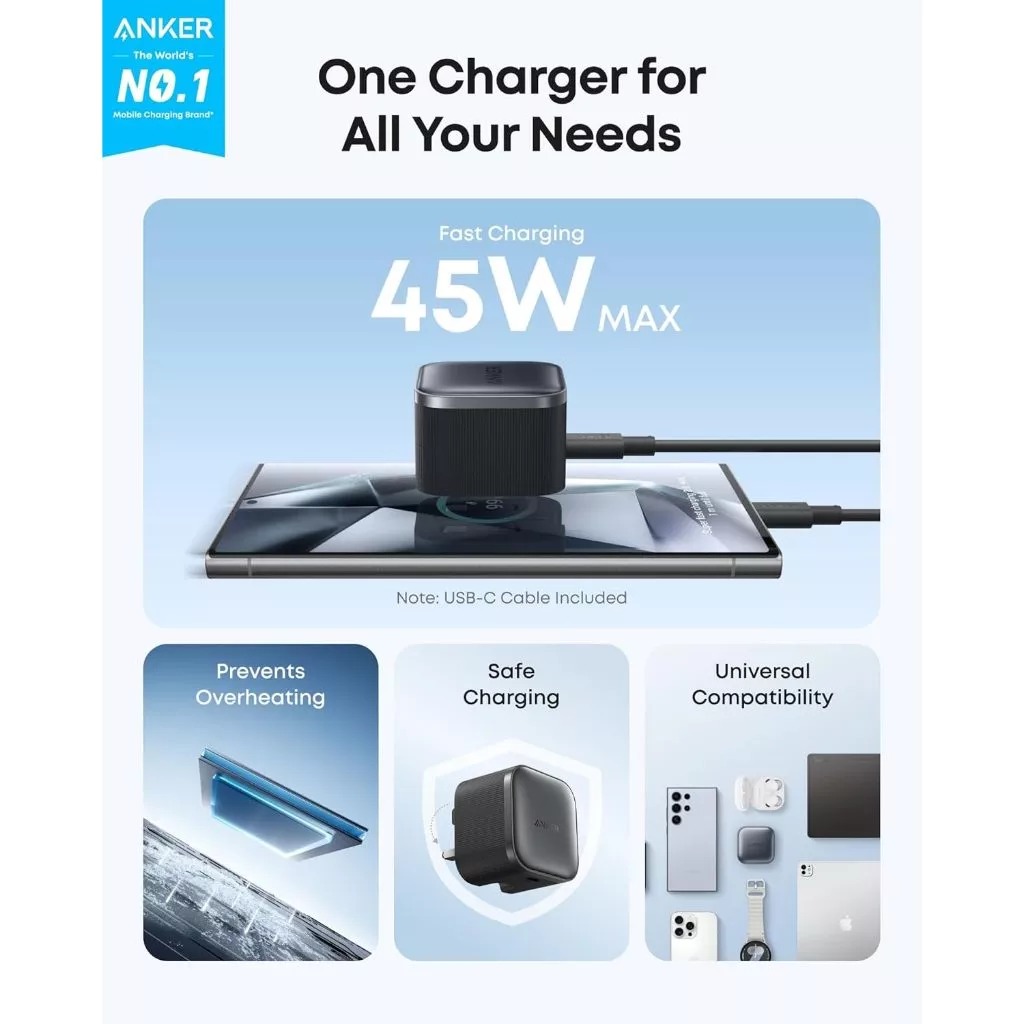
Anker also introduced the Nano Retractable Car Charger (A2738), offering 75W dual-port output with a retractable cable for clutter-free charging inside the car, and the Nano 45W Charger (B2692), featuring PowerIQ 3.0, PPS, and Samsung Super-Fast Charging 2.0 with over 6 million temperature checks per day to ensure safe performance.
Pricing & availability
All new Anker Nano products are now available in Singapore on Anker’s official website, Shopee, and Lazada. The Anker Laptop Powerbank (A1695) is priced at SGD 159.99 (US$123) in Black and Grey. The Nano Retractable Powerbank (A1638) is priced at SGD 79.99 (US$62) and comes in Black, White, Blue, and Pink. The Nano Wireless Powerbank (A1665) is priced at SGD 89.99 (US$69) in Black and White. The Nano Retractable Car Charger (A2738) costs SGD 39.99 (US$31), and the Nano 45W Charger (B2692) is priced at SGD 49.99 (US$39).
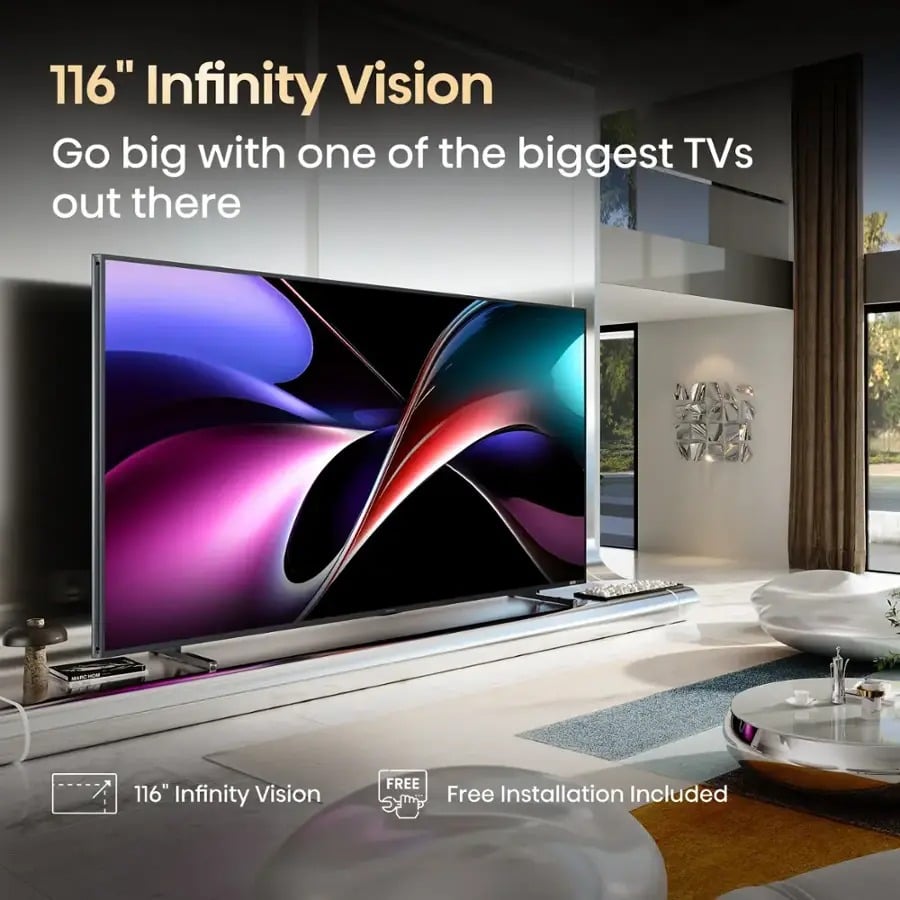
Hisense is expanding its TV lineup in the U.S. with two new large-sized Mini LED models. The company has confirmed the launch of the Hisense 116U75QG from the U75QG series and the Hisense 100UX, both offering high-end performance and visual quality.
Hisense 116U75QG specifications
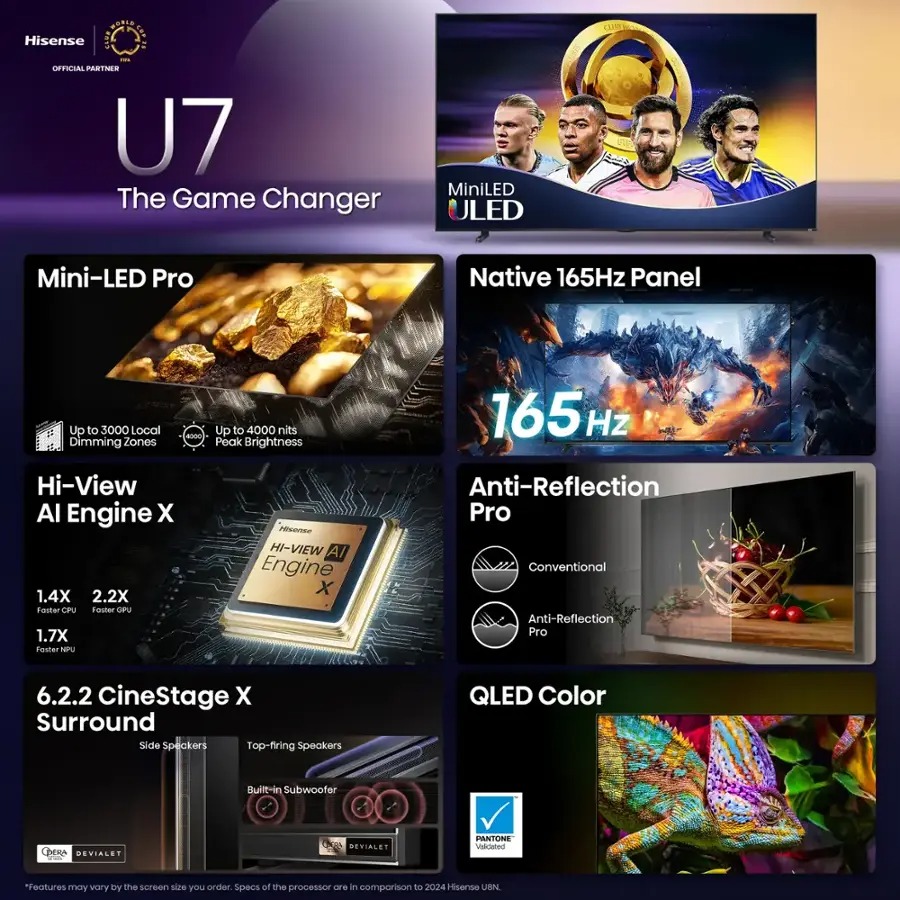
The Hisense 116U75QG features a 116-inch VA panel with a Mini LED Pro backlight. It combines Wide Color Gamut and Quantum Dot Color technologies to achieve 90 percent DCI-P3 color coverage. The panel also includes Anti-Reflection technology and supports HDR10+, Dolby Vision, Dolby Vision IQ, and HLG. It is Pantone Validated, IMAX Enhanced, and Filmmaker Mode certified.
For gaming, the TV supports a 165Hz refresh rate with AMD FreeSync Premium Pro certification, Game Mode Ultra, and a Game Bar offering up to 288Hz VRR.
The 116U75QG runs on the Hi-View AI Engine Pro powered by the MediaTek Pentonic 800 (MT9655) system-on-chip. It includes a 1.8GHz quad-core Cortex-A73 CPU and Mali-G57 GPU. The AI Engine adds several features such as AI Picture, AI Sound, AI Scenario, AI Energy, AI Light Sensor, AI 4K Upscaling, AI Detail Enhancement, AI HDR Enhancement, AI Smooth Motion, and AI Sports Mode.
Audio output is handled by a 2.1.2 channel speaker setup. The TV uses Google TV and includes four HDMI 2.1 ports, a USB 2.0 port, a USB 3.0 port, a LAN port, a headphone jack, optical audio out, an AV composite input, a 3.5mm jack, and a cable or antenna input. It supports Bluetooth 5.3 and Wi-Fi 6 (802.11ax).
Hisense 100UX specifications
The Hisense 100UX uses RGB-MiniLED technology developed by the company to improve light and color control. The display can reach up to 8000 nits of peak brightness and reproduces 100 percent of the BT.2020 color gamut. It also supports advanced local dimming and high-bit precision for better contrast and color accuracy.
This model runs on the Hi-View AI Engine X, which is based on the same MediaTek Pentonic 800 system-on-chip. The AI Engine X controls brightness and color together, dynamically adjusting red, green, and blue lighting for precise image reproduction. It optimizes every frame for picture, sound, and overall settings.
For gaming, the 100UX includes a 165Hz Game Mode Ultra with native VRR support for smoother performance.
At IFA, Hisense partnered with Dolby to show Dolby Vision 2 for the first time. This new version of Dolby Vision focuses on image intelligence, detail, and environmental awareness. Dolby Vision 2 will first be available on Hisense’s RGB-MiniLED TVs through an over-the-air update.
Pricing and availability
According to Best Buy’s U.S. listing, the Hisense 116U75QG is priced at $14,999, while the Hisense 100UX will retail for $11,999.
For more daily updates, please visit our News Section.
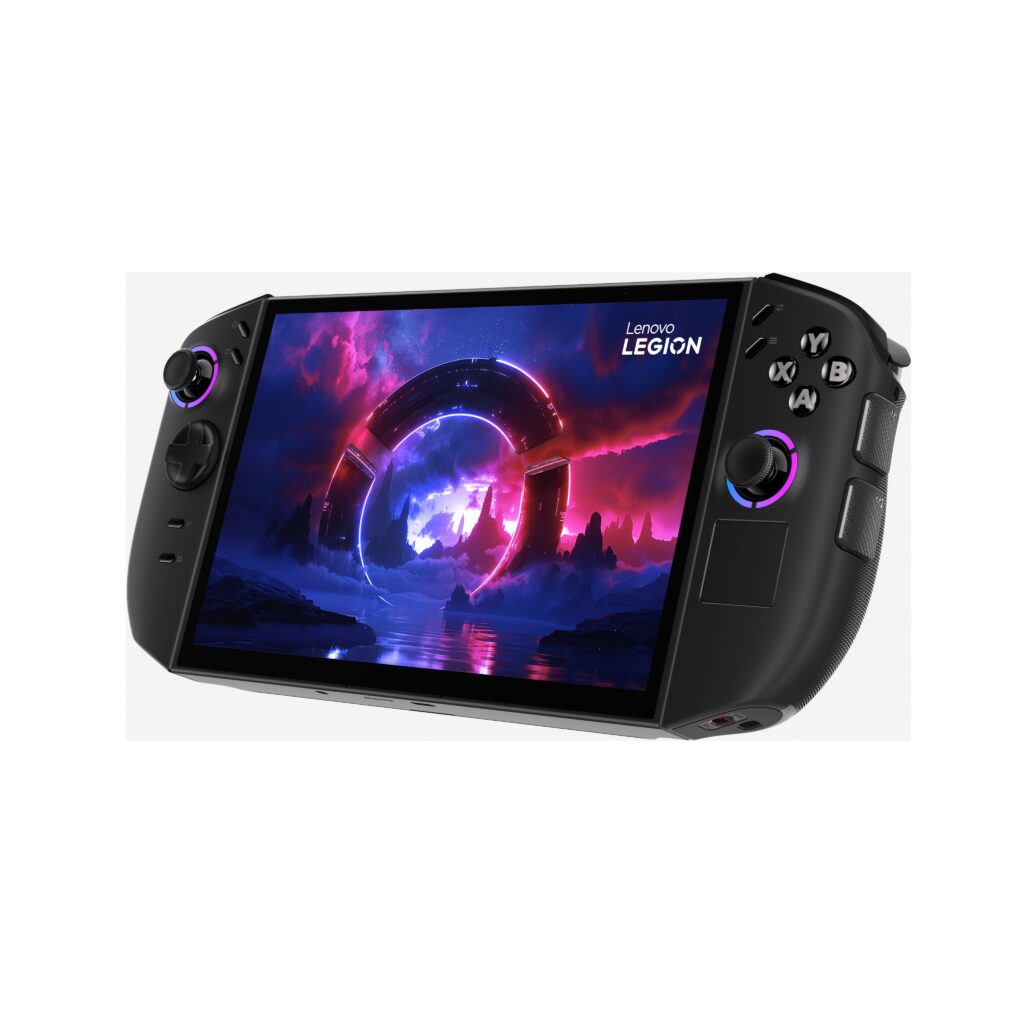
Lenovo has just announced an exciting giveaway for its newly launched Legion Go 2 handheld gaming console. The company is offering gamers the chance to win its latest portable consoles for free. So here’s everything you need to know to win one.
Lenovo’s Latest Giveaway Lets You Win Its New Legion Go 2
The Chinese tech giant has just confirmed that it has launched this giveaway for its Lenovo Creator Community. It is offering two of its new Legion Go 2 handheld consoles to participants. One of these is for the US and Canada, while the other is being given away in the EU and UK. As of right now, Lenovo has already started taking applications for this giveaway, with the last entries ending on 9th November 2025.
Lenovo Legion Go 2
For those interested, one must first make an account on the Lenovo Creator Community website. Following this, confirm your Creator Community username to officially enter the giveaway. You will also be assigned simple tasks to earn additional entries, like following Lenovo’s X account, joining the official Legion Discord server, and others. The higher entries basically improve your chance of winning the Legion Go 2 gaming handheld. So it is worth taking these extra steps.
Lenovo will confirm the winners after the giveaway ends. To recall, the Legion Go 2 was recently unveiled with an improved display, a newer and faster Ryzen Z22 Extreme APU, up to 32GB of RAM and 2TB of SSD storage. A large 74Wh battery pack powers this device, which supports 65W fast charging. In other words, the handheld console is faster and offers better endurance.
For more daily updates, please visit our News Section.
We use cookies on our website to give you the most relevant experience by remembering your preferences and repeat visits. By clicking “Accept”, you consent to the use of ALL the cookies.
This website uses cookies to improve your experience while you navigate through the website. Out of these, the cookies that are categorized as necessary are stored on your browser as they are essential for the working of basic functionalities of the website. We also use third-party cookies that help us analyze and understand how you use this website. These cookies will be stored in your browser only with your consent. You also have the option to opt-out of these cookies. But opting out of some of these cookies may affect your browsing experience.
Necessary cookies are absolutely essential for the website to function properly. This category only includes cookies that ensures basic functionalities and security features of the website. These cookies do not store any personal information.
Any cookies that may not be particularly necessary for the website to function and is used specifically to collect user personal data via analytics, ads, other embedded contents are termed as non-necessary cookies. It is mandatory to procure user consent prior to running these cookies on your website.