Xiaomi‘s been slowly teasing brand new features for their upcoming MIUI 11 update. Just last week we saw the announcement of two features coming soon, those being the dedicated Children’s Space and Earthquake alert. Now we’ve got another feature to add to the list, that being Family Sharing.
If the name sounds familiar, then that’s because Xiaomi’s Family Sharing is almost exactly the same Apple’s Family Sharing for iOS. It serves the exact same purpose, which is being able to share information between your family members’ devices quickly and safely. The fact that it’s so similar to the iOS version is actually great considering how good it is there.
Interestingly, Xiaomi’s implementation of the feature is much more focused towards safety and parental control. Family Sharing on MIUI will let you track the location of family members at all times, control the amount of time a user can use an application, and even control WeChat usage. This paired with the upcoming Children’s Space should provide parents with all the tools they need to watch over their kids.
Perhaps the most interesting thing about Family Sharing however is how it works with any Android device or iPhone. This means only one person in your family actually needs to have a Xiaomi device, which is simply excellent to know. The worst part about iOS’ Family Sharing is the requirement that everyone have an iPhone or MacOS powered device. The fact that Xiaomi doesn’t force this on users makes the feature much more practical.
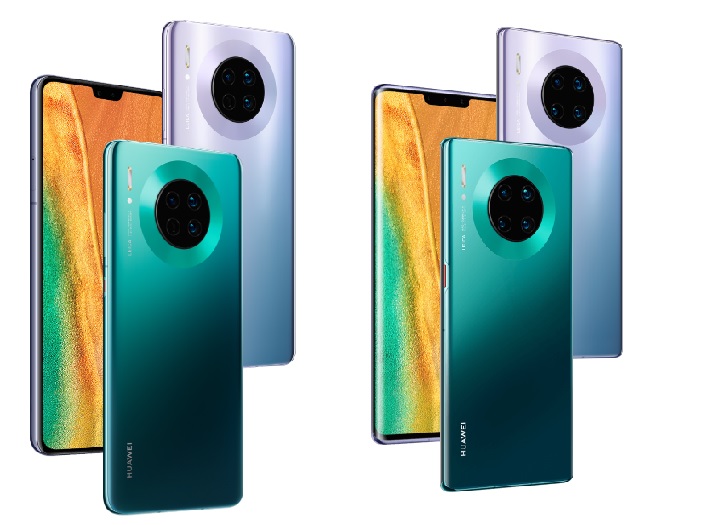
The Huawei Mate 30 series launched this week in Munich, Germany. The Mate 30 and Mate 30 Pro are available in a single configuration in Europe – 8GB + 128GB and 8GB + 256GB respectively. However, in Huawei‘s home country, the Mate 30 series will be available in more configurations.
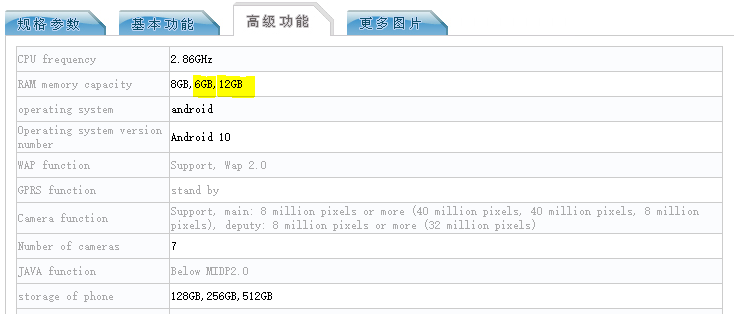
The TENAA listings for both phones have been published and they reveal the Mate 30 and Mate 30 Pro will be available with up to 12GB of RAM and 512GB of storage in China. The Mate 30’s model number is stated as TAS-AN00 while the Mate 30 Pro’s model number is LIO-AN00P/LIO-AN00.
Along with an 8GB RAM + 128GB version, the Mate 30 will come in 6GB RAM + 128GB, 8GB RAM + 256GB, and 12GB RAM + 512GB. On the other hand, the Mate 30 Pro will be available in 6GB + 128GB, 8GB + 128GB/256GB, and 12GB + 512GB.
Other than the RAM and storage, the rest of the specs are the same with the version announced in Europe. China is Huawei’s biggest, so it makes sense that it will have more variants available.
The Mate 30 series is powered by the Kirin 990 processor. The Mate 30 has a flat OLED screen while the Mate 30 Pro has a greatly curved screen called Horizon Display. The Pro version packs a total of 7 cameras – four on the rear and three in front while the Mate 30 comes with 5 cameras (3 on the rear and 2 in front). They run EMUI 10 based on Android 10.
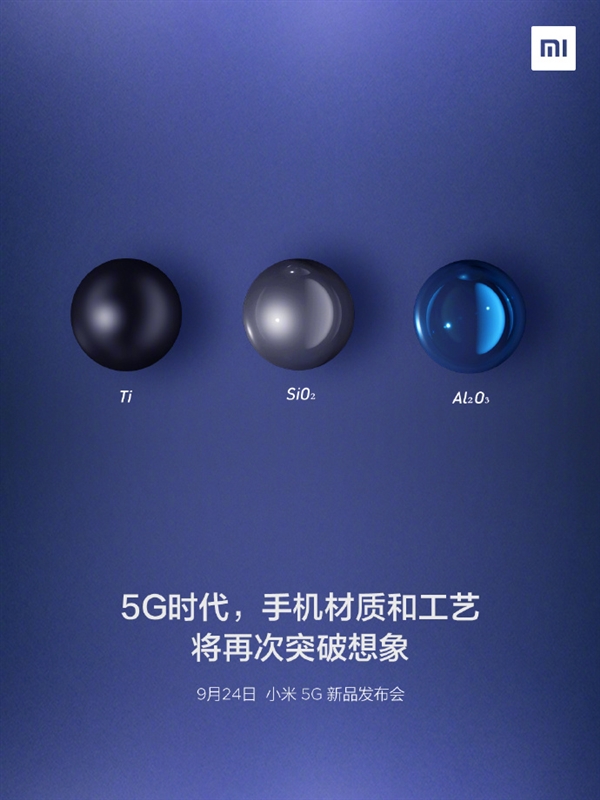
Xiaomi’s latest teaser for its upcoming flagship 5G phone hints that the phone is made from new premium materials. While the poster doesn’t exactly say, we know it is the Mi MIX Alpha that will be made from these new materials.
The poster shows three materials – Ti (Titanium), SiO2 (Silica), and Al2O3 (Alumina). All three materials are actually familiar when it comes to phones. Titanium is used for making the frame of phones. For example, the Essential PH-1 has a titanium frame. Silica, on the other hand, is a primary ingredient used in the traditional glass industry, and Alumina is used in making hard glass. We believe the phone will use all three materials.
The caption for the poster says Xiaomi has always been exploring new materials and designs for its phones. It mentions examples like the Mi 4 which has a stainless steel frame, the Mi Note which has a 3D curved glass back, the Mi 5 with its ceramic back, and the Mi MIX 2 with its ceramic unibody. It then asks what other materials should be considered for the 5G era.
The Mi MIX Alpha and Mi 9 Pro 5G will be unveiled on September 24 alongside the Mi TV Pro.
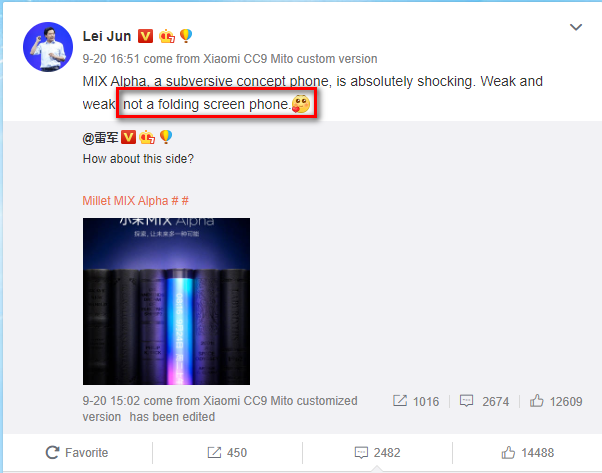
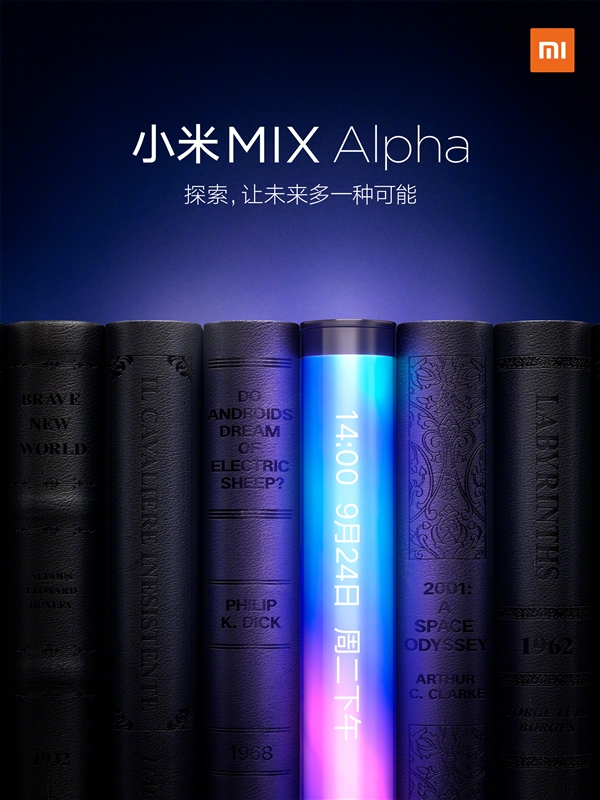
Now that we’ve rolled past Huawei and Vivo’s latest devices, now it’s time for Xiaomi to make an impression, and they’ve been making a pretty strong one. A Mi MIX Alpha teaser image quickly made rounds on social media, featuring what many thought was a folded display. This, of course, launched rampant speculation on whether the new device would be a folding phone or not, but it looks like we can finally stop guessing.
Xiaomi founder Lei Jun has gone to Weibo to clarify that the new device, unfortunately, isn’t the company’s folding phone, though he had more to add. According to him, the Mi MIX Alpha will feature a very subversive and shocking design. He doesn’t go into much further detail, but we can still make a few educated guesses.
From official teasers, we can assume that the Mi MIX Alpha will feature a revolutionary new curved screen design. It’ll supposedly give the device a 100% screen to body ratio, an industry first. It could very much be like the very first Mi MIX where it’s more of a concept device that’s the first of it’s kind, placing Xiaomi at the forefront of innovation once again.
But that’s not all. More teasers have appeared that suggest something even more impressive will be coming with the Mi MIX Alpha. One of the teasers shows off the device’s 5G capabilities, something we’ve already known for a while, but the other teaser is much more important. It points out that the Mi MIX Alpha won’t feature a pop-out camera, notch or dot drop, but instead a completely new solution for the front camera.
In the 5G era, are you ready to see a new solution? 🤯
Anyone who’s been following Xiaomi’s recent developments will know that the company has already managed to make a fully functional under-display camera system. It’s looking extremely likely that this technology will be making its commercial debut on the new Mi MIX, which is only fitting. The Mi MIX devices have always been the testing ground for Xiaomi’s new experimental features, so it only makes sense we’d see the new feature here.
Personally, we’re extremely eager to finally see the Mi MIX Alpha launch on the 24th of September where they’ll finally spill all the device’s secrets. It’s definitely the headline act of the event, and Xiaomi has so far managed to successfully keep their device a mystery infinitely better than Huawei or Google have. How the Mi MIX Alpha will turn out we simply don’t know, but we do know that it’ll definitely be one of the most interesting launches of the year.
Huawei Mate 30 Pro is finally official, no matter if Huawei got banned from the U.S. and it can not use Google apps. It is still one of the most stunning devices out there and it will even hit the global market without issues. It is undoubtedly the best Huawei smartphone to date, but we can not say the same about its price. Is it worth choosing the Mate 30 Pro independently from its price or it is better to spend less money for an older top-tier flagship such as Huawei P30 Pro or Huawei Mate 20 Pro? If you decided your next phone will be a Huawei high-end device, you should not miss this specs comparison between Huawei’s “Pro” flagships.
Huawei Mate 30 Pro vs Huawei P30 Pro vs Huawei Mate 20 Pro
Do not get fooled by the bigger notch: with its amazing Horizon display, Huawei Mate 30 Pro is undoubtedly the most attractive device of the trio. It does not sport any physical key as it boasts the side touch technology thanks to the extremely curved sides of the display (88 degrees). We also love the original glass back with the round-shaped camera module on the rear side, even though some may like the Huawei P30 Pro more due to its cleaner back. But these are just tastes: if you like minimal aesthetics, then Huawei P30 Pro is probably the best phone for you with its cleaner back and a smaller notch. The design is not the strongest point of the Mate 20 Pro, but it is waterproof just like the other two flagships.
Display
Despite it is the oldest flagship of this trio, thanks to the Quad HD+ resolution, Huawei Mate 20 Pro has a display which provides a higher level of detail than both Huawei Mate 30 Pro and P30 Pro. And just like them, it has an amazing OLED panel which supports a high DCI-P3 coverage and the HDR10 standard, providing rich and brilliant colors. It has a bigger notch and a smaller diagonal, but its quality is definitely astonishing. On the other hand, Huawei Mate 30 Pro offers an innovative Horizon display with extremely curved sides and the side touch technology: thanks to it, Huawei ditched every physical key and realized a much more elegant and impressive front panel.
Hardware/Software
There is no challenge here: Huawei Mate is powered by a way better mobile platform, so it wins the hardware comparison. We are referring to the Kirin 990 chipset built with at 7nm+ production process. The chipset even supports 5G connectivity: indeed, there is a 5G variant of the Mate 30 Pro. The handset even features a fast UFS 3.0 internal storage which goes up to 256 GB. And it is the only to come with Android 10 out of the box. Right after the Mate 30 Pro, the most performing device is the P30 Pro but there are just marginal differences compared to Mate 20 Pro as they got the same chipset.
Camera
Huawei Mate 30 Pro is also the best camera phone: it does not support a 5x optical zoom like the Huawei P30 Pro, but on the other hand, it has two 40 MP sensors and it reaches a level of ISO superior to professional cameras. It even has a better front camera department which includes sensors for 3D facial recognition (unlike the P30 Pro).
Battery
Huawei Mate 30 Pro has the biggest battery with a 4500 mAh capacity, so we believe it will offer a longer battery life. It even features the fastest wireless charging technology ever brought to the market. But note that both Huawei P30 Pro and Mate 20 Pro come with above-average batteries, so you should not be worried if you do not choose the Mate 30 Pro. The P30 Pro lasts more than the Mate 20 Pro due to its more efficient display.
Price
Huawei Mate 30 Pro is going to hit the shelves with an €1100/$1210 starting price, but you can save a lot of money with the P30 Pro and the Mate 20 Pro. You can find the former at about €650/$715 globally, while the latter is even available for less than €400/$440. Huawei Mate 30 Pro is undoubtedly the best one, but the Mate 20 Pro has a higher value for money, so go for it if you do not need the most amazing cameras and the fastest performance.
OnePlus has officially started rolling out the stable OxygenOS 10 based on Android 10 to OnePlus 7 and OnePlus 7 Pro. The company has released this stable version after two Open Beta builds that were rolled out earlier this month. The stable update brings a host of new Android 10 features alongside OxygenOS 10 features to the two recent OnePlus 7 devices that were launched back in May 2019. While the final Open Beta version was pretty good for daily use, a stable release ensures that this build is certified for daily usage.
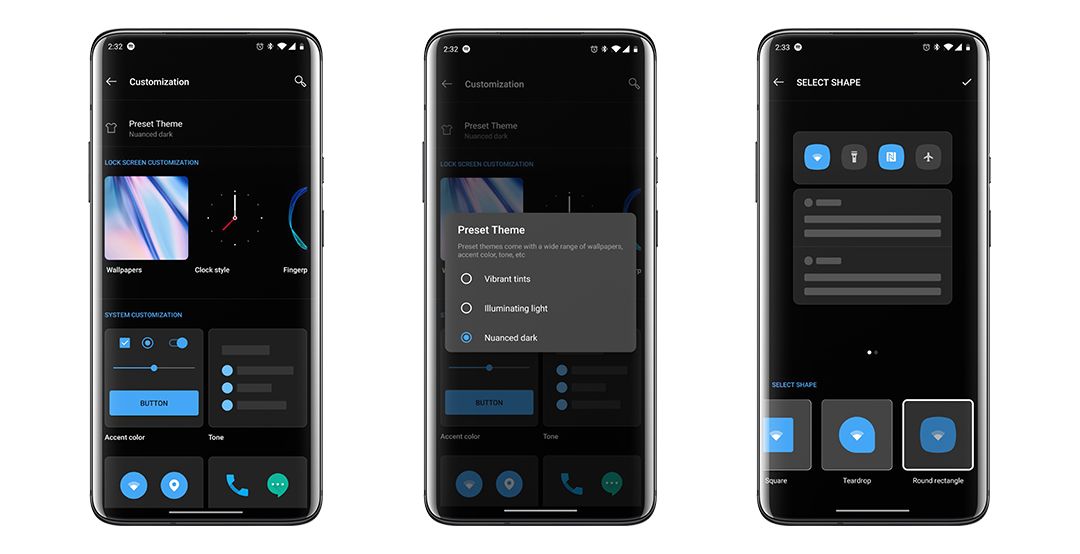
Android 10 based OxygenOS 10 brings several customization options
OnePlus is rolling out the OxygenOS 10 in a staged manner. The OTA will be sent to a limited number of users today and the company will check for any critical bugs. If everything works out fine, the OTA will be rolled out to a broader user base in the next few days. Note that the rollout isn’t pushed out geographically, instead, it is randomly sent out to a limited number of OnePlus 7 and 7 Pro users.
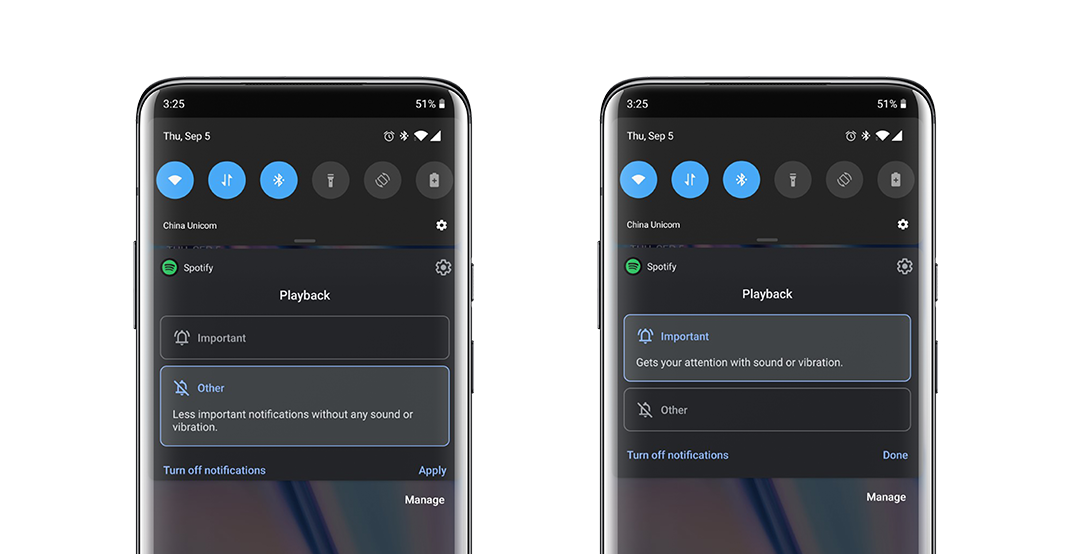
The OxygenOS 10 stable build brings features like notifications segregation, Wi-Fi sharing, a new game space, and a smarter ambient display.
Android 10 based OxygenOS 10 shows notifications on priority
The complete changelog of the OxygenOS 10 can be found below.
System
Upgraded to Android 10
Brand new UI design
Enhanced location permissions for privacy
New customization feature in Settings allowing you to choose icon shapes to be displayed in the Quick Settings
Full Screen Gestures
Added inward swipes from the left or right edge of the screen to go back
Added a bottom navigation bar to allow switching left or right for recent apps
Game Space
New Game Space feature now joins all your favorite games in one place for easier access and better gaming experience
Smart display
Intelligent info based on specific times, locations and events for Ambient Display (Settings – Display – Ambient Display – Smart Display)
Message
Now possible to block spam by keywords for Message (Messages – Spam – Settings -Blocking settings)
The Reno Ace is OPPO’s upcoming flagship and when it launches on October 10, it will be packing some pretty impressive specs. We already know it will be the first phone to feature OPPO’s new 65W SuperVOOC 2.0 technology. Now, the full specs have been revealed thanks to TENAA’s listing.
The Reno Ace’s model number is revealed as PCLM10. It has a 6.5-inch AMOLED screen with a 2400 x 1080 resolution. TENAA says it is powered by a 2.96GHz processor which is definitely the Snapdragon 855 Plus. It is paired with 12GB of RAM and 256GB of storage. There is no storage expansion, so 256GB is what you are stuck with.
The phone will have quad rear cameras – a 48MP primary camera, a 13MP periscope zoom lens, an 8MP ultrawide angle camera, and a 2MP sensor. It has a 16MP front-facing camera in front. TENAA says it also has 3x optical zoom.
The Reno Ace has an in-display fingerprint scanner and runs Android 9. The listing says it has a 1950mAh battery but we believe this is the capacity of just one of the phone’ two batteries. Yes, we are sure it has two batteries since the OPPO Find X which launched with SuperVOOC 1.0 packs two batteries. Based on this, the Reno Ace should have a 4000mAh battery. With SuperVOOC 2.0, you will be able to charge the phone from empty to full in just 25 minutes.
The phone will be available in blue, green, and purple. It weighs 200 grams and measures 161.0 x 75.7 x 8.7 millimeters. TENAA has not provided images but once they do, we will post them.
The Redmi Note 8 launched in China nearly a month ago. The phone comes in three variants – a 4GB RAM + 64GB version, a 6GB RAM + 64GB version, and a 6GB RAM + 128GB version. However, we may be getting a version with more RAM and storage in the future.
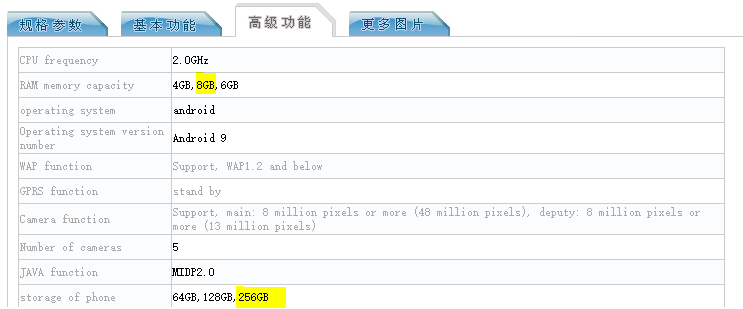
The Redmi Note 8’s TENAA listing shows that there is a version with 8GB of RAM and 256GB of storage. For a phone powered by a Snapdragon 665 processor, 8GB RAM seems like a lot but this is not the first time we are seeing such a pairing. The OPPO A9 2020 which is also powered by the Snapdragon 665 has an 8GB RAM version.
The 8GB Redmi Note 8 will also get 256GB of storage which should be more than enough for photos and videos you take with the phone’s quad-rear cameras. The Redmi Note 8 has a MicroSD card slot for up to an extra 256GB of storage, just in case you need more space.
We don’t know when Redmi will announce this new variant but it may not be anytime soon since the phone is still less than a month old.
The Redmi Note 8 has a 6.3-inch FHD+ display with a waterdrop notch for a 13MP front-facing camera. It has 48MP + 8MP + 2MP + 2MP quad rear cameras, a rear-mounted fingerprint scanner, and a 4000mAh battery. Other features include Gorilla Glass 5 on both sides, an infrared sensor, an audio jack, and MIUI 10 based on Android 9 Pie.
Xiaomi’s bezel-less Mi TV Pro is launching on September 24 and it is going to be its sleekest yet. The TV practically has no bezels on three sides save for the chin. It will also be its first TV to support 8K decoding. It has now been officially confirmed that the TV will also feature impressive specs.
Unlike most smart TVs that come in 1GB RAM + 8GB or 2GB RAM + 16GB, Xiaomi’s Mi TV Pro will come with 32GB of storage, double that of the upcoming OnePlus TV Q1 and Motorola’s own Smart TVs.
Yesterday, Xiaomi confirmed that the TV will be powered by the 12nm Amlogic T972 64-bit processor. The processor boasts a 63% improvement in performance and a 55% reduction in power consumption.
The Amlogic T968 is currently the most powerful chipset in Amlogic’s T-series. It has four A53-cores and a Mali-T830 GPU. We are not sure if the new T972 will feature more A53 cores or switch to the more powerful A55 cores. We also expect it to come with a more powerful GPU.
The Mi TV Pro will be available in 43”, 55”, and 65” sizes. It has an anodized aluminum alloy frame, 3D carbon fiber back, and an aluminum base. On the software side, it should come with Xiaomi’s PatchWall technology and XiaoAI built-in.
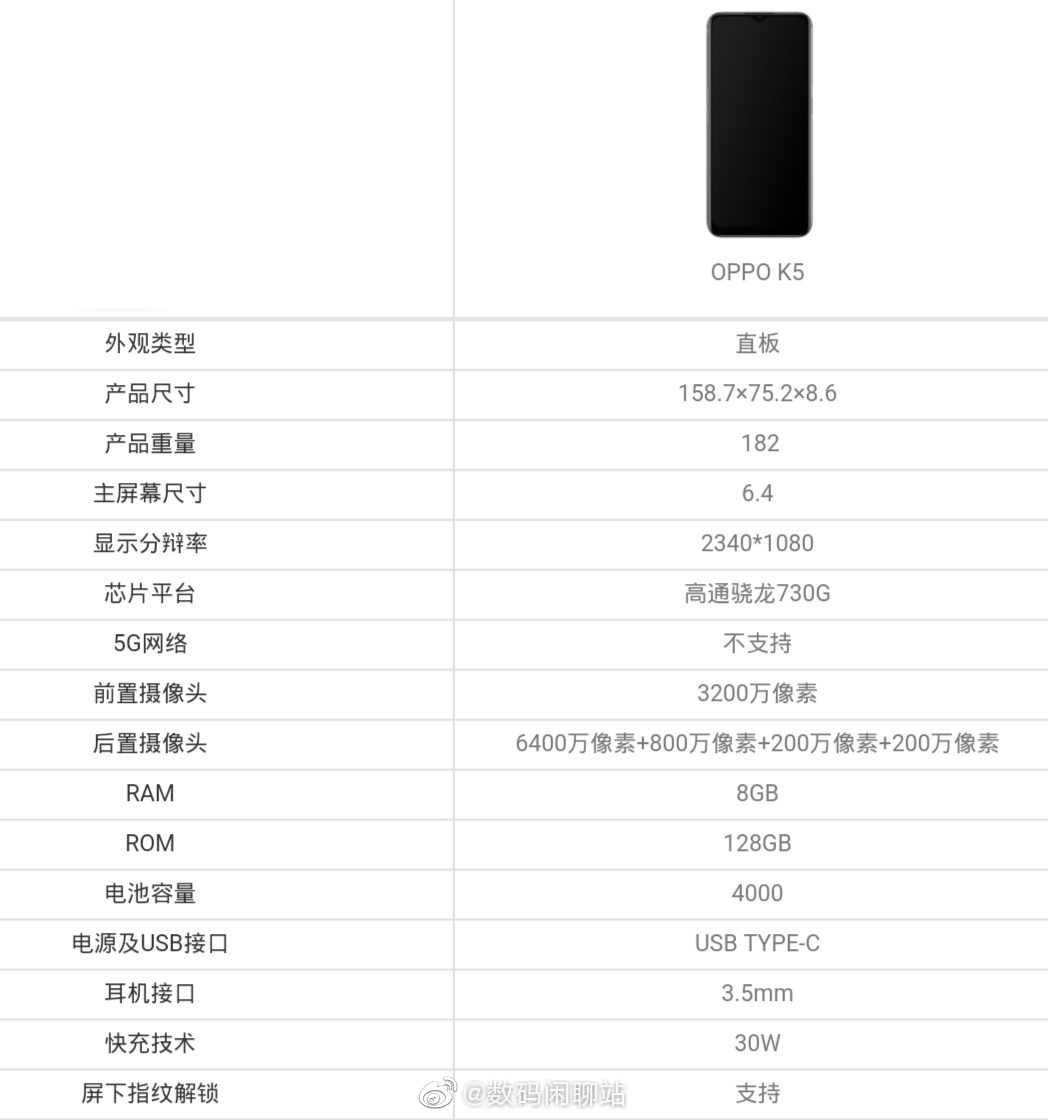
At the announcement of its new charging technologies this week, OPPO revealed that the successor to the K3 is coming, and the phone which will launch as the OPPO K5 will be the first to feature its new VOOC 4.0 Flash Charge. The spec sheet of the phone has now leaked and it reveals the OPPO K5 is an upper mid-range phone.
The spec sheet was posted on Weibo by @Digital chat station. The sheet shows the OPPO K5 will have a 6.4-inch 2340 x 1080 display. The phone measures 158.7 x 75.2 x 8.6 millimeters, making it smaller than the OPPO K3.
Inside the phone is Qualcomm’s Snapdragon 730G processor and it is paired with 8GB of RAM and 128GB of storage. OPPO has packed four cameras on the back of the phone – a 64MP primary camera, an 8MP camera, and two 2MP sensors most likely for Macro shots and depth capturing. The selfie camera is a 32MP sensor.
The OPPO K5 will pack a 4000mAh battery with support for 30W VOOC 4.0 fast charging via a USB Type-C port. It will also have an audio jack. There is no mention of support for a MicroSD card neither is there mention of the version of Android it is running.
The specs of the phone are identical to that of the Realme X2 which hints at it being a rebrand of the OPPO K5. The Realme X2 spec sheet reveals the phone has an AMOLED display with a waterdrop notch, so we expect the same display type for the K5 with an in-display fingerprint scanner.
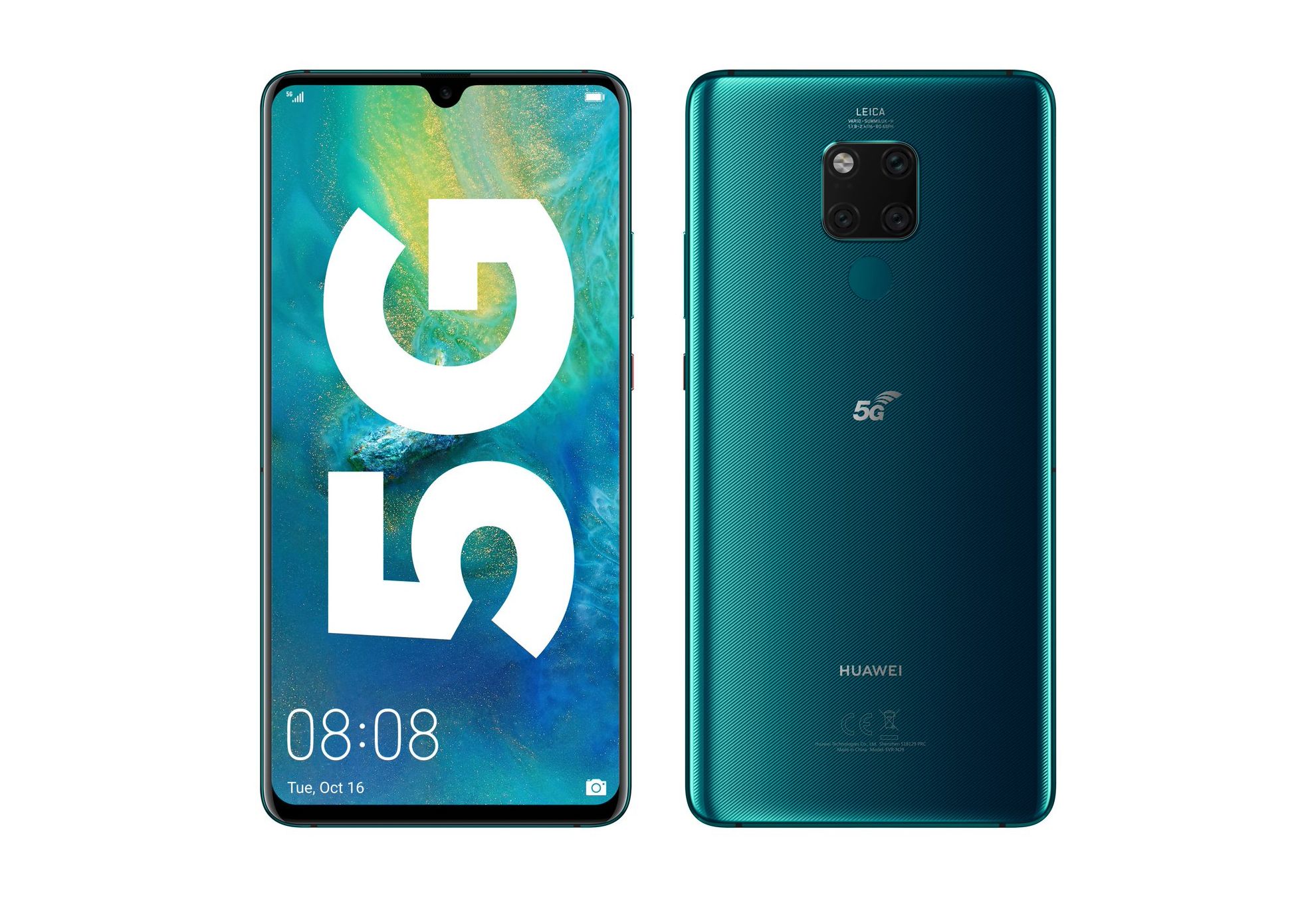
5G is still in its nascent stages, and still, only a handful of countries across the globe have live 5G networks available. However, most flagship smartphones launched in the second half of the year have a 5G version. For example, even the Huawei Mate 30 Pro comes in two different versions, a 4G one and a 5G one. The main reason why Huawei decided to release two different versions of its flagship is that 5G tech is more expensive.
Mate 20 X comes with new-age 5G support at an expensive price tag
But things will change in 2020. According to Huawei’s Richard Yu, cheaper 5G phones are coming our way next year.
“5G will definitely hit mid-range and even low price range definitely from next year,” said Richard Yu while speaking to journalists at the Mate 30 series event. “This year (our) premium segmentation is 5G, next year we will go to middle-tier 5G smartphones, and later on, the low tier.”
Given that Huawei traditionally sticks with its Kirin chipsets, even for its mid-range smartphones, this is a good hint that we’ll see a 5G enabled mid-range Kirin processor sometime in the next few months. Currently, Kirin 810 and Kirin 710 handle Huawei and Honor’s mid-range and budget segments. So we may see a 5G enabled Kirin 800 series chip next year.
Apple recently unveiled the hotly-anticipated iPhone 11 series of smartphones comprising the iPhone 11, iPhone 11 Pro, and the iPhone 11 Pro Max.
Designed to offer a little bit extra, the iPhone Pro models boast uncomplicated features that matter a lot to extreme smartphone users and mobile phone photography enthusiasts. iPhone users leave no stone unturned when it comes to protecting their phones from scratches and drops.
As a result, they usually end up spending a lot of money on iPhone cases and other accessories. Taking that into consideration, we have listed the top 10 iPhone Pro Max cases that you can buy without emptying your pocket.
OtterBox Lumen Series Case for iPhone 11 Pro Max
Available in pink, red, black, and blue color options, the OtterBox Lumen Series Case not only protects your iPhone but also highlights its emblematic design by adding an appealing color. It’s precision fit ensures your iPhone is not influenced by daily wear and tear.
The OtterBox Lumen Series is a clear, scratch-resistant case that shows off your iPhone. Moreover, this super sleek, pocket-friendly phone case is currently up for grabs for $39.95 from Apple online store.
You can follow this link to check out more details about the OtterBox Lumen Series Case for iPhone 11 Pro Max and place your order.
Sporting a premium look, the iPhone 11 Pro Max Leather Folio is made from specially tanned and finished European leather. You can wake up or snooze your iPhone 11 Pro Max simply by opening and closing the case, which fits snugly around your phone.
The interior of the case features a soft microfiber lining for additional protection. Aside from that, the case offers space for you to store your cards, small notes, bills, etc. You can keep it on even when you are charging it wirelessly.
Currently available on Apple online store for $129, the iPhone 11 Pro Max Leather Folio comes in Aubergine, as well as Black color options. You can visit this link and place your order.
Designed to fit comfortably over the curves of your iPhone 11 Pro Max, this case does not make your phone bulkier. This sturdy phone case is made using specially tanned and finished European leather that adds an elegant look to it.
To ensure durability, the case is passed through several hours of testing during the design and manufacturing process. You can buy it in Meyer Lemon, Forest Green, Midnight Blue, Saddle Brown, Black, and Red color options from the Apple online store for $49 by visiting this link.
Sporting an unconventional design, the iPhone 11 Pro Max Symmetry Series Case is a great choice for those who fancy turning heads. Moreover, this slim, stylish case syncs with any look ranging from a night out to an unpredictable day loaded with adventurous activities.
The iPhone 11 Pro Max Symmetry Series Case comes in ten eye-catching color options, bearing a $49.95 price tag on OtterBox. There’s a 10 percent off on select cases including the Alpha Glass, Alpha Flex, or Amplify.
The aforesaid discount is available to those who purchase both the OtterBox case and screen protector. You can head straight to this link to avail the discount.
The Viva Series case for iPhone 11 Pro Max ensures protection against bumps, drops, and dust. It uses a combination of an Internal slipcover and exterior shell for a comfortable carrying experience.
It has grip pads at the back that ensure confident handling. The black-tinted Viva Series Case for your iPhone 11 Pro Max is currently available for $39.95 from OtterBox. You can visit this link and place your order.
iPhone 11 Pro Max Otter + Pop Symmetry Series Build Your Own Case
Featuring an integrated PopSockets PopGrip, the Otter + Pop Symmetry Series Build Your Own case allows you to express yourself while offering top-notch protection to your iPhone. Each case comes with a matching PopTop, and an extra PopTop of your choice so that you can adjust the overall appearance of the case to match your style.
The case colors include black, Maveoulous, Violet Dusk, Mint to Be, Lollipop, White Marble, and Island Ombre. You can choose from a wide selection of PopTop design. The Otter + Pop Symmetry Series Build Your Own case is available for $67.95 from OtterBox and you can purchase it by following this link.
A great choice when it comes to protecting your iPhone from scratches and other damages, the ASLING Beetle Series TPU Soft Shell Phone Case is available in three appealing color options including Coffee, Cadetblue, and Black for just $3.13 from Gearbest. On top of that, you can get an add-on item worth $4.59 if you spend $20.
Featuring three-dimensional lines, the ASLING Beetle Series phone case is antiperspirants and anti-fingerprint. On top of that, it has anti-stain capabilities which ensure it always looks like new.
You can follow this link to check out more details and get your hands on the ASLING Beetle Series TPU Soft Shell Phone Case.
Touted as one of China’s best online stores for electronics and a slew of other items, Gearbest is currently offering the Liquid Silicone Phone Case for iPhone 11 Pro Max for a lowered price of just $5.66. This is a 5 percent reduction in the device’s original asking price of $5.97.
Aside from that, you get an add-on item worth $4.59 if you spend $20. Made using high-quality silicone material, this dirt-resistant phone case has a button protector and weighs in at just 0.0440 kg so you can carry it in your pocket without any sort of inconvenience.
You can choose between twelve appealing color options such as Sunrise Orange, Papaya Orange, Pink, Purple Mimosa, etc. You can visit this link to avail the discount before the promo comes to an end.
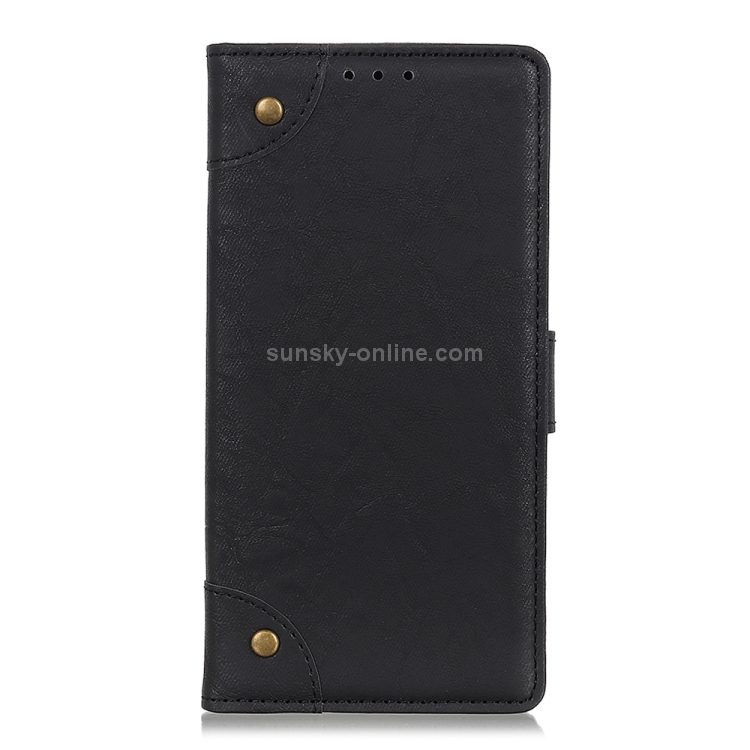
Copper Buckle Retro Crazy Horse Texture Horizontal Flip Leather Case
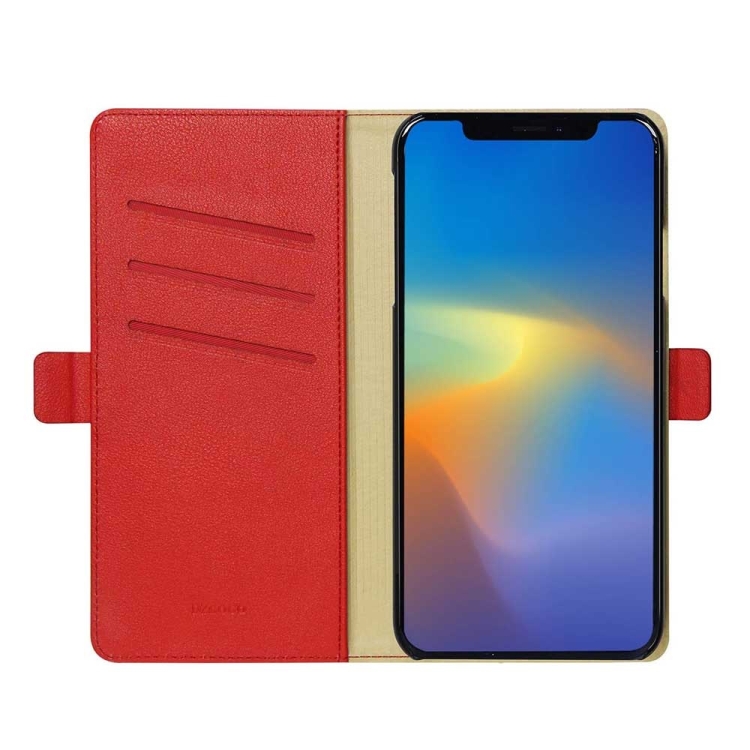
Compatible with the iPhone 11 Pro Max, the Copper Buckle Retro Crazy Horse Texture Horizontal Flip Leather Case not only protects your phone, but also offers ample space for you to store important items such as your cards or cash. It is available in black, blue, red, and brown color options in Sunsky for $3.63.
You can save a considerable amount of money by purchasing more units. For instance, if you order 2 units, the price reduces to $3.60, and if you order 1/4 case, you just pay $3.56 per unit. You can visit this link to check out more details and place your order.
DZGOGO MILO Series PC + PU Horizontal Flip Leather Case
The DZGOGO MILO Series PC + PU Horizontal Flip Leather Case comes in black, blue, rose gold, and red color options. You’d normally need to shell out $4.29 per piece, but Sunsky is giving you a chance to save money on more units.
For the sake of an instance, two units will set you back $4.25 but can get 1/4 case for just $4.21. In other words, the more units you order, the bigger discount you get. To check out more details and grab the discount, simply follow this link without wasting time.
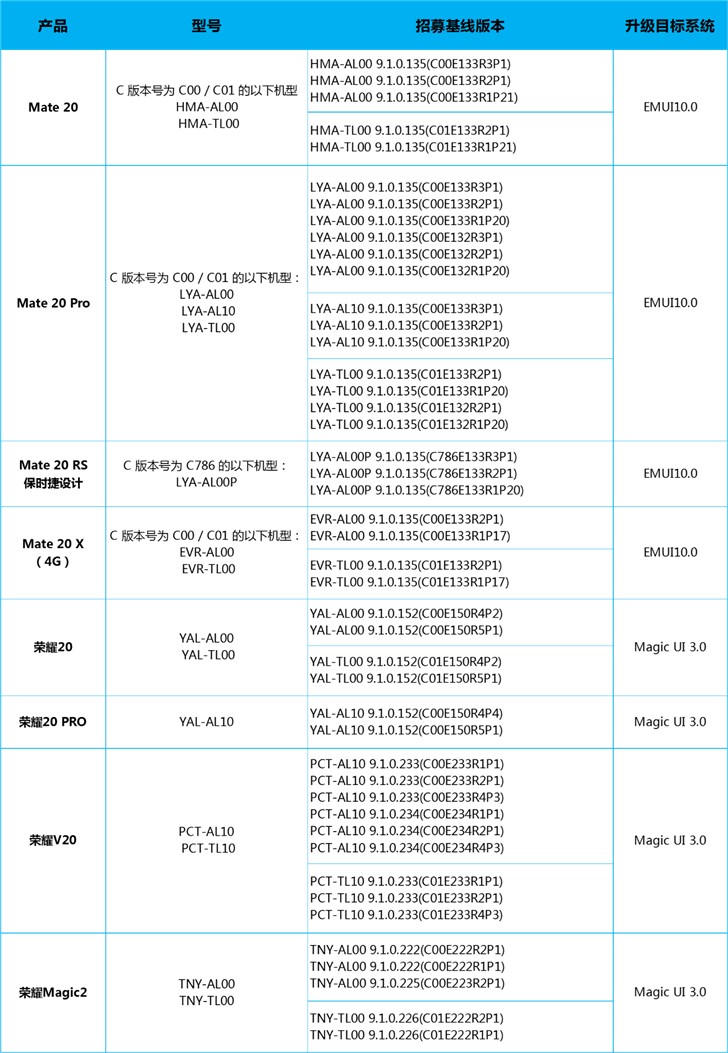
News emanating from Huawei‘s Pollen club indicate that the Chinese company has already commenced recruitment of internal beta tester for the Mate 20, Mate 20 Pro, Mate 20 RS Porsche Design, Mate 20 X (4G), Honor 20, Honor 20 Pro, Honor V20, Honor Magic 2. While the Huawei models will be tested with EMUI 10.0, the Honor models get Magic UI 3.0, both based on Google’s Android 10.
The company plans to recruit 500 users for the log version while 1500 users would be recruited for the non-log version (read about the difference from here). The registration is presently open to those who understand the process of internal beta testing. Registration can only be done via a mobile phone and not from a PC. Also, would-be testers will need to download the latest Pollen Club App version 9.0.6.300. The Huawei Mate 20, Mate 20 Pro, Mate 20 RS, Mate 20X (4G), Honor 20, Honor View 20 and Honor 20 Pro are all scheduled to get their update in December according to an Android 10 roadmap for Huawei models that popped up online recently. The Mate 30 series has already come out with EMUI 10 based on Android 10 and next in line is the Huawei P30 models billed to get the update in November. The Mate 10 series, P20 series and P30 Lite are listed to get EMUI 10 update in March 2020 while other Huawei and Honor models will see the update from the second quarter of next year. The good thing is, all the older Huawei models will still get support for Google Play services, unlike the Mate 30 series that was launched without Google Services support.
With all those Pro, Plus and Max variants out there, sometimes there is not enough attention given to the vanilla versions of Android flagships. But despite they are not the most advanced variants, they are often better deals in terms of value for money. Here you can find a specs comparison between the vanilla version of the latest flagship line-ups released by Samsung, Huawei, and Apple. We will try to let you understand which device is the best value for money top-tier flagship for your needs between the vanilla Huawei Mate 30, Samsung Galaxy Note 10 and iPhone 11.
Huawei Mate 30 vs Samsung Galaxy Note 10 vs Apple iPhone 11
Huawei Mate 30
Samsung Galaxy Note 10
Apple iPhone 11
DIMENSIONS AND WEIGHT
160.8 x 76.1 x 8.4 mm, 196 g
151 x 71.8 x 7.9 mm, 168 g
150.9 x 75.7 x 8.3 mm, 194 g
DISPLAY
6.62 inches, 1080 x 2340p (Full HD+), OLED
6.3 inches, 1080 x 2280p (Full HD+), Dynamic AMOLED
6.1 inches, 828 x 1792p (HD+), Liquid Retina IPS LCD
If we talk about design and build quality, Samsung Galaxy Note 10 and iPhone 11 are superior to the Huawei Mate 30. They come with sturdier bodies which boast the IP68 resistance for water and dust resistant. iPhone 11 is the most compact one, but its big notch may not be the best for everyone. Samsung Galaxy Note 10 features a higher screen-to-body ratio and a notch-less punch-hole display, as well as a clean glass back and a slot for the S Pen which is another added value for productivity users.
Display
Despite it is just an LCD panel and not an OLED screen, the display of the iPhone 11 is the most interesting one. It boasts a very high brightness (625 nits), the HDR10 and Dolby Vision technology for outstanding color reproduction, and a high 120 Hz refresh ratio. On the other hand, Samsung Galaxy Note 10’s display is all but disappointing as it is HDR10+ compliant and supports the S Pen and an in-display fingerprint reader. Huawei Mate 30 offers a wider diagonal but not better quality.
Hardware/Software
With its Apple A13 Bionic chipset, internal storage up to 256 GB and the wonderful iOS software optimization, iPhone 11 offers blazing speeds and constant stability. There is no challenge for its rivals: it is the best device when it comes to performance. But the iPhone 11 does not come with 5G connectivity, while both Samsung Galaxy Note 10 and Huawei Mate 30 have 5G variants (they are more expensive than the LTE ones). Huawei Mate 30 comes with Android 10 out of the box, while Samsung Galaxy Note 10 is still based on Android 9 Pie.
Camera
It is still too early to make a camera comparison between Huawei Mate 30, Samsung Galaxy Note 10 and iPhone 11. While the first made its debut yesterday, the iPhone 11 just hitten the shelves. On the paper, Huawei Mate 30 has the most interesting camera hardware, but camera hardware is not everything. Unlike its opponents, iPhone 11 lacks an ultrawide camera.
Battery
With a 4200 mAh battery and its chipset built at 7 nm+, we believe that Huawei Mate 30 will offer the longest battery life. It even boasts the fastest wired charging technology of the trio and the fastest wireless charging technology ever seen on a phone. iPhone 11 has an average 3046 mAh but it still offers a long battery life. Even Samsung Galaxy Note 10 is all but disappointing, but we do not believe they will match Huawei Mate 30 in any scenario.
Price
Huawei Mate 30 and iPhone 11 made their debut with €800/$880 (Asia) and €839/$699 (Global) price tags, respectively, while Samsung Galaxy Note 10 starts from €950/$1045 globally. Due to its bigger battery, amazing cameras, and optional 5G support, Huawei Mate 30 looks like a more interesting device at the end of the day (on the paper), but we can give you a definitive opinion only after testing all of them accurately. If you are a productivity user, Samsung Galaxy Note 10 may be more suitable for your needs due to the presence of S Pen.
Realme has continued to maintain its innovation so as to gain the upper hand over its competitors. The brand was launched as a sub-brand of OPPO in 2018 with the launch of the Realme 1. Since then, the brand has gone on to release several models, spurred by the success of the first model. The sub-brand has also since graduated to an independent brand.
Realme’s smartphones offer users an alternative to the value-for-money products which Xiaomi used to gain some traction in the market. The emergence of the brand has even forced Samsung to rethink its strategy in the mid-range segment. Even Xiaomi has had to adjust with the creation of the Redmi brand and Pocophone sub-brand. Realme is about taking the bar higher as it moves towards making its device more attractive by sending the Realme X to custom ROM and kernel developers.
XDA-Developers is a treasure trove of developers mostly, but not restricted to the Android OS. The community has previously teamed up with some phone manufacturers in the past to develop custom ROMs for devices. The community teamed up with Xiaomi on the Poco F1 which makes it easy for Poco F1 users to have access to several aftermarket ROMs, kernels and other modifications. Also, the ASUS ZenFone 6 also had an active development community thanks as a result of previous device seeding efforts.
In this same light, Realme has selected a number of developers from the XDA community who will be sent devices in order to give a boost to the community and its efforts. Already, the devs who are based in India have received their Realme X while those outside India will get theirs soon. The developers are expected to contribute to efforts that would extend the product life and to give end-users valuable choices. This is also made possible by Realme’s flexibility to allow more devices to unlock their bootloaders, and efforts like these will go a long way in instilling confidence in users. A good number of OEMs are already making efforts to open up their phone’s bootloaders to developers.
Smartphone lovers, rejoice! If you have restlessly been waiting to get your hands on the latest mobile phones that boast an impressive array of features without spending a lot of money, Banggood’s got your back.
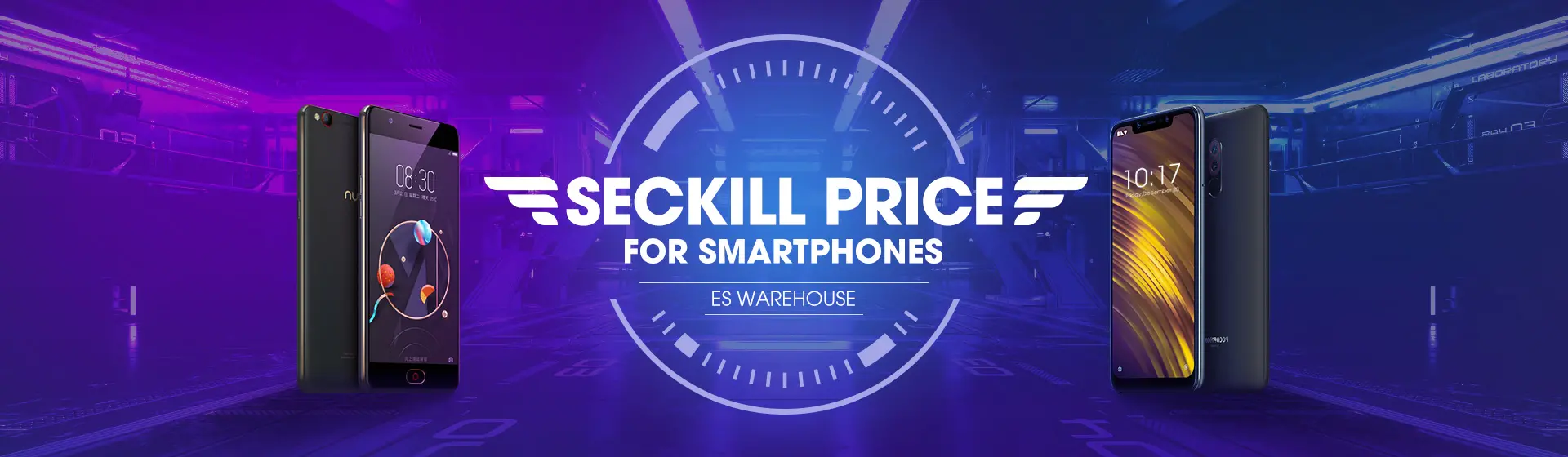
Known for offering the best bang for your buck, Banggood keeps coming up with amazing promotion sales from time to time. Living up to its reputation, the Chinese online store has launched a brand new promo dubbed Seckill Price for Smartphones ES Warehouse.
The recently kicked-off activity features a wide range of feature-laden mobile phones from leading manufacturers. More importantly, you can buy these handsets without burning a hole in your pocket.
To simplify and expedite the search process, all products available on the promotion page have been split into specific categories. Let’s check them out.
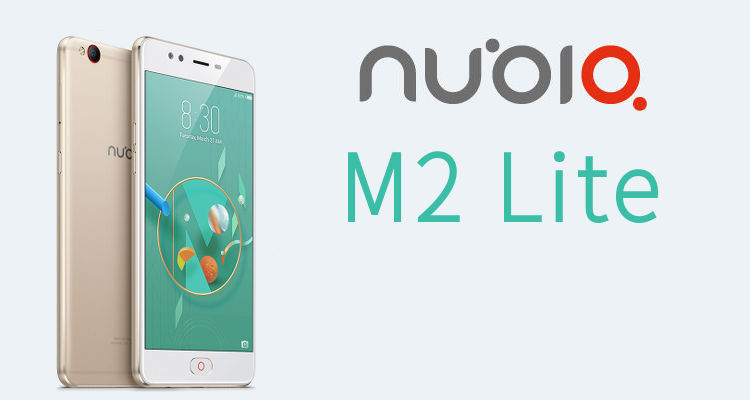
The first section on the promo page is called Seckill Price Must Have. You can avail noteworthy discounts on the LeEco Cool1 dual Coolpad, Nubia M2 Lite, Xiaomi Pocophone F1, and the Xiaomi Redmi Note 6 Pro smartphones.
For the sake of an instance, the 4GB RAM+64GB ROM Xiaomi Redmi Note 6 Pro variant usually retails for $256.19, but you can buy it for just $149.99 by applying coupon code BGN6P at the time of checking out. In other words, you can save $106.2 simply by applying the aforesaid coupon.
Likewise, the next category dubbed Super Coupon Deals is loaded with handsets that usually carry steep price tags. Much to the relief of cost-conscious buyers, these smartphones have been assigned dedicated coupon codes that help you save a considerable amount of money before placing your order.
Featuring the Doogee Mix 2, Leagoo M9 Pro, and a slew of other popular smartphones, the Daily Flash Deals section is worth checking out as well. You can get noteworthy discounts on select mobile phones that have been placed under this category.
For example, you can grab a 7 percent off on the UMIDIGI One Pro smartphone, which usually sells for $149.99. As a result, the handset can now be yours for a reduced price of just $139.99.
Similarly, the Mega Discounts Now category gives you an unmissable chance to grab great discounts on top-end smartphones such as LeCo Le 2 X526, Leagoo KIICAA Mix 5, and more. Brand conscious buyers can head straight to the Top Brands section, which is brimming mobile phones from popular brands.
Aside from Xiaomi, you can check out a slew of amazing smartphones from OnePlus, Doogee, & Ele. While some mobile phones are carrying lowered prices, others have been assigned dedicated coupon codes that you can apply to get a discount at checkout.
In addition to that, a myriad of smartphones from other equally popular brands such as Umidigi, Gome, and Sharp have been placed under the concluding category called Other Brands. You can visit the activity page by following this link and take full advantage of coupons and discounts before the promo wraps up.
Chinese smartphones have never been popular for their haptics. In fact, even smartphones from OnePlus have fared poorly for haptics feedback. Things did improve with the OnePlus 7 Pro to a great extent but still, neither Xiaomi nor Huawei flagships fare well in this department.
But Xiaomi wants to change that with the Mi 9 Pro 5G.
After announcing that the new Mi 9 Pro 5G will feature strong haptics via a custom-made “transverse linear motor”, Lei Jun reveals that this implementation is probably the best in the Android ecosystem. Currently, it’s smartphones like Google Pixels, LG V30, and Samsung Galaxy Note series models that have the best haptics in the Android market. But the Mi 9 Pro 5G may join this premium list soon.
The earlier teaser revealed that the haptic feedback has a start-stop speed of 10ms, just like a mechanical keyboard. With this Vibration HD feature, the phone will also offer a 4D immersive gaming experience.
Touted as the world-leading smart lighting brand, Yeelight offers a wide range of smart home lighting products including table lights, furnishing lights, ambiance lights, etc.
Lighting has a considerable effect on our mood, and it can improve or disrupt our sleep. Lighting is a vital aspect of interior design as it not only enhances the aesthetic appeal but also sets the mood and ambiance of a space.
Aside from that, lighting is an important factor in regulating sleep. Regrettably, lighting products and accessories such as LED nightlights and bedside lamps aren’t easy on the pocketbook.
A part of Xiaomi Ecosystem, Yeelight has now teamed up with Gearbest to offer a feature-rich night light, as well as an amazing bedside lamp for considerably lowered prices. So without wasting more time, let’s check out the details.
Yeelight YLYD11YL Light Sensor Plug-in LED Nightlight
This plug-in night light turns on automatically in dark environment. It has a built-in light sensor and smart recognition capabilities for a convenient experience. With 2700K color temperature, the Yeelight YLYD11YL produces only soft light which is easy on the eyes.
The international version of the Yeelight YLYD11YL would normally set you back $11.86, but you can now buy it for a lowered price of just $6.99 from Gearbest. This is a 41 percent reduction in the device’s original asking price.
With over a hundred pieces sold at the time of writing, this flash sale is slated to end in six days. You can visit this link to avail the discount before it ends.
Likewise, you can avail a 42 percent discount on the Yeelight YLCT01YL LED Bedside Lamp, which usually retails for $86.19. Thanks to the aforesaid discount, you can now buy the lamp for just $49.99.
An absolute steal at this price, the Yeelight YLCT01YL LED Bedside Lamp produces soft light and offers color temperature and brightness adjustment options. The bright, yet cold lighting allows you to create a variety of scenes that suit your fancy.
You can check out more details about the Yeelight YLCT01YL LED Bedside Lamp and place your order by following this link. Note that forty pieces of the lamp were already sold at the time of writing and the flash sale is slated to end in six days.
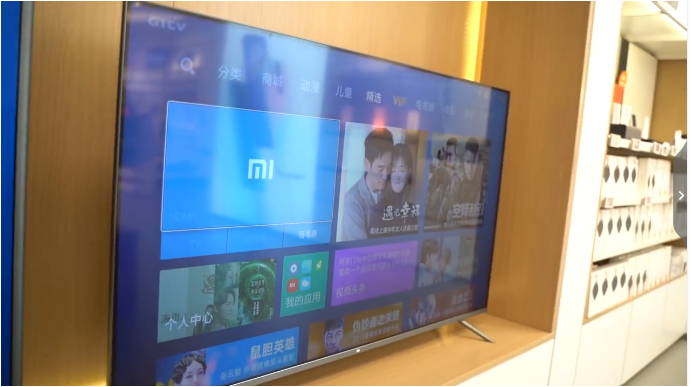
Xiaomi has got a big event lined up for September 24 where a number of flagship products will be released. The Mi 9 Pro 5G and Mi Mix Alpha and then the Mi TV Pro are all expected to be announced on that day. The company has now unveiled the Mi TV Pro at one of its official stores in China with the product up for pre-order. The pre-order will run from September 15 to 24 and participants will need to deposit 100 yuan. After the device goes on sale, those who pre-order will receive a complementary Xiaomi TV speaker valued at 399 yuan.
The company made a short promotional video which shows how customers reacted to the TV when they checked out.
The Mi TV Pro is expected as the first Xiaomi TV to support 8K decoding. The TV is also coming with a full-screen, near bezel-less design as can be seen from the video. The bezels around the display are so thin you might wonder how the huge screen is held in place. Xiaomi will let us in on more details when it is launched.
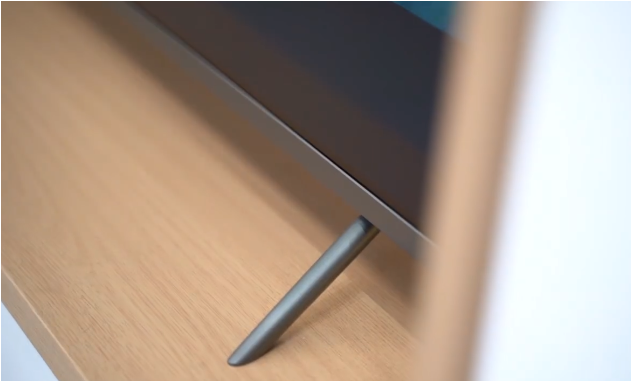
Further, the TV adopts a metal base a well as a metal frame. Apart from the standout features like a full-screen design and slim metal frame, the Mi TV Pro isn’t any different from other Mi TV models but with a more premium look.
Talking about the response of fans interviewed in the video, the comments were mostly accolades for the attractive design. The fans had the opportunity of testing the TV and the software also showered praises on the new TV for the smoothness of installed apps. In our view, the ultra-thin bezels coupled with a high-resolution display will give users immersive viewing experience. The metal body gives the smart TV a premium look. The smart TV is expected to run PatchWall 2.0 based on Android Pie, delivering seamless and smooth operation. You can check out the promo video from the source link below.
After announcing the new Realme Buds Wireless in India last week, the company has officially announced that the same earbuds are heading to China. Teasers reveal that the design will stay exactly the same as the Indian version, coming in the brand’s iconic ‘Black and Yellow’ color scheme.
Just like the ones launched in India, the Realme Buds Wireless will be tuned by the world-renowned Norwegian DJ, Alan Walker. It’s clear that realme is looking to target customers who want a bass-heavy and cheap wireless earphones. The 10 hour+ battery life is definitely an added plus for people on the move.
The Realme Buds Wireless works quite similar to the OnePlus Bullet Wireless. The earbuds use MFP (Magnetic Fast Pairing) and connect to your smartphone as soon as you separate the two magnetic earbuds. In India, these wireless earbuds are priced at Rs. 1799 (~$25) and you can expect them to be announced at a slightly lower price in China.
We use cookies on our website to give you the most relevant experience by remembering your preferences and repeat visits. By clicking “Accept”, you consent to the use of ALL the cookies.
This website uses cookies to improve your experience while you navigate through the website. Out of these, the cookies that are categorized as necessary are stored on your browser as they are essential for the working of basic functionalities of the website. We also use third-party cookies that help us analyze and understand how you use this website. These cookies will be stored in your browser only with your consent. You also have the option to opt-out of these cookies. But opting out of some of these cookies may affect your browsing experience.
Necessary cookies are absolutely essential for the website to function properly. This category only includes cookies that ensures basic functionalities and security features of the website. These cookies do not store any personal information.
Any cookies that may not be particularly necessary for the website to function and is used specifically to collect user personal data via analytics, ads, other embedded contents are termed as non-necessary cookies. It is mandatory to procure user consent prior to running these cookies on your website.