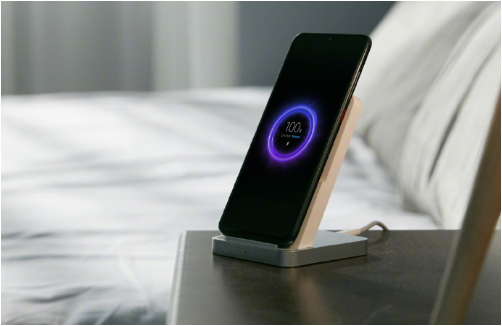
In February this year, Xiaomi unveiled a 20W wireless charger which is considered a powerful charger considering that it uses a wireless connection. The tech giant has now launched a higher 30W wireless charger with a vertical kickstand design.
The Xiaomi-branded 30W vertical air-cooled wireless charger adopts a new air duct design, which directly removes heat without passing through the coil. According to Xiaomi, this design ensures that the heat dissipation efficiency is higher and safer.
The wireless charger utilises an ergonomic tilt design which resembles a kickstand that is meant to hold the phone. Sure, that is an extra function which the wireless charger can perform when not in use. As stated earlier, the wireless fast charger has a maximum power rating of 30W. The charger uses the Qi charging standard and is compatible with most phones that support wireless charging. It also packs an ultra-quiet built-in fan which actively and efficiently cools the charger when compared to other vertical wireless chargers in the market. The heat dissipation is equally more efficient.
The Xiaomi 30W vertical air-cooled wireless charger comes with a 199 yuan ($28) price tag. There is no word yet as to when it will go on sale.
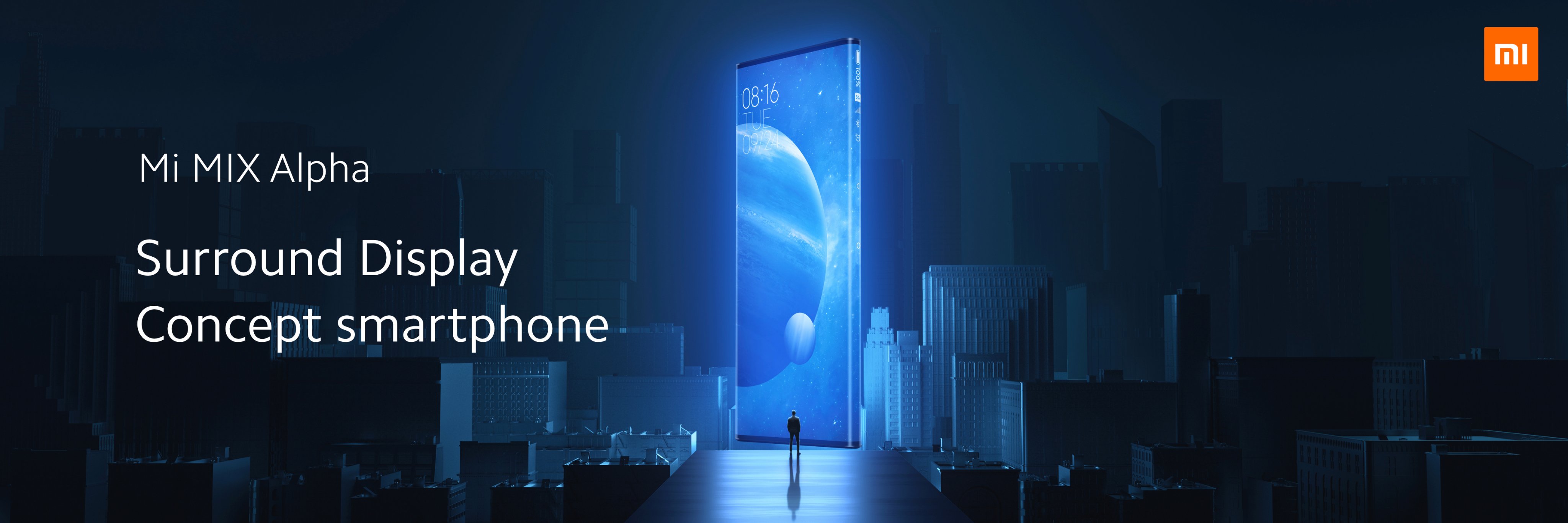
Ever since 2016, Xiaomi’s best flagships have been from the Mi Mix series. This year too, the tradition continues as Xiaomi has launched its brand new Concept flagship, the Xiaomi Mi Mix Alpha 5G. This is the Alpha member of the company’s flagship lineup, bringing in next-generation features not seen on any smartphone before. This is why the Mi Mix Alpha brings several ‘World’s First’ features to the smartphone industry.
Xiaomi Mi Mix Alpha 5G Design
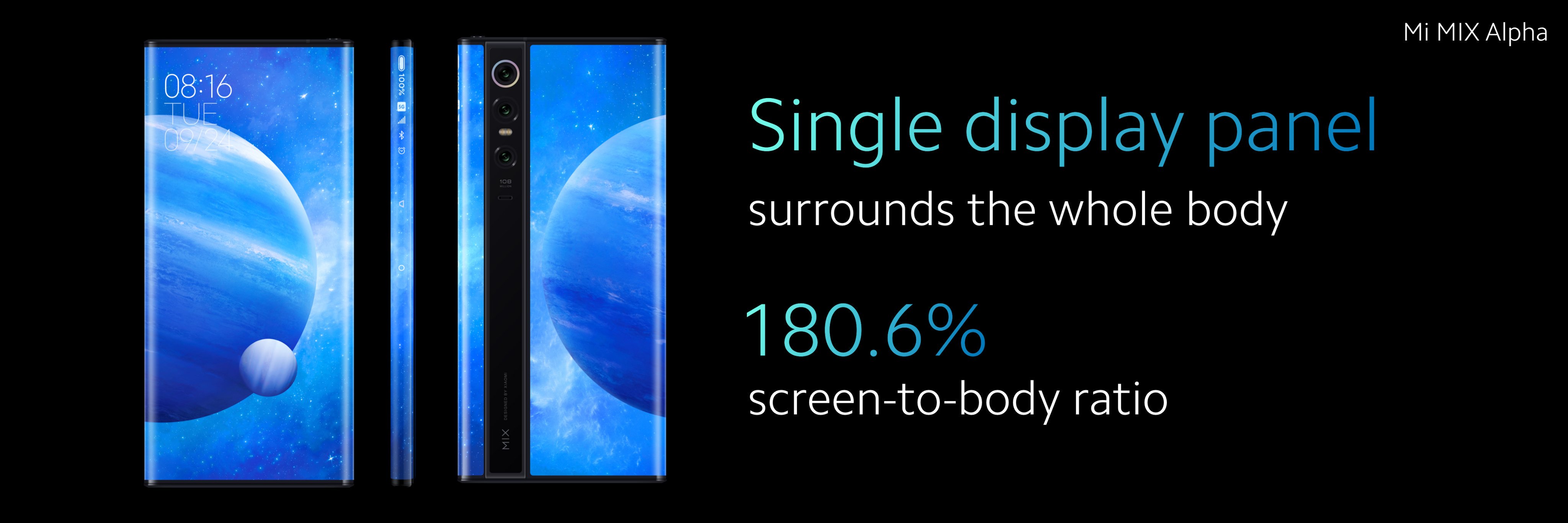
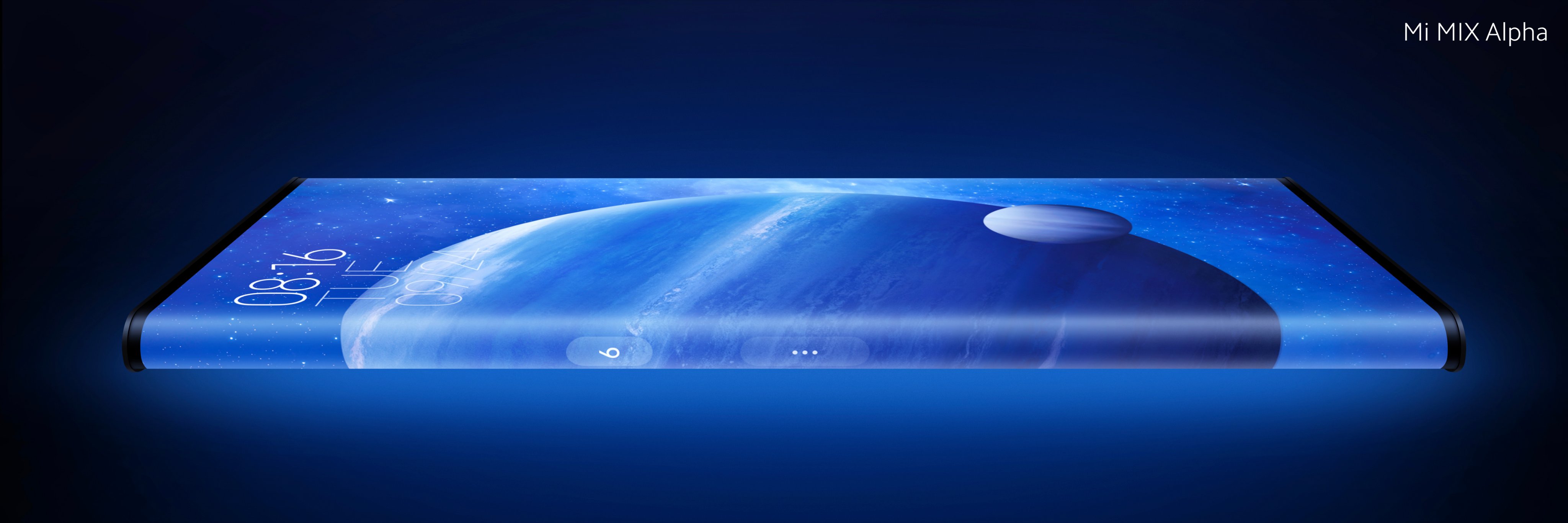
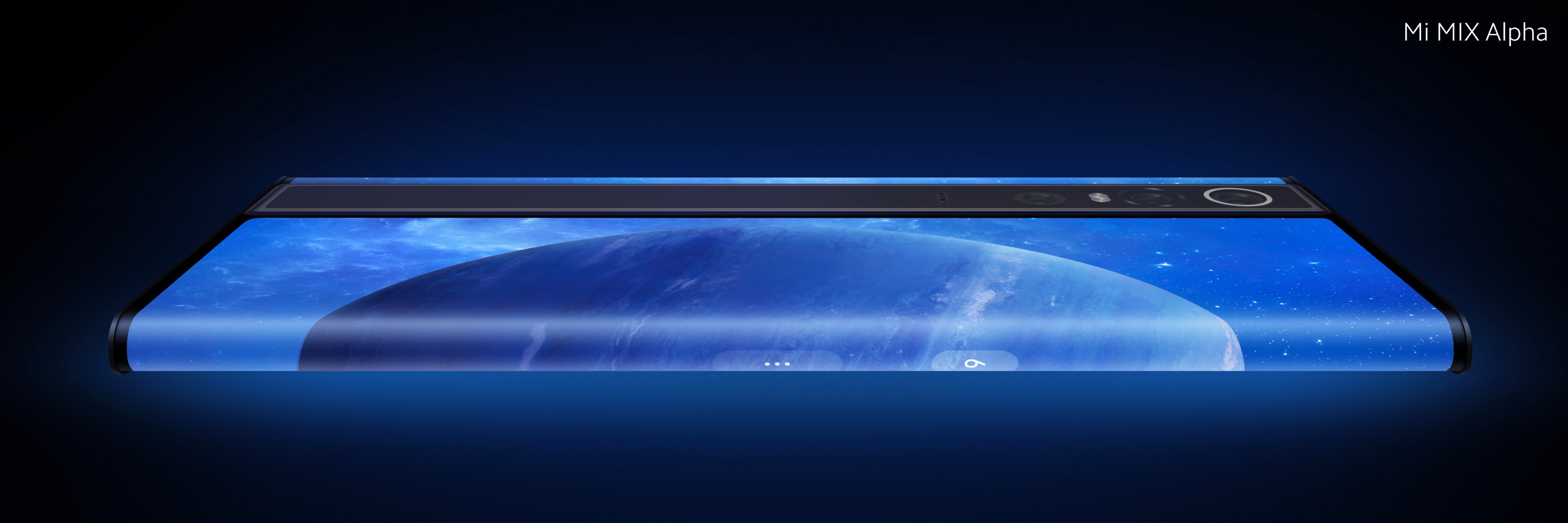
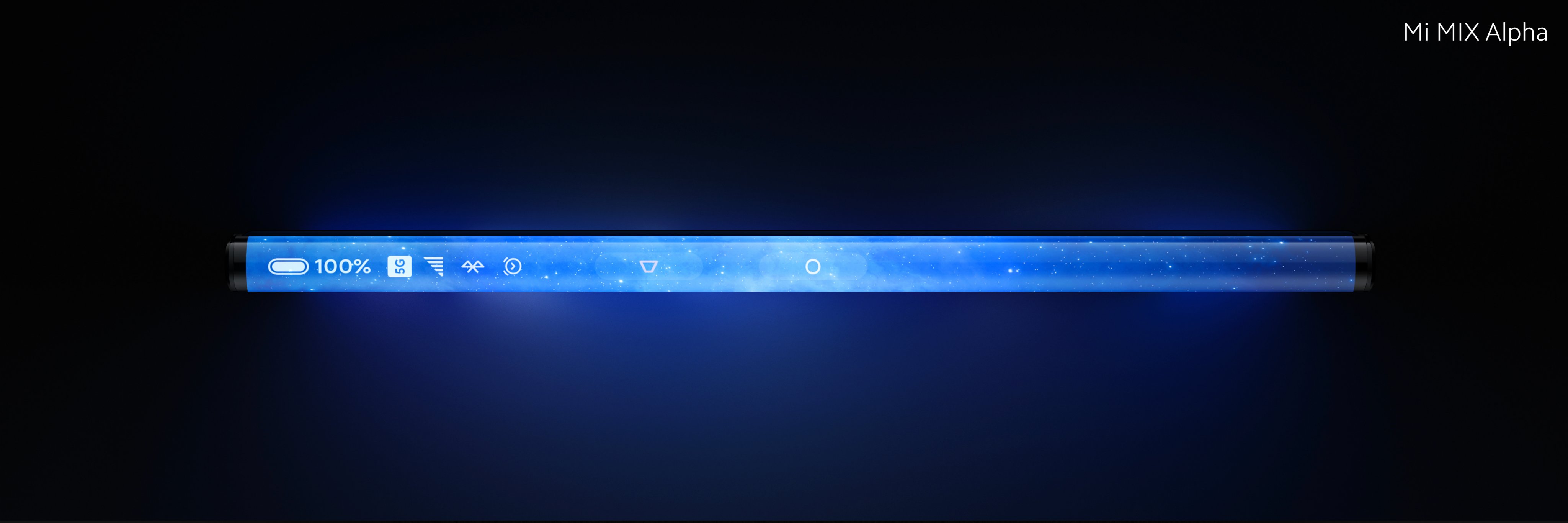
The Xiaomi Mi Mix Alpha is the world’s first smartphone with a curved display that wraps around almost the entire device. Except for the tiny vertical strip that houses the camera at the back, the display surrounds the entire smartphone, including the sides and the back. Mind you, this is a single display panel that wraps around the entire body bringing the screen to body ratio to a staggering 180.6%! This is made possible also because of the extremely narrow 2.15mm bezels on the top and the bottom.
Clearly, the phone ushers a new era of all screen 4D surround display.
But bringing this concept to reality wasn’t easy. Hence, Xiaomi has used a number of smart solutions to enable such a full-screen wraparound design.
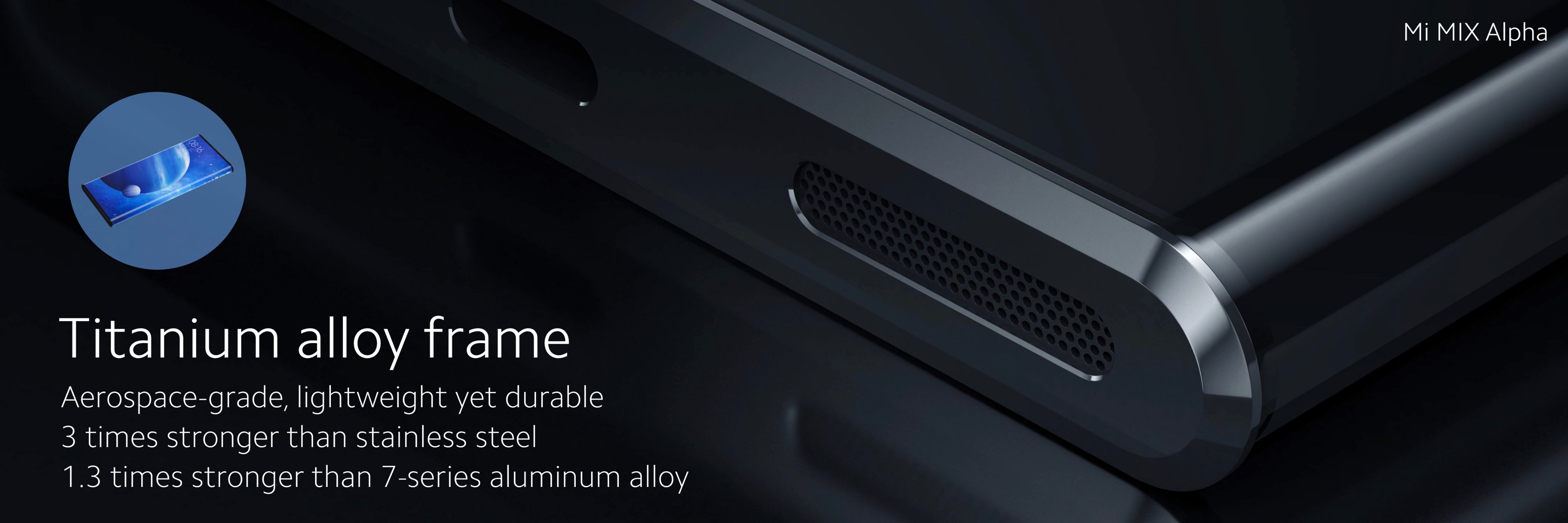
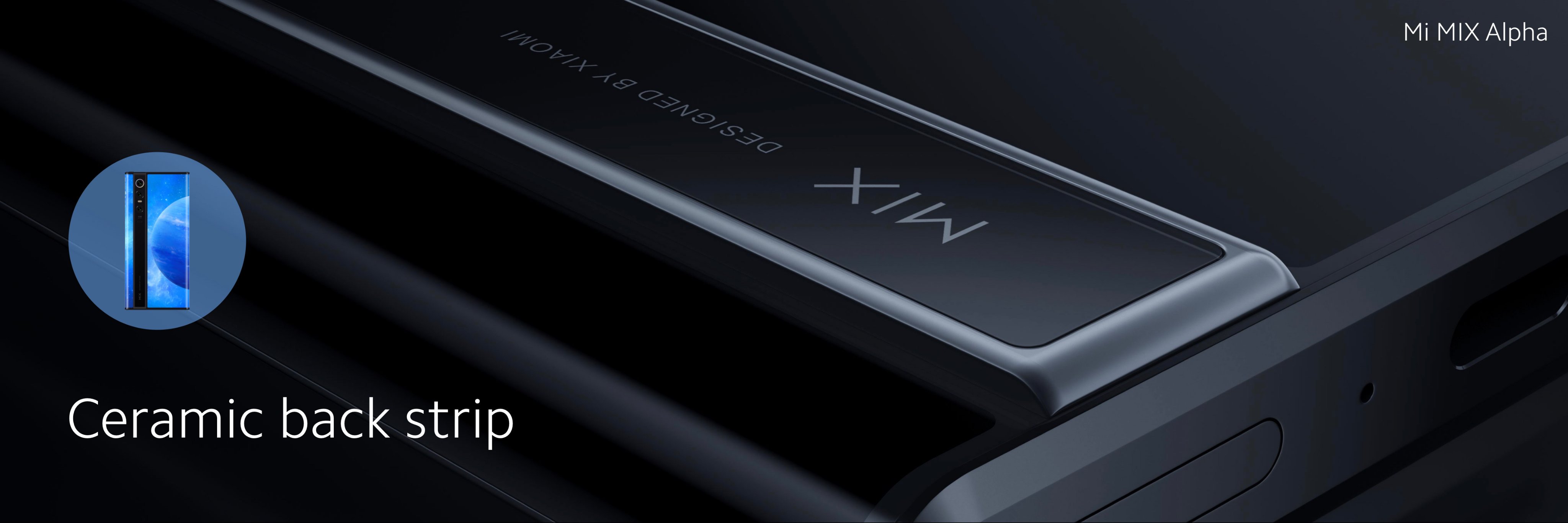
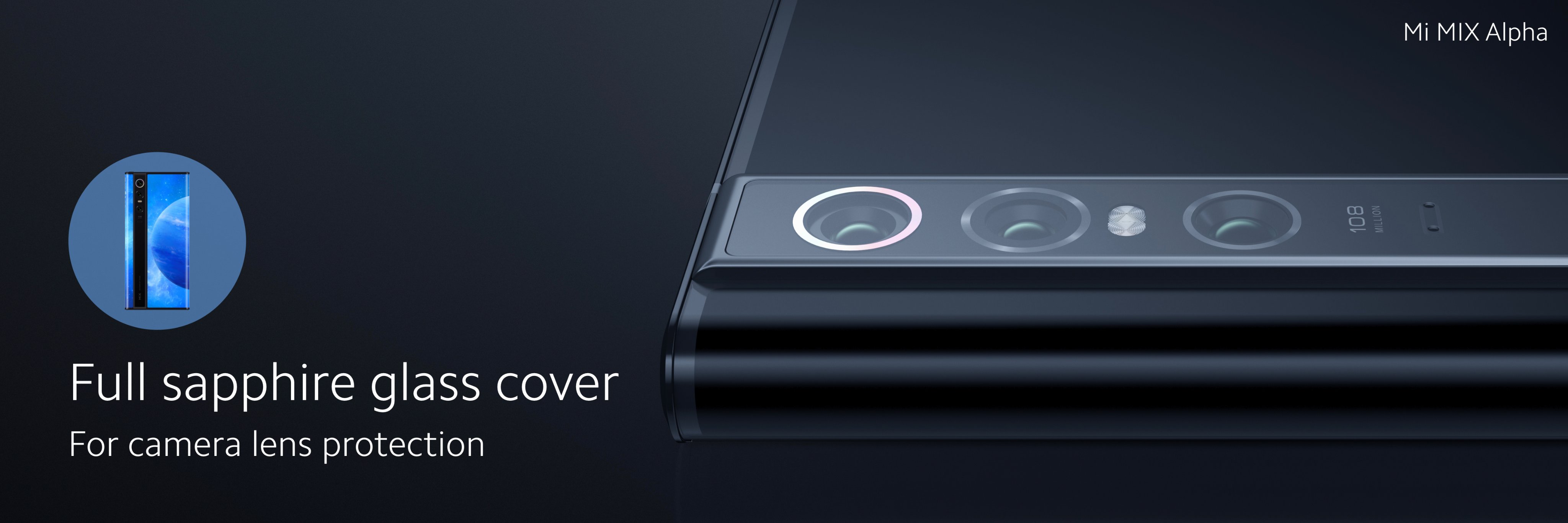
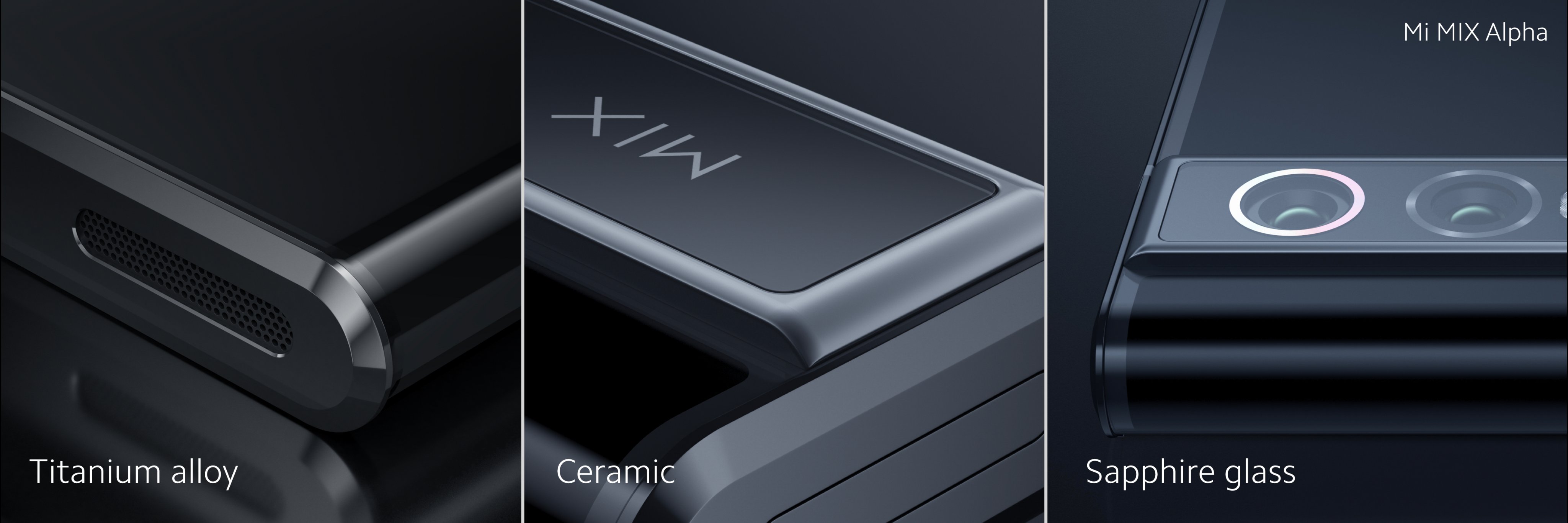
The phone is supported by a very strong and lightweight Titanium frame. The vertical strip that houses the camera is made of a black precision ceramic material. Also, the triple cameras at the back are protected by the sapphire glass to avoid scratches of any kind. The vertical strip at the back also houses most of the phone’s antennas and connectivity modules for Wi-Fi and 5G.
Apart from these premium materials, the Mi Mix Alpha comes with smart solutions to tackle various design challenges associated with this smartphone design.
For example, since the company couldn’t add any buttons on the side, it has used pressure-sensitive sides. This means the side displays can mimic a physical button with the help of powerful haptics (linear motor). It’s similar to what we saw on the Mate 30 Pro with its waterfall display implementation. There’s also a display acoustic technology for sound output and an ultrasonic proximity sensor.
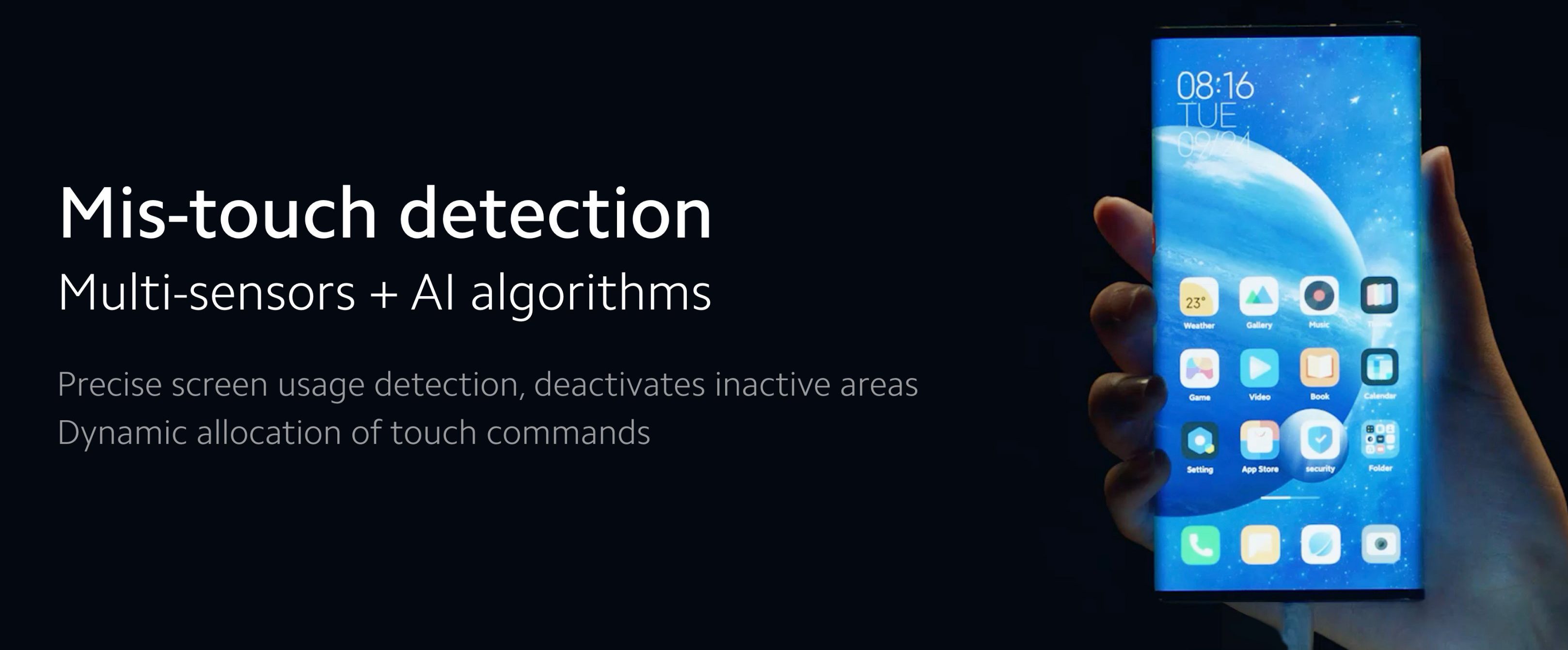
Also, since the displays cover the sides as well, if you are worried about accidental touches, Xiaomi has implemented a solution for that as well.
Xiaomi reveals that accidental touches are avoided using multiple sensors and AI algorithms that predict screen usage behavior. This means the phone essentially deactivates the inactive touch areas to avoid mistouches.
Xiaomi didn’t reveal detailed specifications of the Mi Mix Alpha at the event today.
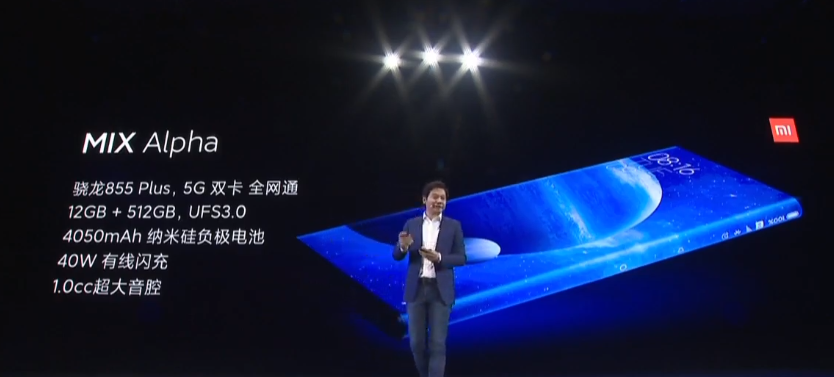
However, the company has confirmed that it will be powered by the Snapdragon 855+ processor with 5G dual SIM support. There will be at least one version with 12GB of RAM and 512GB of UFS 3.0 storage. The battery isn’t very large at 4050mAh but supports 40W fast charging just like the Mi 9 Pro 5G.
Xiaomi Mi Mix Alpha Camera
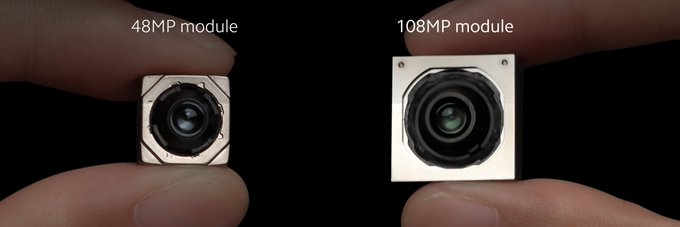
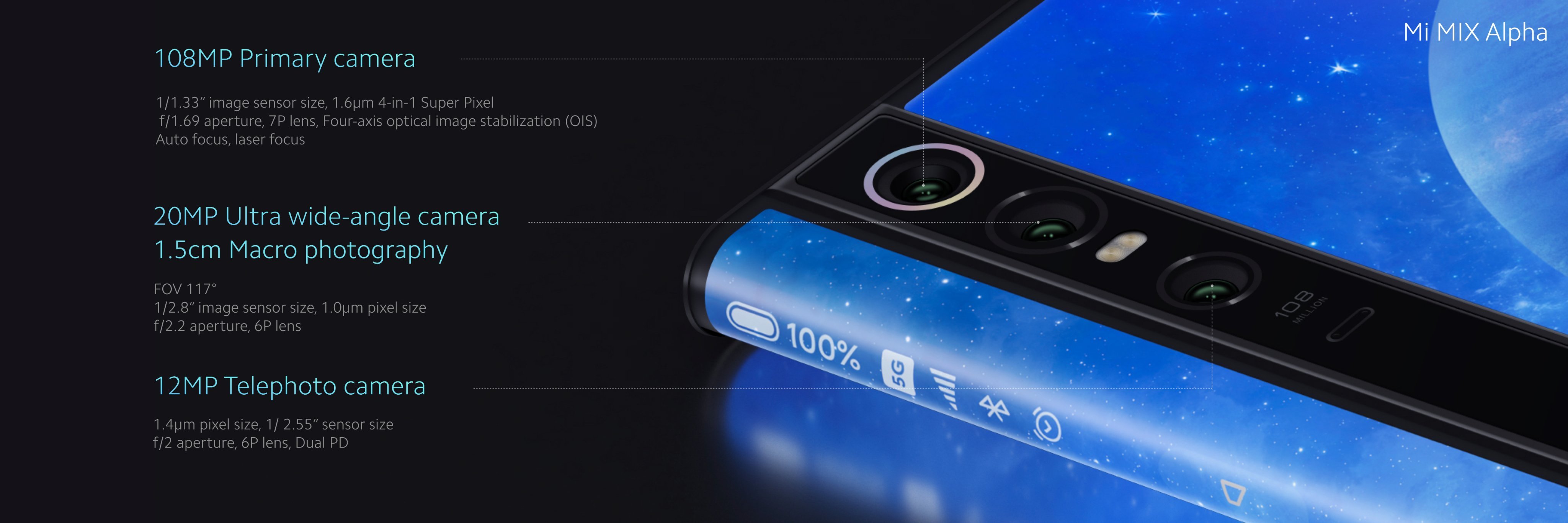
Xiaomi Mi Mix 5G is the world’s first smartphone to feature a 100MP+ resolution camera sensor. This is made possible by using the Samsung ISOCELL Bright HMX 108MP camera sensor at the back of the device. The sensor was developed in close collaboration with Xiaomi, hence it’s no surprise that we are seeing it first on the Mi Mix Alpha 5G.
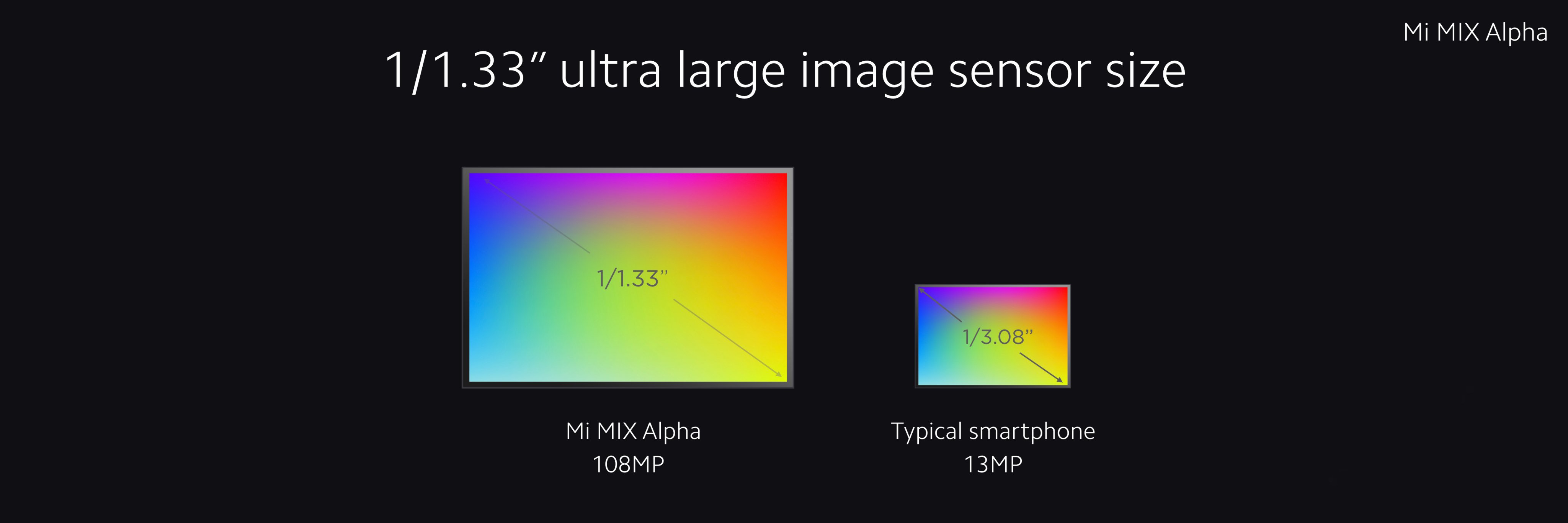
The 108MP primary sensor on the Mi Mix Alpha is ultra-large with a 1/1.33″ sensor. This setup is capable of outputting 12032 x 9024-pixel resolution images which will be extremely detailed. Even at 8X crop, the images retain a very high amount of detail, not usually seen from a smartphone camera.
There are two more camera sensors completing Mi Mix Alpha’s triple camera setup: A 12MP telephoto camera with 2x optical zoom and a 20MP ultra-wide-angle camera lens with 117° FOV. This setup also supports 1.5cm macro photography. Other features of the setup include a four-axis OIS, Laser focus, and a flicker sensor.
The first set of camera samples from the 108MP camera sensor looks extremely detailed and rich. But of course, we’ll have to wait for a decent review to see its real-life image quality.
Mi Mix Alphas camera shot of the Shanghai skyline
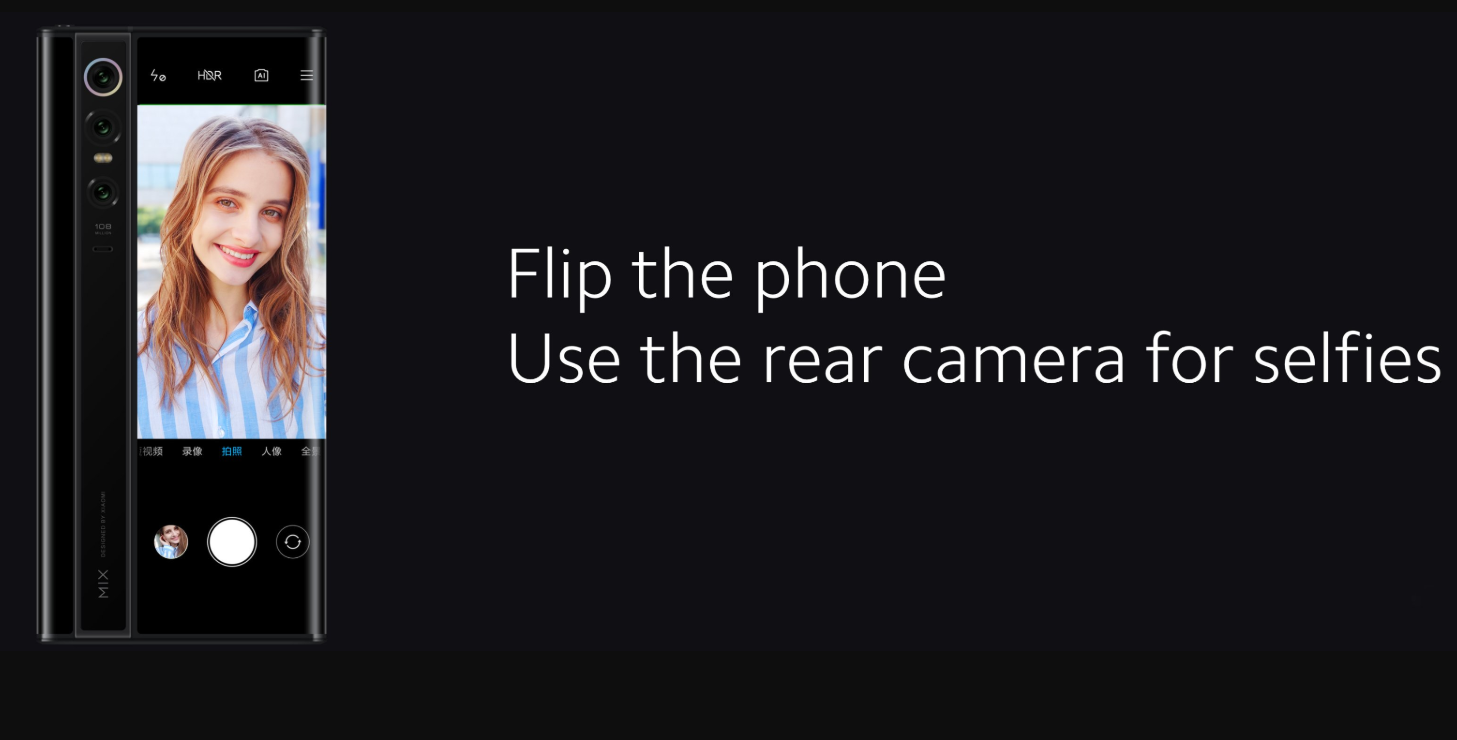
The Mi Mix Alpha doesn’t have a selfie camera, mainly because it doesn’t need one. You can simply flip the phone to use the rear camera setup for your selfies. Honestly, it doesn’t get better than this.
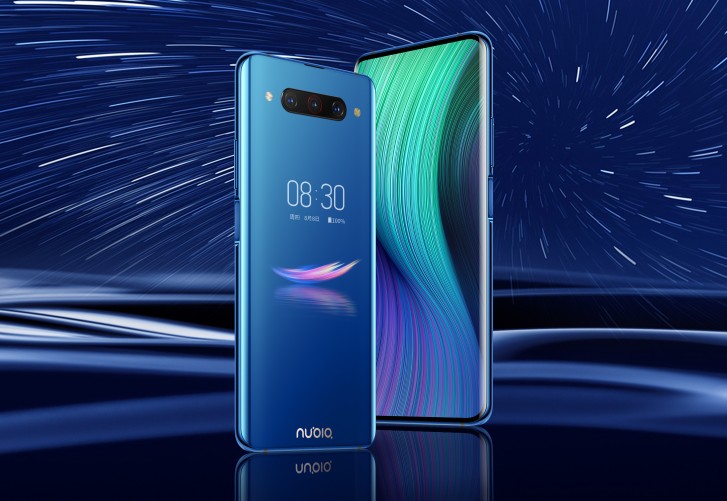
In order to take full advantage of the Mi Mix Alpha’s 360° surround display, Xiaomi has made some smart additions to the phone’s software. Apart from switching to selfie mode when you switch to the rear display on your phone (just like Nubia Z20), there are multiple software tricks that make the rear screen useful.
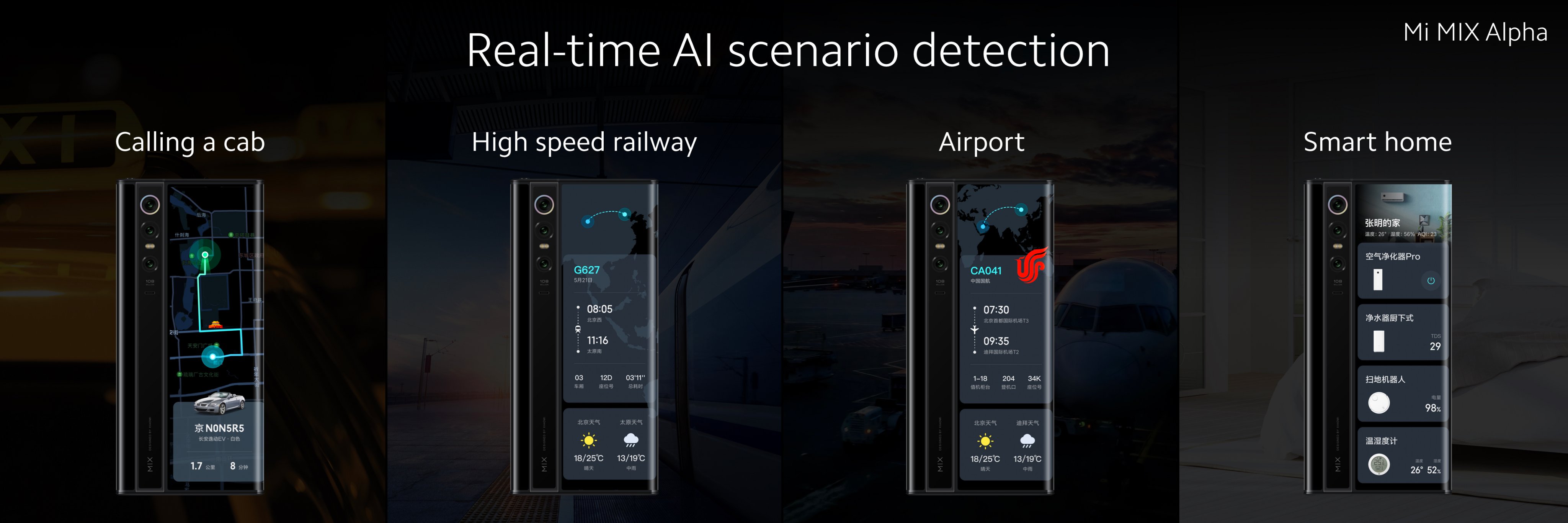
For example, irrespective of what’s on the front display, real-time AI scenario detection will allow you to carry out tasks such as booking a cab, checking out your flight and train schedule and information, as well as controlling your smart home devices right from the display at the back.
Also, you can set up the phone to light up the phone for different notifications. Even while charging the phone, the entire screen can light up, making for a beautiful experience.
Xiaomi Mi Mix Alpha Pricing & Availability
It’s not surprising that the Mi Mix Alpha will be produced on a very small scale on a trial basis at first. The company has priced it at a staggering 19,999 Yuan (~$2814), which is even more than Samsung’s new foldable smartphone.
The Mi Mix Alpha prototype will be showcased at various Mi stores throughout China. Once the trial production turns out to be successful, the company will attempt to mass-produce it by the end of this year.
Honestly, the Mi Mix Alpha upholds the Mix lineup’s reputation of bringing next-generation designs to the market. But unlike the original Mix which was essentially a concept phone that you could buy (started at 3,499 yuan ~$493), the Mi Mix Alpha is out of the reach of most buyers today.
Still, are you impressed with Xiaomi’s new concept smartphone? Or do you think this design isn’t practical?
Xiaomi has now officially launched MIUI 11, the latest incarnation of their custom Android UI. Down below, we’ve detailed the brand new design changes as well as all the new functions and features that the update brings. So, let’s take a closer look at MIUI 11.
MIUI 11: Design Rundown
Bigger Focus on Clean Design
With MIUI 11, Xiaomi is applying a more modern twist to their overall design language. Like Huawei and Samsung, Xiaomi has gone ahead and changed up not just the look but also the general design of the UI. Everything is now designed to be more reachable with one handed use, which is what we’ve come to expect.
This same design language has been applied to almost every section of MIUI 11, resulting in a clean and modern look. All the old clutter from MIUI 10 has been removed from the UI, and it’s clearly much better than before. There’s a lot more white space and bold colours, which is the current trend in the smartphone market.
MIUI’s Dark Mode is here
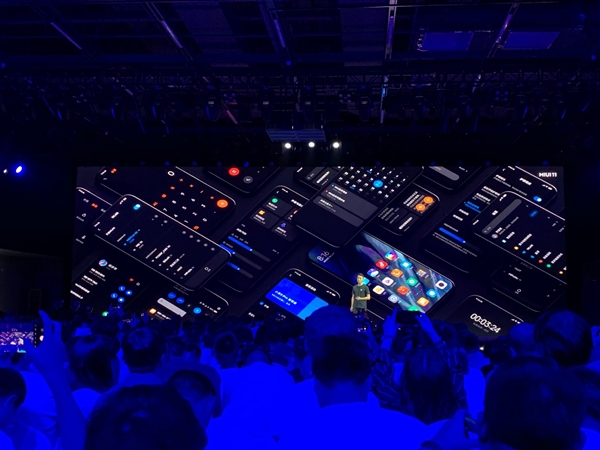
Dark Mode is a major feature of Android Q and MIUI 11 implements this with a few of its own bells and whistles. Xiaomi’s implementation seems to be very similar to Huawei’s EMUI dark mode in that it changes the colour of all system apps, and it uses a true black dark mode as opposed to Android Q’s more blue and grey dark mode.
New MiLan Pro font, features boldness slider
Xiaomi introduced their brand new font, which the company claims is very streamlined and fitting for almost any situation. The new MiLan Pro font follows the overall design trend of the entire user interface, but there’s a twist to it. Users can switch the general boldness of the font for most of the system with a slider, allowing for greater choice.
Automatic Dynamic UI font boldness
One of the things the company was very proud of was their new context sensitive dynamic UI font boldness. All around the UI, certain actions will embolden certain fonts to provide better context as to what’s selected or being interacted with. It’s a very simple feature, but it makes the user interface feel a lot more minimalist compared to competitors.
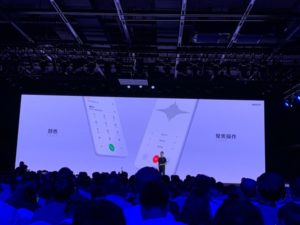
For example, pressing a number on the dial pad emboldens the number, leaving things clean while still providing visual feedback. This design choice is excellent, winning a Reddot Design award in the process.
Ambient Display
Ambient Display is what Xiaomi is calling their living display feature. It’s a bit different from other company’s implementation in that Xiaomi’s version has a bigger focus on customisability. For starters, the user can customize the clock that appears on the Ambient Display, and there are a lot of options available. Users can also make their own customizable message that appears on the Ambient Display.
On top of this, the animations on the Ambient display even serve as a notification indicator, with interchangeable breathing lights being used to show when messages or notifications have appeared. It’s not the most important of features, but it’s a big focus of MIUI 11.
Dynamic Natural Sound system
Finally, Xiaomi has updated all their alarm sounds and notification noises to be dynamic. What this means is that the sounds that are generated can change depending on variables like place and time of day. Once again, it’s not a particularly big features, but it’s certainly a nice addition for the user experience.
MIUI 11: Function Rundown
Mi Work Productivity Suite
Xiaomi has introduced a suite of new productivity tools that will come with MIUI 11. This suite is called the Mi Work Productivity Suite, and it features four brand new apps from the company that are designed to make things easier when it comes to doing business. They’re all designed for different subsets of work, but they work seamlessly to maximize efficiency.
Mi Share allows for faster file transfer
Xiaomi’s Mi Share application allows MIUI 11 devices to transfer files between Xiaomi laptops, Xiaomi smartphones, Oppo devices and Vivo devices seamlessly and quickly. It features a very simple UI and transfers files much quicker than with the standard methods at 82MB/s. If you’ve got a supported device, you can say goodbye to cable transfers.
2. New built-in document reader from Xiaomi and WPS Office
Xiaomi’s new built-in document reader was built in conjunction with WPS Office, and it’s quite the improvement over the previous document opener. It supports all sorts of productivity documents, like PDFs, presentation slides, excel sheets and word documents. It’s essentially capable of opening any productivity document.
3. Easy screen casting with new presentation tools
There’s a brand new screen casting tool for MIUI 11, and once again we’re looking at the best incarnation of the feature. MIUI 11’s one tap screen casting works for all the typical uses like video casting and game streaming, but the big changes here are with presentation tools.
The new casting app comes with a normal slew of presentation tools that simulate the physical tools a presenter might use. You can use your finger as a laser pointer and make remarks and notes straight from you phone. The app also intelligently keeps notifications from being cast, which is a godsend.
4. Xiaomi Printing app makes pairing and printing simpler
Xiaomi’s brand new printing app is very simple and follows a similar concept to their other IR apps. Simply choose the brand of your printer and pair it with your phone. From there, the device can easily send any document to be printed seamlessly. Wireless printing isn’t all that tough, but Xiaomi has taken steps to make it even easier for users.
Mi Go Travel Service Suite
We’ve also got the brand new Mi GO Travel Suite, a set of tools that are focused on making things easier for people who are travelling to other countries. The Travelling Assistant and Super Power Saving Mode both serve their purpose pretty well.
1. Travelling Assistant makes travel more convenient
The Xiaomi Travelling Assistant is one half of the Mi GO Travel Service Suite, but it’s an excellent implementation of a travel tool. It stores all kinds of important information before the trip including booking details, hotel reservations and weather forecasts and syncs all the information in the application for easier viewing.
On top of this, you can easily purchase tickets for local travelling devices, refer to the current exchange rates and even get embassy contact information. It’s an excellent companion app for travelling, and it seems like it’s a very complete application.
2. Brand new Super Power Saving Mode
The new Super Power Saving Mode is essentially a battery saving mode but set to the max. Not too many details were given about how it works, but we do know that it can last an entire day on a mere 5% of battery left. Those are absolutely crazy numbers, and we’re eager to put this new Super Power Saving Mode to the test.
All Xiaomi Themes will now be free to download
In a surprise announcement, Xiaomi announced that with MIUI 11, users will now finally be able to download any Xiaomi theme they want completely for free. The company claims that while they used to need the extra revenue, they are now doing well enough to not need it and want to give back to their Mi Fans.
MIUI 11: Global and Beta rollout schedule
Xiaomi announced the official MIUI 11 Global and Beta rollouts earlier today, as well as what devices will be getting the update. All device will receive internal betas on the 24th of September, while the public betas will go live on the 27th of September. For a list of all devices receiving the public beta update, you can see the whole thing here.
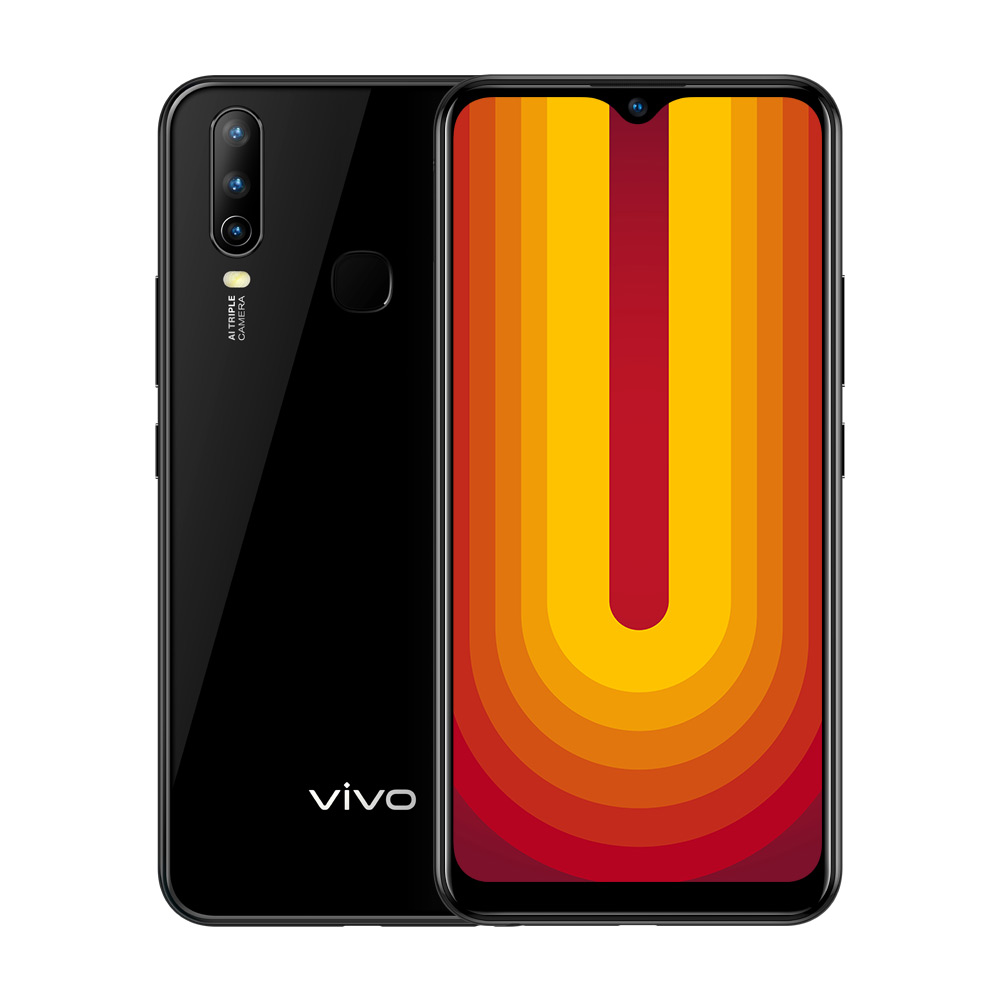
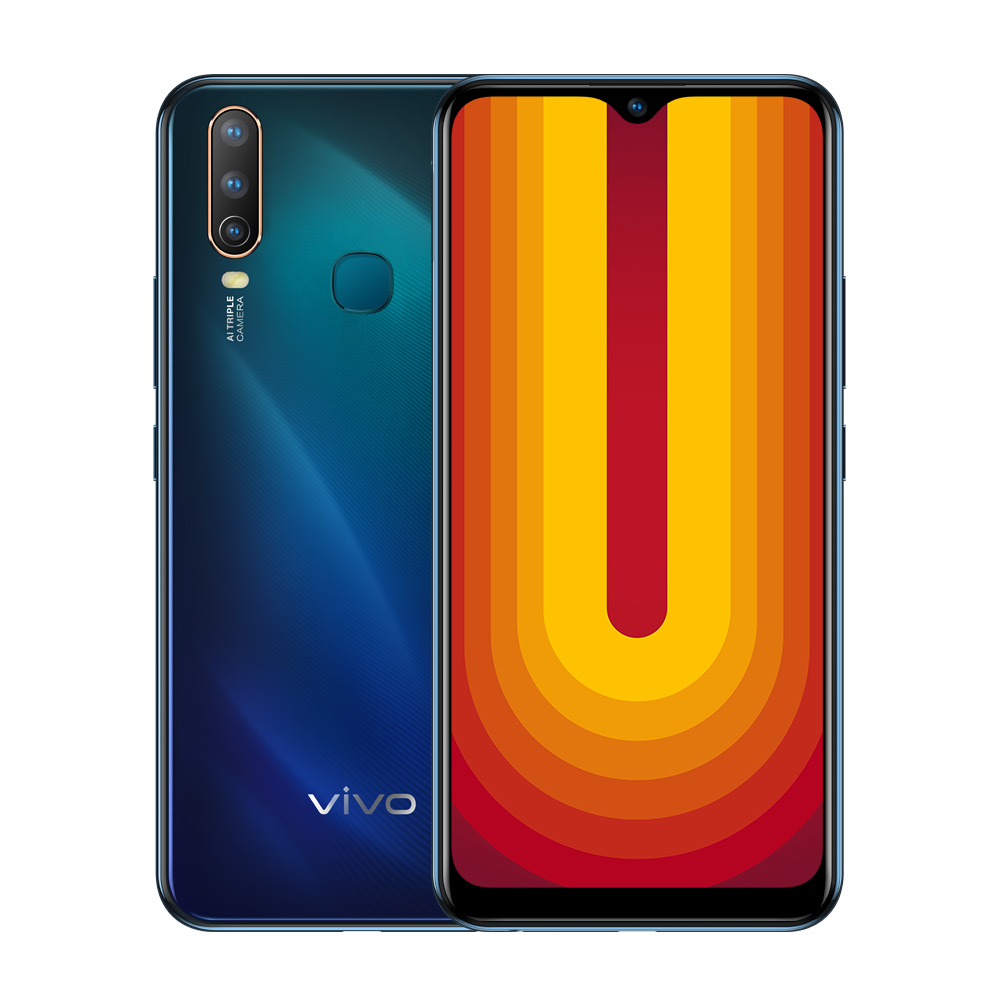
Vivo U10 is the latest budget phone from Vivo India. With a pricing of Rs. 8,990 (~$126), the smartphone is aimed towards the “unstoppable” generation with exciting features like fast charging enabled massive battery, triple rear cameras and a tall aspect ratio screen.
Vivo U10 Specifications
The Vivo U10 comes with a big IPS LCD display of 6.35 inches that produces HD+ resolution of 720 x 1544 pixels. It offers a tall aspect ratio of 19.3:9 like the Vivo Y17 smartphone. The FunTouch OS 9.1 based Android 9 Pie OS runs on the device.
The Snapdragon 665 chipset powers the Vivo U10. The SoC is coupled with up to 4 GB of RAM. The handset offers users with a native storage of up to 64 GB. There is dedicated microSD card slot on the device for more storage.
The rear side of the Vivo U10 has a triple camera system that includes an f/2.2 aperture 8-megapixel ultrawide lens, a 13-megapixel main lens with f/2.2 aperture and a 2-megapixel depth assist lens with f/2.4 aperture. On the front of the smartphone is a selfie camera of 8-megapixel with f/1.8 aperture. AI beauty, AI filters, portrait bokeh, slow-motion video shooting are some of the photography features of the U10.
The Vivo V10 has a huge battery of 5,000mAh capacity. The Chinese manufacturer has included support for 18W fast charging on the device through microUSB 2.0. Charging the phone for 10 minutes will allow it to offer 4.5 hours of talk time, 12 hours of YouTube and 7 hours of PUBG gaming. There is Ultra Game Mode that brings essential gaming related features like 4D vibrations, blue ray eye protection, do not disturb mode and more on the smartphone.
Vivo U10 Price in India
Here is the pricing and color variants of the Vivo U10 for India.
3 GB RAM + 32 GB storage – Rs. 8,990 (~$126)
3 GB RAM + 64 GB storage – Rs. 9,990 (~$141)
4 GB RAM + 64 GB storage – Rs. 10,990 (~$155)
Color options: Thunder Black and Electric Blue
From Sept. 29, the Vivo U10 will be available for buying in the country through Vivo India’s online shop and Amazon India. Customers with SBI bank cards can avail 10 percent discount on Vivo U10. Buyers can also take advantage of Rs. 6,000 benefits from Jio and no cost EMIs up to 6 months.
Offering over a whopping hundred million product range at competitive prices, AliExpress comes up with unmissable deals and amazing promotions from time to time.
Living up its reputation, the Alibaba Group-owned online retail service has launched a new promotion dubbed Super Deals The Bestsellers. As part of the latest promo, AliExpress is doling out noteworthy discounts on a wide range of hot items that have been split into four categories including Tech, Style & Living, Sports, and Automobiles.
To grab big savings on electronics and a slew of other gadgets that usually cost a bomb, tech buffs can head straight to the first section called ‘Tech.’ The section is brimming with smartphones and mobile phone accessories including gimbal stabilizers, portable power banks, USB Type C cable, etc.
More importantly, the aforesaid products are available for considerably lowered prices. For example, the recently unveiled OnePlus 7 smartphone with 8GB RAM and 256GB ROM would normally set you back $547.28, but you can now buy it for just $404.99.
Aside from receiving this 26 percent discount, new users can take advantage of the $8.92 New User Coupon and save more money during the checkout process. On top of that, you can choose between gray and red color options.
The market is crammed with highly useful products that come in handy in day to day life while improving the overall appearance of your home or office at the same time. Regrettably, these products aren’t easy on the pocketbook.
Under the Style & Living category, AliExpress is giving you a chance to get your hands on these items without burning a hole in your pocket. Sports lovers and fitness enthusiasts can check out the following section called Sports, where they can grab great discounts on a myriad of sports and fitness-related products.
For example, the Outlife 50L Outdoor Backpack usually retails for $35.74, but you can buy it for a lowered price of only $28.23. Moreover, those placing their first order with AliExpress can use the $2 OFF New User Coupon and save more money at checkout.
The concluding section on the activity page is called Automobile, and it features products that improve safety and enhance your overall driving experience. For example, the HGDO 10 inch Touch screen Car DVR Rear View Mirror can now be yours for a lowered price of just $49.87, while it usually retails for $115.98.
On top of that, there’s a $2 OFF New User Coupon that can get you an additional discount. If your cart value exceeds $20, you’d be eligible for a $2 discount as well.
You can head straight to this link to visit the activity page and grab the discounts before the promo comes to an end.
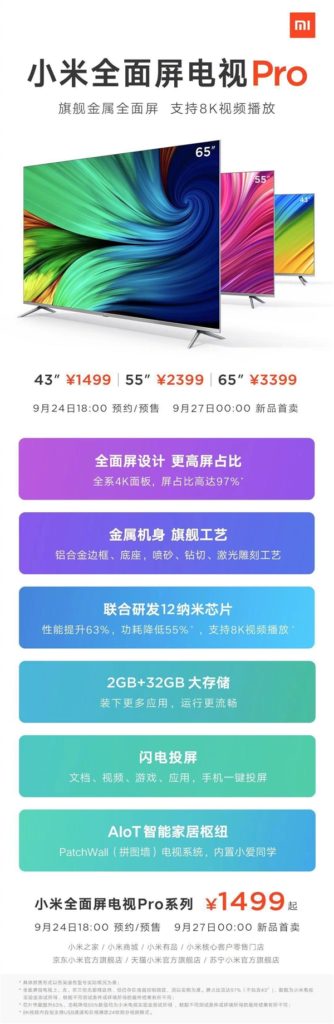
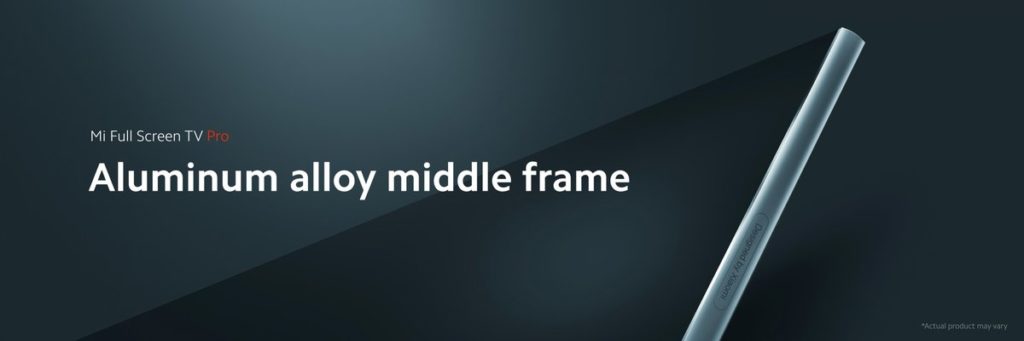
On the 24th of September, Xiaomi launched an all new lineup of 4k TVs in China that carry the ‘Mi TV Pro’ branding. The lineup consists of three different offerings that have a screen size of 43 inch, 55 inch and 65 inch. The newly launched TVs are made out of premium materials like aluminium alloy that provides them with a chic appearance.
All three TVs in the Mi TV Pro lineup have extremely narrow bezels around the display which provides them with an impressive screen-to-body ratio of 97 percent. In comparison to the top, left and right bezels; the bezel below the display is slightly thicker as it makes room for the ‘Mi’ logo.
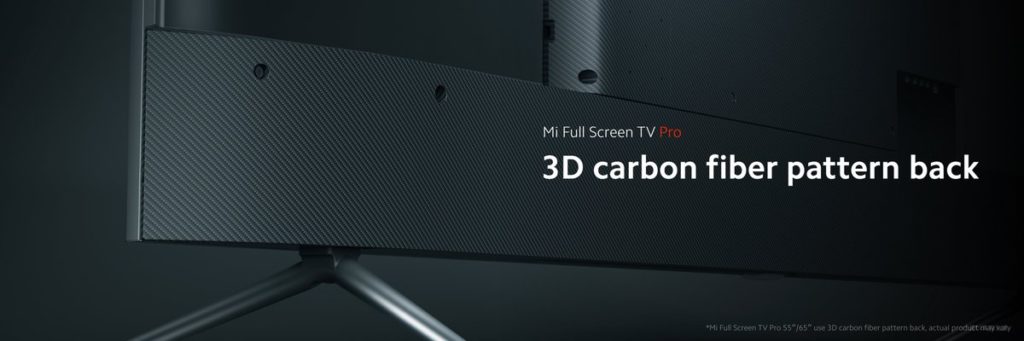
The middle frame of the Mi Tv Pro is made out of Aluminium alloy and they have a metal base which provides for a sturdy overall build. Furthermore, Xiaomi has paid special attention to their rear as well. Even though the rear panel is made out of plastic it resembles carbon fibre weaves which further adds to their appealing design.
All three variants of the Mi TV Pro lineup feature a Quad Core 64 bit processor that has a clock speed of 1.9 GHz. According to Xiaomi, the chipset is manufactured using a 12 nm FinFET process which makes them highly power efficient. In terms of memory and storage, they boast of 2 GB of RAM and 32 GB of inbuilt storage.
As observed with Mi TVs in the past, Mi TV Pro lineup also runs on PatchWall operating system. The TVs are shipped with several video streaming services pre-installed, which include Tencent Video, Youku and VOD from iQiyi.
Other notable features of the TVs include Dolby Audio, XiaoAi assistant, voice commands and option to connect with IoT devices, to both control them and display their status. Even though they bear a 4K display, the chipset is capable enough to run 8K content smoothly.
Similar to most other offerings from the company, the members of Mi TV Pro lineup also carry a lucrative price tag which is as follows for different variants:
43 inch: CNY 1,499 ($ 210)
55 inch: CNY 2,399 ($ 337)
65 inch: CNY 3,399 ($ 478)
The pre-orders for the TVs in China will commence from 24th September (6 PM) and they will be available for purchase from the 27th of September. The company has not provided any details about their launch in other regions, however, that information might be revealed in the following weeks.
What are your thoughts on the Mi TV Pro? Let us know in the comments below.
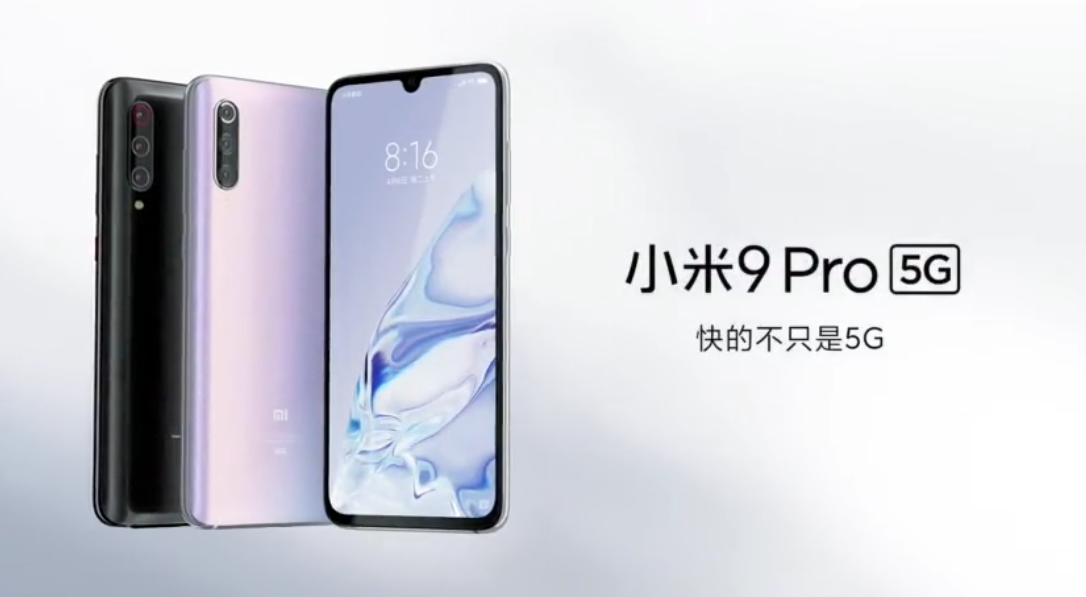
Through a launch event today in China, Xiaomi has taken off covers from Xiaomi Mi 9 Pro 5G and Mi MIX Alpha smartphones. The Chinese manufacturer also unleashed the MIUI 11 update. With a price tag of 3,699 Yuan (~$520), the Xiaomi Mi 9 Pro has arrived as the cheapest 5G phone in China. Some of the exciting features of the Xiaomi Mi 9 Pro 5G include Snapdragon 855+ chipset, 30W wireless charging and 48-megapixel triple rear cameras.
Xiaomi Mi 9 Pro 5G Specifications and Features
In terms of design, the Xiaomi Mi 9 Pro 5G bears resemblance with Xiaomi Mi 9 phone that was announced in February this year. The Mi 9 Pro 5G that comes with glass panels on front and rear with a metallic frame in between measures 157.21 x 74.64 x 8.54mm and weighs 196 grams.
The Xiaomi Mi 9 Pro 5G has a full HD+ 6.39-inch Super AMOLED display with dot notch. With 19.5:9 aspect ratio display onboard, the phone offers a screen-to-body ratio of 90.7 percent. The screen of the phone is integrated with a fingerprint scanner. The 2.96GHz Snapdragon 855+ mobile platform is the driving force of the smartphone. The handset comes with up to 12 GB of RAM. It offers an internal storage of up to 512 GB. There is no support for microSD card on the device.
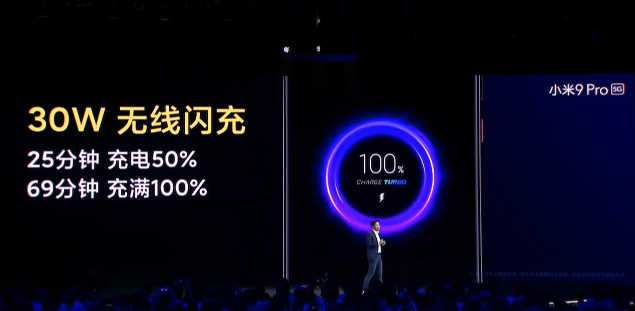
The Mi 9 Pro has a 4,000mAh battery that comes with support for 40W wired charging which takes 48 minutes to fully charge the device by using the in-box 45W charger. The Mi 9 Pro 5G also supports 30W wireless charging and 10W reverse charging. It takes 69 minutes to fully charge the Mi 9 Pro 5G through 30W wireless charging.
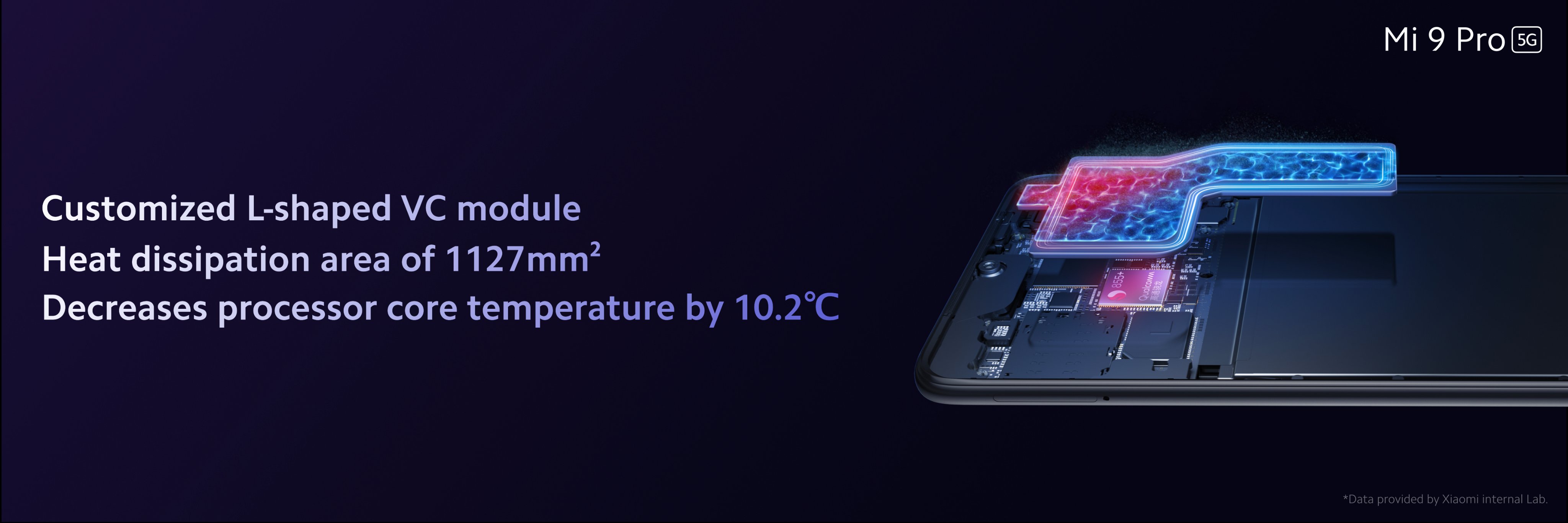
The Mi 9 Pro 5G is equipped with vapor chamber liquid cooling technology along with graphite-based heat dissipation tech that can considerably reduce the internal temperature by up to 10.2 degrees. The smartphone offers better haptic feedback as it features a custom linear motor that vibrations while typing, zooming on camera and playing games. It features the same cameras that are available on the Mi 9 handset. Hence, it offers users with a front-facing camera of 20-megapixel and Sony IMX586 48-megapixel + 12-megapixel telephoto + 16-megapixel ultrawide triple camera system.
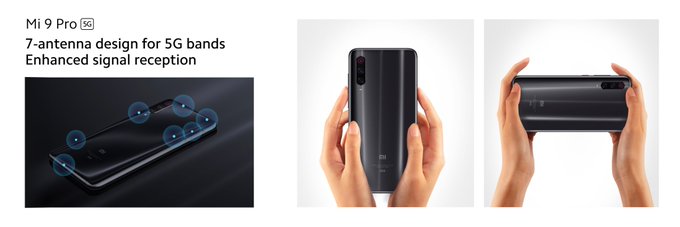
The MIUI 11 based Android 9 Pie OS runs on the Xiaomi Mi 9 Pro 5G. The device comes with the latest Xiao AI 3.0 voice assistant. The handset lacks a 3.5mm audio jack. The usual connectivity features like dual 4G VoLTE, Wi-Fi 802.11ac, Bluetooth 5.0, dual band GPS and USB-C are available on the Mi 9 Pro 5G. It is equipped with 7 antennas for stutter-free 5G connectivity.
Xiaomi Mi 9 Pro 5G Price and Release Date
Here are the pricing and color variants of the Xiaomi Mi 9 Pro 5G:
8 GB RAM + 128 GB storage – 3,699 Yuan (~$520)
8 GB RAM + 256 GB storage – 3,799 Yuan (~$555)
12 GB RAM + 256 GB storage – 4,099 Yuan (~$576)
12 GB RAM + 512 GB storage – 4,299 Yuan (`$665)
Color variants: Dream White and Titanium Black
The pre-sales of the Mi 9 Pro 5G begins today in China and it will be hitting the markets on Sept. 27 at 10 AM (local time). The buyers of the phone will be provided with a 1 TB of Mi Cloud storage worth 499 Yuan / year for free.
Xiaomi has announced the official MIUI 11 Global and Beta rollouts, as well as what devices will be getting the update. All device will receive internal betas on the 24th of September, while the public betas will go live on the 27th of September. For a list of all devices receiving the public beta update, you can see the list below.
Public Beta devices:
Xiaomi: Mi 5C, Mi MAX 2, Mi Note 2, Mi MIX, Mi 5s, Mi 5s Plus, Mi 5X, Mi Play, Mi Note3, Mi 6X, Mi 6, Mi MIX 2, Mi 8 SE, Mi 8 Youth Edition, Mi MAX 3, Mi CC 9, Mi CC 9e, Mi CC 9 Meitu Custom Version, Mi 8, Mi 8 screen fingerprint version, Mi MIX 3, Mi 8 Explorer Edition, Mi MIX 2S, Mi 9 SE, Mi 9
That’s it for all the public beta devices. Now we’ve got the Global release rollout, as the dates have all been announced. We’ve listed all the relevant information down below.
GLOBAL RELEASE ROLLOUT SCHEDULE
Mid-October
Xiaomi: Mi 9, Mi 9 Transparent, Mi 9 SE, Mi MIX 3, Mi MIX 2S, Mi 8, Mi 8 Youth, Mi 8 Explorer’s Edition, Mi 8 (in-display fingeprint), Mi 8 SE, Mi MAX 3
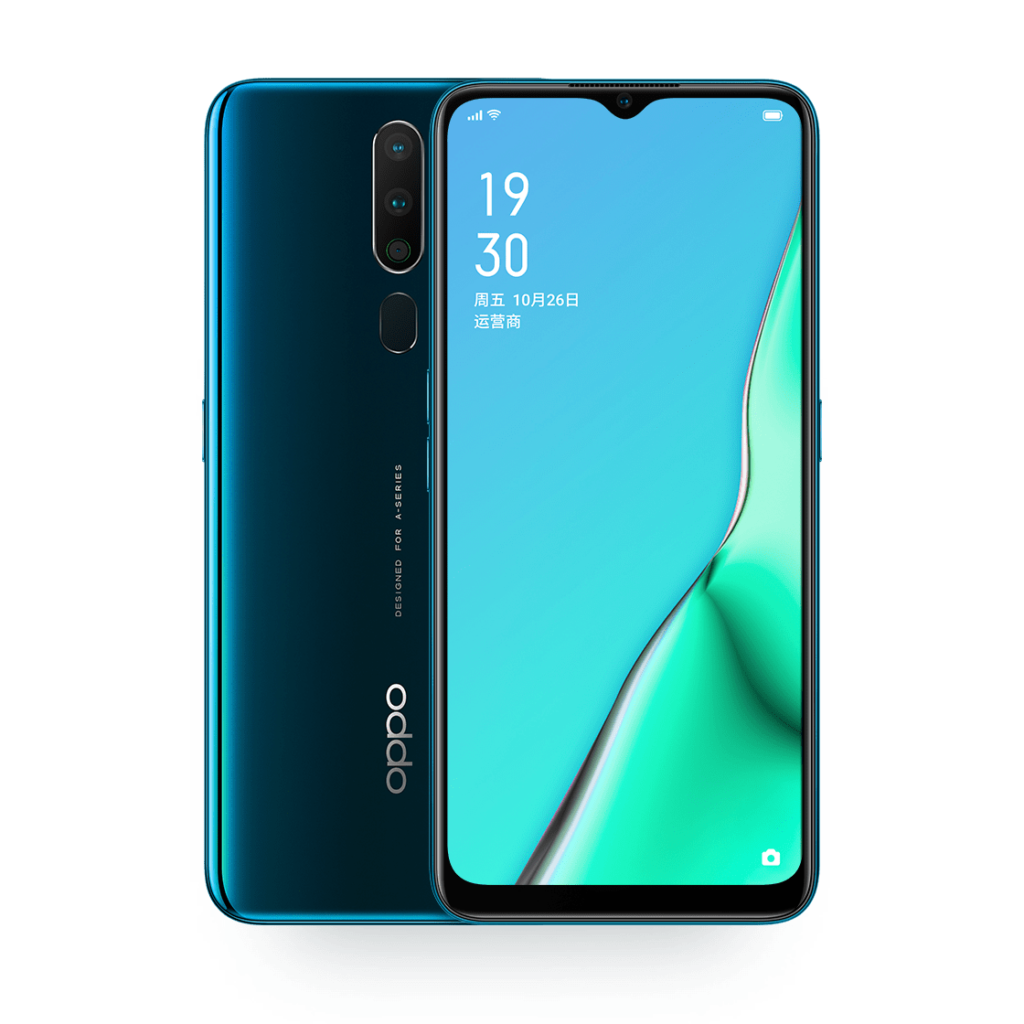
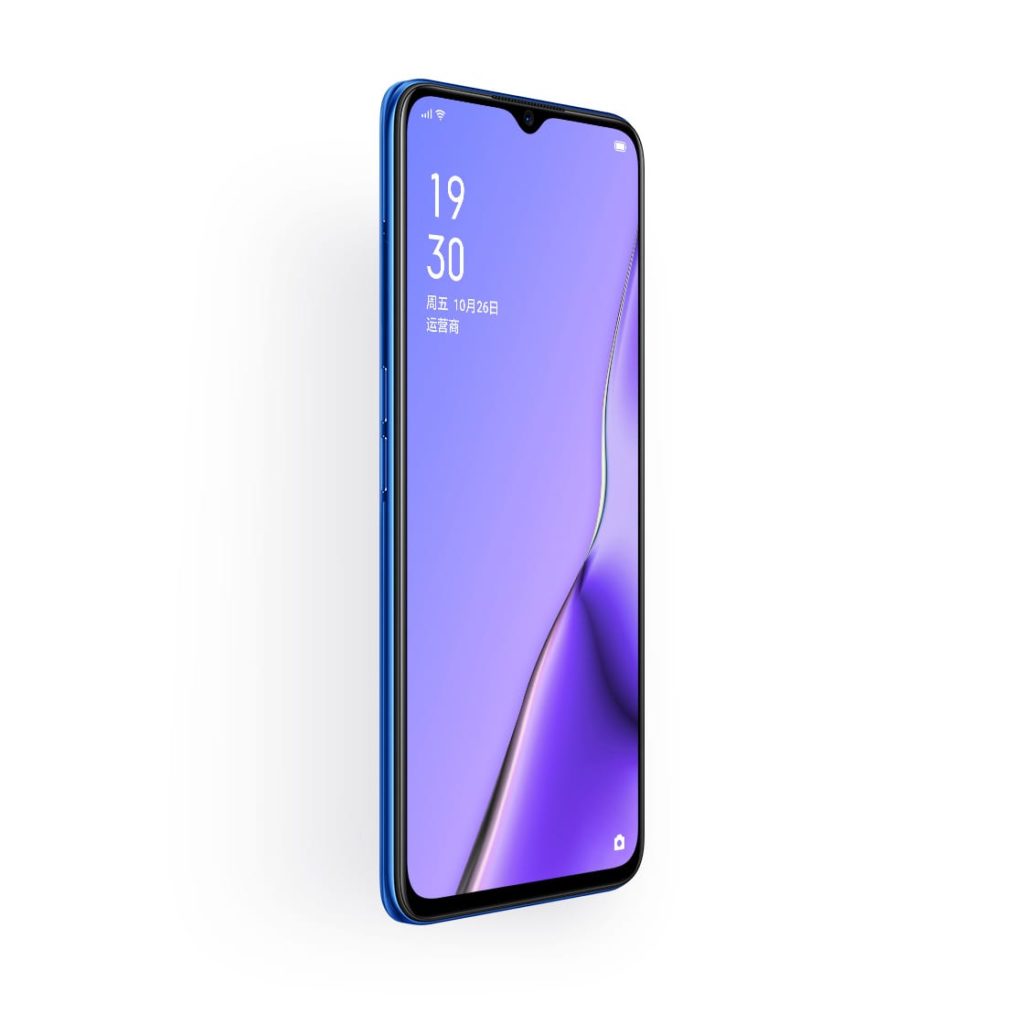
On the 24th of September, Chinese smartphone maker, Oppo launched the A11x in its home country. As seen on several other instances, this handset has already been launched in India. However, there it is called the OPPO A9 (2020). The key highlights of Oppo A11X include a mammoth 5,000 mAh battery and a quad rear camera setup.
Oppo A11x Design and Features
The Oppo A11x measures 163.6 x 75.6 x 9.1 mm and it weighs a hefty 195 grams. On the front of the smartphone sits a 6.5 inch LCD display that has a screen to body ratio display of 82.5 percent. The display panel has a pixel density of 270 ppi and 20:9 aspect ratio.
The display of the Oppo A11x is encompassed by thin bezels on all sides, except for the bottom chin which is comparatively thicker. It also features a waterdrop notch on the front which houses an f/2.0 aperture equipped 16 MP selfie camera which is also capable of recording 1080p videos.
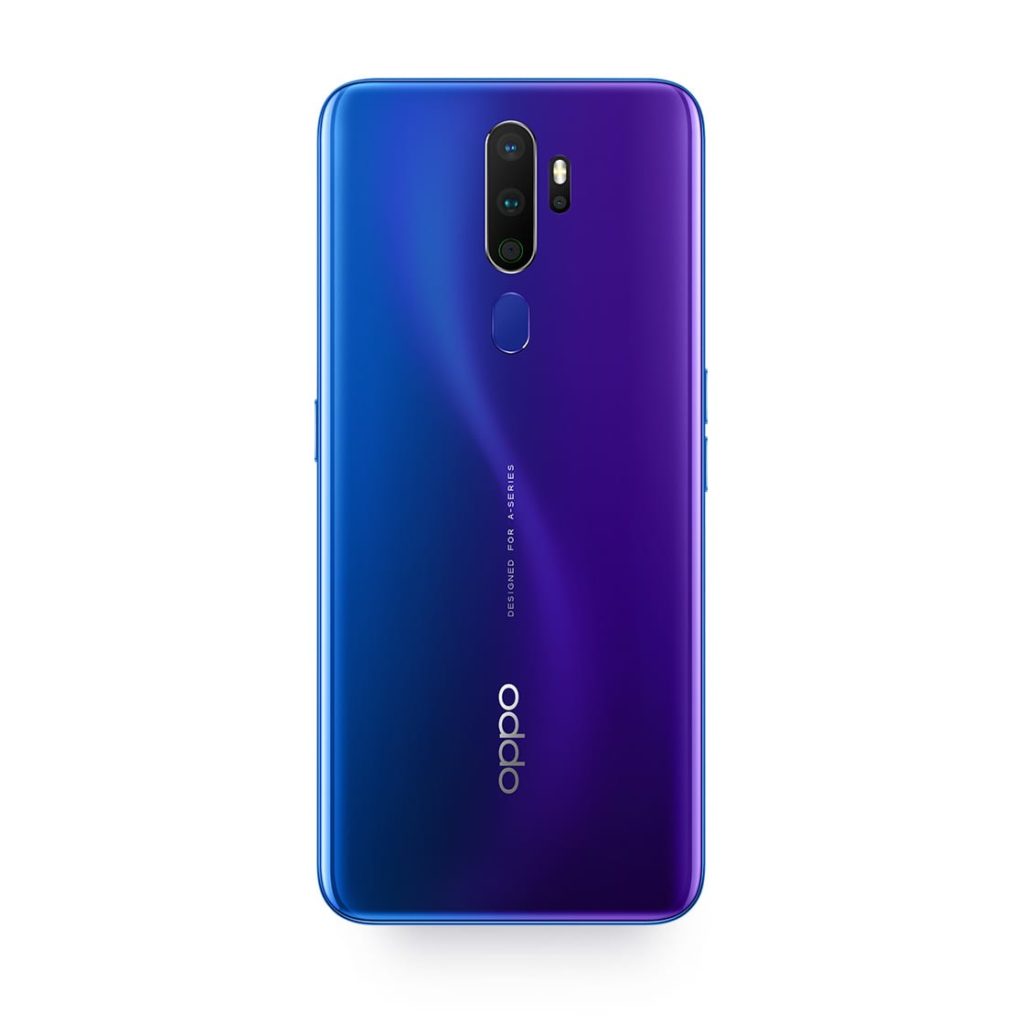
The rear panel of the Oppo A11x is made out of glass with a gradient finish that looks premium. The rear of the device harbours the company branding, fingerprint scanner and a quad-camera module which slightly protrudes from the surface. The composition of the rear camera setup is as follows:
48 MP, f/1.8, PDAF
8 MP, f/2.3, ultrawide
2 MP, f/2.4
2 MP, f/2.4, depth sensor
The Oppo A11x is kitted with Qualcomm Snapdragon 665 SoC which is manufactured using 11 nm fabrication process. The chipset consists of the Adreno 610 GPU and Octa-Core CPU. In order to provide the best of both worlds i.e battery and performance the CPU is divided into two clusters that have different clock speed and architecture, which are listed below:
4×2.0 GHz Kryo 260 Gold
4×1.8 GHz Kryo 260 Silver
As previously mentioned, the Oppo A11x is kitted with a 5,000 mAh battery. The handset runs on ColorOS 6 which is built on top of Android 9 Pie. Connectivity options on the device include 802.11 ac Wi-Fi, Bluetooth 5.0, Dual 4G VoLTE, GPS, USB Type C port and a 3.5 mm headphone jack. Other noteworthy features of the smartphone include Game Boost 2.0 and stereo speakers with Dolby Atmos support.
Oppo A11x Price, Colours and Storage Variants
The Oppo A11x is offered in two colour options which include Marine Green and Space Purple. In terms of memory and storage, the device packs 8 GB of high-speed LPDDR4x RAM and 128 GB of UFS 2.1 ROM. In addition to the built-in storage, it also supports memory expansion upto 256 GB via a dedicated microSD card slot. The handset is priced at CNY 1,799 and is available for purchase from Oppo’s official online store and JD shop.
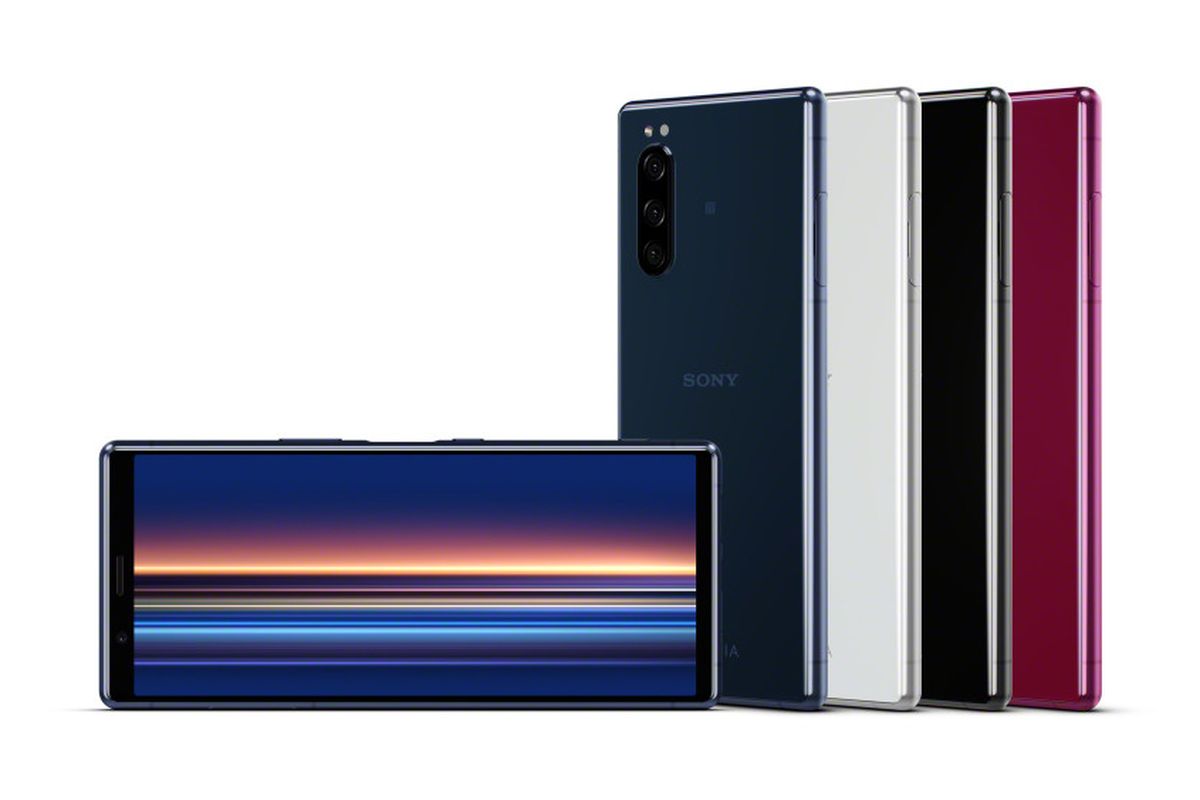
During the IFA 2019 tech exhibition that was held earlier this month, Sony had announced the Xperia 5 flagship smartphone with triple rear cameras and 21:9 aspect ratio display. Today, Sony has unveiled the same phone in China with an expensive price tag of 5,399 Yuan (~$759).
Sony Xperia 5 Specifications and Features
The Sony Xperia 5 that measures 158 x 68 x 8.2mm features Gorilla Glass 6 panels on its front and rear. It has an IP65/68 rated dustproof and water-resistant body. The handset has a CinemaWide 6.1-inch OLED HDR display that offers 1080 x 2520 pixels full HD+ resolution.
The Snapdragon 855 mobile platform powers the Xperia 5 along with 6 GB of RAM. The handset comes with 128 GB of inbuilt storage and a shared SIM slot for additional storage. The Android 9 Pie OS runs on the device.
The front side of the Xperia 5 is fitted with an 8-megapixel selfie camera with f/2.0 aperture. The rear side of the phone has a vertical triple camera system that includes an f/1.6 aperture 12-megapixel main lens with Dual Pixel PDAF and 5-axis OIS, a 12-megapixel telephoto lens with f/2.4 aperture, PDAF and 2x optical zoom and a 12-mgeapixel ultrawide lens with f/2.4 aperture
The Xperia 5 has a 3,140mAh battery that supports USB-PD 18W fast charging. It is equipped with a side-mounted fingerprint reader. The other features of the phone include stereo speakers, dynamic vibration system for gaming, dual-SIM support, Wi-Fi 802.11ac, Bluetooth 5.0, GPS, NFC and USB-C. There handset lacks a 3.5mm headphone jack.
Sony Xperia 5 Price in China
Sony Xperia 5 has arrived in four colors in China such as Crystal Blue, Wine Red, Drill Black and Frosh Ash. It carries a price tag of 5,399 Yuan (~$759) and it is now up for pre-orders. Customers who pre-order will be provided with a Sony fashion case for the smartphone and a 256 GB microSD card. The shipments of the will begin on Oct. 28.
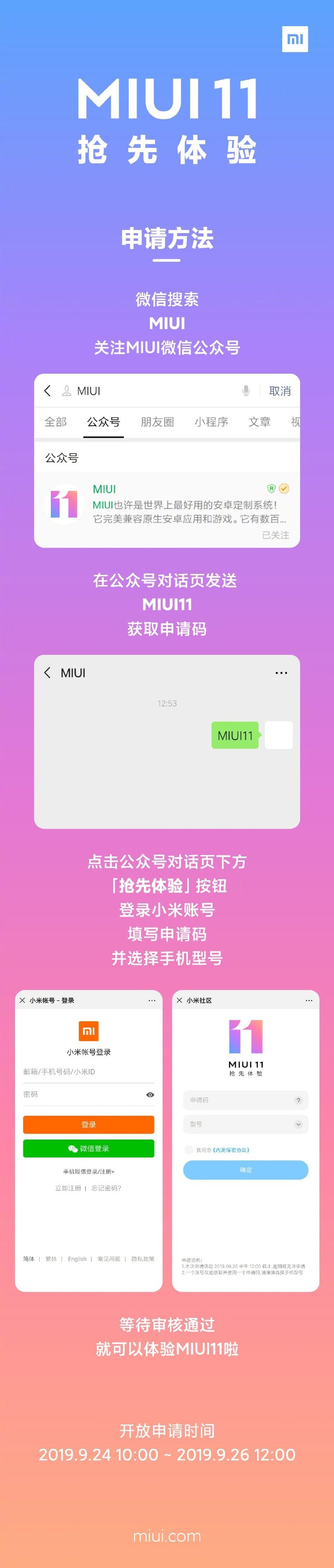
Xiaomi‘s MIUI 11 is due for launch later today, but the company’s feeling a bit generous. They’ve gone to Weibo to announce that users can now sign up to experience MIUI 11 early! So if you’re feeling like you want to be one of the first people in the world to try out the new UI, you can go ahead and follow these steps.
First off, get your phone and search for MIUI in your customer service tab. From there, send the message “MIUI11” and soon enough the page should ask you to input your Mi Account and password. After that, you get to input your details on the MIUI 11 signup page. Once you’ve done that, you’ll have successfully signed up! You can follow the steps in the image below as well if you understand Chinese well enough.
MIUI 11 features a whole slew of changes, tweaks and additions to the MIUI experience. There are brand new and richer animations for the devices to make devices smoother, as well as the bevy of features added on like Earthquake warnings, Family Sharing and Children’s Space. Then there’s the new look as well, which seems a lot cleaner than before.
It’s actually a bit surprising to see this so close the launch, but Xiaomi’s always had a large focus on their relationship with their fans in the past. This type of thing has also been done in the past with different versions of MIUI, though the scale has never been this big. For the rest of us, we’ll have to wait for the official launch later today to get a taste of MIUI 11.
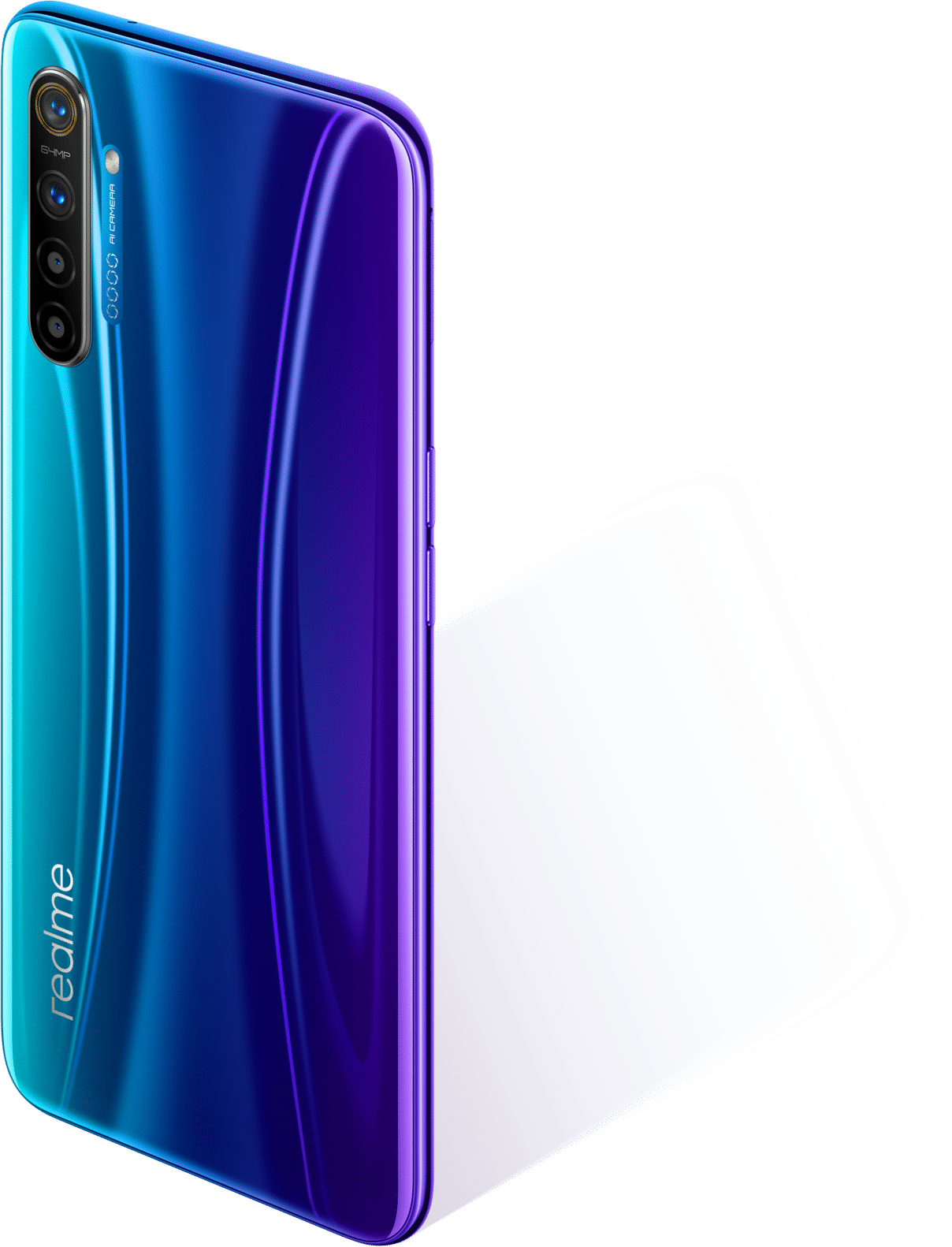
Realme has taken off covers from the all new Realme X2 smartphone. Without much fanfare, the smartphone is now listed on the official website with all its specs and pricing. The Realme X2 that impresses with features like Snapdragon 730G, 64-megapixel quad cameras and 32-megapixel selfie snapper has arrived in China with an enticing starting price of 1,599 Yuan (~$224).
Realme X2 Specifications and Features
The Realme X2 that comes glass construction that is protected with Gorilla Glass 5 panels on the front and rear measures 158.7 x 75.2 x 8.6mm and it weighs 182 grams. The 6.4-inch S-AMOLED display with dewdrop notch is available on the front. It offers 19.5:9 aspect ratio and full HD+ resolution of 1080 x 2340 pixels. The handset delivers a screen-to-body ratio of 91.9 percent.
The Realme X2 is the first phone from the company to come with 8nm Snapdragon 730G chipset that clocks at 2.2 GHz. It is assisted by 6 GB / 8 GB of LPDDR4X RAM. The storage editions of the phone are 64 GB, 128 GB and 256 GB. The 256 GB edition is not yet available for purchase. Probably, the company may release the Realme X2 in 8 GB RAM + 256 GB storage edition in the near future. There is a microSD card slot for additional storage.
The front notch of the Realme X2 has a 32-megapixel selfie camera with f/2.0 aperture. The quad camera system placed at the top-left corner on the back panel of the Realme X2 has the popular 64-megapixel Samsung GW1 sensor with f/1.8 aperture that can shoot ultra-high resolution photos of 9280 x 6944 pixels. The main lens is assisted by 8-megapixel superwide lens with 119-degree field-of-view and f/2.25 aperture, a 2-mgeapixel macro lens with 4cm focal length and a 2-megapixel portrait lens for adding depth effects to images. When it comes to video recording, the Realme X2 supports 4K video recording at 30fps, full HD and 720p video shooting at 60fps and slow motion video recording at up to 960fps. There is Electronic Image Stabilization (EIS) support for recording videos from the front and rear cameras.
The smartphone runs on the custom-made ColorOS 6.1 for Realme that is overlaid on Android 9 Pie OS. For smoother performance, the Realme X2 comes with Frame Boost 2.0 and Touch Boost 2.0. For gamers, it comes with Game Space which serves as one application package for managing all the games on the device. It also features Game Assistant that offers handy features like screen recording and do not disturb mode for enhancing the gaming experience. For audiophiles, the Realme X2 comes with Dolby Atmos support for panoramic sound effects and Hi-Res audio support.
The Realme X2 is backed by a 4,000mAh battery. It is the first phone to go official with OPPO’s 30W VOOC 4.0 Flash Charge technology. The Chinese firm claims that it takes only 30 minutes to completely charge the device. The connectivity features available on the device are dual-SIM support, 4G VoLTE, Wi-Fi 802.11ac, Bluetooth 5.0, GPS, NFC, USB-C and 3.5mm audio jack.
Realme X2 Price and Release Date
Realme X2 comes in two colors such as Star Map Blue and Silver Wing White. The 6 GB RAM + 64 GB storage and 8 GB RAM + 128 GB storage editions of the Realme X2 are respectively priced at 1,599 Yuan (~$224) and 1,899 Yuan (~$266). The smartphone is up for pre-orders on the official website of Realme China. Customers who pre-order the Realme X2 will be able take advantage of 100 Yuan (~$14) discount on both models. The first sale of the phone will take place on Sept. 27 in the home market.
Apart from launching the Realme X2 smartphone, the Chinese firm has also announced Realme X2 soft rubber case for 39 Yuan (~$6), wireless earbuds worth 149 Yuan (~$21) and Realme 10,000mAh powerbank for 109 Yuan (~$15). Coming back to the Realme X2, the same phone is scheduled to release in India in India in December as Realme XT 730G.
What’s your opinion on the Realme X2? Share us your thoughts by posting your comments below.
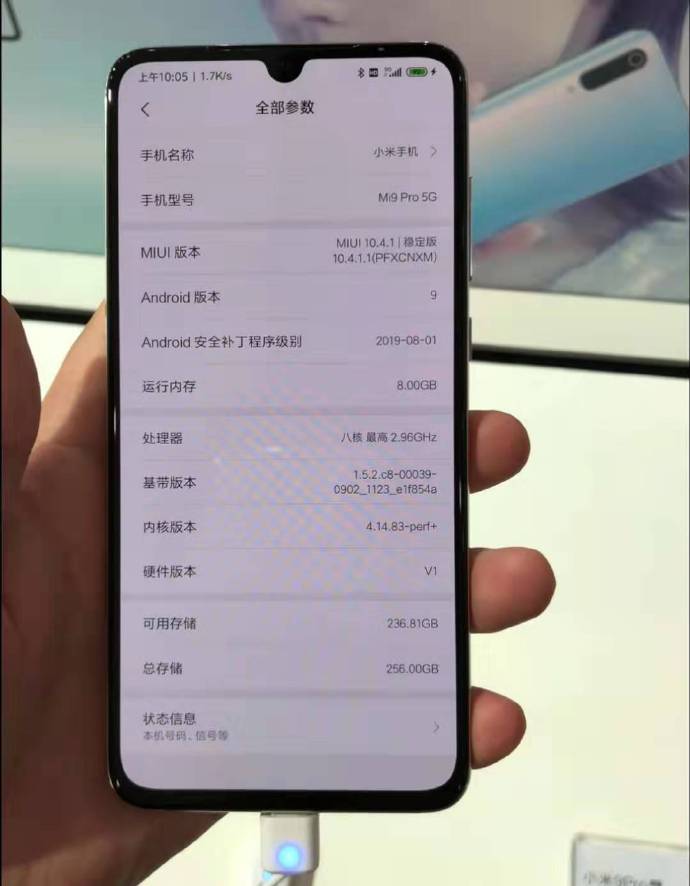
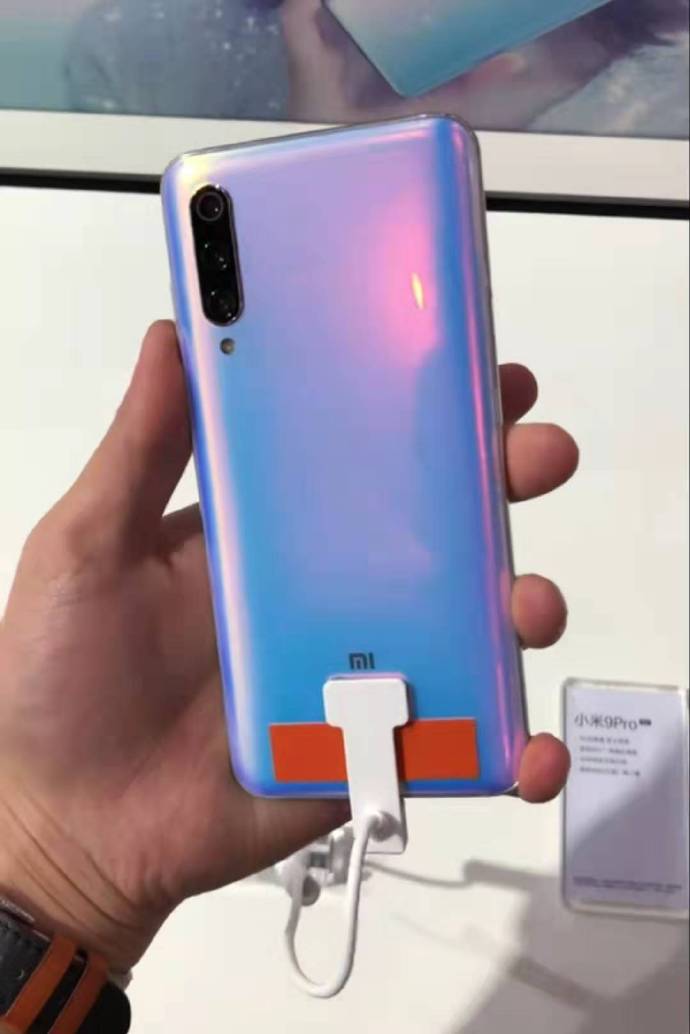
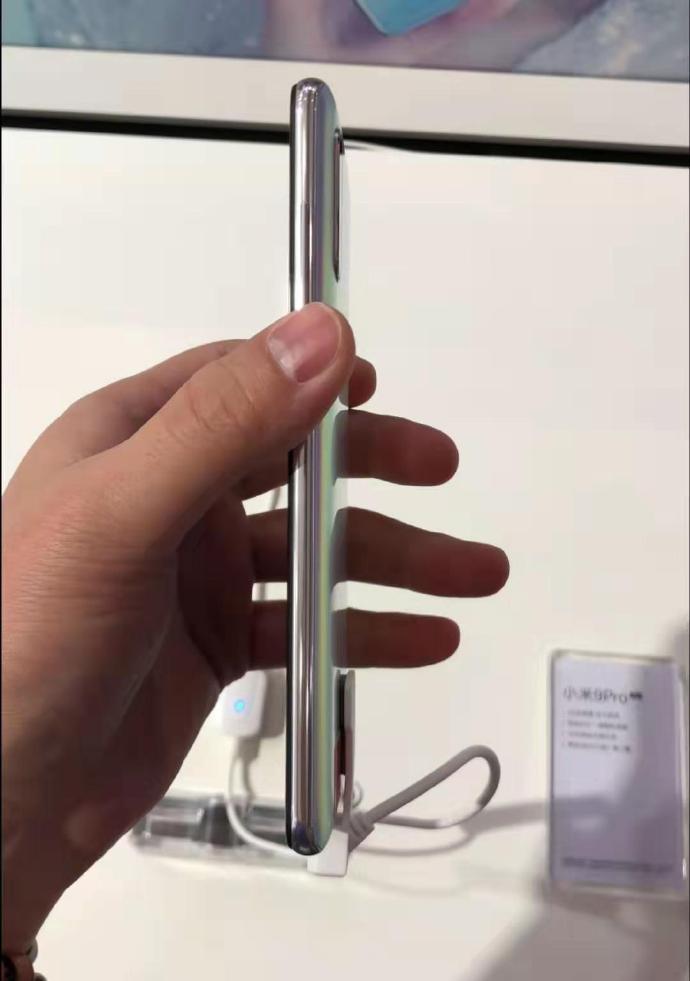
Xiaomi will be launching the Xiaomi Mi 9 Pro 5G and Mi MIX Alpha smartphones in China today. Ahead of the launch, real images of the Mi 9 5G Pro have appeared on Weibo to reveal its appeal. The handset will be arriving as the most powerful smartphone in the Mi 9 series.
As it can be seen in the new images, the overall design of the Xiaomi Mi 9 Pro 5G is not different from Mi 9. The rear side of the phone has a gradient color and it appears quite similar to the More Than White color edition of the Xiaomi Mi A3 smartphone. The display of the phone features a waterdrop notch. The chin of the device is not very thick which indicates that it may offers a screen space of around 90 percent.
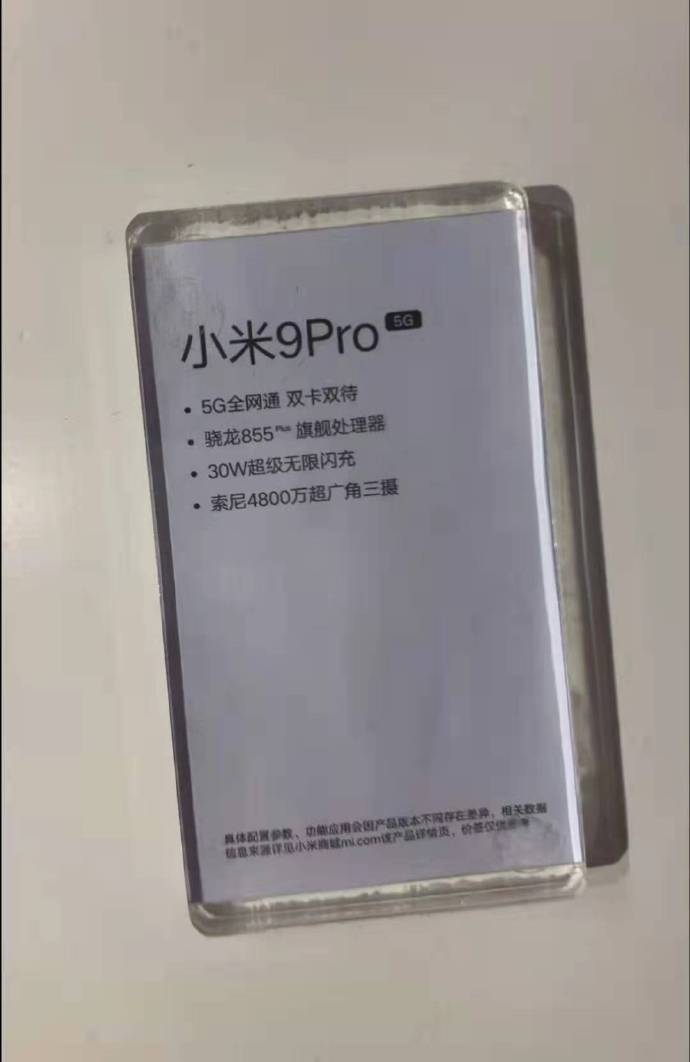
The new images have also revealed some of the specs of the Mi 9 Pro 5G. It is a Snapdragon 855+ mobile platform powered flagship phone that is fitted with a Sony 48-megapixel superwide angle triple camera system and it carries support for 30W fast charging. It comes with dual SIM dual standby.
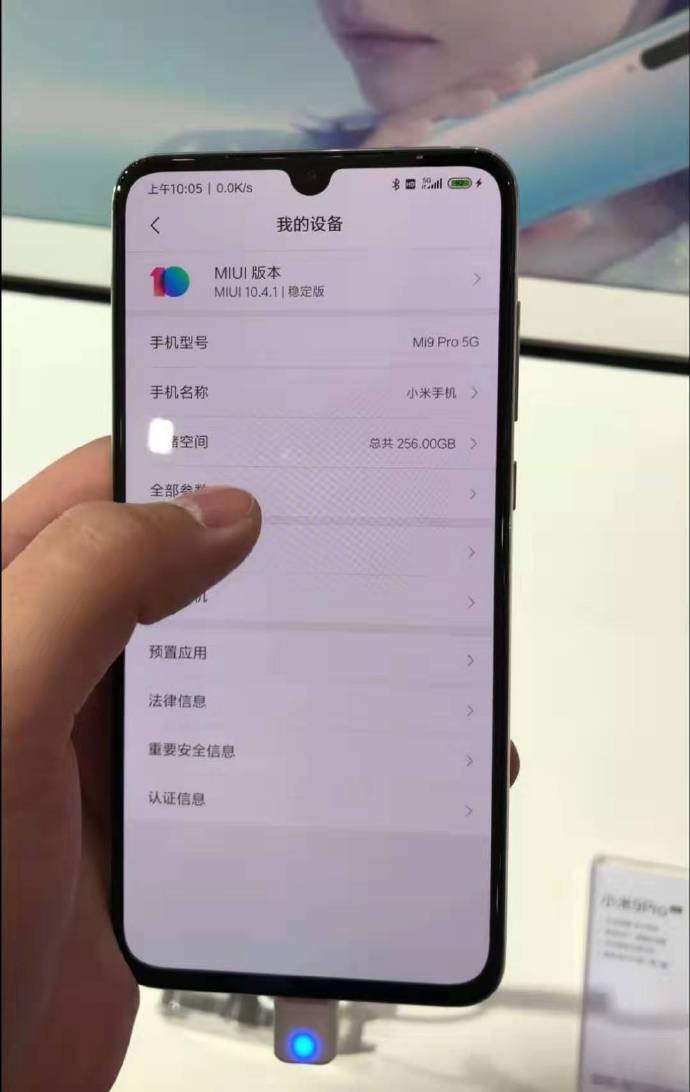
The Mi 9 Pro 5G variant that is shown in the leaked images has 8 GB of RAM and 256 GB of built-in storage. It is running on MIUI 10.4.1 based Android 9 Pie OS. It could be one of the first phones from the company to receive the upcoming MIUI 11 upgrade.
Rumors surrounding it has revealed that it will be arriving in two variants such as 8 GB RAM + 256 GB storage and 12 GB RAM + 256 GB storage models in China. The above shown model could be called Dream White. Its black variant could be dubbed as Titanium Black. A leaked poster that had surfaced yesterday on Weibo claimed that it may come with a base model of 8 GB RAM + 128 GB storage that may carry a price tag of 3,599 Yuan.
The Xiaomi Mi 9 Pro 5G has a 6.39-inch AMOLED display that offers full HD+ resolution. It houses a 4,000mAh battery that will also carry support for 30W wireless charging and 10W wireless charging. It will come with transverse linear motor for better haptic feedback. The front notch of the phone is equipped with a 20-megapixel selfie camera.
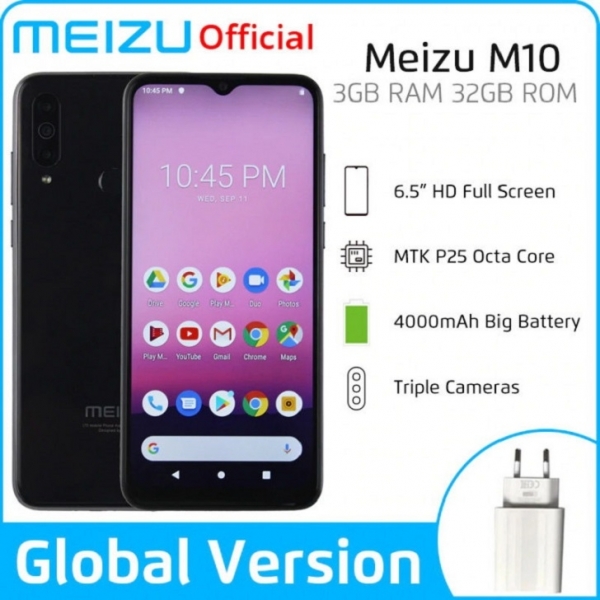
A new Meizu phone named Meizu M10 has appeared on AliExpress. The smartphone is not yet listed on the official website of Meizu China. However, it is available for purchase through the Chinese retailer site. The listing has revealed the entire specs of the phone.
The Meizu M10 smartphone has a 6.5-inch IPS LCD display with waterdrop notch. It supports HD+ resolution of 720 x 1600 pixels and offers a tall aspect ratio of 19.6:9. The older Helio P25 (MT6757CD) chipset fuels the smartphone. It is backed by a 4,000mAh battery with mCharge fast charging.
The SoC is coupled with 3 GB of RAM and the device offers an internal storage of 32 GB. It is loaded with Android 9 Pie OS. The homescreen icons that can be seen in the image suggests that it could be running on stock version of Android and it may not be featuring the company’s FlymeOS UI. AliExpress is selling the global edition of the Meizu M10 which comes with Google Play support.
The rear-mounted triple camera setup includes a 13-megapixe main lens and a pair of 2-megapixel sensors. Sitting on the front is an 8-megapixel selfie snapper. A fingerprint scanner is available on the backside of the device. It is also equipped with face unlock feature. The Chinese retailer has listed the phone with a price tag of $145. The color variants of the smartphone are black, blue, white and green. The handset is also rumored to arrive in India in the near future.
Meizu has another phone with model number M928Q waiting in pipeline to go official in China. The handset has a 6.5-inch OLED display with slim-sized upper and lower bezels. It supports full HD+ resolution of 1080 x 2232 pixels. The handset has a minimum capacity battery of 4,400mAh. It is powered by 2.84GHz octa-core processor and 6 GB / 8 GB of RAM. Its storage variants are 128 GB and 256 GB. The 12-megapixel + 8-megapixel + 5-megapixel triple camera resides on its back. It has a front camera of 16-megapixel. The Android 9 Pie OS runs on the device.
The release of iOS 13 and the iPhone 11 series has gotten the iPhone community excited. However, their arrival has been detrimental to manufacturers and owners of AirPods clones, as Apple put in place restrictions that prevent the clones from connecting to the new phones.
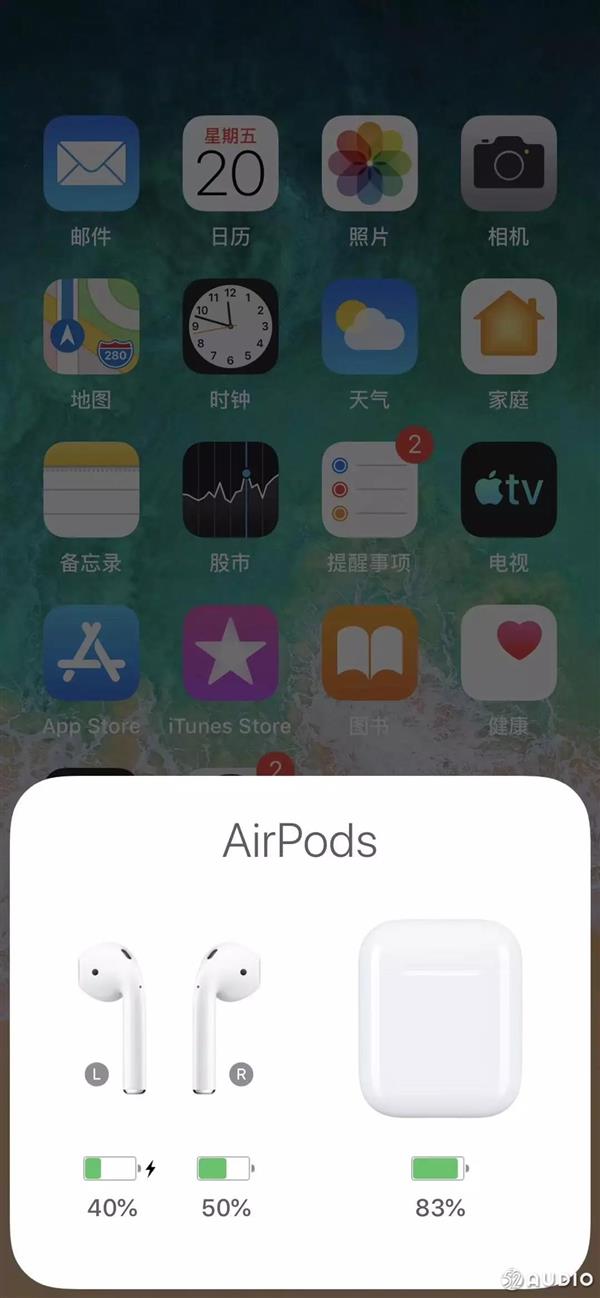
AirPods Clones failed to connect to the new iPhone 11 running iOS 13
According to the latest reports from China, those restrictions have now been bypassed and the AirPods clones now work well with the iPhone 11 series and other iPhones running iOS 13.
The restrictions prevented the pop-up which shows the battery level of a connected pair from displaying. When owners tried to pair their earbuds, a pop-up showing a “failure to pair message”.
After the restrictions were bypassed, AirPods clones now pair successfully to the iPhone 11 running iOS 13
Now that the restrictions have been bypassed, connected clones will now show the battery level of each AirPods and that of the carrying case.
AirPods are Apple’s most popular mobile accessory and in China, there is a thriving market for clones. It is no surprise that a “fix” was quickly discovered shortly after the release of the new phones and OS.
Chinese company Nubia launched the Nubia Z20 on August 8 as the first non-gaming smartphone to feature a Snapdragon 855+ chipset. The smartphone is already on sale in China but until now, nothing was known about its global release. Nubia is said to be planning to release the Z20 at the same time on multiple fronts outside China. The company will launch the device in the US, Europe, Canada, and the UK on October 14.
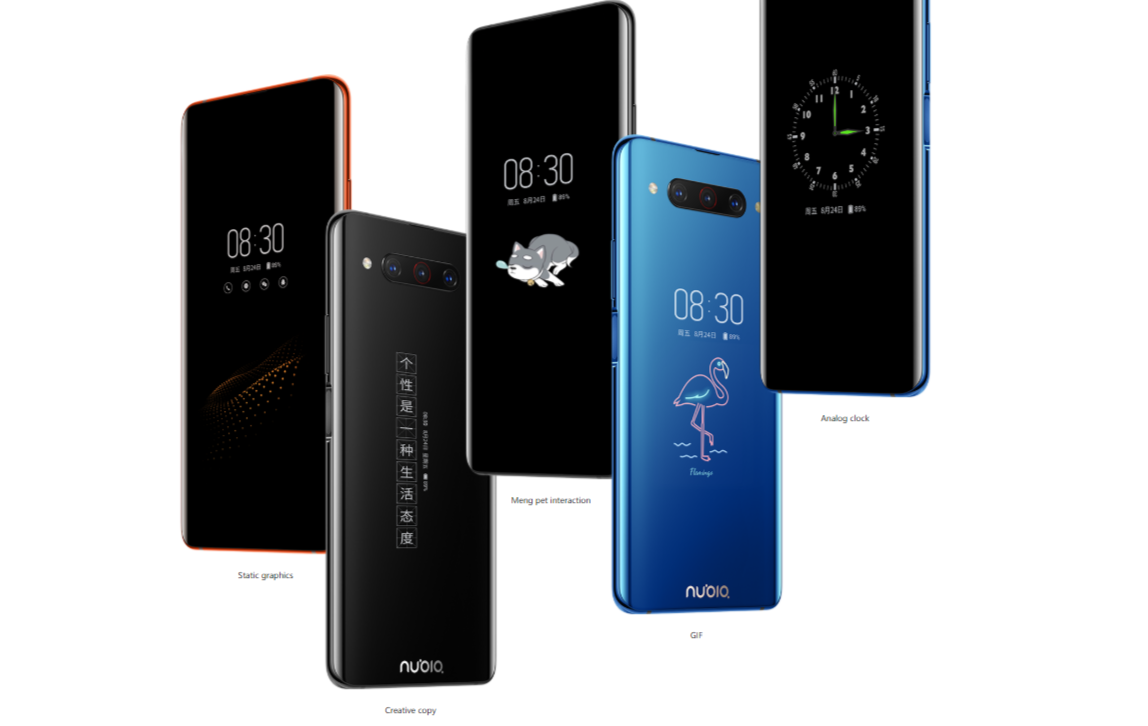
The Nubia Z20 comes with a spectacular dual-display design. The main display is a 6.42-inch AMOLED screen with Full HD+ resolution of 1080 x 2340 pixels and 19.5:9 aspect ratio. While at the rear, there is an equally impressive 5.1-inch AMOLED display with a similar full HD+ resolution. Both displays come with Always-On feature and can independently show two different Always-on Display (AOD) contents.
The screens can be used to view two apps simultaneously but it is still a mystery what we’ll need that. Perhaps, the most important thing you’ll get front such a massive display is to use it as a virtual button for selfies and also as a viewfinder while using the rear-mounted triple cameras.
Apart from the dual displays, the Nubia Z20 packs a powerful Snapdragon 855+ chipset with up to 8 GB of RAM. It lacks a microSD card slot but offers users with up to 512GB internal storage. However, the global variant will be available in 128GB storage only. The phone runs Android Pie-based Nubia UI 7 out of the box and has two fingerprint readers – one each on the left and right side. The device equally has a 4,000 mAh battery with 27W fast charging support. The global variant will be available in two colors – Diamond Black and Twilight Blue.
The price is yet to be unmasked but the 8GB+128GB variant retails for 3,499 Yuan (~$497) in China. So, it would likely retail at over $500. But you stand a chance to win a Z20 unit when you participate in Nubia’s “Unbox the Future” campaign. Apart from the grand prize of a Z20 unit, the company is also giving away gift cards from Amazon and Google Play among other things. You can join the campaign via the source link below.
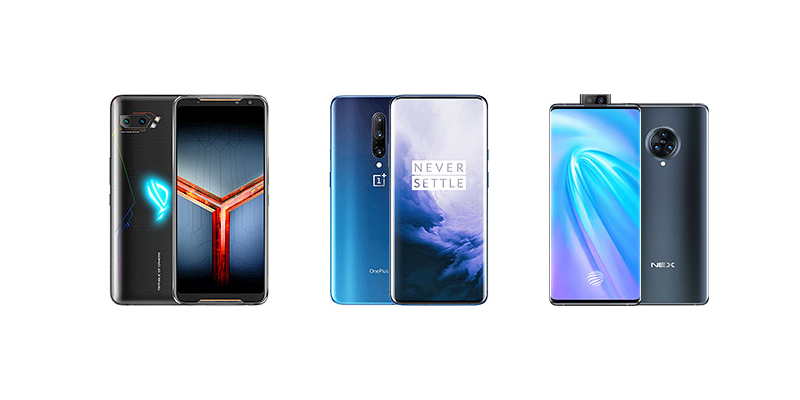
A lot of innovative flagships hitten the shelves in 2019, including several smartphones with incredibly high performance. A few hours ago, Asus ROG Phone II made its official debut in the Indian market. We can definitely consider it the most amazing gaming smartphone in the market, and not only for the price. A few days ago, another flagship with some features never seen before was officially announced: the Vivo NEX 3. Given that even this handset will hit the market soon, we decided to compare the NEX 3 and the Asus ROG Phone II alongside one of the most popular and performing flagships of the Indian market in 2019: the OnePlus 7 Pro. If you are looking for a new high-end device they are all among the best Chinese options. Here, you should begin understanding which one is the best for you.
Asus ROG Phone II vs OnePlus 7 Pro vs Vivo NEX 3
Asus ROG Phone II
OnePlus 7 Pro
Vivo NEX 3
DIMENSIONS AND WEIGHT
171 x 77.6 x 9.5 mm, 240 grams
162.6 x 75.9 x 8.8 mm, 206 grams
167.4 x 76.1 x 9.4 mm, 217 grams
DISPLAY
6.59 inches, 1080 x 2340p (Full HD), 391 ppi, AMOLED
Dual 48 + 13 MP f/1.8 and f/2.4
24 MP f/2.2 front camera
Triple 48 + 8 + 16 MP f/1.6, f/2.4 and f/2.2
1 MP f/2.0 front camera
Triple 64 + 13 + 13 MP f/1.8, f/2.5 and f/2.2
16 MP f/2.1 front camera
BATTERY
6000 mAh, Fast Charging 30W with Quick Charge 4+
4000 mAh, Fast Charging 30W with Warp Charge
4500 mAh, Fast Charging 44W
ADDITIONAL FEATURES
Dual SIM slot, Air Triggers, reverse charging, support to external accessories
Dual SIM slot
Dual SIM slot
Design
When it comes to smartphones aesthetics, people usually search for elegance and innovation. And the device which provides both these elements here is the Vivo NEX 3. It comes with a Waterfall display boasting extremely curved borders, and it even sports a screen-to-body ratio very close to 100 percent. Further, it has a pop-up front camera department. OnePlus 7 Pro is another device with an innovative form factor, a high screen-to-body ratio, and a pop-up camera, but it lacks the Waterfall display so it is less impressive. Asus ROG Phone II has a gaming-centric design with RGB lights, air triggers, and the support to external accessories, but it is not an elegant or attractive phone for a normal user.
Display
If you need the best display in terms of video quality, then you should undoubtedly go for the OnePlus 7 Pro. First of all, it provides a higher level of detail thanks to its 2K resolution. Further, it has the HDR10+ technology improving the color reproduction, as well as a high 90 Hz refresh ratio. While the OnePlus 7 Pro offers the best quality, Asus ROG Phone 2 has the best display for gamers as it comes with a 120 Hz refresh ratio and 240 Hz touch sensing, as well as loud stereo speakers with DTS Headphone X.
Specs & Software
The most powerful and well-optimized hardware department belongs to the Asus ROG Phone II which boasts the Snapdragon 855+ chipset paired with up to 12 GB of RAM and up to 1 TB of internal storage. It is also the only which allows switching between a stock Android user interface and a custom user interface. The ROG Phone 2 is even equipped with a more advanced cooling system ensuring the best performance even in long gaming sessions. Vivo NEX 3 has a Snapdragon 855+ chipset as well, but the OnePlus 7 Pro has way better memory configurations reaching 12 GB of RAM and 256 GB of internal storage, while Vivo NEX 3 stops at 8/128 GB.
Camera
The rear cameras of the OnePlus 7 Pro are the most convincing ones. They include two optically-stabilized sensors including a high-end 48 MP main lens, a secondary telephoto lens, and a 16 MP ultrawide sensor. Vivo NEX 3 takes the second place in the top camera phones ranking with its 64 MP main sensor paired with two 13 MP additional sensors. It is the only to offer a front-facing LED flash. Asus ROG Phone II has an average dual camera.
Battery
You just need to see the battery capacity in order to understand which phone lasts more on a single charge: Asus ROG Phone II is the winner thanks to its monster 6000 mAh battery which also supports reverse charging.
Price
OnePlus 7 Pro costs Rs. 48,999 (about €629/$691) in India, Asus ROG Phone II starts from Rs. 37,999 ($536/€488), and Vivo NEX 3 is priced at $636/$578. Overall, we believe Asus ROG Phone 2 is the best device for advanced users due to its bigger battery and higher performance, but it has that gaming-centric design which is not suitable for everyone. OnePlus 7 Pro offers a better display quality and cameras, so it is better for a lot of “normal” users.
Xiaomi’s most important flagship in the second half of the year, the Mi Mix 5G will debut tomorrow. Unlike the past couple of iterations, this new Mix model takes inspiration from its original sibling, as it will launch as a concept smartphone. This simply means that you can expect some next-generation technology inside this new device, that’s probably not easy to mass-produce.
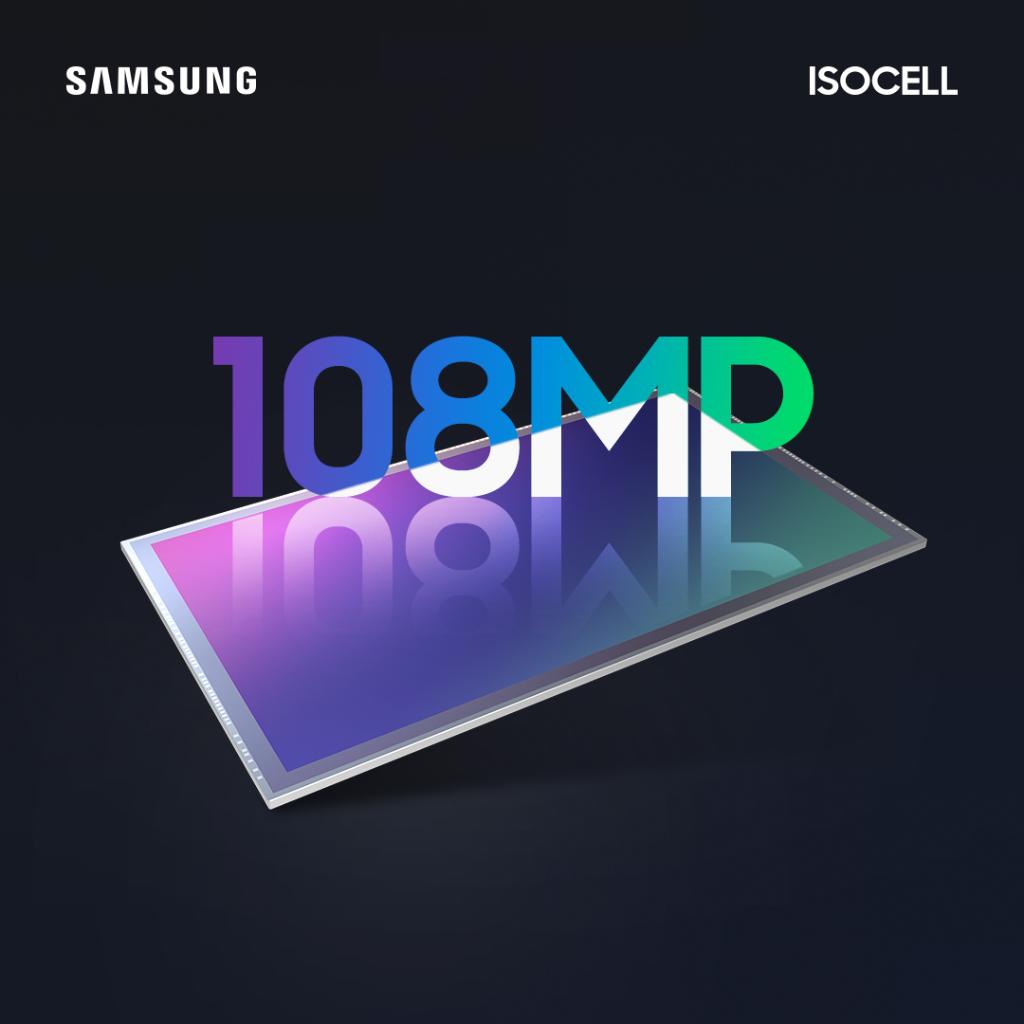
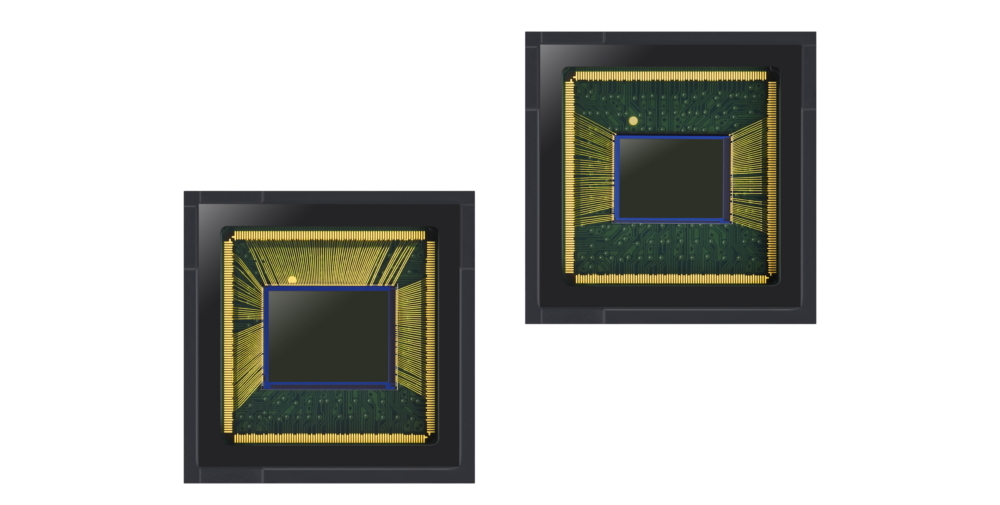
But Samsung wasn’t happy with 64 megapixels. Hence, it decided to collaborate with Xiaomi to release a whopping 108MP camera sensor, the Samsung ISOCELL Bright HMX. And the Xiaomi Mi Mix 5G is the world’s first smartphone to feature a camera sensor that exceeds 100MP!
2The Sensor Was Developed In Close Collaboration With Xiaomi
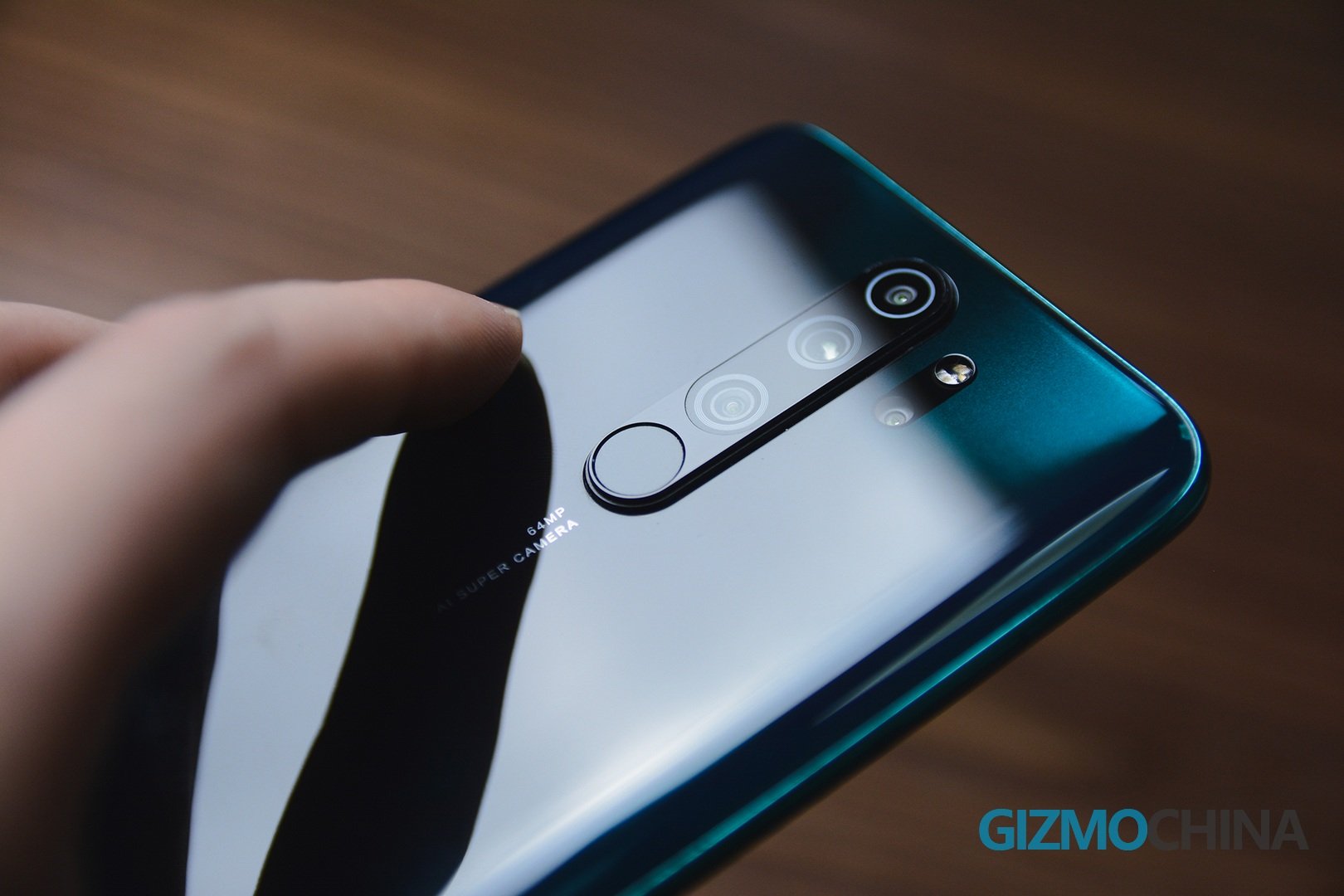
Redmi Note 8 Pro’s 64MP Samsung camera was developed in collaboration with Xiaomi
It’s not uncommon for smartphone makers to work with companies like Sony and Samsung for their camera sensors. But this time around, Xiaomi seems to have invested heavily in the development of this 108MP camera sensor with Samsung.
Samsung’s official press release clearly states that this sensor is the fruit of a close collaboration with Xiaomi. So it’s no surprise that Xiaomi is the first company to use this sensor. Given its collaboration with Xiaomi, it remains to be seen whether other smartphone makers get to use this sensor anytime soon.
Xiaomi seems to have called dibs on this sensor for some time as it’s developing up to 4 smartphones with a 108MP rear camera.
3World’s Largest Smartphone Camera Sensor
Samsung ISOCELL GW1 has a sensor size of 1/1.72″ which is much smaller than the HMX
Smartphone sensors are increasing in size, but this 108MP sensor takes things to a new level. It features an extremely large 1/1.33″ image sensor which makes it the largest one in the smartphone market. To give you some perspective, it’s three-quarters of the size of a typical 1″ sensor found on some point and shoot cameras. Another way to look at it is that the 64MP Samsung GW1 sensor, which is already considered pretty large, features a size of 1/1.7″ and the 48MP GM2 is even smaller at 1/2″.
The Samsung ISOCELL Bright HMX sensor can capture true 6K resolution videos at 30 fps. Wait, why this is a big deal? I mean, you must have already read that phones like the Red Magic 3S and the Nubia Z20 can do 8K.
Note that these two Nubia models can do 8K only at 15 fps. On the other hand, a flagship smartphone with this HMX sensor is technically capable of churning out 6K (6016 x 3384) at 30 fps!
527MP Super Bright Photos & Smart ISO
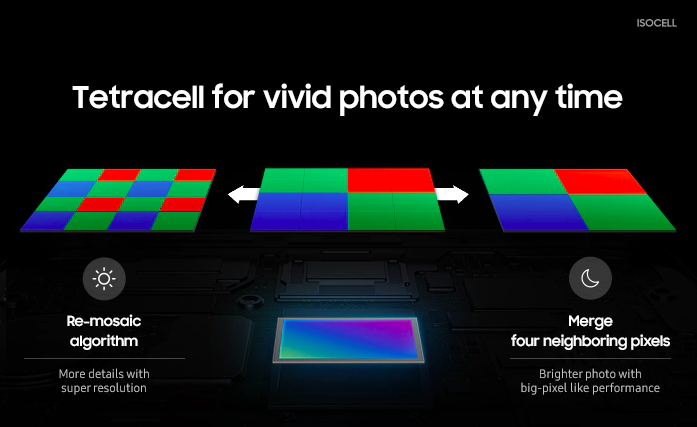
HMX uses Tetracell tech to churn out 27MP bright images
The 108MP Samsung HMX sensor utilizes its Tetracell technology to combine four pixels into one, churning out brighter big pixels. This means the sensor can out 27MP resolution images which are brighter and much clearer in low light. When the lighting conditions are good, the sensor can output large 108MP images with richer details.
Samsung’s Smart-ISO will also work with the sensor to automatically adjust its ISO levels depending on the lighting conditions. This smart tech basically toggles between a high ISO when the lighting is dark and a low ISO when the lighting is pretty good.
Overall, the Samsung ISOCELL Bright HMX 108MP sensor takes smartphone imaging to new heights. Combined with the right processor, this camera sensor has the potential to do wonders in the hands of a smartphone user.
“The future of smartphones is coming…tomorrow!” That is the rider with which Xiaomi is promoting the scheduled September 24 launch event on its official YouTube channel. The Chinese tech giant is expected to go ballistic with its 5G products as it launches not one but two 5G smartphones – the Mi MIX 5G and Mi 9 Pro. Not only that, the tech giant will also announce the next version of its custom Android skin – MIUI 11.
Three years ago when Xiaomi launched the Mi Mix, the smartphone revolutionized the industry with its spectacular full-screen, bezel-less design. The tech giant may once again be looking to revolutionize the industry with the Mi MIX 5G which may likely launch as Mi Mix Alpha. The device would have been launched as the Mi Mix 4 but for a cour ruling which bars the firm from using the MIX moniker. The MIX Alpha is said to adopt a wraparound screen which means the bezels on all four sides would be removed, giving it a 100% screen ratio.
Xiaomi will also unveil the Mi 9 Pro 5G, a massively upgraded member of the Mi 9 series. The series is also made up of the Mi 9, Mi 9T and Mi 9T Pro, Mi 9 SE and Mi 9 Lite. Xiaomi obviously saved the best for the last as the Mi 9 Pro is expected to come with a spectacular design and top-of-the-line hardware lineup including a 5G modem.
How to watch the Mi Mix Alpha launch live stream and what time is it?
Xiaomi will take the wraps off the two smartphones and the MIUI 11 on September 24 (that is tomorrow). The event will be held in Beijing at 14.00 GMT +8 but you can live stream the event from Xiaomi’s official Youtube channel from around the world. Here’s a summary of the time for different time zones.
Launch event holds in Beijing at 14.00 GMT +8
New Delhi ————————11.30 AM
London ———————— 07.00 AM
New York ———————— 02.00 AM
If you are in the US, you may likely still be in bed when the event commences at 2 AM. Not to worry though, we’ll keep you updated on the launch event here on Gizmochina. The Youtube channel is embedded below.
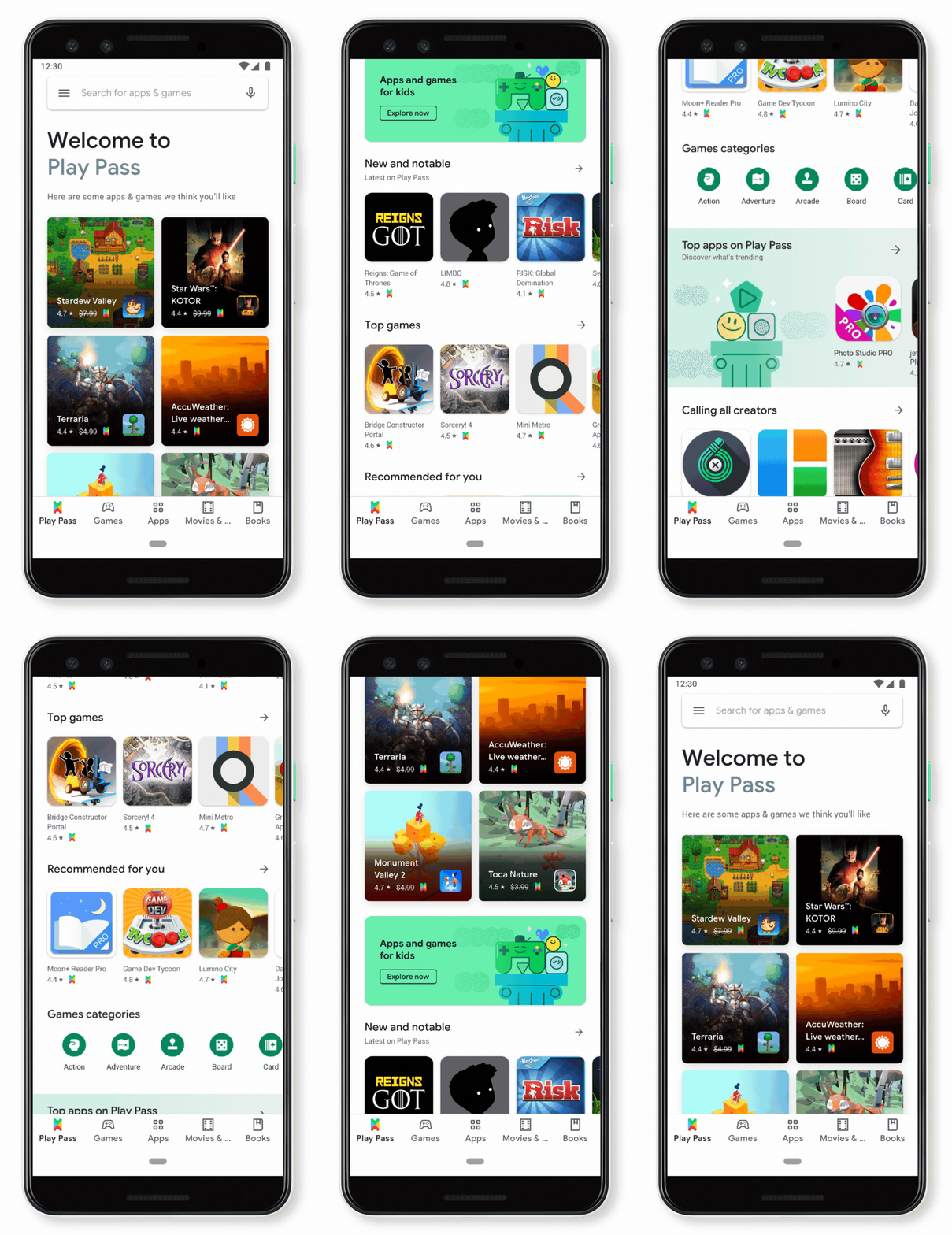
Google Play Pass is official! Yes, Google‘s version of Apple Arcade (which was announced during the iPhone 11 event) for Android users is now official and it grants access to hundreds of premium paid apps for just $1.99 per month!
Play Pass is priced at $1.99/month in the US for the first year and $4.99/month later. The discounted price will no longer be available if you cancel your subscription mid-way and want to renew it later. The service will roll out in the US starting this week and additional countries soon.
The subscription service grants you access to games and apps that are completely unlocked – no ads, no in-app purchases, no upfront payments. There is a catalog of apps under Play Pass which includes games like Monument Valley, Star Wars: Knights of the Old Republic, LIMBO, Old Man’s Journey, and Lumino City. There are also paid apps such as AccuWeather. Google says there will be new additions every month.
The Play Store will have a Play Pass Tab to make finding apps easier. Supported apps and games will also have the Play Pass ticket if you decide to search instead. The service can also be shared with up to five family members by family managers and individually downloaded games don’t affect the experience of others.
While Apple’s Arcade is only for games, Play Pass is for apps and games. The Apple Arcade announcement was a big deal as Apple announced big-name developers and publishers like Capcom and Konami will be making exclusive games for the platform. We hope Google Play Pass also gets exclusive games in the future.
We use cookies on our website to give you the most relevant experience by remembering your preferences and repeat visits. By clicking “Accept”, you consent to the use of ALL the cookies.
This website uses cookies to improve your experience while you navigate through the website. Out of these, the cookies that are categorized as necessary are stored on your browser as they are essential for the working of basic functionalities of the website. We also use third-party cookies that help us analyze and understand how you use this website. These cookies will be stored in your browser only with your consent. You also have the option to opt-out of these cookies. But opting out of some of these cookies may affect your browsing experience.
Necessary cookies are absolutely essential for the website to function properly. This category only includes cookies that ensures basic functionalities and security features of the website. These cookies do not store any personal information.
Any cookies that may not be particularly necessary for the website to function and is used specifically to collect user personal data via analytics, ads, other embedded contents are termed as non-necessary cookies. It is mandatory to procure user consent prior to running these cookies on your website.








 Dark Mode is a major feature of Android Q and MIUI 11 implements this with a few of its own bells and whistles. Xiaomi’s implementation seems to be very similar to Huawei’s EMUI dark mode in that it changes the colour of all system apps, and it uses a true black dark mode as opposed to Android Q’s more blue and grey dark mode.

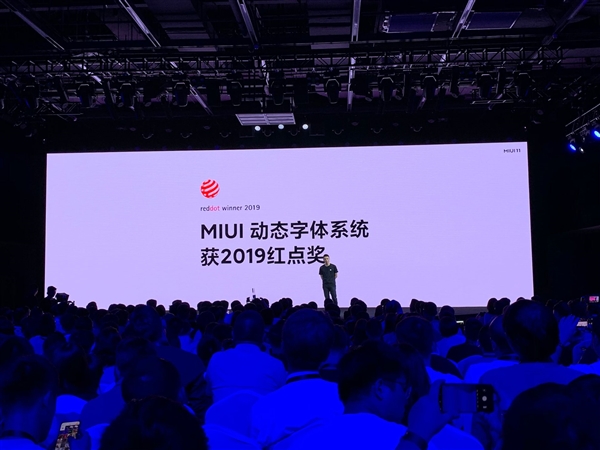 One of the things the company was very proud of was their new context sensitive dynamic UI font boldness. All around the UI, certain actions will embolden certain fonts to provide better context as to what’s selected or being interacted with. It’s a very simple feature, but it makes the user interface feel a lot more minimalist compared to competitors.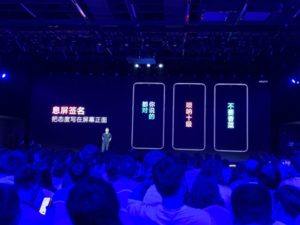
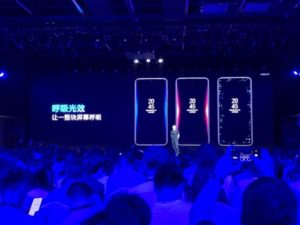
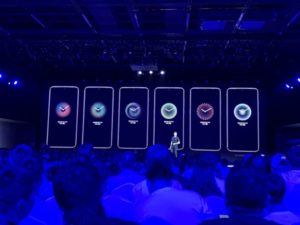

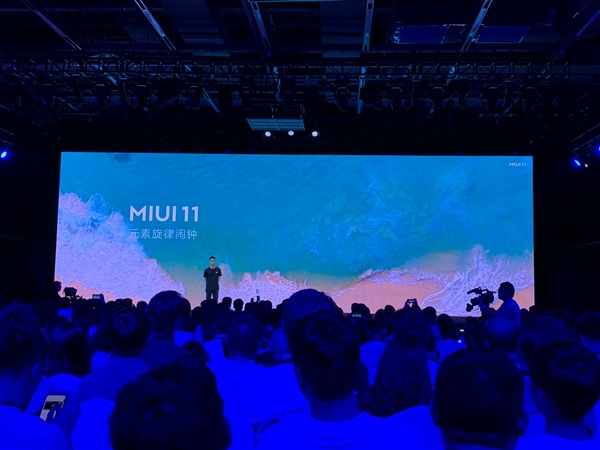 Finally, Xiaomi has updated all their alarm sounds and notification noises to be dynamic. What this means is that the sounds that are generated can change depending on variables like place and time of day. Once again, it’s not a particularly big features, but it’s certainly a nice addition for the user experience.
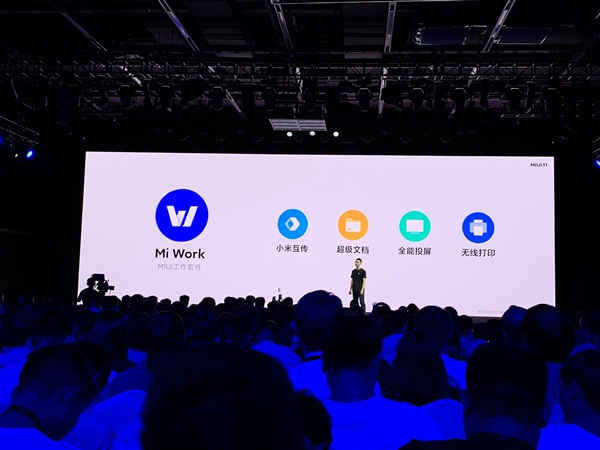 Xiaomi has introduced a suite of new productivity tools that will come with MIUI 11. This suite is called the Mi Work Productivity Suite, and it features four brand new apps from the company that are designed to make things easier when it comes to doing business. They’re all designed for different subsets of work, but they work seamlessly to maximize efficiency.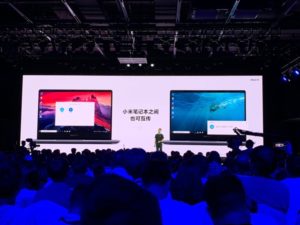











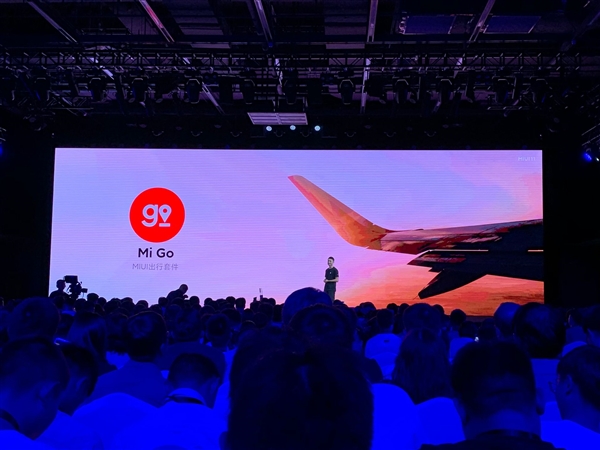 We’ve also got the brand new Mi GO Travel Suite, a set of tools that are focused on making things easier for people who are travelling to other countries. The Travelling Assistant and Super Power Saving Mode both serve their purpose pretty well.
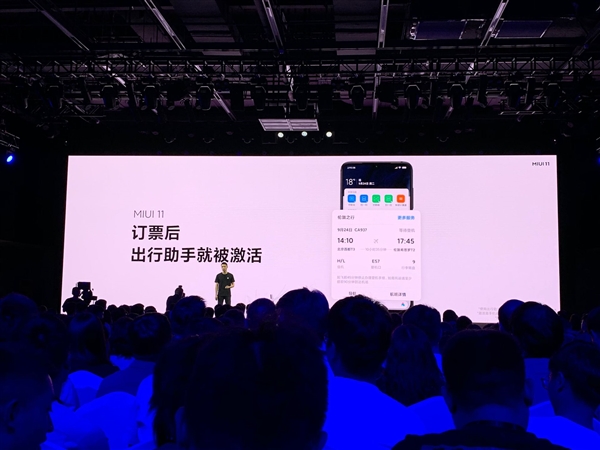 The Xiaomi Travelling Assistant is one half of the Mi GO Travel Service Suite, but it’s an excellent implementation of a travel tool. It stores all kinds of important information before the trip including booking details, hotel reservations and weather forecasts and syncs all the information in the application for easier viewing.

 In a surprise announcement, Xiaomi announced that with MIUI 11, users will now finally be able to download any Xiaomi theme they want completely for free. The company claims that while they used to need the extra revenue, they are now doing well enough to not need it and want to give back to their Mi Fans.






 Other notable features of the TVs include Dolby Audio, XiaoAi assistant, voice commands and option to connect with IoT devices, to both control them and display their status. Even though they bear a 4K display, the chipset is capable enough to run 8K content smoothly.