Ever since 2016, Xiaomi’s best flagships have been from the Mi Mix series. This year too, the tradition continues as Xiaomi has launched its brand new Concept flagship, the Xiaomi Mi Mix Alpha 5G. This is the Alpha member of the company’s flagship lineup, bringing in next-generation features not seen on any smartphone before. This is why the Mi Mix Alpha brings several ‘World’s First’ features to the smartphone industry.
Xiaomi Mi Mix Alpha 5G Design
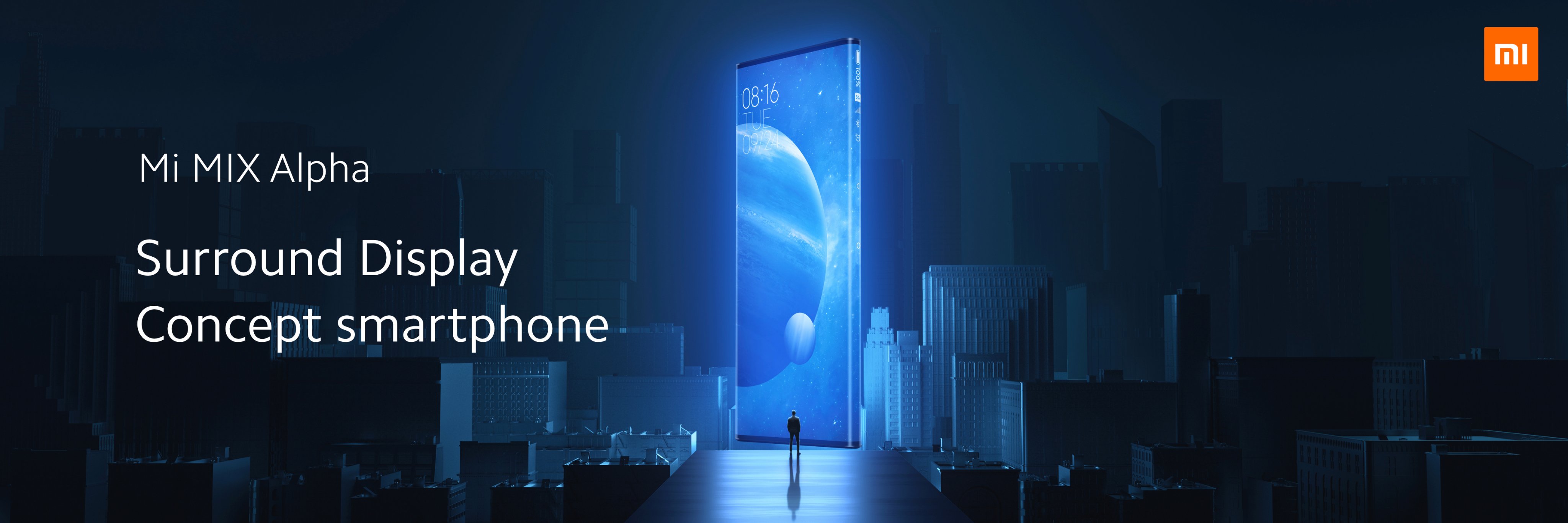
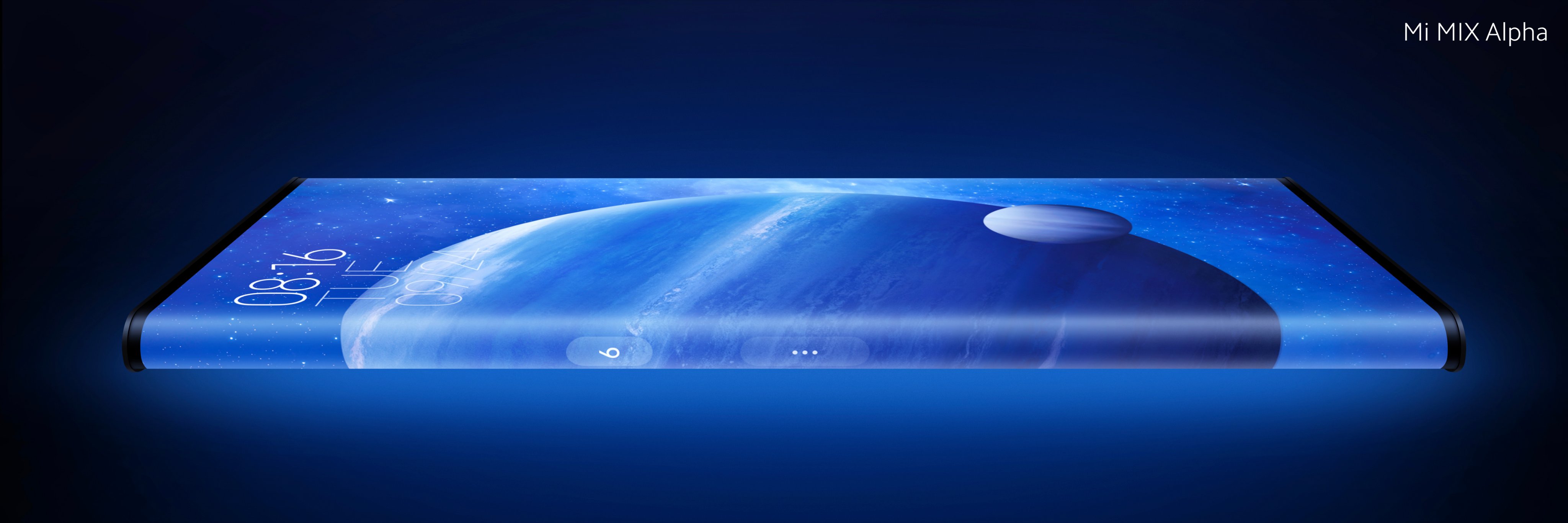
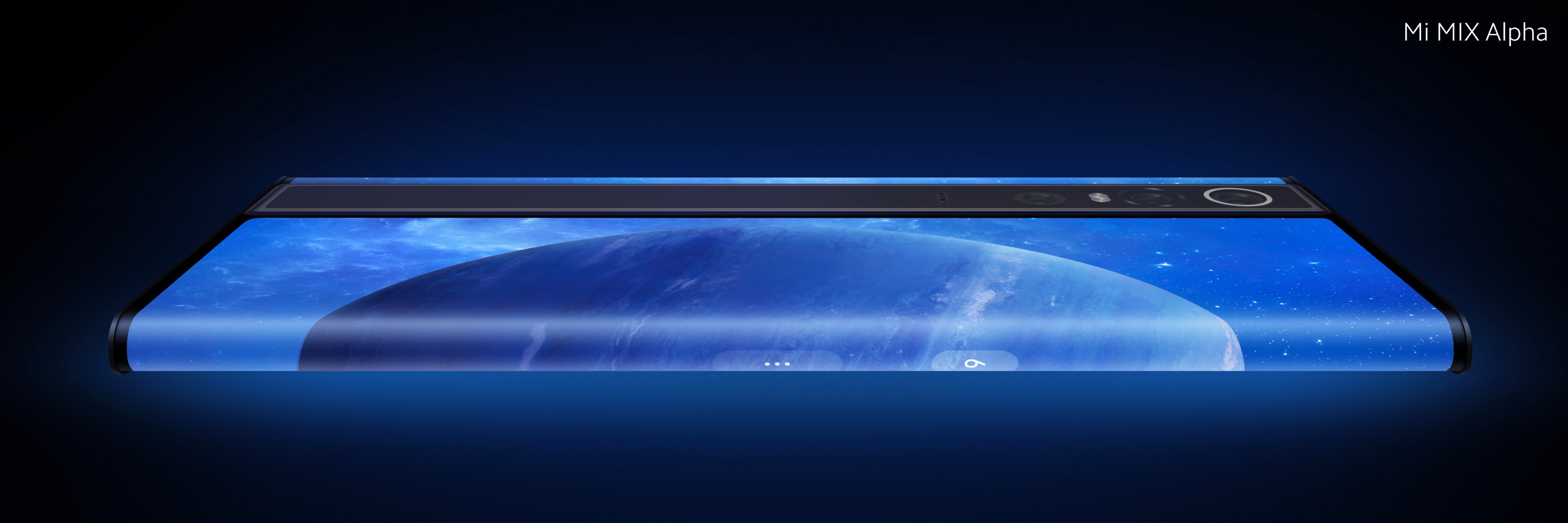
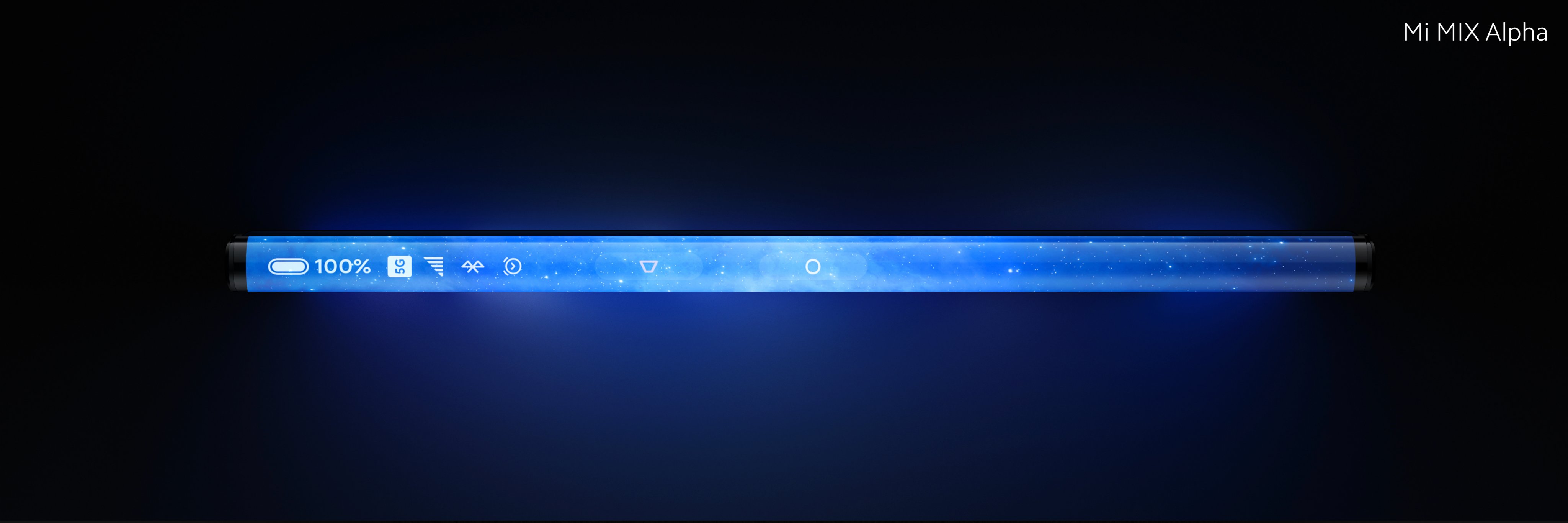
The Xiaomi Mi Mix Alpha is the world’s first smartphone with a curved display that wraps around almost the entire device. Except for the tiny vertical strip that houses the camera at the back, the display surrounds the entire smartphone, including the sides and the back. Mind you, this is a single display panel that wraps around the entire body bringing the screen to body ratio to a staggering 180.6%! This is made possible also because of the extremely narrow 2.15mm bezels on the top and the bottom.
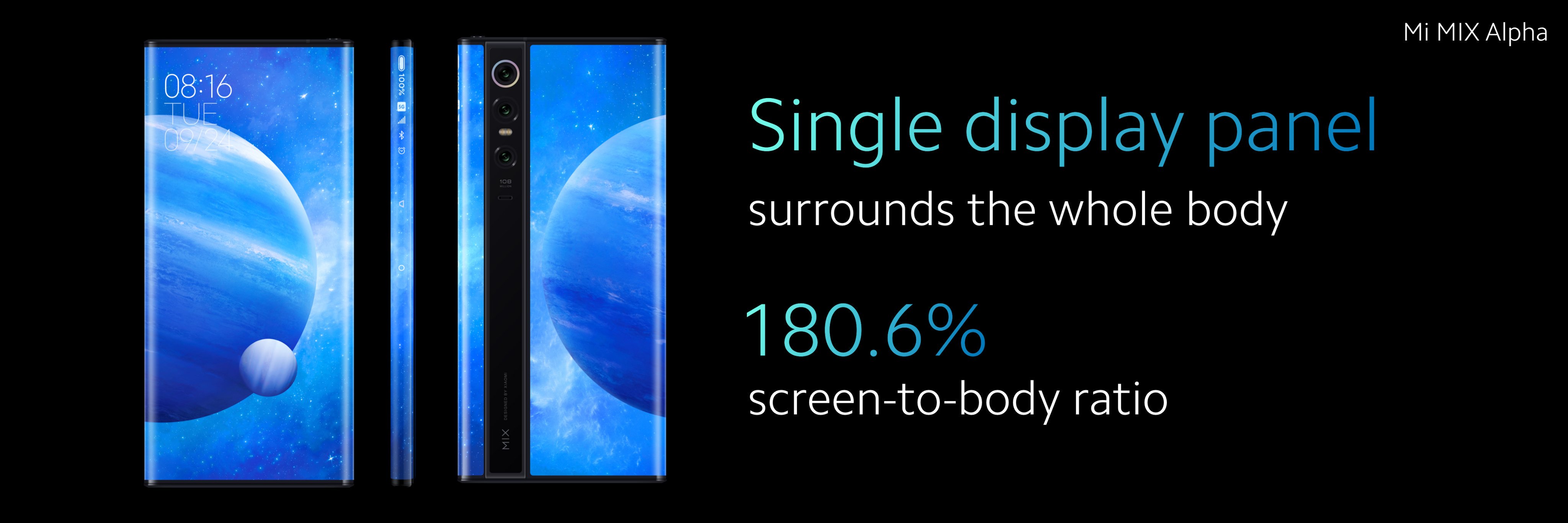
Clearly, the phone ushers a new era of all screen 4D surround display.
But bringing this concept to reality wasn’t easy. Hence, Xiaomi has used a number of smart solutions to enable such a full-screen wraparound design.
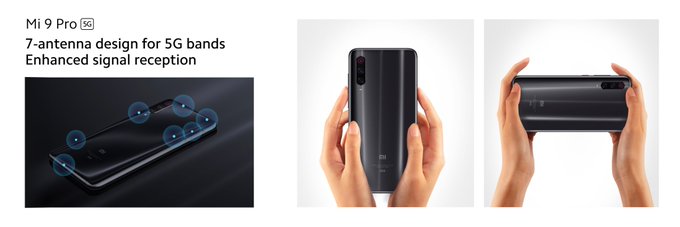
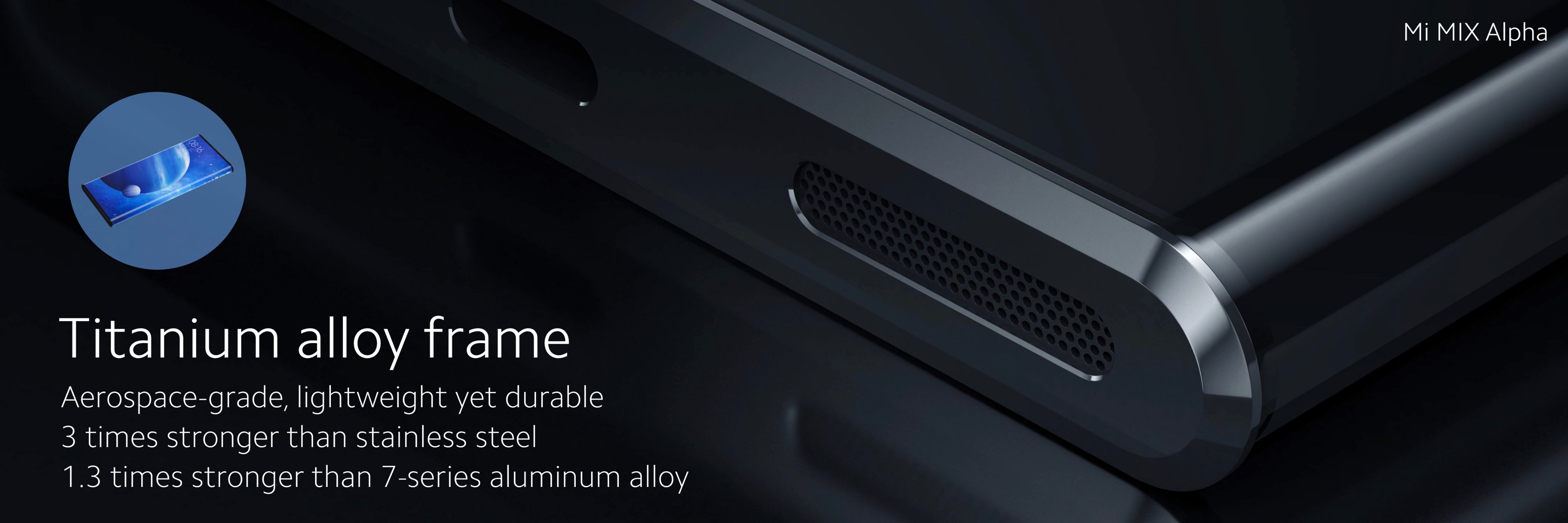
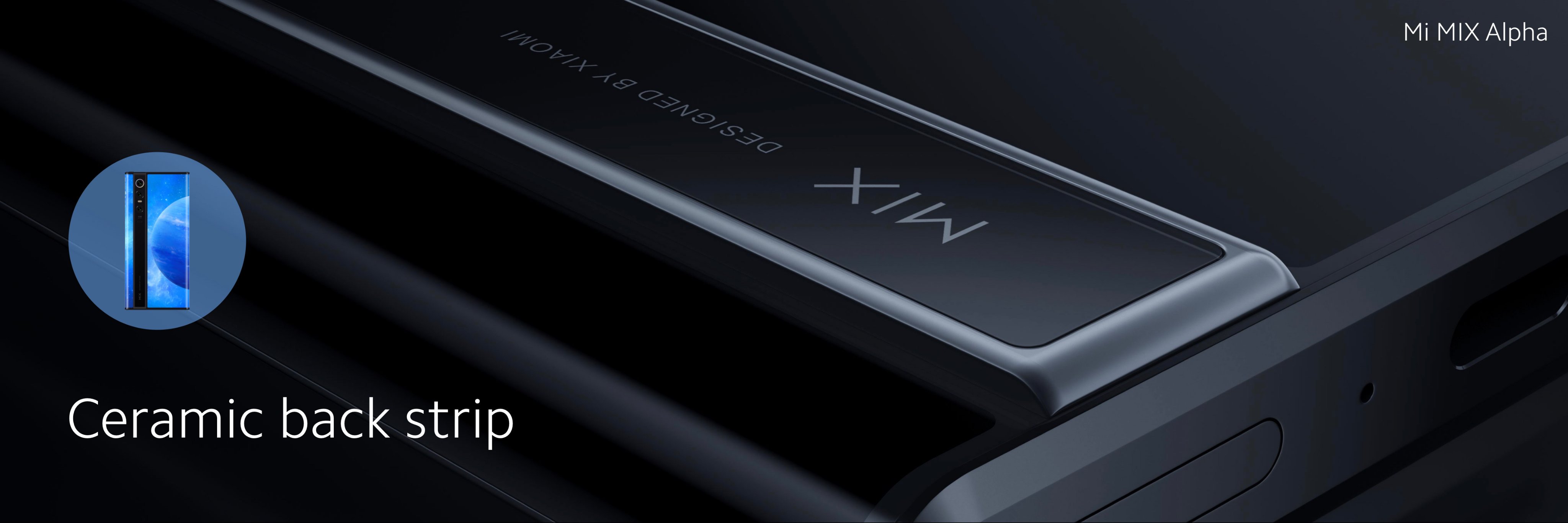
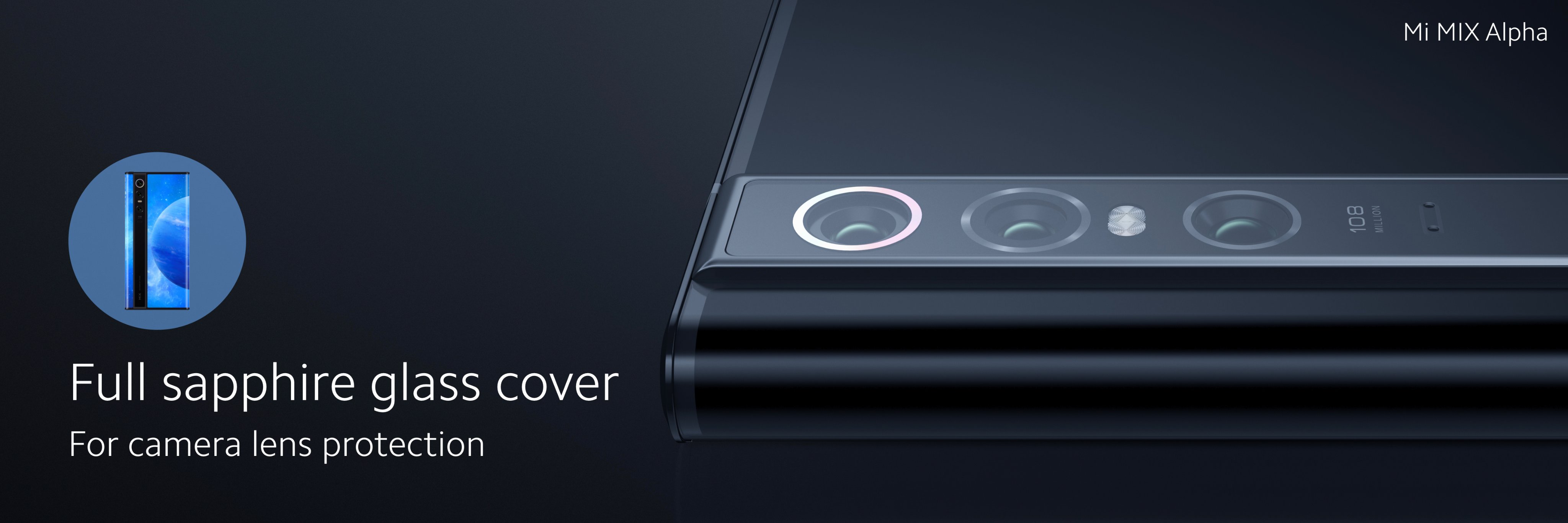
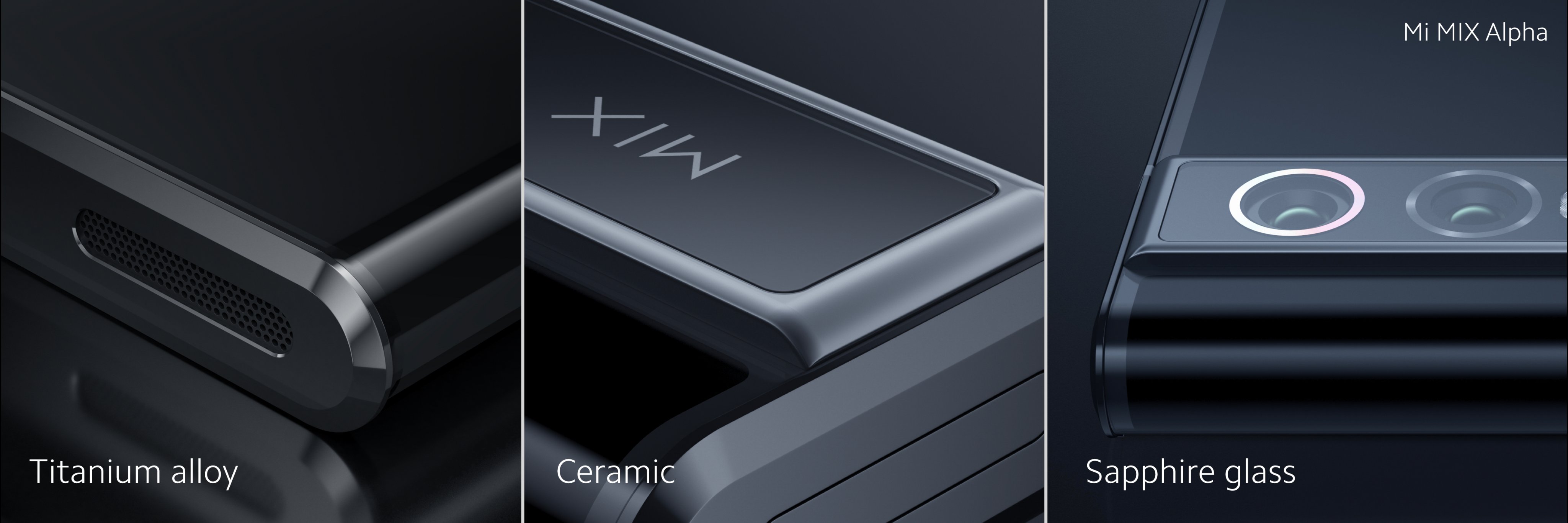
The phone is supported by a very strong and lightweight Titanium frame. The vertical strip that houses the camera is made of a black precision ceramic material. Also, the triple cameras at the back are protected by the sapphire glass to avoid scratches of any kind. The vertical strip at the back also houses most of the phone’s antennas and connectivity modules for Wi-Fi and 5G.
Apart from these premium materials, the Mi Mix Alpha comes with smart solutions to tackle various design challenges associated with this smartphone design.
For example, since the company couldn’t add any buttons on the side, it has used pressure-sensitive sides. This means the side displays can mimic a physical button with the help of powerful haptics (linear motor). It’s similar to what we saw on the Mate 30 Pro with its waterfall display implementation. There’s also a display acoustic technology for sound output and an ultrasonic proximity sensor.
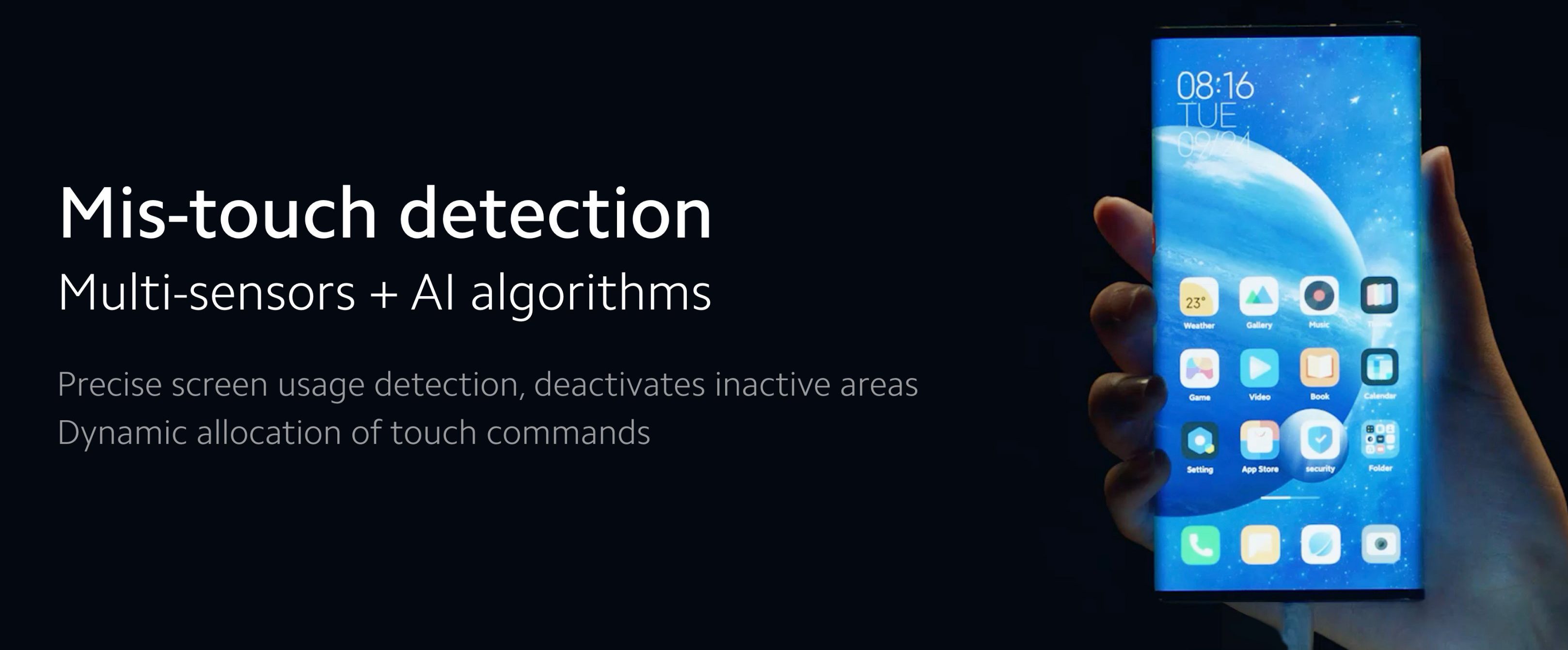
Also, since the displays cover the sides as well, if you are worried about accidental touches, Xiaomi has implemented a solution for that as well.
Xiaomi reveals that accidental touches are avoided using multiple sensors and AI algorithms that predict screen usage behavior. This means the phone essentially deactivates the inactive touch areas to avoid mistouches.
UP NEXT: MIUI 11 Officially Launched! Features new design and production tools galore!
Xiaomi Mi Mix Alpha Specs & Hardware
Xiaomi didn’t reveal detailed specifications of the Mi Mix Alpha at the event today.
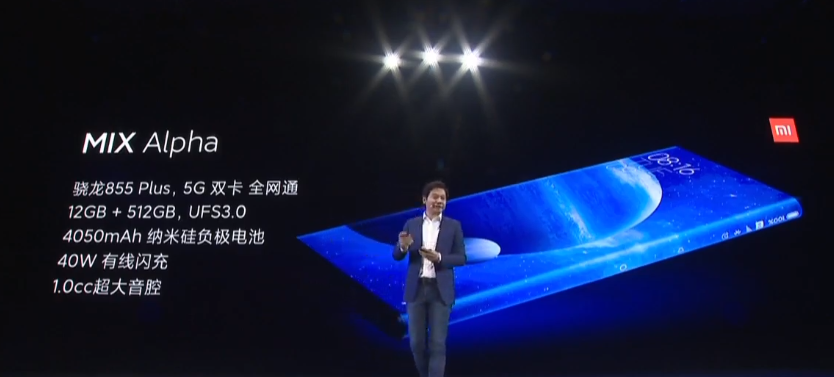
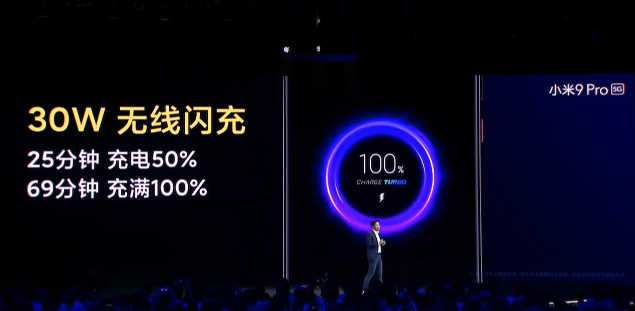
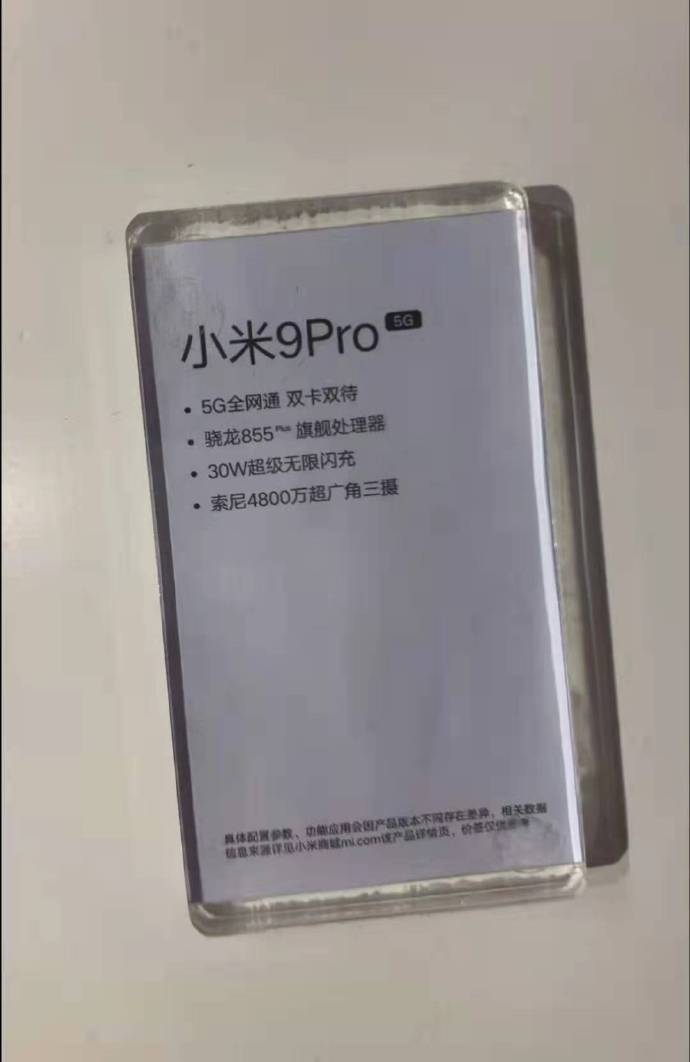
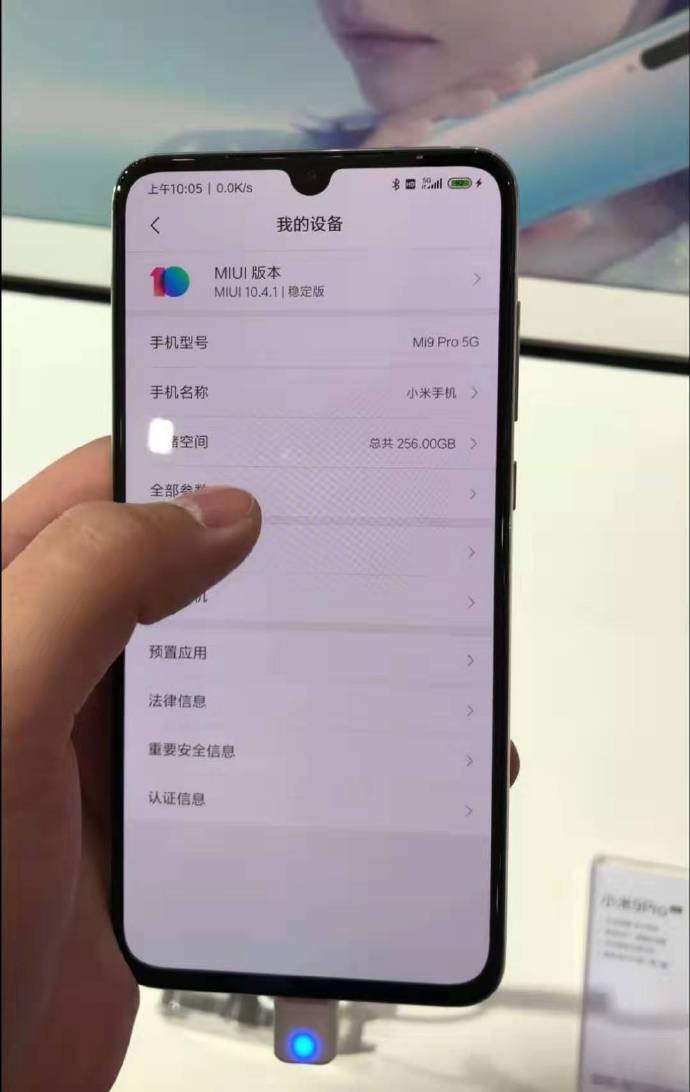
However, the company has confirmed that it will be powered by the Snapdragon 855+ processor with 5G dual SIM support. There will be at least one version with 12GB of RAM and 512GB of UFS 3.0 storage. The battery isn’t very large at 4050mAh but supports 40W fast charging just like the Mi 9 Pro 5G.
Xiaomi Mi Mix Alpha Camera
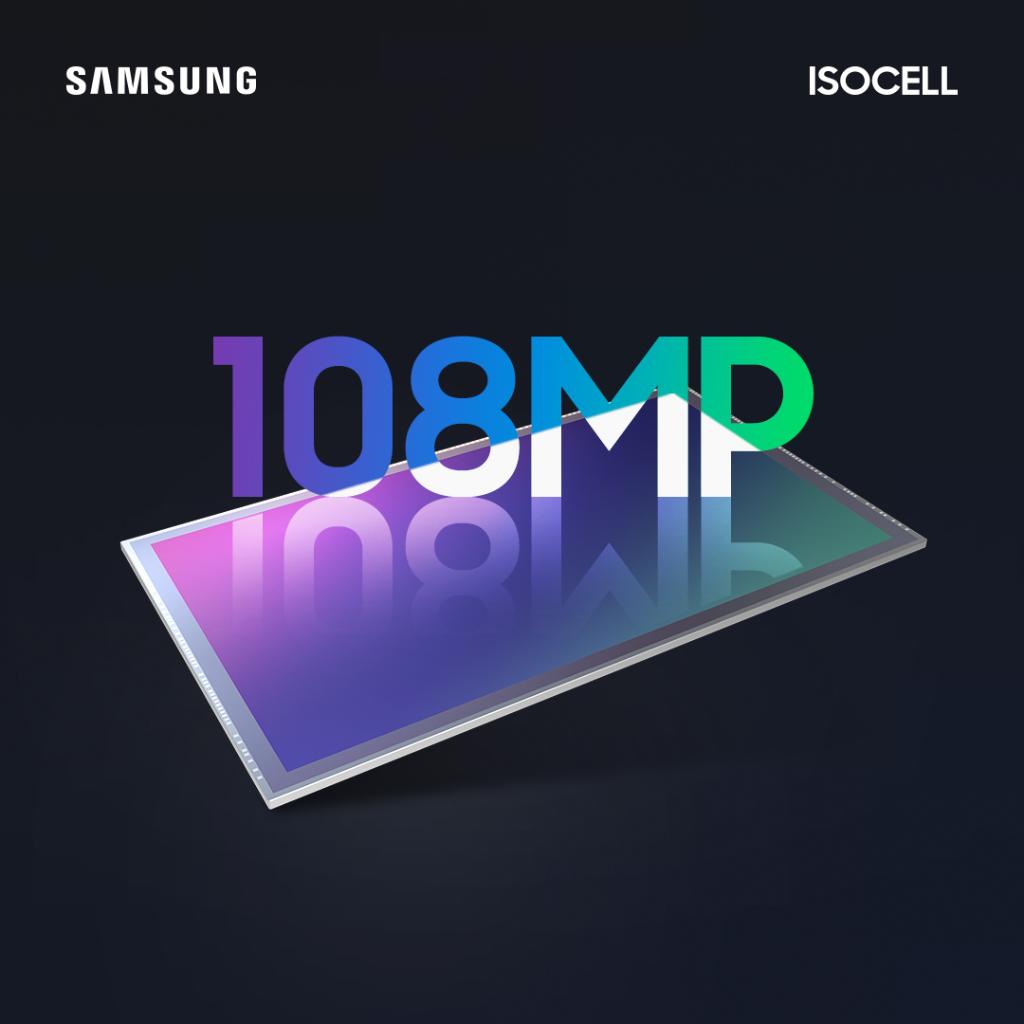
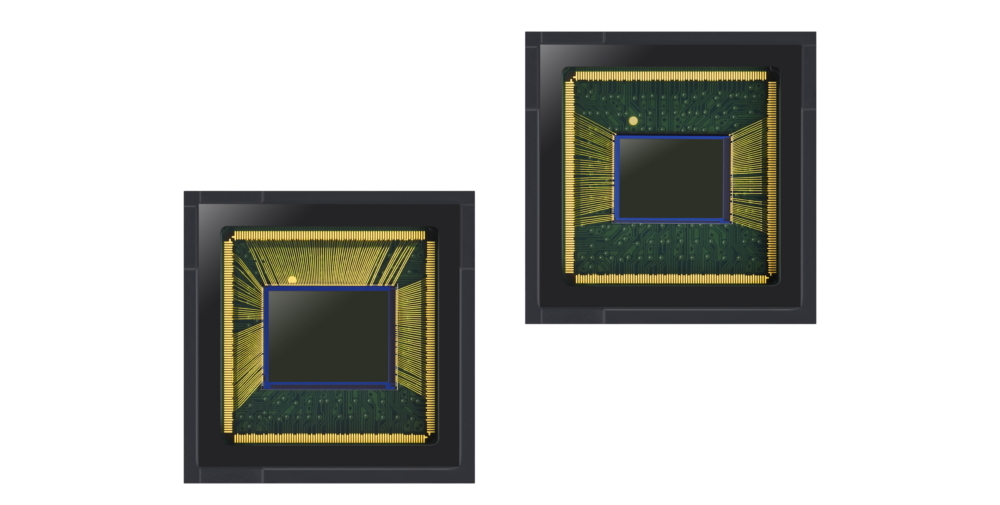
Xiaomi Mi Mix 5G is the world’s first smartphone to feature a 100MP+ resolution camera sensor. This is made possible by using the Samsung ISOCELL Bright HMX 108MP camera sensor at the back of the device. The sensor was developed in close collaboration with Xiaomi, hence it’s no surprise that we are seeing it first on the Mi Mix Alpha 5G.
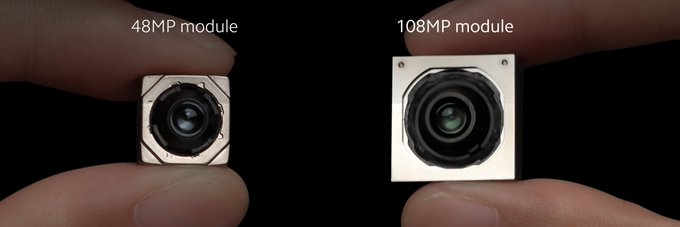
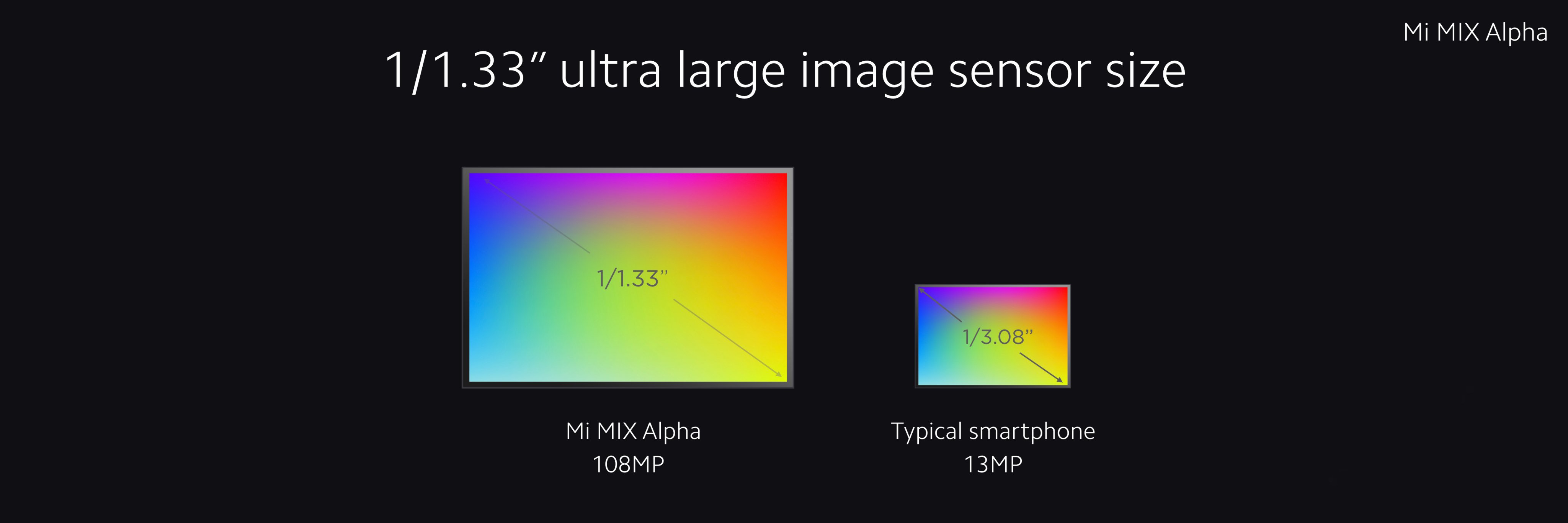
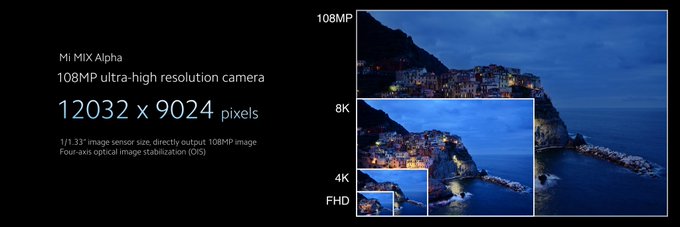
The 108MP primary sensor on the Mi Mix Alpha is ultra-large with a 1/1.33″ sensor. This setup is capable of outputting 12032 x 9024-pixel resolution images which will be extremely detailed. Even at 8X crop, the images retain a very high amount of detail, not usually seen from a smartphone camera.
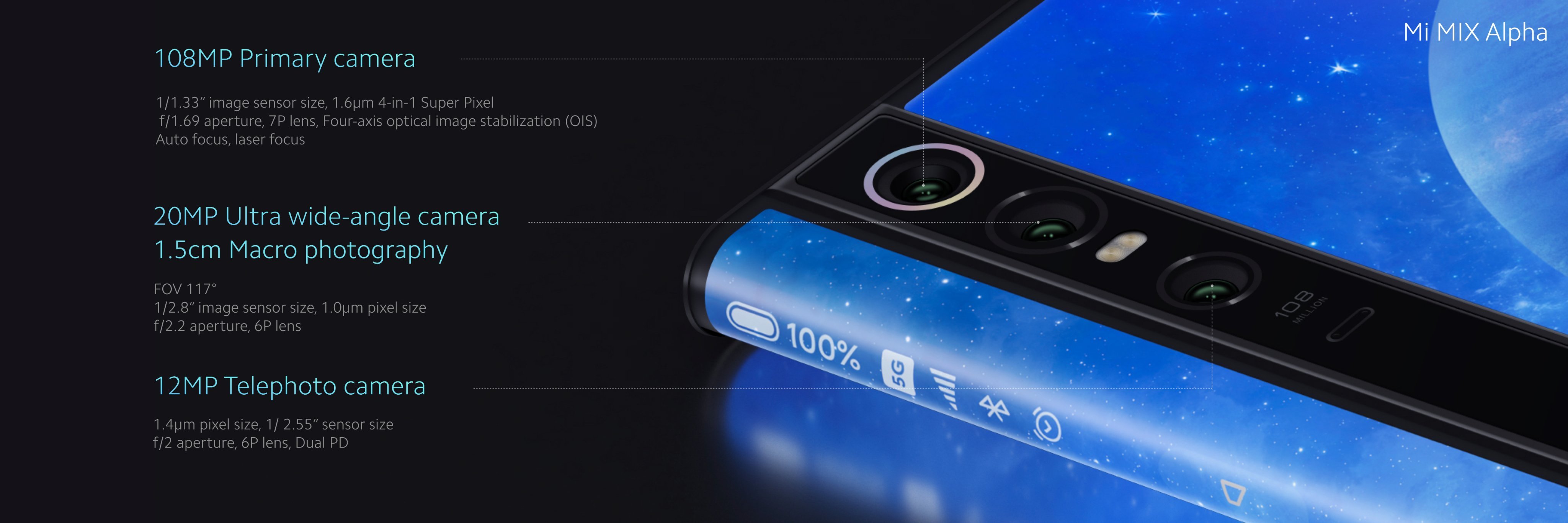
There are two more camera sensors completing Mi Mix Alpha’s triple camera setup: A 12MP telephoto camera with 2x optical zoom and a 20MP ultra-wide-angle camera lens with 117° FOV. This setup also supports 1.5cm macro photography. Other features of the setup include a four-axis OIS, Laser focus, and a flicker sensor.
The first set of camera samples from the 108MP camera sensor looks extremely detailed and rich. But of course, we’ll have to wait for a decent review to see its real-life image quality.

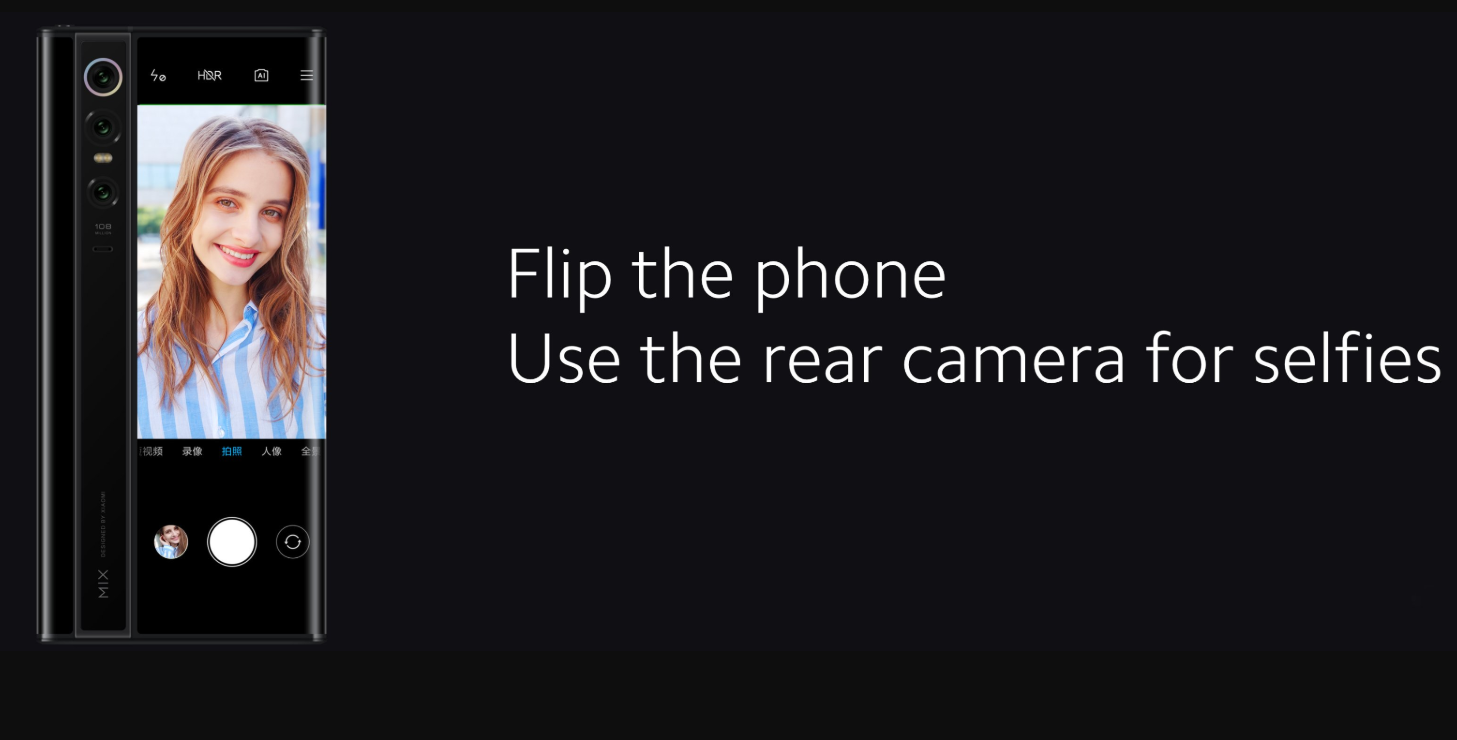
The Mi Mix Alpha doesn’t have a selfie camera, mainly because it doesn’t need one. You can simply flip the phone to use the rear camera setup for your selfies. Honestly, it doesn’t get better than this.
Editor’s Pick: 5 Things You Should Know About Xiaomi Mi Mix 5G’s 108MP Camera Sensor
Xiaomi Mi Mix Alpha Software
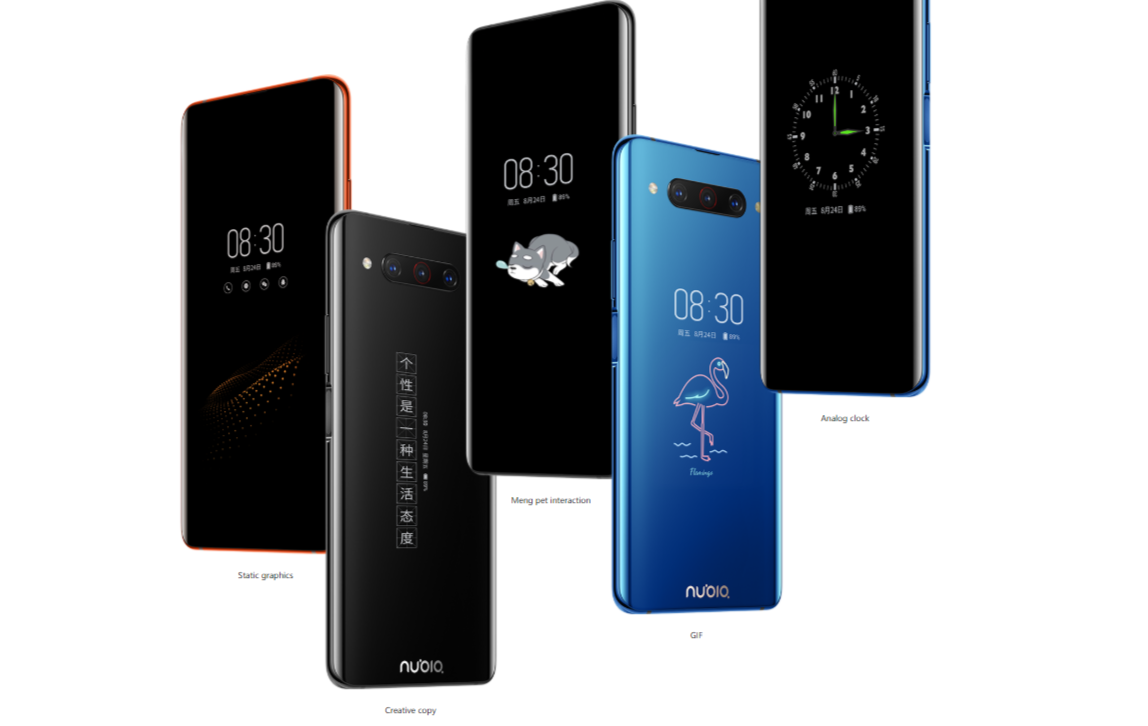
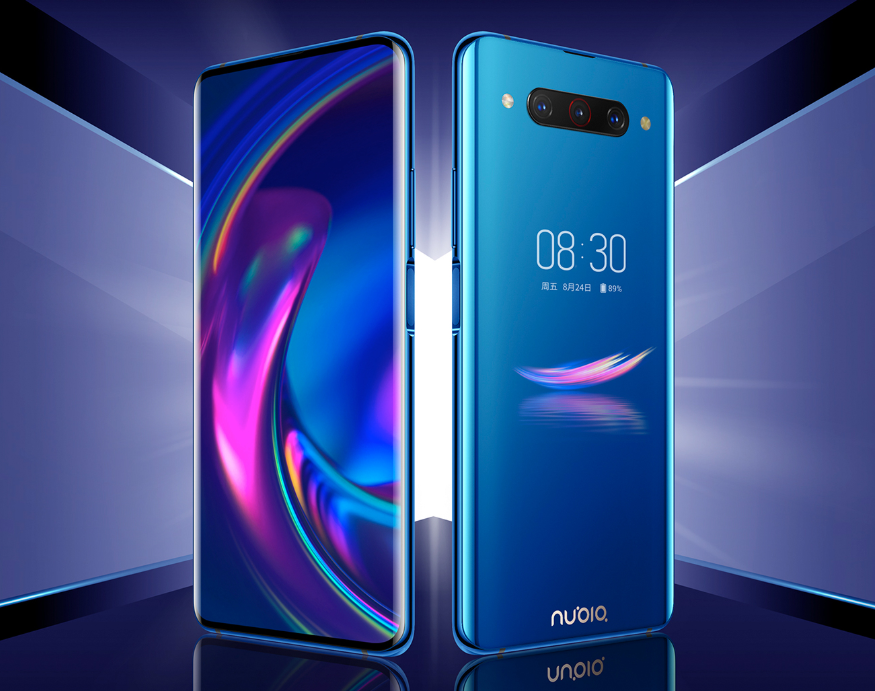
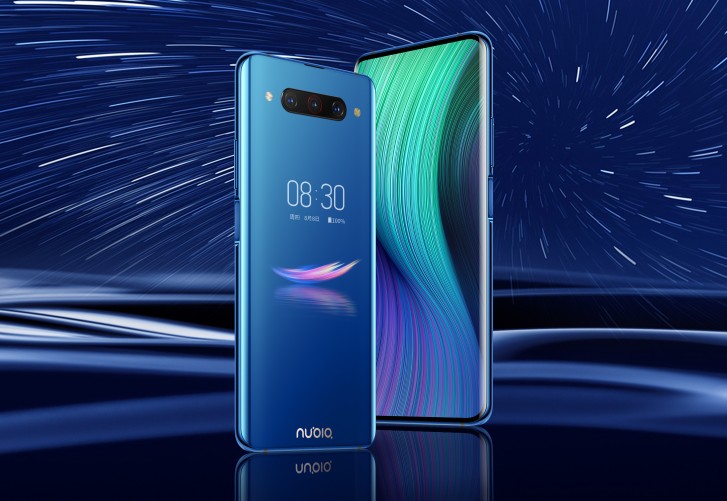
In order to take full advantage of the Mi Mix Alpha’s 360° surround display, Xiaomi has made some smart additions to the phone’s software. Apart from switching to selfie mode when you switch to the rear display on your phone (just like Nubia Z20), there are multiple software tricks that make the rear screen useful.
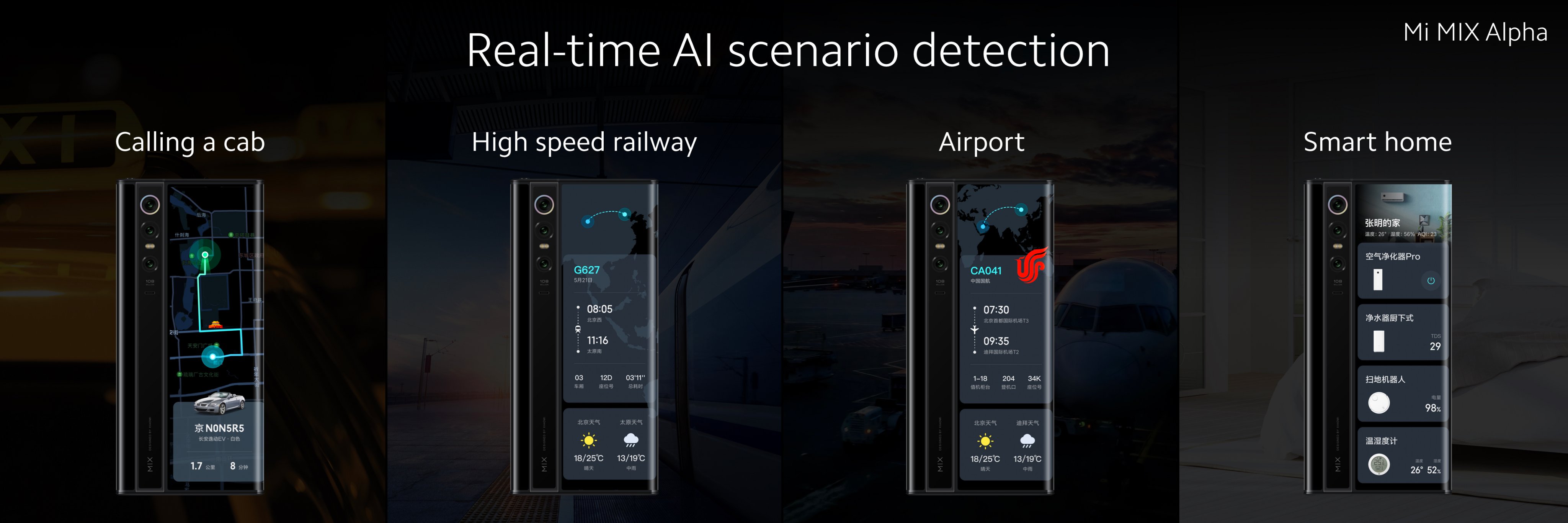
For example, irrespective of what’s on the front display, real-time AI scenario detection will allow you to carry out tasks such as booking a cab, checking out your flight and train schedule and information, as well as controlling your smart home devices right from the display at the back.
Also, you can set up the phone to light up the phone for different notifications. Even while charging the phone, the entire screen can light up, making for a beautiful experience.
Xiaomi Mi Mix Alpha Pricing & Availability
It’s not surprising that the Mi Mix Alpha will be produced on a very small scale on a trial basis at first. The company has priced it at a staggering 19,999 Yuan (~$2814), which is even more than Samsung’s new foldable smartphone.
The Mi Mix Alpha prototype will be showcased at various Mi stores throughout China. Once the trial production turns out to be successful, the company will attempt to mass-produce it by the end of this year.
Honestly, the Mi Mix Alpha upholds the Mix lineup’s reputation of bringing next-generation designs to the market. But unlike the original Mix which was essentially a concept phone that you could buy (started at 3,499 yuan ~$493), the Mi Mix Alpha is out of the reach of most buyers today.
Still, are you impressed with Xiaomi’s new concept smartphone? Or do you think this design isn’t practical?
UP NEXT: Xiaomi Mi TV Pro With Support For 8K content launched in China
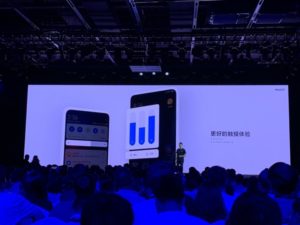

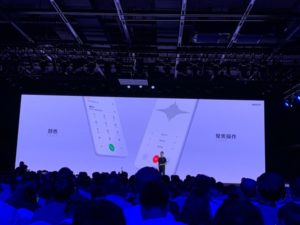
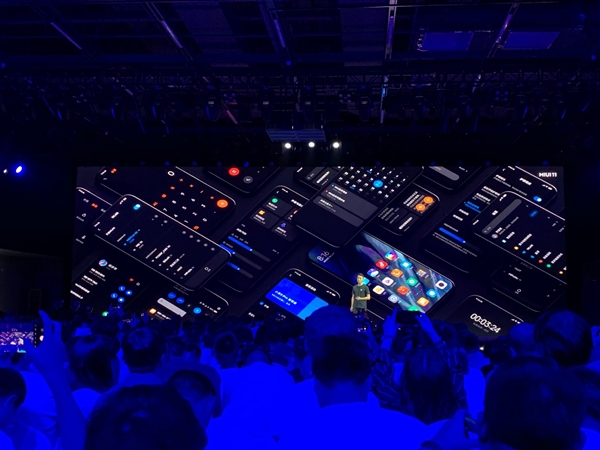 Dark Mode is a major feature of Android Q and MIUI 11 implements this with a few of its own bells and whistles. Xiaomi’s implementation seems to be very similar to Huawei’s EMUI dark mode in that it changes the colour of all system apps, and it uses a true black dark mode as opposed to Android Q’s more blue and grey dark mode.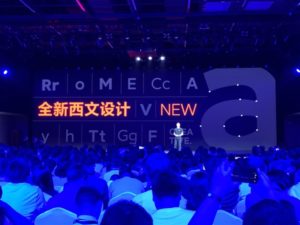

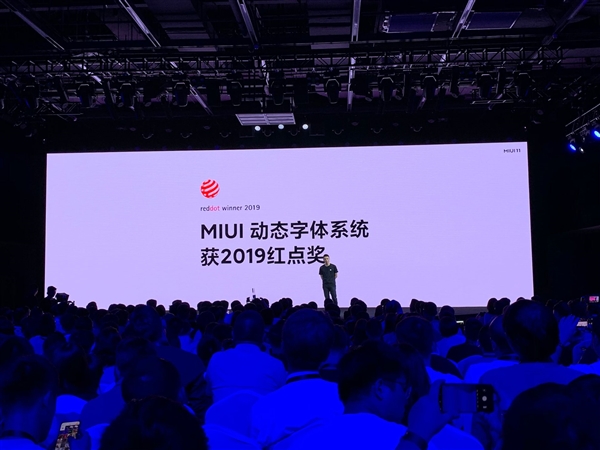 One of the things the company was very proud of was their new context sensitive dynamic UI font boldness. All around the UI, certain actions will embolden certain fonts to provide better context as to what’s selected or being interacted with. It’s a very simple feature, but it makes the user interface feel a lot more minimalist compared to competitors.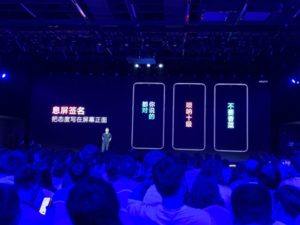
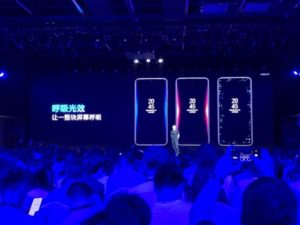
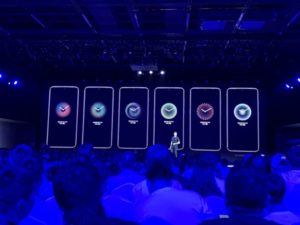

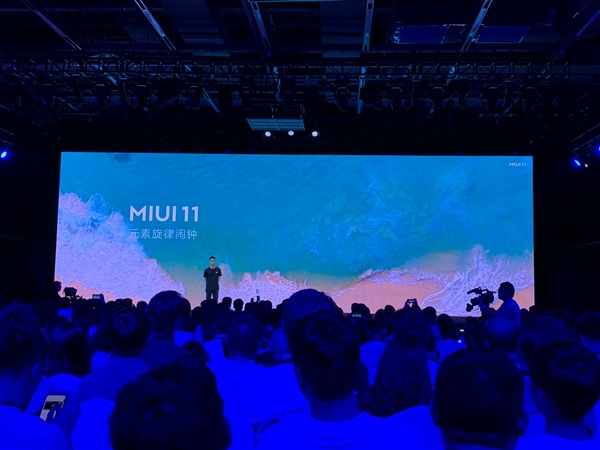 Finally, Xiaomi has updated all their alarm sounds and notification noises to be dynamic. What this means is that the sounds that are generated can change depending on variables like place and time of day. Once again, it’s not a particularly big features, but it’s certainly a nice addition for the user experience.
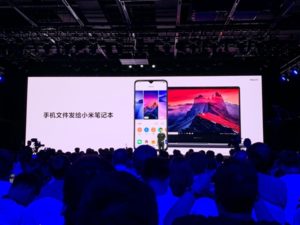
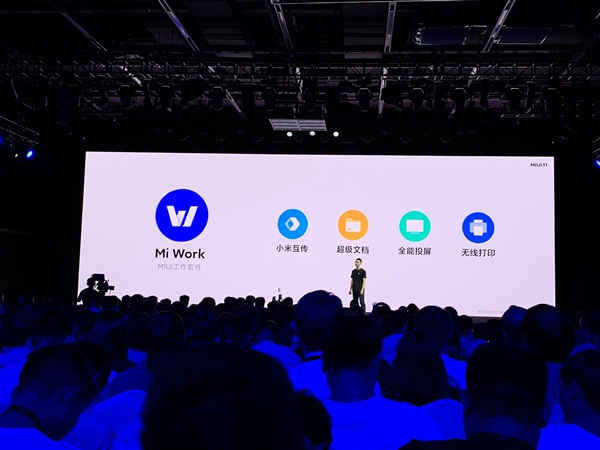 Xiaomi has introduced a suite of new productivity tools that will come with MIUI 11. This suite is called the Mi Work Productivity Suite, and it features four brand new apps from the company that are designed to make things easier when it comes to doing business. They’re all designed for different subsets of work, but they work seamlessly to maximize efficiency.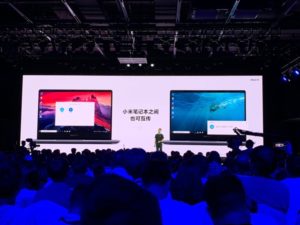

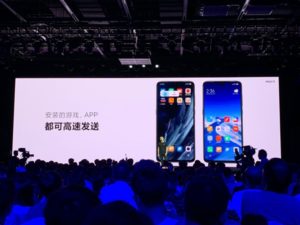


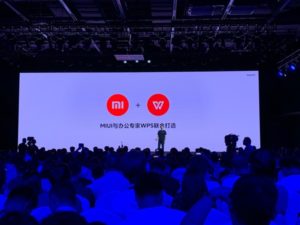
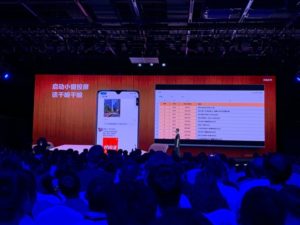

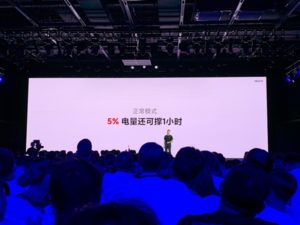
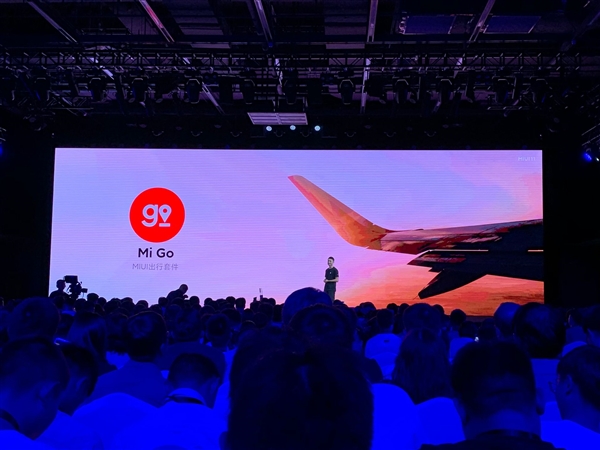 We’ve also got the brand new Mi GO Travel Suite, a set of tools that are focused on making things easier for people who are travelling to other countries. The Travelling Assistant and Super Power Saving Mode both serve their purpose pretty well.
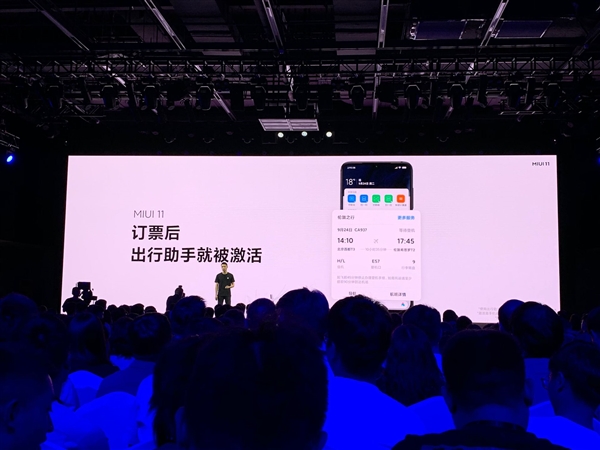 The Xiaomi Travelling Assistant is one half of the Mi GO Travel Service Suite, but it’s an excellent implementation of a travel tool. It stores all kinds of important information before the trip including booking details, hotel reservations and weather forecasts and syncs all the information in the application for easier viewing.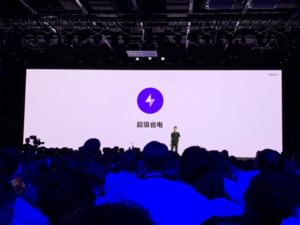
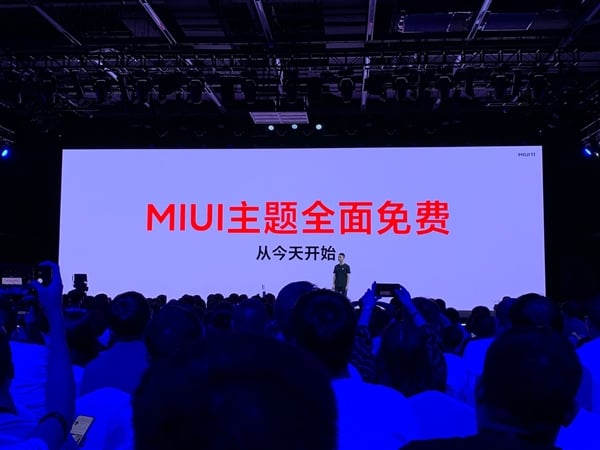 In a surprise announcement, Xiaomi announced that with MIUI 11, users will now finally be able to download any Xiaomi theme they want completely for free. The company claims that while they used to need the extra revenue, they are now doing well enough to not need it and want to give back to their Mi Fans.



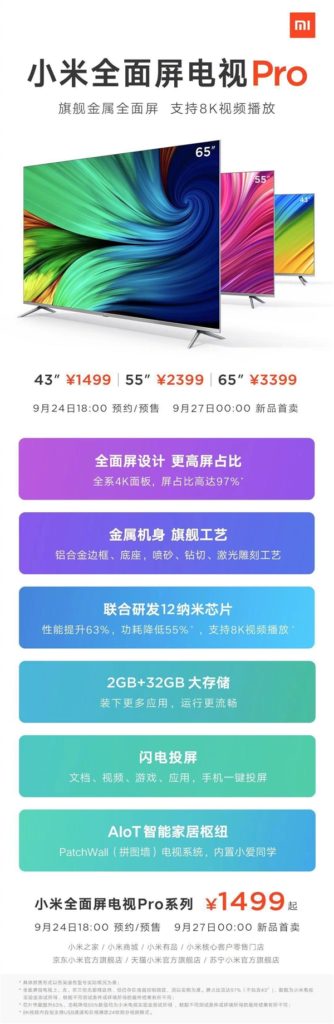
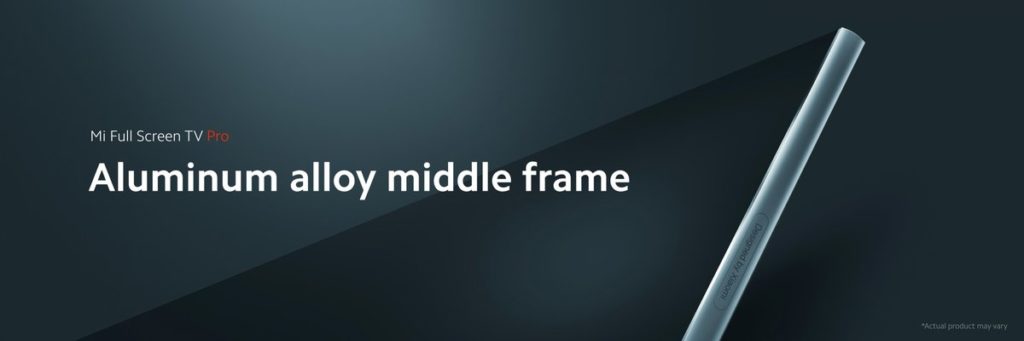
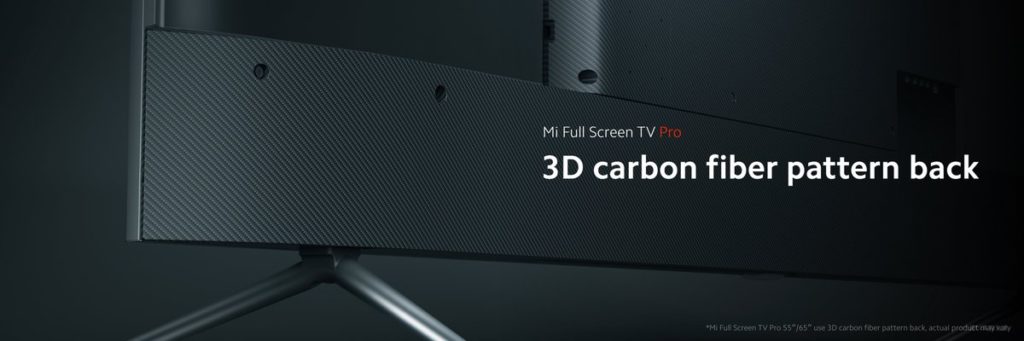 Other notable features of the TVs include Dolby Audio, XiaoAi assistant, voice commands and option to connect with IoT devices, to both control them and display their status. Even though they bear a 4K display, the chipset is capable enough to run 8K content smoothly.