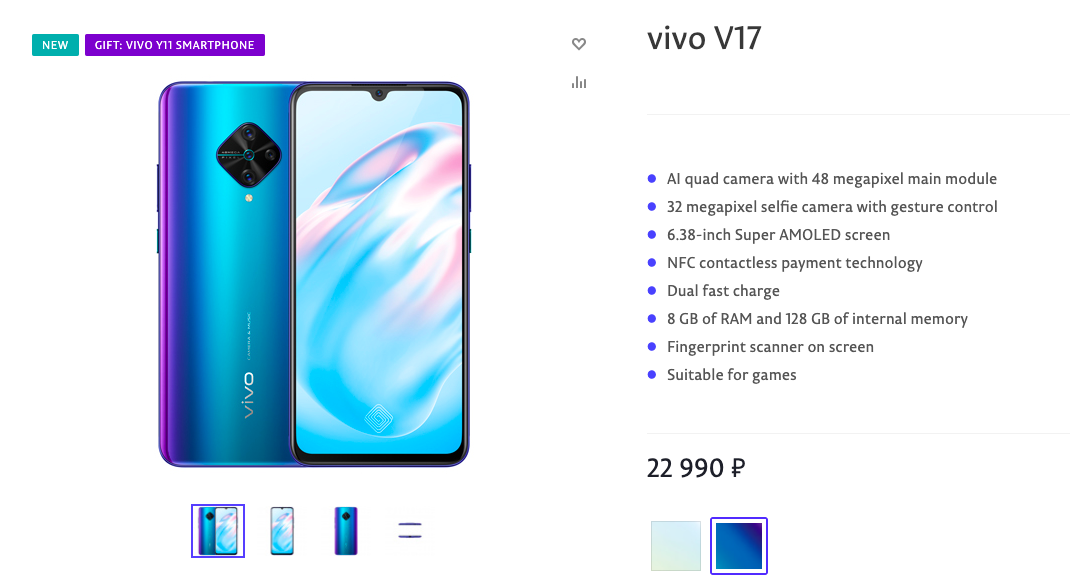
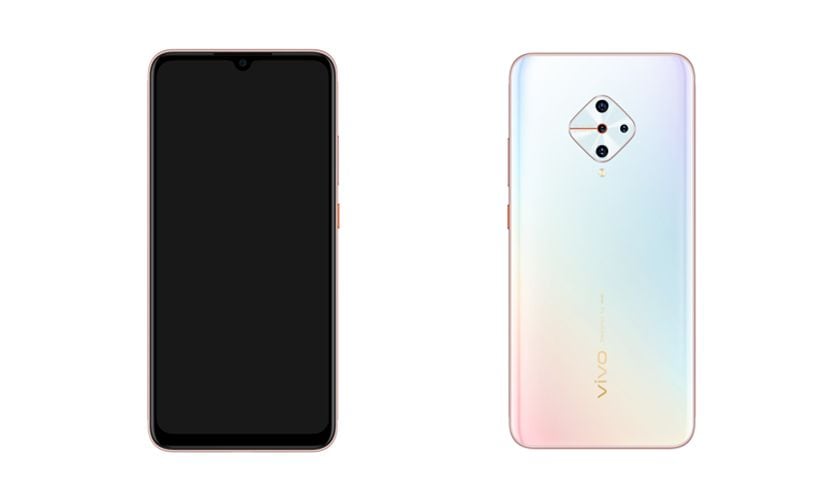
Vivo announced the Vivo S1 Pro in the Philippines earlier this week. The phone is set to launch in other Asian markets like Indonesia and India in the coming days. However, the phone also made it to Russia today but under a different name. The Vivo S1 Pro was launched as the Vivo V17 in Russia with a starting price tag of 22,990 Russian Rubles which roughly comes to around $360.
The Vivo V17 naming isn’t really surprising for the Russian market. If you recall, the Vivo S1 was rebranded as the Vivo V17 Neo in Russia when it launched back in August 2019. So it makes sense why the S1 Pro was launched as the vanilla V17 in the same market this week.
The Vivo V17 shares the exact same features as the S1 Pro. So you get a Snapdragon 665 processor inside with up to 8GB RAM and 128GB of storage. The phone comes with a 6.38-inch 1080 x 2340 pixels AMOLED display, which is exactly the same panel as the V17 Neo. Other features include NFC, a large 4500mAh battery and an in-screen fingerprint sensor.
The camera is one of the highlights of the Vivo V17, featuring quad-cameras at the back. The setup consists of a 48MP primary camera with an 8MP ultrawide camera, 2MP macro lens, and a 2MP depth shooter. Upfront, you have a massive 32MP sensor for selfies.
Interestingly, if you are pre-ordering the Vivo V17 in Russia before December 5, you will get a Vivo Y11 smartphone for free. There are two colors up for grabs: Cloudy Blue and Blue Fog.
Each time a new potential best-buy gets released, we usually make a specs comparison with the other hottest devices from the concurrence in the same price range. Today is the turn of the Vivo S1 Pro: several days after the launch, we think it is having a lot of attention because of its very high value for money, so much that it deserves to be compared to other potential best-sellers of this year. We decided to compare it to the Redmi Note 8 and the Realme 5 Pro for pretty obvious reasons: if you do not want to speed more than €200, they are among the best options you can choose if you need high performance and well-balanced specs sheet.
Quad 48 + 8 + 2 + 2 MP f/1.8, f/2.2, f/2.4 and f/2.4
13 MP f/2.0 front camera
Quad 48 + 8 + 2 +2 MP f/1.8, f/2.2, f/2.4 and f/2.4
32 MP f/2.0 front camera
Quad 48 + 8 + 2 + 2 MP f/1.8, f/2.2, f/2.4 and f/2.4
16 MP f/2.0 front camera
BATTERY
4000 mAh, fast charging 18W
4500 mAh, fast charging 18W
4035 mAh, fast charging 20W with VOOC 3.0
ADDITIONAL FEATURES
Dual SIM slot
Dual SIM slot
Dual SIM slot, splash resistant
Design
Something you can not easily find on specs sheets is the info regarding the design. When it comes to affordable phones, a lot of manufacturers decide to opt for cheap materials in order to cut costs. That is the case of the Realme 5 Pro which is made out of plastic. However, it is splash resistant, unlike Vivo S1 Pro and Redmi Note 8. But with those devices, you get a premium glass design and even a very original look in the case of Vivo S1 Pro. On the other hand, you should consider that, besides being splash resistant, Realme 5 Pro is more compact than Redmi Note 8, even though it comes with the same display size (thanks to a higher screen-to-body ratio).
Display
On the display side, Vivo S1 Pro is at a higher level. Besides having a wider panel, it features the Super AMOLED technology delivering more vibrant colors and deeper blacks. Further, it integrates an in-display fingerprint scanner. The whole trio has Full HD+ displays, but Realme 5 Pro and Redmi Note 8 have IPS LCD panels. Redmi Note 8 has a more resistant front panel thanks to the amazing Gorilla Glass 5 protection (which also covers the glass rear side).
Specs & Software
Realme 5 Pro is the most performing smartphone out there you can find for less than €200. It is powered by the awesome Snapdragon 712 chipset, an upgrade of the Snapdragon 710 running at a max frequency of 2.3 GHz. It even has up to 8 GB of RAM and up to 128 GB of internal storage you can furtherly expand with a micro SD. Both Redmi Note 8 and Vivo S1 Pro feature a lower-end Snapdragon 665 SoC and, while the Vivo S1 Pro has an 8/128 GB, Redmi Note 8 does not exist with 8 GB of RAM. Android 9 Pie is preinstalled and customized by Color OS, Funtouch OS and MIUI depending on the phone.
Camera
The rear camera department of these handsets is exactly the same for all of them. They boast a main 48 MP camera, an 8 MP ultrawide sensor, a 2 MP dedicated macro camera and a 2 MP depth sensor. However, at the moment, the MIUI camera algorithm seems to manage the image quality in a better way. On the other hand, Vivo S1 Pro has a better front camera: the only with a 32 MP resolution.
Battery
Vivo S1 Pro is equipped with a bigger 4500 mAh battery and it lasts more on a single charge than both Realme 5 Pro and Redmi Note 8 coming with 4035 and 4000 mAh batteries, respectively.
Price
Vivo S1 Pro’s price starts from about €287/$316, Redmi Note 8 from less than €130/$143, and Realme 5 Pro from less than €180/$200. Overall, Vivo S1 Pro wins the comparison due to a better selfie camera, bigger battery, AMOLED display and more. Realme 5 Pro is the one with the highest performance, while Redmi Note 8 has a higher value for money than both.
OnePlus’ customer data has been breached, yet again. The smartphone maker made an announcement a few hours back stating that some of its customer’s information like “name, contact number, email, and shipping address within certain orders” may have been exposed by the most recent data breach. However, information like payment information, passwords and accounts are safe.
OnePlus hasn’t given out an exact number of affected users, however, the company said that it has already sent out emails to the users whose data has been breached. If you were one of the affected customers, you should have received a mail similar to this sometime in the past couple of days. If you haven’t got an email from the company, then your data wasn’t breached.
The official OnePlus website seems to be the point of the breach but the company assured that they have thoroughly inspected the website to ensure there are no similar security flaws. The company also adds that affected users ‘may receive spam and phishing emails as a result of this incident’.
This isn’t the first time OnePlus had a security breach. Last year, in January, credit card information of nearly 40,000 OnePlus customers was breached through the company’s OnePlus.net website. Unfortunately, the company has not revealed the scale of this particular breach.
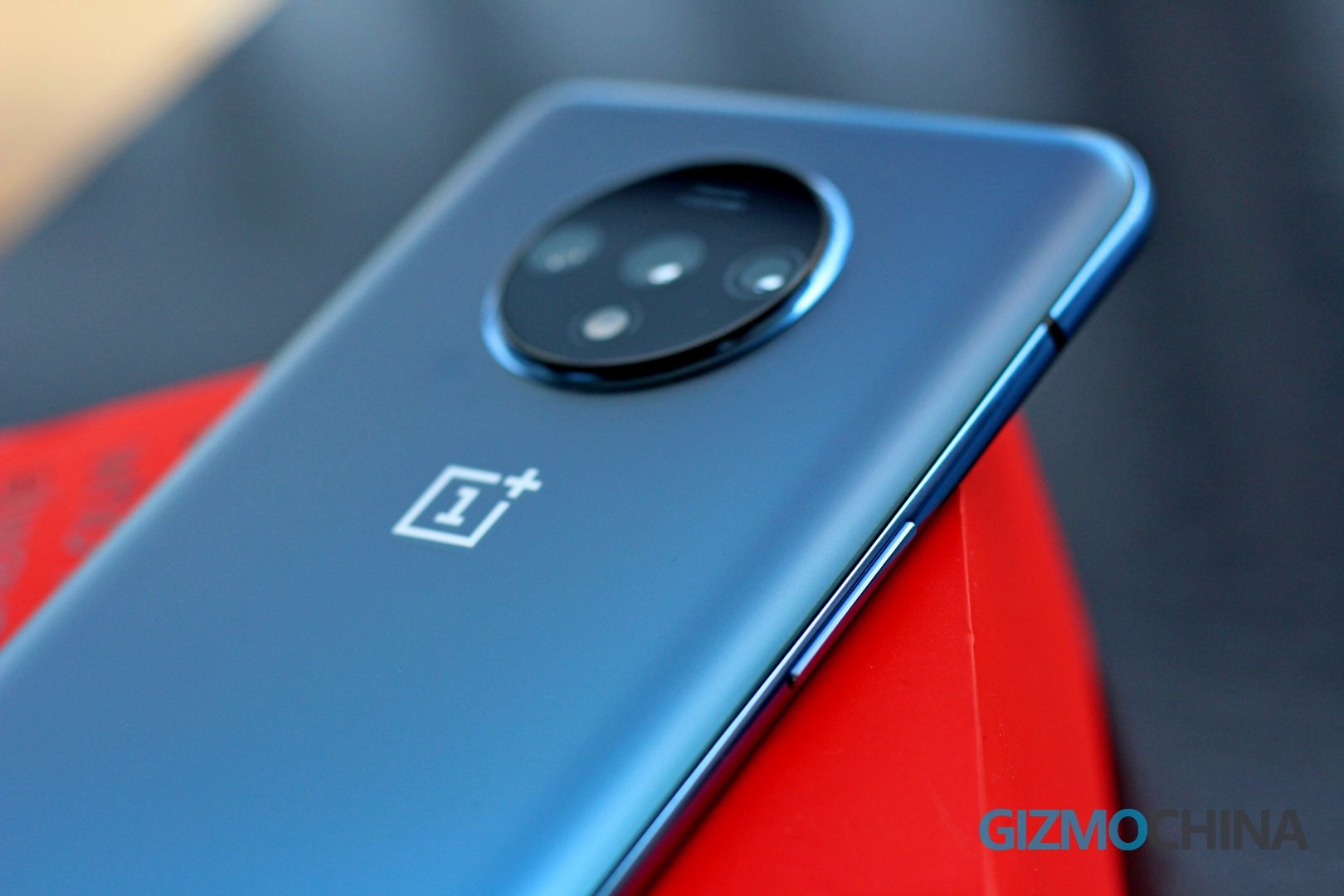
OnePlus 7T is its most recent flagship
Security breaches are never good for a company. However, the company assures that it will partner “with a world-renowned security platform next month, and will launch an official bug bounty program by the end of December”. This is definitely the right way moving forward, however, OnePlus should have probably done this immediately after the first breach to avoid a second incident.
Honor’s upcoming flagship smartphone for 2019 is the Honor V30 and V30 Pro 5G. We had a clue that the new flagship models were going to feature Hisilicon’s best chipset, but today, the company has officially confirmed that the Honor V30 will feature its flagship-grade Kirin 990 5G processor. This also confirms them to be the first 5G smartphones from the brand.
Given its high-end placement, the Honor V30 and V30 Pro 5G models are expected to be expensive as well. According to a recent leak on Weibo, the V30 could be priced at 4999 yuan ($710). This would put it in direct competition to the Mate 30 models which also start at the same price in China.
We don’t know much about this Matrix Camera, but Huawei had trademarked two words, Camera Matrix, and Cine Lens, back in July 2019. The Cine camera on Mate 30 Pro enabled ultrawide videos in 4K at 60 frames per second and even 7680fps slow-motion recording. So if they are similar technologies, the Matrix camera could be a really exciting camera feature. Honor has already teased that the V30 will have powerful videography features like Movie Lens, but we expect a lot more features to be revealed at launch.
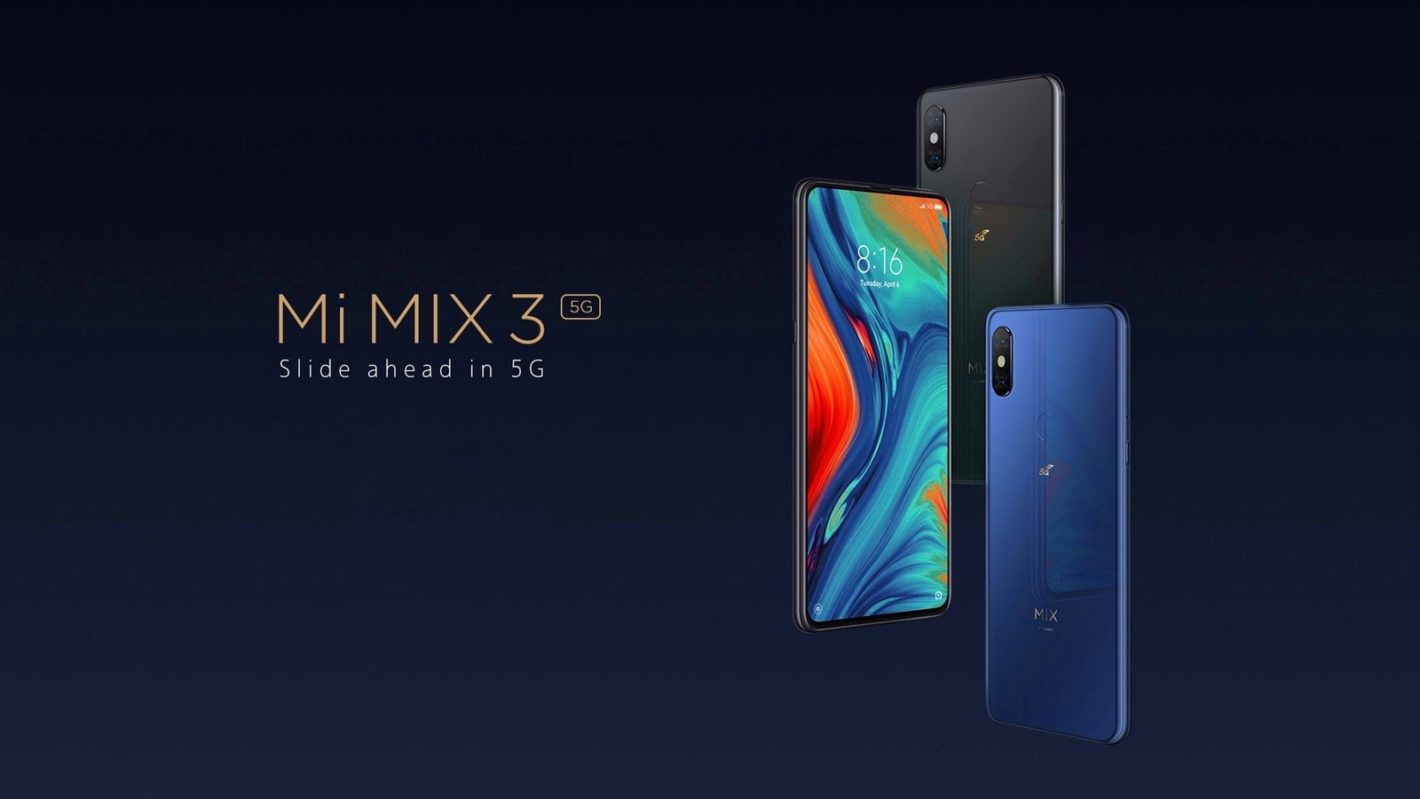
The Mi MIX 3 5G is Xiaomi’s first 5G phone. It was released back at the 2019 Mobile World Congress in February with a more powerful processor and a bigger battery than the 4G model announced in 2018.
Mi Mix 3 5G was Xiaomi’s first 5G phone
TENAA has put up a listing of the phone on its database and it reveals the phone may be getting a different RAM and storage variant.
When it launched in February, the phone was announced in a single configuration with 6GB of RAM and 64GB of storage. However, the TENAA listing mentions two different configurations – a 6GB + 128GB version and an 8GB RAM +256GB version.
The listing also mentions the phone runs Android 10, the latest version of Android. Save for these differences, the rest of the specs are the same.
The Mi MIX 3 5G (M1810E5GG) has a 6.39-inch OLED display with a 2340 x 1080 resolution. The phone has a slider design, so there is no notch and neither is there a punch-hole. It is powered by Qualcomm’s Snapdragon 855 processor.
The device has a 24MP camera in front and it is paired with a 2MP selfie camera while the rear is home to two 12MP sensors. Other features are a 3800mAh battery with support for Quick Charge 4+ and 10W wireless charging, a rear-mounted fingerprint scanner, NFC, and a dedicated AI assistant button.
We don’t know when Xiaomi will announce these new variants but there is a chance they may be exclusive to China.
What comes after foldable smartphones? Visionox believes it’ll be rollable smartphones that’ll take the spotlight after the foldable craze. And we have got a glimpse of how it could look like at the recent World Conference in the Display Industry. At the three-day event held in Hefei, Anhui Province of China, Visionox showcased its rollable flexible AMOLED panel alongside a couple of other interesting products like a foldable clamshell smartphone.
Visionox Rollable AMOLED display
Visionox said that the rollable display design will greatly reduce the area taken up by the display, even less than foldables. The Visionox rollable display demoed at the event had a dynamic curl radius of 7mm and features on-cell touch display integration technology and self-lamination. However, it’s clear that this technology will still take some time before it matures. The demo unit at the event was still in the form of the raw display and not installed on a smartphone. It’s worth adding that companies like BOE and LG Display have demoed rollable panels in the past.
Apart from the rollable display, Visionox also demoed an interesting clamshell foldable smartphone. This was even more exciting because it was in the form of an actual smartphone that could be folded in half at the center. Unlike the Motorola Razr, this one looked like a regular Android smartphone with the only exception that it could be folded into half at the center.
Visionox Foldable clamshell
The foldable clamshell smartphone features a regular 6.47-inch flexible AMOLED display with on-cell technology. Visionox adds that there won’t be a crease at the center when unfolded. The phone comes with a waterdrop notch on top and transforms into a 13.3mm thick phone in its folded form factor.
In addition to these two next-generation display products, Visionox also showcased a truly bezel-less smartphone. The phone features a tiny 1.5mm bezel at the bottom and 0.7mm bezels on the other three sides. The screen to body ratio is as high as 96.57%.
The currently available Y-series Vivo phones in China include Vivo Y3, Vivo Y5s and Vivo Y7s. The Chinese manufacturer is expected to soon announce the Vivo Y9s as the next Y-series phone for China. The name of the device has surfaced through its China Telecom listing. The specs of the phone are exact with the Vivo S1 Pro that was recently released in Southeast Asian markets. Hence, it appears that the Vivo Y9s will sell as the rebranded version of the Vivo S1 Pro in China.
Vivo Y9s Release Date and Pricing
The Vivo Y9s that has a model number of Vivo V1945A is listed on China Telecom with a price tag of 2,198 Yuan. The handset may carry a different pricing once it goes official. The listing states that the Vivo Y9s will release in the Chinese market tomorrow (Nov. 24). Glazed Black, Nebula Blue and Magic Clear Sky are the three color editions of the phone.
The Vivo Y9s has a 6.38-inch AMOLED display with a waterdrop notch. It offers full HD+ resolution of 1080 x 2340 pixels. The display of the phone is integrated with an in-screen fingerprint reader. The Snapdragon 665 chipset is the driving force of the Vivo Y9s. The SoC is coupled with 8 GB of RAM. The native storage of the phone is 128 GB. There is a microSD card slot on the device for additional storage. The smartphone boots to Android 9 Pie OS. Like the recent Vivo phones, the Vivo Y9s is expected to come with FunTouch OS 9.2 UI.
The Vivo Y9s has a diamond-shaped camera module on its back along with an LED flash. It consists of 48-megapixel + 8-megapixel + 2-megapixel + 2-megapixel quad cameras. The front notch of the device has a 32-megapixel selfie snapper. The handset features a 4,390mAh minimum capacity battery. Its typical capacity is 4,500mAh battery. The phone carries support for 18W fast charging through USB-C. The device measures 159.25 x 75.19 x 8.68mm and it weighs 186.7 grams.
Banggood doesn’t disappoint when it comes to offering the best products at unbeatable prices. The Chinese e-tailer continues to live up to its reputation for offering the best bang for your buck by coming up with amazing promotion sales.
With the year’s biggest shopping event, the Black Friday Sale just around the corner, Banggood is making sure it is giving its loyal users a chance to avail of the biggest discounts it has to offer on a wide range of products.
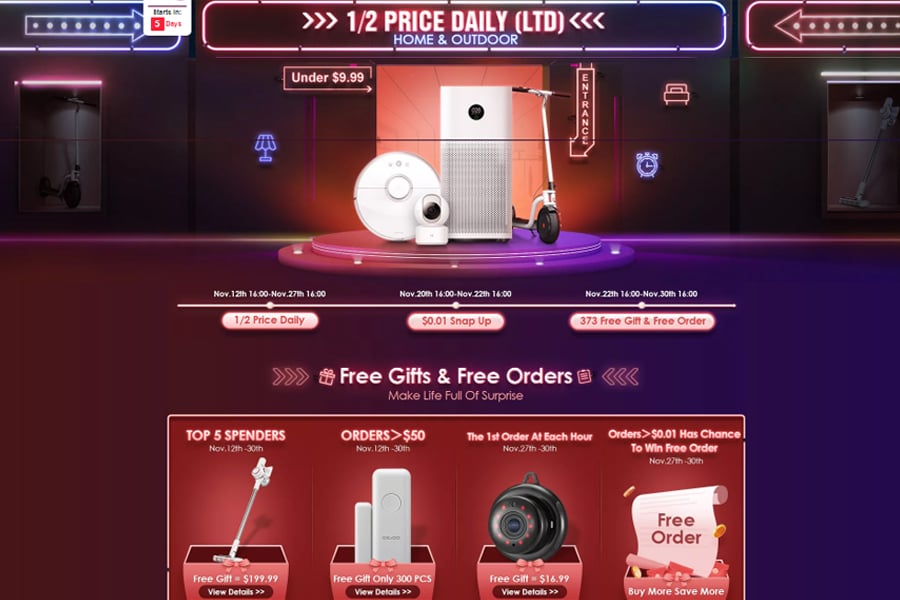
Paving the way for the Black Friday Sale 2019, Banggood has launched a new promotion called the Home Appliances & Outdoor Sale. As the name suggests, the promo features products that come in handy in day to day life, as well as gadgets that are designed for adventure junkies and sports lovers at lowered prices.
The promotion sale is divided into three phases including:
1/2 Price Daily (from November 12th to November 27th)
$0.01 Snap Up (from November 20th to November 22nd)
373 Free Gift & Free Order (from November 22nd to November 30th)
The first category on the promotion page is called Free Gifts & Free Orders. Starting November 12th, Banggood users will stand a chance of getting free gifts with their orders.
From November 27th to November 30th, orders over $0.01 can win free orders. Winners will receive their free gifts within seven working days after November 30th. The top 5 spenders will be eligible for free gifts worth $199.99.
To qualify, you must place one of the top 5 single payment orders (which can’t be paid in installments). It is worth mentioning here that once the gift has been issued, you cannot cancel the order.
The 1/2 Price Daily category will feature a product carrying half price during the activity period. The Top Sellers category, on the other hand, comprises products that have received 99% positive feedback. More importantly, you can get these items for considerably lowered prices.
A must check-out for coupon chasers, the Coupon Deals section is teeming with high-end products that have been assigned specific coupon codes for you to use at the time of checking out. These coupons help you save more money before you place your order.
For example, the Xiaomi Mijia LCD Writing Tablet usually retails for $48.84, but thanks to a 35 percent off on Banggood, you can buy it for a lowered price of $31.99. Furthermore, you can get an extra $6.40 off and bring the already lowered retail price further down to $25.59 by applying coupon code BGBMV20V.
The next category called New Products features heavily discounted items. The Home & Garden Must category includes items that have been split into Hot Picks, Kitchen, Dining & Bar, and various other sub-categories to make the search process easier.
Likewise, the products available under the Home Appliances Must, Outdoor Must, as well as the Lights & Lighting Must categories have also been divided into specific categories so that users do not end up spending a lot of time finding the product they want to purchase. Note that each sub-category includes products carrying noteworthy discounts.
Brand conscious buyers can head straight to the Top Brand section, which is graced with products from leading manufacturers. You can avail of up to 63 percent off on products from Digoo, 54 percent off on products from BlitzWolf, use a 20% OFF Brand Coupon for a discount on XMUND branded products and 20% OFF Brand Coupon on products from Xiaomi.
We have reached the concluding section on the activity page called More To Love. To ensure you can check out products that fit inside your budget, this section has been into under $9.99, $9.99-$49.99, $49.99-$99.99 and From $99.99 sub-categories.
You can visit a specific sub-category based on the amount you are willing to shell out on a product and save a lot of time you’d otherwise waste looking for those items that carry steep price tags. To check out more details and to start placing your orders, simply visit the promotion page by following this link.
AliExpress is offering online shoppers who have been waiting with bated breath for the Black Friday Sale something to cheer about.
The Alibaba Group-owned Chinese online retail service is gearing up to launch a new promotion sale dubbed Fast Shipping. The amazing promo on AliExpress features a wide range of heavily discounted products that will be shipped directly from the United States.
The aforesaid sale starts on November 29th at 12:00 AM (PT) and includes items across multiple categories. Moreover, during this activity period, you can take advantage of a $2 OFF Coupon and save more money during the checkout process.
As mentioned earlier, the promotion page is graced by numerous products and finding exactly what you are looking for among them could prove to be a backbreaking task. To simplify and expedite the search process, AliExpress has carefully added all items under specific categories.
For the sake of an instance, the best selling items on AliExpress have been added to the first section called The Bestsellers. This section is graced by miscellaneous products that come in handy in day to day life and lots more.
More importantly, all products available under the aforesaid section carry noteworthy discounts. For example, there is a 63 percent off on the HUION H430P Digital Tablets, which normally sells for $66.66. Thanks to the discount, you can get it for only $24.66.
If that doesn’t impress you much, it might interest you to know that the Black Friday price of the device is only $22. So make sure you check the Black Friday Sale on AliExpress at 12:00 AM (PT) on November 29th.
The following category is called Up to 90% off and as the name suggests, you can avail of up to a whopping 90 percent discount on all items available under this section. Tech buffs and gadget lovers can head straight to the next category called Tech.
The Tech section has been crammed with amazing high-tech devices that usually cost a bomb but are available for lowered prices during the activity period. For example, the Bluedio T7 Bluetooth Headphones are currently available for a reduced price of only $36.45, while its original selling price is $80.99.
As part of the Black Friday, AliExpress is dropping the price further down to only $36.90. On top of that, the product will ship in just 24 hours from the time you place your order.
There’s a $3 New User Coupon for those placing their first order with AliExpress. Others, who spend $150 can use the $8 OFF Coupon.
Keeping your home clean, safe and tidy all the time is a task you cannot manage by yourself and that’s exactly where smart home appliances come into the picture. Regrettably, they don’t come cheap.
To make top-end home appliances available to cost-conscious buyers at affordable prices, AliExpress has included the Home Essentials category on the promotion page. You can get your hands on several useful products without emptying your pocket.
Likewise, the Outdoor Fun is must check-out section for adventure junkies and sports lovers. The Beauty section, on the other hand, is for everyone who wants to always look their best without spending tens of thousands of dollars on gadgets and products like laser hair removal, face cleaner, etc.
The concluding category is called More To Love and it has products that have been split into five different categories including Fashion, Tech, Home Essentials, Automobiles, and Sports. Each sub-category feature an impressive range of products that you can buy at unbeatable prices.
You can visit this page to check out the rest of the products that have gone up for sale carrying lowered prices on AliExpress by following this link. It is worth mentioning here that the promo is slated to end on December 3rd at 11:59 PM (PT).
If you have still not started preparing for the Black Friday Sale, you could end up missing some of the best deals online. GeekBuying is paving the way for the impending shopping event by starting amazing promotion sales.
The latest GeekBuying promo is dubbed as Black Friday Sale $60 OF on Deal Prices. As part of the activity, the Chinese e-tailer will be doling out great discounts on a wide selection of products across several categories including Phone, Laptop & Computer, Smart Home & Personal Care, Consumer Electronics, and Outdoor, RC Drones & Toys.
Among the rest of the products that have carefully been placed under specific categories, GeekBuying is offering the FIIDO D1, and the FIIDO D2 electric bikes at lowered prices. Today, we will check out the noteworthy discounts you can avail of on the aforesaid e-bikes and see how we can save a considerable amount of more money before placing the order.
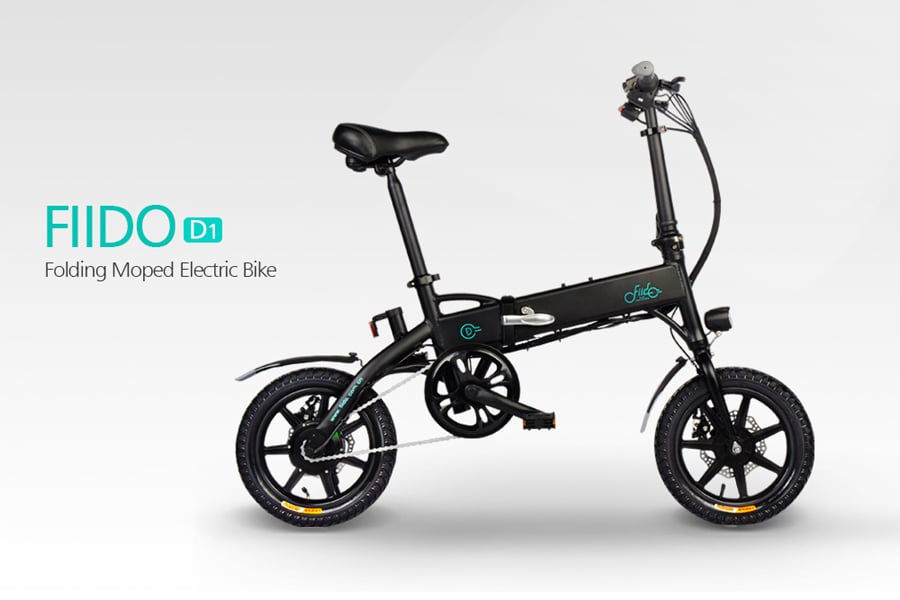
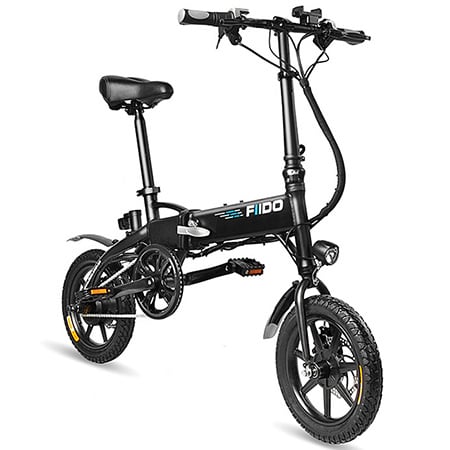
FIIDO D1 Folding Electric Moped Bike
The D1 is a highly portable e-bike from FIIDO. It has a 52-tooth large chain along with a 12-tooth flywheel that makes sure you have a comfortable ride on different types of roads. It is housed in a simplistic body, which is complemented with a beautiful line that houses a USB phone holder.
The e-bike offers three riding modes including pure riding, riding, and electric assist. The D1 features a 14-inch inflatable, wear-resistant rubber tire with anti-slip texture. The front, as well as the rear tire, have double disc brakes to ensure a safer riding experience.
Despite being lightweight, The FIIDO D1 can easily take a max load of 120kg, but since it is made using high-strength aluminum alloy, which is extremely light, you can carry it everywhere you go. The D1 justifies the steep $799.99 carries, but GeekBuying is making the feature-laden electric moped available to you for only $ 459.99.
Furthermore, this 43 percent discount can be extended with the help of coupon code GKB249S. The coupon enables you to save $10 more by reducing the original asking price of the FIIDO D1 further down to just $449.99 even before you place your order.
You can follow this link to place your order and take advantage of the coupon before it expires.
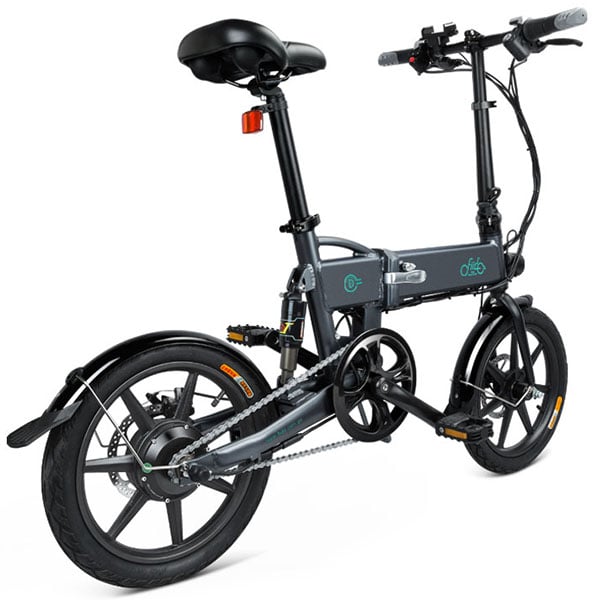
GeekBuying is offering the FIIDO D2 Folding Electric Moped Bike for a considerably reduced price of just 459.99, while it would normally set you back $799.99 on both online, as well as offline stores. Aside from offering this 43 percent discount, GeekBuying has assigned coupon code GKB250S to the FIIDO D2 electric moped bike.
By applying the above-mentioned coupon, GeekBuying users can grab an extra $5 off. In other words, you can bring the already reduced retail price of the D2 electric moped further down to only $454.99 during the checkout process.
An absolute steal at this price, the FIIDO D2 uses a 52-tooth large chain and a 12-tooth flywheel to make sure the rider does not experience any sort of discomfort while riding on different types of roads. The electronic bike adopts a built-in large-capacity battery design, keeping the outward appearance simple with beautiful lines where the USB phone holder has been placed.
Just like the D1, the D2 offers three different riding modes including pure electric, riding, and electric assist. It has a 16-inch inflatable rubber tire, both equipped with double disc brakes. The inflatable tire is shockproof, water-resistant and has an anti-slip texture for more stable riding experience.
It is powered by a 250W motor and can withstand up to 120 kgs of a load. To know more about the FIIDO D2 Folding Electric Moped Bike and to get the discount, all you need to do is to follow this link without wasting time.
If this is your first order with GeekBuying, don’t forget to take advantage of the 2% OFF New User Coupon before you place your order.
The Xiaomi Mi CC9 Pro that has a 108-megapixel penta-lens camera setup was recently made outside of China as Xiaomi Mi Note 10. According to a new report on 91mobiles, the Chinese manufacturer is planning to launch the Mi Note 10 in India. The Xiaomi Mi 5 flagship phone that was unveiled in India in 2016 had received lukewarm reception. Since then it hasn’t launched a high-end or flagship Mi series phone in India. Beginning from 2017, the Chinese firm has been launching Android One based Mi series phones in India each year. The Mi Note 10 is expected to rival with the likes of Realme X2 Pro and OnePlus 7 in its price segment.
The source that revealed the arrival of Mi Note 10 to India has claimed that the top executives of the Chinese firm is think about the right time to bring it to the country. The Mi Note 10 was previously planned to break cover in India alongside the Xiaomi Mi MIX Alpha concept phone in December. The plan has been reportedly dropped.
It remains to be seen when Xiaomi will bring the Mi Note 10 in India. As far as the Mi MIX Alpha is concerned, it is expected to arrive in limited quantities. The Mi Note 10 is a flagship-grade phone and the only thing that people may not like about it is that it does not feature a flagship chipset, but the Snapdragon 730G SoC. Since Xiaomi is leading the Indian smartphone market, it is likely that the Mi Note 10 will be met with positive reception in the country.
The Xiaomi Mi Note 10 has a waterdrop notch enabled 6.47-inch AMOLED display that offers full HD+ resolution. The front and rear sides of the phone is flanked with Gorilla Glass 5 panels. The Snapdragon 730G SoC is coupled with 6 GB of RAM and 128 GB of UFS 2.1 storage.
The MIUI 11 based Android 9 Pie OS runs on the Mi Note 10. It has a front-facing camera of 32-megapixel. The rear shell of the phone features a penta-lens camera system that is accompanied by a pair of dual LED flash units. The camera system has an OIS assisted 108-megapixel primary lens, a 12-megapixel portrait lens, a 20-megapixel ultrawide lens with 117-degree field-of-view, an OIS enabled periscope 5-megapixel lens with 5x optical zoom and a 2-megapixel macro unit.
The Mi Note 10 has a hefty 5,260mAh battery. The phone supports 30W fast charging that can fully charge the device in 65 minutes. The phone also features an in-screen fingerprint reader. It is available in Europe with a price tag of 549 euros (~$605).
Gearbest is touted as one of the most trusted Chinese online stores when it comes to buying high-end electronic items at unbeatable prices. The popular e-tailer leaves no stone unturned in a bid to make sure its loyal users can avail of the best deals and biggest discounts online.
Today, we would be checking out the discounts Gearbest is currently doling out on top-notch smart wearables. So without wasting more time, let’s dive straight into the details.
AMAZFIT A1608 Bip Smart Watch
A Xiaomi Ecosystem product, the AMAZFIT A1608 Bip comes in multiple color options such as Black, Bright Orange, and Deep Green. The smartwatch would normally set you back $84.24, but if you purchase it from Gearbest, you’d need to pay just $58.99 for it.
As part of the promo, Gearbest is also offering $5 off on orders over $50. The AMAZFIT A1608 Bip carries a tagline that says ‘Born for Sports Enthusiasts, Bring a Healthier Lifestyle,’ indicating that the device is a great choice for those who fancy monitoring their activities and staying fit.
With over 800 pieces sold at the time of writing, this promotion sale will be valid for five more days. You can visit this link to avail of the discount and place your order before the aforesaid promo comes to an end.
This AMAZFIT branded smartwatch is crafted exclusively for those looking to get fit. With its built-in GPS, the AMAZFIT Pace delivers correct details about the pace and distance for your runs. The fitness device is IP67 waterproof certified, which means you can wear it even while swimming.
You’d normally expect a feature-rich smartwatch that boasts these kinds of amazing features to cost a bomb, the AMAZFIT Pace can now be yours for only $79.99 via Gearbest. Note that without this 47 percent discount, the smartwatch retails for $150.76.
You can get the aforesaid discount on the Black, as well as the Bright Orange color options of the watch for five days while the promotion is still going on. To place your order, simply follow this link.
Gearbest is doling out a noteworthy 33 percent discount on the global version of the AMAZFIT Stratos / Pace 2 smartwatch, which usually retails for $222.59. Thanks to the aforesaid discount, you can now get this highly useful smartwatch for an unbeatable price of just $149.99.
On top of that, Gearbest is giving those who spend more than $100, a chance to avail of an extra $17 off on their orders. This black-tinted smartwatch can be described as a perfect personal health tracker as it features a sleep monitor, as well as a heart rate monitor.
Furthermore, it is backed by a robust battery that delivers a standby time of five days. The AMAZFIT Stratos / Pace 2 ships with 512MB of RAM and offers a hearty 4GB of internal storage space for saving your pictures, videos and other multimedia files.
You can check out more details about the smartwatch and avail the discount by following this link. The promo will be valid for five days.
A great choice for sports, as well as business use, the GTR 42mm smartwatch adopts the classic look of the traditional watch. One of the main highlights of the smartwatch is the ultra-long battery life, which is about 12 days in normal use.
Sporting a classy and sleek design, the AMAZFIT GTR 42mm has gone up or sale carrying a lowered price of just $133.99 on Gearbest. This is a 25 percent drop in the smartwatch’s original selling price of $179.11.
Gearbest had already sold out more than 800 pieces at the time of writing. To make sure you get yours before the promo ends, follow this link now.
The Q9 is an intelligent helper designed specifically for fitness freaks. Made using high-quality ABS and PC materials, the Q9 is backed by a 180mAh battery that delivers 15 days of standby time.
Furthermore, the Q9 is 30 cm water-proof underwater, which means it can efficiently withstand accidental splashes of water at the poolside or when washing hands. Moreover, it features various useful health trackers such as blood pressure tracker, drinking reminder, health rate monitor, sleep monitor, etc.
Compatible with both Android, as well as iOS operating systems, the Q9 Waterproof Sports Smart Watch is currently available on Gearbest for $25.31. You can visit this link to place your order.
Blackview has scheduled the global open sale event for the A80 Pro in a week from now but the phone has already attracted a lot of attention since its debut earlier this month. Since the phone isn’t yet on the market, many users are eager to see how the phone looks in real-life, as they’ve only seen it in photos. So, today, Blackview uploaded a video on their YouTube channel to show the world the real thing.
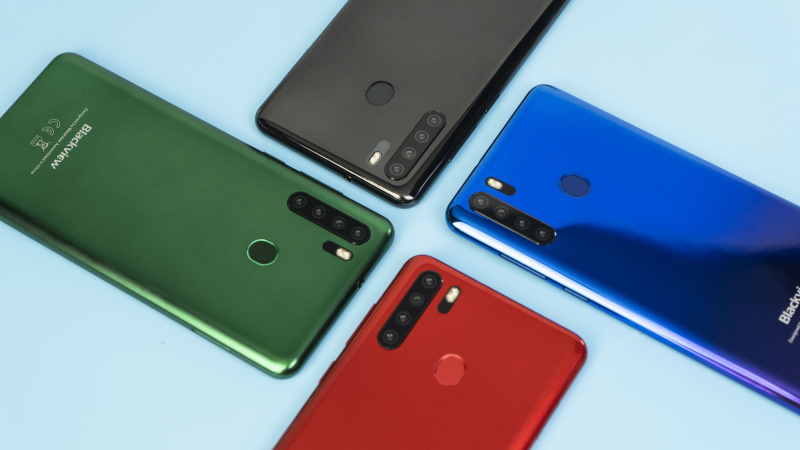
Its appearance isn’t far from what most smartphones look like nowadays so Blackview decided to offer the A80 Pro in four striking colors. The company names them Gradient Blue, Coral Red, Jade Green, and Midnight Black and all come with a refined plating finish that prevents the phone from looking dull. On the contrary, it enhances the contrast of light and shadow on the 2.5D back panel, which is especially obvious under lights.
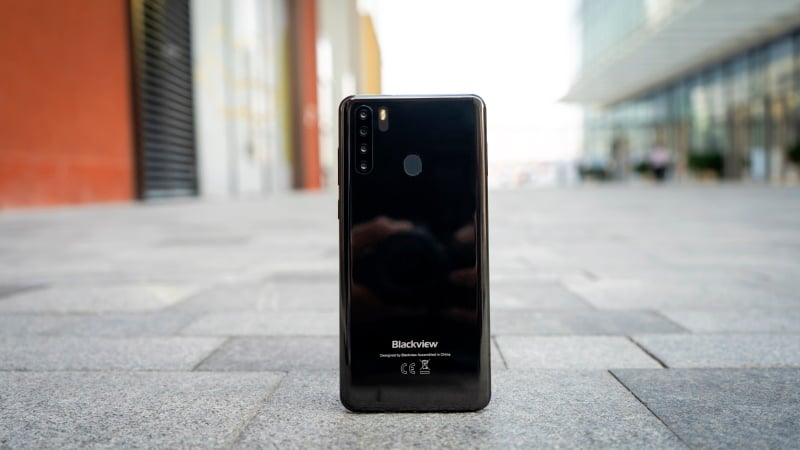
As you can see in the video, the Blackview A80 Pro is sleek and has a minimal, elegant design thanks to its curved, ergonomic shape. The rounded edges join the 2.5D curved screen and back panel, extending the smoothness from back to front.
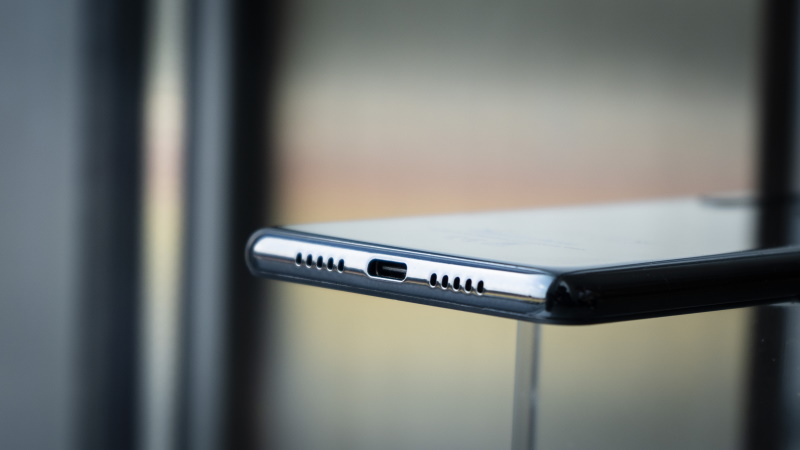
As for its size, Blackview says it’s 162.75 x 77 x 8.8mm and the 6.49″ display achieves a 90.3% screen/body ratio. The 8.8mm thickness is somewhat impressive if you take into account that there is a big, 4680mAh battery under the hood. The battery is charged through a Type-C port located at the bottom and the device also sports a 3.5mm audio jack and LED notification light. So, all the essential features are there.
At the top left corner on the back lies the quad vertically aligned camera that comes with a Sony® IMX258 13MPmain sensor and LED flash. The fingerprint scanner is also there while the selfie shooter is placed inside the front waterdrop notch featuring an AI-driven Sony® IMX239 8MP sensor.
Overall, it looks like a much more expensive phone than it really is as, during the open sale that will start on November 29th, the price will be just $79.99. If you are interested, bear in mind that the sale will take place exclusively on Aliexpress. You can add it to your cart beforehand so that you get notified when the global open sales begin. You can also join the giveaway to be among the 10 trial users to get the A80 Pro for free.
HMD Global has announced via the Nokia Mobile Twitter account that it will hold an event on December 5. The event will be for the launch of a new member of the Nokia family.
While the tweet didn’t reveal any details about the upcoming phone, there are quite a number of devices we expect will be unveiled on that day. Below are some of the phones expected to launch:
Nokia 8.2
The Nokia 8.2 is the most likely phone to launch on December 5. HMD Global launched the Nokia 8.1 on December 5 last year, so it makes sense that it is its successor launching exactly a year later. The manufacturer is also yet to announce an upper mid-range phone this year, so this is its chance to do so.
There are reports the phone will come with Qualcomm’s Snapdragon 735 processor which should be announced at the Qualcomm Tech Summit scheduled a few days before the Nokia event. It has also been reported that it will come in different configurations with up to 8GB of RAM and 256GB of storage. Other rumored features are a 64MP quad-camera setup, a pop-up selfie camera, and a not so affordable price tag.
December 5 is sure a good day to announce the Nokia 5.2 even though it is coming four months late. However, seeing as HMD Global launched only the Nokia 8.1 at last year’s event, it may do the same this year and announce just the Nokia 8.2.
3. Nokia 2.3
Details about the Nokia 2.3 leaked early this month. The leak not only confirmed the phone’s name but also the three color variants it will be available in. The phone is reported to be a slight upgrade over the Nokia 2.2 that was announced back in June.
These are the three devices likely to be announced on that day but there is a high chance we may get just one device and that should be the Nokia 8.2.
Vivo will be launching the Vivo X30 series 5G phones in December. The company has already confirmed that it will be powered by the Exynos 980 5G chipset. A new V1938T Vivo phone that has a model number has been approved by 3C authority of China. The fast charger that has been spotted in its certification reveals it could be the next high-end phone from the company. Probably, the V1938T could be the forthcoming Vivo X30 phone. New information surrounding the X30 reveals that it could be coming with 60x zoom capabilities.
Vivo V1938T Could be Vivo X30 or X30 Pro
The Vivo V1938t 3C certification suggests that it could be shipped with a charger that has a model number of V3330LOAO-CN. It is the very same charger that ships with the newly introduced iQOO Neo SD855 gaming phone.
The 3C certification also revealed that the Vivo V1938T is a 5G phone. Since the Vivo X30 series is the next 5G phone from the company, there is a possibility that the Vivo V1938T could be the model number of the X30 or X30 Pro phone. Vivo has recently confirmed that it the Vivo X30 will be the first phone from the company to support dual-mode 5G. Nothing else is known on the specifications of the Vivo V1938T smartphone. Now that the phone has appeared on 3C, it is likely to get spotted on TENAA with its full specifications.
The Vivo X30 was recently spotted during the telecast of the “追我吧” reality show that includes popular Chinese artists on the Zhejiang Satellite TV. While the design of the phone was not clearly revealed, it appears that it could be featuring a full screen display with a notch or punch-hole. Also, the rear cameras of the phone to deliver 60x zoom.
Vivo X30, X30 Pro Specs and Pricing (Rumored)
The Vivo X30 could be coming with a 6.5-inch AMOLED whereas the X30 Pro could be featuring a 6.89-inch AMOLED display. Both phones are expected to deliver 90Hz refresh rate. The Exynos 980 5G SoC will be fueling both phones. The X30 may come with 8 GB of RAM and 128 GB / 256 GB UFS 2.1 storage. The X30 Pro could be coming with 12 GB of RAM and 256 GB of UFS 3.0 storage.
The Vivo X30 may feature 64-megapixel + 8-megapixel + 13-megapixel + 2-megapixel quad camera system and a front-facing camera of 32-megapixel. It could be housing a 4,500mAh battery. The X30 Pro could be coming with 60-megapixel + 13-megapixel + 13-megapixel + 12-megapixel quad camera setup and a frontal shooter of 32-megapixel. It could be housing a 4,500mAh battery along with 44W fast charging support. The Vivo X30 may have a starting price of 3,198 Yuan whereas the X30 Pro may begin at 3,998 Yuan. As always, readers are advised to digest Vivo X30 and X30 Pro specs and pricing rumors with a pinch of salt.
Today Vivo surprised everyone by launching the value for money smartphone U20 in India. It is a very interesting take on Realme’s and Redmi’s affordable devices since it offers amazing specifications at an incredibly affordable price. It comes right after the launch of the Realme 5s in the nation and a lot of people are already considering its specs sheet even better. Another device that is fighting to become the best-seller under €200 in India and all around the world is the Redmi Note 8. Which is currently the device with the highest value for money? This specs comparison will shed some light on such a hard question to answer.
Quad 48 + 8 + 2 + 2 MP f/1.8, f/2.2, f/2.4 and f/2.4
13 MP f/2.0 front camera
Quad 48 + 8 + 2 + 2 MP f/1.8, f/2.2 and f/2.4
13 MP f/2.0 front camera
Triple 16 + 8 + 2 MP f/1.8, f/2.2 and f/2.4
16 MP f/2.0 front camera
BATTERY
5000 mAh, fast charging 10W
4000 mAh, fast charging 18W
5000 mAh, fast charging 18W
ADDITIONAL FEATURES
Dual SIM slot
Hybrid Dual SIM slot
Dual SIM slot
Design
The Redmi Note 8 clearly wins the design competition. First of all, it is the only which sports a glass back making the whole phone more elegant and refined (and protected by Gorilla Glass 5). Further, it is the most compact, the thinnest and the lightest phone of this trio. But despite the superiority of the Redmi Note 8, there is still to award the Vivo U20 which maintains a very thin and light body, even though it is equipped with a much bigger battery and a much wider display. Even the Realme 5s has a unique advantage: unlike its two rivals, it is splash resistant.
Display
Realme 5s loses the display comparison because it is equipped with a panel sporting a lower resolution. It is just HD+ and that is not the best for a wide 6.5-inch display as it does not provide a high definition level. On the other hand, the display is definitely one of the strong points of the Vivo U20, since it has a wide display diagonal (6.53 inches) and a high Full HD+ resolution. It even comes with the Widevine L1 certification which allows streaming content in high definition from the most known platform (such as Netflix and Amazon Prime Video).
Specs & Software
While Redmi Note 8 and Realme 5s are fueled by the Snapdragon 665 chipset, Vivo decided to take a step forward by equipping the Vivo U20 with a more powerful Snapdragon 675, so you will most likely get higher speeds thanks to its higher CPU performance. Further, consider that Vivo U20 comes with 6 GB of RAM and a fast UFS 2.1 internal storage making its performance even higher than expected. Unfortunately, it does not have a 128 GB configuration, unlike the Redmi Note 8, but it sports a micro SD slot to expand the native storage. Android 9 Pie is installed out of the box on each phone but customized by different UIs (Funtouch OS, MIUI, and Color OS).
Camera
The cameras are the real weak point of the Vivo U20: indeed, while it sports a better display and hardware department, if you care about photo quality then you’d better go for the Redmi Note 8 or the Realme 5s. Both have a 48 MP quad camera, but currently, the MIUI seems to have a slightly better algorithm for imaging, at least from what I’ve seen by testing Realme and Redmi devices.
Battery
Realme 5s and Vivo U20 are the battery champions here: they come with a huge 5000 mAh battery, while Redmi Note 8 offers just a 4000 mAh unit. Between Realme 5s and Vivo U20, the former should last more since it has to manage a display with a lower resolution.
Price
Vivo U20 just debuted with a €151/$166 price tag (Rs. 11,990), while Redmi Note 8 starts from Rs. 9,999 (€126/$139) just like the Realme 5s. Due to its better display, huge battery and higher performance, Vivo U20 is the most interesting handset overall, but only if you do not care a lot about photo quality (in that case Redmi Note 8 is a better option, or Realme 5s if you need a bigger battery instead of an FHD+ display).
Apart from launching the S-series flagship phones at the beginning of the year 2020, Samsung is also expected to new A-series phones. Recent reports have leaked vital information on the upcoming Galaxy A51 and Galaxy A71 phones. A fresh report on Sammobile hints at the existence of the Galaxy A81 phone. Interestingly, the Galaxy A81 is expected to arrive with support for S Pen stylus.
The report claims that the newly spotted SM-AN815F model number suggests that it could be an offbeat device. The letter that follows ‘SM’ in the model number usually denotes to the series a phone will belong to. For instance, S-series phones have SM-Gxxxx model number, Note-lineup smartphones have SM-Nxxxx model number and A-series phones have SM-Axxxx model number. However, the SM-AN815F seems to be a unique device.
The SM-AN815F model number could be belong to the upcoming Galaxy A81. However, the presence of A and N in the model number hints that the phone could be coming with a S Pen stylus. Recent reports have revealed that the upcoming Galaxy A91 that has a model number of SM-A915F and Galaxy S10 Lite with SM-G770F could be same device even though they belong to different series. Hence, there is a possibility that the Galaxy A81 could be a rebranded version of the Galaxy Note 10 Lite for some markets.
Apart from Note series, no other Samsung phones have featured the S Pen stylus. If the Galaxy A81 really arrives with S Pen, it will be a good attempt from Samsung on bringing stylus support on a cheaper as Note lineup flagship phones have always carried hefty price tags.
Nothing much is known about the Galaxy A81 expect for the rumor that it will be equipped with 128 GB of native storage. Hopefully, more details on the Galaxy A81 phone in the coming weeks.
The swivel camera system of the predecessor Galaxy A80 phone was most striking feature. It remains to be seen whether the Galaxy A81 will retain it. Leaked information that appeared few months ago had revealed it will be equipped with quad rear cameras featuring a 64-megapixel main lens, a 16-megapixel ultrawide lens, a 12-megapixel sensor with 2x or 5x optical zoom and a 3D ToF sensor. The Galaxy A80 was made official in April this year. Hence, there is a possibility that the Galaxy A81 could be made official around the same time next year.
Do you think Samsung should launch a cheaper phone with S Pen support? Share us your thoughts by posting your comments below.
Samsung is heavily pegged to unleash the Galaxy S11 series in February 2020. Rumors have it that the lineup comprises of Galaxy S11e, Galaxy S11 and Galaxy S11+ phones. Couple of new reports have revealed some important information on the launch date of the S11 series along with its display and camera details.
According to Matrix Life German publication, Samsung will be holding a launch event on Feb. 11 to announce the Galaxy S11 lineup. The S-series phones will hit the markets few weeks later in March. The report claims that that S-lineup will indeed include Galaxy S11e, Galaxy S11 and Galaxy S11+ phones.
Samsung Galaxy S11 series early renders by Benjanim Geskin
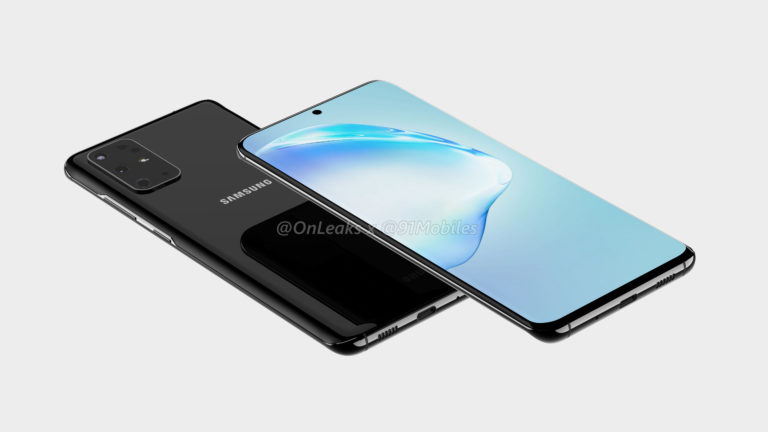
The Galaxy S11 and S11+ will be featuring 120Hz refresh rate screens to raise the competition bar higher. As it has been revealed by the renders by @OnLeaks, the S11+ may feature a 6.9-inch AMOLED display with a punch-hole at the top-center position. Owners of the S11 and S11+ will have the power to lack the refresh rate at 120GHz or let it adjust automatically. Reputed tipster Evan Blass had recently revealed that the three phones of S11 series will have 6.4-inch (or 6.2-inch), 6.7-inch and 6.9-inch screen sizes.
The publication has further revealed that the S11 series will be available in Snapdragon and Exynos CPU variants for different markets. Europe will get the Exynos 990 5G chipset powered S11 series. The S11 will be arriving in SIM and eSIM editions whereas the S11+ will carry support for 5G connectivity. The S11 series could be coming with 25W fast charging technology.
Samsung Galaxy S11 renders by @OnLeaks
The Galaxy S11 and Galaxy S11+ are both expected arrive with quadruple rear cameras. This information contradicts the renders that seem to show five cameras on the backside of S11. Matrix Life has stated that the setup will include a 108-megapixel primary lens, a telephoto lens of 48-megapixel with 10x loseless zoom and 100x hybrid zoom support. A recent patent filing by Samsung suggest that S11 series may offer OIS enabled 5x optical zoom feature.
The S11 and S11+ will also support 8K video recording at 30fps. These phones will also users with multi-camera preview feature that allow them to give a preview of the captured video through all four camera lenses and let user choose the desired one. Based on recent reports, the multi-camera preview technology could be made available as Director’s View feature.
In related news, Samsung has trademarked camera features like Single Take and Video Spin with European Union Intellectual Property Office (EUIPO). The former may make it possible for S11 series to shoot a series of photos and video by panning around for 15 seconds. There is no word on what the Video Spin feature could be.
Honor V30 and V30 Pro 5G phones are slated to go official on Nov. 26. With few days remaining for the unveil event, the rumor mill is now actively spilling more information on the Honor V30 series phones. Today, fresh information on the specs of the V30 and V30 Pro phones have surfaced ahead of the next week’s launch.
Honor V30 and V30 Pro Specifications (Rumored)
The leak has revealed that the Honor V30 and V30 Pro are equipped with a 6.57-inch IPS LCD display. Honor has revealed the present of a dual selfie camera system that will be made available a pill-shaped cutout on the screen. Probably, both phones arrive with same display design. The leak states that the Honor V30 and V30 Pro will offer a screen-to-body ratio of 91.46 percent.
The Kirin 990 5G chipset that will bring support SA (Standalone) and NSA (Non-Standalone) dual-mode 5G connectivity will be powering the Honor V30 and Honor V30 Pro smartphones. The Honor V30 series will be the first 5G phones from the company. The Honor V30 may come in variants like 6 GB RAM + 128 GB storage and 8 GB RAM + 128 GB storage. The Pro model could be coming to China in variants like 8 GB RAM + 128 GB storage and 8 GB RAM + 256 GB storage which has been benchmarked on AnTuTu with an impressive score.
The leak further reveals that the Honor V30 and V30 Pro will both feature three rear-mounted cameras. The Honor V30 may feature a 40-megapixel Sony IMX600 main lens, an 8-megapixel telephoto lens and an OIS enabled 8-megapixel wide-angle senor. The Honor V30 Pro could be featuring the same primary lens and telephoto lens along with an OIS assisted 12-megpixel lens for videography.
The Honor V30 may come with a 4,200mAh battery and V30 Pro could be packed with a slightly smaller 4,100mAh battery. The V30 could be coming with 40W fast charging whereas the V30 Pro may arrive with 40W rapid charging, 27W fast charging and 7.5W reverse wireless charging. Both phones may feature a side-mounted fingerprint reader. The V30 series are also expected to feature liquid cooling technology. The V30 and V30 Pro could be available in colors like Icelandic Fantasy, Magic Night Star River, Charm Star Blue and Twilight Orange. The leak has information on the pricing of the Honor V30 and V30 Pro phones.
Being a high-end flagship rugged smartphone addressed to those who like to travel a lot or doing outdoor activities, besides durability and powerful performance, an excellent positioning system performance is absolutely necessary. Ulefone has equipped the Armor 7 with four navigation systems including GPS, GLONASS, Beidou and Galileo to offer accurate positioning and today they released a GPS test video on YouTube to show how good it is. Let’s see how it did.
According to the result of the GPSTest app, Armor 7 managed to “see” 42 satellites and lock into 18 of them. The accuracy level of positioning reaches 1m and according to the video, the GPS performance of Armor 7 is excellent, since it precisely tracks the road and every corner on it. Also, it quickly reroutes the path while you deviate from planned routes. Going through a tunnel, it will automatically switch to Dark Mode for better viewing and it will reconnect quickly after disconnection.
The Armor 7 comes with a 6.3″ FHD+ waterdrop screen, a triple rear camera (48MP+16MP+8MP) and 16MP selfie shooter, 8GB/128GB configuration, Qi 10W wireless charging, fingerprint and face unlock, global network bands, and NFC with Google Pay. The device is available on Banggood at a special price of $369.99. To see the rest of the Ulefone lineup, visit their official website.
We use cookies on our website to give you the most relevant experience by remembering your preferences and repeat visits. By clicking “Accept”, you consent to the use of ALL the cookies.
This website uses cookies to improve your experience while you navigate through the website. Out of these, the cookies that are categorized as necessary are stored on your browser as they are essential for the working of basic functionalities of the website. We also use third-party cookies that help us analyze and understand how you use this website. These cookies will be stored in your browser only with your consent. You also have the option to opt-out of these cookies. But opting out of some of these cookies may affect your browsing experience.
Necessary cookies are absolutely essential for the website to function properly. This category only includes cookies that ensures basic functionalities and security features of the website. These cookies do not store any personal information.
Any cookies that may not be particularly necessary for the website to function and is used specifically to collect user personal data via analytics, ads, other embedded contents are termed as non-necessary cookies. It is mandatory to procure user consent prior to running these cookies on your website.












 If that doesn’t impress you much, it might interest you to know that the Black Friday price of the device is only $22. So make sure you check the Black Friday Sale on AliExpress at 12:00 AM (PT) on November 29th.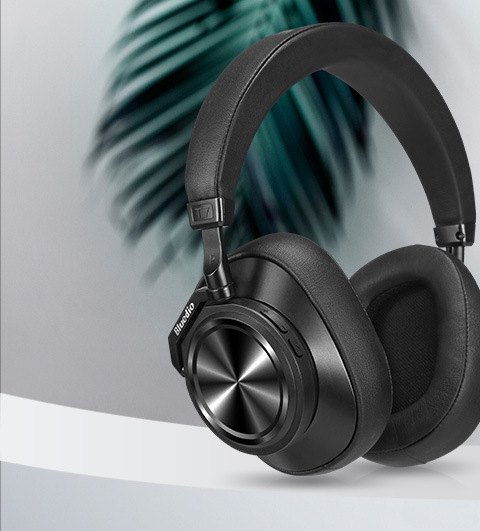


 As part of the promo, Gearbest is also offering $5 off on orders over $50. The AMAZFIT A1608 Bip carries a tagline that says ‘Born for Sports Enthusiasts, Bring a Healthier Lifestyle,’ indicating that the device is a great choice for those who fancy monitoring their activities and staying fit.