Advertisement

Vivo V15 Pro gets ₹3,000 ($43) price cut in India, now starts at ₹23,990 ($346)

Earlier this year, in February 2019, China-based Vivo launched its premium mid-range smartphone Vivo V15 Pro. Just a month after it launched, the smartphone emerged as the fastest-selling V-series smartphone for the company.

Now, the Vivo V15 Pro has received a permanent price cut in the Indian market for both the variants — 6GB RAM and 8GB RAM. The company has slashed the phone’s pricing by ₹3,000 which roughly converts to $43.

The 6GB RAM model of the Vivo V15 Pro will now be available for ₹23,990 (~$346) instead of ₹26,990 (~$390) while the 8GB RAM model costs ₹26,990 (~$390) instead of its original pricing of ₹29,990 (~$433). The new pricing is now live on e-commerce stores likes Flipkart and Amazon as well as offline stores.
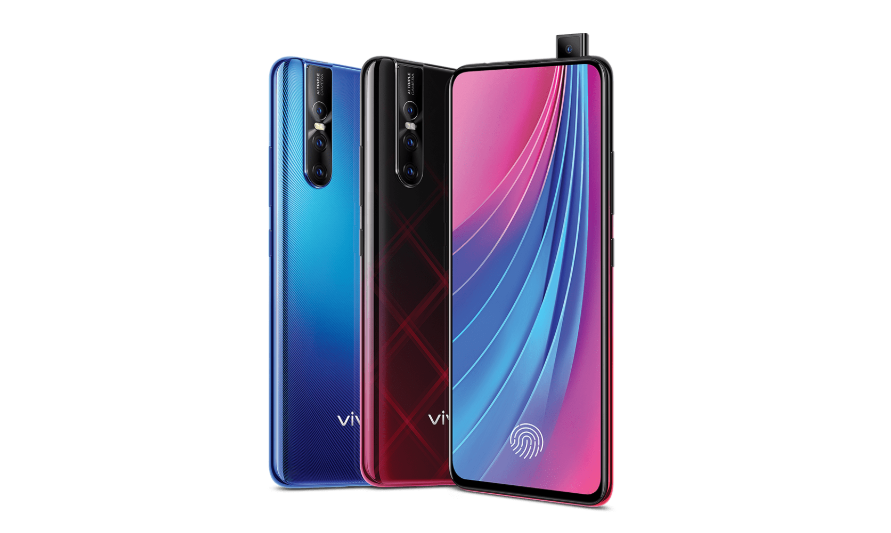
Vivo V15 Pro

The development comes at a time when rumors are indicating that the company has stopped the production of both the V15 series smartphones — Vivo V15 and V15 Pro. It is being reported that the phones will eventually be discontinued and will only be available in offline stores until stock lasts. At the moment, the phones are still available to buy on the online Vivo Shop.

The reason for the discontinuation of the V15 series smartphones is said to be because of the upcoming Vivo S-series which includes the MediaTek Helio P65-powered Vivo S1. Vivo is also launching the iQOO sub-brand in India soon which may also be one of the reasons for the discontinuation. Also, the recently launched Vivo Z1 is cheaper and better than the Vivo V15 smartphones.

The Vivo V15 Pro features a 6.39-inch Ultra FullView Super AMOLED display that produces Full HD+ resolution of 1080 x 2340 pixels along with an aspect ratio of 19.5:9. The phone also comes with an in-display fingerprint sensor for added security.

Under the hood, the device is powered by the Qualcomm Snapdragon 675 chipset and comes in two variants based on the memory configuration — 6GB RAM with 128GB internal storage and 8GB RAM with 128GB onboard storage.

Coming to the camera department, the device comes with a triple camera setup that includes a primary Samsung ISOCELL GM1 48-megapixel sensor with f/1.8 aperture, a secondary 8-megapixel sensor with f/2.4 aperture and a third 5-megapixel lens with f/2.4 aperture. On the front side, it comes with a pop-up selfie camera of 32-megapixel (Samsung ISOCELL GD1) with f/2.0 aperture.

The smartphone is running Android 9 Pie operating system out-of-the-box with FunTouch OS 5.0 on top. It also comes with Game Mode 5.0 for optimizing the gaming performance as well as Jovi AI. The device is powered by a 3,700mAh battery with dual-engine fast charging support.

Up Next: As per the report, Huawei Y9 Prime (2019) 64GB storage variant won’t get released in India

Black Shark 2 Pro goes on sale for the first time in China

Xiaomi had launched the Black Shark 2 Pro gaming smartphone in China on July 30. At the unveil event, it had confirmed that the phone will be made available for purchase starting from Aug. 2. The day has arrived, and it is now available for purchase in the home market with a starting price of 2,999 Yuan (~$434)

Black Shark 2 Pro Specifications

The Black Shark 2 Pro houses a 6.39-inch Super AMOLED display with notch-less design. The handset offers full HD+ resolution of 1080 x 2340 pixels. The display offers features like DC dimming 2.0, DCI-P3 color gamut, 240Hz touch sampling rate and 34.7ms touch response speed. It also features an in-screen fingerprint reader.

The 2.96GHz Snapdragon 855+ that is designed to offer accelerated CPU and GPU performance for gaming is present under the hood of the device. The SoC is supported by 12 GB of RAM. It comes in 128 GB and 256 GB of UFS 3.0 storage options. The handset lacks support for microSD card slot.

Black Shark 2 Pro Ice

The Black Shark OS UI based Android 9 Pie OS runs on the Black Shark 2 Pro smartphone. On the frontside of the phone is a 20-megapixel selfie snapper. The rear shell of the phone is fitted with a dual camera setup that includes a Sony IMX586 48-megapixel primary lens with f/1.8 aperture and a 12-megapixel telephoto lens with 2x optical zoom. The smartphone is packed with a 4,000mAh battery that supports 27W fast charging.

Black Shark 2 Pro Price

The 12 GB RAM + 128 GB storage and 12 GB RAM + 256 GB storage model of the Black Shark 2 Pro are respectively priced at 2,999 Yuan (~$434) and 3,499 Yuan (~$507). It is available for buying in two color options such as Electric Black and Ice Ash.

The Black Shark 2 Pro is an advanced version of the Snapdragon 855 SoC powered Black Shark 2 handset that was made official in March in China. The Black Shark 2 variants such as 8 GB RAM + 128 GB storage, 8 GB RAM + 256 GB storage and 12 GB RAM + 256 GB storage are respectively priced at 2,699 Yuan (~$391), 2,899 Yuan (~$420) and 3,299 Yuan (~$478). It can be bought in colors like Shadow Black, Ice Seal Silver and Illusion Blue.

UP NEXT: Xiaomi launches the Mi Bunny Trolley Suitcase Sally Bird Limited Edition

Redmi K20, K20 Pro game controller launched for 99 Yuan (~$14) in China

During the launch event of the Redmi K20 series in China that was held at the end of May, Redmi had confirmed that it will be also selling a gamepad for these smartphones. Today, the Chinese manufacturer has finally made an announcement on it through Weibo. The first sale for the Redmi K20 series gamepad will be carried out tomorrow in the country.

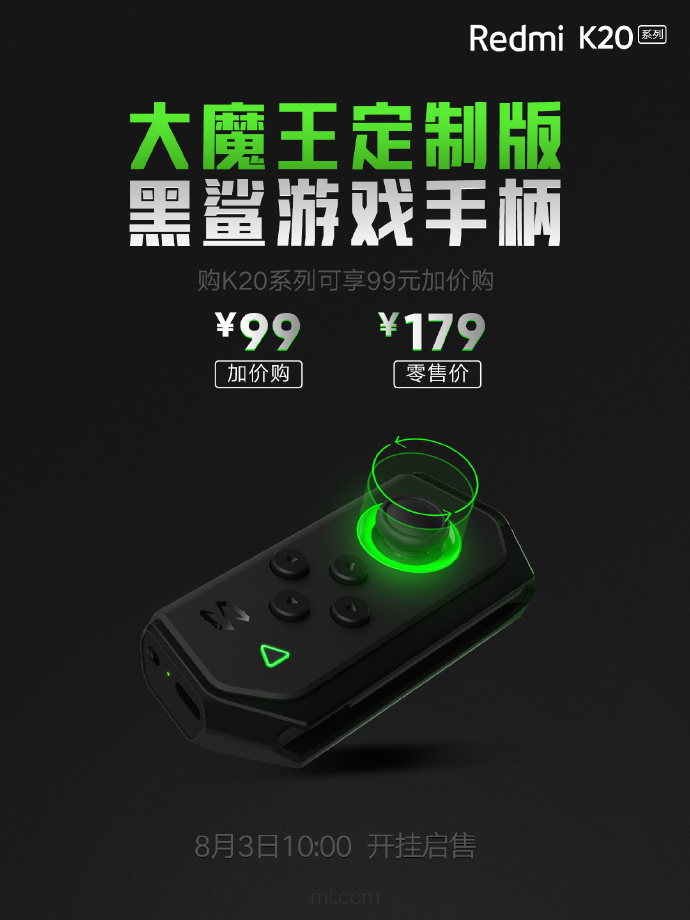
Redmi K20 series gamepad

The Redmi K20 series gamepad is the very same game controller that was announced alongside the original Black Shark phone in April 2018. It carries a usual price tag of 179 Yuan (~$26). However, Redmi K20 and K20 Pro users can avail it at a discounted price tag of 99 Yuan (~$14).

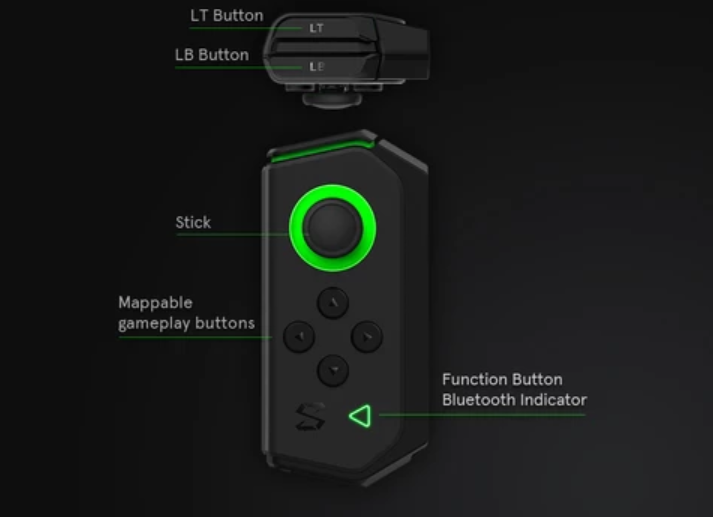
The game controller can be attached to the left side of the Redmi K20 or K20 Pro when the handset is held in landscape mode. The device comes with features like joystick, some configurable buttons, LT and LB gaming buttons, function button that also acts as a Bluetooth indicator, Bluetooth 4.2 and 340mAh battery. The Chinese manufacturer will be holding the first sale of the Redmi K20 series game controller tomorrow at 10AM.

Redmi K20 series  game controller

Redmi K20 and Redmi K20 Pro Specifications

The Redmi K20 and Redmi K20 Pro are fitted with full HD+ 6.39-inch Super AMOLED displays with notch-less design. Both smartphones feature in-display fingerprint scanners. They are equipped with 20-megapixel pop-up selfie cameras. The Redmi K20 and K20 Pro smartphones have 48-megapixel + 8-megapixel + 13-megapixel triple camera unit. The Redmi K20 has Sony IMX582 whereas Redmi K20 Pro features Sony IMX586 as primary lens in the triple camera setup.

The Redmi K20 and K20 Pro are fueled by 4,000mAh batteries. The Pro model supports 27W fast charging whereas the K20 supports 18W rapid charging. The Redmi K20 is powered by Snapdragon 730 chipset while the K20 Pro is driven by the Snapdragon 855 flagship chipset. The K20 comes with up to 8 Gb of RAM and up to 128 GB of storage. On the other side, the K20 Pro is equipped with up to 8 GB of RAM and up to 256 GB of storage. These handsets lack support for microSD card slot.

At present, the Redmi K20 and K20 Pro smartphones are available with 300 Yuan discount in China. The Redmi K20’s 6 GB RAM + 128 GB storage model is now priced at 1,999 Yuan (~$290). It was introduced with a price tag of 2,099 Yuan (~$304).

The 6 GB RAM + 128 GB storage and 8 GB RAM + 128 GB storage editions of the Redmi K20 Pro are now respectively priced at 2,299 Yuan (~$334) and 2,499 Yuan (~$363). Without the 300 Yuan (~$44) price cut, they were previously selling for 2,599 Yuan (~$377) and 2,799 Yuan (~$406).

UP NEXT: Redmi smartphones get up to 300 yuan ($44) discount in China from 1st August

Xiaomi has sold over 5 million Redmi Note 7 series in India, even as the Note 7 Pro goes on open sale

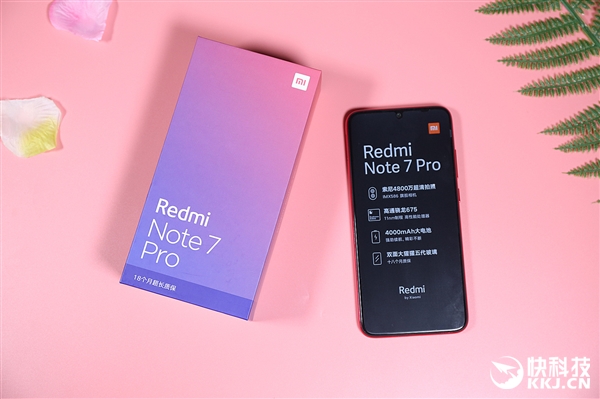
In China, Xiaomi‘s Redmi Note 7 series sales have exceeded 15 million units since it went on sale for the first time. But in India, Xiaomi is celebrating selling an impressive 5 million units of the Note 7 series.Redmi Note 7 Pro

The Redmi Note 7 series consists of the Redmi Note 7, the Note 7 Pro, and the Note 7S. Bearing in mind that the models were launched in India in February, that means the feat was achieved in 6 months. The models were the first product Xiaomi is releasing under the independent Redmi brand since it was split from the Mi brand.

Xiaomi has been selling the models through flash sales for most of this period. So, the sales margin might have been higher. The company equally announced that the Redmi Note 7 Pro is now on open sale in India. This is good news as interested buyers won’t have to wait for the weekly flash sales. The device is available on Flipkart, Mi.com, Mi Home, Mi Studio, and Mi Preferred Partner stores in the country. The Note 7 comes with a price tag of Rs 13,999 ($200) for the base variant.

UP NEXT: Vivo phone powered by Snapdragon 665 shows up on Geekbench

Xiaomi launches the Mi Bunny Trolley Suitcase Sally Bird Limited Edition

Xiaomi has unveiled a new product targeted at the kids. The Mi Bunny Trolley Suitcase Sally Limited Edition comes with an attractive colour but is actually a customised version of the Mi Bunny Trolley Suitcase first launched in September 2018. Although all Xiaomi MITU-branded children toys have attractive colours, the suitcase adopts a yellow paint job because it is themed after the anime character Sally Bird. The suitcase will go on sale on August 2 with a price tag of 399 yuan ($58).

The Mi Bunny Trolley Suitcase Sally Limited Edition is the product of a partnership between  Xiaomi and Line Corporation, a Japanese subsidiary of the South Korean internet search giant Naver Corporation. The brand is the owner of the anime character Sally, a duck featured in the anime series Line Town. The yellow paint job that the suitcase utilises on the outside is actually the colour of the Sally Bird character. The exterior of the suitcase is even designed to look like Sally. A drawing of Sally’s face is on the body while the rollers adopt the same colour as Say’s heels. Mi Bunny Trolley

The suitcase has a 17-inch size and weighs just 2.9 kg. The trolley rods are made of German Bayer PC material, using the vacuum forming process. The trolley has a four-speed adjustable lever, in-line all-aluminium thickening lever for a smooth touch.

The inside of the trolley case provides three separate spaces for the underwear area, the outer garment area, the shoe area or the washing storage area, and each partition is provided with a separate zipper. In addition, it has a separate front opening storage area and an innovative circular rotary switch with a volume of approximately 6.5L.Mi Bunny Trolley

Xiaomi added a tweak to the luggage which children will likely find attractive and that is the cartoon cute eye sticker which is pasted on the smooth surface of the box. The sticker is waterproof, flexible, can be pasted repeatedly and won’t get torn easily. Even if the sticker is torn off, there won’t be any mark left on the surface of the box.

The Mi Bunny Trolley Suitcase is available in pink, navy blue and white colours.


UP NEXT: Huawei’s growth is affecting Qualcomm’s sales

(source)

Huawei Nova 5i Pro goes on sale in China

On July 26, Huawei had launched the Nova 5i Pro smartphone in China. The handset that is powered by the new 7nm Kirin 810 chipset is an advanced version of the Huawei Nova 5i smartphone that was made official in June. Starting from today, the Nova 5i Pro is available for purchase with a starting price of 2,199 Yuan (~$318).

Huawei Nova 5i Pro Price

The Huawei Nova 5i Pro comes in three models in China such as 6 GB RAM + 128 GB storage, 8 GB RAM + 128 GB storage and 8 GB RAM + 256 GB storage. These variants are respectively priced at 2,199 Yuan (~$318), 2,499 Yuan (~$362) and 2,799 Yuan (~$405). It can be bought in three colors like Midnight Black, Aurora and Emerald Green.

Huawei Nova 5i Pro Specifications and Features

The glass-bodied Huawei Nova 5i Pro is fitted with an attractive punch-hole display of 6.26 inches that supports 1080 x 2340 pixels full HD+ resolution and an aspect ratio of 19.5:9.

Huawei Nova 5i Pro

Powering the Nova 5i Pro is the Kirin 810 chipset that is assisted by 6 GB and 8 GB of RAM. For storage, the phone offers an inbuilt capacity of up to 256 GB and a microSD card support through hybrid SIM slot. The smartphone boosts to Android 9 Pie OS which is customized with the latest EMUI 9.1 skin from Huawei.

Placed inside the punch-hole of the Nova 5i Pro is its selfie shooter of 32-megapixel that is assisted by 4-in-1 pixel binning technology for bright selfie shooting experience in dim-light conditions. The back panel of the Nova 5i Pro is fitted with a squared shaped module that houses for camera sensors such as an f/1.8 aperture 48-megapixel main lens, an 8-mgeapixel wide-angle lens, a dedicated macro lens and a 2-megapixel depth sensor.

The Huawei Nova 5i Pro features a battery of 4,000mAh capacity. The big battery supports 22.5W fast charging through USB-C. The usual features like dual 4G VoLTE, Wi-Fi 802.11ac, Bluetooth, GPS, rear-mounted fingerprint scanner and 3.5mm audio jack are also available on the Nova 5i Pro.

UP NEXT: Huawei Nova 5i Pro vs Honor 9X Pro vs Huawei P30 Lite: Specs Comparison

Huawei Y9 Prime (2019) 64 GB edition won’t release in India, claims report

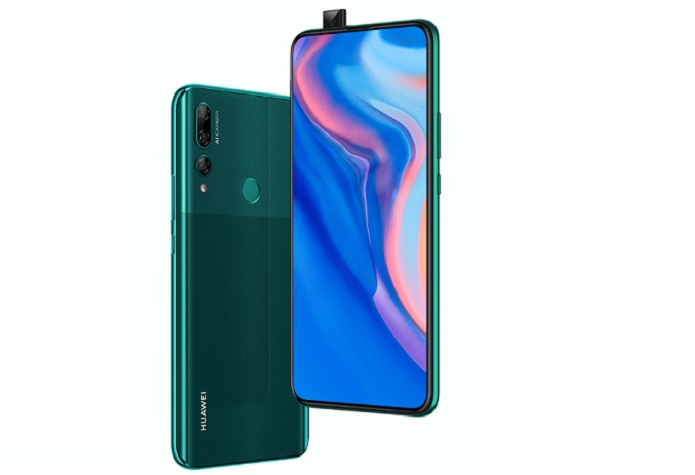
Yesterday, Huawei had introduced the Huawei Y9 Prime (2019) smartphone. Priced at Rs. 15,990 (~$231), it is currently the cheapest phone in India with notch-less design and pop-up selfie snapper. The aforementioned pricing is for the sole variant of the phone that features 4 GB of RAM and 128 GB of built-in storage. A Huawei official confirmed to 91mobiles at the launch even to the Huawei Y9 Prime (2019) that there won’t be any cheaper variant of the phone for the Indian market.

Huawei Y9 Prime (2019) Specifications

The Huawei Y9 Prime (2019) flaunts a 6.59-inch IPS LCD display that deliver full HD+ resolution of 1080 x 2340 pixels and a tall aspect ratio of 19.5:9. The smartphone offers an impressive screen-to-body ratio of 91.02 percent.

The Kirin 710 chipset is present under the hood of the device with 4 GB of RAM. Apart from the 128 GB of native storage, the phone offers its users with a microSD card slot for expanding its storage. The EMUI 9.1 based Android 9 Pie OS runs on the device.

Huawei Y9 Prime 2019

The rear side of the phone features an LED flash assisted triple camera system. It comprises of a 16-megapixel primary lens, a secondary ultrawide lens of 8-megapixel and a 2-megapixel lens for adding depth effects. The handset features a pop-up front camera of 16-megapixel that is blessed with AI and scene recognition features for capturing amazing selfie shots.

The Huawei Y9 Prime (2019) is backed by a 4,000mAh battery. A fingerprint scanner is located on the backside of the phone. The smartphone boosts a unique design on its polycarbonate rear. The upper textured portion includes the triple camera unit and fingerprint scanner and remaining polycarbonate rear has a shimmering appeal.

Huawei Y9 Prime (2019) Price and Availability

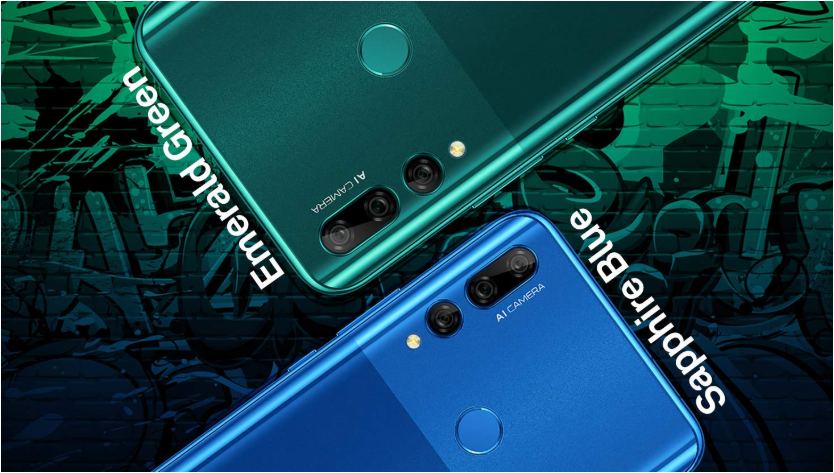
The Huawei Y9 Prime (2019) will be available for purchase through offline and online stores from Aug. 7 in India. Priced at Rs. 15,990 (~$231), it can be availed in two attractive colors like Sapphire Blue and Emerald Green. The other smartphones that sport notch-less design and elevating cameras such as Realme X, OPPO K3 and Xiaomi Redmi K20 carry costlier price tags than the Y9 Prime (2019) phone.

(source)

UP NEXT: Huawei Mate 30 Pro may have two 40MP cameras

Vivo S1 pre-orders begin in India through offline stores

Vivo India will be launching the Vivo S1 smartphone in India on Aug. 7. Ahead of the launch, the entire specifications of the smartphone and the pricing of its different variants have appeared in recent reports. A fresh report by 91mobiles states that the Vivo S1 pre-orders have started through offline stores in India.

Citing information from retail sources, the publication has claimed that the Vivo S1 pre-orders will continue till the Aug. 7 launch date. In order to pre-book the smartphone, users need to Rs. 2,000 to spend as a down payment amount. The remaining amount can be paid after the launch of the smartphone. The offline sales of the phone will begin at 6PM on the Aug. 7. At present, only the base model of the phone that features 4 GB of RAM and 64 GB of storage is available for pre-booking.

Vivo S1 Price in India (Rumored)

Retail sources have also revealed that that the Vivo S1 will be available in the country with a starting price of nearly Rs. 15,000. During the pre-booking period, the Chinese firm is offering HDFC card users a cashback up of 7.5 percent on purchases, Paytm users can take advantage of up to Rs. 2,500 cashback and Instacash app users can also avail 10 percent discount.

The promos of the phone have revealed that the Vivo S1 will be available in two color options in India. Vivo has recently launched the Vivo V7 Neo smartphone as a rebranded version of the Vivo S1 in Russia. The Vivo V7 Neo is available in two color variants such as Diamond Black and Pearl Blue. It appears that the Vivo S1 in India will be also available in same colors.

Vivo V17 Neo
Vivo V17 Neo

Vivo S1 Specifications and Features

The Vivo S1 features a 6.38-inch Super AMOLED display with waterdrop-type notch. It offers full HD+ resolution of 1080 x 2340 pixels. The MediaTek Helio P65 SoC is at the helm of the Vivo S1. It is expected to come with up to 6 GB of RAM and up to 128 GB of storage. A microSD card slot will be available on the device for additional storage.

The FunTouch OS 9 based Android 9 Pie OS will come preinstalled on the Vivo S1. It is equipped with a front-facing camera of 32-megapixel. The back panel of the phone is fitted with a triple camera unit with a 16-megapixel primary lens, an 8-megapixel ultrawide lens and a 2-megapixel sensor for adding depth effects. The Vivo S1 houses a 4,500mAh battery that through supports 18W dual-engine fast charging. Also, the smartphone will come equipped with an in-screen fingerprint sensor.

(source)

UP NEXT: Vivo V17 Neo unveiled in Russia; Specifications, features and price

Huawei’s growth is affecting Qualcomm’s sales

Huawei is growing its market share and it’s affecting Qualcomm’s sales. The Chinese giant has had it rough this year but it has managed to turn things in its favor.

qualcomm mollenkopf


Steve Mollenkopf, Qualcomm’s Chief Executive Officer, told Reuters that Huawei had stolen market share from its (Qualcomm) customers (Xiaomi, OPPO, and Vivo). The San Diego based company’s revenue and profit for the last quarter were less than predicted, resulting in its shares dropping by up to 6%.

It isn’t that Huawei’s chips best those from Qualcomm, but since more Huawei (and Honor) phones are flying off the shelves, it means fewer phones powered by Snapdragon chipsets are being sold. Which means Qualcomm is selling fewer chips to its clients.

Mr. Mollenkopf is reported to have said “Huawei was very aggressive in terms of making sure they built their market share there because they couldn’t sell things internationally. And the reaction of the (other Chinese phone makers) was, ‘Let’s go as fast as we can to 5G, because there’s a great opportunity there,’ even to the point of saying, ‘Let’s cancel 4G models.”

Things are supposed to get better for Qualcomm next year when 5G picks up. This new development transforms Huawei from a customer to a rival for Qualcomm. The Chinese manufacturer is known to use Snapdragon SoCs in some of its devices. However, following the US ban in May, Huawei has had to fall back to its own chipsets or use MediaTek’s processors. The last Snapdragon-powered Huawei phone is the Huawei Y7 2019 which was released in March.

(Source)


UP NEXT: US Ban killed Huawei & Google’s Upcoming Smart Speaker

Huawei Mate 30 Pro may have two 40MP cameras

The Huawei Mate 20 Pro launched with triple rear cameras – a 40MP primary wide-angle camera, an 8MP telephoto camera with 3x zoom, and a 20MP ultra-wide-angle camera. Its successor, the Mate 30 Pro may come with two 40MP cameras according to a new leak.

Twitter user, @RODENT950, who is known for his Huawei and Honor related leaks, revealed the possible camera configuration for the Mate 30 Pro. According to him, the phone will have a 40MP 1/1.5” RYYB sensor with a variable aperture of f1.6 – f/1.4. It will also have a feature called Cine Lens which can be enabled while recording a video. Huawei applied for a trademark for “Cine Lens” a few weeks ago.

The second camera is another 40MP camera but this time it has a 120° ultrawide angle lens and an f/1.7 aperture. It also has the Cine Lens feature too for those times you want to record videos with the ultrawide angle lens.

The third camera is an 8MP telephoto lens with 5x (optical) zoom. This is most likely the same periscope camera as that of the Huawei P30 Pro. It should have up to 50x digital zoom too. There is no mention of a fourth sensor which is most likely a ToF sensor.

The Huawei Mate 30 Pro should launch in October. When it does, it is expected to come with a new type of screen called “Waterfall Display” which has both sides curved (greater angle than we have seen on curved displays) such that there are practically no side bezels at all.

(Source)


UP NEXT: Huawei said to release two Chips later in 2019, one with Integrated 5G Modem

Vivo Z5 vs Honor 9X: Specs Comparison

After the Z5x, Vivo just announced another best-buy: its name is Vivo Z5 and it is simply one of the best value for money smartphone we have seen in 2019. If you want a well-balanced specs sheet as well as nice performances and a big battery, then this is the device for you. But it has a lot of rivals, just like every phone sold for less than €300. A potential device which could cannibalize its sales is the Honor 9X recently announced by Huawei’s sub-brand. The company was able to provide a device with a premium design and upper-midrange specifications at a lower-midrange price and that is amazing. Which one would you pick? After taking a look at the comparison, you can let us know if you agree with us by using the comment box below the article.

Vivo Z5 vs Huawei Honor 9X

Vivo Z5 Huawei Honor 9X
DIMENSIONS AND WEIGHT 159.5 x 75.2 x 8.1 mm,

187 grams

163.1 x 77.2 x 8.8 mm,

206 grams

DISPLAY 6.38 inches, 1080 x 2340p (Full HD+), 404 ppi, 19.5:9 ratio, Super AMOLED 6.59 inches, 1080 x 2340p (Full HD+), 391 ppi, 19.5:9 ratio, LTPS IPS LCD
PROCESSOR Qualcomm Snapdragon 712, octa-core 2.3 GHz Huawei Hisilicon Kirin 810, octa-core 2.27 GHz
MEMORY 6 GB RAM, 64 GB – 6 GB RAM, 128 GB – 8 GB RAM, 128 GB – 6 GB RAM, 256 GB – micro SD card slot 4 GB RAM, 64 GB – 6 GB RAM, 64 GB – 6 GB RAM, 128 GB – micro SD slot
SOFTWARE Android 9 Pie, Funtouch OS Android 9 Pie, EMUI
CONNECTIVITY Wi-Fi 802.11 a/b/g/n/ac, Bluetooth 5.0, GPS Wi-Fi 802.11 a/b/g/n/ac, Bluetooth 5.0, GPS
CAMERA Triple 48 + 8 + 5 MP f/1.8, f/2.2 and f/2.4
32 MP f/2.0 front camera
Dual 48 + 2 MP f/1.8 and f/2.4
16 MP f/2.2 front camera
BATTERY 4500 mAh
Fast charging 22.5W
4000 mAh, Fast Charging 10W
ADDITIONAL FEATURES Dual SIM slot Dual SIM slot

Design

Do not think twice: the Honor 9X is the most innovative, the most futuristic, and it is even the most beautiful according to my opinion. First of all, it has a higher screen-to-body ratio and even an elevating front camera. It boasts a wonderful glass back with a suggestive X pattern, as well as a very clean design overall. The Vivo Z5 is all but ugly: it shows up as a very elegant device, but it has a classic waterdrop notch and it does not offer anything special compared to the other mid-rangers in the same price range. That is why Honor 9X catalyzes my attention more than the Z5.


Display

Given that it is a Super AMOLED panel, the display of the Vivo Z5 shows more brilliant colors, and it even comes with an in-display fingerprint reader. That is not the same for the Honor 9X which is equipped with an LTPS IPS panel. But despite it has an LCD display instead of an AMOLED one, I would still go for the Honor 9X because it has a bigger panel which is more suitable for productivity and even harder to find in its price range. Despite the presence of an IPS display, the fingerprint reader was not placed on the backside: it is side-mounted.


Specs & Software

Finally, Huawei made a chipset which is able to beat most of Qualcomm’s mid-range processors. We are talking about the Kirin 810 which can be considered one of the most impressive midrange SoC of the last years. Just like flagship chipsets, it is built with a 7 nm production process and on the paper, it is better than the Snapdragon 712 found on the Vivo Z5. So, despite I usually choose Qualcomm’s chipsets over Kirins, this time I would definitely give a chance to Huawei, even though the Snapdragon 712 is the most powerful mid-range chipset by Qualcomm after the Snapdragon 730. Both phones have Android 9 Pie out of the box with a highly customized user interface.


Camera

When it comes to the overall camera experience, Vivo Z5 is a clear winner. It has one more camera on its back for a total of three sensors, including an ultrawide lens, while Honor 9X lacks the ultrawide sensor. Further, the Vivo Z5 has a higher resolution for the depth sensor as well as a better selfie camera. So there is no way that Honor 9X can be more versatile and interesting than Vivo Z5 as a camera phone.


Battery

Vivo Z5 dominates even when it comes to battery life. With a huge 4500 mAh unit, it will probably last more than two days on a single charge, even with a stressed use. And with its 22.5W fast charging technology, it won’t take a lot to fully charge it despite its big battery capacity. Vivo Z5 is a battery champion, but Honor 9X is still a pretty nice battery phone thanks to its very efficient processor built at 7 nm, a still big 4000 mAh battery and fast charging.


Price

Actually, you can get Vivo Z5 and Honor 9X in China only. The first carries a €209/$231 price tag in its base variant, while the second starts from just €180/$200. I do not think there is a clear winner here: if you need a bigger display and very high performances, bo for the Honor 9X. Otherwise, if you care about camera and battery life, Vivo Z5 is better than almost everything out there around €200.


Vivo Z5 vs Huawei Honor 9X: PRO and CONS

Vivo Z5

PRO

  • Huge battery
  • High performance
  • Better cameras
  • More compact
  • Faster charging

CONS

  • Less impressive design


Huawei Honor 9X

PRO

  • Bigger display
  • Great performance
  • Innovative design
  • Affordable

CONS

  • Worse cameras

Vivo phone powered by Snapdragon 665 shows up on Geekbench

The Xiaomi CC9e (Mi A3) launched as the first phone with a Snapdragon 665 processor. But it appears it won’t be the only phone powered by the chipset for long. A Vivo phone with the same chipset has made its way to Geekbench.

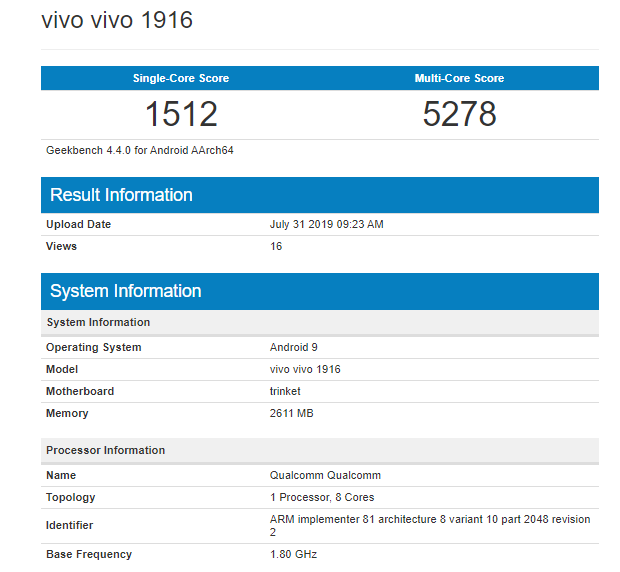
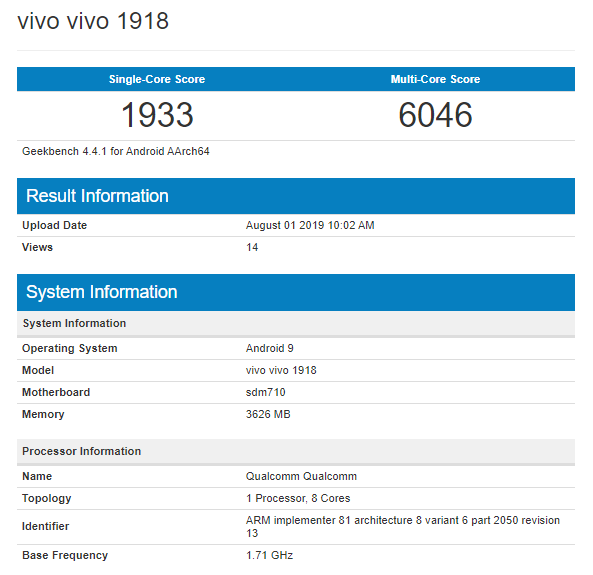
The phone was benchmarked yesterday as the “vivo vivo 1916”. It has 3GB of RAM and runs Android 9 Pie. Although the benchmark doesn’t specifically say it is the Snapdragon 665, we know it is, thanks to the Mi CC9e’s benchmark result.

Vivo V1916

The Mi CC9e’s benchmark result has the same “trinket” motherboard as the Vivo 1916. It also has the same base frequency of 1.80GHz.

The specs of the phone show that it will be a budget device. Unlike the CC9e which has 4GB/6GB of RAM, the Vivo 1916 phone has just 3GB of RAM. We also don’t expect it to have an OLED display and an in-display fingerprint scanner.

Vivo 1918

The Vivo 1916 isn’t the only new Vivo phone that was spotted on Geekbench. Another one was benchmarked as the “vivo vivo 1918”.  This is powered by the Snapdragon 710, has 4GB of RAM and runs Android 9 Pie

We have no idea what the official names of these two phones are but more details should surface soon.

(Source: 1, 2 | Via)


UP NEXT: Vivo iQOO Plus 5G to pack Snapdragon 855+ and a bigger battery

Amazfit GTR is getting custom cartoon-themed watch faces, check them out here!

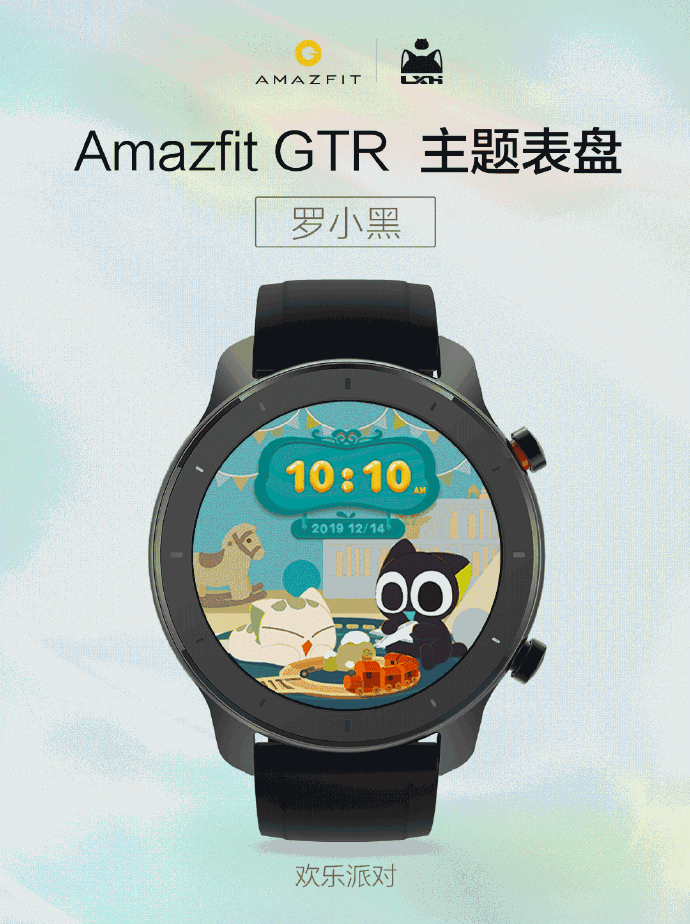
Earlier this month, a Mod on Huami‘s forum has let us in on one of the features the next update for the newly launched Amazfit GTR smartwatch would bring. The update was scheduled to hit the device by end of July and will see the Amazfit App dial store get updated with custom dials themed after popular cartoon characters.

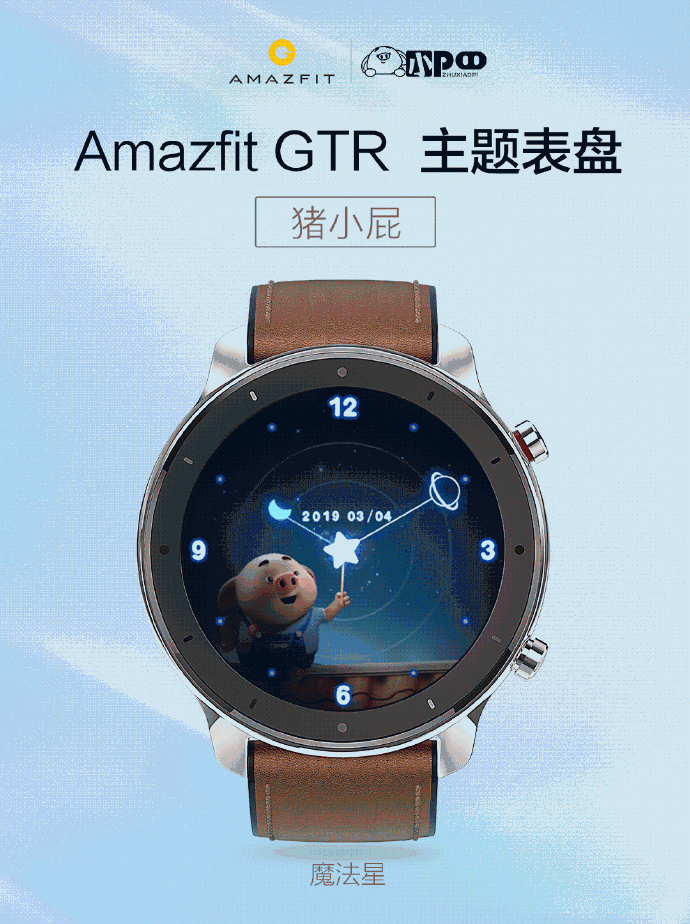
Huami has now shared renders of the four new watch faces on its official Weibo page. Te post also hints that the watch faces would be available soon. From the renders, some of the characters include Ali from the popular cartoon Ali the Fox, “Wuhuang Wanshui” cat, and yet another cartoon character Zhu Xiao Pi (Little P). These are popular cartoon characters in China, we presume. Apart from these ones, there are hundreds of cool watch face themes available to watch GTR owners already which would transform the device from just a smartwatch or timepiece to a piece of artwork in your wrist.Amazfit GTR

The Amazfit GTR is Huami’s latest smartwatch which was announced in July. The watch comes in two different sizes, 42mm and 47mm. While there are minute differences in terms of colour and dimensions, when it comes to specifications both models are identical. Both sizes of the Amazfir GTR packs an AMOLED display with 326PPI pixel density and Corning Gorilla Glass 3 protection on top of them and AF Coating. The 47mm version sports a 1.39-inch screen with a resolution of 454 x 454 pixels. On the other hand, the 42mm version features a 1.2-inch display with a resolution of 390 x 390 pixels.

UP NEXT: Samsung Galaxy Tab A3 XL key specs and images leaked

(source)

How to install TWRP Recovery and Root Xiaomi Redmi Note 7 Pro using Magisk?

Rooting an Android device has become quite easy with a single quick interface. The custom recoveries like TWRP, Philz, and others even facilitates the users with their GUI interface. The users can also root without the PC nowadays, but the compatibility of rooting using the mobile itself is limited to some popular devices. In today’s writeup, we will let you know how you can install TWRP Recovery and root Xiaomi Redmi Note 7 Pro using Magisk.

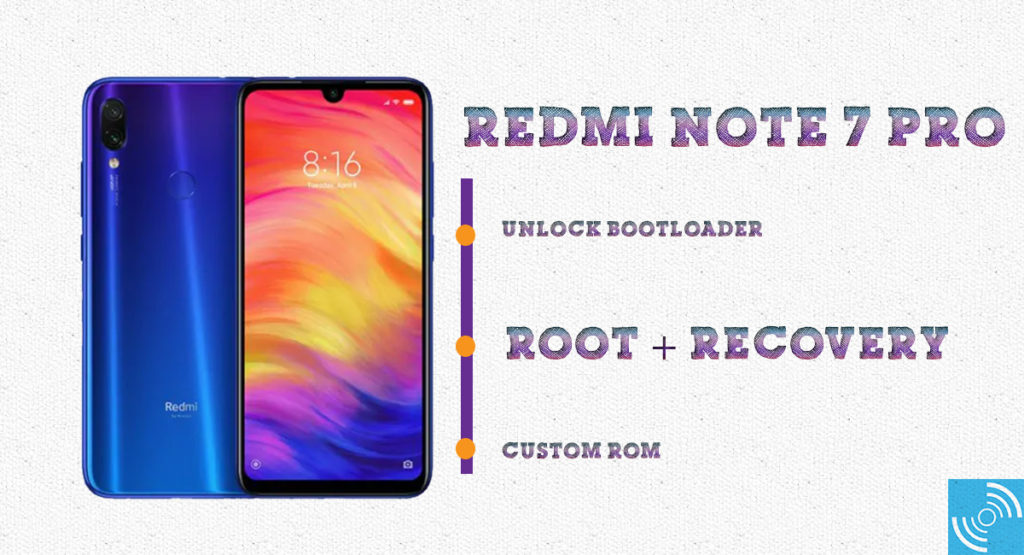
redmi note 7 pro root recovery

TWRP which stands for TeamWin Recovery Project. It is an open-source and entirely GUI based custom recovery for Android devices. It allows Android users to enjoy fully touch-based UI and flash custom ROMs, MODs, Magisk, SuperSu, etc. TWRP is a door to install different customization modules with ease. It even supports full system backups of the current system state which are impossible without the custom recovery.

Advantages of Custom Recovery

  • Easy Full-System backups
  • Flash image file on the device.
  • Adds the ability to remove bloatware from the stock ROM.
  • Supports underclock and overclock of the processor.
  • Quickly flash custom ROM, MOD, Framework.
  • Support to quickly flash Xposed and Magisk Framework.
  • Easy installation of SUperSu and Magisk for rooting
  • Ability to wipe cache and data.

Xiaomi launched Redmi Note 7 Pro a few months ago with some attention-grabbing features. It debuted along with its younger feature-packed sibling – Redmi Note 7. There are some incredible features such as a 48-megapixel rear camera, an Octa-Core Snapdragon 675 processor, 4000 mAh battery and latest Android 9.0 Pie. The device carries a 6.3-inch full-HD+ display having the resolution of 1080×2340 pixels. It is protected with Corning Gorilla Glass 5. It can rapidly charge the 4000 mAh battery with Qualcomm’s Quick Charge 4.0.

Note: GizmoChina.com is not responsible for any kind of damage to data or device while performing the unlocking. It will also void the device’s warranty and remove all data on the device. You’re proceeding at your own risk.

Install TWRP on Redmi Note 7 Pro

It is recommended that you carefully follow all the steps mentioned below.

Pre-Requisites:

Steps to install TWRP on Redmi Note 7 Pro

  1. If Redmi Note 7’s Bootloader is unlocked, then you’re good to go with the next steps.
  2. Enable the Debugging Mode, and OEM unlock on your device. Both the options can be found in the Developer Options.
  3. Now, connect your device with PC via USB cable.
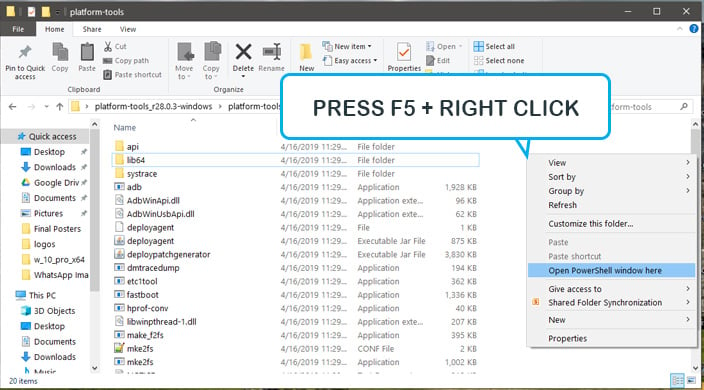
  4. Extract ADB and Fastboot drivers in a folder on the PC. Then, Open the cmd or PowerShell by pressing Shift key + Right-Clicking in the same folder.
    fastboot window
  5. Once all the setup is complete, type the following command to reboot the Redmi Note 7 Pro into the fastboot mode (Note: Accept a pop-up asking for the USB debugging permission on your smartphone).
    adb reboot bootloader
  6. After booting into the fastboot mode, type the below-mentioned command to flash the TWRP image you download. (Note: Place the twrp-3.2.3-violet.img file in the ADB and Fastboot extracted the folder.)
    fastboot flash recovery twrp-3.2.3-violet.img
  7. After the successful flashing, reboot the device using the following command:
    fastboot reboot
  8. Enjoy!

You have successfully installed TWRP Recovery on Xiaomi Redmi Note 7 Pro. In the next step, we will flash Magisk to get root access on teh device.

Root Redmi Note 7 Pro using Magisk

Make Sure to download the Magisk zip and Disable Encryption patch and move them to the phone’s storage.

  1. After rebooting, connect your device with the PC to get root access.
  2. Type the ADB command to boot into the TWRP recovery successfully:
    adb reboot recovery
  3. The device will automatically boot into TWRP, now take a NANDroid backup if you need data.
  4. Now, Select “Install” from the TWRP and browse for the Magisk.zip file. Tap on it to select it.
  5. Now, “Swipe to confirm flash” action.
  6. Upon successful installation, select “Install” once again and locate “no-verity-force-encrypt.zip” file. Tap it to select it.
  7. Again “Swipe to confirm flash” action.
  8. Reboot System from TWRP Recovery.
  9. Upon rebooting, a Magisk Manager application will be present from where you can control the access of each app.
  10. You can also install the Root Checker app to verify root access.

We hope you’ve successfully rooted Xiaomi Redmi Note 7 Pro with Magisk. If you have any queries or any doubt, let us know via comments.

Up Next: How to Unlock Bootloader of Xiaomi Redmi Note 7 Pro

Throwback Tech Thursday: We Revisit the Best Selling BlackBerry Curve Series

Before Android & iPhones were popular, there were only a handful of players that were dominating the phone industry. One among them was the Canadian smartphone maker, BlackBerry. While its phones are non-existent today, just as the original Nokia brand that vanished from the market, back in the 2000s, BB phones were really popular. In fact so popular that BlackBerry’s Curve models outsold the iPhone back in 2009. For Q1 2009 in the US, BlackBerry had three models in the top 5 best selling phones list, with the other two being the iPhone 3G and the T-Mobile G1 aka HTC Dream (this was the first ever Android phone and we have a special throwback here). It’s rather funny to see how things have changed now. Android smartphones and iPhones dominate the smartphone market, while BlackBerry is nowhere to be seen.

BB 8320
Source: Flickr Marvin Kuo

BlackBerry Curve reached out to a really large set of users with its competitive pricing and a full-sized QWERTY keyboard. In fact, the BlackBerry 8320, which was quite a popular model in the series was the smallest and the lightest BlackBerry phone to feature a full-sized QWERTY keyboard back then. The keyboard was really cool, which made every BlackBerry phone a texter’s dream! The BB 8320 came with support for instant messengers like Gtalk, Yahoo, Windows Live, & AOL which kept its users ahead in their social game. Not to mention, BBM (BlackBerry Messenger) was a really big hit back in the late 2000s. Being exclusive to BlackBerry phones, BBM users seemed to have a different social circle altogether!

BB 8320
Source: Flickr Enrique Dans

The phone came with Blackberry’s iconic trackball navigation which made browsing through the UI a breeze. It had Wi-Fi as well as Bluetooth 2.0. Wi-Fi, in particular, wasn’t a common feature among BlackBerry phones, so the 8320 stood out. Further, the phone came with a 2MP rear camera. It wasn’t a good camera but then BlackBerry was never a fan of adding cameras to its smartphones. So to see even a 2MP sensor on the back of a BlackBerry phone was a big deal back then.

Other features of the device included a 3.5mm headphone jack, MicroSD slot, GSM/ Edge support (yes, no 3G despite iPhone featuring it!), and an inbuilt MP3 and MP4 player.

Editor’s Pick: Throwback Tech Thursday: Engaging the Legendary Nokia N-Gage!

The BlackBerry Curve 83XX series didn’t have a fancy processor, an amazing camera or even 3G. But the 8300 series models featured a full-sized QWERTY keyboard, a compact lightweight design (which didn’t bother you when you talked on the phone for hours), and a solid messenger client which kept you ahead in your social game.

800px-Blackberry_Curve_9360_shot_by_Canon_t2i_2013-12-19_06-57
Later versions of the Curve replaced the Trackball with an optical Trackpad (Source: Wikipedia)

Later models in the BlackBerry Curve series saw a shift from the traditional trackball to an optical trackpad. For example, the Blackberry 8530, which was yet another popular model in the series, featured an optical trackpad. It continued with the QWERTY keyboard design as its predecessors along with a 2MP camera. Even the battery life was as terrible as the older models.

BB Curve 9380

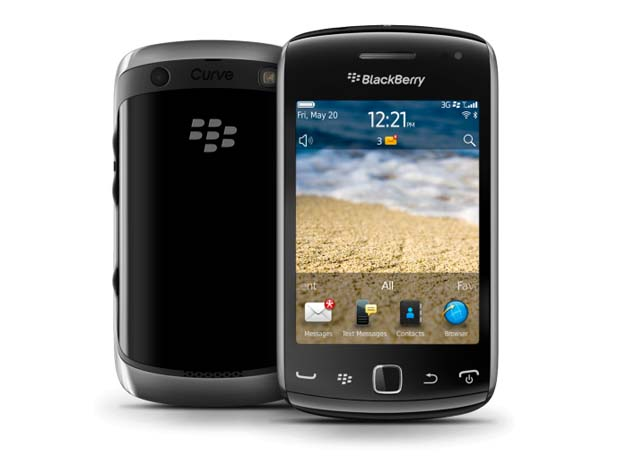
By 2011, BlackBerry decided it was time to introduce full touch screen models in the Curve series. So the Curve 9380 finally ditched the QWERTY keyboard for a 3.2″ display with 360×480 pixels. After experimenting with touch, there were a couple of QWERTY models in the Curve series like the BB Curve 9320. But after that, the Curve series pretty much came to an end.


So did you ever use any of the BlackBerry Curve series models? How was your experience?

ALSO READ: Throwback Tech Thursday: Revisiting the Iconic Moto Razr V3, the Phone That Made You Look Cool!


Sony crowdfunds the Reon Pocket, a wearable Air Conditioner, in Japan

The depletion of the ozone layer has ensured we deal with extreme heat from the sun especially outdoors. While most people struggle to cope, some just can’t cope with the scorching heat. Sony may have just launched a product that could help users cope with the heat outdoors. The device is called Reon Pocket and is coming from the stable of Sony’s First Flight program and is up for crowdfunding.

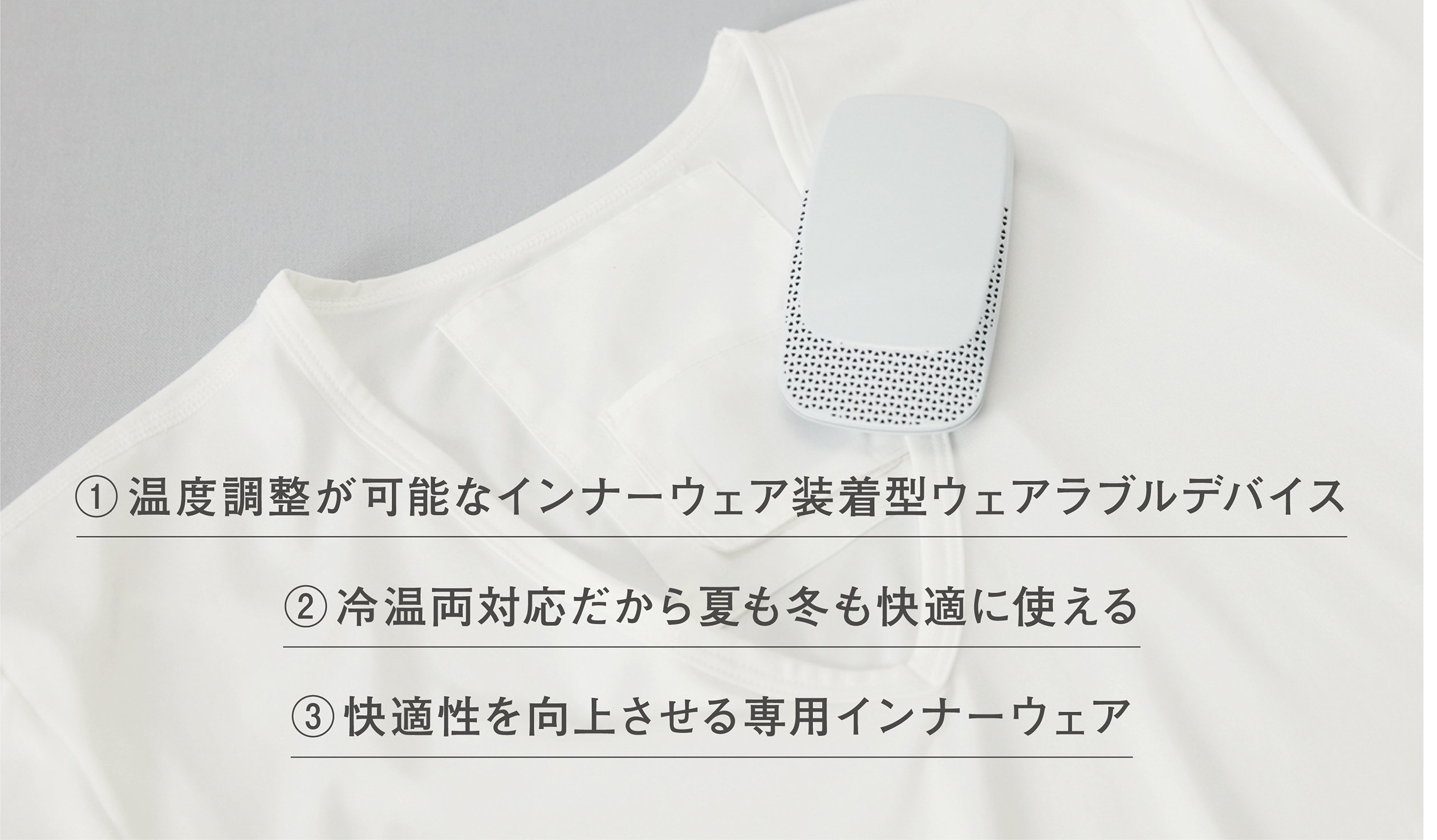
The gadget is like a wearable ‘air conditioner which is kept in a pouch in a special t-shirt that would likely ship with the device. The stealthy device doesn’t condition the air as such. Rather, it sits at the base of your neck and uses the Peltier effect (where heat is absorbed or emitted when you pass an electrical current across a junction) to either lower your temperature by 23F or raise it by 14F, all without bulk or noise. Sony Reon Pocket

The temperature can be controlled through a mobile app but the tech giant says it will deliver an automatic mode through a future update. The battery can last for just 2 hours on a single charge which is quite disappointing. The device can be charged via a USB-C port which we expect to deliver fast charge.

The Reon Pocket is on crowdfunding under Sony’s First Flight project. Already, the crowdfunding has exceeded the target. The device is expected to ship in March 2020 in Japan. There is no word yet on when it will be available overseas. As for the pricing, it starts at ¥12,760 (about $117).


UP NEXT: Huawei Y9 Prime 2019 powered by Kirin 710 SoC launched in India for ₹15,990

(source)

Elephone A6 Max’s display features high brightness, arrives on August 5th

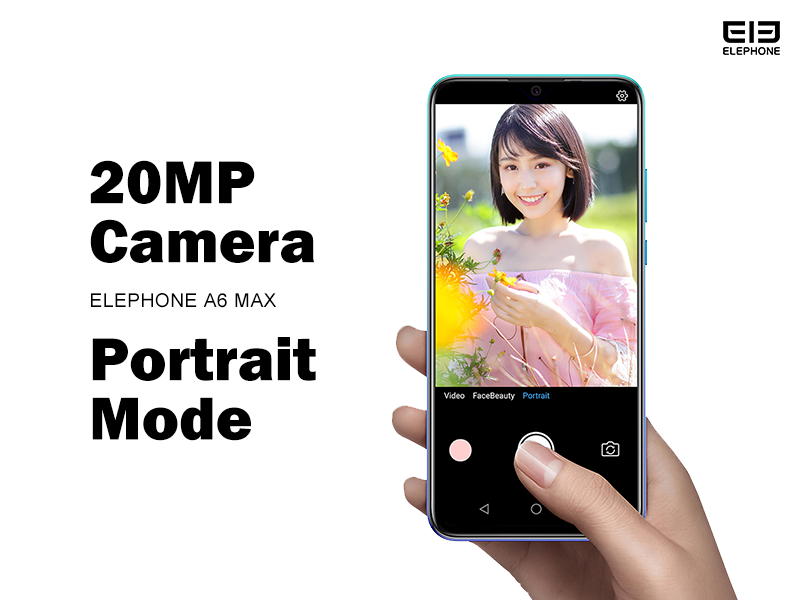
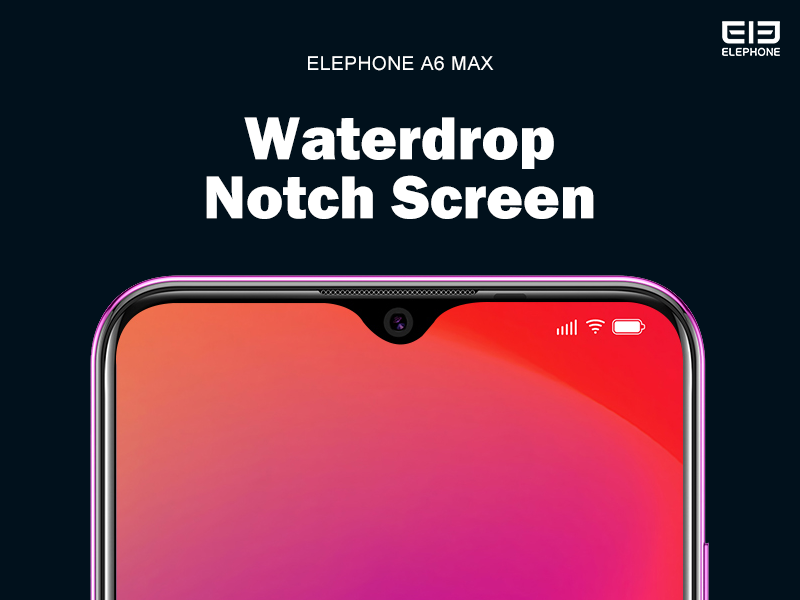
The newest member of Elephone’s product lineup is the Elephone A6 Max that is going to be officially announced on Monday, August 5th, and the latest information are talking about a quite bright display that will be easy to use even under bright sun. According to the Chinese manufacturer, the 6.53″ waterdrop notch display will be 450 nits bright.

Elephone A6 Max

As we already covered in previous news, the phone will sport a dual rear camera with 20MP/2MP sensors while the selfie shooter will also be 20MP with beauty function. The device will officially launch on Aliexpress at a special price. The official retail price will be $159.99 but we expect a good deal for the presale period.

Elephone A6 Max

What’s more, the company is hosting a Giveaway event that starts today and will end on August 31st. If you want to participate, go ahead and visit the event page here. You can also visit the product page on Aliexpress to add the phone to your cart and be ready for when the presale begins.

Unreleased Unisoc Tiger T710 beats the Kirin 810 to take the AI crown

Unisoc (Spreadtrum) may give other chip makers a run for their money with its upcoming chipset, the Tiger T710. The SoC has been benchmarked on AI-benchmark and it floors all the mobile processors including the Kirin 810 which used to be the king.

The Tiger T710 is an octa-core processor that uses the big.LITTLE architecture. There are four Cortex-A75 cores clocked at 2.0GHz and four Cortex-A55 cores clocked at 1.8GHz. It also has a PowerVR GM 9446.

Tiger T710 AI Benchmark result

Based on this configuration, the Tiger T710 is even a more powerful chipset than the Helio P90 which has a similar configuration, although 2 x A75 cores and 6 x A55 cores but the same GPU. And an AnTuTu benchmark result of the Helio P90 shows it is a rival to Qualcomm’s Snapdragon 710 processor (Lenovo Z5 Pro AnTuTu). Since the Helio P90 test device scores higher than the Snapdragon 710-powered Lenovo Z5 Pro, then Unisoc’s Tiger T710 should even widen the margin.

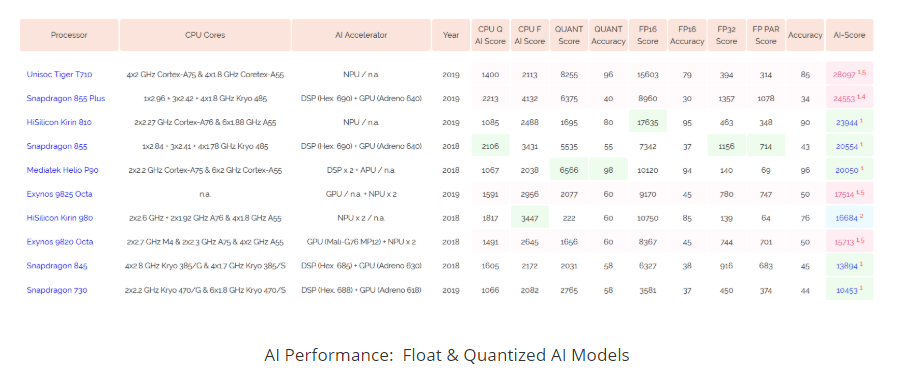
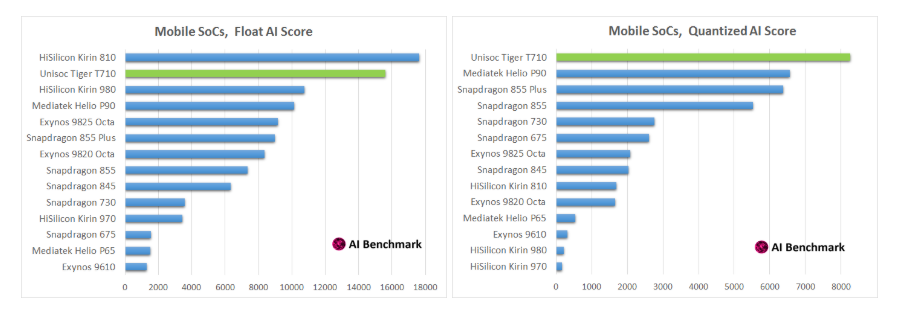
Back to the AI benchmark. The Tiger T710 has an AI score of 28,097, beating the Kirin 810’s score of 23,944 by a significant margin. A break down of the score shows the Kirin 810 has a slightly higher Float AI Score. However, the Tiger T710 beats it and all the other SoCs in Quantized AI models. There is a full review of the chipset here.

Tiger T710 AI Benchmark result

There is no info yet regarding the launch of the Tiger T710 and we don’t know which manufacturers will use it in their devices. Nevertheless, we are pretty excited about the chipset and are looking forward to more benchmark results.

(Source, Via)


UP NEXT: 5G devices powered by Unisoc SoCs to launch in H2 2019

Specs of Xiaomi Mi Gaming laptop 2019 leaks; may launch on August 4

In March Last year, Xiaomi announced the Mi Gaming Laptop. It had some pretty impressive specs such as a Core-i7 processor, a GTX ti 1050 GPU, RGB keyboard, 16GB of RAM, SSD and HDD drives, and a competitive price. Now Xiaomi is planning to launch the Mi Gaming Laptop 2019 and its specs have leaked.

The source of the leak is upcoming leaker @Sudhanshu1414. Based on his tweets, the Mi Gaming Laptop 2 or Mi Gaming Laptop 2019 will be available in three configurations. Below are the specs for the variants:

Top model

  • 9th Gen Intel Core-i7 processor
  • NVIDIA GeForce RTX 2060
  • 16GB DDR4 DRAM (2666MHz)
  • 512GB SSD
  • 144Hz refresh rate

High-end model

  • 9th Gen Intel Core-i7 processor
  • NVIDIA GeForce GTX 1660 Ti
  • 16GB DDR4 DRAM (2666MHz)
  • 512GB SSD
  • 144Hz refresh rate

Base model

  • 9th Gen Intel Core-i5 processor
  • NVIDIA GeForce RTX 1660 Ti
  • 16GB DDR4 DRAM (2666MHz)
  • 512GB SSD
  • 144Hz refresh rate

There is no info on the screen size and its resolution which are just a few of the remaining several unknown details. There are reports that there will not be a significant change in the design even if there is at all, so if you didn’t like the design of last year’s model, you probably won’t like this year’s. The info is unconfirmed, so take it with a grain of salt.

[envira-gallery id=”267657″]

The official Mi Laptop Weibo account has been dropping countdown posters for a launch on Sunday, 4th of August. The posters show the silhouette of a laptop and it is believed that it is the Mi Gaming Laptop 2019 launching on that day. ChinaJoy begins tomorrow, so it is a perfect place for Xiaomi to launch its new gaming laptop.

(Sources: 1, 2, 3)


UP NEXT: Xiaomi, Vivo, OPPO, and Nubia release similar posters for ChinaJoy 2019

Huawei Y9 Prime 2019 powered by Kirin 710 SoC launched in India for ₹15,990

Keeping its promise, China-based technology giant Huawei has today launched a new smartphone in the Indian market — Huawei Y9 Prime 2019. The smartphone, which comes with a pop-up camera, has already been launched in some other markets.

The smartphone features a 6.59-inch LCD display with 2340 x 1080 pixels screen resolution, minimal bezels on the sides, and a higher screen-to-body ratio thanks to the pop-up selfie camera.

Huawei Y9 Prime 2019 featured

Under the hood, the device is powered by the company’s own Kirin 710 octa-core processor, coupled with 4GB of RAM and 128GB of internal storage. At the back, the device features a triple camera setup with the sensors aligned vertically and positioned at the top-left corner.

It consists of a 16-megapixel primary sensor, an 8-megapixel secondary sensor, and a 2-megapixel tertiary camera sensor. On the front side, the device comes with a 16-megapixel selfie camera housed in the self-elevating pop-up mechanism that supports AI-based features for better performance.

Huawei Y9 Prime 2019

Connectivity options on the device include Dual SIM, 4G VoLTE, Wi-Fi 802.11 b/g/n, Bluetooth, GPS, and USB Type-C. The smartphone also comes with a rear-mounted fingerprint sensor. The dimensions of the phone are 163.5 x 77.3 x 8.8 mm and it weighs around 196.8 grams.

The smartphone is running Android 9 Pie operating system out-of-the-box with the company’s own EMUI 9 custom user interface on top. The device is fuelled by a 4,000mAh battery that also comes with fast charging support.
In India, the Huawei Y9 Prime (2019) comes in two color options — Emerald Green and Sapphire Blue. As for the pricing, the smartphone is priced at ₹15,990 which roughly converts to $231.

Up Next: MIUI will reduce ads at the earliest and will improve stability, confirms Xiaomi executive