Advertisement

Xiaomi CC9 smartphone review: a new choice for youth

Xiaomi acquired Meitu smartphone project in 2018, which was considered as a clear signal that Xiaomi was going to include the youth especially females as their target customers. Meitu is the most famous software producer in mobile beauty experiences in China.

Xiaomi CC9 review video:

Appearance & design

At first glance, both the phones are the most similar if we ignore their rear colors. They both share a similar appearance mainly because of the fact that their displays and rear design are identical. Both the phones feature a 6.39-inch Super AMOLED 2340 x 1080p display up front with a waterdrop notch. The flagship-level display makes the screen-to-body ratio result to 91%. After comparing the detail of these two displays, it’s pretty sure that Xiaomi CC9 offers a flagship-level display, though nothing surprising if we look at the specs in Mid-2019.
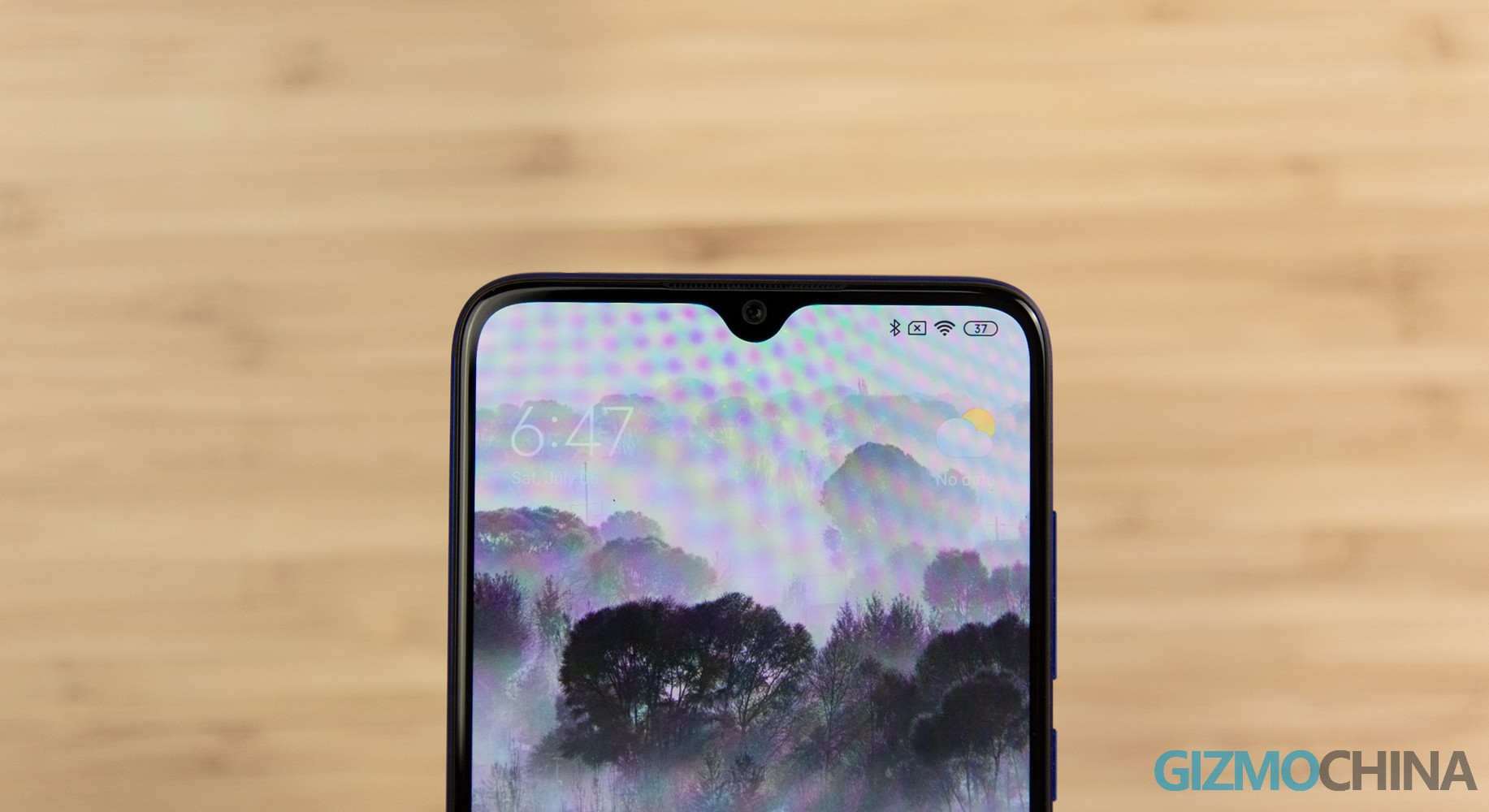
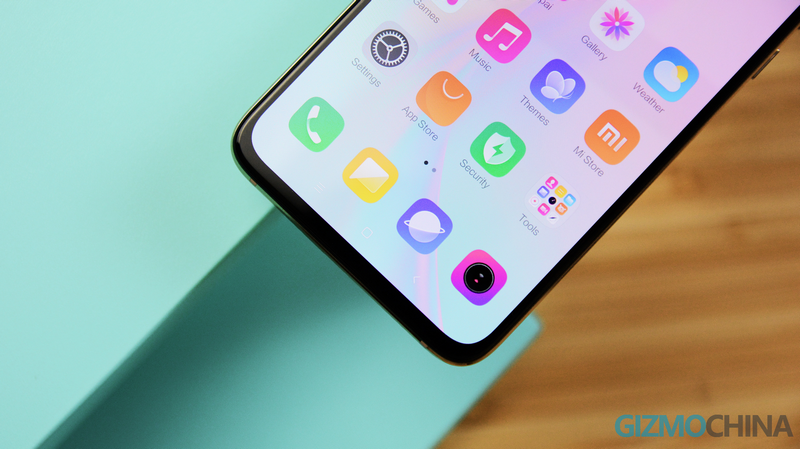
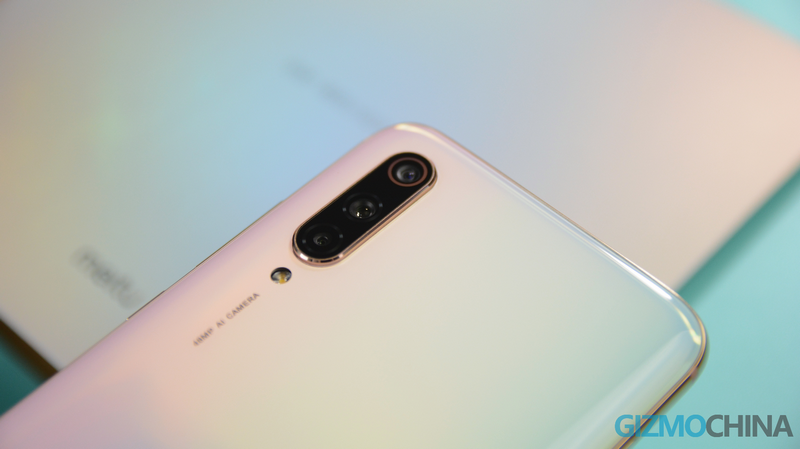
Looking back to the rear setups, both the phones feature a triple-camera setup in an identical vertical arrangement. All these factors contribute to their similar looks. Meanwhile, the back was advertised that it uses a holographic, all-curved design, which did contribute a better hand-on feeling. But similar Mi9’s back, it is also a fingerprint collector.
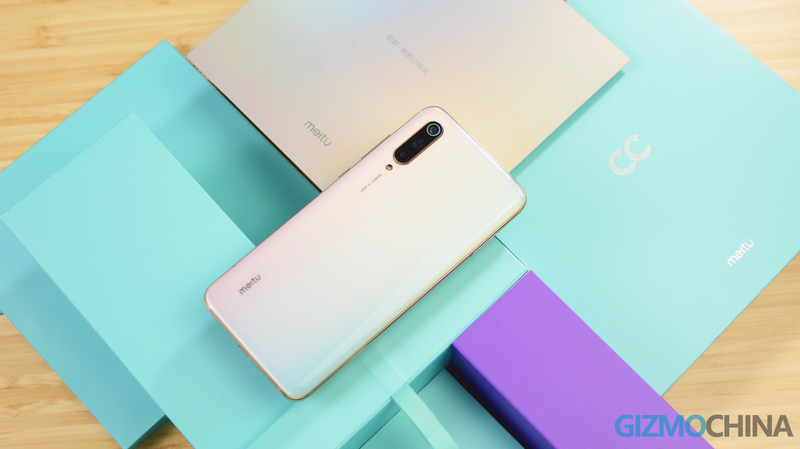
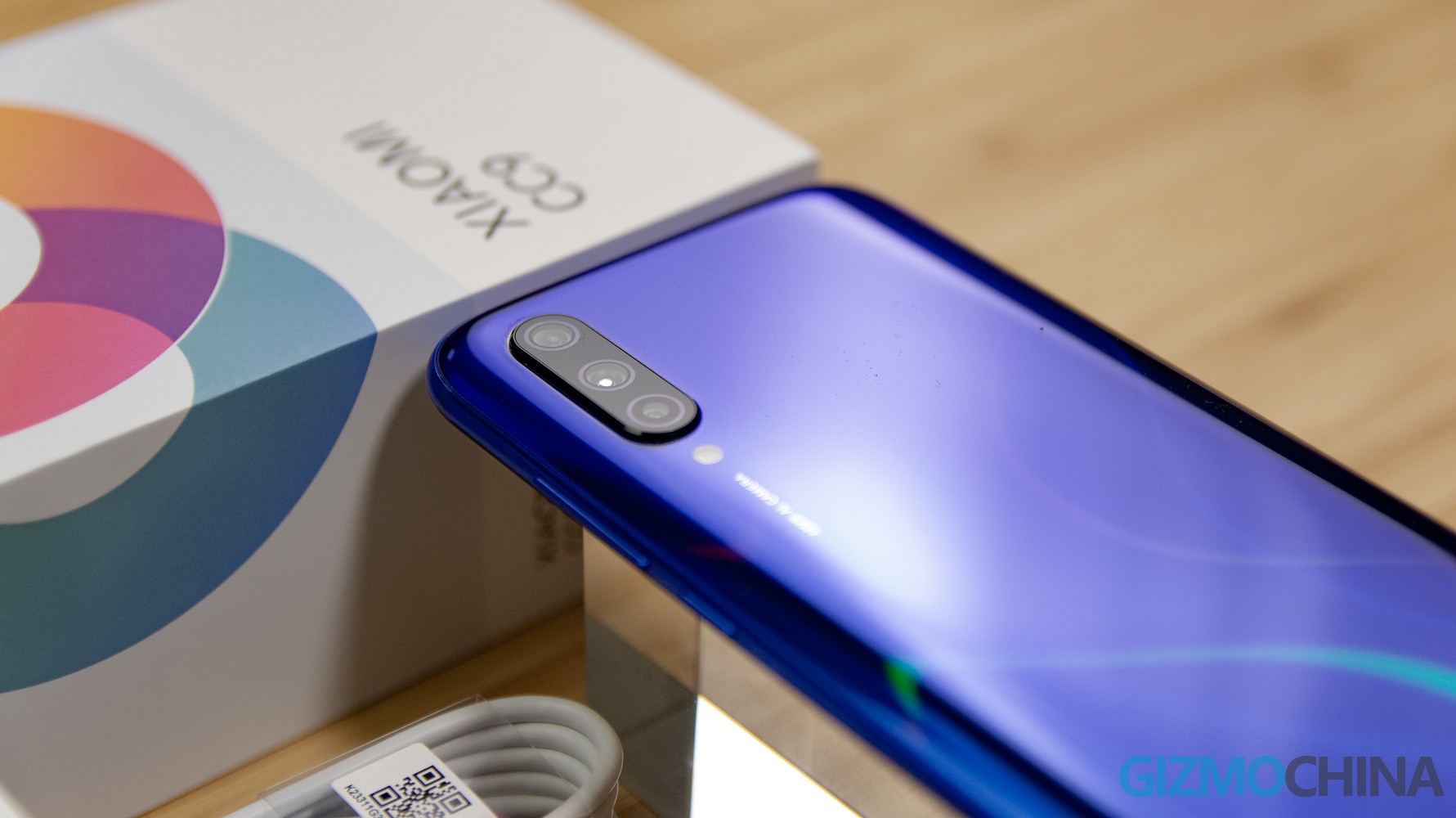
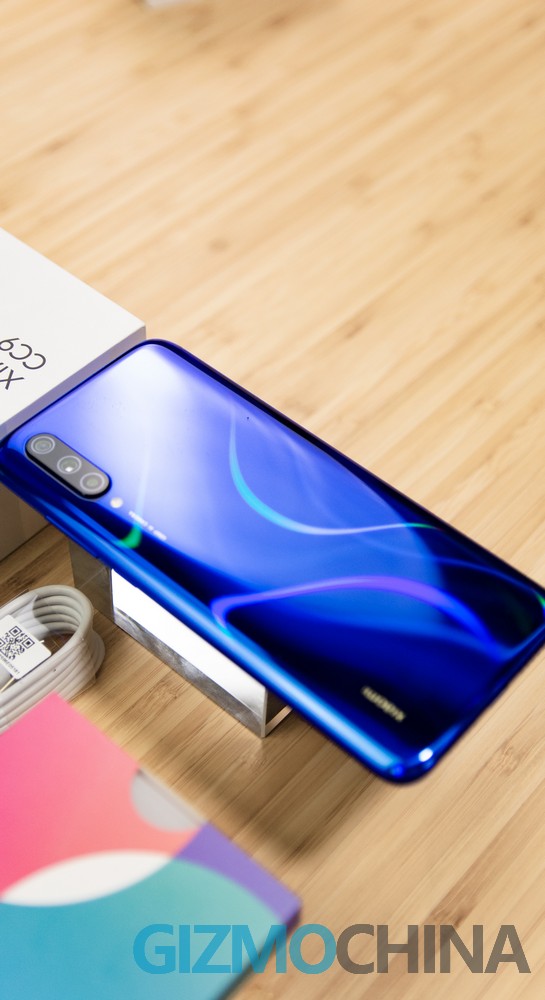
The Xiaomi Mi9 was released as a true flagship and positioned as a premium product with a bargain price, while the Xiaomi CC9 has a more specific mission. Xiaomi is aiming to portray the CC9 as a fashion smartphone for youth, especially those youth who admire beautiful appearance and love taking photos. It’s also the reason for Xiaomi to call it CC series, which means Chic & Cool. In addition, Xiaomi continuously adapts its pricing strategy on the CC9 to expand its market share. But as we mentioned before, how could it please the youth who especially admire the appearance with the only Mi9 looks? Their solution here is to give more vibrant color versions. This time, including the highest MEITU version, Xiaomi CC9 has 4 color versions on the table: White Lover, Blue Planet and Black Prince for Standard versions, and a Fairy color for Meitu version.
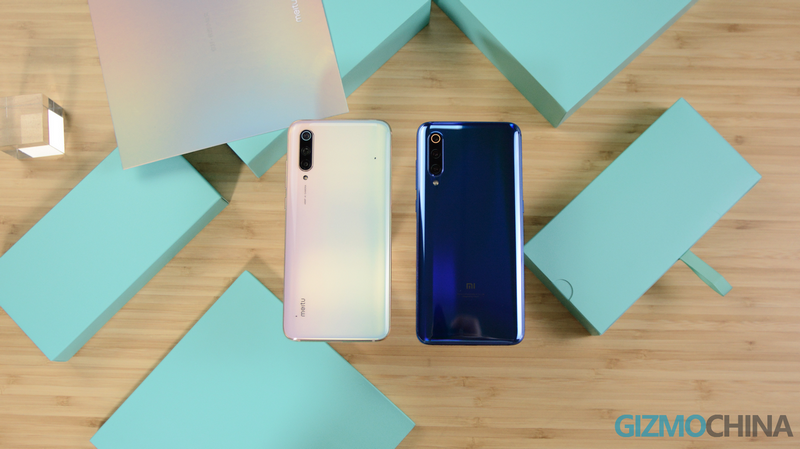
Although Xiaomi’s product manager spent much time on introducing how complicated the vibrant-color technology is, it’s still an individual experience and preference. Do you want to have your smartphone shining all the time?
Cameras

Besides Chic & Cool, the CC has another meaning, ‘Camera & Camera’. As a typical smartphone for youth, Xiaomi boosts their back & front cameras to a top level. However, we can also see its compromise due to cost control. Rear camera setups are as below:

  1. 48MP SONY IMX586, 48MP, 0.8μm,f/1.79, No OIS
  2. 8MP Ultra-wide camera 120°, No OIS
  3. 200MP depth camera, No OIS

Compared to Mi9, it maintains the main camera for most photography but cuts the 16MP telephoto camera and reduces the wide camera resolution to 8MP.

The true improvement is the front camera. It is a 32MP Samsung camera that can shoot photos with a 6560×4928 resolution. So, probably Xiaomi assumes that CC9’s target users were young groups and they much value the front portrait shooting.

Compared to other flagships, Xiaomi CC9 doesn’t present a wonderful dynamic range here. so, you’d better turn on the HDR mode here to enhance it. Under high-contrast and low-light conditions, it shows a pretty good quality at color reproduction and contrast though, the poor noise control over the shadow area doesn’t lead to a satisfactory result. While under a lower-contrast scene, the noise problem is less obvious and the general image looks pretty good with much detail. At night scene with the extremely low-light condition, with an auto-exposure mode, there is nothing to praise, while with the super-night mode on, the general brightness is improved significantly.

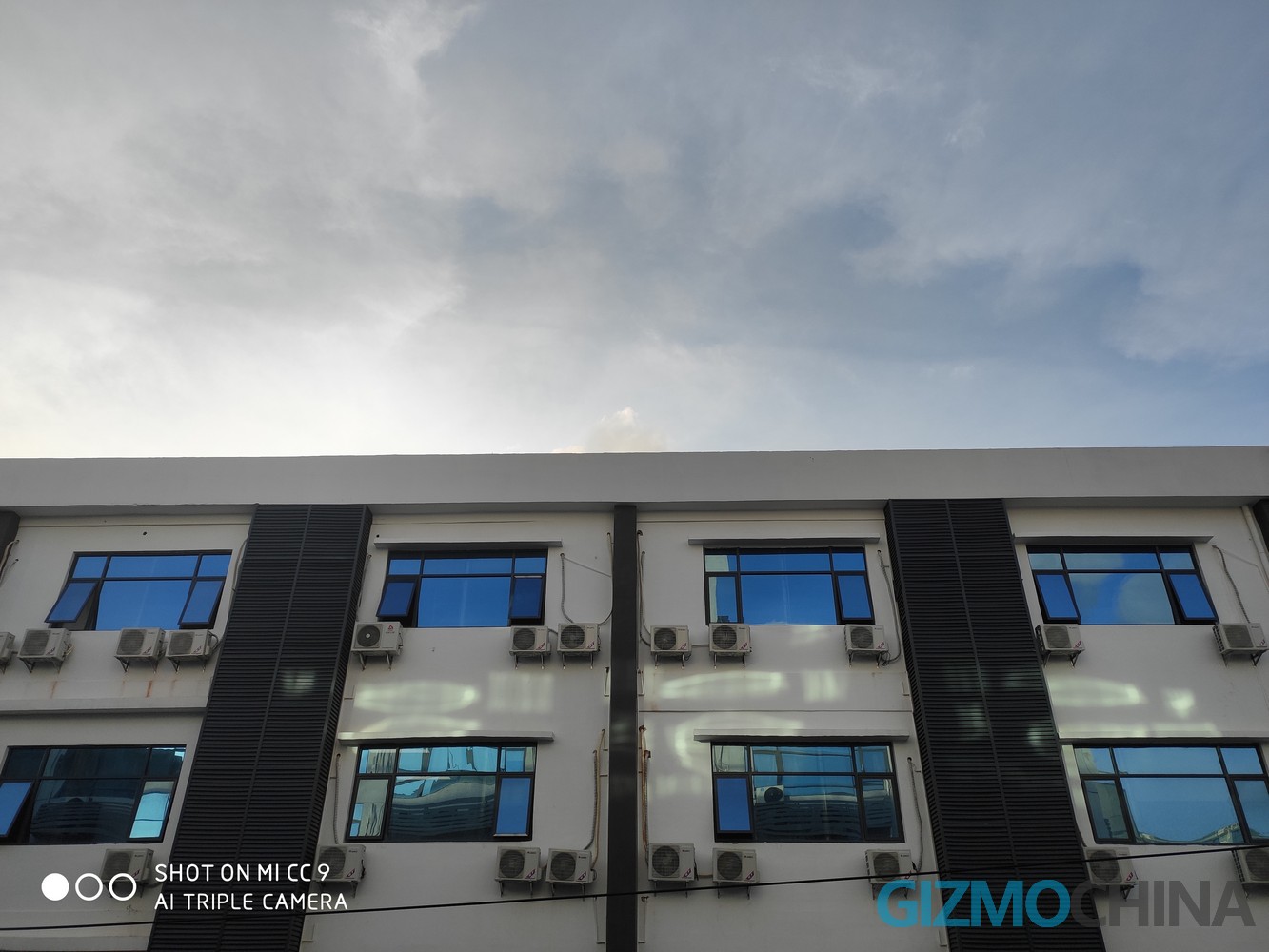
In conclusion, it seems that Xiaomi CC9 tends to product a lower-saturation image style under low-light conditions. But, meanwhile, it does boost general brightness significantly through a high ISO, generally at a figure over 3200. As we are working on the smartphone test, more information and sample results of cameras performance are coming soon by Gizmochina video review team. Please stay watching for our latest update.

About its video shooting, Xiaomi CC9 can shoot up to 4K 30p video. In terms of a lack of OIS, the video shooting does not reach a good stabilization under most conditions,

Image & beauty features

Another feature worth talking is the Mimoji. Right now, it’s an exclusive feature for Xiaomi CC9 but not including the Meitu version. Due to the similar looks to Apple Memoji, Xiaomi has been mired in controversy of idea plagiarism. According to the Xiaomi official explanation, the Mimoji generating process is different from the Memoji. Mimoji can automatically generate a Mimoji from your real image, while you only can create a Memoji manually. But, if we compared the final effects, the animated facial expressions with various hairstyles, we have to admit that there should have some relevance between them. Most probably would regard it as stealing, while some may just call it ideal-borrow.

Back to the smartphone, Mimoji looks well with showing multiple expressions like winking, smiling, sticking tongue out, month action and so on. It is not limited to Mimoji-covered photos. It also supports a 15-second short video shooting, which is ready for social media.


Xiaomi also mentions a ‘magic sky wiper’ (not official English title) feature, which basically is to help you change the sky-type of your image with one click. The scenarios usually are about landscape photography under bad weathers, or you just want a significant sky to cover your memory. The effect is so impressive and much better than our expectation. The edges were recognized well as the whole image tone was adjusted by covering a filter (see below). But there are only several sky-types for choices now, which means that using the fixed types, you probably would be found out making a fake-sky through the software on social media.


 

Performance

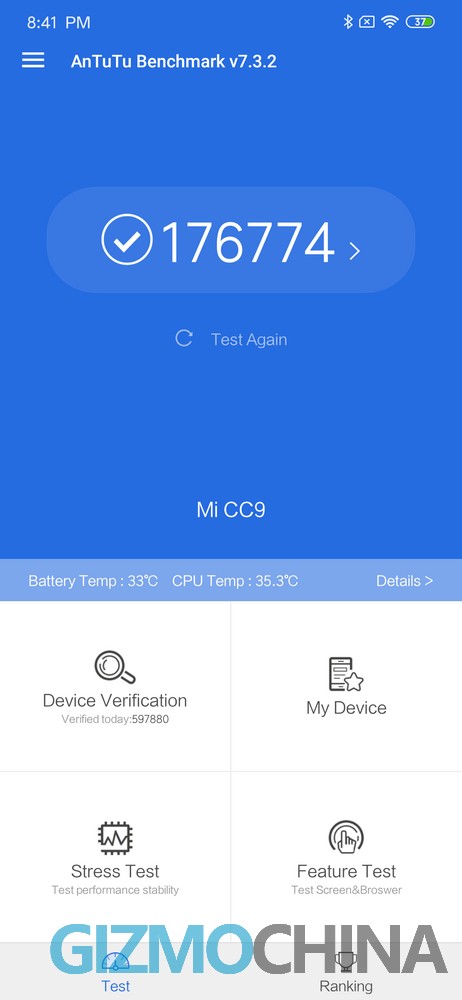
The Xiaomi Mi9 offers a flagship processor of Snapdragon 855, while the Xiaomi CC9 is a mid-ranger with Snapdragon 710. Snapdragon 710 has proved itself as a sub-flagship processor. It can handle most phone games without problems and support a good system fluency. After playing 40min PUBG Mobile with highest graphics settings, though it fluctuated frequently, the frame rate remained at average 50fps. The gaming fluency is even at the first-tier among all the Snapdragon 710 devices, though comparing to flagships with snapdragon 855 there is still a remarkable gap.

Battery & Charging

The Xiaomi CC9 has a 4030 mAh battery which is even larger than its brother, Xiaomi Mi9. Such a large battery usually leads to a bulkier size. The CC9 is no exception. It’s 8.67mm thick, while the figure of the Mi 9 is only 7.61mm. But the CC9 doesn’t feel much heavier, as it weighs 179g. Looking at the battery life, the phone can last for around 8-10 hours under a high frequency of use (e.g. music, video, social media), while it can last for 4-5 hours as a gaming machine. In our test, the Xiaomi CC9 can charge from 10% to 47% with included 18W charger in 30min. The test results of battery are not bad but nothing surprising.

Conclusion

Some additional features like NFC and ‘infrared remote controller’ are much useful and delightful. It is not core advertised features though, these slight stuff definitely increase the user experience and provide a good impression.

After experiencing the Xiaomi CC9 as my main phone these days, it’s no doubt that the CC9 is a balanced mid-ranger. If we leave the copy controversy and the similar Mi9 design alone, we are willing to give positive comments on it. But the controversy is objectively threatening the Xiaomi brand image. These kinds of controversy have lasted for years. Some critics regard Xiaomi as a copy recidivist among tech companies. Such voices definitely are harmful to the market performance of Xiaomi CC9.

Considering some features like audio and camera experience that would be much more intuitive to show in video, we decide to put the full review with more detail in our review video. If you are interested in the Xiaomi CC9, please stay watching our YouTube channel.


Oppo K3 vs Oppo Reno Z vs Oppo A9x: Specs Comparison

Oppo will launch its mid-ranger K3 in the Indian market in a few days. Those days when Oppo was a China-based manufacturer selling offline in the Chinese market only are gone: now it is a global brand and it is a potential menace to Samsung and the other best manufacturers all around the world. If you are looking for a midrange phone released from this company this period is perfect for you as Oppo launched a lot of affordable devices. Given that Oppo K3 launches as soon as next week, here is a comparison with the other Oppo midranges which are more or less at the same level in similar price tags: Oppo Reno Z and Oppo A9x.


Oppo K3 vs Oppo Reno Z vs Oppo A9X

Oppo K3 Oppo Reno Z Oppo A9x
DIMENSIONS AND WEIGHT 161.2 x 76 x 9.4 mm, 191 grams 157.3 x 74.9 x 9.1 mm, 186 grams 162 x 76.1 x 8.3 mm, 190 grams
DISPLAY 6.5 inches, 1080 x 2340p (Full HD+), 394 ppi, AMOLED 6.4 inches, 1080 x 2340p (Full HD+), 403 ppi, AMOLED 6.53 inches, 1080 x 2340p (Full HD+), 395 ppi, LTPS IPS LCD
PROCESSOR Qualcomm Snapdragon 710, octa-core 2.2 GHz Mediatek Helio P90, octa-core 2.2 GHz Mediatek Helio P70, octa-core 2.1 GHz
MEMORY 6 GB RAM, 64 GB – 8 GB RAM, 128 GB – 8 GB RAM, 256 GB 6 GB RAM, 128 GB  – 6 GB RAM, 256 GB 6 GB RAM, 128 GB, micro SD slot
SOFTWARE Android 9 Pie, Color OS Android 9 Pie, Color OS Android 9 Pie, Color OS
CONNECTIVITY Wi-Fi 802.11 a/b/g/n/ac, Bluetooth 5.0, GPS Wi-Fi 802.11 a/b/g/n/ac, Bluetooth 5.0, GPS  Wi-Fi 802.11 a/b/g/n/ac, Bluetooth 5.0, GPS
CAMERA Dual 16 + 2 MP f/1.7 and f/2.4
16 MP f/2.0 front camera
Dual 48 + 5 MP f/1.7 and f/2.4
32 MP f/2.0 front camera
Dual 48 + 2 MP f/1.7 and f/2.4
16 MP f/2.0 front camera
BATTERY 3765 mAh, fast charging 20W wih VOOC 3.0 4035 mAh, fast charging 20W with VOOC 3.0 4020 mAh, fast charging 20W with VOOC 3.0
ADDITIONAL FEATURES Dual SIM slot Dual SIM slot Dual SIM slot

Design

Oppo K3 has the most stunning form factor. Despite it is not part of the Reno line-up, its back cover looks like the ones on Reno devices. And it even comes with a pop-up camera which helps to minimize the bezels without the aid of a classic waterdrop notch. If we exclude the K3, I personally prefer the Reno Z because it offers a cleaner glass back thanks to its in-display fingerprint reader. The design of the A9x looks more outdated due to the presence of a single module for the dual camera setup and a rear-mounted fingerprint reader. It even comes with a lower screen-to-body ratio.


Display

The level of detail offered by these handsets’ displays is pretty much the same, but the overall performance changes when it comes to color reproduction. Oppo K3 and Oppo Reno Z are way better because they sport an AMOLED display, and the Reno Z wins the comparison due to the support to the HDR10 technology. On the other hand, you should note that the Reno Z has a slightly smaller display than K3 and it comes with a waterdrop notch, unlike the K3. Oppo A9x still comes with an above-average display, but it looks like an inferior IPS panel.
 

Specs & Software

Despite the MediaTek Helio P90 found on the Reno Z is a more recent chipset with a higher base frequency, the Snapdragon 710 by Qualcomm which you can find on the Oppo K3 is a more powerful SoC. Further, the K3 is equipped with up to 8 GB of RAM and up to 256 GB of internal storage in its most expensive configuration, while Reno Z stops at 6 GB of RAM and 256 GB of internal storage. The A9x has an even less powerful chipset than Reno Z: an older Helio P70 and just 6 GB of RAM. Unlike its rivals, it sports a micro SD slot, but it loses the comparison because of its weaker hardware side. Each handset has both Android 9 Pie and Color OS 6 out of the box.


Camera

While Oppo K3 has the best hardware, it definitely comes with the worst camera department. The winner here is the Oppo Reno Z with its 48 MP dual camera, a bright f/1.7 aperture and a 5 MP depth sensor. Oppo A9x still offers a 48 MP dual camera, but the secondary sensor is an inferior one with a lower 2 MP resolution. Further, the Reno Z has a way better selfie camera with a resolution of 32 MP. So, there is no challenge, Reno Z is way more interesting.


Battery

With a capacity of more than 4000 mAh, Oppo Reno Z and A9x have the biggest batteries. But which one lasts more? Well, the Reno Z offers a longer battery life in a lot of scenarios because it comes with a smaller and more efficient AMOLED display, as well as a more efficient chipset. Oppo K3 is equipped with an AMOLED display as well, but its battery is smaller with a 3765 mAh capacity, so there is no way it can reach the overall battery life of the Reno Z.


Price

Here is the element which should mostly influence your final decision. As you had the chance to understand, the Oppo Reno Z is an overall better device under most of the point of views. It rocks a better display, way better cameras, and even higher battery life, despite it is powered by a lower-end chipset and less RAM than the Oppo K3. But it costs a lot more: the Reno Z starts from €330/$370, while Oppo K3 costs just €210/$235 and Oppo A9x starts from €260/$290 (we are referring to listing prices). That is why at the end of the day I would go for the Oppo K3: it has a worse camera, but also a better design, a much higher value for money, better performances and a still good battery life.


Oppo K3 vs Oppo Reno Z vs Oppo A9X: PROs and CONS

Oppo K3

PROs

  • Best design
  • Best hardware
  • Wide display
  • Affordable

CONS

  • Lower-end cameras


Oppo A9x

PROs

  • Wide display
  • Big battery
  • Micro SD slot
  • Nice cameras

CONS

  • No UD fingerprint reader
  • Worse hardware


Oppo Reno Z

PROs

  • Big battery
  • Best cameras
  • Great display
  • Well built

CONS

  • Higher price


DJI drones widely adopted by US safety agencies despite Trump’s data security concerns

Chinese manufacturer SZ DJI Technology is unarguably the world’s largest drone manufacturer when it comes to consumer drones. The company’s customer base extends beyond China to the US, Europe and several other countries. In the US, DJI drones are deployed by not just the consumers but by the government agencies such as the police and military. According to Jan Gasparic, director of strategic partnerships at DJI, US public safety agencies are rapidly adopting unmanned aircraft from the Chinese drone maker even as the Trump administration voices security concerns that the devices could be sending sensitive surveillance data back to China.

At the RISE tech conference held in Hong Kong, the DJI exec stated; “Between 2015 and 2018 we have seen 500 per cent growth of drone adoption by public safety agencies in the US.” He stated further, “The reason for such a fast rate is because this technology has a transformative impact on the type of work they do.”

EDITOR’S PICK: Throwback Tech Thursday: Engaging the Legendary Nokia N-Gage!

DJI is taking proactive measures to reassure the US authority and end users that its drones are no security risk just because they are manufactured in China. This is a proactive measure before the security concerns gather steam and become another Huawei/US imbroglio. The company says it will assemble its Mavic 2 Enterprise Dual drones in Cerritos, California after the US Customs and Border Protection determines that the US-produced value of its drones will qualify under the US Trade Agreements Act. That designation should make it easier for some US government agencies to buy the drones, the company said. In addition, Gasparic hinted that the company is taking different approaches to put core technologies into new products and product categories.

DJI currently controls up to 80% of the drone market in the US.


UP NEXT: ZTE teases Android Q beta is coming to the Axon 10 Pro

(source)

Photos of mysterious Elephone device with punch-hole camera surface

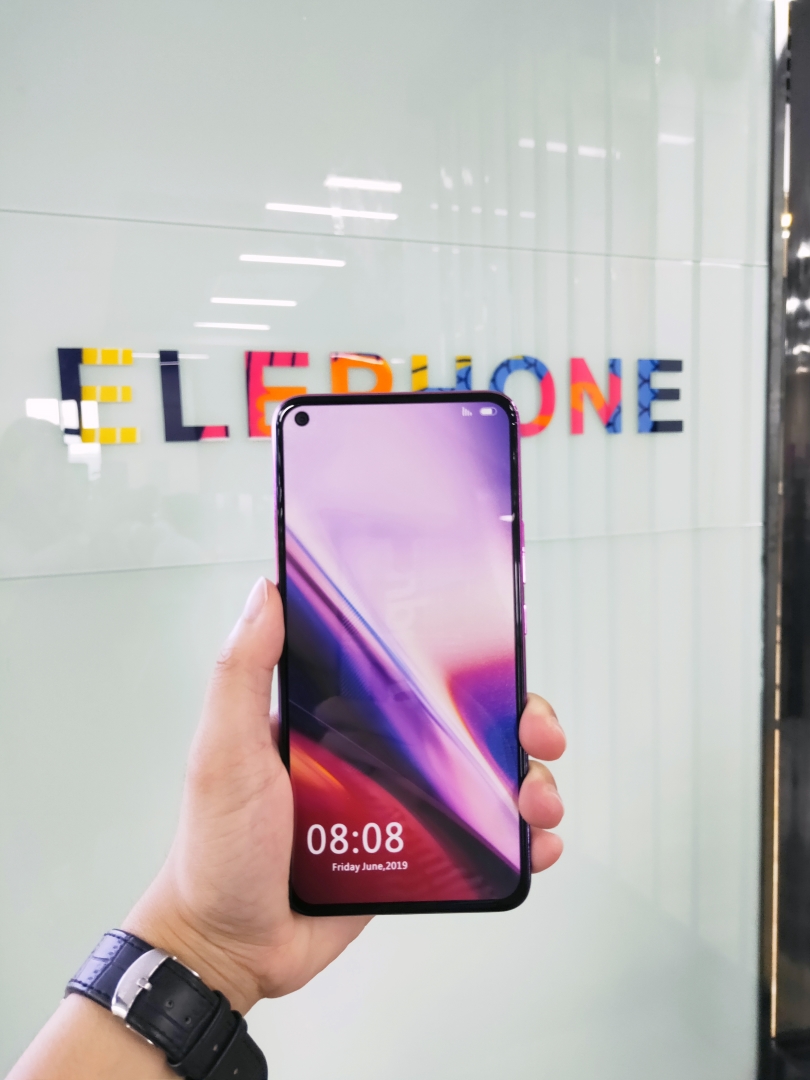
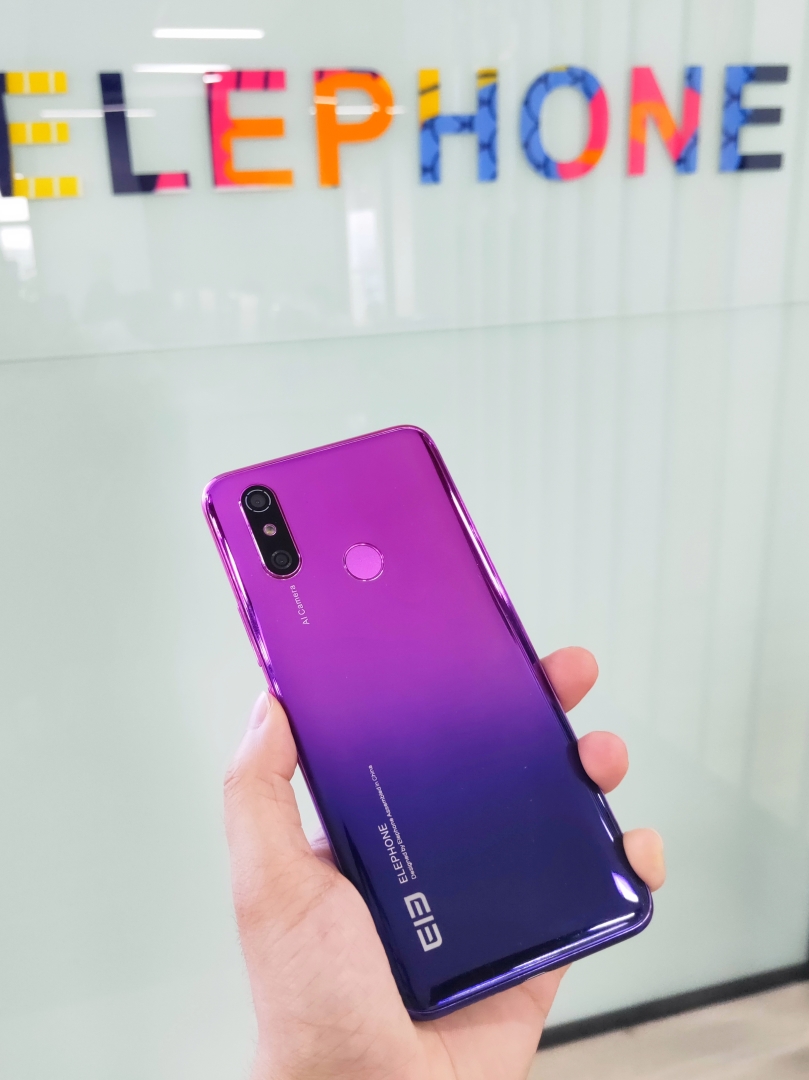
After the successful release of its first pop-up camera phone, Elephone U2, the Chinese manufacturer seems ready to continue releasing cutting edge phones. Two photos of a new device surfaced today, showing a phone featuring a punch-hole selfie shooter and a dual rear camera.

No further details were revealed by the company and the only thing we can tell for sure is that it will come with a gradient glass back as well as a rear-placed fingerprint sensor. The front of the device looks impressive with thin bezels and small bottom chin. We assume that more information will be available very soon.

Elephone U2

At the same time, the current mid-range pop-up camera flagship is still on promotion on Geekbuying where you can get the 6GB/128GB version for just $249.99 until July 16th. Meanwhile, the Giveaway results are out on the company’s Facebook page! If you are interested, you can see all the details about it on the official product page and Elephone’s YouTube channel and get the chance to participate in future giveaways.

Leaked Huawei Mate 30 Pro screen points to an unusually curvy edges

Huawei is expected to announce the Mate 30 series around September this year. As usual, the rumour mills will be kept buzzing with leaks concerning the device. Over the past few years, the Mate 30 Pro has always stolen the show and this year isn’t going to be different. A leaked screen panel said to be for the Mate 30 Pro shows the device will adopt a rather unique design.Huawei Mate 30 Pro

The screen panel shared by popular Twitter tipster @Iceuniverse shows the device will have curved sides with the curvature almost making an angle of 90°. The device is expected to utilise a 6.71-inch OLED panel which will probably make holding the phone without your palm touching the side of the screen impossible. That shouldn’t be a problem, though, as it will likely be taken care of with Palm rejection feature.

This leak is in sync with a recent report from Huawei’s factory which says the company is experimenting with a glass unibody, which will join the curvatures of the front and back glass panes. We could see that materialize on the Mate 30 Pro. However, we have no idea how Huawei hopes to take care of the side capacitive keys. With a curved edge glass panel, there isn’t a chance the device will have physical keys. That can only happen if the manufacturer wants to make the device bulky which isn’t going to happen. It is possible the device will use virtual buttons on the curved edge.

Mate 30 Pro notch

In addition, the tipster also shared an image showing the silhouette of the Mate 30 Pro’s notch and it is a big one. At a time, fans are looking for notch-less phones, this may be disappointing to some.


UP NEXT: Huawei Enjoy 9S fresh TENAA listing reveals 6 GB RAM + 128 GB storage edition

(source)

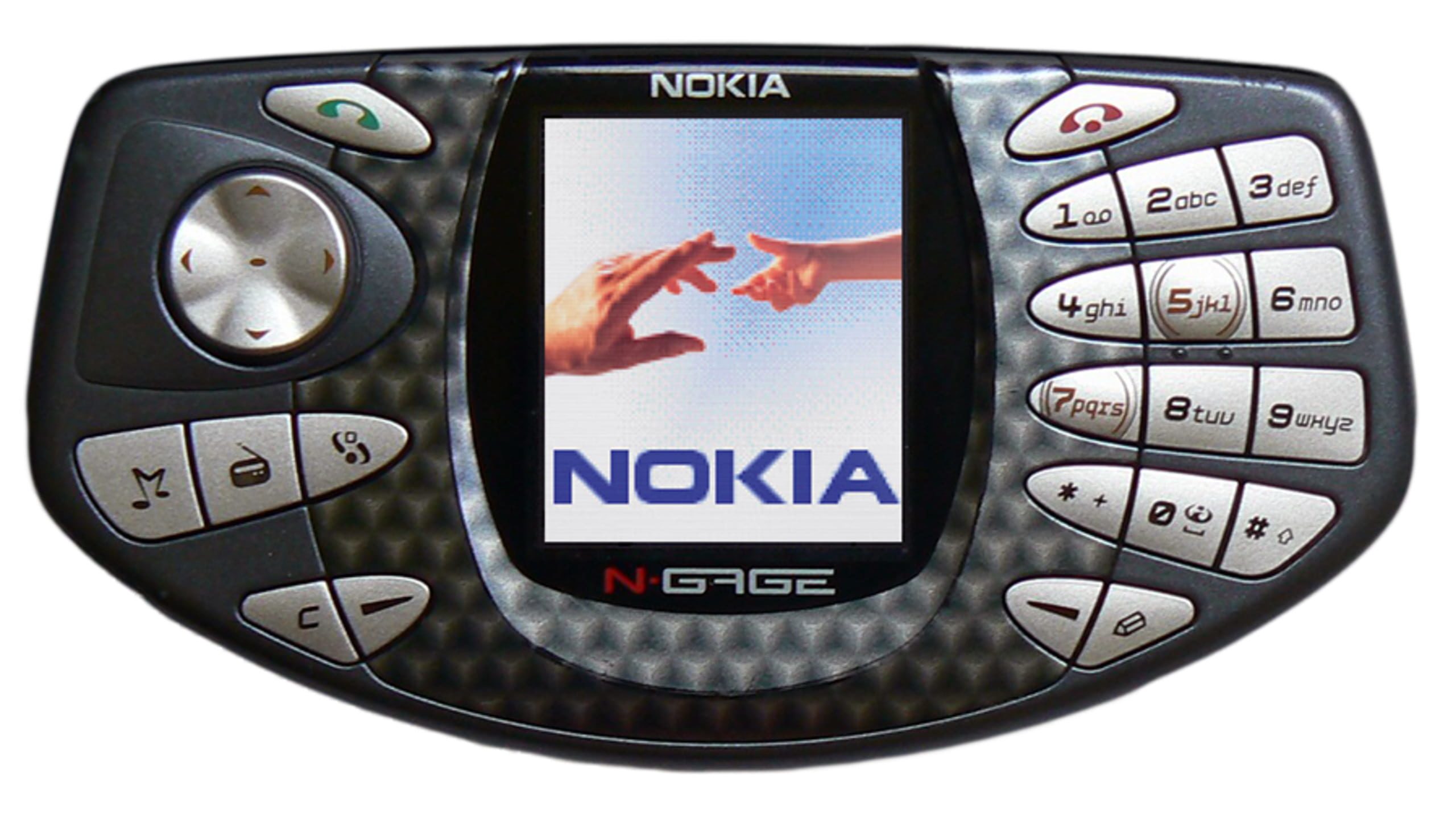
Throwback Tech Thursday: Engaging the Legendary Nokia N-Gage!

Back in 2003, Nokia was basically the Samsung of today, selling more phones than any other manufacturer. So, the Finnish phone giant thought this was a good time to experiment. Well, we have seen Nokia experiment before and some of them have been crazy (take the lipstick phone for example), but this time, the company wanted to fancy its chances in the gaming market.

Remember that back in 2003, phones were not gaming devices. Snake was probably the most popular game back then. So, launching a gaming smartphone hybrid wasn’t a mainstream idea. But Nokia was the largest phone manufacturer in the world and it could afford to make mistakes. This led to the birth of the legendary N-Gage lineup.

Nokia N-gage 02

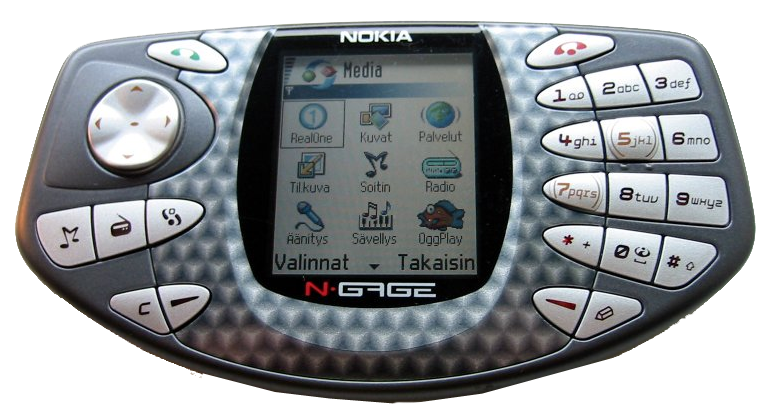
N-Gage was no ordinary phone and you could tell that just by looking at its design. The phone had a 2.1-inch display, which is really small by today’s standard, that was flanked by D-pad and several quick keys on the left and an alphanumeric keypad and other quick buttons on the right. If not for the buttons on the right, you would have easily mistaken it as an handheld gaming console.

Yet, the Nokia N-Gage was a true phone. You could make calls, send and receive texts, and even access calendar and other media applications. Further, you had Bluetooth and a WAP browser! So, it was a pretty decent phone for its time. One thing that was a bit awkward was the way you had to make/receive calls. Because the speaker was located on the side, when talking on the phone, you had to keep it sideways. Well, I’m sure not a lot of people were eager to talk on this device!

Image result for nokia n-gage titles

If you somehow could ignore this design aspect, the N-Gage offered some really good features on the gaming side. First, big names such as Sega, EA, and Ubisoft brought their popular titles to the N-Gage platform. Games like Call of Duty, FIFA, Sonic, and Tomb Raider were available to play on the phone. All you had to do is insert the gaming cartridge in the device and you were set for your gaming session. To top it off, the N-Gage supported Bluetooth wireless multiplayer and came with an onboard mp3 and video player too which was a big deal in its time!

Editor’s Pick: Xiaomi’s new AutoFull gaming chair is inspired by a Basketball

However, despite the popular titles available on the phone, it didn’t garner enough sales. One big reason could have been its expensive price tag of $299. In contrast, the Gameboy was cheaper! Another reason could have been its design and usability issues. I mean, you had to switch off the phone and remove the battery every single time to replace the gaming cartridge.

No wonder PC Mag described the N-Gage in these words — “a poorly implemented great idea.”

Nokia N-gage 01

Despite the criticisms it received, the concept of a gaming phone, as we know it today, was established by the N-Gage. So when you see flagship smartphones like the ASUS ROG, Nubia Red Magic, or even the Xiaomi Blackshark, do remember the legendary Nokia N-Gage which conceptualized this idea!

Still interested in the Nokia N-Gage? Check out this video!


Did you ever use the Nokia N-Gage? Do you still have it with you?


Previous Throwback Tech Thursday Coverage:

Samsung Galaxy Note 10 5G likely to arrive with 12 GB RAM and 1 TB storage

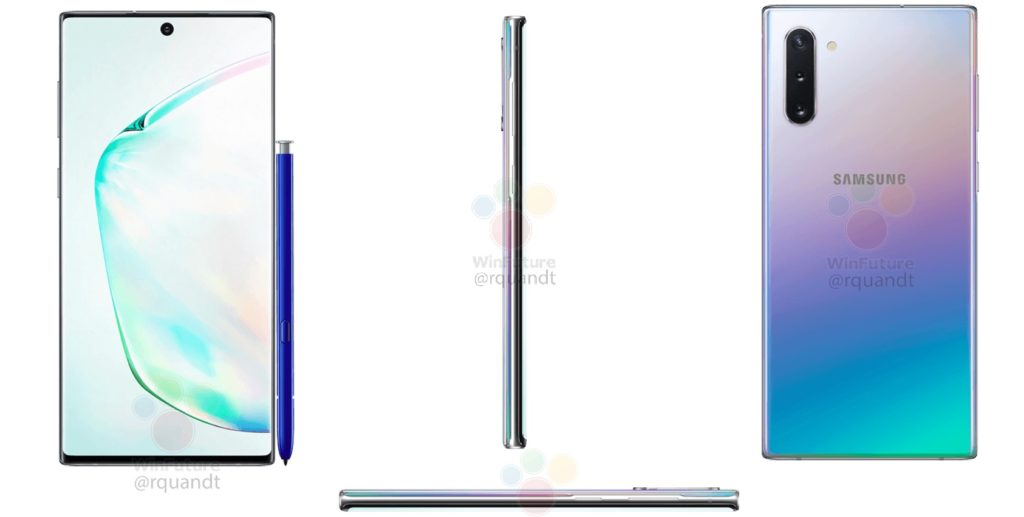
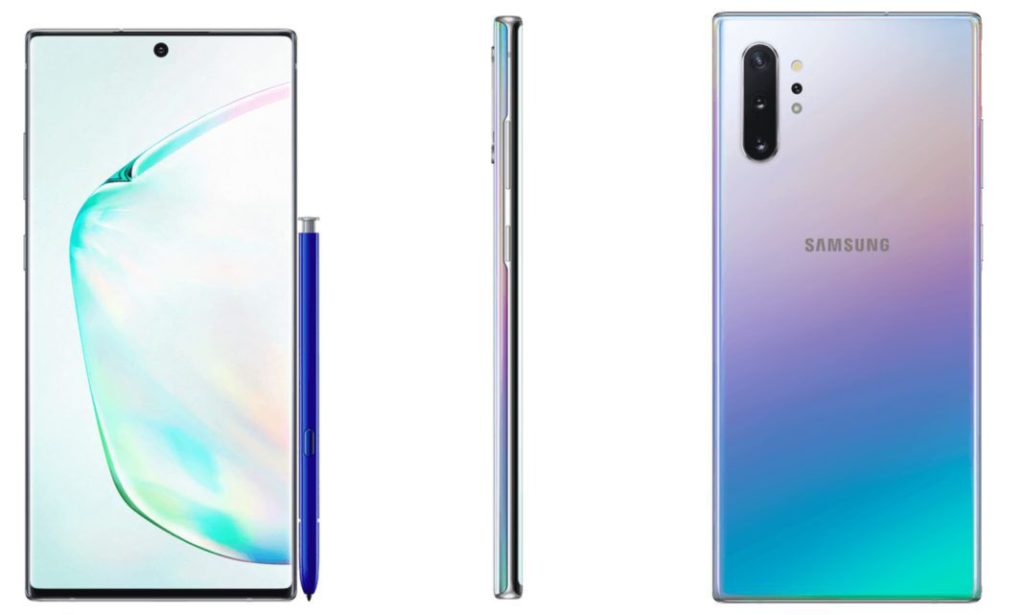
As the Samsung Galaxy Note 10 inches towards its official launch date in August, the rumor mill is working overtime to leak the design and specifications of the flagship smartphone. A couple of new renders claiming to be of the Galaxy Note 10 and the Note 10+ have just surfaced, revealing quite a lot about the design of the flagship duo. Also, another leak has revealed the different variants of the Galaxy Note 10 5G. 

The base variant of the Galaxy Note 10 5G gets 256GB of internal storage. The high-end versions of the phablet will come with 512GB and 1TB of native memory. The RAM capacity of the Note 10 5G are expected to vary with the internal storage of the device. 

While the top-of-the-line variant of the Note 10 5G gets 12GB of RAM + 1TB of storage, the lower-spec version with 8GB of RAM is expected to feature 256GB and 512GB of internal storage. Like the Galaxy S10 5G smartphone, the Note 10 5G may not feature a microSD card slot.

Galaxy Note10 Silver
Galaxy Note 10

Previous reports have revealed that the LTE-only version of the Galaxy Note 10+ will come with 256 GB base model and storage variants up to 1 TB. The LTE-only Note 10 is expected to come with a base model of 128 GB.

Samsung Galaxy Note 10 Specifications and Features:

Reports have revealed that the  Galaxy Note 10 has a 6.3-inch Super AMOLED display with HDR 10+ support along with QHD+ resolution. On the other side, the Note 10+ features a larger quad HD+ 6.7-inch AMOLED display with HDR 10+ support. They reveal a centrally-placed punch-hole camera with thin bezels on all four sides. Both  smartphones feature a curved display, but miss out on a dedicated Bixby button.

Samsung-Galaxy-Note-10-Silver-1068x641
Galaxy Note 10+

Both devices also miss out on a physical fingerprint scanner, confirming the presence of an in-display fingerprint sensor. While the silver variant of the smartphone is seen with a blue S Pen stylus, the black variant gets a body-colored stylus.

The Samsung Galaxy Note 10 duo gets a vertically-aligned triple camera setup, which is a major change from the centrally-positioned horizontal setup found on their predecessors. The Galaxy Note 10+ gets an additional sensor at the rear, which could be a 3D ToF sensor. The Samsung Galaxy Note 10 duo misses out on the 3.5mm audio jack. Hence, the Note 10 series may arrive with  a new pair of USB Type-C wired earphones with noise cancellation feature..

The Galaxy Note 10 and Note 10+ models are expected to feature Snapdragon 855 or Exynos 9825 depending on the market. The predecessor Galaxy Note 9 came with a 4,000mAh battery. Rumors have it that the Note 10 series may feature bigger batteries with support for 25W fast charging, wireless charging and reverse charging.

The Samsung Galaxy Note 10 and Note 10+  will be officially unveiled on Aug. 7. The South Korean company is also expected to announce Snapdragon 855 powered Galaxy Tab S6 flagship tablet around the same time.

UP NEXT: Samsung Galaxy A50s (SM-A507F) AnTuTu and Geekbench listing leak key specifications

OnePlus TV launch nearing? OnePlus TV remote bags Bluetooth SIG certificate

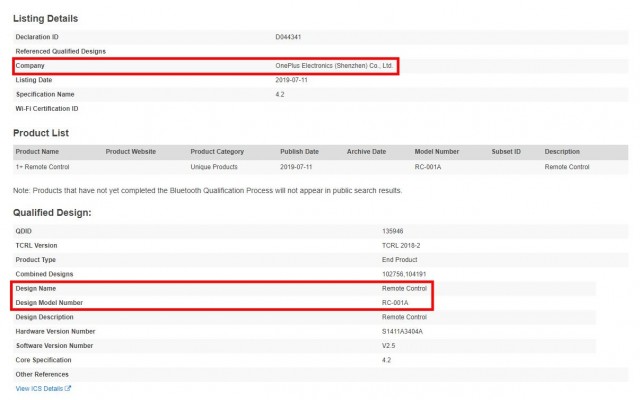
In September 2018, OnePlus confirmed that it will foray into TV market in this year. In April, OnePlus CEO Pete Lau had again confirmed that the company is working on a smart TV. A report from the previous month had claimed that the Chinese firm will be soon debuting its first smart TV. Thanks to All About OnePlus, a OnePlus remote control that has a model number of RC-001A has been spotted on the database of Bluetooth SIG certification body. The spotting of OnePlus remote control is big hint that the arrival of OnePlus TV is close at hand.

The below shown Bluetooth SIG listing for RC-001A remote control show that it carries support for Bluetooth 4.2 In the recent past, Lau has claimed that the existing TV removes are outdated, and he is of the view that AI can greatly assist in showing relevant information to the user. It appears that the Bluetooth enabled OnePlus TV remote control will feature a dedicated button for accessing AI assistant.

OnePlus TV Bluetooth SIG

Previous reports have revealed that OnePlus TV will receive software updates for five years after its launch to ensure that it remains futureproof. The OnePlus TV is expected to sport a premium design like the OnePlus smartphones, and it will be powered with its own AI engine. The company is reportedly focusing more on the image and video quality of its upcoming smart TV. The OnePlus TV and smartphone will be able to connect with each other seamlessly. It is also expected to come with a built-in camera.

OnePlus TV

Xiaomi TVs are highly popular in India. During the launch event of the OnePlus 7 in the country, OnePlus India Head Vikas Agarwal had claimed that the OnePlus TV is the firm’s next focus for the India market. The OnePlus TV will be exclusively available through Amazon India in the country. It is expected to arrive with a competitive price tag. Rumors are rife that it could be equipped with 4K LED display and it function as a smart home controller.

(source|via)

UP NEXT: Nokia 9 PureView vs Honor 20 Pro vs OnePlus 7: Specs Comparison

ZTE teases Android Q beta is coming to the Axon 10 Pro

With the official launch of Android Q getting closer, more manufacturers are already developing beta versions for their devices so that they can roll out an update in time. Today, ZTE has announced that the Axon 10 Pro will soon get a beta version of Android Q.

The Axon 10 Pro in China runs MiFavor UI  – a custom version of Android, while the international version runs a near stock version of Android. The announcement was made on Weibo in form of a teaser poster shared by the official Mi Favor account.

ZTE Axon 10 Pro Mi Favor Android Q beta

The poster has a QR code at the bottom corner. Those interested in testing the new beta version are required to scan the code and apply to join the program.

There is no info on when a beta version of Android Q will be available for the global version though it did say it hopes to update the phone to Android Q and Android R.

The Axon 10 Pro was released this May. It has a 6.47-inch curved AMOLED display with a 1080 x 2340 resolution and HDR10 support. There is a Snapdragon 855 processor under the hood paired with 6GB of RAM and 128GB of storage. It has a MicroSD card slot for storage expansion. It also uses the F2FS file system format and is the first Snapdragon 855-powered phone to do so.

The display has a notch that is home to a 20MP sensor while the back houses a 48MP f/1.7 primary camera, an 8MP telephoto camera, and a 20MP ultra-wide angle camera. The Axon 10 Pro doesn’t have an audio jack like its closest competitor, the OnePlus 7 duo but it has stereo speakers with Dolby Atmos. Other features are a 4000mAh battery with support for Quick Charge 4+ and wireless charging, an in-display fingerprint scanner, and a USB Type-C port.

(Source, Via)


UP NEXT: ZTE Blade A7 2019 gets a global version, powered by Unisoc SC9863A

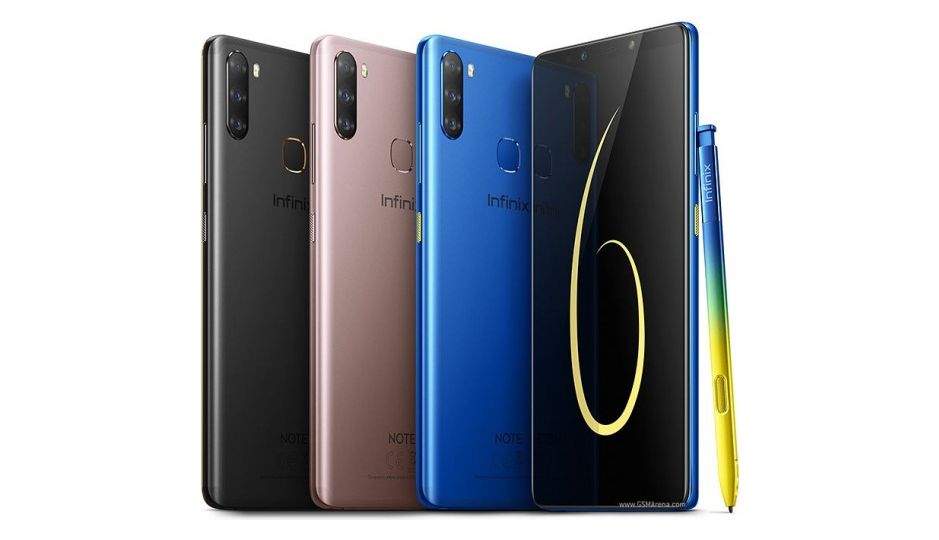
Infinix Note 6 with triple cameras and X Pen stylus is official

Infinix Mobile has unveiled a new smartphone called Infinix Note 6. The major highlight of the smartphone is that it comes equipped with a X Pen stylus. It is also blessed with decent features like large-sized display, big battery, triple cameras and nominal pricing. It has arrived as a successor for the Note 5 Stylus smartphone.

Infinix Note 6 Specifications

The Infinix Note 6 features a 6.01-inch AMOLED display that produces full HD+ resolution. It carries support for Always-On Display functionality. The Note 6 with conventional bezels offers an aspect ratio of 18:9.

The MediaTek Helio P35 chipset that includes an octa-core processor that works at 2.3 GHz is present under the hood of the device along with 4 GB of RAM. It has a native storage of 64 GB. There is a hybrid SIM slot on the device that can be used for adding a microSD card.

Infinix Note 6 color variants

The Note 6 has an LED flash enabled triple camera setup on its rear. It features a 16-megapixel main lens, an 8-megapixel ultrawide lens and a 2-megapixel depth senor. The front-facing camera of 16-meagpixel carries support for AI beautification features. The XOS 5.0 based Android 9 Pie OS runs on the device. The smartphone features a 4,000mAh battery which carries support for fast charging. A fingerprint scanner is available on the backside of the Infinix Note 6.

Coming to the main highlight of the AI and AR powered X Pen stylus which is the major highlight of the Infinix Note 6, it can be used to make immersive sketches and notes. The X Pen can be also used for measuring real objects by using the AR Measure feature. The handset features a compartment for the X Pen stylus at its bottom side.

Infinix Note 6 Price

The Infinix Note 6 is available for purchase in few African markets with a pricing of around $200. It comes in color editions like Midnight Black, Mocha Brown and Aqua Blue. The latter features a gold-colored power button.

UP NEXT: Huawei Mate 30 rumored to come with a unibody glass design

Samsung Galaxy A50s (SM-A507F) AnTuTu and Geekbench listing leak key specifications

In February, Samsung had launched the Galaxy A50 mid-range smartphone. The handset is available with a price tag of 349 euros in European markets. In the first half of 2019, Samsung has launched Galaxy A10, A20, A30, A40, A50, A60, A70 and A80 smartphones. Recent reports have revealed that the South Korean company will be releasing new versions of the A-series in the latter half of 2019. A new Samsung phone with model number SM-A507FN is rumored to be in works. It is speculated to debut in the market as Galaxy A50s. The arrival of the phone seems to be close at hand as it has been spotted on Geekbench and AnTuTu benchmarking platforms. Different variants of the rumored Galaxy A50s has also received approval from Wi-Fi Alliance body.

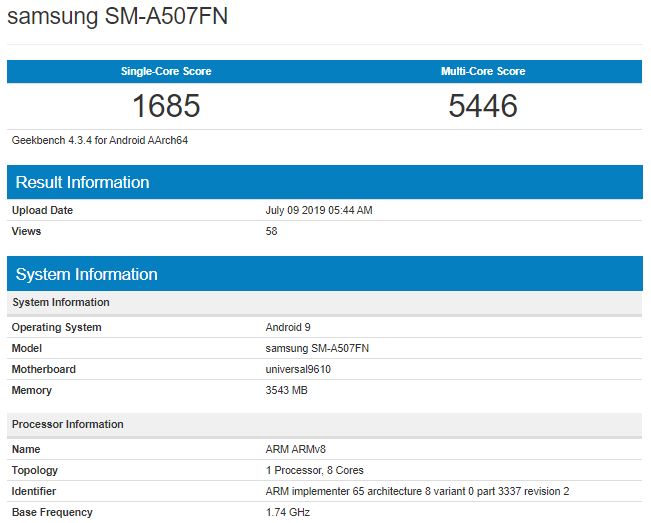
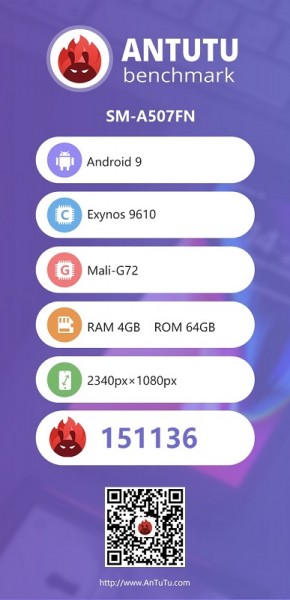
Alleged Galaxy A50s on Geekbench and AnTuTu

On Geekbench, the SM-A507FN has scored 1685 in single-core test and 5446 in multi-core test. The handset is loaded with Android 9 Pie OS. The Exynos 9610 chipset that includes a 1.57 GHz octa-core processor fuels the smartphone. It comes with up to 4 GB of RAM.

The AnTuTu listing of the SM-A507FN also confirms that it is fueled by Exynos 9610 chipset, 4 GB of RAM and Android 9 Pie OS. The size of the display of the phone is not mentioned on AnTuTu. It carries support for full HD+ resolution of 1080 x 2340 pixels. The handset has an internal storage of 64 GB. It has recorded an average benchmarking score of 151,136.

The Wi-Fi Alliance certification body has approved two new listings for SM-A561F and SM-A562F. The listings that were first spotted by MySmartPrice reveals that the handset carries support for Wi-Fi 802.11ac. These could be the two variants of the rumored Galaxy A50s phone. No other details on the smartphone are available yet.


All the specs of the purported Galaxy A50s that have appeared so far are identical with Galaxy A50 handset. The A50 that has a 25-megapixel + 8-megapixel + 5-megapixel triple camera setup and a front-facing camera of 25-megapixel was recently benchmarked on DxOMark with a decent score of 83. Probably, the Galaxy A50s could be arriving with improved camera capabilities.

Samsung Galaxy A50 Specifications

The Galaxy A50 has a full HD+ 6.4-inch S-AMOLED display with in-screen fingerprint scanner.  The Exynos 9610 chipset of the phone is assisted by 6 GB of RAM. It is available in 64 GB and 128 GB storage versions. The handset is packed with a 4,000mAh battery that carries support for 15W fast charging. The handset is available in color edition such as Black, White, Blue and Coral.

(source 1, 2, 3)

UP NEXT: Samsung Galaxy Tab S6 specifications and images leaked as launch nears

Amazon Echo Dot, Apple AirPods, and XIDU PhilBook Max among the best deals for Amazon Prime Day!

Amazon Prime Day represents the biggest sales you’ll find all summer if you are a Prime Member. As every year, ahead of the 48-hour deals marathon, an Early Prime Day will take place including laptops, video games, 4K TVs, phones and, of course, Amazon’s own Echo products. This is Amazon’s way of securing more Prime memberships. The sales are already up and the Echo Dot gets a 50% price cut costing just $24.99. On the list, you can even find Apple products like the AirPods, the entry-level iPad, Fitbit, and Roomba. XIDU is also taking part in the sale on July 14th with a laptop up to 40% off. The official sale will begin on July 15th and its going to get a bit chaotic so let’s see some details.

XIDU Amazon Prime Day

Amazon Prime Day starts on Monday, July 15th just after midnight (at 12:01 am PDT) and ends on Tuesday, July 16th (at 11:59 pm PDT). This is West coast time so some deals may appear online as soon as 3:00 am ET.  Also, the best tactic to follow during Prime Day is to make your purchases during the presale offers so that you have time to make any returns in case you find a better price later on.


Laptop Deals

XIDU Amazon Prime Day

Deals appear gradually over the period of these 4 days (including the “warmup” period) so for example, the XIDU PhilBook will go live on July 14th 00:00 PDT with a deal price of $215.99 instead of $269.99 while the PhilBook Max will cost as low as $339.99 instead of $439.99.


History of Prime Day

XIDU Amazon Prime Day

Prime Day first launched four years ago and has grown into the biggest shopping day of the year with last year’s even surpassing Cyber Monday and Black Friday with 89 million visitors logging on to the site with 100 million products purchased during the sale event. Globally it was the biggest day of sales in Amazon’s history, and Amazon Prime Day 2019 is going to be even bigger.

New realme phones believed to be Realme 4 and Realme 4 Pro get certifified

Realme will launch two new phones on Monday, July 15 – the Realme X (not counting the Spider-Man Edition) and the Realme 3i, bringing its lineup for the year to six. With the year still having five months to go, more devices are expected to launch and it appears the Realme 4 and Realme 4 Pro might just be among.

Three new Realme phones with model numbers RMX1921, RMX1927 and RMX1971 were recently certified by the Eurasian Economic Commission in Russia and they are believed to be the Realme 4 and Realme 4 Pro. While the certificates don’t outrightly say those are their names, the model numbers of two of the phones hint at them being successors to the Realme 3 and Realme 3 Pro whose model numbers are RMX1821 and RMX1851 respectively. We are not sure about the phone with model number RMX1927 but that may be a successor to the Realme U1.

[envira-gallery id=”263706″]

The Realme 4 duo should come with new processors, upgraded cameras, and new designs. We also expect one, if not both of them will have a USB Type-C port. Android Q should be already official by the time they arrive but they will most likely run Android 9 Pie with an update to Android Q scheduled for later.

(Via)


UP NEXT: Flipkart confirms Realme 3i has an Helio P60 processor and a 4230mAh battery

Motorola P50 TENAA listing reveals more variants may launch in the future

The Motorola P50 will be available for purchase on July 20 in China but pre-orders begin on July 15. The phone is the Chinese variant of the Motorola One Vision. However, unlike its international variant, the P50 has more RAM (6GB) but comes with the same storage. The phone has now gotten certified by TENAA and the listing reveals there will be two other configurations too.

Alongside the 6GB RAM version, TENAA says there is an 8GB RAM version with 256GB of storage and a 12GB version with 512GB of storage. That sure is a lot of RAM and storage for a mid-range device.

[envira-gallery id=”263690″]

The Motorola P50 will have a 6.34-inch LCD display with a 1080 x 2520 resolution. The screen has a punch hole in the top left corner for the selfie camera. On the back are dual rear cameras, although TENAA didn’t reveal the specs, Motorola already disclosed they are a 48MP f/1.7 primary sensor and a 5MP depth sensor while the selfie camera is a 25MP sensor.

The listing also says the phone will run Android 9 (with ZUI on top), have a 3290mAh battery (actually 3500mAh), and be available in black, blue, gold, white, silver, and gray. It weighs 180 grams and measures 160 x 71 x 8.7 millimeters.

Motorola already revealed the 6GB + 128GB version will sell for ¥2499 (~$364). We don’t know when and if the other RAM variants will be released but they sure will sell for a lot more.

(Source)


UP NEXT: Motorola’s Moto Z4 will only get updated to Android Q

Xiaomi Mi A3, Mi A3 Lite with SD730 and SD675 to arrive soon, claims report

Xiaomi has been launching Android One smartphones since the past two years. In 2017, the Xiaomi had launched the Mi 5X smartphone in China and the same phone’s Android One edition was unveiled as Xiaomi Mi A1. Last year, the Mi 6X for China was made available as Xiaomi Mi A2 Android One phone. Alongside the Mi A2, the company had also sold Mi A2 Lite Android One which was made available in some markets like China and India as Redmi 6 Pro. It was speculated that the recently unveiled Mi CC9 and Mi CC9e phones that respectively features SD710 and SD665 chipsets could be arriving in international markets as Mi A3 and Mi A3 Lite. Fresh information shared by popular tipster Ishan Agarwal states that the Mi A3 and Mi A3 Lite will respectively feature Snapdragon 730 and Snapdragon 675 chipsets.

The leakster has claimed that the new details on the Mi A3 series shared by him is a confirmed information. This indicates that the Mi A3 series will be more powerful than the Mi CC9 lineup. The Xiaomi Mi A2 and A2 Lite were announced in July which suggest that the arrival of the Mi A3 and Mi A3 Lite phones could be close at hand.

Xiaomi Mi CC9e

In the previous week, an Android One smartphone by Xiaomi with model number M1906F9SH was certified by the Federal Communications Commission (FCC) in the U.S and IMDA authority in Singapore. Not only the model number of the phone matched with the Mi CC9e, but also its dimension and rear design. It was also revealed that the Android One phone is equipped an AI powered 48-megapixel triple camera setup and in-screen fingerprint sensor. The CC9e also features a 48-megapixel triple camera unit. Hence, it may so happen that the Mi A3 and Mi A3 Lite could be international version of Mi CC9 and CC9e phones with more powerful chipsets.

The Mi CC9 and CC9e respectively features 6.01-inch and 6.39-inch S-AMOLED display with full HD+ resolution. Both phones feature 48-megapixel + 2-megapixel + 2-megapixel triple camera unit and 32-megapixel front-facing camera. They are also equipped with in-display fingerprint scanner. These handsets are packed with 4,030mAh batteries that carry support for 18W fast charging.

(source)

UP NEXT: Xiaomi crowdfunds the DuYQYQ AI English learning Machine Pro

EMUI 10 will launch at Huawei Developer Conference 2019

Recently, Huawei announced that it will hold the Huawei Developer Conference 2019 in Songshan Lake, Dongguan from August 9th to 11th. The conference’s keynote speech will be held on the first day of the event. We knew that Huawei would definitely be making a big announcement at the event, but now we know at least one of the things we’re going to see.

Huawei has recently updated the HDC2019 website, and it shows us that EMUI 10 will be launched at the event. This is some pretty big news on Huawei’s front, and we definitely weren’t expecting this. Part of that is because there’s been no news whatsoever regarding EMUI 10, and this is the first we’re hearing of it.

According to new rumors, EMUI 10 will feature a new design philosophy, or at least an updated version of the current design direction. We’ll also allegedly see a lot of improvements when it comes to the camera interface in terms of features, speed and features. It’ll also be based on Android Q, so we’ll get all those optimizations as well.

This is all honestly still quite surprising to us. Huawei haven’t been ones to make sudden announcements like this. It’s a move that makes a lot of sense though, seeing as to how HDC is their own developer conference. It only makes sense to make a big software launch at their own event. For more news on Huawei and EMUI 10, stay tuned on Gizmochina.com.

UP NEXT: Honor launch posters claim new product will launch on July 15th

(Source)

Huawei Mate 30 rumored to come with a unibody glass design

It’s already known that the Huawei is gearing up to launch its flagship smartphone series — Huawei Mate 30 in the coming months. Now, a report has surfaced online which sheds light on the upcoming smartphone’s design.

The report coming from the company’s supply chain suggests that the phone will come with a unibody design with no gap for the metal frame so that the phone can be made without any kind of notch or holes. It says that the company believes this kind of design to be the future of the smartphone design.

huawei logo

Earlier this year, another Chinese brand Vivo had introduced a concept phone with such glass unibody design. So, it’s quite possible that Huawei is preparing a smartphone with a glass unibody design.

If there are no holes in the phone, then the issue arises about the SIM card slot on the device. Well, the report says that the company will adopt the eSIM technology instead of the traditional SIM card.

For regular buttons such as power button and the volume rocker keys, it is said that the company will take the pressure-sensitive approach. For charging, the phone will have to be dependent on wireless charging.

However, take this information with a pinch of salt and there’s hardly any evidence pointing towards Mate 30 using the glass unibody design. While such a design for a smartphone is possible for the near future, we don’t expect the Huawei Mate 30 to take such an extreme approach of opting for a no-holes design.

(Via)

Up Next: Huawei Enjoy 9S fresh TENAA listing reveals 6 GB of RAM and 128 GB storage edition

Redmi 7A Sold Out in Seconds in its First Sale, India MD promises more Stock Next Week

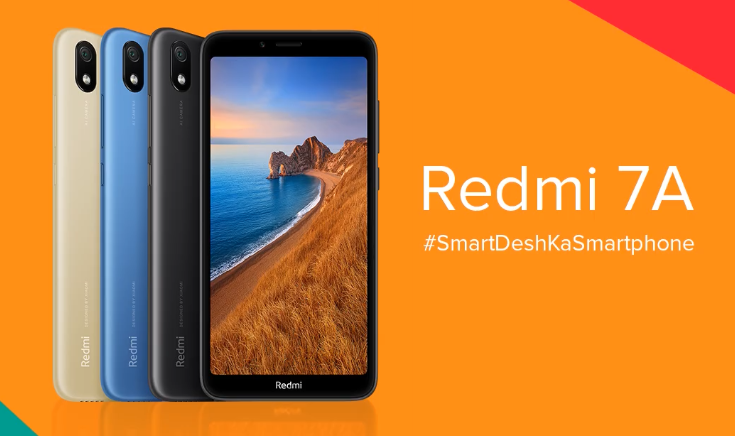
Redmi gave some solid upgrades to its budget lineup this year, with the new Redmi 7A featuring an octa-core processor and better specs as compared to its predecessor. The phone was announced a few days ago in India and went on sale for the first time today. Unsurprisingly, the Redmi 7A was sold out within a few seconds in its first sale.

REdmi 7A

The phone was naturally quite popular in the budget segment due to its attractive price tag of just Rs. 5999 ($87). At this price, the Redmi 7A offers Snapdragon 439 octa-core processor, 2GB of RAM, 32GB of internal storage, and an HD 720p 5.45-inch display. The polycarbonate body and the 18:9 aspect ratio ensures the phone doesn’t look cheap. Further, there’s a large 4000mAh battery on board to power the device for a couple of days easily. With these specs, you get tremendous value for money under $100.

Editor’s Pick: Huawei doesn’t want People to Buy its Products just because its Patriotic

However, it looks like Xiaomi couldn’t prepare enough stock in the first sale with the device selling out in a matter of seconds on both Flipkart and Mi.com. India MD Manu Kumar Jain has promised more stock in the second sale next week (July 18) but it remains to be seen whether it’ll be enough for users to grab a unit for purchase.

Redmi 7A

Note that the Redmi 7A does not have a fingerprint sensor but users can take advantage of its AI face unlock. There are two storage variants available, a 2GB+16GB model priced at Rs.5999 (~$87) and a 2+32GB one priced at Rs.6199 (~90). However, for a limited time this month, the company is offering both the variants at discount. So you can get the 32GB model at just Rs.5999 (~$90) which would be a steal!

UP NEXT: Google Stops Android Q Beta 5 Update Citing Installation Errors

(Source)

Huawei Enjoy 9S fresh TENAA listing reveals 6 GB RAM + 128 GB storage edition

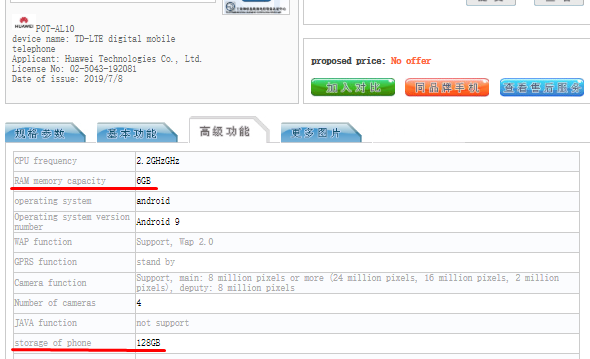
The Huawei Enjoy 9S that has a model number of POT-AL00a had launched in China in March. The smartphone has been available for purchase in the home market in 4 GB and 6 GB RAM editions. While the 4 GB RAM model of the Enjoy 9S comes in 64 GB and 128 GB storage editions, the 6 GB RAM variant is only available in 4 GB RAM edition. A TENAA listing of the POT-AL00 smartphone reveals that the company may soon debut a new 6 GB RAM edition for it with 128 GB onboard storage.

In China, the Enjoy 9S is available in variants such as 4 GB RAM + 64 GB storage for 1,499 Yuan (~$218), 4 GB RAM + 128 GB storage for 1,599 Yuan (~$232) and 6 GB RAM + 64 Gb storage and 1,699 Yuan (~$247). It is available in colors like Black, Aurora Blue and Coral Red editions. The TENAA listing of the POT-AL00 smartphone reveals that it will come with 6 GB of RAM and 128 GB of storage. As far as color variants are concerned, the listing reveals it will come in black, blue, etc. colors.

Huawei Enjoy 9S TENAA 6 GB RAM + 128 GB storage-

Huawei may soon announce the arrival of 6 GB + 128 GB Enjoy 9S in the coming days. Probably, it may carry a price tag of 1,799 Yuan (~$262).

Huawei Enjoy 9S Specifications

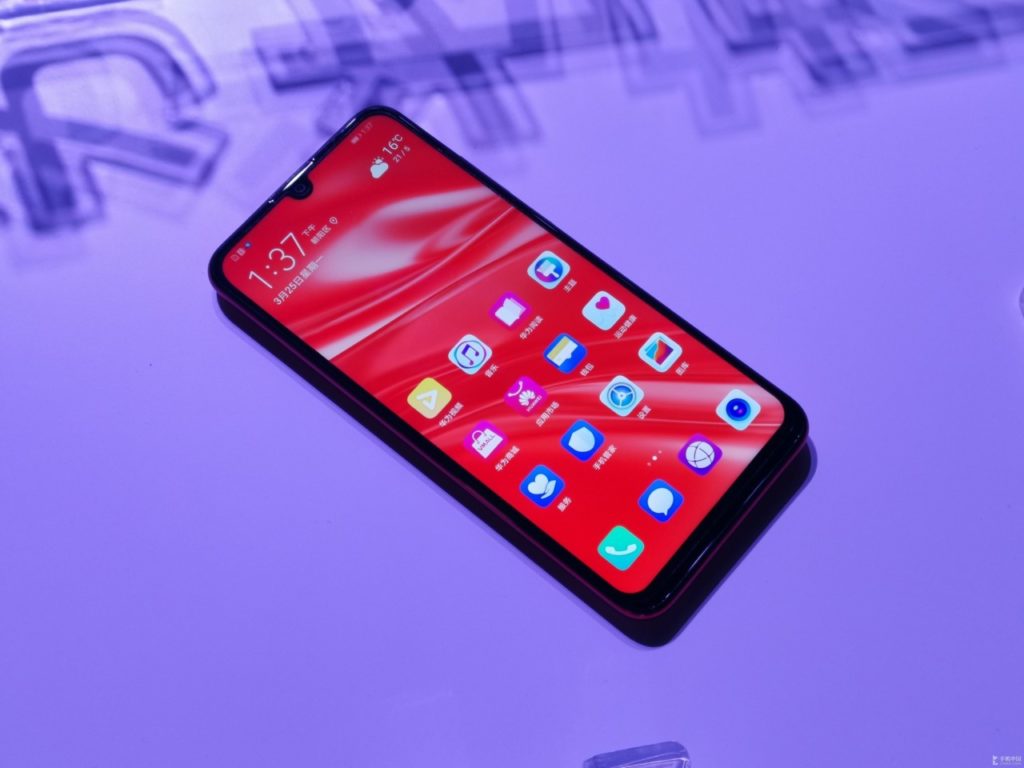
The Huawei Enjoy 9S has an IPS LCD display of 6.21 inches. It has a waterdrop notch and it carries support for full HD+ resolution of 1080 x 2340 pixels. The handset offers an aspect ratio of 19.5:9.

The EMUI 9 based Android 9 Pie OS runs on the device. It is fueled by Kirin 710 chipset. The handset features a 3,400mAh battery that is equipped with 10W charging. Apart from internal storage, the phone supports a microSD card through hybrid SIM slot.

Huawei enjoy 9S pictures

The Enjoy 9S has a front-facing camera of 8-megapixel. The triple camera setup that resides on its back panel has a 24-megapixel main sensor, a 16-megapixel ultrawide lens and a 2-megapixel depth sensor. A fingerprint scanner is available on the backside of the smartphone. The Enjoy 9S is available as Huawei P Smart+ 2019 in European markets.
(source)

UP NEXT: Huawei MediaPad T5 now available for purchase in India

Choetech Wireless Charging Pad Review: Light and Portable

How do you think about wireless charging? In these two years, most of mobile phone users focus on whether the latest smartphone coming with a feature of wireless charging. I am the one of them. With the wireless charging, users can pick up the phone easily without the charging cable. Several days ago, I got the Choetech Wireless Charging Pad. Let’s have a look!

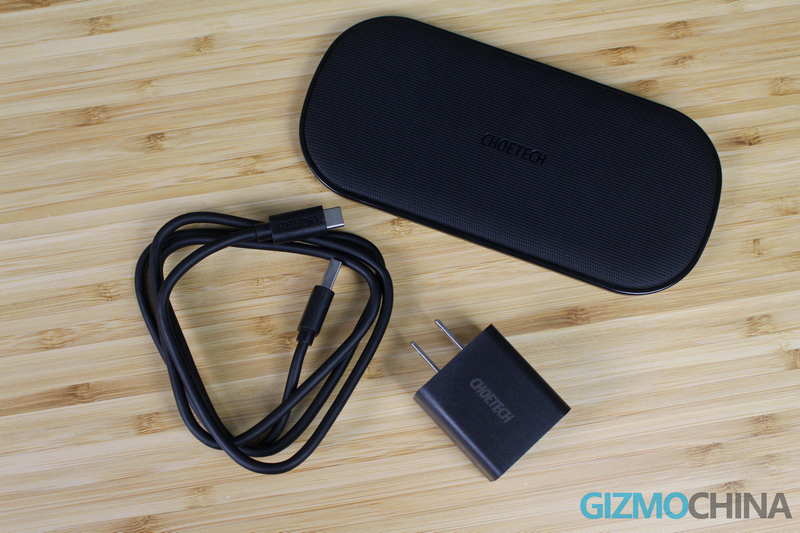
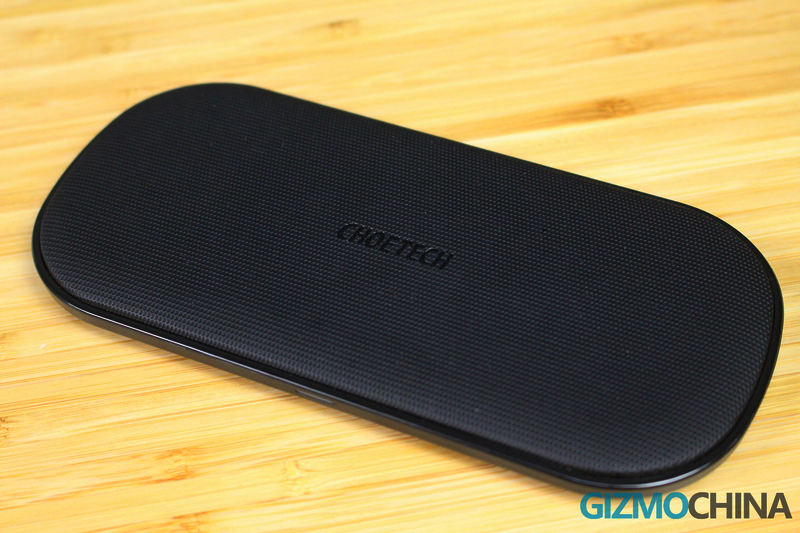
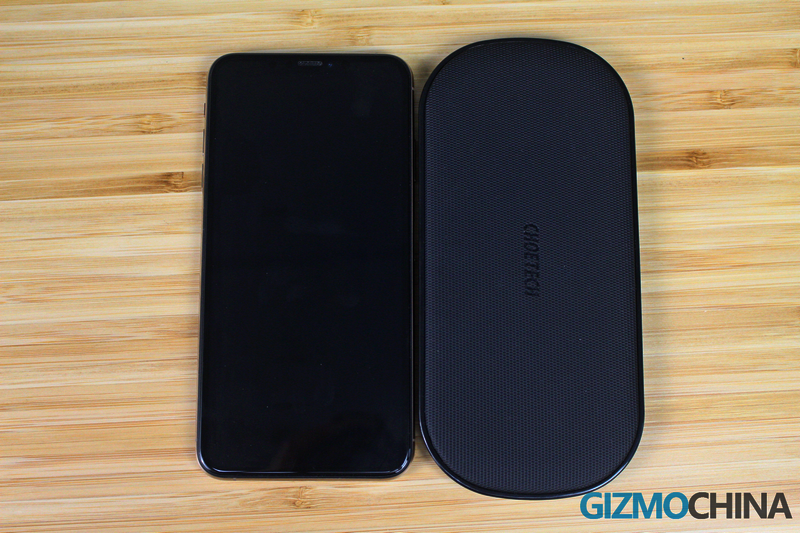
The Choetech Wireless Charger has an oval-shape design, which almost as size as iPhone XS Max. The wireless charger comes with anti-slip PU leather surface, which is textured and special. There is a logo of CHOETECH in the middle of the charging pad. In terms of weight, the charging pad is lighter than iPhone XS Max. During the period of use, I always take the charging pad in my bag to everywhere.
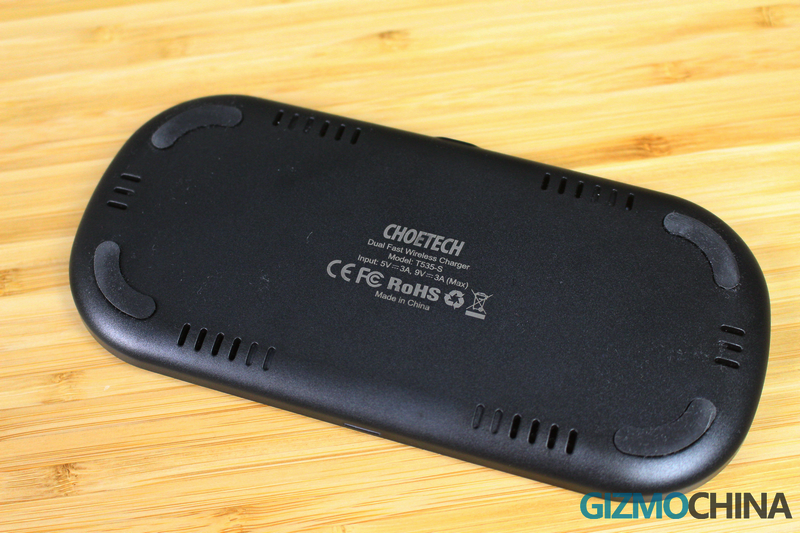
There are six ventilation holes and four rubber feet on the back side. The charging port, type-c port, is placed at the side face, and the indicator light is on the other side face.

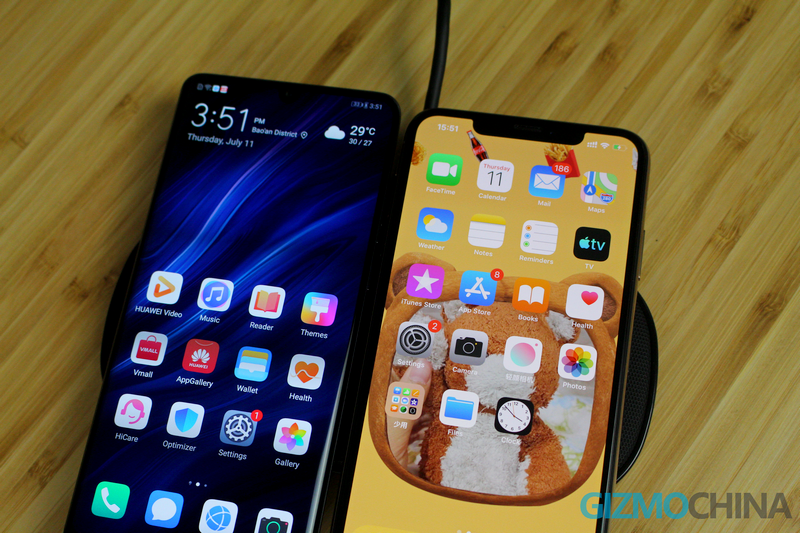
The design of the Choetech wireless charger is simple but practical. As the oval-shape design, you can put two smartphones on the charging pad to charge. Yes, the Choetech Wireless Charger Pad can charge for two smartphones at the same time. It’s really convenient for those people who have two smartphones. What’s more, you can share it with your friends and charge simultaneously.

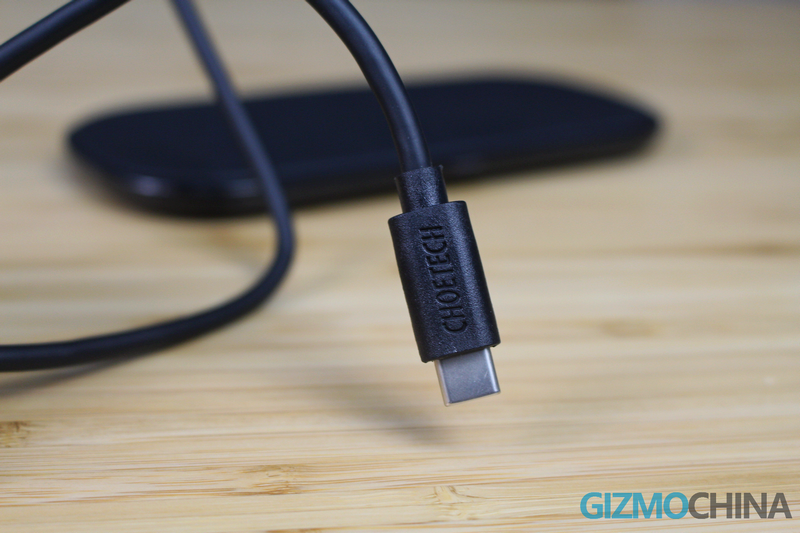
The charging pad ships with a charging cable, which is made from quality plastic for the cable. Actually, I do like the charging cable, which is a little thicker than the other charging cable.

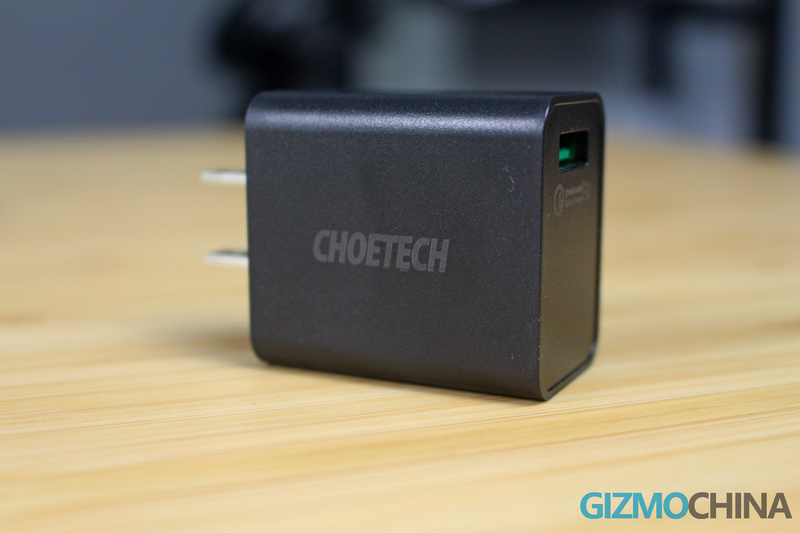
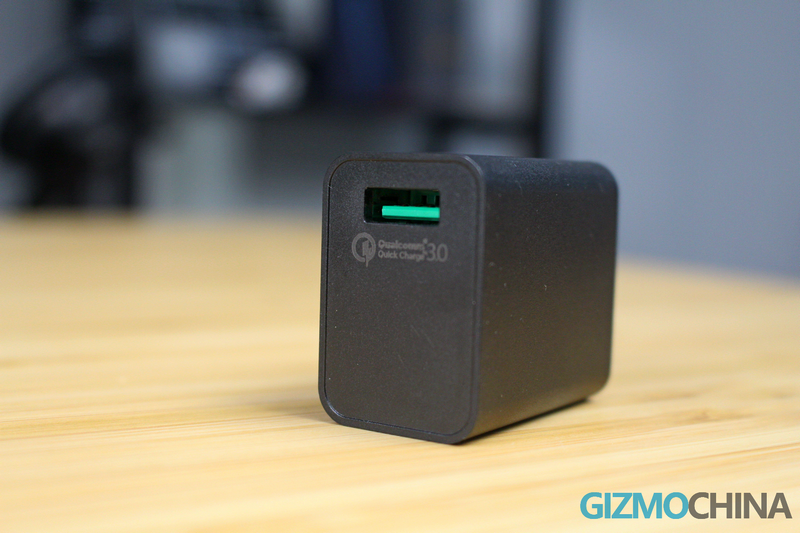
As the package doesn’t include a charging brick, I also get the Choetech QC3.0 Fast Charger.

The Choetech Fast Charger is matt surface design, which is solid and textured. Compared with other QC 3.0 fast charger, the Choetech Fast Charger has smaller size, which can be taken out easily.

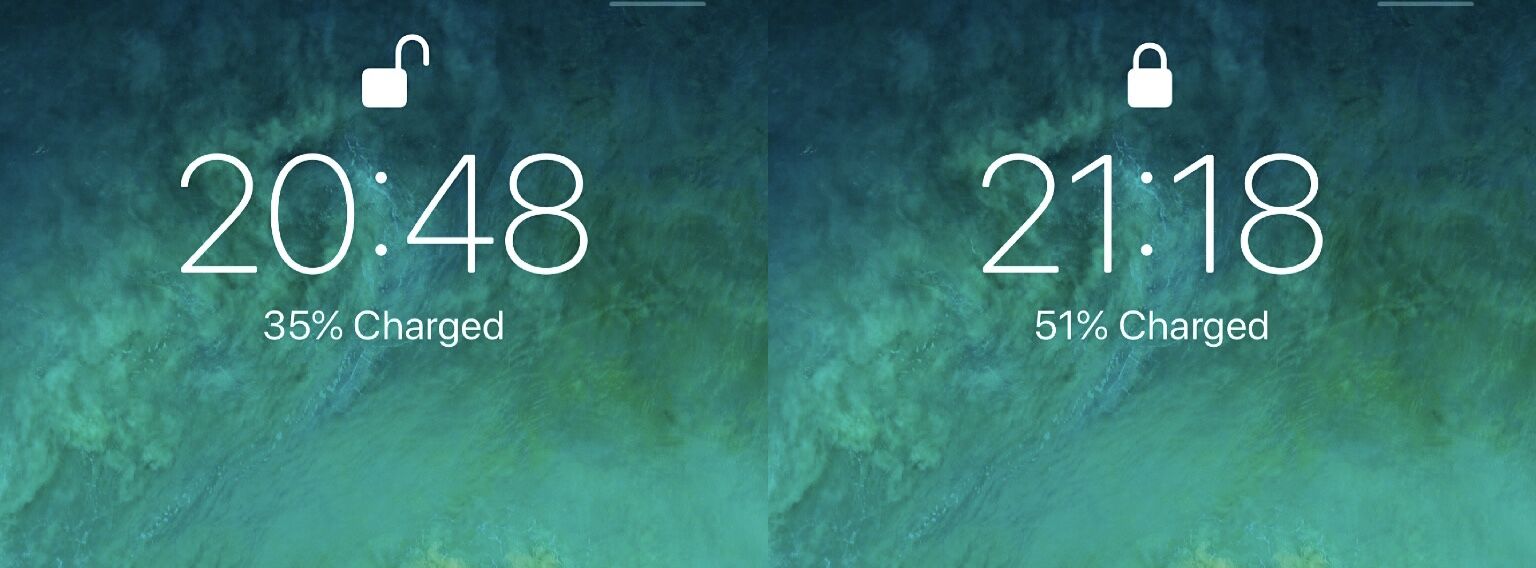
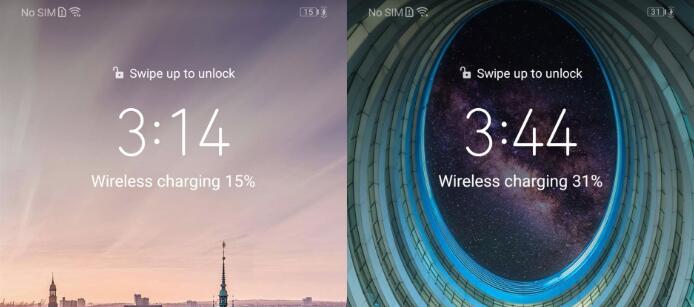
In the test, I use the Choetech QC3.0 Fast Charger and Choetech Wireless Charging Pad to charge iPhone XS Max and Huawei P30 Pro for 30 minutes.

iPhone XS Max — from 35% to 51% in 30 minutes.

Huawei P30 Pro — from 15% to 31% in 30 minutes.

I deem the charging speed is not so fast, but the wireless charging pad can get five stars at the aspect of convenience.

Conclusion

I like the Choetech Wireless Charging Pad, which is light, portable and quality. The most attractive is that it supports charging two smartphones simultaneously.

Now, you can get the Choetech Wireless Charging Pad at $31.19 with coupon code IP535EY, and the Choetech QC3.0 Fast Charger at $12.48 with coupon code GIZ34EY.