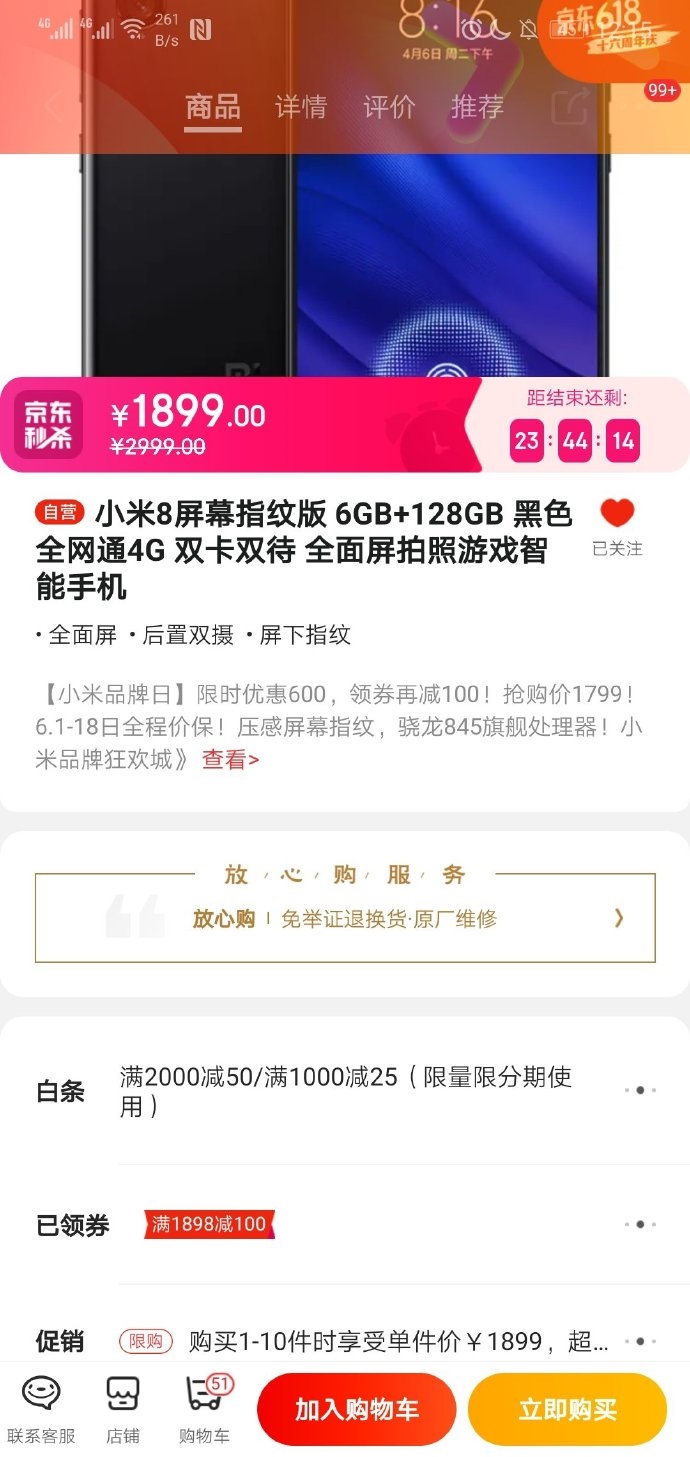
618 day represents the opening of China’s JDmall e-commerce website, and it’s normal for companies to offer huge sales on the platform for that day. Xiaomi however are pushing the limits of price cuts by taking the Mi 8 Pro and its 2999 yuan ($430) price tag and slashing it down to 1899 yuan ($274). That’s almost a 30% cut, and historically the lowest price that the Mi8 Pro has been listed for.
On top of this huge price cut, there’s also an extr coupon that cuts the price down ever further to a mere 1799 yuan ($260). This literally brings it down to Poco F1 levels of pricing, and it’s an great buy. While the Mi 8 Pro may be a last generation flagship, but it’s by no means a slouch. It still has excellent build quality, fantastic performance and great cameras.
The device comes with an on-screen fingerprint sensor, as well as last gen’s Snapdragon 845 SoC. The version on sale here is the 6GB RAM and 128GB internal storage version, and it’s the only option. On top of all this, it also features a 6.21 inch of Super AMOLED display having a 2248 x 1080 resolution and a notch.
The cameras on the rear are dual 12MP sensors with OIS and optical zoom. Over on the front, there’s a 20MP f/2.0 sensor in the notch. Its camera supports AI features such as AI scene recognition and AI beautify. It is powered with a 3400 mAh battery with the fast charging tech. The device runs on Android 8.1 Oreo atop MIUI skin.
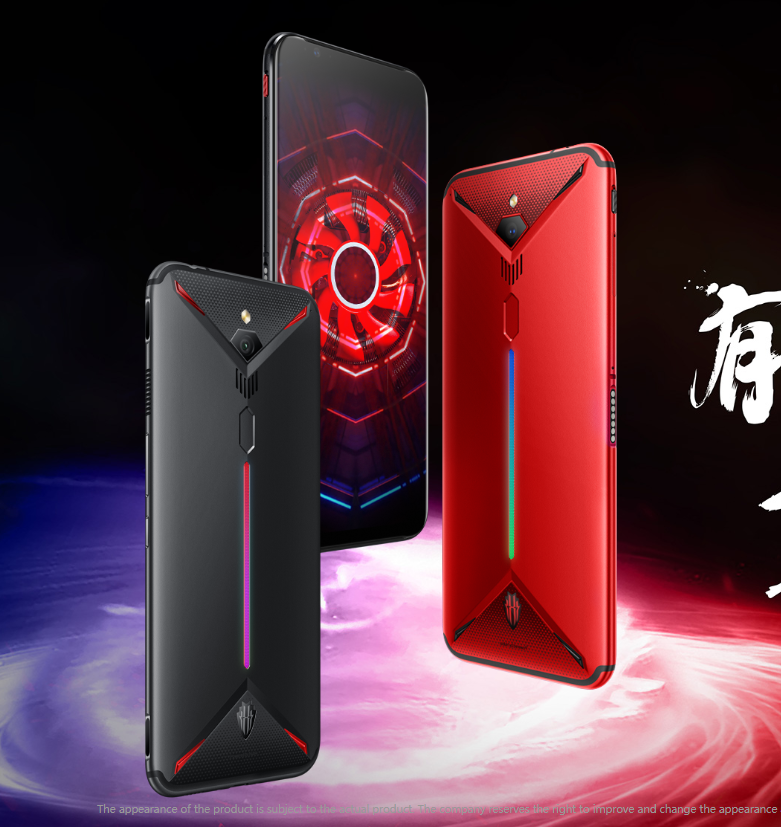
In April, China-based Nubia’s gaming arm called Red Magic had announced the Red Magic 3 gaming phone in the home country. The handset is available for international audience through it global page. For India, the Chinese firm has started a dedicated landing page which reveals that the Red Magic 3 will be debuting in the country on June 17.
The company hasn’t revealed the pricing of the Red Magic 3 phone. However, it is speculated that the starting model of the smartphone could be priced between Rs. 33,000 (~$475) and Rs. 35,000 (~$500). Globally, it is available in three editions such as 8 GB RAM + 128 Storage that comes in Black color, another model with same and storage in Red hue and a Camo color edition with 8 GB of RAM and 256 GB of native storage.
The Red Magic 3 will be rivaling with the Black Shark 2 gaming phone from Xiaomi in India. Its 6 GB RAM + 128 GB storage and 12 GB RAM + 256 GB storage models are respectively priced at Rs. 39,999 (~$575) and Rs. 49,999 (~$719) in the country. The Red Magic 3 will be available for purchase through Flipkart.
The Red Magic 3 has a massive 6.65-inch AMOLED full HD+ display with 19.5:9 aspect and support for 90Hz refresh rate. The smartphone features an RGB lighting strip on the backside of the phone. Its rear shell features a fingerprint scanner and a single camera of 48-megapixel. The rear camera supports 8K video recording and 1920 fps slow-motion video recording.
The Red Magic 3 is loaded with Red Magic 2.0 UI based Android 9 Pie OS. For snapping selfies, it has a front-facing camera of a 16-megapixel. The smartphone is fueled by Snapdragon 855 mobile platform. It is packed with a 5,000mAh battery that supports 27W fast charging through USB-C. For heat dissipation, the internal cooling system of the smartphone also features a cooling fan. There is no microSD card slot on the device. It features a 3.5mm audio jack and it carries support for DTX XU1tra sound.
What could be the suitable pricing of the Red Magic 3 smartphone in India? Share us your views by posting your comments below.
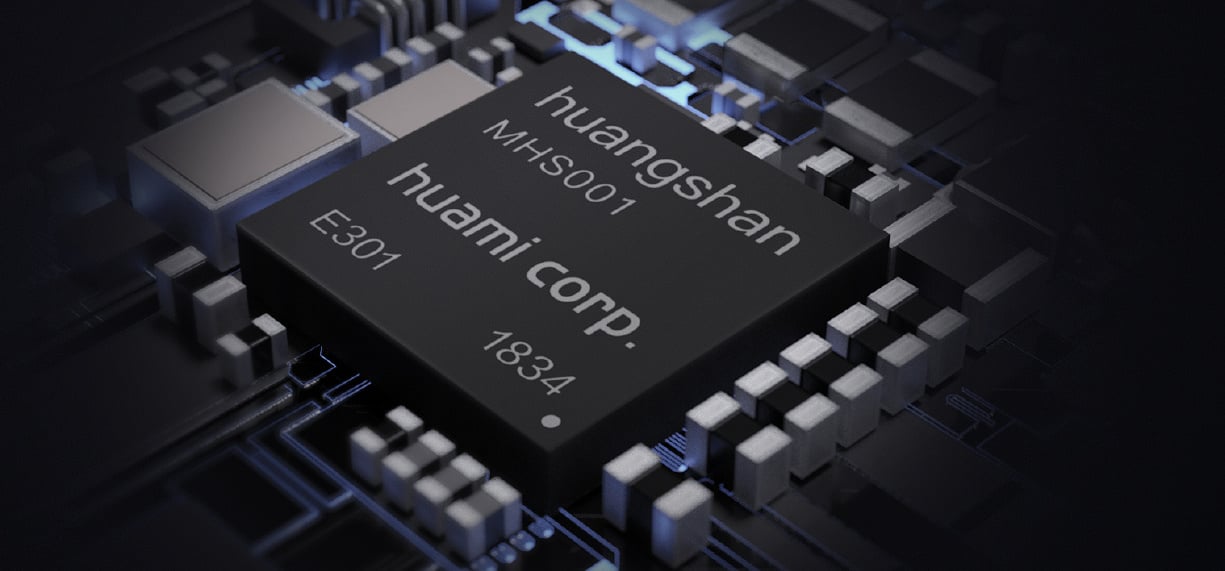
Xiaomi’s best selling Mi Band series is getting a new update tomorrow i.e. June 11. Before its official release, we have got some exciting news about the processor that powers the new Mi Band 4. Huami’s CEO, Wang Huang has just teased that the AI-powered Huangshang No.1 chip has been mass-produced. He’s likely talking about the Mi Band 4 since the official Mi Band page on Weibo has forwarded his post.
Huangshan No.1 was released late last year by Huami. The processor is said to be more efficient than ARM’s Cortex M4 based competitors. This is a really big move for Xiaomi since it would mean that the Chinese smartphone maker is trying its hands on an open-source RISC-V based processor instead of the more popular ARM alternative. The timing is also significant, since just a couple of days back, we reported that Qualcomm made a big investment in SiFive, the leading provider of RISC-V based processor IP. So, it looks like companies are increasingly looking for alternatives to ARM’s Cortex based chip designs.
The Huangshan No. 1 (MHS001) is the world’s first wearable processor that features an integrated AI-neural network. There are four core artificial intelligence engines — cardiac biometrics engine, ECG, ECG Pro, and Hearth Rhythm Abnormality Monitoring Engine.
It’s also an important milestone for Huami as well. Mi Band series has a tradition of selling millions of units. This means it will be the first time the Huangshan No.1 is mass produced in millions. Its departure from ARM-based Cortex IP is a big move, especially after what happened to Huawei and Hisilicon after the US ban.
The Mi Band 4 is already listed on Aliexpress on pre-order. You can read more about it from here.
Xiaomi‘s crowdfunding platform gets a new pair of shoes. Not as bizarre as your typical Xiaomi crowdfunder, but they’re pretty nice shoes. Specifically, these are Xiaomi’s latest 90 Point Ultra Light Running Shoes, built to be as comfortable as possible for those super long running sessions. Let’s take a look and see what makes these special.
The 90 Point Ultra Light Running Shoes come from Xiaomi Eco-chain Enterprise Shanghai Runmi Technology. The soles are made of lightweight rubber and lightweight EVA, which is lighter than your standard material and provides a soft and comfortable foot feel.This allegedly makes running less tiring and keeps your feet feeling great while you run. The soles are also cushioning, anti-twisting, antibacterial and breathable.
The outsole hollow built with anti-twist TPU protects the arch in motion and makes running safer. The yarn for the body is made up of a mixture of transparent MONO yarn, ultra-light yarn and antibacterial yarn. These help keep the shoes light, comfortable and strong. On top of that, it also makes the shoe body antibacterial and breathable like the soles.
Even the insoles are designed with the idea of keeping the breathable design going. They have honeycomb shaped holes to minimize contact, improve cushioning and keep things breathing. The entrance of the shoe is sock-like, in that it elastically wraps around the ankle. The shoes go for 219 yuan ($32), but the current crowdfunding price is a mere 169 yuan ($25).
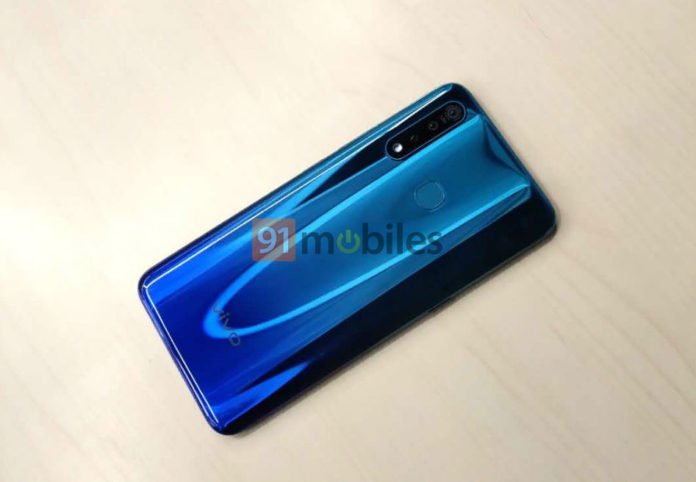
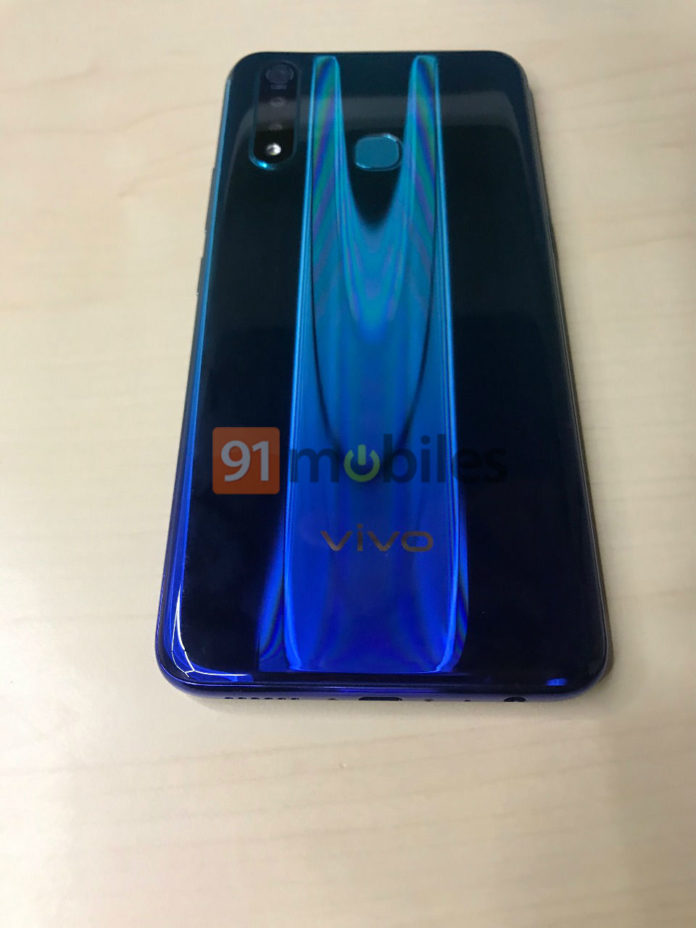
A recent report had claimed that Vivo is planning to introduce its Z-series and S-series of smartphones of India. The Indian wing of the Chinese firm has already started the arrival of a new Z-series smartphone in India. An exclusive report from 91mobiles reveals that the upcoming Z-series phone for India is Vivo Z5x. The publication has also shared two hands-on images of the smartphone.
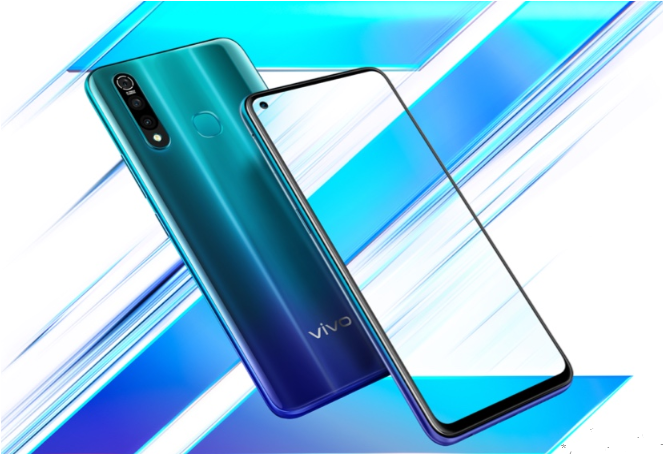
The report states that Vivo India will be selling the Vivo Z5x exclusively through its online channels in the country. It is expected to be priced around Rs. 20,000. Probably, the smartphone may go official in India by this month. The hand-on images of the phone shared by the publication show that it will be sporting a glass rear, a rear-mounted fingerprint scanner and a vertical dual camera setup. It remains to be seen whether the phone will be arriving with Vivo Z5x moniker or it will be simply called on Vivo Z5.
The Vivo Z5x specifications are already known since the smartphone was unveiled in China last year. Also, the Vivo Z5x is not the first Z-series phone to release in India. Last year, the company had launched Vivo Z10 phone which was nothing but a rebranded version of the Vivo V7+ phone. Since then, the company has not launched a Z-series phone in India.
The Vivo Z5x is the company’s first smartphone to flaunt a punch-hole display. Its 6.53-inch IPS LCD panel offers full HD+ resolution and 19.5:9 aspect ratio. The Snapdragon 710 chipset fuels the smartphone with up to 8 GB of RAM. It features up to 128 GB of native storage and a microSD card slot for additional storage.
The back panel of the phone features a triple camera setup that includes a main sensor of 16-megapixel, an 8-megapixel wide-angle lens and a 2-megapixel depth sensor. For shooting selfies, it features a 16-megapixel snapper planted inside the small round-shaped cutout on the display. A massive battery of 5,000mAh capacity is present inside the phone. It carries support for dual-engine 18W rapid charging through microUSB 2.0.
The Vivo Z5x is available in Extreme Night Black, Phantom Black and Aurora color editions in China. The Vivo Z5x variants such as 4 GB RAM + 64 GB storage, 6 GB RAM + 64 GB storage, 6 GB RAM + 128 GB storage and 8 GB RAM + 128 GB storage are respectively priced at 1,398 Yuan (~$200; ~Rs, 14,000), 1,498 Yuan (~$215; ~Rs. 15,000), 1698 Yuan (~$245; ~Rs. 17,000) and 1,998 Yuan (~$289; Rs. 20,000).
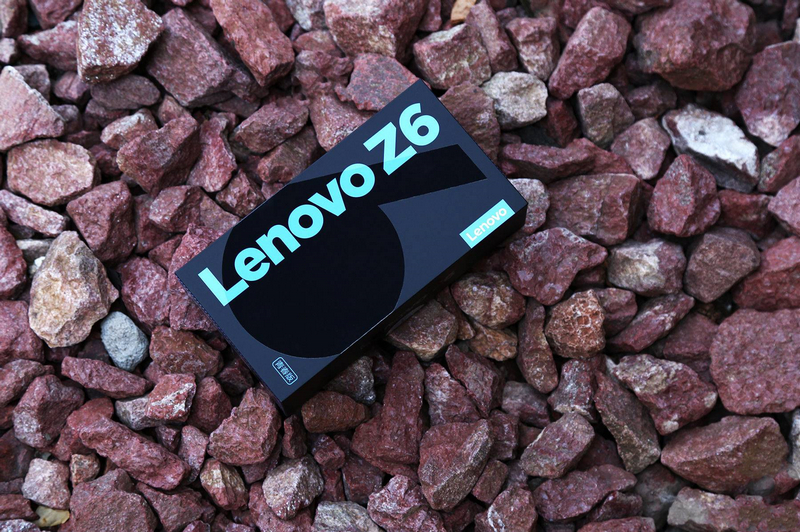
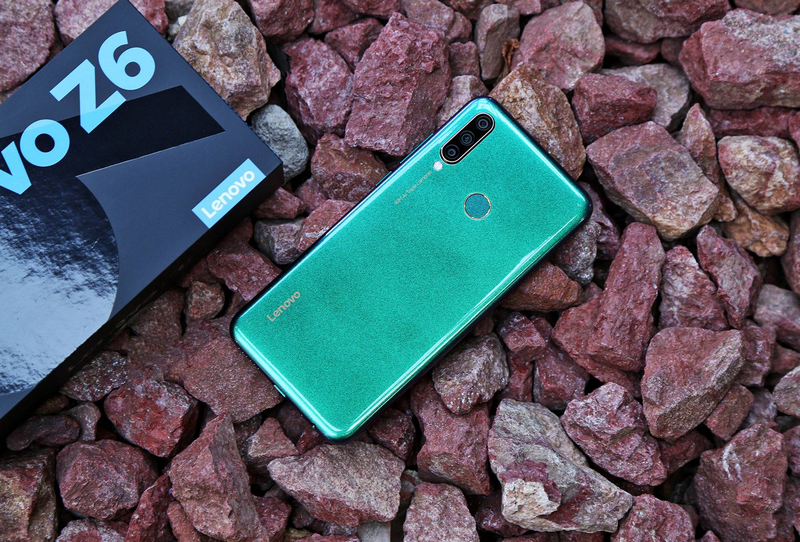
Thanks to a variety of products and marketing methods, Lenovo’s smartphone has become popular. Almost a month after Lenovo Z6 Pro was released, a budget phone called Lenovo Z6 Youth was launched. Let’s check out the Lenovo Z6 Youth.
Design:
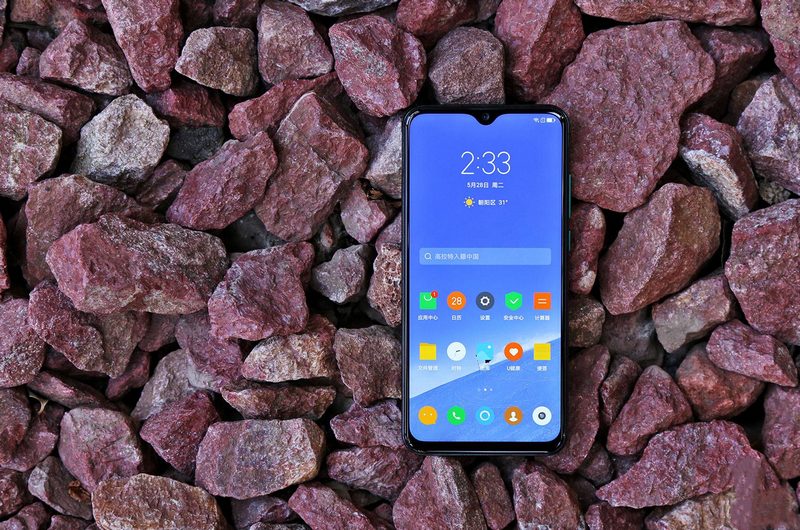
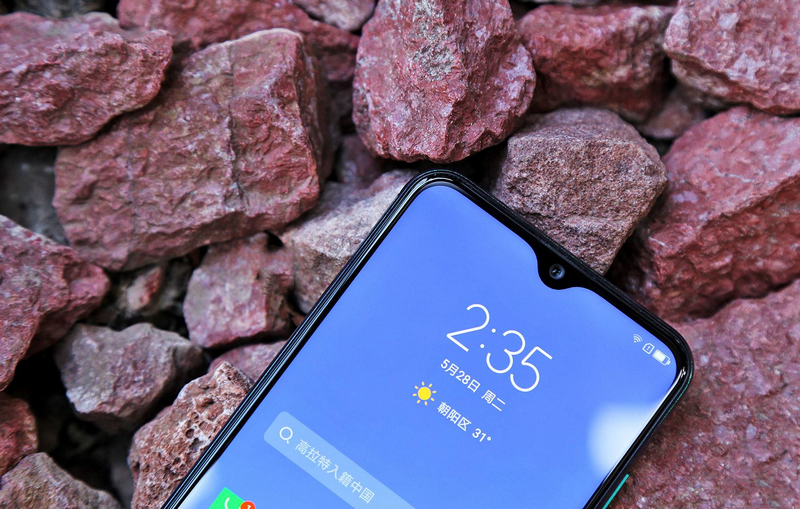
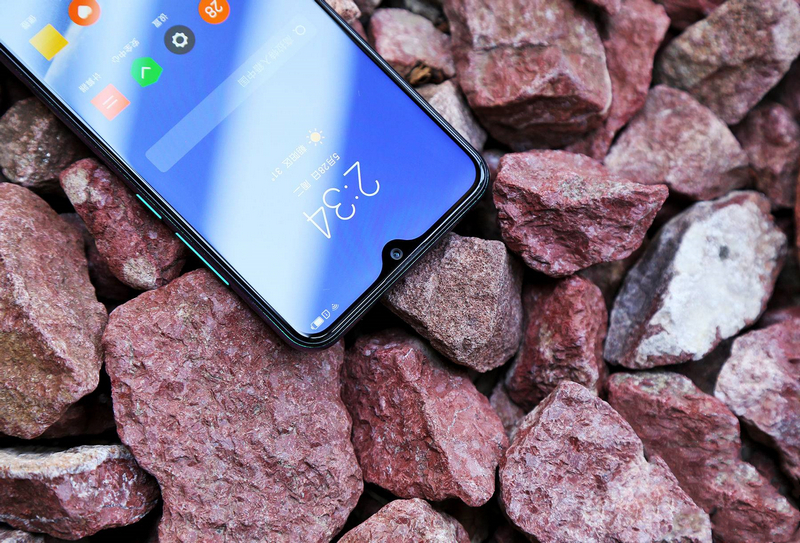
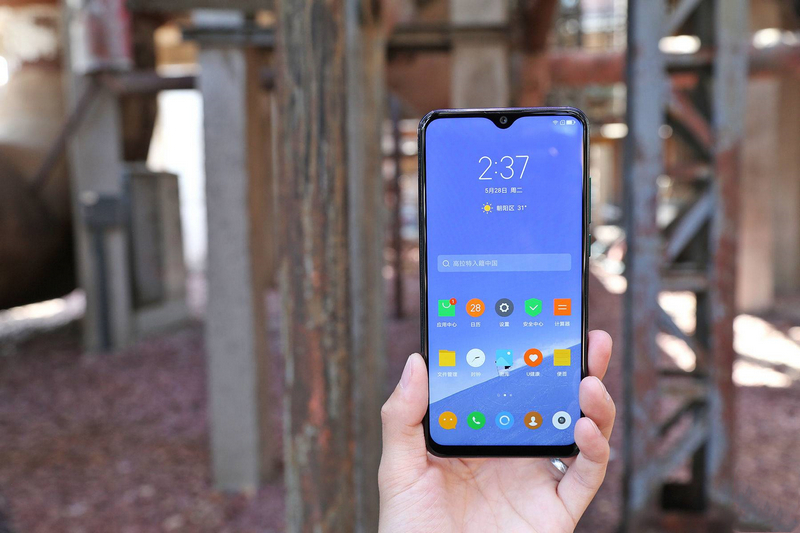
Lenovo Z6 Youth looks like Lenovo Z5s on the front side, both come with 6.3-inch LCD water drop screen, having the resolution of 2340×1080 pixels.
The Lenovo Z6 Youth is pretty much bezel-less, and its screen-to-body ratio is up to 93.07% which get a slight edge over other budget phones.
No matter the Lenovo Z5s or the Lenovo Z6 Youth, the display quality is relatively good.
The handset comes with a 16MP front facing camera with AI capability, which parameter is the same as the front-facing camera of Lenovo Z5s.
Excellent touch feeling is one of the biggest advantages of the Lenovo Z6 Youth. The dimension of the handset is about 156.6×74.3×7.88mm, but the weight is 164g, which is one of the lightest smartphones launched recently.
As a budget phone, there is no doubt that the handset comes with plastic rear cover. But don’t worry, the official claims that the handset adopts the material, which is like the Rollcage magnesium aluminum alloy rolling proof frame of ThinkPad, providing better protection.
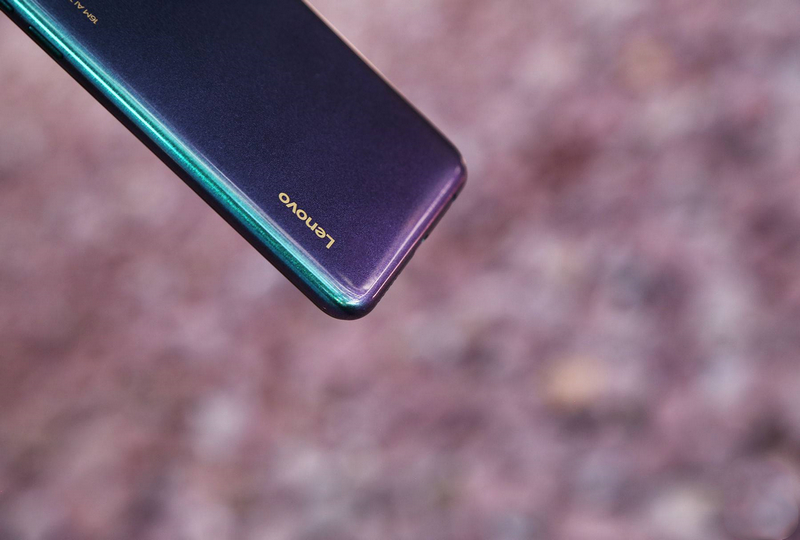
Lenovo Z6 Youth offers two different color variants, which are Stardust and Midnight Black, having different processing.
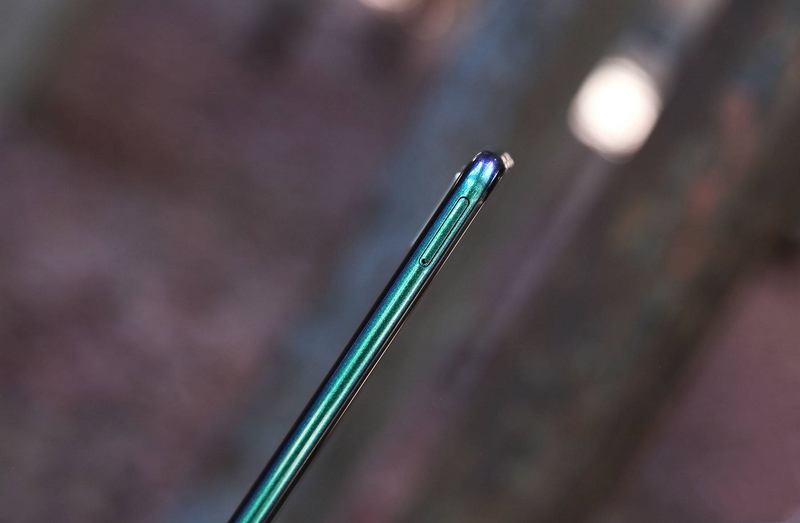
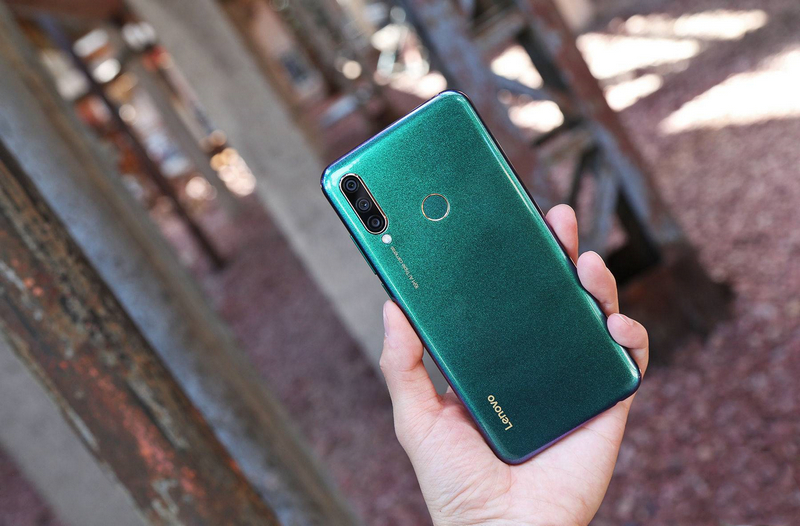
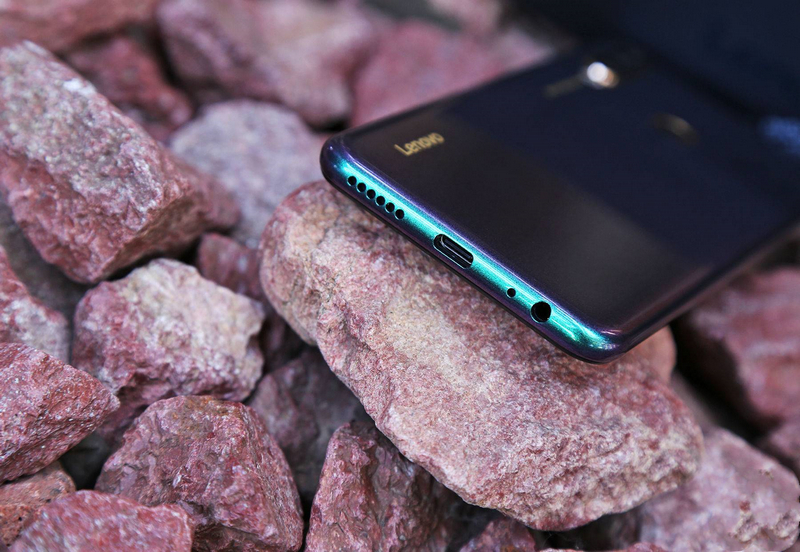
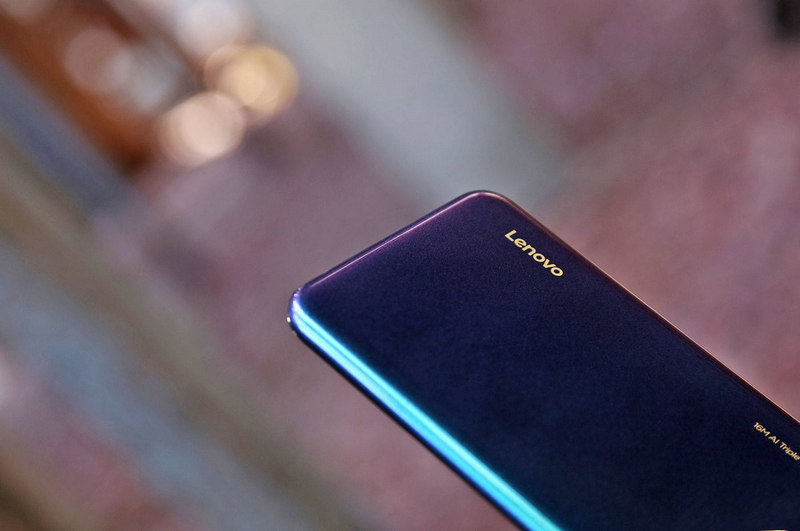
The Stardust variant adopts eight layers nanometer NCOC optical gradual plating process. In light, the rear cover of Lenovo Z6 Youth will show green color on the front, and the color will turn to purple from the side.
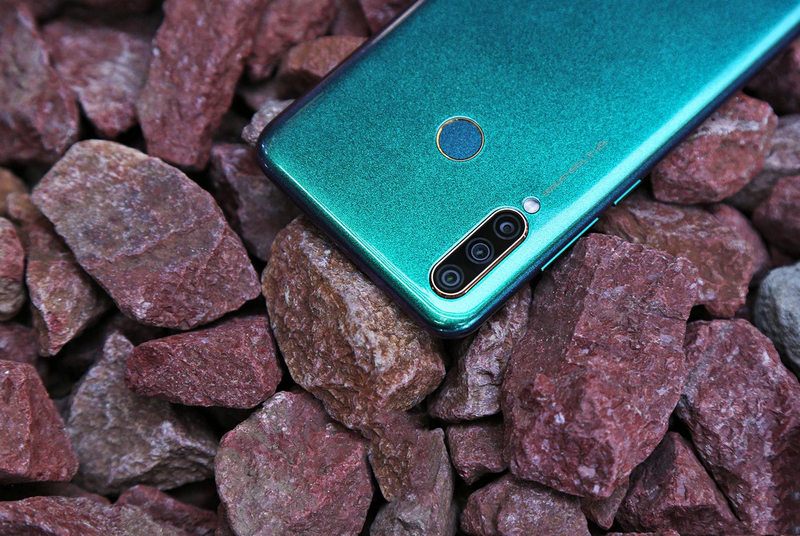
Lenovo Z6 Youth comes with rear fingerprint sensor, which has fast unlocking speed.
Lenovo Z6 Youth ships with triple cameras, which are 16MP main camera, 8MP telephoto lens supporting 2x zoom, and 5MP depth of field lens. Also, the camera parameters are the same as Lenovo Z5s.
Camera samples below
[envira-gallery id=”258060″]
Powered by Snapdragon 710 chipset, Lenovo Z6 Youth arrives with 4/6GB of RAM and 64/128GB internal storage.
In daily use, applications are used smoothly. What’s more, the handset is optimized for the game.
In addition, Lenovo Z6 Youth has been pre-installed ZUI 11 OS, which updates the icon and improves fluency. The AI capability can also scan documents and translate texts, which is very convenient.
Lenovo Z6 Youth is fueled by 4050mAh battery with fast charging, which battery is larger than Lenovo Z5s.
It is also worth noting that, as a budget phone, Lenovo Z6 Youth comes with Type-C port.
Conclusion:
Lenovo Z6 Youth also has many features worth paying attention to, for example, it is the first smartphone supporting the Beidou 3-signal system in the world, which comes with HD8040 Beidou high precision navigation chip.
The handset also ships with linear speaker, supports Dolby Atmos, and keeps 3.5mm earphone jack.
Overall, Lenovo Z6 Youth can meet most of user demands, and it has a price advantage. If you want to get a comprehensive and budget smartphone, Lenovo Z6 Youth should be your choice.
Each year, China’s major mid-year shopping festival is held on June 18. Many smartphone manufacturers from China make the most of it by providing attractive discounts on their handsets. New variants of smartphones are also introduced for the same shopping event. Vivo has confirmed that it will begin the pre-sales of a new color variant called Symphony Summer on June 18. The Chinese manufacturer has also shared some images of the new color edition of the smartphone.
As it can be seen in the images, the rear shell of the Vivo X27 Symphony Summer model appears light blue at the center. It appears whitish pink towards the left and right edges. There is no confirmation on the pricing of the phone. Probably, it may retain the same price tag as the other color variants of the phone.
The Vivo X27 features an in-screen fingerprint sensor enabled 6.39-inch AMOLED display. The notch-less display offers full HD+ resolution and 19.5:9 aspect ratio.
The Vivo X27 comes in two CPU editions in China. The Snapdragon 675 chipset variant of the phone features 8 GB of RAM and 128 GB of native storage. There is a Snapdragon 710 SoC model with 8 GB of RAM and 256 GB of native storage. There is no confirmation yet on whether the X27 Symphony Summer will be available for both or either those CPU models.
The Vivo X27 smartphone is equipped with 48-megapixel + 13-megapixel + 5-megapixelt triple camera setup. For shooting selfies, it is fitted with a pop-up selfie camera of 16-megapixel. Its 4,000mAh battery supports 22.5W rapid charging through USB-C.
What’s your opinion on the new color variant of the Vivo X27? Share us your views by posting your comments below.
The Honor 20 and Honor 20 Pro flagship hones were made official through a launch event in London on May 21. Soon after the announcement of the Honor 20 duo, a teaser page for the Honor 20 series was made live on Flipkart, India’s online retailer site. The teaser page is now updated which now states that the Honor 20, Honor 20 Pro and Honor 20i smartphones will be announced in India on June 11.
The Honor 20 and Honor 20 Pro will be arriving to take on the OnePlus 7 and OnePlus 7 Pro smartphones in India. Also, Honor 20 phones will be also rivaling with the Asus 6Z smartphone in the affordable flagship phone category. While the pricing of the Honor 20 and Honor 20 Pro are currently under the wraps, they are expected to be priced around Rs. 40,000. The Honor 20i will be an upper mid-range phone with impressive selfie shooting capabilities. It could be priced around Rs. 20,000. The Honor 20i, Honor 20 and Honor 20 Pro will be exclusively available for purchase through Flipkart. Apart from launching the Honor 20 series of smartphones tomorrow in India, the Chinese firm will be also debuting the Honor Pad 5 tablet.
Honor 20 and Honor 20 Pro Specifications
The Honor 20 and 20 Pro feature 6.26-inch IPS LCD full HD+ panels with a punch-hole at the top-left corner for the 32-megapixel selfie camera. The Kirin 980 chipset powers both smartphones. The Honor 20 has 6 GB of RAM while the Pro variant has 8 GB of RAM.
The Honor 20’s quad camera module has a 48-megapixel main sensor, an ultrawide 16-megapixel sensor, a 2-megapixel macro camera and a 2-megapixel depth sensor. On the other side, the Honor 20 Pro has 48-megapixel, 8-m megapixel telephoto lens, a 16-megapixel ultrawide lens and a 2-megapixel macro camera. The Honor 20 has 3,750mAh battery and Honor 20 Pro has a 4,000mAh battery. Both support 22.5W fast charging. They are also equipped with side-mounted fingerprint scanners. The EMUI 9 based Android 9 Pie OS comes preloaded on these devices.
The Honor 20i has a 6.21-inch IPS LCD screen with waterdrop notch. It is powered by Kirin 710 chipset and 6 GB of RAM. It includes an inbuilt storage of 128 GB. The rear shell of the phone features 24-megapixel + 8-megapixel + 2-megapixel triple camera setup. It is packed with a 3,400mAh battery that supports 10W charging.
The Honor Pad 5 is a budget-friendly tablet with 10.1-inch display. The older Kirin 659 chipset powers the tablet with up to 4 GB of RAM and up to 64 GB of native storage. Some of its other features like GPU Turbo technology support and stereo speakers powered by Harmon-Kardon.
It looks like Xiaomi fans are in for a treat! As part of its recently launched ‘Top Sellers Gear Special’ promo, Gearbest is offering a wide selection of Xiaomi-branded items at lowered prices.
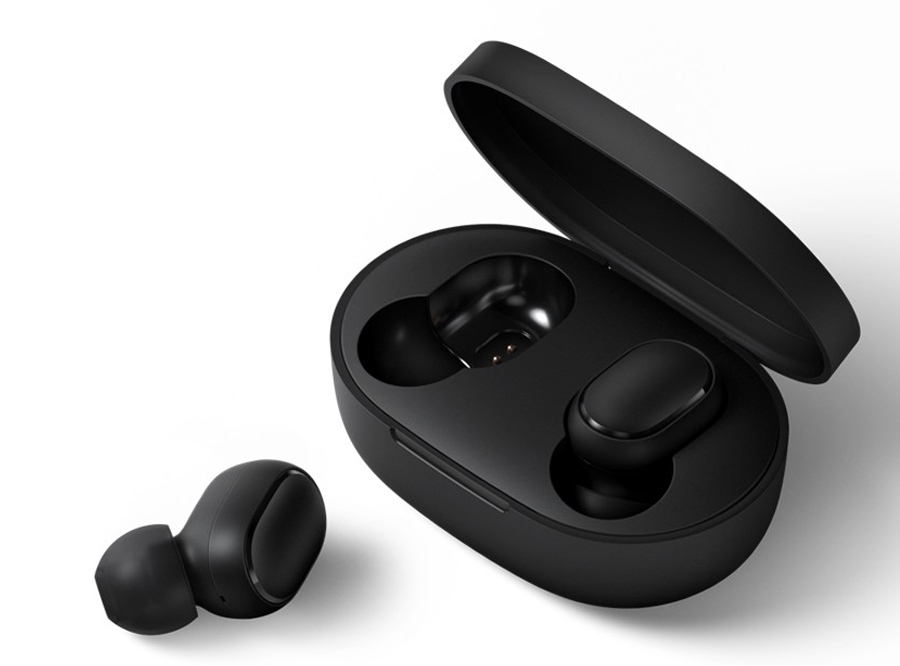
Among other top-branded products, the special event offers you a chance to get your hands on the Xiaomi Redmi AirDots Wireless Bluetooth Headset without emptying your pocket. Aside from shedding light on the discount, we will show how you can save a considerable amount of money at checkout.
Xiaomi Redmi AirDots Wireless Bluetooth Headset
Marketed as a new generation of headphones, the Redmi AirDots is equipped with a built-in Bluetooth 5.0 chip for up to 2 times faster data transfer rate than its predecessor. Thanks to the stable connection, you can enjoy your favorite music without any sort of interruption.
The Xiaomi Redmi AirDots isn’t easy on the pocketbook. In fact, the feature-laden headset would set you back $38.53 on both online as well as offline stores.
Much to the delight of cost-conscious buyers, Gearbest is now offering the Xiaomi Redmi AirDots for a dropped price of just $24.99. Moreover, you can extend this 35 percent discount by applying coupon code GBRFT5ZXB1 before placing your order.
The aforesaid coupon helps you get an extra $5 off. In other words, you can bring the retail price of the Xiaomi Redmi AirDots headset further down to only $19.99 simply by applying the coupon.
On top of that, Gearbest users spending $20 will be eligible for an add-on item for just $0.01. The discount will be valid only for the black color version, and there were 2600 pieces left for this promo at the time of writing.
You can follow this link to avail the discount. Note that that promo is slated to end in just one day.
Recent reports have revealed that apart from introducing the Galaxy Note 10, Samsung will be also launching an advanced variant alongside it called Galaxy Note 10 Pro. Since the South Korean company had announced the Galaxy Note 9 on Aug. 9 last year, the rumor mill has been speculating that the Galaxy Note 10 launch date will be also scheduled in August. A new report on a South Korean publication reveals that the company will be announcing the Galaxy Note 10 and Note 10 Pro on Aug. 10.
In the recent past, renders of the Galaxy Note 10 and Note 10 Pro have appeared to reveal their design. Both smartphones are expected to release in 4G-only and 5G enabled versions. The Galaxy Note 10 series have revealed they won’t be featuring dedicated button for accessing Bixby AI. And also, the Note 10 lineup will be lacking a 3.5mm audio jack.
The Galaxy Note 10 is expected to feature a 6.28-inch AMOLED display that is curved towards its left and right edges. On other side, the Note 10 Pro has a curved 6.75-inch AMOLED screen. Both smartphones are rumored to support quad HD+ resolution. Talking about the displays of the phone, these handsets will be sporting screens with top-center positioned punch-hole for the front-facing camera.
The Note 10 may come with a vertically arranged triple camera sensors on its rear whereas the Note 10 Pro will be blessed with a quad camera setup on its rear. No physical fingerprint scanner can be seen on the backside of the Note 10 series since they are equipped with in-display fingerprint scanners. These handsets will be featuring very thin metallic frames that thickens near the physical buttons.
The South Korean publication hasn’t shared any information on the specifications of the Galaxy Note 10 and Galaxy Note 10 Pro smartphones. However, the Note 10 duo are expected to release in Snapdragon 855 and Exynos 9825 chipset variants depending on the region. The Note 9 that was unveiled on Aug. 9 was made available for purchase on Aug. 24. Hence, there is a possibility that the Galaxy Note 10 lineup may hit the market on Aug. 25 since they were announced on Aug. 10.
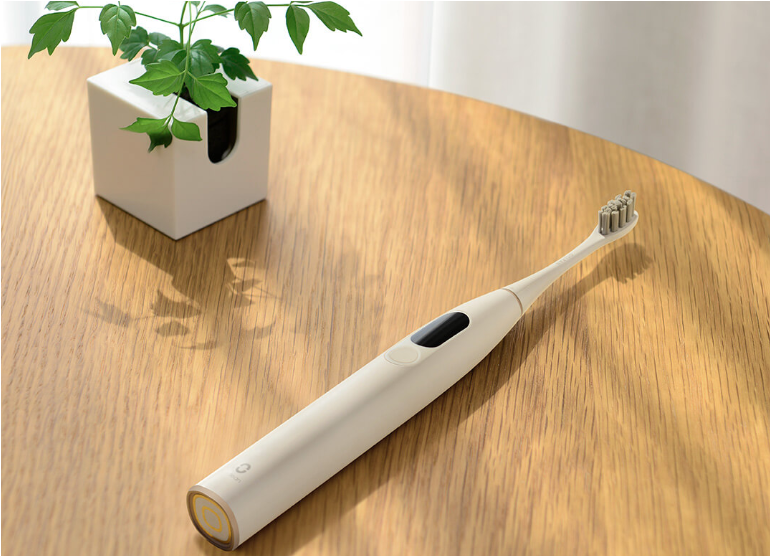
Oclean X, which is the world’s first touch-screen electric toothbrush, recently went up for crowdfunding on Xiaomi YouPin. Now, the product has managed to bag more than 10 million yuan in crowdfunding.
From the listing, it is revealed that so far more than 41,450 people have backed this product and helped raise over 10,322,900 yuan, which is approximately $1.4 million. While the original price of Oclean X is 299 yuan (approx. $43), it is priced at 249 yuan (approx. $36) for the crowdfunding campaign.
In terms of design, Oclean X is not too different from the previous-generation products. With Oclean X, the company is using technology to improve the brushing experience and effects and is not just limited to vibrating. It claims to be introducing the concept of intelligence, customization, and rapidity.
It comes with a touch-screen display which can be used to set the mode of brushing teeth, notification when the brush head needs to be replaced. It also notifies the user when the brushing force is not enough or the brush needs to be adjusted to cover the blind area.
Further, the user can also view the time, weather, choose brushing mode, check dental health information, brushing feedbacks and so on. The touch experience is very user-friendly and responsive.
The product keeps monitoring the brushing posture of the user for around 1,500 times a minute. All the data collected by this electric toothbrush then generates a data report and provides a detailed explanation on the mobile application.
It comes with Bluetooth 4.0 support and is compatible with phones running Android 4.4 or iOS 8.0 and higher. As per the company, with two hours of charging, the battery of the toothbrush can last for around 30 days.
OnePlus is the most developer-friendly OEM among all other Android manufacturers. OnePlus always encourage third-party development without voiding the warranty of an unlocked device. The company’s policies have bolstered the confidence of developers and users to tweak the code. Starting with OnePlus One and up to OnePlus 7 Pro, developers are always eager to customize the device with new modifications.
To get full control over the device, users usually unlock the bootloader and root their devices. It gives the ability to flash custom modifications to improve performance, battery efficiency, and productivity. Along with many advantages of unlocking the bootloader, it comes with some flaws also. Unlocked OnePlus devices often get Widevine L3 Certification (rather than L1) which bars users from HD quality content from video streaming networks such as NetFlix and Amazon Prime.
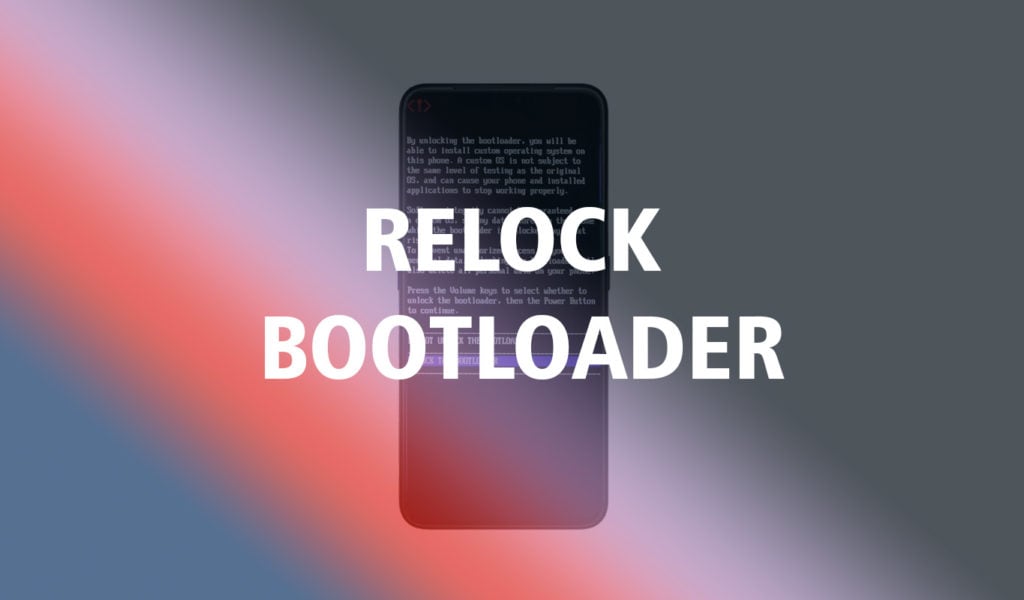
Looking at the OnePlus’s software support, many users often relock the bootloader and resort to the Stock ROM. The users are required to relock the bootloader and unroot OnePlus 7 Pro to get the official upgrades.
Backup important data via Nandroid or other tools.
Charge your device at least up to 70%.
Note: This method only works for OnePlus 7 Pro running stock recovery and stock ROM.
Steps: Relock Bootloader for OnePlus 7 Pro
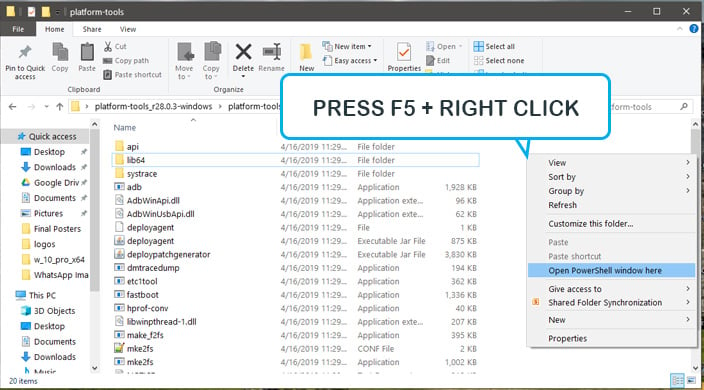
Extract Fastboot and ADB Tool on PC, and Open Command Prompt in the extracted Folder with Shift+Right Click.
Turn on Developer Mode by heading to Settings> About, and then tapping “About Phone” for 7 times.
Now navigate to Settings > System > Developer options, and toggle “Enabled USB Debugging” option.
Reboot into Fastboot Mode (Bootloader).
Connect OnePlus 7 Pro with the USB cable.
Verify the device’s connectivity by issuing the following command:
fastboot devices
Execute the following command to proceed for bootloader unlocking:
fastboot oem lock
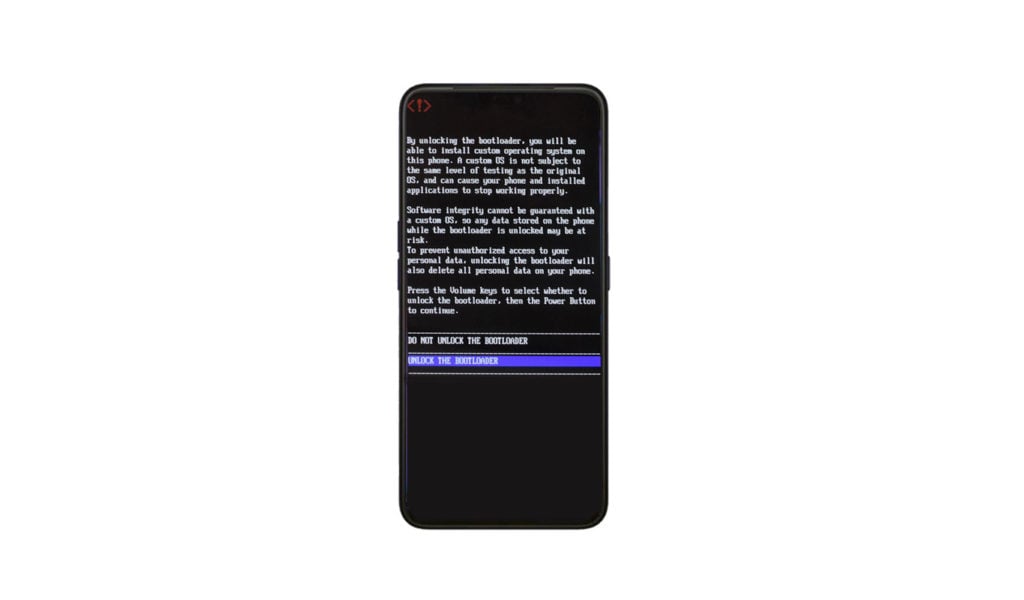
A verification window will appear on your mobile device asking to confirm the action. Just highlight “Relock Bootloader” using volume buttons and hit the power button to confirm.
A similar display will come to Relock Bootloader.
The phone will initialize to relock the bootloader. It will take some time to reboot after resetting the whole phone into a locked stage.
Your device is now locked again!
The above method only works if OnePlus 7 Pro is running on stock recovery and stock firmware. The ability to relock devices running custom recovery is expected in the next few weeks. We will update the article accordingly. If there’s any query or issue, let us know via the comments section below.
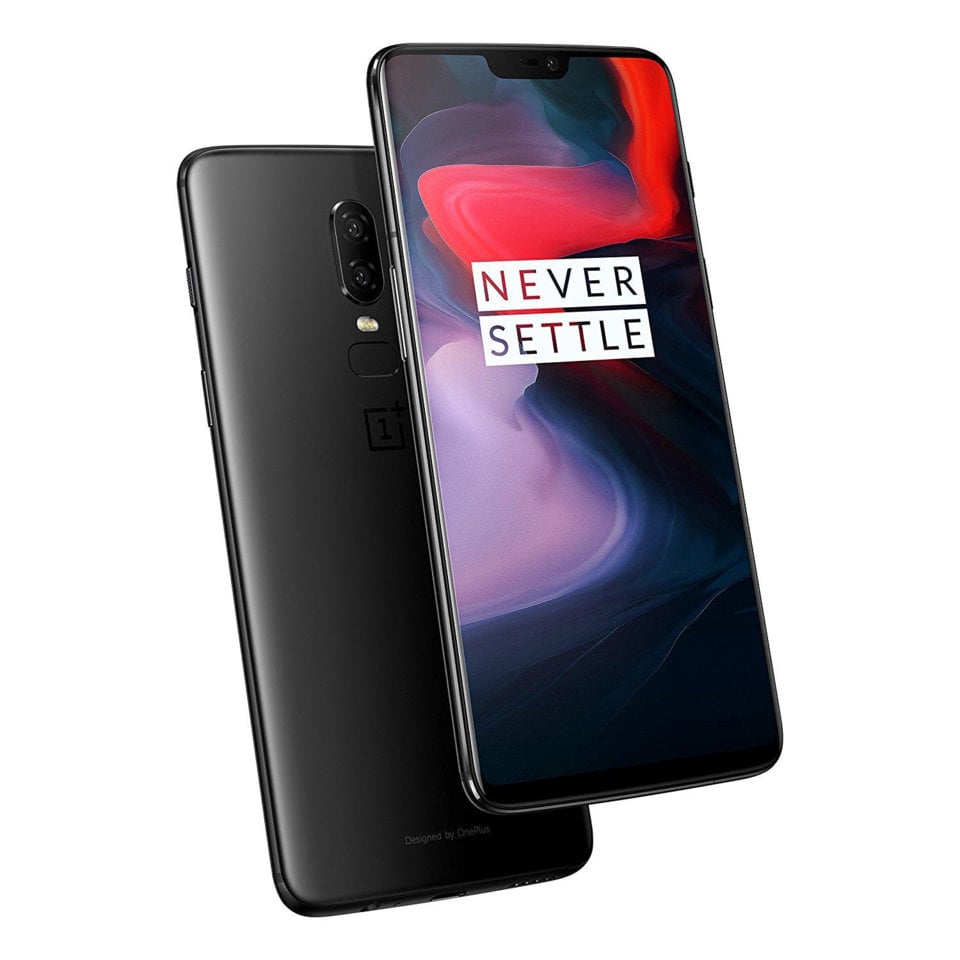
OnePlus is known for its affordable flagship devices carrying premium features. Similarly, OnePlus launched OnePlus 6 in 2018 with Snapdragon 845, a 6.28-inch Optic AMOLED display and a 16MP+20MP dual rear cameras. It is running on the latest Android 9.0 Pie with Oxygen OS on the top. Despite being running on the latest version, some users want to root OnePlus 6. Follow the guide to install TWRP on OnePlus 6 and root with Magisk.
OnePlus devices are always well supported by the development community. Every device from OnePlus One to OnePlus 5T have received tremendous support from third-party developers. Many ROMs, Kernels, and other MODs are available for every single OnePlus device.
After rooting, users can install custom ROMs with built-in advanced features. They can improve the performance, power efficiency, and overall productivity of the device after installing the custom ROM. We have detailed every step to install TWRP on OnePlus 6 successfully.
Note: Rooting device will void your manufacturer’s warranty. User can also brick the smartphone if steps are not followed carefully. GizmoChina.com is not liable for any damage to smartphone or data.
It will remove support for Widevine L1 Certification, limiting users to stream Netflix and other services at 480p.
Guide to Install TWRP on OnePlus 6 and Root with Magisk
It is a necessary step before attaining root access on any Android smartphone. To Unlock Oneplus 6 Bootloader, follow the steps below carefully:
Backup important data on another device as unlocking will wipe it.
Enable Developer Mode by going to Settings> About Phone and, then tap “Build Number” 7 times.
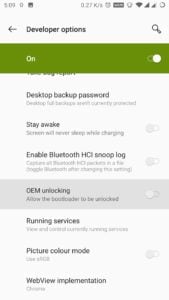
Head over to Settings> System> Developer options, and enable “OEM Unlocking” with a toggle.
In Developer Options, also enable “Advanced Reboot”.
Now long press Power Button and tap “Reboot,” then “Bootloader”.
Download and install ADB and Fastboot drivers.
Open command prompt in the extracted ADB and Fastboot folder.
Verify device connection with the following command:
fastboot devices
After successful verification, send this command to unlock the bootloader:
fastboot oem unlock
Verify by highlighting the ‘Unlock the Bootloader’ option using the volume button and then selecting it with the power button.
Now your device is unlocked!
We suggest not to set up any security settings if you want to root OnePlus 6.
Step 2: Install TWRP on OnePlus 6
Custom Recovery like TWRP gives Android smartphone’s ability to flash custom ROMs and tweak every part of the firmware. The GUI based recovery is the most used custom recovery for Android devices. Follow the steps carefully to install TWRP on OnePlus 6.
Download TWRP image and Installer for your OnePlus 6 from Prerequisites menu above.
Extract Fastboot and ADB drivers on desktop.
Connect your device to PC, and transfer both the ‘twrp-installer-enchilada-3.2.3-0.zip‘ to phone.
Move the ‘twrp-3.2.3-0-enchilada.img‘ file to extracted folder c:\Users\party\Desktop\platform-tools, or to the location where platform-tools are present.
Now Enable Developer option again and turn on the”Advanced Reboot” option.
Boot OnePlus 6 into bootloader mode using the power button.
Open command prompt in the same folder where you’ve extracted the platform-tools.
Once in the bootloader, type the following command to flash TWRP:
fastboot boot twrp-3.2.3-0-enchilada.img
The phone will reboot to TWRP recovery mode.
Swipe the slider resolve warning message of ‘Unmodified system partition.’
Once done, Tap Install and select the ‘twrp-installer-enchilada-3.2.3-0.zip‘ from internal storage.
Swipe the button to install TWRP on your OnePlus 6.
Reboot system and enjoy!
You’ve successfully installed TWRP on OnePlus 6. Now we will proceed to root OnePlus 6 using Magisk.
Step 3: Root OnePlus 6 using Magisk
Magisk is a popular root management app. It is the biggest competitor to SuperSu as it allows the user to grant or deny superuser privileges for every single app. It works well with apps which restrict usage if the device is rooted. Magisk can efficiently hide root status from Google’s SafetyNet. Follow the steps below to root OnePlus 6 successfully. Otherwise, you might up with a bricked device.
Download Magisk Installer Zip from above (Prerequisites section).
Connect it with the PC and move the downloaded file to internal storage.
Now detach the device and power it off.
Press Volume Down + Power button simultaneously to enter TWRP recovery mode.
After booting into recovery, tap the Install button and flash the ‘Magisk Installer zip‘ file from internal storage.
Swipe the button to flash Magisk on OnePlus 6.
Tap Reboot System after the process is complete.
Completing the process will bring root privileges on OnePlus 6. Magisk Installer zip also installs the companion app to control the root access. We recommend to update it before using the app. Several Magisk Modules are also available to extend the functionality of your device.
We hope our guide to install TWRP recovery and root OnePlus 6 using Magisk have helped you. Users can ask any query via the comments box below.
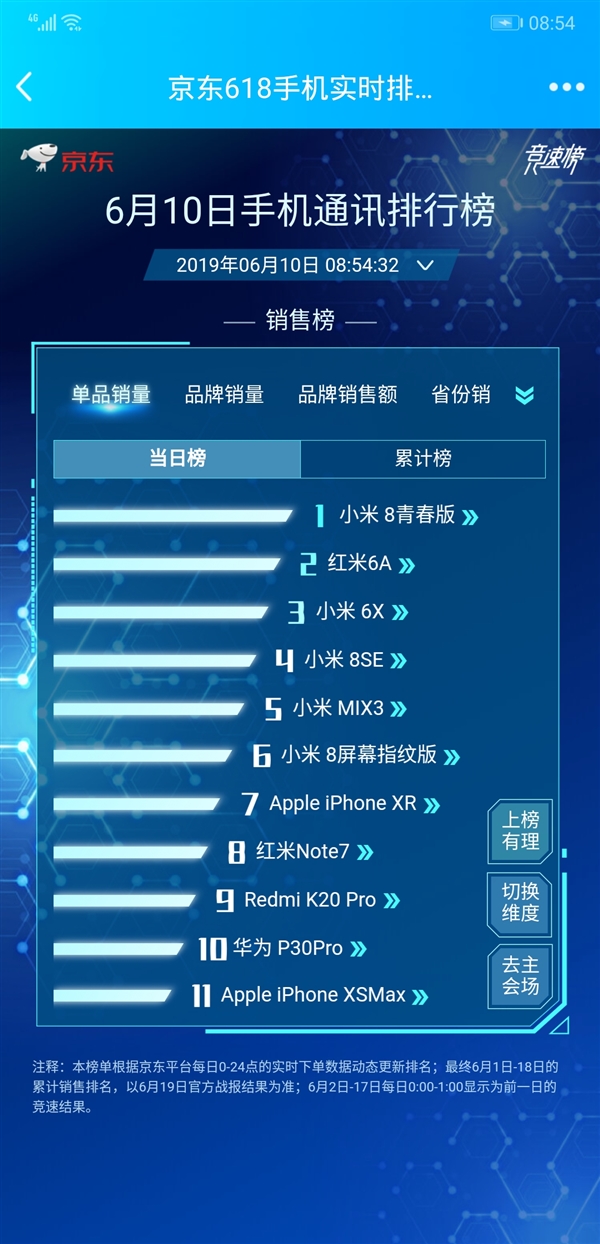
As per the data released by JD.com for its 618 shopping festival on 10th June, Chinese smartphone maker Xiaomi has dominated the sales list. It shows that the Xiaomi’s Mi 8 Youth Edition was the leading single-selling product and became the best-selling smartphone.
It was followed by Redmi 6A, Mi 6X, Mi 8 SE, Xiaomi Mi MIX 3, Mi 8 In-display Fingerprint Edition for the second to the sixth position. Then the Apple iPhone XR got the seventh spot, followed by Redmi Note 7, Redmi K20 Pro, and Huawei P30 Pro.
As you can see in the list, eight out of ten products are from Xiaomi. The other two products are from Apple and Huawei — iPhone XR and P30 Pro, holding the seventh and tenth position respectively.
The results aren’t surprising given that on 10th June, during the sale, it was Xiaomi Brand Day on JD.com, where various smartphones from the company were sold at a discounted price. This must have helped Xiaomi lead the list.
For instance, the Mi 8 Youth Edition smartphone with 6GB RAM and 64GB storage was offered at a discount of 300 yuan (approximately $478) and also offered a 50 yuan coupon to the buyers, bringing down the cost to 1,049 yuan (~$152).
Xiaomi has enjoyed relatively good financial results in recent times compared to the disappointing 2015 and 2016. The company announced Q1 2019 revenue of 43.8 billion yuan (~$6.34 billion), making for a 27.2 percent improvement compared to a year ago.
Further, the company also reported net profit of 2.1 billion yuan (~$304 million) for the first quarter of 2019 — up 22.4 percent over Q1 2018. Xiaomi was still in fourth place for the quarter, but saw a 13 percent year-on-year decline in smartphone shipments. However, Xiaomi says its Chinese marketshare has actually increased for three consecutive months.
South Korea recently became one of the world’s first country to start offering commercial 5G services. Now, due to strong demand for the latest gadgets and aggressive promotion strategy, it will reportedly have more than one million 5G mobile subscribers this week.
For those who are unaware, South Korea was the first country in the world to launch full-fledged 5G commercial services on April 5, even before China. As of Wednesday, the number of subscribers to the service stood at around 800,000 and is now believed to have topped 900,000 over the weekend. The number of subscribers in May, around 778,000 represented a massive growth when compared to around 271,000 subscribers by the end of April 2019.
The 5G technology is aiming to provide super fast connection speeds, low latency and the ability to connect many more devices without the network being bogged down. However, there are still some issues over the coverage and the speed of this next-generation wireless communication system.
But the report indicates that the complaints were widely expected in the initial stages of the operations as the operators are still building 5G base stations and upgrading software to fix technical flaws and improve network efficiency.
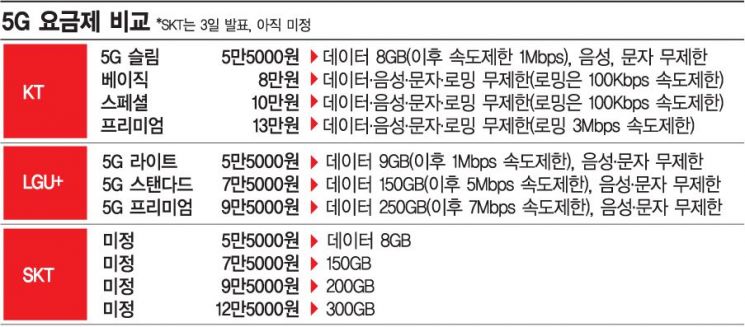
The minimum cost or the starting price of the 5G tariff in South Korea is 55,000 won, which roughly converts to 325 Yuan or $48 for the three network operations — SK Telecom, KT, and LG U+.
While the basic package of 55,000 won from SK Telecom and KT offers 8GB of data, LG U+ offers 9GB of data. However, the data limited gets significantly increased when the user opts for the higher plan.
For instance, the package worth 75,000 won (approximately 444 Yuan or $66) offers 150GB on SK Telecom and LG U+ and the package costing 95,000 won (approximately 562 Yuan or $84) offers 200GB and 250GB data.
On the other hand, the third network operation — KT offers unlimited data service in packages worth 80,000 won and more, which roughly converts to 473 Yuan or $70. However, it then caps the speed in roaming.
The South Korea-based network operators weren’t going to set the minimum pricing for the 5G network but the government forced the companies to do so. Thus, in order to obtain the required government approvals to being the 5G service in South Korea, all the three companies decided to set 55,000 won as the minimum package pricing for the 5G network.
Lenovo recently launched the watered-down model of the Lenovo Z6 Pro in China, dubbed as Lenovo Z6 Youth Edition. Currently, the smartphone is limited to the Chinese market only but will soon make its way outside.
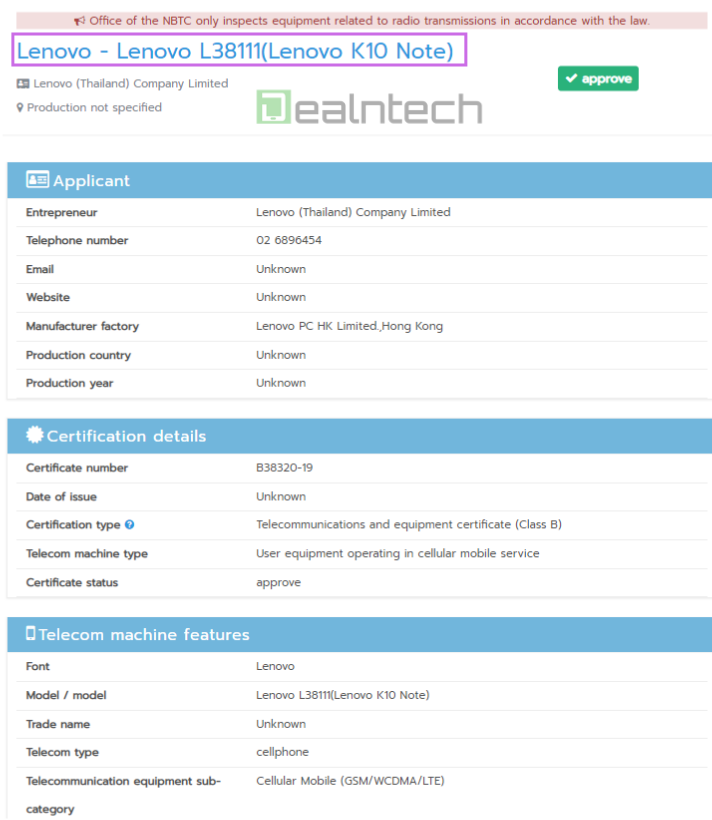
As per the reports, the smartphone could get launched as Lenovo K10 Note outside the Chinese market. The company’s device with model number L38111 has received certification from NBTC in Thailand and IMDA in Singapore hinting at its imminent launch.
The phone with same model number L38111 was launched in China as Lenovo Z6 Youth edition. So, the Z6 Youth and K10 Note both the smartphones share the same model number. Both phones are expected to have the same specifications. The devices will be identical and the difference will be in the moniker only.
Last month, Lenovo launched the Z6 Youth Edition smartphone in China, which features a 6.3-inch IPS LCD panel. The waterdrop notch styled display offers Full HD+ screen resolution of 1080 x 2340 pixels and an aspect ratio of 19.5:9. The display also carries support for HDR10 and offers a screen-to-body ratio of 93.07 percent.
Under the hood, it is powered by Qualcomm’s Snapdragon 710 octa-core chipset, coupled with up to 6GB of RAM and up to 128GB of internal storage. There’s also a microSD card slot that supports memory expansion on the smartphone.
The Lenovo Z6 Youth Edition has a triple camera setup with an LED flash. It includes a 16-megapixel primary sensor with f/1.8 aperture, an ultrawide lens of 8-megapixel with f/2.4 aperture and a depth sensor of 5-megapixel and f/2.2 aperture. For shooting selfies, there’s a front-facing camera of 16-megapixel with f/2.0 aperture.
Other features on the smartphone includes a rear-mounted fingerprint scanner, AI face unlock, microSD card slot, dual-SIM support, 4G VoLTE, Wi-Fi 802.11ac, Bluetooth 5.0, GPS, USB-C, and 3.5mm audio jack.
It runs Android 9 Pie operating system with ZUI 11 user interface. The phone is also equipped with support for Dolby panoramic sound and 4D tuning system. For accurate location tracking, the smartphone comes with dual-frequency GPS technology. It houses a 4,050mAh battery that carries support for 15W rapid charging through USB-C.
About a week ago, there was a rumor that the Galaxy Note10 Pro will come with 45W fast charge technology – the fastest for a Samsung device and nearly more than double the 25W fast charge technology of the Galaxy S10 5G. New info has surfaced and it quells that rumor and reveals new details.
A tweet by Max Weinbach (@mweinbachXDA), a host and writer for XDA-Developers, revealed that Samsung’s next stylus-toting flagship phone will not have 45W fast charging but 25W just like the Galaxy A80. That isn’t entirely bad news as 25W is still a significant improvement over the 15W fast charge technology of its predecessor, the Galaxy Note9.
According to my source, the Note 10 Pro will only have 25w charging, not the 45w previously leaked. The A90 is getting the 45w charging previously written about.
However, the second part of the tweet confirms that Samsung is indeed working on a phone with 45W fast charge technology. That phone, according to Max, is the upcoming Galaxy A90. Yes, it appears the Galaxy A-series will again be the first to come with a key new feature before the Galaxy S and Galaxy Note series.
A Samsung device with model number SM-A9050 believed to be the Galaxy A90 was seen on Geekbench last week. It has 6GB of RAM, runs Android 9 Pie and is powered by the Qualcomm SM6150. In this case, it is the Snapdragon 730 as the base frequency is 1.80GHz and not 1.71GHz like the Snapdragon 675 which also appears as SM6150 on Geekbench.
Not a lot is known about the Galaxy A90 but there is a rumor that it may come with a pop-up selfie camera like the Redmi K20.
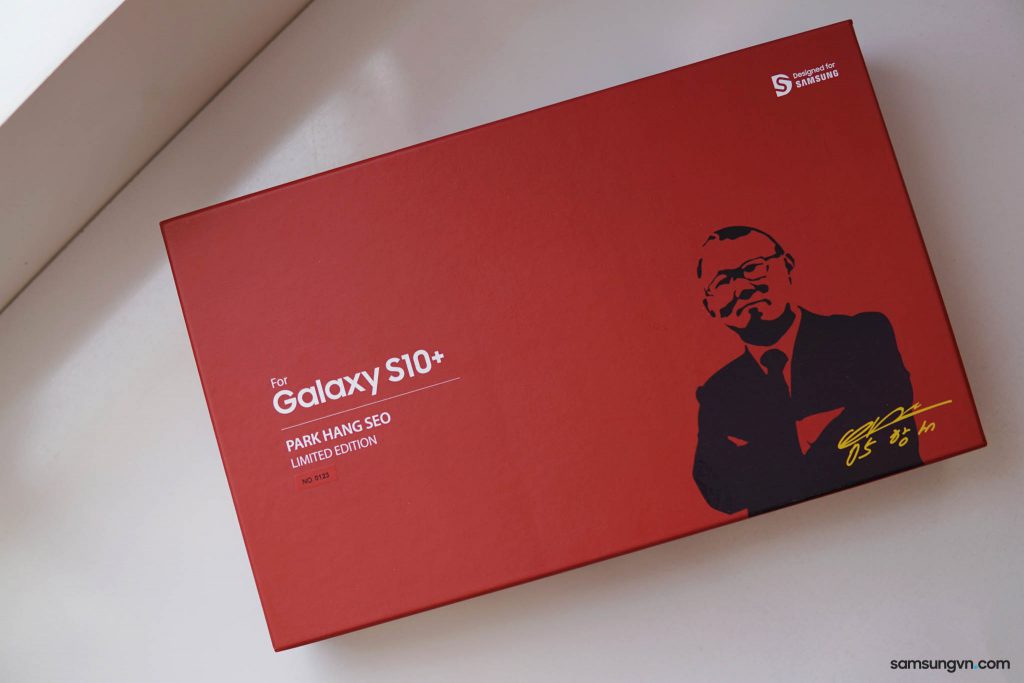
Samsung just announced the Cardinal Red Galaxy S10 series (S10 and S10+) and a Galaxy S10+-only Diamond Silver variant. Both color variants are only available in Switzerland and Hong Kong respectively. However, those are not the only two color variants that have just been announced. There is a third, with a stunning gradient finish but it is a limited edition variant – to be precise, the Galaxy S10+ Park Hang Seo Limited Edition.
For those who don’t know, Park Hang Seo is a former South Korean footballer that is now the head coach of the Vietnam national football team. This limited edition Galaxy S10+ was released to honor him and will be exclusive to Vietnam.
The phone not only has a different finish from the other variants, but it also comes in a special box along with additional accessories.
Seeing the red box, one might presume the phone inside has the same color but it doesn’t. The color is actually called Prism Silver and is similar to that of the Honor 10 GT Lily White Edition but with a wider spectrum of colors, for lack of a better way to describe it. It sure will turn heads as it switches from purple to green to orange to pink. This limited edition has 8GB of RAM, 128GB of storage and dual SIM support.
Included in the box is a customized hard case in red. It is a sturdy case but the font and color used to write the veteran footballer’s name look off. The case has a few tricks of its own. Slap it on and you are prompted to download AR stickers designed to show your support for the Vietnamese team and a custom theme for the phone. There is also a prompt to get news related to the sports team and the coach.
[envira-gallery id=”257998″]
There is also a Samsung 10000mAh wireless battery pack included in the package. The power bank will allow you to charge the S10+ wirelessly while you use the port to charge another device. It has a Type-C port and also supports fast charge.
The Galaxy S10+ Park Hang Seo Limited Edition is priced at VND 23,990,000 ($1033) and will be available or purchase on June 16 at Samsung Showcase, at Samsung Stores, and on the official Samsung website.
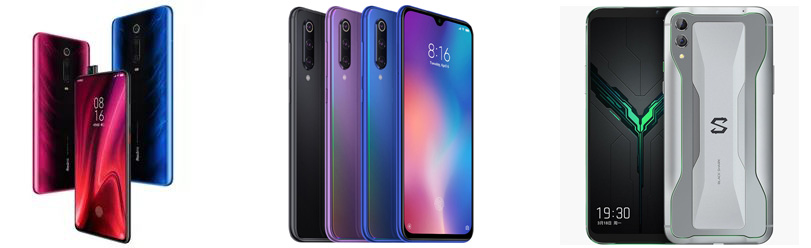
Despite it is currently in the top 5 best smartphones brands of the global market, Xiaomi keeps releasing very affordable flagship phones by lowering its profit margins. The company recently launched the first flagship from its Redmi sub-brand: Redmi K20 Pro, and guess what, it is an affordable flagship. Now, we think that there is nothing better than comparing the new entry with the other affordable flagships from the Chinese company, in order to establish if it is really the best value for money Xiaomi flagship. The most powerful flagships with an affordable price tag released in 2019 by Xiaomi are the Mi 9 and the gaming-centric Black Shark 2. We exclude the Mi Mix 3 5G as it is way more expensive and not suitable for people who want the highest value for money. So here is a specs comparison between the best Xiaomi value flagships.
Xiaomi Redmi K20 Pro vs Xiaomi Mi 9 vs Xiaomi Black Shark 2
Xiaomi Redmi K20 Pro
Xiaomi Mi 9
Xiaomi Black Shark 2
DIMENSIONS AND WEIGHT
156.7 x 74.3 x 8.8 mm, 191 g
157.5 x 74.7 x 7.6 mm, 173 g
163.6 x 75 x 8.8 mm, 205 g
DISPLAY
6.39 inches, 1080 x 2340p (Full HD+), Super AMOLED
6.39 inches, 1080 x 2340p (Full HD+), Super AMOLED
Triple 48 + 12 + 16 MP, f/1.8 and f/2.2 and f/2.2
20 MP f/2.0 front camera
Dual 48 + 12 MP, f/1.8 and f/2.2
20 MP f/2.0 front camera
BATTERY
4000 mAh, fast charging 27W with Quick Charge 4.0
3300 mAh, fast charging 27W with Quick Charge 4.0
4000 mAh, fast charging 27W
ADDITIONAL FEATURES
Dual SIM slot
Dual SIM slot
Dual SIM slot
Design
If we only judge by basing on the look, Redmi K20 Pro wins the design comparison thanks to its more futuristic form factor. It has a nearly borderless display with a pop-up camera placed on a motorized mechanism, as well as a stunning liquid finish on the back. However, if you are looking for the best build quality, then Xiaomi Mi 9 may be a better choice. It has a glass design protected by Gorilla Glass 5 as well as a 7000 series aluminum frame which is much more sturdy than Redmi K20 Pro’s frame. Xiaomi Mi 9 is even thinner. The Xiaomi Black Shark 2 has a gaming-centric aggressive design and it is far from being elegant. It even sports thick bezels around the display.
Display
Xiaomi Mi 9 and Redmi K20 Pro are slightly superior to the Black Shark 2 due to their support to the HDR standard which provides richer colors. However, you get an amazing AMOLED display in each case, so you should not mind so much about it. And in each case, you even get an under-display fingerprint reader, as well as a diagonal of 6.39 inches.
Hardware/Software
While each of these phones is powered by the Snapdragon 855 chipset providing the most awesome flagship-class performances in every scenario, what makes the difference on the hardware side is the memory configuration. In this trio, the Black Shark 2 is the only device to come with up to 8 GB of RAM, and it even comes with a more advanced cooling system. It is a gaming phone, so it is kinda obvious that it has to provide higher performances than normal devices. Xiaomi Mi 9, Redmi K20 Pro and Black Shark 2 run Android 9 Pie out of the box.
Camera
Due to its brighter aperture for three out of four sensors, the Xiaomi Mi 9 is the most convincing camera phone. It shots amazing photos in every light condition and it has fast and accurate autofocus. It can even record 4K videos at 60 fps and slow motion videos at 1080p and 960 fps, that is amazing. The second place goes to the Redmi K20 Pro which has a very similar setup.
Battery
Xiaomi Mi 9’s battery life is the weakest point of this handset. Redmi K20 Pro and Xiaomi Black Shark 2 have a way bigger battery capacity and so much longer battery life. But Xiaomi Mi 9 is the only to support wireless charging.
Price
If you want to grab a unit of the Redmi K20 Pro, you are willing to pay about €350/$400 in the Chinese market. It will soon hit the global market as the Mi 9T, but we still do not know its official price. Xiaomi Mi 9 and Black Shark 2 start from €450/$510 globally. My favorite one is the Redmi K20 Pro due to its better design and a bigger battery, despite the Mi 9 has better cameras/builds and the Black Shark 2 comes with more RAM in its high-end variant.
Earlier this year, Samsung announced the Galaxy Tab S5e – an upper mid-range tablet with a Snapdragon 670 processor. It is also Samsung’s slimmest tablet so far. Now it seems the main flagship tablet – the Galaxy Tab S5 – is coming soon based on a new Geekbench listing.
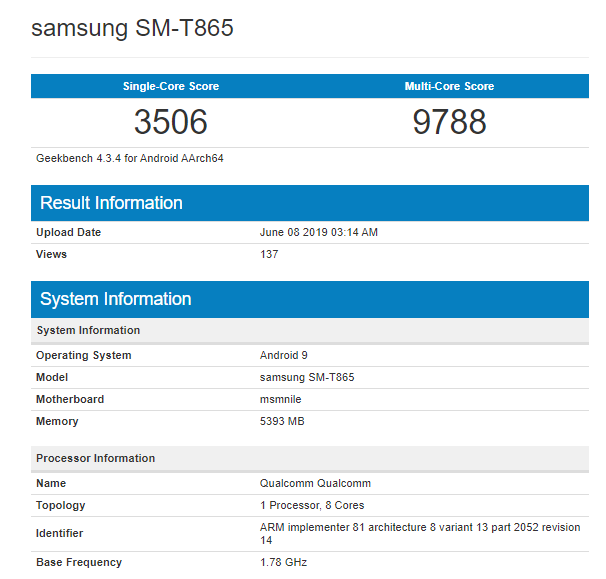
The device which was benchmarked yesterday has the model number SM-T865. The benchmark result shows it has 6GB of RAM and runs Android 9 Pie. The tablet is powered by the Snapdragon 855 processor just like the Galaxy S10 series. Its single-core score is 3506 while its multi-core score is 9788. The latter is low compared to that of other devices powered by the same chipset as a lot of them score over 10,000 points.
We are in the dark with respect to the rest of the specs and even its design but we have a few guesses. First, the audio jack might be removed on the Galaxy Tab S5. Samsung already removed the audio jack in the Galaxy Tab S5e to achieve its impressively thin design, so there is a chance the Tab S5 may follow suit. The screen size may remain unchanged but the bezels may get smaller.
We are not sure if Samsung will bring back the fingerprint scanner and put it on the side like on the S5e. If it doesn’t, we will have to make do with an Iris Scanner. Lastly, When the tablet launches, it should also come with the new One UI interface.
We use cookies on our website to give you the most relevant experience by remembering your preferences and repeat visits. By clicking “Accept”, you consent to the use of ALL the cookies.
This website uses cookies to improve your experience while you navigate through the website. Out of these, the cookies that are categorized as necessary are stored on your browser as they are essential for the working of basic functionalities of the website. We also use third-party cookies that help us analyze and understand how you use this website. These cookies will be stored in your browser only with your consent. You also have the option to opt-out of these cookies. But opting out of some of these cookies may affect your browsing experience.
Necessary cookies are absolutely essential for the website to function properly. This category only includes cookies that ensures basic functionalities and security features of the website. These cookies do not store any personal information.
Any cookies that may not be particularly necessary for the website to function and is used specifically to collect user personal data via analytics, ads, other embedded contents are termed as non-necessary cookies. It is mandatory to procure user consent prior to running these cookies on your website.