Vivo will be announcing the Vivo U10 smartphone in India tomorrow. It is speculated that the smartphone will be also releasing in China in the near future. A new leak has revealed the pricing of the three variants of the Vivo U10 phone.
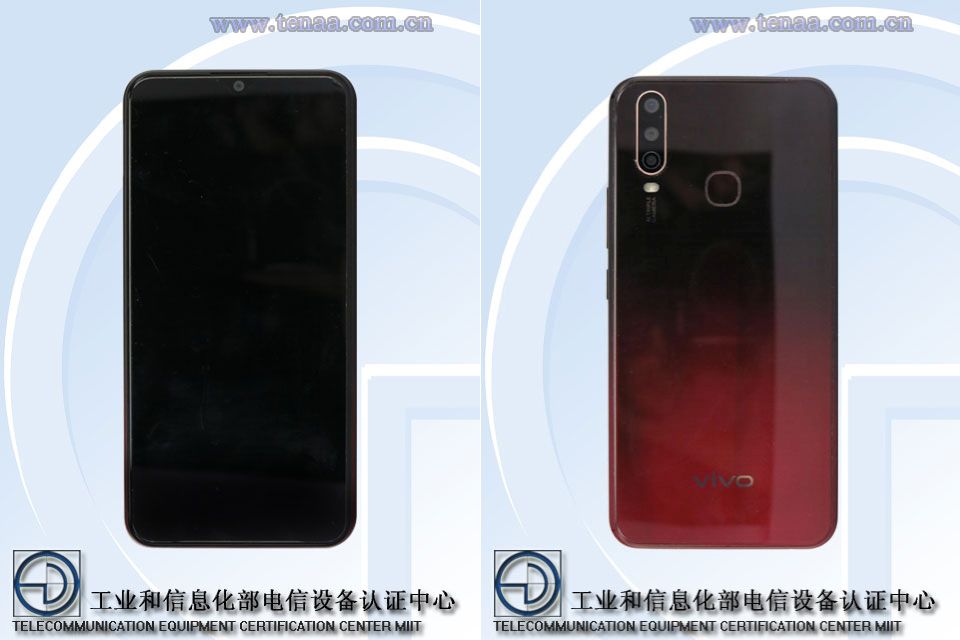
Citing information received from trusted sources, 91mobiles has reported that China will be receiving the Vivo U10 in three models such as 3 GB RAM + 32 GB storage, 3 GB RAM + 64 GB storage and 4 GB RAM + 64 GB storage. These models are expected to arrive with respective price tags of 799 Yuan (~$112), 899 Yuan (~$126) and 999 Yuan (~$140) in the home market. The publication has also carried a render of the phone that reveals that the U10 will be equipped with a waterdrop notch enabled display and a rear-mounted triple camera system.
In India too, the Vivo U10 is expected to release in the same variants as mentioned. However, there is no information available on the exact pricing of the three models of Vivo U10 for India. A recent leak had claimed that Vivo U10 could be priced under Rs. 12,000 (~$168) in India.
The above shown image resembles with the TENAA images of the Vivo V1928A/T smartphone. Hence, it appears that the unreleased Vivo V1928A/T phone may hit the Chinese markets as Vivo U10 smartphone. It measures 159.43 x 76.77 x 8.92mmand it weighs 191.5 grams.
The handset has a 6.35-inch display that offer HD+ resolution of 720 x 1544 pixels resolution. It is powered by an octa-core processor that clocks at 2.0 GHz. Probably, it could be driven by the Snapdragon 665 mobile platform. TENAA listing states that the phone may arrive in 3 GB and 4 GB RAM models. It will come with a native storage of 32 GB.
The back panel of the phone has a 13-megapixel + 8-megapixel + 2-megapixel triple camera system. A fingerprint scanner is also found on the backside of the smartphone. There is a front-facing camera of 8-megapixel on the device. It has packed with a 5,000mAh battery.
In India, the Vivo U10 will be exclusively available through Amazon India. It is also confirmed to carry support for fast charging.
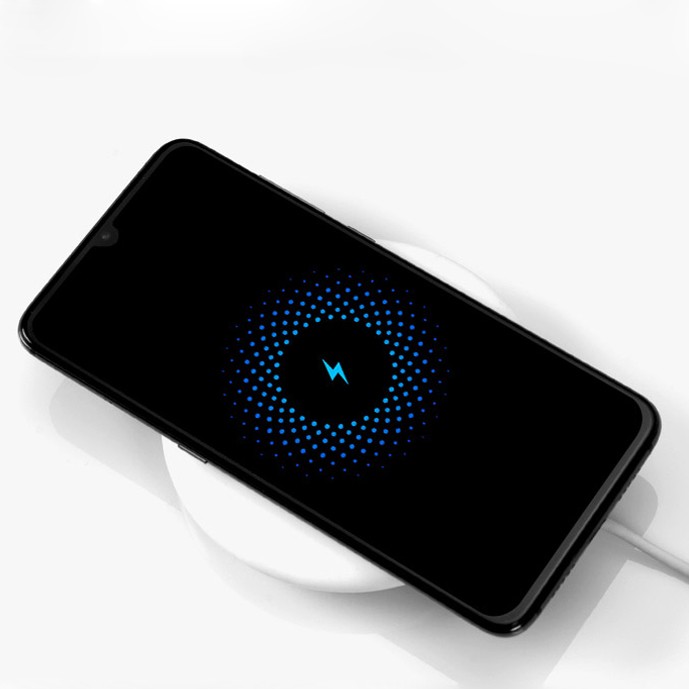
While some manufacturers are actively pushing wireless charging (Xiaomi is already working on 40W wireless charging technology) as the future of charging, there are other manufacturers like Vivo (and iQOO) whose latest NEX 3 5G smartphone skips the feature entirely and OnePlus whose soon-to-launch OnePlus 7T-series will support only Warp Charge 30T wired fast charging are yet to launch a device with support for wireless charging. Honor is another manufacturer that hasn’t jumped on the wireless charging train.
So for this week’s poll, we want to know if the lack of wireless charging can be a dealbreaker for you when purchasing a new phone or if it is a feature you don’t care much about.
Please, do vote and share the reason for your answer and any other opinion about wireless charging in the comment box.
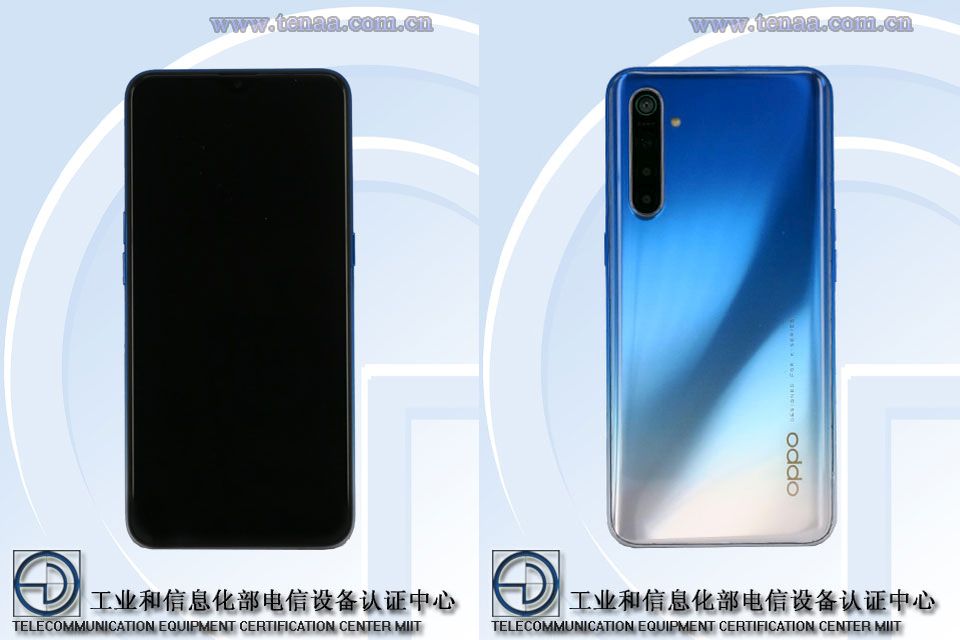
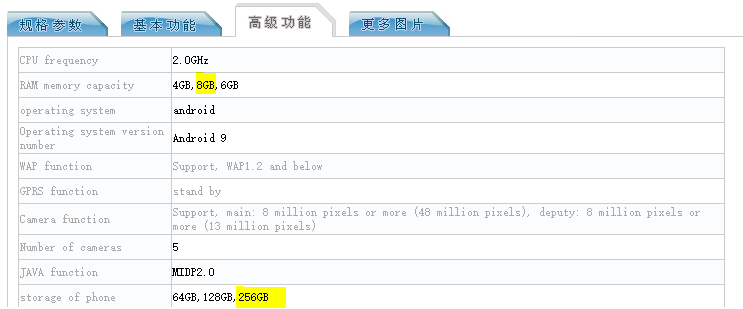
Last week, OPPO confirmed that it will be soon debuting the OPPO K5 smartphone. It revealed that it will be arriving as the company’s first phone with VOOC 4.0 Flash Charge technology. A leaked specs sheet of the phone had also appeared in the previous week. A new TENAA listing of an OPPO phone with model number PCNM00 has appeared recently. The listing has the full specs and images of the phone. Rumors have it that it could be the upcoming OPPO K5 smartphone.
The alleged OPPO K5 with PCNM00 model number measures 158.7 x 75.2 x 8.6mm and it weighs 182 grams. The frontside of the phone is fitted with a waterdrop notch enabled display. The gradient rear of the phone has a vertical quad camera system placed at its top-left corner.
OPPO K5 Specifications (Rumored)
The TENAA listing of OPPO PCNM00 reveals that it has a 6.4-inch AMOLED display that produces 1080 x 2340 pixels resolution. Like the predecessor K-series phones, the alleged OPPO K5 is also equipped with an in-display fingerprint scanner.
It is driven by a 2.2GHz octa-core processor and it is loaded with Android 9 Pie OS. The SoC is coupled with 8 GB of RAM. A reliable Chinese tipster had recently revealed that the phone is fueled by Snapdragon 730G mobile platform.
The native storage offered by the phone is 128 GB. There is a microSD card slot on the device for more storage. The smartphone draws power from a minimum capacity battery of 3,920mAh. Its typical capacity could be 4,000mAh. OPPO’s VOOC 4.0 tech will bring support for 30W rapid charging on the device through USB-C.
The front notch of the device has a 32-megapixel selfie camera. The quad camera system has a 64-megapixel primary lens, an 8-megapixel lens and a pair of 2-megapixel sensors. It appears to be the very same camera system that it is available on the Realme XT phone. Also, the specs of the alleged OPPO K5 is identical to that of the rumored Realme X2 smartphone. As of this writing, there is no information available on the launch date and pricing of the OPPO K5.
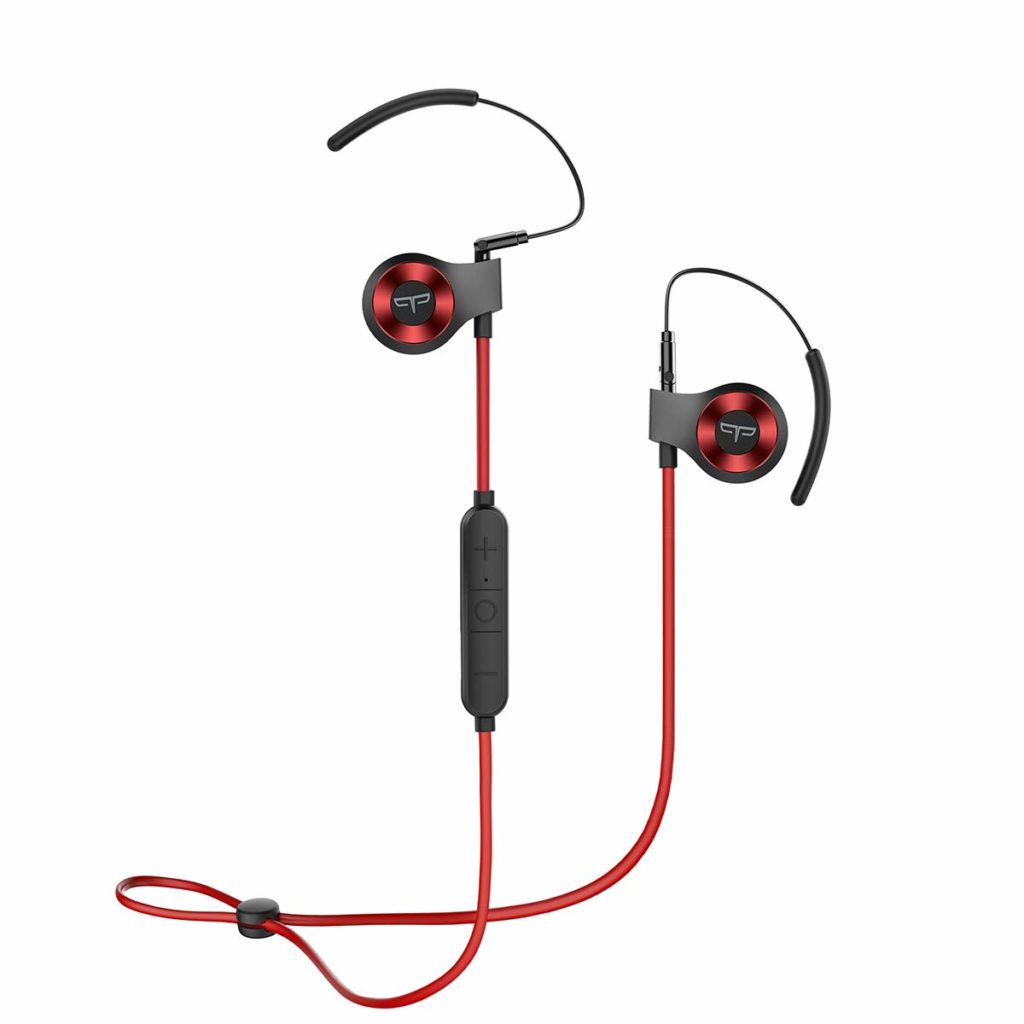
Gizmochina along with Origem is conducting 1 unit Origem HS-3 Bluetooth Headphones as giveaway gift to a lucky reader. Like always, you just have to follow the steps mentioned on the Gleam widget to get a chance to win this amazing gift.
If you want to win the free Origem HS-3 Bluetooth Headphones, the most important thing is to LikeOrigem Facebook page, Visit the Origem official website and Share the giveaway.
Origem HS-3 Bluetooth Headphones is equipped with powerful 10mm graphene driver and high-end CSR8670 chipset with DSP audio algorithm, which can detect the sound pressure of the listening environment and volume to adjust different modes. As the latest smart microphone, the earbuds can recognize user’s commands immediately after speaking, like play/pause music, accept/reject call, previous/next song and activate phone voice assistant. The Origem HS-3 comes with neck hanging design with rotatable earhooks made from nickel-titanium alloy. What’s more, the earbuds supports quick charge and IPX5 water-resistant.
You can click here to get more information about the Origem HS-3 Bluetooth Headphones.
Share this giveaway contest on Facebook, Twitter and Reddit.
Terms & Conditions:
1. The giveaway is an international giveaway. 2. We are not responsible for lost shipments. 3. We are not responsible for any duties, import taxes that you may incur. 4. We reserve all rights to make any changes to this giveaway. 5. The prize will be shipped in a month when the giveaway end.
Just follow the steps mentioned in the Gleam widget to participate in the giveaway.
The Mi 9 Pro 5G will be announced in a few days and Xiaomi isn’t keeping the phone’s features a secret. Today, it has revealed more details about the upcoming flagship.
Battery
The Xiaomi Mi 9 Pro 5G will pack a 4000mAh battery, a significant bump from the 3300mAh in the Mi 9. The increase in battery capacity is necessary since this is a 5G device and a 3300mAh battery will not suffice. Xiaomi says, even with the battery capacity, the Mi 9 Pro 5G isn’t heavy as it weighs 196 grams.
[envira-gallery id=”277672″]
Xiaomi also released a battery performance comparison sheet of the Mi 9 and the Mi 9 Pro 5G. The result shows the Mi 9 Pro 5G still has 21% battery left after 7 hours of use which include gaming, video and audio streaming, video recording, video calling, and car navigation.
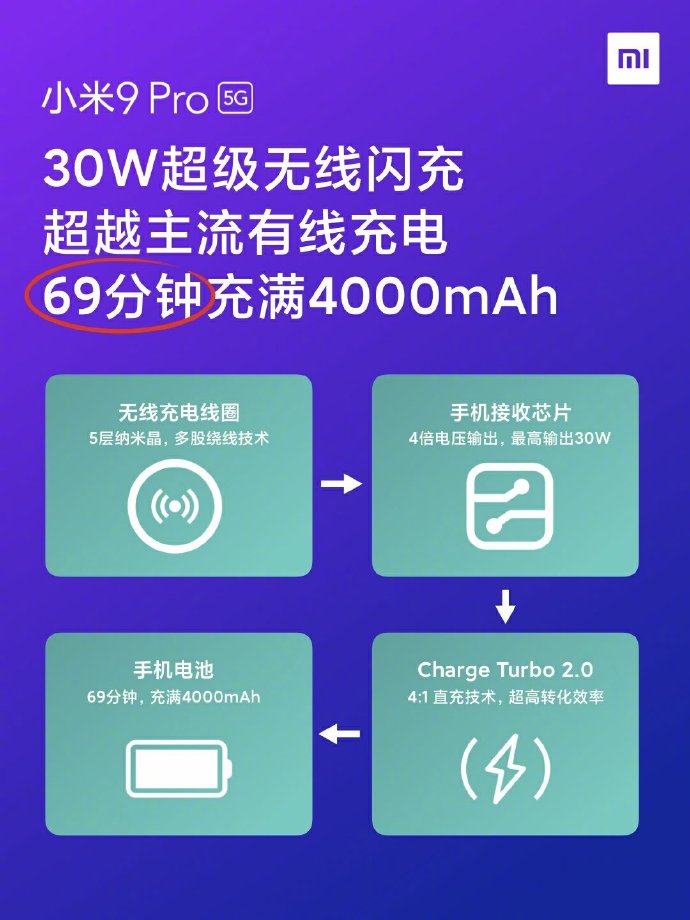
The Mi 9 Pro 5G will support 40W wired charging and 30W wireless charging, so you can fill up the phone in the shortest time possible.
Audio
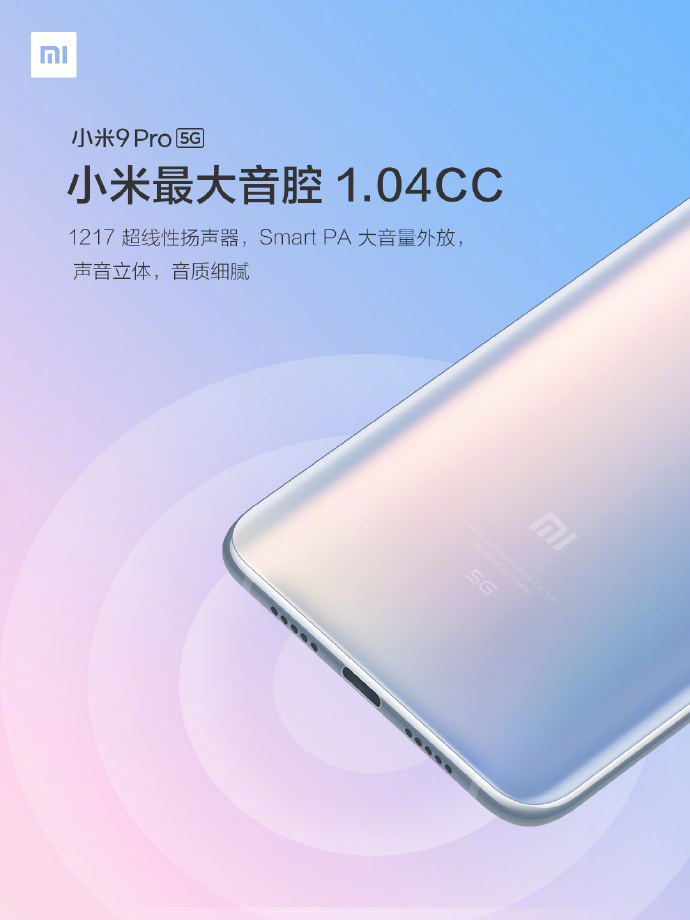
The official Xiaomi Weibo account also confirmed that the Mi 9 Pro 5G will come with a 1.04CC sound cavity, a 1217 super linear speaker, a smart PA, and support for Low Latency and High Definition Codec (LHDC) technology. All these should provide loud and impressive audio performance.
[envira-gallery id=”277676″]
HD Vibration (4D Shock)
The Mi 9 Pro will also have 4D shock or HD vibration. This should provide a more immersive experience when playing games. Xiaomi says HD Vibration supports up to 150 different vibration modes and has a user interface that adapts to different scenes.
NFC eID and Car Key
The Mi 9 Pro 5G will have NFC with support for eID which is required if you want to use the high-speed train, board a plane, or check into a hotel. It will also be able to work as your car key.
No 4G model, look to other “Xiaomi” phones
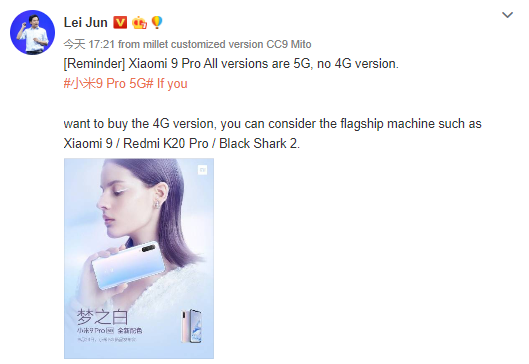
If you are expecting a 4G version of the Mi 9 Pro, Xiaomi’s co-founder and CEO, Lei Jun, announced on Weibo that all versions of the phone are 5G and there is no 4G version. Based on the post, we can infer that there will be other configurations available with less RAM and storage. He adds that those who want a 4G phone should consider other flagships such as the Mi 9, Redmi K20 Pro, or Black Shark 2.
Technically, the Mi MIX line is and may always be a concept line. It is a line Xiaomi uses to test out new designs and debut new technologies. Although, unlike other concept products, it usually becomes mass-produced and commercially available shortly after the announcement. This week, Xiaomi will announce its latest model for the series called the Mi MIX Alpha and below is all we know so far about the phone.
No Mi MIX 4, it’s the Mi MIX α (Alpha)
Rather than the Mi MIX 4, Xiaomi’s next MIX flagship will launch as the Mi MIX α. While Xiaomi says the switch to a new naming scheme is the beginning of a new era, we strongly believe the change from Arabic numerals to Greek alphabets is related to the ruling against Xiaomi’s use of the MIX name.
Design
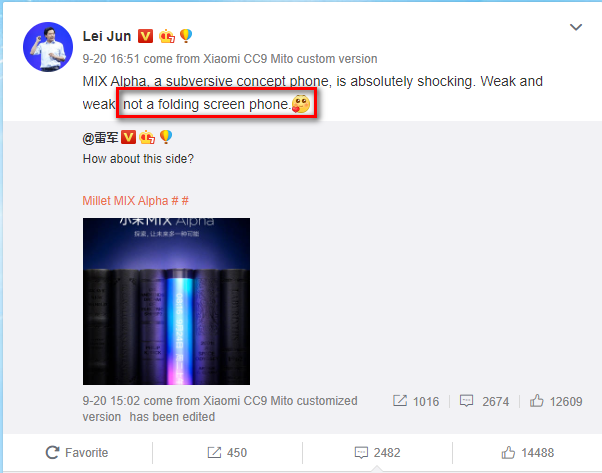
The design of the Mi MIX Alpha has been a debate on the web. It was originally thought to sport a candy bar design with a display devoid of a notch and punch hole. This alleged front panel glass even hinted at it having a pop-up selfie camera. However, when teaser posters began to surface, it was believed to be a foldable phone since the flexible display appeared to fold outwards like the working prototype foldable phone Xiaomi showed off earlier this year. Sadly, Xiaomi’s CEO and co-founder, Lei Jun, revealed on Weibo yesterday that the Mi MIX Alpha is not a foldable phone.
While the design is still unknown, one thing that is certain is that it has a flexible display that curves even further than that of the Mate 30 Pro’s Horizon Display.
Another aspect of the phone’s design and which is related to the display is the front-facing camera. Yesterday, Xiaomi released a teaser poster with a caption asking which design they prefer for the front-facing camera. The poster mentioned the wide notch, the waterdrop notch, the pop-up selfie camera, and the punch-hole display designs. Some have interpreted the post to mean a tease for an under-display selfie camera. This isn’t far-fetched seeing as Xiaomi already has a patent for the technology.
Specs
The key specs of the Mi MIX Alpha are unknown for now. While there have been some leaks, only a few details are certain such as a Snapdragon 855 Plus processor, a 108MP camera sensor that will be able to shoot 100MP picture, wireless charging, and reverse wireless charging.
Conclusion
We have no doubt that the Mi MIX Alpha will blow our minds and will be the talk of the tech community for a while just like its predecessors. We also strongly believe it will influence the design of future phones from other manufacturers.
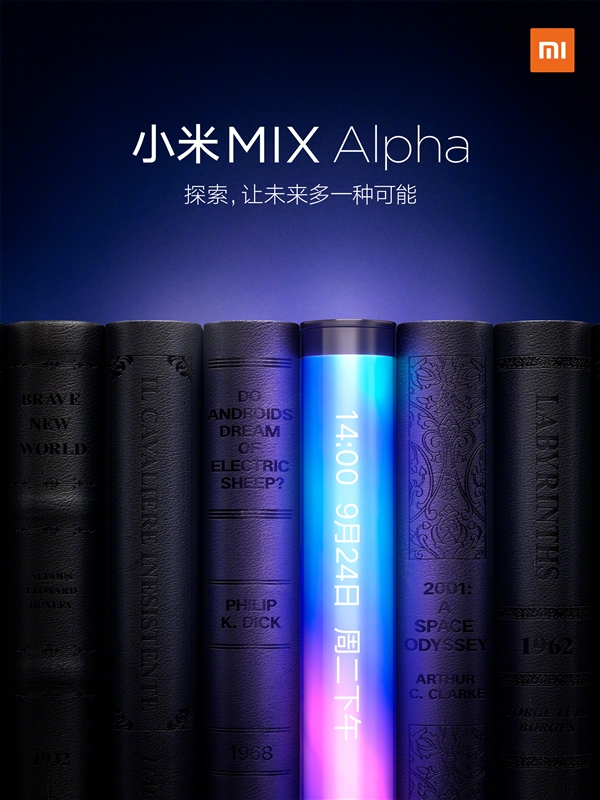
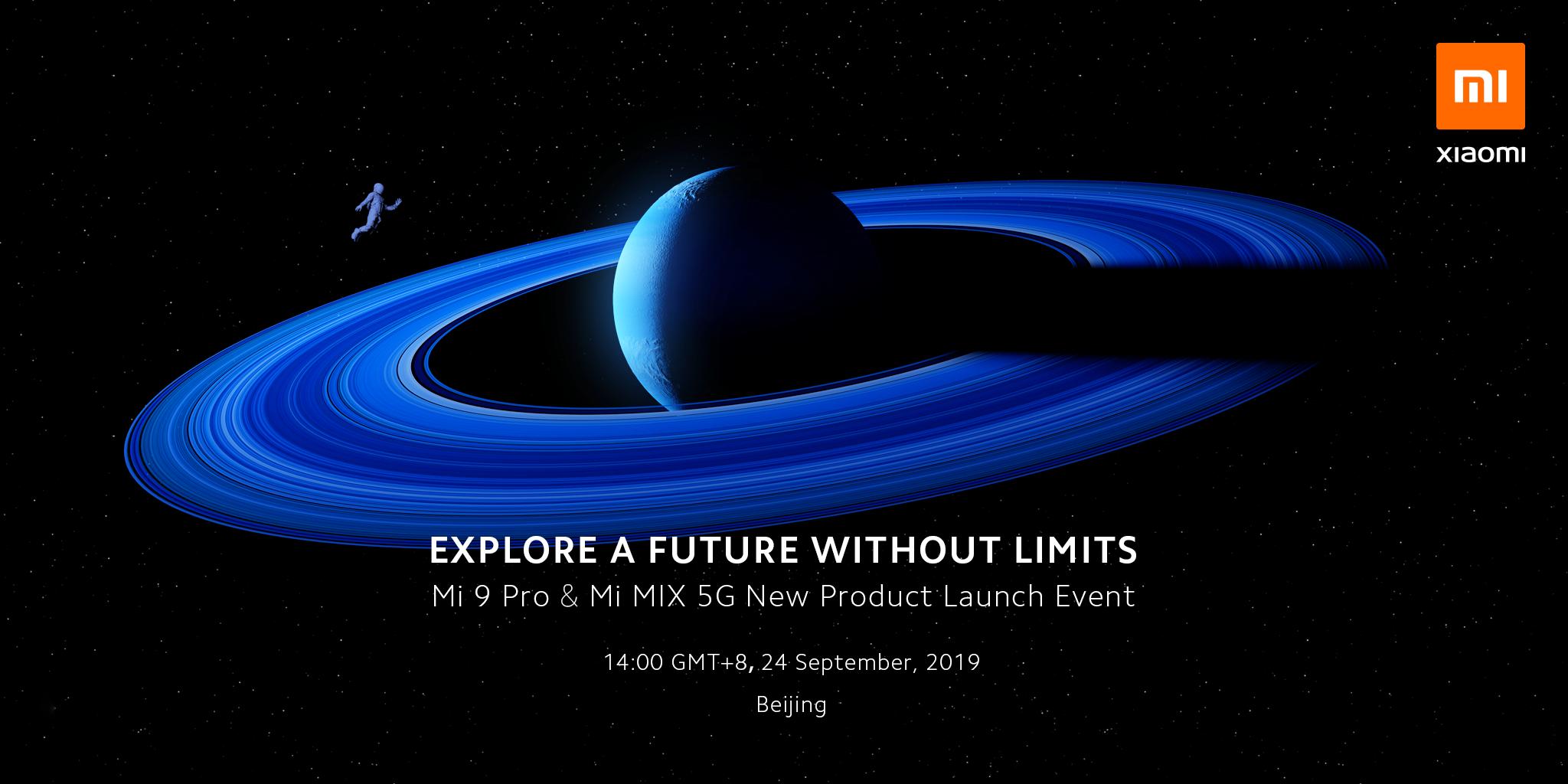
The Mi MIX Alpha launches on Tuesday, September 24, and it will arrive alongside the Mi 9 Pro 5G, the Mi TV Pro, and other exciting products.
Multiple variants of the Redmi Note 7, Mi 9T Pro, and Mi A3 smartphones have received noteworthy price cuts on Gearbest.
We will check out more details about the discounts and even show how you can save more money on select models during the check out process.
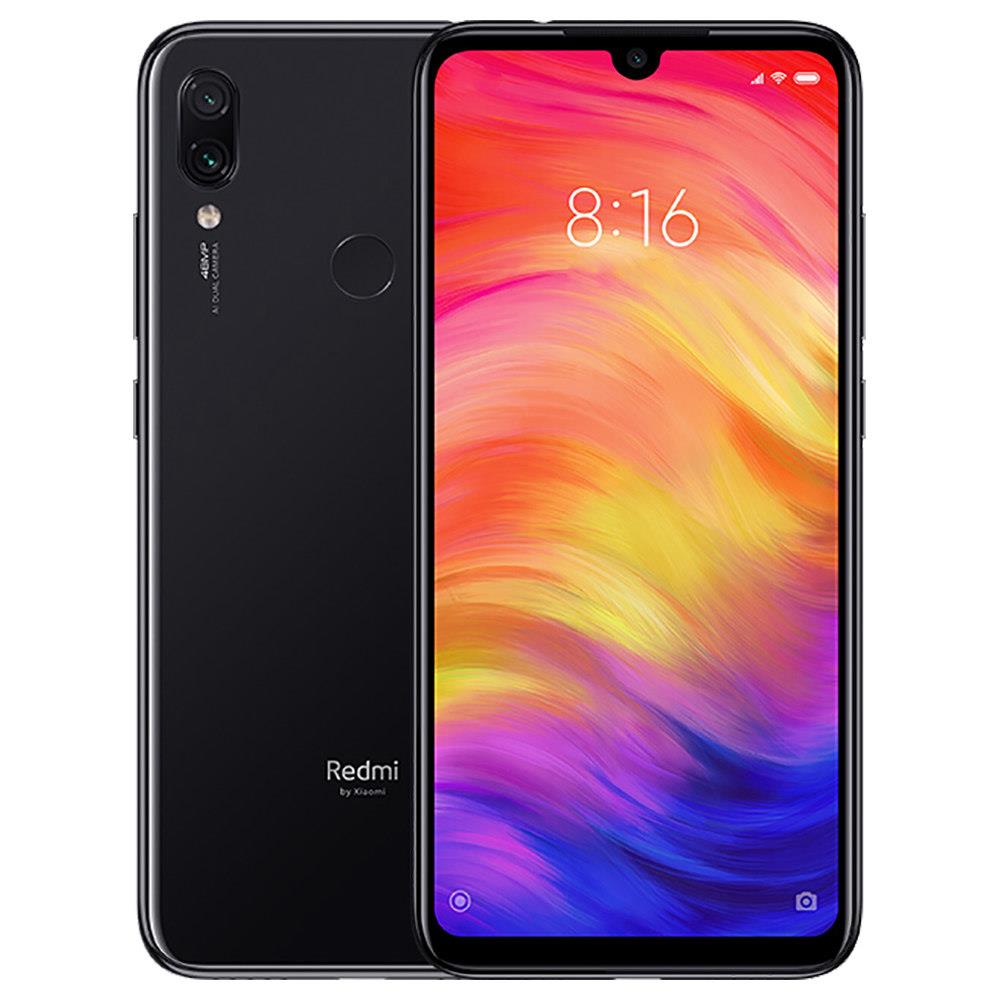
Xiaomi Redmi Note 7 4G Phablet [4GB RAM+64GB ROM]
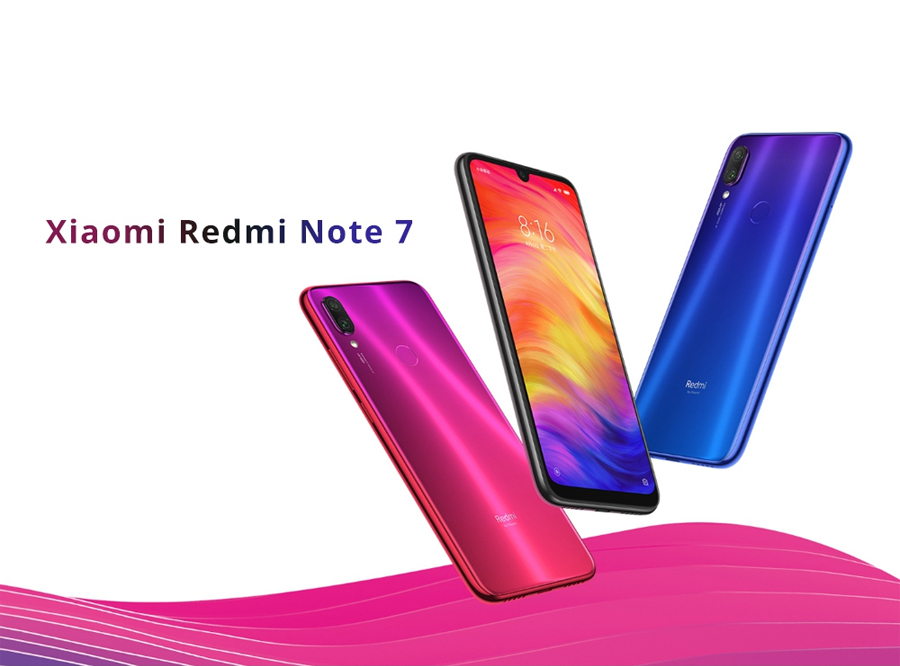
Even months after hitting the store shelves, the Redmi Note 7 continues to garner popularity among Xiaomi’s huge fan base. To make the phablet available to those on a tight budget, Xiaomi is offering the 4GB RAM+64GB ROM variant of Redmi Note 7 for a lowered price of $169.99 through Gearbest.
It is worth mentioning here that the aforesaid model usually retails for $213.72. To grab the discount, all you need to do is to follow this link without wasting time. With over a hundred pieces sold at the time of writing, this promo is slated to end in just seven days.
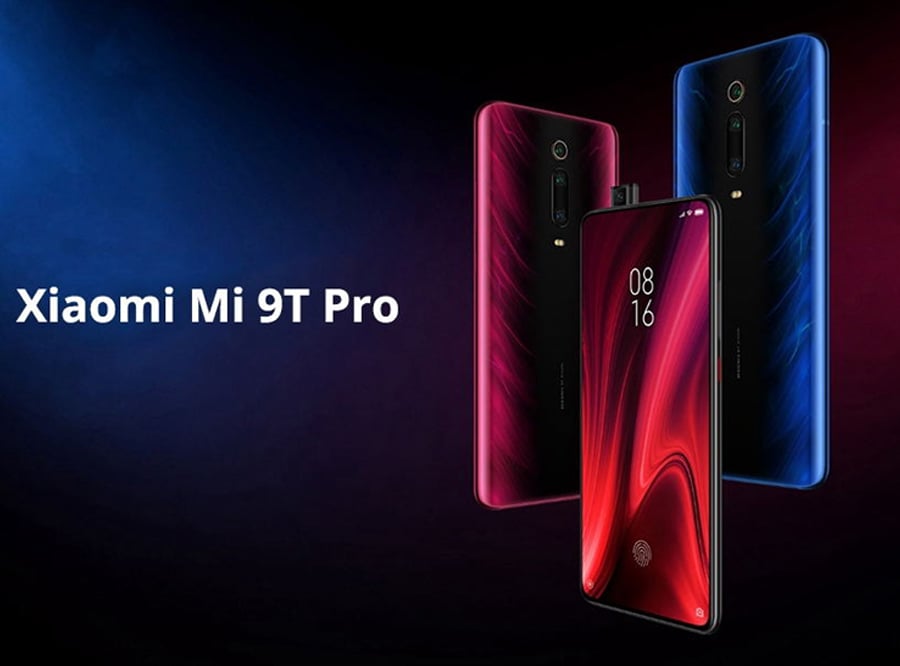
Xiaomi Mi 9T Pro 4G Phablet [6GB RAM+64GB ROM] – Blue
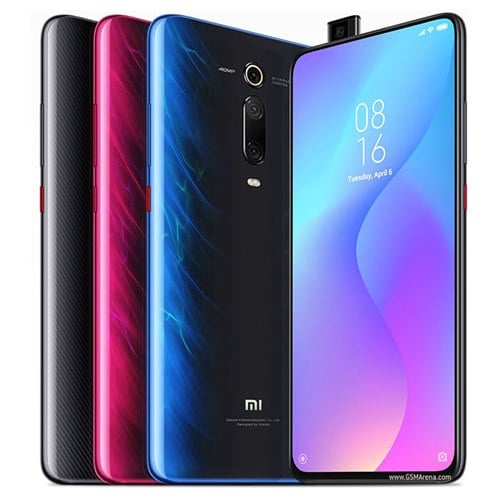
Announced in 2019, the Mi 9T Pro is an irresistible phablet that boasts an impressive array of features. Considering its undying demand, Xiaomi is now offering multiple variants of the phablet for lowered prices.
This blue-tinted model ships with 6GB of RAM, paired with 64GB of onboard storage space, and usually retails for $480.67. Thanks to an 11 percent discount available via Gearbest, this variant can now be yours for a lowered price of just $429.99.
You can save $85 more by applying coupon code GBM9TPRO1 during the checkout process. In other words, you can bring the retail price of the phablet down to just $348.99 simply by applying the aforesaid coupon.
You can follow this link to grab the discount and use the coupon before it expires. With more than 300 pieces sold, this promo will end in seven days.
Xiaomi Mi 9T Pro 4G Phablet [6GB RAM+64GB ROM] – Red
Available in an eye-catching red color option, this Mi 9T Pro 6GB RAM+64GB ROM model usually sells for $480.67, but you can buy it for a reduced price of $429.99 from Gearbest. This is an 11 percent drop in the device’s original selling price.
You can grab an extra $85 off by applying coupon code GBM9TPRO2. As a result, you can end up shelling out just $359.99 on the above-mentioned model. On the downside, more than a hundred pieces were already sold at the time of writing and the promo will be available for just seven more days.
You can visit this link to avail the discount and take full advantage of the coupon, which is likely to expire soon.
Xiaomi Mi 9T Pro 4G Phablet [6GB RAM+64GB ROM] – Black
There’s an 11 percent off on the black color option of the Xiaomi Mi 9T Pro phablet that comes with 6GB of RAM and 64GB of internal storage capacity. While this model usually carries a $480.67 price tag, it is currently available for just $429.99 via Gearbest.
To save $85 more, all you need to do is to apply coupon code GBM9TPRO3 during the checkout process. The coupon helps you reduce the selling price of the phablet to only $348.99. You can follow this link to avail the discount and use the coupon.
Four hundred pieces of the popular black color version have already been sold. The promotion sale will be valid for the remaining pieces for seven days.
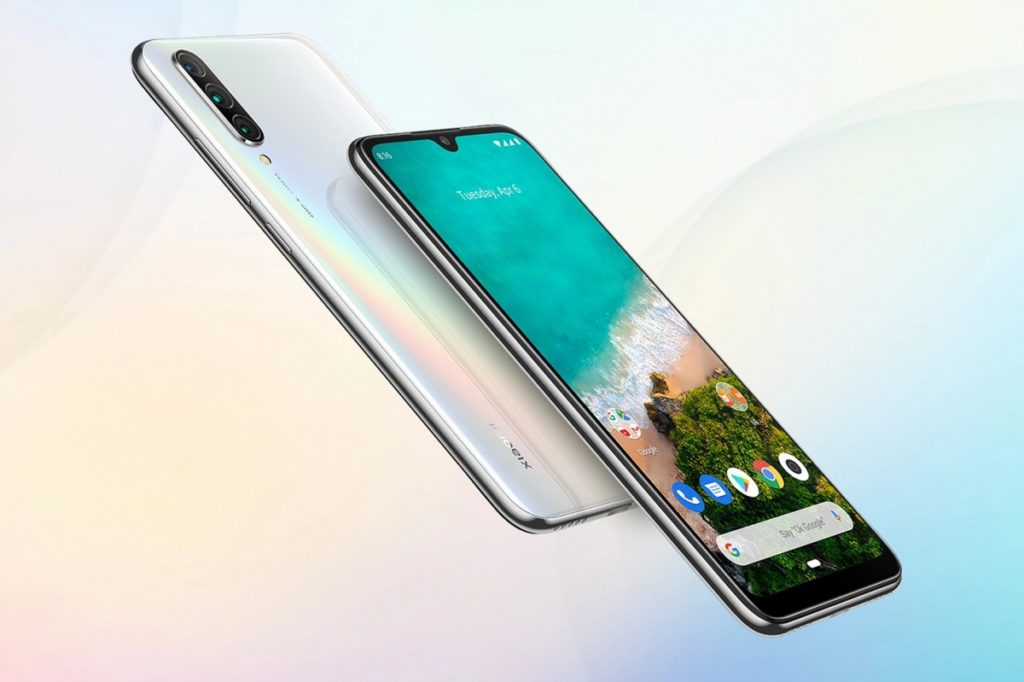
Xiaomi announced the Mi A3 phablet in July this year. As expected, the device became an instant hit among the Chinese tech giant’s huge fanbase. Gearbest is doling out significant discounts on various models of the well-received phablet.
The above-mentioned 4GB RAM+64GB ROM Mi A3 variant carries a price sticker of $252.81, but much to the relief of those on a tight budget, the device is currently available for only $169.99 through Gearbest. This 33 percent drop is valid for the gray color option of the phablet.
If that doesn’t impress you much, you can save $5.40 more by applying coupon code GBA36401. The coupon helps you reduce the original asking price of the phablet to just $165.99.
You can head straight to this link and get the discount, which will be available on the remaining pieces for seven days.
Xiaomi Mi A3 4G Phablet [4GB RAM+128GB ROM] – Blue
This slightly larger Mi A3 model comes with 4GB of RAM and offers 128GB of internal storage capacity for you to save your favorite multimedia content. You can get the blue color option of the phablet for a lowered price of $185.99 from Gearbest.
This 34 percent discount is available for the blue color version of the phablet. Moreover, you can use coupon code GBA312802 for an extra $6 off. The retail price of the phablet comes down to just $187.99 after applying the coupon.
You can follow this link to grab the discount, which will be available for the remaining pieces. Note that the promo will wrap up in just seven days.
Xiaomi Mi A3 4G Phablet [4GB RAM+128GB ROM] – Gray
The gray-hued model with 4GB of RAM and 128GB of onboard storage space would normally set you back $282.94, but you can buy it from Gearbest for only $185.99. This is a significant 34 percent drop in the device’s original asking price.
As if that weren’t enough, you can get an extra $6 off by applying coupon code GBA312801 during the checkout process. The original selling price of the phablet reduces to only $187.99 after applying the aforesaid coupon.
You can follow this link to get the discount and use the coupon. A considerable number of pieces have already been sold and the promotion is slated to end in just seven days.
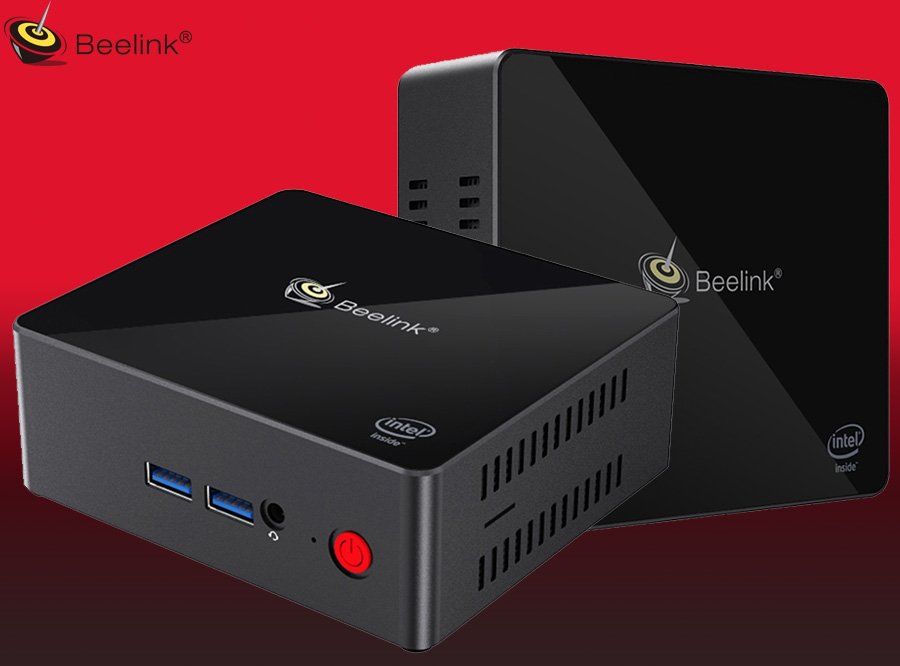
Designed to offer full PC capabilities in a compact form factor, mini PCs offer a wide selection of features that meet your daily needs. If you are looking for a new desktop PC for basic tasks, you might want to consider buying a mini PC rather than going for a giant tower that requires a lot of space.
While the market is brimming with all sorts of mini PCs, these small-sized desktop computers don’t come cheap. If you have restlessly been looking for an inexpensive mini PC that doesn’t disappoint in terms of performance, you might want to give the Beelink Gemini X45 Premium Mini PC a test drive.
Powered by Gemini Lake desktop processors from the J series, Beelink’s latest Gemini X series is simply irresistible. More importantly, you can now get your hands on the Beelink Gemini X45 Premium Mini PC without breaking the bank.
GeekBuying is doling out noteworthy discounts on two variant of the Beelink Gemini X45 Premium Mini PC. On top of that, we will show how you can save more money during the check out process.
Beelink Gemini X45 Premium Mini PC [8GB RAM+128GB ROM]
Equipped with a large 8GB of RAM and 128GB of internal storage capacity, the aforesaid model would normally set you back $255.99, but you can now buy it for a lowered price of just $229.99 from GeekBuying. You can even extend this 10 percent by applying coupon code 3QW9F8SF.
The coupon helps you save $10 more. In other words, you can bring the already reduced asking price of the mini PC further down to only $219.99 simply by applying the aforesaid coupon at the time of checking out.
New users can also take advantage of the New User 2% OFF Coupon and save more money. You can follow this link to grab the discount before the promo ends.
Beelink Gemini X45 Premium Mini PC [8GB RAM+512GB ROM]
This 8GB RAM+512GB ROM Beelink Gemini X45 Premium Mini PC variant usually retails for $339.99, but GeekBuying is giving its loyal users a chance to buy it for just $275.99. This is a 19 percent reduction in the device’s original asking price.
You can grab an extra $6 off with the help of coupon code 3QW9RFQ1. The coupon helps you reduce the retail price of the mini price to just $269.99 even before you click the ‘Place Your Order’ button.
Moreover, you can get an extra $2 off by applying the New User 2% OFF Coupon during the checkout process. You can visit this link to avail the 19 percent discount and use the coupon before it expires.
The Beelink Gemini X45 Premium Mini PC offers the following features:
Xiaomi’s Mi 9 series is probably the largest in the history of the Mi series. In the first quarter of the year, Xiaomi launched the Mi 9, the Mi 9 Transparent Edition, and the Mi 9 SE. Then in June, it followed it up with the Mi 9T, and then Mi 9T Pro in August. Just last week it announced the Mi 9 Lite. However, Xiaomi is not yet done with the series as it will announce the Mi 9 Pro 5G at an event on September 24. Here is a summary of what we already know about the phone.
Design
The Mi 9 Pro 5G will retain the design of the Mi 9. It will have triple rear cameras arranged vertically and on the left side. On the front, the phone will also keep the 6.39-inch display and waterdrop notch of the Mi 9. However, the new member of the Mi 9 family will come in a new white color variant similar to the Mi A3’s More Than White variant.
New Features
The main upgrades are actually inside of the Mi 9 Pro 5G. First, it will come with the new Snapdragon 855 Plus processor. It will also come with 12GB of RAM like the Mi 9 Transparent Edition, but it will pack more storage – 512GB to exact.
The Mi 9 Pro 5G will have a 4000mAh battery capacity, bigger than that of the Mi 9. It will also support 40W wired charging, a significant bump from the 27W Mi Turbo Wired Charging that launched with the Mi 9. It has also been confirmed that it will have support for Wireless Charging but 30W this time. The Mi 9 Pro 5G will also support 10W reverse wireless charging. This is the same wireless charging speed of the Mi MIX 3 and a lot of other phones.
Another feature that has been confirmed is VLC liquid cooling which has a larger cooling area and is more efficient. Xiaomi also confirmed that the Mi 9 Pro 5G will have a transverse linear motor for better haptic feedback. There is a possibility it will be best that of its competitors including Meizu‘s new mEngine 3.0 present in its 16s Pro flagship.
Price
The price of the Mi 9 Pro 5G is still unknown but Xiaomi will want to price it competitively. The Vivo iQOO Pro 5G with 12GB of RAM and 256GB of storage is priced at ¥4498 (~$634). It has an 8GB + 128GB version priced at ¥3798 (~$535). If Xiaomi wants to beat the iQOO Pro, then it will have to price its Mi 9 Pro 5G at around the same price tag as the 12GB RAM iQOO Pro 5G. It will also have to release a variant with lesser RAM and storage that can compete with the base model of the iQOO Pro 5G.
Xiaomi‘s been slowly teasing brand new features for their upcoming MIUI 11 update. Just last week we saw the announcement of two features coming soon, those being the dedicated Children’s Space and Earthquake alert. Now we’ve got another feature to add to the list, that being Family Sharing.
If the name sounds familiar, then that’s because Xiaomi’s Family Sharing is almost exactly the same Apple’s Family Sharing for iOS. It serves the exact same purpose, which is being able to share information between your family members’ devices quickly and safely. The fact that it’s so similar to the iOS version is actually great considering how good it is there.
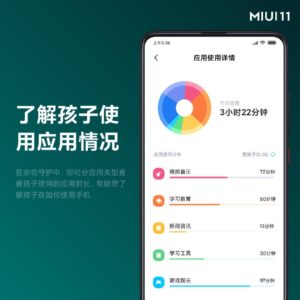
Interestingly, Xiaomi’s implementation of the feature is much more focused towards safety and parental control. Family Sharing on MIUI will let you track the location of family members at all times, control the amount of time a user can use an application, and even control WeChat usage. This paired with the upcoming Children’s Space should provide parents with all the tools they need to watch over their kids.
Perhaps the most interesting thing about Family Sharing however is how it works with any Android device or iPhone. This means only one person in your family actually needs to have a Xiaomi device, which is simply excellent to know. The worst part about iOS’ Family Sharing is the requirement that everyone have an iPhone or MacOS powered device. The fact that Xiaomi doesn’t force this on users makes the feature much more practical.
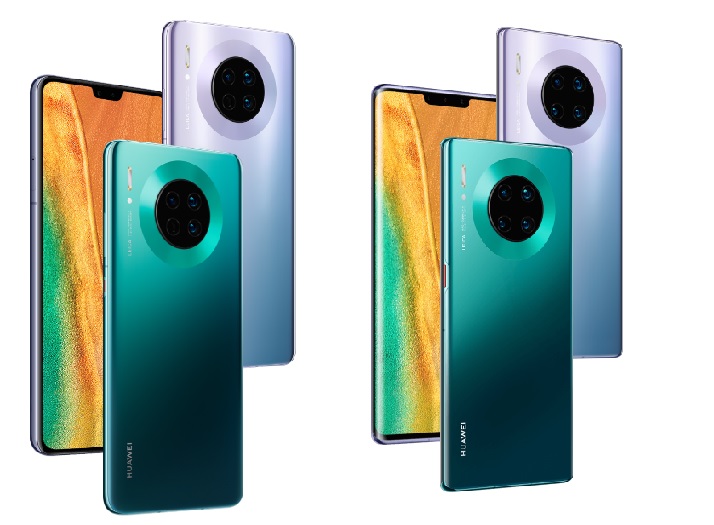
The Huawei Mate 30 series launched this week in Munich, Germany. The Mate 30 and Mate 30 Pro are available in a single configuration in Europe – 8GB + 128GB and 8GB + 256GB respectively. However, in Huawei‘s home country, the Mate 30 series will be available in more configurations.
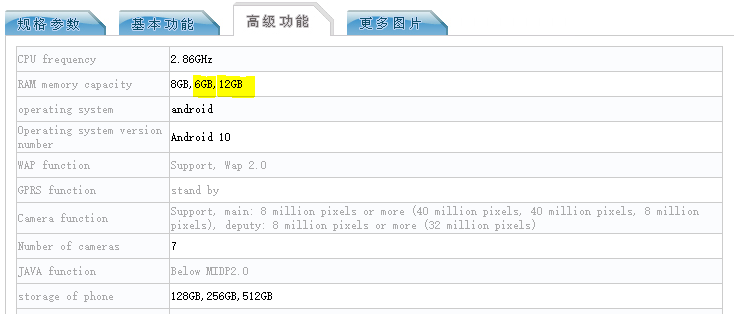
The TENAA listings for both phones have been published and they reveal the Mate 30 and Mate 30 Pro will be available with up to 12GB of RAM and 512GB of storage in China. The Mate 30’s model number is stated as TAS-AN00 while the Mate 30 Pro’s model number is LIO-AN00P/LIO-AN00.
Along with an 8GB RAM + 128GB version, the Mate 30 will come in 6GB RAM + 128GB, 8GB RAM + 256GB, and 12GB RAM + 512GB. On the other hand, the Mate 30 Pro will be available in 6GB + 128GB, 8GB + 128GB/256GB, and 12GB + 512GB.
Other than the RAM and storage, the rest of the specs are the same with the version announced in Europe. China is Huawei’s biggest, so it makes sense that it will have more variants available.
The Mate 30 series is powered by the Kirin 990 processor. The Mate 30 has a flat OLED screen while the Mate 30 Pro has a greatly curved screen called Horizon Display. The Pro version packs a total of 7 cameras – four on the rear and three in front while the Mate 30 comes with 5 cameras (3 on the rear and 2 in front). They run EMUI 10 based on Android 10.
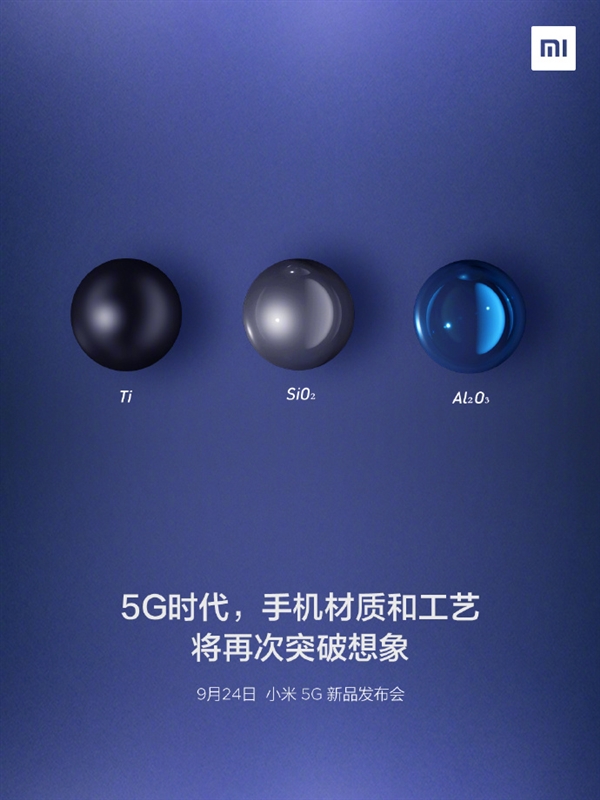
Xiaomi’s latest teaser for its upcoming flagship 5G phone hints that the phone is made from new premium materials. While the poster doesn’t exactly say, we know it is the Mi MIX Alpha that will be made from these new materials.
The poster shows three materials – Ti (Titanium), SiO2 (Silica), and Al2O3 (Alumina). All three materials are actually familiar when it comes to phones. Titanium is used for making the frame of phones. For example, the Essential PH-1 has a titanium frame. Silica, on the other hand, is a primary ingredient used in the traditional glass industry, and Alumina is used in making hard glass. We believe the phone will use all three materials.
The caption for the poster says Xiaomi has always been exploring new materials and designs for its phones. It mentions examples like the Mi 4 which has a stainless steel frame, the Mi Note which has a 3D curved glass back, the Mi 5 with its ceramic back, and the Mi MIX 2 with its ceramic unibody. It then asks what other materials should be considered for the 5G era.
The Mi MIX Alpha and Mi 9 Pro 5G will be unveiled on September 24 alongside the Mi TV Pro.
Now that we’ve rolled past Huawei and Vivo’s latest devices, now it’s time for Xiaomi to make an impression, and they’ve been making a pretty strong one. A Mi MIX Alpha teaser image quickly made rounds on social media, featuring what many thought was a folded display. This, of course, launched rampant speculation on whether the new device would be a folding phone or not, but it looks like we can finally stop guessing.
Xiaomi founder Lei Jun has gone to Weibo to clarify that the new device, unfortunately, isn’t the company’s folding phone, though he had more to add. According to him, the Mi MIX Alpha will feature a very subversive and shocking design. He doesn’t go into much further detail, but we can still make a few educated guesses.
From official teasers, we can assume that the Mi MIX Alpha will feature a revolutionary new curved screen design. It’ll supposedly give the device a 100% screen to body ratio, an industry first. It could very much be like the very first Mi MIX where it’s more of a concept device that’s the first of it’s kind, placing Xiaomi at the forefront of innovation once again.
But that’s not all. More teasers have appeared that suggest something even more impressive will be coming with the Mi MIX Alpha. One of the teasers shows off the device’s 5G capabilities, something we’ve already known for a while, but the other teaser is much more important. It points out that the Mi MIX Alpha won’t feature a pop-out camera, notch or dot drop, but instead a completely new solution for the front camera.
In the 5G era, are you ready to see a new solution? 🤯
Anyone who’s been following Xiaomi’s recent developments will know that the company has already managed to make a fully functional under-display camera system. It’s looking extremely likely that this technology will be making its commercial debut on the new Mi MIX, which is only fitting. The Mi MIX devices have always been the testing ground for Xiaomi’s new experimental features, so it only makes sense we’d see the new feature here.
Personally, we’re extremely eager to finally see the Mi MIX Alpha launch on the 24th of September where they’ll finally spill all the device’s secrets. It’s definitely the headline act of the event, and Xiaomi has so far managed to successfully keep their device a mystery infinitely better than Huawei or Google have. How the Mi MIX Alpha will turn out we simply don’t know, but we do know that it’ll definitely be one of the most interesting launches of the year.
Huawei Mate 30 Pro is finally official, no matter if Huawei got banned from the U.S. and it can not use Google apps. It is still one of the most stunning devices out there and it will even hit the global market without issues. It is undoubtedly the best Huawei smartphone to date, but we can not say the same about its price. Is it worth choosing the Mate 30 Pro independently from its price or it is better to spend less money for an older top-tier flagship such as Huawei P30 Pro or Huawei Mate 20 Pro? If you decided your next phone will be a Huawei high-end device, you should not miss this specs comparison between Huawei’s “Pro” flagships.
Huawei Mate 30 Pro vs Huawei P30 Pro vs Huawei Mate 20 Pro
Do not get fooled by the bigger notch: with its amazing Horizon display, Huawei Mate 30 Pro is undoubtedly the most attractive device of the trio. It does not sport any physical key as it boasts the side touch technology thanks to the extremely curved sides of the display (88 degrees). We also love the original glass back with the round-shaped camera module on the rear side, even though some may like the Huawei P30 Pro more due to its cleaner back. But these are just tastes: if you like minimal aesthetics, then Huawei P30 Pro is probably the best phone for you with its cleaner back and a smaller notch. The design is not the strongest point of the Mate 20 Pro, but it is waterproof just like the other two flagships.
Display
Despite it is the oldest flagship of this trio, thanks to the Quad HD+ resolution, Huawei Mate 20 Pro has a display which provides a higher level of detail than both Huawei Mate 30 Pro and P30 Pro. And just like them, it has an amazing OLED panel which supports a high DCI-P3 coverage and the HDR10 standard, providing rich and brilliant colors. It has a bigger notch and a smaller diagonal, but its quality is definitely astonishing. On the other hand, Huawei Mate 30 Pro offers an innovative Horizon display with extremely curved sides and the side touch technology: thanks to it, Huawei ditched every physical key and realized a much more elegant and impressive front panel.
Hardware/Software
There is no challenge here: Huawei Mate is powered by a way better mobile platform, so it wins the hardware comparison. We are referring to the Kirin 990 chipset built with at 7nm+ production process. The chipset even supports 5G connectivity: indeed, there is a 5G variant of the Mate 30 Pro. The handset even features a fast UFS 3.0 internal storage which goes up to 256 GB. And it is the only to come with Android 10 out of the box. Right after the Mate 30 Pro, the most performing device is the P30 Pro but there are just marginal differences compared to Mate 20 Pro as they got the same chipset.
Camera
Huawei Mate 30 Pro is also the best camera phone: it does not support a 5x optical zoom like the Huawei P30 Pro, but on the other hand, it has two 40 MP sensors and it reaches a level of ISO superior to professional cameras. It even has a better front camera department which includes sensors for 3D facial recognition (unlike the P30 Pro).
Battery
Huawei Mate 30 Pro has the biggest battery with a 4500 mAh capacity, so we believe it will offer a longer battery life. It even features the fastest wireless charging technology ever brought to the market. But note that both Huawei P30 Pro and Mate 20 Pro come with above-average batteries, so you should not be worried if you do not choose the Mate 30 Pro. The P30 Pro lasts more than the Mate 20 Pro due to its more efficient display.
Price
Huawei Mate 30 Pro is going to hit the shelves with an €1100/$1210 starting price, but you can save a lot of money with the P30 Pro and the Mate 20 Pro. You can find the former at about €650/$715 globally, while the latter is even available for less than €400/$440. Huawei Mate 30 Pro is undoubtedly the best one, but the Mate 20 Pro has a higher value for money, so go for it if you do not need the most amazing cameras and the fastest performance.
OnePlus has officially started rolling out the stable OxygenOS 10 based on Android 10 to OnePlus 7 and OnePlus 7 Pro. The company has released this stable version after two Open Beta builds that were rolled out earlier this month. The stable update brings a host of new Android 10 features alongside OxygenOS 10 features to the two recent OnePlus 7 devices that were launched back in May 2019. While the final Open Beta version was pretty good for daily use, a stable release ensures that this build is certified for daily usage.
Android 10 based OxygenOS 10 brings several customization options
OnePlus is rolling out the OxygenOS 10 in a staged manner. The OTA will be sent to a limited number of users today and the company will check for any critical bugs. If everything works out fine, the OTA will be rolled out to a broader user base in the next few days. Note that the rollout isn’t pushed out geographically, instead, it is randomly sent out to a limited number of OnePlus 7 and 7 Pro users.
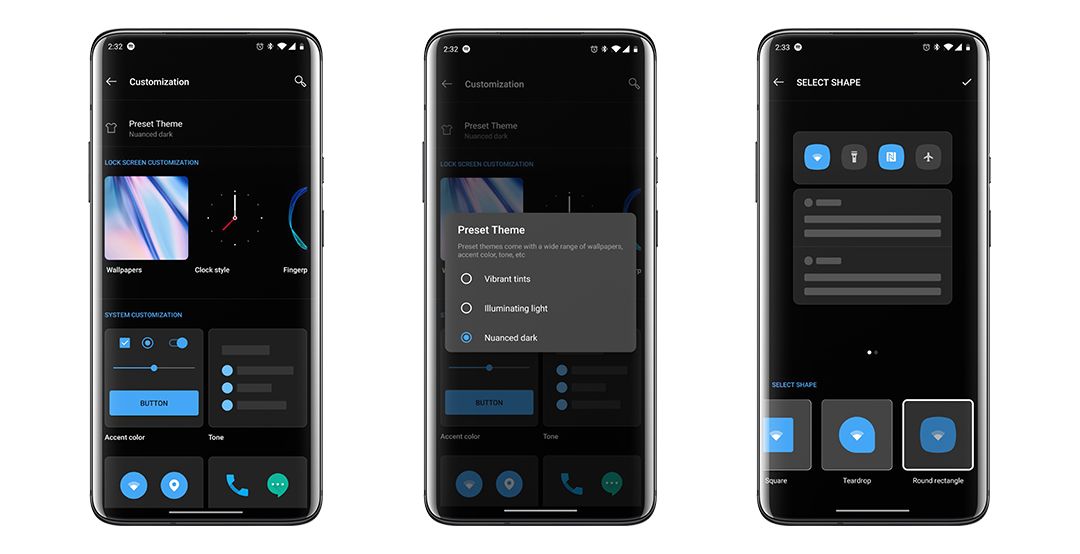
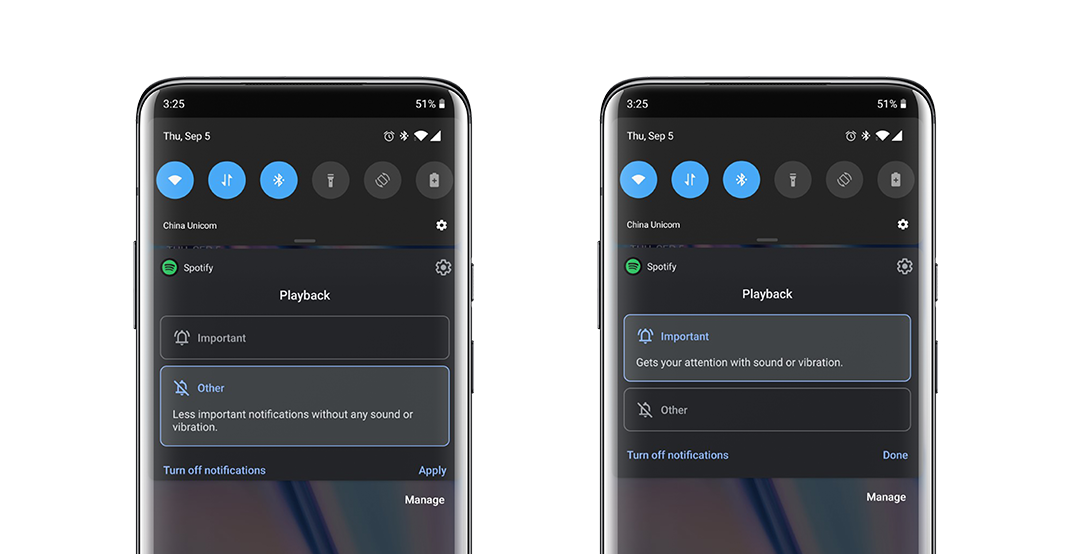
The OxygenOS 10 stable build brings features like notifications segregation, Wi-Fi sharing, a new game space, and a smarter ambient display.
Android 10 based OxygenOS 10 shows notifications on priority
The complete changelog of the OxygenOS 10 can be found below.
System
Upgraded to Android 10
Brand new UI design
Enhanced location permissions for privacy
New customization feature in Settings allowing you to choose icon shapes to be displayed in the Quick Settings
Full Screen Gestures
Added inward swipes from the left or right edge of the screen to go back
Added a bottom navigation bar to allow switching left or right for recent apps
Game Space
New Game Space feature now joins all your favorite games in one place for easier access and better gaming experience
Smart display
Intelligent info based on specific times, locations and events for Ambient Display (Settings – Display – Ambient Display – Smart Display)
Message
Now possible to block spam by keywords for Message (Messages – Spam – Settings -Blocking settings)
The Reno Ace is OPPO’s upcoming flagship and when it launches on October 10, it will be packing some pretty impressive specs. We already know it will be the first phone to feature OPPO’s new 65W SuperVOOC 2.0 technology. Now, the full specs have been revealed thanks to TENAA’s listing.
The Reno Ace’s model number is revealed as PCLM10. It has a 6.5-inch AMOLED screen with a 2400 x 1080 resolution. TENAA says it is powered by a 2.96GHz processor which is definitely the Snapdragon 855 Plus. It is paired with 12GB of RAM and 256GB of storage. There is no storage expansion, so 256GB is what you are stuck with.
The phone will have quad rear cameras – a 48MP primary camera, a 13MP periscope zoom lens, an 8MP ultrawide angle camera, and a 2MP sensor. It has a 16MP front-facing camera in front. TENAA says it also has 3x optical zoom.
The Reno Ace has an in-display fingerprint scanner and runs Android 9. The listing says it has a 1950mAh battery but we believe this is the capacity of just one of the phone’ two batteries. Yes, we are sure it has two batteries since the OPPO Find X which launched with SuperVOOC 1.0 packs two batteries. Based on this, the Reno Ace should have a 4000mAh battery. With SuperVOOC 2.0, you will be able to charge the phone from empty to full in just 25 minutes.
The phone will be available in blue, green, and purple. It weighs 200 grams and measures 161.0 x 75.7 x 8.7 millimeters. TENAA has not provided images but once they do, we will post them.
The Redmi Note 8 launched in China nearly a month ago. The phone comes in three variants – a 4GB RAM + 64GB version, a 6GB RAM + 64GB version, and a 6GB RAM + 128GB version. However, we may be getting a version with more RAM and storage in the future.
The Redmi Note 8’s TENAA listing shows that there is a version with 8GB of RAM and 256GB of storage. For a phone powered by a Snapdragon 665 processor, 8GB RAM seems like a lot but this is not the first time we are seeing such a pairing. The OPPO A9 2020 which is also powered by the Snapdragon 665 has an 8GB RAM version.
The 8GB Redmi Note 8 will also get 256GB of storage which should be more than enough for photos and videos you take with the phone’s quad-rear cameras. The Redmi Note 8 has a MicroSD card slot for up to an extra 256GB of storage, just in case you need more space.
We don’t know when Redmi will announce this new variant but it may not be anytime soon since the phone is still less than a month old.
The Redmi Note 8 has a 6.3-inch FHD+ display with a waterdrop notch for a 13MP front-facing camera. It has 48MP + 8MP + 2MP + 2MP quad rear cameras, a rear-mounted fingerprint scanner, and a 4000mAh battery. Other features include Gorilla Glass 5 on both sides, an infrared sensor, an audio jack, and MIUI 10 based on Android 9 Pie.
Xiaomi’s bezel-less Mi TV Pro is launching on September 24 and it is going to be its sleekest yet. The TV practically has no bezels on three sides save for the chin. It will also be its first TV to support 8K decoding. It has now been officially confirmed that the TV will also feature impressive specs.
Unlike most smart TVs that come in 1GB RAM + 8GB or 2GB RAM + 16GB, Xiaomi’s Mi TV Pro will come with 32GB of storage, double that of the upcoming OnePlus TV Q1 and Motorola’s own Smart TVs.
Yesterday, Xiaomi confirmed that the TV will be powered by the 12nm Amlogic T972 64-bit processor. The processor boasts a 63% improvement in performance and a 55% reduction in power consumption.
The Amlogic T968 is currently the most powerful chipset in Amlogic’s T-series. It has four A53-cores and a Mali-T830 GPU. We are not sure if the new T972 will feature more A53 cores or switch to the more powerful A55 cores. We also expect it to come with a more powerful GPU.
The Mi TV Pro will be available in 43”, 55”, and 65” sizes. It has an anodized aluminum alloy frame, 3D carbon fiber back, and an aluminum base. On the software side, it should come with Xiaomi’s PatchWall technology and XiaoAI built-in.
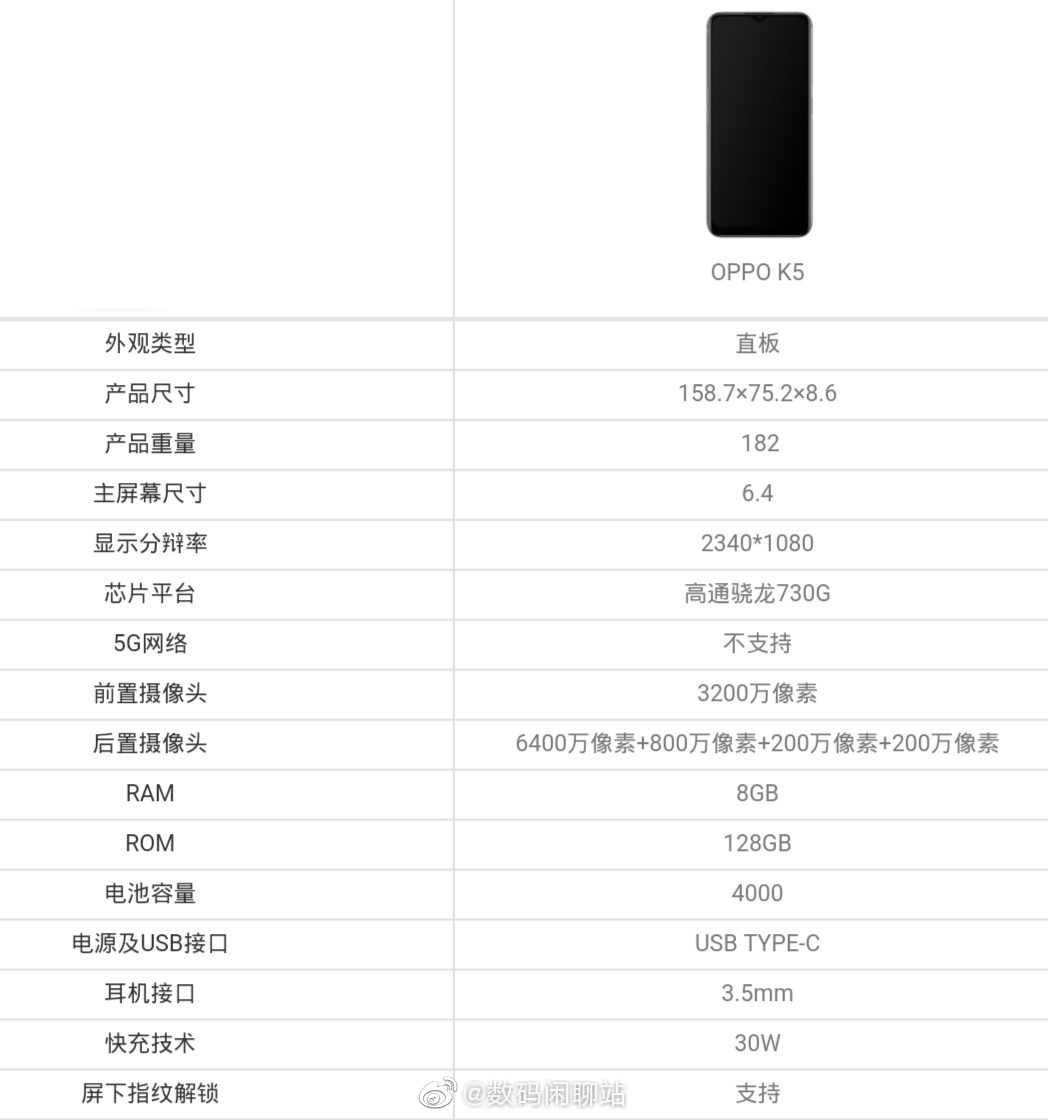
At the announcement of its new charging technologies this week, OPPO revealed that the successor to the K3 is coming, and the phone which will launch as the OPPO K5 will be the first to feature its new VOOC 4.0 Flash Charge. The spec sheet of the phone has now leaked and it reveals the OPPO K5 is an upper mid-range phone.
The spec sheet was posted on Weibo by @Digital chat station. The sheet shows the OPPO K5 will have a 6.4-inch 2340 x 1080 display. The phone measures 158.7 x 75.2 x 8.6 millimeters, making it smaller than the OPPO K3.
Inside the phone is Qualcomm’s Snapdragon 730G processor and it is paired with 8GB of RAM and 128GB of storage. OPPO has packed four cameras on the back of the phone – a 64MP primary camera, an 8MP camera, and two 2MP sensors most likely for Macro shots and depth capturing. The selfie camera is a 32MP sensor.
The OPPO K5 will pack a 4000mAh battery with support for 30W VOOC 4.0 fast charging via a USB Type-C port. It will also have an audio jack. There is no mention of support for a MicroSD card neither is there mention of the version of Android it is running.
The specs of the phone are identical to that of the Realme X2 which hints at it being a rebrand of the OPPO K5. The Realme X2 spec sheet reveals the phone has an AMOLED display with a waterdrop notch, so we expect the same display type for the K5 with an in-display fingerprint scanner.
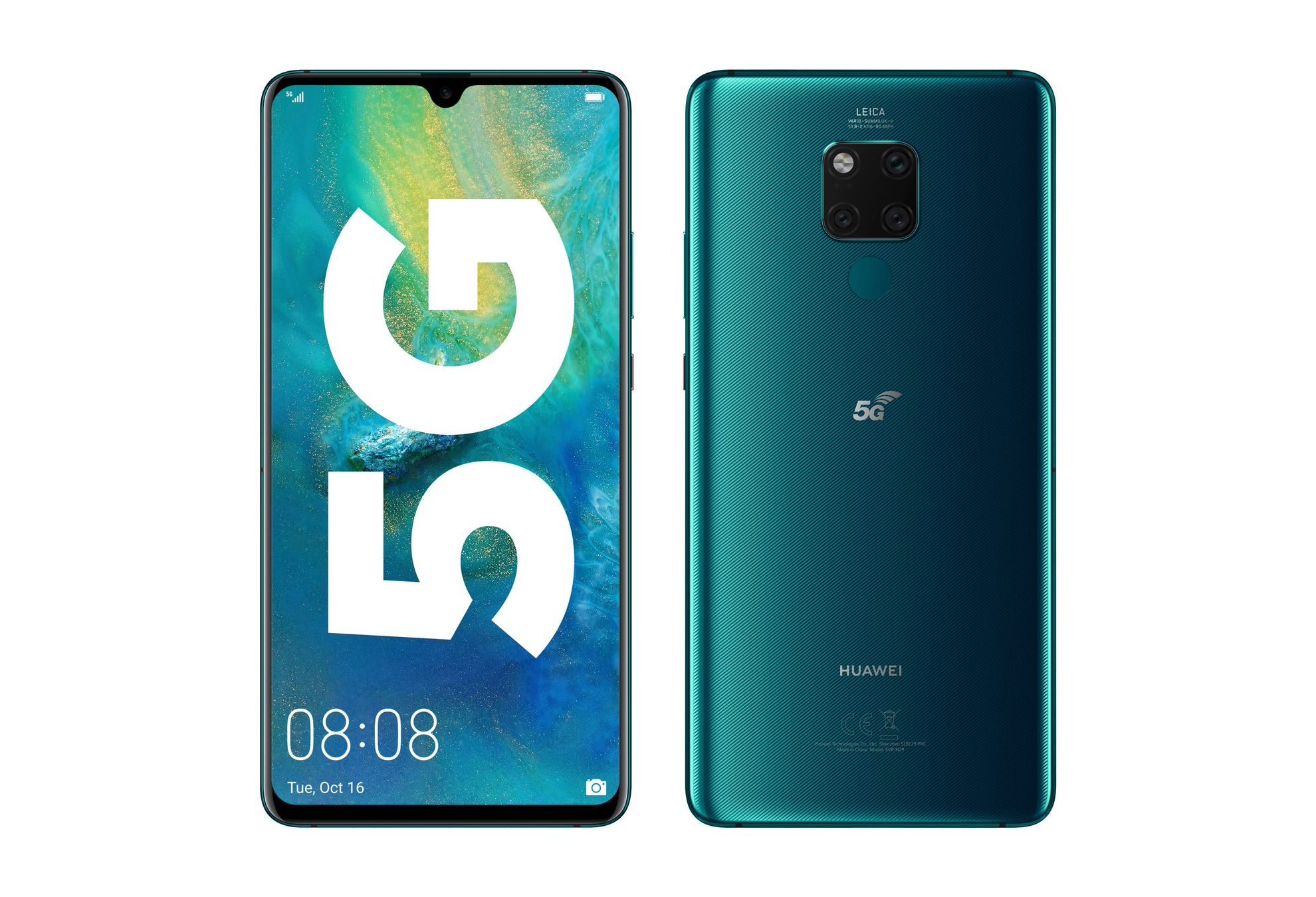
5G is still in its nascent stages, and still, only a handful of countries across the globe have live 5G networks available. However, most flagship smartphones launched in the second half of the year have a 5G version. For example, even the Huawei Mate 30 Pro comes in two different versions, a 4G one and a 5G one. The main reason why Huawei decided to release two different versions of its flagship is that 5G tech is more expensive.
Mate 20 X comes with new-age 5G support at an expensive price tag
But things will change in 2020. According to Huawei’s Richard Yu, cheaper 5G phones are coming our way next year.
“5G will definitely hit mid-range and even low price range definitely from next year,” said Richard Yu while speaking to journalists at the Mate 30 series event. “This year (our) premium segmentation is 5G, next year we will go to middle-tier 5G smartphones, and later on, the low tier.”
Given that Huawei traditionally sticks with its Kirin chipsets, even for its mid-range smartphones, this is a good hint that we’ll see a 5G enabled mid-range Kirin processor sometime in the next few months. Currently, Kirin 810 and Kirin 710 handle Huawei and Honor’s mid-range and budget segments. So we may see a 5G enabled Kirin 800 series chip next year.
We use cookies on our website to give you the most relevant experience by remembering your preferences and repeat visits. By clicking “Accept”, you consent to the use of ALL the cookies.
This website uses cookies to improve your experience while you navigate through the website. Out of these, the cookies that are categorized as necessary are stored on your browser as they are essential for the working of basic functionalities of the website. We also use third-party cookies that help us analyze and understand how you use this website. These cookies will be stored in your browser only with your consent. You also have the option to opt-out of these cookies. But opting out of some of these cookies may affect your browsing experience.
Necessary cookies are absolutely essential for the website to function properly. This category only includes cookies that ensures basic functionalities and security features of the website. These cookies do not store any personal information.
Any cookies that may not be particularly necessary for the website to function and is used specifically to collect user personal data via analytics, ads, other embedded contents are termed as non-necessary cookies. It is mandatory to procure user consent prior to running these cookies on your website.