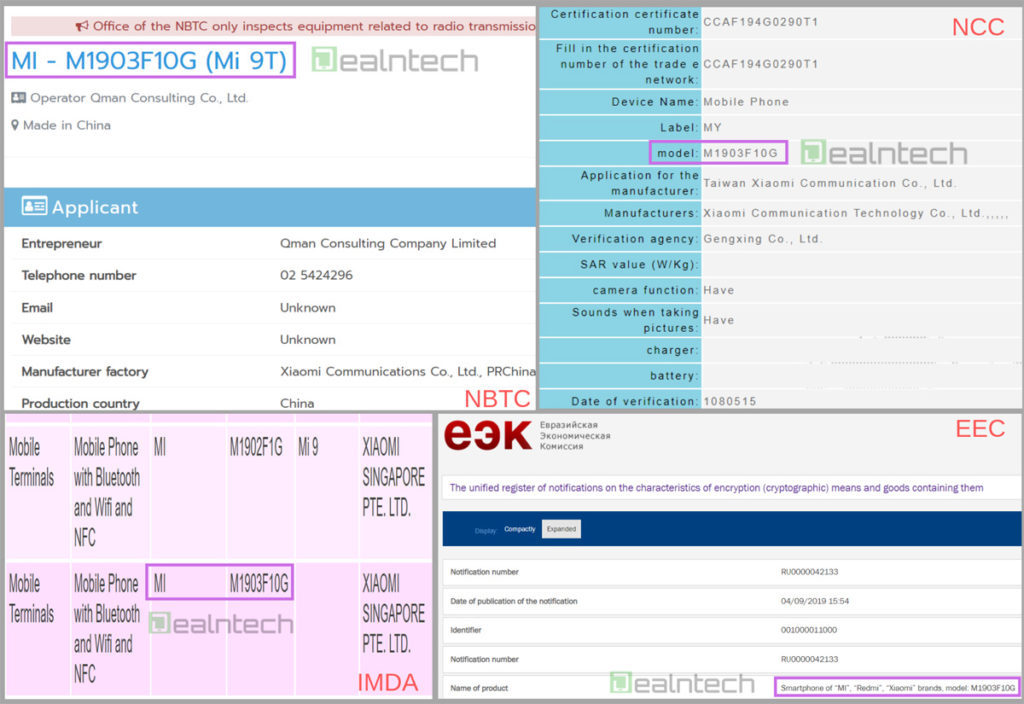
Xiaomi’s launch itinerary for this year may include another variant of the flagship Mi 9 series. The series already has the Mi 9, Mi 9 SE and Mi 9 Transparent Edition. Just like last year, there are indications that the Mi 9 may get another variant that will adopt the moniker Mi 9T. The model has been certified by NBTC in Thailand where it is listed with the model number M1903F10G. The listing also gave us a hint of the Mi 9T moniker.
The device has also received certification in Taiwan, Singapore and by the Eurasian Economic Commission bearing the same model number M1903F10G. Among the details gathered from the listing include that the model is part of the Mi 9 series.
Xiaomi is yet to reveal any detail or even confirm the existence of the purported Mi 9T but we expect that to happen soon. The device may turn out to be the Mi 9 Pro, a successor to the Mi 8 Pro which was launched last year.
In addition to smartphones and bags, OnePlus has still launched some of peripheral products, such like notebook, pen, phone case and so on.
As the OnePlus 6T lacks the 3.5mm earphone jack, OnePlus has spent more on wireless earphones. In the launch event of OnePlus 6T, OnePlus also launched OnePlus Bullets Wireless earphones priced at $69, which has good performance.
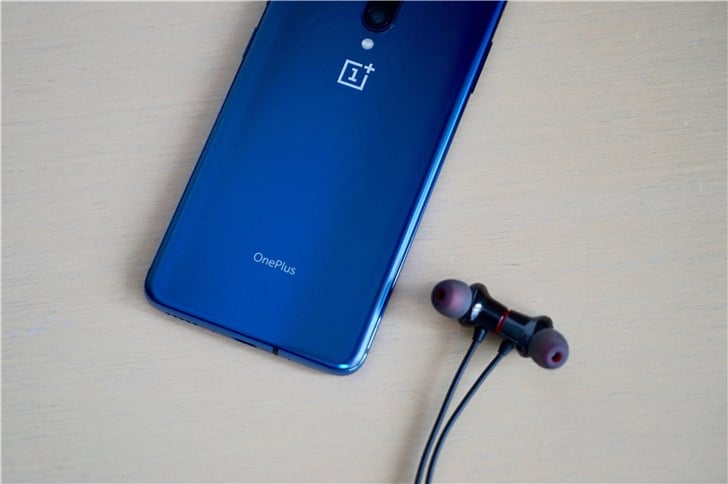
In the OnePlus 7 series launch event, OnePlus Bullets Wireless 2 was launched, which is priced at $99. Compared with its predecessor, OnePlus Bullets Wireless 2 has better performance.
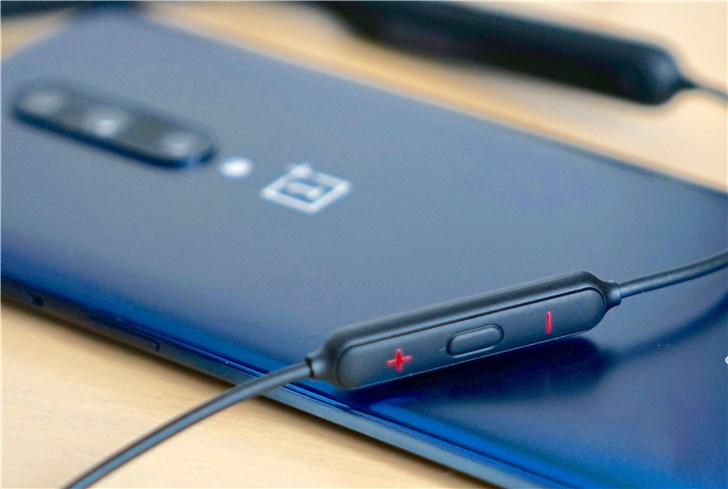
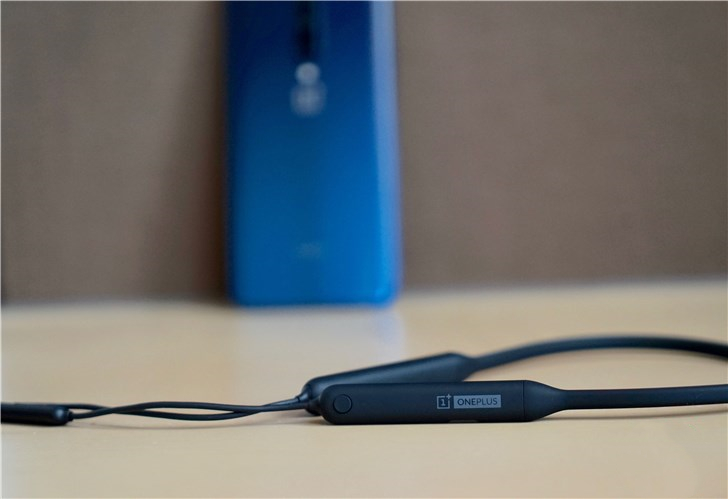
OnePlus Bullets Wireless 2 still adopts neck hanging design with silicone material, and the chipset, battery, charging port and other components are set in the necklet. There is a conventional wire-control module on the left headphone line, which is used to control the volume, play/pause music, and switch track.
Why the latest earphones of OnePlus don’t adopt the TWS design? Peter Lau, the CEO of OnePlus, explains that TWS earphones cannot meet all people’s needs. In addition, neck hanging earphones can get advantages in the aspect of stability and sound quality.
The design of OnePlus Bullets Wireless 2 is ordinary, but the details show well.
The Bullets Wireless 2 comes with the seashell-inspired stainless steel design which is delicate. The attractive point of the earphones is the magnetic control, which is simple for you to turn on/off them. You can simply clip the Bullets together magnetically to turn them off. When you want to resume playback, just separate them.
What’s more, OnePlus Bullets Wireless 2 has another feature, which can switch between devices easily. If the Bullets Wireless 2 is paired with two devices, you can switch directly between the two devices by double-clicking the button on the outside of the left necklet when both devices’ Bluetooth is on.
Also, as same as the Bullets Wireless, you can use Bullets Wireless 2 to pair your OnePlus smartphone quickly.
The sound quality is the biggest improvement of the OnePlus Bullets Wireless 2.
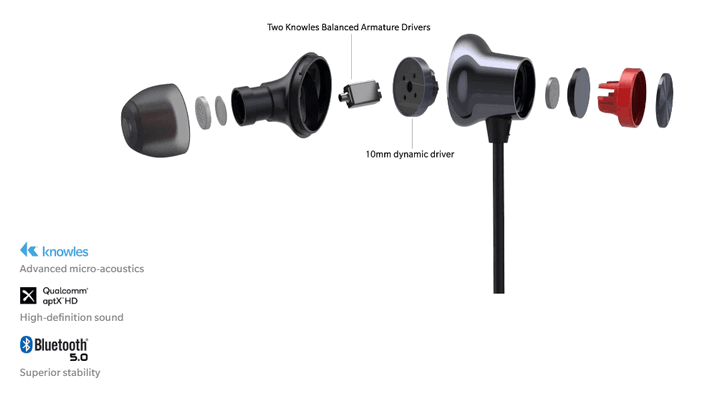
OnePlus Bullets Wireless 2 comes with two Knowles Balanced Armature Drivers and one 10mm dynamic driver in each earbud.
Compared with OnePlus Bullets Wireless, Bullets Wireless 2 has a great improvement in sound quality, which is clear, powerful and premium. The balance of soft trebles and low basses performs well. It is suitable to hear pop music.
There’s no doubt that OnePlus Bullets Wireless 2 is the best sound we’ve ever heard.
Thanks to the canalearphone design, Bullets Wireless 2 can achieve good passive noise reduction effect with a little big size silicon earbuds. But the earphones don’t have active noise reduction feature.
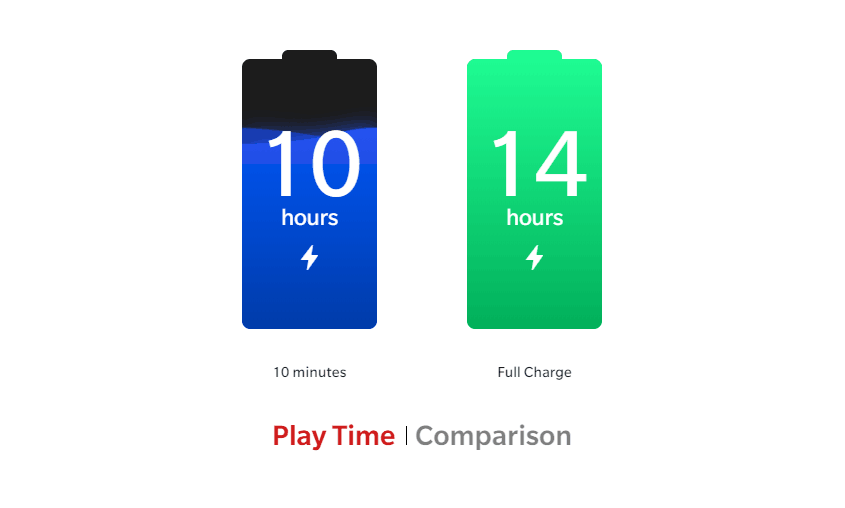
OnePlus Bullets Wireless 2 supports fast charging, the earphones charges to 70% in just 10 minutes, which can give you 10 hours of listening time, while a full charge can give 14 hours of listening time.
OnePlus Bullets Wireless 2 comes with warp charge, which can charge quickly with a 5V/0.6A charging brick and a Type-C cable.
Overall, the appearance of OnePlus Bullets Wireless 2 is conventional, but it performs well in terms of sound quality, charging and features.
With new technologies getting introduced for smartphones such as powerful display, chipsets, communication, and connectivity upgrades, among others, the one thing that hasn’t seen much improvement is the battery capacity.
The phone’s battery capacity still averages between 3,500mAh and 5,000mAh but the battery charging rate has been increasing with every major smartphone launch. So, power banks remain a vital source of mobile charging on the move.
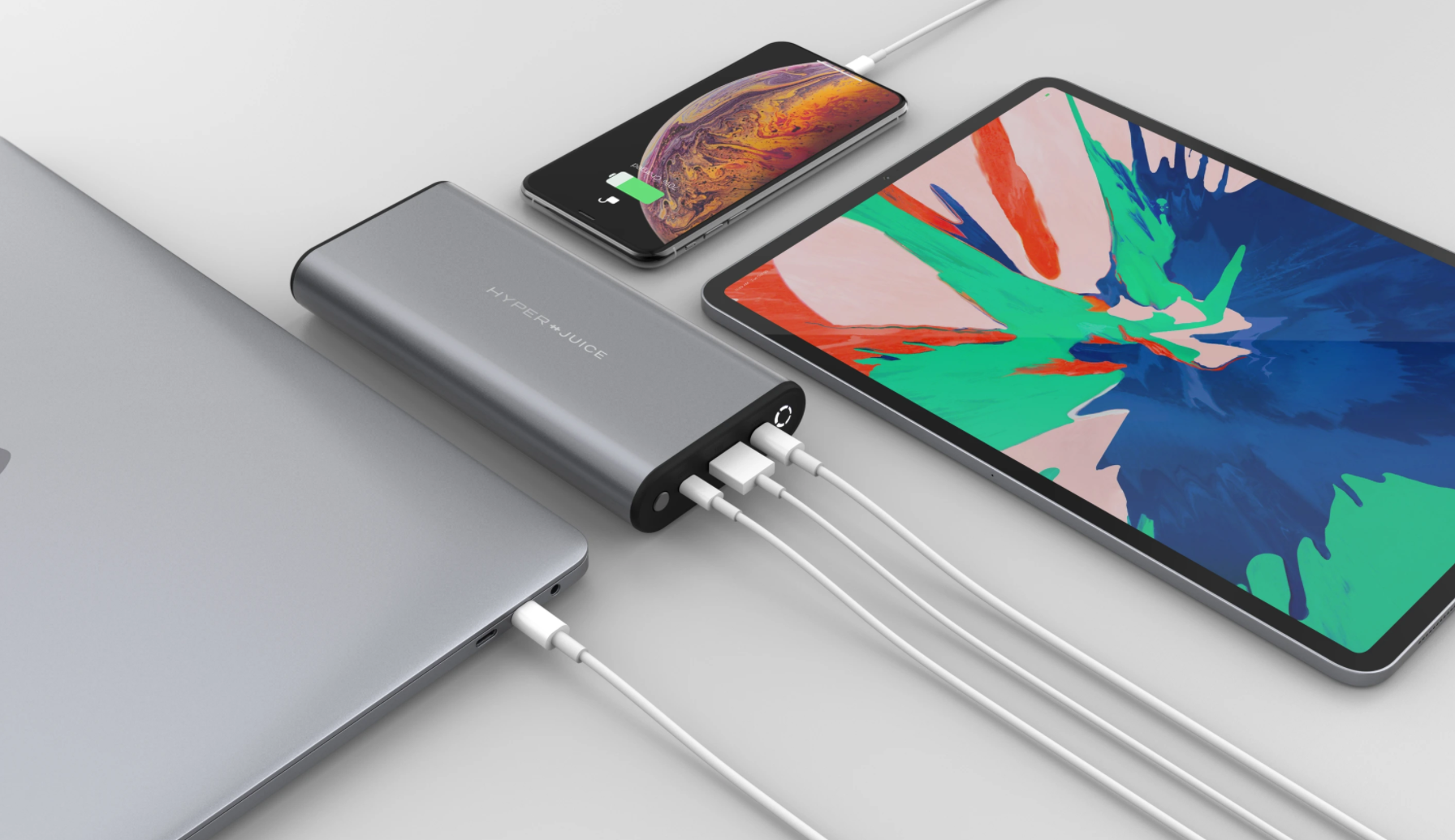
Today, Hyper has launched a new powerbank named HyperJuice which comes with support for 130W power output. It comes with two USB Type-C ports, enabling the device to charge two devices at the same time.
The company also said that it is the world’s first power bank to come with USB Type-C port supporting over 100W of power output. One Type-C port supports 100W power output while the other port supports 60W output.
Apart from smartphones, the powerbank can also be used to charge any USB Type-C powered laptop, including the Apple MacBook Air and MacBook Pro. It also comes with the standard USB port which supports 18W output.
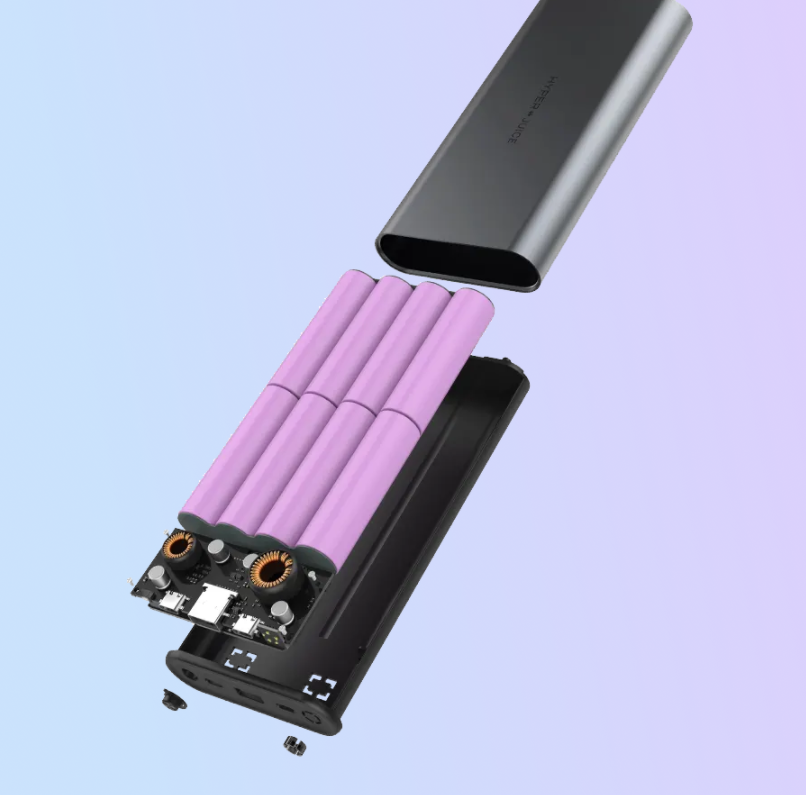
The powerbank comes with a 27,000mAh battery, which the company says is enough to fully charge the Apple MacBook Pro. It is also claimed to be complying regulations of the airline and is allowed to be carried on airplanes.
The HyperJuice power bank also supports 100W input and the company says that the device can be fully charged in just one hour with the help of the 112W power adopter, which is included in the box.
The powerbank, which measures 164.33 x 77.15 x 25 mm and weighs 661g, is made up of an aluminum shell and is available in two color options — Silver and Deep Gray. It is priced at RMB 1,728 (approximately $250) and is available for purchase through the company’s official website.
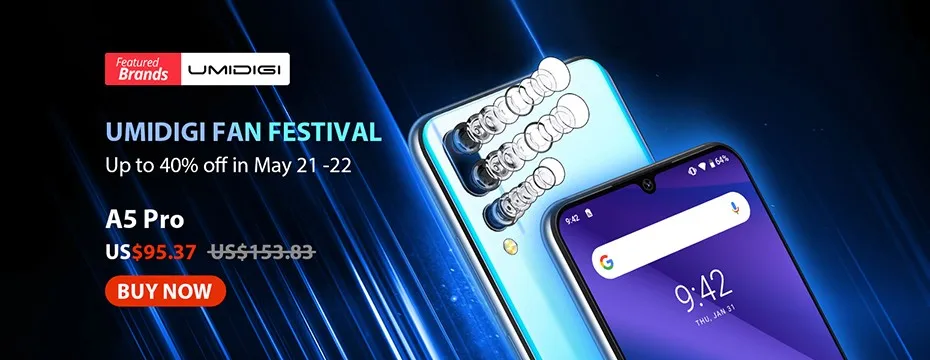
In collaboration with AliExpress, Chinese Mobile Phone firm Umidigi has launched the ‘Umidigi Fan Festival.’ Thanks to this recently kicked-off promo, you can avail up to 40 percent off on a wide range of mobile phones and other Umidigi-branded items.
Aside from that, Umidigi has launched the global open sales for the Umidigi A5 Pro smartphone, which was made available to the public in April this year. This recently unveiled handset has now gone up for presale bearing a considerably lowered $95.37 price tag.
It is worth mentioning here that the Umidigi A5 Pro smartphone would normally set you back $153.83 without the aforesaid discount. If that doesn’t impress you much, you can use a $6 dedicated coupon to bring the already lowered retail price of the phone under $89.
On the downside, the coupon is slated to expire in just two hours. You can head straight to this link in order to take full advantage of the coupon before it lapses. Regrettably, only 3000 coupons are available, which can be used today from 10 to 12 hours of Moscow time.
An absolute steal at this price, the Umidigi A5 Pro offer the following features:
3-inch Incell FHD+ display with 2280×1080 pixels resolution
Starting from May 23rd, the price of the A5 Pro will be $99.99 until the end of the week. Once the global open sale comes to an end, the smartphone’s price will increase to $159.99.
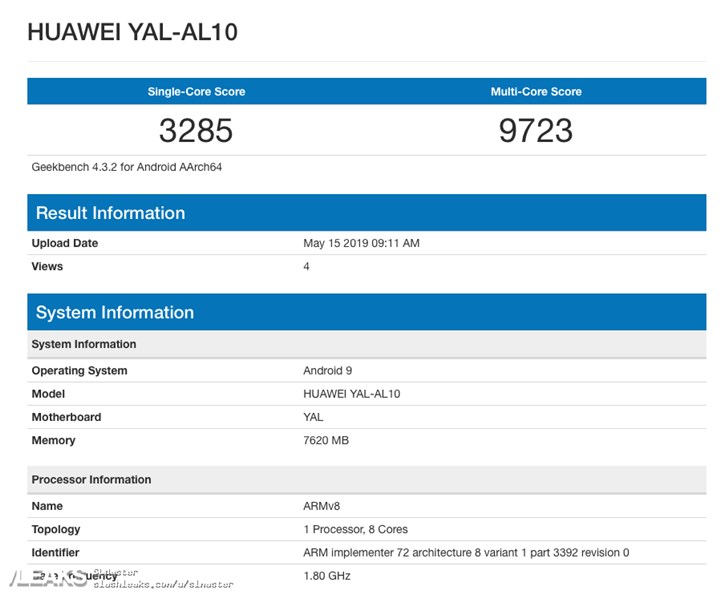
In a few hours, Huawei’s sub-brand Honor will be launching its all-new Honor 20 series smartphone, which also includes the Honor 20 Pro — the top-end model in the upcoming lineup. Now, ahead of the launch, the smartphone has appeared on benchmarking platform Geekbench, shedding light on its performance score.
The benchmark listing reveals that the smartphone will be powered by an octa-core processor clocked at 1.8GHz, coupled with 8GB of RAM. It runs Android 9 Pie operating system out-of-the-box. The phone scored 3,285 points in the single-core test and 9,723 points in the multi-core test.
Previously, it was reported that the smartphone will be powered by the company’s own Kirin 980 octa-core chipset, coupled with 8GB of RAM and 128GB of internal storage. It will come packed with a 3,750mAh battery which will support 22.5W fast charging.
It is said that the handset will come with four camera sensors, consisting of a 48MP primary Sony IMX586 sensor, a 16MP super wide-angle lens, an 8MP telephoto lens, and a 2MP sensor for depth sensing. On the front side, it will come equipped with a 32MP snapper for taking selfies and video calling.
Recently, Zhao Ming, President of Honor smartphone, revealed new sample photos taken from Honor 20 Pro (Full Specs) showcasing its ability to capture photos in low-light conditions. Upon extracting EXIF data from photos, it is confirmed that the phone carriers the world’s first f/1.4 aperture on a smartphone.
As for the variants and pricing, a recent leak shows that the Honor 20 Pro will be coming with 8GB RAM + 128GB storage and 8GB RAM + 256GB storage. These models are respectively priced at 3,699 Yuan (~$535) and 4,199 Yuan (~$607).
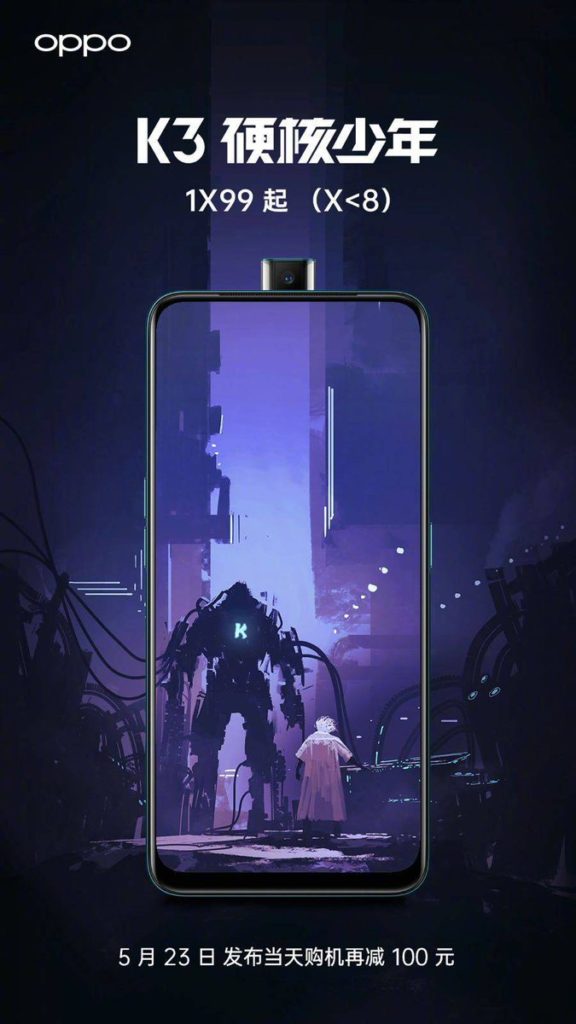
OPPO will be launching the OPPO K3 smartphone on May 23. Yesterday, the Chinese firm teased its pricing by stating that it will be costing 1X99 Yuan. It gave birth to speculations that the starting edition of the OPPO K3 could be priced at 1,999 Yuan (~$289). However, a new teaser that was released earlier today hints that the smartphone will cost less than 1,899 Yuan (~$275).
Recent reports have revealed that the OPPO K3 will be arriving with a 6.5-inch AMOLED display. It will be sporting a notch-less screen that carries support for full HD+ resolution of 1080 x 2340 pixels. The display of the phone will be equipped with an in-screen fingerprint reader. Rumors have also claimed that the phone may arrive with Always-On Display feature. The handset is fitted with a pop-up selfie camera module that includes a 16-megapixel lens.
The Snapdragon 710 chipset will be fueling the smartphone with up to 8 GB of RAM. It may offer up to 256 GB of native storage. The handset will be loaded with ColorOS 6.0 based Android 9 Pie OS. The OPPO K3 will also include OPPO’s own features like GameBoost 2.0 for accelerated GPU performance while gaming, FrameBoost for allocating system resources according to the requirements of specific game resources, LinkBoost 2.0 for faster network performance, and TouchBoost for the improved response of the touchscreen.
The OPPO K3 will be packed with a 3,765mAh battery that will carry support for VOOC 3.0 Flash Charge technology through USB-C. Recent reports have revealed that it will be equipped with a 16-megapixel + 2-megapixel dual camera setup on its rear. The photography features that will be available on the handset include Ultra Clear Night View 2.0, handheld night screen mode, and multi-frame noise reduction technology.
OPPO is currently accepting reservations for the OPPO K3. Rumors surrounding the phone suggest that it could be available in two models such as 6 GB RAM + 128 GB storage and 8 GB RAM + 256 GB storage. Probably, the base model of the OPPO K3 will carry a price tag of 1,899 Yuan (~$275). The phone is expected to be available in Nebula Purple, Morning White and Farm Black color options.
Banggood has launched the ‘Festival de Cannes Sale,’ wherein the Chinese online store will be offering an exclusive 30 percent off coupon and other great discounts.
The discounts will be valid on a wide selection of top-end products that have been split into multiple categories such as The Brightest Star, The Top Sellers, Exclusive Coupon, The Best New Arrival, etc.
Keeping in line with that, you can avail noteworthy discounts on the FIMI X8 SE RC quadcopter, the Ulefone Armor 6E smartphone and the H96 Max Plus TV box under the ‘The Brightest Star’ section. For example, the FIMI X8 SE would normally set you back $599, but you can reduce its retail price to just $499 from Banggood.
Moreover, you can extend this 17 percent discount by using coupon code 05bb96. The aforesaid coupon helps you bring the already lowered asking price of the FIMI X8 SE further down to just $420 before you click the ‘Place your Order’ button.
Likewise, you can avail significant discounts on various items like the Redmi Note 7, Xiaomi Mi3 smartwatch and lots more. The ‘Cannes Exclusive Coupon’ category features coupon code 30Can, which you can use on items available in this category for an extra 30 percent off.
Brand conscious buyers can head straight to the ‘The Best Brands’ section which is crammed with products from leading manufacturers such as Xiaomi, BlitzWolf, Eachine and Geekcreit. More importantly, you can buy these items at heavily discounted prices.
The rest of the categories including The Most Affordable, The Top 3 Categories, and More Best Choices offer unmissable discounts on products that would normally set you back a pretty penny on both online as well as offline stores. You can click here to visit the promotion page and take advantage of the discounts.
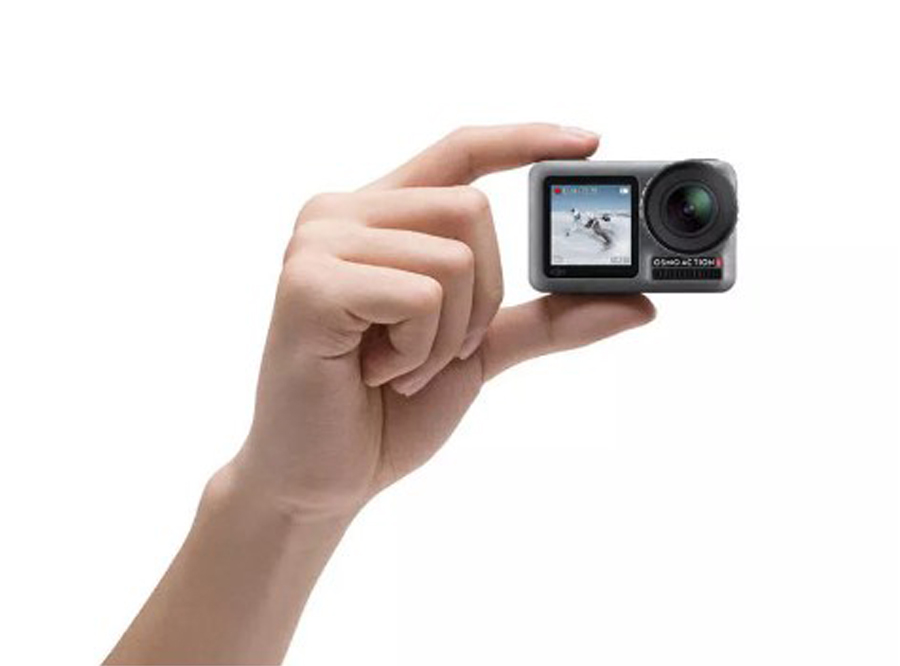
Designed for those who fancy capturing memorable moments from behind the lens, the DJI Osmo Action comes with dual screens that allow you to record your world with just touch of a button.
Its vivid front screen enables you to effortlessly frame yourself in any setting, while the back-mounted screen offers a hyper-responsive display. This versatile action camera adopts advanced technology that lets you live the action rather than worry about equipment.
You can get your hands on the DJI Osmo Action FPV action camera from multiple online stores. We have listed the best online stores where you can buy this highly durable action camera at an unbeatable price, and we’ll also show how you can save a considerable amount of money at checkout.
Banggood
The DJI Osmo Action has gone up for pre-order on Banggood, the Chinese online store known for offering the best bang for your buck! You can pre-order this waterproof FPV action camera for $487.88.
As part of its promo, Banggood will be offering free shipping on orders over $19.99. Moreover, you can earn 487 BG points as well. You can visit this link to place your order; however, note that the processing time is slated for May 29.
While you’d normally end up shelling out $549.99 on the DJI Osmo Action waterproof action camera, GearVita is giving its loyal users an unmissable chance to get a great discount on the feature-laden action camera’s original asking price.
In order to save $100, all you need to do is to apply coupon code RODJOsmo during the check out process. In other words, you can reduce the original asking price of the DJI Osmo Action to just $449.99 with the help of the aforesaid coupon. You can click here to use the coupon.
The DJI OSMO Action FPV Action Camera usually retails for $529.99 on both online as well as offline stores, but you can now buy it for a lowered price of just $429.99 from GeekBuying. You can extend this 19 percent discount by applying coupon code JJUNVGSI.
The coupon brings the already reduced selling price of the DJI OSMO Action to just $419.99. In other words, you can get an extra $10 by applying the coupon before you click the ‘Place Your Order’ button.
You can visit this link to grab the discount. Note that the promo is slated to end in just two days.
The DJI Osmo Action is a must-have action camera for those looking for capturing stable, shake-free footages. The coveted action cam digital camera will set you back $499.99 on Amazon. With only three pieces left in stock, you can head straight to this link to place your order without wasting time.
The DJI OSMO Waterproof FPV Action Camera normally carries a steep $568.70 price tag. Much to the relief of those living on a tight budget, Gearbest is offering a 6 percent off to those whose order exceeds $30.
To avail the discount, all you need to do is to apply coupon code IBXPXH192H during the checkout process. You can follow this link to use the coupon, which is likely to expire soon.
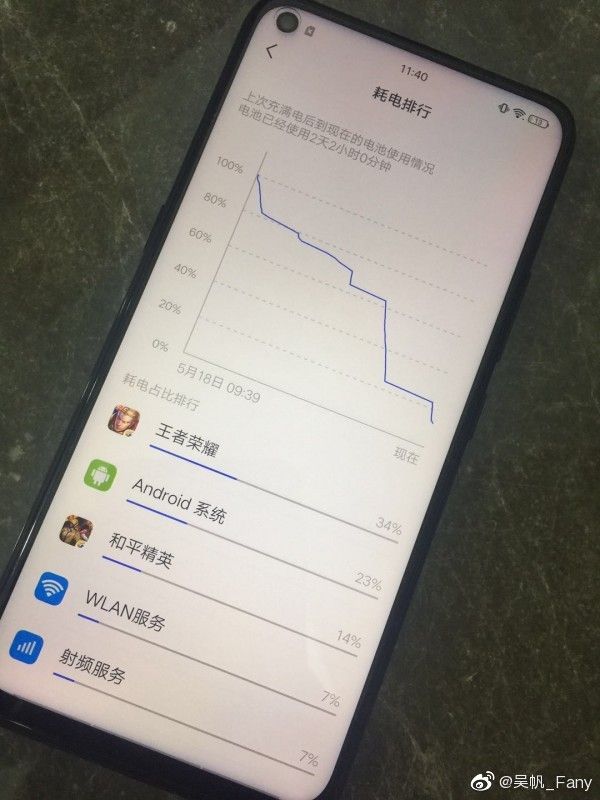
Vivo has confirmed through a Weibo post today that it will be announcing the Vivo Z5x smartphone in China on May 24 at 19:30PM (local time). The launch poster has no details on the specs of the phone. However, recent reports have revealed some of its information such as display size and capacity of its battery. Also, the Geekbench appearance of the phone has revealed that it will be powered by the Snapdragon 710 chipset.
Leaked live shots of the Vivo Z5x handset that have appeared in the recent past revealed that it will be arriving as the company’s first smartphone with a punch-hole display. Also, one of the teasers of the phone further confirms that it will be flaunting a punch-hole screen.
Rumors have it that it could be featuring a 6.53-inch IPS LCD display that will probably carry support for full HD+ resolution. The handset is rumored to house a 5,000mAh battery and still sport a slim profile of around 8mm. There is no confirmation on whether the phone will be equipped with fast charging. Probably, the handset could be arriving with a rear mounted triple camera setup. The Chinese text that can be seen on the Vivo Z5x launch poster states that it will be a performance-driven smartphone.
Vivo Z5x Geekbench Listing
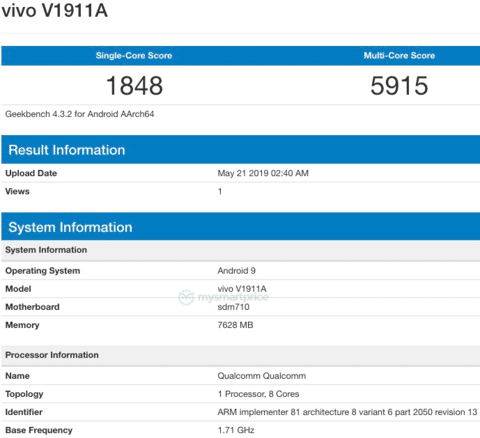
The Vivo Z5x that has a model number of V1911A has appeared on Geekbench today (spotted first by MySmartPrice) to reveal that it will be fueled by the Snapdragon 710 mobile platform. The SoC will be coupled with 8 GB of RAM. The phone will come loaded with Android 9 Pie OS that will be skinned with the latest edition of FunTouch OS UI. In the single-core and multi-core tests of Geekbench, the Vivo Z5x has respectively scored 1848 and 5915 points.
As of this writing, there is no information available on the price tag of the Vivo Z5x phone. The smartphone is now up for reservations in China through the official website. Hopefully, the rumor mill will reveal more information on the Vivo Z5x before its launch date.
After South Korea started rolling out 5G services, it’s now China’s turn to start offering 5G services to its customers. As per new reports, China is all set to kick-off its 5G rollout in the first phase from 1st October, which covers about 40 cities.
Michael Gao Wenhao, Deputy General Manager of ZTE‘s 5G industrial product line, appeared at the Hong Kong 5G Forum of the Hong Kong Productivity Council headquarters and said that China plans to start commercialization of 5G technology nationwide from October 1st.
As per the reports, the base stations for the 5G rollout in Mainland China are expected to be provided by three companies — Huawei, ZTE, and Ericsson. With this, China will become one of the first countries to offer commercialized 5G.
The report adds that by 1st October, China Mobile, China Unicom, and China Telecom will deploy 30,000 to 50,000 base stations in around 40 cities in China for the 5G services. The 5G deployment in 40 cities is a big task and compared to the USA and South Korea, China will have wider 5G coverage.
Last month, after various estimations and calculations, China’s first 5G network went live in the Qianhai-Shekou Free Trade Zone in country’s southern tech hub Shenzhen. China’s state telecom carrier China Unicom built 111 5G base stations by joining hands with FTZ (Free Trade Zone) in Shenzhen.
It will help the companies and locals to enjoy and experience the new technology. The low latency and higher speeds will lead to improved opportunities and will boost tech startups and companies. The capacity will be gradually increased to 7,000 base stations across Shenzhen before 2020.
China Unicom has been testing 5G network in Beijing, Tianjin, Qingdao, Hangzhou, Nanjing, Wuhan, Chengdu, Fuzhou, Zhenzhou and Shenyang. On the other hand, China Mobile is aiming to bring 5G network in multiple cities and is also planning to build around 10,000 5G base stations by the year 2020.
Google confirmed yesterday that the upcoming Huawei phones won’t be featuring Google apps and services. The search engine giant took this decision after Huawei was recently added by the US Commerce Department to the list of companies that are banned from trading. Fresh information reveals that the US has delayed the ban by 90 days starting today allowing Android OS updates to be certified on existing Huawei and Honor phones.
According to Reuters, during the temporary license period of 90 days, Huawei can buy components made by the US companies in a bid to maintain existing networks and also for delivering software updates for existing Huawei devices. However, the Chinese firm is restricted from placing new orders for parts and components from the US firms to build new devices without seeking license approvals that are most likely to be denied.
For telecommunications providers that depend on Huawei equipment, the delay in ban will provide them with time for making other arrangements. The US Commerce Department said that it will review whether to delay the ban beyond 90 days.
During the 90 days, Huawei will be able to certify software updates with Google for currently available smartphones and tablets. Huawei’s sub-brand Honor will be launching the Honor 20 and Honor 20 Pro flagship phones today through an unveil event in London. The owners of the Honor 20 duo and the Mate X foldable smartphone will be able to use Google services since they have been already certified by it. However, the future remains bleak for devices releasing later this year.
Huawei and Honor will be launching new flagship phones in the second half of the year. Hopefully, Huawei and China can come to an agreement with the US government soon so that the upcoming devices from the Chinese firm continue to feature Google apps and services.
Huawei is the world’s largest telecommunications equipment maker and it has a huge advantage over its competitors in the upcoming 5G mobile technology. However, US intelligence considers Huawei a national security threat and does not want US firms to buy or sell to the Chinese firm without seeking approval from the government. Companies like Qualcomm, Broadcom, Intel, Xilinx and more have reportedly stopped supplying components and services to Huawei. A recent report had claimed that in preparations to trade war uncertainties, Huawei has already stockpiled crucial components for up to 12 months.
South Korean tech giant LG has announced its own artificial intelligence (AI) chip for smart home products. This comes as the firm’s mobile division continues to struggle, apparently in a bid to consolidate on its dominance in the growing smart home product sector. This move will see the company ditch chips that deliver AI or machine learning (ML) from established names like Intel, ARM and Nvidia and even start-ups like Graphcore, Cerebras and Wave Computing.
The AI chip, according to LG, has its own neural engine that will speed up the deep-learning algorithms used in its future smart home devices. The smart home products include robot vacuum cleaners, washing machines, refrigerators and air conditioners. The chip doesn’t require an internet connection to work since it has on-device processing capability. It also features “a separate hardware-implemented security zone” to store personal data.
LG stated in an announcement that; “The AI Chip incorporates visual intelligence to better recognize and distinguish space, location, objects and users while voice intelligence accurately recognizes voice and noise characteristics while product intelligence enhances the capabilities of the device by detecting physical and chemical changes in the environment.”
The Korean giant also joins other companies like Facebook, Amazon and Apple which are all reported to be working on AI and ML chipsets for specific purposes. In LG’s case, its solution is customized for smarter home devices and we don’t need to look further than the books to find out why. The company’s home appliance unit recorded its highest quarter of sales and profit to date this last quarter. Last year’s annual profit of $2.4 billion saw some amazing results for its home appliance and home entertainment units. These are two core areas of focus for AI.
X-traordinary, X-cellent, X-citing! To celebrate the X-Men franchise and the release of X-Men: Dark Phoenix, Xiaomi is thrilled to announce that #RedmiNote7 has partnered with the movie X-Men: Dark Phoenix. Can’t wait to see the movie in cinemas! #XMenDay#DarkPhoenix@XMenmoviespic.twitter.com/ykzue6GCKb
The announcement which was first made last week on Twitter revealed the “Redmi Note 7 partnership” with the blockbuster movie. Last Friday, the account began choosing lucky winners to attend a special fan event on Wednesday, May 22, in Central London at 6 PM.
Calling all X-Men fans: it's time to #UnleashYourPower! Thanks to X-Men: Dark Phoenix, we're giving away 2 tickets to an exclusive fan event featuring special guests, fun activities and a sneak peek at the new film. Let us know your favourite X-Men for your chance to win! pic.twitter.com/l4K5YIcxS9
The tweet says the event will feature special guests, fun activities, and a sneak peek at the new film. There is no mention of a special edition Redmi Note 7, so don’t get your hopes high.
Xiaomi’s Mi MIX 3 5G was announced back at MWC in February. The phone not only comes with Qualcomm’s Snapdragon X50 5G modem but also replaces the Snapdragon 845 processor in the non-5G model with the newer Snapdragon 855 chipset and packs a bigger battery.
If you live in Spain or Italy, you will be able to purchase the Mi MIX 3 5G starting this Thursday, May 23. The announcement was made on Twitter by Xiaomi‘s head of Western Europe.
Big announcement as we start our Monday….#MiMIX3 5G will go on sale in Spain and Italy on May 23!
The Mi MIX 3 5G is priced at €599 (€699.90 in Italy) for the variant with 6GB of RAM and 64GB of UFS 2.1 storage. It comes in Sapphire Blue and Onyx Black. The purchase page on the official Xiaomi Spain website lists only the blue variant and reveals sales will commence at 13:00 local time.
The Mi MIX 3 5G has a 6.39-inch FHD+ display with a 93.4% screen-to-body ratio. It is able to achieve this as a result of its slider (magnetic) design. Pull it down and you are greeted by 24MP + 2MP dual front-facing cameras, the earpiece, and LED flash; parts that will usually be housed on a bezel.
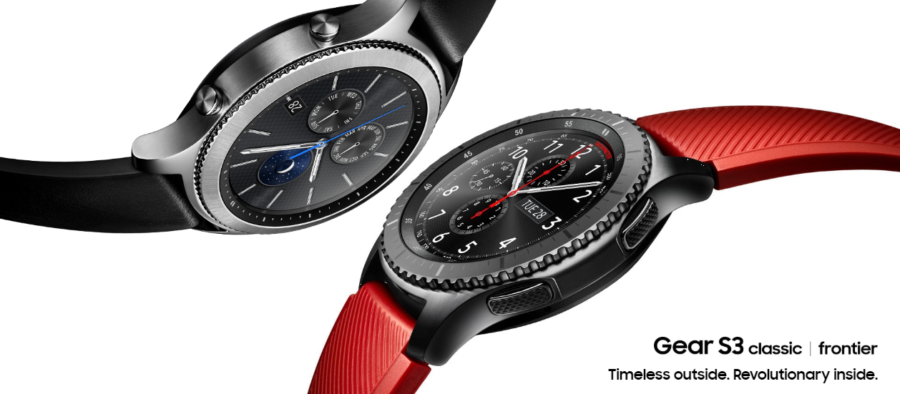
Samsung’s user interface has undergone two major changes in less than 5 years. It originally started as TouchWiz before transforming into Samsung Experience and has now evolved into One UI. New Samsung phones now launch with One UI and older phones getting updated to Android Pie also get the new user interface. Interestingly, Samsung is now rolling out the new interface to its smartwatches too.
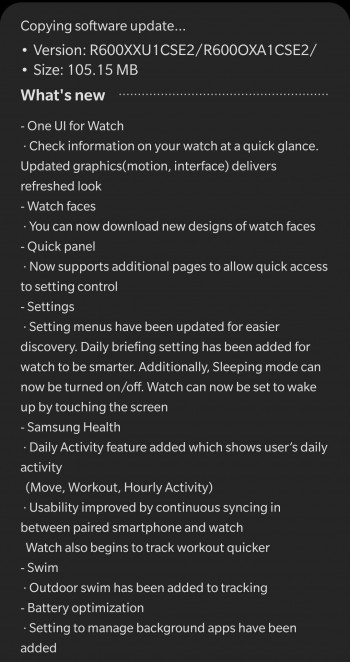
There are reports that the Galaxy Watch, Gear S3, and the Gear Sport are receiving a new update that brings One UI. The update not only brings a new user interface but also new watch features too.
There are new watch faces, a Quick Panel, support for downloading new designs of watch faces, battery optimizations, faster workout tracking, support for outdoor swimming tracking, and more. In addition, you can now wake up your watch by touching the screen and you get a notification if your heart rate crosses the set limit.
The long-anticipated trade ban by the US government on Huawei has sadly arrived and apart from the company, this development will hurt millions of fans and Huawei users globally. A handful of Huawei fans are even in the US and that number could have gone up to several million by now, if not for the blockade of the deal between Huawei and US carrier AT&T. While the trade ban will eventually have some effects on Huawei which is already on course to become the world’s largest phone vendor by 2020, there are indications that Huawei has been preparing for Trump’s “Doomsday” executive order for a while now.
The ban also certainly affects Huawei’s Honor brand
According to an exclusive report on Nikkei Asian Review, Huawei had informed its global suppliers six months ago that it wanted to build up a stock of crucial components that would last for up to a year, in preparation for trade war uncertainties. The Chinese giant was also making moves to secure new sources that wouldn’t be affected by a US embargo. Another option in the works is to ramp up efforts at becoming more self-reliant, Nikkei Asian Review quoted sources familiar with the plans to have hinted.
The news agency also cited multiple sources to have hinted that Huawei had started preparations for the already existing worst-case scenario, about six months ago. Plans cut across several key components, extending beyond chips to include passive components and optical parts. For some components that are subject to higher risks of export controls, Huawei has stockpiled six months’ to more than a year’s worth of supply, while holding at least three months’ worth of less crucial ones, the sources said.
In addition, Huawei which is currently the world’s second-largest smartphone vendor reportedly started certifying more chips, optical components, camera-related technologies and other parts suppliers based outside the US at the beginning of this year. The US may also try to get allies to get companies domiciled in their countries to ban sales of components to Huawei. This may likely not happen since the US Trade ban isn’t hinged on any evidence of wrongdoing. This is just another battlefield in the lingering US-China Trade war. How well can Huawei weather this raging storm and what further options does it have? Read Joel’s take on the ban to find out more.
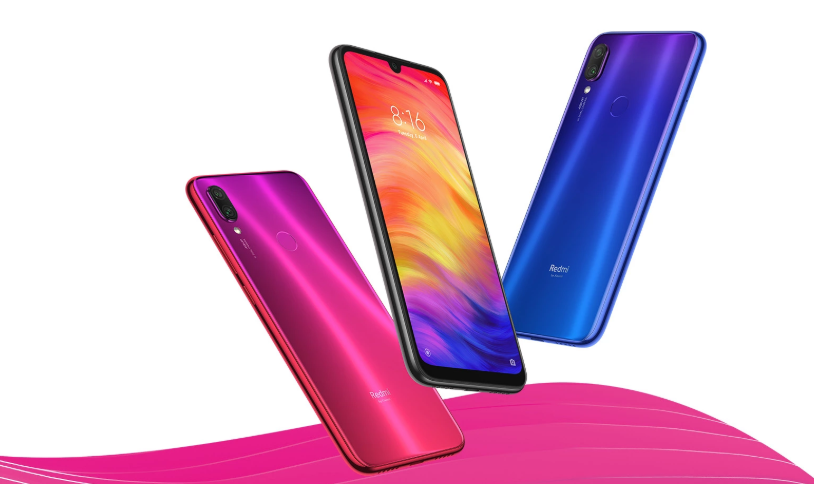
Today, Xiaomi launched a brand new version of the Redmi Note 7 in the Indian market. Its name is Redmi Note 7S, but in the Android world, it is nothing new. The new variant is nothing more than the Indian version of the vanilla Redmi Note 7 launched in the global market. Compared to the Indian version of Note 7, it comes with a slightly better specs sheet, but also with a higher price. Is the new handset worth the money asked or it is better to save some bucks and go for the standard Note 7 which became a best-seller in just a few months? Let’s find it out with an in-depth specs comparison.
Dual 48 and 5 MP f/1.8 and f/2.2
13 MP f/2.0 front camera
Dual 12 and 2 MP f/2.2 and f/2.4
13 MP f/2.0 front camera
BATTERY
4000 mAh
Fast charging 18W
4000 mAh, Fast Charging 18W
ADDITIONAL FEATURES
Hybrid Dual SIM slot
Hybrid Dual SIM slot
Design
Redmi Note 7 and 7S do not differ in terms of design. Both have very nice aesthetics composed of an elegant glass back available in gradient colors and a less impressive plastic frame, but it is hard to distinguish it from metal frames. Both the display and the glass back are protected by Gorilla Glass 5, and the phones are also splash resistant, despite they do not have an official IP certification guaranteeing for it. The screen-to-body ratio is very high thanks to the waterdrop notch and a pretty thin chin under the display, even though it is not the highest you can find in the whole midrange segment.
Display
The display of the Redmi Note 7 and 7S is an average IPS panel with a size of 6.3 inches and a Full HD+ resolution of 1080 x 2340 pixels. Most of the mid-rangers in the actual smartphones market come with display panels with those specifications, so it is nothing impressive but it is also a pretty satisfying screen. Given that it is not an OLED panel and actual IPS displays do not support in-display fingerprint scanner, the fingerprint reader of these phones is placed on the rear side.
Specs & Software
The hardware department is composed of a midrange-class Snapdragon 660 chipset running at a max frequency of 2.2 GHz and an amount of RAM and internal storage which varies depending on the chosen configuration. Both the vanilla Redmi Note 7 and the Redmi Note 7S are equipped with up to 4 GB of RAM and up to 64 GB of internal storage which you can furtherly expand with a micro SD. Performances are more than sufficient in every scenario, gaming included. Both come with Android 9 Pie out of the box, customized by the MIUI 10 user interface.
Camera
The only important difference between Redmi Note 7 and Redmi Note 7S in the specs sheet is the camera department. The vanilla Redmi Note 7 has a main camera department composed of a 12 MP main sensor and a 2 MP depth sensor, while Redmi Note 7S has a 48 MP main camera with a brighter aperture and a 5 MP depth sensor. The difference is abyssal in every light condition as the amount of detail is way higher and the digital noise is much inferior. The 48 MP Quad Bayer sensor makes the difference in every kind of photo clicked from the rear cameras. The front camera remains exactly the same: an average 13 MP module with an f/2.0 aperture. Apart from this, Redmi Note 7 and 7S share the same specs sheet, but given the huge difference between cameras, Xiaomi opted for another name to identify the better variant.
The battery comes with a capacity of 4000 mAh and it can reach two days of usage even with pretty intensive user experience. Further, Redmi Note 7 and Note 7S support fast charging with the Quick Charge 4 technology and a power of 18W. However, the charger included in the box is a standard 10W charger so you will have to buy a more powerful charger separately in order to take advantage of the fast charging technology.
Price
You can currently grab a unit of the Redmi Note 7 in India for about €128/$142 in the standard variant, while the Redmi Note 7S costs about €140/$156. In our opinion, you should go ahead and spend those few bucks more to get the Redmi Note 7S, but keep in mind that the only big difference is in the camera department, so if you do not care about the camera at all, you will get essentially the same device.
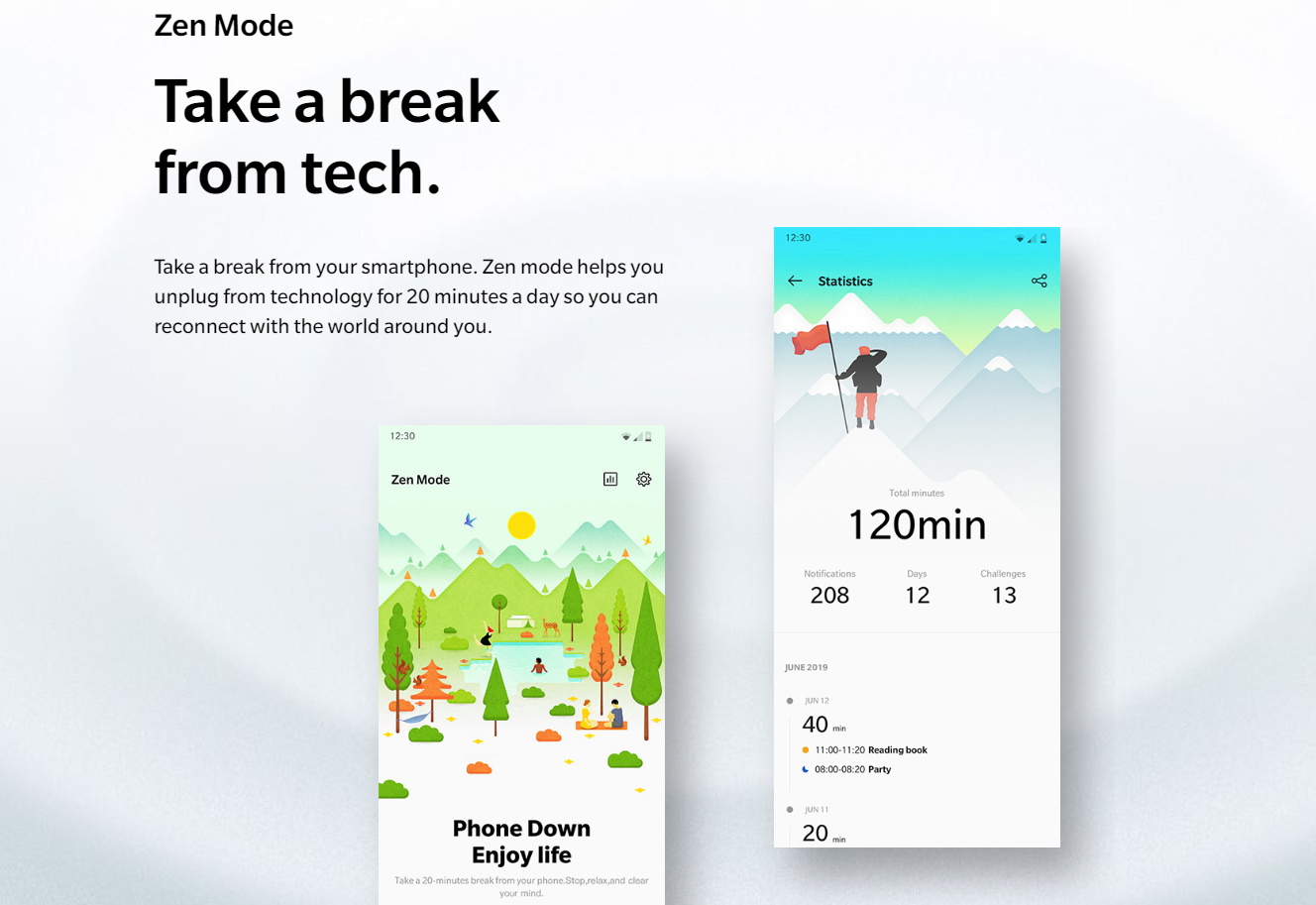
The OnePlus 7 and OnePlus 7 Pro come with OxygenOS 9.5. While it is still based on Android Pie, it brings new features not available (yet) to older OnePlus phones. Two of those features are Screen Recorder and Zen Mode.
AndroidPolice reports that the Zen Mode feature works on older OnePlus devices once you install the APK. The same also applies to the Screen Recorder. So all you are required to do is grab the APKs on APK Mirror and install them.
They did say both apps will not show in your app drawer. You will have to open the Quick Settings toggles and look for Screen Recorder/Zen Mode, then drag the tiles up to your existing ones. You can then launch them from there, grant permissions and set them up for the first time use.
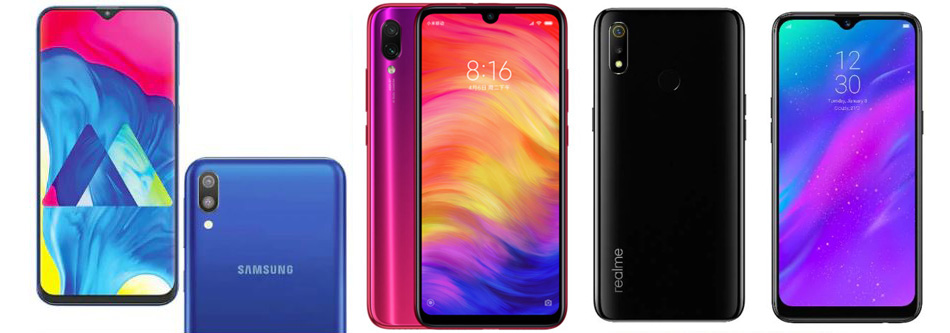
The Redmi Note 7 is becoming a best-seller in the global market, but in India, the handset lacks its most impressive feature: the 48 MP camera. Finally, Xiaomi put a remedy to this by launching a more advanced version of the device in the Indian peninsula: the Redmi Note 7S. Will this variant be enough to beat the strong competition from the other big brands in India? Among the hardest devices to beat there are the new Realme 3 Pro and the Samsung Galaxy M20 which are doing very well in India and we believe they will do even better. Here is a complete specs comparison between the three candidate best-sellers of 2019!
Redmi Note 7S vs Samsung Galaxy M20 vs Realme 3 Pro
Dual 13 + 5 MP f/1.9 and f/2.2
8 MP f/2.0 front camera
Dual 48 + 5 MP f/1.8 and f/2.4
13 MP front camera
Dual 16 + 5 MP f/1.7 and f/2.4
25 MP f/2.0 front camera
BATTERY
5000 mAh
4000 mAh, fast charging
4045 mAh, fast charging 20W with VOOC 3.0
ADDITIONAL FEATURES
Dual SIM slot
Hybrid Dual SIM slot
Dual SIM slot
Design
While I do not like the Samsung Galaxy M20 that much, Realme 3 Pro and Redmi Note 7 looks very gorgeous in renders. But there is a major difference between them once you hold them: the materials. While the Realme 3 Pro has a cheap plastic body, the Redmi Note 7S has a way better glass back protected by Corning’s Gorilla Glass 5. The glass back makes it way more beautiful and premium. On the other hand, Realme 3 Pro has a higher screen-to-body ratio, so narrower bezels around the display. But I personally think that having a phone with better materials is more important than having slimmer display bezels. Do you agree?
Display
Samsung devices, especially mid-rangers, usually distinguished from the mass due to their better display panels. Unfortunately, that is not the case with the Samsung Galaxy M20. In order to sell the device at a more competitive price, the Korean giant cut on the display by equipping this budget-friendly device with a TFT panel. So the Galaxy M20 is not the device you should look for if you need the best display. On the other side, Redmi Note 7 and Realme 3 Pro come with average IPS panels. Our suggestion is not to choose your preferred device by basing on the display quality which is not so different between these handsets.
Specs & Software
The hardware is probably the department which will influence a big part of the public while choosing which of these mid-rangers to purchase. The handset which offers the best overall performance is the Realme 3 Pro as it comes with a more powerful SoC. We are referring to the Snapdragon 710 by Qualcomm which comes with better CPU and GPU compared to both its rivals. The second place goes to the Redmi Note 7S which is equipped with the old but gold Snapdragon 660, still a great alternative to the Snapdragon 710 on its price range. Realme 3 Pro also comes in the best memory configuration with 6 GB of RAM and 128 GB of internal storage, so there is no chance for Redmi Note 7S and Samsung Galaxy M20 to beat it.
Camera
The clear winner when it comes to the camera department is the Redmi Note 7S. As mentioned above, rear cameras are the key feature of this mid-ranger. It boasts a main 48 MP sensor which provides a higher level of detail if we compare it with the concurrency, as well as a secondary depth sensor. But the Samsung Galaxy M20 remains an interesting camera phone as it is the only to feature an ultrawide secondary sensor, so do not underestimate it. If we talk about the front camera, then Realme 3 Pro wins the comparison due to its way better 25 MP sensor.
Battery
The battery king in this comparison is the Samsung Galaxy M20 with its huge 5000 mAh unit. If you do not put it too much under load, it can even reach and pass three days of battery life on a single charge.
Price
Redmi Note 7S debuted with a price starting from about €140/$155, while Realme 3 Pro starts from €200/$225 just like the Samsung Galaxy M20. Overall, I personally prefer the Realme 3 Pro because of its better chipset, but the Redmi Note 7S has a very high value for money.
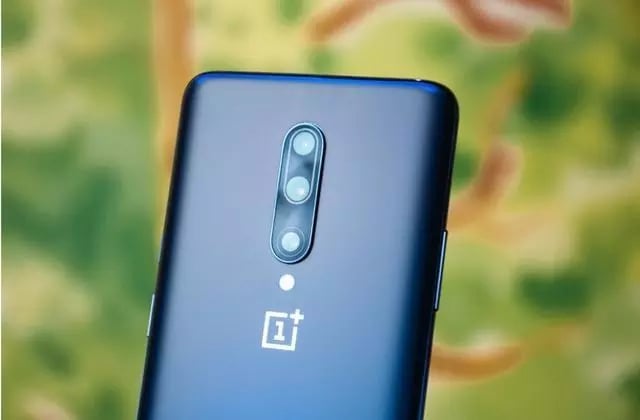
The OnePlus 7 Pro is just a couple of days old since it was launched but the device already looks like one that would upset the balance in the mobile phone market. According to a post by Twitter tipster Ice Universe (@UniverseIce), the OnePlus 7 Pro is very popular in China with consumers placing pre-orders on more than one million units of the phone. The tipster hinted that the pre-orders were far higher than initial stocking. He also hinted that some Samsung users were planning to sell their Galaxy S10 in order to pick up the OnePlus 7 Pro.
Oneplus 7 Pro
While it is common practice to see buyers trade their old phone for a new release, swapping the Galaxy S10 for the OnePlus 6 Pro is quite surprising. The OnePlus 7 Pro is no doubt a solid phone but we doubt if it surpasses the Galaxy S10 is any aspect apart from the 90Hz refresh rate display and perhaps, the pop-up selfie camera. The Galaxy S10 offers IP68 water and dustproof build and that is absent on the OP7 Pro, even though the phone seems to have some waterproofing. Moreso, the Galaxy S10 offers wireless charging and even the OneUI onboard looks more appealing to hardcore fans of Sammy than OnePlus’ Oxygen or Hydrogen OS.
However, some may find the OnePlus 7 Pro design more appealing due to the pop-up selfie shooter. The device isn’t so cheap this time around but it costs less than the Galaxy S10. Both models are powered by Qualcomm’s flagship Snapdragon 855 chipset. So, we don’t see this action purportedly happening in China become a trend. OnePlus models were hitherto cheaper alternatives to more expensive Samsung, Apple and Huawei flagships. That isn’t reflected in the OP7 Pro pricing.
We use cookies on our website to give you the most relevant experience by remembering your preferences and repeat visits. By clicking “Accept”, you consent to the use of ALL the cookies.
This website uses cookies to improve your experience while you navigate through the website. Out of these, the cookies that are categorized as necessary are stored on your browser as they are essential for the working of basic functionalities of the website. We also use third-party cookies that help us analyze and understand how you use this website. These cookies will be stored in your browser only with your consent. You also have the option to opt-out of these cookies. But opting out of some of these cookies may affect your browsing experience.
Necessary cookies are absolutely essential for the website to function properly. This category only includes cookies that ensures basic functionalities and security features of the website. These cookies do not store any personal information.
Any cookies that may not be particularly necessary for the website to function and is used specifically to collect user personal data via analytics, ads, other embedded contents are termed as non-necessary cookies. It is mandatory to procure user consent prior to running these cookies on your website.