In a bid to provide customers with smartphones bearing minimal amount of bezels around the display, smartphone OEMs have adopted different styles of notch design. Even though the notch offers us a higher screen ratio, they are not very popular with fans. Most fans would rather not have a phone with the notch. No doubt, the era of flagship phones with 16:9 aspect ratio is gone so OEMs have ventured into sliding and pop-up camera designs as alternatives to the notch. But then, we have to grapple with the challenges of having a mechanical sliding design that raises concerns about durability. Huawei may have got a workable alternative to the notch that doesn’t involve using a slide or pop-up selfie cam.
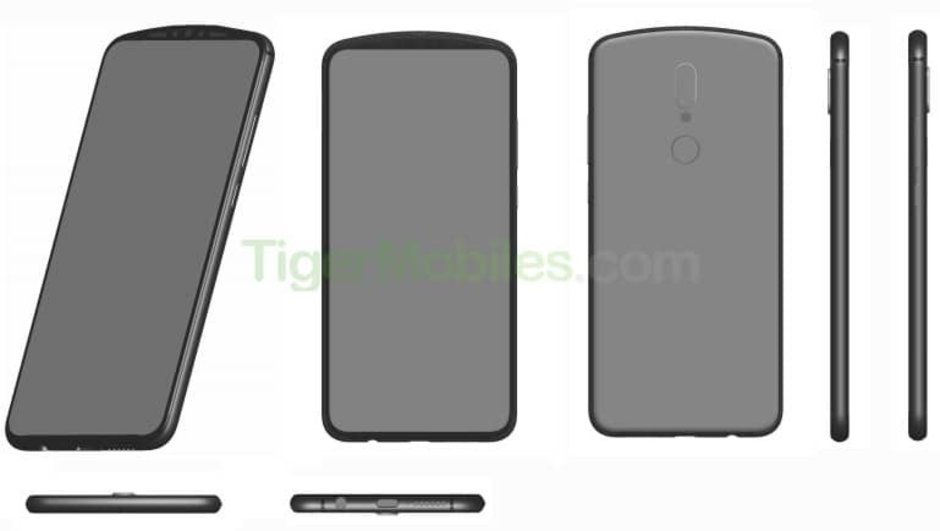
The smartphone as envisioned in the patent document sports a notchless display which is joined by a thin chin and side bezels. Huawei is by all accounts playing with the possibility of an adjusted upper bezel. The top edge is curved in a pattern similar to Meitu’s iconic phone design. The outward curve creates enough space to house the selfie camera and audio receiver speaker. However, the design doesn’t look any spectacular.
Huawei’s design will in all likelihood be utilized solely in the low-end and mid-tier segment whenever it is ready to be commercialized. In any case, since this plan is essentially a patent at this stage, there’s no assurance the tech giant will ever release a phone with this sort of design.
OnePlus will officially take the wraps off its new OnePlus 7 series on May 14. The launch event is being held in 3 cities (New York, London, Mumbai), in three different continents, simultaneously. It’s a big deal for the company and an even bigger deal for the millions of OnePlus fans across the globe.
However, this year, OnePlus is going to take a different route. The company has decided to release an additional ‘OnePlus 7 Pro’ model alongside the standard variant. So, unlike the ZTE Axon 10 Pro (where the ‘Pro’ is actually unnecessary because there’s just one model in the lineup), here the ‘Pro’ tag is justified by releasing two flagship grade smartphones.
OP7 Pro render by Ishan Agarwal
The OnePlus 7 Duo: A Road Not Taken
OnePlus’ decision to release a ‘Pro’ version isn’t surprising. The company has built a huge fan base across the globe eagerly looking forward to their smartphones every six months. However, it also has been slowly but steadily raising the prices of each iteration (OP5T – $499 | OP6 – $529 | OP6T – $549 ). OnePlus’ recent flagships have come close to breaking their popular ‘affordability‘ quotient. But the dilemma here is that OnePlus also wants to be known as a top-tier smartphone maker.
So how do you offer cutting edge technology in your flagship without raising its price?
Well, you can’t, not in this age!
So what you do instead is release two models, a standard OnePlus 7 that keeps your affordability quotient intact and then offer another model, the OnePlus 7 Pro that houses high-end features. Matter solved.
OnePlus 7 Pro Design
Now that the company has decided to offer a ‘Pro’ variant, they have to ensure it’s worth every additional penny. The very success of this higher-end variant will depend on the perception of the device amongst the top-tier flagships in the market.
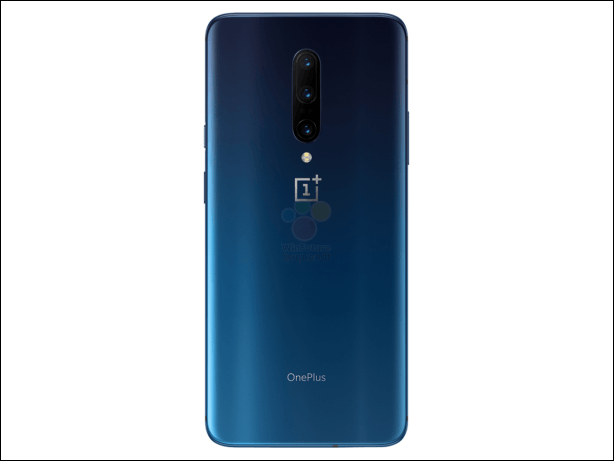
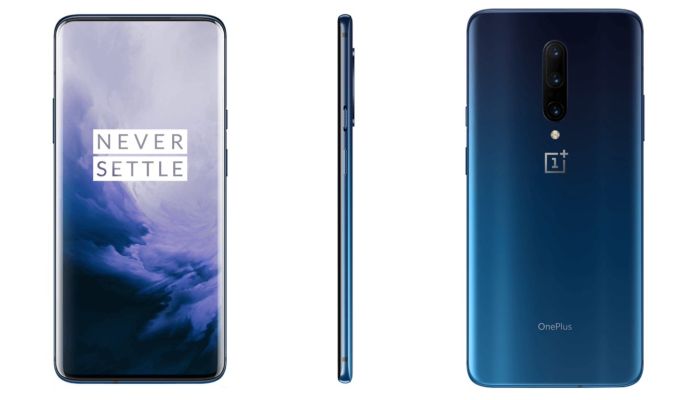
OnePlus 7 Pro in Nebula Blue Source: Roland Quandt
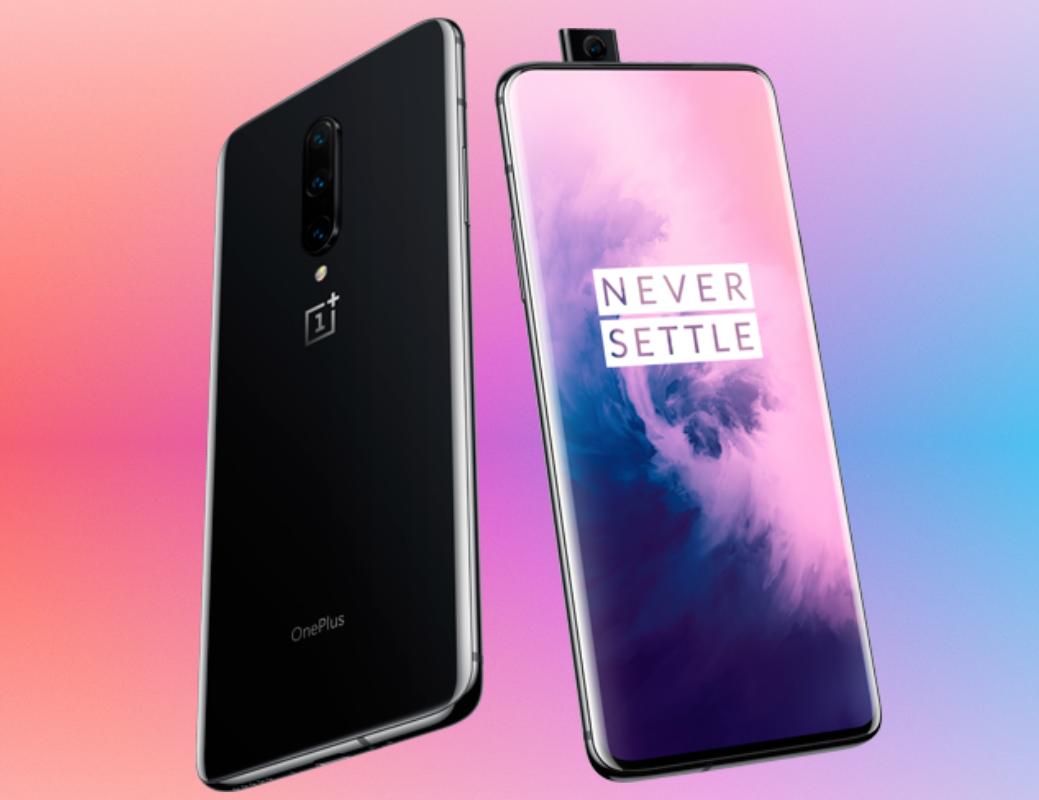
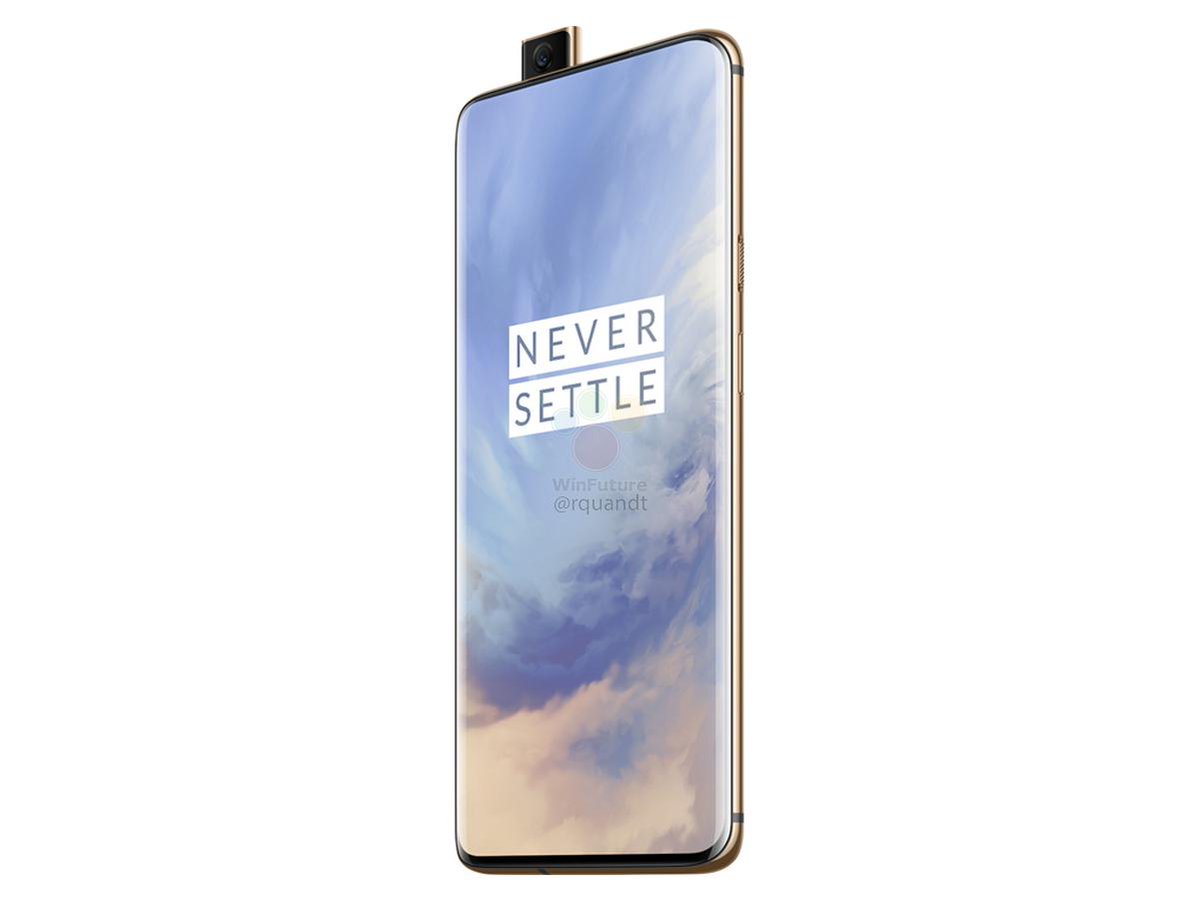
You can’t slap an average FHD+ AMOLED screen with a notch and get your fan’s attention. So, what OnePlus is planning to do is use a custom made AMOLED panel with a full-screen notch-less design. The OnePlus 7 Pro is said to use a pop-up mechanism to house its front camera, keeping its front super clean. There should be a thin bottom bezel, but overall, it will be a bezel-less design.
OnePlus 7 Pro in Almond shade Source: Roland Quandt
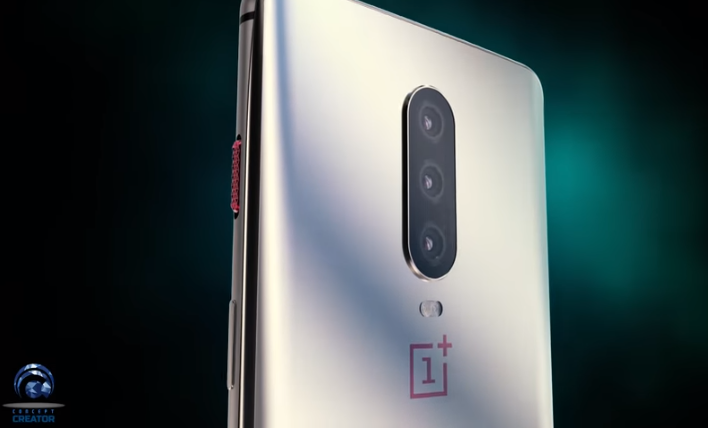
The back of the OP7 Pro is going to be refined as well. The company is opting for a symmetric theme, that goes well with most users. So, the triple camera setup at the back will be vertically arranged at the center followed by its flash and the OnePlus logo. It’s definitely one of the more refined designs from OnePlus in recent times.
OnePlus 7 Pro Nebula Blue Source: Roland Quandt
The power button and alert slider will be on the right, while the volume buttons should lie on the left.
Further, there should be three colors available at launch — gradient Nebula Blue (the renders look beautiful!), Almond (more like soft gold), and a Mirror Grey (more like black).
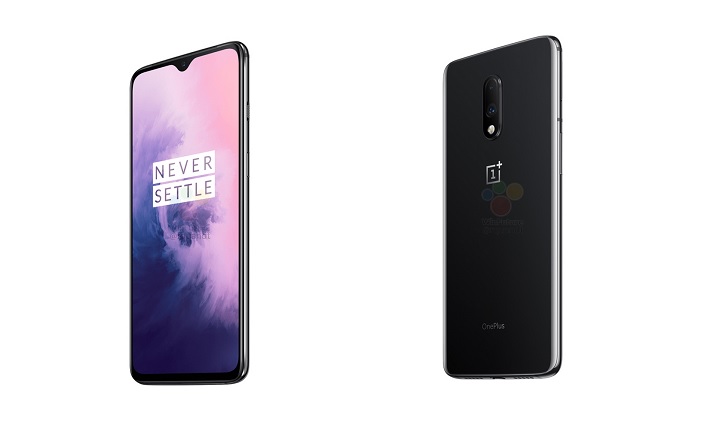
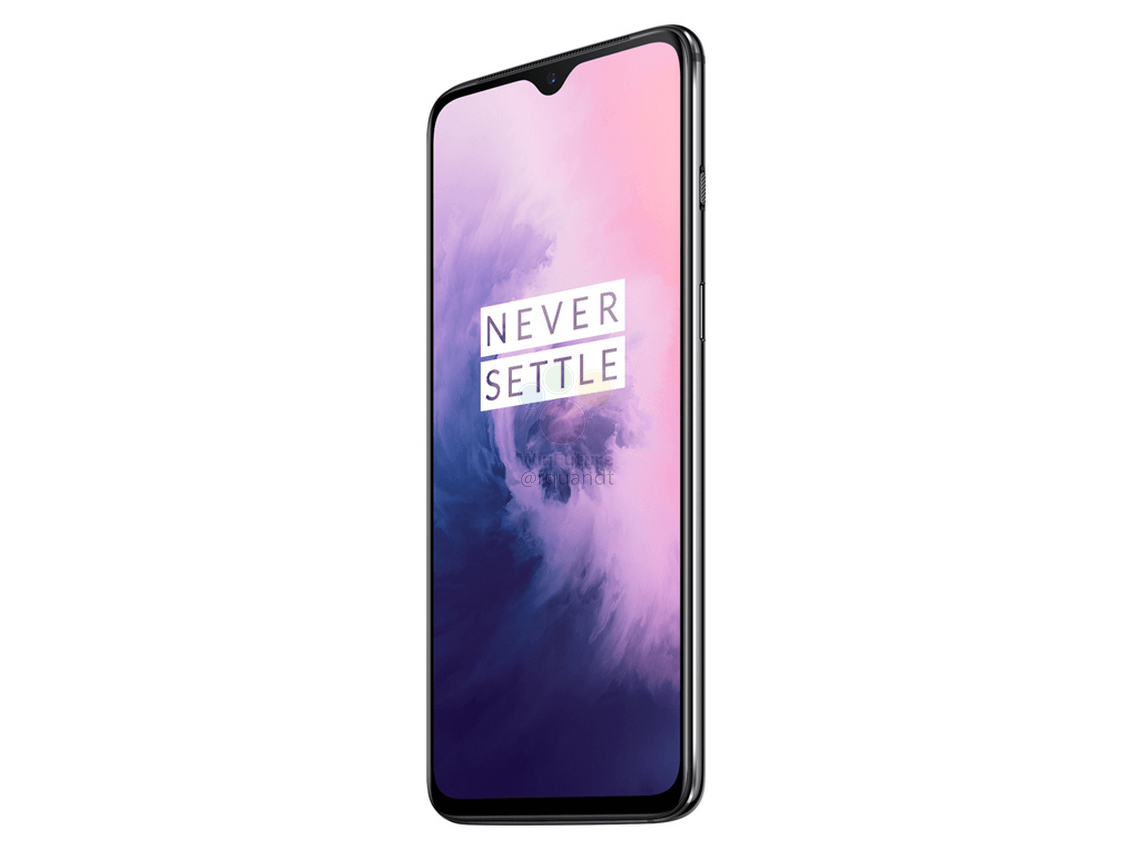
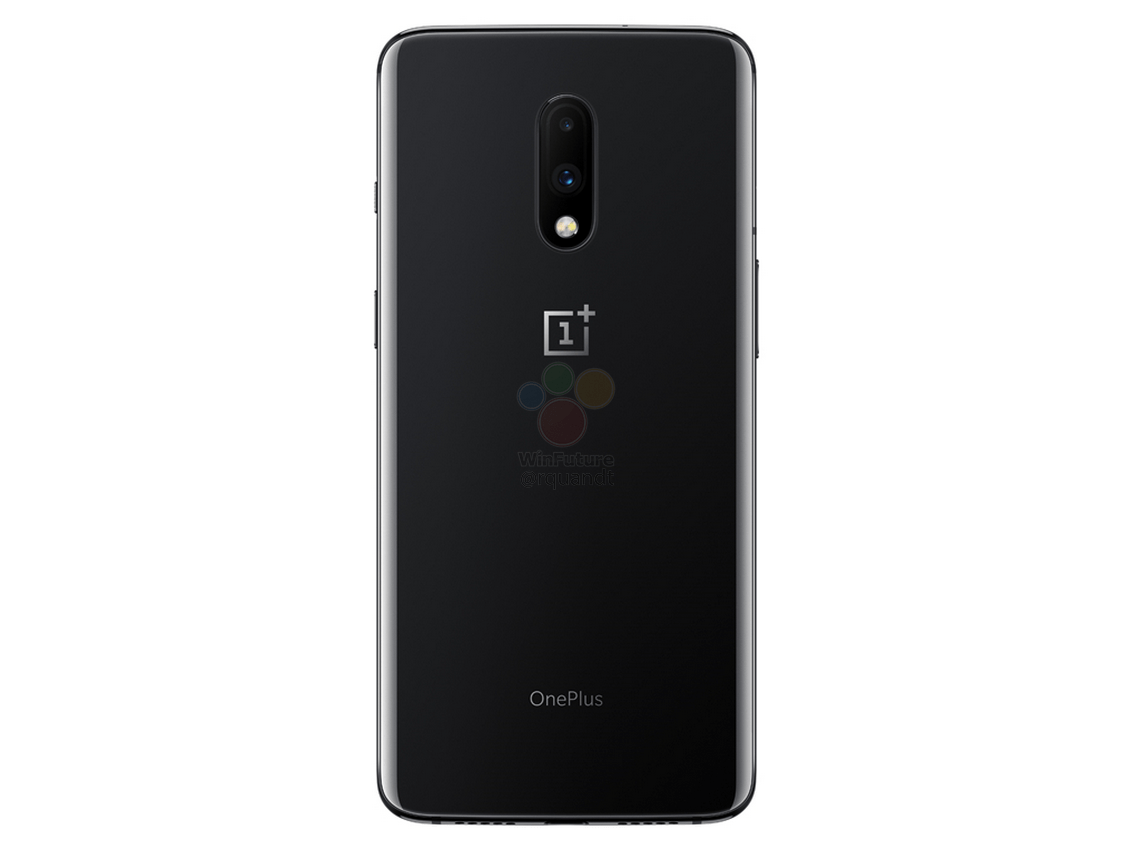
OnePlus 7 Source: Roland Quandt
For the standard OnePlus 7 model, not a lot has changed as compared to its predecessor. You’ll get a waterdrop notch, and a dual camera setup at the back.
OnePlus 7 Pro Display
OnePlus’ displays have been good but nothing extraordinary. When top-tier flagship models featured Quad HD+ displays, OnePlus had to stick to FHD+ panels on its flagship models to keep the pricing affordable.
OP7Pro Source: Roland Quandt
With the OnePlus 7 Pro, the company can actually afford to take the display game a step higher. In this regard, OnePlus has already confirmed that the OnePlus 7 Pro will feature a ‘breakthrough’ display. In fact, CEO Pete Lau went on to say the phone features:
‘a whole new display which has to be seen to be believed’
OnePlus CEO, in an interview with the Verge, revealed that the company has spent nearly three times as much as its previous displays in order to bring something that “redefine fast and smooth”. Official specs are not yet available, but earlier leaks have revealed a 6.64-inch Quad HD+ custom-made AMOLED curved panel for the Pro version. Yes, it would be a curved panel, as hinted by the recent tempered glass panels for the device.
Recent OnePlus teasers were all about ‘smooth‘ and this could be a way to hint its 90Hz refresh rate. Such a high refresh rate would make images and animations extremely smooth and snappy on its large screen. Gaming should be a treat as well! It is being said that the phone can automatically switch between 60Hz-90Hz based on the content and usage.
Talking about treats, did we mention that the OnePlus 7 Pro is confirmed to support HDR10+ content?! Watching Netflix on its large 6.6-inch display should be a delight! Also, that 3X price for the new screen seems to be paying off as the OnePlus 7 Pro has earned DisplayMate’s A+ — its highest rating for smartphones.
No custom-made display for this cheaper variant, so expect things to be very similar to the OnePlus 6T. Basically a 6.2-inch FHD+ Super AMOLED panel. Nothing extraordinary.
OnePlus 7 Pro Camera
Recent OnePlus 7 Pro camera leaks have converged to this: a triple camera setup with a 48MP f/1.6 primary lens with OIS, an 8MP f/2.2 telephone lens with OIS and a 16MP f/2.2 Ultrawide lens with PDAF. In line with recent smartphones, the phone will feature 3X optical zoom. We have already seen a few samples of its zoom capabilities, you can check it out here.
A OP7Pro concept based on leaks
There should be a 16MP camera up front. As mentioned above, it should be housed in a pop-up design. A recent newspaper ad by the company further confirms this notch-less all display design.
The setup looks good, right? But what about the quality?
OnePlus’ imaging director, Simon Liu had some more information to share about the ‘Pro’ model’s camera. While talking to Wired, he said that the OnePlus 7 Pro’s camera samples will be visibly better than its predecessors.
“Our pictures are a lot more detailed compared to our previous phones” — Simon Liu
He added that the new model will retain the simple camera UI seen in the current models. While there should be a significant increase in the quality of the samples, Liu says that the OP7Pro might not be able to beat the top-tier flagships. Still, there should be significant upgrades in elements such as HDR, portrait mode, and night mode.
Source: Roland Quandt
Like with the display, the standard OnePlus 7 should be overshadowed by its elder sibling in the camera department as well. The standard edition is said to feature a dual camera setup with a 48MP primary camera with f/1.7 and a 5MP secondary sensor likely for depth information. So, no fancy stuff like a wide angle or telephoto lens. Expect camera performance similar to the OnePlus 6T.
OnePlus 7 Pro Specs
Here’s the summary of what to expect in terms of specs for both the devices.
We don’t have any information on the standard OnePlus 7’s pricing, but it should be close to the OP6T. Somewhere around $549 – $580 can be expected. But this is pure speculation.
This basically sums up what we know about the OnePlus 7 and the OnePlus 7 Pro!
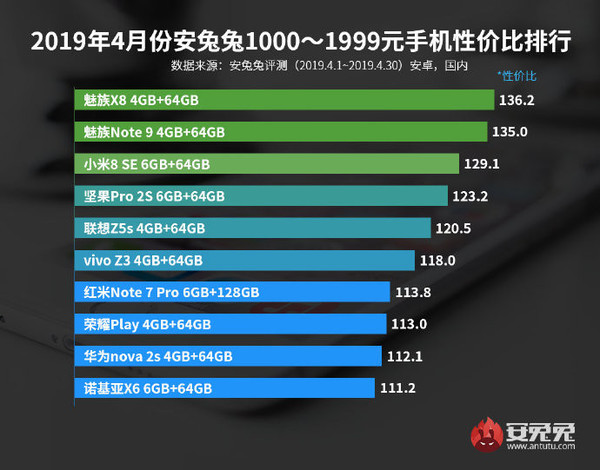
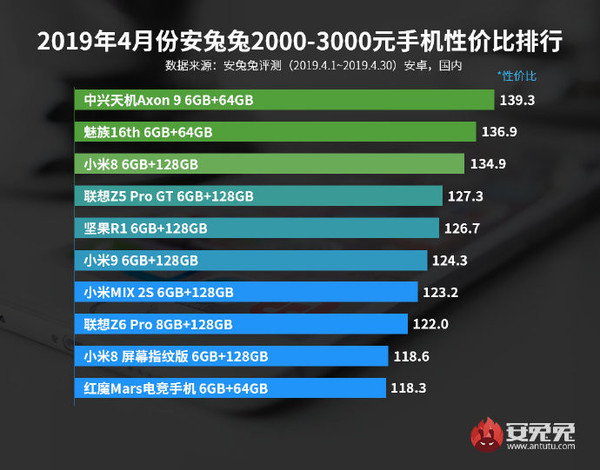
AnTuTu has released a chart of the top Value-for-money smartphones that sold in the Chinese market in the month of April 2019. The ranking categorized into two different price ranges; those priced between 1000~1999 yuan ($147-$294) and models with price ranging from 2000~3000 yuan ($294-$442).
In the 1000~1999 yuan ($147-$294) price category, the Meizu X8 4GB+64GB version emerged as the most cost-effective phone, more than half-a-year after it was launched in China. The Snapdragon 710-powered Meizu X8 is presently selling for 1,198 yuan ($176) on JD.com. For a premium mid-range model, the price sure gives buyers value for their money. Surprisingly, the phone is not even too popular among buyers. That notwithstanding, the X8 pipped other popular models such as the Meizu Note 9, Mi 8 SE to clinch the title.
In the price range of 2000~3000 yuan ($294-$442), the most cost-effective mobile phone is the ZTE Axon 9 6GB+64GB version, another device that isn’t too popular. The flagship Axon 9 packs a Snapdragon 845 chipset and the 6GB+64GB version is currently sold at 2098 yuan ($309) in China. The phone also features a 6.21-inch AMOLED full screen, HDR10 display, a built-in 4000mAh battery, a rear dual camera setup with support for 130 ° ultra wide-angle camera, and has ultra-linear dual speakers. That should be an amazing buy for just $309. Unfortunately, you won’t get the phone for that amount anywhere outside China. Other great value-for-money phones include the Meizu 16th (6GB+64GB version), Xiaomi Mi 8 (6GB+128GB), Lenovo Z5 Pro GT (6GB+128GB), Smartisan R1 (6GB+128GB), Mi 9 (6GB+128GB), Mi Mix 2s (6GB+128GB) etc.
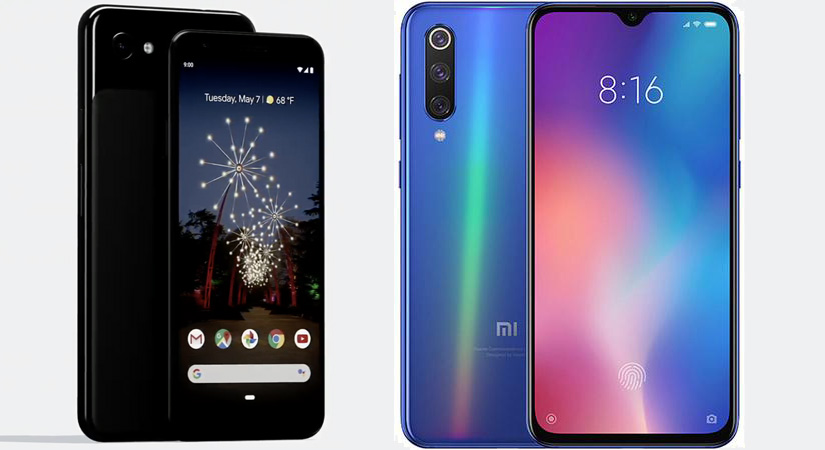
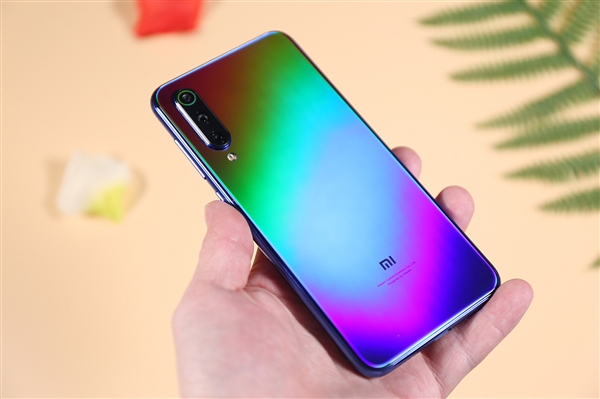
There are two categories of phones that is every day more impossible to find in the actual market. We are talking about compact phones and affordable phones with flagship-class cameras. With people searching for big phablets with huge displays and due to the high costs of high-end camera modules and R&D, a lot of people struggle to find such devices. But it seems some companies understood it and they released two models which fit this kind of demand perfectly. We are referring to the atypical Google Pixel 3a which is the first affordable device from the Pixel series, and the Xiaomi Mi 9 SE which comes as an affordable variant of the Mi 9 flagship. Through this specs comparison, we will try to let you know which one fits your needs the most.
5.97 inches, 1080 x 2340p (Full HD+), 432 ppi, 19.5:9 ratio, Super AMOLED
PROCESSOR
Qualcomm Snapdragon 670, octa-core 2 GHz
Qualcomm Snapdragon 712, octa-core 2.3 GHz
MEMORY
4 GB RAM, 64 GB
6 GB RAM, 64 GB – 6 GB RAM, 128 GB
SOFTWARE
Android 9 Pie
Android 9 Pie, MIUI
CONNECTIVITY
Wi-Fi 802.11 a/b/g/n/ac, Bluetooth 5.0, GPS
Wi-Fi 802.11 a/b/g/n/ac, Bluetooth 5.0, GPS
CAMERA
12.2 MP f/1.8
8 MP f/2.0 front camera
Triple 48 + 13 + 8 MP f/1.8 and f/2.4 and f/2.4
20 MP f/2.0 front camera
BATTERY
3000 mAh
Fast charging 18W
3070 mAh, Fast Charging 18W
ADDITIONAL FEATURES
/
Dual SIM slot
Design
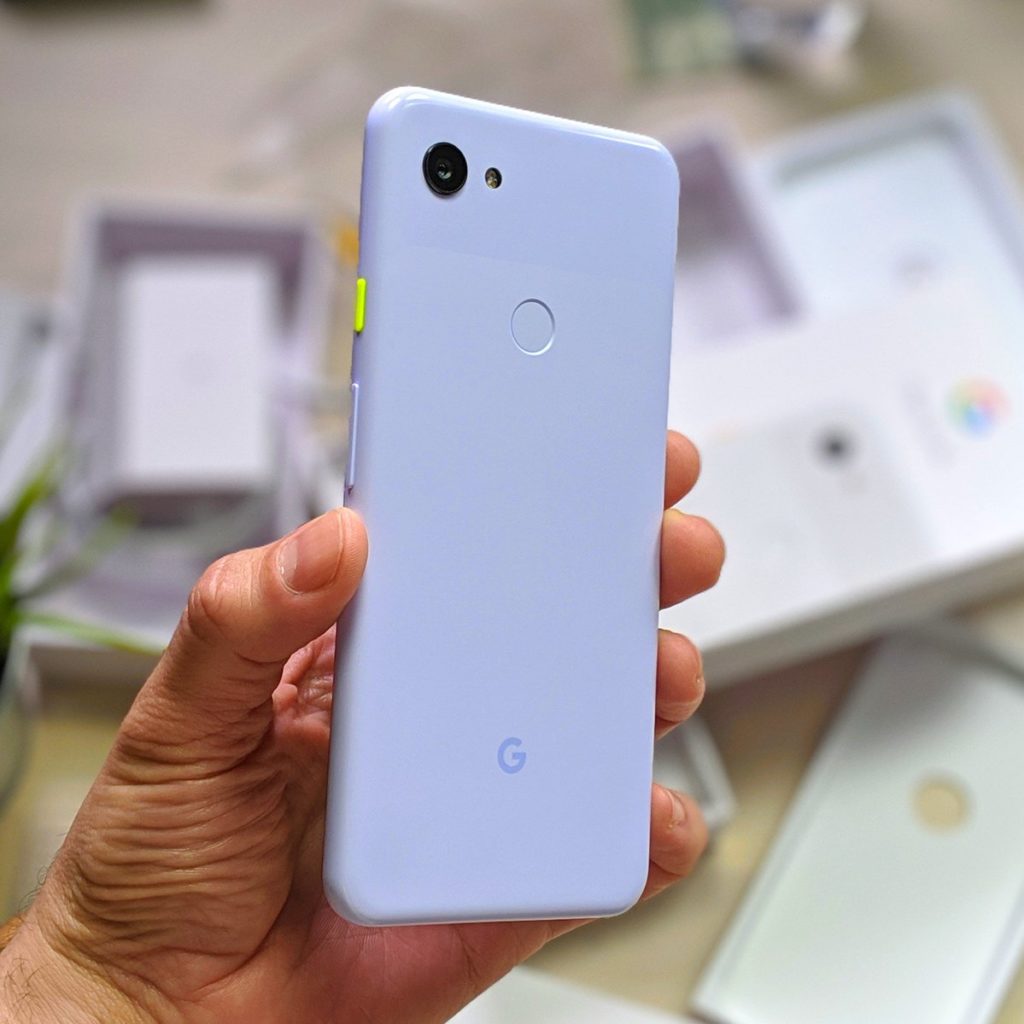
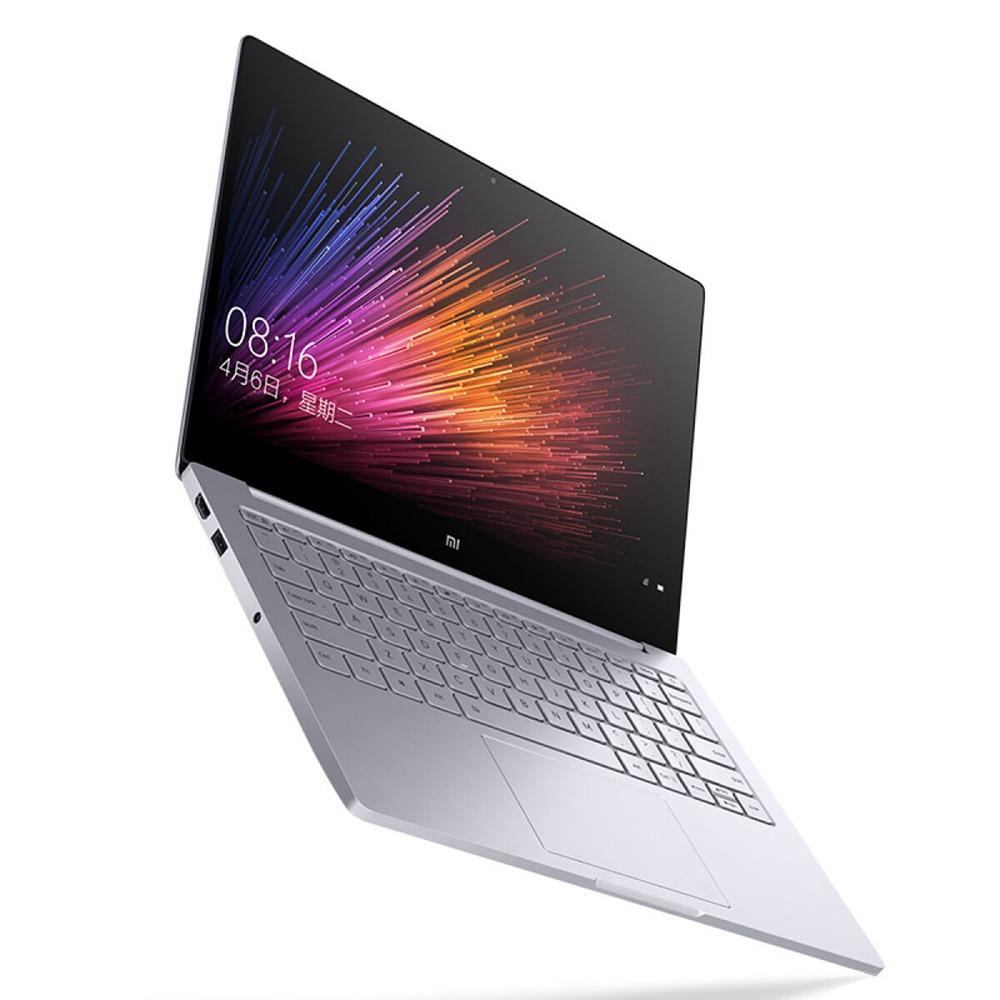
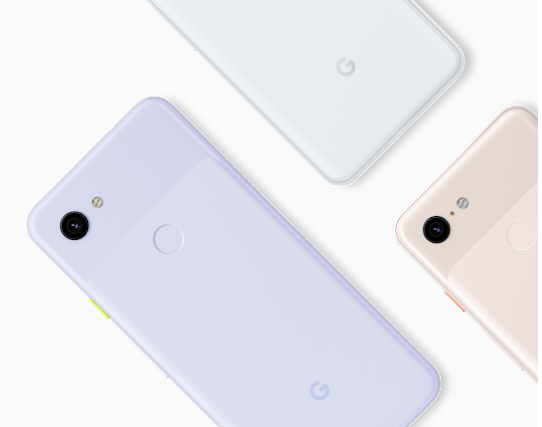
Just like its older sibling Pixel 3, the Google Pixel 3a shows a very original design, especially on its rear side composed of two pieces of slightly different colors. Despite that, it is not among the devices with the most premium look and builds quality, and it has a cheap polycarbonate body as well as a display with pretty thick bezels. On the other hand, Xiaomi Mi 9 SE has a premium and flagship-like design, it is hard to distinguish it from the vanilla Mi 9. It is equipped with a glass back, it has a very high screen-to-body ratio and it comes in stunning gradient color variants. Further, it is even more compact, despite Google Pixel 3a has a smaller display.
Display
While there are big differences in build quality between the Google Pixel 3a and Xiaomi Mi 9 SE, it is not the same with their displays. They both feature compact AMOLED panels which are easier to use with one hand than most of the smartphones out there. Further, they even come with the OLED technology providing brilliant colors and deep blacks. I personally prefer the Xiaomi Mi 9 SE for its more narrow bezels, a great color reproduction thanks to the HDR10 standard, and its in-display fingerprint reader. On the other hand, Google Pixel 3a is a better handset for music lovers as it features stereo speakers and a 3.5 mm audio jack.
Specs & Software
Both Google Pixel 3a and Xiaomi Mi 9 SE are equipped with an upper-midrange hardware department, but Xiaomi Mi 9 SE is superior. Indeed, it has a more powerful chipset (Snapdragon 712 vs Snapdragon 670) boasting a better GPU (so better graphics performance), as well as a higher amount of RAM (6 GB) and internal storage (128 GB) in its most expensive variant. Last but not least, it has expandable storage. Google Pixel 3a is better only when it comes to software, as its stock Android version will get updated quicker by Google and will make it a safer device.
Camera
On the camera side, there is a very hard battle. Google Pixel 3a has just a single camera on its rear side, but it is the same sensor as the vanilla Pixel 3 which is one of the best camera phones actually in the market, especially in low light conditions thanks to its advanced algorithm. It even has optical stabilization and it can record 4K videos. Xiaomi Mi 9 SE has a triple camera setup which includes the same 48 MP main sensor found on the Mi 9, an ultrawide lens and a telephoto lens. And it can shoot awesome photos as well in every light condition. I personally prefer the Google Pixel 3a due to its main camera and algorithm allowing to shoot amazing photos with low light, as well as its astonishing 8 MP selfie camera.
Unfortunately, we still had no chance to test the battery life of the Google Pixel 3a. And given that it comes with more or less the same capacity of the Xiaomi Mi 9 SE, it is hard to understand which one will last more on a single charge. If we base on previous Google device, Pixel 3a might be optimized better and it may last more in most of the scenarios, but we can not give a verdict right now.
Price
In the global market, Xiaomi Mi 9 SE has a starting price tag of €350/$392, while Google Pixel 3a starts from €399/$399. Whatever you choose it will be a very good choice, but the Xiaomi Mi 9 SE is my favorite one due to its more beautiful aesthetics, higher-end hardware, UD fingerprint scanner, and micro SD support.
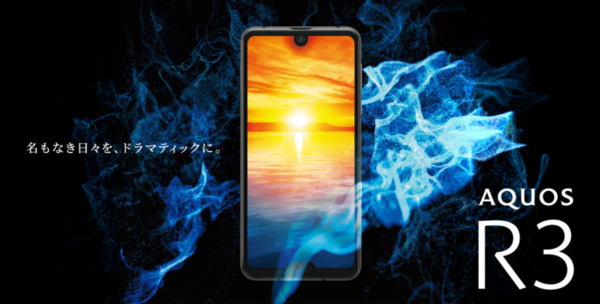
Since the era of bezel-less phones, we have seen OEMs adopt various design styles ranging from the iPhone X-styled notch, water drop notch, punch-hole, pop-up and sliding design, aimed at reducing the display bezels. The main goal is to increase the screen-to-body ratio and thus give users better user experiences. Even before notch-screen design became a trend, Sharp has long been using the design on its phones. We recently received rumours that the Japanese display giant is planning to implement a dual notch design on its upcoming phone. The rumours turned out to be true as Sharp has launched the Aquos R3 sporting dual notches at the top and bottom of the display.
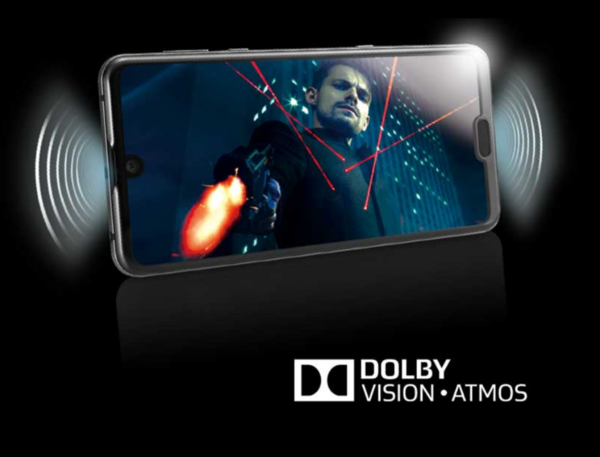
Sharp Aquos R3 comes with all the dressings of a flagship phone and even more. This is the first phone we’ll be meeting with such a design. Critically analysing the display design, you’ll see there is a waterdrop notch at the top housing the selfie camera and a wider one at the bottom aspect. We can’t say for sure why Sharp opted for such a strange design. Even though some might find it interesting, we doubt if proponents of retaining the symmetrical design of phones will smile at this one. The bottom notch seems to have offered Sharp the space to cram a front-facing stereo speaker on the device. This is one design we have missed on smartphones as you won’t have to the back of your mobile phone to listen to music blasting from the speakers. The device even seems to have a second speaker at the top edge meaning the sound output will be spectacular. The speaker uses Dolby Atmos surround sound technology.
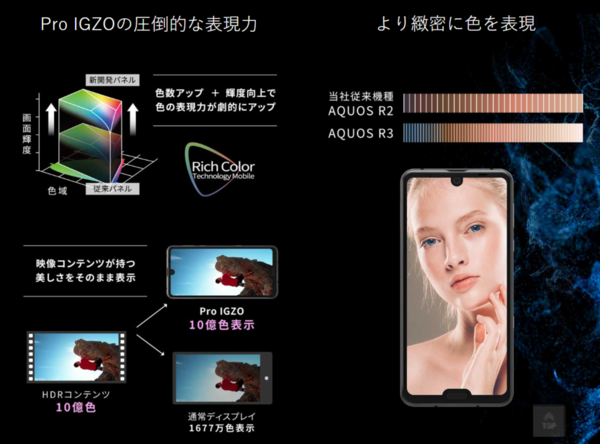
As for the specification, Sharp Aquos R3 features a 6.2-inch Pro IGZO LCD display and is powered by the latest Qualcomm Snapdragon 855 chipset. The phone comes in 6GB+128GB memory combination. Under the hood is a 3200mAh battery with support for 11W fast charge. On the camera end, there is a single 16.3 MP camera house in the waterdrop notch up at the front. The device packs a dual camera setup at the rear made up of a 12.2 MP + 20MP sensors. The rear camera supports 125° super wide-angle shooting. The device has a body thickness 8.9mm and weighs 185g.
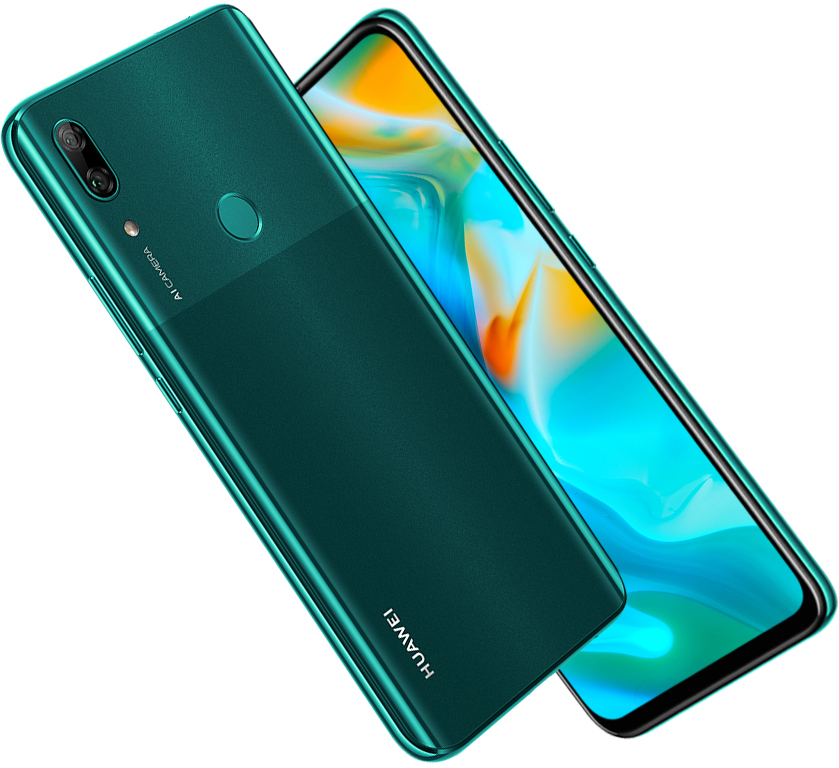
The Huawei P Smart Z has appeared on the manufacturer’s Italian and Spanish website confirming that both phones will be sold in the two European countries. The listing reveals all the specs and features of the phone.
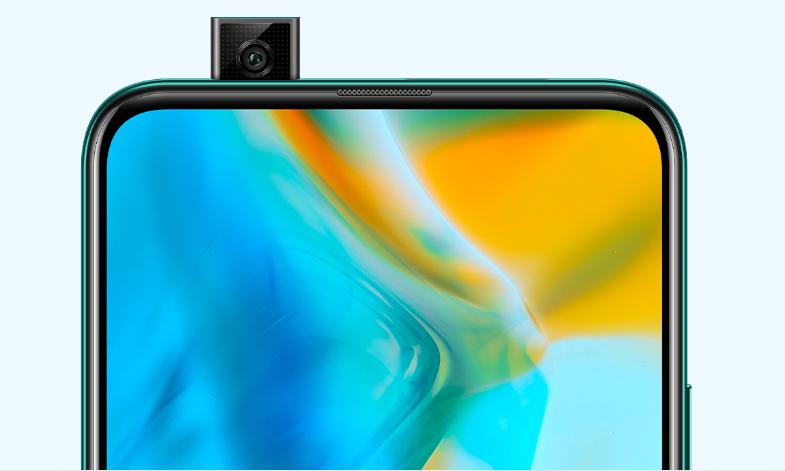
The Huawei P Smart Z comes with what Huawei has dubbed an Ultra FullView Display. There is no notch or punch hole on the screen like some of Huawei’s other phones. It is practically all-screen with a slightly thick lower bezel. The LCD screen is 6.59-inches with an FHD+ (2340 x 1080) resolution. There is a small grille in the frame for the earpiece.
Since there is no notch, punch hole, or top bezel, the 16MP selfie camera has a new home. It is hidden inside the phone when not in use and pops up in just 1 second when needed for a selfie and retracts when you are done. Huawei boasts the selfie camera can withstand a pressure of 12kg and has been tested over 100,000 times. It can also work in environments with temperatures between -20°C and 60°C.
The selfie camera is loaded with tons of features. It has a 6P lens, 8 different selfie-timer scenes, and can take 3D portraits (available on the rear camera too).
The P Smart Z is powered by the Kirin 710F processor with 4GB RAM and 64GB of expandable storage. There is a 16MP + 2MP dual camera combo on the rear which can identify up to 500 different scenes under 22 categories. There is also a fingerprint scanner on the back. The phone packs a 4000mAh battery that charges via a USB Type-C port. It has NFC, dual-band Wi-Fi, and dual-SIM slot. It also runs EMUI 9.0 based on Android Pie.
Xiaomi has over the last two years continued to improve on the camera configuration of its phones. The progress made is very evident on the DXOMark ranking of Xiaomi’s flagship models which presently rank among the top 10 phone cameras. The camera samples from the mid-range and budget models often leave some persons including yours sincerely awestruck.
For reference, the latest flagship Mi 9 received a score of 107 points on DXOMark and comes with features such as Moon mode among others. Xiaomi has now pushed a fresh update to the Mi 9 SE which brings the new Moon mode among other features. The update version number is MIUI V10.3.10 and as the name implies, the Moon mode allows users to capture a shot of the moon on the Mi 9 SE.
To use the feature, just open the camera app, aim at the moon then turn on the AI camera. You then tap the screen to focus and then adjust the zoom factor to 4 times or more, The camera will automatically recognize and display that you have entered moon mode. At this point, hit the capture button and you’ll shoot a clean shot of the moon. The biggest advantage of this mode is that you don’t need manual focus, you don’t need to manually set the ISO, the shutter. Thus, even a novice without any previous knowledge about photography can capture a clear shot of the moon thousands of miles away with a smartphone camera!
The camera configuration of the Mi 9 SE is almost similar to the Mi 9, so it shouldn’t be a surprise this feature is hitting the mid-range model. To recall, the Mi 9 SE packs a 48 MP Sony IMX586 wide-angle lens + 8MP telephoto lens and a 13MP super wide -angle lens at the rear. The Mi 9 features a 48 MP Sony IMX586 main sensor+ 12MP + 16 MP super wide-angle sensors. Apart from the Moon mode, the Mi 9 SE also features the Super Night scene mode and 960 frames slow-motion photography.
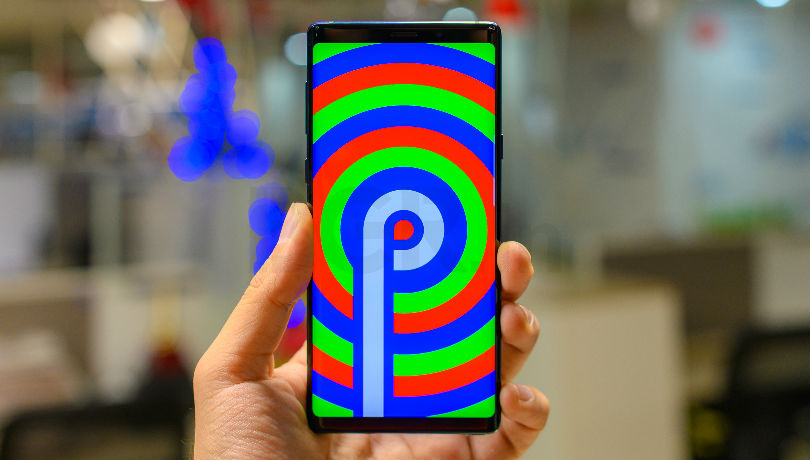
Google has updated its Android Distribution Dashboard, which confirms that Android Pie has indeed made progress since its release last year. The company had not updated the dashboard for more than six months, and the last available data is of October 2018.
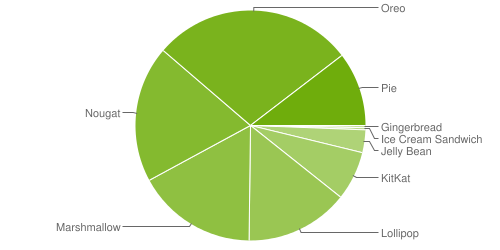
Now, the dashboard has been updated to reflect the distribution of various versions of Android across active Android devices. The Mountain View-based company now claims that there are over 2.5 billion active devices running Android 9 Pie. This means that the new version is powering 10.4 percent of active devices. This is ahead of the schedule compared to the past releases.
This quick adoption of Android Pie can be seen as a win for Google, and specifically for Project Treble. The new update method was first introduced in Android Oreo and Pie gave it its first chance to really work.
The data reveals that Android Oreo, which was released about two years ago, is currently the most widely used operating system among all active devices. It has an install base of 28.3 percent with Android 8.0 Oreo active on 12.9 percent devices and Android 8.1 Oreo on 15.4 percent devices.
Android Oreo is followed by Android Nougat, which has a total install base of 19.2 percent with Android 7.0 Nougat on 11.4 percent devices and Android 7.1 Nougat on 7.8 percent devices. The distribution index is based on data collected during a 7-day period that ended on May 7, 2019.
Google has also provided an update on the massive number of devices running on Android. During the keynote, the company confirmed that a whopping 2.5 billion devices are currently running on the Android platform as monthly active devices.
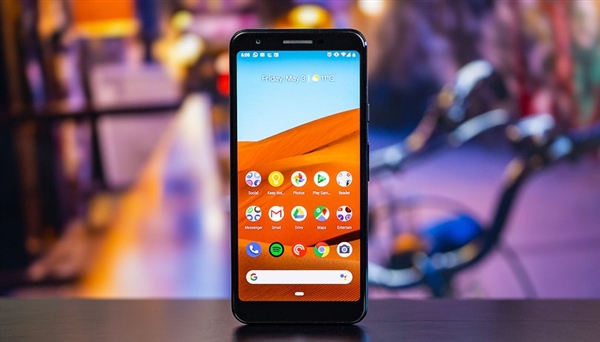
Google took the veil off the Pixel 3a and 3a XL yesterday, ending lingering speculation about the models. The models present with a Snapdragon 670 chipset under their hood and unlike the Pixel 3 models, they retain the 3.5mm audio jack. The Pixel 3a models also come with OLED displays which is our point of focus of this report. Not long after the launch conference, the Pixel 3a/3a XL kernel source code appeared on Google’s support library. One of the major things we can grab from the listing is that the display panels of the Pixel 3a and Pixel 3a XL are supplied by Samsung and Chinese firm Tianma. The source code for the Pixel 3a XL was specifically listed to be manufactured by both Samsung Display and Tianma while that of the Pixel 3a is manufactured by Samsung Display only.
Tianma Micro-Electronics is a China-based display producer that was established in 1983. TianMa has been active with OLED R&D since 2010. The company presently manufactures OLED panels in its 6-Gen LTPS AMOLED fab in Wuhan, China. This is a good development which means Samsung’s monopoly in the aspect of OLED panels supply.
The source code also shows that Google had finalized the industrial design of the Pixel3a as far back as 2013. The camera module was completed in 2016 and the core chip was installed in 2017. Also, we got to know that the Pixel 3a is codenamed Sargo while the Pixel 3a XL comes with the code name Bonito.
Google made several announcements including the Pixel 3a and Android Q launch at the Google IO 2019 keynote session. Various new APIs and other software related upliftments were made public for the developers. Similarly, CameraX, a new API aimed at improving camera apps on Android is released. It works across most Android devices with easy-to-use implementation and compatibility across Android 5.0+ devices.
Developers can easily code the new camera apps using CameraX by utilizing the CameraX Extensions and optional add-ons. It can easily leverage the camera experience provided by the preinstalled camera app on any device. Developers only need to add a couple of lines code to induce all the features from the native camera app. It let fetch capabilities like Portrait, HDR, Night, and Beauty.
It is an easily usable API and will drastically reduce the code on third-party Android camera apps. The time-consuming task to code for every specific device in the camera app will end. Google has developed a dedicated CameraX test lab to examine the improvements in all operating systems starting from Android 5.0.
Google has modeled it in a plug-and-play environment to catch basic camera behavior easily. A set of different use-cases – Preview, Image analysis, and Image Capture is part of the latest API.
The new API is currently in Alpha stage, and Google recommends not to use it for the production environment. However, Google is promoting its use for testing purposes.
CameraX will surely benefit developers who code camera apps for Android. It will lead to better, streamlined, and well-optimized camera apps with compatibility across wider user-base.
At the last Redmi event in China, the new company announced its first non-phone related product – the Redmi 1A washing machine. Its next event is rumored to be on May 13 where it will unveil its Snapdragon 855-powered flagship phone. Alongside the phone, it has been reported Redmi will launch “one more thing”.
Redmi may announce its own notebook line on May 13
There are speculations as to what the second product may be with some even saying it might be a smart home device. A new leak we came across suggests that may not be true. According to a tweet by Sudhanshu Ambhore, the second product is actually a Redmi laptop!
#Redmi will also release their Laptops under #Redmi branding (like #Xiaomi's Mi Notebook) with their flagship phone.
Yes, the leaker says, Redmi will also release their laptops (more than one) just like Xiaomi’s Mi Notebook, along with their flagship phone.
We haven’t gotten any proof to back up this info but it doesn’t seem far-fetched. Xiaomi already makes computers, so it won’t be hard for its spin-off company to also release its own models. Think of it as how Huawei and Honor both release computers under the MateBook and MagicBook line respectively.
Google announced the Pixel 3a and Pixel 3a XL yesterday on Day 1 of this year’s edition of Google I/O. Both devices are the cheapest smartphones Google has released ever since it ditched the Nexus line in favor of the Pixel line a few years ago. The good news is they won’t be the last.
According to a report by Android Police, the Pixel 3a smartphones are not “one-off” devices. Google’s plan is to continue releasing affordable versions of its Pixel smartphones for the “foreseeable future”.
There is no confirmation yet that these future devices will get the “a” suffix (Pixel 4a, Pixel 5a) but they will happen. The move is also a win for Google in a way. Rather than wait a whole year before the launch of the next Pixel phone, the tech giant will have two main phone launches each year, keeping them in the news.
Realme is launching its flagship device Realme X on May 15 at an event in Beijing. The multiple rumors regarding its features and design are hinting the presence of high-end specifications. The company itself is revealing a lot of details about the Realme X. In a recent teaser, Realme confirms the presence of a 48MP Sony IMX586 sensor having an f/1.7 aperture on the Realme X.
As like of the Realme 3 and Realme 3 Pro, the Realme X will also feature Nightscape mode for low-light imaging. It will adjust the camera settings to get clearer and brighter photos in the night. However, it was not clear until now whether the company will use the Samsung GM1 sensor or Sony’s. The new poster unfolded almost every detail regarding its rear camera. Here’s an image showing the zooming capabilities of the 48-megapixel sensor on the Realme X.
Standard Photo
Zoomed Image
The company in the recent past also confirmed the presence of an AMOLED display panel and a notchless design on the upcoming flagship device. Additionally, it will be powered with the Qualcomm Snapdragon 730 SoC and an on-screen fingerprint scanner. Realme X is rumored to support VOOC 3.0 fast charging, Corning Gorilla Glass 5 protection and a 3680 mAh battery. A 6.5-inch FHD+ display is expected on the Realme X, reveals a recent TENAA listing.
It will launch in China with disruptive pricing and later will unveil in India. Realme X will surface in three different variants – 6GB + 64GB storage for 1599 Yuan (~$236), 6GB + 128GB version for 1799 Yuan (~$265), and the 8GB + 128GB storage version for 1999 Yuan(~$295). Another Realme X version – Realme X Pro expected to feature Snapdragon 855 chipset is also coming soon.
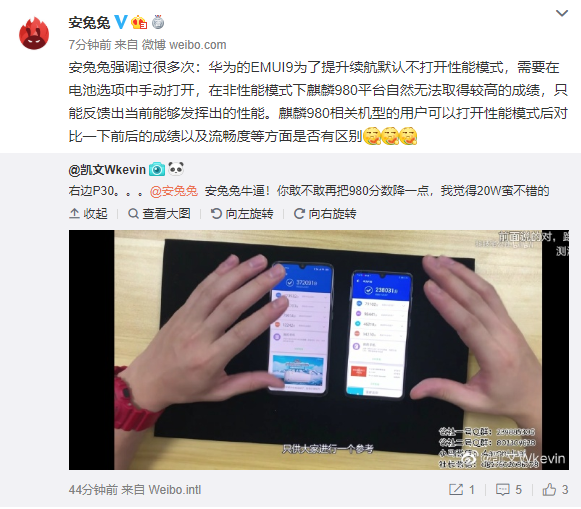
A few users of the Huawei P30 Pro were upset about the phone’s lower score of 238,000 on AnTuTu benchmarking platform and expressed their views on Chinese microblogging platform Weibo. The score is well below the average score of a Snapdragon 855-powered phone.
AnTuTu officially responded to this and revealed that the EMUI 9, the custom version of the Android 9 Pie-based operating system that the phone users, prioritizes the phone’s battery life over the performance.
This means that the performance mode isn’t activated by default and the resultant score gets compromised. The company added that if you manually activate the performance mode from the battery settings, then the benchmarking scores will be different.
Recently, AnTuTu released a list of top performing smartphones for April 2019. The first position is occupied by Xiaomi Mi 9 Explorer Edition with an average benchmarking score of 373,715. The second position is acquired by Xiaomi Mi 9 that has scored 373,511 points while Xiaomi’s Black Shark 2 gaming phone comes third with a score of 371,837 points.
Placed on the fourth is the new entrant Meizu 16s smartphone with a score of 370,306. The Vivo iQOO Monster edition gaming-focused smartphone with 12 GB of RAM has recorded 363,360 on the benchmarking platform. The Samsung Galaxy S10+ and Galaxy S10 smartphones have respectively scored 395,936 and 358,726 on AnTuTu.
The Vivo iQOO standard edition is placed on the eighth position with 354,138 scores. All the aforementioned smartphones mentioned in the list are powered by Snapdragon 855 mobile platform. The Snapdragon 845 SoC powered Nubia Red Magic Mars gaming smartphone is on the ninth position with a score of 310,612. The last phone in the list is the Honor V20 with 306,289 points, which is powered by the Kirin 980 chipset.
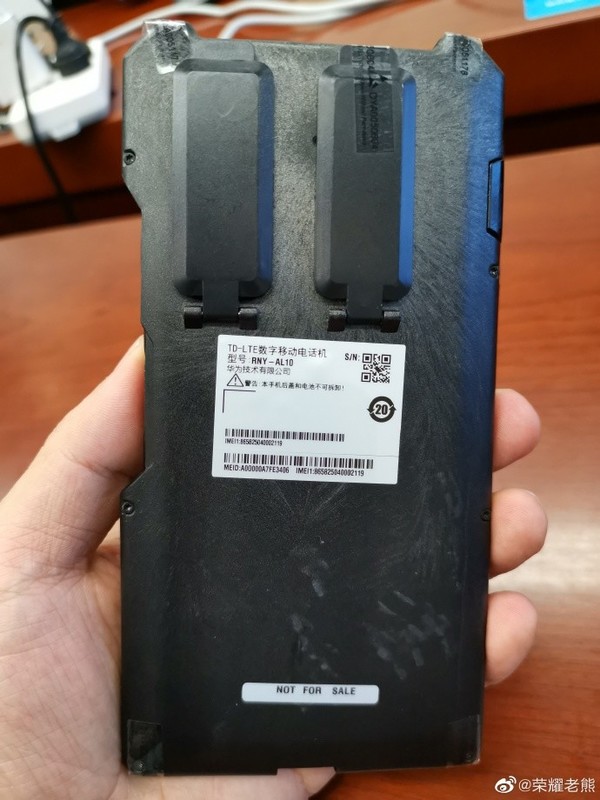
Honor is expanding its affordable lineup with Honor 20 and Honor 20 Pro soon. Both the devices are slated for launch in London on 21st of this month. There’s minimal information available about the upcoming device as of now. However, the rumor mill managed to bring forward some details like the presence of pop-up camera design, quad rear camera module with a ToF and an LED flash, and other details. A piece of new information appeared today via a protective shell teased by Honor VP’s Weibo handle.
The protective shell is teasing two vertical strips on the rear side of the device. Some tech experts believe, a triple camera module will take place on the left strip, whereas a macro lens or ToF sensor will be present on the right strip with an LED flash. Its triple camera module is expected to carry a 16-Megapixel Super wide angle lens, 48-Megapixel primary sensor, 8-Megapixel Telephoto lens, and a 2MP macro lens. The camera will surely benefit from added 4-axis OIS (Optical Image stabilization) and Laser Autofocus.
A sticker on the Honor 20 Pro’s protective shell is bearing a model number RNY-AL01, and some other details such as 4G compatibility. The protective shell is hinting towards the presence of an on-screen fingerprint sensor, rather than the one on the rear side. Additionally, placeholders for volume rockers and power button are present on the right side of the device. Whereas on the left, a small opening for the SIM card slot can be seen.
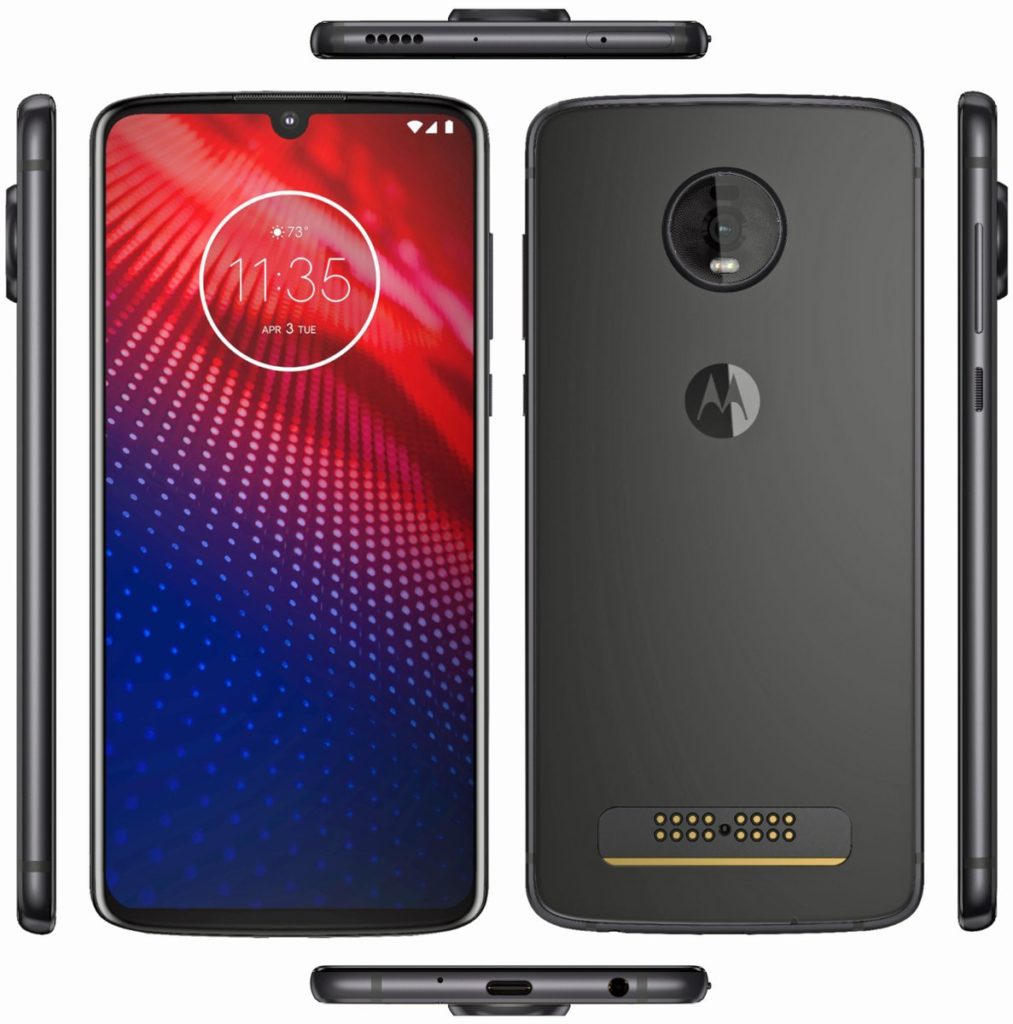
Recent reports have revealed that Motorola will be soon releasing Moto Z series of smartphones. Earlier this year, @OnLeaks had shared renders of Motorola Moto Z4 Play smartphone. In March, a new Motorola phone codenamed as “foles” was approved by Federal Communications Commission (FCC). The same phone is said to be internally codenamed as “stingray.” It was found that the phone is packed with mid-range specs. Earlier this month, Evan Blass shared a render of the Moto Z4 smartphone. Fresh information shared by XDA Developers that Z4 Play renders shared by @OnLeaks could actually belong to the Moto Z4 phone. Hence, it can be said that the Moto Z4 will be arriving as a mid-range phone.
The FCC documents of the “foles” Moto Z4 has a model number of XT1980-3. It is powered by the Snapdragon 675 chipset. It will be arriving with 4 GB or 6 GB of RAM. It may come in UFS 2.1 storage options such as 64 GB and 128 GB. It will be packed with a 3,600mAh battery. FCC reveals that its stock power adapter carries support for 18W fast charging.
The smartphone will be equipped with a single camera on its rear. It will include a 48-megapixel S5KM1SP sensor by Q technology that will be able to capture 12-megapixel shots by default. Fore capturing selfies, the handset will feature 25-megapixel Samsung S5K2X5 sensor.
The FCC filings do not have any information on the size of its display of the Moto Z4 smartphone. The handset measures 157 x 75mm which is similar to the Moto G7 Plus smartphone that comes with a 6.2-inch IPS LCD display with waterdrop notch. Hence, the Moto Z4 is likely to arrive with the same-sized screen. What’s known about Z4’s display is that it will be equipped with Goodix supplied in-display fingerprint reader. The smartphone is expected to come preloaded with Android 9 Pie OS. Lastly, the phone will carry support for Moto Mod accessories.
Recently, a leakster had revealed that the Moto Z4 will be available with a price tag of $399. He had also revealed some other features of the phone such as it will be sporting an IP67 rated chassis and it will be arriving in two models such as 4 GB RAM + 64 GB storage and 6 GB RAM + 128 GB storage.
The tipster had also revealed that Motorola will be also releasing Moto Z4 Force flagship phone powered by the Snapdragon 855 mobile platform and 8 GB of RAM. It is expected to sport the same display as Moto Z4. The other rumored features of the Z4 Force include 128 GB of native storage, in-display fingerprint scanner, a 3,230mAh battery and a triple camera setup with a 48-megapixel main sensor, a 13-megapixel sensor and a telephoto lens. It could be priced at $650.
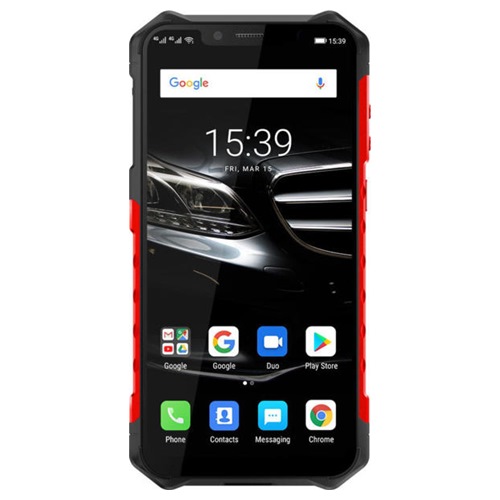
Ulefone unveiled its long-awaited Armor 6E smartphone in April this year. The phone comes in two versions including one that’s designed for people located in the European Union region and the other that works outside the European Union region.
Much to the delight of Ulefone fans located in European Union as well as Non-European Union regions, both versions of the Armor 6E are available bearing heavily discounted prices on Banggood. Aside from taking advantage of the discount, Banggood users stand a chance of winning a free gift as well.
The European Union and the Non-European Union would normally set you back a pretty penny on both online as well as offline stores, but you can get them for considerably lowered prices of just $249 from the Chinese online store.
This is a noteworthy reduction in the device’s original asking price of $249.99, but that’s not all. First 99 lucky users will qualify for receiving a data cable as a free gift along with their orders. This offer will be available on the first come, first served basis. An absolute steal at this price, the Ulefone Armor 6E boasts an impressive array of features and top-end specs. Here’s a brief glimpse of the awe-inspiring features:
2 Inch FHD+ Capacitive Touch Screen with 1080 x 2246 pixels
You can head straight to this link to check out the full specifications and grab the discounts available on the European Union and Non-European Union versions of the Ulefone Armor 6E smartphone before the promo ends.
Huawei’s flagship smartphone — Huawei P30 Pro was launched last month at an event in Paris, France. The Honor P30 series has been well received by the users and has broken several sales records for the company.
Yesterday, we reported that Huawei has launched a new limited edition version of the smartphone, dubbed Huawei P30 Pro Special Edition, which is also being referred to as Huawei P30 Pro Limited Edition by many.
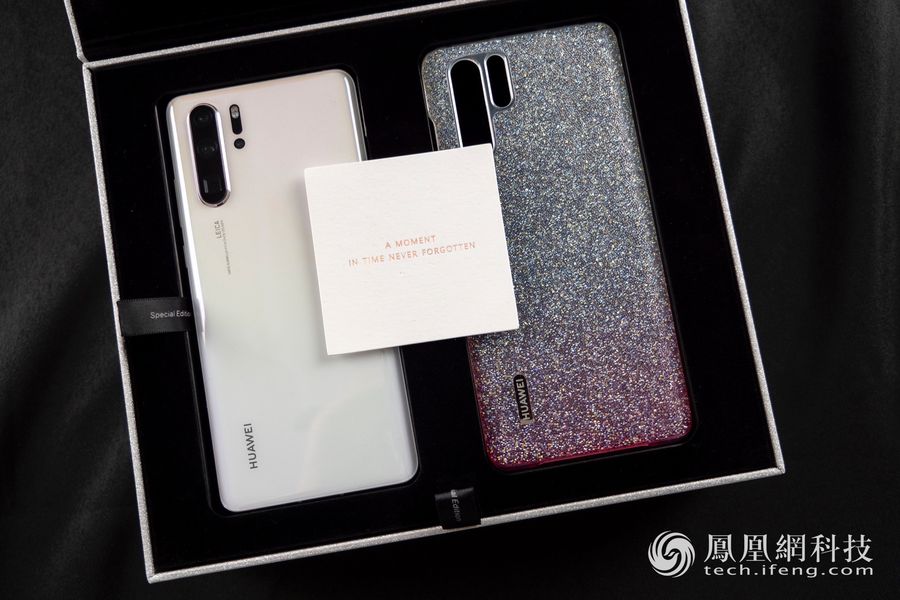
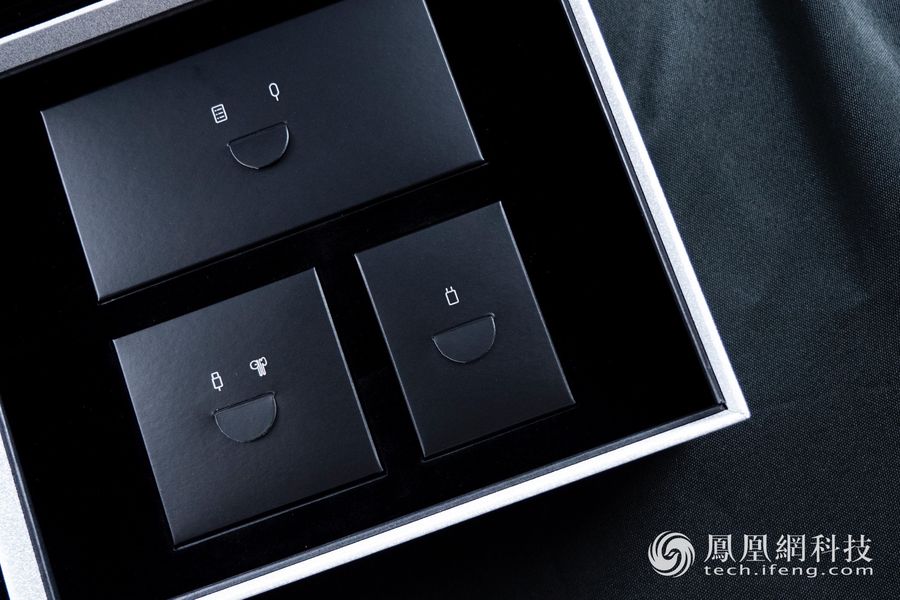
Here are the images of the Special Edition version of P30 Pro, showcasing how it is different from the standard variant. First, let’s take a look at the box set. It comes with a silver colored box having a glittery texture on top, giving it a premium and luxurious look.
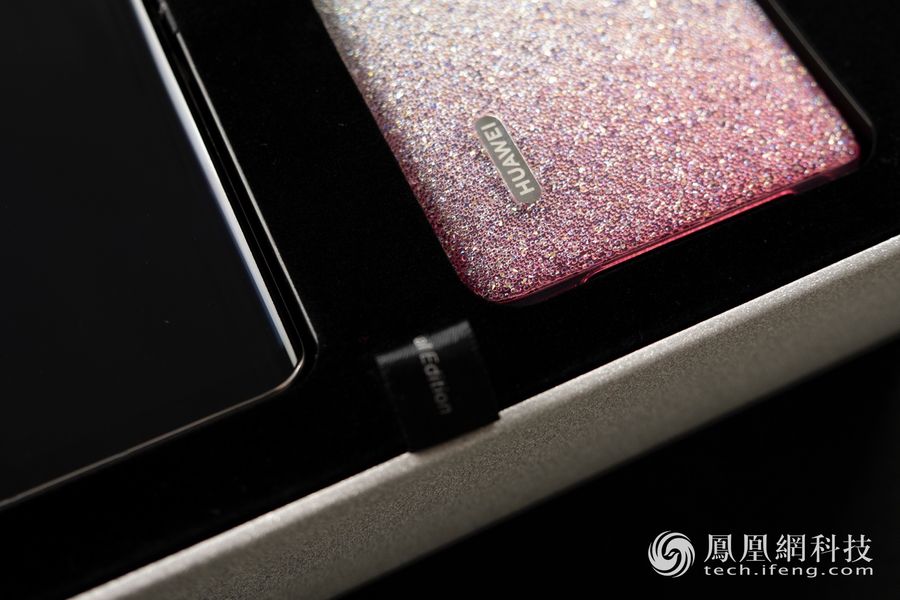
There a handle to open to box, which reads “Special Edition” on it. The same handle is also present on the phone unit holder. The company has also included a card in the box that highlights the fact that this is a special edition smartphone.
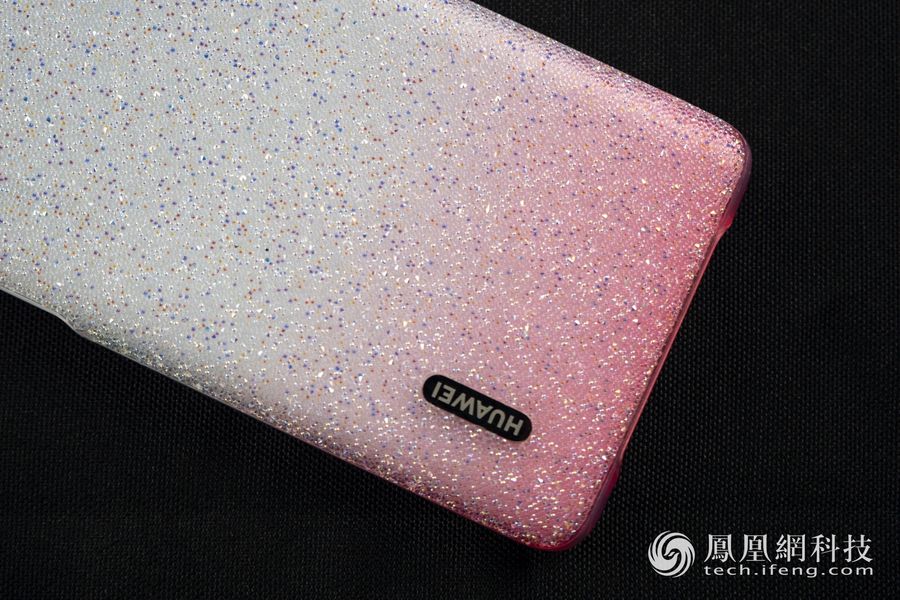
Huawei has also included a custom case for the smartphone in the box. It comes with the same glittery texture but in multiple colors. The cover also has a white and reddish-pink gradient effect, making it look more impressive. The company says that the protective case is treated with a metallic texture.
Removing the upper layer from the box presents three new boxes, which houses the accessories such as charging cable and wall adopter for the smartphone, as well as the information booklets.
All the specifications of the smartphone remains the same as the standard variant. Coming to the pricing, the 8GB RAM + 128GB storage model is priced at 5,888 yuan (approximately $871) while the 8GB RAM + 256GB storage model costs 6,388 yuan (approximately $945).
The top-end variant with 8GB RAM + 512GB storage costs 7,188 yuan, which roughly converts to $1,063. It is avaialable for pre-booking through Huawei Mall in China and is set to go on sale from 10th May.
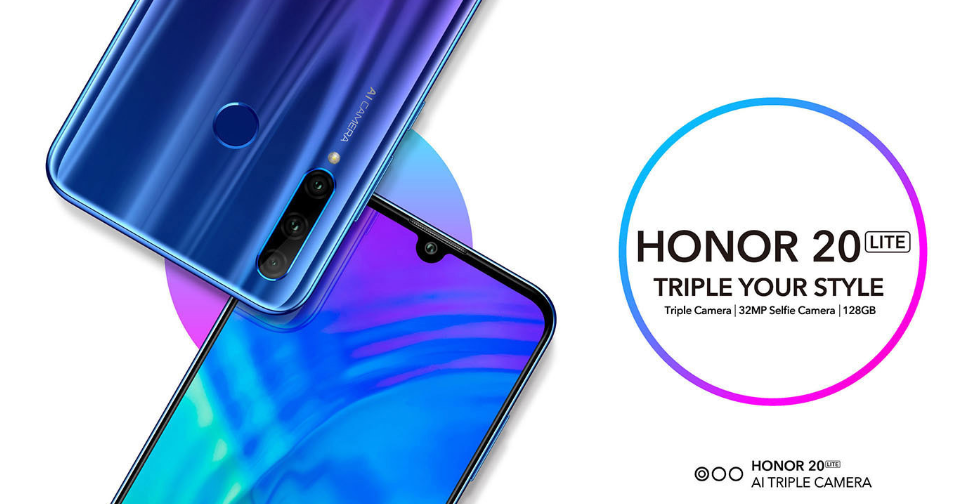
In the previous month, Honor had launched the Honor 20i smartphone in China. The same phone has been made official as Honor 20 Lite in Malaysia and the U.K. The handset has arrived as the successor for the Honor 10 Lite phone from last year. The major features of the smartphone feature include dewdrop-style notched display, 32-megapixel selfie camera and Kirin 710 SoC.
Honor 20 Lite Specifications and Features
The Honor 20 Lite comes with a 6.21-inch dewdrop notch screen that offers full HD+ resolution of 1080 x 2340 pixels and an aspect ratio of 19.5:9. It produces a screen-to-body ratio of 90 percent. The TUV Rheinland certified eye-care mode cuts down blue light radiation emitted by the display to prevent eye strain.
The 12nm Kirin 710 is present under the hood of the Honor 20 Lite along with 4 GB of RAM. It features an internal storage of 128 GB and is equipped with support for microSD card through second SIM slot for additional storage. The handset includes a 3,400mAh battery that offers a talk time of 22 hours.
The rear shell of the phone sports a triple camera module. It includes a 24-megapixel main sensor with f/1.8 aperture, a 120-degree 8-megapixel ultrawide lens and a 2-megapixel depth sensor. The photography features available for the triple rear cameras include AI multi-scene recognition and super night scene mode. One of the USPs of the Honor 20 Lite is that it features a 32-megapixel selfie camera that comes with AI beautification features.
The EMUI 9 based Android 9 Pie OS comes preinstalled on the Honor 20 Lite. For accelerated GPU performance while gaming, the smartphone comes with GPU Turbo 2.0 technology. Apart from rear-mounted fingerprint scanner, the Honor 20 Lite also carries support for face unlock. The connectivity features available on the device include dual-SIM support, dual 4G VoLTE, Wi-Fi 802.11ac, Bluetooth 4.2, GPS, microUSB 2.0 and 3.5mm audio jack. The smartphone measures 154.8 x 73.64 x 7.95mm and it weighs 164 grams.
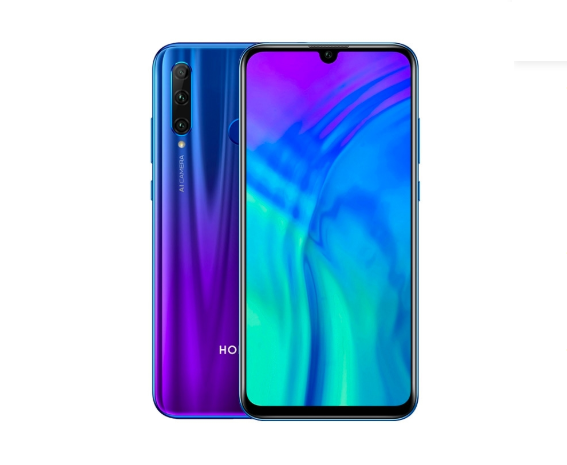
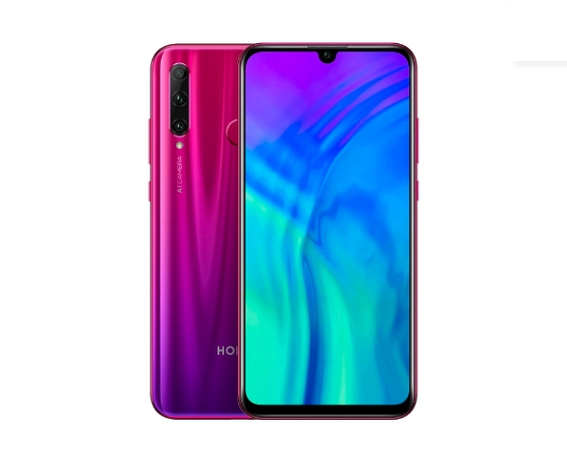
The Honor 20 Lite carries a nominal price tag of RM 949 (~$228). In the U.K, it costs GBP 249 (~$325). Its color variants include Phantom Red, Phantom Blue and Midnight Blue. The smartphone will be also coming to other markets such as Europe, Southeast Asia and India in the coming weeks. However, these markets may not receive all the color editions of the Honor 20 Lite.
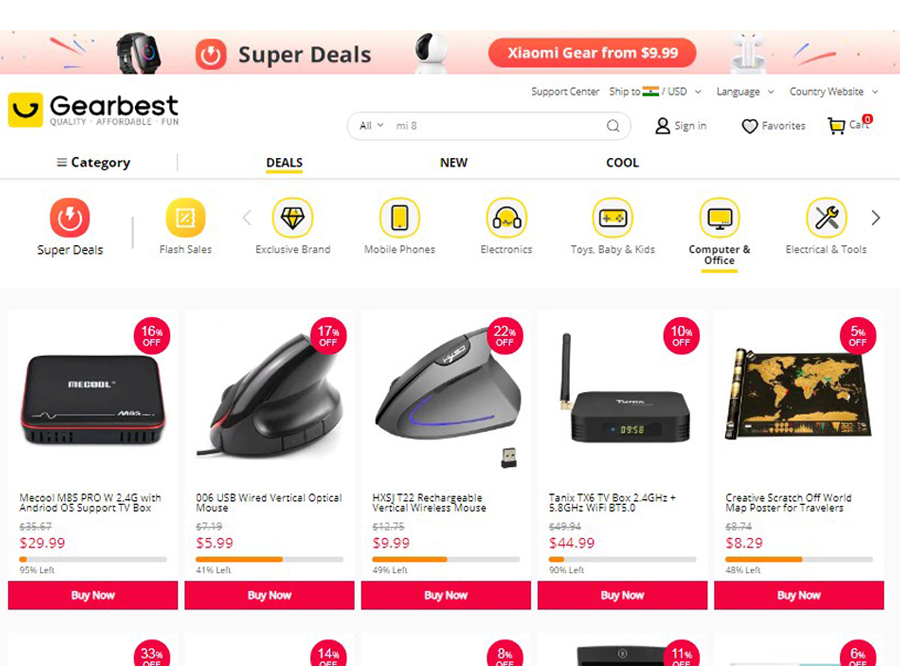
Touted as one of China’s best online stores for electronic items, Gearbest keeps offering amazing promotions, unmissable deals and other great discounts as a matter of usual practice. As part of its recently kicked-off flash sales, Gearbest is now giving its loyal users a chance to get their hands on a wide range of products at unbeatable prices. Dubbed as ‘Affordable Quality, Fun Shopping,’ the promotion page has been split into multiple categories including Mobile Phones, Electronics, Toys, Baby & Kids, etc.
The ‘Flash Sales’ section is cramped with all sorts of items that usually cost a bomb, but are currently available at lowered prices. For the sake of an instance, the Mens Fashion Sports Watch would normally set you back $5.19, but you can buy it for just $4.58, thanks to a 12 percent discount.
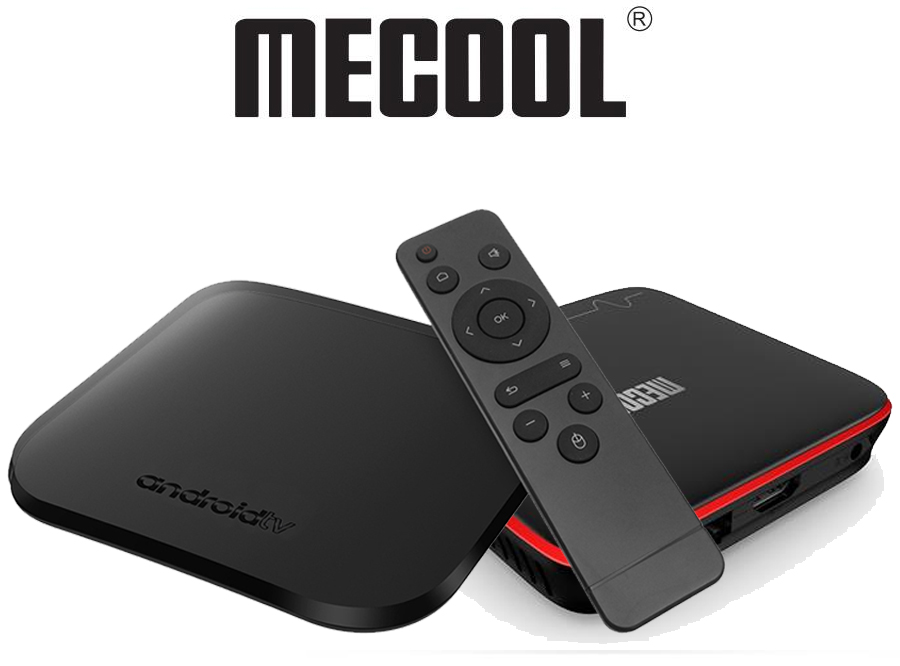
Likewise, you can grab a noteworthy 16 percent discount on the Mecool M8S PRO W TV box, which usually retails for $35.67. This 16 percent discount reduces the original asking price of the TV box to just $29.99.
If you’re a brand conscious buyer, you can head straight to the next section called ‘Exclusive Brand.’ The aforesaid category features well-received products from popular manufacturers such as Alfawise, Gocomma, and Utorch just to name a few.
More importantly, these top-branded items are currently up for grabs bearing heavily discounted price tags. For example, the Alfawise U20 Large Scale 2.8 inch Touch Screen DIY 3D Printer normally sells for $333.18 but is currently available for just $ 291.99. This is a noteworthy 12 percent drop in the device’s original selling price.
If you’ve restlessly been waiting for mobile phones prices to drop, now’s the time. A slew of top-end handsets that would normally burn a hole in your pocket is now available at lowered prices under the ‘Mobile Phones’ section.
Top-end electronic items like smart wrist bands, Bluetooth headsets, car DVR cameras, etc can now be yours for slashed prices under the ‘Electronics’ category. You can grab great discounts on toys for kids under the following section called ‘Toys, Baby & Kids.’
You can click here to visit the promotion page and check out the rest of the categories and take full advantage of the discounts before the promotion sale comes to an end.
We use cookies on our website to give you the most relevant experience by remembering your preferences and repeat visits. By clicking “Accept”, you consent to the use of ALL the cookies.
This website uses cookies to improve your experience while you navigate through the website. Out of these, the cookies that are categorized as necessary are stored on your browser as they are essential for the working of basic functionalities of the website. We also use third-party cookies that help us analyze and understand how you use this website. These cookies will be stored in your browser only with your consent. You also have the option to opt-out of these cookies. But opting out of some of these cookies may affect your browsing experience.
Necessary cookies are absolutely essential for the website to function properly. This category only includes cookies that ensures basic functionalities and security features of the website. These cookies do not store any personal information.
Any cookies that may not be particularly necessary for the website to function and is used specifically to collect user personal data via analytics, ads, other embedded contents are termed as non-necessary cookies. It is mandatory to procure user consent prior to running these cookies on your website.



 Not long after the launch conference, the Pixel 3a/3a XL kernel source code appeared on Google’s support library. One of the major things we can grab from the listing is that the display panels of the Pixel 3a and Pixel 3a XL are supplied by Samsung and Chinese firm Tianma. The source code for the Pixel 3a XL was specifically listed to be manufactured by both Samsung Display and Tianma while that of the Pixel 3a is manufactured by Samsung Display only.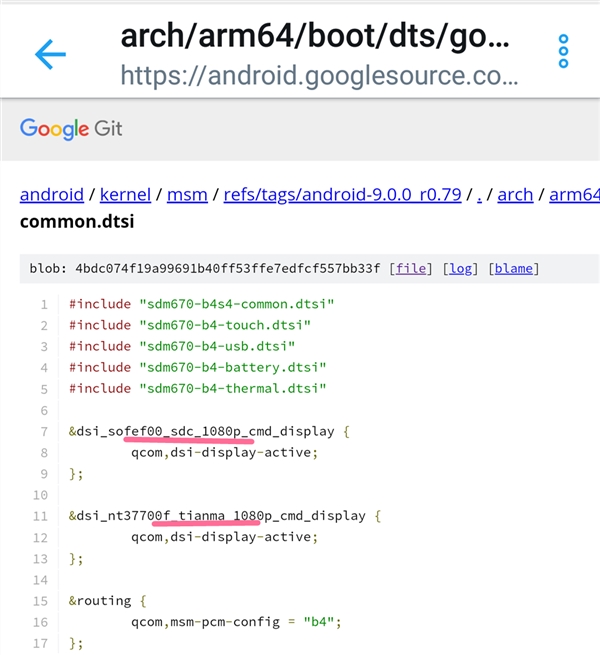



 Much to the delight of Ulefone fans located in European Union as well as Non-European Union regions, both versions of the Armor 6E are available bearing heavily discounted prices on Banggood. Aside from taking advantage of the discount, Banggood users stand a chance of winning a free gift as well.
 An absolute steal at this price, the Ulefone Armor 6E boasts an impressive array of features and top-end specs. Here’s a brief glimpse of the awe-inspiring features: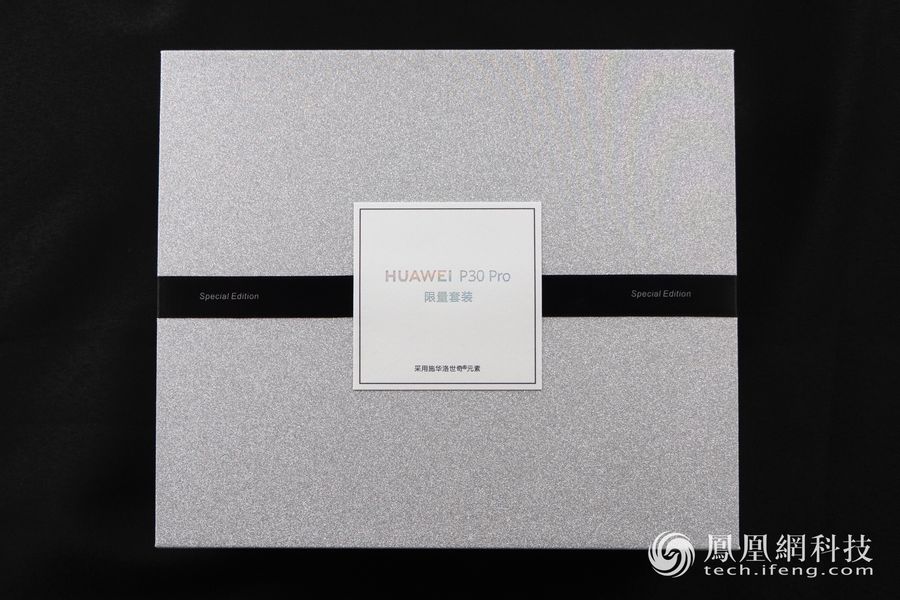
 As part of its recently kicked-off flash sales, Gearbest is now giving its loyal users a chance to get their hands on a wide range of products at unbeatable prices. Dubbed as ‘Affordable Quality, Fun Shopping,’ the promotion page has been split into multiple categories including Mobile Phones, Electronics, Toys, Baby & Kids, etc.