Honor appears to be preparing an interesting update to its Magic series with the upcoming Magic 9. The standard model is expected to combine a relatively compact display with specifications usually associated with larger flagship phones. New details have now surfaced that reveal more about what Honor could be planning.
According to tipster Digital Chat Station, the Honor Magic 9 standard version could feature a 6.36-inch flat OLED display and an 8,000mAh-class battery. The battery is said to be based on Honor’s third-generation Qinghai Lake silicon-carbon technology, potentially making it the largest battery in its segment.
The combination is particularly notable because compact flagship phones generally make compromises on battery capacity due to their smaller internal space. An 8,000mAh battery inside a phone with a 6.36-inch display would therefore give the Magic 9 a significant endurance advantage if the reported specifications materialize.
DCS claims the phone’s rear camera setup will include a pair of 200-megapixel cameras. The primary one will use a 1/1.4-inch sensor. The other 200-megapixel camera will be a periscope telephoto camera, which was previously said to feature a 64-megapixel sensor. As reported previously, the camera setup will also include a 50-megapixel ultra-wide lens.
Honor Magic 9 camera module
Other reported features include wireless charging and an ultrasonic fingerprint sensor. This standard edition is expected to feature the Snapdragon 8 Elite Gen 5 chip from last year, but the Pro models launching alongside it could arrive with the all-new Snapdragon 8 Elite Gen 6-series chipset. For the unversed, the Magic 9 series has already been confirmed to launch on Sept. 28.
Google’s September Android Drop is bringing a handful of new features designed to make everyday smartphone use a little more convenient. The latest additions cover misplaced belongings, motion sickness, accessibility, and messaging, giving users more ways to get things done without relying on separate apps.
The update includes five notable features across Gemini, Find Hub, Google Messages, and Android itself. Some are already rolling out, while others require newer Android versions or will arrive soon, so here’s a closer look at what Google is bringing to compatible devices.
4Google Keep moves into Messages
Google Messages is gaining Google Keep integration, allowing people to create and edit shared notes or lists directly within conversations. It can be useful for coordinating grocery lists, trips, or other plans without switching between apps. The rollout starts now.
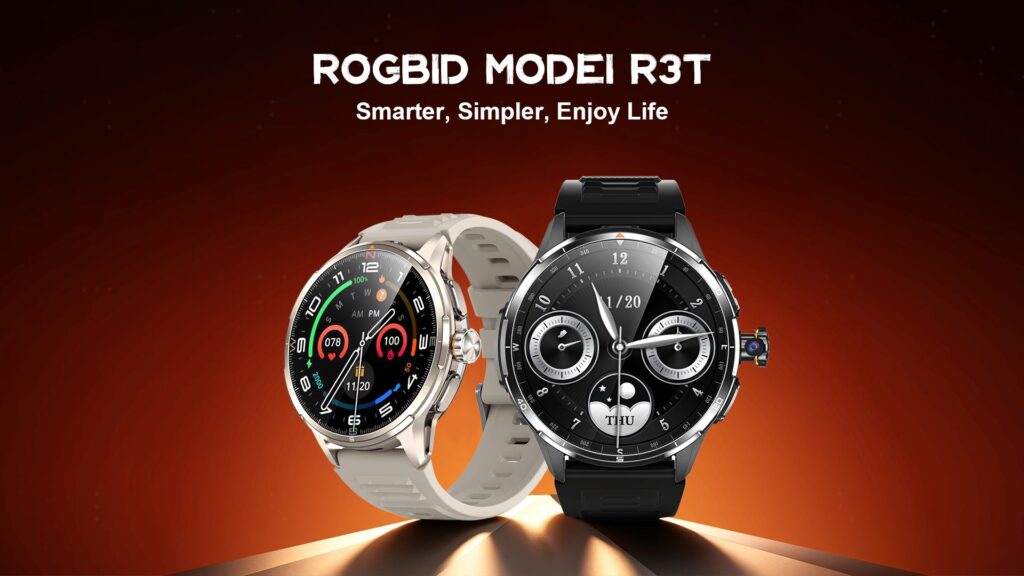
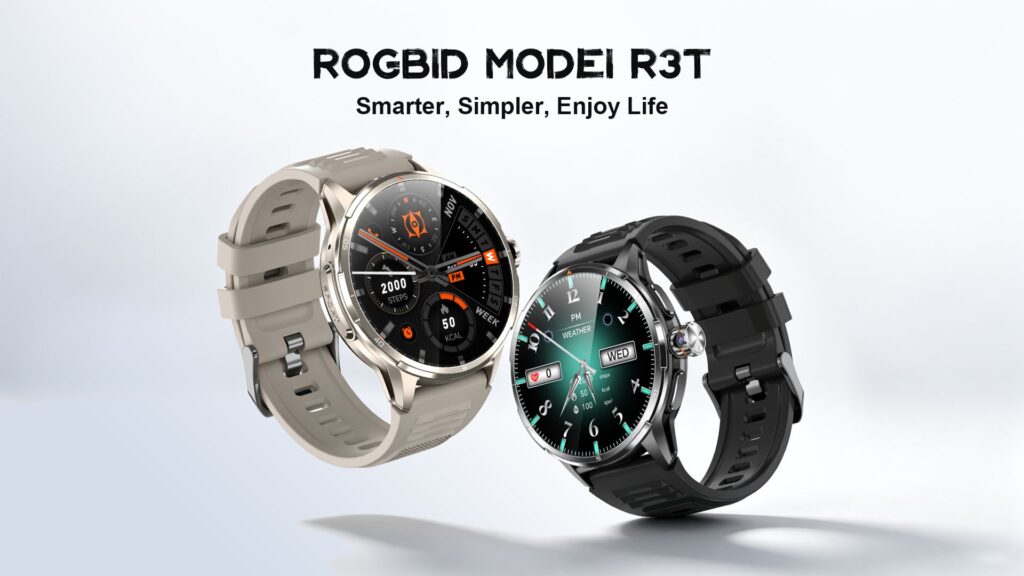
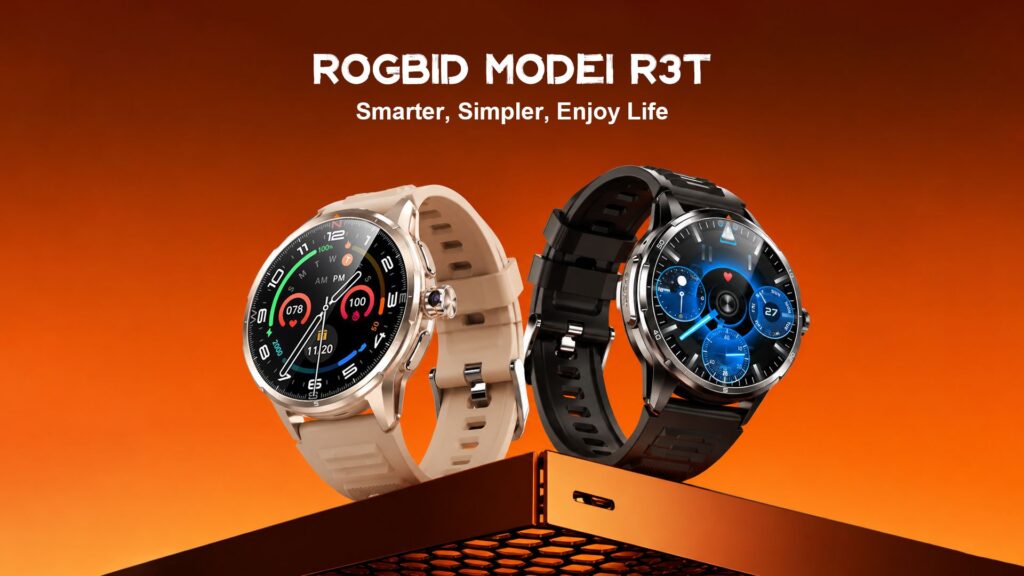
Rogbid has released its latest wearable, the Model R3T. Rather than acting as a standard smartphone accessory that simply mirrors your notifications, the R3T is built to operate entirely on its own. The device runs a full Android operating system and includes a SIM card slot for 4G LTE connectivity, allowing it to handle calls, texts, and mobile data without a phone nearby.
On the hardware side, the R3T features a circular 1.6-inch AMOLED display with a 480 x 480 resolution. The screen is covered by scratch-resistant Panda Glass, and the chassis is made from 316 stainless steel, giving it a heavier, more utilitarian build. It also carries an IP67 rating for basic water and dust resistance.
Internally, the watch runs on an SL8541E processor, backed by 3GB of RAM and 32GB of internal storage. Because it uses a standard Android OS instead of a lightweight wearable platform like Wear OS or RTOS, you can download regular mobile applications directly to the watch. This includes video and music streaming apps like Netflix and TikTok.
Running full apps and cellular data on a wrist-worn device requires a lot of power, so the company has included a sizable 1100mAh battery. To help manage battery life, the watch features a dual-mode system: you can run it in full Android mode for standalone use, or switch to a standard Bluetooth mode, which limits functionality but extends standby time up to 10 days.
The device also includes a few unconventional hardware features. The most noticeable is a mechanical pop-up camera hidden at the top of the casing. It rotates up to 190 degrees and can be used for video calls, facial recognition, or taking basic photos. Additionally, there is a built-in infrared (IR) blaster, which lets the watch function as a remote control for household appliances like TVs and air conditioners within a five-meter range.
For standard fitness tracking, the R3T includes multi-system GPS for outdoor navigation, along with sensors for continuous heart rate and blood oxygen (SpO2) monitoring. It does have an NFC chip, though it is strictly limited to passive access control, like unlocking compatible smart doors, and does not support contactless payments.
Pricing and Availability
The Rogbid Model R3T is available now through the company’s online store. It comes in two finishes, Midnight Black and Nova Gold, and is currently priced at $99.99 as part of a launch promotion.
In related news, Rogbid has recently launched the VisionW smart glasses with open-ear audio, interchangeable frames, and AI features, alongside the Breeze handheld fan with a metal unibody, cooling plate, and LED light.
For more daily updates, please visit our News Section.
The Infinix Hot 70 Pro 5G is set to make its debut in India on September 4, bringing several features that are unusual for its segment. The company has already revealed much of what buyers can expect from the upcoming smartphone. Here is everything known about the Hot 70 Pro ahead of its launch.
An eye-catching design with an unusual rear display
The Hot 70 Pro 5G will be available in Thermo Orange, Mirage Green, Silk Glow Purple, and Dive Blue finishes. Thermo Orange changes its appearance with temperature, while Mirage Green can glow under UV light.
The phone measures as little as 7.85mm thick and also introduces the Active Matrix Cube, an interactive rear display that can show calls, messages, charging information, weather, camera alerts, and countdowns. It can also display personalised patterns and emojis, while its lighting effects can sync with music and games.
The phone features a 6.76-inch FHD+ punch-hole display with a 144Hz refresh rate, 240Hz touch sampling rate, and up to 950 nits of HBM brightness. For photography, it has a flagship-grade 50-megapixel Sony IMX882 main camera, with Live Photo Mode and an AI Eraser feature for removing unwanted objects. An 8-megapixel front camera handles selfies and video calls.
The Hot 70 Pro also uses the MediaTek Dimensity 7100 5G chipset paired with UFS 2.2 storage. Infinix says supported games can run at up to 90fps. Its 6,000mAh battery supports 45W fast charging, with Infinix claiming around 25 minutes to reach 50% and approximately 63 minutes for a full charge. The phone also gets IP68 dust and water resistance, speaker self-cleaning technology, Android 16, three major OS updates, and five years of security patches.
The Infinix Hot 70 Pro will officially launch in India on September 4. The company is yet to confirm the final pricing, but it has indicated that the phone could be positioned below Rs 25,000 (~$265)
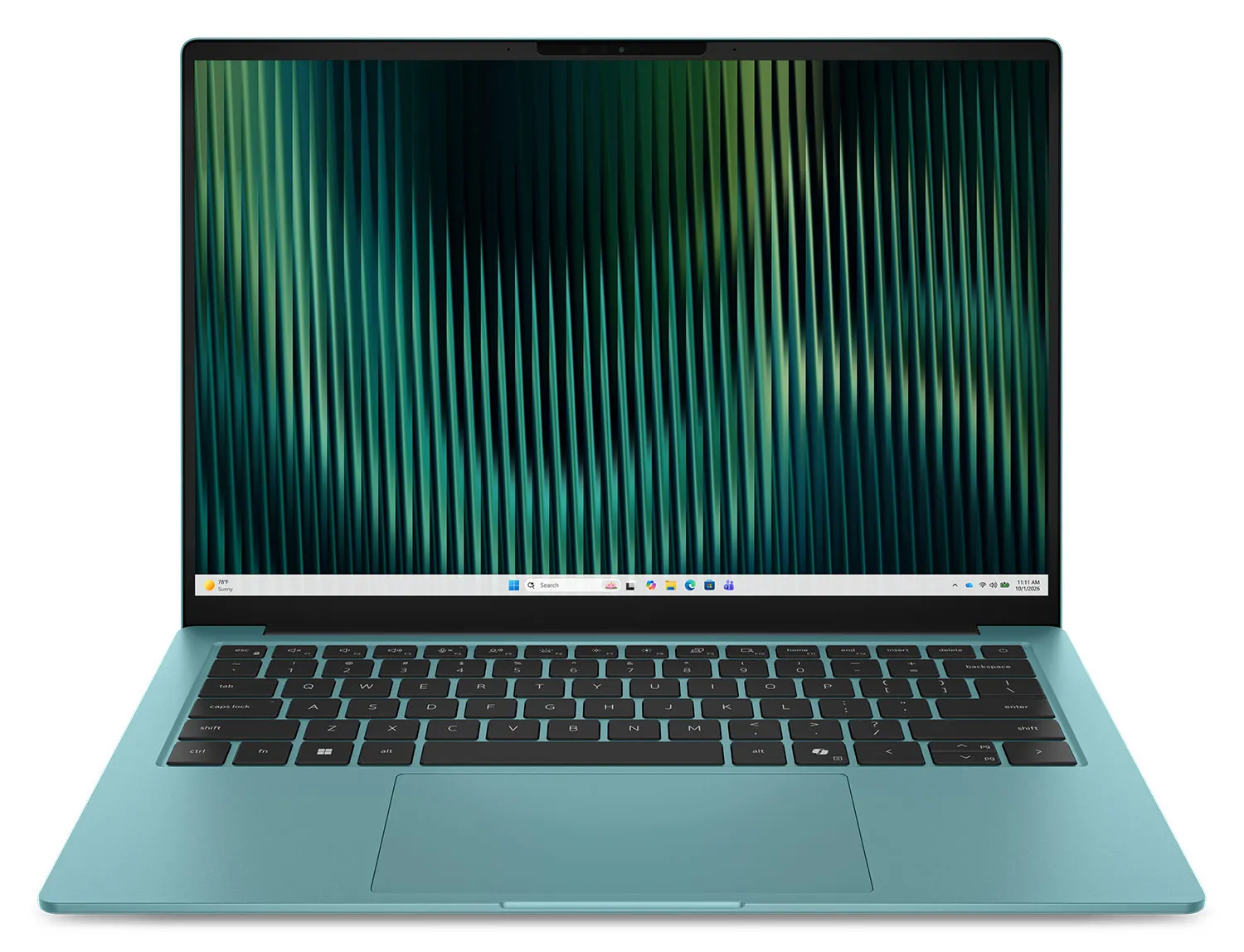
Dell’s new 14S is aimed at users who want a lightweight laptop without paying XPS-level prices. It brings a colorful aluminum design, a high-resolution display option, and a large battery to the mainstream segment. The new MacBook Neo killer from Dell is positioned as an affordable option for students and everyday users, although pricing remains under wraps for now.
Dell 14S: A lightweight laptop with a premium-looking design
Dell 14S
The Dell 14S weighs around 2.5 pounds and measures 13.5mm thick, making it easy to carry around for school, work, or travel. Its aluminum chassis comes in four finishes: Linen, Dusty Rose, Washed Denim, and Velvet Green. The laptop also has a 61.2Wh battery, with Dell claiming up to 21 hours of Netflix streaming and up to 27 hours of local video playback under specific testing conditions.
The display options are particularly interesting. The base model gets a 14-inch 1920×1200 panel with a 60Hz refresh rate and 300 nits of brightness. Buyers can step up to a 2880×1800 display with a 120Hz refresh rate, 450 nits of brightness, and full sRGB coverage. Both panels use a 16:10 aspect ratio, giving users more vertical space for documents, websites, and other everyday tasks.
Dell 14S – Washed DenimDell 14S – Velvet Green
For performance, the Dell 14S comes with Intel Core 5 Series 3 or Core 7 Series 3 processors with integrated graphics. Storage configurations range from 256GB to 1TB of PCIe NVMe SSD storage, while memory options include 8GB and 16GB of LPDDR5x RAM. The memory is onboard, so it cannot be upgraded later, making the 16GB version the more sensible choice for long-term use.
Connectivity includes two USB-C ports with Power Delivery, HDMI, a 3.5mm headphone jack, and Wi-Fi 6E. There is no USB-A port. The laptop also includes a 1080p webcam, dual far-field microphones, stereo speakers, and Windows Hello support for biometric sign-in.
Pricing and availability
Dell says the 14S will arrive in North America this fall, with pricing to be announced closer to launch. The company has not yet revealed the complete configuration lineup either, so the final value proposition will depend heavily on how much the higher-resolution model costs.
Several upcoming Vivo and iQOO smartphones have surfaced in the GSMA IMEI database, hinting that the companies are preparing more devices for different markets. The listings reveal model numbers for four Vivo phones and two iQOO models. While most specifications remain unknown, some details about the iQOO 16R have already surfaced.
Vivo X500 FE, Y32 5G and T6 Lite 5G spotted
Vivo is preparing the X500 series for China later this month, with the X500, X500 Pro, and X500 Pro Max expected to debut alongside the lineup. Global versions of these models are also in development, and the X500e, X500, X500 Pro, and X500 Pro Max have previously appeared in the IMEI database with model numbers V2632, V2619, V2621, and V2610, respectively.
The Vivo X500 FE has now joined the list with model numbers V2653 and V2654, likely representing different markets. The V2653 has also appeared in Europe’s EEC database. At present, there is no information about the X500 FE’s specifications. The X500, X500 Pro, and X500 Pro Max global variants are expected to retain the specifications of their Chinese counterparts, although this has not been confirmed.
The same database has also revealed the Vivo Y32 5G with model number V2639 and the Vivo T6 Lite 5G with model number V2647. No specifications or launch details have surfaced for either smartphone so far.
iQOO 16R and Z12 Lite also in development
iQOO is also preparing new models, with the iQOO Z12 Lite and iQOO16R appearing in the GSMA IMEI database under model numbers I2603 and I2606. The Z12 Lite had previously received EEC certification in July, while the 16R has now been spotted for the first time.
The iQOO 16R could be based on the China-bound iQOO 16T, just as the iQOO 15T was a tweaked version of the China-bound iQOO 15T. It is reportedly being tested with a 2K Samsung OLED display and a Snapdragon 8 Elite Gen 6 series chipset. The phone could also feature a 200-megapixel main camera and a 50-megapixel ultra-wide lens, while skipping a periscope camera. A built-in fan and liquid cooling system are also expected, though these specifications remain unconfirmed.
Oppo Find X10 series is all set to launch in China in September, with the lineup reportedly including the Find X10E, Find X10, and Find X10 Pro Max. Ahead of the launch, new leaked renders have surfaced online, offering an early look at the Pro Max. The images also give us a better idea of how Oppo could differentiate its top-end model.
Oppo Find X10 Pro Max leaked images reveal renewed design
Oppo Find X10 Pro Max leaked images
Chinese tipster Dingjiao Shuma has shared renders of the Oppo Find X10 Pro Max, showing a large horizontal camera island across the upper portion of the rear panel. A square camera module sits within the larger rectangular section, housing three large camera lenses, while a separate sensor and circular LED flash unit are positioned alongside it. The renders also show a new white finish with Hasselblad branding, alongside a blue variant with a cleaner appearance.
According to the tipster, the three cameras inside the square module could all use 200-megapixel sensors for the main, ultra-wide, and periscope telephoto cameras.
Oppo Find X10 Pro Max specifications (rumored)
Earlier leaks suggest the Find X10 Pro Max could feature a 6.78-inch LTPO OLED display with 2K resolution and a 144Hz refresh rate. The phone is also expected to use MediaTek’s upcoming 2nm Dimensity 9600 Pro chipset, run ColorOS 17 based on Android 17, and include a 50-megapixel autofocus selfie camera.
The triple rear camera system could consist of three 200-megapixel sensors, with the main camera reportedly using Samsung’s 1/1.3-inch ISOCELL HPC sensor, while a 3-megapixel multispectral sensor could assist with color accuracy.
Oppo has not officially confirmed the device or these details, so the renders and reported specifications should be viewed with a pinch of salt until more concrete information emerges.
HyperOS 4 will be a substantial upgrade for Xiaomi devices, offering a major visual upgrade, performance boost, and intelligent AI features. The beta program has been live for over a dozen phones in China, and the stable release should go live soon. Unfortunately, the list of eligible Xiaomi models may be smaller than we expected, as the company may skip the HyperOS 4 rollout to Android 16 devices.
Folks at Ximitime have found that, of the 112 devices expected to receive Android 17, 108 have entered HyperOS 4’s internal testing phases. Surprisingly, there’s not even a single Android 16 device on the list, which indicates Xiaomi isn’t preparing a HyperOS 4 build for an older OS.
Historically, Xiaomi has offered its latest HyperOS skin to a handful of devices stuck on an older OS. The last major upgrade, HyperOS 3, was also released to many Xiaomi devices running Android 15, although with a limited set of upgrades. That’s been true with most of the recent major HyperOS releases, and so, HyperOS 4 was also expected to follow the same pattern, but Xiaomi may have different plans.
Xiaomi may be rethinking its software rollout strategy
Unlike other brands, Xiaomi has long offered the latest HyperOS software to its devices running older Android OS versions. But things appear to be changing now. The latest information suggests that the brand will ship HyperOS 4 with Android 17 only, and that this trend may continue going further.
While there’s no official confirmation on this, this shouldn’t come as much of a surprise, considering recent efforts by other Chinese brands to reduce R&D costs. Xiaomi may also be looking to reduce costs and time, so this move makes sense for the brand.
Xiaomi is updating its night light lineup with the new Mijia Night Light 4. It follows the Mijia Night Light 3 from 2024, which has dual sensing and up to eight months of battery life. The new model keeps the long battery life but upgrades the motion detection system with a more precise radar sensor.
The Mijia Night Light 4 is now available for pre-order as a single pack, with crowdfunding set to begin on September 9. It will have a regular price of 79 yuan (around $12), while the crowdfunding price will be 59 yuan (around $9).
Xiaomi Mijia Night Light 4 uses 24GHz radar for better detection
The main upgrade is the new 24GHz radar sensor. It has a 120-degree wide-angle detection range and can detect small movements from up to 3 meters in front and 2.5 meters from the sides.
The light can automatically turn on when you enter a dark room and switches off 10 seconds after you leave. Xiaomi uses a similar 24GHz radar system in the Mijia Smart Bathroom Heater P1 to detect whether someone is in the room.
For lighting, the Night Light 4 uses a backlit design that reflects light off the wall rather than shining it directly toward you. It offers four brightness levels: 1lm, 3lm, 5lm, and 15lm. The lower settings work well for hallways and bedrooms, while the brighter modes can be useful in places such as bathrooms and closets.
Xiaomi says the light is flicker-free and meets RG0 standards for blue-light safety. It also uses a warm light tone designed to be comfortable in dark rooms.
The night light has an 800mAh lithium battery. Xiaomi claims it can last up to eight months on a single charge when using its low-power settings. At the highest brightness level, battery life drops to around three months. Charging is handled via a USB Type-C port.
Xiaomi has set September 7 for its autumn flagship event, where it will officially unveil the Xiaomi 18 Fold. The company has now shared a first look at the foldable after several leaked photos surfaced last week. Xiaomi is also giving its design a name: “mid-fold.”
The company’s video confirms that the Xiaomi 18 Fold will have a 5.38-inch cover display and a 7.58-inch main display. Xiaomi showed the phone in red, with a horizontal camera strip on the back that houses three cameras and an LED flash.
The company has also shared a look at the phone’s internal design on its website and confirmed that Leica was involved in developing the camera system.
Lu Weibing, who heads Xiaomi’s smartphone business, says the 18 Fold is more than just another foldable. He describes it as the most advanced flagship in Xiaomi’s lineup, designed to compete with the company’s regular numbered flagships. He also believes the mid-fold design could become a common direction for future foldable phones.
Xiaomi’s idea behind the mid-fold design
Xiaomi says its mid-fold design addresses a problem that has existed since large-screen foldables first appeared. Large foldables offer a big display when opened, but users often spend most of their time on the smaller outer screen. Smaller foldables are easier to carry, but usually make more compromises on the overall experience.
The Xiaomi 18 Fold is designed to sit just between them. When folded, Xiaomi says it is roughly the size of a passport and light enough to use with one hand. Open it up, and the 7.58-inch display uses a new aspect ratio designed for multitasking and watching videos.
Inside, the phone will run on Xiaomi’s Xring O3 chip, which recently appeared on Geekbench ahead of the launch. It will also ship with Surge OS 4 and Xiaomi’s MiMo on-device AI model.
Xiaomi has also introduced a new “dragon bone” hinge and a new simulation-based testing system for the foldable. The company previously confirmed that the 18 Fold will be one of the first phones to use CXMT’s new LPDDR6 memory.
The Xiaomi 18 Fold will launch alongside the Xiaomi N70 Pro, N70 Max, N90 Max, and the Xiaomi Pad 9 Pro Max at the September 7 event. The tablet also uses the Xring O3 chip.
Buying a new Smart TV today can get a lot more confusing. While there are more Smart TVs to choose from than ever, finding the right one isn’t easy. Because a 55-inch TV can cost considerably more than another 55-inch model despite having the same 4K resolution, simply because of differences in panel technology, processing, brightness, and features.
That said, to help you make your TV purchase easier, we have curated some of the best TV options you can buy across budgets and screen sizes. But before jumping into the models, there are a couple of things you need to considering before choosing a Smart TV in 2026.
The first thing to consider when buying a new TV is screen size. A 32-inch TV is a good fit for bedrooms and smaller spaces, while 43-inch and 55-inch models work well in most living rooms. If you have a large room and sit farther away from the TV, a 65-inch or 75-inch model can give you a much more immersive viewing experience.
Next, look at the display technology. Basic LED TVs are affordable and work well for everyday viewing, while QLED TVs use quantum dots to deliver richer colours and higher brightness. Mini LED TVs take things a step further with much finer backlight control, resulting in better contrast and HDR performance.
Then comes the resolution. Full HD is still fine on smaller 32-inch and 43-inch TVs, but 4K is the better choice for larger screens. It gives you sharper images and is now common across the mid-range and premium segments.
Finally, check the smart TV platform and connectivity. Google TV offers a familiar interface with access to a wide range of apps, while Samsung’s Tizen and LG’s webOS offer their own ecosystems. If you plan to connect a gaming console, look for HDMI 2.1, VRR and a high refresh rate. For movies and shows, Dolby Vision, HDR10+, and Dolby Atmos can make a bigger difference to the experience.
If you are tight on budget but still want something to fill your entertainment void, the Xiaomi F Series TV is a good option. It features an HD Ready 1366 x 768 display with a 60Hz refresh rate and Xiaomi’s Vivid Picture Engine 2 for basic picture enhancement. The TV runs on Fire TV, which gives you access to popular streaming apps, Alexa voice controls, and a familiar interface. It gets a 20W speakers support Dolby Audio, DTS-HD, and DTS Virtual, so the built-in audio should be enough for casual viewing.
If you can spend more, you can get a 32-inch QLED TV from TCL. This one comes with a Full HD resolution and has HDR support. It runs Google TV, features Dolby Atmos for rich audio, and supports voice controls. You also get added features like AI Clarity and OTT app support.
Going up the budget, you can get a 43-inch Samsung Smart LED TV that supports HDR and Hyper Real picture engine that offers accurate colours. This one runs on Samsung’s Tizen OS, which gives you access to popular streaming services along with Samsung TV Plus and smart features. Its gets a 20W two-channel speaker system, Bluetooth support, and Q-Symphony compatibility.
The Lumio Vision 7 comes with a 43-inch display, but unlike the Samsung TV, this one is a QLED panel, with a crisp 4K resolution. It supports 93% DCI-P3 coverage, along with Dolby Vision, HDR10 and HLG support. The TV also features MEMC, ALLM and 4K AI upscaling. It comes 3GB RAM and 64GB storage, which means you get give plenty of room for apps and content. Itt runs Google TV and packs 24W quad-driver speaker system.
If you want a 55-inch TV that can handle everything from daily soaps and sports to movies and streaming, the LG NANO 4K is a great option. It gets a NanoCell display delivers punchier colours than a regular LED TV. It is powered by the α7 Processor Gen9 that helps clean up and sharpen lower-resolution content. It runs webOS 26, and features Google Cast, AirPlay, and LG Channels making it easy to access content from different devices. It also has ALLM, VRR, and Game Optimiser.
If you want a TV that does a bit of everything, Samsung’s 55-inch Mini LED TV is a strong pick. Its Mini LED panel offers better contrast and brightness control than a regular LED TV, while the 120Hz refresh rate keeps sports, movies and games looking smooth. You also get HDR10+, Filmmaker Mode and 4K AI upscaling, along with VRR and ALLM for gaming. The 30W speakers with Q-Symphony and Object Tracking Sound Lite are a nice bonus if you don’t want to add a soundbar right away.
Sony’s BRAVIA lineup has some pretty TVs, and the BRAVIA 2 II is a great 50-inch TV to consider. Its supports 4K LED panel that benefits from Sony’s image processing, which does a good job of making low resolution content look cleaner and crisper. It runs Google TV, supports OTT apps, and comes with a dedicated HDMI eARC port for a better audio experience.
If you want a big-screen TV that can also keep up with gaming, the Xiaomi TV X Pro 75-inch is a great pick. Its gets a 4K QLED panel for movies and sports and a 120Hz DLG mode that makes gameplay smoother than a standard 60Hz TV. You also get Dolby Vision, HDR10+, and Filmmaker Mode, along with Google TV OS and 34W speakers. It is a good choice if you have the space for a 75-inch screen and want a more immersive gaming setup.
The Xiaomi F Series 32-inch TV is the best budget Smart TV you can buy right now. It comes with an HD display, Fire TV, Alexa, 20W speakers, and OTT app support, all at an affordable price.
What’s the best Smart TV overall in 2026?
The Samsung 55-inch Mini LED TV is our best overall Smart TV pick. Its Mini LED display, 120Hz refresh rate support, HDR10+, VRR, ALLM, and Tizen platform make it versatile enough for movies, sports, gaming and everyday TV viewing.
What’s the best premium-value Smart TV?
The Lumio Vision 9 is a strong premium-value option, particularly if gaming is important, as it gets a QD-Mini LED panel, 144Hz refresh rate, VRR, and Dolby Vision support.
What’s the best premium Smart TV in 2026?
The Xiaomi TV X Pro is our pick for the best premium Smart TV, as it features a large 75-inch 4K QLED display, a 120Hz refresh rate, Dolby Vision, HDR10+, and 34W speakers that deliver room-filling sound.
These are some of the best Smart TVs you can buy for under a lakh. Which of these TVs is your pick? Let us know in the comments below.
Vivo recently unveiled the Vivo V80 Lite 5G in some markets like Pakistan and Bangladesh. This phone is nothing but a rebranded version of the Vivo S2, which is available in India. The brand is also gearing up to unveil a new version of the Vivo V80 Lite 5G for Malaysia and probably for other markets. Ahead of the Sept. 3 Malaysian launch, the device is listed for pre-orders. The listing has confirmed the RAM, storage, and color variants of the device.
Vivo V80 Lite 5G’s configurations, color options revealed
As can be seen above, the Vivo V80 Lite 5G will be available in three variants, such as 6GB+128GB, 6GB+256GB, and 8GB+256GB. It will arrive in three colors, such as Pink, Green, and Black.
The Vivo V80 Lite 5G’s Malaysian variant has the model number V2626, and this device has already been spotted with the Dimensity 7300e chip and Android 16 on Geekbench. It has also appeared on TUV certification, which revealed that it may support 44W fast charging.
It goes without saying that the V80 Lite’s major highlight is that it will pack a massive 10,000mAh battery. Unfortunately, the rest of the specs are under wraps.
The wait for Xiaomi’s next major flagship products is almost over. The company has confirmed the launch date for the Xiaomi 18 Fold and Xiaomi Pad 9 Pro Max. Both devices will arrive with Xiaomi’s latest Xring O3 AI flagship processor.
Xiaomi 18 Fold and Pad 9 Pro Max launch date confirmed
Xiaomi confirms Sept.7 launch event
Xiaomi has scheduled its autumn flagship product launch event for Sept 7 at 7pm local time in China. Alongside the two devices, the company will also launch its N70 Pro, N70 Max and N90 Max electric vehicles under the Xiaomi Pengcheng brand.
The Xiaomi 18 Fold will be the company’s first inward-folding foldable with a wide aspect ratio. It will also be the first smartphone to feature the Xring O3 processor. The foldable will pair Xiaomi’s in-house SoC with ChangXin Memory Technologies’ LPDDR6 memory, creating a combination of two Chinese-developed core components.
Xring O3 is built on a 3nm process and features a 10-core all-large-core CPU configuration with six super-large cores and four large cores. The processor reaches a maximum clock speed of 4.35GHz and features a 16-core G2-Ultra NX GPU. Xiaomi says the GPU delivers an 85% improvement in graphics performance while reducing power consumption by 64% compared with its predecessor.
The Xiaomi Pad 9 Pro Max will also use the Xring O3 and has already appeared on Geekbench under model number M367FC. The tablet recorded 3,710 points in the single-core test and 14,319 points in the multi-core test.
The tablet is expected to feature a battery exceeding 10,000mAh alongside 120W wired charging. Its large display and flagship processor are aimed at demanding workloads such as video editing, drawing and multitasking.
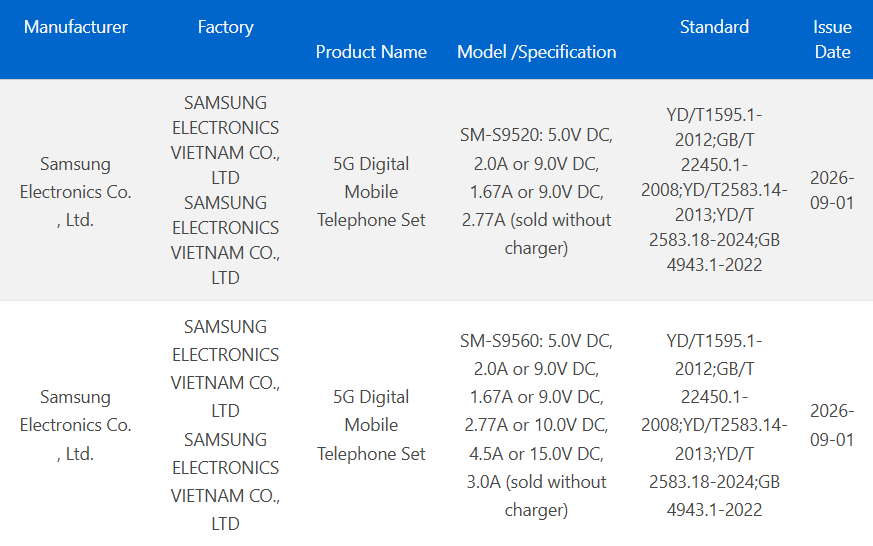
The Galaxy S27 series is beginning to appear on certification platforms ahead of its expected debut. Samsung’s upcoming flagship lineup has now made an appearance in China’s 3C certification database. The listing offers an early look at the charging capabilities of two models while also providing an indication of when the new phones could arrive.
The Galaxy S27 has appeared with the model number SM-S9520, while the Galaxy S27 Plus carries the model number SM-S9560. The 3C certification lists charging support of up to 27W for the Galaxy S27 and 45W for the Galaxy S27 Plus. Both smartphones are also listed without a charger in the box.
The charging specifications continue Samsung’s established approach for its flagship S series. The standard Galaxy S lineup has retained 25W charging since the Galaxy S20, which debuted in 2020, making the Galaxy S27 the seventh consecutive generation to follow this charging setup.
Meanwhile, the S+ models moved to 45W charging with the Galaxy S22+ in 2022, putting the Galaxy S27+ on track to continue the same 45W configuration for the fifth consecutive year.
Early launch expected
The timing of the approval is particularly interesting. The Galaxy S26 series appeared in China’s 3C database in January 2026 before becoming official in March. The Galaxy S25 series, meanwhile, received its 3C approval in September 2024 and launched in January 2025.
With the Galaxy S27 and S27 Plus already clearing 3C certification in September 2026, Samsung could potentially move the launch forward compared with the Galaxy S26 lineup. A January 2027 unveiling therefore looks possible, although Samsung has yet to confirm any launch plans.
Rumors suggest that the S27 lineup will also introduce a new model called the Galaxy S27 Pro. The device is expected to sit between the S27+ and S27 Ultra in Samsung’s lineup. With the standard and Plus models already certified by 3C, it may not be long before the Pro and Ultra variants receive their own certification.
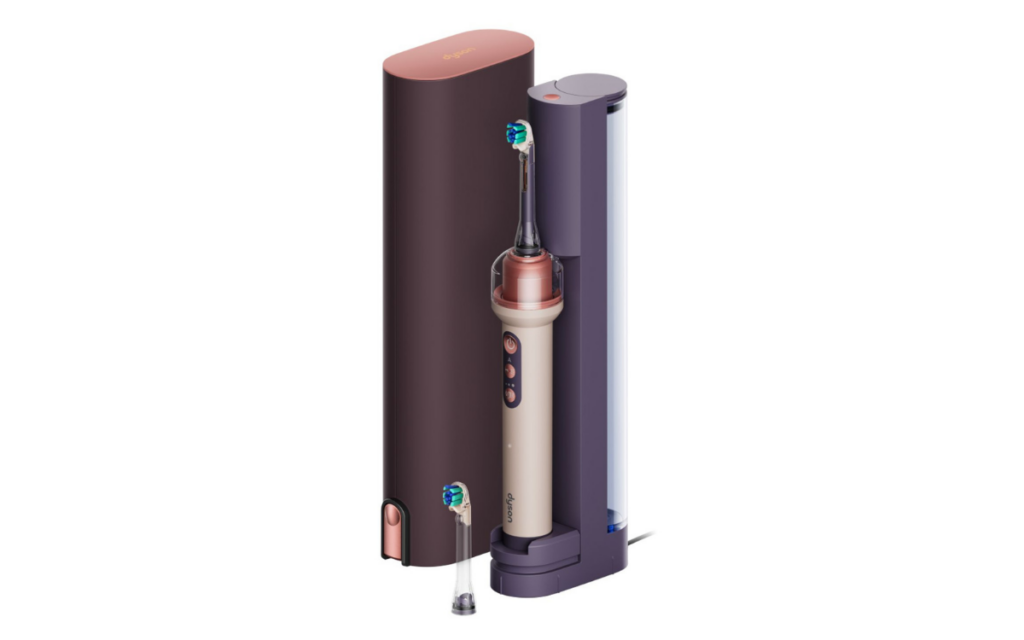
Dyson just released a $500 electric toothbrush that has a camera inside it. It’s called the Dyson CameraJet, and the main idea is that it automatically water-flosses your teeth while you brush them.
Dyson CameraJet Specifications
To make that happen, Dyson put a tiny macro camera and a strobe light inside the toothbrush handle. While you’re brushing, the camera takes 28 pictures a second. The onboard software analyzes these images in real time to find the exact gaps between your teeth.
Once it spots a gap, a small pump fires a quick, pressurized burst of liquid, about 0.15ml, into that space in a tenth of a second. The liquid comes from a small 0.67-ounce tank built into the handle. Dyson designed the tank with an expanding diaphragm so it doesn’t get air bubbles, meaning the water jet works no matter what angle you hold the brush at. If you don’t want to do both at the same time, you can set it to just brush or just floss.
As a regular toothbrush, it uses a standard sonic motor that vibrates 245 times a second. Dyson says it’s built so the bristles won’t stall or stop moving if you press too hard against your teeth. The brush heads have RFID chips in them, which allows the handle to track how long you’ve used them and send an alert to your phone when it’s time to buy a replacement.
Because there is a camera, it connects to a smartphone app over Wi-Fi. The app tracks your brushing habits and warns you if you’re using the wrong technique, but you can also use it to pull up a live video feed of the inside of your mouth to see what the brush sees.
The toothbrush is fully waterproof and has a replaceable battery that lasts about 10 days per charge. Because it uses liquid, it comes with a fairly large base station. The dock is about a foot tall and holds nearly seven ounces of water, and it automatically refills the toothbrush’s internal tank whenever you set it down to charge.
The CameraJet is available now in Ceramic Pink and Ceramic Ultra Blue colorways for $499.99.
In related news, Dyson has recently launched a new air-purifying fan with a camera that tracks users around the room, along with the Supersonic Travel Hair Dryer featuring a compact design and portable form factor.
For more daily updates, please visit our News Section.
It’s been quite a few years since smartphone brands like Apple, Samsung, and Google stopped including a power adapter in the box, arguing that you probably already have one. Nothing has followed the same strategy since the beginning. Meanwhile, battery capacities and charging speeds have continued to rise. The iPhone 12, which marked Apple’s first move away from including a charging adapter in the box, supported 20W wired charging. The iPhone 17 can now charge at up to 40W.
Fortunately, all of the smartphone brands mentioned above use the open USB Power Delivery standard rather than proprietary charging protocols. That gives you the freedom to choose a charger that best suits your needs, whether you want one that can charge your phone and accessories simultaneously, or one powerful enough to charge both your phone and laptop. Here are some of the best options to consider in 2026.
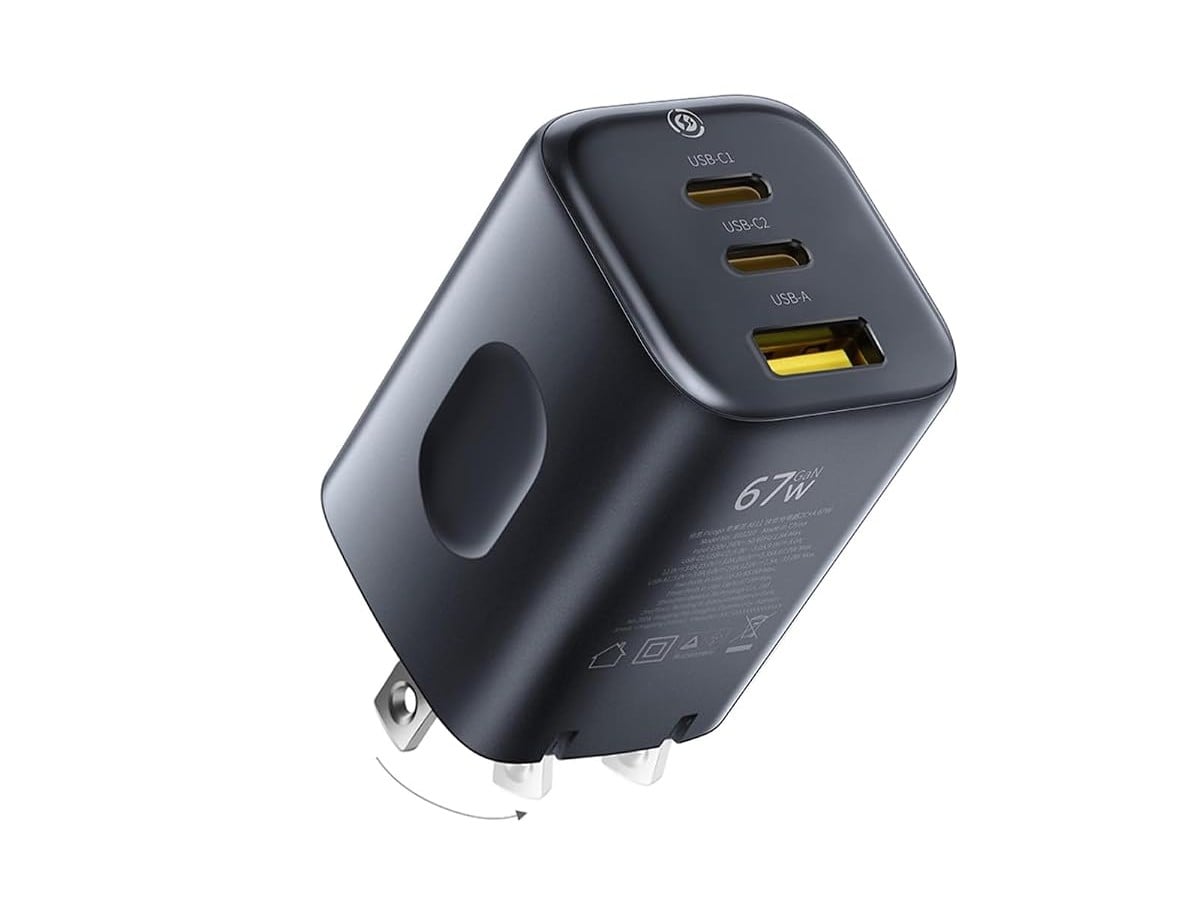
This is one of the safest everyday picks. It has two USB-C ports and one USB-A, delivers a full 67W on a single USB-C when used alone, and still pushes useful power when you plug in a phone and an accessory at the same time. PPS support is strong, so Galaxy phones hit their proper fast-charging speeds. It’s compact, runs relatively cool, and the foldable plug makes it travel-friendly. It’s listed for $49.99 on the company’s global website.
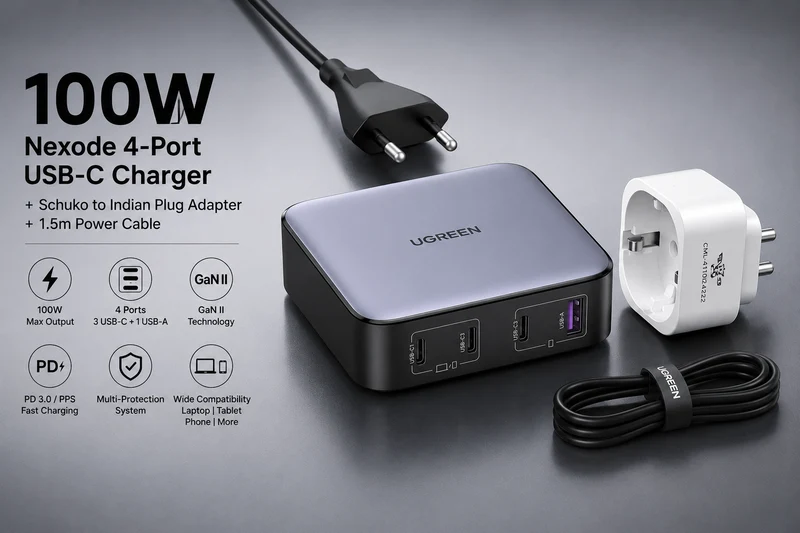
Ugreen’s Nexode chargers are the value kings right now. The 65W three-port version (2C + 1A) is small, has solid PPS, and handles a phone + tablet or light laptop just fine. Step up to the 100W models (some with three or four ports) and you get full-speed laptop charging plus room for a phone and accessories at the same time. Power distribution is smart, heat is well managed, and they’re consistently cheaper than the premium brands for very similar performance. The 65W version is priced at £39.99 or Rs. 4,199 on regional websites.
3. Baseus PicoGo 67W (3-port)
If you want something pocketable that still does multi-device work, the PicoGo 67W 3-port is worth a look. Two USB-C ports + one USB-A, 67W max on a single port, and it supports PD + PPS so both iPhones and Samsungs charge at full speed. It’s noticeably smaller than most 65W+ chargers, has a foldable plug, and the power split when multiple devices are connected is sensible (laptop still gets priority while a phone tops up alongside).
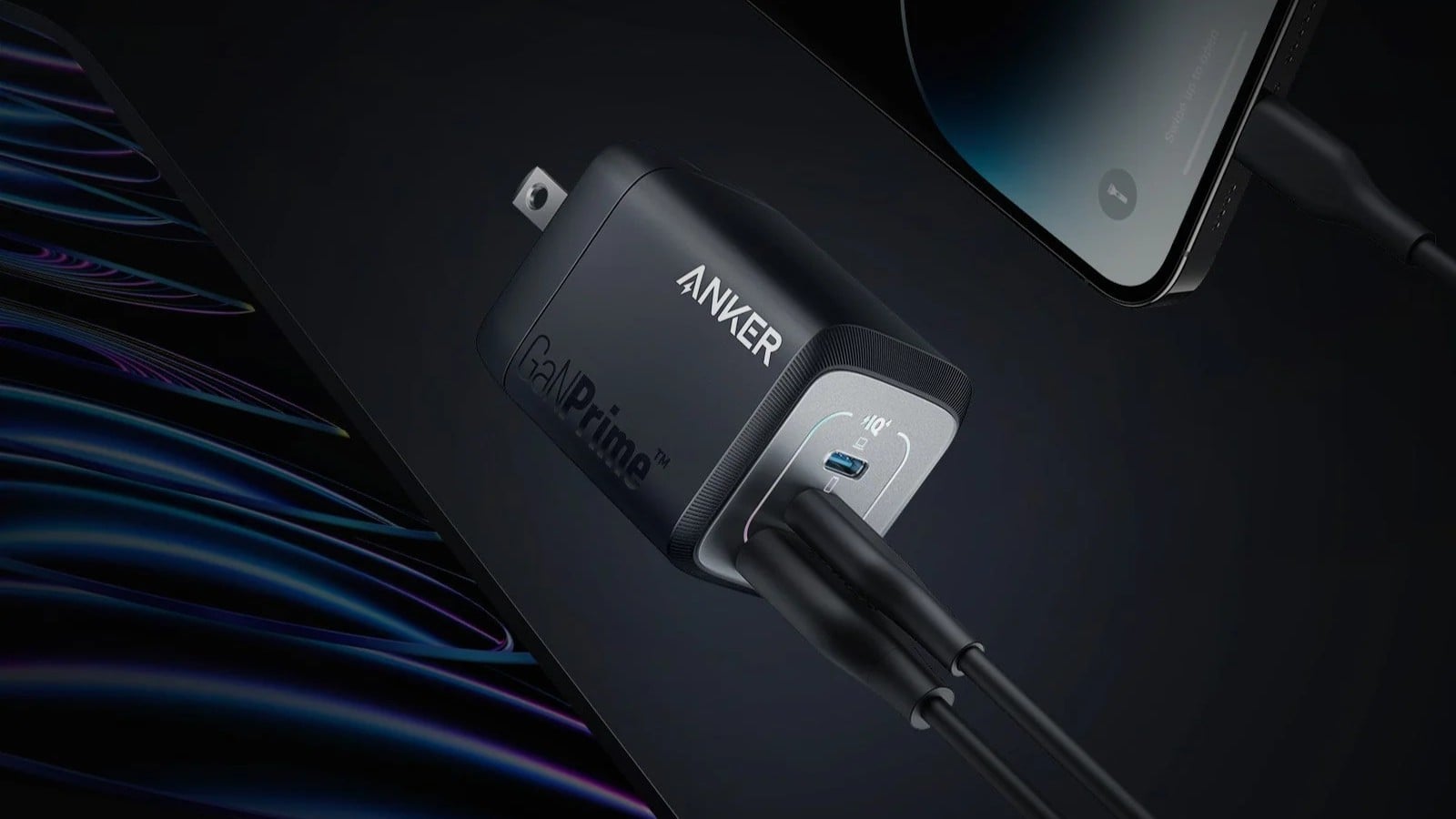
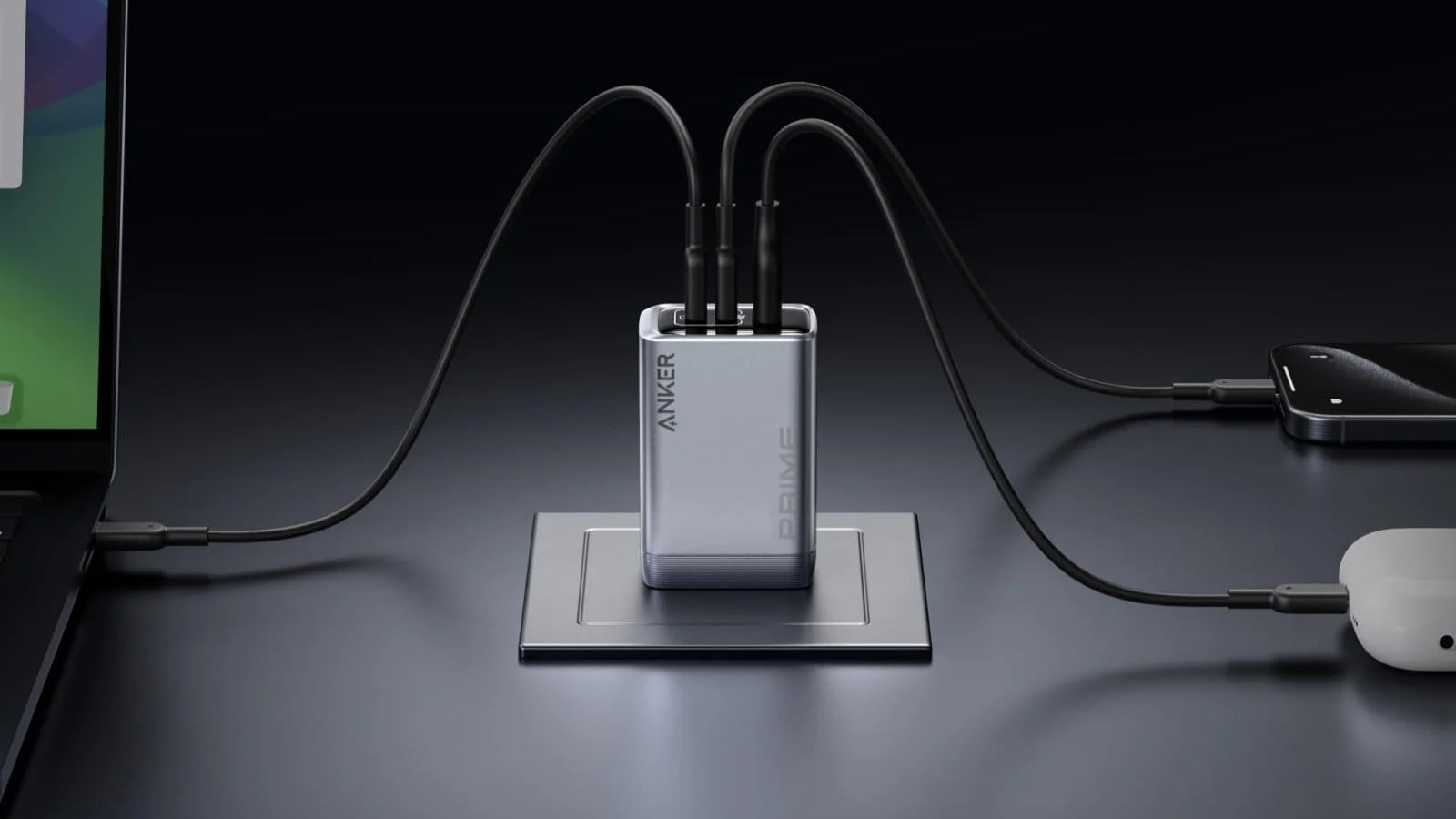
When you regularly charge a laptop and a phone together, this Anker Prime 100W (3-port) is the cleaner step-up. Single-port output hits the full 100W, so 13–14-inch MacBooks and Windows ultrabooks charge at full speed. Plug in a second device and it still allocates power intelligently. Same reliable Anker build, ActiveShield temperature monitoring, and proper PPS support for Android phones.
5. Cuktech 10 Ultra 110W (4-port)
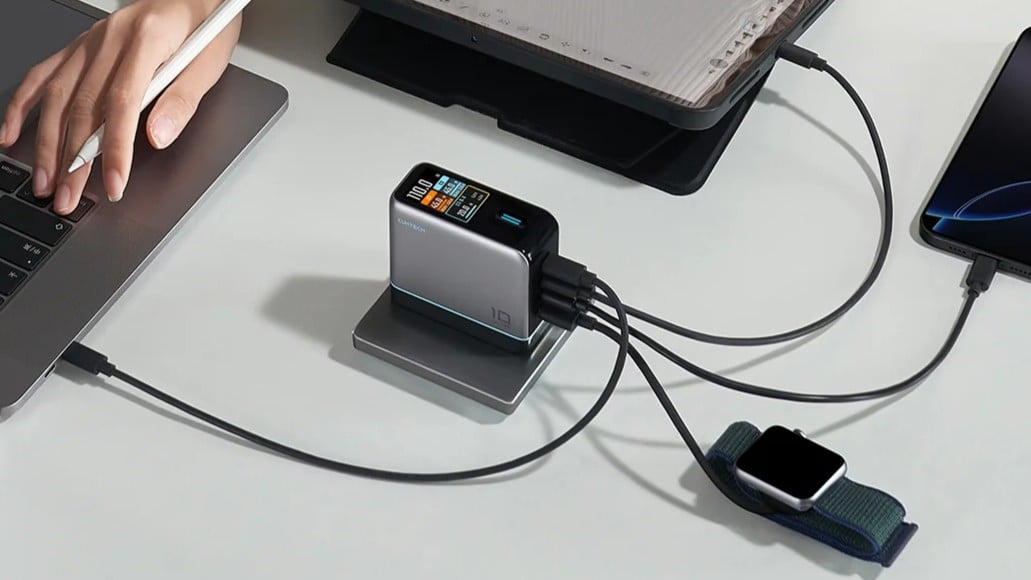
The Cuktech 10 Ultra 110W (4-port) stands out if you like seeing exactly what’s happening. Three USB-C ports + one USB-A, up to 100W on the main ports, 110W total, and a bright color screen that shows real-time wattage, voltage, and current per port. It supports PD 3.0 + PPS (plus a few extra protocols), so it works well with phones, tablets, and laptops. A bit bulkier than the pure travel chargers, but excellent for a desk or when you want to charge several devices at once without guessing power allocation.
Edifier has announced the W800NB, a new set of wireless over-ear headphones. They are currently available for reservation on e-commerce platforms like JD.com. The introductory price is set at 289 yuan ($43).
The W800NB uses 40mm dynamic drivers with silver-plated diaphragms. The headphones support Hi-Res Audio Wireless and LDAC, provided the connected phone or computer also supports the codec. There is also a spatial audio mode that creates a wider virtual sound field.
The headphones offer up to 50dB of active noise cancellation, a 14% improvement over the previous generation. These feature five noise-control modes, including ANC, Transparency, and Wind Noise Reduction, for different environments.
The W800NB weighs 250 grams. Its earcups use memory protein leather and slow-rebound foam, which should make them more comfortable during long listening sessions. Edifier has also added a four-axis floating structure to the headband and earcups. This allows the earcups to move and adjust more naturally when the headphones are being worn.
For calls and voice control, the W800NB features three microphones with AI noise reduction for clearer conversations in noisy environments. It also supports voice-assistant controls and real-time translation.
In terms of connectivity and battery life, the headphones feature Bluetooth 6.0, dual-device connectivity, a low-latency gaming mode, and wired audio support. These offer up to 118 hours of playback without ANC and 60-70 hours with ANC enabled, while a 15-minute charge provides around 18 hours of playback.
The headphones also feature a foldable design and app-based EQ customization, button remapping, firmware updates, child mode, voice-prompt language selection, and headphone-finding support.
In related news, Ugreen has recently launched the Max5s headphones with LDAC support, 45dB ANC, AI features, and up to 112 hours of battery life. Meanwhile, boAt has introduced the Nirvana Eutopia 2 ANC headphones with LDAC, 45dB adaptive ANC, and up to 80 hours of battery life.
For more daily updates, please visit our News Section.
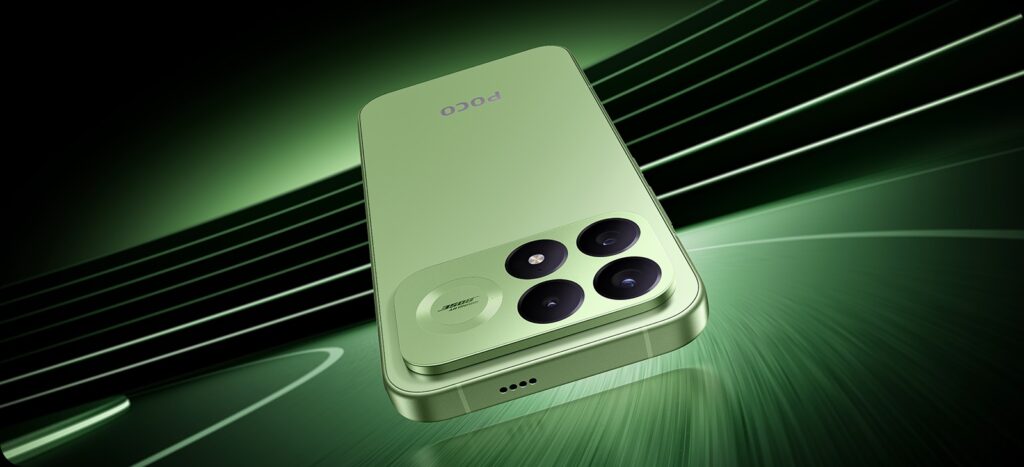
The Poco X8 has a 6.83-inch AMOLED display with a 1.5K resolution of 2772 x 1280 pixels. It supports a refresh rate of up to 120Hz and a 240Hz touch sampling rate. In Game Turbo mode, the phone can reach a claimed instantaneous touch sampling rate of 3,200Hz in supported situations.
The screen has a claimed peak brightness of 3,500 nits, while typical brightness is listed at 1,060 nits. It supports 12-bit color depth and the DCI-P3 color gamut. For eye comfort, the display includes DC dimming, 3,840Hz PWM dimming, and TÜV Rheinland certifications for low blue light, flicker-free operation, and circadian-friendly use. The front is protected by Corning Gorilla Glass Victus 2.
Under the hood, the device is powered by the Snapdragon 6s Gen 4, a 4nm chipset with an octa-core CPU reaching up to 2.4GHz. It comes with up to 12GB of RAM and 256GB of storage. The 256GB variants use faster UFS 3.1 storage, while the 128GB version uses UFS 2.2.
On the back, there is a 50-megapixel main camera with OIS and a 2-megapixel depth sensor. The front camera has a 16-megapixel sensor. Both cameras can record video at up to 1080p and 30 frames per second.
The Poco X8 also has IP66, IP68, IP69, and IP69K ratings for dust and water resistance. Poco says it has passed a two-meter, 72-hour water-resistance test and a three-meter drop test.
The phone packs an 8,340mAh silicon-carbon battery with 67W HyperCharge and 22.5W wired reverse charging. Poco claims it retains at least 80% capacity after 1,600 charging cycles and supports USB PD 2.0 and 3.0.
The phone runs Xiaomi HyperOS 3 and includes Google Gemini, Circle to Search, AI Erase, dual-video recording, NFC, an infrared blaster, dual speakers, and an in-display fingerprint sensor. It weighs 223 grams and is available in black, white, and orange.
Pricing and Availability
The Poco X8 starts at $269 for the 6GB RAM and 128GB storage model. The 8GB RAM and 256GB storage version costs $299, while the top-end model with 12GB of RAM and 256GB of storage is priced at $349. The device is launching in India on September 4th.
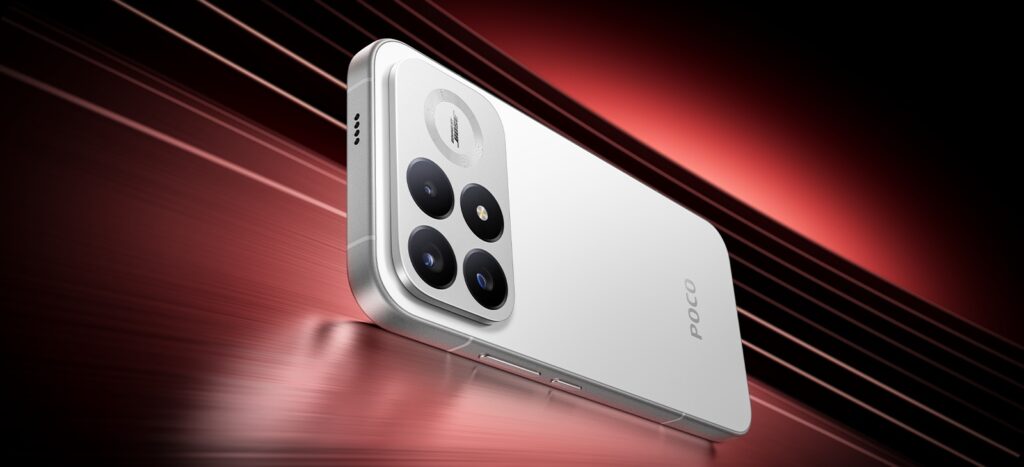
Poco has launched the F9 Pro globally alongside the F9 Ultra. The new model focuses on gaming, battery life, and display performance, while also introducing features such as wireless charging and a telephoto camera to the series.
It is powered by Qualcomm’s Snapdragon 8 Elite Gen 5 V Series (SM8850-1-AB) processor. The chip is built using a 3nm process and uses third-generation Qualcomm Oryon CPU cores, with a maximum clock speed of 4.6GHz. Poco is also including its VisionBoost D8 graphics chipset, which is designed to improve image quality and frame rates in supported games.
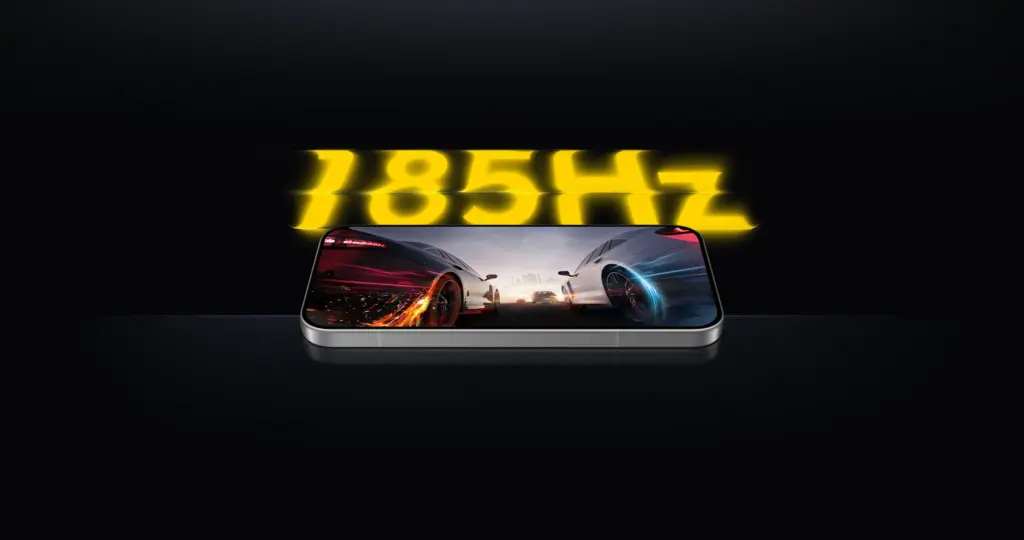
The VisionBoost system supports frame interpolation of up to 185 frames per second. It also includes features such as Game HDR and AI super resolution. These features are intended to make games look smoother and clearer, although the results will depend on the individual game and whether it supports the technology.
The phone uses a 3D IceLoop cooling system to manage heat during longer gaming sessions. The cooling system has a 26,000-square-millimeter heat dissipation area, a 5,200-square-millimeter liquid heat pipe area, and a large graphite layer. Poco says it can reduce SoC temperatures by up to 3 degrees Celsius under certain testing conditions. The device comes with 12GB of LPDDR5X Ultra RAM and is available with either 256GB or 512GB of UFS 4.1 storage.
The 6.59-inch AMOLED display has a 185Hz refresh rate and 2510 x 1156 resolution, supports 68 billion colors and DCI-P3, and reaches 4,500 nits in multi-scenario use and 10,000 nits peak with selected HDR content.
It also offers full-range DC dimming, 16,000 dimming levels, a 1-nit minimum brightness, and TÜV Rheinland certifications for flicker-free operation, hardware-level low blue light, intelligent eye care, and circadian-friendly viewing.
The F9 Pro has a 6,330mAh silicon-carbon battery. It supports 100W wired charging and 50W wireless charging. According to Poco, wired charging can take the battery to 50% in 19 minutes, while wireless charging reaches 50 percent in 35 minutes. The phone can also charge other devices at up to 27W through a cable or 22.5W wirelessly.
The rear camera system includes a 200-megapixel main camera with OIS, a 50-megapixel floating telephoto camera, and an 8-megapixel ultrawide camera. The telephoto camera has a 60mm equivalent focal length, 2.5x optical zoom, and a minimum focusing distance of 10 centimeters for close-up photography. For selfies, it includes a 32-megapixel lens.
The phone has symmetrical stereo speakers tuned with Bose. It offers Dynamic and Balanced sound profiles, with additional volume tuning intended to keep audio clear at different volume levels.
The F9 Pro is available in White and Aurora Green. The Aurora Green version has a rear panel that can glow after exposure to sunlight or indoor light. The phone also has an IP68 rating for dust and water resistance.
Pricing and Availability
The 12GB/256GB model costs $699, while the 12GB/512GB version is priced at $769. In select markets, Poco is offering benefits including trials of Spotify Premium, YouTube Premium, and Google AI Pro.
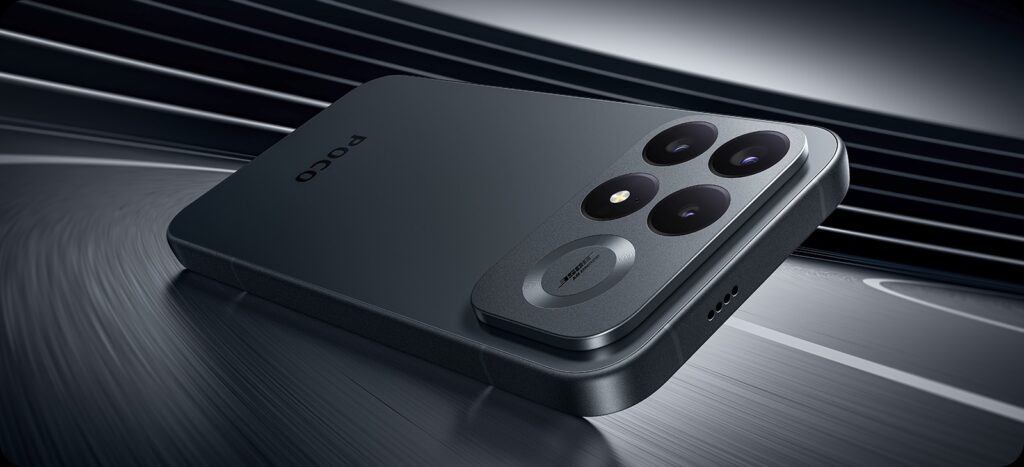
Poco has launched the F9 Ultra globally, introducing a high-end phone with a large battery, a high-refresh-rate display, and a camera system that includes a periscope telephoto lens.
Poco F9 Ultra Specifications
The phone is powered by Qualcomm’s Snapdragon 8 Elite Gen 5, which is built using a 3nm process. Its CPU includes two prime cores running at up to 4.6GHz and six performance cores reaching 3.62GHz. Poco has also added its VisionBoost D8 chipset to handle features such as image enhancement, frame interpolation, and Game HDR in supported games.
The F9 Ultra is available with up to 16GB of LPDDR5X Ultra RAM and 1TB of UFS 4.1 storage. It comes in three configurations: 12GB of RAM with 256GB of storage, 16GB with 512GB, or 16GB with 1TB.
Poco is focusing heavily on gaming with this model. The phone uses a 3D IceLoop cooling system, along with a large graphite layer, to help control heat during extended use. Its WildBoost Engine can adjust performance and power consumption depending on the game. The display supports refresh rates of up to 185Hz, and Poco says more than 20 games can make use of frame rates up to 185fps.
The 6.9-inch AMOLED screen has a 2608 x 1200 resolution, 12-bit color, Dolby Vision, HDR10 Plus, and a DCI-P3 wide color gamut. It can reach a claimed peak brightness of 10,000 nits in limited HDR areas, although typical brightness is rated at 850 nits. The screen also supports up to 4,800Hz instant touch sampling in Game Turbo mode, but this feature is limited to compatible games and software settings.
On the back, the F9 Ultra has a 200-megapixel main camera with OIS, a 50-megapixel periscope telephoto camera, and a 50-megapixel ultrawide camera. The telephoto lens offers 5x optical zoom and has a 120mm-equivalent focal length. It can also be used for close-up photography from around 30cm. The rear camera supports 8K video at 30fps and 4K recording at up to 60fps. For selfies, it features a 32-megapixel camera that can record in 4K.
The 8,050mAh battery supports 100W wired charging and 50W wireless charging. Poco says wired charging can take the battery to full in around 50 minutes, while wireless charging can reach 50% in approximately 37 minutes. The phone can also charge other devices at up to 27W through a cable or 22.5W wirelessly. The charger is sold separately.
The phone also includes Bose-tuned stereo speakers with a separate subwoofer, Wi-Fi 7, Bluetooth 6.0, NFC, an IR blaster, USB 3.2 Gen 1, an ultrasonic fingerprint sensor, and IP68-rated dust and water resistance.
The Poco F9 Ultra is available in Black and Dark Cherry. Prices start at $799 for the 12GB/256GB model, while the 16GB/512GB version costs $949. The 16GB/1TB model is priced at $1,199.
For more daily updates, please visit our News Section.
We use cookies on our website to give you the most relevant experience by remembering your preferences and repeat visits. By clicking “Accept”, you consent to the use of ALL the cookies.
This website uses cookies to improve your experience while you navigate through the website. Out of these, the cookies that are categorized as necessary are stored on your browser as they are essential for the working of basic functionalities of the website. We also use third-party cookies that help us analyze and understand how you use this website. These cookies will be stored in your browser only with your consent. You also have the option to opt-out of these cookies. But opting out of some of these cookies may affect your browsing experience.
Necessary cookies are absolutely essential for the website to function properly. This category only includes cookies that ensures basic functionalities and security features of the website. These cookies do not store any personal information.
Any cookies that may not be particularly necessary for the website to function and is used specifically to collect user personal data via analytics, ads, other embedded contents are termed as non-necessary cookies. It is mandatory to procure user consent prior to running these cookies on your website.