Advertisement

Xiaomi launches Mijia Bedside Lamp 3 with 1-570lm brightness, 16M color adjustment, gesture and voice controls

Xiaomi has refreshed its popular bedside lighting lineup with a new model focused on natural, restful light for the bedroom.
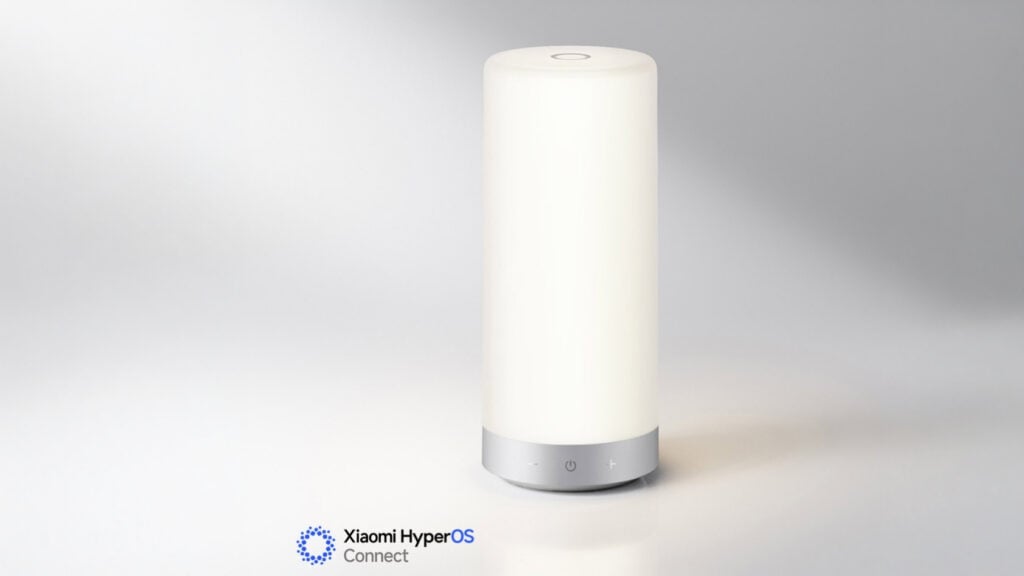
The cylindrical Xiaomi Mijia Bedside Lamp 3 glows softly against a plain white background.

The idea is soft, pastel-style illumination that supports better sleep while still working as a regular ambient bedside lamp. The main upgrades are full-spectrum natural light, low-saturation pastel effects, better gesture and touch controls, and some rhythmic lighting features. It also ties into Xiaomi HyperOS Connect and the wider Xiaomi smart ecosystem.

Xiaomi Mijia Bedside Lamp 3 showing color options, gesture controls, and full-spectrum lighting features.

At the heart of it are upgraded full-spectrum LED beads with an official solar spectral matching degree (GFC) above 0.98. Brightness ranges from a max of 570 lm all the way down to under 1 lm, so it covers everything from night-time navigation and reading to a gentle glow while you fall asleep. A color rendering index of Ra90 is meant to show natural skin tones, book colors, screens, and furniture more accurately.

A woman reads a book in bed next to a glowing Xiaomi Mijia Bedside Lamp 3.

For ambiance, it offers low-saturation pastel lighting with built-in scenes like snow mountain, forest, blue tones, sunset, and clear sky. There are 11 dynamic effects and 7 static ones, plus full 16-million-color adjustment. Interaction is simpler too: the top of the lamp has full-area touch sensing. Just reach for it to turn it on, or long-touch or hover to cycle through the preset effects, which should cut down on fumbling around in the dark.

The design focuses on 360° soft light. An internal diffuser and an inner shade made of imported diffusion material help even and soften the output, while the outer shade gets a hard frosted spray coating for a more transparent, gentle look. Safety-wise it carries TÜV SÜD certification, IEC RG0 no blue-light hazard rating, and IEEE no-flicker certification, all aimed at reducing eye strain before bed.

Shop now →
Where to buy
Xiaomi bedside lamps
Browse the range on Amazon

In the Mi Home app you can set custom “Morning Wake-up” and “Soft Light for Sleep” routines. Light gradually brightens in the morning to mimic natural dawn, or dims to a warm low level at night. It supports Xiao Ai voice control and can link with other devices like speakers or smart door locks for automated scenes.

Overall, the Mijia Bedside Lamp 3 leans into Xiaomi’s smart-home strengths to offer more natural, customizable bedroom lighting at a pretty accessible crowdfunding price.

Price and availability

The Mijia Bedside Lamp 3 is now listed on Xiaomi Youpin and will open for crowdfunding on October 28, priced at 269 yuan (~$40) during the campaign.

Don’t miss a thing! Join our Telegram community for instant updates and grab our free daily newsletter for the best tech stories!

For more daily updates, please visit our News Section.

(Source: Xiaomi Youpin)

Apple expands Self Service Repair to iPhone 18 Pro, M5 Mac Studio, and M6 Mac mini

Apple just expanded its Self Service Repair program to cover some of its newest flagships, giving owners more ways to fix things themselves instead of heading straight to an authorized service center.

Four iPhone 18 Pro smartphones in different colors lined up against a black background.

According to 9to5Mac, the Self Service Repair Store now stocks genuine replacement parts and tools for the iPhone 18 Pro, iPhone 18 Pro Max, Mac Studio models with M5 Max and M5 Ultra chips, and Mac mini models with M6 and M5 Pro chips. The program, which started in 2022, lets eligible users in places like the US, Canada, and Europe buy or rent official parts and tools while following Apple’s detailed repair guides.

For the iPhone 18 Pro and Pro Max, the available parts include the back glass, battery, bottom speaker, rear camera, display, enclosure, front camera, logic board, main microphone, SIM tray, Taptic Engine, and top speaker.

Once you pick a specific repair, you can see exactly which parts, tools, and consumables you’ll need and buy them individually. Optional tools cover everything from adhesive cutters and suction cups to nylon probes, adhesive removers, torque screwdrivers, and replacement screws.

One detail that stands out: the camera module for the iPhone 18 Pro series is priced at $249, the same as the previous generation, even though the new models add a variable-aperture system. If you return the original camera, you get a $59.76 credit, bringing the effective cost down to $189.24.

Check price →
Where to buy
iPhone 18 Pro
Latest price on Amazon

Mac Studio owners get a wider selection, including Thunderbolt ports, USB-C ports, fans, speakers, SSD modules, logic boards, and power supplies. The Mac mini list is shorter, covering fans, speakers, logic boards, batteries, and power supplies.

This move continues Apple’s slow but steady push toward supporting independent repairs. You’ll still need specialized tools and some technical know-how (tool rentals usually run about $49 for seven days), but having genuine parts available gives skilled users a real option to keep their latest devices going without a trip to the Genius Bar.

Don’t miss a thing! Join our Telegram community for instant updates and grab our free daily newsletter for the best tech stories!

For more daily updates, please visit our News Section.

(Source)

iQOO 16 vs Xiaomi 18 Pro: Can Xiaomi Justify Its Higher Price?

iQOO 16 and Xiaomi 18 Pro take different approaches to flagship smartphone design. The iQOO prioritises gaming, display speed, and battery endurance, while Xiaomi focuses on photography, premium features, and everyday versatility. Both pack powerful Snapdragon processors, but their differences extend well beyond performance. From a 165Hz gaming display to a 200MP Leica camera system, each phone has a distinct advantage. The question is whether the iQOO’s performance-focused hardware can outweigh Xiaomi’s more versatile flagship experience.

The iQOO 16 and Xiaomi 18 Pro smartphones displayed side by side for comparison.

Major Features:

CategoryiQOO 16Xiaomi 18 ProWinner
Design and BuildAluminum frame, glass-fiber reinforced plastic or glass backDragon Crystal Glass 3, aluminum frameXiaomi – More premium front glass and distinctive rear display
Water ResistanceIP68/IP69IP68iQOO – Higher-rated protection against high-pressure water jets
Display TypeAMOLEDLTPO AMOLEDXiaomi – Adaptive refresh rate for improved efficiency
Display Size6.85 inches6.4 inchesiQOO – Larger screen for gaming and media
Resolution1440 × 3168 pixels1120 × 2436 pixelsiQOO – Sharper display
Refresh Rate165Hz120HziQOO – Smoother supported gaming
Peak Brightness10,000 nits (claimed)4,000 nits (claimed)iQOO – Higher claimed peak brightness
ProcessorSnapdragon 8 Elite Extreme Gen 6Snapdragon 8 Elite Gen 6iQOO – Higher-tier chipset positioning
Operating SystemAndroid 17, OriginOS 7Android 17, HyperOS 4Tie – Both run Android 17-based software
RAMUp to 16GBUp to 16GBTie – Same maximum RAM capacity
StorageUp to 1TB, UFS 4.1Up to 1TB, UFS 4.1Tie – Matching storage technology and capacity
Main Camera50MP with OIS200MP with OIS, Leica opticsXiaomi – Higher-resolution sensor and Leica imaging
Telephoto Camera50MP periscope, 3x optical zoom200MP periscope, 3.2x optical zoomXiaomi – Higher resolution and greater cropping potential
Ultrawide Camera50MP with autofocus50MP with autofocusTie – Both offer autofocus ultrawide cameras
Selfie Camera32MP50MP with autofocusXiaomi – Higher resolution and autofocus
Video RecordingUp to 8K at 30fpsUp to 8K at 30fps; 4K at 120fpsXiaomi – More advanced high-frame-rate video options
Rear DisplayNot specified2.7-inch secondary displayXiaomi – Additional screen for camera framing and quick interactions
Battery8,400mAh7,000mAhiQOO – Larger battery capacity
Wired Charging100W100WTie – Same rated charging speed
Wireless Charging40W50WXiaomi – Faster wireless charging
Reverse Wireless ChargingNot specified27WXiaomi – Supports wireless charging for compatible accessories
ConnectivityWi-Fi 7, Bluetooth 5.4/6.0Wi-Fi 7, Bluetooth 6.0Xiaomi – Bluetooth 6.0 listed as standard
USBUSB-C 3.2USB-C 3.2 with DisplayPortXiaomi – Supports external display output
Additional FeaturesUltrasonic fingerprint sensor, bypass charging, infrared portUltrasonic fingerprint sensor, UWB, infrared portXiaomi – Adds Ultra Wideband connectivity
PriceAround $800 / ₹83,000Around $1,000 / ₹1,20,000iQOO – Lower price for performance-focused users
OverallGaming-focused flagshipCamera-focused premium flagshipXiaomi – More versatile camera system and premium features
Disclaimer: Specs are based on available data. Actual performance may vary. Verify details from official sources before buying.

1. Design and Display

Build and Feel

The iQOO 16 combines an aluminum frame with a glass-fiber reinforced plastic or glass back, depending on the variant. Its IP68/IP69 protection provides an advantage against dust, immersion, and high-pressure water jets. The Xiaomi 18 Pro takes a more premium approach with Dragon Crystal Glass 3 on the front, an aluminum frame, and IP68 protection. Its secondary rear display also gives the design a functional distinction, allowing users to interact with information and frame selfies using the rear cameras. The iQOO feels purpose-built for performance enthusiasts, while Xiaomi offers a more refined and feature-rich experience. For buyers who want a flagship that stands apart from conventional glass slabs, Xiaomi’s rear screen adds genuine appeal beyond aesthetics.

Display Quality

The iQOO 16 features a 6.85-inch AMOLED display with 1440p resolution, a 165Hz refresh rate, Dolby Vision, and HDR10+. Its exceptionally high refresh rate makes it the more exciting option for competitive gaming and supported high-frame-rate content. The Xiaomi 18 Pro uses a 6.4-inch LTPO AMOLED panel with a 120Hz refresh rate, Dolby Vision, HDR10+, and a claimed peak brightness of 4,000 nits. Its adaptive refresh technology should help balance smoothness and battery consumption, while the smaller screen is more manageable for everyday use. Although Xiaomi offers a compelling display, the iQOO’s higher resolution and faster refresh rate give it the clear edge for gaming.

Verdict

The iQOO 16 wins for gaming with its sharper, faster display. Xiaomi is better suited to buyers who prefer a compact flagship, adaptive refresh technology, and a distinctive secondary screen.

2. Specifications Including Battery

Performance

The iQOO 16 runs Android 17 with OriginOS 7 and features the Snapdragon 8 Elite Extreme Gen 6 chipset with an Adreno 850 GPU. The Xiaomi 18 Pro uses the Snapdragon 8 Elite Gen 6 and runs Android 17 with HyperOS 4. Both support UFS 4.1 storage, up to 16GB RAM, and configurations reaching 1TB. The iQOO’s higher-tier processor positioning makes it the more promising choice for demanding gaming and graphics-intensive workloads. However, sustained performance will also depend on cooling, software optimisation, and thermal management. Xiaomi remains firmly in flagship territory, with enough processing power for demanding apps, multitasking, and high-end games. For users who prioritise gaming above all else, the iQOO looks more appealing, although independent benchmark and thermal tests will ultimately determine the extent of its advantage.

Battery and Charging

The iQOO 16 packs an 8,400mAh silicon-carbon battery, supported by 100W wired charging, 40W wireless charging, and bypass charging. Its substantial capacity should make it particularly attractive to gamers and heavy users who want to spend less time near a charger. Bypass charging is especially useful during supported gaming sessions, as power can be supplied directly to the phone instead of relying entirely on the battery. 

The Xiaomi 18 Pro features a 7,000mAh silicon-carbon battery, 100W wired charging, 50W wireless charging, and 27W reverse wireless charging. Xiaomi wins on wireless charging speed and accessory convenience, but the iQOO’s larger battery gives it the stronger endurance credentials. For frequent travellers and marathon gaming sessions, that capacity advantage could matter more than faster wireless charging.

Verdict

The iQOO 16 is the better choice for battery endurance and gaming. Xiaomi counters with faster wireless charging and reverse wireless power, but its smaller battery makes the iQOO more appealing to heavy users.

3. Camera

Main and Secondary Lenses

The Xiaomi 18 Pro has a substantial advantage on paper with its 200MP main camera, large sensor, optical image stabilisation, and Leica optics. Its 200MP periscope telephoto camera offers 3.2x optical zoom, while the 50MP autofocus ultrawide lens handles wider scenes. Laser autofocus and a colour spectrum sensor further strengthen its imaging hardware. The iQOO 16 takes a more conventional approach, pairing a 50MP stabilised main camera with a 50MP periscope telephoto lens offering 3x optical zoom and a 50MP autofocus ultrawide camera. 

The iQOO’s triple-camera setup looks versatile, but Xiaomi’s larger-resolution main and telephoto sensors offer greater potential for detailed images and cropping flexibility. Xiaomi also supports 4K recording at up to 120fps, alongside HDR and LOG recording options. For photography enthusiasts and mobile videographers, Xiaomi is the more ambitious camera phone. Actual image quality will still depend on processing, colour tuning, and low-light performance.

Selfie Camera

The iQOO 16 features a 32MP front camera with HDR and 4K video recording at up to 60fps. The Xiaomi 18 Pro upgrades to a 50MP autofocus selfie camera, also supporting 4K recording at 60fps. Autofocus is a meaningful advantage for maintaining sharpness at different distances, while the higher-resolution sensor offers greater detail potential. Xiaomi’s rear display makes the camera system even more versatile by allowing users to frame selfies with the main or telephoto camera instead of relying exclusively on the front-facing sensor. This could produce more detailed selfies and portraits, particularly in challenging lighting, although results will depend on image processing. The iQOO remains capable for video calls and everyday selfies, but Xiaomi offers more flexibility for content creators and users who frequently photograph themselves.

Verdict

The Xiaomi 18 Pro is the stronger camera flagship, with more ambitious main and telephoto hardware, Leica optics, advanced video recording, and a versatile rear-screen selfie experience.

4. Pricing

The iQOO 16 is priced around $800 (₹83,000), while the Xiaomi 18 Pro is priced around $1,000 (₹1,20,000). That puts Xiaomi at a noticeable premium, particularly for buyers shopping in the Indian market. Both phones offer flagship processors, UFS 4.1 storage, high-end displays, and configurations with up to 16GB RAM and 1TB storage. The iQOO, however, directs more of its hardware budget towards gaming performance, display speed, and battery capacity. Xiaomi places greater emphasis on its camera system, secondary display, and premium imaging features. The price difference is therefore less about basic performance and more about the experience each phone delivers. Buyers who primarily game or multitask may find little reason to spend extra on Xiaomi, while photography enthusiasts have a more compelling justification for considering the pricier model.

Check price →
Where to buy
iQOO 16
Latest price on Amazon

Is the price justified? Is it value for the money

The iQOO 16 looks like the stronger value proposition for users who want flagship-level speed, an exceptionally fast display, and long battery life without spending as much. Its hardware priorities are practical, especially for gamers who benefit directly from the high refresh rate and bypass charging. 

The Xiaomi 18 Pro asks buyers to pay more for its 200MP camera system, advanced video capabilities, rear display, and faster wireless charging. Those features make the premium easier to justify for photography enthusiasts and content creators, but they will not benefit every user equally. Xiaomi offers the more versatile camera experience, yet the iQOO delivers a more focused package at a lower price. Unless photography is a major priority, the extra expenditure on Xiaomi may be difficult to justify.

Verdict

The iQOO 16 wins on value for money, offering excellent gaming-focused hardware at a lower price. Xiaomi justifies its premium primarily through superior camera versatility and distinctive flagship features.

Disclaimer:
Prices are approximate and may vary based on country, region, launch timing, and applicable taxes. Always check whether the listed price is for a China unit or a global/international variant when purchasing.

5. Conclusion

The iQOO 16 stands out with its 165Hz AMOLED display, 8,400mAh battery, Snapdragon 8 Elite Extreme Gen 6 processor, and bypass charging. Together, these features make it a compelling option for gamers who demand smooth visuals and extended sessions without frequent charging breaks. Its IP68/IP69 protection adds another practical advantage. 

The Xiaomi 18 Pro counters with a 200MP Leica-powered main camera, a 200MP periscope telephoto lens, a 50MP autofocus selfie camera, and a secondary rear display. Its 4K 120fps video recording, 50W wireless charging, and 27W reverse wireless charging further broaden its appeal. These are meaningfully different strengths rather than minor specification variations. 

The iQOO is built around sustained performance and endurance, whereas Xiaomi offers a more photography-oriented flagship with additional creative flexibility. Neither phone is universally better, but Xiaomi’s wider camera capabilities make it more suitable for users who want one device for photography, video, and everyday flagship tasks.

Verdict

Overall winner: Xiaomi 18 Pro. Its more versatile camera system, advanced video recording, rear display, and broader creative capabilities make it the more complete flagship for photography-focused users. However, the iQOO 16 is the smarter buy for gamers and heavy users who prioritise battery endurance, display speed, and value for money. 

For buyers who want the best balance of flagship versatility and imaging potential, Xiaomi takes the win; for performance per rupee, iQOO is the stronger choice.

Check price →
Where to buy
Xiaomi 18 Pro
Latest price on Amazon

FAQs:

1. Is the iQOO 16 better than the Xiaomi 18 Pro?

The iQOO 16 suits gamers and heavy users, while the Xiaomi 18 Pro is better for photography enthusiasts and content creators.

2. Which phone takes better photos, iQOO 16 or Xiaomi 18 Pro?

The Xiaomi 18 Pro has the stronger camera hardware, including 200MP main and periscope telephoto cameras with Leica imaging.

3. Which phone is faster for gaming?

The iQOO 16 has the more powerful chipset on paper and a 165Hz display, making it the more promising gaming phone.

4. Which phone has better battery life?

The iQOO 16 should offer longer endurance with its 8,400mAh battery, although actual battery life depends on usage and optimisation.

5. Is the Xiaomi 18 Pro worth the extra money?

Yes, for buyers who prioritise advanced photography and video features. Otherwise, the iQOO 16 offers better value for performance-focused users.

Disclaimer: Prices, specifications, and availability may vary by region and retailer. Recommendations in this article are based on editorial opinion, feature-based value, and market positioning at the time of writing. Readers are advised to do their own research before making a purchase.

Read More:

OPPO Find X10 Pro Max Global Version Now Available for Pre-Sale at Giztop

OPPO Find X10 Pro Max Global Version is now available for pre-sale at Giztop, with a starting price of $1,599. The phone is scheduled to ship on November 6, and buyers can choose between global and express shipping options. Here’s a closer look at its specifications, features, and what the global version offers.

White OPPO Find X10 Pro Max smartphone showing front screen and rear camera module.

Display and Performance

The OPPO Find X10 Pro Max features a 6.78-inch 10-bit LTPO 2.0 AMOLED display with a 2K-class resolution of 2772 × 1272 pixels and a 120Hz refresh rate. The screen supports sRGB and P3 color spaces, covers 100% of the DCI-P3 color gamut, and offers a claimed contrast ratio of 5,000,000:1.

Powering the phone is the MediaTek Dimensity 9600 Pro processor, paired with up to 16GB of LPDDR5X RAM. Storage options include 256GB, 512GB, and 1TB, using UFS 4.1 technology. This hardware configuration is designed to handle demanding applications, multitasking, gaming, and large files. The device runs ColorOS 17 based on Android 17.

Triple 200MP Rear Camera System

Photography is a major highlight of the OPPO Find X10 Pro Max. Its rear camera setup includes a 200MP main camera with a 1/1.3-inch sensor, a 200MP ultra-wide camera with a 1/1.56-inch sensor, and a 200MP 3x periscope telephoto camera with a 1/1.56-inch sensor.

The main camera features an f/1.5 aperture and optical image stabilization, while the ultra-wide camera offers a 124-degree field of view for landscapes and group photos. The telephoto camera has an f/2.1 aperture and optical image stabilization for zoom photography. A second-generation Danxia color reproduction lens and an additional multispectral sensor are designed to support more accurate color reproduction.

The OPPO Find X10 Pro Max smartphone shown from both front and back angles.

Battery and Charging

The phone packs an 8,000mAh battery, providing substantial capacity for extended daily use. It supports 80W SuperVOOC wired charging, 50W AirVOOC wireless charging, and 10W reverse wireless charging. These charging options offer flexibility for users who prefer wired or wireless charging and those who want to power compatible accessories.

Price and Availability at Giztop

The OPPO Find X10 Pro Max Global Version is available for pre-sale at Giztop, starting at $1,599. Buyers can choose from 256GB, 512GB, and 1TB storage configurations, with 16GB LPDDR5X RAM. The device is scheduled to ship on November 6, and both global and express shipping options are available. 


Read More:

Red Magic 12 Pro+ Gaming Phone Now Available at Giztop for $1299

Red Magic 12 Pro+ is a gaming smartphone designed for users who want a powerful device for mobile gaming and everyday use. With a focus on performance, display quality and sustained gaming, it combines dedicated gaming hardware with a large battery and advanced cooling technology. The phone is available at Giztop with a starting price of $1299. Global and express shipping options are also available.

Red Magic 12 Pro+ gaming smartphone showing its rear design and vibrant front display.

Display

The Red Magic 12 Pro+ features a 6.85-inch 1.5K OLED display with a 185Hz refresh rate. It is designed to deliver smooth visuals and responsive gameplay, particularly in fast-paced competitive games. The screen supports a 500Hz global touch sampling rate and up to 5,000Hz instantaneous touch sampling rate.

Other display features include 10-bit colour depth, 100% DCI-P3 colour gamut, 1,900 nits of global peak brightness and 5,000 nits of local peak brightness. The phone also includes 2,592Hz PWM dimming, DC-like dimming and eye protection technology.

Performance and Storage

The smartphone is powered by the Qualcomm Snapdragon 8 Elite Extreme Gen 6 octa-core processor, built on a 2nm process, with CPU frequencies exceeding 5GHz. The Adreno 850 GPU handles graphics, while the dedicated Red Core R5 gaming chip supports gaming-related functions.

Memory options include 12GB and 16GB of LPDDR5T Ultra RAM, paired with 256GB, 512GB or 1TB of UFS 4.1 Pro storage. Storage cannot be expanded using a memory card.

The phone runs Red Magic OS 12.0, based on Android 17, with software features tailored to gaming.

Silver Red Magic 12 Pro+ gaming phone showing a futuristic woman on the screen.

Cameras

The rear camera setup includes a 50MP OmniVision OV50E40 main sensor with an f/1.88 aperture and optical image stabilisation (OIS). It is paired with a 50MP OmniVision OV50J40 ultra-wide camera featuring autofocus.

For selfies and video calls, the phone has a 16MP OmniVision OV16A1Q under-display front camera. This design keeps the selfie camera hidden beneath the screen, providing a more uninterrupted viewing experience.

Cooling System

The Red Magic 12 Pro+ uses an RGB liquid cooling system with separate circulation paths for the processor and battery. Its cooling hardware includes a dual-crystal micro-pump, a 25,500RPM active fan, Liquid Metal 4.0 and a 4D vapour chamber. The system is designed to manage heat during demanding gaming sessions.

Battery and Charging

The smartphone packs an 8,400mAh battery with support for 120W wired fast charging and 80W wireless charging. It also supports bypass charging, which can help reduce battery heat during gaming while connected to a power source.

Price and Availability

The Red Magic 12 Pro+ starts at $1299 at Giztop. Global and express shipping options are available, making it an option for buyers looking to purchase the gaming smartphone internationally.


Read More:

Poco X8s launches with compact 6.35-inch display, Snapdragon 7 Gen 4 and 100W charging

The Poco X8s has been silently launched in Vietnam, becoming the fifth smartphone in the Poco X8 series. It joins the Poco X8 Pro, X8 Pro Max, X8, and X8 Power. Here are the phone’s specifications, features, and pricing details.

Poco X8s specifications and features

Poco X8s

The Poco X8s features a compact 6.35-inch 1.5K LTPO OLED display with a 120Hz refresh rate, up to 3,500 nits of peak brightness, and slim 1.18mm bezels. The Snapdragon 7 Gen 4 chipset powers the phone, paired with 8GB or 12GB of LPDDR5X RAM and 256GB or 512GB of UFS 4.0 storage.

The rear camera setup includes a 50-megapixel primary sensor and an 8-megapixel ultrawide camera, while a 32-megapixel front camera handles selfies and video calls. The main camera configuration has not been consistently reported across sources. It runs Android 16 with HyperOS 3 and has an IP68 rating for dust and water resistance.

Poco X8s

The 6,330mAh battery supports 100W wired charging, 100W PPS charging, and 22.5W wired reverse charging.

Check price →
Where to buy
Poco X8s
Latest price on Amazon

Connectivity features reportedly include 5G, Wi-Fi 7, Bluetooth 5.4, NFC, USB Type-C, and an infrared blaster. The phone also features a metal frame and measures approximately 8.06mm thick, with a reported weight of 187 grams.

Poco X8s price and availability

Poco X8s

In Vietnam, the Poco X8s is listed for pre-order in two configurations. The 8GB+256GB variant costs VND 11,500,000 (~$440), while the 12GB+512GB model is priced at VND 14,000,000 (~$530). Launch vouchers bring the prices down to VND 8,242,500 (~$310) and VND 10,190,000 (~$390), respectively. White, Black, and Blue are the listed color options.

Pre-orders are scheduled to ship between November 6 and November 9. Early buyers can also receive a pair of Redmi Buds 6 Play at no additional cost, subject to availability.

For daily updates, please visit our News Section.

Stay ahead in tech! Join our Telegram community and sign up for our daily newsletter of top stories!

Magnetic power bank for iPhone Duo goes on sale early, measures just 7.9mm

A surprisingly slim magnetic power bank made for Apple’s foldable iPhone Duo is already showing up for sale, weeks ahead of its planned launch.

A hand holds a slim Baseus PicoGo Air magnetic power bank on an iPhone Duo.

Baseus first showed off the PicoGo Air AM72 back in September as a companion for the passport-style iPhone Duo. It was supposed to hit retailers in late November, but the power bank is already listed on Amazon. It’s priced at $79.99.

At its thinnest point the PicoGo Air AM72 is just 7.9 mm, undercutting the 8.6 mm thickness of both the Anker and Ugreen options. The extra width is intentional: it’s shaped to fit the folded dimensions of the iPhone Duo more naturally instead of using the narrower profile typical of regular MagSafe banks. Capacity is 5,000 mAh, enough for a quick top-up on the go.

Wireless charging hits the standard Qi2 15W rate, so it doesn’t outpace the competition there. Wired charging is where it pulls ahead: the USB-C port can deliver up to 25W. Other practical touches include PowerSense NFC for quick battery-status checks, 12N magnets for a secure hold, and temperature management to keep wireless sessions stable. The raised platform design also leaves a small cooling gap between the power bank and the phone. Right now the only color is Star Titanium Silver, finished in an aluminum-alloy body that leans into Apple’s design language.

Between the ultra-slim profile tailored specifically for the iPhone Duo, the stronger wired output, and extras like NFC and thermal control, the PicoGo Air AM72 looks like a strong early option for foldable owners who want magnetic charging without the bulk. And since it’s already on Amazon, you don’t have to wait until the original late-November window.

Don’t miss a thing! Join our Telegram community for instant updates and grab our free daily newsletter for the best tech stories!

For more daily updates, please visit our News Section.

(Source: Amazon)

Honor Win 2 series roundup: Which of the three gaming phones is right for you?

Honor is set to launch three gaming phones in China on October 21 under the Win series. The Honor Win 2, Honor Win RT 2, and Honor Win Turbo 2 are all available for pre-reservation, while some details have been confirmed ahead of the launch; the rest come from leaks.

The three phones share a 6.89-inch display with 2K resolution and a 185Hz refresh rate, along with batteries larger than 10,000mAh. The main differences are in processing power, cooling, cameras, and charging, so choosing between them comes down to which features matter most to you.

Honor Win 2 series

1. What all three Honor Win 2 phones have in common

Each model uses a flat OLED panel with a 2K resolution and a 185Hz refresh rate. According to display maker Visionox, it’s the first smartphone panel to combine 2K resolution with a 185Hz refresh rate, and Honor is bringing it to the entire Win 2 lineup rather than reserving it for the most expensive model.

A recent leak also points to a metal frame, dual stereo speakers, and IP68, IP69, and IP69K ratings across all three phones. These details haven’t all been confirmed by Honor, so some specifications could change at launch. You can find more in the full Honor Win 2 series spec leak.

The new lineup follows the original Honor Win and Win RT, which launched in December 2025 with 10,000mAh batteries and built-in cooling fans. This time, Honor is adding a second fan to the top model while giving the other two phones larger batteries.

2. Honor Win 2

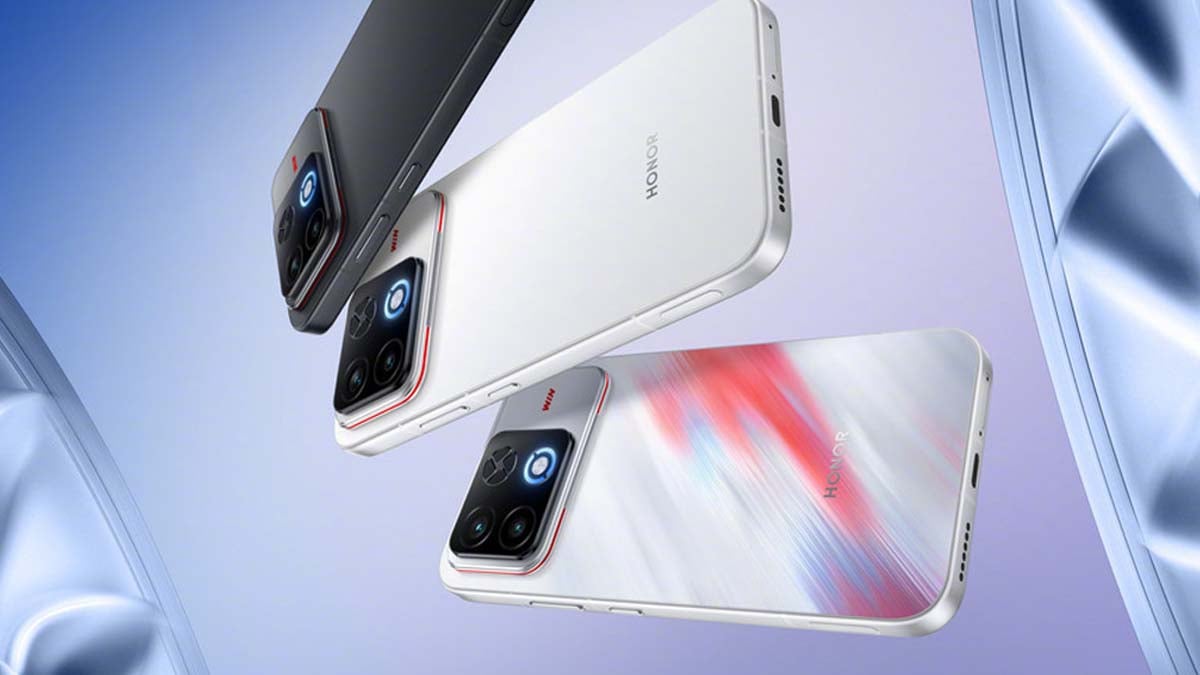
Three Honor Win 2 smartphones in different colors float against a light blue background.

The Honor Win 2 sits at the top of the lineup, with a Snapdragon 8 Elite Extreme Gen 6 processor and a 10,100mAh battery. Honor has confirmed both details, while a leaked AnTuTu result claims the phone scores more than 5.7 million points. 

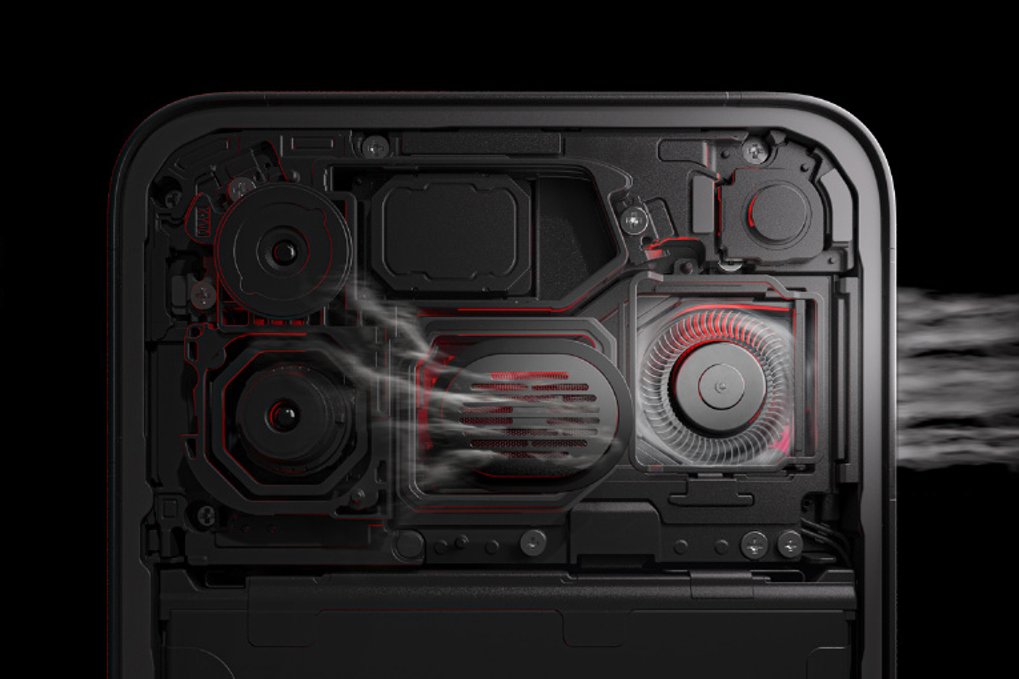
Cooling is one of the main differences between the Win 2 and its siblings. The phone has two built-in fans as part of Honor’s Dongfeng Twin-Star Turbo Cooling System. According to Honor, the system can reduce the phone’s overall temperature by up to 14.4°C and the processor’s temperature by up to 15.5°C. A rapid-cooling mode can reportedly lower the temperature by 10°C in 50 seconds, and users can either leave the fans on automatic control or adjust their speed manually.

The remaining specifications come from leaks. The Win 2 reportedly supports 100W wired charging and 50W wireless charging, along with a 200MP main camera with optical image stabilization. It also has a dedicated Win key for gaming and a USB 3.2 Gen 1 port.

Memory configurations are said to range from 12GB of RAM with 256GB of storage to 16GB of RAM with 1TB of storage. The phone will be available in Quick Black, Designated Win, and Red/Blue Buff.

Honor has already revealed the price of the 12GB+512GB version at 5,499 yuan after national subsidies. The standard price hasn’t been disclosed. For comparison, the original Honor Win launched at 4,499 yuan for the same memory configuration, making the new model more expensive.

3. Honor Win RT 2

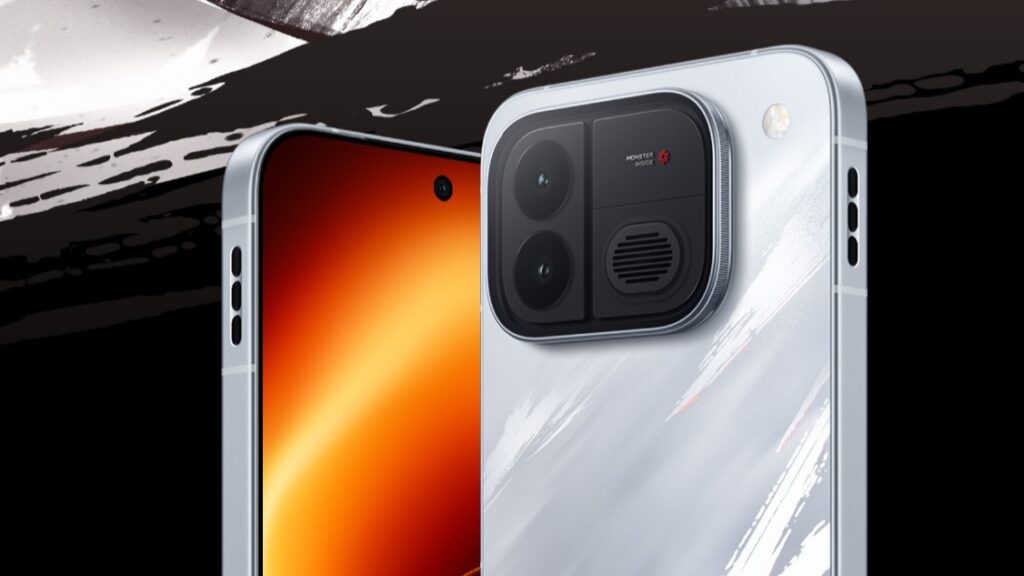
Honor Win RT 2

The Honor Win RT 2 trades some of the Win 2’s processing power for a larger battery. It has a 12,070mAh cell, around 21% bigger than the 10,000mAh battery in the original Honor Win RT.

The phone reportedly uses the same Snapdragon 8 Elite Gen 5 as the original Honor Win. While it isn’t the same chip as the one in the Win 2, it should still provide plenty of processing power for mobile games. As for cooling, Honor could use a built-in fan, and it will just be one rather than the dual-fan system reserved for the Win 2.

The camera setup is also slightly different. The Win RT 2 reportedly has a 200MP main camera with optical image stabilization, but it uses a smaller 1/1.56-inch sensor. Its USB port is limited to USB 2.0, compared to the USB 3.2 Gen 1 on the Win 2.

The Win RT 2 is expected to come in 12GB and 16GB of RAM and 256GB and 512GB storage. The available colors are said to match those of the rest of the lineup. Honor hasn’t announced a price for the Win RT 2 yet. The original Honor Win RT started at 2,699 yuan, although rising memory costs across the industry could affect the new model’s pricing.

4. Honor Win Turbo 2

Honor Win Turbo 2

The Honor Win Turbo 2 is expected to be the most affordable phone in the lineup, with a simpler hardware setup than the other two models. It also skips the built-in cooling fan of pricier siblings.

Despite the lower position in the lineup, the phone reportedly keeps the 6.89-inch 2K 185Hz OLED display and the same 12,070mAh battery as the Win RT 2.

The processor is less certain. A tipster has listed the Snapdragon 8s Gen 4, but the specification was marked as unconfirmed. The main camera is reportedly a 50MP sensor with optical image stabilization, rather than the 200MP camera used in the other two phones. It also has a simpler optical fingerprint sensor and a USB 2.0 port.

The Win Turbo 2 is expected to be the only model available with 8GB of RAM and 256GB of storage. Other configurations reportedly go up to 16GB of RAM and 512GB of storage.

Honor hasn’t confirmed these specifications or announced a price. The Win Turbo 2 will likely cost less than the other two models, but we’ll have to wait for the launch to see how much cheaper it actually is.

5. Honor Win Pad and Win earbuds

The phones won’t be the only products at Honor’s October 21 event. The company is also preparing a gaming tablet called the Honor Win Pad, along with its first Win-branded earbuds.

Honor’s teasers indicate the Win Pad will have an OLED display, a built-in cooling fan, and a Snapdragon 8 Elite Gen 5 processor. The company has already shared official renders of the tablet, showing its available color options.

Details about the earbuds remain limited, so we’ll have to wait for the event to learn more about them.

6. Will the Honor Win 2 series be available outside China?

For now, the only confirmed price is for the Honor Win 2’s 12GB+512GB configuration, which costs 5,499 yuan after national subsidies. Honor is expected to reveal pricing for the Win RT 2 and Win Turbo 2 at the launch event.

The original Win series has been sold in China, and Honor hasn’t announced plans to bring the new models to other markets. Buyers outside China may therefore have to import one if the company doesn’t announce a wider release.

Don’t miss a thing! Join our Telegram community for instant updates and grab our free daily newsletter for the best tech stories!

For more daily updates, please visit our News Section.

Baseus U2 Pro security camera launches with AI tracking, dual 3K cameras

Baseus just launched a new outdoor security camera that does more than just record: it actively shines a light on whatever’s moving around your property.

Baseus U2 Pro security camera mounted on a post with a solar panel.

The U2 Pro Outdoor camera is now available in overseas markets for $279.99 or €269.99. Its biggest party trick is a built-in motorized spotlight that tracks moving targets in real time. The light can lock onto someone walking into your yard and beam right on them, which is meant to startle potential intruders into turning around. The same spotlight also works as regular outdoor lighting if you’re out walking the dog at night.

AI handles the smart side of things. The camera sends alerts when it spots motion and gives you short event summaries that can tell the difference between people, pets, vehicles, and package deliveries. That should cut down on the usual false alarms from things like swaying branches. It uses a dual 3K camera setup: one fixed lens on top stays locked on a specific area, while the lower camera pans and tilts for wider coverage. Full-color night vision helps with identification after dark.

A person in a black hoodie stands in a backyard at night.

Power comes with a solar panel for supplemental charging, so it can stay outside longer without constant plug-ins. Footage is mainly recorded when motion is detected and stored locally. You can check it remotely through the Baseus app, and it works with common smart home platforms. Mounting is straightforward on a wall or ceiling.

Check price →
Where to buy
Baseus U2 Pro
Latest price on Amazon

Between the tracking spotlight, dual high-res cameras, and AI that tries to filter out the noise, the U2 Pro is going for both deterrence and everyday convenience. Right now it’s aimed at markets like the US (via Amazon) and Europe.

Don’t miss a thing! Join our Telegram community for instant updates and grab our free daily newsletter for the best tech stories!

For more daily updates, please visit our News Section.

Honor Win 2 series teaser confirms 12070mAh battery ahead of October 21 launch

Honor is going all-in on battery life for its next gaming phones, and the numbers they’re throwing around are pretty wild.

Three Honor Win 2 smartphones in different colors float against a light blue background.

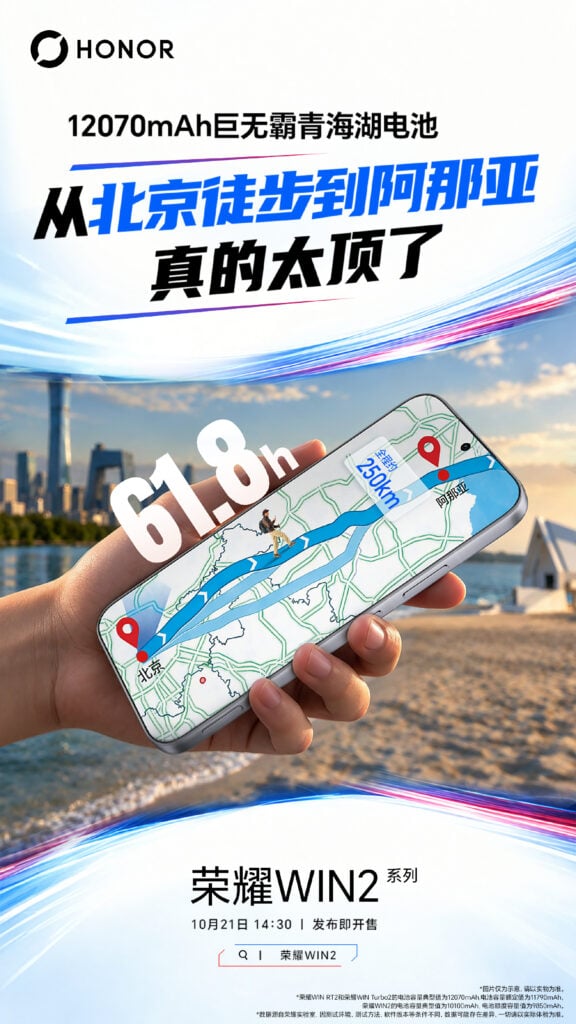
The company has confirmed that the upcoming WIN 2 series will pack batteries of up to 12,070mAh. As expected, Honor is leaning hard into the endurance angle, claiming you could rank up 50 consecutive stars in multiplayer games, binge 110 episodes of anime, or even cover the equivalent of a walk from Beijing to Aranya, all on a single charge.

The lineup has three models, Honor WIN 2, Honor WIN RT 2, and Honor WIN Turbo 2, and they’re scheduled to launch in China around October 21. Leaked specs show clear differences across the range, though they all share the same big high-refresh display.

Starting at the top, the flagship Honor WIN 2 is tipped to run the Snapdragon 8 Elite Extreme Gen 6, paired with LPDDR5X Ultra RAM and UFS 4.1 storage. It gets a 6.89″ 2K 185Hz LTPS OLED flat screen with ultra-narrow 0.93mm equal bezels, dual-fan cooling, a 200MP main camera with a large 1/1.4″ sensor and OIS, dual symmetrical speakers, full IP68/IP69/IP69K protection, an ultrasonic fingerprint sensor, and a dedicated WIN key. Battery sits at 10,100mAh with 100W wired and 50W wireless charging. Memory options range from 12GB + 256GB up to 16GB + 1TB.

Social media post showing Honor WIN 2 gaming phone battery life and performance statistics.

The Honor WIN RT 2 steps up the battery to the full 12,070mAh. It uses a Snapdragon 8 Elite Gen 5 chip, the same 6.89″ 2K 185Hz screen, a single cooling fan, and a 200MP main camera on a slightly smaller 1/1.56″ sensor. Charging is rated at 90W, with configs going up to 16GB + 512GB.

Then there’s the more affordable Honor WIN Turbo 2. It’s expected to carry a Snapdragon 8s Gen 4 processor, the same large display, the full 12,070mAh battery with 90W charging, a 50MP OIS main camera, and no active cooling fan. Storage starts at 8GB + 256GB and tops out at 16GB + 512GB.

All three models lean into durability and multimedia with metal frames, dual 1216 symmetrical speakers, X-axis linear motors, and strong IP ratings. The mix of record-level battery capacity and high-performance hardware already makes the WIN 2 series look like a serious statement in the gaming phone space.

Don’t miss a thing! Join our Telegram community for instant updates and grab our free daily newsletter for the best tech stories!

For more daily updates, please visit our News Section.

(Source: Honor on Weibo)

Galaxy S27 series screen protectors hint at front design; RAM and storage configs tipped

Third-party tempered glass screen protectors made for the Galaxy S27, S27+, and S27 Ultra have been leaked. They’re offering both the regular clear ones and what looks like privacy versions that block side-angle peeping. These protectors give us some of the strongest early clues yet about the front designs and roughly how big the screens will be.

Three tempered glass screen protectors for the Galaxy S27 series arranged by size.

From the dimensions of the protectors, the base Galaxy S27 looks set to land with a 6.27″ display, making it the compact option in the lineup. The S27+ is tipped for a 6.66″ panel, while the Ultra may stretch to a big 6.89″ screen.

There’s also talk of a Galaxy S27 Pro sitting somewhere in the middle at around 6.47 inches. Overall, the outlines look very familiar. Earlier reports even suggested the S27 Ultra’s tempered glass might still fit the S26 Ultra, which points to only minor changes in the front design and bezels.

On the memory side, things are still being finalized. Samsung is apparently wrestling with rising component costs, so the final RAM and storage configs aren’t locked in yet. The current leaked options look something like this:

  • Galaxy S27: 8GB or 12GB RAM with 256GB or 512GB storage
  • Galaxy S27+: 8GB or 12GB RAM with 256GB or 512GB storage
  • Galaxy S27 Pro: 12GB RAM with 256GB or 512GB, and possibly a 16GB + 1TB option
  • Galaxy S27 Ultra: 12GB RAM with 256GB or 512GB, plus a 16GB + 1TB configuration

Tipsters like @kro_roe say Samsung is considering 8GB variants of the base and Plus models in some markets just to keep costs under control amid semiconductor shortages. 12GB is still expected to be the more common option. Higher-end Pro and Ultra models are more likely to get the 16GB + 1TB treatment, according to sources including @WalleGalaxy.

The Galaxy S27 series is widely expected to arrive in early 2027. The screen-protector leaks mostly reinforce design continuity.

Don’t miss a thing! Join our Telegram community for instant updates and grab our free daily newsletter for the best tech stories!

For more daily updates, please visit our News Section.

(Sources: 1, 2)

Oppo wide phone leaks with new Dimensity chip, two 200MP cameras

Oppo’s non-foldable wide-screen phone has surfaced in another leak, this time with a battery capacity of up to 8,000mAh. Tipster Digital Chat Station says the current engineering prototype also packs MediaTek’s new Dimensity 9600M chip and two 200MP cameras.

The new details build on the tipster’s previous post, which mentioned a MediaTek flagship processor and two 200MP sensors, including a periscope telephoto camera, but didn’t reveal the battery capacity.

Oppo wide Reno X display leak

The latest leak names the sensors as Samsung’s ISOCELL HPE and HP5, although it doesn’t specify which one serves as the main camera and which handles telephoto shots.

As for the battery, the new leak now claims a battery capacity of 8,000 mAh, up from 7,000 mAh in the previous leak. The battery capacity is noteworthy for a device that will have a 6.35-inch display, with a 16:9 aspect ratio and 2560 × 1440 resolution. 

Name and launch timing

Digital Chat Station hasn’t revealed the phone’s name, but a previous leak had hinted at the name Oppo Reno X. 

According to earlier reports, Oppo could launch the phone alongside the Oppo Find N7 foldable in China in Q1 2027. Neither device has been officially confirmed, however.

For now, all the reported specifications come from an engineering prototype. Oppo could still change the hardware before launch, so the processor, cameras, and battery capacity remain unconfirmed.

Don’t miss a thing! Join our Telegram community for instant updates and grab our free daily newsletter for the best tech stories!

For more daily updates, please visit our News Section.

TECNO and BBC StoryWorks Release Film Exploring Stories Behind “100 Portraits of Becoming”

TECNO and BBC StoryWorks have released a new film exploring the people and personal stories behind the “100 Portraits of Becoming” project, created in collaboration with visual artist Angélica Dass. Announced in Hong Kong on October 19, 2026, the film highlights how people across different communities pursue their ambitions, overcome challenges, and create new opportunities.

The two-year initiative aims to document 100 people through 100 portraits and personal stories across five countries. Kenya is the first chapter, with the project set to expand to the Philippines, Saudi Arabia, Türkiye and Brazil.

A collage of diverse portraits titled 100 Portraits of Becoming by TECNO and Angélica Dass.

Three Stories of Ambition and Community in Kenya

The film features three individuals whose experiences highlight different approaches to creating opportunities and bringing about change.

Alex Mutua Muli, an agripreneur, connects local farmers with wider markets, helping strengthen agricultural opportunities in his community. His work focuses on building a future where people can find opportunities without leaving the places they call home.

Alexander Odhiambo co-founded a software company in a small apartment in Nairobi after an uncertain career beginning. The business has since expanded to serve markets across Africa, demonstrating how a local idea can develop into a wider technology venture.

Jelimo Cheboi, co-founder of GirlSkate Nairobi, helped turn a small WhatsApp group into a community that brings girls and women together through skateboarding. The initiative provides a space for self-expression and belonging while challenging traditional expectations.

Together, these stories show how entrepreneurship, technology, and community initiatives can help people shape their futures.

Connecting Inclusive Imaging with Human Stories

The project also reflects TECNO’s work on inclusive imaging through its Universal Tone technology, which aims to represent different skin tones more fairly and accurately in photographs.

Dass’s artistic approach similarly challenges stereotypes and assumptions based on physical appearance. Their shared vision centres on representing people as individuals rather than reducing their identities to visual characteristics or labels.

Tom Deakin, Director of Content Strategy at BBC StoryWorks APAC, said the project creates an opportunity for people to share their own stories beyond what a portrait can convey. He highlighted the unique perspectives participants bring through their passions and experiences, noting that a single image cannot fully capture the complexity of a person’s life.

By combining portrait photography with personal storytelling, the initiative aims to encourage audiences to understand the experiences and aspirations behind each image.

“100 Portraits of Becoming” to Expand Globally

Following its first chapter in Kenya, the project will continue across the Philippines, Saudi Arabia, Türkiye and Brazil. Over two years, TECNO and Angélica Dass aim to build a collection of 100 portraits and accompanying personal stories that explore identity, ambition and community across different cultures.

Further stories and updates will be available through the BBC StoryWorks project page and the official “100 Portraits of Becoming” website by TECNO and Angélica Dass.

Read More:

Snapdragon 4 Gen 4 vs 6s Gen 3: Benchmark scores, spec sheet, and more

Snapdragon 4 Gen 4 vs 6s Gen 3

The Snapdragon 4 Gen 4 has quietly become a popular chipset in the lower mid-range segment because of skyrocketing chip prices. Built using a 4nm process, the chipset delivers reliable performance, modern connectivity stack, and strong power efficiency.

On the other hand, the Snapdragon 6s Gen 3 is built using an older 6nm node, but it has its own set of capabilities that are better when compared to the Snapdragon 4 Gen 4.

So, which one delivers the better value overall? Let’s dive into benchmark numbers and crucial hardware differences to find out.

Snapdragon 4 Gen 4 vs 6s Gen 3: Spec sheet

Snapdragon 4 Gen 4Snapdragon 6s Gen 3
AnnouncedDecember 2025June 2024
Process node4nm (Samsung)6nm (TSMC)
CPU2 x 2.3 GHz — Cortex-A78
6 x 2.0 GHz — Cortex-A55
2 x 2.3 GHz — Cortex-A78
6 x 2.0 GHz — Cortex-A55
GPUAdreno 613
1010 MHz frequency
Adreno 619
900 MHz frequency
NPUYesHexagon NPU
MemoryLPDDR5
up to 3.2 GHz speed
LPDDR4X
up to 2.1 GHz speed
StorageUFS 2.2, UFS 3.1UFS 2.2
CameraQualcomm Spectra Dual ISP (12-bit)
up to 108MP single camera
up to 36MP single camera with zero shutter lag
up to 16MP dual cameras with zero shutter lag
up to 1080p video recording at 60fps
720p slow-mo video recording at 120fps
Qualcomm Spectra Triple ISP (12-bit)
up to 108MP single camera
up to 32MP single camera with zero shutter lag
up to 1080p video recording at 60fps
720p slow-mo video recording at 120fps
ConnectivitySnapdragon 5G modem (sub-6 GHz)
up to 2.5 Gbps download speed
up to 0.9 Gbps download speed
Wi-Fi 5, Wi-Fi 4
Bluetooth 5.1
Snapdragon X51 5G modem (mmWave, sub-6 GHz)
up to 2.5 Gbps download speed
Wi-Fi 5, Wi-Fi 4
Bluetooth 5.2

Snapdragon 4 Gen 4 vs 6s Gen 3: Benchmark score

Note: The benchmark tests were carried out on the POCO M8 Power 5G (powered by the Snapdragon 4 Gen 4) and the POCO M7 Plus (powered by the Snapdragon 6s Gen 3).

Geekbench score (CPU)

The POCO M8 Power 5G, powered by the Snapdragon 4 Gen 4, has scored 958 in the single-core test on Geekbench. It’s just 2.5% higher than 958 single-core points scored by the Snapdragon 6s Gen 3-powered Poco M7 Plus 5G.

Multi-core results don’t have a significant gap either. The Snapdragon 4 Gen 4 has scored 2208 points, while the Snapdragon 6s Gen 3 is just behind with a total of 2208 points  —  a modest different of 5.75%.

Snapdragon 4 Gen 4Snapdragon 6s Gen 3
Single core958934
Multi core2,3352,208

AnTuTu score

On AnTuTu v11, the Snapdragon 4 Gen 4-powered POCO M8 Power 5G has scored a total of 619,402 points. The POCO M7 Plus 5G, driven by the Snapdragon 6s Gen 3, gets a higher score — 622,580, though the different is very thin.

Things become a lot clearer when you look at the breakdown of the AnTuTu score.

Snapdragon 4 Gen 4Snapdragon 6s Gen 3
AnTuTu score619,402622,580
CPU251,960256,136
GPU36,19560,739
Memory148,857125,522
UX182,390180,184

The CPU scores are still pretty close as we saw on Geekbench, but the GPU scores bring a significant difference. The Snapdragon 6s Gen 3 delivers 67% better GPU score. The Snapdragon 4 Gen 4 pulls ahead in the memory performance with an 18% higher score, while the UX score is just 1% higher.

Check price →
Where to buy
POCO M7 Plus 5G
Latest price on Amazon

Benchmarks performance show the two Snapdragon chips have nearly similar CPU performance but the Snapdragon 6s Gen 3 shines when it comes to GPU. That should also mean it will deliver better gaming performance.

Let’s now look at the other aspects of the chips, such as camera capability and connectivity, to get a better picture.

Snapdragon 4 Gen 4 vs 6s Gen 3: Differences that matter

The Snapdragon 4 Gen 4 is built using Samsung’s 4nm node, whereas the 6s Gen 3 uses an older TSMC’s 6nm node. This gives the Snapdragon 4 Gen 4 an edge in power efficiency.

The CPU configurations are exactly the same. However, the GPU differences bring a rather bigger impact. The Snapdragon 4 Gen 4 has an entry-level Adreno 613 GPU, while the Snapdragon 6s Gen 3 brings a more robust Adreno 619 GPU.

Even though the 4 Gen 4 is built using a newer process node and supports faster memory, its graphics capabilities are heavily stripped down. That’s why it scores much lower on the above benchmarks.

In terms of imaging performance, both chips have a 12-bit ISP but the Snapdragon 4 Gen 4 supports data streams from three cameras simultaneously, which is limited to two on the 6s Gen 3. The 4 Gen 4 chip also benefits from zero shutter lag at higher resolution.

Both Snapdragon 4 Gen 4 and Snapdragon 6s Gen 3 have integrated 5G modems with up to 2.5Gbps of peak download speed. One key difference here is that the 4 Gen 4 lacks mmWave support, which enables faster speed over very short distances. It brings Bluetooth 5.1 standard, while the 6s Gen 3 has a newer Bluetooth 5.2.

Coolpad announces new wide-screen Android phone before anyone else

Coolpad has announced the Cool X Wide, its first wide-screen smartphone. The device is up for pre-order starting today; however, the company has not revealed the price yet. 

What’s new about the Cool X Wide is its form factor. It has a 6.38-inch TFT display with HD resolution, a 90Hz refresh rate, and a 16:10 aspect ratio. The wider panel gives the phone a different shape from the usual candybar design.

The difference is more visible in its dimensions. The phone measures 150.3 x 94.5 x 8.95mm, with a width of 94.5mm compared with the roughly 70mm to 80mm typical of most smartphones. Buyers can choose between White, Black and Red.

Coolpad Cool X Wide Launch Specs

Inside, the Cool X Wide runs on a MediaTek Helio G99 octa-core processor paired with LPDDR4X RAM and UFS 2.2 storage. Coolpad will offer three configurations: 8GB + 128GB, 8GB + 256GB and 12GB + 256GB.

There’s also a TF card slot supporting cards up to 256GB, allowing users to expand storage without paying for a higher-capacity variant. This isn’t new for the brand, either. The Coolpad Cool 3, which launched in India in 2019, also supported microSD expansion.

For photography, the phone has a 50MP rear camera and a macro lens listed on its spec sheet. Coolpad hasn’t confirmed the total number of rear sensors, however, and details about the front camera remain unavailable.

Coolpad Cool X Wide Display

The Cool X Wide packs a 4,600mAh battery, although the company hasn’t disclosed its charging speed. It also supports dual SIM dual standby, with Coolpad claiming full network compatibility without specifying the supported network bands.

What we don’t know yet

We’re still in shadow for several aspects, including the price, software version, charging speed and front camera specifications. Coolpad has released budget phones with similar hardware priorities before. The Coolpad Cool 50, which launched in July 2024 with 256GB of storage and a 4,700mAh battery, is one example.

Don’t miss a thing! Join our Telegram community for instant updates and grab our free daily newsletter for the best tech stories!

For more daily updates, please visit our News Section.

Xiaomi launches Power Bank with 25000mAh battery, 250W output, dual 140W USB-C, smart power allocation

Xiaomi just dropped a new high-capacity power bank that’s aimed at multi-device users who don’t want to hunt for wall outlets all day. The Xiaomi Power Bank Pro 25000 250W is now available on Xiaomi Youpin and Xiaomi Mall for 999 yuan, which translates to about $150.

Two Xiaomi Power Bank Pro units in black and silver stand against a dark background.

Inside the power bank is a 25,000mAh lithium-ion battery with a rated energy of 97.36Wh, keeping it below the 100Wh threshold used in most airline carry-on rules. The body measures 163.8 × 58.3 × 46.2 mm and keeps a fairly compact rectangular shape. One nice practical touch: a 70cm retractable USB-C cable built right in.

Exploded view of Xiaomi Power Bank Pro showing internal components, retractable cable, and display.

Ports are solid. You’ve got the built-in retractable USB-C (up to 140W), a second USB-C (also up to 140W), and one USB-A (up to 120W). Max combined output across devices hits 250W.

Shop now →
Where to buy
Xiaomi power banks
Browse the range on Amazon

A standout feature is the hidden color display. It shows remaining battery percentage, real-time charging or discharging power, temperature, and battery health without needing an app. The power bank supports 140W bidirectional fast charging, so it can top up power-hungry devices quickly, or regain roughly 49% of its own capacity in 30 minutes under ideal conditions. Official materials also note that it meets the updated 2026 national CCC certification standards and has gone through multiple layers of safety testing.

Chart comparing charging speeds for various smartphones, tablets, and laptops using the power bank.

On the software side, it has smart charging management, works with the Mijia (Mi Home) app, supports Xiaomi Find Device, and uses safe battery cells with protective circuitry. Detailed output specs cover a wide range of voltages and currents (including PPS) so it can handle modern phones, tablets, and notebooks without drama.

Compared with earlier high-output Xiaomi power banks (like the previous 212W models with similar capacity), this one steps up the total multi-port power and adds the convenience of a built-in cable. Right now it’s listed on Youpin in China; wider international availability hasn’t been spelled out yet.

If you’re the kind of person who regularly needs to keep a phone, laptop, and maybe a tablet topped up while out and about, the mix of capacity and 250W peak output makes this an appealing option in Xiaomi’s portable charging lineup.

Don’t miss a thing! Join our Telegram community for instant updates and grab our free daily newsletter for the best tech stories!

For more daily updates, please visit our News Section.

(Source: Xiaomi Youpin)

Oppo Reno 17 Pro’s detailed specifications leak ahead of launch

Now that the Oppo Find X10 series has launched in China, the brand could gradually shift its focus towards the Reno 17 lineup. The Reno 17 series is reportedly around a month away from its debut. Meanwhile, reliable tipster Digital Chat Station has revealed key specifications of the Reno 17 Pro, offering an early look at what the upcoming compact camera phone could bring.

Oppo Reno 17 Pro key specifications leaked

Digital Chat Station social media post detailing the Oppo Reno 17 Pro technical specifications.

According to Digital Chat Station, the Oppo Reno 17 Pro will feature a 6.32-inch flat display with 1.5K resolution and a 120Hz refresh rate. The compact screen suggests that Oppo is targeting users who prefer smaller phones without sacrificing display sharpness or smooth scrolling. The device is also tipped to use MediaTek’s Dimensity 8550 SUPER chipset, although Oppo has yet to confirm the processor or its performance capabilities.

The Reno 17 Pro is expected to feature a 50-megapixel front camera for selfies and video calls. On the rear, the reported setup includes a 200-megapixel primary camera with a large sensor, a 50-megapixel ultrawide camera, and a 50-megapixel periscope telephoto camera. This combination could give the compact phone greater flexibility across landscape photography, portraits, and zoom shots.

The Reno 17 Pro is also tipped to pack a battery with a capacity of around 7,000mAh. If accurate, this would be a notable capacity for a smartphone with a 6.32-inch display, potentially addressing a common concern among users who prefer compact devices but do not want to compromise on battery life. Details about charging speeds, thickness, and weight remain unavailable.

Earlier information from another tipster suggests that the Reno 17 series could include phones with different display sizes, while continuing to emphasize 200-megapixel photography. Oppo may also introduce new features for live photos and video editing.

The same leak also revealed that the brand is evaluating bringing support for a telephoto extender, which is currently restricted to the more premium Find X lineup. A recent report revealed the live shot of the standard Reno 17 for the Indian market. It revealed that the handset will not arrive with any major changes to the design. The new series is reportedly targeting a November launch, although the company has not announced an official date.

For daily updates, please visit our News Section.

Stay ahead in tech! Join our Telegram community and sign up for our daily newsletter of top stories!

iQOO Neo 12 teaser details cooling system: cooling fan with 3-level smart speed control, 8.2K VC

iQOO is pushing its Neo series a lot closer to proper flagship territory. The company just officially teased the Neo12, and the big talking point is how hard it’s going after heat management. We’re looking at a formal launch (and immediate sales) in China on October 28.

The iQOO Neo 12 smartphone features a white back panel and integrated cooling fan.

The cooling setup is the real headline. Official materials show a brand-new Ice Dome active cooling fan with 59 large blades and three-level smart speed control. It’s got a double-layer waterproof circuit board, a high-strength rotor, and shaft welding for durability.

Internal view of the iQOO Neo 12 cooling fan and vapor chamber system.

Sitting underneath that is an 8.2K 3D Ice Dome vapor chamber, the biggest one the Neo series has ever used, which iQOO claims improves heat dissipation by 15% over the Neo11’s VC. Active fan plus big vapor chamber is clearly aimed at keeping performance steady during demanding gaming sessions.

Power comes from the Snapdragon 8 Elite Gen 5, paired with iQOO’s own Q3 gaming chip and the same “Monster super-core” performance engine that’s part of what makes the iQOO 16 a capable gaming flagship.

The display includes a 2K 185Hz panel (using pTSF technology), a dedicated 2K 185Hz high-performance driver chip, and the Super Sensing Touch Chip from the iQOO 16. Peak full-screen brightness hits 2200 nits. It also gets self-developed XDR dynamic range enhancement and a 1-nit minimum brightness. Touch sampling can spike to 5000Hz instantaneously and stays at 500Hz for multi-finger input.

On the gaming side, iQOO is leaning hard into that high-refresh panel. They’re claiming industry-first concurrent 2K 185FPS super-resolution and super-frame processing, native 2K support for some titles, adaptation for more than 50 native 185fps games, full-scene ray tracing, game filters, visual enhancement, and the same Q-flex control tech found on the iQOO 16.

To keep everything running throughout the day, the phone packs a 9,000mAh single-cell battery with support for 100W wired charging. Color options so far are “Confrontation,” “Shadow Black,” and “Frostblade Blue.”

Don’t miss a thing! Join our Telegram community for instant updates and grab our free daily newsletter for the best tech stories!

For more daily updates, please visit our News Section.

(Source: iQOO on Weibo)

iPhone 18 images reveal a redesigned camera module ahead of rumored 2027 launch

Apple could be preparing a noticeable design change for its next standard iPhone. Newly surfaced images offer a glimpse of the upcoming smartphone’s possible appearance, although they appear to be AI-generated rather than actual photographs of the device. The phone is rumored to arrive separately from Apple’s Pro models.

iPhone 18 could adopt a wider rear camera design

IPhone 18 live shots

The images show a design that differs from the iPhone 17’s familiar vertical dual-camera arrangement. Instead, the alleged iPhone 18 features a wider, horizontally oriented camera module spanning the upper portion of the rear panel. The two cameras remain vertically stacked within the broader module, accompanied by the flash and additional sensors.

If this design materializes, the revised camera module would mark a noticeable visual change for Apple’s standard iPhone lineup. The images also depict silver, pink, and dark blue finishes, although these colors have not been confirmed. The phone is still expected to retain a dual-camera system comprising a 48-megapixel primary sensor and a 48-megapixel ultrawide camera, without a dedicated telephoto lens.

IPhone 18 live shot

Apple is rumored to be changing its traditional launch schedule by releasing the iPhone 18 Pro, iPhone 18 Pro Max, and foldable iPhone Duo in fall 2026, with the standard iPhone 18 arriving in spring 2027. According to industry-related reports cited by MyDrivers, production of the standard model could begin in late November.

The rumored specifications include Apple’s A20 chip, 9GB of RAM, iOS 27, 256GB of base storage, an 18-megapixel front camera, IP68-rated dust and water resistance, and Apple’s C2 modem. These details remain unconfirmed. Delaying production could help Apple manage component costs, ease manufacturing pressure, and spread iPhone launches across the year.

The revised schedule could also give Apple a new product to promote during the first half of 2027. Do you prefer the rumored wider camera module over the iPhone 17’s vertical camera layout?

For daily updates, please visit our News Section.

Stay ahead in tech! Join our Telegram community and sign up for our daily newsletter of top stories!

Xiaomi launches Mijia Heated Posture Cushion with 3 heating levels, ventilation holes, prolonged sitting reminders

Xiaomi is adding another wellness product to its lineup, a heated posture cushion meant to help with better sitting habits and give some soothing warmth during long work or study sessions.

Two Mijia Heated Posture Cushions in white and pink displayed on white platforms.

The Mijia Heated Posture Cushion (also called the Mijia Heated Seat Cushion) is now listed on Xiaomi Youpin, with crowdfunding starting on October 21. During the campaign, it’ll be priced at 179 yuan, which translates to around $27. The main focus is on prolonged sitting reminders plus three levels of constant temperature heating.

A woman uses the ergonomic Mijia Heated Posture Cushion on an office chair.

The cushion has an ergonomic design that combines back support, lumbar support, hip support, and leg support to follow the natural curves of the lower back. An infrared sensor keeps track of how long you’ve been sitting and sends timely reminders, which should help encourage healthier movement habits.

Temperature control uses NTC (Negative Temperature Coefficient) for real-time, precise regulation across the three adjustable levels. You can switch freely between wireless and wired modes. The wireless option means you’re not tied to a power cord or nearby outlet, so it’s more flexible for using at a desk, on a sofa, or elsewhere.

Shop now →
Where to buy
Xiaomi Mijia heated cushions
Browse the range on Amazon

On the build side, the frame is made from high-toughness nylon molded in one piece for solid support, good resilience, and resistance to bending. It’s filled with high-quality rebound memory foam that’s been through 50,000 cycles of pressure testing. Two ventilation holes in the base help cut down on heat buildup while you’re using it.

Overall, the Mijia Heated Posture Cushion is aimed at people who sit for long stretches and want a practical mix of postural support, gentle heat, and smart reminders. The affordable crowdfunding price and dual power modes make it an accessible addition to Xiaomi’s growing range of everyday health and comfort products.

Don’t miss a thing! Join our Telegram community for instant updates and grab our free daily newsletter for the best tech stories!

For more daily updates, please visit our News Section.

(Source: Xiaomi Youpin)