Vivo has a new sub-brand called iQOO. Tomorrow, the new brand will unveil its first smartphone which is powered by the Snapdragon 855 processor. Ahead of the launch, the variants and their respective prices have leaked.
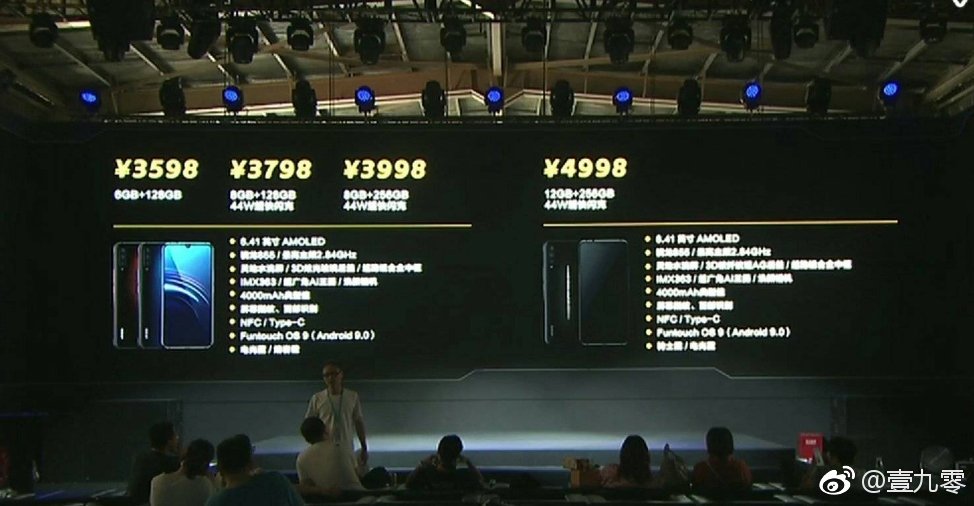
Thanks to a photo which seems to be from the presentation slide that will be used for tomorrow’s event, we know the iQOO phone will come in four variants.
The base model has 6GB of RAM and 128GB of storage. There is also a variant with 8GB of RAM which comes with 128GB or 256GB of storage. The highest configuration has 12GB of RAM and 256GB of storage.
The image shows that the base model will not have support for the new 44W fast charging technology like the other three models. Also, the 12GB RAM version will come in a special color variant different from the others.
Coming down to the price, the 6GB RAM version is said to be priced at ¥3598 (~$538). The 8GB RAM versions are priced at ¥3798 (~$567) and ¥3998 (~$597) respectively. If you want the highest configuration with 12GB of RAM, the price is ¥4998 (~$747).
The iQOO phone has a 6.41-inch AMOLED display, a Snapdragon 855 processor and a 4,000mAh battery. There is NFC and a USB Type-C port for connectivity. The device will ship with FunTouch OS based on Android 9 Pie.
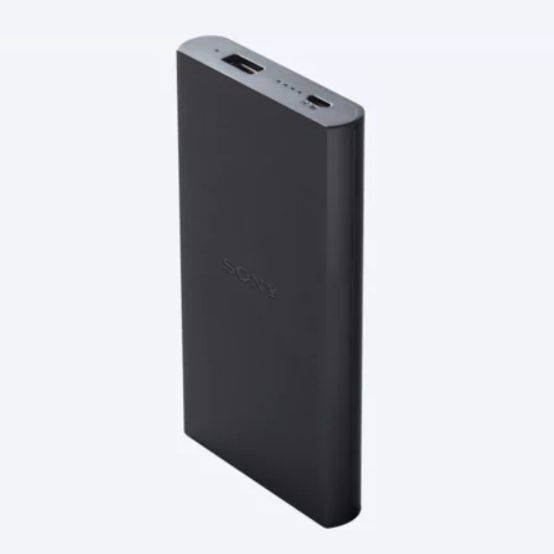
Sony is recalling certain batches of a power bank sold in Mainland China. The Japanese company issued a statement on its website requesting owners of the affected power banks to send them in and get a free replacement.
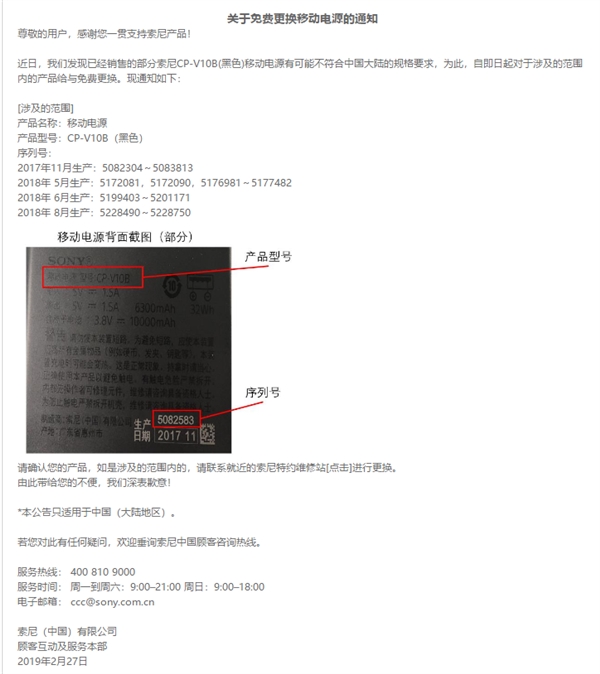
The affected power bank, the Sony CP-V10B (black only), covers a range of production dates and are said to not meet fire rating requirements for Mainland China. Below is the model number and production dates of the affected batches:
November 2017: 5082304 ~ 5083813
May 2018: 5172081, 5172090, 5176981 ~ 5177482
June 2018: 5199403 ~ 5201171
August 2018: 5228490 ~ 5228750
If your power bank falls under any of the above batches, you can take it to a Sony service station to have it replaced.
Back in May 2018, the Shenzhen Consumer Council, China Consumers Association, and the Futian District Consumer Council set up the Shenzhen Quality Consumption Research Institute to carry out a comparison test on mobile power banks.
The comparison test which was sent to Sony in July is said to have revealed the Sony power banks do not meet the fire rating requirements hence the need for the recall.
Samsung‘s changed its marketing strategy recently and it is just so obvious. The South Korean giant now releases smartphones from other series apart from the S series. The company has even introduced several new series with products manufactured for sales in specific regions like the Galaxy M10 and M20. Older series such as the Galaxy A series continues o see improvements like the rumoured Galaxy A90.
According to new and yet unconfirmed but seemingly reliable source, #Samsung#GalaxyA90 will come with a sliding and rotating camera system (kinda mix between Oppo Find X and Oppo N1 systems) which allows the camera to be used as front and rear camera depending its position… pic.twitter.com/A6NBRzFFvK
Samsung is already rumoured to be planning to the pop-up selfie camera design on the Galaxy A90. That may be right after all, as a new rumour has emerged that the tech giant is not only planning to bring a pop-up selfie camera but that the camera will have a rotating motor. What this means is that the same sensor will function for selfie shots and for the rear camera. The design is said to be like a hybrid between the Oppo Find X and the Oppo N1. We also got reminded of the Sony Clie PEG-NZ90 with a rotating camera that serves dual purposes too.
According to @OnLeaks who shared the leak on Twitter, it is still unconfirmed but the source is pretty reliable. Also, Samsung’s antecedence with the Galaxy A series in recent times makes this new rumour sound plausible. Samsung may just take us by surprise with this one. We’ll have to wait for more details to emerge.
5G is expected to completely change the way we use the internet and even our lives. 2019 is the year of 5G as, even though the new networks are still not available globally, the main smartphones manufacturers are already launching their first 5G handsets, while most of the important carriers are going to complete the final tests in order to enable the new connectivity. Samsung Galaxy S10 5G, LG V50 ThinQ 5G, and Xiaomi Mi Mix 3 5G are among the first 5G phones out there. Naturally, all of them are flagships and here is an in-depth comparison between their specs.
Samsung Galaxy S10 5G vs LG V50 ThinQ 5G vs Xiaomi Mi Mix 3 5G
Xiaomi Mi 9
LG V50 ThinQ 5G
Xiaomi Mi Mix 3 5G
DIMENSIONS AND WEIGHT
162.6 x 77.1 x 7.9 mm, 198 g
159.2 x 76.1 x 8.3 mm, 183 g
157.9 x 74.7 x 9.4 mm
DISPLAY
6.7 inches, 1440 x 3040p (Quad HD+), Dynamic AMOLED
6.4 inches, 1440 x 3120p (Quad HD+), P-OLED
6.39 inches, 1080 x 2340p (Full HD+), Super AMOLED
While LG V50 ThinQ 5G comes up with a standard notched design and it is nothing special in the looks department, Samsung Galaxy S10 5G both come with very original aesthetics. The former has in-display cameras in order to minimize bezels, while the latter opts for a slider design. I would personally prefer the Xiaomi Mi Mix 3 5G simply because it is much more compact than the Galaxy S10 5G, which is definitely too big due to its huge display. In case you are looking for the best build quality, then LG V50 ThinQ wins with its military and IP68 certification making it waterproof and drop resistant.
Display
There is definitely no challenge: Samsung Galaxy S10 5G is a clear winner. First, it has a much bigger display, excellent for productivity and multimedia. Second, it comes with the new Dynamic AMOLED technology that enhances color reproduction, and it is even HDR10+ compliant, unlike LG V50 ThinQ 5G and Xiaomi Mi Mix 3 5G. Last but not least, it has a more resistant panel thanks to the Gorilla Glass 6 protection. At the second place of the multimedia ranking, there is LG V50 ThinQ with its high QHD+ resolution, HDR and loud stereo speakers with Quad DAC. Xiaomi Mi Mix 3 5G has an above-average display, but nothing so surprising.
Hardware/Software
With up to 8 GB of RAM and 256 GB of internal storage, Samsung Galaxy S10 5G boasts the most advanced hardware department. And in its European version, it can even deliver better performances with 5G. Indeed, the European version is equipped with the Exynos 5100 modem that is more advanced than the Snapdragon X50 found on the U.S. version, as it is a multimode modem (supporting FDD and TDD, as well as mmWave). Samsung Galaxy S10 5G also boasts a very advanced Android customization: the new One UI based on Android Pie. Not saying that MIUI is inferior, but it is still an added value.
Camera
According to the first tests, Samsung Galaxy S10 5G also comes with a more advanced camera department. It is equipped with a quadruple camera on the back consisting of a main 12 MP sensor with a variable aperture, a telephoto lens, an ultrawide lens, and even a TOF camera. It shoots amazing photos in most of the conditions. Even the front cameras seem to be the best out there. LG V50 ThinQ should come right after with its rear triple camera (telephoto + ultrawide lens) and a dual wide-angle front camera. Xiaomi Mi Mix 3 5G is an outstanding camera phone, but it is nowhere able to compete with the quadruple cameras of the Samsung Galaxy S10 5G, neither with its dual camera setup on the front side. And it may not even be at the same level as the LG V50 ThinQ 5G.
Battery
There are no big differences between the battery capacities of these flagships, just 300 mAh between the smallest and the biggest one. So what will really make the difference? Obviously the hardware and software optimization. Samsung is usually very good at optimizing its phones energy consumption, as well as Xiaomi. So, it will be a hard battle. However, I would choose Samsung Galaxy S10 5G because it supports a faster wireless charging technology as well as reverse wireless charging (it can be used as a wireless power bank to charge other devices).
Price
Given that these devices are still not in the market, do not expect to know all their prices soon. We already know that Xiaomi Mi Mix 3 5G will cost €600/$683 globally, while we do not know anything about LG V50 ThinQ and Samsung Galaxy S10 5G pricing. We expect the first to cost at least $900/€790, while the second will surely go on sale for more than $1000/€880.
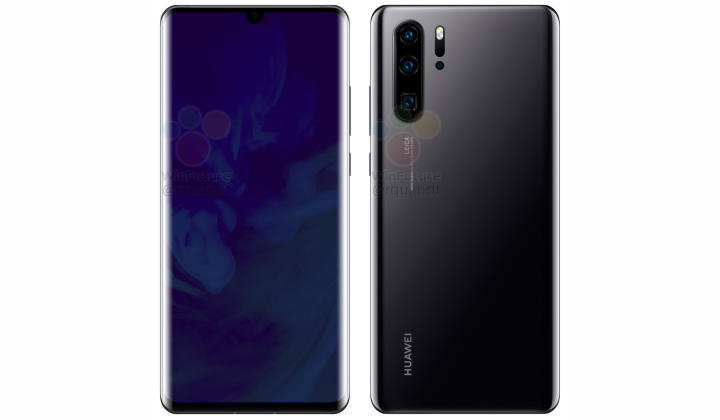
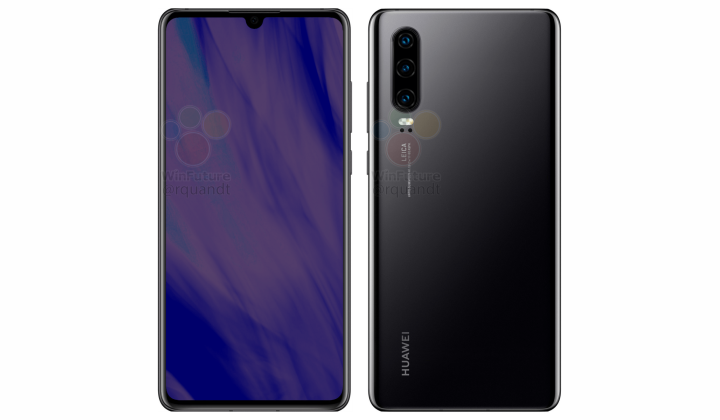
Huawei used the Mobile World Congress (MWC) 2019 platform to announce the 5G enabled Huawei Mate X foldable phone. On March 26, the Chinese manufacturer will be debuting its new flagship phones. It is very likely that the Huawei P30 and Huawei P30 Pro flagship phones will be unveiled through March’s event. Well ahead of the March event, reliable tipster Roland Quandt has shared the renders of the Huawei P30 and P30 Pro smartphones.
Huawei P30 Pro Renders
The Huawei P30 Pro’s rear panel reveals that it features three vertically mounted sensors along with a separately placed fourth sensor. Probably, the fourth sensor could be a 3D ToF (Time of Flight) sensor.
The quad camera setup of the P30 Pro is expected to carry support for 10x hybrid zoom. However, there is no confirmation on what kind of technology Huawei will be using to make it possible. Above the fourth sensor is a module that contains a dual LED flash and a laser autofocus. The text mentioned near the camera setup reveals that carries support for f/1.6 to f/3.4 variable aperture.
The front side of the phone features a waterdrop-style notch screen. Rumors have it that it features a 6.5-inch curved OLED panel with in-display fingerprint reader. The screen is surrounded by narrow bezels. The leaked renders reveal that the P30 will be available in colors likes Black, Sea Green and Electric Blue.
Huawei P30 Pro Renders
The Huawei P30 handset sports the same front design as the P30 Pro. It is speculated that it will be arriving with a 6-inch OLED display with under-display fingerprint sensor.
The major difference between the two handsets is that the P30 Pro has triple rear-mounted cameras and a flat screen. The P30 will be coming with a 3.5mm audio jack, while the feature will not be available on the P30 Pro. The P30 will be also available in some color variants as the P30 Pro model.
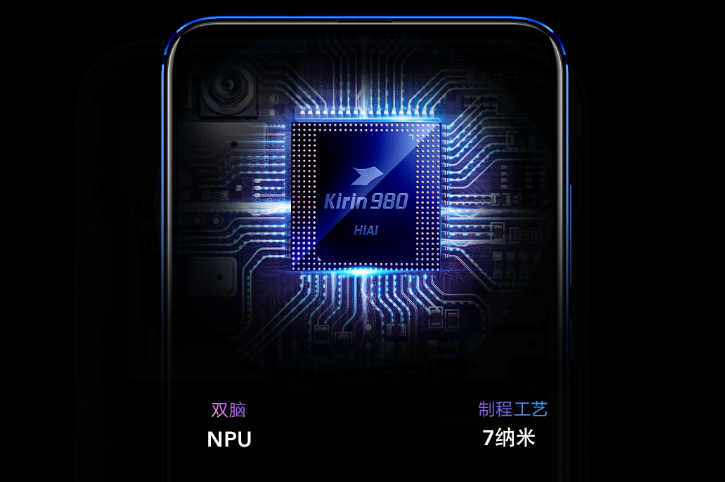
In December, reliable tipster Evan Blass had stated that the P30 will offer a maximum resolution of 40-megapixel and 5x loseless zoom. He had also stated the P30 will be equipped with a front-facing camera of 24-megapixel. The Kirin 980 SoC is expected to power both phones and rumors have it that there will be a 5G enabled version of the Huawei P30 Pro.
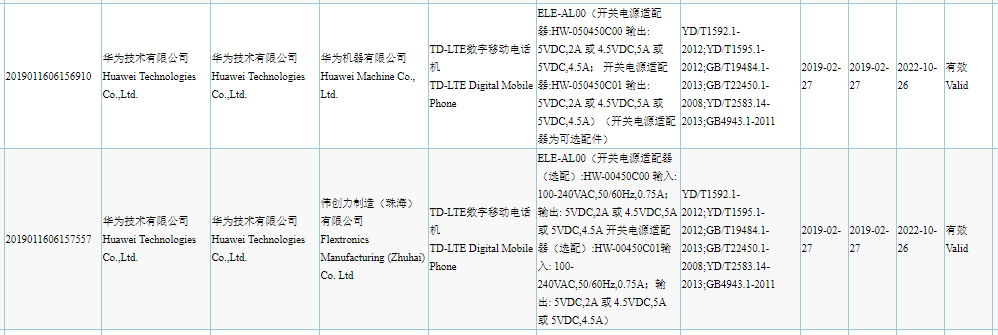
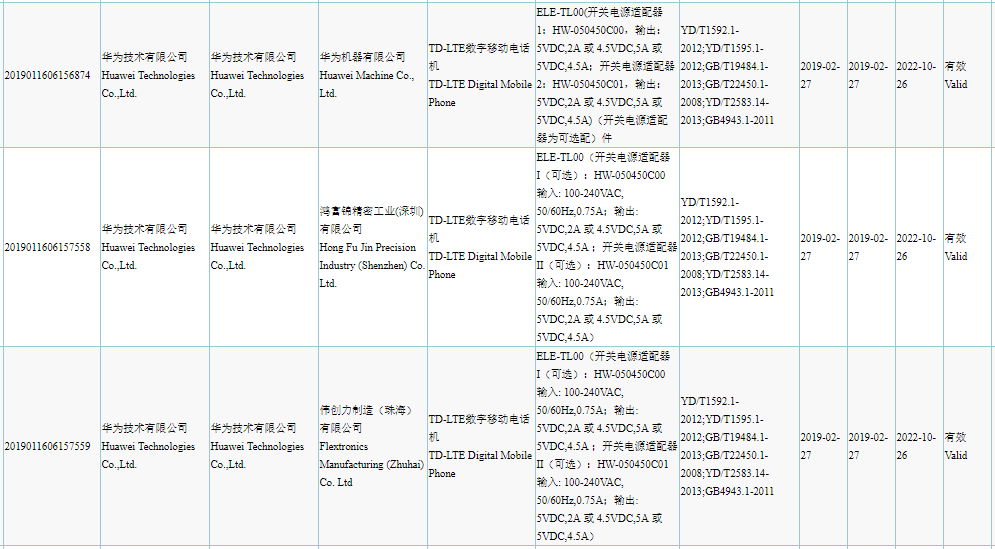
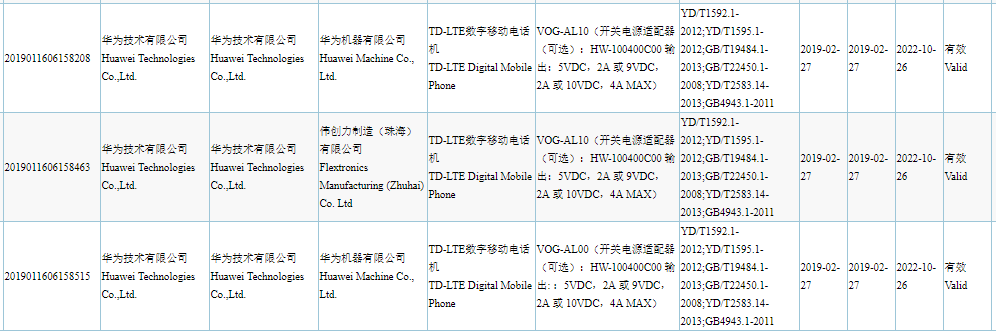
The Huawei P30 and P30 Pro have both been certified by 3C authority in China. The 3C has approved VOL-AL00, VOG-AL10 and VOG-TL00 variants that belong to P30 Pro and it has also certified P30 variants such as ELE-AL00 and ELE-TL00. The 3C approvals reveal that the P30 will carry support 22.5W fast charging whereas the P30 Pro will be coming with amazing 40W rapid charging technology.
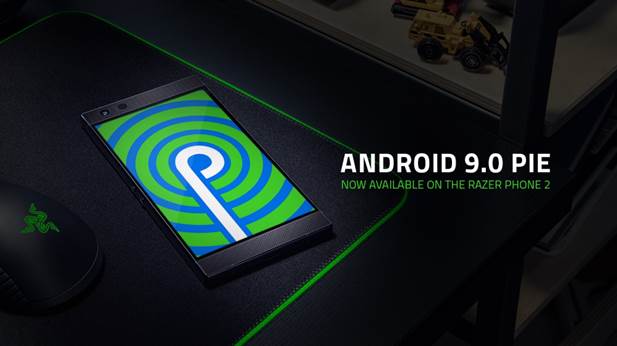
Gaming smartphone manufacturer Razer launched the Razer Phone 2 in October last year, two months after Google released its latest Android version. Despite that, the gaming phone launched with Android 8.1 Oreo OS at its heart. Ordinarily, users were expecting the manufacturer to release an update not too long after the launch. However, that lingered until last week when Razer hinted that the Razer Phone 2 will get Android Pie update on February 27. As scheduled, Android 9.0 Pie update is now available for the Razer Phone 2.
The new Pie update will see the phone “operate more intuitively, more efficiently utilize its battery and significantly enhance the user experience for gaming and entertainment”. The phone maker did not reveal many details of what the new update brings to the table but it should be noted that the Phone 2 runs stock Android. So, the device will get all the new features which Android Pie brings. One of such features is Gesture navigation which yours sincerely is enjoying on my Redmi Note 6 Pro.
For now, only the unlocked Razer Phone 2 models are getting the Android Pie update. The AT&T model is scheduled to get the update on April 4th, if Razer sticks to schedule. Unfortunately, the gaming phone maker is yet to reveal when the original Razer phone will get Android Pie.
The iQOO smartphone by Vivo was spotted on TENAA yesterday and while the listing revealed all its specs, there were no images. It has now been updated with photos of the device.
The TENAA listing said the phone will come in gold but the images are of the blue variant. The iQOO phone has a waterdrop notch that houses the selfie camera. There is a bit of bezel at the bottom.
[envira-gallery id=”238806″]
The back is more interesting. Covered in glass like a lot of other phones, Vivo has added this interesting rainbow-colored line in the middle surrounded by similarly colored lines in a pattern similar to magnetic fields for a unique finish. At the top left corner is a triple-camera setup with an LED flash below.
The words “Vivo Snapdragon 855” is engraved at the bottom of the phone. There is no fingerprint scanner on the back. TENAA already revealed it has an in-display fingerprint scanner.
The right side of the phone is home to the volume rocker and power button which have a neon blue color. There is another neon blue button on the left, probably for the AI assistant.
Apart from these images, there is also a hands-on video of the phone. Thankfully, this is of another color variant. It also has a similar design but a different color. However, at the back, it has “iQOO” written at the bottom and not “Vivo Snapdragon 855”.
The video reveals the phone runs Funtouch OS based on Android 9.0, has dual SIM support, and 12GB of RAM. The video confirms the display is 6.4-inches with a 2340 x 1080 resolution.
Huawei‘s smartphone business is soaring, edging out Apple to emerge as the second-largest smartphone maker after Samsung in 2018. Samsung must continue watching its back as the Chinese company continues to make efforts to maintain its growing leadership in the industry. One aspect where Huawei has made tremendous progress is in the aspect of the chipset and according to industry sources, we should expect more innovation from Huawei.
Huawei is said to be looking to maintain its lead over Apple and is targeting shipments of 250-260 million units in the year. This projection is buoyed by shipments of its high-end P- and Mate-series models and the entry-level and mid-tier Honor sub-brand models. In addition, Huawei has made significant strides in the aspect of the development of its chipset and is looking to further improve on them. Huawei’s chipset accounts for over 50% of the chipset solution market for 4K TVs in China. The company consolidated on this lead recently when it unveiled its chipset solutions for 8K TVs at CES 2019 to cash in on the rising popularity of 8K TVs. The company’s 8K TV solutions have also seen some patronage from not only Chinese TV manufacturers but also from Japan-based Sharp.
Apart from building on the successes of the Hisilicon chipset for mobile phones, Huawei has also launched its Ascend series AI chips and Arm-based Kunpeng series server CPUs, in addition to TV chips. A recent data by Gartner showed that Huawei’s spending on semiconductor products have increased by 45% YoY to over US$21 billion in 2018. This ranks the company as the third largest buyer of IC chips globally last year, trailing Samsung Electronics and Apple but ahead of Dell. This underscores the company’s growing investments in chipset manufacturer. Huawei still doesn’t sell its Kirin chipset to other OEMs. If they start doing that, the sky can only be its starting point in the race to dominate the industry.
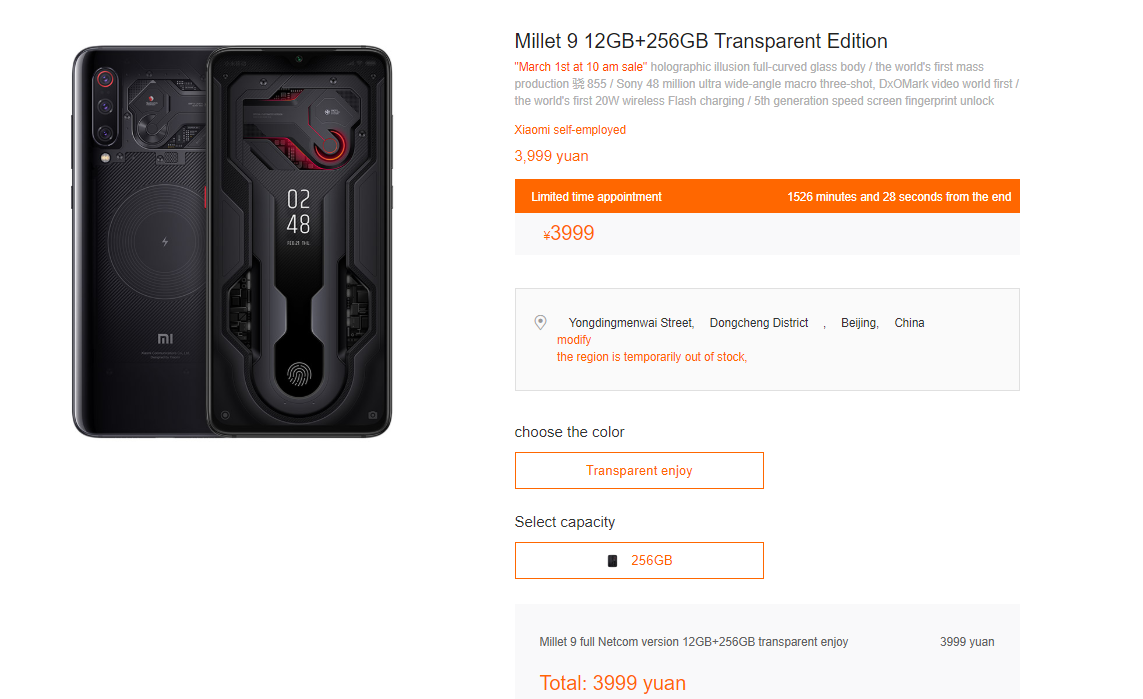
The Mi 9 Transparent Edition is Xiaomi’s first phone with 12GB of RAM. But that is not the only thing that sets it apart from the regular Mi 9. It also has a different design thanks to its see-through glass. Also, its 48MP rear camera has an f/1.47 aperture and a 7P lens.
While the standard variant of the Mi 9 has already had its first sale, tomorrow is the first time the Mi 9 Transparent Edition will be available for purchase. According to Xiaomi, it will go on sale at 10 a.m. (local time) for ¥3999 (~$598). If you will be buying from resellers, expect to pay higher than that.
Xiaomi’s founder revealed in a post that the Mi 9 Transparent Edition undergoes a different production process. The phone has to be assembled in a room that is totally dust-free. It also has to be packaged and transported in a dust-free environment.
Just like the standard Mi 9, it also has a 6.39-inch AMOLED display with a water-drop notch. The display is covered with Gorilla Glass 6. There is a Snapdragon 855 processor paired with the RAM and storage is 256GB.
Its 48MP f/1.47 main rear camera is paired with a 12MP telephoto lens and a 16MP super-wide angle lens. All three cameras are covered with a single piece of sapphire glass. It also has a 20MP front-facing camera.
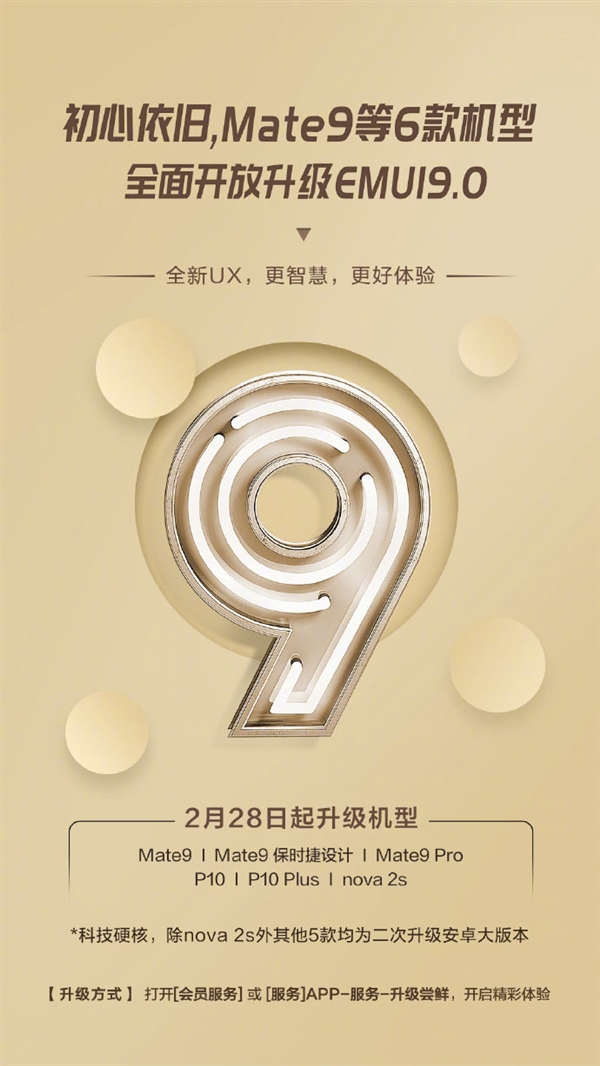
Huawei has announced that its EMUI 9 update has begun rolling out to some of its older flagships. These devices include the Mate 9 series (Mate 9, Mate 9 Pro, and Mate 9 Porsche Design) which all originally launched with EMUI 5.0 based on Android Nougat.
The Mate 9 series was announced back in 2016 and came with Nougat pre-installed. They later got updated to EMUI 8.0 based on Android Oreo in 2017 and now they are getting upgraded to Android Pie.
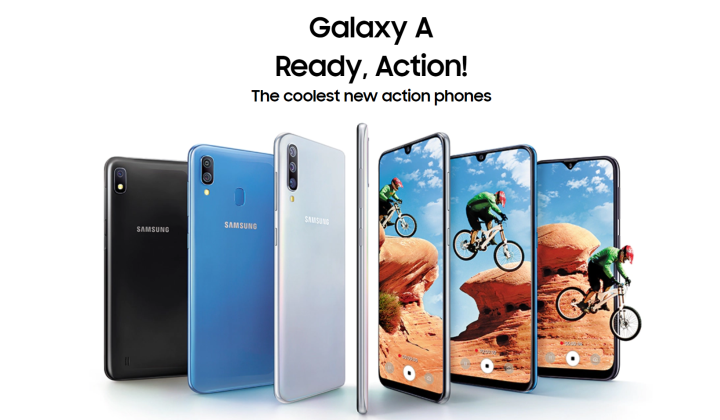
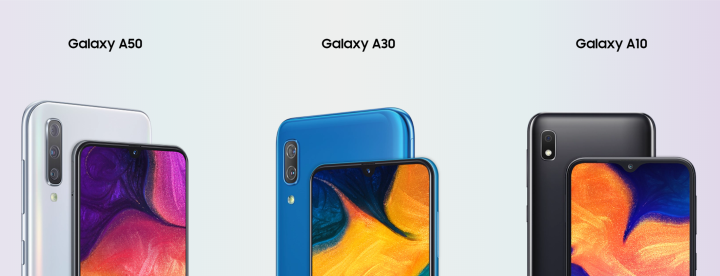
Samsung has launched Galaxy A10, Galaxy A30 and Galaxy A50 smartphones in India. Aimed towards the millennials, the A30 and A50 are mid-range devices whereas the A10 is an entry-level smartphone. Unlike the Galaxy series phones such as M10, M20 and M30 that are exclusively available online, the newly unveiled Galaxy A10, A30 and A50 phones are available for purchase through offline and online stores.
Samsung Galaxy A50, A30 and A10 Specifications and Features
The Galaxy A50 and Galaxy A30 are equipped with similar specs. The Galaxy A50 features a 6.4-inch S-AMOLED display with Infinity-U notch design. It carries support for full HD+ resolution of 1080 x 2340 pixels and 91.6 percent screen space. The Galaxy A30 flaunts the same display. The Galaxy A50 is fitted with an in-display fingerprint scanner whereas the A30 has a rear-mounted fingerprint sensor. When it comes to design, both phones are equipped with 3D Glasstic that is nothing but glossy plastic chassis.
The Galaxy A50 is the first smartphone to feature the Exynos 9610 chipset. The SoC is supported by up to 6 GB of RAM. It is equipped with an internal storage of 64 GB. The Galaxy A30 is powered by Exynos 7904 phones that also drives the recently released Galaxy M30 and Galaxy M20 smartphones. It features 4 GB of RAM and 64 GB of native storage. The 15W fast charging through USB-C enabled 4,000mAh batteries are packed inside both phones.
The Galaxy A50 Is blessed with a triple camera unit that includes a 25-megapixel primary sensor with autofocus and f/1.7 aperture, a 5-megapixel depth sensor with f/2.2 aperture and an 8-megapixel ultra wide-angle sensor with f/2.2 aperture. It has a front-facing camera of 25-megapixel. Meanwhile, the Galaxy A30 has a dual camera setup with f/1.6 aperture 16-megapixel main sensor and 5-megapixel ultra wide-angle lens. The selfie notch of the A30 is the home for f/2.0 aperture 16-megapixel front-facing camera.
The Galaxy A10 is a weaker phone compared to the Galaxy A30 and A50 phones. It has a 6.2-inch Infinity-V display design enabled LCD panel that supports HD+ resolution of 720 x 1520 pixels. The Exynos 7884 SoC, 2 GB of RAM and 3,400mAh battery are present under the hood of the device. It has an inbuilt storage of 32 GB. The back panel of the phone has a 13-megapixel sensor with f/1.9 aperture. The A10 offers its users with f/2.0 aperture 5-megapixel selfie shooter. It lacks support for fingerprint sensor.
The newly Galaxy A series phones are all preloaded with One UI based Android 9 Pie OS. They are also equipped with microSD card slots for additional storage. The A10, A30 and A50 are packed with usual connectivity features such as dual-SIM support, 4G LTE, Wi-Fi, GPS and 3.5mm audio jack.
Samsung Galaxy A50, A30 and A10 Price and Release Date
The 4 GB and 6 GB RAM editions of the Galaxy A50 are respectively priced at Rs. 19,990 (~$279) and Rs. 22,990 (~$325). The Galaxy A30 costs Rs. 16,990 (~$239) whereas the Galaxy A10 carries a price tag of Rs. 8,490 (~$119).
Xiaomi is already looking for new recommendations to improve the User Interface and other features of their devices. The company always keep a tap on the suggestions from its users via Mi Community. Similarly, Xiaomi is going to add Persistent Lockscreen feature to the MIUI on the recommendation of the Mi community members. In an update via MIUI official Weibo handle, the company said that it will allow users to switch whether they want the slide to unlock feature or directly wants to face unlock the device.
MIUI is terming this new feature as Persistent Lockscreen and will soon be available on the devices. The need for such a feature arises when most of the users tend to see the time or other notifications on the lockscreen rather than unlocking the device. As of now, to see the notification while keeping the phone locked, users have to place the device in an unusual position. It is done so it won’t detect their face and unlocks the device. It is a cumbersome practice for many users.
As detailed on Mi community forums, the feature will add additional “Swipe to Unlock” function if the Persistent Unlock feature is turned on. It will also give an option to permanently turn off the function and use the device as usual.
This new aspect of continuously improving the operating system has enhanced the MIUI functionality even in the old devices. According to official data, Xiaomi new devices perform 50% faster at launch, but after some time, the performance increases by 85% due to updations and refinements. Moreover, the new improvements update policy will not only cater the high-end devices, soon it will be directed towards every Xiaomi devices including Redmi phones too, said Lin Bin, President of Xiaomi.
Along with the Persistent Unlock feature, MIUI is continually improving the functional aspects of the ROM. It is continuously optimizing the performance, and other aspects of the ROM by providing new updates.
We hope Persistent unlock would solve all the issues that people are currently facing with face unlock on Xiaomi devices.
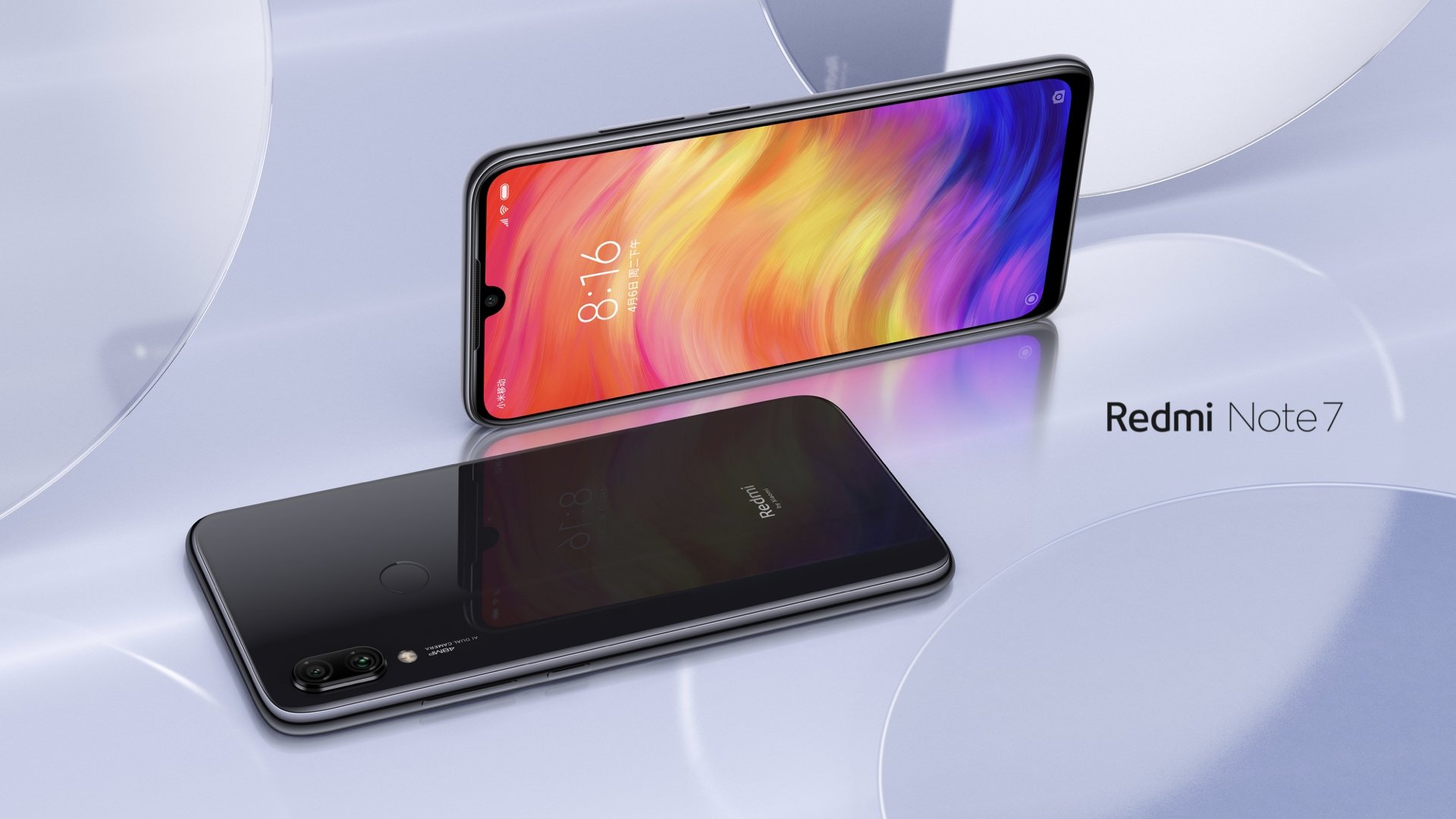
Along with the Redmi Note 7 Pro, at its launch event in New Delhi, Xiaomi has also launched the Redmi Note 7 smartphone in the Indian market. The phone was first introduced in China last month after Redmi split from Xiaomi to run independently.
The Xiaomi Redmi Note 7 is priced at Rs. 9,999 (approximately $141) for the 3GB RAM model while the 4GB RAM model costs Rs. 11,999 (approximately $169). Both the models will be available for purchase in India from 6th March, exclusively through online marketplace Flipkart and Mi.com. It will be available in three color options – Onyx Black, Ruby Red, and Sapphire Blue.
Just like the Redmi Note 7 Pro, this one too follows Xiaomi‘s new “Aura Design” philosophy. The glass-bodied smartphone features a 2.5D curved glass on both the sides, protected by Gorilla Glass 5.
It features a 6.3-inch Full-HD+ “dot notch” display with 2340 x 1080 pixels screen resolution, 19.5:9 aspect ratio, and 409ppi pixel density. Under the hood, it packs Qualcomm’s Snapdragon 660 octa-core processor, clocked at 2.2 GHz and coupled with Adreno 512 GPU.
The phone comes in two variants — 3GB RAM and 4GB RAM. The 3GB RAM model has 32GB internal storage while the 4GB RAM model comes with 64GB internal storage. There’s a microSD card slot for expanding the phone’s storage capacity up to 256GB.
Coming to the camera department, the smartphone features a dual camera setup on the back, however, the Indian variant has a different camera configuration than the one launched in China. It consists of a 12-megapixel primary sensor and a 2-megapixel secondary sensor with support for PDAF, Super Night Mode, EIS, Portrait Mode, AI Scene Recognition, and HDR.
It also comes with support for 1080p video recording at 30/60 FPS, 720p video recording at 30 FPS, and 1080/720p slow-motion video recording at 120 FPS. On the front side, the device features a 13-megapixel sensor with AI Portrait Mode, AI Smart Beauty, HDR, and AI Scene Recognition.
The phone runs Android 9 Pie-based MIUI 10 operating system out-of-the-box. Connectivity options on the device include Dual 4G VoLTE, GPS, Bluetooth 5.0, Wi-Fi 802.11 a/b/g/n/ac, 3.5 mm headphone jack, and USB Type-C.
There’s also a 3.5mm headphone jack, a rear-mounted fingerprint sensor, and an IR blaster. It also comes with a splash resistant P2i nano-coating, protecting the device from water splash and raindrops. The phone is powered by a 4,000mAh battery and supports Quick Charge 4.0 fast charging technology.
As of today, there are two major foldable products in the market, the Mate X from Huawei and the Galaxy Fold from Samsung. But after hearing the statements from multiple brands at MWC 2019, it’s quite clear that everyone wants a piece of this market. Eventually, almost all the major smartphone brands will have a foldable product under their belt, and Honor will be no exception.
Given that Huawei already has a foldable product in its lineup, it wouldn’t have been wrong to think Honor might skip on such a product. But the company’s CEO George Zhao has confirmed that they are considering releasing a foldable in the near future.
However, at present, the product’s exorbitant price tag won’t be in line with Honor’s focus on products aimed at the young generation. So, the company has decided to wait out until the production ramps up and the manufacturing price of foldables go down. So, you’ll most likely have to wait until 2020 to see a foldable smartphone from the brand.
“For Honor I think we will find a way to make this so our target customer can have a foldable phone. I think next year; next year … should be the moment.” said Mr. Zhao in an interview with CNET this week.
In the same interview, he further confirmed that Honor will have a 5G smartphone this year itself. This isn’t surprising given that literally, everyone is on board the 5G hype this year. This includes OnePlus, which showed off its 5G prototype (albeit enclosed in a box) at the tech show a couple of days back.
Zhao further added that he was a fan of Mate X’s design. That doesn’t necessarily mean that we’ll see a Mate X lookalike from Honor. We have seen the brand release some really impressive phones in the past few months like the Honor V20. So, when Honor does make a foldable, it could be different from Huawei’s take on the design.
Xiaomi, which has been teasing the launch of Redmi Note 7 smartphone in the Indian market since the past few weeks, has surprisingly launched its Redmi Note 7 Pro smartphone in the Indian market.
In terms of design, Xiaomi says that the Redmi Note 7 Pro comes with a new “Aura Design” — Xiaomi’s new design philosophy. The company claims that it beautifully marries an immersive experience with fine craftsmanship and functional design.
Coming to the phone’s specifications, it boasts a 6.3-inch Full HD+ display with 19.5:9 aspect ratio, 450 nits brightness and 15000:1 contrast ratio. The bezels surrounding the display measures just 1.95mm. It also comes with Sunlight Display mode and Reading mode.
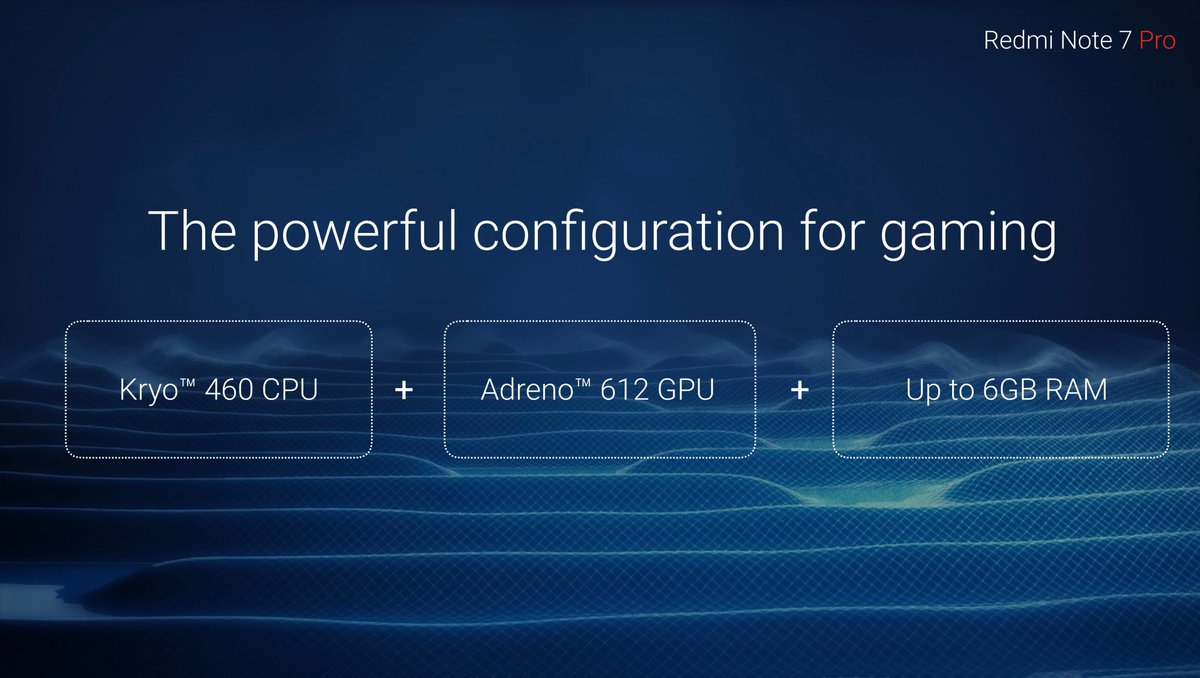
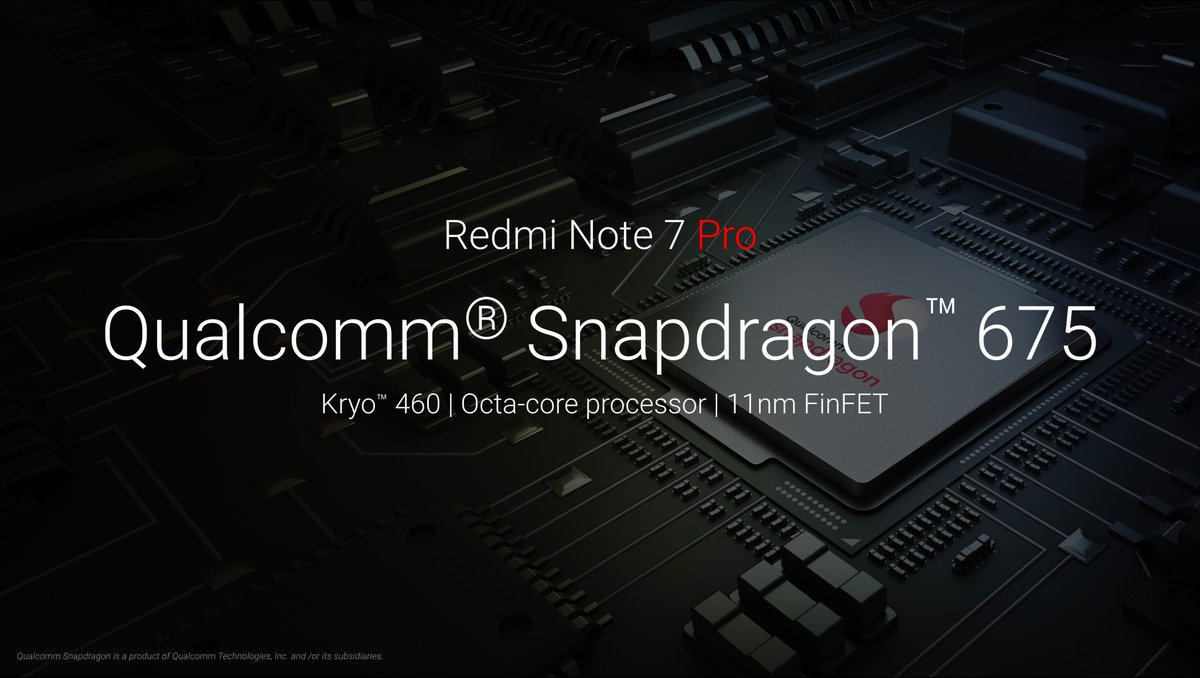
The phone comes with a 2.5D curved glass on the front as well as back, which is protected by Corning Gorilla Glass 5 on both the sides, protecting it from minor scratches. Under the hood, the device is powered by the latest Qualcomm Snapdragon 675 octa-core chipset which is manufactured using the 11nm FinFET process, coupled with Adreno 612 GPU.
It comes in two variants — 4GB RAM and 6GB RAM. While the 4GB RAM model packs 64GB of internal storage, the 6GB RAM model comes with 128GB of internal storage. There’s also a microSD card slot that enables users to further expand the phone’s storage capacity up to 512GB.
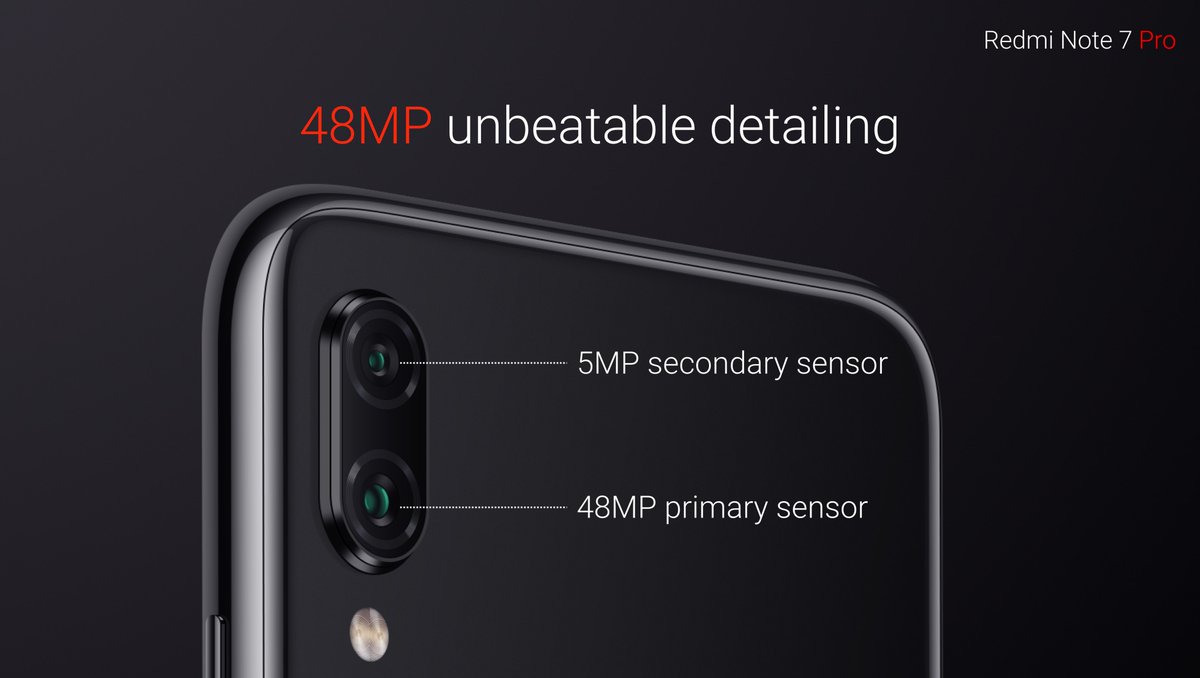
In the camera department, the smartphone features a dual camera setup on the back, consisting of a 48-megapixel primary Sony IMX586 sensor with f/1.79 aperture and a 5-megapixel secondary sensor for depth sensing along with an LED flash. For the first time, the company has also introduced an AI-powered Steady handheld night photography mode.
The camera retains EIS and features AI Portrait 2.0, Studio Lighting, Studio Lighting Live Preview and comes with support for 4K video recording at 30fps. On the front side, it is equipped with a 13-megapixel front-facing camera with AI Beautify, Studio Lighting. Scene Detection, Portrait Selfie, etc. It also supports AI Face Unlock feature.
The phone has retained the 3.5mm headphone jack and comes with a USB Type-C port — a first for the Redmi Note series smartphone. There’s also an IR blaster which comes in handy for controlling electronics products.
Along with the usual set of connectivity options, it also supports Dual SIM and Dual VoLTE. In terms of software, the phone is running the company’s own MIUI 10 based on Android 9 Pie operating system out-of-the-box.
The device is powered by a 4,000mAh battery with support for 18W Quick Charge 4 fast charging support. The company claims that it offers 14 days of standby time, 45 hours of talktime and 8.5 hours of gaming.
The Redmi Note 7 Pro will be available in three color options — Neptune Blue, Nebula Red, and Classic Red. While the Neptune Blue and Nebula Red comes with a gradient finish, the Classic Black has a solid matte color finish.
The Xiaomi Redmi Note 7 Pro is priced at Rs. 13,999 (approximately $197) for the 4GB RAM + 64GB storage model while the 6GB RAM + 128GB storage model is priced at Rs. 16,999 (approximately $239). The smartphone will go on sale in India from 13th March through Xiaomi’s online store and Flipkart.
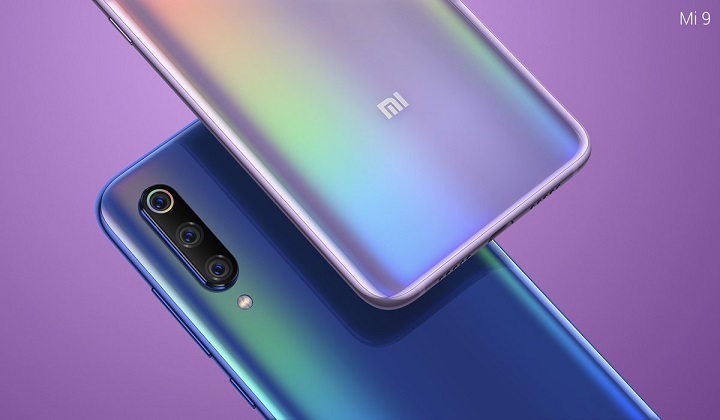
Recently, Xiaomi announced its new flagship device Mi 9 at MWC 2019 in Barcelona. The Chinese smartphone maker also announced the 5G powered Xiaomi Mi Mix 3, yet it’s not available for purchase. The Xiaomi Mi 9 has been put on first flash sale on Monday in China where it went out of stock within 53 seconds. The demand for the device is quite high due to Xiaomi’s popularity which was seen last week when 1 million reservations took place just within 24 hours at JD.com. Xiaomi Mi 9’s affordability and high-end specs consisting Snapdragon 855 and triple rear cameras are also a reason behind its huge demand.
In order to tackle the growing demand of the recently launched flagship device, Xiaomi has said that they will ship 1 million units by next month. It will ensure a stable supply despite the immense sales. Xiaomi said in a statement on its official Weibo handle that the company has already stocked a large number of units to meet the demand. Users will be able to buy the new device either from offline Xiaomi Home experience and other retail stores or online flash sales. The next flash sale is slated for March 5 at 10 am (Beijing Time) via different online retailers in the country.
Moreover, Xiaomi’s vice president and head of the supply chain, Zhang Feng said that 1 million units would be shipped next month. He added that the shipments would surpass the total shipments of Redmi Note 7 within a month. In other words, Xiaomi Mi 9 will register more than a million units sale by the next month.
Additionally, Xiaomi Mi 9 packs Snapdragon 855 SoC with 6/8GB RAM variants. It is available with 6.39 super AMOLED display having 1080 x 2340 pixels resolution. It comes in 64/128/256 GB internal storage variants. The Chinese smartphone maker has added a triple rear camera module with 48-megapixel primary camera + 16-megapixel ultrawide sensor + 12-megapixel telephoto lens. On the front side, the company has added a 20-megapixel front-facing camera for beautiful selfies and video calling.
It runs on Android 9.0 Pie and packs 3300 mAh battery with Quick Charge 4+. Xiaomi Mi 9 is the world’s first device to support 20W wireless charging supporting Qi wireless + Quick Charge protocols.
Xiaomi is aiming at high number of Mi 9 sales within the next couple of months. In order to tackle the demand, the company is working hard to mass produce the units and keep the bulk in stock. Moreover, Xiaomi Mi 9se is arriving in China tomorrow.
Well, how many here are going to own a Xiaomi Mi 9?
After the launch of foldable phones from Samsung and Huawei, few other manufacturers have also started to publicize their foldable phone developments. Recently, Motorola has informed about their foldable phone development in an interview. Motorola’s Vice President of Global Product Dan Dery has confirmed it an interview along with some new details.
Already, there were rumors that Motorola is developing a foldable device and the recent interview has confirmed it. Talking about the device, Dan Dery said that Motorola is actively working to debut foldable device and would launch “[no] later than everybody else in the market.” He further quoted that “We started to work on foldable a long time ago.” Dan said, “And we have been doing a lot of iteration.”
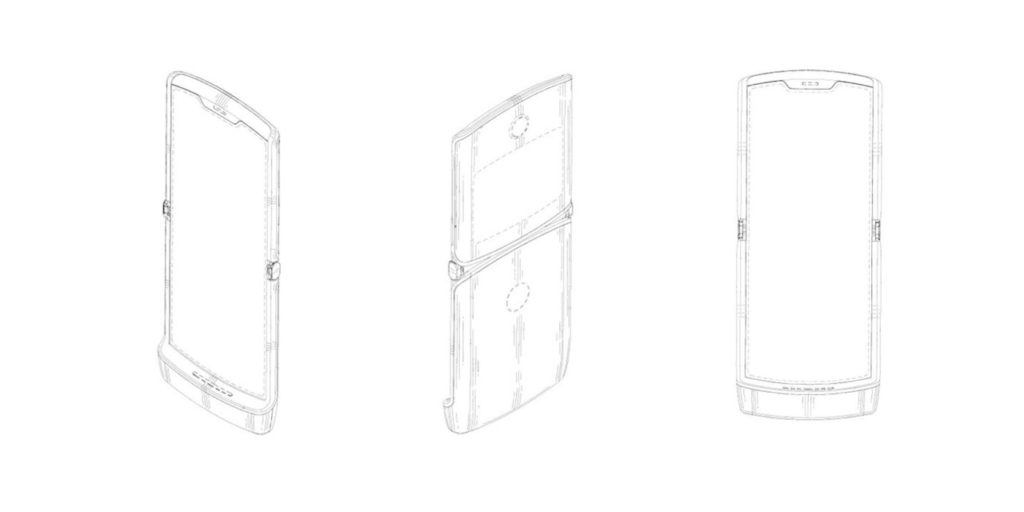
The above sayings from Motorola’s VP confirm the recent reports that have been published on The Wall Street Journal. The new device would bend inwards alike RAZR flip phones.
Although Motorola didn’t point any exact day for the launch, rather they have put a timeline at sometime this year. It appears Motorola’s foldable smartphone would appear along with the Galaxy Fold and Huawei Mate X in the second half of the year. Moreover, the Lenovo owned company is speculated to debut the foldable device at its annual conference in August.
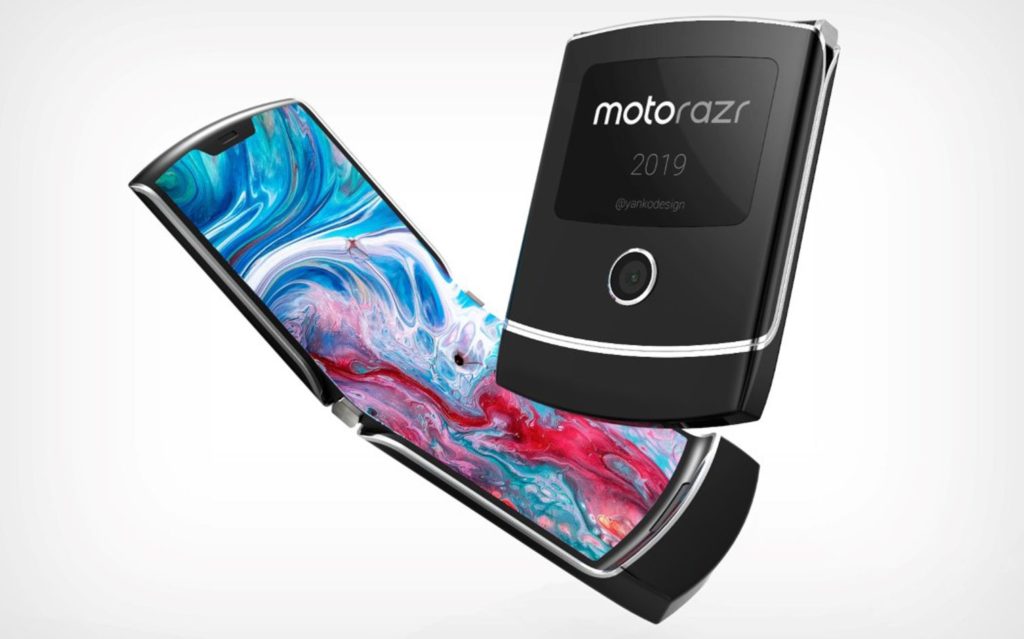
Moreover, Dery confirms some vague details about the device which we have already seen in Motorola’s patent filing. The new device will come with RAZR like style carrying display inwards. It would not feature the display outwards as like we have seen on the Samsung Galaxy Fold and Moto Mate X. Its design aesthetics will match to that of old RAZR flip phones.
Credit: Yakon Design
Dery notes that the Motorola is looking for different designs which can minimize the scratches while handling it. In a similar question, Dan said, “We have been testing a plastic OLED device with plastic film on top.” “The fact that you’re touching [that kind of display] with your nails is scratching it. It has a short life right away, it starts dying the day you unpack it.”
Motorola is testing different designs packing singular display which can decrease scratch related defects. “When you know the scratching issues you would be facing, you will have something that is very rapidly not usable,” said Dery.
Overall, Motorola RAZR phones are making a comeback with foldable displays. Additionally, as per the recent report from The Wall Street Journal, the new Motorola foldable device would be priced around $1500. The price was disagreeable until last month, but now it seems to fit in the bracket after the launch of Galaxy Fold at $2000 and Mate X at ~$2600.
It would be interesting to see such different approaches of foldable devices launching in coming time. Well, how many of you’re eagerly waiting for the foldable devices?
Alfawise is known for offering a wide range of household solutions including home electronics, home improvement and kitchen appliances that enhance your overall home living experience.
The company has now teamed-up with GearBest to offer Alfawise LCD Resin Filament for 3D Printer and Alfawise U30 2.8 inch Touch Screen DIY Desktop 3D Printer at lowered prices.
Alfawise LCD Resin Filament for 3D Printer
Model printed has polished surface, high accuracy, and stability. It features low shrinkage, well-balanced flexibility, and toughness.
This safe-to-use Alfawise LCD Resin Filament has little smell. Moreover, it can effectively resist deformation over time.
The Alfawise LCD Resin Filament is a great choice for craftwork design, eyeglasses, clock, archaeological model, education and industrial parts, garage kits.
While the market is brimming with all sorts of resin filaments for 3D printers, they aren’t easy on the pocketbook.
The Alfawise LCD Resin Filament, on the other hand, is now up for grabs bearing a reduced price of just $39.99 on GearBest.
This is a noteworthy 6 percent drop in its original asking price of $42.68.
You can follow this link to grab the discount, which will be valid for the red, white and blue color versions.
Alternatively, you can get an 18 percent off on the yellow color version of the Alfawise LCD Resin Filament.
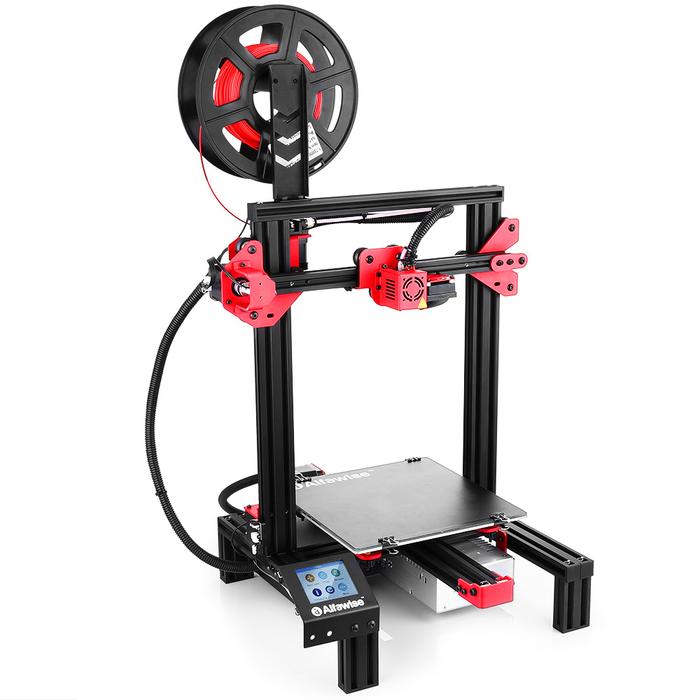
Alfawise U30 2.8 Inch Touch Screen DIY Desktop 3D Printer
Ideal for both professionals and amateurs, the Alfawise U30 is an irresistible 3D printer. It helps users to train their hands-on ability and can be assembled in just one hour.
Much to the delight of DIY enthusiasts, the Alfawise U30 boasts a high cost-performance ratio, paired with a large build volume of 220 x 220 x 250mm for nearly all challenges.
While the aforesaid features justify the steep $245.99 price tag it usually carries, you can now buy the Alfawise U30 for a dropped price of just $179.99 on GearBest. This is a noteworthy 27 percent reduction in the 3D printer’s original asking price.
You can visit this link to grab the discount, which will be valid for the black color version of the desktop 3D printer. With 181 pieces remaining, the promo is slated to end in four days.
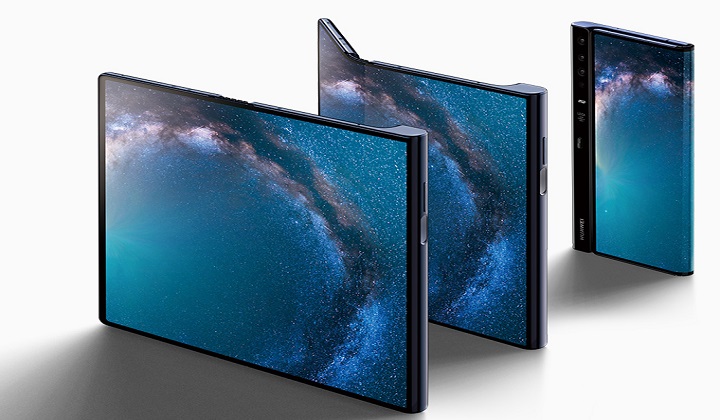
Earlier this week, during the Mobile World Congress (MWC 2019), China-based Huawei announced the Huawei Mate X — the brand’s first smartphone to feature a foldable display and 5G connectivity. However, it’s not a viable option for many, especially given the price tag of €2,299.
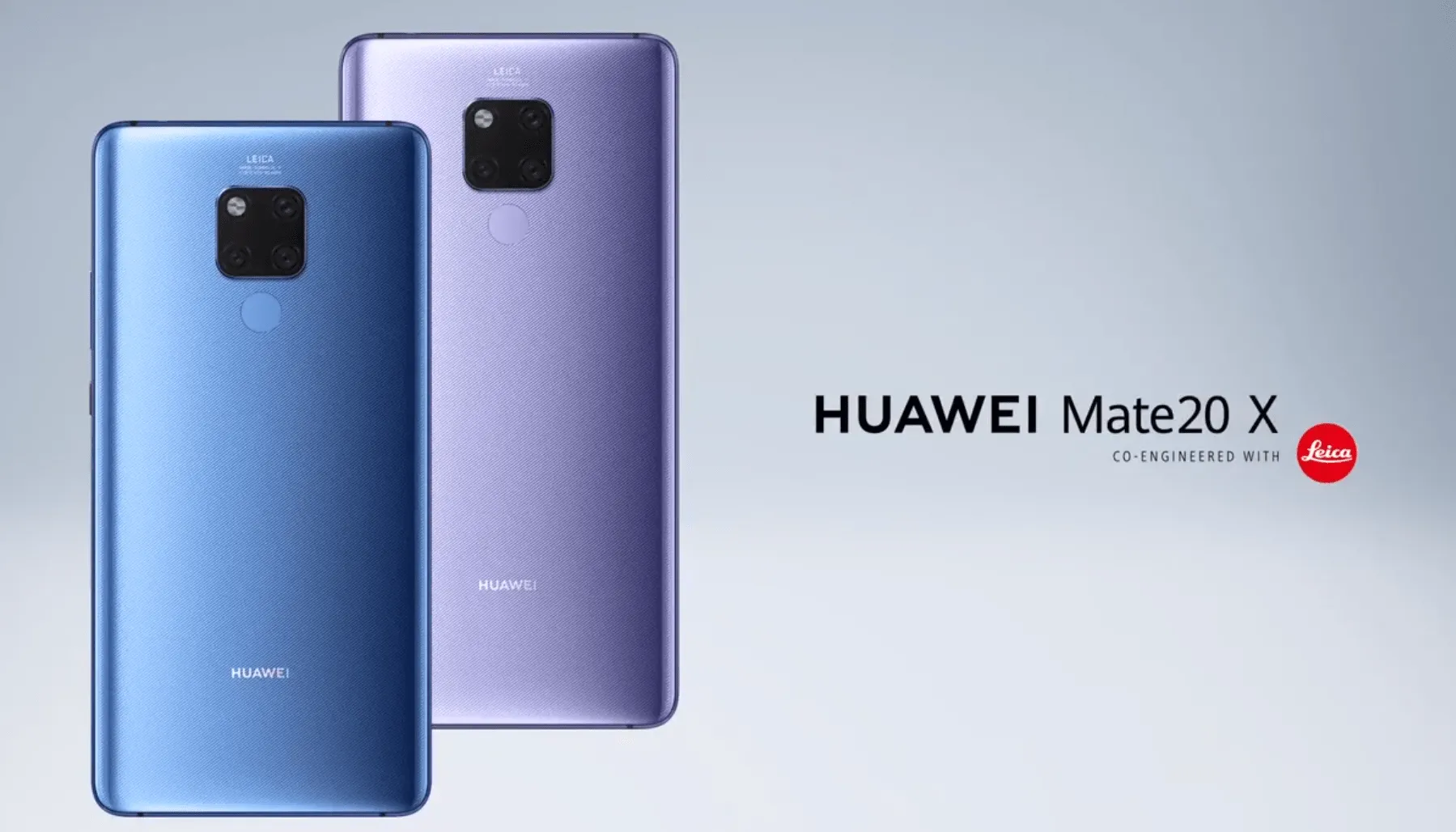
Thus, the company has also announced yet another 5G smartphone — Huawei Mate 20 X, which will be the company’s first non-foldable smartphone to come with 5G connectivity support.
Apart from the announcement of this upcoming smartphone, Huawei has not revealed any further details including the pricing and availability. Since its a part of Huawei’s flagship Mate 20 lineup, it dons similar specifications.
The Huawei Mate 20 X will be powered by the company’s own Kirin 980 octa-core processor, equipped with Balong 5000 5G modem — the same configuration that powers the recently announced Mate X. Huawei claims that the Balong 5000 is the first of its kind to support both standalone (SA) and non-standalone (NSA) network architectures for 5G.
The device packs 6GB of RAM and 128GB of internal storage, with support for storage expansion up to 256GB using a microSD card. In the camera department, it comes with a triple camera setup, consisting of 40MP + 20MP + 8MP sensors along with an LED flash. On the front side, it comes with a 20MP snapper for taking selfies and video calling.
It features a 7.2-inch HDR Full HD+ display with 2244 x 1080 pixels screen resolution and comes equipped with Huawei M Pen. The phone also comes with Vapor Chamber and Graphene Film cooling, dual speakers with Dolby Atmos, and IP53-rating. It run Android Pie-based EMUI custom interface and is powered by a 5,000mAh battery with support for SuperCharge fast charging technology.
Xiaomi will be releasing the Xiaomi Mi 9 SE smartphone tomorrow in China. The handset was announced alongside the Xiaomi Mi 9 and Mi 9 Explorer Edition on Feb. 20. A day ahead of its market release, Xiaomi Product Director Wang Teng Thomas highlighted the 7 major features of the Xiaomi Mi 9 SE that is also present on the Xiaomi Mi 9 flagship phone.
First, the Xiaomi Mi 9 SE has the same holographic illusion design as the Mi 9. The Sony IMX586 48-megapixel primary sensor in its triple camera setup is the same one that’s available on the Mi 9. It also borrows the 20-megapixel front-facing camera from its flagship sibling.
The Xiaomi Mi 9 has the fifth-generation screen fingerprint unlock feature which is also available on the Mi 9 SE. The Mi 9 and Mi 9 SE have the same full HD+ resolution supporting S-AMOLED display. Other common features of both phones include multifunction NFC, infrared remote control and UFS 2.1 high-speed storage.
Xiaomi Mi 9 SE Specifications and Price
The Xiaomi Mi 9 SE has a 5.97-inch S-AMOLED screen. It is the first phone ever to feature the Snapdragon 712 SoC. The triple camera setup of the Mi 9 SE includes a 48-megapixel primary sensor, an 8-megapixel telephoto lens and a 13-megapixel super wide-angle lens. The handset draws power from 3,070mAh battery that carries support for 18W fast charging.
The Xiaomi Mi 9 SE comes in two variants. The 6 GB RAM + 64 GB storage and 6 GB RAM + 128 GB storage editions of the Mi 9 SE are respectively priced at 1,999 Yuan (~$299) and 2,299 Yuan (~$344). Lavendar Violet, Ocean Blue and Gray are the three color variants of the Xiaomi Mi 9 SE.
In related news, the Xiaomi Mi 9 that went on sale for the first time in China on Feb. 26 was sold out in just 53 seconds. The Mi 9 is selling with a starting price of 2,999 Yuan (~$448) for 6 GB RAM + 128 GB starting variant.
We use cookies on our website to give you the most relevant experience by remembering your preferences and repeat visits. By clicking “Accept”, you consent to the use of ALL the cookies.
This website uses cookies to improve your experience while you navigate through the website. Out of these, the cookies that are categorized as necessary are stored on your browser as they are essential for the working of basic functionalities of the website. We also use third-party cookies that help us analyze and understand how you use this website. These cookies will be stored in your browser only with your consent. You also have the option to opt-out of these cookies. But opting out of some of these cookies may affect your browsing experience.
Necessary cookies are absolutely essential for the website to function properly. This category only includes cookies that ensures basic functionalities and security features of the website. These cookies do not store any personal information.
Any cookies that may not be particularly necessary for the website to function and is used specifically to collect user personal data via analytics, ads, other embedded contents are termed as non-necessary cookies. It is mandatory to procure user consent prior to running these cookies on your website.











 The company has now teamed-up with GearBest to offer Alfawise LCD Resin Filament for 3D Printer and Alfawise U30 2.8 inch Touch Screen DIY Desktop 3D Printer at lowered prices.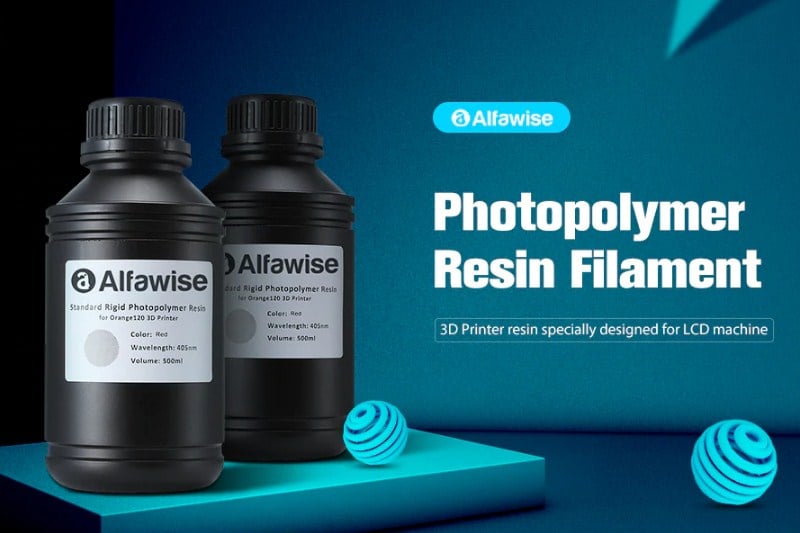
 This is a noteworthy 27 percent reduction in the 3D printer’s original asking price.