Nothing has released version 3.3.4 of its Android launcher with key improvements focused on performance, usability, and visual design. The update is now available through the Google Play Store and works on most Android devices running Android 10 or higher.
The biggest change in this update is the redesigned app drawer. It now follows the design style of the upcoming Nothing Phone 3. The layout is cleaner and more user-friendly, giving users easier access to apps while keeping the look consistent with the rest of the Nothing interface.
The new Essential Search feature has also been added. This search bar lets users find contacts, apps, files, and settings from one place. It removes the need to open multiple apps or menus and helps users get what they need faster.
Animations across the system have also been improved. App launches, folder openings, and screen transitions are now smoother. These changes make the launcher feel quicker and more polished during daily use.
Nothing Launcher 3.3.4 also strengthens its integration with the rest of the Nothing ecosystem. It is designed to offer a better experience not just for Nothing phones, but also for users on other Android devices who want a simple and clean interface.
The update shows Nothing’s focus on building a consistent user experience across software and hardware. With the Nothing Phone 3 on the way, this launcher update helps prepare users for the next version of the company’s products.
The new features are now live. Users can download or update the launcher from the Play Store.
OnePlus has started rolling out the OxygenOS 15.0.0.832 update for the OnePlus 12 in India. The update, marked as version CPH2573_15.0.0.832(EX01), is being released in batches and brings new features along with the June 2025 Android security patch.
This update adds a Game Camera feature that lets users take live screenshots and record flashbacks while gaming. It is designed to help capture important in-game moments quickly.
There is now support for remote control of Windows PCs. With this feature, users can control their PC and access files directly from their phone. The update also improves the cellular network algorithm, which should lead to smoother and more stable network performance.
A new Speaker Cleaner feature has been added under Phone Manager. It helps clean the speakers and maintain their performance. To access it, go to Phone Manager, tap on Tools, then More, and find it under Accessibility & convenience.
The Drag and Drop feature has also been added. It lets users move images and text using gestures in supported third-party apps. This can be turned on in Settings under Accessibility & convenience.
The system section gets several updates. Users can now perform fuzzy searches with spaces in the Settings app and search app names to access or manage them directly. The responsiveness of floating windows has been improved. Animations when exiting Quick Settings or the Notification drawer are smoother. Apps can now be opened from quick functions even when the screen is locked. When notifications are stacked, the latest one will now show a summary with the number and source of the remaining notifications. The order of search results in Settings has also been refined.
The update is being rolled out gradually. A small group of users will get it first, and a wider release will follow in the coming days. To check for the update manually, open the Settings app, go to “About Device,” and tap the blue banner at the top to see if the update is available.
Oppo will be one of the first brands to launch the next generation of flagship phones in China. A new development from Oppo’s product head Zhou Yibao has shed light on the launch schedule of the upcoming Find X9 flagship lineup. Shared on Weibo, the information confirms the company’s plans for the second half of this year and the first half of 2026.
Find X9 series to include four models
Yibao confirms the launch timeframe for the X9 series
According to Yibao, the Oppo Find X9 and Find X9 Pro will debut in the second half of 2025, followed by the Find X9s and Find X9 Ultra in early 2026. This marks a streamlined approach compared to the previous Find X8 series, which included five models in total. While the X8 and X8 Pro debuted in October 2024, the X8s, X8s+, and X8 Ultra were unveiled in March this year.
Leaked information suggests the Find X9 and X9 Pro will feature the next-generation MediaTek Dimensity 9500 chip, while the Find X9s is expected to run on the slightly upgraded Dimensity 9500+. The Ultra model is set to be powered by Qualcomm’s forthcoming Snapdragon 8 Elite 2 platform.
All four devices are tipped to include a periscope telephoto lens, with the Ultra continuing with a dual periscope setup for enhanced zoom capabilities. However, while the X8 Pro featured a dual periscope system, the successor edition is said to be equipped with a single 200-megapixel periscope telephoto camera.
As for display sizes, the Find X9 is expected to feature a 6.59-inch screen, the Pro version a 6.78-inch panel, and the X9s a more compact 6.3-inch flat screen. Likely, the X9 Ultra could be equipped with a 6.82-inch panel. It is also being said that the Find X9 series will ditch the round camera module that it has been offering since the Find X7 lineup. The X9 series’ camera module is said to be placed at the upper-left corner. Additionally, the X9 lineup is expected to be Oppo’s first phones to come preloaded with ColorOS 16-based Android 16.
Qualcomm’s Snapdragon 8 Gen 3, launched in October 2023, is equipped with an octa-core structure and comes in three versions: overclocked, regular, and underclocked. Now, the US-based chipmaker has quietly introduced two new variants of the Snapdragon 8 Gen 3 — and they differ significantly from the existing models.
Snapdragon 8 Gen 3’s six-core versions incoming
Snapdragon 8 Gen 3’s new variants—SM8650-Q-AB and SM8650-Q-AA
Snapdragon 8 Gen 3 new variants’ clock speeds
Unlike the standard 8-core architecture, these new variants feature a 6-core CPU configuration. They carry part numbers SM8650-Q-AA and SM8650-Q-AB. While Qualcomm’s updated official product page does not provide complete core details, it now states, “Snapdragon 8 Gen 3 Mobile Platform also available in 3.0GHz or 3.3GHz CPU version.”
A recent Geekbench listing revealed that an upcoming Lenovo tablet (model number LTB710FU) is powered by one of these new Snapdragon 8 Gen 3 variants. Although the listing doesn’t explicitly name the chip, the mention of the code name “Pineapple” — previously associated with the SD8G3 — confirms its identity.
What’s more interesting is the core layout revealed in the benchmark listing. It shows a six-core configuration comprising one core clocked at 3.30GHz, four performance cores at 2.96GHz, and one efficiency core at 2.27GHz, paired with the Adreno 750 GPU. This setup is believed to correspond to the SM8650-Q-AB variant.
As for the SM8650-Q-AA, its exact CPU cluster setup remains unclear, but it is likely another 6-core version, possibly clocked at up to 3.0GHz, based on Qualcomm’s updated specifications.
Existing Snapdragon 8 Gen 3 variants:
SM8650-AC (Overclocked – 3.39GHz): Powers devices like the Galaxy S24 series and certain ZTE/Nubia phones.
SM8650-AB (Regular – 3.3GHz): Found in most flagship smartphones.
SM8650-AA (Underclocked – 3.05GHz): Used in models such as the Honor 300 Ultra and Honor 400 Pro.
At present, it’s unclear which devices will adopt these new six-core Snapdragon 8 Gen 3 variants. More information is expected to surface in the coming weeks.
For more daily updates, please visit our News Section.

Qualcomm was expected to tap Samsung Foundry for part of its next-gen flagship chip, the Snapdragon 8 Elite 2 (sometimes also referred to as Snapdragon 8 Elite Gen 2), using Samsung’s brand-new 2nm process. But it looks like those plans have quietly been shelved.
Earlier reports suggested Qualcomm would source its upcoming chip from both TSMC and Samsung, with the Galaxy S26 Ultra getting a Samsung-made version—codenamed SM8850-S—built on the company’s 2nm GAA node. This would’ve marked Qualcomm’s first return to Samsung Foundry in three years.
But according to a leak from X user @Jukanlosreve, Qualcomm has dropped the SM8850-S identifier from its documentation, effectively killing off the Samsung version of the chip. The reason? Most likely, the ongoing yield issues.
Samsung’s 2nm production is reportedly struggling, with the Exynos 2600 chip—the company’s in-house SoC for next year—only hitting around 50% yield. That’s well below the 70% threshold typically needed for reliable large-scale production. For Qualcomm, that kind of risk may have been too high—especially after the troubled launch of the Snapdragon 888, which was also built on a Samsung node and faced widespread criticism for heating and power efficiency problems.
Instead, Qualcomm is expected to stick solely with TSMC’s 3nm N3P process for the Snapdragon 8 Elite 2, including the version that powers the Galaxy S26 Ultra. It’s a familiar move, as TSMC already produced the Snapdragon 8 Elite for this year’s Galaxy S25 lineup—where Samsung ended up skipping the Exynos 2500 altogether, likely for the same reasons.
With Qualcomm pulling back, it’s unclear what role Samsung’s Exynos 2600 will play in the S26 lineup. But for now, it seems TSMC will remain Qualcomm’s go-to partner for high-end silicon.
Xiaomi has released a new Frost Snow White color variant of its modular Track Power Socket system in China. The new model retains the same features and pricing as the original Deep Space Grey version. It is available in three lengths: 50cm for 299 yuan ($41), 75cm for 399 yuan ($55), and 100cm for 499 yuan (~$69).
Xiaomi Track Power Socket Specifications
The track socket system supports a total load of up to 8000W. Each individual adapter can handle up to 2500W, making it suitable for running multiple high-power appliances simultaneously, such as microwave ovens, rice cookers, coffee machines, and air fryers. Xiaomi includes three to five adapters depending on the track size, and users can purchase additional adapters separately.
Xiaomi has built the socket with several safety features. It includes a spring-loaded safety door that automatically closes when an adapter is removed, helping prevent children from touching exposed terminals and keeping dust and oil out of the track. The track is made from flame-retardant materials that can withstand temperatures up to 960°C. Additionally, its ultra-narrow 4.4mm slot and T-shaped structure minimize the risk of accidental contact.
The internal wiring includes tightly insulated live and neutral wires, while the ground wire connects through a dedicated groove in the track slot. This setup minimizes the risk of electric shock, even if a foreign object enters the track.
The adapters can be added or removed as needed and feature a separate outer ring that users can rotate to switch power on or off, removing the need to unplug devices. For safety, the adapters remain fixed in place and do not slide freely along the track, but they can be unlocked and repositioned when necessary.
The socket system supports three wiring options: left-end wiring, right-end wiring, and external wiring. However, external power cables are not included in the package.
Xiaomi also offers three types of adapters: a standard 10A socket, a smart 10A socket with power monitoring and app or voice control, and a 33W fast-charging module with USB-A and USB-C ports.
In related news, Xiaomi has introduced a new floor-standing air conditioner with fast cooling and heating, 115° wide-angle airflow, and HyperOS integration. The company has also launched the Xiaomi Laser Projector 3, featuring native 4K resolution, 1000 CVIA lumens brightness, and Dolby Audio support.
For more daily updates, please visit ourNews Section.

Samsung’s upcoming Galaxy S25 FE is shaping up to be a serious contender in the mid-range segment, according to newly leaked benchmark scores. With a launch expected in October 2025, the device appears to pack reasonably good GPU and AI scores for its price range.
Shared by tipster @yabhishekhd on X, the benchmarks show the S25 FE running on Samsung’s Exynos 2400 chipset paired with the Xclipse 940 GPU. The phone scored 13,776 in Geekbench’s OpenCL test, pointing to solid graphics power — which should be more than enough for handling the animations while multitasking. It also performed well in AI testing, earning scores of 2,124 (single precision), 2,039 (half precision), and 3,009 (quantized), suggesting it’s well-equipped for Galaxy AI features like live translation and image editing. These scores are in line with the Galaxy S24 FE’s Exynos 2400e.
The S25 FE is expected to launch with Android 16 and One UI 8 out of the box, alongside 8GB of RAM on the base variant. While some fans were hoping for a 12GB option to better support AI features, that may or may not be on the cards. Earlier speculation about a MediaTek Dimensity 9400 variant has reportedly been shelved, with the Exynos 2400 now expected to power all global models.
The phone is said to feature a 12MP front camera, matching the Galaxy S25 series, along with a 50MP main camera, 12MP ultrawide, and 8MP telephoto sensor on the back. A 6.7-inch FHD+ AMOLED screen (120Hz refresh rate, 2,600 nits peak brightness) and a 4,700mAh battery with 45W fast charging round out the package. With internal software testing already on schedule, the S25 FE is likely to debut in October.
If these early performance numbers hold up, the Galaxy S25 FE could deliver impressive value in the $600–$650 price range.
The Fairphone 6 may not be chasing flagship specs, but it’s setting a new benchmark in an area most smartphone makers still overlook—repairability. In its latest teardown, iFixit gave the device a perfect 10 out of 10, making it the most repairable phone they’ve tested to date.
Released last month, the Fairphone 6 is the latest sustainable smartphone from the Dutch company known for pushing ethical tech. While it comes with a respectable spec sheet—a 6.31-inch LTPO OLED display (120Hz), Snapdragon 7s Gen 3 processor, and a 4,415mAh battery—it’s the internal design that’s drawing headlines.
According to iFixit, the phone’s modular construction and glue-free assembly make it remarkably easy to fix. All components, from the cameras to the screen and USB-C port, are held in place with T5 Torx screws—no adhesive in sight. Even the battery, while no longer tool-free due to its new soft-pouch design, can still be replaced in just a few minutes using four simple screws.
Fairphone also supplies detailed repair guides and affordable spare parts, continuing its mission to reduce electronic waste and extend device lifespans. The Fairphone 6 ships with an IP55 rating for dust and splash resistance—not quite the IP68 or IP69 you’ll find in most flagships, but a reasonable tradeoff for user-accessible internals. The phone is built to last—Fairphone is offering a 5-year warranty on top of the iconic modular design.
Software support is another strong point: Fairphone promises seven major Android updates and eight years of security patches, stretching into 2033. That’s longer than what most big-name manufacturers currently offer. In Europe, Fairphone 6 sells for €599 (around $706).
iFixit’s perfect score puts the Fairphone 6 at the forefront of the right-to-repair movement. And with rumors of a US launch on T-Mobile, it may finally bring the conversation around long-lasting, fixable phones to a mainstream audience. You can order the Fairphone 6 now through fairphone.com.
Motorola is sweetening the deal for budget-conscious shoppers by bundling the Moto G Stylus 5G (2024) with a free Lenovo Tab Plus. The phone alone is priced at $399, but with the tablet included at no extra cost, this limited-time offer is drawing attention, even with the newer 2025 model already on shelves.
Available through Motorola’s official website in the US, the promo includes the 2024 Moto G Stylus 5G and Lenovo’s latest entertainment tablet. While the Tab Plus is listed at $349.99 on Lenovo’s site (₹20,998 in India), getting it free with the phone adds significant value to what was already a solid mid-range pick.
The Moto G Stylus 5G (2024) holds its own with a 6.7-inch pOLED display (2400×1080, 120Hz, 1200 nits brightness), Snapdragon 6 Gen 1 processor, 8GB RAM, and 256GB of expandable storage. It also features a 50MP main camera with OIS, a 13MP ultrawide/macro shooter, and a 32MP selfie cam. With a built-in stylus, 5,000mAh battery (supporting both 30W wired and 15W wireless charging), it’s aimed at users who want features without spending flagship money.
The Lenovo Tab Plus, launched in 2024, is designed for media consumption. It comes with an 11.5-inch display (1200×2000, 90Hz) and eight JBL-tuned speakers that can also turn it into a standalone Bluetooth speaker. It runs on a MediaTek Helio G99 chip with 8GB of RAM and 256GB storage (expandable), and it packs an 8,600mAh battery that supports fast 45W charging. You get Android 14 out of the box, with Lenovo promising updates through Android 16 and security patches until 2028.
At $399, this bundle offers excellent value—especially for students, casual creators, or anyone looking for a phone and tablet combo without breaking the bank. The offer won’t last forever, so if you’re considering it, you might want to act fast before it sells out on motorola.com.
You may have already seen concept renders of Samsung‘s upcoming flip-style flagship, the Galaxy Z Flip7, showcasing a large cover display. Now, a real-life image of the phone has surfaced online, revealing just how striking it looks. While it will be the first Galaxy foldable with an Exynos chip, it’s likely to attract significant attention thanks to its appearance.
Galaxy Z Flip7 real-life image showcases revamped cover display
While this cover display design isn’t new to anyone following the consumer tech space — the Moto Razr 60 Ultra and its predecessor look quite similar — the bezels on the Z Flip7 appear noticeably slimmer, and that’s a key detail that could set it apart from its competition.
The phone is also rumored to be slimmer than its predecessor — 13.7mm down from 14.9mm. Interestingly, it’s said to pack a 4,300mAh battery, up from the 4,000mAh unit on the Z Flip6. A recent rumor about the Galaxy S26 Ultra claims Samsung has achieved higher energy density in its batteries, which might explain the increase in capacity alongside the reduced thickness. While we don’t yet know the internal changes Samsung has made, this redesigned exterior, combined with One UI 8 features, will certainly make the new foldable an appealing option for Galaxy fans.
There’s also a more pocket-friendly alternative to the Flip7, called the Flip7 FE, which is essentially a rebranded Z Flip6 running last year’s Exynos 2400.
The Exynos 2500 is Samsung’s answer to the Snapdragon 8 Elite (which will power the large-screen foldable), and it’ll be interesting to see how it performs in sustained workload tests. After all, simple tasks like recording in 4K 60fps for over 10 minutes is considered quite demanding, and typical benchmark tests like Geekbench don’t tell the full story.
LG has launched the OLED evo M5 series globally after showcasing it at CES 2025. The new TV series brings wireless connectivity using LG’s Zero Connect Box and combines it with the OLED picture quality from the G5 series.
For gaming, the M5 supports NVIDIA G-SYNC and AMD FreeSync Premium. It is certified by Intertek for gaming performance and has a response time of less than 0.1ms. Gaming consoles and other devices can connect to the Zero Connect Box, which can be placed away from the TV to reduce cable clutter.
The M5 series uses LG’s True Wireless technology, which removes the need for cables between the TV and external devices. The Zero Connect Box wirelessly transmits video and audio signals in up to 4K at 144Hz with low input lag. LG claims the wireless performance is similar to a wired connection.
The TV supports Dolby Vision, Dolby Atmos, and Filmmaker Mode with Ambient Light Compensation for better movie viewing. It runs on LG’s Alpha 11 AI Processor Gen2. AI Picture Pro improves depth and detail, and AI Sound Pro offers 11.1.2 channel audio. LG’s Brightness Booster Ultimate increases screen brightness.
The M5 series is verified for Perfect Black and Perfect Color by UL Solutions. Intertek has certified it for 100 percent color fidelity and 100 percent color volume. TÜV Rheinland has also given it a “Perfect” grade for display clarity in bright rooms.
Pricing & availability
The 65-inch model is priced at HK$34,980 (around USD 4,456). The 75-inch model costs HK$67,980 (USD 8,660). The 83-inch model is priced at HK$92,980 (USD 11,845). The 97-inch model costs HK$299,980 (USD 38,220). Sales have started in Hong Kong and will expand to other markets in the coming weeks.
For more daily updates, please visit ourNews Section.
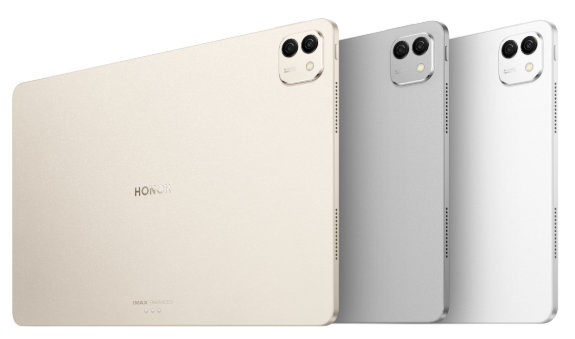
Anker’s sub-brand eufyMake has officially opened pre-orders for its new UV printer, the eufyMake E1. The printer made its debut on Kickstarter in April, where it raised nearly $47 million in funding. The E1 is now listed on the brand’s official website with a pre-sale price of €1999, down from the original price of €2499.
Anker eufyMake E1 Specifications
The eufyMake E1 is a personal desktop UV printer capable of printing high-resolution 3D textures directly on more than 300 different materials. The printer uses Amass3D technology, which allows users to apply tactile, raised effects such as brushstrokes, wood grain, or leather textures. The printed textures can reach a depth of up to 5mm, offering both visual and physical detailing for applications like custom crafts, packaging, and professional design work.
The printer supports a maximum resolution of 1440 DPI, allowing for high-detail output. It is powered by the ColorMaestro engine, which enhances color accuracy and vibrancy in prints. The use of UV-cured inks ensures that the prints are durable and resistant to water, sunlight, and physical wear. In terms of format flexibility, the printer supports four types of printing: flatbed, mini-flatbed, rotary, and extended-length printing, with the capability to print on materials up to 10 meters long.
The E1 features dual lasers, a snapshot camera, and an auto-leveling system for accurate positioning on flat, curved, and cylindrical surfaces. It includes JetClean, a self-cleaning system that helps reduce clogging and maintenance.
eufyMake has also integrated AI-powered tools into the printer’s software, allowing users to remove backgrounds, create textures, and re-style images easily. The printer also comes with a 12-month free subscription to access more than 20,000 ready-to-use templates.
The pre-order bundle includes a free bottle of white UV ink worth €42.99 and discounted accessory options, such as rotary printing modules and laminating tools.
In related news, Anker recently launched the Eufy FamiLock E34 smart lock with palm vein recognition and Matter support, and also introduced a 10,000mAh power bank in China featuring a 45W retractable USB-C connector and a hidden display.
For more daily updates, please visit ourNews Section.

As Chinese smartphones boast massive 7,000mAh+ batteries, US and European consumers are stuck with smaller capacities, like the 5,000mAh in Samsung’s Galaxy S26 Ultra or the 4,685mAh battery in the iPhone 16 Pro Max. Why the gap? Just cost-cutting? A new report points to outdated regulations as the culprit.
Honor GT Pro packs 7,200mAh battery
In China, flagship smartphones like the Xiaomi 15 Ultra (6,000mAh) and Vivo X200 Pro (6,000mAh) are pushing battery capacities toward a 7,000mAh norm by 2026. Yet, global versions often see reduced sizes—5,410mAh for the Xiaomi 15 Ultra in Germany and 5,200mAh for the Vivo X200 Pro in Europe. Samsung’s Galaxy S26 Ultra, expected in 2026, sticks with a 5,000mAh battery, unchanged since the S20 Ultra in 2020.
The issue stems from regulations like US Federal Transportation Regulation 49 CFR 173.185, which limits lithium-ion battery cells to 20Wh (roughly 5,000mAh) to avoid classification as Class 9 “Dangerous Goods,” increasing shipping costs, per @UniverseIce. Similar EU restrictions may explain downsized batteries, though specifics remain unclear.
Chinese brands like Vivo and Xiaomi still face these government regulations in the US and EU, while non-Chinese brands like Samsung prioritize compliance over larger batteries.
Dual-cell batteries, as in the OnePlus 13 (6000mAh), offer a workaround, with each cell under 20Wh but totaling higher capacity. With China’s 2026 flagships reportedly eyeing 7,000+mAh batteries, the gap with Western markets may widen unless regulations evolve.
Lastly, what about the flip side? Are the phones from China with “massive” batteries really “unsafe” compared to the US-bound phones? Well, it doesn’t seem to be the case when you look at the recent incidents.
So, are these high-capacity batteries in Chinese phones actually unsafe compared to their global competitors? Not necessarily. Despite regulatory concerns, recent data doesn’t show a spike in battery-related incidents tied to these larger batteries. In fact, many recent incidents have involved Samsung flagships, despite their batteries being well within the so-called ‘safe’ size limits. It only suggests that current US and EU restrictions may be more about outdated standards than real-world risk.
Tecno has officially launched the Pova 7 5G series in India, a month after its global debut. The lineup includes the Tecno Pova 7 5G and Tecno Pova 7 Pro 5G. Both models are aimed at users looking for high refresh rate displays, large batteries, and 5G performance at a mid-range price.
Tecno Pova 7 Pro 5G
Tecno Pova 7 5G Series features
Both phones come with a 6.78-inch AMOLED display offering 1.5K resolution, 144Hz refresh rate, 240Hz touch sampling rate, and 2160Hz PWM dimming. Brightness peaks at 4500 nits. The display is protected by Corning Gorilla Glass 7i.
Powering both models is the MediaTek Dimensity 7300 Ultimate chipset. They offer up to 256GB of internal storage and up to 16GB of RAM (8GB physical plus 8GB virtual). An 11-layer Hyper-Cooling system is included to manage heat during heavy use. The battery capacity is 6000mAh on both phones, and they feature a 13MP front camera.
The Tecno Pova 7 5G supports 45W fast charging and has a 50MP rear camera. The Tecno Pova 7 Pro 5G is equipped with a 64MP Sony IMX682 primary sensor and an 8MP depth sensor. It supports 30W wireless charging and reverse wireless charging. Tecno has confirmed two OS upgrades for the Pro model and one for the base variant.
Other features of the series include Ella AI with support for Indian languages, a Mini LED design, a Delta interface, and HiOS 15. Both phones come with an IP64 rating, IR Remote, NFC, dual SIM, Bluetooth 5.4, Dolby Atmos, and an Intelligent Signal Hub with 4×4 MIMO. They also have TUV SUD A level Smoothness Certification.
Pricing & availability
The Tecno Pova 7 5G is available in Geek Black, Magic Silver, and Oasis Green. Pricing is Rs 18,999 for the 8GB + 128GB variant and Rs 19,999 for 8GB + 256GB. The Pova 7 Pro 5G comes in Neon Cyan, Dynamic Grey, and Geek Black, priced at Rs 21,999 for 8GB + 128GB and Rs 23,999 for 8GB + 256GB. The sale starts on 10 July on Flipkart, with launch day pricing beginning at Rs 12,999, including bank offers.
For more daily updates, please visit ourNews Section.

Xiaomi is expanding its smart home ecosystem yet again, this time with a new addition to its climate control lineup. The company has quietly launched the Mijia Super Energy-Saving 2HP Floor-Standing Air Conditioner, now listed on JD.com for 3799 yuan (around $530). It officially goes on sale on July 10.
Mijia 2HP Floor-Standing Air Conditioner Specifications
The new model features a cooling capacity of 5150W and a heating capacity of 7350W. Xiaomi has equipped the unit with a high-efficiency inverter motor and a powerful compressor to enable rapid temperature adjustments. The air conditioner supports a large circulation airflow of 1480 cubic meters per hour and covers rooms up to 30 square meters. It also includes a 115° wide-angle swing and a 13-meter air throw for even air distribution.
The indoor unit uses a 2600cm² wide air outlet and an 181mm outlet width, which Xiaomi claims is 117% larger than the previous generation. The company says the air conditioner can achieve 40-second cooling and 80-second heating under optimal test conditions. It supports both vertical and horizontal air swings to suit various room layouts, including rectangular and L-shaped living spaces.
Xiaomi has integrated smart features such as support for the Mijia app, Xiao Ai voice assistant, and the HyperOS Connect platform. The system also allows OTA firmware upgrades and provides cloud-based remote diagnostics with up to 122 self-checks.
The air conditioner supports self-cleaning through high-temperature sterilization at 56°C for the indoor unit and condenser rinsing for the outdoor unit. The filter nets are antibacterial and anti-mold, blocking up to 99% of E. coli and Staphylococcus aureus.
Xiaomi has used the in-house developed “Xiao Jin Gang” outdoor unit, which can operate in extreme temperatures as low as -32°C and as high as 60°C. The indoor unit measures 1868×346×434 mm and weighs 29kg. The outdoor unit shares the same weight and measures 860×551×331 mm. Indoor noise levels range from 38-42 dB, while the outdoor unit reaches up to 52 dB.
The Vivo X Fold5 introduces a new benchmark in foldable smartphones, combining powerful performance, elegant design, and innovative technology. Designed for users who seek both style and productivity, this phone brings together the best of traditional and foldable phones, making it ideal for tech-savvy users, professionals, and entertainment enthusiasts.
Exclusive Discount
For a limited time, grab the Vivo X Fold5 with an exclusive $50 discount using the coupon code XFD5 at GeekWills. This special offer is valid until July 30, so don’t miss your chance to save on Vivo’s premium foldable smartphone.
Sleek Foldable Design with Stunning Display
The Vivo X Fold5 features a premium build and a smooth folding mechanism that’s both durable and elegant. It opens up to reveal a massive 8.03-inch OLED LTPO 8T display with a high resolution of 2480 x 2200 pixels, providing a crisp and vibrant visual experience. This makes it perfect for reading, watching videos, or multitasking on a large canvas. When folded, the 6.53-inch outer AMOLED display with a 2748 x 1172 resolution ensures quick access for everyday use without opening the device. Both screens offer rich colors and excellent clarity, and the fold is designed to withstand regular use without wear.
Top-Tier Performance for Any Task
At its core, the Vivo X Fold5 runs on the Snapdragon 8 Gen 3 chipset, delivering fast and efficient performance. Whether you’re playing heavy games, using demanding apps, or multitasking across windows, the processor and up to 16GB LPDDR5X RAM ensure smooth operation. The onboard storage ranges from 256GB to 1TB, offering ample space for apps, photos, and videos. It’s also backed by a powerful dual-cell 6000mAh battery that supports 80W wired and 40W wireless charging, with 50% charge in just 15 minutes, perfect for users on the go.
Versatile Camera Setup for All Scenarios
The Vivo X Fold5 packs a powerful camera system with three 50MP sensors on the rear. It includes a main ultra-sensitive camera, an ultra-wide-angle lens with a 120° field of view, and a professional portrait camera with 3x optical zoom and up to 100x digital zoom. Whether you’re capturing landscapes, portraits, or zoomed-in shots, this phone delivers stunning detail and clarity. For selfies and video calls, the dual 20MP front cameras (one on each side) ensure high-quality results regardless of whether the phone is open or folded.
Smart Features and Seamless Software
Running on Funtouch OS based on Android 15, the Vivo X Fold5 offers a clean and responsive user experience. Features like split-screen multitasking, stylus support, and advanced facial recognition enhance both work and play. The device also supports 5G, dual SIM, and eSIM, making it a future-ready smartphone for global connectivity. The inclusion of side fingerprint unlock adds another layer of security and convenience.
The Vivo X Fold5 brings a premium folding experience with top-end hardware and thoughtful features. It’s a versatile device that can transform into a mini tablet, a powerful camera tool, or a reliable daily driver depending on your needs.
Key Specs:
Main Display: 8.03-inch OLED LTPO 8T, 2480 × 2200 resolution
Xiaomi is back with a new addition to its expanding home entertainment lineup, the Xiaomi Laser Projector 3. Now officially listed on JD.com for 4399 yuan (~$613), the projector is open for reservation ahead of its July 10 launch. It promises a blend of minimalist design, robust specs, and smart adaptability that could make it the centerpiece of your living room setup.
Xiaomi Laser Projector 3 Specifications
The Xiaomi Laser Projector 3 supports native 4K resolution and uses a high-transmittance lens with a 0.47-inch DMD chip. It can project images up to 120 inches in size. The device uses a pure tri-color laser light source and reaches up to 1000 CVIA lumens of brightness. It covers 110% of the BT.2020 color gamut and supports HDR10 and HDR10+ formats. The projector also includes MEMC motion smoothing and has a 1600:1 contrast ratio.
Xiaomi has designed the projector with a minimalist appearance and a built-in gimbal structure that allows up to 130 degrees of projection angle adjustment. It features an 8×8 multi-point ToF laser sensing module and a high-resolution camera that works with AI algorithms for automatic keystone correction and focus.
The system runs on a MediaTek MT9667 quad-core chipset with 3GB of RAM and 64GB of storage. It supports HyperOS Connect, XiaoAi voice assistant, and NFC-powered screen casting. The projector includes adaptive brightness control and automatic wall calibration to optimize the image based on ambient light and surface geometry.
The display supports a 120Hz refresh rate and 4K ultra-high-definition video playback. Xiaomi claims the projector is suitable for both movies and gaming, with EMC and Ex ULE image processing that reduces motion blur and enhances visual clarity. It has received SGS certification for low blue light output, helping reduce eye fatigue during long viewing sessions.
For audio, the projector comes with dual 8W speakers, a large rear acoustic chamber, and a four-passive diaphragm sound system. It supports Dolby Audio and digital Hi-Fi tuning, offering an immersive sound experience.
In terms of connectivity, it includes HDMI 2.1 with eARC for 4K@120Hz input, a 3.5mm headphone jack, and USB ports.
In related news, Xiaomi has launched a ceiling-mounted smart dryer that supports up to 35kg of laundry, alongside a new 550L refrigerator featuring a side-by-side layout and dual inverter cooling system.
For more daily updates, please visit ourNews Section.

Xiaomi has officially launched its Smart Audio Glasses globally, offering a budget-friendly alternative to more expensive smart eyewear. Priced at just $86.54 on AliExpress, these glasses combine lightweight comfort with open-ear audio, aiming to appeal to both tech enthusiasts and everyday users.
The Smart Audio Glasses work like Bluetooth earbuds built into a stylish pair of glasses. Instead of in-ear tips, they use SLS0820 ultrasonic speakers and a specially designed sound cavity to deliver open-ear audio with clear treble and decent bass. Dual sound leakage protection and an echo-canceling algorithm help keep calls private and voices clear, even in louder environments.
Xiaomi Smart Audio Glasses
Weighing just 40 grams, the glasses are designed for comfort, with flexible nose pads and a curved temple for a better fit. A detachable hinge system lets users swap out frames, and the IP54 rating means they’re safe from splashes and everyday dust. One of the standout features is battery life—Xiaomi claims up to 11 days on standby or 10 hours of playback, charged via a magnetic pogo pin similar to many smartwatch chargers.
Xiaomi Smart Audio Glasses audio system
Touch controls make it easy to play or pause music and answer calls, and the glasses automatically pause playback when taken off thanks to built-in sensors. While they don’t include a camera or AI features like Ray-Ban Meta smart glasses, the much lower price point makes them an accessible entry into the smart wearables space.
With solid audio performance, long battery life, and a sleek design for under $100, they could find a niche among users looking for something more subtle and comfortable than earbuds—without breaking the bank. Are you interested? Comment below.
The Poco F7 and Realme GT 7 are two of the most aggressively priced flagship challengers in 2025, targeting power users who want cutting-edge features without a premium price tag. With both devices boasting top-tier chipsets, large batteries, and high-end displays, this comparison is important for users seeking the best performance-to-price ratio. Whether it’s gaming, photography, or all-day endurance, both phones offer different strengths, making it crucial to weigh the differences before choosing.
Build and Feel: The Poco F7 adopts a premium glass-metal sandwich with an aluminum frame and Gorilla Glass 7i on both sides. It feels durable and substantial, also boasting IP68 water resistance, making it highly rugged for its price. In contrast, the Realme GT 7 features a plastic frame with a glass or ArmorShell glass front and back. While it offers superior IP69 protection against water jets and immersion, the plastic frame slightly undermines the premium feel. The Poco’s metal frame gives it a sturdier hand-feel and a more flagship-like impression.
Display Quality: Poco F7 comes with a 6.83-inch AMOLED panel, supporting Dolby Vision, HDR10+, and an impressive 3200 nits peak brightness. It also features 3840Hz PWM dimming for eye comfort. The Realme GT 7, however, edges ahead with its 6.78-inch LTPO AMOLED panel that hits a record 6000 nits peak brightness. It also supports 2160Hz PWM and LTPO tech for adaptive refresh rates, offering smoother battery-efficient transitions. Both are sharp and vibrant, but Realme’s panel is technically more advanced.
Verdict: While Poco F7 feels more premium in hand with its metal frame, the Realme GT 7 wins the display race with its record-breaking brightness and LTPO efficiency. For those who prioritize display tech over materials, the GT 7 is the better choice.
Please Note: When you buy something using the links in our articles, we may earn a small commission at no cost to you.
2. Specifications
Realme GT 7
Performance: The Poco F7 runs on the Snapdragon 8s Gen 4, a powerful upper-mid flagship chip with balanced efficiency. It features an Adreno 825 GPU, ideal for gaming and smooth multitasking. The Realme GT 7, however, steps ahead with the MediaTek Dimensity 9400e, featuring higher-clocked Cortex-X4 cores and the powerful Immortalis-G720 MC12 GPU. Realme also supports up to 16GB RAM, which benefits power users. GT 7 offers slightly better multi-core and GPU performance, especially in sustained workloads and gaming scenarios.
Battery and Charging: Poco F7 includes a massive 7550 mAh battery (India model) with 90W wired charging, reaching 80% in 30 minutes, plus 22.5W reverse wired charging. Realme GT 7 counters with a slightly smaller 7000 mAh battery but supports faster 120W charging, achieving 100% in just 40 minutes. It also adds bypass charging, beneficial during gaming, and 7.5W reverse charging. While Poco offers better capacity, Realme’s speed and flexibility offer practical advantages in everyday use.
Verdict: Realme GT 7 is slightly better in raw power and charging speed, while the Poco F7 offers better battery life. For users needing extended usage without frequent top-ups, Poco F7 is better. But if fast top-ups and flagship performance matter more, the GT 7 has the edge.
3. Camera
Realme GT 7
Main and Secondary Lenses: Poco F7 features a dual camera setup 50 MP main and 8 MP ultrawide. The main sensor has a bright f/1.5 aperture and OIS, but lacks a telephoto. Realme GT 7 steps up with a triple setup: 50 MP main with a larger sensor, 50 MP telephoto with 2x zoom, and an 8 MP ultrawide. It also offers color spectrum sensing and Dolby Vision HDR video up to 8K. Realme provides greater flexibility, particularly with Zoom and video recording.
Selfie Camera: Poco’s 20 MP front camera performs well for basic selfies and video calls, capped at 1080p@60fps. Realme offers a sharper 32 MP front shooter with 4K video support, delivering higher detail and better video quality for content creators or vloggers. The GT 7’s selfie experience is more flagship-like and forward-looking.
Verdict: Realme GT 7 clearly wins in camera versatility and front camera quality. The inclusion of a telephoto lens and superior video recording capabilities makes it better suited for photography and video use. Poco performs well for casual use, but Realme is the superior imaging device overall.
4. Pricing
The Poco F7 is priced at approximately $400, offering strong value for money with its large battery, solid performance, and premium build. The Realme GT 7, at $450, justifies the higher price by offering a brighter LTPO display, faster charging, better cameras, and higher RAM options. For budget-conscious users, Poco F7 still delivers outstanding value. However, for users willing to spend a bit more for flagship features, the Realme GT 7 offers more bang for the buck at the higher tier.
5. Conclusion
Both phones pack flagship-level features at midrange prices, but Realme GT 7 pulls ahead with standout extras: a record-breaking 6000-nit display, 8K video with Dolby Vision, a versatile triple camera system with telephoto lens, and blazing 120W charging. Poco F7’s edge lies in its massive battery and better build quality with a metal frame and IP68 durability, which some users may prefer for longevity and ruggedness.
Verdict: Choose the Poco F7 if battery endurance, premium in-hand feel, and value are your top priorities. Go for the Realme GT 7 if you seek display brilliance, advanced cameras, and flagship-level charging and performance. Realme wins on features, but Poco remains the better value pick for power users on a budget.
iQOO has launched a new Ace Green color option for the iQOO 13 in India. The phone was previously available in Legend Edition and Nardo Grey. The new variant will be available from July 12 on Amazon and the iQOO India website.
The phone comes in two storage options. The 12GB RAM with 256GB storage model is priced at ₹54,999. The 16GB RAM with 512GB storage version is priced at ₹59,999. Buyers using ICICI or SBI credit or debit cards, including EMI, will get an instant discount of ₹2,000.
The iQOO 13 is powered by the Snapdragon 8 Elite processor. It uses LPDDR5x RAM and UFS 4.1 storage. The display is a 6.82-inch Q10 8T LTPO Ultra Eyecare panel with 2K resolution, 1800 nits HBM brightness, 2592Hz high-frequency dimming, and a 144Hz refresh rate.
The phone has a triple rear camera setup with a 50MP Sony IMX921 VCS main sensor, a 50MP telephoto lens, and a 50MP ultra-wide camera. On the front, it has a 32MP selfie camera.
It includes a 6000mAh battery with support for 120W fast charging. The battery charges to 40 percent in 10 minutes and fully charges in 30 minutes. It runs on Funtouch OS 15. iQOO has promised 4 years of Android updates and 5 years of security patches.
Other features include a 3D ultrasonic fingerprint sensor, multi-finger touch support, tempered glass screen protection, circular polarization, and a dedicated Q2 chip. It also has USB 3.2, Adreno Motion Engine 2.0, 7K Ultra VC Cooling, Monster Halo light with 72 lighting options, and Bypass Charging. The phone is rated IP68 and IP69 for water and dust resistance.
For more daily updates, please visit ourNews Section.

We use cookies on our website to give you the most relevant experience by remembering your preferences and repeat visits. By clicking “Accept”, you consent to the use of ALL the cookies.
This website uses cookies to improve your experience while you navigate through the website. Out of these, the cookies that are categorized as necessary are stored on your browser as they are essential for the working of basic functionalities of the website. We also use third-party cookies that help us analyze and understand how you use this website. These cookies will be stored in your browser only with your consent. You also have the option to opt-out of these cookies. But opting out of some of these cookies may affect your browsing experience.
Necessary cookies are absolutely essential for the website to function properly. This category only includes cookies that ensures basic functionalities and security features of the website. These cookies do not store any personal information.
Any cookies that may not be particularly necessary for the website to function and is used specifically to collect user personal data via analytics, ads, other embedded contents are termed as non-necessary cookies. It is mandatory to procure user consent prior to running these cookies on your website.