A couple of weeks ago, Xiaomi unveiled the Xiaomi 17 and Xiaomi 17 Ultra as its premium flagship phones for the global market. Now, the brand appears to be gearing up for the launch of its sub-flagship Xiaomi 17T series. Reports have revealed that the lineup may include two models, namely the Xiaomi 17T and Xiaomi 17T Pro. It seems that the launch could be fast approaching, as the standard model has appeared on Geekbench AI, revealing its key specifications.
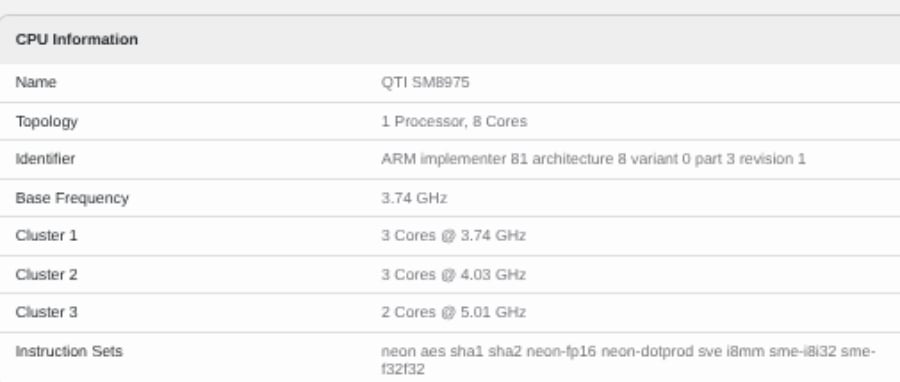
Xiaomi 17T Geekbench AI listing
Xiaomi 17T series is launching early globally this year.
The Xiaomi 17 (2602DPT53G) global variant will feature MediaTek’s Dimensity 8500 chipset.
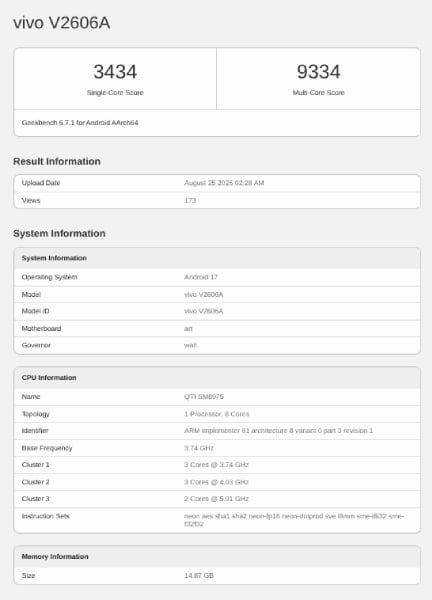
As seen above, a Xiaomi device bearing the model number 2602DPT53G has appeared in Geekbench AI’s database. Multiple certification listings have revealed that this device will carry the Xiaomi 17T branding when it arrives on the market.
The Geekbench listing reveals that the Xiaomi 17T is powered by a MediaTek chip featuring a prime core clocked at 3.40GHz, three performance cores operating at 3.20GHz, and four efficiency cores running at 2.20GHz. For graphics, the chip is equipped with a Mali-G720 MC8 GPU.
These details are enough to suggest that the Xiaomi 17T is powered by the MediaTek Dimensity 8500 chipset. The device features 12GB of RAM and is listed with Android 16, which will most likely have the HyperOS 3 skin on top.
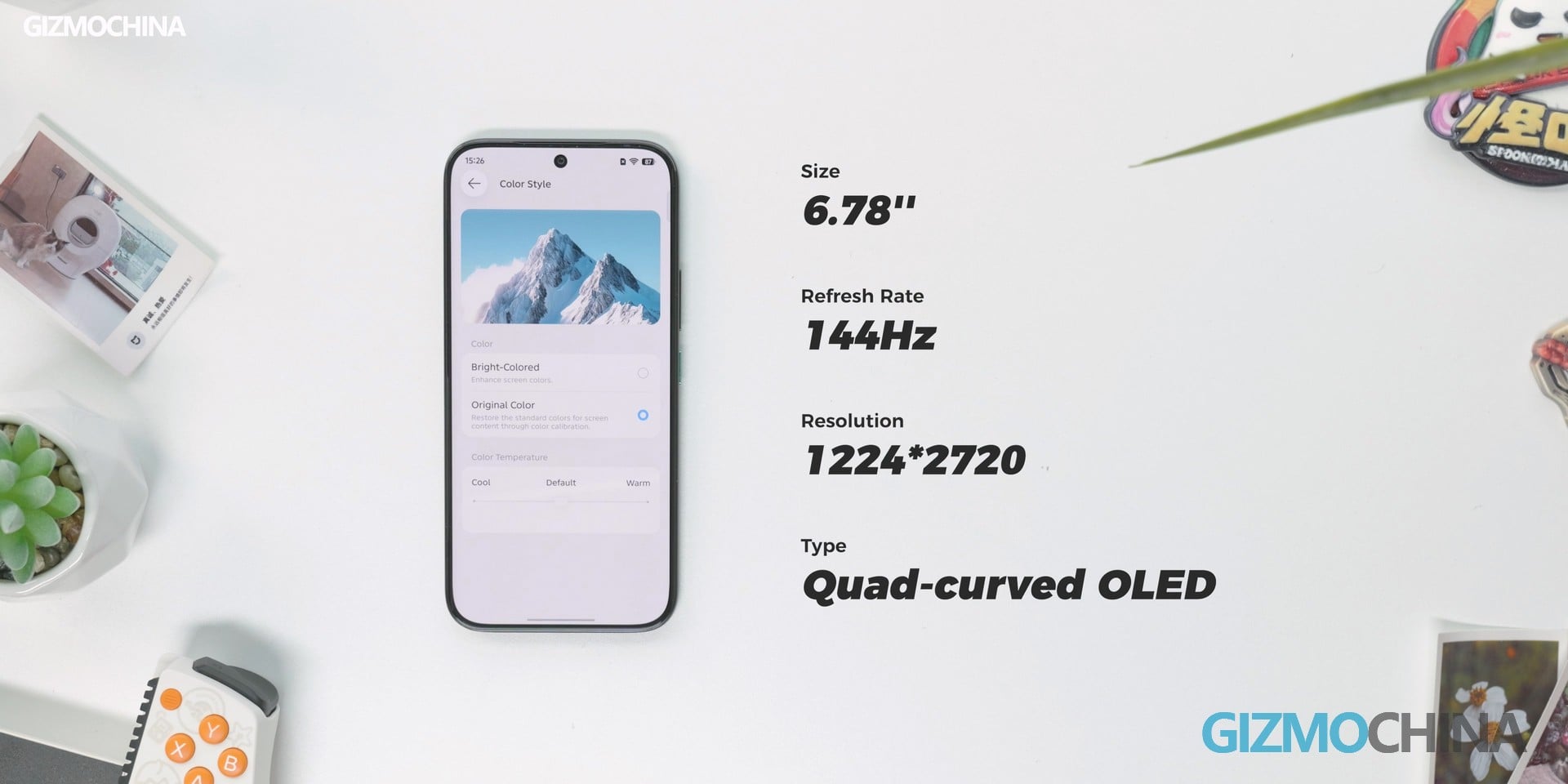
Previous reports have revealed that the Xiaomi 17T will feature a 6.59-inch flat OLED panel offering a 1.5K resolution. While its exact battery size is not yet known, it is expected to be around 7,000mAh with 67W charging. The Xiaomi 17T Pro, on the other hand, is expected to feature a larger display and pack the more powerful MediaTek Dimensity 9500 chipset.
For selfies, both phones may feature a 32-megapixel front camera. On the back, both devices are expected to offer a 50-megapixel + 12-megapixel + 50-megapixel triple-camera setup, although the primary and telephoto sensors are likely to differ. The Pro model is also expected to feature a periscope telephoto camera, whereas the standard variant may include a regular telephoto sensor.
For more daily updates, please visit our News Section.

Two very different flagship philosophies collide here, one chasing cutting-edge hardware and aggressive specs, the other refining a tightly controlled ecosystem with consistent performance. The OPPO Find X9s Pro brings massive battery life, ultra-fast charging, and a camera setup that pushes numbers to the extreme, while the iPhone 17 focuses on efficiency, software polish, and long-term reliability. This comparison matters for buyers deciding between raw power and refined experience, where the real winner depends on how those priorities translate into everyday use.
Major Features:
Feature
OPPO Find X9s Pro
iPhone 17
Winner
Display Type
LTPO AMOLED, 144Hz, 1B colors
LTPO Super Retina XDR OLED, 120Hz
OPPO – Higher 144Hz refresh rate
Peak Brightness
1800 nits
3000 nits
iPhone – Much higher peak brightness
Resolution & PPI
1216 × 2640 (~460 ppi)
1206 × 2622 (~460 ppi)
Tie – Nearly identical sharpness
Chipset
Dimensity 9500 (3nm)
Apple A19 (3nm)
Tie – Same 3nm class (no direct data edge)
RAM Options
12GB / 16GB
8GB
OPPO – Higher RAM options
Storage
Up to 1TB (UFS 4.1)
Up to 512GB (NVMe)
OPPO – Higher max storage
Main Camera
200MP + 200MP + 50MP
48MP + 48MP
OPPO – Higher resolution + triple setup
Video Recording
Up to 8K
Up to 4K Dolby Vision
OPPO – 8K support
Selfie Camera
32MP
18MP
OPPO – Higher resolution
Battery
7025 mAh
3692 mAh
OPPO – Much larger battery
Charging (Wired)
80W
PD (50% in 20 min)
OPPO – Faster wattage
Wireless Charging
50W
25W MagSafe/Qi2
OPPO – Faster wireless
Build & Protection
IP66/IP68/IP69
IP68
OPPO – More protection ratings
Biometrics
Ultrasonic Fingerprint
Face ID
Tie – Different approaches
Bluetooth
6.1
6.0
OPPO – Newer version
Special Features
IR Blaster
UWB, Satellite SOS
iPhone – More advanced ecosystem features
Price (Approx)
$870 / ₹73,000
$800 / ₹83,000
OPPO – Cheaper in India
Disclaimer: Specs are based on available data. Actual performance may vary. Verify details from official sources before buying.
The OPPO Find X9s Pro leans toward a durable, feature-packed design with strong ingress protection and practical additions like an infrared port and ultrasonic fingerprint scanner. It feels engineered for versatility and daily resilience. The iPhone 17, on the other hand, focuses on refined simplicity with its Ceramic Shield 2 and aluminum frame, paired with Face ID and a polished ecosystem approach. The iPhone’s build feels more premium in hand, while the OPPO prioritizes utility and toughness, which may appeal more to power users.
Display Quality
OPPO pushes ahead with a 144Hz LTPO AMOLED panel, delivering ultra-smooth scrolling and vibrant color output. It feels more fluid, especially in gaming and fast interactions. The iPhone 17 counters with a highly optimized 120Hz Super Retina XDR display, brighter peak levels, and Dolby Vision support. While OPPO offers higher refresh rates, Apple’s tuning often results in more consistent color accuracy and better HDR playback.
Verdict
OPPO wins on raw display specs and smoothness, but the iPhone offers a more balanced, premium viewing experience overall.
2. Specifications Including Battery
Performance
The OPPO Find X9s Pro is powered by the Dimensity 9500, delivering flagship-grade performance with a focus on sustained power and multitasking. Combined with higher RAM options, it feels built for heavy users and long gaming sessions. The iPhone 17’s A19 chip, however, continues Apple’s trend of leading in single-core performance and efficiency. Day-to-day operations feel faster and more refined, with apps opening instantly and animations remaining consistent. The iPhone still holds a slight edge in real-world fluidity, even if OPPO appears stronger on paper.
Battery and Charging
This is where OPPO clearly dominates. The large battery paired with 80W wired and 50W wireless charging makes it extremely convenient, especially for users who prioritize quick top-ups. The iPhone 17 offers decent endurance with optimized power usage, but its charging speeds feel conservative in comparison. OPPO’s setup feels more future-ready.
Verdict
OPPO leads in battery and charging, while the iPhone maintains a slight edge in performance efficiency and overall smoothness.
3. Camera
Main and Secondary Lenses
The OPPO Find X9s Pro goes all-in with a triple-camera setup, including dual 200MP sensors and Hasselblad tuning. It offers versatility with telephoto zoom and ultrawide flexibility, making it ideal for photography enthusiasts. The iPhone 17 keeps things simpler with a dual 48MP system, focusing on consistency, color science, and video excellence. While OPPO delivers more hardware power and zoom capability, Apple’s processing often produces more reliable and natural results across different conditions.
Selfie Camera
OPPO features a 32MP front camera capable of sharp and detailed selfies, appealing to users who prioritize resolution. The iPhone 17’s 18MP camera, paired with depth sensing and advanced video features, leans toward accuracy and features like spatial audio and Face ID integration. Apple’s front camera feels more polished for video and social use.
Verdict
OPPO offers more versatility and raw capability, but the iPhone remains more consistent, especially in video and processing.
4. Pricing
OPPO Find X9s Pro is priced at around $870 (₹73,000), while the iPhone 17 comes in at approximately $800 (₹83,000). Despite being cheaper globally, the iPhone ends up costing more in India, which shifts the value equation significantly depending on the region.
Is the Price Justified?
OPPO delivers strong hardware value with its massive battery, faster charging, and advanced camera setup, making it feel like a spec-heavy flagship at a competitive price. The iPhone 17 justifies its pricing through long-term software support, ecosystem integration, and consistent performance. It may not look aggressive on paper, but it often delivers a more refined long-term experience.
Verdict
OPPO offers better hardware value for money, while the iPhone justifies its price through longevity and ecosystem advantages.
Disclaimer: Prices are approximate and may vary based on country, region, launch timing, and applicable taxes. Always check whether the listed price is for a China unit or a global/international variant when purchasing.
5. Conclusion
OPPO Find X9s Pro stands out with its massive battery, ultra-fast charging, high-refresh-rate display, and versatile camera system with Hasselblad tuning. It clearly targets power users who want cutting-edge specs and flexibility. iPhone 17, meanwhile, focuses on seamless integration, efficient performance, and premium software optimization. Features like Face ID, satellite connectivity, and Apple’s ecosystem give it a distinct advantage in usability and long-term reliability.
Verdict
OPPO Find X9s Pro feels like the better choice for users who prioritize specs, battery life, and camera versatility. iPhone 17 is better suited for those who value consistency, ecosystem, and a refined everyday experience. The final choice depends on whether raw power or polished integration matters more.
Disclaimer: This comparison is based on the specifications provided and is intended for general informational purposes. Actual performance, camera results, battery life, and overall experience may vary depending on real-world usage, software updates, and individual preferences.
As April 2026 comes to a close, the market has seen an influx of high-performance smartphones featuring the latest chipsets. Currently, the Snapdragon 8 Elite Gen 5 and the Snapdragon 8 Gen 5 lead Qualcomm’s lineup, while MediaTek’s Dimensity 9500 stands as a formidable rival. This year has already delivered several flagship devices that redefine mobile speed and efficiency. Below is a breakdown of the top phones released so far in 2026 that feature these record-breaking processors.
Samsung Galaxy S26 Ultra
The Samsung Galaxy S26 Ultra remains the benchmark for Android performance, featuring the specialized Snapdragon 8 Elite Gen 5 for Galaxy. Launched in February 2026 at $1,299, this chipset features a custom Oryon CPU architecture with clock speeds reaching 4.6GHz.
The device is designed to handle intensive multitasking and complex AI routines without breaking a sweat. With 12GB of high-speed RAM and an advanced vapor chamber cooling system, it ensures sustained peak performance during extended use.
Oppo Find X9 Ultra
Oppo Find X9 Ultra
Released this month in Malaysia for MYR 6,799 (~$1,715), the Find X9 Ultra is Oppo’s first Ultra-branded powerhouse for the global market, balancing processing speed with professional imaging. It runs on the Snapdragon 8 Elite Gen 5, which is necessary to drive its dual 200-megapixel camera sensors and real-time image processing.
The inclusion of a 7,050mAh battery ensures that the high-power chipset can run at maximum capacity throughout the day. It is an ideal choice for creators who need desktop-class performance in a mobile form factor.
Vivo X300 Ultra
Vivo X300 Ultra – Victory Green
Expected to be priced at around $2,000, the X300 Ultra, Vivo’s first Ultra-branded phone to launch outside of China, will soon be available globally. This flagship is powered by the Snapdragon 8 Elite Gen 5 and features specialized Zeiss co-engineered hardware, including a dual 200-megapixel camera system, that utilizes the chip’s neural engine for advanced computational photography.
With its 2K LTPO AMOLED display and 100W fast charging, the device is built for speed in both operation and recovery. It stands as one of the most complete premium packages for enthusiasts who demand the fastest possible internal components.
Xiaomi 17 Ultra
Xiaomi 17 Ultra
The Xiaomi 17 Ultra is a performance juggernaut that utilizes the Snapdragon 8 Elite Gen 5 to its fullest potential. Retailing for about $1,100, it features a comprehensive 50-megapixel quad-camera system that requires immense processing power for real-time 8K recording.
The phone is equipped with a 6,000 mAh battery and supports 90W wired charging to ensure the high-performance chipset stays powered. It comes with a massive 6.9-inch AMOLED panel offering a 2K reoslution and a 120Hz refresh rate.
iQOO 15 Ultra
iQOO 15 Ultra
The iQOO 15 Ultra debuted in February 2026 as the ultimate gaming flagship, starting at approximately $798. It is powered by the Snapdragon 8 Elite Gen 5 and features the in-house Q3 esports chip for real-time 2K upscaling and 120fps frame interpolation.
To prevent thermal throttling, it features an Ice Dome cooling system with a 59-blade active fan. With pressure-sensitive shoulder triggers and a 7,400 mAh battery, it is specifically built for gamers who demand sustained, top-tier performance during competitive play.
Motorola Signature
Motorola Signature
Motorola introduced the Motorola Signature in January 2026 as its most refined performance offering yet, starting at $999. It features the Snapdragon 8 Gen 5 and focuses on a clean, near-stock Android experience that allows the hardware to reach its full potential without software bloat.
The device is impressively thin at 6.99mm, yet it manages the heat generated by its 3.8GHz processor through a sophisticated internal thermal spreader. It is a sophisticated option for professionals who require top-tier speed in a luxury chassis.
Redmi K90 Max
Redmi K90 Max
The Redmi K90 Max is a unique entry launched in China this April for approximately $485, featuring the MediaTek Dimensity 9500. This chip features an all-big-core design that rivals the top Snapdragon offerings in raw CPU throughput.
To maintain its speeds, the phone includes a built-in active cooling fan, a rarity in modern smartphones. While currently limited to the Chinese market, its combination of a 50-megapixel main camera and an 8,550mAh battery makes it one of the most powerful and longest-lasting phones ever produced.
For more daily updates, please visit our News Section.

Motorola has officially hit its stride in 2026, delivering a smartphone lineup that perfectly balances premium features, clean software, and unbeatable value. Whether you are looking for a cutting-edge foldable, a stylus-equipped productivity machine, or a budget phone that refuses to die after a long day, Motorola has something tailored for you.
Our top pick for 2026 is the Motorola Edge 70 Pro. It offers a masterclass in flagship-killer design, boasting a massive 6500mAh silicon-carbon battery, blazing-fast 90W charging, and the powerful MediaTek Dimensity 8500 Extreme processor, all wrapped in a stunning 6.8-inch 1.5K 144Hz AMOLED display.
But why does Motorola stand out in a crowded market? It comes down to their value proposition. Motorola consistently offers near-stock Android experiences (now enhanced with intuitive Moto AI features), industry-leading battery life, and military-grade durability (MIL-STD-810H) across almost its entire 2026 lineup.
Here is our comprehensive guide to the best Motorola phones you can buy right now.
The Motorola Edge 70 Pro is the best overall device of Motorola’s 2026 lineup. It strikes the perfect balance between high-end performance and practical usability.
The phone runs on the MediaTek Dimensity 8500 Extreme processor and offers up to 12GB of LPDDR5X RAM. The 6.8-inch 1.5K 10-bit Extreme AMOLED display delivers an impressive 5200 nits of peak brightness with a 144Hz refresh rate. It also features a 6500mAh silicon-carbon battery that provides exceptional longevity, housed in a sleek 6.99mm frame with support for 90W TurboPower charging to ensure quick recharges.
The camera system includes a 50MP Sony LYTIA-710 main sensor with OIS, a 50MP ultrawide lens, a multispectral sensor, and a 50MP front camera. Rugged features like IP68/IP69 water resistance and MIL-STD-810H drop protection ensure the device is built to last. Alongside hardware, Moto AI tools and Gemini Live integration enhance functionality and user experience.
It starts around $414 in India and is expected to roll out in other global markets soon.
2. Best Budget: Moto G Power (2026)
If you want the best Motorola phone under $300, look no further than the Moto G Power (2026). Priced at just $299.99, it offers an incredible amount of smartphone for the money.
It features a large 6.8-inch FHD+ 120Hz LCD screen, a capable MediaTek Dimensity 6300 processor, and 8GB of RAM. Motorola didn’t skimp on durability either; this budget champion features IP68/IP69 underwater protection, Corning Gorilla Glass 7i, and military-grade drop resistance.
It also features a solid 50MP main camera with OIS and premium touches like a vegan leather finish, all at a price that won’t break the bank.
3. Best Foldable: Motorola Razr 60 Ultra
Although the Razr 70 Ultra is on the horizon, the Razr 60 Ultra remains the best foldable from Motorola available for now.
It features a massive 4-inch external pOLED LTPO display (1-165Hz) that lets you do almost everything without opening the phone. When you do flip it open, you are greeted by a 6.96-inch 1.5K display. Under the hood, it packs the top-tier Snapdragon 8 Elite 3nm processor, 16GB of RAM, and 512GB of storage.
The Razr 60 Ultra also offers a highly functional cover screen along with a dedicated AI Key, Look & Talk hands-free functionality, and dual 50MP cameras. It also features a sleek design that appeals to those seeking not just a phone, but a fashion statement.
4. Best Mid-Range: Moto G Stylus 5G (2026)
For creative users and note-takers, the Moto G Stylus 5G (2026) is the ultimate mid-range device. Priced at $499.99, it bridges the gap between budget and premium.
The biggest upgrade this year is the built-in active stylus, which responds to tilt and pressure. It integrates flawlessly with Moto’s new AI features, such as Sketch to Image (turning basic doodles into art) and a Handwriting Calculator.
The phone is powered by the Snapdragon 6 Gen 3 and features a stunning 6.7-inch 1.5K pOLED display with up to 5000 nits of peak brightness. You also get premium features like 68W fast charging and a 50MP Sony LYTIA 700C camera.
5. Best for Battery Life: Moto G Power (2026)
While the Edge 70 Pro has a larger battery on paper, the Moto G Power (2026) earns the crown for pure endurance.
Pairing a 5200mAh battery with the highly power-efficient MediaTek Dimensity 6300 processor and an LCD display, the G Power sips battery. For the average user, this is easily a two-day phone. When it does eventually die, the 30W fast charging gets you back up and running quickly. If battery anxiety is your main concern, the G Power line remains undefeated.
6. Quick Comparison: Top Motorola Phones of 2026
Model
Best For
Processor
Display
Battery & Charging
Price (Approx.)
Edge 70 Pro
Best Overall
Dimensity 8500 Extreme
6.8-inch 1.5K AMOLED (144Hz)
6500mAh / 90W Wired
$414
Razr 60 Ultra
Best Foldable
Snapdragon 8 Elite
6.96-inch (Internal) / 4-inch (External)
4700mAh / 68W Wired
$799
G Stylus 5G (2026)
Best Mid-Range
Snapdragon 6 Gen 3
6.7-inch 1.5K pOLED (120Hz)
5200mAh / 68W Wired
$499.99
G Power (2026)
Best Budget
Dimensity 6300
6.8-inch FHD+ LCD (120Hz)
5200mAh / 30W Wired
$299.99
7. Buying Guide
What is the top Motorola smartphone right now?
The top Motorola smartphone in 2026 is the Motorola Edge 70 Pro. It offers the best combination of performance (Dimensity 8500 Extreme), a massive 6500mAh battery, and premium camera hardware. If you prefer foldables, the Razr 60 Ultra is their top-tier flip phone.
What is the best budget Motorola phone?
The Moto G Power (2026) is the best budget option. At $299.99, it provides incredible value, featuring a 120Hz display, military-grade durability, and multi-day battery life.
Is Motorola better than Samsung?
It depends on what you value. Motorola generally offers better bang for your buck, especially in the budget and mid-range tiers. Motorola phones also feature a cleaner, near-stock Android experience (My UX / Hello UX) compared to Samsung’s heavier One UI. However, Samsung often holds an edge in ultimate camera zoom capabilities on their highest-end Ultra models.
Are Motorola phones good today?
Absolutely. In 2026, Motorola has addressed past criticisms by standardizing high-end features across lower price points. Almost all their new phones feature IP68/IP69 water resistance, MIL-STD-810H durability, massive batteries, and robust software update promises (up to 3 OS upgrades and 5 years of security updates on the Edge line).
For more daily updates, please visit our News Section.

The Apple Watch Ultra 3 remains a pinnacle of wearable engineering, offering a brilliant 3,000-nit display and seamless integration for those already deep within the Apple ecosystem. Its refined safety features and precision dual-frequency GPS make it an exceptional companion for athletes and casual users alike. However, some users may find the restrictive nature of its proprietary operating system frustrating if they prefer the flexibility of Android.
Additionally, the recurring need for daily charging can be a significant drawback for explorers who spend multiple days away from a power source. For those seeking different aesthetics or specialized fitness metrics, several high-end competitors provide comparable or even superior performance.
3Huawei Watch Ultimate 2
Huawei Watch Ultimate 2
The Huawei Watch Ultimate 2 represents a fusion of luxury craftsmanship and extreme diving capabilities. Built with a zirconium-based liquid metal case, this watch is designed to withstand 150-meter depths, making it far more capable in the water than typical smartwatches. It features a stunning 1.5-inch LTPO2 AMOLED screen that can reach a peak brightness of 3,500 nits for unparalleled clarity. Currently retailing at 899 euros in Europe, it caters to users who want a sophisticated look that transitions easily from a deep-sea dive to a formal dinner.
Beyond its rugged exterior, the device runs on HarmonyOS 5.1 and includes unique features like sonar-based underwater communication. The health suite is equally impressive, featuring a heart rate sensor and a thermometer for monitoring body temperature changes during intense physical exertion.
It also incorporates a silicon-carbon battery with a capacity of 867mAh, allowing it to stay powered for nearly two weeks on a single charge. While it lacks some of the third-party app support found in other ecosystems, its dedicated expedition mode and arterial stiffness detection provide specialized value for health-conscious explorers.
For more daily updates, please visit our News Section.

OnePlus has detailed its latest fast-charging hardware ahead of its upcoming launch event. The company introduced a new 120W GaN dual-port SuperVOOC charger alongside a smaller 100W variant.
Both accessories are set to debut on April 28th with the company’s next smartphone, the Ace 6 Ultra.
OnePlus 120W SuperVOOC Charger Specifications
The headline feature here, as you can expect, is the 120W SuperVOOC Flash Charger. According to the company’s official announcement, the charger can deliver up to 120W output when using a single port. Plug in a second device, and the total output increases slightly to 125W, allowing users to charge multiple devices simultaneously without a major drop in performance.
OnePlus claims the charger can take the Ace 6 Ultra to around 68 percent battery in just 30 minutes, based on lab testing.
Design-wise, the charger leans into what OnePlus calls its “small square bottle” form factor. It’s a compact, blocky design that’s meant to be easy to carry while still accommodating dual ports.
The addition of GaN (gallium nitride) technology helps keep the charger relatively small despite its high output, a trend that’s become common in premium charging accessories over the past few years.
There are also smaller refinements that OnePlus is highlighting. The charger uses an upgraded excimer laser coating process, which the company says improves the surface texture and makes it feel more comfortable in the hand. It ships with a soft silicone data cable as well.
Alongside it, OnePlus is introducing a 100W SuperVOOC GaN charger. While it doesn’t match the peak output of the 120W model, it still supports up to 100W charging and is designed to work effectively with third-party devices.
Both chargers are scheduled to go on sale following their April 28th announcement event. Pricing hasn’t been detailed yet either.
For more daily updates, please visit our News Section.
The premium Android tablet space has started seeing more meaningful upgrades lately, and the OnePlus Pad 4 appears to be part of that transition. Ahead of its official launch, the tablet has surfaced with flagship-grade hardware, a slimmer body, and a stronger focus on productivity. After spending some time with the device, the OnePlus Pad 4 gives the impression of a tablet that wants to do far more than basic entertainment and casual browsing.
1Large battery could be a key advantage
OnePlus Pad 4
The OnePlus Pad 4 packs a 13,380mAh battery with support for 80W fast charging. On paper, this could become one of the tablet’s strongest selling points, especially for users who spend long hours streaming content, attending meetings, or working on the move. Actual battery endurance and charging speeds will need deeper testing, but the combination of a large battery and powerful internals looks promising so far.
Based on initial impressions, the OnePlus Pad 4 feels like OnePlus’ most refined tablet yet. Its slim design, large high-refresh-rate display, flagship hardware, and productivity-focused software help it stand out in the premium Android tablet segment. The bigger question now is whether the overall experience can consistently deliver during long-term use. What do you find most interesting about the OnePlus Pad 4?
For more daily updates, please visit our News Section.
OPPO Find X9s and Vivo X300 take two distinct approaches to the flagship experience, with OPPO focusing on battery life and balanced performance, while Vivo pushes ahead with cutting-edge camera tech and a more advanced display. With a clear gap in pricing and features, this comparison helps highlight which phone better suits users looking for practicality versus premium innovation.
Both phones bring premium craftsmanship with strong durability ratings, including IP68/IP69 protection. The OPPO Find X9s leans toward a slightly more solid, dense feel, while the Vivo X300 feels more refined and compact in hand. The Vivo’s aluminum frame and polished finish give it a more flagship-like elegance, whereas OPPO focuses on robustness and practicality. Subtle differences in ergonomics make the Vivo easier for long use, while OPPO feels more planted and sturdy.
Display Quality
OPPO Find X9s offers a vibrant AMOLED panel with excellent brightness and color depth, easily handling outdoor visibility. However, Vivo X300 steps ahead with LTPO technology, higher peak brightness, and advanced HDR formats, making content look more dynamic and fluid. The adaptive refresh rate also improves efficiency and smoothness. The difference becomes noticeable in HDR videos and high-contrast scenes, where Vivo simply looks more polished.
Verdict
Vivo X300 delivers a more premium display experience, while the OPPO Find X9s holds its ground with brightness and durability.
2. Specifications Including Battery
Performance
Both devices are powered by next-generation 3nm MediaTek chips, but the Vivo X300’s Dimensity 9500 shows a slight edge in raw performance and efficiency. The CPU architecture is more aggressive, translating into faster app launches and better sustained performance. OPPO’s Dimensity 9500s still delivers flagship-level smoothness, especially for gaming, but Vivo feels more future-proof with higher RAM options and longer software support.
Battery and Charging
Battery is where OPPO makes a strong statement. The 7025mAh unit is significantly larger, offering excellent endurance for heavy users. Charging is fast and versatile, though Vivo counters with quicker wired charging and the added convenience of wireless charging. Vivo feels more flexible, but OPPO clearly prioritizes longevity.
Verdict
OPPO wins on battery life, while Vivo edges ahead in performance and overall versatility.
3. Camera
Main and Secondary Lenses
OPPO Find X9s uses a balanced triple 50MP setup, delivering consistent results across all lenses. It focuses on reliability and natural color tuning. The Vivo X300, however, pushes boundaries with a 200MP main sensor and Zeiss optics, offering more detail and superior dynamic range. The periscope lens on Vivo also feels more refined for zoom shots, especially in challenging lighting. OPPO remains dependable, but Vivo feels more ambitious and technically advanced.
Selfie Camera
OPPO’s 32MP front camera is solid for everyday use, with stable video and good HDR. Vivo steps up with a 50MP autofocus selfie camera, producing sharper and more versatile results, especially for video creators and high-resolution shots.
Verdict
Vivo X300 delivers a more flagship-grade camera system, while OPPO focuses on consistency and balance.
4. Pricing
OPPO Find X9s is priced around $730 (₹60,000), while the Vivo X300 comes in at approximately $900 (₹76,000). This places them in slightly different tiers, with Vivo clearly targeting the ultra-premium segment.
Is the Price Justified?
OPPO offers strong value with its large battery, solid performance, and well-rounded camera system, making it a practical flagship choice. Vivo justifies its higher price with cutting-edge camera hardware, superior display technology, and additional features like wireless charging. The price gap reflects not just specs, but a shift toward a more premium experience.
Verdict
OPPO delivers better value for money, while Vivo justifies its price with top-tier features and innovation.
Disclaimer: Prices are approximate and may vary based on country, region, launch timing, and applicable taxes. Always check whether the listed price is for a China unit or a global/international variant when purchasing.
5. Conclusion
OPPO Find X9s stands out with its massive battery, balanced camera setup, and dependable performance, making it ideal for users who prioritize longevity and stability. Vivo X300, on the other hand, focuses on pushing boundaries with a 200MP camera, advanced display tech, and flagship-level refinements like wireless charging and extended software support. It feels more like a complete premium package.
Verdict
OPPO Find X9s is the smarter choice for value-driven buyers who want endurance and reliability. Vivo X300 is better suited for those seeking cutting-edge features and a more polished flagship experience.
A recent leak revealed the display sizes of the upcoming Vivo X500 series models. While the lineup is expected to include a compact and a large-sized flagship, the brand is also said to be considering adding a mid-sized flagship equipped with a 6.59-inch display. In a new leak, tipster Smart Pikachu has shared details about what appears to be the Vivo X500 Pro Max.
Vivo X500 Pro Max details leaked
Vivo X500 series details leaked by Smart Pikachu
According to the leak, the Vivo X500 series will be offered in two display size options, including 6.4-inch and 6.9-inch variants. The leak suggests that the latter could be called the Vivo X500 Max.
This Pro Max variant is reportedly being tested with a 50-megapixel LOFIC primary camera. For those unfamiliar, LOFIC (Lateral Overflow Integration Capacitor) is a sensor technology designed to prevent pixel overexposure in bright environments by storing overflow electrons in a capacitor, significantly improving dynamic range.
The camera setup on the Vivo X500 Pro Max is also said to include a 200-megapixel periscope telephoto camera. The leak further claims that Vivo is evaluating the inclusion of a multispectral sensor to improve color accuracy and white balance. While the leak does not specifically mention it, the setup may also include a 50-megapixel ultra-wide camera.
According to other reports, the Vivo X500 could be powered by the Dimensity 9600 chipset, while the Vivo X600 Pro Max may feature the Dimensity 9600 Pro chipset. Speculation suggests that the standard Dimensity 9600 could be a 3nm chip based on an enhanced version of the existing Dimensity 9500+ architecture. Meanwhile, the Pro variant is tipped to feature a newer 2nm-class architecture with a dual ultra-core setup and clock speeds approaching 5GHz for significantly improved performance and power efficiency.
As for the launch timeline, the Vivo X500 series may debut in China in September this year. The same event is also expected to see the arrival of the company’s first vlogging camera.
For more daily updates, please visit our News Section.
Huawei unveiled the MatePad Mini equipped with an 8.8-inch display, a Kirin chip, and a 6,400mAh battery back in September 2025. This device was introduced for the global market in February this year. A new leak courtesy of tipster Digital Chat Station has leaked what appears to be the first details of the second-generation MatePad Mini.
Huawei MatePad Mini 2’s first details emerge
The above Weibo post suggests that Huawei’s upcoming compact tablet is currently in development and could arrive with several flagship-grade features. While he has not specified the name of the device, it is likely to be dubbed the MatePad Mini 2.
As per the leak, the MatePad Mini 2 will feature an OLED display with extremely narrow and symmetrical bezels on all four sides. It further suggests that the tablet may be powered by a next-generation flagship chipset from the “9-series” lineup and could also offer a 5G connectivity variant.
The prototype units are reportedly being tested with a significantly larger battery compared to previous models. In addition, the company is said to be evaluating NFC support for the device.
To recall, the first-generation MatePad Mini has an 8.8-inch OLED screen that offers a 1600 x 2560 pixel resolution and a 120Hz refresh rate. Powered by the Kirin 9010 5G chip, the device offers up to 16GB RAM and up to 1TB storage configurations. It houses a 6,400mAh battery with 66W fast charging support.
The MatePad Mini has a 50-megapixel + 8-megapixel dual-camera setup on the back and a 32-megapixel front camera. It comes preloaded with HarmonyOS 5.1 and has other features, such as a fingerprint sensor, eSIM support, and satellite messaging (available only in China).
For more daily updates, please visit our News Section.
In the past few months, Honor unveiled the Honor Magic V6 powered by the Snapdragon 8 Elite Gen 5 chipset, while the Oppo Find N6 foldable debuted with the 7-core version of the same chip. Apart from the Samsung Galaxy Z Fold 8, two more horizontally foldable smartphones from Vivo and Xiaomi are expected to debut in the coming months. Here’s a look at what to expect from these foldables.
Vivo X Fold 6, Xiaomi Mix Fold 5 incoming
According to tipster Bald Panda, the next major foldable smartphones expected to launch are the Vivo X Fold 6 and Xiaomi Mix Fold 5. The tipster claims that the Vivo foldable could feature one of the largest batteries ever seen on a foldable phone, along with a 200-megapixel primary camera. Despite the large battery, the device is also said to maintain an extremely thin and lightweight design.
According to a recent leak by tipster Digital Chat Station, the Vivo X Fold 6 may pack a massive 7,000mAh battery. Speculation also suggests that the device could be powered by the Snapdragon 8 Gen 5 chipset. The Vivo X Fold 5 was unveiled in June 2025, so there is a possibility that its successor could debut around the same time this year.
As for the Xiaomi Mix Fold 5, the tipster suggests that it may arrive with an upgraded version of Xiaomi’s in-house chipset technology. According to a recent report, the device could be equipped with the upcoming in-house chipset called the Xring O3. It is unclear what upgrades the O3 will offer over last year’s Xring O1.
At present, there is no clarity on whether Xiaomi’s upcoming foldable phone will be called the Xiaomi Mix Fold 5 or Xiaomi 17 Fold. It is advisable to wait for further reports to confirm its final marketing name.
In the comments section of the Weibo post, Bald Panda further hinted that Xiaomi’s upcoming foldable is currently scheduled for a Q3 launch timeline. Since the Xiaomi 18 series is expected in September, it is likely that the foldable phone may debut in July.
For more daily updates, please visit our News Section.

MediaTek has quietly expanded its mid-premium smartphone chipset lineup with the introduction of the Dimensity 7450 and Dimensity 7450X. The new chips have appeared on the company’s official website and are expected to power upcoming smartphones and foldable devices in the near future. Reports already suggest that the Dimensity 7450X may debut inside the rumored Motorola Razr 70.
Dimensity 7450 and Dimensity 7450X specifications
Dimensity 7450 and Dimensity 7450X unveiled
The Dimensity 7450 and Dimensity 7450X share very similar hardware specifications and are designed to deliver improved gaming, AI, camera, and connectivity performance. The processors are built on a 4nm-class process and feature an octa-core CPU setup with four Cortex-A78 cores clocked at up to 2.6GHz alongside four Cortex-A55 efficiency cores. Graphics duties are handled by the Arm Mali-G615 MC2 GPU.
MediaTek has also integrated its sixth-generation NPU to improve on-device AI processing. According to the company, the AI engine delivers up to 7 percent better performance compared to previous-generation chips while improving efficiency for AI camera features and other edge AI tasks.
For gaming, the new chipsets include MediaTek HyperEngine technology and Adaptive Gaming Technology 3.0. These features are designed to balance performance and power consumption dynamically during gameplay sessions. Connectivity features include support for Wi-Fi 6E, Bluetooth 5.4, and 5G download speeds of up to 3.27Gbps with 3CC carrier aggregation support.
On the camera front, both processors support up to 200-megapixel camera sensors through the Imagiq 950 ISP. The chips also support 4K HDR video recording, hardware-assisted noise reduction, and Google Ultra HDR imaging support. Display support extends up to WFHD+ resolution at 120Hz and Full HD+ panels at up to 144Hz refresh rates.
Both the Dimensity 7450 and Dimensity 7450X support LPDDR5 and LPDDR4X RAM, with memory speeds of up to 6400Mbps. For storage, the chipsets are compatible with UFS 2.2 and UFS 3.1 storage standards.
How the Dimensity 7450X differs from the Dimensity 7450
While the two chipsets are nearly identical in terms of core specifications, the Dimensity 7450X includes additional support aimed at foldable devices. MediaTek says the chip supports dual-display functionality for flip-style foldables, making it more suitable for devices with external and internal screens.
This small but important difference suggests that the Dimensity 7450X could primarily target foldable smartphones like the Razr 70, while the standard Dimensity 7450 may power regular smartphones focused on gaming and multimedia experiences.
For more daily updates, please visit our News Section.

Red Magic has been teasing its gaming-focused compact tablet, the Red Magic Gaming Tablet 5 Pro, for quite some time. Therefore, it was believed that the tablet might debut this month. However, a new leak suggests that it may instead break cover next month.
Red Magic Gaming Tablet 5 Pro, Red Magic 11S Pro+ launch tipped
According to tipster Smart Pikachu, the Red Magic Gaming Tablet 5 Pro and Red Magic 11S Pro+ will be unveiled in May in China. He added that both devices will feature the Snapdragon 8 Elite Gen 5 chipset, along with air cooling and a combination of air and liquid cooling technologies for heat dissipation, while offering PC-level gaming capabilities.
While the tablet is expected to feature an OLED display, the smartphone is said to include gaming shoulder buttons, making both devices comprehensive options for gaming enthusiasts.
According to reports, the Red Magic Gaming Tablet 5 Pro will feature a 9-inch OLED display with a resolution of 2400 x 1504 pixels and a refresh rate of up to 185Hz. The tablet is also expected to pack an 8,300mAh battery and arrive in multiple configurations, including variants with up to 24GB RAM and 1TB storage.
Leaks further indicate that the tablet may include transparent design elements along with RGB lighting effects, continuing the brand’s gaming-focused design language. There are also claims that the device could include an on-device AI model for additional smart features.
As for the Red Magic 11S Pro+, the rumor mill has yet to reveal its detailed specifications. However, it appears that the device could arrive as an incremental upgrade over the existing Red Magic 11 Pro+.
For more daily updates, please visit our News Section.
Rogbid has launched the SpinX smartwatch, introducing an innovative optical scroll control wheel. This feature allows users to navigate menus, adjust settings, and control apps with precision.
Rogbid SpinX Specifications
The scroll wheel simplifies interactions, making it easier to switch songs, change volume, or tweak flashlight brightness directly from the wrist. It includes a full-area pressure-sensing system for smooth operation. This system eliminates blind spots and provides 360-degree precise control, delivering faster commands and improving the overall user experience.
Rogbid has equipped the SpinX with a 1.43-inch AMOLED display. The screen features a 466 x 466 resolution and 99.5% Adobe RGB color accuracy.
The smartwatch also features a built-in flashlight designed with a specialized optical lens and a deep reflector. This design ensures a focused beam of light that cuts through rain, fog, and darkness, reducing light scattering. The flashlight includes three modes: High Beam, Strobe, and SOS, making it a practical companion for outdoor use.
The SpinX packs a large 1100mAh battery, offering up to 100 days of standby time and 40 days of active use on a single charge. It features 3ATM water resistance, military-grade durability (MIL-STD 810H certified), and a built-in compass for navigation during adventures.
Rogbid includes comprehensive health tracking features in the SpinX. The smartwatch monitors heart rate, blood oxygen levels, and sleep patterns 24/7. It also supports more than 100 sports modes, tracking activities such as running, hiking, cycling, and basketball.
The smartwatch features Bluetooth 5.4 for Bluetooth calling, music control, and real-time notifications. It offers a variety of stylish watch faces, including customizable options.
Pricing and Availability
The SpinX comes in a classic black finish, with the scroll wheel available in Tech Black or Vibrant Orange. Rogbid has priced the smartwatch at $49.99, and it is available now in the Rogbid Official Store.
In related news, Rogbid has recently introduced the SR15 smart ring, featuring health tracking and vibration alerts.
For more daily updates, please visit our News Section.
Xiaomi has unveiled the Mijia Smart Electric Water Heater C 60L on its Youpin platform. It is priced at 999 yuan ($146), with an introductory offer of 799 yuan ($116).
Mijia Electric Water Heater C 60L Specs
The Mijia Smart Electric Water Heater C 60L offers fast and energy-efficient water heating with a 2200W heating element, compatible with older wiring systems. It operates without tripping breakers, even alongside other appliances, making it ideal for apartments and standard homes.
Xiaomi has added advanced capacity expansion technology to the device, increasing the usable hot water output to six times its physical capacity. It can provide up to 360 liters of hot water for 72 minutes of continuous use, with an 80% hot water output rate that exceeds China’s Level 1 energy efficiency standards. This makes it ideal for families requiring large amounts of hot water while maintaining low energy consumption.
The water heater connects to the Xiaomi HyperOS ecosystem, enabling remote management through the Mijia app. It supports energy-saving scheduling during off-peak hours and offers convenient voice control via XiaoAI.
In terms of safety, the water heater is equipped with nine layers of protection, including safeguards against dry burning, overheating, freezing, overpressure, and overload. It ensures electrical safety with an anti-electric wall and three-pole leakage protection. The magnesium anode rod lasts up to eight years, and a five-stage purification system provides 99.9% sterilization and antibacterial efficiency for clean, safe water.
The Mijia C60L has a compact design with dimensions of 740 x 461 x 432mm, making it easy to install. Xiaomi offers a five-year warranty on the heater and an eight-year inner tank replacement guarantee against leakage.
Baseus officially launched its new MC2 clip-on earbuds in China. These are priced at 349 yuan ($51) and are now available on Jd.com. The MC2 is the successor to the MC1, which debuted in 2024. These will hit the global market soon.
Baseus MC2 Earbuds Specifications
The earbuds come with the Cloud Airbag 2.0 system, providing 360-degree cushioning and detachable silicone airbags in various sizes for a tailored fit. These also feature a 0.5mm nickel-titanium alloy C-bridge with an extended arc, ensuring stability, comfort, and an improved fit for diverse users.
Baseus has designed the MC2 with a four-point support structure to evenly distribute pressure across the ear. This design keeps the earbuds stable during movement, allowing users to wear them during activities like running or jumping without discomfort. Each earbud weighs only 5.1 grams, offering long-term wear with minimal fatigue.
The earbuds are equipped with a triple magnetic circuit driver and a gold microcrystalline diaphragm, offering LDAC codec support for high-resolution audio. These also feature directional sound technology to reduce audio leakage, with SuperBass 3.0 and HiFi-grade processing delivering clear and balanced sound.
The MC2 earbuds offer up to 60 hours of total runtime with the charging case, with 13 hours of playback on a single charge. The 600mAh charging case supports fast USB Type-C charging, providing 3 hours of playback after a 10-minute charge and fully recharging in two hours.
In terms of smart features, the MC2 includes AI-powered real-time translation, voice assistant support, dual-device connectivity, and touch controls for playback, calls, and volume. It also features a quad-microphone system with AI noise reduction and ultra-low 38ms latency for gaming and video playback.
The device is rated IP67 for dust and water resistance, ensuring durability for outdoor use. The earbuds are available in three colors: Cloud White, Obsidian Black, and Tahiti Gray.
In related news, Edifier has recently introduced the Hecate CP2 clip-on earbuds featuring 11mm drivers and up to 26 hours of battery life, while Honor has unveiled the Choice MouseBuds Pro, a unique mouse with built-in earbuds and ANC support.
For more daily updates, please visit our News Section.
Xiaomi has been doing well in the wireless earbuds space for a while now. It looks like the company is finally ready to try something different. Early retail listings suggest its first pair of over-ear headphones might not be too far away.
The product in question is called the Redmi Headphones Neo, and it has shown up on listings from Diglex Electronics and Lazada. There is no official announcement yet, but the amount of detail already out there, including pricing and specs, usually means a launch is getting close.
On paper, the specs look decent for what seems to be a budget-focused product. The headphones use 40mm titanium-coated drivers and are rated for a frequency response of 20Hz to 40kHz. Active noise cancellation is listed at up to 42dB. Wireless connectivity is handled by Bluetooth 5.4, and there is also a USB-C port for low-latency wired listening.
The listing mentions up to 72 hours of battery life with ANC turned off, which is a big number, especially at this price. According to tipster Ronald Quandt, the battery capacity is 500mAh.
Speaking of price, there is still some variation depending on the listing. Lazada has it at PHP 3,299, which comes out to around $55 after discount. Another listing shows a much lower price of about $36, but that seems to be for bulk orders, so it is probably not what regular buyers will pay. Either way, it clearly sits in the budget segment rather than competing with premium models.
At launch, the headphones are expected in Obsidian Black and Sand White. A third option, Mist Blue, is mentioned for later. Xiaomi has built a strong reputation with its Redmi Buds lineup by focusing on value. If these headphones follow the same approach, they could end up being a solid option for anyone looking for affordable over-ear ANC headphones.
Samsung has been quietly getting better at making premium Windows laptops, and the Galaxy Book6 Edge looks like another step in that direction. Ahead of the official announcement, a listing on German retailer Cyberport has revealed almost everything about the machine, including detailed renders.
According to the listing, the Galaxy Book6 Edge uses Qualcomm’s Snapdragon X2 Elite X2E-88-100 chip. Qualcomm’s ARM-based chips have started to make more sense in Windows laptops recently, especially for users looking for strong battery life.
The display looks like a strong point too. It is a 16-inch OLED panel with WQXGA resolution and a 120Hz refresh rate. That should be more than enough for everyday work, and also nice for media. Samsung usually does well with displays anyway, so expectations here are fairly high.
The listing claims up to 22 hours on a single charge. Even if real-world numbers fall short, it could still end up being a strong performer. It weighs 1.55kg, which is not exactly lightweight by current standards, but it should still be manageable for daily use.
The right side has a USB-A port, a 3.5mm jack, and an SD card slot, while the left side includes an HDMI port and two USB-C ports. That might not sound like a big deal, but a lot of slim laptops cut back on ports, so it is good to see some balance here.
It is priced at €2,199, putting it firmly in premium territory and up against machines like the MacBook Air and other thin and light laptops. There is still no official announcement from Samsung, but with this much already out there, it probably is not too far away.”
Haier has launched its new F11 series front-load washing machines in India, introducing advanced AI-powered features and hygiene-focused technologies. The F11 series comes in a 12 kg capacity and is aimed at improving fabric care while simplifying the laundry process for Indian households.
The new range is available in two variants. The Washer-only model is priced at ₹53,800 ($570), while the Washer Dryer model costs ₹64,000 ($679). Both options are available at retail stores across India and through Haier’s official website. Haier provides a 4-year comprehensive warranty and a 12-year warranty on the motor for added reliability.
Haier F11 Series Specifications
The F11 series features Ultra Fresh Air Technology, which keeps clothes fresh for up to 12 hours by circulating air inside the drum after wash cycles. Haier designed this feature to address concerns about odour retention when clothes remain in the machine for long periods.
The washing machines also include AI One-Touch technology, which automatically identifies the load type, fabric, and common stains like mud, coffee, milk, or sweat. The system selects optimal wash and dry cycles based on these inputs to ensure thorough cleaning without manual intervention.
The machine features the Essence Wash system, which enhances efficiency by pre-mixing detergent into a fine spray that directly targets fabrics, speeding up cleaning and eliminating foam residue. Its Smart Dosing feature adjusts detergent usage based on laundry weight, reducing waste and ensuring precise cleaning.
The F11 comes with a 525 mm Super Drum and pillow-shaped drum design to improve water flow and protect delicate fabrics. Haier equipped the machines with a Direct Motion Motor that connects directly to the drum. This motor reduces noise and vibration while improving efficiency and durability. The machines also include AI Dynamic Balance Technology (AI-DBT), which monitors drum stability in real-time and minimizes vibration during spin cycles.
Haier has provided a full-color AI touch panel and Wi-Fi connectivity to simplify operation. The display includes preset programs for specific fabric types such as cotton, jeans, and sarees.
Apple’s MacBook lineup has been fairly predictable for a while now. You have the Air, the Pro, and clear differences between them. That structure might be getting a shake-up. According to Bloomberg’s Mark Gurman, Apple is developing a new top-end laptop, tentatively called the MacBook Ultra. The idea is to position it above the current MacBook Pro, with a launch window somewhere in early 2027. If this pans out, it could be one of the bigger changes to the lineup in years.
The display is expected to be a major upgrade. The MacBook Ultra is said to be the first MacBook to switch to OLED, replacing the Mini LED panels used in current Pro models. That should bring better contrast, deeper blacks, and overall improved visuals. OLED panels are also thinner, which could help Apple reduce the thickness of the device a bit.
There may also be a change to the front design. The notch that has been around since 2021 could be replaced with a smaller punch-hole camera cutout, which would free up a bit more screen space.
Another notable shift is touch input. Apple is reportedly planning to add a touchscreen, which is something it has avoided on Macs for years. The company has previously argued that touch on laptops is not practical, so this would be a change in direction.
Performance should also see a jump. The MacBook Ultra is expected to run on M6 Pro and M6 Max chips built on a 2nm process. That should improve both speed and efficiency compared to current models. There is also talk of built-in cellular support through Apple’s own modem, which could bring 5G and LTE connectivity to a MacBook for the first time.
Ports like HDMI, MagSafe, and the SD card slot are expected to stay. It is still early, and plans can change, but if even some of this comes together, the MacBook Ultra could end up being a pretty big deal for Apple’s laptop lineup.
We use cookies on our website to give you the most relevant experience by remembering your preferences and repeat visits. By clicking “Accept”, you consent to the use of ALL the cookies.
This website uses cookies to improve your experience while you navigate through the website. Out of these, the cookies that are categorized as necessary are stored on your browser as they are essential for the working of basic functionalities of the website. We also use third-party cookies that help us analyze and understand how you use this website. These cookies will be stored in your browser only with your consent. You also have the option to opt-out of these cookies. But opting out of some of these cookies may affect your browsing experience.
Necessary cookies are absolutely essential for the website to function properly. This category only includes cookies that ensures basic functionalities and security features of the website. These cookies do not store any personal information.
Any cookies that may not be particularly necessary for the website to function and is used specifically to collect user personal data via analytics, ads, other embedded contents are termed as non-necessary cookies. It is mandatory to procure user consent prior to running these cookies on your website.