Advertisement

Everything we know about the Nothing Headphone (1)

Nothing has released a lot of earbuds so far. It all started with Ear 1, followed by Ear Stick, Ear 2, and then just Ear, no number. And more recently, we got the Ear (a) and Ear Open. All of these have Nothing’s signature transparent asthetics paired with a unique design that gives them a character of their own. 

But even with that crowded lineup of earbuds, there’s been a pretty big gap in Nothing’s audio portfolio. No over-ear headphones. Until now.

Enter: Nothing Headphone (1). The company has officially confirmed it’ll launch its first pair of over-ear headphones on July 1, alongside the debut of the Phone (3). And in classic Nothing fashion, the Headphone (1) appears to be another playfully unconventional product. 

1. A design that’s trying really hard to be different

As you might expect from Nothing, the Headphone 1 doesn’t look like most headphones. For one, they’re partially transparent. But the transparency here is subtler and doesn’t reveal much about the internals of the headphone. 

What’s even more interesting is that Nothing has decided to make the earcups rectangular. Not oval. Not circular. Just clean rectangles. 

Actually, the ear cups are a two-part affair. The bottom half appears to be made out of metal, while the top has an oval module that resembles a cassette tape. It’s all very on-brand for Nothing, a company that tends to flirt with retro nostalgia while trying to keep one foot in the future. 

There are three physical buttons visible on it. The two are tucked on the side, and one is parked on the face of the cup. Minimalist, but maybe not minimal enough for the true purists.

Oh, and there seems to be no folding mechanism on the headband. You’re going to be wearing these around your neck or dedicating backpack space if you want to take them anywhere.

2. Sound by KEF

Despite the noise around the design, the Headphone 1 isn’t just about looks. This is also Nothing’s first over-ear venture into more premium audio territory, and they’re not going it alone. 

According to early information, the headphones are being co-developed with KEF, a respected name in the hi-fi world.

This has been confirmed as the Headphone (1) has “Sound by KEF” printed on the cups. Branding aside, we hope this sets the bar a little higher for what these cans should be able to deliver. Until now, Nothing’s earbuds have mostly lived in the “pretty good for the price” zone. This collaboration could push them into new territory.

3. Moving up the price ladder

The Nothing Headphone 1 will reportedly be priced at $299, making it the most expensive audio product Nothing has ever released. That puts them well above the company’s earbuds (which generally hover between $99 and $149) and starts nudging into premium territory.

They’re still well under Apple’s AirPods Max ($549) and Sony’s WH-1000XM5 ($399), but this is Nothing testing the waters of a more upmarket tier. That might not seem like a huge leap for a company that’s been pushing design-forward gadgets from the start, but for consumers who’ve mostly seen Nothing as a stylish budget brand, it could take some re-framing.

That price also brings expectations—like active noise cancellation, multi-point connectivity, spatial audio, and decent battery life (Nothing hasn’t shared specs yet, but you’d expect at least 30–40 hours at this price point). Whether Nothing delivers on all of that is another question entirely.

4. Final words

Ultimately, Headphone 1 feels like a bet. Nothing is betting that people want headphones that don’t look like headphones. That transparency, rectangles, and tape-deck nostalgia still have enough cultural weight to draw attention, and that partnering with KEF will translate to more than just a logo on the side.

Whether this lands as a hit or not depends on more than just the look. It’ll come down to comfort, performance, battery life, noise cancellation, and the million other tiny things that define whether a pair of headphones becomes an everyday staple or an expensive curiosity.

But at the very least, it doesn’t look like anything else on the market. And that, for better or worse, is very Nothing.

Don’t miss a thing! Join our Telegram community for instant updates and grab our free daily newsletter for the best tech stories!

For more daily updates, please visit our News Section.

Moto G96 teasers seemingly begin, launch imminent

Motorola has started teasing the arrival of a new smartphone in India. The landing page of the mysterious phone available on Flipkart seemingly gives clues that it could be the Moto G96. It appears that it will not take too long for the G96 to go official in the country

Upcoming Motorola phone teased in India

Upcoming Motorola phone teased in India

The teasers suggest that the upcoming Motorola phone has a curved-edge display, an IP rating that allows the phone to remain undamaged even if submerged in water, a dual-camera system, and a Snapdragon chip. It appears that the phone will come in green, pink, and two different shades of blue. It looks like it could be one of the first phones to debut in July in India.

Moto G96 specifications (rumored)

As per a previous report, the Moto G96 will feature a 6.67-inch P-OLED panel that supports a 1.5K resolution, a 144Hz refresh rate, and 10-bit colours. Under the hood, it will come with the Snapdragon 7s Gen 2 chipset, 12GB of RAM, 256GB of built-in storage, and a 5,500mAh battery.

The G96 will run on Android 15 and will have a 32-megapixel camera for selfies. Its rear camera setup will include a 50-megapixel Sony LYT-700C main camera and an 8-megapixel ultra-wide lens.

The Moto G96 will be available in four Pantone colors: Dresden Blue, Ashleigh Blue, Cattleya Orchid, and Greener Pastures. The leaked renders suggest that the G96 will have a vegan leather finish on the back.

For more daily updates, please visit our News Section.

Stay ahead in tech! Join our Telegram community and sign up for our daily newsletter of top stories.

Samsung M9, M8, M7 Smart Monitors Debut Globally With 4K, Smart OS, and Gaming Support

Samsung has released its latest Smart Monitor lineup, featuring the new M9 (M90SF) with an OLED panel, alongside upgraded versions of the M8 (M80F) and M7 (M70F). All three monitors have 32-inch 4K displays, built-in smart features, and are designed for productivity, streaming, and gaming.

Smart Monitor M9 (M90SF)

The M9 is Samsung’s first Smart Monitor with a 32-inch 4K OLED panel. It offers a 165Hz refresh rate, 0.03ms response time, HDR10+, DisplayHDR True Black 400 support, and 99% sRGB color coverage. The display is compatible with NVIDIA G-SYNC and FreeSync Premium Pro for smooth visuals.

Samsung Smart Monitor M9

Samsung includes OLED Safeguard+ to prevent screen burn-in and a glare-free panel for better visibility in bright rooms. Built-in AI features include 4K AI Upscaling Pro, AI Picture Optimizer, and AVA Pro for audio adjustment. The monitor comes with a 12MP camera with a mic, Adaptive Sound Pro, and runs on Tizen OS. Users can access streaming apps, Samsung TV Plus, Microsoft 365, SmartThings, and Multi View without needing a PC.

Connectivity options include HDMI 2.1, DisplayPort 1.4, a USB-C port with 90W charging, two USB-A ports, Wi-Fi 5, and Bluetooth 5.2. It uses an external 240W adapter and is Pantone Validated and UL Glare Free certified.

Smart Monitor M8 (M80F)

The M8 features a 32-inch 4K VA panel with HDR10+, 400 nits brightness, and 99% sRGB color accuracy. It comes in a warm white finish with a pivot stand that tilts from -2° to 15° and rotates from -92° to 92°. It has a built-in camera with a far-field microphone and runs Tizen OS.

Samsung Smart Monitor M8

Key features include Multi View, Remote Access, Knox Vault, SmartThings integration, Samsung TV Plus, and preloaded streaming apps. Ports include HDMI 2.0, USB-C with 65W charging, two USB-A ports, Wi-Fi 5, and Bluetooth 5.2. The monitor uses a 140W external adapter.

Please Note: When you buy something using the links in our articles, we may earn a small commission at no cost to you.

Smart Monitor M7 (M70F)

The M7 is available in both 32-inch and 43-inch sizes, featuring 4K UHD VA panels with HDR10, 300 nits brightness, and a 60Hz refresh rate. The 32-inch version has a 3,000:1 contrast ratio, while the 43-inch version offers 5,000:1. The 32-inch model includes 10W speakers, while the 43-inch version comes with 20W speakers, both featuring Adaptive Sound+.

It supports the same Tizen OS interface with features like Multi View, Smart Calibration, Tap View, screen mirroring, Game Bar, and Gaming Hub. Connectivity includes two HDMI 2.0 ports, one USB-C port with 65W charging, three USB-A ports, Wi-Fi 5, and Bluetooth 5.2. The M7 includes a simple tilt stand and uses internal power.

Please Note: When you buy something using the links in our articles, we may earn a small commission at no cost to you.

Software Support and Rollout

All three monitors are Windows 11 certified and will receive up to seven years of One UI Tizen OS upgrades. The global rollout begins this month.

Pricing (Approximate)

Don’t miss a thing! Join our Telegram community for instant updates and grab our free daily newsletter for the best tech stories!

For more daily updates, please visit our News Section.

(Source)

Nothing Phone (3) appears on Geekbench ahead of July 1 launch

The Nothing Phone (3) is shaping up to be the company’s most powerful phone yet, and a new Geekbench listing is adding to the buzz just days before its official debut on July 1. With upgraded performance and a flagship-grade spec sheet, Nothing’s latest may finally put it in the big leagues.

Nothing phone 3 specs leak

According to a listing, the Phone (3)’s Snapdragon 8s Gen 4 notched 2,076 in the single-core test and 6,577 in multi-core—solid numbers for a near-flagship processor. Compared to the Snapdragon 8+ Gen 1 used in the Phone (2), Nothing CEO Carl Pei says the new chip brings a 36% boost in CPU performance, 88% in GPU, and 60% in NPU, offering snappier overall performance. In fact, the chip’s scores are pretty close to the performance-centric iQOO Neo 10, so users can expect the Phone (3) to feel fast and responsive in everyday use.

The listing also reveals 16GB of LPDDR5X RAM and, as expected, Android 15—likely running with Nothing OS 3.5 on top. Nothing is also reportedly extending its software support, promising five years of OS updates and seven years of security patches, up from the 3+4 support offered with the previous model.

Leaked specs suggest the Phone (3) will sport a 6.7-inch LTPO AMOLED display with a 120Hz refresh rate, 1920Hz PWM, and 3,000 nits peak brightness. If true, it will be an upgrade over the 1600 nits peak of the predecessor. Under the hood, a 5,150mAh battery is expected to support 100W wired charging.

Camera-wise, the phone may feature a versatile quad 50MP setup— main with OIS, ultrawide, 3x periscope zoom, and a front-facing camera. The signature Glyph Matrix design will add Nothing’s unique visual flair.

With strong performance, a standout display, and a beefed-up camera setup, the Phone (3) looks ready to compete with the OnePlus 13. Whether it can truly live up to the hype remains to be seen, but Nothing’s upcoming launch is one to watch.

Don’t miss a thing! Join our Telegram community for instant updates and grab our free daily newsletter for the best tech stories!

For more daily updates, please visit our News Section.

(Source | Via)

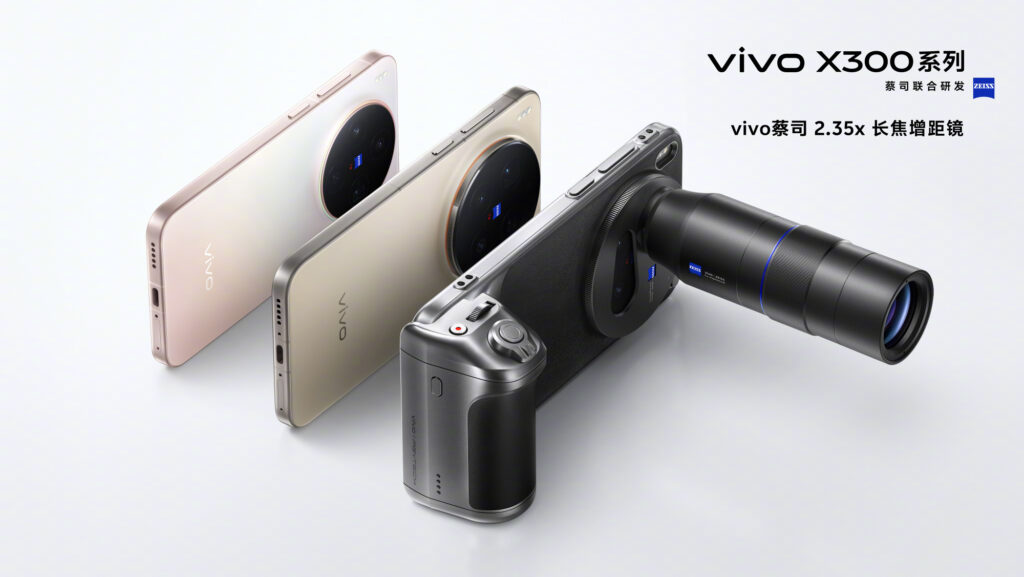
Vivo X300 Pro claimed to feature new Sony IMX09A sensor with upgraded HDR tech

Vivo just wrapped up a major launch event in China, where it introduced the X Fold 5 foldable alongside a handful of other devices. Now, the next big thing from the company is likely the X300 series, reportedly coming in four flavors: the X300, X300 Pro Mini, X300 Pro, and X300 Ultra.

Well, according to a new leak from a known tipster, Digital Chat Station, the X300 Pro will ship with a new Sony IMX09A main camera. 

Vivo X200 Pro

Vivo X300 Pro will have a 50MP main camera

Claimed to be an “iterative” upgrade over the Sony LYT-818 used in the X200 Pro and X200 Pro Mini, the IMX09A will be a 50-megapixel sensor with a 1/1.28-inch optical format and 1.22μm pixel size. 

The sensor reportedly uses a UHCG (Ultra High Conversion Gain) circuit to improve light sensitivity and signal-to-noise performance.

Whereas, its other improvements are said to include support for DCG HDR (dual conversion gain high dynamic range), and the inclusion of an updated “DCG+VS” tech — likely referring to a hybrid dynamic range processing method that further improves contrast and detail retention in complex lighting. 

In addition, DCS reiterates that the phone will be powered by MediaTek’s upcoming Dimensity 9500 chip. The Vivo X300 and X300 Pro mini are also expected to use the same mobile silicon, while the Ultra model will get the Snapdragon 8 Elite 2

There’s no word yet on the exact launch timing for the X300 Pro or the broader Dimensity 9500 platform it’s expected to be part of. However, leaks suggest Vivo might launch the X300 series in October this year.

For more daily updates, please visit our News Section.
Stay ahead in tech! Join our Telegram community and sign up for our daily newsletter of top stories! 

Fairphone 6 Launch: Eco-Friendly Phone with Swappable Backs, Modular Design, & 5-Year Warranty

Fairphone has officially unveiled the Fairphone 6, a modular smartphone aimed at sustainability-conscious users who value longevity and repairability. Staying true to its predecessor, the brand is bringing a repairability focused design with a modular body and customizable back panels. But there’s more to this phone than just its design, so here’s what you need to know.

What sets the Fairphone 6 apart from the crowd?

Talking about the most obvious features first, the company built the Fairphone (Gen. 6) with a durable body that uses recycled materials for sustainability. But it’s still durable with a military grade drop rating, Gorilla Glass 7i protection, and an IP55 rating for water and dust resistance. It measures 9.6mm in width and weighs 193 grams. While this makes it one of the thickest smartphones on the market, this space is used for its unique design.

Fairphone 6
Fairphone 6

It features a modular design (glue-free) that allows users to replace 12 parts easily. So repairs are quite convenient on the Fairphone 6 as well. You also get a swappable backplate that allows you to customize the rear by replacing the backplate with another one. Official pictures showcase it with a finger loop, a lanyard, a case, and even a cardholder. On the front, it sports a relatively compact 6.3-inch LTPO OLED display with a 120Hz refresh rate, FHD+ resolution, and up to 1400 nits of peak brightness. For eye comfort, there is support for both PWM and DC dimming.

Under the hood, it is equipped with the Snapdragon 7s Gen 3, which is paired wth 8GB of RAM and 256GB of internal storage. Users can even expand storage by up to 2TB via a microSD card slot. A sizeable 4,415mAh battery pack powers this device, which supports 30W wired fast charging. For optics, the rear has a 50MP Sony MYT700C SoC (ToF, OIS) and 13MP ultra wide angle lens (macro, EIS, ToF). Meanwhile, the front houses a 32MP selfie shooter.

Fairphone 6

Other notable features include WiFi 6E, Bluetooth 5.4 LE, NFC, dual SIM 5G, and a side mounted fingerprint scanner. There is also support for Gemini AI assistant and stereo speakers. It was just announced with a 599 Euros price tag, and it is currently on pre-order in Cloud White, Forest Green, and Horizon Black. Notably, Fairphone is promising an impressive 5 years of warranty and 7 years of major Android updates (launches with Android 15) out of the box. The Fairphone 6 is listed on the brand’s official website.

For more daily updates, please visit our News Section.
Tech enthusiast? Get the latest news first! Follow our Telegram channel and subscribe to our free newsletter for your daily tech fix! ⚡

Vivo TWS Air 3 Pro launched with 50dB ANC, spatial audio, Bluetooth 6.0 & 52h battery

Vivo has officially launched the TWS Air 3 Pro, a new pair of semi in-ear true wireless earbuds with active noise cancellation. The earbuds are priced at 199 yuan ($28), and a long battery life variant is available for 229 yuan ($32). The earbuds were unveiled at an event in China today, alongside the Vivo X Fold 5 foldable smartphone and the Vivo Watch 5 smartwatch.

Vivo TWS Air 3 Pro

Vivo TWS Air 3 Pro Specifications

The TWS Air 3 Pro features a lightweight design with each earbud weighing only 3.8 grams. It uses a semi in-ear fit and includes airflow vents to ensure long-term wearing comfort. The earbuds are available in two color options: Starry Black and Vitality White. Vivo also added animated pairing pop-ups featuring its mascots.

The earbuds support 50dB multi-mode active noise cancellation. They use an adaptive system that detects ambient sound and automatically adjusts the ANC level for optimal performance. For calls, a triple-microphone setup is paired with an L-shaped wind noise reduction duct, which helps eliminate up to 94% of background noise.

The Vivo TWS Air 3 Pro features 12mm drivers with a four-layer voice coil and has been acoustically tuned by Vivo’s Golden Ears team. It includes three selectable audio modes: bass, vocals, and treble, using DeepX 3.0 stereo sound enhancement. The earbuds also support spatial audio with four preset soundstage environments: concert, studio, theater, and hall. Additionally, it features a built-in feedback microphone that actively adjusts the midrange and bass in real time for optimal sound balance.

Vivo TWS Air 3 Pro

In terms of battery life, the earbuds deliver up to 9.5 hours of playback on a single charge, while the charging case boosts the total usage time to 47 hours. The long battery version extends this to 52 hours. Both variants support fast charging, offering up to 3 hours of use from just 10 minutes of charging. They also come with an IP54 rating for dust and water resistance.

The TWS Air 3 Pro support Bluetooth 6.0 and can connect to two devices simultaneously. They offer low-latency audio with a 44ms response time, making them suitable for gaming. The earbuds also integrate real-time vocal feedback for karaoke sessions, support voice assistants, provide call alerts, and include smart location tracking through the Vivo Earphones app.

For more daily updates, please visit our News Section.
Stay ahead in tech! Join our Telegram community and sign up for our daily newsletter of top stories! 💡

Vivo Watch 5 launched with eSIM, 1.43″ AMOLED, dual-device pairing & health tracking

Vivo has launched the Watch 5 smartwatch in China alongside the X Fold 5, offering Bluetooth and eSIM variants starting at 799 yuan (~$110). The new smartwatch focuses on fitness tracking, cross-device connectivity, and interactive features, including a virtual pet that evolves based on user activity data.

Vivo Watch 5

Vivo Watch 5 Specifications

The Watch 5 features a lightweight 32g aluminum alloy body and comes in multiple color options such as Midnight Black, Moonlight White, Peach Pink, Stardust Pink, and Silver Steel. Vivo also provides a stainless steel version that weighs slightly more at 35g or 36g, depending on the strap and finish.

The watch includes a 1.43-inch AMOLED display with 466 × 466 resolution, 1500 nits peak brightness, and a 60Hz refresh rate. It supports always-on display, dynamic watch faces, and Live Photo support.

Battery life differs depending on usage mode. Vivo claims up to 22 days of battery life in Bluetooth-only mode, 14 days in eSIM dual-device mode, and 7 days in eSIM standalone mode. The watch charges via a magnetic puck and takes about two hours for a full charge.

The Watch 5 runs on Vivo’s BlueOS and supports both Android and iOS platforms. It enables simultaneous connection with a Vivo phone and an iPhone, allowing users to receive calls and notifications from both devices. The eSIM version supports voice calls, messaging, and WeChat independently without relying on a connected phone.

Vivo Watch 5 specs

The Vivo Watch 5 includes a comprehensive suite of health features. It continuously monitors heart rate and blood oxygen levels, tracks sleep with detailed phase analysis, and detects stress levels. The watch also supports menstrual cycle tracking and issues arrhythmia alerts for conditions like atrial fibrillation and premature beats. Users can perform a quick 30-second blood pressure risk screening, and health data can be conveniently shared with family members through the Vivo Health app.

The smartwatch includes over 100 workout modes, with specific enhancements for racket sports like tennis, badminton, and ping pong. These modes provide motion coaching, grip guidance, and swing speed data. AI-assisted running plans and personalized coaching options are also available for activities like stretching, yoga, strength training, and cardio.

The smartwatch includes several lifestyle features, such as a virtual pet that users can feed using calories and steps, with the pet visible on the watch face. It supports NFC-based payments, access to public transit, smart door unlocking, and car control. The eSIM variant offers deeper integration with BYD vehicles through a dedicated app, allowing remote unlocking, air conditioning control, and other functions directly from the watch.

Pricing and Availability

The Vivo Watch 5 is now available in China, with the Bluetooth version priced at 799 yuan ($110) and the eSIM version at 999 yuan ($140). The watch is compatible with a wide range of accessories, and early buyers may receive promotional bundles through Vivo’s official channels.

For more daily updates, please visit our News Section.

Stay ahead in tech! Join our Telegram community and sign up for our daily newsletter of top stories! 💡

Vivo X Fold 5 launched with 8.03″ 2K LTPO display, 50MP ZEISS trio, 100x zoom & 6000mAh battery

Vivo has officially launched the X Fold 5 in China, marking a significant step forward in the foldable smartphone space. Marketed as the world’s lightest large-format foldable phone, the X Fold 5 weighs just 217g in its Titanium finish and introduces several industry-firsts. Let’s check out the key specs of this device.

Vivo X Fold 5

Vivo X Fold 5 Specifications

The X Fold 5 features an 8.03-inch inner AMOLED display with a 2K+ resolution of 2480×2200 pixels, supporting a 1-120Hz adaptive LTPO refresh rate and up to 4500 nits peak brightness.

The outer screen is a 6.53-inch FHD+ LTPO AMOLED panel with the same 120Hz refresh rate and brightness level. Both displays support 10.7 billion colors, Dolby Vision, and high-frequency PWM dimming for reduced eye strain. The inner screen is protected by UTG glass, while the outer display uses second-generation Armor Glass for improved durability.

The phone runs on Qualcomm’s Snapdragon 8 Gen 3 processor, combined with up to 16GB LPDDR5X RAM and up to 1TB UFS 4.0 storage. It uses a custom hinge-integrated antenna setup that improves signal strength by 36% in the folded state. Vivo has tuned the network performance in collaboration with Qualcomm for multi-band signal enhancement.

Vivo X Fold 5

The device runs OriginOS 5 based on Android 15 and introduces a new productivity-focused feature called “Atomic Workbench.” It supports up to five simultaneous apps in split-screen view with drag-and-drop functionality, designed for heavy multitasking. The phone also integrates deeply with Apple devices, supporting AirPods, Apple Watch (Series 6+), and Mac file management, including drag-and-drop and screen extension.

Coming to the optics, the rear camera setup includes a 50MP Sony IMX921 main sensor with OIS, a 50MP ultra-wide camera, and a 50MP IMX882 periscope telephoto lens with 3x optical zoom and 100x digital zoom. Vivo uses ZEISS optics and software to enable pro-level portrait modes, macro shots, and enhanced low-light photography. Both the inner and outer screens house 20MP front-facing cameras.

Vivo X Fold 5

Vivo has developed the 6000mAh Blue Ocean battery in partnership with CATL. It uses fourth-generation silicon anode material and second-generation semi-solid-state battery technology. The battery achieves an energy density of 866Wh/L and can operate in extreme cold down to -30°C. The phone supports 80W wired charging, 40W wireless charging, and reverse wireless charging.

The X Fold 5 uses a reengineered hinge made from FS55 high-strength steel and carbon fiber. The X Fold 5 is the first foldable certified with IPX8, IPX9, and IPX9+ water resistance, capable of withstanding 80°C water and high-pressure jets. It is also rated IP5X for dust resistance.

The device can operate in extreme cold conditions, such as -20°C, and is equipped with dual stereo speakers, NFC, Wi-Fi 6, Bluetooth 5.4, GPS with NavIC, and a side-mounted fingerprint sensor. Vivo has also included an industry-first design where the inner screen can be independently replaced.

Vivo X Fold 5

Pricing and Availability

The Vivo X Fold 5 is offered in Titanium, Clear White, and Pine Green colors. It is available in the following variants:

  • 12GB + 256GB: 6999 yuan ($974)
  • 12GB + 512GB: 7999 yuan ($1,114)
  • 16GB + 512GB: 8499 yuan ($1,184)
  • 16GB + 1TB: 9499 yuan ($1,324)

The device is now open for pre-orders in China and will go on sale from July 2. Early buyers can also avail limited-time offers, including screen protection for 299 yuan ($42), accidental damage coverage for 799 yuan ($111), extended warranty for 399 yuan ($56), up to 1800 yuan ($250) trade-in subsidy, and a welcome bundle worth over 5000 yuan (~$695).

For more daily updates, please visit our News Section.

Stay ahead in tech! Join our Telegram community and sign up for our daily newsletter of top stories! 💡

Xiaomi Open Earbuds Pro teased ahead of launch with industry-first five-driver open design

Xiaomi has officially teased its upcoming open-ear audio product, the Xiaomi Open Earbuds Pro. The announcement came through the company’s Weibo account, which described the product as a “new frontier in open-ear sound quality.” The earbuds will be unveiled at Xiaomi’s launch event in China on June 26 at 7 PM local time.

Xiaomi Open Earbuds Pro

The Xiaomi Open Earbuds Pro is the first product in the industry to feature an open-style five-driver system. Xiaomi has collaborated with Harman for audio tuning, indicating a focus on balanced sound output. The earbuds also use skin-friendly liquid silicone material and follow an ergonomic design to support long hours of use.

Compared to the base model launched last year, the design of the Pro variant has undergone a significant overhaul. The earlier model had a horizontal pill-shaped case with a glossy finish and a minimal aesthetic. It used a slim, curved over-ear hook and focused on delivering a lifestyle-friendly appearance.

The Pro model uses a squarer clamshell-style case with a matte soft-touch finish and a more functional design. The earbuds are bulkier, and the ear hooks are thicker and rubberized to improve grip and wear stability. The overall look is more practical and fitness-focused than the polished appearance of the previous model.

According to certification documents, the product carries model number M2503E1 and is officially called “Xiaomi OpenWear Stereo Pro.” It has passed through multiple regulatory bodies, including the FCC, China’s MIIT, and Bluetooth SIG. The charging case includes a 788mAh battery with 6W charging support, while each earbud houses a 56mAh cell. The product supports Bluetooth Low Energy (BLE) technology.

The base OpenWear Stereo, launched globally in July 2024, offered 10mm drivers, AI noise cancellation, HyperOS integration, and up to 38.5 hours of battery life. Xiaomi has not confirmed whether the Pro variant will introduce upgrades beyond the driver configuration or whether it will be sold internationally. The earbuds will launch alongside other products such as the Redmi K80 Ultra, Redmi K Pad, and Xiaomi Pad 7S Pro.

For more daily updates, please visit our News Section.

Stay ahead in tech! Join our Telegram community and sign up for our daily newsletter of top stories! 💡

Huawei Pura 80 Ultra vs OnePlus 13 – Which Premium Flagship Would You Choose ?

Huawei Pura 80 Ultra and OnePlus 13 represent two of the most advanced flagship smartphones of 2025, each pushing boundaries in design, performance, and camera technology. With Huawei focusing on powerful zoom capabilities and satellite connectivity, and OnePlus prioritizing raw performance and display innovation, this comparison highlights a critical choice for premium users. Whether you value imaging versatility or all-around power at a lower price, this matchup helps decide which flagship truly delivers better value and everyday excellence.

1. Design and Display

Huawei Pura 80 Ultra

Build and Feel:
Both phones offer a premium build with glass fronts and aluminum frames, along with IP68/IP69 protection. However, the Pura 80 Ultra emphasizes its solid craftsmanship with Kunlun Glass 2 and a more symmetrical design, while the OnePlus 13 enhances user comfort through its eco-leather variant and lighter form factor. The OnePlus’s under-display ultrasonic fingerprint sensor also provides a more modern unlocking experience compared to the Pura’s side-mounted sensor. Overall, OnePlus 13 feels more ergonomic and innovative in its build approach.

Display Quality:
The OnePlus 13 features an LTPO 4.1 AMOLED panel with superior brightness levels, reaching up to 4500 nits peak, Dolby Vision, HDR10+, and 2160Hz PWM dimming, ideal for both visibility and eye comfort. The Pura 80 Ultra also offers a vibrant LTPO OLED panel with 1440Hz PWM and 3000 nits peak brightness. While both displays are sharp and color-rich, OnePlus edges ahead with its higher peak brightness and advanced display tech, making it more versatile under direct sunlight and in HDR content consumption.

Verdict:
The OnePlus 13 has a slight edge in both ergonomics and display tech. Its ultra-bright, high-frequency AMOLED panel and sleeker feel give it an advantage for daily use and multimedia consumption.

Please Note: When you buy something using the links in our articles, we may earn a small commission at no cost to you.

2. Specifications

OnePlus 13
OnePlus 13

Performance:
Powered by the Snapdragon 8 Elite (3nm), the OnePlus 13 offers one of the most powerful Android experiences available, with high-frequency Oryon V2 cores and Adreno 830 GPU. The Huawei Pura 80 Ultra, on the other hand, runs on the 7nm Kirin 9020, which while capable, lags in raw CPU and GPU power. The OnePlus also supports UFS 4.0 storage across more variants, ensuring faster read/write speeds. For gaming, multitasking, and longevity, the OnePlus 13 delivers a significantly stronger performance package.

Battery and Charging:
The Pura 80 Ultra sports a 5700 mAh battery with 100W wired and 80W wireless charging, while the OnePlus 13 boasts a slightly larger 6000 mAh cell with equally fast 100W wired charging and 50W wireless charging. While both have reverse wireless and wired capabilities, OnePlus charges marginally faster (50% in 13 minutes) and offers a better battery capacity overall.

Verdict:
OnePlus 13 takes the lead in this segment due to its flagship-grade Snapdragon chip, larger battery, and optimized fast charging support. It’s more future-proof for power users.

3. Camera

Huawei Pura 80 Ultra

Main and Secondary Lenses:
Huawei Pura 80 Ultra boasts a quad-camera system with dual periscope lenses, one at 3.7x and another at 9.4x optical zoom, both stabilized with sensor-shift OIS. It also features a massive 1-inch-type primary sensor and a high-res ultrawide lens. The OnePlus 13, though impressive with its 50MP triple setup and Hasselblad tuning, offers just a single periscope lens (3x zoom) and a smaller primary sensor. For zoom flexibility and sensor quality, Huawei pulls ahead, especially for professional-grade photography.

Selfie Camera:
Huawei’s 13MP ultrawide selfie shooter delivers good detail and field of view with 4K support, but the OnePlus 13’s 32MP front camera provides better resolution and more advanced 4K/60fps recording. It also captures finer textures and skin tones with better color calibration, making it more appealing for creators and video calls.

Verdict:
Huawei takes the lead in rear camera versatility and zoom range, but OnePlus wins on selfie camera quality and front-facing video performance. Huawei is better for photography enthusiasts, while OnePlus suits vloggers and content creators.

4. Pricing

Huawei Pura 80 Ultra is priced around $1500, whereas the OnePlus 13 starts at $1000 for its 12GB RAM variant and goes up depending on storage. Despite Huawei offering an advanced camera system and unique features like satellite messaging (China-only), it comes at a significantly higher cost. 

The OnePlus 13 delivers top-tier performance, battery, and display tech for a considerably lower price, making it the more practical flagship for most users. In terms of value, OnePlus offers a more compelling package.

Disclaimer:
Prices are approximate and may vary based on country, region, and applicable taxes.

5. Conclusion

OnePlus 13
OnePlus 13

Huawei Pura 80 Ultra offers standout photography capabilities with its dual periscope setup and 1-inch main sensor, plus BDS satellite messaging in China. Its ultra-premium construction and 80W wireless charging further add to its appeal. Meanwhile, the OnePlus 13 shines in raw performance, ultra-bright display, and better software support with 4 Android upgrades. It also has features like “Circle to Search” and advanced audio enhancements.

Verdict:
Choose the Huawei Pura 80 Ultra if photography flexibility and luxury build are priorities. Go for the OnePlus 13 if top-end performance, better pricing, and a more complete daily driver matter more. For most users, the OnePlus 13 is the smarter flagship choice.

Read More:

Redmi Note 14 Pro, Pro+ Champagne Gold Variant Coming to India on July 1

Xiaomi has announced a new Champagne Gold color variant for its Redmi Note 14 Pro and Note 14 Pro+ smartphones in India. The new models will go on sale starting July 1 via Amazon India and Xiaomi retail outlets.

Redmi Note 14 Pro

The specifications remain the same as the previously launched Spectre Blue, Titan Black, and Phantom Purple variants.

The Redmi Note 14 Pro+ features a 6.67-inch 120Hz curved OLED display with 3000 nits peak brightness, powered by the Snapdragon 7s Gen 3 processor and supported by 5000mm² VC liquid cooling. It includes a triple camera setup with a 50MP Light Fusion 800 main sensor, 8MP ultra-wide camera, and a 50MP 2.5X telephoto lens. The device packs a 6200mAh silicon-carbon battery with 90W fast charging and holds IP66, IP68, and IP69 water and dust resistance ratings.

The Redmi Note 14 Pro is equipped with the MediaTek Dimensity 7300-Ultra SoC and uses a 13780mm² graphite cooling sheet. It sports a 50MP Sony LYT-600 main sensor, an 8MP ultra-wide camera, and a 2MP macro camera. This variant comes with a 5500mAh solid electrolyte battery and supports 45W fast charging.

For more daily updates, please visit our News Section.

Don’t miss a thing! Join our Telegram community for instant updates and grab our free daily newsletter for the best tech stories!

(Source)

June 2025 Smartphone Launch & Leak Roundup: Foldables, Flagships & Gaming Beasts

June 2025 has been a big month for smartphone fans, with multiple high-profile launches across India and China, plus a hefty dose of credible leaks teasing what’s coming next.

From flip-style foldables to compact flagships and gaming-ready slabs, the Android landscape is buzzing with activity. Here’s a full breakdown of the phones that made headlines this month, and the ones that are about to.

1. Flagship Launches

Huawei-Pura-80-Ultra

Huawei Pura 80 Series

Huawei made a strong return to the ultra-premium smartphone market this June with the launch of its Pura 80 Series in China. The lineup includes the Pura 80, 80 Pro, 80 Pro+, and the top-tier Pura 80 Ultra.

Design and imaging take center stage across the board, but the Ultra variant leads with a new 1-inch ultra-dynamic sensor, dual optical zoom levels at 3.7x and 9.4x, and a sensor-shift stabilization system. It pairs a 50MP ultra-large telephoto and a 40MP ultra-wide, moving mobile photography closer to mirrorless camera territory.

All models come with OLED displays and 120Hz refresh rates. The Pro and Ultra versions support 100W wired and 80W wireless charging, with battery capacities reaching 5,700mAh. Huawei also introduced second-gen Kunlun Glass protection and dual satellite connectivity on the Pro+ and Ultra. HarmonyOS 5.1 brings new features like AI-powered privacy tools and cross-device file teleportation.

Pricing starts at 6,499 yuan ($906) for the Pro model and goes up to 10,999 yuan ($1,532) for the Ultra. Huawei has confirmed that the Pura 80 series will launch globally on July 10 at an event in Dubai.

OnePlus 13s

OnePlus 13S poster
OnePlus 13S poster

OnePlus launched the 13s as a compact alternative to its main flagship. It features a 6.32-inch 1.5K LTPO AMOLED display with ultra-narrow bezels and 1600 nits of peak brightness. Powering the phone is the new Snapdragon 8 Elite chip.

The device uses a 4,400mm² Cryo-Velocity vapor chamber and an added graphite cooling layer in the rear panel to manage heat. It comes with 12GB LPDDR5X RAM and up to 512GB UFS 4.0 storage.

The rear camera setup includes a 50MP LYT-700 sensor and a 50MP 2x telephoto lens. It skips an ultra-wide camera but adds value with a 5,850mAh battery, 80W charging, IP65 rating, and a customizable “Plus Key” on the side. The starting price is Rs. 54,999 ($638).

Please Note: When you buy something using the links in our articles, we may earn a small commission at no cost to you.

Vivo T4 Ultra

Vivo T4 Ultra

Vivo positioned the T4 Ultra as a feature-rich midranger that flirts with flagship territory. It runs on the Dimensity 9300+ chip and uses a 6.78-inch curved AMOLED screen with 1.5K resolution and 5500 nits peak brightness. The device includes a 50MP 3x periscope telephoto camera, rare in this price segment.

The phone supports 90W wired charging, carries an IP64 rating, and houses a 5500mAh battery. It runs Android 15 with vivo’s new AI tools like Circle to Search and Erase 2.0. The base model is priced at Rs. 37,999 ($442).

2. Midrange Launches

Poco F7 Launch and Specs

Poco F7

Poco focused on performance with the F7. It features the Snapdragon 8s Gen 4 chipset and Poco’s Rage Engine 4.0, pushing an AnTuTu score of 2.1 million. The phone sports a 6.83-inch flat OLED display with 3200 nits peak brightness, 2560Hz touch sampling, and 3840Hz PWM dimming.

The F7 packs a 7550mAh battery, supports 90W fast charging and 22.5W reverse charging, and uses a metal frame. It holds IP66, IP68, and IP69 ratings and starts at Rs. 31,999 ($372). For power users, it’s one of the most aggressive value plays of the month.

Motorola Edge 60

Motorola Edge 60

Motorola introduced the Edge 60 as a durable and well-balanced midrange device in the Indian market. It comes with a 6.67-inch quad-curved pOLED panel at 1.5K resolution and 4500 nits peak brightness, protected by Gorilla Glass 7i. The phone uses the Dimensity 7300 SoC and runs Android 15 with 12GB of RAM.

The device features a total of four cameras, including a 50MP main, 50MP ultra-wide, 50MP front, and a 10MP telephoto lens. It is built for durability with IP68, IP69, and MIL-STD-810H certifications, indicating strong resistance to water, dust, and extreme conditions. The starting price is Rs. 25,999 ($302).

Please Note: When you buy something using the links in our articles, we may earn a small commission at no cost to you.

Infinix GT 30 Pro

Infinix GT 30 Pro

Infinix leaned into gaming with the GT 30 Pro. It features a 6.78-inch 1.5K AMOLED display with 144Hz refresh rate and is powered by MediaTek’s Dimensity 8350 Ultimate chip. The phone supports 520Hz shoulder triggers, a detachable magnetic fan, and customizable RGB lighting on the rear.

It also supports 45W wired and 30W wireless charging, includes Android 15 out of the box, and starts at Rs. 24,999 ($290) in India. At this price, it’s one of the most complete gaming phones in the budget segment.

3. Xiaomi’s June 26 Mega Event

June 2025 Smartphone Launch

Xiaomi is preparing to host one of its most ambitious product events of the year on June 26, bringing a diverse lineup that spans foldable smartphones, high-performance tablets, wearables, and even an electric SUV. The company has teased its intent to expand far beyond mobile, and this event solidifies its push into a broader hardware ecosystem.

Xiaomi Mix Flip 2

The star of the event is expected to be the Mix Flip 2, Xiaomi’s first flip-style foldable and its only foldable for 2025. The device aims to compete directly with Samsung’s Galaxy Z Flip 7, and the specifications make that ambition clear. It is powered by the Snapdragon 8 Elite chipset and features a 6.85-inch LTPO AMOLED inner display alongside a 4.01-inch outer screen.

Imaging is handled by a dual rear camera setup tuned by Leica, including a 50MP main sensor. The device is rated IPX8 for water resistance, and battery life should be among the best in the flip segment thanks to a 5,100mAh cell. The phone supports 67W wired and 50W wireless charging. With no Mix Fold launching this year, the Mix Flip 2 stands as Xiaomi’s sole entry into the foldable market in 2025.

Redmi K Pad

Xiaomi is also entering the compact gaming tablet segment with the new Redmi K Pad. It features an 8.8-inch LCD panel with a 165Hz refresh rate, making it well-suited for fast-paced gaming. The device is powered by the 3nm MediaTek Dimensity 9400+ chipset and comes equipped with dual USB-C ports for flexibility and accessory support.

In performance tests, the K Pad scored 8915 in Geekbench’s multi-core benchmark, positioning it among the top-performing Android tablets of its size. Xiaomi has added custom thermal tuning to keep temperatures in check during extended sessions. The display supports Dolby Vision, and the device has been designed to be lightweight and easy to use with one hand, appealing to both gamers and productivity users.

Xiaomi Pad 7S Pro

For users looking for a larger, more powerful tablet, Xiaomi will unveil the Pad 7S Pro. This model features a 12.5-inch 3.2K display with a 144Hz refresh rate. It also debuts Xiaomi’s in-house Xring O1 chip, designed to enhance performance and energy efficiency. The tablet supports 120W wired charging, placing it in flagship territory for speed and usability.

The Pad 7S Pro is expected to compete with premium devices like the iPad Pro, though pricing may be slightly more accessible. It is designed for creative professionals and power users who are already part of Xiaomi’s HyperOS ecosystem.

Redmi K80 Ultra

The Redmi K80 Ultra is also set to launch at the event. This device will serve as Redmi’s summer performance flagship, with a focus on gaming and raw processing power. While full specifications are yet to be detailed officially, it is expected to come with aggressive pricing and a hardware configuration that reflects the brand’s high-performance identity. The design language continues Redmi’s trend of blending industrial aesthetics with practical functionality.

Xiaomi YU7 Electric SUV

In a move that highlights Xiaomi’s broader ambitions, the event will also mark the debut of the company’s first electric SUV, the Xiaomi YU7. The vehicle has already been spotted in leaked renders and spec documentation. It is expected to feature a 96.3kWh battery, deliver a driving range of up to 835 kilometers, and offer rapid acceleration capabilities.

The YU7 marks Xiaomi’s formal entry into the automotive sector following the debut of its SU7 electric sedan earlier in the year. With smartphones, tablets, and now cars under its belt, Xiaomi is positioning itself as a multi-category hardware company capable of delivering across different consumer segments.

Smart Band 10 & More

The wearable segment is also set for a refresh. Xiaomi will introduce the Smart Band 10, featuring a 1.72-inch AMOLED display, a 233mAh battery, and support for up to 150 sports modes. According to earlier leaks, the Band 10 will launch globally on June 30 and is expected to retain a budget-friendly price tag.

In addition to the Band 10, Xiaomi will also unveil new accessories, including the Watch S4 (41mm), Xiaomi OpenWear Stereo Pro, and updated AI Glasses.

For more daily updates, please visit our News Section.

Stay ahead in tech! Join our Telegram community and sign up for our daily newsletter of top stories! 💡

Why You Might Want to Skip the Apple iOS 26 Beta 2 for Now

Apple’s iOS 26 Beta 2 is here, and while it brings a host of improvements and refinements over the first beta, that doesn’t mean it’s ready for everyone. Between limited feature availability, hardware restrictions, and lingering bugs, there are several good reasons why you might want to hold off on installing iOS 26 Beta 2.

1. Still a Developer Beta, Not a Public One

iOS-26
Apple iOS 26

Although iOS 26 Beta 2 is more stable than Beta 1, it’s still a developer release, not a public beta. That means it’s designed for testing, not daily reliability. You may encounter random app crashes, system slowdowns, or UI glitches. If you rely on your iPhone for work, travel, or critical communication, this isn’t the OS version you want to be running just yet.

2. Apple Intelligence Is Still MIA

iOS 26 Android Features
Apple iOS 26: Visual Intelligence

Much of the iOS 26 hype is centered around Apple Intelligence, which is Apple’s answer to AI features from Google. But there’s a catch: most of these features are locked behind hardware restrictions. Unless you’re using an iPhone 15 Pro, Pro Max, or one of the latest iPhone 16 models, you won’t get access to ChatGPT-powered Visual Intelligence, on-screen search, or the enhanced AI assistant tools. So this could be a frustrating experience for older iPhone users that use the iPhone 14 or iPhone 13 lineup.

3. Battery Life and Performance Issues Still Linger

iOS 26 Android Features
iOS 26 Live Translate

The Cupertino based giant just rolled out the iOS 2 Beta 2 a day before, and there are already complaints from early adopters. Some have claimed that their iPhones have offered the worst battery life. This is due to a mix of reasons including inconsistent standby times and overheating during light use. Some background processes tied to new features have been taxing the iPhone’s chips more heavily.

While Apple has refined the beta and efficiency by passing tasks in the background, these optimizations are still not consistent across all iPhones. So you might want to consider the battery life overall before joining the iOS 26 Beta 2. There have already been issues with the general day-to-day use, with issues related to the redesigned Control Center and updated Camera app.

4. Better Builds Are Right Around the Corner

With Apple’s Public Beta expected in early July and a stable release coming in September, it’s smarter to wait. The public beta will likely fix many of the core bugs and be optimized for broader hardware support. If you’re not a developer and can wait for a bit longer, I’d suggest waiting before running into the current iOS 26 Beta builds.

For more daily updates, please visit our News Section.

Don’t miss a thing! Join our Telegram community for instant updates and grab our free daily newsletter for the best tech stories!

Nothing CMF Buds 2a Now Available in India for ₹2,199 with ANC and 35.5-Hour Battery Life

Nothing has officially started selling the CMF Buds 2a, its new entry-level true wireless earbuds, in India. Priced at ₹2,199, the earbuds are now available in Dark Grey, Light Grey, and Orange colour options via Flipkart, Myntra, and select retail stores.

CMF Buds 2a

Announced in April 2025, the CMF Buds 2a targets budget-conscious users while offering features typically found in higher-end models. The earbuds are equipped with 12.4mm bio-fibre drivers and Nothing’s Ultra Bass Technology 2.0 for enhanced low-end audio. They support up to 42 dB Active Noise Cancellation (ANC) and Clear Voice Technology, aided by a quad-microphone setup for improved call quality.

CMF Buds 2a

For gamers and video streamers, the earbuds offer a low-latency mode with 110ms latency when paired with Nothing OS devices. The IP54 rating ensures resistance against dust and splashes, making them suitable for casual workouts or outdoor use.

Battery life is rated at up to 35.5 hours including the case, and up to 8 hours of standalone playback with ANC turned off. A quick 10-minute charge offers up to 5.5 hours of listening time, making them viable for all-day usage.

This launch is part of Nothing’s broader CMF Buds 2 series rollout in India. The company has confirmed that the CMF Buds 2 and Buds 2 Plus models will be launched in July 2025.

For more daily updates, please visit our News Section.
Stay ahead in tech! Join our Telegram community and sign up for our daily newsletter of top stories!

Another Google Pixel 10 Compromise Surfaces: No Vapor Chamber for Cooling?

Google‘s Pixel 10 series of flagship phones is highly anticipated, but the base Pixel 10 model might be a bit disappointing. Despite the various improvements in the processor and in other areas, there have also been rumors of some compromises, with the latest rumor bringing the thermal performance into question as well. So here’s what we know.

Google Pixel 10 Still Missing Vapor Chamber Cooling

The latest news arrives from an AndroidHeadlines report, which claims that the vapor chamber will be skipped on the base Pixel once again. To recall, last year’s Pixel 9 Pro and Pixel 9 Pro XL came with a vapor chamber for better thermal management, but this feature was skipped on the base Pixel 9. So it’s odd that Google could be skipping this crucial feature on the Pixel 10 this year, despite this model being a flagship device.

Pixel-10-render
Google Pixel 10

This is yet another compromise on the upcoming Pixel 10. A previous report had revealed the entire camera specs of the Pixel 10 lineup, which pointed to the standard Pixel 10 getting a telephoto shooter. While this is a new addition in the camera system, the main camera is getting a massive downgrade with the primary sensor dropped from a flagship 1/1.31-inch sensor to a 1/1.95-inch sensor.

With the Tensor getting more powerful each year, a vapor chamber would seem basic, so hopefully this report isn’t actually true. Talking about some more disappointing news, the Pixel 10 will likely not receive the brand new “Ultra Res Zoom” or ultra stable video recording.

For more daily updates, please visit our News Section.
Tech enthusiast? Get the latest news first! Follow our Telegram channel and subscribe to our free newsletter for your daily tech fix! ⚡

MagicBook Art 14 (2025) Teased: Honor’s Next Sleek Laptop Packs Bright 1600nits OLED Display

Honor just dropped a fresh teaser for its upcoming ultrabook. The company is set to launch the MagicBook Art 14 soon, with the latest image posters showcasing its bright new display and sleek, thin and light body. So read on to check it out.

Honor MagicBook Art 14 (2025): Here’s what makes it stick out

Honor MagicBook Art 14 2025

The Chinese brand shared a series of teasers on Weibo, which confirmed some specs, design elements, and launch date. Honor is set to debut the 025 edition of the MagicBook Art 14 in China on 2nd July 2025. Looking at the teasers, the upcoming notebook features a design similar to its predecessor. To recall, the MagicBook Art 14 first dropped in China back in November 2024 while the global launch followed in Europe a month later.

These were new ultrabooks that came with the Snapdragon X Elite, bringing long battery life and AI processing via a dedicated NPU for AI processes. So we can expect the MagicBook Art 14 (2025) to feature Snapdragon processors once again. But while finer details like its specs are still unknown, the teaser showcased the device with a lightweight design and a bright display on the front.

Honor MagicBook Art 14 2025

Honor MagicBook Art 14 achieves an impressive 1600 nits of peak brightness, which is likely from its OLED display. Furthermore, the device measures 2.2 pounds, which is just under 1 kilogram. The teaser also confirms connectivity options like two USB-C ports, one USB-A port, a 3.5mm audio jack, and an HDMI port. Another notable aspect is the magnetic webcam that attaches right above the screen, allowing Honor to offer narrow bezels all around the display.

For more daily updates, please visit our News Section.

Don’t miss a thing! Join our Telegram community for instant updates and grab our free daily newsletter for the best tech stories!

Huawei’s Pura 80 Series Photography Flagship Gets a Global Launch Date

Huawei has officially confirmed the global launch timeline for its Pura 80 Series, the brand’s latest photography-focused flagship lineup. After debuting in China, the Pura 80, Pura 80 Pro, Pura 80 Pro+ and Pura 80 Ultra are now set to reach international markets. So here’s everything you need to know.

Huawei Pura 80 Series Making its Global Debut Next Month

Huawei Pura 80 series dropping soon

The Chinese tech giant just confirmed the official launch date for the overseas market. The Pura 80 lineup will make its global debut in Dubai on 10th July 2025. As of right now, Huawei has yet to confirm the availability details, so its unclear which regions it will release in. To recall, the Huawei Pura 80 Ultra is the flagship model, which brings the world’s first dual lens telephoto shooter.

That’s not all, the primary sensor is a 1-inch 50MP camera with a f/1.6-4 variable aperture, which is paired with a 40MP ultra wide angle lens, a 1.5MP spectrum sensor, and a 50MP + 12.5MP dual periscope telephoto lens setup (3.7x and 9.4x optical zoom). On the other hand, the Pura 80 Pro models also pack the 50MP 1-inch RYYB primary sensor with variable aperture support and a 40MP ultra wide angle lens, but the periscope telephoto shooter only offers 4x optical zoom.

Huawei Pura 80 Ultra

Huawei’s entire Pura 80 series is equipped with the Kirin 8020 SoC, support for wired and wireless fast charging, and satellite communication as well. These are flagship devices with a premium price tag, so we can expect these models to start from 1,000 US Dollars in the global market as well.

For more daily updates, please visit our News Section.

Don’t miss a thing! Join our Telegram community for instant updates and grab our free daily newsletter for the best tech stories!

Lenovo Chromebook Plus 14 Announced with OLED Display & Dolby Atmos Tuned Speakers

Lenovo has just introduced the Chromebook Plus 14, a new ChromeOS powered laptop. It boasts a vibrant OLED display and is the first ever Chromebook to feature an audio setup tuned with Dolby Atmos. So here are all the details.

Lenovo ChromeBook Plus 14: What does it offer?

As the name suggests, the Chinese tech giant’s latest Chromebook Plus 14 sports a 14-inch display on the front. This is a touch enabled panel with a WUXGA resolution (1920 x 1200) and 60Hz refresh rate. So you can expect vibrant colors on this screen. Pairing the great visual setup, Lenovo also adds four 2W speakers that are tuned with Dolby Atmos. This collaboration makes it the first Chromebook of its kind.

Lenovo Chromebook Plus 14

Under the hood, the Lenovo Chromebook Plus 14 is equipped with the MediaTek Kompanio Ultra 910 SoC, which is paired with an integrated ARM Mali G52 graphics and an NPU that delivers an impressive 50TOPS of performance. The processor is coupled with up to 16GB of LPDDR5X RAM and up to 256GB of UFS storage. It runs on the ChromeOS out of the box. Connectivity options include 1x USB-A 3.2, 2x USB-C 3.2 (DisplayPort support), a 3.5mm audio jack, WiFi 7, and Bluetooth 5.4.

Lenovo claims that the device can run for up to 12 hours on a single full charge. The Chromebook Plus 14 is built using an aluminum chassis that weighs around 1.25 kilograms. It has a starting price tag of 649.99 US Dollars and can be purchased from the brand’s official website. This announcement also arrives mere days after the company announced the Lenovo Xiaoxin desktop PC.

For more daily updates, please visit our News Section.

Tech enthusiast? Get the latest news first! Follow our Telegram channel and subscribe to our free newsletter for your daily tech fix! ⚡

Amazfit Balance 2 Diving Smartwatch Launches with GPS, AMOLED Display & 21-Day Battery Life

Amazfit unveiled the Helio Strap yesterday, and alongside the new display-free wearable, the brand also announced a new smartwatch in the global market. The Amazfit Balance 2 has just dropped with a long battery life, vibrant AMOLED display, and much more. So here are all the details.

Amazfit Balance 2: What does it offer?

Back in May 2025, the brand announced the Amazfit Balance 2 in the Chinese market for fitness enthusiasts. Now, this model is arriving in the global market with identical specs and features. So you still get a 1.5-inch Sapphire glass AMOLED display with up to 2000 nits of peak brightness. This model also offers up to a 10ATM rating for water resistance, which makes it suitable for basic diving as well.

Amazfit Balance 2
Amazfit Balance 2

The Balance 2 can withstand a depth of 100 meters while also offering tracking for freediving and scuba diving of up to 45 meters. There is also support for more than 170 sports modes that include swimming, running, pickleball, and more. Golf gets some dedicated features like access to over 40,000 courses worldwide, scoring, pin relocation, and much more. You also get support for HYROX modes, Zepp app support, and BioCharge Score like the Helio Strap.

Amazfit packs the Balance 2 with various health trackers, including heart rate tracking, SpO2 blood oxygen monitoring, sleep tracking, stress levels mapping, and more. Other notable features include Bluetooth 5.2 with BLE, menstrual tracking, Bluetooth Calling support (Dual Speakers + Microphones), and more. Amazfit’s latest GPS smartwatch has just been announced for a 299 US Dollar price tag. It is available in a single black color option with an additional Lava strap.

Please Note: When you buy something using the links in our articles, we may earn a small commission at no cost to you.

For more daily updates, please visit our News Section.

Tech enthusiast? Get the latest news first! Follow our Telegram channel and subscribe to our free newsletter for your daily tech fix! ⚡