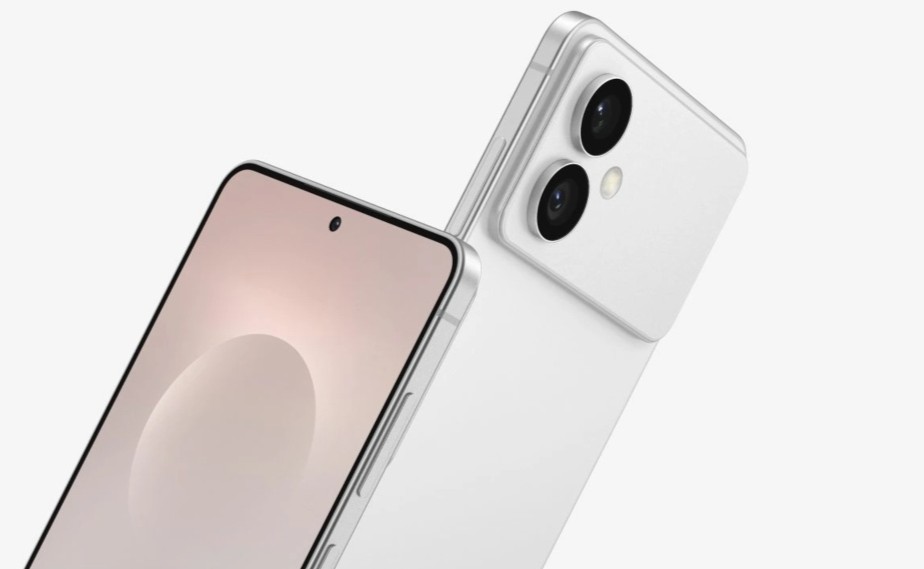

Oppo is reportedly working on the K13 Turbo smartphone for the Chinese market. Rumored to be equipped with the Snapdragon 8s Gen 4, the handset is expected to rival the likes of the Redmi Turbo 4 Pro and iQOO Z10 Turbo Pro in the home market. A leaked image and a schematic that have emerged in the past have already revealed the design of the phone. A new leak, courtesy of tipster Digital Chat Station, has revealed everything about the device’s specifications.
Oppo K13 Turbo specifications (rumored)
Oppo K13 Turbo schematic by DCS
According to the tipster, the Oppo K13 Turbo will feature a 6.8-inch flat OLED screen that supports a 1.5K resolution (2800 x 1280 pixels) and a 144Hz refresh rate. On the front, it will feature a 16-megapixel selfie camera and a 50-megapixel + 2-megapixel dual-camera system
The Oppo K13 Turbo will feature the Snapdragon 8s Gen 4 chipset, LPDDR5x RAM, and UFS 4.0 storage. The device’s topmost model will offer 16GB of RAM and 512GB of storage. The leak has no information about the battery and fast charging capabilities of the device. It is expected to run on ColorOS 15-based Android 15.
Oppo K13 Turbo
The K13 Turbo will have an in-screen fingerprint sensor and a built-in active cooling fan. It will also have other features, such as a plastic mid-frame and an IPX8-rated chassis.
Currently, Oppo is silent on the existence of the Oppo K13 Turbo. Likely, the device may debut later this month or in July.
For more daily updates, please visit our News Section.
Apple Mac Mini with M4 Chip is now on sale, and there are some exciting discounts on Amazon India. The Mac Mini is now listed for the price of Rs 53,990, but with the discount of Rs 4000, Bank offers, the buyers can grab it for the final price of Rs 49,999. It is a time-limited offer, and you may hurry to grab the offer.
Bank offers are only applicable if you’re using the ICICI or Axis Credit Card while making the purchase. Moreover, if you’re using an Amazon ICICI Bank Card, you can get a Rs 4000 discount on EMI transactions and Rs 2500 cashback for non-EMI transactions.
Apple has quietly upgraded the Mac Mini with the new M4 chip, bringing faster performance in the same compact design. The latest M4 chip offers a noticeable boost in CPU and GPU efficiency, making the Mac Mini more capable for both everyday tasks and heavier workloads like video editing or app development. Apple M4 chip comes with up to a 10-core GPU and up to 24GB of unified memory, which means better multitasking and smoother graphics performance.
In terms of design, there are no major changes—the aluminum chassis remains compact and fanless, making it a great option for minimal desk setups or media centers. It comes with a good selection of ports, including two USB-A ports, two Thunderbolt / USB 4 ports, HDMI (now supporting up to 8K), Ethernet, and a 3.5mm headphone jack. It also supports Wi-Fi 6E and Bluetooth 5.3 for faster, more stable connectivity. The Mac Mini with M4 runs on macOS Sequoia and supports up to two external displays, making it a powerful and affordable choice for users who want desktop-level performance in a small footprint.
Getting Rs 4000 instant discount seems like a crowning stroke to maximize the purchase of the Apple Mac Mini.
Apple 2025 MacBook Air is once again retailing at the all-time low price of Rs 79,490. However, it is not the listing price, but you can get up to Rs 12,500 discount via Bank Discounts, and an additional Rs 2299 off via coupon collection. With all these discounts, the Apple 2025 MacBook Air with 16GB RAM and 256 GB storage, which is retailing for Rs 90,900, will be yours for the price of Rs 79,490.
It is a time-limited deal that may last until the last stock is available. At the time of writing, the MacBook Air Midnight black was the only color in stock; the remaining colors were already out of stock. You should hurry if you want to grab the MacBook Air at such a price.
Apple’s 2025 MacBook Air comes with the latest M4 Chipset that brings better speed and fluidity. It is even more efficient and offers up to 18 hours of battery life. It is available in 13.6-inch and 15-inch screen sizes. It bundles a 12MP center stage camera with three mics and four speakers for spatial audio. It features two Thunderbolt 4 ports and a MagSafe charging port.
In connectivity, the Apple MacBook Air packs 4 Thunderbolt ports, a MagSafe charging port, a headphone jack, WiFi 6E, and Bluetooth 5.3.
You can enjoy the bright screen, best performance, and efficiency at the discounted price of Rs 79,490.
Running on macOS Sequoia, the M4 MacBook Air is designed for a seamless experience, especially if you use it with an iPhone or iPad.
Samsung is gearing up to launch the Galaxy F36, and ahead of the official announcement, the device has been spotted in the Google Play Console. The listing provides us with our first clear look at the design and reveals a few key specifications of the phone.
On the front, the Galaxy F36 features a waterdrop notch display. It’s certainly a dated design, but Samsung still prefers using it for some of its more affordable phones.
Here’s what the Galaxy F36 looks like
Around the back, it has a single pill-shaped main camera module where two of the sensors are nested inside another oval cutout, and a third one is placed separately below. The LED flash is positioned off to the right. Altogether, it sticks to Samsung’s typical layout for mid-range hardware.
The listing also confirms the screen has a resolution of 1080 x 2340 pixels and a pixel density of 450 ppi. Under the hood, the Galaxy F36 is powered by the in-house Exynos 1380 SoC. It’s paired with 6GB of RAM, and the software side shows Android 15 running with Samsung’s One UI 7 on top.
This new appearance comes after the Galaxy F36 was spotted on Samsung India’s support site earlier this month, as well as on the Bluetooth SIG certification site. The device is expected to launch in India soon, possibly before the end of the month. As with other F-series phones, it’s likely to be sold via Flipkart, while its sibling, the Galaxy M36, could land on Amazon.
Interestingly, the Play Console and Google Play Supported Devices list point to the F36, M36, and a third model called the Galaxy Jump 4, all sharing the same internal codename, “m36k.” The Jump 4 was listed with model number SM-M366K, the M36 with SM-M366B, and the F36 with SM-E366B.
All signs suggest these are just regional rebrands of the same hardware, tailored for different markets. If Samsung sticks to its usual strategy, the F36 will be India-focused, the M36 will see a broader release, and the Jump 4 may stay confined to Korea or China.
We got an early glimpse of the Poco F7’s design last week via a hands-on image. Now, a fresh set of renders has appeared to give us a clearer, more complete look at the phone.
The overall design lines up with the previous leak. The Poco F7 has a vertical, pill-shaped camera module housing two lenses stacked vertically. What stands out visually are the two diagonal green accent lines crossing the camera island.
There likely is a special-edition Poco F7
Unlike the earlier leak, though, this version skips the dual-tone finish and the semi-transparent window that seems to reveal a Snapdragon chip underneath. That suggests the earlier unit might’ve been a special edition of the Poco F7. The latest leak shows us the device in a more standard black variant.
As for the specs, here’s what we know so far. The Poco F7 is expected to sport a 6.83-inch AMOLED display with a resolution of 1280 x 2272 and a smooth 120Hz refresh rate.
Under the hood, it may be powered by Qualcomm’s upcoming Snapdragon 8s Gen 4 chip. This is likely to be paired with 12GB or 16GB of RAM and 512GB or 1TB of storage. Camera hardware seems pretty typical for the mid-premium range—a 50MP main sensor with OIS, an 8MP ultrawide, and a 20MP selfie camera.
Poco F7 live image
Moreover, the F7 might ship with a hefty 6,550mAh cell with support for 90W fast charging. Interestingly, the Indian variant of the device is said to pack an even bigger 7550mAh cell with the same charging support.
There’s still no word from Poco on a launch date or regional availability, but given the pace of recent leaks, an official reveal feels right around the corner.
Xiaomi has listed the Smart Temperature and Humidity Monitor 3 Mini on its global website, hinting at an upcoming launch outside China. The device is a smaller version of the existing Monitor 3, with updated features and a more compact build.
It measures 53 × 45.3 × 13mm and weighs 30g. The screen is 2.1 inches with a 5.1mm thin bezel, offering a larger and clearer display compared to the older Mi Monitor 2. The monitor uses a high-precision sensor to detect changes in temperature (as small as 0.1°C) and humidity (1% RH). It refreshes data every 6 seconds and displays both values at the same time. Xiaomi recommends keeping indoor temperature between 19–27°C and humidity between 20–85% RH for best comfort.
It runs on a CR2450 button cell battery. In standard mode, battery life is up to 2 years. In save battery mode, it can last up to 3 years. Save battery mode can be enabled through the Xiaomi Home app (version 10.0 or later).
Users can connect the monitor to the Xiaomi Home app via a Bluetooth Mesh gateway (sold separately). Once connected, it can trigger smart devices like fans or humidifiers based on preset temperature and humidity limits.
The device stores data locally for 3 months and in the cloud for 6 months. In standard mode, it sends data to the gateway every 1 to 5 minutes. In save battery mode, updates happen every 3 to 13 minutes.
The monitor can be placed on a surface using the included stand or mounted on a wall using double-sided adhesive. It also shows comfort levels through small facial icons on the screen. It is made of ABS plastic, supports Bluetooth Low Energy 5.0, and works in the 0°C to 60°C temperature range and 0% RH to 99% RH humidity range.
Pricing & availability
There’s no confirmed global release date yet. In Germany, it is priced at €14.99.
The Dimensity 7300 and 7200 are popular choices among budget-segment smartphones. At first glance, it appears like the Dimensity 7300 is an upgrade over 7200 and should offer better performance and features, which it should (based on the naming scheme), but that’s not the case here. The Dimensity 7200 puts a better show on the benchmarks. Here’s how the two chips stack up against each other.
Let’s begin with the spec sheet:
Dimensity 7300
Dimensity 7200
Announced
June 2024
February 2023
Process node
4nm (TSMC)
4nm (TSMC)
Cores
8
8
CPU architecture
4 x Cortex-A78 @ 2.5 GHz 4 x Cortex-A55 @ 2 GHz
2 x Cortex-A715 @ 2.8 GHz 6 x Cortex-A510 @ 2 GHz
GPU
Mali-G615 MC2 MediaTek HyperEngine
Mali-G610 MP4 MediaTek HyperEngine
NPU
MediaTek NPU 655
MediaTek APU 650
Camera
Imagiq 950 ISP (12-bit) Up to 200MP camera
Imagiq 765 ISP (14-bit) Up to 200MP camera
Memory
LPDDR4X, LPDDR5 Up to 6400Mbps
Storage
UFS 3.1
UFS 3.1
Display
WFHD+ @ 120Hz Full HD+ @ 144Hz
Full HD+ @ 144Hz
Connectivity
MediaTek 5G modem Downlink: 3.27 Gbps Wi-Fi 6E Bluetooth 5.4
MediaTek 5G modem Downlink: 4.7 Gbps Wi-Fi 6E Bluetooth 5.3
MediaTek Dimensity 7300 vs Dimensity 7200 – Benchmark comparison
Note: The tests were conducted on the iQOO Z10x (Dimensity 7300) and iQOO Z9 (Dimensity 7200).
AnTuTu comparison
Dimensity 7300
Dimensity 7200
AnTuTu score
698,377
726,538
CPU
201,825
239,432
GPU
148,546
175,592
Memory
187,384
126,586
UX
160,622
184,928
In the AnTuTu benchmark comparison, the Dimensity 7200 takes the lead with an overall score of 726,538 — about 4% higher than the Dimensity 7300’s 698,377. This edge primarily comes from its stronger CPU and GPU performance. The 7200’s CPU score is 239,432, which is roughly 19% higher than the 7300’s 201,825, and its GPU score is also about 18% better, making it more capable for gaming and demanding tasks.
However, the Dimensity 7300 pulls ahead in memory performance, scoring 187,384 compared to 126,586 — a 48% improvement. This suggests smoother multitasking and faster app loading. Still, with higher scores in CPU, GPU, and UX, the Dimensity 7200 shows slightly better all-around performance.
Geekbench comparison
Dimensity 7300
Dimensity 7200
Single core
875
1,157
Multi core
2,561
2,674
In Geekbench tests, the Dimensity 7200 clearly outperforms the Dimensity 7300 in both single-core and multi-core scores. With a single-core score of 1,157, it delivers a 32% performance boost over the 7300’s 875. This means faster app launches, better UI responsiveness, and snappier everyday usage.
The multi-core difference is smaller but still in favor of the 7200, scoring 2,674 compared to the 7300’s 2,561 — about a 4% improvement. Overall, the Dimensity 7200 offers stronger CPU performance, particularly in single-threaded tasks.
MediaTek Dimensity 7300 vs Dimensity 7200 – key differences that matter
The Dimensity 7300 and 7200 are built using the same TSMC’s 4nm process, but they have different core structures. The Dimensity 7300 features four Cortex-A78 and four Cortex-A55 cores, whereas the Dimensity 7200 utilizes more powerful Cortex-A715 and Cortex-A510 cores. The latter chip also operates at a higher peak frequency.
The graphic tasks are handled by Mali-G615 MP2 on the Dimensity 7300 and Mali-G610 MP4 on the Dimensity 7200. The latter runs at a higher frequency (1130MHz vs 1047MHz) and features higher pipelines and FLOPS. The MediaTek chips also feature MediaTek HyperEngine for additional gaming enhancements.
Camera
The Dimensity 7300 chip features a 12-bit Imagiq 950 HDR-ISP, supporting up to 200MP camera. Additionally, it offers a range of camera features, including hardware MCNR, 4K video with HDR, and AI-based auto-exposure, auto-focus, and auto-white balance.
On the other hand, the Dimensity 7200 brings a 14-bit premium-grade Imagiq 765 HDR-ISP. It also supports up to 200MP camera, dual simultaneous video capture, and video EIS, similar to the Dimensity 7300, but doesn’t feature AI-based auto exposure. Both chips, however, support up to 4K/30fps video recording.
Connectivity
Both MediaTek chipsets feature integrated 5G modems, although the peak download speeds differ: 3.27Gbps (on the Dimensity 7300) and 4.7Gbps (on the Dimensity 7200). While the peak download speed is lower on Dimensity 7300, it features a newer Bluetooth 5.4 standard (vs 5.3 on Dimensity 7200). Everything else remains unchanged, meaning you get Wi-Fi 6E and the same set of positioning features on both chips.
Display and storage
The Dimensity 7300 supports a higher WFHD+ resolution at a 120Hz refresh rate, while the Dimensity 7200 peaks at FullHD+ (144Hz).
There’s no difference in terms of memory and storage — both MediaTek chips support UFS 3.1 storage and LPDDR4x/LPDD5 with a maximum frequency of 6400Mbps.
MediaTek Dimensity 7300 vs Dimensity 7200: Conclusion
In conclusion, while the Dimensity 7300 appears newer and boasts advantages such as newer Bluetooth and support for higher display resolution, the Dimensity 7200 still comes out on top in overall performance. It consistently leads in benchmark scores, particularly in CPU and GPU performance, making it a better choice for users who prioritize speed, gaming, and responsiveness.
The Dimensity 7300 offers a few notable upgrades in specific areas, such as connectivity and multitasking, but it doesn’t deliver the performance leap you might expect from a successor. So, if performance is your primary concern, the Dimensity 7200 remains the more capable and well-rounded chipset in this matchup.
ASUS has just unveiled the ROG Xbox Ally and ROG Xbox Ally X, two new handheld gaming devices created in collaboration with Xbox. While they still run on Windows, these new consoles arrive with special optimizations that help them stand out. So, are these the true Xbox portables fans have been waiting for? Here’s what sets the ROG Xbox Ally series apart.
Getting the specs out of the way first, both models sport a 7-inch 1080p IPS LCD display with a 120Hz refresh rate and Gorilla Glass Victus protection, offering solid visuals and durability. However, under the hood is where the differences emerge.
The ROG Xbox Ally is powered by the Ryzen Z2 APU (based on RDNA 2), paired with 16GB RAM, 512GB storage, and a 60Wh battery. It includes dual USB-C ports with DisplayPort 2.1 and USB 3.2 Gen 2 support. On the other hand, the ROG Xbox Ally X bumps things up with the Ryzen Z2 Extreme chip, 24GB RAM, 1TB storage, a beefier 80Wh battery, and USB 4.0/Thunderbolt 4 support. Both offer WiFi 6E, Bluetooth 5.4, and user-replaceable M.2 SSDs via microSD or internal storage upgrades.
Please Note: When you buy something using the links in our articles, we may earn a small commission at no cost to you.
2. Xbox Optimizations: Where it Truly Shines
The biggest leap isn’t in hardware, but software. Past Windows handhelds were kind of like tiny laptops trying to be consoles. Other gaming handhelds that ran on Windows had some drawbacks owing to the Windows design. Microsoft’s popular OS isn’t ideal for touch or gamepad navigation, struggling with scaling and UI optimizations. The constant Windows updates or new drivers occasionally lead to something breaking.
But what held these portable consoles the most were the issues with battery life and some performance hits. Some models faced excessive battery drains, while various Windows processes in the background took up memory or APU performance that impacts gaming.
On the other hand, the new ROG Xbox Ally series came with modifications that minimize the background activity, defer non-essential tasks, and dedicate more system resources to the games. A great example of the background Windows process is the desktop wallpaper, taskbar, and others, which took up 2GB of RAM before Xbox optimized the handheld consoles.
Now, ASUS’ ROG Xbox Ally and Ally X offer an Xbox full screen experience, despite not being dedicated Xbox consoles. There is even a dedicated Xbox button to bring up the Game Bar overlay that integrates the ASUS Armory Crate.
3. An Xbox Experience
While it’s technically not an Xbox OS, the Xbox Ally’s full-screen launcher and tight Xbox ecosystem integration. Pairing this with the Xbox Game Pass, Xbox Cloud Gaming, and controller-first design, the new ROG Xbox Ally series feels more like a genuine Xbox handheld. This helps bridge the gap between a Windows PC and a streamlined gaming console.
For more daily updates, please visit our News Section.
Bose is back with a refreshed version of its QuietComfort Ultra TWS earbuds, this time finally adding what many felt was missing the first time. Despite the original QuietComfort Ultra being a premium pair of earbuds, they lacked the essential ANC (Active Noise Cancellation) feature. But with the latest refresh, Bose has corrected its course by introducing advanced ANC.
QuietComfort Ultra TWS Refreshed with Bose’s Best ANC
The QuietComfort Ultra Gen 2 is a refresh over the original QuietComfort Ultra, which was announced in early 2024. While these featured great sound quality, the missing noise cancellation was a major aspect that turned many away, owing to their premium price tag. But the new QuietComfort Ultra packs what appears to be the best ANC tech from Bose. The new Quiet Mode is capable of lowering ambient sounds, while the Aware Mode functions as a transparent mode.
Bose QuietComfort Ultra TWS
Bose’s new flagship earbuds bring CustomTune that let’s users personalize the sound from these earbuds through the Bose app. It analyzes the shape of the ear canal to customize the sound based on the individual. The refreshed QuietComfort Ultra packs four microphone setup for an improved calling experience as well. Among the new features, there is also spatial audio, multipoint Bluetooth connection and support for audio codecs like SBC, AAC, and Qualcomm aptX Adaptive.
On a single full charge, the earbuds can offer up to 6 hours of audio playback, with the charging case offering an additional 18 hours. Bose’s new QuietComfort Ultra supports Qi wireless charging as well. It is already listed on the brand’s official website for 299 US Dollars and arrives in three color options, namely white, black, and red.
For more daily updates, please visit our News Section.
Garmin has officially announced a brand-new smartwatch with a premium price tag and cutting-edge specs and features. The new Venu X1 is the new wearable that arrives with a sleek new design, premium chassis, and more. So here’s everything you need to know.
The brand’s latest smartwatch has just been announced with a slim 8mm case, which uses titanium casing to achieve a lighter body (up to 40 grams). Meanwhile, the 2-inch AMOLED display is protected by a scratch-resistant sapphire lens. This screen offers 448 x 486 pixel resolution and Always-on support. Garmin packs the Venu X1 with built-in speakers and microphones for calling, and even a bright LED flashlight to help users in dimly lit environments.
Garmin Venu X1
This model is packed with various health related sensors for advanced bio-data monitoring. This includes heart rate variability (HRV), sleep monitoring, stress tracking, breathing variations, Pulse Ox, and Body Battery energy. Garmin’s new watch also uses this data to offer summarized reports for sleep, training, and HRV status as well. For fitness enthusiasts, the Venu X1 features over 100 sports modes along with TopoActive maps like CourseView that support over 43,000 golf courses across the globe.
Other notable features include voice commands support with voice assistant integration, 5ATM water resistance, 32GB of memory, Bluetooth, WiFi, GPS, Galileo, QZSS, BeiDou, GLONASS, Find My Phone, multiple watch faces for personalization, and much more. The Garmin Vanu X1 is currently listed on the brand’s official website, with first sales kicking off on 18th June 2025. It has a price tag of 799.99 US Dollars and can be purchased in either moss or black color variants.
For more daily updates, please visit our News Section.
Xiaomi’s sub-brand Redmi today confirmed that the K80 Ultra smartphone will launch in China later this month. Shortly after the announcement, the device has now surfaced on the Geekbench benchmarking platform, revealing key performance metrics.
According to Geekbench, the K80 Ultra (model number 25060RK16C) is powered by an octa-core processor featuring a prime core clocked at 3.73GHz, three performance cores at 3.30GHz, and four efficiency cores at 2.40GHz. Graphics duties are handled by the Immortalis-G925 GPU.
Both the CPU and GPU setups suggest that the chip powering the Redmi K80 Ultra is the MediaTek Dimensity 9400 Plus. It’s a flagship chip, and the benchmark scores are accordingly.
In single-core performance, the K80 Ultra manages 2679 points, while its multi-core score hits 8358. The unit tested is paired with 16GB of RAM and runs on Android 15, likely skinned with Xiaomi’s HyperOS.
Rest of the specs
Aside from the chip, the phone has also received approval from China’s 3C authority. The listing reveals that it may ship with a 120W fast charger, though the device itself may cap out at 100W charging speed. The phone is said to house a 7500mAh battery, which no surprise, will be a silicon-carbon battery.
Other rumored specs include a 6.8-inch LTPS OLED panel with a 1.5K resolution and a 50MP triple camera setup. The build may also feature a metal middle frame with IP68 or IP69 dust and water resistance ratings.
As with earlier Ultra models, the K80 Ultra is expected to stay within the Chinese market. However, Xiaomi is likely to rebrand it for international markets, with the Xiaomi 15T Pro tipped to be its global counterpart sometime in Q3 2025.
For more daily updates, please visit our News Section.
Here we have the brand new HUAWEI Pura 80 Pro+, I am sure you still remember the Pura 70 Ultra which has a retractable lens. Well, on the Pura 80 series, it’s gone. But the new series comes with a ground-breaking lens structure inside, along with some new camera features. We are lucky enough to have it (China version) right after the launch event, now let’s take a first look.
Camera
We were invited to the launch event, where my colleague experienced the legendary Switchable Tele Lens, meaning “one sensor, with two focal length lenses” on the Pura 80 Ultra.
The telephoto cameras of this phone share the same sensor to achieve two different focal lengths, and the movable prism is the key to this technology. When using the 10x telephoto, it is the same as a normal periscope telephoto. When switching to the 3.7x camera, the prism moves to the second lens.
10x3.7x
There are many advantages to doing this, the most obvious of which is saving space inside the phone. Compared to other 4-lens phones, the camera module on this phone is a little smaller. The space saved can be used to fit a larger battery or a larger Vapor Chamber.
The second advantage is image quality. As you all know, Sony has achieved 85-170mm optical zoom on mobile phones, which changes the focal length by moving the lens back and forth. Although the principle of the Pura 80 Ultra is similar, the 3.7x to 10x is still digitally cropped. Because HUAWEI knows that the optical quality of a zoom lens is hard to match that of a fixed-focus lens, they chose to make two fixed-focus lenses instead of one zoom lens. The photo quality must be better.
In addition to the telephoto camera, there is also a new one-inch main sensor made in China, which is worth paying attention to. The retractable structure is cancelled, the variable aperture is still there, and the dynamic range is further improved. I am looking forward to using it for more photography creations, and I will definitely do a more detailed camera review after we buy the Pura 80 Ultra.
I have also listed the other camera specs in a table, all of which are world-class. Except for the camera part, other specs of the Pro+ and Ultra versions are almost the same. So… (Take out the phone) I borrowed the Pro+ from HUAWEI, and now let’s talk about the more affordable Pura 80 Pro+.
Design
The overall design of the Pura 80 series has not changed much compared to the 70 series. The camera module is still placed in the upper left corner, but it is a little bigger. The module isn’t in the way of the finger, which is a good thing. The frame is arc-shaped, so the phone is like a pebble with a screen.
The one we borrowed is the bright black version with a ceramic coating, so you can really use it as a mirror. One controversial thing is that the fingerprint recognition sensor has been moved from under the screen to the power button. Some people like it and some don’t. I am not sure what I think yet.
Although due to the limitations of HarmonyOS NEXT, we cannot know its specific processor model. But according to the data of GeekBench 6, it must be Kirin 9020 at least. Maybe it is the new Kirin 9030? I don’t know, we still need time to explore.
Screen & Others
The screen of Pura 80 Pro+ does not look changed, and it is also a popular four-curved screen recently. The maximum brightness has increased, and there are not many upgrades other than that.
The battery is definitely bigger, it is a 5700mAh battery plus 100W wired charging power, which is what a flagship phone should have. Of course, there are also features like 80W wireless charging and satellite communication. Anyway, you have spent $1,100, HUAWEI will embrace your requests.
Ending
It is obvious that the Pura 80 series has evolved again. The stronger screen and processor, the one-inch sensor made in China, and the two telephoto cameras of the Ultra version they’ve made everyone marvel at the talent of HUAWEI engineers. There are very few new technologies on mobile phones that can make people say WOW, and the debut of Pura 80 Ultra has made everyone excited.
OnePlus is getting ready to launch its next affordable audio product in India. The new OnePlus Bullets Wireless Z3 soon, which is a pair of neckband earphones. A new teaser has confirmed the launch date for these wireless earphones, so here’s everything we know so far.
OnePlus Bullets Wireless Z3: When does it launch?
The Chinese tech giant just announced that the OnePlus Bullets Wireless Z3 will be making its global debut in the Indian market on 19th June 2025 at 12 PM IST. This official teaser also revealed that the neckband wireless earphones will be sold in two color options, namely Mambo Midnight and Samba Sunset. OnePlus claims that the next gen Bullets Wireless Z3 brings improvements in sound quality thanks to AI and deeper bass.
OnePlus Bullet Wireless Z3 Neckband Earphones Launches Next Week
On a single full charge, the hearables can offer up to 36 hours of audio playback or around 21 hours of talk time. The wireless neckband earphones likely have physical buttons, track switching, support for voice assistants, and an IP rating for water and dust resistance. The older Bullets Wireless Z2 debuted for under 2,000 INR. In other words, we can expect the Bullets Wireless Z3 to carry a similar price tag, but there is likely a slight price bump.
As per official notes, the latest neckband earphones will go on sale on the brand’s official website, OnePlus Store app, OnePlus Exclusive stores, Amazon, Flipkart, and authorized retail partners. This is all the information we have at the moment, so stick around for more.
For more daily updates, please visit our News Section.
You may have a favorite bike for years, and you don’t want to exchange it for anything in this world. But you still want to save some energy while riding a bike, then an e-bike converter will be a good choice. So this is Kamingo, it claims to be the world’s smallest and most powerful e-bike converter. Just by looking at the key components, I do think it is very compact, the structure is sturdy and balanced. Now it is on Kickstarter. If you like it after this review, you can head to the Kickstarter link to know more.
Motor UnitMotor UnitBattery PackController
Unboxing and Installation
The whole kit comes in this nice box, and there is a thoughtful Apple-like zip line at the side, so the box can be opened easily. Then everything is well packed and protected. Now from the opening, you already know what the components are, there is the Motor unit, the motor mount, the battery, the controller on the handlebar, and a sensor on the pedal bar. Along with the charger for the battery, a cable, and some screws. And since this set is still a working prototype, some of them may not look perfect, let’s just keep that in mind.
Putting everything on the bike is very straightforward, the motor mount on first, then the motor unit. There is a clever design here, lift the locks up, slide the motor unit in, then push the locks at the side in, done, very simple and time-saving. Next the battery, slide it in, easy. Then the sensor on the pedal, and the controller on the handlebar. Lastly, use the cable to connect the battery and the motor, one side of the cable is magnetic, it snaps on very easily, and it is strong! Ok all done, it does take around only 3 minutes to install everything! So this brings in the first highlight, the motor unit and the battery are separated, less pressure on the mount, so it won’t get loose easily, therefore, less chance the whole unit will fall off.
And with every mounting unit in place, you can just reinstall everything and start riding in 10 sec. This is the second highlight. While the battery was in the charging, I was surprised to find that, it can draw 134W of power, which is massive, and sure can get a full charge very fast.
Performance
The motor is called PMSM motor, it is known for high efficiency, a large power-to-size ratio, and the ability to generate torque at zero speed. It claims to be able to output 750W power max, and it can get up to very high speeds. But to fit into the local laws, the highest speed for let’s say the USA, is 20MPH, and 25KM/H for the EU UK Australia, etc.
There are three modes, the simplest one is the standby mode, which means, the roller will wind up and not interfere with your ride at all, this can even be done while you’re riding, which is indeed something new. And since the unit is very lightweight, at just 920g, it is very secure there. In fact, it is probably the smallest one in the market right now.
Then there is Assist mode, you pedal, the motor will support your ride with the strength you want. You pedal harder, the boost will be stronger, and the signal is from the sensor on the pedal. I think this mode is suitable for most occasions, and energy efficient. I found this mode very smooth, the feedback is very intuitive. Whenever I want to have some support on the slope, the power kicks in very quickly.
Or if you are tired, or your purpose of having this kit is to transform your bike, then the Cruise Mode is the best. It will just use the power to drive the bike forward, you can use the throttle to control the power, and it is also very intuitive. Although cruise mode is super cool, this function may not be available in some regions due to local restrictions.
The battery is 266Wh, with 21700 Li-on battery pack inside. It claims to be able to support 55 Miles or 90KM of assist mode. For me, it’s like a week of commute to work, very good capacity.
Overall experience
The overall riding experience is very good. Since we are living in the city, there aren’t many hills or slopes, but it is heavily populated, so it’s good to test the power output and smoothness. And I can say it is pretty good, whenever there is a speed bump, and I need to slow down, then pick the speed up, no matter if it is the Assist mode or the Cruise mode, the power support is always instant.
The whole kit can also fit on many kinds of bikes, either road bike, mountain bikes, or more. The company told us that they are making different types of motor to fit into different bikes.
I think it is very clever to design the battery like that, it is separated from the motor, and it can fully utilize the cup holder’s place. And you can put it in your backpack, whenever you are not riding the bike, for the safety reason, or charge it. And the battery pack is 1.4kg, not heavy at all. There is a port for charging your phone or something else. The charging time as we tested, it is about 3hrs.
The whole kit has a waterproof rating on them, mostly IP66, so you don’t need to worry about rain or anything.
Summary
So this is the Kamingo e-bike converter, it can turn your favorite bike into a battery-driven bike. The whole kit is so small, so powerful, and very easy to use and install. The best part I think, is the motor, it is very compact, and the build quality is also very good. This kit is a very good investment for many people, like daily commuters, elderly people, maybe food delivery men, and many more. So this product is in the kickstarter phase, and I think it has a lot of potential. If you are interested in it, there is the link below.
After launching the Vivo T4 Ultra 5G as a mid-range phone with some noteworthy premium specs, the company could be planning on shaking up the budget segment with another T4 series smartphone. A fresh leak has revealed the specs, pricing, and launch timeline for the Vivo T4 Lite 5G, which could make it one of the best budget phone for under 120 US Dollars.
Vivo T4 Lite 5G: Budget Phones Get More Competitive
According to an XpertPick report, the Chinese tech giant is gearing up to launch the Vivo T4 Lite 5G in the Indian market soon. Industry sources close to the matter claim that this model will be arriving in the region by the end of this month. In other words, its release is right around the corner, and teasers for this budget phone should be arriving soon. This model was previously spotted on the Bluetooth SIG certification.
Vivo T3 Lite
The Vivo T4 Lite 5G will reportedly be the brand’s most affordable 5G smartphone with a massive 6,000mAh battery pack. Despite this big battery, the T4 Lite will feature a super thin design. Under the hood, this model could be equipped with the MediaTek Dimensity 6300 SoC. To recall, the Vivo T4 Lite is the direct successor to the Vivo T3 Lite, which was released in India for 10,499 INR.
So the upcoming Vivo T4 Lite 5G model could debut for around 10,000 INR as well. If this is true, the specs and features in the leak suggest that the T4 Lite might be one of the better budget phone offerings on the market. This is all the information we have at the moment, so stick around for more.
For more daily updates, please visit our News Section.
The upcoming entries in the OnePlus Nord lineup, the Nord 5 and Nord CE 5, are once again in the news, this time due to a fresh leak revealing their storage configurations and color options.
According to the leak, both devices will start at 8GB of RAM and go up to 12GB. Interestingly, OnePlus appears to be eliminating the 128GB storage option altogether. Instead, both models are said to ship with 256GB of internal storage by default.
Alright, Next Nord phones are coming with standard 8GB and max 12GB RAM, 128GB Storage is not an option anymore for next oneplus phones, 256GB is only choice
Black, Blue, white assign to CE lite Black white assigned to 5
In terms of design choices, color options will differ slightly between the models. The Nord CE 5 is said to come in black, blue, and white, while the Nord 5 will be limited to just black and white.
Pricing details aren’t confirmed, but the leak suggests a price bracket between ₹25,000 and ₹35,000. That keeps both phones squarely in the competitive mid-range category.
A rebranding strategy
Under the hood, both phones appear to be rebranded versions of existing OnePlus Ace models already available in China. The Nord 5 is said to be based on the OnePlus Ace 5 Ultra, featuring Qualcomm’s Snapdragon 8s Gen 3.
The Nord CE 5, meanwhile, will likely be a tweaked version of the OnePlus Ace 5 Racing Edition with a MediaTek Dimensity 8350 chipset. To note, the latter ships with Dimensity 9400e in China while the Ace 5 Ultra has Dimensity 9400+.
OnePlus Ace 5 Ultra
That said, the phones might have a similar battery capacity to their Chinese counterparts. The Nord CE 5 is tipped to come with a sizable 7100mAh battery, while the Nord 5 may feature either a 6700mAh or a 7000mAh cell.
Both phones are said to include flat panels and adopt minimal exterior designs, consistent with recent OnePlus design trends.
As of yet, OnePlus hasn’t confirmed a launch date for the new phones. But given the frequency of leaks, announcements may not be far off.
For more daily updates, please visit our News Section.
A new premium Samsung tablet has just been spotted online. Ahead of any official announcement, the Galaxy Tab S11 Ultra has surfaced on a major benchmarking platform. This has revealed advanced specs of the upcoming flagship tablet, so here’s everything we know.
Galaxy Tab S11 Ultra Pops Up with Dimensity 9400+
The South Korean tech giant’s Galaxy Tab S11 Ultra was spotted on GeekBench, carrying the SM-X736B model number. Looking at the listing, we can see that the high end tablet is powered by MediaTek’s latest and greatest Dimensity 9400+ SoC. This flagship processor is paired with 12GB of RAM. Samsung’s Galaxy Tab S11 Ultra was also spotted running on the latest Android 16 OS out of the box.
Samsung Galaxy Tab S10 Ultra
To recall, the Dimensity 9400+ also arrives with 12 core Arm Immortalis-G925 GPU and MediaTek NPU 890. Despite having the cutting edge processor, the new Galaxy Tab S11 Ultra only achieved a single core test score of 1420 points and a multi core score of 5312 points. This is a lot slower than smartphone models that feature this same processor.
But rather than being a cut down version, the score is likely impacted due to the listing being for an early prototype model for this flagship tablet. As the name suggests, the new flagship Galaxy Tab is the direct successor to the Galaxy Tab S10 Ultra. We can expect the Galaxy Tab S11 Ultra to offer WiFi 7 support, Galaxy AI, and various other high end specs. Unfortunately, this is all the information available regarding this model, so stick around for more.
For more daily updates, please visit our News Section.
Lava has officially launched its latest 5G smartphones — the Storm Play and Storm Lite — in India. The Storm Play is the world’s first smartphone to feature the new MediaTek Dimensity 7060 chipset. It also becomes the first phone in India under Rs 10,000 to offer LPDDR5 RAM and UFS 3.1 storage. On the other hand, the Storm Lite debuts as India’s first phone powered by the Dimensity 6400 chip under the Rs 10,000 price bracket. Continue reading ahead to learn about the specifications, features and price of the new Storm series phones.
Lava Storm Play, Storm Lite specifications and features
Lava Storm PlayLava Storm Play
The Lava Storm Play and Storm Lite come with a 6.75-inch HD+ LCD screen with a 120Hz refresh rate. The Storm Play is powered by the MediaTek Dimensity 7060 chip, which can reach an AnTuTu score above 500,000, while the Storm Lite runs on the Dimensity 6400 platform, scoring over 410,000.
In terms of memory, the Storm Play comes with 6GB RAM (expandable by another 6GB virtually) and 128GB storage. The Lite is available in two variants – 4GB+64GB and 4GB+128GB, both with 4GB of virtual RAM support. Both devices pack a 5,000mAh battery, with the Storm Play supporting 18W and the Lite 15W.
Lava Storm LiteLava Storm Lite
On the camera front, both models feature the Sony IMX752 sensor for the rear setup. The Storm Play includes a 50-megapixel primary camera paired with a 2-megapixel secondary sensor, while the Storm Lite sticks to a single 50-megapixel shooter. For selfies, the Play offers an 8-megapixel front camera, whereas the Lite comes with a 5-megapixel one.
The Storm Play and Storm Lite run on Android 15, which offers an ad-free, bloatware-free, clean UI experience. Both phones will be treated with one OS upgrade and two years of security updates. Common features include a 5,000mAh battery, side-mounted fingerprint sensor, USB-C, IP64 water and dust resistance, and a single speaker setup.
Lava Storm Play, Storm Lite price in India
The Lava Storm Play is priced at Rs 9,999 and will be available from 19th June at 12 PM. The more affordable Storm Lite will go on sale starting 24th June at 12 PM, with prices starting at Rs 7,999. Both devices will be sold exclusively through Amazon.
For more daily updates, please visit our News Section.
Rogbid has officially introduced its latest rugged smartwatch ahead of the 618 Summer Sale. Named the Titan S, this new wearable serves as the brand’s flagship launch for the season. It combines durability with a stylish design, making it an ideal choice for outdoor enthusiasts and fitness-focused users.
Rogbid Titan S specifications and features
Rogbid Titan S
The Rogbid Titan S features a 2.01-inch screen with a curved design. Two physical buttons are placed on the right side, along with a built-in flashlight between them—ideal for low-light scenarios like night runs or outdoor camping.
Engineered to meet military-grade durability standards, the Titan S carries a 3ATM waterproof rating, protecting it from water splashes, sweat, and sudden rain. The watch is powered by the RTL8773EWE single chip, allowing seamless switching between smartwatch functions and Bluetooth calling. A one-touch wireless call-answering feature is also included for added convenience during daily activities.
Rogbid Titan S
The watch supports multiple sports modes and 24-hour health tracking capabilities, including heart rate, blood oxygen, sleep, and stress monitoring. A 400mAh battery delivers up to 30 days of standby time, significantly reducing the need for frequent charging. Lastly, it also comes with everyday utility features.
Rogbid Titan S price and availability
The Rogbid Titan S is available in Black and Silver colour variants and includes two straps—one silicone and one stainless steel—for flexible styling. It is currently being offered at a special price of $39.99 through the Rogbid Official Store as part of the 618 Summer Sale.
For more daily updates, please visit our News Section.
Blaupunkt has expanded its smart TV portfolio in India with the introduction of a new QLED Google TV range. The brand has confirmed that bookings for the models will begin tomorrow, exclusively on Flipkart. Available in various screen sizes, the new series focuses on delivering enhanced sound, sharper visuals, and intuitive features to modern Indian households.
Premium QLED series with Dolby Audio and Google TV
Blaupunkt’s new QLED Google TV
The latest QLED 4K lineup includes 50-inch, 55-inch, and 65-inch models, designed to offer a high-end viewing experience. These TVs support 1.1 billion colours, wide color gamut, and HDR10 to deliver vibrant visuals.
For audio, the 55-inch and 65-inch variants feature a four-speaker setup with 70W output, while the 50-inch comes with dual speakers and 50W output. Dolby Atmos and Dolby Digital Plus certifications aim to replicate cinema-like surround sound. The design also gets an upgrade with a sleek, bezel-less metallic finish. These TVs run on Google TV OS and support Google Assistant, Chromecast, and access to over 10,000 apps.
Compact QLED series for budget buyers
Targeting value-conscious users, the 32-inch and 40-inch models come with QLED screens, Android TV OS, and Dolby MS12 audio. The 32-inch has HD Ready resolution, while the 40-inch offers Full HD. Both models produce 48W sound output through two speakers. Features like voice search, built-in Chromecast, and HDMI/USB ports make these TVs suitable for smaller homes without compromising functionality.
Price and availability
The new QLED series goes live on Flipkart on 13th June 2025. Prices are set at Rs 10,999 (32″), Rs 15,499 (40″), Rs 27,999 (50″), Rs 31,999 (55″), and Rs 44,999 (65″). Buyers can also avail a 10% instant discount using SBI credit cards.
For more daily updates, please visit our News Section.
We use cookies on our website to give you the most relevant experience by remembering your preferences and repeat visits. By clicking “Accept”, you consent to the use of ALL the cookies.
This website uses cookies to improve your experience while you navigate through the website. Out of these, the cookies that are categorized as necessary are stored on your browser as they are essential for the working of basic functionalities of the website. We also use third-party cookies that help us analyze and understand how you use this website. These cookies will be stored in your browser only with your consent. You also have the option to opt-out of these cookies. But opting out of some of these cookies may affect your browsing experience.
Necessary cookies are absolutely essential for the website to function properly. This category only includes cookies that ensures basic functionalities and security features of the website. These cookies do not store any personal information.
Any cookies that may not be particularly necessary for the website to function and is used specifically to collect user personal data via analytics, ads, other embedded contents are termed as non-necessary cookies. It is mandatory to procure user consent prior to running these cookies on your website.